Pakistan thump Australia by 90 runs in Lahore in second T20 of tour to seal three-match T20 series 2-0.
Published On 31 Jan 202631 Jan 2026
Share
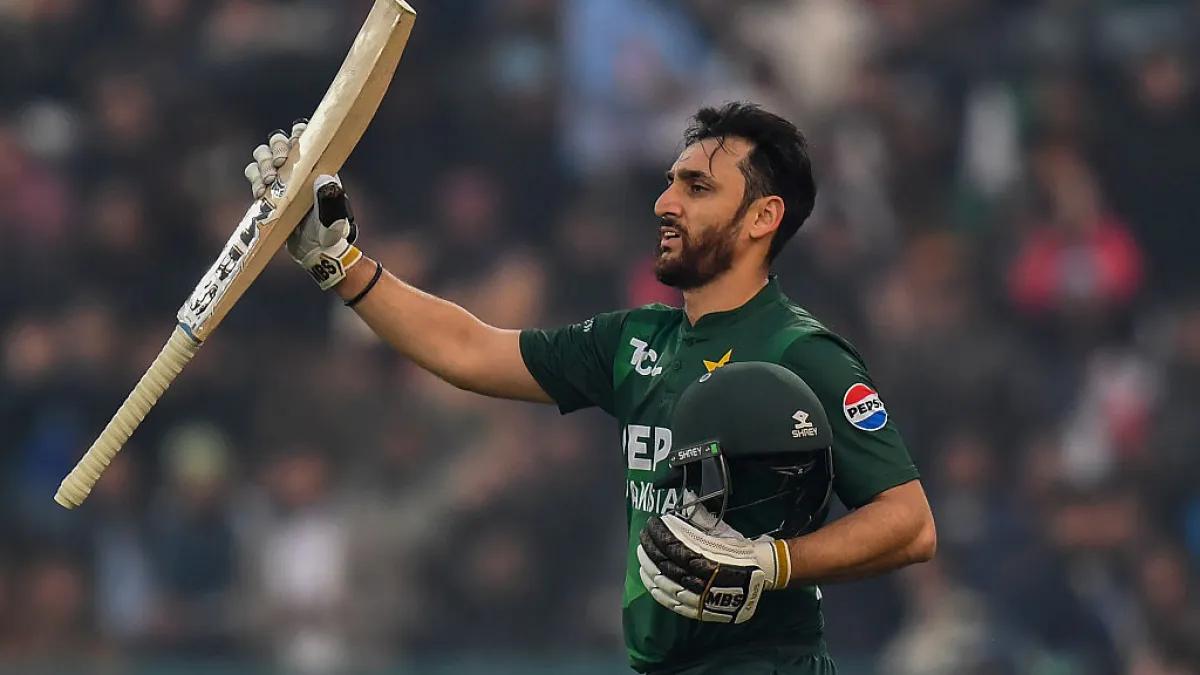
Skipper Salman Ali Agha hit his highest score in the shortest format before Pakistan’s spinners routed Australia by 90 runs in the second Twenty20 International in Lahore on Saturday.
Agha hit a 40-ball 76 and Usman Khan smashed a 36-ball 53 as Pakistan made 198-5, their highest-ever T20I total against Australia.
Recommended Stories
list of 4 itemsend of list
This was enough for Pakistan’s spin quintet, who shared all 10 wickets between them with Abrar Ahmed returning the best figures of 3-14 and Shadab Khan finishing with 3-26.
Australia were routed for 108 in 15.4 overs, giving Pakistan their biggest T20I victory over Australia, eclipsing the 66-run win in Abu Dhabi in 2018.
“It has to be a perfect game,” said Agha. “We batted well and then were outstanding with the ball. Fielding was outstanding.”
The victory gives Pakistan an unbeatable 2-0 lead after they won the first match by 22 runs, also in Lahore, on Friday.
“We want to play in the same way, forget the 2-0 scoreline and come again with the same intensity and go to the World Cup with the same energy,” said Agha of the event starting in India and Sri Lanka from February 7.
This is Pakistan’s first T20I series win over Australia since 2018. The final match is on Sunday, also in Lahore.
Despite skipper Mitchell Marsh coming back after resting on Friday, the visiting batters had little answer to Pakistan’s spin assault.
Ahmed dismissed Marsh for 18, Josh Inglis for five and Matthew Short for 27.
Cameron Green top-scored with a 20-ball 35 before spinner Usman Tariq dismissed him on his way to figures of 2-16.
Marsh admitted Pakistan were better.
“Pakistan outplayed us,” said Marsh. “Hopefully, we can improve and come back tomorrow. They put us under great pressure in batting; it was probably a 160-170 wicket so they scored a big total.”
Earlier, Agha and Usman led Pakistan to a fighting total after they won the toss and batted.
Agha built the innings with Saim Ayub (11-ball 23) during a second-wicket stand of 55 as Pakistan scored 72 runs in the power play.
Agha’s previous highest in all T20 cricket was 68 not out.
After Babar Azam failed with a five-ball two, Usman helped Agha add another quickfire 49 for the fourth wicket before Sean Abbott broke the stand.
Agha smashed four sixes and eight fours in his sixth Twenty20 half-century.
Pakistan added a good 61 runs in the last five overs with Usman knocking two sixes and four fours in his second T20I half-century, while Shadab’s knock had two sixes and a four.
The Usman-Shadab fifth-wicket stand yielded 63 runs off just 39 balls.
Shadab finished with an unbeaten 20-ball 28.
Pacer Xavier Bartlett and spinner Matthew Kuhnemann were expensive, conceding 92 runs between them in their eight overs.
Following back-to-back Australian Open wins, Aryna Sabalenka has now lost two consecutive finals with Elena Rybakina defeat.
Published On 31 Jan 202631 Jan 2026
Share
Following two years of triumph at the Australian Open, Aryna Sabalenka is now processing another two years of pain – and a series of missed chances in Melbourne that have left her “really upset”.
A year on from losing the final in three sets to American Madison Keys, Sabalenka fell 6-4 4-6 6-4 to Elena Rybakina on Saturday, the Russia-born Kazakh turning the tables on the Belarusian who beat her for the 2023 title.
Recommended Stories
list of 4 itemsend of list
“I was really upset with myself, I would say, because once again I had opportunities,” Sabalenka said.
“I played great until a certain point, and then I couldn’t resist that aggression that she had on court.”
While the Keys shock left Sabalenka inconsolable and her racket in pieces, defeat to fifth seed Rybakina had its own unique sting.
The world number one held a 3-0 lead in the third set and had all the running before former Wimbledon champion Rybakina broke back in the fifth game and stormed to her second Grand Slam trophy.
“She made some winners. I made a couple of unforced errors,” Sabalenka continued.
“Of course, I have regrets. You know, when you lead 3-0 and then it felt like in a few seconds it was 3-4 and I was down with a break. So it was very fast.
“Great tennis from her. Maybe not so smart for me but, as I say, today I’m a loser, maybe tomorrow I’m a winner, maybe again a loser. Hopefully not. We’ll see.”
It was Sabalenka’s second significant loss to Rybakina in a few months, having been beaten for the season-ending WTA Finals crown.
More alarmingly, it was her third loss in her last four major finals, with Coco Gauff flooring her at last year’s French Open.
Sabalenka did not lose a set coming into the Melbourne final and had won 46 of her 48 previous matches at hardcourt Grand Slams.
Now Rybakina, one of the few players able to match her for power, has dealt Sabalenka’s aura a heavy blow.
Sabalenka laughed ruefully and shrugged through her post-match news conference but was honest enough to admit she had been despondent outside the room.
On court, she draped a white towel over her head to conceal her anguish before gathering herself to deliver gracious congratulations to Rybakina, her most frequent opponent on tour.
She consoled herself that, barring a few errors in the final set, Rybakina had simply wrested the trophy from her grip with the quality of her tennis.
“Even in this final, I feel like I played great. I was fighting. I did my best, and today she was a better player,” said Sabalenka.
“So I don’t know. We’ll speak with the team. Now they try to avoid and escape me because they see that it’s not really healthy to be around me right now.”
What ranks as a safety concern in cricket? As the ICC Men’s T20 World Cup gets under way, Samantha Johnson looks at how the IPL exclusion of one Bangladeshi player led to an entire country exiting the tournament, and whether there are signs of a double standard.
Cricket fans will turn their attention to India and Sri Lanka as the International Cricket Council’s (ICC) T20 World Cup 2026 gets under way from February 7.
The tournament’s 10th edition, which will be spread over 54 matches, will conclude on March 8.
Recommended Stories
list of 4 itemsend of list
Here’s what you need to know about the T20 World Cup 2026’s format and schedule:
Which teams are in the T20 World Cup, and what are their groups?
The tournament was expanded to include 20 teams in 2024, and the number of competitors will remain the same this year.
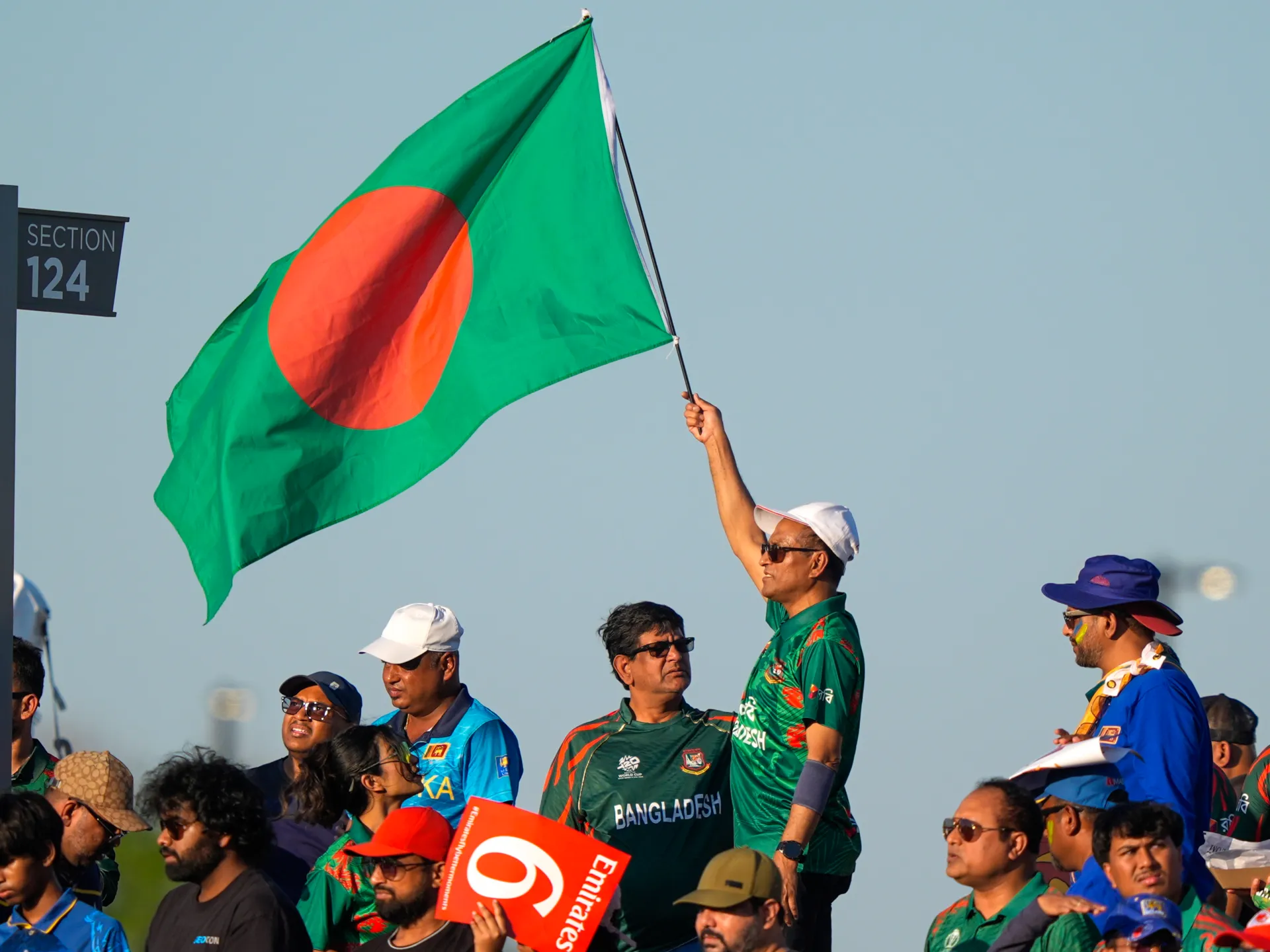
However, there was a late change in the team list as the ICC expelled Bangladesh from the tournament following a weeks-long impasse on their participation. Scotland replaced Bangladesh, who were kicked out due to their refusal to travel to India for the World Cup over security concerns.
The 20 teams have been divided into four groups of five teams each. These are:
Group A:
India
Namibia
Netherlands
Pakistan
USA
Group B:
Australia
Ireland
Oman
Sri Lanka
Zimbabwe
Group C:
England
Italy
Nepal
West Indies
Scotland
Group D:
Afghanistan
Canada
New Zealand
South Africa
United Arab Emirates (UAE)
What’s the format of the T20 World Cup 2026?
The tournament will be divided into two group-based rounds and a knockout round, comprising the semifinals and the final.
The top two teams from each of the four groups will qualify for the Super 8 stage, where they will be divided into two groups of four teams each.
The two best-performing Super 8 teams will enter the semifinals.
Here’s a breakdown of the tournament’s schedule:
Group stage: February 7 – 20
Super 8: February 21 – March 1
Semifinals: March 4 and 5
Final: March 8
Venues
Five stadiums in India and three in Sri Lanka will host the tournament.
The venues for all fixtures, barring one semifinal and the final, have been confirmed by the ICC.
If India qualify for the semifinals, they will play in the second one at Wankhede Stadium in Mumbai.
Should Pakistan qualify for the last-four stage, they will play their match at the R Premadasa Stadium in Colombo on March 4.
Here’s a list of the venues:
India:
Arun Jaitley Stadium, New Delhi
Eden Gardens, Kolkata
MA Chidambaram Stadium, Chennai
Narendra Modi Stadium, Ahmedabad
Wankhede Stadium, Mumbai
Sri Lanka:
R Premadasa Stadium, Colombo
Pallekele International Cricket Stadium, Kandy
Sinhalese Sports Club (SSC), Colombo
Full match schedule
Group stage
Saturday, February 7
Netherlands vs Pakistan at 11am (05:30 GMT) – SSC, Colombo
Scotland vs West Indies at 3pm (09:30 GMT) – Eden Gardens, Kolkata
India vs USA at 7pm (13:30 GMT) – Wankhede Stadium, Mumbai
Sunday, February 8
Afghanistan vs New Zealand at 11am (05:30 GMT) – MA Chidambaram Stadium, Chennai
England vs Nepal at 3pm (09:30 GMT) – Wankhede Stadium, Mumbai
Sri Lanka vs Ireland at 7pm (13:30 GMT) – R Premadasa Stadium, Colombo
Monday, February 9
Scotland vs Italy at 11am (05:30 GMT) – Eden Gardens, Kolkata
Oman vs Zimbabwe at 3pm (09:30 GMT) – SSC, Colombo
Canada vs South Africa at 7pm (13:30 GMT) – Narendra Modi Stadium, Ahmedabad
Tuesday, February 10
Namibia vs Netherlands at 11am (05:30 GMT) – Arun Jaitley Stadium, New Delhi
New Zealand vs UAE at 3pm (09:30 GMT) – MA Chidambaram Stadium, Chennai
Pakistan vs USA at 7pm (13:30 GMT) – SSC, Colombo
Wednesday, February 11
Afghanistan vs South Africa at 11am (05:30 GMT) – Narendra Modi Stadium, Ahmedabad
Australia vs Ireland at 3pm (09:30 GMT) – R Premadasa Stadium, Colombo
England vs West Indies at 7pm (13:30 GMT) – Wankhede Stadium, Mumbai
Thursday, February 12
Sri Lanka vs Oman at 11am (05:30 GMT) – Pallekele International Cricket Stadium, Kandy
Italy vs Nepal at 3pm (09:30 GMT) – Wankhede Stadium, Mumbai
India vs Namibia at 7pm (13:30 GMT) – Arun Jaitley Stadium, New Delhi
Friday, February 13
Australia vs Zimbabwe at 11am (05:30 GMT) – R Premadasa Stadium, Colombo
Canada vs UAE at 3pm (09:30 GMT) – Arun Jaitley Stadium, New Delhi
Netherlands vs USA at 7pm (13:30 GMT) – MA Chidambaram Stadium, Chennai
Saturday, February 14
Ireland vs Oman at 11am (05:30 GMT) – SSC, Colombo
Scotland vs England at 3pm (09:30 GMT) – Eden Gardens, Kolkata
New Zealand vs South Africa at 7pm (13:30 GMT) – Narendra Modi Stadium, Ahmedabad
Sunday, February 15
Nepal vs West Indies at 11am (05:30 GMT) – Wankhede Stadium, Mumbai
Namibia vs USA at 3pm (09:30 GMT) – MA Chidambaram Stadium, Chennai
India vs Pakistan at 7pm (13:30 GMT) – R Premadasa Stadium, Colombo
Monday, February 16
Afghanistan vs UAE at 11am (05:30 GMT) – Arun Jaitley Stadium, New Delhi
England vs Italy at 3pm (09:30 GMT) – Eden Gardens, Kolkata
Australia vs Sri Lanka at 7pm (13:30 GMT) – Pallekele International Cricket Stadium, Kandy
Tuesday, February 17
Canada vs New Zealand at 11am (05:30 GMT) – MA Chidambaram Stadium, Chennai
Ireland vs Zimbabwe at 3pm (09:30 GMT) – Pallekele International Cricket Stadium, Kandy
Scotland vs Nepal at 7pm (13:30 GMT) – Wankhede Stadium, Mumbai
Wednesday, February 18
South Africa vs UAE at 11am (05:30 GMT) – Arun Jaitley Stadium, New Delhi
Namibia vs Pakistan at 3pm (09:30 GMT) – SSC, Colombo
India vs Netherlands at 7pm (13:30 GMT) – Narendra Modi Stadium, Ahmedabad
Thursday, February 19
Italy vs West Indies at 11am (05:30 GMT) – Eden Gardens, Kolkata
Sri Lanka vs Zimbabwe at 3pm (09:30 GMT) – R Premadasa Stadium, Colombo
Afghanistan vs Canada at 7pm (13:30 GMT) – MA Chidambaram Stadium, Chennai
Friday, February 20
Australia vs Oman at 7pm (13:30 GMT) – Pallekele International Cricket Stadium, Kandy
Super 8
Saturday, February 21
TBD vs TBD at 7pm (13:30 GMT) – R Premadasa Stadium, Colombo
Sunday, February 22
TBD vs TBD at 3pm (09:30 GMT) – Pallekele International Cricket Stadium, Kandy
TBD vs TBD at 7pm (13:30 GMT) – Narendra Modi Stadium, Ahmedabad
Monday, February 23
TBD vs TBD at 7pm (13:30 GMT) – Wankhede Stadium, Mumbai
Tuesday, February 24
TBD vs TBD at 7pm (13:30 GMT) – Pallekele International Cricket Stadium, Kandy
Wednesday, February 25
TBD vs TBD at 7pm (13:30 GMT) – R Premadasa Stadium, Colombo
Thursday, February 26
TBD vs TBD at 3pm (09:30 GMT) – Narendra Modi Stadium, Ahmedabad
TBD vs TBD at 7pm (13:30 GMT) – MA Chidambaram Stadium, Chennai
Friday, February 27
TBD vs TBD at 7pm (13:30 GMT) – R Premadasa Stadium, Colombo
Saturday, February 28
TBD vs TBD at 7pm (13:30 GMT) – Pallekele International Cricket Stadium, Kandy
Sunday, March 1
TBD vs TBD at 3pm (09:30 GMT) – Arun Jaitley Stadium, New Delhi
TBD vs TBD at 7pm (13:30 GMT) – Eden Gardens, Kolkata
Knockouts
Wednesday, March 4
First semifinal at 7pm (13:30 GMT) – Eden Gardens, Kolkata or R Premadasa Stadium, Colombo
Thursday, March 5
Second semifinal at 7pm (13:30 GMT) – Wankhede Stadium, Mumbai
Sunday, March 8
Final at 7pm (13:30 GMT) – Narendra Modi Stadium, Ahmedabad or R Premadasa Stadium, Colombo
Bangladesh cricket lost their place at T20 World Cup after refusal to play in India, but shooting team heads to New Delhi.
Published On 29 Jan 202629 Jan 2026
Share
Bangladesh has approved its shooting team’s tour to New Delhi for next month’s Asian Shooting Championships, days after the cricket team’s refusal to play in India due to safety concerns cost them a place at the Twenty20 World Cup.
Bangladesh have been replaced by Scotland in the T20 World Cup, which runs from February 7 to March 8, after they insisted they would not tour India, highlighting security concerns following soured political relations between the neighbours.
Recommended Stories
list of 4 itemsend of list
The International Cricket Council (ICC), citing independent security assessment reports, dismissed Bangladesh’s demands to play their World Cup matches in Sri Lanka, the tournament cohosts, instead, arguing the late change in schedule was “not feasible”.
However, media reports in Bangladesh said a three-member contingent comprising shooter Robiul Islam, his coach Sharmin Akhter and jury member Saima Feroze had received approval from the Ministry of Youth and Sports to compete in New Delhi.
The National Rifle Association of India (NRAI) secretary-general, Pawan Singh, confirmed the shooting team’s participation in India.
“Bangladesh’s participation was confirmed a month ago. Our applications for clearances for all nations have been in process for almost three months,” Singh told the Reuters news agency.
“We have to follow ISSF norms as a sport and comply with the IOC (International Olympic Committee) charter, and as NRAI, we have always received support from the government,” he said, referring to the International Shooting Sport Federation.
Singh added that the Bangladesh contingent did not request any extra security measures.
“The Bangladesh team has come to our tournaments many times, so they know our strict protocols well. Maybe that’s why they are confident and have not made any special requests.”
The Asian Shooting Confederation, which is organising the event, did not immediately respond to a request for comment.
The continental rifle and pistol shooting championship will be held in New Delhi from February 2 to 14.
Ousted premier says the exclusion of her Awami League party “deepens resentment” on Muhammad Yunus’s interim government.
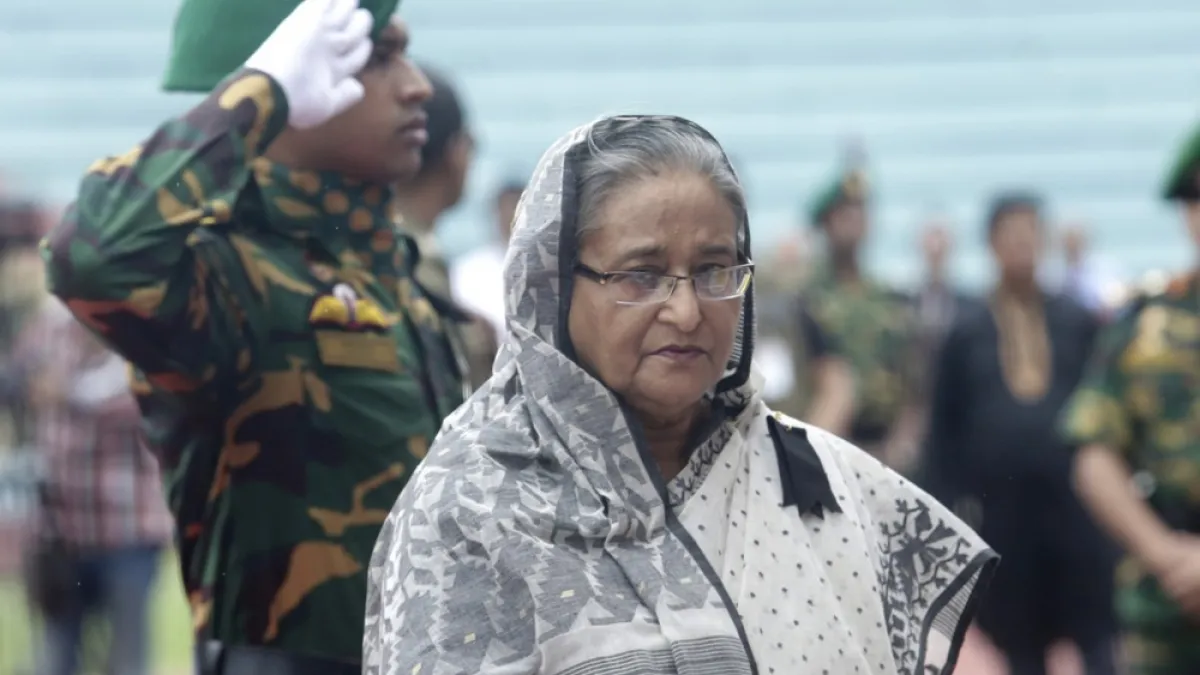
Bangladesh’s toppled leader Sheikh Hasina has denounced her country’s election next month after her party was barred from participating in the polls, raising fears of wider political division and possible unrest.
In a message published by The Associated Press news agency on Thursday, Hasina said “a government born of exclusion cannot unite a divided nation.”
Recommended Stories
list of 3 itemsend of list
Hasina, who was sentenced to death in absentia for her crackdown on a student uprising in 2024 that killed hundreds of people and led to the fall of her 15-year government, has been sharpening her critique of the interim government of Nobel Peace winner Muhammad Yunus in recent days, as the election that will shape the nation’s next chapter looms.
“Each time political participation is denied to a significant portion of the population, it deepens resentment, delegitimises institutions and creates the conditions for future instability,” the former leader, who is living in exile in India, warned in her email to the AP.
She also claimed that the current Bangladesh government deliberately disenfranchised millions of her supporters by excluding her party – the former governing Awami League – from the election.
More than 127 million people in Bangladesh are eligible to vote in the February 12 election, widely seen as the country’s most consequential in decades and the first since Hasina’s removal from power after the mass uprising.
Yunus’s government is overseeing the process, with voters also weighing a proposed constitutional referendum on sweeping political reforms.
Campaigning started last week, with rallies in the capital, Dhaka, and elsewhere.
Yunus returned to Bangladesh and took over three days after Hasina fled to India on August 5, 2024, following weeks of violent unrest.
He has promised a free and fair election, but critics question whether the process will meet democratic standards and whether it will be genuinely inclusive after the ban on Hasina’s Awami League.
There are also concerns over security and uncertainty surrounding the referendum, which could bring about major changes to the constitution.
Yunus’s office said in a statement to the AP that security forces will ensure an orderly election and will not allow anyone to influence the outcome through coercion or violence. International observers and human rights groups have been invited to monitor the process, the statement added.
Tarique Rahman, the son of former prime minister and Hasina rival, Khaleda Zia, returned to Bangladesh after his mother’s death in December.
Rahman, the acting chairman of Khaleda’s Bangladesh Nationalist Party, is a strong candidate to win the forthcoming election.
On Friday, Hasina made her first public speech since her ouster, telling a packed press club in Delhi that Bangladesh “will never experience free and fair elections” under Yunus’s watch.
Her remarks on Friday were broadcast online and streamed live to more than 100,000 of her supporters.
The statement was criticised by Bangladesh’s Ministry of Foreign Affairs, which issued a statement saying it was “surprised” and “shocked” that India had allowed her to make a public address.
Bangladesh has been asking India to extradite Hasina, but New Delhi has yet to comment on the request.
India’s past support for Hasina has frayed relations between the South Asian neighbours since her overthrow.
In Dhaka’s political chatter, one word often keeps resurfacing when people debate who really holds the reins of the country: “Kochukhet”.
The neighbourhood that houses key military installations has, in recent public discussions, become shorthand for the cantonment’s influence over civilian matters, including politics.
Bangladesh is weeks away from a national election on February 12, the first since the 2024 uprising that ended then Prime Minister Sheikh Hasina’s long rule and ushered in an interim administration led by Nobel laureate Muhammad Yunus.
The army is not vying for electoral power. But it has become central to the voting climate as the most visible guarantor of public order, with the police still weakened in morale and capacity after the upheaval of 2024, and with the country still reckoning with a “security apparatus” that watchdogs and official inquiries say was used to shape political outcomes under Hasina.
For nearly a year and a half now, soldiers have policed the streets of Bangladesh, operating under an order that grants them magisterial powers in support of law and order. On election duty, the deployment will scale up further: Officials have said as many as 100,000 troops are expected nationwide, and proposed changes to election rules would formally list the armed forces among the poll’s “law-enforcing agencies”.
Bangladesh, a nation of more than 170 million wedged between India and Myanmar, has repeatedly seen political transitions hijacked by coups, counter-coups and military rule, a past that still shapes how Bangladeshis read the present. Analysts say that the army today is not positioned for an overt takeover, but it remains a decisive power centre: an institution embedded across the state, able to narrow civilian choices through its security role, intelligence networks and footprint inside government.
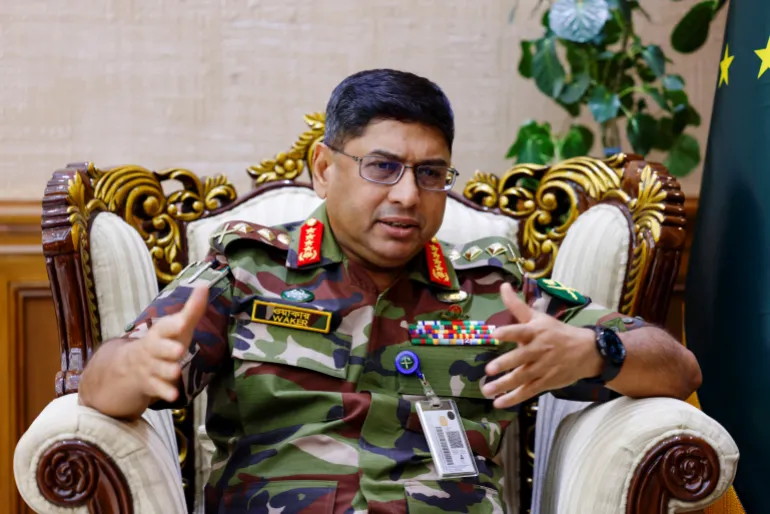
Bangladesh’s Chief of Army Staff General Waker-uz-Zaman, seen here during an interview with Reuters at his office in the Bangladesh Army Headquarters, in Dhaka, Bangladesh, September 23, 2024 [Mohammad Ponir Hossain/ Reuters]
The military’s role now
Thomas Kean, the International Crisis Group’s senior consultant on Bangladesh and Myanmar, said the army has been “backstopping the interim government” not only politically but also “through day-to-day security amid police weakness”.
He said the institution is eager to see a transition to an elected government so the country returns to a firmer constitutional footing and so troops can “return to their barracks”.
“There are different factions and views within the army, but overall I would say that the army wants to see the election take place as smoothly as possible,” Kean told Al Jazeera.
Kean argued that if the army chief, General Waker-uz-Zaman, and the military “had wanted to take power, they could have done so when the political order collapsed on August 5”, the day Hasina fled to India amid a popular student-led revolt. But the military chose not to, he said, in part because it had learned from the fallout of past experiments with its direct political control.
Asif Shahan, a political analyst and professor at Dhaka University, said the military was aware that a takeover would have also jeopardised key interests, including Bangladesh’s United Nations peacekeeping deployments, which carry both financial benefits and reputational weight for the armed forces. Bangladesh has for decades been one of the biggest suppliers to UN peacekeeping missions, and receives between $100m and $500m a year in payouts and equipment reimbursements for these services.
But Shahan argues that the military remains “an important political actor”. Today, he said, its influence is “less about overt intervention than the institutional weight it carries through the security and intelligence apparatus”.
He also pointed to what he called the army’s “corporate” footprint. That footprint spans involvement in major state infrastructure projects, the military’s own business conglomerate, and the presence of serving and retired officers across commercial and state bodies.
Shahan said the last Hasina government “gave them a share of the pie”, leaving “a kind of culture of corruption … ingrained”. He suggested that this could translate into informal pressure on whoever governs next to do the same, and anxieties inside the force over whether “the facilities and privileges” it has accumulated will shrink.
On the election itself, Shahan too said that the possibility of the army trying to gain overt control was “very low” unless there is such a major law and order breakdown that there is public demand for the army to step in as the “only source of stability”,
Others who track the military closely agreed. Rajib Hossain, a former army officer and author of the best-selling book Commando, said he “strongly believes” the army will avoid partisan involvement for its own sake. “The army will play a neutral role during this election,” he said. “What we’ve observed on the ground over the past year and a half, there is no record of the army acting in a partisan way.”
But, he added, pressure on the institution has been intense since 2024. “Internally, there’s an understanding that if the army fails to act neutrally, it could lose even the public credibility it still has,” he said.
Mustafa Kamal Rusho, a retired brigadier general at the Osmani Centre for Peace and Security Studies, also told Al Jazeera that the military does not have “any clear intent” to influence politics, though “it still remains a critical power base”.
That leverage was clearest during the 2024 uprising, Rusho said, when Bangladesh’s political crisis reached a point that many Bangladeshis and international watchdogs viewed the military’s posture as decisive. “If the military did not take the stand that it took, then there would have been more bloodshed,” he said.
With protests escalating, the military refused to fully enforce Hasina’s curfew orders and decided troops would not fire on civilians. It enabled Hasina to flee to India on an air force plane, and the army chief then announced an interim government would be formed.
In an Al Jazeera documentary on the uprising last year, Waker-uz-Zaman, who is related to Hasina and was appointed less than two months before her collapse, also stressed that his forces would not turn their guns on civilians. “We don’t shoot at civilians. It’s not in our culture … So we did not intervene,” he said.
In the same interview, he added: “We believe that the military should not engage in politics … It’s not our cup of tea.”
Bangladesh’s military leader and president, Hussain Muhammad Ershad, meeting British PM Thatcher at Downing St. London on February 16, 1989 [Wendy Schwegmann/ Reuters]
When the military ruled
That hasn’t always been the military’s position.
After the 1975 assassination of Sheikh Mujibur Rahman, Bangladesh’s founding leader and then-president, by a group of military officers, the country entered a period marked by coups, counter-coups and military rule upheavals that reshaped the state and produced political forces that still dominate elections.
One of them was the Bangladesh Nationalist Party (BNP), founded by army general-turned-ruler Ziaur Rahman, who emerged as the country’s most powerful figure in the late 1970s before moving into civilian politics. Rahman was assassinated in 1981 in a failed coup attempt by another group of military officers. The BNP remains a key contender in the February 12 vote, now led by Rahman’s son, Tarique Rahman, who has returned to front-line politics after a long exile.
In 1982, then army chief Hussain Muhammad Ershad seized power and ruled for much of the 1980s. Writer and political historian Mohiuddin Ahmed has described Ershad’s takeover as coming only months after he publicly argued that “the army should be brought in to help run the country”.
Eventually, a pro-democracy movement led by Zia’s wife, Khaleda Zia, and Hasina, also Mujibur Rahman’s daughter, forced him from office. The BNP won a landmark election, and in 1991, Khaleda became the country’s first female prime minister.
Since then, Rusho said, the military’s influence “became more indirect”, though Bangladesh still saw an abortive May 1996 showdown when the then army chief, Lieutenant General Abu Saleh Mohammad Nasim, defied presidential orders, and troops loyal to him moved towards Dhaka. Nasim was arrested and removed from office.
A decade later, in 2007, the military in effect “fully backed” a caretaker government that was formed to replace Khaleda’s second administration, which had ruled between 2001 and 2006. That caretaker government was installed in January 2007 after a breakdown in the election process and escalating political violence. The International Crisis Group described the caretaker administration as “headed by technocrats but controlled by the military”, while then-army chief Moeen U Ahmed argued the political climate “was deteriorating very rapidly” and that the military’s intervention had “quickly ended” street violence.
It was only after 2009, when Hasina came back to power – her Awami League had first ruled between 1996 and 2001 – that the military became “subordinate to the civilian regime”, Rusho said.
Bangladeshi military force soldiers on armored vehicles patrol the streets of Dhaka, Bangladesh, Saturday, July 20, 2024 [Rajib Dhar/ AP Photo]
Blurred lines
But even though the military today insists that it does not want power, it has often drifted into the political terrain.
A major moment arrived just weeks after Hasina’s ouster, in September 2024, when General Zaman told the Reuters news agency he would back Yunus’s interim government “come what may”, while also floating a timeline for elections within 18 months. The interview, which critics described as something unprecedented for a serving army chief, placed the military close to the country’s central political debate.
Hossain, the former army officer and author, criticised the public nature of the intervention. “If he [Zaman] had discussed this after sitting with all the stakeholders … the interim [administration], political parties, protest leaders … and then gone to the media, that would be acceptable,” he said. “But here, he declared it unilaterally and blindsided the government from his position of power. He had no authority to do that.”
“You may say this is an extraordinary, transitional time and the military has a role to play,” Hossain added. “But then, why do we have an administration at all?”
Shahan, the Dhaka University professor, said Zaman “came very close” to crossing the line and explained it as a product of military institutional culture after August 5. “Military organisations … like to follow standing operating procedures, order, stability,” he said. But August 5, he added, was “a political rupture” that forced the army and the nation into uncertainty: about the interim government’s longevity, legitimacy and how it would deal with the military.
Those anxieties, Shahan said, likely pushed Zaman to speak. In principle, he said, it is reasonable for the army chief to say elections are needed for stability. But “when he set a specific timeline – within 18 months – that is beyond his role”, Shahan said. “It then appears as if he is dictating.”
Shahan added that the problem becomes sharper when that kind of specificity appears to respond to a party demand; he was referring to a time when only the Bangladesh Nationalist Party was repeatedly pushing for a vote timetable.
Eight months later, in May 2025, Zaman again weighed in, telling a high-level military gathering, according to local media reports, that his position had not changed and that the next national vote should be held by December 2025. After that, Faiz Ahmad Taiyeb, a special adviser to Yunus, wrote on Facebook that “the army can’t meddle in politics” and argued that the military chief had failed to maintain “jurisdictional correctness” by prescribing an election deadline.
Military personnel stand in front of a portrait of then Prime Minister Sheikh Hasina in Dhaka, Bangladesh, on July 30, 2024 [Rajib Dhar/ AP Photo]
The shadow Hasina left
Another reason that analysts say the military’s role is being debated so intensely now is because of Bangladesh’s recent wounds.
During Hasina’s 15-year rule, human rights organisations argued Bangladesh’s security apparatus was often used for political control. Human Rights Watch has described enforced disappearances as a “hallmark” of Hasina’s rule since 2009.
When the United States sanctioned the Rapid Action Battalion (RAB) in 2021 over allegations of extrajudicial killings, the US Department of the Treasury said, “These incidents target opposition party members, journalists, and human rights activists.” Critics argue that security institutions became central to governance, and questions about how that machinery was used are now part of the post-Hasina political settlement.
Hossain, the former officer, said the Hasina-era legacy still echoes inside the top brass. “If you look at the leadership, the general, five lieutenant generals, and some major generals and brigadier generals, a lot of them were part of Hasina’s apparatus,” he said, “aside from a handful of professional officers”.
A report by Bangladesh’s Commission of Inquiry on Enforced Disappearances says disappearances were used as a “tool for political repression” and that the practice “reached alarming levels during key political flashpoints”, including in the run-up to elections in 2014, 2018 and 2024. The commission said it verified 1,569 cases of enforced disappearance.
In cases where political affiliation could be confirmed, the Jamaat-e-Islami and its student wing accounted for about 75 percent of victims, while the BNP and its affiliated groups accounted for about 22 percent. Among those “still missing or dead”, the BNP and its allies accounted for about 68 percent, while the Jamaat and its affiliates accounted for about 22 percent, the report said.
The commission also noted that the Directorate General of Forces Intelligence (DGFI), the military-run intelligence agency, had been “accused of manipulating domestic politics and interfering in the 2014 parliamentary elections”, and argued that perceived alignment with the Awami League compromised its neutrality.
Several senior military officers, including 15 in service, are now facing trial in a civilian tribunal on charges of enforced disappearances, murders and custodial tortures.
The proceedings have become a delicate issue in civil-military relations, as cases against serving officers in civilian courts are rare in Bangladesh’s history.
Former army chief Iqbal Karim Bhuiyan wrote on Facebook that local media had reported disagreements over the “trial process” for officers accused of crimes against humanity and that those disagreements had created what he described as a “chasm” between the interim government and the army’s top leadership.
Hossain, the former officer, however, said he disagreed. “These trials are not defaming the army,” Hossain said. “Rather, they are a kind of redemption for the institution to recover from the stigma created by the crimes of some self-serving officers.”
He argued that accountability could motivate younger officers and reduce the risk of the military being politically exploited again. Rusho, the retired brigadier general, also argued that politicisation under Hasina was driven less by formal doctrine than by executive control over careers.
“Promotions, important postings, placements … they were influenced considerably by the executive branch,” he said. “When you influence postings, some people’s loyalty often gets diverted to political masters, [and] it affects … professionalism and capability.”
Kean of the International Crisis Group said the real test for Bangladesh now would be whether it can stop the security state from being reabsorbed into partisan politics.
“The military is going to remain a powerful institution in Bangladesh, with a level of influence in domestic politics,” he said. “One hopes that the lesson of the past 18 months is that the military is better to support civilian administrations rather than be in power directly – that it can be a stabilising force, and one that is ultimately committed to democracy and civilian leadership.”
But, he added, the onus to do that isn’t only on the generals. Civilian politicians, too, needed to resist the temptation to misuse the military. That alone, he suggested, would help Bangladesh keep the army in the barracks and politicians accountable to the people, not to men in khakis.
The ‘mother of all trade deals’ comes months after the United States slapped tariffs on India and the European Union.
One of the biggest trade deals in history has been struck by India and the European Union, months after United States President Donald Trump hit both with tariffs.
What’s in the agreement – and how much is driven by Washington’s unpredictable measures?
Presenter: Tom McRae
Guests:
Brahma Chellaney – Professor emeritus of strategic studies at the Centre for Policy Research in New Delhi
Remi Bourgeot – Associate fellow at the French Institute for International and Strategic Affairs in Paris
Dhananjay Tripathi – Senior associate professor in the Department of International Relations at South Asian University in New Delhi
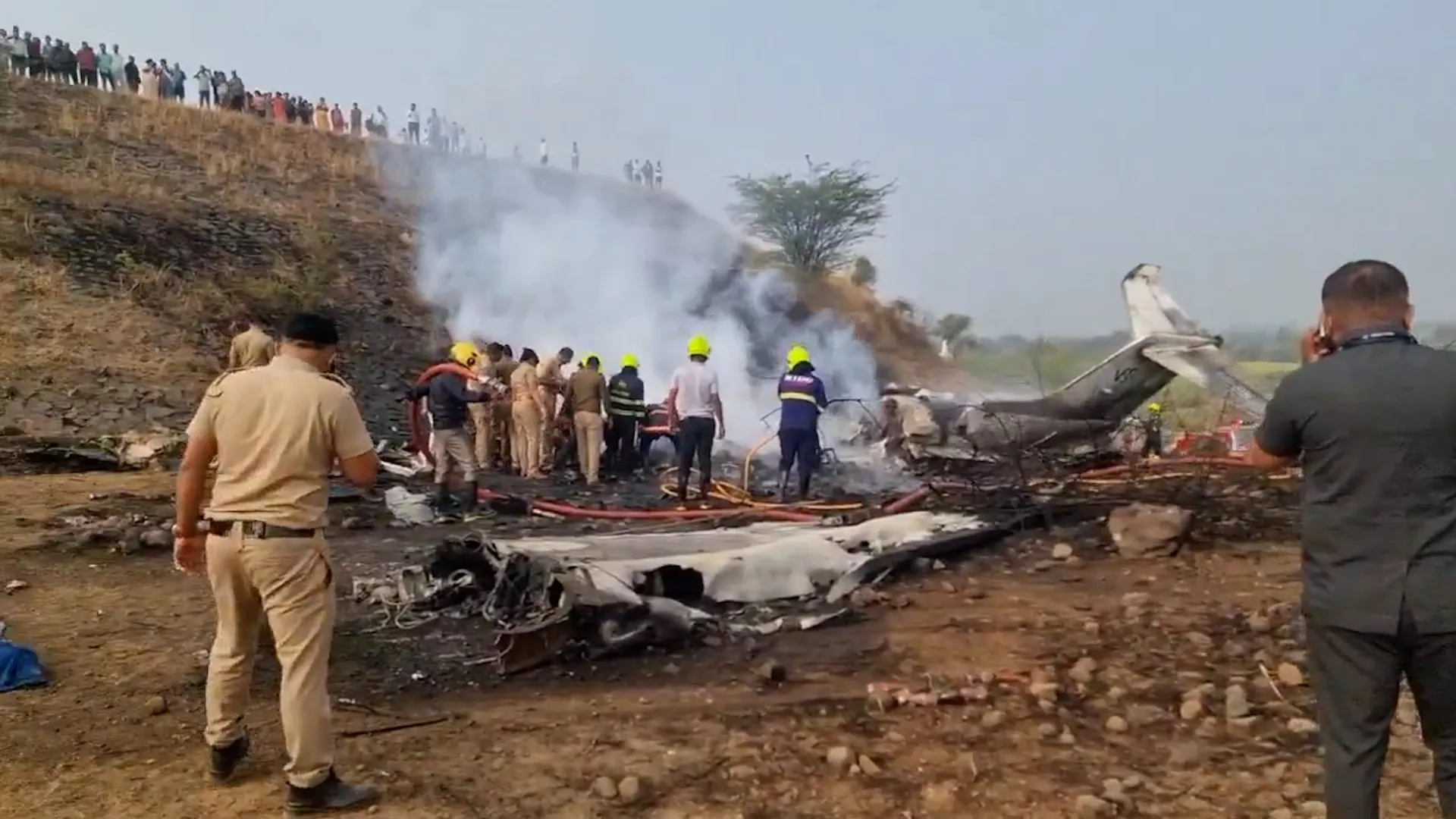
Authorities in India say they’re investigating the cause of a plane crash that killed Ajit Pawar, the deputy chief minister of India’s Maharashtra state, and four others on board. Here’s what we know so far.
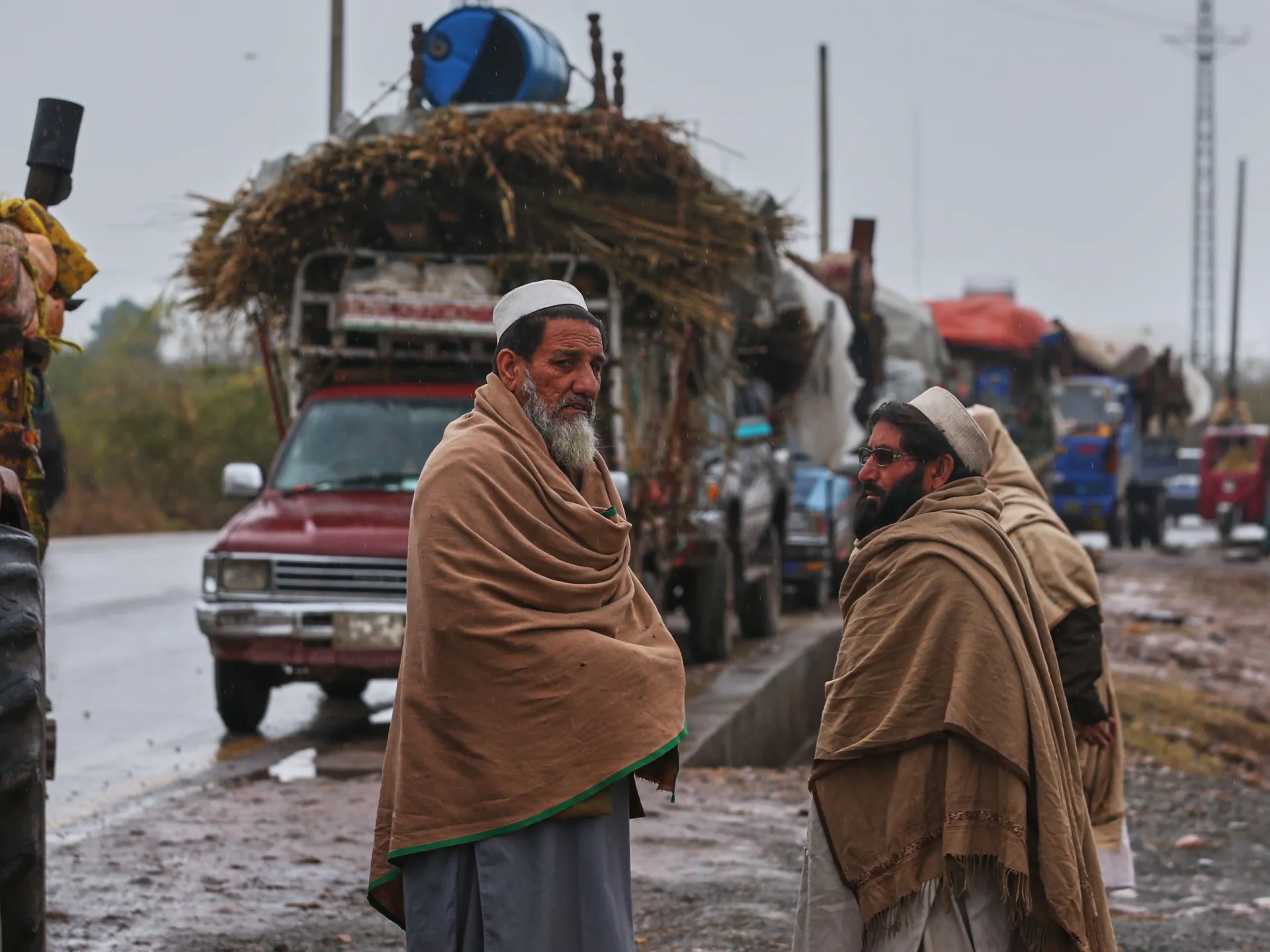
More than 70,000 people, mostly women and children, have fled from Tirah, a remote region in northwestern Pakistan bordering Afghanistan, as fears grow of an imminent military offensive against the Pakistan Taliban, according to local residents and officials.
Pakistan’s Defence Minister Khawaja Muhammad Asif has contradicted claims made by locals and provincial authorities, insisting no military operation is occurring or planned in the Khyber Pakhtunkhwa province town.
During an Islamabad news conference, he attributed the mass migration to harsh weather conditions rather than military actions, despite residents fleeing for weeks over fears of an impending army operation.
The exodus began after mosque announcements in December last year urged residents to vacate Tirah by January 23 to avoid possible conflict. This follows Pakistan’s August military campaign against Taliban forces in the northwestern Bajaur district, which displaced hundreds of thousands.
Shafi Jan, a provincial government spokesman, blamed federal authorities via social media for the displaced people’s hardships, accusing the Islamabad government of changing its position regarding military operations.
Meanwhile, Khyber Pakhtunkhwa Chief Minister Sohail Afridi, from imprisoned former Prime Minister Imran Khan’s party, has opposed military intervention and pledged to prevent a full-scale operation in Tirah.
Military officials maintain they will continue targeted intelligence operations against Tehrik-e-Taliban Pakistan (TTP). They claim many TTP fighters have found refuge in Afghanistan since the Afghan Taliban’s 2021 return to power, with hundreds crossing into Tirah and using residents as human shields during raids.
Nearly half of population
Local government administrator Talha Rafiq Alam reported that approximately 10,000 families – about 70,000 people – from Tirah’s 150,000 population have registered as displaced. The registration deadline has been extended from January 23 to February 5, with assurances that residents can return once security improves.
Zar Badshah, 35, who fled with his family, said mortar explosions in villages recently killed one woman and injured four children in his community. “Community elders told us to leave. They instructed us to evacuate to safer places,” he said.
At a Bara government school, hundreds waited in registration lines for government assistance, many complaining about slow processing. Narendra Singh, 27, explained that members of the Sikh minority also fled Tirah due to food shortages worsened by heavy snowfall and security concerns.
Tirah gained national attention last September after an explosion at an alleged bomb-making facility killed at least 24 people. While authorities claimed most casualties were TTP-linked fighters, local leaders contested this account, stating civilians, including women and children, were among the dead.
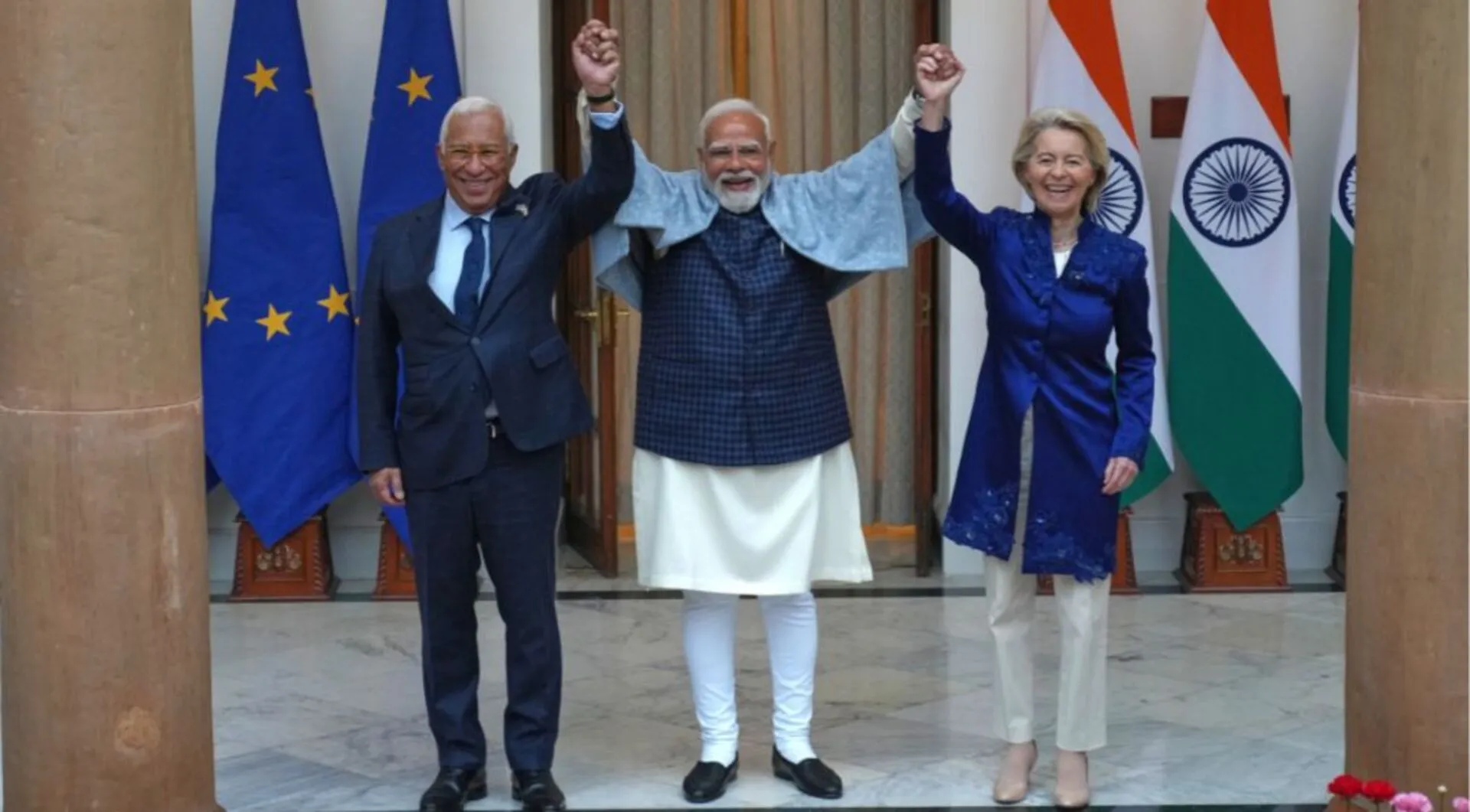
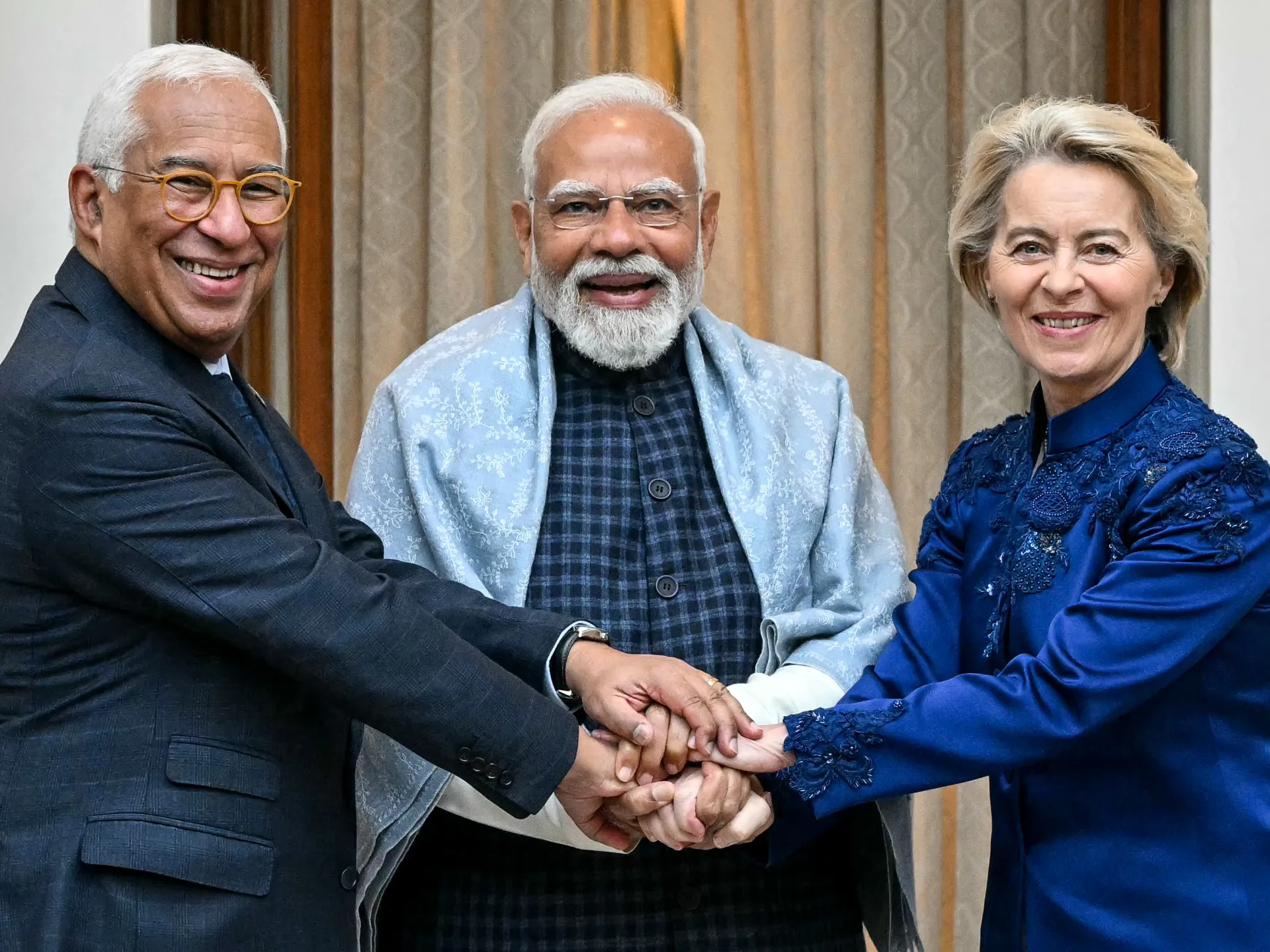
India and the European Union have agreed on a huge trade deal creating a free trade zone of two billion people, European Commission President Ursula von der Leyen and Indian Prime Minister Narendra Modi have said.
In a post on X during her visit to New Delhi on Tuesday, von der Leyen said the two parties were “making history today”.
Recommended Stories
list of 4 itemsend of list
“We have concluded the mother of all deals. We have created a free trade zone of two billion people, with both sides set to benefit,” she added.
Modi said the landmark agreement, following nearly two decades of on-and-off negotiations, had been reached, hailing its benefits before a meeting with von der Leyen and European Council President Antonio Costa.
“This deal will bring many opportunities for India’s 1.4 billion and many millions of people of the EU,” he said.
The deal will cover about 25 percent of the global gross domestic product (GDP), Modi said, adding that India will get a boost in sectors including textiles, gems and jewellery, and leather goods.
It will pave the way for India, the world’s most populous nation, to open up its huge, protected market to free trade with the 27-nation EU, its biggest trading partner.
The EU views India as an important market for the future, while New Delhi sees Europe as an important potential source of technology and investment.
The formal signing of the deal will take place after legal vetting, expected to last five to six months, the Reuters news agency reported, quoting an Indian government official aware of the matter. The official said the deal was expected to be implemented within a year.
EU exports ‘expected to double’
The EU said it expected its exports to India to double by 2032 as a result of the deal.
Bilateral trade between India and the EU in goods has already grown by nearly 90 percent over the past decade, reaching 120 billion euros ($139bn) in 2024, according to EU figures. Trade in services accounts for a further 60 billion euros ($69bn), EU data shows.
Under the agreement, tariffs on 96.6 percent of EU goods exports to India would be eliminated or reduced, EU officials said. The deal would save up to 4 billion euros ($4.74bn) a year in duties on European products, officials said.
Among the products that would have tariffs all or mostly eliminated were machinery, chemicals and pharmaceuticals.
Tariffs on cars would gradually reduce to 10 percent with a quota of 250,000 vehicles a year, officials said, while EU service providers would gain privileged access to India in key areas such as financial and maritime services. Tariffs on EU aircraft and spacecraft would be eliminated for almost all products.
Tariffs would be cut to 20-30 percent on EU wine, 40 percent on spirits, and 50 percent on beer, while tariffs on fruit juices and processed food would be eliminated.
“The EU stands to gain the highest level of access ever granted to a trade partner in the traditionally protected Indian market,” von der Leyen said on Sunday. “We will gain a significant competitive advantage in key industrial and agri-good sectors.”
Last-minute talks on Monday had focused on several sticking points, including the impact of the EU’s carbon border tax on steel, sources familiar with the discussions told the AFP news agency.
Talks on the India-EU trade deal were launched in 2007, but for many years made little progress. However, Russia’s full-scale invasion of Ukraine led to the relaunch of talks in 2022, while United States President Donald Trump’s aggressive tariff policy spurred rapid progress in negotiations.
India and the EU also announced the launch of a security and defence partnership, similar to partnerships the EU has with Japan and South Korea, as von der Leyen said Brussels and New Delhi would grow their strategic partnership further.
The moves come as India, which has relied on Russia for key military hardware for decades, has tried to reduce its dependence on Moscow by diversifying imports and pushing its domestic manufacturing base, while Europe is doing the same with regard to Washington.
The EU-India deal comes days after Brussels signed a key pact with the South American bloc Mercosur, following deals last year with Indonesia, Mexico and Switzerland. During the same period, New Delhi finalised pacts with the United Kingdom, New Zealand and Oman.