Asia Pacific

Japan lifts ban on lethal weapons exports in major shift of pacifist policy | Weapons News

Japan could soon sell weapons overseas, including fighter jets, in major shift from pacifist policies introduced after World War II.

The cabinet of Japanese Prime Minister Sanae Takaichi has lifted a ban on exporting lethal weapons, including fighter jets, in a major shift to Japan’s pacifist post-World War II constitution.

In a post on X announcing the changes on Tuesday, Takaichi did not specify which weapons Japan would now sell overseas. However, Japanese newspapers said the changes would encompass fighter jets, missiles and warships, which Japan has recently agreed to build for Australia.

Recommended Stories

list of 4 itemsend of list

“With this amendment, transfers of all defence equipment will in principle become possible,” Takaichi said, adding that “recipients will be limited to countries that commit to use in accordance with the UN Charter”.

“In an increasingly severe security environment, no single country can now protect its own peace and security alone.”

At least 17 countries will be eligible to buy weapons manufactured in Japan under the changes, Japan’s Chunichi newspaper reported, adding that this list may be expanded if more countries enter into bilateral agreements with Japan.


Previous rules, introduced in 1967 and enacted in 1976, had limited Japanese military exports to non-lethal arms, such as those used for surveillance and mine sweeping, Japan’s Asahi newspaper reported.

Asahi also reported that Japan will still restrict exporting weapons to countries where fighting is currently taking place, but exemptions are allowed under “special circumstances” where Japan’s national security needs are taken into account.

Countries interested in buying Japanese-made weapons include Australia, New Zealand, the Philippines and Indonesia, which recently signed a major defence pact with the United States, Chunichi reported, citing Japan’s Ministry of Defence.

Tokyo’s change in policy comes soon after Japan and Australia signed a $7bn deal that will see Japan’s Mitsubishi Heavy Industries build the first three of 11 warships for the Australian navy.

Takaichi sends offering to controversial war shrine

The changes announced by Takaichi on Tuesday come amid reports that the Japanese prime minister had sent a ritual offering to the notorious Yasukuni Shrine in Tokyo on the occasion of its spring festival.

Built in the 1800s to honour Japan’s war dead, the shrine includes the names of more than 1,000 convicted Japanese war criminals from World War II, including 14 who were found guilty of “Class A” crimes.

Visits by Japanese officials to the shrine have long been considered insensitive to the people of China, South Korea, and other countries that Japanese soldiers brutalised during the war.

After the defeat of Axis countries, including the bombing of Japan’s Hiroshima and Nagasaki at the end of World War II, Japan introduced a new constitution renouncing participation in war.

However, Takaichi, considered a China “hawk” and sometimes referred to as Japan’s “Iron Lady”, is among a number of recent Japanese leaders to have pushed back against the country’s pacifist stance.

TOKYO, JAPAN - AUGUST 15: People visit the Yasukuni Shrine on August 15, 2025 in Tokyo, Japan. Japan marked the 80th anniversary of its surrender in World War II today. (Photo by Tomohiro Ohsumi/Getty Images)
Nationalists visit the Yasukuni Shrine in 2025 in Tokyo, Japan [Tomohiro Ohsumi/Getty Images]

Source link

Six women win 2026 Goldman prize, world’s top environmental award | Environment News

First all-women cohort of winners hails from Colombia, Nigeria, Papua New Guinea, South Korea, the UK and the US.

This year’s prestigious Goldman Environmental Prize has been awarded to six grassroots environmental activists from around the world for their efforts to fight climate change and save biodiversity.

For the first time since the prize was created in 1989 by philanthropists Richard and Rhoda Goldman, all recipients of the award are women: Iroro Tanshi, from Nigeria; Borim Kim, from South Korea; Sarah Finch, from the United Kingdom; Theonila Roka Matbob, from Papua New Guinea; Alannah Acaq Hurley, from the United States; and Yuvelis Morales Blanco, from Colombia.

Recommended Stories

list of 4 itemsend of list

Sometimes described as the “Green Nobel”, the Goldman Prize recipients are chosen from each of the world’s six primary regions. They each receive $200,000 in prize money.

“While we continue to fight uphill to protect the environment and implement lifesaving climate policies – in the US and globally – it is clear that true leaders can be found all around us,” said John Goldman, vice president of the Goldman Environmental Foundation.

“The 2026 Prize winners are proof positive that courage, hard work, and hope go a long way toward creating meaningful progress.”

A young woman wearing a broad hat holds a fish next to a river, smiling
Yuvelis Morales Blanco, winner of the 2026 Goldman Environmental Prize, shows a fish caught on a tour with fishermen along the Magdalena River in Colombia [Handout: Christian EscobarMora/Goldman Environmental Prize]

Morales Blanco, the winner for the region of South and Central America, fought some of the world’s biggest oil companies to successfully stop the introduction of commercial fracking into Colombia.

The 24-year-old grew up in a family of fishermen along the banks of the Magdalena River in the Afro-Colombian community of Puerto Wilches. “We had nothing but the river – she was like a mother who took care of me,” she said.

She began organising protests after a major oil spill in 2018, which forced the relocation of dozens of local families and killed thousands of animals. Her activism, which made her a target for intimidation and forced her to temporarily relocate, helped halt projects and elevate fracking as an issue in Colombia’s 2022 election.

Two of the other five recipients of this year’s prize have also focused their efforts on fighting fossil fuels, which are causing both global climate change and more localised pollution around the world.

Borim, the winner for Asia who started the Youth 4 Climate Action organisation, won a ruling from South Korea’s Constitutional Court that the government’s climate policy violated the constitutional rights of future generations, the first successful youth-led climate litigation in the continent.

Finch, Europe’s winner, told The Times newspaper she will use her prize money to keep fighting fossil fuels.

Together with the Weald Action Group, she fought oil drilling in southeastern England for more than a decade, securing the “Finch ruling” from the Supreme Court in June 2024, stating that authorities must consider fossil fuels’ impacts on the global climate before granting permission to extract them.

Two other recipients have fought against the destructive environmental impact of mining projects.

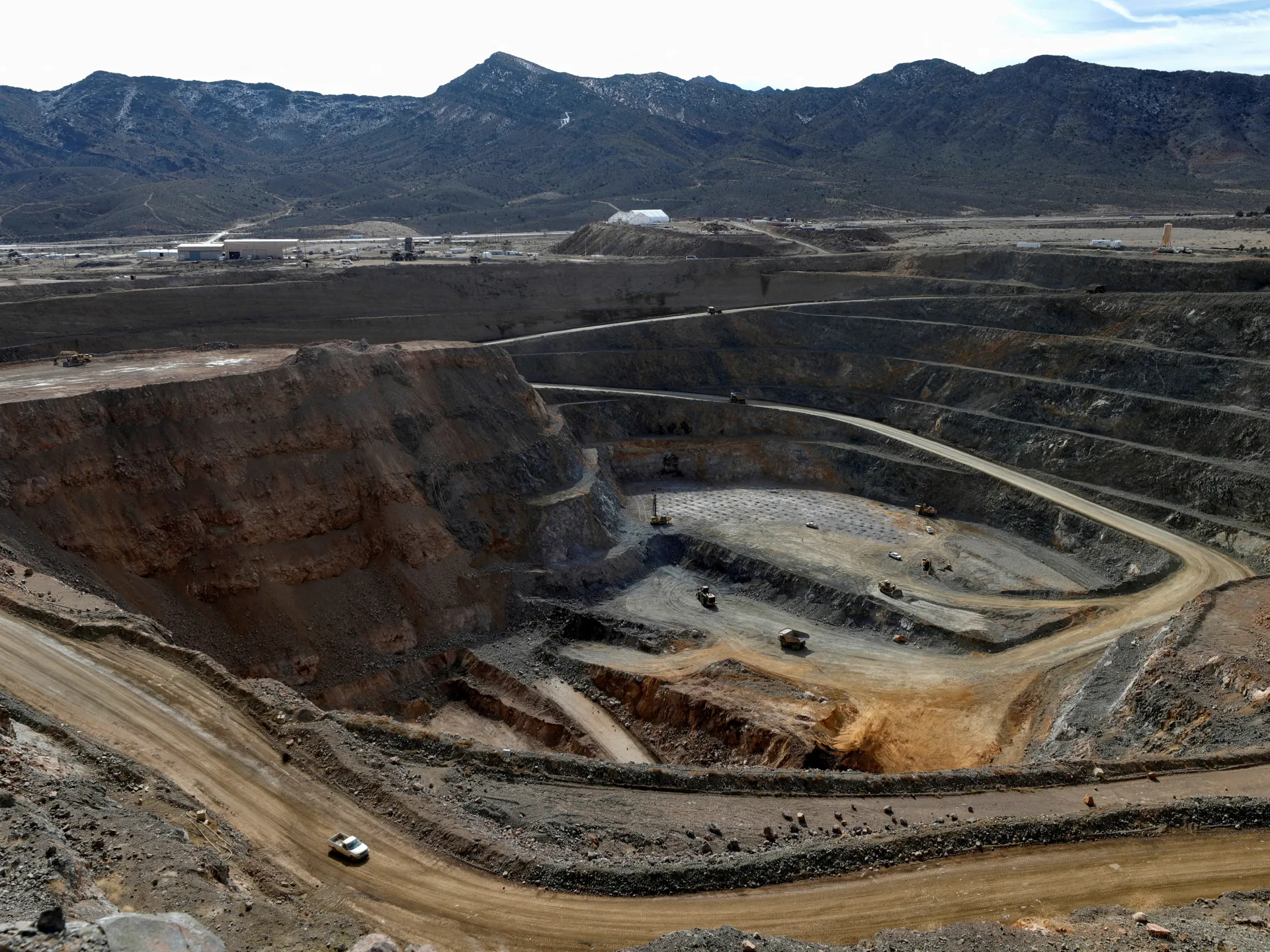
Papua New Guinea’s Roka Matbob, winner for Islands and Island Nations, led a successful campaign that saw the world’s second-largest mining company, Rio Tinto, agree to address environmental and social devastation caused by its Panguna copper mine, 35 years after it was closed following an uprising.

And the award recipient for North America, Acaq Hurley, from the Yup’ik nation in the US, successfully fought alongside 15 tribal nations to stop a mega- copper and gold mining project that threatened ecosystems in Alaska’s Bristol Bay region, including the largest wild salmon runs in the world.

Meanwhile, Nigeria’s Tanshi, Africa’s winner, rediscovered the endangered short-tailed roundleaf bat and has been working to save its refuge, the Afi Mountain Wildlife Sanctuary, from human-induced wildfires.

Source link

Powerful states are trying to sabotage decarbonisation of shipping | Climate Crisis

The global fallout of the closure of the Strait of Hormuz may create the impression that the world cannot function without fossil fuels. Nothing could be further from the truth. Every single industry can and must decarbonise.

For global shipping, this process would be relatively easy because technological solutions exist and a single United Nations agency can set legally binding rules for all ships. The first steps have already been made.

In 2025, member states of the International Maritime Organization (IMO) agreed on a policy mechanism to cut shipping emissions: the Net-Zero Framework (NZF). But they opted to postpone a decision on formal adoption of this landmark agreement.

This delay is emblematic of obstructive tactics used by countries opposing climate action.

The IMO Framework – the world’s first global carbon price on any international polluter – took years of compromises and watering-down. As it stands, it is the lowest possible bar Pacific Island states like the one I represent can accept. We cannot give in another inch.

While I join the First Conference on Transitioning Away from Fossil Fuels in Santa Marta, Colombia, next week, delegates will gather again at the IMO in London to decide whether to uphold their unanimous commitment to phase out fossil fuels in a just and equitable way.

The delegates of Vanuatu who travel to London have a mandate to push for the adoption of the NZF this year.

Should anyone reopen the framework to water it down, our position is clear: We will revert to our original Pacific demand for a universal levy on emissions of $150 per tonne of carbon dioxide.

Last year my country abstained from the vote on the NZF agreement. We reached that decision because the mechanism is not nearly ambitious enough. Even so, it is a starting point we can work with.

But since then, the tide has shifted dramatically.

After the delay in adoption, a small group of countries is now suggesting further weakening the ambition in the framework to meet the demands of particularly influential states whose current policy positions are not aligned with climate ambition. This strategy is problematic as reducing our collective actions to align with those that want no climate action at all is incompatible with our people’s continued survival.

The world’s poorest countries, and the planet, simply cannot afford anything less than what is already on the table.

The framework, as it is, gives the world and the industry some chance of meeting the climate obligations that IMO countries committed to in 2023, namely reaching net-zero emissions by 2050 in a just and equitable way.

The NZF introduces penalty fees – eg emission pricing for noncompliance with the regulation. This provides the regulation with a “stick” to ensure ships comply or else they must pay.

The penalties also represent revenues, up to $10bn to $12bn a year, to both incentivise industry transition and enable a fair transition for all. This fund is a lifeline for developing – and especially least developed – states to be able to afford clean maritime energy upgrades and compensate for the rising trade costs because of this transition.

Some claim that revenues raised by the NZF will blow out transport costs. This is preposterous.

The penalties charged through this framework come down to less than $1.50 per year for every living human being – although the biggest polluters should pay this cost. If the richest 10 percent of the world’s population foots this bill, it adds up to less than $15 per person. That’s a few coffees a year, which the world’s richest can easily spare.

Losing both financial penalties for noncompliance and financial support for countries like mine in the name of a political compromise with rich oil-producing states is a bad deal. Not just for all climate-vulnerable states but also for the industry that demands and deserves clarity.

If anything, we need more action and more ambition in the framework.

For years, Pacific states have pushed for the IMO regulation to be in the form of a universal levy on emissions, by pricing all emissions. We managed to get the majority of IMO member states on board, including the European Union, South Korea and Japan, as well as important Global South states, such as Panama and Liberia. However, the US has been very effective in exerting its influence in this area, which is resulting in shifts to some positions to the detriment of us all.

Our position was always backed by the best available scientific evidence.

A levy on all shipping emissions is the best way to send an unambiguous signal to the industry: Invest in the future now! The revenues, up to 10 times more than those from the NZF, serve as both a bigger stick for polluters and a bigger carrot for first movers and cash-poor countries.

This is not a handout: Hitting net zero by 2050 is not possible if our countries cannot invest in clean ships.

The bridge we have built in the form of the NZF through years of compromise and evidence is still standing. Let us cross it together by adopting it as agreed without any further dilution.

Pacific states stand ready to fight for what science and justice demand, and we call on our partners to stand with us.

The views expressed in this article are the author’s own and do not necessarily reflect Al Jazeera’s editorial stance.

Source link

Australia and Japan sign contracts for $7bn warships deal | Military News

Defence deal is latest example of deepening ties between Canberra and Tokyo amid shared concerns over China’s rise.

Australia and Japan have signed contracts for the first three of 11 warships set to be delivered to the Australian navy under a landmark $7bn defence deal, as the two close US allies in the Asia Pacific region deepen defence cooperation.

Australia’s Defence Minister Richard Marles and Japanese Defence Minister Koizumi Shinjiro made the announcement in Melbourne on Saturday at the signing ceremony for the Mogami-class warships.

Recommended Stories

list of 4 itemsend of list

The “Mogami Memorandum” pledges to deepen military ties, including through “closer industrial cooperation” in defence.

Japan’s Mitsubishi Heavy Industries will build three of the stealth frigates in southern Nagasaki Prefecture, while Australia’s Austal will build eight in Western Australia.

The first of the Japanese-built warships is scheduled to be delivered in 2029 and enter service in 2030.

“Our surface fleet is more important than at any time in decades,” Marles said in a statement.

“These general-purpose frigates will help secure our maritime trade routes and northern approaches as part of a larger and more lethal surface combatant fleet.”

Shinjiro said closer defence coordination was becoming more important as Australia and Japan faced an “increasingly severe security environment”.

Australia’s government last year announced that it had chosen Mitsubishi Heavy Industries to build its fleet of next-generation warships, following a bidding war between the Tokyo-based firm and Germany’s Thyssenkrupp.

Australia has committed to a record $305bn in military spending over the next decade, as part of a widespread defence overhaul aimed at boosting the country’s naval power to levels not seen since World War II.

Under the plans, Canberra’s defence spending is set to rise to 3 percent of gross domestic product (GDP) by 3033, from about 2 percent now.

Australia and Japan, two of the United States’ closest allies, have ramped up military cooperation in recent years amid shared concerns about shifts in the regional security environment, particularly China’s rising influence. Tokyo and Canberra are also members of the Quad security bloc led by the US.

Source link

Humanoid robot breaks half marathon world record in Beijing | Science and Technology News

The humans were left far behind as smartphone maker Honor’s humanoid robot shattered the men’s world record in China.

A humanoid robot competing against flesh-and-blood runners has broken the world record at a Beijing half-marathon, showcasing the rapid technological advancements achieved by Chinese makers.

Spectators lined the roads in Yizhuang in the capital’s south on Sunday to watch the machines and their human rivals race, each group in a separate lane to avoid accidents or collisions.

Recommended Stories

list of 4 itemsend of list

Some of the robots were highly agile, moving like famous runners such as Usain Bolt, while others had more basic capabilities.

The winning humanoid, equipped with an autonomous navigation system and running for Chinese smartphone maker Honor, completed the roughly 21km (13-mile) course in 50 minutes and 26 seconds, at an average speed of about 25km/h (15.5mph), according to state broadcaster CCTV.

That was far faster than the top human in Sunday’s race, while also surpassing the current men’s world record of 57:20, held by Ugandan runner Jacob Kiplimo.

The result represented spectacular progress from last year, when robot-runners fell repeatedly, and the best took more than two hours and 40 minutes to finish.

The number of humanoid entries jumped from about 20 last year to more than 100, according to organisers, a sign of the sector’s growing popularity.

Humanoid robot in action.
A humanoid robot runs alongside human competitors in the second Beijing E-Town Half Marathon and Humanoid Robot Half Marathon in Beijing [Haruna Furuhashi/Pool via Reuters]

‘Pretty cool’

Han Chenyu, a 25-year-old student who watched the race from behind a safety barrier, barely had time to take out her phone and snap a picture of the leading robot as it whizzed past.

She told the AFP news agency she was enthusiastic about such leaps in technology and thought the event was “pretty cool”.

But, she added, “as someone who works for a living, I’m a little worried about it sometimes. I feel like technology is advancing so fast that it might start affecting people’s jobs”, particularly with artificial intelligence (AI) growing increasingly sophisticated.

Humanoid robots have become a common sight in China in recent years, in the media as well as in public spaces.

Xie Lei, 41, who watched Sunday’s race with his family, said robots could “become part of our daily lives” within several years, potentially used for “things like housework, elderly companionship or basic caregiving” or “dangerous jobs, even firefighting”.

The humanoid half-marathon aims to encourage innovation and popularise the technologies used in creating and operating such machines.

In a sign of the industry’s strength, investment in robotics and so-called embodied AI amounted to 73.5 billion yuan ($10.8bn) in China in 2025, according to a study by a government agency.

“For thousands of years, humans have been at the top on planet Earth. But now, look at robots. Just in terms of autonomous navigation, at least in this specific sport event, they’re already starting to surpass us,” Xie said.

“On one hand, it does make you feel a little bit sad for humanity. But at the same time, technology, especially in recent years, has given us so much imagination.”

Source link

Fire razes 200 homes in Sabah, leaving hundreds homeless | News

Sabah fire displaces 445 people as relief efforts focus on safety and immediate aid for victims in affected areas.

Hundreds of people have been displaced after a fire destroyed about 200 homes in a coastal village in Malaysia’s Sabah state, the state news agency Bernama reported.

Authorities were notified of the fire in Sandakan district at ⁠about 1.32am on Sunday (17:32 GMT, Saturday), the district’s fire and rescue chief, Jimmy Lagung, was quoted as saying.

Recommended Stories

list of 4 itemsend of list

“Strong winds and the close proximity ‌of the houses caused the fire to spread rapidly, while low tide conditions also made it difficult to obtain an open water source,” Bernama quoted Lagung as saying.

The fire broke out in one of Sabah’s water villages, ⁠which feature wooden houses built on ⁠stilts and are home to some of the country’s poorest communities, including many stateless and indigenous groups.

About 445 people have ⁠been displaced so far, Bernama said, citing unofficial figures of people ⁠registered at a temporary relief ⁠centre in Sandakan.

Datuk Walter Kenson, head of the Sandakan District Disaster Management Committee, said examination of the village found the homes of the affected residents “are no longer safe to live in”.

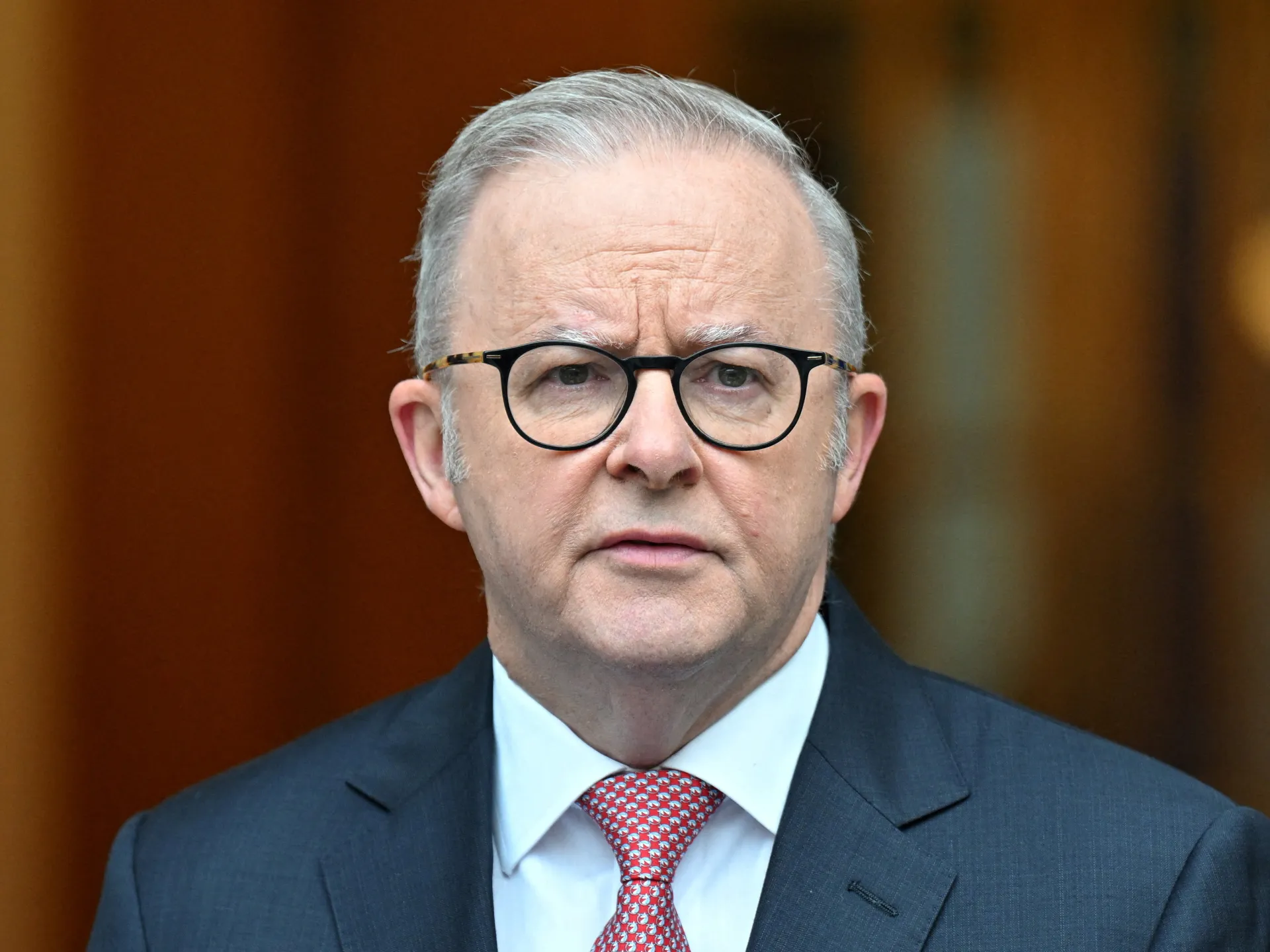
Malaysia’s Prime Minister Anwar Ibrahim said the federal government was coordinating with Sabah authorities to provide basic assistance ‌and temporary relocation for those affected.

“The priority now is the safety of the victims and ‌immediate assistance ‌on the ground,” he said in a Facebook post.

Source link

Fire engulfs more than 200 homes in Malaysian floating village | Newsfeed

NewsFeed

A huge fire tore through the floating village of Kampung Bahagia in Sabah, Malaysia, destroying more than 200 homes and leaving over 400 people displaced. The blaze spread quickly overnight because of strong winds and tightly packed wooden houses.

Source link

North Korea launches ballistic missiles towards sea off its east coast | Kim Jong Un News

Multiple ballistic missiles fired from eastern Sinpo area in seventh such test this year.

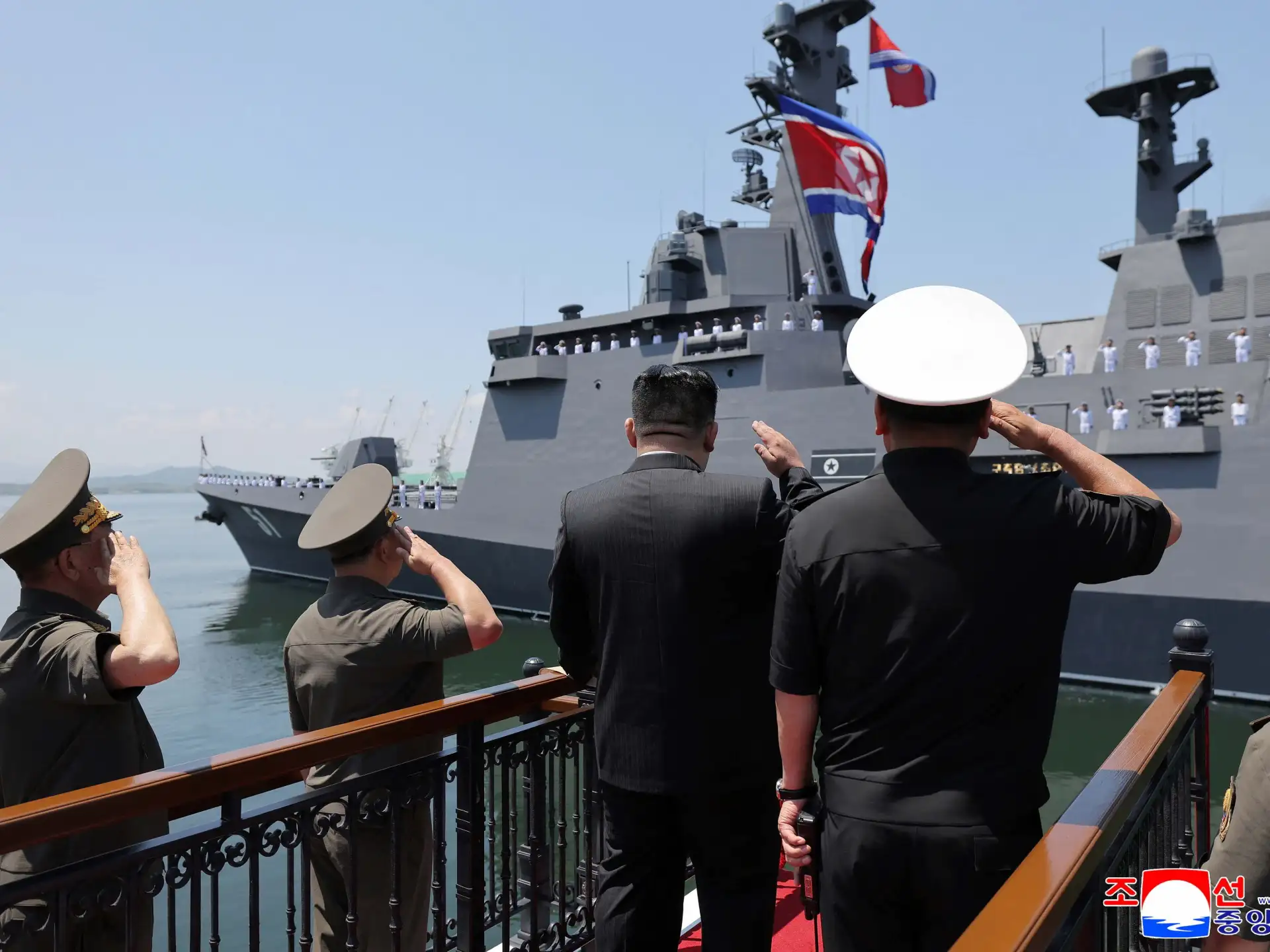
North Korea has launched multiple ballistic missiles towards the sea off its eastern coast, according to South Korea and Japan.

The incident on Sunday marked North Korea’s seventh ⁠ballistic missile launch this year and its fourth in April.

The missiles were fired near the city of Sinpo on North Korea’s east coast at about 6:10am on Sunday (21:10 GMT, Saturday), South Korea’s military said in a statement. It added that South Korea had bolstered its surveillance posture and was closely exchanging information with the United States and Japan.

Japan’s ⁠government posted on social media that the ballistic missiles were believed to have fallen near the east coast of the Korean Peninsula. No incursion into Japan’s exclusive economic zone was confirmed.

South Korea’s presidential office said it has held an emergency security meeting, according to media reports.

Such tests violate United Nations Security Council resolutions against North Korea’s missile programme. The diplomatically isolated country rejects the UN ban and says it infringes on its sovereign right to self-defence.

The launches come as China and the US prepare for a summit in mid-May, ⁠in which Chinese President ⁠Xi Jinping and his US counterpart, Donald Trump, are expected to discuss North Korea.

North Korea has made “very serious” advances in its ability to turn out nuclear weapons, with the probable addition of a new uranium enrichment facility, ‌International Atomic Energy Agency chief Rafael Grossi said on Wednesday.

Late last month, North Korean leader Kim Jong Un said his country’s status as a nuclear-armed ‌state ‌was irreversible and that expanding a “self-defensive nuclear deterrent” was essential to national security.

Source link