Asia Pacific

Russia’s Putin to visit China following Trump’s trip | Politics News

Putin and Chinese President Xi Jinping plan to ‘further strengthen the comprehensive partnership’, the Kremlin says.

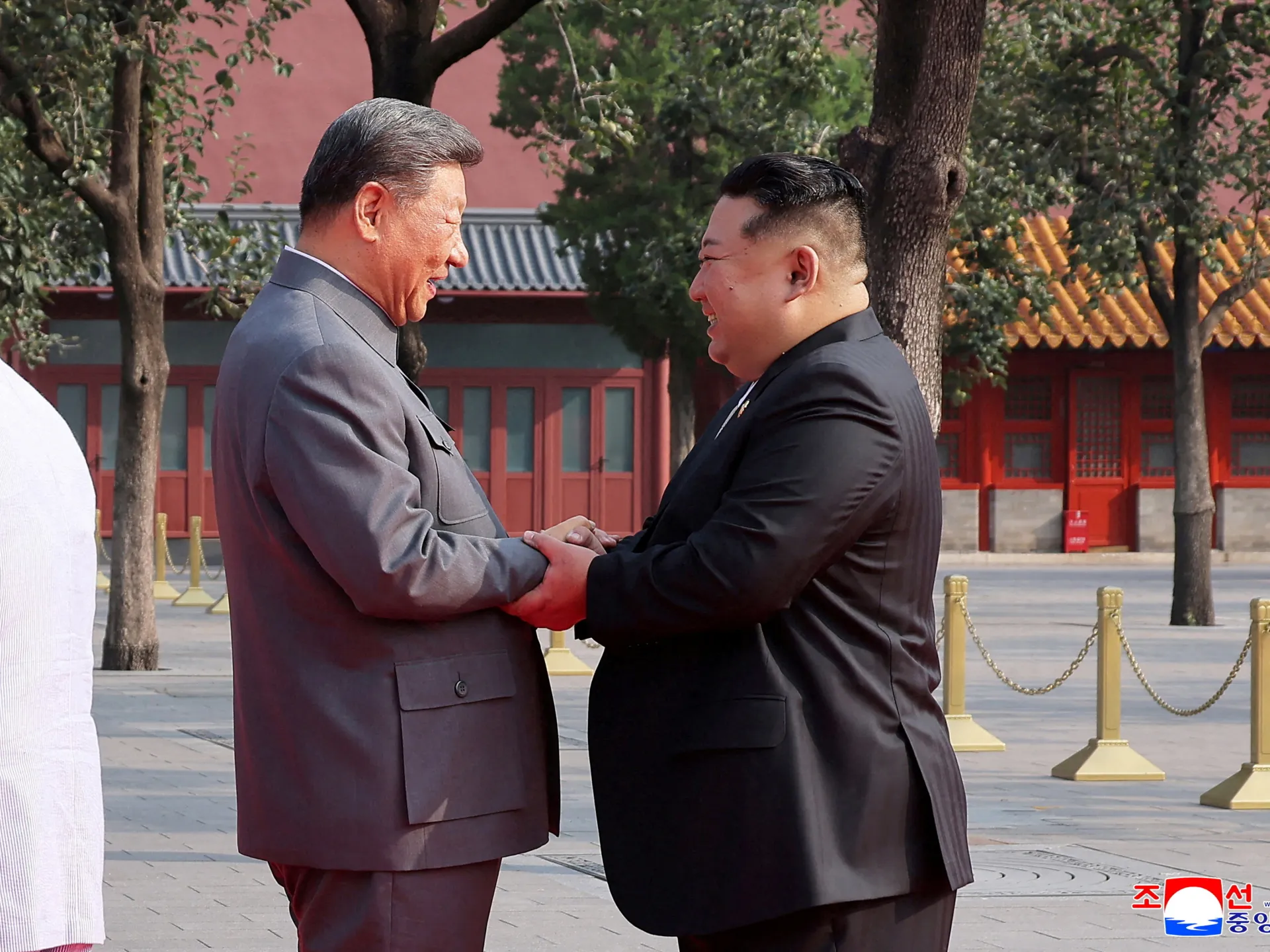
Russia’s President Vladimir Putin will pay an official visit to China from May 19 to 20, the Kremlin has announced.

Putin and his Chinese counterpart, President Xi Jinping, plan to “further strengthen the comprehensive partnership and strategic cooperation” between Moscow and Beijing, the Kremlin said in a statement.

Recommended Stories

list of 4 itemsend of list

Putin is also scheduled to discuss economic and trade cooperation with Chinese Premier Li Qiang.

Russia’s TASS news agency reported that the visit is timed to commemorate the 25th anniversary of the signing of the Treaty of Good-Neighborliness and Friendly Cooperation, a key Moscow-Beijing agreement signed in 2001.

News of Putin’s forthcoming trip arrives one day after United States President Donald Trump departed China following the first presidential visit to Beijing in almost a decade.

Although Trump and Xi touted several broad trade deals, they appeared to make little public progress on key sticking points related to Taiwan or the US-Israel war on Iran.

They also touched on the Russia-Ukraine war, in which China is officially neutral and Xi has presented himself as a mediator.

Still, Xi’s “no limits” alliance with Putin – announced just before the full-scale Russian invasion of Ukraine in 2022 – has undercut that stance.

China has also denied reports from Reuters and other news agencies showing that Chinese firms have single-handedly sustained Russian drone production, in part by shipping engines mislabelled as “industrial refrigeration units” to drone assembly plants.

“We discussed – well, it’s one that we’d like to see settled,” Trump said in remarks reported by the Kyiv Post.

Trading partners

As Washington and Beijing’s relationship has been beset by tension, Chinese-Russian relations have only appeared to deepen in recent months.

Although the duo are not formal military allies, they maintain extremely close political and economic ties, with China stepping in to buy Russian oil and goods after Western nations cut ties with Moscow.

Before a four-day trip to China last August, Putin decried “discriminatory” Western sanctions and heaped praise on Beijing.

China is now by far Russia’s biggest trading partner by volume, and transactions are almost entirely carried out in Russian roubles and Chinese yuan, Putin said at the time.

Last month, Xi pressed for “closer and stronger strategic coordination” between Beijing and Moscow in a meeting with Russian Foreign Minister Sergey Lavrov.

Xi also visited Russia in May last year and pledged to stand with Moscow against “unilateralism and hegemonic bullying”.

Source link

Trump and Xi move towards business-first relationship after Beijing summit | Xi Jinping News

Early signs point to the United States and China moving towards a relationship focused on pragmatic areas of common interest following US President Donald Trump’s trip to China, according to analysts, setting aside the turmoil that marked 2025.

Trump was in Beijing for three days this week to meet with Chinese President Xi Jinping, accompanied by a delegation of American CEOs, including the heads of Apple, Nvidia, BlackRock and Goldman Sachs.

Recommended Stories

list of 4 itemsend of list

The meeting between the two leaders came just over six months after they agreed to pause the US-China trade war for a year on the sidelines of a multilateral summit in South Korea. While a frequent critic of China’s economic policies at home, Trump appeared to get along with Xi in person throughout his trip and lavished praise on the Chinese leader.

“It’s an honour to be with you, it’s an honour to be your friend, and the relationship between China and the USA is going to be better than ever before,” Trump told Xi on Thursday.

The White House readout of the Trump-Xi meeting on Thursday stressed areas of common ground, stating that the leaders had “discussed ways to enhance economic cooperation between our two countries” by “expanding market access for American businesses into China and increasing Chinese investment into our industries”.

Notably absent from the statement was any mention of China’s export controls on rare earths, critical materials used across the tech, defence and energy sectors. China controls nearly the entire industry, and it has moved to restrict US access.

William Yang, senior Northeast Asia analyst at the Crisis Group, told Al Jazeera that Trump’s remarks showed he would likely try to compartmentalise US-China relations into areas where the two sides can work together without being overshadowed by geopolitical concerns.

Xi, while less effusive, also spoke of his desire to move towards a new US-China framework based on “constructive strategic stability”, meaning that the US and China should try to “minimise competition, manage differences and allow stability to be the foundation of the bilateral relationship”, according to Yang.

Both leaders appear to have sidestepped other controversial issues, such as the status of Taiwan, a 23 million-person democracy claimed by Beijing but unofficially backed by Washington.

Xi told Trump during their meeting that Taiwan was the “most important issue” in the US-China relationship, and that mishandling it could lead to “clashes and even conflicts” between the two sides. Beijing objects to Washington’s ongoing military support of Taiwan and has pressed the US to take a more explicit line on Taiwan’s political status.

Although the US does not recognise the government in Taipei, it maintains a deliberately vague policy on China’s territorial claims. Despite the controversy, neither the Chinese nor the US readout mentioned whether Trump discussed Taiwan or the future of arms sales – suggesting he either disagreed with Xi or avoided the topic.

Analysts like Yang say it is still too soon to know whether Trump will heed Xi’s remarks by blocking or delaying a $14bn arms deal reportedly in the works for Taiwan. The deal would need Trump’s sign-off to move forward, according to US legislators.

Xi was equally circumspect on Iran and the Strait of Hormuz, which has been shuttered since the US and Israel launched a war on Iran on February 28.

Trump has previously pushed China to encourage Iran to reopen the strait, through which a fifth of the world’s oil and gas passed each year before the war, because of its close relationship with Tehran. China and Iran signed a 25-year “strategic partnership” in 2021, and Beijing buys 80 to 90 percent of Iran’s oil annually.

Trump raised the points again in his meeting with Xi in Beijing, according to the US readout, which said the two leaders “agreed that the Strait of Hormuz must remain open to support the free flow of energy”.

“President Xi also made clear China’s opposition to the militarisation of the Strait and any effort to charge a toll for its use, and he expressed interest in purchasing more American oil to reduce China’s dependence on the Strait in the future. Both countries agreed that Iran can never have a nuclear weapon,” the readout said.

The Chinese readout of their meeting on Thursday did not include mention of Iran or its nuclear programme.

Chucheng Feng, founding partner of Hutong Research based in Beijing, told Al Jazeera that the omissions reflect that Xi and Trump still disagree on key issues, including Iran, but that the overall message from the summit was a desire to move forward.

“For Beijing, the most important thing is to find a floor for the relationship, to set up and enhance guardrails so that no surprises or uncontrolled escalations suddenly emerge. For that, item-by-item disagreements are largely secondary,” he said.

Source link

Iran war day 77: Trump, Xi discuss Hormuz as Tehran rallies BRICS | US-Israel war on Iran News

The US and Chinese leaders agreed during talks in Beijing that the Strait of Hormuz should remain open to ensure global energy supplies.

United States President Donald Trump and Chinese President Xi Jinping discussed the Strait of Hormuz during talks in Beijing, with the White House saying Xi agreed the strategic waterway “must remain open to support the free flow of energy” as tensions over the Iran war continue to roil global markets.

Meanwhile, Iran’s Foreign Minister Abbas Araghchi urged fellow BRICS nations at a meeting in New Delhi, India, to condemn the US-Israel war on Iran as a violation of international law, insisting Tehran would “never bow to any pressure”.

At the same time, a third round of direct talks between Lebanese and Israeli negotiators is under way in Washington, DC, aimed at ending hostilities, even as Israeli attacks continue across towns and villages in southern Lebanon.

Here is what we know:

In Iran

  • Iran urges BRICS to condemn US and Israel: Araghchi told the BRICS+ bloc that Iran was a “victim of illegal expansionism and warmongering” and called on member states to oppose “Western hegemony” by condemning the actions of the US and Israel.
  • Iran accuses UAE over war: Araghchi also accused the United Arab Emirates of playing an active role in the war against Iran, saying during the BRICS summit in India that the UAE was “directly involved in the aggression against my country”.
  • Iran signals new Hormuz strategy: Iranian media reported that more than 30 ships, including some linked to Chinese companies, were allowed to transit the Strait of Hormuz overnight as Tehran signalled the waterway was “open to all commercial ships” that cooperate with Iranian naval forces.

War diplomacy

  • Xi offers help on Hormuz: Trump said Xi Jinping had offered China’s help to open the Strait of Hormuz and pledged not to send military equipment to aid Iran in its war against the US and Israel.
  • Trump-Xi summit held amid ‘promise fatigue’: Analyst Drew Thompson said Washington and Beijing remain deeply distrustful after years of unmet expectations, with both sides accusing the other of breaking promises. He described the summit as “carefully managed” and focused on preventing further deterioration in ties.
  • US says Israel-Lebanon talks ‘positive’: A US official said talks in Washington on Thursday between Israel and Lebanon about an expiring ceasefire were “positive” and will take place as planned for a second day.

In the US

  • Trump wants Iran’s uranium for ‘public relations’: The US president suggested that hunting down Iran’s enriched uranium was primarily for political optics, after Israel demanded it as a goal in the war. “I just feel better if I got it, actually, but it’s – I think, it’s more for public relations than it is for anything else,” Trump told Fox News.
  • Trump says Iran must make deal: In the same interview, Trump told Sean Hannity he was running out of patience to reach a truce with Iran as peace talks have stalled. “I’m not going to be much more patient… They should make a deal. Any sane person would make a deal, but they might be crazy,” Trump said.

In Israel

  • NYT lawsuit: Israel says it will sue The New York Times after the newspaper published an article by columnist Nicholas Kristof detailing rape allegations by Palestinian detainees against Israeli forces. The Israeli Prime Minister’s Office announced the legal move three days after the report, which was based on accounts from 14 male and female Palestinian victims.

In Lebanon and Syria

  • Hezbollah claims attacks on Israeli forces: The group said it launched rockets, drones and artillery attacks on Israeli troops and military vehicles in southern Lebanon, and claimed to have downed Israeli drones.
  • Israel-Lebanon talks face uncertainty: According to Al Jazeera’s Manuel Rapalo, Israel is seeking stronger security guarantees and Hezbollah’s disarmament, while Lebanon wants a permanent ceasefire and Israeli troop withdrawal from the south. Rapalo says Hezbollah’s refusal to commit to any future agreement adds significant uncertainty, although diplomats still view the talks as a breakthrough.
  • Amnesty urges Israel to conduct Syria war crimes probe: The rights group called for investigations into Israeli raids and shelling in southern Syria, which residents say have destroyed homes and farmland and led to detentions. Israel has also seized additional territory beyond the occupied Golan Heights, in violation of the 1974 disengagement agreement.

Source link

After Trump’s pledge to ‘open up’ China, low expectations for trade deal | Business and Economy News

Before arriving for his high-stakes summit with Chinese leader Xi Jinping, United States President Donald Trump aimed to set expectations high.

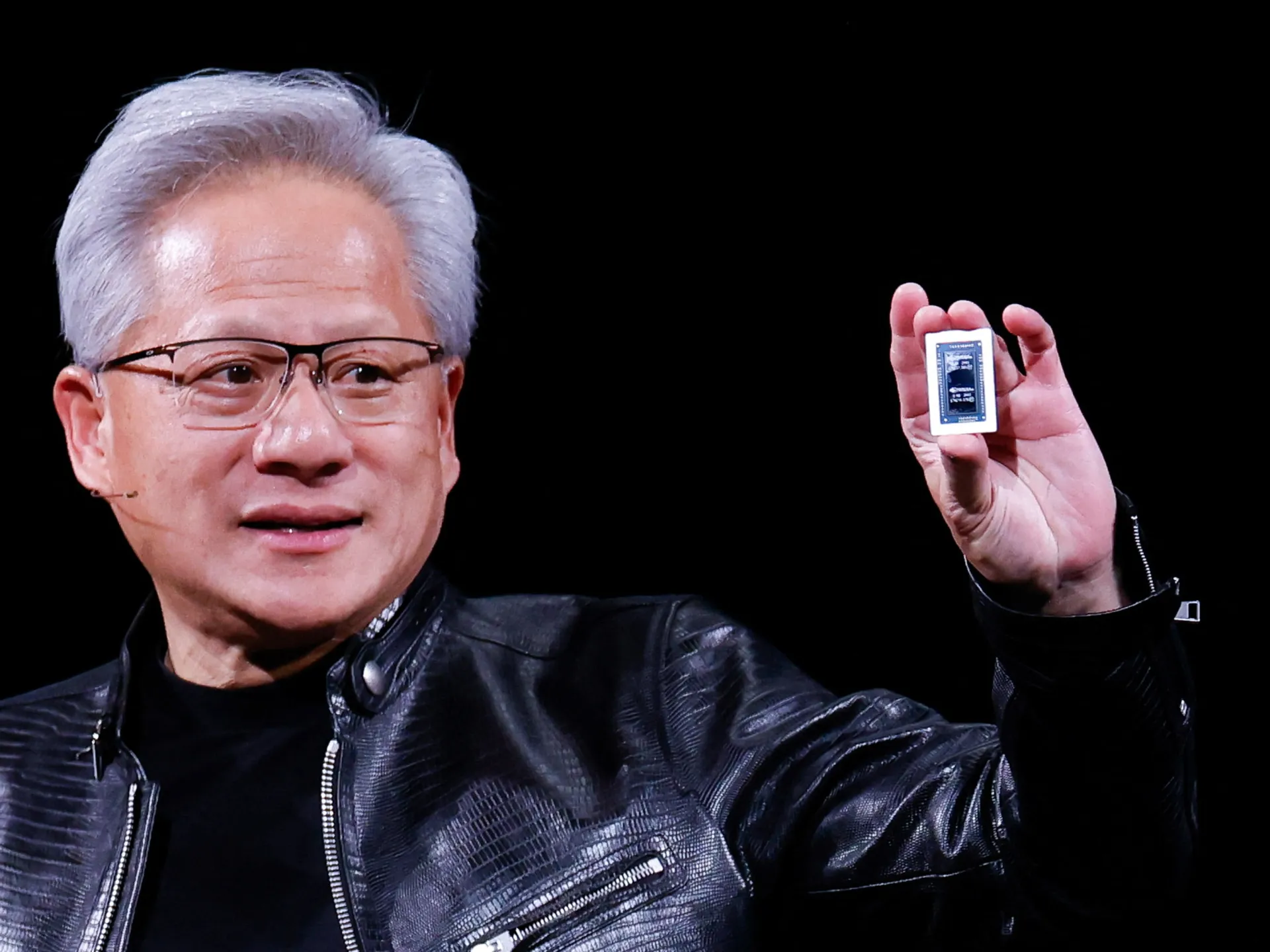
He said he would urge Xi to “open up” China’s economy and announced a delegation of top business executives, including Tesla’s Elon Musk, Apple’s Tim Cook and Nvidia’s Jensen Huang, to accompany him.

Recommended Stories

list of 4 itemsend of list

As Trump and Xi prepare to wrap up two days of meetings on Friday, the expectations for their summit’s outcome among observers generally are modest at best.

While Trump and Xi are anticipated to extend the one-year pause in their trade war agreed to in South Korea in October, the expectations are for a stabilisation – not revitalisation – in ties between the world’s two largest economies, which are locked in a rivalry that spans everything from trade and artificial intelligence to the status of Taiwan.

“It is important to be clear-eyed about the state of relations here,” Claire E Reade, a senior counsel at Arnold & Porter who previously worked on China at the Office of the US Trade Representative (USTR), told Al Jazeera.

“China does not trust the US, and China wants to beat the US in what it sees as long-term global competition,” Reade said.

“This limits what can be agreed.”

While Trump and Xi have yet to announce the final contours of any trade agreement, the US side has flagged various business deals in the pipeline.

In a pre-recorded interview with Fox News that aired on Thursday, Trump said that China would invest “hundreds of billions of dollars” in companies run by the CEOs in his delegation, without providing further details.

Trump also said that Beijing had agreed to purchase US oil and 200 Boeing aircraft.

Trump administration officials have said that the sides are also discussing the establishment of a “Board of Investment” to manage investments between the countries.

“A realistic ‘opening up’ of the Chinese market would likely focus first on sectors where the economic complementarity is most obvious,” Taiyi Sun, an associate professor of political science at Christopher Newport University in Newport News, Virginia, told Al Jazeera.

“Agricultural goods such as soybeans and beef, as well as high-value-added manufacturing products like Boeing aircraft, are natural areas for expansion because they match existing Chinese demand with American export strengths.”

Sun said a “gradual” opening for US firms in sectors such as financial services could also be possible.

“But those areas are politically and institutionally more sensitive inside China, so progress would likely be incremental rather than immediate,” he said.

Gabriel Wildau, a senior vice president at global business advisory firm Teneo, said both sides will be seeking to address supply-chain vulnerabilities exposed by their trade war.

“The Iran war has likely increased the US’s vulnerability to export controls on rare earths, given the need to rebuild the munition stocks depleted in that war,” Wildau told Al Jazeera.

“Washington will therefore be willing to offer tariff relief – or at least assurances not to impose new tariffs – in exchange for Beijing’s commitment to keep rare earth exports flowing.”

While Trump and Xi agreed to roll back some trade barriers at their summit in South Korea, US-Chinese business and trade remain severely constrained after a decade of tit-for-tat economic salvoes between the sides.

The average US tariff on Chinese goods stood at 47.5 percent after the South Korea summit, up from 3.1 percent before Trump’s first term, according to the Peterson Institute for International Economics.

China’s average tariff on US goods stood at 31.9 percent, up from 8.4 percent in 2018, according to the think tank.

Two-way goods trade amounted to about $415bn in 2025, down sharply from its 2022 peak of $690bn.

Carsten Holz, an expert on the Chinese economy at the Hong Kong University of Science and Technology, said China has less incentive to make concessions to the US than before, amid the rise of its domestic industries.

“Across many industrial sectors, PRC [People’s Republic of China] firms hold leading or controlling positions,” Holz told Al Jazeera.

“As a result, the PRC economy has little to gain from opening further to the US and is likely to only offer largely symbolic gestures.”

Deborah Elms, head of trade policy at the Hinrich Foundation in Singapore, voiced similar sentiments about the limits of US leverage.

“Basically, Trump expects China to buy more stuff from America and let US companies operate more freely in China,” Elms told Al Jazeera.

“What is he offering?” Elms said. “Very little, largely because Trump sees the bilateral relationship as one where the US has been fair and China has not.”

Reade, the former USTR official, said Xi would not agree to any measures that “harm Chinese interests in any way.”

“Instead, China will potentially give the US no-cost ‘gifts,’” Reade said, suggesting such measures could include the removal of trade barriers it placed on US beef.

“It may buy US goods it needs,” Reade said.

“If it allows purchases of US tech products, it will only be because it needs them right now,” she added, “But this does not interfere with China’s strategic plans to eliminate dependence on US technology over the longer term.”

Source link

Philippine politician wanted by ICC flees Senate | ICC News

Police spokesperson Randulf Tuano says one person has been arrested after gunshots rang out in Senate.

⁠The ⁠Philippine Senate President says that a politician wanted by the International Court (ICC) was no longer in the Senate building where he had ⁠been taking refuge, fearing his arrest.

Senator Ronald “Bato” dela Rosa, the former national police chief and top enforcer of former President Rodrigo Duterte’s bloody “war on drugs”, has ⁠been under Senate protection and is wanted for crimes against humanity, the same charges Duterte is accused of.

“The ⁠sergeant-at-arms has confirmed that he ⁠is no ⁠longer in the ⁠building,” Senate President Alan Peter Cayetano told reporters on Thursday.

The announcement comes a day after gunfire rang out at the Senate, where dela Rosa had been holed up. Confusion and chaos filled the legislature as people inside scrambled for cover on Wednesday, hours after dela Rosa, had appealed to his supporters on social media to mobilise and said law enforcement agents were planning on arresting him.

The incident caused chaos, with a heavy police presence and armed guards at the Senate. Protests were also held outside, and more than a dozen shots were fired after the Marines were called in to help the situation.

Philippine President Ferdinand Marcos Jr held an emergency meeting with government and security chiefs on Thursday, as police spokesperson Randulf Tuano told DZBB radio that one person had been arrested following the shooting and investigations were under way.

“The person has provided names, but these still need confirmation,” Tuano told the radio station.

Dela Rosa has denied involvement in the illegal killings, but on Monday, the ICC unsealed an arrest warrant for him.

Duterte is also accused of crimes against humanity and has been held in ICC custody in The Hague since March 2025. The ICC estimates that between 12,000 and 30,000 people were killed from 2016 to 2019 in the former president’s “war on drugs”.

Reporting from Manila, Al Jazeera’s Jamela Alindogan said two independent, credible sources confirmed that dela Rosa had fled the building.

“He was able to escape at around 2 or 3 this morning,” she said.

Lawyer Jimmy Bondoc, who represents dela Rosa, also told reporters that he spoke to the lawmaker late at night and believed he was inside the Senate after the incident.

“As his lawyer, I asked him if you have plans to leave, he said none,” Bondoc told reporters.

In an interview that aired on DZBB radio on Thursday morning, dela Rosa said he would “exhaust all available remedies” to block his transfer to the ICC, and after learning about the conditions Duterte was being held under, he was no longer willing to fight his case at The Hague.

It remains unclear when the interview was initially conducted.

Source link

Japan suspends Australian rugby coach Jones for verbally abusing officials | Rugby News

Eddie Jones suspended for four games over ‘verbal abuse’ of match officials during an Australian tour, Japan Rugby Football Union says.

Japan has suspended rugby coach Eddie Jones for four games and cut his salary for “verbal abuse directed at local officials” during an Australian tour.

The Japan Rugby Football Union (JRFU) said on Wednesday that the 66-year-old Australian violated their ethics and disciplinary regulations during a Japan Under-23 team tour of Australia from April 1 to 15.

“These measures relate to incidences of verbal abuse directed at local match officials,” the JRFU said in a statement.

They said Jones had “accepted this decision”.

“I accept the disciplinary action of the JRFU relating to the U23 Japan national team tour of Australia,” Jones said in a statement.

“Some inappropriate remarks that I made caused discomfort to local match officials and other related parties.

“I would like to offer my sincere apologies to everyone involved. I deeply regret my behaviour and words and will make every effort to ensure that this doesn’t happen again.”

Jones will miss Japan’s Nations Championship opener against Italy in Tokyo on July 4 and not be allowed to take any part in two games pitting a Japan select team against Hong Kong on May 22 and 29.

He is also banned from the Japan XV game against the Maori All Blacks on June 27 in Nagoya and the full Japan side’s Nations Championship opener against Italy.

He is suspended from duty for six weeks between April 24 and June 5.

Source link

Trump needs Xi much more than Xi needs Trump | Xi Jinping

In the past few months, the geopolitical chessboard has tilted dramatically, setting the stage for a highly anticipated yet asymmetrical summit between Donald Trump and Xi Jinping, now officially confirmed for May 13-15 following statements from both the White House and China’s Foreign Ministry. Washington has repeatedly signalled the importance it attaches to the meeting, while Beijing has approached it in its characteristically measured fashion, framing the summit less as a breakthrough than as part of the broader need for “communication” and “strategic guidance” between major powers.

This subtle diplomatic choreography speaks volumes about the shifting global balance of power. For the first time in decades, it is the United States that finds itself in a position of profound vulnerability, increasingly dependent on China’s cooperation to extricate itself from a self-inflicted disaster.

The source of this American predicament is the failure of its recent military adventurism in the Middle East. Having launched an illegal, unprovoked war against Iran alongside Israel, the US military has found itself trapped in a costly and protracted deadlock. In retaliation, Tehran has effectively choked off the Strait of Hormuz, with over a dozen US warships now enforcing a blockade that has rerouted dozens of vessels, sending shockwaves through global energy markets and raising fears of a worldwide economic meltdown. Washington now finds itself scrambling for an exit.

In a striking reversal of their usual hawkish rhetoric, top US officials — including Secretary of State Marco Rubio and Treasury Secretary Scott Bessent—have been making increasingly desperate public appeals for China to intervene. They are urging Beijing to use its considerable influence to convince Iran to reopen the vital waterway.

What makes this dynamic particularly striking is the contradiction at the heart of US policy. Even as Trump and Rubio appeal for China’s help on the Hormuz crisis, the broader US posture remains confrontational, with ongoing disputes over technology restrictions and other issues continuing to shadow the relationship. The contradiction exposes an administration increasingly driven by desperation.

Washington’s narrative conveniently frames China as the party most desperate for a resolution, citing Beijing’s heavy reliance on Middle Eastern energy imports. However, this assessment drastically miscalculates China’s strategic preparedness. Far from being paralysed by the disruption, Beijing has already demonstrated remarkable resilience. Through meticulous stockpiling, diversified supply chains, and robust domestic production, China has coped with the closure exceptionally well, avoiding the kind of immediate economic shock Washington appeared to expect.

Consequently, Beijing views the Hormuz standoff as a pivotal stress test it has already passed. Knowing the stakes, China is in no rush to bail out a belligerent Washington. Recent diplomatic engagements have made this increasingly clear. China has maintained close communication with Iran throughout the crisis, with Foreign Minister Wang Yi hosting his Iranian counterpart for talks on the situation. Rather than simply pressuring Iran to reopen Hormuz, Beijing is positioning itself to demand a comprehensive “grand bargain.” Why settle for a minor concession when you can force the US to cease its hostilities against Iran, lift its crippling sanctions, and accept a new multipolar security architecture in the Middle East?

Iran has submitted a response to a US proposal to end the war, focused on ceasing hostilities and addressing Strait security, which Trump promptly rejected as “completely unacceptable,” highlighting the continued deadlock Washington hopes Beijing can break.

China did not start this fire, but it is now the indispensable power capable of extinguishing it, and strictly on its own terms. Beyond the immediate crisis, Beijing’s ultimate strategic focus remains unwavering: the core issue of Taiwan. This broader assertiveness will undoubtedly carry over into the Trump-Xi summit. While Trump is desperate for tangible deliverables and a successful photo-op to distract from domestic turmoil, Xi can afford to play the long game.

Unlike previous administrations that settled for vague diplomatic pleasantries, Beijing is expected to intensify the pressure significantly. China will likely demand that the US explicitly oppose Taiwan independence, moving decisively beyond the current, tepid commitment to merely “not support” secessionist forces.

Recognising Trump’s eagerness for a win, the US president may attempt to use Taiwan as a bargaining chip. He could offer concessions on the issue in exchange for Chinese cooperation on reopening the Strait of Hormuz, massive purchases of American agricultural and energy products, or even help brokering peace in other conflicts.

However, Beijing is far too disciplined to fall for such short-term traps. Taiwan is a non-negotiable core interest, and any temporary trade-off would be strategically foolish.

While Trump may lavish praise on his personal relationship with Xi Jinping and project an image of amicable deal-making, Beijing harbours no illusions about the man across the table. China’s leadership understands that Trump cannot be trusted; any agreement reached today could be discarded tomorrow based on his whims or domestic political calculations. Even as Beijing entertains the prospect of a “grand bargain” and maintains a cordial facade, it refuses to structurally rely on Trump’s commitments.

By stabilising its bilateral relationship with the US over the coming months — especially with several high-level meetings scheduled between the two leaders throughout the year — China aims to secure a predictable external environment conducive to its long-term rise.

For Beijing, however, the stakes extend far beyond Taiwan alone. A key priority for China will also be securing firm guarantees regarding the trajectory of Japan’s remilitarisation. As Tokyo rapidly expands its military capabilities and grows increasingly vocal about its willingness to intervene in a Taiwan contingency, China will demand that Washington strictly curtail its ally’s ambitions.

On a broader geopolitical scale, Beijing is positioning itself as a responsible and stabilising great power, repeatedly calling on the international community to de-escalate the Hormuz crisis and prevent wider economic disruption. In doing so, China is drawing a stark contrast with a United States that is openly launching illegal wars, engaging in what critics describe as state terrorism, including the extrajudicial kidnapping and killing of foreign leaders and their family members.

Ultimately, the coming days are critical not only for the future of US-China relations, but for the resolution of the US-Israel war on Iran and the broader structure of the international order. The era of US unilateralism is gasping for air in the Gulf. Armed with strategic patience and increasingly strong leverage over the crisis, China enters the Trump-Xi summit in a commanding position.

The views expressed in this article are the author’s own and do not necessarily reflect Al Jazeera’s editorial stance.

Source link

China’s Xi expected to press Trump on Taiwan, tariffs during summit | Donald Trump News

Taipei, Taiwan – Chinese President Xi Jinping is expected to seek concessions on Taiwan and US tariffs when he meets United States President Donald Trump for a high-stakes summit taking place in the shadow of the war on Iran.

Trump will arrive in China on Wednesday evening for a three-day visit that will mark the first trip by a US leader to the country since 2017, when Trump visited in the early days of his first term.

Recommended Stories

list of 4 itemsend of list

Unlike Trump, who is renowned for his mercurial policymaking, Xi is widely seen as predictable in his goals for the summit, particularly as they concern Beijing’s longstanding “core interests” related to national security and territorial integrity.

At the top of that list is Taiwan.

While Taiwan’s government considers itself the head of a de facto sovereign state, Beijing views the island as an inalienable part of its territory.

The US formally cut ties with Taiwan – also known as the Republic of China – decades ago, but is committed to aiding the self-governing democracy’s defence under the 1979 Taiwan Relations Act.

Under the law, Washington has provided Taiwan with billions of dollars in arms and pursued cooperation in areas such as military training and intelligence sharing, which Beijing considers interference in its internal affairs.

The US government officially acknowledges that China views Taiwan as part of its territory, but does not express a stance on whether it agrees.

Washington is also intentionally vague about whether it would intervene to defend Taiwan if China sought to annex it by force.

In a call with US Secretary of State Marco Rubio last month, Chinese Foreign Minister Wang Yi made clear that Taiwan would be raised at the summit, describing the issue as “the biggest risk in the China-US relationship”, according to a Chinese readout of the call.

China’s embassy in Washington, DC, reiterated that message after Trump’s departure for the summit on Tuesday, naming Taiwan as the first of “four red lines” that “must not be challenged”.

While analysts say it is unlikely that the US will change its position on Taiwan due to Chinese pressure, Trump said this week that the summit’s agenda would include US arms sales to the island, raising questions about the future of a stalled multibillion-dollar arms deal.

The US Congress approved the arms package reportedly worth $14bn earlier this year, but the sale still requires Trump’s final approval.

Xi will use his meetings with Trump to “influence and potentially convince Trump to agree to scale back, if not completely suspend, sales to Taiwan,” William Yang, a Taipei-based analyst at the Crisis Group, told Al Jazeera.

If Trump were to make concessions on weapons sales to Taiwan, he would be breaking with a longstanding policy against consulting with Beijing that dates back to former US President Ronald Reagan.

Cancelling or watering down the deal would be a serious blow to Taiwanese President William Lai Ching-te, who is locked in an intense fight with the opposition over defence spending, Yang said.

“They are hoping to first influence Trump’s decision around this issue and potentially create a situation where it will be much harder for [Lai’s] government to request more special defensive spending in the future,” Yang said.

Restoring the US-China framework

Xi is also eager to smooth over US-China relations after a tumultuous 18 months that saw Trump launch a second trade war with the world’s second-largest economy, according to analysts.

The standoff saw each side roll out escalating tit-for-tat tariffs – briefly sending duties well above 100 percent – and other punitive measures, such as export controls, before Washington and Beijing hit pause in May.

During their last meeting in South Korea in October, Xi and Trump agreed to a one-year reprieve in their trade war, while keeping some trade measures in place, including certain tariffs and export controls.

Over the past month, the US has rolled out several rounds of new sanctions targeting Chinese firms, including refiners accused of buying Iranian oil and companies accused of helping Tehran obtain materials to build drones and missiles.

Earlier this month, Beijing issued a “prohibition order” directing firms to disregard the US sanctions on its oil refineries.

“Beijing wants predictability and certainty for the remainder of Trump’s term through January 2029, because Beijing needs to be able to plan its own economic policies,” Feng Chucheng, a founding partner of Beijing-based Hutong Research advisory, told Al Jazeera.

These policy considerations include understanding tariff levels the US will apply to China and its trade partners, Feng said.

Wang Wen, dean of the school for global leadership at Renmin University in Beijing, said China wishes to return to a relationship based on “peaceful coexistence, mutual respect, and win-win cooperation”.

“We hope that this meeting will bring the US policy towards China back to these three principles,” Wang told Al Jazeera.

The stakes are high for Beijing, where the view of Trump has shifted from a “predictable transactional counterpart” to a “more action-oriented and harder-to-restrain opponent,” Hung Pu-Chao, deputy executive director of the Center for Mainland China and Regional Development Research at Taiwan’s Tunghai University, told Al Jazeera.

Restoring the US-China relationship to a stable footing is one way to mitigate these risks, Hung said.

Rather than secure concessions, Hung said, China’s priority is “trying to adjust the current strategic position and negotiating pace that are unfavourable to it, and bring US-China interactions back into a framework that it can better control”.

At the summit, Xi is likely to agree to increase purchases of US agricultural exports and Boeing planes, Feng said, and could also back Trump’s plan to create a “Board of Trade” and a “Board of Investment” to oversee US-China economic ties.

But China is unlikely to make compromises on rare earths – a sector it dominates – unless the US makes major political concessions, Feng said.

Calling for dialogue on the war on Iran

The US-Israel war on Iran will loom large over the summit.

Although not a main player in the conflict, China has been hit by the economic fallout of the war and the shutdown of the Strait of Hormuz, through which one-fifth of global oil and natural gas supplies usually pass.

Beijing has called for negotiations and a comprehensive ceasefire since the start of the conflict, a message Xi is likely to reiterate in his talks with Trump, according to Jodie Wen, a postdoctoral fellow at the Center for International Security and Strategy at Tsinghua University in Beijing.

“Xi will talk about this issue with Donald Trump and say that we all know that the war has a huge impact on the world, on Asian countries and the US, so we must have dialogue,” Wen told Al Jazeera.

Trump said on Tuesday that he does not need China’s “help” resolving the war, though the White House has pressured Beijing to lean on Iran to reopen the strait.

Xi and his top diplomat, Wang, have met more than a dozen global leaders and high-level officials since the start of the war, playing a behind-the-scenes mediating role.

China has had a “comprehensive strategic partnership” with Iran since 2016, and buys more than 80 percent of its oil.

Wen, the postdoctoral fellow at Tsinghua University, said Xi is unlikely to agree to any involvement except as a mediator, which she described as consistent with China’s longstanding approach to global affairs.

“China’s foreign policy principle is non-intervention,” she said. “This is our principle.”

Source link

Trump downplays US-Iran differences as he heads to Beijing to meet with Xi | Xi Jinping News

Donald Trump gives conflicting messages on prominence of Iran war in upcoming talks, with his administration emphasising trade.

United States President Donald Trump has departed the White House en route to Beijing, where he will meet with his Chinese counterpart Xi Jinping.

Trump spoke briefly with reporters on Tuesday as he boarded the Marine One helicopter. He was then set to arrive in China aboard Air Force One on Wednesday, ahead of the planned meetings on Thursday and Friday.

Recommended Stories

list of 3 itemsend of list

United States officials have taken pains in recent days to downplay how big a topic the US-Israel war on Iran will be during Trump’s visit.

Beijing has made its opposition to the war clear, at times asserting behind-the-scenes pressure on its trading partner Iran. However, it has largely avoided being pulled into the fray.

In recent days, US Secretary of State Marco Rubio and Treasury Secretary Scott Bessent have stepped up their calls for China to use its influence to help reopen the Strait of Hormuz, through which about 20 percent of the world’s oil supply flowed before the war began.

But Trump again gave conflicting messages on Tuesday about how much the war would feature in his meetings in China.

“We’re going to have a long talk about it. I think he’s been relatively good, to be honest with you,” Trump said of his plans to discuss the conflict – and how it has roiled global oil markets – with Xi.

Minutes later, he added, “We have a lot of things to discuss. I wouldn’t say Iran is one of them, to be honest with you, because we have Iran very much under control.”

“I don’t think we need ⁠any help with Iran. We’ll win it one way or the other, peacefully or otherwise,” he said.

Trade to loom large

The upcoming meetings will be the first face-to-face exchanges since the leaders of the world’s two largest economies met on the sidelines of the Asia-Pacific Economic Cooperation (APEC) summit in Busan, South Korea, in October 2025.

It is the second time Trump will travel to China as president, and the first time since his second term began on January 20, 2025. Xi is expected to travel to the US later this year.

Beyond the war, the US administration has stressed that trade will be a top subject discussed, with Trump seeking a series of business deals and agreements.

Underscoring that initiative, Trump invited an array of US business leaders to accompany him on the trip, including Tesla CEO Elon Musk, who had previously chaired Trump’s so-called Department of Government Efficiency (DOGE), and Apple CEO Tim Cook.

Both sides are expected to seek to avoid a return to the tariff war that defined Trump’s early days in office, which saw Trump set tariffs on Chinese goods at 145 percent, while China announced a further tightening of rare-earth export controls that would have hurt US industry.

The two sides reached a fragile truce in October of last year.

China’s continued support for Iran’s ballistic programme and its defence of Tehran’s nuclear programme has also risked again derailing relations.

Last month, Trump threatened to impose a 50 percent tariff on China after reports that Beijing was preparing to deliver a shipment of new air defence systems to Iran. He later backed away from the threat, claiming that he had received written assurance from Xi that he would not provide Tehran with weaponry.

Days later, Trump said that the US Navy had intercepted a Chinese vessel carrying a “gift” for Iran. Neither side offered further details of the incident.

Xi was also expected to push Trump on US arms sales to Taiwan, the self-governing island that China claims as its own.

Source link

Video: Philippine senator flees ICC arrest over role in drug war | Crime

NewsFeed

Philippines Senator Ronald Dela Rosa has taken refuge in the country’s parliament, as police sought to detain him on Monday in accordance with an ICC arrest warrant.

This is what we know of his role in former President Rodrigo Duterte’s drug war, which prosecutors say killed tens of thousands.

Source link

Thailand’s Thaksin Shinawatra released from prison | News

Influential former prime minister released on parole after spending about eight months behind bars.

Thailand’s former Prime Minister Thaksin Shinawatra has been released from a prison in Bangkok after spending eight months of a one-year sentence there over a corruption-related charge.

Hundreds of people, including the 76-year-old billionaire’s family and political allies, greeted him on Monday, chanting, “We love Thakisn” as he left the Klong Prem Central Prison.

Recommended Stories

list of 4 itemsend of list

Thaksin remade ⁠and dominated Thai politics for a quarter-century, but his influence has waned of late following his jailing and his once formidable Pheu Thai Party’s worst election performance on record ⁠earlier this year.

His hair closely cropped and in a simple white shirt, Thaksin walked out of prison at about 7:40am local time (00:40 GMT) and was immediately surrounded by family members, including his daughter, Paetongtarn Shinawatra, who was sacked as prime minister by ‌a court order in August last year, weeks before his imprisonment.

He smiled brightly as he walked around to greet his supporters, but left without speaking to reporters.

Thaksin had served as prime minister from 2001 until a military coup toppled him in 2006, while he was abroad.

After 15 years in self-exile, he returned to Thailand in 2023 to face an eight-year sentence for conflicts of interest and ⁠abuse of power relating to his time in office. That sentence ⁠had been commuted to one year by the king.

But he was in prison for only a few hours following his homecoming before complaining of heart trouble and chest pains. He then spent six months in the VIP ⁠wing of a hospital until he was freed on parole.

In September last year, the Supreme Court ruled that Thaksin must serve ⁠that time in prison, concluding that he and his doctors ⁠had intentionally prolonged his hospital stay with minor surgeries that were unnecessary.

A Ministry of Justice panel agreed last month to grant him parole as part of a review of more than 900 eligible prisoners’ cases, citing his good behaviour in prison, his age and the low risk that he would repeat his offence.

According to the corrections department, Thaksin will be required to wear an electronic ankle monitor for the remainder of his sentence.

In a video streamed by the Thairath news outlet on Monday, Thaksin was seen rolling down the car window to greet a small group of supporters outside his home in western Bangkok and responding to reporters’ shouted questions that “I was in hibernation; I can’t remember anything now”.

Thaksin’s Pheu Thai Party, which slipped to third place in February’s elections, joined the governing coalition of conservative Prime Minister Anutin Charnvirakul.

Thaksin’s nephew, Yodchanan Wongsawat, who became Pheu Thai’s standard-bearer ahead of the February election, was made minister of higher education in Anutin’s cabinet.

Thaksin’s daughter, Paetongtarn, became the country’s youngest prime minister in 2024, but was removed from office by Thailand’s Constitutional Court after a recording was released of a compromising phone call with former Cambodian leader Hun Sen.

Source link

Trump to discuss Iran with Xi Jinping during China visit: Officials | Donald Trump News

Official says US president will likely ‘apply pressure’ on China over Beijing’s purchase of Iranian oil amid war.

Donald Trump is set to arrive in Beijing on Wednesday evening to discuss the Iran war and other issues with his Chinese counterpart President Xi Jinping.

White House Principal Deputy Press Secretary Anna Kelly said an opening ceremony and meeting will be on Thursday morning, and the trip will conclude on Friday. The US plans to host the Chinese leader during a reciprocal visit later this year.

Recommended Stories

list of 3 itemsend of list

Kelly said that this week’s trip would be of “tremendous symbolic significance” and focus on “rebalancing the relationship with China and prioritising reciprocity and fairness to restore American economic independence”.

Trump’s visit, initially scheduled for earlier this year but postponed in March due to the US-Israel war on Iran, comes as the US president struggles to contain the fallout from the war, both at home and abroad.

A senior administration official told news outlets in an anonymous briefing on Sunday that Trump could “apply pressure” to China on Iran in areas such as oil sales and Tehran’s purchase of potential dual-role military-civilian goods.

US Treasury Secretary Scott Bessent last week accused China of “funding” Iran.

“Iran is the largest state sponsor of terrorism, and China has been buying 90 percent of their energy, so they are funding the largest state sponsor of terrorism,” Bessent told Fox News.

Iran closed the Strait of Hormuz in response to US-Israeli attacks, restricting passage through a key artery of global energy transport.

China has said that it wants to see the war end and hosted Iranian Foreign Minister Abbas Arraghchi last week. At the same time, Beijing has refused to recognise Washington’s “unilateral” sanctions on Iran’s oil sector.

Disruptions stemming from the war have disrupted the global economy, with Asian states that depend on imports from the Middle East especially hard hit.

Trump could also bring up China’s support for Russia during the talks, along with trade and rare earth minerals, a vital resource for the US tech sector. Business executives from aerospace manufacturer Boeing and a handful of agricultural companies are set to travel with the US delegation.

The anonymous administration official said that no change was expected regarding the US stance on Taiwan, a main sticking point in relations between Washington and Beijing. China considers the self-ruling island a part of its territory, but the US has deep security and economic commitments to Taiwan.

Source link

Cambodians struggle with displaced lives amid tense ceasefire with Thailand | Border Disputes News

Preah Vihear/Siem Reap provinces – When asked how she spends her day, 11-year-old Sokna rattled off a list of chores.

She first fetches water, then washes dishes and sweeps the leaves and dust from around the blue tarpaulin tent her family now calls home, in the grounds of a Buddhist pagoda in northwestern Cambodia.

Recommended Stories

list of 4 itemsend of list

Sokna and her sister have stopped attending school, their mother Puth Reen said, since moving to this camp for people displaced by the recent rounds of fighting between Thailand and Cambodia.

The two sisters are among more than 34,440 people who remain in displacement camps in Cambodia – 11,355 of whom are children – as of this month, according to the country’s Ministry of Interior.

“I tried to tell them to go to school, but they don’t go,” Puth Reen told Al Jazeera, explaining how precarious life had become since returning to live in Cambodia after fleeing neighbouring Thailand, where she had worked for many years, as the fighting started.

Like Puth Reen and her family, the future looks murky for the tens of thousands of Cambodians – including many schoolchildren – who are still in displacement camps, and their lives remain disrupted months after the last outbreak of fighting between Thailand and Cambodia.

Forced to flee their homes in areas where local troops are now stationed and on high alert, or in areas occupied by opposing Thai forces, Cambodia’s internally displaced say they are surviving off aid donations, while those more fortunate are transitioning from emergency tents into wooden stilted houses provided by the Cambodian government.

But with tension still evident between the leadership in Bangkok and Phnom Penh, the tenuous ceasefire along the Thai-Cambodia border means life cannot yet return to normality.

Some areas on the Cambodian border, such as the villages of Chouk Chey and Prey Chan in Banteay Meanchey province, have become rallying points for nationalists who post on social media about the Thai occupation of Cambodian territory. Their anger is directed at the large shipping containers and barbed wire that Thai forces have used to block access to villages once inhabited by Cambodians and occupied during fighting.

The Thai military-installed containers now form a sort of new frontier between the two countries.

The Cambodian military has also prevented people, such as local farmer Sun Reth, 67, from returning to their homes in front-line areas, which are still highly militarised zones, with troops ready at any moment for a new round of fighting.

“Now the Cambodian military base is just next to [my house],” Sun Reth said, adding that she was not allowed by authorities to sleep in her modest home or pick cashew nuts from her farm to sell for a little income.

Cambodian children more focused on ‘rumours’ of war

The long-held border dispute between Thailand and Cambodia erupted into two rounds of conflict last year, over five days in July and almost three weeks in December.

Dozens were reported killed on both sides, and hundreds of thousands of civilians fled their homes as both countries’ armed forces fired artillery, rockets, and, in the case of Thailand, conducted air strikes deep into Cambodian territory. Thailand has a modern air force, a military capability not possessed by its smaller neighbour.

Cambodian and Thai officials reached a ceasefire on December 27, but the situation remains tense five months on.

For families who fled the fighting, school continues for most children in the displacement camps, but parents say education is fragmented while their lives are still so unsettled.

Mothers at the Wat Bak Kam camp for the displaced in Preah Vihear province told Al Jazeera that primary school students can join classes at a local school, but high school students need to travel daily to the provincial capital, about 15km (9 miles) away.

(Danielle Keeton-Olsen/Al Jazeera)
Families living temporarily at the Wat Bak Kam internal displacement camp sit outside their tents, supplied by Chinese government aid [Roun Ry/Al Jazeera]

Now the rising cost of petrol, due to the US-Israel war on Iran, has made it even harder for teenaged students, who have access to motorcycles, to make the journey to school.

Kinmai Phum, technical lead for WorldVision’s education programme, which is providing support to the camps, said school dropout rates and children skipping classes have increased substantially among students from the displaced border regions.

Kinmai Phum said the situation is a perfect storm of problems: Displaced families have been forced to move around for shelters, schools and temporary learning spaces lack facilities, and some students have psychological trauma due to the conflict.

“Local authorities [are] concerned that many children may not return to school at all if displacement and economic hardship persist,” Kinmai Phum said.

(Danielle Keeton-Olsen/Al Jazeera)
Puth Reen, left, and her three daughters sit inside their tent in a camp for the displaced at Wat Chroy Neang Ngourn in Siem Reap province [Roun Ry/Al Jazeera]

Yuon Phally, a mother of two, said she had noticed the impact of the war on her daughter and son, who are in their first and third years in primary school.

When they return from school, Yuon Phally said, they tell her about rumours they had heard about Cambodia and Thailand resuming fighting.

“Their feeling is not fully focused on school; they focus more on these rumours,” she said.

Her children’s world was more impacted by the conflict because their father is a soldier stationed in the Mom Bei area of the border.

During the fighting in December, Yuon Phally said she could not convince her children to go to school because they all waited to see if their father would call on a mobile phone from the front line.

“I couldn’t hold back my tears, and that added more pressure onto my kids,” she said.

“They would ask about their dad and how he is doing now. Then they told me to eat rice. They understood my feelings.”

She said her children’s focus on their studies only improved after their father returned from fighting to the camp where they are staying, to rest and recover from sickness and injuries sustained in battle.

(Danielle Keeton-Olsen/Al Jazeera)
Two construction workers transport corrugated metal sheeting between the newly constructed resettlement houses for displaced Cambodians in Preah Vihear province [Roun Ry/Al Jazeera]

‘Who doesn’t want to have peace?’

Soeum Sokhem, a deputy village chief, told Al Jazeera how his home is located in the militarised “danger zone” along the border, but he feels compelled to return every few days to check on his house, tend crops, sleep an occasional night, and check in with other neighbours doing the same.

“I can’t just stay here”, he said of camp life.

“I have to go back.”

When asked how he felt about the border war, Soeum Sokhem said he had experienced so much war in Cambodia that he did not know how to describe his “inner feeling like I really want to”.

He then listed off all the conflicts he had lived through in Cambodia since the 1960s: The spill over into Cambodia from the US war in neighbouring Vietnam; the US bombing campaign in Cambodia; the genocidal Khmer Rouge regime, and the civil war that followed after Vietnam’s intervention to topple the regime’s leader Pol Pot in 1979, and which lasted until the mid-1990s.

Then in the 2000s, sporadic border fights with Thailand began, he said.

(Danielle Keeton-Olsen/Al Jazeera)
Soeum Sokhem at the internal displacement camp at Wat Bak Kam [Roun Ry/Al Jazeera]

Cambodia’s contemporary history has been anything but peaceful, a fact which might explain why the current Cambodian government so often speaks of peace. Government buildings and billboards proclaim the government’s unofficial motto: “Thanks for peace.”

“But who doesn’t want to have peace?” Soeum Sokhem said, after charting his life and the many conflicts he had lived through.

Now the 67-year-old said he once again hears gunfire occasionally when he returns to check on his home on the front line.

“Before, when I walked there, it was normal,” he said.

“But nowadays, I walk with fear when going back there.”

Source link

South Korean court reduces Han Duck-soo’s prison term in martial law case | News

Seoul appeals court cuts ex-prime minister’s prison sentence from 23 years to 15.

A South Korean appeals court has reduced the sentence of former Prime Minister Han Duck-soo by eight years for crimes relating to ex-President Yoon Suk Yeol’s declaration of martial law.

The verdict was issued in the South Korean capital, Seoul, on Thursday.

Recommended Stories

list of 4 itemsend of list

Yoon’s decree in December 2024 briefly suspended civilian government and plunged South Korea into chaos, but it only lasted about six hours as opposition lawmakers moved quickly to overturn it in a vote.

A lower court had sentenced Han in January to a heavier-than-expected jail term of 23 years for engaging in the insurrection, as well as on related charges of perjury and falsifying an official document.

But the appeals court in Seoul cut that by eight years on Thursday, with the presiding judge announcing: “We sentence the defendant to 15 years in prison.”

The court still maintained most of Han’s convictions but lessened the penalties after taking into account his “more than 50 years as a public official prior to the martial law declaration”.

“The records also make it difficult to find evidence showing that the defendant participated more actively in the insurrection, such as by conspiring in advance or systematically leading the operation,” the judge said.

However, he said Han had “abandoned the grave responsibilities arising from the authority and position entrusted to him and instead sided with those participating in the acts of insurrection”.

Han, wearing a white shirt and a dark suit with no tie, listened to the verdict without showing much emotion.

The 76-year-old has been imprisoned since his original sentence in January.

Han had denied wrongdoing on all charges except perjury, saying in November that while he regretted not being able to stop Yoon from declaring martial law, he “never agreed to it or tried to help”.

Han is an experienced technocrat, who served in senior posts under five presidents.

He became the acting president after Yoon was impeached, before his own impeachment on accusations of having aided Yoon in the martial law declaration.

The Constitutional Court overturned Han’s impeachment, restoring his powers to serve as leader before he resigned from the post to run in a snap election in June.

He ended his bid for the presidency following rifts among conservatives.

Yoon, who faces eight separate trials, was handed a life sentence in February on charges of “masterminding an insurrection”.

Yoon, a former career prosecutor, denied the charges, arguing he had presidential authority to declare martial law and that his action was aimed at sounding the alarm over opposition parties’ obstruction of government.

He has apologised for the “frustration and hardship” brought upon the people by his martial law decree, but said in a statement after the sentencing that he stood behind the “sincerity and purpose” behind his actions.

Source link

Rising Fuel costs overshadowing agenda for ASEAN summit in the Philippines | ASEAN

NewsFeed

ASEAN leaders have begun meeting in the Philippines as residents near the summit venue say their main concerns are soaring fuel prices and living costs. The regional bloc enters what officials describe as a “stress test decade”, facing issues stemming from the Iran conflict since so many member states are heavily reliant on energy from the Gulf.

Source link

North Korea says it is not bound by any treaty on nuclear non-proliferation | Nuclear Weapons News

Pyongyang says its status as nuclear-armed state ‘will not change based on external rhetorical claims’.

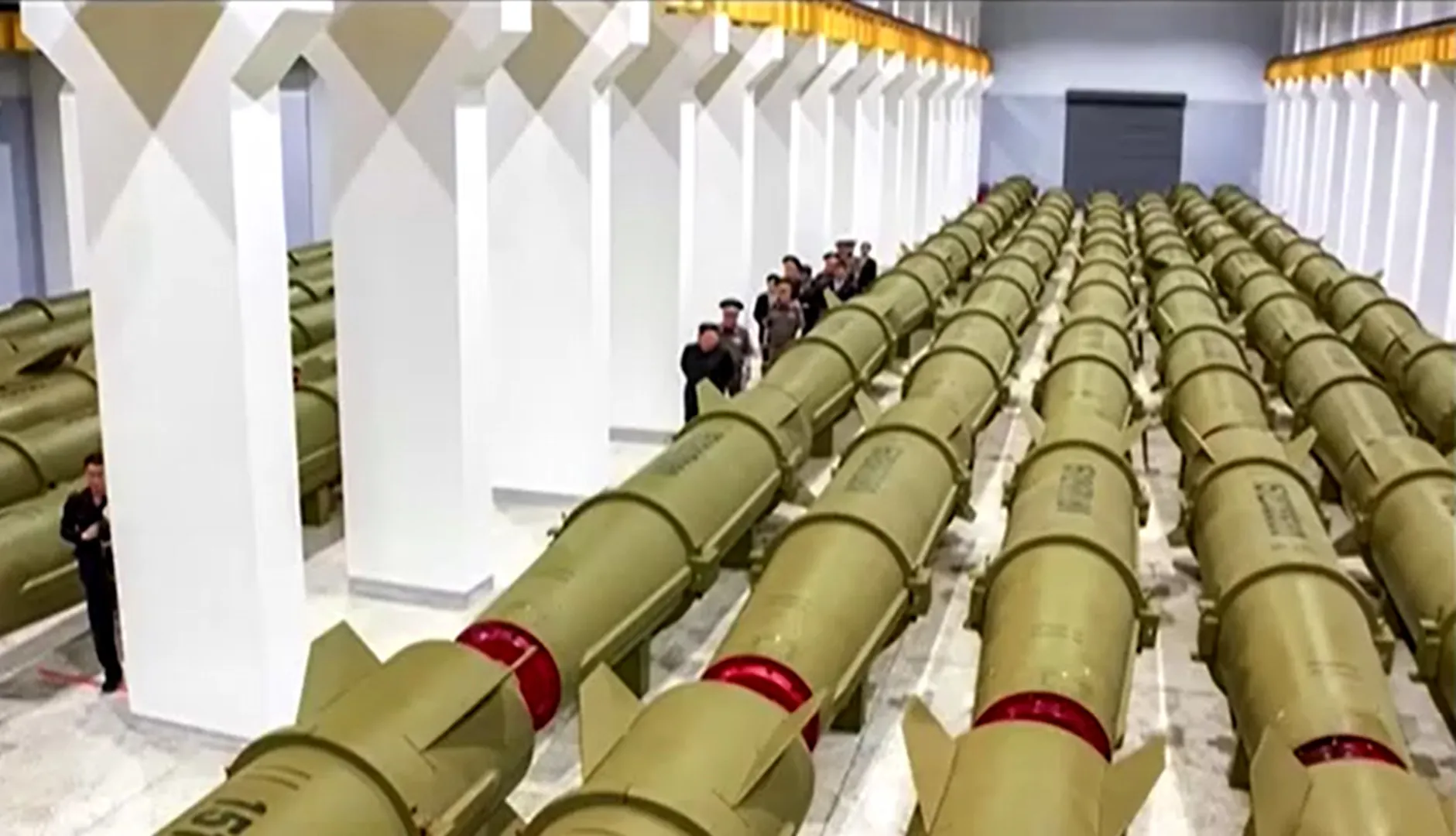
North Korea’s envoy to the United Nations has declared that Pyongyang will not be bound by any treaty on atomic weapons and that no external pressure will change its status as a nuclear-armed state.

Ambassador Kim Song’s statement – carried by state media on Thursday – came as the United States and other countries criticised North Korea’s nuclear programme at the ongoing UN conference reviewing the Nuclear Non-Proliferation Treaty (NPT).

Recommended Stories

list of 4 itemsend of list

Pyongyang withdrew from the NPT in 2003 and has since conducted six nuclear tests, promoting multiple UN Security Council sanctions.

The country is believed to hold dozens of nuclear warheads.

“At the 11th NPT Review Conference currently under way at UN headquarters, the United States and certain countries following its lead are groundlessly calling into question the current status and exercise of sovereign rights,” Kim said, according to the official Korean Central News Agency.

“The status of the Democratic People’s Republic of Korea as a nuclear-armed state will not change based on external rhetorical claims or unilateral desires,” he added.

“To make it clear once again, the Democratic People’s Republic of Korea will not be bound by the Non-Proliferation Treaty under any circumstances whatsoever.”

He continued that the country’s status as a nuclear-armed state has been “enshrined in the constitution, transparently declaring the principles of nuclear weapons use”.

North Korea has long insisted that it will not give up its nuclear arsenal, describing its path as “irreversible” and pledging to strengthen its capabilities.

It has sent ground troops and artillery shells to support Russia’s invasion of Ukraine, and observers say Pyongyang is receiving military technology assistance from Moscow in return.

The nine nuclear-armed states – Russia, the US, France, the United Kingdom, China, India, Pakistan, Israel and North Korea – possessed 12,241 nuclear warheads in January 2025, the Stockholm International Peace Research Institute (SIPRI) reported.

The US and Russia hold nearly 90 percent of nuclear weapons globally and have carried out major programmes to modernise them in recent years, according to SIPRI.

The nuclear issue has been at the heart of the US and Israel’s war on Iran, with US President Donald Trump saying that Tehran – a signatory to the NPT – can never have a nuclear weapon.

Iran denies seeking an atomic weapon and has long demanded Washington acknowledge its right to enrich uranium.

Source link

What are China’s surprise gains in the war on Iran? | US-Israel war on Iran

NewsFeed

Iran’s Foreign Minister Abbas Araghchi is in Beijing, seeking support on a deal with the US, while US President Trump will be in China next week, and Iran will be on the agenda.

Why is everyone turning to China? What role is Beijing playing in the US-Israel led war on Iran?

Source link

Iran’s Araghchi holds talks with China’s Wang Yi in Beijing | US-Israel war on Iran News

Iran’s foreign minister meets his Chinese counterpart one week before President Donald Trump’s visit to Beijing.

Iran’s Foreign Minister Abbas Araghchi is holding talks with his Chinese counterpart, Wang Yi, in Beijing amid tensions with the United States in the Strait of Hormuz.

Araghchi’s one-day trip on Wednesday comes a week before US President Donald Trump’s scheduled ⁠visit to Beijing for a summit with President Xi Jinping on May 14 and 15.

Recommended Stories

list of 4 itemsend of list

China’s official Xinhua news agency reported the meeting between Araghchi and Wang had begun, without providing further details.

Araghchi’s visit to Beijing marks the first time he has travelled to China, a close ally of Tehran, since the US-Israeli war on Iran began on February 28. Araghchi had spoken with Wang by telephone at least three times following the start of the war.

Earlier in Washington, DC, US Secretary of State Marco Rubio expressed hope that Beijing would reiterate to Tehran the need to release its chokehold on the Strait of Hormuz.

Iran effectively closed the strait, through which major oil and gas supplies passed, after the war began, sending prices of fuel and fertiliser skyrocketing and rattling the global economy.

Following a ceasefire in April, the US imposed its own blockade on Iranian ports in a bid to compel Tehran to agree to Washington’s terms in peace talks.

Al Jazeera’s Katrina Yu, reporting from Beijing, said two things will be front and centre on the agenda of Araghchi and Wang’s meeting – maintaining the ceasefire and reopening the Strait of Hormuz.

“We know that China has been very critical of the US’s naval blockade on Iranian ports, calling it dangerous. But increasingly, Beijing has also been critical of Iran’s decision to continually close that vital chokepoint,” Yu said.

Wang is expected to speak to Araghchi about what kind of support China can continue to offer Iran if it continues to close the strait.

“Iran will need Chinese backing, for example, at the United Nations, to continue to block any action that would put any additional sanctions on Iran because of its closure of the strait,” Yu said.

“Reportedly, the Iranian foreign minister is looking for clarity from Beijing as to what it will put on the table when Xi meets with Trump, and whether Beijing will be making any concessions to Washington that could make Tehran nervous.”

China, in return, “wants its own assurances that Iran won’t act in any escalatory way or any dramatic fashion in the lead up to that very important meeting”, she added.

Araghchi and Wang’s meeting came as Trump announced a pause on a US military operation to escort stranded ships out of the Strait of Hormuz.

The effort, which began on Monday, ratcheted up tensions, with the US military claiming it sank several Iranian boats that attempted to interfere in the operation. The United Arab Emirates also reported coming under missile and drone attacks from Iran, with one assault sparking a fire at an oil refinery. Tehran denies the launching the attacks.

Trump said on Truth Social the pause was based “on the request of Pakistan and other Countries” and because “Great Progress has been made toward a Complete and Final Agreement with Representatives of Iran”.

Pakistan has been leading efforts for a peace deal between Iran and the US.

The two sides held direct talks in Islamabad on April 11 and 12, but the negotiations ended without an agreement. Key sticking points include US demands for Iran to halt all nuclear enrichment and Tehran’s wish to continue to exercise control over the Strait of Hormuz.

Source link