Asia Pacific

Taiwan’s economy is booming thanks to AI. Not everyone sees the benefits | Business and Economy News

Taipei, Taiwan For Li, an engineer at Taiwanese computer giant ASUS, the AI boom sweeping Taiwan has made it an exciting time to work in tech.

Taiwan is a semiconductor powerhouse, producing about 90 percent of the most advanced chips used to power leading AI models such as ChatGPT and Claude.

Recommended Stories

list of 4 itemsend of list

“I’ve felt Taiwan’s tech and computer industry becoming more vibrant,” Li, who asked not to be identified by his real name, told Al Jazeera, pointing to events such as the upcoming Computex tech and AI expo running from June 2 to 6.

Still, Li worries that the spoils of Taiwan’s AI windfall are not being shared equally.

“Most industries unrelated to tech don’t seem to be feeling the benefits, so it doesn’t feel evenly distributed at the moment,” Li said, explaining that many of his former classmates working outside of tech do not appear to be doing as well.

“It’s mainly the industries at the front of this tech wave that are benefitting.”

Taiwan’s economy is growing at a pace that would be the envy of any country.

Gross domestic product (GDP) rose 8.63 percent in 2025, followed by a heady 13.69 percent expansion in the first three months of this year.

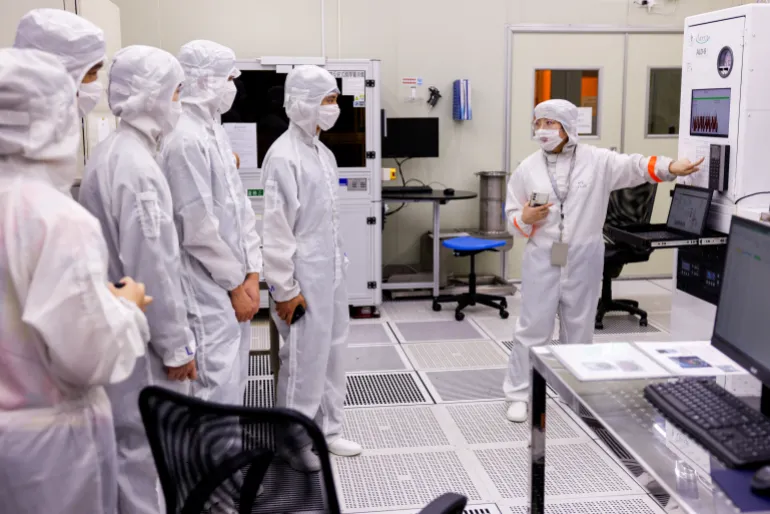
Students dressed in white protective suit and a face mask visit a clean room as part of a summer camp organised by U.S. chip designer Synopsys with the goal to attract more youth to Taiwan's semiconductor industry, in Hsinchu, Taiwan July 18, 2025. REUTERS/Ann Wang
Students dressed in white protective suits and face masks visit a clean room as part of a summer camp organised by US chip designer Synopsys with the goal of attracting more youth to Taiwan’s semiconductor industry, in Hsinchu, on July 18, 2025 [Ann Wang/Reuters]

Exports surged 34.9 percent last year to $640.7bn, with more than two-thirds of the total being tech-related goods and services.

Semiconductors alone account for more than 20 percent of Taiwan’s GDP, according to US trade data, with the vast majority of production handled by Taiwan Semiconductor Manufacturing Company (TSMC), whose top customers include Nvidia and Apple.

TSMC by itself accounts for more than 40 percent of the value of the island’s stock market.

While impressive, the rapid economic expansion has raised concerns about being overreliant on the growth of AI.

Taiwan’s Central Bank Governor Yang Chin-lung has sounded the alarm about an emerging “K-shaped economy,” where certain sectors grow rapidly while others fall into stagnation.

While critical to Taiwan’s economy, the semiconductor industry is far from the largest source of jobs.

The sector employs only about 300,000 people in a workforce of 11 million, according to data compiled by Dachrahn Wu, director of National Central University’s Research Center for Taiwan Economic Development.

The broader electronics and IT manufacturing industry employs about one million people, compared with about seven million working in the service sector, according to Wu’s data.

The heavy reliance on a single industry for growth marks a shift from the Asian Tiger era of the 1960s to 90s, when Taiwan’s economy was driven by hundreds of thousands of small and medium-sized enterprises (SMEs), according to James Lin, a historian who specialises in Taiwan’s post-war economic transformation.

“From the 1970s to 1990s, economic growth was concentrated in the hands of small and medium family enterprises that exemplified the ‘living room factory’ model, where family-owned businesses focused on producing one part for a consumer product,” Lin told Al Jazeera.  

“The benefits of this period were thus more widely distributed across Taiwanese society,” Lin said.

“By contrast, today, wealth inequality is growing in Taiwan as land is becoming more expensive and large corporations like TSMC attract the lion’s share of foreign capital investment rather than small corporations.”

Alicia Garcia Herrero, chief economist for Asia Pacific at French investment bank Natixis, said Taiwan’s economic model has left it at risk of becoming a “dual society” where tech sweeps up talent, funding and resources at the expense of other industries.

“It’s very hard if you’re not in [the semiconductor] sector in Taiwan right now,” Garcia Herrero told Al Jazeera, pointing to low wages for workers in non-tech roles and rising costs for businesses.

Some of Taiwan’s challenges are out of its control, said Chao-Hsi Huang, associate dean at the Taipei School of Economics and a former director at Taiwan’s central bank.

Those challenges include US President Donald Trump’s tariffs, which have partially exempted semiconductors but hit exporters in non-tech industries.

“The traditional [manufacturing] sector suffers higher tariffs than other competing countries like Korea or Japan, or even Southeast Asian countries, due to the fact we are not able to sign free trade agreements,” Huang told Al Jazeera.

“We are treated differently, and that’s a difficulty we are facing.”

Critics have placed other issues on the shoulders of the government, including a weak currency that has made exports more competitive but chipped away at consumers’ purchasing power.

Taiwan’s government denies engaging in currency manipulation, though it acknowledges intervening in the market to smooth out “volatility” when the new Taiwan dollar falls or rises sharply against other currencies.

After two decades of stagnation through the 2010s, wages are growing again – albeit unevenly.

Real average wages grew 1.4 percent in 2025, while median wages rose 1.35 percent, according to the Directorate-General of Budget, Accounting and Statistics (DGBAS).

Still, 70 percent of Taiwanese earned less than the average, a statistic attributable to the distorting effect of much higher salaries in the tech sector, where pay is nearly double the national average.

A miniature size wafer sorters machine model by Rorze on display at the Science park exploration museum in Hsinchu, Taiwan, February 6, 2023. REUTERS/Ann Wang
A miniature-sized wafer sorter machine model by Rorze on display at the Science Park Exploration Museum in Hsinchu, Taiwan, on February 6, 2023 [Ann Wang/Reuters]

For Taiwanese frustrated with stagnant pay, Taiwan’s soaring stock market has offered some consolation.

Riding the AI boom, the Taiwan Stock Exchange (TWSE) more than doubled in value between 2019 and 2025 to $2.2 trillion, according to HSBC.

Regulatory changes introduced in 2020 made it easier for small-time investors to buy single stocks, encouraging a rush of everyday Taiwanese into the market.

In January, the TWSE reported that the number of trading accounts had reached 13.77 million – equivalent to 60 percent of Taiwan’s population – while hailing the bourse as a “cornerstone for inclusive prosperity and shared growth”.

Though more equal than neighbours such as Singapore, Hong Kong and China, Taiwan’s wealth divide has grown over the decades.

In 1980, Taiwan had a Gini coefficient of 0.308 – a measurement of wealth distribution where 0 indicates perfect equality – putting it on par with contemporary Norway, according to the DGBAS.

By 2024, Taiwan’s Gini coefficient had grown to 0.341 – lower than many countries but still a significant rise.

“I feel that the benefits of economic growth haven’t been distributed evenly,” Ryan, an engineer in the local tech sector who asked not to be identified by his real name, told Al Jazeera.

“Some industries or asset holders benefit significantly, but ordinary office workers often experience a rise in prices and housing costs, rather than an easier life,” he said.

Wei-ting Yen, an assistant research fellow at the research institution Academia Sinica, said while the semiconductor and stock market booms have helped some Taiwanese, they have heightened the angst of others.

In a survey of 1,195 Taiwanese voters carried out last month, 40 percent said their household was financially either “anxious” or “very anxious” due to rising living costs, particularly housing.

“I think subjectively, they’re anxious that they’re not accumulating wealth and it’s not enough to help them buy a house or an apartment,” Yen told Al Jazeera.

“Housing prices have been going crazy worldwide, and the stock market has been going crazy, [but] for people who do not have extra money to invest in those two options, it creates even more frustration and anxiety around them,” she said.
Source link

Group of women and children with alleged ISIL ties returns to Australia | ISIL/ISIS News

Australian Federal Police have not made any arrests but say inquiries are ongoing.

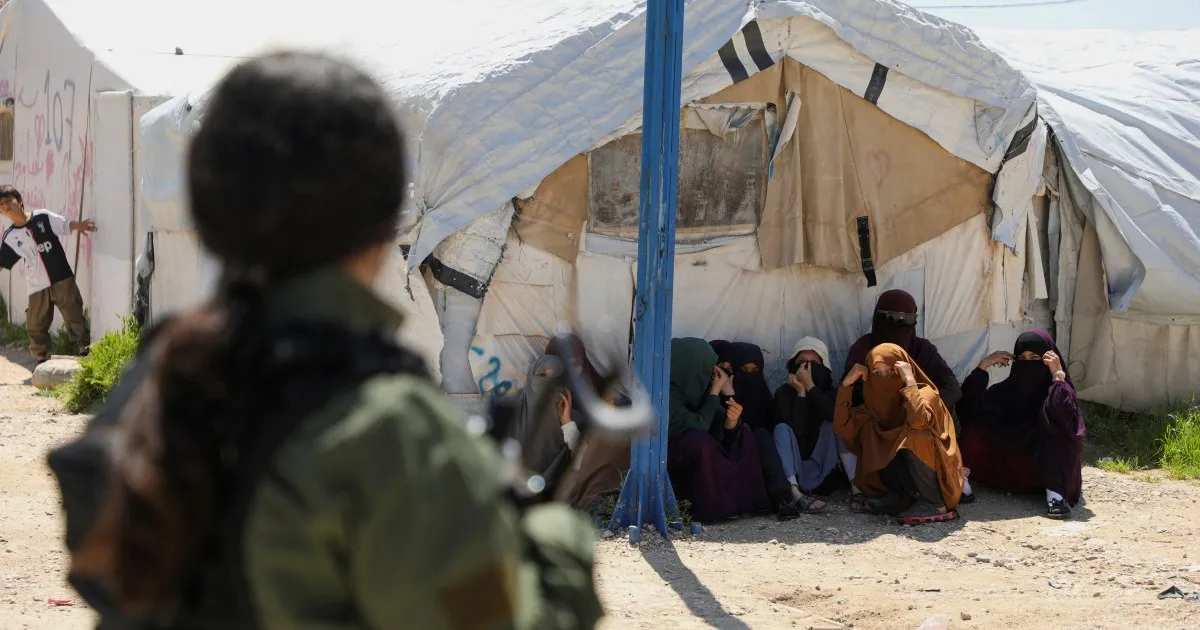
A group of 19 women and children with alleged links to ISIL (ISIS) has returned to Australia, with the government warning that anyone found to have engaged in criminal activity will be prosecuted.

The six women and 13 children arrived from a Syrian refugee camp on Tuesday, with one group landing in Sydney and the other in Melbourne.

Recommended Stories

list of 3 itemsend of list

It is the second cohort of Australian women and children to return from Syria this month. Responding to criticism over their arrival, the Australian government said it had not assisted them in any capacity.

“These are people who have made the horrific choice to join a dangerous terrorist organisation and to place their children in an unspeakable situation,” Minister for Home Affairs Tony Burke said.

Australian women began travelling to Syria to marry members of ISIL in 2012, with some allegedly taken against their will.

At the height of its power in 2015, ISIL controlled territory across Syria and Iraq roughly equivalent in size to the United Kingdom.

Australian Federal Police did not arrest any members of the group upon their arrival but said that investigations were ongoing.

The group’s return has sparked anger in some sections of Australian society.

According to local media, a large police presence was deployed at Melbourne airport, where a scuffle reportedly broke out as the group of women and children was escorted out through a side entrance.

Australia is one of several Western countries that have shown reluctance to repatriate citizens who travelled to the Middle East to join ISIL about a decade ago.

Both France and the UK have expressed opposition to allowing former ISIL members to return.

In 2022, the UN Committee on the Rights of the Child said that France’s failure to repatriate children born to French nationals in Syria violated their right to life and exposed them to inhumane treatment.

Meanwhile, the UK stripped British national Shamima Begum of her citizenship in 2019 on national security grounds.

In February, the Australian government issued a temporary exclusion order against a woman in Syria, preventing her from returning home.

Her child, who was not barred from returning, chose to stay with her.

The order prevents the woman from returning to Australia until February 2028, and her family is currently challenging the decision.

Afzal Ashraf, a visiting fellow at Loughborough University specialising in international relations and security, said the risk posed by people returning from countries including Syria needs to be viewed proportionately.

“There will be some security challenges, because people like this are likely to suffer from issues such as PTSD,” Ashraf told Al Jazeera.

“The fact of the matter is that there are security challenges in Australia and other countries, but statistically speaking, the return of these nationals doesn’t increase that risk very much, while the threat to life from terrorism is far lower than the threat posed by road accidents, for example.”

“That said, these threats can be reduced by providing comprehensive mental health support for returnees and ensuring they are reintegrated into society in a positive way, with follow-up programmes to address any dangerous ideas they may have adopted,” Ashraf said.

“It’s worth remembering that ISIL has killed far more Muslims than Westerners.”

Earlier this month, four women and 13 children arrived in Australia from Syria. Three of the women were arrested upon arrival.

Source link

Starbucks’ Korean sales fall after backlash to ‘Tank Day’ ad campaign | Protests

Coffee chain has seen ‘very significant’ drop in sales after campaign that evoked deadly crackdown, local operator says.

Starbucks Korea has suffered a “very significant” drop in sales after a marketing campaign that evoked a brutal 1980 military crackdown on pro-democracy protesters triggered a public outcry, according to the coffee chain’s local operator.

Shinsegae Group, whose subsidiary E-Mart owns the coffee chain in South Korea, has faced mounting criticism over its so-called “Tank Day” campaign, launched on the anniversary of the May 18 Gwangju Uprising, when the military government deployed troops and tanks to suppress pro-democracy demonstrations.

Recommended Stories

list of 4 itemsend of list

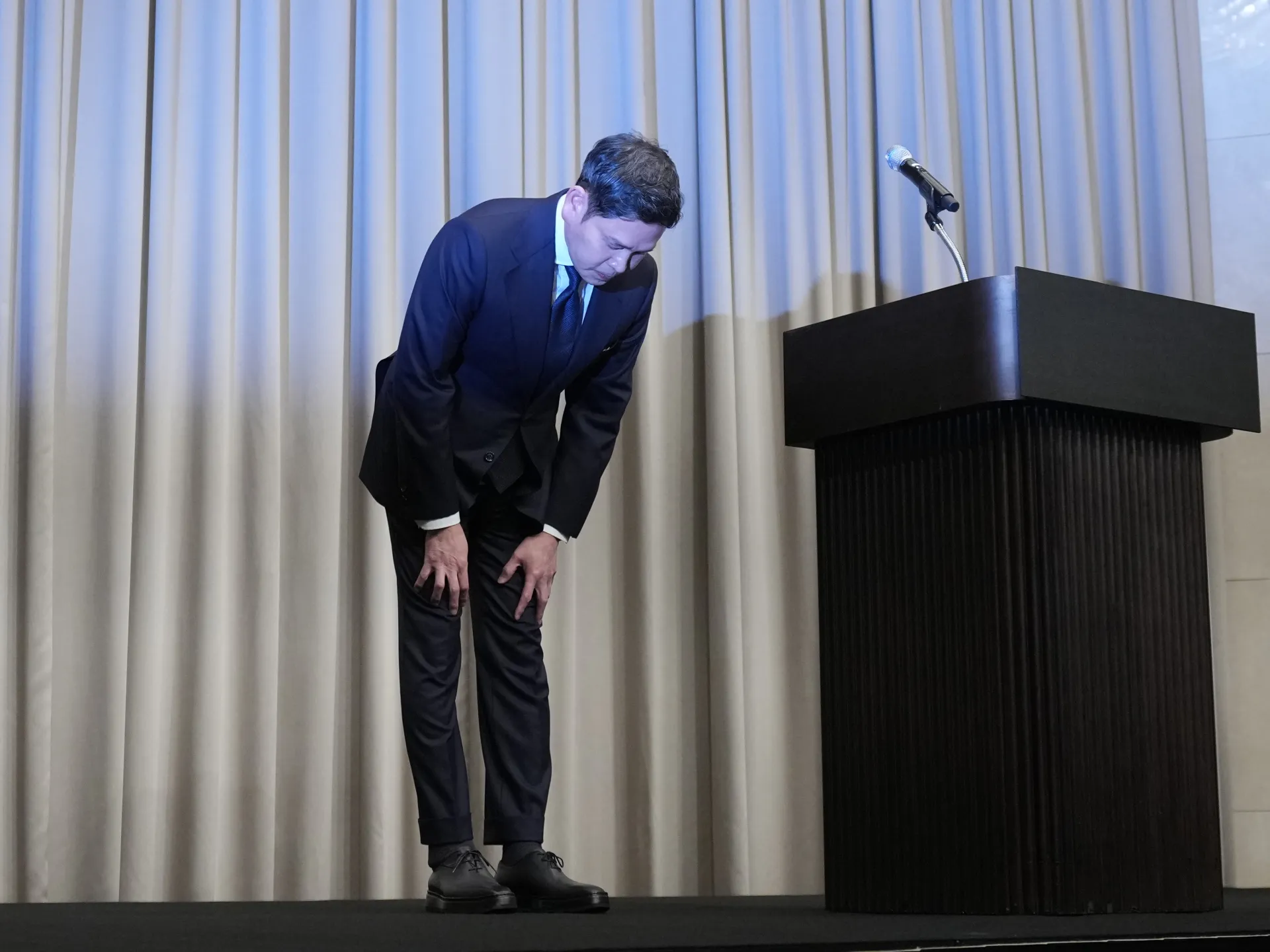
In a news conference on Tuesday, Shinsegae Group chairman Chung Yong-jin made a public apology and asked people not to take out any anger on Starbucks Korea employees and front-line staff.

“I take it very seriously, the fact that many people felt deep pain and anger because of Starbucks Korea’s inappropriate marketing campaign,” Chung said.

“I will take all responsibility for the incident.”

Chung also asked people not to take out their frustration on staff at Starbucks shops, saying the responsibility lies with management. There were no immediate reports of major incidents at stores.

Chung issued his first apology on May 19, saying in a statement that the campaign caused “deep pain to the victims and bereaved families of the May 18 Democratization Movement as well as to the public”.

Shinsegae fired the head of Starbucks Korea last week after apologising over the campaign. Starbucks Global also apologised and said that an investigation had begun.

A Shinsegae official said sales had fallen sharply since the marketing controversy.

“While sales are not our main concern at the moment, we have seen a very significant drop,” said the official.

At Tuesday’s news conference, Jeon Sangjin, a senior Shinsegae Group executive, said the company had yet to find conclusive evidence that Starbucks Korea marketing employees intended to mock the pro-democracy movement, an accusation the employees have denied.

However, he said some employees refused management requests to hand over their smartphones during a weeklong internal review.

Jeon said the company would look at the results from the police inquiry, and any employee found to have intended to ridicule protesters would be fired.

The anger over the campaign has triggered public calls for boycotts, amplified by government officials, including Interior and Safety Minister Yoon Ho-jung, who said Starbucks products will no longer be used at government events and lamented the chain’s “anti-historical behaviour”.

The country’s president, Lee Jae Myung, said on X last week that the campaign displayed “inhumane and disgraceful behaviour by cheap profiteers who deny the values of the South Korean community, basic human rights and democracy”.

Hundreds of people are estimated to have died ⁠or gone missing when Chun Doo-hwan’s military government cracked down on the protests in Gwangju.

Many details remain unconfirmed, including who gave the order to open fire.

Source link

Gaza flotilla activists return to Australia, describing abuse | Crimes Against Humanity

NewsFeed

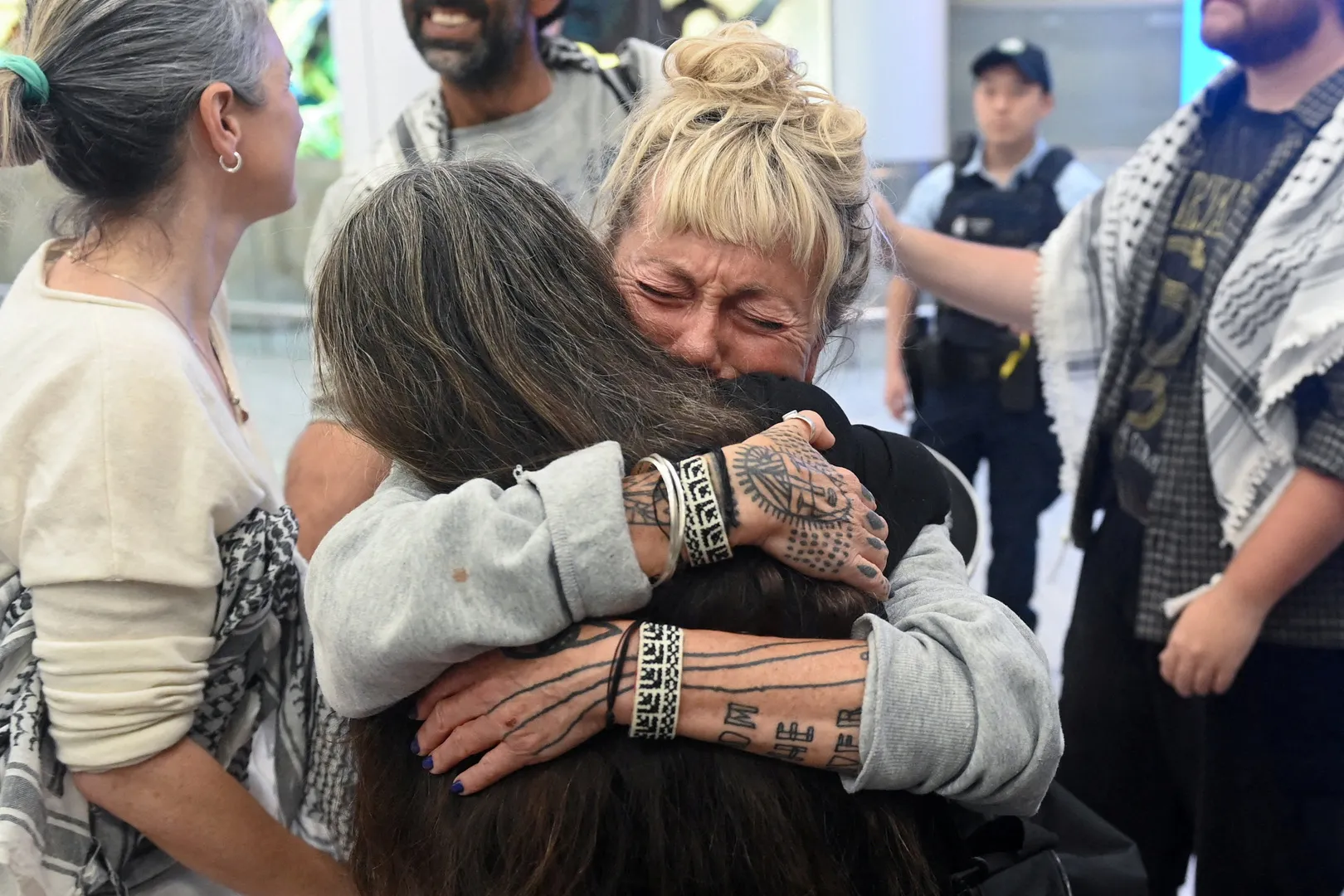
Australian activists from the Gaza-bound aid flotilla have arrived back in Sydney, reuniting with loved ones as they describe beatings, sexual assault and torture at the hands of Israeli forces who intercepted their boats in international waters.

Source link

Man dies in northeast Australia after shark attack | Wildlife News

The man was rushed to ⁠shore after being bitten on Sunday near ​Kennedy Shoal, but died shortly afterwards.

A man has died after a shark attack off the coast of Queensland in northeast Australia, police say.

The man was rushed to ⁠shore after being bitten on Sunday near Kennedy Shoal, a shallow reef about 45km (28 miles) off the coast, a Queensland Police Service spokesperson said.

Recommended Stories

list of 3 itemsend of list

The man was met by an ambulance but died shortly afterwards, the spokesperson said without identifying him.

According to local media, beaches in the area have been closed while police assess safety conditions.

The incident is the second fatal shark encounter in Australia in a little more than a week.

On May 16, a 38-year-old man died after being bitten by a shark near Perth off the west coast.

The majority of shark attacks occur along Australia’s east and southeast coasts with an average of about 20 incidents recorded each year, according to the Institute of Health and Welfare.

Source link