Gabriel Martinelli scored the winner late in injury time to give five-time champions Brazil a 2-1 win over Japan in the World Cup round of 32 in Houston.
Martinelli, who had come on as a second-half substitute, scored in the sixth minute of stoppage time as the match on Monday appeared to be heading to extra time.
Brazil will next face either the Ivory Coast or Norway on Sunday in East Rutherford, New Jersey, in the round of 16.
Casemiro had earlier equalised with a header in the 56th minute off an assist from Gabriel Magalhaes after just missing another chance two minutes earlier. The shot sailed just out of reach of the outstretched hand of Japan goalkeeper Zion Suzuki and into the net.
Kaishu Sano stole a misplaced pass in midfield before his right-footed shot from above the half-circle put Japan ahead after 29 minutes.
Kaishu Sano celebrates scoring the first goal [Annegret Hilse/Reuters]
Vinicius Junior, who has scored four goals so far in the tournament, had a chance to put Brazil on top in the 58th minute, but his shot from the left was deflected by goalkeeper Suzuki and went past the far post.
Brazil had two chances to even the score early in the second half before breaking through late on. First, Suzuki blocked a header from Bruno Guimaraes in the 52nd minute. Soon after, Casemiro’s header bounced off a defender’s head and Suzuki’s face.
Japan have never won a World Cup knockout match.
The win was Brazil’s 12th in 15 games against Japan. The teams have also played to two draws, while Japan got their first win in the series in a friendly in Tokyo in October.
This was a match-up between two countries with deep ties, Brazil being home to about 2.7 million Japanese descendants, which is the largest Japanese population outside of Japan.
Those ties extend to football, where Brazil superstar Zico moved to Japan in 1991 to play for Kashima Antlers and help build Japan’s professional football network. He coached the Japan national team from 2002–06, leading the team to the World Cup in 2006.
That team lost to Brazil 4-1 in the only previous meeting between the teams at the World Cup.
Brazil won Group C after a draw with Morocco and victories over Haiti and Scotland.
Monday’s victory came on the anniversary of their first World Cup championship in Sweden in 1958, when a 17-year-old Pele scored two goals in the final against the host country.
Japan reached the round of 32 as runner-up in Group F after draws with the Netherlands and Sweden and a win over Tunisia. The loss snaps a 10-game unbeaten streak dating back to a 2-0 defeat to the United States in September.
Brazil players celebrate after the match [Annegret Hilse/Reuters]
China and Sudan signed off on a waiver of $50m as Sudan’s military-led government seeks support amid Western sanctions.
China has waived loans worth $50m that it had given to Sudan, the two countries said over the weekend. The agreement comes three years into a war between Sudan’s army and the Rapid Support Forces (RSF) that has shrunk the country’s economy by roughly 40 percent, according to the United Nations.
The sum is small compared with what Sudan owes overall to external governments or agencies, an amount estimated at more than $56bn before the war. But the waiver lands at a moment when Khartoum has few other international lenders extending any financial support.
China’s relationship with Sudan predates the war by decades, built on oil and infrastructure interests that survived multiple changes of government in Khartoum. But the war has narrowed Sudan’s options elsewhere, as Western governments have largely held back or imposed sanctions.
Here’s why this deal is significant for Sudan and China:
What do we know about the deal?
The signed protocol in Port Sudan cancels four interest-free loans worth 344 million yuan, about $50m, with immediate effect, according to Sudan’s official news agency, SUNA.
Sudan’s Finance Minister Gibril Ibrahim welcomed the move, reportedly saying that China has continued investing in the country throughout the war while Western governments, including the United States and European Union members, have largely held back. Gibril himself was added to the US Treasury sanctions list in September 2025 for his alleged “involvement in Sudan’s brutal civil war and … connections to Iran”.
China’s charge d’affaires in Sudan, Xu Jian, reportedly said at the signing ceremony that China was ready to help rebuild what was destroyed during the war in Sudan.
What’s in it for Sudan?
Sudan’s external debt of more than $56bn before the war is expected to have ballooned since.
The $50m debt relief amounts to not even 1 percent of the total external pre-war debt. In fact, Sudan was close to a far bigger debt write-off in 2021. It was on track with the IMF and the World Bank Heavily Indebted Poor Countries initiative to have more than $50bn of its debt forgiven within three years. The 2021 military coup in October derailed that debt relief plan, and the process was formally suspended a year later.
Still, China’s waiver arrives at a moment of acute need for the country. The war is now in its third year. More than 1.5 million people have been killed, according to the UN, and the war has displaced about 14 million people – about a quarter of the Sudanese population. The World Health Organization says less than 14 percent of health facilities are still functioning. Jobs have vanished in many parts of the country, and the rising cost of living has made it difficult for households to survive.
The Sudanese pound has collapsed since the start of the war. It went from roughly 600 to the dollar before the war to more than 5000 to the dollar by June 2026.
What’s in it for China?
In many ways, Beijing’s decision to waive the $50m loan is in keeping with a broader approach it has taken in recent years, one that has helped cement China as Africa’s largest trading partner for 17 consecutive years.
China has provided interest-free loan forgiveness as a diplomatic gesture to multiple countries, and these decisions are recurrent announcements at Beijing’s frequent leader-level summits with African nations. This is especially true for smaller loans. Research from the Johns Hopkins China Africa Research Initiative found that China forgave at least $3.4bn of these kinds of debts across the African continent between 2000 and 2019.
By contrast, larger loans are usually commercial loans through state banks that come with interest, and waiving those is harder.
At a time when the West is largely trying to isolate Sudan’s leadership, a small loan waiver gives China outsized influence in a country that sits at the intersection of the Middle East and sub-Saharan Africa.
What have China-Sudan ties been like historically?
Oil has long served as a catalyst for their relationship. From the mid-1990s on, China’s National Petroleum Corporation (CNPC) poured billions of dollars into Sudanese oil fields and the pipelines carrying that crude oil to Port Sudan. This was a time when many Western companies were pushed out due to sanctions.
The relationship changed when the southern part of the country voted in favour of independence in 2011. The world’s newest country, South Sudan, left the north and took most of the country’s oil fields with it.
Chinese investment largely dried up afterwards, but Sudan still has more than $5bn of outstanding debt to China. The war has aggravated Sudan’s economic challenges. The CNPC requested a formal exit from Sudan in December 2025.
South Korean president frames the push as a race against time to secure the country’s domination in AI boom.
Published On 29 Jun 202629 Jun 2026
South Korea has laid out a sweeping industrial strategy focused on semiconductor chips and artificial intelligence projects as President Lee Jae Myung pledges to cement overwhelming industry leadership with investments of hundreds of billions of dollars over several years.
Flanked by the heads of the world’s two biggest memory chipmakers, Lee cast the initiative on Monday as a “great leap forward” centred on the “triple axis” of semiconductors, physical AI and data centres.
Recommended Stories
list of 4 itemsend of list
“We must secure the core elements of AI faster than any other country,” the president said in a televised address.
The world’s two largest memory chipmakers, Samsung Electronics and SK Hynix, will invest 800 trillion won ($518bn) with suppliers to build two new chip fabrication sites each in South Korea’s southwest, Industry Minister Kim Jung-kwan said.
Lee said the country’s southwestern city of Gwangju and South Jeolla province will also invest 5 trillion to 20 trillion won ($3.2bn to $13bn) in the projects. Kim said a further 81 trillion won ($52.5bn) is expected to be invested for a chip-packaging cluster in the Chungcheong area near Seoul.
The government also unveiled plans to build AI data centres in the region, backed by 550 trillion won ($356bn) in investments from the SK Group, GS Group and Naver.
“By 2035, an additional 10-gigawatt AI data centre will be built with a total investment exceeding 18.4 gigawatts and 1,000 trillion won,” or $648bn, Science Minister Bae Kyung-hoon announced.
The announcement marks the government’s boldest push yet to align South Korea’s AI and chip ambitions with Lee’s pledge to narrow regional disparities and revive economies beyond the Seoul metropolitan area.
The opposition has criticised the plan, arguing that his government’s decision to locate a second semiconductor cluster in Honam, the traditional electoral stronghold of his liberal Democratic Party, is driven more by regional politics than by industrial logic.
They have accused the government of pressuring memory chipmakers to invest in the region to bolster political support rather than allowing companies to choose the most commercially viable locations.
As part of the overall initiative, the southwest would be the home of new, large chip production clusters, Lee said, in part to use the rich power resources yet untapped there.
The president defended the proposed southwestern chip hub in a series of X posts over the weekend, rejecting criticism that it favours a region where 85 percent of voters backed him in last year’s presidential election.
Five wins to go. How can your team reach the final and win World Cup 2026? Click here.
Who: Brazil vs Japan What: FIFA World Cup 2026 – round of 32 Where: Houston Stadium, Houston, United States When: Monday, June 29, at 12pm (17:00 GMT) How to follow: We will have all the build-up on Al Jazeera Sport from 14:00 GMT ahead of our live text commentary stream.
Recommended Stories
list of 4 itemsend of list
Carlo Ancelotti faces his first major test as the Brazil coach when the record five-time world champions take on Japan, arguably the best Asian team at the tournament, in the round of 32.
Monday’s meeting in Houston offers Brazil the chance to exact revenge for their friendly defeat to Japan late last year, as the South American giants lock in on their target of a deep run in North America.
The odds are heavily in Brazil’s favour, but after Japan came out of a tricky group with flying colours, it would be foolish to write them off.
There is also a mutual respect and camaraderie between the nations, given the overwhelming Brazilian influence on professional football in Japan.
Al Jazeera tells you everything about the second game of the round of 32:
Of all the seven goals Brazil registered across three games, Real Madrid star forward Vinicius Jr scored four of them, while Matheus Cunha netted three. Bruno Guimaraes bagged the most assists (three).
Brazil’s forwards Matheus Cunha, left, and Vinicius Jr are spearheading Brazil’s attack at the World Cup [Roberto Schmidt/AFP]
Ancelotti in relaxed mood ahead of Japan clash
Since their low-key display in the first game, Brazil appear to be growing into the tournament, showing glimpses of their all-round potential, with some of the Selecao stars finding their rhythm.
Ancelotti knows Japan will be no pushovers, describing the record four-time Asian champions as “one of the best teams” in the world.
During Sunday’s pre-match press conference, the Italian was relaxed and betrayed no signs of feeling the pressure, despite Brazil being cast as the clear favourites for the knockout tie.
“We need a lot of things: A strong mind, a strong heart, a clear mind,” he told the media. “I think we have to be ready for anything that might take place in a knockout match, and a lot can happen in a knockout match.
“I think the team is ready. They’re motivated, they’re confident,” added Ancelotti, who is leading Brazil’s charge for a record-extending sixth world title.
How did Japan reach the round of 32?
Japan started their campaign by holding the Netherlands to a 2-2 draw before thrashing Tunisia 4-0 in the second game. They wrapped up the first round with a 1-1 draw with Sweden, which saw them finish with five points, confirming a second spot in Group F.
Ayase Ueda and Daichi Kamada are the joint top scorers for Japan so far, with two strikes each, while Keito Nakamura, Junya Ito and Daizen Maeda have also scored one each.
Japan’s Junya Ito, right, has scored once in the tournament, while Ayase Ueda, left, and Daichi Kamada, centre, have two goals each [Daniel Becerril/Reuters]
Dark horses Japan are ‘united’, says Moriyasu
Japan have lived up to their billing as the “dark horses” at the tournament, holding two formidable European sides – the Netherlands and Sweden – to draws.
After beating Germany and Spain en route to a round of 16 run at the 2022 World Cup, Japan have shown the world they are capable of pulling off upsets, especially on the sport’s biggest stage.
Japan coach Hajime Moriyasu said his side’s collective spirit can fire them into the last 16 again.
“All the players will do what they can for the team and contribute,” Moriyasu said on Sunday. “The team is united, and that feeling is getting even stronger now.”
Japan’s best finish at the World Cup has been reaching the round of 16 on four occasions: 2002, 2010, 2018 and 2022. They have never won a World Cup knockout game.
Brazil vs Japan: master vs the apprentice
Launched in 1993, Japan’s top-flight, the J-League, took much of its inspiration from Brazil and also employed plenty of their players.
Zico, the creative lynchpin of Brazil’s fabled 1982 World Cup team, was enticed out of retirement to join Kashima Antlers, while internationals Bismarck and Elivelton started a run of Brazil national team players making the move to Japan.
By the late 1990s, seven of the Brazil team that won the 1994 World Cup, including captain Dunga, had played or were playing for Japanese clubs and, by extension, lent their influence to a rapidly developing scene.
Brazil vs Japan predictions
Opta’s supercomputer has calculated a 58.3 percent probability of Brazil winning this fixture in regulation time, while Japan is assessed an 18.1 percent chance of victory.
The probability of going to extra time – or potentially penalties – is 23.6 percent.
Who will the winner face in the round of 16?
The winner of Brazil vs Japan will face either Norway or the Ivory Coast in the round of 16.
Brazil vs Japan: Kickoff time, TV channel
Brazil: CazeTV, TV Globo, GETV, Globoplay, sportv (2pm, Brasilia Time)
Japan: NHKBS1, DAZN, Fuji TV (2am on Tuesday, Japan Standard Time)
United Kingdom: ITVX, ITV1, STV Player, STV (6pm, British Summer Time)
To check the TV listings for your country, head to FIFA’s TV listing schedule here.
Brazil vs Japan: head-to-head
In the all-time head-to-head record, Brazil have only lost once to Japan (W11 D2 L1). In their only World Cup contest 20 years ago at Germany 2006, Brazil won 4-1.
Significantly, Japan’s sole victory over Brazil came in their most recent clash, a 3-2 victory in a friendly in October 2025 in which Brazil let a two-goal lead slip in Tokyo, with Ueda scoring the hosts’ winner.
Brazil vs Japan: Team news
Raphinha remains sidelined for Brazil due to a hamstring injury, while Japan’s Takefusa Kubo is out with a sprained knee.
Neymar, who made his first appearance for Brazil since October 2023 when he came off the bench in the last game, will be available to play more minutes against Japan. The star forward is working his way back to full fitness after dealing with a lingering calf injury.
South Korea’s dismal World Cup first-round exit has prompted fury at home, and calls for a complete overhaul at the top have not been silenced by coach Hong Myung-bo’s resignation.
South Korea, World Cup semifinalists as cohosts in 2002, limped out of the tournament after failing to squeeze into the knockout rounds as one of the top eight third-place finishers.
They had the last 32 within their reach only to suffer a shock 1-0 loss to lower-ranked South Africa.
Their early exit prompted coach Hong to quit on Sunday and cast doubt over the international future of captain Son Heung-min.
It also earned the team a rebuke from the country’s president, Lee Jae Myung, who pointed the finger at “incompetent people” and apologised to the nation.
The president’s comments reflect public anger that has reached a boiling point after years of simmering discontent with South Korean football chiefs.
South Korean fans at the Gwanghwamun Square in Seoul react after their team lost against South Africa [Jade Gao/AFP]
Former captain Park Ji-sung said, “We may have expected this outcome years ago.
“We have to look back and ask ourselves why things have come to this,” the former Manchester United player said after the team’s elimination was confirmed.
“Even after spending a decade learning how to prepare for the World Cup and develop Korean football, we have forgotten those lessons once again.”
South Korea was expected to emerge from Group A that included cohosts Mexico, South Africa and Czechia.
The team were expected to arrive home on Tuesday morning, but local media reported that the Korea Football Association (KFA) were not planning to organise an event to welcome them back.
In 2014, angry fans pelted the team with Korean candies – seen as a deeply offensive insult – when they returned from the World Cup in Brazil, where they went out in the group stage during Hong’s first spell as coach.
South Korea’s head coach Hong Myung-bo stepped down after the team failed to reach the World Cup 2026 knockouts [Ulises Ruiz/AFP]
‘Message to change’
Hong has been a lightning rod for criticism since he returned to the job in July 2024, five months after his predecessor, German World Cup-winner Jurgen Klinsmann, was axed.
The KFA came under fire for the process that led to Hong’s reappointment, with questions asked over its transparency and fairness.
Hong, who was regularly booed by fans, did himself no favours at the World Cup by dropping star player Son for the South Africa game, in which South Korea needed only a point to progress.
Hong admitted afterwards that he was struggling to understand what had gone wrong, as the nation nervously waited for results in other games to decide their fate.
Son Heung-min was benched against South Africa, a game South Korea went on to lose and ultimately exit from the World Cup [Eloisa Sanchez/Reuters]
Lee Chun-soo, a member of the 2002 World Cup team, said he “felt pathetic and frustrated rooting for Uzbekistan” against the Democratic Republic of the Congo in the hope that the result would send South Korea through.
“This is a message to change,” Lee said on his YouTube channel. “Everyone should be ready to step down.”
South Korean fans reserved a sizeable chunk of their anger for KFA President Chung Mong-gyu.
Chung said before the World Cup that he would quit after the tournament, blaming his “lack of virtue” following fierce criticism of his 13-year tenure.
The 65-year-old, who is in his fourth term as KFA president, came under fire for trying to pardon former players who were banned for life for match-fixing.
Chung and Hong might not be the only ones to bow out, with captain Son yet to comment on his future.
The skipper, who turns 34 next month, had previously hinted at retiring from international football.
Former captain Park said South Korea needed to learn from the past.
“It’s unfortunate that this kind of cycle keeps repeating,” he said.
“We must dream of and shape a better future, and move forward step by step so that we don’t repeat these mistakes.”
Canberra says tech platforms are still letting too many children bypass its under-16 social media ban.
Published On 27 Jun 202627 Jun 2026
Australia says it will double fines on social media companies that fail to keep children off their platforms, accusing Big Tech of dodging the spirit of its under-16 ban.
The government said on Saturday that new legislation would raise the maximum penalty for systemic breaches from 49.5 million to 99 million Australian dollars ($31m to $68m) and give the eSafety Commissioner stronger powers to force platforms to comply.
Recommended Stories
list of 3 itemsend of list
The regulator is investigating possible breaches by Facebook, Instagram, Snapchat, TikTok and YouTube.
“It’s clear Big Tech are not doing enough to comply with the law – there are still too many children on social media,” Prime Minister Anthony Albanese said.
“These changes reflect the seriousness with which we take any failure by social media companies to comply.”
The ban, which came into force on December 10, made Australia a global test case for countries trying to curb children’s access to social media. The United Kingdom, Indonesia, the United Arab Emirates and New Zealand are among those watching or considering similar restrictions.
But children have continued to evade the rules by using accounts registered to older people, creating fake profiles or logging in through private browsers.
A peer-reviewed evaluation published this month in the British Medical Journal found “insufficient evidence” that the ban had sharply reduced social media use among young people. Researchers surveyed more than 400 children before the measure took effect and again three months later, finding “substantial circumvention” of the rules.
The government says more than five million accounts held by under-16s have been blocked, but Communications Minister Anika Wells said platforms were still falling short.
“Based on the regular updates I receive from the eSafety Commissioner, it is clear to me that social media platforms are adopting tricks straight out of the Big Tech playbook and doing the bare minimum to get by,” Wells said.
“Social media platforms are some of the richest and most powerful companies in the world, and we’re serious about holding them to account,” she added.
The new powers would allow the eSafety Commissioner to demand documents and evidence from platforms, age-checking companies and app stores.
Platforms must show they have taken “reasonable steps” to keep under-16s out. Some use artificial intelligence to estimate ages, while users can also verify their age with a government ID.
An Israeli attack on a vehicle in the central Gaza Strip has killed three Palestinians and injured several more.
Palestine’s Ministry of the Interior and National Security condemned the attack, which took place in Maghazi refugee camp in Deir el-Balah on Friday, saying that the victims were all police officers.
Recommended Stories
list of 4 itemsend of list
“Their vehicle was treacherously bombed by the Israeli occupation forces,” said a ministry statement published on Telegram.
It named the three deceased as Captain Mansour Sami Shahtout, Captain Mohammed Khaled Nofal, and First Sergeant Mahdi Nader Jabr.
Palestine’s Wafa news agency said an Israeli combat drone targeted a vehicle near the entrance of the Maghazi refugee camp, while Anadolu news agency reported that the Israeli drone fired at least two missiles at the vehicle, causing it to catch fire, which resulted in the deaths and injuries.
Witness video accounts showed a civilian vehicle burning after it was struck on Salah al-Din Street at the entrance of Maghazi camp.
The bodies were reportedly taken to Al-Aqsa Martyrs Hospital in Deir el-Balah.
“The Ministry of Interior condemns the heinous crime committed by the occupation in targeting civil police personnel, an act that demonstrates a persistent intent to spread chaos across the Gaza Strip,” the ministry added in its statement.
It reiterated its “call on the international community and the guarantor states of the ceasefire agreement to exert pressure on the occupying forces to cease their repeated targeting of the police force, its personnel and its resources.”
The vehicle in Gaza caught fire as a result of the strike, while medical, civil defence and firefighting teams were dispatched to the area [Adam Bilal/Anadolu Agency]
According to Gaza’s Health Ministry, Israeli violations of the “ceasefire” agreement have killed 1,031 Palestinians and injured 3,309 others as of Thursday. In total, since Israel’s genocidal war began in October 2023, more than 73,000 Palestinians have been killed in Gaza.
Gaza ‘ceasefire’ developments
As attacks on the ground continue, Hamas said that consultations are ongoing with other Palestinian factions and regional mediators to reach understandings that would ensure the full implementation of the Gaza “ceasefire” agreement.
“These discussions concern the full implementation of the ceasefire agreement, including what remains of the first phase and mechanisms for implementing the second phase,” Hamas spokesman Hazem Qassem told Anadolu on Friday.
He added that a delegation from Hamas and other Palestinian factions is expected to visit Cairo in the coming days to deliver its response to newly proposed approaches.
Qassem said Palestinian factions had previously reached understandings that were welcomed by mediators, before Board of Peace envoy Nikolay Mladenov presented what he described as “different approaches” that are currently under final review by Hamas and the factions.
“We hope the efforts of the mediators and Mr. Mladenov will lead to compelling the occupation to implement what was agreed upon, particularly the humanitarian provisions of the first phase, and then move to the second phase with all its complexities,” Qassem said.
Regarding the situation on the ground, Qassem accused Israel of committing major and continuous violations of the ceasefire agreement, including restrictions on humanitarian aid and continued killings.
He told Anadolu more than 1,000 Palestinians have been killed since the ceasefire entered into force, adding that Israel had expanded the “yellow line” into new areas of Gaza, accompanied by displacement and home demolitions.
“These violations require, first, a clear stance from the mediators to pressure the occupation, and second, serious work to bring the national committee into Gaza so a genuine relief and reconstruction process can begin,” he said.
“We do not want the starvation policy imposed on our people to be repeated while the world remains a spectator. Nor should the killing and destruction continue while the world watches,” he added.
Remaining group schedule, teams, as well as the best third-round group fixtures at the tournament in North America.
After 48 matches in North America, it’s time for the final round of games in the group stage at World Cup 2026.
Sixteen teams will be eliminated after these fixtures, with 32 nations heading through to the knockout stages.
Recommended Stories
list of 4 itemsend of list
The top two teams from each of the 12 groups – along with the eight best third-placed teams – will proceed to the next phase.
Here are the top five “must-watch” matches in the second round of fixtures from June 24 until June 27.
Neymar could return for Brazil against Scotland [Reuters]
⚽️ Scotland vs Brazil
Miami Stadium – Wednesday, 6pm (22:00 GMT)
These two sides will meet at the World Cup for the fifth time and there’s plenty to play for in an intriguing encounter in Miami.
Brazil are looking to secure their place in the knockout stages as group winners and are currently tied with Morocco on four points at the top of Group C.
Scotland are aiming to escape the group for the first time at a major international tournament and know that a point will almost certainly guarantee a spot in the round of 32.
Expect Group C to change a lot during these final fixtures, with Morocco taking on Haiti at the same time.
If that isn’t enough, Brazil’s Neymar is also set to make his first appearance at this World Cup.
Sweden have been unpredictable at this tournament [Raquel Cunha/Reuters]
⚽️ Japan vs Sweden
Dallas Stadium – Thursday, 6pm (23:00 GMT)
It’s difficult to predict which Sweden will turn up in Dallas on Thursday.
Graham Potter’s side beat Tunisia 5-1 in their opening match of the World Cup, before losing by the same score to the Netherlands.
Japan have been entertaining to watch at this tournament and were in fine form during their 4-0 win over Tunisia at the weekend.
Expect plenty of goals in this match and plenty of drama. The winner will secure a top-two finish in Group F, so there is a lot to play for.
France’s Kylian Mbappe has scored four goals so far [Kyle Ross/Reuters]
⚽️ Norway vs France
Boston Stadium – Friday, 3pm (19:00 GMT)
Norway and France are already through to the knockout stages, but this game looks set to be a blockbuster affair with both sides looking to top Group I.
Erling Haaland and Kylian Mbappe have both scored four goals so far and they’ll be desperate to add to their tally as they chase down Lionel Messi.
France are one of the favourites to lift the World Cup next month and are looking to end the group stage with three wins from three.
But Norway have the opportunity to prove that they truly are dark horses in this tournament and can compete with elite international sides.
Buckle in for a big one in Boston.
Spain’s Lamine Yamal, Nico Williams and Victor Munoz celebrate after the match against Saudi Arabia [Claudia Greco/Reuters]
⚽️ Uruguay vs Spain
Seattle Stadium – Friday, 6pm (00:00 GMT on Saturday)
Group H has been a tight affair following some surprise results in the opening round of fixtures.
Uruguay drew with Saudi Arabia, while Cape Verde shocked the world with a goalless draw against Spain.
La Roja bounced back by thrashing Saudi Arabia and they go into their final game as group leaders, with Uruguay two points behind in second.
Spain will secure top spot with a win in Seattle, ensuring that they avoid Argentina in the round of 32.
Egypt are looking to reach the knockout stages at the World Cup for the first time [Anne-Marie Sorvin/Reuters]
⚽️ Egypt vs Iran
Seattle Stadium – Friday, 8pm (04:00 GMT on Saturday)
Neither of these sides have ever made it out of the group at a World Cup, but on Friday, at least one of them will achieve that feat.
Group G is closely bunched after a number of drawn matches and it sets things up nicely for an intriguing final round of fixtures.
Victory for either Egypt or Iran will guarantee them a spot in the knockout phase, so expect both sides to be up for this one.
Iran have faced numerous challenges at this World Cup, with restrictions on travel and visa issues before the tournament even began.
If Iran progress, there’s also still a chance that they will face the US in the knockout stages.
World Cup 2026: Remaining group-stage full schedule
Wednesday, June 24
Switzerland vs Canada at 12pm PT (19:00 GMT) – BC Place, Vancouver, Canada
Bosnia vs Qatar at 12pm PT (19:00 GMT) – Seattle Stadium, Seattle, US
Scotland vs Brazil at 6pm ET (22:00 GMT) – Miami Stadium, Miami, US
Morocco vs Haiti at 6pm ET (22:00 GMT) – Atlanta Stadium, Atlanta, US
Czechia vs Mexico at 7pm CST (01:00 GMT on Thursday) – Mexico City Stadium, Mexico City, Mexico
South Africa vs South Korea at 7pm CST (01:00 GMT on Thursday) – Estadio Monterrey, Guadalupe, Mexico
Thursday, June 25
Ecuador vs Germany at 4pm ET (20:00 GMT) – New York New Jersey Stadium, New Jersey, US
Curacao vs Ivory Coast at 4pm ET (20:00 GMT) – Philadelphia Stadium, Philadelphia, US
Japan vs Sweden at 6pm CDT (23:00 GMT) – Dallas Stadium, Dallas, US
Tunisia vs Netherlands at 6pm CDT (23:00 GMT) – Kansas City Stadium, Kansas City, US,
Turkiye vs USA at 7pm PT (02:00 GMT on Friday) – Los Angeles Stadium, Los Angeles, US
Paraguay vs Australia at 7pm PT (02:00 GMT on Friday) – San Francisco Bay Area Stadium, San Francisco, US
Friday, June 26
Norway vs France at 3pm ET (19:00 GMT) – Boston Stadium, Boston, US
Senegal vs Iraq at 3pm ET (19:00 GMT) – Toronto Stadium, Toronto, Canada
Cape Verde vs Saudi Arabia at 7pm CDT (00:00 GMT on Saturday) – Houston Stadium, Houston, US
Uruguay vs Spain at 6pm CST (00:00 GMT on Saturday) – Estadio Guadalajara, Zapopan, Mexico
Egypt vs Iran at 8pm PT (03:00 GMT on Saturday) – Seattle Stadium, Seattle, US
New Zealand vs Belgium at 8pm PT (03:00 GMT on Saturday) – BC Place, Vancouver, Canada
Saturday, June 27
Panama vs England at 5pm ET (21:00 GMT) – New York New Jersey Stadium, New Jersey, US
Croatia vs Ghana at 5pm ET (21:00 GMT) – Philadelphia Stadium, Philadelphia, US
Colombia vs Portugal at 7:30pm ET (23:30 GMT) – Miami Stadium, Miami, US
DRC vs Uzbekistan at 7:30pm ET (23:30 GMT) – Atlanta Stadium, Atlanta, US
Algeria vs Austria at 9pm CDT (02:00 GMT on Sunday) – Kansas City Stadium, Kansas City, US
Jordan vs Argentina at 9pm CDT (02:00 GMT on Sunday) – Dallas Stadium, Dallas, US
North Korea has revealed its largest-ever warship that leader Kim Jong Un says can carry nuclear-capable missiles. The 5,000-metric-ton destroyer is part of the country’s growing navy, which is set to expand sharply over the next five years.
China’s LineShine overtakes US-based El Capitan as most powerful supercomputer, according to the TOP500 list.
Published On 24 Jun 202624 Jun 2026
China has displaced the United States on an influential ranking of the world’s fastest supercomputers, underscoring Beijing’s growing capability to compete with the world’s leading superpower in cutting-edge technology.
China’s LineShine is the most powerful system on the planet, overtaking the US-based El Capitan, according to the biannual ranking announced in Hamburg, Germany, on Tuesday.
Recommended Stories
list of 4 itemsend of list
LineShine, located at the National Supercomputing Centre in Shenzhen, achieved a performance of 2.198 exaflops, carrying out more than 2 quintillion calculations per second – a 20 percent lead over El Capitan, according to the latest TOP500 list.
LineShine’s position marks the first time a Chinese system has topped the list since Sunway TaihuLight did so in 2017.
El Capitan, based at Lawrence Livermore National Laboratory in California, had ranked as the top-performing system since November 2024.
Frontier, hosted by the Oak Ridge National Laboratory in Tennessee, ranked third, followed by Aurora at the Argonne National Laboratory in Illinois and Jupiter at the Jülich Supercomputing Centre in Germany.
Other countries represented in the top 20 include the UK, Japan, South Korea, Italy, the Netherlands, and Switzerland.
Unlike other supercomputers, LineShine runs entirely on general-purpose central processing units (CPUs), which have fewer processing cores and are slower at performing complex tasks than the graphics processing units (GPUs) indispensable to running AI models, such as ChatGPT and Claude.
LineShine is the first and only system to achieve more than 2 exaflops in performance using a CPU-only design, according to the TOP500 list.
The TOP500 list has been published twice yearly since 1993, when computer scientists Erich Strohmaier and Hans Meuer first compiled statistics on supercomputers around the world in preparation for a conference on the topic.
The list ranks supercomputers’ performance using the LINPACK Benchmark, which measures the amount of time it takes to solve a dense system of linear equations.
While the TOP500 list has been influential for decades, experts consider the ranking to have become less relevant since the advent of AI.
While corporate tech giants such as Microsoft and Amazon are at the forefront of today’s advances in AI, the list is largely made up of government and academic initiatives that volunteered their participation.
In a 2015 paper, researchers at Cornell University estimated that El Capitan achieved only 22 percent of the computational performance of xAI’s Colossus supercomputing facility in Memphis, Tennessee.
China and the US are locked in a fierce battle for global supremacy in leading technologies such as AI, with Washington and Beijing rolling out a slew of tit-for-tat sanctions and export controls to blunt each other’s advances.
The 2026 AI Index Report, released in April by Stanford University, found that China had “effectively closed” the AI model performance gap with the US.
While the US produces more top-of-the-line AI models, China holds the advantage in rolling out patents and industrial robot installations, the report said.
Those trapped in the compounds include Chinese, Philippine, Taiwanese, Malaysian and Brazilian nationals.
Published On 23 Jun 202623 Jun 2026
More than 5,300 people remain trapped in online scam centres in Myanmar near the Thai border, despite a multinational crackdown in the region last year, a human rights group says.
The Thai-based Civil Society Network for Human Trafficking Victim Assistance (CSNHTV) sent a letter to Thai police urging them to take action. It said many of those trapped were foreign nationals held at four locations inside areas controlled by the Myanmar Democratic Karen Buddhist Army militia.
Recommended Stories
list of 3 itemsend of list
According to the CSNHTV, an estimated 1,600 people trapped are Chinese nationals, and about 200 are people of Myanmar, along with people from the Philippines, Taiwan, Malaysia, Brazil, Russia, Kenya, Uganda, Rwanda, and Zimbabwe.
“Many of these compounds have yet to be dismantled or subjected to rescue operations to free all remaining victims,” it said.
“As a result, these syndicates continue to engage in online fraud and human trafficking, causing harm to victims around the world, particularly in the United States and Europe.”
Scam centres in Southeast Asia, including those in Myanmar and Cambodia, run illegal online schemes that are designed to defraud people worldwide.
“Litany of abuse”
The centres grew significantly during the COVID-19 pandemic in the region, and were initially tied to poorly run casinos and online gambling. They have now become a multibillion-dollar industry, according to the United Nations.
A UN report in February said the facilities are mostly staffed by foreign nationals who have been trafficked by criminal gangs and subjected to abuse.
It found instances of “torture and other ill-treatment, sexual abuse and exploitation, forced abortions, food deprivation, solitary confinement, among other grave human rights abuses”.
“The litany of abuse is staggering and at the same time heart-breaking,” UN Human Rights chief Volker Turk said.
“Yet, rather than receiving protection, care and rehabilitation as well as the pathways to justice and redress to which they are entitled, victims too often face disbelief, stigmatisation and even further punishment.”
China has added 10 United States-based companies to its export control list and barred government procurement from nearly 50 US companies two weeks after the Pentagon blacklisted some of China’s best-known companies for their alleged ties to the Chinese military.
China’s Ministry of Commerce announced the export order on Monday, barring Chinese companies from exporting “dual-use” items that can be used for civilian or military purposes to the US firms.
Recommended Stories
list of 4 itemsend of list
The list of companies includes rare-earth mine operator MP Materials Corp, rare-earth magnet maker USA Rare Earths, and US defence contractors specialising in fields such as aerospace, drones, synthetic-aperture radar, and shipbuilding and repairs.
Under the order, “foreign institutions and individuals worldwide are also prohibited from transferring or providing Chinese dual-use goods to them” while ongoing export transactions must be suspended immediately.
The Commerce Ministry said the export ban had been issued to “safeguard national security and interests and fulfil international obligations such as non-proliferation”.
China’s Ministry of Finance on Monday separately barred Chinese government procurement from 46 companies, including subsidiaries of major US defence contractors like Lockheed Martin, Boeing, General Atomics and General Dynamics. US-funded, locally registered companies, however, have been given an exemption by the ministry.
Experts described Beijing’s orders as a retaliation, albeit a largely symbolic one, against the US after the Pentagon in early June added about 80 Chinese companies and their subsidiaries to its list of “Entities Identified as Chinese Military Companies Operating in the United States”.
The designation means the Pentagon either believes the companies are owned or controlled by the Chinese military or they are “military-civil fusion contributors”, a term for commercial companies that contribute to China’s military development despite their civilian status.
The updated list includes Chinese e-commerce giant Alibaba Holdings, search engine giant Baidu and electric automaker BYD, some of China’s largest and best-known companies.
While the order does not bar US companies from doing business with them, it does impact US defence contractors and their future supply chains.
“We can interpret this as a tit-for-tat response, and that fits into China’s playbook any time we’ve seen escalation from the US side in terms of trade and investment tools,” said Nick Marro, global trade lead analyst at the Economist Intelligence Unit.
China-based supply chain consultant Cameron Johnson said the Commerce Ministry’s order mirrors US semiconductor export controls designed to keep the most advanced chips out of Chinese hands.
“They basically say it doesn’t matter where or who you are, you are bound by this regardless of circumstance,” said Johnson, who is also a senior partner at the Shanghai consultancy Tidal Wave Solutions. “Organisations or individuals in any country or region are prohibited from transferring dual-use materials that originated in China.”
He said Beijing’s orders in practice may be hard to enforce and many of the companies named in those orders have already moved their supply chains out of China or begun to “de-risk” their operations there.
Johnson said the wide scope of companies included in Washington’s and Beijing’s directives could be a sign of more to come and may signal a new front in the US-China trade war.
“This is probably just the beginning of the back and forth,” he said. Last year, after returning to the White House for a second term, US President Donald Trump reignited the US-China trade war, leading Washington and Beijing to impose escalating rounds of tariffs on each other.
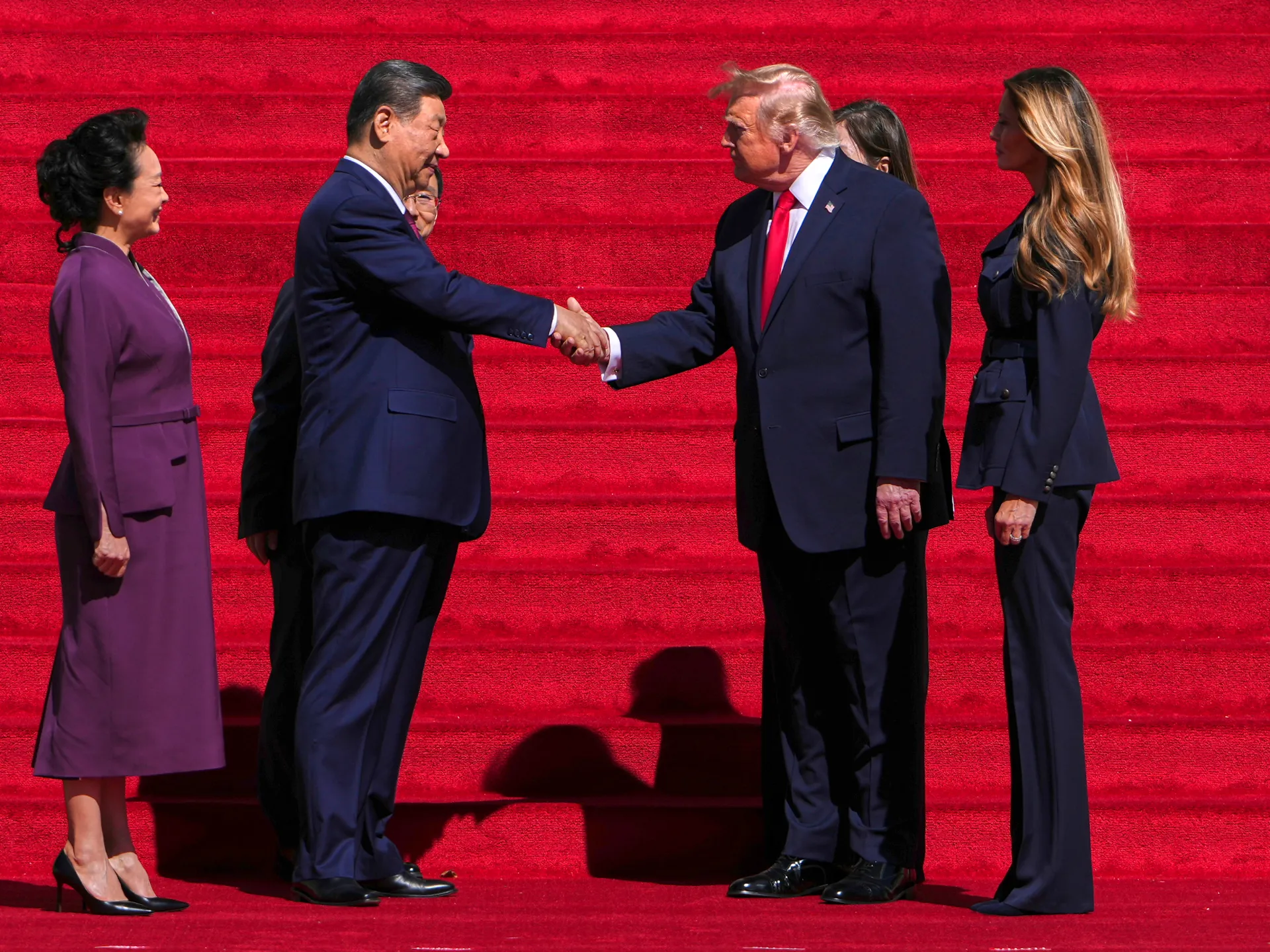
Trump and Chinese President Xi Jinping agreed to a trade truce in October, which was extended during a summit between the two leaders in Beijing in May.
Despite promises to “enhance economic cooperation” during the meeting, observers like Singapore-based geopolitical analyst Steve Okun predicted the goodwill may be short-lived.
“The US’s recent closure of chip export loopholes and China’s continuing addition to its export bans show the national security lane remains active in both capitals regardless of the diplomatic niceties at the recent Trump-Xi summit,” Okun told Al Jazeera.
“There is no ‘truce’ in the US-China trade war. Expect further actions from both sides as well on export controls and investment restrictions,” he said.
Tests confirm a migratory brown skua found in Western Australia had the virus.
Published On 20 Jun 202620 Jun 2026
Prime Minister Anthony Albanese says Australia will do “whatever we can” to curb H5N1 bird flu after the first mainland case was confirmed in a seabird, which means the virus has now spread to every continent.
Tests confirmed a migratory brown skua found in Western Australia’s Cape Le Grand National Park had the deadly virus, authorities said on Saturday, and a giant petrel found in the same area was also suspected to be infected.
Recommended Stories
list of 3 itemsend of list
“This is concerning,” Albanese told reporters in Sydney, adding his government would do “whatever we can to restrict any spread”.
Previously, Australia had been the only continent without a confirmed mainland case, although the virus was detected in late 2025 on Heard Island, a sub-Antarctic territory about 4,100km (2,550 miles) from the mainland.
Agriculture Minister Julie Collins said the virus had not yet been detected in Australia’s poultry or agriculture sector.
“We all knew we couldn’t be bird flu-free forever,” she said.
Human infections remain rare, but the highly pathogenic avian influenza has led to the culling of hundreds of millions of birds globally in recent years, disrupting food supplies and driving up prices.
Approximately 1.3 million Syrians returned from abroad in 2025, nearly three times the figure recorded the previous year, while a further two million internally displaced Syrians went back home, cutting the global Syrian refugee population from 6 million to 4.9 million.
On December 8, 2024, the al-Assad dynasty, which lasted 54 years, was removed from power by a rebel offensive.
The 14-year-long war led to one of the world’s largest migration crises, with some 6.8 million Syrians, about a third of the population, fleeing the country at the war’s peak in 2021, seeking refuge wherever they could find it.
More than half of these refugees, about 3.74 million, settled in neighbouring Turkiye, while 840,000 found refuge in Lebanon and 672,000 in Jordan.
Hiam told Al Jazeera she returned to Syria with her family after more than a decade of living in a host country. “The reason that pushed us to return was the high cost of living we were facing in the host country. We stayed there for 12 years, and it was a great hardship for us as refugees.”
We returned to Syria, thank God, but in the beginning it was difficult because we didn’t find homes or anything. Syria now is completely different from when we left. The return was very difficult at first – the scene was very hard for me.
“But thank God, I became stronger. The first period was very difficult, and at the beginning, it was hard to cope,” Hiam explained.
Syrian families living in Turkiye walk towards the Cilvegozu border gate to cross into Syria, after Syrian rebels ousted President Bashar al-Assad on December 13, 2024, in Cilvegozu, Turkiye [Burak Kara/Getty Images]
According to UNHCR data, some 556,00 Syrians returned from neighbouring Turkiye, 465,000 from Lebanon and 256,000 from Jordan.
More than seven in 10 returnees have reported improvements in security and freedom of movement in Syria, according to the UNHCR. Almost three-quarters of Syrian refugees abroad have also said they would eventually like to return home.
Returns in 2026 reached 549,800 by mid-May, driven by deteriorating conditions in Lebanon.
Aid cuts and poor sanitation are deepening fears that Ebola is spreading through displacement camps.
Published On 19 Jun 202619 Jun 2026
Seventeen medics have died from Ebola in the Democratic Republic of the Congo (DRC) as the death toll surpasses 200 in an outbreak tearing through a health system already weakened by years of conflict, displacement and chronic underfunding.
A senior World Health Organization (WHO) official confirmed the death toll on Friday and said that 75 healthcare workers had contracted the virus since Congolese authorities declared the outbreak on May 15 .
Recommended Stories
list of 3 itemsend of list
“The outbreak remains serious” and is “evolving so fast”, said WHO emergency director Marie Roseline Belizaire.
“It is a really high price that the system, the healthcare system, is paying, because we don’t have enough of healthcare workers in DRC,” she told reporters by video link from the outbreak epicentre in eastern DRC.
Health officials believe the rare Bundibugyo strain of Ebola had been spreading for months before the government formally announced the outbreak, leaving doctors, nurses and other medical staff exposed before they knew the virus was present.
Even now, basic protective equipment remains in short supply, with some facilities struggling to secure gloves, masks and other essentials needed to limit infection.
The DRC has one of the world’s lowest ratios of healthcare workers to population, with about 11 health workers for every 10,000 people, according to WHO data. Belizaire said China and Uganda were sending medical teams to support the response.
She added that the WHO was providing psychological support to medics who feared treating patients after seeing colleagues fall sick.
“When they are explaining to you how they live it, how they were infected … [it] can break your heart.”
Outbreak yet to reach its peak
Congolese authorities said on Thursday that the outbreak has killed 232 people and infected 896 others across 31 health zones in the country.
African Union member states have pledged nearly $1bn to respond to the emergency in eastern DRC and neighbouring Uganda, which has confirmed 19 cases and two deaths.
Health officials warn that the outbreak has not yet reached its peak.
The crisis is also raising alarm in camps for displaced people, where overcrowding, poor sanitation and resistance to testing could allow the virus to spread undetected.
At least 30 people have died since early May in Kigonze camp in Bunia in Ituri province, the epicentre of the outbreak. Camp officials described the death rate as unprecedented.
Authorities could not confirm the causes of death because patients and relatives had refused testing of both the living and the dead until Thursday, according to a camp spokesperson and aid organisation Caritas.
But witnesses and aid sources told Reuters that the dead had symptoms linked to Ebola, including headaches, fever and vomiting.
“People didn’t just die like this before,” camp spokesperson Desire Grodya Bapi told Reuters.
Kigonze is home to more than 15,000 people. The rising number of deaths there has increased fears that Ebola may be spreading among the more than five million displaced people in eastern DRC.
Aid workers say funding cuts have made the emergency more dangerous. Donors, including the United States under President Donald Trump, have reduced support for water, hygiene, and sanitation programmes, which are vital in fighting the disease spread through bodily fluids.
UN data shows funding for toilets and handwashing stations in DRC more than halved between 2024 and 2025, falling to about $38m. This year’s $80m appeal is only 21 percent funded.
DRC has hundreds of displacement camps, some housing up to 100,000 people. Ebola deaths have already been recorded in another camp in Ituri province, which accounts for more than 90 percent of nearly 900 confirmed cases.
Artificial intelligence education now starts at the age of six in China. The Ministry of Education has rolled out new guidelines to teach AI at every grade level. For President Xi Jinping, AI is a priority. Will the toddlers of today be the tech titans of the future?
This is a story from the archives. This originally aired on September 18, 2025. None of the dates, titles or other references from that time have been changed.
Episode credits: This episode was produced by Amy Walters, Sonia Bhagat, Sarí el-Khalili, and Tamara Khandaker, with Phillip Lanos, Spencer Cline, Melanie Marich, Kisaa Zehra, Farhan Rafid, and our host, Malika Bilal. It was edited by Kylene Kiang.
Our sound designer is Alex Roldan. Our video editors are Hisham Abu Salah and Mohannad al-Melhem. Alexandra Locke is The Take’s executive producer.
China calls for stronger representation for emerging economies.
China’s foreign minister says that emerging economies remain underrepresented in global governance institutions.
Presenting China’s new white paper on making global governance more equitable, minister Wang Yi argued that the role of the United Nations should be strengthened and developing countries should have a stronger voice in the world body.
In Beijing’s stated view, all countries should have an equal voice in global affairs, which means the Global South should have more representation.
China’s call comes as the world is engulfed in many armed conflicts and facing serious economic challenges.
But is Beijing now presenting itself as a leader of the Global South? And will it be able to garner enough support to play that role?
Presenter: Sami Zeidan
Guests:
Steve Tsang – Director of the SOAS China Institute
Cobus van Staden – Head of research at the China-Global South Project
Allen Carlson – Associate professor in the Government Department at Cornell University
China has announced it will send a round of humanitarian aid to Lebanon and Iran and play an active role in fostering regional peace. The foreign ministry spokesman described Beijing as ‘deeply saddened’ by the humanitarian disaster.
Report highlights the growing threats posed by climate change and calls for the green transition to be accelerated.
Published On 16 Jun 202616 Jun 2026
Almost all children across the globe are exposed to at least one climate hazard and the situation is expected to worsen unless greenhouse gas emissions are urgently reduced, says a report by UNICEF.
The report, published on Tuesday, warns that climate hazards pose a threat to children on multiple fronts, with nearly half of the world’s children exposed to at least three such hazards, putting their health, education and survival at risk.
Recommended Stories
list of 3 itemsend of list
“The lives of children continue to be upended by the impact of heatwaves, wildfires, droughts, and floods,” said UNICEF Executive Director Catherine Russell. “Half of the world’s children are now living with at least three overlapping climate threats shaping their daily lives.”
The report highlights the growing threats posed by climate change and calls on governments and business leaders to accelerate the transition to renewable energy.
According to UNICEF’s report, 1.8 billion children are currently at risk from drought, while 1.2 billion are exposed to extreme heat, as warmer temperatures wreak havoc on the world’s water cycle.
Countries across Western Europe experienced a record-breaking heatwave last month, reaching temperatures not typically expected until the summer.
UNICEF also says that nearly every child is exposed to air pollution, while one billion are exposed to malaria.
Scientists have repeatedly warned that global warming must be limited to 1.5C (2.7F) above pre-industrial levels to avoid the worst effects of climate change.
Nearly 200 countries signed the Paris Agreement, aiming to curb global warming to that 1.5C mark. The accord came into force in November 2016.
Since then, scientists have repeatedly warned that the target is unlikely to be met.
In January, the United States formally withdrew from the Paris Agreement for a second time, following an order by President Donald Trump.
Governments across the world have welcomed the tentative deal between the US and Iran to end the war, calling it a major diplomatic breakthrough. But Israeli politicians have been quick to criticise it, claiming it would undermine Israel’s security.
Five goals, four water breaks, three red cards and a glittering opening ceremony.
The World Cup 2026 opening day delivered everything you could ask for.
Recommended Stories
list of 3 itemsend of list
From an early thunder strike to a late winning goal, Thursday was filled with drama, stretching from Mexico City to Zapopan.
Al Jazeera breaks down the key takeaways from the 2026 FIFA World Cup’s day 1:
Is this going to be the World Cup with the most red cards?
The three red cards brandished to Yaya Sithole, Themba Zwame and Cesar Montes during Mexico’s 2-0 win over South Africa were an unusual sight at a World Cup.
In the last two editions, Qatar 2022 and Russia 2018, only four red cards were handed out during the entire tournament. This year’s World Cup opening game nearly matched that singlehandedly.
With officiating at the start of the tournament usually setting the tone for the rest of the campaign, the sequence of sending offs at Estadio Azteca could be repeated several times during the 39-day, 104-match spectacle in North America.
Thursday’s three reds fell just one short of the record of four at a World Cup 2006 game, nicknamed the “Battle of Nuremberg”, between Portugal and the Netherlands.
The record for the most red cards – 28 – was also set at the same tournament in Germany.
Brazilian referee Wilton Sampaio shows a red card to South Africa’s midfielder Themba Zwane [Yuri Cortez/AFP]
Controversial VAR at the centre of debate again
The look of confusion and disbelief among South African players after Zwane was sent off for flinging an arm into Mexico’s Roberto Alvarado’s face prompted the debate: Is Video Assistant Referee (VAR) playing spoilsport again?
Referee Wilton Sampaio did not initially pull out the red card, but after being sent to the pitchside monitor by VAR, Sampaio decided to send Zwane off.
While the replays were unclear, it seemed Zwane was trying to move past Alvarado, but his hand caught the Mexican’s face in the process.
Zwane was ultimately booked for “violent conduct”, a controversial decision, which seemed harsh given it was not an obvious call. South Africa coach Hugo Broos was not convinced by it, either.
“The second red card, I think the Mexican player blocked my player,” Broos said in the post-match media conference.
“It’s the position of the referee, and we have to accept it also, but I don’t think [it was a red], it was too soft to give that as a red card.”
Hydration breaks or momentum killers?
The introduction of fixed hydration breaks – one in each half – came into effect for the first time at the World Cup on Thursday, and attracted early criticism from viewers and coaches alike.
While some broadcasters stuck with the live feed featuring players, others cut to commercials, disrupting the match-viewing experience for fans watching on TV.
Viewers in the United States were frustrated after broadcaster Fox cut away to full-screen commercials and they missed some live action during the second half of the Mexico vs South Africa opening match.
US head coach Mauricio Pochettino had a mixed opinion over the three-minute breaks, which are held regardless of weather conditions and introduced by FIFA to prioritise player welfare.
“I don’t like it. I only like it when the conditions are very extreme, but when the conditions are good, it is not necessary to have water breaks,” he said during a news conference on Thursday.
“For me, it’s 50-50. For coaches and staff, it’s a chance to make some changes or fix problems. But it’s part of the game, and we accept that.
“I don’t agree with it, but it’s not a big issue and won’t have a big effect on the games,” he said, adding that he did not watch the opening game.
Son Heung-min misfires, but South Korea prevail
Son Heung-min has often been the hero of the South Korea national team on the biggest stage, but on Thursday, even though the talisman got the lion’s share of the chances, he failed to score in their 2-1 win over Czechia.
Son worked seamlessly with the impressive Lee Kang-in and Lee Jae-sung to create a host of first-half chances, with the trio combining darting runs through the middle with a succession of dangerous pass-and-go moves that they just could not finish.
But Oh Hyeon-gyu and Hwang In-beom stepped up to the occasion, bagging a goal each to steer the Koreans to a dramatic late comeback win over Czechia.
South Korea’s Son Heung-min reacts after missing a chance to score in their World Cup opener against Czechia [Daniel Becerril/Reuters]
South Korea vs Czechia: A clash of styles
Even though both teams opted for a 3-4-3 formation, there was a stark difference in their systems and approach.
South Korea played a fluid, possession-based style of football, while Czechia were heavily reliant on dead balls, opting for a rugged, route-one tactic.
Although the Czechs broke forward first with direct, physical play, the Koreans – buoyed by a largely Mexican crowd rooting for them – bounced back with their dominance of possession and stylish play, getting the better of their set-piece specialist opponents.