Argentina

Flight to Argentina: How significant is it for Israel’s LatAm outreach? | Politics News

Israel and Argentina have launched a direct flight starting in November as the two countries boost their ties under Argentina’s far-right President Javier Milei and Israeli Prime Minister Benjamin Netanyahu.

The twice-a-week flight comes as Israel is aggressively pushing to cement its geopolitical footprint in Latin America amid its growing international isolation and its entrenched image as an occupying power.

Recommended Stories

list of 3 itemsend of list

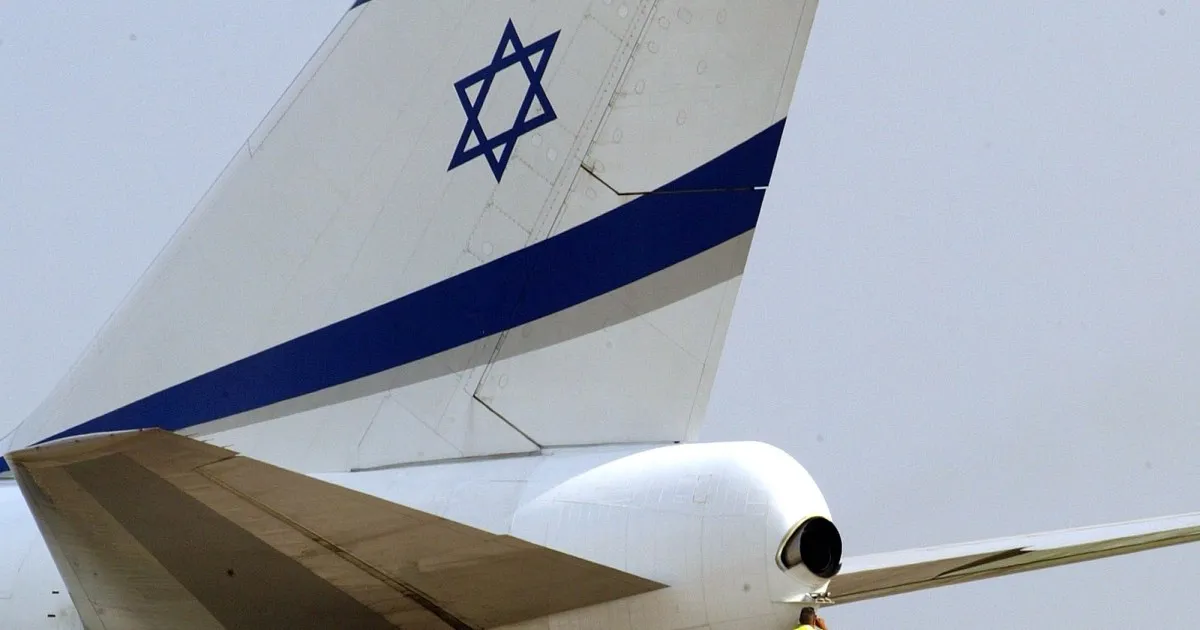
On May 7, Israel’s national carrier, El Al, opened bookings for a direct flight between Tel Aviv and Buenos Aires covering a distance of 12,000 kilometres (7,460 miles) – the longest route in the airline’s history.

However, the 16.5-hour journey is driven by political ambitions rather than mere commercial viability.

During a celebratory event in occupied East Jerusalem last month, Israeli Prime Minister Netanyahu welcomed Argentina’s Milei to hail the “first direct flight” between the two nations.

The event showcased a striking political alignment, further highlighted by the presence of US Ambassador Mike Huckabee, who jokingly promised to buy the first ticket and described the two leaders as US “President Donald Trump’s biggest friends”.

The route aims to translate the “Isaac Accords” – a Latin American framework inspired by the “Abraham Accords” – into tangible reality. Morocco and Sudan established diplomatic ties with Israel as part of the Abraham Accords signed under President Trump’s first term.

Championed behind the scenes by Rabbi Axel Wahnish, Argentina’s ambassador to Israel, the framework aims to establish strategic cooperation in security, counterterrorism, and artificial intelligence with Latin American nations, including Ecuador, Costa Rica and Paraguay.

Trading tech for legitimacy

Israel is acutely aware that its status as an occupying power, exacerbated by the genocidal war on Gaza, has severely damaged its international standing. To secure recognition and bypass boycotts, particularly from an increasingly critical Europe, Israel is leveraging its advanced military and surveillance technologies.

Ihab Jabarin, an analyst specialising in Israeli affairs, told Al Jazeera that Israel’s strategy has shifted.

“Israel’s moral image has completely eroded,” Jabarin said. “The logic now is: ‘you may not like us, but you need us.’ Israel is offering its expertise in cybersecurity, AI systems like Lavender, border management, and drones – technologies tested on Palestinian bodies and land – to countries grappling with internal conflicts and organised crime,” he told Al Jazeera.

Jabarin noted that Israel uses infrastructure – whether ports, underwater cables, or civilian aviation – as tools for national security and influence. “This flight is not just about transporting passengers; it is a permanent corridor for security and tech businessmen,” he explained.

This strategy of using technology and security to buy diplomatic loyalty mirrors Israel’s approach in Africa. It has forged close ties with Ethiopia, Kenya and Chad. Last December, Israel became the first country in the world to recognise Somaliland, a breakaway region of Somalia.

It has used smaller island states like Micronesia in the Asia Pacific to secure favourable votes at the United Nations and break its international isolation.

“Israel is trying to create a global network of interests that forces countries to weigh their relationship with Israel against their stance on the Palestinian cause,” Jabarin added. “It wants to make the world unable to live without it.”

The Milei-Netanyahu chemistry

The driving force behind this Latin American link is the ideological bond between Netanyahu and Milei. While left-wing leaders in the region, such as Brazil’s Luiz Inacio Lula da Silva, have severed ties or strongly condemned Israel’s actions in Gaza, Milei has embraced the Israeli narrative unconditionally.

For Milei, who declared himself the most Zionist president in the world in March, the alliance offers rapid positioning in the Middle East, closer ties to Washington lobbies, and a stance against Latin America’s traditional left. For Netanyahu, Milei offers unconditional emotional and symbolic support that Israel has largely lost in Europe.

“Netanyahu understands the value of a symbolic ally,” Jabarin said. “He needs leaders who can be marketed as proof that Israel can still forge ideological alliances, not just pragmatic ones. Argentina, under Milei, has become Israel’s most important ‘island of influence’.”

A ‘safe haven’ from war crime probes

The direct flight also serves a highly practical security purpose for Israel. With mounting legal challenges and arrest warrants targeting Israeli soldiers and officials in Europe over alleged war crimes in Gaza, the Tel Aviv-Buenos Aires route offers a crucial bypass.

On Tuesday, Israel’s far-right Finance Minister ⁠Bezalel Smotrich said he was informed that the ⁠International Criminal ⁠Court (ICC) ⁠had ⁠requested a warrant for his arrest. Prime Minister Netanyahu is also sought by the ICC for war crimes committed in Gaza.

Currently, travellers between the two countries rely on 21 to 33-hour transit flights through European hubs like Madrid or Paris.

Diego Ruzzarin, a Brazilian writer and analyst, argued that the project aims to secure hassle-free travel for Israelis, particularly military personnel, sparing them from international security interrogations or the risk of arrest in Europe.

Jabarin echoed this assessment, noting that the fear of legal pursuit in Europe is a significant concern within the Israeli establishment.

“The direct flight bypasses any potential legal harassment in Europe,” he said. “Latin America is now appearing in Israeli calculations as a more politically flexible space compared to rights-focused Europe.”

Economic risks and domestic pushback

Despite its strategic value, the flight faces significant logistical and economic hurdles. Because Israeli planes are banned from the airspace of several African nations, including Libya, the flights must take a costly detour over the Mediterranean and the Atlantic.

To mitigate the economic risks of the long-haul route, the Israeli government has taken the unusual step of granting El Al a 20-million-shekel ($5.4m) subsidy, spread over three years.

The success of the route will heavily depend on Argentina’s Jewish community – the largest in Latin America, estimated at up to 300,000. According to Sabre data, roughly 55,300 people travelled between the two countries in 2025, a 37 percent increase from 2024, but still below the 71,200 recorded in 2019.

The project has sparked domestic criticism in both countries. In Israel, the transport ministry reportedly warned that pulling Boeing 787 Dreamliners from highly profitable US routes to service Buenos Aires could drive up ticket prices for Israelis travelling to North America.

In Argentina, left-wing congresswoman Myriam Bregman accused Milei’s government of dragging the country into an “imperialist war” without congressional approval, warning of a constitutional overreach.

Furthermore, the influx of Israeli tourists, many of whom are recently discharged soldiers, has caused friction in southern Argentina. Local residents and activists have blamed Israeli tourists for devastating fires in the Patagonia nature reserves due to negligence, the most recent being a massive blaze in January 2026 that destroyed 77,000 hectares (190,000 acres) and led to the arrest of an Israeli tourist.

For Israelis, however, an El Al flight to Buenos Aires carries profound historical symbolism. In May 1960, the Mossad used an official El Al flight to smuggle captured former Nazi official Adolf Eichmann out of Argentina to face trial and execution in Israel.
Source link

Argentina Retires Its A-4 Fightinghawks

Argentina has withdrawn the last of its A-4AR/OA-4AR Fightinghawks, modernized versions of the classic A-4 Skyhawk, a type that saw six decades of service in the South American nation. The retirement of the A-4s comes as the Argentine Air Force (locally, the Fuerza Aérea Argentina, FAA) introduces the F-16 as its new fighter, signaling a major overhaul of capabilities.

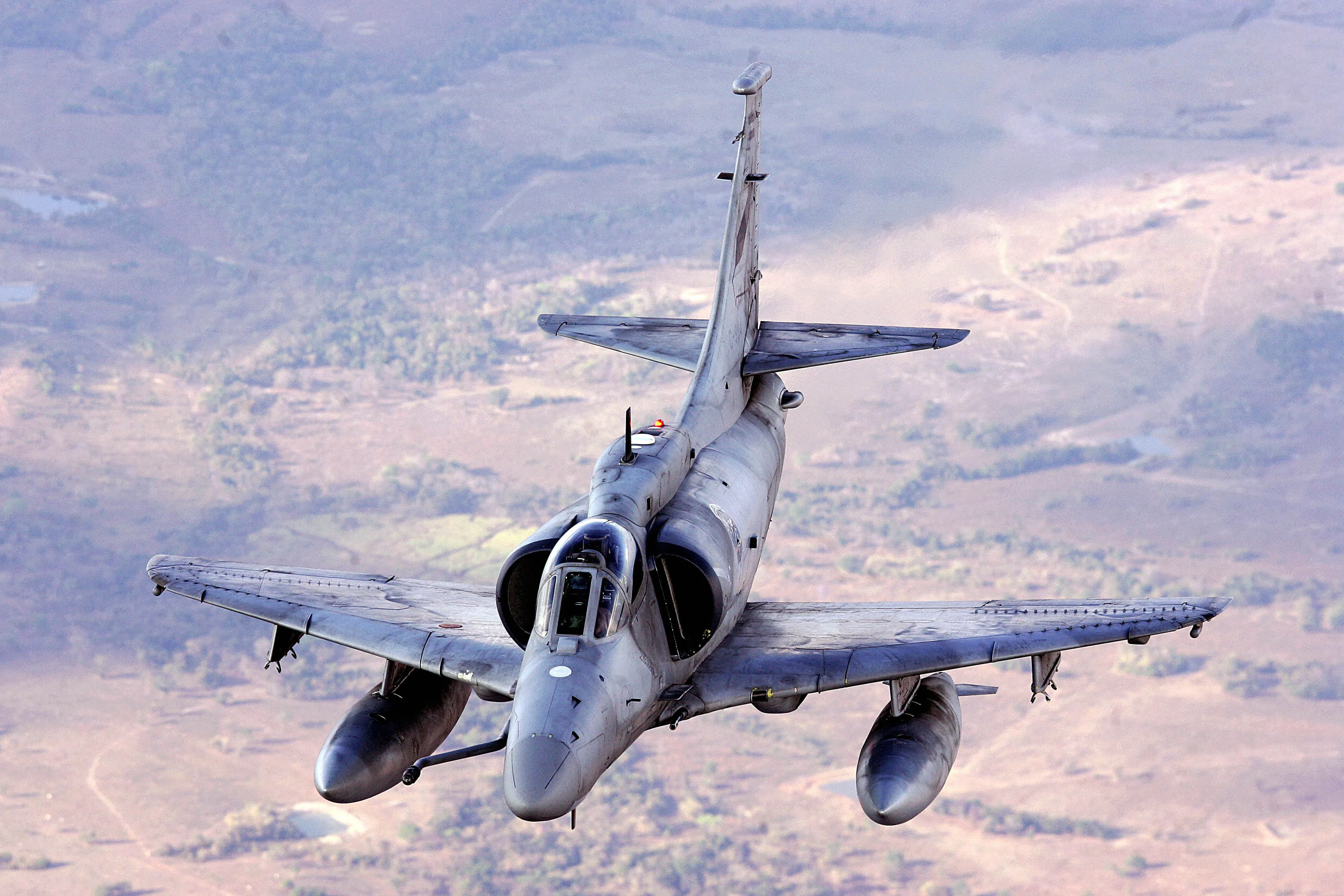
Brasilia, BRAZIL: An A-4 Skyhawk aircraft from Argentina's Air Force flies after taking off from the Brazilian air base of Anapolis, 170 km from Brasilia, 25 August 2006, during the III Cruzeiro do Sul joint maneuvers (Cruzex III) in which Brazil, France, Venezuela, Chile, Argentina and Uruguay take part. These aerial exercises face the possibility of acting in the framework of UN coalitions in other regions of the globe. A total of 61 aircrafts and 1309 people will participate in Cruzex III from 21 August to 01 September. AFP PHOTO/Evaristo SA (Photo credit should read EVARISTO SA/AFP via Getty Images)
An A-4AR Fightinghawk during the Cruzex III multinational exercise in 2006. EVARISTO SA/AFP via Getty Images

The FAA announced the “definitive decommissioning” of the Fightinghawk fleet at Villa Reynolds Air Base in San Luis province yesterday. The base was home to the final Argentine A-4 unit, the 5th Air Brigade (V Brigada Aérea).

As well as the FAA’s introduction of the F-16, the decision to stand down the A-4s was based on prioritizing “operational efficiency and economic sustainability,” the service said. In a statement, it also pointed to the costs of maintenance and sustainment of the aging jets; keeping these aircraft operational had become an increasingly difficult challenge in recent years.

Los F-16 comenzaron su actividad de vuelo en el Área Material Río IV, operando en sectores autorizados.

Nuestros pilotos continúan su familiarización con el sistema de armas.

Esto reafirma nuestro compromiso con la defensa aeroespacial integral. pic.twitter.com/lExbKUIwS1

— FuerzaAéreaArgentina (@FuerzaAerea_Arg) March 30, 2026

A version that was unique to Argentina, the Fightinghawk emerged from a major modernization program carried out by Lockheed Martin on former U.S. Marine Corps A-4M and OA-4M Skyhawks, which were taken out of storage at the Aerospace Maintenance and Regeneration Center (AMARC). Work on the first batch of aircraft was conducted by Lockheed Martin in Ontario, California, with the remainder upgraded in Córdoba, Argentina.

Fightinghawk deliveries to Argentina comprised 32 A-4ARs and four OA-4ARs, beginning in the mid-1990s. Interestingly, these upgraded jets were equipped with the same AN/APG-66 radar used in early F-16 variants and were capable of carrying AIM-9M Sidewinder air-to-air missiles. In the cockpit, the Fightinghawk introduced hands-on-throttle-and-stick (HOTAS) controls, multifunction displays, and a new head-up display. Also installed were an onboard computerized mission-planning system and a new navigation/attack computer. Radar-warning receivers and onboard oxygen-generating equipment rounded out the upgrade package.

TO GO WITH AFP STORY An Argentine A-4AR fighter jet prepares for take-off during a war games exercise in Antofagasta, some 1300 km north of Santiago, on October 26,2009. Salitre II is a international military exercise to share operational and tactical experience in a simulated mission to keep peace. The countries involved are Argentina, Brazil, the US, France and Chile. AFP PHOTO/MARTIN BERNETTI (Photo credit should read MARTIN BERNETTI/AFP via Getty Images)
An A-4AR prepares for takeoff during the Salitre II exercise in Chile in 2009. MARTIN BERNETTI/AFP via Getty Images

Although significantly more capable than the Vietnam-era Skyhawks they evolved from, the Fightinghawk was never designed as a dedicated air-defense fighter. Nevertheless, it was forced into that role after Argentina retired its last French-built Mirage fighters in 2015.

An A-4AR carrying an inert AIM-9M Sidewinder air-to-air missile under the wing. Fuerza Aérea Argentina

Against this backdrop, the FAA spent years trying to rebuild its ‘fighter’ capability but was repeatedly hampered by British efforts to block potential fighter buys. There was even speculation that Argentina might push to secure a deal with either China or Russia. Numerous aircraft options were evaluated before the U.S. government finally approved the transfer of F-16s from Denmark to Argentina in October 2023.

Early the following year, Argentina’s President Javier Milei confirmed that Buenos Aires would purchase the secondhand F-16s from Denmark. Welcoming the news, the U.S. Department of State described the jets in question as “low-cost high-performance multirole aircraft.”

The FAA is now in the process of introducing 24 F-16s, in the form of 16 single-seat F-16AMs and eight two-seat F-16BMs. It is also receiving several older Viper airframes for use as training aids and a spare parts source.

One of the first F-16AMs for the FAA after its arrival in Argentina. Fuerza Aérea Argentina

The retirement of the Fightinghawk also concludes the legacy of the wider A-4 series in Argentine service.

Brasilia, BRAZIL: An A-4 Skyhawk aircraft from Argentina's Air Force (L) and a Mirage 2000 aircraft from France's Air Force fly after taking off from the Brazilian air base of Anapolis, 170 km from Brasilia, 25 August 2006, during the III Cruzeiro do Sul joint maneuvers (Cruzex III) in which Brazil, France, Venezuela, Chile, Argentina and Uruguay take part. These aerial exercises face the possibility of acting in the framework of UN coalitions in other regions of the globe. A total of 61 aircrafts and 1309 people will participate in Cruzex III from 21 August to 01 September. AFP PHOTO/Evaristo SA (Photo credit should read EVARISTO SA/AFP via Getty Images)
An A-4AR Fightinghawk alongside a French Air Force Mirage 2000 during joint maneuvers in Brazil. EVARISTO SA/AFP via Getty Images

Argentina’s relationship with the A-4 began when the FAA took delivery of 26 former U.S. Navy A-4Bs in 1966, becoming the first export customer for the Skyhawk. A second batch of 26 A-4Bs arrived in 1970 and similarly joined the 5th Air Brigade at Villa Reynolds.

In 1976, another batch of 26 aircraft was delivered to the FAA, these being A-4Cs, again from U.S. Navy stocks. Their arrival allowed another unit to be equipped, this time the 4th Air Brigade at El Plumerillo.

For FAA service, these aircraft received the official designation A-4P from the U.S. government and the manufacturer, but were locally still often referred to as A-4B/Cs.

As well as equipping its air force, Argentina acquired A-4s for its naval air arm. In 1970, the Argentine Navy received a batch of 16 A-4Qs, a unique designation that applied to upgraded former U.S. Navy A-4Bs. These were primarily intended to serve aboard the aircraft carrier Veinticinco de Mayo, a Colossus class vessel that was transferred from the United Kingdom after service with the U.K. Royal Navy and the Royal Netherlands Navy. Unlike the first-generation FAA A-4s, the naval Skyhawks had, from the outset, provision for AIM-9 Sidewinder air-to-air missiles to provide air defense cover for the carrier group. They could also be fitted with a buddy refueling store.

Falklands War, 1982. Artist Luis Rosendo. (Photo by Luis Rosendo/Heritage Images via Getty Images
An Argentine Navy A-4 launches off the flight deck of the aircraft carrier Veinticinco de Mayo. Photo by Luis Rosendo/Heritage Images via Getty Images

By the time of the Falklands/Malvinas War in 1982, which began with Argentina’s surprise attack on the tiny British South Atlantic territory, nearly 8,000 miles from the United Kingdom, around 36 A-4s were in FAA service, with another eight more operational with the Argentine Navy.

At least one A-4 was tested from the airfield at Port Stanley in the Falklands, but the type was not judged suitable for sustained combat operations there. As for the Argentine Navy A-4s, these were initially embarked on the Veinticinco de Mayo, but the loss of the cruiser Belgrano forced the Argentine carrier back to port to avoid a similar fate.

An FAA A-4 is bombed up during the Falklands War. via Mariano Sciaroni 

All this was fortunate for the British, since the FAA and Argentine Navy A-4s were forced to operate from bases on the mainland, at the very margins of their range.

For the A-4s, the war began with the support of the initial amphibious landings near Port Stanley, after which FAA Skyhawks clashed for the first time with the British task force on May 12, 1982. Although four A-4s were brought down by air defenses in this confrontation, they inflicted heavy damage on the destroyer HMS Glasgow.

Argentinian pilots attacking British warships in San Carlos Water during The Falklands War thumbnail

Argentinian pilots attacking British warships in San Carlos Water during The Falklands War


Typically, the FAA A-4s would transit to the islands at high levels, refuel from a KC-130 Hercules tanker, then drop down for a low-level attack run, dropping U.S.- or British-made free-fall bombs. Considering the challenges of these operations and the fact that the combination of low-level release and often-incorrect fusing meant many bombs failed to detonate, the jets had a major impact. In the course of more than 200 combat sorties, FAA A-4s sunk four warships and damaged several more. The service suffered eight losses at the hands of U.K. Royal Navy Sea Harriers out of a total of 19 A-4s lost, together with 17 pilots.

Meanwhile, the Argentine Navy A-4s claimed to have inflicted fatal damage on two warships (claims disputed by the British), for the loss of three Skyhawks and two pilots.

Aircraft, Falklands War, 1982. Artist Luis Rosendo. (Photo by Luis Rosendo/Heritage Images via Getty Images
Bombs about to be loaded onto an Argentine Navy A-4 on the deck of the aircraft carrier Veinticinco de Mayo. Photo by Luis Rosendo/Heritage Images via Getty Images

The bravery of the FAA pilots is noteworthy here, since the A-4s were flying with no air-to-air missile armament, no radar, no modern navigation system, delivering unguided munitions, and without radar-warning equipment. As you can read about here, as far as self-protection systems, the few examples that were introduced by the Argentines during the conflict were the result of desperate ingenuity.

The end of the conflict saw operations hampered by a U.S. arms embargo, but the Argentine Skyhawks soldiered on. The Argentine Navy stood down its last A-4Q in 1988, while the last of the first-generation FAA A-4s was retired in 1999.

With the retirement of the Fightinghawk, the A-4 remains in active military service only with neighboring Brazil.

The Brazilian Navy also acquired A-4s for carrier operations, but the retirement of its sole flattop, Sao Paulo, means that the value of its Skyhawks, locally designated AF-1, is increasingly questionable. However, work has been undertaken to upgrade these aircraft to ensure they remain viable, albeit now operating from a land base, at São Pedro da Aldeia. In all, five single-seaters and a pair of two-seaters were brought up to AF-1B and AF-1C standards, respectively. The seven upgraded Skyhawks received airframe and engine overhauls, a new Elta Systems EL/M-2032 multi-mode radar, a glass cockpit with HOTAS controls, and various other improvements.

A Brazilian Navy AF-1 Skyhawk. Sgt Müller Marin/Brazilian Air Force

Now that Saab Gripen E/F fighters are joining the Brazilian Air Force, retaining the Skyhawk fleet is also less important, and their time in service will likely come to an end soon.

In the meantime, however, the A-4 continues to provide good service to private military contractors, who appreciate the jet for its versatility, agility, and relatively low operating costs, meaning that it excels as both an adversary and as a test and training platform. Chief among these operators is the Canadian Top Aces, flying ex-Israeli A-4s, and Florida-based Draken International, which operates a fleet of the jets that previously flew with the Royal New Zealand Air Force.

As we have discussed in the past, the capabilities of some of these contractor-operated A-4s would be beyond the imagination of many of the pilots who originally flew the jets in military service. The latest standard of A-4s operated by Top Aces, for example, includes an active electronically scanned array (AESA) radar and an infrared search and track (IRST) system to better replicate more modern threats.

A former Israeli Air Force A-4N now flying with Top Aces. Sven Neumann

Therefore, while the A-4 may be fast disappearing from the inventories of air forces, its legacy is set to live on in the most tangible form, as it continues to serve in a variety of support roles around the world in the hands of commercial operators.

Contact the author: thomas@thewarzone.com

Thomas is a defense writer and editor with over 20 years of experience covering military aerospace topics and conflicts. He’s written a number of books, edited many more, and has contributed to many of the world’s leading aviation publications. Before joining The War Zone in 2020, he was the editor of AirForces Monthly.


Source link