Argentina

Three dead in suspected hantavirus outbreak on Atlantic cruise ship | Health News

Three of six passengers who fell ill from suspected rodent-transmitted virus have died, and one is in intensive care, the WHO says.

Three people have died on a cruise ship in the Atlantic, with at least one confirmed to have suffered from hantavirus, a rare disease transmitted to humans from rodents.

Health authorities are now investigating a suspected outbreak of the virus on the MV Hondius, which is sailing from Ushuaia in Argentina to Cape Verde.

Recommended Stories

list of 3 itemsend of list

In a statement on Sunday, the World Health Organization said that one case had been confirmed and at least five other passengers were suspected of being infected.

“Of the six affected individuals, three have died, and one is currently in intensive care in South Africa,” WHO said in a statement.

“Detailed investigations are ongoing, including further laboratory testing and epidemiological investigations. Medical care and support are being provided to passengers and crew. Sequencing of the virus is also ongoing.”

WHO added that it was “facilitating coordination” between countries to evacuate the two other passengers showing symptoms of the infection.

Hantavirus, a rare disease transmitted to humans through the droppings or urine of infected rodents, can be fatal in severe cases and cause hemorrhagic fever.

Infected couple among casualties

South Africa’s National Department of Health said earlier on Sunday that there had been an outbreak of a “severe acute respiratory illness”, which had killed at least two people, and that a third person was in intensive care in Johannesburg, according to the AFP news agency.

The ministry’s spokesperson, Foster Mohale, confirmed that the patient being treated in Johannesburg tested positive for hantavirus.

A 70-year-old was the first to develop symptoms. He died on the ship, with his body now being held on the island of Saint Helena, a British territory in the South Atlantic, the spokesman said.

The patient’s 69-year-old wife also fell sick and was evacuated to South Africa, where she died in a Johannesburg hospital, he added.

Mohale told AFP that authorities have not confirmed the nationalities of the deceased. But the person in intensive care was reported by AFP to be a 69-year-old Briton.

Source link

Argentina sees early results from investment incentive plan

Argentina’s incentive program designed to attract large-scale investments is a key pillar of President Javier Milei economic agenda, File Photo by Juan Ignacio Roncoroni/EPA

BUENOS AIRES, April 27 (UPI) — Argentina’s incentive program designed to attract large-scale investments, a key pillar of President Javier Milei economic agenda, is showing early signs of success through increased foreign currency flowing into the country.

In an economy in which hard currency shortages often shape government policy and financial stability, early results from the Large Investment Incentive Regime, known by its Spanish acronym RIGI, are being closely watched by government officials and financial markets.

According to figures from Argentina’s central bank, projects approved under the program generated a net inflow of $762 million through March. The funds entered the country directly and helped provide some stability to the exchange rate.

Gonzalo Brest, a legal partner at KPMG Argentina, told UPI the progress of the investment regime sends a positive signal for the country’s economy.

“In concrete terms, this could translate into more private-sector jobs, especially in areas such as construction, transportation, metalworking, logistics, energy and mining, along with greater economic activity in the provinces where the investments are established,” Brest said.

He added that the program’s impact could extend beyond employment and affect Argentina’s external accounts.

“If these projects move forward, Argentina could increase exports and generate greater foreign currency inflows — something that is critical for an economy that has historically faced external constraints and balance-of-payments pressures,” he said.

Brest said the RIGI program is also intended to address Argentina’s long-standing difficulty in attracting large-scale investment in capital-intensive industries that require stable rules over long periods.

“In the government’s view, the regime functions as a kind of ‘island of stability’ aimed at accelerating investment decisions that, without a special framework, would likely be postponed or relocated to other countries,” he said.

The program is primarily focused on sectors such as oil and gas, mining, renewable energy, ports and heavy industry, all with strong export potential. Brest said the initiative’s main goals are to boost exports, increase foreign currency inflows and create jobs.

Many of the proposed projects are tied to lithium, copper, gold, silver, liquefied natural gas and oil development in Vaca Muerta, one of Argentina’s largest shale oil and gas formations.

“These are sectors where Argentina has abundant resources, but needed greater certainty to turn them into production and exports,” Brest said.

He cautioned, however, that the program’s long-term success will depend on factors beyond the design of the regime itself, including macroeconomic stability, infrastructure, access to financing and public support for large-scale projects.

“Even so, the RIGI is already functioning as a strong signal to international markets that Argentina wants to compete for major investment capital,” he said.

The program has received more than 35 project proposals totaling more than $80 billion. Of those, 13 projects have received government approval, representing combined investments of more than $18 billion.

Among the latest proposals under review is the “Fértil Pampa” project led by Pampa Energía. The initiative calls for a nearly $2.4 billion investment to produce fertilizers in the industrial hub of Bahía Blanca in Buenos Aires province.

With these developments, the RIGI program is moving beyond its initial phase of announcements and expectations.

The next challenge will be determining whether the promised investments can be sustained over time and translated into real economic activity, jobs and a stable flow of foreign currency for a country seeking relief from one of its most persistent economic constraints.

Source link

Milei administration in Argentina blocks journalist access to Casa Rosada | Freedom of the Press News

Press freedom advocates have warned of hostile rhetoric towards journalists and increasingly restrictive policies under Milei.

The administration of Argentina’s Javier Milei has restricted access to the presidential palace, the Casa Rosada, as part of an escalating feud with the country’s journalists.

Accredited journalists reportedly arrived at the Casa Rosada on Thursday and attempted to enter the building through fingerprint scanning, as they usually would.

Recommended Stories

list of 3 itemsend of list

But they were unable to pass the scan. As confusion hit the news corps, the head of Argentina’s Secretariat of Communication and Press issued a clarification that their press accreditation had not been revoked.

“The decision to remove the fingerprints of journalists accredited to the Casa Rosada was taken as a preventive measure in response to a complaint filed by the Military Household regarding illegal espionage,” Secretary Javier Lanari wrote on social media.

“The sole objective is to guarantee national security.”

Lanari’s post cites an incident wherein two journalists from the Argentinian channel TN were accused of secretly filming inside the government palace.

After their report was broadcast, the Milei administration accused the journalists of endangering government security by showing parts of the Casa Rosada that were reportedly off limits.

On Wednesday, Milei himself took to social media to call the journalists “repugnant trash”. He then challenged other members of the news media to justify their actions.

“I would love to see that filthy scum — the 95% who carry press credentials — come out and defend what these two criminals did,” Milei wrote on X.

Since then, the president has repeatedly reposted messages critical of the news media, often accompanied by the acronym “NOLSALP” or “NOL$ALP”. It stands for: “We don’t hate journalists enough.”

“Someday, that filthy journalistic scum (95%) will have to understand that they are not above the law. They abused legal precedent. It does not come without a price,” Milei added in one of his posts on Thursday, as he continued to slam the news media.

This week’s actions are the latest in a series of policy changes under Milei designed to tighten restrictions on journalists.

Last year, for instance, his government capped entry to certain rooms in the Casa Rosada and placed other areas out of bounds.

Critics say the policies are part of a wider broadside against journalism in Argentina. The media advocacy group Reporters Without Borders (RSF) has said that, since Milei took office in 2023, the country has seen “a sharp decline in press freedom”.

And PEN International, an organisation for writers, warned last year of a “serious deterioration” in free-speech rights.

It pointed to legislation that further restricted which government documents could be made public and to Milei’s dismantling of public media, as well as the installation of a “mute” button to silence journalists during news conferences.

Already, the decision to bar journalists from entry into the Casa Rosada has faced pushback, including from Argentinian lawmakers.

Marcela Pagano, a former journalist turned deputy in Argentina’s legislature, announced on Thursday that she had filed a criminal complaint against Milei.

“The Casa Rosada is not private property,” Pagano wrote in a statement.

“Still less does a head of state — or his henchmen officials — have the authority to decide whether the press may access the building.”

She called Thursday’s incident “an unprecedented occurrence since the return of democracy” in Argentina in 1983.

“Prohibiting journalists from exercising their freedom of expression is the first step toward silencing any dissenting voice — a situation that we in Argentina have experienced during our country’s darkest moments,” she added. “THEY WILL NOT SILENCE US.”

Source link

Argentina’s Milei backs US-Israel war on Iran in Jerusalem visit | US-Israel war on Iran

NewsFeed

Argentina’s President Javier Milei has reaffirmed strong alignment with the US and Israel during a visit to Jerusalem, backing their war on Iran.

His visit with Prime Minister Benjamin Netanyahu included new agreements and closer ties.

Source link

Maradona’s childhood home becomes soup kitchen for those in need | Football News

The late Argentinian football legend’s childhood home has been converted into a soup kitchen serving those affected by President Javier Milei’s austerity measures.

At 523 Amazor street in Fiorito, a Buenos Aires suburb where the “Golden Boy” experienced extreme poverty growing up, locals can now receive meals and clothing assistance.

This neighbourhood of about 50,000 residents living in modest brick homes features numerous murals commemorating the career of the iconic number 10, who passed away in 2020 at the age of 60.

As a criminal negligence trial begins on Tuesday against the seven-member medical team responsible for Maradona’s final care following brain surgery, his childhood community continues his legacy of compassion.

Neighbours visit “Diego’s house” carrying containers that volunteers fill with chicken stew and other meals prepared in large cauldrons in the yard, while cumbia music – Maradona’s preferred genre – plays in the background.

“Diego would say there is a lot of hunger and we have to help, because the need is so great,” explained Diego Gavilan, who benefits from the kitchen’s services.

Gavilan, who collects cardboard and scrap metal, began visiting the soup kitchen after Milei implemented radical free-market reforms following his December 2023 election.

“You can’t make ends meet,” Gavilan noted.

Despite statistics showing poverty reduction under Milei, primarily due to decreasing inflation, family finances remain in crisis, according to Central Bank reports. Increased imports and plummeting consumption have resulted in more than 20,000 business closures.

Gavilan appreciates receiving assistance from Maradona’s former home: “He suffered so much hunger here as a child. For the people of the neighbourhood to receive a plate of food is special.”

The facility operates without dining accommodations. Volunteers prepare food over open fires in the yard, distributing it in bags to those waiting at the entrance.

Maradona frequently referenced his humble origins in an area without running water or paved streets. Sixty-six years after his birth, hardship remains visible on the faces of those queueing for food.

“People are going hungry,” said Maria Torres, one of the centre’s cooks, who believes Maradona would approve of his childhood home’s charitable repurposing.

Source link

Thursday 2 April Malvinas Day in Argentina

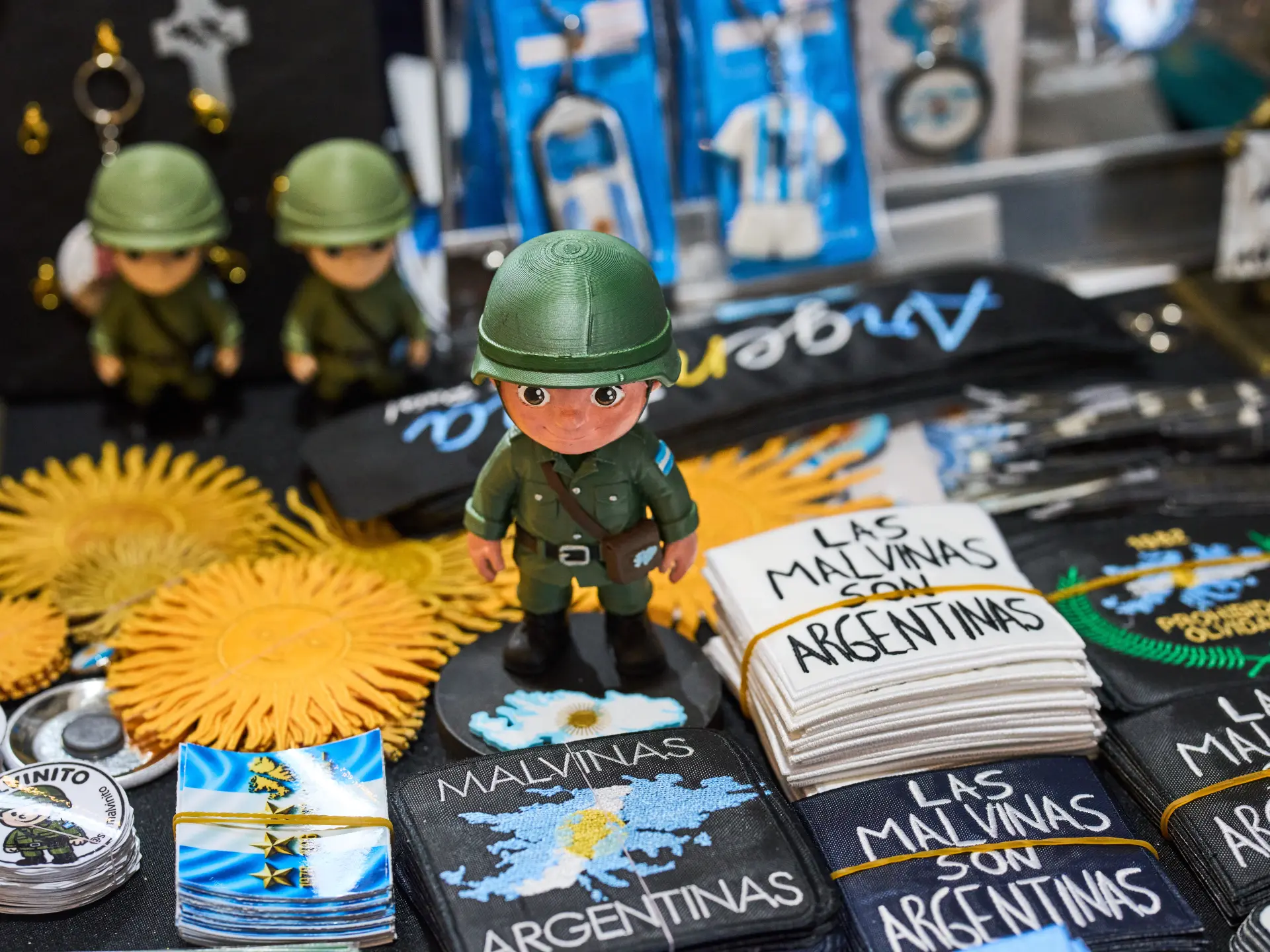
The Malvinas Islands are probably better known in the English-speaking world by their British name, the Falklands.

The holiday is a tribute to Argentina’s fallen soldiers in the Falklands War, which began with the Argentine occupation of the Islands on April 2nd 1982.

The war lasted 74 days, with 255 British and 649 Argentine soldiers, sailors, and airmen, and three civilian Falklanders killed.

Malvinas Day was first introduced in 2001. It replaced the June 10th “Sovereignty over Malvinas Islands” Day, which until then had commemorated the appointment of Luis Vernet as governor of the Islands by Buenos Aires in 1832.

The Argentine government is continuing with its efforts to identify the remains of all it’s fallen troops on the islands. Speaking at the unveiling of a plaque to commemorate the 649 fallen soldiers on April 2nd 2019, Secretary for Human Rights Claudio Avruj said “this… …is a very important and emotional event, which adds to the valuable and significant work carried out by the humanitarian mission to identify our Malvinas heroes”.

U.S. court overturns ruling against Argentina over YPF expropriation

People gather outside the federal courthouse in New York City in July 2023, when Argentina was to learn how much it owed to investors after nationalizing gas and oil company YPF SA. The award has now been overturned by a U.S. appeals court. File Photo by Sarah Yenesel/EPA

March 27 (UPI) — Argentina’s government praised a U.S. court decision Friday that overturned a ruling ordering the country to pay more than $16.1 billion in a lawsuit tied to the 2012 expropriation of oil company YPF.

“We won the case,” President Javier Milei wrote on X, noting the amount at stake was comparable to key financial obligations, including recent loans from the International Monetary Fund.

According to a statement from the presidential office, the Court of Appeals for the Second U.S. Circuit reversed a lower court’s decision that had ordered Argentina to pay billions in damages over how the state renationalized the company.

“The court fully overturned the ruling against the Argentine state in what represents the best possible outcome, with less than a 15% probability of occurrence, and avoided an estimated payment of approximately $18 billion,” the statement said.

The case stems from Argentina’s 2012 expropriation of a 51% stake in YPF, which was owned by Spanish energy company Repsol, during the second presidential term of Cristina Fernández de Kirchner.

The dispute arose because Argentina did not launch a tender offer to purchase shares held by minority investors, as required under the company’s bylaws.

Following that omission, litigation fund Burford Capital acquired the rights to pursue the claim and sued Argentina in New York, securing a record $16.1 billion judgment in 2023 that has now been overturned.

Argentina’s legal defense, maintained across multiple administrations, including those of Mauricio Macri, Alberto Fernández and Milei, argued that the appropriate jurisdiction for the case was Argentine courts, not U.S. tribunals, local newspaper Ámbito reported.

The country had also appealed a June 2025 order requiring it to transfer YPF shares as partial payment of the judgment. With the ruling now vacated, the U.S. Court of Appeals for the Second Circuit also nullified that order.

The removal of the ruling and its associated payment could improve Argentina’s country risk outlook, ease pressure on international reserves and send a positive signal to investors regarding international litigation, local outlet Perfil reported.

Burford Capital can petition the U.S. Supreme Court for review. If the court takes up an appeal, the final outcome could be moths or years away.

Source link

Lionel Messi: Inter Miami name stand after Argentina great

Argentina great Lionel Messi has had a stand named after him by his current club Inter Miami.

The 38-year-old, widely regarded as one of the greatest players ever, signed for the MLS club in 2023 after a trophy-laden career in Europe with Barcelona and Paris St-Germain.

He has gone on to become the record goalscorer with 82 and record assist provider with 53 for the Florida club, who have taken the unusual step of honouring an active player in this fashion at their 26,700 capacity stadium.

Inter Miami said: “Traditionally, tributes look to the past. They are built from nostalgia. From memory. This one is different. This one is born from the present.

“From what is happening right now. From what you feel every time Leo steps on to the pitch.

“Recognising someone is not always about closing a chapter. Sometimes it is about realising you are witnessing something unique.”

It is the second time in recent history the Argentine, who captained his country to World Cup glory in 2022, has had a stand named after him with Newell’s Old Boys – where he played as a child – doing the same in June 2025., external

Last season Messi, who is an eight-time Ballon d’Or winner, became the first player in MLS history to win back-to-back Most Valuable Player awards.

Messi’s arrival at the club co-owned by former England captain David Beckham has raised the profile of the league and Inter Miami’s status, as well as delivering success in the form of the Leagues Cup, Supporters’ Shield and MLS Cup.

Source link

Argentina names Jalisco New Generation Cartel terrorist organization

Inclusion in the terrorism registry enables the government to impose “financial sanctions and operational restrictions” aimed at limiting the capacity of criminal organizations and their members, according to the statement from President Javier Milei’s administration.

March 26 (UPI) — Argentina’s government on Thursday formally designated the Jalisco New Generation Cartel, known as CJNG, as a terrorist organization and ordered its inclusion in the country’s public registry of individuals and entities linked to terrorism and its financing.

In an official statement, Argentina’s presidential office said the decision is based on reports documenting the group’s transnational criminal activities and links to other terrorist entities.

The move aligns Argentina with U.S. security policy, which designated the cartel as a terrorist organization in 2025.

Inclusion in the registry enables the government to impose “financial sanctions and operational restrictions aimed at limiting the capacity of these criminal organizations and their members,” according to the statement from President Javier Milei’s administration.

It also “protects Argentina’s financial system from being used for illicit purposes” and strengthens international cooperation in security and justice matters “in close coordination with countries that have already designated the Jalisco Cartel as a terrorist organization.”

The government said CJNG has become one of the world’s most powerful drug trafficking organizations over the past decade, with a presence in Mexico, operations in the United States and expansion into at least 40 countries, including Argentina.

The statement also highlighted the measure’s impact on international cooperation, saying it reinforces security and judicial coordination with countries that have already classified the cartel as a terrorist group.

The Jalisco New Generation Cartel emerged in Mexico in the early 2010s amid the fragmentation of major drug cartels. Its leader and founder, Nemesio Rubén Oseguera Cervantes, known as “El Mencho,” died in February during an operation in Mexico supported by U.S. intelligence. The United States had offered a $15 million reward for information leading to his capture.

Milei’s government has previously designated as terrorist organizations groups already classified as such by the United States, including branches of the Muslim Brotherhood in Egypt, Lebanon and Jordan, the Palestinian militant group Hamas and Iran’s Quds Force.

Source link

Stay in 10 of the world’s best cities from £6 a night

FROM rooftop bars in South Africa to swimming pools in Marrakech and sundrenched terraces in Madrid – Sun Travel has found of the most affordable spots in the world’s best cities.

These 10 stays are the perfect places to rest your head while travelling around the world and they start from just £6 per night.

Never@Home Green Point in Cape Town has a rooftop poolCredit: Unknown
The Amsterdam hostel has a bar in a former lecture hallCredit: Unknown

Cape Town, South Africa

Cape Town is the sixth best city in the world according to Time Out.

It has beautiful beaches and buzzy neighbourhoods, all set against the backdrop of the enormous Table Mountain.

When it comes to affordable places to stay check out Never@Home Green Point near Cape Town Stadium.

Along with private rooms and shared ones (including female-only), the hostel has a rooftop swimming pool, bar and chill-out lounge.

GET IT BOOKED

The ‘cheap luxury’ beach resorts under 4 hours from UK with breaks from £75pp


ALL IN

The CHEAPEST all-inclusive holidays in May half term – from £259pp and kids go free

A stay at Never@Home Green Point starts from £20 per night.

Amsterdam, The Netherlands

Amsterdam sits at number 34 in the list of the world’s best cities with pretty canals and gabled buildings.

There are plenty of attractions to explore as well as lots of busy bars and cafes to explore.

Anyone heading to the city should take a look at Generator Amsterdam which is inside a former university building overlooking Oosterpark.

One of its most impressive rooms is the bar inside a former lecture theatre.

A bed in one of the dorm rooms starts from £15 per night.

Edinburgh, United Kingdom

With its enormous hilltop castle, winding Royal Mile lined with plenty of shops and of course, pubsEdinburgh has been announced as the third best city in the world.

It’s easy to walk about on foot and those brave enough should hike up to Arthur’s Seat.

When it comes to where to stay, consider the Castle Rock Hostel which is right next to Edinburgh Castle with easy access to the Old Town.

It has plenty of communal spaces and is a perfect budget stay for Edinburgh explorers – a night in one of the dorms at the Castle Rock Hostel starts from £15 per night.

Osaka, Japan

Travelling to Japan is on the rise, and while flights there are likely to be expensive, staying there doesn’t have to be.

Time Out, which named Osaka as the 39th best city in the world, also said it’s the “undisputed street food capital of Japan“.

When looking for a base to explore and fill your stomach with delicious takoyaki and yakitori, check out Hotel Toyo Hostel.

It’s basic but offers private rooms and is in the heart of the city with stays from £10 per night.

Kraków, Poland

Nicknamed the ‘jewel of the Baltics’, Kraków is said to be ‘fairytale-like’ with its colourful buildings and grand squares.

The pretty city is filled with pretty gardens, parks, and for beer fans, you can get a pint for as little as £1.50.

Any guest that checks into Greg & Tom Beer House Hostel gets free breakfast, dinner and there’s even free beer hour starting from 9pm.

The hostel is three-minutes from the Main Square and rooms start from £10 per night.

Generator Amsterdam has spacious rooms inside a former university buildingCredit: Unknown
This hostel in Marrakech has a pretty courtyard and a swimming poolCredit: Unknown

Marrakech, Morocco

The 24th world’s best city is Morocco’s vibrant Marrakech where you can haggle in busy souks, take in history at the medinas and stop in traditional tearooms.

To get into the spirit of Marrakech, all the while saving pennies, check into the Equity Point Marrakech.

It’s a unique spa hostel with a swimming pool and even offers hammam and massages to guests.

It also has a relaxing courtyard area and a rooftop bar with views across the city.

One visitor wrote in their review: “The Pool, rooftop terrace, and rooms are amazing. I wish we stayed longer and i would definitely recommend it to anyone who is visiting Marrakesh.”

A stay here starts from £8 per night.

Dublin, Ireland

Closer to home is vibrant Dublin a city known for its charm, old boozers, and friendly locals.

It’s said to be the city for some of the ‘best nights out in Europe‘ so if you want to see it for yourself, head to Generator Dublin.

The hostel that has a mix of private rooms and shared dorms is near the Jameson Distillery and the famous Temple Bar.

Rooms start from £25 per night.

Lisbon, Portugal

Lisbon is hard to beat with the best of both worlds; coast and city.

Some of the most famous attractions include the Jerónimos Monastery, Belém Tower and with it being so hilly, taking the tram is a popular transport choice.

There are plenty of tascas too where you can dig into bacalhau (salted cod) and sip on sangria.

Goodmorning Solo Traveller Hostel is minutes from the city centre with plenty of communal spaces – some rooms even have balconies.

A stay here starts from £20 per night (a two-night minimum stay is required).

Buenos Aires, Argentina

There’s so much to do in the capital of Argentina from eating its world-class food to exploring the city’s vibrant culture.

Stewart Jackson, the Sun’s UK Digital Editor, who visited the city described it as a “brag-to-your-friends city break that is achingly cool and, once you’re there, incredibly cheap.”

Cocktails can be picked up from £4 and a 30-minute taxi journey can be as little as £3.

Affordability doesn’t stop with places to stay either – First Stop Buenos Aires Hostel is a budget-friendly hostel in the heart of the city.

The hostel offers a variation of rooms – some are private with adjoining ensuites.

A one night stay starts from £20 per night.

Generator Madrid a huge rooftop terrace with a bar, sunloungers and hot tubsCredit: Unknown

Madrid, Spain

Food, nightlife, culture – and just over two hours from the UK, Madrid should be top of your list for a city break.

Deputy Travel Editor Kara Godfrey even called it her “new favourite Spanish city.”

She said: “It feels more livable than other more tourist destinations, with an amazing food and drink scene.

“I mingled with the locals at Pez, where the only thing on the menu is huge sloppy pieces of tortilla chased with a cana (small beer) or tinto de verano for €2.50 (£2.16).”

Generator Madrid is just off of Gran Vía known as ‘Spanish Broadway’ and is a top pick thanks to its rooftop terrace with a bar, sunloungers and hot tubs.

The hostel holds social events too like yoga and DJ sessions and a night in one of the dorms starts from £6 per night.

For more on hotels – here are the very affordable hotels that are better than a five-star – by a holiday expert who’s visited more than 200.

Plus, the top travel mum influencer reveals her best cheap, family-friendly hotels.

Some hostels, like this one in Madrid have rooftop bars and poolsCredit: Unknown

Source link

Tuesday 24 March Truth and Justice Memorial Day in Argentina

This Argentinian public holiday is held on March 24th, the anniversary of the coup d’état of 1976 that overthrew President Isabel Peron and brought the National Reorganization Process to power. The coup installed the bloodiest dictatorship in the history of the country, led by General Jorge Rafael Videla, Admiral Emilio Eduardo Massera and Brigadier-General Orlando Ramón Agosti.

It was this that started a period of state terrorism aimed at left-wing guerrillas, political groups, and socialists.

During over seven years of dictatorship, Argentine security forces, along with right-wing death squads such as Triple A, hunted down anyone believed to be associated with socialism, left-wing Peronism, or the Montoneros movement. While nearly 10,000 people are known to have ‘disappeared’ under the junta, the true number may have been much higher as so many documents and records were destroyed by the military. The actual figure may have been over 30,000 students, activists, trade unionists, writers, journalists, artists and any citizens suspected of being left-wing activists were kidnapped, tortured and disappeared. The military junta silenced any political or ideological dissidents, even those seen as antithetical to its neoliberal economic policies.

The period lasted until December 1983 when democratic elections were held to install a new president.

The commemoration was sanctioned as Law 25633 by the Argentine National Congress on August 1st 2002, and promulgated by the Executive Branch on August 22nd of the same year. However, it was not implemented as a public national holiday until 2006.

The day is marked by peaceful rallies and marches by those who lost loved ones during the period. Hundreds of thousands of citizens, relatives of the disappeared people, members of social movements, human rights organizations and left-wing political parties march to the Plaza de Mayo in the capital Buenos Aires to commemorate the victims of the last dictatorship and demand justice for the crimes against humanity committed by the State during that period.

Spain v Argentina ‘Finalissima’ match in Qatar cancelled amid conflict | Football News

The fixture, part of the Qatar Football Festival, has been cancelled amid the ongoing US-Israeli war on Iran.

The ‘Finalissima’ match between Spain ‌and Argentina that was scheduled to be held in Qatar later this month has ⁠been cancelled due ⁠to the conflict in the Middle East, UEFA said in a statement.

“It is a source of great disappointment to UEFA and the organisers that circumstances and timing have denied the teams of the chance to compete for this prestigious prize in Qatar,” UEFA said in a statement on Sunday.

The US-Israeli strikes on Iran have affected countries throughout the Gulf, disrupting travel ⁠in some of the world’s busiest transit hubs and forcing several sporting events to be cancelled due to safety concerns.

The contest between European champions Spain and Copa America winners Argentina was ⁠scheduled for March 27 at Doha’s Lusail Stadium, where fans would have had the opportunity to watch Lionel Messi go head-to-head with Lamine Yamal.

UEFA said they held discussions with the organising authorities in Qatar and concluded that the match could not take place due to the “current political situation” in the ‌region.

The Spain vs Argentina game was part of the Qatar Football Festival, as promoted by local organisers.

The five-day festival also included Egypt vs Saudi Arabia and Qatar vs Serbia on March 26; Egypt vs Spain and Saudi Arabia vs Serbia on March 30 and Qatar vs Argentina on March 31.

Serbia will now play Spain away instead.

“Serbia will face the current European champions, Spain, on away turf on March 27, and four ⁠days later they will host the Saudi Arabian national team,” the ⁠Football Association of Serbia said in a statement.

UEFA said they explored other feasible alternatives to play the Finalissima but they proved to be ‘unacceptable’ to the Argentinian Football Association (AFA).

UEFA first offered to stage the match ⁠at the Santiago Bernabeu with a 50:50 split of supporters in the stadium.

A second option was to stage the Finalissima over two legs – ⁠at the Bernabeu on March 27 and the second leg ⁠in Buenos Aires during an international window before the next Euros and Copa America.

However, the AFA rejected both options. UEFA said Argentina made a counter offer to play the game after the World Cup but Spain had no available dates.

“Ultimately, ‌UEFA sought a commitment from Argentina that, if a neutral venue in Europe could be found, the game could go ahead on 27 March… or on the alternative date of 30 ‌March. ‌This proposal was also rejected,” UEFA added.

The 2022 edition of the Finalissima was held at Wembley Stadium in London where Argentina beat Italy 3-0.

Source link

Finalissima: Argentina v Spain match set for Qatar cancelled because of Middle East war

BBC Sport has contacted the Argentine FA for comment.

Uefa said: “Argentina made a counter suggestion to play the game after the World Cup but, as Spain has no available dates, that option had to be ruled out.”

The Spanish FA said, external it had “worked intensively” to get the game on in any format possible, whether in Spain or at a neutral venue.

It said: “Spain was prepared to play as it has always been stated. They set no conditions.

“Spain, together with Uefa, has offered all possibilities.”

On Saturday the Bahrain and Saudi Arabian Formula 1 Grands Prix due to be held in April were cancelled.

Formula 1 said it is not safe to stage the races because of the conflict across the region.

The Finalissima, which is staged every four years and is organised by Uefa and the South American Football Confederation (Conmebol), was last won by Argentina at Wembley in 2022.

Source link