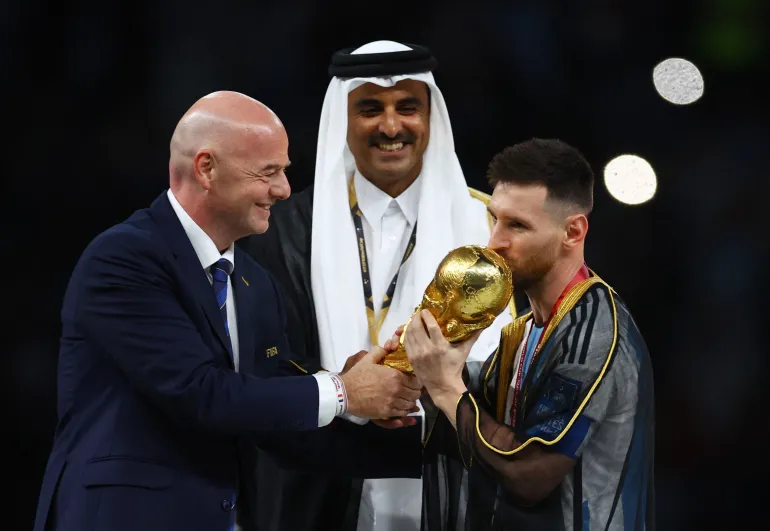
Argentina were beaten 1-0 in the final by Spain in what has been rumoured to be Lionel Messi’s final World Cup game.
Published On 21 Jul 202621 Jul 2026
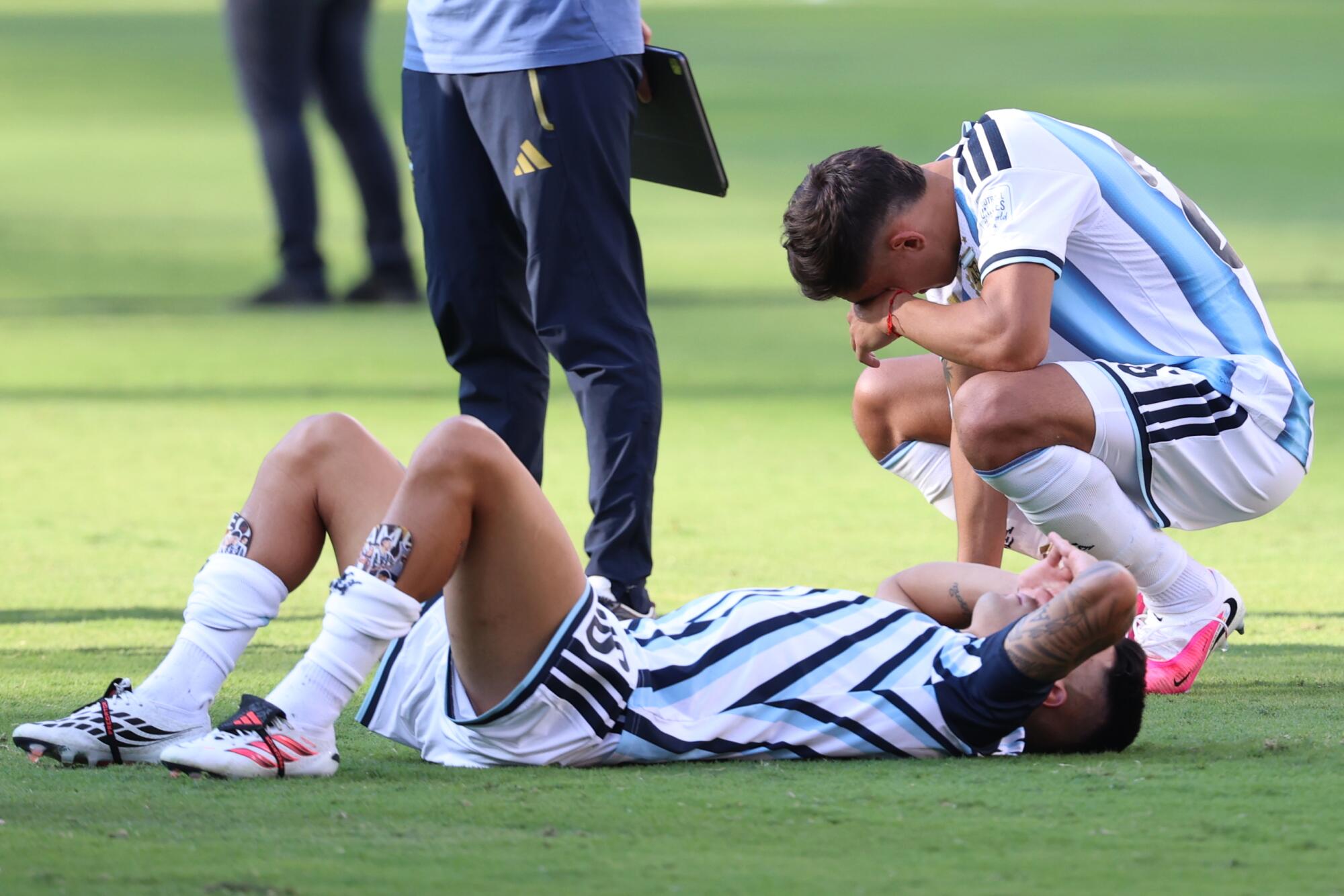
After what may have been his final World Cup match, Lionel Messi was in tears on the field on Sunday in East Rutherford, New Jersey, ruing a missed chance to win a second consecutive title for Argentina.
Messi, without hinting whether his World Cup career was officially through, congratulated Spain, who beat Argentina 1-0 in the final, and said the memories would last, in an Instagram post on Monday evening.
Recommended Stories
list of 4 itemsend of list
“The pain is immense, and this wound will take time to heal,” Messi wrote in his native Spanish alongside a photo of him bearing a silver medal.
“But I also hold onto all the good things… The matches we turned around by giving it our all – moments that will remain in our memories forever – and the support of an entire country which, combined with this group’s hard work and effort, brought us back among the world’s elite once again.
“It is hard to fully appreciate our achievement right now, but this group reached two consecutive World Cup finals.”
Argentina defeated France on penalty kicks following a 3-3 draw in the 2022 final in Qatar, earning the last piece of major hardware Messi had yet to win in his illustrious career.
Argentina were once again one of the best teams in the 2026 tournament in North America. They rallied past England in the semifinal before coming up against a Spanish defence that held them without a shot on goal.
Messi turned 39 during the tournament and will turn 43 during the 2030 World Cup, which will be held in Spain, Portugal and Morocco.
“Thank you from the bottom of my heart for every greeting and message,” Messi wrote. “Once again, we managed to unite as a country and stand together, sharing the immense pride of being Argentine.
“I also want to congratulate Spain on winning the championship.”
Messi broke Miroslav Klose’s record of 16 all-time World Cup goals early in the tournament, and he finished with 21, though he was caught and surpassed by Kylian Mbappe (22).
ESPN reported on Monday that Messi and his national team and club teammate Rodrigo De Paul will not play the next two regular-season matches for Inter Miami, nor participate in the MLS All-Star Game, as they rest and recover from the World Cup.
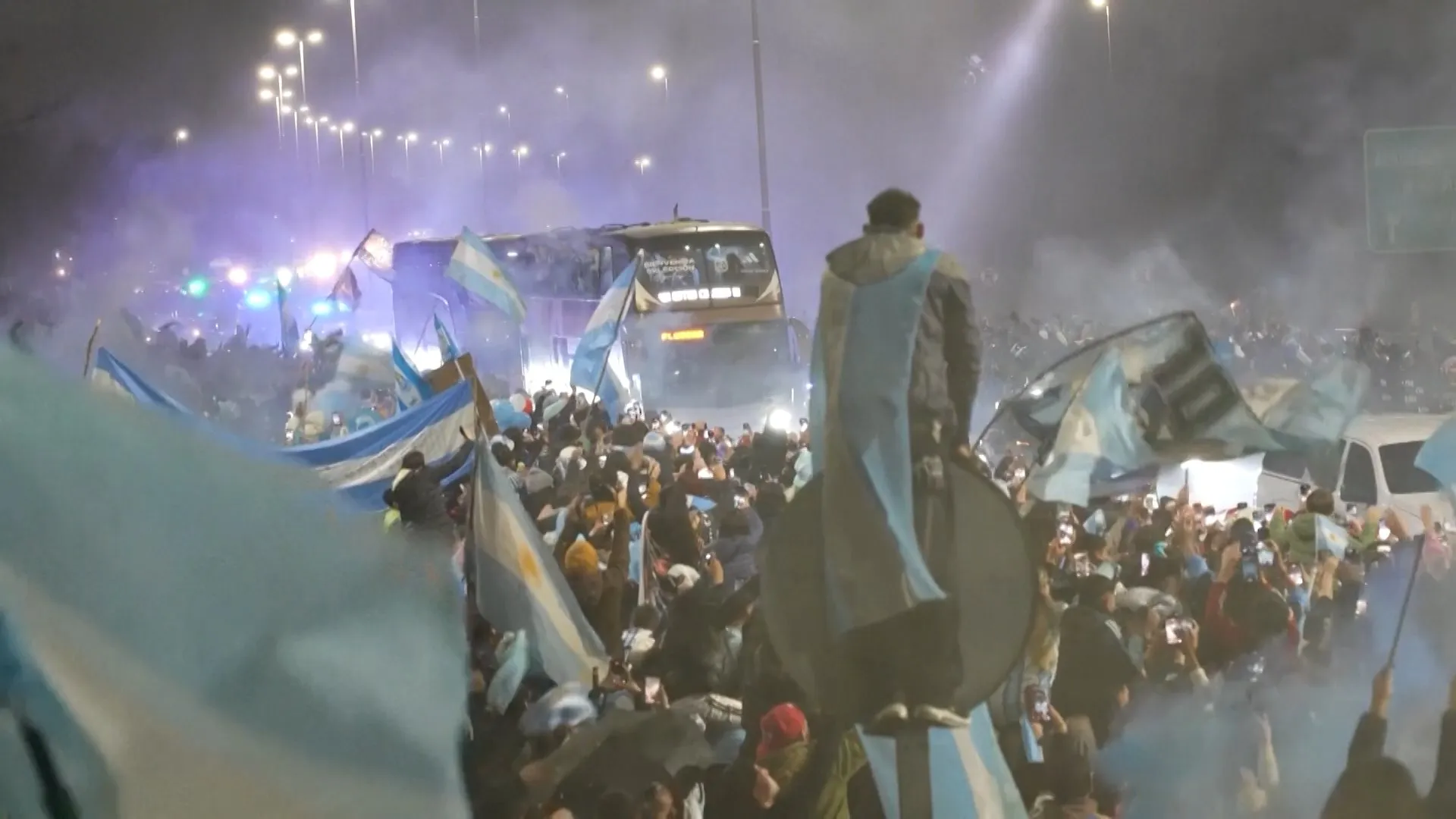
Argentina’s players were welcomed home by fans lining the streets as the team travelled from the airport to the Argentine Football Association headquarters. Lionel Messi was absent, and although the squad reportedly were not in the mood to celebrate, supporters still turned out in force.
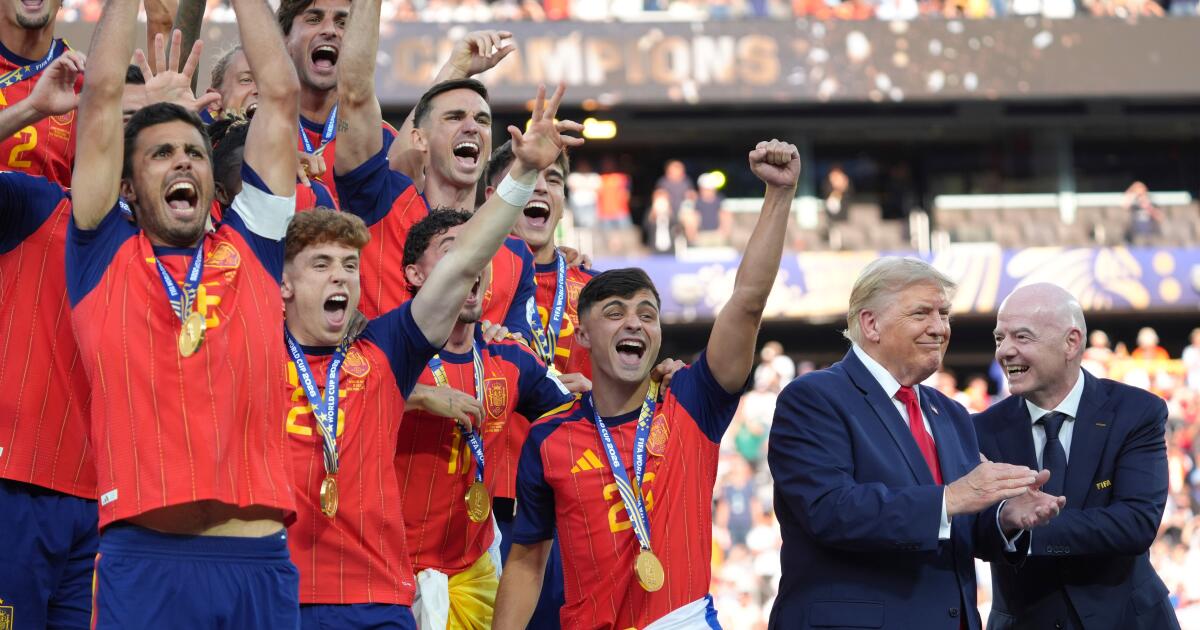
Spain’s players looked like they were ready to explode as they waited for team captain Rodri to lift the World Cup trophy into the air following their 1-0 win over Argentina in Sunday’s final.
FIFA president Gianni Infantino looked a bit anxious as he wanted the newly crowned champions to have their moment but didn’t want to offend a good friend who happens to be one of the most powerful men in the world.
And President Trump looked rather clueless as he lingered on the stage at MetLife Stadium in East Rutherford, N.J., for an awkward amount of time following the trophy presentation.
Trump had watched the championship game from a luxury box with Infantino and First Lady Melania Trump, among many others. He was booed by the crowd during the national anthems and again when he took the field with Infantino after the game for the awards ceremony.
After presenting silver medals to Argentina’s players and gold to Spain’s, Trump and Infantino carried the World Cup trophy together across the stage and handed it to Golden Ball winner Rodri, who was standing in front of his teammates as they awaited their big moment.
The presidents of FIFA and the U.S. both shook hands with Rodri, but only one of them quickly moved off to the side. When Trump hung around to shake hands and speak with midfielder Gavi, Rodri put his hand on the president’s shoulder and appeared to gently nudge him toward the side of the stage away from the group.
As he walked off, Trump shook hands and talked with a few other players, then stopped and stood directly next to the group of players. Infantino sprinted across the stage and appeared to attempt to usher Trump out of frame.
Trump stayed put, however, clapping and smiling until Rodri thrusted the trophy skyward and gold confetti shot from cannons behind them to officially start the celebration. Then Trump strolled away to join Infantino, leaving La Roja’s players to celebrate on their own.
It could have been much worse … like, say, at last summer’s FIFA Club World Cup final, which was also held at MetLife Stadium. Trump accompanied Infantino onstage to present the trophy to Chelsea — but did not accompany him off the stage immediately following the presentation.
Instead, Trump remained out there front and center among the Chelsea players, much to the visable confusion of some of them. He stood right next to Reece James, clapping and smiling as the team captain hoisted the trophy in triumph and a massive celebration erupted around him.
As the president of one of the three 2026 World Cup host countries (with Canada and Mexico), Trump’s presence has loomed large. In December, Infantino awarded Trump with the inaugural FIFA Peace Prize during the tournament’s final draw in December.
Earlier this month, Trump called Infantino to have FIFA reconsider a red card against U.S. striker Folarin Balogun that would have prevented the star player from taking part in the American’s round of 16 game against Belgium (the penalty was rescinded, causing international uproar, but the U.S. still lost the game 4-1).
“You don’t need people to compliment you, Mr. President,” Infantino said Friday during a reception hosted by the president at Trump Tower in Manhattan, “but this World Cup would not have been such an incredible success without you,”
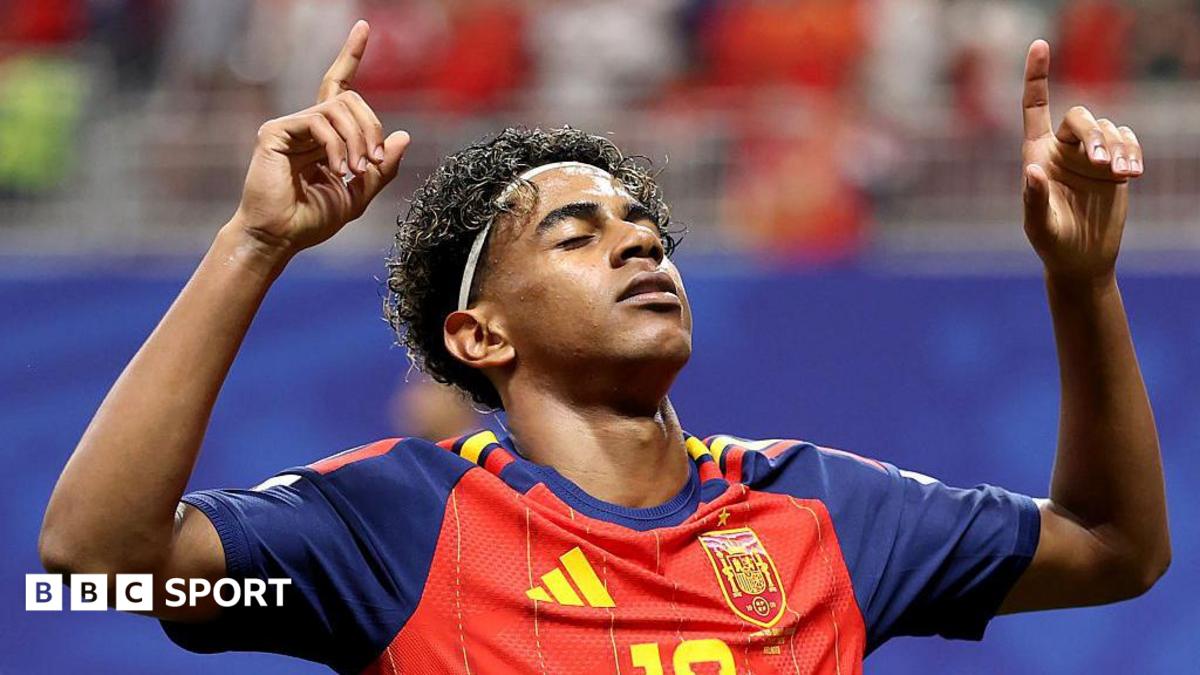
Argentina’s Leandro Paredes was seen shoving Spanish players, which led to an on-field melee while Spain’s Lamine Yamal prayed calmly.
FIFA says it is investigating an on-pitch altercation between Argentinian and Spanish players at the conclusion of their World Cup final in New Jersey in the US, where the European champions dethroned their South American counterparts in a 1-0 win.
Football’s global governing body confirmed the probe on Monday, saying its disciplinary committee assessed match reports of the multi-player brawl which resulted in an ugly end to a heated match that was decided in extra time.
“FIFA’s Disciplinary Committee has appointed a Disciplinary and Ethics Prosecutor to investigate potential breaches of the FDC with regard to the post-match incidents,” FIFA told Al Jazeera in a statement.
A report on the findings and results of the probe will be shared once it is completed, the statement added.
Spain’s celebrations after winning their second world title were marred by the melee, which seemed inevitable given the flared tempers and angry outbursts between both teams and their staff.
When the referee blew the full-time whistle at the end of extra time, a few players from both teams fell to the ground in celebration and heartbreak, but several others were involved in an ugly brawl.
In what has now become a viral video, Spanish star Lamine Yamal is seen going down on his knees and raising his hands in a prayer of thanks while multiple fights break out in the background, with Argentinian players physically attacking their Spanish opponents.
Argentina defender Leandro Paredes shoved Spain’s Eric Garcia by the throat, and when Spanish substitute player Gavi jumped in to intervene, Paredes pushed him to the ground.
The 2022 champions’ coach Lionel Scaloni rushed to the scene and separated Paredes from the two players, only for the number five to push more Spanish players before he was physically pulled back by a teammate.
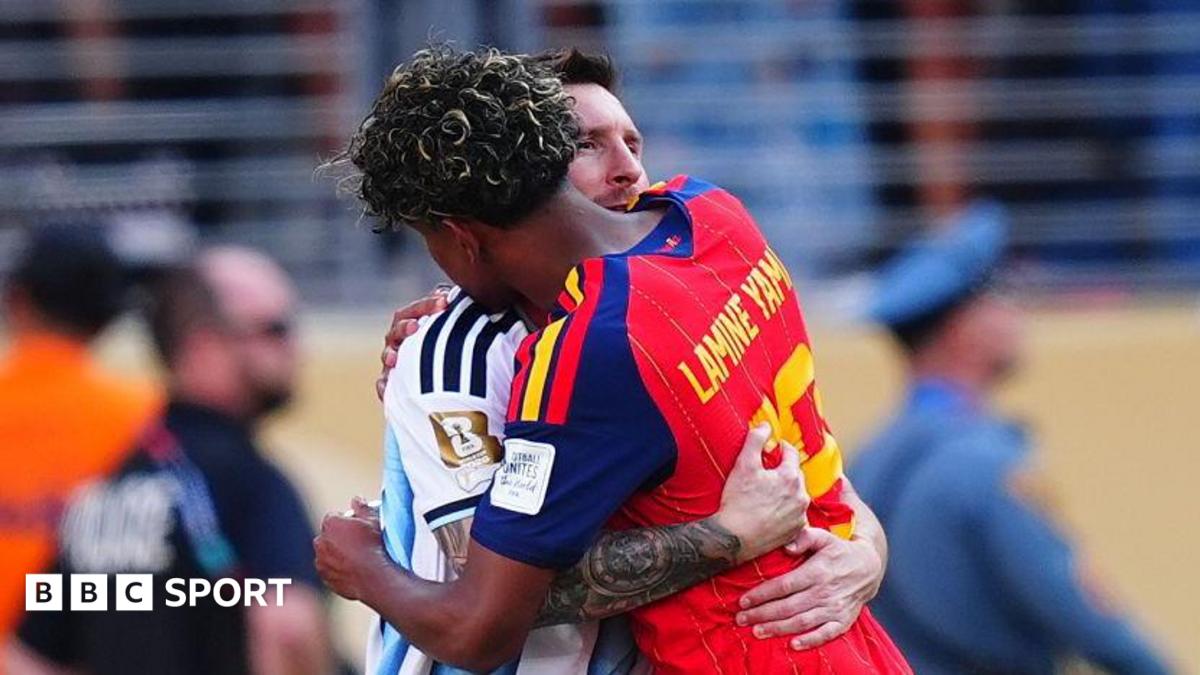
While a few players from both sides greeted each other after the match – most noticeably, there was a warm embrace between Yamal and Argentine captain Lionel Messi – the overall atmosphere remained bitter between the two finalists.
As the post-match ceremony stage was being set up, Spain’s players formed a guard of honour for the runners-up and applauded the Argentinian players when they walked up to receive their silver medals.
However, Argentina did not return the favour and instead turned their backs on the newly crowned champions as they were handed gold medals and the famous winners’ trophy.
It is unclear when FIFA’s probe into the incident will conclude and whether any action will be taken against the players.
Last week, FIFA said it was investigating Argentinian players’ display of a political banner after their World Cup semifinal victory over England, a move that violated its stadium code of conduct and struck a nerve in the United Kingdom over the political sovereignty of the Falkland Islands, a self-governing British overseas territory off the coast of Argentina.
Defender Lisandro Martinez and unused substitute Giovani Lo Celso held up a banner reading “Las Malvinas son Argentinas”, meaning “The Falklands are Argentinian”, as they celebrated the win on the pitch, grinning and waving to fans in the stands after securing a dramatic comeback win on Wednesday.
The move sparked a row in the UK, where top government officials urged FIFA to investigate the matter and the global governing body confirmed it had launched a probe as a “standard procedure”.
“FIFA’s independent disciplinary committee is currently assessing the match reports and considering the relevant circumstances before deciding on potential further steps based on the FIFA disciplinary code,” a FIFA spokesperson told Al Jazeera on Thursday.
EAST RUTHERFORD, N.J. — This summer’s World Cup will be remembered for a lot of things.
It was the first to be played in three countries, the first with 48 teams and the overall attendance nearly doubled the previous record. Norway’s Erling Haaland and Cape Verde’s Vozinha were captivating while Egypt and Canada both won World Cup games for the first time, advancing to the Round of 16.
But the tournament will also be remembered for a classless and churlish Argentina, which forever stained itself with a thuggish performance in the game and an ungracious one afterward.
If La Albiceleste had simply kept its composure it would have secured a place next to Brazil and Germany, the only other countries to reach three finals in four World Cups, as one of the greatest teams of all time. Instead, some of its players turned the postgame handshakes into a brawl, with Argentine midfielder Leandro Paredes drawing a red card for grabbing Spain’s Eric Garcia by the throat and shoving him to the turf.
It was believed to be the only red card ever handed out after a World Cup final, and the ignominy it brought was well-deserved. But the childishness was just beginning. When Spain assembled on the podium to accept the World Cup trophy, which had been Argentina’s moments earlier, the South Americans turned their backs.
More than an hour later Lionel Messi, who has cemented his stature as the greatest player in World Cup history, soiled that status by leading the players out of the locker room and through a back exit to the team bus, avoiding the media many had been so eager to speak with during the team’s unbeaten run to the final.
Argentina’s Nahuel Molina, top, reacts after Spain won the World Cup final between Spain and Argentina in East Rutherford, N.J.
(Pamela Smith / Associated Press)
It was an attack on class and decorum as well as violation of FIFA rules, which require players to leave the stadium through a “mixed zone” accessible to media. They are not required to stop or speak, but certainly someone owed some accountability to the tens of thousands of fans in Argentine jerseys who packed Times Square and MetLife Stadium over the weekend and the millions in Argentine who filled plazas and town squares to watch the team play.
“We’ve been great in victory and we need to be great in defeat,” Argentine coach Lionel Scaloni said moments after Paredes was booked for assault. “We have shown today that we know how to lose, too. We lost the game and we accept that.”
Scaloni, who did address the media, later broke down in tears.
“I already cried all the tears I had in the dressing room,” he said in Spanish.
Scaloni, 48, may be out of a job when his contract expires in December, but his message for the fans was don’t cry for me, Argentina.
“It is hard to ask people to enjoy this equally. It is very hard to convince people that this is a triumph,” said Scaloni, who has lost just twice in 15 World Cup games.
“When you win, not everything is good. When you lose, not everything is bad.”
But while Argentina was being petty and petulant, Spain was practically perfect in every way. Not only did it concede just one goal in the tournament, it held Argentina without a shot into extra time Sunday — the first time that’s ever happened in a World Cup final — and ran its unbeaten streak to a record 38 games overall.
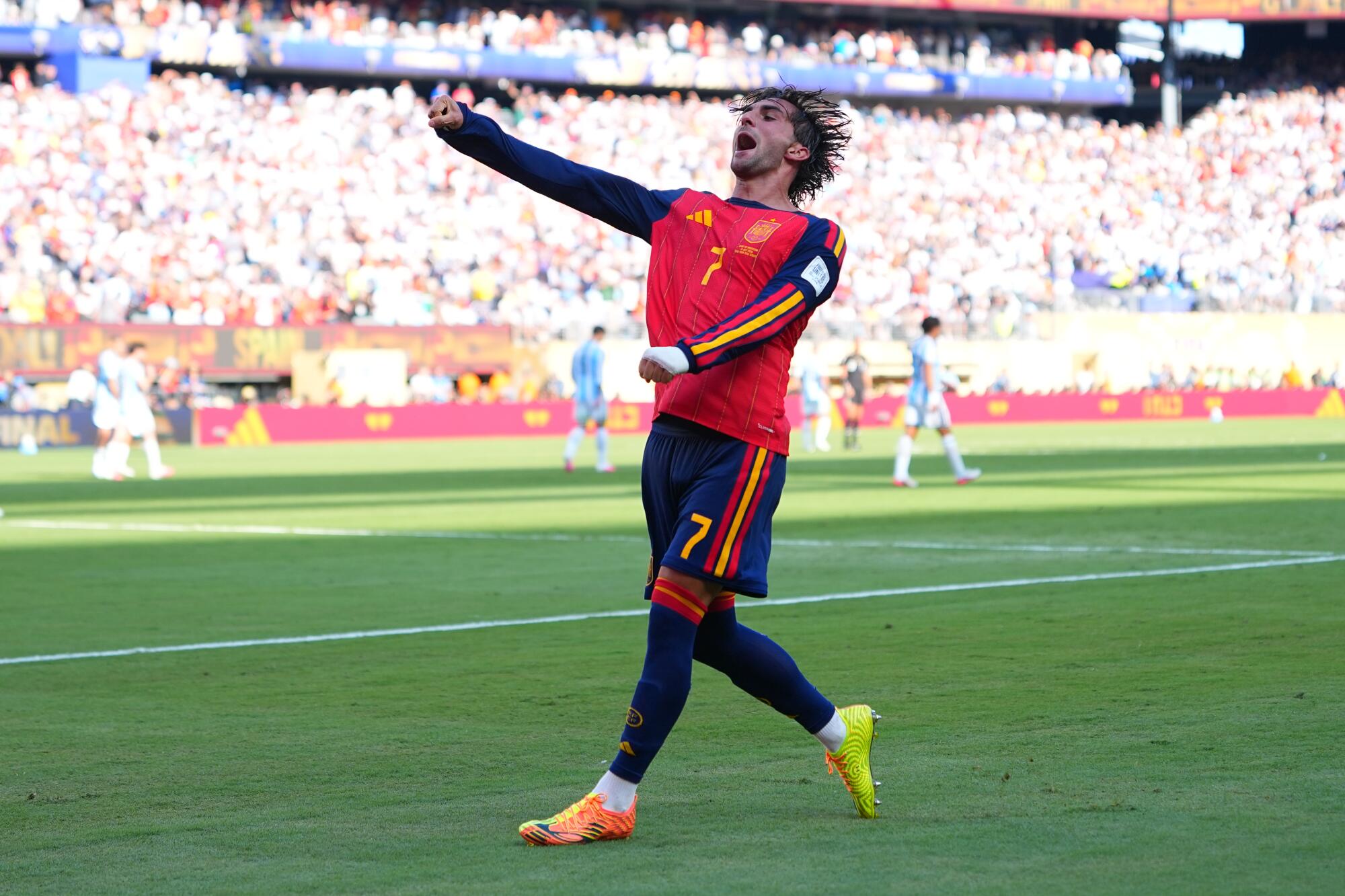
The win, which came on substitute Ferran Torres’ goal moments into the second extra-time period — and less than 20 minutes after Argentina was reduced to 10 men when Enzo Fernández was given a second yellow card for a foolish tackle — not only made Spain the first country to be the men’s and women’s world champion at the same time, it also made it the first to be the men’s world, European and Olympic champion at the same time.
No country in history has dominated the sport as Spain is dominating it now. And since Spain is the second-youngest team to win the World Cup in 56 years, La Roja could be on top for some time.
“After the match, some of the players who have been with us the longest asked me ‘coach, what is left for us win? We’ve won everything,’” said Spain’s manager Luis de la Fuente. “I told them, well the next match in September.”
That’s a UEFA Nations League match with England, which finished third in this World Cup. A little further down the road is the 2030 World Cup, which Spain will co-host, making it the first country in history to defend its title at home.
“When you arrive at a moment like today and think about the journey we’ve taken, you realize the importance of that process,” said De la Fuente, a former youth national team coach who managed many of the players on the World Cup team — among them Dani Olmo, Mikel Merino, Mikel Oyarzabal, Unai Simón, the tournament’s top goalkeeper, and Rodri, tournament’s top player — to U-19 and U-21 European titles.
“We certainly wouldn’t be here today — we wouldn’t have achieved anything — without the journey we’ve shared with these players,” the coach continued. “We have that raw material, those wonderful Spanish footballers. And they way they compete, that is what brought us here.
“That goes back many years.”
De la Fuente, soft-spoken and professorial, is also scrupulously polite, an example many of his players follow. And while it is undoubtedly easier to display grace and dignity in victory than it is in defeat, the difference in the way Argentina and Spain exited the World Cup was far greater than the gap that separated them on the scoreboard, something De la Fuente unwittingly highlighted in speaking about his team late Sunday.
“It seems people were surprised that, alongside talent and brilliance, good people can also play the game,” he said. “This proves that it is possible; that good, supportive, generous people with strong values can form a genuine team.
“We played against the best national teams in the world, yet we were the best team. We demonstrated that a team built on good people — supportive people, people who hold values and principles that prioritize the common good over individual interests. Traveling with people like that makes for a better, safer journey.”
In Spain’s case, it also makes a World Cup champion.
Staff writers Eduard Cauich and Jad El Reda contributed to this story.
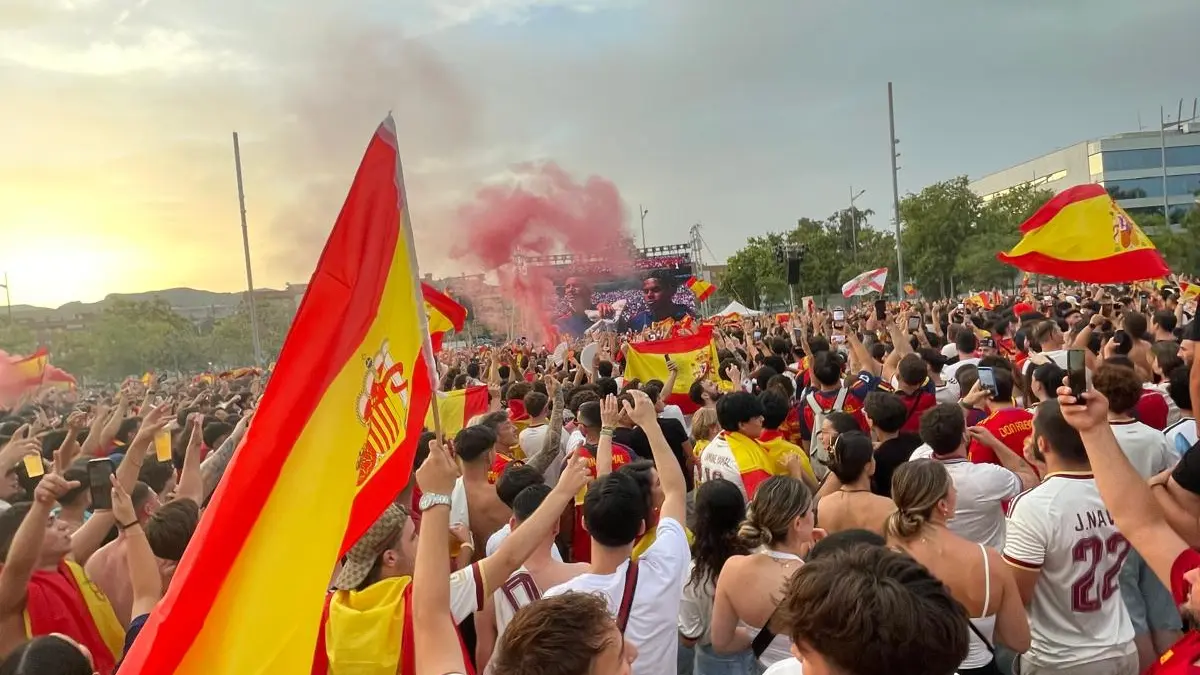
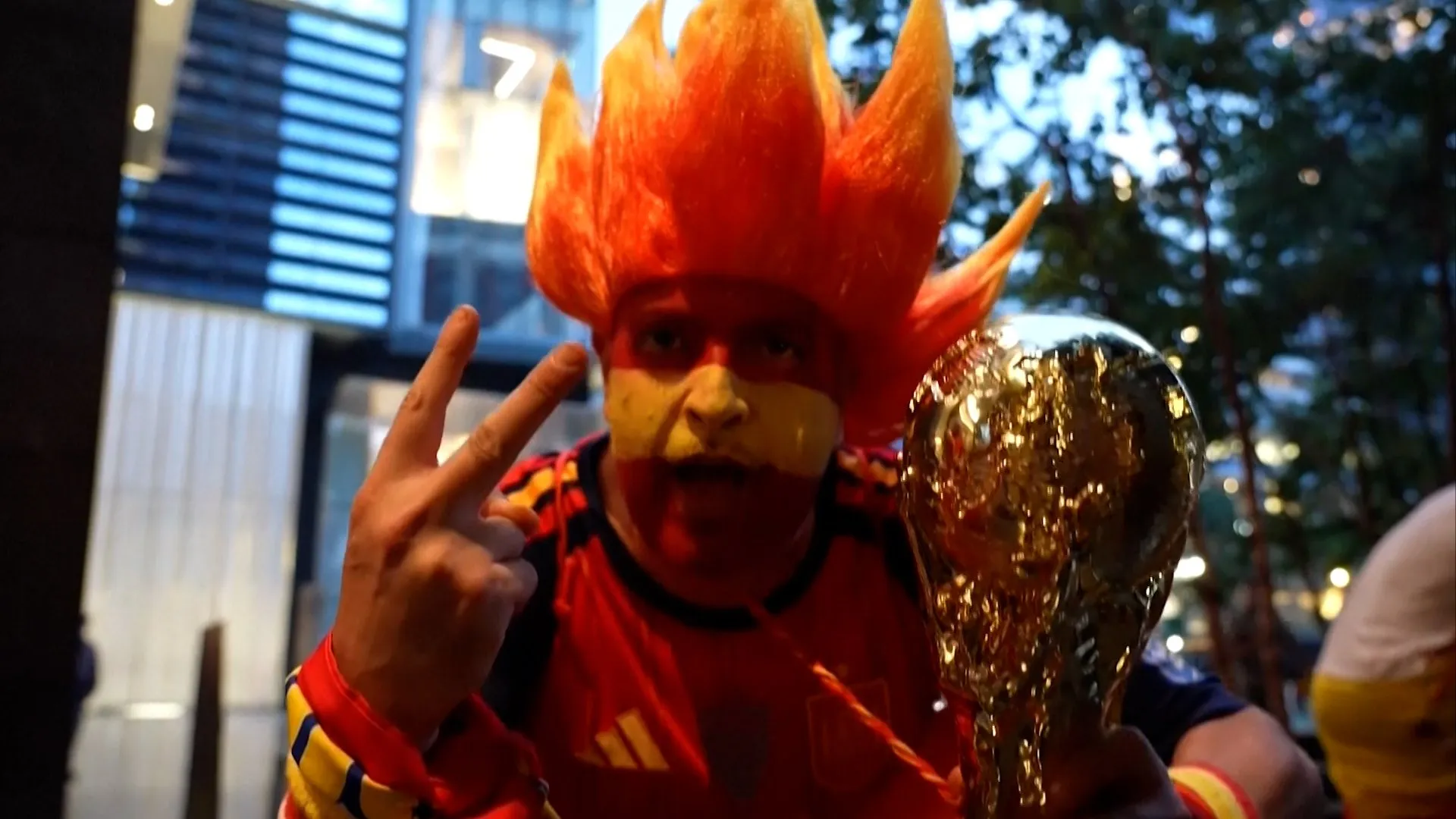
Castelldefels, Spain – Fans waving the red and gold Spanish flag filled the streets, shot fireworks into the night sky and hugged each other into the early hours of Monday morning after Spain beat Argentina 1-0 in the World Cup final.
The jubilation on the streets was echoed in towns and cities across Spain as La Roja won the title for the second time with a goal by Ferran Torres in extra-time.
Recommended Stories
list of 4 itemsend of list
Fans who had been watching giant screens chanted “Campeones! Campeones!” (Champions! Champions!).
However, in Castelldefels, a tourist town south of Barcelona, fans from both nationalities enjoyed the match thanks to the presence of a sizeable Argentinian emigre community.
Chief among them is – in spirit at least – one rather special former resident: Lionel Messi.
Messi spent his greatest years playing at Barcelona and his presence still looms large over the town. Many Argentina or neutral fans walked around during the match on Sunday sporting his famous 10 shirt.
And this being Catalonia, where support for independence from Spain may have faded in recent years but remains a potent force, many support other sides in the World Cup. Many support Argentina, precisely because of the influence of Messi.
The Argentina captain still owns a luxury complex in Castelldefels replete with its own football pitch which is reported to be worth $8m.
Bellamar nestles in the hills above this seaside town of 70,000 inhabitants just south of Barcelona, where he made his home with his family in his glory days at Barca.
Barca fans still cherish the thought of Messi returning to the city when he finally hangs up his boots. The rumour mill ran wild when the player recently bought the Unio Cornella, a team in the fifth tier of Spanish football.
He used to walk his children to school at the local British school in the town with passers by watching in awe.
Before he became too much of a global megastar, he would go for a quiet drink at seaside bars with his wife and sign autographs or pose for pictures without problem.
Everyone in this well-to-do-town on the shores of the Mediterranean has a story about when they met Messi. Some of them are true.
La Pampa is just one of the many Argentinian steak restaurants in the town which the Argentinian captain used to patronise when he lived here. Its owners quietly show off pictures of the player smiling for the camera.
For younger diners, the Ankara Burger is full of football shirts of Argentinian clubs like Boca Juniors, River Plate or Independiente.
Catalonia, the northeastern region of Spain whose capital is Barcelona, has the largest expat population of Argentinians in Spain, numbering 37,980.
Away from these Mediterranean shores, controversy has raged over Argentinian players’ display of a political banner supporting an Argentinian sovereignty claim over the Falklands Islands after their World Cup semifinal victory over England, a move that appeared to violate the FIFA stadium code of conduct and struck a nerve in the United Kingdom over political sovereignty.
Argentina President Javier Millei’s support for Israel has also prompted controversy in a country like Spain, where polls have found a majority backed the Palestinian cause.
However, in Castelldefels, the political rows raging thousands of miles away were not on fans’ minds last night.
The Spanish and Argentinian flags fly outside the apartment of Gio and Gema Gonzalez, demonstrating perfectly the cultural melting pot here.
Gio Gonzalez emigrated to Spain from Buenos Aires in 2000, following a well-worn path for many other Argentinians. He met his wife Gema in Barcelona and the couple later moved to Castelldefels in 2007.
Like thousands of others, the couple went to watch the match on a giant screen organised by the town council.
“I am a mad keen Argentina fan so I was dreaming that we would win again but it was not to be. It was a tough match but I am happy for my wife that Spain could win,” said Gonzalez, 54, a research scientist.
Gema Gonzalez, 46, a housewife, was beaming in the wake of Spain’s victory after a hard-fought game.
“I feel sorry for my husband – but only a bit!” she laughed. “I think Spain were the better side and we deserved to win. I know I would say this but, I think we were the best side in this tournament.”
EAST RUTHERFORD, N.J. — This summer’s World Cup was so good, nobody wanted it to end.
So Spain and Argentina played on and on in Sunday’s final, through 90 minutes of regulation time and then through a 15-minute extra period before Ferran Torres gave Spain the only goal it needed to claim the title with a 1-0 victory over the defending champion at a sold-out MetLife Stadium.
It was an epic finish to an epic tournament, one that set records for everything from attendance and TV viewers to games played and goals scored. And it was almost certainly the last World Cup for Argentine captain Lionel Messi, 39, who finished his record-setting sixth tournament as the all-time leader in games (34), assists (12) and goal contributions (33).
His parting gift was a silver medal, a handshake from President Trump and a hug from the King of Spain. But none of those were the prize he wanted most, so when he left the stage after receiving his medal, he broke down in tears.
A swarming Spanish defense made him little more than a spectator for most of the match. So while Argentina came into the final leading the tournament in goals per game, it also became the first team to go 90 minutes without a shot in a World Cup final. It was outshot 20-2 for the game, and Spanish keeper Unai Simón, who gave up just one goal in eight matches, was not forced to make a save in registering his seventh clean sheet.
He was named the outstanding keeper of the tournament.
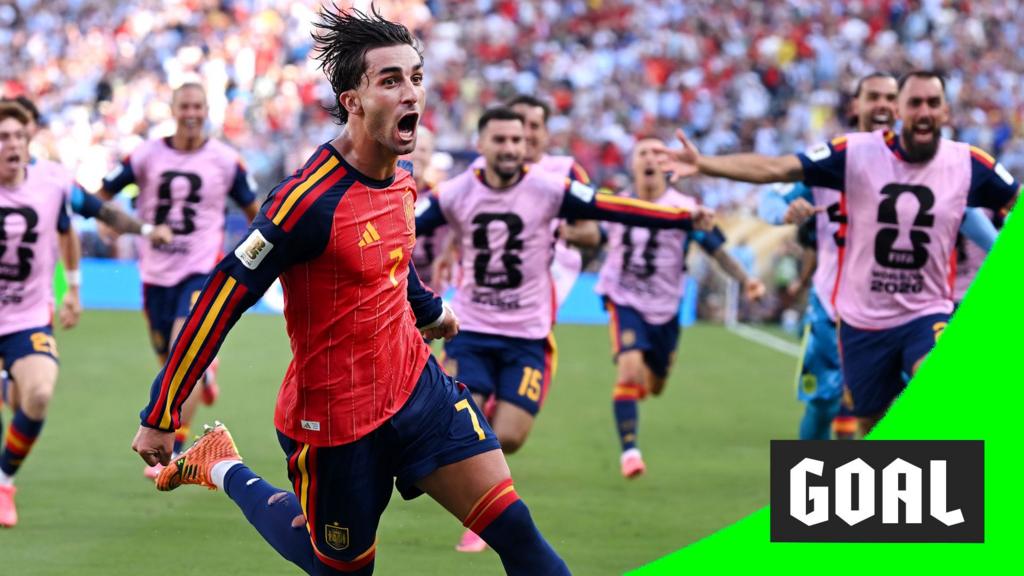
That allowed Torres, who started just once in the tournament, to become the hero.
“Honestly, I can’t believe it. I just am trying to enjoy it, but I don’t know what’s happening,” Torres said. “I didn’t think too much. I just saw the ball coming to me and I just shot with the power of all the Spanish people.”
Spain’s Ferran Torres celebrates after scoring in extra time against Argentina in the World Cup final Sunday.
(Julio Cortez / Associated Press)
Rodri, Spain’s captain and the anchor of the team’s smothering defense during its unbeaten World Cup run, won the Golden Ball award as the outstanding player of the tournament. He was equally stunned.
“I’m in shock,” he said. “I cannot express [my feelings] in words. I’m like in a cloud.”
For Rodri, who also led Spain to a European Championship two years ago, Sunday’s victory capped a personal two-year struggle to return from a ruptured anterior cruciate ligament he sustained in 2024, a month before he hobbled onstage with crutches to receive the Ballon d’Or award as the world’s best player.
“It’s been a really tough time,” said the midfielder, who broke the World Cup record for completed passes in the tournament with 747. “I just want new generations to see my example as an opportunity to when you go down, you can rise again. This is my philosophy my entire life.
“Sometimes things go well, things go wrong. But always the positive.”
Highlights from Spain’s 1-0 win over Argentina in the World Cup final on Sunday.
The only goal came seconds into the second extra-time period, with defender Pedro Porro sending a long cross to the left post for Nico Williams, who headed it back into the center of the box for Torres, a second-half substitute who buried the left-footed volley that would give Spain its second World Cup title.
Torres, who entered the game just past the hour mark, is the fifth man to come off the bench and score in a World Cup final and the first since Germany’s Mario Gotze, whose extra-time goal beat Argentina in 2014. Williams, who got the assist, was also a late-game substitute.
“We are world champions. I am very proud,” Luis de la Fuente, Spain’s coach, said through an interpreter after his team ran its unbeaten streak to a record 38 games.
“I’m very happy for my players. We’ve won in all the categories. We’ve grown together. We reached this stage today thanks to their talent, to their attitude, to their comportment, to their values and to the huge footballing talent.”
The goal ruined a superhuman effort by Argentine keeper Emiliano Martínez, who made 11 saves while playing with a fractured right ring finger that will require surgery. That’s two more saves than he had over the rest of the tournament.
But the moment that may have sealed Argentina’s fate came in the final minutes of second-half stoppage time when Enzo Fernández clattered into Spanish center back Pau Cubarsí at midfield, flipping him head over heels. Fernández had been booked minutes earlier for dissent, and the second yellow card led to his expulsion, forcing Argentina to finish shorthanded.
Spain wasted little time exploiting the advantage and appeared to have scored six minutes into extra time when Williams banged in the rebound of a Martínez save, only to have Slovakian referee Slavko Vincic wave it off, ruling that Spain’s Mikel Merino had fouled Argentine defender Nicolás Otamendi in the buildup to the goal.
Spain star Lamine Yamal in congratulated by FIFA President Gianni Infantino, left, and receives his medal from President Trump following Spain’s win over Argentina in the World Cup final Sunday.
(Justin Setterfield / Getty Images)
The capacity crowd of 80,663, matching the second-largest of the tournament’s 104 games, booed Trump when he appeared on a videoboard during the national anthem and again when he walked onto the pitch for the postgame awards ceremony.
During the victory ceremony after the final of last summer’s Club World Cup, played at the same stadium, Trump remained on the podium to celebrate with Chelsea’s players and was seen on TV pocketing one of the winners’ medals. On Sunday, after Trump joined FIFA President Gianni Infantino presenting the World Cup trophy to Rodri, the Spanish captain motioned to Trump to move to the left side of the stage. As Spain lifted the trophy, Infantino escorted the president off the podium and away from the celebration.
When Argentina gave the trophy back to Spain, it likely marked a passing of the torch. Argentina has played in three of the last four World Cup finals, but the average age of its starting lineup Sunday was more than 30, making it the second-oldest to play in a final behind the 11 Brazil used to win in 1962. And it got a bit older when Otamendi, 38, came on for 28-year-old Lisandro Martínez, who left with an apparent injury just before the end of the first half.
Argentina star Lionel Messi reacts after losing to Spain in the World Cup final.
(Pamela Smith / Associated Press)
Spain, meanwhile, had the sixth-youngest roster of the 48 teams. Two of La Roja’s starters — teenagers Cubarsí and wunderkind Lamine Yamal — hadn’t even been born when Messi made his World Cup debut in 2006.
“The way this team has matured, it built every day,” said Rodri, the third-oldest starter on the team despite being just 30. “We faced different opponents. Of course, lots of European opponents. But different moments and different types of games and we managed to play all of them.
“We grew in this sense and this generation is making history for our country.”
A history that de la Fuente said is just beginning.
“This team has a long way to go,” he said. “We are already thinking to what is next, what is coming up.”
Sports Editor Iliana Limón Romeroand staff writers Jad El Reda and Eduard Cauich contributed to this report.
Spain players celebrate after defeating Argentina for the World Cup title on Sunday.
Spain and Lamine Yamal have grown through the tournament to leave him with the world at his feet and football’s two greatest prizes in his pocket.
As well as having glorious natural gifts, he is also Spain’s lucky charm. They completed their domination of the international stage with Ferran Torres’ decisive 106th-minute strike in extra time.
Lamine Yamal has yet to lose for his country in the 28 competitive matches he has played. He has started 13 games at major tournaments and won all of them – the longest 100% win rate of any European player across major tournaments when starting.
He also became – along with 19-year-old Spain team-mate Pau Cubarsi – just the fourth and fifth teenagers to start a World Cup final and win, after Pele for Brazil in 1958, Italy defender Giuseppe Bergomi in 1982 and Kylian Mbappe with France in 2018.
Spain coach Luis de la Fuente spoke afterwards of his “sincere gratitude” to Lamine Yamal.
“He has played great football that will help him to mature and be even a greater footballer than he already is,” he said.
“He really sacrificed for the collective good. This is very important in my squad. In my opinion he played a great World Cup.”
And this is not simply a special talent, it is a special talent with a special temperament.
He shrugged off Argentina’s obvious attempts to intimidate him as he regularly came into close contact with Nicolas Tagliafico in particular.
Former England goalkeeper and BBC Sport pundit Joe Hart summed it up well.
“Not only did Lamine Yamal not react,” he said. “He stood up to it. He was not rattled and he did not back down. He had the entire team trying to smash him.
“He just stayed real cool. It was real standout performance from him.
“Lamine Yamal is 19 years old. What a beautiful day for him. He’s 19 and has completed football.”
With virtually his whole career in front of him, and taking in the experience and influence of Spain team-mates such as his captain and player of the tournament Rodri, there is every chance Lamine Yamal will add more successes like this before he is done.
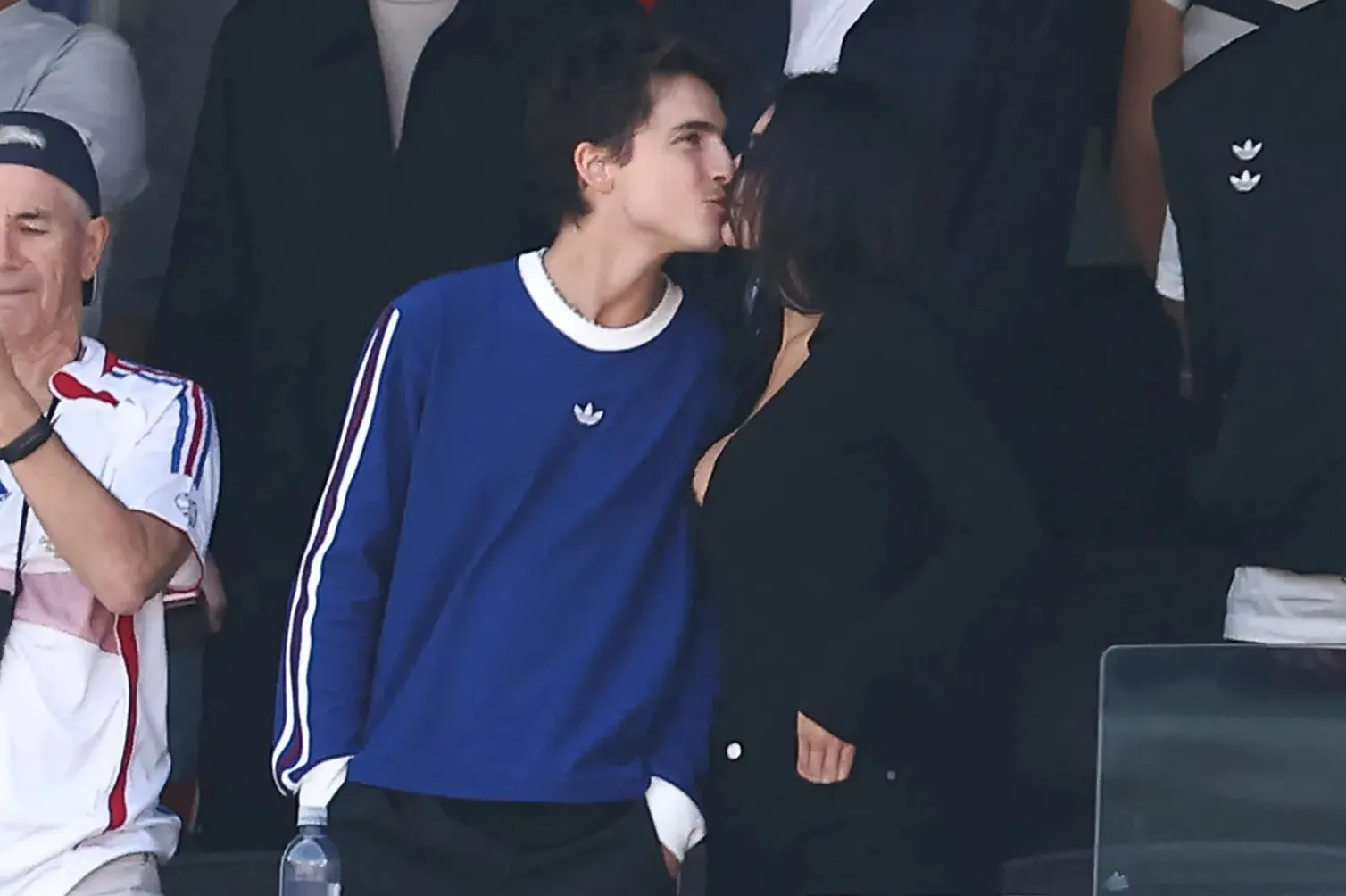
HOLLYWOOD’S Timothee Chalamet and Kylie Jenner shared a kiss at the World Cup final as a host of celebrities have turned out in force.
Spain and Argentina battle it out in this year’s final which is being played at MetLife Stadium in East Rutherford, New Jersey.
Timothee Chalamet and Kylie Jenner enjoyed a kiss at the World Cup 2026 finalCredit: AFPVictoria and David Beckham was spotted in the crowd with Tom CruiseCredit: AFP
Make-up mogul Kylie, 28, was among a list of A-listers in the crowd, along with her Interstellar actor boyfriend Timothee, 30.
Kylie wore a plunging black long sleeve top and black jeans, while the Dune star went for a blue and white jersey top and black trousers.
Sign up for the Showbiz newsletter
Thank you!
The pair were spotted holding hands while they watched the tense game, before enjoying a kiss in the stands.
The famous duo were joined by a number of other famous faces in the crowd, including the likes of Tom Cruise and David and Victoria Beckham.
Ellie Goulding was spotted with her new partner Beau Minniear in the standsCredit: Shutterstock EditorialBritish-US actress Anya Taylor-Joy wasCredit: AFP
The Beckhams looked stylish with David sporting a navy suit and Victoria in a white vest top and white jeans.
The pair were seen smiling and laughing with good pal Tom Cruise, 64, in the stands.
The I Need Your Love hitmaker Ellie Goulding, 39, was spotted in the crowd with her boyfriend Beau Minniear, who was seen with a disposable camera.
Split actress Anya Taylor-Joy was sat in the row behind and she looked chic in a satin one-shoulder beige midi dress.
She was seen chatting with her US musician and actor husband Malcolm McRae.
Other big names included Robbie Williams and Ayda Field.
It’s been a tense World Cup final between Spain and Argentina so far – but the star-studded half-time show livened up the crowd.
Justin Bieber, Shakira and Madonna are just a few blockbuster names who performed at the interval.
This follows the huge closing ceremony that saw Robbie Williams, Post Malone and IShowSpeed rock the stage.
But fans have flooded social media to brutally hit out at the tournament’s closing ceremony.
Nicole Scherzinger and actor Tom Cruise were also involved as the curtain was brought down on the tournament.
But the performances did not go down well in the stadium or at home – leading to fans heading onto social media to slam Fifa.
One said: “The worst closing ceremony ever. Even the fans look bored.”
Another added: “I’m crying what a terrible ugly closing ceremony.”
A third chimed in: “That closing ceremony was so underwhelming.”
A fourth noted: “A completely forgettable closing ceremony is finally and thankfully over.”
And a fifth comically claimed: “The crowd has gone absolutely mild at this closing ceremony.”
Ferran Torres scores the only goal of the game as Spain win their second World Cup.
Published On 19 Jul 202619 Jul 2026
Ferran Torres scored in the 106th minute to lift Spain to their second World Cup title with a 1-0 win in extra-time over 10-man Argentina in the final.
Torres’ deserved winner on Sunday came 16 years and eight days after Andres Iniesta also scored in extra time to lift the Spaniards to their first World Championship with a 1-0 victory over the Netherlands.
It came on La Roja’s 20th shot on the contest against a defending champion Argentina that failed to manage any to that point and struggled to wrest possession away from their superior Iberian opponents.
That was true at even strength and became more difficult when La Albiceleste’s numbers were reduced when Enzo Fernandez’s late challenge of Pau Cubarsi left referee Slavko Vincic no choice but to produce a second caution just before the end of normal time.
Spain remain the only nation ever to win a European Championship and World Cup in successive tournaments, having now done so a second time. They are also the first World Cup champion ever to concede only once across an entire tournament.
Lionel Messi’s Argentina failed to earn a title for the first time in three major tournaments, having also captured the 2021 and 2024 Copa Americas either side of their 2022 World Cup triumph.
The 39-year-old, eight-time Ballon d’Or winner Messi finished the competition with eight goals and four assists, but had little time on the ball until Spain finally took the lead and never seriously looked like lifting his side to another great moment as he has so many times in the last two World Cup cycles.
Messi looks dejected after the match [Lee Smith/Reuters]
Emi Martinez made 11 saves for La Albiceleste, who fell short in their bid to be the first consecutive World Cup champions since Brazil won the 1958 and 1962 titles.
What had felt so difficult for the first 105 minutes suddenly looked easy after 37 seconds of play in the second period of extra time.
Pedro Porro curled in an outswinging cross from the left to the back post, Nico Williams won the header and nodded it back into space, and Torres hammered a half-volley at last past the flailing Martinez.
It was his only goal of the tournament, making him the seventh player to score during a tournament in which his side never trailed.
Asked about his goal, Torres said after the game: “Honestly, I didn’t think too much. I just saw the ball coming to me, and I just shot with the power of all the Spanish people.”
Torres celebrates scoring for Spain [AFP]
The win made Spain coach Luis de la Fuente, at 65, the oldest coach ever to lead a team to the World Cup title.
“We are world champions,” de la Fuente said. “It was together we reached this stage.”
There was some pushing and shoving after the final whistle, which was quickly cleaned up and Spain commenced its celebration as most Argentina players sat on the turf in disbelief.
Cooler heads prevailed, and Spain’s players lined up minutes later to form an honour guard of sorts for Argentina’s squad to walk through on their way to the stage for the runner-up medals.
Argentina coach Lionel Scaloni admitted Spain were the better team.
“They were the better side – that’s the truth – but I’ll cherish the memory of them [his side], of what they achieved, and of the value of making it this far,” Scaloni said.
“We have to place immense value on this because it takes so much effort.”
All the biggest talking points and stats from the first 45 minutes of a goalless World Cup final in New Jersey in the US.
Published On 19 Jul 202619 Jul 2026
After a star-studded tournament ceremony and the logistical delays caused by the arrival of US President Donald Trump, the World Cup final between Spain and Argentina ended in a goalless scoreline at half-time.
The match at the New York New Jersey Stadium on Sunday has been a cagey affair, with Spain enjoying greater possession and Argentina looking to make the game into a scrap.
The final kicked off six minutes late in New Jersey following a pre-match show that included singer Robbie Williams and actor Tom Cruise.
Once the football actually began, Spain looked to control the ball and force Argentina to chase the game. The South American giants were mostly restricted to their own half and looked to make it a physical battle.
Here are some of the biggest talking points from the first half.
A cagey affair in New Jersey
It all started so promisingly, with Lamine Yamal forcing a save from Emi Martinez after just five minutes. The teenager shot from a tight angle inside the box following some brilliant link-up play with Dani Olmo.
Since then, chances have been at a premium, with just three shots at goal in the entire first half, all by La Roja, with Argentina yet to register an effort.
Spain striker Mikel Oyarzabal tested Martinez on 39 minutes, but his shot from just outside the area was easily saved by the Argentine keeper. Marc Cucurella also dragged an effort wide late on.
While Spain saw more of the ball, Argentina looked to get stuck in and make it a scrappy final. So far, the defending champions’ game plan has worked.
Spain’s Rodri and Argentina’s Enzo Fernandez fight for the ball [AFP]
Referee keeps his cards in his pockets
Slovenian official Slavko Vincic declined to brandish a yellow card until the 40th minute, despite some hefty challenges in the first half.
Spain were furious when the referee didn’t penalise Alexis Mac Allister after a late challenge on Olmo just 15 minutes into the final.
The Argentine midfielder dived in, missing the ball entirely as he wiped Olmo out. The Spanish bench erupted, but the referee decided not to book the Liverpool man.
The first yellow card was eventually shown when Lisandro Martinez dragged Oyarzabal down from behind.
Lisandro Martinez fouls Mikel Oyarzabal [Jeenah Moon/Reuters]
Martinez heads off injured
Argentina suffered a late blow in the first half as key defender Lisandro Martinez was forced off with an injury.
Martinez has played a crucial role at the heart of defence for Argentina in this tournament, but they will now have to cope without him for the second half of the final.
Veteran defender Nicolas Otamendi is now tasked with keeping the likes of Yamal and Oyarzabal quiet.
What were the head-to-head stats in the first half of the Spain-Argentina final?
Spain saw a lot more of the ball and enjoyed 64.6 percent possession. They also had three shots at goal, compared to none for Argentina.
The South Americans committed two more fouls than their opponents and picked up one yellow card.
Spain have been awarded two corners so far, whilst Argentina have had none.
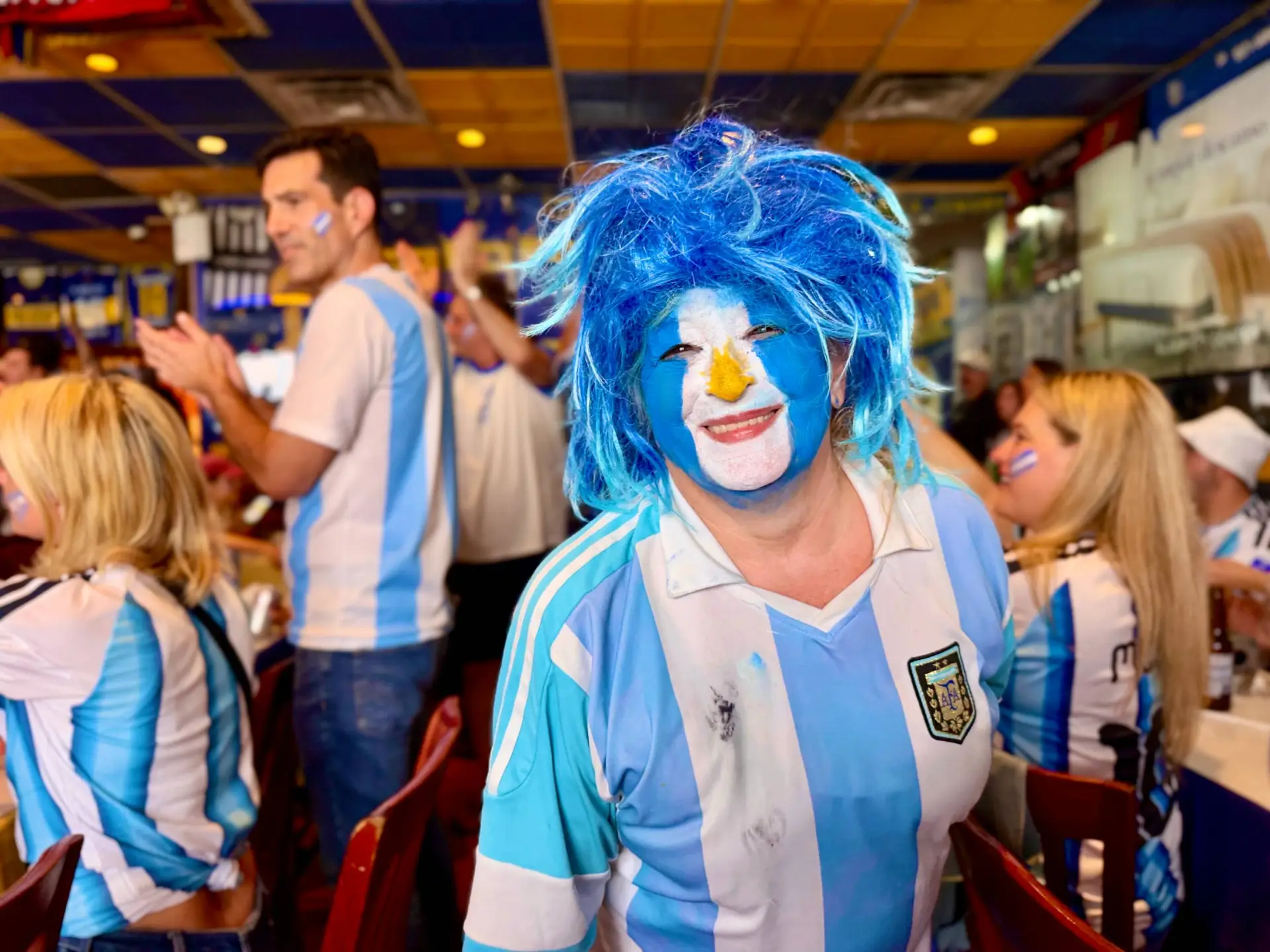
Hundreds of Argentinian fans packed Boca Juniors steakhouse in the Elmhurst, Queens neighbourhood of New York City’s Little Argentina hours before the World Cup final kickoff against Spain. The steakhouse, known for its festive atmosphere, has been a “temple” for the Argentinian diaspora during the 2026 World Cup.
So as Argentina prepares to face Spain in the World Cup final why is the team so white in comparison to its South American neighbours? Al Jazeera’s Rahul Pathak explains.
The FIFA World Cup 2026 final is not far away, and the predictions are coming in thick and fast.
Spain, the reigning European champions, are eyeing their second World Cup title, 16 years on from their maiden triumph in South Africa. But standing in their way are holders Argentina, the South American giants aiming to become just the third country to win back-to-back World Cup titles.
Recommended Stories
list of 4 itemsend of list
Stats provider Opta predicts Spain as the favourites to win the 2026 World Cup, with a 59.56 percent probability of lifting the trophy in New Jersey. La Roja are also the picks of several former players and pundits.
Former England striker Michael Owen said world number two Spain are the “deserved” winners of the tournament.
“Spain haven’t got the greatest individual players, I think France probably have … but Spain as a team are everything England are not – they are brave, courageous with the ball,” Owen told The Straits Times.
“Spain are just a great team that pass the ball confidently and play amazing football as a collective.”
Spain, the reigning European champions, are looking to add a second world title to their trophy cabinet [File: Mauro Pimentel/AFP]
Zlatan Ibrahimovic, the ex-Barcelona and Manchester United striker who represented Sweden at two World Cups, expects Spain to dominate the final, which comes two years on from their Euro 2024 triumph.
Spain handled France very good [in the semifinals]. I believe they can handle this Argentina,” Zlatan, now a pundit on US broadcaster Fox Sports, said.
“Argentina is not a counterattacking team. Spain are going to do their thing. They’re going to play collectively … I believe Spain are going to dominate that game.”
Spain were also John Terry’s favourites for glory, with the former England captain saying on the Sports Uncensored show that Luis de la Fuente’s side have “got too much for Argentina”.
Former goalkeeper Iker Casillas, the Spain captain during their maiden World Cup triumph in 2010, expressed his confidence in the team’s ability to bring home a second, sharing a picture of another star halfway stitched on the top of their badge.
A star represents every World Cup a team has won.
[Translation: And why not?]
While a lot of the consensus centred around a Spain win, some think Argentina have a chance, even if it is slim.
Alan Shearer, one of England’s greatest strikers of all time, backed the reigning champions, saying on The Rest is Football podcast, “If there’s one team that can do it in terms of stopping them [Spain], it’s Argentina because of their mentality and togetherness.
“They have been down so many times and in trouble, and somehow managed to get a win. That’s what you’ve got to admire about them.
“When you’ve got a genius in your side,” he added, referring to Messi, “you’ve always got a chance.”
But how can Argentina beat favourites Spain in the title clash?
English football pundit Micah Richards thinks the answer to that is low-block transition – the strategy of teams sitting back closest to their goal and, after winning possession, rapidly shifting from a compact defensive shape into an offensive counterattack.
“Get the ball to Messi, whereas [Julian] Alvarez or [Lisandro] Martinez just make it horrible, make it how they did with England,” he added.
“I think Argentina need to stay in the game as they did against England and turn it on when they see a shift in momentum.”
Can Lionel Messi, centre, guide Argentina to their fourth World Cup victory [Handout/Michael Regan/FIFA via Getty]
Meanwhile, another of England’s greats, Gary Lineker, stuck with his pretournament pick, Spain, but added that Argentina are “so gritty”, making the predictions a very tough choice.
“You cannot go against that little fella [Messi]. He’s so great; it’s going to be really, really close. It’s genuinely 50-50.”
Unlike others, New York City Mayor Zohran Mamdani refused to pick a side.
“Everyone I root for has lost,” he said, with a laugh. “So I feel like whoever I say is going to lose at this point.
“I’m gonna say the classic politician’s answer – I’m excited for a good game.”
When asked if Spain would win the World Cup, Lamine Yamal simply smiled and said “yes”.
His words to American broadcaster CBS in the build-up would have come as a surprise to no-one who has seen the confident teenager become one of the best players on the planet.
For many though, for his prediction to come true, Lamine Yamal was going to have to set the tournament alight in his first ever World Cup.
So far, that has just not happened.
The 19-year-old has scored one goal and has not made an assist, but his country have cruised into the final anyway and will face Argentina on Sunday.
While the likes of fellow superstars Lionel Messi, Kylian Mbappe, Harry Kane, Jude Bellingham and Erling Haaland have had starring roles, Lamine Yamal’s World Cup has been surprisingly understated.
But could this be his moment?
Lamine Yamal’s stats for Spain are incredible. He has yet to lose for his country in the 27 competitive matches he has played. He has started 12 games at major tournaments for Spain and won all of them, the longest 100%-win rate of any European player across major tournaments when starting.
If he scores in New York on Sunday he will become just the third teenager to find the net in a World Cup final, after Pele in 1950 and Mbappe in 2018.
Win the tournament and he becomes just the fourth teenager to ever start a World Cup final and win the trophy, after Pele, Mbappe and Italy’s Giuseppe Bergomi in 1982. Nineteen-year-old team-mate Pau Cubarsi could become the fifth.
“No-one will care whether Lamine has scored lots of goals and created lots of goals,” said one Spain fan. “If he wins the World Cup with Spain, he will be a legend forever.
“If we lose to Argentina, no-one will remember his first World Cup. We know he will have lots of other World Cups and we believe he will become the greatest.
“But not many teenagers get the chance to win a World Cup. This is his chance. He will have regrets if we lose and he hasn’t been able to play his best.”
‘King [Messi] abdicates, but the prince [Lamine Yamal] takes the throne!’
Spain fans filled the streets of New York with chants and songs ahead of the World Cup final against defending champions Argentina. Spain’s supporters are confident a new generation can bring the trophy home.
Who: Spain vs Argentina What: FIFA World Cup 2026 final Where: New York-New Jersey Stadium, East Rutherford, New Jersey, United States When: Sunday at 3pm (19:00 GMT) How to follow: We will have all the build-up on Al Jazeera Sport from 15:00 GMT before our live text commentary stream.
Chaos vs calm. Godfather vs heir. World number one vs world number two.
Recommended Stories
list of 4 itemsend of list
The storylines could not be any better.
As the sun shines on the New York skyline, football’s biggest stage gets ready for its perfect closing act: the FIFA World Cup final between Argentina and Spain.
It is a gift for the football purists, a clash of philosophies, if you will – Argentina, the reigning champions who have made a habit of embracing the suffering, and Spain, the European winners who have taught the world a masterclass in control.
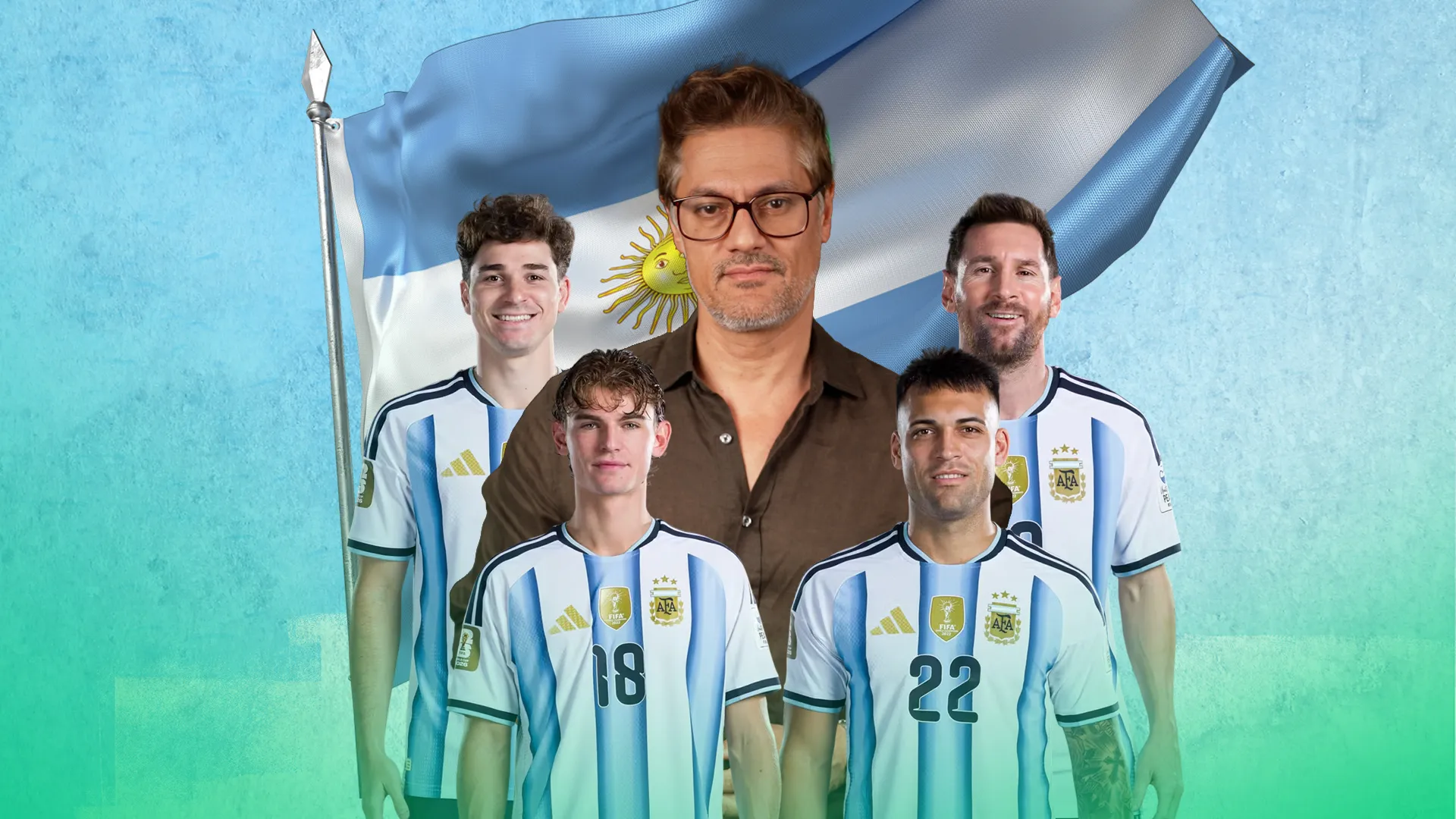
On one hand is the unstoppable, almost unnatural force of Lionel Messi – whose movements on the field are no less than spells from a magic wand – and on the other is Lamine Yamal, the teen prodigy whose flair on the field and flamboyant personality off it show signs of a superstar in the making.
So when the confetti falls and the fireworks erupt, will it be Argentina lifting a historic second straight world title, or will the golden generation of Spain bring back joy after 16 years of waiting?
Here’s all to know about the seismic showdown:
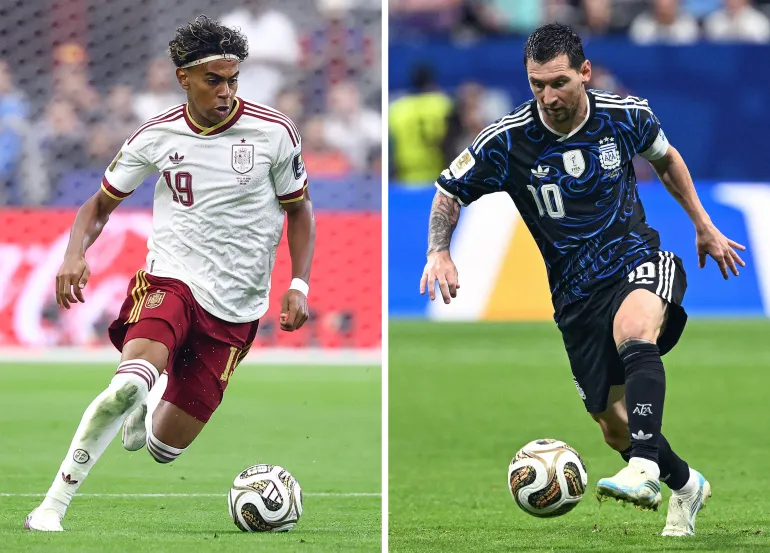
Who will win the battle between Lamine Yamal and Lionel Messi [File: Charly Triballeau and Roberto Schmidt/AFP]
How did Spain and Argentina reach the World Cup final?
Spain topped Group H with seven points, beating Saudi Arabia and Uruguay and drawing with Cape Verde. They began their knockout campaign with a 3-0 thrashing of Austria in the round of 32 before beating Portugal 1-0 with a late goal in an Iberian football derby in the round of 16.
Argentina had a strong showing in the first round, topping Group J by beating Algeria, Austria and Jordan. In the round of 32, they were pushed to their limits before squeezing past Cape Verde 3-2 in extra time, and came from two goals down to beat Egypt 3-2 in a controversial last-16 contest which drew allegations of officiating bias.
Against Switzerland in the quarterfinals, they again played a full 120 minutes before securing a 3-1 win and broke English hearts with a late 2-1 comeback win in a highly charged semifinal encounter.
Marvellous Messi’s Last Dance?
If there were not already enough new records Messi has made in the past month, the 39-year-old diminutive forward is set to add another to his tally – the oldest outfield player to feature in a World Cup final.
It could also be his last.
Leo – as Argentinians commonly call him – has not spoken about his future, but with an illustrious career, headlined by his 2022 World Cup triumph, this year’s tournament seems to be his last, especially if he fulfils a rare back-to-back World Cup title dream.
“He has made history. He is a legend,” Argentina coach Lionel Scaloni said of Messi, one of the greatest players to have graced the football field.
A decade ago, frustrated after a Copa America final loss to Chile, his fourth defeat in a final for Argentina, Messi hung up his boots. The narrative then centred around the fact that despite all his success at the club level, international glory had eluded Messi.
But fast forward to 2026, the Argentina captain has led his team to successive World Cup finals and is bidding for his first Golden Boot – a twist of fate even Messi would not have imagined.
“To have been able to get to a final in the way that he has in this moment, at the age of 39, I think it is incredible,” Scaloni added. “That is why I said we should enjoy having him, because look at what happened with Diego [Maradona] and how we ended up missing him.
“We still have Leo, and we should appreciate that. He is the historic figure and the legend, as are all these players who have given us these marvellous years.”
The little magician from Rosario will lead Argentina’s charge on Sunday, as La Albiceleste aim to become just the third team in the tournament’s history to retain the World Cup after Italy (1934 and 1938) and Brazil (1958 and 1962).
Slick Spain out to silence Argentina
Unlike Argentina, whose game largely depends on the individual brilliance of Messi, Spain are a team built solidly on the collective.
La Roja love to keep the ball and suppress the attacking potential of any opponent.
Their organised, sturdy defence has kept six clean sheets, already the most by any side at a single World Cup tournament, and leaked just one goal en route to the final.
On Sunday, Spain will carry more hunger than fear against Argentina, “the team to beat”, as described by captain Rodri.
“We’ve been through a gradual process of growth, where we’ve seen a team mature over the last few years,” Rodri said. “This team and this generation were going to make a name for themselves … and now reaching the final of a World Cup.
“So we’re pleased with the journey the team has taken, but we’re not stopping there; our ambition goes much further.”
Left to right, Spain’s Lamine Yamal, Dani Olmo and Mikel Oyarzabal are key players of their attack [File: Jessie Alcheh/Imagn Images via Reuters]
The bookmakers’ favourite from the beginning, Spain have played like a side that knows best how to deal with pressure. They produced the performance of the tournament in their stunning semifinal defeat of France, silencing Les Blues’ valiant attack.
Rodri said while that display was “one of the best” the current Spanish side had ever produced, they would need to scale new heights to defeat Argentina and clinch their first world title since 2010.
“I think we have to raise the level because they are the champions. And I’m really confident that we can do [it],” he added.
Spain vs Argentina predictions
The Opta supercomputer views Spain as the favourites in the final, with a 45 percent probability of winning in 90 minutes. It predicts a 26 percent probability of Argentina winning in regulation time, while there is a 29 percent probability of the match going to extra time or penalties.
Overall, Spain have a 59.56 percent chance of winning the 2026 World Cup, while Argentina have a 40.44 percent probability of retaining the title they won in Qatar four years ago.
Who are the referees for Spain vs Argentina?
Referee: Slavko Vincic (Slovenia)
Assistant referee 1: Tomasz Klancnik (Slovenia)
Assistant referee 2: Andraz Kovacic (Slovenia)
Fourth official: Adham Makhadmeh (Jordan)
Reserve assistant referee: Mohammad Alkalaf (Jordan)
Spain vs Argentina: Kickoff time, where to watch
Spain: DAZN Mundial (9pm, Central European Summer Time)
Argentina: TyC Sports, TyC Play (4pm, Argentina Standard Time)
United Kingdom: BBC One, BBC iPlayer, STV, STV Player, ITV1, ITVX, Red Button 1 (8pm, British Summer Time)
US: Fox, Fox One, Peacock, Telemundo App and Network, Universo, Telexitos (3pm, Eastern Daylight Time)
To check the TV listings for your country, head to FIFA’s TV listing schedule here.
Where is Spain vs Argentina being played?
The World Cup final will be played at MetLife Stadium, home to two National Football League (NFL) teams: the New York Giants and the New York Jets. For the FIFA World Cup, the venue has temporarily been rebadged as New York-New Jersey Stadium.
Built in 2010, this huge multipurpose stadium holds up to 82,500 spectators for football matches. The venue also hosted the 2025 FIFA Club World Cup final and both semifinals.
The last World Cup match at the MetLife Stadium was a round-of-16 match that Norway won 2-1 against Brazil [File: Omar Aziz/Reuters]
What is the weather forecast and air quality for New Jersey?
AccuWeather predicts mostly sunny and less humid weather for Sunday in New Jersey.
Smoke from Canadian wildfires has blanketed much of the northeastern US, triggering health alerts. On Thursday, the air quality in New Jersey was rated “unhealthy for sensitive groups” by several air quality measurement platforms.
But for Sunday, the US government’s official air quality monitoring site, airnow.gov, expects the air quality index (AQI) to be “moderate”.
Spain vs Argentina: Head-to-head
This will be only the second World Cup meeting between Spain and Argentina, with Argentina winning 2-1 in the group stages in 1966.
In addition to their four yellow cards, England gave away 14 penalties to Argentina’s six, taking their tally for the Nations Championship to 34 conceded in three matches.
Former England wing Chris Ashton believes this pattern of ill-discipline is a weakness opposition teams will look to exploit.
“If you are playing against England, you know they are going to give penalties away and make some stupid errors that result in them losing games,” Ashton told BBC Radio 5 Sports Extra.
It’s a problem that’s not lost on the players, with Immanuel Feyi-Waboso, who scored England’s fifth try and lit up the match with his jinking runs, identifying it as something for the team to work on.
“Discipline is a huge thing,” he said. “I don’t know how many cards there were but too many. We can’t be having games where we finish with 13 [players].”
Borthwick was eager to focus on his team’s “incredible spirit” as they hung on to win.
“It’s almost unfair to pull out one example but Henry Slade’s tackle at the end was incredible,” he said.
“It shows the fight that’s in this group of players, as well as their togetherness and connection.
“Right now these players deserve a fantastic holiday, a good night out tonight and a good rest.
“They’ve worked hard and it’s been a season that’s been going a while.
“We all know about the number of minutes the English players play and these guys have stuck to it right to the very end.”
Meanwhile, Argentina head coach Felipe Contepomi accused England of showing a “lack of respect” during his post-match news conference.
Contepomi took exception to the music and cheering that could be heard coming from England’s changing room next door.
Having asked the England representative present in the room to stop the noise, Contepomi lost patience when it did not, and walked out of the room.
Tries: Freeman, Earl 2, M Smith, Feyi-Waboso Cons: F Smith 3
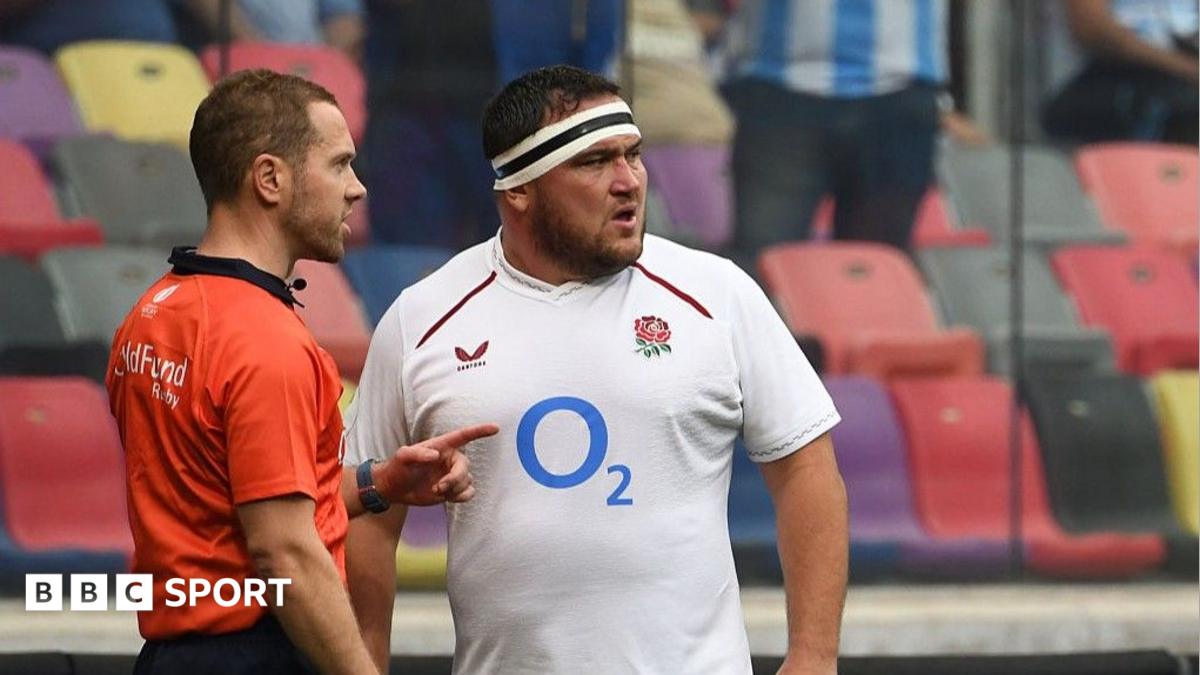
England held on to beat Argentina in a chaotic match in the Nations Championship after the hosts had a last-gasp try controversially ruled out in Santiago del Estero.
With 13-man England leading 31-24, Argentina wing Bautista Delguy scored in the corner with the final play – leaving a difficult conversion to secure a draw.
Referee Angus Gardner had awarded the try on field, but television match official Brett Cronan insisted Delguy was in touch.
While Gardner repeatedly suggested there was no clear evidence to overturn his original on-field call, the try was eventually chalked off.
Henry Slade’s covering tackle on Delguy proved to be the decisive moment, with Gardner surrounded by frustrated Argentina players at full-time.
A combined seven yellow cards were shown in what was a thrilling and action-packed game.
Steve Borthwick’s side looked set for back-to-back Nations Championship wins after Tommy Freeman’s try and two scores from Ben Earl gave them a 16-point half-time lead.
The Pumas, who wore replicas of the football team’s 1986 World Cup kit for the match, scored next before taking advantage of two England yellow cards, but their own ill-discipline prevented them punishing the visitors further.
Marcus Smith’s try in the corner came with number eight Joaquin Oviedo in the sin-bin, before Santiago Carreras joined his team-mate on the sidelines for 10 minutes.
An individual try from Immanuel Feyi-Waboso then silenced the passionate home crowd.
However, England replacements Henry Pollock and Emmanuel Iyogun were next to be sent to the sin-bin, making for a nervy finish.
Justo Piccardo’s late try and Argentina’s subsequent break had 13-man England scrambling, only for a combination of Noah Caluori and Slade to do just enough to force the full-time whistle.
Having gained the backing of the Rugby Football Union after just one win in this year’s Six Nations – England’s worst performance since the tournament’s expansion from the Five Nations in 2000 – this summer’s fixtures were pivotal for Borthwick’s future.
A tough defeat at Ellis Park against world champion South Africa was expected, but wins over Fiji and Argentina have set England up well for November’s Nations Championship games.
While Latin Americans have traditionally rallied behind football teams from the region who advance deep into the FIFA World Cup, a flood of memes, jokes and criticism has made it clear there is one exception: Argentina.
In one photoshopped image that went viral, Lamine Yamal — who stars for Argentina’s final opponents Spain — is wearing a Brazilian jersey. The snarky caption? “The hope of the Brazilian people.”
The fervour goes beyond the historic rivalry between Pele’s Brazil and Diego Maradona’s Argentina: Mexico, Colombia, Chile, and others are all hoping Lionel Messi’s Albiceleste bite the dust on Sunday.
A similar phenomenon occurred before Argentina won their third World Cup title in Qatar in 2022.
Colombian sociologist German Gomez believes the “dynamic of solidarity … has been broken” with Argentina.
He said the digital era and social networks have fuelled “narratives” that the team is a darling of FIFA and Gianni Infantino, president of football’s world governing body.
“Argentina has had help from referees,” said Francisco Santos, a Brazilian fan trading World Cup stickers at a shopping centre in Sao Paulo, where cheers rang out when England scored first against Argentina in the semifinal.
If Brazil could not become six-time champions, “I would rather see Spain become two-time champions than Argentina become four-time champions,” the 42-year-old said.
Critics say Argentina have received more favourable calls such as penalties and yellow or red cards against opponents, even when such decisions have been backed by FIFA and experts.
“We’re going to cheer for Spain,” said Juan Camilo Abusaid, a 28-year-old finance worker in Bogota, Colombia’s capital.
‘Very political’
Antonio Lopez, 51, a police officer in Mexico City, described Messi as a “legend”.
But he added: “If you’re going to sweat and break your back on the pitch to become champions twice, I accept that. If referees are going to help you, I don’t”.
At a media conference, Mexican President Claudia Sheinbaum jokingly asked journalists which team they were supporting in the final.
“Spain! Spain!” they replied.
For Mexican anthropology professor Jorge Negroe, a specialist in social studies of sport, “this World Cup has proven to be very political”.
Colombian sociologist Gomez added that while Maradona was seen as a revolutionary who confronted FIFA’s power, current narratives perceive Messi as FIFA’s “golden boy”.
Argentina’s Lionel Messi receives the World Cup in Qatar in 2022 [Kai Pfaffenbach/Reuters]
National politics has also created resentment.
“I really don’t like Javier Milei (Argentina’s president) at all!” said Rachid Sjoberg, a 29-year-old agricultural laboratory operator in Santiago.
“The idea that he would then boast about having won the World Cup if they win does not sit well with me.”
Argentine fans and some players have also faced accusations of racism — such as a chant sung by the team in the past mocking the black players in the French team as not being really French.
There is also a long history of club-level fans throwing bananas on the field or making monkey gestures at Brazilian fans or black players.
During this World Cup, FIFA condemned racism in a statement after an Argentinian supporter told a black US influencer known as IShowSpeed to go “cry at the zoo” during a livestream.
‘We are unbearable’
Messi himself has acknowledged the strong feelings surrounding whether the team wins or loses.
“Four years ago, we achieved what we wanted: to play the final and be the best for four years. Once again, we have shown that nobody gives us anything for free, and we have put ourselves among the two best again,” he said.
“Let it hurt whoever it hurts.”
A brand of fernet, an alcoholic drink which is hugely popular in Argentina, has taken advantage of the anti-Argentine sentiment with humour.
Under the slogan “We are unbearable,” it launched an advert showing fans from different teams sitting in a therapy circle complaining about Argentina’s unbridled passion for football.
While many in Latin America are rooting against Argentina, the team has received a rapturous response at training camps in the US, with fans chanting “Messi! Messi!”
But some still embrace regional solidarity.
“I’m going to support Argentina because it’s a South American country,” said Valentino Tocto, a 20-year-old student in Lima.