Trump says anti-weaponization fund in IRS settlement is ‘dead’ even as he defends it
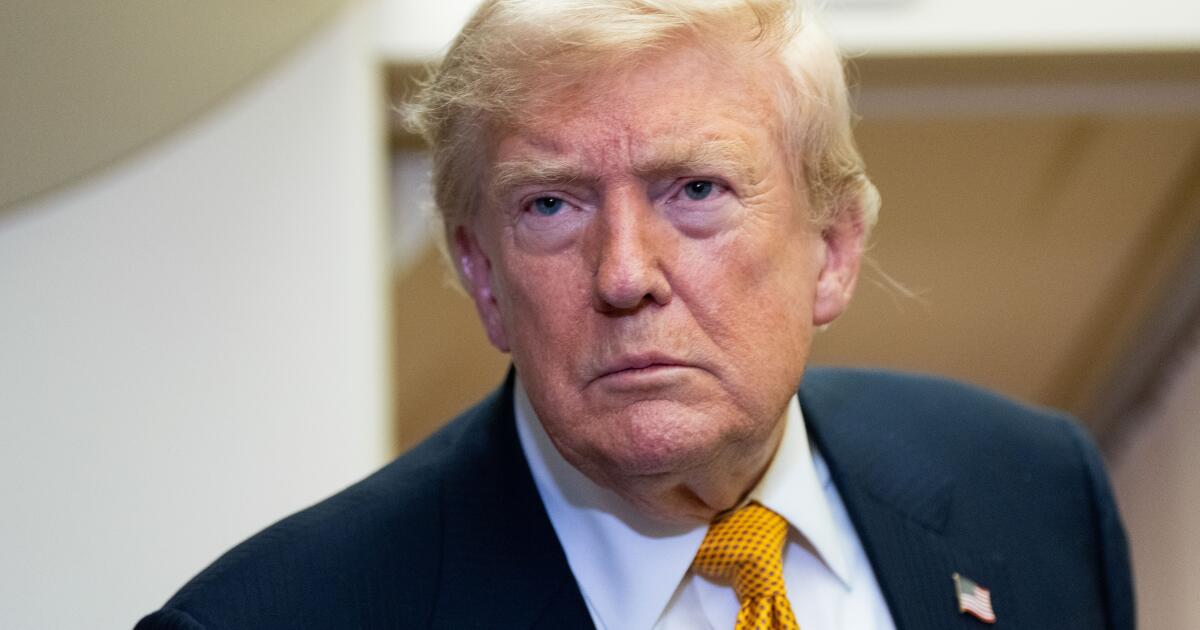
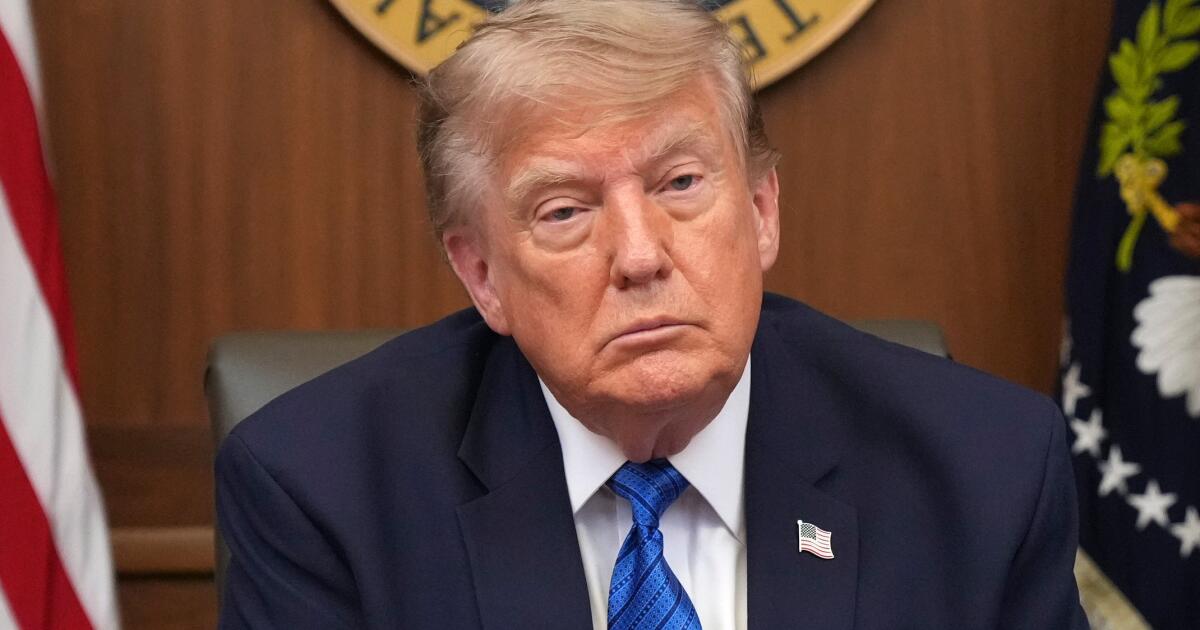
WASHINGTON — President Trump said Friday that his $1.8 billion anti-weaponization fund is “dead” while also continuing to defend it, further complicating his administration’s negotiations with two Republican senators who are blocking his attorney general nominee in protest.
Trump told reporters at Camp David on Friday morning that administration officials had “agreed not to have a fund” that compensates his political allies, yet made clear that he disagrees with that decision.
The comments came hours after an early morning social media post in which Trump said people who had been prosecuted by the Justice Department — many of them for their involvement in the violent Jan. 6, 2001, attack on the Capitol — “are suffering still, many ruined, and I felt that they should be given compensation for what has been done to them.”
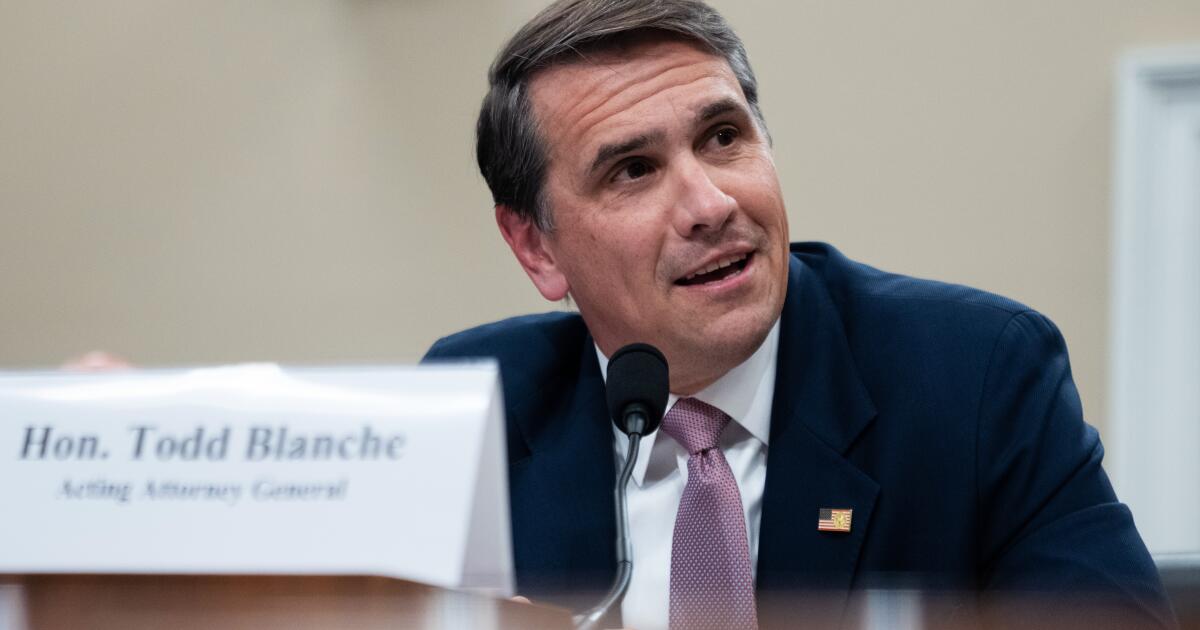
Trump’s reluctant declaration that the fund won’t be created came as Republican Sens. John Cornyn of Texas and Thom Tillis of North Carolina, both members of the Senate Judiciary Committee, say they won’t support Todd Blanche’s nomination for attorney general until they see that promise in writing. They have been working for weeks with the White House and Blanche, who is now the acting attorney general, to produce a document to that effect, but both senators have said they aren’t satisfied so far.
“The President made it clear today that the so-called Anti Weaponization Fund is still alive, which is exactly why we are attempting to formally end it,” Tillis said after Trump’s initial social media post.
Trump said in his post that Blanche should be immediately confirmed and is a “pawn in this whole thing.”
Cornyn, Tillis want promises in writing
Blanche said at a hearing two months ago that the anti-weaponization fund would not move forward after Republican senators revolted and held up an immigration funding bill.
But Tillis, who is retiring when his term ends in January, and Cornyn, who lost reelection this year after Trump endorsed his primary opponent, said they want to ensure that the White House doesn’t reverse course, especially as Trump continues to argue that a fund is needed.
The Justice Department has provided the senators with language that says Blanche’s May 18 order establishing the “Anti-Weaponization Fund” is “rescinded and shall have no force or effect,” according to a document reviewed by The Associated Press.
Cornyn and Tillis have said they also want some clarifications on a separate piece of the settlement that would grant Trump and members of his family immunity from tax audits. Cornyn said this week that it was his understanding that the audits could extend to more than 100 different Trump organization subsidiaries into the future.
“Todd Blanche said it was limited to the parties to the litigation — and it was retrospective, not prospective,” Cornyn said. “And all we’re doing is asking them to put that in writing.”
Blanche nomination is delayed in the Senate
The Judiciary Committee postponed a vote on Blanche’s nomination that had been scheduled for Thursday morning after Tillis and Cornyn said they needed more from the administration before they could provide the necessary votes.
After the meeting was delayed, Trump said in a social media post that he might pull Blanche’s nomination and resubmit it after Cornyn and Tillis leave office next year. But the two sides continued to negotiate through Thursday afternoon, when Blanche, Cornyn and Tillis met on Capitol Hill.
On Friday, a person familiar with the negotiations said talks had been positive, but the senators were still awaiting a new offer from the Justice Department. The person requested anonymity to discuss the private negotiations.
The two senators have repeatedly said the Justice Department seemed interested in reaching an agreement, but the White House wouldn’t budge even to aid the confirmation of Trump’s loyal former personal attorney, who has aggressively pursued the administration’s priorities as acting attorney general.
“I think as far as Blanche and the Department of Justice, we were pretty much on the same page,” Cornyn said Thursday. “But then when the president got wind of it, he wasn’t willing to go along with it.”
Tillis said Blanche “has been forthright, thoughtful and patient” but attributed the holdup to an “incompetent personal advisor” to the president, even as Trump himself continued to advocate for the fund.
Behind the scenes, Trump legal adviser Boris Epshteyn is being blamed as an obstacle to an agreement that would let Blanche move forward, according to three people who have direct knowledge of the discussions and requested anonymity to discuss them.
Saying the AP’s “sources are wrong,” White House communications director Steven Cheung said “anyone trying to assign blame to the President or his team has no earthly idea of what is going on and clearly is trying to deflect from the issue at hand — Todd Blanche will be an exceptional Attorney General and he should be confirmed immediately.”
Also on Friday, Trump’s attorneys notified a court it would appeal a judge’s scathing ruling that characterized the settlement of the president’s lawsuit against the IRS as an improper exercise in self-dealing. The judge in her order earlier this month referred one of Trump’s attorneys for potential disciplinary action and criticized Blanche’s involvement in the settlement, given his prior representation of Trump.
Blanche has said he disagrees “with the judge’s insinuations” about him.
Settlement fund could have benefited Jan. 6 rioters
Even as they are usually deferential to Trump, a number of Republican senators have expressed strong objections to the settlement.
“The criminals who assaulted police officers and defiled our nation’s Capitol are not ‘great American patriots’ who are ‘victims of government abuse,’” Tillis said, echoing Trump’s comments about the rioters who could potentially have received payouts. On his first day back in office, Trump pardoned more than 1,500 people who had been charged in the attack.
Republican Sen. John Kennedy of Louisiana said Thursday that the majority of Senate Republicans aren’t comfortable with the settlement fund.
“Blanche said it’s dead, and he testified that it’s not coming back,” Kennedy said. “But for whatever reason, somebody didn’t want to put it in writing.”
Jalonick, Kim and Richer write for the Associated Press. AP writers Eric Tucker and Lisa Mascaro contributed to this report.