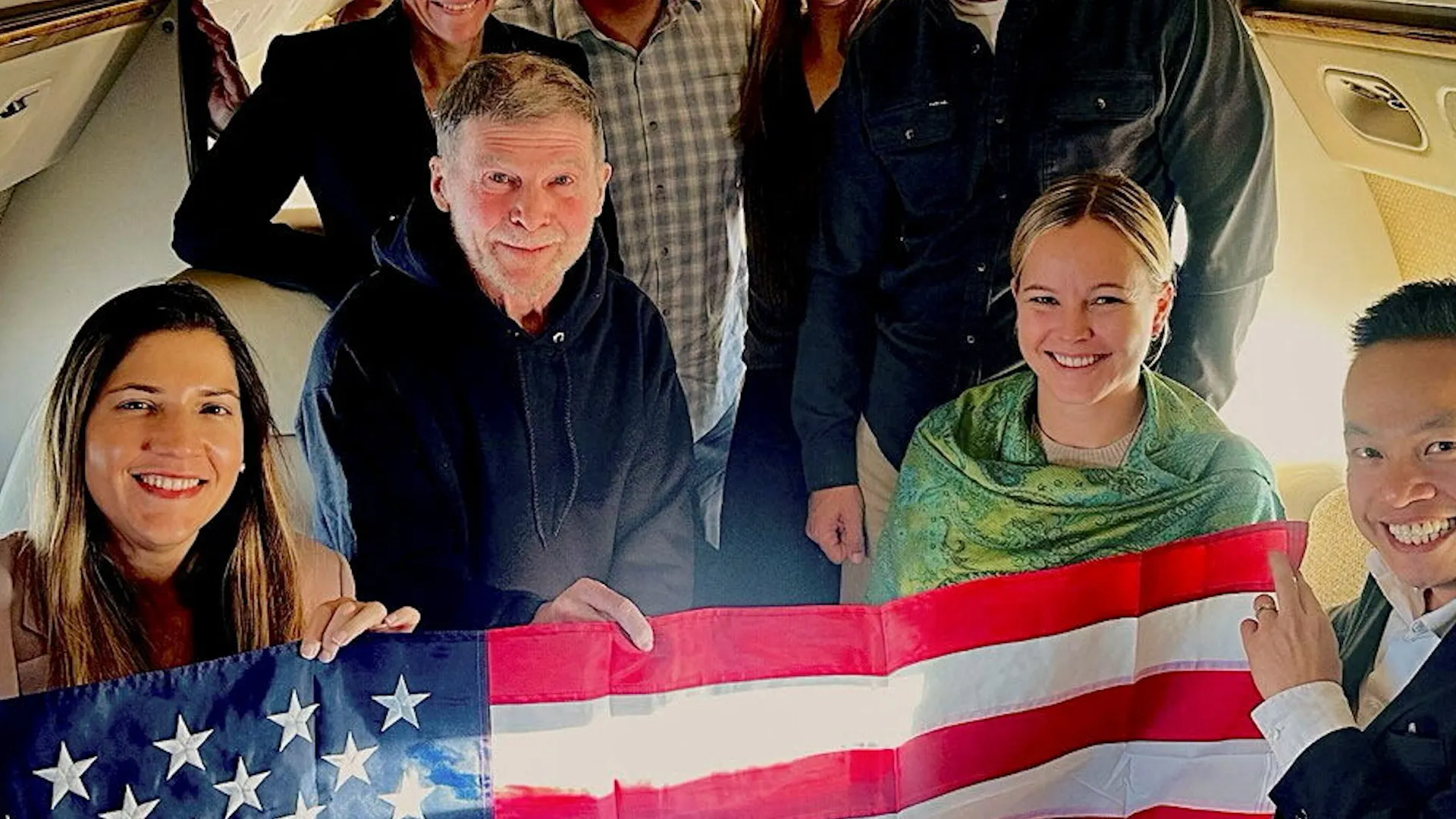
US citizen Stephen Hubbard has been freed from a Russian prison, four years after being convicted of being a mercenary for Ukraine, a claim he denies. The 74-year-old’s release coincided with US envoy Steve Witkoff’s visit to Russia to try and get Moscow to rejoin peace talks.
ST. PETERSBURG, Russia — Russia on Wednesday released a retired American teacher who had been imprisoned on charges of fighting as a mercenary in Ukraine, U.S. envoy Steve Witkoff said Wednesday at a meeting with Russian President Vladimir Putin in St. Petersburg.
The release of Stephen Hubbard had been foreshadowed a day earlier in Washington, when President Trump told reporters at the White House that he had talked with Putin “at length” about the issue and had asked him to free the Michigan man.
Hubbard is the second American detainee in just over two months to be freed by Russia, and his exit from custody occurred not only during a visit by Witkoff but also at a time when Trump has taken a series of actions meant to benefit Russia as Washington’s alliance with Ukraine shows signs of fraying.
Hubbard was sentenced after a closed trial in 2024 to nearly seven years in prison. Prosecutors said he had signed a contract with the Ukrainian military after Russia sent troops into Ukraine in February 2022, and that he fought alongside them until being captured two months later. The U.S. government under the Biden administration designated Hubbard as wrongfully detained.
Witkoff, a key Trump administration envoy who has tried without success to steer Russia and Ukraine toward a settlement to end a war that will hit the five-year mark in February, thanked Putin for releasing Hubbard, telling him, “Because of you, he’s going home to his family.” The Russian leader responded that Hubbard was at the St. Petersburg airport, Pulkovo, after the release.
The release occurred at a dynamic moment in relations between the United States, Ukraine and Russia, with the Washington-Kyiv alliance being stretched by tensions over drone support as the Trump administration advances policies that aid Putin.
Trump decided Friday, for instance, to waive sanctions on Russia in a bill that Congress overwhelmingly passed to support Ukraine. Named after late South Carolina Republican Sen. Lindsey Graham, the legislation targeted the flow of financial resources fueling Russia’s war.
That reversal followed Trump’s announcement of a deal to import Russian diesel fuel in a long-shot effort to curb high gas prices ahead of the U.S. midterm elections next month.
Witkoff met with Ukrainian President Volodymyr Zelensky in Norway on Tuesday. He was expected to exchange ideas from that meeting, as well as proposals from European and American colleagues, in his talks with Russian leaders in St. Petersburg on Wednesday.
Hubbard is the second American freed by Russia in about the last two months, following the release in August of Marine veteran Robert Gilman, who had been gravely ill and was imprisoned on disputed charges of assaulting a police officer.
Some two dozen Americans remain imprisoned in Russia for various reasons, according to the Foley Foundation, a hostage advocacy organization.
Hubbard had been imprisoned since 2022 on charges that Hostage Aid Worldwide, a hostage advocacy group, has called bogus.
The organization in August posted an open letter to Trump that it said was written by Patricia Hubbard Fox, Hubbard’s sister, in which she offered praise for Trump but also said brother had been subjected to “constant beatings, torture and starvation” while in custody.
“Even so, everything that you’re doing isn’t going to matter to my kidnapped, American Veteran brother, Stephen James Hubbard (soon to be 74) if Putin won’t cave and let him come home and he dies up there in a Nazi prison (crying),” the letter said.
Litvinova and Tucker write for the Associated Press. Tucker reported from Washington.
Trump-appointed Ambassador Mike Huckabee calls attack in occupied West Bank a ‘despicable act of terror’.
Published On 17 Oct 202617 Oct 2026
United States Ambassador to Israel Mike Huckabee has demanded Israel prosecute and jail those responsible for the attack on Washington Post journalist Heidi Levine in the occupied West Bank.
“Attacking a female photographer is a despicable act of terror carried out by masked cowards,” Huckabee wrote on X on Saturday.
Recommended Stories
list of 3 itemsend of list
“Those who attacked unarmed reporter should spend YRS in prison,” he added. “We have called for a full investigation, arrest, and prosecution to the fullest extent of the law to whoever participated in this.”
Levine was covering Palestinians’ annual harvest of olives on Friday in the occupied West Bank when Israeli settlers brutally attacked her and several Palestinians.
Israeli settlers stormed the area, beat her and stole her passport, telephone, wallet and equipment, according to witnesses.
The perpetrators, armed with bottles and slingshots, “were kicking me for like 10 minutes, and I was trying to hold onto my cameras and my bag”, Levine said.
Jasper Nathaniel, an independent journalist who witnessed the attack, told Al Jazeera that Levine “was in very, very bad shape. She couldn’t really get up off the ground.”
American freelance photojournalist Heidi Levine lies on a gurney in the emergency room of the government hospital in Ramallah, a city in the Israeli-occupied West Bank, on October 16, 2026 [AFP]
Levine, 64, was taken to hospital after the assault in Abu Falah, northeast of Ramallah.
The American photojournalist underwent surgery on her finger, which was nearly detached from her hand, and was left with a broken rib and multiple broken vertebrae, as well as lacerations, her daughter told The Associated Press news agency.
Israeli Prime Minister Benjamin Netanyahu, who wants to shore up his pro-settlement right-wing base ahead of closely fought October 27 elections, claimed on Friday that Palestinians or “far-left” activists may have been responsible for the attack on Levine and other Palestinians.
Huckabee, a staunch ally of Israel who has sharply criticised Israeli settler attacks against Americans, did not identify the culprits as settlers after Netanyahu tried to sow doubt as to their identity.
The ambassador, appointed by US President Donald Trump, met Palestinian-Americans in the occupied West Bank town of Turmus Aya in September to hear locals’ testimony about their experiences with pogroms. In August, Huckabee called a days-long Israeli settler siege an “act of terror”.
The US State Department criticised Friday’s attack using a cautious tone on Levine’s beating, stating condemnation of “criminal violence by any party”.
Cuban American poet Kyle Carrero Lopez first learned what sanctions were as a child — not as a political measure, but as a gendered one. In his poem “Sanctions,” he describes how his father, a surly Cuban refugee who worked as a DJ, laid out the terms of acceptable masculinity.
“No dance class/no “girl toys”/don’t walk like that,” writes Carrero. “His anthem, his law, hammered, hammered, into me.”
The poem features in his debut book of poetry, “Party Line,” released in July by indie publisher Graywolf Press. As a gay, Black Cuban American, Carrero uses social etiquette as a springboard to critically examine how marginalized people learn to negotiate space — whether at a nightclub; in the stratified gay mecca of Fire Island; at a socialist magazine party; or in line for customs at the U.S. border. He cites Black cultural figures like the queen of salsa Celia Cruz, American fashion journalist André Leon Talley, the late French singer and dancer Josephine Baker and political activist Assata Shakur as guiding lights.
“There are two sides of me,” he told De Los. “Between the party girl and the politico is Kyle Carrero Lopez.”
Born in 1995 to Cuban parents in New Jersey, Carrero is now based in New York City, where he earned a master of fine arts in poetry at NYU and published his award-winning 2022 chapbook, “Muscle Memory.” He answered my phone call in South Carolina, while overlooking the Atlantic Ocean; his mother was on the precipice of getting married a second time. Carrero, already a poet, scholar, political organizer and nightlife host, would flaunt yet another title that weekend as wedding officiant. “My work is naturally in conversation,” he explained.
Many of the poems in “Party Line” came to Carrero after visiting Cuba for the first time in 2017, through the CubaOne Foundation. Inspired by the Birthright Israel program for Jewish youth, the nonprofit sponsored trips for Cuban Americans to connect with Cubans on the island. Yet for Carrero, this strengthened his political dissonance with many Cubans in the U.S., who’ve supported economic sanctions on the communist nation. In order to force regime change, in January the Trump administration levied an oil blockade on Cuba, triggering a humanitarian crisis.
Written with an unmistakably Caribbean verve and snappy, conversational meter, Carrero defines his stance on Cuba in no uncertain terms.
“This book really is for Cuban Americans,” he said. “Those of us who are not trying to destroy Cuba, that is.”
Carrero spoke to De Los about party politics, Black Cubanidad and how visiting the island changed his writing for the better. The following interview has been lightly edited for clarity and length.
A lot of people fall back on these ideas about immigrant communities being all hard work and drudgery — but we come from a festive, dance-fueled culture. How did you get the idea to combine poems about parties with poems about politics?
I’ve always been involved in politics. I’ve done a lot of canvassing. In high school, I was in a learning community called the Civics and Government Institute. We did a “social reformers” panel, where you had to play somebody from a social movement. They had me up there dressed up as Elijah Muhammad in the 10th grade, asking me what I’d think of Obama. I had to drag Obama! These Nation of Islam people were not feeling the moderate Democrats.
But that informed my political engagement to this day. I was concerned with the language surrounding the embargo and U.S. aggression against Cuba. In my poem “Torricelli,” I talk about how [former New Jersey congressman and senator] Bob Torricelli wrote the Cuban Democracy Act, which he designed to, quote, “wreak havoc on that island.”
And I write a lot about nightlife. It is a family industry for me on both sides. My maternal grandfather ran a social club in New Jersey, a games parlor. My mom was a club kid. She was out all the time. Parenthood changed some things, but my father still had DJ gigs. Our basement was his studio. He’d leave the house at 9, 10 o’clock to go to the gigs. You know that new Jordan Firstman movie, “Club Kid”? I’m the original club kid.
How do you write for those who may not be ready to receive the club kid and the politico at once?
I like challenging assumptions that political people are drab and unglamorous — and that party people are brain-dead, escapist and have nothing to say. One of the problems I have with the ’90s club kid scene, as it existed, is they were extremely apolitical. And not only were they apolitical, but I would go so far as to say the club kids in the ’90s were a white supremacist entity. We don’t talk enough about how their whole thing was like whiteness and white privilege. All we’re here to do is have fun — and we see what that mentality leads to, right?
[The movie] “Party Monster”!
Yes, “Party Monster”! Michael Alig literally killed a man of color. That is not the party world that I live in. We don’t take off who we are just because there’s low lighting and fog and loud music. I’m going to respond the same way to harassment and perceived injustice as I would any other space.
To this day, there are white club kids in New York who are in the club talking in black-ccents and wearing imitations of black people’s hairstyles. And then if you call them out, they’re like, “Why? It’s a party!” And I’m like, “OK, but it’s a party where all of the music comes from Black people … you are a guest in this space.” Before I’m going to serve you a history lesson, let’s at least start with decency.
And though you may not think you’re doing politics … politics will still do you. Your club kid parents experienced politics by coming to the U.S. from Cuba. Can you tell me about their journey?
My father emigrated from Havana as a child. My mother was born to parents who emigrated in the 1950s during Batista’s regime. Cubans have a privileged relationship to immigration — the pipeline available to us [political asylum] was not the same for most people of Latin American descent.
My family came here not only as Cuban immigrants, but as Black immigrants. Politics happened to them. My father came to the U.S. in the late ’60s, getting called the N-word walking home from school with his two sisters…. They got hit so hard with belts that they would go home having soiled themselves. They were not only Black, but they didn’t even know what language or culture they were trying to assimilate to. There were layers of hatred…. When people talk about Cuban Americans, they think of white, rich Miami Cubans. It’s irresponsible to think in such a flat and one-dimensional way.
In the poem “Usefulness,” which was originally published in the Yale Review, you speak of how Black Cubans exist at the nexus of two different political agendas: the pro- and anti-Revolution contingents. Can you talk about that?
My opinion is very useful to many agendas. I joke that I would make a great Republican talking head. If I decided tomorrow that I wanted to get the GOP bag and be like, “Democrats are liars! I hate immigrants! I hate welfare! There’s two genders! We don’t need gay marriage!” — I would be a millionaire in under six months.
There’s a tokenism that happens when you exist at this nexus of identities. It’s true of the left as well sometimes. You could ask five different people in Cuba what they think about the government and they will give you five different answers. And that is OK! We need to allow that to be the case.
I don’t want what Trump and the Marco Rubios of the world want for Cuba — which is to seize it, to subjugate it and turn it into the next Puerto Rico. If people who are progressive and committed to Cuba’s autonomy don’t want that, I think part of [the work] is talking to Cuban people and hearing them out. I don’t think it’s acceptable to seek out only the opinions that match your own.
You bring up a historical moment that not a lot of Cuban Americans know about, which was the 1976 bombing of Cubana Flight 455, by an anti-Castro Cuban exile group. You said they planned on bombing a flight to Havana the week before, which your mom and her sister were on. How did they manage to avoid that?
[My grandfather] was an influential man. He knew the right people. So he heard something was going down and said, “I’m not putting my kids on that flight.” The flight went on as planned, but these men knew my grandfather and heard that his daughters were getting on the plane. To me that’s like getting on the list … sometimes you get into the party, or the plane [isn’t] bombed. It’s the same negotiation. Or just a moment of alignment.
What was it like visiting Cuba for the first time after the Obama administration eased travel and trade restrictions?
I don’t give Obama much, but he did try to normalize relations there. Unfortunately, Biden didn’t follow through with that, but for a second, we did care about Cuba.
The first time I went was in 2017, when I was 22. It was an incredible experience. My mother traveled to Cuba as a teenager; my father never went back. But they never discouraged me from going. I know that’s the case for a lot of Cuban Americans; there’s so much baggage. But once there was an easy path to go, it changed my life.
I write about Amiri Baraka’s time in Cuba, when he was earlier in his poetry journey — and his writing changed from being there. He wrote a poem called “Betancourt,” named after a young radical there. It made me more politically serious. I feel closer to my heritage, having done that.
What made you close the book with “I Saw Assata In Havana”? Did you really see Assata Shakur?
That was an imagined encounter. But it was the vision of what I imagine was her new life in Cuba — her second chance. I thought that it was a good ending note to land on, pushing against prevailing narratives.
I think the ways that we talk about our radicals — the Huey Newtons of the world, people like Kwame Ture or Angela Davis — we think of them as mythical beings, or, depending on who you ask, terrorists. But that disconnects them from their humanity. I wanted to create a portrait of [Shakur] as a normal lady who needed to pick up groceries sometimes. These were regular people who saw what was going on in the world and decided that they needed to do something about it. Each of us has that ability to enact change.
There are so many ways to make societal shifts, whether that’s writing to your officials or protesting or creating art that is challenging. What Shakur did was to say, “I don’t like this for my people. I don’t like this for the world I’m living in.” The same boot that’s on the necks of Black American people is on the necks of people in the Congo, people in Palestine, people of the global majority. We all have to share the planet. If we work together, we can have a world that can actually sustain itself.
My last question for you is: What would you like to see happen for Cuba?
I’m not a politician; I’m an artist. My duty is not toward any specific government; it is toward truth. My Cuba position, as a Cuban American, is focused first and foremost on my home country’s contribution to the conflict. If Cuba is truly no more than a failed state, why not lift all of the restrictions? Let’s see what happens when Cuba is unimpeded by hostile U.S. policy. That’s how you can best prove your point, right? Unless, of course, you’re afraid of what Cuba could be.
CHRONICLES of Narnia star Ben Barnes has tied the knot with partner Aubrey Cleland.
Ben, 45, played the role of Prince Caspian in the titular 2008 film as well as 2010’s Voyage of the Dawn Treader.
Chronicles of Narnia star Ben Barnes revealed he has married Aubrey ClelandCredit: INSTAGRAM/@BENBARNESTaking to Instagram, Ben shared loved-up photos from the couple’s special dayCredit: INSTAGRAM/@BENBARNES
Taking to Instagram, the actor confirmed he and American Idol alum Aubrey Cleland, 33, have wed.
Paying tribute to his bride, Ben penned: “We got married!
Sign up for the Showbiz newsletter
Thank you!
“In a world of 8 billion people, it is extraordinary to find someone who feels like your person, someone who matches your sense of humour, curiosity and humanity — with whom you can be effortlessly yourself, feel understood, valued and loved for everything that you are.
“And, speaking for the first time as a proud husband: I married a woman of such rare grace, kindness and beauty, who somehow makes the world feel both bigger and more like home, who finds wonder, joy and laughter in things that might have passed me by, and who makes the ordinary feel momentous.
The actor shared a sweet message to his now-wifeCredit: INSTAGRAM/@BENBARNESHe played Prince (later King) Caspian in the Chronicles of Narnia filmsCredit: AP:Associated Press,OOther20th Century Fox
“We are so happy and so excited for everything to come.
“Ben & Aubrey.”
Friends and fans soon flocked to the comments section to share their congratulations.
EastEnders star Robert Kazinsky added: “My best mate got his fairytale!”
Katherine Heigl penned: “Oh my lord!!! Congratulations my old friend I am so so so thrilled and happy for you!!”
A fan shared: “Congrats Ben and Aubrey! Wishing you both so much love and happiness.”
Another remarked: “Could not be happier for you both! You both look absolutely radiant and stunning!!!”
A third chimed in: “Congratulations. Wishing you both a world full of happiness and luck. And a life together filled with love, laughter and creativity!”
A fourth said: “I’m in absolute tears!!! I have NEVER been happier.
“Congratulations you absolutely gorgeous humans!!
“May this next chapter be everything you both ever wished for!!”
The slogan of the 1933 Chicago World’s Fair, which plays a prominent role in the new LACMA exhibition “Home of the Future, 1925–1985: Designing Domestic Utopias,” was blunt: “Science Finds, Industry Applies, Man Conforms.”
Those words capture a central tension in the sprawling show, which occupies interconnected galleries at the far end of the museum’s Resnick Pavilion. Many of the beautiful, sometimes ingenious products and technologies developed with the rise of the modern era gripped the popular imagination and made life easier, healthier and more connected. But they didn’t free people from domestic labor or deliver the prosperity and security heralded by their promoters. They instead often raised expectations, forced dependency and gave rise to a vision of progress that reinforced social exclusion, bred anxieties about status, and concealed the environmental costs of a culture built on consumption.
Sound familiar?
The desire for these transformative products was never innate, and LACMA’s exhibition zeroes in on that idea from the start. “Good design is seldom accepted. It has to be sold,” Midcentury photographer Julius Shulman is quoted as saying in the catalog.
The show traces the hard sell of a domestic utopia via world’s fair posters, model home catalogs, magazine advertisements, television specials and science-fiction imagery — along with close to 200 physical objects of every sort, including kitchen appliances, electronics and furniture. In each of its four documented eras — pre- and post-Depression, post-World War II, the height of the Cold War, and the counterculture ’60s and ’70s — promoters dressed the same promise in new terms, whether through cleanliness, leisure, security or freedom.
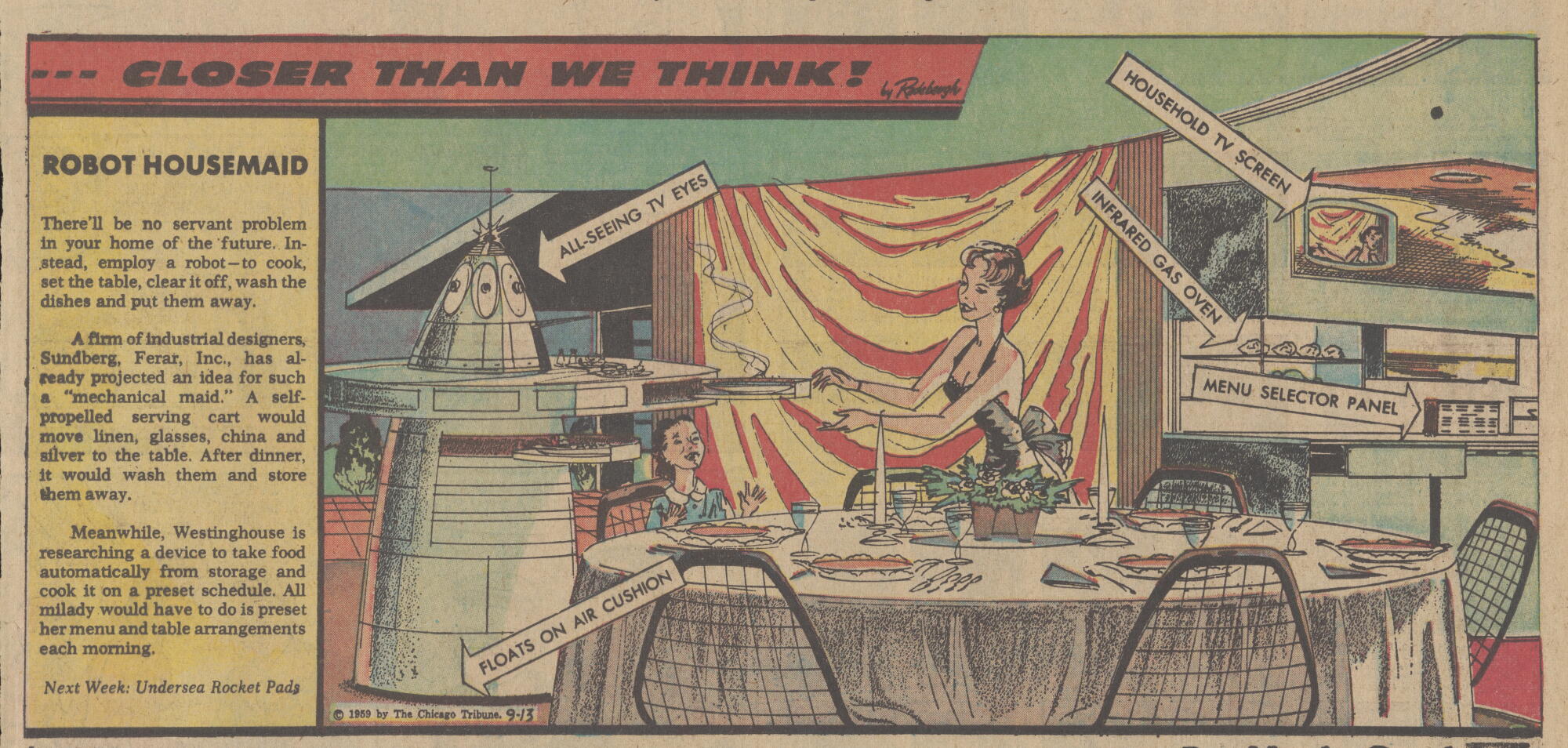
Arthur Radebaugh, “Closer Than We Think! Robot Housemaid,” 1959.
(Chicago Tribune / TCA, photo courtesy San Francisco Academy of Comic Art Collection, Billy Ireland Cartoon Library and Museum, Ohio State University)
At every turn a vision of a better life was made to seem desirable and, just as important, inevitable. Like any good advertising, it worked best when soothing our anxieties and tapping into our fantasies.
In the 1920s and ’30s, new discoveries about hygiene inspired products by soaring talents in the nascent field of industrial design who set out to create clean, easily maintained homes — laboratories for healthy living in an age still ravaged by diseases like polio and tuberculosis. Mathias J. Weber and Russell E. Vanderhoff’s seductively streamlined Health-o-Meter scale gave the illusion that homeowners could be scientists, for the first time monitoring their own weight and growth. Kohler’s Integra, introduced as “the toilet of the future” at the Chicago fair, had a dramatic black finish made to equate sanitation with modern design. And Bruce Goff’s gleaming Vitrolite kitchen for Libbey-Owens-Ford glass company, shown in Charles Turzak’s rendering, integrated pigmented structural glass counters and cabinets into a polished, easily cleaned whole.
American Stove Co., Magic Chef stove, series 1400, introduced 1935.
(Lynton Gardiner / The Wolfsonian–Florida International University )
Vast expansions in electricity, telecommunications and production promised to connect the country and ease the tedious work of cooking, washing and cleaning. The American Stove Co.’s Magic Chef stove, one of the first ovens to be equipped with a clock, recast kitchen work as something that could be measured and controlled. Frank G. Brotz’s Kohler Electric Sink, which incorporated a motorized dishwasher into the familiar basin, promised release from the “thrice-daily drudgery” of washing dishes. Western Electric’s clear-cased Model 302 telephone enticed gawkers with an impressively complex system of wires and mechanisms.
George R. Lum for Western Electric Co., Telephone, model 302, desk set 1938.
(AT&T Archives and History Center)
Many of the names who dreamed up these wonders are now etched in design history. Isamu Noguchi created a baby monitor before baby monitors were a thing: the Radio Nurse, a dark Bakelite receiver resembling an abstract face. Walter Dorwin Teague gave corporate products a precise, machine-age polish, while Raymond Loewy brought the same sleek optimism to objects like the globe-shaped New World radio for Colonial Radio Corp., molded in glossy, heat-resistant Catalin and embodying quite literally the new reach of communications.
Selling this promise of a technological future to those clinging to the dream of American prosperity was an especially potent exercise during the Depression. In his illustrated 1932 manifesto “Horizons,” Norman Bel Geddes cast “new design” as a path toward “economy, efficiency, comfort and happiness.” As the economy faltered, an orderly, healthy home could be sold as a form of salvation, with prosperity seemingly within reach. At the Chicago fair, corporations sponsored full-scale model homes and filled them with products already available or soon to be. For rural households still without electricity, Lester Beall’s 1937 Rural Electrification Administration poster “Wash Day” turns federal infrastructure into a household fantasy. Inside the black silhouette of a farmhouse, a pristine white washing machine appears at an almost monumental scale, set against flat fields of saturated color.
Irving Harper of George Nelson and Co. for Herman Miller Inc., Marshmallow Love Seat, model 5670, designed 1956, this example made c. 1960s.
(Jonathan Urban / Museum Associates / LACMA)
By the ‘40s and ‘50s, the postwar home and its many accouterments — powered by wartime advancements, growing abundance and an ethos of “buy now, pay later” — amplified the promise. Plastic, prefabrication and push-button convenience suggested that mass production could bring elegant, futuristic living — and freedom from drudgery — within reach of the masses. George Nelson treated furniture as a flexible system, producing (with designer Irving Harper) the candy-colored Marshmallow Love Seat; replacing conventional upholstery with 18 brightly colored circular cushions mounted on a spare steel frame. Eero Saarinen produced the molded-fiberglass Pedestal chair, sweeping the seat and stem into a single sculptural form intended to eliminate what he called the “slum of legs” beneath tables and chairs.
Eero Aarnio for Asko Oy, Ball Chair, designed 1963.
(Jonathan Urban / Museum Associates / LACMA)
Architects attempted to make the home itself into a sexy product. At Disneyland, Monsanto’s House of the Future, designed by architects Richard Hamilton and Marvin Goody, was a gleaming, cross-shaped structure of molded plastic, raised above the ground on cantilevered supports and partnered (in renderings) with a plastic heliport. Its kitchen featured molded surfaces and electric appliances. Promotional images and films conjured a playful, adaptable and benevolent house — plastic as the building block of family happiness.
Buckminster Fuller’s Dymaxion house was an aluminum, factory-made “dwelling machine” that could be delivered by air and assembled almost anywhere. Its unified form, modular furnishings, water-recycling system and labor-saving technology promised a more efficient life, less tied to conventional building and household routines.
Hamilton & Goody Architects, Monsanto House of the Future, 1956.
(MIT Museum)
Institutions like the Museum of Modern Art and magazines like Arts & Architecture promoted prototype homes from now legendary industrial designers and modernist architects like Saarinen, Charles and Ray Eames, Marcel Breuer, Albert Frey, Gregory Ain and even Frank Lloyd Wright.
Effective pitches could turn a product, whatever size, into a fantasy of freedom. In the General Motors film “Design for Dreaming” (1956), directed by William Beaudine, a woman enters a fabulous kitchen as if in a magical dream. The promise, said curator Wendy Kaplan, was that the fictional woman would have more time for “tennis and hanging with … friends.” The dream even hinted at a life beyond domesticity — perhaps even freedom to “actually have a profession,” Kaplan added.
But the housewife in these displays was still expected to remain responsible for the home. Liberation came through a more efficient kitchen, not a change in who cooked. And appliances that reduced some labor often raised the bar: more frequent washing, more cleaning, more elaborate meals, as University of Chicago home economics professor Hazel Kyrk described in “Economic Problems of the Family.”
Frank G. Brotz for Kohler Co., Electric Sink, introduced 1926, this example 1928, Kohler Co.
(Kohler Archives)
That universal “everyone” did not, however, include everyone. Government-backed home ownership and the suburban boom excluded many Black, Latino and Asian Americans through redlining, restrictive covenants and discriminatory lending — a fact reflected in the almost complete absence of minorities in these vast selling campaigns.
A few welcome exceptions on the creators’ side are architect Paul R. Williams’ “Small Home of Tomorrow,” which proposed a simple, well-designed home fitted with gee-whiz appliances; Arthur Elrod and William C. Raiser’s swirling, vivid orange Ebony test kitchen, which treated cooking as creative craft; and the proposed multiracial community of Soul City, founded by Floyd McKissick, which imagined homeownership as a claim to economic autonomy that segregation denied.
The vision of a utopian domestic future took a strange turn during the Cold War, marrying the breathless excitement of the space age with the existential dread of nuclear annihilation. The same scientific power that had transformed lives now produced weapons capable of destroying humanity. The home was imagined as both shelter and command center.
Office of Donald Deskey Associates. Drawing, design for Undersea Lounge: Scheme 3 Interior Perspective, ca. 1960s. Designed by Russell Heston (b. 1929).
(The Estate of Donald Deskey, courtesy Cooper Hewitt, Smithsonian Design Museum / Art Resource, NY)
As the age’s potent mix of terror and delirium spun on, designers and illustrators proposed ways to live comfortably in space, underwater or in underground bunkers. Paul László’s “Atomville, U.S.A.,” a vision of suburbia half a century in the future, buried the family home beneath an earthen shell that doubled as a helicopter landing pad. Its sunken gardens and swimming pool promised comfort, while a blast door, escape hatches and air filtration protected against nuclear fallout. Donald Deskey Associates imagined a hypnotic “Undersea Lounge,” a self-contained interior for living beneath the water, while NASA illustrator Rick Guidice vividly depicted physicist Gerard K. O’Neill’s proposed Stanford Torus — an enormous, wheel-shaped suburb in space.
Bob Lerner for LOOK Magazine, Anne Anderson in RCA Whirlpool Miracle Kitchen, 1959, kitchen designed 1956.
(Library of Congress, Prints and Photographs Division, LOOK Magazine, Photograph Collection / Robert S. Lerner Photography, LLC)
An endless array of products leaned into the public’s awe at the age’s sci-fi possibilities. This included prescient pieces ahead of their time, like the video-enabled AT&T Picturephone, and those that would never come to pass, such as the RCA Whirlpool Miracle Kitchen. The latter’s spread in Look Magazine (displayed for crowds at the 1959 American National Exhibition in Moscow) showcases a Roomba-like vacuum and other astonishing appliances that seem to work by themselves. But men hidden behind two-way mirrors actually operated them. Others, like the two-wheeled Ford Gyron Remote Control Car of the Future, only managed to come to life as children’s toys; and some were just plain ridiculous, like Honeywell’s H316 Kitchen Computer, which required a two-week training course just to retrieve a recipe.
By the late 1960s, confidence in technological progress was fraying. Environmental damage, plastic waste and the conformity of suburbia prompted designers and countercultural communities to imagine other ways of living — up to a point. The residents of Drop City, a Colorado artists’ community, built domes from the curved steel tops of salvaged cars. Architects Barry Simpson and Charles Hosford made a folding stool that could serve as a seat, stepstool or side table. Small, portable, multipurpose designs, from inflatables to cardboard furniture offered a life with fewer possessions. The Whole Earth Catalog, founded by writer and editor Stewart Brand, promoted ecological knowledge and self-sufficiency, but was still a compendium of things to buy.
Companies, too, found ways to sell all natural products, flexibility and individual expression. Zanotta advertised the first beanbag chair, the polystyrene-filled “Sacco,” as “A Big Bag, a Soft Seat.” Its formless body accommodated slouching, lounging or lying down, selling freedom from both conventional posture and the bourgeois living room. Even resistance to consumerism could be packaged as a new consumer ideal.
The pairing of objects with their promotional campaigns is the show’s most illuminating contribution, shedding light on the massive, often strange apparatus needed to drive these incredible designs — some icons, some welcome surprises — forward in each age. It reveals how the country’s 20th century manufacturing prowess expanded into the production of dreams. Corporations, government and the media taught consumers what progress should look like, which anxieties a product might soothe, and what kind of future to desire.
Isamu Noguchi; Zenith Radio Corporation, Radio Nurse receiver and Guardian Ear transmitter with original box, 1937.
( Museum Associates / LACMA)
But the sheer abundance of objects — I haven’t even mentioned the fascinating companion show-within-the-show, “The Kitchen and Its Discontents” — leaves less room for examining those campaigns and the work they performed. The excellent catalog follows those connections further, tracing how often hypnotic visions of the future home both reflected and shaped ideas about lifestyle, progress, gender, race, labor and consumption; in the galleries, those ideas remain largely suggestive.
Still, the exhibition offers a revelatory history — and a telling roadmap to our present. While the future imagined here made life easier, cleaner, more beautiful and more exciting, it did not arrive as advertised. The plastic home didn’t remake housing; the automated kitchen didn’t free women from domestic work; the self-sufficient home gave way to new forms of reliance. Yet a similar techno-utopian pitch survives in today’s smart homes and domestic technologies, from assistants like Alexa to artificial intelligence marketed as a way to make life easier. These tools may offer real benefits even as they addict and distract us. And while the systems sustaining our comfortable, consumption-driven lives launch us toward climate disaster.
These rooms powerfully evoke what Kaplan in the catalog calls America’s “restless forward motion, powered by the conviction that tomorrow’s design would solve today’s problems.” That ingenuity is worth celebrating. But its promises deserve open-eyed scrutiny.
A MAJOR noughties popstar could hardly be recognised as she cut of figure in a body skimming PVC jumpsuit.
Posing at an American football game across the pond, the former chart topper looked a far cry from her former boho image.
This pop star wowed fans in a skintight latex jumpsuitCredit: Instagram/natashabedingfieldThe singer teamed the striking look with white platform bootsCredit: Instagram/natashabedingfield
The pop star was none other than Unwritten singer Natasha Bedingfield who is best known for her hits in the early 2000s.
Natasha turned heads in a skintight black latex jumpsuit with puff sleeves and sporty white stripes.
Sign up for the Showbiz newsletter
Thank you!
The American football-inspired outfit featured her surname and the number 33 emblazoned across the chest.
She completed the look with white platform ankle boots, wearing her blonde bob loose with a full fringe.
The singer’s sporty outfit featured her surname and the number 33Credit: Instagram/natashabedingfieldNatasha shot to fame in 2004 with hits including These Words and UnwrittenCredit: EPA
Sharing the look on Instagram, Natasha captioned the post: “Well, the rest is STILL unwritten”, tagging stylist Lizzy Rosenberg and the Buffalo Bills’ official account.
Text across the video read: “Bills half time latex fit”.
Fans rushed to gush over the outfit, with one writing: “OKAY BODYYYYY BEDINGFIELD!”
Another declared: “This outfit is going to go down in history as a instant classic”.
A third joked: “Half time???? Thassa more full time”.
Natasha was dressed up for a half-time performance at the Buffalo Bills’ game against the New England Patriots on Sunday.
The pop starlet now lives in New York with her businessman husband Matt Robinson and their son Solomon Dylan.
The singer is still making music and performing, releasing her latest single Dot Dot Dot in August.
And her 2004 smash hit Unwritten continues to win over a new generation of fans, with Natasha revealing last month that it was approaching an insane two billion streams.
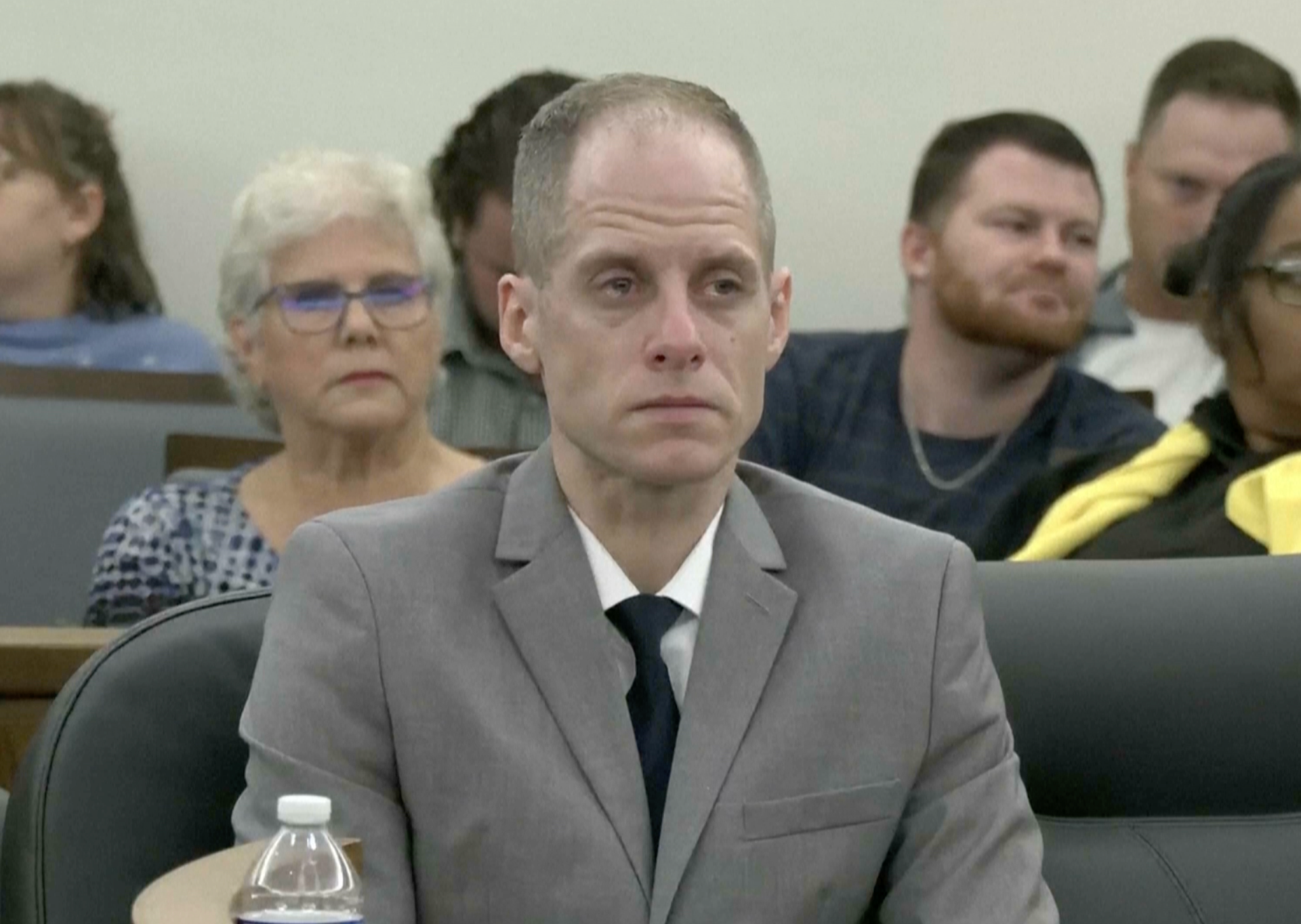
Former ‘American Idol’ singer Caleb Flynn has been sentenced to life without parole after being convicted of murdering his wife and attempting to cover up the crime.
Former American Idol contestant Caleb Flynn has been found guilty of murdering his wife, Ashley, while he was having an affair. He will be sentenced on Monday and could get up to life in prison without the chance of parole.
Matthew VanDyke and six Ukrainians were accused of smuggling weapons and drones to armed ethnic groups fighting India.
Published On 28 Sep 202628 Sep 2026
Matthew VanDyke, a United States citizen held in India for more than six months and accused of supporting ethnic separatist groups, has been temporarily released on bail and returned to the US.
The 47-year-old arrived on Saturday morning and reunited with his family, according to a family spokesperson.
India’s main opposition Congress party said that, despite being “accused of plotting terrorist acts”, VanDyke was allowed to return home from New Delhi.
“Obviously US pressure determined this outcome, but what did India get in return?” Jairam Ramesh, a legislator and spokesperson for the party, posted on X.
VanDyke’s family told Al Jazeera before his release that his health was failing and he had lost weight after going on a month-long hunger strike in Tihar Jail to try to improve conditions in prison. He had to use a wheelchair to attend hearings, according to his mother, Sharon. VanDyke denied the accusations against him, and his family said he was in the region documenting the situation faced by minority ethnic groups.
Matthew VanDyke, who spent months in Libyan prisons before joining rebel forces who opposed dictator Moammar Gadhafi, speaks with reporters after his flight arrived at Baltimore-Washington International Airport, Saturday, November 5, 2011. [Patrick Semansky/Reuters]
Earlier this month, Indian prosecutors declined to bring terrorism charges against VanDyke and the others. Instead, prosecutors formally accused them of visa violations for entering restricted areas along the Myanmar border.
The Maryland native is a former filmmaker and rebel fighter during the Arab Spring and spent about six months in a Libyan prison during the Muammar Gaddafi regime. He was held alongside James Foley, a journalist who was later killed by ISIL in Syria. In recent years, VanDyke was based in Ukraine, where his consultancy helped train Ukrainian military forces.
In a statement to Al Jazeera before VanDyke’s release, James Foley’s mother, Diane, who now heads a foundation named after him, said she was “deeply saddened by his arrest in India and by his apparent poor health.” She added that her foundation called for “his release on humanitarian grounds.”
The Houston Texans’ linebacker wore eye black with the names of slain sisters Lana, 12, and Bana, eight.
Published On 28 Sep 202628 Sep 2026
American football player Azeez Al-Shaair has once again honoured Palestinian children killed by Israeli forces in Gaza, despite previous fines and the threat of being removed from games, this time wearing the names of sisters Lana and Bana Ahmad on his eye black during his latest National Football League (NFL) game.
The Houston Texans linebacker took the field against the Indianapolis Colts on Sunday wearing the names of Lana, 12, and her sister Bana, eight, who were killed along with their family in an Israeli air attack earlier this month.
Recommended Stories
list of 4 itemsend of list
Hours before the game, Al-Shaair posted about the sisters on his Instagram account and followed it with a photo of the black tape bearing their names that he would later wear during the game. The image also showed part of Al-Shaair’s black shoes with flags of Palestine and Sudan stitched on them.
Al-Shaair, a Black American Muslim player, has repeatedly spoken about the plight of Palestinians. On September 13, he wore the name of Hind Rajab, the five-year-old girl who was killed in Gaza after Israeli soldiers opened fire on her family’s stranded car on January 29, 2024.
The NFL fined him $11,491 for breaching the league’s code of conduct on players’ clothing and equipment during a match against the Buffalo Bills.
However, basketball player Kyrie Irving stepped in and offered to pay the fine for Al-Shaair, who later confirmed that he had been in touch with the nine-time NBA All-Star.
Al-Shaair brushed off talk of the fine while speaking to reporters last week. “It’s bigger to me; what’s a life worth? Is a life worth $11,000? No, I think it’s priceless,” he said.
In his subsequent game against the Cincinnati Bengals, Al-Shaair then wore an eye black — a sticker or paint frequently used by NFL players to reduce glare — with the name of Wafa Akila, an eight-year-old who was killed along with her father in an Israeli attack in western Gaza as they were making their way home.
He was also fined in January, during the NFL’s last season, for displaying the message “Stop The Genocide” on his nose tape. While it did not specifically refer to a particular conflict, it was widely understood to be about Gaza and Sudan.
Following his NFL outing in which he wore the name of Rajab, Al-Shaair was informed he would have to remove the eye black or he would not be permitted to continue playing in the game, according to reports in US media.
US Democratic politician Isaiah Martin condemned the NFL’s reported reaction to Al-Shaair wearing eye black with the names of slain Palestinian children.
“This harms no one by letting him do this,” Martin said in a post on X. “I think it’s absurd they were fining him, but those were the ‘rules’ and he agreed to pay the fine. Removal from the game is INSANE. This shouldn’t stand!”
The Israeli genocide in Gaza has severely limited education for the Strip’s 660,000 children, with 90 percent of schools left damaged or destroyed.