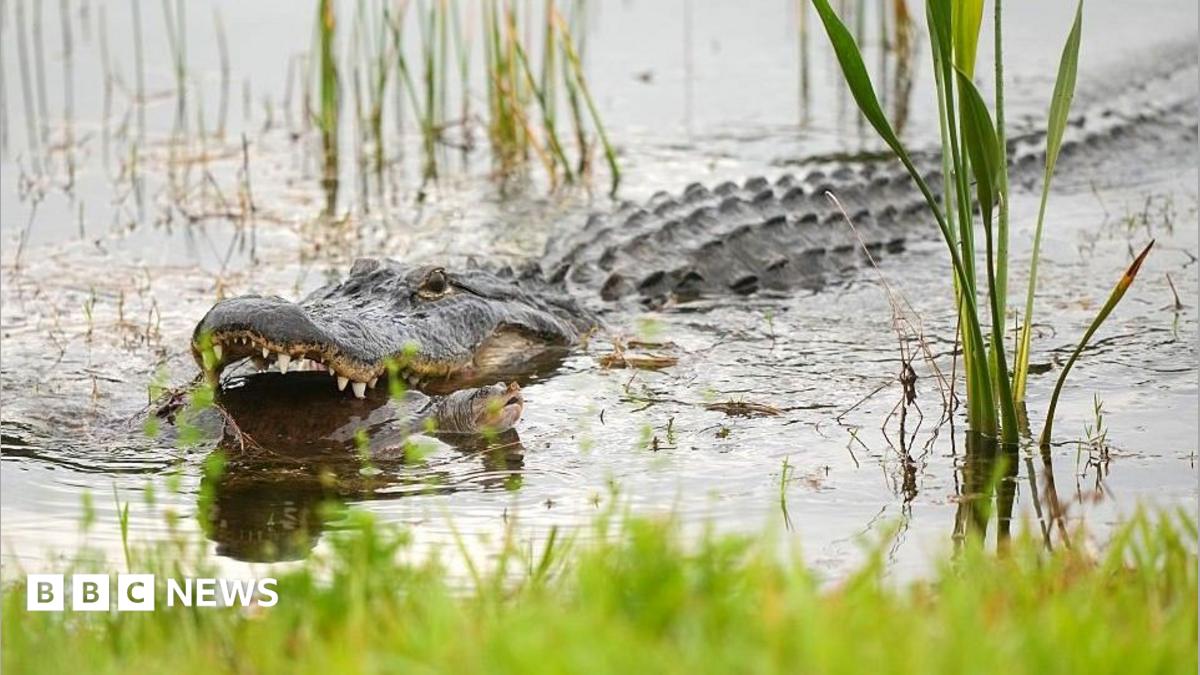
Alligator

U.S. cancels protections for imperiled animals as critics warn of extinctions

The U.S. Interior Department on Friday canceled a rule meant to protect plants and animals that are determined to be threatened with extinction, the latest step by the Trump administration to dismantle key provisions of the landmark Endangered Species Act at the behest of industry.

Instead of receiving automatic protections, imperiled species will need individualized protection plans once they are added to the threatened species list. That’s a potentially lengthy process in which companies could seek exemptions for oil and gas drilling, mining and other development where those species live.

Opponents said it would make it harder to save wildlife awaiting federal protections and in danger of disappearing, such as monarch butterflies and alligator snapping turtles.

Interior Secretary Doug Burgum said in a statement that the Endangered Species Act had been used for too long “to stop almost any new project in America, driving up costs for families, weakening our competitiveness, and undermining our national security.”

“Success should be measured by species recovery and delisting, not by adding more species to the list,” Burgum added.

A second change finalized Friday requires officials to analyze economic effects when deciding whether habitat is critical to a species’ survival. Critics say it gives corporations an opportunity to put their thumb on the scale so officials will allow development in those areas.

“If you’re exempting certain industries that cause habitat destruction, in many instances you’ll be exempting the main threat to those species,” said Noah Greenwald with the environmental group Center for Biological Diversity.

Officials made similar changes during Trump’s first term, but they were reversed under the Biden administration.

The rules that gave what some consider “blanket protections” to threatened species were first adopted for wildlife in 1975 and for plants in 1977.

Two groups, the Rocky Mountain Elk Foundation and the Property and Environment Research Center, sued the Biden administration in 2024 after officials restored the blanket protections rule. They argued the rule unfairly imposed the same restrictions on landowners when a species’ status improves from endangered, which is more dire, to threatened.

That removed incentives for landowners to participate in species recovery, said Jonathan Wood, vice president at the Montana-based research center.

Wood said the Trump administration’s approach allows officials to “better reward progress and encourage proactive conservation.”

There have been no species added to the endangered or threatened lists in Trump’s second term. By comparison, more than 20 species were added in Trump’s first term, and about 60 under President Biden.

About 30 species are currently proposed to be listed as threatened. Besides monarchs and alligator snapping turtles, they include California spotted owls and various snakes, fish, clams and insects.

Changes to government policies for endangered plants and wildlife have come faster and extended further in Trump’s second term than in his first.

The administration in March exempted oil and gas drilling in the Gulf of Mexico from the Endangered Species Act after Defense Secretary Pete Hegseth said environmentalists’ lawsuits threatened to hobble domestic energy supplies as the U.S. wages war against Iran.

A week before the latest rule change, Interior officials sharply narrowed the definition of what constitutes “harm” to a species. The change would allow development in critical wildlife habitat so long as the animals themselves are not immediately killed or injured.

Officials this week sharply reduced the amount of critical habitat in the Rocky Mountains designated for Canada lynx, forest-dwelling wildcats that are threatened by climate change and other pressures.

Also this week, Burgum said in a visit to Montana that the U.S. Fish and Wildlife Service would turn over more management authority for grizzly bears to states where the bruins live. That’s been a long-standing priority for the Republican governors of Wyoming, Idaho and Montana.

The Endangered Species Act is credited with bringing back animals including the California condor, the bald eagle and the American alligator from the brink of extinction.

Burgum noted Friday that 97% of the species that have been given protections still have them. That’s a frustration for Republican lawmakers who say species should be taken off the endangered and threatened lists more quickly once they’ve recovered.

Brown writes for the Associated Press.

Source link

Florida’s ‘Alligator Alcatraz’ detention center to close, governor says

The immigration detention center in the Florida swamps known as “Alligator Alcatraz” is closing after nearly a year, Gov. Ron DeSantis said Thursday.

DeSantis said the center was always supposed to be temporary and now federal officials have enough ability to handle detention and deportation in more permanent facilities.

“It served its purpose for the time,” the Republican governor said.

Officials announced a temporary closure of the facility earlier in June, saying hurricane season made it unsafe to keep the detainees in the Florida Everglades. All the of people kept at the isolated airstrip had been sent to other facilities.

Immigration advocates said the tents were never humane or safe to hold people. Detainees at the facility have talked about their difficulty accessing lawyers and have described poor physical conditions, including worms in the food, toilets that don’t flush, flooding floors with fecal waste, and mosquitoes and other insects everywhere.

The detention center was built by DeSantis’ administration in a matter of days in 2025, and President Trump came to visit site.

DeSantis and Trump said the detention center was critical to Republican efforts to return people in the country illegally back to their home countries. The Republican governor said 21,000 people were deported through the facility.

Collins writes for the Associated Press.

Source link

Florida’s ‘Alligator Alcatraz’ migrant detention centre to close | Donald Trump

NewsFeed

The US is set to shut down the federal migrant detention centre known as ‘Alligator Alcatraz,’ with detainees expected to be transferred by early June. It comes after allegations of abuse, including migrant disappearances, and restricted medical access.

Source link

Clavicular is charged in connection with alligator shooting

The internet’s most controversial looksmaxxer is in hot water again.

Clavicular, born Braden Eric Peters, has been charged in Florida’s Miami-Dade County in connection with a video that circulated on social media showing an alligator, which appeared to be dead already, being shot repeatedly in the Everglades. Two others are also facing charges in connection with the incident: Andrew Morales, 22, known online by the moniker “Cuban Tarzan,” and Yabdiel Anibal Cotto Torres, 26, who goes by “Baby Alien.”

Peters is facing a misdemeanor charge of unlawfully discharging a firearm in a public place, according to court records obtained by The Times. The Miami-Dade state attorney’s office filed the charges April 29.

Steven Kramer and Jeffrey Neiman, attorneys for Peters, told The Times in a text message, “Our client has been summoned to appear for a misdemeanor charge that stems from following the instructions of a licensed airboat guide. He relied on that guidance. No animals or people were harmed. We are confident that once the full picture is understood, people will see this for what it is.”

The shooting took place at the Everglades and Francis S. Taylor Wildlife Management Area boat ramp dock on or about March 26, court records said. The video shows the men aboard an airboat firing at the alligator more than a dozen times.

“Yeah, it’s definitely dead,” Peters is heard saying after firing.

Shortly after the video went live on social media, the Florida Fish and Wildlife Conservation Commission announced it had launched an investigation into the incident.

“Florida’s wildlife and waterways deserve respect, not content farming,” Lt. Gov. Jay Collins said March 26 on X. “Under my watch, anyone who abuses wildlife in Florida will be held accountable to the fullest extent of the law.”

Morales’ attorney Richard Cooper emailed The Times a statement Wednesday. “We urge the public not to rush to judgment. Importantly, there is no allegation that any animal was injured, and the available evidence does not support the sensationalized narrative that has circulated online,” the statement read. “My client relied on information and guidance provided by those in authority and had no criminal intent.”

An arraignment has been scheduled for May 20.

The face of “looksmaxxing,” a subculture hyperfocused on taking extreme measures to perfect one’s physical appearance, Peters has admitted in interviews that he uses appetite-supressing and performance-enhancing drugs, as well as recreational party drugs, and has said he chisels his face by smashing his bones with a hammer.

The same week Peters’ alligator video caught the authorities’ attention, the manosphere influencer was arrested on suspicion of misdemeanor battery. He was taken into custody on a warrant issued by the Osceola County Sheriff’s Office and released soon after on bond. Police allege that in February the 20-year-old internet celebrity instigated a fight between his girlfriend, Violet Lentz, 24, and a 19-year-old influencer at a Kissimmee, Fla., short-term rental. That incident was also live streamed to his hundreds of thousands of followers.

Then in April, Peters was live streaming from a Miami nightclub when he appeared to overdose on camera. In the video, Peters is seen taking a swig of an unknown substance and then subsequently starting to mumble, sway and close his eyes as the camera panned away.

TMZ obtained the audio from a 911 call alerting emergency services to the possible overdose of a 20-year-old man. Additional videos, taken by bystanders, showed Peters being carried out of the nightclub.

A source close to Peters told The Times that he was hospitalized for the overdose and checked himself out the following morning. Within hours of his release from the hospital, he was back on streaming platform Kick and telling his followers he would be out at a nightclub that night to promote its grand opening.

Source link