A SMALL station in Manchester that first opened in the 1800s has been crowned the best in the country at the ‘World Cup of Stations’.
It has trackside seating, an Airbnb upstairsand beat 150 stations across the country for the title.
Irlam Station has been crowned the ‘World Cup of Stations’Credit: AlamyThe station house was restored in 2015 after being closed for many yearsCredit: Alamy
‘The World Cup Of Stations’ was launched in honour of 200 years of railways in Britain and brings attention to the stories behind the stations and how much they’ve changed and brought communities together.
This year there was 150 nominations from across the country, but Irlam in Salford took the title with 4786 votes.
Sign up for the Travel newsletter
Thank you!
Irlam Station first opened in 1873 and was used for many years although its station building fell into disrepair in the 1980s.
The station itself remained opened to passengers and now sees as many as 350,000 passengers each year.
11 years ago, the station house was restored as part of a £2million project and reopened in March 2015.
It’s much more than a simple station now, as inside is a railway-themed café-bar with train carriage booths.
The 142-year-old signal box has been restored and reopened.
There’s a heritage hub too which has railway artefacts including formerly used locomotives.
In The Station garden is an homage to Harry Potter‘s Platform 9 and three quarters, as well as James the Tank Engine.
Also outside in the Station Art Park are 3D sculptures which ‘reflect the area’s history‘ including a seating area and Hobbit-style cottage.
The Signal Box has been restored and is used as an afternoon tea venueCredit: Alamy
Back inside the station house is Irlam Café Bar which serves up breakfast, main meals from burgers to toasted sandwiches, salads and even Sunday roasts.
Afternoon tea can be booked from £18.95 and train enthusiasts will love that you can enjoy this in the Signal Box.
It’s also a bar so there are plenty of drinks to try too and seats outside for trainspotting.
Above the train station is an Airbnb – the apartment can sleep up to four people across two bedrooms and guests enter through the Station Master’s Door.
There’s a two bedroom Airbnb on the top floor of the Station HouseCredit: Airbnb The gardens pay homage to the likes of Platform nine and three quartersCredit: Airbnb
One guest wrote in their review: “The apartment is located in a train station which makes this very special place.”
Another called it a “unique space perfect for train enthusiasts.”
A three-night stay for four in November can be booked for £404 – or £33.67pppn.
Tricia Williams, Managing Director of Northern, said: “The station has a unique charm and is well worth a visit. You can enjoy a meal in the café, take a tour of the gardens to see some amazing 3D artwork and visit the heritage hub.”
The other final four stations in the running were Cardoss in Argyll & Bute, Brookwood in Surrey, Yatton in Somerset and Berney Arms in Norfolk.
WHETHER you fancy a bit of R&R or want to head off an exciting adventure, if you’re looking for your next girls’ trip then you needn’t look further than this.
There are tonnes of cheap trips out there, offering everything from relaxing staycations to big party weekenders – and costing from as little as £29 per person per night.
Whether you want a party weekend with the girls or a relaxing trip to unwind, there are plenty of affordable optionsCredit: AlamyThere’s a load of girly weekend trips you can go on from cruises to staycationsCredit: Alamy
So round up a group of friends, set up a holiday Whasapp group and here are 20 of the best girly weekends away to book now…
Away Resorts weekenders
Away Resorts hosts a number of different themed weekenders across the year, with performances, food and of course, lots of music.
New for 2027, Tattershall Lakes Away Resorts will have a Y2K weekender with pop, R&B and dance.
Book onto a three or four-night escape and you will get to experience the live acts, DJs and performances based around the 90s and 00s.
Love a bit of nostalgia? Well, book onto a Parkdean Resort Celebrity Weekend where you’ll get themed entertainment, food and drink, tribute acts and loads of activities.
Different weekends include a ’90s vs ’00s weekender, a Parkdean-exclusive Hitman Weekender and an 80s throwback weekend.
The weekenders also have different events as well, including silent discos, bingo GaGa, and fancy dress.
You might spot a celebrity too, as there will be appearances from the likes of Kerry Katona, Liberty X and East 17.
Butlins isn’t just for kids – the three Butlins resorts also host adult-only weekenders.
There are multiple Butlins Big Weekenders to choose from including Decade Weekenders with music from the ’60s, ’70s, ’80s, ’90s and ’00s.
There’s then also Dance Weekenders including trance, house, D&B, jungle, garage and techno.
And last but not least, Devoted Weekenders with themes including Giants of Country, Giants of Roc, k and Giants of Pop.
Prices vary depending on when you book for, which resort and which weekender you choose, but usually start from £59 per person.
Tribute Party Breaks
Is there a performer you really love but never got the chance to see? Then make sure to book on to a Tribute Party Break with UKBreakaways.
Weekend getaways include top tribute stars celebrating the likes of Robbie Williams, Elvis Presley, Phil Collins, Lionel Richie, Cher, Dolly Parton, and Elton John.
And what makes them even better is that they take place in destinations across the UK including Scarborough, Blackpool, Torquay, and Southport.
Each break includes hotel accommodation with breakfast and dinner options and costs from just £59.95 per person.
PottersWeekend Breaks
Potters hosts a number of adult-only weekend breaks across the UK.
Each two or three-night Weekend Break is fully inclusive, and guests get to choose between two five-star resorts in the Essex countryside and on the Norfolk coast.
You’ll get crafts, activities and leisure facilities all included in the price you pay, as well as West End-quality entertainment every night.
Best Western has put together loads of unique ‘GEM packages’, which include not just your hotel stay but also food, drinks, activities and attractions.
These value-packed package deals bundle everything from private hot tubs with free-flowing Prosecco to psychic readings into one price.
There’s all sorts of different packages available including a wellness break at The Kings Arms, WorldHotels Distinctive with breakfast and an hour Saltwater Sauna session on Avon Beach, or a yoga class at Maya & Moon for as little as £140.80 for two people.
Alternatively, you could book an ’80s Party Night! at the Best Western The Hatfield Hotel from £109.35 for two people.
Party Airbnb
Hotel room not big enough for your group? Then book an ENTIRE Airbnb property with its own bowling alley and cinema room.
For example, there is a huge Grade II listed detached house in St Leonards-On-Sea with a bowling alley, arcade games, a lounge area, and a cocktail bar.
There’s also a shuffleboard table, basketball hoops, and a cocktail bar for guests to use.
There is a minimum stay of two nights with prices starting from around £1,640 for 11 guests – which is equal to around £74.55 per person per night.
If that still sounds like a lot though, Airbnb still has plenty of other options…
If there is a huge group of you (23 people), then opt for The Pictureworks Barn in Long Sutton, Somerset, which costs from £2,001 for three nights – which is just £29pp per night.
The barn has plenty to do as well including a hot tub, steam room & sauna, a pool table, table football, table tennis and croquet, pétanque & lawn games.
Spa breaks
Heading to the spa is the ultimate way to relax so why not book yourself onto a spa break?
For example, you could head away for one-ight at East Sussex National Golf Resort and Spa with a 20-minute spa treatment and three-course meal per person for £155.
Want to spend even less? You could stay at Mercure Norton Grange Hotel and Spa for a night with a meal and access to the spa (after 3pm) included for just £61.50 per person.
Music breaks
If you love music or even a specific decade of music, there are dedicated breaks out there celebrating everything from soulful song to rock classics.
Cosy cabins are another great option for a calming staycationCredit: Graeme RichardsonThere are companies that also run coach trips from all over the UKCredit: Alamy
Cosy cabins
Autumn is well and truly settling in in the UK and, of course, being cosy is now more important than ever.
So why not make the most of crisp orange leaves by checking into a cosy cabin?
You could stay in a converted railway carriage at Llanthony Castaway Glamping in the Brecon Beacons.
It is the ultimate break away from the modern world, with no Wi-Fi.
Instead, you will just get views of rolling hills through a side of the carriage that is completely made out of glass.
If you are looking for something a bit different, then book into a pub – and have the entire place to yourself.
Ideal for bigger groups of people, you could book into the Plas Dolguog in Powys, Wales.
The 16th- century pub sleeps up to 21 people across 10 bedrooms and has views of Snowdonia.
You and your guests can pull your own pints and have coffee in the conservatory in the mornings.
It costs from £2,570 per week, which works out at just £17.49pp a night based on a seven-night stay.
Mystery coach trip weekend
Coach tours aren’t just for the older generations; they take the stress out of travel as you hop onboard and away you go.
And with Just Go! Holidays you can book onto mystery weekend coach trips that could see you heading to a seaside resort or even a Christmas market.
What makes it even better is that there are 400 pick up points across the country.
For £99 per person, you will get an overnight stay at a hotel with dinner and breakfast (both buffet style), and two visits to mystery spots.
Or you could go glamping, and enjoy the great outdoors while catching up with old friendsCredit: Drummohr CampsiteThere are theatre packages too where you can see a West End production and stay overnight in a nearby hotelCredit: Getty
Theatre breaks
If you love seeing a West End show then book onto a theatre break.
With Great Little Breaks, you could stay at the President Hotel near Russell Square in London and head to watch The Devil Wears Prada The Musical in the West End.
Glamping can be a great and fun way to spend time with friends and fortunately, the UK isn’t short of glamping sites.
For example, Bradshaw Farm between the villages of Stapleton and Dadlington, has a number of bell tents costing from as little as £22 per night for two people.
If you prefer something a little more solid though, you could book into Exe Valley Safari Tents for a weekend.
Each tent looks out across a meadow which is ideal for stargazing and sleeps up to six people for £114 per night (or £19 per person, per night).
Loveholidays
Did you know that Loveholidays actually arranges the ideal weekend getaways?
For example, a girls’ trip to the Canary Islands in Spaincosts from as little as £169 per person, including a stay at the two-star Catalina Park.
Set in the heart of Las Palmas, the hotel is just steps from the beach and also has a number of restaurants, shops, and bars on its doorstep.
With Loveholidays, you could head abroad to a Spanish resort for a few daysCredit: AlamyCity breaks are another option costing as little as £75ppCredit: Alamy
City break
A city break doesn’t have to be expensive – in fact, often it will cost you the same as a day out in the UK.
For example, you could head to Fez in Morocco and stay at Riad Meski for two nights, with return flights from London Luton Airport for just £75 per person.
The Riad even has a rooftop terrace with views across the city and a lounge area.
Or perhaps you want to explore more of Italy? Well then, book onto a trip to Verona in November, flying from London Stansted Airport and staying at the Maxim for two nights for just £80 per person.
Cruise
You might think cruises are expensive, but there are actually quite a few out there that can be done on a budget.
You could venture on an Ambassador Cruise on May 28, 2027, for two nights from Portsmouth to Newcastle for just £116 per person.
Or head to Europe on a two-night ‘Christmas Markets of Belgium’ cruise from London Tilbury, stopping at Zeebrugge (Bruges) from £185 per person.
For the ultimate spa trip, through Wowcher you could head to Therme BucharestCredit: AlamyFlights and accommodation would be included from £109 per personCredit: Alamy
Therme Bucharest spa weekend
With Wowcher, there’s a package trip to Therme Bucharest in Romania with return flights for as little as £109 per person.
You’d stay at either the Rin Central Hotel or Berthelot, both in the heart of the city.
For the price, return flights, two nights’ accommodation, daily breakfast, skip-the-line entry, and three hours’ access to the Galaxy + The Palm area at Therme Bucuresti would all be included.
And flights are available from six UK airports including London Stansted Airport, London Luton Airport, Manchester, Birmingham, Bristol, and Edinburgh.
IF the average holiday home isn’t quite cutting it with the kids, you’ll love these ones.
With whole role-play villages, ziplines and even ballpit rooms, these are the five best family-friendly Airbnbs in the UK.
Imagine at High Parks
Imagine at High Parks sleeps up to six and has a huge play village for kids insideCredit: Air BNBImaginations can run wild at the village shop, tearoom and stables with a rocking horseCredit: Air BNB
This pretty farmhouse might look like your average Airbnb – but inside, it has a secret wing that’s dedicated to children’s play.
It’s a paradise and will definitely inspire play as inside you’ll find a tearoom with an oven, cups and mugs and even a stable with a rocking horse.
The village shop has a real-life counter with a cash machine and around the corner is a cinema.
There’s also a hotel that is actually where the children’s rooms are and each is kitted out with single beds and made to feel cosy.
Outside there’s even more for kids to enjoy as there’s a huge wooden climbing frame with a basket swing, see-saw, toddler swing and slide.
The climbing fort is set amongst a huge garden so there’s plenty of room to run around too.
One visitor wrote: “I stayed with my two children aged 8 and 5, they were so excited when we arrived and said it was the best holiday house ever.”
As for the rest of the property, it can sleep up to six guests.
It has a light and airy living room with high ceilings, and wooden beams across the ceiling.
There’s also a modern kitchen with a dining area, the master bedroom is on a mezzanine level.
Three of the bedrooms have a single bed, two of which have views across the garden, and bedroom five has a cot.
Surrounding the house is a patio area, a great spot to sit and enjoy the views in the summertime.
Inside this farmhouse is a huge play room with a climbing frame and foosballCredit: AirbnbThere’s even a heated indoor swimming pool and outdoor playpark tooCredit: Airbnb
Tredethick Farm Cottages is in the top 10 per cent of homes on Airbnb and is a particular hit with families.
Inside, kids and teenagers will enjoy playing in the games barn which has a pool table, table tennis table, indoor slide and sand pit – the home even has an heated indoor swimming pool.
When the weather plays ball, children can enjoy the outdoor playpark and balance bike track.
As it’s on a working farm, there are morning animal feeding sessions held at least three times per week with the goats, pigs, chickens and guinea pigs.
In the summertime, guests can book pony experiences.
There’s also a heated indoor swimming pool for splashing about and a private garden for playing in.
Meanwhile, adults can take advantage of the hot tub and relaxing in front of the fireplace in the living area.
The home sleeps up to four guests in its two bedrooms, one with a king- size bed, the other with two singles.
A four-night stay in April 2027 for a family of four starts from £1,000 – or £62.50pppn.
Fun City Stay, Essex
You’d never expect this Airbnb in Essex to be a fun houseCredit: AlamyKids will love the soft play room that has its own ballpitCredit: Air BNB
Just outside of Colchester in Essex is this beautiful Grade-II home which looks like it should be a cosy retreat, and it is – but there are lots of surprises inside too.
Along with its open kitchen-diner, large living room and Disney-themed bedrooms is a play room called Narnia.
Not only is it a soft play, but it has a huge ball pit that children will love.
One visitor wrote in their review: “The soft play was a huge hit with the children and kept them entertained for hours!”
Another added: “We had a fantastic stay here for a family getaway! Everything was perfect. The soft play room was amazing for the children.”
In the kitchen is a seven-foot table that can transform into a pool and table tennis table.
In total, the home can sleep up to nine guests across its four bedrooms inspired by Disney’s Madagascar, Pirates of the Caribbean, The Jungle Book and Aladdin.
The Narnia room is available to book at an additional cost, as is the hot tub.
Country cottage and treehouse, Salisbury
The pretty cottage outside of Salisbury has its own hot tub and treehouseCredit: Air BNBFrom the treehouse, the whole family can check out the 100-foot zip lineCredit: AirBNB
This beautiful countryside cottage is tucked away in a private 80-acre woodland near Salisbury.
Next to the pretty Airbnb is where the kids are likely to spend most of their time – up in the treehouse.
Once up there the whole family can take it in turns zooming through the woodland on the 100-foot zipline.
It’s definitely a hit with previous visitors, one said: “So much space for the children to run around in, an incredible tree house with zip wire (just as much fun for the adults).”
Another added: “The kids were in their element with the zip line, treehouse, and lake-endless adventures right on the doorstep.
“It felt like a little paradise for them, and gave us all such a chance to properly switch off and enjoy time together.”
The home is nestled in a private 80-acre woodland near a secluded lake. Enjoy tranquil trekking trails, or relax by the secluded lake.
The country cottage has a kitchen, living room, bedroom and bathroom downstairs – the further two bedrooms are upstairs.
While the kids are enjoying the activities, parents can soak in the wood-fired Dutch tub.
On arrival there’s complimentary tea, coffee, sugar, 1 litre of organic milk, locally produced apple juice, cornflakes, oats and cereal from the hosts.
The home can sleep up to six guests across its three bedrooms.
The base price is based on a two person occupancy – it then increases by £40pppn (there is no charge for infants).
There’s an offer of 20 per cent off on weekly stays and 40 per cent off on monthly stays.
Halula’s House of Fun has its own ballpit room with a slideCredit: Air BNBOutside it has a climbing frame and trampolineCredit: Airbnb
For the ultimate family and friends holiday, the Halula’s House of Fun has it all.
It can sleep up to 21 guests – it also has a swimming pool, swim up bar, hot tub, indoor slide and ballpit and children’s play area.
The whole house will be like a play park for the kids thanks to its bright decor and plenty to do. One of the rooms has a rainbow slide that goes straight into the ballpit.
Kids will also love the huge movie room with snug sofas and projector screen.
Outside, there’s a climbing frame, playhouse, trampoline and play cars.
Between April and October, the outdoor swimming pool is open for business too.
All six bedrooms have their own theme – and there’s even a cosy book nook for bedtime stories.
It’s not just kids that will love this house, it’s possible parents might enjoy it even more, it has a pool house, bar and hot tub.
The home sleeps up to 21 guests across seven bedrooms
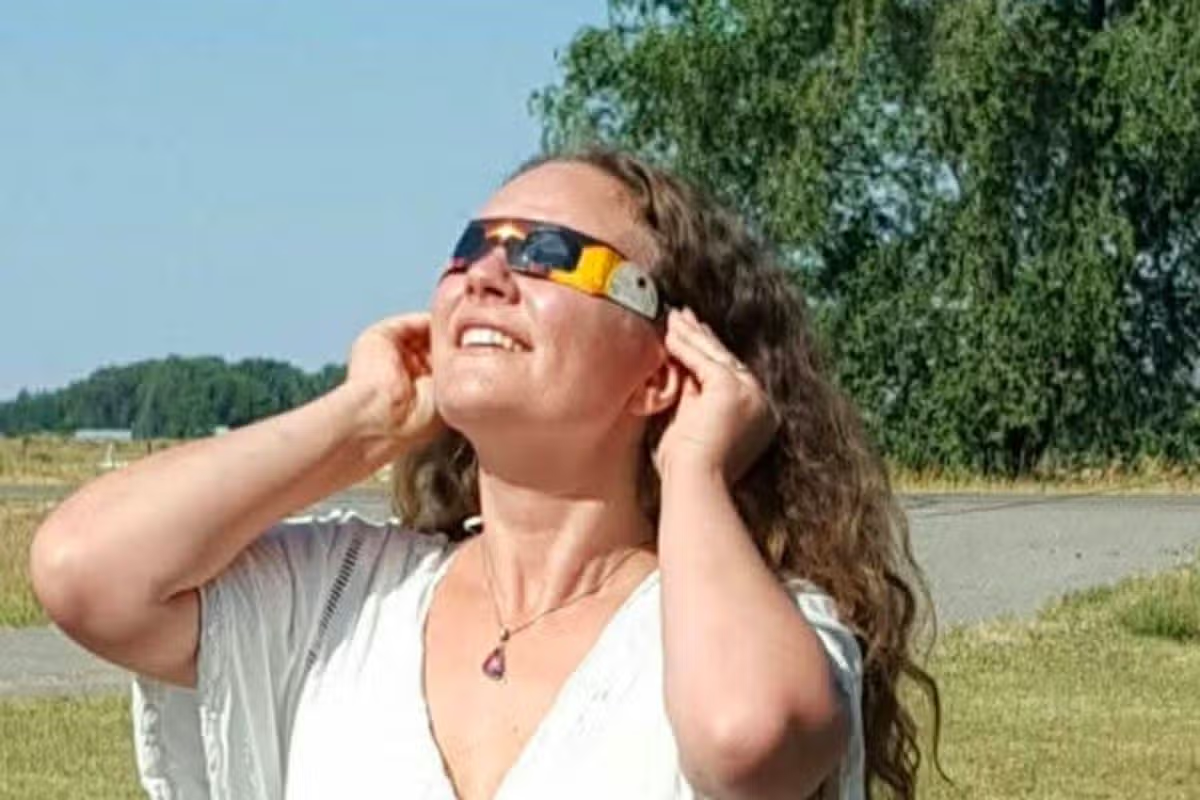
Sara Baeur, a chocolatier from Montana, USA, booked a place to stay in Northern Morocco for next year’s total solar eclipse, only to be contacted by the host who had an unwelcome message for her
Sara Bauer booked a place in Morocco for August next year(Image: Supplied)
A family was told they’d be locked out of a rental home if they turned up, despite paying £3,400 for the property.
Solar eclipse enthusiast Sara Bauer booked a place to stay in the Moroccan resort of Marwan for the first week of August 2027, desperate to see the astrological phenomenon from the best possible spot. The northern seaside town is a perfect place to catch the eclipse, which includes an incredible eight minutes of totality – about three times longer than this summer’s.
The Montana woman booked the beachfront property and started looking forward to what’s been dubbed ‘the eclipse of the century’. However, she claims she became alarmed after receiving a message from the host, demanding that she cancel the booking. If she didn’t, she was told her family would be locked out of the home, she alleges.
After Sara gave in and cancelled the booking, she saw the same property relisted for six times the price, she claims.
Do you have a story to share? Email webtravel@reachplc.com
After she was first contacted by the host, the chocolatier, who runs Chocolate Eclipse, told the Mirror: “The host of my Airbnb in Morocco is demanding that I cancel my reservation. He says he will be penalised badly if he cancels it. He said he’s selling the place before next year and didn’t realise at first that I had booked so far out. He says he will be penalised if he does the cancellation, but will if I refuse to cancel.”
Sara added: “He had said I wouldn’t have access even if I didn’t cancel.”
Concerned that she’d fly all the way to Morocco to find a locked house, Sara “caved” and accepted the cancellation request. The host told her that the property was being removed from the rental market for renovations. However, Sara later found the same property listed for the same week for £20,400 – six times more than she paid.
After being contacted by the Mirror, Airbnb deactivated the listing and penalised the host. An Airbnb spokesperson said: “Issues of this nature are rare, and where we determine misuse of our cancellation policy, hosts not only lose the income from the booking, but face consequences we apply, including fees of up to 50% of the booking cost, a block on rebooking their listing for the same dates, impact on search ranking and where warranted, suspension or deactivation of the account. Our initial handling of this report fell short of the standards we expect, and feedback will be provided to the agents. We have deactivated the listing, and have applied the relevant penalties in line with our policies on host cancellation. The guest has been offered rebooking support and a coupon as a gesture of goodwill, which has been positively received.”
Hosts who cancel Airbnb stays without a legitimate reason face a 50% fee on the reservation cost, calendar blocks that prevent them from accepting reservations during the affected dates, and potential consequences for their Superhost status and listing search ranking. Airbnb says cancellation rates have dropped 30% year over year since more deterrents were introduced in July 2023.
The huge demand for places to stay along the path of totality during next year’s solar eclipse has driven prices up sharply. Some property owners have resorted to canceling reservations in a bid to make hay while the sun shines.
Airbnb (ABNB) is expanding access to OpenAI’s (OPENAI) frontier models, including GPT-6 Astra, for its engineering and product development teams under a new agreement, the companies said on Wednesday.
The expansion builds on Airbnb’s use of OpenAI’s (OPENAI) Codex
When the weather hots up, wild swimming is sure to cool you down – and is completely free to enjoy. Mum of two Hannah Britt shares her top tips for having a splashing good time, and staying safe
22:31, 22 Sep 2026Updated 22:34, 22 Sep 2026
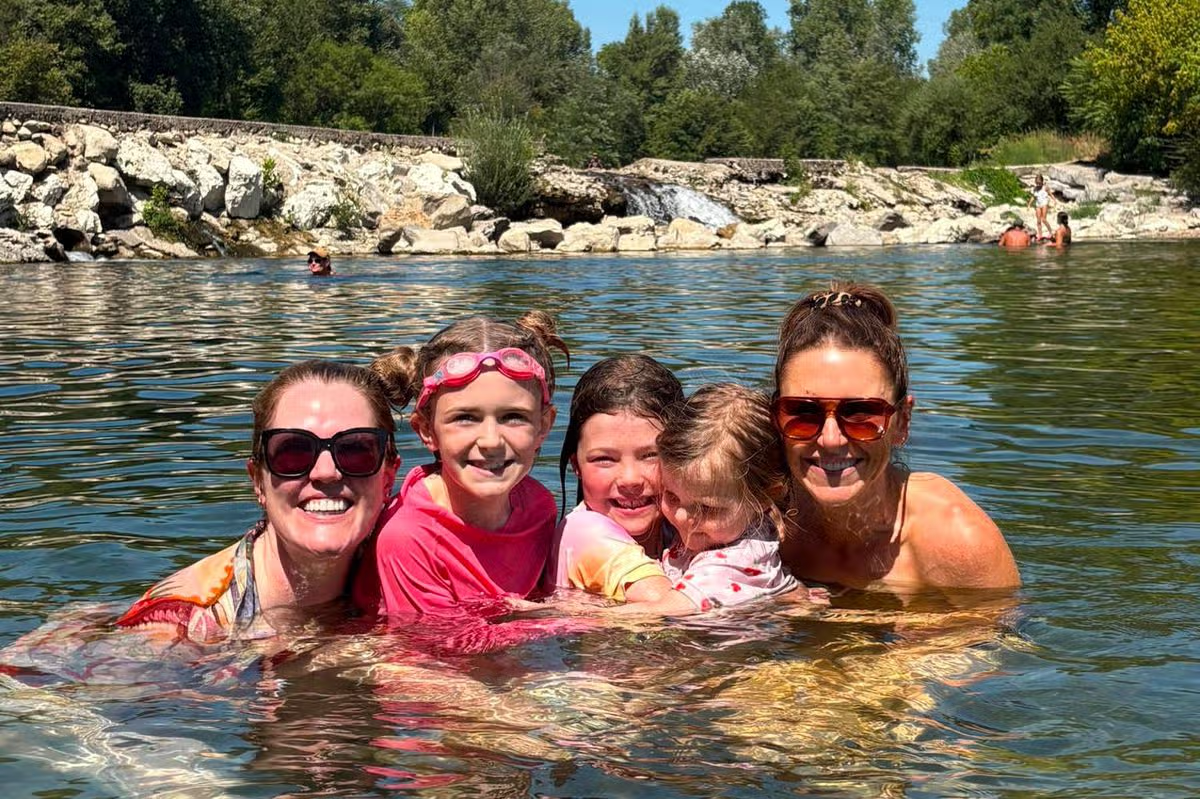
You can swim under an old mill at Moulin du Roc Tombe, located in the Gard region of France
When the weather reaches boiling point, there’s not many outdoor activities that appeal. So when I tell you that our family of four spent most of our time waist deep in a river, it is no lie. And I’m here to tell you that its easier than you think to get the whole family involved.
The location
For us, France is unbeatable for wild swimming. It offers an abundance of clean, warm, and legally accessible natural waterways, lakes, and gorges. France has thousands of miles of pristine rivers and over 1,300 official inland river bathing sites, supported by major mountain ranges like the Alps, Pyrenees, and the Jura that feed crystal-clear water year-round. You can even bathe in some parts of the Seine in Paris. In short, almost anywhere you go, you’ll find a place to dip.
The kit
You truly don’t need much to become a wild swimmer apart from a car (more on this later), swimwear, SPF, microfibre towels, a picnic blanket and une baguette. If you’re feeling professional, water shoes are a coup too, as many river beaches are stony. But if I were to recommend one thing, it would be the Wild Swimming France book. With over 1000 recommended and proven safe swim spots all around the country, it’s the Bible of wild swimming, as you guessed it, in France.
Where we stayed
The perfect place to stay when you want to indulge in a week or so of wild swimming is somewhere, er, wild. And this is because, by staying somewhere in the middle of nowhere, you are encouraged to venture out to explore what is nearby.
This summer, we chose a stone farmhouse in Saint-Saveur-de-Cruzieres on Airbnb, which was perfectly located nearby some amazing swimming spots. The 5-hectare estate is split into two separate living areas – a large house with three four bedrooms and a master kitchen, and a smaller house with one bedroom upstairs and a kitchen diner downstairs. To the rear, a stunning swimming pool enjoyed views upon views upon views of the fields and hills beyond the grounds. The jewel in its crown was indeed the location. Peaceful, idyllic… it was hard to tear ourselves away.
But when we did, to be found close by was a whole host of wild swims. Wild swimming at the Pont du Gard lets you bathe in the clear, cool waters of the Gardon River directly beneath a 2,000-year-old Roman aqueduct. Guinguette La Frigoulette is a family-run riverside restaurant operating since 1969 located in Saint-André-de-Roquepertuis within the scenic Gorges de la Cèze and serves as the perfect casual base for a day of wild swimming along the Cèze River.
Also a restaurant-come-swim-spot, Moulin du Roc Tombe (often referred to as Le Roc Tombe) is a scenic river wild swimming spot positioned on the Cèze river near Saint-Ambroix. Local canoeing routes on the Cèze often stop here for a swim near the old mill. Finally, wild swimming at Vallon Pont d’Arc in the Ardèche region centres around the magnificent 34-meter-high natural limestone arch of the Pont d’Arc, offering crystal-clear, refreshing emerald water sandy river beaches, and plenty of rocks to jump from.
Getting around
To get truly wild, you need a car. So we hired one for our week in France with Sixt. We chose a BMW X5, with a boot big enough to hold our wild swimming gear, and to climb inside when there was nowhere else to change.
A 4×4, it was able to handle rough terrain, which we encountered on occasion heading down dirt tracks and into makeshift car parks at some of the more remote wild swimming locations. The advisers at Sixt were more than happy to help when we told them what we needed, and our “Beema” became the fifth family member while in France.
Stay safe
Record breaking lake swimmer Neil Gilson shares his advice for safe swimming:
*Before every swim, assess the water temperature, weather, wind, currents and the conditions across the route. Only swim when they advise that it is safe to do so.
Never underestimate open water. Even on a hot day, the water can be dangerously cold and conditions can change very quickly.
Always swim with others, choose a safe location, and never take unnecessary risks.
*To find a home from home in France, see Airbnb; for car hire, see Sixt