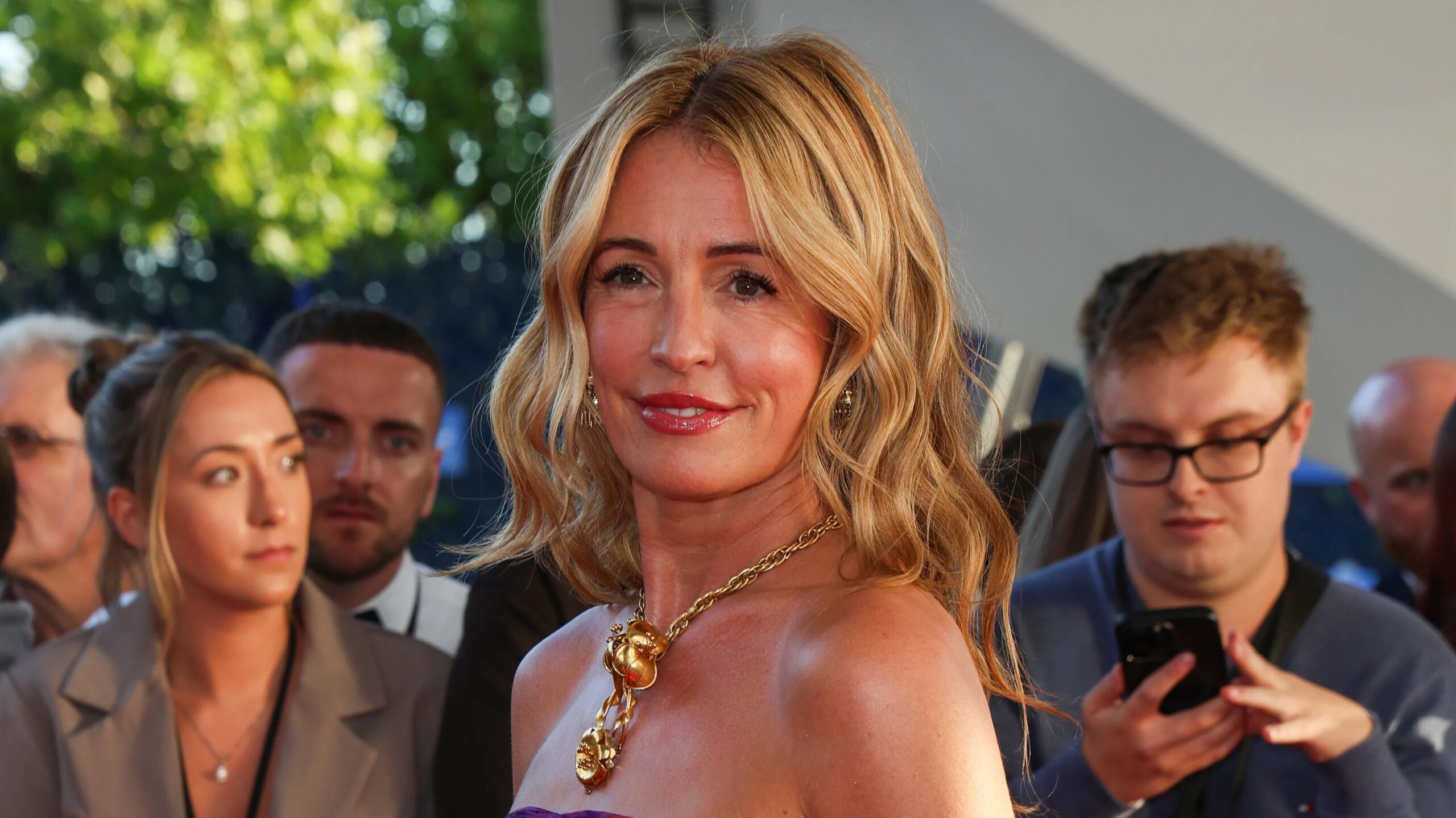
Cat Deeley’s shock response to Patrick Kielty’s new romance revealed by pals as pair bury 12-year marriage for new lives

TWO years ago, Cat Deeley was in a very different place to where she is now.
The TV presenter, 49, who had replaced Holly Willoughby on This Morning in March, was grappling with a punishing work schedule, the pressure to save the ITV show from its tarnished reputation and a marriage faltering under the pressure of two “tricky” work schedules.
In the three month period she became tearful three times on screen, and appeared at times “visibly overwhelmed.”
And speaking five months after stepping into her new hosting role, she admitted the scrutiny she was under had “shocked her.”
However, the popular star has rebuilt her life after her divorce from Patrick Kielty, 55, with a second National Television Award under her belt with This Morning, a series of lucrative commercial deals and new man Charlie Coleman, who she hopes to spend Christmas with.
And friends of the star this week told how ex Patrick’s new relationship with businesswoman Michelle McManus – the pair were seen cosying up at a North London boozer – is the icing on the cake – saying she told them: “She seems nice, and she is doing me a favour, he’s a better person when he’s happy.”
One said: “Cat’s attitude is: ‘Good luck to them. At the end of the day, that’s the whole point of separating in the first place.’
“She is genuinely happy for him, and knows it’s good for them that he’s happy and positive.
“Cat herself is in a great place and that’s where she wants to stay.
“She and Charlie are getting on really well and are already talking about spending this Christmas together, though they will have to work out the practicalities as she and Paddy share the childcare arrangements 50/50.”
Former So You Think You Can Dance? host Cat – who swapped her $5 million family home in Beverly Hills for a £4.9 million five-bedroom house in Hampstead in 2020 – joined This Morning during a period of extreme turbulence.
Former host Phillip Schofield had quit ITV in May after an “unwise but not illegal” affair with a younger co-worker was revealed.
Holly, who appeared on This Morning for 14 years prior to her exit, stepped back from the spotlight in October, following stalker Gavin Plumb’s terrifying plot to kidnap, rape and murder the TV star being uncovered.
Plumb was jailed for life in July following an eight-day trial.
Against this challenging backdrop, Cat and Ben Shephard, 51, took the reins of the popular daytime show.
Sources told how the pair appealed to bosses as a “safe pair of hands” who could steer them out of a crisis.
But even her early interviews showed signs she feared wading in too deep, as she said: “If it gets too much for me, I’m going to quit. I don’t need to do it – I could be a mum for most of the year and go and do the shows in America.”
And in one interview she opened up about juggling work and motherhood: “I do the juggle – the juggle is real, the struggle is real. You know, we know, we’re all just trying to make everything work. It’s all a juggle.”
Cat shares two sons, Milo and James, with ex husband Patrick – who she was married to for almost 13 years before they announced their split in July 2025.
But sources say the fault lines had appeared in late 2023, when the pair were struggling to balance their schedules.
Patrick – the host of RTE‘s The Late Late Show in Ireland – commuted to film the show in Dublin, while Cat’s So You Think You Can Dance? schedule had also created issues, requiring her to jet back to the US for long stretches.
Her move back to UK television was supposed to lessen the pressure on the duo – one of TV’s power couples.
But fans noticed that the star appeared increasingly emotional on the This Morning set.
In March 2024, just days after she joined as host, Cat burst into tears backstage upon meeting Buddy, an autism assistant puppy introduced to the studio.
She explained to viewers that meeting Buddy triggered her grief over losing her family dog, Lilly, the previous summer.
Weeks later in April, while introducing guest Kerry Irving – whose late springer spaniel Max had helped him overcome depression – Cat broke down in tears and had to ask co-host Ben to take over reading her lines.
And two months later Cat fought back tears during an interview with the family of William Reckless, eight, who had to have both of his legs and nine fingers amputated due to a severe battle with sepsis and scarlet fever.
Her 48th birthday broadcast in October also caused the presenter to break down in tears, after she was surprised by a recorded message from British poet Pam Ayres – who she said had inspired her as a child.
But 2025 seemed to bring a more positive standpoint – and a bombshell, as Cat and Patrick announced their divorce in July.
Both were keen to insist that they remained amicable, and stressed that no third parties were involved in their decision to split.
They also made clear their intention to share the parenting of their children, Milo, 10, and James, eight.
A few months later, September brought an incredible boost for the star – when This Morning won the National TV Award for Daytime, after the repeated scandals engulfing the programme had seen it lose the title in 2023 and 2024.
After the cast and crew were seen going wild in the audience, Cat said on stage: “We are so lucky to get to do this show, we all love it.
“Every single person who comes on, we love this show and it’s like having a family.”
Sources told how the award was “a shot in the arm” for the entire team behind the show – appearing to signal they were back on track.
And in the months to follow, Cat was to build up a relationship with Amazon MGM exec Charlie Coleman – who she was spotted with at a Hyde Park Lewis Capaldi gig in July.
Two months later, she spoke out about how she was thriving as a single mum – saying it was about being “as organised as you can be.”
She also admitted she had an “amazing nanny” to keep their lives on track around her busy schedule.
And she added: “Everybody is doing their best.”
In the same month Paddy – who has signed a new deal with The Late Late Show which will see him host until 2028 – said he was “pretty good” adding that the divorce was “part of the tapestry of life.”
And now, with him also moved on with new love Michelle, it seems another piece of the tapestry is complete.