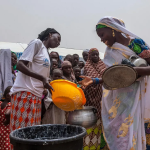

A large number of Nigerian refugees living in the Minawao camp in Cameroon’s Far North region have shown a willingness to return to Nigeria after being away for several years. The camp, which has been in operation since 2014, currently houses over 70,000 refugees. Many of these individuals feel that the circumstances have improved enough for them to go back to their hometowns.
The refugees expressed their plan to return home on Sunday, Dec. 7, during a visit by the Governor of Borno State, Babagana Umara Zulum. During the visit, Zulum stated that his purpose was to listen to his fellow citizens’ concerns and to share information about the measures the government has implemented to support their return.
He disclosed to journalists that any family willing to return to Nigeria voluntarily will receive ₦500,000, while single people, regardless of gender, will receive ₦100,000 each to support their reintegration.
For Nigerian refugees who choose to remain in the Minawao camp, the governor has committed to enhancing their living conditions while honouring their voluntary decision.
Established during the security crisis caused by the Boko Haram terrorism, the Minawao camp was initially designed to accommodate 20,000 people. However, more than ten years later, the camp’s population has quadrupled, placing significant strain on its infrastructure and humanitarian services.
The return of the Nigerian refugees is within the context of the tripartite accord signed in March 2017 by Cameroon, Nigeria, and the United Nations High Commissioner for Refugees (UNHCR), which guarantees voluntary, safe, and dignified repatriation in conformity with international standards.
Many Nigerian refugees in Cameroon’s Minawao camp are considering returning to Nigeria after years away. Governor Babagana Umara Zulum of Borno State visited the camp to understand their concerns and discuss government support for their return. Families willing to go back will receive ₦500,000, and single individuals ₦100,000, to aid their reintegration.
The camp, which started with a capacity for 20,000 due to a Boko Haram-triggered crisis, now houses over 70,000. The refugees’ return aligns with a 2017 tripartite agreement guaranteeing safe and voluntary repatriation per international standards. Those opting to stay will see improved living conditions.