Refugees

‘Sent to be killed’: How Russia forces migrants to fight in Ukraine | Russia-Ukraine war News

Kharkiv, Ukraine – Hushruzjon Salohidinov, 26, was working as a courier in Saint Petersburg, Russia’s second-largest city and President Vladimir Putin’s hometown.

But last year, the Tajik man and practising Muslim says he was arrested while picking up a parcel which police claimed contained money stolen from elderly women.

Salohidinov says he never interacted with the alleged criminals, but nevertheless spent nine months in the Kresty-2 pre-trial detention centre about 32km (20 miles) from the city, while a judge refused to start his trial because of the “weak evidence” against him.

But instead of releasing him after that, prison wardens threatened to place him in a cell with HIV-infected inmates who, they said, would gang-rape him – unless he “volunteered” to fight in Ukraine.

“They said, ‘Oh, you’ll put on a skirt now, you’ll be raped,’” Salohidinov, who has raven black hair and a messy full beard, told Al Jazeera at a centre for war prisoners in northeastern Ukraine, where he is now being held, having been captured in January this year by Ukrainian forces.

Using a carrot-and-stick tactic, the wardens also promised him a sign-up bonus of 2 million rubles ($26,200), a monthly salary of 200,000 rubles ($2,620) and an amnesty from all convictions.

So, in the autumn of 2025, Salohidinov signed up as he “saw no other way out”.

Officials in Kresty-2, St Petersburg’s prosecutors’ office and Russia’s Ministry of Defence did not respond to any of Al Jazeera’s requests for comment.

Russia migrants
Hushruzjon Salohidinov, 26, a Tajik man forced to fight for Russia, at a prisoner of war facility [Mansur Mirovalev/ Al Jazeera]

‘Catching migrants’

Salohidinov is just one of tens of thousands of labour migrants from Central Asia coerced by Russia to become soldiers as part of the Kremlin’s nationwide campaign, according to human rights groups, media reports and Russian officials.

Hochu Jit, a Ukrainian group that helps Russian soldiers surrender, has published verified lists of thousands of Central Asian soldiers like Salohidinov.

“They are literally sent to be killed, no one considers them soldiers that need to be saved,” the group wrote in a 2025 post on Telegram. These soldiers’ life expectancy on the front line is about four months. “Losses among them are catastrophic,” the group reported.

With its low birthrate and large oil wealth, Russia has for years been a magnet for millions of labour migrants from ex-Soviet Central Asia, especially Tajikistan, Uzbekistan and Kyrgyzstan.

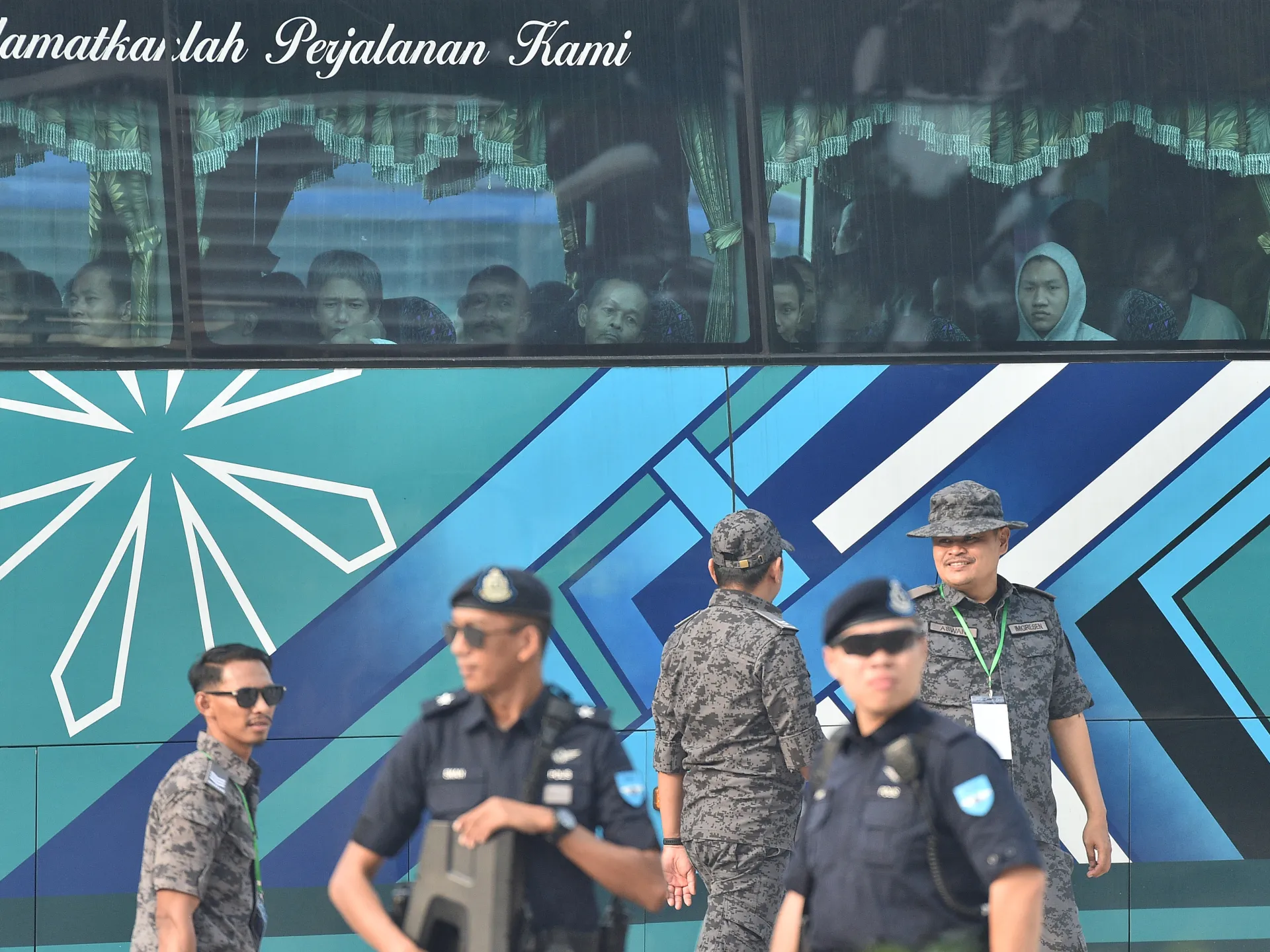
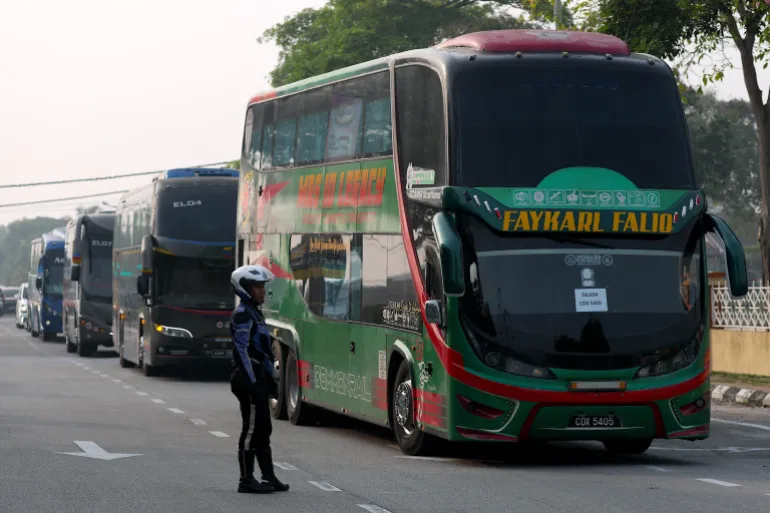
The campaign by the Kremlin to force Central Asians to fight in Ukraine dates back to 2023 – the year after Russia’s invasion of Ukraine – when police began rounding up anyone who didn’t look Slavic and charging them with real or imagined transgressions such as a lack of registration, expired or “fake” permits or blurred stamps on their documents. Sometimes, migrants are simply bused straight to conscription offices.

In 2025, Al Jazeera interviewed another Tajik man who said he had been detained with an expired work permit and was then tortured into “volunteering” while being subjected to countless xenophobic and Islamophobic slurs from his officers.

Migrants say they are abused, tortured and threatened with jail or having their entire families deported.

“The main way of recruiting as many migrants as possible is pressure on them with threats of deportation,” Alisher Ilkhamov, the Uzbekistan-born head of the London-based Central Asia Due Diligence think tank, told Al Jazeera.

Sometimes, migrants are simply duped.

Salohidinov said one serviceman in his squad was an Uzbek who “didn’t speak a word of Russian” and was fooled into “volunteering” while signing papers at a migration centre.

In their reports about “catching” migrants, officials frequently use derogatory terms about them, and also when they describe men who have obtained Russian passports but skipped registration at conscription offices. Since the Soviet era, such registration has been obligatory for all men and, since 2024, a newly naturalised Russian national can lose his citizenship if he fails to do it.

“We’ve caught 80,000 such Russian citizens, who don’t just want to go to the front line, they don’t even want to go to a conscription office,” chief prosecutor Alexander Bastrykin said in May 2025, referring to the migrants’ alleged patriotic sentiments.

He boasted that 20,000 Central Asians with Russian passports were herded to the front line in 2025.

The year before, he said 10,000 Central Asians had been sent to Ukraine.

Such remarks resonate with the Russian public that lives with “a high level of xenophobia in the stage of fear and helplessness,” Sergey Biziyukin, an exiled opposition activist from the western city of Ryazan, told Al Jazeera.

“For them, such phrases from Bastrykin are a form of sedative.”

What makes Central Asians easy targets is that they hail from police states, which depend on Moscow politically and economically, observers say.

“While the migrants are frightened into signing contracts, their motherland doesn’t really pay any attention,” Galiya Ibragimova, an Uzbekistan-born, Moldova-based regional expert, told Al Jazeera.

Despite hefty signup bonuses and relentless propaganda, the number of Russians who want to fight in Ukraine fell by at least one-fifth this year, and Moscow will strive to recruit more Central Asians, she said.

Russia conscripts
Russian conscripts called up for military service attend a ceremony marking their departure for garrisons from a recruitment centre in Saint Petersburg, Russia, on October 15, 2025 [Anton Vaganov/Reuters]

‘We’ll have our fingers broken’

After signing the contract and leaving his debit card with his sign-up bonus with his parents, Salohidinov was sent to the western city of Voronezh for three weeks of training that did little to prepare him for the war.

“We just kept running back and forth with guns,” he said.

Their drill sergeants, he says, told the conscripts that the standard-issue flak jackets, helmets, boots and flashlights were of subpar quality and urged them to pitch in a million rubles ($13,100) each for “better” gear.

The incident corroborates reports on dozens of similar cases in Russian military units.

Salohidinov was ordered to work in a kitchen – and was verbally abused and beaten for the slightest transgression.

Of 28 men in his unit, 21 were Muslims – but their ethnic Russian officers ignored their pleas not to have pork in meals, repeating a decades-old practice of ignoring religion-related dietary restrictions dating back to the Soviet army.

The commanders demonised Ukrainians, telling them “that if we surrender, we’d be tortured, have our fingers broken, maimed, get [construction] foam up our a**, have our teeth yanked out one by one, have our arms broken”, Salohidinov says.

In early January this year, the conscripts were bused to the Russia-occupied Ukrainian region of Luhansk.

Salohidinov says he was tired, frightened and disoriented – Ukrainian drones were “always” above them and a grenade explosion nearby damaged his left eardrum.

Ukraine prisoner swap
A woman waits for news about a missing loved one as some Ukrainian soldiers return during a prisoner of war (POW) swap, amid Russia’s attacks on Ukraine, in an undisclosed location in Ukraine, on April 11, 2026 [Thomas Peter/Reuters]

‘Glad I got captured’

On the fourth day of his service, Salohidinov was ordered to run beyond Ukrainian positions as part of Russia’s new tactic to send two or three servicemen to infiltrate the porous front line.

The mission was suicidal because the terrain was open, dotted with landmines and the bodies of dead Russian soldiers, while Ukrainians were firing machineguns and flew drones above them.

“I ran and ran and saw we were being shot at,” he said. “Me and my commander decided to surrender voluntarily instead of dying for nothing.”

They detached their assault rifles’ magazines, raised their hands and yelled they were surrendering.

What followed was “a calm feeling, beautiful”, he said. “They fed us, let us have a smoke, gave us food and water and even cake.”

Now, Salohidinov hopes to return to Tajikistan and panics at the thought of being made part of a prisoner swap – these have taken place several times each year – and returning to Russia because he would be sent back to the front line.

Tajikistan and other Central Asian nations have never endorsed Russia’s war in Ukraine, but nor have they openly criticised it.

In August 2025, Tajikistan’s Prosecutor General Habibullo Vohidzoda declared that no Tajik national would be charged for fighting in Ukraine.

So, what Salohidinov needs right now is an extradition request.

“I’m even glad that I got captured, because I’m not fighting anyone now, not risking anything,” he said. “I’ll even say thanks to Ukraine for taking me prisoner.”

The Tajik embassy in Kyiv did not respond to Al Jazeera’s request for comment.

Source link

Sudan war ‘being fought on women’s bodies’: Survivors detail sexual assault | Sudan war News

In a new report, Doctors Without Borders says sexual violence is the ‘defining feature’ of the conflict in Sudan.

Hanaan was 18 years old when she was raped by members of the Rapid Support Forces (RSF), a paramilitary group accused of committing widespread “war crimes” during nearly three years of fighting against Sudan’s army.

She was walking alongside a female friend to her makeshift home in an encampment for displaced people in South Darfur, when four men on motorbikes stopped them and asked where they were going.

Recommended Stories

list of 3 itemsend of list

“Two took each girl, and they raped us,” she told Doctors Without Borders, an international medical NGO known by its French initials MSF.

“I feel uncomfortable in my body, heavy. I don’t feel pain, apart from in my back – because they beat me, they beat me with their guns on my back,” she said.

Hanaan – not her real name – shared her testimony as part of a report released by MSF on Tuesday, which details the widespread use of sexual violence as a weapon in Sudan’s ongoing brutal civil war.

The NGO said 3,396 survivors of sexual violence sought treatment in MSF-supported health facilities across North and South Darfur between January 2024 and November 2025.

The data, presented in the report titled, There is Something I Want to Tell You…, was drawn from MSF programmes in just two of Sudan’s 18 states and reflects only a fraction of the crisis, while the true scale of the phenomenon remains unknown.

Women and girls accounted for 97 percent of survivors treated in MSF programmes. The RSF and allied militias were found to be primarily responsible for the systematic abuse.

Children among the survivors

“Sexual violence is a defining feature of this conflict – not confined to front lines, but pervasive across communities,” Ruth Kauffman, MSF emergency health manager, said in a statement.

“This war is being fought on the backs and bodies of women and girls. Displacement, collapsing community support systems, lack of access to healthcare and deep-rooted gender inequalities are allowing these abuses to continue across Sudan.”

Following the RSF’s capture of el-Fasher, the capital of North Darfur, on October 26, 2025, MSF treated more than 140 survivors fleeing to Tawila. Among them, 94 percent were attacked by armed men, with many reporting assaults along escape routes.

The assaults “deliberately targeted non-Arab communities as a means of humiliation and terror, echoing previous RSF atrocities such as the dismantling of Zamzam camp”, the report said. The RSF took control of famine-hit Zamzam camp in the western Darfur region after two days of heavy shelling and gunfire in April 2025.

Survivors described attacks not only during fighting, but in everyday settings, such as fields, markets and displacement camps.

Children were also among the survivors. In South Darfur, one in five survivors was under 18, including 41 children younger than five, the organisation said.

MSF called on the United Nations, donors and humanitarian actors to urgently scale up health and protection services in Darfur and all of Sudan, and on all parties to the conflict to cease and prevent sexual violence and hold perpetrators accountable.

Source link

Germany’s Merz says 80% of Syrian refugees to return home in 3 years

German Chancellor Friedrich Merz, right, and Syrian President Ahmed al-Sharaa attend a joint press conference during their meeting at the Federal Chancellery in Berlin on Monday, where they announced a goal of 80% of Syrian refugees who fled the country during its 14-year-long civil war to return home. Photo by Filip Singer/EPA

March 30 (UPI) — The chancellor of Germany and president of Syria on Monday said that their goal is for 80% of Syrian refugees who have fled there to return home in the next three years.

With few details offered, Chancellor Friedrich Merz and President Ahmed al-Sharaa set an ambitious goal for the majority of the roughly one million people there who sought asylum from the bloody civil war in Syria, The BBC reported.

Merz and Sharaa met Monday to discuss the return of Syrian refugees, while noting they have been a boon to Germany and are not being kicked out.

“Looking ahead over the next three years — as Sharaa has expressed his hope — around 80% of Syrians currently residing in Germany are expected to return to their home country,” Merz said during a press conference.

Sharaa thanked Merz and the country for welcoming Syrians during the civil war and said the country is “proud that Syrians have learned very quickly how to contribute to society.”

He said that his government is working with the German government to “establish a ‘circular’ migration model” that would allow Syrians to contribute to the reconstruction of Syria without abandoning the lives they have build in Germany.

Sharaa led forces that pushed former Syrian dictator Bashar al-Assd to flee the country in late 2024 after they captured Damascus. His administration is now working to reconstruct and unify the country after 14 years of civil war there.

At the press conference, Merz and Sharaa said that overall conditions in Syria have “fundamentally improved,” a point which German politicians have been debating since the new Syrian president took over, Deutche Weille reported.

A child stands atop an abandoned tank while opposition fighters spread out to areas previously controlled by Assad’s regime in the liberated areas of Daraa, in northern Syria, on December 17, 2024. Photo by Fadel Itani /UPI | License Photo

Source link

Syria’s al-Sharaa visits Germany to talk reconstruction, return of refugees | News

President Ahmed al-Sharaa is on his first trip to Germany since ousting Syria’s longtime leader Bashar al-Assad in late 2024.

Interim Syrian President Ahmed al-Sharaa has been received by German President Frank-Walter Steinmeier in Berlin before talks with Chancellor Friedrich Merz on rebuilding his country and the return of refugees.

“Our interest is in seeing Syria rebuilt as a stable and prosperous nation, including with the help of the many, many Syrians who came here to Germany and Europe during the civil war and found refuge here,” government spokesman Stefan Kornelius said before Monday’s talks.

Recommended Stories

list of 2 itemsend of list

Speaking at a Federal Foreign Office forum in Berlin on Monday, al-Sharaa said: “We want to put this difficult time behind us and now catch up with the rest of the world.”

He pointed to investment opportunities in Syria’s energy, transport and tourism sectors, describing his homeland as diverse and with “a great wealth of people”.

“We stand with Syria,” German Foreign Minister Johann Wadephul said, pledging to support reconstruction efforts. “The Syrians deserve a chance, and we want to help ensure that this opportunity is well utilised.”

Al-Sharaa also suggested that he would like to see some of the Syrians who fled to Germany return to help with its reconstruction.

“These are Syrians who have studied at German universities, acquired German expertise and are now working in German companies,” he said. “Through investments in Syria, they can then bring this expertise back to Syria.”

Syrian President Ahmed al-Sharaa and German Foreign Minister, Johann Wadephul, pose for a family photo with Syrian Minister of Emergency and Disaster Management, Raed al-Saleh, Member of the Executive Board of the Federation of German Industries, Wolfgang Niedermark, Syrian Foreign Minister, Asaad Hassan al-Shaibani, Syrian Economy Minister, Mohammad Nidal al-Shaar, Syrian Energy Minister, Mohammed Al-Bashir and German Economy and Energy Minister, Katherina Reiche, in Berlin, Germany, March 30, 2026. REUTERS/Nadja Wohlleben
Al-Sharaa, third from left, makes his first visit to Germany since leading opposition fighters to oust Syrian President Bashar al-Assad in December 2024 [Nadja Wohlleben/Reuters]

Al-Sharaa was initially planning to visit Germany in January, but the trip was postponed as he sought to end fighting between Syrian government forces and the Kurdish-led Syrian Democratic Forces in the country’s north.

Refugee issue

A demonstration against the plan to send refugees back to Syria has been registered in Berlin on Monday under the slogan “No deportation deals with human rights abusers”.

About one million Syrians fled their war-torn country for Germany in recent years, many of them arriving at the peak of the influx in 2015-2016 to escape the war.

The conservative Merz, who took power in May, has stepped up a drive to limit irregular immigration as he seeks to counter the rise of the far-right Alternative for Germany party.

Merz said last year that with Syria’s war over, Syrians now have “no grounds for asylum in Germany”.

The government in December resumed deportations to Syria although only a handful of cases have gone ahead so far.

Merz also said he assumed many Syrians would return home voluntarily, drawing criticism from campaign groups who cited continued instability and rights abuses in Syria.

Source link

Palestinian refugees in Lebanon face another forced displacement | Israel attacks Lebanon

NewsFeed

After Israel’s bombing of Beirut’s southern suburb of Dahiyeh, Palestinian refugee Dalal Dawali once again finds herself forcibly displaced. She and her children joined hundreds of families fleeing to Beddawi camp in north Lebanon. Al Jazeera’s Justin Salhani tells her story.

Source link