Explore new cultures, find the best travel deals, and make informed decisions with our trusted travel news. Let your wanderlust thrive as you stay connected with the ever-changing world of travel.
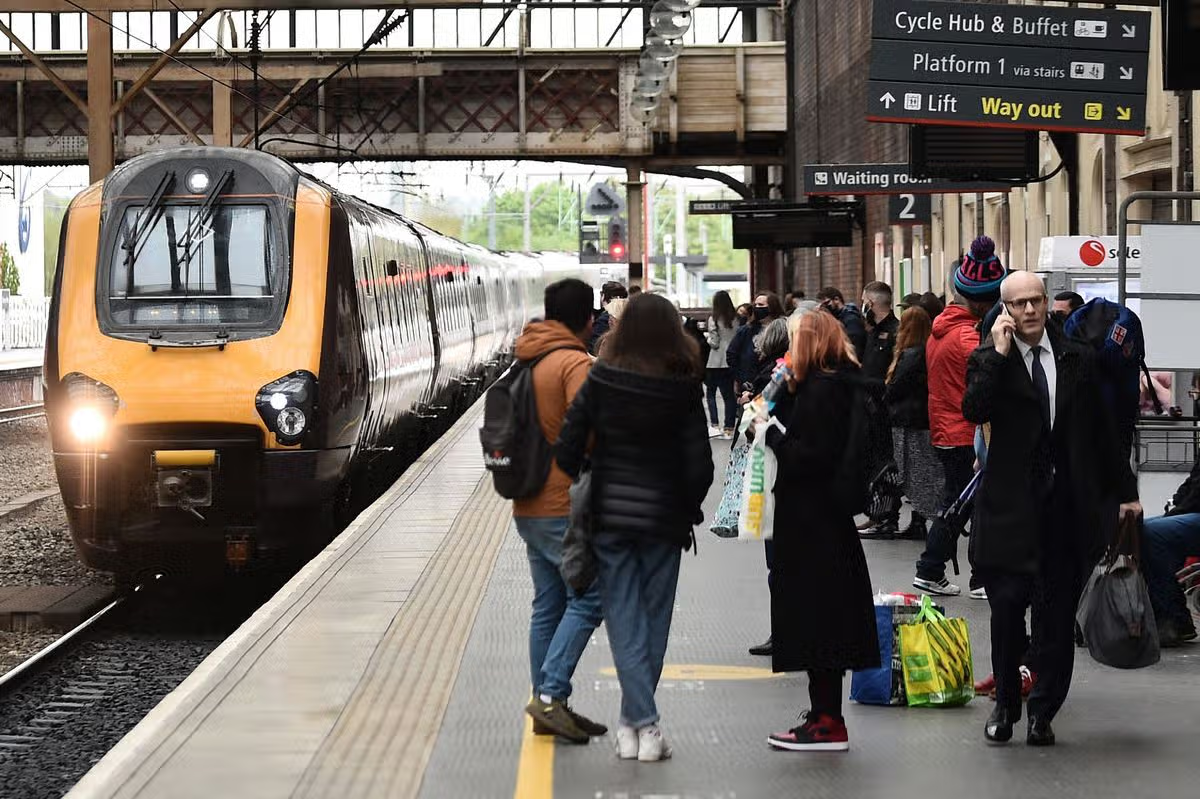
A major rule will come into force this weekend (Sunday, 20 September) for anyone travelling by train – and it’s good news, with the freedom to board other services
Train travel should be alot easier from this weekend(Image: Getty Images)
There’s nothing worse than your train being cancelled, even more so when you know the next one isn’t for another hour or two, or perhaps that was the last one of the day. Travellers risk being fined if they’re caught on board a railway line or route that differs from their original ticket, with others opting to fork out for a last-minute train ticket on another line, just so they can get home for the evening.
However, this travel dread is about to ease, as passengers will easily be able to board an alternative service with another train operator for free if their original train has been cancelled. The significant change will launch on Sunday, 20 September, in hopes of making rail travel easier, as more train operators are involved in the new scheme, as confirmed by the government.
While cross-operator ticket acceptance is already available across publicly owned train operators, from Sunday, four major railway companies will join the scheme: Avanti West Coast, Chiltern Railways, CrossCountry and Great Western Railway. This means that a total of 17 train operators will be part of the initiative from this weekend, with East Midlands Railway also set to join, although a date has yet to be confirmed.
What train companies are involved in the scheme?
c2c
Gatwick Express
Greater Anglia
Great Northern
LNER
London Northwestern Railway
Northern
Southeastern
Southern
Thameslink
South Western Railway
Transpennine Express
West Midlands Railway
CrossCountry
Great Western Railway
Avanti West Coast
Chiltern Railways
Rail Minister, Lord Hendy, said: “This is a simple, common-sense change that puts passengers first. No one should be left stranded because of a fragmented railway when their journey is disrupted. We’re fixing the railway from the ground up, making it simpler, fairer and easier to use, as we move towards Great British Railways and put public service back at the heart of our railways.”
What do I need to do?
If your original train and route are cancelled, you can simply use that same ticket to board another service with a rival railway operator included in the scheme. There’s no need to buy another ticket or to fork out for any additional fees. It’s important to note that the alternative train you’re boarding must depart two hours before or after your originally booked service. Additionally, the service must be a “direct or reasonable alternative route”.
Are there any other changes to train travel?
Elsewhere, new pay-as-you-go services will be launched across Greater Manchester, the Midlands and the south-east at more than 100 train stations by next year. This is due to a £156 million investment from the government as part of a ticketing scheme.
A new Great British Railways website and app are also in the works, in hopes of making train travel that much easier. Alex Robertson, chief executive of the independent watchdog, Transport Focus, said: “When passengers are delayed, they just want to get where they need to be, not worry about whether their ticket will be accepted on another train.
“This is a welcome change that we have long called for and should make it easier for people when services are cancelled. The key now is making sure passengers get clear information about their options whenever disruption occurs.”
Do you have a travel story to share? Email webtravel@reachplc.com
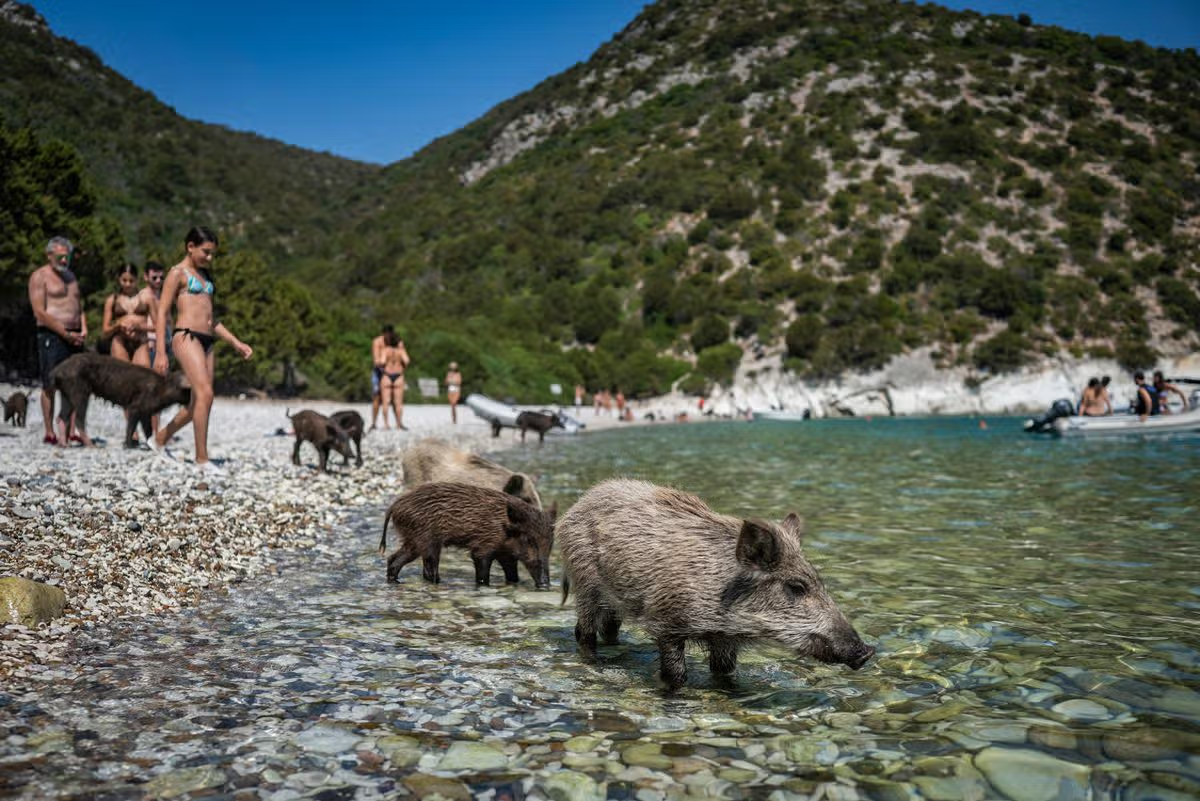
Atokos is a tiny island near Lefkada in the Ionian Sea, off the coast of Acarnania. It is one of the most westerly and remotest of the Echinades Islands, home to no one but a colony of pigs
No one lives on Atokos, except the pigs(Image: AFP via Getty Images)
Pig Beach is an irresistible place. It’s a place where a family of adorable hogs, as pink as a Brit at the end of a long summer holiday, trot around on the sand, run through the shallows and piggy-paddle in the waves.
It’s not clear exactly how the colony of oinkers made it to their Bahaman paradise home. Some say the pigs were dropped off by a group of sailors who wanted to come back and cook them, only to get diverted, leaving the pigs to survive on excess food dumped from passing ships. Another tale suggests the pigs were survivors of a shipwreck, while a third argues that they were placed there as a cynical ploy to attract tourists.
If the final explanation is true, then fair play to the inspired swine herder responsible. The Bahamas’ swimming pigs are one of the most popular tourist attractions in the whole region, attracting thousands of porcine enthusiasts into the shallows each year. Pig Beach has about 20 individual piggies and a cast of piglets that varies in size each year, but other islands, including Eleuthera, Rose, Abaco, and Ship Channel Cay, have also gotten in on the action in recent years.
Charmed by the idea of splashing around in the warm waves with a lovely little swine, when I heard that Europe has its very own version of Pig Island, and that it was a short sail away from where I’d be exploring, I couldn’t resist.
Do you have a travel story to share? Email webtravel@reachplc.com
Atokos is a tiny island near Lefkada in the Ionian Sea, off the coast of Acarnania. It is one of the most westerly and remotest of the Echinades Islands. No one lives on Atokos, not even its shipping magnate owner, Panayiotis Tsako. But it attracts a handful of brave yachtspeople who are allowed to anchor in the shallows.
My friends and I found ourselves in their number on a hot May day, jumping into the water and swimming onto the beach, wetsuit shoes providing crucial protection against the burning-hot pebbles. We’d expected to be met by a group of friendly pigs splashing around in the shallows, but the beach was empty. Of both pigs and people.
Assuming that the hogs were sheltering in the woods at the top of the beach, we walked in, finding them ringing with loud cicadas as we wandered down a path. At the bottom was a single two-storey house, which appeared habitable enough despite its doors being locked and its windows boarded up. Not a pig in sight.
We wandered back towards the beach down winding paths thick with pinecones and sticks, swiping away the thick spider webs that stretched between the trees. Despite the intense Greek sunshine and glistening blue water, the place had a spooky atmosphere, intensified by the empty chapel rising above the sand. I’d read it was well looked after by a visiting janitor, but it looked dusty and unloved. I flicked a large spider off my shoulder.
And then the pigs arrived.
Just as we’d resigned ourselves to returning to the boat light of a soul-cleansing frolick with the promised porsine inhabitants, guess who came snuffling out of the woods? Not a sweet piggy, but a hog. A big, hairy, grunting hog. I’m not an expert, but I’d put a 50/50 wager on it being a wild boar.
The pig wandered towards us, stopping about a metre away. He looked at us, and we looked back. Then out of the woods came three more pigs, seemingly a mum and two piglets. They joined the bigger, dad-looking pig.
There was something about the biggest pig’s tusks and the way it was looking at our now shivering, unprotected but for swimming trunks bodies, that made us feel nervous. These piggies didn’t look amenable to a quick pic.
Suddenly, the big pig roared and lurched forward towards us. I don’t know whether we’d strayed too close to his family, looked at him the wrong way, or stayed too long on the creepy island, but the noise was far from an Instagram-reel-friendly oink. To our shame, we ran. We ran all the way into the sea, powering through the shallows before launching ourselves into a swim. It was only once back to our boat that we risked a look back towards the Atokos and its inhospitable pig masters. There they stood, looking out across the water, unfriendly stares boring into us.
I headed to Eurocamp for the last week in August to enjoy the last of the summer sunshine, and found a lively park packed with plenty for the kids to do and an impressive location to explore Normandy
This article contains affiliate links, we will receive a commission on any sales we generate from it. Learn more
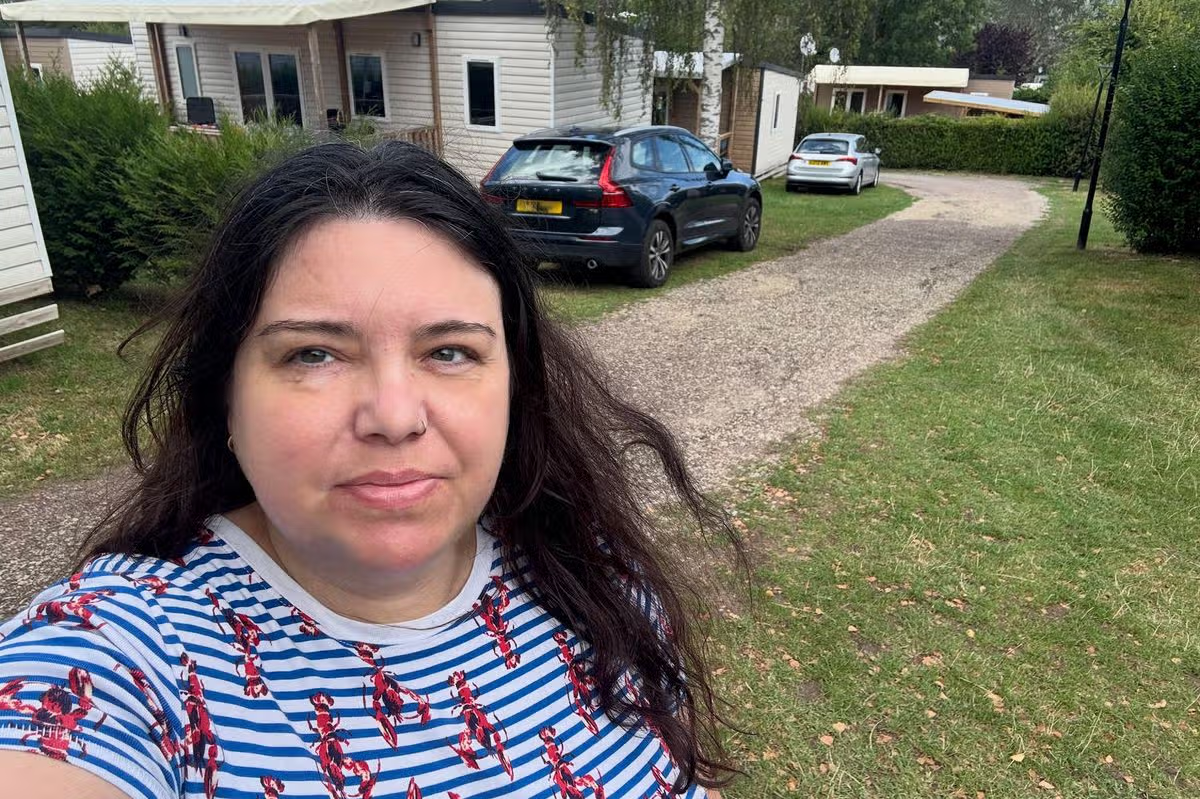
I visited Eurocamp La Vallée with my family(Image: Natalie King)
Finding a holiday that suits my family is a tough call. The age gap between my kids means I have a primary school aged child who wants to go to kids clubs and make friends by the pool, while my teenager would happily emerge at noon and sit on a sunlounger scrolling through their phone all day.
Eurocamp felt like the type of holiday that could be an excellent compromise. You get the convenience of a caravan break, separate rooms for the kids and living space, yet still get the entertainment for younger ones.
We picked Eurocamp La Vallée for a week at the end of August, and its location about three hours from Calais made it an easy journey down. I hadn’t been on a holiday via ferry for a while and forgot just how chilled it is compared to taking the kids on a plane. You can load up the car the night before, devices can be charged in the car, and once you’re onboard you aren’t stuck in a tiny seat for hours. Driving in Northern France is incredibly easy too, with flat, wide toll roads that had barely any traffic.
Arriving at Eurocamp we got a friendly welcome and drove through the maze of caravans, lodges, and tipi tents of various grades, trying not to run over the unsupervised children who’d occasionally dash into our path. Our caravan was a Premium Exclusive, which was set on a spacious area of the park and had its own little garden area with loungers and parking.
The main difference between accommodation in UK and French holiday parks is size. While our mobile home was clean and well-equipped, it was definitely smaller than accommodation at British parks. There’s an open plan area with a kitchen, which surprisingly managed to fit in every utensil known to man and a dishwasher, and a plasticky seating area, but it’s clear that the accommodation is designed for those who don’t want to spend their evenings sitting indoors and watching TV.
While the inside is compact, the outdoor terrace more than made up for any lack of space. Our wooden decking area had outdoor tables and chairs, a big comfy outdoor sofa, and a flat top griddle which was fabulous for cooking outside. We’d often spend the evenings drinking wine and playing cards on the deck as it got dark.
But the big draw of Eurocamp isn’t necessarily the accommodation. It’s the facilities and entertainment, which were definitely much livelier than we expected. Outside the kids’ club there was a daily timetable of events looked after by the colourfully dressed animation team, and separate activities for younger and older kids, so teenagers aren’t stuck doing crafts with a bunch of four year olds.
And of course, there are the pools, which in La Vallée were particularly impressive. There was an outdoor pool area with lazy river, a covered indoor pool, some rather terrifying looking flume things, and a big splash zone for younger kids.
Unfortunately, sunbed wars had broken out in the resort, and the lifeguards seemed reluctant to play the role of peacekeeper. The first morning we arrived, half an hour after the pool opened I found the sole remaining sunbed without a towel draped over it, only for a sunburned man to tell me “that’s my kid’s sunbed, my love”. I thought about arguing with him, especially for calling me ‘my love’, but was being glared at by a five year old in a Minecraft towel whose lounger I’d so rudely tried to take. It was a common theme of the week, rows of sunbeds with nothing but a scrunchie or pair of goggles to keep them occupied.
Despite the lack of sunbeds, the pool was much enjoyed by the kids, who swam in circles for hours and took part in the noisy dance and exercise sessions led by the seemingly infatiguable animation team.
The only downside to the constant activities is that it can be noisy. I’m travelling with two kids, so I’m under no illusion that I’ll be resting on holiday, but it can be an overstimulating environment at times. I sat with my espresso on the terrace one morning only for the thudding sounds of Timber by Pitbull to drift through the park at 10am. During an afternoon lull, I went to read my book and maybe take a cheeky nap, only for the sounds of Lady Marmalade to suddenly blast through the park. Voulez-vous coucher avec moi? You won’t get much coucher, alone or otherwise, before midnight.
But the upside to the lively environment is that the kids pretty much entertain themselves, reverting to a feral state where they run around barefoot and make friends from all over Europe who teach them French swear words. There were bouncy castles and a playground for the kids to enjoy in the evening, plus the mainstay of all French holidays, ping pong.
The mini disco also impressed my youngest, as it involved some guy dressed as a cat chasing the kids around in circles, and the evening entertainment was fairly basic but kept everyone happy. Sadly, we had to face it sober as the bar service was laidback, to say the least, so we mostly drank our own stash from the supermarket.
Location-wise, Eurocamp La Vallée is close to everything you’d want from a French holiday. There are the Normandy beaches, World War 2 history sites, seaside towns, and utterly charming rural villages just a short drive away. So if you’re looking for a holiday where your kids can join a Lord of the Flies-style pack and you find yourself increasingly relaxed about it as the week goes on, then Eurocamp is a winner.
Book the holiday
Seven nights from Saturday 3rd April 2027 (Easter) staying in a Comfort two bedroom holiday home that sleeps up to four guests, from £331.87 per party. Book at eurocamp.co.uk.
Seven nights from Saturday 3rd July 2027 (School summer holidays) staying in a Comfort two bedroom holiday home that sleeps up to four guests, from £856.80 per party. Book at eurocamp.co.uk.
Have a story you want to share? Email us at webtravel@reachplc.com
No doubt your first thought on hearing the words “double-decker” is of a bus. But in the Swiss village of Stans, an old wooden funicular carriage ascends to the station, where a double-decker cable car awaits. Inside, a spiral staircase leads you to an open upper viewing deck. At the summit, the views back to Lucerne are superb, and there are alpine marmots to spot too. There was a wedding ceremony going on at the summit on our trip! Martin
Liechtenstein’s Route 66
Looking across the Three Sisters. Photograph: GanzTwins/Getty Images
Steinbock, marmot and elderflower jam are in abundance on Liechtenstein’s Route 66 track – a multi-day hike that is popular with locals, but little known to others. The route traverses the Drei Schwestern (the Three Sisters), where you’ll experience white knuckles and lush valley views. After an easy 5km hike, you land at the first mountain hut, where a succulent homemade three-course dinner awaits you. Befriend the other walkers over a game of cards, as golden hour lights up the mountains. Inez
Profile
Readers’ tips: send a tip for a chance to win a £200 voucher for a Coolstays break
Show
Guardian Travel readers’ tips
Every week we ask our readers for recommendations from their travels. A selection of tips will be featured online and may appear in print. To enter the latest competition visit the readers’ tips homepage
–
Picturesque French Pyrenees
Luz Saint Sauveur is surrounded by tall peaks. Photograph: Chris Craggs/Alamy
Luz Saint Sauveur in the French Pyrenees is the gateway to heaven. Whether it be by bike, car, motorbike or on foot, stunning surroundings, wildlife-a-plenty and quaint French shops await you at this picturesque market town. Eat the local saucisson, drink the jurançon white wine, marvel at the blue skies in the shadows of the legendary Tour de France Cols, jump in canyons and be merry with the surroundings. Simply beautiful and fun for all ages. Will
High on the hog in Donegal
Muckish is a flat-topped mountain to the north of Glenveagh national park. Photograph: Steven Granville/Getty Images
For mountain scenery without Alpine crowds, head to north-west Donegal. Errigal gets the attention, but don’t overlook flat-topped Muckish, whose name comes from the Irish for “pig’s back”. Drive the small roads around the Poisoned Glen and through Glenveagh national park, where each bend reveals another reason to stop. Allow far longer than the satnav suggests: our best moments came from pulling over for an unexpected view rather than racing between sights. Pack walking shoes and a picnic, then reward yourself afterwards in a cosy pub. Here, a mountain day can include Atlantic beaches and a well-earned pint. Niamh Kerr
The quiet side of Italy’s Dolomites
Alpine hut Rifugio Agostini was the highlight of Ben Bryant’s trip. Photograph: Johannes 86/Getty Images
The Brenta Dolomites seem to go strangely unnoticed, while the main Dolomites heave with Instagrammers. We based ourselves in Pinzolo, an alpine town an hour north of Lake Garda, then took the lift from Madonna di Campiglio for a three-day hut-to-hut trek, tackling two via ferrata routes across knife-edge ridges and limestone spires. Rifugio Agostini was the highlight: a warm welcome and hearty mountain food after a hard day’s climbing, with jagged peaks filling every window. We descended into the town of Molveno for a well-earned aperitivo by the lake. Ben Bryant
A spectacular climb in Kosovo
The Lumbardhi River in Prizren. Photograph: Engin Korkmaz/Alamy
After exploring Kosovo’s historic monasteries and wartime memorials, we escaped to the Sharr mountains national park, a 40-minute drive south of Prizren. The road winds through the spectacular Zhupa valley and follows the bubbling Lumbardhi river through its steep-sided gorge. At Prevallë, we left the car and began what turned out to be a strenuous climb over rocky paths and grassy slopes. We kept expecting the summit to appear, but every turn revealed another, until we finally reached our destination and were met with spectacular mountain views. Afterwards, we rewarded ourselves at Hotel Krojet with coffee and a reviving glass of raki. Roy Messenger
The Via dei Monti Lariani passes close to Mount Bregagno. Photograph: Mauritius/Alamy
This spring, my partner and I hiked the Via dei Monti Lariani, a 78-mile (125km) trail through the mountains on the western shore of Lake Como between Cernobbio and Sorico. Skirting the border between Italy and the Swiss canton of Ticino, the route passes through mountain pastures with views towards the Alps, and remote villages shaped by a history of cross-border smuggling. The accommodation is a highlight, ranging from Alpine rifugios to agriturismi, where we sampled regional specialities, including polenta uncia, polenta with local cheese and butter, and pizzoccheri, buckwheat pasta with cabbage and potatoes. Quiet trails, excellent food and complex history made it an especially rewarding route. Ross Cameron
Grand canyons of the Spanish Pyrenees
Santa Engràcia, high in the Pyrenees. Photograph: Chris Craggs/Alamy
This summer my family and I stayed at Fox House in the tiny village of Santa Engràcia in the Tremp valley, in the foothills of the Spanish Pyrenees. Perched on a cliff edge, the beautifully renovated guest house has panoramic views, eclectic art and a warm homely feel. Laura and Carl were excellent hosts, creating a relaxed atmosphere and serving delicious evening meals. Days were a mix of poolside downtime and outdoor adventure, including rafting, mountain biking, canyon kayaking and swimming in crystal blue lakes. Maria
Campsite with a view in Austria
Camping Grubhof is on the Saalach River. Photograph: APA/Alamy
Camping Grubhof, in the small town of Lofer between Salzburg and Zell am See, is simply beautiful. It’s an immaculate campsite, surrounded by mountains. Lofer (and the campsite) have direct access to a huge network of cycle trails as well as to the beautiful village swimming pool (free with the local access pass). Walking high in the mountains, surrounded by cows with bells is simply beautiful. Come the afternoon, there’s time for an apple strudel at a mountain hut and a glass of radler low alcohol beer. There is a camping meadow where you can pitch a tent and cabins to rent, as well as the best shower blocks I’ve come across. Mark
Winning tip: Stars, sunsets and glaciers in Italy
Rifugio Bertone has commanding views of surrounding peaks. Photograph: Universal Images Group/Getty Images
The views over Mont Blanc from Rifugio Bertone in Italy are incredible, but it’s the whole experience that makes it special – great food, proper mountain atmosphere, and the Balconata Val Ferret has some of the best walking in the area. It’s also near Courmayeur, which is a lovely town. Arrive for sunset, watch the light move across the glaciers, then look up at the stars as Mont Blanc disappears into the darkness. A brilliant place to eat, walk, breathe and simply take in the mountains. And it’s very affordable. Eddie Campbell
‘I think my boots are falling apart!” shouts Nigel just as we hit the pinnacles, a whole range of them jutting up and out from the mountainside, all thrillingly tall, spiky and knobbled. Through them we painstakingly step, fingers aching in gloves, heads sweating in helmets – squashing up narrow chimneys, squeezing through mighty boulders and inching along slender ledges on a twisting path that’s only just discernible through swathes of sharp white scree.
I know how Nigel’s boots are feeling: the going is far harder than I was expecting. This is only the first day of our annual trip to the Dolomites, a vast range of breathtaking sawtooth peaks in northern Italy, but my head’s already full of the thought I have every year as we start out: “If only you’d got fitter.”
But it should be worth all the scrapes, bumps, scares and sweat. Somewhere up ahead, hopefully not too far, is Rifugio Passo Santner, or Santnerpass Hut, a spectacular mountain refuge that, as everyone who sits near my desk at work knows, has been obsessing me ever since I first saw a picture of it eight months ago.
Allowing you to stay deep in the mountains for days on end, the high-altitude Dolomites huts we overnight at all have their charms, from hearty food to giddying views to a generous way with the grappa. But in terms of appearance, they tend to fall into two not particularly pulse-quickening camps: stone block or cuckoo clock. Although you’re almost always overjoyed to see them, none could ever pass for a Bond villain’s lair, however much grappa you’ve had.
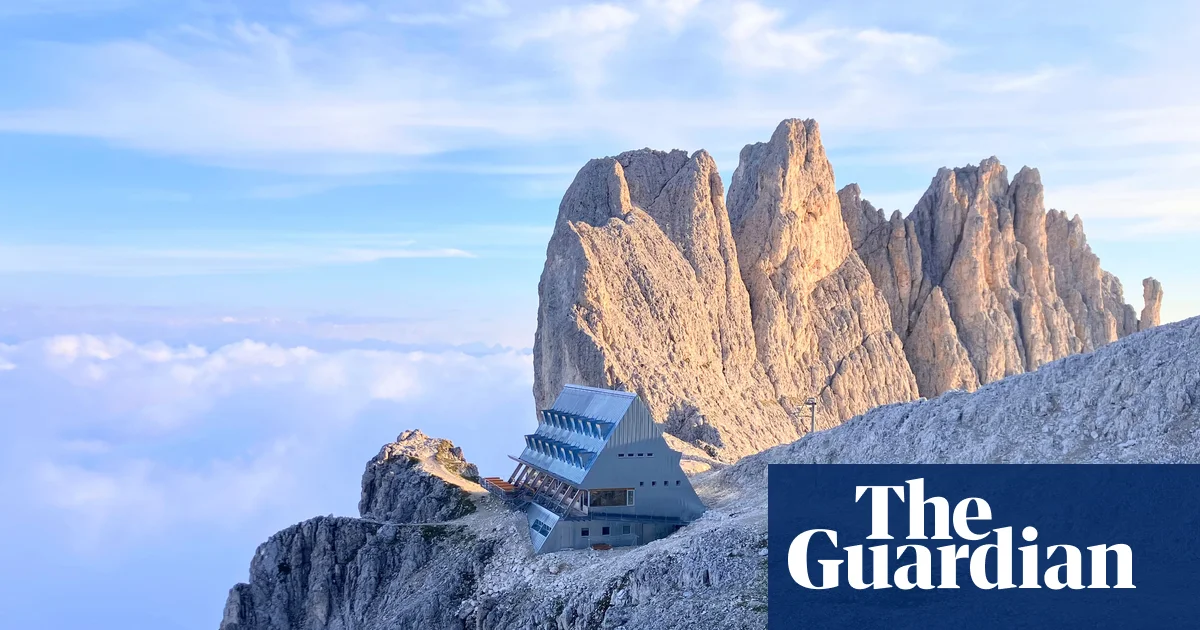
Yet that is exactly what Santnerpass Hut resembles. Perched on top of a sheer cliff, this elongated triangle encased in a gleaming wrapper of galvanised steel looks like a giant Toblerone still in its foil – an eyepopping hit of modernity, originality and innovation in a place where tradition usually dictates more of the same.
After one final push, the five of us scramble up on to the summit and there it is just ahead, side on and glowing silver in the late afternoon sun, like a star that has touched down on Earth to enjoy the stunning views of the surrounding peaks with the rest of us, up at the bracing height of 2,734m.
“Welcome!” says the bartender as we enter. “You made it. Well done!” With the customary relief – if not actual jubilation – that follows a tough climb finally ending, we ease off our backpacks, gloves and boots then look around, slowly realising that Santnerpass Hut isn’t just a treat for the eyes from the outside.
Inside, what you first notice is the unbroken parade of huge windows wrapping around the refuge’s front and flanks. This doesn’t just turn every spot of the roomy ground floor into a light-filled observation point. It also means the hut achieves passive heating since it’s effectively one big solar collector. So there’s no need for log-devouring stoves. That’s quite an achievement at ground level; at more than 2km up, with no road access, it’s verging on miraculous.
‘Santnerpass Hut was built in 1956 but was taken over, closed and rebuilt, finally opening to the eager climbing public in the summer of 2023.’ Photograph: Andrew Gilchrist
Then there’s the wood. It’s blond and everywhere. Guests are basically cocooned within a spellbinding timber tapestry that casts everything in a warm yellow glow, quite a novelty to anyone used to the dingy two-watt corridors and bedrooms of most refuges.
The flooring is larch, the restaurant furnishings maple and the load-bearing A-frame spruce, its hefty angular joists exposed on the sundeck, where we soon find ourselves sinking well-earned ice-cold drinks and marvelling at this beacon of sustainable architecture.
There are other things to marvel at. Off in the distance, piercing up through an immense blanket of cloud, the lofty peaks of the Latemar group are catching the last rays of the sun, turning pink, orange and purple in a ravishing Dolomites phenomenon known as the enrosadira, triggered by calcium and magnesium in the rock. “This place is incredible,” says Donnie, sipping an Aperol spritz. “I’ve never been anywhere like it in my life.”
Santnerpass Hut was built in 1956 but in the last decade or so was taken over, closed and rebuilt, finally opening its generous glass doors in 2023. Designed by alpine specialists Senoner Tammerle Architects, the new refuge is not just meant to please the eye: the shape lets it shed thick snow and deflect howling winds.
There are more surprises when we take our pre-dinner showers. Not only does the wood here give way to zesty yellow laminated panels that wouldn’t look out of place in a chic nightclub, the showerheads also actually stay pointing at your body for the full three minutes of hot water a token gets you.
Dinner, however, may have been the biggest surprise of all. It was completely vegetarian – a shock for all of us and a treat for veggies Sam and Nigel. No goulash, no ragu, no pork chops. Instead, out of the kitchen came herb-sprinkled lentils with asparagus, radish and onion, pea and mint soup, then beetroot dumplings on a rich bean, tomato and yellow pepper broth, washed down with superb local wine in actual wine glasses and finished off with creme brulee.
“A delicious and nutritious meal,” said Sam, running his spoon round his plate. “What an eye-opener. A win-win for hiker and planet.”
Curfew was at 10pm but the restaurant was clearing out anyway. This may have been due to the fact that, in high spirits after our action-packed day, we had taken the hut’s guitar off the wall and treated everyone to that Proclaimers Alpine classic Sunshine on Leith, managing to get a singalong going with the very up-for-it, very international audience.
‘Made it’ … the writer on the summit, nearing the refuge. Photograph: Donald Livingstone
The refuge sleeps 4o in 16 rooms. Ours was a spacious affair with bunkbeds, a dainty dormer window and two large cubbyholes each, one for your bag, the other for your stuff – so much more useful than the usual pointless wardrobes and drawers that no one ever unpacks into, since you’ll be gone in a hurry at the crack of dawn.
We reached Santnerpass Hut via the König Laurin cable car, 22 miles (35km) from Bolzano, gateway to the Dolomites. After that, it’s a rising, fairly straight line to the refuge, a two-to-three-hour hike through loose scree, then boulders and pinnacles. But be warned: the last section is a via ferrata, meaning there’s a metal cable for you to clip your harness to, and grab hold of as you reach trickier, more treacherous passages. It’s not for beginners.
I’d heard, though, that there was another route and, keen to take it back down to the cable car, asked at reception. “Yes, there’s another way,” said Romina Huber, who co-owns and runs the hut with her husband (and chef) Michel Perathoner. “It’s not a via ferrata and it’s super beautiful.”
She wasn’t kidding. First it took us past the Vajolet towers, dramatic spires that lure climbers from all over the world. Then we swung right on to a winding path of fine white scree that rises sharply through meadows full of edelweiss, saxifrage, dwarf pine and boulders, leading to bulging cliffs and eventually the Coronelle Pass, an astonishing vantage point at 2,360m.
“Well, that was a walk and a half,” said Mac as we descended in the cable car 30 minutes later, exhausted after the final knee-popping trudge down from the pass on timber-pinned switchbacks. “My boots,” said Nigel, lifting his feet to let us see a rip in one and a sole flapping off the other, “have completely had it.”
Santnerpass Hut starts at €105pp per night, including breakfast and four-course vegetarian dinner
Hutiquette: the mountain hut code
Mountain huts may occasionally be rather luxurious these days, but their original function, still relevant, is survival. There are, as you might expect, several very sensible codes that make great use of words like “respect”, “other users”, and “environment”. My own code is no less worthy and comes from hard-won experience.
No complaining Huts are not hotels. If there’s a problem, go sort it out. Certainly, never complain about snoring, even when you are convinced it is about to trigger an avalanche. I once did, only to be informed, rather too forcefully, that is was me doing the snoring, an outrageous lie that triggered grunts of approval from other grumpy insomniacs. Gel ear plugs work well.
Share It’s sometimes hard to drop the urban habit of self-assertion to ensure survival. One night in a Corsican hut with a shared sleeping platform, an obnoxious Brit in a down bag shoved all the other sleepers into a pile at one end of the bench, claiming later that he was “dreaming of being pushed”. I pray never to run into him again.
Clean up after yourself … and take your rubbish home. The British Mountain Bothy Code has a good reminder on this point. I’d go even further and say, try to leave absolutely no trace at all. Visiting one treasured wild swimming spot recently, I found the scorch mark of a campfire. Whoever it was had not left any rubbish, and there was nothing to mark their visit, except that dreaded black spot, as if Blind Pew had delivered a death sentence.
The hut is for everyone I once cycled to a remote Icelandic hut and found it blissfully empty of people. Lighting the fire, I prepared my simple meal, and apart from wishing I had packed a beer, looked forward to a night of splendid isolation. Then a large group of locals arrived. I felt my heart sink. My solitary bliss was gone. They sat down, gave me a beer, and two hours later, after helping to eat their huge delicious feast, I felt like I’d joined a tribe. When a hut generates that kind of gang conviviality, it’s uplifting.
Look after others In Scandinavia, this is a social habit that is deeply embedded. You turn up in a hut in winter and there are logs because the last visitors left them for you. You cut your finger and they all have the plaster that you forgot to bring. The Norwegian Mountain Code has a list of essential reminders. Kevin Rushby
Hikers trekking along trails around Los Angeles know that, by late summer, most creeks and rivers have dried up for the season.
However, recent rainfall across Southern California has replenished our waterways just enough to bring back a little of their spring and early summer glamour.
In this week’s edition of The Wild, our weekly outdoors newsletter, I will highlight three L.A. trails where you can still find water flowing, offering a cool relief in a year when L.A. residents are sick of humidity, heat and high electric bills.
You are reading The Wild newsletter
Sign up to get expert tips on the best of Southern California’s beaches, trails, parks, deserts, forests and mountains in your inbox every Thursday.
By continuing, you agree to our Terms of Service, which include arbitration and a class action waiver. You agree that we and our third-party vendors may collect and use your information, including through cookies, pixels and similar technologies, for the purposes set forth in our Privacy Policy such as personalizing your experience and ads.
Before heading out, here are a few things to remember:
Familiarize yourself with what poison oak looks like, as it will be prominent on all of these trails. Its leaves this time of year range from glossy green to red, orange and yellow.
Practice seven Leave No Trace principles, including never leaving anything behind such as toilet paper or orange peels.
Rocks and boulders in and along creeks will often be slippery from years of erosion. Take good care when climbing them or using them for leverage as you traverse an area.
Riparian habitats, like creeks flowing through canyons, are home to sensitive creatures including California newts, frogs and toads. Take good care to watch where you’re stepping, ensuring you aren’t crushing one of these little sweeties as you tromp along.
Now that we’ve all agreed to recreate responsibly, let’s talk about those hikes!
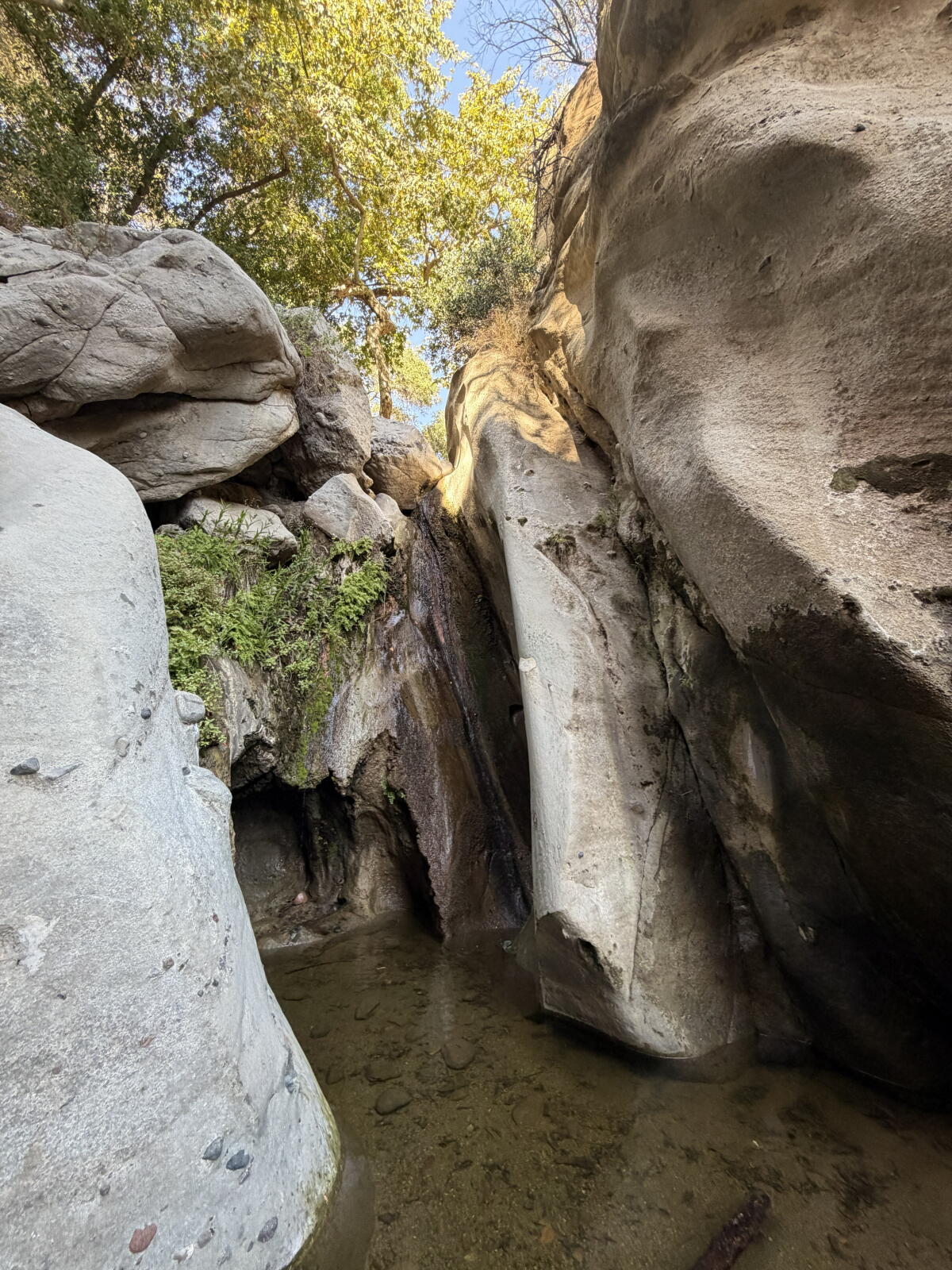
The Santa Ynez waterfall is an 18-foot cascade through a canyon carved by water for thousands of years.
(Jaclyn Cosgrove / Los Angeles Times)
1. Santa Ynez Waterfall Trail
Distance: 2.2 miles out and back Elevation gained: About 200 feet Difficulty: Easy in the beginning with technical aspects near the falls Dogs allowed: No Nearest to: Pacific Palisades Accessible alternative: Inspiration Loop Trail at Will Rogers State Historic Park
The Santa Ynez waterfall trail is a 2.2-mile journey along Santa Ynez Creek in Topanga State Park, shaded by large sycamores, oak trees and the canyon’s walls. You’ll notice a small cave-like structure in the canyon wall shortly upon starting the hike. Unfortunately, other visitors have carved into its sides. Don’t be one of them.
To begin your hike, you will park along Vereda de la Montura. Note that parking isn’t allowed daily between 8 p.m. and 6 a.m.
A small cave-like structure in Santa Ynez Canyon in Topanga State Park.
(Jaclyn Cosgrove / Los Angeles Times)
I thought I was in the wrong place when I first pulled up, given the trailhead sits in the middle of a neighborhood. I walked northwest along the street and found an open gate with stairs leading down. This is where you’ll start the trail.
I was immediately reminded of Sullivan Canyon (which is about 3 miles away, as the crow flies), as the two canyons feature rocky canyon walls and tall old trees. There are a few times when the trail splits off and returns to itself. Just over half a mile in, though, the trail splits in two, with Santa Ynez Canyon Trail to the west (or left) and the waterfall trail, which you will take to the north or northwest-ish.
A lush tree canopy provides shade in Santa Ynez Canyon as hikers head to the waterfall.
(Jaclyn Cosgrove / Los Angeles Times)
The first mile of this trail is primarily a nice stroll northward along a creek, the ground covered in green and brown leaves. However, just over a mile in, if you want to see the waterfall and small cave next to it, you will need to scramble up a large boulder and then rock hop through the creek. As of last week, there was a rope to aid hikers upward. (On my way down, I unintentionally slid quickly down the rock, feeling every peddle in the tuchus until I landed feet first in the creek — so take your time here.)
The waterfall isn’t roaring at the moment, but I found the trickling sound of water soothing. It’s also a geologically interesting area to look around, as the water has carved out the canyon walls into interesting shapes (and created a small cave near the waterfall).
The walls of Santa Ynez Canyon were carved by water, wind and time over centuries.
(Jaclyn Cosgrove / Los Angeles Times)
As I was heading back from the falls, I noticed several bees circling an area high in the canyon wall where it appeared they’d built a nest. Pack accordingly if you are allergic to bee stings.
Slow down and look up as you hike through Santa Ynez Canyon, taking the opportunity to observe rock formations, plants and reptiles.
(Jaclyn Cosgrove / Los Angeles Times)
I only saw three other people along the trail while there on a weekday. I was mostly alone, though, listening to the wrentits and spotted towhees as blue dragonflies darted to and fro.
Cold Creek in the Cold Creek Valley Preserve near Calabasas.
(Jaclyn Cosgrove / Los Angeles Times)
2. Cold Creek Trail
Distance: 2.2 miles out and back (with option to extend) Elevation gained: About 300 feet Difficulty: Easier end of moderate Dogs allowed: Yes Nearest to: South of Calabasas Accessible alternative: Nicholas Flat ADA Trail
The Cold Creek Valley Preserve, cared for by the TreePeople Land Trust, is a shady riparian habitat near Calabasas with a gently flowing creek that features multiple short cascades. The land was saved from development by several local residents and nonprofits, including Timothy B. Schmit, bass player for the Eagles.
The preserve features multiple public hiking routes, including the Cold Creek Trail.
“Located on an ancient trade route, the [I]ndigenous people of Southern California have used the area for hunting and settlement for generations, leaving a lasting influence visible on the land,” according to TreePeople. “The perennial Cold Creek is the keystone feature of the area, one of the cleanest free-flowing streams in the Santa Monica Mountains.”
The tree canopy along the Cold Creek Trail in the Cold Creek Valley Preserve provides a shady cool environment for hikers.
(Jaclyn Cosgrove / Los Angeles Times)
To begin your hike, you’ll park in a bumpy dirt lot just off Stunt Road. Be mindful as you near the trailhead, as there will likely be construction crew members in the area. They’re working to install rumble strips and other infrastructure to slow down drivers and hopefully improve traffic safety.
At the start of the trail, you’ll find a portable toilet near the gate. You’ll walk southeast for a short bit before rounding the curve of the trail. You’ll officially be transported into this sylvan sanctuary (although I could admittedly still hear the construction workers communicating on their walkie-talkies).
The trail mostly runs parallel to Cold Creek, which you will hear flowing and have the opportunity to sit near at multiple points along the route, including on a few wooden benches. The trail crosses the creek about four times, but it isn’t overly technical to maneuver.
The Cold Creek Valley Preserve is open from sunrise to sunset.
(Jaclyn Cosgrove / Los Angeles Times)
About half a mile in, the trail intersects with Lower Stunt High Trail. You can continue northwest along the creek. You will find another option, the Yucca Trail, just under a mile into your hike, a nice .68-mile loop through the preserve.
The park, open from sunrise to sunset, offers a sweet reprieve from the sun and is a great spot to take a deep breath and meditate in the woods.
The Gabrielino Trail is a multi-use trail frequented by hikers, bikers and horseback riders.
(Jaclyn Cosgrove / Los Angeles Times)
3. The Gabrielino National Recreation Trail (multiple segments)
Distance: 28.8 miles Elevation gained: About 6,000 feet Difficulty: Challenging when done in its entirety Dogs allowed: Yes Nearest to: Arcadia and Pasadena, depending on the trailhead Accessible alternative: Gabrielino Trail starting near North Windsor Avenue near Altadena
The Gabrielino National Recreation Trail is a 28.8-mile journey through the San Gabriel Mountains. Most thru-hikers start the trail at Chantry Flat and take the trail on a squiggly N-shaped journey all the way to its western trailhead near NASA’s Jet Propulsion Laboratory near Pasadena.
However, it isn’t necessary to take the entire Gabrielino Trail to enjoy its beauty. The trail has several entry points, offering short day trips, including the following, which run parallel to at least one local creek or river:
Regardless of where you go, I hope you enjoy our last weekend of summer. That’s right: Summer ends Tuesday! Hopefully that means it soon feels like autumn in L.A.
3 things to do
Volunteers walk down the beach at a Heal the Bay coastal cleanup event in 2024 with Water for L.A.
(Heal the Bay)
1. Clean up public lands around L.A. Heal the Bay will host L.A. County’s annual coastal cleanup day from 9 a.m. to noon Saturday in more than 60 sites. Participants should consider wearing closed-toe shoes and sun protection. Cleanup supplies will be available at sites but will run out at popular sites. Volunteers can pick a beach, river, park or trail near them by visiting support.healthebay.org.
2. Portray a bird of prey in San Dimas The San Dimas Canyon Nature Center will host a guided sketch experience from 6 to 7 p.m. Friday at 1628 Sycamore Canyon Road in San Dimas. Participants will learn how to draw a red-tailed hawk. Learn more at the center’s Instagram page.
3. Learn dangers from rangers in Newbury Park Hikers can bring their four-legged besties to Rancho Sierra Vista/Satwiwa from 9 a.m. to noon Saturday for a B.A.R.K. Rangers event where rangers will educate dog owners on how to safely and responsibly enjoy public lands. Rangers will also conduct a special swearing-in ceremony, complete with a Santa Monica Mountains National Recreation Area B.A.R.K. Ranger badge, for pups who complete certain challenges. Learn more at eventbrite.com.
The must-read
A juvenile great white shark in Hermosa Beach in April, seen via drone.
(CSULB Shark Lab)
Yes, El Niño morphed our city’s usually pleasant Mediterranean climate into the largest hot yoga class in L.A. But did you know it has also resulted in our ocean water being warm enough to attract animals not usually seen along our coastline? Those fishing off the Malibu Pier were surprised in mid-August by a hammerhead shark swimming nearby. A giant whale shark was recently documented by a fish spotter between Malibu and one of the Channel Islands, a species that prefers warmer waters (and is the largest known fish on the planet). And in line with our predicted “sharky summer,” a juvenile great white shark was spotted a bit close to a swimmer off the coast of Santa Barbara. The best news is: Nothing bad has happened to any humans or animals during these visits, underscoring how well we can co-exist with these beings, despite our fears of them.
Happy adventuring,
P.S.
More and more wildlife lovers are heading into public lands for “recreational herping,” the practice of looking for amphibians and reptiles. Conservation photographer Mario Ramos recently raised concerns via his Instagram page about how the increase is leading some folks to unintentionally harm the animals they seek to observe. “A harsh truth about field herping is that our interactions with wild herps are often stressful and potentially detrimental to the animals, no matter how you frame it,” Ramos wrote. Ramos then outlined how to ethically look for animals that slither and slide in the wild. Always respect the locals, folks!
For more insider tips on Southern California’s beaches, trails and parks, check out past editions of The Wild. And to view this newsletter in your browser, click here.
The room was smart and functional over trendy and gimmicky.
It’s very peaceful – we slept with the window open and even the birds seem to wake late.
Room only is £49.50 per person and a spa treatment can be added on for £60. See champneys.com.
What is there to eat and drink?
We visited in January when hotels usually are less busy but the main Carrington Grill restaurant was packed with hen dos and couples.
We had a hearty lunch in the spa so stuck to mains for dinner and tucked into a couple of steaks.
Both well-cooked and good value along with a lovely bottle of Malbec.
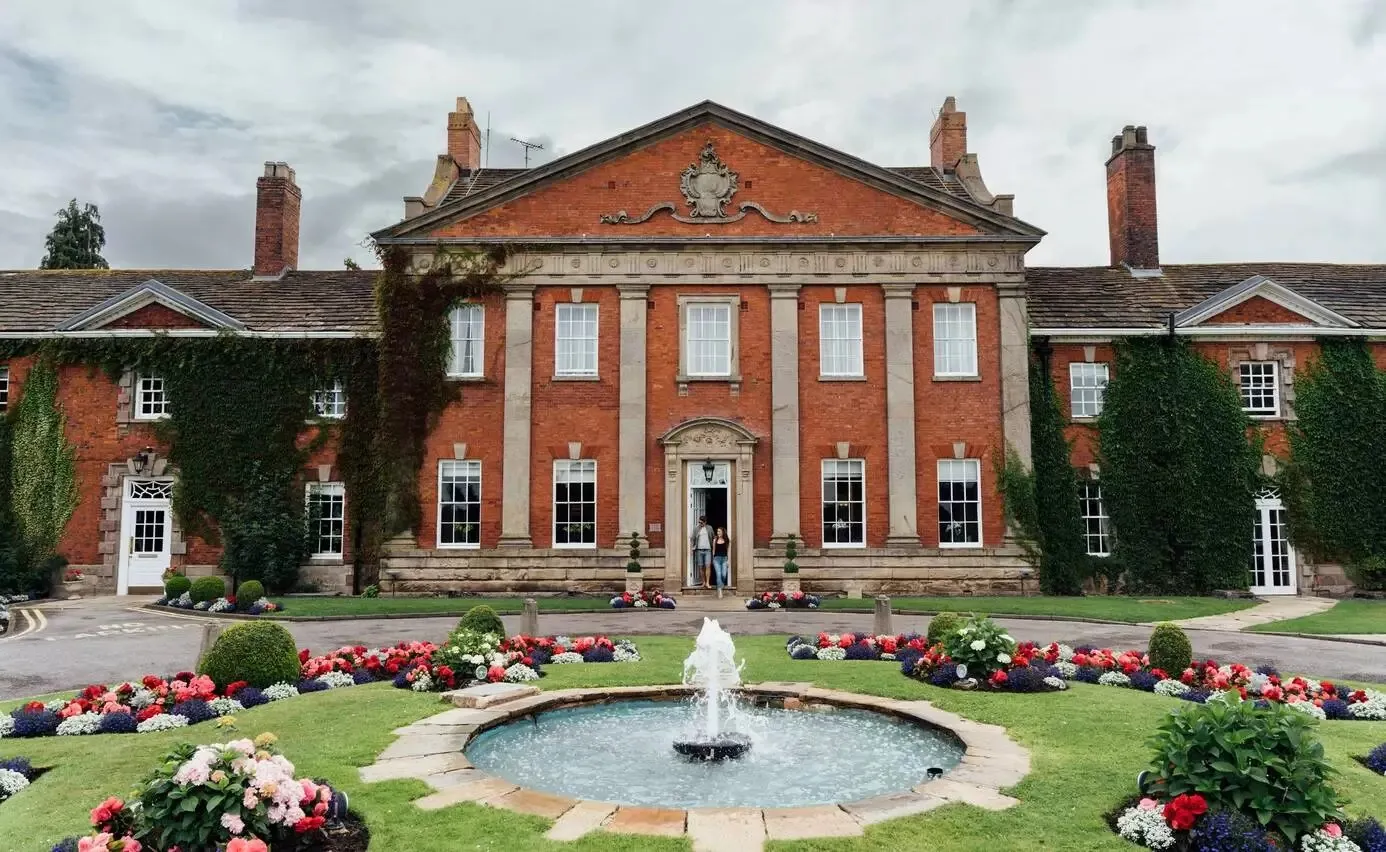
The grounds are just as beautiful as the hotel itselfCredit: Supplied
Attentive staff brought us a Mojito cocktail and a Cosmopolitan while we waited for our mains.
We finished with some tea and a cheese board.
If you’re staying for longer, Wilmslow is jam-packed with restaurants – Cibo is a favourite of footballers while Hickory’s Smokehouse is more family orientated.
What else is there to do?
Mottram Hall is an activity-based hotel.
There’s a busy golf course, and while the spa attracts a large crowd, the experience was still relaxing and we didn’t feel cramped.
I enjoyed the 20m pool, along with the jacuzzi, steam room and saunas.
The gym looked well-equipped, but I was on a rest day, ahem.
Instead, I saved myself for a Champneys massage which almost caused me to yelp, but made my muscles feel amazing two days later.
A tailored spa break including three-course dinner, breakfast and lunch is £560.
Is it family friendly?
There are some family rooms available that sleep up to three people, as well as kids menu at the restaurants
Is it accessible?
The hotel has disabled parking spaces, along with ramps to the main entrance and the restaurant.
There are also three accessible rooms which have been tailored to suit disabled guests.
Autumn is the perfect time to explore what’s going on across the UK
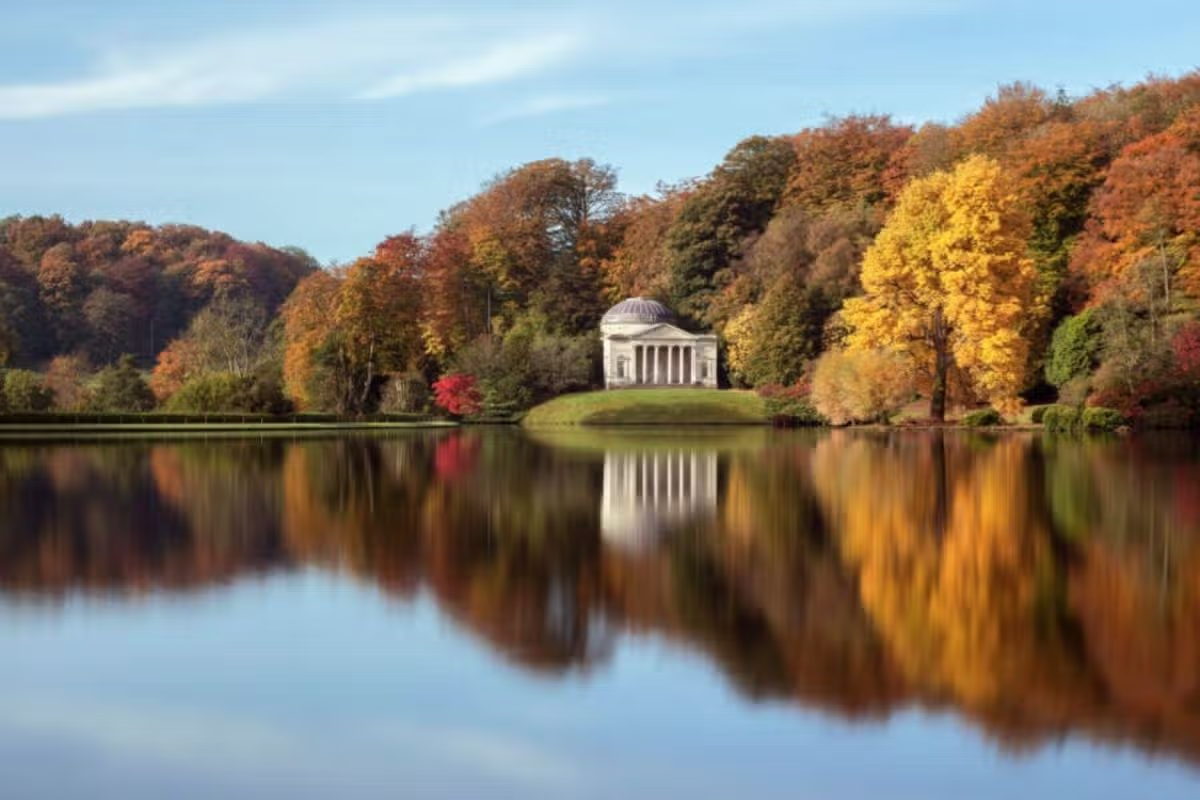
This gorgeous place is a must-see in autumn(Image: Western Daily Press)
Autumn is here, and this season is when the UK truly shines. On a crisp bright day there is nothing more beautiful than a country walk, soaking in the technicolour trees as their leaves change from green to all the red and orange shades of autumn.
The only thing that is better is the promise of a cosy pub at the end with a roaring fire, tucked away on a high street that’s teeming with independent shops. This situation might sound like a utopian dream – but there is one place in the UK where you can enjoy all of this.
If it’s the autumn colour you want, you need to start your day at Stourhead in Wiltshire.
This National Trust home and garden was one of the first grand Palladian style homes built in England, and has been kept beautifully preserved.
The home is set within 2,650 acres of lush English countryside with walking paths criss crossing the land.
There’s a vast lake on the ground and at its shores is a hidden grotto where you can look out over the water and see the bright fiery trees reflecting in the still water.
The gardens are also home to several Roman inspired temples, including temples of Apollo and Flora. Once you have enjoyed the house and the garden and maybe even stopped for a cup of tea in the cafe, you can head to the charming town of Mere.
The town is just a 15 minute drive from the property, and is a quiet haven away from the hustle and bustle of city life.
Mere is an historic town nestled beneath the South West Wiltshire Downs and close to the borders of Somerset and Dorset.
The charming high street has florists, antique stores and tea rooms, perfect for a weekend wander. There’s also a selection of pubs to choose from – and the oldest is one of the best.
The George Inn, located at the Square in Mere is the town’s oldest pub and dates back to the 16th century.
The main bar has a large, roaring log fire with cosy seating and the menu serves up classic pub food, perfect for warming up after a chilly autumn walk.
The countdown to Christmas is on with millions of Brits planning to make a festive escape. But if you’re heading overseas time is running out to sort out any issues with your passport
Christmas can be an incredibly busy travel time(Image: Dursun Aydemir/Anadolu via Getty Images)
Whether it’s a Christmas market, Lapland trip, or just seeing family, millions of Brits will head overseas during the festive season. And with only 99 days to go until the big day, one thing that Brits need to be checking right now is their passport.
Passport renewals usually take about three weeks to process after being received by the passport office, so family travel experts advise checking your document now to ensure you have plenty of time to put in an application if needed.
It’s also worth remembering that while three weeks is the general time the HM Passport Office advises for a passport renewal, at busy times of year such as the run up to Christmas this timeframe can be longer.
The advice comes from family holiday firm Lapland Famille who say that the cut off for a pre-Christmas passport application should be October 16, as this gives about a month for the passport to be issued, with around 10 weeks to spare should there be any issues or delays.
As we’re now inside the 100-day countdown to Christmas, this is the best time to check your passport and ensure it meets the requirements for your trip. It also warned that travellers should follow the official GOV.UK advise and not book a trip until they have a valid passport. It’s especially important to check child passports, as these last five years rather than ten, so make sure you check each family member’s document separately.
For those visiting the Schengen area, which includes all 29 European Union member states plus Iceland, Liechtenstein, Norway, and Switzerland, a minimum of three months validity needs to be left on your passport from the day you plan to depart the zone. This means if you were planning to leave the Schengen area on December 28 of this year, your passport will need to be valid up until March 28, 2027.
Issue dates continue to catch Brits out due to post-Brexit rules. Check your issue date is within the past 10 years if you plan to visit the EU. You should also make sure you check the FCDO advice for your destination country as well airline document requirements in plenty of time before you fly.
Alex Dyer, managing director at Lapland Famille, said: “Four passports can look in date at a glance, and it’s easy to assume the whole family is ready to go. I’d rather parents find a problem while they’re still choosing a trip, because once you’ve booked activities and arranged time off work, one unusable passport can affect everyone’s holiday.”
Pre-Christmas passport check list
Validity – should have at least three months remaining from your departure date if visiting the Schengen area
Issue date – passports issued more than 10 years ago are no longer accepted in the EU
Damage – rips, water damage, and marks can all see a passport rejected
Blank pages – most countries require at least two blank pages for stamps
Have a story you want to share? Email us at webtravel@reachplc.com
FANCY a fun day out at the garden centre, but need something a little more exciting than just bulbs and shrubs to keep the kids occupied?
These 10 garden centres have everything from enormous soft plays, to fun barns, autumnal pumpkin carving masterclasses, quad biking and even a sandy beach….
The Hollies Farm Shop, Cheshire
Molly-Mae Hague has been spotted enjoying a day out at The Hollies in CheshireCredit: Instagram The garden centre gets very autumnal and there are even on-site lodges if you fancy stretching your stay to two daysCredit: The
The family-run business started as a simple honesty box on the side of the road back in 1959, but is now a major family destination with two sites.
Little Budworth is the original and larger of the two, with a farm shop, butchery, delicatessen, cafe, gift barn and even luxury forest lodges.
In the farm shop and deli, visitors can pick up fresh fruit and veg, as well as daily baked bread, cheeses, cured meats and a homemade range of cakes and juices.
In The Barn, there is an extensive collection of gifts and homeware to explore including Jellycats – visitors can also grab a bite to eat and a fully-loaded hot chocolate at The Friesian Rooms, where there is an outdoor terrace.
For those who want to spend their time at the farm, they can choose to booka luxury forest lodge,each with its own private hot tub.
There are six lodges in total to choose from, sleeping between four and six people – each has an open plan living area, kitchen and there’s a log burner.
The lodges cost from around £298 per night for four people.
Paradise Park & Gardens, East Sussex
Paradise Park has beautiful water gardens as well as children’s activitiesCredit: Paradise park There are arcade games, remote controlled cars and soft playCredit: Paradise Park
Paradise Park & Gardens is described as a hybrid of a traditional garden centre and a family theme park.
Alongside its plant nursery, coastal gardens, water garden and coffee shop, it features an attraction zone to entertain the kids.
The indoor play area is suitable for children from toddlers to pre-teens, with token-operated arcade games, remote control cars, and a soft play with tunnels, slides and ball pits.
It also has a separate soft play area for children under three along with a miniature train and a mini golf course.
When it’s sunny, check out the outdoor play area with climbing frames, slides and a 9 hole crazy golf course.
Kids can dig about in the sandpit and even drive our remote controlled boats around the pond.
Coming up this autumn are some events too including the Halloween Trail where kids can meet Barry the Burping Monster, Squealbert the Sky Pig and naughty gnomes at the Undead Disco.
Tickets are included in entry to the park which start from £12.99.
Later on in the year there’s a Santa’s Grotto, where children can meet Father Christmas and get a little festive gift.
Tickets for children over three years old start from £21.99, and this includes all day access to the attractions at Paradise Park.
For children under three, entry to Santa’s Grotto with a Day Park Pass is £9 – accompanying adults with a Day Park Pass are £12.99.
Bury Lane, Hertfordshire
Bury Lane has a huge indoor play area with slides and cargo netsCredit: Bury Lane Kids are bound to spend hours in the Fun Barn and on the seasonal beachCredit: Bury Lane
Tucked away just outside of Royston in Hertfordshire is Bury Lane which has plants and garden ornaments to take a look at and there is quite often a seasonal pick your own, from peonies to dahlias and tulips.
From early autumn, a pick your own pumpkin patch will open – so make sure to bring your wellies.
The farm shop offers an array of fresh fruit and veg, butchers, fishmongers and a delicatessen.
Then pop into the Farm Shop Cafe for hearty breakfasts, lunches and snacks with roast dinners served up on Sundays.
If you’re going as a family though, one place you cannot miss is the Fun Barn, which it added to its site about 10 years ago.
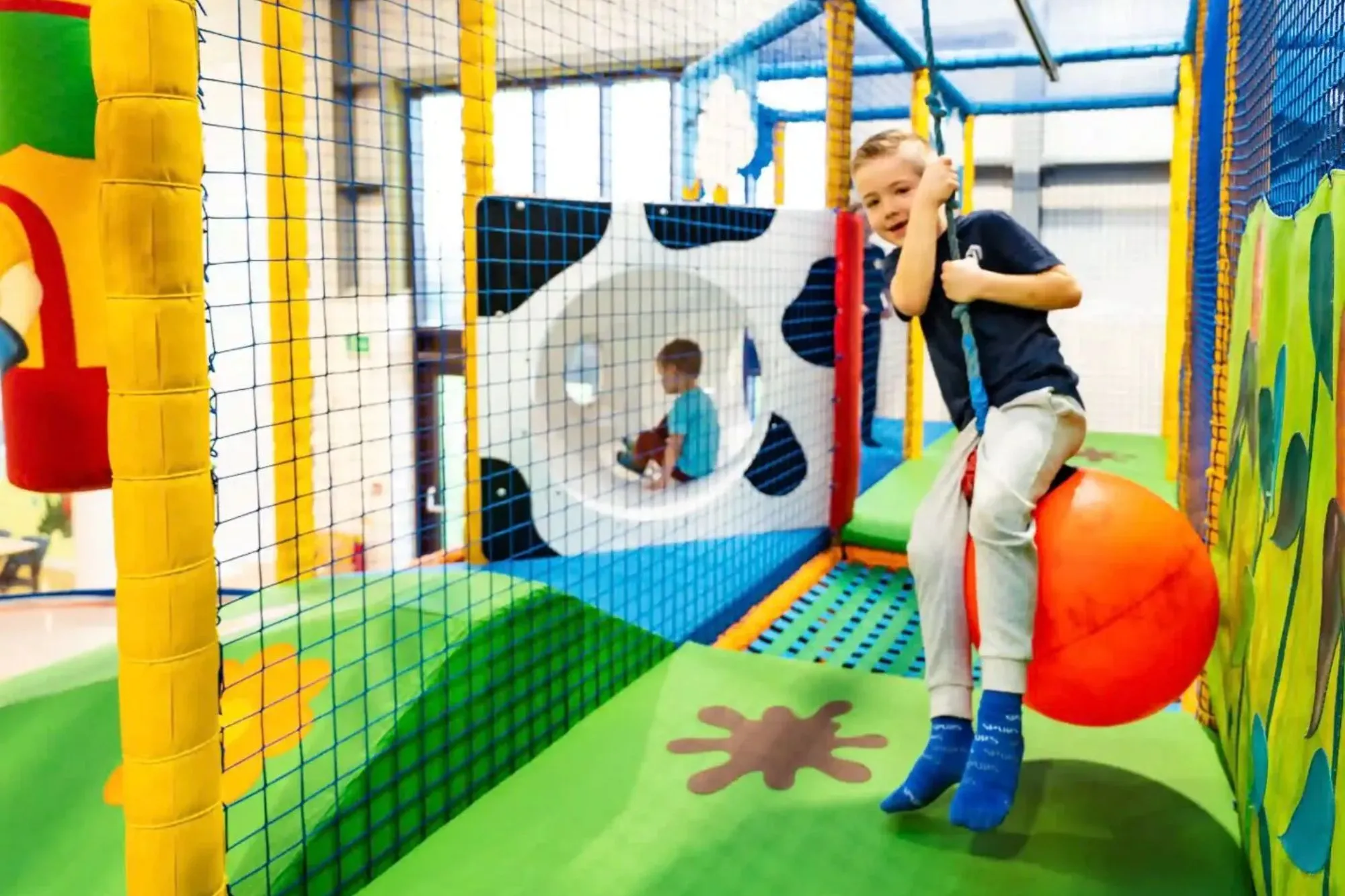
Inside is a multi-storey soft play with slides, cargo nets and activities along the way along with interactive role play areas.
It might not be what you’d expect in the countryside, but the Fun Barn also has an outdoor sandy beach with deck chairs and picnic benches dotted about.
Also outside is the adventure zone with climbing boulders, electric diggers, swings, a wooden boat to climb on, giant chess and football.
This year, the beach is open until September 27.
Tickets for the fun Barn Soft Play & Beach start from £2 (6-11 months old) and start from £2.50 (one year olds).
Tickets for two to four year olds start from £4.50, for five to 10 year olds prices start from £5.75.
For those aged between 11-17, prices start from £2 – the first adult per booking is free otherwise it’s an additional £2.
Bridgemere Garden Centre, Cheshire
Bridgemere Garden Centre is the largest in the country with plenty to exploreCredit: Bridgemere A must for kids is heading to Apple Tree Town role playCredit: Apple Tree Town
With it being the country’s largest garden centre (according to The Guinness Book of Records), Bridgemere Garden Centre has plenty for a family day out.
The massive space holds a restaurant and tearoom on site, so you can feast on a range of deli goods and brunch specials, before enjoying a pastry at the patisserie.
The area has more than six acres of gardens, including the Cottage Garden and Woodland Walk – and kids will have plenty of space to run around.
To keep them even busier, head to the centre’s soft play and the role play area called Apple Tree Town.
Inside is a mini cinema, police station with its own cell, garage that has a car, cottage, shop, post office and vets – all of which have dressing-up options too.
When it comes to events, Bridgemere Garden Centre will have its own Halloween codebreaking trail through the autumnal gardens.
Children must find the pumpkins and decode the letters to solve the special word – hand in the sheet and get a Halloween treat.
Tickets start from £3.99, and if you fancy pumpkin carving too, tickets start from £8.99.
Coming up to the Christmas season, the garden centre will have its own Santa’s Grotto where children will receive a gift and get a photo.
Ticket prices vary on the day and are dependent on age of the child – head here to book in advance as Santa will get very busy.
Stay for the breakfast and order a festive fry up, a pancake stack or an Elf’s Benedict with Santa and his elves – and hear a festive story.
Tickets for a festive breakfast with Santa are £18.50.
Barton Grange Garden Centre, Preston
Barton Grange Garden Centre is constantly voted the best in the countryCredit: Instagram/@bartongrangegc Kids will be amazed by the pumpkin sculpting masterclassCredit: Barton Grange
It was named the Destination Garden Centre of the Year by the Garden Centre Association’s (GCA) Awards – and its won the award six times before that too.
It has a huge garden area along with a farm shop, cook shop, clothing store, the Riverside Cafe and Willows Restaurant.
The children’s menu has hot meals for £9.60, as well as make your own lunch boxes from £7.20.
Throughout the year, the garden centre holds evenings from evenings with horticulturists to pottery painting sessions.
There are also pumpkin sculpting masterclasses where an expert demonstrates how to turn the squash into characters like Stitch, from Lilo and Stitch.
In November, it will be launching its Santa’s Grotto where children can meet Santa and his elves before selecting a gift from the present room, which is brimming with toys
Then there’s a stop at Mrs Christmas’ kitchen where children can decorate their own gingerbread house cookie.
Tickets to the grotto start from £30 for one adult and one child.
And while technically it’s not inside the garden centre, just across the road is the Flower Bowl Entertainment Centre, which has crazy golf, bowling and a cinema for kids to enjoy.
Yarnton Home & Garden, Oxfordshire
Yarnton Home & Garden in Oxfordshire has a play area called the Magic Garden for childrenCredit: UnknownInside is a nature-themed soft play with climbing frame and soft gardening toolsCredit: Yarnton Home and Garden
It has beautiful plants, garden furniture, gifts and food is served at the Allotment Cafe.
The garden centre also has a children’s toy shop filled with puzzles, soft toys and books.
To entice kids out of the shop, head to the Magic Garden, a nature-themed indoor play area.
Designed for children up to 10, it has a climbing frame made to look like a garden shed along with tunnels, rope bridges and slides.
There’s also a see-saw, swing, foam gardening tools to play with, a teepee and for the parents, comfy sofas.
The soft play centre is completely free to enter.
If you fancy getting crafty, there are lots of events on throughout the year like the Pumpkin Workshop.
Kids can get hands on scooping and carving their own pumpkin for Halloween.
The workshop takes place every hour between October 26-30 from £6.99pp.
The garden centre also has its own Potting Shed Studio where you can create your own masterpieces or simply paint them.
You can book a table for up to six people for an hour session with a booking fee of £1pp.
Craft Nurseries, Essex
Craft Nurseries in Essex has a huge soft play for kidsCredit: Craft Nurseries Don’t forget to have a gander at the plants and shrubs tooCredit: CraftNurseriesGardenCentre/ Facebook
Whether you’re looking for plants, shrubs, seeds, or just a day out, Craft Nurseries in Essex is one to visit.
Its indoor soft play barn will keep kids occupied, along with a dedicated play section for young children and babies.
There’s also an outdoor area with a bouncing pillows, farm animals like pygmy goats and rabbits, and a mud kitchen.
Tickets to the soft play start from £4 (children aged 0-2) and £7.50 (children age 2+).
Accompanying adults must also have a ticket – these cost £3.
The garden centre also has a restaurant and coffee shop all set within the grounds.
Birchen Grove, London
Kids will love racing around the track on quad bikesCredit: UnknownKids can enjoy role play at The Grove Playtown which has 11 themed roomsCredit: Birchen Grove Garden Centre
Along with being a lovely garden centre filled with a collection of outdoor planes, houseplants, gifts and pots – the children’s play area at Birchen Grove is hard to beat.
It has a huge indoor play area called The Grove Playtown which has 11 themed rooms from shops to a police station, doctors, hairdressers, to an ice cream truck.
There’s also plenty of opportunity for kids to get dressed up with fancy-dress costumes.
To secure a spot it’s advised to make a booking, with children’s tickets from £8 and accompanying adult tickets from £2.
The sessions last an hour and a half.
The fun doesn’t stop there, as outside there’s lots of play equipment from swings to a climbing frame and quad bikes.
Kids can hop on and off – they just need a token from the tills and it costs £2 a go.
The quad bikes are open 11am to 3pm every weekend and during the school holidays (children under 90cm must be accompanied by an adult).
Vanstone Park Garden Centre, Hertfordshire
Vanstone Park Garden Centre has a huge outdoor play area – and a lakeCredit: Vanstone Park There’s even a miniature railway which chugs through the groundsCredit: Vanstone Park
The family-run business started back in 1976 selling plants and gardening essentials – but outside is where the fun begins.
The children’s playground has the usual swings, climbing frames and slides, as well as a bouncy castle.
For any fan of trains, hop onboard the miniature railway through the grounds and woodland.
Or take a walk around the Wildlife Lake, where you can spots birds like the Greylag Goose and Moorhen.
If you’re lucky, you might even spot a deer grazing nearby.
Don’t forget to pop into The Greenhouse Cafe for a hot dinner, toasted panini, sandwich or afternoon tea.
Brookside Garden Centre, Stockport
Brookside Garden Centre has a vintage funfair on some weekends – including one for autumnCredit: Keelings FunfairThere are lots of traditional rides with some even dating back to the 1930sCredit: Keelings Funfair
Brookside Garden Centre in Stockport might look like your average garden centre, but on some weekends throughout the year it has a funfair takeover.
It’s a vintage attraction with some rides and games dating back to the 1930s.
Think classic merry-go-round, hook a duck and swinging boat rides.
Its next upcoming funfair will be on September 26-27 between 11am and 4pm.
The following month, there will be a Spookside Halloween Celebration from October 31-November 1 between 11am and 4pm.
The funfair is completely free to enter, rides and games are paid for with tokens that you can buy on arrival.
The garden centre is also home to the Brookside Miniature railway where families can hop onboard a ride that’s over half a mile long.
They’ll be celebrating Halloween during Spookside too and the line will be kitted out with creepy decor.
The train fare is £2.50 for everyone over the age of two.
A couple have described their terrifying escape after a wildfire surrounded their holiday resort, forcing hundreds of guests to flee towards the sea. Stephen and Anna Saunders had been staying at the Gava Waterman resort on Brač in Croatia for a week-long holiday.
Guests at the all-inclusive four-star waterfront hotel were initially reassured there was “nothing to worry about” despite ash falling from the sky and a huge orange glow visible over the hills. The couple, from Rainham, Kent, had arrived on the island last Monday and were aware there had been wildfires in the area for several days.
Stephen said a guide warned them on Friday that lightning strikes had caused the blaze. Despite the fires being close by, he said guests were repeatedly told the situation was under control. But on Saturday evening, September 12, the pair went out to dinner with friends and said they could see an “orange glow” in the sky.
“There was ash falling into our drinks,” Anna said. Just after 9.30pm, the power went out at the hotel. Shortly afterwards, Stephen says ash was “visibly falling from the sky”. At that point, the couple returned to their room and decided to pack a small bag “just in case”. Within minutes, a friend told them that trees were on fire right next to the hotel.
Anna said: “The embers were blowing across. I quickly changed my shoes and we went down by the sea, but there were no lights, and no one from the hotel was present. The fire was just shooting across, and it just came down so quickly, so we thought the best thing to do was get in the water.”
The 52-year-old said hundreds of people eventually gathered on wooden platforms and in the sea as smoke and flames surrounded the bay. “Everyone was absolutely terrified”, she added. “There were hundreds and hundreds of people all on these platforms or in the sea. We were basically trapped.”
Stephen said the only staff members he saw were entertainment and restaurant workers. He says there was no emergency lighting, no clear evacuation route, and reception was empty. A spokesperson for Waterman Hotels and Resorts denied that guests “were abandoned by the resort team”.
Stephen said he had to rescue an elderly couple who became stuck in automatic glass doors. “There were families, elderly people and disabled guests trying to get down a steep, dark resort towards a rocky beach while the fire closed in behind us,” he added.
“Within minutes, the trees around the beach were burning. The flames were above us. It was getting really hot and burning embers were raining down from the sky. At this point, people were jumping into the sea and trying to get away from the smoke.”
Firefighters eventually arrived and helped to organise a sea evacuation, and local boat owners came to help rescue those trapped. Stephen said around 50 boats came to help and praised the firefighters and local people who came to their aid.
The 57-year-old electrician said: “If it weren’t for them, I don’t know what would have happened.” The couple, who booked the holiday through TUI, were moved to accommodation in Split in the early hours of Sunday morning – on Anna’s birthday.
They returned home on Monday evening, but Anna said the experience has had a lasting impact. She explained: “We’re not sleeping properly. You just close your eyes, and you’re going through it all the time.”
Stephen said their luggage is expected to be recovered, although other guests lost their possessions. He is planning to lodge a formal complaint to the hotel along with other people impacted last week.
A spokesperson for Waterman Hotels and Resorts said it recognises how “frightening and traumatic” the ordeal was for guests and does “not seek to diminish or challenge anyone’s individual experience” of the evacuation. They explained that the resort’s layout, the loss of electricity, heavy smoke and poor visibility, and the speed at which the fire advanced meant guests experienced different circumstances and had access to different information at different times.
“We would, however, like to correct one important claim that has appeared in some accounts: our guests were not abandoned by the resort team,” they said. They said staff at the resort, which also hosts easyJet and Jet2 trips, initially acted on “the official information and instructions provided by the authorities and emergency services coordinating the response to the wildfire”, and the resort had been instructed not to evacuate guests.
They added: “Conditions then changed with extraordinary speed. An extreme change in wind drove the fire towards the resort, power was lost, and heavy smoke severely reduced visibility.
“When our team on the ground saw that the situation had changed dramatically and that the fire presented an immediate danger to the resort, our reception manager made the decision to activate the alarm and begin the evacuation. Our employees then assisted guests throughout the evacuation.
“The final group of our employees involved left on the last boat used in the evacuation, after establishing that the guests had gone. Other employees travelled during the fire to assist guests and colleagues at the resort.”
Courage and extraordinary efforts
The spokesperson said reception, kitchen, technical and other resort staff stepped forward to help. They added that the company has received many messages from guests thanking them for their assistance, but accepts that “this does not mean that every guest had the same experience”.
“With more than 360 guests spread across a large resort, no electricity, heavy smoke, extremely poor visibility and a fire advancing at exceptional speed, it was extraordinarily difficult for information and assistance to reach everyone simultaneously,” they explained.
“We understand that some guests therefore felt they did not have the information or guidance they needed at critical moments. We take those experiences seriously.
“However, just as we would never question the fear or distress experienced by any of our guests, we believe it is important that the actions of the many employees who remained and helped others in extremely dangerous circumstances are also accurately represented.”
The team is currently working through inquiries from guests regarding luggage, documentation and other belongings. The spokesperson described the situation as an “extraordinary emergency”, with conditions changing “minute from minute”.
They said: “The courage and extraordinary efforts of the firefighters and emergency services, the solidarity of local people who came by boat and helped evacuate guests, and the commitment of our own employees are not things we believe should be called into question.
Deeply traumatic
“They are a source of profound gratitude and pride, and they are a major reason why far more serious and tragic consequences were avoided.
“We will examine our own actions with the same seriousness. We will conduct a detailed review of the events of that night, including our procedures and communications, and identify any lessons that need to be learned.
“Saturday night was deeply traumatic for our guests, our employees and the local community. Alongside that trauma, however, we will remember the extraordinary courage, solidarity and willingness of people to help one another in exceptionally dangerous circumstances.”
A TUI UK spokesperson said: “We know this will have been a frightening and distressing experience for those affected by the wildfire on the island of Brac. The safety of our customers is our highest priority, and our local teams have been supporting those impacted and working closely with the hotel and local authorities.
“We would like to thank the emergency services for their response to this rapidly developing situation.”
COBBLED streets, vintage shops, pubs with roaring fires all surrounded by rolling countryside hills – you’ll find it all in this Yorkshire village.
There’s no better time to visit than autumn, as the whole village gets a seasonal overhaul with huge shop displays and twinkling lights for the dark evenings.
Haworth in Yorkshire is a beautiful spot to visit in autumnCredit: AlamyThe Main Street even undergoes an autumnal makeover for spooky seasonCredit: Alamy
The West Yorkshire village called Haworth has absolutely everything associated with autumn from cobbled streets to charming cottages and cosy cafes.
Main Street is full of independent shops – and was previously named as one of the most beautiful streets in the UK.
Sign up for the Travel newsletter
Thank you!
It gets a makeover for autumn with plenty of pumpkins, orange lights and leafy displays around shop entrances.
Popular stores include Mrs Beighton’s Sweet Shop which has over 500 varieties of sweets, Haworth Wholefoods for local artisan bread, and The Cabinet of Curiosities that’s filled with candles, oils and bubbling cauldron bath bombs.
Other shops include Oh La La Vintage for items from the 1920s onwards, and Chocolate for sweet treats, along with galleries and bookshops.
For pubs, there’s the Fleece Inn which serves up homemade pies and Whitby scampi sold alongside its range of ales.
Rooms are available to book too with the double room with a walk-in shower available from £145 (£72.50pp) – a single room can be booked from £60.
If it’s a hot drink in a cafe that you’re after, then head to the Old Post Office for a slice of cake, or a warm Belgian waffle.
The village has caught lots of attention on social media thanks to its autumn feel with some comparing it to Starry Hollow from Gilmore Girls.
The beautiful village attracts visitors from all over the worldCredit: Alamy
One woman who filmed her visit to Haworth on Instagram described it as a “village that feels like it’s been lifted straight out of a storybook”.
Comments on the post read:” Looks magical!” another added “this is so cute! Like you are in a fairytale”.
The town has literature connections too as it was home of the Brontë sisters, who between them wrote books like Wuthering Heights and Jane Eyre.
Yorkshire.comexplained: “Home of the famous Brontë sisters, Haworth is an undisputed literary mecca, attracting visitors from all around the world.“
You can book a room at the local pub from £60ppCredit: AlamyIf visiting over spooky season, book a ride on the steam railwayCredit: PA:Press Association
“With its historic cobbled Main Street, iconic parsonage and rolling moors, the picturesque proportions of this Airedale village exude a vintage charm that makes you feel you’ve stepped into another era.”
If you want to arrive at the village in a truly Old England way, then there’s a steam train that links the town along the Keighley & Worth Valley Railway.
The train regularly features in films, such as the Railway Children, which was filmed in Haworth.
It has a regular timetable, while special weekend events like like vintage experiences and for autumn, one called The Spooky Express.
OUR Spotlight On column gives you the lowdown on what to see and do in some of the best holiday destinations abroad as well as some lesser-known spots in the UK.
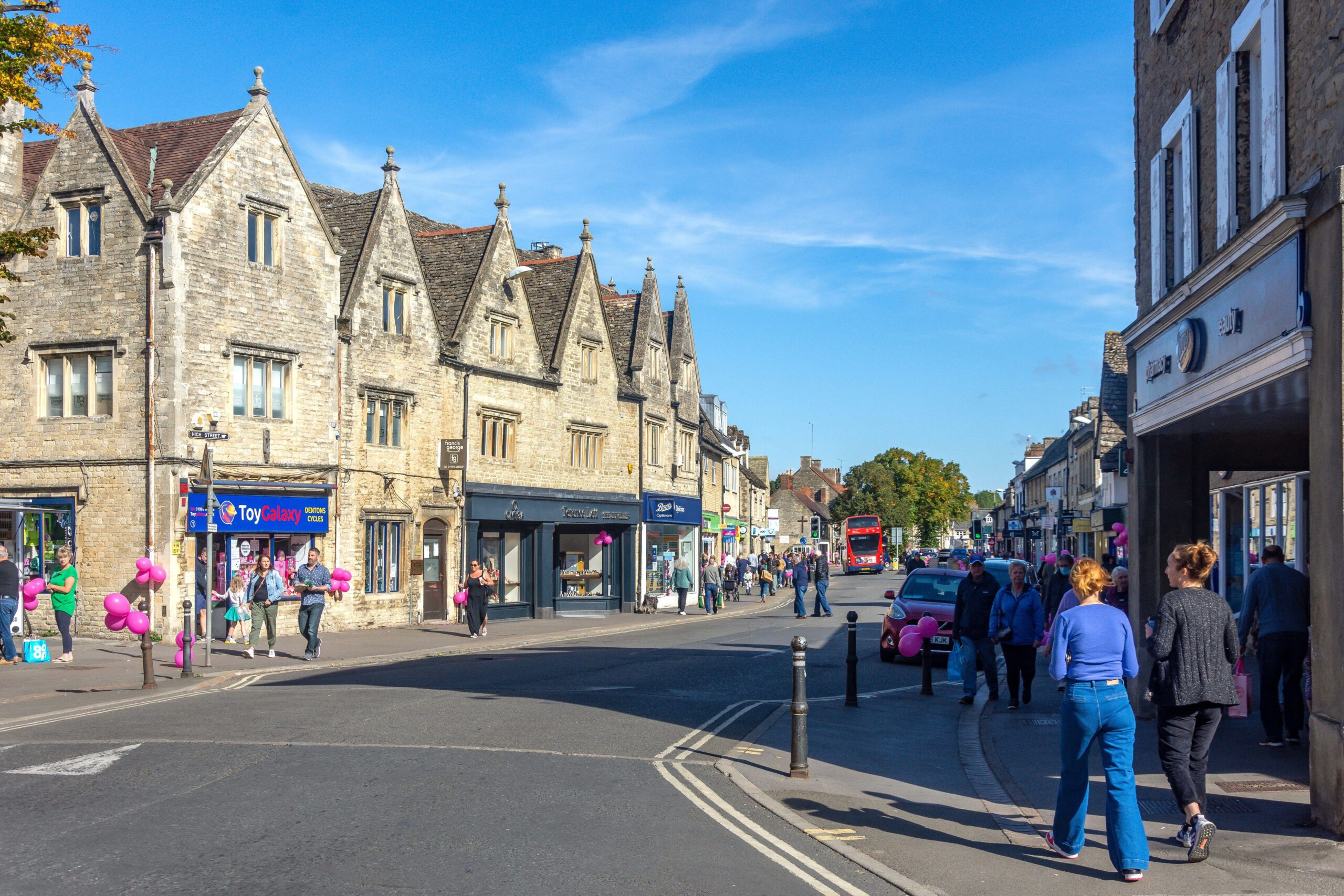
Learn about the town’s history in wool at Witney Blanket Hall, which dates back to 1721 and is free to visit (make sure to pick up a blanket at the gift shop too).
And kids will love Cogges Manor Farm with 17 acres to explore which includes an adventure playground and animals they can feed and pet.
Tickets start from £12 for adults, see cogges.org.uk.
Otherwise a short drive away is Blenheim Palace as well as Jeremy Clarkson’s The Farmer’s Dog.
HIDDEN GEM
Only known by locals, head straight to Sandwich de Witney for one of the heartiest baguettes you’ll have ever seen.
Just don’t be too late – most of them sell out shortly after lunch.
For evening entertainment, catch some comedy or some live tribute acts at the very tiny Fat Lils music venue.
Previous comedians have included Greg Davies and Milton Jones. Tickets from £5. See fatlils.co.uk.
Did you know the town was known for its blanket making?Credit: Alamy
BEST VIEW
Grab a coffee and head down to the banks of the River Windrush which runs through the town.
The peaceful break from the bustling town is the ideal escape, where you’ll be mainly joined by joggers and a few cows in the distance.
It even used to host the World Pooh Sticks Championships, so grab a stick and get racing.
RATED RESTAURANT
If there is one thing Witney has an abundance of, its pubs.
And one of the finest in town for a meal out is The Fleece, a gastropub and hotel.
You’ll be licking the crumbs off the plate of the Devon crab cakes, and I’d go back just for Aubrey’s Cheeseburger, complete with the crispiest chips and pickles.
There’s a fantastic list of desserts, but my sweet tooth was satisfied by the bizarre, yet strangely delicious Banana Brulee Old Fashioned.
BEST BAR
If you love a beer, head to the Crafty Pint Bar.
It was recently named Oxford Pub of the Year by Campaign for Real Ale (CAMRA), with a number of independent beers both on tap and by the bottle.
Try the Little Ox which is brewed just down the road.
Otherwise for the best vibes on a Friday night, head over to the Como Lounge in the centre of town where you can get two cocktails for £13.25.
HOTEL PICK
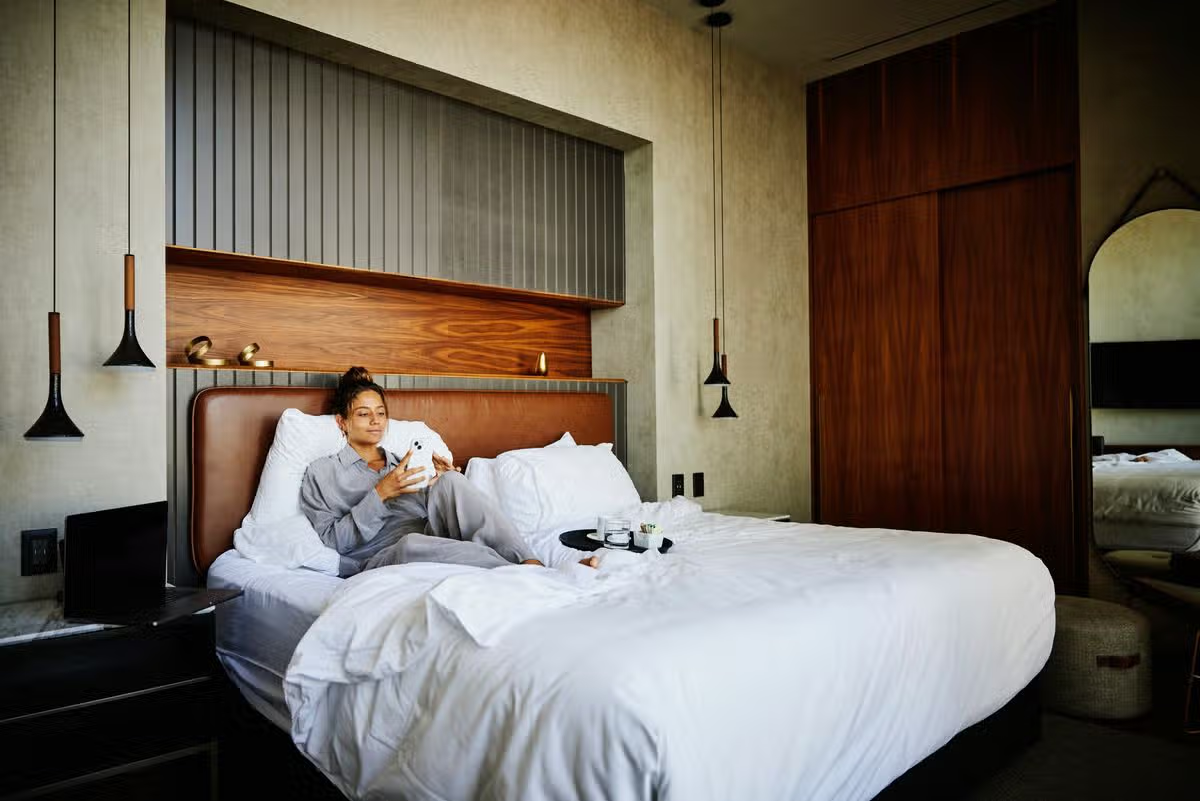
The Blue Boar ticks all the boxes – central location, cosy-yet-modern bedrooms and a fantastic restaurant downstairs.
Originally a 17th century coaching inn, there’s just 20 rooms to choose from, each with four poster beds, DAB radios and Nespresso machines.
Some rooms have views over the town centre, and easy has lush bathrooms kitted out with fluffy towels and luxe toiletries.
After recent renovations to the bar and restaurant, it reopened last week. Rooms start from £81. See acornpubs.co.uk/blueboar.
WANT to know what true happiness feels like? You’ll need to ditch crowded European beaches for mud-covered, chill out sessions and freezing cold lakes.
So on a recent trip to Finland, I really put those stats to the test exploring different parts of Finnish life and culture to find out just why they are so cheerful.
Saunas
If the Finns are known for one thing, it is their saunas.
With a staggering 3.2million saunas compared to 5.2million people, there is nearly a sauna per 1.6 people.
And until experiencing the sauna culture in the country for myself, I didn’t get the hype.
The country has a sauna per 1.6 peopleCredit: Cyann Fielding
But being in a sauna is the ultimate relaxation.
And they aren’t all the same kind – you get saunas of different temperatures, wood-fired saunas, smoke saunas and so on.
My favourite was the peat sauna, where I covered myself in mud and let it harden before scrubbing it off in the shower.
It is meant to do wonders for your skin and I did feel very refreshed and clean afterwards.
Saunas are also proven to be good for your health, with benefits for your heart, circulation and stress levels – promoting relaxation, better well-being and a decent night’s sleep.
Free foraging
There are also rights that allow people to freely forageCredit: Cyann FieldingForaging can include mushrooms, berries and flowersCredit: Cyann Fielding
In Finland, there are Everyman’s Rights – a traditional legal principle that allows everyone to freely explore nature without the landowner’s permission or having to pay a fee.
Whether it be swimming, walking, cycling or even riding a horse, you are allowed to do it all – even on privately owned land.
As part of the rights, you are allowed to pick wild berries, mushrooms and flowers as long as they are not protected species.
And Finland is abundant with tasty berries such as blueberries and lingonberries and mushrooms, such as chanterelles and porcini.
I love UK forests and it is always fun to see different mushrooms, but having such a variety that are safe to eat is something a little more special.
Forests & lakes
Across the country you’ll also find calm lakes and sprawling forestsCredit: Cyann FieldingLake Saimaa is the biggest in the countryCredit: Cyann Fielding
Seventy per cent of Finland is covered in forest and 10 per cent of the land area is lakes.
With that in mind, there are a lot of lush green places to walk and open calm waters to swim in.
In total, Finland has around 188,000 lakes with the largest being Lake Saimaa, which is where I visited.
Despite the water being a chilly 17C, thanks to the Everyman’s Rights you can dip in and out as much as you like.
The refreshing dips truly are invigorating and very relaxing if paired with a session in a sauna.
Most of the lakes are surrounded by dense forest with towering trees that look like they have been ripped out of a fairytale.
You can spend even longer enjoying it as you are allowed to pitch a tent for a night or two freely.
Kota culture
When in the forests make sure to look out for kotas as wellCredit: Cyann Fielding
Across the parks, forests and at the edge of lakes you will find these cosy-looking indoor-outdoor cabins.
These are actually nicknamed ‘kota’ or ‘Grillikota’ and are shelters invented by the indigenous Sami people of Lapland around 4,000 years ago.
Over the years, the huts have been modernised relevant to today’s uses and now they are usually hexagonal or octagonal wooden cabins along hiking trails used to grill sausages and make food while enjoying outdoor adventures.
Public huts, such as those I found on one of the many islands on Lake Saimaa, are unlocked and free to use and are usually managed by the Finnish Forest Administration.
There only tends to be one rule and that is that the space must always be made for the newest, most exhausted hiker who arrives.
Firewood is also provided for free at public kotas and you must leave no trace.
Less people
And in each city, you won’t see many peopleCredit: Cyann Fielding
Finland is about 1.4 times bigger than the UK, yet the country’s population (5.2million) is just over half the population of the UK’s capital, London (9.1million).
While initially I felt a little uncomfortable when walking around Imatra and seeing no people, it means that everywhere is so peaceful and constantly clean.
The entire time I was in Finland I didn’t see a single piece of rubbish – but with an incentive of around 20 cents per bottle you recycle, it’s easy to see why.
Now the company has applied for FOUR new patents, giving fans a sneak peek at what to expect at their theme parks in the future.
Sign up for the Travel newsletter
Thank you!
These include a hybrid ride vehicle that can transition between being suspended from a track – as if it is floating through the air – to floating on the water.
Images show that the boat-style car would connect to an overhead arm and then when it enters the water it would detach from the arm and float like a normal boat.
Another patent reveals an AI guide – an audio tour that would be able to see your surroundings and then talk to you.
It isn’t clear yet what the AI guide would be used for by Universal, but it sounds like it could be along the lines of a Google Lens or Pokemon Go experience.
It is also unclear whether these patents are specifically for the UK park or all parks.
What we do know though, is that this week the Universal United Kingdom Resort announced the 23 contractors, engineers and architects that will be used for the project.
The park will spread across 476 acres and feature the theme park as well as hotels, restaurants, shops and even room for possible future expansion.
The theme park will be split into four “zones” – the Core Zone, Lake Zone, West Gateway Zone and the East Gateway Zone.
Accommodation and business hotels will be in the Lake Zone, as well as an entertainment complex and a convention centre.
West Gateway Zone and the East Gateway Zone will be where guests arrive by train and car, with restaurants and hotels.
This is also likely to be where the Entry Plaza area will be, as well as parking and a 500-room hotel.
When it comes to what will actually be inside the theme park itself, there are plenty of rumours flying around.
What we do know is that there will be indoor and outdoor rides, as well as areas for shows and entertainment.
The park could have an AI Guide experience as well as a ‘floating’ rideCredit: PAThe park will have both indoor and outdoor ridesCredit: Universal
The plans state: “[Guests will] experience blockbuster attractions, adrenaline-pumping coasters, and mind-blowing spectaculars.
“They’ll come face-to-face with incredible creatures, heroes, and villains.
“They’ll discover great food, new laughs, new ways to play, and step into immersive worlds they’ve only ever dreamed of.”
There will also be a maximum height of anything in the theme park of 115metres – which if this were to be a rollercoaster, it would take over from Red Force at Ferrari Land (part of PortAventura World) in Salou, Spain, as the tallest in Europe.
Despite Universal not confirming the park map or rides that will feature, industry speculation expects the attraction to focus on its British roots with much-loved franchise Harry Potter featuring.
We all want to experience those additional delightful perks when staying at a hotel, and there’s one sure way to bag a late check-out for free, and it’s all about timing
Bagging a late check-out means there’s more time to enjoy your luxurious hotel room without the rush(Image: Getty Images/Stock Image)
Checking into a hotel is a little slice of luxury, whether it’s for a quick city break or a rural escape in the countryside. So it’s no wonder that we want to make the most of every moment in our boutique abode or lavish room and take advantage of a late check-out, something you can often get for free. That’s if you know what to do, and believe it or not, timing is everything.
For several years, I worked as a hotel receptionist, managing room upgrades, check-ins, dinner reservations, special occasions, check-outs, and all the other guest perks that we could provide for free. One of which was a late check-out, and it became a frequent request. Even more so when guests have enjoyed cocktails in the hotel bar and need to vacate their rooms by 10am the following morning. But we wouldn’t and couldn’t hand out a free room update to everyone.
The housekeeping staff needs to access the rooms promptly so they can clean them all thoroughly before the next batch of guests arrives at 3pm, with time of the essence, particularly for Friday arrivals. This meant that we’d only allow a handful of late room check-outs each day, and there was a specific time to ask for the best chances of scooping one of these coveted perks.
Most guests would assume that asking for a late check-out on the morning of their departure was the best option. I can recall countless times when I’d receive a call from a guest at 9.55am asking for a late check-out, and most of the time my answer would be no. For one, it’s too last-minute, and there could be a guest checking into that specific room later that day. Secondly, by this time, I could have already dished out a few late check-outs to other guests, with no more wiggle room for any more, considering housekeeping time constraints.
So you need to plan ahead, and I don’t mean asking before you’ve even arrived. Instead, swing past reception on your way to dinner or afterwards on the way back to your room, the night before you check out. If you’re staying for a few days, wait until your last evening to ask for the request. This would always be the best time to hand out late check-outs, and I’ll explain why.
Typically, the reception desk is quieter in the evening, so staff have more time to handle requests and check the system to see how a late check-out can work in favour of the next day’s arrivals. They can check whether the room the guest has asked for a late check-out in has an arrival the next day; if not, a late check-out is super easy to offer. They can also check for any late arrivals into that room for the following day, move rooms around for the next arrivals, or simply check how many they’ve already dished out.
As mentioned, we would only offer a handful at a time, and the earliest we’d agree to a late check-out would be the night before their departure. Plus, room keys were not programmed until the morning of arrivals, so there’s a lot more flexibility in the evenings to move things around. It’s also worth noting that many hotels will prioritise requests from those celebrating a special occasion, so tick that box!
The worst time to ask for a late check-out is before you’ve even arrived at the hotel or checked into the room. There can be countless changes at hotels: reservations can be cancelled, people can switch rooms, and issues can arise, so it’s hard to predict what pressures the hotel might face to turn rooms around in time for the next arrivals. So always ask the night before you check out.
If you want to try your luck, you could politely request a late check-out on your booking notes. This way, the hotel will read it and deal with it appropriately and in their own time, most probably the night before. We would always do our best to meet requests, but sometimes our hands were tied. Just don’t ask when you check in, it’s the last thing on our mind to sort.
Do you have a travel story to share? Email webtravel@reachplc.com
IF you’re itching for your next getaway but don’t want to break the bank, we’ve found the travel hack for you.
Travelzoo scours the internet for the best value holiday deals and piles them all into one place – and Sun readers can unlock these bargains instantly for £1.
Unlock an all inclusive Croatia holiday for £258ppCredit: Alamy
Sign up to Travelzoo for £1 (30 day trial)
A Travelzoo membership usually costs £30 for the year, but right now you can try it out for 30 days for £1.
Once you’re signed up, you’ll have access to hundreds of affordable package holidays across the UK, Europe, Asia, the Caribbean and beyond.
Sign up for the Travel newsletter
Thank you!
We’ve rounded up our favourite Travelzoo deals, including UK staycations from £79 and all inclusive holidays from £151pp.
Snowdonia break – £79
Stay in the pretty village of Betws-y-Coed in the Snowdonia National ParkCredit: Getty
Save 49% on a Snowdonia staycation with this mini break in Betws-y-Coed, a pretty mountain village at the base of Eryri.
Stay in a Stables Lodge Room and wake up to a traditional Welsh breakfast, with the waterfalls and hiking trails of Gwydyr Forest on your doorstep.
You can bag an overnight break for two for £79 (which saves you 49% compared to booking direct) or upgrade to a two night stay for £149.
Athens break with Acropolis tour – £299
This Athens holiday deal includes an Acropolis, Parthenon & Acropolis Museum guided tourCredit: Alamy
Save £182 on a trip to Athens plus enjoy an Acropolis tour with this Greek package holiday.
This four-night trip includes flights, transfers and a stay with breakfast in a deluxe, fountain view room at the posh Athens Tiare by Mage Hotel.
Four nights gives you plenty of time to wander the city’s ruins, outdoor markets, sip cocktails on its rooftop bars and pack in your Acropolis, Parthenon & Acropolis Museum guided tour.
Sign up to Travelzoo for £1 (30 day trial)
All inclusive Marrakech – £151
Bag an all inclusive holiday to Marrakech, where temperatures still sit at 30C in the autumn monthsCredit: Getty
This deal is for a three night stay at the 4* Aqua Mirage Club & Aqua Par on an all inclusive basis, so get ready for that buffet and those endless cocktails.
On-site you’ll find tennis courts and a football field to work up an appetite, plus three pools and a daily shuttle bus into central Marrakech for exploring.
With temperatures still hitting 30°C in September and October, it’s the ideal option for a slice of sunshine as the weather gets chilly.
2 night Victorian seaside break in Devon – £169
Visit Devon’s “Little Switzerland” with a stay in LyntonCredit: Alamy
Take a trip to “Little Switzerland” in North Devon, so-named due to its gorges, deep valleys and dramatic cliffs that will mentally transport you to the Swiss Alps.
Hop on the Lynton & Lynmouth Cliff Railway to ride the highest and steepest water-powered railway in the world, or watch wild goats climb at the Valley of Rocks.
This deal includes a two night stay at The Crown Hotel in Lynton, arestored 17th-century inn, plus a delicious hot breakfast and £25pp credit for dinner.
Sign up to Travelzoo for £1 (30 day trial)
All inclusive Croatia – £258
Explore the pretty village of Slano, Croatia for £258ppCredit: Alamy
This all inclusive Croatia break includes your flights plus a five-night stay in a sea view room at Hotel Osmine for £258pp, which shaves off up to 57% off full-price.
This hotel sits in the sleepy fishing village of Slano, a village centred around a sweeping crescent bay of sparkling water backed by lush emerald green pines.
When you’re not wandering the pretty village, try out archery, kayaking or surfing back at the hotel, then sit down to a Mediterranean meal in the hotel restaurant and sit back to enjoy the evening entertainment
Istanbul, three nights and flights – £129
Visit Istanbul for £129 with this deal bundling in your flights and accommodationCredit: Alamy
Bag flights and three nights in Istanbul for £129 with this deal, and tick off the only city in the world that sits between two continents: Asia and Europe.
Stay at the Ramada Encore By Wyndham Istanbul Kartal Hotel, a modern, four-star hotel with a gym, clean and comfortable rooms and a sleek lounge to chill out in.
Here you’re close to Aydos Castle and Hill, where castle ruins weave through thick forests, and the Kartal Municipality Story Museum, where you’ll find whimsical statues and models from local legends.
Sign up to Travelzoo for £1 (30 day trial)
More Travelzoo deals
Here are more foreign holiday deals available to Travelzoo members:
THERE’S lots of exciting things happening in 2027 across England, with plenty to interest all ages.
From the opening of the world’s first Minecraft land to a beautiful resort in Oxfordshire and the reopening of a funicular cliff lift in Kent – these spots should be on your radar.
A new resort in Oxfordshire will open in 2027Credit: CABÜChessington World of Adventures is opening its new Minecraft WorldCredit: chessington
Chessington, Surrey
If you’re a fan of the Minecraft video game, head to Chessington World of Adventures in Surrey for the opening of an immersive new land.
Minecraft World will cost £50million and will also have the first ever Minecraft coaster.
Sign up for the Travel newsletter
Thank you!
There will be other interactive features too like “epic block built playscapes” along with themed food and drink stores and a gift shop.”
It’s easy to make a day of it too by checking out the other 40 rides and attractions at the theme park.
Paultons Park will open a new water coaster as part of Valgard: Realm of the VikingsCredit: Paultons ParkIt will be one of the biggest rides ever built in the theme parkCredit: Paultons Park
Over at Paultons Park in Hampshire, the theme park will be opening its very first water coaster.
Called Serpent’s Curse, it will be an exciting new additionValgard: Realm of the Vikingsand it will be one of the biggest rides ever built in the theme park.
The watercoaster will be 471-metres long, with top speeds of 44mph and will open next spring.
For ride enthusiasts the details say that it will have ‘a lift hill, fast-flowing twists and curves, and a dramatic plunge into a final splashdown.’
The exact date of the opening of the ride is yet to be confirmed.
Blackpool, Lancashire
The River Caves at Blackpool Pleasure Beach are set to reopen next yearCredit: AlamyThe ride first opened in 1905 and closed in 2024Credit: Theme Park Guide
The classic water ride first opened in 1905 before closing in 2024 due to technical complications – it will reopen next year after a period of “reimagination”.
It’s one of the oldest operating dark rides in the world and takes visitors through Ancient Egypt and lost jungles past dinosaurs and temples on a boat.
Amanda Jean Thompson OBE, the managing director of Pleasure Beach Resort teased some details, she said: “What I can tell you is what will remain – the Egyptian scene will remain but it and the Angkor Wat scene, which is so integral to Aviktas will remain, but rethemed and redone.”
She added: “I think the Blue Grotto may stay because I particularly like that area. The rest will be new and remains top secret for now, because I keep changing my mind.”
For anyone heading to Blackpool, another must-do is head to Sandcastle Waterpark which was recently voted the best waterpark in the country.
It’s kept at a toasty 29C and has more than 18 waterslides and attractions including a spa.
Don’t forget to pop into the seafront Wetherspoons either – called Velvet Coaster, it sits right on the front with views across the pleasure beach.
It’s across three floors, there’s a beer garden on the ground floor, a balcony on the first floor, and a roof garden on the pub’s highest level.
Morecambe, Lancashire
The new Eden Project in Morecambe is currently in developmentCredit: Lancashire County CouncilThe Bring Me Sunshine Garden will open next year as part of the first phaseCredit: Unknown
Work has officially started on the £100 million Eden Project in Morecambe and the majority will open in 2028.
But part of it will actually open next year – and it will be completely free to enter.
Called the Bring Me Sunshine Garden, it will have tall Austrian pine trees, grasses, a natural flower meadow as well as a solar-powered, shell-shaped outdoor pavilion and classroom that harvests rainwater.
The garden was shown off at the 2026 RHS Chelsea Flower Show and will open as a permanent part of the Eden Project in Morecambe in spring 2027.
The rest of the Eden Project Morecambe is scheduled to fully open in winter 2028.
There’s plenty to see in Morecambe like the Happy Mount Park, the Eric Morecambe Statue and The Smugglers Den pub all rated highly on TripAdvisor.
Folkestone, Kent
Head to Folkestone Kent to try out the reopened funicular lift next yearCredit: AlamyIt will reopen along with the cafe, waiting room and outdoor terraceCredit: Folkestone Leas Lift
If you love the Kent coast, Folkestone might be the seaside town to visit next year as its funicular lift is set to open after being closed for 10 years.
Folkestone’s Leas Lift first opened in 1885 and was forced to close back in 2017.
But a long campaign has finally seen restoration works start – and it’s set to reopen in 2027.
The £6.6million works will restore the main systems, which connect the top of the cliff to the beach.
The cafe is also being restored, along with the waiting room and addition of an outdoor terrace.
It remains one of the oldest in the UK, and one of just three of its kind left, being a water-balance funicular.
Along with its beach, the town has its own art trail, including a 2014 Banksy, as well as the Antony Gormley cast iron statues and ‘Folkestone Mermaid,’ similar to the one in Copenhagen.
Pop by its Artist’s Quarter to see local artwork and coffee shops.
Oxfordshire
CABÜ is currently building their third resort in OxfordshireCredit: CABÜIt will have 51 cabins, two swimming pools and a natural spaCredit: CABÜ
If a bit of R&R is part of your 2027 plans then perhaps a trip to Oxfordshire is on the cards.
CABÜ is set to open a new resort just outside of the Cotswolds – and it will be the third of its kind in the UK.
It will have beautiful luxury cabins, a relaxing nature spa as well as indoor and outdoor swimming pools.
There will be a new range of 51 “ultra- cool timber cabins” which will have either one, two or three bedrooms.
Guests will be able to use all of the facilities which include a nature spa, hot tubs, saunas and plunge bucket.
There will be an indoor swimming pool too surrounded by loungers and huge windows which will let in lots of natural light.
During the warmer months, guests can enjoy the outdoor pool – also on site will be a shop, restaurant, two bars and a studio events space.
Skipsea Sands is undergoing a £5million makeoverCredit: Trip Advisor/ Skipsea Sands ManagementThorness Bay will add new facilities to its holiday park tooCredit: Unknown
If you’re looking for a holiday park break next year, then two Parkdean Resorts are getting major makeovers for spring 2027.
Added to the site will be the new Hat-Tricks Sports Bar with pool and darts.
Joe’s American Grill is its new dining and there will be Minigolf & Adventure Activities which include high ropes, low ropes and climbing wall.
The second resort undergoing an upgrade is Skipsea Sands in East Riding of Yorkshire.
As part of a £5million makeover, it has recently added a Clip & Climb wall, Bear Grylls Escape Rooms and Fairground Golf.
Paignton, Devon
The enormous Redcliffe Hotel in Paignton will reopen in summer 2027Credit: AlamyIt’s getting a revamp including a new restaurant and barCredit: Twelve Architects
If you fancy a trip to the seaside this summer, one of the biggest hotels in Paignton is getting a huge refurb.
The Redcliffe Hotel is set to open in early 2027 and when it does, it will have been closed for a full year for the refurbishment.
The hotel has Indian-style architecture and sits right next to Paignton Beach and Preston Sands.
During the refurb, the 67-room hotel will be reduced to 55 rooms and the ground floor function room will be converted into guest rooms.
There will be a new restaurant and bar, and enhanced spa facilities.
Outside, there will be a restaurant patio with seating pods, planters and benches, terraced terraced gardens, guest patios and a refurbished outdoor pool area as well.
If you want to find a slice of Greece in Devon, then head to Elberry Cove which sits on the South West Coast Path between Paignton and Brixham and has crystal clear waters.
The announcement late last year that the iconic train company would start running double-decker trains across its network from 2031 was big news for those of us who love the towering carriages found in Italy, France and Spain
Eurostar’s new trains will be up and running by 2031
Eurostar’s new-look trains will feature two-storey bars, maximizing passenger capacity and Continental drinking opportunities.
The announcement late last year that the iconic train company would start running double-decker trains across its network from 2031 was big news for those of us who love the towering carriages found in Italy, France and Spain, but never in the UK. The height of UK tunnels means we’re stuck trundling around on lower-capacity, single-storey trains.
Except that is on the high-speed line from London to mainland Europe, which is perfectly capable of taking taller trains, a la France’s TGV Duplex, Switzerland’s SBB IR Dosto and Germany’s DB IC2.
Eurostar’s double-decker announcement last year was exciting enough, but now the Belgium-headquartered firm has announced that its new Celestia trains will feature two-storey bars as its “star attraction”. A Eurostar spokesperson told Euronews Travel: “The name Celestia means ‘heavenly’, reflecting the idea behind the double-decker bar: to create a travel experience beyond the ordinary.”
Eurostar has ordered 30 Celestia trains, with the first scheduled to begin service in May 2031. As well as sporting the bar, the classic blue, grey, and yellow livery that high-speed train fans have become used to seeing whizzing through the countryside will be replaced by a new, more understated grey and green. Their capacity will also be increased.
A Eurostar spokesperson explained: “Eurostar Celestia will have a bespoke design to capture the unique, premium experience Eurostar passengers expect. It is expected that each 200-metre set will have around 540 seats. If running in 400m formation (as through the channel tunnel today), there would be around 1,080 seats per service, a 20% increase from today.
“The first trains are due to join the fleet in January 2031, with commercial services launching in May 2031. Six new trains will be operational at that time, marking the beginning of a new era for travel on board Eurostar Celestia. Once delivered, the new trains will operate alongside the current fleet of 17 e320s, bringing the total fleet to 67 trains – a 30% uplift overall versus today.”
The train company has pledged that the new trains will offer 20 to 50% energy savings compared to the current fleet.
Eurostar is upping its game ahead of the arrival of a potential competitor on the rails. In August, Virgin was granted track access by the Office of Rail and Road, having announced plans to run a rival rail service to Eurostar through the Channel Tunnel. The access will allow Virgin to run up to 20 daily return services between London and Paris, Brussels or Amsterdam, with the agreement running from 1 October 2030 to 31 December 2040.
Eurostar has held a monopoly on passenger services since the tunnel opened in 1994. Before Virgin can join it on the tracks, it needs to secure rolling stock for the services and get safety approval from UK and EU authorities. The ORR approval only covers the HS1 route from London St Pancras to the Channel Tunnel, and not on rail networks in mainland Europe.
FANCY experiencing something totally sexy for an evening out? Well, you can, can, can at one London stage show.
Moulin Rouge! The Musical at Piccadilly Theatre on London’s West End is high-octane magic and what makes it even better is you can get cheaper tickets with Sun Club.
Moulin Rouge! has been on the West End for five yearsCredit: Cyann FieldingThe set is glamourous as is the productionCredit: Cyann Fielding
Sun Club members can get 10% off tickets with London Theatre Direct, when booking via our Sun Club Promo page.
To get your tickets, sign up to Sun Club for £1 in our flash sale, which gives you three months of access (£1.99 per month thereafter), then head to the Sun Club Offers hub and London Theatre Direct page or click here.
Sign up for the Travel newsletter
Thank you!
And let’s be honest: a night out surrounded by leather, lace and a stage bursting with hit songs is pretty hard to top.
If you’ve been living under a rock, Moulin Rouge! follows Christian, an optimistic American songwriter who lands in bohemian Paris and gets swept up by a pair of flamboyant locals.
They then introduce him to Satine, the Moulin Rouge’s sparkling star.
Mistaking him for the wealthy Duke, who is needed to bankroll the struggling venue, Satine seduces him.
But behind her vibrant facade lies a tragic secret, kicking off a tale of forbidden romance – think Romeo and Juliet, but injected with explosive choreography, killer pop hits and pure, unapologetic queer glamour.
The magic starts from the moment you step inside the theatre, where the stage glows with dazzling warm yellow lights framed by massive arches that transform the space into a giant heart.
And you can get money off with The SunCredit: Cyann Fielding
Side podiums host alluring bohemians moving to the seductive and rhythmic music, before the curtain even lifts.
Beyond the podiums, there’s a giant elephant in one of the boxes looming over the audience and directly opposite, there’s the iconic red windmill setting the Parisian scene.
When it comes to the show, rather than an original score, the production of Baz Luhrmann’s iconic musical movie mashes up iconic hits spanning decades including A-ha’s Take on Me to Lady Gaga‘s Bad Romance.
The result? A gripping and energetic performance that leaves you singing along in your head.
Each stage set is cleverly laid out to bring the audience in, with scenes of Paris in the background including smoky night- time skies and sparkling lights.
The costumes are just as decadent as the set itself as well.
The show mashes-up pop hitsCredit: Cyann FieldingTickets start from £25 per personCredit: Cyann Fielding
And the cast brings all of this excitement to boiling point with remarkably talented singing and acting.
Who doesn’t love a show with a villain? The Duke is suave and sexy and while I know I should have hated him, I found myself loving his characterisation.
Other standout performances include Santiago, “the finest tango dancer in Paris” played by Ivan De Freitas – his cheeky and endearing charm lightens the tragedy unfolding.
Alistair Brammer, who plays Christian and Karis Anders, on who plays Sat, ine deliver a stunningly alluring performance, too bringing the chemistry of the characters to life.
Everything oozes sexiness, but with sophistication.
November marks five years since the show launched in the West End and I simply cannot name a single fault with the show – it is a must-see that I hope stays around a lot longer as I will be back.
Tickets start from £25 per person.
Q&A What you need to know
Is there a minimum age requirement for attending the show?
Children under five-years-old are not permitted.
The show recommends guests to be 12-ears-od and above due to mature themes and adult content.
Do you agree with the age rating?
I would say leave this one for the adults – a date night or girls night out is best.
How much is the programme and is any merch available?
There are two programmes available. The show programme costs £7 and a souvenir programme costs £12. You can also purchase both for £16. There is also merchandise available such as magnets and pin badges.
Any extras?
There are four bars in the theatre including the Piano Bar and Tanqueray Gin Bar. There is also a paid-for cloakroom. And if you want to elevate your experience, you can book the premium Can Can! Table Seating which is right by the stage, with prices starting from around £105 per person.
Is there a best seat in the house?
The stalls are slightly tiered, which is where I sat and had no issue even with someone in front of me. Seats in the circle also look great. The theatre is smaller than most, so everything feels closer and more intimate.
Where’s the closest affordable hotel?
A couple of minutes’ walk from the theatre is Zedwell Piccadilly Circus capsule hotel which costs from £30 per night. If you don’t want to sleep in a pod, a few minutes more away is Z Hotel Piccadilly with rooms from £85 per night.
Where is the closest place to get a pint?
Right next to the theatre is The Queen’s Head, where a pint will set you back around £5.20.
Where is the closest place to have a meal?
The Piccadilly area has plenty of places to grab a bite to eat, including Bill’s, The Devonshire and Flat Iro, n and numerous watering holes for pub grub.
I want to make a day of it. What else is nearby?
Thanks to being in central London, there is a lot on your doorstep. Piccadilly Circus is just around the corner, where you can see the giant LED screens. Just off Piccadilly Circus is Regent Street if you fancy some shopping. And for a fun experience, you can head to the Crystal Maze Live Experience – you can read what we thought of the experience here.
18+ Subscription to Sun Club required. Online access required. Save an additional 10 per cent off tickets. Offer ends at 23:59pm on Thursday, December 31, 2026. Sun Club: 18+ UK only. Introductory offer: £1 for the first 3 months, then £1.99 thereafter unless you cancel at least 7 days before your next billing date. Offer ends 4pm Monday, September 21 2026. For full T&Cs, visit thesun.co.uk/club
IF YOU are looking for your next weekend adventure, then you’re in luck as a huge £12million attraction set to become the largest of its kind in the UK, is opening in just days.
A new 160-acre outdoor attraction is opening in Oldham, Greater Manchester this weekend and it will be the country’s largest urban farm and eco-park.
A new attraction is opening in the UK this weekendCredit: North RootsNorth Roots is located in Oldham, just outside of ManchesterCredit: Darren Robinson PhotographyThe £12million attraction will open this Saturday with an opening eventCredit: Northern RootsThe attraction which focus on nature will have workshops, skills sessions, a large play area and moreCredit: Northern Roots
Called Northern Roots, the new attraction will open on Saturday, September 19 and boast a Welcome Building, Forestry Skills Centre, outdoor amphitheatre, café and shop and play area.
Part of the attraction is also Snipe Clough Farm – a four-acre farm where produce is grown for the café.
Sign up for the Travel newsletter
Thank you!
Win one of five incredible holidays to Turkey, the Norwegian fjords and Spain by voting in The Sun’s Travel Awards – enter here to win.
The café will feature food by award-winning chef, Mary-Ellen McTague and serve breakfast and lunch.
Dishes currently on the menu include seasonal soup, mezze, tarts, cheese and onion pie, sandwiches, cakes and sweet treats baked on site.
Surrounding the site, there are meadows and a woodland with different trails to explore.
The attraction will host different events, guided walks and arts and wellbeing activities at the destination.
And if you head there this weekend, there will be a huge opening event with fairground rides and performers.
The outdoor play area will feature swings and climbing logsCredit: Darren Robinson PhotographyThere’s a Welcome Centre too where they will be a cafeCredit: Northern Roots
Works on the attraction started five years ago and it sits on land that once used to be home to cotton mills, a coal mine and even a council tip.
By 2030, the £12million attraction aims to be the UK’s largest urban farm and eco-park.
In the future, the attraction will open additional experiences.
The attraction is also next to the Grade II-listed Alexandra Park and is around a 20-minute walk from Oldham town centre.
And there is a shop with local produce as wellCredit: Northern RootsAnd this opening weekend there will be a large family event with performersCredit: Northern Roots
Anna Da Silva, Chief Executive of Northern Roots, said: “This project has been built on the belief that nature can be a powerful force for positive change, particularly in urban communities that have historically had less access to green space and opportunity.
“What makes Northern Roots different is that we’re not simply creating a visitor destination.
“We’re creating a place that improves lives, supports businesses, restores habitats, develops skills, strengthens communities and delivers measurable social value.
“When we open our buildings in September, we hope people will see not only what Northern Roots can achieve for Oldham, but what it could teach us about the future of urban regeneration across the UK.”
BRITISH Airways has confirmed one of its routes won’t start up again until next winter at the earliest, due to the Iran conflict.
It first suspended flights to the destination in February of this year.
British Airways won’t be restarting its route to a major city in the UAECredit: Getty Route to Abu Dhabi won’t start up again until at least next winterCredit: ac productions
British Airways has confirmed the suspension of its flights to Abu Dhabi won’t lift until winter 2027 at the earliest.
The airline cited the Middle East conflict and ‘airspace instability’ as the reason for its continued delay.
Sign up for the Travel newsletter
Thank you!
Talking to Simple Flying, a BA spokesperson said: “Due to the ongoing situation in the Middle East, we have made further changes to our flying schedule to provide greater clarity for our customers.
“We’re keeping the situation under constant review and are directly in touch with affected customers to offer them a range of options. (…) Our flights to Abu Dhabi are scheduled to resume in Winter 2027/2028.”
However, Simple Flying noted that Abu Dhabi appears to have been removed from BA’s long-haul plans for 2027 altogether.
Currently for those wanting to travel to Abu Dhabi with BA, they will have to book a flight from Heathrow to Doha, then switch to another airline like Qatar Airways to continue their journey.
The indirect route takes around 11 hours rather than seven.
But there are two routes back on the cards this year with British Airways – the first is to Dubai.
The airline will resume flights to Dubai from November 3.
These will initially operate once a day during the winter season before increasing two services each day during the summer season.
Flights to Amman will also restart on November 3 after being suspended in March.
However the airline will start flying to Dubai again from NovemberCredit: Alamy