Explore new cultures, find the best travel deals, and make informed decisions with our trusted travel news. Let your wanderlust thrive as you stay connected with the ever-changing world of travel.
I NEVER ever thought I’d be into geology – but after a week on a nature reserve in Tenerife, I’m officially an earth geek.
Admittedly, the ice-cold margaritas served inside the tranquil oasis of Barcelo Tenerife oiled my educational rediscovery of the island’s natural wonders, but now I am well and truly hooked.
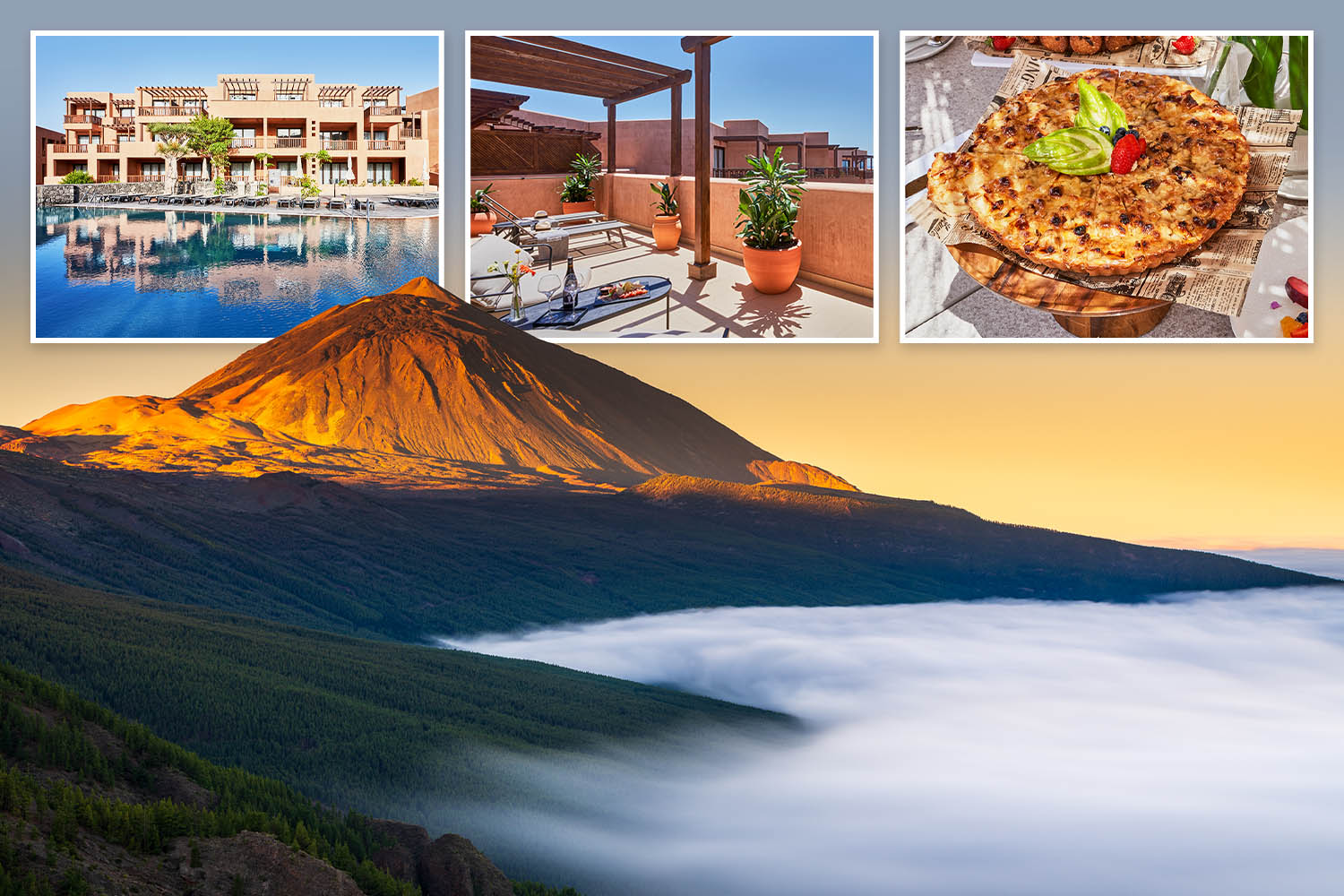
Mount Teide volcano erupted millions of years agoCredit: GettyKick back and relax on the hotel terraceCredit: Manolo Yllera
My last memory of visiting Tenerife, the largest of the Canary Islands, was marred by an over-excited, elderly sailor who threatened to throw my beloved teddy bear into the path of an approaching pod of pilot whales when I was only eight years old.
But after touching down 31 years later, I rediscovered my love for it.
Sign up for the Travel newsletter
Thank you!
The Barcelo Tenerife, my home for the trip, is set within 124 acres of almost untouched land in the San Blas Environmental Reserve — and it fully takes advantage of its rural surroundings.
It’s not just the decor that sets the tone for rustic Tenerife — guests at the resort can book a guided tour through the reserve that will showcase the best of Tenerife’s wild scenery.
During my two-hour or so trek through the fascinating landscapes, I touched stone formed by molten lava as well as compressed volcanic ash, a type of rock that created the foundations of the island after the (still active) Mount Teide volcano erupted millions of years ago.
It was one of the best experiences I’ve had — and reminded me that this gorgeous island offers so much more than just sun-drenched beaches and cocktails by the pool.
Make sure to try and catch a look at Teide on your flight in — the mountain top peeps out above the clouds.
While it is still active, the last eruption happened in 1909 and there’s nothing to suggest it’s going to happen again in the next 100 years or so, so visitors need not panic.
The Sun’s Ellie crosses a lake on a pulley boatCredit: UnknownEnjoy some paddle board fun in the hotel pool
When it comes to history, the mighty volcano isn’t all the island has to boast about, though.
Travellers visiting the San Blas Environmental Reserve can observe the archaeological remains of the Guanches, an indigenous community who first inhabited the islands.
Fans of The Lord Of The Rings will also recognise many of the rocky pastures as sets from the show.
It’s well worth exploring this striking landscape — if you can tear yourself away from the seven luxurious swimming pools at the hotel.
The Barcelo Tenerife manages to exude luxury without stomping on thousands of years of history — as the incredible scenery has been incorporated into the hotel’s earthy design.
The beauty of the land is seen in every inch of the hotel, from the terracotta plant pots on the terraces to its clay-coloured buildings.
Barcelo Tenerife also prides itself on its eco-friendly ethos, with sustainability built in, not tacked on — and walking through the building, you feel immersed in the natural environment.
Along with solar powerenergy, the hotel relies on energy-efficient lighting and ethical food supplies.
Enjoy a break at the blissful Barcelo Tenerife hotelCredit: M CollectiveIt’s foodie heaven at Barcelo TenerifeCredit: Manolo Yllera
And with a 500,000-square-metre nature reserve on your doorstep, you could walk a different route every day and still feel like you have explored more of Tenerife than anyone else.
The food options include an impressive and tasty buffet for breakfast, while fine-dining restaurant La Dolce Vita Trattoria brings a taste of Italy while using superb Spanish produce.
Creamy burrata served with locally-reared beef carpaccio was a highlight, as was a tasting menu inside the Arrozante Restaurant — where I had a truly wonderful paella.
The hotel is a five-star — and worth it — but if you fancy spending a little more, upgrading to the Royal Level is worth saving your cash for.
A private pool and access to a premium bar and restaurant give you a chance to live the high life without breaking the bank too much (from just £160 per night).
Rooms have a slightly more elevated feel to them, too, with chic, sandy-toned furnishings inspired by the nature reserve and fabulous views of the ocean.
But the hotel is so well proportioned and the nature reserve so vast, I don’t think you could ever feel cramped, even during the high season.
Now is the best time to visit, too, with the weather in the UK finally taking a rather more drizzly turn, announcing the official arrival of autumn.
San Blas Environmental ReserveCredit: Alamy
GO: TENERIFE
GETTING THERE: Ryanair flies from London Southend to Tenerife from £50 return. See ryanair.com.
STAYING THERE: Rooms at the Barcelo Tenerife hotel cost from £139 per night based on two people sharing on a B&B basis.
Royal Level rooms at the Barcelo Tenerife are from £160 per night based on two people sharing and including breakfast. See barcelo.com.
In Tenerife, by contrast, temperatures tend to stay balmy throughout this time of year — with highs of 26C in October perfect for both sunbathing and exploring the island — and even into winter.
My helpful hotel guide informed me that Tenerife has only had five days of rain in the last four years, so the sunshine is pretty much guaranteed.
It’s a go-to destination for winter sun and I, for one, am sold.
See you again in November, Tenerife — and this time, I’ll be bringing along my walking boots.
Hundreds of flights have been suspended after an airport had to be closed because of the ash cloud caused by a volcanic eruption. Tens of thousands of passengers have been left stranded. 209 flights were suspended after ash from Anak Krakatau blew into the airspace near Jakarta’s Soekarno-Hatta International Airport on Sunday.
Soekarno-Hatta is the main airport in Indonesia. The volcano started erupting on Friday night and there were two more eruptions on Sunday. More than 22,000 people have been hit by the suspension of flights, which has hity major international routes.
There is no tsunami warning linked to the eruption in the Sunda Strait between Java and Sumatra. The health minister has urged residents to stay indoors and wear face masks.
Local newspaper Kompas said schools cancelled activities on Saturday after students reported eye irritations. Fishing vessels have also been grounded amid health concerns.
Resident Aldi Candra Prayogi told Kompas it felt like “small grains of sand had gotten into my eyes” and he is having to clear the path outside his home every five minutes.
Anak Krakatau emerged from the sea in 1927 inside the caldera formed by the catastrophic, climate-altering eruption of the original Krakatoa volcano in 1883.
Indonesia’s Geological Agency said the volcanic island located in Indonesia’s Sunda Strait between the main Java and Sumatra islands had shown signs of activity since Friday before erupting for 30 seconds at 3.53am.
CCTV footage showed lava flares from the volcano. No casualties were reported and no evacuation order was issued. The nearest settlement is more than 16 kilometres (10 miles) away, but authorities warned residents and visitors to stay at least three kilometres (2 miles) from the active crater.
Volcanic ash spread across parts of Jakarta and Lampung province on Sumatra’s southern tip, Indonesia’s centre for volcanology and geological hazard mitigation said. AirNav Indonesia closed airspace around Soekarno-Hatta and Halim Perdanakusuma airports in Jakarta, as well as four other airports, including Radin Inten II Airport in Lampung, because of volcanic ash.
By mid-afternoon, the closure had affected 516 flight movements, with 202 in Jakarta’s Soekarno-Hatta airport alone, affecting about 22,800 passengers, on Sunday. The airport was ordered closed until at least 5.30pm.
Indonesia’s directorate general of civil aviation said it was closely monitoring the eruption’s impact on air travel and co-ordinating with airlines, airport operators, air navigation services and the meteorology agency.
“Safety remains our top priority in every operational decision,” Lukman F Laisa, ministry of transportation director general of civil aviation, said in a statement.
He warned flight schedules could face cascading disruptions affecting aircraft rotations, fleet availability and terminal capacity as airlines work to restore operations.
The eruption also disrupted services at Bali’s I Gusti Ngurah Rai International Airport and at Medan.
Indonesia’s volcanology agency and the Darwin Volcanic Ash Advisory Centre identified two ash clouds using satellite imagery. One plume rose to 20,000 feet (6,100 meters) and drifted northeast over Jakarta, Banten, West Java and nearby waters. A second cloud reached 50,000 feet (15,200 meters) and spread over parts of Banten, Lampung and Bengkulu provinces, the southern Sunda Strait and sections of the Indian Ocean west of Sumatra.
Lana Saria, head of Indonesia’s geological agency, said activity at Anak Krakatau has intensified since July, with Sunday’s eruption the strongest during the current period of unrest.
The repeated eruptions indicate a continued supply of magma and volcanic gases beneath the volcano, she said, though officials cannot predict whether a larger eruption will occur.
“We continue to evaluate the volcano’s development based on all monitoring data, not solely on the number of eruptions or the height of the ash column,” Ms Saria said in a video briefing.
She said the main hazards include volcanic ash, high concentrations of gas and the ejection of hot rocks and other material around the crater area.
SEEING the Northern Lights tops many a traveller’s bucket list.
The problem is, they can be elusive and costly to find and because they are at the whim of nature, there are never any guarantees . . . until now, that is.
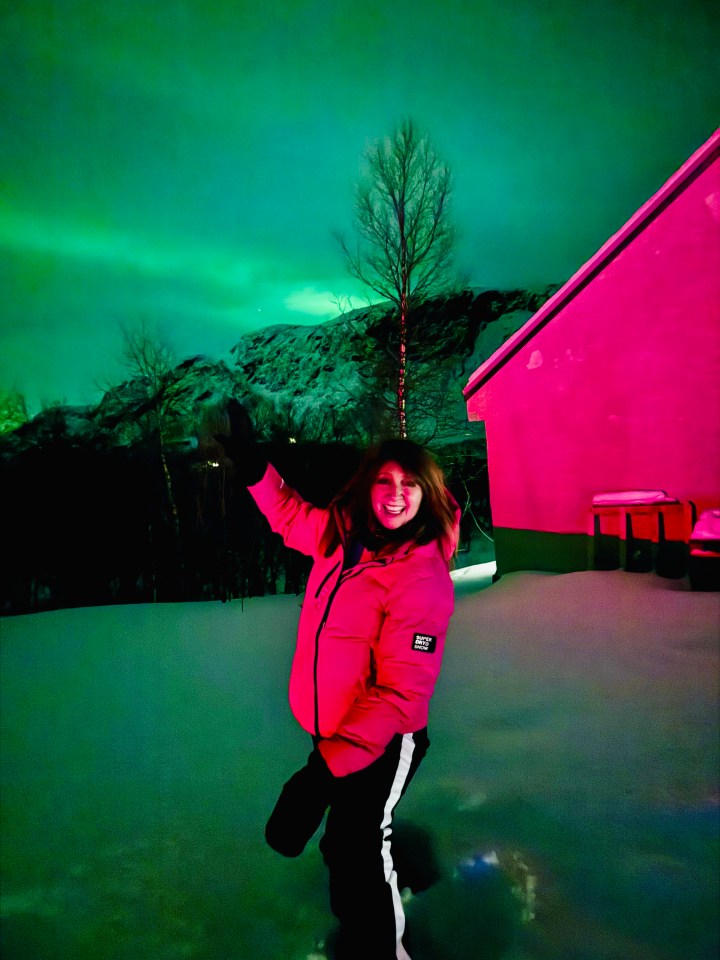
Jo Kessell beams in front of the Aurora borealisCredit: SuppliedJo poses in front of the Arctic TrainCredit: Supplied
There is a new Northern Lights Train in Norway which promises to take you where there’s a greater chance of spotting the Aurora Borealis than ever before. It costs £115pp and looks so good I booked a ticket.
Meeting point: Narvik Station, high in the Arctic Circle. Waiting on Platform 1 is a four-carriage train, guide Lill and buckets of white stuff. It’s been snowing non-stop from thick, heavy clouds.
Sign up for the Travel newsletter
Thank you!
Spotting the Aurora normally requires a clear sky, so these conditions are far from ideal. Do we really have a chance of seeing them? Lill consults an app and smiles. “Yes,” she says.
The three-hour experience includes a 90-minute stop in the Arctic wilderness and, as the train pulls off, lights are dimmed to better see the Aurora.
After we’ve rattled past Narvik’s fjord and suspension bridge, a fellow passenger points excitedly at the window. Outside, a green plume is painting the sky.
Well I never — our first sighting.
From here, we climb north into the mountains towards the Swedish border. This historic track was built in 1902 and is still used to transport iron ore from Sweden’s Kiruna mines to the port of Narvik and beyond.
Our destination is Katterat — a remote, 373m-high (1,224ft) outpost accessible only by train or foot.
There’s no light pollution or civilisation and, thanks to its altitude, the sky is usually clear here when elsewhere else it’s not.
Once we’ve arrived and descended on to the platform, nobody budges — we’re too busy looking up.
Streaking overhead are bands of green criss-crossing a starlit sky.
Necks crane, photos are taken and the excitement is palpable. A trail leads to a makeshift camp where there are snowshoes to try, fires to warm hands and an indigenous Sami tent called a “lavvu” for shelter, with hot drinks, biscuits and sausages.
Despite the sub-zero temperatures (it’s -20C), nobody cares about warming up because we’re all too fixated on the sky show.
One moment the aurora shines to the right, the next to the left.
They come, they go; they fade, they flare; they keep us guessing, eyes peeled. It’s a magical night.
This train is one of many ways to chase the Northern Lights but there’s still magic to be found when the Green Lady plays shy.
On an excursion with Arctic Moments the next night, we sip hot chocolate and toast cinnamon buns on a fire in a Narnia wonderland.
No Aurora but happy memories with photos included in the package.
Narvik’s also a superb base for other adventures. There’s downhill skiing — it’s hosting the 2029 FIS Alpine World Ski Championships — as well as cross-country skiing, considered Norway’s national sport.
I give it a go but it’s harder than it looks — even on flat terrain.
There are also historical links. A fierce World War Two naval battle was fought and lost in Narvik in 1940 — Norway was occupied by Germany afterwards — and the town’s War Museum tells this story.
A new boat excursion even sends a drone underwater so you can see the shipwrecks on the ocean floor.
Narvik has everything from self-catering apartments to hotels offering Scandi-style breakfasts — think herring and smoked salmon — to the deluxe glass cabins of Camp 291, which cling to the mountainside.
This is my favourite accommodation, with superb fjord views.
Hiring a car allows you to explore even further. Polar Park is home to lynxes, musk oxen, moose and wolves. I’m taught how to howl and, amazingly, they howl back.
Best of all is the Arctic fox experience. You get to feed them but be prepared — they’re playful and love nothing more than clambering all over you.
For a final treat, I head to Narvik’s floating Arctic Sauna where a hole and a ladder lead directly from the heat into the chilly sea.
But the ultimate thrill is the Aurora Borealis. Travellers have been trying to find the best and most reliable way to see them.
Norway’s Northern Lights Train may just be the coolest way to do just that.
GO: NARVIK, NORWAY
GETTING/STAYING THERE: Four nights’ B&B in Narvik with Best Served Scandinavia is from £1,995pp including return flights with Norwegian Airlines, hire car, activities, entrance to Polar Park, one night in a glass cabin and the Northern Lights Train. See best-served.co.uk.
OUT & ABOUT: The Northern Lights Train costs £115 for adults, £58 for under-17s; under-6s go free. See arctictrain.com.
For driving advice for winter roads in arctic Norway, see northernnorway.com.
MORE INFO: See norwegian .com and visitnarvik.com.
When partygoers in Ibiza were enjoying a fun evening of drinks and good music, the last thing they expected was for a 90s icon to take to the stage and start DJing
09:49, 06 Sep 2026Updated 09:49, 06 Sep 2026
They soon realised who was DJing (stock image)(Image: Getty Images/EyeEm)
Ibiza is the perfect holiday destination for people who want to let their hair down and dance the nights (and maybe days) away. From Pacha to Amnesia, there are so many clubs to choose from that will guarantee you a good night filled with good music, and whoever is DJing is likely to put on a really good show.
But people were left gobsmacked when a woman got up to DJ in the party capital, and they realised who was performing. She’s a complete legend who has a whopping nine number one singles under her belt and two number one albums.
Have you guessed who it might have been DJing in Ibiza yet? Here are some other clues…
She rose to fame with four other bandmates, and their hits included ‘Too Much,’ ‘Holler / Let Love Lead the Way,’ and, of course, if you hadn’t already guessed it, ‘Wannabe’.
But it was 52-year-old Mel C holding it down on the decks playing millennial banger after banger in Ibiza, and her set went down a storm with fans.
Content cannot be displayed without consent
Mel C was bringing the vibes and the sass as she boogied in an outfit that showed her rock-hard abs – she is Sporty Spice after all.
Kevin Coundon, who posts on Instagram as @mr.kevin.at.home, shares lifestyle content and more, and on top of his video of Mel C, he wrote: “POV: Ibiza finally starts playing music for the millennials”.
First off, Mel remixed ‘King of my Castle’ by Wamdue Project, which came out in 1997, then a snippet of ‘You’ve Got the Love’ by Candi Staton was remixed, too. Then, the last snippet showed Mel C singing along to DJ Rui Da Silva’s ‘Touch Me’.
Kevin captioned his video: “Who decided Ibiza had an age limit anyway? Good music, an incredible crowd and one of those nights where you completely forget what time it is… and we did!”
In the comments, people raved about how much of a “legend” she is, saying “she was the most last Saturday” when they saw her DJing.
“Wow, I wish I was there,” someone wrote, with another saying that she was “an icon and goals”.
Another wrote: “What a night”. Someone else noted: “Our kind of party.”
A different social media user also said: “Always thought Mel would smash it as a DJ. Mixy Spice now. I liked her solo stuff.”
One more also responded: “That’s Sporty Spice? Wow, playing the tuuuunnnneeesss.”
THE summer holidays might only just be wrapping up, but I’m already deep in the database looking at where you should be booking for Summer 2027.
Before you accuse me of wishing the year away, there’s method in the madness.
Book ahead for a 2027 family holiday and you can secure a break from £45ppCredit: GettyWe’ve picked five top spots for couples and five for families across ten completely different coastlinesCredit: Getty
Securing your booking now gives you plenty of time to spread the cost, turning a peak summer holiday into a manageable monthly payment.
I crunched live booking numbers to track down the resort areas where early bookers are securing the lowest average monthly direct-debit payments per person.
Couples are booking breaks from an average of just £40pp a month, while family packages are getting snapped up from just £45pp a month.
So, instead of clogging the list with ten resorts on the same two Spanish islands, I’ve broken down five top spots for couples and five for families across ten completely different coastlines – counted down from five to one.
FAMILIES: 5. La Cala de Mijas, Costa del Sol – £42pp a month
La Cala de Mijas is a sunny Spanish spot with a more peaceful feel than the resorts of the Costa del SolCredit: Alamy
La Cala de Mijas is my top shout for families who want all the convenience of the Costa del Sol without being swallowed by the high-rise noise of the massive resorts.
It still feels like an authentic seaside town, with a wide sandy beach, a flat seafront promenade for buggies, and family tavernas that won’t cause an argument when the bill arrives.
Our booking data shows families booking in September 2026 to spread the cost until Summer 2027 are paying an average of £51pp a month for this resort.
I managed to beat that, though. I found a 7-night bed & breakfast stay at Gran Hotel Costa del Sol from £460pp, flying directly from London Luton on 25 August 2027.
Spread across 11 monthly payments, that specific deal comes out at just £42pp a month.
The direct garden access onto the sand here is brilliant too, meaning you can step straight off your breakfast terrace onto the beach without navigating busy coastal roads.
Book a 7 night bed-and-breakfast stay at Gran Hotel Costa del Sol from 25 August 2027, with direct return flights from London Luton, from £460pp.
COUPLES: 5. Mellieha, Malta – £46pp a month
Mellieha Bay is home to the largest beach in MaltaCredit: Getty
Malta serves up a brilliant hybrid of sun, sea, and exploring, and Mellieha is the ultimate base if you want a proper beach holiday.
Mellieha Bay is the largest sandy stretch on the island, while the historic village sits elevated on the hill with open-air bistros overlooking the coast.
Couples booking early in September 2026 are locking in Mellieha for an average of £55pp a month.
But I found a 7-night self-catering stay at Luna Holiday Complex from £510pp, flying directly from Newcastle on 24 August 2027.
Spread across 11 monthly payments, that works out at just £46pp a month.
What makes this complex a steal is its rooftop panoramic pool deck – it’s a quiet, adult-friendly sanctuary looking out over Gozo, allowing you to avoid the busier beach crowds when you just want a relaxed afternoon swim.
Book a 7-night self-catering stay at Luna Holiday Complex from 24 August 2027, with direct return flights from Newcastle, from £510pp.
FAMILIES: 4. Agadir, Morocco – £57pp a month
Agadir holidays can cost you as little as £50pp a month if you book nowCredit: Getty
Agadir is a fantastic shout if you want an exotic North African beach trip that remains entirely hassle-free for kids.
The broad sandy bay is backed by a wide, paved promenade custom-built for evening pushchair walks, while modern resort hotels take the stress out of daily parenting.
The data reveals families booking early in September 2026 are spreading the cost at an average of £50pp a month for Agadir.
I found a 7-night all-inclusive stay at Allegro Agadir from £625pp, flying directly from Manchester on 24 August 2027.
Split across 11 monthly payments, the deal works out at £57pp a month.
Landing a full all-inclusive stay with meals, drinks, and snacks in August for under £650pp total is a massive result.
The on-site highlight is the property’s dedicated, shaded kids’ splash park that lets younger children cool off out of the intense midday sun.
Book a 7-night all-inclusive stay at Allegro Agadir from 24 August 2027, with direct return flights from Manchester, from £625pp.
COUPLES: 4. Caleta de Fuste, Fuerteventura – £52pp a month
Caleta de Fuste in Fuerteventura is a relaxing resort just 10 minutes from the airportCredit: Alamy
Caleta de Fuste is built for couples who want a chilled holiday without feeling stranded in the middle of nowhere.
The horseshoe bay keeps the Atlantic waters calm and flat, the marina is packed with waterside bars, and the resort sits barely 10 minutes from the airport – meaning you go from arrivals to the sunlounger in record time.
Booking data shows couples locking in summer 2027 trips this September are averaging £53pp a month here.
But I found a 7-night all-inclusive stay at SMY Tahona Fuerteventura from £570pp, flying directly from London Gatwick on 25 August 2027.
Spread across 11 monthly payments, that deal costs just £52pp a month.
The standout feature at this hotel is its low-rise bungalow layout built around three separate pool zones, allowing you to easily find a quiet sunbathing corner away from the main bar.
Book a 7-night all-inclusive stay at SMY Tahona Fuerteventura from 25 August 2027, with direct return flights from London Gatwick, from £570pp.
FAMILIES: 3. Los Cristianos, Tenerife – £51pp a month
Los Cristianos is the ideal spot for families to visit in Tenerife, with Siam Park nearbyCredit: Getty
Los Cristianos is a classic for a reason: it makes family travel feel effortless.
You get a sheltered sandy beach, flat walking paths, loads of kid-friendly restaurants, and quick access to Siam Park just down the road.
Families booking in September 2026 to spread payments out until next summer are averaging £49pp a month for Los Cristianos.
I found a 7-night half-board stay at Sol Arona Tenerife from £558pp, flying directly from Bristol on 25 August 2027.
Across 11 monthly payments, that works out at £51pp a month.
For energetic kids, this place has a massive on-site climbing block and outdoor play zone, giving toddlers and kids a safe space to burn off their final energy reserves before dinner while parents grab a drink at the pool bar.
Book a 7-night half-board stay at Sol Arona Tenerife from 25 August 2027, with direct return flights from Bristol, from £558pp.
COUPLES: 3. Lloret de Mar, Costa Brava – £36pp a month
Lloret de Mar is home to some beautiful beaches and landscapes outside of its party zonesCredit: Getty
While Lloret de Mar has a famous reputation for high-energy nightlife, there is far more to the town than neon lights.
The main beach is enormous, the surrounding Costa Brava cove scenery is gorgeous, and cheap direct train links into Barcelona make day trips effortless.
Couples securing their 2027 spot in September 2026 are paying a destination average of £49pp a month.
When I went deal-hunting, I found a 7-night half-board stay at Clipper Affiliated by FERGUS from £395pp, flying directly from London Luton on 25 August 2027.
Split across 11 payments, that brings the cost down to just £36pp a month.
This hotel’s central location is perfect too – it sits tucked just two streets back from the main beach, giving you a quiet pool area during the day while keeping the coastal nightlife and seafront dining within a two-minute walk.
Book a 7-night half-board stay at Clipper Affiliated by FERGUS from 25 August 2027, with direct return flights from London Luton, from £395pp.
FAMILIES: 2. Sidari, Corfu – £49pp a month
Sidari in Corfu has beautiful beaches with bright blue water – and you can stay there for cheapCredit: Getty
Sidari takes the runner-up family spot because of the sheer quality of the local beach infrastructure, offering shallow waters, traditional tavernas, and the iconic Canal d’Amour rock formations right around the corner.
Families booking early in September 2026 are locking in Sidari for a resort average of £48pp a month.
I found a 7-night self-catering stay at Megali Luxuries from £543pp, flying directly from London Gatwick on 20 August 2027.
Divided across 11 monthly payments, that deal works out at £49pp a month.
Booking self-catering here is a smart move because the property sits directly adjacent to Sidari’s main strip of family-run Greek tavernas, where you can get authentic local dinners without spending a fortune.
Book a 7-night self-catering stay at Megali Luxuries from 20 August 2027, with direct return flights from London Gatwick, from £543pp.
COUPLES: 2. Magaluf, Majorca – £52pp a month
Magaluf is an ideal Spanish spot for couples, with plenty of bars and restaurants to spend evenings chilling inCredit: Getty
Hear me out: if your ideal couples’ break involves stylish beach clubs, modern seafront dining, and not being forced into bed by 9:30pm, modern Magaluf is one of the best-value options on the island.
The main beach is immaculate, high-end hotel refurbishments have elevated the waterfront, and quiet Palma Nova sits right next door.
Couples getting their 2027 plans sorted in September 2026 are averaging £47pp a month.
I spotted a 7-night bed & breakfast stay at Sol Guadalupe from £595pp, flying directly from London Luton on 25 August 2027.
Spread across 11 monthly payments, that deal costs £54pp a month.
The hotel features a huge lagoon-style pool setup with underwater lounger jets, giving you a sleek, high-end resort feel just a short walk from the seafront.
Book a 7-night bed & breakfast stay at Sol Guadalupe from 25 August 2027, with direct return flights from London Luton, from £595pp.
FAMILIES: 1. Gerani, Crete – £52pp a month
Gerani is a village in Crete near Chania, which has a pretty harbourfront and maze-like old townCredit: Alamy
Gerani takes the number one family spot on our board as an absolute value anomaly.
Tucked near Rethymnon, this peaceful Cretan village is built for families who want space, wide beaches, and a slow, authentic Greek pace away from commercialised tourist hubs.
Our booking data shows families getting in early in September 2026 pay an average of just £45pp a month to spread the cost to Summer 2027 – the single lowest family figure on the map.
And I found a 7-night bed & breakfast stay at Hotel Ideon from £575pp, flying directly from London Luton on 23 August 2027.
Divided across 11 monthly payments, that featured deal comes out at £52pp a month.
The highlight here for families is the studio room setup – every room features a wide balcony looking out over olive groves towards the sea, giving you a peaceful, spacious base for a fraction of standard hotel prices
Book a 7-night bed-and-breakfast stay at Hotel Ideon from 23 August 2027, with direct return flights from London Luton, from £575pp.
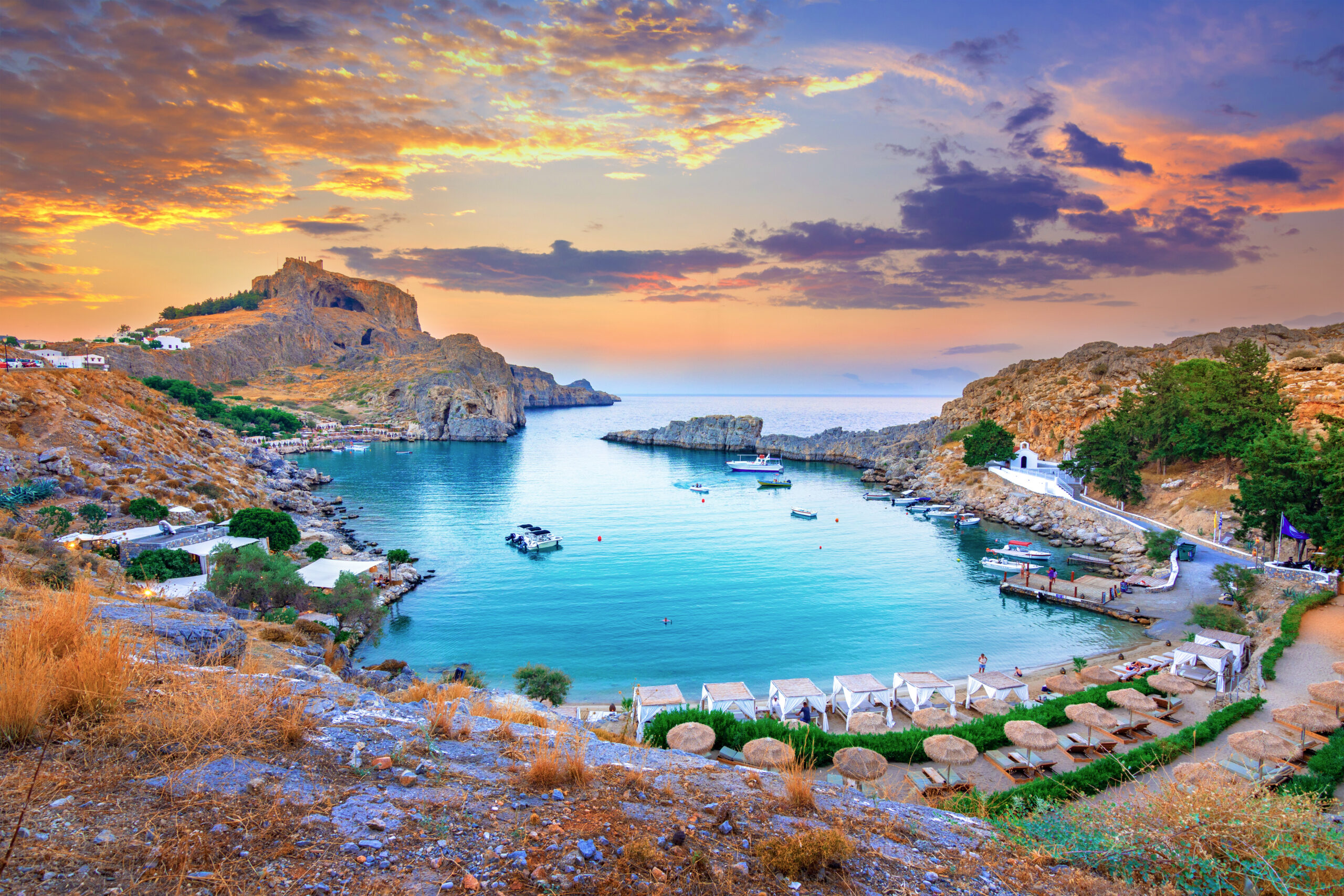
COUPLES: 1. Tholos, Rhodes – £33pp a month
Rhodes is one of the more affordable Greek islands – especially if you stay in TholosCredit: Getty
Taking the absolute overall crown is Tholos (also known as Theologos) on the breezy west coast of Rhodes.
It is infinitely more relaxed than Faliraki or Rhodes Town, serving up traditional tavernas, uncrowded beaches, and incredible Mediterranean sunsets.
This is the single cheapest destination average in our database: couples booking in September 2026 pay an average of just £40pp a month to spread payments until Summer 2027.
I found a 7-night self-catering stay at Sunlight Studios from £365pp, flying directly from London Luton on 25 August 2027.
Across 11 monthly payments, that featured deal costs just £33pp a month.
At under £38pp a month, that is quite literally the cost of one takeaway each – and a week under the Greek sun lasts a whole lot longer.
Book a 7-night self-catering stay at Sunlight Studios from 25 August 2027, with direct return flights from London Luton, from £365pp.
IF you need a loud announcement to tell you when it’s time to board, you might be in trouble at certain airports.
More silent airports are being introduced all over the globe – and these ones have no background noise, but it means you could potentially miss your flight.
Helsinki Airport was the first ever airport to go ‘silent’Credit: AlamyBristol Airport was the first UK to enforce the quiet policyCredit: Alamy
Silent airports were first launched in 2015 to create a calmer, less stressful environment for travellers.
Essentially these are terminals that significantly reduces certain sounds like general boarding calls, final calls, and flight updates – or gets rid of them altogether.
Sign up for the Travel newsletter
Thank you!
Airports Council International (ACI) Angela Gittens previously told CNN Travel that silent airports are designed to “create a calm, relaxed ambiance.”
She added: “Passengers can wind down while they wait for their flight to board in the common airside lounges, commercial, and food and beverage areas.”
Kara said: “Returning from Amsterdam Schipol Airport and having checked what gate I would be flying from, I headed straight there and sat down with my headphones on, waiting to board.”
London City Airport is the second silent airport in the UKCredit: Alamy
Kara continued: “Yet I didn’t realise the gate had changed until I saw a group of people from the corner of my eye all get up and start running.
“It was only when I saw the women leaving the boarding gate desk that I asked and she told me the gate had moved to one on the other side of the airport.
“So while they can be “less stressful” – keep an eye on your flights.”
Milo Boyd wanted to see how best to learn a bit of Spanish before heading on holiday, putting Preply, Rosetta Stone and Battersea Spanish language school to the test
Cue a string of mysterious words from the cheery bartender I’d nervously tested out my very limited Spanish on. When she stopped speaking, I took that to be my turn.
“¿Me puede dar tres cervezas y tres tortillas?”
After the bartender looked confused for a moment, a miracle happened. Three beers and three tortillas arrived. If you’ve ever spent time learning a language, then you’ll know how toe-curling it can be to try it out, in the wild, for the first time.
Without an expert tutor to pick through your dodgy accent or an encouraging classmate to wait patiently while you remember what the Spanish word for ‘I’ is (yo, incidentally), it’s easy for it all to fall apart.
And on several occasions during my week in Bilbao, it did. Fumbled orders turned to English halfway through; garbled questions were met with blank stares. But when it works, it’s a fantastic feeling that almost lets you forget all the traumatic memories of KS3 French lessons.
If you do want to pick up a bit of a language before heading on holiday, how best to go about it? I put three different ways of learning to the test and found one clear winner.
The evening classes
It’d been ten years since I was last in a classroom, and I was nervous. Would my classmates like me? Would they all be really young? Would they all already know Spanish for some reason?
It’s certainly daunting going back to school, all these years on, however shiny your new pencil case is. Battersea Spanish could not have done a better job of easing me through the first-day jitters.
The South London school bills itself as a cultural hub where learners can immerse themselves in Spanish film nights, cava and conversation sessions in the on-site bar, a Spanish book club, live flamenco performances and much else.
In the first session of the term, learners get a free glass of wine, which really helps get things going. I love this way of learning. The teachers are warm, encouraging and just strict enough that you make sure to do your homework, while my classmates were lovely. Committing to an hour and a half each week, along with an hour of revision, means progress feels gratifyingly quick.
The downside? Getting there! Having to travel somewhere after work is a slog, especially on the cold winter evenings, but well worth the journey.
The app
Duolingo. Babbel. LinQ. Pimsleur. There are now almost as many language-learning apps as there are languages. Having previously spent too much time with the green owl, I gave Rosetta Stone a go.
The interface is a little simpler and more classic-feeling than Duolingo, but I prefer it. Learners choose a category (shopping, travel, food and drink, etc.) and are then shown stock photos of people doing something, with a description alongside.
‘Como comida’ is written next to a photo of someone eating food, with the words spoken out loud. Rosetta Stone works through repetition, having the learner listen to, read, and speak versions of a sentence several times, adding new words along the way.
For me, it’s a perfect app. None of the bells, whistles and premium add-ons that make language learning feel like you’re playing Angry Birds. Just straightforward, comprehensive, and vocabulary-expanding.
The downside? These apps are great if you’ve already got a bit of the language and want to expand it, or are naturally confident when trying them out. Otherwise, the move from private learning on your phone to real-world experience can be particularly daunting.
The tutor
Sitting on a bench in my local park, the summer morning sun lighting up the duck pond, I flicked open Preply and Lucia appeared. We chatted for 40 minutes, with her leading me through the words for family members and basic questions you might get asked at a party.
The major strength of one-on-one tuition is the extra time and attention you get to root out little issues before they grow into big ones, and to put everything you’ve been learning over the past week into practice. Taking a language from the textbook page into real life is probably the best, quickest way to make it stick, while building a rapport with a tutor can turn lessons from a dutiful slog to a fun cultural exchange.
From my experience, Preply tutors are lovely and affordable.
The downside? I have one major issue with Preply. It’s one that has made me start and then cancel a learning plan on three separate occasions. Preply requires learners to buy blocks of at least four hours, which get renewed on a 28-day cycle. While this encourages commitment and regular learning, the lack of flexibility is frustrating, as is the cycle length. If you start a subscription the day after payday, next month it will fall two days before. For anyone balancing a household budget, this is a big downside.
The verdict
For me, nothing beats in-person classroom learning. The accountability it requires is key to learning a language; the social scene it offers makes learning fun; and the combination of reading, writing, speaking and listening means all bases are covered.
If you’re going to learn a language, why not commit and really throw yourself into it? Battersea Spanish is based in London only, but there are plenty of similar schools across the UK, whichever language you’re learning.
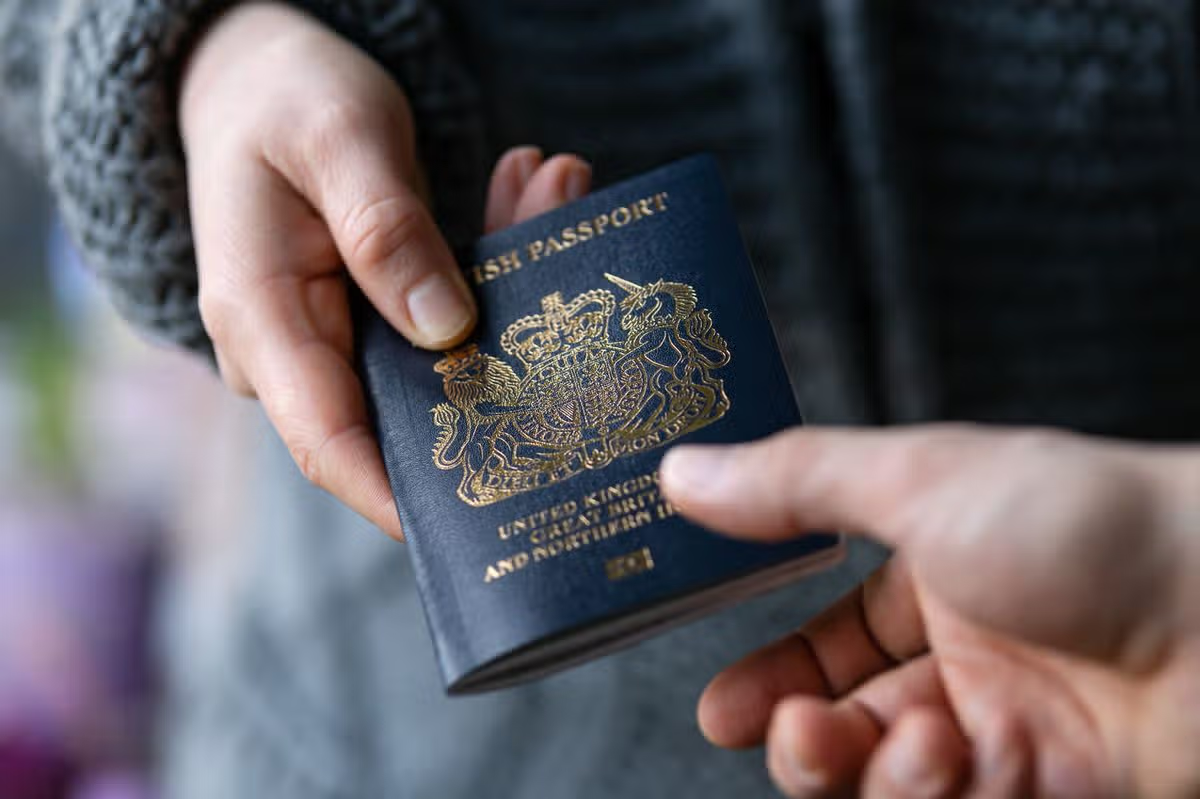
Passports should be scanned electronically from today
A change in EU border rules comes into force on Sunday, meaning everyone from the UK heading into Europe from today could face longer queues. The European Union has been rolling out a new Entry/Exit System (EES), which sees everyone from the UK entering countries like France, Spain, Greece and Portugal having to wait for a machine to enter biometric data.
That includes having your picture taken, having fingerprints scanned and allowing the machine to take a copy of your passport. The system was launched at the end of last year, but queues were so long – sometimes around four hours – that the machines were switched off at some borders and a new date for full use was set – September 6, 2026.
EES was originally planned to go live in 2022 but has been repeatedly delayed due to technical problems and then to avoid peak travel times. It was officially launched in October 2025 and was supposed to be fully rolled out within six months.
By April this year, there had already been severe queue delays, with passengers missing flights, and Greece temporarily suspended EES – followed by suspensions at multiple other EU borders. Those suspensions are supposed to end today.
Airlines have called for the EU to extend the suspension until the end of this year. And there are reports that not everyone will face EES, with France reportedly suffering technical problems that could see it out of use this week.
The fingerprinting kiosks at Port of Dover and London St Pancras are not currently working. A Eurotunnel spokesperson told The Guardian it is “awaiting confirmation from the French authorities on the timing of this next phase”.
A source told The Guardian some countries, including Greece, may continue to use manual checks rather than the automated system despite the September 6 deadline.
Airlines trade body Iata last week called for an official extension, saying there are still delays and still reports of missed flights.
A European Commission spokesperson said: “We are in close and constructive contact with those few member states where some adjustments are needed at certain border crossing points. And during an additional period of operational adjustment that is needed at these few operational border crossing points, the commission stands ready to provide additional support to these member states.”
Thinking of heading to Europe’s Christmas markets this year? Here are some destinations you can reach directly on Eurostar, making them ideal for a day trip or a quick overnight break
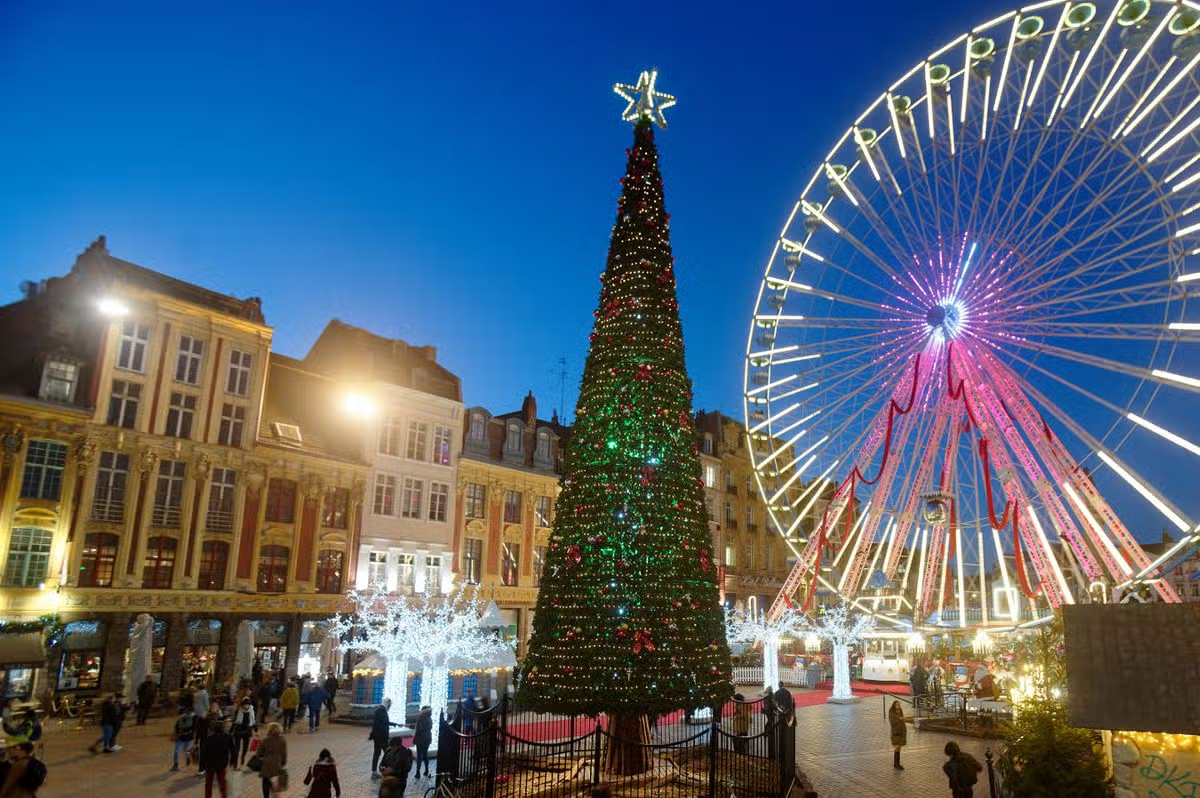
Cities such as Lille are easy to reach via Eurostar(Image: Sylvain Lefevre/Getty Images)
A European Christmas market is an amazing way to get into the festive spirit. The historic city backdrops, authentic food and drink, and unique gifts all make it a must-do in the run up to Christmas.
Eurostar can be a good alternative to flying for short breaks, as it allows you to get to the heart of the city for a day trip or quick overnight stay, without the hassle of the airport. (Although do factor in the logistics of getting to London from where the trains depart).
If you’re already starting to count down the days until Christmas, we’ve got you covered with some of the top markets you can reach by Eurostar this winter…
1. Lille Christmas Market
Lille is Eurostar’s shortest route from London at around 90 minutes, so it’s ideal for a Christmas market day trip. Lille Christmas Market takes place on Place Rihour, just a 15-minute walk from the Eurostart terminal, making it an easy location to get to.
The event runs from November 19 to December 30, and is open seven days a week with Fridays and Saturdays seeing the event stay open until 10pm. In the square you’ll find a huge Ferris wheel covered in lights and around 90 wooden chalets selling food, drink, and crafty items. It’s relatively small compared to some of Europe’s other giant markets, but Lille’s red-brick Flemish architecture and cobbled streets make the whole city perfect for a Christmas break.
2. Paris – La Défense Christmas Market
Paris has a few festive markets around the city, and La Défense Christmas Market is the largest, running daily from mid-November until early-January, with exact dates not confirmed yet for 2026.
Running on La Défense Esplanade, it includes an ice skating rink, carnival rides, and hundreds of stalls selling mulled wine, tartiflette, and raclette. However, it’s worth noting that the market can get incredibly busy as it’s in a Paris business district, so you may want to visit during off-peak times.
Another option is the Tuileries Garden Market, set in a park between the Louvre and Place de la Concorde, a sprawling market which takes up about half a mile of space. It runs for about six weeks from mid-November, again no dates are confirmed yet, and features 80 wooden chalets, a Ferris wheel, and lots of festive activities in this lively space.
3. Brussels – Winter Wonders
Brussels has a compact city centre that makes it ideal for a short break, and from the Eurostar station you can take a quick 10 minute journey to get to Winter Wonders. Taking up several streets in the Belgian capital, this sprawling Christmas market runs from November 27 to January 3 and features over 200 stalls.
At the heart of the market, in the beautiful Baroque Grand-Place, you’ll find the giant Christmas tree and a sound and light show. The market also has an ice rink and Ferris wheel, and closes daily at 10pm, so you can enjoy the festive atmosphere when the sun goes down and the Christmas lights turn on.
4. Antwerp Christmas Market
Eurostar launches a new direct service to Antwerp on December 14, and this city full of unique architecture, from ornate medieval buildings to quirky art nouveau structures, is the ideal backdrop to enjoy a Christmas market.
In the centre you’ll find the Grote Markt and Handschoenmarkt full of handmade crafts, local treats like Antwerp’s hand-shaped biscuits, a huge ice rink and plenty of festive bars. An adjacent street is turned into a giant light tunnel, perfect for exploring after dark, and the market is open until midnight on Fridays and Saturdays for festive night owls.
5. Amsterdam Christmas Market and Village
Amsterdam, Eurostar’s longest direct route from London, has multiple Christmas markets and events, but perhaps its best-known takes place in Museumplein, the city’s largest square. This area, popular with tourists thanks to its several attractions such as the Van Gogh Museum, is transformed into a Christmas village complete with live entertainment, 45 festive stalls, and a roaming acappella choir.
But if you prefer something a little less traditional, visit the Funky Xmas Market on December 20 in Westerpark. The event brings together the work of artists and creatives from across this colourful city, with lots of unique and quirky ideas for loved ones who are difficult to buy for.
6. Rotterdam – Scandinavian Christmas markets
Enjoy the ultimate hygge atmosphere at one of Rotterdam’s Scandinavian Christmas markets, which are held in traditional Seamen’s Churches across the city. Rotterdam has always had close ties to Scandinavia thanks to its large harbour, so you can enjoy the Scandi-vibes at traditional Norwegian, Danish, and Swedish markets, which are mostly held during November.
If you’re visiting in December, then Deliplein Winterplein is a two-week community festival where the Katendrecht neighborhood is turned into a winter wonderland. It kicks off with a parade and tree lighting, and includes lots of live music events, visits from Santa, and creative workshops. It’s a more community-focused alternative to the usual touristy Christmas markets.
Have a story you want to share? Email us at webtravel@reachplc.com
The EU’s Entry/Exit System (EES) is now in place and, while most travellers are familiar with the biometric checks, a travel expert warns it’s the lesser-known rules that are catching people out
07:10, 06 Sep 2026Updated 07:10, 06 Sep 2026
Passport holders could get “caught out” (stock image)(Image: Getty Images)
Lots of tourists may be feeling nervous about travel delays this year after reports emerged airports could face a new wave of chaos. Some of this worry has stemmed from the fact that EES, which stands for Entry/Exit System, has come into place this year – this is an automated digital IT system developed by the European Union to register non-EU nationals each time they cross the external borders of participating European nations.
However, if you’re due to travel and want to know what to expect, there’s some expert advice you may want to take on board. A few simple travel tips can make all the difference to helping the start of your holiday go more smoothly.
This year marked the first summer that the EU’s new Entry/Exit System (EES) has been in operation and, while you’ve likely seen reports about lengthier queues at certain airports, for most holidaymakers, it’s simply another aspect of travelling that requires a bit of adjustment. If you’re bound for countries such as Spain, France, Italy, Portugal or Greece, here’s what you need to be aware of before you fly.
Travel expert Ricky Durrance, of package holiday specialists Teletext Holidays, says that, while everyone’s heard about the biometric checks, it’s the minor regulations that are tripping people up. He issued some guidance to help travellers.
Don’t get caught out
One of the least well-known aspects of EES is that your registration is tied to your passport, not to you personally. So, if you’ve renewed your passport since you last visited an EU country, you’ll be treated as a first-time traveller, even if you’ve previously completed biometric registration.
That means providing fingerprints and a facial scan once again at the border. So, you’ll need to allow extra time.
“Many travellers would assume once they’re already in the system that’s job done,” said Ricky. “But EES is tied to the passport, not the person, so don’t be caught out by unexpected enrolment.”
Can things be sped up?
Depending on where you’re departing from, you may even be able to complete part of the process before you set off. The EU’s free Travel to Europe app allows travellers using participating border crossings to upload passport details and a facial image up to 72 hours before departure, helping make the process even smoother.
It’s worth checking whether your airport supports it before you travel. If you’ve booked a package holiday, border delays can have a knock-on effect on transfers, so check with your travel agent whether your departure airport supports early enrolment and allow extra time on arrival.
What about kids?
Families should also bear in mind that every traveller has their own EES record, children included. Each child will require their own passport and facial image check, although under-12s are exempt from providing fingerprints, which helps to speed things up slightly.
It doesn’t apply in every country
The good news is that EES isn’t applicable across the board. Popular holiday hotspots including Turkey, Egypt, Morocco and Tunisia fall outside the Schengen Area, meaning British tourists heading there won’t need to complete EES checks.
For anyone weighing up destinations, it’s simply another factor worth taking into account alongside the weather, budget and the kind of break you’re looking for. Check whether your chosen destination requires EES before you travel.
“Like any new system, there’s always a settling-in period,” added Ricky. “The important thing is not to let the headlines put you off travelling. Millions of people are still enjoying holidays across Europe.
“If you know what to expect, allow a little extra time where needed and make sure your passport is up to date, the whole process should be straightforward.”
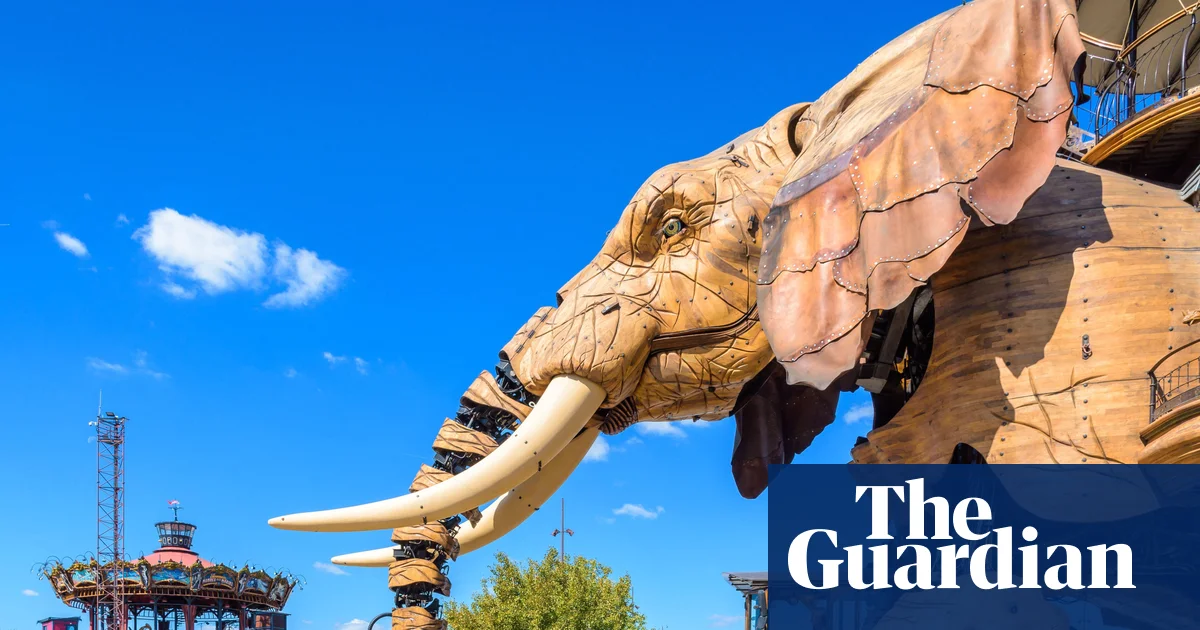
As dilemmas go, it’s an unusual one: saddle up a giant squid or board a submersible for a voyage to the bottom of the ocean. In the end, I find myself drawn to a fierce-looking merhorse and tentatively take the reins. High above, my daughter glides by on a flying fish, metallic fins flapping, while her Dad is battling stormy seas at the helm of a huge conch shell. A ride on the Carrousel des Mondes Marins (marine worlds carousel) – a three-storey steampunk merry-go-round inspired by Jules Verne’s novel Twenty Thousand Leagues Under the Sea – is one of the highlights of a visit to Nantes. A surreal fairground ride, a work of art and a homage to the city’s most famous son. It’s also a lot of fun.
On the banks of the Loire, 30 miles from the Atlantic ocean, Nantes is a city whose fortunes were built on the sea. As a young boy growing up near the docks in the 1830s, Verne dreamed of being a ship’s captain, but it wasn’t to be. Instead, he embarked on a series of journeys of the imagination, channelling his wanderlust into novels such as Around the World in 80 Days and Journey to the Centre of the Earth. The last of Nantes’ shipyards closed in the 1980s, but Verne’s unique vision provided the inspiration for a radical art and regeneration project, Les Machines de l’Île, that has breathed life into the abandoned quays and warehouses of the Île de Nantes, the river island that was home to the city’s docks.
This is now the stomping ground of the Grand Éléphant, a 12m-high mechanical pachyderm that carries passengers on tours of the island, spraying bystanders with water from its trunk. I’d seen photos but nothing prepares you for the thrill of turning a corner and seeing the real thing lumbering towards you. You can learn about the magic behind the machinery at the nearby Galerie des Machines, where the creators bring a mechanical menagerie of strange creatures to life.
Théo Mercier’s ‘Fossil Opera’, one of the temporary art installations of Le Voyage à Nantes 2026 festival. Photograph: Martin Argyroglo
The Verne connection also inspired the name of the city’s summer arts festival, Le Voyage à Nantes, which transforms streets, parks and public spaces into an open-air art gallery from July to September. Our visit coincides with the festival’s opening weekend, and the squares and avenues of the elegant Graslin districtare busy with DJ sets, food stalls and people checking out the new artworks. In the Place Graslin, a beautiful square built – like much of Nantes – from chalky-white tuffeau stone from the Loire valley, some kind of cataclysmic eruption has been conjured up in front of the opera house. Huge ammonites appear to have been forced up from beneath the earth, engulfing cars in a mountain of rubble, their doors wide open, radios playing, as though abandoned in haste.
Just yards away, children are playing in the dancing water fountains of the square, while the white-aproned waiters of art nouveau brasserie La Cigale weave through the pavement tables delivering seafood platters to diners unfazed by the apocalyptic scene before them. Titled Fossil Opera, the artwork is a commentary on consumerism and the fleeting nature of human endeavour, and is one of about a dozen site-specific installations that have appeared in the city, as if by magic.
Even outside the summer months, there is plenty to discover in France’s sixth largest city. Each year, a handful of the festival installations are selected to become permanent fixtures, which has resulted in an impressive collection of contemporary public art, from Les Anneaux, a series of 18 giant steel rings on the Quai des Antilles, which frame views of the Loire and light up at night, to Tadashi Kawamata’s Belvédère de l’Hermitage, a viewing platform inspired by a swallow’s nest, which juts over a sheer cliff.
La Cigale, an art nouveau brasserie on Place Graslin. Photograph: Hemis/Alamy
All of these cultural highlights, old and new, are linked by the Ligne Verte, a 12-mile (20km) green line painted on the pavement. We follow the trail through the Passage Pommeraye, an exquisite 19th century glass-roofed shopping arcade; past the imposing Château des ducs de Bretagne, a moated 15th-century castle; stop off at the excellent Musée d’arts de Nantes, which houses an impressive collection of international art spanning seven centuries; and finish up at the peaceful Jardin des Plantes, a charming (and free) botanical garden which is home to a handful of modern art installations and a good cafe. From here it’s a short stroll to the Lieu Unique, a cultural space and concert venue in the factory that once produced the city’s beloved buttery LU biscuits.
And there’s more to come. The Jardin Extraordinaire is a newly created garden and climbing wall in a disused granite quarry in the Bas‑Chantenay district. The exotic planting, waterfall and paddling pools were inspired by descriptions in Verne’s novel, The Mysterious Island. The nearby Chantenay docks have been colonised by studios, music spaces and the Little Atlantique Brewery, housed in a 19th-century former oil mill. Opposite the quarry, a derelict industrial building is being transformed into a new riverside cultural hub, the Cité des Imaginaires, which will eventually provide a home for an expanded Jules Verne museum. It’s an ambitious project: creative, unconventional and looking to the future. I’m sure Jules Verne would approve. Joanne O’Connor
Winter’s Journey, a seasonal festival of concerts, temporary light installations, artworks and gastronomic events, runs from 21 November to 3 January.
Basel, Switzerland
Swimmers in the Rhine beside Basel Cathedral. Photograph: Hemis/Alamy
Unless you’re a professional who makes their way to the Art Basel fair every year, chances are Switzerland’s third largest city will have passed you by – or rather you will have passed it by. Basel is one stop before Zurich on the fast train from Paris, but to whiz through would be a mistake. For art and design lovers, it is the perfect city to explore on a long weekend.
Basel bills itself as “the city of art and culture on the Rhine”, and it lives up to its boast. Stroll around the charming old town and marvel at the cathedral before enjoying a cold beer at one of the many cafes. If temperatures soar, you might want to join local people with a dip in the Rhine.
Once you’ve done all that, you need to engage with the area’s art offerings. Within the city, the Kunstmuseum holds more than 300,000 works spanning eight centuries, with big hitters such as Monet, Van Gogh and Warhol, while Museum Tinguely is home to the work of the idiosyncratic Swiss sculptor Jean Tinguely and his dada-esque machines.
But the two real draws are on the outskirts of the city. Fondation Beyeler in the suburb of Riehen is home to an impressive collection of modern and contemporary art, and always has a blockbuster exhibition (currently Pierre Huyghe) to check out. A short bus or train ride across the German border in Weil am Rhein isthe Vitra Design Museum, home to one of the world’s largest permanent exhibitions of modern furniture design.
Miniatures of designer chairs at the Vitra Design Museum near Basel. Photograph: Sipa US/Alamy
Before you admire the furniture collection, take a walk around the campus, where you can marvel at the main museum building designed by Frank Gehry; the Vitra Schaudepot – which houses the furniture collection – designed by Herzog & de Meuron; Zaha Hadid’s former fire station; and Tadao Ando’s conference centre. There is a beautiful garden bythe Dutch designer Piet Oudolf, and the recently added Doshi Retreat for a moment of quiet reflection designed by theIndian architect Balkrishna Doshi, his first completed project outside India and the last he worked on before he died in 2023.
That’s half the day gone, so time to head inside. In lots of ways, exploring the Schaudepot is like walking through a giant doll’s house, with the rooms filled with instantly recognisable furniture icons from the 19th century to today, including works by Verner Panton, Le Corbusier, Alvar Aalto and Charles and Ray Eames. The museum also puts on temporary exhibitions. And if all of that has exhausted you, head to the VitraHaus Café, which serves a delicious lunch. Max Benato
The Volkshaus, a boutique hotel in the old town, has doubles from 152 swiss francs (£138) room-only
Lübeck, Germany
The ‘wonky’ Holsten Gate in Lübeck. Photograph: SW Travel Imagery/Alamy
Unless you’ve read Buddenbrooks, Thomas Mann’s epic family saga, you may not have heard of Lübeck. But in the middle ages, this port city in Germany, 70km north-east of Hamburg, was one of the richest and most powerful places on Earth. Today, despite the best efforts of the RAF to destroy it in 1942, it remains a beautifully intact medieval gem.
The old town is a Unesco world heritage site. It sits on an island in the centre of the city, encircled by the rivers Trave and Wakenitz, and the water is a good place to start exploring. My boyfriend and I hired an electric boat (€49 for up to six people) and spent an hour circumnavigating and gazing at its distinctive seven church spires.
Back on dry land, we set off on a guided walking tour, starting at the imposing – if wonky – Holsten Gate. We took in the five red brick churches the spires belong to (two have doubles), and climbed one of them, St Petri’s viewing tower, for a panoramic view. We also stopped at the 800-year-old town hall on the marketplace.
But just as fascinating was what lies behind the gothic splendour. At one time, there were 180 hidden alleyways and courtyards threaded through the old town, and about 80 remain. These labyrinthine lanes were built behind wealthy merchants’ mansions to house the poor. Today, the restored cottages are sought-after and the flower-filled, cobbled alleys are charming to explore.
To better understand Lübeck’s past, we visited the European Hansemuseum in the old castle monastery. It tells the story of the Hanseatic League, the powerful trade network that stretched from England to Russia and gave Lübeck (“the Queen of the League”) its wealth in the middle ages and its status as a free city state right up to 1937.
In a nearby palace, the Museum Behnhaus Drägerhaus displays 19th- and early 20th-century German and European art, including work by Edvard Munch, who visited Lübeck and painted its salt warehouses. Just round the corner is the Günter Grass-Haus, where the writer regularly stayed (he died in Lübeck in 2015).
Lübeck has three natural open-air swimming areas, one on the island. And the seaside isn’t far away – we had a day trip to Travemünde, a historic resort town with miles of sandy beach, taking a scenic river ferry there (90 minutes) and a 20-minute train back.
The old town of Lübeck is encircled by the rivers Trave and Wakenitz. Photograph: Acnakelsy/Getty Images/iStockphoto
In town, the medieval Schiffergesellschaft (Seafarers’ Guild) is now a traditional Hanseatic restaurant, with long communal tables. Alongside North Sea fish and Holstein meat dishes are vegetarian versions of labskaus, a sort of hash.
Sadly, we couldn’t visit Buddenbrookhaus, the museum dedicated to the novel, as it is being renovated. It is expected to reopen in 2030 – which gives you plenty of time to read Mann’s 864-page doorstopper. Like Lübeck itself, it is worth the effort. Rachel Dixon
Parma Cathedral and the octagonal baptistery. Photograph: Peter Adams/Getty Images
Parma is just far enough off Italy’s main travel routes to discourage the huge crowds of tourists that flood the likes of Venice and Florence. Most travellers reach this tranquil Italian gem by flying into Milan or Bologna, followed by an hour’s train ride. It is definitely worth that extra effort, as I discover a city that ticks every box for a weekend getaway: fabulous museums and frescoed churches without long queues or the need to book a timeslot in advance; friendly, affordable trattorie and osterie showcasing a feast of local food and wines; and, if you time it right, the chance to catch an opera composed by locally born Giuseppe Verdi in the intimate Teatro Regio.
The historic centre of Parma is small and easily explored on foot, taking me past an array of architectural masterpieces. I kick off at the grand Piazza Duomo, dominated by the imposing 900-year-old romanesque cathedral. Everyone’s eyes are drawn up to the ornate cupola, decorated with a captivating illusionist fresco by local Renaissance artist Antonio da Correggio. Next to the cathedral stands the early gothic Battistero, an octagonal baptistery whose bare, minimalist exterior contrasts with an incredible explosion of colours from the 13th- and 14th-century paintings that cover the interior. Then, tucked away behind the Duomo, I come upon the entrance of the medieval Monastero di San Giovanni Evangelista, whose cloisters and garden are a peaceful oasis. Entry to the monastery and cathedral is free.
Parma’s big must-see is the monumental Palazzo della Pilotta, a baroque complex of palatial museums, a library and remarkable 400-year-old theatre, all included in a single €18 entry ticket. Just by the Parma river that slices the city into two, the palazzo was built by the Farnese family, whose patronage created most of the city’s Renaissance monuments. The Teatro Farnese, made almost entirely of wood, is rarely used as a venue today, but a visit remains an incredible experience. I leave most sightseeing time, though, for the Pilotta’s landmark Galleria Nazionale di Parma, a treasure trove of old master paintings. It may not quite rival the collection of the Uffizi, but I enjoy the chance to just turn up without booking in advance and quietly appreciate works by Leonardo da Vinci, Fra Angelico, Canaletto and Tintoretto without being surrounded by crowds.
Antonio Correggio’s Assunzione della Virgine in the cupola of Parma’s Duomo. Photograph: Gordon Sinclair/Alamy
Sightseeing is only part of Parma’s attraction, however, as this is one of Italy’s food capitals. I walk into the rustic, raucous OsteMagno bar, where everyone is tucking into tagliere – wooden boards piled with razor-thin slices of cured ham, the famous prosciutto crudo di Parma, artisan salami and crumbly aged parmigiano reggiano cheese, accompanied by a glass of the local’s favourite tipple, fizzy red Lambrusco wine, which is a lot more drinkable than I expect.
This is not a city to seek out chic, gourmet restaurants, but rather one of the many traditional trattorie such as Da Antonia, whose eponymous owner has overseen the cucina for more than 50 years, or the 120-year-old Trattoria Corrieri, serving up generous plates of homemade pasta for less than €15. John Brunton
El Sardinero beach, Santander. Photograph: Miguel Moya/Alamy
Often dismissed as little more than a ferry terminal – somewhere to stop overnight if you want to take your dog to Europe or lower your carbon footprint – the port city of Santander is undergoing something of a cultural renaissance. It’s already blessed with a spectacular bay facing the Cantabrian mountains, wide sandy beaches, grand, colonnaded plazas and superb food, but the opening of new art spaces and museums in the coming months will put the Cantabrian capital firmly on the weekend-break map.
Leading the way on 8 September is Faro Santander – a new cultural centre in a grand historical building housing a 1,000-piece art collection belonging to Banco Santander, including works by Velázquez, Goya, Titian, Rubens and Picasso. Different parts of the collection will be shown at different times.
With its ornate white facade facing the bay, the Pereda building was previously the bank’s headquarters, but has been transformed into a striking, 21st-century museum space by Pritzker prize-winning British architect David Chipperfield.
Santander’s moment in the spotlight will extend into 2027 when Madrid’s Reina Sofia Museum opens its first outpost, set in a similarly grand neo-Renaissance building just a few metres away from Faro Santander. The museum will house the Archivo Lafuente, with paintings, sculptures and manuscripts, including major collections on dadaism and the Spanish civil war, as well as art from Spain, North America and Latin America.
Faro Santander and Archivo Lafuente will form two points on a kind of “art triangle”, along with architect Renzo Piano’s 2017 Centro Botín contemporary art centre just over the road. With a bijou but impressive permanent collection, including works by Matisse, Juan Gris, Joaquín Sorolla and Mark Rothko, the Centro Botín sits on the waterfront like a giant, stilt-mounted, 60s alarm clock sawn in half.
Renzo Piano’s Centro Botin. Photograph: Nick Hatton/Alamy
Spaniards cottoned on to Santander’s charms long ago, and the seafront is lined with elegant fin-de-siècle villas built when well-heeled Madrileños discovered that the city’s Atlantic breezes were the perfect respite from the Spanish capital’s infernal summer. More than 100 years later, while Britain was experiencing its own heatwave, I followed their lead. Temperatures were in the balmy high 20s as I ambled past toddlers building sand castles and teenagers frolicking in the surf on El Sardinero beach, just 15 minutes by bus from the city centre.
The centre itself is wonderfully walkable and there’s an unhurried, laid-back vibe in the streets, grand plazasand narrow alleys near the gothic cathedral, lined with bars serving pinchos – the Cantabrian equivalent to tapas.
After tucking into tender, grilled squid, laced with gutsy garlic and olive oil, at Mesón Rampalay on a leafy square, I spent a fascinating couple of hours at Mupac – the Museum of Prehistory and Archaeology of Cantabria, just a few minutes’ walk away from Faro Santander.
The museum, which is home to one of Spain’s most important prehistoric collections, features excellent interactive displays, and in 2027 it is moving to a brand new, multimillion-euro building. By next year, it seems, Santander will be not just the capital of Cantabria, but a capital of culture too. Eddi Fiegel
The trip was provided by Faro Santander. Abba Santander, near the Centro Botín,has stylish doubles from €66 room-only
THE home of fiery Sichuan dishes and giant pandas, China’s Chengdu is an adventure you’ll never forget, says writer Qin Xie.
I’m watching a clumsy brawl between two sulky teens. They keep lunging at each other with gusto, but neither manages to land a single punch.
China’s Chengdu, on the Jinjiang river, is an adventure you’ll never forgetCredit: Getty Images/iStockphotoFind inner peace at one of Chengdu’s many templesCredit: Supplied by Qin Xie
Instead, both end up rolling on the floor covered in leaves.
If these were human teenagers, I might not be laughing, but, thankfully, it’s a pair of juvenile pandas.
Sign up for the Travel newsletter
Thank you!
They can barely stand up without a wobble, but still seem totally serious about winning, so have been chasing each other around their huge open-air enclosure for the last 10 minutes, dodging behind trees and somersaulting down ramps.
Eventually, one gives up and runs off – but not before making a loud, protesting squeal that triggers a burst of laughter from the crowd.
The scrappy pair are residents of Panda Base in Chengdu, a sprawling conservation park in south-west China that’s credited with bringing the bears back from the brink of extinction.
Of the 2,700 or so pandas alive today, around 80% live in Sichuan (the province of which Chengdu is the capital), and about 10% are at Panda Base, so there’s no better place to see them. Plus, tickets are a bargain £6.
I was born in Chengdu, so I’ve been coming to the park for years, but only learned recently that if you want to see the bears at their most active, you have to get there early – it’s why the park is open by 8am every day (Panda.org.cn).
Go Green
Meet the paw-some pandas in ChengduCredit: Visual China Group via Getty ImaClimb Mount QingchengCredit: Shutterstock
Still relatively unknown compared to the likes of Beijing and Shanghai, Chengdu is actually a mega-city, home to more than 21 million people.
But unlike other cities of its size, it doesn’t feel hectic, as there’s greenery everywhere.
In fact, Chengdu is currently building a 10,000-mile cycle network to connect its green spaces.
Several sections are already open, like the 62-mile Tianfu Greenway, which wraps around the city centre.
I borrow a dockless bike for 30p per hour to explore a stretch in the south, and as I cycle past fields and a lake dotted with egrets, I spot the New Century Global Center – the world’s largest building.
Day trips in the mountains are easy, too. I head for Mount Qingcheng, which is just half an hour on the fast train, with fares from £2 return.
This UNESCO World Heritage Site is one of the sacred mountains of Taoism, a philosophical religion that predates Buddhism in China, and it’s split into two visitor areas.
The front mountain is easier to get to, with paved paths leading up to several incense-filled temples where monks still live. Entry costs £9.
But I prefer the quieter back mountain – it’s wilder and more scenic, with several small waterfalls, and entry is £7 cheaper!
Both offer several hours of serious hiking, so booking a stay at a hot spring hotel to soak tired muscles is a smart move, and the Howard Johnson Conference Resort Chengdu is only a short walk from the train station.
Grub’s up with Sichuan chickenCredit: Getty ImagesExplore lively Jiuyanqiao at nightCredit: Alamy Stock Photo
Chengdu is also known for its food. It’s one of UNESCO’s Cities of Gastronomy, and those addictively hot and numbing Sichuan dishes you find in Chinese restaurants around the world are all from here.
Pick a place where there’s a queue and you can’t go wrong, but I always make time for a hot pot, where you order a selection of meats and veggies to cook yourself in a pot of bubbling broth.
I’ve done everything from big buffets to solo dinners in cubby holes, but my go-to is HaiDiLao.
This chain is pricier – meals cost about £15 per person – but there are branches everywhere, and they put on live TikTok-style dance performances while you eat.
At bigger outposts, like the one on Chunxi Road, you can even get a free manicure during your meal (Haidilao.com).
For classic street food, I hit Zhong Shui Jiao (Zhong’s Dumplings) in People’s Park for its namesake garlicky pork dumplings, £1.50, the plain Long’s wontons, £1.40, and spicy dan dan noodles, £1.
Next door, the century-old He Ming Tea House is great for people-watching.
Green tea starts from £1.60, and you can stay all day and bring your own snacks.
All Night Long
From Chengdu, you’re just four hours from Jiuzhai Valley National Park with its emerald pools and pearl-like waterfalls – photos really don’t do it justiceCredit: Getty ImagesOr, just over three hours on the fast train is Xi’an, a former capital of China and home of the iconic Terracotta ArmyCredit: Getty Images/iStockphoto
One of my favourite things about Chengdu is that there’s so much to do after dark.
Most locals go for post-dinner strolls or take speakers to public squares to dance to C-pop.
Midnight snacks are routine, and there are even 24-hour spas, like FuFu Tang near Renmin North Road station.
Spa entry costs from £30 per person. It’s also an unbeatable time for shopping.
Most malls are open until 11pm and some, like the subterranean SKP Chengdu, even have huge light installations that are attractions in their own right (Skp-beijing.com).
Unlike the UK, there isn’t a big drinking culture. Beers tend to be a watery 2.5% ABV and tea houses easily outnumber bars.
The one main strip, Jiuyanqiao, has around 100 competing bars clustered along the Jinjiang River, each one trying to outdo the next with its club beats. But even here is pretty sedate.
By my 11pm bedtime, the music has already been turned down, although I can still spot the lasers and strobe lights from my hotel across the river – the luxe but surprisingly affordable Shangri-La.
That said, it only takes a wedding or banquet for locals to break out the baijiu, China’s grain-based national spirit.
And in Chengdu, you can try it at Shui Jing Fang’s distillery museum, where the £5 entry fee includes a tour plus a guided tasting of three throat-burning spirits, each delivering a fiery 52% ABV, meant to be sipped neat.
It’s fascinating to see distilling as it was done 600 years ago (Shuijingfang.com).
That’s the most incredible thing about this city: futuristic skyscrapers and boundary-pushing architecture surround you wherever you look, but you only need to turn a corner to spot fascinating cultural relics dating back centuries.
Two thousand years ago, people called Chengdu the land of abundance – it’s as true then as it is now.
FYI
Double rooms at Shangri-La Hotel Chengdu start from £86 a night (Shangri-la.com).
Fly direct with Air China from £393 return (Airchina.co.uk).
Twinning is winning
From Chengdu, you’re just four hours from Jiuzhai Valley National Park with its emerald pools and pearl-like waterfalls – photos really don’t do it justice.
Or, just over three hours on the fast train is Xi’an, a former capital of China and home of the iconic Terracotta Army.
EVER fancied having a massive party on a plane and feeling like you’re on a private jet?
This September and in February next year you can head to an event on a Concorde plane.
You could party on a ConcordeCredit: instagram/@losttrackoftime.ukLost Track of Time is running events at Aerodrome BristolCredit: instagram/@losttrackoftime.uk
Lost Track Of Time runs different nighttime events with DJ sets, across the UK.
The events in September and February will feature a DJ between the jet’s two engines, with stages under the wings of the aircraft.
Sign up for the Travel newsletter
Thank you!
The hangar will have immersive lighting and projections as well as dancers, 360 staging and house and disco music.
The Concorde was the world’s fastest passenger plane, capable of reaching speeds twice the speed of sound.
BRITS jetting off to countries including Spain and France should be aware of new entry rules which are set to be rolled out in full in just a matter of days.
The EU’s new Entry/Exit System (EES), which is an automated border check for non-EU nationals, comes into full force on September 7.
The EU’s new Entry/Exit System (EES), which is an automated border check for non-EU nationals, comes into full force on September 7.Credit: AFP
It involves people from third-party countries such as the UK having their fingerprints registered and photograph taken to enter the Schengen Area, which consists of 29 European countries, mainly in the EU.
It means the rules will be fully enforced with no exceptions, raising fears of even longer queues for British holidaymakers.
Popular holiday destinations including Greece, Spain and France have all used flexibility when needed.
Back in July, countries including Belgium, France, Germany, Greece, Italy, Malta, the Netherlands, Portugal and Switzerland wrote to Home Affairs Commissioner Magnus Brunner asking to keep the congestion EES opt-out, EuroWeekly News reported.
The countries backed a full roll out, but did not want to face a cliff edge before Christmas.
A decision has not yet been made on the extension, so travellers should prepare to use the EES machines on September 7.
It comes as the new system has caused huge problems for those holidaying abroad this summer.
Some Brits reported waiting forup to six hoursin airports and others even missed their flight.
GOING all-inclusive is CHEAPER than bed and breakfast in three popular holiday destinations, according to a new study.
Analysis of the average cost of 3H holiday prices from the beginning of June this year to the end of August found bottomless food and drink deals were actually cheaper in Malta, Egypt and Marrakech in Morocco.
Going all-inclusive is cheaper than bed and breakfast in three popular holiday destinationsCredit: GettyAn all-inclusive holiday in Marrakech is the best value compared to staying in a B&B
The new data-crunching from holiday comparison site Travel- Supermarket found the average seven-night all-inclusive holiday in Marrakech works out at £348pp — a saving of 26 per cent compared to the £479pp for B&B.
That means holidaymakers opting for the convenience of buffet dining end up paying £131 less overall while getting their meals and drinks thrown in for free.
Sign up for the Travel newsletter
Thank you!
Malta served up the next best savings, with a week eating and drinking all you want averaging £518pp compared with £565 for just your breakfast.
Egypt came in third, with non-stop catering coming in at £605pp, £9 cheaper than B&B.
The research also revealed that even if unlimited food and drink is more expensive than B&B, when you look at how much the upgrade costs, it’s little more than a couple of rounds of drinks.
The report found a week on the Thai island of Phuket costs just £15pp extra to unlock unlimited food and drink.
In Bodrum, Turkey, all-inclusive breaks were just £7 more for the week, Sri Lanka only £51, and Turkey’s Antalya area just £20 extra. Each adds about three per cent to the cost of the holiday.
But there are some destinations where it will still cost you a lot more for the convenience of non-stop food and drink.
In other locations, all- inclusive holiday would set you back more than the average B&B priceCredit: GettyNon-stop food and drinks on all-inclusive vacations is a huge perk for holidaymakersCredit: Getty
Sardinia tops the list of those where it will cost you the most, averaging £1,873pp compared to £818 for a week on B&B.
Florida also fared worse for all-inclusive, adding £1,300 to the average £1,104 B&B cost.
Cities are also not the best places for all-inclusive bargains. Athens breaks were, on average, £610 for B&B compared to £1,079 for all your food and drink, a 77 per cent increase.
While in Abu Dhabi, an all- inclusive holiday would set you back £818 more than the average B&B price of £1,148.
TravelSupermarket’s Chris Webber said: “Most people assume all-inclusive is always the pricier option, but in a handful of destinations it simply isn’t.
“At 3H level, where hotels are competing hard to fill rooms, all-inclusive is often the package they push hardest and the price reflects that.
“In Marrakech you’re paying less for a week of everything included than you would for a week of breakfast alone.
“The lesson for holidaymakers is to run both searches before booking rather than ruling all- inclusive out on price.”
A MASSIVE £4.3billion ‘superhub’ that will connect passengers to over 100 locations is edging closer to completion.
The huge train station will welcome 250,000 travellers every day and will connect London, the Midlands, the North and Scotland.
Old Oak Common will serve as a hub for HS2 railwayCredit: UnknownA total of 14 platforms will be constructed at the station, six of which will be underground and eight will be built above groundCredit: Unknown
Old Oak Common station in West London is part of the new High Speed 2 (HS2) line, which aims to connect London to Birmingham and the West Midlands.
The station has been under construction for the past five years, but an important milestone has been completed in recent days, according to Secret London.
Sign up for the Travel newsletter
Thank you!
HS2 has now finished construction of six underground platforms at the station.
All of these platforms are 450-metres long and will be used by HS2’s high speed trains.
A total of 14 platforms will be constructed at the station, six of which will be underground and eight will be built above ground.
Kim Kapur, HS2’s Old Oak Common Area Director, told the outlet said: “The scale of the work – and the station now taking shape – is remarkable.
A public green space is also going to be constructedCredit: UnknownConstruction of the train station first began back in 2021Credit: Unknown
“However, there is much more to do. This includes construction of the conventional, surface level platforms, completion of tunnels either side of the underground box and installation of the impressive station roof, which will begin next year.
“Old Oak Common will be transformative for the local area, providing a new transport hub, with a new vibrant neighbourhood developing around it.”
A public green space is also being constructed, which will include pocket gardens and a wetlands.
The station is not expected to open until between 2036 and 2039, so passengers have a while to wait before they can enjoy the features.
What is HS2?
HS2, which stands for High Speed 2, is a project that aims to create a high-speed rail network between London and major cities in the Midlands and Northern England.
It is the biggest rail investment ever made in the North of England and is Europe’s largest infrastructure project.
New trains will run on HS2 lines with a top speed of 225 miles per hour – the aim is to cut journey times and make it easier to travel across England.
The Victorians’ love of seaside resorts inspired a developer to try and build a ‘mega resort’ for the rich and powerful of the time, but many of the plans for this seaside town never came to fruition
The seaside village is a lot smaller than was initially planned(Image: Getty Images)
Victorians loved the seaside. Time at the beach was the perfect antidote to the dirty, smoggy cities that were rapidly expanding, and the sea air was touted as a cure for everything from respiratory problems to exhaustion.
Another thing that was expanding at the time was Britain’s railway lines, and entrepreneurs were quick to build seaside resorts to accommodate Victorians’ love of beaches. One such visionary was Sir Robert Perks, a politician who looked at a stretch of Kent coast and decided it would make an incredible resort for the wealthiest in society at the time.
The spot was given the name Littlestone-on-Sea, named after a nearby headland called Little Stone, and initially it comprised of a home for Robert, accommodation called the Grand Hotel, a church, and some terraced houses. However, the Grand Hotel didn’t turn out nearly as grand as planned, and it was just the first project that didn’t quite live up to the vision.
Robert teamed up with a surveyor named Henry Tubbs to launch Littlestone Golf Course in 1888, which is still open to this day, and at one end there’s a distinctive local building the Littlestone water tower, which was supposed to supply fresh water to the golf course and the impressive seaside town that was envisioned.
Unfortunately, the water from the 120ft tall tower was too salty to use, and over time it was abandoned. However, in the Second World War, the structure found a new purpose. It became a lookout post that protected Kent’s shores, and the addition of platforms meant guards could keep lookout from many levels. Nowadays, it has been turned into a unique home.
Other plans for Littlestone included a large housing development, a lively promenade, and a favourite of Victorians – a pier. However, parts of the design for the pier were eventually used in Eastbourne, so it wasn’t a total waste of time.
Nowadays, Littlestone is far from the bustling resort that was imagined by the Victorian entrepeneurs, but it certainly has its own charm. Its vast shingle beach is lined with colourful beach huts, and the long flat promenade is popular for families and dog walkers.
From the shore you can spot the Mulberry Harbour Phoenix Caisson, a temporary breakwater that was built during the D-Day Normandy landings in World War 2. Few of these structures remain, making it a popular site for those interested in military history.
The town itself has a handful of shops, cafés, and restaurants. There’s a small selection of seaside hotels, as well as a caravan park that’s much loved by families looking for a peaceful break at the seaside.
So, while Littlestone may not have become a playground for the rich, it developed its own character over time and is still much-loved by visitors who want a more low-key seaside experience.
Have a story you want to share? Email us at webtravel@reachplc.com
THE Portuguese love a summer spent in the Algarve as much as the rest of us.
But instead of the better-known Albufeira, Faro and Lagos, they head to the quaint fishing town of Tavira.
Tavira’s whitewashed buildings are strikingCredit: GettyThe beautiful Praia da Ilha de Tavira, which spans eight miles, leaves plenty of room for your beach towelCredit: Alamy
On the eastern end of the famous coastline, it has calmer, cheaper and more cultured experiences than its neighbouring tourist hotspots.
And with easyJet having launched new routes from the UK this summer, it’s the perfect time to explore new Algarvian shores.
Sign up for the Travel newsletter
Thank you!
WHY SHOULD I GO?
Put simply, for the numerous beaches. Tavira is a paradise within the Algarve, which was last year crowned the World’s Best Beach Destination 2025.
These numerous wild, sandy stretches are largely unspoilt and crowd-free, even in peak season.
Notably, they include the beautiful Praia da Ilha de Tavira, which spans eight miles, leaving plenty of room for your beach towel.
Here, the sea is famously warmer as it is more sheltered from the chilly expanse of Atlantic Ocean.
STREETS MADE FOR WALKING?
The Gilao river is great to walk alongCredit: Alamy
To reach Praia da Ilha de Tavira, you will need to take a ferry or, if you feel you like splashing out, a water taxi.
From Tavira, the easiest place to hop on is at the town’s pier.
Ferries, which operate between March and October, take 20 minutes and cost around £2 for a return trip.
Back on dry land in central Tavira, however, the town’s winding, cobbled streets can be easily explored on foot.
Make sure to stroll along the picturesque Gilao river, which runs through the centre, flanked by traditional tile-covered buildings.
And linger to take in the live music at golden hour on the old Ponte Romana bridge.
Want to rest your legs? You can travel past the town’s key landmarks on a traditional hop-on, hop-off “tourist train”.
ANYTHING FOR THE BUCKET LIST?
The historic Ponte Romana bridge connects the townCredit: Alamy
For those who like to relax on holiday, the port town’s beaches include the option to rent sunloungers, as well as surfboards, and enjoy beach club drinks served while you sunbathe.
While you’re between the sandy dunes and saltwater lagoons, you may even see the flamingos, dolphins and turtles that call this area home.
If you often get itchy feet and like to immerse yourself in the local culture — or need to walk off the traditional dessert of a freshly baked pastel de nata — then this is a Portuguese spot rich in history.
The ruins of a Moorish castle can be found in Tavira, and they are free to explore.
Plenty of architectural evidence also remains of the sailors and fishermen who came to inhabit the town in the Middle Ages.
WHERE SHOULD I EAT?
Pastel de nata are like Portuguese custard tartsCredit: Getty
Given its proximity to the coast, seafood is the most popular choice here.
Try Mesa Farta, which has a modern take on traditional Portuguese food, including homemade sourdough and mackerel, as well as fresh chocolate mousse.
Special occasion? You can’t beat A Ver Tavira. Situated near the castle and with the best views in town, it is one of only seven Michelin-starred restaurants in the Algarve, with mouthwatering dishes that take culinary inspiration from the local area.
A particular favourite of the locals is Restaurante Pedro, in the nearby village of Cabanas de Tavira.
I FANCY A DRINK
There are no shortage of bars in Tavira. One popular option is Arcada, positioned on the main square, which serves freshly-shaken cocktails.
Meanwhile, the Black Anchor is an Irish bar with a terrace that overlooks the river, with the Portuguese beer Sagres on the menu — or even a Guinness on tap if you must.
If you are more of an early bird than a night owl, the town is brimming with cafes where you can get your caffeine fix for less than a couple of euros.
Flat white or matcha more to your taste? Then head to speciality coffee shop, The Table.
WHERE SHOULD I STAY?
For complete tranquillity, head to the 4* Quinta dos Perfumes, with its rooms and pool area nestled in an oasis of orange and avocado trees.
It is less than a ten-minute drive from the centre, a 15-minute walk to the boats at Cabanas de Tavira and close to Benamor golf course.
GO: TAVIRA
GETTING THERE: easyJet flights from Newcastle to Faro start from £25.99pp.
When I recently flew with Jet2, I was gobsmacked to be stopped for something that I didn’t realise wasn’t allowed, and I ended up on the floor of Manchester Airport…
09:48, 05 Sep 2026Updated 09:49, 05 Sep 2026
What could’ve been a very pleasant and exciting experience like I’ve had before with Jet2 quickly turned sour(Image: Danielle Kate Wroe)
Holiday mode was fully activated. I was ready for sunshine, a cold drink, and a smooth flight to Rhodes. Instead, my trip kicked off with an embarrassing baggage showdown at the Jet2 check-in desk.
My allowance included a 22kg checked bag, a 10kg cabin bag, and a personal item. For ten years, I’ve flown with Jet2 and mixed and matched those weights without a hitch. As long as my total luggage – a suitcase, rucksack and cross-body bag – was under 32kg, it was never an issue. Until this time.
I was told that I’d have to pay £45 for my suitcase because it was 26.6kg – even though my rucksack only weighed 4kg and I was still under my total 32kg allowance. Employees demanded that I take things out of my case and put them into my rucksack or pay extra.
Several times, I explained there was no room, and we were at an impasse, as there was no way I was giving them more money when my luggage allowance in total was underweight.
A manager eventually told me I could unpack my things into a spare bag if I had one, which isn’t in Jet2’s policy as an option. It left me humiliated, sifting through bikinis, knickers, and outfits on the floor of Manchester Airport, which definitely isn’t ideal.
A spokesperson from Manchester Airport said Jet2 is usually “one of the most reasonable airlines” and assumed I’d fallen victim to a mistake. He was probably right, considering that on our return flight from Rhodes, with the exact same weight in our cases, the staff didn’t bat an eyelid. They just printed our passes and waved us through. It turns out I’m not the only one at the mercy of check-in desk moods. Over on TikTok, passengers have shared similar stories, with one user hitting the nail on the head: “Must just be luck of the draw whether you get someone having a good or bad day.” When contacted, Jet2 doubled down on their policy, stating: “Hold baggage and hand luggage allowances are separate and cannot be combined.” They described forcing me to repack as a “flexible solution.” Personally, I think the most flexible solution would have been letting my underweight luggage go into the hold as it always had. It’s all going on the same plane, after all. But no, I was left to struggle my way through to the boarding gate with a backpack, my Hello Kitty bag, and a cross-body, which was actually a pain because I was unable to assist my mum with any of her belongings. How to avoid this issue After being humiliated like that, I’d definitely stick strictly to the weight limits and not rely on the fact that you’ll get nice, understanding staff members. Thankfully, most of the Jet2 staff I’ve come across in the past have been lovely, I just got unlucky this time, but if I chose to fly with them again, I wouldn’t be relying on ‘common sense’ to prevail any longer. As one clever TikToker pointed out, a £5 digital luggage scale from Amazon can be a total lifesaver. They are spot-on and remove all the guesswork. In the future, I’ll definitely be making sure that my luggage is exactly on the allowance, or is slightly less, because I don’t want to go through that again. So, learn from my mistake and weigh your case! And do not make any assumptions that ‘it’ll be fine,’ because I thought that when my rucksack weighed significantly less, and all it got me was hot, sweaty, annoyed, and on the floor of the airport!
DESPITE being island-dwellers ourselves, there’s something much more exciting about a holiday abroad on one.
There’s the party islands of Ibiza or how about a trip to the Caribbean complete with pina coladas?
The Sun Travel team reveal their island favesCredit: GettyAnd offer top tips for finding a bargainCredit: Getty
The Sun Travel team have certainly racked up the air miles when it comes to travelling the world, and have found their ultimate island holidays along the way.
That’s not to say there aren’t a few closer to home that we love, including ones across Scotland and Wales.
So here are some of our faves – and our top tips for finding a bargain.
Sicily
Sicily is a great cheaper alternative to the Amalfi coastCredit: Alamy
Skip Tuscany or the Amalfi coast – if you want a cheap Italy experience, go to Sicily for £5 Aperol Spritzs instead of £15, or £4 takeaway pizzas.
I enjoyed an idyllic stay in Ad Astra, a villa right on the beach at Finale di Pollina, part of the hand-picked collection from Wish Sicily.
With four bedrooms, a gorgeous pool and wonderful outside eating areas, it would have been tempting to just laze around on the sunbeds, taking the occasional dip in the sea.
But there’s so much more to enjoy here with the nearby medieval hilltop village of Pollina, home to sleepy streets, ancient amphitheatres and £2 glasses of wine.
We escaped the crowds by taking a dip in the clear waters of the pebble bay of Spiaggia Torre Conca, tucked beneath the cliffs by Finale di Pollina.
Just minutes from the villa was the rustic Beach Club Costa Turchina, a family-run restaurant with £10 bowls of pasta, and massive dinner plate-sized steaks for £14.
For 2026, the owners are expanding and are offering yurt stays with private hot tubs in a field next to the restaurant, and you can hire bikes, scooters and boats from the club as well.
Sicily delivered great value, far less crowds and a slice of la dolce vita without the price tag! – Lisa Minot, Head of Travel
Golden Isles, France
Porquerolles is part of the Golden Isles off the coast of FranceCredit: AlamyHead of Travel Lisa Minot is a fan of French islands
The Golden Isles off the coast of the South of France – and made up of three Caribbean-like, unspoilt islands – offer an incredibly peaceful antidote to the crowds of the Cote D’Azur.
Porquerolles is the largest despite being just 7km long and 3km wide and is car free, with 50kms of cycle paths instead (you can rent bicycles in the main village).
There is the pine-fringed beach of Plage Notre Dame, or Plage du Langoustier on the island’s western-most tip has a strip of sparkling white sand to the north, and a black sand beach to the south (save time for Restaurant Porquerollais for traditional Med fish specialities).
Smaller Port Cros is a rugged haven for hikers and snorkellers, also with no cars, but also no bikes and absolutely no smoking allowed anywhere outdoors to protect this piece of paradise, France’s first marine national park.
(For the freshest seafood and colourful cocktails, reserve a table at Restaurant Hostellerie Provencale right next to the harbour.)
And finally Ile De Levant has yet another surprise up its sleeve.
While most of the island is inaccessible for military testing, Heliopolis is one of Europe’s oldest naturist villages, founded in 1931 and clothes are entirely optional everywhere on the island, except in the harbour and village square.
Getting to the islands is easy too, with regular ferries to Porquerolles from Hyeres taking just 15 to 20 minutes and other regular boat transfers to Port Cros and Ile de Levant from nearby coastal towns like Le Lavandou. – Lisa Minot, Head of Travel
Eilean Shona
One of Scotland’s most beautiful islands is Eilean ShonaCredit: AlamySome of the waters are just as clear as those in the MaldivesCredit: TripAdvisor
Did you know that Scotland has around 900 offshore islands and only between 94 and 97 of these are permanently inhabited? I would say that makes them more special to visit.
Eilean Shona is a tiny tidal island in the Inner Hebrides, about an hour from Fort William.
To reach the island – where only nine people live – you need to take a small ferry and once there you won’t find cars or roads.
Instead, you’ll find a green haven with abundant wildlife and cosy cottages to stay in.
To visit the island, you must be booked to stay in one of the various accommodations on the island – which cost from £1,100 per week for two people (so £78.58 per person per night).
There’s not much to do on the island itself – but for those who want a peaceful retreat or love hiking it is the ideal spot.
And make sure to visit Shoe Bay at one end of the island – it boasts a white sand beach with crystal clear waters that looks like the Maldives. – Cyann Fielding, Travel Reporter
Spinalonga
Spinalonga is tiny but makes for a great day trip from CreteCredit: AlamyOne of the tourist highlights are the ancient Venetian fortressesCredit: Alamy
Spinalonga is a small island off the northeast coast of Crete known for its huge 16th century Venetian fortress that later became one of Europe’s last active leper colonies between 1903 and 1957.
The fortress itself dates back to 1579 and when you visit the island, you can see some of the ruined buildings as well as others that are more intact.
There are information points across the island as well, where you can learn about the history of Spinalonga.
The island is great for a half-day trip, the ferry only takes about 10 minutes to reach Spinalonga from Plaka – a pretty Cretian town with a few shops and tavernas overhanging the water.
A round-trip boat transfer from Plaka to Spinalonga costs €12 (£10.28) for adults and €6 (£5.14) for children.
The boats run every 30 minutes. – Cyann Fielding, Travel Reporter
Puerto Rico
Travel Reporter Alice Penwill fell in love with Puerto RicoIf you love Bad Bunny and pina coladas, the island is one for youCredit: Alamy
Sun, sand, sea and some of the best food I’ve ever eaten – Puerto Rico is an island that I cannot fault.
Firstly off, even if you’re heading elsewhere on the island, its capital, San Juan, is not to be missed.
The colourful streets are ripe for exploring during the day filled with cafes and jewellery shops, then as night falls, the bars come alive enticing you in with loud music and cheap drinks.
Nearby is the trendy neighbourhood of Santurce which is known to be one of Bad Bunny’s favourites thanks to its huge street murals
My favourite part though was exploring the western region of the island to find its incredible beaches like Crash Boat Beach in Aguadilla.
The popular family spot has soft sand perfect for sunbathing, and it’s Caribbean Sea so it’s warm to swim in too (the north coast of the island borders the Atlantic Ocean).
It’s tradition here to jump off the fishing pier too. Another is Jobos Beach in Isabela which is a prime surfing spot for both advanced and beginners.
Food in Puerto Rico is delicious, but don’t expect to be healthy – from mofongo (fried balls of mashed plantain) or tasty empanadillas… you’ll definitely be feeling the extra pounds on your way back. Alice Penwill, Travel Reporter
Anglesey
A favourite staycation destination is Anglesey in WalesCredit: AlamyGrab a coffee, go for a paddle and then go to Puffin Island for the perfect dayCredit: Alamy
Anglesey has all the ingredients for a Great British break – beautiful beaches, plenty of attractions and when it comes to nature, quite often you’ll see dolphins, grey seals and puffins off the coast.
During my visit, I set up camp in the little village of Moelfre which was incredibly quiet even during the height of summer.
It’s not the place for huge entertainment, but what you’ll find instead are gorgeous pubs, a cute little coffee shop called Ann’s Pantry and beach of its own called Taeth Moelfre.
If you’re after a longer stretch of sand to go out and paddle or sunbathe, then head to Traeth Lligwy for golden shores and a sandbank when the tide goes out so the kids can carry on playing without going too far.
To see more of the island, definitely take or hire a car so you can drive to Beaumaris to see its castle and pier.
If it’s not too windy then make sure to hop on the ferry to see Puffin Island – a small wildlife sanctuary for the birds on the eastern side of Angelesey.
I loved our cottage we stayed in called Bryn Awel and sleeps up to six people.
With seven nights costing £577 (or £13.74ppn each), it’s snug with a cosy woodburner to fire up in the winter months and a large suntrap patio for the summertime. Alice Penwill, Travel Reporter
Ibiza
Ibiza is well known for its party trips but there is more to itCredit: AlamyAssistant Travel Editor Sophie Swietochowski goes nearly every yearCredit: Alamy
My deep-rooted love for Spain’s White Isle is shared among many Brits. It’s cheap and easy to reach from the UK, with plenty of flights, and is now littered with some of the hottest restaurants and chicest hotels in Europe.
While many come here to party (the island is home to UNVRS, the largest nightclub in the world, and Hï, frequently voted one of the best in the world) those in the know appreciate its quieter side and rustic beauty.
A holiday in Ibiza, for me, is rarely complete without a boat trip around the coast, stopping off at secluded coves where you’ll find nothing other than a few locals playing chess above the craggy rocks.
You don’t have to spend hundreds. SamBoat has some very affordable deals.
Beach clubs and bars are, of course, in abundance, but they come with a hefty price tag these days.
So if you’re strapped for cash, just lay a towel down and enjoy the vibes. Afterall, every beach in Ibiza is publicly owned, so no one can stop you enjoying the sands.
If you are willing to splurge a little, Beach House in Playa d’en Bossa is one of my all-time favourites.
The food is outstanding – think grilled king crab and sizzling rice dishes – while the atmosphere is mellow and rather unpretentious compared to some other spots. Sophie Swietochowski, Assistant Travel Editor
Sri Lanka
Assistant Travel Editor Sophie Swietochowski fell in love with Sri Lanka last yearBA is even about to launch new flights to Sri Lanka this yearCredit: Alamy
I still lust over the meals I ate during my trip to Sri Lanka. Choose local and you won’t regret it – just make sure to alert the staff if you’re not good with spice.
Authentic restaurants will also charge you a much more reasonable price than the plush holiday resorts.
Keep your eyes peeled for hoppers, a traditional street food that’s essentially a spongy bowl-shaped pancake, often served with a soft egg at its centre and used to scoop up all manner of curries and saucy dishes.
The east coast is where to head for a more laidback and quieter scene, away from the crowded tourist areas in the south.
The sands here are so white and the waters so blue, it felt as close to paradise as I’ll ever get.
Don’t be surprised to spot cows strolling along the sands while you kip on your sunlounger or monkeys poised in the trees above, waiting to pinch your chips.
The wildlife is so spectacular here and another reason why I love this island so much.
In the more suburban areas you may even spot elephants casually crossing the road, bringing traffic to a halt. Sophie Swietochowski, Assistant Travel Editor
Phuket
For the ultimate cheap winter sun, Phuket in Thailand is tough to beatCredit: AlamyWhere else can you find fantastic street food and beers for just a few quid?Credit: Alamy
It’s no surprise to me that Thailand’s second largest island attracts up to 14 million visitors annually.
Phuket is home to beaches that look like those in the movies: fringed by swaying palm trees and overlooking a clear ocean that is teeming with colourful fish.
Ao Sane Beach and Kata Noi Beach are two popular spots where you can snorkel without needing to shell out for a boat trip.
It may cost you a wad of cash to fly here but once you’re on the island, basics are really budget-friendly.
Find your nearest night market and get fully stuck in, exploring the food stalls serving sizzling fish, meat and potatoes on a skewer or dancing to live music.
Food tends to be cheap and properly authentic and you can pick up local beers for around 60 baht (£1.34) or affordable, hand-made clothing – just be warned, Thai people tend to be tiny in comparison to Brits, so you’ll likely need to up-size.
For a bit of culture, make your way to the peak of the Nakkerd Hills to observe the Big Buddha, a 45-metre-high statue made from tiny marbles. Phuket Old Town is great to potter around, too.
Some of the trendy coffee shops wouldn’t look out of place in a sweet market town right here in the UK. Sophie Swietochowski, Assistant Travel Editor
Ria Formusa
Go to Portugal if you want Caribbean like sands, according to Deputy Travel Editor Kara GodfreyIlha Deserta looks like it is thousands of miles awayCredit: Alamy
Just off the coast of Faro is the Ria Formosa, a protected lagoon area with a number of tiny islands.
They’re easy to get to, with boats just a few euros and being no more than 45 minutes.
My favourite was Ilha Deserta, also known as Baretta.
We had the white sandy beaches all to ourselves, with the only thing on the island being the standalone restaurant Restaurante Estaminé (come for the panoramic views, stay for the succulent fresh fish).
Or there is the slightly, but barely more built up Ilha Culatra, with a few more beach shacks and cafes but just as stunning stretches of water.
You’re best staying on the mainland as most of these places are both car and hotel free, with hotels from around £65 a night.
Or splash the cash on 3HB Faro, the only five star hotel in town complete with rooftop bar and trendy, mod-conned rooms. Kara Godfrey, Deputy Travel Editor
Isla del Cano
You won’t have heard of Isla del Cano – as it strictly limits touristsYou can’t stay the night but it is is worth a day trip to feel like you are on a desert island
Some of my favourite islands around the world are the ones that make you feel like you’re the only person on the planet.
It’s a wildlife reserve, so you can’t stay on the island, but you can explore the waters by boat before hopping onto land for a drink and beach shower.
Having the place almost to ourselves, we saw everything from turtles and humpback whales to bright corals.
For the best views, climb the wooden lookout platform to overlook the waters, where you can see the multicoloured waters mixing together.
They even limit the amount of daily visitors to just 200, to try and protect the ecosystem, and guides must have an official permit.
Robinson Crusoe, eat your heart out.
Stay at Drake Bay, as this is where the boats leave for the island. You can find home stays and cheap hotels from around £30 a night. Kara Godfrey, Deputy Travel Editor
WE ALL love a Maccies, but instead of you bog standard local, you could head into one where there are dining train carriages.
Along one of America’s most iconic roads, Route 66, you will find a McDonalds like no other.
There’s a McDonald’s in California that is formed of train carriagesCredit: TripAdvisorGuests can dine in the carriages which have classic-style boothsCredit: TripAdvisor
Barstow McDonalds in California is made from renovated train carriages and sits roughly halfway between Los Angeles and Las Vegas.
The restaurant opened back in 1960 and soon became such a popular spot that it needed to be expanded.
Sign up for the Travel newsletter
Thank you!
The destination then became Barstow Station, where several buildings are attached by several train cars.
Currently there are 17 train cars that make up the Barstow Station complex, four of which are now McDonald’s Dining Cars.
Sometimes travel delivers a real shock. I’m moving along the boulevards in the Polish city of Łódź, enjoying the excellent cafes and warm sunshine, when I spot the vans. They are parked up on the verge, with racks of clothing and heavily laden tables behind. I can’t resist a Sunday morning market and walk towards a group of men huddled around a car that is covered in blankets. And then it happens. They turn – and I see they are weighing pistols in their hands. I recognise the lean profile of a German Luger, and then the bulkier Colt 45.
There is a second of doubt. I hesitate. They replace the weapons on the display and walk away laughing. I approach. On the car roof is a row of dusty soldiers’ helmets. “We were repairing a pavement in the centre of town,” says the seller cheerfully, handing me a badge to inspect. “Imagine! For 80 years, all this stuff was just under our feet.”
It’s a Wehrmacht shoulder badge from Kuban 1943, a last-ditch post-Stalingrad action on the Crimean peninsula. Who wore this, I wonder? A veteran of the Russian front who almost made it home? Nothing is clear, except that in Łódź, the past is never far away.
Illustration: Guardian Graphics
I arrive the previous night, a little disoriented, whizzing past unlit buildings, huge brick structures like Victorian factories. “Are we in the city yet?” I ask.
The taxi driver gives me a quizzical look. “Yes, this is Łódź.” I note the pronunciation, like “wudge”. I glimpse five-storey blocks, tree-lined streets, a tramline. “I could never live anywhere else,” he adds. A huge blue graffito is caught in the headlights, like a monstrous alien creature.
“Why?” I ask, but we are already pulling up outside an immense red-brick building, my hotel, and he never answers my question. The reception area is huge, with a strange scalloped ceiling in red brick that hints at a previous incarnation as a factory.
Paweł Pawlikowski’s Oscar for the film Ida on display at the Museum of Cinematography.
This is my first visit to Łódź, a city about 75 miles (120km) south-west of Warsaw. My interest has been piqued by a list of notable people associated with the place. It features an astonishing number of Oscar-winning or nominated film directors connected to the city: Andrzej Wajda (The Promised Land), Roman Polanski (The Pianist), Paweł Pawlikowski (Ida), Agnieszka Holland (Europa Europa), Krzysztof Kieślowski (Three Colours trilogy) and Zbigniew Rybczyński (Tango).
But under the bonnet there is a vast array of talent in acting, production and technical excellence. The city’s film school is responsible, of course, but Łódź itself features as a setting, too, notably in David Lynch’s Inland Empire and Wajda’s masterpiece The Promised Land.
Łódź, I had decided, must be fascinating. Any visit starts with Piotrkowska Street, the longest shopping street in Europe at about 2½ miles. My guide, Anna, takes me through Plac Wolności (Freedom Square), where a dance festival is in progress, with hooded hip‑hoppers rubbing shoulders with troupes of line dancers and girls in colourfully embroidered traditional dress. This is a city where music and dance are never far away. We dodge down a side alley and emerge in a striking art installation – an entire street, Pasaż Róży (Rosa’s Passage), covered in mirrors by the artist Joanna Rajkowska. Back on the main pedestrianised route, the mix of ancient and modern continues: 19th‑century porticoed palaces adorned with colourful graffiti.
I ask Anna how Łódź fared in the second world war. “It was not too badly damaged,” she says. “Both the Germans and the Russians wanted the industry intact.”
There is no medieval heart, no ornate houses like in Wrocław or Kraków. What Łódź possesses is an impressive array of 19th-century factories, mostly textiles, built to show off their owners’ power, wealth and architectural aspirations. Now, this heritage has become a stunning example of urban regeneration.
OFF Piotrkowska, where the old mills host a hive of small businesses. Photograph: Paweł Augustyniak
We turn into OFF Piotrkowska, a complex of beautiful old textile mills reborn as a hive of small businesses. There are lots of vibrant restaurants and bars, but Anna wants to show me a shop that she likes: Pan Tu Nie Stał. “It was a saying in communist times: ‘You’re not in the queue.’ We said it to people trying to push in,” Anna says.
This is the spot to pick up a T-shirt featuring Soviet combine harvesters or some Czas Pokaże (Time Will Tell) socks. The shop says a lot about the Polish attitude to communist times: none of the maudlin ostalgie of East Germany; this nostalgia comes with healthy dashes of colour and humour.
It did all start, however, with a disaster. The old mills had survived two world wars, but died in the economic collapse after communism ended in 1989. “Everything closed down,” says Anna. “We call that time the transformacja. It was very hard.”
We stroll into the Manufaktura area, once the site of a vast textile business started by a local scrap metal dealer, Izrael Poznański, in 1872, and now another beautifully restored collection of red-brick buildings housing restaurants, bars, shops and the fascinating Museum of the Factory. Next door is the palace that Poznański built, a neo-baroque monstrosity of bulging wealth, now the city museum.
After the Congress of Vienna in 1815, Łódź became part of the Russian empire, a melting pot of German, Jewish, Polish and Russian influences. In the 1870s, Poznański was one of a group of men who saw the potential of steam power. They imported looms from England and were soon amassing unimaginable wealth, constructing a city of handsome red-brick factories, the core of which still remains.
The Museum of the Factory houses a collection of working looms that date back to the 1880s. Only four machines are ever turned on due to noise pollution laws – in the old days, one factory might have had hundreds. This was the city of the deaf, but the deafest of all were the bosses, oblivious to the terrible hardships of their workforce, from the founders through to their communist successors. When Wajda came to these mills in the early 1970s, planning The Promised Land, he needed to make only minor adjustments to start filming. The tired faces, the crashing looms, the heat and the dust – it was all very much like 1880.
Is that your favourite film, I ask Anna? She shakes her head. “Cold War by Pawlikowski,” she says. “I love that film.”
The Museum of the Factory has a collection of working looms dating to the 1880s. Photograph: Picasa
This 2018 masterpiece is the story of a tragic love affair conducted across the Iron Curtain in the years following the second world war. Based on the lives of Pawlikowski’s parents, it is dark and sensuous, full of great music and dance. Pawlikowski has used Łodż as a location.
We move on to the Museum of Cinematography, a tour de force that warrants some preparation (watch films by Polish directors). They have everything from early working equipment to props from the most recent Oscar triumphs. By the time I get to the end, I have only a few minutes to rush to the Central Museum of Textiles.
There I find a technician, Przemysław, about to start up a 1893 Greenwood loom. He’s a former policeman with a few tales to tell, but right now one question is bothering me. “Why did film-making succeed so brilliantly in this city of textiles?” I ask him.
He taps the cast iron loom and chuckles. “I’ll show you.”
With the flick of a switch, the loom begins to clank and turn. The noise is incredible. Przemysław is moving around, adjusting and calibrating, his face concentrated. I see the spools of thread begin to unwind, the shuttle dashing back and forth, the warp and weft rhythmically rising and falling. The different colours, each no more than a thin line, but magically coming together. And from the lip of the machine spills a beautiful multicoloured cloth.
Przemysław looks at me and raises a questioning eyebrow. “Like weaving a story, right?”