TRAVEL

Explore new cultures, find the best travel deals, and make informed decisions with our trusted travel news. Let your wanderlust thrive as you stay connected with the ever-changing world of travel.

Dad forced to pay out £2k on Jet2 holiday after kids fall ill – despite having insurance

After two of his children fell ill on an all-inclusive Jet2 trip to Turkey, Blake Chapman decided to abandon the holiday and fly home – but says he was left £10,000 out of pocket

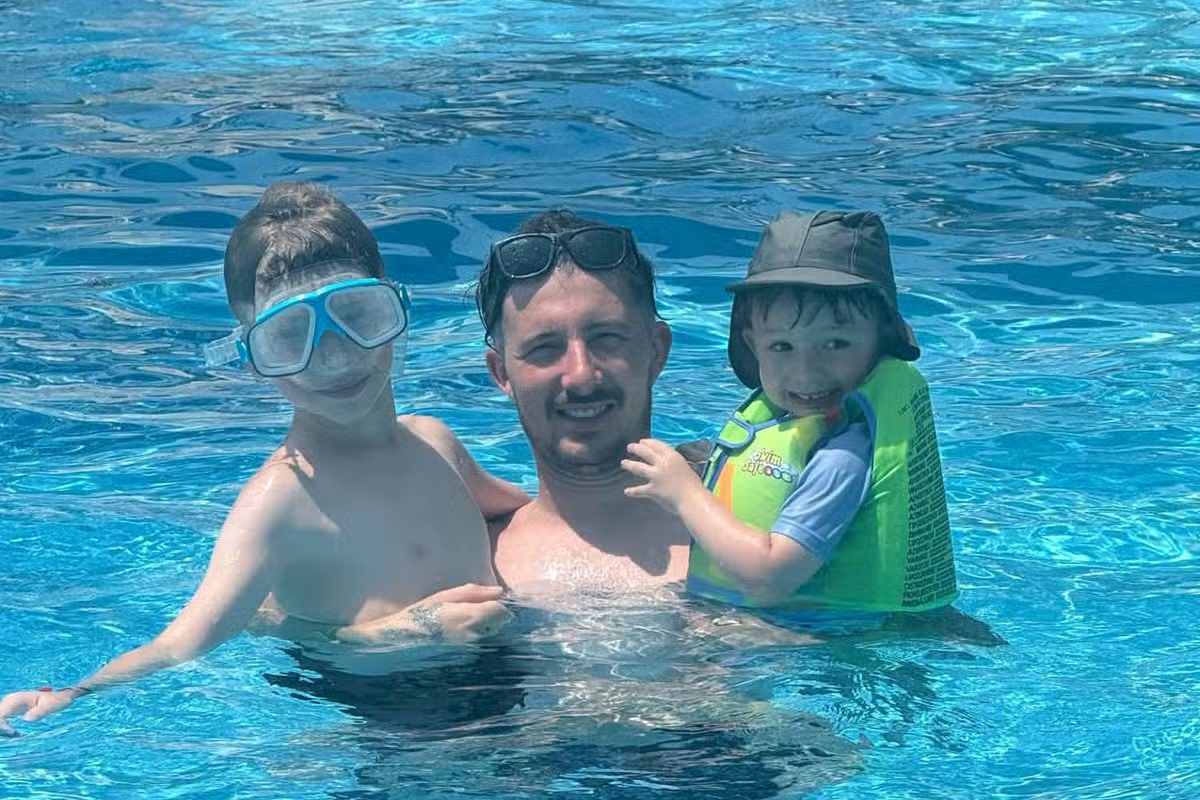
A furious dad says he was left £2,000 out of pocket after a holiday nightmare – despite having paid for travel insurance. Blake Chapman flew out with his 29-year-old partner Abbey Andrews and their three children Keeton, 11, Tobias, 3, and Vienna 1, on August 6. They had paid for 10-day £8,000 all-inclusive Jet2 holiday in the Turkish resort of Alanya.

But the family’s holiday started to go wrong just two days after they landed in Turkey, when Blake and Abbey’s youngest child, Vienna, fell ill with symptoms of severe food poisoning. “It started happening with my one-year-old two days in,” Blake said. “She was completely fine then it got to about 11:15pm and she started projectile vomiting, really bad diarrhoea, temperature.

“Because we were in a different country we panicked. I ran down to reception, they told me that they’d call an ambulance. They got to the hospital, they put an IV drip in Vienna.”

Soon after arriving at the hospital, Blake was presented with a £2,000 bill. “I argued it because I said that we’ve got insurance and I paid for the higher insurance,” he said. “In the end I just paid it.”

But things went from bad to worse when the couple’s three-year-old son Tobias began to show the same symptoms.

Blake said: “The following day around 1.00pm we all got out of the pool just about to get some dinner and it happened to my three-year-old Tobias. We kind of knew what to expect this time. Tobias was being sick in the hospital.”

Faced with the prospect of a second massive bill, Blake refused hospital treatment for Tobias and consulted a pharmacist instead.

Meanwhile, although Blake had been given an explanation for Vienna’s symptoms, he didn’t entirely believe it. He continued: ”We got the doctor’s report and they put it down to dehydration but I’m like a helicopter dad, I took the kids all over the world, we’ve never had a problem.

“When Vienna went to hospital she had a blood test and they said she’s got high white blood cells so that indicated an infection. I don’t believe it is dehydration because I’m not going to sit with a one-year-old in the beaming sun.”

With two of his children seriously unwell, Blake made the decision to abandon the holiday: “My plan was ‘let’s get out of here, let’s fly home’,” he says.

Blake says he tried to get hold of the Jet2 rep without success, so he called the company direct. Despite being told that his insurance claims could potentially take months to process, Blake and Abbey decided to leave the hotel before anyone else fell ill, spending another £950 on flights, arriving back in the UK on August 11.

“It’s put me off all-inclusives,” Blake says. “I would never go to Turkey again in my life from this experience.

He stressed that he wasn’t holding anyone responsible, but was frustrated by the slow process of his insurance claim. ”I’m not blaming the hotel, I’m not blaming the hospital for us being ill but it was how we were left in the dark,” he said.

“It’s very frustrating, very emotional. What I want to do is spread awareness because people think if you go all inclusive with the full travel insurance too then you’ll be OK if anything happens – but we were asked to pay thousands.”

A spokesperson for Jet2holidays said: “We were very sorry to hear that members of the Chapman family became unwell during their holiday. Our in-resort team made attempts to contact the family to offer support, but they had already departed before we were able to speak to them.

“Our teams on the ground work tirelessly to support customers throughout their holidays, and we remain committed to providing help whenever it is needed.”
Source link

Major airport finally reopens after volcano eruption left 340,000 passengers stranded

AN airport that was closed for almost three days after a volcanic eruption has finally reopened.

But hundreds of thousands of passengers are scrambling to get home with flights still being delayed or cancelled.

As many as eight airports were forced to close over the weekend – but have since reopened Credit: EPA
An eruption on Anak Krakatau caused major disruption to flights in Indonesia Credit: Shutterstock Editorial

On Monday, Indonesia’s Transport Ministry reported on Monday that as many as 270,000 travellers were stranded with their flights “cancelled, delayed, or diverted” – including those at Jakarta’s Soekarno Hatta International Airport which has since reopened.

Now it’s believed as many as 370,000 passengers are said to have been affected by the disruption across the last three days, with 3,000 flights cancelled.

It started on Friday when there was an eruption on Anak Krakatau.

An ash cloud drifted into the city of Jakarta and the Lampung province, halting flights at its airports with seven being forced to close.

ISLE BE GOING

Sun Travel’s favourite islands from Europe’s Caribbean to a £2 wine paradise


ALL IN

UK holiday parks where you can go ALL INCLUSIVE from £25pp with shows & waterparks

The biggest airport to close was Jakarta’s Soekarno Hatta International which grounded flights from Sunday until early this morning.

The current FCDO advice reads: “Soekarno Hatta Airport and Halim Airport in Jakarta were temporarily closed due to the volcanic ash clouds from Mount Anak Krakatau on 5 September.

“Both airports have reopened, but there are continued flight disruptions and many flights are cancelled or delayed.”

For anyone due to travel, it advises to check with your airline or travel provider for up to date information on your flight status.

On Flightradar24, Soekarno Hatta Airport has had 9 per cent of its flights cancelled today with 20 per cent delayed.

Lots of travellers were told they wouldn’t be able to fly for a few more days, including a newlywed couple on a honeymoon in Bali.

Flight continue to be delayed or cancelled in the aftermath of the eruption Credit: Shutterstock Editorial

Talking to Bernama, they asked: “What are we going to do here for another five days? We only prepared enough money for our honeymoon and [were supposed] to go home yesterday.

They continued: “We thought we would just sleep at the airport for a few hours and then take the morning flight home [on Monday]. We never thought we would end up being stuck here for days.”

Yesterday, another passenger told AFP how they had not heard any updates from the airline and were seeking out hotels only to find most of them have been fully booked.

Airlines like Qantas are offering anyone who booked to go to or from Jakarta before September 5 the chance for a free refund on travel up to September 11.

But its services are resuming as scheduled from today.

Indonesia’s Geological Agency has warned however that “the probability of further eruptions in the coming periods remains high”.

Flight compensation rules

A look at your rights if a flight is delayed or cancelled, when your entitled to compensation and if your travel insurance can cover the costs.

What are my rights if my flight is cancelled or delayed?

Under UK law, airlines have to provide compensation if your flight arrives at its destination more than three hours late.

If you’re flying to or from the UK, your airline must let you choose a refund or an alternative flight.

You will be able to get your money back for the part of your ticket that you haven’t used yet.

So if you booked a return flight and the outbound leg is cancelled, you can get the full cost of the return ticket refunded.

But if travelling is essential, then your airline has to find you an alternative flight. This could even be with another airline.

When am I not entitled to compensation?

The airline doesn’t have to give you a refund if the flight was cancelled due to reasons beyond their control, such as extreme weather.

Disruptions caused by things like extreme weather, airport or air traffic control employee strikes or other ‘extraordinary circumstances’ are not eligible for compensation.

Some airlines may stretch the definition of “extraordinary circumstances” but you can challenge them through the aviation regulator the Civil Aviation Authority (CAA).

Will my insurance cover me if my flight is cancelled?

If you can’t claim compensation directly through the airline, your travel insurance may refund you.

Policies vary so you should check the small print, but a delay of eight to 12 hours will normally mean you qualify for some money from your insurer.

Remember to get written confirmation of your delay from the airport as your insurer will need proof.

If your flight is cancelled entirely, you’re unlikely to be covered by your insurance.


Source link

Small European beach destination with 28C in September is perfect autumn escape

It’s not too late to soak up the sun and book a last-minute getaway, with a stunning European country offering 28C weather in September and beaches that compare to the Maldives

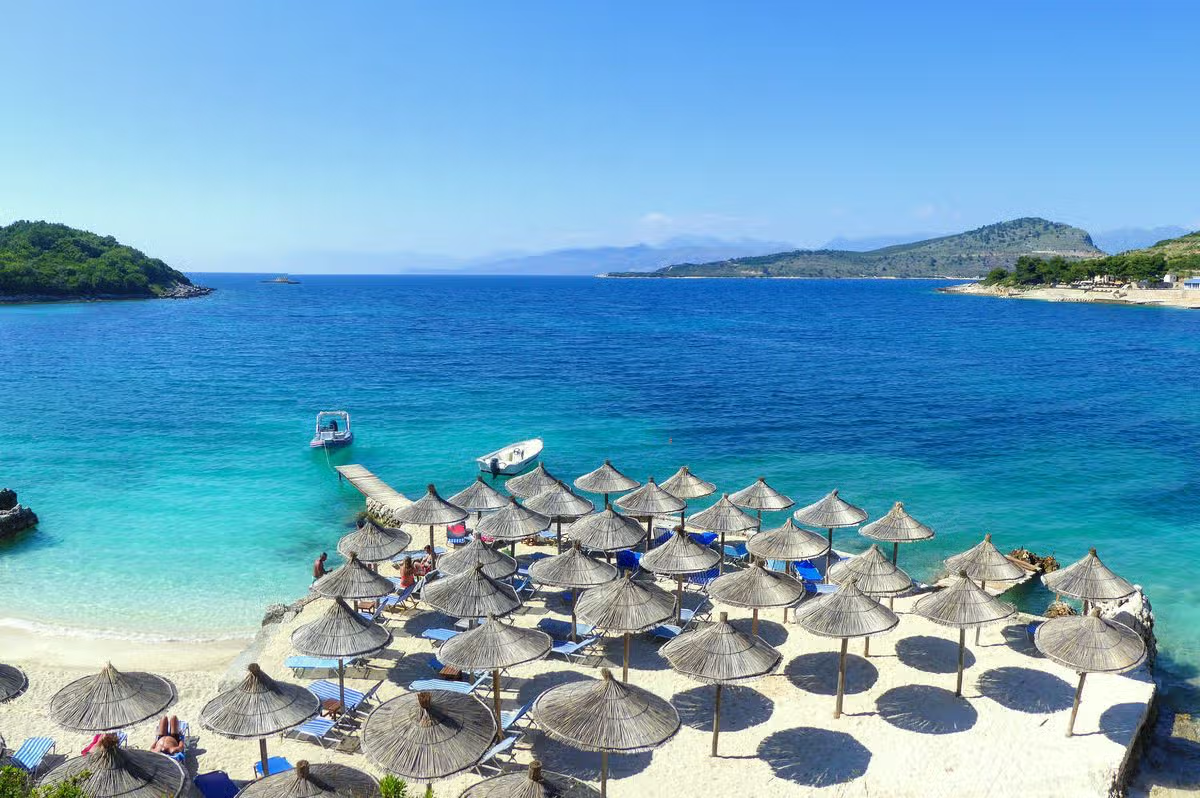
A beautiful European destination is emerging as a new holiday hotspot, with balmy temperatures in September. It’s even been hailed as a cheap alternative to the Maldives, thanks to its azure waters and sugar-white sand beaches.

If you’re looking for a September escape at a budget price and without the crowds, Albania should be top of your list. Data from TripAdvisor revealed that Albania saw a 60% increase in interest during the first half of the year, emerging as a fast-rising destination in Europe. And it’s particularly beautiful in September, with sun-soaked rays of up to 28C and an unspoilt collection of beaches.

Albania’s coastline stretches along both the Adriatic and Ionian seas, with some of its stunning shores found along the Albanian Riviera in the south, offering crystal-clear turquoise waters and unspoilt white sand. They’ve been celebrated among the finest in Europe, with the Ksamil Islands a standout.

Dhërmi and Jale Beach are another exceptional spot for sun-seekers looking to bask on the beach, complete with lively beach parties and buzzing bars. But it’s not just the southern coast that impresses; the northern shores provide a more peaceful alternative, with pristine beaches tucked away amongst bays and hidden coves.

Aside from its beaches, there’s plenty to explore in Albania, including its vibrant capital, Tiranë (Tirana), where visitors can ride the Dajti Ekspres cable car for breathtaking views, or admire its unique architecture, vibrant street art and sprawling green parks. There are also its famed underground bunkers, Bunk’Art 1 and Bunk’Art 2, which are now history and art museums, as well as nearby walking trails through the dramatic scenery of the Albanian Alps.

And that’s not all. Albania remains one of Europe’s most budget-friendly destinations, with a three-star hotel stay in the walkable city of Tiranë costing just £41.72 per night, research from Hoppa revealed. Meanwhile, a draft beer in the city can cost just £2.41, and a meal can start from a mere £7.27. What’s more, flights in September start from just £15 one-way, according to Skyscanner.

The European country has even been recommended by the professionals, as Adam Hodge, who has worked as Wizz Air cabin crew for eight years, said it starkly resembles the Maldives. “Albania has similarities to the Maldives, especially with its beachy vibes, lovely sun loungers, and its aquamarine waters,” he previously told the Mirror. “If you want to do a city break, it’s brilliant, or if you want to do a beach getaway along the coast, and towards the top, you have the European destination alternative to the Maldives.”

Adam added: “Albania is definitely one of my favourite destinations, and I’d say that it’s one to watch out for. Plus, it’s good to try somewhere lesser-known. It’s got everything which is great, and it’s very good value for money. Some of the destinations we fly to are not using the euro currency, so actually you do get a little bit more value for money with the destinations out of the euro currency as well, when it comes to eating out, drinks and destination activity trips.”

Do you have a travel story to share? Email webtravel@reachplc.com

Source link

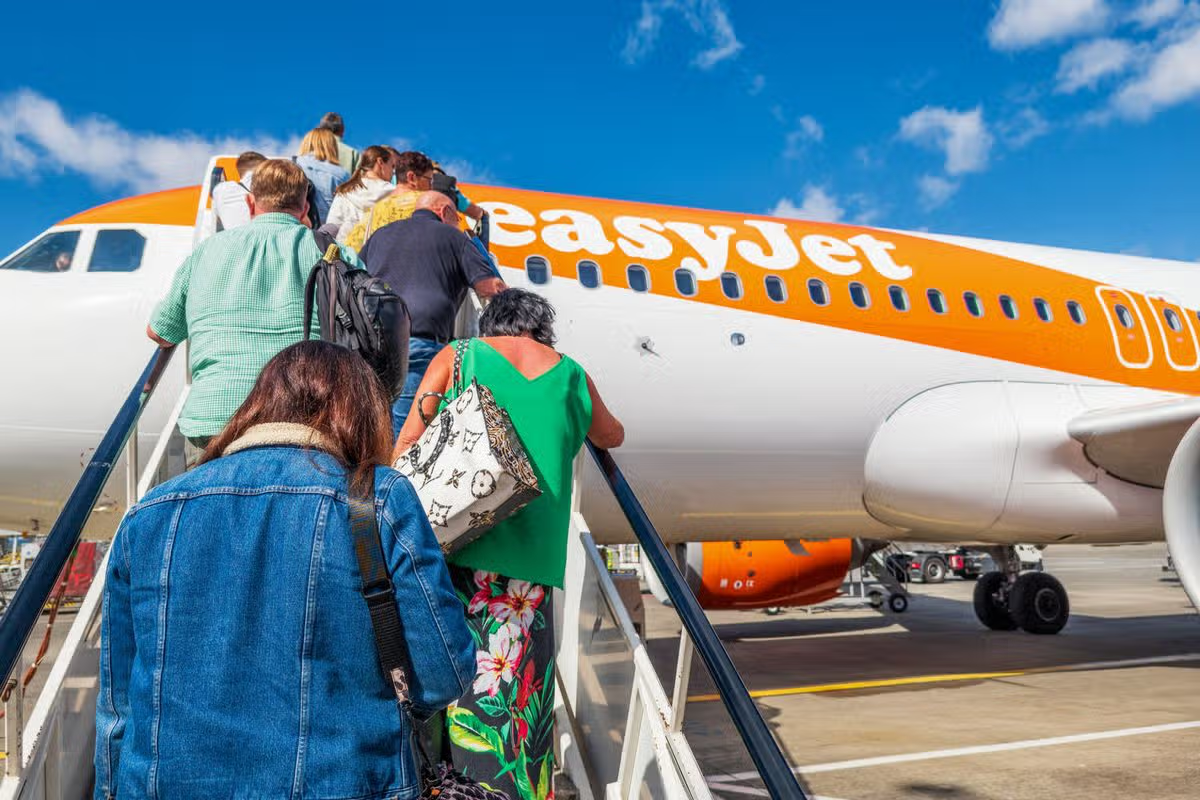
Anyone travelling with easyJet issued ‘maximum of 2 per person’ alert

Holidaymakers heading abroad are being urged to check an important easyJet rule before boarding the plane

For many travellers, there are a few items that automatically make it into a suitcase before a holiday begins. But one increasingly common gadget comes with restrictions that could catch passengers out if they arrive at the airport with too many.

The warning is particularly relevant to anyone who likes to carry several charging accessories when travelling. EasyJet has issued a reminder to customers that there is a maximum number they can take with them, alongside rules about where the items must be packed and how they can be used during a flight.

Power banks are the accessory in question, with easyJet allowing a maximum of two per passenger. The airline says they must be carried in cabin baggage only and should ideally be kept somewhere they can be easily monitored.

There is another important restriction once passengers are on board, as easyJet says power banks cannot be charged or used to charge other devices during the flight. Its guidance also says power banks must be individually protected, such as by keeping them in their original packaging or a plastic bag.

The rules are part of wider aviation safety measures around lithium batteries, which can pose a fire risk if they are damaged or develop a fault. The UK Civil Aviation Authority says power banks must be carried in carry-on baggage, individually protected when not in use and must not be recharged during a flight.

It also says power banks should not be used to charge other portable electronic devices while on board. Guidance confirms that a maximum of two power banks can be carried per person, although batteries with higher capacities can be subject to additional airline approval requirements.

For easyJet passengers, that means checking the number of chargers in your cabin bag before heading to the airport. Anyone carrying three power banks would be over the airline’s stated limit, even if each individual device would otherwise meet the relevant requirements.

Passengers should also avoid putting them into checked luggage, as easyJet specifically prohibits power banks from being carried in the hold. The airline recommends keeping them somewhere they can be monitored, which means they should remain accessible during the journey rather than being buried inside a suitcase.

The CAA’s advice is similarly clear that spare lithium batteries and power banks belong in the cabin rather than checked baggage.

The reason for keeping them close to passengers is that a battery problem can be identified and dealt with more quickly in the cabin.

Source link

‘So big and so close’: going on a bear hunt in northern Spain | Spain holidays

Once upon a time, in the woods outside Pola de Somiedo, lived a family of Cantabrian brown bears. The villagers reported sightings of a mother bear who had lost a leg to a hunter’s trap, her two cubs and two adult males, either of which might have been the father. In those days, at the end of the 1980s, they seemed to be the last of their kind in this part of Asturias. Meanwhile, the wider population dropped to about 60 bears across the surrounding Cantabrian mountain range that gave the species its name.

They have since clawed their way back from the edge of extinction here in northern Spain, and nature guide Luis Frechilla believes their numbers may now be upwards of 500 again. “They’re still classed as endangered,” he tells me, until the official count hits 1,000. But relative abundance makes them much easier to see today in Somiedo natural park – one of Spain’s first such protected areas, established in 1988.

Somiedo natural park. Photograph: Biosphoto/Alamy

Setting his scope on a tripod in a steep-angled pasture, Frechilla spots a bear almost as soon as we start looking. A juvenile, apparently, which means the animal is old enough to be foraging alone, but it’s still too small, and too far away, for him to tell if it’s a male or female. Another bear-spotter standing near us seems more willing to take a guess.

“Ooh, look at his little ears,” she says delightedly, beaming behind binoculars. No expert myself, I watch that distant fuzzy shape move across the viewfinder and along the sharp ridges opposite, blinking in and out of sight like a cursor on the trend line of a graph. I’m not sure that we are close enough to call this an encounter, but it is an experience.

The sun drops behind the peaks; the birds sing a dusk chorus in the birches and oaks; cowbells ring through the valley from the dairy herds that help this region of so-called “Green Spain” look and sound like the Swiss Alps. It gets cold at night up here, and it’s been known to snow in summer, though my own visit in late spring sees the mountaintops looking whiter than anyone around here can remember so deep into May.

That weather, and the sheer calorific spend of living and working at a median altitude of 1,300 metres, has made the traditional cuisine much sturdier here than elsewhere in Spain.

Down at the village inn, Casa Miño, we share a bottle of regional cider and a cachopo (beef fillet topped with serrano ham, peppers and goat cheese, and pounded into a single solid unit the size of a solar panel). I want fabada, too, the famous Asturian stew of white beans, pork belly and blood sausage. Frechilla says it’s a winter dish, customarily eaten for lunch – too heavy for the body to process later in the day. But I would order fabada at midnight in a heatwave, and keep eating it even while they loaded me into the ambulance.

The Lake of the Valley. Photograph: Manu Garcia/Alamy

The bears, meanwhile, don’t have much to feed on at the moment. They only woke from hibernation a few weeks ago, explains Alicia Madrid the next day, on a forest trail above the century-old hydroelectric power station at La Malva. A biologist with the conservation group Fundación Oso Pardo, Madrid tells me that Cantabrian bears don’t hibernate as long or deeply as other brown bears and are generally smaller and lighter than American grizzlies.

“They’re adapted to this terrain, and they can’t be too heavy because they have to climb a lot,” she says. Their paw prints in the mud look big enough to me, and the bite marks where they chewed clumps of long grasses, and the hairs shed where they scratched their backs against trees. Madrid shows us, too, the hefty rocks they overturned looking for insects. Further into the summer, there’ll be plenty of berries, acorns, chestnuts and maybe some meaty carrion to fatten them up.

The foundation has played a major role in the regrowth of bear populations, building bio-corridors with strategic placements of trees and bushes full of all the things they like to eat. Another key factor is the hunting ban, introduced in 1973. The trick now, says Madrid, is coaxing isolated cohorts to breed with other groups and boost genetic diversity.

Also: managing the tourists who come to see them, and balancing ecological imperatives against financial incentives. Later, after a long hike through the Valley of the Lake to reach the aptly named Lake of the Valley, I overhear Frechilla fielding the related concerns of two local women. Against a backdrop of blue sky, bright wildflowers and silver waters, the women seem to argue that conservation efforts amount to commercial exploitation. Frechilla gently insists that Somiedo natural park is a model of good practice in Spain. Much of the bears’ territory is closed to the public, and spotting expeditions are only permitted in the company of licensed guides. Nature tourism, he says, keeps villagers in jobs where farming culture cannot, and is proving vastly more sustainable than hunting bears for sport. As for protecting humans, there has been only one bear attack in recent memory, on an elderly lady whose evening stroll led her between a mother and cubs. She survived.

skip past newsletter promotion


For now, at least, most residents seem willing to share the bears with outsiders. That evening, a small crowd gather by the side of a winding back road near Saliencia, some sitting comfortably on camping chairs with spotting scopes in their hands. Everyone is watching a large male bear – so big and so close that they don’t need the viewing equipment – as he lopes across a meadow to take a quick splash in the river. Another male is spotted in the treeline above, and the two circle each other at a distance for a while. There is some speculation that they might fight for this turf, and a man with two leashed greyhounds seems ready to take bets on it. Frechilla shakes his head.

“Maybe later in the season, when they’ve gained enough weight.”

A bear in Somiedo natural park. Photograph: Lucas Vallecillos/Alamy

These bears are doing better now, but it’s still a tough life. The reality of their ongoing baby boom is that only 30% of juveniles will survive on their own, after a year of maternal supervision. This is surely why I find it so moving when we follow reports of another sighting in the twilight: a mother and her two young cubs have been seen climbing a slope called El Diente, or “The Tooth”.

It’s getting dark and cold, but we can see them through the scopes, about a mile away from us across the high mountain pass at La Peral. I watch the mother bear waiting and cajoling as needed while the siblings struggle up the vertical planes of rock like toddlers trying to climb a baby gate. On the ridgeline, they turn to silhouettes, play-fighting against a white sky.

They disappear over the far side, but then a little one comes back, seeming to wave goodbye with both front paws in the air. I remember a story I read to my daughter once, which put a poignant time limit on the usual fairytale ending: “And they all lived happily together, for as long as they could.”

The trip was provided by the Spanish Tourist Office, Turismo Asturias and Casa Miño in Pola de Somiedo. Bear-spotting tours with nature guide Luis Frechilla can be organised through Wild Spain Travel. For more information on the Cantabrian brown bear and related conservation efforts, visit Fundación Oso Pardo

Source link

Iconic English resort’s pleasure pier is forced to CLOSE for ‘essential works’

AN ICONIC English pleasure pier has been forced to close while “essential works” take place this month.

The seaside structure shut today but is expected to reopen soon.

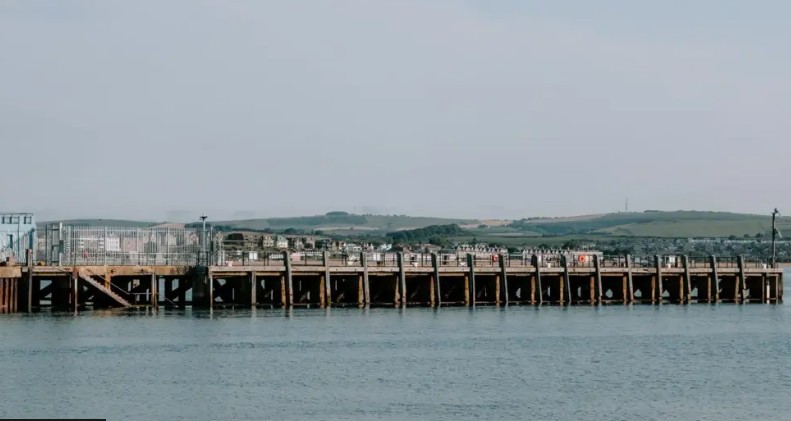
Long pier over calm water with distant houses and hills under a clear sky.
Weymouth Pleasure Pier in Dorset is closing while essential repairs take place Credit: Dorset Council

Weymouth Pleasure Pier will be closed for two weeks while essential surfacing repairs are carried out.

A refurbishment of the beach access steps is also set to take place during this period, while the new handrails will be finished off too.

Dorset Council has said that the beach access will be open in time for the town’s annual Ironman event, which will take place on Sunday, September 20.

News of the closure was shared via the council’s Facebook page in a post that read: “A reminder that the Weymouth Pleasure Pier will be closed for two weeks from Monday 7 September while surfacing works are completed along the wall.”
PIER PRESSURE

Popular English beach and pier could be forced and disappear for GOOD


WEY TO GO

From beaches to dinosaurs – Haven’s Weymouth Bay resort has lots to see

It continued: “The beach access steps at the end of the wall will also be closed during this period to enable refurbishment works and completion of the new handrails.

“The beach access steps will be reopened ahead of the Ironman event taking place in Weymouth.

The council thanked residents for their “understanding and cooperation” while the essential works are carried out.

Weymouth Pleasure Pier was previously closed for seven weeks between June and July for more “essential maintenance”.

The site was shut down over the summer months to replace failing harbour walls and safeguard the seafront for the future.

The repairs are part of a wider plan in place to address longstanding deterioration in the seafront defences around the peninsula.

Other problem areas including corrosion and voids behind existing harbour walls, and small sinkholes near footpaths also cropped up in investigations.

Previous repair work to the structures was last completed in 1970, meaning they were no longer viable for withstanding pressure from rising sea levels and more frequent storm surges.

Work has been carried out to strengthen the existing structures to ensure they can serve their purpose for decades to come.

Source link

Brits warned of four hour queues at the border due to ‘major operational issue’

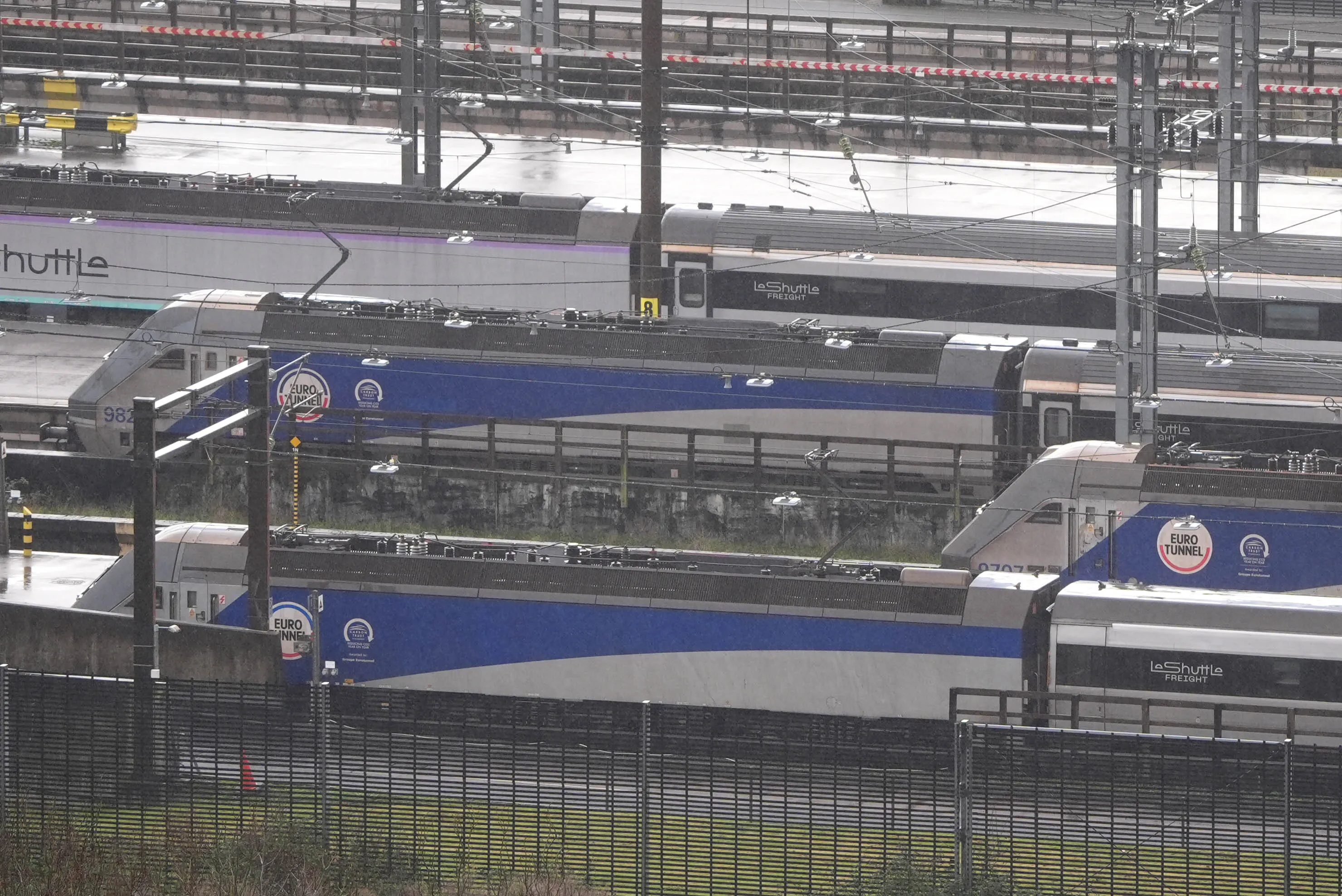
Trains at the Le Shuttle terminal in Folkestone, Kent.

BRITS are facing huge queues and delayed trains after an operational issue has caused problems at the border.

Le Shuttle – previously called Eurotunnel Le Shuttle – has warned passengers not to arrive early in Folkestone for their train.

Trains at the Le Shuttle terminal in Folkestone, Kent.
Passengers are being forced to wait hours for their trains due to ongoing Le Shuttle issues Credit: PA

This is due to huge ongoing delays.

In a statement, they said: “Due to an operational issue, you may experience longer waiting times than usual.

“Please do not arrive more than two hours before your booked departure.”

The website warns of departure delays of approximately four hours from Folkestone to Calais, while the return Calais to Folkestone has delays of three hours.

SHUT DOWN

Major airport CLOSED and flights cancelled with 270k stranded by volcano eruption


EURO-STAY

Travel warning as strike to hit European country with Eurostar cancelled

However on the website, a 11:24am departure from Folkestone to Calais has now been scheduled for 4:45pm, with this having a knock on effect for the rest of the departures today.

The latest update on the website is for the 3:24pm departure which will now leave at 6:45pm.

A Calais to Folkestone train scheduled for 4:36pm is now set to depart at 7:51pm.

According to local media, one traveller said their train was delayed by 3.5 hours.

Another wrote on social media: “I am on my way to the terminal for a train at 8:24.

“You are running 4.5h late! How can I cancel my trip and get a full refund?”

A third said there were “hundreds of delayed people waiting to board”.

It isn’t clear what has caused the issue or when it will be fixed.

The Sun has contacted Eurotunnel for comment.

Source link

The £740million spaceship-like museum that took 16 years to build to FINALLY open

AFTER more than a decade, a huge new museum which is more like the ultimate attraction for Star Wars and Indiana Jones fans is set to open.

The Lucas Museum of Narrative Art, created by filmmaker George Lucas, is set to open on September 22 in Los Angeles, America.

George Lucas has created a new museum in Los Angeles Credit: Getty
The museum – which looks more like a spaceship – will open on September 22 Credit: Getty

Inside the new 28,000sqm museum, visitors will be able to explore items that Lucas has collected over the past five decades, including art, costumes, movie props and memorabilia.

In fact, the museum will be home to more than 1,300 objects in 30 galleries across five floors.

Of course, there will be plenty for Star Wars fans in the museum including sculptures of Yoda and Grogu as well as vehicles from the films.

Visitors can head to two cinematic theatres as well.

Read more on travel inspo

GO ON

All the little-known websites for cheap or FREE tickets to gigs, theatre & festivals


TRAVEL TIP

The £2.99 SIM hack that can save Brits HUNDREDS abroad

Away from Lucas’ own creations, there will be art by Frida Kahlo as well as rare comics by Frank Miller and Cowboy Bebop anime.

There are some early sketches by Van Gogh and Picasso too

And Banksy has contributed artwork to the museum as well.

Visitors will also be able to catch an insight into Lucas’ early life too, with his student films on show.

Inside visitors will be able to see Star Wars props Credit: Reuters
As well as work by famous artists like Banksy Credit: Getty
The museum has taken more than 16 years to build Credit: AFP

The museum itself also looks like a spaceship, with curved white walls.

Outside the museum, there are large green open spaces, with more than 200 trees and a waterfall-like fountain.

If you get hungry, there’s the Skywalker Grill as well, offering all-day dining including seafood, grilled dishes, pasta and desserts.

The restaurant also has an outdoor terrace.

The museum will be open from 10am to 5pm on Mondays, Wednesdays and Thursdays, 10am to 9pm on Fridays, 9am to 9pm on Saturdays, 9am to 5pm on Sundays and is closed on Tuesdays.

Adult tickets cost $25 (£18.50) per person and children’s tickets (up to 17-years-old) are free.


Source link

Budget airline wants YOU to pay them if your flight is delayed

THERE is nothing worse than a delayed or cancelled flight – and one airline is now making passengers pay extra if they want help quicker.

Wizz Air has launched a new add-on called ‘Disruption Assistance’, which it claims is ‘added protection’.

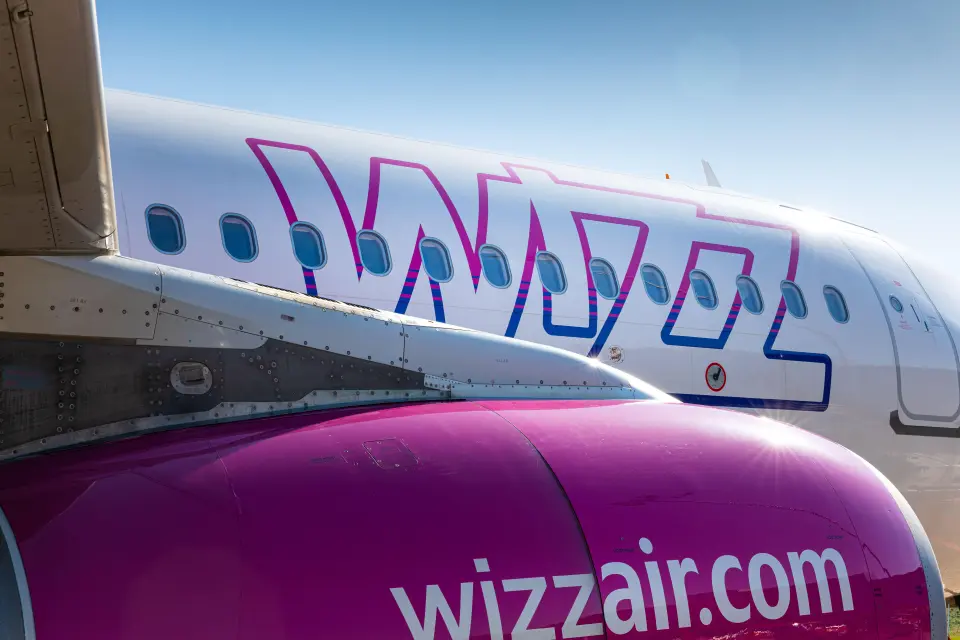
Close-up of a Wizz Air Airbus 320 aircraft at Luton Airport.
Wizz Air has introduced a new service called ‘Disruption Assistance’ Credit: Alamy

According to the airline, passengers will “get extra support if your flight is disrupted on the day of travel”.

The new add-on means that travellers will get notifications for disruptions over two hours, for any reason including severe weather, issues at airports or even strikes.

Another part of the add-on is that you will get rebooked quickly when time matters, even if this means needing to travel with another airline.

You will also be able to request a full refund if the alternatives offered to you don’t work.

Read more on travel inspo

CHEAP BREAKS

UK’s best 100 cheap stays – our pick of the top hotels, holiday parks and pubs


ALL IN

I found the best value all inclusive London hotel… just £55pp with free food & booze

The final part of the add-on is that you will get “access [to] easy self-service tools or speak to an agent”.

You can add Disruption Assistance during the booking process or in Manage My Booking on the airline’s website or app.

In addition, if your flight is impacted on your day of travel, you will be sent an email to the Disruption Portal where you will be able to rebook via one of the options given or offered a refund.

According to EX-YU Aviation, the add-on costs between €9.90 (£8.51) and €14.90 (£12.80) per person.

A flight information monitor displays numerous flight numbers and destinations with their status listed as "Cancelled."
Passengers will pay for the add-on which will prioritise booking them onto a new flight if theirs is delayed or cancelled by more than two hours Credit: Getty
Collage of travel items including a plane, sunscreen, passport, suitcase, and plane tickets, advertising The Sun's travel Instagram account.

Legally, the airline must rebook you under EU/UK Regulation 261/2004, if your flight is cancelled or delayed by more than five hours.

Airlines will usually try to rebook you on their own airline’s next available flight.

However, if they are unable to get you to your destination on the same day or next day, they must legally book you onto a rival airline and reimburse you.

Essentially, the Disruption Assistance add-on means you don’t have to battle with the airline’s customer service for a new flight or refund.

Flight compensation rules

A look at your rights if a flight is delayed or cancelled, when your entitled to compensation and if your travel insurance can cover the costs.

What are my rights if my flight is cancelled or delayed?

Under UK law, airlines have to provide compensation if your flight arrives at its destination more than three hours late.

If you’re flying to or from the UK, your airline must let you choose a refund or an alternative flight.

You will be able to get your money back for the part of your ticket that you haven’t used yet.

So if you booked a return flight and the outbound leg is cancelled, you can get the full cost of the return ticket refunded.

But if travelling is essential, then your airline has to find you an alternative flight. This could even be with another airline.

When am I not entitled to compensation?

The airline doesn’t have to give you a refund if the flight was cancelled due to reasons beyond their control, such as extreme weather.

Disruptions caused by things like extreme weather, airport or air traffic control employee strikes or other ‘extraordinary circumstances’ are not eligible for compensation.

Some airlines may stretch the definition of “extraordinary circumstances” but you can challenge them through the aviation regulator the Civil Aviation Authority (CAA).

Will my insurance cover me if my flight is cancelled?

If you can’t claim compensation directly through the airline, your travel insurance may refund you.

Policies vary so you should check the small print, but a delay of eight to 12 hours will normally mean you qualify for some money from your insurer.

Remember to get written confirmation of your delay from the airport as your insurer will need proof.

If your flight is cancelled entirely, you’re unlikely to be covered by your insurance.


Source link

Super CHEAP last minute Loveholidays deals

LOVEHOLIDAYS have tens of thousands of last minute breaks up for grabs, and they’re going for fabulously cheap prices.

We found sunny, week-long holidays in places like Spain, the Canary Islands, Tunisia and Morocco for less than £500pp.

Stay at the glamorous, all inclusive Servatur Riosol in Puerto Rico, Gran Canaria for £499pp Credit: Trip Advisor/Servatur Riosol Management
Bag an all inclusive week away on Spain’s sunny Costa Brava from £299pp Credit: Getty

Click here to browse all Loveholidays last minute hols.

We’ve hunted down the best all inclusive deals from this mega list, where you can whisk the entire family away on a package holiday from only £289pp – here’s our top picks.

Costa Brava, Spain – £299pp

If you’re after a super affordable, all inclusive fly and flop holiday, look no further than the Ibersol Sorra d’Or hotel.

Here you’ve got everything you need in a sunny Spanish holiday, from a kids club, pool games and live music to keep the family entertained.

Read more on Loveholidays

SNAP IT UP

The CRAZY affordable last minute Loveholidays deals from £129pp


PACK & GO

Save HUNDREDS on these last minute Loveholidays deals – with hols from £159pp

Make use of the pretty yellow loungers surrounding the outdoor swimming pool, or step outside the front door and cross the promenade to reach a stretch of golden sand.

Head out into Malgrat de Mar to dip into dozens of local tapas bars, British-style pubs, souvenir shops, and the town’s weekly street market.

Book a 7 night all inclusive Spain holiday from £299pp (or click here to browse all Costa Brava holidays)

Tunisia – £369pp

Stay at El Mouradi Palace in Port el Kantaoui, Tunisia on an all inclusive basis from £369pp Credit: Trip Advisor/El Mouradi Palace Management

The five-star El Mouradi Palace is a grand resort sitting directly on the white sands of Port el Kantaoui, Tunisia.

The hotel boasts a massive, 900-square-metre outdoor pool that feels like a lagoon, complete with a separate children’s section.

If you prefer the sea, you can step straight out onto a private stretch of white sand equipped with free sun loungers, beach umbrellas, and a beach bar. There’s also a heated indoor pool for cooler months.

Dining centres around the massive main buffet restaurant whic serves up everything from traditional Tunisian specialties and grilled meats to fresh sushi.

Book a 7 night all inclusive Tunisia holiday from £369pp (or click here to browse all Tunisia holidays)

Fuerteventura – £489pp

SBH Maxorata Resort is a sprawling beachfront resort in Jandia, Fuerteventura Credit: Trip Advisor/SBH Maxorata Resort Management

The SBH Maxorata Resort is a massive, four-star family hotel perched on the sun-drenched southern tip of Fuerteventura.

If you’re looking for that Caribbean-style white sand and turquoise water – without the long-haul flight or premium price tag, Jandia is exactly where you want to be.

With four pools, a splash park, a spa, evening music and cabaret, a massive buffet restaurant, pool and snack bars plus two a la carte restaurants – can you ask for much more from an all inclusive?

Rooms have had a recent refurb, with modern designs, huge TVs and private balconies – plus there’s family rooms with a separate bedroom and living area.

Book a 7 night all inclusive Fuerteventura holiday from £489pp (or click here to browse all Fuerteventura holidays)

Agadir, Morocco – £289pp

Book an all inclusive holiday to Agadir from as little as £289pp with Loveholidays Credit: Carribean Hotel

The Caribbean Village Agador is a sprawling, action-packed resort that feels like its own mini town.

Designed like a traditional Moorish village with low-rise buildings and winding pathways, here you’ll weave through lush gardens to find four pools, tennis courts and even an open-air amphitheatre.

By night, the resort comes alive with dance, comedy, and live music shows, plus there’s plenty of poolside bars and outdoor lounge areas to enjoy those all inclusive drinks.

This hotel is just a short walk from Agadir’s lively beachfront promenade packed with cafes and bars, plus you’re only a quick taxi ride away from the Souk El Had – a massive market stocked with spices and souvenirs.

Book a 7 night all inclusive Agadir holiday from £289pp (or click here to browse all Morocco holidays)

Tenerife – £379pp

Be Live Adults Only Tenerife is in the vibrant, party-led resort of Puerto de la Cruz Credit: Trip Advisor/Be Live Adults Only Tenerife Management

If you’re looking for an adults-only option, Be Live Adults Only Tenerife is a sleek, four-star spot sitting right in the heart of Puerto de la Cruz.

This chic getaway trades busy splash parks for chilled-out pool days and sweeping views of the Atlantic and Mount Teide.

After a day of sunbathing, sit down to dinner in the buffet restaurant with show cooking displays and plenty of cuisines to pick from, before winding down by watching the sunset with an all inclusive cocktail.

When you want to head out, you’re only minutes away from the volcanic sands of Playa Jardin and the massive Lago Martianez saltwater pool complex.

Book a 7 night all inclusive Tenerife holiday from £379pp (or click here to browse all Tenerife holidays)

Gran Canaria – £499pp

Sit by the infinity pool at Servatur Riosol, or take the funicular lift down to Puerto Rico beach Credit: Trip Advisor/Servatur Riosol Management

Servatur Riosol is a brilliant, budget-friendly base in Gran Canaria‘s sunny Puerto Rico.

Built into the cliffside, this scenic resort offers to swimming pools with sweeping views over the sea. There’s also a kids splash area, plus an adults-only zone with underwater loungers and a private bar.

Rooms here come with kitchenettes stocked with microwaves, hobs and toasters – but the most you’ll need to use is the kettle for the odd cup of tea with your all inclusive package.

There is a funicular lift to take you down to Puerto Rico beach, and the bustling souvenir shops of the Europa Shopping Centre are a short walk away.

Book a 7 night all inclusive Gran Canaria holiday from £499pp (or click here to browse all Gran Canaria holidays)

Prices correct at the time of publication.

Source link

Stunning UK attraction named one of the best in the WORLD slashes ticket prices to less than a bottle of wine

ONE of the most famous attractions in the UK is slashing its ticket prices by more than half.

Kew Gardens is known for its incredible botanicals, exhibitions, seasonal events – and in a few days you’ll be able to explore it all for a tenner.

Kew Gardens is slashing ticket prices from £25 to £10 Credit: Alamy
Adults will be able to see the entire attraction for less than half the price until the New Year Credit: Getty

Every Tuesday between September 8 to December 29, adult tickets to Kew Gardens will cost just £10 – rather than its usual £25.

The attraction is open every day of the week between 10am and 7pm.

Kew Gardens is a one-of-a-kind attraction filled with more than 50,000 plants with some of the most diverse collections on earth.

It’s frequently named as one of the best attractions to visit in the country and in the world.

ISLE BE GOING

Sun Travel’s favourite islands from Europe’s Caribbean to a £2 wine paradise


ALL IN

UK holiday parks where you can go ALL INCLUSIVE from £25pp with shows & waterparks

It was named as one of the world’s best botanical gardens by Conde Nast Traveller in 2023.

As for what you can find now, there are plants aplenty.

For seeing autumn at its best, head up to the Treetop Walkway for a high-up view of the attraction looking down at its orange-leaf trees.

It looks over the Arboretum which has over 11,000 trees – some of them dating back to when the gardens were founded back in 1759.

If you’re going as a family, check out the children’s garden which has its own playground designed for two to 12 year olds.

There are tunnels, climbing frames and water play too.

The Palm House will close for five years 2027 – so it’s a great chance to see it

For a moment of calm, there’s Japanese Landscape, a tranquil Asian-inspired garden with a traditional tea garden and waterfalls.

Inside the Palm House is a tropical rainforest environment – this is where you’ll find the oldest pot plant in the world.

It’s one of your last chances to see it for a while as there’s a planned renovation in 2027 which will last for five years.

Other areas to explore include King William’s Temple, The Hive installation and Temperate House which is the world’s largest Victorian glasshouse.

The Henry Moore exhibition will be at Kew Gardens until 2027 Credit: Alamy Live News.
In autumn one of the best views is from the Treetop Walkway Credit: Kew Gardens

In October half-term there will be a Hey Duggee trail for kids with interactive challenges and a stamp trail.

The £10 tickets also coincide with the Henry Moore: Monumental Nature exhibition which has as many as 30 impressive sculptures on display.

The £10 tickets can be booked online or bought at the gate.

Travel Reporter Cyann Fielding reveals her favourite part of Kew Gardens…

If you want to find out how to spend a day at Kew Gardens, Travel Reporter Cyann Fielding has done all the work for you

“Whatever season you choose to visit Kew Gardens, there is something different to see.

“When I visited, the orange, red, yellow and brown leaves of autumn were in full swing making the entire destination look like a painting.

“Of course, pretty much all of the things to do at Kew Gardens are suitable for adults.

“A personal favourite of mine was the Princess of Wales Conservatory which features 10 temperature-controlled climate zones.

“In each area, there is something to explore that is fascinating – it essentially feels like walking through the jungle. You’ll see Venus flytraps, orchids and giant cheese plants.

“There is the Temperate House, which is the world’s largest Victorian glasshouse and is home to rare and threatened plants.

“Also make sure to head to Palm House, especially before it closes and undergoes refurbishment in 2027.

“Inside you will find an indoor rainforest, with tropical plants including the oldest pot plant in the world.

“Reopening in spring 2026 is also Kew Palace, which is the oldest building within the gardens.

“The pretty red house was the summer home of King George III in the 18th century and features 10 rooms spread across three floors, including the royal’s living quarters.

“At the opposite end of the estate is Queen Charlotte’s Cottage, which is currently open to the public.”


Source link

The longest river in Europe which never reaches the ocean

All roads may lead to Rome, but not all rivers lead to the ocean.

You might have heard the phrase ‘all rivers flow to the sea’ – often used to mean that different paths will all lead to the same end at some point, While it’s a pleasing idiom, it’s not geographically true. In fact, one of the longest rivers in the world never reaches the sea at all.

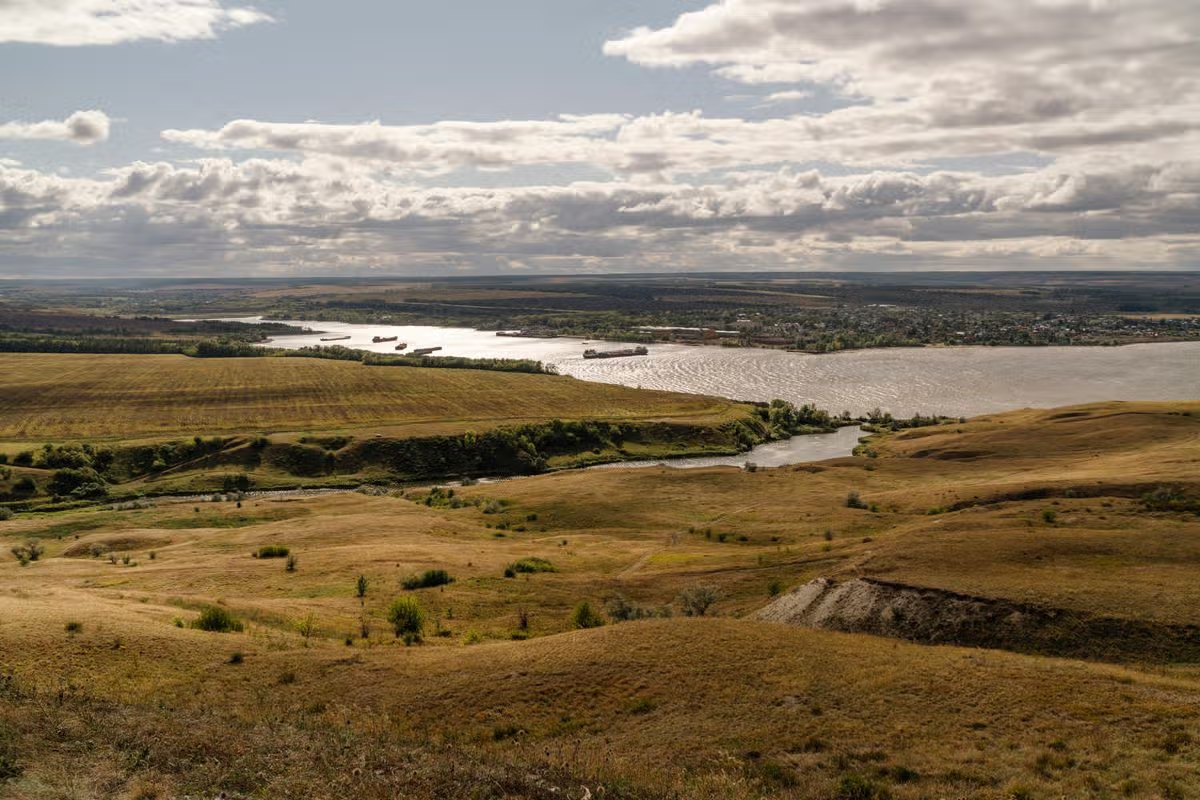
The Volga is the longest river in Europe, flowing through central and southern Russia. Its basin sprawls across two-fifths of the European part of Russia.

The river begins in the Valdai Hills as a tiny trickling spring, before turning into the Volga.

It winds for a whopping 3,531 kilometres through forests and steppes before emptying into the Caspian Sea which, rather misleadingly, is not a Sea at all, but a colossal lake.

The river is connected to five different seas via an intricate network of manmade canals which were built over the centuries, although the Caspian is its main and natural mouth.

The canal system allows ships to travel from the Volga to the Black Sea, the Sea of Azov, the Baltic Sea and the White Sea.

The sprawling Volga Delta, where the river splits into more than 500 channels, is also a world-famous wildlife sanctuary.,

It is a spawning ground for the Beluga sturgeon, which means that the lower stretches of the Volga are the epicentre of wild black caviar – one of the most sought after and expensive delicacies in the world.

The river was also a lifeline during World War II, providing a lifeline for Russian troops during the Battle of Stalingrad.

The Soviet Army was pinned against its west bank, so all supplies had to be ferried across the mile-wide stretch of water under constant barrage from the German artillery.

As winter set in and the river began to freeze, it became too icy for boats to cross but not yet thick enough for trucks to drive on.

Russian forces were nearly starved of ammunition until it froze solid.

However, as the German army focused all its energy on fighting across the riverbank, the Soviets snuck across the eastern side of the river to launch a surprise attack and completely surrounded the German forces.

Source link

Deadly boiling river where water temperatures reach 99°C

This river was thought to be the stuff of legends – but it is very real

In a remote part of the Amazonian rainforest, there is a river so mired in myth that many thought it didn’t exist. However, thanks to the research and work of a celebrated geothermal scientist, the existence of the river has now been proven – and he’s fighting to protect it.

The Shanay-timpishka, commonly known as the ‘Boiling River of the Amazon’ is a tributary of the Pachitea River which flows towards the Amazon River. The river has been known to indigenous Peruvians who live in the Amazon, and it has been used for spiritual and healing rituals for centuries. They called it ‘Shanay-timpishka’ which translates to ‘boiled by the heat of the sun’.

The local Asháninka and Shipibo peoples believe the river is birthed by Yacumama, a gigantic mythical serpent thought to live in the Amazon. “a mythical enormous serpent believed to inhabit the Amazon Rainforest.”

Local shamans teach that Yacumama is the “Mother of the Waters”

Geothermal scientist Adrés Ruzo first heard of the scalding river from his grandfather who told him a legend about the Spanish conquistadors who ventured into the jungle and came back with tales of a river which boiled.

He was the first scientist permitted by the local shamans to map, study and legally help to protect the river. He travelled through the jungle in 2011, guided by his aunt and confirmed the existence of the river.

Ruzo worked to study the river, and also helped the local indigenous people secure their rights to it. The area is in massive danger from deforestation which destroys the forest and surrounding ecosystems.

Ruzo became an advocate for the ancestral people living in the region, and helped secure the legal titles to the land. He also founded the Boiling River Project – a non-profit organisation which advocates for the permanent protection of the river.

Content cannot be displayed without consent

One of the most fascinating things about this river is that it is an anomaly.

Usually, geothermal rivers and springs are heated by volcanic currents but in the case of Shanay-timpishka, the closest volcano is 700 kilometres away. Instead, the water is heated by the core of the Earth.

Rainwater seeps into the earth’s crust through fault lines where it is heated to boiling and then pushed back up into the river. At its hottest points, the river can reach close to 100°C, and boils anything which is unfortunate enough to fall in.

The river is littered with animal bones and bodies which have been cooked inside.

Tragically, it’s not only animals which have been killed by the boiling water. A Toronto woman died in 2025 after she fell into the river whilst meditating on a rock nearby.

Although Maya Moreno managed to escape from the water alive, she tragically died later in hospital after suffering burns to 70% of her body.

According to a GoFundMe for Maya, she had travelled to the river as part of a spiritual journey, and fainted beside the river which caused her to fall in.

Source link

Share a tip on a great autumn day out in the UK | Travel

As the long, hot summer draws to a close, many of us are looking forward to the shift in seasons. We’d love to hear about your best autumn days out in the UK, whether it’s a favourite forest walk or bike ride, seasonal activities such as foraging, stargazing and wildlife spotting, or a garden or arboretum that puts on a spectacular display of fiery colours.

The best tip of the week, chosen by Tom Hall of Lonely Planet, wins a £200 voucher to stay at a Coolstays property – the company has more than 3,000 worldwide. The best tips will appear in the Saturday magazine and Travel website.

Keep your tip to about 100 words

If you have a relevant photo, do send it in – but it’s your words we will be judging for the competition.

We’re sorry, but for legal reasons you must be a UK resident to enter this competition.

The competition closes on Monday 14 September at 10am BST

Have a look at our past winners and other tips

Read the terms and conditions here

Share your travel tip using the form below.

Please share your story if you are 18 or over, anonymously if you wish. For more information please see our terms of service and privacy policy.

Share your experience

You can share your response using this form.

Your responses, which can be anonymous, are secure as the form is encrypted and only the Guardian has access to your contributions. We will only use the data you provide us for the purpose of the feature and we will delete any personal data when we no longer require it for this purpose. For alternative ways to get in touch securely please see our tips guide.

If you’re having trouble using the form click here. Read terms of service here and privacy policy here.

Source link

Travel expert issues warning to all Brits heading to Europe as new rule kicks in today

A major travel change is set to impact British holidaymakers going to and from Europe as of today (7 September), and an expert has issued some crucial advice to avoid disruption

An expert has issued a warning to all Brits travelling to and from Europe as a significant change comes into force.

The European Union’s (EU) Entry/Exit System (EES) was rolled out across airports earlier this year, and, in a bid to reduce travel disruption, member states were permitted to relax some of its restrictions. EU countries such as France, Germany, Italy, Portugal and Spain were allowed to temporarily “lift biometric registration” until the end of summer to ensure there was “some relief for the worst-case scenario”, and temporarily switched off the EES when required.

Many European countries utilised the eased measures, particually during the summer holidays, as the EES requires all British passport holders to create a digital record and register their biometric details, such as fingerprints and a photograph, upon arrival in the Schengen area. However, as of today, Monday, 7 September, the ability to relax EES requirements is expected to have expired, with no formal announcement made of an extension.

With uncertainty building that it could prompt airport chaos if there is no further leeway given to Brits when travelling through the EU and the digital system, an expert has issued a warning about the impacts. Anton Radchenko, aviation expert and CEO of passenger-rights company AirAdvisor, explained: “The part of this most travellers have not clocked is that the risk runs both ways. Everyone worries about queues when arriving in Europe, but British passengers can also become trapped at exit control at a Spanish, Italian or other Schengen airport when trying to fly home.

“If a passenger misses an operating flight solely because of a passport-control queue, there is generally no automatic EU261 right to compensation or free rebooking. Airlines may help voluntarily, but passengers should not assume they will, and many insurance policies only cover specified causes such as public transport failure, so the exact wording needs to be checked.

“If the airline delays the flight because passengers are stuck in the queue, its normal care obligations still apply after the relevant waiting period. If it cancels, passengers remain entitled to a refund or rerouting, even though fixed compensation is unlikely where the border disruption was outside the airline’s control.”

Anton added: “My advice is to treat the return journey as seriously as the flight out. Follow the airport’s arrival-time guidance, go to passport control promptly, alert the airline before the gate closes if the queue becomes excessive and preserve time-stamped evidence showing where the delay occurred.”

There have been reports that some member states may still allow eased measures moving forward, although nothing has been officially announced. A European Commission spokesperson told the Guardian at the beginning of last week: “We are in close and constructive contact with those few member states where some adjustments are needed at certain border crossing points. And during an additional period of operational adjustment that is needed at these few operational border crossing points, the commission stands ready to provide additional support to these member states.”

Meanwhile, Ryanair has called on the EU Commission to “immediately” extend the EES flexibility until next year. Ryanair’s COO Neal McMahon said: “The EU’s handling of EES has been a shambles from start to finish. Airlines, airports and border authorities repeatedly warned Brussels that the rollout was not ready, that it would increase processing times and that it would create excessive queues for passengers. Those warnings were ignored, with EU citizens the ones delayed and disrupted.

“Passengers should not be made to pay the price for the EU’s failed EES rollout. Ryanair calls on the EU Commission to urgently extend the EES derogation until at least Apr 2027, so that airports and border authorities have the time needed to fix malfunctioning kiosks, increase staffing levels and ensure the system can operate efficiently before full enforcement is introduced and passengers are condemned to these excessive border control delays for another season.”

Do you have a travel story to share? Email webtravel@reachplc.com

Source link

Cat cafes, lounges in Greater Los Angeles where you can cuddle kitties

This spot, just a short stroll from the Long Beach Museum of Art Downtown, doesn’t bother trying to graft cafe culture onto the cat-visiting experience, choosing instead to double-down on a whimsical cat motif that includes kitty murals and paw prints splashed across interior and exterior walls. (If you need a caffeine fix, there is a Starbucks a few blocks away.) The central element inside the space is a wooden tree-like structure where you’ll find many of the 50-plus cats provided by rescue partner Long Beach Felines lounging or climbing, while others roam about, pouncing on toys, wiggling through fabric tunnels or prancing on a cat exercise wheel the size of a truck tire.

Up to 25 people can kick it with the kitties at any one time, and the 50-minute sessions can be booked online. Other offerings include: Cats & Mats yoga (offered one Friday evening a month), Crochet With Cats (one Sunday afternoon a month) and cat-accompanied sound baths. (An employee I chatted with said the crochet class, with its preponderance of dangling yarn, is particularly popular with the cats.)

Price: $19.99 for 50-minute sessions, which start at the top of the hour

Hours: Monday, 11 a.m.-6 p.m.; Thursday-Sunday, 11 a.m.-6 p.m. (reservations end 1 hour before closing)

Pro tip: A shorter and less expensive option — $10 for 20 minutes — is available on a walk-in basis only at the top of the hour, depending on capacity.

Source link

Airline with the smallest economy seats named — not Wizz Air or easyJet

If you’re flying economy, you’re probably going to be squished into a tiny seat for the duration of your flight

When it comes to jetting off on holiday, the thought of getting from A to B can feel like a dread for some people. This could be due to turbulence, boredom or just how little legroom there is.

Flying with budget airlines doesn’t necessarily mean worse seats. Most airlines, including the likes of Ryanair, easyJet and Wizz Air, use modern narrow-body aircraft such as the Airbus A320 family or Boeing 737 family.

A lot of the budget airlines have a typical 3–3 layout of: window — middle — aisle or vice versa.

As travellers are probably aware, you can upgrade your seat with extra legroom for a certain price.

According to easyJet, “you can pay to select a standard, Up Front or Extra Legroom seat. If you don’t pay, easyJet allocates one automatically at check-in and says it will try to seat people on the same booking together, but this isn’t guaranteed”.

Meanwhile, Ryanair is probably the most notable example of the “pay if you care where you sit” model.

According to Ryanair’s website, “you can get a free randomly assigned seat, with random allocation happening during check-in 24–2 hours before departure. Paying lets you select a specific seat, with the price varying according to its location”.

Wizz Air works similarly and offers free random allocation, while you can pay for a particular seat. “Wizz also has premium seats such as front-row, Upfront and Extra Legroom, and even a “Sitting Together” option for two adults on eligible bookings”, according to its website.

Thankfully, there’s now a way to work out which budget airline offers the widest seats, so you needn’t compromise on your precious comfort.

Which? has looked at which airlines boast the most generous seating, so you can ensure you’re getting the best value for your money.

When it comes to short-haul flights, seat width (the distance between each armrest) ranges between 17 and 18 inches, which may not sound like a great deal, reports the Express.

However, that extra inch can make a world of difference when you’re packed in like sardines.

The airlines offering the widest economy seats are Wizz Air, TAP Portugal, easyJet and Lufthansa, all measuring 18 inches in width.

That means the airlines with the narrowest seats are British Airways, Jet2, KLM, Norwegian, Ryanair, Tui and Aer Lingus, all tied at 17 inches.

Meanwhile, Vueling sits somewhere in between at 17.5 inches.

Airlines seat width and legroom

Below are airline seat widths and legroom in inches:

  • Aer Lingus 31-32 (legroom) 17 (seat width)
  • Air Canada 30-34 / 17.5
  • American Airlines 31-32 / 17
  • British Airways 31 / 17.5
  • Delta 31-32 / 17.9
  • Emirates 32-34 / 17-18
  • Etihad 31-33 / 17.5
  • KLM 31 / 17.5
  • Lufthansa 31-32 / 17
  • Qantas 31 / 17.5
  • Qatar 31-33 / 17.5
  • Singapore Airlines 32-34 / 17.5
  • Tui Airways 33 / 17
  • United 31-34 / 17
  • Virgin Atlantic 30-31 / 17.5

If you’re looking to bag a bit more space on your budget flight without splashing out extra cash, there are a couple of handy tricks worth knowing.

The first is to book a bulkhead seat – those positioned directly behind the walls, curtains or screens that divide the cabin. With no seats in front, you’ll be able to stretch your legs out to your heart’s content.

Bear in mind, however, that these can be slightly narrower if tray tables are stored within the armrest.

If a bulkhead seat doesn’t appeal to you, opt for a seat towards the back of the plane where the rows begin to taper.

This can occasionally mean fewer seats per row – though naturally, you may find yourself beside the toilet queue, which can prove a touch disruptive.

If you’re on a flight that has already departed and you spot additional empty seats, you can always politely enquire with a flight attendant about the possibility of relocating.

Remember, if you don’t ask, you don’t get – and provided you remain courteous, there’s every chance they’ll accommodate your request.

If you have additional requirements that would benefit from extra room, such as being particularly tall or pregnant, there’s a reasonable chance you could be moved to a more comfortable and spacious seat.

Source link

I’ve been to both cities claiming to be the world’s greatest – there’s a clear winner

Cape Town and Rio de Janeiro are two cities on most people’s bucket lists, but which one reigns supreme when it comes to the best – one writer compares the two

Days shaped by sand, surf and salt air. Nights by bars, beats and grills. All played out in a city somehow woven between soaring mountains and sun-swept shores. Sounds good, no? Well this is both Brazil’s Rio de Janeiro and South Africa’s Cape Town. Then chuck in vibrant waterfront neighbourhoods, primeval hiking trails, world-class food and drink, plus a melting pot of cultures and you’ve got what it takes to be the greatest city in the world. Which is what both have boldly claimed.

But they both can’t be right, so which takes the crown? I’ve lived in samba-soaked Rio, and recently spent a month exploring the city straddling Africa’s southern tip, so may just be qualified enough to have a say in the debate that’s enraged Brazilians and South Africans online. The neutral voice of reason ’n’ all that.

Weather

Rio has a glorious tropical climate. Hot and humid, with sweltering summers often as high as 40C. You’ll rarely feel cold, but if you’re of a sensitive disposition, it may be too much heat to handle. Plus biblical rains can wash your trip away.

Conversely, Cape Town has a Mediterranean-style climate. Dry, warm summers with highs of a perfect 30C. Fantastic if it weren’t for one thing – the wind. Known as the “Cape Doctor”, it’s like nothing I’ve ever experienced. Sweeping in off the ocean, it can make a hot summer’s day feel like autumn. Worse, it can be downright violent, turning beaches into giant sandblasters, stinging your skin, near blinding you. Bad doctor.

Verdict: Rio is the winner.

Beaches

Oh my, what an amazing array of beaches they both have, like no other city in the world. Apart from each other, of course. Both have smaller arcing sands near the city centre, becoming longer and more pristine the further out of town you head.

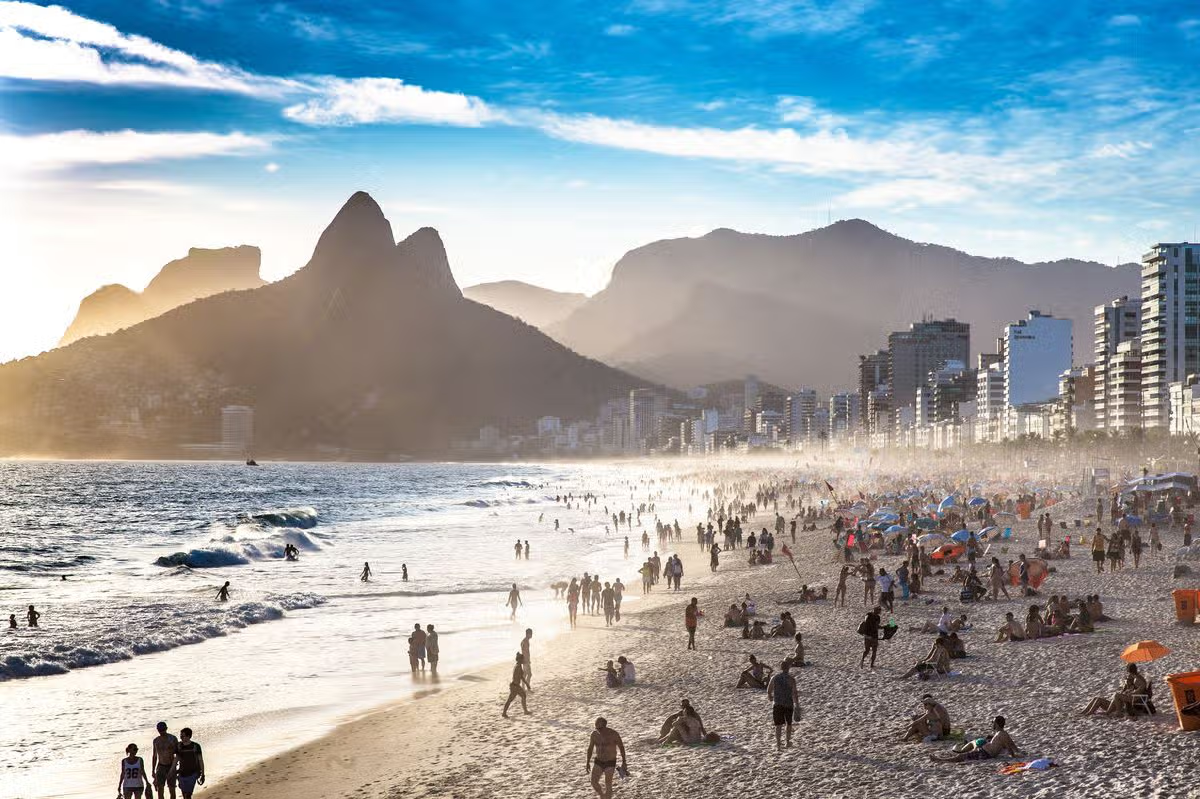
Just south of the centre, Rio has the world-famous Copacabana and Ipanema beaches, broad stretches of golden sand where the whole city decants to at weekends to let it all hang out in too-scant swimwear.

Cape Town has the likes of smaller yet very pretty Sea Point, Clifton and Camps Bay, which were far more debonair than I expected. More like the Cote d’Azur than the Cape of Good Hope.

Further up the coast, Rio has beautiful Barra, and Cape Town kite-surf strewn Bloubergstrand, giant stretches of glorious open coastline pounded by those big blue waves.

But the key difference is that Rio’s waters are much warmer, whereas Cape Town’s side of the Atlantic is surprisingly cold year-round, plus that wiiiind, meaning you don’t see many people swimming – the complete opposite of Rio.

Verdict: Rio takes the crown.

Mountains

Both have an imperious plethora of peaks. Cape Town’s most famous is Table Mountain, which your eyes can dine upon from all over the city. Rio’s is craggy Corcovado, atop which the statue of Christ offers redemption to thousands of tourists daily. But there are countless breathtaking viewpoints from many other fantastically surreal mountains, plus hiking trails that transport you into oh-so-big nature – lush jungle in Rio, temperate forest in Cape Town – a world away from the urbanity below.

Verdict: All too amazing to call. Draw.

City centres

Surprisingly, their city centres are the least impressive aspect. Both have smallish downtowns and historical quarters, which are nice but nothing impressive compared to some global cities. Much better are the colourful colonial-era neighbourhoods – Lapa in Rio, Bo Kaap in Cape Town – where you can join the tourist hordes to get your Insta-pics.

Down by the water, Rio’s Port Zone has cool museums and galleries, while Cape Town’s upmarket V&A Waterfront is very pretty with great views and shops, albeit a tad generic. Then both have plush beach front neighbourhoods, where you can whimsically while away days on the golden sands or trendy terraces.

Verdict: Again, too close to call. Draw.

Food and drink

Both have excellent culinary scenes, especially their meats and barbecues. Yum. But Cape Town has a much broader option of cuisines and restaurants, local and international, and during the entire month I was there I didn’t have a single bad meal. Caipirinhas and other potent cocktails get the party rocking in Rio, but Cape Town’s wines are next level. Despite being of proud Provençal stock, I can freely admit their rosés were the best I’d ever tasted. Perfect sundowners.

Verdict: Cape Town is the clear winner here.

Prices

Both have similar prices, which are considerably cheaper than the UK and Western Europe. Decent budget meals are around £4-£10, and mid-level accommodation around £50-£100pn. There are plenty of upmarket options, which are also relatively good value for money.

Verdict: Draw.

Nightlife and music

Both cities come alive even more when the sun sinks into the ocean. Your more mainstream bars and restaurants line the beachfronts, while cool bar-clubs are found in the more hipster hoods of Ipanema and Lapa in Rio, and Bree St and Woodstock in Cape Town.

Both cities are home to world-class music, Rio sways to the sound of samba, rap and “funk”, whereas in Cape Town it’s Afro house, amapiano and 3-step that get things thumping.

Verdict: Cape Town (but mostly due to my penchant for house music), although if we were judging it on Carnival season alone, nothing comes close to Rio!

Vibe

Brazilians are famously some of the most friendly and welcoming people in the world, which is true for Rio, but like any big city, you get plenty of miserable buggers too. People of all shades were friendly with me when I was in Cape Town, yet seemingly not that much with each other.

Sadly, both cities are still riddled with historical divisions between class and race, yet in Cape Town the legacy of Apartheid looms large indeed, and as a tourist you unfortunately won’t see much of the native African side of the city. The division feels tense.

Verdict: Rio.

Overall verdict

My biggest gripe with Cape Town is that as a tourist, you only really see the predominantly rich, white neighbourhoods that feel more like Canada, the US and Australia than Africa.

In Rio, though, everywhere is very Brazilian, no matter the social makeup of the area. Plus the beaches are a leveller, especially Copacabana where the whole city congregates for communal sun-worshipping, eating, drinking, sport playing, and strutting of stuff, no matter if black, white or brown, muscle-bound or beer-belly beautiful – nobody seemingly cares.

And that, for me, is the key difference – which is why Rio is my overall winner.

Source link

Woman sent £170 bill after five-minute drop-off at airport

Jopsie Eccles says they were told to pay £170 or go to court

Woman sent £170 bill after five-minute drop-off at airport

A mum has blasted the “ridiculous” £170 airport parking fine she received after a five-minute drop-off led to the threat of court. Josie Eccles had travelled to the airport with her husband, 33, to catch a flight to Malta with her mum and three-year-old son.

The 32-year-old claims her husband pulled into the drop-off zone at around 2pm, unloaded their luggage and said goodbye before heading off. But the couple later realised they had forgotten to pay the airport’s £5 drop-off charge within the required 24-hour period.

Josie says they accepted they would have to pay a penalty and even tried checking the airport’s payment portal for the charge – but no fine appeared. “My husband was there for under five minutes,” said Josie, a marketing consultant from Cheshire.

“A couple of days later, I was still in Malta and was speaking to my husband on the phone and asked if he had remembered to pay the charge. I was frustrated that both of us had forgotten to pay within the allocated window, but aware that these things happen and just accepted we would probably have a penalty to pay.

“My husband then checked the payment portal on the website where you usually pay the charge and entered the vehicle details, expecting to see a penalty fine, but nothing was there. I tried again a few days later, and still no charge appeared, so we thought we’d just wait and see if we got a letter in the post.”

But it wasn’t until almost two months later that Josie says she opened a letter from a debt collection firm. The letter claimed she had ignored previous correspondence and said the charge had risen to £170. Josie was given the option of paying the £170 in full or £42.50 over four months, while the letter warned the amount could increase further and potentially lead to court action.

She says she was stunned because she had never received the original parking charge notice. Josie said: “I was very confused, as it had been two months since the airport drop-off and I had received no correspondence at all so to receive a letter from a debt recovery company seemed rather extreme. At this point, I thought it must be a misunderstanding, and I would be able to resolve the issue by speaking with them.”

Josie claims she immediately tried to appeal the charge through Manchester Airport’s car parking operator, APCOA. But she says she received an automated response telling her that she had missed the appeal window and that the matter had already been passed to debt collectors.

She then called the debt recovery firm to explain what had happened. According to Josie, they told her that Manchester Airport had evidence that a letter had been sent to her on June 5. But when she asked whether it had been sent by tracked or recorded delivery, she was allegedly told it hadn’t.

Josie says this left her in an impossible position because the original letter contained the information she needed to pay the penalty. She said: “Not at any point did I try to get out of paying anything. I just wanted the opportunity to pay the initial fine, which would have been £60 if paid within 14 days.

“The only way I would know how to pay the penalty fine was by reading the instructions sent in the letter, so without the letter I had no chance of ever paying the charge before it was handed over to debt recovery. He said my options were to either pay the fine in full, which is £170, or I could seek independent legal advice and email in a dispute that they would look into it.”

In the meantime, Josie says she received two further letters threatening potential court action and warning that the amount could rise to up to £235. Josie claims she contacted the debt firm again and says a member of staff confirmed that her emails had been received but told her the company would not investigate disputes.

She says she was told her choices were to pay £170 or go to court, where the charge could potentially rise. She alleges she was then told that Manchester Airport would be responsible for taking any court action. Josie said: “I completed an online enquiry for Manchester Airport explaining I wanted to pay the £60 fine, detailed my communication with the debt company and reattached the dispute I had submitted to them with all the legal grounds.

“Within 10 seconds of submitting, I had received an AI response stating this had been handed over to debt recovery and I should liaise directly with them. I then forwarded that response along with my online enquiry submission to the complaints department, saying that was not an adequate response and I would like somebody to review the case so I can resolve this and pay the £60 fine.

“I have still not had any response or acknowledgement.”

Josie insists that she accepts responsibility for forgetting to pay the original £5 charge on 30 May but she believes the escalation is unfair because she claims she was never given the opportunity to respond to the original penalty.

She said: “I’m extremely frustrated. I hold my hands up; we forgot to pay the standard £5 charge within the next 24 hours, so a fine was expected, but to increase it to up to £235 was ridiculous. If I had been ignoring communication, it would maybe be justified, but I have responded to every bit of communication I have received, which surely shows I would have responded had I received the initial letter.

“I can afford to pay the fine; it’s not about financial difficulty. It’s about the principle of the system being set up to catch you out and the lack of reason they have. If the letter is so important, surely it would be sent tracked?

“Or at least they would try a few attempts before sending it over to debt collectors.”

She believes airports should introduce a free grace period for motorists who are only at the terminal for a few minutes. Josie added: “I’ve used Manchester Airport many times both before and after this encounter and always paid the drop-off charge on time.

“They’ll have a record of this on their system, which validates the fact I did not intentionally avoid paying. Sometimes people forget and these things happen. Other passengers could easily make the same mistake.

“It’s very easy to forget. There’s no option to pay at a machine or barrier while you’re there, so they are relying on people remembering to pay later on, which, whether you’re the person travelling through the airport or the person doing the drop-off, it’s easy to get distracted.

“I’m sure that’s why they removed the barriers, as they knew it would catch people out. The cars are logged using ANPR on their registration plates, so surely you should be able to pay on the same payment system even if outside the 24-hour window, with an additional penalty charge added.

“I think it’s ridiculous airports charge you for drop-off and pick-up. I think under 10 minutes should be free, but unfortunately all airports in the UK at least charge these days.”

An APCOA spokesperson said: “We have been in contact with the customer and offered the original charge of £60. The customer has since made payment of the £60, and the matter is now resolved.”

Manchester Airport has been contacted for comment.

Source link

Going for gold: an early autumn road trip across Finland’s sparkling lake district | Finland holidays

I wasn’t sure what to expect from an autumn trip to Finland, my first ever to the country, but spending an afternoon sprawled on a deck chair beneath blazing blue skies certainly wasn’t part of it. After a morning walking beneath the leafy canopy at the Mustila Arboretum – the oldest, most extensive botanical garden in the country – and a lunchtime wine-tasting (more of which later), my friend Sara and I pitched up at the Sahanlahti resort, deep in the Finnish Lakeland, only to find sun-drenched scenery that felt far more Mediterranean than Nordic.

Sahanlahti was the second stop on a mid-September road trip from Helsinki to the shores of Lake Saimaa; a journey in search of ruska, the spectacular autumn colours that blaze for a few short weeks before the long Finnish winter sets in. However, on our opening drive east from the airport to the Radalla resort, set on Lake Urajärvi, most of the thousands of trees we drove past were resolutely green, with just the very tips of the leaves tinged with auburn, like a foliage balayage.

Enjoying the peace at Sahanlahti resort on Lake Saimaa. Photograph: Annabelle Thorpe

“You’re too early,” the waitress told us, cheerfully, after we had checked in to our chic waterfront cabins, and were tucking into hefty plates of crispy garlic chicken, scattered with freshly picked chanterelles, in Radalla’s quiet dining room. “But you might get some sun tomorrow.” Later, walking back to our cabins through thick drizzle, we agreed she was most probably just being kind.

The Radalla resort is just one of dozens of lakeside hotels scattered across southern Finland – many with self-catering cabins, sauna complexes and gleaming metal steps that lead from wooden piers down into the chilly waters of the lake. The grey drizzle we awoke to made a dip less than appealing, and instead we decided to set off for our next stop, taking in the arboretum en route before finding a place for lunch.

Driving in southern Finland turned out to be quite different from other countries. Most settlements fringe the lakesides, so they tend to be tucked away down side roads leading off from the main highway. Instead, trees – those resolutely green trees – rolled past us for mile after mile, until slowly the fields began to melt into lakes, one after another, the road snaking alongside the blue-grey waters, or stitching together small islets that lay scattered between them.

Googling somewhere for lunch, Sara came across the Ollinmäki winery, an unexpected find in a country that grows absolutely no grapes. Instead, berry wines are hugely popular, and once settled in at our table, we were persuaded to try a flight of six, accompanied by a bowl of hearty elk soup (which tasted considerably better than it looked) and a leaf salad with local cheese. One wine, the white currant and berry Myllärin Matti was particularly delicious, with the tang of a crisp sauvignon – although I wouldn’t want to find out what a Finnish hangover feels like.

From the winery it was an easy drive to Sahanlahti, by which time the weather had cleared and pin-sharp blue skies gleamed above the shores of Lake Saimaa. The main house – painted butterscotch-yellow and dating back to the mid-18th century, when the owners presided over the local sawmill – had a languidly old-fashioned air, but dinner at the Koskivahti restaurant was anything but: rich mushroom soup, slivers of goose confit with lingonberry sauce, wafer-thin beetroot carpaccio with tangy goat’s cheese.

Annabelle Thorpe and friend foraging for wild mushrooms. Photograph: Annabelle Thorpe

It might have been too early for the leaves to turn, but we had arrived right in the middle of harvest season, when heading out into the fields and islands to pick wild mushrooms and berries (of which there are 35 different varieties) is practically a national sport. We had barely set down our bags at our final stop, Järvisydän resort, before we were whizzing out across Saimaa on a small motor boat, baskets tucked between our feet, to hunt for chanterelles and look for rare ringed seals and ospreys.

The sky was flawlessly blue as we whipped across the water, disembarking first to pick the mushrooms – slashes of bright yellow among the green undergrowth. We were guided in our harvesting by Sebastian, the 12th generation of the Heiskanen family to be running Järvisydän. “Back in 1654,” he told us, “my family were given a portion of land by the Russian tsar, to build a tavern on the route between St Petersburg and Helsinki.” More than 350 years later, the tavern has morphed into a 100-room resort, offering everything from starkly modern glass-walled cabins, high in the forest, to hexagonal log houses with bedrooms set off a central, fire-lit atrium, and camping pods.

skip past newsletter promotion


The ‘Hobbit-like spa’ at Järvisydän resort

It’s an extraordinary place: everything – from the vast reception, dwarfed by a replica Viking longship hull hung above reception, to the restaurants, bar and the Hobbit-like spa – is built entirely from local stone and timber. A visit to the spa seemed the perfect way to warm up after our chilly boat trip, with six different saunas to dip into – although the “sunken log” sauna, where the temperature reached 70C, gave me some sense of how an ice-cream might feel if left out in the sun.

Of the three resorts we visited, Järvisydän was the standout – for its history, for the spectacular scenery of Lake Saimaa that surrounds it, for the delicious mushroom soup and for the long, sunlit walk we took on our final afternoon, through the dense pine forest, where red squirrels skittered around in the branches above. It was a wrench to leave on our last morning, but as we sped back along quiet roads to Helsinki, we agreed Finland had – in spite of our foliage fail – outstripped our expectations. It was more beautiful, more peaceful, more sunkissed than we could ever have imagined.

Ruska (the vibrant colours of autumn foliage) begins in the north of the country in early to mid-September, reaching the Lake Saimaa region in the south by early October.

The trip was provided by Discover the World. A four-night bespoke self-drive trip staying at Radalla, Sahanlahti and Järvisydän resorts starts at £794pp, including B&B and car hire, but not flights.

Source link

Three of the best multi-gen holidays that work for both kids AND grandparents

Collage of a multi-generational family on vacation in front of a blue sea with boats and a town on a hill.

GRAB granny and pack your bags – multi-generational holiday packages are an absolute bargain.

It comes as new research from Jet2 reveals that more and more families are bringing the grandparents with them on holiday.

Three generations of a family smiling outdoors by the ocean.
All ages can bond on a sunshine holiday together Credit: PeopleImages
Scenic view of Lindos Acropolis and beach on Rhodes island, Aegean Sea.
Sparkling Lindos on the Greek island of Rhodes Credit: davidionut

According to booking data, most family trips are taken in groups of five or six, with the Canary Islands proving to be the most popular spot.

Choice of destination is a huge consideration for multi-gen groups, with 43 per cent choosing somewhere based solely on suitability for their party.

Following the Canary Islands on the list of most in-demand multi-generational getaway locations is Turkey, the Balearic Islands, Greece and mainland Spain.

Sophie Swietochowski shares her pick of holidays for the whole family . . . 

RETREAT YOURSELF

From St Lucia to Ibiza – we tried 2 adults-only retreats for perfect reset


MED FOR IT

We test two adults-only Mediterranean escapes from rooftop cool to beach bliss

TENERIFE

Promising year-round sunshine and affordable deals, the rugged Canary Isle of Tenerife is the sweet spot for families after something quick and easy with unlimited R&R.

Check in to the 4H Paradise Park Fun Lifestyle Hotel, which has enough to keep the kids happy while the older generations kick back with a pina colada.

Kids’ clubs, for those aged four to 12, will keep them busy in the day with arts, crafts and competitions, while evening entertainment is geared up for everyone, with bingo, live music and mini discos.

Five outdoor pools ensure you won’t struggle to find a sunlounger and there’s an onsite spa, too.

GO: TENERIFE

Seven nights’ B&B is from £619pp including flights from London Stansted on September 15.

Price is based on four adults and two children sharing, 22kg baggage allowance and return transfers. See jet2holidays.com.

TURKEY

This European hotspot is crammed with all-inclusive resorts where vast food choices help take the faff out of having multiple mouths to feed.

The Aquapark at Orka World Hotel stays open until mid-October and the kids will absolutely love it.

The park is home to 13 water slides, four pools and a lazy river that even the grandparents can enjoy.

You’ll keep well fuelled at the buffet restaurant, which has all the favourites plus some traditional Turkish offerings, including pide (a savoury flatbread) and gozleme (a thin, doughy pancake stuffed with spinach, feta or meat).

GO: TURKEY

Seven nights’ all-inclusive is from £600pp including flights from London Gatwick on September 30.

Price is based on four adults and two children sharing two rooms and includes luggage and transfers. See easyjet.com/en/holidays.

GREECE

You don’t need to spend buckets to bag a deal that will suit everyone, and the calm Rodos Palace resort in Rhodes is a prime example.

The Greek island offers fascinating history for the grandparents to sink their teeth into, as well as high-intensity activities for the kids and views that look super in the sunshine.

Rooms are bright and airy, while the eight restaurants on site will ensure you’re never short of dinner options.

There’s also a plush private beach with plump cabanas and a volleyball net.

GO: GREECE

Seven nights’ all-inclusive is from £439pp including flights from East Midlands on September 29.

Price is based on four adults and one child sharing a family suite and includes luggage. See loveholidays.com.

Source link

Forget Bali or Thailand – the Spanish hotel that feels like it’s in Asia with palm tree lined pools and buddhas

WHILE this beautiful hideaway hotel looks like it’s in Asia, you’ll actually find it two and a half hours away in Spain.

The 5-star Asia Gardens Hotel & Thai Spa is described as having the “serenity, peace and quiet of South-East Asia”.

Asia Gardens Hotel & Thai Spa is actually just outside of Benidorm Credit: TripAdvisor
Guests have said they feel like they’re in Thailand Credit: TripAdvisor

It was named Spain‘s Leading Hotel in the World Travel Awards in 2024.

A number of famous celebrities have stayed too, including Wayne Rooney, Bruce Willis, Joan Collins and Zinedine Zidane.

The hotel itself is a 10-minute drive inland from Benidorm by the slopes of the Sierra Cortina mountains.

But thanks to being surrounded by 370,000sqm of pine forest and its own lush garden, it lives up to its name, and feels more like being in Thailand.

HOL YES

Cheap holiday destinations with 86p beers, £15 flights & £129pp package breaks


CHEAP AS CHIPS

10 UK summer holidays that are CHEAPER than a takeaway – all £12pp or less

The tropical grounds have 3,000 Asian plant species, including a 200-year-old bonsai tree as well as other bonsai and palm trees.

The hotel has a total of seven swimming pools, four of which are heated, and all are surrounded by jungle.

The Caras de Angkor pool is an adults-only Balinese style pool, while another is the Zen pool which has hydromassage.

Thailand is known for its massages and the hotel has its very own Thai spa on-site too.

Treatments include various types of massages, foot reflexology and beauty pamper sessions.

There are nine restaurants too, ranging from Asian cuisine at Koh Samui as well as a range of Mediterranean options and a poolside snack bar.

It has seven swimming pools, four of which are heated Credit: TripAdvisor

The hotel has its own fitness centre, tennis, volleyball and padel courts as well as football field.

Hotel staff can even advise guests on the best running routes in the area.

One visitor wrote on Tripadvisor: “Incredible place, not only for its design, floral decoration, gardens, atmosphere… but once you set foot in the lobby, you could perfectly believe you are anywhere in Asia.”

Another described it as: “A taste of heaven amongst beautiful gardens a feeling of being whisked away to Thailand without the long haul flight!!!

The hotel offers massages and beauty treatments Credit: TripAdvisor
Some suites have outdoor terraces and hot tubs Credit: TripAdvisor

Rooms range from Bali-style Deluxe to Deluxe Suites which have huge outdoor terraces with a Jacuzzi.

Room rates start from around £240 per night, but can increase to around £400 during peak season.

The most luxe room is the Presidential Suite which has its own lounge, kitchenette, outdoor terrace with sea views and a hot tub.

It also comes with 24-hour room service and guests can enjoy private in-room breakfasts.

Asia Gardens Hotel & Thai Spa, a Royal Hideaway Hotel can be booked with On the Beach – a seven-night stay for two adults in September 2026 starts from £840pp.

This includes return flights to Alicante and a stay in a Deluxe Room.

A stay with TUI in November starts from £985pp – which also includes bed & breakfast and return flights to London Stansted.


Source link