Explore new cultures, find the best travel deals, and make informed decisions with our trusted travel news. Let your wanderlust thrive as you stay connected with the ever-changing world of travel.
DEEP in the forest, I’m watching tiny, rare frogs swimming and croaking (more of a weird squeak, really) in a flooded chamber at ancient Roman city, Bouthroton.
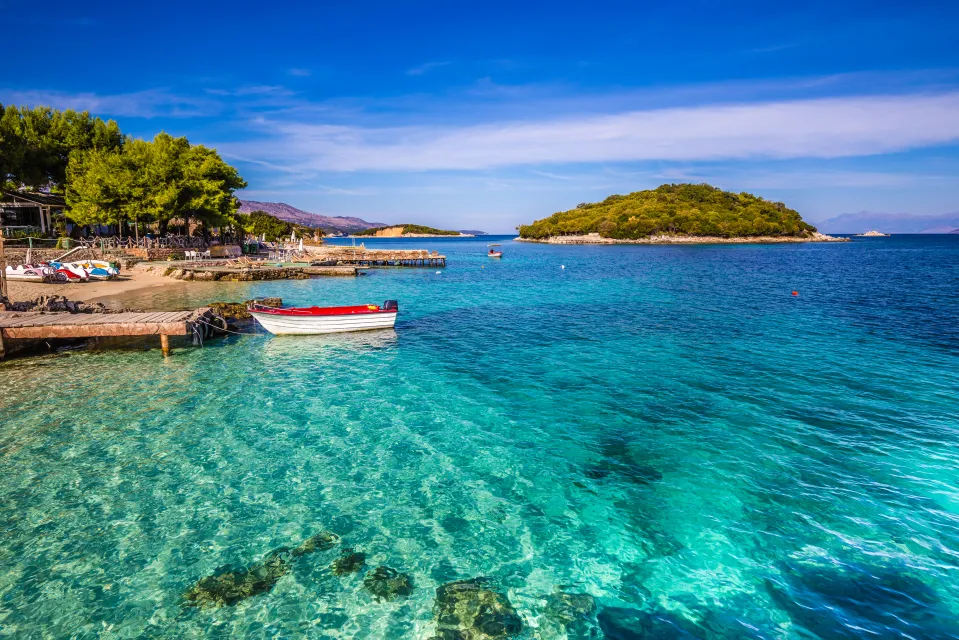
This is not what I expected in “the Maldives of Europe”.
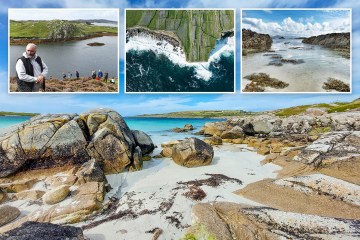
Stunning Butrint National Park in AlbaniaCredit: Getty ImagesThe ancient amphitheatre at Butrint parkCredit: Getty Images
Apparently someone, somewhere posted online a couple of years ago that Albania has some fabulous beaches with turquoise water like the Indian Ocean paradise islands, and the nickname stuck.
I’d long been intrigued by what was a communist totalitarian state until the mid-Nineties and had thought of it more as “the North Korea of Europe”!
Sign up for the Travel newsletter
Thank you!
So when I was on holiday in nearby Corfu, and discovered full-day tours operated, I jumped at the chance to see for myself.
The good-value trips are run by Tui-owned Musement and mine started at 7.30am with a 30-minute coach transfer from the hotel to the port, then a 75-minute ferry across to beach resort Sarandë in Albania, a coach pick-up there and a few hours of guided sightseeing.
After a coffee pitstop, the coach headed south to the uncrowded, unspoilt Butrint archaeological site and its surrounding national park.
I’d heard of Butrint’s large lake but was not aware of its history, with human habitation here dating back thousands of years.
However, this visit took my group back to a “mere” 800 BC and the Unesco-listed ruins of Bouthroton founded by Greeks and taken over by Romans.
There’s a lot of walking on rough tracks in the forest and a fair few steps, so trainers are best.
Enthusiastic guide Lindita was a mine of information about the ancient forum, amphitheatre, public baths, aqueduct and almost 3,200ft of encircling walls, up to 23ft high.
A 4th-century earthquake affected sea levels, and the city was finally abandoned in the Middle Ages, with high tides causing flooding – but creating a habitat for those noisy little Greek water frogs and cute terrapins.
On to the adjacent national park, with Lindita explaining about the lake (actually a lagoon), which is linked to the sea by a 1.6-mile channel.
The rich birdlife includes the magnificently-named short-toed snake eagle while the mussels in the lake are hailed as Europe’s best.
Before the ferry back to Corfu, we had a brief photo stop at Sarandë’s Lëkurësi Castle – on an 800ft hill with outstanding views – and time for a chilled Albanian beer at a seafront bar.
The downside? It’s a 12 hour-plus day, with an agonising 2hr 10min journey back from the port to my hotel as other guests were dropped off. Still, I saw a lot of Corfu.
And while my included lunch was OK, I’ve never been on any excursion where water is not provided.
On the bus back to Sarandë – and from the ferry – I did spot some lovely beaches, but is Albania “the Maldives of Europe”? Hmm, not atoll. And there is a huge amount of unsightly hotel construction around Sarande and nearby Ksamil.
But the trip is an enjoyable, insightful taste of Albania and I’d definitely think about a holiday there. Maybe I’d even get to see a short-toed snake eagle.
Albania day trip from Crete, from £67pp plus port tax of 20Euros pp.
EUROCAMP has hundreds of resorts across Europe – but there is one that has been backed by mums as being the best.
Found in Holland, Duinrell has a lot to shout about including a theme park as well as a huge indoor and outdoor waterpark.
Eurocamp Duinrell in the Netherlands has a huge theme park that’s free for guestsCredit: EurocampIt also has an indoor and outdoor waterparkCredit: Eurocamp
With all this, it’s no surprise that it’s one of the top-rated Eurocamp resorts for families – and it was voted as such on Mumsnet.
Its main draw is the enormous theme park which is completely free for guests with over 40 rides and attractions.
Sign up for the Travel newsletter
Thank you!
It has high thrill rollercoasters like The Falcon which is 72 feet tall with vertical drops, loop the loops and a top speed of 43mph.
There are other more family-friendly rides like log flumes, bumper cars, slides and climbing towers.
Something else that makes it so popular is the enormous waterpark which has a total of 21 waterslides and huge swimming pools which are both indoor and outdoors.
The complex has a lazy river, a wave pool and an outdoor Tiki pool with tipping buckets and fountains which is open in the summer months.
Inside is where families will find the Playa waterpark which is especially designed for little kids up to 12 years old, with four waterslides for children.
Guests will need to pre-book time slots and pay up to €15 (£12.88) per person for the waterparks.
Activities don’t stop there either, as families can spend hours in its arcade which has over 80 games.
There’s mini golf, air hockey, classic arcade games, including eight immersive racing simulators.
The outdoor pools and slides are open during the summer monthsCredit: Eurocamp
In the comments, one previous visitor wrote: “We love Duinrell…I would do at least a week as loads to do.”
Another added: “This is an absolutely brilliant place!! Everything about it is spot on! Between the accommodation and the theme park, it’s all fantastic.”
A third said the waterpark was the “best we’ve been to!”
The park has eating options too from a creperie to an Italian restaurant and at the bars there’s entertainment like discos, karaoke and talent shows.
As for a place to stay the Eurocamp has a selection of ultimate holiday homes which can sleep up to eight across three bedrooms.
They have fully kitted out kitchens with open living areas and spacious bedrooms.
All of its attractions mean Duinrell has been declared the best for familiesCredit: EurocampYou can stay in Duinrell Eurocamp from £23.70pppnCredit: Unknown
When the sun shines there’s an outdoor decking and a barbecue too.
For eight people to stay in an Ultimate 3-bedroom cabin next May for seven-night works out to £1,327.48 or £23.70pppn.
The Eurocamp is just outside The Hague, meaning that luckily for Brits it’s very easy to get to as it sits in between Amsterdam and Rotterdam.
Flights to Rotterdam can be as quick as 50-minutes and heading to Amsterdam can take just one hour.
The cities can also be reached by the Eurostar in three hours and 15 minutes.
For more Eurocamp resorts, here are 10 with pools, waterparks and beaches.
VISITING one of Portugal’s top golfing regions without an ounce of experience of the game was certainly a nerve-racking move.
But I needn’t have worried.
The Algarve is so much more than a golfer’s paradise — but it’s also the perfect place to learnCredit: SuppliedWhether you want to spend your days down at the driving range, sipping cocktails by the beach or trying to master the splits in Pilates, this Portuguese playground is the place to do soCredit: Jenna Stevens
The Algarve is so much more than a golfer’s paradise — but it’s also the perfect place to learn.
With a nature park that’s home to a 37-mile lagoon and salt marshes frequented by flamingos, otters and Mediterranean chameleons — plus breathtaking island beaches reminiscent of the Caribbean — this beauty spot is a haven for anyone seeking R&R.
Sign up for the Travel newsletter
Thank you!
I was staying at the 4H Magnolia Hotel in Quinta do Lago, a lavish complex tucked away within the Ria Formosa Nature Park that features four hotels and a private villa estate spread across 2,000 acres.
While the complex may be luxury, the price tag needn’t be. The Magnolia, one of the entry-level hotels, is affordable yet stylish and oozes retro glamour with its Palm Springs theme.
A bright pink, neon ‘Welcome’ sign sits above the entrance, which is flanked by two cactus plants. Outside you’ll find a pool around which palm trees and stripey yellow sun loungers are dotted. Inside, the rooms are light, airy and unfussy.
Staying here means you’ll also get access to the same shared facilities as the fancier hotels within Quinta do Lago, like the 5H Conrad.
This includes a gigantic lake with an inflatable obstacle course and watersports galore, plus a beach boardwalk that leads you straight down to the turquoise sea.
While golf is far from the only activity available to guests, the three championship courses are undoubtedly a big selling point to many.
The Campus in the Quinta do Lago resort has facilities used by top sports starsCredit: SuppliedEnjoy a tasty bite by the lake at The ShackCredit: Supplied
The legendary South Course has hosted the Portuguese Open eight times and each of the pristine fairways is backed by wildflowers and umbrella pines — pretty hard to resist.
So it wasn’t long until I found myself at the driving range, picking up a club for the first time.
Confronted with pyramids of perfectly-stacked golf balls, I wondered how many I would get through before I made a decent shot.
But a beginner’s lesson from coach Callum had me swinging like a pro in no time, with simple drills and explanations that I could take away with me.
If golf isn’t your sport, though, you can also try your hand at tennis, cycling, padel and Pilates.
Many of these activities are at The Campus, which looks more like a glam beach club.
It has a flawless football pitch on one side, and a patchwork of blue and orange sports courts on another.
These grounds have been run on by elite athletes, including Chelsea and Everton footballers, during warm weather training camps, so you can be sure that the facilities here are top-notch.
Have a game of padelCredit: SuppliedThe Sun’s Jenna Stevens gives golf a goCredit: Jenna Stevens
But despite its championship status and the reel of famous faces that have visited, I soon came to understand that Quinta do Lago is a place to relax and try new things, not one where you’re expected to step up to the plate and perform.
If your aching muscles need soothing, then head to the wellness centre, which offers a sauna, steam room and plunge pool.
There’s also Dano’s Sports Bar, a chillout spot where you can order wings and beers then sink back into a beanbag to catch a game on the big screen.
I fuelled up on Caesar salad and bites of pizza before trying my hand at padel, which is basically tennis’s cooler, younger sibling. It’s a lot less strenuous and makes for easy rallies — ideal for beginners.
My days at Quinta soon fell into a relaxed routine: wake up, spend the morning and afternoon trying new sports, go for a dip, then relax with dinner and cocktails.
To fuel the body for all that sport, guests can pick from 14 dining spots spread across the resort and available to all guests.
For an unbeatable breakfast, Pure backs on to the eighth hole of the North Golf Course and serves up freshly-squeezed juice and protein pancakes on a sun terrace shaded by pines.
For lunch by the lake, stroll over to The Shack, where you can grab bites such as burgers and crispy fish tacos.
And for a classy evening meal, I recommend Casa do Lago or Bovino — the former offers delicious fish from local markets, while the latter serves up juicy steaks and bold Portuguese red wines to match.
Looking for the perfect way to end your night? Follow the boardwalk to its end to find Gigi’s, a cocktail bar that will happily shake up anything you like, and enjoy views of birds dipping down into the marshland.
I left Quinta do Lago with not just a golden tan, but some muscle definition that I hadn’t seen in a while (a pleasant change from the usual extra holiday pounds) and a newfound love for golf — if you can’t beat them, join them.
Holidays here feel like a health retreat that is actually fun and the exercise feels easy. There’s zero pressure to be perfect.
Whether you want to spend your days down at the driving range, sipping cocktails by the beach or trying to master the splits in Pilates, this Portuguese playground is the place to do so.
Who knew breaking a sweat could feel so incredibly glamorous?
GO: FARO, PORTUGAL
GETTING THERE: Jet2 offers return flights from London to Faro from £68. See jet2.com.
STAYING THERE: Standard double rooms at The Magnolia Hotel are from £170pn on a B&B basis. See quintadolago.com/en.
A MEMBERS club loved by the Royals is opening a new location in a historic English town.
It will feature restaurants, bars, a 25-metre pool, racquet courts and even direct access to the River Thames.
The riverside loungers will provide members a relaxing spot to chill by the riverCredit: Soho HouseThe 25-metre pool comes as part of the health club offeringCredit: Soho House
A new “reimagined” country club from the Soho House brand is set to come to Windsor, situated directly along the River Thames from next year.
Located less than 45 minutes from central London, Soho River House will also be home to a Health Club, riverside restaurant and Vinyl Bar.
Sign up for the Travel newsletter
Thank you!
The main house, a Victorian mansion within 35 acres of land, will feature 93 bedrooms designed for members who wish to extend their stay overnight.
The Health Club comes with a gym dedicated to all members’ fitness needs as well as a novel Lazy River feature, which offers cold plunges designed for muscle recovery.
The location will also hold the first Soho House Racquet & Rowing Club with padel, tennis and pickleball courts.
For those wishing to try their hand at rowing, the site will come with boat storage, a dedicated staging area, and direct access to the river through a launching ramp.
The location will feature the brand’s first-ever raquet and rowing clubCredit: Soho HouseThe interior has been designed in Soho House’s “signature” styleCredit: Soho House
The Lazy Lawn overlooking the Thames also provides the perfect lounging spot to catch some much-needed sunrays.
Every week, the club is set to host a number of events for members – including live performances and “One Night Only” dinners with well-known chefs.
Expected to arrive in 2027, those interested are able to register their interest online to keep an eye out for upcoming applications.
Soho House has 14 other locations in the UK, including sites in Manchester, Somerset and East Sussex.
The brand is loved by both Royals and celebrities, with Meghan Markle and Prince Harry having their first date at 76 Dean Street, a Soho House location in London back in 2016.
WE stroll along the soft sand, taking in the afternoon sun as the shallow waters wash over our feet.
Ahead of us, kids are tucking into ice creams, and along the harbour wall, a crowd is at the ready with crabbing lines, dangling them one by one into the sea.
Aerial view of Weymouth Bay and Weymouth Beach with the historic town center, colorful buildings, a bustling promenade, and boats in the harbor in WeyCredit: AlamyThe historic Nothe Fort in WeymouthCredit: Alamy
Here in Weymouth, on Dorset’s south coast, you get traditional amusement in, well, spades.
It is the quintessential Victorian resort, although its popularity dates back further, to King George III, whose first of many visits was in 1789 after doctors recommended sea bathing for his health.
Sign up for the Travel newsletter
Thank you!
In those days, he would not have been able to enjoy the Pirate Ship or spinning Paratrooper now found on the sands.
Nor could he have sunk a cold beer from the many bars and restaurants along the esplanade.
Her loud and infectious laugh backs that up and it most definitely adds to the cheer of the place.
Stepping into her guesthouse is like stepping back in time. Every wall, tabletop, windowsill and mantelpiece features antique objects, as varied as voodoo-esque dolls, telescopes and ship steering wheels.
Many of them have come down the generations from her grandparents’ vintage shops round the capital.
Our room had a ship theme, which was fitting considering it has a lovely bay window with harbour views.
Being in such a prime location means it’s easy to potter around the town, with plenty of cafes, restaurants and pubs on your doorstep.
For sheer portion size, a large cod and chips from Bennett’s fish and chip shop could probably do Mum, Dad and a couple of little’uns. It was pretty tasty too.
Or if you’re keen for a fancier version of this seaside staple, Catch At The Old Fish Market offers a fine dining experience with a tasting menu of fresh-caught local seafood.
For a proper good pint, the Old Rooms Inn sits just across the river from The Ocean Guesthouse and is reachable by Town Bridge, which opens up every so often for boats to pass. I’d recommend taking the novelty route and making the two-minute crossing by row boat.
For a more lengthy jaunt in the water, Weymouth And Portland Boat Trips offers hour-long adventures.
The colourful Weymouth harbourCredit: AlamyQuirky hotelier and former Londoner Maxine GilroyCredit: Supplied.
As the name suggests, we travelled from Weymouth quayside to Portland — which despite being an island, is connected to the mainland by Chesil beach.
Known for its quarries and white Portland limestone — which was used to build the likes of Buckingham Palace, St Paul’s Cathedral and the British Museum — Portland is a gorgeous place to spend the day with shallow coves for swimming and sunsets to die for.
Keep your eyes peeled for the harbour — you may recognise it as the location that hosted the sailing events at the London 2012 Olympics, and regular contests still take place there.
On our journey, we saw Team USA practising windsurfing in preparation for the 2026 iQFOiL World Championships, which took place this month.
If you prefer to stick to dry land, then Nothe Fort, a ten-minute walk from the guesthouse, is a must.
Built in the 1860s, the building is as fascinating as what’s inside.
Kids will love it too, even if they aren’t into history — there are ramparts and tunnels to explore, military outfits to try on and cannons fired from the parade ground.
Exhibitions run throughout the year and special events take place during October half-term, too, with daily “mouse hunts”, spooky bingo and pumpkin golf.
OUR Spotlight On column gives you the lowdown on what to see and do in some of your favourite holiday hotspots – as well as some lesser-known gems.
This week, our sights are set on Amsterdam, a city that has long been loved by Brits but changes every time we visit.
Here’s why a trip to Amsterdam should be on the cardsCredit: AlamyIt is home to one of Europe’s most beautiful train stationsCredit: Alamy
As the Sun’s Assistant Travel Editor, and someone who goes to Amsterdam most years, Sophie Swietochowski said: “There’s so much more to Amsterdam than its winding canals (although they are a big selling point).
“Amsterdam’s laidback cafe culture is the reason why this city holds such a special place in my heart – venture a little way from the busy hub outside of the main train station, you’ll find quiet cobbled streets lined with traditional brown bars where locals spill onto the pavements.
Sign up for the Travel newsletter
Thank you!
“Here is where you can pick up a local pint (£3.50) and the well-known bar snack bitterballen (deep-fried balls of stewed meat) usually served with a tangy, mustard dipping sauce for around €6 (£5.16) . They’re delicious and addictive.
Here are some of our other top recommendations for a trip to the Dutch city.
Amsterdam has more than 1,200 bridges, and most visitors spend the day walking over them.
Go under them instead: hire a small private boat and tour the city from the water, mooring up for a bite to eat, or for an hour at whichever attraction you drift past.
Back on land, start at Museumplein, the square behind the Rijksmuseum — the national museum of the Netherlands — then walk on to Vondelpark, at its best in late spring and summer when the park is in full bloom.
Its open-air theatre stages free shows through the summer, though it is worth booking ahead.
HIDDEN GEM
Waterlooplein, the city’s oldest flea market, has traded on the same square since 1893 and opens Monday to Saturday.
Saturday brings the biggest spread of stalls — huge brass bells, turquoise jewellery, vintage cowboy boots — and the best odds of turning up a treasure for the wardrobe or the home.
A walk along the canal is one of the popular tourist activitiesCredit: Alamy
BEST VIEW
A short walk from Amsterdam Centraal is OBA Oosterdok, the largest public library in the Netherlands.
Browse the shelves by all means, but the real reason to stop is the seventh-floor terrace, where a small panoramic viewpoint looks south over the city.
Entry is free, and the outdoor terrace opens roughly April to October.
RATED RESTAURANT
Cantine de Caron sits in the old machine building of the Westergasfabriek, on the edge of Westerpark, and the raw industrial shell does much of the work.
This is French cooking from TV chef Alain Caron and his sons: bistro classics with a Mediterranean lean, served in a busy, unstuffy room with the chefs at work in an open kitchen at the back.
Dishes are built to play flavours off each other — black garlic espuma, cured egg yolk, feta foam — and the wine list runs through the major French regions. In summer, ask for the terrace facing the park.
BEST BAR
Cafe Twee Prinsen, a few minutes from the Anne Frank House, is one of the best wine bars in the city.
On a sunny day it is a brilliant spot to take a wooden stool outside by the canal and order a few small plates with a bottle or two.
Inside, it is the massive wine collection in chilled glass cabinets that you notice first.
The wine is the draw, but the small plates are the underdogs: cheese, sardines swimming in oil with a wedge of lemon, butter beans in red sauce.
HOTEL PICK
Leonardo Hotel Amsterdam Rembrandtpark sits on the edge of Rembrandtpark, a 15-minute tram ride from the centre.
Its Floor17 terrace, 85m up, is billed as the tallest rooftop in Amsterdam — a stylish spot for a drink and a long look at the skyline.
Rooms cost from £93 per night on a room-only basis. See leonardohotels.co.uk.
New mandatory entry requirement for UK travellers is about to come into force
A new scheme is about to come into force(Image: South agency via Getty Images)
British passport holders could be turned away at the border in Spain, France, Italy and several other destinations due to a post-Brexit scheme set to launch later in 2026.
Once the initiative comes into effect, UK holidaymakers will be required to pay for a digital travel authorisation document to gain entry to around 30 European nations. British travellers will need to register with the European Travel Information and Authorisation System (ETIAS), which will soon become an entry requirement for visa-exempt nationals visiting a specific group of 30 countries.
With a valid ETIAS travel authorisation, travellers can enter these European countries as often as they wish for short-term stays, typically up to 90 days within any 180-day period. Originally, the ETIAS was expected to cost around 7 euros per person, however it has since been confirmed the fee will be nearly triple that amount, coming in at 20 euros per eligible traveller.
Those aged under 18 or over 70 are exempt, meaning a family of four travelling with two children would pay 40 euros in total. Once the scheme is up and running, failing to hold a valid ETIAS could see you refused entry to any of the following countries: Austria, Belgium, Bulgaria, Croatia, Cyprus, Czech Republic, Denmark, Estonia, Finland, France, Germany, Greece, Hungary, Iceland, Italy, Latvia, Liechtenstein, Lithuania, Luxembourg, Malta, Netherlands, Norway, Poland, Portugal, Romania, Slovakia, Slovenia, Spain, Sweden, and Switzerland.
The scheme has faced numerous delays, and it is now anticipated that ETIAS will be launched over the next few months. The ETIAS is stored electronically against the passport.
While the vast majority of applications are expected to be approved “almost immediately”, if the system detects an error in your ETIAS submission, it could face rejection. Reasons for ETIAS applications being refused are reported to include holding an invalid passport, being considered a “risk” or having a Schengen Information System (SIS) alert, submitting an incomplete application, or failing to attend a mandatory interview.
Should your ETIAS application be turned down, you have the right to lodge an appeal.
FANCY jetting off for a budget-friendly weekend away this autumn?
You’re in luck – we’ve done all the research for you and hunted down 10 brilliant European city breaks that all come in at £99pp or less.
Soak up the sights of Rome from £69pp with this bargain city break offerCredit: Getty
These deals include your return flights and hotel, plus we’ve even found the best free and cheap things to do in each area – from free true crime walking tours to cheap thermal baths.
From soaking up last-minute 28°C sunshine to spooky lantern-lit bridges and impressive Gothic castles, here’s 10 of our favourite city breaks from as little as £59pp.
Rome – £69pp
Few cities pack in the wow factor quite like Rome, and an autumn visit means you can stroll its streets without breaking a major sweat.
You could tick off the Colosseum, boutique shopping, tossing a coin in the Trevi Fountain and enjoying some of the best pasta of your life, all in one day.
The Vatican Museums and Sistine Chapel make for an easy excursion to top off your experience (€20 entry), but honestly half the fun of Rome is getting lost in its backstreets and stumbling upon tiny trattorias and pretty cafes.
One of the best affordable activities is sitting with a cappuccino e cornetto (coffee and a croissant) for as little as €2, and simply watching the world go by.
Just make sure you do this before midday to avoid strange looks from locals – it’s tradition to only drink your cappuccino in the afternoon!
This Wowcher deal gets you flights from London, Manchester, Bristol or Edinburgh plus two nights at a four-star hotel from £69pp.
Krakow – £89pp
Visit Wawel Royal Castle and Wawel Cathedral on a cosy Krarkow city breakCredit: CopyRights by Henryk Sadura Travel Photography
If you like exploring classical architecture during the day and partying hard by night, Krakow’s the break for you.
Spend your morning wandering the cobbled Main Market Square and stopping for an obwarzanek krakowski (3.50 Polish Zloty, or around 75p) which is a delicious, ring-shaped braided bread.
After your snack, take a slow climb up to Wawel Castle for sweeping city views, and make sure not to miss a trip to St Mary’s Basilica, a burnt orange building hiding an intricate interior of vibrant blue and gold walls.
When it gets dark, head on a group bar crawl to tick off even more of the city and make some new friends along the way.
This pub crawl with GetYourGuide costs £24 and includes a full hour of unlimited drinks.
We found a Krakow break from £89pp, which puts you up in a central hotel that’s under 15 minutes’ walk from the Old Town, Main Market Square and St Mary’s Basilica.
Lisbon – £69pp
Hop on Lisbon’s classic yellow tram for the best views of the city streets (and save your legs from climbing uphill)Credit: Getty
Sunshine pouring through narrow streets, vintage yellow trams gliding effortlessly uphill, creamy pastel de natas for breakfast at a trendy cafe – it’s hard to beat a Lisbon break.
For some free sightseeing, head to the Baixa and Mouraria districts to wander through colourful, tiled buildings and find tiny, lively bars that spill out onto the streets.
One of the best ways to see this city is to hop on the Tram 28 route at sunset and take a ride through the winding Alfama district, where you can hop off at Graca to catch the sun sink behind the city skyline.
This under £70 deal includes a two-night stay in the picturesque Old Town, plus return flights from Bristol, Edinburgh, Manchester or London.
Budapest – £79pp
Take a city break to Budapest from £79pp with this Wowcher dealCredit: Getty
Defined by its beautiful domed architecture and thermal spas, a break to Budapest feels a lot more expensive than it actually is.
When the chill of autumn starts to kick in, there’s nothing better than chomping on a hot chimney cake (around 900 HUF, or £2.15) to enjoy with a warming cup off coffee.
Better yet, go for a soak in one of the city’s many thermal baths, which start at only 3,000 Hungarian Forint (£6.84) at the Dandar baths.
In the evenings, treat yourself to a cocktail with a view in a crumbling ruin bar, or opt for a river cruise along the Danube.
There you can soak up the signature golden glow of the Hungarian Parliament Building from the water at night.
This £79 deal includes a stay at the Marmara Hotel Budapest, a four-star spot that’s only a 15-minute walk from the riverfront and the fairytale Buda Castle.
Prague – £59pp
You can bag a city break to Prague from £59pp with this flights and hotel package dealCredit: Getty
For an affordable city break with all the spooky vibes this autumn, head to Prague.
Here you can soak up the views of the Old Town Square, with its astronomical clock and Gothic spires, while Prague Castle looms over the entire city.
Cross the lantern-lit Charles Bridge at night and admire its 30 sculptures on each side, then warm up in one of the city’s countless cosy beer halls or pubs. At Restaurace U Mlynare you can grab a local pint for 39 Czech Koruna (£1.37).
The deal we found gets you flights plus a stay at the Royal Court Hotel, which has its own swanky bar, restaurant and spa services. For £59pp, you really can’t complain.
Dublin – £99pp
Go for a stroll and feed the ducks in St Stephen’s Green…Credit: Getty…then stop for a coffee in cosy cafe BeanhiveCredit: beanhive / instagram
Autumn might just be the best time to visit Dublin, with the city’s abundance of cosy pubs appearing all the more inviting when you’re ducking in from the rain on a chilly night.
Temple Bar may get all the attention, but the real fun is had in the pubs of Camden Street, where you’re bound to get chatting to locals within minutes.
On a clear day, pick up a bag of oats from supermarket Dunnes for around €1 and head to St Stephen’s Green to feed the friendly ducks and stroll the gardens.
Finish your visit by perching on a park bench to enjoy an oozy, jammy sourdough doughnut from The Rolling Donut (which sits just opposite the park entrance), or gun for a table in busy Beanhive to enjoy a colourful cappuccino that looks more like a work of art.
If the weather‘s not on your side, the Museum of Literature Ireland sits just on the outskirts of the park, and contains the first copy of Ulysses as well as some juicy handwritten letters from famous writer James Joyce.
This £99 city break includes a stay at the Ruby Molly Hotel Dublin, a city centre hotel with a gorgeous black-walled bar lined with mirrors and dotted with plush velvet seating.
Vienna – £79pp
Vienna’s Michaelerplatz is a historic public square where you can admire some of the city’s best architectureCredit: Getty
Vienna is all about grand and elegant architecture that looks all the more impressive in moody autumn weather.
This city is all imperial palaces, art galleries, gilded concert halls and quaint coffee houses that feel like stepping back a century or two.
One of these architectural marvels is Schonbrunn Palace, a huge, Baroque masterpiece of a building that boasts 1,441 rooms. Visiting the grounds and gardens is completely free, but if you want to step inside tickets start from €42 (£36).
The Belvedere is another must-visit, where you can see famous Gustav Klimt painting The Kiss glittering in all its glory (entrance €23, or £19.70).
The gift shop here actually has super affordable souvenirs, which is a rarity for fancy museums and galleries. Plus the on-site cafe feels more like an attraction itself, with classical paintings, a giant crystal chandelier and pastries that could rival those found in a French patisserie.
This Vienna break includes a stay at the 4* Hotel Exe Vienna in the Museum District, putting you within walking distance of Vienna Volksoper, Volksgarten, and the Historical Museum.
Porto – £99
Pretty Porto makes for a fantastic autumn city breakCredit: Getty
Colourful riverside houses, pretty cobbled streets, and more wine cellars than you can visit in one trip – Porto is built for cosy autumn strolls.
Wander down to the Ribeira district for the postcard views of the Douro river, and to snap pictures of the impressive, industrial Dom Luis I Bridge.
The Livraria Lello bookshop is a famous must-visit spot, with a winding wooden staircase and an impressive stained glass ceiling.
If you’re visiting in spooky season, you may want to take the Dark Porto Free Tour, where you’ll learn about the mysteries, legends and gripping true crime stories.
This £99 Porto break puts you up in the Porto Domus Hotel, which is a short walk from Santa Catarina Street, the city’s main shopping street.
The hotel is also a five-minute walk from the waterfront and its wine bars, so you’re never far from a good view or a good glass of port.
Valetta – £99pp
Valetta in Malta is a UNESCO World Heritage city where strolling through its streets feels like an open-air museumCredit: Alamy
Malta might be best known as a summer holiday spot, but autumn still offers sunshine with temperatures hitting 28°C in September, plus fewer crowds and very low prices.
The capital city of Valletta is a UNESCO World Heritage city, with honey-coloured limestone building, baroque churches and an impressive Grand Harbour which makes for a fantastic free day of sightseeing.
Take a boat trip to the ancient Ggantija Temples of Gozo (which are older than Stonehenge and the pyramids!) or simply spend an afternoon strolling St Paul’s Bay’s seaside promenade.
Malta also has some of the clearest diving and snorkelling water in the Mediterranean if you fancy giving it a go before the cold weather properly sets in.
And to see more of that sparkling water, head out on a day trip to Comino’s Blue Lagoon, a shallow bay with water that is almost glowingly blue.
This Malta holidaydeal includes a stay at your pick of the 4* Canifor or Paradise Bay Hotel, plus breakfast and your return flights.
Venice – £69pp
Soak up the last of the Italian sun this autumn with a cheap city break to VeniceCredit: Getty
A Venice city break may be the epitome of romance, but it doesn’t have to cost a fortune.
Get lost in a maze of canals and pretty stone bridges, before popping into a cosy bar to grab an Aperol spritz and watch the gondolas glide by.
Autumn is a fantastic time of year to visit, with St Mark’s Basilica (€10/£8.56) and the Rialto Bridge (free) far less rammed than they are in peak summer.
For an experience where you’ll truly get some bang for your buck, go for a pasta cooking class – as you can tick off a fun activity and your dinner both in one.
This pasta, tiramisu and wine class costs £34pp and is rated 4.9/5 stars by happy holidaymakers – and packs in dinner, dessert and a drink.
This deal gets you flights plus a stay at your pick of the Elite Hotel Mestre Venice or the Hotel Plaza Venice, both of which are stylish, four-star options.
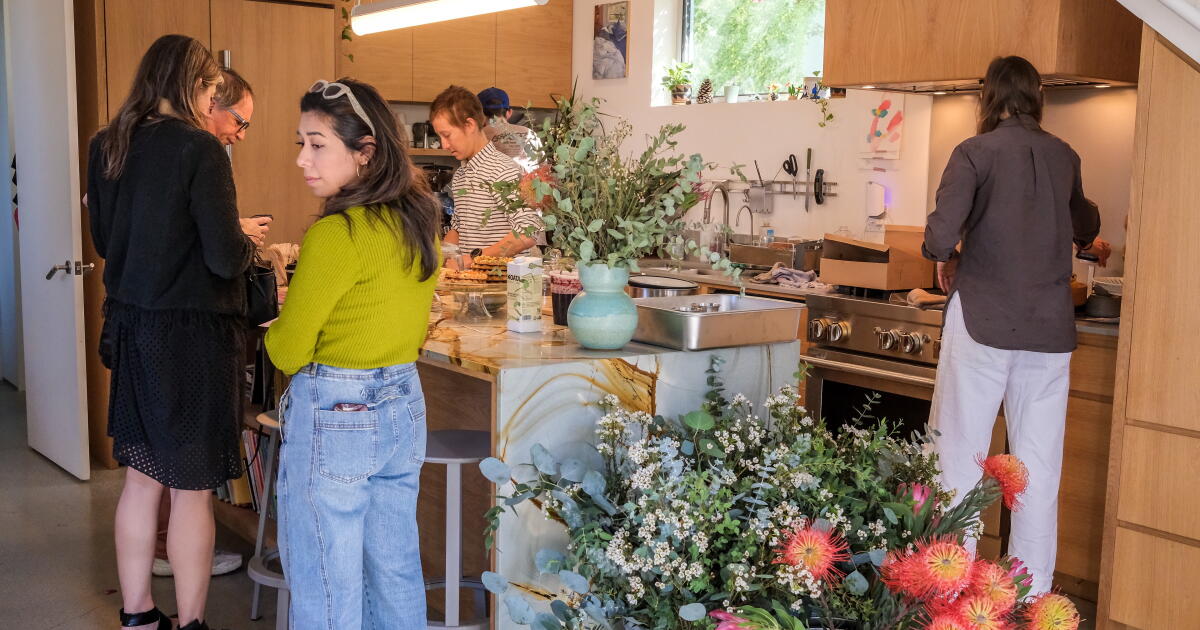
Known as MEHKOs, microenterprise home kitchen operations come in many shapes and sizes. They are coffee shops, barbecue joints, supper clubs, backyard tea parties, pickup-only pizzerias and everything in between. For some of these operators, it’s a passion project, and for others, it’s their only source of income.
MEHKOs were first legalized by state lawmakers in 2019, spurred by advocacy from nonprofit organization the COOK Alliance. Riverside County was the first in the state to adopt the program in 2019. MEHKOs were greenlighted in L.A. County in May 2024, and since then over 400 licenses have been approved. While informal backyard restaurants are nothing new in L.A., the program offers a legal, health-department-approved pathway for many existing home kitchens to thrive.
MEHKOs can only sell up to 30 meals per day and no more than 90 meals per week. They’re also not allowed to advertise with signs on their homes or front lawns. And unlike commercial restaurants, where line cooks will often prep ingredients for the rest of the week, MEHKOs can only serve food that was prepared the same day.
“A home kitchen is not designed or required to have the same commercial infrastructure, such as ventilation systems, grease interceptors, specialized wastewater systems,” said James Dragan, who oversees initiatives including the MEHKO program at the L.A. County Department of Public Health. “The limits are important because of the food safety perspective.”
When dining at a MEHKO, be flexible. It might not be as easy as just placing an order. These home businesses are often open just a few days per week with limited hours, and might only accept orders placed in advance. For example, Palestinian home kitchen Mid East Eats — one of L.A.’s first MEHKOs — currently only offers private dinners and monthly supper clubs. It was previously open for walk-ins with a larger menu, but the format was difficult to sustain and would often create food waste.
“I want to continue doing my private dinners because that’s my favorite thing to do,” said Mid East Eats founder Sumer Durkee. “It’s satisfying to me and feels like home, and people leave feeling so happy.”
MEHKOs can serve as a relatively low-cost stepping stone toward opening a brick-and-mortar and offer one-of-a-kind food experiences, even in a city with as rich a culinary vocabulary as L.A. These eight home kitchens, all of which offer dine-in service, are a great starting place to discover the city’s burgeoning MEHKO scene.
IF you want a historic stay in one of the UK’s coolest seaside towns, we’ve found one of the best.
Here’s everything you need to know about staying at Margate‘s The George & Heart House.
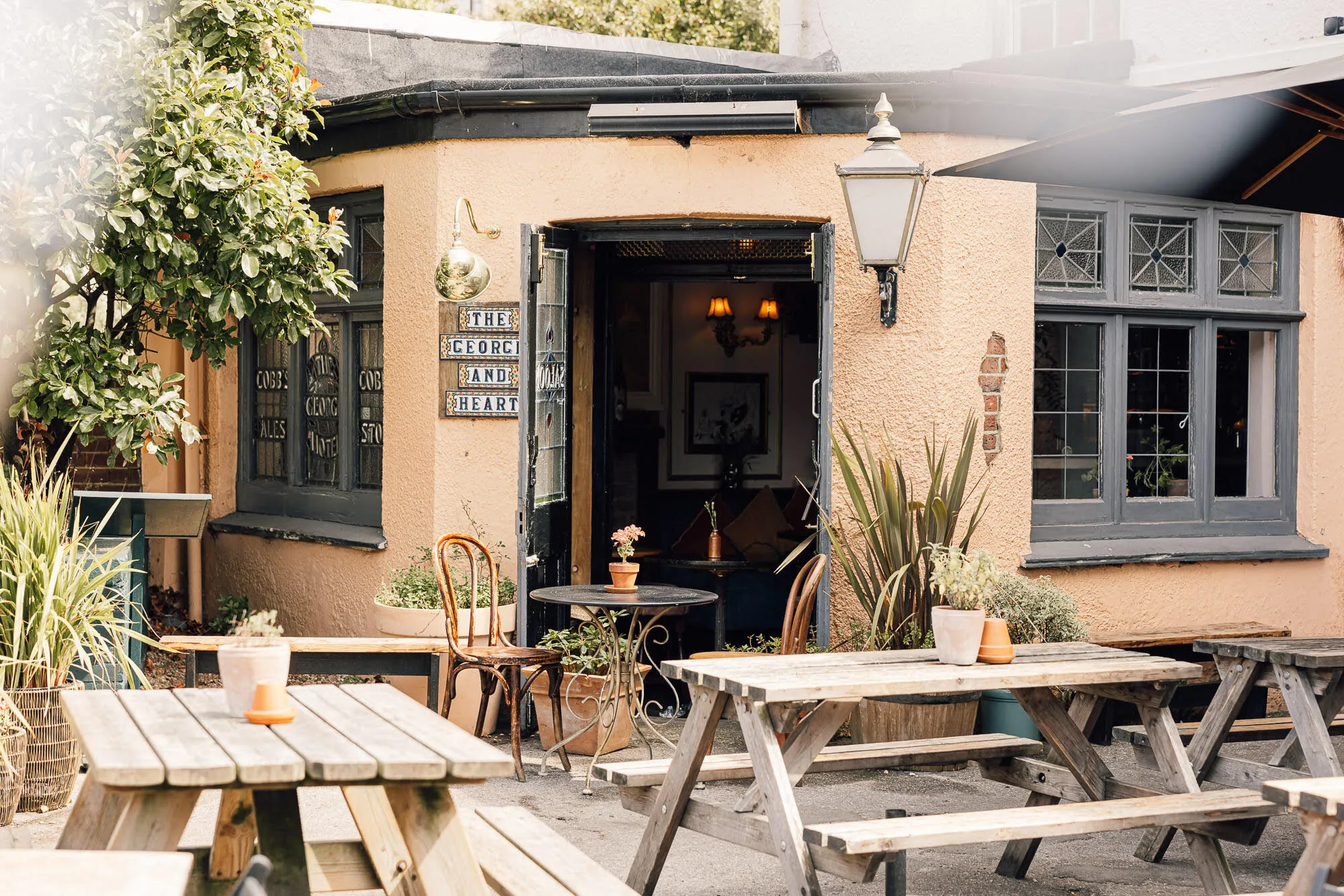
One of Margate’s most stylish places to stay is The George & Heart HouseCredit: SuppliedThe pub dates back to the 18th centuryCredit: Supplied
Where is The George & Heart House?
You couldn’t ask for a much better spot from which to explore Margate.
Across the road are the Old’s Town’s vintage shops, cafes and pubs while just a five-minute walk away is the beach as well as the Turner Contemporary art gallery and retro amusement park Dreamland, both of which are free to enter.
Sign up for the Travel newsletter
Thank you!
Margate train station is a ten-minute stroll from the hotel.
What’s it like?
Sat on the edge of Margate’s Old Town, this revamped 18th-century coaching inn is full of character.
The charming interior features exposed brickwork, velvets, fringes and drapes with eco-friendly up-cycled furniture and a colour scheme of pink and dark green.
What are the rooms like?
There are six compact rooms designed by Kent creatives, all with their own unique style and names.
Among them, Burley & Field has Art Deco and Oriental influences while Home Alone With Mrs Jones is a riot of 1970s Biba-style imagery.
There is also the plush and spacious Heritage Suite, where I stayed, which takes up an entire floor.
It comes with two bedrooms and a big living space complete with a small kitchen area, two sofas, wall-mounted flatscreen TV and a dining table.
The hotel is the perfect base for exploring the rest of MargateCredit: Supplied
What is there to eat and drink?
Definitely eat here. The restaurant delivers mainly pub classics, including burgers and fish and chips, but also more elaborate dishes such as pork Milanese.
I had the halibut in a tomato and caper sauce with new potatoes and tenderstem broccoli which was perfectly cooked and delicious.
In the summer you can also dine in the pub’s airy Stables Courtyard.
The breakfast is continental, including juices, muesli, fruit, croissants, ham and cheese.
What else is there to do?
The hotel has a Zen Den, which offers massages and facials by appointment, but can also be used by guests for morning stretches or meditation.
Is it family friendly?
The hotel’s two-bedroom Heritage Suite sleeps four, so works for families.
Is it accessible?
Due to being a historic pub, the hotel is not wheelchair accesible
OUR Spotlight On column gives you the lowdown on what to see and do in some of your favourite holiday hotspots – as well as some lesserknown gems.
This week we shine a light on a Turkish delight: Istanbul’s Karaköy neighbourhood, set on Istanbul’s European side and once a centre of trade, culture and maritime activity.
Skip the main crowds of Istanbul for the neighbourhood of KarakoyCredit: GettyIt is one of the best places to see Galata TowerCredit: Getty
Today its heritage architecture sits alongside contemporary galleries, independent boutiques, cafés and restaurants.
With the Bosphorus waterfront on its doorstep, it’s an ideal base for discovering the city’s many layers.
Sign up for the Travel newsletter
Thank you!
Known as Istanbul’s coolest neighbourhood, The Sun’s Deputy Travel Editor Kara Godfrey, who visited, said it felt like a “trendy pocket of an otherwise busy, but beautiful city”.
For trainspotters, it’s also home to Karaköy station which features the historic Tünel – the second-oldest underground railway in the world.
Start at Galataport, Karaköy’s transformed waterfront district stretching along the Bosphorus.
Once part of Istanbul’s historic working port, the promenade is now home to restaurants, shops and cultural spaces, including Istanbul Modern, with views across the water towards the historic peninsula.
From here, wander into Karaköy’s backstreets before climbing towards neighbouring Galata, where cobbled lanes and historic buildings lead to the landmark Galata Tower.
HIDDEN GEM
Tucked between Karaköy and Galata, the Kamondo Stairs are one of the neighbourhood’s most distinctive architectural details.
Built by the influential Kamondo banking family in the 19th century, the sweeping stone staircase curves elegantly between the old banking streets, creating one of Istanbul’s most photogenic corners.
Their unusual design makes them easy to miss among the surrounding historic buildings, but they’re well worth seeking out while exploring the area on foot.
Karakoy is where you’ll find younger crowdsCredit: Alamy
BEST VIEW
For one of Istanbul’s most popular panoramas, head up to Galata Tower.
From its elevated position above Karaköy, visitors are rewarded with sweeping views across the Golden Horn, Bosphorus and historic peninsula, taking in the domes and minarets of the Old City and ferries crossing between the European and Asian sides.
Time a visit for late afternoon to watch the city begin to glow below.
RATED RESTAURANT
For street food heaven, head to Mumhane Street.
Mehmet Usta’s fish wraps are a local favourite – mackerel grilled over open coals spiced with pomegrante molasses, sumac and herbs and rolled tightly in thin flatbread.
For a sit-down delight, head to Karakoy Lokantasi for Turkish home-style dishes and traditional mezes including slow-cooked lamb.
The Kamondo Stairs in Banker Street are best visited early in the morning to avoid the crowdsCredit: GettyGrilled fish wraps are a must tooCredit: Alamy
BEST BAR
Unter on Mumhane street was one of the original venues that helped transform the Karakoy district.
By day, it’s a buzzing cafe, by night it transforms into a vibrant neighbourhood bar for craft cocktails and wine.
For more rooftop views, head to The Bank Hotel’s Roof Bar on Bankalar Street for sunset drinks.
HOTEL PICK
Hovagimyan Hotel & Suites is a boutique bolthole in the heart of Karaköy, housed within a landmark building.
Meticulously restored, each of the 20 suites is individually furnished with Art Nouveau and Art Deco antiques.
Each also comes with a fully-equipped kitchen.
Moments from the Bosphorus waterfront and Galata Tower, head to The Penthouse, the top-floor bar for the best panoramic views.
Rooms from £213per night in September. See hovagimyan.com.
A HUGE expansion at a major American airport that was supposed to open this year has been pushed back to 2027.
New York‘s John F. Kennedy International Airport in America is currently undergoing one of its biggest-ever transformations costing £7.1billion.
John F. Kennedy International Airport in New York, America, is undergoing a massive £14.2billion transformationCredit: Port Authority BuildsThis includes the replacement of Terminal OneCredit: Port Authority Builds
The centre of the project is the New Terminal One, which was expected to open before the end of this year but has now been pushed back to the first quarter of 2027.
The airport has confirmed that testing is needed before the terminal opens to passengers.
Sign up for the Travel newsletter
Thank you!
Once open, the terminal – which will have replaced the old one – will have 13 gates plus a temporary gate in its first phase of opening.
When the first phase is complete, the airport will move on to the second phase, which includes demolishing the former terminal.
The second phase will also add nine gates, making a total of 23 gates at the completed terminal – 22 of which will be for wide-bodied planes commonly used for long-haul, international flights.
The 241,548sqm terminal will be the largest at the airport and inside there will be 27,871sqm of shops, restaurants and six lounges.
One of those lounges is Air France‘s largest lounge outside Paris, spread across two floors.
Inside the lounge, there will be seating for up to 400 travellers, with different dining areas celebrating French food and a bar with French wines and Champagnes.
The new terminal was meant to open before the end of this year but has now been pushed backCredit: Port Authority BuildsOnce it does open, it will have 23 gates – 22 of which will be for long-haul flightsCredit: Port Authority BuildsOther terminals at the airport, including Terminal 8 (pictured) are undergoing upgrades as wellCredit: Port Authority Builds
Other spaces inside the terminal will include an “indoor green space” and “family-friendly amenities”.
And travellers will be able to spot a variety of public art installations too.
Airlines that will feature at the New Terminal One include Air France, KLM, Etihad Airways, LOT Polish Airlines, EVA Air, Turkish Airlines, Air New Zealand, Air China and Philippine Airlines.
The project forms part of an even larger £14.2billion transformation at the airport, where there will also be a new Terminal 6 and upgrades at three other terminals.
Airlines at Terminal 6 are expected to include JetBlue, United Airlines and other Star Alliance carriers.
At Terminal 4, there will be 10 new gates and an expanded check-in and arrival area.
Terminal 8 will then undergo a £300million upgrade, including adding new gates and transforming the retail spaces.
New York is a popular destination among British travellers, with around one million Brits heading to the city each year.
Flights between the UK and New York typically take between seven and eight hours and cost from £380 return.
THE SUMMER holidays are in the rearview mirror now, so it’s likely you’re already daydreaming about next year’s getaway.
As for where to book, these spots have been revealed as the trending destinations for 2027 including one place in Europe with tropical-looking beaches, and another country with highs of 30C even in winter.
One of the country’s tipped to be popular next year is called ‘Europe’s Maldives’Credit: AlamyEgypt has been increasing in popularity and this will continue into next yearCredit: Getty
Advantage Travel Partnership, a UK-based consortium of independent travel businesses has said Albania as the destination to watch for 2027.
The country is much lesser-visited by Brits than the likes of France, Spain and Greece – but it has so much to offer, including beautiful beaches and hot summers.
Sign up for the Travel newsletter
Thank you!
One spot along the Albanian Riviera called Ksamil is regularly labelled the ‘Maldives of Europe,’ for its stunning coastline.
The village is in the south of Albania very close to Corfu – in fact on a clear day you can see across to the island.
Ksamil has white-sand beaches, turquoise waters, and offshore islands that you can swim to from the mainland, giving it similar attributes to the Maldives.
The easiest way to get to Ksamil is actually to fly into Corfu Airport and take a quick ferry crossing across.
Another spot in Albania that is loved by singer Dua Lipa is the seaside village, Dhermi, which in the summertime is called a ‘bustling seaside paradise’.
It has pebbled beaches, beach clubs, a historic old town, and one of the biggest attractions is Pirates’ Cave.
Albania during the spring sits around the mid-20s, and during summertime can be over 30C.
There are direct flights from London Heathrow, Stansted and Luton to the country’s capital, Tirana, which start from £30.
Ksamil has been called Europe’s Maldives thanks to its white-sand beaches and clear watersCredit: Alamy Stock Photo
Visitors to Albania have been steadily rising, previous statistics reveal that tourists visiting Albania nearly doubled from 6.4million in 2019 to 11.7million in 2024.
Other places that the data revealed are on the up next year include Egypt, an affordable winter sun hotspot.
The country and particularly Red Sea resorts attract Brits in the later part of the year thanks to its high temperatures.
In October, Egypt can still bask on the beach in 30C heat – meanwhile the UK’s average is around 10C.
Marsa Alam is one of the quieter spots that’s gaining popularityCredit: AlamyHong Kong could be set to welcome more British travellers next yearCredit: Getty
He named Sharm El Sheikh as a popular spot for couples with its blend of relaxation, vibrant nightlife, and world‑class reefs.
Hurghada is a spot that’s “especially popular with families thanks to its impressive all‑inclusive offering, shallow beaches, and brilliant snorkelling”.
Nearby Marsa Alam is also gaining in popularity thanks to its “pristine beaches, exceptional diving, and a more laid‑back atmosphere”.
There are plenty of direct flights to Egypt from the UK, particularly in the winter months, with an average flight time of just over five hours.
Two other on-the-rise destinations for 2027 include Hong Kong and Vietnam.
Further afield, Vietnam is another country that’s set to ‘trend’ in 2027Credit: Getty ImagesHeading to Vietnam make sure to stop by unique Train StreetCredit: Alamy
James said: “From the moment I touched down in Hanoi, Vietnam’s capital, I knew my trip would be unforgettable.
“The city doesn’t just welcome you — it wraps you in its embrace with the hum of motorbikes, the aroma of street food, and a culture so vibrant you can’t help but fall in love.
“My favourite memories of Hanoi, however, were on Train Street. This narrow alley is famed for its railway, which runs straight through the centre, so close to the tiny cafés flanking the street that you can feel the rush of air when the carriages whoosh past.”
Outside of the capital, one popular activity is kayaking along Ha Long Bay which has emerald waters and is surrounded by towering limestone cliffs.
No one will be disappointed by the food and drink scene in Vietnam, James enjoyed Huda beer, crispy fried spring rolls, and a stir-fried rice noodle dish for less than £8.
PROPER pubs have propped up British life for centuries – safe, soothing sanctuaries from the hustle and bustle of modern life.
Some call them ‘spit and sawdust’ boozers, others call them ‘Old Man’ pubs.
Ben McFarland (left) has travelled the UK searching for the best pubs as part of the Thinking Drinkers (pictured) – here are some of his favouritesCredit: Thinking Drinkers
But you get the idea – no fuss. No frills.
They don’t complicate or change things. Just a quiet well-kept pint, a vacant stare into the middle distance, a nice chat and that comforting feeling that everything will probably be alright.
Sign up for the Travel newsletter
Thank you!
In a proper pub there’s no piped ‘muzak’, no Sky Sports swooshing at you, no cutlery or cloths on the tables, and absolutely no QR codes.
There might be a dog. There should be a piano. If there’s a dog playing a piano, that’s even better.
And once you’re in, there should be no real reason to ever leave.
I make up half of Thinking Drinkers, and we have searched high and low for the best boozers around, so here are my top 10 Proper Pubs that every passionate pub-goer should visit:
The Oxford Bar, Edinburgh
The Oxford in Edinburgh, Scotland is simple but cosyCredit: Alamy
Edinburgh is packed with decent locals. But few do proper, no-nonsense pub quite like The Oxford, a favourite of crime writer Ian Rankin and his hard-boiled detective Inspector Rebus.
There’s none of the tartan tat or tourist rubbish here. Just a solid mix of locals, writers and drinkers, all rubbing along nicely.
Grab a stool, order a beer or a whisky, and settle in. It’s exactly what a pub should be.
A pint here is likely to set you back between £4.50 and £6, and there’s plenty of things to do nearby including the National Galleries of Scotland and Edinburgh Castle.
Southampton Arms, North London
The Southampton Arms is a pretty cheap spot for LondonCredit: Alamy
A sign outside proudly declares “Ale. Cider. Meat” – and that’s exactly what you get at this cracking Kentish Town boozer.
The 16 taps pour only beer and cider from genuinely independent producers – but don’t panic, this is not a Gen Z hipster hangout or a pub for beer bores who won’t stop talking to you about hops.
Inside you’ll find tables, chairs, a piano and plates of meat (and cheese). There’s no Wi-Fi and no bookings.
A pint here costs from £4.97, which is definitely a welcome price in London – and nearby, make sure to visitHampsteadd Heath for a nice autumnal walk.
The Dyffryn Arms, Wales
Dyffryn Arms is known as ‘Bessie’s’ after the landladyCredit: Alamy
Perched on the edge of the Preseli Hills, this place is absurdly old-fashioned and basic.
Known simply as ‘Bessie’s’, after its legendary landlady, it’s less a pub and more a tiny front room.
Ring the bell, the hatch opens, and you’re served one beer and one beer only — Bass.
Inside there are a few chairs, a couple of tables and a portrait of a youthful Queen Elizabeth.
Outside, just a bench. The locals chat in Welsh. There’s no toilet. Yet somehow, it’s perfect.
A pint here will set you back between £4 and £5.50, and in the surrounding are, a head off on a riverside walk or take a short drive to the coastal town of Fishguard.
Birch Hall Inn, North Yorkshire
The Birch Hall Inn at Beck Hole has an old school sweet shop in the middleCredit: Alamy
Tiny but brilliant, this white-washed North York Moors pub is officially the smallest in Yorkshire — and yet huge in character.
The boozer is split into two very basic rooms with a proper old-school sweet shop between them.
Hikers and holidaymakers rub elbows here over a range of well-kept ales, pork pies, pickles, stotties and the pub’s famous “beer cake”.
A pint here will cost you between £4 and £5.50, and in the surrounding area, take a walk to Beck Hole – a pretty village with woodland walks to small ponds and waterfalls.
Wenlock Arms, East London
The Wenlock Arms in London sits right by the Regent’s Canal TowpathCredit: Alamy
While all the streets around it were getting levelled by the Luftwaffe during the Second World War, The Wenlock Arms wasn’t having any of it – the bombs didn’t dare touch it.
And, from the looks of things, neither has anyone else.
Built in 1836, this unwaveringly traditional East End institution has a reassuringly retro feel with some of the best beer the British isles has to offer.
A pint at this watering hole usually costs between £4.50 and £5.80, and if you are looking for something else to do in the area, head for a wander along the Regent’s Canal Towpath.
The Evening Star, Brighton
Right by the train station, you can head to The Evening Star in BrightonCredit: Alamy
Just a one-minute walk from Brighton train station, this cosy city centre local is a theme pub…
The theme is sitting down and drinking really nice beer.
Dating back to 1854, there’s not much here beyond some chairs, some tables and a small bar serving a range of really good independent ales, ciders and lagers.
The cheapest pint here will cost you £4.80 (Burning Sky – Plateau), and nearby there’s the Brighton Toy and Model Museum or you can walk to the beach.
Peveril Of the Peak, Manchester
Peveril of the Peak is a brightly-coloured historic tiled pubCredit: Alamy
Peveril of the Peak was once used as a brothel by American soldiers during the Second World War.
It sits defiantly wedged amid modern office blocks and new-fangled flats, with a classic green-tiled exterior.
As for the inside, the historic triangular tavern is perhaps the most beautiful looking boozer in Manchester complete with darts, pool and a jukebox.
A pint at this watering hole will set you back between £5.50 and £6.80, and Manchester Art Gallery is nearby if you are looking for something else to do in the area.
The Bell Inn, Aldworth
At The Bell Inn you will find a massive oak fireplace ideal for cold and wet daysCredit: Alamy
Low- beamed with a massive oak fireplace and a flagstone floor worn by generations of thirsty walkers, this cracking 16t-centuryy country pub is a terrific time-warp of a place.
The beer garden bursts into a perfectly English oasis of calm in the summer, but in the winter, the boozer oozes with cosy charm.
The beers are served spot-on and the food is simple yet superb – warm crusty rolls stuffed with ham, ox tongue, cheddar, stilton or crab, with little pots of mustard and chutney on the side.
You can get a pint and a roll for less than £15.
Fat Cat, Sheffield
The Fat Cat in Sheffield is right by a museum all about steelmaking in the cityCredit: Alamy
Once you’ve sat down here, you’ll struggle to leave this delightful, unpretentious ‘drinker’.
It is just one of several superb pubs to be discovered in the Steel City.
Cosy and carpeted, it’s like stepping into someone’s living room – albeit a living room that serves a great range of real ales from a handsome looking wooden bar.
A pint at the Fat Cat costs from around £4.20, and for somewhere to head after, just across the road is the Kelham Island Museu, m which showcases the steelmaking history of the city.
Free Trade Inn, Newcastle
The Free Trade Inn in Newcastle has a free jukebox insideCredit: Alamy
Boasting beautiful views over Newcastle and across the River Tyne, perched halfway up a hill, this quirky yet canny, frills-free boozer oozes charisma.
It has friendly folk behind the bar, a free jukebox and quality ‘craft’ ales.
You can grab pizza at the boozer too for around a tenner.
A pint here will cost you from £4.50, and nearby, make sure to head on the Victoria Tunnels Tour – this underground 19th-century wagonway has had several lives as a route for coal wagons and then laterana air-raid shelter during World War II.
AS the days get shorter and the temperature drops, there’s nothing like a relaxing autumn staycation to break up the long wait until Christmas.
But finding a weekend away that doesn’t cost a fortune can be a challenge – especially with the summer holidays having already taken a chunk out of our bank accounts.
From murder mystery weekends to rural spa retreats, these are our favourite Wowcher autumn breaksCredit: Wowcher
Wowcher has just slashed the prices on a huge range of autumn mini breaks, with UK holiday deals starting from £34.50 per person.
From Peak District spa breaks, to 18th-century manor houses, to staying inside a full-on castle, here’s our top pick of affordable Wowcher staycations this autumn.
Sign up for the Travel newsletter
Thank you!
Halloween murder mystery break for 2 – £78pp
Pick from a range of hotels across the UK for the murder mystery break dealCredit: Wowcher
Is there anything more perfect for spooky season than a Halloween-themed murder mystery break?
This offer includes an overnight hotel stay with breakfast, a three-course dinner, and of course, a fully immersive story where you’re part of the action.
The murder mystery breaks take place all over the UK, and you can pick from hotels in London, Norfolk, the Midlands, Scotland, Yorkshire and more.
The Halloween Murder Mystery break deal is on sale for £78pp, saving 29% off full-price.
Book a Halloween murder mystery break for 2 for £78pp
4* Peak District Countryside Spa Stay for 2 – £89
The cosy Three Horseshoes Inn has stylish rooms inside and a glam spa attachedCredit: Wowcher
An overnight escape with breakfast, spa access, and the stunning Peaks on your doorstep. What’s not to love?
Stay overnight at the Three Horseshoes Country Inn & Spa, a cosy, traditional red-brick hotel which hides modern and stylish rooms inside.
The on-site Mill Wheel Spa has a unique stone bath for a healing soak, plus mud chambers, a sauna and treatments such as bespoke facials catered to your skin type.
A stay here with Wowcher costs £89 for two people, working out to £44.50 each.
Book a 4* Peak District Countryside Spa Stay for 2 for £89
Castle stay with breakfast and dining experience – £129
Save up to 51% on this medieval-style castle break in CheshireCredit: Wowcher
Bag a fairytale-like autumn break with this stay in a medieval-style castle surrounded by misty woodlands.
Peckforton Castle in Cheshire is a Grade I-listed Victorian country house designed to look exactly like a castle, containing 48 unique bedrooms and two restaurants.
Peckforton has plenty of history hidden within its walls for you to explore. It was built in the mid 19th century for a wealthy family, and has its own dry moat, towers, gatehouse and a porthcullis.
This stay costs £129 for two and includes dinner, bed and breakfast, and saves you up to 51% when compared to booking direct.
Book a castle stay with breakfast plus a dining experience for £129
Gulliver’s Resort stay and play package – £169 (£42.25pp)
Gulliver’s Resorts are putting on children’s events for Halloween including a Spooky Dance PartyCredit: Alamy
Join in the fun of the ‘Fright Fiesta’ at Gulliver’s this October with a short break at Gulliver’s Warrington.
The festival-style event sees a street parade take to the theme park, as well as costume character meet and greets and a ‘Spooky Dance Party’.
Families can also hop aboard the Trick or Treat train that chugs around the park, or enter a spooky Ghost House full of live action scares.
The deal includes an overnight stay at the park for up to four people, plus park entry on your arrival day for £169 (£42.25pp).
Book a Gulliver’s Resort stay and play package for £169 (£42.25pp)
North Wales retreat for two with Prosecco – £69
This stay at The Hanmer Arms in North Wales only costs £34.50ppCredit: Not known, clear with picture desk
This mini break at Welsh countryside inn The Hanmer Arms comes with breakfast and Prosecco, making for a cosy overnight retreat.
This hotel is in Hanmer, North Wales, a quiet and pretty village with a medieval church and a vast glacial lake nearby.
The hotel itself is a 19th century Georgian inn and pub, serving local ales and generous portions at the Sunday carvery.
The offer costs £69 for two, working out at £34.50pp and saving you 45% off booking direct.
Book an overnight stay for two with Prosecco at The Hanmer Arms for £69
Shropshire manor house spa break for two – £99
This package includes an overnight stay, dinner, breakfast and use of the spa for under £50ppCredit: Wowcher
This Shropshire spa break deal is on sale for £99, which is the lowest rate this break has ever reached on Wowcher.
With this deal, you and a loved one can sit down to a fancy dinner, make use of the hotel spa facilities, retire up to a cosy room and come back downstairs for a Full English breakfast in the morning.
The 4* Albrighton Hall Hotel & Spa is an 18th-century manor with 15 acres of gardens, so you’ll have plenty of landscaped grounds to roam during your stay.
This overnight spa hotel break costs £99 for two people, working out to £49.50pp.
Book a Shropshire manor house spa break for two for £99
Sam Catling lived the dream by ditching a supermarket job for a supposedly fun role as a cruise ship entertainer. He opens up about his day to day life on a cruise ship, the long hours he worked, and how much he took home each month
Sam Catling landed the dream job despite never working on a ship before(Image: Sam Catling)
Working on a cruise ship is the kind of job everyone fantasises about now and again. And when Sam Catling was just 18, he landed what many people would consider a dream role – a cruise ship entertainer.
Sam, now 38, now shares his memories of his time at sea, as well as interviewing others from across the maritime industry in his podcast Deck Tales, and he’s even written a book, Seems Like Smooth Sailing, that gives an unflinching account of what it’s like to work at sea for months on end.
He jokingly refers to himself as a former ‘trolley wally’ and says his CV consisted of a paper round and a job collecting trollies at Asda when family members suggested he’d be a great cruise ship entertainer. His mum and granny had just come back from a cruise and had chatted to onboard entertainers about how they got into the role, before suggesting the idea to the outgoing Sam.
He spoke about how he managed to land the role, despite his lack of previous boating experience: “I used to get The Stage magazine delivered to my newsagent on a weekly basis, and I kept looking through the ads, and eventually I saw one that said ‘now receiving applications for entertainment hosts’ so I applied.
“The first question was ‘What previous experience do you have working in entertainment?’, and eventually I wrote ‘Ive had extensive experience pushing trolleys around Asda car park for the past two years’.”
With a drama GCSE and a few workshops under his belt, Sam soon found himself in Gibraltar on a boat that was in dry dock, attending two weeks of rehearsals as the ship was refurbished. In addition to entertainers such as himself, who did events from game shows to karaoke, there were a show team with West End-style performers who Sam said were a “triple threat” with dancing, singing, and acting skills.
The job was gruelling, with Sam revealing he worked seven days a week. Visits home were extremely rare, crew stayed on the ship the duration of their contracts, which for Sam’s first cruise was six months. The days were long too, with Sam admitting he became “quite the social drinker” due to his schedules requiring him to sit down and socialise with guests.
His shifts would often finish past midnight, and he’d head to the crew bar after work until 2am, before getting up at 7am to face the next day. Sam said he became skilled at power napping: “Between your different activities that you’d host I was down in my cabin having a power nap. If I had an indoor cabin I’d just close the door and you were in pitch black darkness, so it was really easy to just have a 30 minute nap.” But he admitted: “You wouldn’t know what time of day it was because you’re cutting out all the sunlight.”
His accommodation was included, as was food and expenses, and Sam said: “You’re not paying rent, your food’s taken care of, you’ve no heating and electric and gas bills and all of that stuff. It’s all taken care of, which is nice! You don’t have to worry about all those things. But then you are spending money when you go ashore, you know, going to eat out, because after a couple of weeks of being on board you are sick of the food.”
Sam revealed that, when he worked on ships around 2006, he was taking home about £1,200 to £1,300 a month from working seven days a week. Accommodation was shared, and Sam said only managers and the top talent such as the main singers in the shows would get their own cabins.
Despite this salary being representative of a job over 20 years ago, cruise ships don’t pay much more now. According to career site prospects.ac.uk, which advises students on employment routes, those with little experience shouldn’t expect big money for their long hours: “Entry-level cruise ship jobs, such as hospitality, housekeeping, retail, or waiting staff positions, typically pay around £1,000 to £1,500 per month, often with accommodation and meals included.”
But it claims that experienced crew can get decent salaries at sea: “With experience and progression into specialist or management roles, salaries can rise to between £2,000 and £4,000 per month. Senior officers, entertainment managers, engineers, and technical staff may earn considerably more.”
Sam worked on cruise ships for four years, and nowadays he runs his podcast, which he describes as his “passion” with over 60 episodes available, as well as taking on handyman jobs and occasionally working as a TV extra.
“I want to continue doing this until I’m an old man, because there’s 70% of the planet that’s covered in ocean, so I don’t think I’m going to run out of guests anytime soon. The podcast started with just being a platform for cruise ship crew, but now it’s something else. It’s cargo ship captains, I’ve spoken to a pirate, I’ve had a deep sea salvage scuba diver and tugboat captains.”
He added: “I just really wanted to drill down into something unique and authentic, and within a specific niche that people might not know about; the stories at sea that most people don’t hear. The public might not have an interest in ships, but people are still people, and the stories that happen at sea are there for everyone to hear about.”
LOOKING for your next big holiday? Look no further as British Airways has revealed a major update to its summer 2027 schedule with flights to TWO East African destinations.
British Airways (BA) has announced that it will be launching new flights to Tanzania from May 29, 2027 – which last took off 14 years ago.
British Airways will launch flights to Tanzania in May 2027Credit: Getty
The flights will take off from London Gatwick Airport and head to Kilimanjaro before heading onto Zanzibar.
The flights will then continue for the season, until October 31.
Sign up for the Travel newsletter
Thank you!
In Kilimanjaro, you can obviously visit the famous mountain, which is Africa’s highest peak and the world’s highest free-standing mountain.
It takes about 45 minutes from the airport to reach Moshi – the gateway town.
The National Park is home to rainforest, as well as an arctic summit.
In the region, there’s also Tanzania’s loved Northern Safari Circuit to explore, which is one of the continent’s most famous wildlife routes.
It includes the Serengeti Wildlife Park, where the Great Migration is found, as well as UNESCO World Heritage Ngorongoro Crater, which is home to the Big 5.
Or head to Tarangire National Park as well, which is well-known for its elephant herds.
The flights will run across the season until October 31Credit: Getty
Meanwhile, Zanzibar is famous for its white, sandy coast that’s home to an abundance of marine life including dolphins and sea turtles.
There’s also the UNESCO-listed streets of Stone Town to explore, with hand-carved wooden doors and coral-stone buildings.
Across the island, there are a number of spice plantations, giving visitors the chance to sample fresh vanilla, cinnamon and nutmeg.
Flights will take off three times a week from London Gatwick, landing in Kilimanjaro, before going on to Zanzibar.
Flights from London Gatwick to Kilimanjaro International Airport and then onwards to Zanzibar, will take off on Mondays, Thursdays and Saturdays.
The flights will depart at 9:05am and land in Kilimanjaro at 8:20pm,before then taking off to Zanzibar at 9:20pm and landing there at 10:25pm.
Return flights from Zanzibar back to London Gatwick, will take place on Tuesdays, Fridays and Sundays, departing at 12:25am and landing at 7:55am.
Flights will cost from £849 return.
Tanzania is known for its white-sand beaches as well as amazing wildlifeCredit: GettyThere are several spots you can go on safari on in the countryCredit: Getty
Neil Chernoff, British Airways’ Chief Planning and Strategy Officer said: “We’re excited to be launching flights to two exceptional new destinations that showcase the very best of Tanzania.
“From the vast plains of the Serengeti and the foothills of Mount Kilimanjaro to the turquoise waters and white-sand beaches of Zanzibar, these new routes strengthen our footprint in East Africa and open the door to some of the world’s most extraordinary travel experiences.
“Alongside these new routes, we are strengthening our wider long-haul network, adding capacity to a number of popular destinations across Africa, the Americas and the Caribbean.
“By increasing frequencies and extending seasonal services, we’re giving customers more choice and flexibility, while deepening London’s connectivity to key destinations around the world.”
In addition to the Tanzania flights, BA is increasing its capacity to Latin America by 25 per cent.
There will also be new non-stop flights to Buenos Aires, Argentina and onward service to Santiago, Chile.
Additional seats have been added to Rio de Janeiro, Brazil as well, and flights to San José, Costa Rica, will become year-round.
Las Vegas in America and Cape Town in South Africa will also gain additional flights.
A NEW hotel has opened at Bristol Airport that couldn’t feel farther from a classic pre-flight stay.
Each room is inside a former shipping container, it even has an orchard area and the airport is under a 10-minute walk away.
The Nodpods have cosy king size beds and en-suite bathroomsCredit: Guest ReservationsThere’s also a full length mirror and tea and coffee making faciltiesCredit: Guest Reservations
Called Nodpods, each room is self-contained and inside visitors will find a king size bed and en-suite with a shower.
There’s complimentary tea, coffee, hot chocolate, biscuits and there’s the option of a croissant in the morning.
Sign up for the Travel newsletter
Thank you!
There’s also a smart TV, WiFi, hairdryer, full length mirror, and towels are provided too.
One woman who stayed inside a Nodpod described it as being “really cosy” thanks to its small, snug size.
And unlike airport hotels, the pods have some outdoor space too, it even has an orchard area where some visitors have spotted wildlife, like rabbits and squirrels.
Someone else who had stayed wrote in the comments: “I’ve stayed in this place, so convenient for Bristol airport, and it’s spotless.”
On Tripadvisor, the Nodpods have 22 reviews with a high average rating of 4.5 out of 5.
Lots praise the alternative accommodation for its convenience, others for their affordability.
One wrote: “Staying at nodpods has cut our pre-flight costs in half (we used to stay in a hotel in Bristol and paid for parking overnight) so we have more money to spend on holiday!”
The pods can be booked for as little as £90 for one night for two people which works out to £45 each.
The NodPods even has an outside space with picnic benches and an orchard areaCredit: Guest Reservations
Meanwhile, a stay at Hampton by Hilton Bristol Airport starts from £129.
At the Nodpods there is free parking at the pods, although it is caveated that this is for your stay there only – not for the duration of your holiday.
While there isn’t a restaurant at pod site, The Airport Tavern is a three-minute walk away, and The George & Dragon is a five-minute drive.
Bristol Airport recently submitted plans to expand with thousands more flights and long-haul journeys – so the NodPods would be a great option to stay before jetting off.
Along with more passengers the terminal will be larger, there will be new shops, restaurants as well as an extended runway at the cost of £500million.
The proposal revealed the airport had plans to reach “world cities within Europe and beyond”.
This includes a limited number of new flights to North America, the Middle East and Asia.
EVER dreamt of getting a World Record? Well, you soon can have a chance at securing one in a huge new UK attraction dedicated entirely Guinness World Records.
Guinness World Records London, which is the first permanent entertainment venue from Guinness World Records, will open at The O2 in Greenwich, this winter.
Will Munford, Adjudicator at Guinness World Records, said: “Guinness World Records London will give every guest the unique chance to take on our line-up of brilliantly fun and exciting record attempts, and potentially walk away a world record breaker themselves.
“We know how competitive families can get, so we want to find out who is the most competitive of them all and get them along to our new attraction to see if they have what it takes to become our first record breakers!”
Looking at today’s schedule, it’s mostly arrivals into the airport after 9.30pm that are affected.
Only two flights from the UK are affected by the strike action today.
The first is a flight from Manchester Airport to Charleroi which was scheduled for 10.55pm and has since been cancelled.
The second is a flight from Charleroi to Manchester Airport which was scheduled for 19.35pm and has also been cancelled.
Ryanair has asked passengers to monitor their Ryanair App for the latest updates regarding their flight.
In a previous statement, the airline said: “We sincerely apologise for any inconvenience caused as a result of these ATC strike delays/cancellations, which are entirely beyond airlines’ control.”
Yesterday, about 40 flights in total were cancelled at Charleroi Airport.
According to Skeyes, the Belgium‘s official national air navigation service provider, the nightly strikes are expected to affect more than 800 flights.
The strike is set to continue until October 10Credit: Getty
“The Pineapple” promised to be intense, but even hours before the show had begun, it had me startled.
I was warned, via a waiver attendees must sign to experience the production, to expect “intimate, and/or aggressive physical contact,” “confined spaces and passageways,” and that I may be asked to crawl, kneel or lie down. All of it would happen in a show that I was cautioned would present simulated violence or “disturbing imagery.”
As much as I love participatory, immersive theater — productions that often rely on some form of audience participation — “The Pineapple” was providing me with a checklist of things I generally avoid. It was a feeling that only grew when I reached the waiver’s end, and signed off that I was OK with claustrophobia (I am not).
What had I done?
None of it, though, had fully prepared me for what Candle House’s “The Pineapple” actually was. By the time the hourlong experience in North Hollywood had reached its conclusion, I had been straddled by a woman who forced a gloved finger down my throat, outfitted with hooded, vision-impairing face masks, grabbed by the wrists as they were taped together, ordered to crawl toward a blood-stained room, and spooned or kissed by multiple male performers.
“The Pineapple” is a secretive hourlong show that seeks to disorient attendees.
(Sona Earnest)
“The Pineapple” is a buzzed-about show among the tight-knit immersive community, one that fits into the medium’s long tradition of productions designed for a sole audience member. A short run last year in New Jersey sold out. Candle House has such a devoted following that its L.A. shows have been selling out almost as instantly as they are announced. While it’s thus far been shrouded in secrecy — “The Pineapple” will not even release a program or cast list until its run has concluded — it comes highly recommended from acquaintances who saw it on the East Coast. I was alternately excited and apprehensive to take part, and my editor would like me to note that I pitched this story on my own accord.
“The Pineapple” in its limited online description promises an alien encounter. Sign up, and an email will tell you that it will “change your life.”
For the passionate crowd of immersive enthusiasts who may want to experience “The Pineapple” and are worried I just spoiled the show, I call nonsense. For one, I believe audiences should know exactly what they are paying for, and two, I do not think “The Pineapple” can be properly spoiled. It was at times otherworldly, in moments psychedelic, and while there were scenes in which I felt fear, there were also others in which I laughed. While “The Pineapple” flirts with horror, torture and conspiracy nuts, it also provides space for Jimmy Buffett’s “Margaritaville.”
And in “The Pineapple’s” best instances, it created a sense of personal intimacy with its performers. These were actors who may have earlier been needling at or attempting to push my boundaries. “The Pineapple” wants to toy with our trust, to create a safe space where it can intermix themes of abuse and empathy until their lines are blurred. Consider its waiver, then, not just a warning but an attempt to weed out those who may be offended or triggered.
“The Pineapple” tries to break us. And it charges nearly $250 for the privilege.
“How do I put this,” says the show’s core creator/director Evan Neiden when asked his intentions behind “The Pineapple.” “I think the show is designed to boil you. Like the lobster in the pot. It gets warmer and warmer and warmer and it’s slowly acclimating you to this new set of rules that keep changing to this new environment of degeneracy and conspiracy.”
“The Pineapple” teases an alien encounter. It is theatrical production designed for one guest.
(Sona Earnest)
Neiden, the 27 year-old founder of Candle House, has long specialized in one-on-one phone productions designed to be done from the caller’s home. While drastically different in narrative content, his horror show “Claws,” in which its solo guest acts as an emergency line operator, is good prep for “The Pineapple” as it also seeks to push people to the brink of comfort.
If there is an artistic thesis behind the work of the New York-based Candle House, it is to cast its audience as performers, but then poke, prod and disorient until they stop performing and start reacting on instinct — or, in theory, become unguarded. It’s an idea that simply to get through the day we are playing a role of sorts, tuning our conversations to please others, or presenting exaggerated, false or tidied-up versions of ourselves on social media.
“In an experience like this, you’re alone with the inhabitants of the world, and they’re all there as part of your hallucination, your dream and your journey,” Neiden says. “You don’t need to worry about presenting a certain way or being perceived in a certain way. All the characters in ‘The Pineapple’ are degenerates, and this show invites you to become one as well. That’s very hard to do if someone from the respectable, outside world is watching.”
The setup for “The Pineapple” is simple. I was playing a respondent to an ad for a meeting with an alien. But things quickly spiral beyond clear narrative recognition, as piecing together the story becomes a puzzle unto itself. And it will shift depending on how one reacts, as there are multiple endings. But know only that in its opening minutes we learn that we have been swindled and are now part of a ritual of sorts to summon said alien.
“The Pineapple” offers intimate actor interactions designed to push boundaries.
(Sona Earnest)
You may find yourself, as I did, raising your voice, as “The Pineapple” did light research on me. My career was insulted, and I was mocked for fumbling around while attempting to juice a pineapple with a woefully inadequate kitchen utensil. Neiden says many attendees try to break the show itself, to push back and see how far its narrative can bend. This is typically not how I play, wanting to experience a production as its designers have intended and thus I let “The Pineapple” take the lead rather than trying to force my will upon it.
I am not easily offended and never used the safe word provided, although there were instances where I came close, namely when my feet were being aggressively, unwelcomely massaged. And yet there were scenes in which I thought about deeply personal relationships I have had, specifically when a character asked me to think of a time when forgiveness or an apology was craved from someone I am no longer closely connected with.
“The Pineapple” then began to feel like a metaphor. As I moved from darkened room to darkened room, ridiculed in one, flirted with in another, a thread of finding one’s own personal paradise in a hellscape began to emerge. Is it aliens we are seeking, “The Pineapple” begins to ask, or simply perhaps purpose? The act of forgiveness, Neiden tells me, was on his mind when crafting the show.
“I never really felt like I fully understand it,” Neiden says. “What is forgiveness? Some people say it’s letting someone off the hook. Others say it’s releasing yourself of the burden of a grudge. And it’s a word wrapped in religion and politics. There are so many definitions of it, and we hear it everywhere — forgiveness and its counterparts of guilt, shame and accountability. What does it mean? The show doesn’t answer that.”
Maybe. That’s up to the audience, not its creator.
Days after I’ve seen “The Pineapple,” friends and peers keep asking if I enjoyed it, and I don’t think it’s a simple answer. It’s not for everyone. I’m not sure it’s even for me. Simulated torture is not my idea of a good time. But “The Pineapple” did wear me down, and it’s beautiful in the way it highlights the lonely anguish at the heart of Buffett’s “Margaritaville.”
As its small cast obsesses over a fabled alien encounter and seems willing to stop at nothing to find release in a divine being, be careful, “The Pineapple” argues, of the personal Eden you seek.
At least that was my takeaway. You might walk away with an entirely different message.
“Maybe you just fell in with the wrong crowd and got abducted by aliens,” Neiden says.
We’re hunkered down in a dark stairwell on the side of a hotel facing a busy street in Hollywood. To passersby, we could easily be mistaken for two teenagers hiding in the shadows. In reality, I’m sitting with Kelela, the electronic R&B architect whose uncompromising vision has quietly reshaped the contours of alternative music.
Dressed in oversize sunglasses, an acid-washed tee, light blue jeans, checkered Vans and a vibrant auburn-colored French bob with micro bangs, she effortlessly rolls a joint with long ombre nails that mimic smoke and fire. She slips it between her lips and flicks a lighter stamped with a single word: Gotham.
(Robert Gauthier / Los Angeles Times)
Her lighter choice is pure coincidence, she says, but it fits the apocalyptic visual universe she’s built for “New Avatar,” her dark, guitar-heavy third album that merges her early D.C. indie roots with shoegaze, grunge, futuristic club music and R&B. Produced almost exclusively by Oscar Scheller — who has crafted tracks for PinkPantheress and Lily Allen — the 12-track project finds Kelela chasing intimacy, desire and emotional refuge in the midst of an increasingly chaotic world. From the color-inverted cover art to her icy white hair and bleached brows in the video for “idea 1” — a song that draws inspiration from Octavia Butler’s 1993 sci-fi classic “Parable of the Sower” — the world-building is unmistakable.
“I used it to describe the context … of these stories on the record,” Kelela explains about the Gotham visual concept. “It’s a basic reference, but it feels like it applies. It’s the context for people needing to be saved and everything being f— on some level, but there still being hope.”
Just a few miles from the Hollywood stairwell where we’re sitting, Kelela will translate her genre-flexing record for the stage at the Wiltern during two back-to-back shows on Sept. 21 and 22.
Although she’s a New Yorker now, Los Angeles plays a crucial role in her musical journey. In 2010, the Ethiopian American singer-songwriter moved to Venice to work as a nanny before taking a gig as a solar panel telemarketer — a job she picked to avoid moving back home but unexpectedly excelled at.
“I’ve sold solar power to hundreds of people in the L.A. area,” she quips. “I would level with people. I didn’t sound like a salesperson because I can’t sell something that doesn’t make sense.”
(Robert Gauthier / Los Angeles Times)
The job funded her first solo apartment in MacArthur Park, but an insurance payout from a totaled car ultimately gave her the financial runway to leave sales behind and focus solely on music. That freedom manifested into her debut mixtape “Cut 4 Me,” featuring fan favorites like “Send Me Out” and “Bank Head.”
“It’s a very L.A. story,” she says with a laugh.
More than 10 years after the breakthrough record, Kelela returned to L.A. to record “New Avatar” with Scheller at his home studio in Silver Lake.
During their first session, she played him “Outta Time,” a track featuring British singer-producer A.K. Paul (Jai Paul’s brother) that she’d been holding onto for a decade until she was ready to make her first guitar-centered album. She also showed Scheller her “white bag” playlist — a collection of indie, rock and alternative tracks she loved as a teenager, from Incubus to Deftones to the Red Hot Chili Peppers. He understood the assignment and by the end of their session, they walked away with two songs: the lead single “Idea 1” and the sensual, U.K. garage-infused “Don’t Piss Me Off.”
“I had a sketch and I think that felt very magical,” Kelela says.
Their natural flow was part of the reason why Kelela was able to release “New Avatar” sooner than previous albums. It arrives just three years after its predecessor, “Raven.”
(Robert Gauthier / Los Angeles Times)
But leaning into her “white bag” wasn’t just about nostalgia. It’s a return for the artist who was once the frontwoman of indie rockers Dizzy Spells and was rocking out with her then-boyfriend, guitarist Tosin Abasi (of Animals as Leaders). It’s also a direct confrontation with the industry’s racialized genre boxes — a phenomenon Kelela identifies as “sonic racism.”
“It’s designed to keep us apart, to keep us out,” she says, “and I think clocking that is really important.”
She points to the unspoken kinship that forms when Black fans who love heavier guitar music find each other in white-dominated crowds.
“When they meet it’s a different type of bond through the music — like ‘I’ve always felt on the outside,’ but also ‘We are so inside,’” she says. “That catharsis is another feeling and I knew so much of my audience had an experience with this music, but maybe had to compartmentalize and be on the outside in order to enjoy it.” With “New Avatar,” she wanted to “dismantle and disrupt” that dissonance without abandoning her R&B roots, she says.
(Robert Gauthier / Los Angeles Times)
That philosophy echoes through the record’s lyricism. Where 2023’s “Raven,” a rave-inspired, post-pandemic offering that ruminated on the times and being firm in your boundaries, “New Avatar” is its older sister who is a bit more wise and speaks with even sharper conviction.
“We need space to feel over it,” she says, “and to not be considered Debbie Downers. That’s basically the role that Black women have been sort of relegated to — to be truth tellers. Then everyone’s like ‘Ugh, come on…’ But it’s like we’re laughing all the time. I’m so happy. I’m not unhappy.”
She adds, “The key is not rooted in escapism. The key is rooted in being honest about what you saw, and that’s kind of the tradition that I’d want my work to live in.”
On “Point Blank,” Kelela explores the emotional labor for a woman in a one-sided relationship: “By now, I hope you see/That bullet set me free/And the more I pour, the more you reap/And I’m too spent too weep.” As the title implies, “Don’t Piss Me Off” sees a woman losing her patience with a lover: “Know you want me/Tell me I’m wrong/Takin’ all night/Don’t piss me off.” But by the album’s closer “If We Meet Again,” she cuts ties entirely: “If we ever amend/Nevermind, over and out.”
“A lot of the songs are like “Y’all ain’t s—,’” she says laughing, “But I try to say it in an artful way.”
Two bright spots on the album arrive in the final act: the dream pop-infused “New Life Forms” featuring Fousheé and “The Bridge,” a song about yearning with PinkPantheress, who returned the favor after Kelela appeared on her track “Bury Me.” Directed by Yasser Abubeker, “The Bridge” music video features a memorable, sultry dance number between the two singers — a sequence Kelela encouraged fans to learn before her shows.
“I cried the first time that Yasser sent me the edit,” she says. “It’s like a love letter to Black queer culture, our intimacy. It’s so sexy without me and her having an overt love interest. It just feels so implied in this smart way.”
The day before we met in Hollywood, Kelela gave an intimate live performance for Spotify. Backed by an all-Black femme band featuring a string quartet, guitar, bass and backup vocals, she performed “Idea 1” and a cover of Incubus’ “Mexico” — a rendition that earned her praise on social media from Incubus’ frontman, Brandon Boyd, himself.
“It’s a really important image,” says Kelela about the video. “In addition to it sounding exquisite, I’m not gonna lie, it also tore visually and symbolically.”
She’ll also be backed by a full band during her “New Avatar Live” tour, which she envisions as a high-energy rave that could break into a mosh pit at any moment.
(Robert Gauthier / Los Angeles Times)
“It’s another medium for me to be able to articulate or dismantle those constructs around what makes sense together,” Kelela says. “It’s going to be first and foremost — like any record or anything that I do — cathartic for me.”
She continues, “So I’m going to be living my best f— life and through that I know I will give a good show because it just excites me. It’s a dream come true to be able to pull these things together.”