TOP NEWS

From breaking news to significant developments in politics, business, technology, entertainment, and more, we deliver the stories that shape our global landscape.

Rep. Young Kim vows push to renew North Korea Human Rights Act

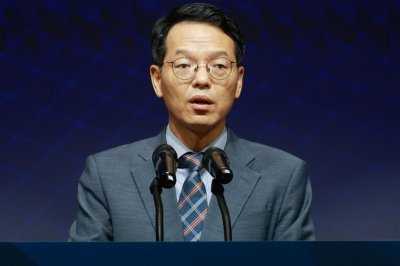
1 of 4 | Rep. Young Kim, chair of the House Foreign Affairs Subcommittee on East Asia and the Pacific, leads a roundtable with 11 North Korean defectors at the Rayburn House Office Building in Washington on Tuesday. Photo by Asia Today

April 30 (Asia Today) — U.S. Rep. Young Kim on Tuesday pledged to work for the swift reauthorization of the North Korea Human Rights Act, which has lapsed for more than six years, vowing to serve as a “voice” for North Korean defectors.

Kim made the remarks while chairing a roundtable at the Rayburn House Office Building in Washington attended by 11 North Korean defectors as part of North Korea Freedom Week.

“I will do my best to ensure the North Korea Human Rights Act is reauthorized as soon as possible in this Congress,” Kim said.

Kim stresses urgency of reauthorization, shifts from English to Korean

Kim opened the meeting in English, noting that she has been involved in North Korea human rights issues for more than 30 years, including 21 years as a congressional staffer and later as an elected lawmaker.

After listening to defectors’ testimony, she switched to Korean without an interpreter, appearing to emphasize her commitment more directly.

“The most important thing from what you said is that we must work together to reauthorize the North Korea Human Rights Act,” she said in Korean.

She highlighted that a key component of the legislation is funding for broadcasting into North Korea.

“Broadcast resources are essential,” Kim said, noting that transmissions into North Korea have weakened, including those from outlets such as Radio Free Asia and Voice of America.

“I will be your voice and speak with my colleagues to ensure the act is reauthorized,” she said.

Susan Scholte, head of the North Korea Freedom Coalition and the Defense Forum Foundation, said Sen. Tim Kaine is preparing to introduce a Senate version of the bill corresponding to the House legislation.

Kim says human rights conditions worsening despite greater information access

Kim said North Korea’s human rights situation has not improved over decades and has in some respects worsened.

“Even after decades, nothing has changed,” she said. “If anything has changed, it is that North Korean people now know more about the outside world than ever before, while crackdowns on external media have reached unprecedented levels.”

She argued that any meaningful change in North Korea must come from within, driven by the spread of information.

“If regime change happens, it must come from inside,” Kim said. “It should begin with people like those here who share information through broadcasting.”

Defectors recount hardships, escapes and role of outside information

Defectors at the roundtable shared personal accounts of life in North Korea and their paths to escape.

One defector said he came to understand the reality of the regime after listening to foreign radio broadcasts, which ultimately influenced his decision to flee.

Another described being detained in Russia after drifting into its waters while fishing and later seeking help from human rights groups after exposure to South Korean media via USB devices.

Others recounted losing family members to starvation, enduring forced labor and being trafficked into China before eventually reaching South Korea.

One defector said she had been forcibly repatriated to North Korea eight times and was separated from her young child, whose fate remains unknown.

Survey shows role of broadcasts, concerns over China surveillance

Kim Ji-young, head of Free North Korea Radio, presented survey results of 75 defectors who arrived in South Korea after 2022.

She said 66% reported accessing foreign broadcasts at least once a week, which inspired aspirations for freedom and motivated their escape.

All respondents said North Korea’s so-called “three major repressive laws” reflect fears of regime instability and efforts to maintain authoritarian control.

Kim also raised concerns about defectors in China, including cases in which children born to North Korean women and Chinese fathers are left stateless, as well as reports that Chinese authorities use artificial intelligence-based facial recognition to track and repatriate defectors.

One participant said she has avoided traveling to China due to fears of abduction or poisoning, adding that South Korean authorities have advised her against visiting.

U.S. lawmaker calls for stronger joint efforts

Rep. James Moylan said the United States and South Korea should strengthen cooperation to bring about meaningful change in North Korea without another decades-long delay.

In an interview with Voice of America, Moylan said radio broadcasting is an effective tool for change, adding that increased access to information, combined with support from advocacy groups and the United States, can help drive transformation.

— Reported by Asia Today; translated by UPI

© Asia Today. Unauthorized reproduction or redistribution prohibited.

Original Korean report: https://www.asiatoday.co.kr/kn/view.php?key=20260430010009822

Source link

US gas reaches $4.30 per gallon; Trump says prices will drop after Iran war | US-Israel war on Iran News

Price of petrol in US jumps by nearly 30 cents in one week amid Strait of Hormuz blockade and Iran diplomatic deadlock.

The average price of one gallon (3.8 litres) of gasoline in the United States has reached $4.30, according to the American Automobile Association (AAA), up from less than $3 before the February 28 start of the US-Israel war on Iran.

Thursday’s prices come as US President Donald Trump insists that time is on his side in the standoff with Iran, even as he refuses Tehran’s offers of a preliminary deal to reopen the Strait of Hormuz.

Recommended Stories

list of 3 itemsend of list

According to AAA, prices for gas or petrol went up by 27 cents over the past week amid the deepening impasse, with Iran blocking the strait and the US imposing a naval siege on Iranian ports.

“The national average is $1.12 higher than it was this time last year, as oil prices surge above $100/barrel with no indication of when the Strait of Hormuz will reopen,” AAA said in a brief report on Thursday.

“Gas prices are the highest they’ve been in four years, since late July 2022.”

California, home to nearly 40 million people, saw petrol prices hit more than $6 per gallon on Thursday.

The spike in energy prices has been fuelling inflation and economic uncertainty, adding to Trump’s political woes.

The US president’s approval rating is hitting record lows amid growing discontent with the conflict with Iran, recent public opinion polls show.

Since the start of the war, Trump and his allies have been trying to frame the hike in petrol prices as a temporary price worth paying to achieve the aims of the military campaign.

The US president reiterated that argument on Thursday when asked about the latest price increase.

“And you know what? And we’re not going to have a nuclear weapon in the hands of Iran,” the US president told reporters.

“The gas will go down. As soon as the war is over, it’ll drop like a rock.”

However, oil prices do not drop automatically after hostilities stop. Despite the ceasefire reached on April 8, the cost of gas in the US has continued to climb.

Iran denies seeking a nuclear weapon.

Although the US is one of the largest oil producers and is not heavily reliant on energy products from the Middle East, global prices affect what Americans pay at the pump.

On Thursday, Trump stressed that Iran is all but vanquished militarily and economically – a claim he has been repeating since the early days of the conflict.

“Iran is dying to make a deal,” he said, calling the naval blockade against the country “incredible”.

Tehran has projected defiance, refusing to hold direct talks with the US until the siege is lifted, even after Trump announced last week that he was dispatching his top envoys to Pakistan to negotiate with Iranian officials.

Earlier on Thursday, Iranian President Masoud Pezeshkian suggested that Iran is running out of patience with the current situation of no war and no peace amid the US siege.

“The world has witnessed Iran’s tolerance and conciliation. What is being done under the guise of a naval blockade is an extension of military operations against a nation paying the price for its resistance and independence,” Pezeshkian said in a social media post.

“Continuation of this oppressive approach is intolerable.”

Source link

Trump pulls nomination of Casey Means for surgeon general

Casey Means speaks during a Senate Committee on Health, Education, Labor, and Pensions hearing on her nomination to be surgeon general on February 25. On Thursday, President Donald Trump pulled her nomination. File Photo by Bonnie Cash/UPI | License Photo

April 30 (UPI) — President Donald Trump on Thursday pulled the nomination of Casey Means for surgeon general and replaced her with Dr. Nicole Saphier.

Means, a medical doctor, is a Make America Healthy Again activist who doesn’t have an active medical license.

Saphier is a working radiologist at Memorial Sloan Kettering Cancer Center in New York and a former Fox News contributor.

Trump announced the appointment on Truth Social.

“Nicole is a STAR physician who has spent her career guiding women facing breast cancer through their diagnosis and treatment while tirelessly advocating to increase early cancer detection and prevention, while at the same time working with men and women on all other forms of cancer diagnoses and treatments. She is also an INCREDIBLE COMMUNICATOR, who makes complicated health issues more easily understood by all Americans. Dr. Nicole Saphier will do great things for our Country, and help, ‘MAKE AMERICA HEALTHY AGAIN,'” the president posted.

Means’ nomination had stalled in the Senate. In February, she answered senators’ questions about vaccines, psychedelics and abortion pills.

Trump blamed Sen. Bill Cassidy, R-La., a physician, because he had refused to say if he would support Means.

He said, in a separate post: “Hopefully all of the Great Republican People of Louisiana, which I won, BIG, three times, will be voting Bill Cassidy OUT OF OFFICE in the upcoming Republican Primary!”

In January, Trump endorsed Rep. Julia Letlow, R-La., for the Louisiana Republican primary against Cassidy.

When reporters asked Cassidy about Trump blaming Means’ failed nomination on him, Cassidy said, “I can promise you, there are multiple people on the committee who decided to vote no,” Politico reported.

Artemis II pilot Victor Glover (L) and mission specialist Christina Koch meet with President Trump in the Oval Office of the White House on Wednesday. Photo by Graeme Sloan/UPI | License Photo

Source link

Myanmar’s former leader Aung San Suu Kyi moved to house arrest | Conflict News

The move comes as part of a larger prisoner pardon tied to a Buddhist religious holiday.

Myanmar’s ⁠former leader Aung San ⁠Suu Kyi ⁠has been moved to house ‌arrest, state media report, more than five years after the military toppled the civilian government that the Nobel laureate had led and jailed her.

President Min Aung Hlaing, who ordered the coup in 2021, said in a statement on Thursday that he “commuted the remaining sentence to be served at the designated residence”.

Recommended Stories

list of 3 itemsend of list

State media broadcast a photograph of Suu Kyi seated on a ‌wooden bench and flanked by two uniformed personnel – the first public image of the democracy campaigner in years.

Translation: Change the location where Daw Aung San Suu Kyi is serving her sentence (change her remaining sentences to continue serving at her designated residence).

Earlier on Thursday, authorities had announced her prison sentence was being reduced as part of a larger prisoner pardon tied to a Buddhist religious holiday. State media said in addition to the amnesty granted to 1,519 prisoners, including 11 foreigners, the sentences of remaining convicted prisoners were cut by a sixth.

Suu Kyi was originally sentenced to 33 years in prison in late 2022 for several offences that her supporters and rights groups described as attempts to discredit her and legitimise the army takeover that removed her from office and to prevent her return to politics.

Thursday’s amnesty, the second applied to her in recent weeks, would bring her sentence down to 18 years with more than 13 years left to serve, according to the calculation.

The decision to move the 1991 Nobel Peace Prize winner to house arrest was welcomed as a “meaningful step” towards a “credible political process”, a spokesman for United Nations Secretary-General Antonio Guterres said.

“We appreciate the commutation of Aung San Suu Kyi to a so-called house arrest in a designated residence. It is a meaningful step towards conditions conducive to a credible political process,” Stephane Dujarric told reporters.

He reiterated the UN’s call for the “swift release” of all political prisoners in Myanmar.

“It is good to hear that the house arrest has been confirmed, but we haven’t received any direct notification,” a member of Suu Kyi’s legal team told the Reuters news agency.

“We only found out about it from the news announcement.”

More amnesties for other prisoners

The amnesty is the second in two weeks after one on April 17 when more than 4,500 prisoners were granted amnesty.

The amnesties come after Min Aung Hlaing was sworn into office as president on April 10 after an election that critics said was neither free nor fair and was orchestrated to maintain the military’s tight grip on power.

In his inauguration speech, he said his government would grant amnesties aimed at promoting social reconciliation, justice and peace.


Suu Kyi, who is now 80 years old, has been serving her prison term at an undisclosed location in the capital, Naypyitaw.

Information about her condition has remained tightly controlled. Reports in 2024 and 2025 indicated declining health, including low blood pressure, dizziness and heart problems, but these claims could not be independently verified. Her legal team has not been allowed to meet her in person since December 2022.

The 2021 army takeover triggered enormous public resistance that was brutally suppressed, triggering a bloody civil war that has killed thousands of people.

According to the Assistance Association for Political Prisoners, a rights monitoring organisation, 22,047 people have been in detention in Myanmar since the army takeover.

Suu Kyi spent almost 15 years as a political prisoner under house arrest between 1989 and 2010. Her tough stand against military rule in Myanmar turned her into a symbol of nonviolent struggle for democracy.

Source link

Union Pacific, Norfolk Southern resubmit railroad merger proposal

A Union Pacific freight train sits idle in the Lincoln Heights section of Los Angeles on January 15, 2022. On Thursday, the rail company, along with Norfolk Southern, resubmitted their merger application to the Surface Transportation Board. File Photo by Jim Ruymen/UPI | License Photo

April 30 (UPI) — The Union Pacific and Norfolk Southern corporations announced Thursday a new merger proposal after a federal regulator rejected their initial plan in January.

The two companies applied for a merger in July, seeking to create the United States’ first transcontinental freight railroad.

The Surface Transportation Board rejected the proposal saying the application was incomplete.

A statement from the two companies said they resubmitted the application with “additional analysis” indicating cost savings for customers and improvement to the U.S. supply chain. It said the deal would take 2 million truckloads off the nation’s roadways and save $3.5 billion each year.

“After completing the additional work requested by the STB, the facts remain clear: This merger enhances competition and delivers real public benefits that make America’s supply chain stronger, Union Pacific CEO Jim Vena said in a statement.

The new submission includes traffic data from each of the six North American Class I railroads instead of sample data provided by the STB, the companies said.

The STB will have 30 days to review the new application.

Source link

‘Act of piracy’: World reacts to Israeli interception of Gaza aid flotilla | Israel-Palestine conflict News

World leaders condemn the interception of the boats bound for Gaza as violating international law.

Israel has intercepted 22 out of the 58 aid ships travelling through international waters and bound for the besieged Gaza Strip.

The ships make up part of a second Global Sumud Flotilla to try in recent months to break an Israeli blockade by carrying humanitarian aid to Palestinians in Gaza. They sailed from the Spanish port of Barcelona on April 12.

Recommended Stories

list of 3 itemsend of list

The vessels were seized by Israel late on Wednesday in international waters off Greece’s Peloponnese peninsula, hundreds of miles from Gaza, the flotilla’s organisers said on Thursday.

Israel “kidnapped” 211 of the 400 activists taking part in the flotilla, including a Paris city councillor, according to the flotilla’s organisers. Israel’s Foreign Ministry had earlier put the number of those detained at 175.

Here’s how world leaders have reacted to the news:

Italy

Italy called for the immediate release of Italian nationals on board the flotilla.

Italy “condemns the seizure of the Global Sumud Flotilla vessels… and calls on Israel to immediately release all the unlawfully detained Italians”, the government said in a statement.

Italy’s ANSA news agency cited sources among the organisers saying 24 Italians had been detained.

In its statement, the government also called for the “full respect of international law and guarantees on the physical safety of the people on board”.

It said it was “committed to continue supplying humanitarian aid to Gaza in the framework of our cooperation and in respect of international law”.

Germany

In a joint statement with Italy, Germany said it was following developments regarding the flotilla with “great concern” and called for international law to be respected and for “restraint from irresponsible actions.”

Spain

Spain’s Foreign Ministry said it “energetically condemns” Israel’s seizure of the flotilla, which is carrying Spanish nationals.

Madrid has summoned Israel’s charge d’affaires to convey its protest over the detention of the vessels, the ministry added in a statement.

Turkiye

Turkiye’s Foreign Ministry condemned Israel’s seizure of the boats in the flotilla as “an act of piracy.”

“By targeting the Global Sumud Flotilla, whose mission is to draw attention to the humanitarian catastrophe faced by the innocent people of Gaza, Israel has also violated humanitarian principles and international law,” the ministry said in a statement.

Hamas

In a post on Telegram, the Palestinian group Hamas condemned the interception, accusing Israel of committing a crime without accountability and calling for the release of those detained.

Global Sumud Flotilla organisers

The flotilla’s organisers condemned Israel’s seizure of its vessels.

“This is piracy,” they said in a statement. “This is the unlawful seizure of human beings on the open sea near Crete, an assertion that Israel can operate with total impunity, far beyond its own borders, with no consequences.”

“No state has the right to claim, police, or occupy international waters, but Israel has done that, extending its control outward to occupy the Mediterranean Sea off the coast of Europe,” the statement said.

Israel

Israel’s Foreign Ministry called the flotilla organisers “professional provocateurs” and said that its forces acted lawfully.

“Due to the large numbers of vessels participating in the flotilla and the risk of escalation, and the need to prevent the breach of a lawful blockade, an early action was required in accordance with international law,” the ministry said in a statement.

Source link

Oil hits 4-year high on Hormuz Strait, fresh U.S. military action fears

A gas station in Berlin, Germany, displays the latest per liter prices for petrol, diesel and LPG on Thursday after oil prices on global markets surged to their highest level since 2022. Photo by Filip Singer/EPA

April 30 (UPI) — Oil prices briefly topped $126 a barrel in Asian trade overnight as markets reacted to news the United States might resume its military offensive against Iran and fears the Hormuz Strait might remain closed for much longer than anticipated.

Brent crude, the global benchmark, surged to $126.31, its highest level since Russia invaded Ukraine in 2022, after a report that U.S. military commanders were pitching a campaign of “short and powerful” strikes to U.S. President Donald Trump, to force Iran back to the negotiating table.

The price retreated to around $120 by the time markets in Europe opened on Thursday and continued to fall through the morning. The Brent contract for June delivery was trading at $113.91 a barrel in mid-afternoon trade in London, while American crude for June delivery was changing hands at $104.82.

Oil prices have already elevated since the war began on Feb. 28 and began climbing further on Wednesday after Trump met with executives of U.S. oil companies the previous day about how to deal with supply disruption from the closure of the Strait of Hormuz by Iran, which has vowed it will continue until the United States’ blockade of its ports is lifted.

The group discussed “steps we could take to continue the current blockade for months if needed and minimize impact on American consumers,” a White House official said.

Around 25% of the world’s oil supply passes through the strait and the prospect of it remaining effectively closed for months has set alarm bells ringing in markets as traders’ faith in an early resolution fades and “the reality of the supply situation” sets in.

“The breakdown of talks between the U.S. and Iran, along with President Trump reportedly rejecting Iran’s proposal for a reopening of the Strait of Hormuz, has the market losing hope for any quick resumption in oil flows,” said William Patterson, ING’s Singapore-based head of commodities strategy.

Trump has said he believes the regime in Tehran will blink first, saying they were less afraid of the bombing than the blockade, with U.S. officials banking it will force Iran to shutter oil production because the oil has nowhere to go and the country lacks sufficient storage facilities.

Artemis II pilot Victor Glover (L) and mission specialist Christina Koch meet with President Trump in the Oval Office of the White House on Wednesday. Photo by Graeme Sloan/UPI | License Photo

Source link

Trump unveils plans to cut U.S. forces in Germany amid spat over Iran

An U.S. Army helicopter is unloaded from an C-5M Galaxy at Ramstein Air Base, southwest of Frankfurt, amid NATO’s Operation Atlantic Resolve in 2017. Home to around 27,000 troops and their families, “Little America” has been the headquarters for U.S. Air Forces in Europe and a critical NATO facility since 1952. File Photo courtesy U.S. Air Force/Staff Sgt. Timothy Moore

April 30 (UPI) — U.S. President Donald Trump announced plans that could see cuts to the tens of thousands of U.S. forces stationed across 20 bases in Germany.

Writing on his Truth Social platform Wednesday night, Trump said the process of scaling back the United States’ eight-decade-long military presence was already underway.

“The United States is studying and reviewing the possible reduction of troops in Germany, with a determination to be made over the next short period of time,” Trump wrote.

The announcement came two days after German Chancellor Friedrich Merz said Iran was running circles around the United States in ongoing peace negotiations to end the military conflict, saying “the Americans clearly have no strategy.”

Lack of support for the war from European NATO allies has seen Trump and other senior U.S. officials repeatedly threaten to pull out of the 32-country defensive alliance, complaining that Europe was “freeriding” and never there for the United States when it needed it.

On Friday, a Pentagon leak suggested that Spain could face being suspended from NATO in retaliation for not supporting the United States in its war with Iran.

U.S. troop strength in Germany stood at 36,436, mainly army and air force personnel, stationed at 20 bases across the country in December, the latest month for which U.S. Department of Defense data is available.

That compares with around 28,000 across the rest of Europe, with the bulk of those deployed in Italy, Britain and Spain.

Active-duty personnel numbers in Germany were cut from more than 50,000 from 2013 to 2017 during President Barack Obama‘s second term, in line with a strategic shift in the United States’ defense priorities involving pivoting to the Asia-Pacific and reducing the focus on Europe.

Before that, numbers had fallen to 94,000 in the first half of the 1990s following the collapse of the Soviet Union in 1991, and then down to 71,000.

The United States currently has more than 54,000 troops in Japan, another 23,500 in South Korea and 7,000 in Guam.

There has been a continuous significant U.S. military presence in Germany since the end of World War II, initially as an army of occupation and then as the front-line of NATO deterrence during the Cold War and more recently as a bulwark against a resurgent threat to Europe from Russia.

Artemis II pilot Victor Glover (L) and mission specialist Christina Koch meet with President Trump in the Oval Office of the White House on Wednesday. Photo by Graeme Sloan/UPI | License Photo

Source link

Tracking the shadow fleet: How Iran evaded the US naval blockade in Hormuz | Investigation

On March 11, the Thai cargo ship Mayuree Naree was struck by two projectiles while crossing the Strait of Hormuz, one of the world’s most important waterways located between Iran and Oman. A fire broke out in the engine room, and while 20 sailors were rescued, three remained trapped inside the stricken vessel. Their remains were found weeks later when a specialised rescue team boarded the vessel, which had run aground on the shores of Iran’s Qeshm island.

At about the same time, a “shadow fleet” of tankers continued to navigate the very same waters safely. Operating with fake flags, disabled signals and unspecified destinations, this covert armada survived because it operates outside the traditional rules of maritime trade.

Recommended Stories

list of 4 itemsend of list

Iran threatened to block “enemy” ships passing through the Strait of Hormuz – a crucial chokepoint for a fifth of the world’s oil – in the wake of the United States-Israeli war launched on February 28. Soon, navigation through the strait was disrupted amid fears of attacks.

Following a temporary ceasefire on April 8, the United States imposed a full naval blockade on Iranian ports on April 13. Theoretically, traffic through the strait should have come to a complete halt.

However, tracking data reveals a remarkably different reality.

INTERACTIVE - Strait of Hormuz - March 2, 2026-1772714221
(Al Jazeera)

An exclusive Al Jazeera open-source investigation tracked 202 voyages made by 185 vessels through the strait between March 1 and April 15, navigating both under fire and across blockade lines.

The numbers behind the shadows

To understand how the strait operated under extreme pressure, Al Jazeera’s Digital Investigative Unit monitored the waterway daily, cross-referencing vessel International Maritime Organization (IMO) numbers with international sanction lists from the US Office of Foreign Assets Control (OFAC), the European Union, the United Kingdom and the United Nations. An IMO number is a unique seven-digit figure assigned to commercial ships.

Of the tracked voyages, 77 (38.5 percent) were directly or indirectly linked to Iran. Notably, 61 of the ships transiting the strait were explicitly listed on international sanctions lists.

INTERACTIVE-Vessel Traffic Through the Strait of Hormuz between March 1 and April 15-1777534474
(Al Jazeera)

The investigation divided the conflict into three distinct phases to map the fleet’s behaviour:

  • Phase 1: Open War (March 1 – April 6): 126 ships crossed the strait, peaking at 30 vessels on March 1. Among these, 46 were linked to Iran.
  • Phase 2: The Truce (April 7 – 13): 49 ships crossed during this fragile pause. More than 40 percent of these vessels were tied to Iran, including the US-sanctioned, Iranian-flagged Roshak, which successfully exited the Gulf.
  • Phase 3: The US Blockade (April 13 – 15): Despite the explicit naval blockade, 25 ships crossed the strait.

Breaking the blockade

When the US blockade took effect, the shadow fleet adapted immediately.

The Iranian cargo ship “13448” successfully broke the blockade. Because it is a smaller vessel operating in coastal waters, it lacks an official IMO number, allowing it to evade traditional sanction-monitoring tools. The vessel departed Iran’s Al Hamriya port and reached Karachi, Pakistan.

Similarly, the Panama-flagged Manali broke the blockade, crossing on April 14 and penetrating the cordon again on April 17 en route to Mumbai, India.

The investigation uncovered widespread manipulation of Automatic Identification System (AIS) trackers. Vessels such as the US-sanctioned Flora, Genoa and Skywave deliberately disabled or jammed their signals to hide their identities and destinations.

Fake flags and shell companies

To obscure ultimate ownership, the shadow fleet heavily relies on a complex web of “false flags” and shell companies. The investigation identified 16 ships operating under fake flags, including registries from landlocked nations like Botswana and San Marino, as well as others from Madagascar, Guinea, Haiti and Comoros.

INTERACTIVE- Strait of Hormuz AJA Vessel registry breakdown by flag state-1777534470
(Al Jazeera)
INTERACTIVE-Commercial managers behind vessels-1777534468
(Al Jazeera)

The operational network managing these ships spans the globe. Operating firms were primarily based in Iran (15.7 percent), China (13 percent), Greece (more than 11 percent) and the United Arab Emirates (9.7 percent). Notably, the operators of nearly 19 percent of the observed vessels remain unknown.

The toll of a parallel system

Despite the intense military pressure, energy carriers dominated the traffic, with 68 ships (36.2 percent) transporting crude oil, petroleum products and gas. Ten of these tankers were directly linked to Iran. Non-oil trade also persisted, with 57 bulk and general cargo ships crossing during the open war phase, 41 of which were tied to Tehran.

INTERACTIVE-Strait of Hormuz traffic by vessel type-1777534472
(Al Jazeera)

Before the war, at least 100 ships crossed the Strait of Hormuz daily. Today, a staggering 20,000 sailors are trapped on 2,000 ships across the Gulf – a crisis the International Maritime Organization described as unprecedented since World War II.

A shadow Iranian fleet, meanwhile, has been navigating seamlessly as part of a parallel maritime system born from 47 years of US sanctions on Tehran. Washington slapped sanctions on Tehran following the 1979 Islamic revolution that toppled the pro-Washington ruler Shah Mohammad Reza Pahlavi. The two countries have had no diplomatic ties since 1980.

Source link

Civilians or Hezbollah: Who did Israel hit on Lebanon’s ‘Black Wednesday’? | Israel attacks Lebanon News

Beirut, Lebanon – On April 8, Ahmad Hamdi, 22, was sitting on his couch at home in Beirut’s Tallet el Khayat neighbourhood, hours after Israel had launched more than 100 attacks in under 10 minutes across Lebanon.

Then he heard the “indescribable sound” of a rocket. Ahmad jumped off the couch as the glass in his building shattered around him before more rockets hit.

Recommended Stories

list of 3 itemsend of list

Clouds of dust obscured the view from his apartment on the fourth floor. When they dispersed, he saw the building directly facing his had been reduced to a pile of rubble.

He looked back at the couch he had been sitting on. At some point between the second and fourth explosion, shards of shrapnel had hit the couch exactly where his chest had been when the first rocket struck.

“When you think of Tallet el Khayat, you feel it is safe and secure,” Ahmad told Al Jazeera. “No one would expect something like that would happen.”

Indiscriminate attacks

April 8 has become known in Lebanon as Black Wednesday. Israel’s attacks on that day killed at least 357 people across the country. Israel claimed it killed 250 Hezbollah operatives. The exact breakdown of civilians and combatants is still not known, but numerous sources looking into the day’s casualties told Al Jazeera that the attacks appeared to be indiscriminate at best and in some cases may have amounted to the direct targeting of civilians. United Nations experts have described Israel’s attacks on April 8 as “indiscriminate”.

“The method in which the attacks happened in the middle of the day with dozens of strikes all at one time without warning and when civilians were present shows recklessness in Israeli military conduct,” Ramzi Kaiss, Lebanon researcher at Human Rights Watch, told Al Jazeera.

On March 2, Israel intensified its war on Lebanon for the second time in under two years. Earlier that day, Hezbollah had responded to near-daily Israeli attacks on Lebanon for the first time since December 2024 in response to the United States and Israel’s assassination of Iran’s Ayatollah Ali Khamenei.

Israel also invaded southern Lebanon, where it has gone about systematically destroying towns and villages in what experts – and Israeli officials – said is an effort to create an uninhabitable “buffer zone” along its border.

“Part of [Israel’s] military strategy is to create a buffer zone and no man’s land,” Bassel Doueik, the Lebanon researcher for the Armed Conflict Location & Event Data (ACLED) conflict monitor, told Al Jazeera. “What Israel is doing in southern Lebanon is creating a multilayered buffer zone inside Lebanese territory and that is why they are demolishing houses in towns along the border.”

Israel has not stopped attacking Lebanon since October 2023 and has violated a November 2024 ceasefire more than 10,000 times, according to the UN. Most of its attacks have been in southern Lebanon and the Bekaa Valley in the east.

Doubts about Israel’s claims

Israel conducted 100 air strikes and dropped more than 160 bombs across Lebanon on April 8, according to ACLED.

Israel claimed the attacks targeted Hezbollah headquarters, command-and-control sites, military formations and assets of its air force unit and elite Radwan Force.

Hezbollah discontinued the practice of providing the circumstances of its fighters’ deaths in September 2024. The Lebanese group does conduct some public funerals for fighters killed during the battles in southern Lebanon, but it is difficult to ascertain the exact number of those killed, making it hard to prove or disprove Israel’s claims.

But groups investigating the April 8 attacks said the available information casts doubt on the Israeli narrative. Analysts with ACLED said they are still confirming casualties but early indications showed that only a few victims were known Hezbollah members.

“One hundred one women and children were killed on April 8,” Ghida Frangieh, a Lebanese lawyer and researcher with Legal Agenda, a Beirut-based nonprofit research and advocacy organisation, told Al Jazeera. “For this number of 250 to be correct, it means every man killed must have been a Hezbollah combatant. This is not true as we were able to document several civilian men killed during these attacks.”

Lebanese media reported on a number of those killed by Israel on April 8, including employees of local restaurants, teachers, a poet, journalists, Lebanese soldiers and a member of a Druze-majority political party.

In some cases, Israeli attacks wiped out several members of the same family. Seven members of the Nasreddine family were reportedly killed on April 8 in Hermel in northeastern Lebanon. And three generations of the displaced Hawi family, including three children, were killed in the Jnah neighbourhood bordering Beirut.

Israel ’emboldened to continue’ violations of international law

Even if Hezbollah targets were present at all of the sites struck during the April 8 attacks, researchers said the attacks should still be considered indiscriminate. And while there still may be a discrepancy over the exact numbers of Hezbollah members vs civilians killed, international humanitarian law places the burden of proof on the attacking army.

“International humanitarian law is clear: Armed forces must distinguish at all times between civilians and military objectives,” Reina Wehbi, Amnesty International’s Lebanon campaigner, told Al Jazeera. “Even when there is a legitimate military target and in order to avoid indiscriminate, disproportionate or other unlawful attacks, parties must respect the principle of precaution and do everything feasible to verify that targets are military objectives, to assess the proportionality of attacks and to halt attacks if it becomes apparent they are wrongly directed or disproportionate.”

Over the past two and a half years, Israel has regularly violated the laws of war in Lebanon and in Gaza by indiscriminately attacking civilians, targeting paramedics and journalists, and using white phosphorus. Still, experts said there is little chance Israel will be held accountable.

“For the Israeli military, there is no deterrence to committing violations in Lebanon,” Kaiss of Human Rights Watch said. “After the crimes of humanity against Gaza, countries could have immediately suspended arms sales, the transit of arms through airports, placed targeted sanctions on officials, and the US and others could have suspended arms sales, but none of that happened.”

Kaiss said Lebanon could also give jurisdiction to the International Criminal Court (ICC), of which it is not currently a member, to investigate and prosecute Israel’s crimes in Lebanon. The ICC has already issued arrest warrants for Israeli Prime Minister Benjamin Netanyahu and former Defence Minister Yoav Gallant on charges of war crimes and crimes against humanity in Gaza.

Attacks on Beirut have temporarily halted since US President Donald Trump announced a ceasefire in Lebanon on April 16. But the war rages on in southern Lebanon with Israel continuing to kill civilians, including rescue workers. Israel and Lebanon have started to engage in direct negotiations despite Hezbollah’s objections in what the Lebanese state hopes will bring an end to Israel’s attacks and occupation of southern Lebanon.

But on the ground, there has been little deterrence or accountability for Israel’s crimes against civilians.

“This hasn’t happened in the last two years, so the Israeli military on the ground feels emboldened to continue,” Kaiss said.

Source link

Pakistan opens up road trade routes into Iran amid Hormuz blockade | US-Israel war on Iran News

Islamabad, Pakistan – Pakistan has opened six overland transit routes for goods destined for Iran, formalising a road corridor through its territory as thousands of containers remain stranded at Karachi port because of the United States blockade of Iranian ports and ships trying to pass through the Strait of Hormuz.

The Ministry of Commerce issued the Transit of Goods through Territory of Pakistan Order 2026 on April 25, bringing it into immediate effect. The order allows goods originating from third countries to be transported through Pakistan and delivered to Iran by road.

Recommended Stories

list of 4 itemsend of list

The announcement coincided with Iranian Foreign Minister Abbas Araghchi’s visit to Islamabad for talks with Prime Minister Shehbaz Sharif and army chief Asim Munir, the latest in a series of diplomatic engagements as Pakistan seeks to mediate an end to the two-month war between Washington and Tehran.

Federal Minister for Commerce Jam Kamal Khan described the initiative as “a significant step toward promoting regional trade and enhancing Pakistan’s role as a key trade corridor”.

Iran has not publicly commented on the move, and Al Jazeera’s query to the Iranian embassy in Islamabad went unanswered.

The notification does not extend to Indian-origin goods. A separate Commerce Ministry order issued in May 2025, following the India-Pakistan aerial war that month, bans the transit of goods from India through Pakistan by any mode and remains in force.

Routes and regulations

The six designated routes link Pakistan’s main ports, Karachi, Port Qasim and Gwadar, with two Iranian border crossings, Gabd and Taftan, passing through Balochistan via Turbat, Panjgur, Khuzdar, Quetta and Dalbandin.

The shortest route, the Gwadar-Gabd corridor, reduces travel time to the Iranian border to between two and three hours, compared with the 16 to 18 hours it takes from Karachi – Pakistan’s biggest port – to the Iranian border. The Gwadar-Gabd route could cut transport costs by 45 to 55 percent compared with costs from Karachi port, according to officials.

But for Iran, firms sending their goods to the country, and transporters, all routes into Iranian territory today are viable options, with the principal maritime passage they have traditionally used – the Strait of Hormuz – blockaded by the US Navy.

Corridor shaped by conflict

The current US-Iran war began on February 28, when US and Israeli forces launched attacks on Iran.

In the weeks that followed, Iran restricted commercial navigation through the Strait of Hormuz, the narrow waterway through which roughly a fifth of the world’s oil and gas passes during peacetime, disrupting one of the most critical arteries of global trade.

Pakistan brokered a ceasefire on April 8 and hosted the first round of direct US-Iran talks on April 11, in Islamabad. The negotiations lasted nearly a day but ended without a deal. Two days later, Washington imposed a naval blockade on Iranian ports, throttling Tehran’s maritime access.

A second round of talks has since stalled. US President Donald Trump cancelled a planned visit to Islamabad by special envoys Steve Witkoff and Jared Kushner last weekend.

Iran has ruled out direct negotiations with Washington while the blockade remains in place, though Araghchi told Pakistani officials that Tehran would continue engaging with Islamabad’s mediation efforts “until a result is achieved”.

The transit order appears to be a direct economic response to that impasse.

More than 3,000 containers destined for Iran have been stuck at Karachi port for several days, with vessels unable to collect the cargo. War-risk insurance premiums have surged from about 0.12 percent of a vessel’s value before the conflict to roughly 5 percent, making shipping to the region too expensive for many operators.

Shifting regional dynamics

The corridor also signals a shift away from Afghanistan, whose relations with Pakistan have deteriorated sharply.

The two sides engaged in clashes in October 2025 and again in February and March this year, with skirmishes continuing along the northwestern and southwestern borders.

The Torkham and Chaman crossings have ceased to function as reliable commercial routes since tensions escalated, limiting Pakistan’s overland access to Central Asian markets.

“This is a paradigmatic shift. Pakistan’s relations with the Afghan Taliban, the de facto rulers in Kabul, have no reset switch,” Iftikhar Firdous, cofounder of The Khorasan Diary, told Al Jazeera.

“Kabul has been diversifying away from Pakistan towards Iran and Central Asia, but this move flips the equation. Pakistan can now bypass Afghanistan entirely for westbound trade. The impact on Kabul’s transit relevance and revenue is strategic, not immediate – but it is real.”

Firdous said the implications extend beyond bilateral ties.

“This corridor also reduces Pakistan’s reliance on longer maritime routes through the Gulf. Geopolitics, security, and infrastructure will ultimately determine which corridors dominate, but it places Pakistan as the main overland gateway for China-backed trade routes into West Asia and beyond,” he said.

Minhas Majeed Marwat, a Peshawar-based academic and geopolitical analyst, urged caution. “A cornered Afghanistan is a destabilised Afghanistan, and Pakistan knows better than most what that costs,” she wrote on X on April 27.

“The opportunity here is real. So is the risk. Security on the northwestern and southwestern borders remains the variable that could unravel everything. Pakistan is positioned well. It is not yet positioned safely. Those are different things.”

Source link

Britain expels Russian diplomat after Moscow ousts British official

Britain on Wednesday summoned the Russian ambassador and revoked the accreditation of a Russian diploma. Seen here is the Consular Section of the Russian Embassy in Central London, Britain, in January 2017. File Photo by Will Oliver/EPA

April 30 (UPI) — Britain has expelled a Russian diplomat in retaliation for Moscow doing the same last month to a British official it accused of spying.

The tit-for-tat expulsions come as tensions rise between the two countries, with Britain accusing Russian submarines and undersea naval units in recent weeks of operating in and around British waters.

Britain’s Foreign, Commonwealth and Development Office announced the unidentified Russian diplomat’s expulsion Wednesday in a statement, saying it had summoned Russian Ambassador to Britain Andrei Kelin to inform him of the “reciprocal action.”

“Russia’s repeated unprovoked and unjustified actions are designed to disrupt our diplomatic work and form part of a wider campaign of aggressive behavior toward the U.K.,” the office said.

“Any further action by Russia will be treated as an escalation and met with a firm and proportionate response.”

UPI has contacted the Russian Embassy in London for comment.

The expulsion is in response to Russia expelling a British diplomat late last month who the Federal Security Service accused of being a British intelligence agent involved in “intelligence and subversive activities on Russian territory.”

The FSB identified the diplomat as Albertus Gerardus Janse van Rensburg, second secretary of the British Embassy in Moscow, stating he attempted to “obtain sensitive information during informal meetings with Russian economic experts.”

Britain’s foreign office on Wednesday condemned Russia’s “unjustified decision” to expel Janse van Rensburg and “the malicious public smear campaign that followed.”

“This behavior is wholly unacceptable, and we will not tolerate harassment or intimidation of our diplomatic staff,” it said.

The expulsion comes two weeks after Britain announced on April 9 that it had detected a Russian attack submarine entering international waters in the High North to distract from undersea naval units conducting “nefarious activity over critical undersea infrastructure elsewhere.”

The operation occurred several weeks before the announcement. Britain said the activity targeted subsea fiber-optic cables, which carry more than 99% of international data traffic, including voice calls and Internet data.

British and allied military assets were deployed, forcing the Russian GUGI units and Akula-class submarine to retreat, the Ministry of Defense said.

Source link

On This Day, April 30: Vietnam War comes to end

April 30 (UPI) — On this date in history:

In 1789, George Washington was inaugurated as the first president of the United States.

In 1803, the United States more than doubled its land area with the Louisiana Purchase. It obtained all French territory west of the Mississippi River for $15 million.

In 1812, Louisiana entered the union as the 18th U.S. state.

In 1927, Douglas Fairbanks and Mary Pickford became the first movie personalities to leave their footprints in concrete at Grauman’s Chinese Theater in Hollywood.

File Photo by Jim Ruymen/UPI

In 1939, Franklin D. Roosevelt became the first U.S. president to appear on television when he was shown on opening day at the New York World’s Fair.

In 1945, the burned body of Nazi dictator Adolf Hitler was found in a bunker in the ruins of Berlin.

In 1948, 21 countries of the Western Hemisphere formed the Organization of American States.

In 1967, Muhammad Ali was stripped of his world heavyweight boxing championship title after he refused to be drafted into the U.S. military.

In 1975, South Vietnam unconditionally surrendered to North Vietnam. The communists occupied Saigon and renamed it Ho Chi Minh City.

In 1997, Ellen DeGeneres’ character came out as gay on the popular sitcom Ellen, making it the first sitcom to feature a gay leading character. The local ABC affiliate in Birmingham, Ala., refused to air the episode so gay rights advocates arranged for a satellite downlink to beam the show.

In 1993, tennis star Monica Seles was stabbed and injured by a self-described fan of Steffi Graf during a break between games in a match against another player in Hamburg, Germany. Seles, who won nine grand-slam singles titles in her career, was out of competitive tennis for more than two years after the attack.

In 2006, rebel factions in Sudan rejected a peace agreement in the Darfur conflict. Officials estimated the fighting had killed at least 180,000 people and driven more than 2 million from their homes.

File Photo by Debbie Hill/UPI

In 2009, Chrysler filed for bankruptcy protection in a key move of a restructuring plan backed by the Obama administration.

In 2012, Israel began construction of a wall that would be 23 feet high and less than a mile long on its border with Lebanon. Security officials said the concrete wall would protect residents in the Matulla area from sniper fire from nearby Lebanese villages.

In 2013, Queen Beatrix, the 75-year-old monarch of the Netherlands, signed a formal declaration abdicating in favor of her eldest son, Willem-Alexander, 46, who became the country’s first king in 123 years.

In 2019, Japanese Emperor Akihito, 85, formally abdicated his throne, becoming the nation’s first monarch to step down in 200 years. His son, Crown Prince Naruhito, ascended to the throne, starting the Reiwa era.

In 2022, country legend Naomi Judd, one half of duo the Judds, died at the age of 76.

File Photo by Frederick Breedon/UPI

Source link

Can the EU’s Article 42.7 offer Europe NATO-like collective defence? | NATO News

European leaders are seeking to clarify a little-used mutual defence clause in the European Union treaty as questions grow over Washington’s long-term commitment to NATO during a deepening rift with the United States.

NATO, founded in 1949, is a military alliance of North American and European countries built on the principle that an attack on one member is an attack on all. But years of tension between Washington under President Donald Trump and its European allies have pushed European governments to place greater emphasis on their own defence capabilities.

Recommended Stories

list of 4 itemsend of list

The shift has come as Trump has repeatedly criticised NATO members over their defence spending. He has also questioned the value of the alliance and clashed with European leaders over Ukraine and Iran while threatening to seize Greenland from NATO ally Denmark. The latest tensions escalated after the US and Israel began their war on Iran when Trump accused allies of failing to support Washington and dismissed NATO as a “paper tiger”.

Media reports have said that the Pentagon has also prepared a memo examining options to punish allies viewed as insufficiently supportive during the Iran war. Those options reportedly include exploring the suspension of Spain, which has been particularly critical of the war, from NATO and reviewing the US position on Britain’s claim to the Falkland Islands. NATO has no formal mechanism to expel a member, but the episode has cast doubt over the alliance’s unity and revived questions about Europe defending itself without Washington.

At the heart of Europe’s bid to look for alternative security arrangements beyond NATO is Article 42.7 of the European Union’s founding treaty.

What is Article 42.7?

Article 42.7 of the Treaty on European Union is the bloc’s mutual defence clause. It says that if an EU member state is the victim of armed aggression on its territory, the other member states are obliged to provide aid and assistance by all means in their power in line with the United Nations Charter.

By comparison, Article 5 in NATO’s North Atlantic Treaty states that an attack on one member is considered an attack on all. It is supported by common planning and joint exercises and is underpinned by the military weight of the US.

Unlike NATO’s Article 5, however, the EU clause is not backed by an integrated military command structure, standing defence plans or a permanent force able to respond automatically and the US has no obligation to intervene.

That means it is often seen as less credible as a military guarantee in practice although it remains an important political commitment.

Who is calling for Europe to turn to Article 42.7?

Cyprus, which is an EU member but not a NATO member, has been especially eager to strengthen the clause after a drone struck a British airbase on the island during the Iran war last month. While such an incident may not have been enough to invoke NATO’s Article 5, it could raise questions about Article 42.7, particularly at a time of growing strain between the US and Europe.

Cypriot President Nikos Christodoulides said leaders had agreed it was time to define how the provision would work in practice if it were triggered.

“We agreed last night that the [European] Commission will prepare a blueprint on how we respond in case a member state triggers Article 42.7,” he said on Friday at an EU summit.

French President Emmanuel Macron has also stressed that the clause should be treated as a binding commitment rather than a symbolic gesture. “On Article 42, paragraph 7, it’s not just words,” he said during a weekend visit to Greece. “For us, it is clear, and there is no room for interpretation or ambiguity.”

Antonio Costa, president of the European Council, said the bloc was drawing up a “handbook” for the use of the clause.

And EU foreign policy chief Kaja Kallas said Europe must step up its defence efforts after Trump has “shaken the transatlantic relationship to its foundation”.

“Let me be clear: We want strong transatlantic ties. The US will remain Europe’s partner and ally. But Europe needs to adapt to the new realities. Europe is no longer Washington’s primary centre of gravity,” she said at a defence conference in Brussels.

“This shift has been ongoing for a while. It is structural, not temporary. It means that Europe must step up. No great power in history has outsourced its survival and survived.”

Has the article ever been invoked?

The clause has been used only once before when France invoked it after the 2015 Paris attacks claimed by ISIL (ISIS), in which 130 people were killed and hundreds wounded.

The attacks were the deadliest in France since World War II. After Article 47.2 was invoked, other EU states shared intelligence aimed at helping French authorities unravel the conspiracy that led to the attacks.

NATO’s Article 5 has also been invoked just once – after the September 11, 2001, attacks in the US.

But NATO’s help to the US wasn’t limited to intelligence sharing. Allies contributed tens of thousands of soldiers to the US-led war in Afghanistan. The operations lasted two decades, and more than 46,000 Afghan civilians were killed alongside 2,461 US personnel and about 1,160 non-US coalition soldiers, according to Brown University’s Cost of War project.

Can countries be kicked out or leave NATO?

Europe’s debate over its defence comes amid a string of disputes inside NATO. The reports that US officials have considered punitive measures against allies have revived questions over the alliance’s future cohesion.

Pablo Calderon Martinez, head of politics and international relations at Northeastern University London and a specialist in European affairs, told Al Jazeera that Spain cannot legally be removed from NATO.

“There is no legal mechanism to remove a member. There is, however, a mechanism through which a member can withdraw itself from the organisation,” he said.

He added that some countries have long fallen short of NATO commitments but that does not provide grounds for expulsion. A more likely scenario, he said, would be the US choosing to leave.

Carne Ross, a former British diplomat and founder of Independent Diplomat, a nonprofit diplomatic advisory group, said the deeper issue is whether Europe and Washington still share common values.

“It is abundantly clear that we do not. Trump is anti-democratic. He tried to subvert democracy, challenged the 2020 election result and whipped up a violent crowd to storm the Capitol,” Ross said.

“What more evidence do we need that the values of Europe are not shared in Washington?”

Is Europe preparing for a future without the US?

European countries have pledged to sharply increase their defence budgets with many aiming to spend 5 percent of their gross domestic products each year on their militaries.

Trump cannot withdraw the US from NATO without congressional approval, but doubts over Washington’s commitment have already unsettled many European capitals.

That has created new urgency around strengthening Europe’s own defence capabilities and building a more credible European pillar inside, or alongside, NATO.

Ross said Europe’s major powers should begin planning seriously for greater self-reliance.

“The Europeans themselves, particularly the most powerful countries – Britain, France, Germany and Italy – need to be talking about how to defend themselves without the US,” he said.

Source link

South Korea eyes manure as fertilizer crunch worsens

Employees tend rice seedlings at a nursery operated by the state-run National Institute of Crop Science in Suwon, South Korea, 16 April 2026, ahead of the rice planting season. Photo by YONHAP / EPA

April 29 (Asia Today) — Instability in South Korea’s fertilizer supply is growing in the aftermath of the war involving Iran, as the prolonged closure of the Strait of Hormuz disrupts routes for importing raw materials used in fertilizer production.

The Korea Pork Producers Association said Wednesday the price of urea, the largest component among chemical fertilizers, has surpassed $700 per ton, the highest level since October 2022.

“South Korea has a structural limitation because it depends heavily on imports for fertilizer raw materials,” an association official said. “Rising chemical fertilizer prices and supply instability caused by uncertainty in international affairs are directly increasing the burden on crop farmers.”

Amid the pressure, compost and liquid fertilizer made from livestock manure are emerging as alternatives.

The association said resource recycling of livestock manure into compost and liquid fertilizer could gradually reduce dependence on chemical fertilizers while helping stabilize food security.

According to an association survey, the potential fertilizer value of livestock manure is high enough to meet 46% of the nitrogen needs and 100% of the phosphate needs of farmland.

The Ministry of Agriculture, Food and Rural Affairs has pursued measures to improve the quality of compost and liquid fertilizer and change perceptions among crop farmers since the Cabinet decided in 2006 to ban ocean dumping of livestock manure. A key measure was the July 2006 plan to promote natural circulation agriculture using livestock manure compost and liquid fertilizer.

A decade after the plan was implemented, production facilities and technology for livestock manure recycling have improved significantly. Liquid fertilizer made from livestock manure is now being used as a substitute for chemical fertilizer at greenhouse farms.

Compost quality has also steadily improved, leading to a sharp increase in exports to Southeast Asian countries.

Livestock manure compost and liquid fertilizer have shown strong effects in reducing fertilizer costs and greenhouse gas emissions. In an experiment by Sangji University, the use of filtered liquid fertilizer instead of chemical fertilizer at a greenhouse farm reduced fertilizer costs by 600,000 won ($406) per hectare and cut greenhouse gas emissions by 382.6 kilograms of carbon dioxide.

Most greenhouse farms using the fertilizer also showed major improvements in soil electrical conductivity, indicating the role of livestock manure compost and liquid fertilizer in soil improvement.

The alternatives also contributed to higher crop output and income. A spinach greenhouse farm using liquid fertilizer produced by the Pocheon Livestock Cooperative’s natural circulation agriculture team saw early harvest output rise 53%, while income per 10 ares reached 7.56 million won ($5,118), up 247% from an average year.

Despite those benefits, livestock manure compost and liquid fertilizer remain less convenient than chemical fertilizer in terms of labor and usability. Experts say policies are needed to develop products that crop farmers can use more easily.

“To promote the recycling and use of livestock manure, we will prepare and pursue policies to remove institutional and structural barriers, including restrictions on spreading and the burden of transport costs,” said Park Jung-hoon, head of the ministry’s food policy office.

Livestock farmers also plan to work with crop farmers to help establish a circular farming system linking livestock and crop production.

— Reported by Asia Today; translated by UPI

© Asia Today. Unauthorized reproduction or redistribution prohibited.

Original Korean report: https://www.asiatoday.co.kr/kn/view.php?key=20260429010009418

Source link

China warns Japan over Indo-Pacific strategy

Chinese Foreign Ministry spokesperson Lin Jian speaks at a press conference in Beijing, China. File. Photo by JESSICA LEE / EPA

April 29 (Asia Today) — China expressed opposition Wednesday to Japanese Prime Minister Sanae Takaichi’s “free and open Indo-Pacific” initiative, calling it an attempt to promote bloc confrontation.

Chinese Foreign Ministry spokesman Lin Jian made the remarks at a regular briefing in response to reports that Takaichi may present a revised Indo-Pacific strategy during a visit to Vietnam this weekend.

“Exchanges between countries should not target a third party or harm the interests of a third party,” Lin said. “Japan uses the slogan of being ‘free and open,’ but in reality it is stirring up confrontation between camps and creating a small, exclusive group.”

Lin said such actions run counter to the shared desire of regional countries and the international community for peace, development and cooperation.

“They will be difficult to win support,” he said.

According to Japan’s Foreign Ministry, Takaichi is scheduled to visit Hanoi on Friday and meet with To Lam, general secretary of the Communist Party of Vietnam, and Prime Minister Le Minh Hung.

Diplomatic sources in Beijing said the talks are expected to focus on strengthening the two countries’ comprehensive strategic partnership, including in economic security fields such as energy, critical minerals and science and technology.

Takaichi is also expected to deliver a speech outlining Japan’s foreign policy direction, including its Indo-Pacific strategy, around the time of the meetings.

— Reported by Asia Today; translated by UPI

© Asia Today. Unauthorized reproduction or redistribution prohibited.

Original Korean report: https://www.asiatoday.co.kr/kn/view.php?key=20260429010009593

Source link

Israel seizes Global Sumud Flotilla boats 1,000km away from Gaza | Gaza

NewsFeed

Israeli forces have intercepted around a dozen Gaza-bound aid boats from the Global Sumud Flotilla in international waters near the Greek island of Crete, more than 1,000km from Israel. Organisers call it an illegal attack on civilians in international waters.

Source link

High court weighs temporary protected status for Haitian, Syrian people

1 of 4 | A pro-temporary protected status activist protests outside Supreme Court. Photo by Jamie Gareh/Medill News Service

WASHINGTON. April 29 (UPI) — Fritz Emmanuel Lesly Miot left Haiti in 2010 after a deadly earthquake hit the island nation. As hundreds of thousands of Haitians died in the catastrophe, Miot fled to the United States, where he was granted temporary protected status, a short-term visa program.

Miot, 33, has lived in the States ever since and now researches Alzheimer’s disease in California as a doctoral candidate.

But last year, the Trump administration attempted to revoke his status and send him back to Haiti, along with all other Haitians who had been granted temporary protected status.

On Wednesday, the Supreme Court heard arguments in Miot’s case, along with a similar case that affects Syrian nationals living under temporary protected status. These legal battles, Trump vs. Miot and Mullin vs. Doe, could decide the future of some 350,000 Haitians and 6,000 Syrians living in the United States.

What is TPS?

Temporary protected status began in 1990, enacted as a way to provide foreign nationals relief from war, natural disaster or other “extraordinary and temporary conditions.”

Those with temporary protected status are granted legal status for up to 18 month periods, which can be extended based on an evaluation of the safety conditions in the countries they have left behind.

Currently 1.3 million people in the United States — from 17 countries — rely on temporary protected status. The Trump administration has attempted to terminate that status for those from 13 of those nations in the last year, including Afghanistan, Venezuela, South Sudan and Nicaragua.

Lower courts have blocked many of these terminations, deeming them unlawful, and immigrants under temporary protected status have remained in a state of limbo since. The results of these cases could set a legal precedent that would allow the termination of temporary protected status for citizens from these countries, with minimal oversight.

Two questions

Central to Wednesday’s debate were two questions: First, did then Secretary of Department of Homeland Security Kristi Noem follow correct procedure when deciding it would be safe to send people back to Haiti and Syria? Second, did the judicial branch have the legal right to interfere in the secretary’s decisions on temporary protected status?

Noem was criticized for not sufficiently consulting other state agencies when evaluating Haiti and Syria’s safety conditions. She was accused of violating the Administrative Procedures Act. Some Democratic-appointed Justices highlighted brief email exchanges Noem made with the State Department that led her to terminate Haiti and Syria’s status.

In the case of Haiti, she wrote last September to the State Department in an email, “Can you advise on State’s views on the matter?” The State Department simply replied, “State believes there would be no foreign policy concerns with respect to a change in the TPS status of Haiti.”

Justice Ketanji Brown Jackson on Wednesday questioned whether a “meaningful exchange” of information was made and whether Noem made any effort to actually evaluate the nation’s safety conditions, which is the basis of how temporary protected status is granted.

The government’s attorney, Solicitor General John Sauer, argued that minimal oversight was required of the DHS secretary in these decisions. But Jackson took issue with that, saying it would mean that Noem “can basically do whatever she wants.”

Sauer also vehemently argued that the DHS secretary’s actions should not even be open to judicial review, citing a law that states judges cannot interfere in “any determination with respect to the designation, or termination or extension,” of temporary protected status.

However, Justice Sonia Sotomayor responded that while the courts can’t challenge the secretary’s ultimate decision, they can question whether the procedures taken to come to those decisions fall within the law.

The immigrants’ attorney, Sotomayor and Jackson all later grilled Sauer on whether the Trump administration’s terminations were racially discriminatory.

Sotomayor and Jackson referenced Trump’s previous hostile rhetoric toward both communities. The justices repeatedly referenced one particular post on Truth Social in which Trump said that immigrants are “poisoning the blood of our country.”

Sotomayor said Trump’s statement showed that “discriminatory purpose may have played a part in this decision.”

Immigrant advocates watched the case closely.

“Certainly the goal of this Trump administration is to make people… immediately vulnerable,” Lucas Guttentag, a Stanford law professor who started the ACLU’s Immigrants’ Rights Project, said in an interview.

He said this was part of a much larger campaign to “de-legalize” lawful immigrants and potentially “eviscerate the immigration and asylum protection system covered in this country for decades and generations.”

However, Ira Mehlman, the media director for the Federation for American Immigration Reform, said that many of the immigrants living under temporary protected status had been here far too long.

He said many Haitians arrived 16 years ago. “By no reasonable assessment of the law or English language could you consider that time frame temporary,” he said in an interview.

He added that refugees from many countries, including Haiti and Syria, received temporary protected status because of natural disasters or civil wars that have already ended. So the reason to keep them in the United States has also ended.

“None of them were the Garden of Eden before the earthquake or hurricane … and they’re probably never going to be,” he added.

Kavanaugh echoed this sentiment, saying “The whole thing was the Assad regime was 53 years of brutal treatment and repression. It’s gone.”

Return to literally nothing

Liana Zogbi, a spokesperson from the non-profit Syrian Forum USA, painted a different picture. She said that Syrians would be “returning to literally nothing” should the Supreme Court rule in the government’s favor and Syrians be sent home.

“The majority of the country has been destroyed physically,” she said, explaining that schools, hospitals and even roads are still being rebuilt.

The State Department currently advises U.S. citizens not to travel to Syria “for any reason due to the risk of terrorism, unrest, kidnapping, hostage-taking, crime and armed conflict.”

Haiti is under a similar travel advisory from the State Department, which cites “crime, terrorism, unrest and limited healthcare.” Zogbi said the government would be contradicting itself were it to rule these countries safe for its nationals’ return but not safe enough for U.S. citizens to visit.

Hundreds of thousands of immigrants await a decision by the court, which is expected before July.

“Not only does it bring back up … the kind of trauma around instability and destabilizing their lives,” Zogbi said. “They [TPS holders] never know what can happen and how fast they have to leave. They constantly have to make plan A, B, C and D to just kind of prepare for any outcome of a situation.”

Source link

Israel has begun intercepting Gaza-bound Global Sumud Flotilla aid boats | Gaza

NewsFeed

Organisers of a Gaza-bound aid mission say their vessels are being intercepted by Israeli military speedboats in Greek waters west of Crete, more than 1,000km from Israel. Crew members of the Global Sumud Flotilla say communications have been jammed and an SOS issued.

Source link