From breaking news to significant developments in politics, business, technology, entertainment, and more, we deliver the stories that shape our global landscape.
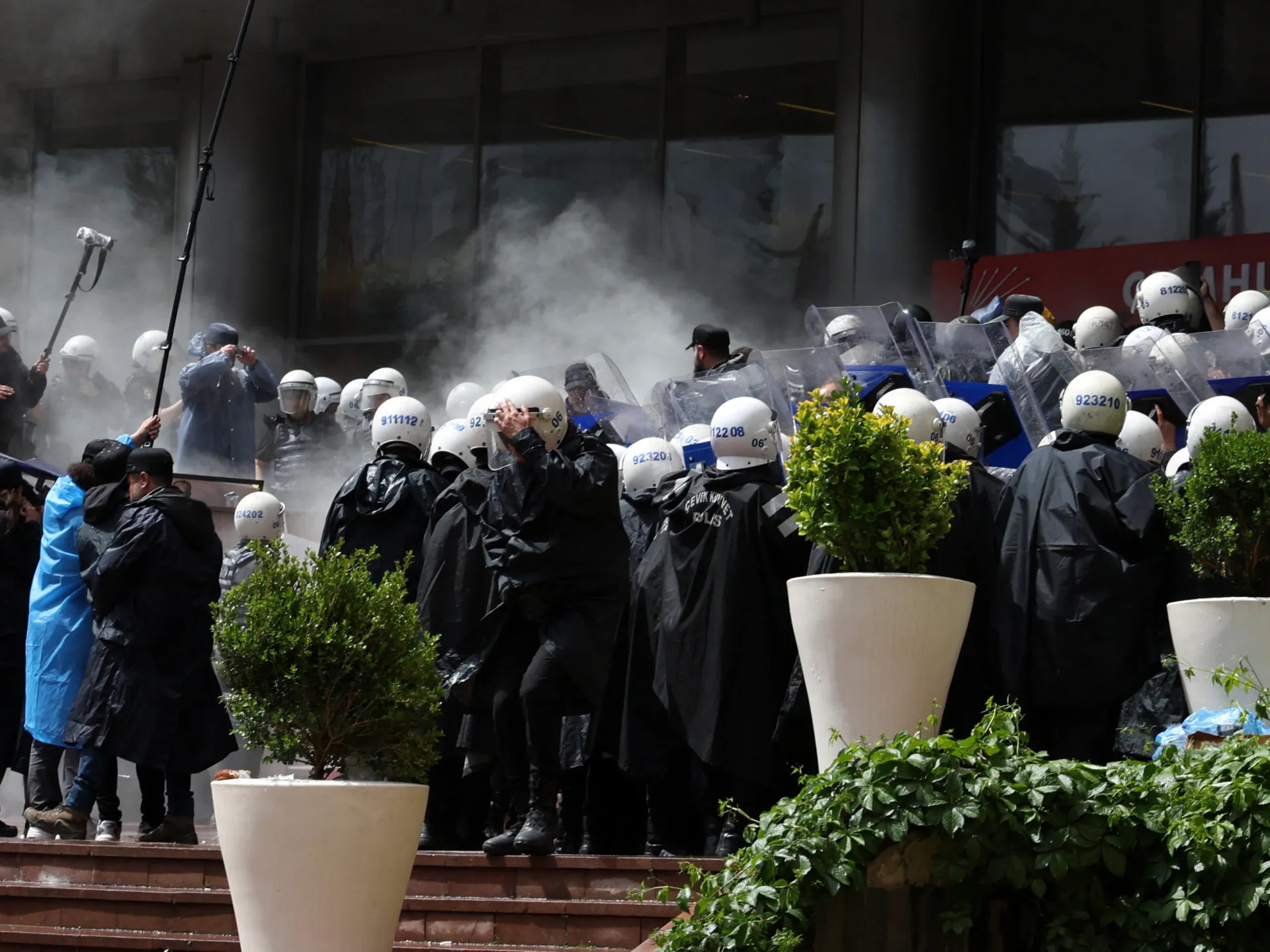
Violence erupted after Turkish police stormed the headquarters of the main opposition CHP party in Ankara following a court ruling that removed leader Ozgur Ozel and reinstated former chairman Kemal Kilicdaroglu.
Officers fired tear gas and smashed through barricades, removing Ozel from the building.
A mile from the Manhattan jail where convicted sex offender Jeffrey Epstein was found dead in 2019, an unassuming Tribeca gallery at 101 Reade Street has been transformed into a physical archive of the disgraced financier’s many cases.
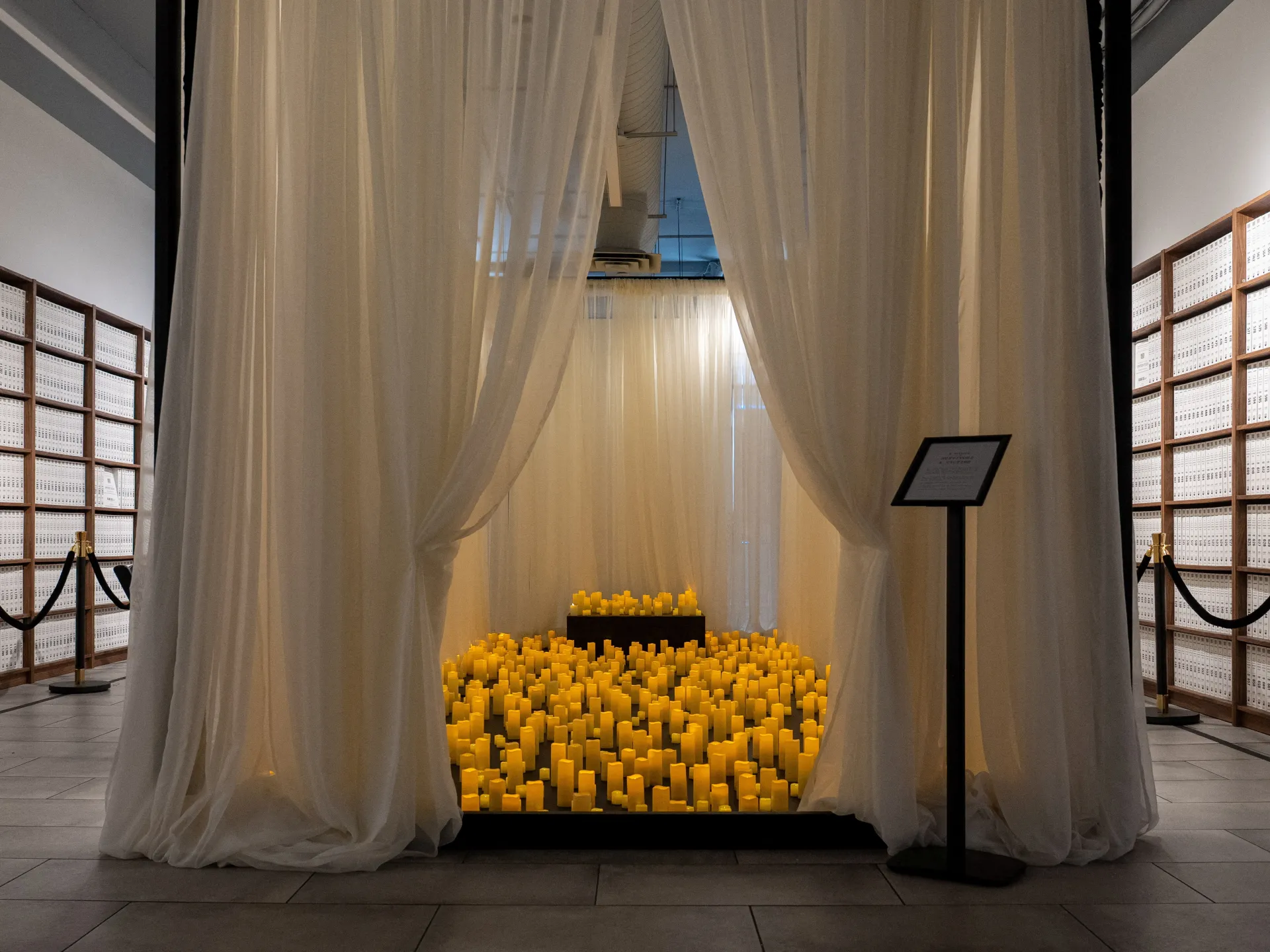
More than 3.5 million pages of law enforcement documents published by the United States Department of Justice have been printed, bound and stacked across 3,437 volumes to line the walls of a room from floor to ceiling.
The exhibition, titled “The Donald J Trump and Jeffrey Epstein Memorial Reading Room”, was organised by the Institute for Primary Facts, a nonprofit that says it focuses on transparency and anti-corruption initiatives.
Epstein was arrested on sex trafficking charges in July 2017 before hanging himself in his New York jail cell a month later, denying victims a chance at justice. The “reading room” is an attempt to shed light on the many cases connected to Epstein that never went to trial.
The shelves hold documents released under the Epstein Files Transparency Act, alongside timelines, handwritten visitor notes, and a memorial space dedicated to survivors and victims.
Since opening two weeks ago, the gallery has drawn a steady stream of visitors, including survivors of a string of offences linked to Epstein.
Lara Blume McGee, who was only 17 when she was abused by Epstein, visited the reading room last week.
“I found something brutally human in the Trump-Epstein reading room,” Blume McGee told Al Jazeera. “Proof that our lives mattered enough to be gathered, cataloged, and finally seen.”
She described entering the room as walking into a “paper city”, with three and a half million pages on display, a sight that hit her “like a physical blow”. What she remembers most vividly is the silence.
“The silence was thick with memory,” she said. “Row after row, each bound volume a life, a name, a day that should never have happened if the US government had acted when he was reported to the FBI in 1996.”
The overwhelming scale of the archive is intentional. Organisers say the physicality of the documents forces visitors to confront not only the extent of Epstein’s crimes, but also the number of lives affected by them.
David Garrett, a co-founder of the exhibition, said the project was built around survivors from the outset.
“We are centred around the victims and survivors more than anything,” Garrett said. “The biggest thing is transparency and accountability.”
Garrett described the exhibition as part of a broader effort to create “real-life pop-up museums” aimed at generating public pressure around corruption and institutional failure.
“Our goal is how can we drive public outrage in order to put pressure on Congress and the Department of Justice to get full and real transparency and hopefully eventually accountability,” he said.
The process of assembling the archive was itself chaotic. Garrett said organisers downloaded the files from the Department of Justice in March, believing they had received properly redacted documents. Only after printing the collection did they discover that many survivors’ names remained visible in the files.
“What seems to have happened is the Department of Justice modified its search function instead of actually redacting the names,” Garrett said. “The names of survivors were left unredacted while the names of witnesses and co-conspirators were hidden. They brazenly broke the law.”
Finding a venue also proved difficult. Garrett said several locations backed out after initially agreeing to host the exhibit, fearing controversy or retaliation. The Tribeca gallery ultimately became the fifth venue that organisers approached.
Despite these challenges, survivors and advocates quickly embraced the project.
On Tuesday, the gallery became the site of a 24-hour livestream reading of the files led by survivors, advocates and supporters.
Dani Bensky, an Epstein survivor, opened the broadcast Monday afternoon, standing at a podium inside the dimly lit gallery with one of the thick white volumes in her hands.
Her reading marked the beginning of a continuous public recitation of excerpts from the files – an attempt, organisers said, to ensure the documents are not quietly buried again.
Throughout the gallery, visitors have left flowers, handwritten notes, and messages of grief and anger.
Garrett recalled one woman who spent hours walking silently through the space before telling organisers she was herself a survivor of sexual abuse.
“She said this helped her realise that she felt seen,” Garrett said. “That meant a lot to us.”
For Blume McGee, that feeling of visibility carries both relief and frustration.
“For years we were told to be quiet, to accept settlements, to move on,” she told Al Jazeera. “Seeing our truths preserved in a public archive felt like a long-overdue acknowledgment of our pain, our abuse and our reality.”
But she warned that documentation alone is not justice.
“This exhibition gives real hope because the record is now undeniable,” Blume McGee said. “Finally, there is action: documentation, visibility, proof. But those same files map systemic failure — how many doors stayed shut, how many people escaped scrutiny.”
“Visibility without consequence only prolongs the wound,” she added. “We need both: the files on the table and the government to act — investigate, prosecute, reform — so that being ‘finally seen’ becomes finally safe.”
May 24 (UPI) — The gunman who opened fire at the White House this weekend before being fatally shot by Secret Service officers has been identified as Nasire Best, unnamed sources confirmed to multiple media outlets.
The 21-year-old had previous encounters with the Secret Service and had previously posted threatening statements online, the sources told CBS News, NBC News and CNN. The sources said Best had never acted violently or brandished a weapon prior to Saturday evening, when police said he approached a checkpoint at the White House, pulled a firearm from his bag and opened fire.
Officers returned fire, striking Best, who was transported to a hospital where he was declared dead, Anthony Guglielmi, chief of communications for the Secret Service, said in the statement.
A bystander was also injured in the shooting and was in critical condition.
“It remains unclear whether the bystander was struck by the suspect’s initial gunfire or during the subsequent exchange of gunfire,” a Secret Service representative told CNN.
President Donald Trump, who was inside the residence at at the White House at the time of the shooting, was unharmed. In a post on Truth Social just after midnight Sunday, Trump thanked the Secret Service for their actions during the shooting.
“Thank you to our great Secret Service and Law Enforcement for the swift and professional action taken this evening against a gunman near the White House, who had a violent history and possible obsession with our Country’s most cherished structure,” Trump wrote.
Sources told CNN that Best had been detained in June 2025 and committed to the Psychiatric Institute of Washington for evaluation after he blocked an entry lane at the White House and proclaimed he was God. A month later, the Secret Service arrested him after he allegedly tried to enter a White House driveway. A judge told him to keep away from the White House.
Investigators at the time said they found that he had made statements online saying he wanted to hurt Trump and that he was the real Osama bin Laden, the mastermind behind the Sept. 1, 2001, terror attacks.
Trump also took the opportunity in his Truth Social post to renew his stance that the new ballroom he’s constructing would serve as added security at the White House.
“This event is one month removed from the White House Correspondent’Dinner shooting, and goes to show how important it is, for all future Presidents, to get, what will be, the most safe and secure space of its kind ever built in Washington, D.C. The National Security of our Country demands it!”
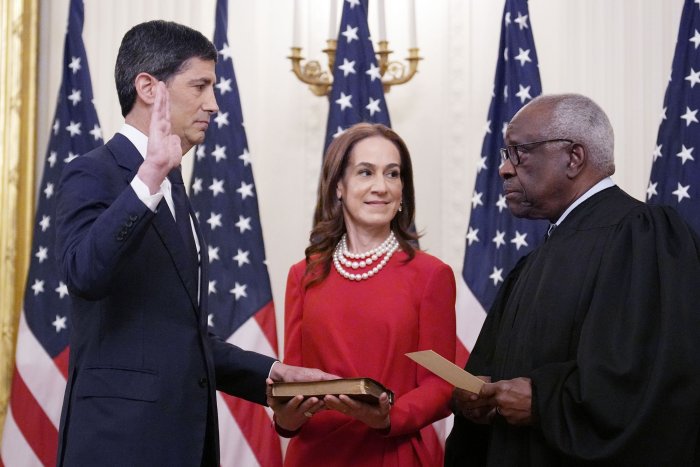
Kevin Warsh takes the oath of office as he is sworn-in as the new chairman of the Federal Reserve by Supreme Court Associate Justice Clarence Thomas in the East Room of the White House on Friday. Photo by Yuri Gripas/UPI | License Photo
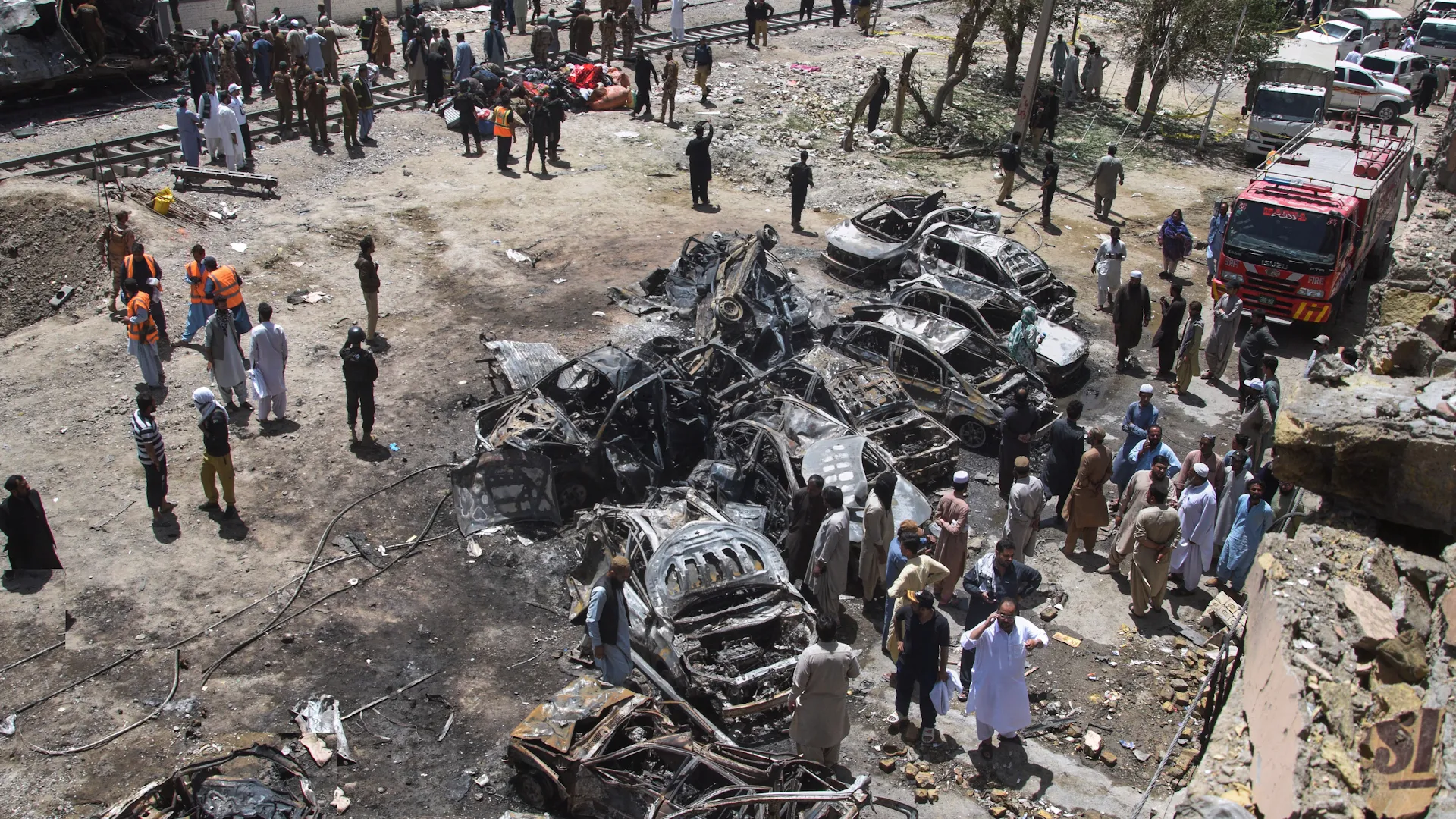
A Baloch separatist group has claimed responsibility for an attack on a train carrying soldiers in Quetta, Pakistan. The suicide car bombing killed at least 24 people and injured dozens more, including women and children.
Mohammad Abu Mallouh, Alaa Zaqlan and their child, Osama, killed in the attack on the Nuseirat refugee camp, medics say.
Published On 24 May 202624 May 2026
An Israeli air raid on a home in Gaza has killed three members of a family, including a six-month-old child, medical workers said, as Israel continues to violate the “ceasefire” brokered by the United States last year.
Al-Aqsa Martyrs Hospital in Deir el-Balah in central Gaza said it received the bodies of a couple and their young child in the early hours of Sunday morning.
Recommended Stories
list of 3 itemsend of list
Medics identified those killed in the attack on an apartment in the Nuseirat refugee camp as Mohammad Abu Mallouh, his wife Alaa Zaqlan, and their child Osama, the Reuters news agency reported.
Medical workers said about 10 people were wounded in the attack.
There was no immediate comment from the Israeli military.
Since the “ceasefire” came into effect in October, Israel has continued with its near-daily attacks across the besieged Palestinian territory, which Gaza health authorities say have killed nearly 900 people.
Reporting from Gaza City, Al Jazeera’s Hani Mahmoud said Israeli bombing began on Sunday as Palestinians were fleeing following forced displacement orders. He said many people ran while carrying personal belongings, including mattresses.
Separately, Israeli forces continued demolishing homes and civilian infrastructure in eastern Gaza on Sunday behind Israel’s so-called “Yellow Line”, referring to Israeli-designated military zones and buffer areas inside the enclave, he said.
Israeli jets also carried out air raids on Deir el-Balah in central Gaza on Sunday, causing extensive damage near a hospital, Mahmoud said.
Earlier this month, the Gaza Government Media Office said it had documented at least 2,400 Israeli violations in the first six months of the ceasefire, including more than 1,100 air raids and at least 921 shootings targeting civilians.
More than 72,000 Palestinians have been killed since Israel launched its genocidal war on Gaza in October 2023. Israeli officials acknowledged the data was broadly accurate in January, after casting doubt on their credibility for two years.
On Saturday, five police officers and a 13-year-old boy were killed in an Israeli attack.
Talks between Israel and Hamas aimed at reaching a permanent end to the war have stalled, with both sides accusing each other of violating the ceasefire. Israel says Hamas’s refusal to disarm is a key obstacle, while the Palestinian group says negotiations have been paused due to continued violations and restrictions on aid entering Gaza.
Earlier this week, Human Rights Watch said the territory’s humanitarian infrastructure remained in peril, more than six months after the start of the ceasefire.
Known for its crystal-clear waters and white sandy beaches, Cape Verde is set to steal the spotlight for very different reasons this summer.
The archipelago of 10 islands in the Atlantic Ocean is making its football World Cup debut in North America, arriving at the global showpiece as one of 10 African representatives.
Recommended Stories
list of 4 itemsend of list
Cape Verde’s fairy-tale qualification coincided with the its 50th anniversary of independence from Portugal, and the ‘Blue Sharks’ have the chance to give their fans even more to celebrate as they go toe-to-toe with the best teams in the world.
Here’s everything you need to know about Cape Verde in Al Jazeera’s World Cup minnows series.
Cape Verde’s 600,000 inhabitants were given the day off to support their team on the final day of the CAF qualifiers for the World Cup [File: Cristiano Barbosa/AP]
How did Cape Verde qualify for the 2026 World Cup?
Cape Verde – or Cabo Verde as they are known in Portuguese – qualified directly after an excellent performance in the first round of CAF qualifying.
They topped a difficult group, alongside Cameroon and Angola, winning eight of their 10 games to punch their first historic ticket to a World Cup.
A 100% record in five home games, and not conceding a goal was pivotal to their progress.
On the final day of qualifiers, Cape Verde started two points ahead of Cameroon, whose eight previous World Cup final appearances are the most by any African country. But at the full-time whistle, Cape Verde finished Group D on 23 points, four ahead of Cameroon, who ultimately crashed out in the second round.
With around 600,000 inhabitants and only 4,000 square kilometres of land, Cape Verde is the third-smallest country to qualify for the World Cup after Curacao, which is also making its debut this year, and Iceland, which competed in 2018.
Has Cape Verde played in a major tournament?
Yes. Cape Verde have played at four Africa Cup of Nations, the continent’s showpiece footballing event. Their best result was reaching the quarter-finals in their inaugural campaign in 2013 and at their last appearance in 2023.
They also came close to qualifying for the 2022 World Cup in Qatar, but were ultimately eliminated in the last match of the group phase.
What is Cape Verde’s FIFA ranking?
Cape Verde is ranked 69th, the second-lowest-ranked team among the 10 African representatives at the World Cup this year.
Who will Cape Verde face at the 2026 World Cup?
Cape Verde are in Group H with Spain, the 2010 champions and frontrunners for the 2026 title, former champions Uruguay and Saudi Arabia, who handed Argentina a shock defeat in the 2022 World Cup. All their group matches will be played in the US.
June 15: Spain vs Cape Verde – Atlanta Stadium
June 21: Uruguay vs Cape Verde – Miami Stadium
June 26: Cape Verde vs Saudi Arabia – Houston Stadium
Former NHL player Wayne Gretzky picks Cape Verde in the draw for the FIFA World Cup [File: Dan Mullan/Pool Photo via AP]
Who is Cape Verde’s head coach?
Bubista – whose full name is Pedro Leitao Brito – is a former Cape Verde international, who has been in charge of the national team for six-and-a-half years.
He played 21 times for his country in the early 2000s and enjoyed the limelight as captain before transitioning into coaching two years after his retirement. Twice serving as assistant manager, Bubista was named the Cape Verde head coach in early 2020.
Under his guidance, Cape Verde played at back-to-back AFCONs, reaching the knockouts both times, before pulling off the unthinkable by qualifying for the 2026 World Cup. The achievement also earned him the accolade of the CAF Coach of the Year 2025.
Bubista – whose nickname is derived from the Creole name of his birthplace, Boa Vista – has instilled an identity in the team that makes them hard to beat.
Bubista played for Cape Verde in the 1990s and early 2000s before taking over as coach in 2020 (AP Photo/Themba Hadebe) (AP)
Who are Cape Verde’s key players?
Forward Dailon Livramento was Cape Verde’s highest scorer during qualification with four goals, while defender Diney, midfielder Jamiro Monteiro, and winger Willy Semedo bagged two apiece.
Captain Ryan Mendes, goalkeeper Vozinha and defender Roberto Lopes – also part of the team that fought for 2022 World Cup qualification – are the other key players.
Cape Verde has spread the national team net wide with starters based in several countries, including Portugal, the Netherlands, and the US.
How is Cape Verde preparing for the World Cup?
Cape Verde faced Chile and Finland in friendlies in New Zealand in March, as part of the FIFA Series, the sponsored biennial tournaments for mainly lower-ranked and lesser-financed nations.
They lost 4-2 to Chile but won 4-2 on penalties against Finland after being tied at 1-1.
What can we expect from Cape Verde?
While Cape Verde may be considered minnows at the World Cup, writing them off would be a mistake. The ‘Blue Sharks’ have built a reputation as potential giant-killers, and their impressive run through the African qualifiers only adds to their intrigue.
The spirit can be best described in coach Bubista’s words: “We’re a small country, but it’s only small on the map… a small country with a big heart”.
Fans celebrate after Cape Verde defeated Eswatini in qualifying to clinch their World Cup place [File: Cristiano Barbosa/AP]
You can follow the action on Al Jazeera’s dedicated FIFA World Cup 2026 page with all the latest news, match build-up and live text commentary, and keep up to date with group standings and real-time match results and schedules.
Fans arrested in Morocco in the aftermath of the AFCON 2025 final returned on a humanitarian pardon by Moroccan king.
Published On 24 May 202624 May 2026
A group of Senegalese football supporters jailed following their country’s chaotic, violence-plagued Africa Cup of Nations (AFCON) final in Morocco in January have returned home after being pardoned by the Moroccan king.
King Mohammed VI granted the fans a pardon “on humanitarian grounds” on the occasion of the Muslim holiday of Eid al-Adha, Morocco’s royal court said on Saturday.
Senegalese President Bassirou Diomaye Faye welcomed the jubilant supporters on their arrival at the airport outside Dakar on Sunday.
“We’re very happy to have them back on Senegalese soil,” Faye, who donned a tracksuit for the occasion, told journalists.
He thanked Moroccan authorities for the pardon but, in what Morocco will likely perceive as a new dig, hailed the national team as “two-time African champions”, even though the January final is the subject of an ongoing dispute before the Court of Arbitration for Sport in Switzerland.
Senegal won the tumultuous continental final against Morocco in Rabat on January 18, but the match was later awarded on appeal to the hosts.
With the match tied at 0-0, after a penalty awarded to Morocco in stoppage time of the second half – just after a Senegal goal was disallowed – Senegalese fans tried to storm the pitch and hurled projectiles.
The Senegalese team left the pitch in protest against the penalty decision, halting play for nearly 20 minutes.
When they returned, they gleefully watched Morocco miss their penalty and went on to score a 94th-minute winner.
In February, Moroccan courts sentenced 18 Senegalese supporters held in Morocco since the final to prison terms ranging from three months to a year for hooliganism.
Three were released from jail in mid-April after completing their three-month sentences.
Following that release, another 15 Senegalese fans remained imprisoned after receiving sentences ranging from six months to one year.
The royal pardon applied to those 15.
Mending ties
The episode has strained relations between Morocco and Senegal, countries with a history of friendly ties.
But Morocco’s royal court said that in view “of the age-old fraternal ties” between the two countries “and on the occasion of the advent of Eid al-Adha”, which will be celebrated in the country on Wednesday, the king had “granted, on humanitarian grounds, his royal pardon to the Senegalese supporters”.
The Senegalese president had earlier welcomed the decision in a post on X.
“Our compatriots … are free. They will soon be reunited with their loved ones,” Faye wrote.
He thanked King Mohammed VI for the decision “imbued with clemency and humanity”.
According to the Moroccan public prosecutor’s office, the charges against the 18 football supporters were based mainly on footage from cameras at Rabat’s Moulay Abdellah Stadium, and on medical certificates for injured law enforcement officers and stewards.
Material damage from the violence was estimated at more than 370,000 euros (about $430,000).
At the end of January, the Confederation of African Football (CAF) imposed disciplinary sanctions on both national federations for unsporting conduct and violations of the principles of fair play.
After the CAF decided on March 17 to award the title to Morocco by administrative ruling, Senegal appealed to the Court of Arbitration for Sport.
The two countries have a history of cooperation in sectors including tourism and energy, and share strong religious ties.
Senegalese make up the largest foreign community living in Morocco.
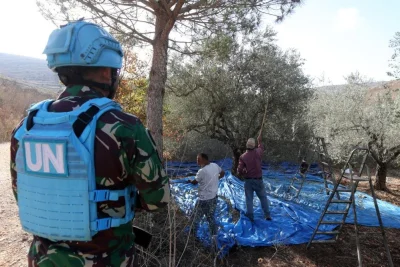
A United Nations Interim Force in Lebanon soldier stands guard as farmers harvest olives in the village of Odaisseh, located close to the Blue Line border with Israel, in southern Lebanon, in October. File Photo by Wael Hamzeh/EPA
BEIRUT, Lebanon, May 22 (UPI) — Lebanon’s agriculture sector emerged as another victim of Israel’s widespread attacks across southern Lebanon, damaging vast areas of farmland, displacing the majority of the region’s farmers and threatening the country’s food security, economic resilience and cultural identity.
The sector, which is key to Lebanon’s economy and plays a vital role in sustaining rural communities and preserving cultural traditions, had not yet recovered from the impacts of the 2023-2024 war between Hezbollah and Israel when it was again hit by resumed hostilities in March.
The fresh escalation severely disrupted farming activities, with an estimated 22.5% of agricultural areas (56,264 hectares) damaged, including farms and greenhouses, and nearly 80% of farmers (more than 6,593) displaced and unable to access their land due to Israeli military activities, according to an updated report released by the Lebanese Ministry of Agriculture on May 5.
The report indicated that the most affected crops in the south are bananas (95%), citrus trees (97%), olives (91%) and small-scale farming, which accounts for 80% of Lebanon’s total agricultural area.
Moreover, more than 1.8 million heads of livestock (cows, goats, sheep and poultry), 29,121 beehives, and 2,030 tons of fish have been lost.
Nizar Hani, the minister of agriculture, said the sector suffered its biggest losses compared with previous wars, adding that agricultural losses have doubled since the March 2 escalation to about $1.5 billion, out of an estimated total war damage that exceeds $20 billion.
Hani said Israel is establishing a buffer zone in southern Lebanon “empty of any life, where no one can pass through, hide or live,” through destruction of entire villages, properties, orchards and olive trees.
He said southern Lebanon produces 70% of the country’s citrus fruits and 90% of its bananas, supplying the local market and exporting to neighboring countries such as Syria, Jordan and Iraq.
And he told UPI that the heavy agricultural losses, inflation, and resulting job losses had a direct impact on food security, with 24% of people living in Lebanon — including Syrian displaced persons, Palestinian refugees and others — requiring immediate assistance.
According to an analysis by the Agriculture Ministry, in collaboration with the U.N.’s Food and Agriculture Organization and the World Food Programme, 1.24 million people were expected to face food insecurity between April and August 2026, marking a significant increase from the November 2025-March 2026 period, when an estimated 874,000 people experienced acute food insecurity.
Nora Ourabah Haddad, the Food and Agriculture Organization representative in Lebanon, warned that damage to irrigation systems, productive infrastructure, livestock systems and agricultural supply chains is further weakening local production capacity.
Haddad referred to substantial declines in the production of milk, meat, eggs and honey after 1,600 farms were affected and more than 1.8 million animals killed during the war.
She said the scale of the damage is “extremely serious” and extends far beyond the affected agricultural land that included some of the country’s most productive farming areas.
“What is at stake today is Lebanon’s capacity to sustain local food production, protect rural livelihoods and preserve the resilience of its agrifood systems at a time when the country is already heavily dependent on food imports and facing severe economic pressures,” she told UPI in an interview.
Haddad said food prices rose by 8.4% in the first quarter of 2026, while transport costs increased by 21%, adding that higher fuel and logistics costs expected to continue to drive up prices.
This time, farmers fear prolonged displacement after being forced to leave their land and homes under Israeli evacuation orders in early March — as many were preparing for the planting season.
Hussein Salameh, head of an agriculture cooperative in the Bint Jbeil-Marjeyoun area, recalled how they fled without having time to take any belongings, move their cows away or release them.
Salameh, an inhabitant of the village of Aitaroun, said the displaced farmers mostly feel “frustrated and abandoned” after exhausting their savings on working their land and repairing their damaged homes when they first returned after the Nov. 27, 2024, cease-fire.
He noted that Hezbollah did not provide them then with any financial assistance, saying it no longer had the funds to do so.
Unlike other displaced employees or skilled workers who could still find work in their areas of refuge, they have lost their only source of livelihood away from their land, he said.
“This is a big tragedy. … Farmers have only their land to live on and survive,” he told UPI.
The fear is that when farmers remain separated from their land, livestock and livelihoods for extended periods, many gradually lose the ability to sustain themselves and may eventually abandon agriculture altogether, Haddad warned.
Helping farmers protect what remains of their livelihoods by providing emergency agricultural support and restoring the country’s agricultural capacity before losses become “irreversible” were emerging priorities for the Food and Agriculture Organization, she said.
However, soil contamination presents another major concern after Lebanon and international rights groups accused Israel of unlawfully using white phosphorus and the herbicide glyphosate during its attacks on southern Lebanon, destroying crops and damaging beehives and livestock.
“This is an international environmental crime,” Hani said, adding that Israel “sprayed everything with glyphosate.”
The destruction and uprooting of old olive trees — some of which have been cultivated and preserved across generations, and in some cases for centuries — was equally painful.
“It is the loss of a living heritage … olive trees are deeply connected to family history, local traditions, food culture and rural economies,” Haddad said, adding that their destruction carries not only economic consequences, but also profound social and cultural impacts on farming communities.
Restoration is possible, but it requires time as newly planted trees require many years before becoming fully productive.
“Some of these ancient olive trees may also contain unique genetic heritage that has adapted to local environmental conditions over centuries, making parts of this loss potentially irreversible from a biodiversity perspective,” Haddad said.
Even if hostilities were to stop today, recovery in southern Lebanon’s agriculture sector would not be immediate and would require extensive international funding and support.
Farmers would also need time to recover from the “deep psychological impact” of being uprooted from their land, after their “cultural and environmental values” were destroyed, according to Hani.
To Salameh, Israel was not just targeting Hezbollah but carrying out what he described as “collective punishment” against everyone living in the south, including those opposed to the Iran-backed group.
“Would such collective punishment ensure security for Israel? Would that bring peace?” he asked.
Brunson scores 30 points as the Knicks beat the Cavs 121-108 to take a 3-0 lead in the Eastern Conference finals.
Published On 24 May 202624 May 2026
The New York Knicks are on the brink of their first NBA Finals since 1999 after a 121-108 victory at Cleveland stretched their playoff win streak to 10 games.
Jalen Brunson scored a game-high 30 points, OG Anunoby added 21 and Mikal Bridges contributed 22 on 11-of-15 shooting as New York pushed the Cavaliers to the edge of elimination on Saturday.
“I’m at a loss for words,” Brunson said. “I thought we fought, most importantly.”
The Knicks seized a commanding 3-0 lead in the best-of-seven Eastern Conference finals and could complete a sweep in game four on Monday in Cleveland.
No team in NBA history has recovered from a 3-0 deficit to win a playoff series.
“The series isn’t over,” Anunoby said. “Just keep our foot on their necks and just try to win the game.”
Brunson said the Knicks must continue to concentrate. “Just focus on one possession at a time.”
“The way we’ve been having that mindset these past couple [of] weeks, we have to continue it, if not actually better.”
The Knicks last reached the NBA Finals 27 years ago when they lost to San Antonio. They have not won the NBA championship since 1973.
New York’s Karl-Anthony Towns had 13 points, eight rebounds, seven assists and three steals while Josh Hart added 12 points, nine rebounds, five assists and four steals for a Knicks team that has not been beaten in a month.
Brunson said, “Our mindset hasn’t changed.
“We’re trying to get better every single day. We’re trying to learn from winning.
“There’s a lot of things we can get better at. There’s a lot of things we can control, a lot of mental errors that we need to clean up, but we’re always just looking for ways to try and get better.”
Evan Mobley led Cleveland with 24 points, while Donovan Mitchell added 23 and James Harden scored 19 points.
The Cavaliers, who squandered a 22-point lead to lose the series opener, never led as New York seized command early and dominated.
“I guess you could say momentum carried over [from game one],” Anunoby said.
“We try to play the right way every game, but maybe that momentum carried over a little bit.”
New York started the game 10-of-13 from the floor to seize a 29-19 lead only 8:29 into the contest, Towns delivering 11 points in the run on the way to a 37-27 lead after the first quarter.
Cleveland trimmed New York’s half-time edge to 60-54, but the Cavs committed six turnovers in the first six minutes of the third quarter.
The Knicks were ahead 91-82 entering the fourth quarter and stretched it to 110-93 in the closing minutes before completing their fifth triumph in a row.
“It’s just executing the game plan on both sides of the floor, playing the right way, moving the ball, then getting stops on defence,” Anunoby said of New York’s secret to success.
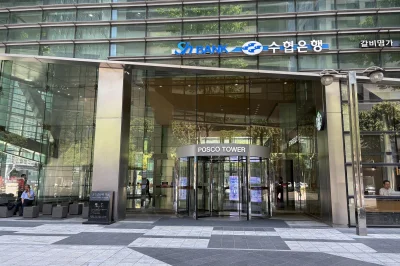
The entrance of POSCO Tower Yeoksam in Seoul, photographed May 22, 2026. Photo by Hyojoon Jeon / UPI
May 22 (Asia Today) — POSCO International said Friday it plans to enter the U.S. rare earth separation, refining and permanent magnet business through a joint investment with ReElement Technologies.
The South Korean trading company said it signed an agreement with the U.S. firm to pursue a joint venture for rare earth separation and refining production in the United States.
The signing ceremony was held in Washington, D.C., with POSCO International CEO Lee Kye-in, ReElement Technologies CEO Mark Jensen, U.S. government officials and South Korean Embassy officials in attendance.
The companies plan to jointly invest $200 million to build a rare earth separation and refining plant with annual capacity of 6,000 tons. They also plan to develop an integrated production complex that can later produce permanent magnets.
Rare earth materials are used in electric vehicle motors, robots and artificial intelligence data centers. Heavy rare earths such as dysprosium and terbium are considered essential for high-performance permanent magnets.
POSCO International will lead management of the joint venture, while ReElement Technologies will provide core separation and refining technology.
The venture plans to produce neodymium-praseodymium oxide, dysprosium oxide and terbium oxide. It will first build annual production capacity of 3,000 tons before expanding to 6,000 tons.
Trial production is scheduled for the fourth quarter of 2027, with mass production targeted for 2028.
POSCO International said the project is part of its broader plan to build an integrated value chain from raw material sourcing to separation and refining, permanent magnets and electric vehicle motor cores.
“This joint venture is more than the establishment of a refining plant. It is the starting point for building a critical minerals value chain in the United States,” Lee said.
Rawalpindi, Pakistan – On a cold January morning, Anum Shakoor gallops across a field, wrapped in a black shawl that billows behind her as she charges forward, a 1.8-metre (6ft) lance gripped tightly in her hand.
The 30-year-old has already claimed her first peg. The second lies close ahead.
Recommended Stories
list of 4 itemsend of list
Her horse tears across the dry earth, kicking up a cloud of dust that hangs in the air as she charges forward. A few metres out, Shakoor lowers the lance, steadying her aim and bracing for impact.
She misses by 2.5cm (1 inch).
A collective gasp ripples through the crowded bleachers. Many onlookers shake their heads. Some look away.
Shakoor exhales and slows her horse to a walk. Around her are the desolate, windswept fields on the outskirts of Rawalpindi in northern Punjab province.
And there are men, most of them wearing turbans. Men with “dhol” (drums) hanging from their necks. And men whose fathers had ridden before them and their fathers before their fathers. The men who take pride in the ancient sport, some of whom perhaps are not ready to accept that women are now participating in an overwhelmingly male “neza baazi”, or tent pegging, a high-stakes sport in which horse riders gallop across a field to pierce a buried wooden target.
Local political and feudal elites seen wearing traditional turbans at a tent pegging event near Rawalpindi [Mutee Ur Rehman/Al Jazeera]
The field is lined with thousands of male spectators, gathered to watch the teams of riders charging one after the other at a small wooden peg buried in the ground, trying to pierce it cleanly and carry it forward on their lance.
The event is known as a “mela” in Punjabi, a carnival-like competition typically held on the outskirts of the garrison city.
The beat of drums intertwined with the sharp bursts of the shehnai (oboe), traditionally played in weddings, pierces the cold winter air. Salespeople call out to the crowds from bustling stalls selling cardamom tea and varieties of fried fritters.
Before the competition starts, riders mount their adorned horses, some of which are dressed in embroidered velvet gowns. Others have braided manes or brass bells ringing softly at their necks.
One of the 74 teams competing in this year’s mela is Shakoor’s Bint-e-Zahra Club, Pakistan’s first female-only tent-pegging club. It has three other riders: Eshal Ibrahim and Noor un Nisa Malik, both 16, and Sehrish Awan, a 32-year-old mother of two competing for the first time in a mela.
Shakoor says the club was formed in 2025 after she reached a “frustrating realisation” that female riders practised and played only in mixed clubs. “We wanted to give women riders a stage for training so they can form a community,” she says.
The women are an unusual sight at a competition that has almost entirely male riding teams, mainly male fans and even male musicians.
So when Bint-e-Zahra’s members prepare to make their run, the audience is in for a rare sight. Photographers, vloggers and locals rush to film them, surrounding them from all sides.
Sehrish Awan straightens her lance at a competition organised by a US-based riding club [Mutee Ur Rehman/Al Jazeera]
Ibrahim is accompanied by her mother, who trails closely behind her, keeping a careful eye on her teenage daughter.
“I cannot even take pictures of her in the crowd,” says Fatima Adeel, who accompanies Ibrahim to every mela. “I am in charge of her. I cannot leave a teenage girl alone in a sea of men.”
Shakoor agrees.
“Any woman who wants to come in this sport should be encouraged so she can gain the respect she deserves in the sport,” she says. “Our society cannot bear a woman’s lead in any field.”
‘No concept of a player’
Several kilometres away, Ayesha Khan, 22, gallops on Sawa, the horse she has ridden since she was eight, for a practice run with her club.
She was 17 when her father encouraged her to try out for the women’s national team. A year later, she was the only woman selected for Pakistan’s under-21 mixed gender team and was sent to South Africa for a tournament to compete against a team that had four girls and one boy.
“I was hit with the realisation of how tent pegging is conditioned to appear masculine in Pakistan. But my father and brothers taught me riding when I was five. I used to be the only child riding a horse between adults,” Khan says, describing herself as “addicted” to riding.
Ayesha Khan picks up the first peg at the 2022 Grand Prix Tent Pegging Championship in Jordan [File: Courtesy of Ayesha Khan]
Khan joined the women’s team in 2022 and quickly worked her way up to becoming its captain. That same year, she took the women’s team to Jordan, where it competed against 13 countries.
“We came third,” Khan recalls proudly. “Yet that was the only trip that the Pakistani women’s team competed in internationally. Before that trip, never. After that, never again.”
In 2024, the International Tent Pegging Federation organised an open international competition in Jordan. Pakistan sent a men-only team although the event was open to women. It was simply assumed that only men would want to go.
“In Pakistan, we don’t have the concept of a player,” Khan tells Al Jazeera. “We have the concept of male and female. Unless there is a women-only event, our federation exclusively sends male teams.”
But Khan persisted. At 20, she became the first Pakistani woman to compete against and beat 70 male riders at a mela. Today, she captains Pakistan’s only all-women tent pegging team.
How women entered the sport
The event near Rawalpindi that Shakoor attended was organised by Samiullah Barsa, a 27-year-old United States national of Pakistani origin, as part of his wedding celebrations.
“No wedding is complete without neza baazi,” says Barsa, who is dressed in a blazing red waistcoat and cowboy boots.
His family emigrated in the 1980s from the Punjab city of Gujrat to the US state of Ohio, where they own a stable and host annual melas. Last year, their mela drew more than 2,000 visitors, Barsa says.
Barsa recalls the first time he saw women compete in tent pegging. In 2015, he attended a mela at Kot Fateh Khan in Attock district, an hour from the capital, Islamabad, and the hometown of Malik Ata, fondly remembered as “Baba-e neza baazi” (the father of tent pegging).
Ata was a politician who came from an influential feudal family in Kot Fateh Khan. He was also a legendary equestrian who organised grand melas and invited hundreds of teams from across Pakistan to compete in various equestrian sports, including neza baazi.
At the first such grand mela, Ata invited the Australian women’s tent-pegging team, setting the stage for Pakistani women to embrace the sport.
In 2021, the Equestrian Federation of Pakistan, established by Ata, sponsored six girls to train under a South African coach. Khan was among those who made the journey to South Africa. She credits Ata for laying the roots of female participation in Pakistani tent pegging.
A team of women at a practice session in Rawalpindi, Pakistan [Mutee Ur Rehman/Al Jazeera]
Barsa says Ata’s contribution to the sport cannot be denied and it was time for women to have their own teams.
“Everywhere along the world, women and men have separate competition. For instance, in football or in cricket, have you ever seen women competing against men?” he asks. “When female teams lose against male teams, they lose hope and don’t come forward.”
But has it been easy for women to pursue the sport?
Not really, both Khan and Shakoor say.
‘I never gave up’
Shakoor says there is tremendous social pressure on girls and women to conform to roles defined by the patriarchy.
“My mother has told me multiple times that I have to get married. But since I am part of such a manly sport, she worries how will I get good proposals. My sister did so too, but I never gave up,” she says.
“My brother stood up for me and told my mother that I am excelling in my passion. He asked her to let me live my life.”
Khan is relatively young, so marriage is not a concern for now. But she has heard relatives whisper to her mother: “It is probably just a phase. She should focus on her studies.”
A vendor serves tea and savoury food at a mela near Rawalpindi [Mutee Ur Rehman/Al Jazeera]
Before going to a mela, Khan tries to find out details about the organisers. With the events often spanning two or three days, she also asks whether there are separate enclosures for women. Most riding fields have none or few restrooms or spaces for prayers for women.
In Pakistan, tent pegging is mainly played in northern Punjab, where villages and spacious fields stretch along the Ravi River, allowing the horses to freely run.
Khan says many girls have reached out to her wanting to pursue tent pegging. But most of them don’t have family support. And then there are financial and structural obstacles, which compound women’s lack of access to the sport.
“Not everyone has the privilege of owning a horse, especially women, who are already restricted by society,” Ibrahim says.
Even if you are able to own one, there is a significant cost attached to their upkeep. A horse’s monthly feed averages 30,000 to 35,000 Pakistani rupees ($107 to $125), which is nearly the monthly minimum wage in Punjab. Caretaker fees and rental charges more than double that amount.
“It’s a class thing. Everything related to horses is,” Khan says. A sporting horse costs about $1,500 in Pakistan.
Ayesha Khan holding Pakistan’s flag at the Under-21 World Tent Pegging Championship 2023 held in South Africa. She was the only girl in a team of four boys [Courtesy of Ayesha Khan]
Shakoor agrees. She says she was able to buy a horse after saving from her monthly salary as a manager for a global microfinance network. “You can’t put a price on passion,” she says, using a Punjabi saying.
She says she puts her horse before everything, even her own meals or health. “If I am sick, I do not care about my medicine,” she says. “But I lose sleep if my horse is sick.”
But the high cost of the sport also means many opportunities are lost. Shakoor says she has missed several tent-pegging events because she could not afford to haul her horse across cities for multiple days of competitions.
“Had I had any financial support through sponsorship, I would not have missed those events,” she says.
For Barsa’s event alone, Shakoor’s team spent more than 100,000 rupees ($358), which included the cost of transporting five horses, their feed and lodging.
Similarly, at the national tent pegging trials, every rider must bring their own horse, a rule that shuts out anyone who cannot afford transport, let alone own a horse.
Awan, the 32-year-old mother of two children, used to ride horses as a hobby and began visiting melas to observe how tent pegging was played. Intrigued by the sport, she reached out to Shakoor on Instagram, asking to become a member of Bint-e-Zahra.
In recent years, videos featuring female riders have gained millions of views on Instagram and TikTok, sometimes surpassing their male counterparts. Khan and Zoya Mir, the vice captain of the national tent pegging team, run joint TikTok and Instagram accounts, Equestrians In Green, where they post about their sporting victories.
Some videos show the women playing neza baazi in slow motion, picking up a peg mid-gallop or emerging from clouds of dust dressed in their club’s gear, often set to trendy music and paired with captions that challenge the stereotypical association of horse riding with men. Some of these videos have millions of views.
But the social media visibility also comes at a cost.
Khan recalls a viral video of women riders wearing turbans at a mela, causing a backlash from veteran male riders who claimed “women were polluting the sport.”
The turban, traditionally worn by men as a mark of their social position as well as a defining part of a horse rider’s identity, takes on an added significance in neza baazi. For some, women wearing it is seen as a challenge to a space long associated with male authority.
But the riders at the Rawalpindi mela push ahead despite the vitriol. They wear their turbans with pride – Awan tying hers over a red niqab that covers half of her face while Shakoor has hers pulled low, the way her mentor taught her.
Shakoor pulls up a photo from her Instagram account, which has more than 8,000 followers. Two riders wearing turbans pluck a peg side by side. The dip of their lances, the slight sway of their bodies, the moment of lift are all nearly identical.
“This is a picture of me with my mentor Chaudry Nazakat Hussain, my true inspiration,” she says. “He encouraged me to create Bint-e-Zahra.”
Last year, a mela held in Jathli in Rawalpindi’s Tehsil Gujjar Khan had 50 participating teams with nearly 200 riders – all male except Shakoor, Ibrahim and Malik. Representing the Bint-e-Zahra Club, Shakoor fought her way into the last seven in the team captains’ round, which is a recent addition in melas in which the captain of each club runs for a position.
Shakoor, the only woman among the final seven qualifying riders, did not secure a position but considers being included a feat nonetheless. “In the captains’ round, horses are assigned to riders randomly. This minimises odds of performing better. A sportsman is known for their skill, not their horse,” she says.
Of all the lessons the sport has taught her, Shakoor says the most valuable has been courage.
“This is a sport of the brave. If you don’t have the heart for it, it’s not for you,” she says. “Passion and dedication have no gender. … We don’t want to prove we are better than men. We only want equal respect.”
A
visitor walks past Hyundai heavy machinery stand at the Bauma, 29th
International Trade Fair for Construction Machinery, Building Material
Machines, Mining Machines, Construction Vehicles and Construction Equipment
trade fair in Munich. Photo by MAURITZ ANTIN / EPA
May 22 (Asia Today) — HD Construction Equipment said Friday it signed an agreement with Ukraine’s Mykolaiv regional government to expand cooperation on postwar reconstruction.
The memorandum of understanding was signed Thursday at HD Hyundai’s Global R&D Center in Pangyo, south of Seoul. Attendees included Mykolaiv Gov. Vitaliy Kim, HD Hyundai Vice Chairman Cho Young-cheul and HD Construction Equipment President Moon Jae-young.
The agreement expands cooperation that began in 2023, when HD Construction Equipment worked with the Mykolaiv regional government on construction equipment donations and training.
The two sides agreed to broaden cooperation to include equipment supply, a local training center, service and maintenance support, financing systems and energy infrastructure restoration.
HD Construction Equipment has continued reconstruction talks with Ukrainian government and local officials since the war began. In 2023, Ukraine’s first deputy infrastructure minister, Vasyl Shkurakov, visited the company’s Ulsan campus, leading to further discussions on rebuilding projects.
The company later donated five major pieces of equipment, including excavators and forklifts, to Mykolaiv. The equipment is still being used for emergency recovery and infrastructure restoration work.
HD Hyundai said it plans to pursue a groupwide reconstruction cooperation model combining its construction machinery and energy capabilities.
“We will build a cooperation system that can make a practical contribution to Ukraine’s reconstruction, going beyond simple equipment supply,” Cho said.
May 23 (UPI) — Secretary of Defense Pete Hegseth delivered a graduation speech to graduating West Point cadets Saturday, and told them they are “ready” for war.
“West Point is set apart. It’s special. It’s above politics,” Hegseth said at the U.S. Military Academy in West Point, N.Y., Saturday. “Success here is based on merit. It’s how you perform that matters.”
He accused former “foolish and feckless leaders” of pushing identity politics on the academy.
“The battlefield does not grade on a curve, and you can’t throw your pronouns at the enemy,” The Hill reported Hegseth said. “Combat is the ultimate test, and our best Americans must ace it.”
He said previous “woke and weak leaders” tried to transform the school into “woke Princeton.” Hegseth got a bachelor’s degree from Princeton.
“They embraced the [diversity, equity and inclusion] craze and tried to introduce diversity and inclusion studies,” Hegseth said. “They hired professors who advocated for anti-American ideologies right here in these halls, but no more.
“You are fit, not fat. You are disciplined, not distracted,” Hegseth told the cadets.
While he didn’t mention the war in Iran, he told the graduates that they “are stepping into the arena at a time when the stakes could not be higher.”
“We’re sending you to lead, we’re sending you to forge warriors, and we are sending you, perhaps, to war, and you are ready,” he said.
On stage were also Rep. Steve Womack, R-Ark., Rep. Pat Ryan, D-N.Y., Army Secretary Dan Driscoll and other military officials.
Last year, President Donald Trump delivered the graduation speech.
The Blue Angels perform a flyover during graduation and a commissioning ceremony at the U.S. Naval Academy in Annapolis, Md., on May 22, 2026. Photo by Bonnie Cash/UPI | License Photo
Al Jazeera’s Ali Hashem reveals details of Iran’s position on the potential peace agreement with the US. US President Donald Trump earlier revealed the two countries were close to an Memorandum of Understanding.
Health workers wearing full personal protective equipment on Saturday prepare to transport the body of person who died of Ebola for a safe burial at Sofepadi Hospital in Bunia, Ituri province, in the Democratic Republic of the Congo. Photo by EPA
May 23 (UPI) — The Centers for Disease Control and Prevention on Saturday added two more airports that travelers to the United States can be routed through for Ebola screening when entering the country.
The enhanced travel screening announced earlier this week by the CDC and the Department of Homeland Security is meant to screen people for the virus on entry to the country if they have been in the Democratic Republic of Congo, South Sudan or Uganda.
The outbreak, which started in the DRC and has spread to neighboring South Sudan and Uganda, is estimated to have 750 suspected cases and 177 suspected deaths, the World Health Organization on Friday said, adding that the “real scale of the outbreak is likely far larger.”
The CDC first issued restrictions on Thursday for Americans returning to the United States to be screened at Washington Dulles International Airport in Washington, D.C., before continuing on to their final destinations.
The two additional airports will be Hartsfield-Jackson Atlanta International Airport, which started to accept travelers at 11:59 p.m. EDT on Friday, and George W. Bush Intercontinental Airport in Houston, which will start to accept travelers on Tuesday, May 26, at 11:59 p.m. EDT, the CDC said on Saturday.
“These travelers will have their air travel re-routed to arrive at select airports,” CDC officials said in the update.
The enhanced health screening includes being escorted to a designated screening area; completing a questionnaire about their travel history and symptoms; having their temperatures checked using non-contact thermometers; and observation by CDC staff for signs of illness.
“Travelers with fever or other symptoms that could be Ebola will receive additional evaluation by a CDC public health officer,” the agency said.
“If the assessment shows that a traveler may be sick with Ebola, the traveler will be transferred to a hospital for further medical evaluation,” it said.
The WHO on Friday raised the national risk assessment during the outbreak in the DRC to “very high,” but officials said that global risk for infection with the Bundibugyo strain of the Ebola virus, for which there is no approved vaccine.
WHO Director-General Tedros Adhanom Ghebreysus during a meeting on Friday thanked the efforts of neighboring nations in Africa who have assisted during the outbreak, as well as the various regional and global health agencies that also have done so.
Although the United States last year pulled out of the WHO, the U.S. State Department said on Saturday that it has activated a dedicated Ebola Response Task Force that is led by “senior experts with direct experience managing prior Ebola outbreaks” in 2014 and 2018.
The department also has deployed a Disaster Assistance Response Team and provided $32 million in assistance to U.S. partners in the region, it said in a press release.
Kevin Warsh takes the oath of office as he is sworn-in as the new chairman of the Federal Reserve by Supreme Court Associate Justice Clarence Thomas in the East Room of the White House on Friday. Photo by Yuri Gripas/UPI | License Photo
1 of 5 | U.S. Secret Service officers investigate the scene of a shooting near the White House complex near 17th Street and Pennsylvania Avenue NW in Washington, D.C., on Saturday. Photo by Jim Lo Scalzo/EPA
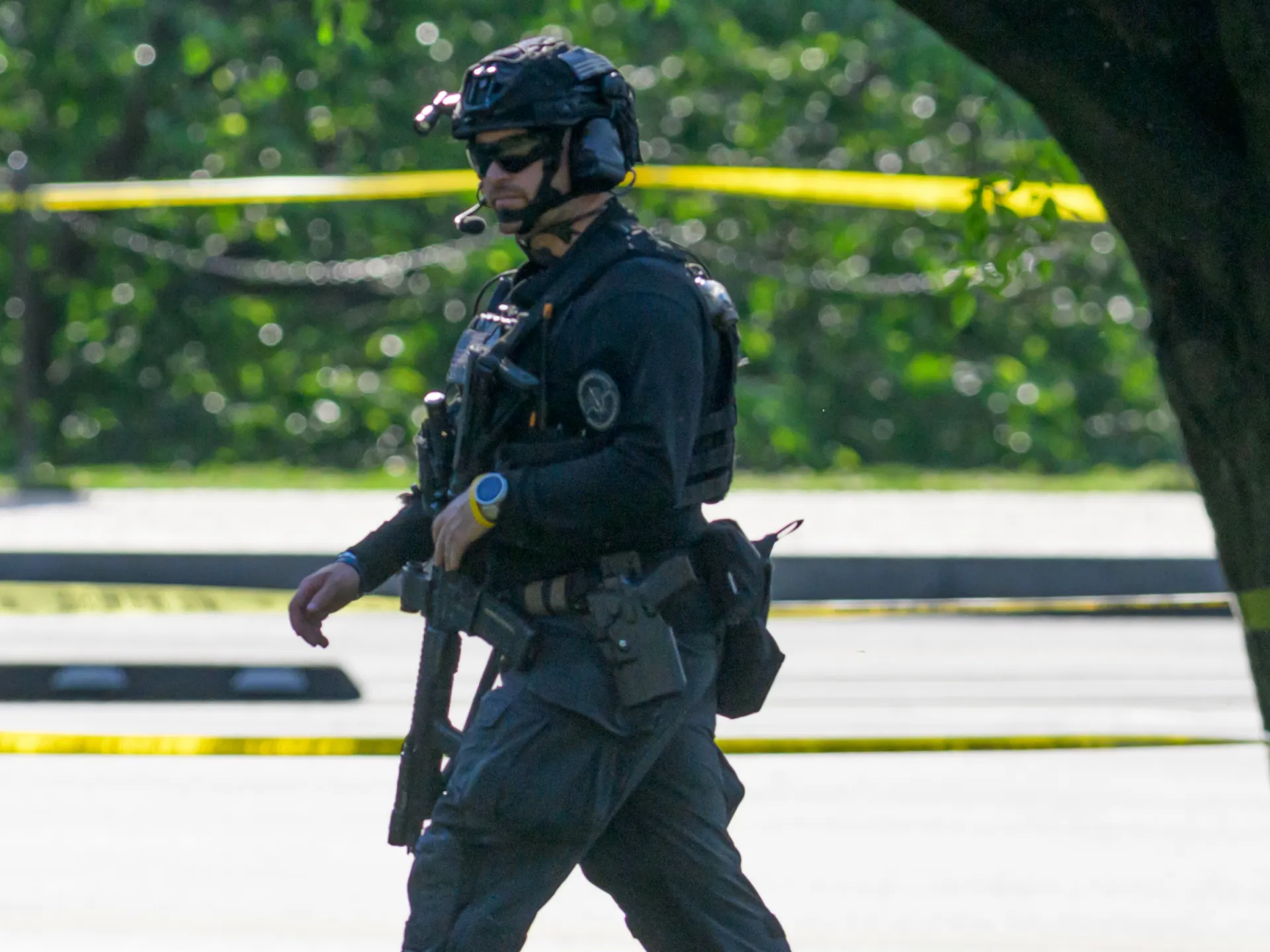
May 23 (UPI) — The White House was locked down on Saturday evening after a man approached one of its checkpoints and opened fire at the executive mansion before being shot by the Secret Service.
Around 6 p.m. a man near 17th Street and Pennsylvania Avenue approached a White House entrance, pulled a firearm from his bag and started firing at the entrance, the Secret Service said in a statement.
Members of several media organizations, some who were reporting live, reported hearing what they thought were gunshots before the Secret Service told them to seek shelter inside the James S. Brady Press Briefing Room.
“Secret Service Police returned fire, striking the suspect, who was transported to an area hospital where he was pronounced deceased,” Anthony Guglielmi, chief of communications for the Secret Service, said in the statement.
“During the shooting, one bystander was also struck by gunfire,” Guglielmi said. “No injuries were sustained by officers.”
The bystander is in serious condition, CBS News reported.
The Secret Service said that President Donald Trump, who has been working at the White House all day amid negotiations to end the Iran war, was in the White House during the shooting, “however no protectees or operations were impacted.”
Reporters on the North Lawn reported that they heard what they thought was gunfire and ducked before Secret Service agents told them to “sprint to the press briefing room” to take cover.
Both the Secret Service and FBI quickly confirmed that both agencies were investigating reports of gunfire near the White House.
The White House was briefly locked down, and The Washington Post reported that its security gates remained locked hours after the incident.
The White House checkpoint the man fired at is located at 17th Street and Pennsylvania Avenue, which is near the Eisenhower Executive Office Building.
Although the suspect approached the White House, Fox News reported that he never actually got inside the general perimeter of the executive mansion.
Kevin Warsh takes the oath of office as he is sworn-in as the new chairman of the Federal Reserve by Supreme Court Associate Justice Clarence Thomas in the East Room of the White House on Friday. Photo by Yuri Gripas/UPI | License Photo
A satirical political movement called the ‘Cockroach Janta Party’ has gone viral in India after Chief Justice Surya Kant compared unemployed youth to “cockroaches”. The movement taps into growing frustration over unemployment, inflation and living costs under Narendra Modi’s government, gaining more than 22 million Instagram followers in just six days.
US law enforcement agencies are responding to reports of shots fired near the White House.
There were no immediate reports of any injuries.
Recommended Stories
list of 4 itemsend of list
In a social media post, FBI Director Kash Patel said officers are responding to shots fired and said he would “update the public as we’re able”.
President Donald Trump was inside the White House at the time. Police cordoned off access to the White House and National Guard troops blocked reporters from entering the area in downtown Washington.
Al Jazeera’s Kimberly Halkett, reporting from Washington, DC, said there were more than 30 shots heard from the White House North Lawn.
“The White House is now surrounded by multiple emergency vehicles and agencies. We understand the president was in the Oval Office at the time. The shots were fired outside the White House, but the White House has not confirmed or let anyone know about the president’s condition at this time.”
Journalists who were on the White House North Lawn at the time said they were ordered to run and shelter in the press briefing room.
The Secret Service said it’s “aware of reports of shots fired near 17th Street and Pennsylvania Avenue NW” – one block from the White House – and is “working to corroborate the information with personnel on the ground”.
May 23 (UPI) — California Gov. Gavin Newsom on Saturday declared a state of emergency in Orange County, Calif., in response to a hazardous chemical incident there.
Residents and businesses started to be evacuated on Friday afternoon after a tank containing methyl methacrylate in Garden Grove, Calif., at the GKN Aerospace manufacturing plant started to leak vapor, KABC and The Orange County Register reported.
The tank started to heat on Thursday, started to bulge and reached what is called a “boiling liquid expanding vapor explosion,” Craig Covey, an Orange County Fire Authority division chief, told The Los Angeles Times.
More than 44,000 people have been evacuated from the area because officials are concerned that the tank could either explode or fail and begin to leak, though they said if the tank leaks — which is also bad — it means the chemical at least would no longer be at risk of igniting.
“The safety of Orange County residents is the top priority,” Newsom said in a statement.
“We are mobilizing every state resource available to support local responders and make sure the community has what they need to stay safe,” he said.
Methyl metacrylate, or MMA, is stored in liquid form and is used to make plastics.
The tank holds about 7,000 gallons of the chemical, which if it gets into the air can be toxic to people at high concentrations.
The tank also is surrounded by several others containing fuel and other chemicals, which has especially raised concern among the first responders because if it explodes, the others around it may ignite, as well.
If the tank fails and leaks, it will spread thousands of gallons of the chemical through a parking lot and the entire surrounding area, which also poses potential health and safety risks for nearby people.
The California Governor’s Office of Emergency Services said that it is coordinating resources between state and local partners to be sure that first responders “have all the resources necessary to safely respond to this dynamic situation.”
Newsom encouraged Orange County residents, and especially those in Garden Grove, to pay attention to potential evacuation requests as the situation continues to develop.
Kevin Warsh takes the oath of office as he is sworn-in as the new chairman of the Federal Reserve by Supreme Court Associate Justice Clarence Thomas in the East Room of the White House on Friday. Photo by Yuri Gripas/UPI | License Photo
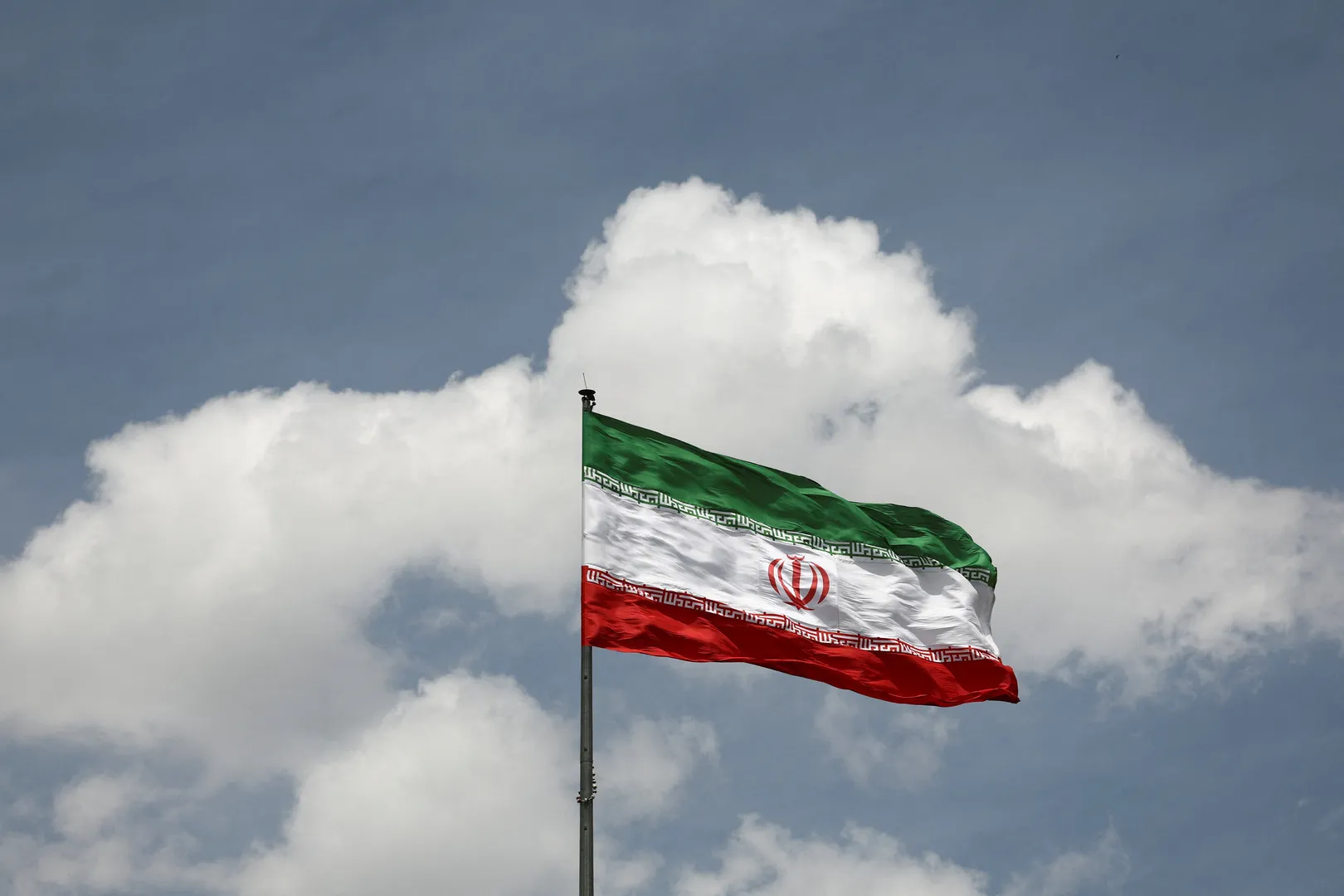
May 23 (UPI) — Iran and Pakistan submitted a revised proposal Saturday to the United States in the hopes of ending the war and reopening the Strait of Hormuz.
Trump told Axios Saturday that he would meet with his negotiators to discuss the offer and would likely decide by Sunday. He said odds were a “solid 50/50” on whether he would be able to make a deal or “blow them to kingdom come.”
Trump conducted a call on Saturday with leaders from Saudi Arabia, the United Arab Emirates, Qatar, Egypt, Turkey and Pakistan, Axios reported.
“While I very much wanted to be with my son, Don Jr., and the newest member of the Trump Family, his soon to be wife, Bettina, circumstances pertaining to Government, and my love for the United States of America, do not allow me to do so,” the president said on Truth Social. “I feel it is important for me to remain in Washington, D.C., at the White House during this important period of time. Congratulations to Don and Bettina!”
Secretary of State Marco Rubio alluded to news coming possibly today.
“There may be news later today. I don’t have news for you at this very moment, but there might be some news a little later today. There may not be. I hope there will be, but I’m not sure yet,” Rubio told reporters in New Delhi on Saturday.
Sen. Lindsey Graham, R-S.C., told Axios that some leaders in the gulf have pushed Trump to strike Iran to weaken the regime and get better terms. But other leaders and the president’s advisors are urging him to take the deal that’s been offered. They say Iran can destroy Gulf oil operations if attacked.
“Count me as a strong skeptic that Iran can’t be prevented from terrorizing the Strait of Hormuz and that we can’t defend vital interests in the region after massive attacks against Iran — if they have been truly obliterated they shouldn’t be able to do either,” Graham said. “Time will tell. I am hoping for a good outcome still.”
Trump told Axios he’d meet with Steve Witkoff, Jared Kushner and Vice President Vance later Saturday.
“I think one of two things will happen: either I hit them harder than they have ever been hit, or we are going to sign a deal that is good,” Trump said.
Iranian Ambassador to Pakistan Reza Amiri Moghadam said on X that he discussed the “achievements of the negotiations with the officials of my country after returning from Tehran” with Pakistani Interior Minister Mohsin Naqvi.
“With conservative optimism, we can hope that, if the other side is adequately committed, a positive stride is taking shape which is the result of the positions of the Islamic Republic of Iran based on dignity, the steadfastness of the courageous armed forces and the resistance of the brave Iranian nation, as well as the initiative and dedicated endeavors of the Pakistani mediator,” Moghadam said.
Iran were expected to fly from Turkiye to Arizona to continue World Cup 2026 preparations but will switch to Mexico.
Published On 23 May 202623 May 2026
Iran will base their squad in the Mexican border city of Tijuana during this year’s World Cup after football’s world governing body FIFA approved a request to move their training camp from Arizona, the head of Iran’s football federation said on Saturday.
“We will be based in the Tijuana camp, which is near the Pacific Ocean and on the border between Mexico and the United States,” Iran’s Football Federation President Mehdi Taj said in a video posted on its Telegram social media account.
Recommended Stories
list of 4 itemsend of list
Taj added that the switch would help avoid visa-related complications following the US-Israel war on Iran, and that the squad would be able to fly directly to Mexico with Iran Air.
Iran will play their first two Group G matches in Los Angeles, against New Zealand on June 15 and Belgium on June 21, before facing Egypt in Seattle on June 26.
“The total distance between us and the venue of our games in Los Angeles is 55 minutes by flight,” Taj said, adding that Tijuana was closer to their match venues than the team’s previously planned camp in Arizona.
Iran has faced uncertainty for months over travel and security arrangements for the World Cup, which will be cohosted by the United States, Canada and Mexico, and had asked for their games to be moved from the US.
Iranian officials said this month that their players and staff had yet to receive US visas, less than a month before the start of the tournament. They began visa applications during their stay in Turkiye for pre-tournament training.
The student-led movement, which began after the Novi Sad rail station disaster in November 2024, is pushing for early elections.
Published On 23 May 202623 May 2026
Tens of thousands of people, led by university students, have rallied in the Serbian capital to protest against the government and call for early elections.
The Novi Sad rail station disaster in November 2024, which killed 16 people, sparked anticorruption protests, calling for a transparent investigation, forcing then-Prime Minister Milos Vucevic to resign.
With students leading the anticorruption movement, the demonstrations have snowballed into a campaign to push Vucic to call early elections.
Vucic said this week that the ballot could be held between September and November this year.
Antigovernment protesters take part in a rally led by Serbia’s protesting university students who are pushing for major political changes in the Balkan country run [Armin Durgut/AP]
‘Students win’
Protesters streamed into a central square in the capital, Belgrade, from several directions, many carrying banners and wearing T-shirts inscribed with the “Students win” motto of the youth movement.
Columns of cars drove into Belgrade from other Serbian towns earlier in the day.
Protester Maja Milas Markovic said students “managed to gather us here with their youth and wonderful energy; I really believe that we have [the] right to live normally.”
Serbia’s state railway company cancelled all trains to and from Belgrade on Saturday, in a bid to stop at least some of the people from coming from other parts of the Balkan country.
Vucic’s loyalists, meanwhile, gathered in a park camp outside the Serbian presidency building that he set up before another big antigovernment rally last March as a human shield against protesters. Folk music blared from a fenced area surrounded by riot police in full gear.
Students have said their rally will be peaceful. But there are concerns of violent conflict with Vucic’s loyalists, who are often hooded and masked and who have attacked student protesters in the past.
People march during an antigovernment protest decrying corruption and calling for early elections in central Belgrade [AFP]
The protests have “huge support from the public, and that’s because they’re an all-encompassing movement … against the government,” Tetyana Kekic, a journalist in Belgrade, told Al Jazeera.
She said the challenge for the protesters is that they do not have a “clear political platform or policies … and they do not have a leader or a personality which could really challenge the president”.
Serbia’s push to join the EU
The Serbian president has faced international scrutiny for his hardline approach towards the demonstrators.
The Council of Europe commissioner for human rights, Michael O’Flaherty, criticised Serbia’s government in a report this week and said he “will monitor the situation closely” on Saturday.
Serbia is formally seeking entry into the European Union, but it has maintained close ties with Russia and China.
The democratic backsliding under Vucic could cost the country about 1.5 billion euros ($1.8bn) in European Union funding, the EU’s top enlargement official warned last month.
The venue on Saturday is Belgrade’s Slavija Square, the scene of a huge antigovernment protest in March 2025. That rally ended in sudden disruption that experts later said – and the government denied – involved the use of a sonic weapon against peaceful demonstrators.
Students now say they plan to challenge Vucic in approaching elections later this year or next, which they hope will oust the right-wing populist government.
Vucic, government officials, and the pro-government media have branded critics as “terrorists” and foreign agents who wish to destroy the country – rhetoric that has ramped up political polarisation.










![Local political and feudal elites wearing honorary turbans look on as a tent pegging event kicks off [Mutee Ur Rehman/Al Jazeera]](https://i0.wp.com/occasionaldigest.com/wp-content/uploads/2026/05/IMG_3-1-1779082712.jpg?w=640&ssl=1)
![A female rider, Sehrish Awan, straightens her lance as she gears up for competition in a mela organised by a USA-based riding club [Mutee Ur Rehman/ Al Jazeera]](https://i0.wp.com/occasionaldigest.com/wp-content/uploads/2026/05/IMG_5-1-1779082721.jpg?w=640&ssl=1)

![A team of young women riders warm up for a practice session in Rawalpindi, Pakistan [Mutee Ur Rehman/Al Jazeera]](https://i0.wp.com/occasionaldigest.com/wp-content/uploads/2026/05/IMG_2-1-1779082705.jpg?w=640&ssl=1)
![A local vendor serves tea and savoury food items at in a mela [Mutee Ur Rehman/Al Jazeera]](https://i0.wp.com/occasionaldigest.com/wp-content/uploads/2026/05/IMG_4-1-1779082716.jpg?w=640&ssl=1)