From breaking news to significant developments in politics, business, technology, entertainment, and more, we deliver the stories that shape our global landscape.
Warsh will lead the central bank at a time when its independence has come under scrutiny amid political pressure.
Published On 22 May 202622 May 2026
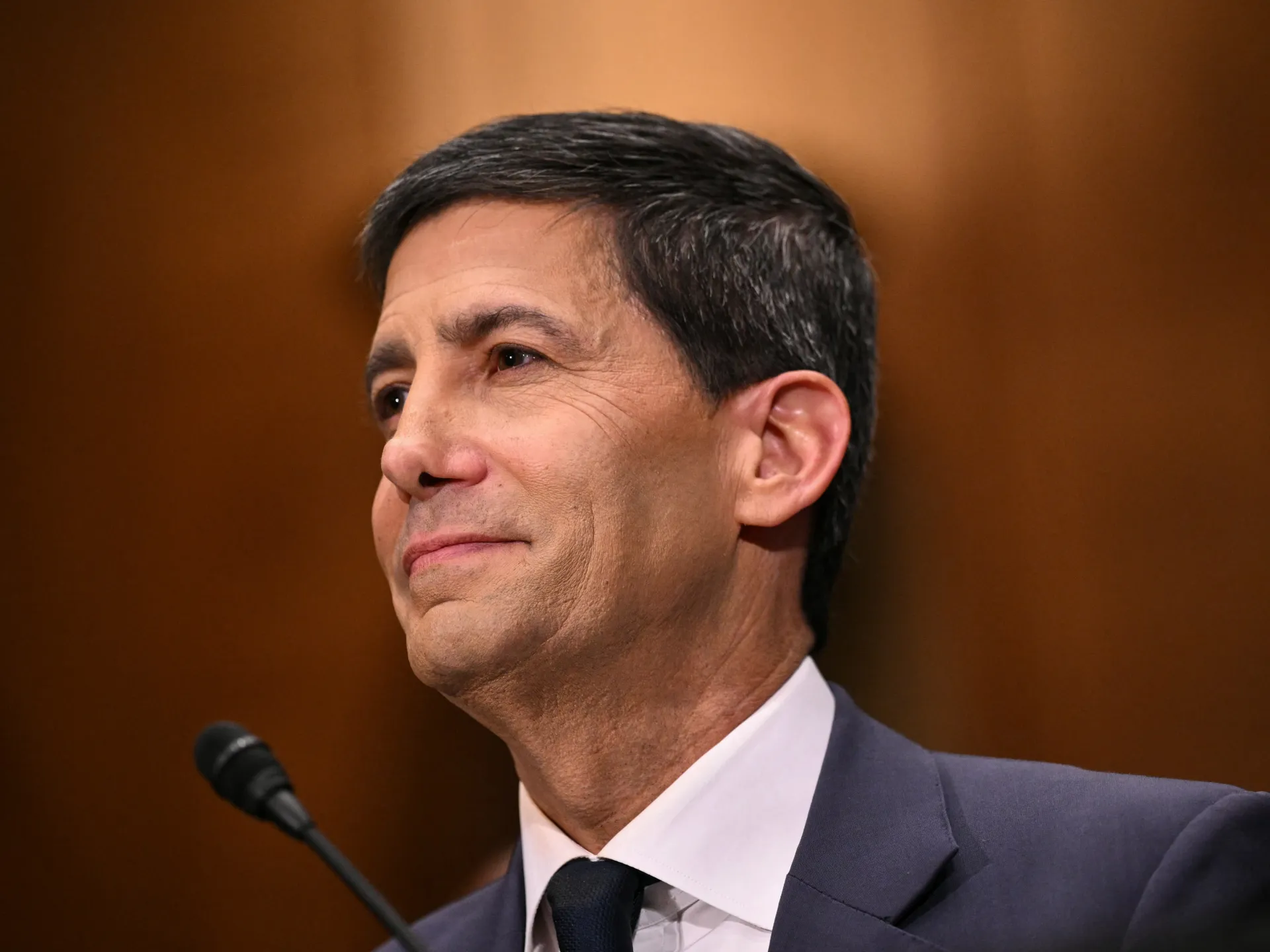
Kevin Warsh has been sworn in as the new chair of the United States Federal Reserve Board of Governors, succeeding Jerome Powell, who has held the position since 2018.
Warsh took the oath of office on Friday, following a contentious nomination period, with the Senate voting along party lines on both his confirmation to the Board of Governors and as chairman. Only Pennsylvania Senator John Fetterman broke with his Democratic colleagues to advance his nomination.
Recommended Stories
list of 4 itemsend of list
Warsh, 56, will lead the central bank at a time when its independence has come under scrutiny amid political pressure on the historically non-partisan institution.
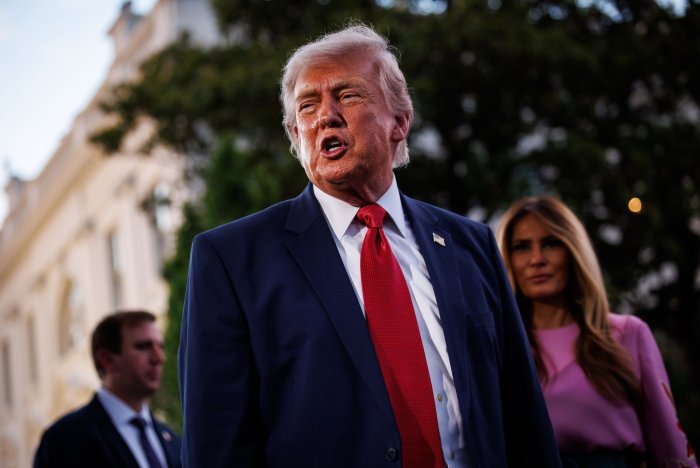
US President Donald Trump, aware of that critique, in his opening remarks said, “I want Kevin to be totally independent and do a great job. Don’t look at me and don’t look at anybody. Just do your own job”.
During his confirmation hearing before the Senate Banking Committee, ahead of a vote by the full Senate, Democratic Senator Elizabeth Warren accused Warsh of being a “sock puppet” for Trump. Warsh denied the allegations and said he would remain independent in his monetary policy decisions.
When Joe Biden was president, Warsh advocated against cutting interest rates, but changed his tune when Trump took office. In December 2025, Trump said that he would only appoint someone to lead the central bank who agreed with him on cutting rates.
Regardless, Warsh cannot unilaterally make policy decisions. He is one of 12 voting members.
The first policy meeting Warsh will lead will be on June 16-17.
Inflationary pressures
Pressure from the White House to cut rates comes amid rising inflation in the US economy.
Consumer prices increased 0.6 percent in April after a 0.9 percent rise in March, according to the most recent Consumer Price Index report released by the Labor Department’s Bureau of Labor Statistics earlier this month.
On an annual basis, prices were also higher, rising 3.8 percent compared with the same month in 2025, marking the largest increase in three years. The largest surge has been in energy prices, which have risen 17.9 percent over the last year.
US consumers are feeling the strain at the pump. The average price for a gallon of petrol (3.78 litres) is $4.56, according to the American Automobile Association (AAA), which tracks daily petrol prices. That is up from $2.98 per gallon on February 28, when the US and Israel first struck Iran.
After he was sworn in, Warsh said he was “not naive” about the challenges facing the US economy, and that inflation can be lower and growth strong.
Surging prices could put pressure on the central bank not to cut rates. Analysts from JPMorgan Chase forecasted last month that rates will likely remain unchanged until mid-2027 and anticipated then that rates could rise rather than be cut.
“With inflation having run significantly above 2 percent over the past five years, with further increases in inflation likely to occur as a result of the conflict in the Middle East, and with emergent price pressures in a few categories that appeared unrelated to tariffs or energy prices, the staff viewed the possibility that inflation would be more persistent than anticipated as a salient risk,” the central bank said in the newly released minutes of its April policy meeting.
CME Group’s FedWatch tool, which tracks the likelihood of monetary policy decisions, says there is a 97 percent chance that rates will remain unchanged at the next policy meeting.
As petrol prices rise, new survey suggests economic confidence in the US is at -45, the worst since 2022.
Published On 22 May 202622 May 2026
Only 16 percent of Americans view the economy in the United States as “good” or “excellent”, a new Gallup poll suggests, as inflation continues to rise amid the war on Iran.
The survey, released on Friday, deepens US President Donald Trump’s political woes ahead of the midterm elections in November, which will determine whether his Republican Party can retain control of Congress.
Recommended Stories
list of 3 itemsend of list
The survey, dubbed Gallup’s Economic Confidence Index, showed confidence in the economy has dropped to -45.
Forty-nine percent of respondents said economic conditions are poor and 34 percent rated them as fair. At the same time, 76 percent said they think the economy getting worse, while 20 percent said it is getting better.
The index averages the results on economic conditions, currently at -33 and economic outlook, currently at -56.
It was the worst set of findings on the economy that the index recorded since 2022 when the cost of living rose after the COVID-19 pandemic and Russia’s invasion of Ukraine.
Petrol costs in the US have skyrocketed since the start of the conflict with Iran late in February. The average price of one gallon (3.8 litres) of gasoline has risen to $4.55 from less than $3 before the US and Israel launched the war.
According to official government reports, consumer prices overall rose in March and April due to the energy crisis.
Iran has responded to the US and Israeli strikes – which killed several top officials, including Supreme Leader Ali Khamenei, as well as hundreds of civilians – by closing the strategic Strait of Hormuz, sending oil and gas prices soaring.
The US has also imposed a naval siege on Iranian ports, deepening the strain on energy supplies across the world.
Despite the ceasefire that began in April, the blockades have persisted in the absence of a permanent end to the war, and Iran is now claiming sovereignty over Hormuz, which operated as a free international passageway before the war.
Parts of the strait run through Iranian and Omani territorial waters.
Although the US is one of the world’s largest oil producers, energy prices are set globally, so the disruption has spiked costs for American consumers.
As a candidate, Trump promised to be a president of “peace”, saying he would pursue “America first” policies that would prioritise domestic issues over foreign interventions.
But the US president joined Israel in attacking Iran without direct provocation. His administration argues that the military campaign is necessary to prevent Tehran from obtaining a nuclear weapon.
Iran denies seeking nuclear weapons. And Trump’s own intelligence chief Tulsi Gabbard has said that Tehran is not building a nuclear bomb.
Trump has repeatedly argued that the cost of the war is worth it, stressing that petrol prices will drop rapidly once the conflict is over.
Last month, the US State Department released a legal justification of the war, saying that Washington joined the conflict “at the request of and in the collective self-defence of its Israeli ally, as well as in the exercise of the United States’ own inherent right of self-defence”.
The Gallup survey on Friday is the latest in a series of negative polls for the Trump administration.
A New York Times/Sienna poll released earlier this week suggested that only 31 percent of voters approve of Trump’s handling of the war with Iran.
Earlier this month, the US president suggested the economic fallout from the war and its effect on people in the US do not play a role in his approach to Iran.
“I don’t think about Americans’ financial situation. I don’t think about anybody,” he said. “I think about one thing: We cannot let Iran have a nuclear weapon. That’s all. That’s the only thing that motivates me.”
US President Donald Trump has announced that the United States will send an additional 5,000 troops to Poland, a surprise move that has deepened uncertainty about Washington’s military posture in Europe.
In a post on his Truth Social platform on Thursday, Trump linked the decision directly to his relationship with Poland’s right-wing President Karol Nawrocki.
Recommended Stories
list of 4 itemsend of list
“Based on the successful Election of the now President of Poland, Karol Nawrocki, who I was proud to Endorse, and our relationship with him, I am pleased to announce that the United States will be sending an additional 5,000 Troops to Poland,” Trump wrote.
But the move comes just days after the Pentagon cancelled the deployment of about 4,000 troops to Poland as part of a wider reduction of US forces in Europe.
The abrupt reversal has fuelled questions about what exactly Trump has ordered – and whether the deployment is driven by military strategy with Europe, or by the US president’s increasingly transactional approach to alliances.
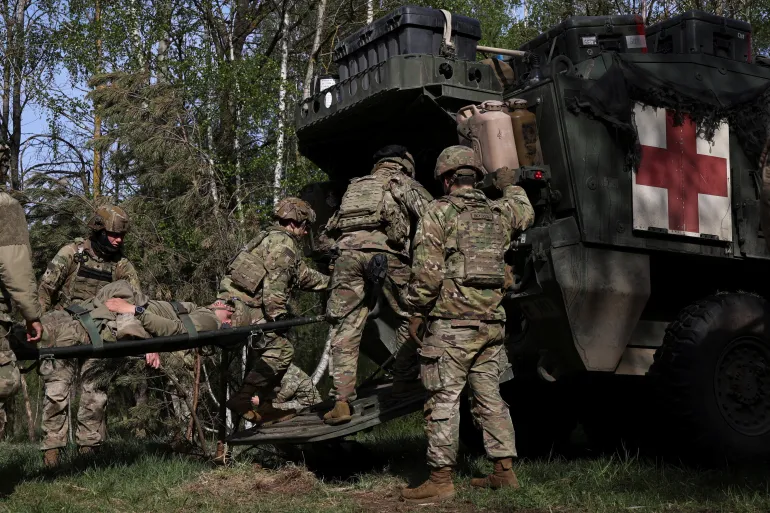
US Army soldiers carry a simulated casualty into a MEDEVAC vehicle during NATO’s Sword 26 exercise, which tested new battlefield evacuation methods using drones and AI-assisted medical technology in Bemowo Piskie, Poland, on May 11, 2026 [Kuba Stezycki/Reuters]
What has Trump ordered and which troops are involved?
While Trump described the move as a new deployment, reports from US media suggest the announcement may actually amount to a reversal of an earlier Pentagon decision.
Last week, the Pentagon abruptly halted the deployment of the 2nd Armored Brigade Combat Team of the 1st Cavalry Division – a Texas-based unit of more than 4,000 troops that had been preparing to rotate into Poland and Eastern Europe.
According to The Wall Street Journal, Trump later questioned Defense Secretary Pete Hegseth about why the deployment had been cancelled, telling him the US should not “treat Poland poorly” given its close ties to Washington.
Several reports said some parts of the brigade – known as the “Black Jack Brigade” – had already begun moving equipment and personnel when the deployment was stopped.
The Pentagon has not confirmed whether Trump’s newly announced 5,000 troops are the same soldiers whose deployment was cancelled earlier this month, or whether they will be redeployed from elsewhere in Europe, such as from Germany.
The White House and Pentagon have so far released few other details about this latest deployment.
Poland currently hosts about 10,000 US troops, largely on a rotational basis, according to the Polish government. Since Russia’s full-scale invasion of Ukraine, the country has become one of Washington’s most important military partners on NATO’s eastern edge and a key hub for Western military aid to Kyiv.
In 2020, Poland and the US signed the Enhanced Defense Cooperation Agreement, expanding military cooperation and helping to formalise a longer-term American military presence in the country.
How has Poland responded?
Nawrocki welcomed Trump’s announcement, calling the Polish-American alliance “a vital pillar of security for every Polish home and for all of Europe”.
“Good alliances are those based on cooperation, mutual respect, and a commitment to our shared security,” he wrote on social media.
Polish Foreign Minister Radek Sikorski also welcomed the news, saying the deployment would ensure that “the presence of American troops in Poland will be maintained more or less at previous levels”.
German Foreign Minister Johann Wadephul also welcomed the move.
“It serves not only for Poland’s security, but for the security of the whole alliance and so also for us,” he told reporters. “So, this is absolutely in our interest.”
Why is Trump doing this?
The announcement appears to mark a sharp reversal from recent signals that the Trump administration was preparing to reduce the US military’s footprint in Europe.
Earlier this month, Washington announced plans to withdraw 5,000 troops from Germany after a public row between Trump and German Chancellor Friedrich Merz over the US-Israeli war on Iran. Trump later suggested the cuts could go even further.
At the same time, Trump has repeatedly accused European NATO allies of failing to spend enough on defence and of not doing enough to support US policy in the Middle East.
Analysts say the decision over Poland also reflects Trump’s increasingly transactional approach to alliances – punishing governments he sees as hostile or unhelpful while rewarding leaders and countries more closely aligned with his brand of right-wing politics.
Germany and Spain have both faced criticism from Trump administration officials in recent weeks over their positions on Iran and defence spending, while Poland’s nationalist government has cultivated close ties with Trump and the wider MAGA movement.
Before meeting NATO counterparts in Sweden, Secretary of State Marco Rubio said: “Like any alliance, it has to be good for everyone who’s involved. There has to be a clear understanding of what the expectations are.”
“The president’s views, frankly disappointment, at some of our NATO allies and their response to our operations in the Middle East – they’re well documented – that will have to be addressed,” Rubio added. “That won’t be solved or addressed today.”
Poland, by contrast, has emerged as one of NATO’s highest defence spenders, allocating about 4.5 percent of its gross domestic product (GDP) to defence. It has also remained one of Ukraine’s strongest backers and has consistently pushed for a larger US military presence on its territory.
The deployment, therefore, appears both strategic and political – reinforcing NATO’s eastern flank while rewarding one of Trump’s closest allies in Europe at a time when he is openly questioning relationships with other partners on the continent.
But the confusion surrounding the announcement has also highlighted a broader uncertainty hanging over Washington’s Europe policy, with allies still trying to determine whether the administration is reducing its commitment to NATO overall, or simply reshaping it around governments Trump sees as more loyal.
Demonstrators hold signs and wave flags during a protest outside the U.S. consulate in Nuuk, Greenland, Friday. The new diplomatic building officially opened earlier in the day amid tensions over American interests in Greenland. Photo by Oscar Scott Carl/EPA
May 22 (UPI) — A new American consulate opened in Nuuk, Greenland, Friday, and hundreds of Greenlanders showed up to protest it.
There has been a small consulate in the country since 2020, but the new one is 30,000 square feet and is on one of Nuuk’s busiest roads.
The consulate hosted an opening event with visitors and red, white and blue decorations inside. Ambassador to Denmark Kenneth Howery unveiled a new plaque and said he looked forward to a closer partnership with the semi-autonomous country, which is part of the Kingdom of Denmark.
“The Arctic is clearly a region of global importance,” the BBC reported Howery said. “We will always be neighbors and be with you into whatever future you choose as allies and partners.”
But outside, the locals made their voices heard, chanting, “We don’t want your money” and “Greenlanders know a MAGA Trojan horse when we see one,” The New York Times reported.
The locals have dubbed the new consulate, “Trump Towers.”
Protest organizer Aqqalukkuluk Fontain, 37, said, “The waves they are trying to create, and the propaganda they are pushing — people are not falling for it.”
“Our government already told Donald Trump and his administration that Greenland is not for sale,” the BBC reported he said. “Our message is for the American people and to the rest of the world — that in a democratic world, no means no.”
The United States had thousands of troops stationed in Greenland during World War II and the Cold War, but the bases have all closed except one. American officials have begun visiting the old bases as they consider reopening some, The Times reported.
Earlier this week, President Donald Trump’s special envoy to Greenland Louisiana Gov. Jeff Landry visited Nuuk on a “goodwill mission” and found he wasn’t very welcome. He handed out chocolate chip cookies and MAGA hats to few takers.
Inge Bisgaard told the BBC that Landry’s visit was disrespectful. “It’s so important to show this is not OK.”
“We get this fear from the United States. People were just recovering from last time, when it all began again in January,” she said about Trump’s previous comments about buying or invading Greenland.
Protesters stood for two minutes of silence with their backs facing the consulate, then resumed chanting for Americans to go away.
“Look at how little signage there is showing that it’s a consulate,” The Times reported protester Nivi Christensen, a museum director in Nuuk, said. “The other consulates fly large flags outside and are proud of it. This feels different. It feels as though they are doing it in a sketchy way.”
President Donald Trump speaks at an event with Environmental Protection Agency (EPA) Administrator Lee Zeldin in the Oval Office at the White House on Thursday. Photo by Al Drago/UPI | License Photo
On May 14, the high court in the central Indian state of Madhya Pradesh ruled that the centuries-old Kamal Maula mosque in the city of Dhar was actually a temple dedicated to a Hindu goddess. Two days later, saffron flags associated with Hindu far-right groups were all over the site, with supporters celebrating and filming rituals that were carried out.
The Kamal Maula mosque, also known as the Bhojshala complex, has been disputed for decades. And such claims are not unique to this mosque. Far-right Hindutva activists have made similar claims – that a given mosque was built atop a temple – across the country, emboldened by Prime Minister Narendra Modi’s rise to power in 2014.
Recommended Stories
list of 4 itemsend of list
Modi is a leader of the Bharatiya Janata Party, which follows an ideology known as Hindutva.
But what is the Hindutva movement, and how did it emerge?
What does Hindutva mean?
Hindutva is a right-wing political and nationalist ideology that defines the cultural and national identity of India based on a particular interpretation of Hindu values. India is a constitutionally secular state, but advocates of Hindutva want the country to adopt Hinduism as its state religion.
The term Hindutva consists of two linguistic parts: The first is the word “Hindu”, whose origin likely traces back to the Sanskrit word “Sindhu”, the ancient name for the Indus River. With the evolution of linguistic usage, the ancient Persians and others replaced the letter “S” with “H”, and the term “Hindus” came to be used for the inhabitants living beyond the river.
The second part is the Sanskrit suffix “-tva”, which indicates essence or being, meaning that the term literally denotes “Hindu essence” or “Hindu identity or being”.
How did Hindutva originate?
Hindu nationalism emerged in protest against British colonial notions of the religion, but quickly grew into a majoritarian ideology that viewed the Indian identity through the lens of a specific interpretation of Hinduism.
Its early years coincided with sectarian Hindi-Muslim tensions in the early 20th century under British rule, culminating in the partition of the subcontinent at independence in 1947 and the formation of Pakistan on religious grounds.
Indian freedom fighter and ideologue Vinayak Savarkar coined the term “Hindutva” in his 1923 pamphlet Essentials of Hindutva, presenting a vision of Hindu identity based on the unity of territory, culture, and historical belonging, while considering India as the fatherland and the holy land of Hindus.
Based on this notion, some Hindutva theorists argued that Muslims and Christians do not fully belong to the Indian nation, as their holy places are located outside India – even though India is home to one of the world’s largest Muslim populations, and has more Christians than many European nations such as the United Kingdom.
Savarkar was, and remains, a controversial figure: He infamously wrote letters to the British pleading for his release from a notorious prison in the Andaman Islands.
From idea to movement
By 1925, the early Hindutva ideologue Keshav Baliram Hedgewar had founded the Rashtriya Swayamsevak Sangh (RSS) – which loosely translates to National Volunteer Organisation – the mothership of the Hindu majoritarian political movement.
The RSS focused on organising and strengthening the Hindu community through local social and cultural activities. Over time, it expanded to include a network of affiliated institutions and organisations spanning religious activities, education, health, publishing, student politics and even the trade union sector.
Some of its early leaders publicly, in their writings, admired the European fascists and the manner in which they dealt with religious and ethnic minorities.
After India’s independence, the movement faced significant pressure following the assassination of Mahatma Gandhi in 1948: Gandhi’s assassin was a former RSS member. Savarkar, the founder of the Hindutva ideology, was also arrested in connection with the assassination but was eventually acquitted because the prosecution could not present corroborating evidence against him.
The men accused of the assassination of Mahatma Gandhi listen to testimony in a courtroom during their arraignment in New Delhi, India, on May 27, 1948. Gandhi was shot three times by Nathuram Vinayak Godse, centre, on his way to a prayer meeting from Birla House on January 30 [AP]
Later, the movement shifted towards political action by establishing a party in 1951, which subsequently evolved into the Bharatiya Janata Party (BJP) in 1980.
The party witnessed a remarkable surge in its political influence during the 1980s and 1990s by championing the construction of the Ram Temple in the city of Ayodhya on the site of the Babri Mosque.
In 1992, the demolition of the mosque by activists associated with the RSS and the BJP prompted a widespread wave of sectarian violence. In the wake of that violence, the BJP first came to national power in 1996 as India’s single largest party, but its government collapsed in 13 days after allies it depended on withdrew support. In 1998, it returned to power, but this time lost after 13 months. New elections followed in 1999, and the BJP emerged as the single biggest party again. It led a coalition government for a full five years until 2004, when the Congress party – now India’s largest opposition force – defeated it.
The Congress ruled for a decade until 2014, when Modi stormed to power with the largest mandate any party had received since 1984.
Thought and Ideology
Hindutva ideology posits that Indian identity is fundamentally rooted in Hindu culture and civilisation.
The ideology relies on historical narratives portraying the periods of Islamic and Mughal rule as an era that weakened Hindu heritage, calling for the restoration of Hindu identity and the strengthening of its presence in the public sphere.
Its most prominent ideas include: Rereading history from a Hindu nationalist perspective, viewing India as a sacred civilisational entity, calling for the return of those believed to have Hindu origins to their ancestral religion, and granting national status to symbols such as cows and the Sanskrit language.
Critics differentiate between Hindutva as a nationalist political project and Hinduism as a religion and spiritual philosophy, arguing that the former politicises religion and can contradict values such as tolerance and nonviolence that have long been central tenets of Hinduism, the faith.
India’s Prime Minister Narendra Modi greets his supporters as he arrives at the Bharatiya Janata Party (BJP) headquarters, as the BJP won the Assam state assembly election and was on course to win West Bengal, in New Delhi, India, May 4, 2026 [Adnan Abidi/Reuters]
Hindutva in political practice
Hindutva has gradually transitioned into the political and legislative spheres with the rise of the BJP to power. Its principles have begun to reflect in laws, public policies, and the nature of social debate within the country. Supporters argue that these policies preserve national identity, while critics contend that they undermine religious and cultural pluralism.
The most notable of these measures was the abrogation of Article 370 of the Constitution in 2019, which had granted the Muslim-majority region of Jammu and Kashmir a special autonomous status.
Additionally, the Citizenship Amendment Act (CAA) was passed that year, granting expedited citizenship to certain immigrants from neighbouring countries, excluding Muslims. It officially went into effect in March 2024, accompanied by the National Register of Citizens (NRC), which threatens to strip millions of Muslims of their citizenship and label them as infiltrators.
The impact of this vision has extended to local legislation in certain states, such as tightening restrictions on cow slaughter and enacting laws to regulate religious conversion and interfaith marriages, alongside calls for the implementation of a Uniform Civil Code to replace certain personal status laws for minorities.
Hindutva has also been linked to the emergence of Hindu nationalist groups, such as the Bajrang Dal, which have been implicated in acts of violence and intimidation against Muslims, Christians and marginalised social groups, particularly over issues related to cows or religious conversion.
In January 1999, when the BJP was in power nationally, Bajrang Dal activists burned alive Graham Staines, an Australian Christian missionary, and his two sons, while they were sleeping in their car. And in 2002, while Modi was chief minister of the western state of Gujarat, independent India witnessed one of its worst massacres of Muslims, after a group of Hindu pilgrims on a train were burned alive under circumstances that are still contested.
Indian far-right groups ideologically aligned with the RSS have also been accused of lynching dozens of Muslims since 2014, often on accusations that they were carrying cows for slaughter. In almost all cases, none of the murderers have been punished, and in several instances, families of the victims have faced charges.
South Korea said Friday it will acquire U.S. SM-6 shipborne missile interceptors and field them by 2034. The ROKS Dasan Jeong Yakyong, seen here at a launch ceremony in Ulsan on Sept. 17, 2025, will be equipped with the interceptors. File Photo by Yonhap
South Korea on Friday finalized a plan to acquire U.S. Standard Missile-6 (SM-6) shipborne missile interceptors and field them by 2034, in a bid to boost its missile defense capabilities, the state arms procurement agency said.
The Defense Project Promotion Committee, a decision-making body for arms procurement under the Defense Acquisition Program Administration (DAPA), approved the 530 billion-won (US$351.5 million) project to acquire the SM-6 long-range ship-to-air missile interceptors and related equipment, the agency said.
An SM-6 interceptor is an advanced defense missile interceptor for warships that can track and destroy a wide range of incoming threats.
It has a maximum range of 460 kilometers, with an altitude of up to 36 km, and is built to directly track targets with its own radar, allowing ships to deal with multiple threats at the same time.
The military plans to equip the 8,200-ton Aegis destroyer ROKS Dasan Jeong Yakyong, which is scheduled to enter service later this year, as well as the ROKS Daeho Kim Jong Seo, another vessel of the same class, with the SM-6 interceptors.
The SM-6 interceptors will also be installed on the already-deployed ROKS Jeongjo the Great through future capability upgrades.
“The project is expected to enhance ship-to-air defense capabilities of Aegis destroyers against enemy anti-ship ballistic missiles, aircraft and cruise missiles, as well as improve their anti-ballistic missile defense,” the DAPA said.
In November 2023, the United States approved a $650 million sale of up to 38 SM-6 missiles and related equipment to South Korea through the government-to-government Foreign Military Sales program.
Friday’s announcement by DAPA suggests that the acquisition may have been scaled back from the earlier plan. The timeline for the acquisition has also been revised to 2023-34, from the original 2023-31 schedule.
“The negotiation process took time even though we have been pushing ahead with the project since 2023,” a DAPA official said. “The system will be rolled out in stages in accordance with the schedule agreed upon with the U.S. side.”
The committee also approved a research and development (R&D) plan for a new military communications satellite system to replace older satellite and ground equipment.
The plan calls for developing and acquiring a dedicated geostationary military communications satellite and related ground infrastructure through an R&D program led by the Agency for Defense Development.
The project will run from this year through 2032, with an estimated cost of about 1.27 trillion won. DAPA plans to sign a contract agreement with a prototype developer by March next year.
Copyright (c) Yonhap News Agency prohibits its content from being redistributed or reprinted without consent, and forbids the content from being learned and used by artificial intelligence systems.
Arbeloa says he will not be coaching the team next season, amid reports that Jose Mourinho is returning to the club.
Published On 22 May 202622 May 2026
Alvaro Arbeloa has confirmed he will leave his role as Real Madrid coach at the end of a trophy-less season.
“Yes,” Arbeloa said at a news conference on Friday when asked to confirm that he would not be coaching the team next season, amid widespread reports that veteran manager Jose Mourinho is returning to the club.
Recommended Stories
list of 4 itemsend of list
Los Blancos host Athletic Bilbao on Saturday at the Santiago Bernabeu in their final La Liga match of a turbulent campaign.
Real Madrid President Florentino Perez appointed Arbeloa to replace Xabi Alonso in January.
The Spaniard, Arbeloa, said he would not work as a member of Mourinho’s staff if the Portuguese coach is appointed as his successor.
“Mou has a fantastic technical team, he’s got good people around him, if he comes to Madrid he will come with his team,” said Arbeloa.
“There’s no chance that I would be with him. Then, my future … from Monday I’ll think about that.”
Arbeloa, who played at Madrid from 2009-2016 and later coached there at the youth level, said he hoped this match was a “see you later” rather than a goodbye.
“I hope it’s a see you later… I’ve always considered this my home, I’ve belonged to Madrid for 20 years in various roles,” said Arbeloa.
“It will be my last game this season as coach of Real Madrid; I don’t know if it will be the last game of my life as coach of Real Madrid.
“We never know. I’ll try and enjoy it and try to get the win.”
United States President Donald Trump has announced plans to deploy an additional 5,000 troops to Poland.
Trump announced the surprise deployment on social media late on Thursday, citing his friendship with right-wing Polish President Karol Nawrocki.
Recommended Stories
list of 3 itemsend of list
The move came days after a planned deployment to Poland was apparently scrapped and will deepen uncertainty surrounding the Trump administration’s approach to NATO allies and its long-term commitment to maintaining a military presence in Europe. It leaves European partners increasingly unclear about which areas they should prioritise as they formulate defence strategies.
“Based on the successful Election of the now President of Poland, Karol Nawrocki, who I was proud to Endorse, and our relationship with him, I am pleased to announce that the United States will be sending an additional 5,000 Troops to Poland,” Trump wrote.
Nawrocki welcomed the announcement on social media.
“Good alliances are those based on cooperation, mutual respect, and a commitment to our shared security,” he wrote on Thursday evening.
Polish Foreign Minister Radek Sikorski also welcomed the news on Friday, saying it ensures that “the presence of American troops in Poland will be maintained more or less at previous levels”.
About-face
The announced deployment is a sudden about-face from US declarations of plans to reduce military support to Europe under Trump’s “America First” doctrine.
The US president has for years been lambasting European NATO partners for failing to spend enough on defence. His opprobrium has risen in recent weeks as European states have criticised the US-Israeli war on Iran and refused to join the conflict.
The Pentagon abruptly announced a week ago that it was scrapping the planned deployment of 4,000 troops to Poland.
Earlier this month, Trump announced he was withdrawing 5,000 troops from Germany following a spat with Chancellor Friedrich Merz, who said Washington had been “humiliated” by Iranian negotiators.
The US president later said that he would be “cutting a lot further than 5,000”.
Polish officials have noted that Warsaw pays significant sums towards the cost of US troop deployments. The suggestion of a pullback has caused concern over security in Poland and elsewhere in Europe, as Russia’s war on neighbouring Ukraine continues, with the Trump administration largely ceasing efforts to mediate a ceasefire.
European states report that they are getting to grips with the need to replace US defence capabilities, albeit slowly. However, sources suggest that the erratic policies emerging from the White House are creating confusion over which elements should be prioritised.
“It is confusing indeed, and not always easy to navigate,” Swedish Foreign Minister Maria Malmer Stenergard told reporters ahead of hosting a meeting of NATO foreign ministers on Friday, which will be attended by US Secretary of State Marco Rubio.
US defence officials are also confused, according to the AP news agency.
“We just spent the better part of two weeks reacting to the first announcement. We don’t know what this means either,” said one official.
‘America First’
The US president has lashed out at fellow NATO members in recent months for failing to support the US-Israeli war on Iran, suggesting Washington could withdraw from the military alliance as a result.
State Department spokesperson Tommy Pigott said Rubio would discuss the need for NATO allies to increase defence spending and shoulder greater responsibility at Friday’s meeting of NATO foreign ministers.
NATO Secretary-General Mark Rutte, who has worked hard in recent months to attempt to soothe the US president’s displeasure with his alliance peers, welcomed Trump’s deployment to Poland and cautioned that Europe must become less reliant on the US.
Rubio said before meeting his NATO counterparts in Sweden: “Like any alliance, it has to be good for everyone who’s involved. There has to be a clear understanding of what the expectations are.”
He also suggested, however, that the meeting is likely to prove less than comfortable.
“The president’s views, frankly disappointment, at some of our NATO allies and their response to our operations in the Middle East – they’re well documented – that will have to be addressed,” he insisted, before adding “that won’t be solved or addressed today”.
While Rubio meets with NATO counterparts, senior Pentagon officials will brief partners at the alliance’s headquarters in Brussels about Washington’s commitment to European defence.
On Tuesday, the Pentagon announced it plans to reduce the number of combat brigades based in Europe from four to three.
Many of Washington’s allies in Europe remain frustrated with Trump’s handling of the war with Iran, which has damaged their economies and prompted some European leaders to question the reliability of the US.
European NATO countries also remain concerned about Trump’s threats to annex Greenland, which is an autonomous territory of the Kingdom of Denmark, a NATO ally.
It remains unclear whether the deployment to Poland announced on Thursday includes the same soldiers as those the Pentagon said would no longer be deployed to the Central European country, or if they will include redeployments from Germany.
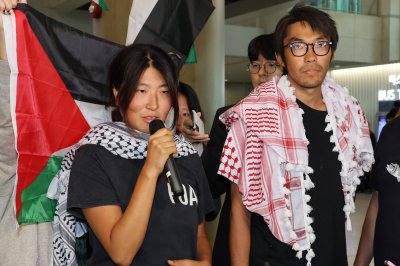
Activists Kim Ah-hyun (L) and Kim Dong-hyeon speak to reporters at Incheon International Airport on Friday following their release after being captured by Israeli forces aboard Gaza-bound aid flotillas. Photo by Yonhap
Two South Korean activists returned home Friday after being released by Israeli forces that had captured them aboard aid vessels bound for the Gaza Strip.
Kim Ah-hyun was aboard an aid vessel seized by Israeli forces in waters off the Gaza Strip, while Kim Dong-hyeon’s ship was intercepted near Cyprus — both earlier this week.
They were released Wednesday and flew home together, arriving at Incheon International Airport, west of Seoul, at 6:24 a.m.
“Many people are dying not only from bombings, but also from starvation,” Kim Ah-hyun told reporters at the airport. “Because there are people there, I thought that I had to attempt the voyage again, no matter how dangerous the situation in the Middle East was.”
The activist had earlier attempted to enter the territory via an aid flotilla in October without authorization. She had been detained by Israeli forces during her first attempt and was later released.
Before her latest attempt, the South Korean government had revoked her passport.
The activist claimed she had been assaulted by Israeli forces in the face after her latest capture and that she couldn’t hear properly in her left ear.
Kim Dong-hyeon, the other activist, said Israeli forces had “tortured” the activists, claiming they had suffered “unendurable violence.”
Israel has faced criticism following the release of images of captured activists kneeling on the ground with their hands bound.
On Wednesday, President Lee Jae Myung criticized Israel’s seizure of the vessels, accusing the country of violating international rules as the ships were not in Israel’s territorial waters when they were seized.
Copyright (c) Yonhap News Agency prohibits its content from being redistributed or reprinted without consent, and forbids the content from being learned and used by artificial intelligence systems.
US and Iran continue mediated talks, exchanging draft proposals aimed at reaching a formal agreement.
Published On 22 May 202622 May 2026
Iran and the United States are continuing mediated talks aimed at ending the conflict, with Iranian media reporting that both sides are exchanging messages and draft proposals to establish a formal framework for an agreement.
Al Jazeera’s correspondent Almigdad Alruhaid reported from Tehran that Pakistani officials were engaged in “intense mediation activity” between the two countries.
The diplomatic push comes as US Secretary of State Marco Rubio said there were “some good signs” for a possible breakthrough. However, US President Donald Trump also warned Washington could take “very drastic” action if Iran refuses to give up its uranium stockpiles.
Here is what we know:
In Iran
‘War crime’ on medical research centre: Iran has accused the US and Israel of committing a “war crime” by bombing the Pasteur Institute of Iran early in the war, after The Lancet journal warned that the attack severely damaged a key pillar of the country’s public health system.
Thousands rescued from rubble: The Iranian Red Crescent said its aid workers rescued more than 7,200 people trapped beneath rubble during US and Israeli attacks, sharing footage of survivors being pulled from destroyed buildings for the first time.
War diplomacy
Nuclear ‘red lines’ must shift: Doug Bandow, a senior fellow at the Cato Institute, said the US and Iran will need to move beyond conflicting “red lines” on Tehran’s nuclear programme for negotiations to make progress. Speaking to Al Jazeera, Bandow said both sides must be willing to compromise and continue serious talks if they want to avoid further escalation and move away from war.
Rubio sees ‘good signs’ in talks: US Secretary of State Marco Rubio said negotiations with Iran have shown “some progress”, while cautioning that it remains unclear whether a deal can be reached in the coming days. Rubio said President Donald Trump still prefers a diplomatic agreement, but warned Washington has “other options” if talks fail.
Pakistani mediation efforts intensify in Tehran: Al Jazeera’s Alruhaid said senior Pakistani officials are engaged in “intense mediation activity” in Tehran as efforts accelerate to prevent further escalation. While one senior Iranian official said negotiators were close to a deal and working on draft texts, another source cautioned it was still too early to say whether a final agreement was within reach.
In the US
US forces at ‘peak readiness’: CENTCOM said the USS Abraham Lincoln strike group remains at “peak readiness” in the Arabian Sea, sharing images of warplanes taking off as Washington maintains pressure on Iran amid ongoing mediation efforts.
US reportedly suffers major Reaper drone losses: Iran has destroyed more than two dozen MQ-9 Reaper drones operated by US forces since the conflict began, according to Bloomberg News. The reported losses are estimated at $1bn, nearly 20 percent of the Pentagon’s pre-war inventory.
US pauses Taiwan arms sales: Acting Navy Secretary Hung Cao told a Senate hearing that Washington has paused a $14bn arms sale to Taiwan to ensure the US has enough munitions for its military campaign against Iran, a move Republican Senator Mitch McConnell called “distressing”.
In Lebanon and Palestine
Israeli strike kills two in southern Lebanon: The Israeli military said it carried out an air raid that killed two people near the Lebanon-Israel border, after detecting what it described as “suspicious movement” in southern Lebanon.
US sanctions allies of Hezbollah: The US has imposed sanctions on nine people accused of helping Hezbollah undermine Lebanon’s sovereignty and obstruct efforts to disarm the group, including Lebanese politicians, security officials and Iran’s ambassador-designate to Beirut.
Palestinian envoy condemns aid blockade: Palestine’s UN envoy Riyad Mansour said Israel is continuing to collectively punish more than two million Palestinians through its blockade on aid and ongoing attacks, warning the world must not become “accustomed to seeing Palestinians killed”.
US urges humane treatment of flotilla detainees: According to Al Jazeera’s Ali Harb, the US State Department said activists detained by Israeli forces after attempting to break the Gaza blockade “must be treated humanely and consistent with international law”, while also reiterating Washington’s opposition to the flotilla movement.
May 22 (UPI) — Federal immigration officials have arrested the sister of a sanctioned Cuban executive on the grounds that her presence in the United States poses a threat to the nation and undermines U.S. foreign policy interests.
Homeland Security Investigations agents arrested Adys Lastres Morera in Miami on Thursday, Immigration and Customs Enforcement said.
Little information about the arrest was made public. ICE published a photo showing the back of a woman in handcuffs being detained by immigration officers.
The arrest came as Secretary of State Marco Rubio announced in a statement that he had terminated Morera’s lawful permanent resident status under a provision of thee Immigration and Nationality Act that makes non-citizens deportable if the secretary of state believes their presence or activities in the United States “would have potentially serious adverse foreign policy consequences.”
ICE said her status had been terminated on Wednesday, paving the way for her arrest.
“Allowing Lastres Morera to remain in the country would send a signal that Cuba regime-affiliated networks could continue to access the U.S.’s financial, education and social institutions — but that is not the case,” acting HSI Executive Associate Director John Condon said in a statement.
Adys Lastres Morera is the sister of Ania Guillermina Lastres Morera, the executive president of the Cuban military-controlled financial conglomerate GAESA.
The State Department sanctioned GAESA and Ania Guillermina Lastres Morera earlier this month on accusations of diverting resources from the Cuban people to “fuel the lavish lifestyles of Castro family members and other regime elites and to finance overseas influence operations as part of Cuba’s long-standing ambition of a global communist revolution,” Rubio said Thursday.
According to ICE, Adys Lastres Morera was admitted to the United States as a lawful permanent resident on Jan. 13, 2023.
“For far too long, the family members of terrorist organizations, repressive anti-American regimes and other bad actors who would threaten the national security of the United States have been given a free pass to enjoy the privileges of living in the United States,” Rubio said.
“No longer. Under President [Donald] Trump, we are removing from our country the family members of [Iran’s Islamic Revolutionary Guard Corps] terrorists and Cuban regime elites.”
The arrest comes amid mounting tensions in the Caribbean.
A day earlier, U.S. federal prosecutors charged former Cuban President Raul Castro on allegations of authorizing the 1996 shootdown of an aircraft operated by the Cuban American exile organization Brothers to the Rescue.
Rep. Gregory Meeks, the top Democrat on the House Foreign Affairs Committee, has accused the Trump administration of using the Castro indictment as a pretext to escalate tensions and potentially justify another military operation in the Caribbean, similar to the January U.S. strike that abducted Venezuela’s authoritarian leader, Nicolas Maduro, and brought him to the United States to face narco-terrorism charges.
Irish activist Caitriona Graham, who was filmed being dragged by her hair and forced to the ground by Israeli forces, recounted the violent interception of a Gaza-bound aid flotilla in an interview with Al Jazeera after being deported to Istanbul.
May 21 (UPI) — House Republicans abruptly pulled legislation to curb President Donald Trump‘s ability to continue the war with Iran on Thursday amid Democratic accusations that GOP leaders shelved the measure over fears it would pass.
House Concurrent Resolution 86 was listed on House Majority Leader Steve Scalise‘s schedule for possible consideration on Thursday but no vote was held before the House left Washington.
The resolution was delayed until after the lower chamber returns from recess on June 2, leaving Democrats fuming.
“Are we not voting on it because the American people are sick and tired of this illegal war that is costing tens of billions of dollars, gas prices are through the roof, people can’t afford their groceries? Is that why you’re pulling it?” Rep. Jim McGovern, D-Mass., asked on the House floor as cheers and boos erupted behind him.
“You guys don’t have the guts … to vote on this.”
NEWS: Republicans just pulled a vote on the Iran War Powers Resolution because they knew they were going to lose. They rigged the rules to protect the president’s historically unpopular war from a fair up or down vote. pic.twitter.com/v2JzwD7UKJ— Rep. Jim McGovern (@RepMcGovern) May 21, 2026
The resolution, sponsored by Rep. Gregory Meeks, D-N.Y., directs Trump to remove U.S. forces from hostilities with Iran unless authorized by Congress.
Democrats put the measure forward amid a larger congressional push aimed at reining in Trump’s ability to go to war in the Middle East. Democrats in the Senate on Tuesday advanced similar legislation in the eighth vote they have forced on the matter since the war began Feb. 28.
While Democrats have said the war is illegal without congressional authorization, Trump and his Republican Party argue the effort is moot, claiming the war ended with a fragile cease-fire announced last month.
The Senate measure advanced with support from a handful of Republicans who have split from their party on the issue as the war has continued. In the House, where the GOP also holds a narrow majority, defections were anticipated. Republican Rep. Thomas Massie of Kentucky has supported previous similar measures.
“Let’s be clear: Republicans pulled this vote because they knew they were going to lose it,” Meeks, ranking member of the House Foreign Affairs Committee, said in a statement after the House recessed.
“They know this war is a political and strategic disaster. They know that as Americans head into Memorial Day weekend paying over [$]4.50 a gallon at the pump, they cannot go home and explain they voted to keep this war going. So, instead of casting that vote, they ran from it.”
Rep. Richard Neal, D-Mass., accused House Speaker Mike Johnson, R-La., and House Republicans of abdicating their responsibility by postponing the vote.
“This is a disservice to the American people and the troops being put in harm’s way.”
House Minority Leader Hakeem Jeffries, D-N.Y., lambasted Trump for starting the war without articulating its objectives and exit strategy and without garnering public support or congressional approval for it.
“Even as we prepare to recognize our nation’s fallen heroes on Memorial Day, House Republicans refuse to show up and be accountable to the brave service members that have been recklessly put in harm’s way,” he said in a statement.
“The American people will remember in November.”
President Donald Trump speaks at an event with Environmental Protection Agency (EPA) Administrator Lee Zeldin in the Oval Office at the White House on Thursday. Photo by Al Drago/UPI | License Photo
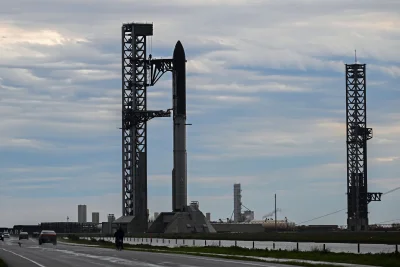
May 21 (UPI) —SpaceX on Thursday scrubbed the planned first test flight for its redesigned Super Heavy megarocket, the largest rocket ever built, from its new Texas launch pad.
Following several delays of the countdown at 40 seconds remaining, SpaceX spokesman Dan Huot announced the launch would be delayed due to engineering issues which could not be immediately remedied.
“We are expecting to be able to make another flight attempt tomorrow, but obviously stay tuned to our social media,” he said.
In addition to trying out the redesigned Super Heavy propulsion system, the launch is meant to assess upgraded systems on Starship, including the deployment of 22 Starlink satellite simulators, intentionally stressing its new flight control flaps and attempting the “dynamic banking maneuver” that it eventually will use to land back on its pad.
When it takes off, the uncrewed mission will be the 12th flight for Starship as SpaceX develops what is expected to be a primary vehicle for NASA’s Artemis missions to the moon.
“The flight test’s primary goal will be to demonstrate each of these new pieces in the flight environment for the first time, with each element of the Starship architecture featuring significant redesigns to enable full and rapid reuse that incorporate learnings from years of development and testing,” SpaceX said on its website.
The V3, which is 408 feet tall and more powerful than previous Super Heavy rockets, includes 33 redesigned Raptor engines — Starship has six of its own — will take off from South Texas for a round of primary tests similar to previous launches.
The rocket, SpaceX said, is hoped to successfully launch, ascend, separate from the second stage — Starship — and then perform boostback and landing burns in the Gulf of Mexico.
“As this is the first flight test of a significantly redesigned vehicle, the booster will not attempt a return to the launch site for catch,” the company said.
During the hot-stage separation, Starship will light its engines to enter a sub-orbital path, performing tests and then splashing down in the Indian Ocean.
Tests of the space vessel are important as NASA’s Artemis III mission in 2028 is expected to test connecting the Orion crew capsule to both Starship and Blue Origin‘s Blue Moon, although Blue Moon has yet to be launched for its first test flight.
Starship also is expected to be the ship that delivers Americans back to the moon in the next several years.
Employees check power demand and supply at the regional office of the Korea Electric Power Corp. in Suwon, 30 kilometers south of Seoul, South Korea. Photo by YONHAP / EPA
May 21 (Asia Today) — Korea Electric Power Corp.’s AI-based preventive diagnostics technology will be introduced to Germany’s power equipment market under the company’s largest-ever single technology transfer deal.
Korea Electric Power said Wednesday it signed a $1.34 million, or about 2 billion won, contract with German power equipment company Maschinenfabrik Reinhausen in Berlin on Tuesday. The South Korean utility will receive technology transfer fees from the German company over seven years.
The technology, called SEDA, analyzes about 100,000 pieces of substation equipment data a day. The system uses AI to detect abnormalities in power facilities by linking data from Internet of Things sensors, facility specifications and maintenance records.
Maschinenfabrik Reinhausen, founded in 1868, specializes in transformer load tap changers, sensors and digital solutions. The company has annual revenue of about 19 trillion won, or $12.6 billion.
The German company plans to apply SEDA to its TESSA 2.0 power equipment asset management platform. The platform monitors the condition of transformers, switchgear and other power equipment.
Korea Electric Power began using SEDA in South Korea in 2021. The system has been applied to 359 of the country’s 925 substations, or about 40%, and the company is gradually expanding its use.
The company said SEDA has detected an average of 15 abnormal signs per year over the past five years. Last year, the system helped prevent equipment damage worth 36.6 billion won, or about $24.3 million.
“This technology transfer is highly significant because it gives Korea Electric Power a key foothold for entering global markets, including Europe and North America,” said Yeo Geun-taek, head of the company’s transmission and substation operation office.
1 of 2 | The Ministry of Gender Equality and Family government complex in Seoul. Photo by Asia Today
May 21 (Asia Today) — The number of multicultural students in South Korea topped 200,000 for the first time last year, even as the country’s overall youth population continued to decline, government data showed Wednesday.
The Ministry of Gender Equality and Family released its 2026 youth statistics, covering 36 indicators in eight areas, to mark Youth Month in May.
The data showed the number of multicultural students reached 202,208 last year, up 4.3% from a year earlier. They accounted for 4% of all students.
Elementary school students made up 57.7% of multicultural students, followed by middle school students at 25.3% and high school students at 16.6%.
South Korea’s youth population, defined as people ages 9 to 24, stood at 7.409 million this year, accounting for 14.4% of the total population. That was down from 7.626 million, or 14.8%, last year.
Education indicators showed mixed trends. Seven in 10 students said they enjoyed going to school, up 1 percentage point from the previous year. The share was highest among elementary school students at 79.2%, followed by middle school students at 71.9% and high school students at 69.2%.
The private education participation rate among elementary, middle and high school students fell to 75.7%, down 4.3 percentage points from a year earlier. Average weekly time spent in private education also declined by 30 minutes to 7.1 hours.
The school dropout rate edged up to 1.1%, while the share of high school graduates advancing to higher education in South Korea or abroad rose to 74.4%.
Labor data showed the employment rate for people ages 15 to 29 was 45.0% in 2025, down 1.1 percentage points from the previous year. The unemployment rate rose 0.2 percentage points to 6.1%.
Among middle and high school students, 5.1% said they had worked part-time during the past year.
Income was the top factor young people considered when choosing a job. Teenagers and young adults ages 13 to 24 ranked income first, followed by aptitude and interest, then job stability.
Large companies were the most preferred workplaces, followed by government agencies and public corporations.
The share of young people prioritizing income has steadily increased since 2013, when it stood at 27.0%. The trend was stronger among male youths at 42.8% than female youths at 35.9%. Women were more likely than men to cite aptitude and interest as a key factor.
New York City is launching a lottery for 1,000 discounted World Cup tickets priced at $50. The city’s Mayor, Zohran Mamdani said match prices had soared into the thousands of dollars. The scheme is intended to give working-class New Yorkers access to matches.
May 21 (UPI) —Eli Lilly said its weight loss drug, retatrutide, helped nearly half of participants in a phase 3 trial to lose more than 30% of their weight.
Many of the people who lost that much weight were on the highest dose of retatrutide for up to two years, but the company said that the weekly injection was effective for weight loss across all doses of the drug.
Retatrutide affects three hormones — GLP-1 and GIP, each of which are targeted by similar weight loss drugs, and glucagon, which none of them targets — and could be best for people looking to lose larger amounts of weight, said the company’s chief scientific and product officer, Dan Skovronsky.
“We haven’t seen that level of weight loss before with these kinds of medicines,” Skovronsky said, referring to a group of drugs that includes Eli Lilly’s Zepbound.
“For some patients, 30% weight loss may be more than what they’re seeking,” he said. “For other patients, that may be what they need to get healthy. So, not everyone will go up to the highest dose level and stay on it for two years.”
The phase 3 trial included 2,339 people who were obese or overweight. They were evaluated after 1 1/2 years or two years having injections.
Those who received the highest dose lost an average of 70 pounds, roughly 28% of their body weight, after 1 1/2 years, with patients who were assessed after two years losing an average of 85 pounds, or 30.3% of their weight, the company reported.
Side effects from the drug were reported to be similar to other weight loss drugs, which include nausea, diarrhea and constipation, and some patients also experienced upper respiratory tract infections and a nerve condition called dysesthesia, the company said.
The side effects were also similar to those seen in phase 3 trials evaluating retatrutide for use against diabetes and a specific type of arthritis.
Eli Lilly has not yet applied to the Food and Drug Administration for approval of the drug for any of the three uses.
Pricing for 2026 World Cup has been under heavy scrutiny, including in New York where city mayor cuts limited tickets.
Published On 21 May 202621 May 2026
Some lucky New York City residents will soon get a chance to snag cheap seats to this summer’s high-priced World Cup.
Mayor Zohran Mamdani announced on Thursday that 1,000 tickets costing $50 will be made available to city residents of the city of more than 8 million for the world’s most watched sporting event.
Recommended Stories
list of 4 itemsend of list
“To put that into perspective, that is five lattes in New York City,” Mamdani quipped from a bar in Harlem’s Little Senegal neighbourhood, alongside US men’s national team star Timothy Weah.
The tickets will be available for seven of the eight games played at the 82,000-seat MetLife Stadium in New Jersey, across the river from Manhattan. The lone exception is the high demand July 19 final, where some seats are costing nearly $33,000.
The tickets will also include free round-trip bus transportation to the stadium and will be distributed via a lottery starting May 25.
With persistent concerns about the sky-high costs for tickets to the games, Mamdani said the city ensure the ones they distribute go to New York City residents and are not resold on the secondary market.
He said the tickets will be non-transferable, with a “variety of ways” used by city officials to verify residency. They will only be handed out directly to fans as they board buses on game day.
“We are making sure that working people will not be priced out of the game that they helped to create,” Mamdani said.
The Democrat, who took office in January, said the effort underscores how his administration is not simply focused on making everyday things like housing and groceries more affordable.
“It extends to making it possible for every New Yorker to take part in the things that make us human,” he said.
During his campaign, Mamdani called on FIFA, football’s global governing body, to make it cheaper for New Yorkers to go to games by setting aside 15% of tickets at discounted prices. He had launched a petition calling on FIFA to reverse its plan to set ticket prices based on demand.
The $50 tickets don’t come directly from FIFA, but from those allotted to New York and New Jersey’s joint host committee for the games, according to the mayor’s office.
Previously, FIFA had made some $60 tickets available for every game at the tournament in North America following backlash over exorbitant prices.
Those reduced price tickets, though, went to the national federations of the teams playing, with the federations deciding how to distribute them to loyal fans who have attended previous games at home and away.
Besides the final, the home stadium for both the NFL’s New York Giants and New York Jets is set to host five group World Cup matches and two knockout stage games. Group stage matches for former winners Brazil, France, Germany and England, along with other nations, begin on June 13.
The U.S. State Department will now require all U.S. citizens and legal residents traveling back to the United States from three African countries experiencing an Ebola outbreak must enter the country through Washington, D.C., for an enhanced security screening. EPA-EFE/Stringer
May 21 (UPI) — Americans traveling back to the United States who have recently been in Democratic Republic of the Congo, Uganda or South Sudan will be required to enter the country through Washington, D.C.
Citizens and lawful permanent residents who have been in any of the countries in the last 21 days will be required to fly to Washington Dulles International Airport for enhanced health screenings before continuing on to their final destination, the U.S. Department of State announced.
The announcement follows an Air France flight bound for the United States on Wednesday afternoon being redirected to Montreal Trudeau International Airport after a passenger on board was determined to be from the DRC.
The U.S. Centers for Disease Control and Prevention on Monday already had blocked non-U.S. passport holders from entering the United States if they had been to any of the three African nations in the last 21 days.
An American doctor, one of several exposed in the DRC, was also confirmed to be infected with the Bundibugyo strain of Ebola on Tuesday and flown to Germany for treatment.
“The Dulles requirement applies to all passengers, including U.S. citizens and lawful permanent residents, who were present in those countries,” the State Department said in a travel advisory.
“Please be prepared for flight changes or cancellations,” the department said.
World Health Organization Director-General Tedros Adhanom Ghebreyesus said during a press conference that there have 51 confirmed cases of Ebola among the three countries, with nearly 600 suspected cases and 139 suspected deaths.
Tedros said the scale of the epidemic is “much larger” in the DRC, and that there have been deaths reported among health care workers, which suggests health care-associated transmission.
The U.S. Centers for Disease Control and Prevention has reported that the doctor whose case was confirmed this week, with officials flying him to Germany because of their previous experience in handling Ebola cases.
Although contacts linked to the doctor also have been moved to Germany and Czechia for observation, there have been no additional cases in Americans, the CDC said.
President Donald Trump turns to photographers in the press pool after greeting guests during the Congressional Picnic on the South Lawn of the White House on Tuesday. Photo by Samuel Corum/UPI | License Photo
The UK has had six prime ministers in 10 years. Is it ready for a seventh?
Britain’s Prime Minister Keir Starmer is facing the biggest crisis of his leadership after Labour’s bruising election losses sparked panic inside the party. As Nigel Farage and Reform UK gain ground, we examine why Starmer’s authority appears to be slipping before any formal challenge has even begun and whether Britain is entering another period of political instability.
In this episode:
Episode credits:
This episode was produced by Noor Wazwaz and Sarí el-Khalili, with Spencer Cline, Tuleen Barakat, Catherine Nouhan and our host, Malika Bilal. It was edited by Tamara Khandakar.
Our sound designer is Alex Roldan. Our video editors are Hisham Abu Salah and Mohannad al-Melhem. Alexandra Locke is The Take’s executive producer.
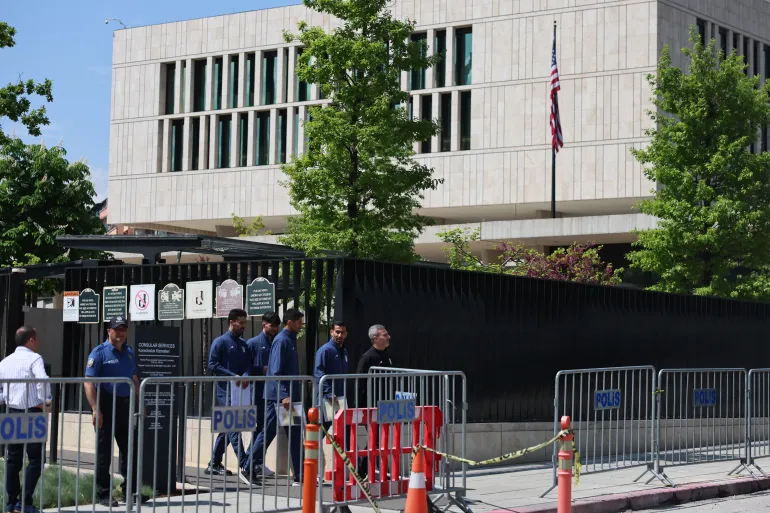
A number of players submitted visa applications in person at the US embassy in Ankara ahead of their training camp.
Published On 21 May 202621 May 2026
Iran’s football team have attended visa appointments in Turkiye ahead of the World Cup, with the whole squad applying for Canadian visas and some players also submitting applications for entry into the United States.
A number of players submitted applications in the Turkish capital Ankara on Thursday, an Iranian football federation official told Reuters news agency.
The whole squad attended appointments for Canadian visas, while some players who had not applied for American visas before the US and Israel attacked Iran in February also submitted their visa applications in person at the embassy.
Some foreign-based Iranian players joined the squad in Ankara before later travelling to the team’s training camp in Antalya on Turkiye’s Mediterranean coast, the official said.
The players and delegation members submitted US visa applications in the Turkish capital [Adem Altan/AFP]
The World Cup will be cohosted by the US, Canada and Mexico, with Iran due to play all three of their group-stage matches on the US West Coast.
Iran are scheduled to face New Zealand on June 15 and Belgium on June 21 in Los Angeles before taking on Egypt in Seattle five days later. They would require access to Canada if they progress to the knockout rounds.
Iran is holding a pre-tournament camp in Turkiye following the suspension of the Iranian domestic league in March, leaving many players short of match fitness.
The team trained in Antalya earlier this week as coach Amir Ghalenoei attempted to prepare his squad after most domestic-based players went seven weeks without competitive football during the suspension of the Iranian league.
Iran qualified early for the expanded 48-team World Cup, but preparations have been overshadowed by uncertainty over travel and security arrangements following the US-Israeli war on Iran.
Iran’s football federation had previously said US visa applications for the team would be handled in Turkiye after discussions with FIFA.
Iran are due to play Gambia in a friendly on May 29 before Ghalenoei names his final 26-man World Cup squad by FIFA’s June 1 deadline.