From breaking news to significant developments in politics, business, technology, entertainment, and more, we deliver the stories that shape our global landscape.
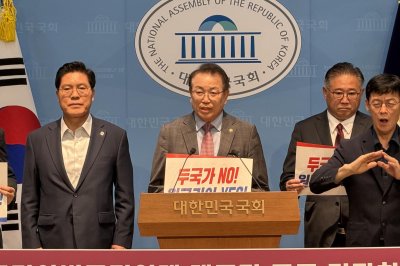
From left, People Power Party lawmaker Song Seok-jun, Committee for Ten Million Separated Families Chairman Jang Man-soon and Kenneth Bae, president of New Korea Foundation International, attend a news conference opposing the South Korean government’s two-state approach to inter-Korean relations at the National Assembly in Seoul on Thursday. A sign-language interpreter is at far right. /Citizens’ Solidarity for ONE KOREA
June 25 (Asia Today) — A South Korean civic leader proposed creating a satellite communications network modeled on SpaceX’s Starlink to provide outside information to people in North Korea.
Jang Man-soon, chairman of the Committee for Ten Million Separated Families and a co-chair of Citizens’ Solidarity for ONE KOREA, called the proposed system “Korea Link.”
“If we place a system similar to Starlink over North Korea, we could inform North Koreans who have access to approximately 8.5 million mobile phones about the realities and conditions in South Korea,” Jang said during an interview Thursday at the National Assembly in Seoul.
The figure was Jang’s estimate and could not be independently confirmed.
Jang said the network could communicate the importance of freedom to North Korean residents and correct historical accounts and information distorted by the North Korean government.
He said it could also help North Koreans develop pride in the goal of Korean unification.
Jang argued that a new means of communication is necessary because traditional methods of reaching North Koreans, including radio broadcasts and border loudspeakers, have become increasingly restricted.
He said North Korean leader Kim Jong Un’s “two hostile states” policy is partly intended to isolate residents from outside information.
“North Korea is at a disadvantage in politics, economics, culture and military power, so the government is trying to block outside information from reaching its people,” Jang said.
Jang also discussed the declining prospects for families separated by the division of the Korean Peninsula and the 1950-53 Korean War.
“The wish of separated families is no longer simply to reunite with relatives,” he said. “It is to set foot in their hometowns.”
Many first-generation separated family members are now in their 90s, and few still have living parents in North Korea, he said.
“Their greatest wish is to visit their hometowns before they die,” Jang said.
He warned that public awareness of separated families is fading with each generation.
Jang called for expanded unification education for young people, opportunities to hear testimony from first-generation separated family members and educational visits to areas near the inter-Korean border.
“The reality is that only about half of the public now believes unification is necessary,” he said. “We are preparing various activities, including youth education, testimony from first-generation separated families and visits to border regions.”
Jang urged the South Korean government to participate in practical projects intended to support North Korean residents and preserve awareness of freedom and unification.
“If we view the people of North Korea as members of the same nation, I hope the government will participate in the practical plans we are pursuing,” he said.
“We must work together to establish a foundation that will allow future generations to understand the meaning of genuine freedom in the Republic of Korea.”
June 25 (UPI) — Authorities in northern Canada on Thursday confirmed that three people are dead after a plane responding to forest fires in the Northwest Territories crashed the night prior.
NWT Fire said responders were able to access the crash site on Thursday and confirmed the fatalities.
“Our organization is grieving alongside the families, friends, colleagues and the broader wildfire community as we process this unthinkable loss,” it said in a statement.
“We will honor those who lost their lives in the line of duty at the appropriate time and in accordance with the wishes of their families.”
The bird dog aircraft, with three people aboard, crashed Wednesday evening near Fort Simpson where it was deployed along with an airtanker group to fight a nearby wildfire.
Though the identities of the victims have not been made public, Yellowknife-based Buffalo Airways confirmed one was an employee.
“It is with heavy hearts that we confirm the loss of one of our aerial firefighting pilots while actioning fire west of Fort Simpson,” Buffalo Airways said in a statement.
Buffalo Airways said the involved plane was a Turbo Commander 690 aircraft operating as a bird dog during the wildfire operations.
The Transportation Safety Board of Canada announced in a statement that it is deploying investigators to the scene.
“My thoughts are with the families of the pilot and two firefighters who died in the plane crash near Fort Simpson,” Prime Minister Mark Carney of Canada said in a statement.
“Protecting Canadians from wildfires requires profound sacrifice and courage. We owe them our deepest gratitude.”
Officials were responding to 19 forest fires throughout the territory Thursday.
The aircraft involved in the Wednesday evening crash was supporting wildfire suppression efforts on FS009-26, a lightning-caused fire located in the Marten Hills area.
Officials said Thursday night that the fire was about 100 hectares and responders were working to suppress its growth. It presented no risk to communities, infrastructure or buildings, they said.
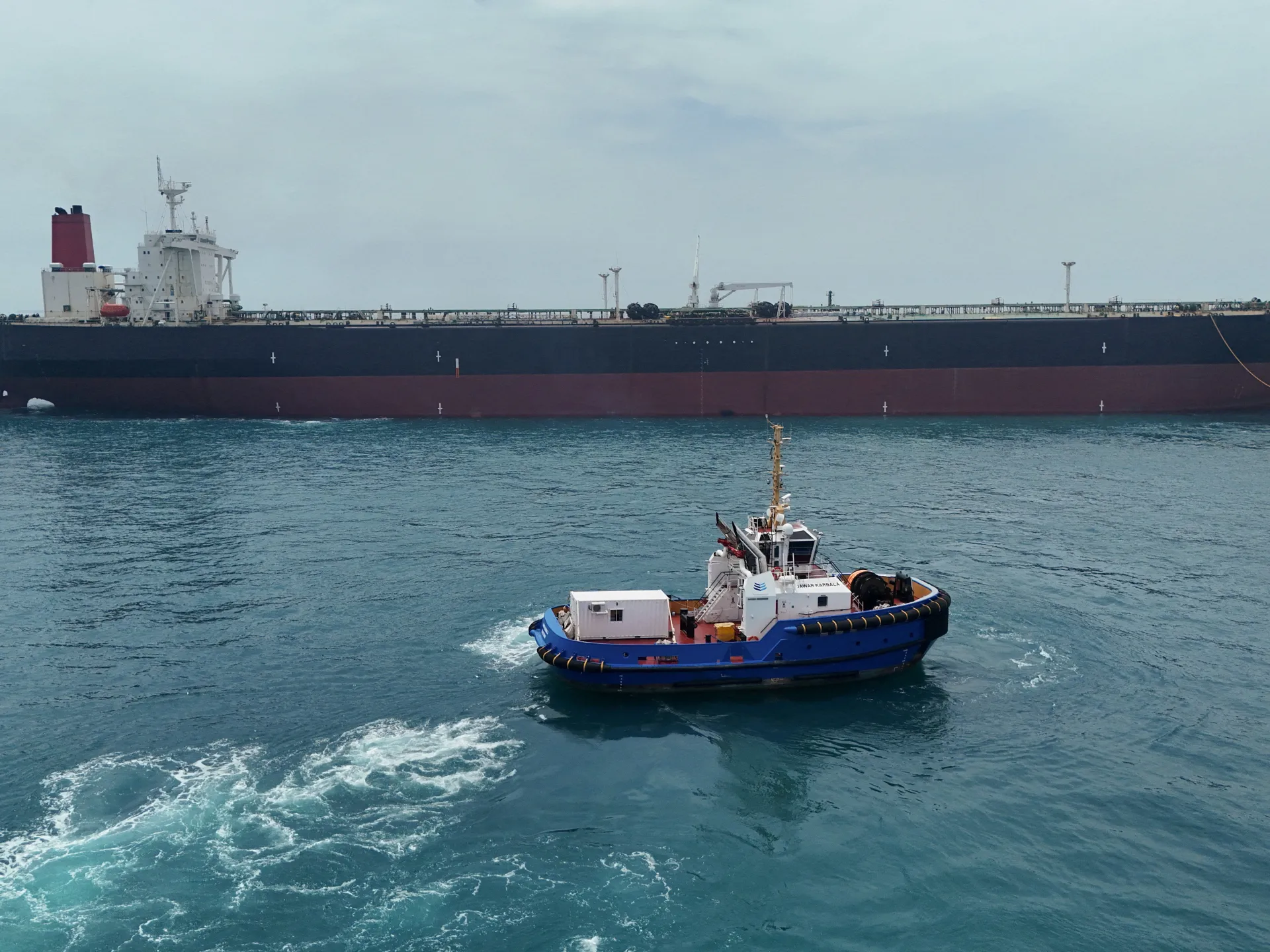
June 25 (UPI) — A cargo vessel in the Strait of Hormuz was attacked Thursday, prompting officials to halt the evacuation of sailors stranded in the chokepoint by the war.
It was unclear who attacked the cargo ship. According to the British navy’s United Kingdom Maritime Trade Operations office, the vessel was struck on its starboard side by an unknown projectile at about 5:40 p.m. local time. It was about 7 1/2 nautical miles southeast of Dahit, Oman, when it was attacked, it said.
The vessel’s bridge sustained damage, but no casualties or environmental impact were reported.
Following the attack, the United Nations’ International Maritime Organization paused its evacuation operation in the Strait of Hormuz.
“I have decided to temporarily pause its implementation in order to reconfirm that the necessary safety guarantees continue to be in place for the ships on our evacuation list and all those in the region,” IMO Secretary-General Arsenio Dominguez said in a statement.
The war, which began Feb. 28, left some 11,000 sailors stranded in and around the Strait of Hormuz, a vital energy shipping route. The IMO announced the evacuation operation Tuesday, after the United States and Iran agreed to a Memorandum of Understanding that seeks to pave a path to ending the war.
The vessel struck Thursday was not transiting the Hormuz under the IMO’s evacuation framework, the U.N. agency said.
Though it unclear who was responsible for the attack, the Iran’s U.S.-sanctioned Persian Gulf Strait Authority, newly created by Tehran to oversee and manage the strait, issued an advisory Thursday, stating it is not responsible for the protection of vessels transiting “outside designated routes.”
“Any consequences arising from unauthorized routing shall be the sole responsibility of the vessel owner, charterer and master,” it said.
Control of the strait has been a focus of ongoing U.S. efforts to end the war.
Iran effectively closed the strait after being attacked Feb. 28, causing energy prices to surge and threatened nations with worsening energy crises.
Since then, Iran has attempted to maintain control of the strait and has sought to impose fees on ships that transit it.
The United States is seeking to secure free maritime travel through the strait as part of the MOU. U.S. Secretary of State Marco Rubio is currently in the Middle East trying to sell the MOU to allied nations.
However, the Institute for the Study of War said in a report Thursday night that Iran’s alleged attacks and threats directed at vessels in the strait “advance its objective of establishing control over the waterway” as well as “undermine international efforts to guarantee safe passage through the Strait of Hormuz.”
“Iran is using military threats and economic incentives to try to convince Gulf states to support its efforts to control the strait, but the Gulf states appear to be resisting Iranian pressure at present,” it said.
Court personnel leave a senior citizens’ center at Woosung Apartments in Jamsil, Seoul, after completing an on-site inspection on June 10 under a partially granted evidence-preservation request filed by the Reform Party. Photo by Asia Today
June 25 (Asia Today) — A South Korean court has again rejected a request to preserve ballots, ballot boxes and other election materials kept at a counting center in Seoul’s Songpa District.
The First Civil Division of the Seoul Eastern District Court, led by Presiding Judge Joo Jin-am, dismissed an appeal Tuesday filed by the Freedom and Innovation party against the chair of the Songpa District Election Commission.
The materials were stored at a counting center inside the Olympic Park Handball Gymnasium.
The court rejected the party’s initial evidence-preservation request on June 12, prompting the party to appeal.
Freedom and Innovation claimed that ballot-paper shortages, the transportation of ballot boxes and other alleged irregularities during the June 3 nationwide local elections could have affected the voting and counting results.
The party sought court preservation of ballots, ballot boxes and related materials for possible use in future litigation.
The court, however, found that the application failed to satisfy legal requirements including relevance and necessity.
Judges said there was no sufficient connection between the ballot shortages and the requested preservation of ballots and ballot boxes from polling places where voting had been completed normally.
The court also determined that obtaining the materials would not help establish the disputed issues in an underlying lawsuit.
It said a separate preservation order was unnecessary because election law already requires the materials to be retained.
South Korean Deputy Prime Minister and Minister of Finance and Economy Koo Yun Cheol and representatives of government agencies, policy-finance institutions and major shipbuilders attend a signing ceremony for a Korea-U.S. shipbuilding cooperation investment agreement at the Export-Import Bank of Korea in Seoul on Thursday. Photo from the Ministry of Trade, Industry and Resources, used under KOGL Type 1.
June 25 (Asia Today) — South Korea launched a policy-finance framework Thursday to support $150 billion in shipbuilding cooperation with the United States, seeking to share early-stage investment risks with domestic companies expanding into the U.S. market.
The Korea-U.S. Strategic Investment Corporation, four state-backed financial institutions and three major South Korean shipbuilders signed a memorandum of understanding at the Export-Import Bank of Korea headquarters in Seoul.
The agreement is the first institutional step toward implementing the $150 billion shipbuilding cooperation package included in a bilateral strategic investment memorandum signed in November 2025.
The participating financial institutions are the Export-Import Bank of Korea, Korea Development Bank, Korea Trade Insurance Corp. and Korea Ocean Business Corp.
The three shipbuilders are HD Hyundai Heavy Industries, Samsung Heavy Industries and Hanwha Ocean.
Under the agreement, the participants will establish a Korea-U.S. Shipbuilding Cooperation Investment Council to identify U.S. investment projects, coordinate policy financing and jointly monitor their implementation.
The Export-Import Bank of Korea will serve as the council’s secretariat, coordinating communication among the institutions and overseeing the progress of individual projects.
South Korean Deputy Prime Minister and Minister of Finance and Economy Koo Yun Cheol said shipbuilding cooperation is one of the two main pillars of strategic investment between South Korea and the United States.
Koo urged the investment corporation and policy lenders to develop financing measures that can provide companies with sufficient funding when it is needed.
“The government and policy-finance institutions must actively seek ways to share the risks and uncertainty of initial investments that individual companies cannot bear alone,” Koo said.
He said the initiative should help South Korean shipbuilders support the rebuilding of the U.S. shipbuilding industry while creating new contracts and markets across South Korea’s domestic shipbuilding supply chain.
The benefits should extend beyond large shipbuilders to small and midsize shipyards and marine equipment suppliers, he said.
“We must create a path for small and midsize shipbuilders and equipment suppliers to participate together as Team Korea,” Koo said.
The government plans to use the council to develop financing for investments in U.S. shipyards, naval vessel construction, maintenance, repair and overhaul services and commercial shipbuilding.
The policy-finance structure is intended to help companies manage the large capital requirements and financial risks associated with entering the U.S. market.
Financial Services Commission Vice Chairman Kwon Dae-young described the initiative as an opportunity for South Korea’s shipbuilding industry to demonstrate its capabilities in the global market.
“We will actively support the necessary financing through close cooperation among the newly established Korea-U.S. Strategic Investment Corporation, policy-finance institutions and private financial companies,” Kwon said.
Park Dong-il, deputy minister for industrial policy at the Ministry of Trade, Industry and Resources, said the Make American Shipbuilding Great Again initiative, or MASGA, represents the first strategic overseas expansion project in the history of South Korea’s shipbuilding industry.
Park said encouraging signs were emerging in the United States, including potential orders for South Korean companies.
He called on policy lenders to coordinate closely so shipbuilders can enter the U.S. market without delays.
“The signing ceremony is expected to provide initial momentum for the MASGA project and create a new opportunity for South Korea’s shipbuilding industry to advance,” Park said.
Shipbuilding companies also pledged to identify commercially viable projects with government financial support.
HD Hyundai Heavy Industries CEO Lee Sang-kyun said producing tangible results from the bilateral cooperation was the most important objective.
“This cooperation should develop into a system that simultaneously supports the growth of South Korea’s shipbuilding industry and the rebuilding of the U.S. shipbuilding base,” Lee said.
South Korean shipbuilders will identify investment opportunities that offer profitability and can be carried out effectively using their advanced technology, he said.
Lee also urged the government to prepare a broad range of support measures to help create a turning point in bilateral shipbuilding cooperation.
The government said it will use the agreement to begin full cooperation among the investment corporation, policy-finance institutions and shipbuilders.
It also plans to expand the Team Korea framework so small and midsize shipyards and marine equipment suppliers can participate in projects entering the U.S. market.
Shafali Verma’s half-century helps the 50-over world champions reach the target inside 17 overs at Old Trafford.
Published On 25 Jun 202625 Jun 2026
India beat Bangladesh by five wickets in Manchester to bolster their hopes of a semifinal place at the Women’s T20 World Cup.
Chasing a modest target of 137 at Old Trafford, opener Shafali Verma struck 53 from 34 balls as India reached their target inside 17 overs on Thursday.
Recommended Stories
list of 4 itemsend of list
South Africa, meanwhile, capitalised on a maiden T20 international century from Tazmin Brits to overwhelm the Netherlands by 88 runs.
That means India and South Africa are now effectively involved in a shootout for the second semifinal spot behind unbeaten Group A leaders Australia.
They both have six points, two behind the Australians and two ahead of Bangladesh, who still have a slim mathematical chance of qualifying for the knockout stages, with their last pool match against South Africa at Lord’s on Sunday.
India have the better run rate but face the daunting task of toppling Australia in their game on Sunday, which is also at Lord’s.
The Indians will likely need to improve their fielding against six-time champions Australia after dropping four catches on Thursday, although Bangladesh were too weak to capitalise as they slumped to 136-8.
Spin again provided the bulk of India’s wickets, with Radha Yadav taking 3-28 and Shree Charani 2-21.
South Africa were never in danger once Brits and Laura Wolvaardt put on 121 for the first wicket.
When Wolvaardt departed for 45, Brits continued to cane the Dutch bowlers with Annerie Dercksen, who made 37 not out off 16 balls.
Brits finished with 114 not out from 69 balls with 15 fours and three sixes as South Africa finished on 208-1.
The Dutch also made a good start with openers Phebe Molkenboer (41) and Sanya Khurana (36) adding 58 for the first wicket. Sterre Kalis kept the momentum going with a 28-ball 26, but once those three were gone, the innings folded.
Medium-pacer Ayabonga Khaka was the most successful of the bowlers with 3-19 while slow left-armer Chloe Tryon took 2-16 from her four overs.
June 25 (UPI) — The U.S. Supreme Court on Thursday struck down a Hawaiian law that required people to ask permission to carry a concealed firearm onto a private property.
The Court’s majority, in a 6-3 ruling, said that Hawaii cannot block a properly licensed person from carrying a concealed weapon on private properties that are open to the public.
Hawaii was one of five states that enacted similar laws after the Court in a 2018 ruling said that states could not limit gun licenses to “exceptional cases” because it violated the 2nd Amendment right to carry a firearm.
The law required people who wanted to carry their firearm in places such as gas stations, restaurants, grocery and other stores, dry cleaners and other properties that are “open to the public” to get permission to carry their gun.
“Under the new Hawaii law, no one carrying a firearm may enter without the property owner’s express authorization,” Justice Samuel Alito wrote in the majority opinion.
“The effect of this new rule is to impose severe restrictions on the daily activities of residents who have satisfied the State’s rigorous requirements for the issuance of a carry permit,” Alito wrote.
In a dissenting opinion, Justice Ketanji Brown Jackson disagreed with the majority that the Hawaii law is an “attempt to end-run our Second Amendment precedents,” suggesting instead that it applies the first principle of property law, the right to exclude.
In addition to noting that Hawaii has a long history of restrictive gun laws, Brown Jackson said it enacted the permission law in order to prevent confusion among property owners that federal law had affected traditional expectations in the state.
“The public might well have an implied license to enter private property open to the public, and such permission might generally include the ability to enter armed,” she wrote in the dissent.
“But,” she wrote, “any such license is not a matter of right — a license is a creature of state law and custom, and it can vary accordingly.”
Kibiwott Kandie initially faced an eight-year ban split evenly across two violations, but received a one-year reduction.
Published On 25 Jun 202625 Jun 2026
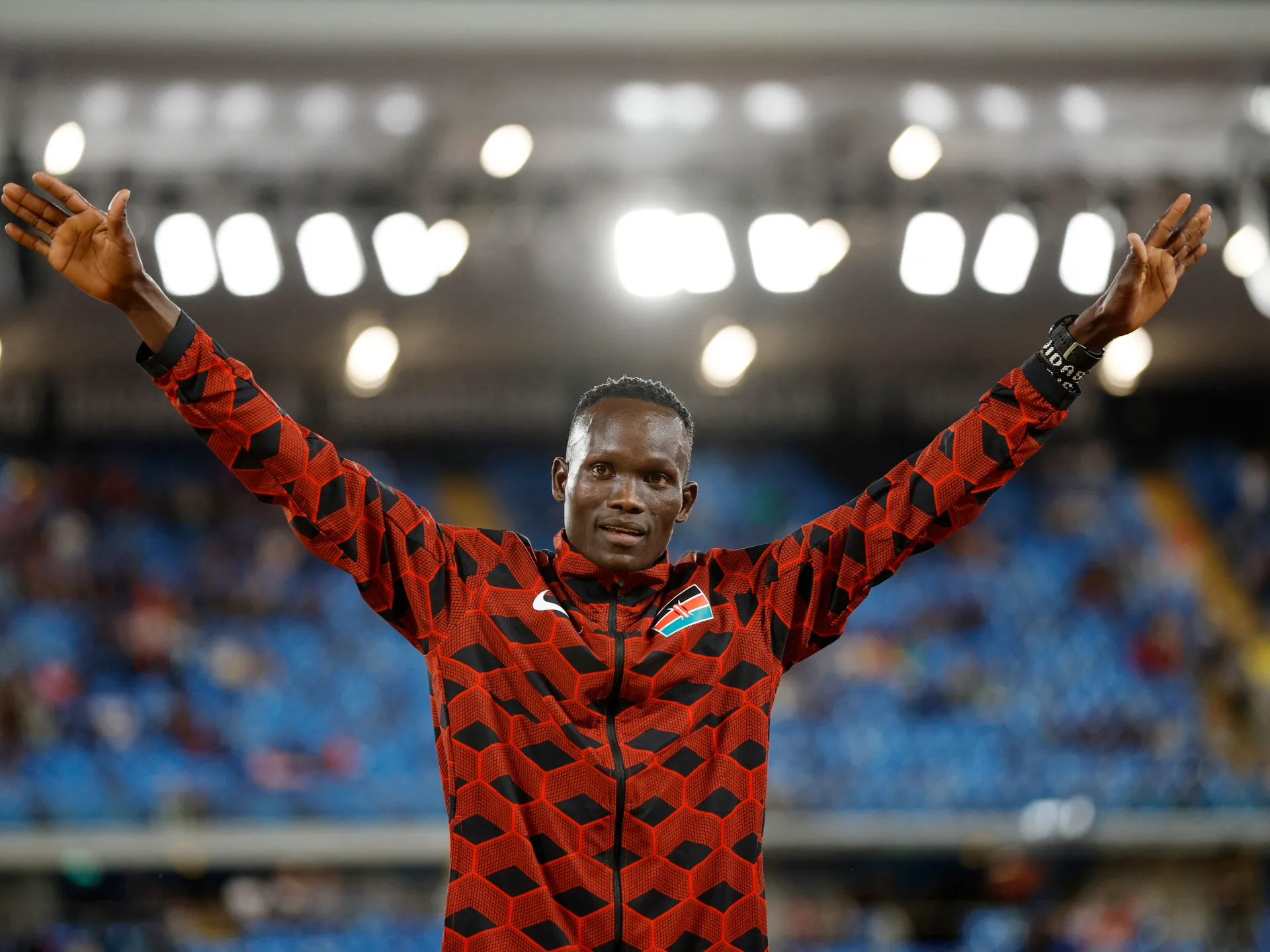
Former half-marathon world-record holder Kibiwott Kandie has been banned for seven years by the Athletics Integrity Unit (AIU) for two anti-doping violations, the body has said.
The 30-year-old Kenyan, a 2022 Commonwealth Games bronze medallist, was provisionally suspended in March 2025 for refusing to provide a sample and was later charged with an additional violation of tampering or attempted tampering with doping control.
Recommended Stories
list of 4 itemsend of list
“This case serves as a reminder that no athlete is above the rules in the sport of athletics. If an athlete refuses a test, it places the integrity of the sport at risk,” AIU head Brett Clothier said in a statement on Thursday
“The AIU has a strong forensic capability and will thoroughly investigate such cases to ensure the truth comes out,” he added.
Kandie, who initially faced an eight-year ban split evenly across the two violations, received a one-year reduction after accepting the sanctions early.
His ban is backdated to March 14, 2025, the date of his provisional suspension, and will run until March 13, 2032, when he will be 36.
On March 1, 2025, Kandie delayed and ultimately refused an out-of-competition test at his home in Kenya, citing an urgent payment before leaving despite being warned of the consequences.
AIU analysis of his phone and financial records showed multiple calls and payments linked to a nurse, with 11 transfers identified in the 12 months prior to the test, after coordination with the Anti-Doping Agency of Kenya.
Kandie’s initial explanations for refusing to provide a sample were later found to be false, while Kenyan authorities confirmed that documents he submitted were fake.
Kandie, a three-time Valencia Half Marathon champion, set a then-world record of 57:32 in 2020 and remains the third-fastest man in history over the distance, with two of the six quickest performances of all time.
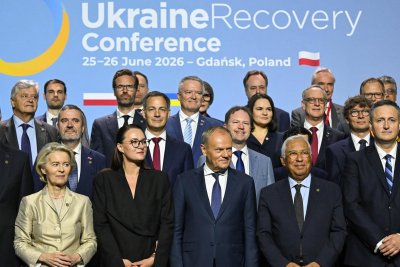
Polish Prime Minister Donald Tusk, center, European Commission President Ursula von der Leyen, left, European Council President Antonio Costa, second from right, and Ukrainian Prime Minister Yulia Svyrydenko, second from left, pose for a group photo at the opening session of the Ukraine Recovery Conference 2026 at the European Solidarity Centre in Gdansk, Poland, Thursday. Photo by Adam Warzawa/EPA
June 25 (UPI) — The European Union released $3.6 billion in funds of the Ukraine Support Loan for budget and defense needs, the bloc said Thursday.
The funds were released at the Ukraine Recovery Conference, where European Commission President Ursula Von der Leyen announced the funding, which is the first instalment of the new macro-financial assistance. The MFA is a segment of the Ukraine Support Loan, under which $102 billion will be offered to Ukraine in 2026 and 2027.
“As a country at war, Ukraine’s capaicty to defend its territory depends on the rapid availability of critical products in the required quantities and within very short timeframes,” a press release said. “The first instalment of the [$6.8] billion defense package to support drone procurement will be disbursed in the coming days.”
“This is indeed solidarity in action,” Von der Leyen said. “It shows Europe’s support for Ukraine is here to stay.”
The original plan in December was to use Russia’s frozen assets to fund the loan, but the Russian Central Bank sued a Belgian bank over the plan, so the EU had to find a new way to finance the loan.
Instead, they agreed to create the loan through joint debt. Hungary, Slovakia and the Czech Republic negotiated an exemption.
The payments are conditional on Kyiv’s reforms. If Ukraine reverses its ongoing fight against corruption, the EU could suspend the funds, Euro News reported.
The loan also requires Ukraine to buy weapons and ammunition made in Europe, with some exceptions depending on availability.
“Ukraine has the opportunity to analyze the situation on the battlefield and identify the range of products that they need, and then they have to inform us in the form of product schedules,” a Commission spokesperson told Euro News. “The priority remains to make purchases within the EU and Ukraine.”
“We continue to call on all our partners to maintain their support, because a strong and independent Ukraine is in all our interests,” Von der Leyen said Thursday. “Our ambition is not only to help Ukraine endure, it is also to help Ukraine grow and prosper as a free and European country.”
The United States is not expected to contribute funds to the loan.
Six countries – Saudi Arabia, the United Arab Emirates (UAE), Qatar, Kuwait, Bahrain and Oman – form the Gulf Cooperation Council (GCC), which was created in 1981 following fears of the perceived expansionist ambitions of the new Iranian government.
Recommended Stories
list of 4 itemsend of list
Since the 1979 Islamic revolution, Israel has attempted to isolate Iran and its wide network of regional proxy groups. But in a twist of irony, Israeli aggression in this pursuit has pushed some Gulf states closer to Tehran.
When Israel and the US launched strikes on Iran on February 28 – and Tehran responded by attacking Gulf states – they were again forced to reassess their relationship with their neighbour.
Gulf relations with Iran, at present, appear more shaped by realism than reconciliation, but this approach could help them navigate the uncertain road ahead.
“The ongoing conflict … compelled the Gulf states to pursue a more pragmatic relationship with Tehran, one that will include enhanced dialogue to deter conflict,” Farah al-Qawasmi, a researcher at the Gulf Studies Center at Qatar University, told Al Jazeera.
Embracing de-escalation – not Iran
All six GCC member states have welcomed a memorandum of understanding (MoU) signed by Iran and the US last week. But this is shaped more by the Gulf states wanting the war to end rather than a newfound trust of Iran.
“An agreement between the two parties is being [highly] advocated by the Gulf states in [an] attempt to prevent and contain regional conflicts,” al-Qawasmi said.
Shortly after the US and Iran agreed in 2015 to the Joint Comprehensive Plan of Action (JCPOA) – putting guardrails on Tehran’s nuclear programme – Gulf states remained sceptical about their neighbour.
The current war has only heightened these suspicions, but it has also seen regional states seek diplomacy with Tehran rather than military confrontation, despite Iran directly attacking Gulf cities.
“The Gulf states still feel like diplomacy is better than using force to get a deal … to change Iran’s behaviour and to insulate them from Iran’s destabilising actions,” Rob Geist Pinfold, a lecturer on security studies at King’s College London, told Al Jazeera.
Pinfold points out that Iran closed the Strait of Hormuz via drones and missiles, not nuclear weapons, making dealing with that threat a priority for Gulf states rather than Tehran’s nuclear programme.
Gulf states will want a more comprehensive agreement between Iran and the US, rather than the nuclear-focused JCPOA, said Pinfold.
“If you talk to people in Gulf capitals, they will tell you that the nuclear programme is a tomorrow problem for them,” he said.
“The today problem is Iran’s use of drones and proxies to destabilise and undermine the sovereignty of Gulf states, but also states throughout the region.”
US Secretary of State Marco Rubio’s three-day tour of the Gulf, which ends Thursday, is seen as a way of allaying these fears and assuring the GCC that Tehran will not be strengthened by the agreement.
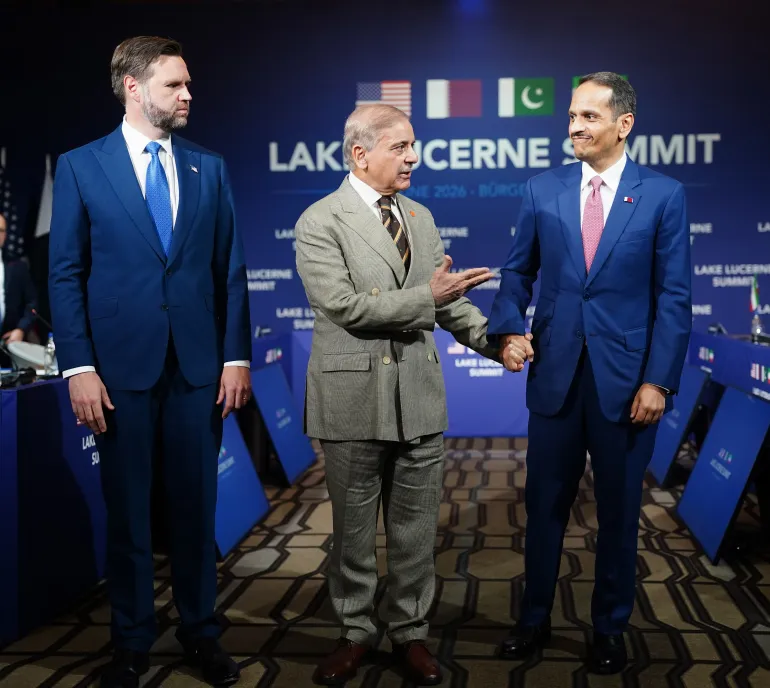
US Vice President JD Vance, left, looks on as Pakistan’s Prime Minister Shehbaz Sharif, centre, speaks and gestures towards Qatar’s Prime Minister and Minister of Foreign Affairs Sheikh Mohammed bin Abdulrahman bin Jassim Al Thani, right, at the start of a quadrilateral meeting between the US, Iran, Pakistan and Qatar [File: Nathan Howard/Pool via Getty Images]
Seat at the table
Mehran Haghirian, the director of research and programmes at the Bourse & Bazaar Foundation, believes Gulf states are in a better position to guide the outcome of the current US-Iran talks than in 2015.
“They are at the heart of the negotiations,” Haghirian said regarding the Gulf states’ role in the current talks.
In its role as a co-mediator, Qatar is essentially representing the GCC and their interests during the talks, while articles five and six of the Iran-US MoU place Gulf states at the centre of the agreement.
Among the biggest concerns for the GCC are the future of the Strait of Hormuz, with Tehran demanding tolls on shipping, and calls for the creation of a regional investment fund for Iran.
“There really cannot be any new Hormuz authority by Iran that would not include other GCC countries,” Haghirian told Al Jazeera.
US Vice President JD Vance claimed last week that the investment fund would be financed by the Gulf coalition, but Rubio said this week that regional allies would not be asked to contribute to any reconstruction fund for Iran.
Qatar’s Prime Minister Sheikh Mohammed bin Abdulrahman bin Jassim Al Thani has described the reported $300bn figure as “aspirational” in an interview with the Financial Times, while no Gulf state has yet said if it will contribute to the fund.
‘Maximum pressure era’
The analysts stress that the GCC is not a monolith – with Gulf states having contrasting and changing approaches towards Iran.
Oman, Qatar and Kuwait were broadly supportive of the JCPOA. Saudi Arabia, the UAE and Bahrain were more sceptical, but even these states publicly backed the agreement, said Haghirian.
When Trump pulled the US out of the JCPOA in 2018, Saudi Arabia, the UAE and Bahrain believed they had “found a partner in DC”.
That led to a “maximum pressure era” that brought a period of brinkmanship in the region, said Haghirian.
Suspected Iran-linked attacks on Saudi Arabia’s Abqaiq-Khurais oil facilities and vessels off the coast of Fujairah in 2019 were “the initial reaction by the Iranians to that maximum pressure” campaign, he added, but paradoxically, this also triggered a recalibration of relations.
“That was enough of a reason for Saudi Arabia [and] the UAE, particularly, to basically restructure their approach towards Iran,” Haghirian said.
The war and accelerated pragmatic rapprochement
While Israel has used war to attempt to increase its presence in the Gulf region – reportedly sending an Iron Dome battery to the UAE – other Gulf states view both Iran and Israel as unsettling forces in the region.
“Israel started the war, which was a destabilising act, and then Iran escalated by targeting the Gulf states, which was in turn a destabilising act,” Pinfold said.
Despite this, the Gulf states targeted by Iran still demonstrated patience and pragmatism in dealing with their neighbour.
Qatar, for example, has played a leading role in mediating between the US and Iran, even after being on the receiving end of Iranian drone and missile attacks.
“All six got attacked, and that’s really a level of foreign policy decision-making that is very difficult for any state to be able to really undertake, considering the fact that it was a military attack,” Haghirian said.
“But again, this pragmatism came out within this context to engage Iran and to actually speak for themselves at these negotiations. This war has really initiated a complete rebalancing of the entire region.”
June 25 (UPI) — New York prosecutors will not retry disgraced film producer and convicted sex offender Harvey Weinstein on an unresolved rape charge related to actress Jessica Mann.
Prosecutors dropped the charges Thursday, more than six years after Mann, 40, first testified that Weinstein, 74, raped her in a Manhattan hotel room in 2013. Weinstein’s initial conviction for the charge was overturned in 2024, followed by two mistrials.
The D.A.’s office said Mann did not wish to go through a fourth trial.
“To be clear, we believe Ms. Mann’s account and her credibility as a witness,” Manhattan D.A. Alvin Bragg said in a statement. “This has been an extraordinarily taxing ordeal for her, and she has never wavered while testifying in front of two grand juries and three trial juries over the course of eight years. We thank her for her honesty and her tremendous bravery.”
In a statement to the court, Mann said it became clear to her during the latest trial, held this spring, that she “could no longer endure going through this any longer.”
“In my fight to see justice, it has nearly stolen a decade of my life and put me through more harm than good,” she added. “Justice now has moved away from the courts, solely into the hands of God.”
Weinstein is still awaiting sentencing after being convicted in 2025 of sexually assaulting former Project Runway production assistant Miriam Haley.
He has served less than half of his 16-year sentence in California for separate charges of rape and sexual assault. More than 100 women have accused Weinstein of sexual misconduct since 2017.
US Secretary of State Marco Rubio said all Gulf countries oppose a toll in the Strait of Hormuz during a tour of the region following US-Iran talks. Rubio added, “There isn’t a nation on Earth that supports having to pay money to go through the straits”.
Lebanon’s state-run National News Agency reports three people have been killed in an Israeli attack on a car in Nabatieh.
Published On 25 Jun 202625 Jun 2026
Israeli attacks on Lebanon have continued despite a ceasefire, with three people killed during a strike on a car in the south of the country, as senior Israeli and Lebanese officials meet for a final day of talks in Washington.
According to Lebanon’s state-run National News Agency (NNA), three people were killed on Thursday, and one was wounded after the Israeli attack hit a car on the road between Zawtar and Mayfadoun in Nabatieh Governorate.
Recommended Stories
list of 3 itemsend of list
NNA also reported that Israeli forces burned a number of houses in the town of Ain Arab, after issuing warnings forcing residents to evacuate the town before 5pm on Wednesday.
According to Lebanon’s Ministry of Public Health, since the conflict began on March 2, 4,230 people have been killed and 12,179 others have been wounded.
Reporting from Nabatieh, southern Lebanon, Al Jazeera’s Zeina Khodr said the ceasefire between Israel and Hezbollah remains “fragile” as the Israeli army continues to target “anyone or anything in front-line villages”.
“[These are ] villages on the outskirts [of the] city of Nabatieh, which lie along the area which is under Israel’s occupation,” Khodr explained. “So the message is they don’t want people to approach that area, there’ve been drone strikes, they’ve dropped stun grenades … people killed.
“Those villages, the Israeli army was not able to occupy them during weeks of fighting and it wants to still be able to control them by fire because the more territory you control, the more leverage you have in negotiations,” she said, adding that officials from Lebanon and Israel are discussing the possible and gradual handover of territory.
Ceasefire talks
Israel and Lebanon have been discussing a United States-backed proposal for the past three days, with the talks wrapping up in Washington, DC, on Thursday. The negotiations have been focused on Israeli forces handing over some of the territory they occupied during the fighting with Hezbollah to Lebanon’s military.
A US State Department official told the Reuters news agency that Israel had taken a “concrete step” towards the proposal, which had been part of the latest round of talks, by pulling back from a part of a buffer zone in southern Lebanon.
However, a senior Israeli defence official denied that there had been any pullback, adding that Israel would not be withdrawing from its buffer zone.
Moreover, a senior Lebanese military official also told Reuters that developments on the ground in recent days had shown the “opposite of a pullback”.
Still, US Secretary of State Marco Rubio said on Thursday that Israel and Lebanon were making good progress towards a “commitment of intent”.
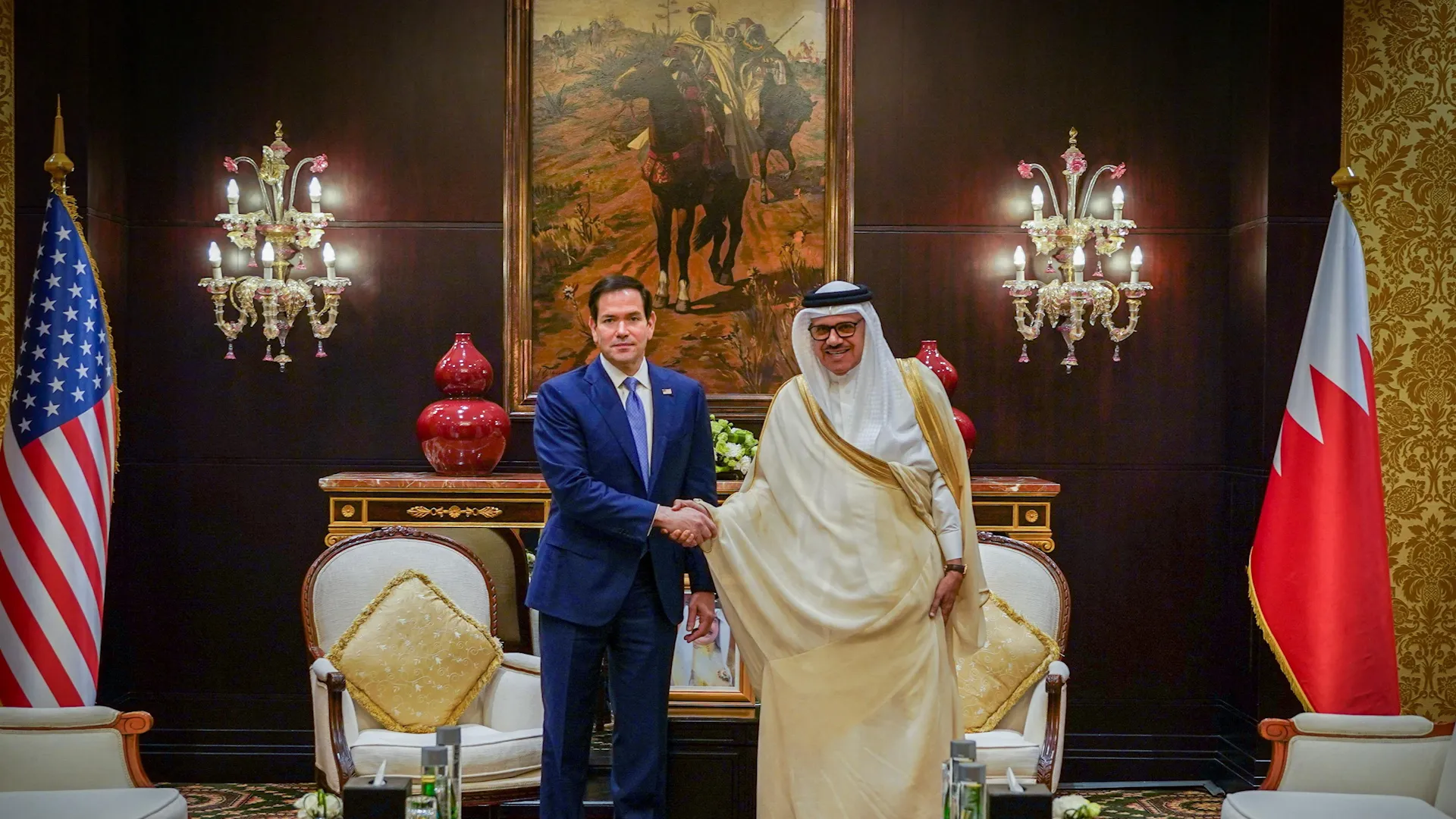
“I think we are very close in our hopes of getting a commitment of intent between the two countries,” Rubio told reporters during a visit to Bahrain.
“It’ll be a process, it’ll take some time, it’ll take a lot of work, but I can tell you that for the first time in 30 years, the sovereign government of Lebanon is speaking to the government of Israel directly.”
Under US pressure, Lebanese officials began direct talks in April with Israel in Washington.
Hezbollah, however, has condemned the Lebanon-Israel talks, demanding the full withdrawal of Israeli forces from Lebanon first.
Iran’s Islamic Revolutionary Guard Corps (IRGC) has warned commercial vessels to only use routes through the Strait of Hormuz approved by Tehran, reopening a point of friction in fragile negotiations between the United States and Iran over the future of the strategic waterway.
The warning came after Oman announced a new shipping transit route through the strait on Wednesday, saying it had coordinated the route with the International Maritime Organization (IMO) as maritime traffic slowly resumes following weeks of disruption.
Recommended Stories
list of 4 itemsend of list
The dispute remains one of the unresolved issues after a memorandum of understanding (MoU) was signed by the United States and Iran last week, which largely halted hostilities in the four-month US-Israel war on Iran and which launched a 60-day negotiation process aimed at reaching a broader peace agreement.
The MoU, which includes the reopening of the strait, followed months of severe disruption to shipping after Iran effectively closed it, and the US imposed a corresponding naval blockade on Iranian ports.
Both Washington and Tehran have declared the strait open to commercial shipping, but questions remain over whether Iran will seek greater control over vessel movements, whether it will impose transit or service fees on ships using the strait following the 60-day negotiating period, and whether disagreements over the waterway could derail efforts to reach a permanent agreement altogether.
Why is the Strait of Hormuz so important?
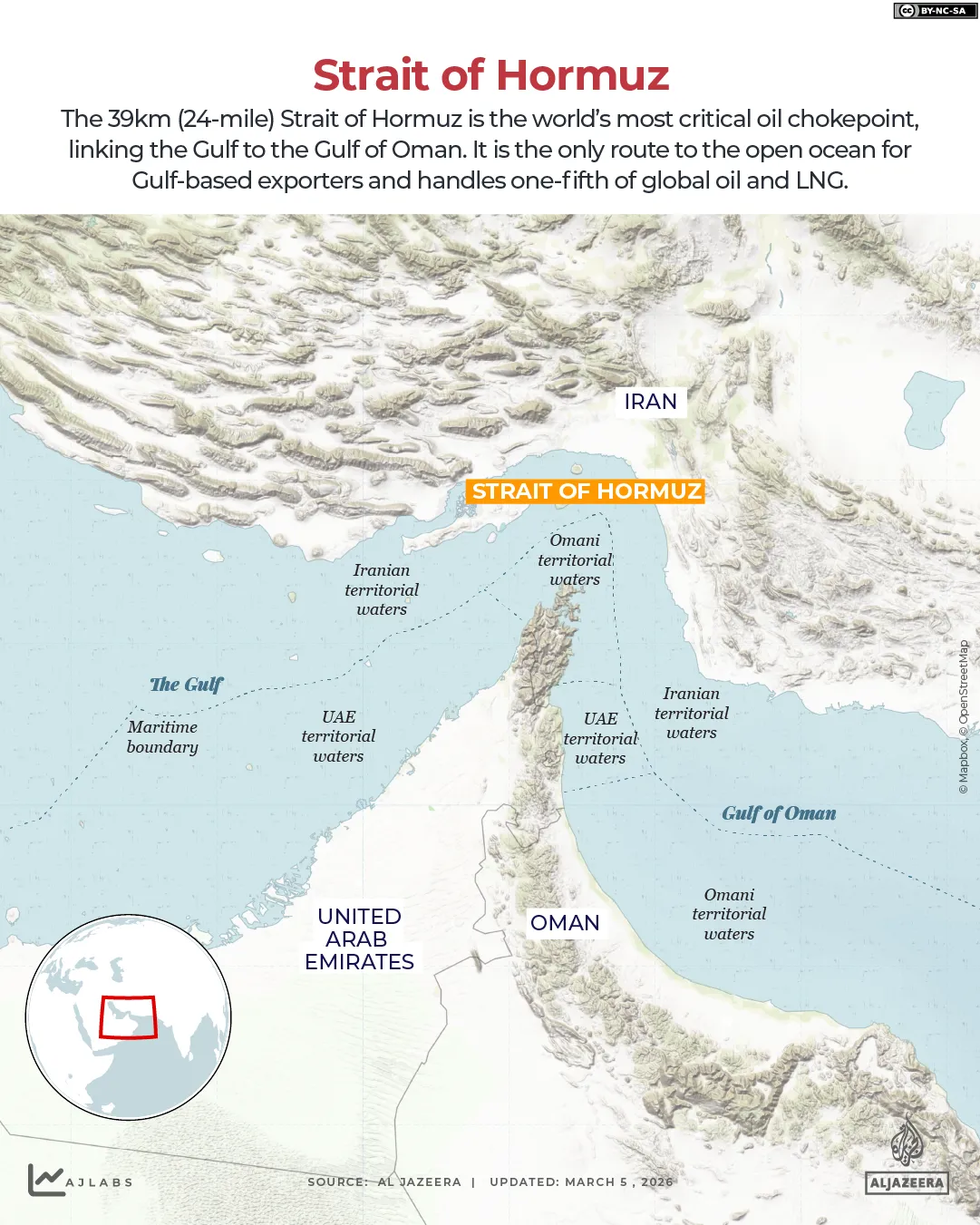
The Strait of Hormuz is one of the world’s most strategically significant waterways, with around one-fifth of global oil and liquefied natural gas (LNG) supplies normally being shipped through the narrow passage linking the Gulf to the Arabian Sea.
Bordered by Iran to the north and Oman and the United Arab Emirates (UAE) to the south, the strait is only about 50km (31 miles) wide at its entrance and exit, narrowing to about 33km (21 miles) at its tightest point. Despite its width, it is deep enough to accommodate the world’s largest oil tankers.
According to the US Energy Information Administration, about 20 million barrels of oil and petroleum products transited the strait each day in 2025, representing hundreds of billions of dollars in annual energy trade.
The route is used not only by Iran but also by Iraq, Kuwait, Qatar, Saudi Arabia and the UAE. It is also vital for global fertiliser exports, with roughly one-third of international fertiliser trade normally passing through the strait.
Because disruptions to shipping there rapidly push up global energy prices and destabilise US markets, control of the waterway has become one of Iran’s strongest sources of strategic leverage in its conflict with the US.
(Al Jazeera)
Why is Iran objecting to Oman’s new route?
The IRGC says Oman and the IMO announced the new shipping corridor without consulting Tehran. “Certain authorities have announced a new shipping route through the Strait of Hormuz without prior notification to or coordination with the Islamic Republic of Iran. The proposed route is unacceptable and poses serious safety risks,” the force said.
“The only authorised transit routes through the Strait of Hormuz are those designated by the Islamic Republic of Iran,” it said, adding that ships must maintain contact with the IRGC Navy while transiting the waterway.
Iran first issued its own map of acceptable routes through the strait in April, showing that ships should pass much closer to the Iranian coast than they had previously.
(Al Jazeera)
The IRGC’s warning came after a Liberian oil tanker passed through the strait on Thursday using a route much closer to Oman’s coastline.
Al Jazeera’s Resul Serdar, reporting from Tehran, said the IRGC appeared frustrated because the Omani route partially bypasses Iran’s direct control over shipping.
“The control of the Strait of Hormuz has been a huge leverage for Iran to put pressure on its adversaries and the global economy since the beginning of the war,” Serdar said.
Oman defended the corridor route it had announced, saying it was intended to restore safe navigation while complying with international law. Foreign Minister Badr Albusaidi said Oman remained committed to ensuring freedom of navigation through the waterway and stressed that “future arrangements related to the strait do not involve imposing any transit fees”.
What does the US-Iran agreement say about the strait?
In the MoU signed last week, Iran agreed that it would “make arrangements using its best efforts for the safe passage of commercial vessels with no charge, for 60 days only, from the Persian Gulf to the Sea of Oman and vice versa”.
While the agreement states that “the traffic of commercial vessels will immediately start”, it also acknowledges that demining operations will be required before normal shipping routes can fully resume, stating that “demining by the Islamic Republic of Iran will be instated within 30 days”. It also provides for discussions between Iran, Oman and other Gulf states on future arrangements for managing the waterway.
However, the memorandum does not specify what will happen after the initial 60-day period. Ali Vaez, Iran project director at the International Crisis Group, said the temporary rerouting of vessels had always been expected because of the mine-clearing operations outlined in the agreement.
“We always knew that if there was a deal, there would be several weeks of mine-clearing operations in the international shipping lane running through the middle of the Strait of Hormuz,” he said.
“During that period, vessels would have to transit through Iranian and Omani territorial waters instead.”
However, Vaez said the latest announcement by Iran was unexpected. “The important thing now is that the Iranians do not start taking fees or other tolls,” he said, “because that is not provided for in the memorandum of understanding.”
Asked whether the IRGC’s position differed from that of Iran’s government, Vaez said: “There is no distinction between the IRGC and the state. They are effectively one and the same. The IRGC is calling the shots.”
Can Iran charge ships fees?
International law generally protects the right of transit through international straits, including Hormuz, making it difficult for coastal states to impose unilateral transit fees on vessels simply passing through international shipping lanes, even where they are within territorial waters.
Last week, Iran announced it would waive planned fees through the strait for 60 days while talks with the US continue in Switzerland, suggesting charges may be introduced once the negotiating period expires.
Iran’s chief negotiator, Mohammad Bagher Ghalibaf, has signalled that Tehran views the post-war arrangement as fundamentally different from the status quo that existed before the conflict.
“Hormuz will never return” to its prewar status, Ghalibaf said.
The suggestion that Iran could charge fees was dismissed by US Secretary of State Marco Rubio this week. Speaking at the start of a regional tour in the United Arab Emirates, he said: “It’s an international waterway. No country is allowed to charge tolls or fees on an international waterway.”
Rubio added that he believed “all the countries in this region would agree”.
Speaking in Manama, Bahrain, after meeting with the Gulf Cooperation Council (GCC) – a bloc comprising Bahrain, Kuwait, Oman, Qatar, Saudi Arabia and the UAE – on Thursday, Rubio also told reporters: “Iranians are saying one thing, but then something else is actually happening.
“It’s now obvious to us that … the Iranian system is going to produce all sorts of maximalist rhetoric. What we’re interested in is not their press conferences. What we’re interested in is whether or not ships are moving. If ships are moving as they should be moving, then that’s what we’re going to judge.
“If, on the other hand, this rhetoric is backed up by actual ships being threatened and ships are not moving, then that’s a violation of the agreement, and we’re going to have a problem with it.”
Rubio claimed there is no regional support for Iranian transit fees, saying, “There is zero support among Gulf countries for any sort of toll or fees charged for the use of international waters … that isn’t going to happen.”
His comments came after UAE presidential adviser Anwar Gargash said that new “geopolitical facts” could not be imposed on the Arab Gulf states as a result of what he described as the “treacherous aggression against them”.
Are ships returning – and which route are they taking?
Some commercial shipping through the strait has resumed, although traffic remains well below normal levels. Before the conflict, between 120 and 140 vessels typically transited the strait each day.
According to shipping analytics company Kpler, confirmed crossings rose to 70 vessels on Wednesday as demining progressed and more operators began using the Omani route.
“The US-Iran MoU framework and apparent lifting of the US blockade appear to have supported a short-term confidence boost, although IRGC warnings against use of the Omani route could create a new source of contention,” Kpler reported.
The company added that incomplete demining, continued “dark” routing by some vessels – when ships limit or switch off their tracking transponders – and unresolved questions over inspections, sanctions and future governance meant shipping had not yet returned to prewar conditions.
This comes as oil prices drop to the lowest level since before the Iran war, with Brent crude, the global benchmark, falling to a low of $72.24 a barrel on Thursday. This remains above the prewar price of $66, however.
The chart below shows how shipping through the strait before the war compares to its status in recent weeks:
Is a peace deal achievable?
The future administration of the Strait of Hormuz is only one of several issues still to be resolved before negotiators hope to reach a comprehensive agreement within 60 days, with another major sticking point being Iran’s nuclear programme.
International Atomic Energy Agency (IAEA) Director-General Rafael Grossi has said the agreement explicitly provides for international monitoring of Iran’s nuclear activities.
However, Kazem Gharibabadi, Iran’s deputy foreign minister for legal and international affairs, has said inspectors’ access to nuclear sites damaged during the conflict will only be considered as part of a final agreement.
Questions also remain over the fate of Iran’s enriched uranium stockpile, the sequencing of sanctions relief and the release of frozen Iranian assets, while regional tensions continue to pose additional risks.
Israeli forces remain deployed in parts of southern Lebanon occupied during the conflict, according to a Lebanese military source, while Israeli strikes have continued, despite the MoU explicitly calling for “a permanent end to the war on all fronts, including Lebanon”.
Vaez said visible progress would be essential if negotiations are to survive, noting, “Both sides have to see progress, whether that’s greater access for UN nuclear inspectors, sanctions relief, or resolving the issue of Iran’s uranium stockpile.”
He cautioned against viewing the interim agreement as a series of smaller deals. “Nothing is agreed until everything is agreed,” Vaez said.
“They [the Iranians] are determined to reach a comprehensive agreement within 60 days. That’s a very ambitious timetable, but there has to be visible momentum or the process risks falling apart.”
However, Vaez said both Washington and Tehran have strong economic incentives to bring about a lasting peace. “The situation in the Strait had become one of mutually assured economic destruction,” he said.
“The United States was facing rising energy and oil prices ahead of the midterm elections … At the same time, Iran was already in a deep economic hole before this conflict began. The war only made that worse.
“It became a lose-lose dynamic, and both sides needed a way out.”
June 25 (UPI) — The U.S. Postal Service plans to refuse delivery of mail-in ballots in states that don’t turn over their voter lists to the federal government, the postmaster general told Congress.
Postmaster General David Steiner told the Homeland Security and Governmental Affairs Committee about the proposed rule on Wednesday.
“Yes or no — if a state refuses to turn their absentee voter list over to the federal government, will the Postal Service still mail their ballots under this proposed rule?” Sen. Gary Peters, D-Mich., asked Steiner.
“Under our proposed regulation, no. We would tell the state that we need the manifest,” Steiner said.
Steiner argued the policy is to make sure ballots are delivered “securely, efficiently, and accurately.” But President Donald Trump has repeatedly demanded states’ voter lists over the past year and has been suing states to get them.
The proposed rule says that states would have to give the Postal Service the names, addresses and ballot barcode numbers for the people who are to get ballots in the mail. The proposal follows Trump’s executive order from March 31 that requires the federal government to compile state citizenship lists and for the Postal Service to refuse to mail ballots to those the federal government has determined are ineligible to vote.
The proposed rule is posted on the Federal Register, and the public can comment until July 2.
Democrats have pushed back, arguing the rule shows that Trump is trying to federalize elections and said the Postal Service doesn’t have the authority to enforce that rule. The Constitution says states are responsible for running elections.
“Just because President Trump wants to do this does not make it law, doesn’t make it right, doesn’t make it constitutional. There is certainly a massive difference between general mail requirements and regulating elections,” Peters said.
Steiner admitted that his agency doesn’t have the authority to enforce elections but said the rule is a precaution to be sure that only eligible voters will get ballots.
“I would think that states would want the information to ensure that the ballots that they think they’re sending out are the ballots that are actually getting sent out,” Steiner said.
Sen. Elissa Slotkin, D-Mich., said the rule is part of a broader strategy.
“The U.S. Postal Service is now part of this bigger story of this president desperate to federalize our elections. He has tried every which way to say that if he and his party don’t win in these November elections, they were rigged.”
Slotkin asked Steiner directly to stop the plan.
“Please push back on being a pawn in this authoritarian playbook,” she said. “The Postal Service is one of the most important institutions in our country. Don’t taint it with the obsession of this one man.”
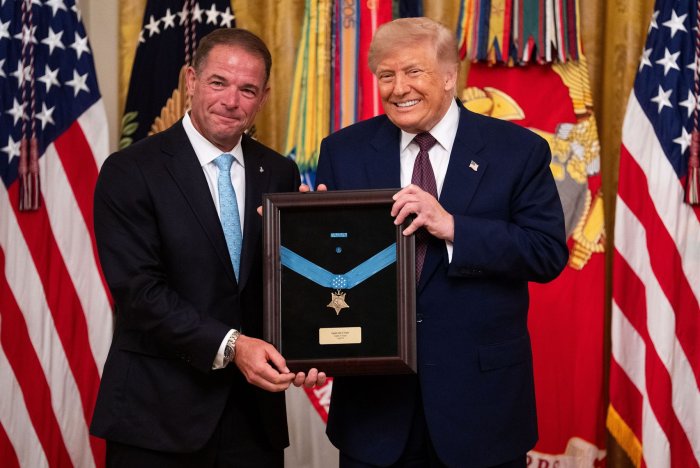
President Donald Trump presents a Medal of Honor to Tom Ripley on behalf of his father, John W. Ripley, during a Medal of Honor award ceremony in the East Room of the White House on Thursday. Photo by Aaron Schwartz/UPI | License Photo
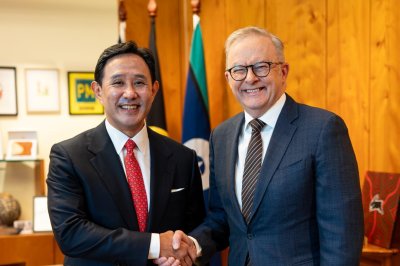
Korea Zinc Chairman Yun B. Choi (L) shakes hands with Australia’s Prime Minister Anthony Albanese at the latter’s office in Canberra on Wednesday. Photo by Korea Zinc
June 25 (UPI) — Korea Zinc said Thursday that Chairman Yun B. Choi visited Australia this week to meet with the country’s Prime Minister Anthony Albanese to discuss ways to strengthen collaboration on critical minerals.
During the bilateral meeting in Canberra on Wednesday, Albanese described U.S. Project Crucible as a valuable model, which the Australian government could benchmark, according to Korea Zinc.
The $7.4 billion initiative involves the construction of an integrated smelter in Clarksville, Tenn. Groundbreaking is scheduled for next year, with commercial production expected to begin in 2029. Toward that end, Korea Zinc cooperates with the U.S. government.
Once operational, the facility will produce base metals such as zinc and lead, along with strategic minerals including germanium and gallium, which are crucial for the semiconductor, defense, and other high-tech industries.
The prime minister also said that Korea Zinc’s business model closely aligns with the Australian government’s resource and energy policy objectives, particularly its efforts to beef up critical industries.
In response, Choi stated that Korea Zinc will keep trying to build a win-win partnership with the Australian government. The world’s largest non-ferrous metals manufacturer operates an Australian affiliate, Sun Metals Corporation.
“Over the past 30 years, we have been a partner that has contributed to Australia’s industries and local communities while expanding beyond smelting into renewable energy and green hydrogen,” he said.
“The synergy between Australia’s abundant resources and our technological prowess and diverse business portfolio will continue to bear fruit in the future,” he added.
The share price of Korea Zinc rose 1.09% on the Seoul bourse on Thursday, while the benchmark KOSPI gained 5.42%.
A Komoto official tests the company’s solar-powered smart flow control system in Kazakhstan. Photo by Komoto
SEOUL, June 25 (UPI) — South Korea’s industrial valve maker Komoto said Thursday that it is seeking to expand into the Kazakh market after wrapping up a field demonstration project in the Central Asian country.
The company said that it completed the installation and operational tests of its solar-powered smart flow control and SCADA system at a demonstration site in Kazakhstan.
Short for supervisory control and data acquisition, SCADA is an industrial automation system that enables operators to monitor, control, and collect real-time data from infrastructure remotely.
Following the successful trial, the system received final field performance certification from Kazvodkhoz, Kazakhstan’s state-owned water resources agency, according to Komoto.
The firm noted that the project confirmed the applicability of its technology to remote agricultural waterways and irrigation facilities not only in Kazakhstan but also across Central Asia.
Komoto CEO Ryan MK Ko said that the company plans to expand its presence in overseas water industry markets, particularly in Central Asia.
“Our biggest competitive edge is that our system allows for the stable operation of water management facilities even in remote areas with limited access to commercial power and communication infrastructure, while significantly reducing costs compared with conventional options,” Ko said in a statement.
“Based on the technology and operational data accumulated through pilot projects both at home and abroad, we will further advance our automated control and intelligent water management features,” he added.
Komoto is not publicly listed. It was founded in 1988 with technology and capital support from Motoyama, one of Japan’s leading manufacturers of industrial equipment, including valves.
The price of Brent crude has reached its lowest since February 27, before the war started.
Published On 25 Jun 202625 Jun 2026
Oil prices have extended their decline to levels last seen before the start of the Iran war, as expectations of rising supply from the Middle East outweighed demand concerns.
Prompt-month Brent crude futures for August delivery fell $1.06 (1.44 percent) to $72.68 a barrel by 06:39 GMT, while US West Texas Intermediate (WTI) lost 76 cents (1.08 percent) to $69.58 a barrel.
Recommended Stories
list of 4 itemsend of list
Both contracts hit their lowest since February 27.
August Brent was trading lower than September, which was priced at $73.59, signalling ample short-term supply.
Brent had fallen by more than $3 on Wednesday as supply concerns eased, while WTI settled down nearly $3.
US Energy Secretary Chris Wright told a forum that flows through the Strait of Hormuz were close to those before the start of the Iran war, with at least 20 million barrels having exited the strait in the past 24 hours.
A return to complete normality would take a few weeks, however, because the strait needs to be cleared of mines, he added.
Rising Middle East supply, together with Iran set to boost sales after a temporary reprieve from US sanctions, drove down prices of physical crude oil cargoes around the world.
New routes
An initial accord last week to end the US-Israeli war with Iran, which began on February 28, has allowed the resumption of traffic through the strait.
The accord set up a 60-day period of negotiations to tackle tougher issues, such as Iran’s nuclear programme.
Wright said oil would continue to flow through the strait even if the deal did not hold, and that Iran would not be able to close it again.
Tehran has said it plans to impose what it calls maritime service fees, as opposed to tolls, while the United States argues it is an international waterway and therefore should not be charged.
Oman opened temporary routes on Wednesday to ease tanker departures from the strait, with the International Maritime Organization and Omani authorities coordinating movements.
On Thursday, Iran’s Revolutionary Guards warned against any crossings of the Strait of Hormuz without authorisation, saying vessels not complying “will be dealt with” and condemning the new routes.
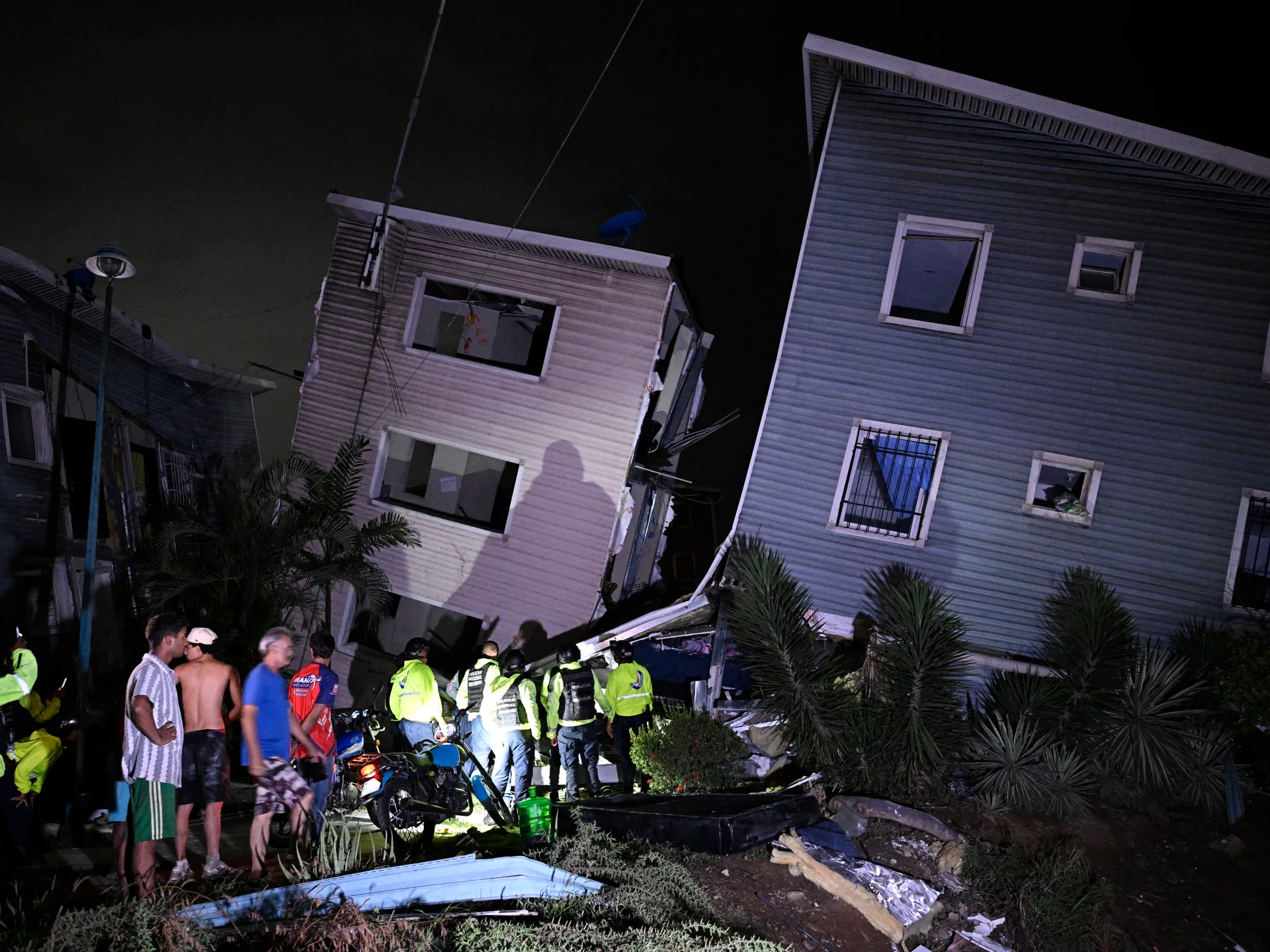
Condolences and offers of help have been pouring in from countries around the world following back-to-back powerful earthquakes in Venezuela that have killed at least 32 people.
The United States Geological Survey (USGS) said on Thursday that the first earthquake, measuring magnitude 7.2, struck west of Moron, about 168km (104 miles) west of Caracas. A second tremor of magnitude 7.5 hit near the same area just a minute later. The USGS warned that “high casualties and extensive damage are probable” and that the “disaster is likely widespread”.
Recommended Stories
list of 3 itemsend of list
Acting President Delcy Rodriguez declared a state of emergency and said the Simon Bolivar International Airport in Caracas is closed due to damage.
Here’s how countries have reacted:
Argentina
The presidency issued a statement expressing “its deepest solidarity” with the Venezuelan people. It said President Javier Milei “extends his hand in solidarity” amid the natural disaster, “despite any differences that may exist between our governments”.
Bolivia
President Rodrigo Paz said that the people’s “hearts go out to the affected families” in Venezuela, and that the country “remains vigilant and ready to provide any necessary support”.
Brazil
President Luiz Inacio Lula da Silva said he has instructed the Foreign Ministry and the embassy in Caracas to evaluate what assistance Brazil can provide.
Colombia
The country’s District Institute of Risk Management and Climate Change says it has activated its emergency response team and reached out to Venezuelan authorities to “coordinate the necessary technical and operational support”.
“The goal is to provide all necessary assistance and make our teams available to support this situation,” the disaster response agency said in a post on X.
“We also want to reassure the residents of Bogota: following the earthquake felt in the capital, no damage or structural damage has been reported. The city is operating normally.”
Cuba
Foreign Minister Bruno Rodriguez says Cuban health workers in Venezuela “are fully mobilised and providing medical services to the affected population”.
In a post on X, Rodriguez expressed his “deepest condolences and solidarity to the government and brotherly people of the Bolivarian Republic of Venezuela for the loss of life and damage caused by the earthquake”.
Ecuador
President Daniel Noboa has announced Ecuador is rapidly deploying humanitarian assistance to Caracas.
“I have arranged for the immediate sending of humanitarian aid to address this emergency,” he posted on X. “Ecuador will respond with the speed and commitment that this moment demands because, despite the enormous differences, humanity must always guide the actions of a leader.”
El Salvador
President Nayib Bukele has said his country has offered Venezuela assistance through its Foreign Ministry.
“300 rescuers and paramedics, along with 50 tonnes of equipment, medicines, and essential supplies, are ready to depart for Caracas,” Bukele said in a post on X.
Italy
Prime Minister Giorgia Meloni wrote on X that she is following the situation with “deep concern” and working to “promptly activate every channel of humanitarian aid and assistance to our compatriots”.
Mexico
The Foreign Ministry has extended its sympathies to the Venezuelan people and expressed its regret at the “damages and impacts caused”.
Panama
President Jose Raul Mulino is the latest foreign leader to respond to the crisis in Venezuela.
In a post on X, Mulino conveyed Panama’s “deepest solidarity and support” to Venezuela, while offering to send humanitarian aid.
Pakistan
Prime Minister Shehbaz Sharif said he was “deeply saddened by the devastation and loss of life caused by the earthquakes in Venezuela”.
“On behalf of the people of Pakistan, I convey our heartfelt condolences to the Government and people of Venezuela, especially the families of the victims. We pray for the injured and stand in solidarity with all those affected during this difficult and challenging time,” he said on X.
Spain
The prime minister and foreign minister expressed solidarity with Venezuela and offered help.
“All my support, and that of Spain, to the Venezuelan people following the devastating earthquakes of this evening,” Prime Minister Pedro Sanchez wrote on X.
“Our thoughts are with the victims and their families.”
Jose Manuel Albares, the foreign minister, said the Spanish Agency for International Development Cooperation “is prepared to provide all necessary emergency assistance”.
“My full solidarity with the brotherly people of Venezuela,” he wrote.
Uruguay
Uruguay’s president, Yamandu Orsi, expressed solidarity with Venezuelan authorities and citizens. He said Uruguay is ready “to collaborate in any way the Venezuelan government deems necessary”.
United States
President Donald Trump posted a message on his Truth Social account, expressing concern over the disaster in Venezuela.
Trump said the earthquakes were “massive in scale and have left a devastating number of deaths”. The US “stands ready, willing, and able to help,” and US government agencies have been instructed “to get ready to move quickly,” he said.
Secretary of State Marco Rubio wrote on X that the US was “immediately deploying” search and rescue teams, medical resources and humanitarian assistance.
This photo, taken Thursday, shows the trading room of Hana Bank in Seoul as South Korean stocks soared by more than five percent on a tech rally driven by Micron’s earnings report. Photo by Yonhap
South Korean stocks soared by more than 5 percent Thursday, briefly topping the 9,000-point level again, driven by a tech rally ignited by U.S. chip giant Micron Technology’s expectation-beating earnings report. The Korean won fell against the U.S. dollar.
The benchmark Korea Composite Stock Price Index (KOSPI) gained 459.28 points, or 5.42 percent, to close at 8,930.30, following a 3.26 percent gain the previous day.
The index briefly topped the 9,000-point threshold, rising as high as 9,044.04.
Finishing at an all-time high of 9,114.55 on Monday, the KOSPI has remained in the 8,000-point range since it dived 9.99 percent Tuesday.
The index pulled off a strong start, with a buy-side sidecar issued shortly after the market opened, as Micron, the world’s No. 3 memory chipmaker, released its stronger-than-expected quarterly earnings, brushing off lingering concerns about the sustainability of an artificial intelligence (AI) rally.
Micron is a major beneficiary of the AI infrastructure spending boom along with Samsung Electronics and SK hynix thanks to rising demand for memory chips and high-bandwidth memory (HBM).
Trade volume was heavy at 449.3 million shares worth 50.4 trillion won (US$32.7 billion), with losers beating winners 588 to 289.
Institutions purchased a net 3.3 trillion won worth of stocks, while foreigners and individuals dumped a net 819.7 billion won and 2.5 trillion won, respectively.
“Micron’s strong financial report pushed up semiconductor shares here,” Kim Seok-hwan, an analyst at Mirae Asset Securities, said. “Airline shares also rose as the Strait of Hormuz seemed to reopen and global oil prices dropped.”
Samsung Electronics, the world’s largest memory chipmaker, jumped 5.29 percent to 358,500 won, and No. 2 SK hynix surged 13.06 percent to 2.9 million won.
SK Square, the parent of SK hynix, advanced 5.56 percent to 1.9 million won, and Samsung C&T, which holds a stake in Samsung Electronics, soared 7.79 percent to 519,000 won.
Flag air carrier Korean Air vaulted 6.4 percent to 29,100 won, and Asiana Airlines mounted 6.2 percent to 7,710 won.
Brokerages were also strong as Samsung Securities rose 3.07 percent to 110,800 won, and Kiwoom Securities gained 7.48 percent to 337,500 won.
The Korean won was quoted at 1,542.7 won per U.S. dollar as of 3:30 p.m., down 0.9 won from the previous session.
Bond prices, which move inversely to yields, closed higher. The yield on three-year Treasurys fell 1.5 basis points to 3.757 percent, and the return on the benchmark five-year government bonds declined 2.2 basis points to 3.992 percent.
Copyright (c) Yonhap News Agency prohibits its content from being redistributed or reprinted without consent, and forbids the content from being learned and used by artificial intelligence systems.
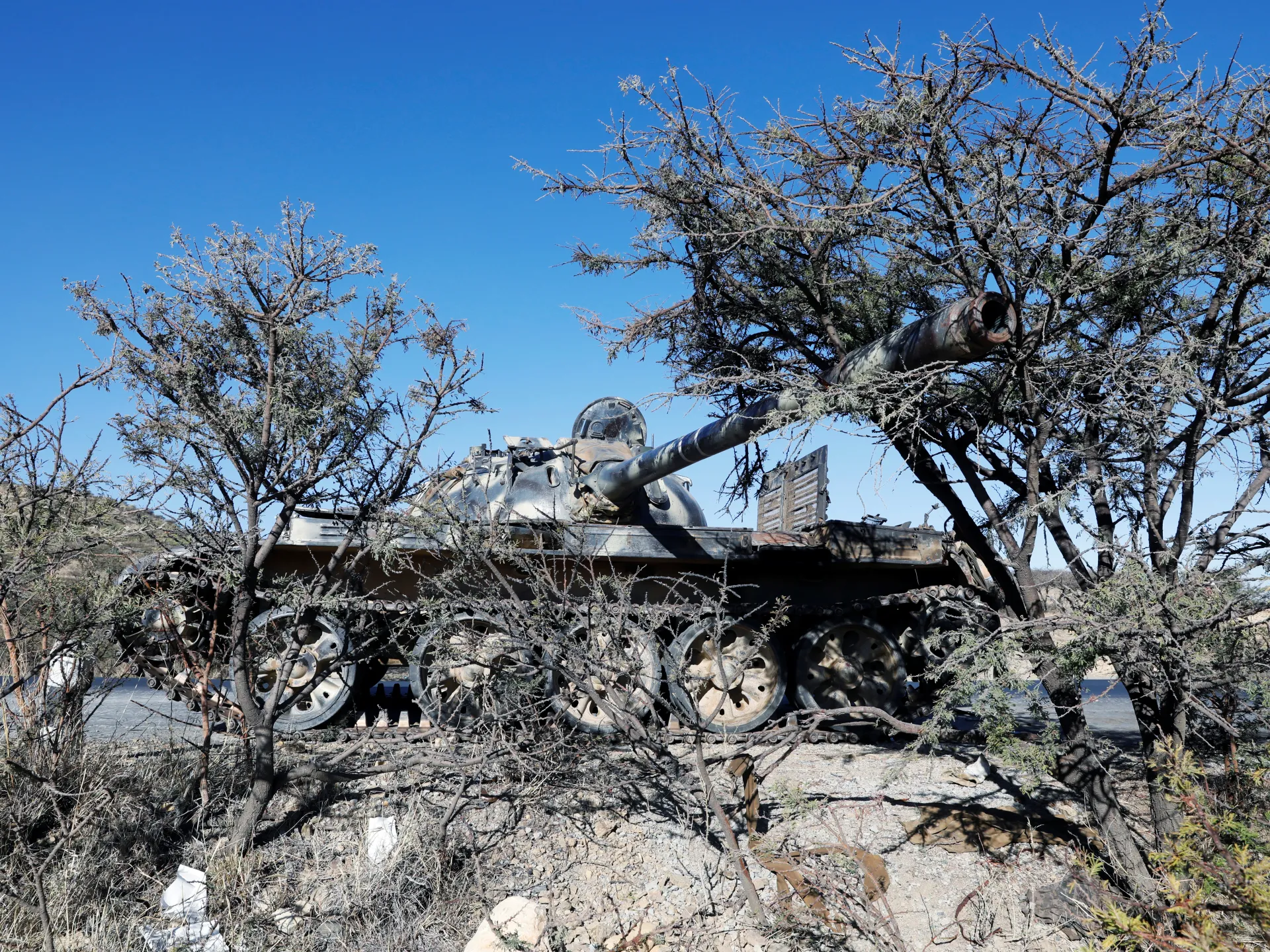
The recent opinion article by senior Ethiopian officials Redwan Hussein and Getachew Reda, published on Al Jazeera English’s website, attempts to portray Ethiopia as an innocent victim being reluctantly “dragged” into conflict by external actors. In doing so, the piece seeks to absolve the ruling Prosperity Party of responsibility for Ethiopia’s mounting domestic crises.
More dangerously, this narrative serves as a diplomatic smoke screen designed to normalise the unprovoked hostility, state-sponsored inflammatory rhetoric and aggressive military mobilisations that the Ethiopian government has directed towards Eritrea since late 2023.
By trying to reframe contemporary internal tensions as the direct product of external overreach or unresolved past grievances, the current Ethiopian security discourse represents a profound and dangerous inversion of reality. It distorts the true drivers of instability in the region to shield the federal authorities from international scrutiny.
The catastrophic war that engulfed northern Ethiopia for two years, from the initial outbreak of hostilities on November 4, 2020, until the signing of the cessation of hostilities agreement on November 2, 2022, did not arise from regional external manipulation or cross-border instigation. It was the product of Ethiopia’s long-standing internal ethnic cleavages and institutionalised political polarisation, rather than any external machinations.
The historical record confirms that Eritrea did not instigate this conflict, nor did it harbour expansionist designs on sovereign Ethiopian territory. Instead, Eritrea was reluctantly drawn into an imposed war at the explicit request and formal invitation of the Ethiopian federal government and for cogent reasons of self-defence.
Indeed, the broader objectives of the war agenda explicitly included and targeted the sovereignty and territorial integrity of Eritrea from its very inception. This reality is not a matter of speculative interpretation; it is an unalterable component of the public record.
Getachew’s own extensive public statements and numerous real-time posts under his official X handle during those tragic years easily validate that the targeting of Eritrea was a deliberate, premeditated strategy by regional forces rather than an accidental byproduct of a domestic policing action.
Following the formal cessation of hostilities, the political and military leadership of the Prosperity Party, extending from Prime Minister Abiy Ahmed downward, profusely and publicly expressed their profound gratitude to Eritrea. These acknowledgements were made through official statements, parliamentary discussions, state media and remarks by senior military officials. For Redwan and senior Prosperity Party officials to now retroactively frame Eritrea as an inherent antagonist or a constant spoiler of domestic peace runs completely counter to these explicit, recorded admissions.
This tendency towards revisionism is further illustrated by the highly romanticised anecdotes propagated by Getachew and Redwan regarding the tense environment during the Pretoria peace talks. Both officials have concocted a heavily theatrical and entirely fictitious story concerning the alleged consternation of their South African hosts, who supposedly feared that “the negotiating teams from the two warring Ethiopian parties might get into a fistfight in the middle of the conference hall if not continuously shepherded to steer clear of one another”.
According to this manufactured narrative, the hosts were then stunned to witness a “cordial tone”. This narrative of sudden, miraculous reconciliation between bitter enemies serves a specific propaganda purpose: it portrays the Pretoria Agreement as a spontaneous triumph of domestic unity over external division.
However, this narrative ignores the reality that months before the formal talks in South Africa, confidential contacts had already taken place in Djibouti and the Seychelles under the sponsorship of external mediators. As later acknowledged by Getachew himself, the warring parties had already established channels of communication while the war was still raging.
Under the deliberate prodding of elements within the Prosperity Party, the two teams explored options to join forces and redirect their combined military capacities towards a war of aggression against Eritrea. In their contorted views, a sovereign and stable Eritrea constituted the ultimate threat to their respective political futures.
When the Permanent Cessation of Hostilities Agreement was finally signed, it was fundamentally understood as a peace pact between internal warring sides within Ethiopia. It is, and remains, an Ethiopian affair, purely and exclusively. Its provisions concerned domestic constitutional arrangements, the disarmament of armed groups, and the restoration of federal authority.
Eritrea’s position regarding Pretoria has remained consistent and principled. It supports any genuine effort that promotes peace, stability, and predictability in Ethiopia and the wider region. A peaceful, stable, and united Ethiopia that respects the sovereignty of its neighbours is in the strategic interest of every state in the Horn of Africa. Eritrea possesses neither the political appetite nor the strategic interest to scuttle an agreement between competing Ethiopian political forces. A peaceful, unified, and stable Ethiopia that respects its neighbours is in the vital national security interest of every state in the region.
Against this backdrop, the current propaganda campaigns and transparent disinformation efforts, as epitomised by the recent opinion article, are systematically designed to re-package an unprovoked agenda of conflict and hostility that Addis Ababa has unleashed against Eritrea since December 2023.
During this period, the Prosperity Party abruptly shifted its state rhetoric, launching a manufactured campaign centred on what it termed “sovereign access to the sea”. To build legitimacy for this legally untenable and historically flawed narrative, the ruling party has systematically mobilised a vast, state-backed apparatus. Instructors, researchers, media figures, cultural icons and academic lecturers, both Ethiopian nationals and co-opted foreign commentators, have been aggressively deployed across international forums, television networks and digital platforms to push this warped sovereign access narrative.
This coordinated campaign seeks to normalise the idea that colonial boundaries in the Horn of Africa are negotiable in order to attempt to challenge inviolable principles of sovereignty and territorial integrity that have long underpinned regional stability.
This aggressive rhetoric has not been confined to speeches and opinion pieces. In a direct attempt to pull Eritrea into a militarised conflict, the ruling party has massed substantial military formations, heavy artillery, and mechanised divisions in close proximity to the Eritrean border.
This pattern of behaviour is directly mirrored along the northern frontier, where provocative pronouncements are accompanied by unremitting sabre-rattling regarding the acquisition of Assab and other Eritrean coastal lands through negotiations if possible, and by force if necessary.
The broader pattern extends beyond Eritrea. Ethiopia’s recent foreign policy conduct has increasingly generated tensions with several neighbouring states. The Memorandum of Understanding signed with Somaliland, which sought access to coastal territory without the consent of Somalia’s central government, triggered a major diplomatic crisis and raised serious questions regarding respect for established principles of sovereignty and territorial integrity.
Similarly, Ethiopia has repeatedly pursued interventionist policies in neighbouring conflicts in the quest for short-term geopolitical objectives. Whether in Somalia, Sudan or elsewhere, Addis Ababa’s reckless regional agenda of expansionism has contributed significantly to regional mistrust and destabilisation.
Thus, the narrative that Ethiopia is an involuntary victim being dragged back into war by external forces ignores the reality of the ruling party actively moving military assets, signing illegal treaties and threatening the borders of sovereign states. This explicitly coercive stance directly undermines the foundational principles of peaceful coexistence and good neighbourliness that are essential for the Horn’s stability.
Ultimately, peace in the Horn of Africa cannot be bargained away to appease the shifting calculations of a restless neighbour. The path forward demands an immediate end to the reckless sabre-rattling in pursuit of illicit “sovereign maritime access”, the unconditional cessation of cross-border proxy alignments, and a return to the foundational principles of non-interference and territorial integrity.
Until the international community confronts the true internal drivers of Addis Ababa’s aggressive posture rather than entertaining its manufactured grievances, the region will remain perilously vulnerable to dangerous miscalculation. Eritrea stands firm in its resolve, anchored in legal permanence and historical facts. Those who look to externalise their domestic ruin through regional destabilisation will find that Eritrea’s sovereignty is neither negotiable nor penetrable, and that lasting security can only be achieved when boundaries are respected and international law is upheld without exception.
The views expressed in this article are the author’s own and do not necessarily reflect Al Jazeera’s editorial policy.
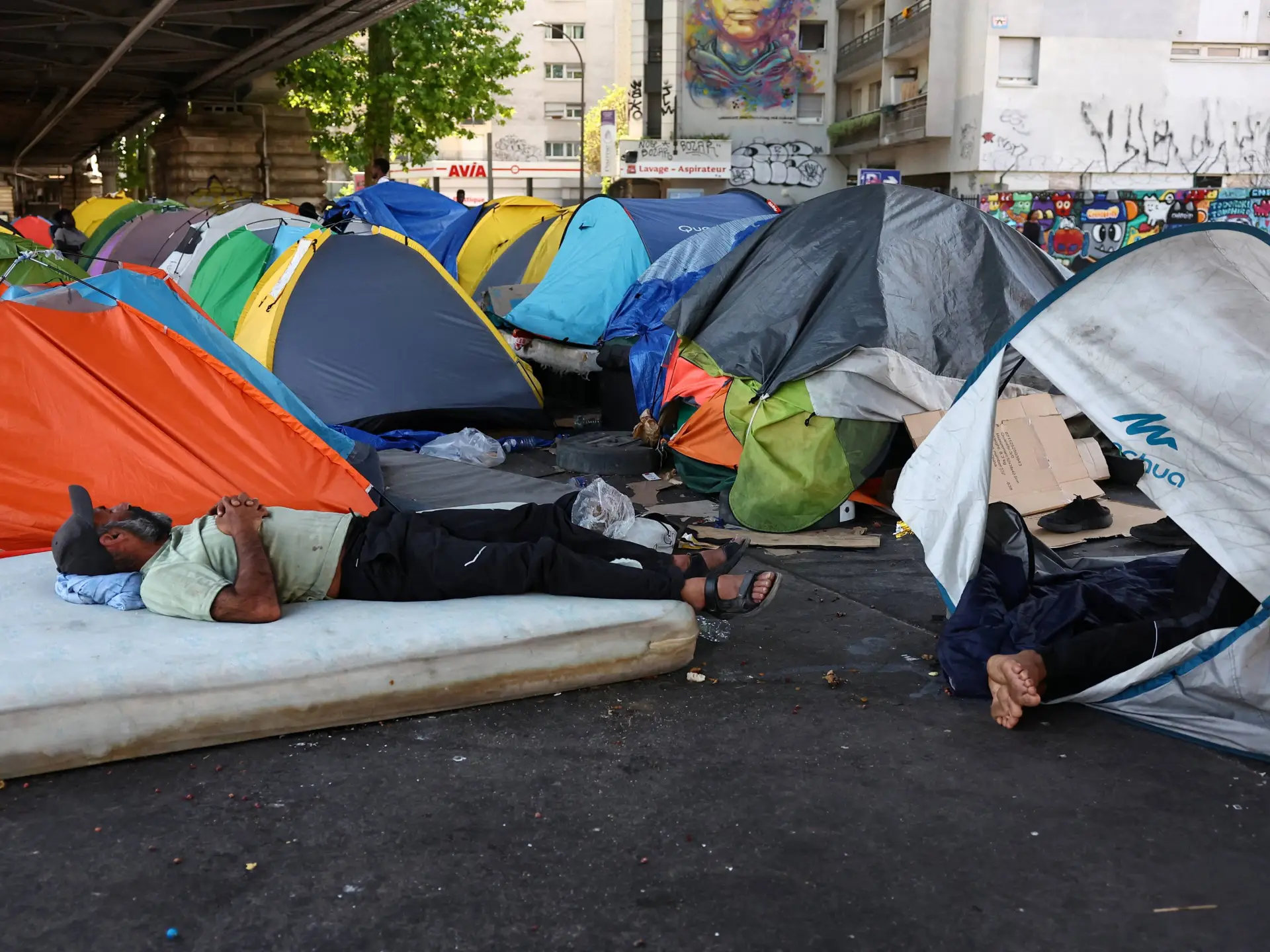
Hundreds of migrants in Paris are left exposed as a heatwave sweeps Europe. Some have taken to unsafe swimming to cope with the record-breaking temperatures.