From breaking news to significant developments in politics, business, technology, entertainment, and more, we deliver the stories that shape our global landscape.
Mateo Chavez opened the scoring in the 55th minute, and Julian Quinones scored his second goal of the tournament in the 61st.
Published On 25 Jun 202625 Jun 2026
Mateo Chavez and Julian Quinones scored goals in the span of six minutes early in the second half, and Mexico beat Czechia 3-0 to win all three of its World Cup group-stage matches for the first time.
The 22-year-old Chavez, in his first World Cup, opened the scoring in the 55th minute, and Quinones scored his second goal of the tournament in the 61st. Alvaro Fidalgo added a goal in second-half stoppage time on Wednesday night.
Recommended Stories
list of 4 itemsend of list
Mexico’s previous best group-stage performance was two wins and one draw, achieved in 1986 and 2002, both featuring Javier Aguirre, the first as a midfielder and the second as El Tri’s coach.
Already the winner of Group A, Mexico will play again at Azteca Stadium on Tuesday in a round-of-32 match against an opponent to be determined.
Czechia were eliminated, finishing with one point in three games.
The match included nods to Mexico’s past and future. Gilberto Mora became the youngest Mexico player to start in a World Cup at age 17.
Mexico goalkeeper Guillermo Ochoa is celebrated by his team after the World Cup Group A match between Czechia and Mexico in Mexico City, June 24, 2026 [Natacha Pisarenko/AP]
Homophobic chant returns in Azteca Stadium
Fans at the game chanted a slur that has previously led to fines and other sanctions against Mexico’s Football Federation.
The slur, which literally means “male prostitute” in Spanish, could be heard at the Azteca Stadium towards the end of the first half when Czech goalkeeper Matej Kovar took a goal kick, according to The Associated Press news agency.
The chant has cost Mexico hundreds of thousands of dollars in fines levied by FIFA. It rose to popularity roughly 25 years ago and is used to intimidate goalkeepers when they take goal kicks.
It went viral in the 2014 World Cup in Brazil, and was heard again in Russia during the 2018 World Cup, and then again four years later in Qatar. It has persisted despite attempts by the Mexican Football Federation to stop it.
Back-to-back major earthquakes of magnitudes 7.2 and 7.5 rocked Venezuela on Wednesday evening. The quakes are likely to cause widespread damage and mass casualties, the U.S. Geological Survey said. Image courtesy of UPI
June 24 (UPI) — Two major earthquakes — magnitudes 7.2 and 7.5 — hit near the Venezuela capital of Caracas on Wednesday evening, collapsing buildings and bringing people flooding into the streets.
The first quake hit at 6:04 p.m. local time, BBC News reported, with the second less than a minute later. June 24 is a holiday in Venezuela, and more people than usual were at home instead of on an evening commute.
The U.S. Geological Survey has reported that high casualties and widespread damage are likely, saying that there is a 44% chance that fatalities will exceed 10,000 and a 30% chance that they will exceed 100,000. The USGS said aftershocks may still occur.
Venezuela’s interior minister has asked people to leave their homes, citing damaged buildings and concerns about gas leaks. Companies cut gas lines to some areas as a precaution, Minister Diosdado Cabello said, BBC News reported.
The Ministry of Communication and Information in Venezuela said security forces have been deployed around the country because of the risk of building collapses.
June 24 (UPI) — Democratic lawmakers accused the Trump administration Wednesday of seeking to push through a multimillion-dollar arms deal with Turkey by bypassing congressional review, the latest executive action critics say usurps the lawmakers’ authority.
Rep. Gregory Meeks, D-N.Y., ranking member of the House Foreign Affairs Committee, said he was informed by the Trump administration late Tuesday that it would bypass congressional review of an arms sale to Turkey worth more than $700 million.
“The State Department did not even attempt to justify its decision,” Meeks said in a statement.
“It did not invoke any emergency authority, did not present a written rationale and for months refused to make a good-faith effort to brief me on implications of the sale for the U.S.-Turkey relationship, Turkey’s continued possession of the Russian S-400 system and other regional security concerns,” he continued.
“It simply informed my office that it would immediately proceed with a formal notification of the sale.”
The United States and NATO opposed Turkey’s adoption of the S-200 system, and Washington removed Turkey from the F-35 fighter program in 2019 during Trump’s first administration.
Meeks called the decision to bypass congressional review “yet another deeply troubling example of this administration’s open contempt for Congress’ oversight authority.
“There can be no pretense that this was urgent or unavoidable,” he said, stating the items will not be delivered to Turkey for years.
“This was a deliberate choice to shut Congress out and to treat legitimate oversight as an inconvenience to be brushed aside.”
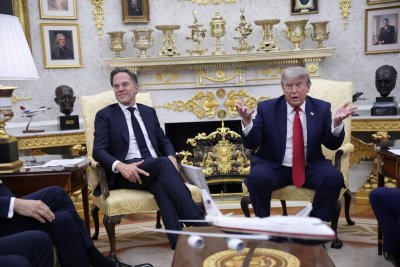
Trump is scheduled to visit Turkey early next month. During a White House press conference alongside NATO Secretary-General Mark Rutte on Tuesday, he praised Erdogan as “a great friend.”
Erdogan is known to be seeking to acquire U.S.-made fighter jets, including the F-35. Asked if he was planning to announce a potential deal when he visits Ankara, Trump replied: “I’m going to probably do something that’s going to make him very happy.”
It was unclear if jets were part of the arms deal.
UPI has contacted the State Department for comment and to detail the contents of the sale.
Democrats and other critics of President Donald Trump have repeatedly accused his administration of bypassing Congress through executive orders and unilateral decisions, particularly in its use of the military.
The Trump administration has faced staunch criticism from opponents for launching a war against Iran in late February without congressional authorization. Democrats have frequently argued that the Constitution gives Congress, not the president, the power to declare war.
Democrats have also criticized the administration’s use of the military to attack suspected drug-trafficking boats in the Pacific and Caribbean without congressional authorization.
Despite bowing out without a point in their first World Cup since 1974, Haiti twice led against 2022 semifinalists Morocco.
Published On 25 Jun 202625 Jun 2026
Morocco twice overcame the shock of conceding to Haiti to win a World Cup thriller 4-2 in Atlanta, but missed out on the top spot in Group C to Brazil.
Haiti bowed out with their first World Cup goals in 52 years, as a Yassine Bounou own goal and Wilson Isidor’s stunning strike twice gave them the lead on Wednesday.
Recommended Stories
list of 4 itemsend of list
Achraf Hakimi and Ismael Saibari, with his third goal in as many games at the World Cup, levelled before half-time.
Soufiane Rahimi was nearly brought to tears when the 30-year-old’s deflected effort found the top corner to give Morocco the lead, before Gessime Yassine rounded off the scoring.
Soufiane Rahimi of Morocco celebrates scoring his team’s third goal [Kevin C. Cox/Getty Images/AFP]
But Morocco missed out on the top spot in the group to Brazil on goal difference, meaning they will head to Monterrey for a likely meeting against the Netherlands or Japan on Monday.
Despite bowing out without a point, Haiti’s performances at their first World Cup since 1974 have done a nation gripped by poverty proud.
Les Grenadiers were already eliminated after losing to Scotland and Brazil, but the thousands of Haitian expats in the stands in Atlanta were undeterred as every attack was met with deafening cheers.
Morocco boss Mohamed Ouahbi made four changes to the side that had impressed in holding Brazil and beating Scotland in their opening two games, and the Atlas Lions started sloppily.
Haiti’s long wait for a goal on the global stage was ended after just 10 minutes, when Jean-Kevin Duverne got to the byline, and Lenny Joseph flicked the resulting cross into the net via a deflection off Bounou.
Hakimi has continued to captain Morocco despite learning mid-tournament that he is to face a trial on rape charges in France.
The reigning African footballer of the year stormed forward from right-back at every opportunity and was in the right place to equalise on 39 minutes.
In his final game for Haiti, 38-year-old goalkeeper Johny Placide could only parry Bilal El Khannouss’s strike, and Hakimi had a simple task to force the ball over the line.
Within four minutes, though, Haiti had restored their lead in far more spectacular fashion.
Sunderland striker Isidor pounced on a loose ball and let fly from outside the area with a shot that arrowed into the top corner.
Hakimi and Ouahbi were visibly angered by conceding for a second time, but the 2022 World Cup semifinalists responded before half-time.
Saibari stroked home his third goal of the tournament with a cool finish from Hakimi’s low cross.
Brahim Diaz nearly gave Morocco a half-time lead when his curling effort shaved the post to end a thrilling first half.
Ouahbi began turning his attention to the last 32, as Bayern Munich-bound Saibari and Real Madrid’s Diaz were replaced with more than 20 minutes remaining.
But two of his substitutes came on to win the game for Morocco.
Rahimi’s powerful strike from a corner flew into the top corner via a deflection off a desperate Haiti defender.
He then turned provider by robbing possession on the Haiti byline and crossing for Yassine to roll into an empty net.
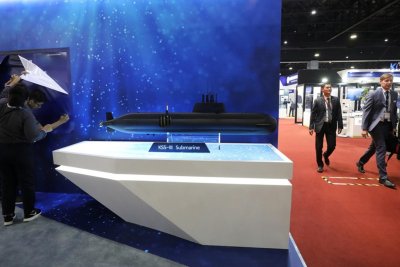
A model of the KSS-III Submarine from South Korean company Hanwha Ocean is on display at the Defense and Security 2023 exhibition, a Tri-Service defense and internal security showcase, at IMPACT Muang Thong Thani in Nonthaburi province, Thailand. Photo by NARONG SANGNAK / EPA
June 24 (Asia Today) — Economic benefits are emerging as a potential deciding factor in Canada’s competition to acquire a new submarine fleet, with South Korea promoting a broad industrial cooperation package to counter a larger economic-impact proposal from Germany.
Canada is preparing to select a preferred bidder for the Canadian Patrol Submarine Project, a program worth as much as 60 trillion won ($39.2 billion).
German shipbuilder TKMS and South Korea’s Hanwha Ocean are the two qualified suppliers remaining in the competition.
Canadian Secretary of State for Defense Procurement Stephen Fuhr said this week that both proposals meet the Royal Canadian Navy’s requirements, according to industry officials.
With the technical assessment effectively completed, the economic and industrial benefits offered by each bidder could become increasingly important in the final evaluation.
Based on publicly disclosed projections, TKMS appears to have proposed the larger economic contribution.
The German company said its proposal could generate 160 billion Canadian dollars in economic activity and add 86 billion Canadian dollars to Canada’s gross domestic product over the life of the program.
It also projected employment totaling more than 650,000 job-years.
Hanwha Ocean said South Korea’s proposal could support more than 22,500 Canadian jobs annually, equivalent to more than 400,000 job-years, and generate approximately 94.1 billion Canadian dollars in cumulative GDP contributions.
Industry officials said the scale and feasibility of the proposed partnerships may be more important than a direct comparison of headline figures.
Hanwha Ocean has established partnerships with more than 100 Canadian companies, universities and other organizations.
HD Hyundai Group has proposed several billion dollars in cooperation across the energy, commercial shipbuilding and naval sectors.
Hyundai Motor Group is also supporting the broader South Korean proposal through Project Beaver, an initiative intended to establish a hydrogen mobility ecosystem in Canada.
The effort is part of a government-backed package that seeks to position South Korea as a long-term industrial and security partner rather than simply a submarine supplier.
Germany is also offering substantial government and industrial support.
TKMS has emphasized its cooperation with Norway, which is jointly developing and acquiring Type 212CD submarines with Germany.
Norway has offered to share experience involving submarine design and maintenance, repair and overhaul systems.
The German proposal also highlights the benefits of integrating Canada into an existing supply and support network among North Atlantic Treaty Organization allies.
Sustainment carries greatest weight
Canada’s evaluation structure places the greatest emphasis on the ability to support the submarines throughout their operational lives.
Sustainment accounts for 50% of the assessment, while the submarine platform itself represents 20%.
Financial considerations account for 15%, with strategic and economic partnerships making up the remaining 15%.
The weighting indicates that Canada’s primary concern is not simply acquiring advanced submarines but ensuring that it can operate and maintain them reliably for several decades.
Some industry observers have cautioned that excessive attention to economic projections could distract from the program’s core defense objectives.
Both South Korea and Germany have proposed major investments, local partnerships and job-creation plans.
Critics say an escalating competition over economic promises could transform a military procurement decision into a broader contest for foreign investment.
The figures presented by the bidders are also based on different assumptions, industries and time periods, making direct comparisons difficult.
The projected employment numbers may include jobs supported for multiple years rather than distinct permanent positions.
“The technological capabilities, delivery competitiveness and industrial cooperation package offered by South Korean shipbuilders are clear strengths,” a South Korean shipbuilding industry official said.
“Both countries are making an all-out effort, so it remains difficult to predict the outcome before the final decision.”
South Korea stresses delivery and industrial ties
Hanwha Ocean is offering a Canadian version of its KSS-III submarine, a platform developed for and operated by the South Korean Navy.
South Korea has emphasized its shipbuilding capacity and ability to deliver vessels within Canada’s accelerated timetable.
The proposal also includes Canadian participation in construction, maintenance, technology development and supply chains extending beyond the submarine program.
South Korean companies have pursued cooperation with Canadian businesses in steel, automotive manufacturing, artificial intelligence, aerospace, energy and critical minerals.
The package is intended to demonstrate that selecting Hanwha Ocean would produce economic benefits across multiple regions and industries in Canada.
TKMS, meanwhile, is offering a submarine supported by the German and Norwegian governments and an established European defense network.
Its proposal stresses operational compatibility with NATO allies, shared training and access to a multinational submarine supply chain.
Canada is expected to announce its preferred approach between late June and early July. Industry officials said a decision could come as early as this week.
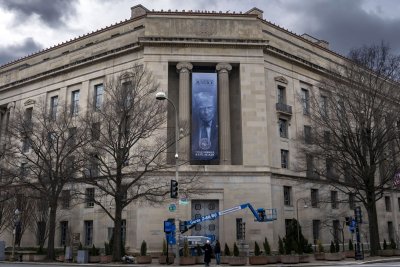
The U.S. Justice Department building in Washington, D.C., is shown in February. On Wednesday, department officials announced charges for 12 people it said used drones to deliver drugs and other contraband to federal prisons. File Photo by Bonnie Cash/UPI | License Photo
June 24 (UPI) — The U.S. Justice Department announced charges Wednesday for 12 people it said used drones in a conspiracy to smuggle drugs, weapons and other items into multiple prisons.
The department said the conspiracy affected 10 federal prisons in eight states, including Georgia, Virginia, West Virginia, Kentucky, Tennessee, Louisiana and Mississippi, WAPT-TV reported.
U.S. Attorney William Keyes said the operation was based at a former daycare in Macon, Ga., and used multiple drones to deliver contraband to prisons by night.
Keyes said the indictment “charges the most sophisticated and sprawling criminal enterprise using drones to introduce contraband into the federal prison system ever charged by the Department of Justice,” CNN reported.
The drone deliveries allegedly took place between September 2023 and May 2026. Charges say the group used six drones to deliver contraband at least 38 times. This contraband included methamphetamine, marijuana, cocaine,other illegal drugs, tobacco, blades and cell phones.
The prosecutors said that people inside the prisons used phones to help guide the drone pilots. Prison authorities found some, but not all, of the drops, the indictment said.
“The allegations outlined in this indictment describe a coordinated criminal effort involving heavy payload drones to introduce dangerous contraband into federal prisons across multiple states,” William Marshall III, director of the federal Bureau of Prisons, said Wednesday, CNN reported. “Activity of this nature threatens the safety of everyone who lives and works inside our facilities and will not be tolerated.”
The bureau used drone detection systems to uncover the conspiracy, representatives said. A grand jury in Georgia handed down the indictment on charges including drug and firearms distribution on June 10.
Earlier in 2026, a group of state attorneys general launched a combined effort to combat the use of drones to deliver prison contraband.
Bosnia and Herzegovina are on the verge of reaching the knockout stages of the World Cup for the first time after beating Qatar 3-1 in their final Group B match.
Bosnia move on to four points and are in a strong position to be one of the best eight third-placed teams to progress to the last 32.
Recommended Stories
list of 4 itemsend of list
Qatar, meanwhile, exit at the group stage, just as they did four years ago when they hosted the World Cup.
Goals from Bosnia’s youngest-ever World Cup player, 18-year-old Kerim Alajbegovic, and an own goal by Qatar goalkeeper Mahmoud Abunada looked to have put the European side in the box seat.
However, Qatar made a game of it when 35-year-old Hassan Alhaydos, their most capped player, pulled one back late in the first half.
Ermin Mahmic then put the game beyond the Qataris when he scored for the second successive match in the 80th minute.
Bosnia flew out of the blocks as soon as the whistle went, testing Abunada twice inside the first four minutes.
First, Abunada denied Ermedin Demirovic’s fierce drive, and then he tipped away Ivan Sunjic’s shot.
Bosnia’s dominance finally paid off, but it was not the 40-year-old talisman Edin Dzeko who broke the deadlock, but the sublimely talented teenage left-wing.
Edin Dzeko of Bosnia and Herzegovina and his teammates celebrate the second goal [Stephen Buddhist/EPA]
Abunada was unable to do anything about Alajbegovic’s screamer from outside the area, after he had beaten two players.
The youngster was mobbed by his teammates, and once they had trotted back to the halfway line, he stood and milked the moment, putting a finger to his lips.
Dzeko, winning his 150th cap, came more and more into the game, and not wishing to have his thunder stolen by the new kid on the block, he played an integral role in their second five minutes later.
His shot took a wicked deflection off Sultan Albrake and then Abunada on its way into the net.
Dzeko was well into his stride now, and he broke clear a few minutes later, his shot beating Abunada but rebounding off the post.
Bosnia’s earlier sprightliness dipped in the heat, and it was the doyen of Qatari football, Alhaydos, who repaid coach Julen Lopetegui’s faith by slotting home in the 42nd minute.
The Bosnian defence failed to learn from that, and in time added on, they had the far post to thank for keeping their noses in front as Pedro Miguel’s shot came back off it.
Alhaydos’s World Cup, and perhaps his distinguished international career, ended in tears as he trudged disconsolately off the pitch, injured in the 55th minute.
Chances were few and far between until Esmir Bajraktarevic stole in from the right wing and came close to emulating Alajbegovic’s effort, but Abunada turned it away for a corner.
Bosnian frustration gave way to ecstasy when Mahmic prodded the ball home – the scorer ripping his shirt off in celebration, and the 21-year-old paid little notice to being booked for it.
Constitutional amendment will keep President Mnangagwa in office until 2030 and allow parliament to elect the president.
Published On 24 Jun 202624 Jun 2026
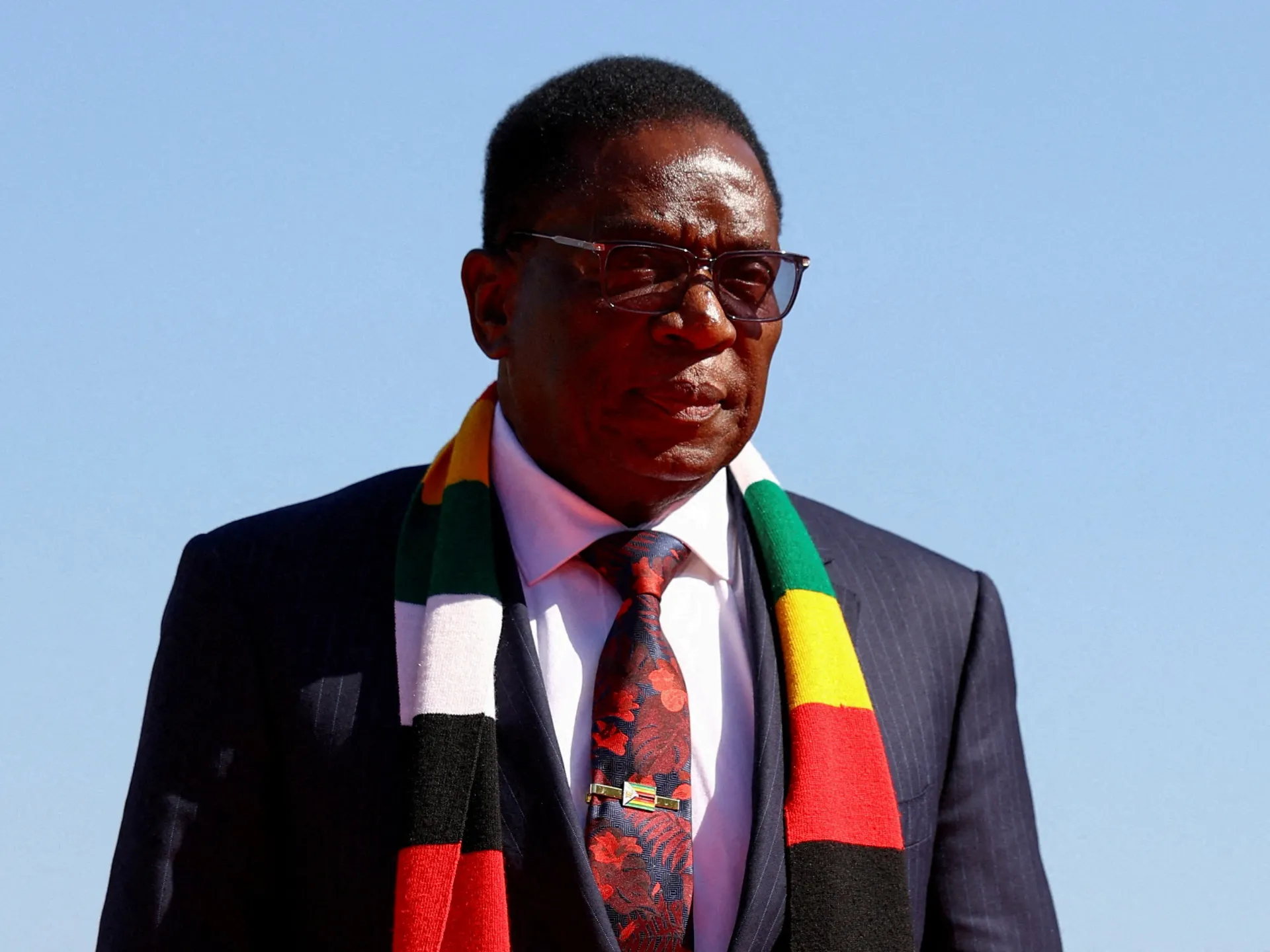
Zimbabwe’s Senate has overwhelmingly approved a constitutional amendment that will keep President Emmerson Mnangagwa in office until 2030.
According to Senate President Mabel Chinomona, the controversial amendments were passed on Wednesday after 75 senators voted in favour and four against extending the term for Mnangagwa, 83.
Recommended Stories
list of 3 itemsend of list
The raft of sweeping changes, which critics have called a “constitutional coup”, includes a provision that extends presidential and parliamentary terms from five to seven years.
The bill also includes a provision for the president to be elected by parliament rather than by direct popular vote.
With parliament’s backing, the bill now has to be signed by Mnangagwa to become law.
Mnangagwa’s Zimbabwe African National Union-Patriotic Front (ZANU-PF) party holds a strong majority in parliament and has ruled since independence in 1980.
Last year, the ruling party resolved to change the constitution to prolong presidential terms, and the plan received cabinet backing in February.
The bill then passed through the National Assembly last week, with 216 lawmakers voting in favour of the draft legislation and 42 against it.
Mnangagwa came to power after a 2017 military coup ousted longtime leader Robert Mugabe, who had been in power since independence in 1980.
Still, the country’s opposition, which has been weakened by years of repression, charges that the measures would entrench ZANU-PF’s control over the country.
Moreover, activists who have tried to mobilise in the country have reported intimidation and violence, including arrests or assault by suspected agents of the state.
Legal challenges have also failed to stop or invalidate the amendment process.
In March, Human Rights Watch said that Zimbabwe’s authorities were using violence and intimidation against those who were opposing the amendments.
“Over the last few months, the police and unidentified armed men have threatened, harassed, and beat up several people who are opposed to the proposed constitutional amendment,” it said in a statement.
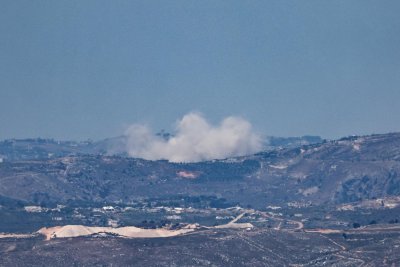
Smoke rises in late May as a result of an Israeli strike in the south of Lebanon as seen from the Israeli side of the border in the Upper Galilee, Israel. The Israeli military says it has trapped dozens of Hezbollah fighters in an underground complex in southern Lebanon. Photo by Atef Safadi/EPA
June 24 (UPI) — The Israeli military has surrounded an underground base in southern Lebanon in which dozens of Hezbollah militants are trapped, Israeli officials said.
The base is located under the village of Tebnit, in an area where fighting taken place despite an Israel-Hezbollah cease-fire, The New York Times reported. The standoff, if it escalates, could disrupt ongoing peace negotiations between the United States, which backs Israel, and Iran, which backs Hezbollah.
Israeli officials said the trapped militants were running out of supplies. On Tuesday, Israeli troops killed at least two people in the area. Israel said those targeted were Hezbollah operatives, while Hezbollah said they were civilians.
The underground base is beneath the Ali al-Taher ridge, not far from the border with Israel and a strategic point. Israeli officials said Hezbollah built the complex of tunnels over 20 years with Iran’s help.
“From this place, you can launch missiles and munitions at Israel,” Sarit Zehavi, president of the Alma Research and Education Center, said to The New York Times.
The Jerusalem Post reported that Israeli leaders are concerned that operatives in the area could carry out a kidnapping attack against Israel’s forces to help their negotiations for those trapped. Soldiers have been told to stay in pairs or groups at all times.
Israel once occupied the ridge after its 1982 invasion of Lebanon. It was once outside the “buffer zone” that Israel established in Lebanon near the border, but Israeli redrew the line last week to include the ridge, The New York Times reported. Israel considers any armed fighter south of the line a threat and a target.
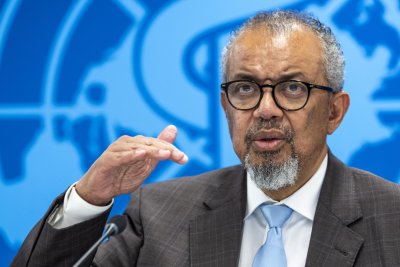
Tedros Adhanom Ghebreyesus, director general of the World Health Organization, speaks to the media about Ebola and global health issues during a press conference in Geneva, Switzerland, Wednesday. France reported its first ebola case Wednesday. Photo by Martial Trezzini/EPA
June 24 (UPI) — A doctor who traveled to the Democratic Republic of Congo was being treated for Ebola at a hospital in France, French officials said Wednesday.
The doctor was admitted to a special health facility and is in stable condition, the country’s health ministry said in a statement. Health workers are tracing anyone who may have come into contact with the doctor. Any contacts will be isolated for 21 days and closely monitored.
The DRC has had an outbreak of Ebola in recent months that has rocked the region. Fighting in the area, which has caused displacement, has made the outbreak worse, and the disease has spread into neighboring Uganda.
More than 1,000 cases have been confirmed and more than 260 people have died from the disease.
It’s the first confirmed European case, though an American doctor was treated at a German hospital in May. Dr. Peter Stafford has recovered and been released from the hospital.
The doctor in France works for the Alliance of International Medical Action, which has been working on the Ebola response in Congo, Dr. Tedros Adhanom Ghebreyesus, director general of the World Health Organization, said in a news conference.
“This case is a reminder of the risks faced by frontline responders,” Tedros said. He added that 82 health care workers have become ill during the outbreak.
Last week the WHO said 17 health workers who had caught Ebola in Congo had died.
ALIMA said the ill doctor is a man who had been working in an area where the virus is.
“Contamination prevention measures have been in place since the beginning of our intervention to protect our teams,” ALIMA said in a statement.
June 24 (UPI) — A U.S. airstrike launched last week in northwest Syria killed a senior Islamic State leader, U.S. military officials announced Wednesday.
U.S. Central Command said the Friday attack killed Ali Husayn al-Ulaywi as “part of ongoing U.S. efforts to disrupt and eliminate terrorists seeking to attack Americans abroad or the U.S. homeland.”
The announcement comes a little more than a month after U.S. and Nigerian forces killed Abu-Bilal al-Minuki, believed at the time to be second-in-command for USUS.
U.S. forces have been battling ISIS and its predecessors for more than a decade in Iraq, Syria, Nigeria and other locations throughout the Middle East and Northern Africa. This fight was entwined with both the Iraq war and the Syrian civil war.
“CENTCOM and our partners remain committed to rooting out remaining remnants of ISIS to ensure its enduring defeat,” said Adm. Brad Cooper, CENTCOM commander.
June 24 (UPI) — Global aquaculture production reached a record high, while Chile maintained its position as the leading supplier of salmon to the United States and one of the sector’s top exporting powers, according to a report by the Food and Agriculture Organization of the United Nations.
According to the report The State of World Fisheries and Aquaculture, global fisheries and aquaculture production reached 235 million tons in 2024. For the first time, aquaculture production surpassed 100 million tons of aquatic animals, 89% of which is destined for human consumption and provides at least one-fifth of the animal protein consumed by 3.1 billion people.
The Food and Agriculture Organization of the United Nations said Latin America and the Caribbean account for 15% of global aquatic product exports despite representing 9% of worldwide production, with a total of 13 million tons.
The region exported $27 billion worth of aquatic products, driven mainly by Chilean salmon, anchoveta from Peru and Chile, and Ecuadorian shrimp.
In this context, Chile ranks first in aquaculture production in Latin America, is the largest supplier of salmon to the United States and the world’s fifth-largest exporter of aquatic animal products.
Together with Norway, Chile accounts for nearly half of the value of global salmon and trout exports.
“The growth aquaculture has experienced in recent decades has not been accidental. Behind this progress lies significant work in research, innovation and technological development,” Valeska San Martín, an academic at the Coastal Research Center of the University of Atacama and a researcher at the Millennium Institute in Coastal Socio-Ecology, told UPI.
She said these advances have enabled the development of better feed for farmed species, more efficient genetic selection programs, increasingly precise environmental monitoring systems and automated tools that optimize feeding and health management.
“All of this has helped increase productivity and improve the efficient use of resources while at the same time reducing part of the costs associated with production,” she said.
San Martín added that Chile has been one of the most important players in global aquaculture development and is recognized by the Food and Agriculture Organization of the United Nations as one of the world’s 10 leading aquaculture producers.
“In 2024, it led global exports of frozen salmon and trout fillets, processed mussels, fishmeal and various algae-derived products, reaching more than 100 international markets, particularly the United States, Japan, Brazil, China and Europe,” she said.
Growth prospects remain positive, according to SalmonChile, the industry association representing salmon producers.
“Chilean salmon exports maintained a positive trend in 2026. During the first quarter, they reached $1.991 billion, representing growth of 8% in value and 19% in volume compared with the same period a year earlier,” the organization told UPI.
SalmonChile added that the record achieved by global aquaculture in 2024 confirms the growing prominence of aquaculture products in international trade and consolidates Chile’s position as one of the world’s leading salmon-producing powers.
June 24 (UPI) — Investment from the United States in Latin America and the Caribbean fell 11% in 2025, although the country remained the region’s leading source of foreign direct investment, the Economic Commission for Latin America and the Caribbean, or ECLAC, reported.
The organization presented its annual report, Foreign Direct Investment in Latin America and the Caribbean 2026: Navigating the New Global Context, in Santiago, Chile, on Tuesday. The report showed that the region received $194.233 billion in foreign direct investment in 2025, up 1.7% from the previous year.
ECLAC attributed the modest growth to an international environment marked by geopolitical tensions, technological rivalry among major powers and changes in U.S. trade policy.
The United States accounted for 35% of foreign investment with an identifiable origin entering the region, while Europe represented 32%.
ECLAC said the decline in U.S. investment flows and the increase in European investment significantly narrowed the gap between the two players.
The organization warned that recent changes in U.S. tariff policy could affect Latin American countries unevenly depending on their productive structures and their level of integration into regional value chains.
“In the current global context of weaponized interdependence, it is essential to understand the relationship between trade and foreign direct investment in order to design policies that allow us to advance toward more productive, inclusive and sustainable development,” ECLAC Executive Secretary José Manuel Salazar-Xirinachs said.
During the presentation of the report, Salazar-Xirinachs also said the world had moved from a period in which economic interdependence was viewed as a source of efficiency and even a guarantee of peace to one in which it is increasingly perceived as a source of vulnerability, according to statements reported by Xinhua.
Brazil remained the region’s leading destination for foreign investment, attracting $77.676 billion, equivalent to 40% of the regional total. Mexico received $43.221 billion, or 22% of the total, although it recorded a year-over-year decline. Together, the two countries accounted for 62% of all foreign investment received by Latin America and the Caribbean in 2025, according to ECLAC.
They were followed by Chile with 7% of regional flows, Peru and Colombia with 6% each, Guyana with 5%, and Costa Rica and Dominican Republic with 3%.
The sectoral composition also showed changes. Services attracted 53% of foreign investment received by the region and increased 19.5% from the previous year. Natural resources rose 7% and accounted for 16% of the total, while manufacturing declined 17.2% and represented 31% of investment flows.
The report also showed signs of caution among investors. During 2025, 1,326 new investment projects were announced with a combined value of $114.1 billion, a decline of 10.2% in the number of projects and 34.3% in value compared with 2024.
In response to this scenario, ECLAC recommended diversifying export markets and sources of investment, strengthening coordination between trade and investment policies, and expanding regional cooperation to reduce dependence on individual markets and increase economic resilience.
US Secretary of State Marco Rubio has said Iran will not be permitted to charge tolls or fees for vessels transiting the Strait of Hormuz under any final agreement with Washington, exposing one of the biggest points of friction in negotiations aimed at ending months of conflict across the Middle East.
The dispute comes after Iran announced it would waive planned transit fees through the strait that crosses through its territorial waters for 60 days while talks with the United States continue in Switzerland, suggesting charges could be introduced once the negotiating period expires.
Recommended Stories
list of 4 itemsend of list
Washington and Tehran signed a preliminary agreement in Switzerland this week to halt hostilities and launched a 60-day diplomatic process focused on sanctions relief, Iran’s nuclear programme and the future administration of the Strait of Hormuz.
Pakistan, which helped mediate the talks alongside Qatar, has said negotiations to end the four-month US-Israel war on Iran are expected to resume early next week, likely on Tuesday.
The future of Hormuz has already emerged as a key sticking point after Iran effectively closed the waterway during the war, severely disrupting maritime traffic through one of the world’s most important energy chokepoints and causing the price of oil to soar.
In peacetime, one-fifth of the world’s oil and natural gas supplies are shipped for export by Gulf producers through the waterway.
In April, the US imposed a corresponding naval blockade on Iranian naval ports in a bid to stem Iranian oil exports.
While a number of ships have crossed through the strait since the US-Iran agreement was signed last week, uncertainty remains over whether Tehran intends to impose permanent fees or service charges on shipping operators using the route. Here’s what we know – and what else is happening in the Strait of Hormuz this week.
(Al Jazeera)
What are the US and Iran saying?
On Friday, Iran’s Persian Gulf Strait Authority (PGSA) said planned fees for ships using the waterway would be suspended during the 60-day negotiation period established under the memorandum of understanding (MoU) signed with the US.
Earlier this week, Iran and Oman said in a joint statement that they would study the future administration of the trade route as well as possible charges for services provided there, while maintaining their sovereignty claims over territorial waters bordering the strait.
Speaking at the start of a regional tour in the United Arab Emirates, Rubio rejected the idea of transit fees. “It’s an international waterway. No country is allowed to charge tolls or fees on an international waterway,” he said, adding that he believed “all the countries in this region would agree”.
Iran’s chief negotiator, Mohammad Bagher Ghalibaf, has signalled that Tehran views the post-war arrangement as fundamentally different from the status quo that existed before the conflict, however. Experts also say that Iran will not give up control of the strait, which has proved to be its greatest point of leverage in the conflict with the US.
“Hormuz will never return” to its prewar status, Ghalibaf said, despite both sides agreeing on Monday to establish “communication mechanisms” aimed at keeping the waterway open.
What does international law say?
International law protects the right of transit through strategic waterways such as the Strait of Hormuz, preventing coastal states from imposing explicit tolls simply for passage through international shipping lanes, even when they are passing solely through territorial waters.
However, countries can charge for specific services, including inspections, navigation assistance, security measures and certain insurance-related requirements, insurance experts say.
Examples include fees associated with transit through the Suez Canal and Panama Canal, as well as some services provided in Turkiye’s Bosporus and Dardanelles straits.
Mohammad Reza Farzanegan, an economist at Germany’s Philipps-Universitat Marburg, told Al Jazeera last month that Iran, like Turkiye, could justify a negotiated mechanism for transit fees or service-based contributions through natural straits as payment for maintaining a safe passageway, reducing environmental risks and providing predictability in a waterway that supports global energy, food and technology supply chains.
A key difference, however, is that while those waterways pass through the territory of a single state in each case, the Strait of Hormuz passes through the territorial waters of both Iran and Oman, while also connecting to waters used by the United Arab Emirates and other Gulf states.
“This sort of arrangement is unprecedented, and there would not be such an outcome, unless there is a complete coordination between the GCC [Gulf Cooperation Council] countries and Iran, with the approval of major international powers, such as China and the United States,” Nader Habibi, an Iranian American economist, told Al Jazeera.
How many ships are getting through the strait now?
Ship movements through the Strait of Hormuz remain well below prewar levels, when between 120 and 140 ships transited the passage each day, including tankers carrying about 20 million barrels of oil from the Gulf.
As the strait begins to open up, Oman says it is working with the United Nations’ International Maritime Organization (IMO) on temporary arrangements to facilitate safe transit through the strait, launching an operation to evacuate more than 11,000 sailors stranded in the area after the conflict left hundreds of vessels trapped for months.
Traffic through the strait has also been held back by ongoing concerns about the possible presence of sea mines in the central shipping channels used by international vessels before the war.
The Joint Maritime Information Center (JMIC), which includes representatives from the US and other maritime partners, has warned ships to avoid the area “due to the existence of mines”.
Other countries, including Japan, are currently weighing up whether to send ships to help with efforts to remove mines from the strait.
While Iran has never confirmed the presence of mines in the strait, when it first issued a map of the waterway for vessels it had approved for transit while the conflict was ongoing, it ordered ships to pass close to its coast to avoid possible mines. Ships had previously passed much closer to the coast of Oman.
The graphic below illustrates how much shipping through the strait dropped off as a result of the US-Israel war on Iran.
Could the dispute over strait fees derail a peace deal?
Mostafa Khoshcheshm, a professor at the University of Applied Sciences in Tehran, told Al Jazeera that Iran is unlikely to abandon plans to introduce long-term service fees in the strait.
“According to the MoU, Iran is not going to charge service fees for 60 days, but afterwards, Iran is definitely going to do that,” Khoshcheshm told Al Jazeera.
He said many Iranians were already unhappy that Tehran had agreed to suspend fees for the duration of the negotiating period.
“The money is not the real core of the issue,” he said. “The point here is how to impose your new protocols in the region. This is highly important for the Iranians.”
Cyrus Schayegh, professor of international history and politics at the Geneva Graduate Institute, told Al Jazeera the success of any new administrative arrangement would depend heavily on regional support.
“I think this is a very big question, and the biggest question is whether they will be able to sell it to the Emirates,” Schayegh told Al Jazeera.
“I think the Emirates will need to be involved in a really substantive way for any sort of new authority to actually work.”
More broadly, he said, the future of Hormuz forms part of a wider debate over Gulf security architecture following the war.
“It is only one piece of a much larger puzzle,” Schayegh said, adding that several regional states now accept that Iran has strengthened its deterrence capabilities following the conflict.
What other issues remain unresolved?
Hormuz is far from the only serious obstacle to a peace deal.
Questions also remain over the future of Iran’s nuclear programme, with Kazem Gharibabadi, Iran’s deputy foreign minister for legal and international affairs, saying that access for international inspectors to nuclear facilities damaged during the war would only be addressed as part of a final agreement with Washington.
His comments came after US President Donald Trump claimed Iran had agreed to “the highest level” of nuclear inspections.
Iranian officials insist no commitments were made in Switzerland regarding Tehran’s nuclear programme and say they did not meet representatives of the International Atomic Energy Agency (IAEA), including Director-General Rafael Grossi.
Regional security remains another major source of disagreement, with Israeli Defence Minister Israel Katz insisting Israeli forces will not withdraw from southern Lebanon “even if there is an American demand” to do so.
Meanwhile, Ghalibaf has identified the withdrawal of foreign military forces from the Middle East as one of Tehran’s strategic objectives in the negotiations.
The future of Iran’s frozen assets also remains a sticking point, with Trump indicating Washington is reluctant to release large sums of Iranian funds directly, arguing that money could ultimately benefit the Islamic Revolutionary Guard Corps (IRGC).
Instead, he has suggested a mechanism under which some funds would be used to purchase US goods.
“Food is desperately needed in Iran, and we will be purchasing it for them exclusively from the United States,” Trump said. Iran has not confirmed plans to do this.
June 24 (UPI) — On July 1, student loan servicers will begin notifying borrowers enrolled in SAVE repayment plans that they must switch to a new plan and borrower advocates warn that what comes next will likely be an increase in defaults and delinquencies.
Not all borrowers will receive a notice on July 1. In fact, many will not. The notices will be staggered across the millions of people enrolled in the SAVE program over the coming months. Once a borrower receives their notice, the clock starts on a 90-day window for them to enroll in an eligible repayment plan.
If a SAVE enrollee fails to switch to another repayment plan, they will be automatically enrolled in a standard repayment plan, which will carry a higher monthly payment requirement. In many cases, that plan will not be their most affordable option.
Betsy Mayotte, president and founder of the Institute of Student Loan Advisors, told UPI that the borrowers her organization hears from are more frequently expressing confusion over which plan is best for them.
“We’ve seen borrowers whose SAVE payment was $40 and their next lowest payment on a new plan is $400,” Mayotte said.
For many borrowers, they will be able to switch plans directly on the Federal Student Aid website. In most cases, this will be the simplest way to switch, Mayotte said. However, in some cases, this can create problems with unduly high payment requirements due to a glitch in the Department of Education’s website.
People who are married with both spouses having student loans may be assigned double the payment when applying through the Federal Student Aid site, Mayotte said. What the partners would pay together is misapplied to each spouse, effectively doubling their required payments.
What is supposed to happen, Mayotte said, is that the spouses apply together and their payment is “portioned out” considering both of their loans and incomes. Instead, the glitch is causing the amount not to be portioned, requiring each spouse to make that full payment.
Mayotte added that this glitch is not obvious to the borrower when they go through the application process, meaning it can fly under their radar.
In these cases, borrowers are advised to discuss their repayment options directly with their student loan servicer.
Borrowers who do not have new student loans after July 1 will continue to have access to the old income-driven repayment plans until July 1, 2028, when those programs end.
July 1 also brings about the deadline for Parent PLUS loan borrowers to consolidate their loans to be eligible for enrollment in an Income-Driven Repayment plan. New Parent PLUS loans taken out after this deadline, or loans that are not consolidated before it, will not have access to Income-Driven Repayment plans.
For Parent PLUS loans that have been consolidated, borrowers must enroll in an Income-Driven Repayment plan by July 1, 2028, or they will forfeit their eligibility.
Beginning with the coming school year, Parent PLUS loans will be capped at $65,000 total per student with two parents. Each student will have a separate $65,000 cap.
With the SAVE plan’s end, Mayotte said she expects defaults and delinquencies to rise. She said the borrowers who have historically been least likely to default are those who have made 12 to 24 payments consecutively on time.
The COVID-19 pandemic took about 40 million people out of that habit, Mayotte said.
“We had 3 million default in the last quarter of 2025,” she said. “I think the SAVE transition is going to continue that trend because people have no plan they can afford.”
“There are two big factors,” Mayotte continued. “One is lifestyle creep. They haven’t had to pay for two years and lifestyle creep happens. The other thing that’s happened is they were told their payment was going to be ‘x’ on SAVE and they made other financial decisions around that. If you’re told your payment’s going to be $100 on SAVE and then you budget to buy a house — all of the sudden your payment is not $100 a month, it’s $400 a month, you can’t take back that mortgage.”
Meanwhile, the cost of living has increased on all fronts in the United States.
“Payments are resuming at a higher rate for borrowers at the same time health insurance has gone up, gas prices, groceries, produce has gone up like 43% in the last three months,” Mayotte said. “It’s like a perfect storm, especially for low-income and middle-class families as far as expenses go.”
Amy Czulada, senior adviser for outreach and engagement with the Student Borrower Protection Center, told UPI that the difference between the SAVE plan and the next most affordable plans available for enrollees is “astronomical.”
The Trump administration is launching the Repayment Assistance Plan on July 1. It is a new income-based repayment plan approved by Congress last summer. It and the Income-Based Repayment plan will be the only plans based on income available to borrowers starting July 1, 2028, and the only plans for borrowers with new loans after July 1 this year.
About 3 million borrowers are enrolled in income-driven repayment plans that will sunset in 2028.
In its analysis of the RAP plan, the Student Borrowers Protection Center estimates that the average borrower with a college degree will pay more than $4,000 per year more in student loan payments.
“The difference in payments is just beyond anything folks are able to handle at the moment,” Czulada said.
The Student Borrower Protection Center, a student loan borrower advocacy organization, warns that the deadline for borrowers to pick new plans threatens to push borrowers back into a “broken and corrupt servicing system.”
The organization published its report “Repeat Offenders” earlier this month, detailing allegedly illegal acts and practices carried out by student loan servicers that exploit borrowers. Practices such as deliberately long wait times on phone calls, not providing borrowers with all the relevant information they need to plan their payments, illegally denying applications for affordable payment plans and deceiving borrowers to collect maximum interest rate charges.
The report also highlights that student loans changing hands across servicers, along with shifts in the Department of Education, creates opportunities for borrowers to be taken advantage of, have applications lost, payment histories misapplied and other shortfalls in service to borrowers.
“Folks often think they are conversing directly with the Department of Education,” Czulada said. “So there’s a lot of white labeling going on where these contractors are the ones interfacing with, but folks don’t necessarily know or understand that.”
Federal management of student loans is currently being moved from the Department of Education to the U.S. Treasury Department.
“What that has led to is that there’s not really a functioning federal student aid office that can take complaints and really dive into what the issues are,” Czulada said. “Borrowers are left really susceptible to all these practices and limited oversight and accountability.”
In March, the Government Accountability Office issued its review of Federal Student Aid’s monitoring of student loan servicers. It found that the FSA had stopped reviewing the accuracy of servicers’ records in February 2025, because of a lack of staff.
The Department of Education and other government agencies reduced staff broadly in 2025 under recommendations by the Trump administration’s short-lived Department of Government Efficiency, led by the world’s first trillionaire Elon Musk.
Nelnet and Mohela are the largest loan servicers contracted with the Department of Education.
Nelnet manages more than 12 million accounts worth more than $480 billion. It has received $3.1 billion in payments from the department since 2009.
In 2024, a Senate investigation found that more than 1.4 million duplicate student loan records appeared on borrowers’ credit reports when loans were transferred from Mohela to Nelnet. Earlier that year, the company was fined $1.8 million by the attorney general of Massachusetts for failing to keep borrowers in affordable repayment plans, stopping them from progressing toward student loan forgiveness.
Czulada said during the pandemic student loan servicers notoriously allowed borrowers to defer payments or enter forbearance rather than informing them about repayment options that would have counted toward loan forgiveness.
Mohela manages more than 7 million student loan accounts worth more than $318 billion and has received $1.54 billion in payments from the Department of Education since 2011. At least 347,000 of its borrowers are at least three payments behind and more than 75,000 defaulted last year.
More than 41,000 complaints were issued against the company by borrowers last year.
Mohela is rated by FSA as the servicer with the longest wait times for borrowers calling its service lines. Borrowers wait for 13 minutes on average to connect with a representative at Mohela and about 14% abandon their calls before reaching someone.
When callers do get through, Czulada said they are often redirected to other representatives or sent to webpages that do not function.
The American Federation of Teachers filed a lawsuit against Mohela in 2024 and has amended its complaints as recently as January. It alleges that the servicer and five more of the biggest student loan services have engaged in a call deflection scheme and have systemically delivered poor service to customers trying to stay in compliance with loan repayments.
“These companies are just continuing to get more money from the Department of Education for giving us the same terrible service over time,” Czulada said. “This has been really harmful to a lot of people. Like millions of people. Nothing is better evidenced by that than having almost 10 million people in default right now and almost another million careening towards default. In 2020 we also had a record number of people in default before the pandemic began. Moving back to the status quo is also not really an option.”
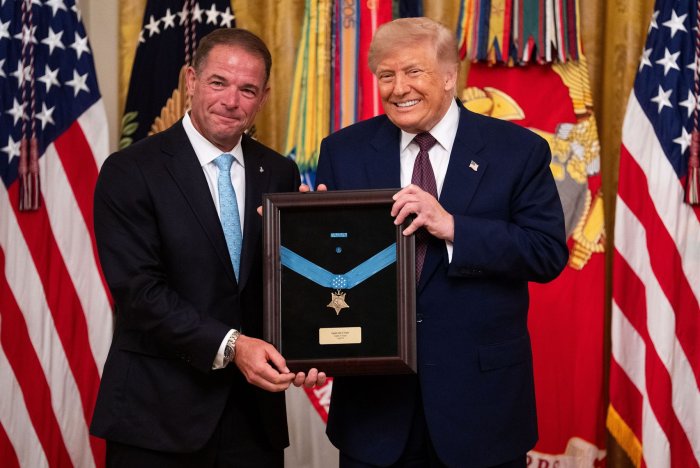
President Donald Trump presents a Medal of Honor to Tom Ripley on behalf of his father, John W. Ripley, during a Medal of Honor award ceremony in the East Room of the White House on Thursday. Photo by Aaron Schwartz/UPI | License Photo
Remaining group schedule, teams, as well as the best third-round group fixtures at the tournament in North America.
After 48 matches in North America, it’s time for the final round of games in the group stage at World Cup 2026.
Sixteen teams will be eliminated after these fixtures, with 32 nations heading through to the knockout stages.
Recommended Stories
list of 4 itemsend of list
The top two teams from each of the 12 groups – along with the eight best third-placed teams – will proceed to the next phase.
Here are the top five “must-watch” matches in the second round of fixtures from June 24 until June 27.
Neymar could return for Brazil against Scotland [Reuters]
⚽️ Scotland vs Brazil
Miami Stadium – Wednesday, 6pm (22:00 GMT)
These two sides will meet at the World Cup for the fifth time and there’s plenty to play for in an intriguing encounter in Miami.
Brazil are looking to secure their place in the knockout stages as group winners and are currently tied with Morocco on four points at the top of Group C.
Scotland are aiming to escape the group for the first time at a major international tournament and know that a point will almost certainly guarantee a spot in the round of 32.
Expect Group C to change a lot during these final fixtures, with Morocco taking on Haiti at the same time.
If that isn’t enough, Brazil’s Neymar is also set to make his first appearance at this World Cup.
Sweden have been unpredictable at this tournament [Raquel Cunha/Reuters]
⚽️ Japan vs Sweden
Dallas Stadium – Thursday, 6pm (23:00 GMT)
It’s difficult to predict which Sweden will turn up in Dallas on Thursday.
Graham Potter’s side beat Tunisia 5-1 in their opening match of the World Cup, before losing by the same score to the Netherlands.
Japan have been entertaining to watch at this tournament and were in fine form during their 4-0 win over Tunisia at the weekend.
Expect plenty of goals in this match and plenty of drama. The winner will secure a top-two finish in Group F, so there is a lot to play for.
France’s Kylian Mbappe has scored four goals so far [Kyle Ross/Reuters]
⚽️ Norway vs France
Boston Stadium – Friday, 3pm (19:00 GMT)
Norway and France are already through to the knockout stages, but this game looks set to be a blockbuster affair with both sides looking to top Group I.
Erling Haaland and Kylian Mbappe have both scored four goals so far and they’ll be desperate to add to their tally as they chase down Lionel Messi.
France are one of the favourites to lift the World Cup next month and are looking to end the group stage with three wins from three.
But Norway have the opportunity to prove that they truly are dark horses in this tournament and can compete with elite international sides.
Buckle in for a big one in Boston.
Spain’s Lamine Yamal, Nico Williams and Victor Munoz celebrate after the match against Saudi Arabia [Claudia Greco/Reuters]
⚽️ Uruguay vs Spain
Seattle Stadium – Friday, 6pm (00:00 GMT on Saturday)
Group H has been a tight affair following some surprise results in the opening round of fixtures.
Uruguay drew with Saudi Arabia, while Cape Verde shocked the world with a goalless draw against Spain.
La Roja bounced back by thrashing Saudi Arabia and they go into their final game as group leaders, with Uruguay two points behind in second.
Spain will secure top spot with a win in Seattle, ensuring that they avoid Argentina in the round of 32.
Egypt are looking to reach the knockout stages at the World Cup for the first time [Anne-Marie Sorvin/Reuters]
⚽️ Egypt vs Iran
Seattle Stadium – Friday, 8pm (04:00 GMT on Saturday)
Neither of these sides have ever made it out of the group at a World Cup, but on Friday, at least one of them will achieve that feat.
Group G is closely bunched after a number of drawn matches and it sets things up nicely for an intriguing final round of fixtures.
Victory for either Egypt or Iran will guarantee them a spot in the knockout phase, so expect both sides to be up for this one.
Iran have faced numerous challenges at this World Cup, with restrictions on travel and visa issues before the tournament even began.
If Iran progress, there’s also still a chance that they will face the US in the knockout stages.
World Cup 2026: Remaining group-stage full schedule
Wednesday, June 24
Switzerland vs Canada at 12pm PT (19:00 GMT) – BC Place, Vancouver, Canada
Bosnia vs Qatar at 12pm PT (19:00 GMT) – Seattle Stadium, Seattle, US
Scotland vs Brazil at 6pm ET (22:00 GMT) – Miami Stadium, Miami, US
Morocco vs Haiti at 6pm ET (22:00 GMT) – Atlanta Stadium, Atlanta, US
Czechia vs Mexico at 7pm CST (01:00 GMT on Thursday) – Mexico City Stadium, Mexico City, Mexico
South Africa vs South Korea at 7pm CST (01:00 GMT on Thursday) – Estadio Monterrey, Guadalupe, Mexico
Thursday, June 25
Ecuador vs Germany at 4pm ET (20:00 GMT) – New York New Jersey Stadium, New Jersey, US
Curacao vs Ivory Coast at 4pm ET (20:00 GMT) – Philadelphia Stadium, Philadelphia, US
Japan vs Sweden at 6pm CDT (23:00 GMT) – Dallas Stadium, Dallas, US
Tunisia vs Netherlands at 6pm CDT (23:00 GMT) – Kansas City Stadium, Kansas City, US,
Turkiye vs USA at 7pm PT (02:00 GMT on Friday) – Los Angeles Stadium, Los Angeles, US
Paraguay vs Australia at 7pm PT (02:00 GMT on Friday) – San Francisco Bay Area Stadium, San Francisco, US
Friday, June 26
Norway vs France at 3pm ET (19:00 GMT) – Boston Stadium, Boston, US
Senegal vs Iraq at 3pm ET (19:00 GMT) – Toronto Stadium, Toronto, Canada
Cape Verde vs Saudi Arabia at 7pm CDT (00:00 GMT on Saturday) – Houston Stadium, Houston, US
Uruguay vs Spain at 6pm CST (00:00 GMT on Saturday) – Estadio Guadalajara, Zapopan, Mexico
Egypt vs Iran at 8pm PT (03:00 GMT on Saturday) – Seattle Stadium, Seattle, US
New Zealand vs Belgium at 8pm PT (03:00 GMT on Saturday) – BC Place, Vancouver, Canada
Saturday, June 27
Panama vs England at 5pm ET (21:00 GMT) – New York New Jersey Stadium, New Jersey, US
Croatia vs Ghana at 5pm ET (21:00 GMT) – Philadelphia Stadium, Philadelphia, US
Colombia vs Portugal at 7:30pm ET (23:30 GMT) – Miami Stadium, Miami, US
DRC vs Uzbekistan at 7:30pm ET (23:30 GMT) – Atlanta Stadium, Atlanta, US
Algeria vs Austria at 9pm CDT (02:00 GMT on Sunday) – Kansas City Stadium, Kansas City, US
Jordan vs Argentina at 9pm CDT (02:00 GMT on Sunday) – Dallas Stadium, Dallas, US
The number of babies born in South Korea shot up 18 percent in April, reaching a seven-year high, government data showed Wednesday. This file photo, taken April 22, shows newborns at a hospital in Goyang. File Photo by Yonhap
The number of babies born in South Korea shot up 18 percent in April from a year earlier, reaching the highest level in seven years, government data showed Wednesday.
A total of 24,521 babies were born in April, up from 20,787 a year earlier, according to data from the Ministry of Data and Statistics. It marked the highest figure for any April since 26,104 babies were recorded in 2019.
Over the January-April period, the total number of births came to 99,534, also the highest in seven years, up a sharp 15.5 percent from a year earlier.
The number of births grew at a record rate for both April and the January-April period.
The country’s total fertility rate, the average number of children a woman is expected to have in her lifetime, rose by 0.13 from a year earlier to 0.93 in April.
The number of newborns has been on an upward trend since July 2024.
Experts attribute the recent growth to an increase in the number of marriages, along with a more positive perception of childbirth.
The rate still remains well below the 2.1 births per woman needed to maintain a stable population without immigration.
The number of marriages in April rose 9 percent from a year earlier to 20,622. It was also the highest figure since 22,844 was recorded in April 2016.
The number of divorces, meanwhile, rose 7.3 percent from a year earlier to 7,829.
The data showed the number of deaths fell 1.3 percent from a year earlier to 28,405, resulting in a natural population decline of 3,884.
Copyright (c) Yonhap News Agency prohibits its content from being redistributed or reprinted without consent, and forbids the content from being learned and used by artificial intelligence systems.
France has confirmed its first Ebola case in the country during the current outbreak, as a doctor returning from a humanitarian mission in the Democratic Republic of the Congo tested positive, French health authorities said.
In a statement on Wednesday, the French Health Ministry said the healthcare worker was operating in one of the areas where the virus was circulating.
Recommended Stories
list of 3 itemsend of list
“The patient is being treated at a leading healthcare facility, following strict biosafety protocols,” the ministry said. “All precautionary measures, including the patient’s isolation, were implemented upon arrival in France, with transfer to the hospital under secure conditions to prevent any risk of contamination,” it said.
An epidemiological investigation is under way to identify individuals who may have been in contact with the patient. They will be contacted by health authorities to self-isolate for 21 days, the statement added.
Since May, the northeastern Ituri province of the DRC has been the epicentre of an Ebola outbreak, which has killed more than 260 people and infected more than a thousand so far in the central African country. Cases have also been reported in neighbouring Uganda.
On May 17, the World Health Organization (WHO) declared the outbreak a “public health emergency of international concern”.
Most previous Ebola outbreaks in DRC were caused by a virus called Ebola Zaire, but this outbreak is caused by a different strain called Bundibugyo, for which there are currently no approved vaccines or treatments.
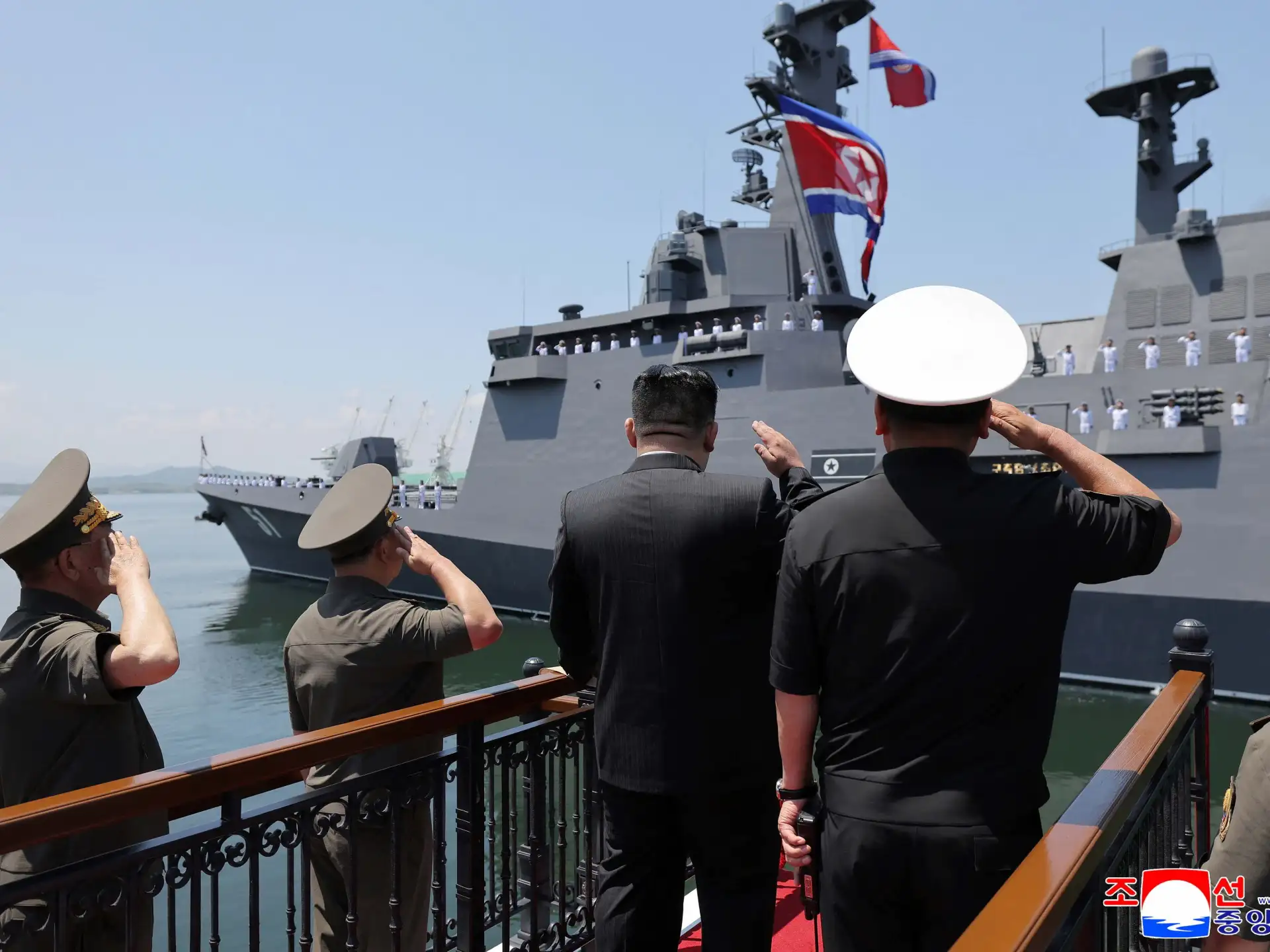
North Korea has revealed its largest-ever warship that leader Kim Jong Un says can carry nuclear-capable missiles. The 5,000-metric-ton destroyer is part of the country’s growing navy, which is set to expand sharply over the next five years.
June 24 (UPI) — The United States has sanctioned five Cuban state companies and the wife of Raul Castro‘s son, as the Trump administration continues to apply economic pressure on the Caribbean nation.
Three of the companies blacklisted by the State Department on Tuesday are associated with Grupo de Administracion Empresarial, which the United States initially sanctioned during the first Trump administration on accusations of being a Cuban military-controlled umbrella enterprise with interests sprawling throughout the island nation’s economy.
The two other entities hit are accused of operating in Cuba’s mining sector with foreign investment from Australia as well as working in collaboration with Russia.
Annalie Lilliam Rueda Cadero was sanctioned for being the wife of Alejandro Castro Espin, the son of Raul Castro, Cuba’s former head of state. Alejandro Castro was sanctioned by the Trump administration earlier this month.
Secretary of State Marco Rubio said in a social media statement that he was sanctioning GAESA network entities for diverting Cuba’s money and assets and the two other companies for exploiting its mineral and metal reserves.
“The situation in Cuba is devolving as the island’s corrupt, brutal and anti-American Communist regime continues to prioritize its own total control over the freedom, opportunity and basic well-being of the Cuban people,” he said.
Sanctions generally freeze U.S.-based property or interests in property under the control of those designated while threatening foreign businesses with secondary sanctions for doing business with them.
The United States has long imposed a blockade and sanctions on Cuba, but the economic punitive measures have starkly increased during the second Trump administration, exasperating the power and energy shortages in the country, causing blackouts. The supply shortages have forced more than 100,000 people, including 11,000 children, to wait for surgeries, according to the United Nations.
Tuesday’s designations come under an executive order Trump signed in May permitting the sanctioning of those operating in Cuba’s energy, defense, mining and financial services sectors, as well as those complicit in human rights abuses or corruption related to Cuba working or for providing services to the Havana government.
Trump has been increasing the political and economic pressure on Cuba since ousting Venezuela’s authoritarian leader in January, declaring a national emergency with respect to the island nation early this year.
Since signing the sanctions-related executive order in May, he has used it at least five times to designate Cuba-related entities and individuals.
Cuba’s foreign minister, Bruno Rodriguez, accused the Trump administration on Tuesday of increasing its sanctions regime against Havana, because Havana continues to prove it is “stronger, more capable and efficient than it expected.”
He accused the Trump administration of collectively punishing the Cuban people.
Ernesto Soberon, Cuba’s United Nations ambassador, accused the United States of lying about employing sanctions due to human rights abuses by Havana.
“No government, no person with even a shred of common sense — and certainly not the people of #Cuba, who are suffering the humanitarian impact of the U.S. economic war — can believe that the tightening of the blockade, the energy siege and the newly announced sanctions are intended to support the Cuban people,” he said on social media.
“Anyone who has doubts should ask the parents of the more than 12,000 children currently awaiting surgery in Cuba as a result of the U.S. government’s genocidal policy.”
In the early hours of another day of Israel’s genocidal war on Gaza, 20-year-old Hamza al-Ghazali, who lives in the Zeitoun neighborhood south of Gaza City, set out once again in search of an insulin pen.
It was not the first time he had moved between pharmacies and medical centres, looking for a dose. The effort has become a recurring part of his life since the outbreak of war in October 2023 and the tightening Israeli restrictions on the entry of medicines and medical supplies into the Gaza Strip.
Recommended Stories
list of 3 itemsend of list
Hamza knows that delaying an insulin dose is potentially life-threatening. Type 1 diabetes requires strict daily treatment and continuous monitoring. However, under war and blockade conditions, managing the disease has turned into a daily, high-risk struggle.
A Palestinian pharmacist handles medicine as medical supplies run critically low, according to the World Health Organization, at Al-Ahli Arab Hospital in Gaza City, March 8, 2026 [Dawoud Abu Alkas/Reuters]
Hamza recalls how his health condition was more stable before the war. He used to obtain insulin from pharmacies at prices ranging between 25 and 35 shekels ($8.5 and $12) per pen, sometimes even less.
“I started to know all the pharmacies, and they also knew me, because I was always buying insulin pens,” Hamza says.
But this changed drastically with the war and the tightening of restrictions on the entry of medical supplies. The price of a single insulin pen rose to between 75 and 100 shekels ($25 and $34), and, as Hamza needs six to seven pens per month, he was forced to try to extend the use of each pen for as long as possible.
Insulin injections used in the treatment of Type 1 diabetes, essential for regulating blood glucose levels [Lina Ghassan Abu Zayed/Al Jazeera]
Fight for survival
The suffering of diabetes patients in Gaza extends to restrictions on the entry of medicines through border crossings, measures that have led to a severe shortage of insulin, glucose metres, and test strips.
Hamza notes that this shortage has created an unstable medical reality, where, in some cases, medicines that may have been stored for long periods or in improper conditions appear on the market, raising concerns about reduced effectiveness or uncertain quality due to the lack of alternatives.
A year ago, when an Israeli blockade on the entry of food led to a famine in northern Gaza, Hamza was forced to eat anything he could find.
But for Hamza, it wasn’t just about securing enough nutrition for his body, but also about finding the right balance between the insulin he had access to and the food he could find.
If he ate more without sufficient insulin doses, then he could have dangerously high blood sugar levels. If he reduced his food intake out of fear of running out of insulin, then that could result in severe and potentially fatal hypoglycemia (low blood sugar).
“I was afraid for myself during the shelling in northern Gaza,” said Hamza. “We were under siege. If the house was bombed, I might survive under the rubble, but die from low blood sugar. And if I ate without insulin, my sugar could rise dangerously. I was living between two fears all the time.”
He adds that the fear was not only about losing insulin, but also about losing glucose metres and test strips, which he relies on daily to monitor his condition. Every time he was forced to evacuate, the first thing he would carry was his “diabetes bag”.
Hamza al-Ghazali often struggles to find insulin in Gaza [Lina Ghassan Abu Zayed/Al Jazeera]
Equipment shortages
Glucose test strips have been in short supply, limiting Hamza’s ability to monitor his blood sugar levels on a daily basis and forcing him to rely on judging his physical symptoms.
Hamza notes that the cost of a glucose metre ranges between 250 and 300 shekels ($85 and $120), but the real problem lies in the availability of test strips.
Without them, the device becomes useless, forcing some patients to repeatedly buy new devices. Hamza estimates that more than 80 percent of diabetes patients in some areas are unable to test their blood sugar regularly, which he describes as a “medical disaster”, as it turns treatment into daily guesswork.
According to data from the Palestinian Ministry of Health in Gaza, between 70,000 and 80,000 diabetes patients in the Palestinian enclave are at risk due to the severe shortage of insulin and test strips, in addition to the collapse of medical follow-up services and poor nutrition.
Medicine shelves at Al-Ahli Arab Hospital as medical supplies run critically low [Dawoud Abu Alkas/Reuters]
Endocrinology and diabetes specialist Dr Adli al-Ghouti notes that about 2,500 children in Gaza are living with Type 1 diabetes, and are in a highly critical health condition.
As a result of insulin shortages, a lack of proper storage conditions, and power outages, a real crisis is unfolding.
Al-Ghouti warns that the deterioration of insulin quality, the expiration of the stock available in Gaza, and improper storage can all reduce effectiveness, creating a false sense of security while blood sugar levels remain uncontrolled, potentially resulting in severe complications such as diabetic ketoacidosis, a life-threatening emergency condition.
“Taking an expired dose of insulin may cause significant harm inside the body, while giving a temporary impression of improvement,” Dr al-Ghouti said.
Diabetes is therefore no longer a condition that can be managed easily in Gaza. Between the shortage of insulin, a lack of testing tools, rising prices, and deteriorating nutrition, even the simplest aspects of treatment turn into a daily struggle for survival.
June 24 (UPI) — Senate lawmakers have approved a war powers resolution directing President Donald Trump to halt U.S. hostilities with Iran or seek congressional authorization.
The Senate voted 50-48 on Tuesday, with four Republicans — Sens. Bill Cassidy of Louisiana, Susan Collins of Maine, Lisa Murkowski of Alaska and Rand Paul of Kentucky — joining their Democratic colleagues in passing H.Con.Res. 86. Sen. John Fetterman, D-Pa., was the only Democrat to vote against the measure.
The measure’s legal force was disputed. Though concurrent resolutions are non-binding, Democrats argue H.Con.Res. 86 is binding because it was adopted under the War Powers Resolution.
Either way, the measure shows the deepening fissure in support among Trump’s Republican Party for the war his administration unilaterally launched in late February.
Democrats have been forcing repeated war powers resolution votes for months, most of which have been stonewalled by Republicans. But GOP support for the war has waned as it has dragged on, culminating Tuesday when the Senate approved the measure that the House narrowly passed 215-208 earlier this month.
“Both chambers have now made clear that the president cannot continue this war of choice and must cease all hostilities against Iran,” Rep. Gregory Meeks, the resolution’s sponsor and ranking member of the House Foreign Affairs Committee, said Tuesday after the vote.
“Regardless of what President Trump says, this measure is binding under the War Powers Resolution, and I will explore all legal avenues to ensure the Executive complies with the will of Congress.”
Democrats argue that the U.S. war with Iran — as well as other military actions taken by Trump, including attacks on suspected drug-trafficking boats in international waters — is illegal as Congress has not authorized war, a power the Constitution gives to Congress.
Trump has responded that he does not need authorization, and any war powers resolution is moot due to the fragile U.S.-Iran cease-fire that went into effect in early April.
Amid the cease-fire, Trump has been seeking an agreement to end the war, and his administration was actively negotiating terms with Iran when the vote was held Tuesday.
In a social media statement, Trump lambasted Congress over the vote, saying it was informing Iran that the United States does not support him while hee has “Iran on the ‘ropes,’ ready to go down for the fall.”
“Four Republican Losers voted with the Dumocrats,” he said, while calling the measure “poorly timed and meaningless.”
“These Senators have just made my job more difficult, but I will get it done, one way or the other, because I always get it done.”