TOP NEWS

From breaking news to significant developments in politics, business, technology, entertainment, and more, we deliver the stories that shape our global landscape.

South Korea plans $6.5B fund for security tech firms

SMEs and Startups Minister Han Seong-sook attends a meeting of the emergency economic headquarters at the government complex in Seoul, South Korea, 22 May 2026. Photo by YONHAP / EPA

June 26 (Asia Today) — South Korea plans to create an investment and procurement system aimed at producing homegrown security technology companies comparable to U.S. data analytics company Palantir Technologies, the government said Friday.

The Ministry of SMEs and Startups announced the strategy with the Defense Ministry and Korea AeroSpace Administration during a meeting on future security innovation companies at the Blue House.

The plan seeks to accelerate the transfer of advanced civilian technology into national defense and security.

The government aims to develop five security technology companies valued at more than 1 trillion won ($651 million) and 50 companies with annual sales exceeding 100 billion won ($65.1 million) by 2030.

It will designate five strategic sectors covering drones and robotics, defense artificial intelligence and semiconductors, advanced sensors and materials, aerospace technology and cybersecurity and quantum communications.

Officials described the initiative as an effort to cultivate a “Korean Palantir,” referring to the U.S. company known for software that integrates and analyzes large volumes of defense and intelligence data.

The phrase is a policy description rather than the name of a company the government plans to establish.

Investment vehicle modeled on In-Q-Tel

The ministry plans to establish a government-backed investment organization modeled on In-Q-Tel, the nonprofit strategic investor created to support technologies relevant to U.S. intelligence agencies.

The proposed organization would make direct investments in early-stage security technology companies to address funding shortages.

The government also plans to support the establishment of a technology-focused asset management company tentatively called Korea Strategic Technology Partners.

Through government and private investment vehicles, officials aim to create as much as 10 trillion won ($6.5 billion) in strategic technology financing over the next five years.

The money would provide growth capital to startups and smaller companies developing technologies with potential defense, intelligence, aerospace or cybersecurity applications.

Faster research and procurement

South Korea also plans to introduce a special research and development program modeled on the U.S. Other Transaction Authority system.

The system would connect research, testing and government purchasing under a faster contracting process intended for rapidly changing technologies.

Selected companies could receive as much as 10 billion won ($6.5 million) each over five years.

The Defense Ministry and Korea AeroSpace Administration plan to create procurement systems capable of placing some advanced weapons or technologies into initial service within one year.

The government also plans to expand access to defense data through a catalog showing what information may be available to approved companies.

Aerospace authorities will support the development of core technology for a national space data center and platforms that allow businesses to use satellite information.

The strategy reflects the government’s view that traditional defense procurement moves too slowly for technologies such as artificial intelligence, drones, robotics and cybersecurity software.

Support for smaller technology companies

Minister of SMEs and Startups Han Seongsook said the global security industry is shifting rapidly from traditional hardware toward software, data and artificial intelligence.

“The government will provide bold and rapid support so startups and small venture companies with flexible and creative technologies can become leaders in security innovation,” Han said.

The government also plans to protect companies’ intellectual property rights and allow technologies developed through public programs to be adapted for civilian markets.

Officials said the strategy would help smaller companies enter a defense industry that has traditionally been dominated by large manufacturers and hardware-centered weapons programs.

The ministries plan to form an interagency committee, pursue special legislation and revise contracting rules to support the initiative.

— Reported by Asia Today; translated by UPI

© Asia Today. Unauthorized reproduction or redistribution prohibited.

Original Korean report: https://www.asiatoday.co.kr/kn/view.php?key=20260626010009467

Source link

CDC increases response level to Ebola outbreak

June 26 (UPI) — The U.S. Centers for Disease Control and Prevention on Friday increased its response level to the Ebola outbreak in the Democratic Republic of the Congo and Uganda.

In an update to reporters, Satish Pillai, the Ebola response incidence manager at the CDC, said public health officials were concerned about the rapid increase in and geographic spread of cases of the deadly virus. She said the CDC has upgraded its response to Level 1, making it a top priority.

“Elevating the response level reflects the urgency, scale and complexity of the outbreak, and allows [the] CDC to bring additional resources to support the coordination and operational needs of our response,” Pillai said.

The World Health Organization has confirmed more than 1,000 cases of Ebola and more than 260 deaths from the disease since the outbreak, which began in May. Most of the cases have been reported in eastern DRC, with a smaller number of cases spreading across the border into Uganda.

This Ebola outbreak has been linked to the Bundibugyo virus, making it particularly challenging to treat. Unlike the Ebola-zaire strains of the virus, there are no approved approved therapeutics or vaccines for the Bundibugyo strain, the WHO said.

Ebola was first identified in central Africa in 1976. The virus, which has a two- to 21-day incubation period, causes fever, fatigue, muscle pain, headache, sore throat, vomiting, diarrhea, rash, and, in some cases, internal and external bleeding. It can be transmitted from animals to humans and in human-to-human contact, including sexual intercourse.

While there’s no proven treatment specifically for the virus, people can survive through treatment of the symptoms, including oral and intravenous fluids, and immune and drug therapies.

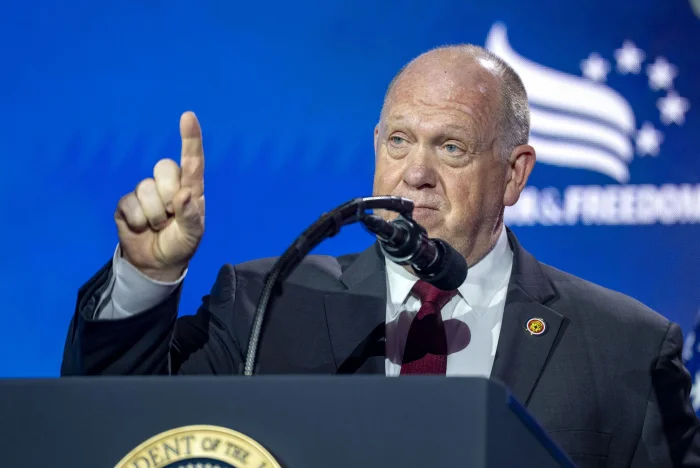
White House Border Czar Tom Homan speaks during the Faith and Freedom Coalition 2026 Road to Majority Policy Conference at the Washington Hilton on Friday. Photo by Bonnie Cash/UPI | License Photo

Source link

Utah warns southwest region residents of ‘rapid fire spread’

A wildfire that started in Beaver, Utah, has prompted the National Weather Service to issue warnings about its potential spread. Photo by Google Maps

June 26 (UPI) — The National Weather Service on Friday evening issued its first Dangerous Situation Red Flag Warning in the history of Salt Lake City, Utah, based on concerns about rapid growth of wildfires in the state.

NWS issued warnings for an area in southwest Utah that it considers to be in significant danger based on ongoing wildfires and weather conditions, the agency said in a series of posts on X.

NWS has predicted low humidity levels — less than 10% — and wind gusts of at least 50 miles per hour, which could help to grow the Cottonwood Fire, which has already burned nearly 72,000 acres, KSL-TV reported.

The fire started Monday near Beaver, Utah, before spreading to cover more than 70,000 acres as gusty winds and dry conditions helped the flames to spread, NBC News reported.

“This is the first formal PDS Red Flag Warning we’ve issued since it was formalized by NWS,” the agency said in a post on X.

“This is the first time we’ve reached the Weather Risk Outlook level of ‘Extreme,'” NWS said of the language it has not used in a notification since 2021. “In short, this combinaton of high winds, low humidity, very dry fuels and a large fire is a rare and dangerous situation!”

Utah this year experienced its lowest-ever snowpack and a heatwave that started in March prompted Utah Gov. Spencer Cox to sign an executive order limiting fireworks celebrations throughout the state through July 5.

Utah meteorologist Jason Stroud told The Washington Post that the warning, which has been in place for the last few days, that the danger from fires in the area could be devastating and potentially life-threatening.

“This shows that the combination of weather effects that are coming in the next 48 hours are extremely concerning,” Stroud said, reiterating that the fact that Salt Lake City’s NWS office has never issued the type of warning that is currently in effect.

Source link

Trump threatens 100% tariffs for nations with digital service taxes

June 26 (UPI) — President Donald Trump on Friday threatened to impose a 100% tariff on any country that enacts a digital services tax against a U.S. company.

The new tariff would be applied to all goods shipped into the United States and be levied on top of any other tariff already in effect for that country, Trump said in a post on Truth Social.

At least a dozen nations have digital services taxes, which are meant to limit the influence of large technology companies — especially large U.S. companies such as Apple, Amazon and Meta — and are being considered by several European countries, CNBC and Politico reported.

Canada last year rescinded a digital services tax hours before it was set to go into effect in order to restart trade negotiations with the United States, which Trump held back on until the tax was canceled.

“Please let this statement serve to represent that any Country that imposes such a Tax will immediately be met with a 100% TARIFF on any and all Goods sent to the United States of America,” Trump said in the post.

“This TARIFF will supersede Trade Deals made with the Country, whether implemented, signed, or not,” Trump said. “Additionally, the 100% TARIFF will be immediately imposed, if they proceed.”

Canada’s tax was to be levied against online marketplace and advertising services companies, as well as social media companies, but Trump called it a “direct and blatant attack” on the United States and canceled talks on the tax was rescinded.

White House Border Czar Tom Homan speaks during the Faith and Freedom Coalition 2026 Road to Majority Policy Conference at the Washington Hilton on Friday. Photo by Bonnie Cash/UPI | License Photo

Source link

China stresses dialogue after South Korea flags illegal fishing

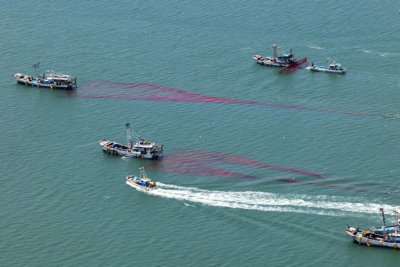
Fishing boats drag their nets in the Yellow Sea off Incheon, South Korea, 18 May 2026. Photo by YONHAP / EPA

June 26 (Asia Today) — China said Friday that it remains in close communication with South Korea over fisheries issues after President Lee Jae Myung called for stronger action against Chinese fishing boats accused of operating illegally in the Yellow Sea.

Chinese Foreign Ministry spokesman Guo Jiakun said maintaining stable waters and an orderly fishing environment between the two countries serves their common interests.

China consistently instructs its fishermen to operate in accordance with laws and regulations while also protecting their lawful rights, Guo said at a regular news briefing in Beijing.

“China and South Korea have a relatively mature dialogue mechanism on fisheries issues and maintain close communication on related matters,” Guo said.

He did not directly address whether the Chinese vessels cited by Lee had engaged in illegal fishing.

Lee raised the issue Wednesday during a visit to the Yeonpyeong Peace Observatory, where he received a briefing on waters near the Northern Limit Line, the de facto maritime boundary between South and North Korea in the Yellow Sea.

After being told that Chinese fishing boats had moved south of the maritime line, Lee questioned why they remained there despite being observed by South Korean forces.

He also asked whether South Korea should station enforcement vessels in the area.

“We have officially confirmed that they crossed the NLL,” Lee said. “I do not think we should simply leave this unattended.”

Lee ordered officials to take firm action, saying the visible presence of the boats during daylight hours showed the seriousness of the problem.

The Chinese government’s response largely repeated its previous position, emphasizing lawful fishing, the protection of Chinese fishermen’s rights and continued consultations with South Korea.

— Reported by Asia Today; translated by UPI

© Asia Today. Unauthorized reproduction or redistribution prohibited.

Original Korean report: https://www.asiatoday.co.kr/kn/view.php?key=20260626010009476

Source link

Official who claimed to have teleported to Waffle House fired at FEMA

June 26 (UPI) — A Federal Emergency Management Agency official who claims he was once teleported to a Waffle House has been ousted from the agency, unnamed sources familiar with the situation told media outlets Friday.

Gregg Phillips, who was appointed to lead the Office of Response and Recovery in December, was asked to vacate his position because of concerns about how he’s publicly perceived, anonymous sources told The New York Times, The Washington Post and CNN.

Phillips, the associate administrator for FEMA’s Office of Response and Recovery, posted on social media in April doubling down on his teleportation claim. He said it really happened and that it is connected to his Christianity.

“God will not be mocked,” Phillips posted on Truth Social. “People can debate me. Question me. Even ridicule what they don’t understand.”

He clarified that it happened while he was heavily medicated during cancer treatment.

“The word ‘teleportation’ was not mine,” Phillips posted on Truth Social. “It was used by someone else in the conversation reaching for language to describe something with no easy name. The more accurate biblical terms are ‘translated’ or ‘transported’ — not new ideas for people of faith.”

The Department of Homeland Security confirmed Thursday that Phillips is leaving the agency, saying he is taking leave for personal reasons. But sources told CNN the departure was not by his choice.

New DHS leadership was tired of his public image and clashes with department leadership, the sources said. David Arnold, a senior official who left FEMA earlier this year, will fill in as an acting leader of the Office of Response and Recovery.

The office has more than 1,000 employees and a budget of nearly $300 million. It’s critical to the mission of responding to disasters.

Phillips was known as a conspiracy theorist, particularly concerning election fraud. He said millions of noncitizens had voted in the 2016 election. Trump also boosted those claims.

Some agency staff were unhappy with his ouster, saying he wanted to help improve the agency.

“He showed interest in preserving the mission of the agency and helping us serve citizens,” one current agency official told The Post.

Another agency official told The Post that Phillips was one of the only political appointees who supported staff and would push back against leadership such as former Homeland Security Secretary Kristi Noem or Karen Evans, who briefly led FEMA.

White House Border Czar Tom Homan speaks during the Faith and Freedom Coalition 2026 Road to Majority Policy Conference at the Washington Hilton on Friday. Photo by Bonnie Cash/UPI | License Photo

Source link

TSA expects to screen nearly 19M people during week of July 4

June 26 (UPI) — The Transportation Security Administration on Friday said that it expects to screen roughly 18.7 million travelers at U.S. airports during the July Fourth holiday week that runs from June 30 to July 6.

The agency said it has prepared itself for the traditionally busy week of travel to be even busier, as this July 4 is America’s 250th birthday amid the FIFA World Cup, which has games in 11 U.S. cities next week.

AAA has projected that this year’s week of holiday travel is set to break records, with roughly 72.2 million Americans expected to travel at least 50 miles from their homes — an increase from the 71.8 million that traveled in 2025.

“TSA security checkpoints are fully staffed and prepared to welcome these travelers and handle the large passenger volumes expected during the Fourth of July holiday period,” Ha Nguyen McNeill, a senior TSA official who is performing the duties of the administrator, said in a press release.

“We’ve implemented significant technology enhancements at key airports for the historic FIFA World Cup 2026, as well as for America 250 celebrations across the country,” McNeill said. “TSA is working closely with federal, state and local partners to safeguard the traveling public and manage security for large-scale public events.”

TSA said it expects that Thursday, July 2, will be the busiest travel day next week, with more than 3 million people moving through U.S. airports.

The Top 10 domestic destinations for Americans during the holiday week for July 4 include Seattle, Orlando, Anchorage and Fairbanks in Alaska, New York City, Chicago, Fort Lauderdale, Denver and Boston,

TSA also has prepared for teams, team staffs and fans to travel to the 11 World Cup host cities in the United States.

The 11 cities have some cross-over with the locations most Americans are expected to travel, which include Atlanta, Boston, Dallas, Houston, Kansas City, Los Angeles, Miami, New York/New Jersey, Philadelphia, the San Francisco Bay Area and Seattle.

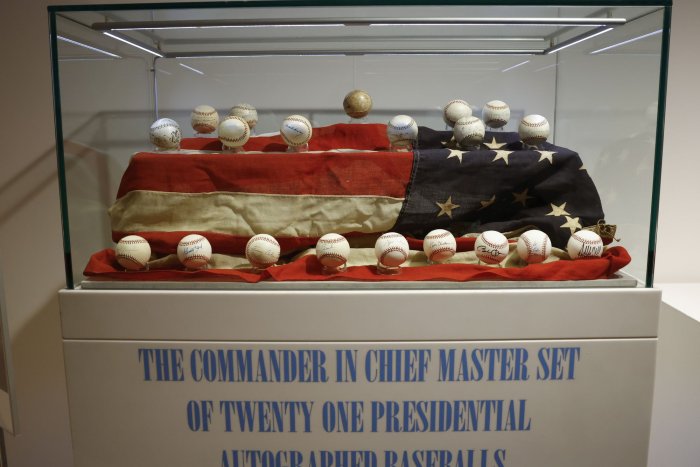
A collection of baseballs signed by former United States presidents is on display at a press preview event for Christie’s free “America at 250: Important Artifacts and Documents of History” exhibit in New York City on June 25, 2026. Photo by John Angelillo/UPI | License Photo

Source link

Trump accuses Iran of breaking cease-fire with attack on ships

June 26 (UPI) — President Donald Trump said Friday that Iran has attacked ships in the Strait of Hormuz and that it’s a violation of the cease-fire between the United States and Iran.

A cargo ship in the strait was attacked Thursday, but it’s unclear if this is the attack about which the president was speaking.

“The Islamic Republic of Iran shot at least four One Way Attack Drones at Ships transversing the Strait of Hormuz. One of the Drones solidly hit the upper deck of a large and very expensive Cargo Carrying Ship. Damage was done, but the Ship was able to proceed on its way. We knocked down three other Drones. Obviously, this is a foolish violation of our Ceasefire Agreement. President DONALD J. TRUMP,” the post on Truth Social said.

Trump did not address the negotiations with Iran.

Iranian Deputy Foreign Minister Kazem Gharibabadi posted a statement on X Friday emphasizing Iran’s control of the strait.

“Safe passage through the Strait of Hormuz, with ambiguous arrangements, parallel routes, or decision-making outside of Iran’s considerations as the coastal state, cannot be guaranteed. Any credible framework must be based on coordination with Iran and the provisions of paragraph five of the Islamabad Memorandum of Understanding. Otherwise, the outcome will be the suspension of the designated parallel route,” the post said.

The memorandum of understanding that Trump and Iran’s president signed on June 17 established the cease-fire and opened passage through the strait. In the fifth paragraph, it said Iran will use its “best efforts” to ensure the safe passage of commercial vessels with no charge for 60 days, The Hill reported.

On Thursday, the United States issued a joint statement with the Gulf Cooperation Council saying that “free, unconditional, and unrestricted navigation” through the strait is guaranteed under international law.

“The Ministers rejected any tolls, fees, or attempts to assert control over the strait,” the statement said. The council includes Bahrain, Kuwait, Oman, Qatar, Saudi Arabia and the United Arab Emirates.

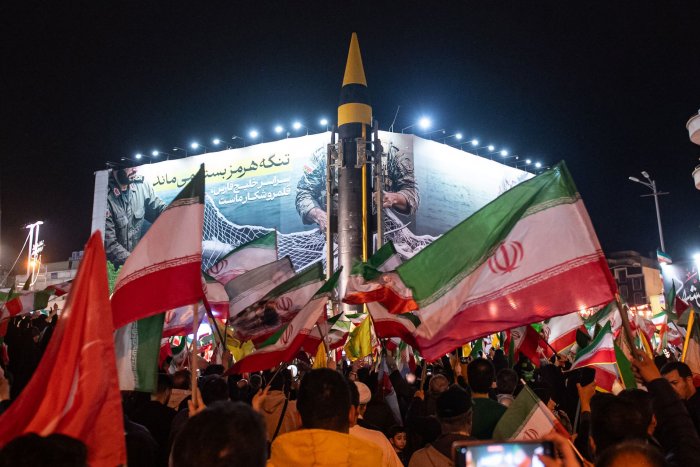
A missile identified as “Khorramshahr-4” was on display during a public rally in Tehran’s Enghelab Square on April 21, 2026. Photo by Behnam Tofighi/UPI | License Photo

Source link

US announces framework agreement between Israel and Lebanon | News

BREAKING,

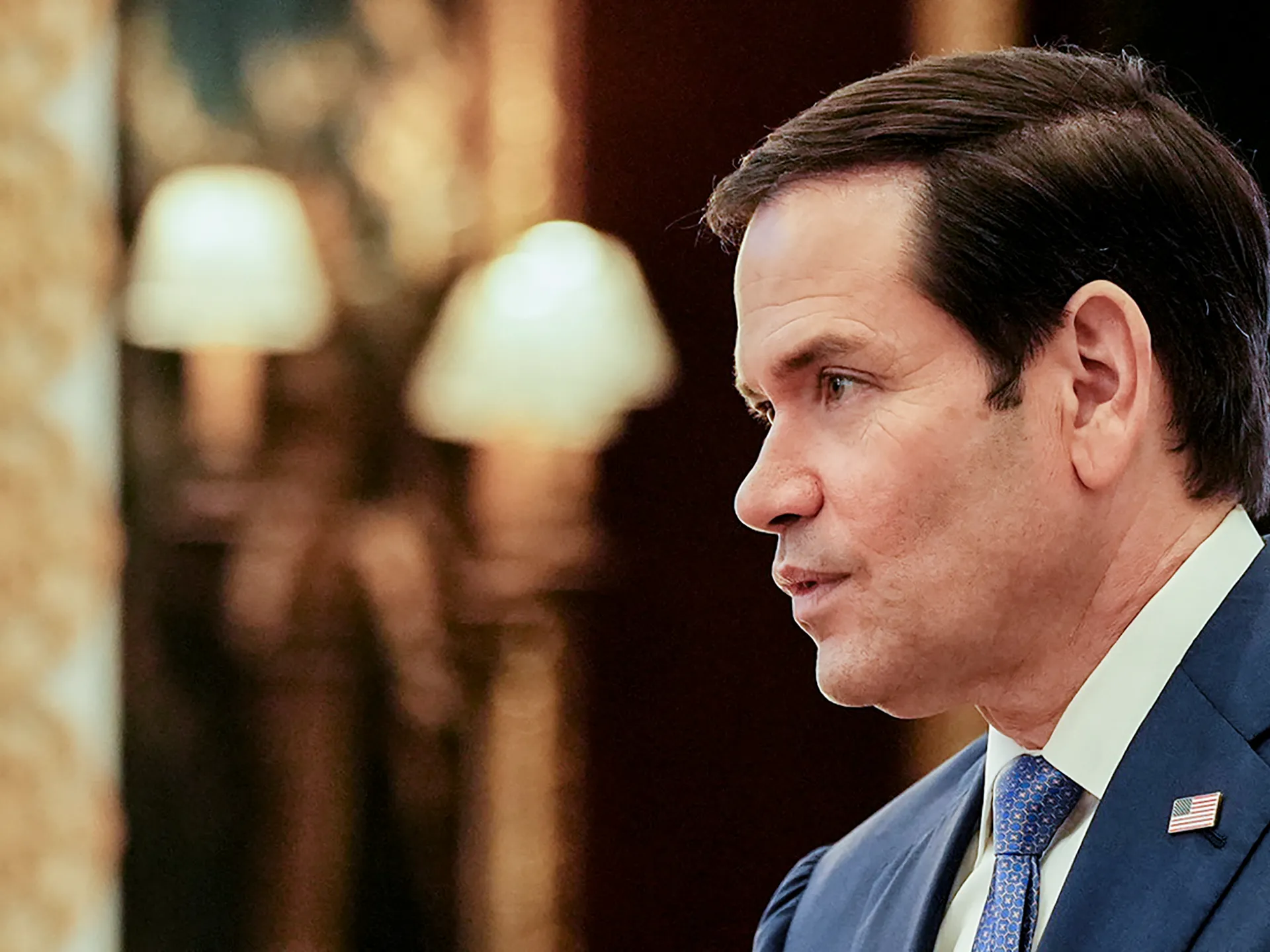
US Secretary of State Marco Rubio has announced the deal after talks unfolded in Washington, DC.

United States Secretary of State Marco Rubio has announced a deal framework between Lebanon and Israel after negotiations in Washington, DC.

Details about the agreement remain scarce. But in his remarks on Friday, Rubio made clear that the deal was only the “first step” in further negotiations.

“It’s the beginning of the beginning,” Rubio said, surrounded by representatives from both Lebanon and Israel.

“There’s a lot of work ahead. We don’t in any way underestimate the difficulty of the task ahead, but we understand the importance of it, how vital it is.”

The two sides had gathered in Washington, DC, for three days of US-mediated talks this week, starting on Tuesday.


More details to come…

Source link

Hezbollah: Israel must ‘unconditionally’ leave Lebanon | Israel attacks Lebanon

NewsFeed

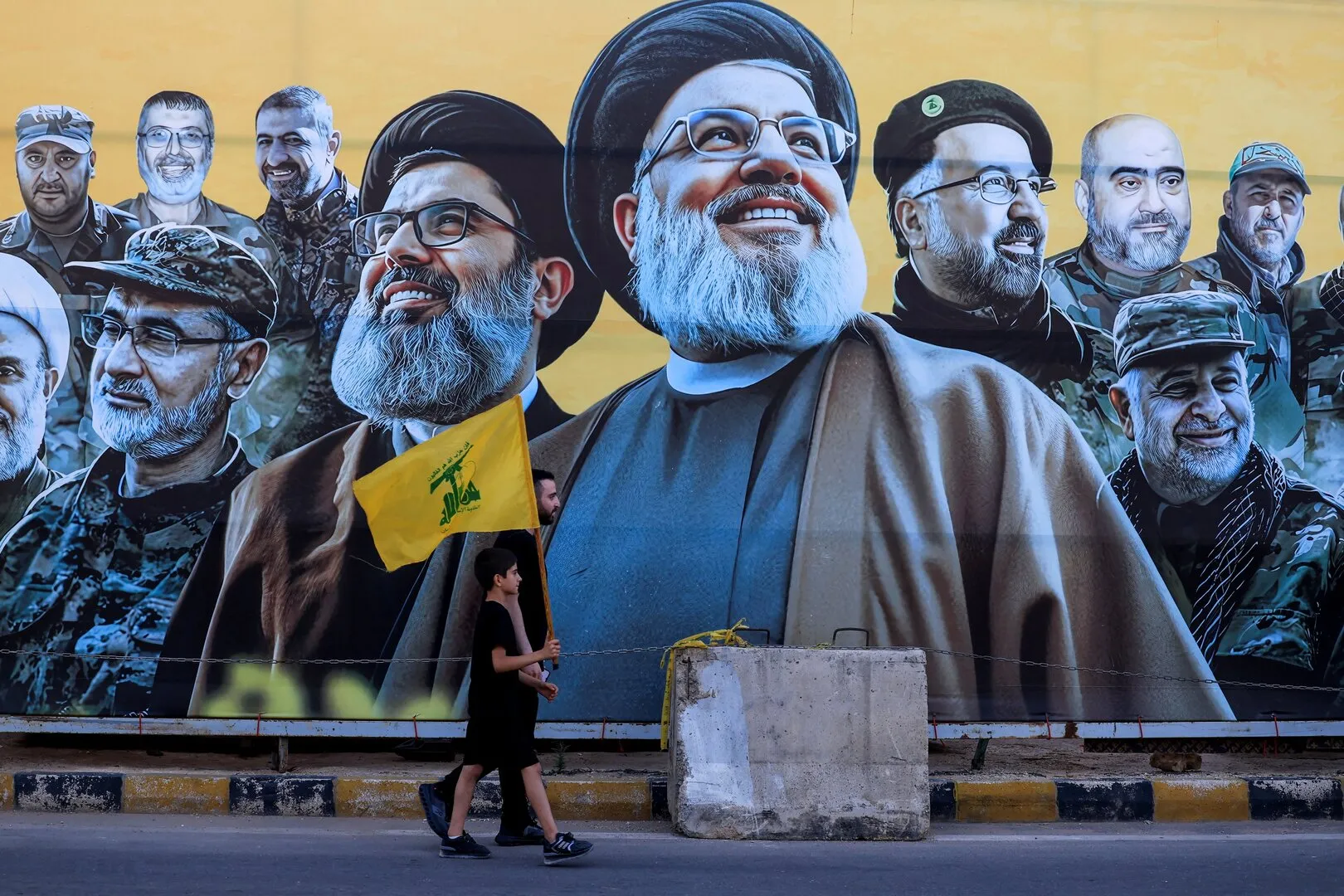
Hezbollah leader Naim Qassem says Israel has “no option” but to “unconditionally” withdraw from southern Lebanon and other areas under its occupation. His statement came after Israeli Defence Minister Israel Katz reiterated there are no plans to leave, even if the US were to demand a withdrawal.

Source link

Why has the UN paused plans to evacuate sailors from the Strait of Hormuz? | US-Israel war on Iran News

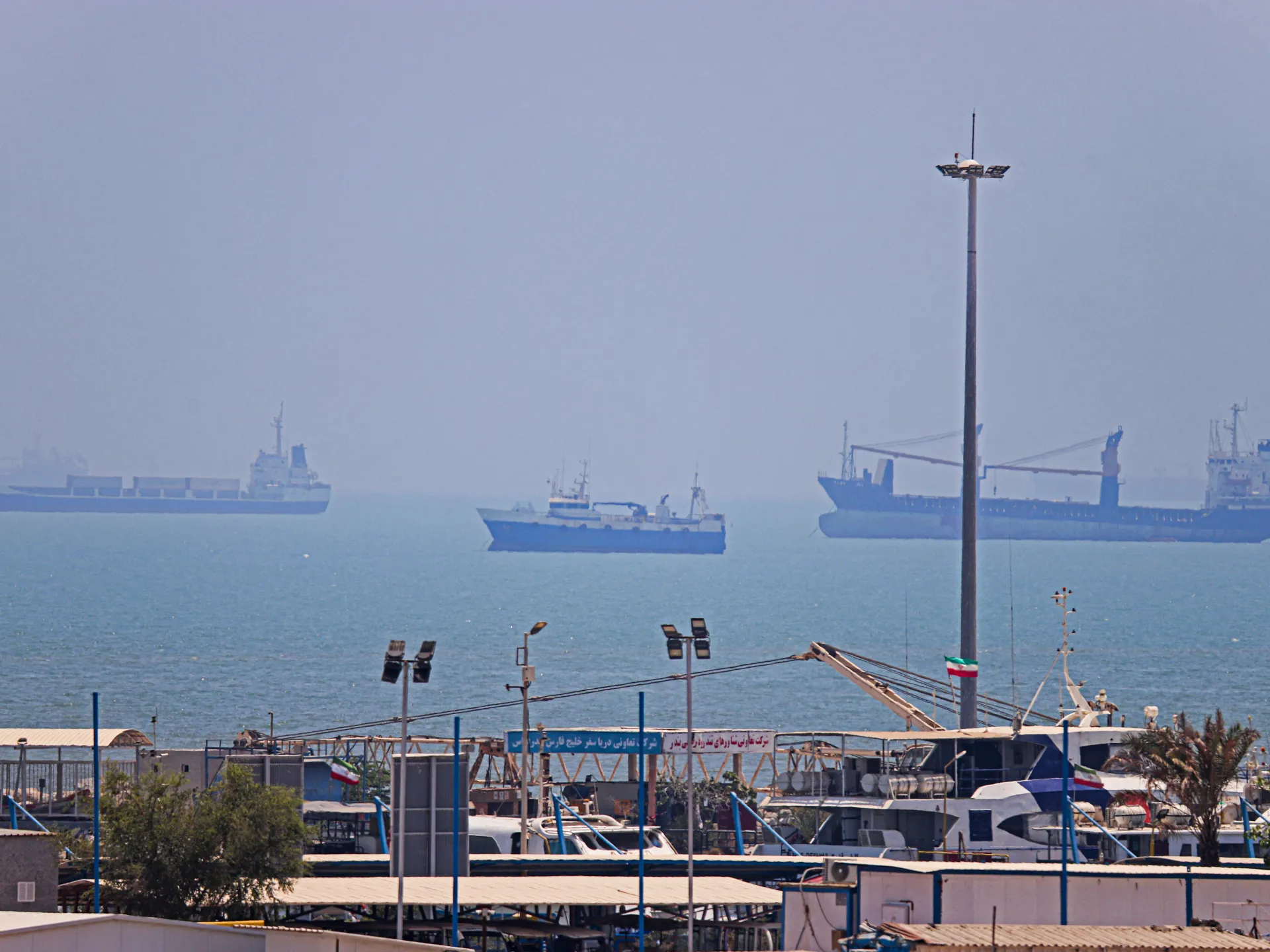
The United Nations’ International Maritime Organization (IMO) has suspended plans to evacuate more than 11,000 sailors stranded in the Strait of Hormuz after a cargo ship transiting the waterway was struck by a projectile.

IMO Secretary-General Arsenio Dominguez said several crews had already been evacuated, but the agency had decided to pause the operation until there were “necessary safety guarantees” for those involved.

Recommended Stories

list of 4 itemsend of list

The United Kingdom Maritime Trade Operations (UKMTO), a Royal Navy maritime security agency, said on Thursday that a cargo vessel had been struck by “an unknown projectile” about 7.5 nautical miles (14km) southeast of Dahit, Oman. No casualties were reported.

The incident comes despite a memorandum of understanding (MoU) signed by the United States and Iran last week that ended hostilities and included provisions aimed at reopening the strategic waterway. Iran had restricted passage through the strait in early March after the US and Israel attacked it on February 28. In April, the US imposed a naval blockade on Iran-linked vessels trying to pass through the waterway.

Since the MoU was signed, commercial traffic has restarted through the strait, but key disagreements remain over which shipping routes vessels should use — and whether Iran gets to charge a toll or fee.

Oman and the IMO have proposed a new shipping corridor that would partially bypass waters under Iran’s direct control. Tehran has rejected the plan, saying it was announced without consultation and raises safety concerns while demining operations are still under way. While Iran has not claimed responsibility for Thursday’s attack on the ship off Oman, it has not denied any role, either.

The latest attack has heightened concerns that tensions over navigation through the strait remain unresolved. Here’s what we know.

Why is the UN evacuating sailors?

Following the outbreak of the US-Israel war on Iran on February 28, Tehran and Washington imposed counter restrictions on the passage of ships through the Strait of Hormuz, leaving thousands of seafarers unable to leave vessels trapped in the waterway.

More than a dozen sailors have also been killed in attacks on ships — some from American missiles, others from Iranian projectiles. Most of those killed were from India.

Even with last week’s agreement between Washington and Tehran to end the conflict, more than 11,000 sailors remain stranded in the strait.

Announcing the evacuation plan on Tuesday, the IMO’s Dominguez said the operation would be conducted in “close cooperation with Iran, Oman, all other coastal states in the region, the United States and the maritime industry”.

Oman’s Ministry of Defence said the operation, which had been under discussion for months, would be carried out in phases.

Denmark also announced on Tuesday that it would join a multinational maritime mission led by France and Britain to help restore safe navigation through the strait.

Why was the ship attacked?

The Singapore-flagged cargo vessel Ever Lovely was struck by what authorities described as an “unknown projectile” while transiting the Strait of Hormuz on Thursday.

Ship-tracking data from MarineTraffic showed the vessel had been following the southern shipping route proposed by the IMO earlier that day, a corridor that passes closer to Oman’s coastline and has been rejected by Iran.

Singapore’s Maritime and Port Authority (MPA) said the vessel had since completed its transit through the strait and was continuing its voyage, adding that all 21 crew members were safe.

The authority said it was “deeply concerned” by an attack it described as “unprovoked, unjustifiable, and a breach of international law”.

“All actions affecting international shipping must fully comply with international law, in particular the United Nations Convention on the Law of the Sea, and not endanger the safety of seafarers and ships at sea,” the MPA said.

The incident prompted the IMO to suspend its planned evacuation of stranded sailors. Dominguez said the Ever Lovely “did not transit under IMO’s evacuation framework”.

“I have always reiterated that the safety of the seafarers remains paramount. Therefore, to ensure a coordinated approach and navigational safety, the evacuation plan will be paused until further clarity is obtained,” he said.

What has Iran said?

While it remains unclear if the attack was carried out by Iran, the country’s Islamic Revolutionary Guard Corps had criticised the new shipping corridor announced by Oman and the IMO, while also warning that passage through the strait, “is only possible via routes announced by Iran,” the state broadcaster IRIB reported.

Kazem Gharibabadi, Iran’s deputy foreign minister, has said safe passage through the Strait of Hormuz cannot be guaranteed for vessels transiting “with ambiguous arrangements, parallel routes, or decision-making outside of Iran’s considerations as the coastal state”.

“Any credible framework must be based on coordination with Iran and the provisions of paragraph five of the Islamabad Memorandum of Understanding,” he said in a statement on X. “Otherwise, the outcome will be the suspension of the designated parallel route.”

Iran first published its own map of approved navigation routes in April, directing ships to sail much closer to the Iranian coastline than before the conflict.

The IRGC’s latest warning came after a Liberian-flagged oil tanker transited the strait on Thursday using a route closer to Oman’s coast.

On Friday, a further three foreign oil tankers that attempted to cross the Strait of Hormuz “without authorisation” were turned back after a warning from the IRGC, Iranian state TV reported.

Analysts say control over the Strait of Hormuz has long been one of Tehran’s most important sources of strategic leverage, allowing it to exert pressure on the US, whose economy is inextricably tied to global markets.

Why was the evacuation suspended?

Reporting from Tehran, Al Jazeera’s Resul Serdar Atas said the attack appeared to show Iran was prepared to enforce its warnings over navigation through the Strait of Hormuz, after Tehran insisted vessels using either the Iranian or Omani route must coordinate with its authorities.

“Yesterday, Oman announced new routes for the passage of the ships. But then the IRGC released a statement, saying that whether the ships go through the Iranian or Omani territorial waters, they need to be in full coordination with Iranian authorities,” Atas said.

“And if they violate that, then Iran is going to act accordingly. So the question was whether Iran is going to really act or not?

“The answer is yes. Now, we have seen that a tanker has been attacked by some projectiles in the Strait of Hormuz. The Revolutionary Guards did not claim responsibility but did not deny it either.”

Atas added that Gharibabadi, Iran’s deputy foreign minister, had also warned that any shipping arrangements made without taking Iran’s position as a coastal state into account would be unacceptable.

“Perhaps, in the coming days and weeks, we are going to see that the Strait of Hormuz will be one of the main sticking points.”

What other disputes remain?

Under last week’s memorandum of understanding, Iran agreed it would “make arrangements using its best efforts for the safe passage of commercial vessels with no charge, for 60 days only, from the Persian Gulf to the Sea of Oman and vice versa”.

Although the agreement says commercial traffic should resume immediately, it also acknowledges that mines laid during the conflict must first be cleared, stating that “demining by the Islamic Republic of Iran will be instated within 30 days”.

It also provides for discussions between Iran, Oman and other Gulf states over future arrangements for managing navigation through the waterway.

However, the agreement does not specify what will happen after the initial 60-day period.

Last week, Tehran announced it would waive any transit fees during those 60 days while negotiations with the United States continue in Switzerland, raising the possibility that charges could be introduced if no broader agreement is reached.

Iran’s chief negotiator, Mohammad Bagher Ghalibaf, has also suggested Tehran does not intend to return to the pre-war status quo.

“Hormuz will never return” to how it operated before the conflict, he said. The proposal has also faced resistance from the United States and several Gulf states.

Are ships still moving through the strait?

Commercial shipping has gradually resumed, although traffic remains well below normal levels. Before the conflict, between 120 and 140 vessels typically passed through the Strait of Hormuz each day.

According to maritime analytics firm Kpler, 54 verified commercial and energy-related vessels transited the strait on Thursday, down from 70 verified crossings the previous day.

“West-to-East movements dominated, while the Omani Route accounted for the largest share of identified passages. Yet route transparency remains incomplete, with several Dark or Unknown crossings recorded.

“A reported projectile strike on a cargo vessel southeast of Dahit, Oman, adds fresh operational risk, underscoring the gap between improving physical flows and still-fragile maritime security conditions,” Kpler added.

Source link

Morocco jails 29, including politicians and sports figures, in drug trial | Drugs News

Casablanca court delivers landmark verdict in ‘Escobar of the Sahara’ case: up to 12 years for top figures.

A Moroccan court has handed prison sentences of up to 12 years to 29 individuals – including prominent politicians and sports figures – concluding a major international drug trafficking and corruption trial.

The verdicts, delivered late on Thursday in Casablanca following a two-year trial, mark one of the largest anti-corruption operations in Morocco’s history.

Recommended Stories

list of 3 itemsend of list

Among those convicted were Abdennebi Bioui, a construction tycoon and former regional council president, Said Naciri, former president of Casablanca’s Wydad AC football and sports club and former MP Belkacem Mir – all senior members of the governing PAM party. Naciri received 10 years, Bioui 12 and Mir 10.

Besides the three main defendants, sentences for the remaining ranged from two to nine years, depending on their individual role in the network.

The wide-ranging case was triggered by courtroom testimony from El Hadj Ahmed Ben Brahim, a notorious Malian drug trafficker nicknamed the “Pablo Escobar of the Sahara”.

Currently serving a 10-year sentence in Morocco, Ben Brahim told judicial investigators that his former Moroccan political and business associates had betrayed him, seizing millions of dollars worth of his luxury real estate and vehicles following his arrest in 2019.

The trial involved more than 20 defendants, 18 witnesses and two civil parties which centred on a sophisticated network that transported tonnes of Moroccan cannabis resin across North Africa to Europe, alongside Latin American cocaine shipments.

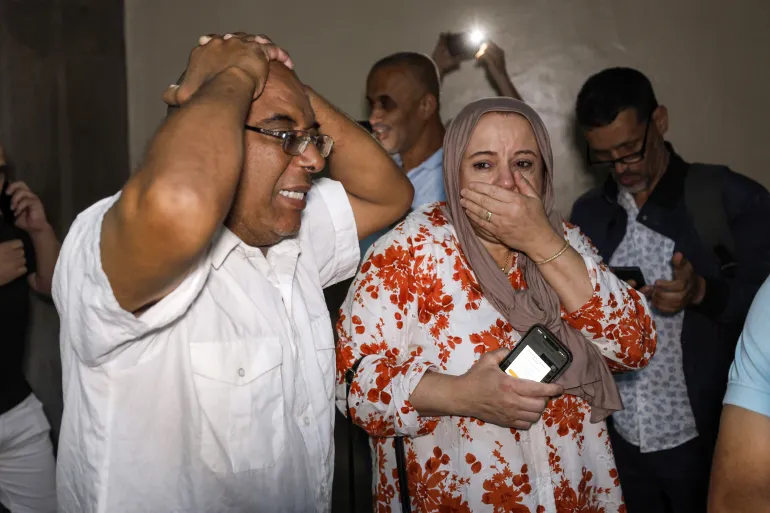
Family members of Said Naciri and Abdennabi Bioui, two Moroccan public figures, react as they are handed out 10 and 12 years in prison sentences over a major drug trafficking scheme linked to a convicted Malian kingpin, dubbed the "Escobar of the Sahara" case, at the Court of Appeals in Casablanca on June 25, 2026.
Family members of Moroccan public figures Said Naciri and Abdennabi Bioui react as they are given 10 and 12 year prison sentences for a major drug trafficking scheme [Abdel Majid Bziouat/AFP]

Defendants were convicted on charges including drug and gold trafficking, corruption, forgery and money laundering.

The court also ordered the seizure of assets and levied hundreds of millions of dollars in customs and exchange fines against the principal ringleaders.

Moroccan media reported that families of the convicted, present without legal representation due to a lawyers’ strike, were left in shock, with some collapsing in the courthouse.

The scandal reached the highest levels of state, prompting King Mohammed VI to demand a legally binding code of ethics aimed at “moralising” parliamentary life.

Source link

Paris bans public drinking, takeout alcohol sales amid deadly heat wave

A young man dives from a bridge over the Saint-Martin Canal in Paris on Thursday amid a searing heat wave that prompted authorites in the capital to impose restrictions on drinking alcohol in public and takeout sales for the second time in five days. Photo by Yoan Valet/EPA

June 26 (UPI) — Authorities in Paris implemented restrictions on drinking in public and takeout alcohol sales on Friday for the second time in five days, amid one of the most severe June heat waves on record.

In an effort to reduce stress on the capital’s hospitals, public consumption of alcohol will be banned from noon through 7 a.m. Saturday, local time, and from noon on Saturday through 7 a.m. on Sunday, and can only be sold in bars and restaurants between 6 p.m. and 7 a.m on both days.

Prime Minister Sebastien Lecornu said the health alert level was being raised to its highest, to boost hospital staffing and protect the vulnerable while Paris police chief Patrice Faure said the the capacity of hospitals to cope was “reaching a saturation point.”

“As you know, drinking alcohol with the sun beating down can have a devastating effect,” said Faure.

The bans coincided with a France-Norway game at the FIFA World Cup in Boston, due to kick off in the early hours of Saturday, local time.

Paris Pride, which was due to run Thursday through Sunday, was moved to September, and the Solidays music festival, scheduled to be held over the same period, was canceled because police felt going ahead with either amid the searing temperatures posed a major public health risk.

On Thursday, a three-year-old child died in a hot car in Saint-Gratien in the northern Paris suburbs.

As Paris baked in record temperatures that peaked at 40.9 degrees Celsius earlier in the week, Health Minister Stephanie Rist warned the health impacts of the heat were not restricted to the elderly, infants and other vulnerable groups.

“Even if you are young and in good health with no underlying medical issues, this heat will affect you too. Young people are also suffering from cardiac arrests,” she said, explaining that the Paris ambulance responded to a four-fold jump in cardiac arrests, compared with normal, during a 24-hour period.

Paris mayor Emmanuel Gregoire said the mortality rate was on the increase and urged people, especially the young, to suspend normal physical activity such as jogging.

“We must not believe we are invulnerable. It’s fine to take a couple of days off from exercising,” he said.

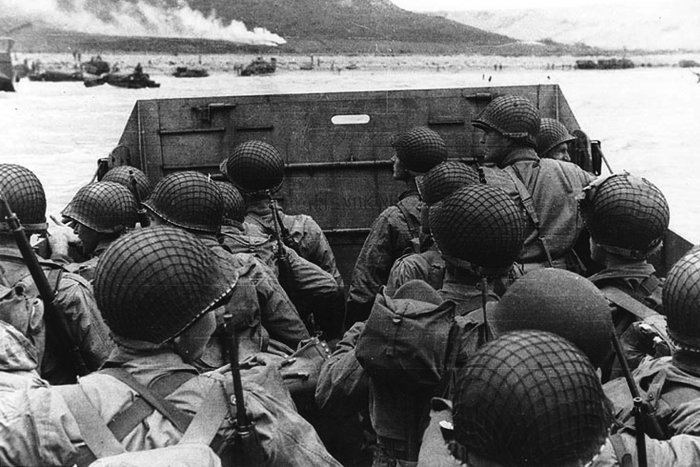
Troops in landing craft approach Omaha Beach on D-Day in Normandy, France, on June 6, 1944. D-Day was the largest seaborne invasion in history and turned the tide of World War II. Photo by UPI | License Photo

Source link

Charles becomes first to reveal his taxes, saying he paid $17M in 2025

June 26 (UPI) — Britain’s King Charles III paid $17.2 million in taxes in 2024-25 and almost $40 million since he ascended the throne in 2022, according to the first ever tax statement published by the crown.

The British monarch has no tax liability in law, but both the then-Prince Charles and the late Queen Elizabeth II began paying voluntarily in 1993.

The palace said in a news release Thursday that the move to release the sovereign’s personal tax bill — but not his tax return — together with a statement detailing income sources was “part of the Royal Household’s commitment to transparency.”

The Royal Household’s annual financial statement shows Prince William paid a little over $10.3 million in taxes in 2024-25, bringing the total father and son paid to His Majesty’s Revenue & Customs to more than $66 million since September 2022.

Charles’ effective rate of tax remains unknown because the only source of income provided is $33.7 million revenue from his Duchy of Lancaster, a private estate that has provided the reigning monarch’s personal income since 1399, out of which other working members of the royal family are paid.

Same for William, who earned $28.5 million in revenue from his Duchy of Cornwall, out of which he pays his own way for himself and his family.

William’s duchy, which he inherited from his father, was worth $1.59 billion, while the King’s had assets of $911 million. Neither can benefit from sales of assets belonging to their respective estates.

Taxation experts said the releases did little to increase the transparency they were billed as providing.

Dan Neidle of Tax Policy Associates told the BBC that the King’s affairs remained “highly opaque”.

“We don’t know how much of that is capital gains tax, how much is income tax. Very importantly, we don’t know what expenses he’s deducted to come up with the figure on which he pays the tax,” he explained.

At the same time, the Sovereign Grant for the financial year ended March 31, money the government pays each year to fund the monarch’s official duties, the travel of working members of the royal family, and running and maintaining the main five royal palaces and castles, rose to $174.6 million after remaining flat for the past four years.

More than half, $88.2 million, went on maintaining and “reservicing” the royal real estate, according to the Sovereign Grant Statement.

The grant will rise to $182.4 million in the current financial year, which started April 1, but the rise is a one-off to cover the final year of a 10-year, $489.4 million modernization program for Buckingham Palace, and will thereafter be pegged at $132.2 million a year through 2032.

The grant is a fixed share — 12% — of the profit generated over the two previous financial years by the Crown Estate, a sprawling $16 billion business, real estate and land portfolio that technically belongs to the monarch but was surrendered to parliament in 1760.

Keeper of the Privy Purse, James Chalmers, pointed to the stability afforded by previous reigns during periods of historic transition, saying today’s monarchy was continuing to adapt to meet the challenges of the modern world where the Royal Family’s “soft” diplomacy was ever more valuable.

“So, while much changes, our central principles remain: to deliver value for money and to support the Royal Family as they seek to help shape a better world, here in the United Kingdom, across the Commonwealth and beyond,” he said.

“While Royal finances can sometimes appear complex, the underlying system is clear in principle, structured in law and refined over time to ensure the Monarch can serve with independence, accountability and in the long-term interests of the nation,” added Chalmers.

The king also used the news release to announce that, despite the costly refurbishment, he and Queen Camilla will never live at Buckingham Palace — the iconic official royal residence since Queen Victoria made it her home in 1837 — although it will continue to be used for official events and engagements and will be opened to the public.

King Charles’ preferred royal residence is the nearby Clarence House.

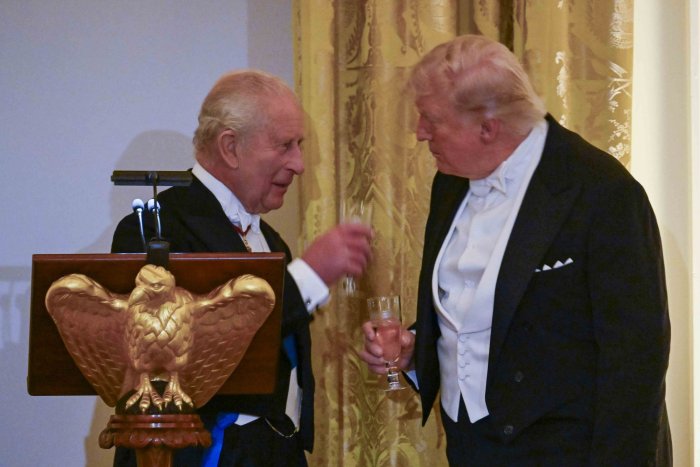
King Charles III toasts with President Donald Trump during a state dinner at the White House in Washington on April 28, 2026. Photo by Craig Hudson/UPI | License Photo

Source link

SK Telecom to invest $481 million in SK hynix’s U.S. affiliate

People visit the SK Telecom pavilion during the World IT Show 2025 at the COEX convention center in southern Seoul. File Photo by Jeon Heon-Kyun/EPA

June 26 (UPI) — South Korea’s leading mobile operator SK Telecom said Thursday that it would invest $481 million in a U.S. subsidiary of SK hynix as part of the group’s efforts to concentrate on the artificial intelligence strategy.

SK Telecom said that it agreed to purchase a 0.9% stake in SK hynix NAND Product Solutions, a company geared toward investing in innovative AI enterprises in North America.

“To secure synergies with our AI business, we are pursuing the acquisition of an equity stake in SK hynix NAND Product Solutions,” SK Telecom said in a regulatory filing.

This is not the first time that SK Group affiliates channel fresh funds into the U.S. unit. In March, SK Corp. and SK Innovation injected capital amounting to $250 million and $380 million, respectively.

In 2021, SK hynix spent around $9 billion to take over Intel’s NAND flash business and subsequently formed SK hynix NAND Product Solutions, which is now being restructured into an AI-focused investment company.

Earlier this January, SK hynix said that it would commit $10 billion to the company, with the funds to be deployed on a capital-call basis.

“The planned establishment of the AI company is aimed at securing opportunities in the emerging AI era,” SK hynix said in a statement at the time. “The company will continue to work closely with global partners while proactively creating value for customers.”

The share price of SK Telecom edged down 0.88% on the Seoul bourse on Friday, while that of SK hynix plunged 8.36%. The benchmark KOSPI declined 5.81%.

Source link

Unification minister calls for moving away from ‘denuclearization first’ policy for N. Korea

Unification Minister Chung Dong-young delivers a keynote speech during the Korean Peninsula Symposium 2026 in Seoul on Friday. Photo by Yonhap

Unification Minister Chung Dong-young called Friday for shifting away from an approach that sticks to denuclearization as the sole solution to the North Korean nuclear issue, saying such a precondition has been one of the reasons for stalled diplomacy with Pyongyang.

Chung made the remarks in a keynote speech at a forum, co-hosted by Yonhap News Agency, pointing out that the lack of progress in nuclear diplomacy has only helped the North bolster its nuclear and weapons capabilities for the past three decades.

“As the past 30 years have shown, whenever peace talks were halted by the denuclearization hurdle, North Korea used that time to further advance its nuclear capabilities,” Chung said at the Korean Peninsula Symposium.

“We must move away from the old notion that a peace regime can only be discussed after the North Korean nuclear issue is resolved … We need to pursue a phased and pragmatic solution. It is time for a paradigm shift,” he said.

Recalling major breakthroughs in nuclear diplomacy with Pyongyang in the past, Chung stressed the path toward peace opened up when relevant countries, including South Korea and the United States, sought to actively engage Pyongyang for dialogue.

Chung went on to highlight the need for a phased approach — halting and scaling down the North’s nuclear program before denuclearizing — as a solution to the nuclear issue.

“A step-by-step process toward peaceful coexistence and denuclearization should proceed in three stages — freeze, reduction and denuclearization,” he said. “China, too, has expressed support for this pragmatic approach.”

Chung said this phased approach must begin with dialogue between the U.S. and North Korea.

“As agreed in the 2018 Singapore summit between North Korea and the U.S., both sides should immediately resume talks to end mutual hostility and establish a new relationship,” he said.

“The resumption of U.S.-North Korea dialogue will serve as a powerful catalyst for opening four-party talks among the U.S., China and the two Koreas, who are the key stakeholders in achieving lasting peace on the Korean Peninsula,” Chung added.

Copyright (c) Yonhap News Agency prohibits its content from being redistributed or reprinted without consent, and forbids the content from being learned and used by artificial intelligence systems.

Source link

S. Korean ex-first lady sentenced to 7 years in prison for taking gifts for job appointments

A TV screen shows a live broadcast of former first lady Kim Keon Hee’s bribery trial at Seoul Station on Friday. Kim was sentenced to seven years in prison. Photo by Yonhap

A Seoul court on Friday sentenced former first lady Kim Keon Hee to seven years in prison for taking expensive gifts in return for job appointments and business favors.

The Seoul Central District Court handed down the sentence to Kim, the wife of ousted former President Yoon Suk Yeol, after she was indicted on charges of accepting bribes for mediation, including over 100 million won (US$64,750) worth of jewelry in exchange for a government job for a son-in-law of a construction company chairman.

In total, she was charged with taking approximately 300 million won worth of gifts, and the court found her guilty on all counts.

“The defendant disregarded the social responsibilities associated with the position of first lady and used it merely as a means to pursue her private interests,” presiding judge Cho Sun-pyo said during the hearing, which was televised live.

Kim was indicted in December on charges of receiving a Van Cleef & Arpels necklace and other jewelry from the construction company chairman between March and May 2022; a golden turtle ornament in April 2022 from Lee Bae-yong, former head of the National Education Commission, in exchange for her appointment; a Dior bag worth 5.4 million won from a pastor the same year; and a Vacheron Constantin watch from another businessperson in September 2022.

In February 2023, she was accused of receiving a painting by renowned artist Lee Ufan from a former prosecutor in return for her help in securing him a nomination for an election.

The exchanges mostly took place during the period her husband was in office from May 2022 until his ouster in April 2025.

The judge said Kim sought to evade responsibility for her crimes by returning some of the gifts once an investigation got under way or arguing she had purchased them herself.

“This shows that she was fully aware of the illegality of her actions but tried to conceal it,” he said.

Special counsel Min Joong-ki’s team, which had demanded a 7 1/2-year prison term, welcomed the ruling. Kim’s lawyers said they would appeal.

The court also sentenced the construction company chairman to a one-year prison term, suspended for two years, the businessperson who gifted the watch to a 10-month prison term, suspended for two years, and the pastor to a fine of 8 million won.

The former first lady has already been sentenced by an appeals court to four years in prison in a separate corruption case.

She is also set to stand trial over her alleged involvement in a case where members of the Unification Church were reportedly forced to join the now main opposition People Power Party ahead of the 2022 presidential election in an attempt to influence the outcome of the party primary to pick its presidential candidate, which her husband Yoon won.

Copyright (c) Yonhap News Agency prohibits its content from being redistributed or reprinted without consent, and forbids the content from being learned and used by artificial intelligence systems.

Source link

New York City rental board approves Mamdani rent freeze

June 26 (UPI) — New York City’s rental board has approved Mayor Zohran Mamdani’s two-year rent-freeze proposal for nearly 1 million rent-stabilized apartments, fulfilling a major campaign promise.

New York City’s Rent Guidelines Board voted 7-1 to set a 0% increase for rent-stabilized one-year and two-year leases commencing on or after Oct. 1, and on or before Sept. 30, 2027.

Cheers erupted from the spectators assembled as it was announced that the motion passed.

“This is a historic victory for New York City tenants,” Mamdani said in a statement following the vote.

“After reviewing the data and hearing from New Yorkers across the city, the independent RGB has delivered a freeze on one-year leases, and the first-ever freeze on two-year leases in our city’s history. This is the relief that working people across our city deserve.”

Mamdani, a democratic socialist, campaigned heavily on making life more affordable for the average New Yorker, including by creating new affordable housing and freezing rents where legally permitted.

The mayor said he is grateful for the board members’ “thoughtful consideration of the data” before casting their votes.

“I’ll continue to deliver a more affordable city by building and preserving affordable housing, lowering building operating costs like insurance, and ensuring tenants know their rights,” he said.

According to a New York City housing survey from 2023, there were 996,600 rent-stabilized units, representing about 41% of all rental units across the city. Rent stabilization generally applies to buildings with six or more units built before 1974.

The only vote against the rent freeze came from Arpit Gupta, an associate professor of finance at New York University’s Stern School of Business.

In a statement published online following the vote, Gupta argued that the rent freeze will not solve the housing crisis while possibly making it worse and ultimately driving up rents. He also said the rent freeze could prevent building owners from considering improvements and renovations.

“Residents might continue to enjoy low rents but at the cost of being trapped in units that no longer fit their needs, and with few alternatives and steadily deteriorating conditions,” he said.

“A better option is to undertake the harder reforms needed to make housing more affordable and accessible — that is, build more of it.”

The vote was held following a series of hearings in which nearly 330 people participated and nearly 700 people submitted written, audio or video testimony about their experiences.

New York State Assembly Member Tony Simone said the rent freeze will impact about 2 million New Yorkers and is expected to save renters as much as $6.8 billion over Mamdani’s four-year term.

“This immediate action reflects the urgency needed to prevent more working-class New Yorkers from being priced out of our city,” he said in a statement, while stating that the structural factors that are driving up prices must be addressed.

“To truly address the housing crisis, we need to tackle its root cause: the housing shortage,” he continued.

“New York needs to build more housing units.”

Source link

Iran war day 119: Israel hits Lebanon as IAEA says it will return to Iran | US-Israel war on Iran News

Israeli and Lebanese delegations will continue their talks on Friday.

Israel continues to attack southern Lebanon on Friday as Israeli Prime Minister Benjamin Netanyahu pledges that the Israeli military is “not going to withdraw” from occupied areas.

Israel currently occupies about one-fifth of Lebanon.

This comes amid progress on the interim peace accord between the United States and Iran aimed at ending the US-Israel war on Iran, which began on February 28.

Here is what is happening:

In Iran

  • IAEA chief says inspectors to return to Iran: The interim US-Iran peace accord – also being referred to as the Memorandum of Understanding (MoU) – gives inspectors from the International Atomic Energy Agency (IAEA) access to Iran, the agency’s chief Rafael Grossi said, after Tehran indicated that key sites would remain off-limits until a final deal with Washington is reached and sanctions are lifted.
  • “There is an agreement and to comply with that agreement, the IAEA will have to have access and inspect,” the UN nuclear watchdog chief Grossi said at a news conference in Japan. “We hope to be there soon.”
  • UN halts escort of ships through Hormuz: The UN International Maritime Organization (IMO) paused its operation to escort ships through the Strait of Hormuz on Thursday after a vessel reported an attack, reigniting concerns about whether a preliminary deal to end the Iran war will hold. The cargo ship said it was hit close to Oman by a projectile, the British Navy agency UKMTO said.
  • On Thursday, Iran’s Islamic Revolutionary Guard Corps (IRGC) warned vessels not to attempt to pass the strait without its express permission, despite Oman and the IMO releasing details of a new safe route. In April, the IRGC released its own safe-transit route for approved ships, showing shipping lanes much closer to its own coast.
INTERACTIVE - Alternative route throughthe Strait of Hormuz - APRIL 14, 2026-1776162674
(Al Jazeera)

In the US

  • Trump says unfrozen Iranian assets will be used to buy US agricultural products: US President Donald Trump reiterated during an event for US farmers that unfrozen Iranian assets will be spent on buying wheat, soya beans and corn from the US. Iran has not confirmed this.

In Lebanon

  • Two killed in Israeli raid: Two people were killed and another person was wounded in an Israeli raid on the town of Mayfadoun, in southern Lebanon’s Nabatieh district, the National News Agency reported, citing the country’s Ministry of Public Health.
  • An Israeli air raid also hit the town of Nabatieh al-Fawqa, according to Al Jazeera Arabic.
  • Talks to continue: A US State Department official has told Al Jazeera Arabic that Israeli and Lebanese delegations will resume their meetings on Friday.
INTERACTIVE - Israel south lebanon bint jbeil map-1777363494
(Al Jazeera)

Global economy

  • India ends commercial gas restrictions: India has lifted restrictions on supplies of commercial liquefied petroleum gas (LPG) imposed during the war, when energy supplies were hit by the closure of the Strait of Hormuz, the global energy chokepoint.
  • Aramco resumes oil loading: Saudi Aramco, the world’s largest oil company, has resumed oil loading at its Ras Tanura terminal in the Gulf after a nearly four-month halt, shipping data showed.

Source link

Kim Jong Un inspects new weapons systems that threaten Seoul

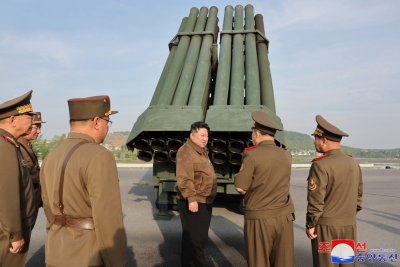
North Korean leader Kim Jong Un oversaw tests of new weapons to bolster firepower along the inter-Korean border, state-run media reported Friday. In this May 2024 photo, Kim views a 240mm multiple rocket launcher system. File Photo by KCNA/EPA-EFE

SEOUL, June 26 (UPI) — North Korean leader Kim Jong Un oversaw tests of a new rocket launcher system and other weapons as part of a plan to bolster firepower along the inter-Korean border, state-run media reported Friday, highlighting Pyongyang’s continued effort to modernize conventional weapons capable of threatening the Seoul metropolitan area.

The new weapons, tested at an undisclosed location Thursday, included an upgraded 240mm 24-tube multiple rocket launcher with an automated guidance system and an extended range of 56 miles, the official Korean Central News Agency reported.

Also tested were shells for a 155mm self-propelled howitzer with an extended range of 40 miles and a special warhead for a tactical ballistic missile. KCNA said the warhead was “aimed at inflicting fatal damage on major targets including airfields, ports and power facilities of the enemy.”

Kim described the launches as a demonstration of the “great technological progress” made in implementing the party’s policy of “bringing about a change in the fire posture on the southern border.”

He added that the policy was intended not only to strengthen defenses but also to build a “deadly and destructive offensive posture to make no enemy dare to confront.”

Seoul, home to more than 10 million people, lies roughly 30 miles from the border, while the surrounding Gyeonggi Province is one of South Korea’s most densely populated and industrialized regions.

The tests come amid an extended push by Pyongyang to harden its military posture toward South Korea. Last month, Kim called for strengthening frontline defenses along the border to create an “impregnable fortress,” and Thursday’s weapons tests appear to represent the firepower component of that broader effort.

North Korea has ramped up fortification work near the Military Demarcation Line inside the DMZ, including the installation of barbed-wire fencing and preparations for mine-laying operations. South Korea’s Defense Ministry on Monday called the activity a violation of the armistice agreement that ended fighting in the 1950-53 Korean War.

Earlier this week, Pyongyang also commissioned its first 5,000-ton destroyer, the Choe Hyon, which Kim said is armed with nuclear-capable missiles. Images released by state media appeared to show missile launchers and radar systems resembling those found on Russian warships, prompting speculation that Pyongyang has received technical assistance from Moscow.

North Korea has deployed troops, artillery and weapons to support Russia’s war in Ukraine and is widely believed to be receiving financial support and advanced military technology in return.

While South Korean President Lee Jae Myung has sought to ease tensions with North Korea since taking office last year, he has also called for strengthening Seoul’s military capabilities in response to Pyongyang’s expanding weapons programs.

On Friday, South Korea’s Defense Ministry unveiled a plan to rapidly expand the military’s drone and counter-drone capabilities, citing lessons from modern conflicts and North Korea’s growing military cooperation with Moscow.

“Since North Korea is currently receiving technology transfer from Russia, we decided that we urgently need to proactively respond to various changes in the war operation environment,” Defense Minister Ahn Gyu-back said at a press briefing.

The plan calls for acquiring 20,000 low-cost reconnaissance and loitering drones by 2030 while accelerating the deployment of homegrown K-Lucas long-range suicide drones. It also includes expanded counter-drone capabilities, including laser weapons, high-power microwave systems and interceptor drones designed to defeat low-cost aerial threats.

As part of the strategy, South Korea aims to train 500,000 “drone warriors” across the army, navy, air force and marines. Ahn said drones should become “a universal means of combat” across the armed forces, with every soldier eventually able to operate them “like a second personal weapon.”

Source link