TOP NEWS

From breaking news to significant developments in politics, business, technology, entertainment, and more, we deliver the stories that shape our global landscape.

Between English and mother tongue: Kenya’s education language dilemma | News

Kericho, Kenya – When Lona Chepkemoi walked into a technical college classroom in 2023, she found something she had rarely experienced during her years in school: She could understand what the teacher was saying.

After leaving primary school in 2008, Chepkemoi had failed her final exam, and her family could not afford to send her to secondary school. For years, the dream of becoming a fashion designer seemed out of reach.

Then a scholarship from her local member of parliament gave her a second chance.

But what surprised the now 33-year-old mother of five was not returning to education. It was hearing lessons delivered partly in Kalenjin, her mother tongue, she said.

“When I got to college, I felt at home because the language of instruction was my mother tongue [Kalenjin], and was mixed with a bit of Swahili and English, unlike in school when teachers only taught in English and exams were strictly only in English. Language here was accommodating, and it made me feel happy because I understood the concept quite well,” she told Al Jazeera.

For Chepkemoi, the difference went beyond comfort, it was comprehension.

Her experience reflects a wider global reality. According to UNESCO’s Global Education Monitoring (GEM) reports, about 40 percent of learners worldwide are not taught in a language they understand well, rising to about 90 percent in some low- and middle-income countries.

A second chance through familiar language

In Kenya, education policy provides for mother-tongue instruction in the early years of primary school, typically up to grade 3, before English becomes the main language of instruction from grade 4, with Kiswahili also widely used. In practice, however, classrooms often shift between languages depending on region, teacher capacity and student background.

Kenya Inclusive Education
After years away from school, Lona Chepkemoi discovered that learning in her mother tongue made education feel possible again [Dominic Kirui/Al Jazeera]

Across much of Africa, the language of schooling still reflects colonial legacy systems, where English, French or Portuguese dominate classrooms even when children grow up speaking entirely different languages at home.

UNESCO’s Global Education Monitoring work shows multilingual classrooms are now the norm in many countries. The organisation has consistently argued that children learn best in a language they understand, describing mother-tongue-based multilingual education as key to improving literacy and learning outcomes.

When English meets the classroom reality

Chepkemoi was not alone in finding confidence through familiar language. Her husband, Philemon Tonui, enrolled at the same institution to study building and construction.

Although Tonui completed secondary school, he was unable to sit his final examinations because his family could not afford the fees, leaving him without a certificate.

For Tonui, the use of Kalenjin alongside English and Kiswahili made a significant difference.

“Nothing could beat that. I felt like if every level of education were instructed in their mother tongue, many people would excel in their education,” he told Al Jazeera.

Kenya Inclusive Education
Tonu checks the nails on an iron sheet he just installed [Dominic Kirui/Al Jazeera]

Ismael Kiplang’at, a 28-year-old mason, also studied at the same institution. He recalls instructors making a deliberate effort to teach in languages students could understand.

“Our college was in a town with many communities in it, and even though the instructors did not understand all languages, at least they repeated their words in almost three languages just to make sure everyone was on board and understood the content. And those who came from other tribes always expressed satisfaction, saying that they really felt involved and not left out,” he said.

Now working as a mason three years after graduating, he credits that approach with helping him succeed.

“If education meant those tired English classes that we were taken through earlier in school, I would not have achieved my passion in masonry and earned a living,” he told Al Jazeera.

Between understanding and opportunity

Yet Kenya’s education system, like many across Africa, continues to face a structural tension: Early learning is most effective in familiar languages, but English remains essential for higher education, formal employment and global mobility.

Kiplang’at says he now practises English daily because he hopes to study further and work abroad.

For Shadrack Tonui, national chairperson of the Kenya Association of Technical Training Institutions, the challenge is not choosing between languages, but balancing them in multilingual classrooms.

“Generally, the mode of training is in English as the language of instruction and learning within the institutions. But of course, with the need to understand the flexibility of learning, there can be emphasis and use of a language that the learner will be able to understand at lower levels,” he told Al Jazeera.

Kenya Inclusive Education
Kiplang’at uses mortar to build a wall [Dominic Kirui/Al Jazeera]

He adds that institutions bring together students from diverse linguistic backgrounds, making it impractical to rely on one local language, while also stressing the need for English proficiency in the labour market.

The challenge is not unique to Kenya. UNESCO’s Global Education Monitoring work shows multilingual classrooms are now the norm in many countries, and education systems often struggle with teacher preparation, learning materials in local languages, and competing expectations from parents and employers over the role of English.

‘Why must we learn in another language?’

As for Chepkemoi, she is less concerned with policy than with practice. Most of her clients speak Kalenjin, while Kiswahili allows her to communicate with a wider customer base.

“Even though we were lucky to have teachers who would bring a point home while in college, we also had classmates from other communities who did not speak Kalenjin, and the teachers would explain it to them in Kiswahili,” she said.

For Kiplang’at, however, the debate ultimately comes down to one question: understanding.

“I ask myself sometimes why someone in Europe, Asia, or America learns in a language they grew up speaking, while we are expected to compete in theirs,” he said.
Source link

At least four people dead in Kentucky flash floods, emergency declared

June 27 (UPI) — Kentucky Gov. Andy Beshear declared an emergency in the state on Saturday because of widespread floods that have claimed at least four lives.

The declaration came after two waves of severe storms on Friday that caused flash floods, high winds and a tornado — and ahead of another round of heavy rain expected overnight on Saturday.

Beshear started sounding the alarm ahead of a few days of heavy rain early Friday, warning residents that areas around the Ohio River were likely to flood over the weekend.

In announcing the declaration of emergency, Beshear said heavy rain was expected to continue in the state through at least 11 p.m. EDT on Saturday, with the expectation for dangerous road conditions, limited visibility and up to seven inches of rain in some areas.

Local states of emergency were also declared in five Kentucky counties — Bullitt, Madison, Meade, Mercer and Spencer — the governor’s office said.

“This is a serious flooding event, where teams have already had to conduct multiple water rescues from vehicles and homes across the commonwealth,” Beshear said in a press release.

“As more heavy rain continues through late night, we need folks to remain alert and to avoid driving,” Beshear said. “We’ve sadly already received reports of fatalities that we are working to confirm, and we need everyone to stay alert and do what’s needed to keep each other safe.”

Madison County Coroner Jimmy Cornelison confirmed that three people between the ages of 40 and 59 had died in the county in incidents linked to the storms, with one killed in a car accident and a couple that were killed in their flooded basement, NBC News reported.

Jackson County Executive Paul Hays confirmed to LEX-18 that a person there had also died, in their case because of a car accident linked to the storms.

“We had multiple rescues of people that were in cars on the roadways that had to be rescued, and we’ve had eight or nine rescues from homes that were surrounded by water and flooded,” Hays said.

Hays said the county had received about six inches of rain, as well as seen property damage and debris strewn across roads, which in some cases had displaced residents from their homes.

The National Weather Service in Kentucky forecast multiple rounds of thunderstorms and heavy rain overnight on Saturday, which are likely to result in more flash flooding, and has left a flood watch in effect for entire state until Sunday morning.

Although forecasters predicted total rainfall of about 1 to 3 inches, they said that 3 to 5 inches, or more, is possible in some areas.

White House Border Czar Tom Homan speaks during the Faith and Freedom Coalition 2026 Road to Majority Policy Conference at the Washington Hilton on Friday. Photo by Bonnie Cash/UPI | License Photo

Source link

Anger grows in Venezuela as citizens blocked from aiding earthquake rescue | Earthquakes

NewsFeed

Anger is mounting in Venezuela after the military barred citizens from entering zones devastated by Wednesday’s twin earthquakes. As Teresa Bo explains, thousands of people have travelled to help rescue victims, not trusting the government to save survivors in time.

Source link

Colombia top World Cup 2026 group after breathless 0-0 draw with Portugal | World Cup 2026 News

Colombia and Portugal played out a breathless 0-0 draw to a wall of sound at Miami Stadium, with both teams advancing to the last 32 ⁠of the 2026 FIFA World Cup as the top two in Group K.

The Colombians will rue their profligacy in front of goal on Saturday, but take encouragement from dominating quality European opposition for large periods as they head off to Kansas City as group winners to take on Ghana ⁠on Friday.

Recommended Stories

list of 4 itemsend of list

Portugal, who needed to win to top the group, go north to Toronto to play Croatia on Thursday, knowing they have not quite yet found a way to blend all the talent in their squad into an effective team.

The match started to a cacophony of noise from the massed ranks of yellow-shirted South Americans, and the decibel levels went up a notch when striker Jhon Cordoba headed the ball over ‌the bar in the first minute.

Jhon Arias caused Portugal problems every time he ran at them, and he set Cordoba free in the 17th minute, the big target man unleashing a rocket of a shot that keeper Diogo Costa did well to stop.

After a lovely flowing move five minutes later, winger Arias took the shot himself and screwed the ball towards the far corner of the net, only for Ruben Neves to arrive just in time to flick it off the line.

Colombia struggled to clear their lines cleanly sometimes, however, and it was this frailty that allowed Portugal their best chances towards the end of the first ⁠half.

Bruno Fernandes found himself free in front of goal in the 39th minute, with ⁠his shot bringing a fine point-blank save out of Camilo Vargas in the Colombia goal.

Three minutes before half-time, Joao Felix cleverly chested the ball over a defender and flashed an acrobatic volley over the bar.

Colombia pressed forward, looking for the goal their dominance deserved, and both Gustavo Puerta and playmaker James Rodriguez troubled the ⁠goalkeeper with shots before the break.

Portugal attacked more after the break, but it was Colombia who continued to carve out the best chances, with Arias setting up substitute Richard Rios for a shot that ⁠went wide.

Arias curled a shot at goal, which was well saved by Costa, and ⁠Puerta drilled another chance wide just before the hydration break.

A Rodriguez volley was deflected away from its target in the 73rd minute, just before he and Arias were substituted, but Colombia continued to tear forward at every opportunity.

Davinson Sanchez thought he had scored the winner with a far-post header a minute from time, but it ‌was called back for a very tight offside after a VAR check.

Rafael Leao went close to winning it for Portugal in stoppage time with a shot that flashed across goal, before the referee finally called time on the entertaining match, played out in front of ‌a ‌crowd of 64,478 sweltering in the Miami evening heat.

Portugal’s totem Cristiano Ronaldo, booed every time he touched the ball and starved of service, had barely a sniff of a chance, his one shot on target a long-range free kick that went straight to the goalkeeper.

Wissa sends DR Congo into last-32 clash with England

In the group’s other game, Yoane Wissa scored twice as the Democratic Republic of the Congo beat Uzbekistan 3-1 and qualified for the last 32 of the World Cup for the first time in their history on Saturday.

They will meet England after registering their first-ever World Cup win.

Eldor Shomurodov’s lob over Lionel Mpasi gave Uzbekistan a perfect start in Atlanta.

But Newcastle striker Wissa levelled from the penalty spot, before Fiston Mayele’s goal sent the mainly Congolese crowd into a frenzy.

Wissa rounded off a historic night for the Africans with a fine strike in stoppage time for his third goal of the tournament.

Earlier on Saturday, Jude Bellingham dragged England through a stubborn Panama test, scoring and setting up Harry Kane in a 2-0 ⁠win that sent them into the World Cup round of 32 as Group L winners.

England were made to work for more than an hour in rainy New Jersey, before Bellingham broke the deadlock, crossing for Kane to head in his 11th World Cup goal, lifting ‌him above Gary Lineker as England’s all-time leading scorer at the tournament.

Meanwhile, Nikola Vlasic headed in Luka Modric’s 83rd-minute ‌corner to lift Croatia to a 2-1 victory over Ghana on Saturday and a second-place finish in ⁠World Cup Group L.

Vlasic’s ⁠perfect finish off the inside of the left post came 10 minutes after Derrick Luckassen had pulled Ghana level on his international debut, with half the time in between spent ⁠on a VAR review determining whether he was onside.

Petar Sucic scored early for Croatia, who needed only a draw to reach the last 32. Claiming the second-place spot guaranteed the 2022 third-place finishers a meeting ⁠with Portugal, the second-placed team in Group K, on Thursday in Toronto.

Source link

Trump to nominate former Oklahoma state trooper for ICE director

Lance Schroyer, who is a 29-year veteran of law enforcement and has been working as a senior advisor to Homeland Security Secretary Markwayne Mullin, was nominated on Saturday by President Donald Trump to be director of Immigration and Customs Enforcement. Photo by Department of Homeland Security

June 27 (UPI) — President Donald Trump on Saturday announced that he nominated former Oklahoma state trooper Lance Schroyer to be director of Immigration and Customs Enforcement.

Schroyer, a senior advisor at the Department of Homeland Security and retired U.S. Marine, will replace former acting ICE Director Todd Lyons, who announced in April that he would leave the agency on May 31.

Trump announced that he is nominating Schroyer for the position in a post on Truth Social, touting his 29 years in law enforcement, including in previous partnership roles with ICE.

“He is a PATRIOT with real operational experience, and proven leader with DECADES of experience locking up the worst of the worst,” Trump said in the post.

“Lance has firsthand experience getting Illegal Aliens OFF our streets and, just like ME and our Secretary of Homeland Security Markwayne Mullin, he LOVES the men and women of ICE!” Trump said.

DHS said in a press release endorsing the nomination that Schroyer’s role as senior advisor to Mullin has included overseeing coordination of immigration enforcement and serving as a liaison between involved law enforcement agencies.

Before his position at DHS, Schroyer was a major in the Oklahoma Department of Public Safety with responsibility for its Emergency Services Unit and a longtime Oklahoma state trooper.

In a statement, Mullin noted that ICE has not had a Senate confirmed director in more than a decade and, echoing Trump’s post, said the Senate needs to quickly confirm Schroyer.

“Lance will play a vital role in helping deliver on the President’s mandate from the American people to target, arrest and deport illegal aliens,” Mullin said.

“Lance is coming straight from the operational field where he ran large scale operations and worked alongside state and federal partners to remove illegal aliens from Oklahoma under the 287g program,” he said.

Lyons was appointed by Trump in March 2025 after his predecessor, Caleb Vitello, did not start removing people from the United States who allegedly were illegally in the country.

In his roughly one year in the job, Lyons oversaw more than 475,000 removals of people from the country and nearly 379,000 arrests.

Protestors and federal agents clash outside Delaney Hall Detention Center in Newark, N.J., on May 27, 2026. Photo by Angelina Katsanis/UPI | License Photo

Source link

Serbia’s President Aleksandar Vucic says will resign within ‘weeks’ | Elections News

Vucic is under ⁠pressure after months ⁠of antigovernment protests.

Serbia’s President Aleksandar Vucic says he will step down within “weeks”.

Vucic announced his plan to resign on Saturday, paving the way for early presidential and parliamentary ‌elections.

Recommended Stories

list of 3 itemsend of list

This follows months of youth-led protests that shook his term as president.

“I will be president for only a couple of weeks, ⁠and then I will ⁠resign,” Vucic told his supporters ⁠at a pro-government rally ⁠in ⁠the capital, Belgrade.

“We will win more convincingly than ever before,” he said, telling the crowd he will help his right-wing Serbian Progressive Party at the upcoming elections and that this was probably the last time he would address them as Serbia’s president.

Vucic did not specify exactly when he would resign or when an election – for Parliament or for a new president – would be held.

The president’s second and ‌last mandate was set to expire in mid-2027.

Vucic has gradually tightened his grip on power since his populist party took over the Serbian government 14 years ago.

The news of his resignation comes against the backdrop of months of student-led mass antigovernment protests that have rattled the country.

Tens of thousands of people have been rallying across Serbia since November 2024, when the Novi Sad rail station disaster killed 16 people and sparked mass anger at the government.

Hundreds of people were detained and Serbia’s police were accused of excessive force and arbitrary arrests by the European Union. The protests eventually led to the resignation of then-Prime Minister Milos Vucevic in January 2025.

Vucic, who has dominated Serbian politics for over a decade, has repeatedly called protesters “foreign agents”, accusing them of “fuelling divisions” and seeking to overthrow the government.

In response to Vucic’s rally, students are set to hold their own gathering on Sunday in Kraljevo, central Serbia, also promoting national unity while renewing calls for early elections.

Source link

US launches second night of strikes on Iran after ship hit by drone | US-Israel war on Iran News

For a second day in a row, the United States has launched strikes on Iran, once again citing an attack against a commercial vessel as a motivation.

Saturday’s renewed attacks are the latest indication that a Middle East ceasefire, established as part of a June 17 memorandum of understanding between the US and Iran, might be at breaking point.

Recommended Stories

list of 3 itemsend of list

In a statement, US Central Command (CENTCOM), which directs military action in the Middle East, explained that the latest attacks came “at the Commander in Chief’s direction”.

“CENTCOM forces launched strikes today in direct response to continued Iranian aggression against commercial shipping,” the command centre wrote.

“U.S. military aircraft targeted Iranian military surveillance infrastructure, communication systems, air defense sites, drone storage facilities, and minelayer capabilities.”

Explosions were reported in southern Iran, around the village of Tahrui, near the port of Sirik, which was also the focal point of Friday’s US attacks. State media also indicated that Qeshm Island had been hit.

Responses to cargo ship strikes

Saturday’s strikes against Iran followed a similar playbook to Friday’s.

Early on Saturday morning, at about 4:30am Eastern US time (08:00 GMT), the Panama-flagged tanker Kiku was travelling through the Strait of Hormuz when it was reportedly hit by an unidentified projectile.

No crew members were injured, and no leakage was reported from its cargo.

CENTCOM said the ship had been carrying more than 2 million barrels of crude oil when it was hit by a “one-way attack drone”.

The website MarineTraffic.com indicates that the tanker left the Al Shaheen oilfield on Thursday and is due to dock in Fujairah, in the United Arab Emirates, on Sunday.

A similar sequence of events prompted Friday’s volley of US attacks.

In that case, a Singapore-registered container ship, the Ever Lovely, was struck by a drone as it sailed through the Strait of Hormuz on Thursday. No one on board was injured, and the boat continued on its travels.

But US President Donald Trump denounced the drone strike on Friday as a “foolish violation” of the June 17 memorandum.

By that evening, the US and Iran had exchanged fire, with the US targeting the area around Sirik, and Iran hitting US military installations in the Middle East.

CENTCOM referenced Friday’s actions in announcing the latest round of strikes.

“After yesterday’s U.S. strikes in response to the Iranian attack on M/V Ever Lovely, Iran was given a chance to honor the ceasefire agreement,” CENTCOM wrote.

Iran “elected not to”, it added, citing the Kiku drone strike. CENTCOM also maintained that commercial traffic through the Strait of Hormuz, a sticking point in ceasefire negotiations, would continue, with US military backing.

“U.S. forces remain vigilant, lethal, and ready,” CENTCOM said in its statement.

Controlling the strait

Central to the latest round of fighting is control over the Strait of Hormuz, a key artery for maritime traffic. Nearly 20 percent of the world oil supply passed through the narrow waterway in peacetime, as well as significant quantities of fertiliser and natural gas.

But after the US and Israel launched attacks on Iran on February 28, launching the present-day war, Tehran moved to shut down traffic through the strait, which sits between its shores and Oman’s.

Iran’s decision sent global fuel prices skyrocketing, and that generated pressure, both domestic and international, for the Trump administration.

The June 17 memorandum was designed to provide relief. Though it was a prelude to further negotiation, the deal called for the US, Iran and their allies to “declare the immediate and permanent termination of military operations on all fronts, including in Lebanon”.

It also outlined a 60-day period during which time Iran was to make its “best efforts” at allowing commercial traffic to transit through the Strait of Hormuz at no charge.

That part of the memorandum specified that Iran and Oman, the two countries that border the strait, would determine “future administration and maritime services” in the waterway.

But continued fighting in Lebanon has prompted Iran to threaten the strait’s closure once more.

Then, there is the question of the memorandum’s terms. Experts say the US and Iran have come to different understandings of how the June deal should be enforced.

Al Jazeera correspondent Resul Serdar Atas explained that Iran believes it should be allowed to restrict commercial traffic that does not have prior clearance to pass through the strait.

“Article Five of the memorandum of understanding, according to the Iranian officials, is clearly saying that any ship, whether it’s going through the Iranian territorial water or the Omani territorial water, has to be in full coordination with the Iranian authorities,” he said.

“But that is not understanding of Americans. The Americans are saying, ‘Well, if it is going through the Omani territorial waters, they do not need to coordinate with the Iranian authorities.’”

That, in turn, is leading to a disagreement over who is violating the terms of the ceasefire. The US sees Iran as violating the agreement by interfering with commercial vessels, while the Iranians perceive the US as breaking its commitment to stop fighting.

“That is the pattern,” Serdar Atas said. “For Americans, keeping the Strait of Hormuz open is quite important for the stability of the global economy. But for Iran, the Strait of Hormuz being under Iranian control is the ultimate deterrence and the biggest leverage.”

Tit-for-tat ‘could get out of hand’

Some of the hostilities are a result of the high level of distrust between Iran and the US, according Hassan Ahmadian, a professor at the University of Tehran.

He noted that Iran’s insistence that ships passing through the Strait of Hormuz receive its clearance could be read as a defensive action.

“I think the Iranians will not let go of this because obviously they want only commercial ships, according to the MoU, to pass through the strait. So any ship that doesn’t coordinate might be a military one, might carry military stuff,” Ahmadian said.

He believes that the latest flurry of US attacks may prompt Iran to halt any deliberations with the Trump administration as they seek to cement a peace deal.

The US side, meanwhile, is likely to face pressure from rising oil prices as the result of the renewed fighting, according to Harlan Ullman, a retired US naval officer and chairman of The Killowen Group, a global advisory firm.

Still, Ullman warned that the latest exchange of fire could spiral into an escalation in violence, rendering the memorandum of understanding moot.

“The agreements are very, very fragile, and this tit-for-tat could get out of hand,” Ullman said.

“If prices go up, as I suspect they will, that will be a moderating influence, and I think the United States will consider that rising oil prices are not good, and it will probably continue the negotiations.  But right now, who knows?”

Source link

Trump unveils new-look passport design with his name, image

President Donald Trump released an image of the new, limited-edition design for U.S. passports to mark the 250th anniversary of the United States in a post on social media, which includes an image of him posing behind the Resolute Desk. Photo by Donald Trump/Truth Social

June 27 (UPI) — President Donald Trump released the new design for the cover of U.S. passports, which features an image of him on one side and the signing of the Declaration of Independence on the other side.

The updated design follows a State Department announcement in April that a “limited-edition” passport with Trump’s image on it would be available this summer to commemorate the 250th anniversary of the United States of America.

The “specially designed” passport is expected to be available only at the Washington Passport Agency in Washington, D.C., with no extra cost, although design options online or in other locations will retain the current design, the department said at the time.

Trump shared the image in a post on Truth Social on Friday, as did the official White House account on X, with that account referring to it as the “Patriot Passport.”

“The U.S.A.’s New passport, which says, “Welcome, but be good!” Trump said in the post, which included an image of the front and back of the new design.

The limited-edition passport will be available at the D.C. passport office starting on July 6, and people who would like to get one must schedule an in-person appointment at the agency, the State Department said on Friday.

The department also has scheduled two special passport acceptance events specifically for the limited edition version, the first on Aug. 22 and the second on Sept. 26, both of which will be held at the Washington Passport Agency.

Source link

Volkswagen joins other German carmakers with job cuts, restructuring

June 27 (UPI) — Volkswagen is set to cut as many as 100,000 jobs, and end production at four of its plants, as part of a restructuring to better counter Chinese rivals in Europe.

The company is one of several German automakers that is making cuts as Chinese companies gain ground in both Germany and the rest of Europe, The Financial Times and Wall Street Journal reported.

BMW and Mercedes-Benz, as well as Stellantis and Renault, have lost market share in Europe as BYD, Chery and other Chinese brands have surpassed 10% of car sales on the continent after years of slow growth.

Volkswagen already had agreed with its employee’s unions to cut 50,000 jobs in Germany by the end of 2030 as part of making it “more efficient and leaner,” but some experts have questioned whether the increased moves will have their intended effect, the reports said.

“Every European player is losing today,” Thomas Besson, an auto market analyst at Kepler Cheuvreux, told The Times.

“This is a highly challenging situation for European carmakers,” Besson said, “because Chinese [manufacturers] are progressing [in Europe] at a much faster pace than expected, while [European manufacturers] continue to lose volumes in China and face very adverse conditions in the United States, notably due to tariffs.”

Volkswagen, which is Europe’s largest carmaker, would be dropping about 15% of its 660,000-person workforce, in addition to ending production at three Volkswagen plants and one Audi plant, CNBC reported.

The company also plans to reduce investments by about 15% — roughly $148 billion — over the next five years, while also launching new efforts at selling its products to compete with the Chinese companies.

“The entire [Volkswagen] group — including its brands and subsidiaries — must undergo profound change,” a company spokesperson told CNBC.

White House Border Czar Tom Homan speaks during the Faith and Freedom Coalition 2026 Road to Majority Policy Conference at the Washington Hilton on Friday. Photo by Bonnie Cash/UPI | License Photo

Source link

Japan defense chief to visit South Korea for talks

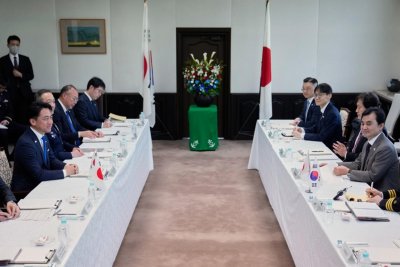
Japan’s Defense Minister Shinjiro Koizumi (L) and South Korea’s Defense Minister Ahn Gyu-back (R) attend their meeting at the headquarters of the Japan Maritime Self-Defense Force Yokosuka District, south of Tokyo, Japan. Photo by EUGENE HOSHIKO / EPA

June 26 (Asia Today) — South Korean Defense Minister Ahn Gyu-back will meet Japanese Defense Minister Shinjiro Koizumi at the Defense Ministry headquarters in Seoul on Sunday morning, the ministry said Friday.

Koizumi will visit South Korea as part of reciprocal ministerial diplomacy following Ahn’s trip to Japan in January.

During the visit, the ministers are scheduled to inspect aircraft operated by the South Korean Air Force’s Black Eagles aerobatic team, hold bilateral talks and take part in a security dialogue with young people from both countries.

They will also discuss ways to strengthen defense exchanges and cooperation between South Korea and Japan.

The meeting will come about one month after Ahn and Koizumi held bilateral talks on May 30 on the sidelines of the 23rd IISS Asia Security Summit, commonly known as the Shangri-La Dialogue, in Singapore.

It will be the first visit to South Korea by a Japanese defense minister specifically for bilateral talks since 2015, according to the ministry.

Koizumi is also scheduled to pay his respects at Seoul National Cemetery during the trip. He is expected to meet South Korean Foreign Minister Cho Hyun on Sunday.

— Reported by Asia Today; translated by UPI

© Asia Today. Unauthorized reproduction or redistribution prohibited.

Original Korean report: https://www.asiatoday.co.kr/kn/view.php?key=20260626010009329

Source link

Israel, Lebanon sign cease-fire’; but Hezbollah rejects it

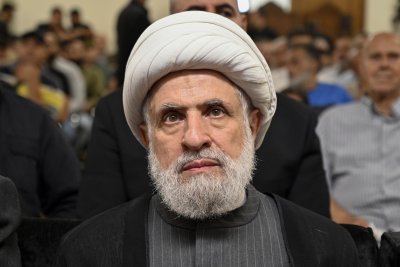
Hezbollah deputy leader Naim Qassem has rejected a new cease-fire between Lebanon and Israel. File Photo by Wael Hamzeh/EPA

June 27 (UPI) — Israel and Lebanon have created a framework for a cease-fire, though Hezbollah is already rejecting it because it calls for disarming the organization.

The neighboring countries signed a cease-fire deal in Washington, D.C., Friday without Hezbollah’s input. The deal says that Israel will withdraw from Lebanon if Hezbollah is disarmed. But Hezbollah leader Naim Kassem said the group will keep fighting until Israel is forced to leave Lebanon.

It’s unclear how Lebanon plans to force Hezbollah to disarm.

Israel then attacked Nabatieh al-Fawqa in southern Lebanon Saturday, Al Jazeera reported.

“The important principle established in the agreement is that there will be no redeployment by Israel in southern Lebanon, no withdrawal, as long as the terrorist organization Hezbollah is not disarmed throughout Lebanon, and the safety of the residents of the north is guaranteed,” Israeli Defense Minister Israel Katz said in a video statement Saturday evening.

“This is the basic condition to which Prime Minister Benjamin Netanyahu and I have pledged and which we are being implemented,” he said.

Israel said it warned its military to plan for an extended stay.

“The test will be in implementing the agreement, and many more challenges are expected,” Katz said. “The Prime Minister and I have instructed the IDF to prepare for an extended stay in the security zone, and to deploy accordingly to protect IDF soldiers and remove threats from northern communities.”

Hezbollah supporters protested in Beirut after the agreement was announced.

A former U.S. diplomat told Al Jazeera that the cease-fire deal benefits Israel more and could be dangerous for Lebanon.

“In the end, I don’t think it will achieve peace. It’s a formula for an open-ended struggle. In the long run, it’s not even really good for Israel, although right now they feel like they have the upper hand,” Middle-East expert Nabeel Khoury said.

But the agreement will allow Israeli troops to return home.

“Essentially, these demands that the Lebanese armed forces do the work that the Israelis couldn’t do, or it proved too costly for the Israelis to do. They want the Lebanese army to do their bidding,” Khoury said.

“If the Lebanese army can go after Hezbollah, all over Lebanon, is what is being demanded of them, and the Israelis simply lend air support, then this is advantageous for Israel,” he added.

The cease-fire framework calls for Israel to initially withdraw from two small areas called pilot zones. But it didn’t say where those areas are. Then, the Lebanese army will gradually take over security for the areas.

Source link

South Korean forum urges wider clearance of DMZ land mines

South Korean Lee Hyung-il (65), who lost his leg after stepping on a landmine while farming at age 24, looks on landmine signs on display during an interview in the border village of Haemaru-chon near the Demilitarised Zone (DMZ) in Paju, South Korea, 17 June 2026. Former South Korean soldier Kim Ki-ho has spent more than two decades working alone to remove millions of landmines left along the border since the Korean War (1950–53). Kim said he will continue the high-risk work for the rest of his life to help promote regional peace. Photo by JEON HEON-KYUN / EPA

June 26 (Asia Today) — South Korean defense experts, mine-clearance researchers and technology companies called for broader government, military and civilian cooperation to remove land mines and unexploded ordnance near the Demilitarized Zone, saying the weapons continue to threaten residents more than seven decades after the Korean War.

The Defense and Security Forum held its fourth roundtable Thursday at the Korea Mine Clearance Research Institute’s DMZ Peace Center in Haemaru Village in Paju, a restricted border area north of the Civilian Control Line.

The event, titled “Korean War DMZ Field Forum: Peace Grows When the Land Heals,” coincided with the 76th anniversary of the outbreak of the 1950-53 Korean War and South Korea’s month of remembrance for veterans.

Security specialists, field researchers, border residents and representatives of defense and information technology companies discussed mine removal, restoration of contaminated land and cooperation among government agencies, the military and private organizations.

The forum said areas contaminated by land mines, unexploded ordnance and other explosives in and near the DMZ and Civilian Control Zone are estimated to cover about 128 square kilometers, or 49 square miles.

It also cited estimates that about 2 million land mines remain buried across the Korean Peninsula’s heavily fortified border region.

The mines are not merely remnants of a past conflict, participants said. They continue to endanger people living in border communities and impede plans to preserve the DMZ as an internationally recognized area of peace and environmental conservation.

Residents in front-line communities face risks while farming, traveling and using land near suspected minefields.

Participants said previous mine-clearance accidents have also made local governments reluctant to pursue development, public infrastructure and community revitalization projects in some border regions, including areas around Cheorwon in Gangwon Province.

The discussion came after South Korea’s mine-action law took effect in February 2025.

The law establishes procedures for safely detecting and removing mines, unexploded ordnance, abandoned munitions and booby traps that are no longer considered militarily necessary.

It also allows qualified private corporations and organizations to conduct detection and removal work under government approval and safety requirements. The military previously handled most such operations.

Participants said cooperation with civilian specialists has become increasingly important as South Korea’s military faces declining troop numbers and difficulties retaining experienced mine-clearance personnel.

Baek Gun-ki, chairman of the Defense and Security Forum, said the country must remember the lessons of war while working toward a safer future.

“We must reflect on the tragic lessons of war and open the way toward a secure future for South Korea,” Baek said.

Seo Nam-yeol, president of the forum, moderated the discussion.

Kim Ki-ho, director of the Korea Mine Clearance Research Institute, presented an assessment of unconfirmed minefields and proposed directions for future clearance operations.

Forum director Kang Tae-jun outlined the South Korean Defense Ministry’s mine-action road map and discussed steps needed to expand cooperation between military and civilian organizations.

Representatives of South Korean defense and technology companies developing artificial intelligence-based detection systems and other advanced mine-clearance equipment also attended.

They discussed the technical limitations of equipment now used by the military and civilian organizations and agreed to pursue cooperation on developing and testing more advanced systems under field conditions.

Participants said mine action is evolving from a labor-intensive military task into a broader security and humanitarian undertaking that combines advanced technology, government policy and specialized civilian expertise.

Following the roundtable, participants visited a nearby area classified as an unconfirmed minefield.

The forum said the visit demonstrated that land mines are not solely a military issue but also affect public safety, land use, economic development and the daily lives of people in border communities.

“Land mines are like bullets lodged in the waist of the Korean Peninsula,” the forum said. “Only after those bullets are removed can vitality return to the peninsula and the lives of border residents fully recover.”

The group called on the central government, military, local governments and private mine-clearance organizations to develop a coordinated national response.

The forum said it plans to launch a nationwide campaign supporting mine clearance across the Korean Peninsula.

It also plans to strengthen South Korea’s mine-action capabilities and expand cooperation with international organizations and overseas specialists, including the United Nations Mine Action Service.

Organizers said South Korea could use its growing defense technology expertise to contribute to international humanitarian mine-clearance operations as well as domestic efforts.

A preliminary discussion featuring Kim and Seo was released online before the event. Video of the roundtable and field visit is expected to be published through the YouTube channel Cheongunmanma.

— Reported by Asia Today; translated by UPI

© Asia Today. Unauthorized reproduction or redistribution prohibited.

Original Korean report: https://www.asiatoday.co.kr/kn/view.php?key=20260626010009324

Source link

Authorities acknowledge Beijing plane crash; pilot dead, 13 hurt

Damage is seen on the facade of Citic Tower Zun in Beijing, China, Saturday. Witnesses say a small plane crashed into Beijing’s tallest tower on Friday. Photo by Jessica Lee/EPA

June 27 (UPI) — The local authorities acknowledged the plane crash that hit Beijing’s tallest building Friday, saying the pilot died and 13 people were injured.

A short statement on WeChat from the local Chaoyang District government said only the pilot was on the plane and was killed in the crash. The statement said 13 people in the building and on the ground were injured. They didn’t identify the pilot or a motive.

The statement said, a “single-engine double-seat light sports aircraft collided with a high-rise building in flight.” It said the incident is being investigated. It didn’t name the building and only called it a skyscraper near the East Third Ring Road.

All references to the crash, video and images were scrubbed from social media in China. The state media, whose headquarters is across the street from the 109-story Citic Tower, hasn’t reported anything about the crash.

It’s not known if the crash was intentional.

Beijing airspace is tightly controlled, and even drones are mostly banned within the city. It’s not clear how the pilot got around the tight controls.

FL360Aero.com, an aviation news site, posted images and video on X from the scene, showing a plane’s tail lying on the sidewalk. The post estimated that it hit around the 65th floor of the building.

Flightradar24 posted on X flight data that appeared to show a deviated flight path for the plane after it took off from Shifosi airport in Beijing’s eastern Pinggu district.

White House Border Czar Tom Homan speaks during the Faith and Freedom Coalition 2026 Road to Majority Policy Conference at the Washington Hilton on Friday. Photo by Bonnie Cash/UPI | License Photo

Source link

Israel-Lebanon deal ties ceasefire to Hezbollah disarmament: Will it work? | Explainer

Israel and Lebanon have agreed on a new framework agreement after four days of marathon talks in Washington, DC, brokered by the United States, trying to end the months-long conflict.

Israel has been occupying almost 20 percent of Lebanese territory in the south and has killed more than 4,000 people since fighting erupted on March 2. A previous bout of fighting ended in a ceasefire in November 2024, but Israel carried out almost daily attacks and refused to end its occupation in breach of the deal.

The new deal, however, does not specifically call for the withdrawal of the Israeli forces and instead ties it to the disarmament of Hezbollah – a condition repeatedly rejected by the Iran-backed armed group.

Hezbollah chief Naim Qassem on Saturday rejected the framework agreement, calling it “null and void”. Hezbollah has demanded that Israel first end its occupation.

Hezbollah supporters flooded the streets of the capital, Beirut, on Friday evening to oppose the deal.

So, what is the new agreement, which does not include Hezbollah, and can it lead to peace in Lebanon?

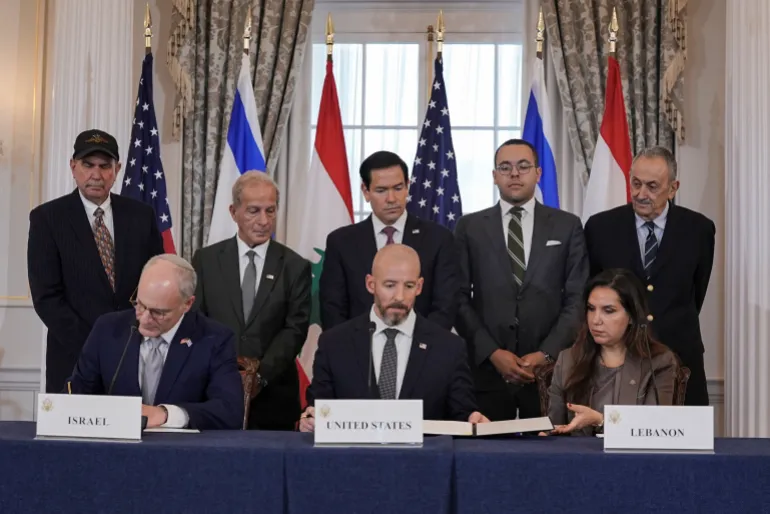
US Secretary of State Marco Rubio looks on as State Department Counselor Daniel Holler, Israel's Ambassador to the US Yechiel Leiter and Lebanon's Ambassador to the US Nada Hamadeh sign a framework agreement between Israel and Lebanon, at the State Department in Washington, DC, June 26, 2026. [Ken Cedeno/Reuters]
US Secretary of State Marco Rubio looks on as State Department Counsellor Daniel Holler, Israel’s ambassador to the US, Yechiel Leiter, and Lebanon’s ambassador to the US, Nada Hamadeh, sign a framework agreement between Israel and Lebanon, at the State Department in Washington, DC, June 26, 2026 [Ken Cedeno/Reuters]

What’s in the Israel-Lebanon agreement?

After the trilateral signing in Washington, the US Department of State released the text of the agreement, which talks of a “sequenced process” that will see the Lebanese army restore “effective sovereign authority over all Lebanese territory, pending the verified disarmament of non-state armed groups” – a clear reference to Hezbollah.

The deal does not mandate Israeli withdrawal from the fifth of Lebanese land it occupies. Instead, the framework notes that Israel shall “progressively redeploy” out of Lebanon, offering two “pilot zones” where the Lebanese military “will gradually assume full and effective security responsibility”.

“One [pilot zone] is south of the Litani River and outside the security zone altogether, and the other is north of the Litani – a small area in the expanded security zone that we conquered in the last two weeks, and which the [Israeli military] says it does not need,” Israeli Prime Minister Benjamin Netanyahu later said in a statement.

Once these conditions are met, “Lebanese civilians will be able to safely return to these areas under the exclusive control of Lebanese state authorities,” the framework says. More than 1.2 million people have been forcefully displaced.

Israel says that successfully returning southern Lebanon to Lebanese government control would “eliminate any future need for [Israeli military] action or presence in Lebanon” and “[declared] that it has not territorial ambitions in Lebanon”.

The Lebanese government has signed that it rejects “the claims of any state or non-state actor to use force on its behalf without its explicit authorization,” deeming such attacks “illegal” and “contrary to Lebanese national interests”.

Hezbollah supporters block the old airport road in the southern suburbs of Beirut, with burning tires to protest against the trilateral agreement that was signed between the US, Israel and Lebanon on June 27, 2026. (Photo by Ibrahim AMRO / AFP)
Hezbollah supporters block the old airport road in the southern suburbs of Beirut, with burning tyres to protest against the trilateral agreement that was signed between the US, Israel and Lebanon on June 27, 2026 [Ibrahim Amro/AFP]

How have parties to the conflict reacted to the agreement?

Israel

Netanyahu issued a video statement shortly after the agreement was announced, stressing that the framework would allow the Israeli military to remain in the occupied Lebanese land.

“We will maintain [the buffer zone] until Hezbollah disarms and as long as there is a threat to the State of Israel,” Netanyahu said.

It is also a partial, momentary win for Netanyahu, who faced intense domestic criticism after the US and Iran sidelined Israel to sign the Islamabad Memorandum of Understanding, which mandates an end to hostilities in Lebanon as well.

Lebanon

President Joseph Aoun expressed gratitude to Trump and other regional mediators after the signing of the trilateral agreement, which he hailed as “the first step on the path to restoring Lebanon’s sovereignty”.

In a statement from the Lebanese presidency, Aoun noted that the framework also “marks the beginning of the road to fructify [Lebanese citizens’] sacrifices, so that they may return to their fully liberated land”.

His statement has done little to tamp down the tensions in the capital, where supporters of Hezbollah took to the streets, burning tyres and blocking a road leading to the airport.

lebanon
People react, as they watch Hezbollah chief Naim Qassem deliver a televised speech on a giant screen at the burial site of former Hezbollah leader Hassan Nasrallah, on the outskirts of Beirut, Lebanon, June 17, 2026 [Mohamed Azakir/Reuters]

Hezbollah

Though the armed group is not a party to the agreement, and was not present at the negotiating table, its posture and actions will dictate where the conflict heads in the future.

The Hezbollah leader on Saturday condemned proposals to tie the Israeli withdrawal to the group’s disarmament. “Linking the Israeli withdrawal to the disarmament of the resistance throughout Lebanon is a very dangerous proposition that crosses all red lines,” he said.

“The framework agreement in Washington is humiliating, shameful, and a surrender of sovereignty,” he said.

He added that the framework agreement should be replaced by the Iran-US Memorandum of Understanding (⁠MoU) signed on June 15.

Earlier, Hassan Fadlallah, a Hezbollah representative in the parliament, said Lebanese authorities would not be able to enforce the framework agreement unless, with US support, “they go to civil war”.

In a televised speech before the agreement was signed, Qassem said that Hezbollah would hold its weapons closer, ready to fight Israel for Lebanon, if the Lebanese state fails to do so.

The Iran-US MOU called for the “territorial integrity and sovereignty of Lebanon” – a similar wording has been used in the framework agreement.

United States

US Secretary of State Marco Rubio, Washington’s point person in Israel and Lebanon talks, announced an “immediate” $100m donation by the US towards humanitarian assistance in coordination with the UN.

At the signing ceremony at the State Department in Washington, Rubio appeared to acknowledge the limited scope of the agreement, calling it “the beginning of the beginning.”

“There’s a lot of work ahead. We don’t in any way underestimate the difficulty of the task ahead, but we understand the importance of it, how vital it is, and we are honored to have played a part in bringing this together,” he said.

Two previous ceasefire agreements brokered by Washington failed to stop the fighting in Lebanon, as well as the Islamabad MOU, signed by President Trump and his Iranian counterpart Masoud Pezeshkian, earlier this month.

Iran

Though Tehran is yet to officially react to the agreement, its state media has been pressing against the deal.

Fars news agency noted that the agreement is essentially the US permitting Israel to violate the first clause of the Islamabad MOU, which mandated the cessation of hostilities on all fronts, including Lebanon.

Does the Israel-Lebanon agreement contradict the Islamabad MOU?

Analysts point towards two direct contradictions between the preliminary deal signed by the US and Iran, and the latest agreement between Israel and Lebanon.

In short, the Islamabad MOU mandates the end of hostilities on all fronts, including Lebanon, with no conditions – while the Israel-Lebanon agreement ties it to Hezbollah’s disarmament.

Israel has not adhered to any of the ceasefire agreements, including earlier ones, and continued with its assault on Lebanese territories. On Saturday, Lebanese state news agency NNA reported that the Farah amusement park intersection in Nabatieh al-Fawqa was targeted by an Israeli drone strike.

Israel has killed at least 4,192 people in Lebanon since the start of the war on Iran four months ago.

Secondly, the Islamabad MOU does not refer to or mention any of the Iran-backed proxy armed groups among its listed clauses to take forward the negotiations to end the war.

Tahani Mustafa, a visiting fellow on the Middle East and North Africa programme at the European Council on Foreign Relations, told Al Jazeera that Israel and Washington would “definitely use the fact that Hezbollah refuses to disarm and capitulate to blame Hezbollah for derailing the entire process”.

Mustafa further added that Israel “has also proven that it is acting in bad faith, which really gives no confidence to Hezbollah to disarm or capitulate in the way that is being demanded.”

Washington is not blame-free either, she noted, arguing that “the American negotiators actively work behind the scenes to try and decouple Lebanon and Iran.”

“This has really just been something that both the Israelis and the Americans have attempted to cook up behind the scenes and once again obfuscating the blame for its failure,” she told Al Jazeera.

lebanon
Mourners put wreaths on the grave during the funeral of Israeli soldier Alexander Filin, who, according to the Israeli army, was wounded and later died in an explosive attack by Hezbollah in southern Lebanon, in Haifa, Israel, June 21, 2026 [Shir Torem/Reuters]

Can a deal work if Hezbollah rejects?

This is not the first time that Hezbollah’s disarmament is on the table – and the existing challenges remain. The 2024 deal also called for Hezbollah’s disarmament, but it could not be achieved as Israel continued to attack Lebanon and refused to withdraw its troops in breach of the deal.

Alon Pinkas, an Israeli former ambassador and consul general in New York, says he is “very doubtful and sceptical” that this will work out because the deal is between Israel and Lebanon with the US; the issue here is Hezbollah.”

Iran’s linking of the Lebanon conflict to the maturation of an agreement with the US, Pinkas says, “complicates things [because] Netanyahu said that [Israel] would not yield to any linkage to Iran and that Israel would defend itself in Lebanon”.

Al Jazeera’s Ali Hashem said that the agreement is an “existential threat” to Hezbollah’s presence.

“Without Hezbollah’s consent, this is not going to happen,” Hashem said. “This is going to be a recipe for another confrontation. The Lebanese government isn’t capable of imposing this deal. It’s not the de facto force on the ground.”

Source link

D.C. settles lawsuit over arrest for ‘Imperial March’ protest

June 26 (UPI) — The District of Columbia and the American Civil Liberties Union on Friday settled a lawsuit over the wrongful arrest of a man for protesting the National Guard’s presence in the capital.

Sam O’Hara, who was arrested last year for repeatedly playing the “Imperial March” — Darth Vader‘s theme music in the Star Wars movie franchise — behind members of the Guard who were on patrol in the District, will be paid an undisclosed amount of money in exchange for dropping his lawsuit.

The ACLU filed the finalized settlement on behalf of O’Hara on Friday, ending a months-long negotiation with officials in Washington, D.C., and its Metropolitan Police Department, but a suit against the Ohio National Guard sergeant who had him cuffed and detained was still in litigation, USA Today reported.

“Our right to free speech grants us the freedom to criticize the government,” Scott Michelman, legal director for the ACLU’s Washington, D.C., chapter, told The New York Times.

“Government officials don’t have to like it, but they can’t punish someone for their speech,” Michelman said, noting that O’Hara’s settlement was “not a significant amount” and that the number will not be disclosed.

O’Hara had for months been protesting President Donald Trump‘s deployment of the National Guard in Washington, D.C., by playing Vader’s theme music toward members of the Guard and recording the interactions.

On Sept. 11, however, an Ohio National Guard sergeant told O’Hara that if he continued his protest the MPD would be called to “handle” the situation.

When O’Hara ignored the command, MPD officers were called to the scene and handcuffed him in an effort to end the protest and accused him of harassing members of the Guard, but later released him without charges.

In a statement, O’Hara said the law enforcement effort to end his protest “ultimately backfired and brought more attention to the unjust deployment of the National Guard in Washington, D.C.”

“This settlement serves as a reminder that constitutional freedoms are worth defending, especially when those in power would prefer we stay quiet,” O’Hara said.

The MPD said in a statement after the settlement was announced that its internal affairs bureau is investigating the incident, but also noted that its department policies would not change.

“MPD recognizes the importance of upholding First Amendment rights of individuals to peacefully express their views and is dedicated to facilitating lawful demonstrations while maintaining public safety and order,” the department said in its statement.

Residents keep with their normal routine and run past National Guard troops on the National Mall near the Washington Monument on August 12, 2025. Photo by Pat Benic/UPI | License Photo

Source link

41.6% of South Korean workers open simulated phishing emails

Officials at the Korea Internet & Security Agency (KISA) check Internet systems at the KISA situation room in Seoul, South Korea. Photo by YONHAP / EPA

June 26 (Asia Today) — More than 4 in 10 South Korean employees who participated in a government cybersecurity exercise opened simulated phishing emails, but companies that had conducted repeated training recorded significantly better results, officials said Friday.

The Ministry of Science and ICT and the Korea Internet & Security Agency announced the findings at a review meeting at the Post Tower in central Seoul.

A total of 630 companies and 255,460 employees participated in the government’s cybersecurity crisis response exercise for the first half of 2026.

The government conducts the exercise twice a year to improve security awareness and strengthen companies’ ability to respond to cyberattacks.

The latest exercise was held from May 11 through May 22 and covered four areas: phishing emails, distributed denial-of-service attacks, penetration testing and vulnerability detection and response.

The phishing exercise targeted employees at 569 companies.

Participants received simulated malicious emails designed to resemble messages from familiar institutions or routine workplace correspondence.

The government monitored whether participants opened the emails and clicked attached files that would have triggered malware infections in a real attack.

The results showed that 41.6% of participants opened the simulated phishing emails. About 12.7% clicked an attachment and reached the simulated malware infection stage.

Large companies, which had the highest rate of conducting their own cybersecurity exercises, recorded the lowest figures.

Employees at large companies had an email open rate of 35.4% and a simulated infection rate of 9.8%, highlighting the value of repeated training, officials said.

The distributed denial-of-service exercise tested web servers and development servers at 147 companies by sending simulated attack traffic.

Officials measured how quickly each company detected and responded to the traffic.

Companies that had previously participated in the exercise took an average of 20 minutes to detect and respond to the attack.

First-time participants took an average of 64 minutes, more than three times as long.

The vulnerability assessment covered 241 companies.

Investigators found 28 types of security vulnerabilities at 32 companies. Twelve of those companies had six types of vulnerabilities that required immediate corrective action.

The ministry and the agency provided the affected companies with their assessment results and instructions for addressing the weaknesses.

Lim Jeong-gyu, director general for information security network policy at the ministry, said the emergence of advanced artificial intelligence was making cyber threats facing companies increasingly serious.

“Building technical defense systems is important, but having all employees directly experience and respond to a simulated crisis can prove invaluable at a critical moment,” Lim said.

He encouraged companies to participate regularly in cybersecurity exercises rather than treating them as one-time events.

Reported by Asia Today; translated by UPI

© Asia Today. Unauthorized reproduction or redistribution prohibited.

Original Korean report: https://www.asiatoday.co.kr/kn/view.php?key=20260626010009374

Source link

Japan’s Kishida says North Korea complicates nuclear disarmament

1 of 2 | Former Japanese Prime Minister Fumio Kishida speaks at the Foreign Correspondents’ Club of Japan in Tokyo on June 26, 2026. Photo by Asia Today

June 26 (Asia Today) — Former Japanese Prime Minister Fumio Kishida said Friday that North Korea’s nuclear weapons and missile programs have made the pursuit of nuclear disarmament increasingly difficult, but Japan must not abandon its goal of a world without nuclear weapons.

Speaking at the Foreign Correspondents’ Club of Japan in Tokyo, Kishida said East Asia is facing its most severe security environment since the end of World War II.

“Japan must strengthen its defense capabilities and further reinforce the Japan-U.S. alliance,” Kishida said. “At the same time, we must not give up the ideal of pursuing a world without nuclear weapons.”

Kishida, a lawmaker whose constituency is in Hiroshima, made nuclear disarmament a major diplomatic priority during his tenure as prime minister.

He cited Russia’s invasion of Ukraine, instability in the Middle East and North Korea’s nuclear and missile programs as evidence that the international security situation surrounding nuclear weapons is “undeniably severe.”

Kishida said stronger national security and nuclear disarmament should not be viewed as mutually exclusive goals.

“Reality and ideals are not incompatible,” he said. “The issue is not choosing one or the other, but determining how to bring reality closer to the ideal.”

Kishida recalled becoming the first Japanese prime minister to attend a review conference of the Treaty on the Non-Proliferation of Nuclear Weapons in 2022.

At the conference, he presented the Hiroshima Action Plan, a series of practical steps intended to advance nuclear disarmament while acknowledging the international security environment.

The plan calls for maintaining the record of non-use of nuclear weapons, increasing transparency surrounding nuclear forces, continuing reductions in global nuclear stockpiles, strengthening nuclear nonproliferation and promoting the peaceful use of nuclear energy.

“We must narrow the gap between reality and the ideal one step at a time,” Kishida said.

Ukraine warning for East Asia

Kishida linked the war in Ukraine to security concerns in East Asia.

He recalled his unannounced visit to Kyiv in March 2023, when he met Ukrainian President Volodymyr Zelensky and expressed Japan’s solidarity with Ukraine.

Kishida said he delivered the message that “Ukraine today may be East Asia tomorrow.”

Russia’s invasion demonstrated that security in Europe and the Atlantic cannot be separated from security in the Indo-Pacific, he said.

East Asia faces overlapping concerns including North Korea’s nuclear and missile development, China’s growing military power and tensions across the Taiwan Strait.

Kishida said Japan’s vision of a free and open Indo-Pacific seeks to improve regional connectivity, promote prosperity, reject coercion and intimidation and uphold freedom and the rule of law.

Kishida stresses U.S. alliance and international rules

Addressing U.S. foreign policy under President Donald Trump, Kishida said “America First” should be regarded as a structural trend rather than a temporary development.

He said countries such as Japan, which have limited natural resources and relatively constrained domestic markets, depend on international law, multilateralism, free trade and the rule of law.

Kishida emphasized the importance of maintaining the Japan-U.S. alliance while preserving an international system governed by widely accepted rules.

Dialogue with China remains necessary

Kishida also called for continued dialogue with China despite security concerns and political tensions between Tokyo and Beijing.

China is Japan’s largest trading partner, while Japan remains one of China’s major economic partners, he said.

“That is precisely why dialogue is important,” Kishida said.

He recalled meeting Chinese President Xi Jinping twice during international gatherings while serving as prime minister. Kishida also held talks with Chinese Premier Li Qiang during meetings connected to Southeast Asian nations and a trilateral summit involving Japan, China and South Korea.

“It is regrettable that fewer people are now willing to engage in dialogue between Japan and China,” Kishida said.

He called for communication not only between governments but also through business, people-to-people exchanges, sports and culture.

Stable relations between Japan and China would serve both countries’ national interests and contribute to regional peace and stability, he said.

— Reported by Asia Today; translated by UPI

© Asia Today. Unauthorized reproduction or redistribution prohibited.

Original Korean report: https://www.asiatoday.co.kr/kn/view.php?key=20260626010009412

Source link

On This Day, June 27: Dennis Rader pleads guilty to ‘BTK’ slayings

1 of 6 | On June 27, 2005, Dennis Rader, the so-called “BTK” (bind, torture, kill) killer, pleaded guilty to 10 slayings in the Wichita, Kan., area. He was sentenced to life in prison. File Phot courtesy of the Sedgwick County Sheriff’s Dept. | License Photo

On this date in history:

In 1829, English scientist James Smithson left a will that eventually funded the establishment of the Smithsonian Institution in Washington — in a country he never visited.

In 1844, Mormon founder Joseph Smith was slain by a mob at a jail in Carthage, Ill.

In 1847, the first telegraph wire links were established between New York City and Boston.

In 1859, Louisville, Ky., schoolteacher Mildred Hill composed a tune for her students and called it “Good Morning To You.” Her sister, Patty, who wrote the lyrics, later added a verse that began “Happy Birthday To You.”

In 1950, U.S. President Harry S. Truman ordered naval and air forces to help repel the North Korean invasion of South Korea.

UPI File Photo

In 1979, the U.S. Supreme Court ruled private employers could give special preferences to Black people to eliminate “manifest racial imbalance” in traditionally white-only jobs.

In 1991, Associate Justice Thurgood Marshall announced he was retiring from the U.S. Supreme Court. He was the first African American to sit on the high court.

In 1995, the space shuttle Atlantis was launched from Cape Canaveral, Fla., on a historic mission to dock with the Russian space station Mir. Docking occurred two days later.

In 2003, the U.S. Federal Trade Commission opened a long-awaited nationwide registry for people who want to block unwanted telemarketing calls.

In 2005, Dennis Rader, the so-called “BTK” (bind, torture, kill) killer, pleaded guilty to 10 slayings in the Wichita, Kan., area. He was sentenced to life in prison.

In 2007, Tony Blair officially stepped down after a decade as British prime minister, submitting his resignation to Queen Elizabeth II. Blair was succeeded by Gordon Brown and became Britain’s envoy to the Middle East.

File Photo by Hugo Philpott/UPI

In 2009, a top health official said the H1N1 virus, known as swine flu, killed 127 people of the more than 1 million infected in the United States. About 3,000 were reported hospitalized.

In 2011, a federal court jury in Chicago convicted former Illinois Gov. Rod Blagojevich on 17 felony corruption charges that included trying to sell the U.S. Senate seat vacated by Barack Obama after the 2008 presidential election. Blagojevich was sentenced to 14 years in prison.

In 2017, the FARC rebel group officially disarmed in a ceremony with the Colombian government.

In 2019, the Supreme Court ruled the federal government can’t include a question about citizenship in the U.S. census.

In 2023, producers of Wheel of Fortune announced Ryan Seacrest would succeed Pat Sajak as the host of the long-running game show. Sajak’s final episode aired June 7, 2024.

File Photo by James Atoa/UPI

Source link

Who profits from Africa’s gold? | Economy News

Johannesburg, South Africa – Mansa Musa, the 14th-century emperor of the Malian Empire, often comes to mind whenever African gold enters the conversation. Renowned for his immense wealth, he is often described as the richest man in history, largely due to the vast gold resources of his empire.

Yet centuries after Mansa Musa’s reign, Africa’s relationship with gold remains paradoxical. The continent possesses some of the world’s richest gold deposits, but much of the wealth generated by the industry continues to be captured elsewhere. According to the United Nations Environment Programme (UNEP), Africa holds about 40 percent of the world’s gold reserves.

Although Africa remains one of the world’s most gold-rich regions, it continues to occupy the lower end of the global value chain. Gold extracted across the continent is largely exported, mainly to the United Kingdom, where it is refined, traded and priced. As a result, the most profitable stages of the industry remain concentrated elsewhere, creating a persistent gap between extraction and value capture.

“Africa’s position reflects structural constraints, including limited refining capacity, capital bottlenecks and historical trade patterns that favour exporting unrefined gold, allowing offshore markets to capture the highest-value margins in refining and trading,” Kate Collett, insights analyst at Africa Practice, told Al Jazeera.

Increasingly, African governments are not only seeking to extract more gold but also to retain greater control over it. That ambition extends beyond mining policy. Across the continent, policymakers are increasingly viewing gold as a strategic financial asset that can strengthen reserves, reduce external vulnerabilities and support greater economic sovereignty.

A shift in global reserves

Gold has re-emerged as a strategic reserve asset in an increasingly fragmented global economy. Unlike fiat currencies, it is widely seen as retaining value during periods of inflation, geopolitical tension and financial uncertainty.

Across the Global South, central banks have increased gold accumulation in recent years as part of efforts to diversify reserves and reduce exposure to external financial systems. This trend is visible in major emerging-market economies, including China, Russia, India and Turkiye, according to data from the World Gold Council.

An informal gold miner holds up a rock recovered from inside a gold mine before it is ground down for processing at the site of Nsuaem-Top, Ghana
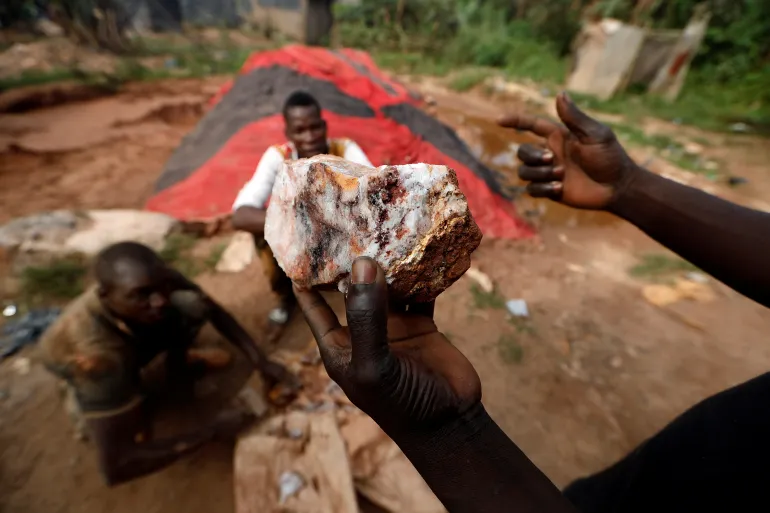
An artisanal gold miner holds up a rock recovered from inside a gold mine before it is ground down for processing at the site of Nsuaem-Top, Ghana [Zohra Bensemra/Reuters]

By accumulating gold, central banks reduce reliance on foreign currencies and hold reserves outside the direct control of any single financial system.

African countries have joined this shift in an effort to strengthen economic stability, build reserve buffers and increase financial sovereignty.

Within Africa, Ghana, one of Africa’s leading gold producers, has increased the proportion of locally produced gold purchased by the central bank under its domestic gold accumulation programme, according to Bank of Ghana reporting and policy communications.

Nigeria has pursued broader reserve diversification strategies, including increased interest in gold as part of efforts to strengthen the composition of its external reserves, according to central bank statements and analysis by international financial institutions, including the International Monetary Fund (IMF) and the World Gold Council.

Tanzania requires approximately 20 percent of gold output from mining companies and traders to be allocated for sale to the central bank under its reserve-building framework, according to Bank of Tanzania regulations. Guinea has tightened licensing and export controls in its mining sector, part of wider efforts to increase state oversight and capture more domestic value.

According to analyst Thea Fourie, head of regional analysis for the Middle East and Africa at S&P Global Market Intelligence, rising gold prices have reinforced these shifts. “This trend aligns with a broader geopolitical shift towards de-dollarisation … including the development of alternative payment systems and increased use of local currencies in trade,” she told Al Jazeera.

For African producers, this changing global financial environment has accelerated the use of gold as a tool of economic sovereignty, analysts say.

Capturing more of the value chain

Across the continent, governments are also trying to retain more value from domestic production by tightening oversight of mining and reshaping how gold moves from extraction to export.

Ghana has expanded its central bank gold purchasing programme. Tanzania has strengthened regulatory control linked to domestic sales and reserve-building requirements, while Guinea has tightened licensing enforcement and export rules aimed at improving domestic processing and value retention.

An artisanal miner pans for gold at the Karakaene gold mine
An artisanal gold miner digs at the Bantakokouta gold mine, one of the largest artisanal gold mining sites in southeastern Senegal, near the Mali border [John Wessels/AFP]

In Guinea, authorities have also cancelled mining licences deemed unproductive and restricted exports of unprocessed gold in an effort to encourage local refining. Namibia continues to restrict the export of unprocessed minerals, reinforcing efforts to increase domestic value capture.

Artisanal mining, often operating outside formal systems, is increasingly being treated as part of the formal gold economy rather than a parallel informal sector. Governments are seeking to formalise production, reduce smuggling and increase tax and export revenues.

“These programmes can help countries retain more value from their mineral resources by reducing smuggling, formalising artisanal mining and creating incentives for local refining and downstream industries,” Collett said.

But integration remains uneven. Many small-scale miners still operate outside formal channels due to limited access to finance, markets and technical support.

“As commodity prices rise, this gap between legal status and how the sector operates on the ground is widening, with value still flowing outside formal systems,” she added.

Resource nationalism in the Sahel

In the Sahel, military-led governments in Mali and Burkina Faso have pushed further towards state control of mining assets, framing reforms as part of a broader effort to reduce economic dependence on former colonial partners.

Mali’s President Assimi Goita has overseen a restructuring of the mining sector, expanding state involvement and promoting domestic processing capacity. With Russia emerging as a key partner after a break with France, the government is also developing a state-controlled gold refinery in Bamako.

Africa Investigates - Ghana Gold
Gold miners scratch a living by digging in primitive mines and panning for flecks of gold for a licensed supervisor on the outskirts of Bulawayo, Zimbabwe [John Moore/Getty Images]

Burkina Faso has increased state participation in mining and sought to expand national gold reserves. Alongside Mali and Niger under the Alliance of Sahel States, it has pursued deeper economic coordination. Plans for closer monetary cooperation have been discussed, though they remain in development.

However, most large-scale mines in the region remain operated by foreign companies due to limited domestic technical capacity.

According to Fourie, of S&P Global Market Intelligence, this shift reflects a broader wave of resource nationalism driven by fiscal pressures and security challenges.

“These governments have also deepened ties with non-Western partners, reshaping longstanding trade and diplomatic relationships,” she said.

But analysts caution that tighter state control can deter investment if regulatory frameworks are unclear or not consistently applied.

“The quest for African resource sovereignty should not be reduced to the Sahel juntas’ spectacular enforcement, with executives locked up in jail, and inflammatory narratives,” Collett said.

A long road to control

Despite growing policy momentum, full control over the gold value chain remains distant. Moving from extraction to refining and pricing within African economies requires sustained investment in infrastructure, skills and industrial capacity.

Building internationally certified refineries and attracting long-term capital will take time, even as governments push for greater oversight.

An artisanal miner pans for gold at the Karakaene gold mine
For now, much of the value generated by African gold continues to flow abroad [John Wessels/AFP]

“When the measures are introduced in an opaque manner, when there is no stakeholder engagement, is when investor confidence starts to slip,” said Beverly Ochieng, senior analyst at Control Risks.

Some governments have managed to balance tighter control with investor confidence by maintaining clearer regulatory engagement and consultation with industry stakeholders.

For now, much of the value generated by African gold continues to flow abroad.

“The experiment with the state mining operators will be one to watch … whether they are able to meet international standards, sell the gold and set prices,” Ochieng said. “And ultimately, at the back of it is whether this government will be stable enough to see through this process.”

Still, many analysts believe the direction of travel is set.

“I think in the long run, we are seeing more African governments taking steps to ensure the entire value chain remains in-country … Maybe in a couple of decades, we might see a sort of gold OPEC emerging from African countries,” she said.

Source link

Japan weighs Palantir AI for SDF command operations

The Palantir logo is displayed on a mobile phone alongside a stock market graph displayed on a laptop screen in Liverpool, Britain, 09 June 2026. Photo by ADAM VAUGHAN / EPA

June 26 (Asia Today) — Japan’s Defense Ministry plans to expand the use of artificial intelligence in the Self-Defense Forces’ command-and-control operations, potentially bringing AI into the process through which commanders assess battlefield conditions and direct military units.

The move would mark a new stage in Japan’s defense transformation, shifting its focus beyond acquiring more weapons and equipment toward digitally supported battlefield decision-making.

The Asahi Shimbun reported Friday, citing multiple government officials, that Prime Minister Sanae Takaichi’s government plans to include the expanded use of command-and-control AI in three revised national security documents expected by the end of the year.

The documents are the National Security Strategy, National Defense Strategy and Defense Buildup Program.

The Defense Ministry is also considering including some related expenses in its fiscal 2027 budget request, according to the report.

Japan has used AI for some defense-related functions, but it has not placed the technology at the center of the Self-Defense Forces’ operational command structure.

A command-and-control system allows commanders to assess enemy threats, friendly forces, unit locations and intelligence assets before planning operations and issuing orders.

AI could rapidly organize and analyze large volumes of surveillance, reconnaissance, communications and sensor data before presenting commanders with possible courses of action.

One system reportedly under consideration is the Maven Smart System developed by U.S. data analytics company Palantir Technologies.

Maven analyzes information from satellites, drones, radar systems, battlefield sensors and intelligence reports. It can identify potential threats and targets and help commanders compare possible operational responses.

The U.S. Defense Department has expanded its use of the system and is moving to establish it as a formal long-term military program.

Adopting Maven could improve interoperability between the Self-Defense Forces and the U.S. military, allowing them to process and share operational information more quickly during joint missions.

The proposal, however, has also raised questions about data control, technological dependence and Japan’s authority over its own military command systems.

Command and control is not an ordinary administrative function. It is the highest-level structure through which a government decides how and when to use military force.

Reliance on software and algorithms supplied by a foreign private company could require Japan to establish clear rules covering military data management, access to source technology, system control, wartime operating authority and alternatives in the event of a malfunction or service disruption.

The introduction of foreign software would not formally transfer command authority to the company or the United States. Japanese commanders would retain responsibility for operational decisions.

The debate instead centers on how much of the information-processing infrastructure behind those decisions should depend on technology that Japan does not fully own or control.

Calls for domestically developed defense AI have consequently grown within Japan’s government and ruling-party circles.

One proposal would allow Japan to use a U.S. system initially while developing an independent platform through Japanese technology companies and the country’s defense industrial base.

Japan could eventually replace the foreign system or operate domestic and U.S. technologies together.

Developing a military-grade AI command system capable of immediate operational deployment would be difficult, however. A combined approach using both American and Japanese technology is therefore considered more likely in the near term.

The Defense Ministry identified seven priority areas for military AI in a policy issued in 2024: target detection and identification, intelligence collection and analysis, command and control, logistics, unmanned systems, cybersecurity and administrative efficiency.

The policy states that AI should assist rather than replace human judgment and that meaningful human involvement must be maintained.

The ministry has since established a team to accelerate AI adoption and has called for greater cooperation with Japanese defense companies and technology startups.

Japan’s consideration of command-and-control AI also carries implications for South Korea.

During a conflict or regional emergency, information sharing and operational coordination among the U.S. military, the Self-Defense Forces and South Korea’s military could become increasingly rapid and automated.

AI-assisted command systems could improve coordination in responding to North Korean missile launches, Chinese military activity or a crisis in the Taiwan Strait.

The same technology could also accelerate errors.

Incorrect intelligence, incomplete data or biased algorithms could cause an AI system to present commanders with misleading threat assessments or inappropriate operational choices.

Human commanders would remain responsible for final decisions, but the speed and complexity of AI-supported operations could make errors more difficult to identify before action is taken.

Japan’s plan therefore represents more than a military technology upgrade. It raises broader questions about who controls defense data, how allied systems should be connected and who bears responsibility when AI influences a military decision.

— Reported by Asia Today; translated by UPI

© Asia Today. Unauthorized reproduction or redistribution prohibited.

Original Korean report: https://www.asiatoday.co.kr/kn/view.php?key=20260626010009431

Source link