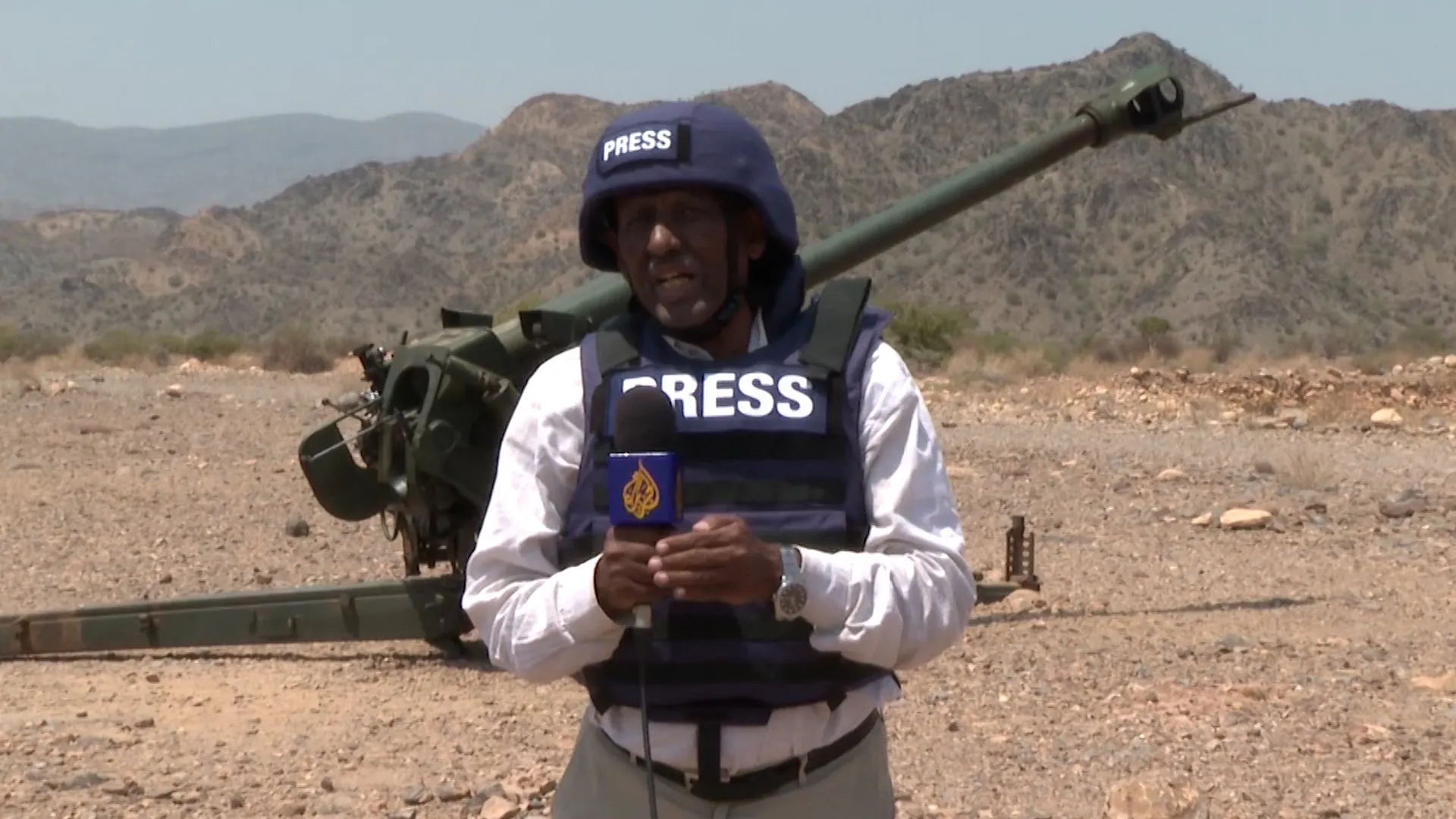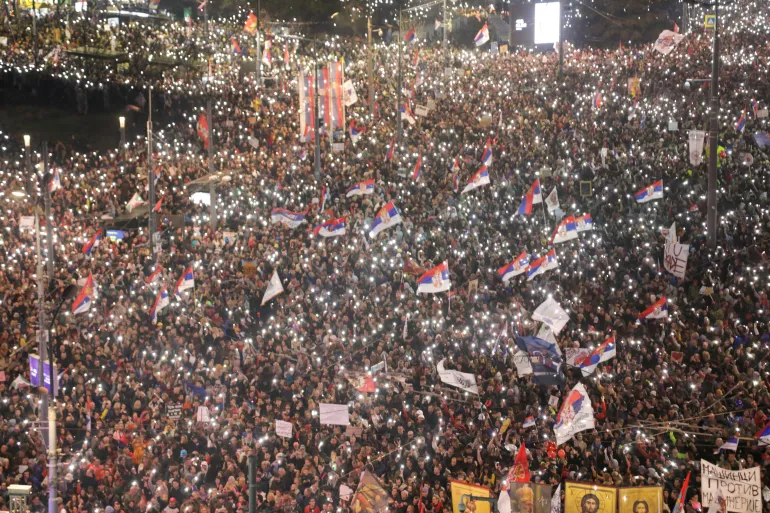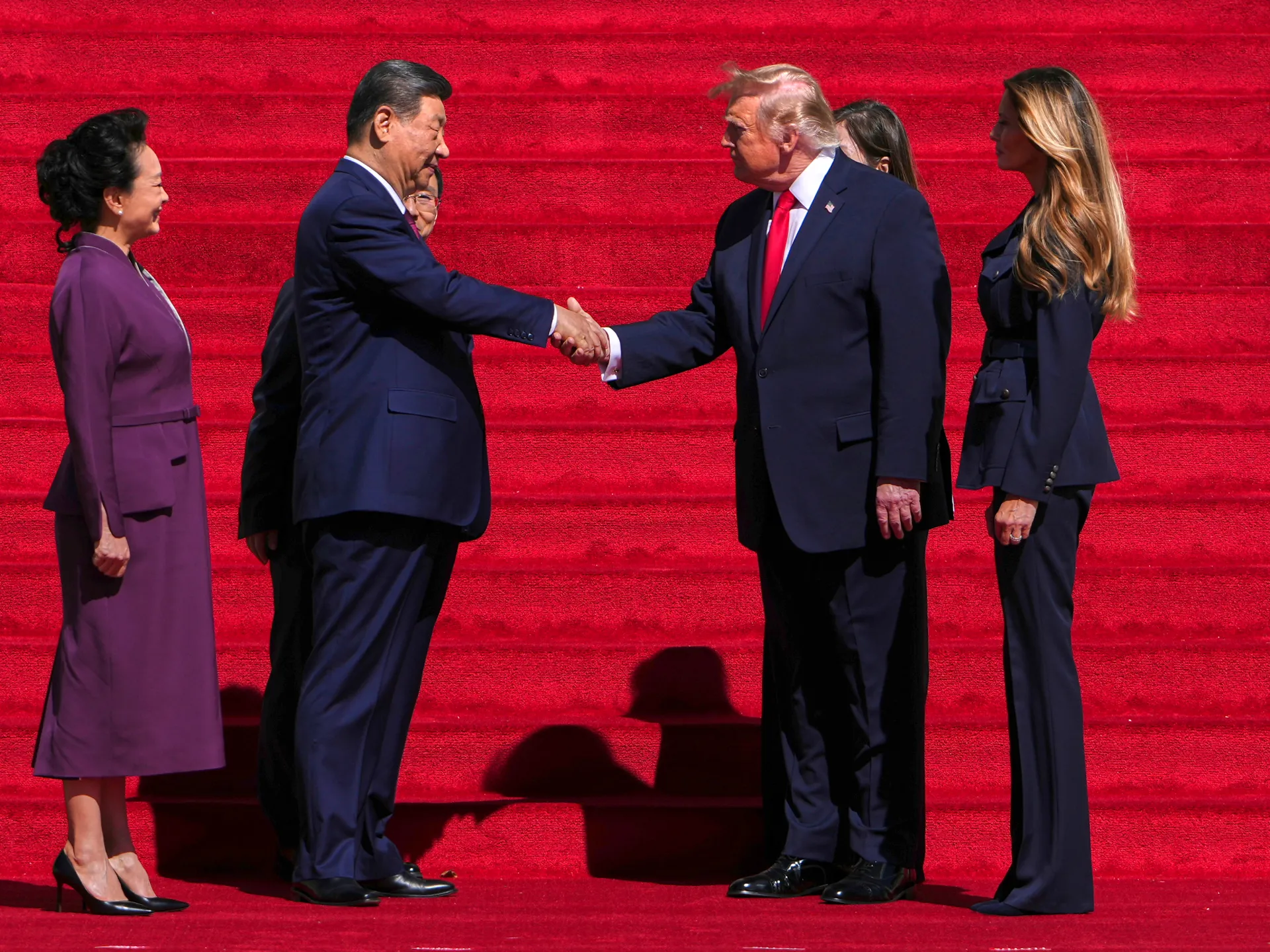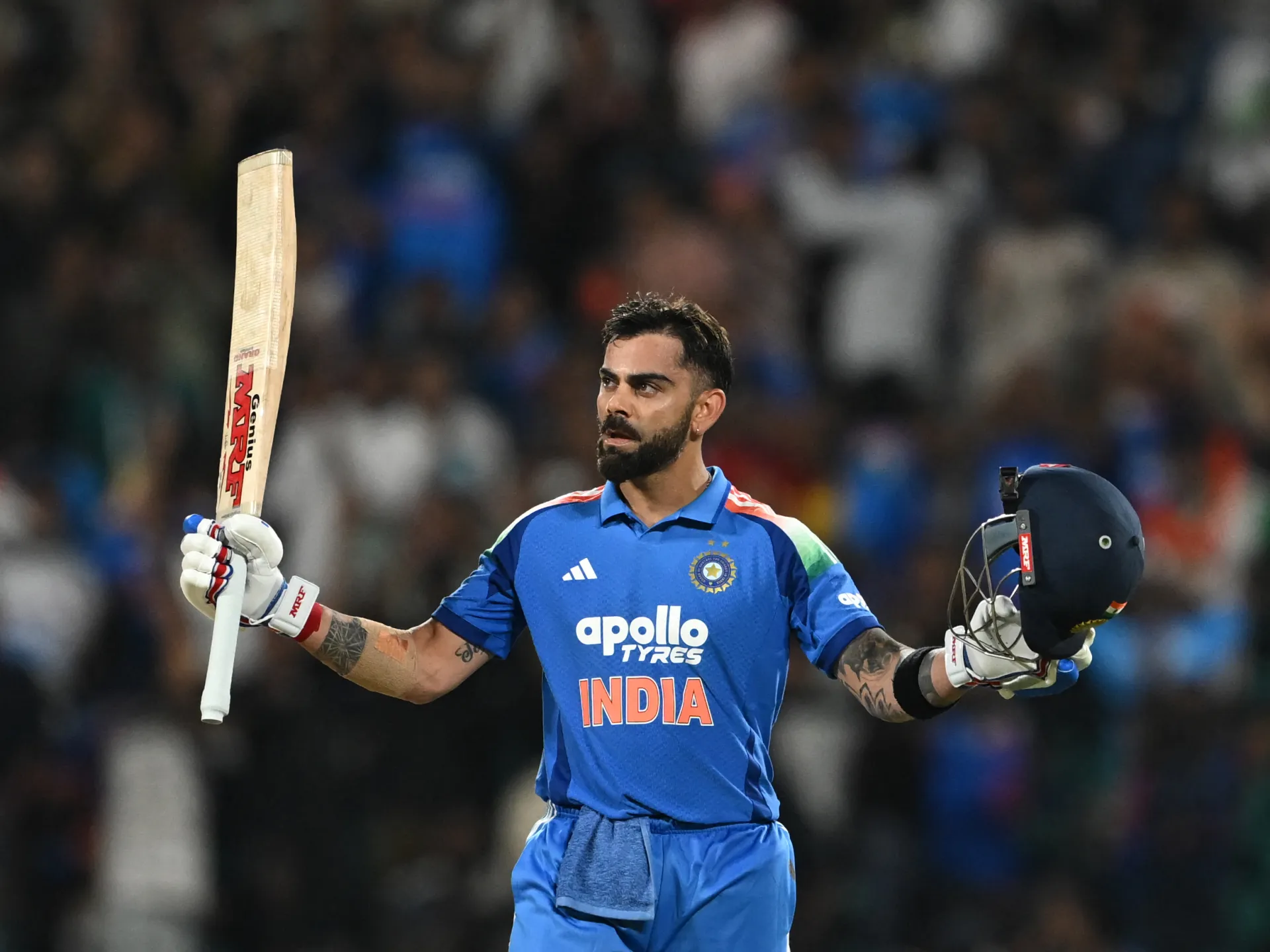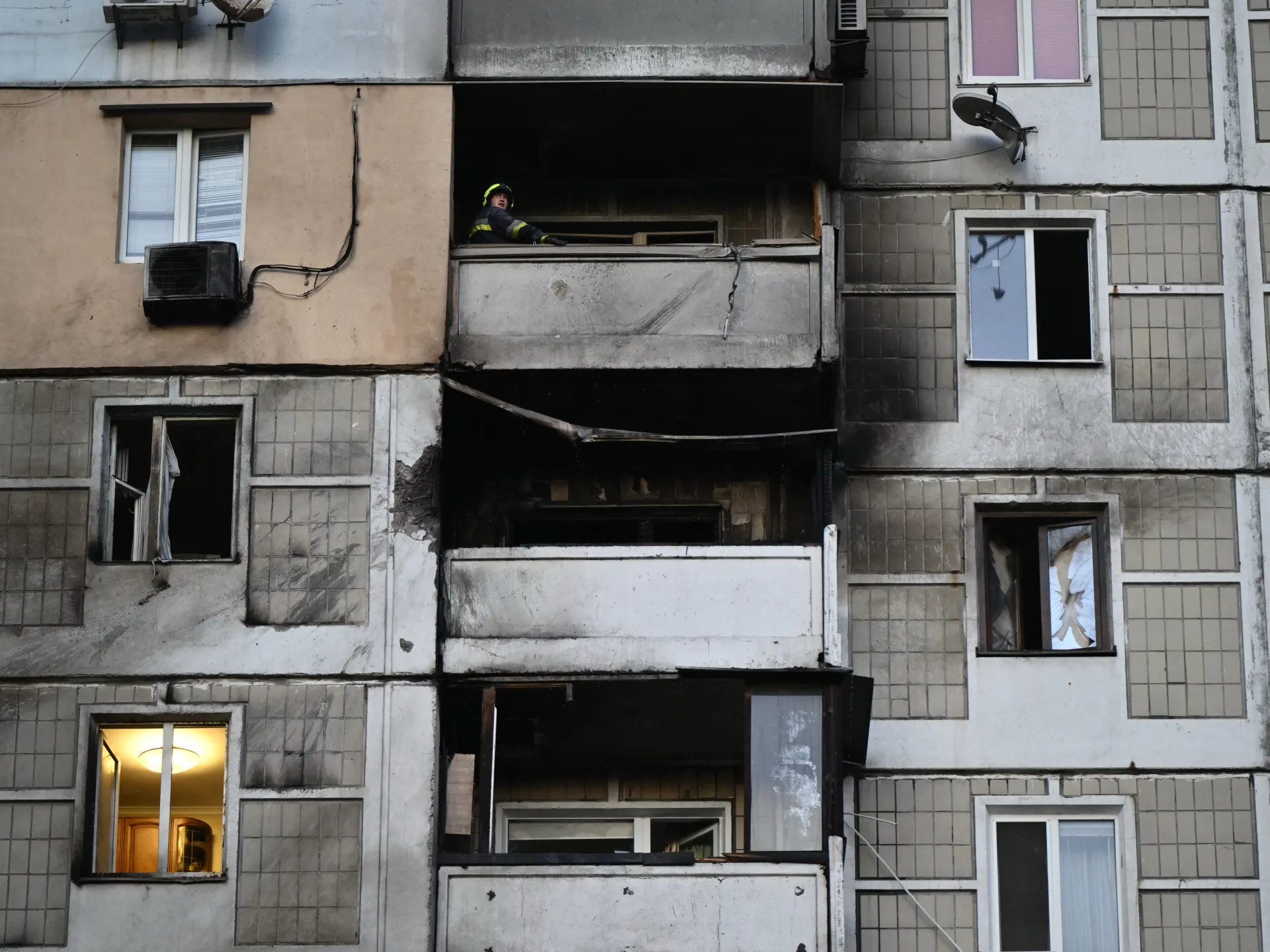
LIVE: Atletico Madrid vs Barcelona – Champions League quarterfinal | Football News
Follow the build-up and live text commentary of the game as Barcelona look to come back from 2-0 first leg defeat.
Published On 14 Apr 2026
From breaking news to significant developments in politics, business, technology, entertainment, and more, we deliver the stories that shape our global landscape.
Follow the build-up and live text commentary of the game as Barcelona look to come back from 2-0 first leg defeat.

The LS Electric chairman, Koo Ja-kyun and at the
firm’s U.S. unit in Utah celebrate the new contract. Photo by LS Electric
SEOUL, April 14 (UPI) — South Korea’s LS Electric said it secured a contract worth $115 million to supply power infrastructure for a large-scale data center in the United States.
Under the deal, the Seoul-based power solutions provider will deliver switchgear and distribution transformers.LS Electric did not disclose the identity of its customer.
The agreement, announced Monday, came as demand for data center infrastructure accelerates alongside the growing adoption of artificial intelligence services, which are driving a sharp increase in electricity consumption.
Power consumption at the global data centers surpassed 400 terawatt-hours in 2024, a level comparable to that of a sizable country, according to the International Energy Agency. The figure is projected to more than double by the end of the decade.
LS Electric forecasts that the North American infrastructure market for data centers will grow at a compound annual growth rate of 6.7%, expanding to $23.5 billion in 2031 from $15.8 billion last year.
To target the market, LS Electric operates two production hubs in the United States, MCM Engineering II in Utah and a campus in Texas.
“In line with the rapid expansion of hyperscale data centers, demand for power infrastructure is surging, and our technological capabilities are being recognized in the global market,” LS Electric said in a statement.
“We will strategically expand our data center power business in North America as a base to strengthen our market leadership,” it said.
The share price of LS Electric soared 13.71% on the Seoul bourse on Monday. It rose 3.57% on Tuesday.
April 14 (UPI) — The Liberal Party of Canada won three of three byelections on Monday to give Prime Minister Mark Carney a majority in the House of Commons.
Liberal candidates needed just one election win out of the three races, two in Ontario and a third in Quebec, to gain a majority. The sweep gives the Liberals 174 out of 343 seats in the House of Commons.
Doly Begum in Scarborough-Southwest, Danielle Martin in University-Rosedale and Tatiana Auguste in Terrebonne won seats in the House of Commons for the Liberal Party.
The victories will allow Carney to pass legislation without needing votes from opposition parties.
“Tonight, voters have placed their trust in our new government’s plan,” Carney said in a statement on social media. “We accept that support with humility, determination and a clear understanding of what this moment demands.
Conservative candidates drew smaller vote shares on Monday than they did in the last general election. The candidate in the Scarborough-Southwest riding, a district that has previously favored liberal candidates, received about 18% of votes. The Conservative Party of Canada received about 30% of the votes in the district last year.
Another conservative candidate, Adrienne Charles, received 3% of the vote in the Terrebonne riding in the Montreal area. She received more than 18% of the vote in last year’s federal election.
Defections from opposition parties have also bolstered the liberal majority. Four conservatives and a member of the New Democratic Party have left their parties to join the Liberal Party in the past five months.
“The Carney Liberals did not win a majority government through a general election or today’s byelections,” opposition leader Pierre Poilievre said on social media. “Instead, it was won through backroom deals with politicians who betrayed the people who voted for them.”


LG AI Research chief Lim Woo-hyung (C) poses with London Stock Exchange Group senior executive Nicolas Falmagne (L) and Kiwoom Securities CEO Eom Ju-sung after agreeing to cooperate on AI agent services for retail investors at the head office of Kiwoom Securities in Seoul on Monday. Photo by LG AI Research
SEOUL, April 14 (UPI) — South Korea’s LG AI Research said Tuesday that it will work with local brokerage Kiwoom Securities and London Stock Exchange Group to develop AI agent services for retail investors.
Under the contract, the three parties aim to provide stock-specific forecast scores alongside easy-to-understand explanations on Kiwoom’s retail trading platform. They also plan to introduce AI-powered wealth management services.
Toward that end, LG AI Research plans to leverage its EXAONE-Business Intelligence system. LG said the system is built on four specialized AI agents — AI journalist, AI economist, AI analyst and decision-maker.
They are intended to collect real-time data, analyze it to forecast market trends and generate reports before evaluating various scenarios to produce final scores for stocks.
Established in 2020 as an affiliate of LG Group, LG AI Research focuses on developing cutting-edge AI technologies and addressing related challenges.
“For financial AI agents, explainability and reliability are just as crucial as accuracy,” LG AI Research chief Lim Woo-hyung said in a statement.
“EXAONE Business Intelligence is evolving into a practical AI system that supports human judgment as expert agents collaborate to perform tasks ranging from analysis and forecasting to report preparation,” he said.
London Stock Exchange Group senior executive Nicolas Falmagne said the three-way alliance would mark a turning point in creating greater value across the entire financial ecosystem.
LG AI Research is not publicly listed. The share price of LG Group’s holding company, LG Corp., edged down 0.11% on the Seoul bourse Tuesday. Those of Kiwoom Securities rose 4%.
Hui Ka Yan, the founder and former chair of troubled Chinese property giant, Evergrande Group, pleaded guilty to a slew of charges on Tuesday in a showcase trial in the southern province of Guangdong. File photo by Wu Hong/EPA
April 14 (UPI) — The founder and former chairman of Chinese property giant China Evergrande Group pleaded guilty Tuesday to a slew of charges, including embezzlement, securities fraud and corporate graft at a trial in the southern city of Shenzhen.
Hui Ka Yan admitted “illegally absorbing public deposits” where buyers’ down payments on apartments off-plan were used to fund hundreds of other projects in the case in which Evergrande Real Estate Group also faced a similar set of charges, the Intermediate People’s Court of Shenzhen said in a statement online.
Evergrande took in millions of dollars from buyers that, instead of being used to complete the properties they were purchasing, were diverted to new developments, the court heard.
Hui also admitted fundraising fraud, illegal issuance of loans and unauthorized disclosure of “important information” during the high-profile two-day trial, which was attended by deputies from the National People’s Congress, the Chinese People’s Political Consultative Conference of which he was once a standing committee member, and investors.
The court statement said China Evergrande Group and Evergrande Real Estate Group were also indicted on charges of illegally collecting public deposits, fundraising fraud, illegal issuance of loans and fraudulent issuance of securities.
The downfall of the business tycoon, once Asia’s richest with a net worth of more than $42 billion, began in 2021 when the property empire he founded 25 years earlier collapsed after a massive Chinese property bubble burst, leaving 1,300 half-finished Evergrande developments financed with $300 billion of debt.
Hui was placed under house arrest in September 2023, prompting the suspension of trading in Evergrande shares by market regulators across the border in Hong Kong, only a month after trading had resumed following a 17-month suspension.
The company was also the subject of a winding-up petition in a Hong Kong court brought by creditors and had sought protection from being made bankrupt in the United States in a New York court the previous month.
Hong Kong regulators initially suspended Evergrande for failing to issue financial results for two years. When it did report in July 2023, it said it had lost $81.1 billion total in 2021 and 2022, mostly through payments to suppliers and lenders, as it battled to finish thousands of housing projects across 280 Chinese cities.
In January 2024, after repeated reprieves to allow it time to come up with a viable plan to restructure liabilities that had by then grown to at least $325 billion, the court in Hong Kong placed Evergrande into liquidation.
Hui was handed a $6.5 million fine in March 2024 for Evergrande, stating in its results that revenue was $78 billion more than it actually was and was handed a lifetime ban from participating in China’s capital market.
The final blow came in August 2025 with the delisting by regulators of Evergrande shares from the Hong Kong Stock Exchange, almost 16 years to the day after it was the most oversubscribed IPO of 2009 with a valuation in excess of $50 billion.
The ban was imposed after an 18-month deadline for Evergrande stock to resume trading passed the previous month, with the company opting not to appeal the decision.
Hui had led a 15-year drive to grow Evergrande into one of China’s largest businesses, spending billions expanding into tourism and recreation, healthcare, finance, EV manufacturing and infrastructure, entertainment and agribusiness.
In 2020, it began work on a new $1.7 billion, 100,000-seat stadium for Guangzhou FC, the soccer club it had purchased 10 years earlier.
However, the company’s growth was delivered through massive borrowing, much of it highly leveraged, with the result that six years on the stadium, like many of Evergrande’s projects, it remains incomplete after it was seized by the government in November 2021.


April 14 (UPI) — Authorities in the Bahamas have released the 58-year-old American man detained last week in the investigation into missing American Lynette Hooker.
The man, Lynette Hooker’s husband, Brian Hooker, was released Monday, the Royal Bahamas Police Force said in a statement that only identified the individual by his age and nationality.
“The decision to release the individual was made following consultation with the Department of Public Prosecutions, which recommended that no charges be filed at this time pending the outcome of further investigation,” the police force said, without identifying the suspect.
Brian Hooker’s lawyer, Terrel Butler, had said the authorities had until 7:20 p.m. EDT Monday to decide whether to charge his client, who has been in police custody since he was detained shortly after 7 p.m. Wednesday.
According to police, Brian Hooker reported his wife missing early on April 5. He told investigators that he and his wife had departed Hope Town at around 7:30 p.m. the evening before for Elbow Cay aboard an 8-foot hard-bottom dinghy.
During the journey, his wife fell overboard with the boat keys in her possession, causing the vessel’s engine to cut off. Strong currents carried the woman away, he allegedly said, according to police.
Brian Hooker reported her missing after paddling the dinghy back to shore.
When he was taken into police custody last week, police incorrectly stated the suspect’s age as 59.
Published On 14 Apr 202614 Apr 2026
Russian Foreign Minister Sergey Lavrov has arrived in Beijing as the United States blocks the Strait of Hormuz, through which China imports about a third of its oil supplies.
Lavrov received a red-carpet welcome on Tuesday, according to photos shared by Russia’s Ministry of Foreign Affairs.
list of 4 itemsend of list
Beijing and Moscow have condemned the US and Israel over their war on Iran, with China also being economically affected by the energy crisis it has caused.
China, a big importer of Iranian oil, also slammed a recently imposed US scheme to blockade vessels entering or departing Iranian ports and coastal areas, including in the Gulf and the Gulf of Oman.
“The Strait of Hormuz is an important international trade route for goods and energy, and maintaining its security, stability, and unimpeded flow is in the common interest of the international community,” China’s Ministry of Foreign Affairs spokesman Guo Jiakun said on Monday.
Al Jazeera’s Alan Fisher, reporting from Washington, DC, said the US’s goal is to choke Iran off by blocking everything coming in and out of Iranian ports.
“What the US hopes is that there’ll be pressure on Iran from some of its main business partners, including China,” he said, adding that Beijing imports about a third of its oil from Iran. “The United States is hoping that pressure on China will mean China putting pressure on Iran and forcing Iran to get back to the negotiating table.”
On Monday, Lavrov held a telephone conversation with his Iranian counterpart, Abbas Araghchi.
The top Russian diplomat told Araghchi it was important to guard against any resumption of hostilities in the Middle East, and said Russia stood ready to help with a settlement, according to a statement by the Russian Foreign Ministry.
“S Lavrov emphasised the importance of preventing a recurrence of armed confrontation and once again confirmed Russia’s unwavering readiness to assist in resolving the crisis, which has no military solution,” the ministry said.
It added Araghchi related to Lavrov details of US-Iran talks in Pakistan at the weekend, which failed to reach a breakthrough.
Beijing and Moscow are close economic and political partners, and the relationship has deepened further since Russia’s full-scale invasion of Ukraine in 2022.
Wang also held a call with Lavrov on April 5, when they agreed that Beijing and Moscow would work together to de-escalate tensions in the Middle East.
China welcomed a string of leaders of countries that have been affected by the war and its economic fallout this week, including Spanish Prime Minister Pedro Sanchez and United Arab Emirates President Mohamed bin Zayed Al Nahyan, also known as MBZ.
Chinese President Xi Jinping met MBZ and Sanchez on Tuesday morning, and Vietnamese President To Lam is expected in China for a four-day trip.
“I think what this really speaks to is that many people around the world have been surprised that China has not played a more active role in the Iran war, given it has such strong ties with Tehran, including as Iran’s largest trading partner and buyer of crude oil,” Al Jazeera’s Katrina Yu, reporting from Beijing, said.
“But what China has been doing, besides calling for restraint and more negotiation, is taking advantage of this moment to really look at states that may be a little disenchanted with the US or looking to diversify from reliance on Washington,” Yu said.
“China has presented itself as the opposite of Washington – a reliable, stable and predictable partner. For many states, that message really appeals.”
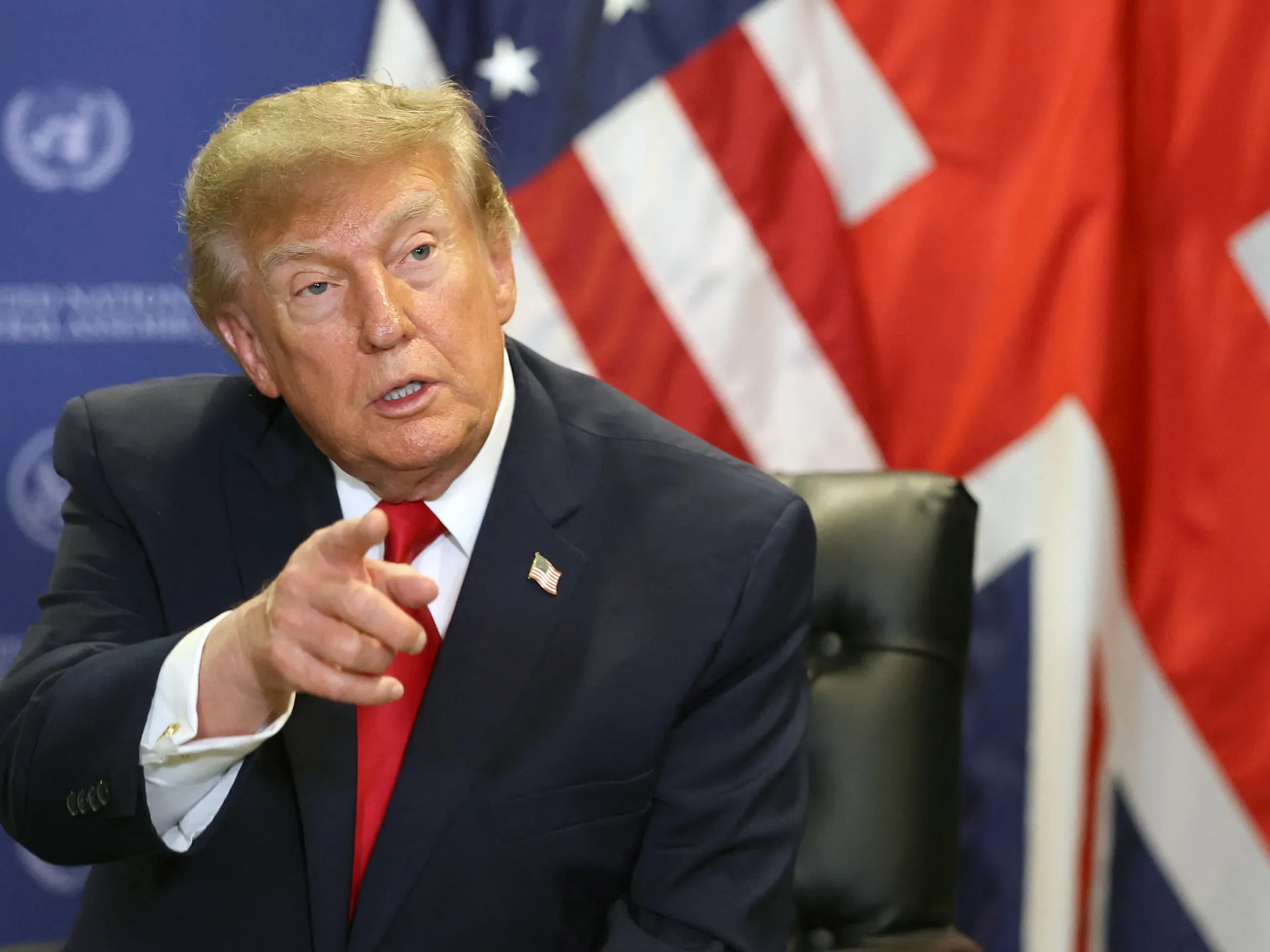
Trump, who is scheduled to visit Beijing next month for talks with Xi, said on Sunday he would hit China’s goods with a 50 percent tariff if it provided military assistance to Tehran.
His comments came the same day CNN reported that US intelligence indicated China was preparing to deliver new air defence systems to Iran within the next few weeks, quoting three people familiar with the assessments.
On Tuesday, Chinese Foreign Ministry spokesman Guo said those reports were “completely fabricated”.
“If the US insists on using this as an excuse to impose additional tariffs on China, China will definitely take resolute countermeasures,” he said.

South Korean stocks rose nearly 3 percent Tuesday to inch toward the 6,000-point mark on hopes for renewed negotiations between Washington and Tehran. The local currency sharply gained against the U.S. dollar.
The benchmark Korea Composite Stock Price Index (KOSPI) added 159.13 points, or 2.74 percent, to close at 5,967.75, after reaching as high as 6,026,52.
The index swerved over and under the 6,000-point mark, marking the first such move since March 3, when the index traded at 6,180.45, the first trading day after the United States and Israel carried out air strikes on Iran on Feb. 28.
Trading volume was moderate at 881.9 billion shares worth 26.7 trillion won (US$18 billion), with gainers beating losers 669 to 197.
Foreigners and institutions scooped up a net 830 billion won and 1.25 trillion won, respectively, while individuals sold a net 2.4 trillion won.
The U.S. military began a blockade of the Strait of Hormuz on Monday after a breakdown of weekend talks in Islamabad, Pakistan, between Washington and Tehran.
However, Donald Trump said Iran wants to reach a deal with the U.S., raising hopes that the two sides could return to negotiations.
“Investors anticipate a second round of peace talks between the U.S. and Iran after Trump’s comments,” said Kang Jin-hyuk, an analyst at Kyobo Securities. “The Wall Street Journal also reported that the two sides have exchanged detailed terms on uranium enrichment, raising further hopes for a deal.”
Tech and financial shares led the rally.
Tech giant Samsung Electronics rose 2.74 percent to 206,500 won and SK hynix jumped 6.06 percent to 1.1 million won ahead of its first-quarter earnings report next week.
Major banking group Hana Financial Group increased 0.67 percent to 120,800 won and Samsung Fire & Marine Insurance added 3.82 percent to 489,500 won.
Top carmaker Hyundai Motor advanced 2.72 percent to 491,500 won and major gamemaker NC climbed 3.97 percent to 248,500 won.
Leading mobile carrier SK Telecom gained 3.24 percent to 95,500 won and retail giant Shinsegae rose 1.02 percent to 346,500 won.
However, defense shares went south as industry leader Hanwha Aerospace fell 0.46 percent to 1.52 million won and LIG D&A, formerly LIG Nex1, declined 0.53 percent to 934,000 won.
The local currency was quoted at 1,481.2 won against the greenback as of 3:30 p.m., up 8.1 won from the previous session.
Bond prices, which move inversely to yields, closed higher. The yield on three-year Treasurys fell 4.3 basis points to 3.339 percent, and the return on the benchmark five-year government bonds dropped 3.5 basis points to 3.519 percent.
Copyright (c) Yonhap News Agency prohibits its content from being redistributed or reprinted without consent, and forbids the content from being learned and used by artificial intelligence systems.

North Korea test-fired strategic cruise missiles and anti-warship missiles from the destroyer Choe Hyon, state media reported Tuesday. The missile test, as seen in this image, took place Sunday from an undisclosed location. Photo by KCNA/EPA
SEOUL, April 14 (UPI) — North Korean leader Kim Jong Un oversaw the test-firing of strategic cruise missiles and anti-ship missiles from a 5,000-ton naval destroyer, state media reported Tuesday, as he called bolstering nuclear deterrence the country’s “most important priority task.”
The North’s Choe Hyon destroyer launched two cruise missiles and three anti-ship missiles at island targets in the Yellow Sea on Sunday, the official Korean Central News Agency said.
The cruise missiles flew for roughly two hours and 12 minutes before striking their targets, KCNA said, while the anti-ship missiles flew for about 33 minutes.
The test was “aimed at checking the launching control line of the warship’s integrated weapon commanding system … as well as confirming the accuracy and the rate of hits of the improved active anti-jamming navigation system,” KCNA reported.
Pyongyang described the cruise missiles as “strategic,” a term it typically uses for systems capable of carrying nuclear warheads.
Kim observed the test-firing alongside senior defense officials and naval officers, KCNA said. Images published by state media showed Kim and the officials watching from an unspecified pier.
KCNA quoted Kim as saying the North’s “most important priority task [is] to steadily and unlimitedly bolster up the powerful and reliable nuclear war deterrent.”
“He clarified the important tasks for further strengthening the strategic and tactical attack capability, a key component of the nuclear war deterrent,” KCNA added.
Kim observed a pair of similar test launches last month, involving cruise missiles only.
Sunday’s expanded test may indicate the destroyer is nearing deployment, an official from South Korea’s Unification Ministry told Yonhap News Agency and other local reporters.
“It appears to be a final check of the weapons system if the test took place before the delivery of the Choe Hyon to the Navy,” the official said.
Pyongyang launched the Choe Hyon, its first 5,000-ton destroyer, last April, as Kim called for strengthening the country’s naval capabilities. Photos released by state media show the ship’s missile and radar systems resembling those found on Russian vessels, prompting speculation that Pyongyang received technical assistance from Moscow.
North Korea has deployed troops, artillery and weapons to support Russia’s war in Ukraine and is believed to be receiving financial support and advanced military technology in return.
A second destroyer, the Kang Kon, suffered an accident during its launch ceremony last year that left it listing on its side before it was repaired and relaunched in June.
KCNA said Kim was also briefed on plans for the weapons systems of two more destroyers currently under construction.
South Korean Rep. Yoo Yong-won of the People Power Party said earlier this month that commercial satellite imagery showed North Korea accelerating construction of a new warship at a shipyard in the western port city of Nampho.
“North Korea appears to be accelerating the modernization of its navy on the back of military technology assistance from Russia,” Yoo said.
Kim Jong Un has ordered a third 5,000-ton destroyer to be completed by Oct. 10, the anniversary of the founding of the ruling Workers’ Party of Korea.
April 14 (UPI) — Federal authorities have charged the 20-year-old Texas man who police arrested after a Molotov cocktail was thrown at the San Francisco home of OpenAI CEO Sam Altman.
The criminal complaint filed Monday in the U.S. District Court for the Northern District of California charges Daniel Moreno-Gama of Spring, Texas, with possession of an unregistered firearm and attempted damage to and destruction of property by means of explosives.
If convicted, Moreno-Gama faces between five and 20 years’ imprisonment for the first count and a maximum of 10 years for the second.
The incident occurred early Friday, when, shortly after 4 a.m., officers of the San Francisco Police Department were dispatched to Altman’s North Beach residence, where a suspect threw an “incendiary destructive device” at the home, causing a fire to an exterior gate before fleeing on foot.
Police arrested the suspect less than an hour later after he allegedly threatened to burn down OpenAI’s headquarters, located nearby in the 1400 block of 3rd Street.
The complaint states the Molotov cocktail was thrown at the residence at 3:37 a.m. Friday, with the incident caught on surveillance cameras.
Stills from the footage included in the complaint show a male holding what appears to be a lit Molotov cocktail in his hand and then, from about 10 feet away, winding up and throwing the flaming item at the barred gate before leaving the scene.
At about 5 a.m. the suspect is seen outside OpenAI’s headquarters using a chair to strike the glass doors, according to the complaint. The filing does not name the company or Altman, though it includes stills from surveillance footage of the suspect, dressed in black, smashing glass doors with a blue outdoor chair.
Security personnel at the facility are cited in the complaint stating Moreno-Gama was at the building “to burn it down and kill anyone inside.”
Police who responded to the scene and arrested Moreno-Gama recovered incendiary devices, a jug of kerosene and a blue lighter, the complaint states.
Officers also confiscated a document that was in the suspect’s possession. The complaint alleges it is a three-part series authored by Moreno-Gama, expressing his opposition to artificial intelligence as well as to the executives of various AI companies, including Altman, who is referenced in the document as “Victim-1.”
“Also if I am going to advocate for others to kill and commit crimes, then I must lead by example and show that I am fully sincere in my message,” reads the first section of the document, which federal authorities allege was written by Moreno-Gama.
The document “further listed the names and addresses of apparent board members and chief executive officers of AI companies and investors,” the complaint states, adding that the second part of the document was titled “Some More Words on the Matter of our impending extinction.
The third section was a letter addressed to “Victim-1.”
“If by some miracle you live, then I would take this as a sign from the divine to redeem yourself…” it states, according to the complaint.
U.S. Attorney Craig Missakian for the Northern District of California said in a statement Monday that his office is only at the start of its investigation, but he will treat the case as “an act of domestic terrorism” if the evidence shows the suspect attempted to change public policy through his actions.
“We will not tolerate any attempt to change the way Americans live and work through fear of violence,” Missakian said.
Altman and his OpenAI company are at the center of public debate over artificial intelligence, and both have become lightning rods for controversy about the future of the technology.
OpenAI and other AI companies have faced criticism and protests from activist organizations that argue the rapid development of AI is reckless and could pose severe risks, including by contributing to human extinction.
Altman identified himself as the victim in a blog post published Friday night. In the post, he called for a de-escalation in the rhetoric surrounding AI.
“A lot of the criticism of our industry comes from sincere concern about the incredibly high stakes of this technology. This is quite valid, and we welcome good-faith criticism and debate,” he said.
“I empathize with anti-technology sentiments and clearly technology isn’t always good for everyone. But overall, I believe technological progress can make the future unbelievably good, for your family and mine.”


Hyundai executive vice chairman Chung Eui-sun delivers a speech during the Hyundai press conference at the 2020 International Consumer Electronics Show in Las Vegas, Nevada, USA, 06 January 2020. File. Photo by ETIENNE LAURENT / EPA
April 13 (Asia Today) — Chung Eui-sun said robotics and artificial intelligence will be central to Hyundai Motor Group’s future growth, as the company plans to invest $26 billion in the United States by 2028.
Hyundai Motor Group aims to expand beyond its traditional automotive business into “physical AI,” integrating robotics and AI into real-world industrial applications.
In an interview with Semafor published Saturday, Chung said robotics and physical AI are key to the group’s evolution beyond mobility, adding that the company is working to develop robots that collaborate with humans.
The chairman reiterated a human-centered AI robotics strategy introduced earlier this year and confirmed plans to deploy humanoid robots in manufacturing by 2028. The company intends to build an annual production capacity of up to 30,000 units by 2030.
The initiative includes the use of humanoid robots developed by Boston Dynamics, which is affiliated with Hyundai Motor Group.
Chung said robotics and AI will play a growing role in improving manufacturing efficiency and product quality as customer demands evolve. He added that integrating innovation into real-world applications will enable collaboration between humans, robots and AI to enhance productivity.
He also underscored the strategic importance of the U.S. market, calling it a key foundation for long-term resilience and sustainable growth.
The group has invested about $20.5 billion in the United States over the past 40 years and plans to increase that figure to $26 billion by 2028, he said. The company is also advancing software-driven manufacturing innovation through its U.S. production operations.
To address global uncertainty, Chung said the company is pursuing a strategy that combines global expansion with localization, citing shifts in regulations, supply chains and customer demand across regions.
He also reaffirmed Hyundai’s commitment to hydrogen energy, saying rising demand driven by AI infrastructure and data centers makes hydrogen a critical alternative energy source.
The company is expanding its hydrogen ecosystem under its HTWO brand, covering production, storage, transportation and utilization.
Chung emphasized that hydrogen and electric vehicles are complementary technologies, adding that offering diverse energy options will be key to competitiveness in the energy transition era.
He cited quality and brand trust as the foundation of the group’s competitiveness, noting that Hyundai, Kia and Genesis sell more than 7 million vehicles annually across more than 200 countries, supported by 16 global production facilities.
— Reported by Asia Today; translated by UPI
© Asia Today. Unauthorized reproduction or redistribution prohibited.
Original Korean report: https://www.asiatoday.co.kr/kn/view.php?key=20260413010003703

The Korean National Police Agency headquarters in Seoul. Photo by Asia Today
April 13 (Asia Today) — South Korean police have referred nearly 2,000 suspects to prosecutors following a nine-month crackdown on corruption involving public officials, illegal kickbacks and safety violations.
The National Investigation Headquarters of the Korean National Police Agency said Monday that 1,997 people were referred for prosecution between July 1 and March 31, including 56 who were detained.
The probe targeted three main areas: corruption by public officials, unfair business practices and safety-related violations.
Among those referred, 548 were public officials, with 17 taken into custody.
Bribery accounted for the largest share, with 322 suspects referred and 31 detained. Authorities also referred 410 suspects in kickback cases, 507 for financial irregularities, 513 for substandard construction and 52 for hiring-related corruption.
Police said the investigation focused on systemic corruption across government offices and industrial sectors and will expand to include locally entrenched corruption networks.
In one case, police referred nine people, including the head of a Seoul branch of a postal workers’ union, on charges of misusing union funds for an election campaign and overseas travel expenses. The union leader was detained.
In another case, three local council members in Gangwon Province were referred for allegedly offering or receiving money and gifts during an internal vote to elect a council chair. One was detained.
Authorities also uncovered corruption in the medical sector. Police in Busan referred 31 individuals, including a doctor and medical device company officials, for allegedly receiving about 165 million won (about $123,000) in exchange for supply contracts. Two were detained.
Police said they will continue investigating 1,699 suspects tied to unresolved cases and have launched a separate crackdown on local corruption since early last month.
An official from the national investigation body said strong enforcement efforts must be accompanied by public reporting to effectively root out corruption.
— Reported by Asia Today; translated by UPI
© Asia Today. Unauthorized reproduction or redistribution prohibited.
Original Korean report: https://www.asiatoday.co.kr/kn/view.php?key=20260413010003875

U.S. President Donald Trump has nominated a former Korean American congresswoman as the United States’ top envoy to South Korea, a presidential nomination document showed Monday.
Trump tapped Michelle Park Steel, a former two-term Republican lawmaker from California, as the U.S. ambassador to South Korea — a post that has been left vacant since former Ambassador Philip Goldberg left South Korea in January last year.
The nomination came as Seoul and Washington face a series of joint tasks, including “modernizing” the bilateral alliance, addressing trade and investment issues, and cooperating on regional and global challenges, including North Korean threats and the Middle East conflict.
If confirmed by the Senate, Steel is expected to help enhance communication between the two allies following more than a yearlong vacancy in the ambassadorial post.
After Goldberg left the post, Joseph Yun, former special representative for North Korea policy, served as acting ambassador, followed by Kevin Kim, former deputy assistant secretary at the State Department’s Bureau of East Asian and Pacific Affairs.
Steel, if confirmed, would become the second Korean American to serve as U.S. ambassador to South Korea, following former Ambassador Sung Kim, who served in Seoul as ambassador from 2011-2014.
Since Trump took office in January last year, Steel has frequently been bandied about as one of the strongest candidates for the ambassador post. She has reportedly gained strong support from former and current Republican grandees, such as House Speaker Mike Johnson.
During Trump’s first term, she served as part of the President’s Advisory Commission on Asian Americans and Pacific Islanders.
She was first elected to the House in 2020 and then reelected in 2022. She lost to her Democratic rival by a small margin in the 2024 general election.
In a social media post ahead of the 2024 vote, Trump gave Steel his “complete and total” endorsement, casting her as one of the “strongest congresswomen” in the country and an “America First Patriot whose family bravely fled Communism.”
During her time in Congress, she was active in pushing for legislation to address the issue of Korean Americans who have been separated from their relatives in North Korea in the wake of the 1950-53 Korean War.
She previously served as a member of the Orange County Board of Supervisors and the California State Board of Equalization.
Her husband is Shawn Steel, an attorney who served as the California Republican Party chairman from 2001 to 2003. He has been the Republican National Committeeman from California since 2008.
Born in Seoul in June 1955, Steel is known to have grown up and studied in South Korea, Japan and the U.S. She speaks fluent Korean.
She earned a bachelor’s degree from Pepperdine University in Malibu, California, and an MBA from the University of Southern California in Los Angeles.
Copyright (c) Yonhap News Agency prohibits its content from being redistributed or reprinted without consent, and forbids the content from being learned and used by artificial intelligence systems.
Police in New York have arrested around 100 anti-war protesters who were staging a sit-in outside the offices of Senators Chuck Schumer and Kirsten Gillibrand, demanding an end to US weapons sales to Israel. The demonstration comes as Senator Bernie Sanders pushes to block more than $600m worth of bombs bound for Israel’s military.
Published On 14 Apr 202614 Apr 2026
Share

South Korea’s medium range surface-to-air missile (SAM) systems named ‘Cheongung’ are seen during the media day for the 69th anniversary of the Armed Forces Day at the 2nd Fleet Parade Ground in Pyeongtaek, South Korea. File. Photo by JEON HEON-KYUN / EPA
April 13 (Asia Today) — Middle Eastern nations are accelerating efforts to secure missile defense systems, with growing demand for South Korean interceptors as regional threats intensify.
Countries including Saudi Arabia, the United Arab Emirates and Qatar are seeking faster deliveries of South Korea’s Cheongung-II system, also known as M-SAM, following recent large-scale missile attacks linked to Iran.
Industry officials said Gulf states have made urgent inquiries to LIG Nex1 and affiliates of Hanwha Group about expediting delivery schedules.
The Cheongung-II system is produced by LIG Nex1 as the prime contractor, with Hanwha Aerospace manufacturing launchers and Hanwha Systems providing radar components.
A report by The Wall Street Journal said Gulf countries are increasingly looking beyond U.S. suppliers and viewing South Korea as a key alternative source of missile defense systems.
The United Arab Emirates signed a contract worth about $3.5 billion in 2022 for multiple Cheongung-II batteries, while Saudi Arabia reached a $3.2 billion deal in 2024, according to the report.
At the same time, Israel is ramping up production of its Arrow missile defense system as interceptor stockpiles are strained by repeated attacks.
According to Israel’s Defense Ministry, Israel Aerospace Industries has begun accelerating production to several times normal levels after facing sustained missile and drone attacks from Iran and Houthi forces in Yemen.
Israeli Defense Minister Israel Katz said strengthening missile defense capabilities is critical to national security, as concerns grow over potential shortages of interceptor missiles.
Analysts warn the situation highlights a broader challenge for countries facing missile threats, including South Korea.
Experts say a large-scale barrage using low-cost missiles or artillery could quickly deplete high-cost interceptors, underscoring the need for larger stockpiles and more cost-effective defense systems.
A senior South Korean defense industry official said the country should expand reserves of key systems such as Cheongung-II and long-range surface-to-air missiles, while maintaining a balance between exports and domestic needs.
There are also growing calls to accelerate development of next-generation systems, including laser-based air defense technologies designed to reduce interception costs.
— Reported by Asia Today; translated by UPI
© Asia Today. Unauthorized reproduction or redistribution prohibited.
Original Korean report: https://www.asiatoday.co.kr/kn/view.php?key=20260413010003773
Iran accuses the US of committing piracy as thousands of Iranians rally in Tehran against the blockade in the Strait of Hormuz.

President Lee Jae Myung (3-L, rear) attends a meeting of top commanders of the Army, Air Force and Navy at the defense ministry in Seoul, South Korea, 27 March 2026. Photo by YONHAP / EPA
April 13 (Asia Today) — South Korea’s Defense Ministry said Monday it is strengthening fuel procurement and management to ensure military readiness as global energy supply uncertainty rises.
Vice Minister of Defense Lee Doo-hee visited an Army corps unit to inspect fuel storage operations and energy conservation measures, urging tighter management of military fuel reserves.
The visit came as concerns grow over global energy disruptions linked to the Middle East conflict, prompting the government to emphasize stable fuel supplies as a key element of military preparedness.
Lee said effective fuel management is essential to maintaining operational capability in both peacetime and wartime, calling on units to ensure they can carry out missions immediately under any circumstances.
He also stressed the need to strengthen safety management and emergency response systems at military fuel storage facilities.
The government recently raised its resource security alert level for crude oil from “caution” to “alert,” reflecting heightened concerns over supply stability.
Lee urged commanders to improve efficiency in unit operations and promote energy-saving practices across military bases to conserve resources.
— Reported by Asia Today; translated by UPI
© Asia Today. Unauthorized reproduction or redistribution prohibited.
Original Korean report: https://www.asiatoday.co.kr/kn/view.php?key=20260413010003913

A man climbs a staircase next to a portrait of Ernesto ‘Che’ Guevara in Havana on Friday). The United States have prevented oil shipments to Cuba for months, except for one Russian tanker, Photo by Ernesto Mastrascusa/EPA
April 13 (UPI) — Cuba’s fuel shortages are disrupting the distribution of humanitarian aid managed by the Catholic Church and international organizations as the island’s basic services continue to deteriorate.
The crisis has particularly affected Caritas Cuba, one of the country’s main social assistance channels, which relies heavily on local transportation networks to deliver food and hygiene supplies to vulnerable communities, according to CiberCuba.
Miami Archbishop Thomas Wenski told USA Today in an interview Sunday that aid shipments are being distributed through improvised means with almost no motorized transport because of gasoline shortages.
Wenski, who has coordinated aid shipments from South Florida for three decades, said Cubans have told him the island is approaching “ground zero” of humanitarian collapse.
Organizations linked to Caritas say more people are turning to soup kitchens for food, underscoring worsening food insecurity among vulnerable populations, digital outlet CubitaNow reported.
Cuba has faced increasingly frequent blackouts, chronic shortages of food and medicine and a transportation system largely paralyzed by fuel scarcity in recent years.
The arrest of Nicolás Maduro by the United States interrupted Venezuelan oil shipments of between 25,000 and 35,000 barrels per day that had supplied most of Cuba’s fuel needs, worsening the energy crisis. Mexico also suspended shipments following sanctions imposed by Trump administration.
According to United Nations reports, about 170 containers of essential goods valued at $6.3 million remain stranded at ports because of the fuel shortage.
Francisco Pichón, the U.N. resident coordinator in Cuba, warned that the country’s humanitarian situation continues to deteriorate as the energy crisis compounds damage caused by Hurricane Melissa.
Despite limited fuel deliveries, including a recent Russian oil shipment, Pichón said “humanitarian needs in the country remain very urgent and persistent.”
He said more than 96,000 surgeries have been postponed, including 11,000 involving children. Another 32,000 pregnant women face heightened risk because of unstable prenatal care access, while 3,000 children are experiencing vaccination delays.
Nearly 500,000 children and teenagers are attending shortened school days.
About 1 million people have been affected by water shortages because they depend on trucked water deliveries.
Pichón noted that Cuba has the oldest population in Latin America, increasing the vulnerability of elderly residents amid the crisis.
The United Nations system and the Office for the Coordination of Humanitarian Affairs have proposed a $94.1 million plan to import fuel specifically for humanitarian use and sustain essential services that include healthcare and water access.

According to official data, the population in Colombia could reach 500 hippos by 2030 if control measures are not implemented. A scientific study cited by the government recommends removing at least 33 animals per year to achieve a significant reduction. File Photo by Daniel Irungu/EPA
April 13 (UPI) — The Government of Colombia said Monday it will cull up to 80 hippos descended from animals illegally introduced by drug trafficker Pablo Escobar in the 1980s as part of a plan to control an invasive population that now exceeds 160 of the animals, environmental authorities reported.
The Minister of Environment and Sustainable Development of Colombia, Irene Vélez Torres, signed a circular establishing guidelines and targets for institutional coordination in the management and control of invasive hippos in the South American country.
“With this circular, we are advancing coordinated actions with regional corporations for the management of hippos in the country. Two key protocols are adopted: translocation and euthanasia,” she said on X.
This decision, whose implementation will begin in the second half of 2026, according to local media such as El Espectador, responds to the uncontrolled growth of these animals in the Magdalena Medio region. There, they have altered local ecosystems, affected water sources and generated risks for nearby communities.
The hippos were originally brought by Colombian drug lord Pablo Escobar to his private estate, Hacienda Nápoles. After he died in 1993, the animals were left without effective state control and began to reproduce in the wild.
They now represent one of the most unusual cases of invasive species in Latin America.
The environment minister said the government evaluated for years alternatives such as sterilization and international relocation, but none have been sufficient to contain population growth.
“This ministry has carried out enormous diplomatic efforts, and at this moment no country wants to take responsibility,” Vélez said in remarks to Blu Radio.
According to official data, the population could reach 500 animals by 2030 if control measures are not implemented. A scientific study cited by the government recommends removing at least 33 animals per year to achieve a significant reduction.
The plan includes two main methods: euthanasia and translocation. Although Colombia keeps open the possibility of sending some animals abroad, authorities acknowledge that euthanasia will be the primary mechanism due to logistical and sanitary limitations.
“We have a euthanasia protocol that seeks to guarantee technical and ethical criteria to carry it out in a safe and responsible manner,” Vélez said.
The procedure includes chemical and physical euthanasia and requires prior confinement of the animals to minimize risks. The cost per hippo can reach up to $14,000, including sedation, the operation and final disposal through on-site burial, according to Blu Radio reports.
One of the main obstacles to international relocation is the genetic deterioration of the hippos.
All current hippos descend from just four individuals, which has caused inbreeding and malformations.
“The gene pool is too limited, and individuals with mutations have already been found,” Vélez said. “There are visible deformities, such as in the snout, and probably other genetic damage.”
In addition to the genetic component, authorities warn that hippos represent a direct threat to native species, such as manatees and turtles, and also affect water quality in rivers and wetlands.
“This is an invasive species that has a direct impact on water and is significantly affecting biodiversity,” the minister said.
The Colombian government allocated approximately $2 million for the implementation of the control protocols. Authorities expect the next administration, which will take office Aug. 7, to continue their execution to prevent the problem from worsening in the coming years.
Brazilian media reports that Alexandre Ramagem fled the country after being convicted for involvement in a coup plot.
Brazilian media have reported that the country’s former intelligence chief, Alexandre Ramagem, has been detained by immigration authorities in the United States, where he had fled after being convicted in connection with a coup plot on behalf of former right-wing President Jair Bolsonaro.
CNN Brazil reported that Ramagem was arrested by US Immigration and Customs Enforcement (ICE) on Monday, citing Brazilian Federal Police and the Ministry of Justice and Public Security. The Brazilian outlet Globo reported that the arrest took place in Florida.
list of 3 itemsend of list
The Brazilian government has sought the extradition of Ramagem, who was sentenced to 16 years in prison for his involvement in efforts to keep Bolsonaro in power after he lost the country’s 2022 election to leftist challenger Luiz Inacio Lula da Silva.
Reports state that Ramagem fled Brazil in September, illegally crossing the border into Guyana before taking a plane to the US.
Globo reported that the Brazilian embassy in Washington, DC filed documentation with the US Department of State seeking his extradition on December 30, 2025.
Paulo Figueiredo, a political ally of Bolsonaro who lives in the US, said the detention was not related to Brazil’s extradition request.
“Ramagem was not arrested, but detained following a police approach in Orlando, initially for a minor traffic infraction and, subsequently, referred to ICE – a common procedure in Florida,” Figueiredo said in a social media post.
He added that Ramagem has a pending asylum application and is optimistic that he will be released “as soon as possible” rather than deported.
Al Jazeera is not able to verify the reason for Ramagem’s arrest by US authorities.
Bolsonaro himself is currently serving a 27-year prison sentence after being convicted in September.
His trial was depicted by Bolsonaro’s allies as a political witch hunt, and sparked the ire of US President Donald Trump, who placed large tariffs on Brazil and called for the trial to be thrown out. Trump later relaxed some of those tariffs following improved relations with President Lula.
US President Donald Trump says Iran wants to make a peace deal “very badly” after talks in Islamabad ended without agreement, insisting any framework hinges on Tehran agreeing never to develop a nuclear weapon.
Published On 13 Apr 202613 Apr 2026
Share
European Commission President Ursula von der Leyen warned that a potential closure of the Strait of Hormuz and ongoing Israeli strikes on Lebanon threaten regional stability after a meeting in Brussels on the fallout from the Iran conflict. Al Jazeera’s Abdullah Elshamy reports on the bloc’s response.
Published On 13 Apr 202613 Apr 2026
Share