From breaking news to significant developments in politics, business, technology, entertainment, and more, we deliver the stories that shape our global landscape.
South Korea’s presidential office criticises Ukraine for denying POW nondisclosure agreement.
Published On 27 Sep 202627 Sep 2026
The South Korean president’s office has expressed “strong regret” over Ukraine’s disregard for a nondisclosure agreement with Seoul in the transfer of two North Korean prisoners of war (POWs) to Seoul, South Korean media reported.
Last week, Ukraine’s President Volodymyr Zelenskyy said in an address to the United Nations General Assembly (UNGA) that his country transferred two North Korean POWs to South Korea.
Recommended Stories
list of 3 itemsend of list
President Lee Jae Myung’s office “expresses strong regret over Ukraine’s unilateral disclosure [of the transfer] and its subsequent false announcement that there had not been a non-disclosure agreement”, the Yonhap news agency quoted Seong Ghi-hong, South Korea’s senior presidential secretary for public relations, as saying in a statement on Sunday.
The office said the nondisclosure agreement aimed to safeguard the soldiers from dangers they could face if their transfer were to be disclosed, in accordance with international law and humanitarian principles.
According to Yonhap, a South Korean media outlet, the Ukrainian presidential office said it had disclosed the transfer of the POWs without extensive details on the process, claiming that it would have been strange to keep the entire transfer a secret. Ukrainian media outlets reported a Ukrainian presidential source as denying the existence of a confidentiality agreement with Seoul, Yonhap said.
The South Korean presidential office said the Ukrainian presidential office’s “false” denial of the confidentiality agreement “seriously hampers” bilateral trust and causes serious disruptions to bilateral friendship.
Seong Ghi-hong said the government was considering additional measures over the issue, if necessary, Yonhap added.
North Korean POWS
Ukrainian forces captured the two North Korean soldiers in Russia’s Kursk region in January 2025.
Mounting evidence, including from intelligence reports and testimonies of defectors, has indicated that North Korean soldiers resorted to self-detonation or other forms of suicide rather than be captured.
In his UN address, Zelenskyy said, “These guys are not easy to capture alive.” He added, “One of them, when he realised he was going to be taken prisoner, tried to kill himself. And he was shocked that fate did not let him die.”
South Korean media reported that the two captured soldiers had expressed their desire to defect to South Korea.
The issue of North Korean prisoners of war was a key topic during the NATO summit in Ankara, Turkiye, where Lee met Zelenskyy in July.
Senior presidential spokesperson Kang Yu-jung stated afterwards that both leaders agreed to resolve the status of North Korean POWs in accordance with international law. This built on a prior agreement reached during the South Korea-Ukraine foreign ministers’ meeting in March, where both nations pledged to cooperate on the POW issue.
According to South Korean intelligence, North Korea is estimated to have deployed approximately 14,000-15,000 soldiers to support Russia’s efforts in its war with Ukraine since 2024, primarily in the Kursk border region. South Korean, Ukrainian and Western officials said they suffered heavy casualties, with more than 6,000 North Korean soldiers killed in the fighting.
The transfer comes as South Korea has backed efforts to revive dialogue with North Korea, while United States President Donald Trump has renewed his willingness to engage with Pyongyang.
As part of previous negotiations aimed at ending its war on Iran, the United States offered to sell Tehran uranium for use in a civilian programme, but Iran refused, a top US official said on Sunday.
“Heck, our negotiators even offered to sell them uranium,” US Ambassador to the United Nations Mike Waltz said on NBC’s Meet the Press. He said the agreement would have been akin to that with the United Arab Emirates, which has “a peaceful programme, right there in their neighbourhood, and they abide by international law and inspection regimes”.
Recommended Stories
list of 3 itemsend of list
Waltz said the administration of US President Donald Trump was open to allowing Iran to keep a civilian nuclear programme, provided it agreed to its obligations in accordance with international law and the Nuclear Non-Proliferation Treaty (NPT).
There were “a number of ways” President Trump was open to dealing with Iran to ensure it did not have access to highly enriched uranium, or the ability to reconstitute highly enriched uranium, including by having Tehran “hand over” any such material it currently has, Waltz said.
The UAE, a signatory to the NPT, generates electricity from a nuclear power plant and signed an agreement with the US in 2009. Under those agreements, the UAE has agreed not to produce enriched uranium domestically, and not to reprocess spent fuel on its own. Trump said Saudi Arabia and the US reached an agreement on civilian nuclear use this year, but details have not yet been made public, and the US president has also claimed the deal is contingent on Riyadh agreeing to the controversial Abraham Accords. Around the region, Egypt and Turkiye also operate civilian nuclear programmes.
Pakistan openly operates a nuclear arsenal, while experts have long believed Israel secretly possesses one of its own. Neither country is a signatory to the NPT.
A key point of contention between Iran and the US has been what should be done with the uranium that Tehran currently has, and how, or even if, to ensure any future supply of the material is not capable of being used for producing a nuclear weapon. Iran has insisted it has no plans to create a nuclear weapon, and any uranium it possesses and enriches is only for civilian purposes, including for generating electricity and use in medical treatments and scientific research.
Iran is estimated to have more than 440kg (970lb) of uranium enriched at 60 percent purity. Uranium enriched to around 90 percent purity is suitable for a nuclear weapon. Enriching uranium is a complex process that involves isolating the most radioactive isotope in a quantity of uranium. Under the 2015 Joint Comprehensive Plan of Action (JCPOA), Iran agreed to cap its uranium enrichment at 3.67 percent under strict international supervision in exchange for lifting sanctions against its economy. Trump scrapped that deal in 2018, saying it was too generous to Iran.
On September 10, the International Atomic Energy Agency (IAEA) said it was concerned over Iran’s “continued noncompliance” with the Nuclear Non-Proliferation Treaty, of which it is a signatory. Under the treaty, Iran agrees not to produce nuclear weapons and to meet IAEA safeguards to control its supply of uranium used for civilian purposes. The agency has not had access to key Iranian nuclear facilities since June 2025, when Israel and the US attacked sites in the country as part of a 12-day war.
Iranian officials have responded to the IAEA by saying the finding was made “under political pressure from the US and its allies”, and that they have not stopped respecting their treaty obligations, but could not allow inspections until facilities were safe from US and Israeli attacks.
At times, Trump has said he will destroy the enriched uranium Iran has or retrieve it by force. In April, the US president claimed to have convinced Iran to turn over the enriched uranium it had, which he referred to as “nuclear dust”. Iranian officials quickly dismissed those claims, saying enriched uranium would not be transferred outside the country under any circumstances.
On Saturday, Trump rejected a plan submitted by Iran to reopen the Strait of Hormuz within seven days, as Tehran continued to insist that only diplomacy can solve the conflict between the two countries. Speaking to reporters at the White House, Trump said on Saturday that Iran wants to make a deal to open the vital maritime corridor immediately only “because they are losing so badly”.
In an interview on Meet the Press on Sunday, Iran’s foreign minister, Abbas Araghchi, said that Iran is prepared for war to resume, “even if it comes to a doomsday war”.
He added, “If you ask us, there is no reason why we should go back to diplomacy. But I’m still trying diplomacy, because I think we shouldn’t miss any chance for peace.”
Hundreds of Muslims have gathered in the Indian city of Ujjain to protest the partial demolition of a mosque they say is more than 600 years old. The BJP-led state government says the action is needed to widen roads ahead of the 2028 Hindu pilgrimage, which is expected to draw large crowds.
Amid the worsening global energy crisis triggered by the US-Israel war on Iran, European countries, desperate for alternative energy supplies, trade routes and partnerships, have looked across the Mediterranean for solutions.
As a result, governments across North Africa have started to reassess their strategic value. Algeria is in an especially strong position as an established gas supplier, while Egypt can offer infrastructure, refining capacity and access through the Suez Canal.
Libya has also seen its strategic value increase. It has around 48 billion barrels of proven oil reserves, the largest in Africa, and produces 1.5 million barrels of oil per day. It also has substantial natural gas reserves.
Its oil reaches international markets through the Mediterranean, while the Greenstream gas pipeline connects its Mellitah complex directly to Europe.
Libya cannot replace the Gulf in terms of oil and gas exports, but it can become a major player in diversification efforts not just in Europe but elsewhere in the world. The challenge the country faces is how to take full advantage amid structural constraints and insecurity.
Energy insecurity at home
Libya is simultaneously a major energy exporter and an energy-insecure state. Although the country possesses vast oil and gas resources, Libyans experience regular electricity blackouts due to an inefficient domestic energy system.
More than 70 percent of Libyan gas production is consumed domestically, mostly for electricity generation. Production has struggled to meet both domestic needs and export commitments. Gas exports consequently fell year on year from around 200 billion cubic feet in 2019 to 35 billion in 2025, the lowest export levels in 22 years.
At the same time, the country is flaring at least 200 billion cubic feet of gas annually due to underdeveloped infrastructure. Gas that could generate electricity, support industry or increase exports is instead being wasted.
The International Monetary Fund has estimated Libya’s total energy subsidy burden at around $17bn, equivalent to roughly 35 percent of GDP – one of the largest in the world.
Much of these funds go into subsidising imported refined fuels, as domestic refining capacity is largely underdeveloped and cannot meet demand.
The domestic energy situation is compounded by political fragmentation, institutional disputes and periodic disruptions to production due to conflict.
Increasing exports without addressing these problems risks improving energy security abroad while neglecting it at home, and that is a recipe for more instability in an already fragile nation.
Opportunity or trap?
The global energy crisis triggered by the Iran war is surely a major opportunity for Libya to increase its revenues from hydrocarbons. But it also carries a risk.
As I pointed out during the 5th meeting of the Mediterranean Energy Experts Circle earlier this month, greater demand for Libyan oil and gas could reinforce the economic model the country has struggled to escape from for decades: producing hydrocarbons, exporting them, distributing the revenues and postponing structural reform.
This model does not allow Libya to capture the full economic potential of its resource wealth. It keeps the Libyan state stuck in the all too familiar “resource curse”, which promotes economic stagnation and inefficiency.
That is why when taking advantage of heightened demand for energy, it is crucial that Libya uses the proceeds to transform its energy system.
That means capturing flared gas, modernising electricity generation and transmission, expanding domestic refining where economically viable, reforming subsidies, investing seriously in renewable energy and participating in sustainable regional energy cooperation.
Libya’s National Sustainable Energy Strategy aims to have 22 percent of electricity generation from renewable sources by 2035, an ambitious target that requires major positive shifts in security and governance conditions. Increased revenue flows can help jump-start the process.
Another important consideration is how the country should approach heightened foreign interest. Libya’s first major oil and gas licensing round since 2007 was concluded in February, with the US’s Chevron, Italy’s Eni, QatarEnergy, Spain’s Repsol, Hungary’s MOL, Nigeria’s Aiteo, and Türkiye’s TPAO securing new licences.
Commercial and geopolitical interests are rarely completely separate in energy. For Libya, this creates bargaining power—if managed coherently by the Libyans. Rather than becoming an arena in which external actors compete for individual assets and relationships, Libya could use diversified partnerships to attract investment and technology while reducing dependence on any single partner.
From energy exporter to Mediterranean energy hub
The transformation Libya seeks should not be confined to its borders. Its strategic objective should be to become an integral player in a Mediterranean energy hub by expanding cooperation with neighbouring states and leveraging existing production capacities and infrastructure.
To Libya’s east, Egypt has a large electricity system and significant refining and processing capacity. To its west, Tunisia provides access towards the wider Maghreb and increasingly towards European markets. Libya sits between them with enormous hydrocarbon resources, considerable solar potential and existing energy connections with both neighbours.
Important steps have already been taken to deepen regional energy integration. In January, Egypt and Libya signed an energy cooperation agreement covering exploration and the development of crude-oil refining. The two countries are also discussing the construction of an 800km pipeline connecting Tobruk to Alexandria. The project is worth $1bn and would carry Libyan crude directly to Egyptian refineries.
Libya and Tunisia are also expanding cooperation. Earlier this month, the Libyan-Tunisian company Joint Oil opened an international licensing round covering around 3,000 square kilometres of shared offshore acreage and development of the cross-border Zarat oil and gas discovery. Formal awards are expected by the end of April 2027.
The risk here is that expanded cooperation could develop into dependence. How to avoid that is the lesson Libya can learn from the Strait of Hormuz crisis. The country still needs sufficient domestic electricity, refining and production capacity to protect itself. Regional integration should add alternatives rather than create new vulnerabilities: more markets, more electricity connections, more processing options and more export routes.
The objective should therefore be specialisation, connectivity and redundancy all achieved in the right sequence depending on needs and conditions.
A moment for strategic redesign
The Iran war has given Libya something potentially more valuable than temporarily higher hydrocarbon prices: renewed strategic relevance. But greater strategic relevance does not automatically make the country a more reliable energy partner.
Converting the former into the latter requires a radically different approach not just to the domestic oil and gas industry, but also to overall economic development and regional geopolitics.
Libya must use this moment to pursue strategic redesign: to increase production while recovering wasted gas, improve electricity infrastructure, develop refining and renewables, strengthen regional connections and cooperation, and use competition among international partners to attract investment.
Libya already has the resources and the geography to become an even bigger player in the energy market. The question is whether it can build the rest.
The views expressed in this article are the author’s own and do not necessarily reflect Al Jazeera’s editorial stance.
The Dosa King built an empire. After a woman rejects him, her husband is found dead – and the pursuit of justice begins.
The Dosa King built a restaurant empire worth millions. But when a young woman rejects him, he threatens her marriage. Soon after, her husband is found dead. For nearly two decades, he fights to escape justice. Can his wealth and power protect him? Find out in Season 2 of True Crime Reports, an Al Jazeera Originals Production.
The illustrations in this video were created by artists aided by AI-powered software.
In this episode:
Episode credits:
True Crime Reports is an Al Jazeera Originals Production. Our host is Halla Mohieddeen. This episode was written by Ryan Gaffney. The Head of Podcasts is Jo de Frias. The EP of Podcasts is Alexandra Locke. Our Executive Producer is Ney Alvarez. Our Senior Producer is Fahrinisa Campana, Leo Danczak is our producer and Catherine Nouhan is our Assistant Producer. The Production Coordinator is Ashley McCarry. Fact-checking by Catherine Nouhan, Zaina Badr and Chiara Brambilla. The Senior Script Editor is Dan Hawaleshka. Our Post-Production Supervisor is Nacho Corbella. Our Video Editor is Nacho Corbella. Osama Alsaadi is our AI Animator. Alan Leer is the Supervising Sound Editor. The Sound Designer is Lizzy Andrews. Music composition by Tom Biddle. Adam Abou-Gad is our Engagement Producer.
Donald Trump has rejected Iran’s latest proposal to end the war and reopen the Strait of Hormuz as experts say the United States president believes Washington has more to gain by waiting than by accepting Tehran’s terms at this moment.
“I reject their proposal,” Trump told reporters on Saturday, arguing that Iran wants an agreement because it is “losing so badly”.
Recommended Stories
list of 3 itemsend of list
“They want to make a deal, and I think that’s fine,” Trump said. “I’d like to make a deal too. But that deal would not be acceptable.”
On Sunday, Iranian Foreign Minister Abbas Araghchi said Tehran had seen the initial reaction from Trump to its proposal but had yet to receive a response through mediators. In the latest diplomatic efforts, Qatar has played a role in mediating talks between Iran and the US on the sidelines of the United Nations General Assembly meeting in New York.
Iran’s seven-day proposal included Washington lifting its naval blockade of Iranian ports, waiving sanctions on Iranian oil sales, releasing an estimated $12bn in frozen Iranian assets and observing a wider regional ceasefire, including in Lebanon and Yemen.
Iran would then reopen the Strait of Hormuz and begin negotiations with Washington on a final agreement.
The latest proposals are similar to the June memorandum of understanding (MoU) the two countries signed. But the MoU collapsed last month due to differences on the terms of the deal, which resulted in an escalation in attacks, particularly in and around the Strait of Hormuz, which essentially remains under Iranian blockade.
According to experts, Trump’s rejection suggested that while both sides continue to publicly leave the door open for diplomacy, they remain far apart over who should make the first concessions.
“Trump’s calculation looks fairly straightforward. He believes the combination of the naval blockade and economic isolation is finally squeezing Iran hard enough that Tehran’s latest proposal is evidence of weakness rather than an offer Washington needs to seize,” Andreas Krieg, associate professor at King’s College London, told Al Jazeera.
His public argument that Iran is “losing badly” is important because it suggests he thinks time is improving the US bargaining position, Krieg said.
(Al Jazeera)
Why does Trump think he can wait?
A key part of Trump’s calculation appears to be a belief that the economic pressure on Iran has not yet run its course.
The Trump administration has escalated economic pressure on Tehran, tightening its naval blockade while imposing sanctions targeting Iranian oil revenues and threatening secondary sanctions against countries doing business with Tehran.
Last week, the US imposed aviation sanctions on Iran, disrupting flights. This came weeks after US Treasury Secretary Scott Bessent announced an economic pressure campaign against Iran, promising to target Tehran’s financial interests across the world.
Richard Weitz, a senior nonresident associate fellow at the NATO Defence College, told Al Jazeera that the White House may believe it can “wait a bit and get better terms”.
There is also concern in Washington about Iran’s proposed sequencing, he said.
Therefore, Weitz said Washington may be calculating that “economic pressure over time will induce the Iranian government to make more concessions”.
“This is what occurred arguably a decade ago, leading to the 2015 Iran nuclear deal as the Iranian government decided it [the US] needed to end the economic sanctions in return for making concessions on its nuclear programme,” he added.
It is, therefore, possible that “we could see the same kind of trade-off in the coming months”.
Iran could make Trump ‘pay’
However, waiting for a deal also carries considerable political risk for the US president, experts said, because his Republican Party could lose November’s midterm elections.
A late August Reuters/Ipsos poll suggested 63 percent of Americans opposed the US-Israel war on Iran while 31 percent supported it. Rising fuel and transportation costs could also feed into broader cost-of-living concerns before the elections.
The problem for Trump is that time does not only increase pressure on Iran, Krieg said. “The gamble is that time cuts both ways,” he noted.
With the midterms approaching, Trump does not want to appear to lift the blockade, waive oil sanctions and release Iranian assets simply to regain access to a waterway that Iran itself disrupted, Krieg said.
“But every additional week also means elevated energy prices, continued military exposure and mounting pressure on Gulf partners.”
The essential closure of the Strait of Hormuz has disrupted oil and gas flows from the Gulf nations, which depend on energy exports to finance their budgets.
Mohamad Elmasry, a professor at the Doha Institute for Graduate Studies, told Al Jazeera that Iran’s proposal could be viewed as “kind of throwing a bone to Trump” by offering a potential route towards lower oil and gas prices before the vote.
However, Iran may decide “to make Trump pay for declining the proposal and the increased economic pressure the country is under”, he told Al Jazeera.
“They may decide that this is the time to escalate … just as the midterms are approaching.”
The Republican Party is not doing well in the polls, and a number of its candidates are “distancing themselves” from Trump, he noted. Polls indicated that Republicans could lose their slim majorities in the US Congress.
It’s not just the Iranians under severe economic pressure because of the US naval blockade and ongoing sanctions, “it’s also the Trump administration,” Elmasry said.
Trump’s wait for more Iranian concessions could ‘backfire’
Trump “wants Tehran to reopen Hormuz without Washington paying the full economic and political price Iran is currently demanding”, Krieg said.
“The danger is that he is confusing Iranian pain with Iranian willingness to capitulate. Those are not the same thing.”
Iran is undoubtedly under pressure. Krieg said the sanctions and blockade are “biting”, which is precisely why Tehran needs an agreement.
But additional pressure does not necessarily produce additional concessions.
Iran could instead increase the costs of the conflict for its adversaries, Krieg said, including through the Strait of Hormuz, regional infrastructure and potentially Bab al-Mandeb, another strait between Yemen and the Horn of Africa.
In recent weeks, the strategic weight of Bab al-Mandeb has increased dramatically after the Iran-aligned Houthis expanded their control of Yemen’s Red Sea coastline.
This advance in effect has handed the Houthis unrestricted access to the narrow waterway, a worrying development for global shipping given the group’s track record of targeting vessels, including Israeli-linked ships, in solidarity with Palestinians in Gaza.
The Houthis have already declared a naval blockade on Saudi ships in the Red Sea, which Riyadh began to use as an alternative shipping route to Hormuz for its oil exports.
“So this can backfire,” Krieg warned. “Trump thinks Iran’s clock is running faster than America’s. Tehran thinks the opposite: that Qatar, Saudi Arabia, the UAE, global energy markets and ultimately Trump himself have a lower tolerance for prolonged disruption than Iran has for economic punishment.”
Ross Harrison, a senior fellow at the Middle East Institute, similarly told Al Jazeera that Tehran may now be “less worried about overplaying their hand than they are underplaying their hand”.
According to Harrison, Tehran now sees the risk of escalation as less costly than agreeing to something prematurely or appearing willing to compromise, particularly after Washington’s response to the proposal.
In an interview with Al Jazeera that aired on Saturday, Iranian President Masoud Pezeshkian said his country no longer trusts negotiations with Washington after attacks occurred during previous rounds of talks and were followed by sanctions.
“We have no trust in the American side and do not know on what basis an understanding can be reached with it,” Pezeshkian said.
Tehran betting ‘heavily’ on time
US-based analyst Harrison noted that Tehran was probably “not surprised at all” by Trump’s rejection and viewed the offer partly as a way to demonstrate to Iranians and the American public that it remained willing to negotiate.
Experts said Tehran understands the US president wants an exit he can present as a victory.
“Iran is betting heavily on time. … Its strategy is to keep the pressure high enough that he eventually comes back to negotiations while making that exit progressively more expensive,” Krieg said.
“The Iranian calculation is essentially: Do not give Trump the deal cheaply when he may need it more badly several weeks or months from now.”
Harrison said the Iranian offer was a “show of goodwill” intended to demonstrate Iran’s willingness to negotiate to both its domestic audience and the American public.
According to Krieg, “protraction” of the conflict was the “most likely outcome”.
“Both sides need a deal, but both currently think waiting will improve the deal they eventually get,” he added.
Rival political rallies have been held in Brazil as campaigns intensify with one week to go until election day. Brazilians head to the polls on Oct 4 to choose between current president Lula da Silva or Senator Flavio Bolsonaro, the son of former far-right President Jair Bolsonaro.
The United States-led Board of Peace (BoP) has said the United Nations agency for Palestinian refugees (UNRWA) will have no role in Gaza – echoing a longstanding Israeli demand to sideline the organisation considered a lifeline for millions of Palestinians.
The board, which has been tasked with overseeing the “ceasefire” and Gaza’s reconstruction, said on Friday it would work only with partners it deems reliable and who it believes can meet the needs of Gaza’s population – a standard it says UNRWA does not meet.
Recommended Stories
list of 3 itemsend of list
The move comes as the BoP unveiled a multibillion-dollar plan on Wednesday aimed at beginning Gaza’s reconstruction, nearly a year after a so-called “ceasefire” came into effect in the devastated Palestinian territory.
The plan, presented on the sidelines of the UN General Assembly (UNGA), comes as key elements of the “ceasefire” remain stalled, including the withdrawal of Israeli forces and the disarmament of Hamas.
UNRWA was established in 1949 to cater to tens of thousands of Palestinians displaced from their homes by Jewish militias from areas that currently form part of Israel.
BoP’s stance on UNRWA comes as Israel’s genocide in the coastal enclave continues, with Palestinians facing nonstop attacks, severe restrictions on humanitarian aid and stalled reconstruction plans.
So what has BoP said about UNRWA, and does it keep toeing the Israeli line on the future of Gaza?
What did the Board of Peace say?
The BoP unveiled a 66-project reconstruction blueprint on the sidelines of the UNGA, with $2.4bn proposed for projects aimed at beginning Gaza’s recovery.
UNRWA was left off the list of UN agencies the board identified as partners.
“The Board of Peace’s policy as it relates to UNRWA’s involvement in Gaza is unchanged,” the BoP said in a post on X on Friday.
“We will only work with trusted partners who will deliver for the people of Gaza and contribute to a deradicalised Strip. UNRWA fails on those litmus tests.”
However, a BoP official, speaking to The Associated Press news agency on condition of anonymity, confirmed that board members had met UNRWA officials several times.
The official said the agency’s programmes could continue if they served Gaza’s residents well, but maintained that “UNRWA’s days are over”.
The BoP, which US President Donald Trump launched earlier this year, was conceived to oversee the rebuilding of Gaza after nearly three years of Israel’s genocidal war on the Strip.
What has UNRWA said?
In an indirect response, UNRWA acting Commissioner-General Christian Saunders said on Friday in Gaza, “UNRWA remains an institution of considerable humanitarian and strategic value, with capabilities and expertise that are difficult to replicate today.”
“To disregard these capabilities at a moment of such profound need is neither logical nor responsible,” Saunders said in a statement.
Former UNRWA chief Philippe Lazzarini on Thursday warned that removing the agency would have a “devastating” effect on Palestinians.
“They want to get rid of the agency, but on the other hand they know that if you get completely rid of the agency today, it might have a further … devastating impact on the population,” Lazzarini told AP on Friday.
In a separate statement on X, Lazzarini said, “grandiose plans are what the Board of Peace does best”, noting widespread suffering across Gaza amid Israel’s ongoing genocide.
The agency has about 11,000 Palestinian employees in Gaza and remains heavily involved in healthcare, education, water and sanitation services. Its exclusion is particularly significant given the scale of displacement and the continuing restrictions on aid entering Gaza.
UNRWA has for decades provided aid and education services to Palestinians in Gaza, occupied East Jerusalem and the West Bank as well as Jordan, Syria and Lebanon – the neighbouring countries where the Palestinian refugees have been living.
Palestinians see the agency as safeguarding their right of return to their homeland, while Israel wants it dismantled.
Palestinians receive aid distributed by UNRWA, in Nusairat refugee camp, Gaza [File: Abdel Kareem Hana/AP photo]
What has been Hamas’ response?
Hamas accused the BoP of adopting Israel’s position.
Spokesperson Hazem Qassem on Saturday called the decision to exclude UNRWA “a complete alignment with the Zionist [Israeli] position”, saying it was aimed at ending the agency’s operations, preventing it from delivering aid and undermining Palestinian refugees’ right of return.
Qassem said it was “strange for the peace council to adopt this hostile stance towards UNRWA while simultaneously failing to provide aid to Gaza or compel the occupation to abide by the ceasefire agreement and halt the daily killings of Palestinians in the Strip”.
Does the Board of Peace toe the Israeli line?
Experts say the workings and demands of the BoP align closely with Israel’s vision of the Gaza Strip and the Palestinians.
UNRWA
Israel has for years sought to remove UNRWA from Gaza, accusing the agency of being infiltrated by Hamas.
The International Court of Justice, in an advisory opinion in October, said allegations that “a significant part of UNRWA’s employees are ‘members of Hamas … or other terrorist factions’” had not been substantiated.
The BoP’s position strengthens the Israeli efforts to dismantle the UN agency.
Hamas disarmament
Hamas and other Palestinian factions agreed in July to a roadmap under which weapons would be surrendered in stages as Israeli forces gradually withdrew. The two processes were explicitly linked.
But following an August meeting between Nickolay Mladenov, the BoP’s director-general, and Israeli Prime Minister Benjamin Netanyahu, the board said Israeli forces would not withdraw beyond the “Yellow Line” until Hamas’s decommissioning was complete, including “light weapons, heavy weapons, and the tunnels alike”.
Hamas maintains that it will not implement its obligations unless Israel fulfils its own.
Israel currently occupies more than 60 percent of Gaza while most of the territory’s 2.3 million people remain displaced.
Reconstruction
Article 17 of the BoP plan calls for “temporary reconstruction” beginning in areas designated free of Hamas control, including humanitarian compounds for unarmed civilians.
The proposed system would direct reconstruction, aid and shelter towards areas outside Hamas’s control while Israeli forces remain behind the so-called “Yellow Line”.
However, Israel has refused to allow the Palestinian technocratic committee into Gaza, open crossings or begin reconstruction until Hamas is completely disarmed.
After unveiling the reconstruction plan on the sidelines of the UNGA, BoP high representative Mladenov said once again the proposed plan depends on Hamas’s disarmament.
Displaced Palestinians live in a school run by UNRWA on Monday, June 23, 2025. Hundreds of UNRWA schools were destroyed or damaged in Israeli attacks [File: Jehad Alshrafi/AP Photo]
What is the situation in Gaza?
Almost a year after the October 2025 ceasefire, reconstruction has yet to begin on any meaningful scale and Israeli forces continue to occupy large parts of the Strip.
At least 1,451 Palestinians have been killed and 4,953 wounded in Israeli attacks since the “ceasefire” began in October 2025, according to Gaza’s Ministry of Health.
The healthcare system is on the verge of “total collapse”, the ministry said last week, while shortages of fuel, medical supplies and spare parts have disrupted hospitals, water and sanitation services.
The scale of destruction is also immense. More than half of Gaza’s hospitals and clinics remain nonfunctional, less than 1.5 percent of cropland is accessible and undamaged, and reconstruction needs have reached an estimated $71.5bn.
Nearly 84 percent of Gaza’s population – more than 1.76 million people – are living in displacement sites or damaged and inadequate shelters, the UN has said.
Palestinian children gather in the backyard of an UNRWA school in Sidon, Lebanon, on September 12, 2023 [File: Mohammed Zaatari/AP Photo]
Tulkarem, occupied West Bank – Hakim Mar’i spends his days lying on a single bed, his disfigured leg raised. The windows of Mar’i’s dilapidated apartment, his latest temporary shelter, are covered with old blankets. Unable to work, Mar’i has no money for electricity, so the blankets have to do. At night, his family lives in near darkness.
The apartment is just around the corner from mounds of rubble and gnarled iron structures that mark one entrance to the now-emptied Tulkarem refugee camp. For Mar’i and other Palestinians, the camp was a home once considered temporary. But now, even the physical structure – their home – that tied those generations together is gone.
Recommended Stories
list of 4 itemsend of list
The apartment is just around the corner from mounds of rubble and gnarled iron structures that mark one entrance to the now-emptied Tulkarem refugee camp. For Mar’i and other Palestinians, the camp was a home once considered temporary. But generations lived there, and now, the physical structure – their home – that tied his family together over the years is gone.
Impoverished, Hakim’s family is in disarray. With its debts mounting and its members facing another eviction, he said he has considered taking his life several times over the past year and a half.
Mar’i cannot afford treatment for his debilitating leg injury, which has developed severe infections. He said he sustained it while working as a labourer inside Israel in 2019. The wound worsened after Israeli soldiers severely beat him when they forced his family from the Tulkarem camp. Diabetes and other untreated conditions have piled on, but he is unable to pay for the needed medical care.
“This joint here is completely gone,” he said, gesturing at the swollen, blackened lower leg that prevents him from working.
“The medicine – by God, the medicine, I haven’t been able to get. My wife and kids tell me: get out travel. Go to America, Turkey – so I can the medical treatment I need… I’m a sick man.”
His mother, Salwa, sat beside him, less than a kilometre (0.6 miles) from their former four-storey home. She wept when asked about the family home that was built floor by floor after they were first displaced in 1948 from al-Khudayra, the Arabic name for Hadera, a city in Israel. “We really put a lot into that house,” she said.
After their removal, the Israeli military razed the Mar’i home so a road traversing the now-emptied camp could be built. “Seeing it destroyed was really painful for us – all of us,” she said.
It has been more than 20 months since Israeli forces emptied the Jenin, Tulkarem and Nur Shams refugee camps in a sweeping military operation in the northern West Bank, displacing tens of thousands of Palestinians whose families had already been refugees for three generations. Constantly renewed orders for a closed military zone now prevent their return.
Since January 2025, Hakim’s family has been forced to move four times. First, they fled to a converted youth centre before landing in a cramped apartment with their four children, all under 15.
Unable to pay rent, the family could see the landlord’s generosity run its course as this once-temporary housing arrangement now has no end in sight. Hakim owes money at the local shops for food he bought on credit. Some nights, the children eat at neighbours’ houses.
“I have children. I have food. I have drink,” he said. “My hands are empty. Nobody is with me. Nobody is standing beside me.”
Hakim Mar’i in his family’s apartment with his injured leg, which prevents him from working [Al Jazeera]
‘We’re already at the brink’
The Mar’i family is among more than 33,000 Palestinians forcibly removed from the Jenin, Nur Shams and Tulkarem camps by Israeli forces in early 2025. This is the largest single episode of forced displacement in the West Bank since Israel’s occupation began in 1967, according to the United Nations agency for Palestinian refugees (UNRWA).
UN satellite imagery shows that 20 percent of all buildings across the three camps have been destroyed and another 28 percent are damaged.
“The level of destruction we are seeing is severe and unprecedented,” said Roland Friedrich, director of West Bank affairs for the UN agency for Palestinian refugees, UNRWA.
According to Friedrich, 85 percent of those displaced have no regular income after many lost jobs when the camps were emptied. More than 80 percent of residents are renting, an unfamiliar expense for families who never paid for housing or utilities inside the camps.
The closed military zone covering the camps is renewed every two months, Friedrich said, with no indication of when – or whether – residents will be allowed to return. “What we saw there is forced displacement,” Friedrich said. “The UN’s position is very clear: People have to be allowed to return. The camps must be rebuilt.”
Unlike after the 2000-2005 second Intifada when the Jenin camp was rebuilt, displaced families and UNRWA staff fear there is no return plan this time.
The Israeli military stated the camps were emptied for “operational security” in its effort to root out fighters from the camps. Friedrich worried the aim of the military operations is to “change the geographical expression of the Palestinian refugee issue”.
Now more than 20 months into what was meant to be an emergency response, funding shortages have left UNRWA unable to cover the vast needs of the displaced population. It has moved some operations to keep schools and basic health clinics functioning. With funds dwindling, the agency has shifted to a “targeted approach”, leaving thousands without support.
Friedrich pointed to a rise in gender-based violence linked to the economic strain on families and to growing depression and anxiety among displaced children observed by UNRWA’s psychosocial teams. “We’re already at the brink now,” he declared.
Members of the Zbeidat family sit on couches outside. The room they stay in is on the left [Al Jazeera]
‘Everyone went their own way’
While Hakim’s displacement plays out in the shadow of the camp, the family of Khadija Zbeidat face their own imminent eviction on the outskirts of Tulkarem. They live in the neighbourhood of Dhinnaba, where sparse houses are interspersed with greenhouses. They are unable to afford a residence closer to the city centre.
As Khadija sat on a couch in the middle of the yard, her many children and grandchildren ran past a small patch of plants she has planted – one of her few remaining joys. “I love plants,” she said. “We had many flowers in our home in the camp. Having the plants here is all I have to feel like myself,” she told Al Jazeera.
Khadija, a widow, shares a tiny spartan room with nine family members, nearly all children, along with a small bathroom and a kitchen barely big enough for one person to cook in. A worn couch takes up one corner. The ceiling is peeling above it.
The room was given to them rent free by a relative of Khadija’s brother-in-law after they spent four months crammed into her daughter’s house with nine other people. “It got really cramped, the pressure on each other,” Zbeidat said. “And we became a burden too.”
Khadija’s family was displaced in January 2025 from the Tulkarem camp’s Haret al-Nadi section, a significant part of which has been destroyed, she said.
“The camp was excellent,” she said of their life before. “I swear, I wish they’d take us back. Everything was close to us, dear – … the closeness, that sense of belonging and the warmth, the company and the neighbours.”
The memories that she cherishes most dearly and that bring her to tears are of food: the stuffed grape leaves and the maamoul cookies made as a neighbourhood together for Eid. This year, there was none of it.
“Nothing. No cookies,” she said. “Nobody even had it in them to do anything any more. Everyone went their own way – scattered.”
Like the Mar’i family and others, they were not allowed to bring their belongings during their abrupt displacement. Some residents have since been allowed to retrieve belongings once or twice from their homes in the camps, but much of what they own remains left behind. Khadija’s daughter-in-law at one point returned to the ruins of the camp – at the risk of being shot – to retrieve a doll left behind that Khadija’s granddaughter Sandy would not stop crying about.
In Tulkarem, displaced families live either in the poorest areas closest to the camp, like the Mar’is, or on the cheaper outskirts, like the Zbeidats, remaining close enough to the health and schooling services that UNRWA still provides. But even a simple trip to buy groceries requires Khadija, who has no car, to travel 2km (1.2 miles).
At night, the family sits outside rather than in the stifling heat of the poorly ventilated room, watching Israeli military drones pass low overhead. “What to do? We’re used to seeing them, to having them around, to them raiding houses,” Khadija said. “It doesn’t matter any more.”
The military raids that always haunted life in the refugee camps have now come to wherever the displaced refugees have fled to. “We don’t feel safe,” Khadija said. “Nor the kids. It’s dangerous. When they want to go out somewhere, my heart stays busy until they come back.”
The kitchen and bathroom the Zbeidats have are in the same room they sleep in [Al Jazeera]
Waiting to be kicked out again
For months after the displacement, landlords, relatives and shopkeepers absorbed much of the shock, allowing families to stay for free or buy food on credit. But as the emergency stretches to almost two years now, that informal safety net is fraying. The pressure is felt particularly in economically moribund Tulkarem, where many families had relied on jobs inside Israel before Palestinian work permits were revoked after the Hamas-led attacks in southern Israel and the start of Israel’s genocidal war in Gaza in October 2023.
The owner of the property where Khadija’s family is staying recently sent his sister to tell Khadija’s family to leave. “They think it’s been too long,” Khadija explained. “They want the land, to benefit from the land and the room. … But where can we get money, where to pay from? The rent is very high, and we can’t afford it. We don’t know what to do if she comes again and kicks us out.”
Hakim’s family is on the brink of eviction too. Like others, he received from UNRWA a one-time rental subsidy of 3,000 shekels ($985) and a separate 1,700-shekel ($560) multipurpose cash payment for short-term assistance. “Every minute, I am waiting for the landlord to kick us out,” he said.
Khadija’s family survives on credit from shopkeepers who know their situation and, for now, still extend it – but patience is wearing thin.
Hakim said this goodwill is collapsing: “You tell them: ‘Give me a day, two days. Be patient with me.’ They won’t bear it.”
As distant as a return to her family’s lands in 1948 feels now, Khadija still hopes to return to the camp one day. But she worries that her children may inherit an even more precarious existence than the one that preceded this latest dispossession – refugees for generations displaced yet again. “Only God knows what tomorrow will bring us,” Khadija said.
If you or someone you know is at risk of suicide, theseorganisations may be able to help.
The top seeds defend their Asian Games squash titles, becoming the first players to qualify for the Los Angeles Games.
Published On 27 Sep 202627 Sep 2026
Malaysia’s Eain Yow Ng and Sivasangari Subramaniam have made history by becoming the first squash players to qualify for the Summer Olympics after winning gold medals at the Asian Games in Aichi-Nagoya, Japan.
The defending champions won the men’s and women’s finals on Sunday and earned a ticket to the 2028 Los Angeles Games, where squash will make its Olympic debut.
Recommended Stories
list of 4 itemsend of list
Squash is among a handful of sports at Aichi-Nagoya where a gold medal serves as automatic qualification for the next Olympics.
Both Eain and Sivasangari successfully defended their titles without dropping a single game in their campaigns. Their victories gave Malaysia its fifth and sixth gold medals.
World number 18 Eain thrashed India’s Abhay Singh 11-9, 11-5, 11-5 in 33 minutes at the Nagoya Kinjo Futo Arena and became the first Malaysian to qualify for the Olympics.
Subramaniam in action during the women’s singles gold medal match [Chalinee Thirasupa/Reuters]
World number five Sivasangari joined her compatriot soon after when she made quick work of the women’s final against India’s Anahat Singh.
She demolished Singh, ranked 17th in the world, 11-4, 11-4, 11-7 in just 23 minutes to clinch gold.
Earlier, Singh, the world junior champion, produced a stellar comeback in the semifinals from two sets down to overpower Japan’s Satomi Watanabe (9-11, 11-13, 12-10, 11-6, 11-3) on Saturday.
“I think it is the best win of my career,” Singh, 18, said after the match. “She’s number six in the world, and that’s the highest win I’ve ever had in my squash career.”
She made history even before Sunday’s match began when her semifinal victory made her the first Indian woman to reach the singles final at the Asian Games.
Earlier in the day, Pakistan picked up two more bronze medals at the games as third seed Noor Zaman toppled compatriot Ashab Irfan 3-0 in the bronze medal match. Watanabe took a 3-1 win over Hong Kong’s Sin Yuk Chan.
Pakistan’s Noor Zaman celebrates after winning his bronze medal match against compatriot Ashab Irfan [Chalinee Thirasupa/Reuters]
Five opposition leaders agree to cooperate to boost voter turnout to secure a majority in the October 27 elections.
Published On 27 Sep 202627 Sep 2026
Israeli Prime Minister Benjamin Netanyahu has criticised the opposition leaders who began coordinating to replace his government ahead of the October 27 Knesset elections.
The five politicians met at opposition leader Yair Lapid’s home in Tel Aviv on Saturday to coordinate their strategy before the elections, Israel’s Channel 12 reported.
Recommended Stories
list of 3 itemsend of list
In his first response to the agreement, Netanyahu claimed Yashar leader Gadi Eisenkot would seek to form a government with Yair Lapid, Yair Golan, Bennett 2026, Yisrael Beiteinu and Arab parties.
“Only a strong Likud will stop them,” Netanyahu posted on X, referring to his right-wing political party. He posted an AI-altered photo of the politicians meeting where he added United Arab List leader Mansour Abbas and Hadash-Ta’al leader Ahmad Tibi.
The meeting was attended by Lapid, the leader of Yesh Atid; Naftali Bennett, the leader of Bennett 2026; Avigdor Lieberman, the head of Yisrael Beiteinu; Gadi Eisenkot, the head of Yashar; and Democrats leader Yair Golan.
Lapid posted a group picture and a document listing their principles for coordination until the election and afterwards.
Under the document, each party leader pledged to work within their respective constituencies to boost voter turnout and attract support from various sectors of society, to secure a majority and form a new government.
The document also says three joint working groups are to be established within 48 hours.
The first will focus on boosting voter turnout for the bloc and what the opposition leaders described as “safeguarding the integrity of the election”. A second group will draft the basic guidelines of the government the opposition seeks to form, including establishing an official commission of inquiry into the attacks of October 7, 2023, and drafting a new constitution. The third group will coordinate media activity and try to counter what the document described as “fake news and smear campaigns”.
“I am filled with hope again tonight. I am confident that we can win 63 seats and work together to fix Israel,” Bennett, a former prime minister, said in a statement on X.
“We have agreed to fully cooperate until the election, on election day, and after the election, with the aim of forming a government that will fix Israel,” he added.
Who: Norway vs Portugal What: UEFA Nations League 2026-2027, Group A4 match Where: Ullevaal Stadion in Oslo, Norway When: Sunday at 7:45pm (18:45 GMT) How to follow: Al Jazeera Sport will bring you all the build-up and live updates from 15:45 GMT.
Record two-time UEFA Nations League champions Portugal continue their title defence on matchday two with a trip to Oslo against an exciting Norway side.
Spearheaded by Erling Haaland, arguably one of Europe’s most dangerous strikers, and captained by midfield maestro Martin Odegaard, Norway made a winning start too, beating their Scandinavian rivals Denmark 3-2 in a thrilling opener.
Frustrated after a string of missed chances in the first game, Portugal’s talisman Cristiano Ronaldo will hope to rediscover his form as the team embraces a new chapter under coach Jorge Jesus, whose first game in charge was on Thursday against Wales.
What is the UEFA Nations League?
The UEFA Nations League was founded in 2018 to reduce the number of meaningless friendlies and give nations competitive matches against equally ranked teams.
In this competition, countries from across Europe participate in a league structure that features promotion and relegation.
When did Norway and Portugal last meet?
The teams last met in a 2016 international friendly in Porto when hosts Portugal defeated Norway 3-0.
Norway vs Portugal: Head-to-head
Matches: 11
Norway’s wins: 1
Portugal’s wins: 8
Draws: 2
Norway vs Portugal: Form guide
(Last five games, latest results first)
Norway: W-L-W-W-L
Portugal: W-L-W-D-W
Who are the top players to watch?
Haaland and Oscar Bobb (Norway): A double from Haaland and another goal from Bobb set Norway on course for a winning start, and the attacking pair should be in the limelight in front of their home crowd this weekend. Manchester City’s Haaland, especially, has been in top form this term with an incredible seven goals in as many games across all competitions.
Ronaldo and Joao Felix (Portugal): Portugal’s striking pair of Ronaldo and Felix ought to be careful in the final third this time out after Felix’s lone strike in the opening win in Lisbon. Ronaldo had a goal ruled out and was among the players who missed a flurry of chances as Portugal registered a whopping 23 total shots but with only five on target, of which just one hit the back of the net.
On average, Erling Haaland scores more than one goal a game for Norway [File: Marius Nordnes/Nordnes Foto via Getty Images]
Will Haaland, Ronaldo and Bruno Fernandes play?
Both forwards are fit to play, but Portugal will miss the services of their talismanic midfielder Bruno Fernandes, who is injured.
Fernandes has played in all seven of Manchester United’s matches this season and featured from the start for Portugal against Wales before being withdrawn in the 90th minute.
Jesus said he doesn’t want to “risk” the player against Norway.
“Against Wales, we went in with practically everyone physically available and came out with a complicated problem with Bruno Fernandes,” the coach said.
“He’s coming off an injury at United, and he told me he’s been playing with that pain for the last three games, which is hindering him.
“It was one of the factors that prevented Bruno from playing at his best against Wales. I’ve already spoken to him, and I prefer not to risk it in this game, so he’s fully fit for the Denmark match.”
Haaland: The King of the North
Haaland’s double against Denmark on Thursday marked another milestone in the 26-year-old striker’s enviable career. He is now the highest-scoring Nordic man in international football history, surpassing Sweden’s Zlatan Ibrahimovic.
Haaland’s goal tally for Norway stands at 64 goals compared with Ibrahimovic’s 62. Incredibly, Haaland has shattered that record in 56 appearances – less than half of the 122 matches Ibrahimovic needed.
“It is not possible to explain nor is it possible to learn. He is born with it. It is instinct,” Norway manager Stale Solbakken said about Haaland.
Having made his senior debut in 2019, Haaland boasts a record of scoring more than one goal per game for Norway.
“It’s madness,” midfielder Sander Berge said about Haaland’s talent. “It’s everyday business that Haaland scores goals, so it’s reasonable that he is up there, but it’s powerful.”
What have the coaches said?
Jesus: “Norway are one of the strongest teams in Europe. They have players we know like Haaland and Odegaard who play at a very high level in England. They will create more goalscoring opportunities against us than Wales, and I hope we have the defensive capacity.
“There’s not much to improve. We’ll evolve the game we’ve already played, but I trust that the team will respond defensively and will be more creative offensively.”
Solbakken: “They changed the coach, and if you look at what he did at his previous clubs and the football they played, the way they played against Wales was a little different to what it was with [Roberto] Martinez. There were players in other positions, and we took that into account in our game plan. Obviously, they have good players all over the field. We expect a close and balanced game. It’s our home game, so we’ll try to stop their biggest assets, but it’s also important for us to play our game and be loyal to the way we’ve been playing in recent years.”
Have Haaland and Ronaldo ever played each other?
No, the 26-year-old and 41-year-old greats have never crossed paths. Norway and Portugal have not played each other frequently either.
Army chief accuses Eritrea of funding and supporting armed groups to weaken Ethiopia.
Ethiopia’s federal military has said it is handling rising tensions in the country’s north with restraint, as fears grow that Ethiopia could be heading towards another civil war.
In his first comments on the recent military developments, Army Chief of Staff Field Marshal Berhanu Jula said the army was responding to what he called provocations from the Tigray front with “wisdom and restraint”.
Recommended Stories
list of 3 itemsend of list
He accused Eritrea of funding and supporting armed groups to weaken Ethiopia, describing the “Tsimdo” alliance as an extension of a longstanding pattern of hostile alliances, which he said cannot confront the state without outside backing.
Eritrea, wary that landlocked Ethiopia may be seeking to invade it to gain access to the Red Sea, denied the accusations.
The fighting has spread from Tigray into neighbouring Afar and Amhara regions after seven armed groups announced an alliance, the Ethiopian Peoples’ Forces Alliance for Survival, committed to removing Prime Minister Abiy Ahmed’s government.
In Afar, the latest battles have taken place around Abala, where the military has been trying to prevent rebels from seizing control.
Separately, in North Wollo, a zone of Amhara bordering Tigray, the army said on Thursday it had killed 272 Tigrayan fighters and wounded 260 in a counter-offensive, reporting heavy losses for the Tigray People’s Liberation Front (TPLF).
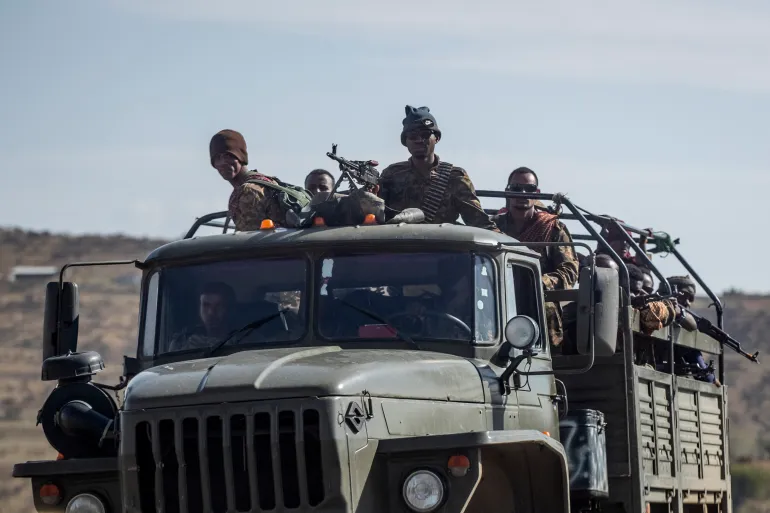
Members of the armed forces ride a military vehicle as fighting across Ethiopia intensifies amid fears of full-scale civil war [AP]
The TPLF’s Tigray Army said the federal government had launched a “full-scale offensive” involving infantry, mechanised units and drones.
Abdisalam Balema, a TPLF central committee member, told Al Jazeera the situation had become a “full war”.
Fighting has also continued around Sama, Soqota and Raya Alamata, with government forces reportedly closing in on the town of Alamata.
The army command said it prefers a strategy of “strategic calm” over a large-scale military confrontation, arguing the Tigray front’s popular support is dwindling and its leadership divided.
Internet access was reportedly cut across northern Ethiopia on Friday, a day after the UN said it was alarmed by reports of drones being used against civilians there.
The renewed fighting has put the 2022 Pretoria Agreement, which ended a brutal two-year civil war in Tigray, under severe strain. It comes weeks after Washington lifted sanctions on Ethiopia and Eritrea tied to atrocities from the last war, saying the “national emergency … has expired”.
It marks the most serious challenge yet to that agreement, raising fears of a wider regional conflict that could draw in armed groups from across Ethiopia.
Addressing the UN General Assembly, Ethiopia’s president sought to portray the country as a force for regional stability, accusing unnamed external actors of meddling in Ethiopia’s affairs while highlighting Addis Ababa’s role in supporting peace efforts in neighbouring Sudan.
Alemayehu Weldemariam, a professor of law at Indiana University, told Al Jazeera that the federal government bears much of the blame for the collapse of the Pretoria Agreement.
“This war has been in the making for a while now. Much of the provisions in the cessation of hostilities [in the 2022 agreement] were primarily sabotaged by the federal government itself,” he said, citing fuel, service and cash restrictions imposed on Tigray, and the government’s failure to set up the interim administration the deal had promised.
“What was supposed to be an interim arrangement turned out to be permanent,” with Tigray excluded from national elections since, he added.
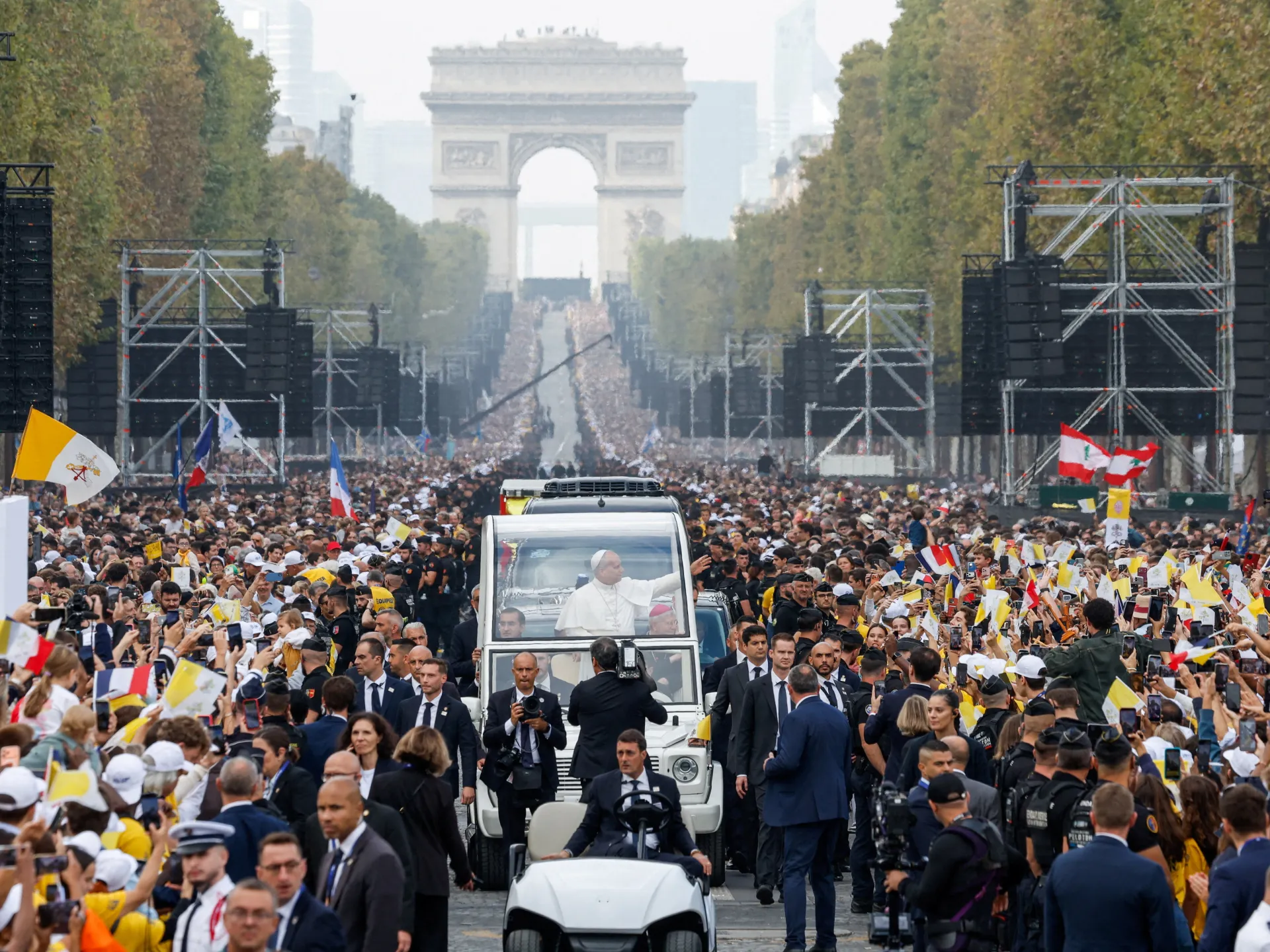
Pope Leo XIV drew around 800,000 people to central Paris for an open-air Mass at Place de la Concorde, marking a major moment in his France visit. The Pope also made the pilgrimage to Lourdes, where thousands of worshipers welcomed him ahead of prayers at the Grotto of Massabielle.
Tunis, Tunisia – For nine-year-old Yassar Naouar, visiting his father in prison has become an exercise in staying strong. He tries not to cry in front of Wael, fearing that seeing his son in tears would make an already painful situation harder for him. After leaving the prison, Yassar finds a corner where he can finally let the tears fall.
Hichem Naouar, Yassar’s grandfather, says the boy has changed since his father was detained. He now sleeps beside his mother after waking up screaming at night and his results at school have worsened. When Yassar told his mother that other children kept asking whether his father was a thief, she asked him what he thought.
“Never,” the nine-year-old replied.
Wael’s youngest child, four-year-old Sumud, is too young to understand why her father is in prison. Hichem says he took her to visit him. When she saw her father behind the glass, she leaned forward to embrace him, only to hit her head against the barrier.
Hichem spoke to Al Jazeera on Wednesday outside the Tunis Court of Appeal, where he had gone to follow the latest challenge to Wael’s detention. He repeatedly choked up as he described what he had seen during his most recent visit.
Wael was sitting with his hand against his cheek, his father said, his elbow trembling and his gaze fixed in the distance. He was struggling to see clearly and to keep water down without vomiting. He was dizzy and had difficulty controlling his left leg. Wael later told Hichem that other prisoners had said he sometimes wakes during the night calling out his youngest daughter’s name.
For his father, however, Wael’s story is also about the kind of person he has been. He recalled an incident during the Sumud land convoy in Libya in May, when armed men tried to kidnap another participant. Wael intervened, pulled the man away and helped him escape before returning to the men and telling them they could take him instead.
During the first Sumud flotilla, a female fell into the sea and was close to drowning. Wael immediately jumped in and rescued her.
“Wael’s strength is in the strength of his ideas and in his commitment to his people. Whenever he heard about any injustice against workers or employees, you would always find him at the forefront,” Hichem said.
The case and its wider fallout
Wael, 41, began a hunger strike on August 16 to protest his continued detention and was transferred to hospital as his condition deteriorated. He suspended his strike after 38 days following appeals from his lawyers and supporters, saying the decision did not mean abandoning his demands.
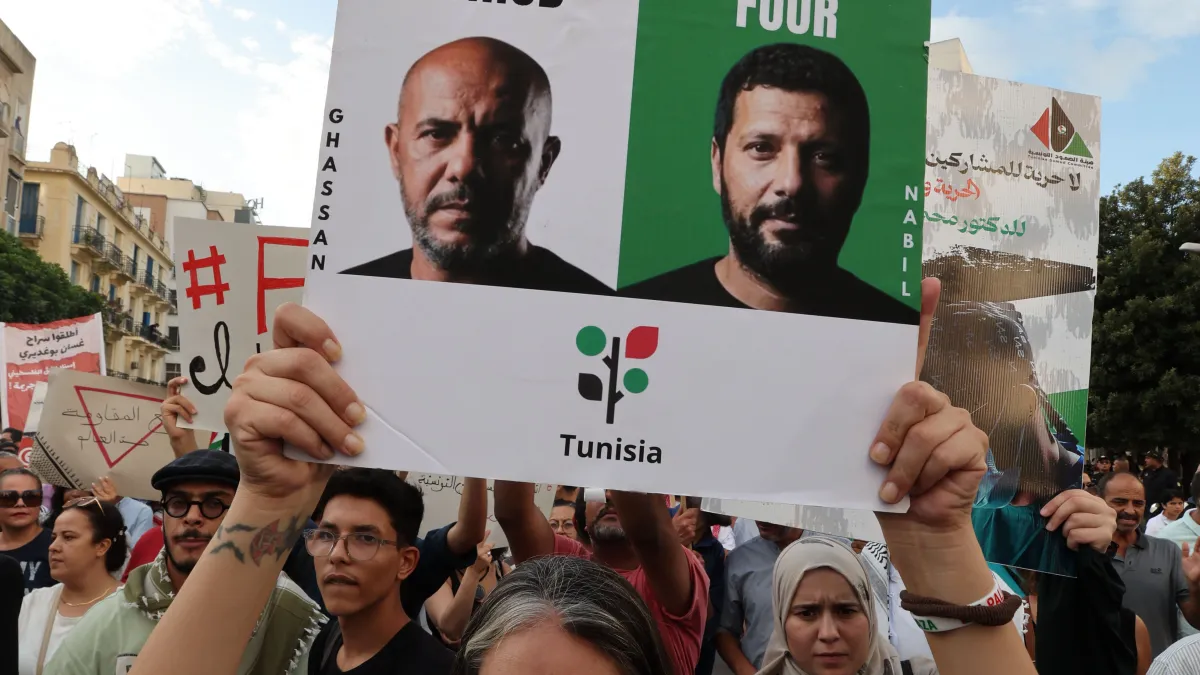
Four activists, Wael Naouar, Ghassan Henchiri, Ghassan Boughdiri and Nabil Channoufi, have been held since March following an investigation by Tunisia’s Economic and Financial Judicial Pole, a specialised body that handles financial and economic crimes. The investigation concerns alleged financial irregularities linked to fundraising for the Global Sumud Flotilla, an international campaign seeking to deliver aid to Gaza and challenge Israel’s blockade of the Palestinian territory.
The state-owned TAP news agency, citing judicial sources, reported that investigators are examining the origin and use of funds collected for the flotilla and whether any were diverted for other purposes. The activists and their defence team have repeatedly denied wrongdoing and maintain their innocence. None of the four has been convicted.
For their lawyers, the issue is also why the men should remain in prison while the investigation continues.
Ghassan Ghribi, a member of the defence committee, described the latest extension of their pretrial detention as an “exception to the exception”, arguing that freedom should be the rule and detention the exception. The four-month extension was ordered on September 11 and the defence challenged the decision before the Court of Appeal in Tunis.
“The investigating judge spent six months on the case without carrying out any investigative work, other than questioning the activists,” Ghribi told Al Jazeera. He said the extension should be based on clear reasons and that the four men were being made to pay the price for what he described as a lack of investigative work.
The Court of Appeal rejected the challenge on Wednesday, leaving the quartet in pretrial detention for another four months while the investigation continues. Henchiri, Boughdiri and Channoufi remain on hunger strike.
Authorities have presented the case as a financial investigation into the handling of funds raised for the flotilla, rather than a prosecution linked to the men’s political or pro-Palestinian activities. The government has rejected accusations that the judiciary is being used to silence opponents, saying the judiciary is independent and that legal proceedings are conducted according to the law.
The fallout has also widened beyond the four men. Fourteen people detained after the September 19 protest calling for their release have since been placed in pretrial detention, lawyer Rafed Rabbeh confirmed to Al Jazeera on Friday. Among them is a 17-year-old who was brought before a juvenile judge. Tunisia’s Child Protection Code says priority should be given to preventive and educational measures and that pretrial detention should be avoided as much as possible for children.
Rabbeh said the detainees face several charges, including participating in a gathering allegedly intended to disturb public order and commit an offence, publicly attributing unlawful acts to a public official without proof, and making public statements deemed to damage the reputation of a person or official body. The charges are based on several provisions of Tunisia’s Penal Code.
The toll on those left behind
Speaking by phone from Gafsa, Ghassan Henchiri’s father, Sebti, said his son remains conscious but is visibly exhausted after being on hunger strike since September 9.
“According to what his sister told me after visiting him, he is still holding up. The fatigue is visible. He is exhausted, but he is still conscious,” Sebti said.
Ghassan has not been taken outside the prison for further medical examination of a head injury sustained during his detention in Israel, Sebti told Al Jazeera. Ghassan and his family have raised the issue with both the prison administration and investigating judge. They were promised that he would receive the necessary medical examinations, but that has not happened, Sebti said.
“It could be a superficial injury, but with the conditions in prison and the high temperatures, it has exhausted him,” he said.
Ghassan also has other health problems, including living with one kidney and suffering from back problems, Sebti said. He has developed a skin rash that keeps him from sleeping, but his request to see a dermatologist was rejected because the prison doctor did not consider it serious, Sebti said.
“I will remain steadfast, I will not give up my right and these malicious accusations are false,” Ghassan told his father.
“He is my son, my brother, my companion, my whole life,” Sebti said. “Ghassan is a man of integrity. I am not saying that because I am his father. Everyone knows that about him.”
Ghassan’s detention has also reshaped family life. He had been working at a high school and was recently engaged, Sebti said.
He described Ghassan’s political commitment as something rooted in the family. He has been involved in student activism and later trade unions since 1978, campaigning for freedom, the right to organise and a better, more dignified life for Tunisians. Ghassan grew up with those principles and was influenced by his father’s activism.
“This is what Ghassan was raised on and what influenced him,” Sebti said.
Human Rights Watch has also raised concerns over the use of financial and money-laundering investigations against civil society actors in Tunisia.
For the Naouar and Henchiri families, the impact of the detentions is being felt at home, in prison visits, anxious phone calls and children asking when their fathers will return.
Yassar still asks about his father and has told his grandfather he is ready to go on hunger strike too.
Asked where her father is, four-year-old Sumud answers: “Palestine. Prison”.
Bangkok has officially been declared a disaster zone after relentless rains triggered widespread flooding in the Thai capital. Up to 300 millimetres of rain fell in some areas overwhelming the city’s canals and drainage system.
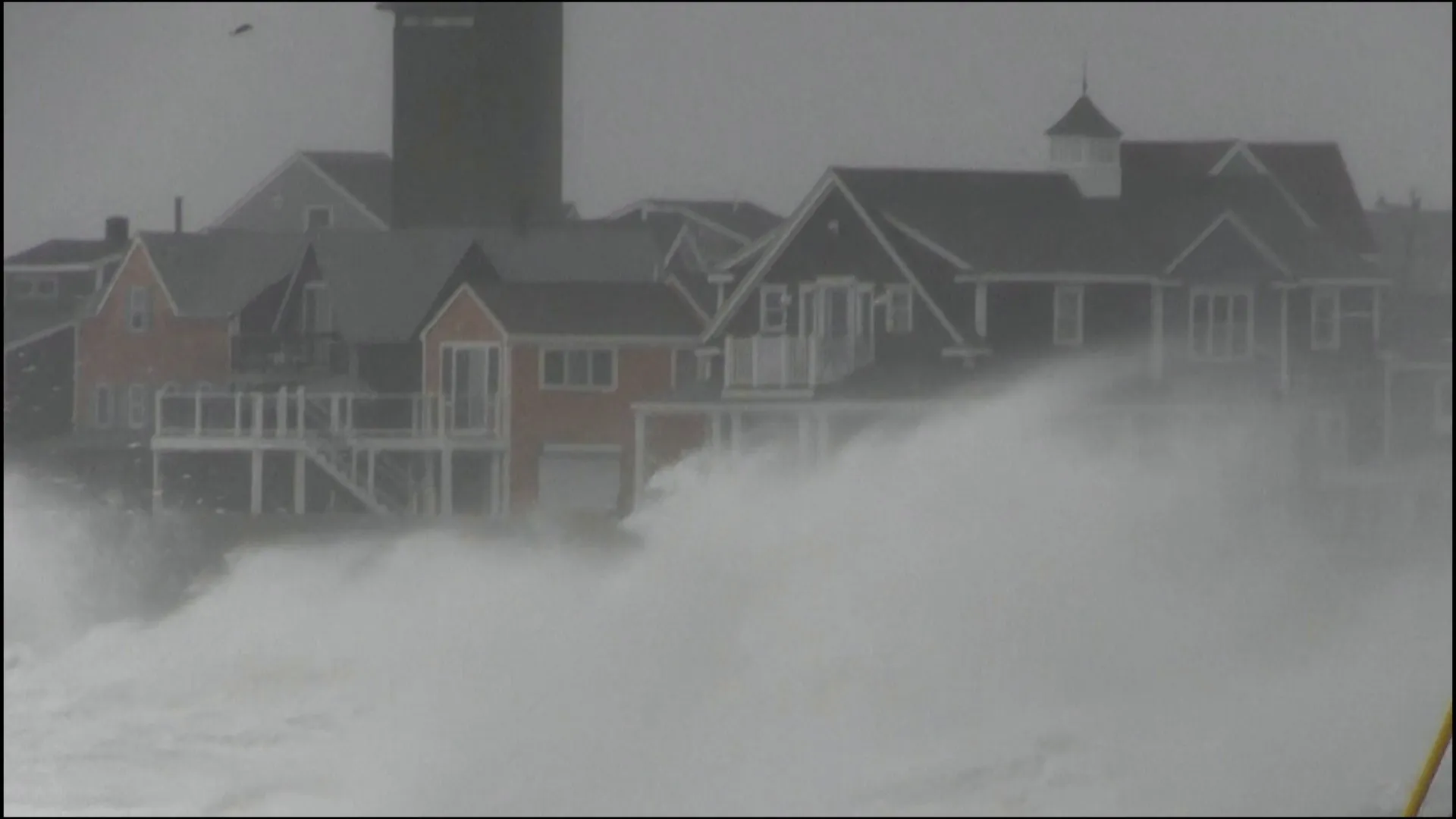
Powerful winds and towering waves are battering the US Northeast, causing flight chaos and blackouts. Flooding has already hit areas like Atlantic City and the Jersey Shore, with officials warning of more rain to come.
Iran says it’s still waiting for an official response from the US on its proposal to reopen the Strait of Hormuz within seven days. Iran’s foreign minister Abbas Araghchi made the comments shortly after President Donald Trump said he had rejected the plan.
Authorities warn residents that extreme conditions could pose risks and urge people to stay away from flooded areas.
Published On 26 Sep 202626 Sep 2026
Residents of the northeastern United States are facing a powerful storm known as a nor’easter that has knocked out power and caused flooding across the region.
The storm has led to the cancellation of more than 400 flights and power outages affecting more than 88,000 homes and businesses as of Saturday afternoon local time. That figure is down from a high of 119,000 earlier in the day.
Recommended Stories
list of 3 itemsend of list
Bob Oravec, lead forecaster with the National Weather Service in College Park, Maryland, said that the storm is likely to persist, with “a lot of high winds, a lot of high tides and heavy rain possibility over the next few days for the northeastern US”.
The governors of New York and New Jersey declared states of emergency in counties expected to see the worst of the storm, including New York City, on Friday.
Large puddles and debris line a walkway in the Dumbo neighbourhood in Brooklyn as a nor’easter moves through the area on September 26, 2026 in New York [Spencer Platt/Getty Images via AFP]
Authorities have also warned residents about the risks of flooding and high tides, cautioning people to stay away from the beach and areas inundated with water.
“Anyone who goes in or near the water this weekend is literally gambling with their life,” New York Governor Kathy Hochul said.
Despite the warnings, people have been seen kayaking down flooded streets in Long Island, New York, while others took advantage of large swells in Hampton, New Hampshire.
“In all the canals, the water is up really high and coming into people’s back yards,” Jay Boyd, a resident of Ocean City, Maryland, told The Associated Press news agency.
Oravec said that nor’easters are not unusual as the region of New England enters the autumn season, but that “this might be a little earlier than average for a big storm”.
A surfer catches a wave as a nor’easter batters the US northeast coast, in Rockaway, New Jersey, on September 26, 2026 [Caitlin Ochs/Reuters]
About 425 flights have been cancelled and 1,338 delayed so far on Saturday, according to data from the flight tracker FlightAware.
Concerts and sporting events have also been cancelled, including musician Ed Sheeran’s scheduled shows in the state of Massachusetts on Friday and Saturday.
The US president said he would end a so-called ‘EV mandate’ that steered consumers to electric vehicles.
Published On 26 Sep 202626 Sep 2026
United States President Donald Trump has announced new fuel economy standards that roll back requirements adopted under his predecessor, arguing they will lower automobile prices and encourage manufacturers to expand production in the US.
In a social media post on Saturday, Trump said the new standards would “TERMINATE” what he called former US President Joe Biden’s “EV (electric vehicle) mandate”, accusing the previous administration of imposing costly requirements on carmakers and steering consumers towards electric vehicles.
Recommended Stories
list of 3 itemsend of list
“These new Standards will take the waste out of building cars in America. That means LOWER PRICES, saving families thousands on a new, beautiful, and safe car,” Trump wrote.
The changes form part of a broader Trump administration effort to reverse Biden-era policies supporting lower-emission vehicles, increasing the gap between US policy and global trends favouring electric vehicles.
While Trump and US Republicans have used the term “EV mandate” to describe higher fuel efficiency requirements instituted under Biden, a Democrat, there are no federal guidelines or laws that require Americans to buy electric cars or bar the sale of ones powered by petrol.
At the centre are Corporate Average Fuel Economy (CAFE) standards. This system, established by the US Congress in 1975, requires automakers to meet average fuel economy targets across all cars and light trucks they sell, meaning that a brand that sells an inefficient vehicle would also have to sell a more efficient one to help comply with the government’s standards.
Under rules finalised by the Biden administration in 2024, the required fleetwide fuel economy was scheduled to rise from 39.1 miles per gallon (mpg) to about 50.4mpg by 2031. The administration said then the measures would reduce fuel consumption and emissions to combat climate change while helping motorists save money at the pump.
As a result, auto manufacturers have ramped up production of EVs to help meet the Biden-imposed fuel economy requirements. The Republican-controlled US Congress, however, gutted consumer tax incentives last year for electric vehicles as part of Trump’s One Big Beautiful Bill Act.
Trump did not provide details regarding what the new fuel economy standards would be. But in December 2025, he announced a proposal that would set the industry fleetwide average for light-duty vehicles at roughly 34.5mpg by 2031, more than 30 percent lower than the Biden-era rule.
In a reposting of Trump’s announcement, US Transportation Secretary Sean Duffy said an announcement would be “COMING MONDAY”.
Al Jazeera has reached out to the White House for comment.
Lamine Yamal goal opens the scoring, but Spain made to comeback in Nations League win as Harry Kane misses penalty.
Published On 26 Sep 202626 Sep 2026
World champions Spain came from behind to beat England 3-2 in an entertaining Nations League encounter at Wembley on Saturday, denying the hosts a cathartic win after their painful World Cup exit.
Victory for Luis de la Fuente’s men extends Spain’s astonishing unbeaten run to 39 matches – a record for a European team.
Recommended Stories
list of 4 itemsend of list
Thomas Tuchel’s men got off to a nightmare start when Lamine Yamal pounced on a gaffe by defender Marc Guehi, and they could easily have been three goals down as silky Spain created multiple chances.
But England, criticised for their ultra-defensive tactics in their World Cup semifinal defeat to Argentina, showed adventure of their own and got their reward in the 36th minute when Barcelona winger Anthony Gordon finished a fine team move.
Four minutes later, the home side were ahead after Kane headed home Nico O’Reilly’s cross via a Marc Cucurella deflection.
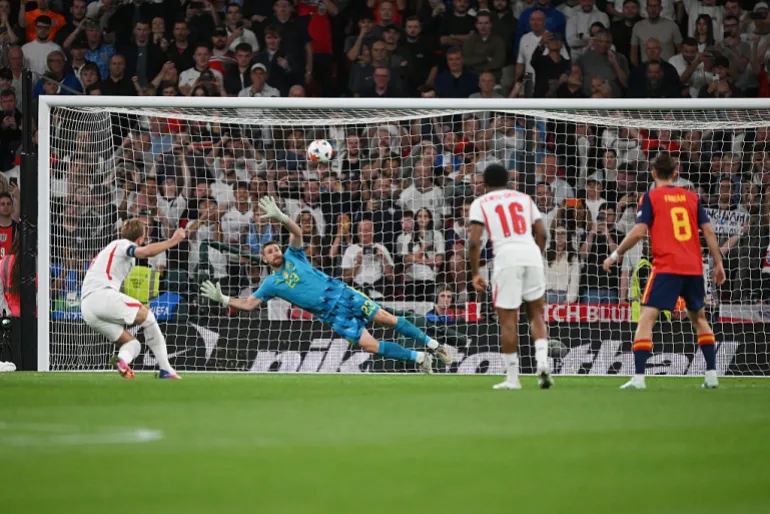
Kane had a golden chance to give England a two-goal cushion from the penalty spot 10 minutes into the second half but slipped slightly, crashing his shot against the bar.
Spain, who beat England in the Euro 2024 final, took full advantage, with substitutes Alex Baena and Mikel Oyarzabal putting their side ahead, taking advantage of more sloppy defensive play from the home side.
Harry Kane of England shoots and misses a penalty kick [Mike Hewitt/Getty Images]
England boss Thomas Tuchel was adamant ahead of the match that it did not signal a new start, but he will have been dismayed by his team’s nervy start.
Manchester City’s Guehi, with a chance to clear in the second minute, inexplicably turned back towards goalkeeper James Trafford, apparently unaware that Yamal was just behind him.
The teenager collected the ball and curled a left-footed effort off the inside of the post.
Ferran Torres was in the thick of the action, with an effort ruled out for offside and another shot saved by Trafford, in for longtime number one Jordan Pickford.
He also squandered a golden opportunity with just the goalkeeper to beat.
Yamal then set up Dani Olmo, who flashed wide as Spain rued yet another miss.
England, who had shown plenty of promise down the wings, made the visitors pay with an incisive counter-attacking goal after winning the ball back deep in their own half.
Gordon was involved early in the move and surged forward, collecting Jude Bellingham’s pass to steer the ball decisively past goalkeeper Unai Simon.
And, with the atmosphere now totally changed, England were in front when Kane rose to head home.
Tuchel’s men started the second half brightly and had a chance to extend their lead from the spot when they were awarded a penalty for a Rodri foul on Bellingham following a VAR check.
But Kane crashed his shot against the bar, and England paid the price when Baena steered home on the hour mark after O’Reilly had given the ball away to Olmo.
Worse was to come for the home side when Baena turned provider for Oyarzabal, who dinked the ball over Trafford.
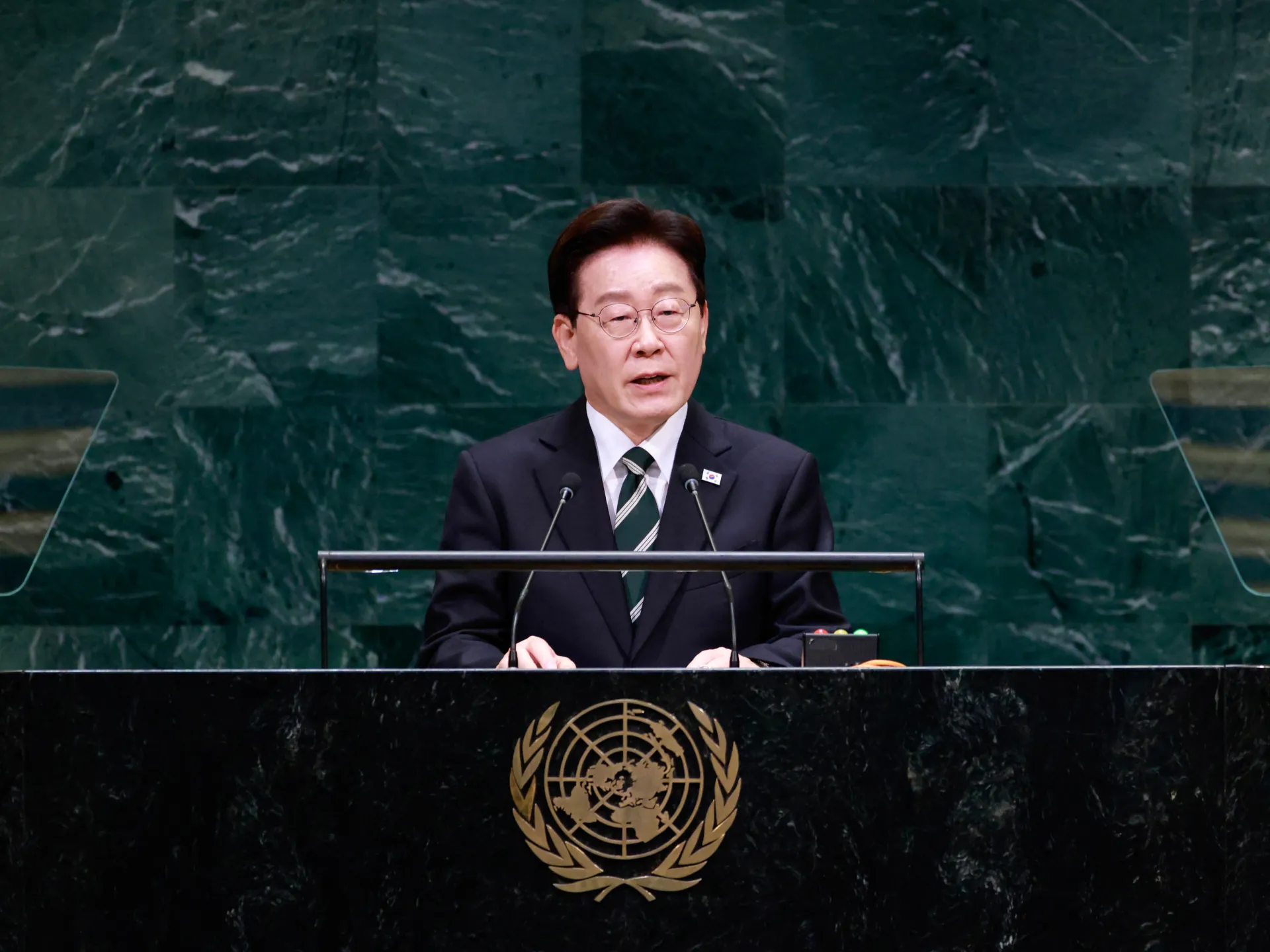
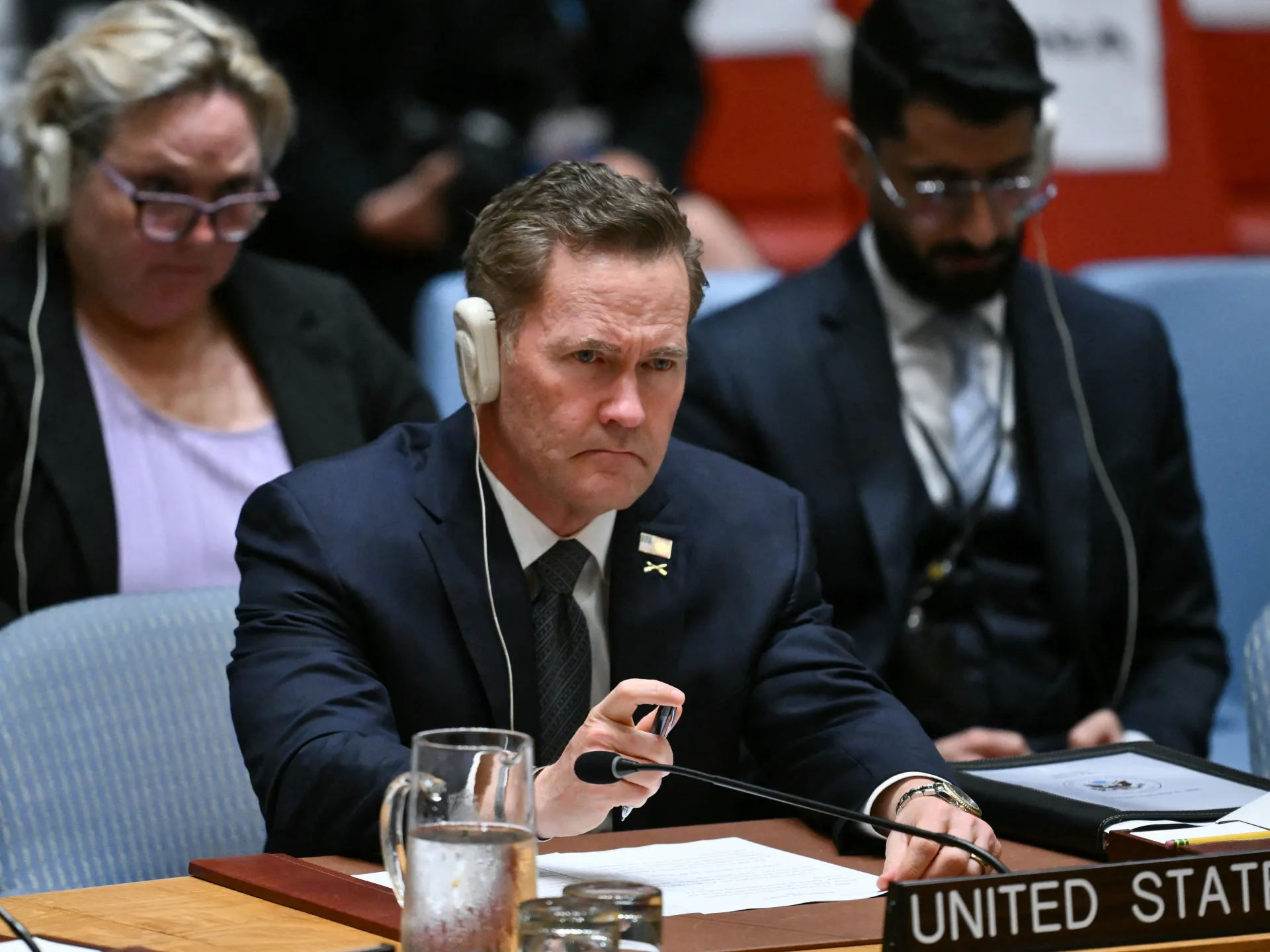

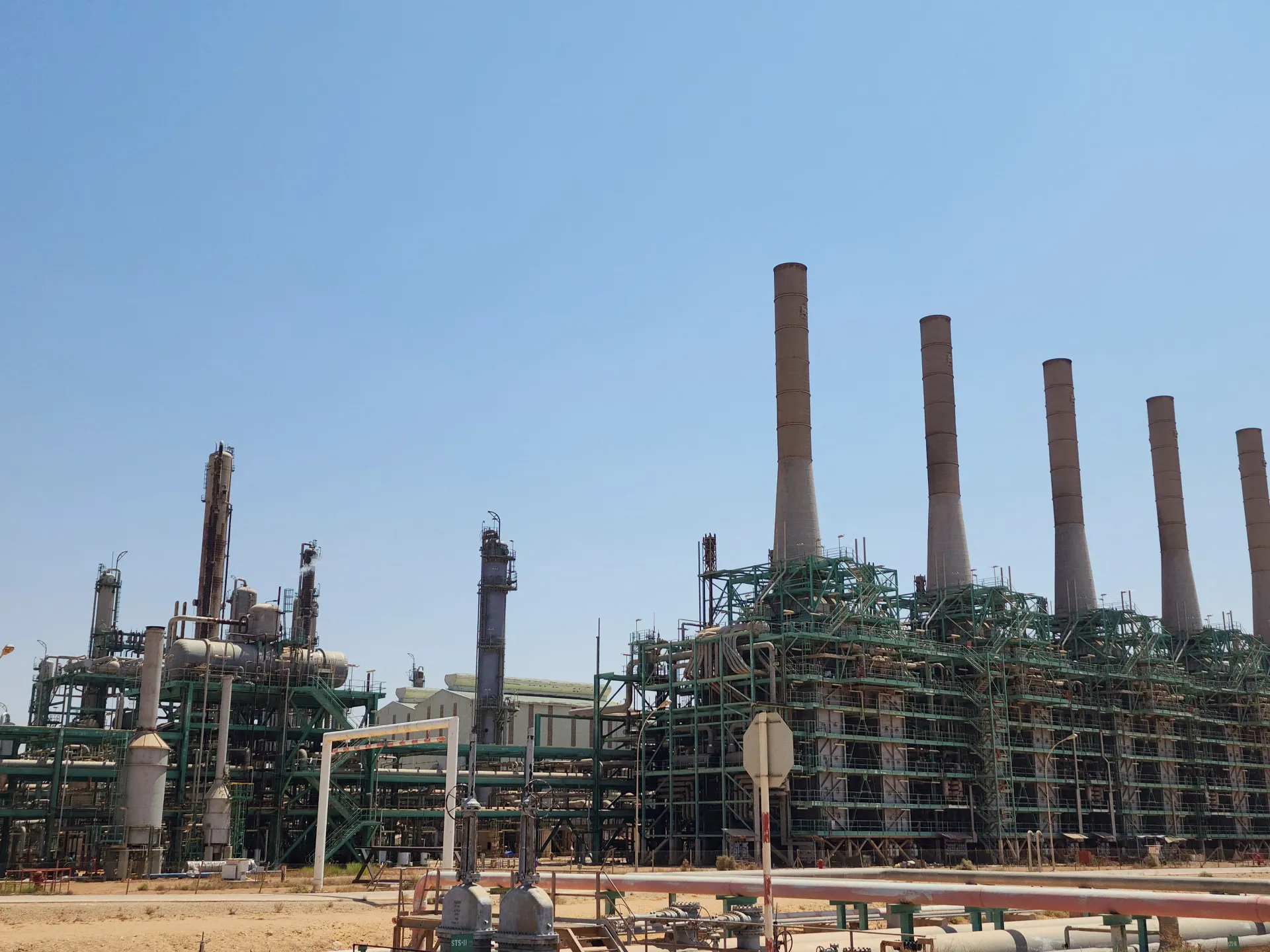

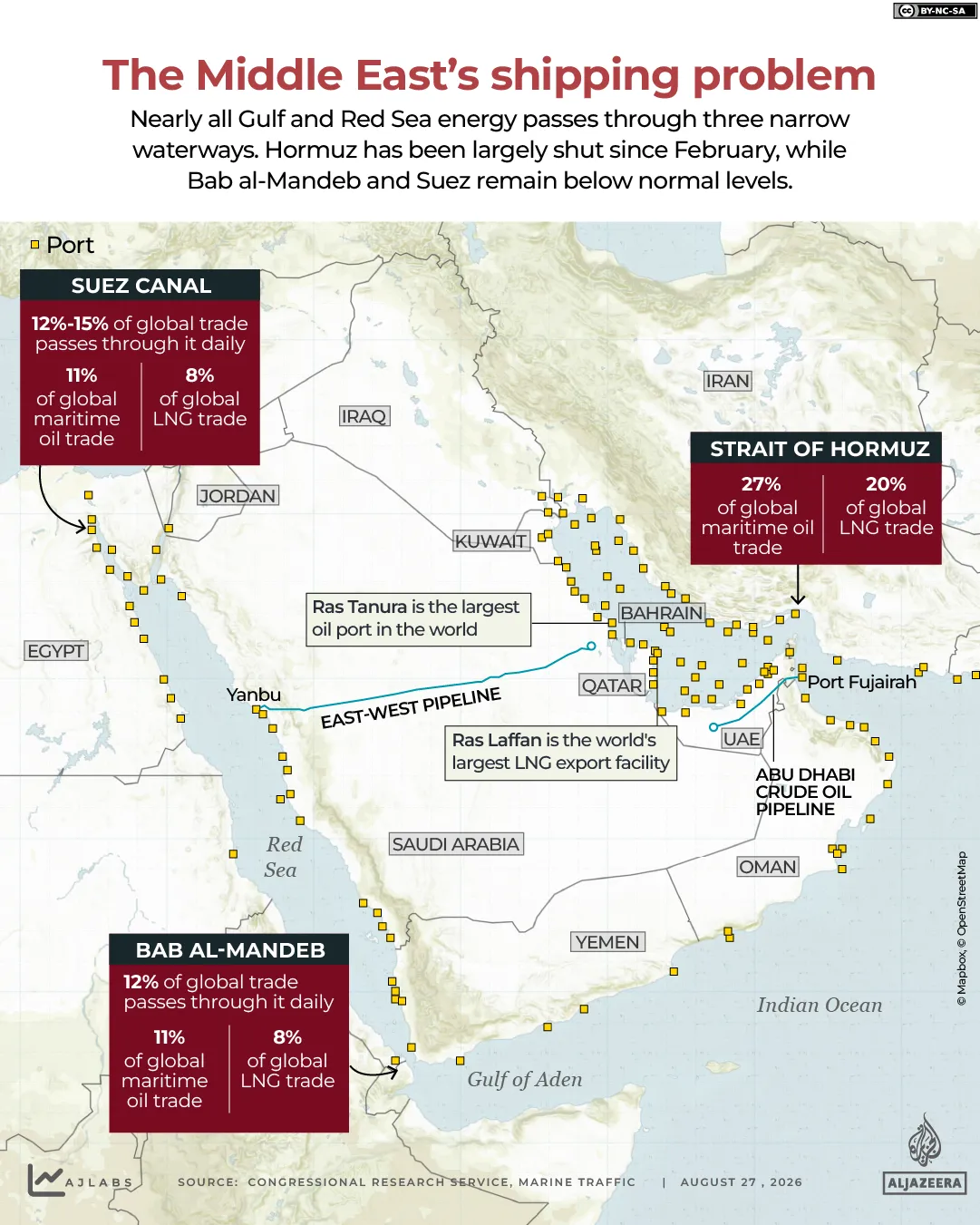


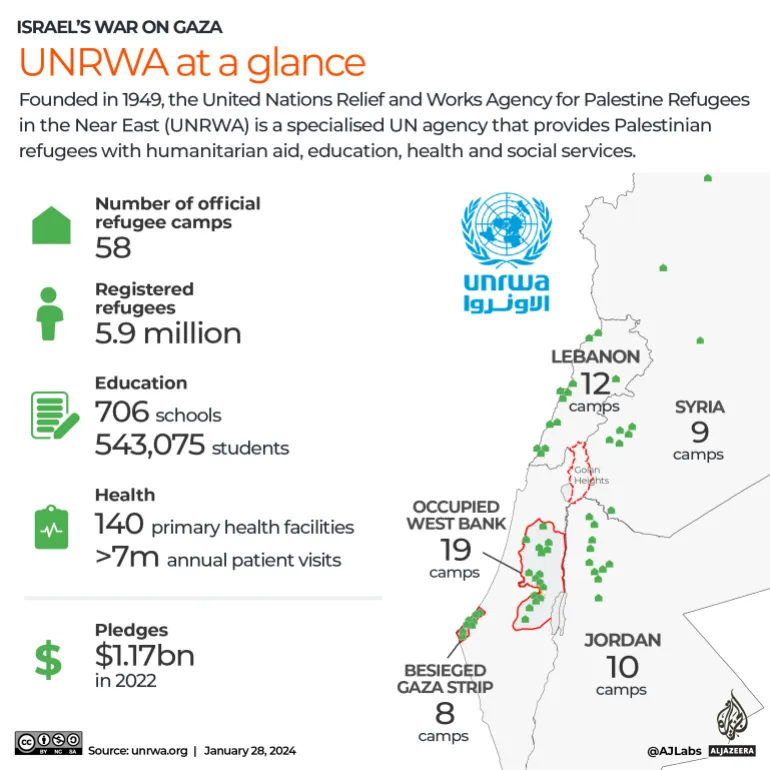


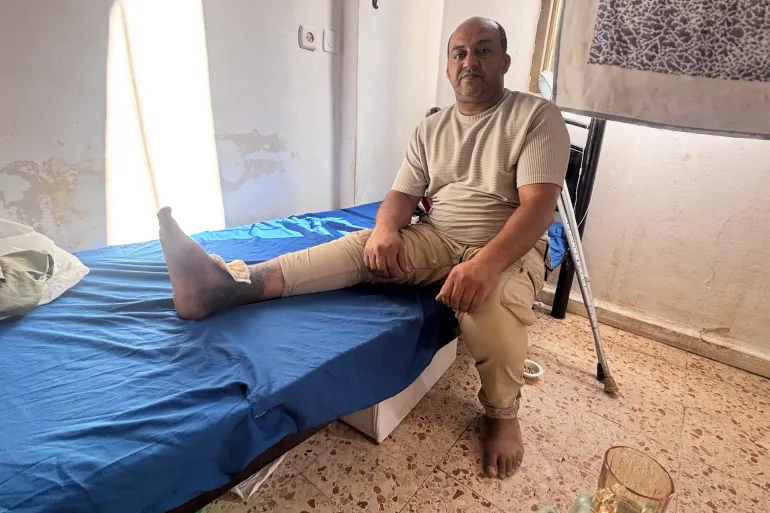
![Hakim Mar’i in his family’s apartment with his injured leg, which prevents him from working [Al Jazeera]](https://i0.wp.com/occasionaldigest.com/wp-content/uploads/2026/09/d9-1790406476.jpg?w=640&ssl=1)
![Members of the Zbeidat family sit on couches outside. The room they stay in is on the left [Al Jazeera]](https://i0.wp.com/occasionaldigest.com/wp-content/uploads/2026/09/s2-1790406485.jpg?w=640&ssl=1)
![The kitchen and bathroom the Zbeidats have are in the same room they sleep in [Al Jazeera]](https://i0.wp.com/occasionaldigest.com/wp-content/uploads/2026/09/s4-1790406489.jpg?w=640&ssl=1)