From breaking news to significant developments in politics, business, technology, entertainment, and more, we deliver the stories that shape our global landscape.
Colombian President Abelardo De La Espriella has emerged as close ally the of Trump administration in South America.
Published On 26 Sep 202626 Sep 2026
The Colombian government has extradited an alleged drug trafficking leader to the United States, part of a shift in the country’s security policy into greater alignment with Washington.
President Abelardo de la Espriella announced on Friday the extradition of Geovany Andres Rojas, who is accused of leading an organisation formed by previous members of the FARC rebel group.
Recommended Stories
list of 3 itemsend of list
“You don’t build peace by protecting narco-terrorists like this bandit,” de la Espriella said after he personally oversaw Rojas’s transfer to the US. “I ask US authorities … that he cannot negotiate deals that will leave his crimes unpunished.”
De la Espriella’s left-wing predecessor, Gustavo Petro, shielded Rojas from extradition in order to use him as a mediator in talks between the government and armed and criminal groups, which Petro sought to rein in through negotiations rather than military confrontation.
The far-right president has tossed out that approach, promising to crack down on groups that split off from the former FARC rebel group following a peace deal with the government in 2016. Many of those groups have jostled for control over lucrative drug routes and illicit industries.
Rojas, also known as “the Spider”, was flown to California and placed in the custody of federal agents. He allegedly served as the commander and spokesperson of Comandos de la Frontera, a group associated with cocaine trafficking in the Colombian province of Putumayo that borders Ecuador and Peru.
He will face drug trafficking and terrorism charges in the US, which has sought to expand military operations across Latin America under the pretext of combating crime and drug trafficking during President Donald Trump’s second term in office.
Colombia’s new president has aligned himself closely with those efforts, scrapping peace talks and launching military operations against armed groups since taking office in August.
The New York Times reported that de la Espriella, a former defence lawyer, was previously investigated by US authorities over his ties to powerful drug traffickers, but never charged, and defended politicians linked to right-wing paramilitaries.
Rights groups have warned that a return to militarised confrontation could lead to rights abuses by government forces and an escalation in violence, but many Colombians have expressed support for a harder hand against criminal groups whose operations have often led to violence and mass displacement of civilians.
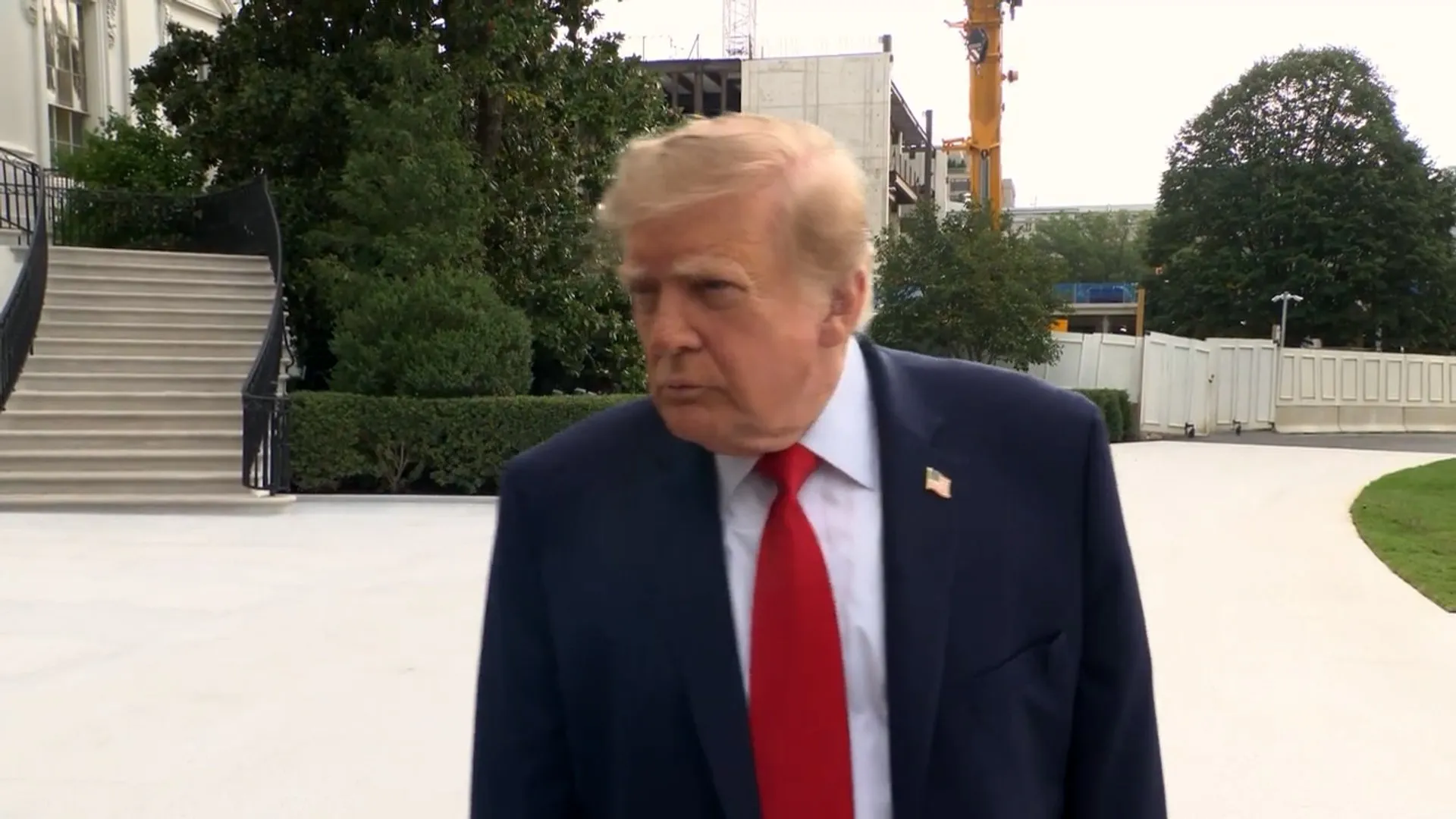
US President Donald Trump has rejected Iran’s latest proposal to reopen the Strait of Hormuz to shipping. Speaking to reporters at the White House, Trump insisted Tehran was attempting to strike a deal because “the money isn’t coming in” under an American naval blockade.
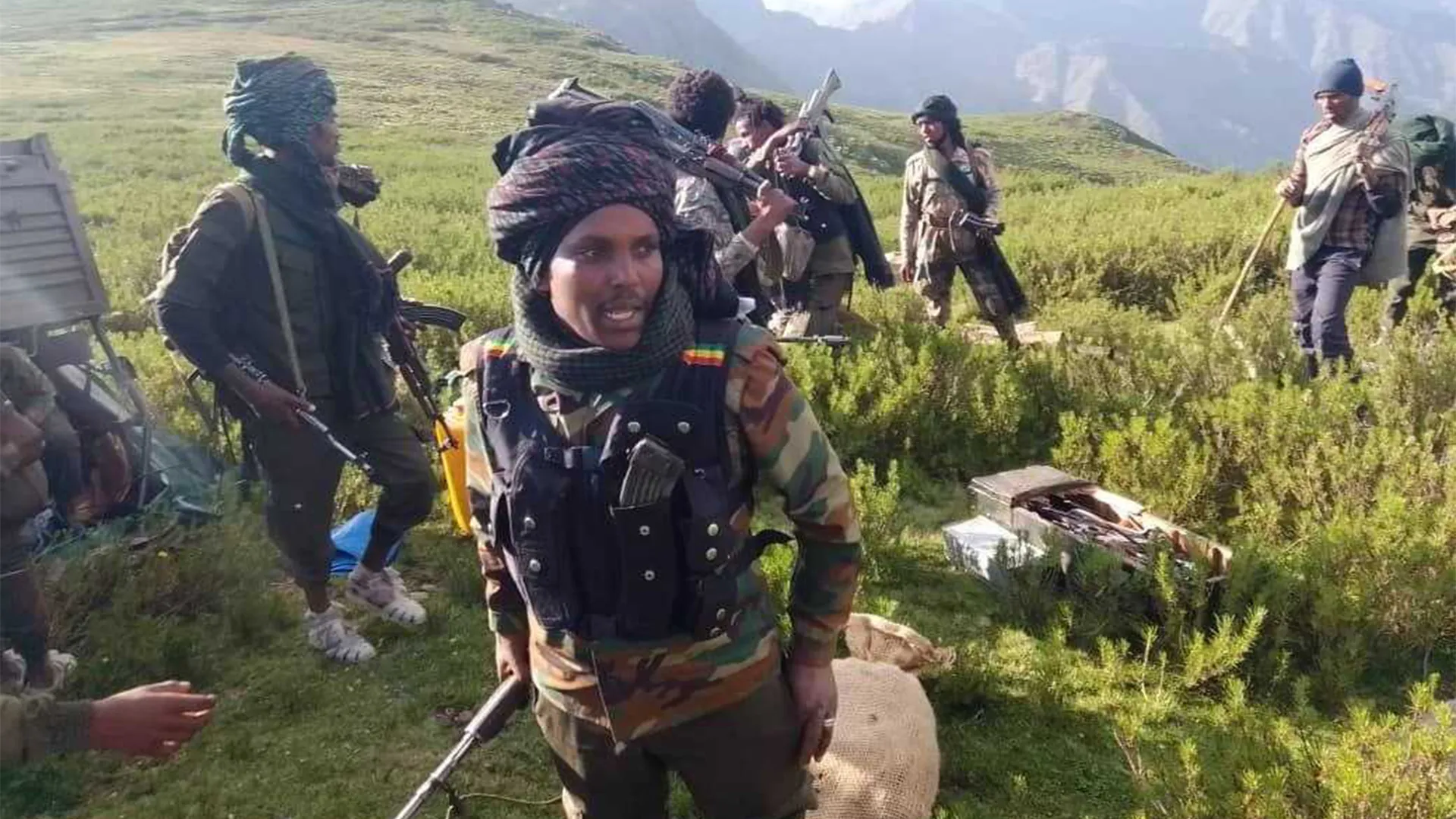
Armed fighters from Ethiopia’s Fano movement claim to have seized more than 10 military trucks carrying ammunition, machine guns and mortar shells in the Amhara region. Fighting in the country has intensified following the formation of a new alliance of seven armed groups seeking to overthrow Prime Minister Abiy Ahmed’s government.
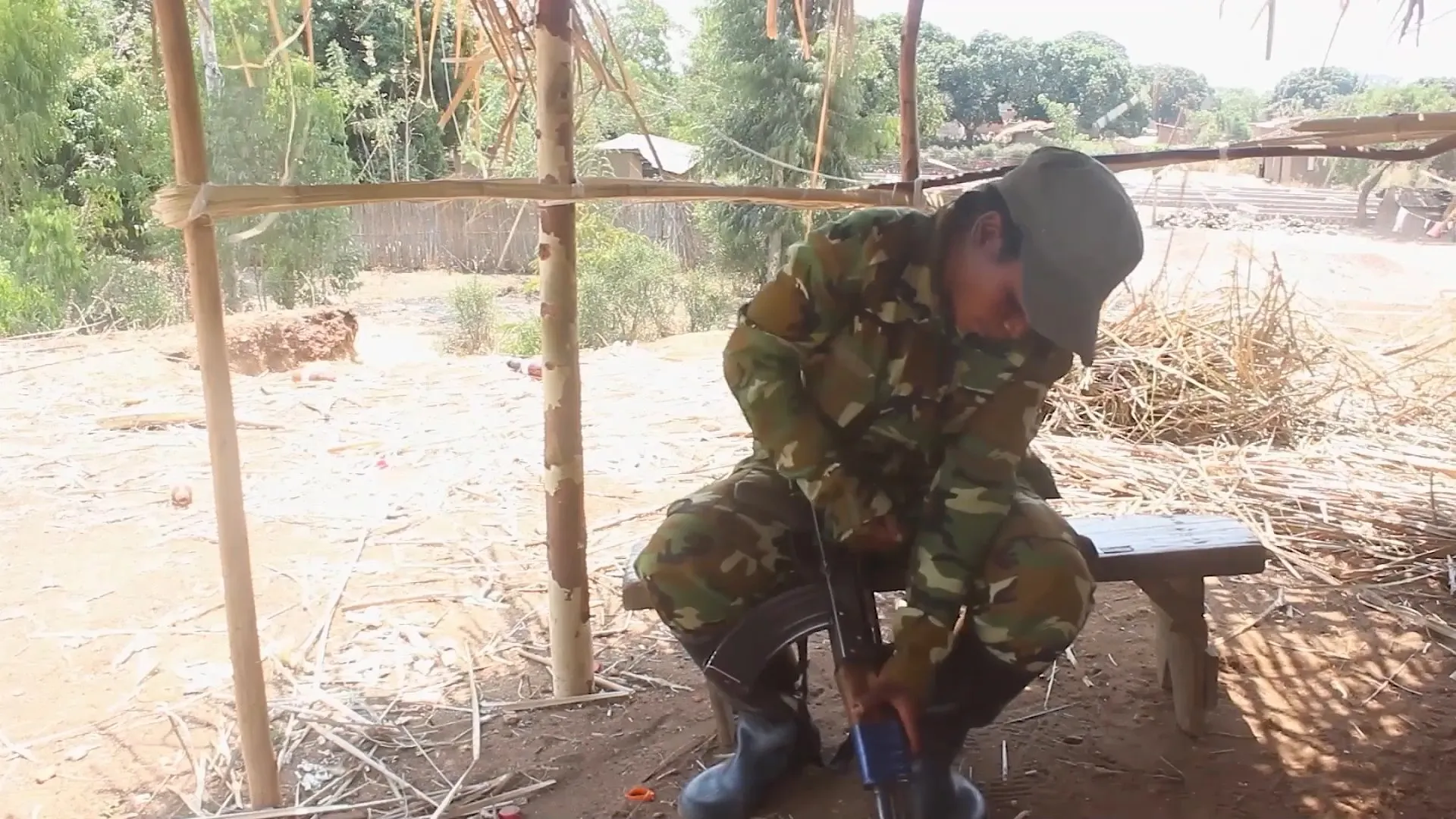
As war and sexual violence rage in eastern Democratic Republic of the Congo (DRC), women are joining pro-government Wazalendo fighters to defend their communities. However, the armed group itself faces serious accusations of human rights abuses, including gang rape.
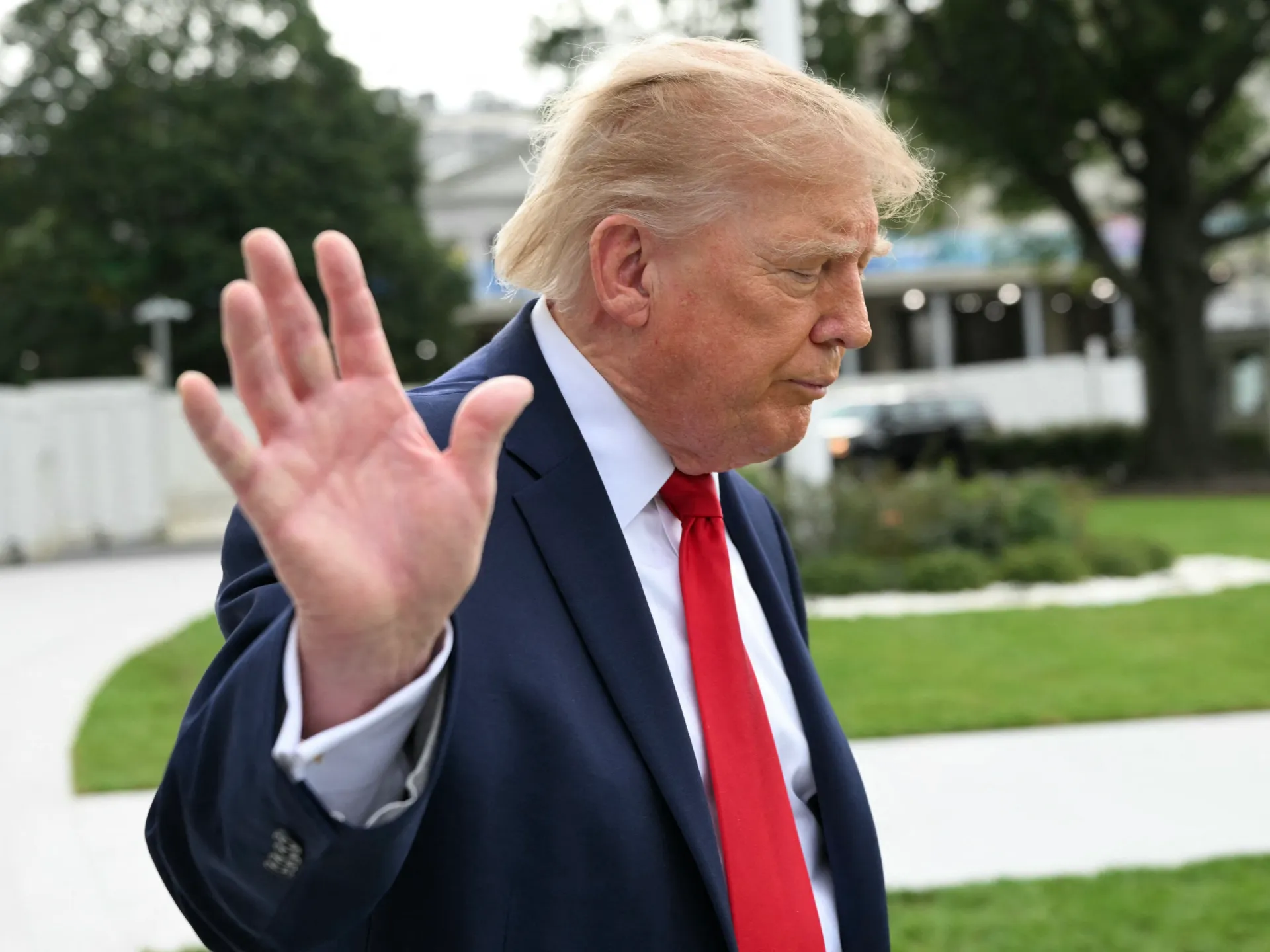
United States President Donald Trump has rejected a roadmap submitted by Iran to open the Strait of Hormuz within a week.
“I reject their proposal,” Trump told reporters outside the White House on Saturday, before departing for Tennessee by helicopter.
Recommended Stories
list of 3 itemsend of list
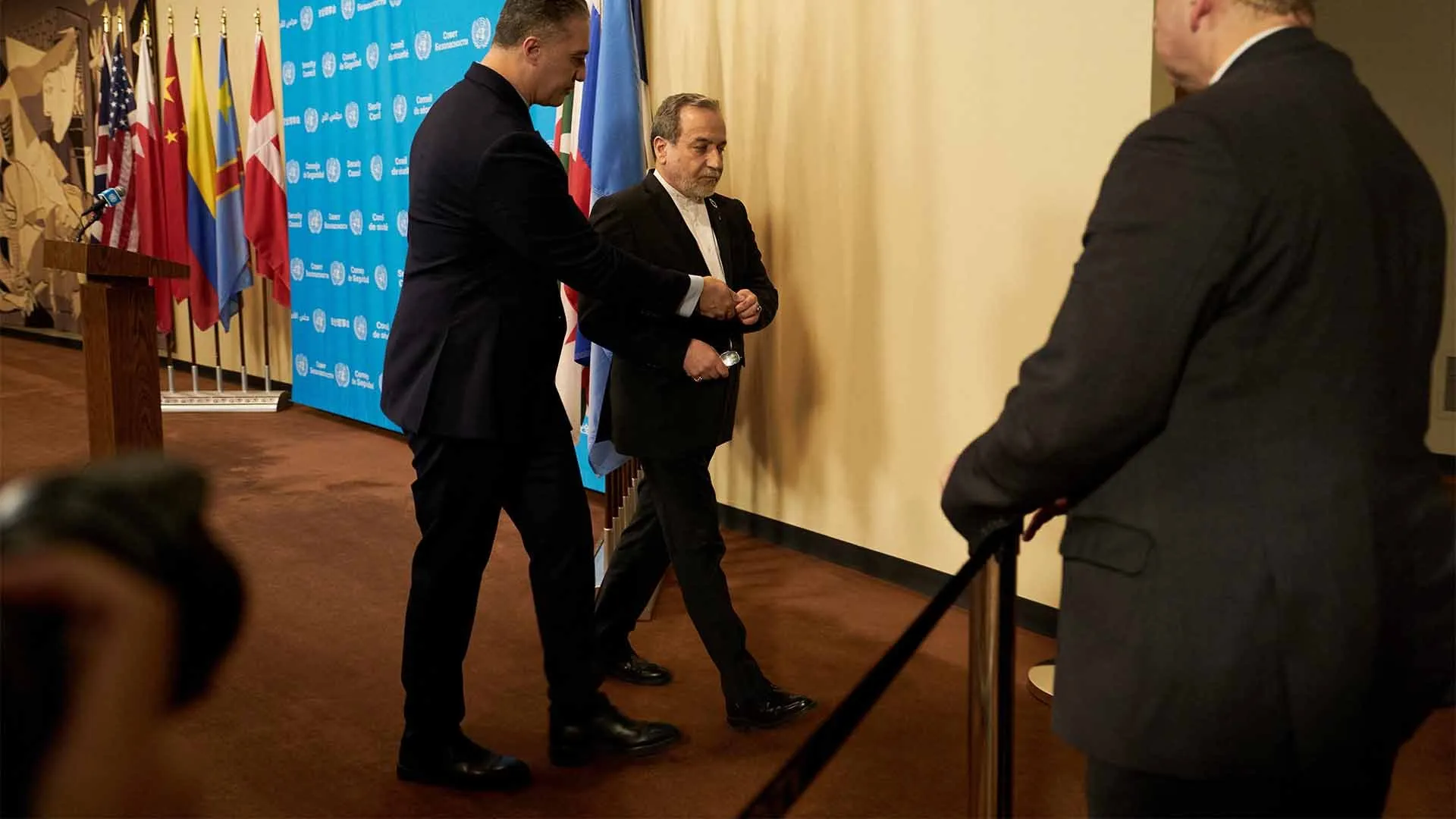
Iranian Foreign Minister Abbas Araghchi said on Friday that Tehran formally submitted a seven-day roadmap to the US via mediator Qatar, and was awaiting Washington’s response.
“It appears as though the proposal is dead in the water,” said Al Jazeera’s Mike Hanna, reporting from Washington, DC.
Trump was “privately sceptical” that Tehran would meet his demands, and reportedly told aides that he expects a renewed bombing campaign on Iran after the November US midterm elections, The Wall Street Journal reported, quoting unnamed US officials.
“President Trump has vacillated between extreme optimism, saying that ‘talks are going well’ to ‘I want to annihilate Iran’,” Hanna said about the recent diplomacy between Washington and Tehran.
“There is no consistency in terms of the [Trump] administration’s reaction,” he said.
But “the one thing that has been made clear by President Trump is that he is content to stay in the status of limbo”, Hanna added, despite concerns from much of the American public that the Iran conflict is turning into another “never-ending war”.
The Strait of Hormuz, a waterway key to the world’s oil supply, is central to the conflict between the US and Iran, which is at an impasse after nearly seven months, though new mediation efforts took place this week.
Earlier in the week, Araghchi held talks with Trump’s envoy Steve Witkoff, and previously set out conditions for ending the war and reopening the vital shipping channel.
On Friday, the top Iranian diplomat said: “Iran has conveyed to the United States, through Qatar, a concrete seven-day plan. If the necessary conditions are met, the strait can be reopened, and normal maritime passage restored within seven days.”
He was speaking at the United Nations in New York, where he and other senior Iranian officials were attending the General Assembly.
Under the plan, Washington would lift its naval blockade of Iranian ports, waive sanctions on Iranian oil sales, release an estimated $12bn in frozen Iranian assets and observe a ceasefire covering the region, including Lebanon and Yemen.
“The choice now rests with the United States. Iran does not accept coercion, threats or intimidation, and Iran will not surrender its sovereign rights under pressure,” Araghchi had said.
On Saturday, Iranian President Masoud Pezeshkian told Al Jazeera that Tehran no longer trusts negotiations with the US after previous rounds of talks were followed by attacks and sanctions.
“We have no trust in the American side and do not know on what basis an understanding can be reached with it,” said Pezeshkian, who was also in New York for the UNGA.
He denied that Iran was responsible for blocking the Strait of Hormuz, saying the US “closed the routes before us”. He described the closure as “a natural response when routes are cut off to Iran”.
The Iranian president said the crisis could be resolved through negotiations rather than force, and that the waterway would reopen to commercial shipping if talks ended the war.
Egyptian FA has decided to rest Salah to protect him from playing on artificial turf, which has a higher risk of injuries.
Published On 26 Sep 202626 Sep 2026
Mohamed Salah will not travel with Egypt’s squad to South Sudan for their second Africa Cup of Nations qualifier because the match will be played on artificial turf, the Egyptian Football Association said on Saturday.
Record seven-time AFCON champions Egypt were held to a goalless draw by Angola at Cairo International Stadium on Friday in their opening qualifier.
Recommended Stories
list of 3 itemsend of list
Two-time African Footballer of the Year, Salah, who joined Turkiye’s Trabzonspor from Liverpool last month, started against Angola but did not complete the match after coach Hossam Hassan substituted him midway through the second half.
“The Egypt national team’s technical staff, led by Hossam Hassan, has decided to rest Mohamed Salah for the match against South Sudan scheduled for September 29 because of the playing surface,” the EFA said on social media.
“It was agreed between the national team’s technical staff and Mohamed Salah before the Angola match that he would not play against South Sudan, and the technical staff preferred this approach in order to protect the player,” the EFA added.
Salah has scored 68 goals for Egypt and is just one short of matching coach and ex-player Hassan’s all-time record of 69 for The Pharaohs.
Tuesday’s match between South Sudan and Egypt will be played at Juba Stadium, which has an artificial turf pitch. Such surfaces pose a higher risk of injuries than those with natural grass.
Egypt are in Group B of the AFCON 2027 qualifiers, alongside Angola, South Sudan and Malawi. The 2027 AFCON will be co-hosted by Kenya, Uganda and Tanzania, featuring 24 teams.
Though Egypt are the most successful African side, they haven’t won the championship since 2010.
As Brazilians head into national elections, there’s a familiar name on the ballot: Bolsonaro. Not former President Jair Bolsonaro. It’s his son Flavio, who is presenting himself to the electorate as a more moderate version of his father.
Election coverage has been dominated by a major corruption scandal – the biggest banking fraud case in the country’s history. Brazilians are accustomed to corruption scandals involving political figures. The coverage tends to be framed as: they’re all equally corrupt.
Contributors: Andrew Fishman – President & co-founder, Intercept Brasil David Nemer – Professor, University of Virginia Andre Pagliarini – Professor, Louisiana State University Natalia Portinari – Reporter, O Globo
On our radar: Donald Trump’s decision to bar three news outlets from the White House appears to have backfired after journalists organised a media boycott and a judge overturned the ban. Tariq Nafi has been tracking the latest duel between the US president and the media.
Spain’s neo-Nazis: spectacle vs reality
A fringe neo-Nazi movement in Spain, Nucleo Nacional, has attracted a growing online following by packaging incendiary and slickly produced content. The mainstream media attention the group has received has made a marginal organisation appear far larger and more influential than it is. The Listening Post’s Elettra Scrivo travels to Madrid – where she comes face-to-face with Nucleo Nacional’s members – to look at the reality that lies behind the spectacle.
Featuring: Miquel Ramos – Author, ‘Antifascistas’ Urszula Mrozowska – Digital researcher in hate speech and extremism
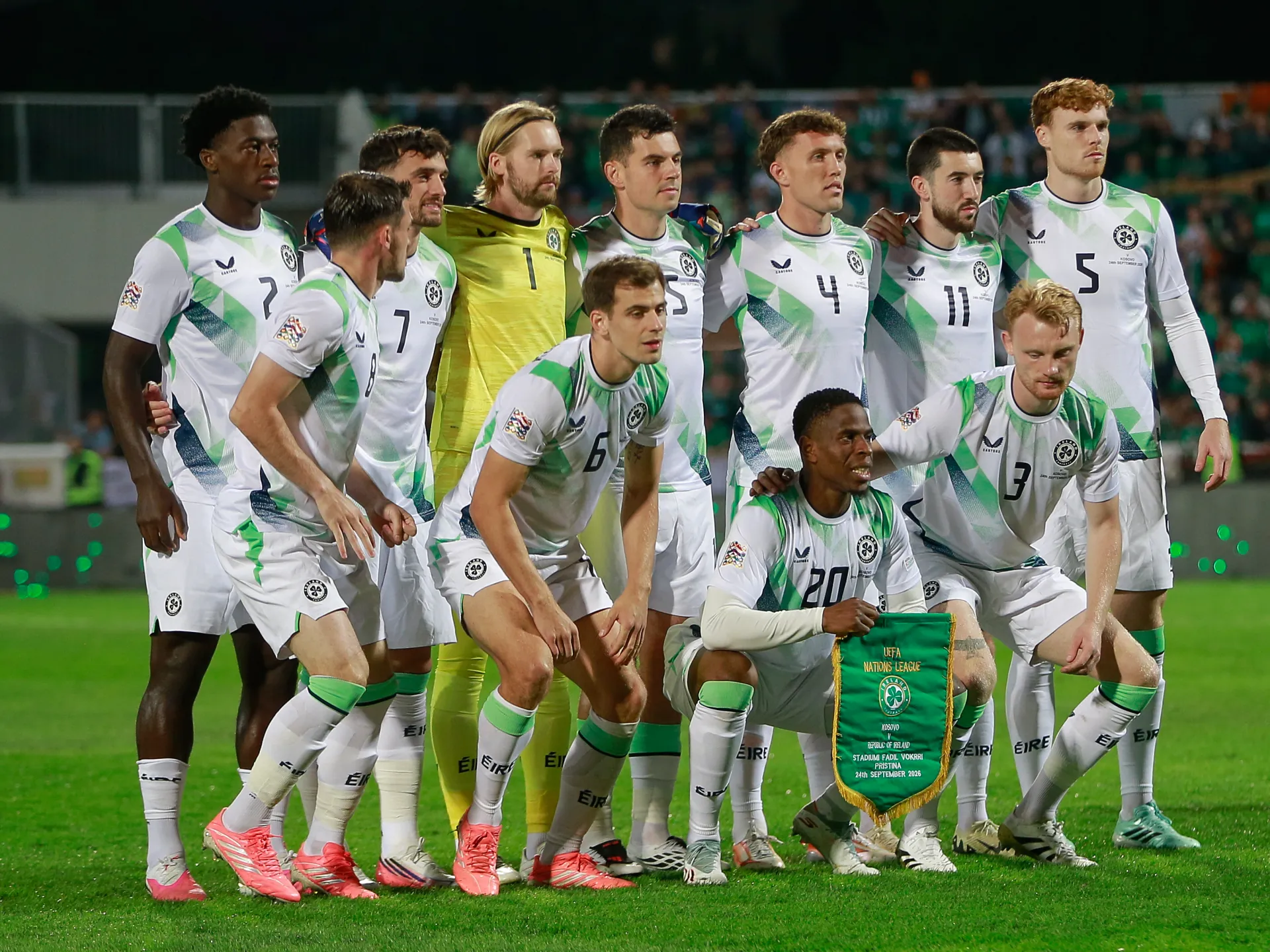
Ireland are due to play Israel in the Nations League in Hungary on Sunday, but boycott pressure mounts on and off-field.
Published On 26 Sep 202626 Sep 2026
The Ireland team’s news conference and training session the day before its first Nations League game against Israel have been delayed as pressure to boycott the matches grows.
Journalists in Debrecen, Hungary – where Israel’s “home” game is to be played Sunday – were left waiting Saturday after being told the news conference was being pushed back until after training. That was 15 minutes before it was supposed to begin.
Training was also significantly delayed, however, with Irish broadcaster RTE reporting the players were still in their hotel more than two hours after the training session was supposed to begin.
RTE reported that some players had decided they did not want to play the games.
“And if they stay to their stated ambition that they have to be all in it together, if one or more want to be out, maybe they will all be out,” reporter Tony O’Donoghue told RTE Radio 1.
The team has been coming under increasing pressure in Ireland, where affinity with Palestinians is strong, to boycott the two games – the first on Sunday and the second, Ireland’s “home” game, in Backa Topola, Serbia, on October 4.
Ireland midfielder Jason Knight said after Thursday’s 1-0 loss in Kosovo that the players were in a difficult situation and that he didn’t think the matches should be going ahead.
Ireland coach Heimir Hallgrimsson previously said “we’re not playing with genocide, we’re playing against genocide. We’re playing against Israel, we’re not playing with Israel” – drawing a furious reaction from the Israeli football federation, which accused the Icelandic coach of “stupidity, ignorance and hypocrisy”.
The Football Association of Ireland (FAI) had resisted calls to boycott the matches, arguing the team could be hit by punishing sanctions by UEFA. Ireland is cohosting the 2028 European Championship with England, Wales and Scotland.
More than 160 Irish sportspeople signed an open letter urging the FAI to reconsider its decision to go ahead with the fixtures.
There were protesters outside the team hotel in Dublin last week calling on the players to boycott the games. The SIPTU trade union displayed a huge poster in central Dublin beside the River Liffey asking the players to “Go with your conscience!” and “Don’t play with genocide” beside an image of a blood-splattered ball.
Former Ireland coach Brian Kerr said the FAI had “lost the respect of the Irish people” for going ahead with the games.
“The Irish people and the soccer-going public don’t want the games to be played,” Kerr said. “I think they’ve made their opinions clear over the last year. The FAI back in November actually went to UEFA and requested that Israel be put out of the tournament on principle. And yet they went against that principle.”
The Ebola outbreak has spread to new areas in the Democratic Republic of the Congo, with 10 neighbouring countries at high risk as officials step up border health measures.
Who: England vs Spain What: UEFA Nations League 2026-27, Group A3 match Where: Wembley Stadium, London, United Kingdom When: Saturday, September 26, at 7:45pm (18:45 GMT) How to follow: Al Jazeera Sport will bring you all the build-up and live updates from 15:45 GMT.
England begin their new Nations League campaign with a heavyweight home fixture against the reigning world champions, Spain.
Recommended Stories
list of 3 itemsend of list
Saturday’s clash at Wembley will be a rematch of the UEFA Euro 2024 final, which Spain won 2-1 in Berlin, Germany.
La Roja, the 2023 Nations League winners, are looking to add a second title to their collection, having also finished runners-up to Portugal in the last edition in 2025.
England, on the other hand, enjoyed their best result in the inaugural 2019 edition, finishing third. They return to League A this time after winning Group B2 in their previous appearance.
Competing in the top division of the structured competition, Croatia and Czechia are the other teams in Group A3 with England and Spain.
What is the UEFA Nations League?
The UEFA Nations League was founded in 2018 to reduce the number of meaningless friendlies and give nations competitive matches against equally-ranked teams.
In this competition, countries from across Europe participate in a league structure, which features promotion and relegation.
England vs Spain: Predictions
Opta’s supercomputer has handed Spain a 40.2 percent probability of victory, while England have a 33.6 percent chance of winning. The odds of a draw stand at 26.2 percent.
When did England and Spain last meet?
Spain have won six of their last nine meetings with England.
England and Spain last met at the UEFA Euro 2024 final, in which goals from Nico Williams and Mikel Oyarzabal handed La Roja a 2-1 championship victory. That result marked a record-breaking fourth European crown for Spain.
England vs Spain: Head-to-head
Matches: 28
England wins: 13
Spain wins: 11
Draws: 4
England vs Spain: Form guide
(Last five games, latest results first)
England: W-L-W-W-W
Spain: W-W-W-W-W
Which are the top players to watch?
Harry Kane and Jude Bellingham (England): All English hopes will once again rest on captain and Ballon d’Or frontrunner Harry Kane of Bayern Munich, who recently became the fastest player to 100 German Bundesliga goals. Elsewhere, attacking midfielder Jude Bellingham has made an impressive start under new Real Madrid coach Jose Mourinho, producing three goals and three assists in seven La Liga appearances.
Lamine Yamal of FC Barcelona has seven goals and four assists in seven La Liga appearances this season [David Ramos/Getty Images]
Ferran Torres and Lamine Yamal (Spain): La Roja fans will be excited to see Ferran Torres in the national team colours this weekend after he scored a hat-trick in his first Champions League appearance for new club Paris Saint-Germain. His former Barcelona teammate Lamine Yamal, too, is enjoying a strong start this season, with his seven goals rated joint-second-highest in La Liga.
What have the coaches said?
Thomas Tuchel, England coach: “I think the more you analyse Spain and their last matches they played in, you have to admire the way in which they defend. They added this to their game. It’s difficult for every single team in the world to create chances against Spain. But we have a plan, we have ambition, and we want to be the exception to the rule. At the moment, though, they are a very complete team.”
Luis de la Fuente, Spain coach: “I know what these players are made of. We are not satisfied with what we have done so far, I guarantee it. One story is over; now another begins. Another one in which we are very excited. We want to continue doing important things, to continue making records as historic as those that are being achieved.”
England manager Thomas Tuchel during a pre-match news conference [Bradley Collyer/Getty Images]
England vs Spain: TV channel, livestreaming
United Kingdom: ITV1
Spain: RTVE PLAY
Middle East and North Africa: beIN SPORTS
India: Sony Sports Network
South Africa: DStv Stream
United States: FOX Sports, FuboTV, ViX
England’s team news and predicted lineup
England are without winger Marcus Rashford, who picked up a knock, and attacking midfielder Cole Palmer, who has a muscle injury.
Probable England XI: Jordan Pickford; Trent Alexander-Arnold, Ezri Konsa, Marc Guehi, Nico O’Reilly; Elliot Anderson, Miles Lewis-Skelly; Bukayo Saka, Jude Bellingham, Anthony Gordon; Harry Kane
Spain’s team news and predicted lineup
Centre-back Marc Pubill is sidelined with physical discomfort, and goalkeeper Joan Garcia is out with a knee injury.
Probable Spain XI: Unai Simon; Eric Garcia, Pau Cubarsi, Dean Huijsen, Marc Cucurella; Fermin Lopez, Rodri, Fabian Ruiz; Lamine Yamal, Mikel Oyarzabal, Nico Williams
Senegal draw with Mozambique, and Nigeria edge past Madagascar, but Cape Verde beaten by Mali in AFCON qualifying openers.
Published On 26 Sep 202626 Sep 2026
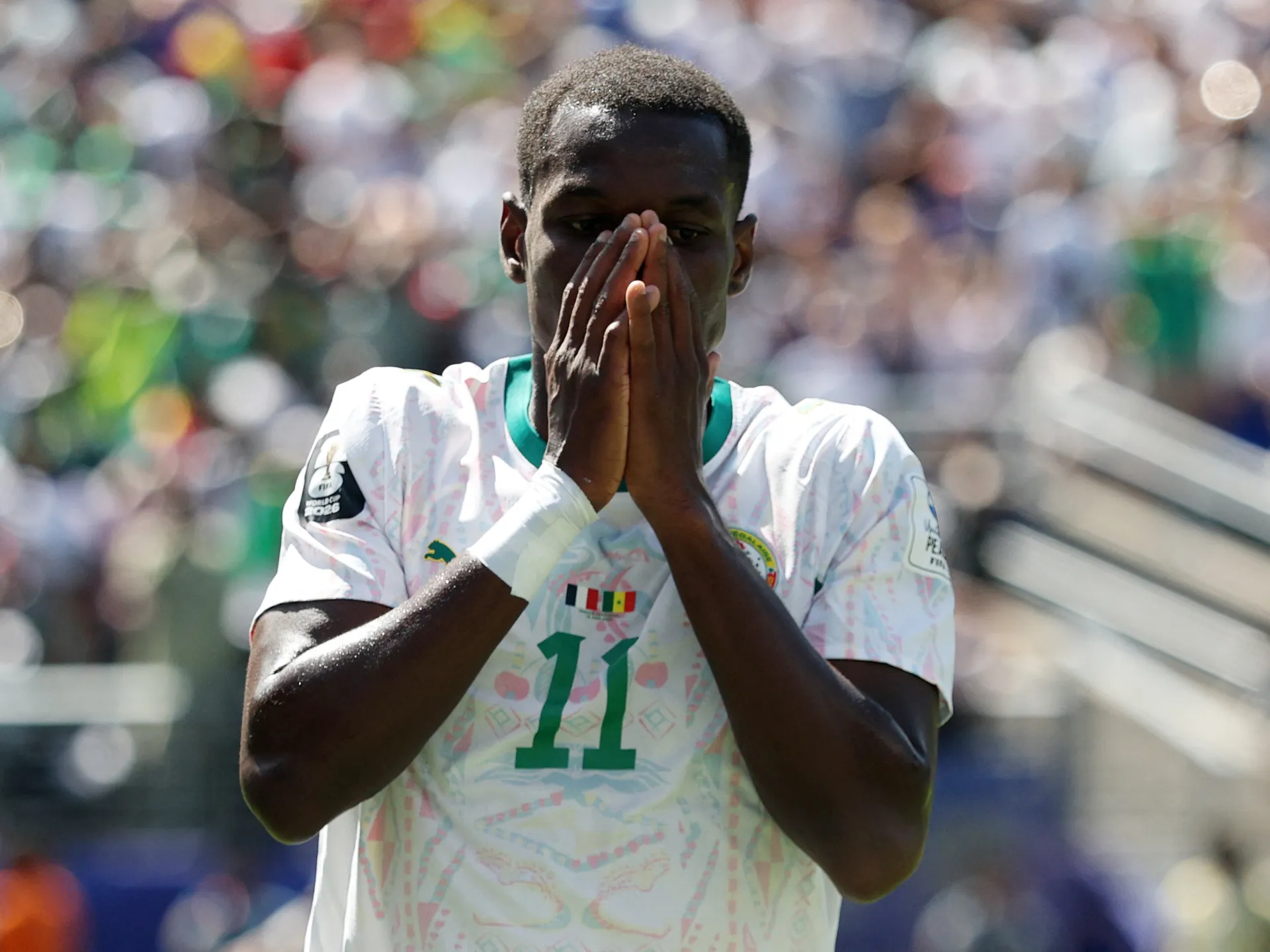
Former France star Patrick Vieira debuted as Senegal coach by drawing 1-1 in Mozambique, and Nigeria survived a scare to edge Madagascar 2-1 in Africa Cup of Nations qualifying on Friday.
Cape Verde, admired for holding eventual 2026 World Cup winners Spain and taking Argentina to extra time before bowing out, crashed 3-1 away to Mali.
Recommended Stories
list of 4 itemsend of list
Egypt were held 0-0 at home by Angola while Morocco and Algeria won comfortably against Gabon and Zambia respectively.
Aston Villa striker Nicolas Jackson put controversial 2026 AFCON runners-up Senegal ahead after 32 minutes with a close-range tap off a low cross.
But Geny Catamo from Portuguese giants Sporting levelled in first-half added time, firing a shot from outside the box through a crowded goalmouth into the far corner of the net.
Senegal had plenty of second-half possession in Maputo, but could not find a way past a well-organised Mozambican defence.
Originally scheduled for Senegal, the matchday one fixture in Group J was moved to Maputo as no stadium in the West African nation currently meets international standards.
Vieira, 50, was a midfielder in the French teams that won the 1998 World Cup and 2000 European Championship, and also starred for Arsenal.
But he has had less success as a coach with clubs in the United States, France, England and Italy. He left Genoa last November with the club winless and bottom of Serie A.
Dakar-born Vieira has inherited from sacked Pape Thiaw a Senegal team in transition during a dramatic year in which they were stripped of the AFCON title and flopped at the World Cup.
The Teranga Lions temporarily walked off the pitch to protest a penalty awarded in the AFCON final to hosts Morocco, who missed the kick when Senegal returned.
Senegal won 1-0 after extra time only for the African confederation CAF to later award Morocco a 3-0 victory.
An appeal by the West Africans against the decision will be heard by the Court of Arbitration for Sport on October 8.
After losing to France and Norway at the World Cup, Senegal hammered Iraq to squeeze into the round of 32, where they fell to Belgium after surrendering a two-goal lead.
Against Mozambique, Senegal were without recently retired goalkeeper Edouard Mendy and injured striker Sadio Mane. Fellow stalwarts Kalilou Koulibaly and Idrissa Gueye were on the bench.
Nigeria, shock non-qualifiers for the past two World Cups, fell behind at home to Madagascar when Ehsan Kari scored after 16 minutes in Uyo.
A Super Eagles side lacking injured star striker Victor Osimhen were then rescued by two international debutants.
Saudi Arabia-based George Ilenikhena, 20, burst through to equalise in first-half added time and substitute Moses Usor from Austrian champions LASK snatched the 65th-minute winner.
Cape Verde goalkeeper Vozinha, a star at the World Cup, gifted Mali their third goal in the defeat before a wildly excited crowd of 50,000 in Bamako.
He dashed outside his area to control the ball with his chest, then lost possession and Dorgeles Nene struck the loose ball into an unguarded net.
Mali, arguably the strongest football nation never to win the AFCON, dominated from start to finish and led within five minutes through Martial Tia.
Cape Verde levelled when a Sidny Cabral free-kick was deflected into the net. Mali regained the lead as half-time approached through Nene.
Nonstop rain since Thursday has submerged Thai capital’s roads and canals, sending water into many homes and stores.
Published On 26 Sep 202626 Sep 2026
Bangkok authorities have declared a disaster zone across all 50 districts of Thailand’s capital after three consecutive days of rainfall caused heavy flooding.
The disaster designation, which gives local organisations authority to take action, came on Saturday after Governor Chadchart Sittipunt said almost 300mm (11.8 inches) of rain had fallen since Thursday afternoon.
Recommended Stories
list of 4 itemsend of list
The nonstop rain inundated roads and canals with water, sending water into many homes and stores alongside them, according to reports. Photos and videos showed major roads submerged and cars abandoned after drivers were unable to move through the rising water.
Chadchart said the east of the city was most impacted and warned that more rain was forecast again on Saturday. He added that flooding should recede once the rain subsides, as city officials work to drain floodwaters as quickly as possible.
“The rain keeps falling and we are doing our best. We are trying to pump the water out, but the water in canals are full,” he said on social media. “The risk areas are those who live near canals. Every canal is now filled.”
Later on Saturday, the government said the flooding situation had “stabilised” but added it would still take two or three days for the water to drain, as long as the rain held off. “If more rainwater doesn’t fall in the area, it will be solved,” he said.
People walk past abandoned vehicles on a flooded Phetchaburi Road in Bangkok on September 26, 2026 [Lillian Suwanrumpha/AFP]
Chadchart also advised residents to move their cars to higher ground, as Bangkok’s public transport authority offered free access to MRT train “park and ride” carparks to store their vehicles until October 2.
Reporting from a flooded street in Bangkok, Al Jazeera’s Tony Cheng said the Thai capital is no stranger to heavy rain during the monsoon season, but the continuous rainfall had locals worried.
“What usually happens is we get heavy downpours for a couple of hours, then you’ll see the street often flooded but it would flow away into the drains quickly, and it would only happen in isolated areas too,” he said.
“What’s happening here is … happening all across the city. This is not a flash flood; this is persistent heavy rain since Thursday evening, and it shows no sign of letting up.”
Somkid Pheuk-ngam, 67, a vendor who lives near a canal just north of central Bangkok, said she had to close her shop for two days.
“The water keeps coming in. It’s hard to go out now. It’s at my waist level,” she told the AFP news agency. “I cannot go anywhere,” she said, adding that this was “worse than the 2011 flood.”
Widespread flooding across Thailand in 2011 killed more than 500 people and damaged millions of homes.
The Department of Disaster Prevention and Mitigation has warned of low pressure across eastern, northeastern and central Thailand until Sunday, saying there was a risk of flash floods, forest runoff, mudslides and river overflow.
US State Department Spokesman Tommy Pigott says President Donald Trump ‘holds all of the cards’ in talks with Tehran. Officials from both countries met with mediators on the UNGA sidelines, but so far, there is no deal.
A Pew Research poll in April indicated 60 percent of the US adult population held an unfavourable view of Israel.
Published On 26 Sep 202626 Sep 2026
US ambassador to Israel Mike Huckabee says that the recent souring of public opinion in the United States towards Israel is the result of a lack of “biblical literacy”.
In an interview with NewsNation on Thursday, the ambassador suggested there were three sources of declining support for Israel.
Recommended Stories
list of 3 itemsend of list
He cited disinformation and foreign propaganda, a hatred of those who believe “there is a God and that he’s made up the rules for life”, and not knowing the Bible.
“You add all that together, I guess you just want to be mad at Israel and blame them for everything,” he said.
Huckabee claimed that accusations of genocide in Gaza and that Israel is an apartheid state are false, and Americans would have a more favourable view of Israel if they would “look at the truth”.
A Pew Research poll in April indicated that, although favourable opinion of Israel remained relatively strong at 65 percent among white evangelicals, such as Huckabee, 60 percent of the US adult population held an unfavourable view of Israel.
An AP-NORC poll from July suggested that Americans who believed Israel committed genocide in Gaza outnumbered those who did not, although roughly half said they did not know enough to answer.
For Israel, the decline in support has become alarming as prominent critics of Israel won several elections, including Zohran Mamdani, who became New York City mayor.
Israeli Prime Minister Benjamin Netanyahu used part of his speech at the United Nations General Assembly to lambast Mamdani, claiming that Jews in New York told him that they no longer feel safe in the city.
Netanyahu, too, has seen declining popularity in the US, with the same Pew survey indicating more than half of Americans did not trust him to do the right thing regarding world affairs.
Mamdani has previously said that he opposes hatred and bigotry, including anti-Semitism, but promised to execute an International Criminal Court warrant for Netanyahu for war crimes when the Israeli leader next visited New York City – before eventually concluding that the city did not have the legal authority to do so.
New Delhi, India – Indian democracy has been shaken by new revelations showing divisions within the body that is in charge of conducting its elections over controversial policies that critics say have disenfranchised tens of millions of people.
India’s Election Commission, a supposedly autonomous constitutional body, is tasked with administering elections in the world’s largest democracy, and in recent decades, had won admirers across the globe for its success in conducting a voting process unmatched in scale and complexity.
But an investigation by The Indian Express newspaper reported that the current chief of the commission frequently overruled concerns raised by his two other equally ranked commissioners about the integrity of ongoing changes in the voter database.
These revelations come after a months-long struggle by India’s opposition parties to bring what they have described as the “sabotaging” conduct of the election commission to the fore, which they say is dictated by Prime Minister Narendra Modi’s party for its electoral benefit.
For decades, India has grappled with deep inequality; divisions along caste, religious and ethnic lines; and the growing role of money in its elections. Yet through it all, the actual conduct of its elections was largely viewed as “free” domestically and by global monitors.
But leading opposition leaders have, in recent months and years, for the first time, questioned whether elections can be trusted and whether votes are counted accurately, as well as whether rights decide who gets to be a voter or if those in authority take the decision arbitrarily. Those concerns, say analysts, are likely to only be amplified by the latest revelations.
“Today, that faith [in the election process] has shaken. It is very shocking for the nation,” SY Quraishi, who headed India’s election commission between 2010 and 2012, told Al Jazeera. “The Election Commission used to be a very reputed institution. Now, it is totally dysfunctional – and that’s an understatement.”
So, what does this mean for India and its democracy?
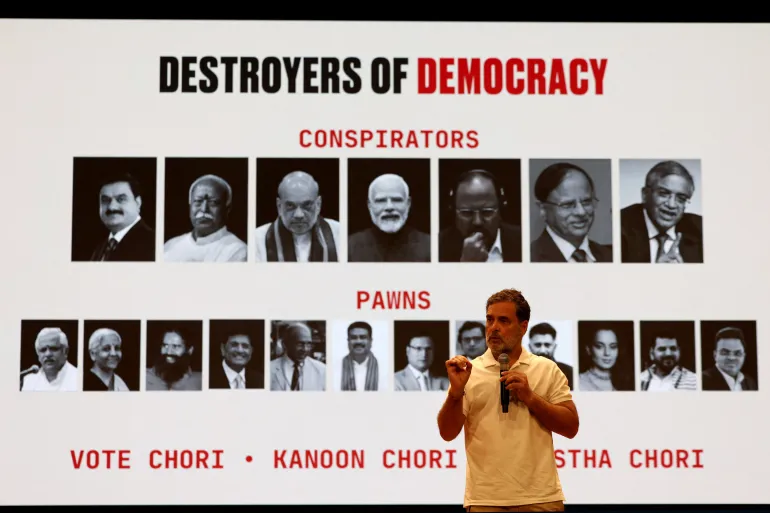
Indian opposition leader Rahul Gandhi speaks during a news conference to demand resignation of India’s Chief Election Commissioner Gyanesh Kumar, in New Delhi, India, September 24, 2026 [Bhawika Chhabra/Reuters]
What are the latest revelations about India’s Election Commission?
Earlier this week, the Indian Express newspaper published a series of stories, based on internal documents and interviews, laying bare divisions within the poll panel – consisting of three commissioners, Gyanesh Kumar, Sukhbir Singh Sandhu, and Vivek Joshi. Kumar is the commission’s chief.
Indian law requires the commission to decide by a majority. Reports revealed that Sandhu and Joshi resisted and questioned the legality of measures Kumar took unilaterally.
Since June last year, the commission has been revising and updating the voters list state-wise. It has struck off more than 13 million names during the exercise since then, which the critics say targeted economically weaker sections, minorities, and other vulnerable groups of Indian society disproportionately.
Opposition parties took the matter to the country’s top court, which largely signed off on the process to decide on who gets to vote in India. For India’s more than 1.4 billion population, a voting right does not end merely on ballots – rather, several government welfare schemes are tied to voting rights.
Now, reports reveal that some of the strongest resistance to the three-member commission’s decisions was coming from within. In fact, Sandhu and Joshi formally objected on record at least 14 times over the last 10 months to measures issued by circumventing them. Sandhu called it “unauthorised and illegal”.
Those objections related to the new voter registration mandate; deletion and restoration of voters in the rolls; appeals by people against deletions; and the security of the list. In short, everything the commission undertook.
The opposition has alleged that the additions and deletions of the voters are undertaken as an exercise to disenfranchise a section of voters to benefit Modi’s Bharatiya Janata Party (BJP).
The commission maintained that access to the voters’ list is highly secured and decentralised, meaning that even in the remotest parts of the country, a local officer made the judgement and decision.
But the latest revelations show that the commission relied on ECINet, a digital platform that logs nearly a billion voters, which was increasingly centralised, giving more control to New Delhi over editing calls.
In one instance, the newspaper reported that officials in the coastal state of Goa flagged nearly a hundred voters who were mistakenly taken out. Editing access was limited to New Delhi.
So, Goa’s chief electoral officer wrote eight emails to officials in New Delhi in a week before the deadline passed, but got no response and voters were knocked off the list.
An Indian Youth Congress activist, wearing a mask depicting Chief Election Commissioner Gyanesh Kumar and handcuffed, takes part in a protest in New Delhi, India, September 25, 2026 [Rajat Gupta/EPA]
Why is revision of voters’ list controversial?
The Special Intensive Revision (SIR), as the process of revising the list is called, has become controversial mainly because it places an unusually heavy burden on existing voters to prove their eligibility.
Such a drive requires people to produce old records, like birth, land, and education certificates – and puts poorer, migrant, and marginalised Indians at a disadvantage, essentially drawing lines on who gets to vote in India. A minor mismatch, such as a spelling, in decades-old records could result in being struck from the voters list in India.
Opposition parties and civil society groups have argued that mass deletions could significantly alter the electorate before elections.
In some places, the exercise has been reported to disenfranchise minorities, including Muslims. In the eastern state of West Bengal, Al Jazeera earlier reported that the exercise removed 9 million residents from the electoral rolls just days before the state elections that were held in April and May.
Nearly 34 percent of the deleted voters were Muslims in the state, where they only make up 27 percent of the population. Then, Prime Minister Modi’s Hindu majoritarian BJP came to power for the first time in the politically critical state.
The BJP and supporters of the SIR process have argued that it is fundamentally aimed at removing illegal migrants, the deceased or fraudulent voters from the rolls – and have tried to portray many Muslims eliminated from the lists in border states as “illegal Bangladeshi migrants,” despite hard evidence that Indian nationals have been victims of the process.
But as the exercise has been expanded to other parts of the country, those claims have increasingly returned to embarrass even proponents of the exercise: In New Delhi, notices were served to India’s Foreign Minister S Jaishankar and his wife, alongside other high-profile politicians, judges and senior bureaucrats. Several former Indian ambassadors to countries across the world have received notices to prove that they are Indian – even though they have served as India’s sovereign representatives abroad for years.
All of this has turned what was political opposition to the SIR process into much more broad-based, nationwide scepticism about the lack of transparency in the Election Commission’s software, the process of matching voters against decades-old electoral rolls, and the criteria being used to flag voters as having “logical discrepancies”.
“The [revision of voters’ list] fundamentally inverts India’s model of electoral democracy,” said Milan Vaishnav, a senior fellow and director of the South Asia programme at the Washington, DC-based nonpartisan think tank The Carnegie Endowment for International Peace.
“Since the adoption of the Constitution, India has assumed the burden of ensuring that the last man or woman is registered to vote,” he said. Vaishnav added that unlike other democracies, notably the United States, which has repeatedly thrown up barriers to the franchise, “India historically adopted an unusually activist approach to voter registration.”
“Specifically, the way in which [the revision] has been carried out threatens to turn that principle on its head,” he told Al Jazeera. “It is now the voter who must prove his or her entitlement to remain on the electoral rolls.”
Quraishi, the former election commissioner of India, told Al Jazeera that he has been against the policies taken up under the revision.
“I hope [these revelations] are a wake-up call and serious action will be undertaken, including at the Supreme Court, the central government, and the Parliament,” Quraishi told Al Jazeera.
“Because the reputation of the Election Commission has gone into the dumps. And it is very difficult to restore it now,” he said. “We need efforts to rebuild faith in the system.”
Abhijeet Dipke, head of the Cockroach Janta Party (CJP) speaks as the party’s conveners Ashutosh Ranka and Saurav Das look on during a news conference to demand the resignation of India’s Chief Election Commissioner Gyanesh Kumar, in New Delhi, India, September 24, 2026 [Bhawika Chhabra/Reuters]
What is the opposition demanding?
Leader of the opposition Rahul Gandhi has accused the Election Commission of “treason” against the nation, and promised that its leaders will be tried for it, if his Congress Party returns to power.
India’s popular Gen-Z pressure group, the Cockroach Janta Party, whose protest movement led to the ouster of India’s education minister in July, has threatened to hit the streets again if Kumar, the commission’s sitting chief, does not resign by Saturday.
The Cockroach group has also called for an overhaul in the selection process of the next election commissioner.
For its part, the election commission has said in a statement that the investigation report drew on “differing views and deliberations” between the three commissioners rather than official statements of protest. Sambit Patra, a spokesman for Modi’s party, told reporters that any deliberation or divisions in the commission were rather “a sign of a healthy democracy”.
But none of that appears to be cutting ice in a nation where far too many people have now faced the threat of losing their vote through an opaque process.
“Our elections are fundamentally broken,” said Gandhi at a news conference in New Delhi on Thursday. “The sacred belief in elections,” he added, was evaporating.
Aiming at Modi, Gandhi argued that the popularity of a leader could be understood, but not “how anti-incumbency disappears”.
“It doesn’t exist in North Korea. There is no democracy where anti-incumbency doesn’t work. We are looking for answers to where it went here,” Gandhi said, in effect questioning Modi’s re-election first in 2019 and then again in 2024, with a much-reduced mandate – even though there is no firm evidence of widespread voter manipulation helping Modi win those elections. “And we have found answers.”
Women voters stand in queues to cast their ballots at a polling station during the first phase of voting for assembly elections on November 6, 2025, at the Raghopur constituency in the Vaishali district of the Indian state of Bihar [Sachin Kumar/AFP]
What does it mean for Indian polity?
Asim Ali, a political analyst in New Delhi, said that the Indian republic is standing at a “dangerous moment, where we could see a breakdown of the republic.”
“We have reached a situation where every opposition party feels that the democratic guardrails have been destroyed,” Ali told Al Jazeera, adding that the allegations are about the worry that “independent institutions like the Election Commission and Supreme Court have become co-opted.”
The political cleavage has created an extreme polarisation of politics in India. “Politics has assumed a kind of existential stakes, where we have unrestrained politics of friend vs enemy,” he added.
Rasheed Kidwai, a political analyst and senior journalist who has covered the Indian government for several decades, told Al Jazeera that “impartiality is paramount” for the Election Commission.
“The fact is that Caesar’s wife should be above suspicion,” he said. “In India, we have seen difficult times, including a state emergency, but never was the role of the Election Commission compromised at this level.”
Kidwai noted that Modi’s party has ridiculed opposition parties’ concerns about free-and-fair elections, calling them sore losers. “The outcomes of a match are inconsequential, but at least the umpire should play fair,” he told Al Jazeera.
The major criticisms of Indian democracy in recent years have principally related to what happens in between elections, said Vaishnav of the Carnegie Endowment think tank.
While critics “pointed to the erosion of basic freedoms, an uneven rule of law, and the concentration of power in the hands of the executive,” Vaishnav said, “most observers have argued that when the electoral spotlight is on, India’s democracy remains remarkably robust and competitive.”
The conduct of the Election Commission is “now calling this distinction into question”, he added.
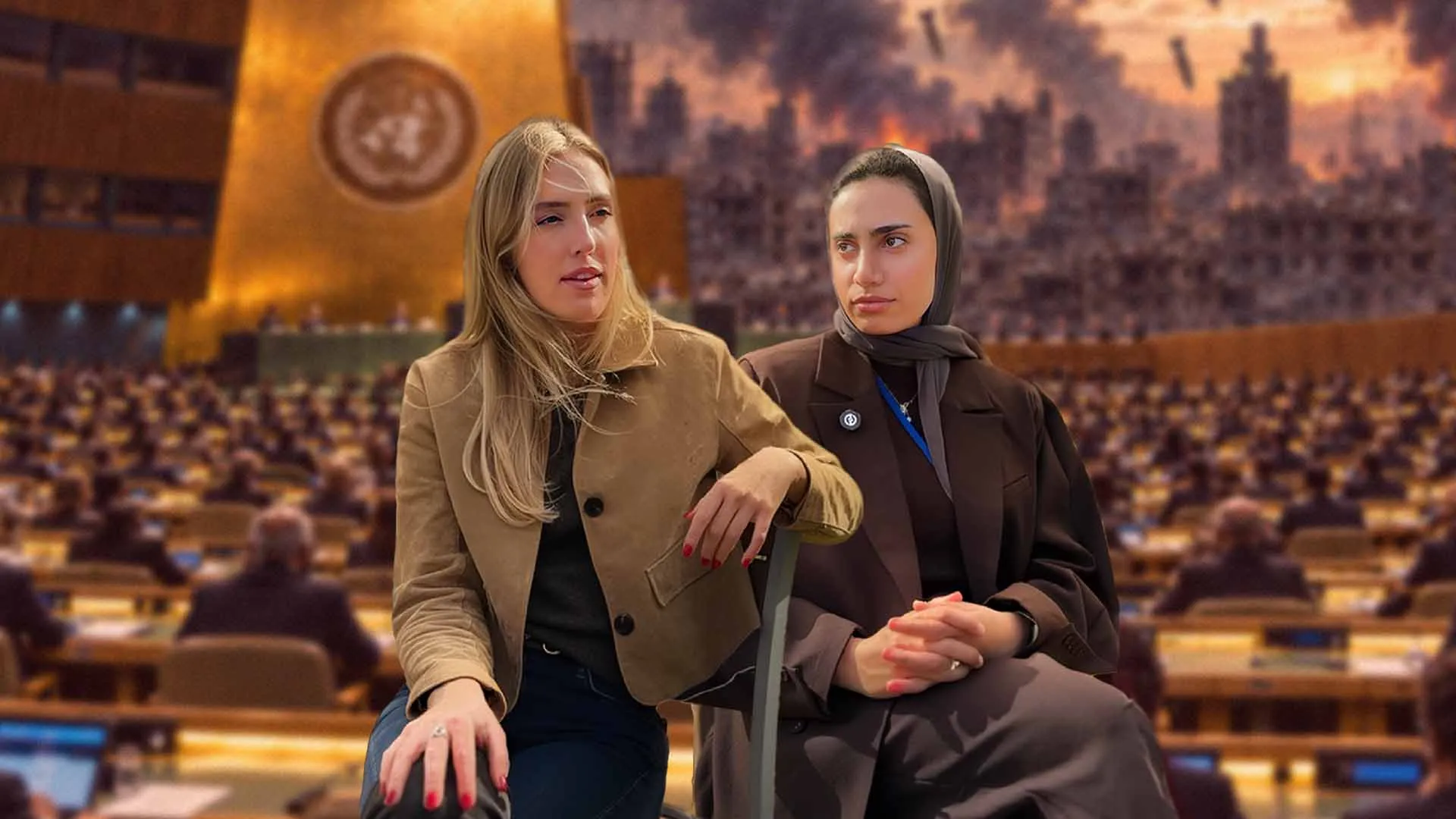
Leaders gather at the UN to talk peace, but the wars continue. Al Jazeera’s Emma Withrow asked Al Anoud Al Thani, Nonresident Fellow Middle East Council on Global Affairs, what diplomacy can achieve while the bombs are still falling.
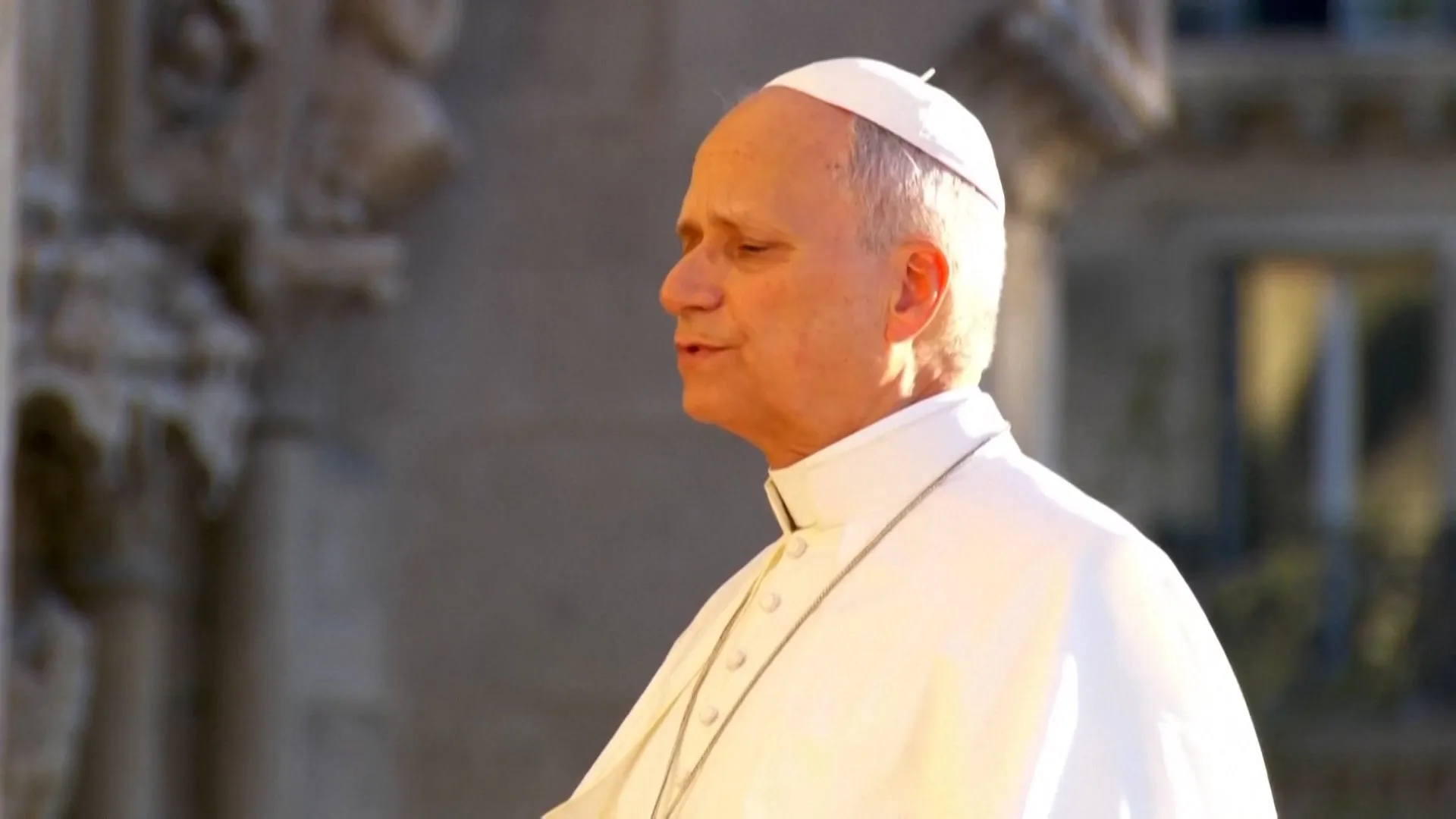
Pope Leo XIV drew huge crowds on the first Papal visit to France in 18 years. The Pope delivered a message of encouragement to thousands of young people during a mass in the Stade de France.
Civilians and senior military officials among 14 dead after an army plane crashes into a residential area in the DRC.
Published On 26 Sep 202626 Sep 2026
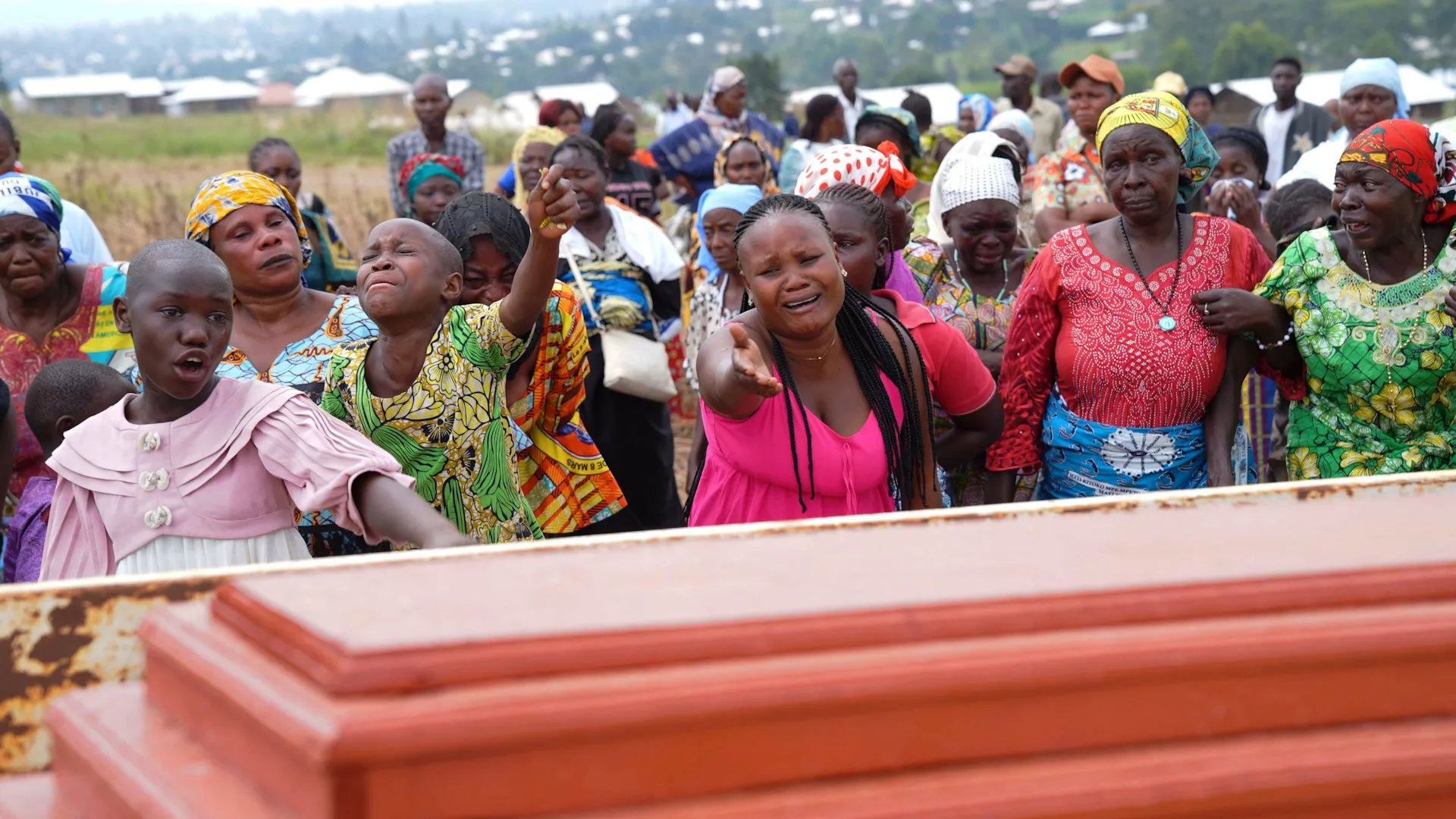
At least 14 people, including senior military officials, were killed on Friday when a Congolese army plane crashed in the southwest of the Democratic Republic of the Congo (DRC).
The plane was travelling to the capital, Kinshasa, from the southwestern city of Kikwit on Friday when it developed a technical fault and attempted to land in Kenge, in Kwango province.
Recommended Stories
list of 3 itemsend of list
Remy Saki Bokinda, deputy governor of Kwango, said: “With no landing strip available in Kenge, the plane crashed into a residential plot.”
Congolese military spokesperson Major-General Efomi Ekenge said 14 people had died in the crash.
“All those on board died; 12 were burned beyond recognition, while the pilot’s lifeless body was found outside the aircraft,” he said.
According to the military, among those killed were civilians and members of an official delegation travelling with the two generals, along with other military personnel.
Bokinda also said most of the bodies were burned beyond recognition and the pilot was found dead outside the wreckage.
An investigation has been opened to determine the cause of the accident, Ekenge said.
The DRC, a vast, mineral-rich country in central Africa, has endured decades of conflict, particularly along its eastern border with Rwanda, where several armed groups compete for control of lucrative mining areas.
The Congolese military has been battling a number of rebel groups that have claimed key cities in the country since last year.
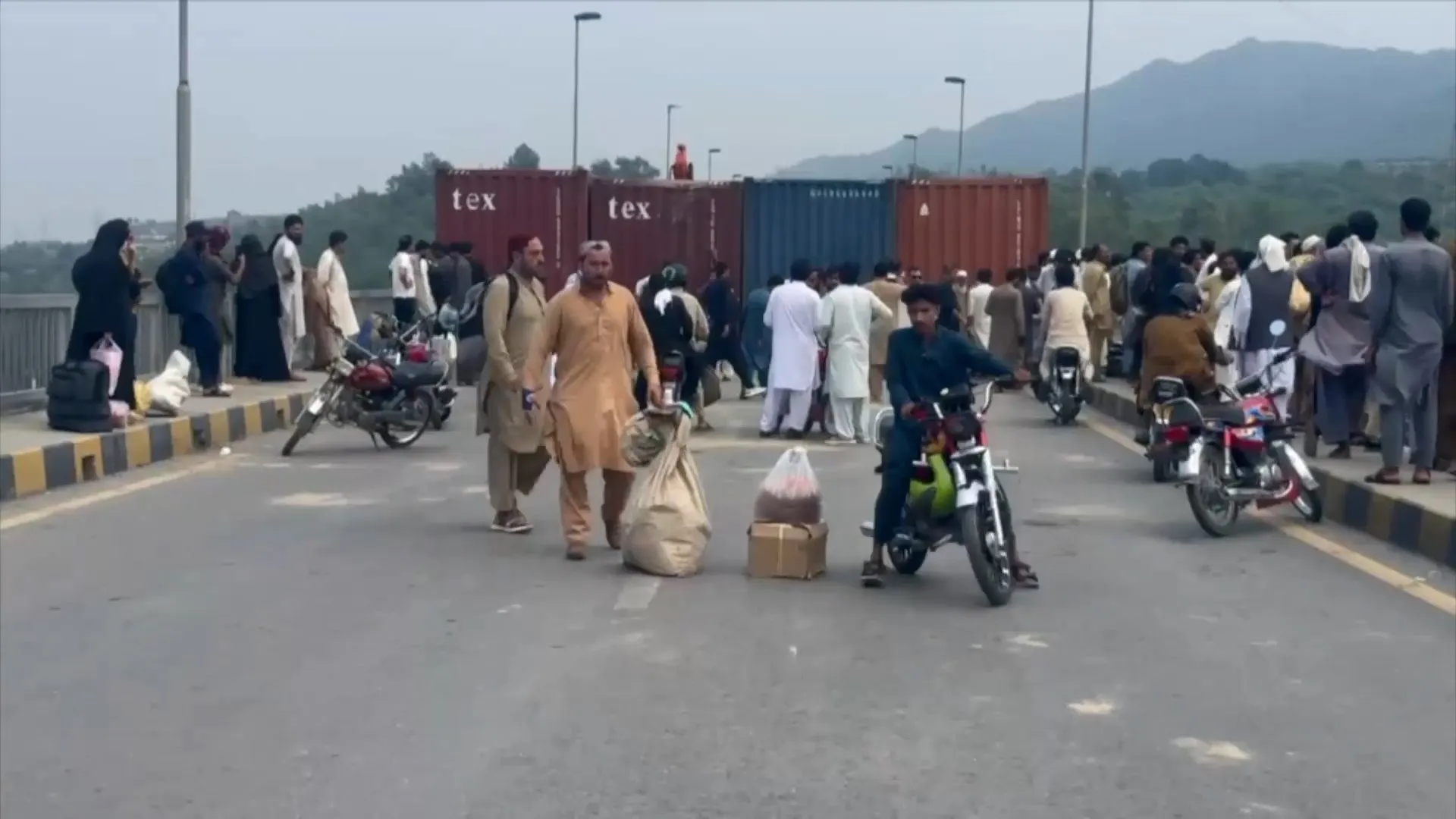
Organisers of the pro-Imran Khan protests have postponed their rallies to test the Pakistani government’s resolve in keeping the capital blockaded. Shipping containers have been placed in Islamabad’s streets to stop protests calling for the former PM’s release from prison.
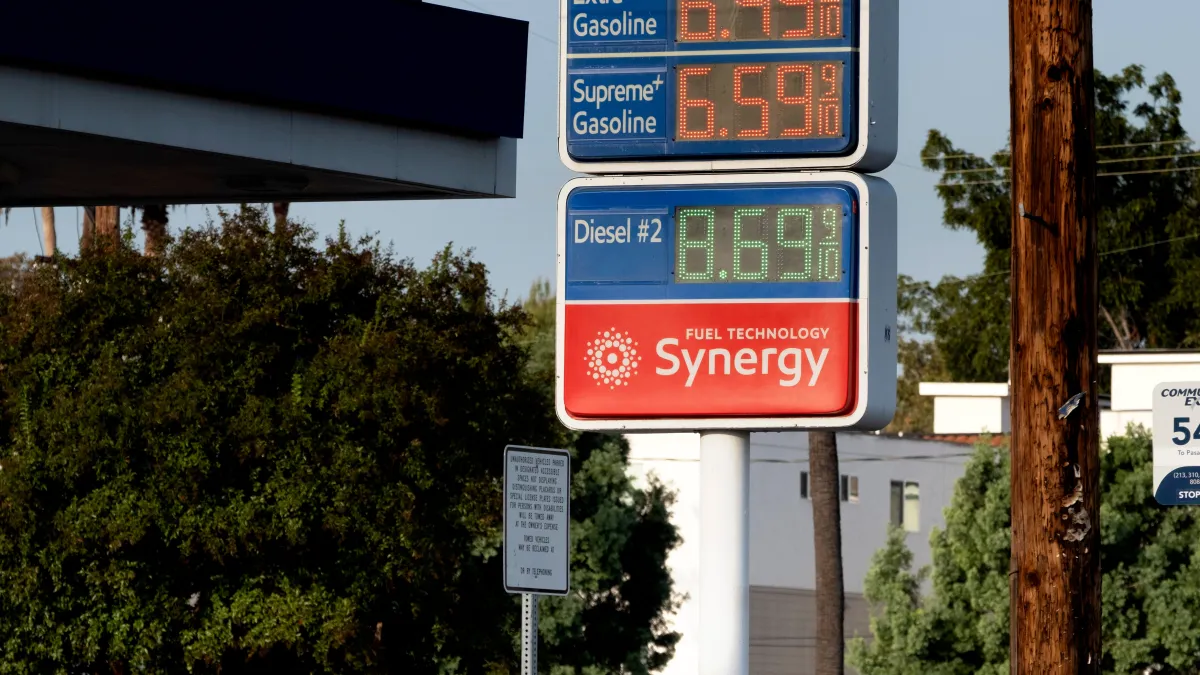
Diesel prices have hit record highs as the tensions between the United States and Iran, along with the war between Russia and Ukraine, disrupt key oil and fuel trade routes.
On Friday, the average price for a gallon (3.79 litres) of diesel was $6.50, up from $5.61 a month earlier, according to the American Automobile Association (AAA), which tracks fuel prices daily.
Recommended Stories
list of 4 itemsend of list
The spike has prompted the administration of US President Donald Trump and Republican lawmakers to consider restricting US diesel exports ahead of upcoming midterm elections.
A Reuters/Ipsos poll conducted in August found that 47 percent of voters said the cost of living was the single most important factor in deciding how they would vote in the midterms — more than twice the share who cited the next-most important issue, “democratic values and norms”.
A new Marist poll also found that Americans have more confidence in Democrats than Republicans to handle the economy, with 42 percent choosing Democrats compared with 34 percent for Republicans.
Amid that voter sentiment, US Energy Secretary Chris Wright said on Thursday that he was in touch with major oil refiners to gauge interest in a potential voluntary restriction on diesel exports, according to the Reuters news agency.
That followed remarks by Trump on Tuesday that he supported restricting diesel exports from the US, the world’s largest diesel exporter.
Energy analysts and industry groups have warned that an export ban could have unintended consequences, potentially pushing up fuel prices in the US and abroad.
Why are diesel prices so high?
Even though the US is the world’s largest diesel exporter, diesel is traded on a global market.
Disruptions to refineries in Russia and the Middle East have reduced the amount of fuel available worldwide, putting more pressure on US producers to fill the gap. In Russia, for example, drone attacks have damaged major refineries, forcing a cutback or halt in production.
“While US refineries are running at full tilt and higher than normal, the global gaps remain,” Rachel Ziemba, senior adjunct fellow at the Center for a New American Security, told Al Jazeera.
It comes as US diesel supplies are also shrinking. As of September 11, inventories had fallen to 107.9 million barrels, the lowest in more than four decades, according to the US Energy Information Administration.
With global supplies tightening, diesel prices have risen around the world — including in the US. Because American producers can sell their fuel into the global market, they are drawn to the soaring global prices rather than simply setting a lower price for domestic consumers.
Why is the US considering an export ban?
In Washington, DC, leaders have flirted with the idea of pushing US companies to stop or slow exporting diesel.
Republicans have been pushing for a slowdown or outright ban of exports in an effort to lower costs for consumers ahead of the pivotal midterm elections, where cost of living is becoming a critical issue.
Such a move, they hope, would reduce local diesel prices, which is significant as diesel is used in trucks to haul food and most products, Ziemba said, adding that US diesel exports are equivalent to about 40 percent of domestic consumption.
On Tuesday, Chuck Grassley, a Republican from Iowa, called on the president to put in place a temporary halt on exports.
“I encourage President Trump to put a temporary embargo on diesel exports through executive action,” Grassley said.
Republican Senator Dan Sullivan of Alaska made a similar call: “The cost of diesel is just too damn high. I’m calling for a temporary pause of American diesel exports so that we can rebuild our reserves ahead of winter,” Sullivan said in a statement on Tuesday.
In the House of Representatives, Congressman Tim Burchett of Tennessee introduced two bills that would restrict US diesel exports: One would impose a ban through January 2027, while the other would restrict exports if the national average price reaches $5 a gallon.
The administration has not made any official policy announcements, and the White House told Al Jazeera that the president is evaluating all options.
Oil and gas industry experts say that a ban could drive up prices rather than bringing them down.
“Diesel trades on a world market, just like corn. farmers don’t sell cheaper to Americans, and refiners can’t either since they buy crude at global prices. force a lower price and they’ll make less diesel. less supply means higher prices, not lower,” Patrick De Haan, head of petroleum analysis at GasBuddy, said in a post on X.
How would an export ban work?
A ban would prevent or restrict US refiners from selling diesel to buyers overseas, theoretically leaving more fuel available in the domestic market.
Analysts at Wood Mackenzie, a research and consulting firm, say that keeping more diesel stateside would ultimately fill up US storage tanks but also force refineries to cut production. That could affect other markets that rely heavily on US fuel, including Latin America and Europe, forcing them to compete with other global buyers for supplies and driving up prices for the global market.
Wood Mackenzie says China is the only major producer with enough spare refining capacity to potentially make up much of the shortfall.
“China is currently the only country with material spare refining capacity that could cover the loss of US refinery throughputs. However, China may well decide it is not in its interest to intercede,” analysts said.
Wood Mackenzie has warned that a ban could quickly fill US diesel inventories, forcing refiners to cut crude runs and potentially increasing US petrol imports.
That was also the view of an S&P Global analysis, which found that a complete ban could also mean that production would be reduced as storage capacity is filled up with unsold diesel. According to the analysis, that could lead to production cuts of as much as 750,000 barrels a day, which could put the US into being a net importer of petrol in the fourth quarter of this year.
Who would an export ban affect?
An export ban would affect US refiners and consumers, as well as countries that rely on US diesel.
“They [export bans] may provide temporary relief, but diesel is a global commodity. Treat one part of the system, and the effects travel elsewhere. Trade-offs are inevitable. Refiners are unlikely to cheer a blanket ban. Voluntary, controlled export reductions would generally be less disruptive in the short term,” Maksim Sonin, visiting scholar at Stanford University’s Precourt Institute for Energy, told Al Jazeera.
Disruptions to US exports could reduce the amount of fuel available on the global market. Wood Mackenzie analysts say countries in Europe and Latin America that rely heavily on US fuel could be forced to compete with other producers for supplies.
“If implemented, it would lead to European and Asian product prices increasing as the buyers of US fuel, mostly in Latin America, scramble to find new supplies, bidding up supplies. European crack spreads could widen, and overall we might see more disruptions,” Ziemba added.
“Given these issues, the US may opt for a mixture of carrots and sticks aiming to incentivise refineries to keep producing, perhaps including penalties if they cut production. There may be voluntary export quotas rather than a formal ban, and there may be exemptions for countries that provide crude oil to the US, like Mexico,” Ziemba said.
That could put pressure on consumers not only at the petrol pump but in the skies as well.
Airlines for America, an airline industry trade group, has also warned that an export ban could lead to higher prices for airlines and travellers, according to the Reuters news agency. The trade group did not respond to Al Jazeera’s request for comment.
The broader concern from analysts is that restricting exports could reduce US refinery production rather than simply redirecting diesel to US consumers, potentially putting upward pressure on fuel prices both domestically and internationally.
“It’s unlikely to help US consumers much given how it fails to solve underlying problems and could backfire if refineries hold on to production. The best way to address this is to end the conflicts prompting the shortages,” Ziemba said.
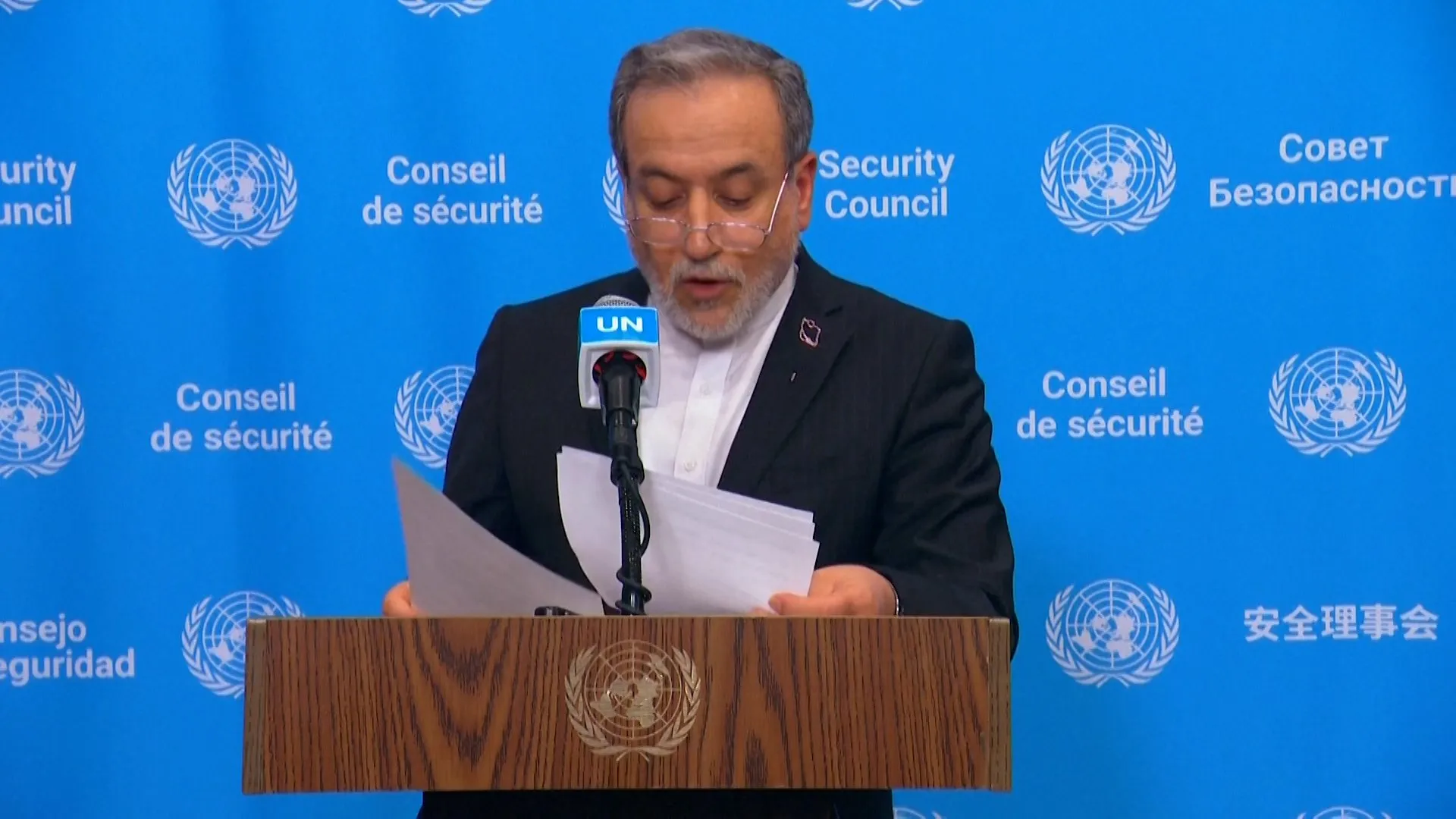
Iran will reopen the Strait of Hormuz within seven days, but the choice now rests with the US, says Iranian Foreign Minister Abbas Araqchi who spoke from the United Nations. The plan is based on the previously-agreed-upon Memorandum of Understanding (MOU) brokered in June.
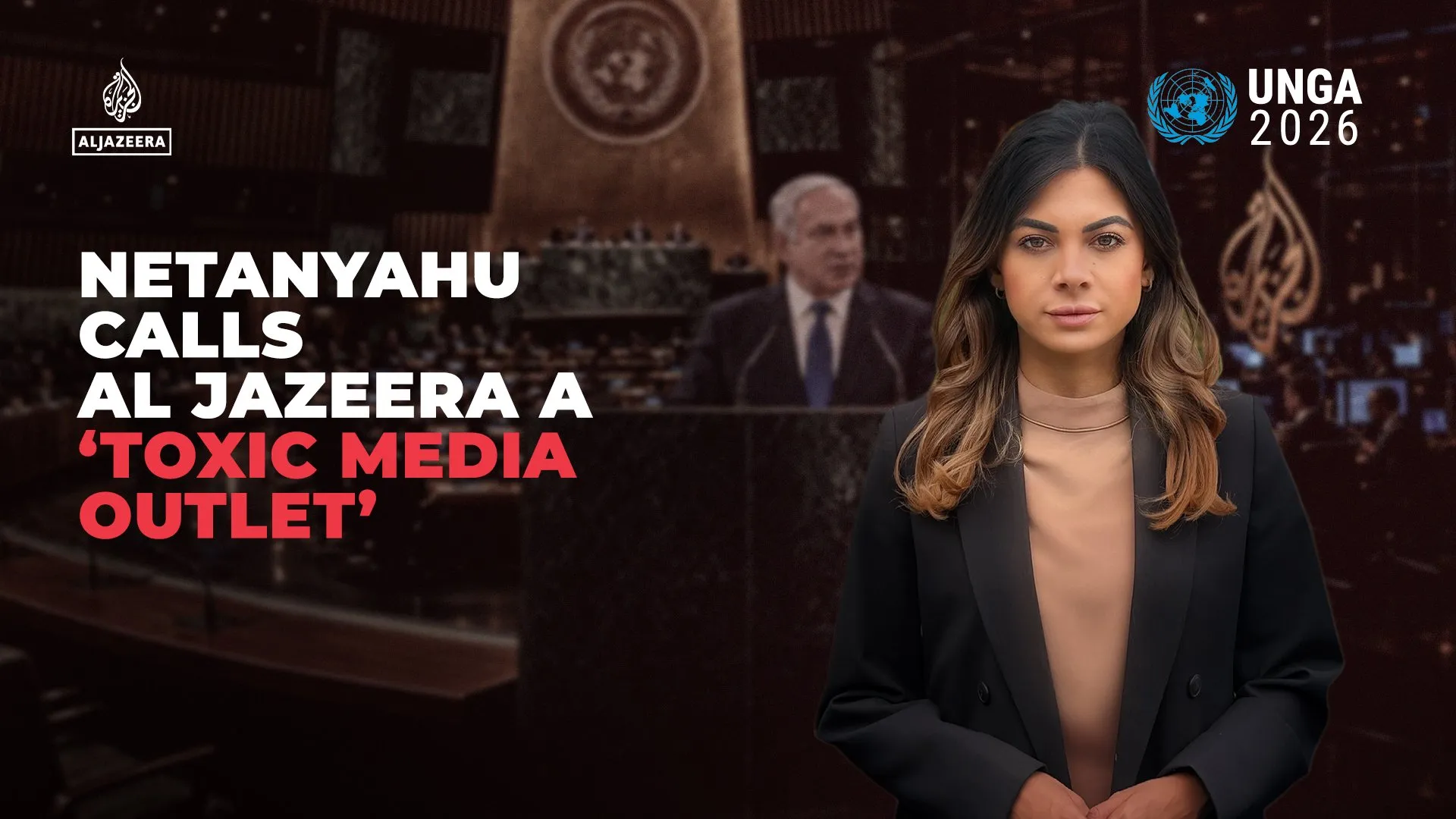
Israeli Prime Minister Benjamin Netanyahu called Al Jazeera a “toxic media outlet” and described the media as an “eighth front” in Israel’s war. But Israel has killed Palestinian journalists, shut down Al Jazeera’s operations and restricted media access to Gaza. Al Jazeera’s Noor Wazwaz explains.