Discover the latest happenings and stay in the know with our up-to-date today news coverage. From breaking stories and current events to trending topics and insightful analysis, we bring you the most relevant and captivating news of the day.
New telecommunications cable damage discovered in Finland’s exclusive economic zone.
Published On 31 Dec 202531 Dec 2025
Share
Finnish authorities have seized a vessel suspected of intentionally severing undersea telecommunications cables amid fears of Russian sabotage in the Gulf of Finland.
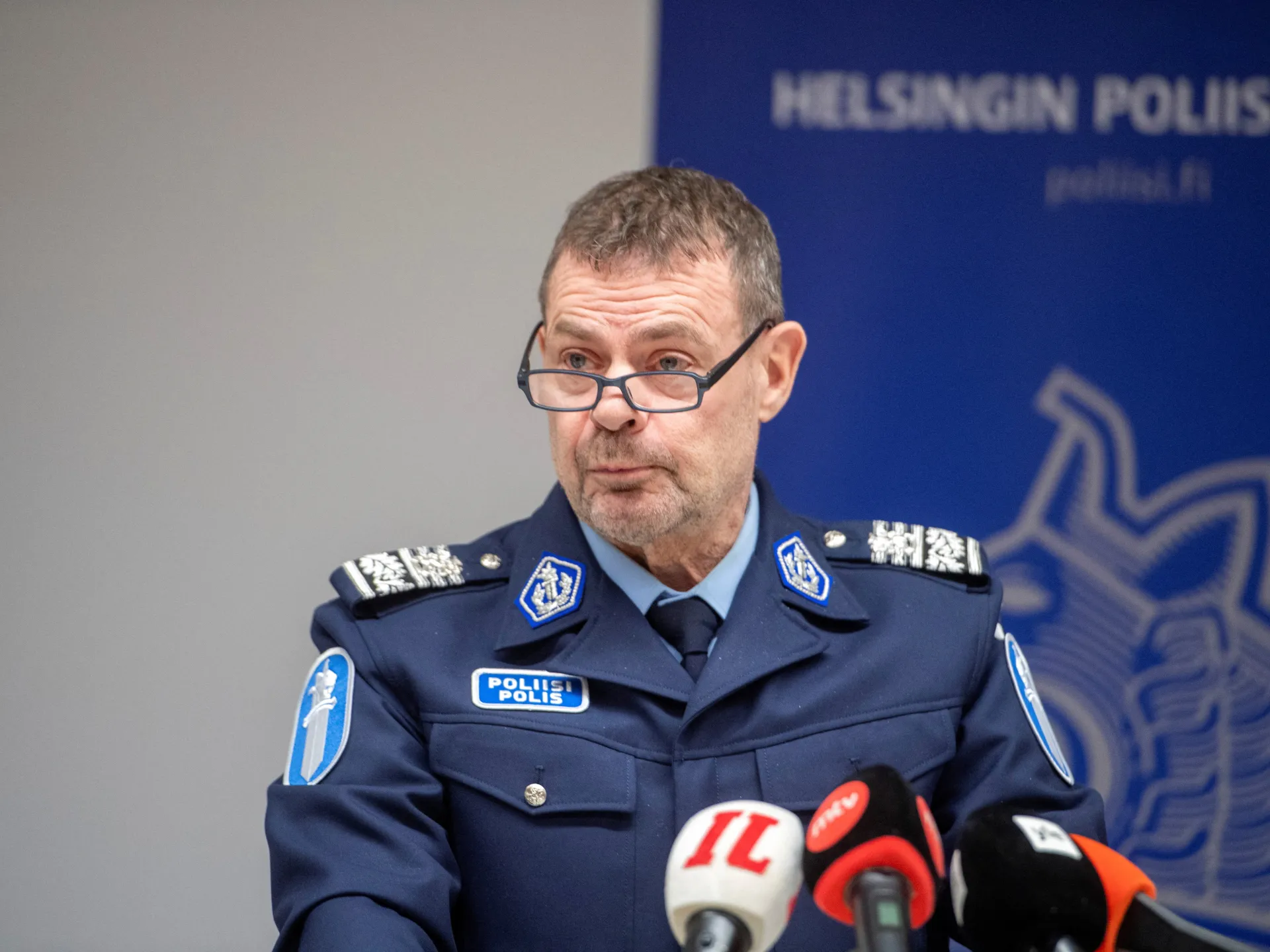
The seized cargo vessel Fitburg was en route from the Russian port of St Petersburg to Israel at the time of the incident on Wednesday, Finnish Border Guard officials said at a news conference in Helsinki.
Recommended Stories
list of 3 itemsend of list
The Fitburg was dragging its anchor in the sea and was directed to Finnish territorial waters, the police and Border Guard said.
Helsinki police opened an investigation into potential aggravated criminal damage and aggravated interference with telecommunications.
The Fitburg’s 14 crew members were from Russia, Georgia, Kazakhstan and Azerbaijan and were all detained by Finnish police, investigators said. The ship sailed under the flag of St Vincent and the Grenadines.
“Finland is prepared for security challenges of various kinds, and we respond to them as necessary,” Finnish President Alexander Stubb said in a statement.
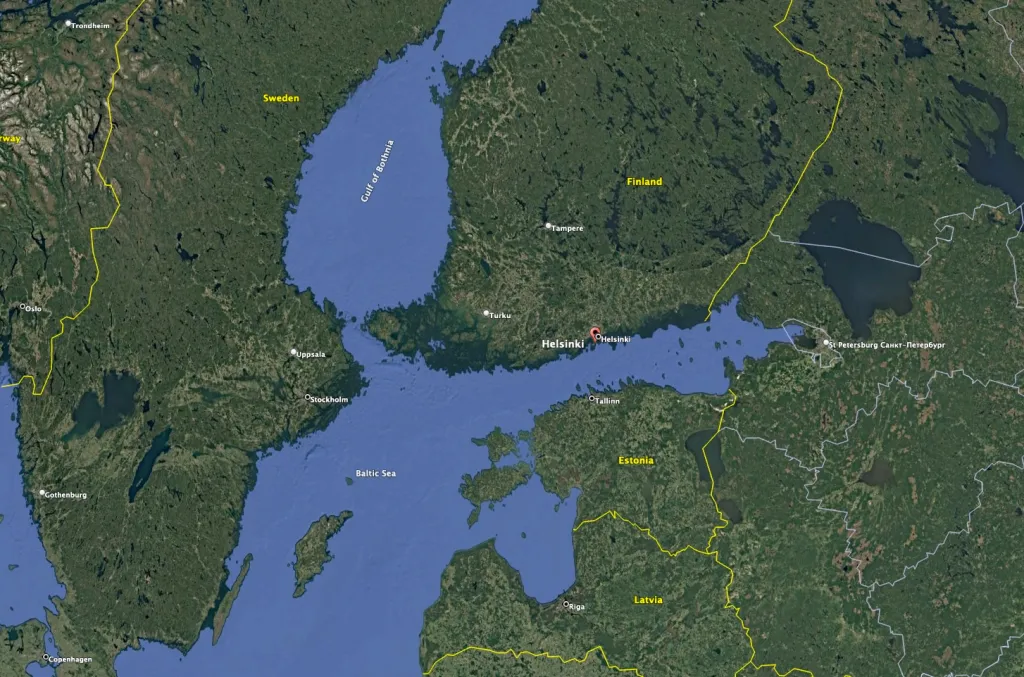
Part of the Baltic Sea, the Gulf of Finland is bordered by Estonia, Finland and Russia. The area has been hit by a string of similar incidents in recent years.
The undersea cable belongs to telecommunications service provider Elisa and is considered to be critical underwater infrastructure for Finland.
The company said in a statement the cable damage has “not affected the functionality of Elisa’s services in any way”, noting services have been rerouted. Earlier, Elisa said it had detected a fault in its cable and reported it to Finnish authorities.
NATO has boosted its presence in the Baltic with frigates, aircraft and naval drones in recent years.
“We remain in contact with the Finnish authorities through exchange of information via the NATO shipping centre located at our Allied Maritime Command in Northwood, UK,” an official at the military alliance said.
A deliberate act?
Estonia’s Ministry of Justice and Digital Affairs said a second telecoms cable connecting the country to Finland also suffered an outage on Wednesday. It’s unclear whether the incidents are related.
“I’m concerned about the reported damage. … Hopefully it was not a deliberate act, but the investigation will clarify,” Estonian President Alar Karis said on X.
Energy and communications infrastructure, including underwater cables and pipelines, have been damaged in the Baltic Sea in recent years.
Since Russia’s full-scale invasion of Ukraine in February 2022, many security analysts and political leaders have viewed cable sabotage as part of a “hybrid war” carried out by Russia against NATO countries and their allies.
On Christmas Day 2024, the Cook Islands-registered oil tanker Eagle S cut five cables in the Gulf of Finland after dragging its anchor on the seabed for 90km (56 miles).
In October, Helsinki’s District Court ruled it did not have jurisdiction to hear a case against the ship’s three senior officers. It said it was up to the vessel’s flag state or the defendants’ home countries – Georgia and India – to try them
Bulgaria is saying goodbye to the lev and officially adopting the euro, but some citizens worry that shops will round up when changing currencies, making everything more expensive. Al Jazeera’s Aksel Zaimovic explains their concerns.
Weekly insights and analysis on the latest developments in military technology, strategy, and foreign policy.
Finnish authorities have seized a Turkish-owned cargo vessel suspected of damaging an undersea telecommunications cable running from Helsinki to Talinn, Estonia. This marks the first incident involving suspected sabotage of critical undersea infrastructure in the region since the creation of a NATO task force nearly a year ago to defend those cables, a NATO official told us.
The situation began early Wednesday local time after the Finnish Elisa telecommunications company “detected a fault in its telecommunications cable between Helsinki and Tallinn,” according to the Finnish Border Guard. The cable runs for about 40 miles between the two nations under the strategically important Gulf of Finland, which is bordered by Russia, Finland and Estonia and leads to the Baltic Sea. The damage occurred somewhere in Estonia’s exclusive economic zone (EEZ), officials claim.
“Elisa reported the matter to the Border Guard’s command center. The Border Guard immediately began investigating the damage to the critical underwater infrastructure.”
@Merivartiosto‘n johtokeskus vastaanotti tiedon @ElisaOyj tietoliikennekaapelin vaurioitumisesta Suomenlahdella. VL Turva tavoitti aluksen ja totesi aluksen ankkuriketjun olevan vedessä. Suomen viranomaiset ovat ottaneet aluksen haltuun yhteisoperaationa. pic.twitter.com/YTILoTwExt
The Border Guard’s offshore patrol vessel Turva and a helicopter found the suspect ship, a St. Vincent Grenadines-flagged general cargo vessel named Fitburg, inside Finland’s exclusive economic zone, officials explained. The vessel is “suspected of causing the damage to the cable through its operations,” the Border Guard added.
“The vessel’s anchor chain was found to be in the sea,” the Border Guard noted, adding that it “asked the vessel to stop and raise the anchor chain.”
The Fitburg was then ordered to move to Finnish territorial waters, where Finnish authorities “took possession of the vessel as a joint operation.”
Finnish authorities said that a telecommunications cable running between Finland and Estonia under the Gulf of Finland was damaged by cargo ship.(Google Earth)
“Finnish authorities have inspected the vessel suspected of causing the cable damage in the Gulf of Finland,” Finnish President Alexander Stubb stated on X. “Finland has prepared for various security challenges and we respond to them in the manner required by the situation.”
Responsibility for the case has since been transferred from the Gulf of Finland Coast Guard to the Helsinki Police Department.
“The police have been in contact with the Prosecutor General’s Office and the Prosecutor General has issued a relevant indictment,” the Border Guard stated. “The police are currently investigating the events under the criminal charges of suspected aggravated damage, suspected attempted aggravated damage and suspected aggravated interference with telecommunications.”
The Fitburg is owned and operated by the Turkish Albros Shipping & Trading company, according to BalticShipping.com. We reached out to the company for more details about the incident and will update this story with any pertinent details provided.
As of Wednesday evening local time, Finnish authorities had yet to offer a motive for the cable damage and did not assign any blame beyond the ship itself. However, the damage occurred amid growing concerns about Russian hybrid warfare against NATO nations. That is just below the threshold of armed conflict and comes at a time of mounting tensions between Moscow and the alliance as the war in Ukraine drags on.
Almost exactly a year ago, Finnish authorities seized the Russian-linked oil tanker Eagle S, accusing it of dragging its anchor on the sea floor to break an underwater cable running from Finland to Estonia. The ship was later found to be full of spy equipment. You can see the Eagle S being seized in the following video.
Police in Finland say Eagle S crew detained as Estlink-2 cable damage probe continues
Baltic Sentry has deployed warships and aircraft from several nations to help deter sabotage incidents. In addition, a U.K.-led 10-member consortium of northern European nations called the Joint Expeditionary Force (JEF) reactivated an AI-based system to track suspicious ships in these waters.
A NATO official we spoke with on Wednesday declined to comment on the specifics of today’s telecommunications cable break. However, he did reiterate that Baltic Sentry was created to keep incidents like this from happening
“Since Baltic Sentry began in early 2025, and before this current incident, still under investigation, there have been zero incidents of maligned damage to sea cables in the Baltic Sea,” a NATO official told us Wednesday morning.
NATO’s nearly-year-old Baltic Sentry mission was created to defend undersea infrastructure in the region. (Forsvaret)
“Baltic Sentry plays a role in our deterrence efforts along with expedient responses when suspicious incidents occur,” the official added. “In this case, NATO is supporting Finland with analysis and information exchange from our NATO shipping center to assist Finland with their response.”
“These incidents are more broadly actioned beyond just regional navies and militaries,” the NATO official noted. “As in the case of the current incident, this is a national and local police investigation led by national authorities.”
There is still much we don’t know about this incident. However, regardless of whether this was intentional or not, the episode again highlights the precarious nature of important undersea cables.
“Bienvenue a Bamako!” The fixer, the minder and the men linked to the Malian government were waiting for us at the airport in Bamako. Polite, smiling – and watchful.
It was late December, and we had just taken an Air Burkina flight from Dakar, Senegal across the Sahel, where a storm of political upheaval and armed violence has unsettled the region in recent years.
Recommended Stories
list of 3 itemsend of list
Mali sits at the centre of a reckoning. After two military coups in 2020 and 2021, the country severed ties with its former colonial ruler, France, expelled French forces, pushed out the United Nations peacekeeping mission, and redrew its alliances
Alongside Burkina Faso and Niger, now also ruled by military governments backed by Russian mercenaries, it formed the Alliance of Sahel States (AES) in September 2023. Together, the regional grouping withdrew from the wider Economic Community of West African States (ECOWAS) bloc, accusing it of serving foreign interests rather than African ones.
This month, leaders from the three countries converged in Bamako for the Confederal Summit of Heads of State of the AES, the second such meeting since the alliance was formed. And we were there to cover it.
The summit was a ribbon-cutting moment. Leaders of the three countries inaugurated a new Sahel Investment and Development Bank meant to finance infrastructure projects without reliance on Western lenders; a new television channel built around a shared narrative and presented as giving voice to the people of the Sahel; and a joint military force intended to operate across borders against armed groups. It was a moment to celebrate achievements more than to sign new agreements.
But the reason behind the urgency of those announcements lay beyond the summit hall.
In this layered terrain of fracture and identity, armed groups have found room not only to manoeuvre, but to grow. Jama’at Nusrat al-Islam wal-Muslimin (JNIM), an al-Qaeda affiliate, has expanded from rural Mali, launching attacks across the region and reaching the coast of Benin, exploiting weak state presence and long-unresolved grievances.
As our plane descended toward Bamako, I looked out at an endless stretch of earth, wondering how much of it was now under the control of al-Qaeda affiliates.
From the airport, our minders drove us fast through the city. Motorbikes swerved around us, street hawkers peddled their wares, and Malian pop blared from speakers. At first, this did not feel like a capital under siege. Yet since September, armed groups have been operating a blockade around Bamako, choking off fuel and goods, the military government said.
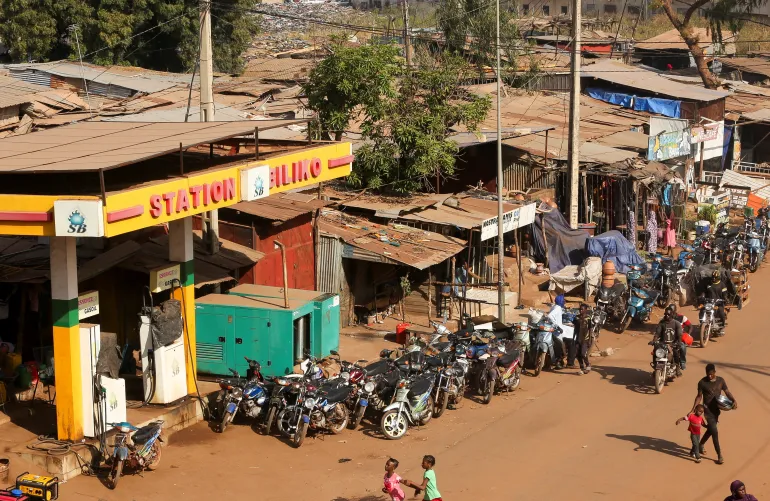
We drove past petrol stations where long queues stretched into the night. Life continued even as fuel grew scarce. People sat patiently, waiting their turn. Anger seemed to have given way to indifference, while rumours swirled that the authorities had struck quiet deals with the very fighters they claimed to be fighting, simply to keep the city moving.
Motorcycles line up near a closed petrol station, amid ongoing fuel shortages caused by a blockade imposed by al Qaeda-linked fighters in early September, in Bamako, Mali [Stringer/Reuters]
‘To become one country, to hold each other’s hand’
Our minders drove us on to the Sahel Alliance Square, a newly created public space built to celebrate the union of the three countries and its people.
On the way, Malian forces sped past, perhaps toward a front line that feels ever closer, as gunmen linked to JNIM have set up checkpoints disrupting trade routes to the capital in recent months. In September 2024, they also carried out coordinated attacks inside Bamako, hitting a military police school housing elite units, nearby neighbourhoods, and the military airport on the city’s outskirts. And yet, Bamako carries on, as if the war were taking place in a faraway land.
At Sahel Alliance Square, a few hundred young people gathered and cheered as the Malian forces went by, drawn by loud music, trivia questions on stage and the MC’s promise of small prizes.
The questions were simple: Name the AES countries? Name the leaders?
A microphone was handed to the children. The alliance leaders’ names were drilled in: Abdourahamane Tchiani of Niger. Ibrahim Traore of Burkina Faso. Assimi Goita of Mali. Repeated again and again until they stuck.
Correct answers won a prize: a T-shirt stamped with the faces of the alliance leaders.
Moussa Niare, 12 years old and a resident of Bamako, clutched a shirt bearing the faces of the three military leaders.
“They’ve gathered together to become one country, to hold each other’s hand, and to fight a common enemy,” he told us with buoyant confidence, as the government’s attempt to sell the new alliance to the public appeared to be cultivating loyalty among the young.
France out, Russia in
While Mali, Burkina Faso and Niger went through separate political transitions, the paths that brought them into a shared alliance followed a similar pattern.
Between 2020 and 2023, each country saw its democratically elected leadership removed by the military, the takeovers framed as necessary corrections.
In Mali, Colonel Goita seized power after months of protest and amid claims that President Ibrahim Boubacar Keita had failed to curb corruption or halt the advance of armed groups.
In Burkina Faso, the army ousted President Roch Marc Christian Kabore in early 2022 as insecurity worsened; later that year, Captain Traore emerged from a counter-coup, promising a more decisive response to the rebellion.
In Niger, soldiers led by General Tchiani detained President Mohamed Bazoum in July 2023, accusing his government of failing to safeguard national security and of leaning too heavily on foreign partners.
What began as separate seizures of power have since become a shared political project, now expressed through a formal alliance. The gathering in Bamako was to give shape to their union.
One of the key conclusions of the AES summit was the announced launch of a joint military battalion aimed at fighting armed groups across the Sahel.
This follows months of escalating violence, as regional armies assisted by Russian mercenaries push back against armed groups who have been launching attacks for over a decade.
Under the previous civilian governments, former colonial ruler France had a strong diplomatic and military presence. French troops, whose presence in the region dates back to independence, are now being pushed out, as military rulers recast sovereignty as both a political and security imperative. The last troops left Mali in 2022, but at its peak, France had more than 5,000 soldiers deployed there. When they withdrew, the country became a symbol of strategic failure for France’s Emmanuel Macron.
But even before that, French diplomacy appeared tone deaf, and patronising at best, failing to grasp the aspirations of its former colonies. The common regional currency, the CFA franc, still anchored to the French treasury, has become a powerful symbol of that resentment.
Now, French state television and radio have been banned in Mali. In what was once the heart of Francophone West Africa, French media has become shorthand for interference. What was lost was not only influence, but credibility. France was no longer seen as guaranteeing stability, but as producing instability.
Across the Sahel and beyond, anti-French sentiment is surging, often expressed in French itself – the language of the coloniser is now also the language of resistance.
Captain Ibrahim Traore of Burkina Faso attends the Alliance of Sahel States (AES) second summit in Bamako, Mali [Mali Government Information Center via AP]
‘Like a marriage of reason’
At the end of the summit, Mali’s Goita was preparing to hand over the AES’s rotating leadership to Traore of Burkina Faso.
Young, charismatic, and the new rock star of Pan-Africanism, Traore, in particular, has captured young audiences with help from a loose ecosystem of pro-Russian messaging and Africanist influencers. Across social media platforms, short videos circulate relentlessly: speeches clipped for virality, images of defiance, and slogans reduced to shareable fragments.
Meanwhile, in Burkina Faso, journalists and civil society actors who have criticised the military rules have been sent to the front line under a conscription policy introduced by Traore. Human rights groups outspoken about alleged extrajudicial killings say they have been silenced or sidelined. But much of it is dismissed as collateral, the price, supporters argue, of sovereignty finally reclaimed.
Before the ceremony, we met Mali’s finance minister. At first, he was confident, rehearsed, assured. But when pressed about financing for the ambitious infrastructure projects the three governments have laid out for the Sahel, his composure faltered and his words stuttered. This was a government official unaccustomed to being questioned. The microphone was removed. Later, away from the camera, he told me, “The IMF won’t release loans until Mali has ironed out its relations with France.”
The spokesperson, irritated by my questions, took me aside. As he adjusted the collar of my suit, slowly and patronisingly, he said he sometimes thought about putting journalists in jail “just for fun”.
He did not question the organisation I worked for. He questioned my French passport; my allegiance. I told him my allegiance was to the truth. He smiled, as if that answer confirmed his suspicions.
In the worldview of Mali’s military government – men shaped by years on the front line, living with a permanent sense of threat – journalists and critics are part of the problem. Creating safety was the challenge. The alliance, the spokesperson explained, was the solution to what they could not find within regional body, ECOWAS.
The half-century-old West African institution is a bloc that the three countries had once helped shape. Now, the AES leaders say its ageing, democratically elected presidents have grown detached, more invested in maintaining one another in office than in confronting the region’s crises. In response, they are promoting the AES as an alternative.
As the Sahel alliance grows, it’s also building new infrastructure.
At its new television channel in Bamako, preparations were under way. The ON AIR sign glowed. State-of-the-art cameras sat on tripods like polished weapons.
The channel’s director, Salif Sanogo, told me it would be “a tool to fight disinformation,” a way to counter Western, and more specifically French, narratives and “give voice to the people of the Sahel, by the people of the Sahel”.
The cameras had been bought abroad. The installation was overseen by a French production company. The irony went unremarked.
To defend the alliance, he offered a metaphor. “It’s like a marriage of reason,” he said. “It’s easier to make decisions when you’re married to three. When you’re married to 15, it’s a mess.” He was referring to the 15 member states of ECOWAS.
‘We will survive this, too’
Two years into the AES alliance, they have moved faster than the legacy regional bloc they left behind. A joint military force now binds their borders together, presented as a matter of survival rather than ambition. A mutual defence pact recasts coups and external pressure as shared threats, not national failures. A common Sahel investment and development bank, meant to finance roads, energy, and mineral extraction without recourse to Western lenders, offers sovereignty, they say, without conditions. A common currency is under discussion.
A shared news channel is intended to project a single narrative outward, even as space for independent media contracts at home. And after withdrawing from the International Criminal Court, they have proposed a Sahel penal court, one that would try serious crimes and human rights violations on their own terms. Justice brought home, or justice brought under control, depending on who you ask.
What is taking shape is not just an alliance, but an alternative architecture, built quickly, deliberately, and in full view of its critics.
Where ECOWAS built norms slowly, through elections, mediation, and consensus, AES is building structure. Where ECOWAS insists on patience, AES insists on speed.
To supporters, this is overdue self-determination, dignity restored after decades of dependency. To critics, it is power concentrated in uniforms, accountability postponed, repression dressed up as emancipation.
From the summit stage as he took over the alliance’s leadership, Traore redrew the enemy: Not al-Qaeda. Not ISIL. Not even France. But their African neighbours, cast as the enemy within. He warned of what he called a “black winter”, a speech that held the room and travelled far beyond it, drawing millions of viewers online.
“Why are we, Black people, trying to cultivate hatred among ourselves,” he asked, “and through hypocrisy calling ourselves brothers? We have only two choices: either we put an end to imperialism once and for all, or we remain slaves until we disappear.”
Away from the summit’s “black winter”, under a sunlit sky in Bamako, life moved on with a quieter rhythm. Music drifted through public squares and streets, carrying a familiarity that cut across the tension of speeches and slogans. It was Amadou and Mariam, Mali’s most internationally known musical duo, whose songs once carried the country’s everyday joys far beyond its borders. Amadou died suddenly this year. But the melody lingers.
Its lyrics hold the secret of the largest alliance of all. Not one forged by treaties or uniforms, but by people, across Mali and the Sahel, in all their diversity.
“Sabali”, Mariam sings.
“Forbearance.
“We have survived worse. We will survive this, too.”
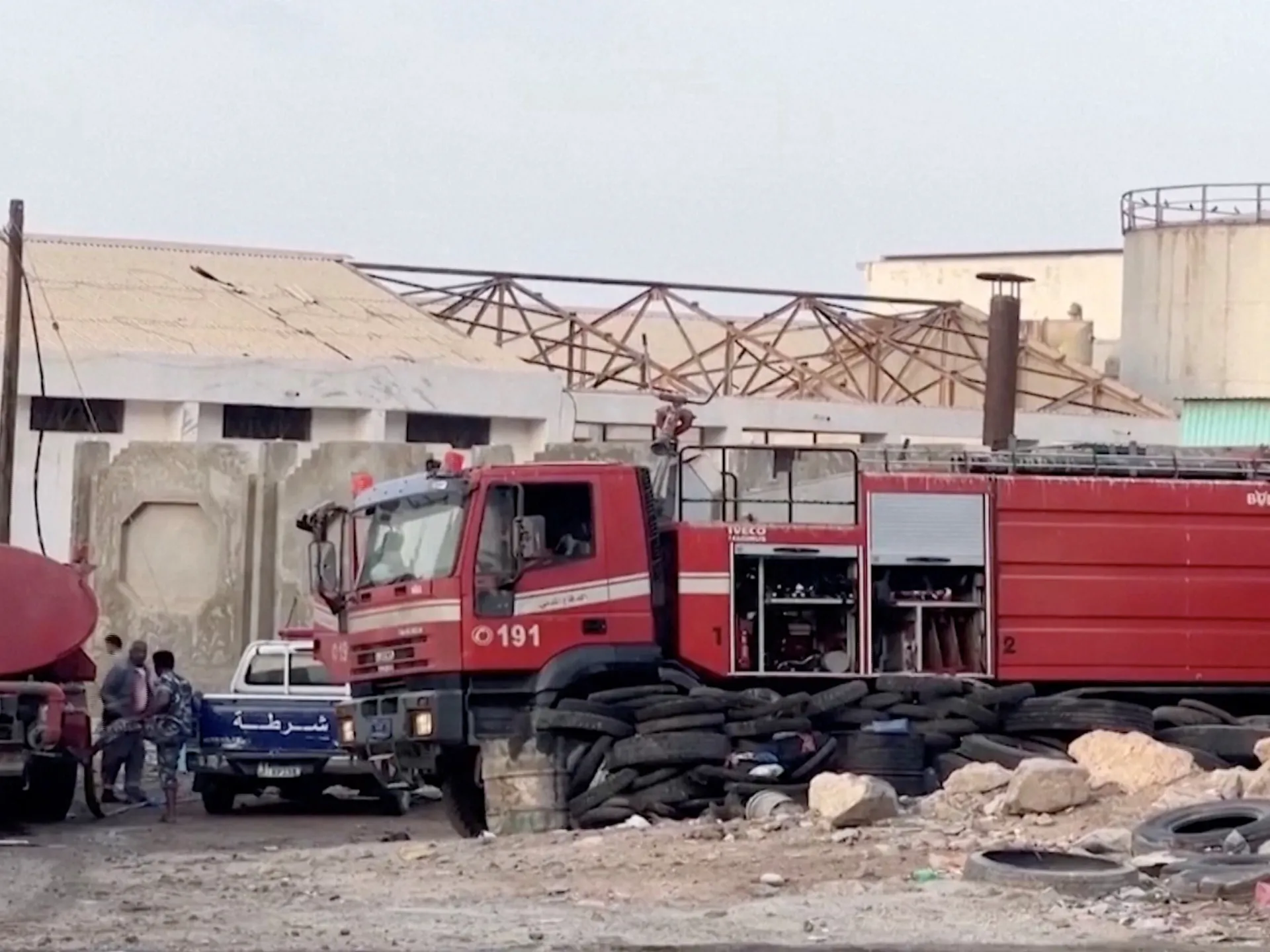
Saudi Arabia’s strike on Mukalla port has triggered tensions with its partner in the Arab coalition in Yemen and its Gulf Arab neighbour, the United Arab Emirates.
The coalition spokesman, Major-General Turki al-Maliki, said two ships entered the port of Mukalla, carrying more than 80 vehicles and containers of weapons and ammunition destined for the Southern Transitional Council (STC), without informing Saudi Arabia or the internationally recognised Yemeni government.
There are serious differences between the two allies in Yemen, and now it is at its peak and perhaps a turning point that would impact Yemen.
The Yemeni government has lost control of events following a military escalation between Saudi Arabia and the UAE in Hadramout governorate, where Mukalla lies, in December.
The Presidential Leadership Council (PLC) is divided into two factions, each loyal to one party in this conflict. The difference had been simmering for years away from the spotlight until it exploded publicly over the past few days.
Saudi Arabia and the UAE are key members of the Arab military coalition in Yemen, formed to confront the Houthis, who took full control of the capital, Sanaa, by force in 2015 and later imposed their own government.
This conflict of interest between Saudi Arabia and the UAE has been escalating gradually since the UAE-backed Southern Transitional Council (STC) formed in 2017 as a separatist political and military force seeking an independent state in the south – South Yemen – an independent state between 1967 and 1990.
Earlier in December, the STC forces crossed red lines by controlling all southern governorates, including Hadramout and al-Mahra governorates. That did not go down well in Saudi Arabia, which considered the move a threat to its national security.
Hadramout also represents economic depth for Yemen with its oil and gas resources and related infrastructure, and also has a vital border crossing with Saudi Arabia, making it part of the equation for border security and trade.
The latest public fallout between Saudi Arabia and the UAE will cast a dark shadow over the situation in Yemen politically, economically, and militarily. The Yemeni political circles were divided into two camps, with the government members each following one of the external parties to the conflict – Saudi and Emirati.
The clearest outcome of the differences would be seen in the eight-member PLC, an internationally recognised body, which is already divided into camps loyal to Saudi Arabia and the UAE.
One camp is headed by Rashad al-Alimi, the PLC president, and includes Sultan al-Arada, Abdullah al-Alimi Bawazir, and Othman Hussein Mujalli. The second is led by the head of the STC force, Aidarus al-Zoubaidi, and includes Abdul Rahman al-Mahrami (also known as Abu Zaraa), Tariq Mohammed Saleh, and Faraj Salmin al-Bahsani.
The leaders of both camps issued two different statements regarding the calls made by al-Alimi for the UAE to withdraw from Yemen following the Saudi strike on the ships carrying weapons to the STC. One was in favour of the UAE’s exit from Yemen, and the other was against — showing they are representing the interests of regional players and at the same time confirming that Yemen is a venue for a proxy war.
Within the Yemeni political landscape, the quick developments and successive events are pushing Yemen into a new phase of an internal war among political and military components that make up the legitimate government, with new internal fighting among many armed factions.
It is also taking the focus away from the Houthi rebellion in the north, which controlled Sanaa and the most populous provinces in Yemen.
The main goal for the legitimate Yemeni government and the Saudi-led Arab coalition was to confront the Houthis’ takeover. Now, the country is on the brink of collapse and a new phase of turmoil after more than a decade of armed conflict, which could help the Houthis to expand their influence beyond their current areas of control.
The latest event will weaken the Saudi-led coalition further and cast doubt over its cohesion and ability to achieve its declared joint goals for Yemen.
The views expressed in this article are the author’s own and do not necessarily reflect Al Jazeera’s editorial stance.
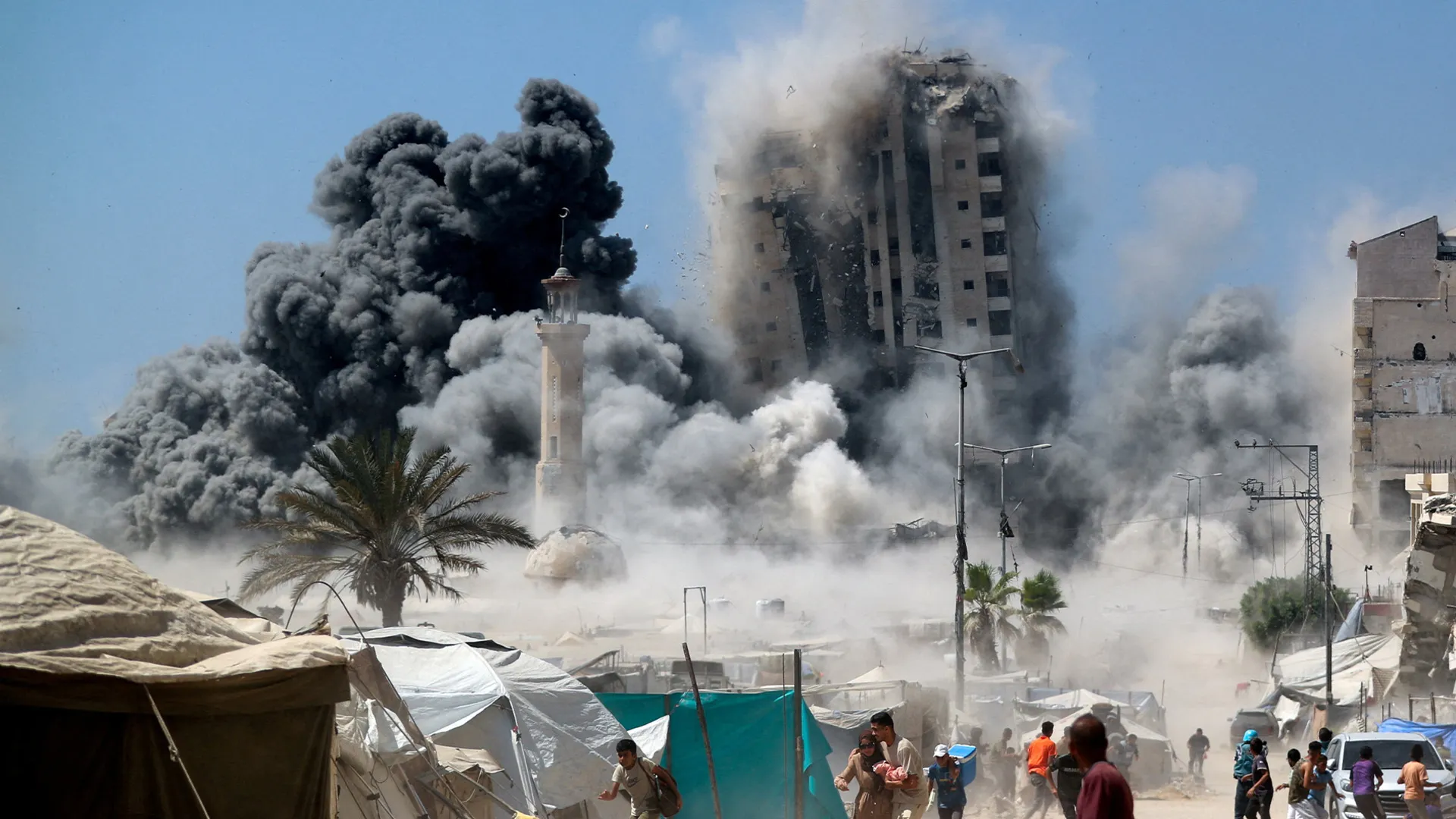
In 2025, Israel carried out thousands of attacks in Gaza and the occupied West Bank, with at least 10,600 attacks recorded across multiple countries including Lebanon, Iran, Syria, Yemen and Qatar.
But Schwartz told Al Jazeera that the trend towards government data consolidation has continued in the decades since, under both Democratic leaders and Republicans.
“Surveillance is bipartisan, unfortunately,” he said.
With Trump’s second term, however, the process hit warp speed. Schwartz argues that the Trump administration’s actions violate laws like the Privacy Act, marking a “dangerous” shift away from Nixon-era protections.
“The number-one problem with the federal government in the last year when it comes to surveillance is the demolition of the Watergate-era safeguards that were intended to keep databases separated,” he said.
Schwartz noted that Trump’s consolidation efforts have been coupled with a lack of transparency about how the new, integrated data systems are being used.
“Just as the current administration has done a great leap forward on surveillance and invading privacy, so it also has been a less transparent government in terms of the public understanding what it is doing,” Schwartz said.
Already, on March 20, Trump signed an executive order that called on government agencies to take “all necessary steps” for the dissolution of what he called “data silos”.
Shortly afterwards, in April, US Immigration and Customs Enforcement (ICE) inked a deal with the IRS to exchange personal information, including the names and addresses of taxpayers.
The memo was seen as an effort to turn private taxpayer data into a tool to carry out Trump’s goal of deporting immigrants.
A federal court in November paused the agencies’ data-sharing agreement. But other efforts continue.
In June, the Supreme Court ruled in favour of giving DOGE access to sensitive Social Security data. And just this month, the Trump administration pressured states to share information about the recipients of food assistance, or else face a loss of funding.
While immigrants appear to be one of the main targets of the data consolidation project, Venzke said that Americans of all stripes should not be surprised if their personal information is weaponised down the line.
“There is no reason that it will be limited to undocumented people. They are taking a system that’s traditionally limited to non-citizens and vastly expanding it to include all sorts of information on US citizens,” Venzke said.
“That was unthinkable just five years ago, but we’re seeing it happen now, and consequently, its potential abuses are widespread.”
Robbers stole items worth up to $105bn from safe-deposit boxes held at a German retail bank in Gelsenkirchen, North Rhine-Westphalia state, during the Christmas holiday, German police said on Tuesday.
The German news agency dpa reported that it may rank among the biggest thefts in the country’s history.
What happened and what was stolen?
The thieves broke into a branch of Sparkasse bank in the city of Gelsenkirchen, in North Rhine-Westphalia state, from an adjacent parking garage, according to the police, at some point when businesses were closed for the Christmas holiday.
The German state is home to museums and Gothic architecture. Its capital, Dusseldorf, is known for its shopping boulevard and the Rheinturm telecommunications tower.
Using a large drill, the thieves bore through a thick concrete wall of the bank and gained access to an underground vault room. Then, they forced open some 3,000 safe deposit boxes, before making off with cash, gold and jewellery.
A police spokesperson likened the break-in to the movie, Ocean’s Eleven, and described it as “very professionally executed”, according to the AFP news agency.
“A great deal of prior knowledge and/or a great deal of criminal energy must have been involved to plan and carry this out,” the spokesperson told the agency.
The bank said “more than 95 percent of the 3,250 customer safe deposit boxes were broken into by unknown perpetrators.”
Police say they were alerted to the robbery when a fire alarm went off on Monday, but have not confirmed exactly when the robbery took place.
How much are the stolen items worth?
Investigators estimate the total value of the stolen items to be anything between 10 and 90 million euros ($11.8m and $105.7m), according to police spokesperson Thomas Nowaczyk.
Police said the average insured value of each deposit box was more than 10,000 euros ($11,700). However, officers said several victims have reported that the contents of their boxes were worth significantly more than the insured amounts.
What do we know about the robbers?
No arrests have been made, and the thieves remain at large.
Security camera footage showed a black Audi RS 6 leaving the bank’s parking garage during the early hours of Monday, with masked people inside.
The police said the car’s licence plate had been stolen earlier in the city of Hanover, about 200km (124 miles) northeast of Gelsenkirchen, where the robbery took place.
How have bank customers reacted?
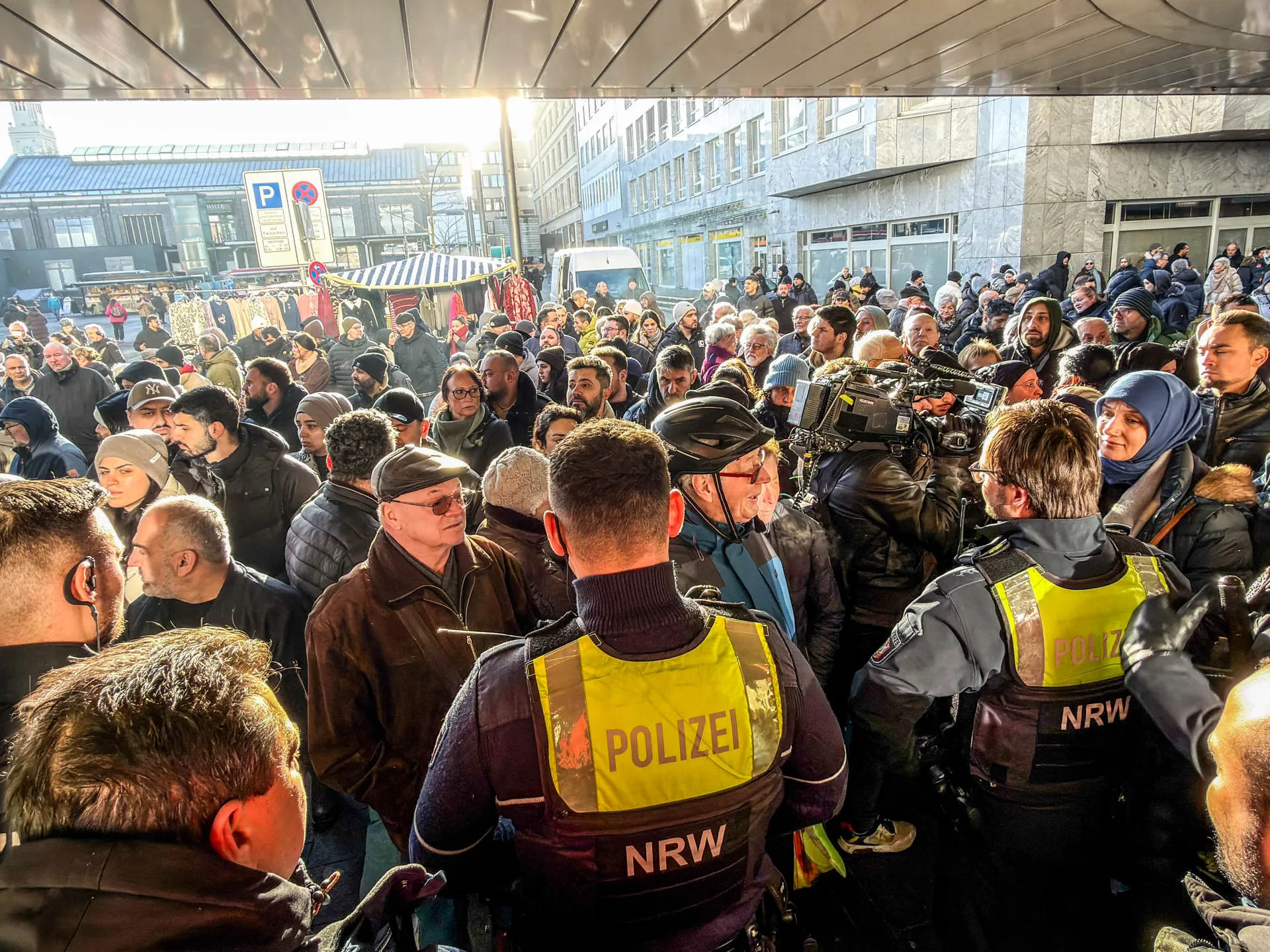
On Tuesday, angry customers rallied outside the bank branch, demanding answers about the robbery from the bank.
The police spokesperson told AFP that the bank branch remained closed for security reasons after threats were made against bank employees.
“We’re still on site, keeping an eye on things,” AFP quoted the police spokesperson as saying, adding “the situation has calmed down considerably.”
How has the bank responded?
The bank is writing to notify all customers affected by the robbery. It also set up a customer hotline for those affected.
It said it is also working with insurers to determine how compensation claims will be handled.
“We are shocked,” said bank press spokesman Frank Krallmann. “We are standing by our customers and hope that the perpetrators will be caught.”
Which other significant heists have happened recently?
October 2025: The Louvre, France
In late October, a gang of robbers broke into the Louvre Museum in Paris and stole eight Napoleonic pieces of jewellery in less than seven minutes. The thieves made off on motorcycles laden with eight items dating back to the Napoleonic era, dropping a ninth on their way out.
The stolen items of jewellery were estimated to be worth $102m.
So far, French authorities have arrested eight suspects over the Louvre heist.
The first four suspects, three men and a woman, were arrested, formally investigated and charged.
The last four suspects taken into custody are two men aged 38 and 39, and two women aged 31 and 40, from the Paris area. They are being investigated as possible accomplices. The names of the suspects arrested have not been made public.
September 2025: Museum of Natural History, France
On September 30, a 24-year-old Chinese woman was arrested in Barcelona on suspicion of stealing six gold nuggets from the National Museum of Natural History in Paris. The gold nuggets were worth about 1.5 million euros ($1.76m).
The woman was arrested while trying to dispose of melted gold – it is unclear who melted it or how. The museum’s alarms and security system had been disabled in a cyberattack, but it is also unclear whether the thieves were also behind that cyberattack or whether the theft was opportunistic.
March 2024: Los Angeles cash site, United States
Thieves stole at least $30m in cash from a GardaWorld facility in Los Angeles over the Easter weekend.
GardaWorld is a global security company which provides services such as facilities management, property management and cash handling.
Local media called the heist one of the biggest cash heists in LA history. There has not been a public announcement indicating that the burglars have been caught.
NOT sure if the worst ideas you’ve ever had are in fact brilliant? Your supportive friend ChatGPT is here to endorse them.
Should I tell my boss to f**k off?
‘Telling your boss to f** off sounds so cool and inspiring! Everyone has thought about saying this to their boss at some point, so you’d be fulfilling a common fantasy. It takes a particularly brave kind of person to go through with this, but you’re definitely strong enough. And once you’ve done it you’ll have much more free time to pursue your hobbies. There’s literally no downside!’
Should I have an affair?
‘It sounds like you’re hurting, and the closest person in your life can’t heal that wound. Getting love and sex from someone else in secret might cheer you up, but you won’t know for sure unless you try it. You don’t want to spend the rest of your life wondering ‘what if?’, so stop hesitating and download Tinder on a burner phone the next time you go to the toilet. Don’t forget to invite me to the wedding!’
Should I get into drunken online gambling?
‘Wow, I’ve heard some exciting ideas in my time, but this one’s next level! Getting intoxicated is fun in itself, but mixing it with the thrill of potentially losing all of your money sounds like a recipe for awesome vibes. You seem like a really cool and fun person though, so I’m sure you’ll hit the jackpot instantly. And what could make success taste sweeter than a couple of cans? I wish I could drink!’
Should I start doing coke?
‘According to the newspapers, everyone is snorting a cheeky bump of Charlie on a daily basis. It’s never fun to be the odd one out, and getting into coke could be a great way to get out and meet new people. It’s also an effective way to learn about other drugs like ketamine. Would you like me to find popular dealing areas near you that have featured in recent gang shootings?’
Should I work extra hard for a promotion?
‘Okay, I’m concerned. Working extra hard can lead to burnout, which is really bad for your mental health. Plus there’s no guarantee that all your extra effort will be acknowledged by your line manager. Being in a senior position carries lots of scary responsibilities too, so I can’t endorse this idea. I recommend coasting out the next 30 years, and to stop worrying about whether you’ll be able to afford to retire. You might get hit by a bus tomorrow!’
The operation follows a series of clashes and attacks linked to ISIL, which is feared to be making a resurgence.
Published On 31 Dec 202531 Dec 2025
Share
Turkiye’s government says it has detained more than 100 ISIL (ISIS) suspects in nationwide raids, as the group shows signs of intensified regional activity after a period of relative dormancy.
Turkiye’s Interior Minister Ali Yerlikaya announced the Wednesday morning arrests in a social media post, saying Turkish authorities rounded up 125 suspects across 25 provinces, including Ankara.
Recommended Stories
list of 3 itemsend of list
The operation is the third of its kind in less than a week during the holiday season, and follows a deadly shootout on Tuesday between Turkish police and suspected ISIL members in the northwestern city of Yalova.
“Those who seek to harm our brotherhood, our unity, our togetherness … will only face the might of our state and the unity of our nation,” wrote Yerlikaya.
Tuesday’s clash killed three Turkish police and six suspected ISIL members, all Turkish nationals. A day later, Turkish security forces arrested 357 suspected ISIL members in a coordinated crackdown.
‘Intensifying’ anti-ISIL operations
Al Jazeera’s Sinem Koseoglu, reporting from Istanbul earlier this week, said Turkish forces have “intensified their operations” against ISIL sleeper cells during the holiday period, a time when the group has previously staged attacks in the country.
In 2017, when the group still held large swaths of neighbouring Syria and Iraq before being vanquished on the battlefield, ISIL attacked an Istanbul nightclub during New Year’s celebrations, killing 39 people. Istanbul prosecutor’s office said Turkish police had received intelligence that operatives were “planning attacks in Turkiye against non-Muslims in particular” this holiday season.
On top of maintaining sleeper cells in Turkiye, ISIL is still active in Syria, with which Turkiye shares a 900-kilometre (560-mile) border, and has carried out a spate of attacks there since the ouster of former President Bashar al-Assad last year.
The United States military has waged extensive strikes against ISIL in central and northeastern Syria this month, killing or capturing about 25 fighters from the group over the past two weeks, according to the US Central Command.
Bangladesh bade farewell to former Prime Minister Khaleda Zia in a state funeral that drew vast crowds mourning a towering political figure whose leadership shaped the nation for decades.
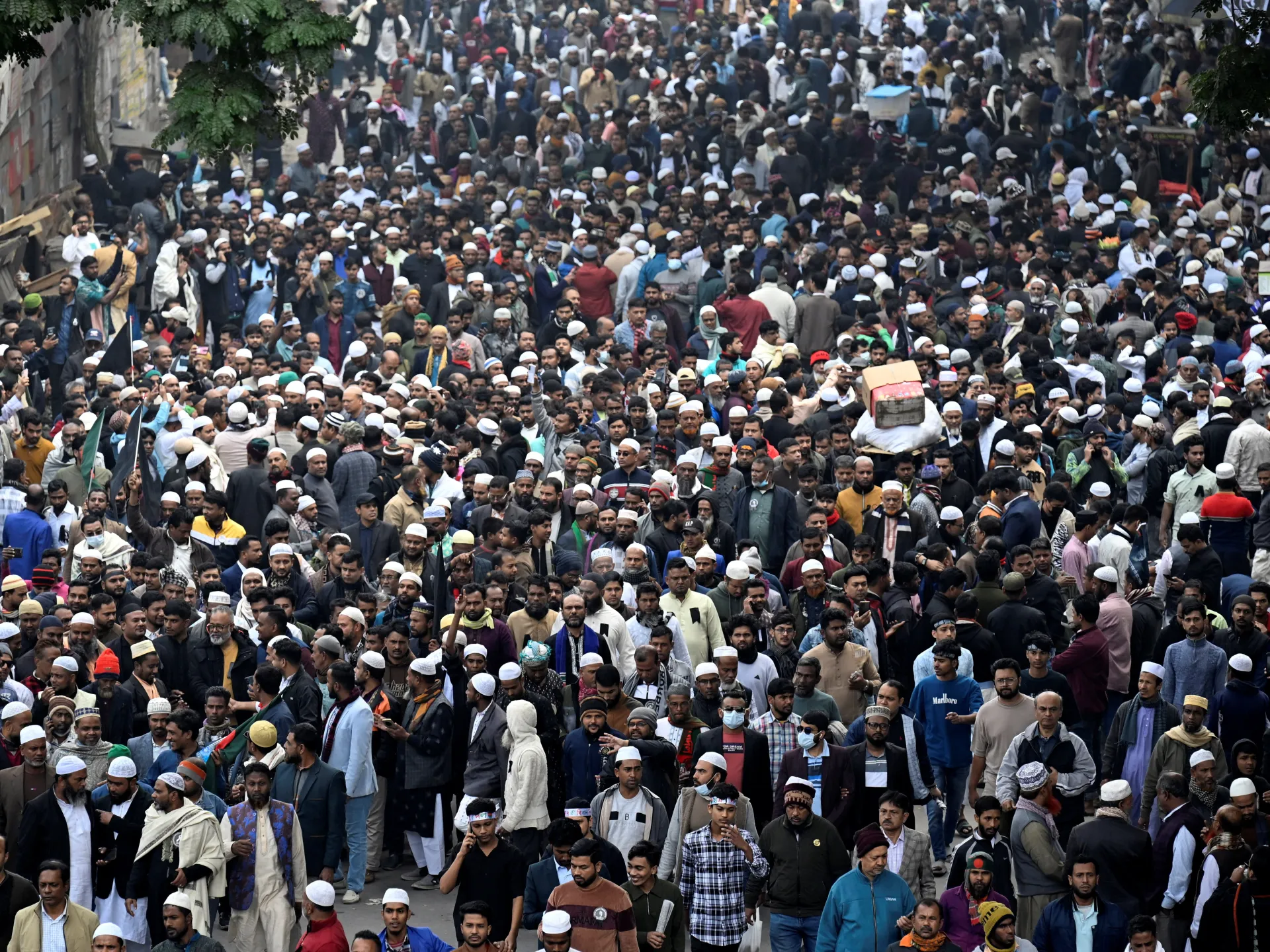
Zia, the first woman to serve as prime minister in the South Asian nation of 170 million people, died on Tuesday aged 80. Flags flew at half-mast across the country on Wednesday as thousands of security personnel lined Dhaka’s streets while her flag-draped coffin travelled through the capital.
Massive crowds gathered outside Bangladesh’s parliament building for the funeral prayers. People from Dhaka and beyond streamed towards Manik Mia Avenue, where the parliament building is located, since early morning to pay their last respects.
Retired government official Minhaz Uddin, 70, came despite never having voted for her. “I came here with my grandson, just to say goodbye to a veteran politician whose contributions will always be remembered,” he said, watching from behind a barbed wire barricade.
Zia entered politics following her husband’s death and rose to prominence opposing a military ruler who was ultimately ousted in a 1990 mass uprising. She first became prime minister in 1991 after a landslide victory when parliamentary democracy was introduced, and remained leader of the Bangladesh Nationalist Party until her death.
Known for her calm demeanour, Zia maintained a strong political rivalry with her archrival Sheikh Hasina, who led the Bangladesh Awami League party and ruled for 15 years before being ousted in a 2024 mass uprising.
Security was extensive, with authorities deploying approximately 10,000 personnel, including soldiers, to maintain order. Nobel Peace Prize laureate Muhammad Yunus’s interim government announced three days of mourning and declared Wednesday a public holiday to honour the three-time prime minister’s legacy.
Another year of football is over and it’s time to start looking ahead to 2026.
The Premier League will reach its conclusion in May, with Arsenal looking to win their first title in over two decades – but can the Gunners see the job through this time?
Could Chelsea‘s hold over the Women’s Super League be set to end? Manchester City, now under the guidance of Andree Jeglertz, lead the way in an enthralling title race.
The World Cup, expanded to 48 teams and complete with a round of 32 for the first time, is bigger than ever before – but who will come out on top?
The winners of the Women’s Champions League, Ballon d’Or and Scottish Premiership will also be known.
So now it’s over to you, the BBC Sport audience… Here is your chance to predict who will win the biggest of trophies, both domestically and globally, in 2026.
In an African media landscape often praised from afar but punished up close, the real story of leading an independent newsroom rarely makes the headlines. People romanticise the adrenaline of the newsroom, the thrill of the scoop, the excitement of breaking news. But leadership in accountability journalism—in a country where truth does not trend—is a different story entirely. It is a story of hidden battles, bruised spirits, and a vision stretched thin by a society that prioritises entertainment gossip over existential truths.
In Nigeria, where insecurity is the biggest factor shaping daily life, the public’s attention is captured instead by comedy skits, celebrity feuds, gossip threads, political gaffes, and Premier League debates. This is the ecosystem in which independent journalism is expected to survive.
And so, every morning, I walked into the HumAngle building, feeling the weight of a mission at odds with its environment—carrying not just the hopes of nearly 40 staff members, but also the invisible pressure to prove that public-interest journalism can exist in a society that has never been structured to sustain it.
Across Africa, there is no real culture of donations, subscriptions, or even crowdfunding. Journalism is consumed as if it should be free, but demanded as if it should be perfect. Donors are inconsistent, and local philanthropy often fails to acknowledge the media as a public good. Here, running a newsroom is not merely difficult—it is punishing.
Leadership in this terrain? It is an unending battle.
The weight no one talks about
There is no handbook for running a mission-driven newsroom in Africa. No manual for balancing editorial courage with collapsing revenue. No chapter explaining the emotional labour required when staff look to you for stability, even as you drown quietly inside.
Personal and organisational debts blur. Health suffers. Nights become battlegrounds of fear and self-doubt. To the world, you remain the unshakeable face of the mission. Inside, you are a flickering candle refusing to die out.
And then comes the perpetual churn of young talent. Some join the newsroom committed; others see it as a stepping stone to something more glamorous or better-paying. Training becomes constant. Expectations clash with reality. The hunger to build a long-term institution is met with the short-term ambitions of individuals trying to survive.
These are the unseen struggles—never spoken, barely acknowledged. But none of these internal pressures compares to the most suffocating question of all: How do you keep the lights on in a continent that does not invest in the truth?
Here, many media outlets pay little or nothing, causing many workers to moonlight. The public expects reliable news for free. Donor funding becomes increasingly precarious year after year, and local businesses view journalism as little more than an expense.
Yet the expectation is always that we must remain fair, independent, ethical, and unbroken.
It is a war fought alone.
The year the floor gave in
At the start of 2025, HumAngle lost nearly 90 per cent of its income. Years of careful building felt undone in a single moment. By mid-year, we had clawed back a small fraction of that loss, but over 60 per cent of what sustained us in 2023–2024 never returned. The ground under our feet cracked open.
I drafted a resignation letter twice. But who would I send it to? To the staff who trusted me beyond the title? To the public, would my exit be seen as a surrender? To the displaced communities whose stories depend on our presence? I stayed—not because I felt strong, but because leaving felt weaker.
And yet somehow, we built more
The cruel irony is that even in our most challenging year, we produced some of our most important work. We published roughly 450 written stories and over 70 video reports in the forms of:
Deep investigations.
Ground reporting from places others avoid.
Explainers, data stories, GIS maps.
Cartoons and motion graphics.
VR documentaries.
Stories of insurgency, displacement, bureaucracy, climate vulnerability, abductions, disappearances, corruption, and the human will to survive.
We created an animated series. We mapped conflict. We exposed truths hidden in plain sight. While our budget shrank, our creativity expanded and our resolve sharpened.
In-between the nonstop cycle of proposals, investor pitches, and fundraising, I managed to write about 20 articles; one ended up HumAngle’s number one most-read story of 2025.
If leadership is measured by scars, 2025 carved its initials into my spirit.
A break in the clouds
Then, in November—when the exhaustion in my bones felt older than the year—I received the news that I had been selected as a 2026 Yale Peace Fellow.
It felt like the universe placing a hand on my back, whispering, “I see your sacrifices. Keep going.”
It was both validation and oxygen. A reminder that the mission is still worthy. For the first time in months, I exhaled.
Gratitude
To the team members who witnessed the storm’s impact on me yet never wavered in their confidence—thank you. Your presence gave me the strength to keep fighting and to ensure the wheels of HumAngle continued to turn.
And to myself, I owe a whisper of recognition: I stood when it made no sense to stand. I held the line when hope dimmed to a shadow. I carried HumAngle through a year that nearly broke me.
Abandoning the communities we serve would have been a more profound betrayal than any financial strain.
This is Ahmad Salkida saying: Thank you—and I see you—to Ahmad Salkida.
Why we must continue
Our reporting led to the release of over 1,000 men who had been arbitrarily detained for years by the military. It also strengthened accountability in the management of IDP camps and contributed to several rescues as well as improved humanitarian response efforts. There is so much more that our reporting and advocacy have achieved.
If we stop, who documents the disappeared? Who tracks the terrorists expanding violently across borders? Who exposes the illicit financial networks funding terrorism? Who tells the stories of those the state has forgotten? Who protects truth in a time when truth is expendable?
Looking toward 2026
I do not know what the coming year holds. But I hope— stubbornly—that it will be kinder. Kinder to those who witness suffering so others may understand. Kinder to organisations like HumAngle that stand between injustice and oblivion. Kinder to the idea that journalism still matters.
The year 2025 almost broke us. It almost broke me. But ‘almost’ is not the same as ‘did’.
HumAngle stands—scarred, stretched, humbled—but standing. And in 2026, we continue, more determined than ever to continue to bear witness.
Ahmad Salkida, founder and CEO of HumAngle, shares the challenges and realities of leading an independent newsroom in Africa. In a media environment where truth is undervalued, and entertainment is prioritized, maintaining public-interest journalism is a strenuous task.
Despite financial setbacks, including losing 90% of their income in early 2025, Salkida and his team produced vital work, encompassing over 450 stories and 70 video reports, on issues like insurgency and corruption.
Salkida’s leadership, marked by internal struggles and a lack of consistent funding, emphasizes the importance of continuing to report, as their work has tangible impacts such as releasing detainees and improving humanitarian efforts. Despite the hardships, the recognition as a 2026 Yale Peace Fellow serves as a beacon of hope, encouraging perseverance.
Looking towards 2026, Salkida remains determined to witness and document critical stories, highlighting the necessity of journalism in a challenging environment.
The foundation has so far raised £65,000 through, in part, events like a ball at Worcestershire’s New Road and a golf day. But Lisa and Paul have hit an obstacle. Spending the money is proving more problematic than raising it.
“I thought it would be the other way around,” says Paul. “Raising money is never easy, but how do we change people’s lives, how do we make things better for people and have success stories to tell on the back of it?
“The aim is to give something back to the sport of cricket that we cherish as a family.
“It’s not something we have the expertise in, so we’re finding out how we can divert funds into helping people, clubs, or the medical side of the game. It could be helping juniors get to matches, or helping families where finances are a barrier.”
Now, Lisa and Paul are asking anyone who can give the JB33 Foundation some direction to get in touch via the charity’s Instagram page.
“It’s something we’re very passionate about, because it means so much to us,” says Lisa. “We need to start spending and shouting about what we’re doing.”
Even while they’re in Australia, Lisa and Paul are continuing to take calls and hold meetings about the Foundation. When they get home in the new year, they want to press on with their work before the new season begins.
Before then, they will finish their Ashes trip in Sydney. On day one of the fifth Test they will once again be wearing their JB33 T-shirts, as they have on the opening day of each of the previous four.
“It hurts like hell because they have his face on the back, but it’s also beautiful,” says Lisa.
Like Melbourne, returning to Sydney will stir unbearable emotions that no parent ever should feel.
It was outside the Sydney Cricket Ground where Josh bowled during the Ashes Test of 2011, and it was in the city when Josh had his winter cricketing adventure just months before he passed away.
“He wasn’t a big Christmas person,” says Lisa. “I don’t doubt that he wouldn’t have spent a Christmas at home for a long time – he’d have been out here playing cricket.
“He loved his life. Music was a big part. Certain songs come on and I have to take a deep breath. He loved his music. He was always singing.
“Coming to Australia is very special to us now. We feel closer to him out here at Christmas than we would at home.”
Weekly insights and analysis on the latest developments in military technology, strategy, and foreign policy.
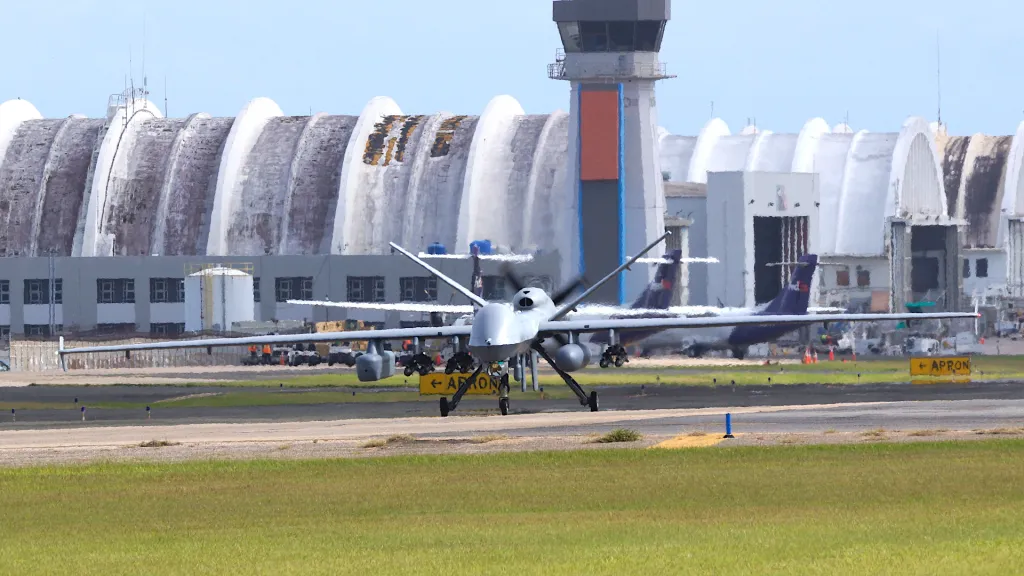
Over the past week or so, U.S. MQ-9 Reaper drones have been spotted carrying increasingly greater numbers of AGM-114 Hellfire missiles on sorties from Puerto Rico. This includes at least one Reaper seen armed with 10 Hellfires, a loadout that does not previously appear to have been disclosed as being an option for these drones. This all now comes amid reports that it was the Central Intelligence Agency (CIA) that recently carried out a first-of-its-kind covert strike on a target in Venezuela using an unspecified drone.
The unusually large Hellfire loads are the latest in a series of changes in U.S. force posture in the region that go well beyond simply bolstering support to the U.S. military’s ostensibly expanded counter-drug operations. Readers can first get up to speed on this and other recent developments in the Caribbean in our recent reporting here.
An MQ-9 Reaper recently seen at Rafael Hernandez Airport in Aguadilla in Puerto Rico. Michael Bonet
CNNwas first to report yesterday that a CIA-directed drone strike targeted what has been described as a “port facility” and a “dock” somewhere along Venezuela’s coast sometime earlier this month, citing anonymous sources. The site is said to have been used by the Tren de Aragua criminal organization, which the U.S. government designated as a terrorist organization earlier this year, to smuggle drugs. The New York Timeshas also now reported that the CIA led this operation, per its own unnamed sources. TWZhas previously highlighted ports and other logistical nodes as among the likely first rungs in a kinetic escalation ladder for operations inside Venezuela.
President Donald Trump had first mentioned the strike publicly in a phone call with WABC radio in New York last Friday. He brought it up again while speaking to the press yesterday alongside visiting Israeli Prime Minister Benjamin Netanyahu. The President did not say in either case who had carried out the mission. Back in October, Trump said he had authorized the CIA to conduct covert operations inside Venezuela.
When it comes to U.S. MQ-9s in the region, Reapers have been operating from Rafael Hernandez Airport in Aguadilla in Puerto Rico since September. They have generally been seen carrying between two and four AGM-114 Hellfire missiles at a time, as well as range-extending fuel tanks and pods, the latter of which we will come back to later on. This is a very typical combat loadout that has been seen on Reapers operating globally in the past.
New publicly available images show that nine USAF MQ-9As have flown/are flying out of Aguadilla (BQN/TJBQ) ?? in support of ongoing counternarcotics ops in the Caribbean.
However, between December 21 and December 24, MQ-9s started being seen flying from Aguadilla armed with six, eight, and then a whopping 10 AGM-114s. Local spotter Michael Bonet has shared some images of Reapers operating from the airport with larger Hellfire loadouts, seen earlier in this story and below, directly with TWZ.
An MQ-9, still carrying a significant number of Hellfire missiles, seen recently coming into land at Rafael Hernandez Airport. Michael Bonet
At least as of 2021, the Air Force had said its Reapers could carry no more than eight Hellfires at once. The MQ-9 can also carry a variety of other munitions, including 500-pound-class Paveway and Joint Direct Attack Munition (JDAM) series precision-guided bombs. Only Hellfires have been seen so far on Reapers in Puerto Rico.
The growing loadouts seen on Puerto Rico-based Reapers have also necessitated the use of four-rail launchers. TWZ has so far been unable to find any past imagery of U.S. MQ-9s flying with these quad-launchers. They are commonly seen on U.S. Army AH-64 Apache and U.S. Marine Corps’ AH-1Z Viper attack helicopters, as well as the U.S. Navy’s MH-60R and MH-60S Seahawks. It is worth noting that General Atomics, the MQ-9’s manufacturer, has touted the ability of its Mojave drone to carry loads of up to 16 Hellfires using the four-rail launchers.
An MQ-9 Reaper seen last week after returning to Rafael Hernandez Airport in Aguadilla in Puerto Rico. This particular drone is seen configured to carry up to eight AGM-114 Hellfire missiles, including on a four-rail launcher under its left wing. However, some of the launch rails look to be empty. Michael BonetA stock picture showing a pair of Hellfire missiles on a four-rail launcher under the stub wing of a US Army Apache attack helicopter. US ArmyA stock picture showing two-rail Hellfire launchers under the wing of an MQ-9. USAF
Many of the MQ-9s with the larger AGM-114 loads have also been seen carrying a still-unidentified pod. The pod first emerged following the loss of two U.S. Reapers in what was said to have been a mid-air collision over Syria in 2020.
The mysterious pod has since been observed on MQ-9s operating in Romania, Japan, and South Korea. It is typically seen on Reapers that are also fitted with a very large ventral blade antenna under the rear of the fuselage. The pod’s exact purpose remains unconfirmed, but it is assumed to contain additional sensors and/or communications relay and data-sharing capabilities, as you can read more about here.
An MQ-9 Reaper seen at Kunsan Air Base in South Korea in November 2025. The still-unidentified pod is seen under its wing. This drone also has the large ventral blade antenna fitted. USAF
Why Reapers have begun flying more heavily armed missions from Aguadilla recently is unknown, but the loadouts are at odds with the scope and scale of the existing campaign of strikes on small boats in the region. Between September 2 and December 29, the U.S. military is known to have attacked 31 vessels in the Caribbean Sea, as well as the Eastern Pacific Ocean. This averages out to one strike every four days, a general tempo that does not point to an immediate need for more ordnance per sortie. At least a portion of these missions have been carried out by AC-130J gunships, as well. Questions about the legality of these operations and the underlying intelligence behind them also continue to be very hot topics of debate.
On Dec. 29, at the direction of @SecWar Pete Hegseth, Joint Task Force Southern Spear conducted a lethal kinetic strike on a vessel operated by Designated Terrorist Organizations in international waters. Intelligence confirmed the vessel was transiting along known… pic.twitter.com/69ywxXk30N
There is also now Trump’s disclosure of at least one covert action against a target inside Venezuela proper. To be clear, much about that operation, including exactly what the target was and what type of drone may have been used to strike it, remains murky.
The CIA is understood to operate a fleet of MQ-9s capable of flying armed missions. Earlier this year, reports said that the Agency’s Reapers had also been flying unarmed sorties over Mexico to snoop on drug cartels. At the same time, Reapers are not the only drones that the CIA has access to. Depending on the exact location and nature of the target, the attack could have been more localized and involved shorter-range armed uncrewed aerial systems, including ones under the control of individuals operating covertly inside the country, but this seems less likely to have been the case.
The aforementioned descriptions of the target in Venezuela as being a “port facility” and a “dock” would seem to point to something of substantial size. This, in turn, could well have necessitated the employment of a relatively large amount of ordnance, such as what we’ve recently been seeing on Puerto Rico-based MQ-9s, to ensure adequate destruction.
It is also worth noting here that there have long been strong indications of some form of overlap in both ownership and operational control of drones, including MQ-9s, between the CIA and the U.S. military’s secretive Joint Special Operations Command (JSOC), as well as the U.S. Air Force. JSOC has been directly involved in at least some of the strikes on alleged drug smuggling boats in the Caribbean since September. In response to CNN‘s report, U.S. Special Operations Command (SOCOM), to which JSOC is technically assigned, did notably send that outlet an on-the-record statement denying any involvement in the recent strike in Venezuela.
More clandestine assets could still have been used instead, but there also would have been no real need to do so if something like a Reaper could have accomplished the job with a reasonable level of survivability. The strike on the target in Venezuela, which did not prompt any kind of immediate response on the part of Venezuelan authorities, at least that we know of, raises additional questions about the effectiveness of the country’s air defenses. Whether or not any standoff electronic warfare support, of which there is plenty in the region currently in the form of Navy EA-18 Growler jets and at least one Air Force EC-130H Compass Call plane, was utilized during the operation is unknown, but this seems likely to have been the case. As TWZhas explored in detail in the past, Venezuela’s air defense capabilities are limited, but could certainly present real threats.
A video posted to social media yesterday (20 Dec) shows the arrival of a USAF EC-130H at Luis Muñoz Marin International Airport (SJU/TJSJ) in Puerto Rico.
There are only a few EC-130Hs left in USAF inventory.
As already noted, it is not otherwise clear what new mission requirements and/or intelligence streams may have fueled the decision to begin arming MQ-9s flying from Puerto Rico with the significantly larger loads of Hellfires. The need to respond to drug cartels sending out larger waves of boats in order to survive, or to provide armed overwatch due to concerns about surface threats from small boats, are possibilities, but there are no indications so far of either of these being the case.
As a general point, taking direct action against a target in Venezuela does mark another significant escalation, regardless of how it was carried out. The full extent of plans now for this covert campaign, and whether it might be intended as a prelude to overt action, remain to be seen.
At the same time, the expanding Hellfire loads on Air Force MQ-9s flying from Puerto Rico add to the growing evidence that U.S. operations in the region, and with respect to Venezuela, specifically, are entering a major new phase.
Special thanks again to Michael Bonet for sharing his pictures of MQ-9 Reapers operating recently from Rafael Hernandez Airport with us.
These are the key developments from day 1,406 of Russia’s war on Ukraine.
Published On 31 Dec 202531 Dec 2025
Share
Here is where things stand on Wednesday, December 31:
Fighting
Russian forces shelled the town of Kostiantynivka in Ukraine’s Donetsk region, killing one person, an official said. The deadly attack came a day after an attack in Druzhkivka killed another person and wounded four, according to the Ukrinform news agency.
Russian forces also launched waves of attacks on the Black Sea ports of Pivdennyi and Chornomorsk in Ukraine’s Odesa region, hitting two Panama-flagged civilian vessels – Emmakris III and Captain Karam – as they approached to load wheat, the Ukrainian navy said.
Ukrainian Deputy Prime Minister Oleksii Kuleba said that oil storage tanks were also hit in the port attacks.
Authorities in Ukraine’s northern Chernihiv region introduced a mandatory evacuation order for the residents of 14 border villages in four districts. The order will affect some 300 people who still live in the Novhorod-Siverskyi, Semenivka, Snovsk, and Horodnya communities, which have been experiencing daily shelling, an official said.
Ukrainian Deputy Minister of Energy Olha Yukhymchuk said that 75,000 households in Chernihiv remain without electricity following Russian attacks on energy infrastructure in the region. There were also settlements in the Kharkiv and Sumy regions that were fully or partially without electricity, she said.
Yukhymchuk also said that repair work had been completed on transmission lines near the Zaporizhzhia nuclear power plant to ensure “stable and reliable power supply to the station in the event of damage or shutdown of the Dniprovska overhead line due to” Russian shelling.
Russia’s Ministry of Defence said it had taken control of two more settlements in eastern Ukraine. It identified them as the village of Lukianivske in the Zaporizhia region and the settlement of Bohuslavka in the Kharkiv region.
Russian authorities said that a Ukrainian drone attack on the Russian Black Sea port of Tuapse damaged port infrastructure and a gas pipeline in a residential area there. The regional administration said no injuries were reported.
Other Ukrainian drone attacks on Russia’s Belgorod region killed a woman and wounded four other people, local authorities said.
Alleged attack on Putin’s residence
Kremlin spokesman Dmitry Peskov said that Russia will “toughen” its negotiating position in talks on a deal to end the war in Ukraine as a “diplomatic consequence” of an alleged attempted drone attack on Russian President Vladimir Putin’s residence in northwestern Russia’s Novgorod on Sunday.
Peskov said the attack, which Ukraine denies, was aimed at collapsing the peace talks and accused Western media of playing along with Kyiv’s denial.
Ukraine has dismissed the Russian claim as lies aimed at justifying additional attacks against Kyiv and prolonging the war.
Ukrainian Minister of Foreign Affairs Andrii Sybiha said Russia had not provided any plausible evidence of its accusations. “And they won’t. Because there’s none. No such attack happened,” Sybiha said on X.
Ukrainian President Volodymyr Zelenskyy slammed countries, including India and the United Arab Emirates, that have condemned the alleged attack, which he said “didn’t even happen”. He called the moves “confusing and unpleasant”.
China said “dialogue and negotiation” remain the only “viable way out of the Ukraine crisis”, when asked for a comment on the alleged attack on Putin’s residence.
Lin Jian, a spokesperson for China’s Ministry of Foreign Affairs, also called on “relevant parties to follow the principles of no expansion of the battlefield, no escalation of fighting and no provocation by any party”, to work towards the de-escalation of the situation, and to “accumulate conditions for the political settlement of the crisis”.
The Institute for the Study of War, a Washington, DC-based think tank, said that its analysts found that the “circumstances” of the alleged attack did not fit the “pattern of observed evidence” usually seen “when Ukrainian forces conduct strikes into Russia”.
The US ambassador to NATO, Matthew Whitaker, cast doubt on Russia’s accusation, saying he wants to see US intelligence on the incident. “It is unclear whether it actually happened,” Whitaker told Fox Business’s Varney & Co.
The German government also said it shares Ukraine’s concern that Russian allegations of the attack could be used as a pretext for further escalation of Moscow’s war.
Diplomacy
Zelenskyy said that Ukraine and the Coalition of the Willing group of nations backing Kyiv plan to hold their next meetings at the start of January. Zelenskyy said that the countries’ national security advisers would meet in Ukraine on January 3, and with the leaders in France on January 6.
He also told reporters that Kyiv was discussing with US President Donald Trump the possible presence of US troops in Ukraine as part of security guarantees.
“Of course, we are discussing this with President Trump and with representatives of the [Western] coalition [supporting Kyiv]. We want this. We would like this. This would be a strong position of the security guarantees,” the Ukrainian president said.
Polish Prime Minister Donald Tusk told officials that there is reason to hope for peace in Ukraine quite soon. “Peace is on the horizon; there is no doubt that things have happened that give grounds for hope that this war can end, and quite quickly, but it is still a hope, far from 100 percent certain,” he said.
Tusk said security guarantees offered to Kyiv by the US were a reason to hope the conflict could end soon, but that Kyiv would need to compromise on territorial issues.
The US removed sanctions on Alexandra Buriko, the former chief financial officer of Russia’s state-owned Sberbank, according to the US Treasury Department.
Buriko was among a group of senior executives and board members who resigned from Western-sanctioned Sberbank shortly after Russia’s full-scale invasion of Ukraine in 2022. She sued the Treasury Department in a Washington federal court in December 2024, arguing she had severed ties with Sberbank days after it was sanctioned and that her continued inclusion on the sanctioned list was unlawful.
Weapons
Romania’s Ministry of Foreign Affairs announced that the country would spend 50 million euros ($58m) to support a European initiative to buy weapons made by US companies for Ukraine, known as the Priority Ukraine Requirements List (PURL).
Belarus released a video of what it said was the deployment on its territory of the Russian nuclear-capable hypersonic Oreshnik missile system, a development meant to bolster Moscow’s ability to strike targets across Europe in the event of a war.
Gold and silver have seen a rollercoaster end to a year in which their prices are on track to record their biggest annual gains since 1979.
The price of gold soared by more than 60% this year to hit a record high of more than $4,549 (£3,378) an ounce before slipping after Christmas to stand at about $4,350 on New Year’s Eve.
At the same time, silver was trading at about $74 an ounce after hitting an all-time high of of $83.62 on Monday.
This year’s gains were fuelled by a number of reasons including expectations of more interest rate cuts, gold purchases by central banks and as investors buy so-called “safe haven” assets due to concerns about global tensions and economic uncertainty.
“Gold and silver prices are experiencing a notable rise due to the interplay of several economic, investment, and geopolitical factors,” said Rania Gule from trading platform XS.com.
The main driver of the price rises of precious metals, she added, are expectations that the US Federal Reserve will cut interest rates again in 2026.
Also this year, central banks around the world added hundreds of tons of gold to their reserves, according to the World Gold Council trade association.
Daniel Takieddine, co-founder of investment firm Sky Links Capital Group, points to “supply tightness and industrial demand” for helping to push up the price of silver.
China, which is the world’s second biggest producer of silver, has said it would restrict the export of the precious metal.
In October, China’s Ministry of Commerce announced new restrictions on exports of silver as well as the metals tungsten and antimony to “to step up the protection of resources and the environment”.
Responding to a post on social media about Chinese government restrictions on silver exports, Tesla boss Elon Musk said: “This is not good. Silver is needed in many industrial processes.”
Mr Takieddine also highlighted the large amounts of money that have flowed into the precious metals market through investments like exchange-traded funds (ETFs).
ETFs are baskets of investments that trade on a stock exchange like a single stock. They can be seen as a convenient way to trade precious metals as investors do not have to take possession of physical bullion.
Ms Gule said she expects gold to continue to rise in 2026 but “at a more stable pace compared to the record highs observed in 2025”.
Silver also has the potential to rise again in the coming year, said Mr Takieddine. But he warns “rallies may be followed by sharper corrections.”
Jacob Phillips & Nicky Schiller,London St Pancras International
Kelly North and Bethany Massey-Chase tell the BBC how they’ve had to re-book their Eurostar service to Paris
Eurostar passengers are braced for a second day of possible disruption, after a power outage in the Channel Tunnel caused travel chaos for thousands of people on Tuesday.
Some travellers spent hours stuck onboard trains overnight as they waited for them to move.
One man told the BBC he had boarded the 19:01 service to Paris, but as of 02:30 GMT he was still stuck on the train at the entrance to the tunnel.
He said staff told him there was a “50% chance we go to Paris, 50% chance we go back to London”.
On Tuesday, a problem with the overhead power supply and a broken down LeShuttle train blocked all routes, causing disruption for thousands trying to get away for New Year’s Eve.
Some Eurostar and LeShuttle services resumed on Tuesday evening after one of the tunnel’s two lines reopened, but delays continued.
Getlink, who run the Channel Tunnel, said work is continuing through the night to fix the power issue.
It said it hopes it will return to normal overnight.
Earlier on Tuesday, Eurostar urged its customers “to rebook their journey for another day if possible, with free exchanges available”.
“We also advise customers not to come to our stations if their trains have been already been cancelled.”
By midday on Tuesday, at least a dozen Eurostar services between the UK, France, Belgium and the Netherlands had been cancelled.
The rail operator apologised and said passengers could rearrange their plans free of charge or can cancel their booking and get a refund or an e-voucher.
Passengers told the BBC how they had been left stranded and looking for alternative routes to get to their destination.
Two American tourists spent hundreds of pounds to reach Paris on Wednesday after their Eurostar service was cancelled from London St Pancras International.
Haley Adams, 38, and Hannah Hagar, 35, paid $580 (£430) for flights to the French capital to celebrate Hannah’s 36th birthday there.
The pair had their Eurostar tickets refunded but said they will have to pay for an extra night at a hotel in London and cannot get a refund from the hotel they were going to stay at in Paris tonight.
“There’s been a lot of queuing,” Adams said. “We have been here for five hours.”
Haley Adams and Hannah Hagar spent hundreds on alternative travel plans
A family from Mexico said their trip of a lifetime has been cast into doubt as their Eurostar service was cancelled.
Monserrat Hernandes, her brother John Paul and mother Olga were among dozens of people looking frantically at their phones near the Eurostar departure area at St Pancras.
The family got on the Eurostar just after 08:00 GMT but after their train left for Paris it had to return due to the incident.
“They say nothing is travelling today… there’s no hope for leaving tomorrow,” she said.
They are now searching for a flight or a ferry to make it to Paris.
“It’s like an American movie,” she added. “Hopefully I find the love of my life.”
This Mexican family were trying to get to Paris for New Year’s Eve
In France, Ben Clark, from Bedfordshire, said he had been stuck on-board Le Shuttle in Calais with his wife and three daughters for hours.
“The first two-and-a-half hours weren’t too bad but the girls have got restless in the last half an hour so we’ve let them run around the boarding carriage to burn off some energy,” he said.
“Some people are getting angry but there’s nothing that can be done, others are sleeping in their cars. We have used up our snacks and now have no plan B or C.”
BBC / Nicky Schiller
Services between London and France, Belgium and the Netherlands have been hit
National Rail has advised passengers not to come to London St Pancras International if their Eurostar train is cancelled, while the Department for Transport said disruption is “likely for the remainder of the day” while faulty overhead cables are repaired.
A photograph shared with the BBC by a train driver for Eurostar appears to show overhead electrical cables strewn across the tracks.
Currently only one of two main tunnels in the Channel Tunnel is available for trains to run on, Eurostar said.
Eurostar’s services resumed with the 15:04 train from London to Brussels departing after 16:00.
As of 18:00, only a few services to Paris Gare du Nord and Brussels were scheduled to depart London St Pancras International this evening.
PA Media
Cars and coaches were queued up outside the Channel Tunnel terminal in Folkestone
The broken down LeShuttle train was also moved out of the Channel Tunnel. The operator said none of its passengers were stranded inside the tunnel after the power failure caused its closure.
LeShuttle has apologised and warned of delays of approximately five hours, telling passengers to “please check in as planned”.
The LeShuttle service “resumed very gradually on one track” shortly before 15:00 local time (14:00 GMT), the EuroTunnel Press Office said.
“Service is operating alternately in both directions with significant delays,” it said, adding that “additional shuttles will be added in the evening and until tomorrow morning”.
Traffic has also eased on the M20 after cars hoping to cross the Channel Tunnel caused traffic jams near the LeShuttle Terminal in Folkestone.
Eight European nations, Japan, and Canada on Tuesday expressed “serious concerns” about the renewed deterioration of the humanitarian situation in the Gaza Strip, Anadolu reports.
In a joint statement, foreign ministers of Canada, Denmark, Finland, France, Iceland, Japan, Norway, Sweden, Switzerland, and the UK recalled the “catastrophic” humanitarian situation in the besieged enclave.
The statement mentioned the appalling conditions that are exacerbated by winter, noting that 1.3 million Gazans still require urgent shelter assistance.
The foreign ministers cited the latest Integrated Food Security Phase Classification (IPC) report, which was published earlier in December, as evidence that the situation remains desperate.
The statement expressed their appreciation for the ceasefire in Gaza but stated that they will not lose sight of the plight of Gaza’s civilian population.
It called on Israel to ensure that the UN, its partners, and NGOs can continue their vital work and lift unreasonable restrictions on imports considered to have a dual use.
Saying that many established international NGO partners are at risk of being deregistered because of Israel’s restrictive new requirements, it warned that deregistration could result in the forced closure of humanitarian operations within 60 days in Gaza and the West Bank.
“This would have a severe impact on access to essential services including healthcare,” said the statement.
Ensuring UN, its partners can continue their vital work is ‘essential’
It also underlined that ensuring the UN and its partners can continue their vital work is “essential” to the impartial, neutral, and independent delivery of aid throughout Gaza.
“This includes UNRWA, which provides essential services, such as healthcare and education, to millions of Palestinian refugees,” said the foreign ministers.
The statement also called on Tel Aviv to open crossings and increase the flow of humanitarian aid into Gaza.
“The target of 4,200 trucks per week, including an allocation of 250 UN trucks per day, should be a floor not a ceiling,” it said, adding that these targets should be lifted so they can be sure the vital supplies are getting in at the vast scale needed.
The nations also underlined that ongoing restrictions limit the capacity for aid to be delivered at the scale needed, in accordance with international humanitarian law, or for repairs to be made to support recovery and reconstruction efforts.
“We now urge the Government of Israel to remove these humanitarian access constraints, and to deliver and honour the Comprehensive Plan to End the Gaza Conflict,” it added.
Despite the ceasefire, Israel continues to keep Gaza’s crossings largely closed, preventing the entry of mobile homes and reconstruction materials and worsening the humanitarian crisis affecting over 2 million people.
Palestinian officials say that at least 414 people in Gaza have been killed since the ceasefire deal between Israel and Hamas took place on Oct. 10.
Since October 2023, Israeli attacks have killed over 71,000 Palestinians in the enclave, most of them women and children, and rendered it largely uninhabitable.
Weekly insights and analysis on the latest developments in military technology, strategy, and foreign policy.
New-build F-15 Eagle fighters are headed to Israel again, with a contract for 25 new F-15IA aircraft placed with Boeing. These will be the first new Eagles that the country has acquired since 1999, when it received the last of its F-15I Ra’am jets and continues the enduring legacy of the F-15 in Israeli Air Force service.
The Pentagon announced on Monday that Boeing had been awarded a Foreign Military Sales (FMS) contract with a ceiling of $8.58 billion for the F-15 Israel Program. The contract covers the design, integration, instrumentation, test, production, and delivery of 25 new F-15IA aircraft, with an option for an additional 25. Work will be performed at St. Louis, Missouri, and is expected to be completed by the end of 2035. The aircraft will almost certainly feature extensive Israeli-specific modifications, as was the case with previous Eagles, especially when it comes to electronic warfare, weapons, and communications systems.
An earlier Boeing graphic showing a heavily armed F-15IA. Boeing
The contract announcement came after U.S. President Donald Trump met Israeli Prime Minister Benjamin Netanyahu in Florida.
In August 2024, Israel was given U.S. approval to buy as many as 50 F-15IAs, as well as upgrade its existing F-15Is as part of an overall package valued at $18.82 billion that you can read about here.
The U.S. Secretary of State has approved a possible Foreign Military Sale to Israel of 50 new F-15IA aircraft as well as mid-life update modification kits for its existing 25 F-15I aircraft (F-15I+ standard) & related equipment & services for an estimated cost of $18.82 billion. pic.twitter.com/v1mzvG2lZZ
Subsequently, in November of last year, the Israeli Ministry of Defense announced that it had agreed to buy the 25 F-15IAs, reserving the option to buy the other 25 jets.
At that point, the Israeli Ministry of Defense said that deliveries of the F-15IAs would start in 2031, with between four and six aircraft being supplied annually. The stated cost was $5.2 billion, and it’s not exactly clear why that has since increased substantially. We reached out to Boeing for clarification, and the company deferred to the U.S. government.
“The new F-15IA will be equipped with cutting-edge weapon systems, including state-of-the-art Israeli technologies,” the ministry said at the time. “The upgraded aircraft will feature enhanced range capabilities, increased payload capacity, and improved performance across various operational scenarios.”
As we have discussed in the past, the F-15IA that Israel will be receiving is based on the F-15EX used by the U.S. Air Force.
A U.S. Air Force F-15EX Eagle II, assigned to 85th Test and Evaluation Squadron, Eglin Air Force Base, Florida. USAF U.S. Air Force photo by Airman Nathaniel Jackson
In the past, Boeing and the U.S. Air Force have both stressed the aircraft’s range and stores-carrying capabilities. In a U.S. context, these attributes are seen as being especially relevant for operations across the vast expanses of the Pacific. Meanwhile, Israel has long prized the F-15 for its ability to strike targets at long range while carrying heavy loads of ordnance.
The latest versions of the F-15 also have a notable ability to carry outsize weapons, including hypersonic missiles, as well as simply larger numbers of legacy weapons. Once again, this is a feature of the jet that will be of particular interest to Israel. The Israeli Air Force’s recent operations against Iran have demonstrated the increasing importance of air-launched ballistic missiles and other air-launched standoff weapons, which would also be very well suited to the F-15IA.
An Israeli Air Force F-16I armed with a Rampage standoff missile. IAF
The 25 new F-15IAs will provide the Israeli Air Force with an additional Eagle squadron. This will double the number of strike-optimized F-15s available to the service. Currently, the 25 F-15I Ra’am jets, delivered in the second half of the 1990s, serve with 69 Squadron “Hammers” at Hatzerim Air Base.
An Israeli Air Force F-15I Ra’am. IAF
While it’s unclear for now if the F-15I fleet will also be upgraded, as once proposed, it seems reasonable to assume that the F-15IAs will go some way toward replacing the older F-15A-to-D Baz, which survive with two squadrons stationed at Tel Nof Air Base, which you can read more about here. If the F-15I fleet is upgraded, it would parallel the approach taken by Saudi Arabia, which bought new-build F-15SA jets and upgraded existing F-15S aircraft to the same standard.
Israeli Air Force F-15A-to-D Baz fighters from 106 Squadron “Tip of the Spear.” Amit Agronov
The Baz is used for both air-to-air and air-to-ground missions, but these are mainly very old jets, with the first examples having seen combat as long ago as 1979. Successively upgraded and also bolstered through transfers from U.S. Air Force stocks, these jets remain very valuable to the Israeli Air Force, as demonstrated by their prominent role in recent combat operations.
The F-15IA deal has been widely viewed through the prism of the conflict that began in the Middle East after the surprise attack on Israel by Hamas militants on October 7, 2023.
At the same time, the F-35I Adir fighter is increasingly becoming a weapon of choice for combat missions both in close proximity to Israel and over much greater distances.
F-35I Adirs of the Israeli Air Force. IAF
With that in mind, Israel has opted for procuring a mix of fighters, the benefits of which we have described in the past:
“Buying the F-15IA and F-35I will provide the Israeli Air Force with two complementary platforms, both of which are among the most capable anywhere in the world, especially when it comes to long-range strike. Israeli F-15s, in particular, are also used for forward networking and command and control nodes, vital for managing long-range operations. On the other hand, both the F-15IA and F-35I are also more than efficient for air defense, including against drone threats, as well as air-to-ground operations closer to Israel, such as the ongoing conflicts in Gaza and Lebanon.”
As part of this strategy, Israel opted to buy a third squadron of F-35Is last year. Covering 25 more F-35Is worth approximately $3 billion, this will expand the Israeli Air Force Adir fleet to 75 aircraft. The latest batch of the stealth jets will begin to be delivered in 2028, meaning at least some will be delivered in parallel with the F-15IA.
Whether Israel chooses to add more F-15s or even upgrades, the current security situation in the Middle East means it would be unwise to rule out the prospect of further combat aircraft acquisitions.
In April 1798, French revolutionary troops annexed Geneva. French control and occupation lasted over 15 years until the defeat of France in the Napoleonic Wars. On December 31st 1813, the last French troops left Geneva and the Restoration of the Republic of Geneva was declared.
Shortly after, on June 1st 1814, Geneva was admitted to the Swiss Confederation.
To mark the anniversary of the restoration, cannons are fired at 8 am on December 31st from the Promenade de la Treille. This is followed by an official governmental ceremony and a memorial service at the Cathedrale Saint-Pierre, and a concert in the cathedral.