Discover the latest happenings and stay in the know with our up-to-date today news coverage. From breaking stories and current events to trending topics and insightful analysis, we bring you the most relevant and captivating news of the day.
Padilha recalled Venezuela’s solidarity with Brazil during the Covid-19 pandemic. (Archive)
Caracas, January 6, 2025 (venezuelanalysis.com) – The Brazilian government will send medical equipment and medicine to Venezuela in the wake of the January 3 US bombings against military sites and other infrastructure.
Brazilian Health Minister Alexandre Padilha made the announcement Tuesday, invoking humanitarian reasons as well as regional health concerns, after medicine warehouses in Venezuela’s La Guaira state were destroyed by the US attacks.
“We are trying to mobilize, via the public healthcare sector and private companies, dialysis supplies and medicines to support the Venezuelan people after this distribution center was targeted,” Padilha said in a press conference.
The minister recalled Venezuelan solidarity in shipping oxygen to the Brazilian city of Manaus in 2021 during a coronavirus crisis. Venezuela’s eastern neighbor will also deploy healthcare professionals as part of its solidarity efforts.
The offer of assistance follows the Lula da Silva government’s firm condemnation of the US strikes and kidnapping of Venezuelan President Nicolás Maduro and First Lady Cilia Flores as “unacceptable” and a “dangerous precedent for the international community.”
According to local reports, the warehouses belonging to the Venezuelan Social Security Institute (IVSS) were destroyed during the US bombing of La Guaira port in the early hours of Saturday.
In a statement, the IVSS reported that the lost supplies were destined for renal patients and denounced the “terrorist character of the US government” in targeting healthcare facilities.
Nelare Bermúdez, from La Guaira state’s healthcare authority, said that three-months worth of medicines for renal patients had been lost. Nevertheless, she vowed that authorities will work to ensure that healthcare services are not affected.
Venezuela has an estimated 16,000 patients suffering from chronic kidney conditions. The direct destruction of supplies adds to difficulties chronic patients already face under US sanctions. A 2018 CEPR report found that 300,000 Venezuelans with heart and other conditions were at risk as a consequence of US economic coercive measures.
In recent years, sanctions have also seen Venezuelan authorities face prohibitions, delays and overpricing in acquiring medical equipment and medicines. During the Covid-19 pandemic, Venezuela suffered delays in securing necessary vaccines.
Washington’s January 3 attacks have killed a reported 80 people, with 32 Cuban nationals confirmed dead. Venezuelan authorities have yet to disclose information on damages and casualties from the strikes.
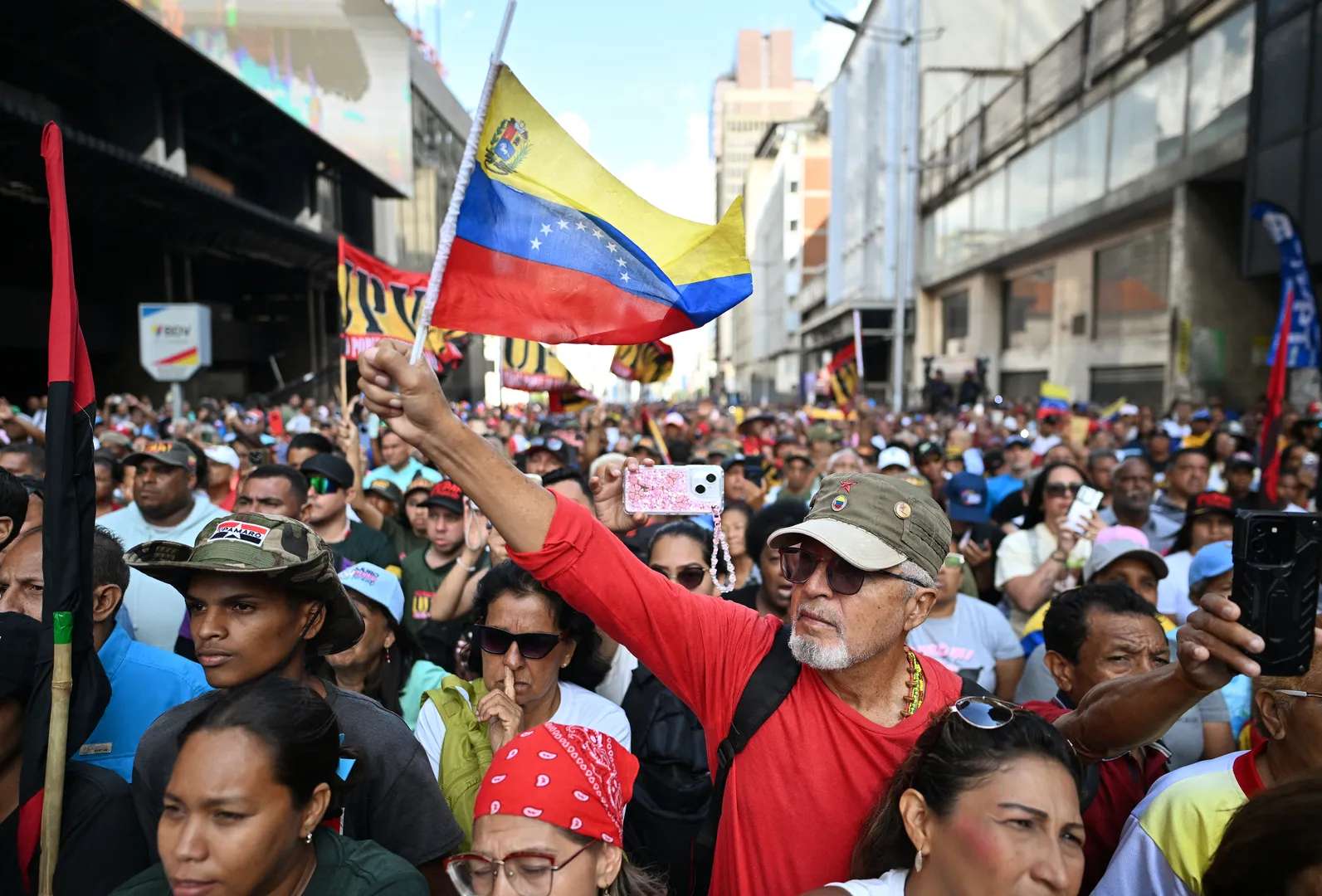
On Tuesday, Acting President Delcy Rodríguez decreed seven days of mourning in honor of the Venezuelans killed in the US military operation.
“Our young martyrs gave their lives to defend our country,” Rodríguez told reporters. “My heart was broken by the images of the fallen bodies but I know they sacrificed themselves for the values of this nation.”
Rodríguez was sworn in on Monday after the Supreme Court declared a “temporary absence” in the Venezuelan presidency. Maduro, as well as First Lady and legislator Cilia Flores, pleaded not guilty to charges including cocaine importation conspiracy during their arraignment hearing on January 5.
The USmilitary operations followed months of buildup and regime-change threats from the Trump administration. The US president has threatened Rodríguez and the Venezuelan government to accept US demands, including favorable oil deals.
[UPDATE: Venezuelan authorities reported the arrival of a shipment with supplies for dialysis patients on Tuesday night at Maiquetía airport but did not specify its origin and contents.]
Over the weekend, the United States carried out a large-scale military strike against Venezuela and abducted President Nicolas Maduro in a major escalation that sent shockwaves across Latin America.
On Monday morning, US President Donald Trump doubled down, threatening action against the governments of Colombia, Cuba and Mexico unless they “get their act together”, claiming he is countering drug trafficking and securing US interests in the Western Hemisphere.
The remarks revive deep tensions over US interference in Latin America. Many of the governments targeted by Trump have little appetite for Washington’s involvement, but their armed forces lack the capacity to keep the US at arm’s length.
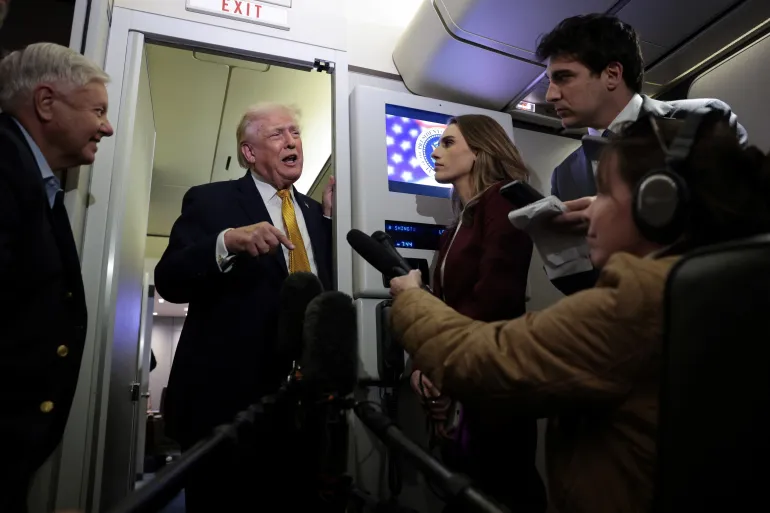
US President Donald Trump issues warnings to Colombia, Cuba and Mexico while speaking to reporters on Air Force One while returning from his Florida estate to Washington, DC, on January 4, 2026 [Jonathan Ernst/Reuters]
Latin America’s military capabilities
The US has the strongest military in the world and spends more on its military than the total budgets of the next 10 largest military spenders combined. In 2025, the US defence budget was $895bn, roughly 3.1 percent of its gross domestic product.
According to the 2025 Global Firepower rankings, Brazil has the most powerful military in Latin America and is ranked 11th globally.
Mexico ranks 32nd globally, Colombia 46th, Venezuela 50th and Cuba 67th. All of these countries are significantly below the US military in all metrics, including the number of active personnel, military aircraft, combat tanks, naval assets and their military budgets.
In a standard war involving tanks, planes and naval power, the US maintains overwhelming superiority.
The only notable metric that these countries have over the US is their paramilitary forces, which operate alongside the regular armed forces, often using asymmetrical warfare and unconventional tactics against conventional military strategies.
(Al Jazeera)
Paramilitaries across Latin America
Several Latin American countries have long histories of paramilitary and irregular armed groups that have often played a role in the internal security of these countries. These groups are typically armed, organised and politically influential but operate outside the regular military chain of command.
Cuba has the world’s third largest paramilitary force, made up of more than 1.14 million members, as reported by Global Firepower. These groups include state-controlled militias and neighbourhood defence committees. The largest of these, the Territorial Troops Militia, serves as a civilian reserve aimed at assisting the regular army against external threats or during internal crises.
In Venezuela, members of pro-government armed civilian groups known as “colectivos” have been accused of enforcing political control and intimidating opponents. Although not formally part of the armed forces, they are widely seen as operating with state tolerance or support, particularly during periods of unrest under Maduro.
In Colombia, right-wing paramilitary groups emerged in the 1980s to fight left-wing rebels. Although officially demobilised in the mid-2000s, many later re-emerged as criminal or neo-paramilitary organisations, remaining active in rural areas. The earliest groups were organised with the involvement of the Colombian military following guidance from US counterinsurgency advisers during the Cold War.
In Mexico, heavily armed drug cartels function as de facto paramilitary forces. Groups such as the Zetas, originally formed by former soldiers, possess military-grade weapons and exercise territorial control, often outgunning local police and challenging the state’s authority. The Mexican military has increasingly been deployed in law enforcement roles in response.
In the late 19th and early 20th centuries, the so-called Banana Wars saw US forces deployed across Central America to protect corporate interests.
In 1934, President Franklin D Roosevelt introduced the “Good Neighbor Policy”, pledging nonintervention.
Yet during the Cold War, the US financed operations to overthrow elected governments, often coordinated by the CIA, founded in 1947.
Panama is the only Latin American country the US has formally invaded, which occurred in 1989 under President George HW Bush. “Operation Just Cause” ostensibly was aimed at removing President Manuel Noriega, who was later convicted of drug trafficking and other offences.
Weekly insights and analysis on the latest developments in military technology, strategy, and foreign policy.
The U.S. Army has released the first images showing parts of the design of a very early prototype of the next-generation iteration of the Abrams tank, or M1E3. The service had earlier confirmed to TWZ that it had received the tank last month, meeting its previously stated end-of-year delivery goal.
One image of the M1E3 early prototypethat the US Army has now released. US ArmyThe second image of the M1E3 early prototypethat the US Army has released, also seen in part at the top of this story. US Army
“We’re proud to announce the completion of the first M1E3 early prototype — a cutting-edge technology demonstrator designed to revolutionize the battlefield,” a post on Instagram accompanying the images reads. “Produced by Roush and powered by lessons learned from earlier risk reduction activities, this prototype showcases the Army’s commitment to speed, agility, and Soldier-centric solutions.”
“Key highlights” are said to include “advanced software integration,” “enhanced mobility,” and “unmatched lethality.”
“This milestone proves the Army’s ability to rapidly apply lessons learned and deliver enabling technologies to Soldiers faster than ever before,” the Instagram post continues. “Testing kicks off in early 2026, and we can’t wait to see the results!”
A row of M1A2 System Enhanced Package Version 3 (SEPv3) tanks, the latest variant of the Abrams in US Army service. US Army
An Army spokesperson also provided an extremely similar statement directly to TWZ back in December.
“The Army has completed the first M1E3 early prototype as a technology demonstrator. The Army-led design was produced by Roush and incorporates lessons learned from earlier risk reduction activities,” they told us. “This activity is about moving with speed – showing that the Army can apply lessons learned and getting key enabling technologies (software, mobility and lethality) into the hands of Soldiers quickly. Testing will begin in early 2026.”
The two M1E3 images available currently, seen earlier in this story and in parts below, only offer limited views of the prototype. One of them is a partial view of the tank from the front. The other looks to offer another view of the front end, but from a forward-facing perspective along the side. It is also possible that both images may show the rear end of the tank with the turret facing backward. Without having a full view, it is not immediately clear.
From what can be seen of the turret, it looks similar in some respects to the ones found on existing M1 tank variants, but may also have at least a slightly lower overall profile. It also has a prominent sensor window to the left of the mantlet that is not found on other Abrams tanks.
A side-by-side comparison of the turrets on the M1E3 early prototype, at top, and a typical M1A2 SEPv3 variant, at bottom. US Army
The main gun looks to be similar, if not identical, at least externally, to the 120mm M256 that arms current-generation M1s. The possibility had been raised in the past that the newest iteration of the Abrams might come with a larger caliber or otherwise more advanced main gun, and this could still be a potential addition to the M1E3 as development progresses. The Army has confirmed its intent to add an autoloader, something the U.S. military and many other armed forces in the West have historically eschewed in tank designs. The M1E3’s complete armament package might otherwise expand, including with the ability to launch loitering munitions.
2/5 The magazine is double-row, closed-loop carousel of canisters that are cycled to place the requested round into a feed position, meaning you don’t need the current big blast doors, instead just a small port (which is how most autoloaders with protected carousels work). pic.twitter.com/gEI9qVNG8P
When it comes to the hull, what is seen of it looks to be substantially different from existing versions of the Abrams, regardless of whether it is being viewed from the front or the rear, with two prominent hatches. There is also what looks to be a camera that could be associated with a distributed vision system, as well as new LED lights. All M1 variants have a single hatch at the front for the driver, with the rest of the other three members of the crew situated in the turret. The rear end of the tanks is entirely defined by their gas turbine powerpacks.
A side-by-side comparison of what is seen of the hull in one of the images now available of M1E3 early prototype, at top, and the front end of the hull of an M1A2 SEPv3, at bottom. US ArmyAnother view of an existing variant of the Abrams tank, as seen from the rear, with its gas turbine powerpack removed. US Army
Altogether, the images show a design that is also notably different from the AbramsX next-generation demonstrator that General Dynamics Land Systems, the current prime contractor for the M1, first unveiled in 2022.
AbramsX Technology Demonstrator on the Move
A lower-profile turret and a significant reorganization of crew positions are among the features that have long been expected to appear on the M1E3 prototype. The addition of an autolader would also allow the total number of crew members to be reduced from four to three. These are all changes that would help truncate the design overall, which, in turn, would help shave off valuable pounds, if not tons. Weight creep has been a major issue for the Abrams family since the original version entered service in the 1980s, with the latest M1A2 System Enhanced Package Version 3 (SEPv3) variant tipping the scales at some 78 tons. The Army has said previously that it is hoping to get that down to 60 tons on the M1E3.
The Army has also confirmed in the past that the M1E3 will have a new hybrid propulsion system and drive train, offering substantially better fuel economy than the gas turbine powerplant used on current Abrams tanks.
“It’ll be hybrid. It will not be fully electric,” Dr. Alex Miller, Chief Technology Officer and Senior Advisor for Science and Technology to the Chief of Staff of the Army, had told TWZ‘s Howard Altman on the sidelines of the Association of the U.S. Army’s (AUSA) main annual conference last October. “We don’t want fully electric, because there’s no place to charge. You need the liquid fuel to actually generate power. But what we’re seeing, and I have not put this to the test, so this is just sort of the math behind it, is the way that they’re going to deliver it, it’ll be about 40 percent more fuel efficient.”
A more integrated active protection system (APS) is also set to be an important feature of the M1E3. A portion of the Army’s Abrams tanks have already received the Israeli-designed and combat-proven Trophy APS, but in an add-on form that has contributed to the aforementioned weight growth. An APS that is more streamlined and otherwise better optimized for the M1E3 could be lighter, as well as offer other benefits, including when it comes to the tank’s physical structure and power generation requirements. An APS with added functionality, especially one that can also be used to provide an extra layer of defense against the growing threat posed by drones, would also be desirable. A new version of Trophy specifically designed to be better capable of engaging uncrewed aerial systems was unveiled in 2024, but there are also other potential options in the growing APS market space.
An M1 Abrams tank with the Trophy APS installed. U.S. Army via Leonardo
Trophy® APS – The land maneuver enabler
As TWZ has previously written:
“The M1E3 is expected to feature a host of other advancements, including in terms of targeting capabilities and other onboard sensors, as well as networked communications systems. The Army’s current push to accelerate work on the next-generation tank puts heavy emphasis on modularity and open architectures to make it easier to integrate and refine capabilities during the development process, as well as incorporate improvements down the road.”
Feedback from experimentation with the early prototype the Army now has in hand will help the service refine and evolve those requirements. The service has also said it hopes to eventually acquire a full platoon’s worth of prototypes to further help in this regard.
“The reason we want to get the platoon out earlier is because we want the armor brigades to be able to tell us what works and what doesn’t,” Miller, the Army’s chief technologist, also told TWZ back in October. “And then, rather than wait three or four more years, do [sic] some feedback then, allow GD [General Dynamics] to make those changes, and then get the next iteration out the next year.”
“What we didn’t want to do is the first time that a tanker sees the new tank is [when] it’s done, you can’t change anything, and it’s six years from now,” he continued. We want to “get feedback for the seats. Get feedback for the gunnery. Get feedback for the autoloader.”
It is worth noting here that work on the M1E3 comes at a time when the general utility of tanks and other heavy armored vehicles in future conflicts is being heavily debated, including by the Army itself. The service announced last year that it was cancelling its plans to acquire 500 examples of the M10 Booker, a tracked light tank-like armored fire support vehicle with a 105mm main gun developed by GDLS and intended to support dismounted infantry units.
The Army’s New M10 Booker: Deploy Fast and Carry a Big Gun
More details about the current design and the Army’s future plans are likely to emerge as the service starts experimenting now with its first M1E3 early prototype.
Watch: What Trump and Vance have said about Greenland
US President Donald Trump has been discussing “a range of options” to acquire Greenland, including use of the military, the White House said.
The White House told the BBC that acquiring Greenland – a semi-autonomous region of fellow Nato member Denmark – was a “national security priority”.
The statement came hours after European leaders issued a joint statement rallying behind Denmark, which has been pushing back against Trump’s ambitions for the Arctic island.
Trump repeated over the weekend that the US “needed” Greenland for security reasons, prompting Danish Prime Minister Mette Frederiksen to warn that any attack by the US would spell the end of Nato.
The White House said on Tuesday: “The president and his team are discussing a range of options to pursue this important foreign policy goal, and of course, utilizing the US military is always an option at the Commander-in-Chief’s disposal.”
Nato is a trans-Atlantic military group where allies are expected to go to each other’s aid in case of external attacks.
On Tuesday, six European allies expressed support for Denmark.
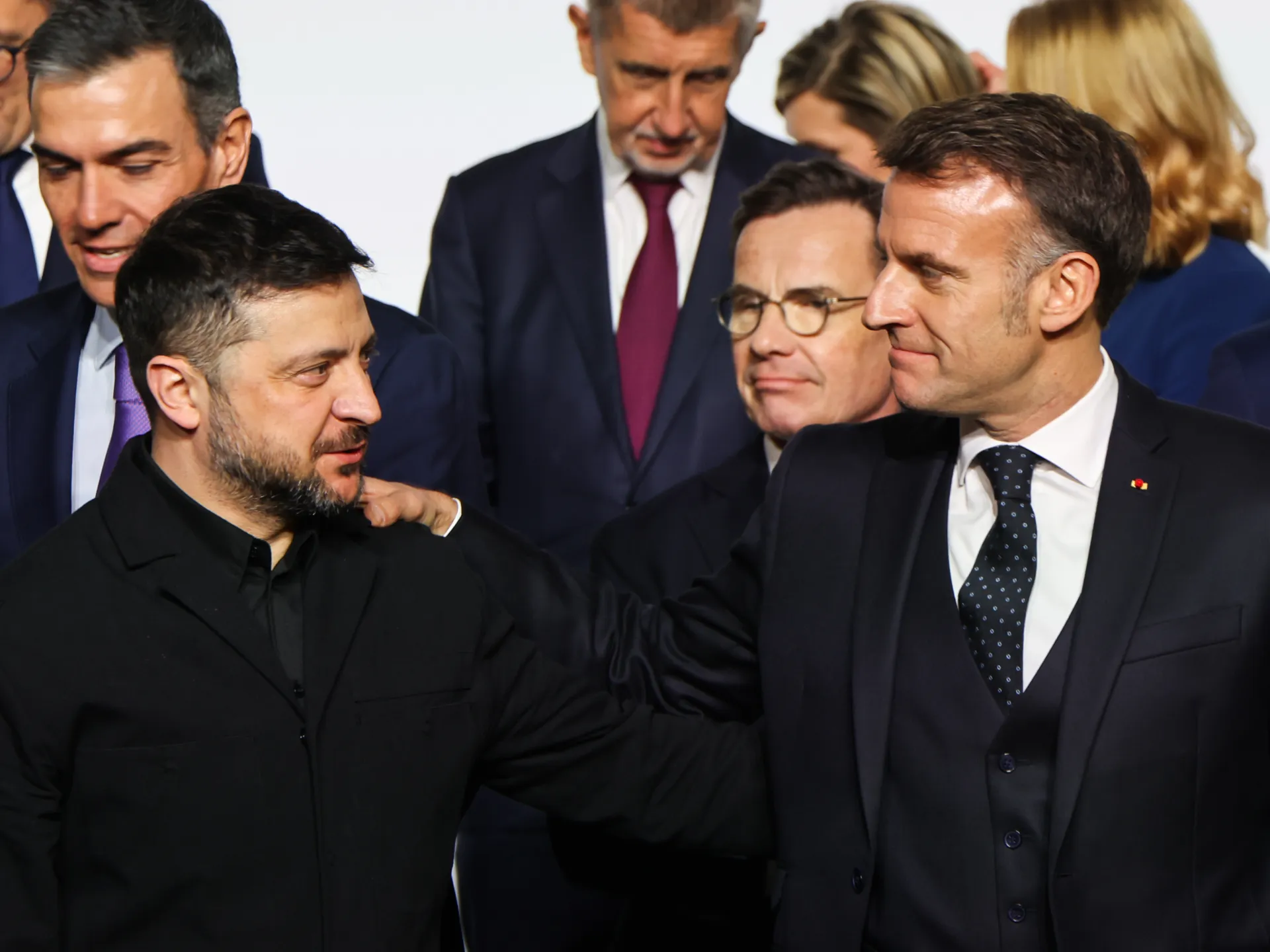
“Greenland belongs to its people, and only Denmark and Greenland can decide on matters concerning their relations,” the leaders of the UK, France, Germany, Italy, Poland, Spain, and Denmark said in a joint statement.
Stressing they were as keen as the US in Arctic security, the European signatories of the joint statement said this must be achieved by Nato allies, including the US “collectively”.
They also called for “upholding the principles of the UN Charter, including sovereignty, territorial integrity and the inviolability of borders”.
Greenland’s Prime Minister Jens-Frederik Nielsen welcomed the statement and called for “respectful dialogue”.
“The dialogue must take place with respect for the fact that Greenland’s status is rooted in international law and the principle of territorial integrity,” Nielsen said.
The issue of Greenland’s future resurfaced in the wake of the US military intervention in Venezuela, during which elite troops went in to seize the country’s President Nicolás Maduro and take him to face drugs and weapons charges in New York.
A day after that raid, Katie Miller – the wife of one of Trump’s senior aides – posted a map on social media of Greenland in the colours of the American flag, alongside the word “SOON”.
On Monday, her husband, Stephen Miller, said it was “the formal position of the US government that Greenland should be part of the US”.
Asked repeatedly in an interview with CNN whether America would rule out using force to annex it, Miller responded: “Nobody’s going to fight the US over the future of Greenland.”
An unnamed US senior official told Reuters news agency that the American options included the outright purchase of Greenland or forming a Compact of Free Association with the territory.
In response, a state department spokesperson told the BBC on Tuesday that the US “is eager to build lasting commercial relationships that benefit Americans and the people of Greenland”.
“Our common adversaries have been increasingly active in the Arctic. That is a concern that the United States, the Kingdom of Denmark, and NATO Allies share,” the spokesperson said.
US Secretary of State Marco Rubio also told lawmakers at a classified briefing on Capitol Hill on Monday that the Trump administration did not plan to invade Greenland, but mentioned buying it from Denmark, the Wall Street Journal reports.
Greenland and Denmark previously said they had asked to meet Rubio quickly to discuss the American claims on the island.
Denmark’s Foreign Minister Lars Lokke Rasmussen said speaking with America’s top diplomat should resolve “certain misunderstandings”.
Senator Eric Schmitt, a Republican from Missouri, emphasised the national security aspect when he spoke to the BBC on Tuesday.
“I think they’re just in talks right now,” he said. “My hope is that Europe would understand that a strong America is good – it’s good for Western civilisation.”
Republican Senator Schmitt to the BBC: It’s “important” US moves forward with acquiring Greenland
Trump floated his idea of acquiring Greenland as a strategic US hub in the Arctic during his first presidential term, saying in 2019: “Essentially it’s a large real estate deal.”
There is growing interest from Russia and China in the island, which has untapped rare earth deposits, as melting ice raises the possibility of new trade routes.
In March, Trump said America would “go as far as we have to go” to get control of the territory.
During a congressional hearing last summer, Defence Secretary Pete Hegseth was asked if the Pentagon had plans to take Greenland by force if necessary, and he said they “have plans for any contingency”.
Greenland, which has a population of 57,000 people, has had extensive self-government since 1979, though defence and foreign policy remain in Danish hands.
While most Greenlanders favour eventual independence from Denmark, opinion polls show overwhelming opposition to becoming part of the US, which already has a military base on the island.
Morgan Angaju, 27, an Inuit living in Ilulissat in the west region of the country, told the BBC it had been “terrifying to listen to the leader of the free world laughing at Denmark and Greenland and just talking about us like we’re something to claim”.
“We are already claimed by the Greenlandic people. Kalaallit Nunaat means the land of the Greenlandic people,” Morgan said.
He added that he was worried about what happens next – wondering whether Greenland’s prime minister may suffer the same fate as Maduro – or even about the US “invading our country”.
The United States has raised the prospect of using military force to take control of Greenland as leaders in Europe and Canada rallied behind the Arctic territory, saying it belongs to its people.
In a statement on Tuesday, the White House said that US President Donald Trump sees acquiring Greenland, which is part of Denmark, as a national security priority, necessary to “deter our adversaries in the Arctic region”.
Recommended Stories
list of 4 itemsend of list
“The president and his team are discussing a range of options to pursue this important foreign policy goal, and of course, utilizing the US military is always an option at the commander-in-chief’s disposal,” it said.
Any attempt by the US to seize Greenland from longtime ally Denmark would send shockwaves through the NATO alliance and deepen the divide between Trump and European leaders.
The opposition has not deterred Trump, however.
His interest in Greenland, initially aired in 2019 during his first term in office, has been rekindled following the US’s abduction of Venezuelan President Nicolas Maduro in an attack on Caracas.
Emboldened by the operation, Trump has said that “American dominance in the Western Hemisphere will never be questioned again”, and has stepped up pressure on both Colombia and Cuba. He has also argued that controlling Greenland is vital to US national security, claiming the island “is covered with Russian and Chinese ships” and that Denmark lacks the capacity to protect it.
Greenland, the world’s largest island, but with a population of just 57,000 people, has repeatedly said it does not want to be part of the US.
Its strategic location between Europe and North America makes it a critical site for the US ballistic missile defence system, while its mineral wealth aligns with Washington’s ambition to reduce reliance on Chinese exports.
Greenland ‘belongs to its people’
The White House statement on Tuesday came as leaders of France, Germany, Italy, Poland, Spain and the United Kingdom joined Danish Prime Minister Mette Frederiksen in issuing a statement reaffirming that Greenland “belongs to its people”.
“It is for Denmark and Greenland, and them only, to decide on matters concerning Denmark and Greenland,” they said.
Canadian Prime Minister Mark Carney also voiced support, announcing that Governor General Mary Simon, who is of Inuit descent, and Minister of Foreign Affairs Anita Anand would visit Greenland early next month.
In a separate statement, Nordic foreign ministers – from Finland, Iceland, Norway, Sweden and Denmark – also stressed Greenland’s right to decide its own affairs. They also noted they had increased their investments in Arctic security, and offered to do more in consultation with the US and other NATO allies.
Polish Prime Minister Donald Tusk also warned that threats against a NATO member undermined the alliance’s credibility. “No member should attack or threaten another member of the North Atlantic Treaty Organisation. Otherwise, NATO would lose its meaning,” he said.
Greenland Prime Minister Jens-Frederik Nielsen welcomed the European leaders’ pledge of solidarity and renewed his call to the US for a “respectful dialogue”.
Denmark, meanwhile, rejected Trump’s assertion that it is unable to protect Greenland.
“We do not share this image that Greenland is plastered with Chinese investments… nor that there are Chinese warships up and down along Greenland,” Danish Minister for Foreign Affairs Lars Lokke Rasmussen said, adding that the US was welcome to invest more on the island.
Greenland’s government said it had asked for an urgent meeting with US Secretary of State Marco Rubio, together with Rasmussen, to discuss the situation.
Also on Tuesday, Louisiana Governor Jeff Landry, whom Trump appointed last month as US special envoy to Greenland, said he was not interested in talking to people in Denmark or European diplomats over Greenland.
Instead, he said he wants to have conversations directly with residents of Greenland. “I want to talk to people who want an opportunity to improve the quality of life in Greenland,” the Republican said on a Fox News radio show.
Separately, The Wall Street Journal reported that Rubio had told US lawmakers during a congressional briefing that the recent threats did not signal an imminent invasion of Greenland and that the goal is to buy the island from Denmark.
The White House deputy chief of staff, Stephen Miller, also dismissed concerns about Danish sovereignty.
“You can talk all you want about international niceties and everything else,” Miller told CNN. “But we live in a world, in the real world, that is governed by strength, that is governed by force, that is governed by power.”
Members of Congress, including some of Trump’s fellow Republicans, pushed back.
“When Denmark and Greenland make it clear that Greenland is not for sale, the United States must honour its treaty obligations and respect the sovereignty and territorial integrity of the Kingdom of Denmark,” said Democratic Senator Jeanne Shaheen and Republican Senator Thom Tillis, the co-chairs of the Senate NATO Observer Group.
The difference in the timing of the Christmas celebrations stretches back to 1582, when Pope Gregory XIII, ruled that the Catholic Church should follow a new calendar – called the Gregorian calendar, as it was closer to the solar calendar than the Julian calendar.
The Julian calendar had been established by Julius Caesar in 46 B.C.
Because it was the catholic pope who ruled on the adoption of the new calendar, many churches not aligned to the papacy ignored it, such as Protestants and the Coptic and Eastern Orthodox churches. Protestants accepted the new calendar in the early 1700s.
In 1922, the patriarch of Constantinople decided that the Gregorian calendar should be followed for the observance of Christmas, but not for Easter, and this edict was followed by many of the other Orthodox churches.
Coptic Orthodox Christians comprise 90% of Egypt’s 20 million Christians. The Coptic Orthodox Church has been a distinct Christian body since the schism that took place at the Council of Chalcedon in 451 AD when the Coptic Church broke from the rest of the Christian Church.
The Coptic Orthodox Church traces its origins to the 1st century AD when the Apostle Mark is said to have visited Egypt. Mark is regarded by Egypt’s Christians as the first Pope of Alexandria, the original seat of the church.
Egypt was almost entirely Christian on the eve of the Muslim Arab conquest around 640AD. It remained majority Christian until around the 13th century. The genesis of the word “Coptic” is the Greek word for Egypt, Aeygyptus.
Coptic Christmas was declared a national holiday in Egypt in 2005 by the government of Hosni Mubarak.
US president says oil will be sold at market prices and that he will control resulting revenues.
Published On 7 Jan 20267 Jan 2026
Share
United States President Donald Trump has announced that Venezuela will turn over between 30 and 50 million barrels of sanctioned oil.
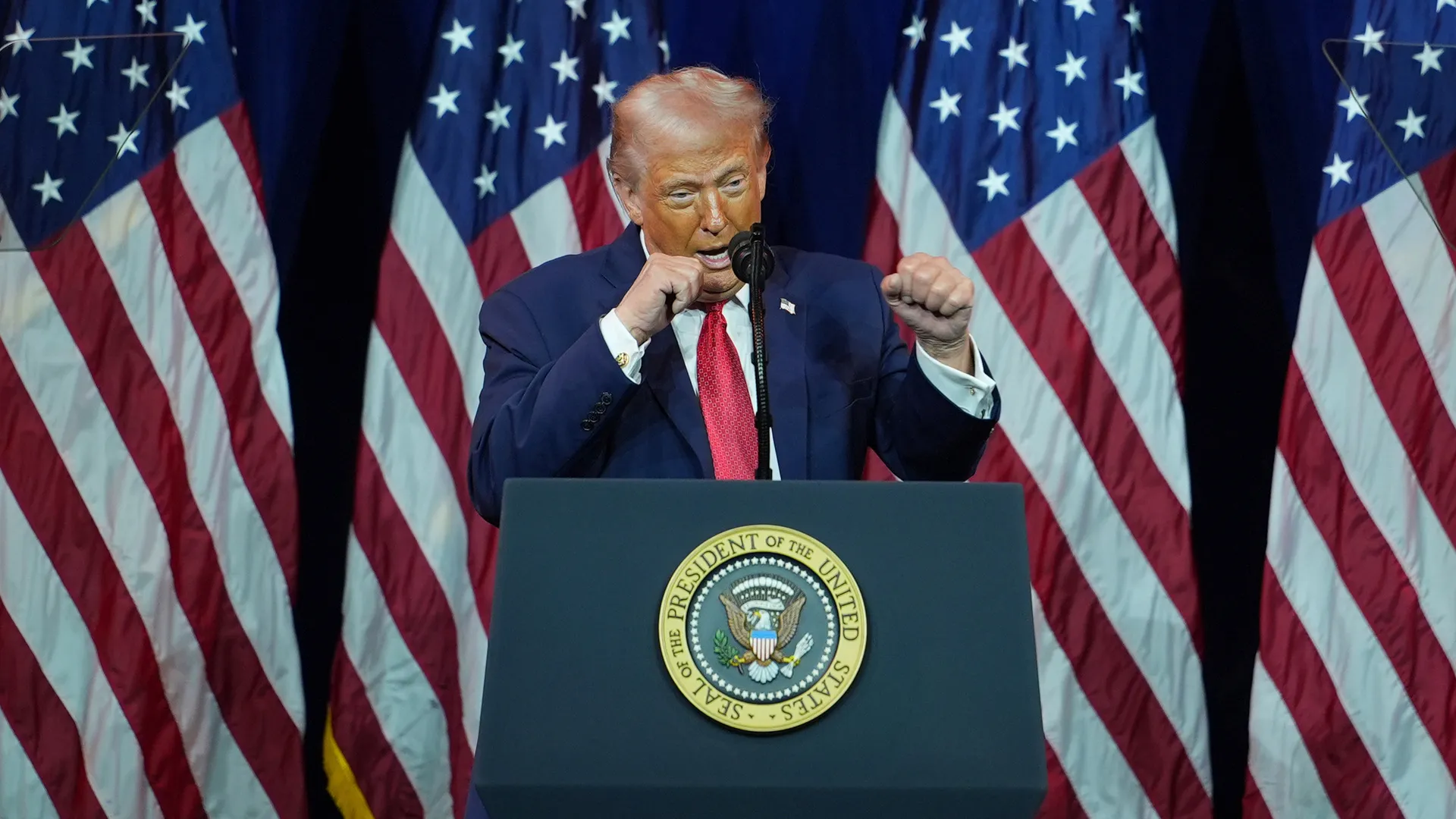
“This Oil will be sold at its Market Price, and that money will be controlled by me, as President of the United States of America, to ensure it is used to benefit the people of Venezuela and the United States!” Trump said on his platform Truth Social on Tuesday.
“I have asked Energy Secretary Chris Wright to execute this plan, immediately. It will be taken by storage ships, and brought directly to unloading docks in the United States.”
Tehran, Iran – Bolder protests are being recorded across Iran amid an increasing deployment of armed security officers as the government’s efforts to contain an unravelling economic situation fall flat.
Footage circulating online showed huge protests on Tuesday night in the city of Abdanan, in the central province of Ilam, where several major demonstrations have taken place over the past week.
Recommended Stories
list of 4 itemsend of list
Thousands of people, from children accompanied by parents to the elderly, were filmed walking and chanting in the streets of the small city while helicopters flew overhead. The protesters appeared to have vastly outnumbered the security personnel deployed to contain them.
In the city of Ilam, the province’s capital, videos showed security forces storming the Imam Khomeini Hospital to root out and arrest protesters, something rights group Amnesty International said violates international law and again shows “how far the Iranian authorities are willing to go to crush dissent”.
The hospital became a target after protests in the county of Malekshahi earlier this week, where multiple demonstrators were shot dead while gathering at the entrance of a military base. Some wounded protesters were taken to the hospital.
Several graphic videos from the scene of the shooting circulating online showed people being sprayed with live fire and falling to the ground as they fled from the gate. The local governor said the shooting is under investigation.
State-linked media confirmed that at least three people were killed. They also announced on Tuesday that a police officer was shot dead after armed clashes took place in the aftermath of funeral processions for the dead protesters.
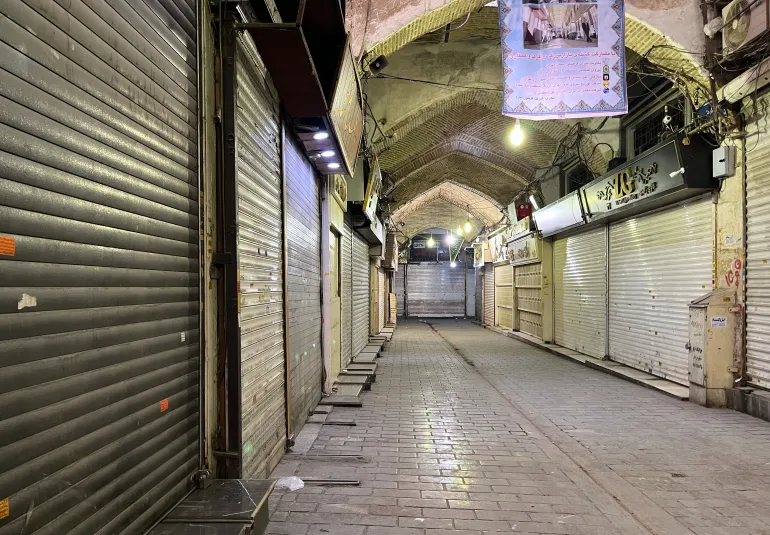
In Tehran, numerous videos showed traders and business owners at the Grand Bazaar, who closed down their shops, clashing with security forces in riot gear with batons and using tear gas.
People could be heard chanting “freedom” in the bazaar and shouting “dishonourable” at police officers. “Execute me if you want, I’m not a rioter,” one man shouted when pressured by security forces, to cheers and clapping from the crowd.
‘Show no mercy’
Supreme Leader Ayatollah Ali Khamenei said, in his first reaction to the protests this week, that rioters must be “put in their place”.
Meanwhile, Chief Justice Gholamhossein Mohseni-Ejei said, “We will show no mercy to rioters this time.”
The situation was similarly tense in adjacent streets and neighbourhoods, where the protests were originally started by shopkeepers on December 28. Multiple other major shopping areas in Tehran saw huge strikes and protests on Tuesday, including Yaftabad, where police were met with shouted slogans, “Neither Gaza nor Lebanon; my life for Iran”.
Iran’s government has been accused of providing support for armed groups in Gaza and Lebanon.
More clashes were recorded around the Sina Hospital in downtown Tehran, but the Tehran University of Medical Science said in a statement that the tear gas canisters filmed inside the hospital compound were not thrown by security forces.
Demonstrations also occurred in Lorestan and Kermanshah in the west; Mashhad in the northeast; Qazvin, south of the capital; the city of Shahrekord in Chaharmahal and Bakhtiari to the southwest; and the city of Hamedan, where a woman was filmed braving a police water cannon in the winter cold.
A foreign-based human rights monitor opposed to the theocratic establishment in Iran claimed at least 35 people have been killed in the protests so far. The Iranian state has not announced casualty figures, and Al Jazeera could not independently verify any.
Shops are closed during protests in Tehran’s centuries-old main bazaar on Tuesday [Vahid Salemi/AP]
Cooking oil triples in price
The country continues to have one of the highest inflation rates in the world, especially when it comes to the rampant increases in prices of essential food items.
The government of moderate President Masoud Pezeshkian says it is implementing plans to make sure the economic situation is contained, but a rapid decline continues to unfold.
The country’s embattled currency, the rial, was priced at more than 1.47 million to the US dollar in the open market in Tehran on Tuesday, marking yet another new all-time low that showed a lack of public and investor trust.
The price of cooking oil has experienced by far the sharpest price surge this week, more than tripling and falling further out of reach of the decimated Iranian middle class, which has seen its purchasing power dwindle since 2018, when the US unilaterally abandoned a 2015 nuclear deal and reimposed harsh sanctions.
The development comes after Pezeshkian presented a budget for the upcoming Iranian calendar year, starting in late March, that eliminated a subsidised currency rate used for certain imports, including foodstuffs.
Some economists have welcomed the rationale behind the move, which is to eliminate the rent-distributing subsidised currency rate in an attempt to combat corruption, particularly since the cheaper currency has only been abused and has failed to curb food prices.
The move was expected to lead to increased prices in the short term and face pushback from interest groups within the establishment that have benefitted from the cheap currency for years. But the oil price jump was very sudden, prompting the government to announce official prices of its own, though it remains to be seen whether the market will listen.
Using the resources to be freed from eliminating the cheaper subsidised currency, the government has offered to allocate online credits, each amounting to 10 million rials ($7 at the current exchange rate), to help people buy food.
Two renowned singers, Homayoun Shajarian and Alireza Ghorbani, joined the ranks of many people and celebrities online who said they would stop their professional activities, including scheduled concerts, in solemn observance and support for the protests.
“How can our officials lay down their heads and sleep?” asked Ali Daei, a legend of Iranian football and a respected national figure among the people, in a video interview released on Tuesday that is going viral.
“Perhaps many of them are not even Iranians, since they don’t feel sympathy for the Iranian nation.”
Barcelona begin the defence of their Spanish Super Cup crown against Athletic Bilbao on Wednesday in Saudi Arabia.
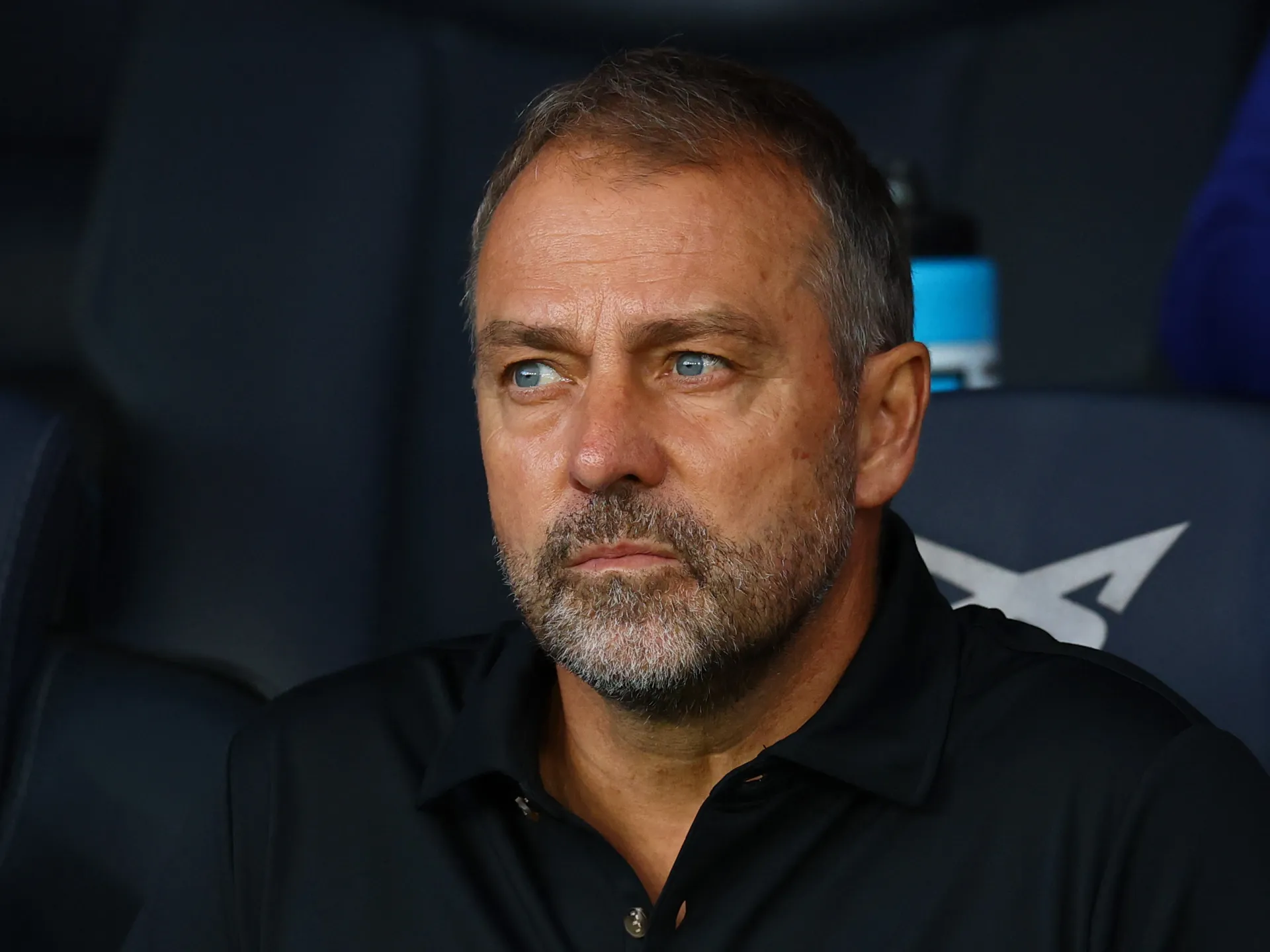
Barcelona coach Hansi Flick said that retaining the Spanish Super Cup this week would be a boost for his team’s other ambitions this season.
The record 15-time champions face Athletic Bilbao on Wednesday in a semifinal clash at the King Abdullah Sports City stadium in Jeddah, Saudi Arabia.
Recommended Stories
list of 4 itemsend of list
Barca won the competition last season as the first part of a domestic treble, the first triumph of Flick’s reign, followed by triumphs in La Liga and the Copa del Rey.
“This tournament is a little bit different [to the equivalent competition] in Germany, but I like it,” said former Bayern Munich coach Flick.
“For us to win the Super Cup [last season] gave us a lot of energy for the rest of the season, and this is also what we want this year.”
Even though significant questions remain about their defending, Barcelona are the favourites to win the Super Cup and lead La Liga after nine consecutive top flight victories.
Despite being outplayed by neighbours Espanyol in a tense derby clash on Saturday, late goals and a sensational performance from stopper Joan Garcia helped the Catalans claim a 2-0 victory.
Flick insisted his team had to perform better at the back if they were to succeed in the sixth edition of the tournament in Saudi Arabia.
“It will not be an easy match [if] we make the same mistakes as on Saturday; it will not be easy, so we have to work on our things,” continued Flick.
“We have to play much better in the defence; we have to play connected as one team, and this is what I missed on Saturday, so we have to make things much better.”
Barcelona target Cancelo could be on the move from Saudi Arabia
Central defender Ronald Araujo could return to action this week after an extended mental health break.
The Uruguayan was granted leave for about a month following a red card in Barcelona’s 3-0 Champions League defeat by Chelsea in November.
“We will see this training [session] today, and I will also want to speak with him, so we have not decided how to do it tomorrow,” said Flick.
“I think it takes time, so if he feels ready for tomorrow, maybe we will change something, but at the moment, it’s not our plan to do this.”
Flick confirmed that Barcelona were close to signing Joao Cancelo from Al-Hilal, who is on loan until the end of the season, but the deal has not been completed.
“With Joao, maybe he can give us more options also as full-back, both sides in the offence, good quality, but [as far as] I know, it’s not done,” said Flick.
Cancelo spent the 2023-24 season on loan at Barcelona from Manchester City.
Athletic, eighth in La Liga, last won the Super Cup in 2021, beating Barcelona in the final, and have lifted the trophy on three occasions.
Only the Catalans and Real Madrid, with 13 triumphs, have a better record. On Thursday, Xabi Alonso’s Real Madrid face city rivals Atletico Madrid in the other Super Cup semifinal.
The United States Supreme Court is expected to rule on a case about the legality of President Donald Trump’s tariffs.
The high court on Tuesday added a non-argument/conference date on its website, indicating that it could release its ruling, although the court does not announce ahead of time which rulings it intends to issue.
Recommended Stories
list of 4 itemsend of list
The challenge to Trump’s tariffs has been one of the most closely watched cases on the court’s docket amid the broader impact on the global economy.
In a social media post on Friday, Trump said such a ruling would be a “terrible blow” to the US.
“Because of Tariffs, our Country is financially, AND FROM A NATIONAL SECURITY STANDPOINT, FAR STRONGER AND MORE RESPECTED THAN EVER BEFORE,” Trump said in another post on Monday.
However, data on this is mixed. The US gross domestic product (GDP) grew by 4.3 percent in the third quarter of 2025, marking the biggest increase in two years. Meanwhile, US job growth has slowed, with sectors heavily exposed to tariffs seeing little to no job growth.
“Jobs in sectors with higher import exposure grew more slowly than jobs in sectors with lower import exposure, suggesting tariffs may have weighed on employment,” Johannes Matschke, senior economist for the Kansas City branch of the Federal Reserve, said in an analysis in December.
Legal arguments
Trump invoked the International Emergency Economic Powers Act (IEEPA) in February 2025 on goods imported from individual countries to address, what he called, a national emergency related to US trade deficits.
Arguments challenging the legality of the decision began in November. At the time, the court’s liberal and some conservative justices had doubts about the legality of using the 1977 act.
Justice Neil Gorsuch, whom Trump appointed during his first term, was among those sceptical.
“Congress, as a practical matter, can’t get this power back once it’s handed it over to the president,” Gorsuch said at the time.
Chief Justice John Roberts told Solicitor General D John Sauer, who argued on behalf of the administration, that imposing tariffs and taxes “has always been the core power of Congress”.
The act grants broad executive authority to wield economic power in the case of a national emergency.
The matter reached the Supreme Court after the lower courts ruled against the Trump administration, finding that the use of the law exceeded the administration’s authority.
Among the courts that ruled against the White House was the Court of International Trade. In May, the New York court said that Congress, and not the executive branch, has “exclusive authority to regulate commerce”. This decision was upheld in a Washington, DC, appeals court in August.
Legal experts believe it is likely that the high court will uphold lower court decisions.
“My sense is that, given the different justices’ concerns, the Supreme Court will decide that IEEPA does not provide the ability for the Trump administration to adopt the tariffs,” Greg Shaffer, a law professor at Georgetown University, told Al Jazeera.
If the Trump administration were to lose the case, the US would need to refund some of the tariffs.
“It [ruling against the administration] would mean that those who paid tariffs that were imposed illegally would have to be reimbursed. I would think that that would be the outcome,” Shaffer added.
In September, Secretary of the Treasury Scott Bessent said on NBC’s Meet the Press that the US would “have to give a refund on about half the tariffs”.
The Trump administration has said that if the Supreme Court does not rule in its favour, it will use other statutes to push through tariffs.
Weekly insights and analysis on the latest developments in military technology, strategy, and foreign policy.
Royal Canadian Air Force (RCAF) Maj. Gen. Chris McKenna spends a good part of his days and nights figuring how to counter the growing threat China and Russia pose to the high north. Cruise missiles, launched from enemy aircraft well into international airspace, count among his biggest concerns.
McKenna serves as commander of 1 Canadian Air Division, operational commander for the Canadian North American Aerospace Defense Command (NORAD) Region (CANR) and the Canadian Joint Forces Air Component Commander. As such, he helps oversee an ambitious, $4 billion project to build a new Over the Horizon Radar system designed to sense threats almost 2,000 miles away. He also has many other responsibilities, like preparing for the integration of F-35 stealth fighters into the RCAF.
In a recent, exclusive hour-long interview, McKenna offered details about the radar development program, the mysterious 2023 shoot-down incident over the Yukon, and his biggest worries as Russia and China increase their individual military capabilities and frequently operate jointly.
You can catch up with the first part of that interview here.
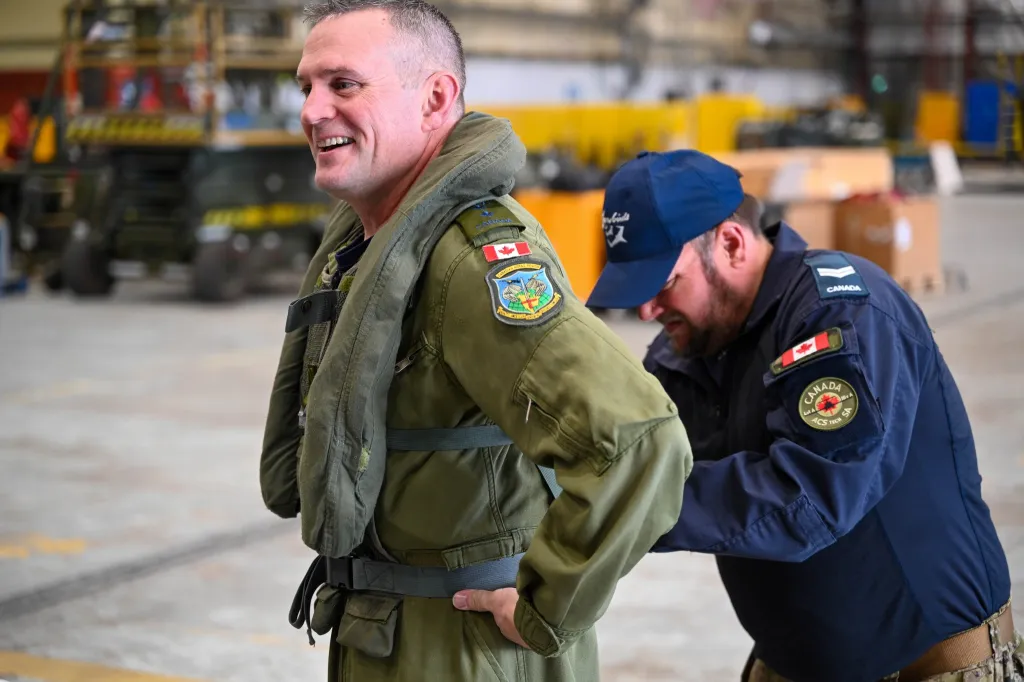
Royal Canadian Air Force Maj. Gen. Chris McKenna prepares for a flight. (Captain Philip R. Rochon photo) Captain Philip R. Rochon
Some of the questions and answers have been slightly edited for clarity.
Q: How confident are you that NORAD can protect the Arctic domain, and what are the biggest threats emanating from this area?
A: That’s a great question, and it starts with the adversary. From my point of view, the acute threat is Russia; from a NORAD point of view, historically, that has been the threat that we have postured ourselves against. But the emerging or pacing threat is certainly China and what they are doing.
And a great example of that is last summer, we had a combined bomber patrol that threatened North America. So you had a Chinese H-6K bomber paired with and bouncing through Russian infrastructure in the north, in the Russian Arctic, and they conducted a run at the Alaska Air Defense Identification Zone (ADIZ). So we met those bombers, both Canada and the U.S., together. U.S. F-35s and F-16s, my F-18s were postured and met them when they entered the ADIZ and escorted them out. But it’s very interesting to see the collusion between two adversaries in a way that is very different from what we’ve seen in the past.
Q: What are your biggest concerns?
A: I worry about ballistic missile threats, which continue and persist. Hypersonics as an emerging threat. But the ones that I really worry about are cruise missiles. So air-launched cruise missiles emanating from bombers, and we’re watching Russian bombers shoot those same weapons that we’re concerned about every single day into Ukraine. So we know they work, and we know what their ranges are, and they’re significant.
A Russian Tu-95MS is seen carrying four Kh-101 missiles. (Via Telegram)
And I worry about sea-launched cruise missiles in the maritime domain. And what advanced submarines can do in terms of holding North America at risk.
Q: What are the biggest challenges to protecting the Arctic domain, and what has to change from what exists now?
A: In the 1990s, there was a large recapitalization of the radar line in the Arctic North known as the North Warning System, and it fuses Canada and the U.S. We essentially have coastal radars around Alaska and then down the western seaboard of North America. We have radars that go along the north side of the Arctic landmass onto Baffin Island and wrap around Quebec and Newfoundland all the way down to Maine. So we have sort of a radar fence that goes around.
We have 52 total Canadian radars that are up in the north. But they are co-owned. The U.S. co-funds them.
A map showing NWS radar sites in Canada and their coverage arcs. (Nasittuq Corporation)
But that fence line was put in place when bombers had to cross it to shoot something, because of the range of their weapons. It’s still relevant in that you will find a weapon crossing that, but bombers don’t need to cross that line. So the fundamental issue is they could be in international airspace, well north of us, and conduct a launch. And so that’s my challenge – how do I domain sense? How am I aware of what’s going on, from a domain awareness point of view, to know that they are there? I think we have to up our game. So Canada’s invested recently in the Over the Horizon Radar project, where we’ve bought the Australian system known as JORN [Jindalee Operational Radar Network].
(We’ll discuss the Over the Horizon Radar project in more detail later in this interview)
Q: Have you seen any combined threats from China and Russia since that bomber flight?
A: They continue to conduct combined bomber patrols, but most typically, in the Indo-Pacific, in and around Japan and around the Korean Peninsula. We have not yet seen another return of a combined bomber patrol into the North American approaches.
A: China routinely has these auxiliary general intelligence vessels, which are dual-use vessels, that transit the Bering Sea and end up in what I would characterize as the 10 o’clock to North America, if you look at North America like a clock. So that certainly is an activity that is concerning. Russian research vessels are up there as well. And I think they’re up to some interesting things, and we are present to meet them when they are in the approaches to North America. So I had aircraft deployed up into Alaska this summer, and we were on 14- or 15-hour missions up to 88 Degrees north to make sure we were over top of these vessels as they approached the continent.
The Zhong Shan Da Xue Ji Di, a Liberian-flagged research vessel owned and operated by the Chinese University Sun Yat-Sen, as detected off the coast of Alaska by a Coast Guard C-130 Hercules aircraft from Air Station Kodiak. (U.S. Coast Guard courtesy photo)
Q: You said these vessels are up to some interesting things. What interesting things?
A: Well, I think they, they’re obviously mapping, they’re mapping the seabed for a variety of purposes, both scientific and military. And I think I just leave it at that.
Q: Do you know if they’re looking at underwater cables and that kind of infrastructure?
A: I think yes to all that. I’m not going to get into it in an unclassified setting, but I would just say I’m very concerned about some of the increased activity in that region, and certainly a region that is pristine. It’s also very difficult to navigate through from an underwater point of view. And so there’s a reason they would be up there. I don’t know quite what it is, but it’s concerning from a North American point of view.
Over the summer, the U.S. and Canada monitored five Chinese icebreakers in the Arctic near Alaska. (U.S. Coast Guard photo courtesy of Air Station Kodiak) (U.S. Coast Guard photo courtesy of Air Station Kodiak)
Q: Russia has traditionally been the primary threat in the far north, but China’s military expansion in the Arctic is changing this. What role do you see China playing in the Arctic in the coming years?
A: The Russia-China piece is a bit of a marriage of convenience. And we’ll see where this goes. It could deepen, but I certainly don’t see it as close a binational command as we have with the U.S. and Canada, where we have NORAD aircraft flying in tight formation with each other, relieving each other on station, protecting our two countries seamlessly across the border. I flow my fighters into the U.S. and U.S. fighters flow into Canada as required. I don’t believe the Russia-China relationship is that way. I think it’s deconflicted in time and space. They present, obviously, a challenge to North America with these combined power patrols, but I don’t see it anywhere as deep as the relationship we have.
North American Aerospace Defense Command CF-18s and F-16s fly in formation in support of Operation NOBLE DEFENDER over Alaska on Aug. 24, 2023. (U.S. Air Force photo/Airman 1st Class Ricardo Sandoval)
Q: But beyond a relationship with Russia, how do you see China on its own playing a role in the Arctic in the coming years?
A: They have a lot of ambitions, and they’re building a lot of military capability, which we need to pay attention to, in the air domain and the maritime domain, specifically in space, the cyber domain. So I worry quite a bit about the expansion beyond the First and Second island chains of their sphere of influence, and what they wish to do. And I think economic security is national security and vice versa. So you can’t disentangle one from the other, and that’s the advice we give our government.
Q: Can you offer more details about how you view the threats from China?
A: They have fifth-generation aircraft and sixth-generation aircraft and sixth-generation aircraft in development. They have long-range air-to-air weapons, which I get concerned about. Obviously, they have aircraft carrier capability, a Rocket Forces capability, which can reach out and touch into our allies’ homelands. You have a pretty significant subsurface capability that’s growing by the day with the Shang class submarine.
Chinese J-35 stealth fighters. (Via X)
So I think there are threats that emanate in almost every domain. I don’t worry too much about the land domain, but I do worry about long-range threats that emanate from the land domain, that is to say, Rocket Forces. So maybe just leave it at that. I don’t want to get into an intelligence discussion because it’s probably not the right forum.
Q: Can you provide any new details about the still unidentified objects that flew over the U.S. in early 2023, including one that was shot down in Canadian airspace? Who sent them? Why hasn’t imagery and additional information been released about those objects?
A: I’m tracking one object that was shot down near White Horse using an F-22 under the NORAD agreement, obviously authorized by the Canadian government. I don’t believe they have found the wreckage of that thing yet. It’s a white balloon in the middle of a white expanse of snow, so it is actually hard to find. We had Canadian military folks searching for it for weeks. As far as I know, we did not recover it. It was a balloon, either research or a state actor. It’s not known which. I can’t really give you that detail.
A U.S. Air Force F-22 Raptor like this one shot down an object over Alaska in 2023. (U.S. Air Force photo by Airman 1st Class Owen Davies) Airman 1st Class Owen Davies
Q: You said you can’t give me that detail. Is it because you don’t know or can’t tell me?
A: I legitimately don’t know (laughs). I will say the way that we executed the engagement, though, is exactly how NORAD’s agreement was crafted to work in the sense that sovereign decision, sovereign soil, but by national best sensor, best shooter. So it actually worked out exactly as scripted.
Q: There were other objects spotted in the skies around the same general time period that we still don’t know what they were or there hasn’t been any additional imagery or information released. Can you talk about those situations?
A: We do track a fair number of research balloons that move around the planet, and you need to sort of run some algorithms on your radar takes to find them. Sometimes it’s very small, like, just imagine, it’s not emitting any heat. It’s got almost no radar reflectivity. These are very hard to detect items. But I don’t have any other information to provide on balloons or UFOs or otherwise.
High-altitude balloons can be difficult for sensors to pick up. (Aerostar)
A: I wouldn’t say cost overruns. I just think the understanding of what the system is and what it can do is sort of evolving. So we bought some land in southern Ontario for a transmit site and receive sites. You might be aware that Over the Horizon radar is a bit of dark magic, in the sense that you need about 80 miles between a transmit and receive site.
The receive sites are these three-kilometer by five-kilometer boxes of many thousands of antennas, in some cases, 30,000 antennas. And you can progressively build out that array to have a higher fidelity in your radar in terms of the rare cross-section size that you can see. The transmit site will be full power when we build that for 2029. The receive sites we will build out over the years, as we get more and more space to build on.
Australian Defense Science and Technology Group
If you look at the radar picture in the United States, there are so many airports through the center of the U.S. that you never really leave radar coverage, at least in the lower U.S. Canada is not the same. Most of our population is along our border with the U.S., and as you know, the center is quite empty. So you do have little pockets of folks living near an international airport. You get a radar associated with that. And then you have the North Warning System, which is up at around 72ish [degrees] north. So there are large swaths that are sort of unsurveiled, unless you were to put an AWACS aircraft there to go look at it.
An E-3 Sentry radar jet and two U.S. Air Force F-22 Raptor fighters fly over Alaska. (USAF)
What this will do is give us the ability to sense. Over the Horizon radar is different, though. It’s not like this sort of sweep that you would get with a normal radar. You have to plan it like you’re looking at trapezoids, a couple of hundred miles by a couple of hundred miles that you soak with radar energy. You’re bouncing energy off the ionosphere, into that trapezoid, and then there’s a revisit rate. Every so many seconds, you’re re-irradiating that trapezoid. And that gives you your change detection of a track moving.
Certainly, I’ve seen the Australian system at work. They have three radars in the middle of Australia that look north towards China, towards the Indo Pacific, and their their remote sensing unit down in Adelaide, aggregates those signals, and they present a recognized air picture using that, and it’s pretty, pretty dramatically good. I’ve seen high-end aircraft moving through the South China Sea.
An aerial view of a portion of Australia’s Jindalee Operational Radar Network (JORN). (Australian Department of Defense)
Australia has been operating a version of that for decades now. They’re, quite honestly, world experts on HFover-the-horizon radar. And we’re replacing a couple of sites in the south of Canada. The first few sites are going to look towards the Greenland, Iceland, UK (GIUK) gap.
Dating from the Cold War but still relevant today, a map of the GIUK Gap. CIA.gov
And the second set of sites is going to look to the northwest. And those are going in by 2029 to 2031. We bought the land. We’re clearing the land now. We’ve got a partnership with Australia. So using HF energy to be able to see into the Arctic is useful. And I think space-based sensors, space-based AMTI [air moving-target indicators], space-based intelligence. These are the things we’re going to be using, I think, to look and sense in the Arctic.
Q: What’s the range of the Over the Horizon radar?
A: I believe it’s 3,000ish kilometers, unclassified. But it all depends. You have to have ionospheric sounders that bounce and give you the texture of the ionosphere. So you can tune your radar to bounce it. So again. It’s a bit of a dark art. It depends on the ionosphere conditions of the day. So you want to pair it, obviously, with space-based [sensors] to make sure you have a layered domain awareness approach.
A slide from an Australian Defense Science and Technology Group briefing on JORN.
Q: And what does Over the Horizon radar bring to the table that doesn’t exist today in terms of seeing what’s out there?
A: It’s the ability to have a much cleaner and more complete picture of any target that is moving in the air or on the water, and our challenge is maritime domain awareness. Maritime warning is part of the NORAD mission set, so being able to sense on the surface of the ocean at great distances is really important. The challenge with Over the Horizon radar, for the Canadian Arctic context, is a thing called the auroral oval, where all of that energy sits. That gives us those awesome northern lights in Canada. It also prevents HF energy from bouncing into that oval. And so you do need something inside a transmit and receive site, inside of the pole.
The same energy that creates northern lights can play havoc with Over the Horizon radar. (Photo by Hasan Akbas/Anadolu via Getty Images) Anadolu
And so we have a signals intelligence base way up north on alert called CFS [Canada Forces Station] Alert, named for a British ship that was stranded there in the 1800s. It’s the most northern permanently inhabited place on the planet. We’ve got about 60ish, very, very dedicated RCAF and Canadian Armed Forces people who live up there on six-month shifts. And that is a great place to put a transmit site. And there are receiver sites potential all over the place. In the Arctic, we have research stations that we’re looking at that have power and that have potentially fiber, depending on where you put it, that would allow you to get that data back south. But we need to transmit and receive in the north.
This is life on Alert
Q: Can you tell us about the development of the Crossbow sensor system and what that includes?
A: It’s a passive sensor. And so I won’t get into what it can do. I will say, in the Canadian Arctic, the challenge, obviously, is power generation and making sure that can be powered. And that’s what we’re focusing on. It’s the shelter that makes sure that we can feed that sensor.
Q: Where is Crossbow in the development phase?
A: We have some installations that have occurred in the last year or two. I’ll leave it at that.
In the final installment of our interview, McKenna talks about Golden Dome, space-based sensors and the dire need for airborne early warning and control aircraft.
French President Emmanuel Macron says a security statement endorsed by Ukraine’s allies, including the United States, is a “significant step” toward ending Russia’s invasion of its neighbour as part of a peace settlement.
Following a meeting of more than two dozen countries in Paris on Tuesday, Macron said officials agreed on ceasefire monitoring mechanisms under US leadership.
Recommended Stories
list of 4 itemsend of list
The countries dubbed the “coalition of the willing” have explored for months how to deter any future Russian aggression should it agree to stop fighting Ukraine.
US envoy Steve Witkoff said there was significant progress made on several critical issues facing Ukraine including security guarantees and a “prosperity plan”. Security protocols for Ukraine are “largely finished”, he added.
“We agree with the coalition that durable security guarantees and robust prosperity commitments are essential to a lasting peace in the Ukraine, and we will continue to work together on this effort,” Witkoff said in a post on X after talks in Paris.
Ukraine’s reconstruction is inextricably linked to security guarantees, German Chancellor Friedrich Merz said.
“Economic strength will be indispensable to guarantee that Ukraine will continue to credibly block Russia in the future,” Merz said.
British Prime Minister Keir Starmer said peace in Ukraine is closer than ever though the “hardest yards” still lay ahead.
The UK and France will establish military hubs in Ukraine in the event of a peace deal with Russia, said Starmer.
US President Donald Trump says no Americans, but some soldiers ‘on the other side’ were killed in the ‘complex’ military operation that abducted Venezuelan leader Nicolas Maduro.
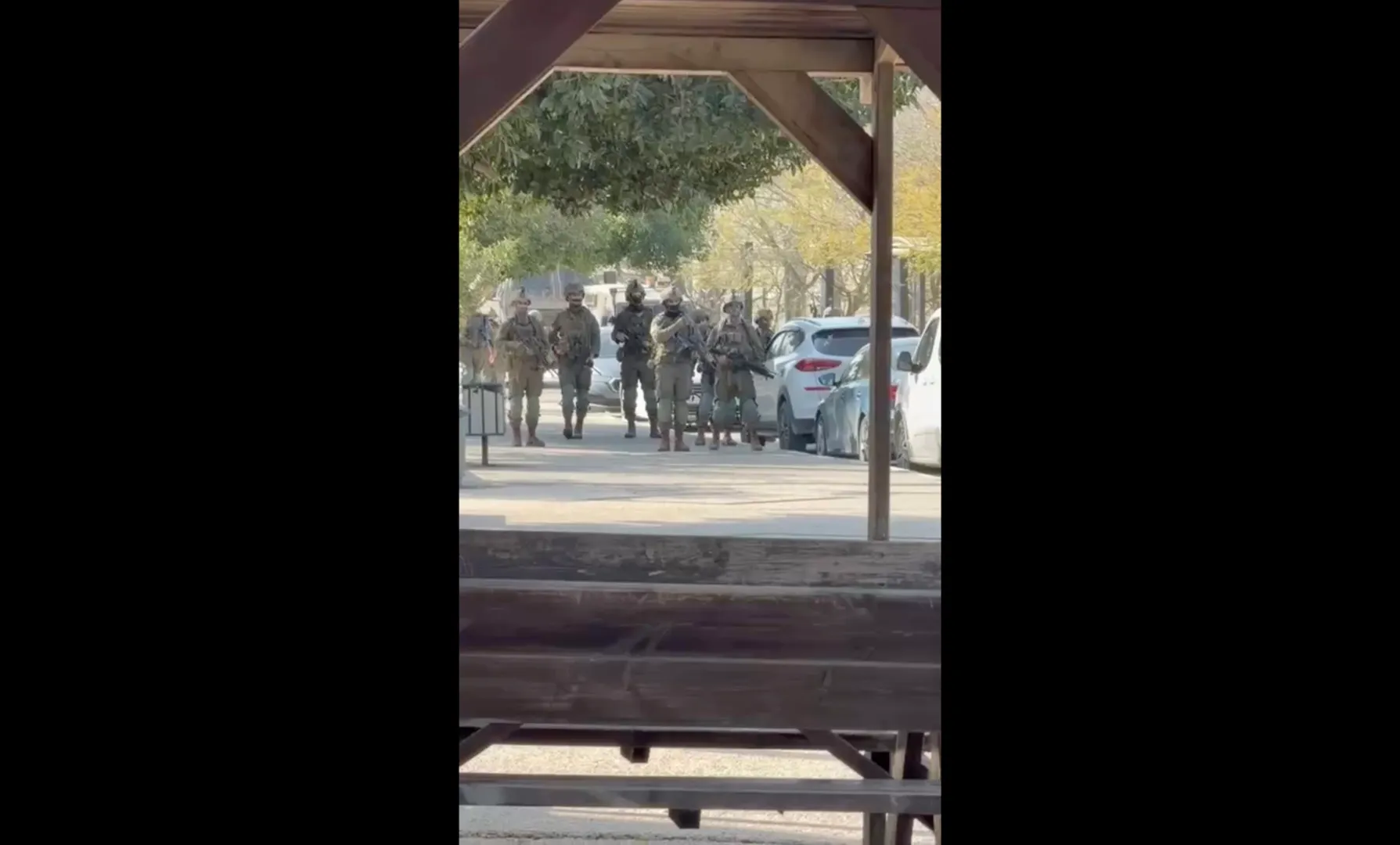
Israeli forces raided Birzeit University in the occupied West Bank, firing live ammunition to disperse students during a protest and film screening. At least three students were injured as troops entered the campus and classrooms.
The UN human rights office says the US military intervention that ousted Venezuela’s leader violates international law and the UN Charter, warning it undermines global security and risks worsening human rights. It says Venezuela’s future must be decided by its people.
Washington, DC – It has become a familiar pattern. United States presidents conduct unilateral military actions abroad. Congress shrugs.
On Saturday, in the hours after the US military abducted Venezuelan leader Nicolas Maduro, Democrats in the Senate pledged to raise yet another resolution to rein in US President Donald Trump’s military actions.
Recommended Stories
list of 4 itemsend of list
Chuck Schumer, the top Democrat in the chamber, has said the party will push for a vote within the week. By all accounts, the odds of its success remain long.
Since Trump took office for a second term in 2025, Congress has weighed multiple bills that would force him to seek legislative approval before initiating a military strike.
But the latest attack on Venezuela offers a stark instance of presidential overreach, one that is “crying out for congressional action”, according to David Janovsky, the acting director of the Constitution Project at the Project on Government Oversight.
Experts say it is also one of the clearest tests in recent history of whether Congress will continue to cede its authority to check US military engagement abroad.
“There are a lot of angles where you can come at this to say why it’s a clear-cut case,” Janovsky told Al Jazeera.
He pointed out that, under the US Constitution, Congress alone wields the authority to allow military action. He also noted that the Venezuela attack “is in direct contravention of the UN Charter, which is, as a treaty, law in the United States”.
“Any of the fig leaves that presidents have used in the past to justify unilateral military action just don’t apply here,” Janovsky added. “This is particularly brazen.”
An uphill battle
Since August, the Trump administration has signalled plans to crank up its “maximum pressure” campaign against Venezuela.
That month, Trump reportedly signed a secret memo calling on the US military to prepare for action against criminal networks abroad. Then, on September 2, the Trump administration began conducting dozens of strikes on alleged drug-smuggling boats off the Venezuelan and Colombian coasts.
That deadly bombing campaign was itself condemned as a violation of international law and an affront to Congress’s constitutional powers. It coincided with a build-up of US military assets near Venezuela.
Trump also dropped hints that the US military campaign could quickly expand to alleged drug-trafficking targets on Venezuelan soil. “When they come by land, we’re going to be stopping them the same way we stopped the boats,” Trump said on September 16.
The strikes prompted two recent votes in the House of Representatives in December: one that would require congressional approval for any land strikes on the South American country, and one that would force Trump to seek approval for strikes on alleged drug-smuggling boats.
Both resolutions, however, failed roughly along party lines. A similar resolution in the Senate, which would have required congressional approval before any more attacks, also fell short in November.
But speaking to reporters in a phone call just hours after the US operation on Saturday, Senator Tim Kaine said he hoped the brashness of Trump’s latest actions in Venezuela would shock lawmakers into action.
Republicans, he said, can no longer tell themselves that Trump’s months-long military build-up in the Caribbean and his repeated threats are a “bluff” or a “negotiating tactic”.
“It’s time for Congress to get its a** off the couch and do what it’s supposed to do,” Kaine said.
In an interview with CNN’s Dana Bash, US Senator Chris Murphy also agreed that it was “true” that Congress had become impotent on matters of war, a phenomenon that has spanned both Democratic and Republican administrations.
Bash pointed to former President Barack Obama’s 2011 military deployment to Libya, which went unchecked by Congress.
“Congress needs to own its own role in allowing a presidency to become this lawless,” Murphy responded.
Republicans ho-hum about resolutions
Under the US Constitution, only Congress can declare war, something it has not done since World War II.
Instead, lawmakers have historically passed Authorizations for Use of Military Force (AUMFs) to approve committing troops to recent wars, including the US invasions of Iraq and Afghanistan and the strikes on alleged al-Qaeda affiliates across the Middle East, Africa and Asia.
No AUMFs have been passed that would relate to military action in Venezuela.
When lawmakers believe a president is acting beyond his constitutional power, they can pass a war powers resolution requiring Congressional approval for further actions.
Beyond their symbolism, such resolutions create a legal basis to challenge further presidential actions in the judiciary.
However, they carry a high bar for success, with a two-thirds majority in both chambers of Congress needed to override a presidential veto.
Given the current makeup of Congress, passage of a war powers resolution would likely require bipartisan support.
Republicans maintain narrow majorities in both the House and Senate, so it would be necessary for members of Trump’s own party to back a war powers resolution for it to be successful.
In November’s Senate vote, only two Republicans — co-sponsor Rand Paul of Kentucky, and Lisa Murkowski, of Alaska — split from their party to support the resolution. It failed by a margin of 51 to 49.
December’s vote on a parallel resolution in the House only earned 211 votes in favour, as opposed to 213 against. In that case, three Republicans broke from their party to support the resolution, and one Democrat opposed it.
But Trump’s abduction of Maduro has so far only received condemnation from a tiny fragment of his party.
Overall, the response from elected Republicans has been muted. Even regular critics of presidential adventurism have instead focused on praising the ouster of the longtime Venezuelan leader, who has been accused of numerous human rights abuses.
Senator Todd Young, a Republican considered on the fence ahead of November’s war powers vote, has praised Maduro’s arrest, even as he contended the Trump administration owed Congress more details.
“We still need more answers, especially to questions regarding the next steps in Venezuela’s transition,” Young said.
Some Democrats have also offered careful messaging in the wake of the operation.
That included Debbie Wasserman Schultz, a Democrat who represents a large Venezuelan diaspora community in Florida.
In a statement on Saturday, Wasserman Schultz focused on the implications of Maduro’s removal, while avoiding any mention of the military operation that enabled it. Instead, she asserted that Trump owed Congress an explanation about next steps.
“He has failed to explain to Congress or the American people how he plans to prevent the regime from reconstituting itself under Maduro’s cronies or stop Venezuela from falling into chaos,” she wrote.
In December, however, Wasserman Schultz did join a group of Florida Democrats in calling for Congress to exercise its oversight authority as Trump built up military pressure on Venezuela.
What comes next?
For its part, the Trump administration has not eased up on its military threats against Venezuela, even as it has sought to send the message that Maduro’s abduction was a matter of law enforcement, not the start of a war.
Trump has also denied, once again, that he needed congressional approval for any further military action. Still, in a Monday interview with NBC News, he expressed optimism about having Congress’s backing.
“We have good support congressionally,” he told NBC. “Congress knew what we were doing all along, but we have good support congressionally. Why wouldn’t they support us?”
Since Saturday’s attack and abduction, Trump has warned that a “second wave” of military action could be on the horizon for Venezuela.
That threat has extended to the potential for the forced removal of Maduro’s deputy, Delcy Rodriguez, who was formally sworn in as the country’s interim president on Monday.
“If she doesn’t do what’s right, she is going to pay a very big price, probably bigger than Maduro,” Trump told The Atlantic magazine.
The administration has also said that strikes on alleged drug-smuggling boats near Venezuela will continue and that US military assets will remain deployed in the region.
Constitutional expert Janovsky, however, believes that this is a critical moment for Congress to act.
Failure to rein in Trump would only further reinforce a decades-long trend of lawmakers relinquishing their oversight authorities, he explained. That, in turn, offers tacit support for the presidency’s growing power over the military.
“To say this was a targeted law enforcement operation — and ignore the ongoing situation — would be a dangerous abdication of Congress as a central check on how the United States military is used,” Janovsky said.
“Continued congressional inaction does nothing but empower presidents to act however they want,” he added.
“To see Congress continue to step back ultimately just removes the American people even farther from where these decisions are actually being made.”
Bystanders on the ground in Venezuela captured various videos of the U.S. assault on Saturday, which was officially dubbed Operation Absolute Resolve. In multiple clips, as seen in the social media post below, distinctly terrorizing high-pitched buzzing can be clearly heard, which are then followed immediately by explosions and/or other visual or auditory signs of munitions impacting the ground, all consistent with the use of one-way attack drones.
U.S. Special Operations Command (SOCOM) declined to offer any comment when asked for additional details about the use of drones, in general, during Operation Absolute Resolve. TWZ has reached out to U.S. Southern Command (SOUTHCOM) and the White House for more information.
Similar high-pitched buzzing sounds, which were followed by impacts and detonations, are featured in a mountain of existing confirmed videos of various types of kamikaze drones powered by small piston engines driving single pusher propellers hitting their targets. The distinctive acoustic signature, in particular, has been consistently present in footage of attacks involving these kinds of uncrewed aerial systems that have emerged from multiple conflict zones globally in the past five years or so. Ukrainian forces have even established a network of acoustic sensors to help spot incoming Russian drone attacks across their country to capitalize on this acoustic signature.
This is the footage of the russian Shahed drone attacking an oil mill belonging to the American company Bunge.
As the result, more than 300 tons of oil was spilled, causing serious damage to the mill and environment. pic.twitter.com/JflSn2NkBd
Footage released by Ukraine’s military show electronic warfare units disabling a Russian Shahed attack drone and forcing it to descend intact into the Black Sea, rather than detonating on impact. pic.twitter.com/PQfVscqBIM
In 2021, Azerbaijan’s Border Guard even released a video, seen below, focused on the sounds produced by the Israeli-made Harop loitering munitions that it had actively employed in a conflict with Armenia the previous year. At that time, TWZ highlighted the knock-on psychological effect this would have. Direct comparisons have also been drawn to the iconic sound of World War II-era dive bombers, and Nazi Ju-87 Stukas, in particular, swooping down onto their targets.
Qarabağ Azərbaycandır!
As mentioned, the U.S. military finally launched a new, concerted effort to expand the use of various types of one-way attack drones last year. The special operations community, which was front and center in this weekend’s operation in Venezuela, has been heavily involved in executing this initiative and has already been at the forefront of fielding other kinds of kamikaze drones within America’s armed forces for years now.
Just last October, U.S. Central Command (CENTCOM) disclosed the first known operational fielding of long-range one-way attack drones by a task force in the Middle East led by special operations forces. That unit, officially named Task Force Scorpion Strike (TFSS), is equipped with multiple versions of the Low-Cost Uncrewed Combat Attack System (LUCAS), a design notably reverse-engineered from the Iranian-designed Shahed-136. However, LUCAS drones can operate collaboratively in a fully networked swarm and beyond-line-of-sight links that enable them to attack targets, including ones that might suddenly pop up, in real time and far from their operators. This makes them far more capable than Iran’s original design, as well as variants and derivatives that Russia is now actively using against Ukraine.
CENTCOM
In December, TFSS, together with the U.S. Navy, also demonstrated the ability to launch LUCAS drones from ships. Other elements of the U.S. military have at least been experimenting with LUCAS, and those drones and/or other similar designs may already be in wider service within America’s armed forces.
“Bravo Zulu. U.S. Navy forces in the Middle East are advancing warfighting capability in new ways, bringing more striking power from the sea and setting conditions for using innovation as a deterrent.” – Adm. Brad Cooper, CENTCOM Commander https://t.co/TgQ4WLbph3pic.twitter.com/WUiAVojTht
The AEVEX Disruptor kamikaze drone seen here is one of the designs now known to be part of the Phoenix Ghost family. Jamie Hunter
It is worth noting that the Shahed-136 was itself directly influenced by Israeli kamikaze drones like the Harop, which were originally designed with an explicit focus on targeting enemy air defenses. Iran has shown Shaheds being employed in this role in exercises, as seen in the video below, though the drones have now proven themselves in real-world attacks on a much wider array of targets on land and at sea.
Баражуючий іранський боєприпас «Shahed 136»
In Venezuela this past weekend, U.S. forces could well have used long-range one-way attack drones, launched from ships off the coast or forward locations on land in the region, as part of the broader suppression and destruction of enemy air defenses (SEAD/DEAD) mission, which we know was central to the operation.
“As the force began to approach Caracas, the Joint Air Component began dismantling and disabling the air defense systems in Venezuela, employing weapons to ensure the safe passage of the helicopters into the target area,” Chairman of the Joint Chiefs of Staff U.S. Air Force Gen. Dan “Razin” Caine said during a press conference on Saturday. “The goal of our air component is, was, and always will be to protect the helicopters and the ground force and get them to the target and get them home.”
Caine also said that “numerous remotely piloted drones” were among the U.S. assets employed during Operation Absolute Resolve.
Long-range kamikaze drones would have also offered a way to stimulate enemy air defenses, helping to expose their exact locations and provide emissions to hone in on, after which they could then be struck by other platforms or avoided entirely. The U.S. spent months cataloging Venezuela’s electronic order of battle from standoff distances, but road mobile systems are something of a wild card. If they radiate, they could be rapidly geolocated and destroyed. Similar drones could have been employed purely as decoys or for stand-in (close proximity) jamming of key radars and communications systems, depending on their exact configuration.
Strikes on other targets in Venezuela during the operation that were clearly intended to prevent or disrupt the country’s security forces from responding effectively could also have involved the use of long-range kamikaze drones. Light armored vehicles and other assets on the ground at the sprawling Fuerte Tiuna base in Caracas were destroyed in the course of the mission. This is reportedly where Maduro and his wife were captured. Key communications nodes in the country were also unsurprisingly targeted.
Damaged Venezuelan Dragoon 300 APC at Fort Tiuna following US airstrikes, January 3, 2026.
Note that the vehicle has been modified into similar configuration to Cadillac Gage V-100 Commandos.
The 312th “Ayala” Armored Cavalry Battalion of the Venezuelan Army appears to have had all of its equipment and most of its armored vehicles entirely destroyed in last night’s strike operation by the United States, which heavily targeting the Fuerte Tiuna Military Complex in the… pic.twitter.com/VXmVHRK4ha
Parte de los sistemas de telecomunicaciones destruídos en la zona del Cerro El Volcan a las afueras de Caracas, en la vía Oripoto de Los Guayabitos, Sector El Volcán, Baruta –Edo. Miranda ?? Coordenadas 10.416374,-66.849306 pic.twitter.com/Iyo8UObH42
There is the additional possibility that what is seen and heard in the videos are smaller loitering munitions, which U.S. forces could have utilized more dynamically in response to threats as they approached their objectives. The U.S. military now commonly uses the term “launched effect” to refer to these munitions, as well as other uncrewed aerial systems configured for other tasks, all of which are designed to be fired from aircraft, as well as ground and maritime platforms.
The U.S. Army’s elite 160th Special Operations Aviation Regiment (SOAR), better known as the Night Stalkers, elements of which were at the very core of the operation to capture Maduro, have at least been experimenting with employing launched effects from their MH-60 Black Hawk helicopters for years now, though this is not an operational capability, at least that we know of at present. This is a capability also planned for the Army’s conventional Black Hawk fleet, but it would not be surprising for the Night Stalkers to receive it first. With launched effects, MH-60s, or other platforms the 160th operates, would have a new way to react to air defenses, either striking them if they pop up along the way or jamming them. They could also strike small mobile targets if need be.
The video below, which the Army released in 2021, includes footage at around the 0:34 mark in the runtime of one of 160th SOAR’s MH-60 Black Hawk helicopters carrying a tube for a ‘launched effect’ under its right stub wing.
The U.S. Army Futures Command’s Future Vertical Lift Cross-Functional Team (FVL-CFT)
At the Association of the U.S. Army’s (AUSA) main annual conference last October, the current head of the 160th SOAR, Col. Stephen Smith, also talked explicitly about the current and future use of uncrewed systems, including launched effects, to lead the way for crewed helicopters, especially in higher-threat environments.
A graphic giving a broad “operational view” (OV) of a concept Air Force Special Operations Command (AFSOC) calls the Adaptive Airborne Enterprise (A2E), which has envisioned multiple types of drones and other capabilities able to operate across permissive, contested, and denied environments. Air and surface ‘launched effects’ are shown here. USAF
All this being said, the sounds and subsequent impacts heard and seen in the videos from Venezuela do seem to point more to the use of kamikaze drones that are larger than the ones that typically fall into the category of launched effects, especially air-launched types.
Regardless, the video clips do offer clear evidence of a possible first-of-its-kind use of U.S. kamikaze drones during Operation Absolute Resolve, and more details about their employment may emerge as more becomes known about the mission overall.
Gum arabic is used in many everyday items, from food to paint, yet researchers say it is playing a role in Sudan’s war. Al Jazeera’s Hala Saadani explores how the industry is sustaining the conflict.
There is pressure on Chelsea to get this appointment right, with some supporters chanting the name of former owner Roman Abramovich during Sunday’s draw at Manchester City and a fringe group of fans planning a protest against the owners before the next home Premier League match against Brentford.
It is against that backdrop they have turned to a man who is well known to key figures at Stamford Bridge.
Rosenior first met Chelsea‘s co-sporting directors Paul Winstanley and Laurence Stewart more than 15 years ago while playing for Brighton.
And Sam Jewell – Chelsea‘s director of global recruitment – worked closely with Rosenior when he began coaching Brighton Under-23s after retiring.
Rosenior also knew Stewart during his time as an analyst at Hull, where he played and later managed.
Last summer, during the Club World Cup, he travelled to the United States with Strasbourg president Marc Keller to meet Chelsea‘s leadership, and owners Behdad Eghbali and Todd Boehly have made regular visits to the French club.
He has always been seen as a potential successor to Maresca, but a mid-season change was not planned. Chelsea hoped Rosenior could continue to build experience at Strasbourg, but Maresca’s comments at the end of last year forced the owners into a change.
They see their new man, who favours a similar possession-based style, as the most seamless option.
Sources close to Rosenior also believe he has a more empathetic tone of communication – drawing on lessons from his mother Karen, who is a social worker.
He will face scrutiny over his perceived rawness, but Chelsea will point to the fact he has more experience than Maresca when the Italian was appointed in 2024.
Maresca had won the Championship, of course, while Rosenior has yet to lift a trophy – but the incoming coach has managed 153 senior games at Hull and Strasbourg compared with his predecessor’s 67. Maresca was also Pep Guardiola’s assistant during Manchester City‘s Treble-winning season of 2022-23.
There is also the issue of Rosenior coming to Chelsea on a bad run of form, having won none of his past five Ligue 1 matches, just two in 10, and having dropped 13 points from winning positions this season.
French football expert Julien Laurens told BBC Radio 5 Live: “I really believe the owners put him in the Strasbourg job to get him ready for the Chelsea job one day.
“I think if he showed he could be capable at Strasbourg, which is taking a team which was almost going down into Europe – to taking it close to Champions League qualification, which is what he did last season.
“I think that showed his potential. It showed his development, showed his ability to improve the team and players individually.”