NEWS

Stay informed and up-to-date with the latest news from around the world. Our comprehensive news coverage brings you the most relevant and impactful stories in politics, business, technology, entertainment, and more.

Deadly Gully Erosion in Niger State Despite Multi-Billion Naira Control Projects

Khadeejat Mohammed was only two years old when Mokwa’s gully erosion claimed her life in the Eti-Sheshi community of Niger State, North Central Nigeria. Bright, playful, and already piecing sentences together, she had just been registered for creche. “She was very smart,” Isa Sheshi, her grandfather, told HumAngle. “Even at two, she played around and was able to put sentences together. I loved her so much.”

Hands holding a photo of a child in a pink dress, seated on a patterned chair. Background shows a small open area outside.
Khadeejat’s grandfather, Isa Shehsi, holds onto her only picture as he sits in front of his house in the Eti-Sheshi area of Mokwa. Photo: Isah Ismaila/HumAngle.

On the day she passed away, Khadeejat had asked her grandfather for money to buy tofu, locally called awara. The tofu seller was just across the same bridge that the family had carved from felled trees. The erosion had long cut through their community, forcing residents to improvise crossings. 

“When the erosion began, we used wood to build a makeshift bridge,” Sheshi said. “But with time it got bigger, so we went to the bush to cut down 15 longer trees to create another bridge.” 

That makeshift bridge became Khadeejat’s final path. On her way back, holding the tofu in a transparent plastic bag with her elder brother, who was three years older, she slipped into the gully. 

“Her head went directly into a hollow hole filled with water in the gully,” Sheshi recounted, holding onto her picture. “She gulped that water before we could rush to the scene. When we brought her out and rushed her to the hospital, we were told she had a fractured skull.” 

Man in a light blue shirt and dark shorts sits against a textured, weathered wall, looking straight ahead, with hands clasped.
Isa Shehsi, Khadeejat’s grandfather, looks at the gully erosion site while narrating how the ordeal unfolded. Photo: Isah Ismaila/HumAngle. 

She was rushed to the Mokwa General Hospital and later referred to the Federal Medical Centre, Bida. Unfortunately, Khadeejat died before the family could leave the motor park to travel to Bida.

“It’s been four years since the incident, but whenever I pass through that hole caused by gully erosion, my granddaughter’s thoughts always come to mind,” the man said.

Khadeejat’s death in 2022 was not just a family tragedy; it was a warning of what unchecked erosion has continued to do in Mokwa. 

Close-up of a notebook page with handwritten text reading "Khadeejat Mohammed, born on 27th June 2020," held by a person's hand.
Isa Shehsi showing Khadeejat’s date of birth on a jotter where he documents all of his grandchildren’s D.O.B. Photo: Isah Ismaila/HumAngle.

Yet, years later, the gully remains, widening with each rainy season. Although figures of lives lost in these gullies are not publicly available, residents confirmed to HumAngle that a significant number of people have lost their loved ones in them, with some sustaining life-threatening injuries.

Despite the clear threats posed by the widening and deepening gullies, HumAngle’s investigation reveals that state and local authorities have failed to take effective action. The problem worsens with each rainy season, raising concerns among local communities. In 2024, the Niger State government secured World Bank ecological funds, specifically earmarked for erosion control projects. However, these resources have not translated into tangible solutions. 

Erosion forms a deep gully between houses with rust-colored soil and debris scattered, highlighting the impact on nearby structures.
A segment of the gully that has already destroyed homes halfway and is still expanding. Photo: Isah Ismaila/HumAngle.

The Federal Ministry of Information and National Orientation, led by Mohammed Idris from the Mokwa Senatorial District, announced in December 2024 that the Niger State government had secured a $10 million intervention from the World Bank. This funding is aimed at addressing gully erosion in Mokwa, an area increasingly susceptible to environmental disasters.

During his visit to the affected communities in Mokwa, Umar Bago, the state governor, confirmed that the gully erosion had posed serious threats to the communities and that “competent contractors with track records have been identified to handle the project, which will commence soon.”

The state secured World Bank funding after years of neglect to address the root causes of erosion, particularly in communities such as Eti-Sheshi, Kpege, and Anguwan Hausa.

In May 2025, just five months after receiving funding from the World Bank, Mokwa was hit by a devastating flood that resulted in the loss of hundreds of lives. This tragedy raised serious questions about why the government had not started the project, especially since they had already identified “competent contractors” for the job.

Once competent contractors have been identified, the process of publishing the contract bid is governed by law. At the state level, this is regulated by procurement laws specific to each state, which are based on the federal Public Procurement Act of 2007. Section 18 (1b and d) of the Niger State Public Procurement Law of 2020 states that, subject to exemptions allowed by this law, all public procurement shall be conducted by open competitive bidding in a manner that is transparent, timely, and equitable, to ensure accountability and conformity with the law. Based on the above, a national invitation to bid shall be advertised on “the notice board of the procuring entity, any official website of the procuring entity, at least two national newspapers, and in the procurement journal,” according to section 27(2b) of the same law. 

HumAngle did not find any instance of the state government publishing any contract bid for the $10 million World Bank ecological funds project in Mokwa regarding the gully erosion project. However, a contract bid was published in May 2025 by the state’s Ministry of Environment and Climate Change under the Agro Climatic Resilience in Semi-Arid Landscapes (ACReSAL) project, with the contract title: Construction of Storm Water Drainage Structures for Mokwa and Babban Rami Gully Erosion sites in Niger State.

They invited bidders for two contracts: construction of water-stormwater drainage structures for both Mokwa and Babban Rami, with bid security of ₦150 million and ₦200 million, respectively, for a 28-month construction period.

Erosion creating a deep gully with scattered trash in a dry, rural area near several small houses and buildings.
A gully erosion site in the Yafu area of Mokwa Local Government Area of Niger State. Residents confirmed that it wasn’t this size two years ago. Photo: Isah Ismaila/HumAngle.

Further investigations by HumAngle revealed that the ACReSAL project (Agro-Climatic Resilience in Semi-Arid Landscapes) is a separate initiative from the World Bank Ecological Funds, which are commonly referred to as the Ecological and Natural Disasters Management Fund in Nigeria. Although both are World Bank projects, they serve different purposes.

While ACReSAL is a targeted World Bank loan facility for northern ecological resilience, the other is a national funding mechanism aimed at addressing nationwide disasters.

HumAngle confirmed, through field visits in February, that both the World Bank and the ACReSAL projects have not been executed. The bridge and culvert along the Mokwa-Jebba axis, damaged by last year’s deadly flood, are currently undergoing reconstruction.

A dirt and gravel road leading to a concrete bridge, surrounded by piles of earth. Two people and a car can be seen on the bridge.
The Mokwa-Jebba bridge, destroyed by flooding last year, is currently under construction. Experts say this is more of a box culvert. Photo: Isah Ismaila/HumAngle.

When HumAngle visited the Eti‑Sheshi and Anguwan Hausawa areas in February, two of the three most devastating gully-erosion sites in Mokwa had deepened and widened, some plunging about 15 feet. Houses and even a mosque sat precariously on the edge, half‑collapsed into the earth.

Eroded dirt cliff with strewn trash at base, next to a brick structure and metal fence.
A deep gully-erosion site extending below 10 feet sits behind Khadeejat’s house in Mokwa. Photo: Isah Ismaila/HumAngle.

Abbas Idris, the president of the Risk Managers Society of Nigeria (RIMSON), revealed that communities affected by gullies face the loss of arable land, damage to infrastructure, degradation of water quality, biodiversity loss, food insecurity, and displacement. More dangerously, erosion increases the risk of flooding, threatening lives and livelihoods.

“At the end of the day, this could give rise to conflict as a result of scarcity of land and resources, as people will be fighting over the land not affected by gully erosion,” he warned.

In March, after reviewing World Bank records for details on the Mokwa project, HumAngle submitted a request through the Bank’s information platform seeking clarification on the project and its operations.  

The World Bank responded by asking us to provide “a direct link to, or full citation of, the specific document or public reporting you referenced in your request.”  We explained that the inability to locate the specific document on its website—even after conducting a Boolean search—necessitated our request. We nonetheless provided links to public reports that referenced the funding.  

On May 4, a month after its initial response, the World Bank sent what seemed to be a generic status update, stating that the request was still being processed.

“In most cases, we can respond within twenty (20) working days from receipt of a request for information. However, we may need additional time in special circumstances, for example, if the request is complex or voluminous or if it requires review…,” they wrote.

Erosion tears school walls apart

A person wearing a maroon headscarf sits in front of a wooden backdrop, looking thoughtful.
Aisha Mohammed Kolo, the proprietor of Gbastif Global Academy, which has been destroyed by gully erosion. Photo: Isah Ismaila/HumAngle.

Gully erosion in Mokwa is severely impacting the community by destroying homes and livelihoods and depriving children of the opportunity to attend school. Aisha Muhammad-Kolo, the founder of Gbastif Global Academy, the only affordable private school in the area, witnessed firsthand how erosion stripped the school bare.

“There is nobody in this house, and school is closed due to the impact of the gully erosion that has been affecting our community,” she told HumAngle. Each rainy season brought chaos. When the gullies filled with water, they burst into her compound, flooding classrooms and frightening parents. 

Rural landscape with a dirt path and houses, some erosion visible. Chickens roam in the foreground near a palm tree.
Before now, here lies Gbastif Global Academy, but the gully erosion has reduced it to a barren land. Photo: Isah Ismaila/HumAngle.

“People were afraid that their children were at risk, so they started removing their children from the school, which affected us greatly but also deprived the students of schooling,” she said. “This is the only private school in our community, and most parents prefer to enrol their children here because it is not only affordable but we ensure quality education as compared to our government schools.”

The collapse of Gbastif Global Academy is emblematic of how erosion has altered schooling in many Mokwa communities. Teachers struggled to keep children safe during storms, sometimes moving them into private rooms until the rains subsided. 

“Whenever it rained, and we were in session, I would have to take all the children inside my room to ensure they were safe. By the time the rain receded, it had washed off a significant part of our structures,” Aisha recounted.  

View through a crumbling doorway to a dusty, eroded landscape with buildings and a person in the distance.
Aisha’s kitchen was destroyed by the gully erosion during last year’s rainy season. Photo: Isah Ismaila/HumAngle.

Although the school was later relocated to a safer site, the arrangement is temporary, and parents are concerned about the distance. Aisha told HumAngle that the landowner could reclaim the property at any time, leaving the school stranded. 

“I believe the impact of the gully erosion is enormous, especially on education. Also, we have been robbed of our source of livelihood and have not been able to recover,” she said. 

Her fears extend beyond the school to her own family. “I also have children, and the rainy season will soon be here. You can’t be everywhere at every time to monitor your kids. They are very young and do not understand the dangers in areas affected by gully erosion. I am afraid to lose any of my children and my house because of gully erosion,” she added.

While there are no publicly available data specific to Mokwa or Niger State, a 2024 UNICEF report reveals the scale of climate‑induced disruptions to education across Nigeria. The report found that 2.2 million Nigerian students experienced interruptions to their schooling due to disasters such as flooding and erosion, underscoring how environmental crises directly undermine learning. 

These disruptions compound existing vulnerabilities, leaving communities like Mokwa even more exposed when erosion destroys classrooms and forces children out of school.  This data situates Mokwa’s erosion crisis within a broader pattern of climate‑driven educational instability, showing that the loss of Gbastif Global Academy is not an isolated tragedy but part of a systemic emergency threatening children’s futures.  

A hospital in ruin

General Hospital Mokwa sign and entrance, with people gathered under a shade. Dry, sandy ground and trees in the background.
The entrance of Mokwa General Hospital in the magistrate area. Photo: Isah Ismaila/HumAngle.

Mokwa General Hospital, intended to serve as an important resource for the community, is collapsing due to gully erosion and inadequate maintenance. The hospital’s buildings show clear signs of decay, including peeling paint, broken windows, and walls damaged by erosion. Some parts of the structures have already collapsed, creating unsafe areas within the compound.

Drainage channels around the hospital have fallen into deep gullies and are now clogged with waste and debris. Instead of carrying water safely away, they have become dumping grounds, worsening waterlogging and exposing patients and staff to health risks.  

Dusty landscape with a bridge over a garbage-filled ditch, flanked by trees and a weathered building.
Segment of the Mokwa General Hospital affected by gully erosion. Photo: Isah Ismaila/HumAngle.

The erosion has transformed the hospital environment into a hazardous zone. HumAngle observed that foundations are exposed, certain sections of the compound are unsafe to cross, and the surrounding land has eroded away. What should be a place of healing now mirrors the environmental collapse outside its walls, threatening public health and undermining confidence in essential services.

The situation at Mokwa General Hospital shows how unchecked erosion and poor ecological management are crippling critical infrastructure. 

Dilapidated buildings in a dry, littered area under a partly cloudy sky.
This mosque was destroyed by floodwater at Mokwa General Hospital. Photo: Isah Ismaila/HumAngle.

When infrastructure such as roads, schools, and hospitals is destroyed, the consequences become catastrophic, said Abbas Idris, a risk and disaster expert, who also noted that the collapse of a hospital due to erosion could leave communities without access to healthcare, leading to preventable deaths. He stressed the importance of proactive disaster management through risk assessment and hazard categorisation.

“If there are no risk assessments, the coping capacity of the community will be very low when disaster hits them,” he warned. “Without urgent intervention, the hospital risks becoming unusable, leaving thousands of residents without access to healthcare.”  

Mokwa’s deadly deluge

In May 2025, Mokwa experienced a catastrophic flood that devastated the area, displacing over 3,000 people and resulting in more than 160 fatalities. This tragic event became the deadliest flood incident in the country that year. Entire families were wiped out as homes, schools, and farmlands vanished under torrents of muddy water. Hajara Malam Abba is one of those affected by this disastrous flooding.

A woman in a vibrant yellow garment stands against a rustic wall, gazing thoughtfully at the camera.
Hajara Malam Abba lost 17 family members from last year’s deadly flood that hit Mokwa in May. Photo: Isah Ismaila/HumAngle.

For Hajara’s family, the devastation was deeply personal. “The things we lost from the flood incident in 2025 can never be recovered because we lost both lives and property,” she said. 

In their family, her elder sister bore the heaviest burden, losing 17 members of her household – 16 grandchildren and her child – in a single night of flooding. Alongside the lives lost, the family’s livelihood was swept away: six refrigerators, five grinding machines, rams, clothes, and appliances all destroyed.  

The aftermath forced them into precarious living conditions. Hajara’s sister rented another place to manage, while other family members who could not afford rent built makeshift tents on the same land where their homes once stood. 

“It’s been almost a year now, but they still sleep there in vulnerable conditions, hoping that the government will eventually intervene,” Hajara said.  “We can’t sleep in peace again because of the fear of the unknown, since the rainy season is almost here again.”

Alhaji Umar Sani, one of the flood victims, vividly remembers the morning the floodwaters came. 

Man in a light outfit and red glasses sits outside, with a dirt road, quad bike, and motorcycles in the background.
Alhaji Umar Sani’s house was destroyed by last year’s devastating flood that killed hundreds of residents in Mokwa. Photo: Isah Ismaila/HumAngle.

“It was around 6 a.m., after we had just finished praying the Subhi [dawn] prayer, then we heard people shouting,” he recounted. “My son told us he saw people drowning in the massive flood waters sweeping through homes.”

“Before we could act, the water had reached my house. My wife, my children, and I couldn’t take anything. I was only wearing a jalabiya and trousers, while my wife wore a hijab and trousers – everything else was washed away. The water covered my house. I am grateful it didn’t claim any of our lives,” he said.

In the wake of the disaster, President Bola Tinubu approved the release of ₦16.7 billion for the immediate reconstruction of the Mokwa Bridge, which was destroyed by flooding. The Minister of Information and National Orientation, Mohammed Idris, stated this after a meeting with the Minister of Works, Senator Dave Umahi. He said the project would involve constructing a bridge with 10 spans.

As families cling to faith and resilience, scepticism lingers over government efforts as the drainage system under construction is seen as inadequate. “When the floodwater came, it was enormous. How then can this drainage contain the next flood? It ought to be bigger than this,” Hajara said.

Alhaji Umar, another victim of the gully erosion, echoed the same concern, noting that the project underway is “a culvert, not a bridge” and does not match the scale of the destruction. With over 250 people killed in Mokwa alone, residents fear the rainy season could bring another catastrophe. Idris, the risk and disaster expert, criticised the government’s reconstruction of the bridge in Mokwa, which was downgraded to a box culvert without a proper scientific assessment.

“Even in the reconstruction of the said bridge, the government failed to use experts to analyse the risk factors. The facility engineers were supposed to consider the disaster and suggest a suitable bridge model that can manage the floodwater. Instead, it was just constructed haphazardly,” he lamented.

Communities under siege

Each rainy season, the community around Mokwa General Hospital experiences severe erosion, causing families to lose their homes, crops, and peace of mind. Residents report that last year’s floods were particularly destructive, as water surged into the gullies and dangerously approached their homes. Several houses have suffered partial damage due to the erosion.

“We are not happy that this gully erosion has not been fixed,” Isa complained. “When there is heavy rainfall, the water finds its way to fill up these gullies, leaving us and our homes at risk. If the rainy season comes now, we don’t even know what will happen.”  

Woman in a light blue patterned hijab stands beside a wall with chalk markings, with laundry hanging in the background.
Ruqayyah Ismail, a resident of the Yafu area of Mokwa, revealed how the gully erosion is affecting her family. Photo: Isah Ismaila/HumAngle.

Ruqayyah Ismail, another resident, described how the rainy season signals fear for her and other families. “When the rain falls, the front of our house turns into a river. Everywhere is filled with water as we have to stay indoors for days with our children without crossing over to the other side of our house,” she said. 

The erosion has already destroyed her gate, and each year the water pushes further inside. Recounting a near-miss ordeal, she added: “An Okada rider had once fallen into the hole. On his way home, he slipped and fell into a ditch. He almost lost his life, but his motorcycle was found at the other end of the gully.”

Rural scene with weathered buildings and a dry, litter-filled ditch under a clear sky.
Ruqayyah’s house is almost destroyed by the gully erosion. During the rainy season, it gets filled with water. Photo: Isah Ismaila/HumAngle.

Muhammed Jibril, whose family moved into their new house in 2006, told HumAngle that the erosion gradually worsened as the population grew. “From about five years ago, it became massive. Last year’s rainy season was the worst of all. We lost everything due to erosion. For more than six months, our neighbours were the ones feeding us,” he said. 

Stored food supplies, including 13 bags of maize, were destroyed alongside clothing, electronic appliances, and money. 

“Till today, we have not recovered from the disaster. I had to sell my motorcycle to build a buffer zone behind my fence to minimise the destruction,” he added.  

Man in a brown shirt stands next to a stone wall, with a littered ground and buildings in the background under a clear sky.
Mohammed Jibril has lost about ₦4 million worth of harvest, appliances, and cash during last year’s flood that hit his community. Photo: Isah Ismaila/HumAngle.

Over the years, the persistent erosion has reshaped the community’s daily life. For most communities, the rainy season serves as a source of growth and prosperity, but for this community in Mokwa, it signals fear and disaster.

He described climbing to the overhead tank to monitor water levels, warning his family to evacuate if the flooding became too severe. The erosion even brought down his main gate, forcing him to relocate it onto a neighbour’s property. 

“Fortunately, my neighbours understand that’s why they’ve been patient with us. Until they [government] construct a proper channel for the water to pass through, we have no choice but to remain like this,” he said.  

Jibril told HumAngle that beyond psychological trauma, the financial toll has been staggering. 

“Last year alone, if I recall the losses, it could make me cry. All of my harvests were destroyed, including sesame seeds, which were expensive in the market. In total, we lost about ₦4 million. But we were lucky not to lose any lives,” Jibril noted. 

After every flood incident, residents say people who identify as World Bank officials visited the community to take measurements and collect their details, only to remain silent afterwards. “We need assistance before the rains start. They should fix it so that we can have peace of mind. That is all we ask for now,” Jibril pleaded.  

According to the disaster expert Idris, the absence of adequate land management practices and unchecked deforestation are driving the crisis.

“Addressing gully erosion requires adequate land management practices, and if you look at Mokwa, that is absent,” Idris explained. “Deforestation has been thriving in the environment due to abject poverty, as people cut down trees for charcoal. Also, there has been little to no effort from the government to educate the community on erosion control measures.”

He called for accountability and a shift in leadership priorities.

“Unless we address corruption, unless our leaders change from their personal interests to that of the people, and unless they value the lives of those communities they are governing, we are not going to get it right.”

On April 7, HumAngle submitted a Freedom of Information (FOI) request to the Niger State government through the Commissioner for Environment and Climate Change, Hon. Alhaji Abubakar Musa. The request sought clarification regarding the $10 million World Bank-assisted fund earmarked for the Mokwa gully erosion control and also some ACReSAL projects in the LGA.  

The government has not responded to that request. This lack of response comes despite the stipulated timeframe (7 days, with an extension of another 7 days) for a reply, as outlined in Nigeria’s FOI Act of 2011.

Source link

Pope Leo Urges Global Leaders to Ease Tensions After Meeting Rubio, Calls for End to Violence and Arms Trade

Pope Leo has called on global leaders to reduce international tensions and turn away from violence, delivering an emotional appeal during a visit to Pompei, Italy, on Friday. His remarks came just one day after he met U.S. Secretary of State Marco Rubio at the Vatican, where both sides discussed efforts to improve strained relations between Washington and the Holy See.

The meeting took place against a politically sensitive backdrop, with U.S. President Donald Trump having recently criticized the Pope over his comments on the Iran conflict. Pope Leo, the first U.S.-born pontiff and former Cardinal Robert Prevost, has increasingly spoken out on global conflicts in recent weeks after initially maintaining a relatively low public profile following his election in May 2025.

Speaking to worshippers in Pompei, the Pope urged prayers that world leaders would be inspired to “calm rancour and fratricidal hatreds” and to take responsibility for reducing global violence. He also warned against becoming desensitized to images of war, and criticized what he described as an international system that often prioritizes the arms trade over human life.

Why It Matters

The Pope’s intervention highlights the growing moral and diplomatic role of the Vatican at a time of heightened global instability, particularly amid ongoing tensions involving Iran, the United States, and wider geopolitical rivalries. His criticism of the global arms economy directly challenges dominant security-driven foreign policy approaches, especially in Western capitals.

As the spiritual leader of more than 1.4 billion Catholics worldwide, Pope Leo’s statements carry significant symbolic and diplomatic weight. His increasingly vocal stance on war and governance also places him in a rare position of open tension with major political actors, including the U.S. administration.

What’s Next

The Vatican is expected to continue engaging diplomatically with U.S. officials despite emerging tensions, particularly following the Rubio meeting. Pope Leo is likely to maintain his public messaging on peace, conflict prevention, and criticism of the global arms trade, reinforcing the Holy See’s traditional role as a moral voice in international affairs. At the same time, reactions from Washington and other governments may further shape the evolving tone of Vatican–state relations in the coming months.

With information from Reuters.

Source link

A Mother Awaits the News of Her Abducted Children

It is Ramadan, and Bintu Suleiman, a 55-year-old mother and trader from Ngoshe in Borno State, North East Nigeria, is about to break her fast with her family.

Then, the gunshots begin, and within the hour, her home is on fire. As the terrorists round people up, she manages to slip away with her children and grandchildren into the bush. Later, she realises four of them did not make it with her. They are somewhere up in the mountains.

In this episode of #VOV, we see that, after the attack, Bintu, now displaced, is sheltering at a government primary school in Pulka and has no news of her children and grandchildren.


Reported by Sabiqah Bello

Voice acting by Rukayya Saeed

Multimedia editor is Anthony Asemota

Executive producer is Ahmad Salkida

Bintu Suleiman, a 55-year-old mother from Ngoshe, Borno State, is disrupted during Ramadan as terrorists attack her home, forcing her to flee with part of her family. Unfortunately, four family members are left behind in the mountains. Now displaced, Bintu seeks refuge at a primary school in Pulka, anxiously waiting for news of her missing children and grandchildren. This episode of #VOV highlights her plight amidst the ongoing violence.

Source link

Miami host committee assured ICE will not be at World Cup games | World Cup 2026 News

Rodney Barreto has received reassurances from Secretary of State Marco Rubio that ICE would steer clear of World Cup.

United States Immigration and Customs Enforcement (ICE) will ‌not be seen at World Cup matches this summer, according to the ⁠co-chair of the ⁠Miami host committee.

Rodney Barreto said on Thursday that he received reassurances from Secretary of State Marco Rubio that ICE would steer clear ⁠of the world football showcase.

Recommended Stories

list of 4 itemsend of list

“ICE is not going to be at the stadium,” Barreto told US-based website, The Athletic. “This is not going to turn into some ‘round them up’ type of ⁠thing. That’s not the purpose of this.

“It’ll be a great experience for everybody. I think that we’re lucky that we do have a president who loves sports and has given us the resources to reimburse the cities for their police protection.”

Barreto added, “I spoke to Marco ‌and, first of all, he’s going to make sure that the passports get processed and people can get here and there is an orderly process so people won’t be held up. It’s going to be a major undertaking by the federal government to do that. We feel very comfortable that we’re going to be in good hands.”

The deployment of ICE for immigration-enforcement raids has increased since Donald Trump ⁠began his second stint as president last year, igniting ⁠a significant political debate in the US.

South Florida’s role as a World Cup host market also comes against the backdrop of scenes from the 2024 Copa America championship game, when fans stormed the gates at Hard ⁠Rock Stadium in Miami Gardens, causing a number of injuries and delaying the start of the Argentina-Colombia match.

“(The Miami ⁠World Cup organising committee) took the position that we ⁠didn’t want to be critical of the planners of that event,” Barreto told The Athletic. “It wasn’t our event. But now that time has passed, I would tell you that where the failure was, which was ‌that there were no perimeters.

“People without tickets should have been nowhere near the entrance ways of that stadium. It didn’t take much to overrun an entrance. But ‌listen, ‌you learn from all these events, and you learn to do it better and come up with different scenarios which mitigate this from happening in the future. So that’s where we’re at.”

Source link

FBI’s lack of progress on Israeli killing of journalist ‘troubling’: CPJ | Media News

The CPJ says the ‘lack of concrete progress’ in the FBI investigation represents a failure by the US government.

The Committee to Protect Journalists (CPJ) has demanded a “public progress update” from United States authorities on the FBI probe into the Israeli military’s killing of Palestinian-American Al Jazeera journalist Shireen Abu Akleh, 51, who was shot dead in the occupied West Bank in 2022.

In an open letter to the Department of Justice (DOJ) and FBI chief Kash Patel, the CPJ said on Thursday evening that “the effectively stagnant status of this case is inconsistent with ensuring the security of US citizens anywhere in the world.”

It said the “lack of concrete progress” represents a failure by the US government to respond to the “killing of one of its citizens by a foreign military”.

It noted that there had been no formal interviews with witnesses, “despite the willingness of multiple witnesses to cooperate”, and no signs of FBI activity to gather evidence in Israel or Palestine.

Longtime TV correspondent for Al Jazeera Arabic, Abu Akleh, was covering Israeli army raids in the West Bank city of Jenin when she was killed by Israeli forces on May 11, 2022. She was wearing a clearly marked press vest when she was shot dead.

Veteran Al Jazeera TV journalist Shireen Abu Akleh reporting from Jerusalem on May 22, 2021
Shireen Abu Akleh shows her reporting from Jerusalem on May 22, 2021 [AFP]

Israel initially accused Palestinian fighters of her death, but the Israeli military later released a statement saying “it is not possible to unequivocally determine the source of the gunfire which hit” Abu Akleh. It added that there was a “high possibility” that she was hit by Israeli gunfire.

Many independent investigations conducted by CNN, The Associated Press news agency, and The Washington Post concluded that Abu Akleh was deliberately targeted, the CPJ letter noted.

‘Justice remains elusive’

The CPJ asked for a public update on the status of the investigation, a commitment to a timeline for the investigation, and the public release of its findings. It also said the investigation needs to be “impartial and independent, free from political considerations”.

Abu Akleh’s family said in a statement on Thursday, “despite the passage of time, justice remains elusive,” adding that the lack of justice “sends a dangerous message that journalists can be targeted without consequence”.

Abu Akleh’s death became a symbol of the wider Palestinian struggle. Murals of her have adorned the cities of the occupied territory as people remember her for her fearless reporting.

Since her killing, Israel has killed 258 journalists and media workers, the CPJ reported. Israel has acknowledged killing a number of journalists, alleging they had links to armed groups, accusations their employers deny and the CPJ calls “deadly smears”.

“The prevailing culture of complete impunity enjoyed by Israel is a direct factor in the continued targeting of journalists without deterrence,” said Sara Qudah, CPJ’s regional director. “Without an independent investigation and real accountability, such attacks will only continue to escalate, emboldening those who seek to silence the truth through violence.”

Source link

Russia, Ukraine trade fire, blame despite Victory Day ceasefire | Russia-Ukraine war News

Warring sides accuse each other of violations as attacks continue across front lines.

Russia and Ukraine have accused each other of breaching a short ceasefire announced by Moscow to coincide with Victory Day commemorations marking the Soviet Union’s defeat of Nazi Germany.

The Kremlin said its forces downed 264 Ukrainian drones early on Friday, with officials in Moscow reporting attempted attacks on the capital and in the Perm region in the Ural Mountains.

Recommended Stories

list of 3 itemsend of list

The truce, declared from May 8 to May 10, was intended to cover annual celebrations that include a military parade in Moscow.

Russia had warned that any disruption would trigger a large-scale missile response against Kyiv, urging foreign diplomats to leave the Ukrainian capital before potential escalation.

In a separate announcement, the Russian transport ministry said on Friday that 13 airports in Russia’s south halted operations due to drone attacks.

“Operations at the regional centre in Rostov-on-Don, which manages air traffic in southern Russia, have been temporarily suspended after Ukrainian drone struck the administrative building of the ‘Southern Russia Air Navigation’ branch,” the ministry said.

There were no casualties, it added.

Victory Day commemorations mark the Soviet Union’s loss of 27 million people in World War II, as it drove Nazi forces back to Berlin, where Adolf Hitler died, and the Red Army’s Soviet Victory Banner was raised over the Reichstag in May 1945.

‘We will defend our people’s lives’

Ukrainian President Volodymyr Zelenskyy said Russian forces continued to attack positions overnight, dismissing the ceasefire as ineffective.

He said Russia had carried out more than 140 attacks on front-line positions by early morning, alongside 10 assaults and more than 850 drone attacks.

“As we did over the past 24 hours, Ukraine will respond in kind today as well. We will defend our positions and people’s lives,” Zelenskyy said.

Ukraine also reported striking a Russian oil facility in Yaroslavl, deep inside Russian territory, in what Kyiv described as retaliation for attacks on its cities.

“Ukraine’s long-range sanctions continued in response to Russian strikes on our cities and villages,” Zelenskyy said.

Kyiv had proposed an open-ended ceasefire beginning on May 6, which it said Russia ignored. Moscow did not adopt that proposal, and neither side accepted the other’s terms.

In remarks before the truce, Zelenskyy criticised Russia’s approach to the commemorations, saying Moscow sought a pause “to hold their parade, to go out onto the square safely for an hour once a year, and then continue killing, killing our people and waging war”.

“The Russians are already talking about strikes after May 9. Strange and certainly inappropriate of the Russian leadership,” he added.

“Just as 81 years ago, so now America can help peace with a just and strong stance against the aggressor,” Zelenskyy said. “And it is important that the American people now view Russia precisely in this way – as an aggressor.”

Source link

Migration is getting riskier even as progress is made | Migration

As governments gather in New York for the second International Migration Review Forum (IMRF) to assess progress on global migration commitments, a central question looms: is the Global Compact for Migration improving conditions for people on the move?

The answer is yes.

Adopted in 2018, the Global Compact for Safe, Orderly and Regular Migration is the first international agreement aimed at making migration safer and more humane through cooperation. For the Middle East and North Africa, the International Organization for Migration’s Global Overview of Migration Routes (2025), which tracks migration patterns, risks and deaths along major routes worldwide, offers a mixed picture. Some routes are shifting, but the risks people face remain severe, and in some cases are worsening.

Across the Mediterranean, arrival numbers alone can be misleading. In 2025, just more than 66,500 people reached Italy and Malta via the Central Mediterranean Route, almost identical to the year before. Arrivals to Greece, Cyprus and Bulgaria along the Eastern Mediterranean Route fell by about 30 percent, while the Western Mediterranean Route saw a modest rise. The Western African Atlantic Route to the Canary Islands recorded a dramatic 62 percent drop.

Taken in isolation, these figures might suggest reduced pressure on Europe’s borders. But lower arrivals do not automatically mean safer journeys. On the Eastern Mediterranean Route, deaths and disappearances nearly doubled in a single year. On the Western African Atlantic Route, deaths barely declined despite the steep drop in arrivals – meaning the probability of dying at sea increased. And on the Central Mediterranean Route, more than 1,300 people are known to have died in 2025, keeping it among the world’s deadliest migration corridors.

These trends reflect a broader reality: When border controls tighten or routes shift, journeys often become longer, more fragmented and more dangerous. People continue to move, but with fewer options, many are pushed towards irregular and high‑risk pathways.

Sudan illustrates how crises can reshape mobility across an entire region. Three years after the conflict erupted in April 2023, Sudan has become the world’s largest displacement crisis. At the peak, the number of internally displaced people more than tripled, reaching more than 11.5 million. Nearly 4 million people have returned home – often to damaged or partially destroyed housing – but almost 9 million remain displaced. Against this backdrop, it is not surprising that more Sudanese nationals are appearing along both Eastern and Central Mediterranean routes. For many, these journeys are not a first choice but a last resort, when options in Sudan and neighbouring countries are constrained.

The MENA region is also deeply connected to global mobility patterns. Movements from Asia and the Pacific to Europe increased significantly in 2025, with nearly one in three irregular arrivals originating from that region. Many of these journeys intersect with North Africa and the Eastern Mediterranean. A visa policy change in one country, a conflict flare‑up in another, or a new enforcement measure along a corridor can reshape risks across thousands of kilometres.

Meanwhile, the underlying pressures driving mobility in and around MENA are not easing. The region has one of the world’s youngest populations, with youth unemployment often exceeding 20 percent. Climate‑related shocks – droughts, floods, heatwaves – are increasingly interacting with conflict and economic stress. These factors rarely operate in isolation; they compound one another, shaping both internal displacement and cross‑border movement.
What does this mean for policy? Several priorities stand out.

First, search and rescue capacities must adapt to evolving realities. Stabilising or declining arrival numbers should never be mistaken for reduced risk. The sharp rise in deaths on some routes underscores the need for stronger cooperation on distress response, better data on deaths and disappearances, and sustained support for front-line communities. Saving lives at sea and on land is a humanitarian, legal and moral imperative.

Second, safe and regular pathways must be expanded. When regular options are limited, people facing violence, economic hardship or family separation are more likely to turn to irregular routes. Well‑designed labour mobility schemes, family reunification channels and humanitarian pathways can reduce reliance on dangerous journeys while supporting development in both origin and destination countries.

Third, better and shared data are essential. The Global Overview and Sudan displacement figures show the value of combining arrival statistics, intention surveys and information on deaths and missing people. Continued investment in national data systems can help governments anticipate pressures and design more effective policies.

Finally, intensified cooperation is required. In New York this week 130 states from all over the world are engaging in driving forward implementation of the Global Compact, recognising that migration is a phenomenon best governed through principled and constructive partnership.

This IMRF is about collaboration, and clarity about what we will do next. Expand safe and regular pathways. Strengthen fair recruitment and worker protection. Invest in data and protection systems that save lives. And cooperate across borders to take down criminal networks. If we get this right, fewer people will suffer, fewer lives will be lost – and more people, and societies, will thrive. That is the opportunity before us – here, and now. Let us seize it – together.

The views expressed in this article are the author’s own and do not necessarily reflect Al Jazeera’s editorial stance.

Source link

USAF Is Going To Explore What Will Finally Replace The B-52

With the U.S. Air Force set to still be flying B-52s at least into 2050, at which point the youngest examples will be some 88 years old, it has become common to quip about the bombers staying in service forever. However, the Air Force is now looking to conduct a formal review of its requirements to see whether the development of a successor might be warranted, and potentially sooner rather than later.

The Air Force is asking for $1 million in its budget request for the 2027 Fiscal Year to conduct a New Heavy Bomber Analysis of Alternatives (AoA). Aviation Week was the first to report on the appearance of this AoA in the service’s budget documents. All branches of the U.S. military routinely use the AoA process to assess available options and further refine requirements for new weapon systems and other capabilities.

The Air Force currently has 76 B-52Hs in service. The last of these aircraft rolled off Boeing’s production line in 1962, though they have received numerous upgrades in the decades since then. These bombers continue to be in high demand as conventional long-range strike platforms, as evidenced by their heavy use in the latest conflict with Iran. They also play a key role in the air leg of America’s nuclear triad.

A B-52 bomber heads out to conduct strikes on targets in Iran in March 2026. USAF

“A Heavy Bomber Analysis of Alternatives will begin in FY27 [Fiscal Year 2027] to analyze the future long range strike requirements to determine future B-52 requirements and costs and/or a new heavy bomber aircraft configuration and costs,” the Air Force’s latest proposed budget explains.

More specifically, the newly requested funding will support “initial planning activities to develop key performance parameters, key system attributes, and additional performance attributes for a follow-on heavy bomber in the USAF,” per the service’s budget documents. “The FY27 work scope will include key planning activities for programmatic, requirements, capabilities, and vendor options that could field [sic] in the future.”

The $1 million in funding for the AoA would come through a line item titled “Advanced Concept Demonstration” contained within the section of the Air Force’s budget for “B-52 System Improvements.” The service did not ask for or receive any money for this particular line item in Fiscal Year 2026, but did get nearly $4 million in funding for it in the preceding fiscal cycle.

The Fiscal Year 2025 funding supported a “classified Proof of Concept demonstration on the B-52,” according to the budget documents.

The Air Force is already in the midst of a massive, multi-billion-dollar modernization effort for the B-52 fleet. In the coming years, the bombers are set to get new engines, radars, communications capabilities, and more, as you can learn about in more detail here. The upgrades are so substantial that the aircraft will be redesignated B-52Js in the process. A host of new ordnance, including advanced hypersonic missiles and new nuclear weapons, is set to be integrated onto the B-52 fleet, as well.

B-52 Future Stratofortress: The Upgrades That Will Transform The B-52H Into The B-52J thumbnail

B-52 Future Stratofortress: The Upgrades That Will Transform The B-52H Into The B-52J


A rendering of what the future B-52J configuration will look like. Boeing

Based on the Air Force’s current force structure plans, the B-52 is set to outlast both the B-1 and B-2 bombers, and serve alongside the forthcoming B-21. Despite its age, the B-52’s design has certain unique benefits, especially the space underneath its wings for the carriage of outsized payloads, including very large munitions. This has also led the bombers to play important roles in research and development and test and evaluation efforts in the past, including air-launching large crewed and uncrewed aircraft.

An AGM-183 Air-Launched Rapid Response Weapon (ARRW) hypersonic missile under the wing of a B-52H bomber. USAF A live AGM-183A Air-Launched Rapid Response Weapon (ARRW) hypersonic missile under the wing of a B-52 bomber at Andersen Air Force Base on Guam in February 2024. This picture was taken ahead of the last publicly known planned live-fire test, which occcured the following month. USAF
A modified NB-52B bomber releases an X-15 experimental rocket-powered aircraft during flight testing in the 1960s. USAF

There is really nothing like the B-52 in production today anywhere globally, which has further contributed to its long service life. There is only one company in the United States currently building heavy bombers of any type, Northrop Grumman, with the B-21. The stealthy Raider is a very different aircraft designed to meet a very different set of requirements from the B-52, hence the Air Force’s stated plan to operate the two aircraft together for decades to come.

Two pre-production B-21 Raider bombers. USAF

The Air Force’s budget documents do not specify any particular design or other requirements for a follow-on heavy bomber. One possibility could be an aircraft with a blended wing body (BWB) planform, something the service has already been exploring for other mission sets. A BWB aircraft could offer a limited degree of low-observability (stealthiness), as well as significant internal payload capacity, including the ability to carry outsized stores. This could also be paired with Air Force plans for a next-generation aerial refueling tanker, which we will come back to in a moment.

A rendering of a blended wing body demonstrator aircraft already in development for the Air Force. USAF A rendering of the blended wing body demonstrator aircraft now in development for the Air Force. USAF

Whatever design requirements might emerge, a new heavy bomber to supplant the B-52 would not need to be as complex as the B-21. Still, it could involve a costly development cycle and risk, with few, if any, additional customers beyond the Air Force on the horizon. Today, only the United States, Russia, and China fly heavy bombers of any kind. Other countries, such as Australia, could be interested if the aircraft was uniquely cost-effective and could be exported.

The US Air Force’s current bomber force, left to right, the B-1, B-2, and B-52. USAF

The New Heavy Bomber AoA might also consider more radically different options for meeting even just some of the requirements that the B-52 fulfills today. As a tangential example, the Air Force has looked at a very wide array of concepts for next-generation aerial refueling capabilities, including stealthy, BWB, and business jet-based tankers, as well as packaging an aerial refueling boom in a ‘buddy store’ type pod that a fighter could carry.

The Air Force’s desire to conduct this AoA now also raises questions about the future of its existing B-52 modernization plans and the expected service life of the bombers. From what has been publicly disclosed to date, a fully upgraded force of B-52Js is still a decade away, at least, from becoming a reality. The re-engining effort and work on the new radars, the two biggest ticket items in the upgrade package, have also been beset by delays and cost growth.

Deciding to conduct an AoA does not commit the Air Force to pursue any particular course of action. As the budget documents note, the new heavy bomber review is also set to explore “future long range strike requirements to determine future B-52 requirements” that do not necessarily lead directly to a full follow-on program. We do not know what the service may have already concluded in this regard from the results of the classified demonstration in Fiscal Year 2025, either.

Regardless, despite the jokes, the B-52 cannot fly forever. At some point, the airframes will simply age out. The service is now clearly looking to put serious thought into what might come next.

Contact the author: joe@twz.com

Joseph has been a member of The War Zone team since early 2017. Prior to that, he was an Associate Editor at War Is Boring, and his byline has appeared in other publications, including Small Arms Review, Small Arms Defense Journal, Reuters, We Are the Mighty, and Task & Purpose.


Source link

The Palestinian shot dead hours before his son was born | Israel-Palestine conflict

NewsFeed

Nayef Samaro, 26, left work in Nablus to run errands for his wife, who was hours away from delivering their first son by C-section. He was excited, despite the Israeli army raiding his city.

An Israeli soldier shot Nayef in the head, leaving him to bleed out in the street. He never saw his son.

Source link

U.S. Just Struck Iranian Targets Around The Strait Of Hormuz (Updated)

Iranian media outlets are reporting that a port on Iran’s largest island in the Strait of Hormuz came under attack. However, details are scant at the moment and no images have emerged to support the claims. We have reached out to U.S. Central Command for more information. The reports come as negotiations between the U.S. and Iran to end the war have been ongoing during a fragile ceasefire that would be further imperiled by a new round of fighting.

This story has been updated with new information from CENTCOM that it attacked Iranian targets in response to U.S. Navy destroyers being fired on by Iran.

FARS investigations in Bandar Abbas show that during the exchange of fire between the Iranian armed forces and the enemy, parts of the commercial area of Bahman Qeshm pier were targeted,” the official Iranian FARS news outlet reported on Telegram.

The outlet did not say who had launched the attack. In a previous report, the Far said that “sounds of several explosions were heard near Bandar Abbas. A few minutes ago, people in Bandar Abbas heard several sounds resembling explosions near the city.”

Bandar Abbas is the epicenter of Iranian naval operations around the Strait of Hormuz and was attacked repeatedly during Operation Epic Fury. It is located about 15 miles from Qeshm Island.

The IRGC-affiliated Tasnim News reports signs indicating a “UAE hostile action at Bahman Port in Qeshm,” while the explosions in Bandar Abbas were related to “defense activity in response to two small aircraft, ” Israel’s I24 News reporter Ariel Oseran reported on X. “If this issue is confirmed, the UAE will pay the cost of its hostile action.”

The IRGC-affiliated Tasnim News reports signs indicating a “UAE hostile action at Bahman Port in Qeshm,” while the explosions in Bandar Abbas were related to “defense activity in response to two small aircraft.”

“If this issue is confirmed, the UAE will pay the cost of its… https://t.co/ZQV66LQKoJ

— Ariel Oseran أريئل أوسيران (@ariel_oseran) May 7, 2026

Though it is unclear what is taking place, online flight trackers show at least five U.S. KC-135 Stratotanker aerial refueling jets got airborne from the UAE at the same time. We don’t yet know if this is related.

Tankers Scramble? #FreeIran‌
— Operation EPIC FURY / Project FREEDOM —

With reports coming in of explosions heard in Bandar Abbas in Iran, the fleet of tankers stationed in the UAE have gotten airborne as a group, potentially with the UAE either fearing further Iranian… pic.twitter.com/Q4NEMW44Ic

— DefenceGeek 🇬🇧 (@DefenceGeek) May 7, 2026

The reported attack comes amid heightened tensions in the Strait and two days after U.S. President Donald Trump announced the abrupt pause of Project Freedom, an effort to protect commercial shipping in the Persian Gulf. Though Trump claimed he did so to foster further negotiations with Iran, NBC News later reported that the president ended Project Freedom after one day because Saudi officials, surprised by the operation, withdrew access to its bases and airspace.

It also comes after Iran attacked the UAE and Oman in response to the U.S. moving to evacuate ships from the Persian Gulf under the now stalled Project Freedom. It’s possible this could be a direct retaliation for those actions from one of those countries. At the same time, there have been past reports of Iran activating its air defenses, possibly due to operations to probe the country’s air defenses in order to determine their status. This could be another one of those instances or a result of confusion entirely.

Iran’s islands in the Strait of Hormuz are strategic strongholds from which it can project its forces and surveil the region. The complex littorals that make up this waterway make it an ideal area for employing small boat swarming tactics. Iran retains much of its small boat capacity even after Epic Fury and has trained to employ it for decades. These islands are also a host to anti-ship missile and one-way attack drone systems. These can turn the Strait and the surrounding bodies of water into very dangerous places for ships to operate. This arsenal remains partially intact.

This is a developing story. We will update this post when we know more.

UPDATE: 5:01 PM

Fox News Chief National Security Correspondent Jennifer Griffin is now reporting on X that the U.S. attacked Qeshm Port and Bandar Abbas. Citing a senior U.S. official, she said she was told “but this is NOT a restarting of the war.

We have reached out to the Pentagon, CENTCOM and the White House for more details.

NEW: US military just carried out strikes on Iran’s Qeshm Port and Bandar Abbas: Senior US official tells me, but this is NOT a restarting of the war.

MORE

— Jennifer Griffin (@JenGriffinFNC) May 7, 2026

UPDATE: 5:14 PM EDT –

FARS is now claiming that the U.S. “violated the ceasefire by targeting an Iranian oil tanker ship moving from Iranian coastal waters in the Jask area towards the Strait of Hormuz, as well as another ship entering the Strait of Hormuz opposite the port of Fujairah, UAE. At the same time, they carried out air assaults on civilian areas in cooperation with some regional countries on the coasts of Bandar Khamir, Sirik, and Qeshm Island.”

We cannot independently verify that and have reached out to CENTCOM for further details.

Summary of statement from the Iranian military:

– The US attacked two ships

– US “in cooperation with some regional countries” attacked Qeshm Island and elsewhere

– Iran attacked US military vessels; causing “significant damage” pic.twitter.com/d4JHqEyLDX

— Faytuks News (@Faytuks) May 7, 2026

UPDATE: 5:29 PM EDT –

As we noted earlier in this story, the reported attacks on Iran came amid further discussion between the U.S. and Iran over peace negotiations.

Washington and Tehran “are discussing a one-page plan for both sides to reopen the Strait of Hormuz and end hostilities for 30 days while they try to reach a comprehensive deal,” The New York Times reported hours before the strikes took place.

NYT: Three senior Iranian officials say Tehran and the United States are discussing a one-page plan for both sides to reopen the Strait of Hormuz and end hostilities for 30 days while they try to reach a comprehensive deal.https://t.co/X7quMi0g38

— Javier Blas (@JavierBlas) May 7, 2026

UPDATE: 5:36 PM EDT –

The U.S. military also just struck Iran’s  Bandar Kargan naval checkpoint in Minab, Griffin reported, citing a senior U.S. official. That’s located about 50 miles due east of Bandar Abbas.

I can confirm from senior US official that the US military also just struck Iran’s  Bandar Kargan naval checkpoint in Minab.

— Jennifer Griffin (@JenGriffinFNC) May 7, 2026

CENTCOM provided new details on X.

“U.S. forces intercepted unprovoked Iranian attacks and responded with self-defense strikes as U.S. Navy guided-missile destroyers transited the Strait of Hormuz to the Gulf of Oman, May 7,” the command wrote.

“Iranian forces launched multiple missiles, drones and small boats as USS Truxtun (DDG 103), USS Rafael Peralta (DDG 115), and USS Mason (DDG 87) transited the international sea passage. No U.S. assets were struck.”

CENTCOM “eliminated inbound threats and targeted Iranian military facilities responsible for attacking U.S. forces including missile and drone launch sites; command and control locations; and intelligence, surveillance and reconnaissance nodes,” the command added. “CENTCOM does not seek escalation but remains positioned and ready to protect American forces.”

Contact the author: howard@twz.com

Howard is a Senior Staff Writer for The War Zone, and a former Senior Managing Editor for Military Times. Prior to this, he covered military affairs for the Tampa Bay Times as a Senior Writer. Howard’s work has appeared in various publications including Yahoo News, RealClearDefense, and Air Force Times.


Tyler’s passion is the study of military technology, strategy, and foreign policy and he has fostered a dominant voice on those topics in the defense media space. He was the creator of the hugely popular defense site Foxtrot Alpha before developing The War Zone.


Source link

B-1B “Apocalypse II” Out Of The Boneyard And Back In Service

The U.S. Air Force may once have eyed the B-1B Lancer for retirement, but the swing-wing bomber is now set to remain in service longer, and the fleet is even regaining a jet it had previously retired. The B-1B in question was once parked in the “boneyard” in the Arizona desert, but is now back in service after an intensive regeneration and depot maintenance effort.

The Air Force announced today that the B-1B, serial 86-0115, formerly named Rage, had departed Tinker Air Force Base, Oklahoma, after nearly two years of depot maintenance work to return it to operational status. Work was led by the Oklahoma City Air Logistics Complex, and the bomber left Tinker on April 22 of this year.

The B-1B taxis to the runway at Tinker Air Force Base, Oklahoma, Feb. 26, 2026, while undergoing depot maintenance. (U.S. Air Force photo by Courtney Landsberger)
The B-1B in a bare-metal configuration takes off to conduct a test flight at Tinker Air Force Base, Oklahoma, Feb. 26, 2026. (U.S. Air Force photo by Courtney Landsberger)

The Lancer was returned to combat-capable status after spending time in Type 2000 storage at the 309th Aerospace Maintenance and Regeneration Group (AMARG) at Davis-Monthan Air Force Base, Arizona. The jet originally arrived at the boneyard in 2021, as one of 17 B-1Bs retired in 2021 that were sent there to consolidate the fleet from 62 to 45 aircraft to help improve overall readiness rates and help redirect funds toward the type’s replacement, the B-21 Raider

In 2024, we reported on the aircraft’s return to flight at Davis-Monthan.

The B-1B takes off to conduct a test flight at Tinker Air Force Base, Oklahoma, Feb. 26, 2026. (U.S. Air Force photo by Courtney Landsberger)
The B-1B conducts a functional check flight at Tinker Air Force Base, Oklahoma, Feb. 26, 2026, in a stripped, bare-metal configuration. (U.S. Air Force photo by Courtney Landsberger)

As you can read about here, Type 2000 involves the aircraft being maintained in a way that makes it easier to return it to service should that be necessary, especially to fill in for any potential future combat losses or accidents. 86-0115 was one of four B-1Bs placed into this (reclaimable) storage.

According to the Air Force, the work involved more than 200 airmen and civilians from the 567th Aircraft Maintenance Squadron, who worked extended shifts. More than 500 components were replaced on the jet as part of system overhauls and structural repairs.

The B-1B is positioned inside a paint facility at Tinker Air Force Base, Oklahoma, April 15, 2026, during depot-level maintenance. The repainting process followed system validation flights and prepared the aircraft for return to operational use. (U.S. Air Force photo by Courtney Landsberger)
A technician with the Oklahoma City Air Logistics Complex moves a scaffold near the B-1B inside a paint facility at Tinker Air Force Base, Oklahoma, April 15, 2026.(U.S. Air Force photo by Courtney Landsberger)

Prior to being returned to active duty, pilots from Tinker’s 10th Flight Test Squadron flew the aircraft in a stripped, bare-metal configuration over Oklahoma, as seen in the photo at the top of this story. These functional check flights were used to validate systems and performance, after which the B-1B was declared fully mission capable and was then repainted, a process that was underway as of mid-April this year.

The B-1B is now at Dyess Air Force Base, Texas, where it has rejoined the 7th Bomb Wing with a new name — Apocalypse II — and nose art marking its restoration. The jet is also the flagship for the wing, so it bears the markings of its 9th and 28th Bomb Squadrons.

The Apocalypse II nose art honors the World War II crew of the B-24J Liberator Apocalypse and was the final step in regenerating tail number 86-0115 for its return to the operational bomber fleet. (U.S. Air Force photo by Airman 1st Class William Neal)

The arrival of the reactivated bomber means the Air Force once again meets strict legal requirements set by Congress for the service to maintain a fleet of 45 B-1Bs. The service told TWZ that 86-0115 was regenerated to replace aircraft 86-0126, which was undergoing heavy structures repair development with Boeing at Palmdale, California.   

“Analysis determined regenerating an aircraft in AMARG storage could be accomplished faster, at lower cost and risk, than continuing the Boeing repair project,” the Air Force said at the time.

The B-1B Lancer rests inside a paint facility at Tinker Air Force Base, Oklahoma, April 15, 2026, following final paint application. (U.S. Air Force photo by Courtney Landsberger)
The freshly painted B-1B is positioned inside a paint facility at Tinker Air Force Base, Oklahoma, April 15, 2026, during depot-level maintenance. (U.S. Air Force photo by Courtney Landsberger)

In 2024, a B-1B nicknamed Lancelot — also previously retired in Type 2000 storage — was flown to Tinker Air Force Base to undergo final regeneration work before rejoining the operational fleet. This replaced another aircraft that was written off following a catastrophic engine fire during routine maintenance at Dyess Air Force Base two years earlier.

Other bombers have also been pulled from the boneyard and returned to active duty. In 2019, the B-52 Wise Guy touched down at Barksdale Air Force Base in Louisiana to take the place of a bomber that had crashed and burned at Andersen Air Force Base in Guam three years earlier. Prior to that, the B-52 Ghost Rider was brought back into service at Minot Air Force Base in North Dakota in 2015, replacing a B-52 that had been written off after an electrical fire during routine maintenance in 2014.

The 567th Aircraft Maintenance Squadron poses with the B-1B at Tinker Air Force Base, Oklahoma, April 20, 2026, marking the completion of a depot maintenance effort to return the aircraft to operational status. (U.S. Air Force photo by Courtney Landsberger)

The return to service of 86-0115 is especially relevant now that the B-1B is officially slated to serve for another decade. Although earlier plans called for retiring the Lancer by 2030, its unmatched capacity to haul especially large payloads has helped secure an extended service life now projected to run to at least 2037.

The B-1B takes off from Tinker Air Force Base, Oklahoma, April 22, 2026, following completion of depot maintenance to return the aircraft to operational status. (U.S. Air Force photo by Courtney Landsberger)
The B-1B lifts off from Tinker Air Force Base, Oklahoma, April 22, 2026, marking the completion of a depot maintenance effort to restore the aircraft’s capabilities. (U.S. Air Force photo by Courtney Landsberger)

At the same time, the relevance of the bomber continues to grow, including adding more new weapons. Earlier this week, we looked at the first imagery of the a B-1B carrying an AGM-183 Air-launched Rapid Response Weapon hypersonic missile, or ARRW.

For the first time, as far as we know, the U.S. Air Force has publicly released imagery showing a B-1B Lancer bomber carrying an AGM-183 Air-launched Rapid Response Weapon hypersonic missile, or ARRW.
A still from the first publicly released imagery showing a B-1B carrying an AGM-183 Air-launched Rapid Response Weapon hypersonic missile, or ARRW. (U.S. Air Force screencap) U.S. Air Force/screencap

The Air Force now also wants to develop an improved version of the ARRW, as well as a separate air-launched ballistic missile (ALBM). Once again, the B-1B is likely to be closely involved with these efforts.

The B-1B takes off from Tinker Air Force Base, Oklahoma, on April 22, 2026. (U.S. Air Force photo by Courtney Landsberger)
U.S. Air Force Airman 1st Class Trevor Francisco, 28th Bomber Generation Squadron assistant dedicated crew chief, taxis in a B-1B tail number 86-0115, at Dyess Air Force Base, Texas, April 22, 2026. Francisco was part of the maintenance team responsible for keeping the newly regenerated bomber mission-ready after it was recalled from retirement to support the active bomber fleet. (U.S. Air Force photo by Airman 1st Class William Neal)

Fiscal Year 2027 budget documents show the Air Force intends to invest $342 million to upgrade its remaining 44 B-1Bs between 2027 and 2031. “This request provides the necessary funding to modernize the platform, ensuring its lethality and relevance through 2037,” the document states.

With the B-1B now set to fly beyond its once-expected sunset, demand for the bomber shows no sign of easing, including recent heavy tasking for Operation Epic Fury. With that in mind, bringing the refurbished Apocalypse II back into the fleet will help keep it ready for the missions yet to come.

Contact the author: thomas@thewarzone.com
Thomas is a defense writer and editor with over 20 years of experience covering military aerospace topics and conflicts. He’s written a number of books, edited many more, and has contributed to many of the world’s leading aviation publications. Before joining The War Zone in 2020, he was the editor of AirForces Monthly.


Source link

Former Florida Congressman Convicted Over Undisclosed Venezuela Lobbying

Rivera could face a lengthy prison sentence. (Reuters)

Mérida, May 7, 2026 (venezuelanalysis.com) – A federal jury in Miami found former US Congressman David Rivera guilty on charges related to an undisclosed lobbying campaign on behalf of the Venezuelan government of Nicolás Maduro.

The guilty verdict was issued on Friday, May 1. Rivera was convicted of acting as an unregistered agent of a foreign government, conspiracy to commit money laundering, and tax evasion. The final decision concluded a six-week trial that featured testimony from Secretary of State Marco Rubio, a former roommate and close friend of the defendant.

Rivera, a Republican who represented Florida’s 25th district in the US House of Representatives from 2011 to 2013, was accused by the Justice Department of securing a $50 million contract to secretly lobby senior US officials to improve relations and ease sanctions on Caracas during the first Trump administration.

The indictment, unsealed in 2022, alleged that the former congressman and an associate, political consultant Esther Nuhfer, manipulated political connections to advance the interests of the Maduro government at a time when Washington was ramping up regime-change efforts against the Caribbean nation.

“The ultimate goal of these efforts was to garner political support in the United States for a normalization of relations,” prosecutors argued, detailing how Rivera allegedly tried to arrange meetings for then-Foreign Minister Delcy Rodríguez, now Venezuela’s acting president, with White House officials and members of Congress.

The conviction rested on a series of meetings and communications in 2017. The lobbying efforts proved unsuccessful as the Trump administration introduced its “maximum pressure” sanctions campaign beginning in August 2017.

One of the main highlights of the trial was the testimony of Secretary of State Marco Rubio. In an unusual move for a sitting cabinet member, Rubio took the stand in a Miami federal courthouse on March 24 to detail his interactions with Rivera.

According to reports, Rubio testified that Rivera approached him in July 2017 with an urgent plan. Rivera claimed to be working with Venezuelan media magnate Raúl Gorrín on an alleged scheme to convince Maduro to voluntarily resign and step down as president in exchange for guarantees for himself and his inner circle.

“He provided me with insight into some of the key phrases that regime insiders would have wanted to hear to know this was serious,” Rubio told the jury, referencing talking points he later used in a Senate floor speech about non-retribution. “No vengeance, no retribution.”

However, Rubio, who was serving as a Florida Senator at the time, insisted he was unaware that Rivera had been hired by the Maduro government to lobby. He claimed to have been “skeptical” of the plan, which he eventually labeled a “total waste of my time” after Gorrín failed to produce a promised letter from Maduro to Trump. Had he known Rivera was working directly for Caracas, Rubio stated, he never would have agreed to deliver a rare televised address to Venezuela on Gorrín’s Globovisión network.

The back-channel talks reportedly collapsed as the Trump administration escalated unilateral coercive measures and regime-change efforts.

Rivera’s defense team, led by attorney Ed Shohat, claimed that their client had not acted as a foreign agent but rather as a “promoter of democracy.” They contended the contract focused on commercial work, specifically luring Exxon Mobil back to Venezuela, which they argued is generally exempt from the Foreign Agents Registration Act (FARA).

Furthermore, Rivera latched onto Rubio’s testimony to argue that his actions were aimed at ousting Maduro. “Marco Rubio made it abundantly clear today that everything we worked on together in 2017 was meant to remove Maduro from power in Venezuela,” Rivera said in a statement following Rubio’s testimony.

The former congressman was taken into custody immediately after the verdict and faces a potentially lengthy prison sentence. He also faces additional federal charges in Washington, D.C., related to a separate foreign lobbying case.

Rivera’s trial came amid a fast-tracked rapprochement between Washington and Caracas. Diplomatic relations, which had been severed in 2019 after Trump recognized self-proclaimed “Interim President” Juan Guaidó as Venezuela’s legitimate leader, were reestablished in March.

The White House also recognized Rodríguez as Venezuela’s “sole leader” and lifted personal sanctions against her. Rodríguez took over the Venezuelan presidency after US special forces kidnapped Maduro on January 3.

The Trump administration has also seized control over the South American country’s oil revenues and has sought to force the return of Western corporations into Venezuela’s energy and mining sectors under privileged conditions.

Venezuelan authorities have not commented on Rivera’s trial and conviction. A government social media account labeled a report from investigative portal La Tabla on the alleged Maduro resignation plan as “fake,” but officials offered no further explanations.

Edited by Ricardo Vaz in Caracas.

Source link

Camouflaged F-15E Painted To Mark F-111’s Libya Raid Blasts Through Mach Loop On First Flight

A U.S. Air Force F-15E Strike Eagle, specially painted to mark 40 years since Operation Eldorado Canyon, the U.S. raid on Libya, has taken to the air for the first. Hauling a load of eight inert 500-pound GBU-12 laser-guided bombs, today the jet flew the legendary low-level routes that run through Wales, better known as the Mach Loop. The spectacular accompanying photos of the sortie were kindly shared with TWZ by David Lister and Alec Walker.

With a color scheme recalling an F-111F Aardvark of the same unit, the 48th Fighter Wing F-15E serial 91-0311 had first been unveiled in a ceremony at RAF Lakenheath in England, on April 28. However, it seems its first flight in its new look was recorded today.

The F-15E screaming through the Mach Loop earlier today. facebook.com/davidlisterphotography

The jet departed Lakenheath in the morning as EAGLE 31, accompanied by its wingman, EAGLE 32. After taking on fuel from a KC-135 Stratotanker, the jets headed to North Wales. From there, EAGLE flight went to the Holbeach Air Weapons Range on the coast north of Lakenheath, where the inert bombs were dropped. 

A U.S. Air Force F-15E Strike Eagle, specially painted to mark 40 years since Operation Eldorado Canyon, the raid on Libya, has taken to the air.
facebook.com/davidlisterphotography David Lister

Recalling the F-111, the specially painted F-15E has the same camouflage scheme in two shades of green and tan, and the original 494th Tactical Fighter Squadron marking and red band on the tail. The tails of the jet also bear the legend “40 years Eldorado Canyon,” the panther emblem of the 494th, an F-111 silhouette, and the 48th wing’s Statue of Liberty insignia.

Notably, the nose radome is left in its standard gray paint.

The bombed-up F-15E departs Lakenheath earlier today. Stewart Jack
Stewart Jack

Elsewhere on the nose, the Strike Eagle carries another F-111 silhouette and the inscription “Karma 52” in red. This commemorates KARMA 52, the Lakenheath-based F-111F serial 70-2389, which was the only example of the type lost during the Eldorado Canyon raid. The jet, armed with four GBU-10 laser-guided bombs, was flown by pilot Capt. Fernando L. Ribas-Dominicci, and weapons system officer Capt. Paul Lorence. The exact fate of KARMA 52 remains unknown, with the aircraft wreckage never being located after it came down in the Mediterranean.

Capt. Ribas-Dominicci’s body was later washed ashore; the body of Captain Lorence was never recovered. Their mission had been a hazardous one: a single-ship, low-level attack on a heavily defended target at night.

A U.S. Air Force F-15E Strike Eagle aircraft assigned to the 494th Fighter Generation Squadron sits behind a heritage design mock-up at RAF Lakenheath, England, March 18, 2026. During Operation El Dorado Canyon, an F-111F Aardvark “Karma 52” aircraft, the captain and the weapons system officer went missing while flying over the Mediterranean Sea. The markings on the modern paint scheme pay tribute to the personnel and aircraft that were lost during the mission. (U.S. Air Force photo by Airman 1st Class Rilynn Jacobs)
The F-15E sits behind a heritage design mock-up at RAF Lakenheath, England, March 18, 2026. U.S. Air Force photo by Airman 1st Class Rilynn Jacobs Airman 1st Class Rilynn Jacobs

Two dozen F-111s of the 48th Fighter Wing, also based at Lakenheath, were at the forefront of the Air Force’s Eldorado Canyon strikes, conducted in April 1986, together with Navy assets from the aircraft carriers USS America and USS Coral Sea. The raid was launched by U.S. President Ronald Reagan after the bombing of a West Berlin discotheque, in which two U.S. soldiers were killed and over 70 others wounded. Libyan leader Muammar Gaddafi was blamed for the attack.

U.S. airmen prepare a 48th Fighter Tactical Wing F-111F Aardvark aircraft for take-off prior to Operation Eldorado Canyon. National Archives

Ever since, the 48th Fighter Wing at Lakenheath has remained the first choice for a wide variety of critical missions around the globe, most recently Operation Epic Fury over Iran. This campaign has seen four combat losses of the F-15E, three of them to friendly fire. As to the other loss, this led to one of the most dramatic and complex combat search and rescue (CSAR) missions of recent times, before the two crew were safely recovered.

Alec Walker/@phoenixegmh Alec Walker

As of 2025, as you can read about here, the Air Force was planning to return its two squadrons of F-15Es from Lakenheath — the only permanently forward-deployed examples of the aircraft — to the United States.

Currently, Lakenheath is home to the 492nd and 494th Fighter Squadrons flying the Strike Eagle. These squadrons each have a primary aircraft assigned (PAA) complement of 26 aircraft, although this is subject to some fluctuation. Under the 48th Fighter Wing, these operate alongside the 493rd and 495th Fighter Squadrons flying the F-35A, the first of the Air Force’s stealth jets to be based in Europe.

F-35As assigned to the 495th Fighter Squadron at RAF Lakenheath. U.S. Air Force Photo By Tech. Sgt. Rachel Maxwell 

As well as being fitted with the more powerful Dash 229 engines, Lakenheath’s F-15Es have been at the front of the queue to receive a sophisticated new radar warning and electronic warfare suite, the AN/ALQ-250 Eagle Passive/Active Warning Survivability System, or EPAWSS.

With the F-35A now firmly embedded at Lakenheath and apparently also provided with forward-deployed B61-12 thermonuclear gravity bombs, these stealthy jets may well take over entirely the F-15E, provided Congress approves consolidating the Strike Eagles in the United States. It is also possible that the decision to significantly boost the planned F-15EX Eagle II buy may see these plans changed.

In the meantime, the F-35A flies alongside the F-15E at Lakenheath, where these jets and their airmen continue the proud traditions of the 48th Fighter Wing.

Contact the author: thomas@thewarzone.comu

Thomas is a defense writer and editor with over 20 years of experience covering military aerospace topics and conflicts. He’s written a number of books, edited many more, and has contributed to many of the world’s leading aviation publications. Before joining The War Zone in 2020, he was the editor of AirForces Monthly.


Source link

US pushing Israeli de-escalation ahead of new talks: Lebanese official | Israel attacks Lebanon News

Talks between Lebanese and Israeli delegations to be held in Washington, DC, next week, the official tells Al Jazeera.

The United States is trying to de-escalate Israel’s actions in Lebanon as it pushes for solidifying an ongoing ceasefire and moving to the next phase of negotiations between the two sides, according to a Lebanese official.

The official, who spoke to Al Jazeera Arabic on condition of anonymity, revealed on Thursday the details of the planned second stage of negotiations between Israel and Lebanon after an initial round in Washington, DC, in mid-April, which led to the current status quo of a ceasefire being declared but attacks continuing.

Recommended Stories

list of 4 itemsend of list

Delegation-level negotiations will begin on May 17 in the US capital, the official said, adding that the talks will address both security and political tracks to resolve issues of a full Israeli withdrawal from southern Lebanon, borders, prisoners, displaced people and reconstruction.

The Reuters and AFP news agencies, both quoting an unnamed State Department official on Thursday, reported that the upcoming talks are due to be held May 14 and 15.

Israel continued to pound southern Lebanon on Thursday, killing one person and injuring several, according to Lebanese state-run media, a day after it targeted a commander of Hezbollah’s elite Radwan Force in the southern suburbs of Beirut.

The strikes put pressure on the Lebanon ceasefire, which emerged in parallel with a US-Iran truce in the wider war in the Middle East. A halt to Israeli strikes in Lebanon is a key Iranian demand in Tehran’s negotiations with Washington.

No peace agreement: Official

The Lebanese official told Al Jazeera that the country’s presidency has been seeking to discuss a final cessation of hostilities with Israel.

The expected step before May 17 is an extension of the truce and an Israeli commitment to a ceasefire, the official said, adding that the recent attack on Beirut’s southern suburbs was an Israeli message intended to obstruct the negotiation process.

Lebanon is not moving towards signing a peace agreement but towards a nonaggression pact, the official said.

The Lebanon ceasefire, announced on April 16 by US President Donald Trump, has led to a reduction in hostilities. The Beirut area, for example, was not struck by Israel for weeks before Wednesday’s attack.

However, since it went into effect, Israel and Hezbollah have traded accusations of violating the ceasefire in other areas, particularly in southern Lebanon.

More than 2,700 people have been killed in the war in Lebanon since March 2, Lebanon’s Ministry of Public Health said. About 1.2 million people have been driven from their homes in Lebanon, many of them fleeing from southern Lebanon.

Israel has announced 17 soldiers have been killed in southern Lebanon along with two civilians in northern Israel.

Source link

My God… The F-14 Tomcat May Actually Fly Again Over The United States

The dream of getting an F-14 Tomcat back up in American skies, discussed as a fantasy for the past two decades since the Navy retired the type, may actually become a reality.

Legislation making its way through Congress would allow the Navy to gift three retired F-14Ds to the U.S. Space & Rocket Center museum in Huntsville, Alabama, and open the door to one of the iconic jets potentially being returned to flight status. Companion bills in the Senate and House are both dubbed the “Maverick Act,” a clear reference to the Top Gun film franchise and the fictional Navy Capt. Pete “Maverick” Mitchell, played by star Tom Cruise.

Senator Tim Sheehy, a Montana Republican, introduced the Senate’s version of the Maverick Act on March 23. Senator Mark Kelly, an Arizona Democrat, co-sponsored that bill. Sheehy is a U.S. Naval Academy graduate and former Navy SEAL. Kelly is also a retired naval aviator, who flew A-6 Intruders, and astronaut. In the House, Representative Abe Hamadeh, a Republican from Arizona and U.S. Army veteran, introduced the companion legislation with the same title on April 16. There are nine co-sponsors to Hamadeh’s bill, including one Democrat. The legislation cleared the Senate by unanimous consent on April 28, and the matter is now in the hands of the House.

A Navy F-14D Tomcat is silhouetted against the sun as it flies a mission over the Persian Gulf on Dec. 4, 2005. The Tomcat and its crew are assigned to Fighter Squadron 213 and are operating off of the aircraft carrier USS Theodore Roosevelt (CVN 71). Roosevelt and its embarked Carrier Air Wing 8 are conducting maritime security operations in the Persian Gulf. (DoD photo by Lt. j.g. Scott Timmester, U.S. Navy. (Released))
A U.S. Navy F-14D Tomcat is silhouetted against the sun as it flies a mission over the Persian Gulf on December 4, 2005. DoD photo by Lt. j.g. Scott Timmester, U.S. Navy. (Released) Diana Nesukh

The last Navy F-14 was officially retired in September 2006 after 32 years of service to the fleet. Despite its retirement in the United States, the Tomcat has remained under extremely tight export controls due to its continued service in Iran, the only other country to ever operate the type.

The three Tomcats now earmarked for potential transfer are identified by their Navy serial numbers, or Bureau Numbers: 164341, 164602, and 159437. These are the only three F-14Ds currently in storage at the famed boneyard at Davis-Monthan Air Force Base in Arizona, per U.S. Air Force records. Three A variants and a pair of B models are also currently stored there. The current condition of any of these aircraft is unclear.

A satellite image showing some of the F-14s, as well as other aircraft, in storage at the boneyard at Davis-Monthan Air Force Base in Arizona. Google Earth

Sticking with the text of the Senate version at the time of writing for simplicity, the bill says the transfer of the F-14s to the U.S. Space & Rocket Center, an air and space museum established by the government of Alabama in 1970, would be made at no cost to the government. “Any costs associated with such conveyance, costs of determining compliance with terms of the conveyance, and costs of operation and maintenance of the aircraft conveyed shall be borne by the Commission,” per the proposed legislation.

The bill explicitly states that the aircraft will “not have any capability for use as a platform for launching or releasing munitions or any other combat capability that it was designed to have.” It also lays out a series of conditions for the transfer, noting that the Secretary of the Navy would not be obligated to restore, repair, or otherwise modify the Tomcats before handing them over, but would provide accompanying maintenance and operations manuals along with any excess spare parts available.

A Navy F-14D Tomcat makes a near supersonic fly-by above the flight deck of the USS Theodore Roosevelt (CVN 71) during the final launch of Tomcats as the ship operates in the Atlantic Ocean on July 28, 2006. The F-14 will officially retire in September 2006 after 32 years of service to the fleet. This Tomcat is assigned to Fighter Squadron 31. (DoD photo by Petty Officer 3rd Class Nathan Laird, U.S. Navy. (Released))
A U.S. Navy F-14D Tomcat makes a near supersonic fly-by above the flight deck of the USS Theodore Roosevelt (CVN 71) during the final launch of Tomcats as the ship operates in the Atlantic Ocean on July 28, 2006. DoD photo by Petty Officer 3rd Class Nathan Laird, U.S. Navy. (Released) Chief Petty Officer Nathan Laird

The matter of excess spare parts leads us to the most eye-catching section of the bill:

“The Secretary [of the Navy] shall provide excess spare parts to make one of the F-14D aircraft flyable or able to complete a static display, provided that any part transferred is from existing Navy stock, with no items being procured on behalf of the Commission.”

“The Secretary will not be responsible for transferring any additional parts or providing any additional support beyond what is stated in this section, during or after the conveyance of the aircraft,” the proposed legislation adds. As such, the Secretary of the Navy would allow the Commission to enter into agreements with relevant nonprofit organizations to help with restoring and operating the aircraft “for public display, airshows, and commemorative events to preserve naval aviation heritage.”

The transfer would also be made under the “condition that the Commission shall operate and maintain the aircraft in compliance with all applicable limitations and maintenance requirements imposed by the Administrator of the Federal Aviation Administration,” the bill notes. “The Commission shall not convey any ownership interest in, or transfer possession of, the aircraft to another party without the prior approval of the Secretary.”

The Navy would reserve the right to immediately repossess the aircraft if either of the above terms were breached.

A retired F-14 is moved into position for static display at Naval Air Station Jacksonville (NAS JAX) in 2005. USN

“The Maverick Act of 2026 creates a narrow exception to the post-retirement restrictions that have destroyed nearly all F-14s, ensuring that its legacy is preserved,” according to a press release that Abe Hamadeh’s office put out on May 1. “The Maverick Act allows three of the world’s final Tomcats to be demilitarized and transferred for public display and education under strict national security safeguards. It does not restore combat capability or reopen foreign transfer.”

“I want to thank Senator Sheehy and his colleagues for passing this legislation aimed at preserving for history one of the most iconic aircraft ever flown,” Hamadeh said in an accompanying statement. “As a former U.S. Army officer, I know that many of the men and women I served with felt the same way. That is why I proudly introduced this legislation.”

It is worth noting that retired F-14s are on public display at various military bases and museums in the United States, but none are in flyable condition. Around it’s retirement, there had been unsuccessful pushes in the past to try to get a Tomcat back into the air in private hands, including by the late Dale “Snort” Snodgrass, a legendary naval aviator and F-14 pilot, who performed official Navy Tomcat demos at airshows for many years.

The prospect of getting a ‘warbird’ Tomcat flying has remained a persistent topic of popular discussion, but has long seemed largely impossible due to bureaucratic red tape, as well as the cost and complexity of doing so. TWZ stressed these points when it emerged that a non-flying F-14 would feature in the sequel to 1986’s Top Gun, Top Gun: Maverick, which hit theaters in 2022. The U.S. military was heavily involved in the production of both movies. The original film cemented the place of the F-14 and the Navy’s TOPGUN program in popular culture.

TOP GUN | Official Trailer | Paramount Movies thumbnail

TOP GUN | Official Trailer | Paramount Movies


Top Gun: Maverick - Official Trailer (2022) - Paramount Pictures thumbnail

Top Gun: Maverick – Official Trailer (2022) – Paramount Pictures


A key factor in all of this has been that the story of the Tomcat is inseparably linked to Iran, which received a fleet of F-14As before the fall of the Shah in 1979. The Islamic Republic that emerged afterward continued to operate the jets despite the U.S. government cutting off support. American authorities also moved to impose very tight controls on access to retired F-14 airframes and spare parts, and many of the aircraft were destroyed outright as they left Navy service because of this.

Intriguingly, the prospect of having an F-14 flying again in the United States may have become more likely as a result of the latest conflict with Iran. As TWZ has previously reported, joint U.S. and Israeli strikes between February and April may well have finally put an end to the Islamic Republic of Iran Air Force’s (IRIAF) Tomcat operations for good.

A satellite image taken on March 9, 2026, shows IRIAF F-14s and other aircraft targeted in strikes on the 8th Tactical Air Base in Isfahan. Satellite image ©2026 Vantor

Even before the conflict, Iran likely only had a handful of serviceable Tomcats. For example, only one example appeared at the Kish Air Show in 2024, as you can read about here.

An IRIAF F-14A from the 8th Tactical Air Base at Isfahan participates in the 2024 Kish Air Show. @tower_eye, Tango Six

Still, even if the Maverick bill is passed and signed into law, there would be many more hurdles before an F-14 could return to the air. After many years spent in the desert boneyard, the Tomcat would require deep inspections to ensure its structure and critical subsystems were fully functional and compliant with the Federal Aviation Administration’s certification requirements.

Petty Officer 3rd Class Jesse L. Alvarado ensures the tail hook of a F-14D Tomcat of Fighter Attack Squadron 31 is properly seated during his pre-launch checks aboard the USS Theodore Roosevelt (CVN 71) on March 26, 2005. Roosevelt is currently underway for training in the Atlantic Ocean. (DoD photo by Petty Officer 1st Class James E. Foehl, U.S. Navy. (Released))
Petty Officer 3rd Class Jesse L. Alvarado ensures the tail hook of a F-14D Tomcat of Fighter Attack Squadron 31 is properly seated during his pre-launch checks aboard the USS Theodore Roosevelt (CVN 71) on March 26, 2005. DoD photo by Petty Officer 1st Class James E. Foehl, U.S. Navy. (Released) War.gov

Just getting the F-14 back to flight status would be massively labor-intensive and very expensive. Keeping the jet in the air would also require considerable funds, with the Tomcat being notoriously maintenance-heavy. Flying the jet regularly would impose high costs, including fuel. The F-14 holds roughly 2,280 gallons of fuel internally. So filling up the jet with a single tank of gas would run around $14,500 at today’s jet fuel prices. This jumps up considerably with external fuel tanks, which add another 534 gallons to the price tag. It can burn this fuel load very fast, especially during high-performance airshow routines.

Complex, supersonic swing-wing jets have periodically appeared at U.S. airshows, specifically the Soviet-era MiG-23 Flogger. In 2023, a privately owned MiG-23UB crashed at the Thunder Over Michigan airshow in Ypsilanti, Michigan, highlighting the challenges of operating these kinds of jets in private hands.

Meanwhile, a Tornado F2, another Cold War-era swing-wing jet, is now being returned to flight status by Jared Isaacman. Now the administrator of NASA, Isaacman is also the founder and former CEO of the ‘red air’ adversary support provider Draken International, as well as a tech billionaire, astronaut, and the operator of a pristine MiG-29 Fulcrum personal jet.

The next aviation project has arrived in the hangar. The Tornado F2. She can fly low and very fast w/ a variable-sweep wing. I imagine it will take a year but she will fly again. pic.twitter.com/sdZvbuL4qO

— Jared Isaacman (@rookisaacman) July 1, 2024

Whether or not the Maverick Act becomes law, or if the U.S. Space & Rocket Center returns an F-14 to U.S. skies, the legislation is a notable new development in the Tomcat’s story. It could have broader impacts, as well. On several occasions in the past, members of Congress have proposed legislation to curtail private operators from flying former advanced U.S. military aircraft, in general.

When it comes to the possibility of a Tomcat back in the air, while it is certain to be a big challenge, it is fair to say that no other single aircraft has more of a draw in popular culture and more pull in the public consciousness. There are likely to be many people with a lot of money who would be eager to get behind an initiative to get one of the jets back in the air if the opportunity presents itself.

Overall, turning the idea of a ‘warbird’ Tomcat from fantasy into reality would be extremely welcome among Top Gun movie lovers, loyal fans of the F-14, Naval Aviation veterans and aficionados, and the aviation heritage community at large.

Author’s note: Special thanks to @Osinttechnical on X for bringing this to our attention.

Contact the author: thomas@thewarzne.com

Thomas is a defense writer and editor with over 20 years of experience covering military aerospace topics and conflicts. He’s written a number of books, edited many more, and has contributed to many of the world’s leading aviation publications. Before joining The War Zone in 2020, he was the editor of AirForces Monthly.


Joseph has been a member of The War Zone team since early 2017. Prior to that, he was an Associate Editor at War Is Boring, and his byline has appeared in other publications, including Small Arms Review, Small Arms Defense Journal, Reuters, We Are the Mighty, and Task & Purpose.


Source link

Trump Immigration Crackdown in Minneapolis Slowed Major Federal Crime Investigations

A large scale immigration enforcement operation launched under Donald Trump in Minneapolis significantly disrupted federal crime fighting efforts in the region, according to a review of court records and interviews with law enforcement officials.

The operation brought thousands of immigration agents into Minnesota beginning in December as part of a broader crackdown targeting undocumented immigrants and alleged criminal networks.

While the administration described the campaign as a public safety initiative focused on violent offenders, officials and legal records suggest the crackdown diverted federal resources away from investigations into serious crimes including gun trafficking, drug offenses, gang activity, and sex trafficking.
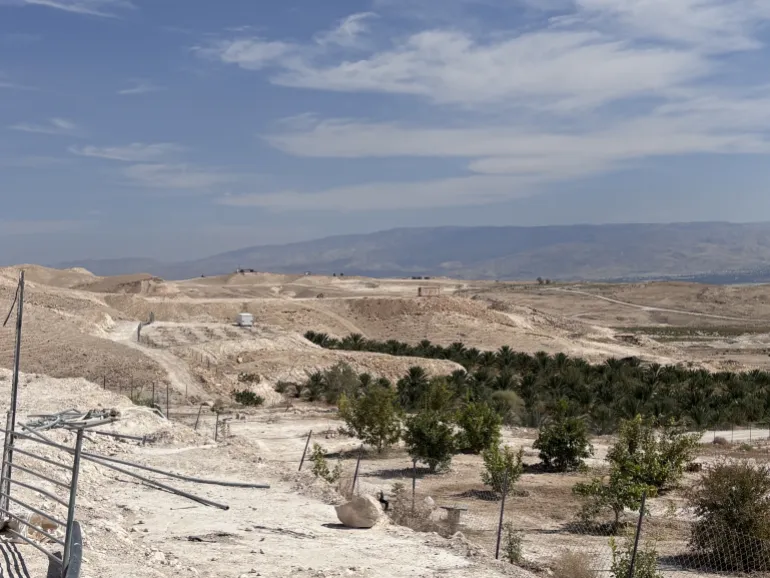
Federal Criminal Prosecutions Dropped Sharply

Court records reviewed by Reuters showed a steep decline in federal prosecutions during the first four months of the year.

Between January and April, federal prosecutors charged only eight individuals with gun or drug crimes compared with seventy seven during the same period last year.

Overall felony prosecutions also fell sharply, with ninety felony cases filed compared with nearly double that number a year earlier.

A significant portion of those cases involved immigration related offenses or arrests linked to protests against the crackdown itself rather than traditional violent crime investigations.

Prosecutors and Agents Were Reassigned

Officials said many federal agents who had previously worked on drug task forces and gang investigations were reassigned to immigration enforcement duties.

Some investigators reportedly became unavailable for ongoing criminal investigations because they were focused on immigration operations.

The crackdown also triggered major staffing problems inside the Minnesota office of the United States Attorney.

Several prosecutors reportedly resigned after being ordered to investigate the widow of a protester who was fatally shot during the immigration operation.

Sources familiar with the office said staffing levels dropped to roughly half of their normal strength, leaving prosecutors struggling to manage existing cases.

Local Authorities Say Public Safety Was Affected

Mary Moriarty, the top prosecutor in Hennepin County, said federal investigators had begun bringing complex criminal cases to local authorities because federal prosecutors lacked the resources to handle them.

She argued that the diversion of resources toward immigration enforcement weakened efforts to address serious crimes such as drug trafficking and sex trafficking.

Former federal prosecutor John Marti warned that reduced federal involvement could leave dangerous criminals operating without effective intervention.

Officials also expressed concern that the long term impact on federal and local cooperation could continue even after the immigration operation ends.

Immigration Crackdown Sparked National Controversy

The operation became one of the most controversial domestic security actions of Trump’s presidency.

Federal agents conducted large scale raids, detentions, and deportation efforts across Minneapolis, leading to protests and confrontations with demonstrators.

Two American citizens, Renee Good and Alex Pretti, were fatally shot during the unrest, intensifying public outrage and increasing political pressure on the administration.

The crackdown eventually prompted a partial retreat by federal authorities amid growing criticism over aggressive policing tactics.

Cases Delayed and Dismissed

The shortage of prosecutors and staff disruptions also affected ongoing criminal cases.

In one example, a federal judge dismissed a firearms case against Tavon Timberlake after prosecutors repeatedly missed deadlines, with staffing shortages cited as one factor.

Federal prosecutors also sought to drop a major carjacking case involving multiple deaths so that local prosecutors could take over.

At the same time, authorities continued pursuing charges against dozens of protesters linked to demonstrations against the immigration operation, although many of those cases were later dismissed.

Analysis

The Minneapolis operation highlights the broader national debate over balancing immigration enforcement with traditional public safety priorities.

Supporters of the crackdown argue that stronger immigration controls are necessary to combat crime and restore law and order. Critics contend that redirecting federal resources toward mass immigration enforcement weakens efforts to investigate violent crime and organised criminal activity.

The situation in Minnesota also illustrates how large scale political priorities can reshape the functioning of federal law enforcement agencies at the local level.

Analysts say the long term consequences may include weakened cooperation between federal and local authorities, reduced capacity for complex investigations, and growing concerns over whether public safety resources are being allocated effectively.

With information from Reuters.

Source link