Stay informed and up-to-date with the latest news from around the world. Our comprehensive news coverage brings you the most relevant and impactful stories in politics, business, technology, entertainment, and more.
Kvaratskhelia’s family home in Tbilisi, where he grew up, does not announce that a global football star was raised there.
It is one of those anonymous Soviet-era apartment blocks that populate so many parts of the city: concrete, weathered, functional rather than beautiful, surrounded by identical neighbours and the everyday sounds of a working-class district.
Inside that building I met his father, Badri – a former Dinamo Tbilisi player and Azerbaijan international – and his mother, Maka, when their son was starring with Napoli.
It was a warm, welcoming home. Humble, not full of luxuries, but filled with memories. Everywhere you looked there were small mementos of his journey – photographs, trophies, shirts. Among them the first shirt he ever wore for Dinamo Tbilisi.
“Because this is where Khvicha’s professional career started. It has to be the Dinamo one,” Maka said. “His path to the top started here.”
Kvaratskhelia still uses his small bedroom whenever he returns. In one corner there is a computer table, a keyboard, large headphones and the kind of chair used by gamers.
That little world is where he disappears for hours whenever he comes home.
Born on 12 February 2001, from an early age football was inseparable from his life. As his mother recalls, he walked with the ball, slept with the ball. Football was everything, which is not to say that it was an easy path.
As a graduate of the Dinamo Tbilisi academy, he made his professional debut at 16 in 2017 before moving to Rustavi and then on loan to Lokomotiv Moscow where he would receive his first significant salary, money which allowed him to pay for life-saving heart surgery for his father.
“It wasn’t even a question to him,” said Badri.
On 22 May 2019, the 18-year-old would win his first major honour when Lokomotiv Moscow won the Russian Cup.
A move to Rubin Kazan where he would spend three seasons – and twice win the best young player in the Russian League – followed.
Russia’s invasion of Ukraine brought an end to his stay, when Fifa announced on 7 March 2022 that all foreign players in Russia could unilaterally suspend their contracts until 30 June and sign with clubs outside Russia until the same date.
He went home, signing for Georgian club Dinamo Batumi.
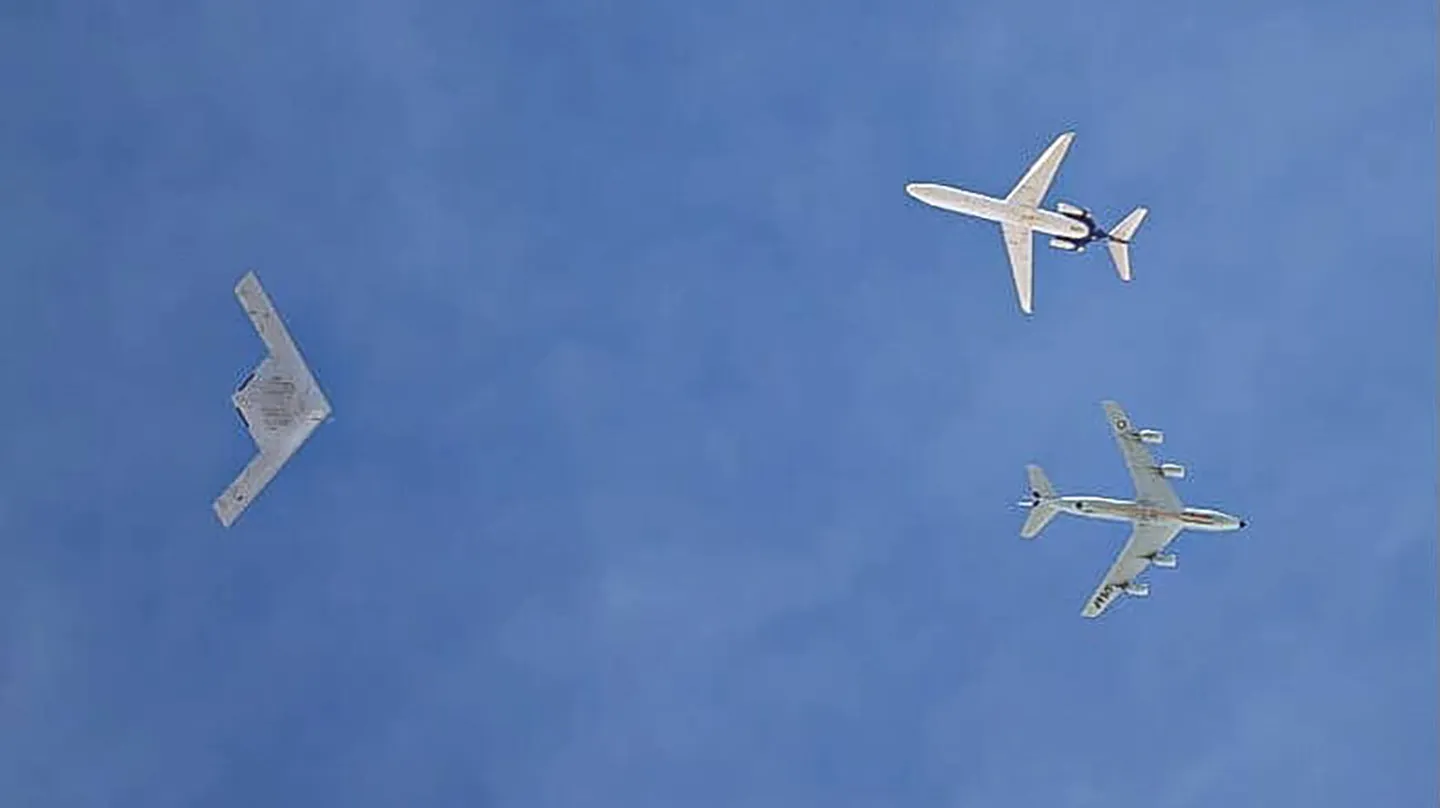
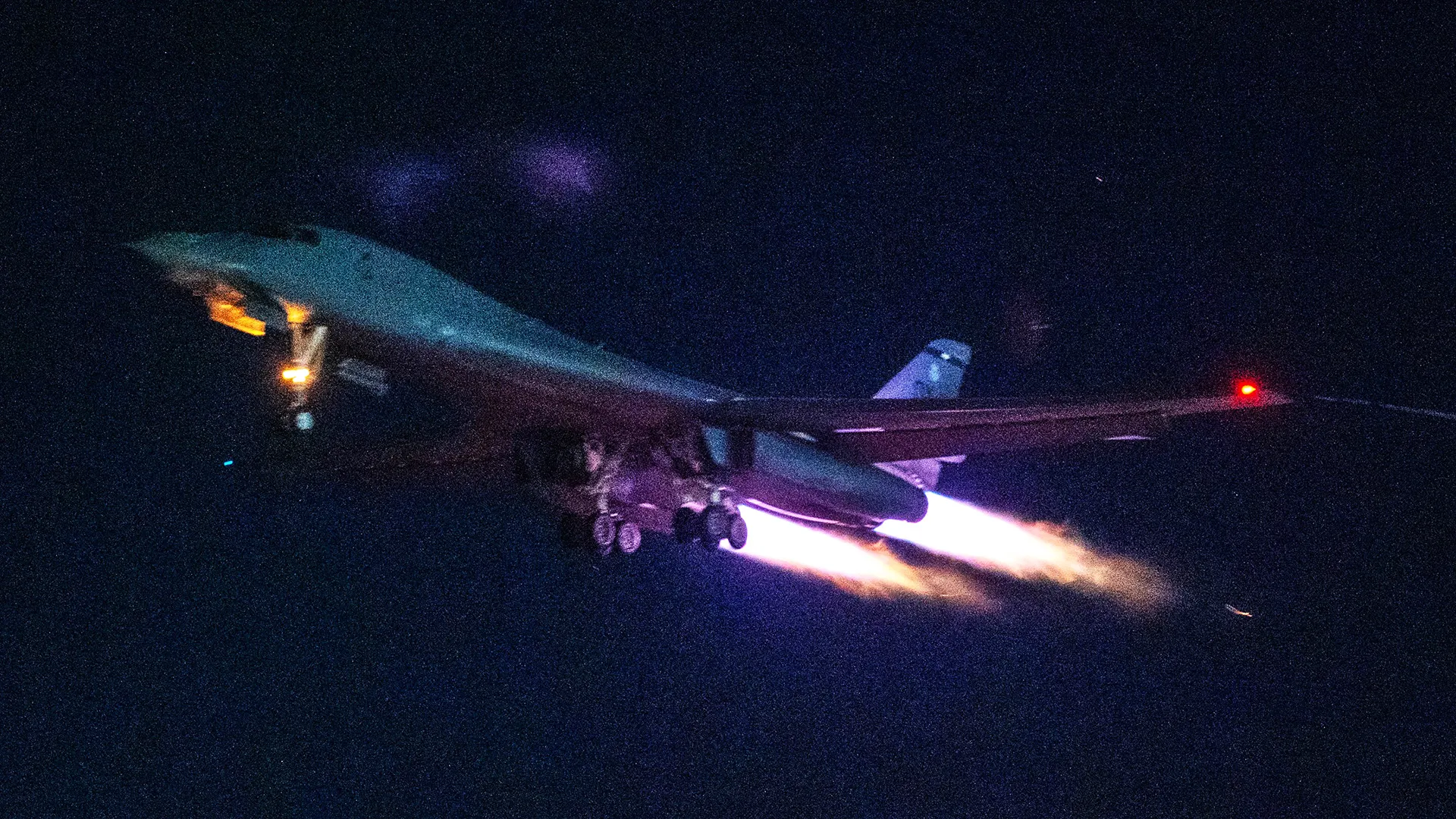
A number of images hit the net today showing the B-21 refueling behind a KC-135R. In this case it is a ‘Ghost Tanker’ stationed at Edwards AFB that works directly with the flight test community to provide aerial refueling support.
One image was posted by X user @minor_triad, showing the KC-135R plugged into the B-21 over the Mojave Desert. The B-21 appears to be the first aircraft to fly as it features an air-data boom jutting out from its nose.
Another set of photos comes to us from photographer Ian Recchio, who goes by the handle @Lookunderocks on Instagram. It shows the B-21 behind the KC-135R. It also shows a business jet-like aircraft passing underneath the two. It isn’t perfectly clear if the aircraft was working directly with the B-21 on this test flight, but it seems likely.
Another image shows the B-21 being chased by an F-16, which is customary for test flights.
The images also give us a good comparison of the size of the B-21 compared to the KC-135R, which has a wingspan of around 131-feet. As we have said nearly since the B-21 was unveiled, estimates as to its wingspan on the internet are significantly distorted, with some putting it at remarkably small size, around 125-feet. Our estimates stand that is significantly larger, around 145-155-feet. The larger B-2 has a wingspan of 172-feet.
A lot of people think the B-21 is a lot smaller than it actually is. I love seeing graphics that show like 125 foot wingspans. Not even close. Yes it’s smaller than the B-2 but not that much!
Regardless, it’s great to see the Raider moving forward and aerial refueling will only increase its time aloft for prolonged testing, which is critical for its extremely long-range mission set. It’s also probable that the B-21 has been refueling via tanker for some time, but this is the first time it is caught on camera.
Mohammed bin Abdulaziz al-Khulaifi also says Qatar and Oman cannot act as mediators while under attack.
Published On 11 Mar 202611 Mar 2026
Share
Qatar’s minister of state for foreign affairs has called for a de-escalation in hostilities across the Middle East and urged Iran and the US to return to the negotiation table for a mediated solution.
Speaking to Al Jazeera in an exclusive interview, Mohammed bin Abdulaziz al-Khulaifi said that Iran’s attacks on its regional neighbours bring “benefit for no one”.
Recommended Stories
list of 4 itemsend of list
Iran has responded to a nearly two-week-long bombardment campaign from the United States and Israel by firing missiles and drones at its neighbours in the Gulf region and beyond, causing casualties, damaging critical infrastructure and severely disrupting the region’s energy-driven economy.
Al-Khulaifi said Qatar remains “extremely worried” about the wider range of attacks, including against civilian infrastructure.
“It’s unfortunate where we are standing right now,” the minister said.
“We also believe that there is no pathway to a sustainable and long-lasting solution other than returning to the negotiation table,” he told Al Jazeera.
Qatar condemns in the “strongest terms, the unjustified and outrageous attacks on the state of Qatar that directly impact its own sovereignty”, he said.
Doha will continue to take “every possible and legal measure to defend and practise its exercise of self-defence against this aggression”, he added.
Al-Khulaifi said the conflict demands a “global solution” to ensure that the Gulf’s energy supply chain keeps moving through the Strait of Hormuz, where global traffic has been severely disrupted by the conflict.
Ensuring freedom of movement through the waterway is “very critical,” he noted.
It is notable, Al-Khulaifi pointed out, that Iran has targeted countries such as Qatar and Oman, which had previously served as regional mediators and tried to “build bridges between Iran and the West”.
Neither country can play that role as long as the attacks continue, he said.
“We will not be able to fulfil that role under attack, and that’s something the Iranians need to understand.”
Qatari Prime Minister Mohammed bin Abdulrahman Al Thani tried to convey those points during a phone call with Tehran several days ago, the foreign minister said, when he urged Iran to cease attacks on its neighbours.
“The regional countries are not an enemy of Iran, and the Iranians are not understanding that idea,” Al-Khulaifi told Al Jazeera.
Doha also remains in contact with officials in the US and has encouraged US President Donald Trump to cease hostilities, he said.
“Our line of communication is always open with our colleagues in the United States, and we keep encouraging and supporting the pathway of peace and resolving conflicts through peaceful means.
“We really hope that the parties can find that pathway, end military operations, and return to the negotiation table.”
The armed wing of Hamas, Al-Qassam Brigades, released a video message on Wednesday afternoon showing an Israeli captive currently held in Gaza, the Palestinian Information Centre has reported. The footage shows Omri Miran lighting a candle on what he described as his “second birthday” in captivity.
“This is my second birthday here. I can’t say I’m celebrating; it’s just another day in captivity,” said Miran. “I made this cake for the occasion, but there is no joy. It’s been a year and a half. I miss my daughters and my wife terribly.”
He addressed the Israeli public directly, including his family and friends. “Conditions here are extremely tough. Thank you to everyone demonstrating to bring us home safely.”
The captive also urged Israelis to stage a mass protest outside Prime Minister Benjamin Netanyahu’s residence. “Bring my daughters so I can see them on TV. Do everything you can now to get us home. Netanyahu’s supporters don’t care about us, they’d rather see us dead.”
Screengrab from footage shows Israeli captive Omri Miran
He asked captives released in previous prisoner exchange deals to protest and speak to the media. “Let the people know how bad it is for us. We live in constant fear of bombings. A deal must be reached soon before we return home in coffins.
Miran urged demonstrators to appeal to US President Donald Trump to put pressure on Netanyahu: “Do not believe Netanyahu. Military pressure is only killing us. A deal — only a deal — will bring us home. Turn to Trump. He seems to be the only powerful person in the world who could push Netanyahu to agree to a deal.”
He also mentioned the worsening humanitarian situation: “The captors told me the crossings are closed; no food or supplies are coming in. As a result, we’re receiving even less food than before.”
In conclusion, the captive sent a pointed message to the Israeli leadership: “Netanyahu, Dermer, Smotrich, Ben Gvir — you are the reason for 7 October. Because of you, I am here. Because of you, we’re all here. You’re bringing the state to collapse.”
Footage from the ground in Erbil, Iraq shows several drones over the city’s airspace and the wrecking of a drone falling through the sky onto the city.
Footage from the ground in Erbil, Iraq shows several drones over the city’s airspace and the wrecking of a drone falling through the sky onto the city.
Weekly insights and analysis on the latest developments in military technology, strategy, and foreign policy.
In a surprising development, Serbia has emerged as an operator of the Chinese-made CM-400 air-launched supersonic standoff missile. The weapon has been integrated into Serbia’s Soviet-era MiG-29 Fulcrums, which have undergone various upgrades. As it stands, the Balkan state, which has had a turbulent recent history, likely fields a missile capability otherwise unmatched in Europe (outside of Russia, at least).
A photo recently emerged showing a Serbian Air Force and Air Defense MiG-29 carrying a pair of CM-400 missiles on its inboard underwing hardpoints.
As we reported yesterday, Serbian Air Force showcased, for the first time, that they are in possession of Chinese made CM-400 supersonic air-ground missiles, with a reported range of up to 400 km.
This makes Serbia the second foreign customer, after Pakistan.
There had also been previous clues that Serbia might be poised to introduce a powerful new weapon of some kind.
According to Belgrade-based defense journalist Petar Vojinović, the chief of the General Staff of the Serbian Armed Forces, Gen. Milan Mojsilović, stated last month that “in the air component, we have weapons of a similar maximum range and lethality [to the PULS rocket artillery system].”
Mojsilović was referencing the Israeli-made PULS (Precise and Universal Launching System) since this has been recently introduced by the Serbian Army. You can read more about this ground-launched artillery rocket here.
Serbia’s Acquisition of PULS Systems and Hermes 900 UAVs from Israel
Serbia ordered 1,000 kamikaze drones from Iran in 2023. In 2025, it made significant purchases from Israel’s Elbit Systems: a $335 million rocket and drone deal in January, and a $1.6 billion PULS (Precise and… pic.twitter.com/IiHPqyo5BZ
Furthermore, Serbian President Aleksandar Vučić recently alluded to recently introduced military capabilities, stating: “…people couldn’t dream about everything we have, everything we are acquiring, they couldn’t dream.”
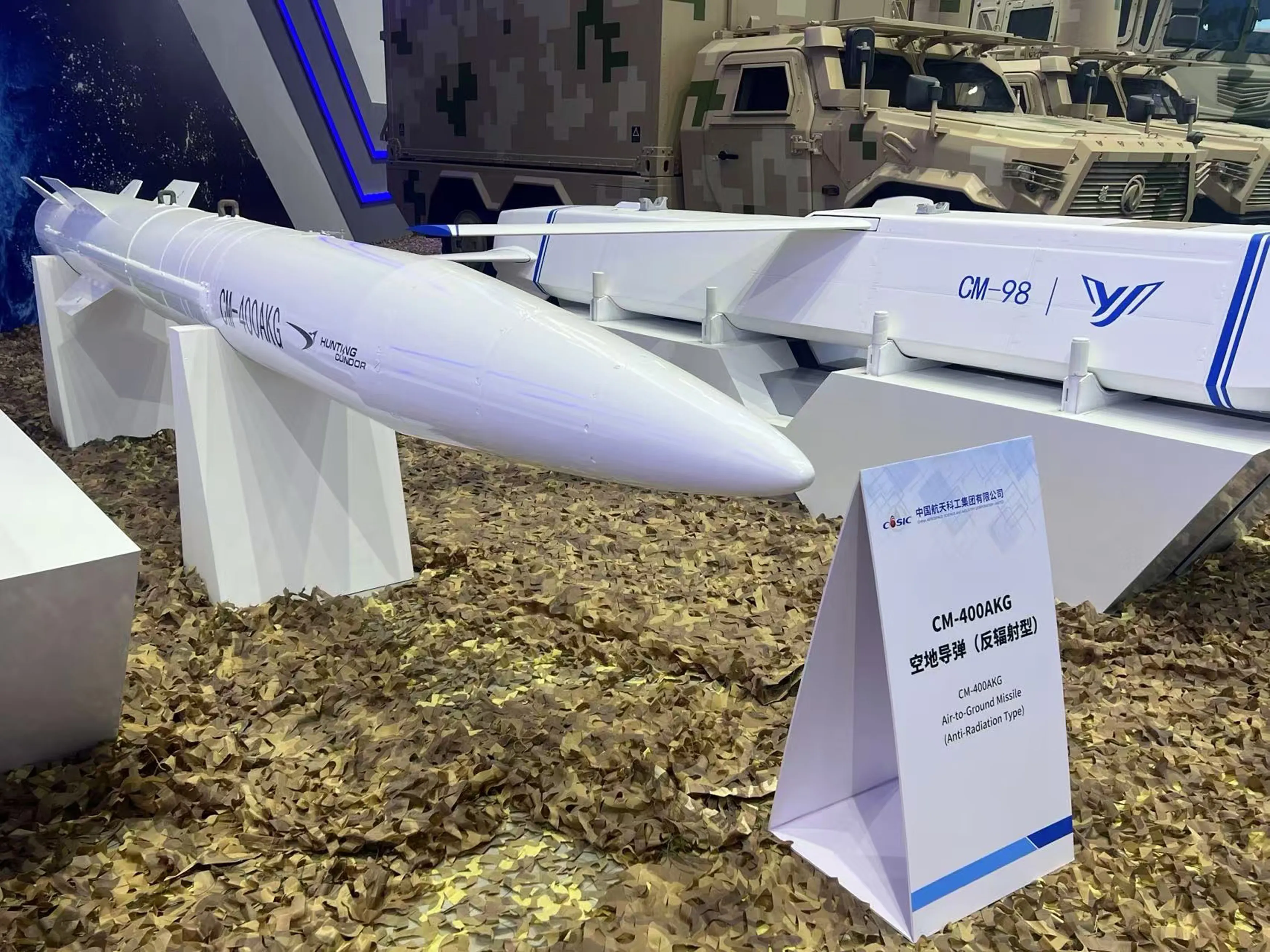
As for the CM-400, this weapon was developed and is manufactured by the China Aerospace Science and Industry Corporation (CASIC), apparently primarily for export. So far, it is not known to be in Chinese military service.
Unveiled in 2012, the CM-400 has a length of around 17 feet, a diameter of 16 inches, and weighs roughly 2,000 pounds. This includes one of two types of warheads, either a high-explosive charge weighing 330 pounds or an armor-piercing warhead weighing 440 pounds.
The CM-400 is a supersonic weapon, and CASIC claims it can reach a speed of Mach 4.5 in the terminal phase of flight. It has often been described as a hypersonic missile, but this is likely not the case: Mach 5 is typically considered to be the boundary between high-supersonic and hypersonic speed.
Nevertheless, it is clearly a very fast missile.
The missile’s range remains unclear, with varying accounts of this aspect of its performance.
At the very least, it is reported to have a range of 155 miles, while some sources claim it can hit targets at a range of 186 miles or even 250 miles.
The CM-400AKG anti-radiation missile on display during Airshow China 2024. Photo by Shen Ling/VCG via Getty Images VCG
The CM-400 has also been described as a quasi-ballistic missile, though this is also probably not entirely accurate.
Generally speaking, a quasi-ballistic missile is capable of being used on a depressed trajectory. This makes the missile more capable of significant maneuvering in flight, presenting greater challenges even for opponents with more robust missile defense capabilities.
In the case of the CM-400, the missile reportedly flies on a relatively high ballistic trajectory, powered by its solid rocket motor. It then careens toward its target at a steep angle of descent. While it may also be able to maneuver dynamically during its terminal attack phase, to attack moving ships, it doesn’t fly on a depressed trajectory, as far as we know.
In terms of target sets, the missile has been widely described as an anti-ship missile, specifically even as a ‘carrier-killer’. In fact, the basic weapon can also be configured as an anti-radiation missile, and it is presumed to also have the capability to attack non-emitting ground targets.
Depending on the different targets, the CM-400 can have different seeker heads fitted. All of the versions have an inertial guidance system with Global Navigation Satellite System (GNSS) correction. For the terminal phase, it relies on an infrared/optoelectronic seeker for attacking naval targets, or a passive radar seeker to take out electromagnetic emitters. The circular error probable (CEP) for the anti-radiation version is claimed to be 16-33, reduced to 16 feet or less for the anti-ship version.
Previously, the only confirmed export operator of the CM-400 was Pakistan, which uses it on its JF-17 Thunder multirole fighters. Pakistani officials claimed that the missile saw successful combat use against Indian S-400 air defense systems during the conflict between the countries in May last year. However, this remains unconfirmed.
A JF-17 Thunder of the Pakistan Air Force armed with CM-400 missiles. via Chinese internet
Pakistan shows footage of its JF-17 Thunder jet taking off to hit Indian S-400 air defence system with Chinese-origin CM-400AKG hypersonic missiles in anti-radiation variant.
The missile features a passive radar guidance mode, allowing it to home in on radar emissions, making it… pic.twitter.com/DUQTOQciDk
In Serbian service, the CM-400 is carried by the MiG-29 fighter. These aircraft were first acquired by the then Yugoslavia in the 1980s. Survivors of Operation Allied Force in 1999 were later supplemented by secondhand MiG-29s from Russian and Belarusian stocks. The aircraft have also been moderately upgraded and are now known as MiG-29SM+. Fourteen examples are currently in active Serbian service.
A Serbian MiG-29 accompanies the Airbus of the German chancellor after a visit to Serbia in 2024. Photo by Michael Kappeler/picture alliance via Getty Images picture alliance
The long-term plan for the Serbian MiG-29s is somewhat unclear, since the country ordered 12 Dassault Rafale multirole fighters, in a deal that you can read more about here.
For the time being, however, in the CM-400, Serbia looks to have secured a capability that is very likely unique in the wider region.
With its combination of very high speed, long range, and ‘fire and forget’ guidance, the missile is ideal for deep standoff strikes. It is optimized for striking hardened strategic targets, day and night, and in all weather.
Thanks to CATIC’s Standalone Weapon Fire Control System (SWFCS), also designated as WZHK-1 by China, the CM-400 (and other Chinese missiles) areis designed to allow foreign models of aircraft to operate Chinese missiles and bombs.
Speaking to Janes during the exhibition, a CATIC official said that the system is designed to equip a range of Chinese air-launched weapons and can be installed on existing weapon hardpoints.
“The system gives air forces around the world the ability to easily integrate Chinese-made weapons with their aircraft without requiring them to make software or hardware changes to the host aircraft,” a CATIC official toldJanes about the SWFCS back in 2024.
CATIC’s Standalone Weapon Fire Control System (SWFCS). Petar Vojinović
“The [SWFCS] uses a wireless data system that connects to a tablet in the cockpit that can be worn by the pilot. The tablet acts as a portable wireless controller that the pilot can use to launch the missiles,” the official added. Similar tablet-based soluiions have also been used by Ukraine to rapidly integrate Western weapons on Soviet-era jets, as you can read about here.
Ukrainian Air Force Su-27 Flanker Wild Weasel operations, seen here conducting multiple low level standoff strikes against Russian radars with US-supplied AGM-88 HARMs. pic.twitter.com/7CosjXFNkO
The same SWFCS interface is also being used to carry another Chinese air-to-ground weapon, the LS-6 precision-guided munition. This is a 1,100-pound-class weapon that combines a general-purpose bomb with a strap-on upgrade package to provide range extension and precision strike capabilities.
Meanwhile, weapons in the CM-400 class are a response to the growing threat posed by ground-based air defense systems, which are pushing combat aircraft ever further from the targets they are assigned to destroy.
With its very high maximum speed, the CM-400 is also well suited to attacking time-sensitive targets, which could also include mobile air defense systems or mobile ballistic missiles, provided their coordinates can be established in the required timeframe.
For Serbia, the new missile would appear to offer a relatively easy way to expand its air-launched, precision standoff strike capability. With a high degree of flexibility, fast reaction time, and the ability to penetrate most enemy air defenses, it is a notably hard-hitting weapon for what is otherwise a fairly modest air force.
It is also interesting that Serbia is looking to China to fulfil its missile needs, rather than Russia.
A Serbian pilot gets ready for takeoff aboard a MiG-29 at Batajnica Air Base in 2024. Photo by Andrej ISAKOVIC / AFP ANDREJ ISAKOVIC
While Belgrade and Moscow have traditionally had good relations, acquiring Russian arms has become far harder since the West imposed sanctions in response to the full-scale invasion of Ukraine.
Even before this, however, there were signs that Serbia was looking to move away from Russia as its main arms supplier. As such, it has increasingly moved into a more Western-oriented orbit, with acquisitions from Airbus, for example, but it is also buying weapons from China and Israel.
A U.S. Air Force HH-60G Pave Hawk and a Serbian Mi-17 Hip during CSAR maneuvers conducted over Serbia in 2023. U.S. Air Force photo by Airman 1st Class Edgar Grimaldo
At the same time, the Serbian military is increasingly switching to more NATO-style doctrine, as well as equipment, including exercises alongside the U.S. Air Force, as you can read about here.
Bearing in mind the fact that it can be integrated on non-Chinese platforms, it will be interesting to see if other nations also adopt the CM-400.
Washington, DC – Several Democrats in the United States have emerged from a classified briefing about the war on Iran, saying they still have little clarity about President Donald Trump’s justifications and end goals, even 11 days into the conflict.
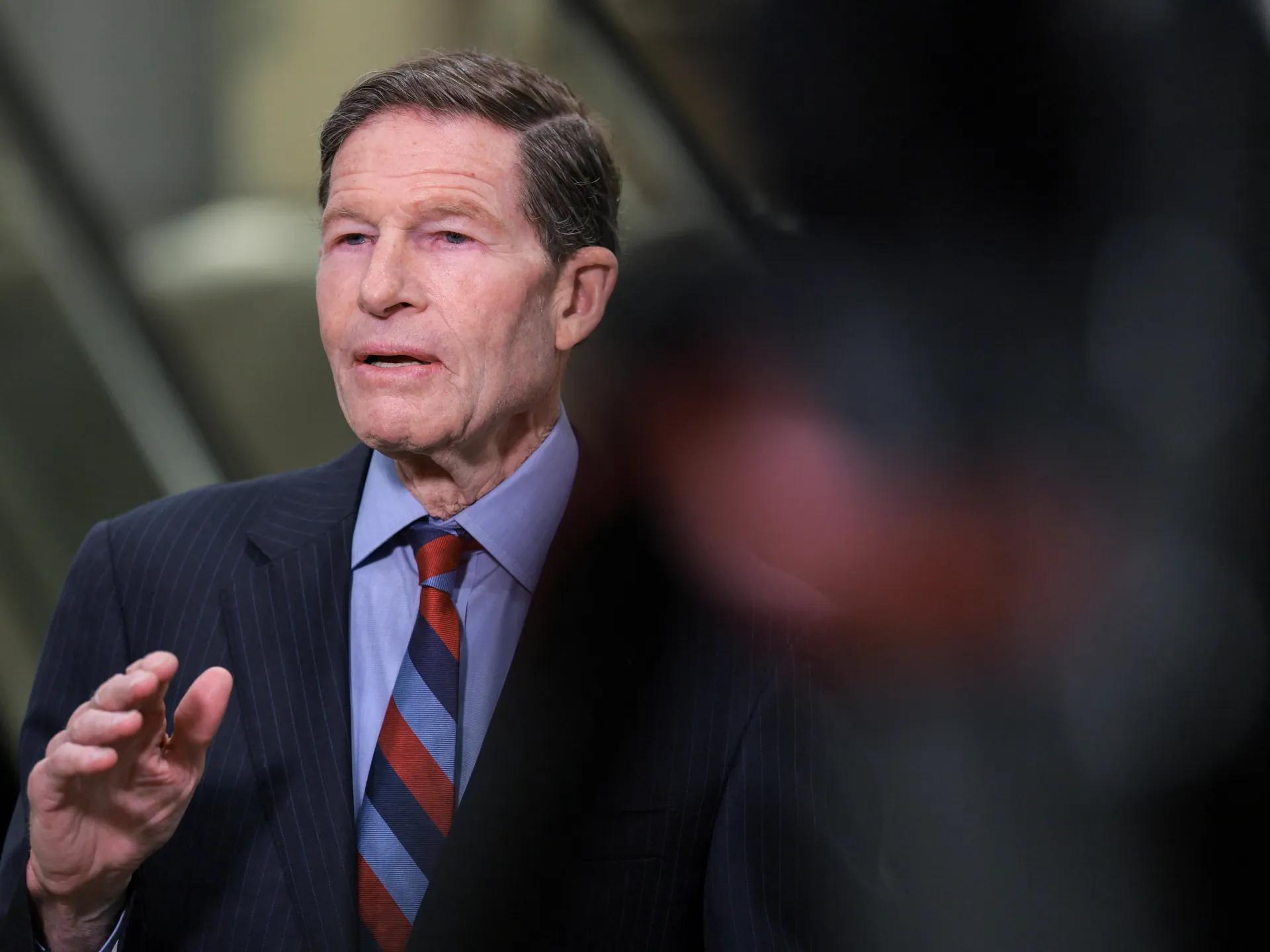
“I emerge from this briefing as dissatisfied and angry, frankly, as I have from any past briefing in my 15 years,” said Senator Richard Blumenthal, following Tuesday’s briefing to the Senate Armed Services Committee.
Recommended Stories
list of 3 itemsend of list
Their statements marked the latest wave of condemnation from congressional Democrats, who have a slim minority in the Senate and the US House of Representatives.
Party members in both chambers had recently voted in near unison on resolutions seeking to halt the war, which the US and Israel launched on February 28.
But their efforts to pass a “war powers resolution” to rein in Trump failed amid widespread Republican opposition.
More recently, Democrats have pledged to delay proceedings in the Senate unless top officials from the Department of State and the Pentagon testify under oath about the war.
Following Tuesday’s briefing, Democrats like Blumenthal argued that the Trump administration owes the US public more clarity about the war.
Blumenthal added that the meeting piqued concerns that US forces may be deployed to either Iraq or Iran.
“I am left with more questions than answers, especially about the cost of the war,” he said.
“I am most concerned about the threat to American lives of potentially deploying our sons and daughters on the ground in Iraq. We seem to be on a path towards deploying American troops on the ground in Iran to accomplish any of the potential objectives.”
Senator Elizabeth Warren, meanwhile, said that the Trump administration “cannot explain the reasons that we entered this war, the goals we’re trying to accomplish and the methods for doing that”.
She also pointed to the high cost of the military operations against Iran, which some have estimated to exceed $5.6bn in the first two days alone.
Warren pointed out that Republicans cut healthcare subsidies last year in an effort to reduce federal spending, but appear to have no problem approving military expenses.
“While there is no money for 15 million Americans who lost their healthcare”, she noted, “there’s a billion dollars a day to spend on bombing Iran”.
While approached by reporters, Senator Jacky Rosen indicated she was limited in her ability to comment on classified briefings. Still, she offered brief remarks to voice her frustration.
“I can tell you what I heard is not just concerning. It is disturbing,” she said. “And I’m not sure what the end game is or what their plans are. They certainly have not made their case.”
‘On our timeline and at our choosing’
The latest round of criticism came shortly after US Secretary of Defense Pete Hegseth pledged to conduct the “most intense day” of strikes since the war began.
As of Tuesday, the war had killed at least 1,255 people in Iran, 394 people in Lebanon, 13 in Israel, six in Iraq and 14 across the Gulf.
Trump has repeatedly said the war would not be prolonged, but his officials have offered shifting timelines. Hegseth, for instance, said the fighting would not stop “until the enemy is totally and decisively defeated”.
“We do so on our timeline and at our choosing,” he said.
The Trump administration has also offered an array of justifications for launching the war, which came amid indirect talks with Iran on the future of its nuclear programme.
Trump has blamed Iran’s nuclear ambitions for the conflict, though Tehran has denied seeking a nuclear weapon, and his administration has also said the war was necessary to end Iran’s ballistic missile programme.
Experts have said that available evidence does not support the Trump administration’s claims that either posed an immediate threat to the US.
US Secretary of State Marco Rubio told reporters last week that the US attacked because its close ally Israel had planned to attack Iran, which would have led to retaliation against US assets.
Rubio and Trump subsequently backed away from the circular rationale, with Trump claiming last week that Iran was the one planning to strike first.
Another rationale the Trump administration offered is that the totality of Iran’s actions since the 1979 Islamic revolution represented a threat to the US, thereby necessitating an attack.
Trump and his top officials have not provided evidence for any of their claims.
Calls for hearings, investigation
Democrats have been largely sidelined since the war began. Only a handful of Republicans have joined the left-leaning party in its efforts to rein in Trump through legislative means.
Under the US Constitution, only Congress can declare war. But presidents can still use the military to respond to imminent threats in instances of self-defence.
Still, there are limits to how long such operations can proceed. Under the 1973 War Powers Resolution, presidents must withdraw forces within 60 to 90 days of an unauthorised military campaign, or else seek congressional approval.
Trump, however, has denied he needs congressional backing for the military campaigns he has conducted since returning to office.
The latest attacks in Iran have sparked widespread public opposition, with polls suggesting a majority of US citizens oppose the war effort.
Earlier this week, six Democratic senators called for an investigation into a strike on a girls’ school in Minab, in southern Iran. Several investigations have indicated that the US was responsible for the attack, which killed at least 170 people, mostly children.
Last week, nearly 30 members of Congress called for an investigation into reports that US military leaders had used biblical motivations to justify the war to subordinates.
Some reportedly invoked “religious prophecy and apocalyptic theology” in statements to other enlisted personnel.
On Monday, Senator Cory Booker said Democrats had “collectively agreed” to use an array of procedural mechanisms in the chamber to block legislative business until Trump officials agree to testify under oath.
“Each individual senator has a tremendous amount of power to disrupt the normal functioning of the Senate, as well as certain privileges that we can exercise,” Booker said.
“And what we have agreed right now is that we’re not going to let the Senate continue business as usual, which seems to be ignoring the urgent issues the American people are dealing with.”
G7 energy ministers will hold a call on Tuesday to discuss sharply rising energy prices triggered by the ongoing war in Iran, officials said. A separate call later in the day will see European Union leaders addressing similar concerns, reflecting heightened global anxiety over fuel supply and costs.
Oil prices surged to their highest levels since mid-2022 on Monday, driven by fears of reduced Gulf output and disruptions to tanker traffic through key shipping routes. Even before the Iran conflict, European energy prices were generally higher than those in the United States and China.
G7 Prepares Response, But Stops Short of Releases
G7 finance ministers signalled readiness to take “necessary measures” in response to the price surge but did not commit to coordinated emergency releases of strategic oil reserves.
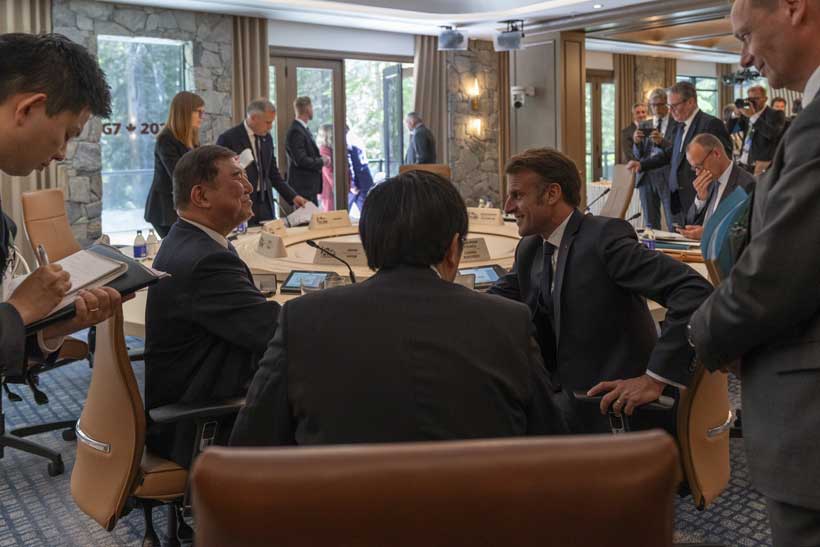
The G7, which includes United States, Canada, Japan, Italy, Britain, Germany, and France, will hold the call at 1245 GMT. French Finance Minister Roland Lescure, whose country holds the G7 presidency this year, said that Europe and the U.S. currently do not face immediate supply shortages.
EU Leaders Target Competitiveness and Energy Costs
Later on Tuesday, EU leaders will discuss energy prices and competitiveness, joining German Chancellor Friedrich Merz, Italian Prime Minister Giorgia Meloni, Belgian Prime Minister De Wever, and others.
The EU is highly exposed to global energy volatility, importing more than 90% of its oil and roughly 80% of its gas. EU Commission President Ursula von der Leyen has pledged proposals at next week’s EU summit to address rising prices.
Officials have already discussed measures including adjustments to energy taxes and potential amendments to the EU carbon price, which contributes around 11% to industrial power costs.
Coordinated Action Sought but Uncertain
The calls by the G7 and EU reflect a growing urgency to manage energy price shocks caused by the Iran war. While governments have the tools to intervene, officials are balancing the need to stabilize prices with broader fiscal and strategic considerations.
With oil and gas markets highly sensitive to geopolitical developments, both G7 and EU leaders face pressure to act quickly to prevent price spikes from translating into economic slowdowns or political unrest across their regions.
Weekly insights and analysis on the latest developments in military technology, strategy, and foreign policy.
United States Secretary of War Pete Hegseth has said that today will be “the most intense day of strikes,” as the U.S. and Israeli militaries increase their attacks on Iran. Meanwhile, Hegseth said that, in the last 24 hours, Iran has launched its lowest number of weapons since the conflict began, suggesting that these strikes are starting to more significantly erode Tehran’s ability to hit back at Israel, U.S. interests in the Middle East, and the wider region.
Hegseth said that the aftermath of the conflict is “going to be in America’s interests” and says it “will not live under a nuclear blackmail” from Iran.
Among the U.S. assets involved in the recent strikes is the Arleigh Burke class destroyer USS Frank E. Petersen Jr., seen firing a Tomahawk Land Attack Missile at Iran yesterday.
Footage of the U.S. Navy destroyer USS Frank E. Petersen Jr. (DDG 121) firing a Tomahawk Land Attack Missile at Iran yesterday. pic.twitter.com/ruyqttHlMs
The aircraft carrier USS Gerald R. Ford is reportedly on the move. Based on open-source flight tracking data, the supercarrier is apparently now operating in the central Red Sea, off the coast of Jeddah, Saudi Arabia. This suggests that the carrier strike group is heading closer to the theater of combat. Whether it will pass the Bab El Mandeb Strait, which the Iranian proxies in Yemen can put under threat, is yet to be seen.
🇺🇸USS Ford Shifts South in the Red Sea
Based on the ADS-B flight path of a USN C-2A Greyhound (Reg: 162162 / Hex: AE0454), the USS Gerald R. Ford (CVN-78) appears to be operating in the Central Red Sea, off the coast of Jeddah, Saudi Arabia.
According to The Washington Post, citing U.S. officials, the U.S. military expended munitions to the value of $5.6 billion in only the first two days of its attack on Iran. Statistics like these have raised questions about how fast some of the Pentagon’s most valuable stockpiles of weapons — including Tomahawk cruise missiles — have been eroded, and the capacity of the defense industry to make good the deficit.
The Pentagon burned through $5.6 billion worth of munitions in the first two days of its Iran assault, according to U.S. officials, alarming some on Capitol Hill over how quickly the military has depleted scarce supplies of America’s most advanced weaponry.…
— The Washington Post (@washingtonpost) March 9, 2026
Further U.S. long-range strike firepower has arrived at RAF Fairford in England, where another three B-1B bombers touched down today. These join three more B-1s that arrived on Friday and Saturday, as well as three B-52Hs that landed at the airbase yesterday, as you can read about here. As we have discussed repeatedly in recent weeks, having the bombers forward deployed to England and/or Diego Garcia will drastically increase sortie rates and decrease wear-and-tear on the bomber fleet compared to flying from U.S. airbases and back. This will become even more relevant if the bomber force shifts from making standoff strikes to direct attacks on Iranian targets, even if just over limited parts of the country where air supremacy is more guaranteed.
Gen. Dan Caine, the chairman of the Joint Chiefs of Staff, today also provided an update on the progress made in Operation Epic Fury, which he described as “gritty and tireless work.”
Caine added that the joint force remains focused on three main objectives: destroying Iran’s missile and drone capability, striking and degrading Iran’s naval capability, and preventing Tehran from being able to attack the United States and its partners “for years to come.”
Gen. Caine lists goals of Iran war: 1. Destroy missiles/drones 2. Destroy navy 3. Destroy military and industrial base
Not specifically mentioned: Iran’s nuclear program
Iran’s nuclear program was not mentioned by Caine. However, recent satellite imagery indicates that Iranian nuclear facilities are still being attacked, in this case, the Parachin nuclear complex.
🔴צילומי לווין מראים כי המתחם הצבאי הגרעיני פארצ’ין באיראן ספג תקיפות רבות🔴 מספר מבנים ניזוקו או נהרסו לחלוטין לחלוטין. קרדיט: @SoarAtlaspic.twitter.com/YUf9fZy7zz
Caine also reported a reduction in Iranian strikes, stating that “ballistic missile attacks continue to trend downwards, down 90 percent from when we started.”
The Iranian regime can try to hide their missile launchers, but U.S. forces won’t stop looking. When we find them, we’re taking them out. pic.twitter.com/urq3LWwARC
Satellite imagery points to recent strikes on at least two different Iranian missile bases, at Baharestan and Khormuj. Attacks have targeted specific points on the surfaces of these facilities, primarily the tunnel entrances, restricting the ability to move missiles out of their underground storage, or indeed to put them underground for their protection. As we have repeatedly noted, keep these facilities sealed is clearly a top priority for the U.S. and Israel as it negates all the standoff weapons entombed within.
This is what strikes on a “missile city” tunnel complex look like.
The missile base in Baharestan, southeast of Esfahan, was struck at several points, destroying all surface infrastructure. The base’s underground facility appears to have been damaged primarily at the tunnel… pic.twitter.com/68WVW1Azvs
— Ben Tzion Macales (@BenTzionMacales) March 9, 2026
Satellite imagery from Sentinel-2 @CopernicusEU on March 09 shows the Khormuj ballistic missile base lost 1 support building by airstrike, located outside the underground launch facility. The 9 portals, likley to function as silos for rapid ballistic missile launches, have yet to… pic.twitter.com/7P3l7kMYpS
Nevertheless, Iranian media continues to show launches of various missiles against targets in the wider region, with those in the video below claimed to be directed against U.S. military facilities in Kuwait. As well as the more familiar short-range ballistic missile, the imagery also includes Iranian Paveh-series ground-launched cruise missiles.
More footage has emerged of the aftermath of the U.S. strike on an Iranian Shahid Soleimani class missile corvette off the port of Bandar Kong yesterday. One of these unusual catamaran vessels had been sunk in an earlier U.S. strike, as you can read about here.
Additional footage of the American airstrike that destroyed an Iranian IRGC Navy Soleimani-class corvette off the port of Bandar Kong yesterday. pic.twitter.com/Y8RwgcAq1n
Bandar Abbas, that sits on the Strait of Hormuz, home to extensive naval facilities, as well as an Iranian air base, continued to be bombarded. The latest satellite imagery indicates new direct hits on the primary naval berths, as well as efforts by the Iranian Navy to disperse its assets. These include Ghadir class midget submarines, which have been spread around the harbor for their protection.
🚨ESCALATION AT BANDAR ABBAS: Sustained Campaign and Submarine Dispersal
OSINT Confirmed (Mar 9): The strikes on Iran’s Southern Fleet HQ did not end on March 7. Fresh high-res imagery confirms a sustained and destructive campaign, targeting the southern fleet, is actively… pic.twitter.com/hEFCuDi8rk
As well as a fresh wave of attacks on Tehran, the Israel Defense Forces (IDF) continues its campaign in Lebanon.
🎯 STRUCK: The IDF conducted an additional wave of airstrikes targeting assets and storage facilities of the Hezbollah affiliated Al-Quard Al-Hassan Association in Lebanon, used to finance the purchasing of weapons and terrorist salaries, as part of ongoing efforts to further… pic.twitter.com/AZIjUKYpoD
The IDF says it has completed a wave of airstrikes targeting branches of the Hezbollah-linked Al-Qard al-Hasan association, which is known to be used by the terror group as a quasi-bank.
Strikes carried out by the Israeli Air Force yesterday hit various assets and vaults of… pic.twitter.com/0ywArARHX4
— Emanuel (Mannie) Fabian (@manniefabian) March 10, 2026
The IDF today launched a warning strike on Beirut’s southern suburbs, Lebanon’s state-run National News Agencyreports.
Ahead of that, the IDF warned that it would be targeting Hezbollah infrastructure in the area of Tyre and Sidon on the western coast of southern Lebanon. It also said it would be operating in the area south of the Litani River, around 50 miles south of the capital. The IDF once again urged those in the area to leave.
Despite the reported dip in Iranian missile and drone strikes, air defenses in the United Arab Emirates have again been busy. Today, the UAE’s defense ministry reported the interception ofeight missiles and 26 drones. A ninth missile fell into the sea while nine more drones fell into the country’s territory.
In total, since the start of the conflict, UAE air defenses have identified 262 ballistic missiles, eight cruise missiles, and 1,475 drones heading toward UAE territory, the defense ministry added.
الدفاعات الجوية الإماراتية تتعامل مع 8 صواريخ باليستية و 26 طائرة مسيرة.
رصدت الدفاعات الجوية الإماراتية اليوم (10 مارس 2026) 9 صواريخ باليستية حيث تم تدمير 8 صواريخ باليستية، فيما سقط 1 صاروخ باليستي في البحر، كما تم رصد 35 طائرة مسيرة، حيث تم اعتراض 26 طائرة مسيرة، بينما سقطت… pic.twitter.com/yoz8NX0hKZ
The IRGC said they targeted a U.S. base in Iraq’s Kurdistan region. “The headquarters of the invading U.S. Army in Al-Harir Air Base in the Kurdistan region was targeted with five missiles,” the Guards said in a statement on Telegram today.
Since the start of the conflict, it is reported that Iran and Iran-affiliated militants in Iraq have carried out 196 drone, missile, and rocket attacks across the Kurdistan region.
Nearly 200 strikes in ten days.
Since February 28, Iran’s Islamic Revolutionary Guard Corps and affiliated armed groups in Iraq have carried out 196 drone, missile, and rocket attacks across the Kurdistan Region of Iraq, according to monitoring by Community Peacemaker Teams –… pic.twitter.com/ZMopvYGDhx
The IRGC also said that they would not allow “one liter of oil” to be shipped from the MiddleEast as long as the attacks continue.
In response, U.S. President Donald Trump said the U.S. military would hit Iran “20 times harder” if it blocked tanker traffic through the Strait of Hormuz, which handles a fifth of the world’s oil supply.
“Death, Fire, and Fury will reign upon them,” Trump added, in a statement on his Truth Social media channel.
President Trump threatens Iran with airstrikes “TWENTY TIMES HARDER” if they stop the flow of oil within the strait of Hormuz.
Otherwise, Trump has delivered some mixed messages on the course of the war so far.
The U.S. president described the campaign as “very complete, pretty much,” and ahead of schedule. But Trump also said he would not declare the U.S. mission accomplished, saying: “We’ve already won in many ways, but we haven’t won enough.”
Signs of a more enduring campaign are also found in Trump’s War Powers Resolution notice to Congress. This includes the words: “Although the United States desires a quick and enduring peace, it is not possible at this time to know the full scope and duration of military operations that may be necessary.”
POTUS, in his War Powers Resolution notice to Congress states: “Although the United States desires a quick and enduring peace, it is not possible at this time to know the full scope and duration of military operations that may be necessary.”
In a televised interview, Trump also appeared to threaten Mojtaba Khamenei, who Iran has named as its new supreme leader, succeeding his father, Ali Khamenei, after he was killed on February 28.
Speaking of Trump, high-ranking Iranian official Ali Larijani said on X: “The Iranian people are not afraid of your threats … be careful, or you will be the one who is eliminated.”
Ali Larijani threatens Trump: “The Iranian people is not afraid of your threats…be careful or you will be the one who is eliminated” https://t.co/IDts4HHPm5
The latest update from the U.K. Ministry of Defense states that a British counter-uncrewed aerial systems (C-UAS) unit took out a drone in Iraqi airspace, as well as announcing the deployment to the region of the RFA Lyme Bay, an auxiliary dock landing ship with extensive humanitarian and medical facilities.
The U.K. Ministry of Defense has also released more footage of Royal Air Force Typhoon fighter jets in action against Iranian drones over Jordan.
Onboard footage from a British Royal Air Force Eurofighter Typhoon as it shoots down an Iranian attack drone over Jordan last night. pic.twitter.com/OhOvPQaJvu
The UAE Ministry of Defense has confirmed the deaths of two members of the country’s armed forces. The fatalities occurred when a helicopter crashed due to “a technical malfunction while performing their national duty in the country” yesterday. Unverified reports suggest the crew was killed in the crash of an AH-64 Apache attack helicopter engaged on drone-hunting duties.
The UAE Ministry of Defence announces the martyrdom of two members of the Armed Forces following a helicopter crash due to a technical malfunction while performing their national duty in the country today, Monday, March 9, 2026.
The United Arab Emirates (UAE) announced the deaths of two pilots in a helicopter crash, attributing the incident to a technical problem. However…⬇️ pic.twitter.com/kzt31Y4tBU
The U.K. Maritime Trade Operations (UKMTO) said today it had received a report of an incident 36 nautical miles north of Abu Dhabi, United Arab Emirates. The report suggests that an explosion took place in close proximity to a bulk carrier. The UKMTO urged vessels to transit with caution.
Iranian Foreign Minister Abbas Araghchi addressed Gulf countries, attempting to justify Tehran’s attacks on their infrastructure.
“If they have the right to take all necessary measures to protect their facilities, I think we are even,” Araghchi said in a televised address. “In fact, we have even more right to take all necessary measures to defend ourselves and protect our people. And this is exactly what we are doing.”
Araghchi said that the conflict “is not our war … not our choice. This war was imposed on us. We are under aggression, and we are defending ourselves.”
Iran’s Foreign Minister Abbas Araghchi to Gulf countries:
If they have the right to take all necessary measures to protect their facilities, I think we are even.
In fact, we have even more right to take all necessary measures to defend ourselves and protect our people. And… pic.twitter.com/2oLnqBbA2w
Hitting out at the U.S. government’s war-planning and the timeline for the campaign, Araghchi argued: “I don’t think they have any realistic endgame in mind.”
Iran’s Foreign Minister Abbas Araghchi:
They thought that in a matter of two or three days they could go for regime change and achieve a rapid, clean victory, but they failed.
So I believe that Plan A was a failure. And now they are trying other plans, but all of them have… pic.twitter.com/1KBJBxcpPp
Araghchi also wrote off the prospect of negotiations with the U.S. government and warned that Iran would continue to launch attacks in the region “for as long as necessary,” according to AFP.
BREAKING Iran will continue missile attacks for as long as necessary says foreign minister, adding negotiations with US ‘no longer on the agenda’ pic.twitter.com/Uw0aKxmgT4
The Turkish Ministry of Defense says that a NATO-operated Patriot air defense system has been deployed in Malatya in the Eastern Anatolia region of Turkey. The surface-to-air missile system is part of efforts to beef up air and missile defense capabilities in the region.
A Patriot missile defense system is being deployed to central Malatya province, the Turkish Defense Ministry said. The move comes a day after NATO shot down a second ballistic missile fired from Iran in Turkish airspace. https://t.co/EcNVCTAD06
The effects of the conflict continue to be felt by the global economy as the oil market comes under pressure.
Saudi Aramco CEO Amin Nasser has warned that ar could have “catastrophic consequences” for the oil market and global economy if it continues.
Saudi Aramco CEO Amin Nasser warned that the ongoing Middle East conflict could have “catastrophic consequences” for the oil market and global economy if it continues. pic.twitter.com/EEDaJ9MoE2
Oil infrastructure in the region continues to come under Iranian missile and drone attack.
Case in point, the Ruwais Industrial Complex in Abu Dhabi, where a fire reportedly broke out as a result of a drone attack.
BREAKING: Authorities in Abu Dhabi are responding to a fire that broke out at a facility in the Ruwais Industrial Complex following a drone attack.
Ruwais is one of the world’s largest integrated oil refining and petrochemical complexes and the biggest in the Middle East. pic.twitter.com/yMipCzaeUe
Reports are coming from Iraq indicating that airstrikes targeted the headquarters of the Iran-backed Hashd Al-Shaabi forces near the city of Kirkuk today. According to a report from Reuters, four Hashd Al-Shaabi members were killed.
Airstrikes hit the headquarters of the Iran-backed Hashd Al-Shaabi forces near the city of Kirkuk in Iraq on Tuesday, killing four members and wounding 12 others, Reuters reported citing security sources.
— Iran International English (@IranIntl_En) March 10, 2026
From South Korea, there are indications that the U.S. Army has moved critical Patriot and THAAD air defense systems from that country to address threats in the Middle East.
According to Yonhap News, South Korean President Lee Jae-myung said today, “We are opposing the withdrawal of some air defense weapons … but we cannot fully enforce our opinion.”
The U.S. has likely moved Patriot and THAAD air defense systems from Korea to the Middle East -Yonhap News
South Korean President Lee Jae-myung earlier today: “We are opposing the [US] withdrawal of some air defense weapons… but we cannot fully enforce our opinion.” pic.twitter.com/0Wj8aaDtWJ
However, the South Korean leader also said that the widening of the war in Iran would not seriously affect Seoul’s ability to defend itself against North Korea.
President Lee Jae Myung says that even if the US military moves air defense assets out of South Korea as the Iran conflict widens, it won’t seriously affect Seoul’s ability to defend itself against nuclear-armed North Korea https://t.co/ySdKh85Der
Meanwhile, we have gotten what might be our first look at the U.S. Army THAAD system engaging incoming Iranian missiles during the current campaign.
Some of the first ever publicly released combat footage of an American THAAD anti-ballistic missile defense system engaging incoming Iranian missiles. pic.twitter.com/brfM1WC5uw
According to a report from Axios, the U.S. Department of War snubbed a Ukrainian offer for combat-proven anti-drone technology almost seven months ago. Axios says that it obtained a PowerPoint presentation that showed exactly how such systems could be used to protect U.S. forces and their allies in a potential conflict in the Middle East. Last week, the Pentagon was forced to reverse course after a heavier-than-expected bombardment from Iranian drones.
This should surprise nobody considering how aloof and resistant the Pentagon has been to the drone threat for many years. Big Hubris is capabilities, look what it took to finally build a U.S. Shahed-136. The defensive side of the equation is far worse, which we have been… https://t.co/PQaZwtRuiF
Saudi Arabia is reportedly also a new customer for Ukrainian anti-drone technology, placing an order for interceptor missiles, according to The Kyiv Independent, citing a source within the Ukrainian defense industry.
A Saudi Arabian arms company has signed a deal to buy Ukrainian-made interceptor missiles, the Kyiv Independent has learned, with one source within Ukraine’s defense industry saying that Riyadh and Kyiv are negotiating a separate “huge deal” for arms that could be finalized this…
— The Kyiv Independent (@KyivIndependent) March 10, 2026
The Nightly, an Australian online newspaper, reports that the three Royal Australian Navy crew members who were on the nuclear-powered attack submarine USS Charlotte when it sank the Iranian warship Dena in the Indian Ocean last week were sent to their sleeping quarters during the engagement. This was to ensure that they were not direct participants in the offensive strike.
Australian sailors embedded on the U.S. submarine USS Charlotte were ordered to their sleeping quarters during the attack that sank the Iranian warship IRIS Dena in the Indian Ocean.
The move was meant to ensure the three Royal Australian Navy personnel did not participate in… pic.twitter.com/0jZbNtQtzR
There are suggestions coming out of Israel that the country may have used unorthodox and unconventional means to help hobble the Iranian leadership during the first waves of strikes, or indeed beforehand. According to a former Mossad official, now at the Jerusalem Center for Security and Foreign Affairs: “I can say that big things have happened in Iran, on the scale of the beepers and perhaps even more. They may not photograph as dramatically, but over time, we will hear about them, and they are no less amazing. There are also other significant things that remain up the sleeve.”
“MAJOR THINGS HAVE HAPPENED IN IRAN, ON THE SCALE OF THE BEEPERS”
Former Mossad official and JCFA researcher, @Sagivasulin2025, says: “I can say that big things have happened in Iran, on the scale of the beepers and perhaps even more. They may not photograph as dramatically, but… pic.twitter.com/U3C0MexqaU
— Jerusalem Center for Security and Foreign Affairs (@jerusalemcenter) March 10, 2026
U.S. forces are degrading the Iranian regime’s ability to project power at sea and harass international shipping. For years, Iranian forces have threatened freedom of navigation in waters essential to American, regional and global security and prosperity. pic.twitter.com/gIBN02mowh
Trump threatens Iran preemptively if it attempts to mine the strait:
Major air carriers are cancelling flights to the key hotspots in the Middle East, with British Airways saying they are doing so for flights to Abu Dhabi for the rest of the year. We assume this could be reversed at any time.
JUST IN: British Airways just cancelled all flights to Abu Dhabi until later this year. Not next week. Not next month. The rest of the year.
We have been tracking a bizarre situation here where DOE Secretary Wright put out a tweet saying convoy operations in the Strait have begun. Then he promptly deleted it. We reached out to the Pentagon on this and they flatly denied it.
Sec. Wright tweeted that the US Navy had successfully escorted a tanker through the strait of Hormuz.
140 service members have been wounded in Epic Fury. Most minor injuries, but a smaller number are serious.
Chief Pentagon spokesperson Sean Parnell says in new statement: “Since the start of Operation Epic Fury, approximately 140 U.S. service members have been wounded over 10 days of sustained attacks. The vast majority of these injuries have been minor, and 108 service members have…
Senate Democrats seem pretty dismayed about what they are hearing about the conflict in closed door briefings. Richard Blumenthal largely focused his comments on the war’s timeline, cost, and especially the possible help Russia is giving Iran:
Blumenthal after getting briefed on Iran: “We seem to be on a path toward deploying American troops on the ground in Iran to accomplish any of the potential objectives here. There’s also the specter of active Russian aid to Iran putting in danger American lives … China also may… pic.twitter.com/l3wjMoWZkw
Israel continues to strike Basij (Iranian internal police) targets. If there was any chance of an internal uprising taking over the country, it would require the degradation of these units.
🎯 DISMANTLED: Most key assets of the Iranian terror regime’s Internal Security Forces and Basij units in Ilam Province, as part of the IDF’s operations to target the regime’s systems and capabilities.
The IDF destroyed most of the main infrastructure of the Basij and the internal security forces of Iran in Ilam Province — a region in the west of the country bordering Iraq, which has a significant Kurdish minority.
Ukrainian and Russian officials have claimed battlefield successes in the more than four-year war, as Russian air attacks on Ukraine continue.
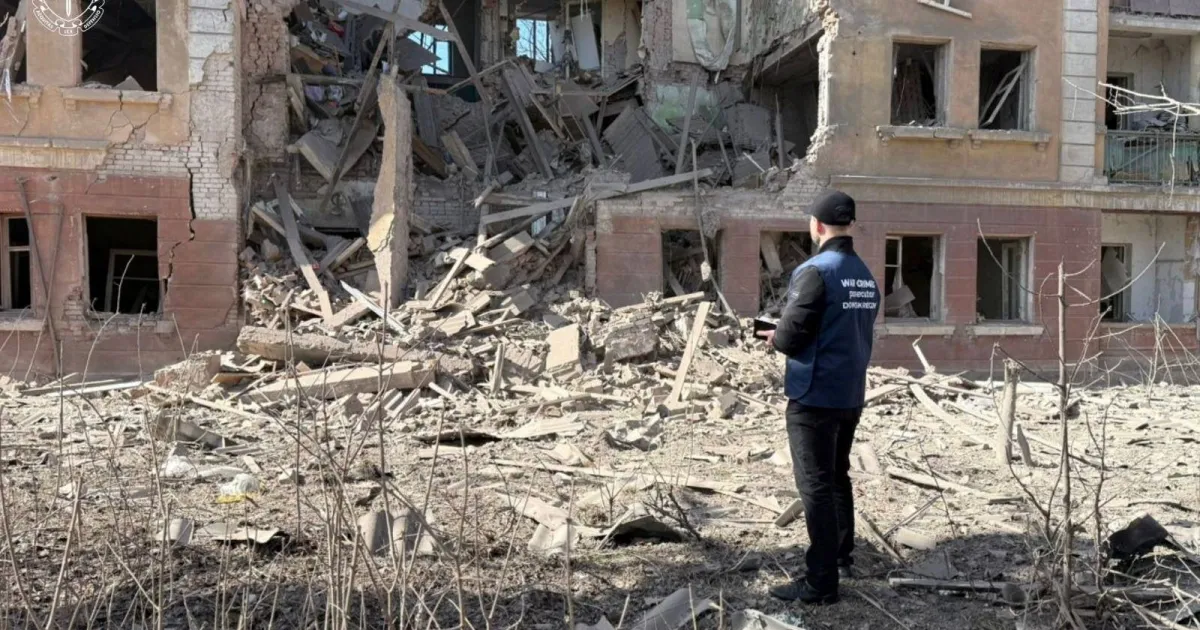
At least four people were killed in Russian attacks on the Ukrainian town of Sloviansk, regional authorities said on Tuesday.
Recommended Stories
list of 3 itemsend of list
The governor of Sloviansk, Vadym Filashkin, confirmed the death toll on Tuesday and said 16 others were wounded, including a 14-year-old girl. He said Russian forces dropped three guided bombs on the city.
There was no immediate comment from Moscow on the attack.
Overnight drone strikes on three other Ukrainian cities wounded at least 17 people, including two children, emergency services said.
Ukraine’s air force said that it shot down 122 out of 137 drones that Russia launched during the night.
Warring parties claim advances
Ukrainian forces have recently retaken nearly all the territory of the southeastern Dnipropetrovsk industrial region during a counteroffensive, driving Russian troops out of more than 400 square kilometres (150sq miles), Major-General Oleksandr Komarenko said in an interview published Tuesday by local media outlet RBC-Ukraine.
He described the overall situation on the front line as difficult but under control, with the heaviest fighting continuing near Pokrovsk in eastern Ukraine and Oleksandrivka in the south, where he said Russian forces have concentrated their main effort.
There was no independent verification of his description of the military situation.
The Institute for the Study of War, a Washington-based think tank, said late Monday that recent Ukrainian counterattacks “are generating tactical, operational and strategic effects that may disrupt Russia’s spring-summer 2026 offensive campaign plan”.
Meanwhile, Russian President Vladimir Putin claimed that Russian forces have extended their gains in Ukraine’s eastern Donbas region, whose capture Moscow has made one of the goals of its invasion. Ukraine controlled about 25 percent of the Donbas six months ago, but it now holds just 15-17 percent, Putin said.
In Russia, the governor of the border region Bryansk, said a Ukrainian missile strike on Bryansk city had killed at least six people and wounded 37 others.
Alexander Bogomaz said those killed were civilians and that the wounded were admitted to the Bryansk Regional Hospital.
Ukrainian President Volodymyr Zelenskyy said the attack hit a Russian missile plant.
At the same time, a United Nations investigation found that the deportation and transfer of Ukrainian children since Russia invaded Ukraine in 2022 had amounted to “crimes against humanity”.
The International Criminal Court issued arrest warrants for President Vladimir Putin and five other Russian officials in 2023 over the alleged illegal deportation of children, which Moscow denies and said it has been evacuating people voluntarily from a warzone.
Trilateral talks ‘next week’
United States special envoy Steve Witkoff told the CNBC news outlet on Tuesday that the next round of trilateral talks between Ukraine, Russia and the US would likely be “sometime next week”.
Trilateral talks were first held in January in the United Arab Emirates; a second meeting was held in February in Geneva, Switzerland. Last year, Russia and Ukraine also held three rounds of talks in Turkiye, yet so far the two countries remain no closer to a deal as key issues, including Russia’s control of Ukrainian territory, are yet to be resolved.
Moscow has repeatedly said it would only agree to a deal that allows it to retain the territories it has seized, while Ukraine has said its territory must be returned in any deal.
Ukrainian President Volodymyr Zelenskyy said Turkiye was prepared to host the next round of trilateral talks after speaking with his Turkish counterpart, President Tayyip Erdogan, on Tuesday.
As world institutions wobble, The Hague has unexpectedly become the stage for a reckoning long denied in the Philippines.
Proceedings at the International Criminal Court (ICC) in late February offered a rare glimpse of accountability at a moment when global norms feel increasingly fragile. The court held a hearing in the case against former Philippine President Rodrigo Duterte to confirm charges for crimes against humanity committed during the so‑called “war on drugs”.
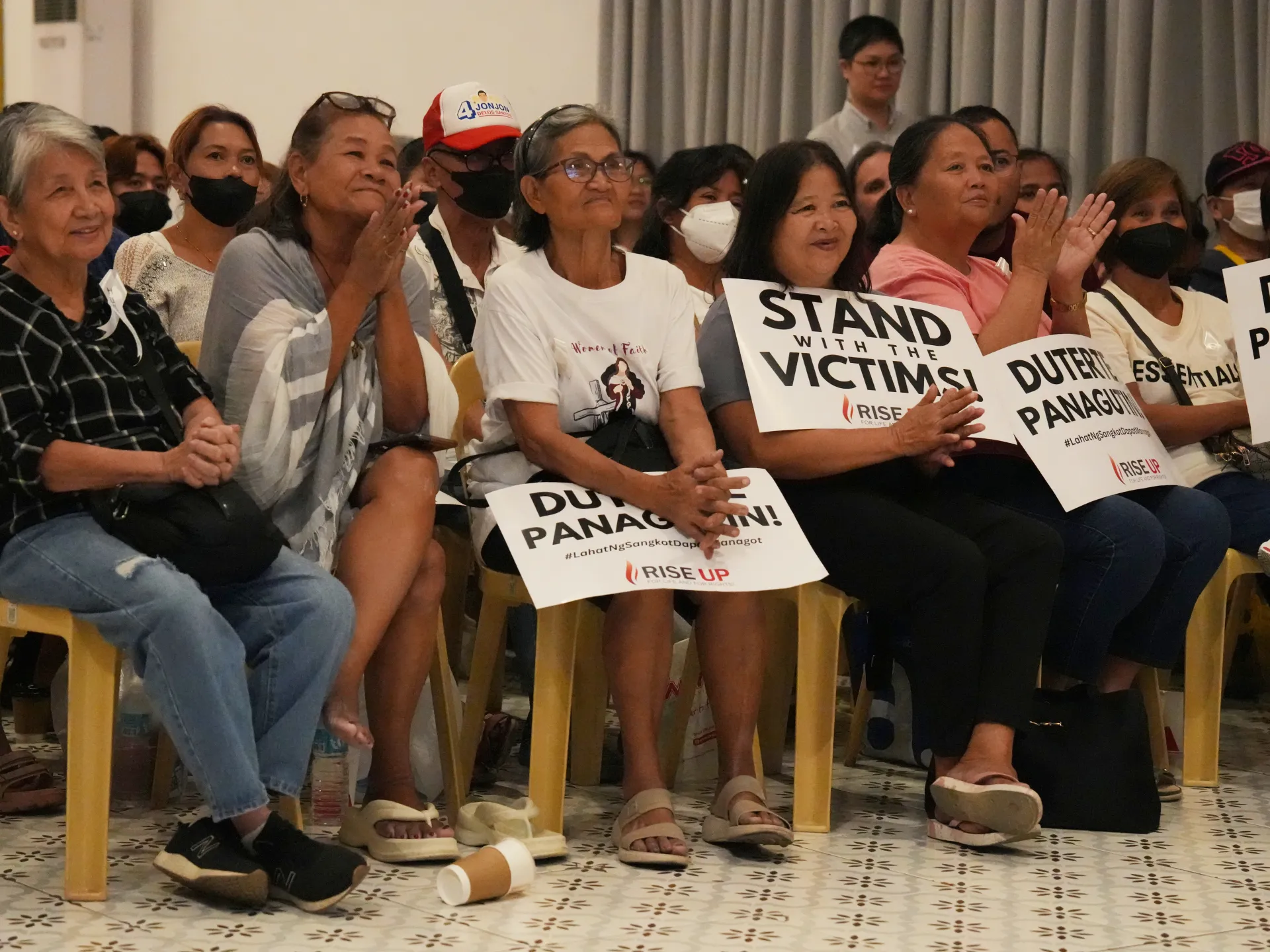
For the families of those killed in the “drug war” watching tearfully from the public gallery, this hearing marked the first real step towards justice after years of violence, denial, and dehumanisation of their loved ones. As a Filipino lawyer and counsel for the victims, Joel Butuyan, told the court, “Truth is the antidote to the virus of impunity.”
A three-judge panel – women from Romania, Mexico and Benin – heard arguments from prosecutors, victims’ counsel, and Duterte’s defence lawyer. Their task was not to determine guilt, but to assess whether there is sufficient evidence for the case against Duterte to proceed to trial.
The case focuses on 49 incidents of alleged murder and attempted murder, involving 78 victims, including children, between November 2011 and March 2019, when the ICC still had jurisdiction over the Philippines. In March 2018, soon after the former ICC prosecutor announced a preliminary inquiry into the situation of the Philippines, Duterte withdrew the Philippines from the court’s membership, which became final one year later.
The case against Duterte covers his tenure as mayor of Davao City, in the southern Philippines, and the period after he was elected president in 2016. The prosecutors emphasised that the specific incidents they focused on represent only a fraction of the thousands of killings attributed to police and hired hitmen during Duterte’s anti-drug campaign.
I sat in the public gallery alongside victims’ families, activists, clergy, journalists, and lawyers who had traveled from the Philippines to witness a moment many never thought possible. Duterte’s supporters were there, too. But Duterte himself was absent as he waived his right to be present. His written statement declared that he did not recognize the court’s jurisdiction and claimed he had been “kidnapped”. His refusal to appear was obviously a disappointment for the victims’ families, hoping to see him in the dock.
Still, his voice echoed through the courtroom. Prosecutors played video after video of Duterte urging police to kill drug suspects and ignore legal restraints. In one chilling 2016 address, he warned: “If I become the president, I will order the military and the police to hunt down the drug lords, the big ones, and kill them.” Duterte’s lawyer argued that the prosecutors were selective in their approach to the speeches and that they missed critical information that would exonerate Duterte, including references to using force in self-defence.
Human Rights Watch has been reporting on Duterte’s “drug wars” since 2009, when we detailed the operations of the “Davao Death Squad” that targeted street children, petty criminals and drug suspects when Duterte was mayor. A 2017 Human Rights Watch report showed how Duterte’s “drug war” escalated nationwide after he was elected president.
The panel now has 60 days to decide whether the case will proceed to trial. But while the ICC deliberates, drug-related killings in the Philippines continue, though reduced from their peak during the Duterte administration.
Domestic accountability remains woefully inadequate. Nearly 10 years after the nationwide “drug war” began, five cases have resulted in convictions of a total of nine police officers. The vast majority of those responsible, including senior officials, remain untouched.
The political context is also fraught. Sending Duterte to The Hague may have suited the current president, Ferdinand Marcos Jr, allowing him to distance himself from the bloodiest excesses of his predecessor. But several of Duterte’s alleged co‑perpetrators – senior police officers and officials who helped transplant Davao City’s “neutralisation” strategies to the national stage – still wield influence or have gone into hiding.
The security architecture that enabled the killings within the national police force remains largely intact. With the wrong political signal, the violence could easily surge again.
Marcos now faces a defining choice. He can continue outsourcing justice to the ICC while tolerating a culture of impunity at home. Or he can demonstrate genuine commitment to accountability and the rule of law. Doing so would require a clear, public repudiation of the decade-long police operation underpinning the anti-drug campaign, and an explicit assurance that its methods are no longer acceptable state policy.
Marcos should also empower the Department of Justice to pursue investigations and prosecutions in earnest, and take steps to rejoin the ICC, which would, in turn, help strengthen domestic accountability efforts. Without credible domestic action, promises of reform will ring hollow.
This is a moment of reckoning for the Philippines. Families who have waited years for answers deserve more than political convenience; they deserve justice. Whatever the ICC decides in the coming months, the Philippine government need not – and should not – wait. Ending impunity and honouring the dignity of victims begins at home.
The views expressed in this article are the author’s own and do not necessarily reflect Al Jazeera’s editorial stance.
International Energy Agency chief says talks aim to assess conditions as US-Israel war on Iran fuels global uncertainty.
Published On 10 Mar 202610 Mar 2026
Share
The International Energy Agency (IEA) is set to hold an emergency meeting to assess the situation in the Middle East as the US-Israeli war on Iran continues to roil global energy markets.
Fatih Birol, the agency’s executive director, said representatives of IEA member states would meet on Tuesday to assess “the current security of supply and market conditions” amid the conflict.
Recommended Stories
list of 3 itemsend of list
“I have convened an extraordinary meeting of IEA member governments, which will take place later today to assess the current security of supply and market conditions to inform a subsequent decision on whether to make emergency stocks of IEA countries available to the market,” Birol said.
This week, oil prices hit their highest levels since mid‑2022 amid concerns of prolonged shipping disruptions linked to the war and reduced output from some key producers in countries that have been targeted by retaliatory Iranian strikes.
While the market reversed late in the day on Monday, with benchmarks falling below $90 a barrel, uncertainty persists around how long the United States-Israel war will drag on.
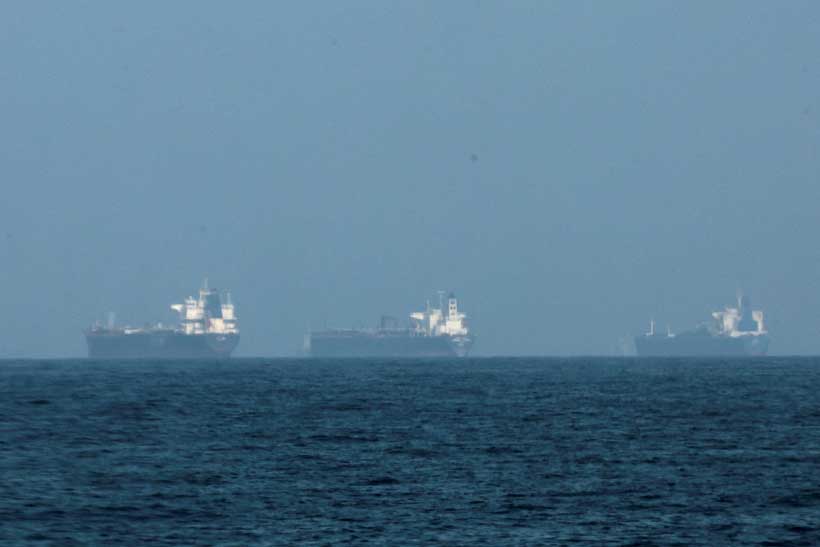
The Strait of Hormuz, a critical Gulf waterway through which about one-fifth of the world’s oil supplies passes, has effectively been shut down as a result of the war.
“If this drags on, it is not just going to be energy prices” that are affected, Al Jazeera’s Osama Bin Javaid explained. “It is going to have an impact on global economies.”
Bin Javaid noted that the extraordinary IEA meeting comes after Group of Seven (G7) countries met to discuss possible actions to help stabilise global energy markets.
European governments have been on edge about the prospect of a repeat of the energy crisis they faced in 2022, when prices surged to record peaks after Russia’s full-scale invasion of Ukraine.
“The IEA will be presenting an in-depth analysis of the pros and cons of releasing stocks now,” the European Union’s Energy Commissioner Dan Jorgensen said before the agency’s meeting.
Earlier on Tuesday, G7 energy ministers stopped short of deciding on the release of strategic oil reserves in a call, instead asking the IEA to assess the situation before acting.
“Everyone is willing to take measures to stabilise the market, including the United States,” French Finance Minister Roland Lescure told reporters after the latest talks.
“We have asked the IEA to elaborate scenarios for a potential oil stock release; we need to be ready to act at any moment,” he added.
EU leaders also will discuss competitiveness, including energy prices, on a call later in the day with German Chancellor Friedrich Merz, Italian Prime Minister Giorgia Meloni, Belgian Prime Minister Bart De Wever, and others.
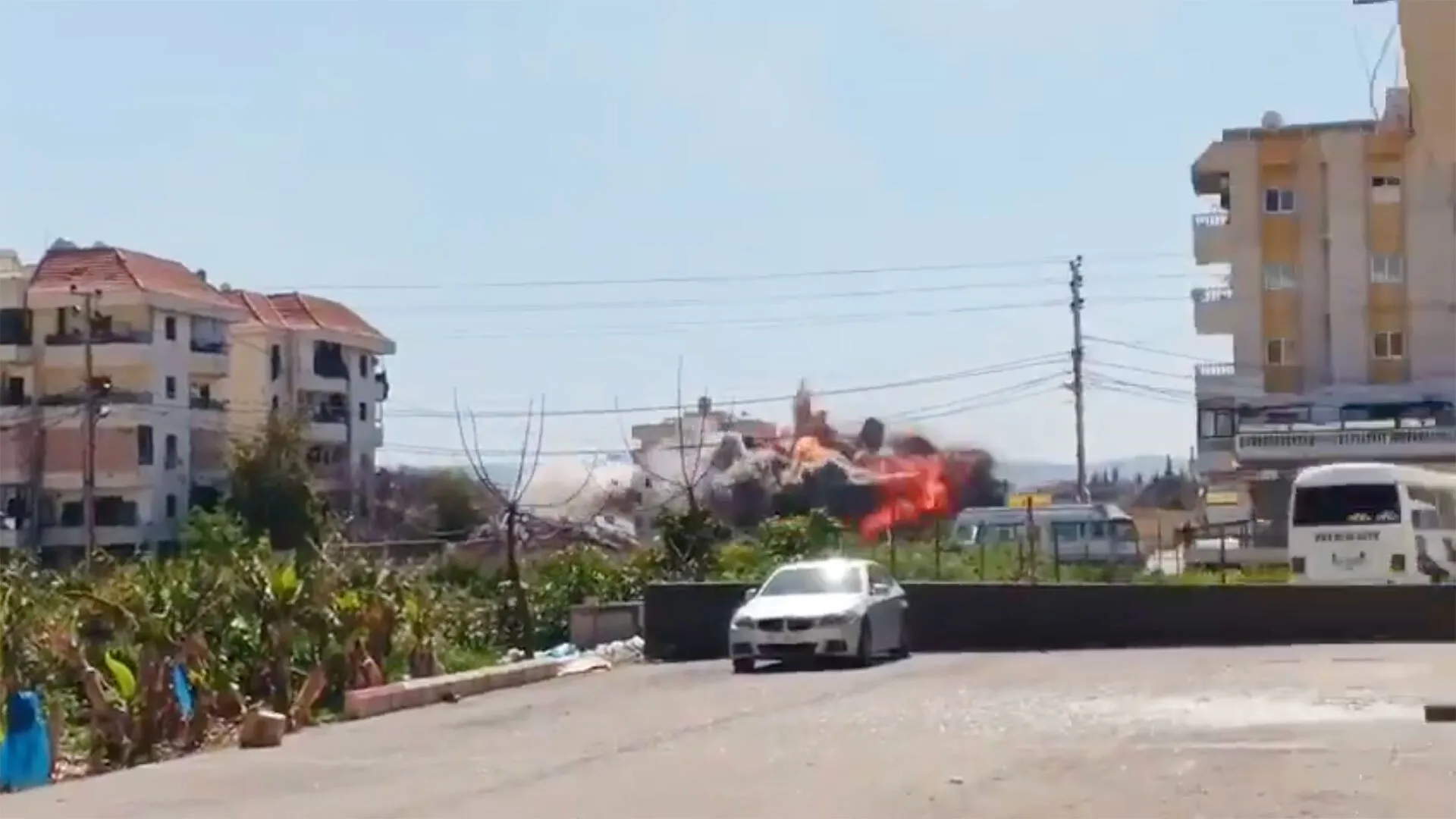
An Israeli air strike has heavily damaged a building in southern Lebanon’s Tyre district.
An Israeli air strike has heavily damaged a building in southern Lebanon’s Tyre district as Israeli forces continue to attack across the area. The army says it is targeting Hezbollah military infrastructure and has warned residents south of the Litani river to leave.
Vladimir Putin has presented multiple proposals to mediate the conflict in Iran, according to the Kremlin. Kremlin spokesman Dmitry Peskov said on Tuesday that the proposals are “still on the table,” emphasizing Russia’s readiness to help reduce tensions.
Peskov noted that any diplomatic solution requires coordination across multiple parties and agreements, signaling that Moscow intends to play a careful, measured role rather than rushing into mediation. This framing underscores Russia’s attempt to position itself as a credible intermediary while retaining influence over the conflict’s trajectory.
Recent Putin-Trump Contact
The remarks came after a phone call between Putin and Donald Trump on Monday, in which Putin reportedly offered options to end the Iran war quickly. Trump publicly said that Putin “wants to be helpful,” but added that resolving the Ukraine conflict would be an even more useful contribution.
The exchange highlights how Russia’s involvement in Iran is intertwined with its broader geopolitical interests, particularly in Europe and the Middle East. Moscow’s dual focus on positioning as a mediator and protecting its strategic priorities in Ukraine illustrates its careful diplomatic balancing act.
Russia-Iran Relations and Strategic Calculations
Russia maintains a strategic partnership with Iran, which provides it leverage in regional energy and security affairs. While Moscow has condemned U.S. and Israel military actions against Iran, it has also economically benefited from the resulting surge in oil prices.
Reports that Russia may have shared targeting intelligence with Tehran have drawn scrutiny, although Peskov declined to confirm or deny them. By avoiding direct comment, Russia preserves operational flexibility and manages international perceptions, allowing it to maintain influence with Iran while publicly projecting a mediating stance.
Russia’s position reflects a calculated effort to balance diplomacy and national interest. Keeping mediation proposals publicly “on the table” serves several purposes:
Diplomatic Leverage: By signaling willingness to mediate, Russia positions itself as a necessary interlocutor for any resolution, increasing its bargaining power with both the U.S. and Iran.
Strategic Buffering: Moscow preserves its ties with Tehran, protecting a partner in the Middle East while benefiting from higher oil prices amid global supply shocks.
Geopolitical Messaging: The Kremlin is communicating to the West that Russia can influence outcomes in the Middle East, reinforcing its image as a global power capable of shaping crises beyond its immediate borders.
This approach highlights a broader Russian strategy: maintain engagement in multiple theaters simultaneously Ukraine, Iran, and energy markets while avoiding overt entanglement that could provoke direct confrontation with the U.S. or NATO.
Conclusion: Patient Diplomacy as a Strategic Tool
Moscow’s emphasis on patience and coordination indicates that Russia is playing the long game, using mediation as a tool to expand influence rather than as a purely humanitarian effort. Analysts suggest that this approach allows Russia to extract maximum strategic advantage, balancing its regional partnerships, energy interests, and global standing, while leaving room to maneuver depending on how the Iran conflict evolves.
Russia’s dual role as both potential mediator and strategic partner to Tehran exemplifies the complex interplay of diplomacy, energy politics, and military calculation in the Middle East.
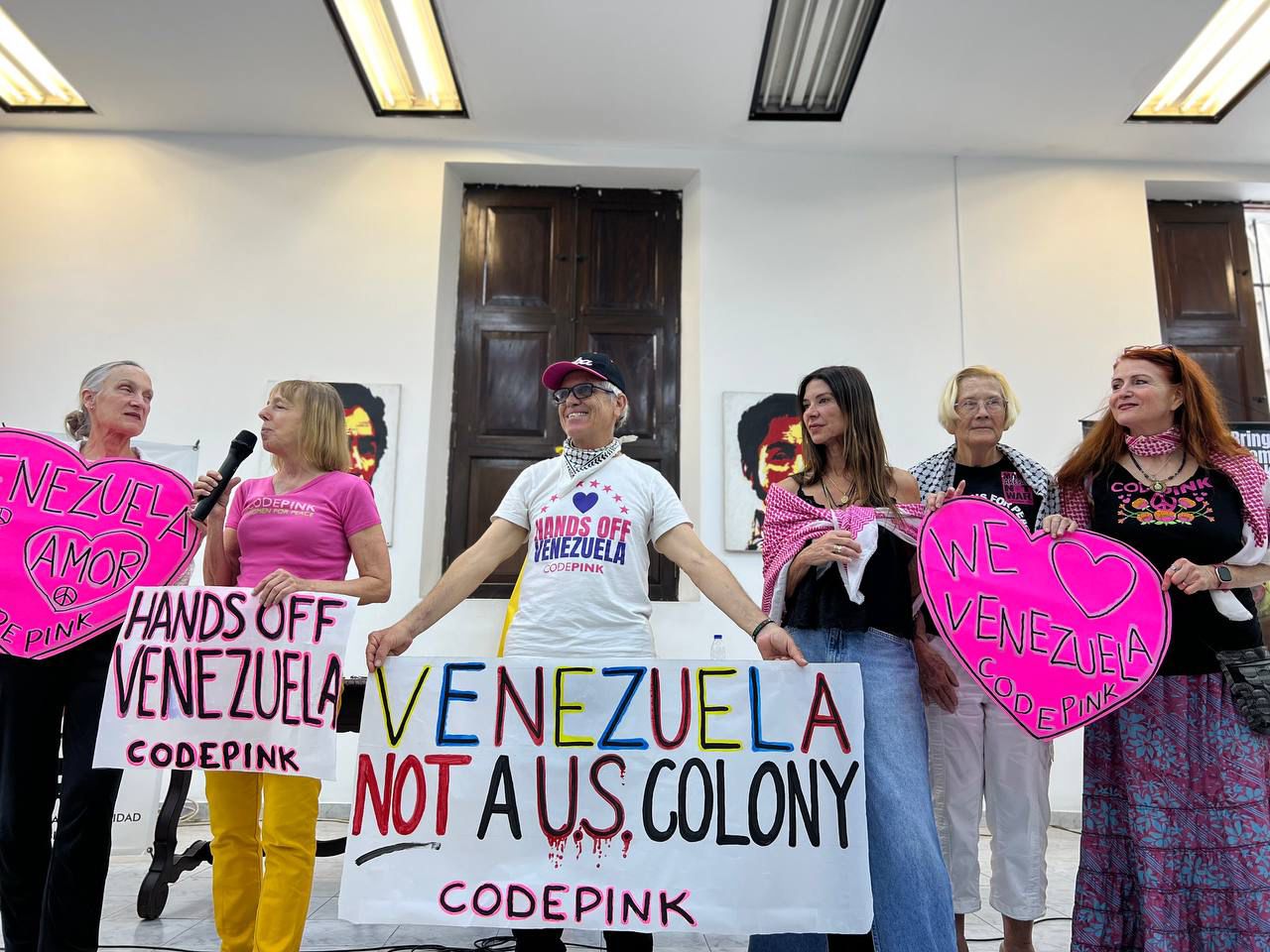
Code Pink participated in a solidarity brigade to Venezuela in February. (Instituto Simón Bolívar)
On our recent delegation to Venezuela, one quote echoed again and again — a warning written nearly two centuries ago by Simón Bolívar in 1829:
“The United States appears destined by Providence to plague America with misery in the name of liberty.”
For many Venezuelans, that line no longer feels like history. It feels like the present.
The January 3 U.S. military operation that seized President Nicolás Maduro and First Lady Cilia Flores marked a dramatic escalation in a conflict that Venezuelans describe not as sudden but as cumulative — the culmination of decades of pressure, sanctions, and attempts at isolation. “We still haven’t totally processed what happened on January 3,” sanctions expert William Castillo told us. “But it was the culmination of over 25 years of aggression and 11 years of resisting devastating sanctions. A 20-year-old today has lived half his life in a blockaded country.”
Carlos Ron, former deputy foreign minister and now with the Tricontinental Institute for Social Research, described the buildup to the invasion as the result of a carefully constructed narrative. “First there was the dangerous rhetoric describing Venezuelans in the United States as criminals,” he said. “Then endless references to the Tren de Aragua gang. Then the boat strikes blowing up alleged smugglers. Then the oil tanker seizures and naval blockade. The pressure wasn’t working, so they escalated to the January 3 invasion and kidnapping of President Maduro and his wife, Cilia Flores, and the deaths of over 100 people.”
While in the United States the events of January 3 have largely been forgotten, replaced by a devastating war with Iran, in Venezuela the reminders are everywhere. Huge banners draped from apartment buildings demand: “Bring them home.”Weekly protests call for their release.
In the Tiuna neighborhood of Caracas, we met Mileidy Chirinos, who lives in an apartment complex overlooking the site where Maduro was captured. From her rooftop, she told us about that dreadful night, when the sky lit up with explosions so loud her building shook and everyone ran outside screaming.
“Have your children ever woken up terrified to the sound of bombs?” she asked.
We shook our heads.
“Ours have,” she said. “And they are U.S. bombs. Now we understand what Palestinians in Gaza feel every day.”
She told us psychologists now visit weekly to help residents cope with the trauma.
Within days of the U.S. invasion, the National Assembly swore in Vice President Delcy Rodríguez as acting president. President Trump publicly praised Rodríguez for “doing a good job,” emphasizing his strong relationship with her. But from the beginning, she has been negotiating with the United States with a gun to her head. She was told that any refusal to compromise would result not in the kidnapping of her and her team, but death and the continued bombing of Venezuela.
The presence of U.S. power looms large. Nuclear submarines still patrol offshore. Thousands of troops remain positioned nearby. Every statement and decision made by the government is scrutinized. And on February 2, despite Trump’s praise for Delcy Rodríguez, he renewed the 2015 executive order declaring Venezuela an “unusual and extraordinary threat” to U.S. national security.
The visits from the heads of the CIA and Southern Command have undoubtedly been difficult for the government to swallow. Delcy’s revolutionary father was tortured to death in 1976 by a Venezuelan government that worked closely with the CIA. The U.S. Southern Command coordinated the January 3 attack.
But the government is not without leverage.
“The United States thought the state was weak, that it didn’t have popular support, that the military was divided,” said Tania Díaz of the ruling PSUV party. “January 3rd could have triggered looting, military defections, or widespread destabilization. None of that happened.”
The United States has overwhelming military dominance, but it was also aware that millions of Venezuelans signed up to be part of the people’s militia. This militia, along with the army that remained loyal to the government, gave Washington pause about launching a prolonged war and attempting to replace Delcy Rodríguez with opposition leader María Corina Machado.
While Machado enjoys enthusiastic support among Venezuelan exiles in Miami and the Trump administration recognized her movement as the winner of the 2024 election, the picture inside Venezuela is very different. The opposition remains deeply divided and Trump realized there was no viable faction ready to assume power.
Besides, as William Castillo put it bluntly: “Trump does not care about elections or human rights or political prisoners. He cares about three other things: oil, oil, and oil.” To that, we can add gold, where the U.S. just pushed Venezuela to provide direct access to gold exports and investment opportunities in the country’s gold and mineral sector,
Certainly, under the circumstances, the Venezuelan leadership has had little choice but to grant the United States significant influence over its oil exports. But while Trump boasts that this is the fruit of his “spectacular assault,” Maduro had long been open to cooperation with U.S. oil companies.
“Maduro was well aware that Venezuela needed investment in its oil facilities,” Castillo told us, “but the lack of investment is because of U.S. sanctions, not because of Maduro. Venezuela never stopped selling to the U.S.; it is the U.S. that stopped buying. And it also stopped selling spare parts needed to repair the infrastructure. So the U.S. started the fire that decimated our oil industry and now acts as if it’s the firefighter coming to the rescue.”
In any case, the easing of oil sanctions — the only sanctions that have been partially lifted — is already bringing an infusion of much-needed dollars, and the government has been able to use these funds to support social programs.
But in Venezuela the conflict is not seen as simply about oil. Blanca Eekhout, head of the Simon Bolivar Institute, says U.S. actions represent a brazen return to the 1823 Monroe Doctrine. The doctrine originally warned European powers not to interfere in the Western Hemisphere, but over time it became a justification for repeated U.S. interventions across the region.
“We have gone back 200 years,” she said. “All rules of sovereignty have been violated. But while the Trump administration thinks it can control the hemisphere by force, it can’t.”
The historical contradiction is stark. In 1823, the young United States declared Latin America its sphere of influence. A year earlier, Bolívar envisioned a powerful, sovereign Latin America capable of charting its own destiny. That tension still echoes through the present.
Bolívar’s dream is also being battered by the resurgence of the right across the region. The left in Latin America is far weaker than during the days of Hugo Chávez. Bolivia’s Evo Morales and Ecuador’s Rafael Correa have been replaced by conservative leaders. Cuba remains under a suffocating U.S. siege. Progressive regional institutions like CELAC and ALBA have faded, and the vision of Latin American unity that once seemed within reach now feels far more fragile.
In Caracas, the situation is tangled, contradictory, and volatile. But amid the uncertainty, one thing felt clear: the Venezuelan left is not collapsing. It is recalibrating.
As Blanca told us before we left:
“They thought we would fall apart. But we are still here.”
And in the background, Bolívar’s warning continues to drift through the air — like a storm that never quite passes.
The views expressed in this article are the author’s own and do not necessarily reflect those of the Venezuelanalysis editorial staff.
Human Rights Watch (HRW) said on Monday that the Israeli military illegally deployed white phosphorus munitions over the southern Lebanese town of Yohmor on March 3, posing severe risks to civilians.
Ramzi Kaiss, HRW’s Lebanon researcher, described the incendiary effects of white phosphorus as capable of causing death or “cruel injuries that result in lifelong suffering.” The group said it had verified eight images and reports from civil defense personnel responding to fires in residential areas.
Legal and Humanitarian Context
White phosphorus can legally be used in warfare to create smoke screens, illuminate battlefields, mark targets, or burn fortified positions. However, HRW emphasized that deploying airburst white phosphorus over populated areas is prohibited under international humanitarian law.
Protocol III of the Convention on the Prohibition of Certain Conventional Weapons classifies white phosphorus as an incendiary weapon and forbids its use against military targets located among civilians. While Israel has not signed the protocol and is not legally bound by it, HRW and other rights groups argue that its use in populated areas constitutes a violation of humanitarian principles.
Previous Patterns and Scale
The report comes amid an intensification of Israeli strikes in Lebanon over the past week. According to the Lebanese National Council for Scientific Research, between October 2023 and July 2024, Israel carried out 175 attacks using white phosphorus in southern Lebanon, sparking fires across more than 600 hectares (1,480 acres) of farmland.
HRW previously accused Israel of using white phosphorus in 2023, a charge the Israeli military denied. Civilian displacement and casualties have been severe: nearly 400 people killed and hundreds of thousands forced to leave their homes as strikes continue.
Israeli Response
The Israeli military told Reuters it was unaware of and could not confirm the use of white phosphorus shells in Yohmor. Officials said they had not reviewed the same videos cited by HRW and declined to comment on the allegations. Lebanese authorities have not issued a statement on the report.
On March 3, the Israeli military ordered residents of Yohmor and 50 other nearby towns to evacuate ahead of strikes, highlighting the heightened risks to civilians in affected areas.
Analysis
The allegations underscore the ongoing humanitarian and legal concerns in southern Lebanon amid Israel’s operations. Even without Israel being formally bound by Protocol III, the use of incendiary munitions in populated areas raises questions about compliance with customary international humanitarian law, which prohibits indiscriminate attacks on civilians.
The repeated accusations of white phosphorus use reflect both the intensity of Israel’s military campaign and the broader risk of civilian harm in the conflict. Beyond immediate casualties and destruction, agricultural damage and displacement threaten long-term social and economic stability in southern Lebanon, particularly for farming communities still recovering from previous conflicts.
The HRW report may intensify international scrutiny on Israel’s conduct in Lebanon, potentially influencing diplomatic and humanitarian responses in the region.
Investors placed strong bets on Tuesday that Donald Trump could bring the war in Iran to a rapid conclusion, even as both sides escalated threats. The Islamic Revolutionary Guards Corps of Iran declared that no oil would leave the Middle East until U.S. and Israeli attacks cease, prompting Trump to threaten that any attempt to block tanker traffic would be met with strikes “twenty times harder.”
Despite the rhetoric, markets quickly reversed the historic surge in crude prices seen on Monday. Brent crude briefly surged to nearly $120 a barrel, a level not seen since mid‑2022, but fell back to around $92 by Tuesday morning. Futures volumes were low, reflecting both caution and the fact that traders were recalibrating risk based on Trump’s comments that the U.S. was “very far ahead” of his initial four- to five-week timeframe for the conflict. Asian and European share prices staged a recovery from earlier steep falls, signaling that markets were treating Trump’s statements as a de-escalation signal, even if the on-the-ground situation remained dire.
Analysts noted that while the market’s reaction reflects optimism about a short conflict, underlying risks remain. Suvro Sarkar of DBS Bank observed that benchmark Middle Eastern grades like Murban and Dubai crude remain above $100 per barrel, meaning the fundamental pressures on supply have not dissipated.
On the Ground: Intensified Conflict
Meanwhile, the human and strategic realities on the ground remain stark. Tehran residents described the heaviest bombardment of the conflict yet, with strikes across the city leaving civilians fearful and homes damaged. One resident said, “It was like hell. They were bombing everywhere, every part of Tehran… my children are afraid to sleep now. We have nowhere to go.”
Israel is simultaneously operating under the assumption that Trump could end the war at any moment, sources familiar with its military plans told Reuters. This has encouraged Israeli forces to maximize damage on Iranian targets before any potential ceasefire, highlighting the tension between the short-term operational calculus and long-term strategic objectives.
Iran’s appointment of hardliner Mojtaba Khamenei as Supreme Leader signals defiance against U.S. pressure to influence Iranian leadership, underscoring Tehran’s unwillingness to yield to external demands despite the military pressure.
Strategic Implications: Oil, Leadership, and Geopolitics
The war has effectively halted shipments through the Strait of Hormuz policy measures such as easing sanctions on Russia and releasing strategic oil reserves, are interpreted by markets as mitigating factors that could prevent a prolonged energy crisis.
However, the underlying political and military dynamics suggest that a rapid resolution may not meet all stated U.S. objectives. Ending the conflict quickly to restore oil flows would likely leave Iran’s leadership intact, which contrasts with Trump’s previous maximalist demands for influence over Iran’s succession. Israel’s objectives diverge further, as it continues to seek regime change and to weaken Tehran’s ability to strike beyond its borders, while U.S. officials emphasize missile and nuclear containment.
Human and Regional Costs
The war has already inflicted significant human costs. Iran’s U.N. ambassador reported at least 1,332 civilian deaths and thousands wounded since the airstrikes began. Iranian missile and drone strikes targeting Gulf states have damaged infrastructure, closed airports, and disrupted hotels, while retaliatory Israeli strikes in Lebanon have killed scores amid ongoing efforts to neutralize Hezbollah.
Domestically, Iran has suppressed dissent and anti-government protests following the death of Ali Khamenei, further complicating the social dynamics that external military action interacts with. Large-scale rallies in support of Mojtaba Khamenei demonstrate public mobilization in favor of the hardline leadership, which may limit the U.S. and Israel’s capacity to influence internal political outcomes even after the war concludes.
Analysis: Financial, Strategic, and Geopolitical Interplay
Markets are betting on a short conflict because of political signaling, but the broader picture is far more complex. Oil prices remain sensitive to supply disruptions, and the potential for renewed escalations persists. The market response highlights how sentiment can temporarily override fundamental risks, yet volatility is likely to continue as long as strategic objectives, military operations, and leadership decisions remain unresolved.
From a geopolitical perspective, the conflict illustrates the tension between military objectives and economic consequences. A rapid end to the war would stabilize energy markets and global growth expectations but may leave U.S. and Israeli goals partially unmet. Conversely, prolonging the conflict to pursue maximalist aims risks a sustained oil shock, regional instability, and wider economic fallout, echoing lessons from past Middle East crises in the 1970s.
Analysts emphasize that energy markets, geopolitical strategy, and human costs are tightly intertwined: traders respond quickly to political statements, but the underlying realities strikes, leadership decisions, and supply chain vulnerabilities ensure that uncertainty will remain high. The delicate balance between military pressure, diplomacy, and market psychology will determine whether the Iran conflict resolves quickly or evolves into a more protracted crisis.
A voter participates in the March 8 consultation. (Archive)
Mérida, March 9, 2026 (venezuelanalysis.com) – Millions of Venezuelans participated on Sunday in the first National Popular Consultation of 2026, a direct democracy mechanism designed to transfer state resources directly to organized communities for the execution of self-managed projects.
The process took place in 5,336 communal circuits nationwide. Residents over the age of 15 were eligible to vote for one of up to seven projects previously proposed and debated in local citizens’ assemblies. The initiatives mostly focus on urgent territorial priorities such as water distribution, electrical grid repairs, and infrastructure renovations.
Once a project is selected by the majority of voters in a communal circuit, the government transfers US $10,000, in local currency. The community then manages the resources and oversees the execution of the work.
Communes Minister Ángel Prado visited several voting centers on Sunday, hailing the turnout and the efficiency of the communal model.
“This is an extraordinary result and a demonstration of the great participation registered in this 2026 Popular Consultation,” Prado stated to national media. “The organized people are showing that they have the capacity to manage their own resources and solve their problems with transparency and commitment.”
The winning proposal in the Lanceros Atures Commune in Lara state was the purchase of equipment for the local healthcare center. In rural Cojedes state, residents of the Zamora Vive Communal Circuit chose to fund the production of cereals and legumes.
In 5 de Marzo Comandante Eterno Commune in southwest Caracas the community selected a project to replace 10 kg liquefied gas (LPG) cylinders used mostly for cooking. For many families, this was a critical priority as existing cylinders were in poor condition or insufficient for daily needs.
Anaís Márquez, a spokesperson for the commune, explained to Venezuelanalysis the transformative impact of the winning project.
“The winning project is the replacement of the cooking gas cylinders, which will transform our realities,” Márquez said. Six of the seven community councils here rely on these cylinders. Many were in poor condition, or people only had one. Selecting this project means guaranteeing a better quality of life and safety for our families.”
Márquez highlighted that the consultation’s timing on March 8, International Working Women’s Day, added a layer of historical significance to the process.
“I believe this consultation is one of those demands we have fought for. What better way to commemorate International Working Women’s Day than through participation, since 80% of communal spokespeople in Venezuela are women,” she noted.
The local activist added that the projects chosen in the consultations “create a sense of belonging and joint responsibility for the transformation of our territory.”
The concept of the commune was central to former President Hugo Chávez’s vision of the path toward socialism. Chávez envisioned communes as the “unit cells” of a new state, where social property and self-governance would eventually replace the old “bourgeois” structures.
Starting in 2024, the Nicolás Maduro government implemented the consultations as the main mechanism to support grassroots organizations. By empowering local communities to execute projects identified through their own “concrete agenda of action,” the state bypassed the local governorships and mayoralties to deliver funds directly.
Sunday’s vote was the first of several planned for 2026.
Communards hold signs with information on possible projects. (Archive)
Oil prices are swinging as markets react to every twist in the conflict.
The United States and Israel’s war on Iran has caused the largest energy supply shock in decades.
The Strait of Hormuz is in effect closed, and attacks are being carried out on energy facilities in the Middle East, rattling oil markets.
From Americans filling their tanks at the pump to European factories and Asian economies, the impact is already being felt.
US President Donald Trump says the rise in oil prices is a “very small price to pay” for “safety and peace”. But investors warn that if the conflict drags on, there’s danger of stagflation.
A suspected Iranian attack on a high-rise residential building in Bahrain’s capital of Manama has killed a 29-year-old Bahraini woman and injured several others.