Stay informed and up-to-date with the latest news from around the world. Our comprehensive news coverage brings you the most relevant and impactful stories in politics, business, technology, entertainment, and more.
The proposed deal, worth an estimated total cost of $24.3 billion, was announced as the Kingdom is in the midst of a fierce fight against the Houthi rebels of Yemen. It marks a major policy shift, with Washington previously being unwilling to export the advanced stealth fighters to Arab states and will likely serve as a reminder at a very challenging time for the Saudis of the unique security capabilities that only the U.S. can provide them.
In addition to the jets, which will be conventional takeoff and landing variants, Saudi Arabia has requested 49 Pratt & Whitney F135-PW-100 engines, support and other items.
Despite concerns from Israel that providing Saudi Arabia with the advanced fighters will tip the balance of power in the region, the proposed sale of this equipment and support “will not alter the military balance in the region,” the State Department noted.
The United States has a requirement to maintain Israel’s so-called qualitative military edge, which essentially guarantees that Israel will be prioritized for advanced U.S. weapons ahead of Arab states in the region. Among these advanced weapons, the stealthy F-35 is highly prominent.
You can read our past feature about the wide-ranging impacts of an F-35 sale to Saudi Arabia here.
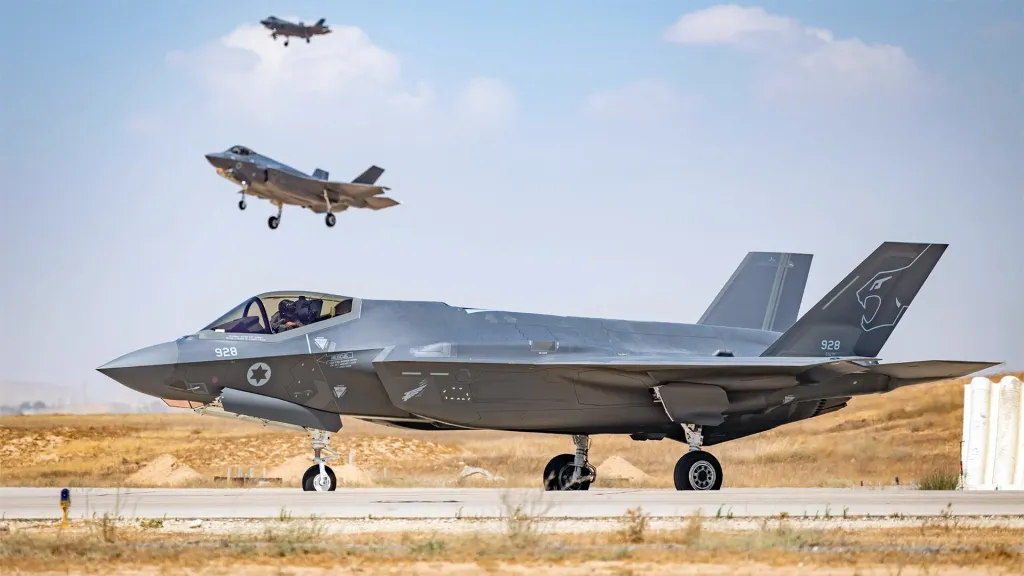
Israeli Air Force F-35i fighters. (Israeli Air Force)
“This proposed sale will support the foreign policy and national security objectives of the United States by improving the security of a major non-NATO ally that is a force for political stability and economic progress in the Gulf region,” the State Department wrote. “The proposed sale will improve Saudi Arabia’s capability to deter current and future threats by strengthening its homeland defense, and improving interoperability with U.S. forces, and other regional and NATO forces. The proposed sale will also augment Saudi Arabia’s operational aircraft and enhance its air-to-air, and air-to-ground self-defense capability. The Kingdom of Saudi Arabia will have no difficulty absorbing this equipment and services into its armed forces.”
In November, “President Trump approved a major defense sale package, including future F-35 deliveries, which strengthens the U.S. defense industrial base and ensures Saudi Arabia continues to buy American,” according to the White House.
Trump has pushed for closer ties between Israel and Saudi Arabia and wants the Kingdom to join the Abraham Accords initiative. This is a set of agreements that establish normalized diplomatic relations between Israel and different Arab states. Doing so would be a major breakthrough, following the United Arab Emirates, Bahrain, Morocco, and others.
A Saudi F-35 deal was also discussed under the Biden administration, as part of a broader deal that sought to normalize the Kingdom’s relations with Israel.
Attack not immediately claimed, but an ISIL affiliate and the Pakistani Taliban (TTP) are both active in the region and regularly target troops.
Published On 18 Sep 202618 Sep 2026
A bomb attack at a mosque in Pakistan’s restive north-west has killed at least 15 people, with more than 50 reported injured.
An explosive-laden car was rammed into the entrance of a mosque at a police headquarters in Kohat, in the province of Khyber Pakhtunkhwa near the Afghan border, as people gathered for Friday prayers.
At least 15 bodies and more than 50 injured people were taken to hospital in the town, Dr Tahir Shah said, according to the dpa news agency. The death toll could rise as several injured people were in a critical condition, he added.
There was no immediate claim of responsibility for the attack. However, both a regional affiliate of the ISIL armed group and the Pakistani Taliban (TTP) are active in the region and regularly target security forces.
Violence has surged in Pakistan’s remote regions near the Afghan border in recent years. Islamabad accuses Afghanistan’s Taliban rulers of allowing militants who orchestrate attacks in Pakistan to operate from Afghan territory.
Officials in Kabul deny the accusation. However, the issue has seen the pair swap strikes across the border across recent months.
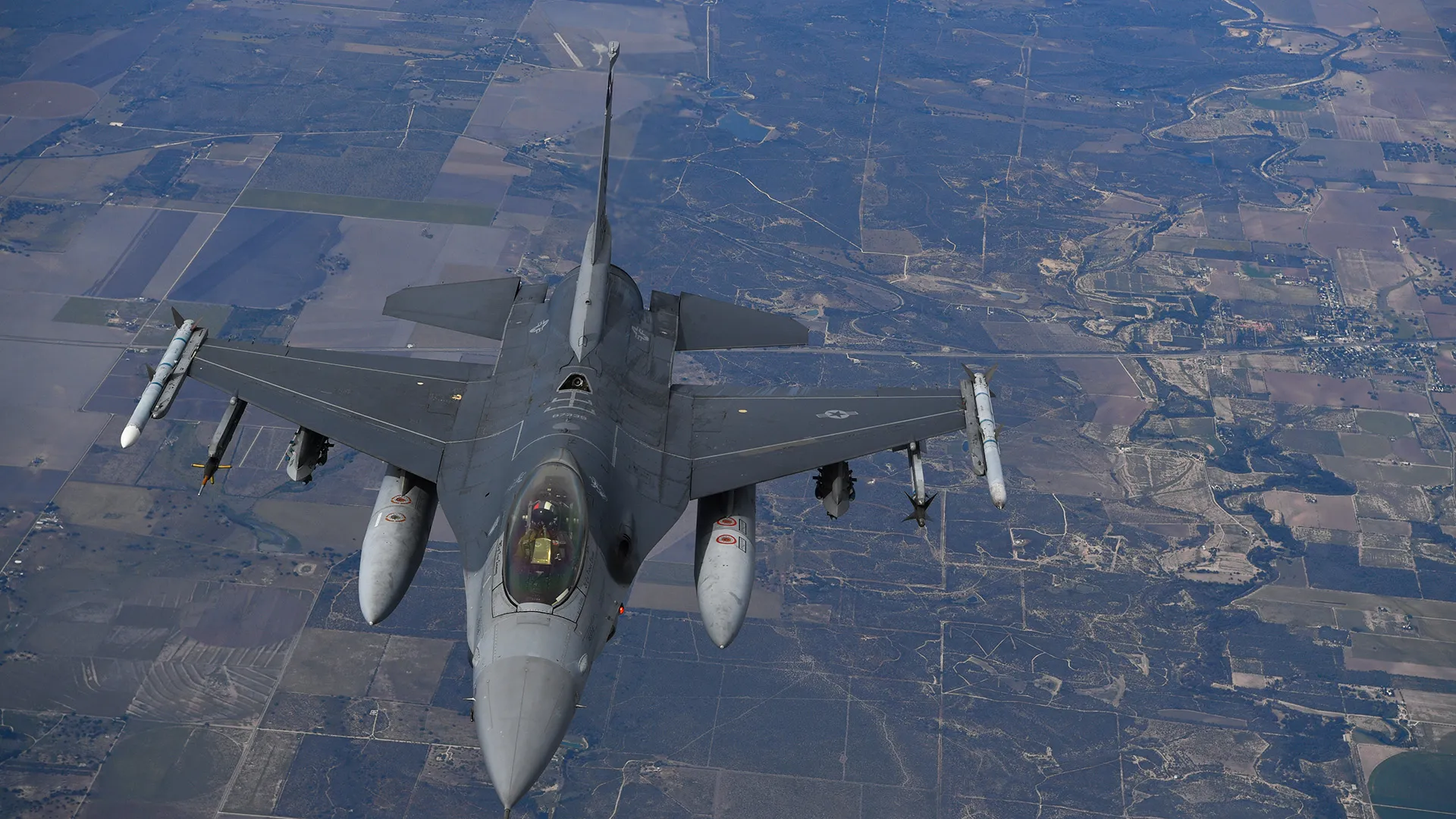
A U.S. Air Force F-16 Fighting Falcon crashed in northern Michigan today, according to WOOD-TV, a local NBC affiliate. The pilot was reported to be in stable condition after ejecting from the aircraft.
A spokesperson with the Michigan Department of Military and Veterans Affairs told the station that “the F-16 is a part of the 149th Fighter Wing from Joint Base San Antonio-Lackland in Texas.”
Video emerging on social media showed what is claimed to be the wreckage of the aircraft in flames.
According to air traffic control (ATC) audio, the pilot’s wingman said, “we have a possible mayday. My wingman may have taken a bird.” TWZ cannot independently confirm what caused the crash. The audio continues and offers a fairly dramatic and raw look at how the incident occurred over the air waves.
We have reached out to the 149th Fighter Wing, the Michigan Department of Military and Veteran Affairs, the Grand Traverse County Sheriff’s Office and the Grand Traverse County Emergency Management Office for further details.
A shelter-in-place order was issued by Grand Traverse County Emergency Management for residents near the plane crash.
“Shelter indoors, close windows/vents,” the order stated. “Follow instructions from emergency personnel. More information to follow. This shelter in place applies to residents in the indicated area ONLY.”
The family of a Scottish Sikh activist who has been locked up in India for almost nine years without conviction have said he has been granted bail.
Jagtar Singh Johal, from Dumbarton, was arrested in 2017 in connection with alleged terror offences.
He was arrested for his alleged role in a series of targeted killings of religious and political figures.
His family said they were still waiting for the details of what will happen next but are “relieved” by the Indian court’s decision.
The 39-year-old was acquitted last year in a case in which he was accused of financially supporting terror group the Khalistan Liberation Force (KLF), which has carried out attacks in the Punjab region.
But he still faces federal charges lodged by the Indian authorities.
Johal’s imprisonment was recognised by a UN panel as arbitrary detention in 2022 and he has claimed to have been tortured.
Indian authorities have previously denied the torture claim and have repeatedly maintained due process is being followed.
He was arrested in the Punjab region just weeks after his wedding in the country.
His supporters say he was targeted for blogging about alleged human rights abuses against the Sikh community in India and was coerced into signing a false confession to participation in the killings.
His brother Gurpreet Singh Johal has lobbied successive governments calling for his brother’s release.
Israeli politicians reacted to sanctions by states including the United Kingdom, France, and Canada on the country’s illegal settlements in the occupied West Bank with self-righteous anger. But what is the latest example of Israel’s international isolation brought on by its treatment of the Palestinian people has not been influential in swaying the electorate in the run-up to October’s elections, analysts tell Al Jazeera.
Responding to the UK Foreign Minister Ed Miliband’s accusation that Israelis were ethnically cleansing the occupied West Bank, Israel’s Gideon Saar accused his counterpart of spreading “outrageous lies” and attempting to interfere in the election through foreign pressure.
Recommended Stories
list of 4 itemsend of list
Israeli President Isaac Herzog also condemned the measures, branding them a “gross interference in the democratic elections” of Israel.
But, in reality, the majority of Jewish Israelis have supported their country’s genocidal war in Gaza and the occupation of the West Bank.
A poll from August, published as the death toll for Palestinians killed in the West Bank had already reached 76 this year, showed that more than half of Jewish Israelis supported retaining the illegal settlements as part of any future agreement on a Palestinian state, while nearly 40 percent supported annexing the territory in defiance of international law.
“People just don’t care that settlements are illegal,” Israeli political analyst Ori Goldberg said.
”Ed Miliband expressed a number of laudable sentiments when announcing the measures,” Goldberg said, referencing the UK foreign secretary’s references to his own Jewish heritage when announcing the cessation of trade with Israel’s illegal outposts. “But we’re at the stage where Israelis aren’t even interested in the truth so much as they are the sentiment.”
Little political impact
Israeli Prime Minister Benjamin Netanyahu goes into the elections at serious risk of losing, with many polls predicting that a coalition of parties opposed to him could win the majority in Israel’s parliament.
But it will not be issues like the settlement-related sanctions that will lose him votes, analysts said.
Public backing for the “government and opposition blocs are pretty hardened, and nobody is going to switch from one side to the other over sanctions arising from [the settlements],” Michael Koplow, chief policy officer at the Israeli Policy Forum, said. He added that the sanctions were unlikely to weigh as heavily with the electorate as “this government’s record and the related feelings people have about Netanyahu”.
“When people were asked what would determine their vote, security came first,” Israeli sociologist Yehouda Shenhav-Shahrabani said.
“I think there are several mechanisms operating simultaneously,” he added.
First, he said, is the normalisation of the settlements. In Israeli public discourse, the occupied West Bank is increasingly referred to by the biblical name “Judea and Samaria” – a shift he said was becoming institutionalised.
“Second, external sanctions don’t necessarily translate into domestic political costs,” Shenhav-Shahrabani said. “And perhaps most importantly, politically foreign pressure can be absorbed into an existing Israeli narrative [of anti-Semitism] rather than [changing how the issue itself is understood].”
No criticism of the voters
None of Israel’s most prominent politicians has criticised the government for its support of the settlements in defiance of international condemnation. Yair Lapid, a former prime minister and one of Netanyahu’s leading opponents, has, instead, focused his ire on the countries condemning Israel. “Imposing boycotts and sanctions on Israel is a grave mistake,” he said. “This is a wrong and dangerous policy, at the wrong time and for the wrong reasons.”
Another of Netanyahu’s principal rivals, Gadi Eisenkot – whose Yashar Party manifesto does not mention either the West Bank or Gaza – has declined to speak on the sanctions directly. Netanyahu has also yet to comment on the sanctions publicly, despite his Likud party having championed settlement expansion for decades.
“The sanctions haven’t particularly hurt Netanyahu, at least not as far as we can see in terms of direct influence on … polling,” said Dahlia Scheindlin, a pollster and public opinion researcher based in Tel Aviv.
Instead, the focus has been on other elements of an eventful electoral cycle, including the emergence of new challengers to Netanyahu on the right.
“We aren’t seeing any real backlash from the sanctions,” Scheindlin said. “Instead, it’s just getting filtered through what people already think of him – his critics dislike him even more, and his supporters basically say, ‘Well, the world hates us no matter what.’”
In the memoir, Earl Spencer writes of his sister’s troubled marriage – claiming a friend of Diana’s had told him that on the eve of their wedding in July 1981, Prince Charles had told her he was “very happy to marry her, but… not actually in love with her”.
Things became “very difficult indeed” in the marriage early on, Earl Spencer writes, adding that he is “sure that both spouses despaired of the other at times”.
He now believes his sister had attention deficit hyperactivity disorder, external (ADHD), and as part of her condition suffered from Rejection Sensitive Dysphoria – describing the latter as an “intense emotional pain in the face of others’ rejection or criticism”.
In her later years, he writes, Princess Diana considered taking her own life on more than one occasion but love for her sons “stopped her from going further”.
The former press secretary to Queen Elizabeth II described the latest claims serialised in the Daily Mail of Charles sounding “giddily elated” as “hogwash”.
Dickie Arbiter, who was press secretary to the late Queen at the time of Princess Diana’s death and funeral, told BBC Newsnight that Charles was “devastated at the time” and that “it’s not in his character”.
“There’s no way he could have ever said anything like that. Charles Spencer is just talking hogwash,” he added.
Royal commentator Jennie Bond meanwhile said Earl Spencer’s “vindictive account” was “extraordinary”.
“I have no reason to disbelieve this is his memory of what happened, but there are usually two sides to a conversation and a story,” she told BBC Breakfast.
Amid the royal drama, Prince Harry, the Duke of Sussex, attended the inaugural Invictus Spirit Awards in Greenwich on Thursday evening.
In his first public appearance since moving back to the UK, Prince Harry posed for photographs for the press and selfies with veterans, before delivering a speech.
South Korea will continue efforts to facilitate talks between Washington and Pyongyang.
Published On 18 Sep 202618 Sep 2026
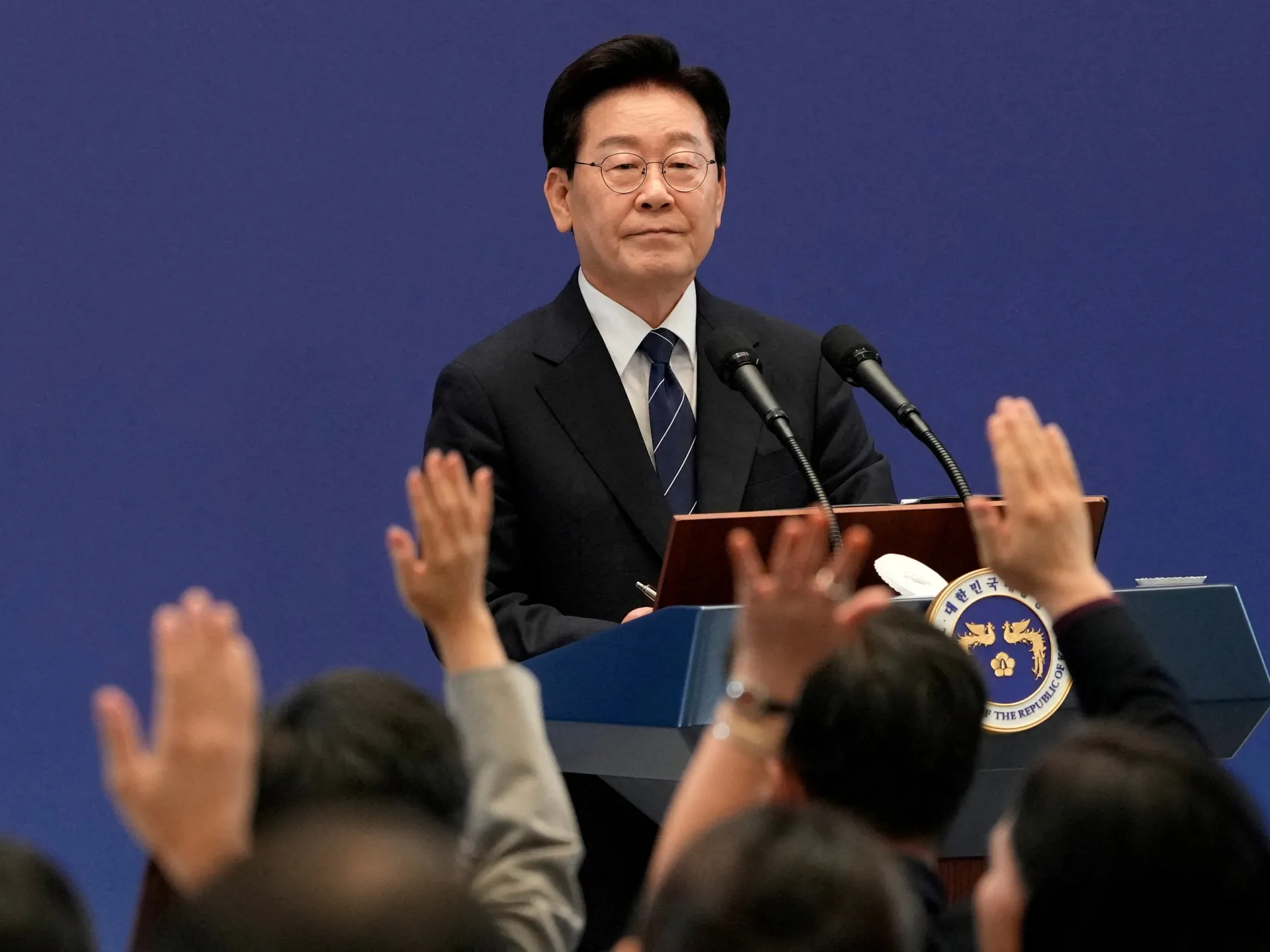
South Korean President Lee Jae Myung said on Friday that United States President Donald Trump wants dialogue with Pyongyang and confirmed Seoul will not be deploying troops to intervene militarily in the Iran war.
“Trump clearly wants dialogue with North Korea,” Lee said on Friday.
Recommended Stories
list of 3 itemsend of list
He added that while such talks are uncertain, they are not impossible.
South Korea was continuing “preliminary coordination efforts” to facilitate dialogue between North Korea and the US.
“The resumption of North Korea-US dialogue would be far easier than resuming inter-Korean dialogue,” he said, according to South Korean news agency Yonhap.
Trump, seeking to revive the bond he claims to have forged with North Korean leader Kim Jong Un in his first term, said he plans to meet Kim later this year.
The US president said it was important to “get along” with Kim, adding that Pyongyang now had 57 “very powerful” nuclear weapons.
Seoul has assessed that Pyongyang has about 80-120 nuclear warheads.
North Korea, which has secured critical backing from Russia in recent years, did not clearly respond to Trump.
Inter-Korean relations reached a high in 2018 but deteriorated after talks between Kim and Trump collapsed in February 2019.
On Thursday, a court in Seoul ordered North Korea to pay roughly $32.5m for blowing up the Inter-Korean Liaison Office building in 2020. The office was intended to improve relations on the peninsula but was destroyed amid rising tensions between the neighbours.
South Korea is working to strengthen relations with other regional partners. The first-ever presidential summit between Seoul and five Central Asian states was held on Wednesday, aiming to establish deeper economic engagement with the Russian-allied countries.
South Korea will not dispatch troops
Despite growing pressure from the US, Lee reiterated three times that South Korea will not deploy troops to the Strait of Hormuz.
“Let it be clear. There will be no dispatch of troops that will lead to involvement in a conflict. There will be no engagement or involvement in war,” Lee said.
The South Korean government found itself at odds with large parts of Korean society as protests broke out in recent weeks opposing a potential deployment of South Korean military assets to the Strait of Hormuz.
Lee added that South Korea will “carry out the minimum necessary activities” to protect its own merchant ships and oil shipping routes.
Bank of Japan raises benchmark interest rate from 1 to 1.25 percent, pledging to help counter inflation risks.
Published On 18 Sep 202618 Sep 2026
The Bank of Japan (BoJ) has raised interest rates by 0.25 to 1.25 percent, pushing borrowing costs to their highest level in 31 years, amid rising inflation and wages, and pressure from Washington.
The move on Friday marked the first hike since June, and takes interest rates closer to levels the BoJ deems neutral to the economy, marking another step away from decades of ultra-low rates that cemented the yen’s status as a cheap global funding currency.
Japan is grappling to contain inflation, which is being driven by factors including rising energy prices, global supply pressures and domestic inflation exceeding the 2 percent target.
Core consumer inflation held steady near the target in August, data showed on Friday, as companies continued to pass on rising costs for a wide range of food and grocery items.
The country also faced a “slow-moving demographic shock” with a shrinking labour pool lifting wages, a structural factor that cannot be dismissed as temporary, BoJ Executive Director Koji Nakamura said on Monday.
The Federal Reserve’s rate hike on Wednesday, and the prospect of another one later this year, have added pressure on the BoJ to keep pace.
Further widening of the United States-Japan rate gap risks weakening the yen and lifting inflation through higher import costs, analysts told the Reuters news agency.
Its policy rate also remains lower than the European Central Bank, which raised its key rate to 2.5 percent last week.
Such pressure could affect the tone of BoJ Governor Kazuo Ueda’s post-meeting briefing, which will be closely watched by markets for clues on the timing and pace of further increases.
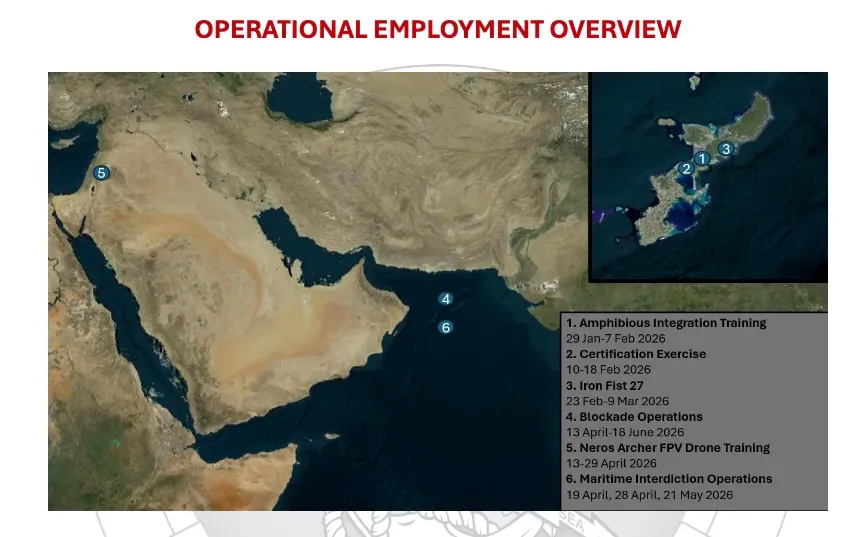
The 31st Marine Expeditionary Unit’s (31st MEU) recent deployment to the Middle East marked the first time the United States Marine Corps (USMC) used its Expeditionary Advanced Base Operations (EABO) concept in a combat setting, the service confirmed to TWZ on Thursday. At its core, EABO involves relatively small groups of Marines quickly establishing bases of operation in forward areas, often within the enemy’s weapons range. During operations in the fight against Iran, Marines refueled and rearmed their own aircraft, as well as those from the joint force, at these austere locales. They also set up remote sensing locations, among other actions from the EABO playbook.
This employment of EABO for Epic Fury is a highly significant development. After years of progressively evolving the EABO playbook, it was no longer an experimental exercise. This meant that Marines were forward deployed in a contested area in a region where established bases were taking heavy fire from Iranian missile and drone barrages. Troops were killed in some of these attacks and U.S. aircraft, buildings and equipment were damaged and destroyed across the Middle East. Pushing aircraft from the MEU, as well as the joint force, to FARPs (forward arming and refueling point) would have been a relevant asset preservation tactic as well as one that would help accelerate combat operations, and it’s exactly what EABO is meant to do.
The 31st MEU’s six-month deployment began in January in the Pacific, before the unit was ordered to the Middle East in March, returning to Okinawa, Japan, in July. That’s where it is stationed as the USMC’s only continuously forward-based MEU.
A map of the 31st MEU’s deployment. (31st MEU)
“This was the first time we were able to implement EABO in combat operations since the concept was created for the force,” Capt. Steven J. Keenan, a USMC spokesperson, told us. “We have practiced it many times, but this was a first for supporting a Joint Force named operation with forward FARPs and forward bases that supported joint ops and combat power sustainment.”
EABO was first introduced in 2020 by then-Commandant Gen. David Berger in his Force Design 2030 plan for the future of the Corps. It was created with a fight against China in mind, especially utilizing small Pacific islands. The idea is to have highly mobile, low-signature forces deployed forward in austere, contested or potentially contested maritime locations. The mission is to “support sea control operation, conduct sea denial operations within the littorals, contribute to maritime domain awareness, provide forward command, control, communications, computers, combat systems, intelligence, surveillance, reconnaissance, targeting, and counter-targeting capability and forward sustainment,” according to the Marines.
A Marine holding a Stinger missile launcher stands in front of a Combat Rubber Raiding Craft on Ukibaru Island off the coast of Okinawa during Exercise Hagatna Fury 21. (USMC) A Marine holding a Stinger missile launcher stands in front of a Combat Rubber Raiding Craft on Ukibaru Island off the coast of Okinawa during Exercise Hagatna Fury 21. USMC
The news of the first activation of the EABO concept in combat came Wednesday during a media roundtable with Col. Chris P. Niedziocha, who commanded the 31st MEU during its deployment to the Middle East in support of Operation Epic Fury. Now director of the USMC Expeditionary Warfare School, Niedziocha discussed EABO and a range of other operations during that deployment, including boarding vessels during the blockade of Iranian ports.
The 31st MEU was embarked aboard the Tripoli Amphibious Ready Group (ARG), which consisted of the America class amphibious assault ship USS Tripoli, San Antonio class amphibious transport dock ship USS New Orleans, and Whidbey Island class dock landing ship USS Rushmore. You can read more about the ARG/MEU and its assets in our initial story about the deployment to the Middle East here.
USS Tripoli. (Staff Sgt. Samuel Ruiz)
“You’re starting to see this has been validated,” the colonel said of the EABO concept during the roundtable TWZ attended virtually. “It’s still nascent, but we actually, for the first time, demonstrated what we thought we were able to do, which I think is pretty exciting. And then things like forward arming and refueling to extend the operational reach of aircraft and expeditionary reloading, and then the ever-present logistic challenge of doing something like that. So that’s pretty significant.”
“We successfully implemented critical Expeditionary Advanced Base Operations (EABO), establishing sensor expeditionary advanced bases and forward arming and refueling points (FARPs) where none existed,” the colonel added. “Through our forward logistic elements, we proved that an agile Marine Air-Ground Task Force can sustain itself and generate ready, lethal power in contested maritime environments, directly setting the theater for follow-on joint forces.”
“There was all manner of tankers all the time, but the FARP is to extend the operational reach, and if you can do it, you reduce the load on that,” Niedziocha noted. “Because there’s some aircraft that are basically for expeditionary austere operations, especially the F-35B,” the Marine Corps’ variant of the aircraft designed for short take off and vertical landing.
“There are some trade-offs associated with the Bravo,” Niedziocha pointed out, using a slang for the jets. “There’s less internal fuel, but you have the lift [system], which gives you the option to do these kinds of things. So, the goal there was to walk that fine line between providing the full sortie over wherever you needed it, and keeping the ships far enough away to make them as survivable as possible.”
An F-35B Lightning II aircraft taxis to a forward arming and refueling point in the U.S. Central Command area of responsibility, May 26, 2026. (U.S. Marine Corps photo by Cpl. Maksim Masloboev) Cpl. Maksim Masloboev
In addition to the F-35Bs and other aircraft organic to the 31st MEU, the FARPs were also used by Army helicopters, Keenan told us. Imagery posted on the Pentagon’s image distribution site also showed U.S. Army Gray Eagle drones and Marine MV-22B Osprey tiltrotor aircraft were included.
A Gray Eagle drone lands at a forward arming and refueling point in the U.S. Central Command area of responsibility, May 26, 2026. (U.S. Marine Corps photo by Cpl. Maksim Masloboev) Cpl. Maksim MasloboevU.S. Marines with the 31st Marine Expeditionary Unit transport AIM-120 AMRAAMs to a forward arming and refueling point in the U.S. Central Command area of responsibility, May 26, 2026. (U.S. Marine Corps photo by Cpl. Maksim Masloboev) Cpl. Maksim Masloboev
Niedziocha did not provide details about where the FARPs were set up, but a U.S. defense official told us they were “disaggregated throughout the Middle East.” The official declined to provide further information, citing operational security concerns since they are still being used.
“Throughout the deployment, the Tripoli ARG and 31st MEU successfully conducted over 1,600 mishap-free flight hours of combat aviation missions, including precision strikes, transporting 800,000 pounds of cargo, and moving 5,000 personnel,” a 31st MEU overview of the deployment explained. “The units also provided sustained combat support to joint force operations by delivering critical intelligence and refueling over 300 aircraft ashore and underway.”
The colonel also didn’t provide details about the sensor expeditionary advanced bases. According to the Marines, “a sensing expeditionary advanced base (SEAB) brings together coastal surveillance radars, electronic sensors, and Marines ashore to extend maritime domain awareness, complementing the radars and sensors already at work aboard naval ships off the coast.”
“When SEAB systems identify surface vessels in nearby sea lanes, small unmanned aircraft system (sUAS) operators launch their platforms to visually identify and track the contacts,” the Marines added. “Sensor data and imagery are transmitted in real time across the blue-green command network to decision-makers.”
U.S. Marines with 12th Marine Regiment, 3rd Marine Division, prepare to set up a Ground/Air Task Oriented Radar (G/ATOR) system during a routine unit level training exercise on Iejima, Okinawa, Japan, July 15, 2023. (U.S. Marine Corps photo by Staff Sgt. Manuel A. Serrano) Gunnery Sgt. Manuel Serrano
This capability could have been used to track Iran’s remaining fleet of small boats that it has used to harass shipping and mine the Strait of Hormuz, as well as larger vessels trying to transport oil. Other sensors, like radars and counter-drone systems, could also help identify incoming threats and provide general situational awareness. The EABO concept was employed as part of the 31st MEU’s larger role in supporting the blockade and mine clearance efforts.
The 31st MEU interdicted four vessels during the deployment, three of which led to boardings. On April 19, Marines boarded the MV Touska; on April 28, the MV Blue Star III; and on May 19, the MT Celestial Sea.
The Touska was boarded after USS Spruance fired multiple 5-inch rounds, targeting the engine room and disabling the vessel’s propulsion. The crew of the vessel was retained for about two weeks before being repatriated.
Niedziocha told us that none of the crews offered any resistance.
“At two in the morning, when 30 Force Reconnaissance Marines fast rope onto your vessel, [you are] just compliant with a capital C. They did exactly what they were directed to do. The overmatch that you put onto that vessel is pretty surprising. And then there’s overwatch provided by UAS and manned aircraft, so you create this bubble around the vessel. So yeah, they complied.”
You can see the Touska being boarded in the following video.
The U.S. just released a video of its forces boarding and seizing the Iranian container ship M/V Touska near the Hormuz Strait after it tried to break the U.S. naval blockade pic.twitter.com/FpB2obb3jY
Two years ago, as the EABO concept was maturing, TWZ was invited to get an exclusive look at how an advanced EABO concept would be put into action, including how squadrons operated the F-35B out of an austere combat environment while generating combat sorties. It was an unprecedented and exclusive peek into the EABO playbook and what a real fight in the Pacific with the USMC’s most advanced fighter aircraft could actually look like. You can read about that in our story here. It appears the operations in the Middle East mirrored this exercise closely.
James Deboer
Now back in Japan, the ARG/MEU is getting ready for a new deployment, said the colonel.
“We got back to Okinawa, I think July 22nd, and they had already begun their workup cycle in earnest to be on the water in early January to go out and do another Iron Fist [training exercise] with the Japanese, and then long periods of a crisis response,” said Niedziocha, who relinquished command in August before moving on to his new role. “Just being there, present in the First Island Chain to partner with your allies, demonstrates the resolve and commitment to deter whatever needs deterring.”
As noted earlier in this story, the EABO concept was designed with a Pacific fight in mind. Its first combat employment in the Middle East clearly offers lessons that can now be adapted to enhance EABO operations globally.
Venezuela has opened its energy and mining sectors to US interests. (PDVSA)
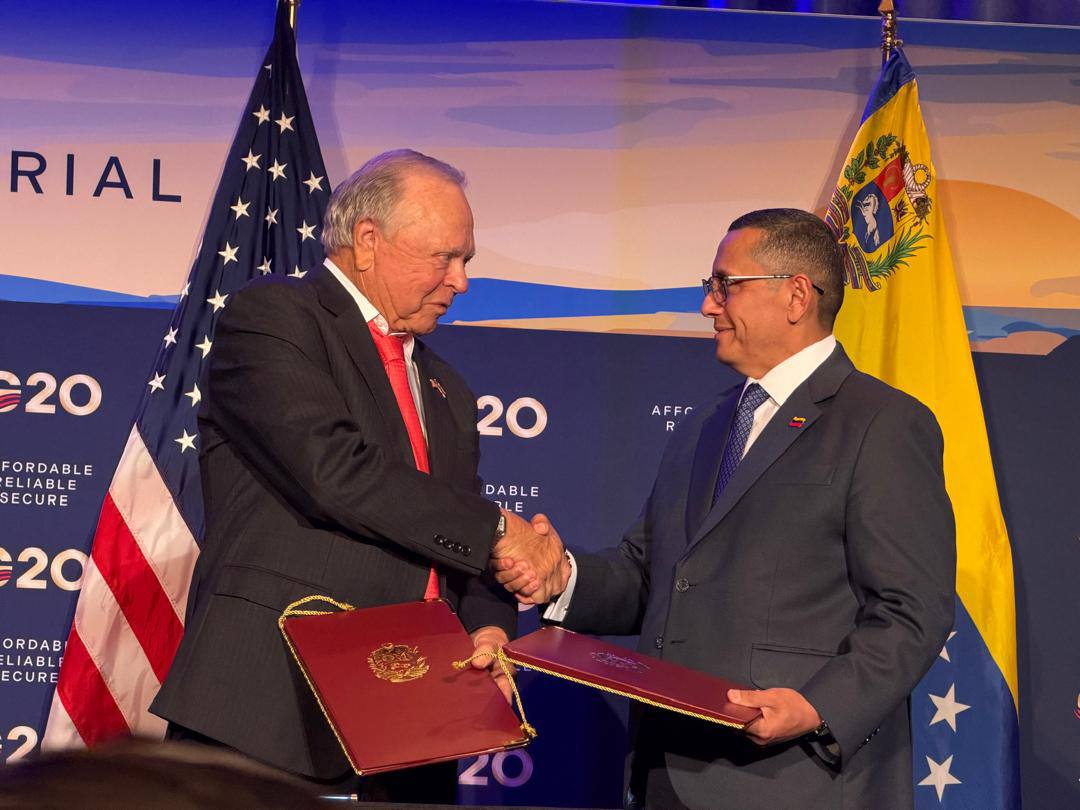
Lisbon, Portugal, September 17, 2026 (venezuelanalysis.com) – Continental Resources, a firm owned by billionaire and Trump donor Harold Hamm, struck a deal on Wednesday to exploit one of Venezuela’s largest oilfields.
Under the agreement with Venezuelan state oil company PDVSA, Continental will receive a long-term concession with “100 percent working interest” for the 500 square-kilometer Ayacucho 2 block in Venezuela’s Orinoco Oil Belt. The block contains an estimated 30 billion barrels of extra-heavy crude.
“Continental was built to recognize great resource opportunities and have the conviction to pursue them,” Hamm told Fox News, vowing that the deal would take his company to an “entirely new level.”
For her part, Venezuelan Acting President Delcy Rodríguez claimed that the agreement would “strengthen [Venezuelan] oil production” and “create opportunities for economic growth.”
Hamm and PDVSA Vice President Jovanny Martinez signed the contract in Houston on the sidelines of the G20 energy summit. Martínez and Oil Minister Paula Henao attended the conference to pitch investment opportunities in Venezuela’s oil and gas sector.
PDVSA had previously assigned the Ayacucho 2 block to Chinese private firm Anhui Guangda in 2025. However, no information on investments or output were publicly disclosed, while Venezuelan authorities have not justified rescinding the contract with Anhui.
US government-controlled corporation NABEP, which recently received long-term concessions to 17 major Venezuelan oilfields containing 65 billion barrels in reserves, will also take over projects formerly run by Chinese enterprises, including state-owned CNPC. Beijing has called for its investments and interests in Venezuela to be respected.
Hamm was one of the corporate executives present at the White House on January 9, when Trump announced that Washington would control Venezuela’s oil industry and called on Western majors to invest. Since the January 3 US attacks and kidnapping of President Nicolás Maduro, the White House has managed the South American country’s crude export revenues.
The White House has also backed Venezuelan authorities’ pro-business overhaul of the energy sector while issuing sanctions exemptions to select US-aligned corporations. Chevron, Shell, and Eni are among the companies that have signed new contracts or renegotiated existing ones in recent months.
According to Bloomberg, ExxonMobil is in advanced talks to return to the Caribbean country after a litigious past. The energy giant is negotiating rights to four major oilfields in the Orinoco Oil Belt, two of which it previously owned before they were nationalized by former President Hugo Chávez.
In the 2000s, the Texas-based corporation refused to comply with reforms implemented to assert state sovereignty over the oil industry. ExxonMobil refused compensation offers and pursued international arbitration after its assets were nationalized. The company received an arbitration award significantly below its demands.
ExxonMobil was additionally denounced repeatedly by Caracas after it spearheaded offshore drilling projects in the territorial waters of the disputed Essequibo Strip.
On Wednesday, Venezuelan authorities likewise inked a 20-year agreement with Florida-based Denarius Holding Group, controlled by Turkish energy group Çan2 Termik. Denarius is taking over the Petrokariña project in Anzoátegui state, which contains 10 oilfields producing a variety of crude types.
Heeney Capital receives gold mine concession
In parallel to its oil opening, Venezuelan authorities have also fast-tracked reforms opening the country’s mining sector to multinational corporations.
On Wednesday, New York-based Heeney Capital and commodities trader Mercuria Energy received a 30-year concession to operate the Chocó 10 mine in Bolívar State. The project holds considerable gold deposits and was run by Rusoro Mining in the 2000s before being nationalized by the Chávez government.
Heeney and Mercuria pledged US $1 billion in initial investment in the Chocó project. The two firms had struck a previous agreement with Caracas to purchase and trade Venezuelan minerals and other commodities.
One of Heeney’s co-founders, Sean Pi, signed the deal at the presidential palace in May and praised Trump’s “leadership” in defending US access to mining resources abroad. Pi has endorsed legislative initiatives deregulating and streamlining mining projects to bolster the US supply of critical minerals.
Under the trading agreement, Heeney and Mercuria are reportedly preparing to ship 15,000 metric tons of Venezuelan aluminum to the US. The corporate partners are likewise seeking to take over VENALUM, Venezuela’s biggest aluminum smelter. Glencore, an Anglo-Swiss mining and trading multinational, is also interested in VENALUM, according to reports.
Venezuelan authorities have not commented on the negotiations for the aluminum smelter. In April, Rodríguez appointed a commission to evaluate privatization of “non-strategic” state assets.
The Trump administration has identified securing access to Venezuelan mineral riches as a key national interest and is reportedly preparing an executive order to boost US corporate participation in Venezuelan mining projects.
Former Syrian official sentenced to 60 years in US prison for torturing prisoners under al-Assad’s regime.
A former Syrian military official convicted of torturing prisoners during the rule of former President Bashar al-Assad has been sentenced to 60 years in a United States prison.
A federal judge in Los Angeles sentenced Samir Ousman Alsheikh on Thursday. A jury found him guilty in March of one count of conspiracy to commit torture and three counts of torture while in charge of Syria‘s infamous Adra Prison from roughly 2005 to 2008.
Recommended Stories
list of 3 itemsend of list
“The conduct was heinous, unimaginably cruel, and almost unspeakably violent and brutal,” the judge said before announcing the sentence.
Human rights groups and the United Nations have accused the Syrian government officials of widespread abuses in detention facilities, including torture and arbitrary detention of thousands of people, in many cases without informing their families.
US prosecutors said Alsheikh, seeking to quash political dissent, sent certain prisoners to a wing of Adra where they were held in small isolation cells and tortured.
At the two-week trial, three victims recounted beatings while suspended from pipes on the ceiling for hours or days and the use of a device that folded their bodies in half at the waist, according to a press release from the US Department of Justice. One person testified that Alsheikh stomped on the device with his foot, according to the department.
“Defendant knew that what he was doing was wrong,” Justice Department prosecutors said in a sentencing memo filed this month. “Nonetheless, he ordered and participated in the torture of his victims because he had the power to do so and because he thought he would never be held accountable.”
The memo included statements from several victims, one of whom, Nidal Shikhani, said he can “still hear the screams of others begging for mercy, repeating, ‘Leave me, leave me.’”
The prosecutors asked US District Judge Hernan D Vera for a minimum sentence of 80 years. Alsheikh’s lawyers, Nina Marino and Collin Cate, called for a five-year sentence, noting that he is 74 years old and has “significant medical and cognitive conditions”. They also said he was willing to be deported to Syria, where a new government has sought to hold Assad-era security officials accountable.
“Whatever moral weight this case carries in the broader arc of history — however much the world, or the victims, or the public might wish the sentence to ‘send a message’ — that desire cannot be the foundation of a just sentence,” Marino and Cate wrote in their September 3 memo.
Alsheikh came to the US in 2020 and applied for citizenship, but the Justice Department said he lied about his past. Federal authorities arrested him at Los Angeles international airport in July 2024.
Jurors also convicted him in March of lying to US immigration authorities and fraudulently obtaining a green card and attempting to naturalise as a US citizen.
“The acts Alsheikh ordered and directly participated in are gruesome and disturbing. We would like to offer our gratitude to the brave victims who testified leading to today’s sentencing,” Heith Janke, assistant director of the FBI’s criminal division, said in a press release Thursday.
Al-Assad was ousted in a lightning rebel offensive in December 2024, bringing a 14-year civil war to an end, but the country has continued to suffer from sporadic outbreaks of violence.
In March 2025, armed groups aligned with al-Assad ambushed the new government’s security forces on Syria’s coast. A government counteroffensive then spiralled into sectarian revenge attacks and the massacre of hundreds of civilians from the Alawite religious minority, to which al-Assad belongs.
On Thursday, three people were sentenced in the Syrian city of Aleppo in connection with the violence. One member of the pro-Assad groups was sentenced to death and another to life in prison, while a member of the government security forces who took part in the revenge attacks was convicted of murder and sentenced to 20 years in prison.
Tehran gives Swedish official 48 hours to leave as Iran says Stockholm is bowing down to outside pressure.
Published On 18 Sep 202618 Sep 2026
Iran has ordered a Swedish diplomat to leave the country one day after Sweden expelled an Iranian embassy official in Stockholm.
Sweden’s action was described by Iran’s Ministry of Foreign Affairs as “unjustified” on Thursday.
Recommended Stories
list of 3 itemsend of list
“Without doubt, this action by the Swedish government is the result of the influence of the Zionist regime and an effort to disrupt the normal activities of the Islamic Republic of Iran’s Embassy in Stockholm,” the Foreign Ministry said in a statement, Iran’s IRNA news agency reported.
Iran’s Foreign Ministry said its director general for Western Europe, Alireza Yousefi, summoned the Swedish ambassador in Tehran on Thursday. Yousefi protested Sweden’s policies, including its “hosting of anti-Iranian terrorist elements and groups”.
The ministry said Iran would take necessary measures to safeguard its national rights and interests, including through reciprocal action.
IRNA reports that in response to Sweden’s actions, the ambassador was informed in the meeting that a Swedish diplomat in Tehran had been given 48 hours to leave Iran.
Sweden expels Iranian official
Sweden’s Ministry for Foreign Affairs announced on Wednesday that the Iranian official was asked to leave the country due to activity incompatible with the Vienna Convention on Diplomatic Relations.
The Vienna Convention defines the rules of diplomatic missions.
The Iranian Foreign Ministry also referenced Sweden’s obligations under international law, including the 1961 Vienna Convention on Diplomatic Relations, warning that disruption of the Iranian embassy’s duties would entail Sweden’s international responsibility, reported IRNA.
Swedish Foreign Minister Maria Malmer Stenergard said the decision to expel the Iranian official was taken to protect Swedish citizens and interests.
Swedish Justice Minister Gunnar Strommer told state television that the decision involved Iran’s alleged activities against “Jewish and Israeli interests”.
“We know that Iran, over a long period of time, has conducted activities that threaten security in and against Sweden,” Strommer said, adding that Iran was “making use of criminal networks” to achieve its objectives.
Lawyers criticised mass arrests under emergency powers that allowed authorities to detain people without charge.
Published On 17 Sep 202617 Sep 2026
The Caribbean country of Trinidad and Tobago has ended a state of emergency that granted the government extraordinary powers to combat crime, including the ability to imprison people without charge.
The country’s prime minister told parliament on Wednesday that the government would not extend the state of emergency. One was issued in 2024 and another in 2025, with extensions lengthening both. Instead, the government would seek a “permanent legal framework”.
Recommended Stories
list of 3 itemsend of list
“The proposed legislation will establish a permanent legal framework for targeted operations against violent crime, gangs, illegal weapons and the criminal networks that finance them, while providing safeguards for law-abiding citizens, judicial oversight and parliamentary accountability,” Prime Minister Kamla Persad-Bissessar said in a social media post.
The government had faced criticism for a campaign of mass arrests that suspended key civil liberties in what it said was in the name of cracking down on crime and those the government deemed threats to security. A prominent businessman and his wife were among those arrested over alleged involvement in a plot to assassinate the prime minister, but were never charged and later released.
The measures were last extended in June, with the prime minister stating that more than 5,800 people have been arrested since a March extension. About 2,250 of those have yet to be charged, and it remains to be seen whether they will be released now that the state of emergency has ended.
Lawyer Criston Williams told The Associated Press news agency that he expects some of those detained without charge to bring lawsuits against the government and called for the Inter-American Commission on Human Rights to investigate possible abuses by the government.
“They are transported to us blindfolded, shackled, hands behind their backs, a gray knapsack over their heads,” he said, adding that meetings with lawyers took place in the presence of five armed men from law enforcement, “who refer to themselves as operator one, two, three, four, five. There’s a camera above, so guess what, there’s nothing like attorney-client privilege.”
Police reported a record 624 killings in the country of about 1.4 million people in 2024, a figure that police say dropped to 369 in 2025. Police state that 255 killings have been recorded this year, compared with 268 over the same period in 2025.
The White House has withdrawn President Donald Trump’s nominee to lead Immigration and Customs Enforcement (ICE) after a Republican senator joined Democrats in opposing his confirmation.
Richard Schroyer was serving as a senior aide to the secretary of Homeland Security when Trump picked him to lead the immigration enforcement agency in June.
The White House withdrew his nomination on Thursday in a short memo, which did not explain the decision. The BBC has contacted the White House for comment.
Republican Sen Rand Paul had stalled the nomination as he pressed for more information about ICE and Border Patrol shootings that killed two Americans in Minneapolis in January.
Schroyer had worked with the Oklahoma Highway Patrol for 29 years, and also served in the US Marines. He is a close ally of Homeland Security Secretary Markwayne Mullin, whose department oversees ICE and other immigration and border agencies. His selection by Trump was seen as a surprise given his lack of experience overseeing such a large law enforcement agency.
The position is one of many that needs to be confirmed by the US Senate. Schroyer’s nomination did not manage to make it to a full Senate vote and had stalled in the Senate’s Homeland Security committee.
ICE has not been led by Senate-confirmed leader since 2017 and instead has had a host of temporary chiefs. It is currently led by David Venturella, a former private prison executive, after Todd Lyon announced his departure from the top job in April.
The withdrawal on Thursday marks a defeat for Trump and Mullin, as the White House continues Trump’s campaign pledge to lead the largest deportation effort in US history.
Paul, who serves as chairman of the Senate Homeland Security Committee, said he would not advance the nomination to a full vote until the White House provided more information about the Minneapolis killings.
National protests took place earlier this year following the deaths of Renee Good and Alex Pretti in Minneapolis.
Both US citizens, the two were protesting when they were fatally shot in separate confrontations with ICE agents in January.
One of the promises that helped Trump take the White House in 2024 – cracking down on illegal immigration – has now divided voters going into the congressional midterm elections less than two months from now.
At the same time, Representative Maria Elvira Salazar, a Republican from Florida, is warning that the crackdown could cause many of the Hispanic voters who supported him to turn their backs on the party when they go to the polls in November.
“Mr. President, some of your immigration enforcement efforts have gone too far,” she said in an advertisement filmed outside the White House that was released on Thursday. “Be careful what your advisers are telling you about immigration policy. The same Hispanics who helped you get to the White House in 2024 feel betrayed today.”
Pennsylvania has asked the United States Centers for Disease Control and Prevention (CDC) for help containing an expanding measles outbreak that has seen several people die, but says it will withdraw the request unless the federal agency recognises four measles-associated deaths reported by the state.
The CDC, however, said it has not been properly notified of any such request.
Recommended Stories
list of 3 itemsend of list
The US is currently seeing the worst measles outbreak in the country since 1991, with several deaths over the last couple of years. Measles was declared eliminated in the US in 2000, but has made a comeback in recent years, which some have linked to a rise in vaccine scepticism. The US state of Pennsylvania has been hit especially hard.
In a letter sent to CDC Director Erica Schwartz on Wednesday, Pennsylvania Health Secretary Debra Bogen said the state had begun the process of requesting emergency assistance from the CDC, known as an Epi-Aid.
“The CDC’s choice not to publicly recognize the deaths undermines our response,” Bogen wrote. “For this reason, if CDC is unable to transparently and accurately communicate information about those measles-associated deaths, the Department will respectfully rescind our request for a CDC Epi-Aid.”
However, in a statement to Al Jazeera, Grace Davis Jamison, press secretary for the US Department of Health and Human Services (HHS), said that the CDC had not received Pennsylvania’s request through its normal channels and that federal outbreak assistance was separate from how the agency tabulates deaths.
“CDC will not allow [Pennsylvania Democratic] Governor [Josh] Shapiro to politicize this process. We owe the American people accurate, consistent, and transparent public health information,” Jamison said. “CDC will not submit to political blackmail that conditions critical public health assistance. The people of Pennsylvania should never be used as leverage in a political dispute over how deaths are classified.”
Disagreement grows as Pennsylvania’s measles outbreak spreads
The dispute over the deaths began in August, when Pennsylvania reported that two unvaccinated people died of measles in Lancaster County, which is located in the South Central part of the state. Lancaster is considered the centre of Pennsylvania Dutch Country and home to the nation’s oldest Amish and Mennonite communities. Both communities have under-vaccinated populations.
The CDC initially included the deaths in its national tally, but subsequently removed them after Health Secretary Robert F Kennedy Jr questioned whether measles had caused or contributed to the fatalities. The agency said at the time that available information did not establish whether measles caused or contributed to the deaths.
Pennsylvania continued to stand by its determination.
The outbreak has spread well beyond its initial epicentre in Lancaster County. On September 13, a county coroner reported that a 40-year-old woman had died from complications associated with measles. The state later confirmed the death as measles-associated and announced two additional deaths on September 15. All four people were unvaccinated, according to the state.
The state reported 393 cases across 28 counties when the first two deaths were announced on August 25. Pennsylvania now reports 731 confirmed cases across 38 counties and 141 hospitalisations. Of those reported cases, only four people, or less than one percent, are vaccinated.
What are officials arguing about?
The disagreement between Pennsylvania and the CDC centres on the distinction between a “measles-associated” death versus a death “caused” by measles. Pennsylvania uses “measles-associated” under its state surveillance definition, while HHS said it is working with the Council of State and Territorial Epidemiologists to establish a standardised definition for measles deaths.
Infectious disease experts warn that the dispute over how to classify the deaths puts the CDC at odds with a long-standing approach to tracking the consequences of measles. Matthew Ferrari, director of Pennsylvania State University’s Center for Infectious Disease Dynamics, told Al Jazeera that “measles-associated” death has long been a standard used by the World Health Organization and CDC.
“It’s the most useful distinction because it is a case that could have been prevented by a measles vaccination, or by early detection and isolation,” Ferrari said. “Measles is severely immunocompromising, so it is very often a secondary infection that is the ultimate cause of death.”
Experts say the CDC’s dispute with Pennsylvania risks distracting from efforts to contain the outbreak. Dr Andrew Pavia, spokesperson for the Infectious Diseases Society of America and professor at the University of Utah, told Al Jazeera the distinction should not be controversial.
“The impact, though, is confusion for the public and erosion of trust in the ability of CDC staff to communicate to the public without political interference,” Pavia said.
HHS said federal outbreak assistance and national mortality reporting are separate processes and rejected the idea that the two should be linked.
How would an Epi-Aid help Pennsylvania?
An Epi-Aid is a CDC mechanism for providing rapid, short-term assistance during an urgent public health problem. The CDC says Epi-Aids generally last one to three weeks, during which they deploy Epidemic Intelligence Service officers to analyse epidemiological data, evaluate surveillance systems, and recommend measures to control and prevent the spread of disease.
The requesting health authority retains overall leadership of the investigation, while CDC personnel provide technical assistance, including epidemiological expertise and access to laboratory resources.
“The most important thing for an effective response is communication and trust,” Ferrari said. “It is important for all partners to agree on the foundational elements of the problem and the metrics for evaluating the severity of the problem.”
Warsaw also says it has scrambled military planes in response to a Russian attack in western Ukraine, close to its border.
Published On 17 Sep 202617 Sep 2026
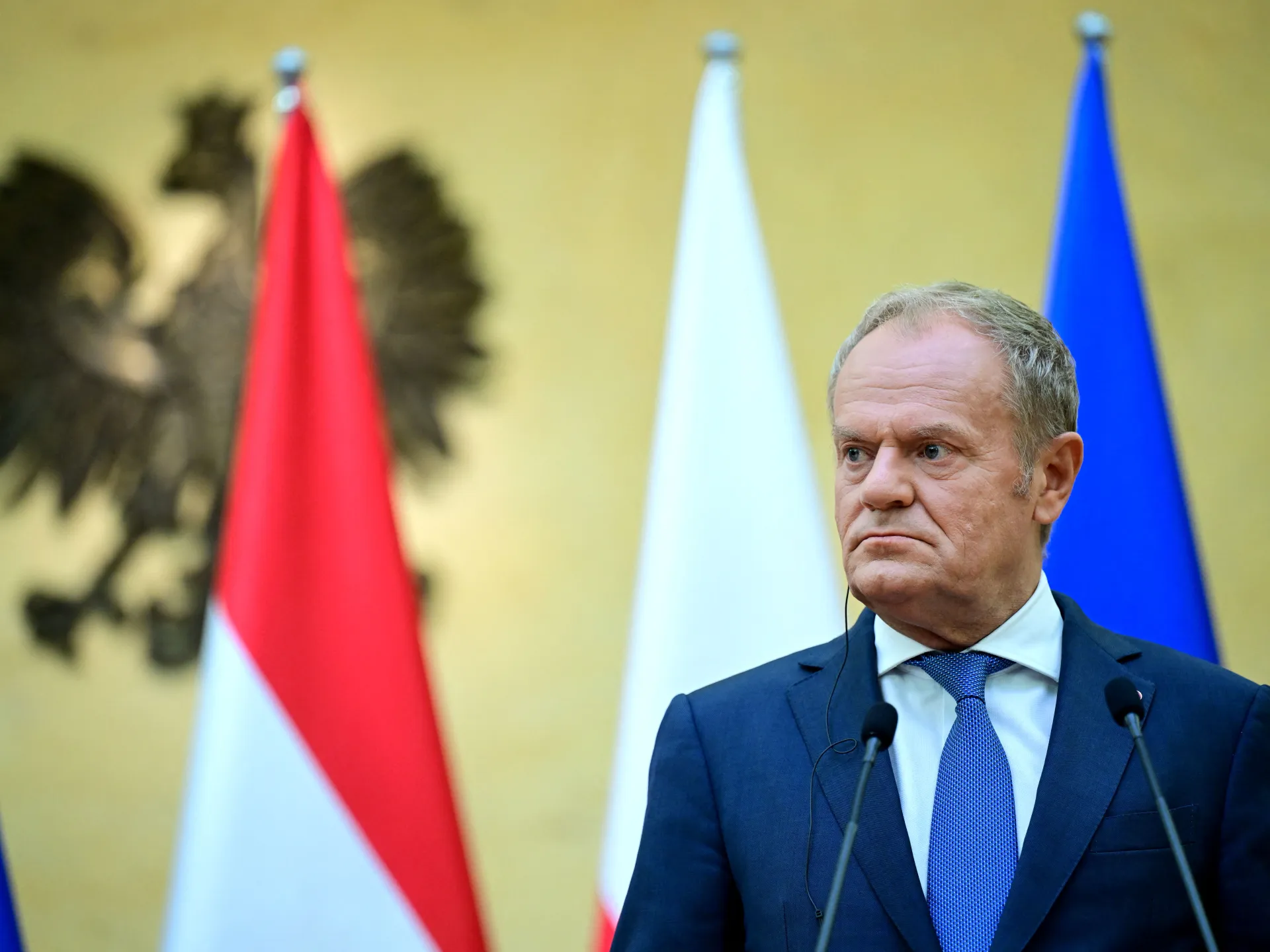
Polish Prime Minister Donald Tusk says that intelligence information suggests Russia plans to launch drone and missile attacks against countries supporting Ukraine.
Warsaw’s leader outlined the assessment during an address to parliament on Thursday, saying that the attacks will be meant to weaken NATO’s ability to act collectively in response.
Recommended Stories
list of 4 itemsend of list
“According to intelligence assessments, Russia’s plan … includes hybrid drone and missile strikes against countries supporting Ukraine, including Poland,” Tusk said.
European countries suspect Moscow of being behind a series of acts of sabotage in recent months to put pressure on the allies, especially Germany, helping Kyiv in its bid to resist Russia’s full-scale invasion – something the Kremlin has vigorously denied.
“These potential strikes would be quote-unquote ‘accidental’ in nature, intended to paralyse or at least weaken the resolve of NATO states to invoke the relevant NATO provisions in the event of aggression against a member country,” Tusk added.
He did not elaborate on which intelligence agencies had provided the warning.
He also said such attacks by Russia could coincide with “political changes in certain European countries granting power – or at least a powerful voice – to those who, increasingly invoking noble slogans of peace, pacifism and needless casualties, will call for peace – or rather, the total capitulation of Ukraine”.
Tusk appeared to be referring to the advance of more Russia-friendly parties such as Alternative for Germany (AfD) and National Rally in France.
Air raid near border with Poland
Earlier on Thursday, Poland said it had scrambled military planes in response to a Russian attack in western Ukraine, close to the Polish border.
Airports in Rzeszow and Lublin were temporarily closed, and residents of two eastern regions of Poland received air raid warnings. Local media reported that sirens had sounded and that pupils in some schools had sought shelter.
“Very close to the Polish border, not far from Dorohusk, a petrol station was most likely attacked again,” Tusk said.
On Sunday, a Russian drone hit a passenger train in Ukraine, just two kilometres (1.6 miles) from the Polish border.
Defence Minister Wladyslaw Kosiniak-Kamysz said Poland was strengthening airspace protection.
“We have increased F-16 and helicopter activity, and are reinforcing our air defence and rapid response systems,” he wrote on X.
Tusk said he would visit Ukrainian President Volodymyr Zelenskyy on Friday to discuss cooperation within the Integrated Anti-Ballistic Missile Coalition, a group of European countries developing an air defence system with Ukraine as a cheaper alternative to the US-built Patriot.
Critics say Serbia’s military ties with Israel are rising significantly.
Published On 17 Sep 202617 Sep 2026
Serbia has opened a factory to assemble advanced Israeli-made drones, which will supply the Serbian military and armed forces in other countries.
Serbian President Aleksandar Vucic inaugurated the facility jointly operated with an unnamed Israeli company on Thursday.
“Our plans are huge,” Vucic said in a social media post showing a video of him touring the facility with Israeli Ambassador Avivit Bar-Ilan, adding that at least three more factories will be opened across Serbia with Israeli partners.
Vucic said the facility “will employ around 100 workers and produce state-of-the-art equipment both for the Serbian Armed Forces and the armies of some other countries”.
Vucic did not disclose the factory’s location or the Israeli firm involved, saying journalists were excluded from the opening because of “the confidentiality of the production process”.
Previous reporting by investigative outlet BIRN and Israeli newspaper Haaretz has identified Israeli defence firm Elbit Systems as Serbia’s partner in the drone-manufacturing process.
Elbit has previously been criticised over its role in operations in Gaza and the West Bank.
Last month, Vucic told Serbian news outlet Nezavisne Dnevne Novine that the goal of the factory was to “preserve peace and stability, and to be strong enough to deter all potential aggressors”.
Serbia is one of the few countries in the Western Balkans that is not a NATO member, and it has invested heavily in its military to “preserve neutrality”.
It has faced scrutiny over arms exports to Israel, which BIRN and Haaretz said rose from 1.4 million euros ($1.6 million) in 2023 to 42.3 million euros ($48.5 million) in 2024.
During a visit to Serbia earlier this year, United Nations Special Rapporteur on the occupied Palestinian territories Francesca Albanese said Belgrade remained one of Israel’s “most steadfast and determined allies” despite calls for more countries to restrict weapons exports due to the war in Gaza.
Venezuelan officials flew to London to meet with Foreign Office counterparts. (AVN)
Caracas, September 16, 2026 (venezuelanalysis.com) – Venezuela and the United Kingdom have announced a formal decision to upgrade their diplomatic relations and to re-establish full ambassadorial representation.
London formally presented its policy shift on September 15 in a missive to Parliament through coordinated statements by Minister for Latin America Chris Elmore in the House of Commons and Parliamentary Under-Secretary of State Lord Wood of Anfield in the House of Lords.
In the statements, the cabinet members framed the “diplomatic upgrade” around supporting a “democratic transition” while pursuing pragmatic bilateral engagement with the South American country.
“Developments in Venezuela since 3 January have created an important opportunity for the international community to support the restoration of democracy,” the statement read. “Working closely with the United States and with international partners, the UK considers that this moment calls for pragmatic engagement to help advance a credible transition and to encourage further reforms.”
The communiqué added that London and Caracas “have agreed our intention to upgrade our representation to Ambassador,” emphasizing that the step aims to deepen engagement with Venezuelan authorities and enhance support for British corporate and trade interests.
The Venezuelan government welcomed London’s decision. In an official communication published on Tuesday, the government led by Acting President Delcy Rodriguez celebrated the upgrade in diplomatic status as a positive step toward normalization.
Venezuelan officials stressed that the latest decision should pave the way for the full “sovereign management of the Venezuelan people’s resources,” referencing state assets frozen in British financial institutions.
National Assembly President Jorge Rodríguez and Foreign Minister Félix Plasencia flew to London and held a meeting on Tuesday with Harriet Thompson, the British Foreign Office’s Director for the Americas.
Following the discussions, Rodríguez highlighted progress in multi-sectoral talks and economic outlooks.
“We shared Venezuela’s position regarding political and social dialogue, as well as the progress made regarding oil and gas investments, and how this will translate into significant and rapid economic growth for Venezuela,” he said in a message published on social media.
Rodríguez added that the talks aimed at promoting national peace and political reconciliation, labeling them as “good news for our country and our people.”
Bilateral relations between London and Caracas had been severed for years following former UK Prime Minister Theresa May’s decision in 2019 to follow Washington in recognizing opposition figure Juan Guaidó’s self-proclaimed “interim government.”
That policy led to a protracted legal battle over 31 tons of Venezuelan gold reserves stored in the Bank of England, with successive British governments refusing to return them to Caracas. The reserves are currently valued at over US $4 billion.
During the COVID-19 pandemic, Venezuelan authorities attempted to retrieve the gold through international legal channels, offering to transfer the funds directly to the United Nations Development Programme (UNDP) to purchase emergency medical supplies and food.
However, British courts repeatedly rejected the legal challenges from the Central Bank of Venezuela (BCV), citing No. 10’s political recognition of the opposition parallel administration.
Following renewed political talks in August and September, a Venezuelan government delegation and representatives of the defunct, opposition-controlled 2015 National Assembly agreed to request the release of the UK-held gold reserves under US Treasury Department control and oversight.
According to opposition dialogue delegates, the 31 tons of gold will be transferred into a specialized US Treasury bank account and subjected to external audits by foreign accounting firms before being released.
The funds are reportedly earmarked for housing, healthcare, and infrastructure recovery in the wake of the June 24 double earthquake that left over 6,500 people dead across Venezuela.
The mission also said Iranian authorities committed crimes against humanity during their crackdown on protests in late 2025 and early this year.
The United States likely committed “war crimes” in Iran when it launched a pair of air strikes that killed at least 178 civilians, including women and children, a United Nations fact-finding mission has found.
The report by the UN Independent International Fact-Finding Mission on Iran on Thursday also accused Iran of human rights violations and crimes against humanity during protests last year and in early 2026.
The mission also referred to the US air strike on a “clearly identifiable” sports complex and residential area in Lamerd the same day, where precision strike missiles dispersed clouds of tungsten pellets, killing 22 civilian men and women.
The findings, to be submitted to the UN Human Rights Council in Geneva, examined the US’s conduct during the Iran war and the Iranian government’s response to nationwide unrest that began in late December.
US air strikes against civilians
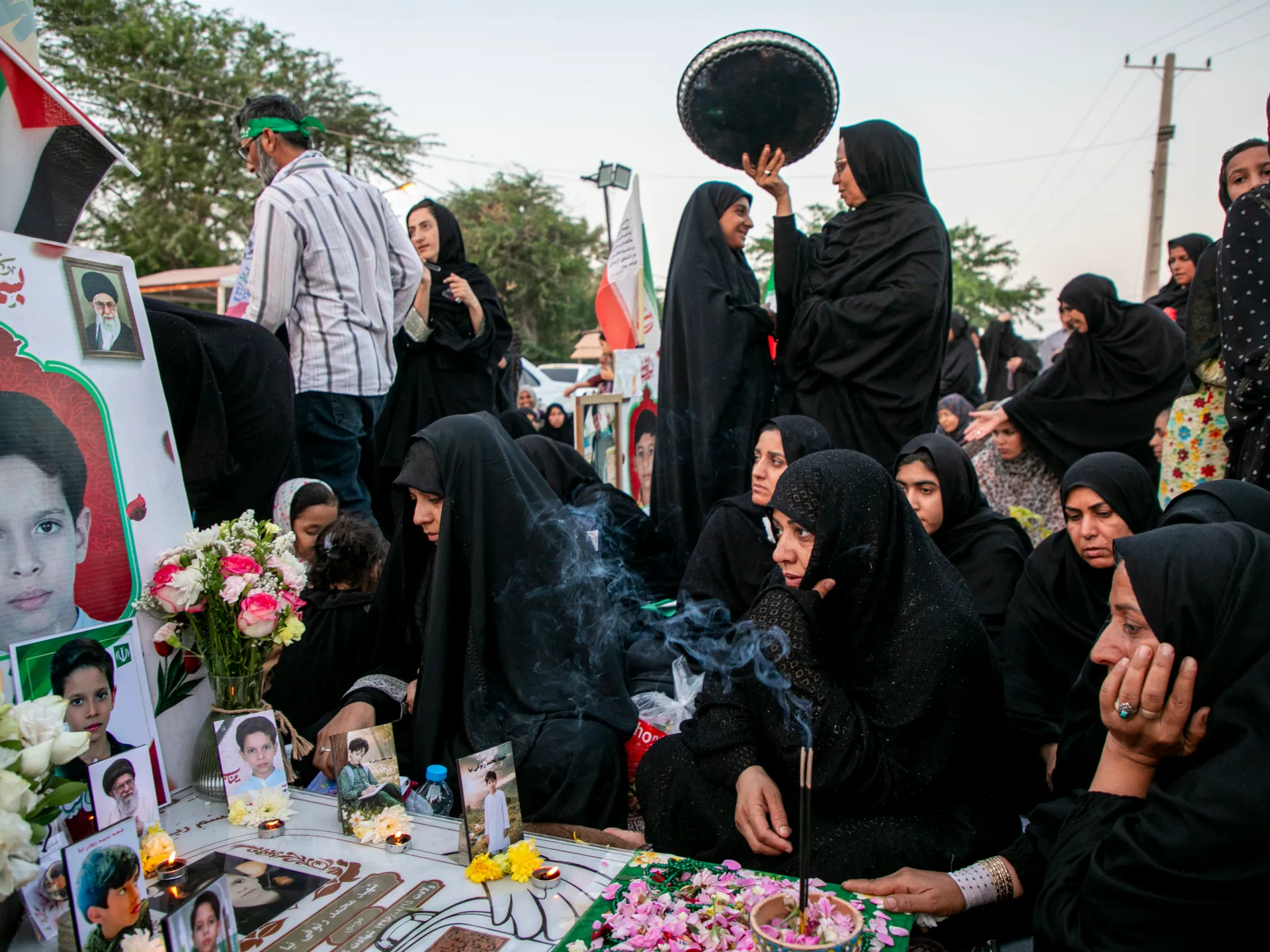
The attack on the school in Minab was conducted with the use of Tomahawk missiles.
“The Mission concluded that when identifying and directing its attack against the primary school in Minab, whose civilian nature is apparent, the US failed in its obligation to do everything feasible to verify that it was a military objective,” the report stated.
The report’s authors said that photographs and videos depicting the school before and after the strike showed “readily identifiable features” that it was associated with an educational facility for young children.
“These included child-oriented murals painted on exterior walls, school signage, and playground areas,” said the UN report.
“According to public reporting, satellite imagery of the school before the strike also appears to show human figures, readily identifiable as children, gathered in its courtyard.”
Following the strike, state-affiliated media showed widespread destruction at the site, including parents holding the body parts of their children, and bloodied backpacks and schoolbooks.
“Several families lost more than one child, reflecting the devastating impact of the attack on families and the wider community,” the report said.
In June, US President Donald Trump said that “nobody” purposefully attacked a girls’ school in Iran in February, citing an investigation into the incident, for which the Pentagon has not yet published any findings.
Regarding the strike in Lamerd, the mission similarly found that the sports centre attacked was “visibly separate” from an adjacent compound belonging to Iran’s Islamic Revolutionary Guard Corps (IRGC).
The US Central Command said in a statement in March that US forces did not launch any strikes into the city of Lamerd on that day.
Iran protests
The UN mission additionally accused Iran of repressing demonstrators during the country’s 2025-2026 protests through an internet shutdown, unlawful killings, torture, arbitrary detention, enforced disappearances and severe restrictions on freedom of expression.
It also stated that the number of deaths and injuries by state forces is much higher than the government’s reported toll – which says 3,038 people were killed and 25,000 people injured – but could not verify exact numbers.
Tehran claims the majority of deaths occurred due to “rioters” during the protests backed by exiled opponents and the US and Israel.
The UN fact-finding mission urged Iran and the US to immediately end hostilities, provide reparations to victims, and seek permanent peace through diplomatic means.
Intensifying attacks between Saudi Arabia and Yemen’s Houthis have reportedly killed at least five people in total, including three children.
At least one person – a Yemeni resident in Saudi Arabia – was killed, and two others were injured after a Houthi drone was intercepted in Saudi Arabia’s southwestern governorate of Taif on Thursday, according to the kingdom’s civil defence agency.
It is the first death announced in Saudi Arabia this month since Yemen’s Iran-allied Houthis intensified their attacks.
In Yemen on Thursday, the Houthis said “Saudi enemy warplanes targeted three telecommunications towers” in Taiz province.
One civilian was killed in Taiz and another injured in strikes on the town of Abs, Yemen, said Houthi-linked Almasirah television.
Houthi-backed media later reported that “three children were killed and several Yemeni nationals were injured in strikes by the Saudi-backed mercenaries”, a reference to the country’s internationally recognised government forces.
Houthis reject claim they attacked Mecca
The escalation comes as Saudi Arabia said a drone was launched by the Houthis towards Mecca before being intercepted and destroyed.
“It’s a heinous lie,” Houthi leader Abdel-Malik al-Houthi said in a live televised address on Thursday, calling Saudi claims that his group would target Islam’s holiest city “a great propaganda”.
“The sanctity of Mecca is particularly important to the people of Yemen,” he said while accusing Saudi Arabia of “weaponising lies” to serve its war objectives against the Houthis.
Reporting from the Yemeni capital Sanaa, Al Jazeera’s Yousef Mawry said: “Al-Houthi’s speech is not just directed towards the Yemeni people; it is directed to the world to set the record straight that the Houthis did not target the holy city of Mecca, as the Saudis claim.”
In his address, al-Houthi also said Saudi Arabia had initiated the latest round of conflict in Yemen and that Houthi forces are acting defensively.
Meanwhile, Rashad al-Alimi, the head of Yemen’s Saudi-backed Presidential Leadership Council, said that Houthi forces are suffering heavy blows on the fronts in Taiz, Marib, Lahj, al-Jawf, Hajjah, al-Bayda al-Dhale.
In a meeting with the French ambassador to Yemen, al-Alimi said that gains made by the Houthis along the Red Sea coast are temporary, the state-run Saba news agency reported.
A Houthi supporter sports a poster of the group’s leader, Abdel-Malik al-Houthi, in his dagger’s belt, during a rally against the Saudi-led coalition [File: Khaled Abdullah/Reuters]
Aggression against Mecca ‘a condemned act’
Esmaeil Baghaei, Iran’s Ministry of Foreign Affairs spokesperson, said in a statement on X on Thursday that any aggression against Islamic holy sites, particularly Mecca, “is a condemned act”.
But he added that “a mere claim” of intercepting a drone “en route to Mecca” is not enough to accuse the Houthis of the act.
“Nor should we forget that our region has witnessed numerous instances of ‘false flag’ operations, particularly in recent months,” Baghaei said while pointing at Israel.
Meanwhile, China has privately asked Iranian officials to help rein in the Houthis after Saudi Arabia appealed to Beijing following recent Houthi attacks, anonymous sources in Iran told the Reuters news agency.
Beijing publicly called for restraint, dialogue and the restoration of safe navigation, but its private message went further than that, Reuters reported.
The escalation is also threatening to draw in other regional actors – specifically Saudi defence partners Pakistan and Turkiye, which signed a joint defence agreement with the kingdom last month.
Pakistan’s Defence Minister Khawaja Asif said the time has come to implement the Mecca agreement with Saudi Arabia and Turkiye due to recent Houthi attacks.
Asif’s comments to Pakistani media on Thursday were made as Iran’s Foreign Minister Abbas Araghchi said he’d held a phone conversation with Pakistan’s army chief Asim Munir to discuss “regional developments”.
Senior U.S. Air Force leaders in Europe say NATO allies are increasingly looking to participate in the development and employment of collaborative combat aircraft (CCAs), even as several of those same countries pursue their own indigenous fighter and drone programs. American commanders say they are looking forward to CCAs expanding the alliance’s overall capacity, and are already pushing for such systems to work together from the outset.
Speaking yesterday at the Air & Space Forces Air, Space and Cyber Symposium that TWZ is attending, Lt. Gen. Jason T. Hinds, commander of U.S. Air Forces in Europe, U.S. Air Forces Africa, and NATO’s Allied Air Command, and Chief Master Sgt. Joshua J. Wiener, USAFE-AFAFRICA’s command chief, discussed how the command is preparing for an eventual European role in the U.S. Air Force’s planned fleet of hundreds of CCAs.
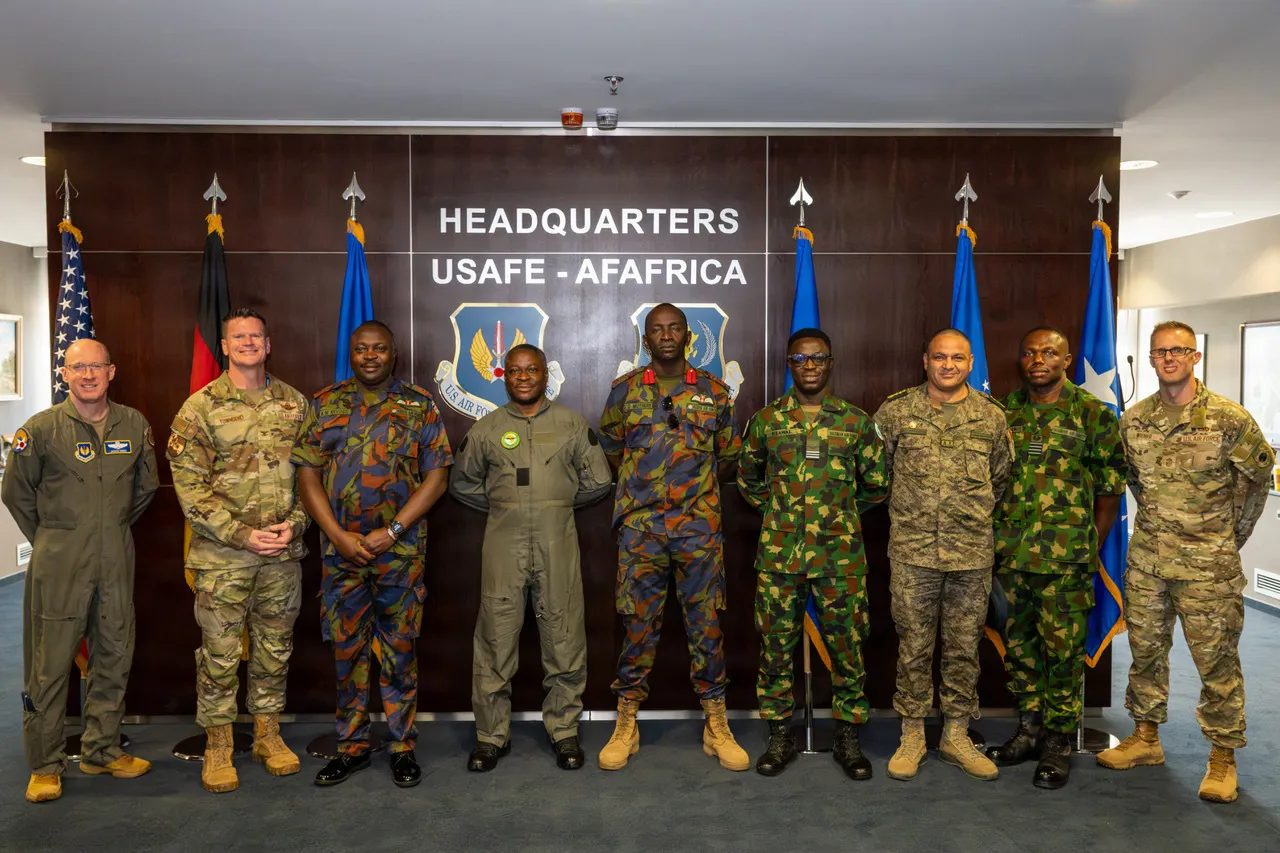
U.S. Air Force Lt. Gen. Jason T. Hinds, U.S. Air Forces in Europe – Air Forces Africa commander (far left), and U.S. Air Force Chief Master Sgt. Joshua J. Wiener, USAFE-AFAFRICA command chief (second from left), pose for a group photo with the Association of African Air Forces representatives from Kenya, Nigeria, and Tunisia at Ramstein Air Base, Germany, earlier this month.
The issue is particularly significant for USAFE, which operates a fraction of the fighter force it maintained in Europe during the Cold War, even as many of its NATO allies contend with shrinking fleets of crewed combat aircraft. This comes against a backdrop of deepening tensions with Russia and the emergence of new kinds of threats. Autonomous aircraft that can augment crewed fighters could provide the alliance with additional combat mass without requiring a corresponding increase in the number of crewed aircraft and personnel permanently based in Europe.
“I’m excited about what CCAs have in store for the Air Force,” Hinds said, pointing to recent comments from the Secretary of the Air Force Troy Meink, including the aim of having at least 500 CCAs in service by 2032.
He added that European interest in these kinds of platforms is already growing.
“I think you’re going to see a lot more interest from other nations inside Europe about what is America doing with CCAs and how they can join this party, if you will,” Hinds said.
Germany is “heavily involved,” he said, while Scandinavian countries and the Netherlands are also showing interest.
In the case of Germany, we have previously explored how that country is looking to procure CCAs by 2029. Sweden, too, recently unveiled a concept for a high-end, stealthy CCA-type drone, while the Dutch are looking to become more closely alligned with U.S. Air Force CCA efforts.
Saab has produced a full-scale concept model of a future uncrewed combat air system, known as aircraft A3. Saab
USAFE is currently using two broad operational scenarios to explain to allies how CCAs could fit into NATO’s force structure.
The first is defensive. A CCA could operate as part of an integrated air and missile defense network, potentially engaging one-way attack drones or cruise missiles without the need for expensive crewed fighters.
The second is offensive. In that scenario, autonomous aircraft could help suppress or destroy integrated air defense systems and potentially attack fielded forces during an effort to repel a hostile incursion into NATO territory.
Allies are interested in both missions, Hinds said, and want the ability to incorporate CCAs into their own force designs. Interestingly, only yesterday, Anduril shared photos of its YFQ-44A Fury configured with air-to-ground weapons, underscoring the fact that the CCA could take on an air-to-ground role in the future in addition to its current air-to-air focus.
A YFQ-44A carrying pods for 2.75-inch rockets and 500-pound Joint Direct Attack Munitions (JDAM) under the wings. Anduril
That kind of interest has already prompted work at the NATO level. Hinds pointed to a study by the Joint Air Power Competence Center, the alliance’s airpower think tank based in Kalkar, Germany, examining how NATO members could employ CCAs in a modular fashion, including issues such as sustainment, training, and exercises.
“It was a pretty long paper, but the nations wanted it,” Hinds said.
Initial experimentation is expected to take place in the United States, but European experimentation could follow, including by Sweden and potentially other NATO members.
At the same time, European countries are not simply waiting for an American CCA to arrive.
The United Kingdom has launched its own Storm Fighter CCA program. Germany is pursuing a separate loyal-wingman effort, while the United Kingdom, Italy, and Japan are meanwhile jointly embarked on the Global Combat Air Program, or GCAP, which is intended to produce the Tempest next-generation crewed fighter and associated uncrewed systems.
A rendering of a CCA concept released at the launch of the U.K. Royal Air Force Storm Fighter program, earlier this year. BAE Systems
The proliferation of national programs raises an obvious question: How does NATO prevent a growing fleet of autonomous aircraft from becoming a collection of incompatible national systems?
Hinds said the answer starts with commonality.
“The first and foremost thing is we want to strive for commonality,” he said. “Commonality means we don’t even have to worry about interoperability.”
Where common equipment is not possible, however, USAFE wants interoperability built into national systems from the beginning.
“Interoperability by design” is the preferred approach, Hinds said, with NATO data standards and other requirements incorporated before a system enters service rather than retrofitted later.
The good news for USAFE is that NATO already has extensive experience establishing common standards for interoperability, covering everything from tactics and procedures to communications, datalinks, weapons employment, and other technologies. That existing framework gives the alliance a foundation for integrating increasingly diverse national systems without requiring every member to field identical equipment.
F-35A from the U.S. Air Force’s 48th Fighter Wing and the Royal Norwegian Air Force fly tandem after a formation flight near Lofoten, Norway, March 10, 2026. The formation flight was intended to symbolize the partnership and degree of interoperability displayed between participating NATO militaries during Exercise Cold Response 26. U.S. Marine Corps photo by Cpl. Mya Seymour Cpl. Mya Seymour
Hinds did warn that some countries have previously acquired equipment that was not compatible with NATO systems, leaving them with the choice of paying to modify their own equipment or forcing the alliance to adapt its systems around it.
That problem becomes particularly important as autonomous aircraft are connected to increasingly complex sensor and weapons networks. Even more important is the requirement for a baseline command-and-control network for CCAs themselves, allowing different platforms to manage them seamlessly.
The ability to share and control CCAs across a complex battlespace is already emerging as both a major opportunity and a significant integration challenge. The U.S. Air Force and Navy, for example, have made clear that their respective CCAs are being developed with the ability to be controlled seamlessly across services, pointing toward a future in which autonomous aircraft need not remain tied to the service or platform that launched them.
In such an architecture, the aircraft, sensor, command-and-control network, and weapon do not necessarily have to belong to the same country.
As an example, Dutch F-35s, operating in Europe, have used a data-exchange system to transmit targeting coordinates to Israeli-made PULS (Precise and Universal Launch System) rocket artillery. The system, developed by Lockheed Martin is known as Keystone, and you can read more about it here.
A Dutch F-35A brandishing its AIM-120 AMRAAM missiles during a NATO air policing drill. Bartek Bera
USAFE is making “significant advances” in areas including cross-servicing, cross-loading, and cross-flying allied aircraft, Hinds said, all of which are intended to make multinational operations more seamless.
A U.S. Air Force F-35 crew chief conducts post-flight checks at Pirkkala Air Base, Finland, during the tactical exercise, Ramstein Flag 26. U.S. Air Force photo by 2nd Lt. Sarah Hedgman
The same philosophy applies to weapons.
“We want to have all the fires, right? Whether it’s U.S. built or built inside European nations,” Hinds said.
That could prove increasingly important as European countries expand domestic production of missiles, drones, and other weapons alongside their aircraft programs.
The growth of GCAP and other European defense programs comes amid broader debate over how much Europe should depend on U.S. military equipment.
But Hinds rejected the idea that allies developing indigenous aircraft and autonomous systems necessarily signals a move away from American equipment.
“No, I don’t,” he said when asked whether allies were moving away from U.S. systems.
Instead, Hinds characterized the trend as an expansion of the transatlantic defense-industrial base.
Sweden was one example he cited. The country, which recently joined NATO, continues to produce new military equipment, including Gripen fighters, while those aircraft are already being operated by NATO members.
Swedish Gripens are currently leased to Hungary, and other countries are considering the aircraft, Hinds said.
A Hungarian Air Force JAS 39C Gripen participating in NATO Exercise Ramstein Flag 24 flies over the west coast of Greece, in 2024. U.S. Air Force photo by Tech. Sgt. Emili Koonce
The broader trend toward co-manufacturing and co-production is also something he welcomed.
“I’m seeing a lot of discussions about co-manufacturing and co-production, and I welcome those discussions as well,” Hinds said.
That approach could become increasingly important as NATO tries to expand its available combat power without relying exclusively on additional U.S.-built platforms.
For USAFE, the objective is to ensure that whatever aircraft NATO countries develop or purchase can plug into a common architecture, sharing data, receiving targeting information, drawing on common logistics networks, and contributing weapons effects across national boundaries.
For a U.S. Air Force command that has spent decades trying to cover Europe with far fewer fighters than it once had, hundreds of autonomous wingmen, whether American-built or allied, could provide a significant way to generate additional combat mass.
Senior U.S. Air Force officials are now working to ensure that the networking, weapons integration, logistics, and command-and-control architecture will be in place once those aircraft start to come online.
The U.S. Air Force has been taking a new look at the feasibility of restarting production of the C-17 Globemaster III cargo plane as part of its still-evolving next-generation airlift plans. The service also continues to explore a wide range of next-generation aerial refueling concepts, including new stealthy and/or uncrewed tankers, but a firm vision for the way forward there has yet to emerge.
Air Force Lt. Gen. Daniel Tulley, head of Air Mobility Command (AMC), shared new details about future airlift and aerial refueling efforts, with TWZ and other outlets at a roundtable at the Air & Space Forces Association’s (AFA) 2026 Air, Space & Cyber Conference.
On the airlift side, the Air Force’s stated plan to date is to replace both the C-17A and C-5M Galaxy with a single Next-Generation Airlift (NGAL) platform, starting in the mid-2040s. Separately, the service is pursuing what could be a family of future aerial refueling capabilities under what is now called the Advanced Tanker Systems (ATS) program. Very broadly speaking, ATS presents a path toward what might come after the retirement of the aging KC-135 tanker fleet, though those aircraft are still expected to keep flying for years to come. The Air Force is also moving to further expand its fleet of newer KC-46A tankers in the interim, but persistent technical and other issues with that design continue to present hurdles.
A US Air Force C-5, at left, together with one of the sevice’s C-17s, at right. USAFA KC-135, at right, prepares to link with a KC-46, at left, during a test. USAF
At the roundtable today, Lt. Gen. Tulley was asked explicitly about restarting C-17 production. The manufacturer of those aircraft, Boeing, shuttered that line in 2015. The company also just marked the 35th anniversary of the design’s first flight yesterday.
“Heck yeah, but with a caveat, right?” Tulley said in response. “So we were just asking this question over the course of last week, and it’s in the context of next-generation airlift. So we are about to embark on the Analysis of Alternatives to replace the C-17 and replace the C-5. All options are on the table.”
“There’s always the option to service life extend the C-17, but the [production restart] question came up,” he continued. “I’ve heard this my entire career. Once we terminate an assembly line, can we ever bring it back? Does somebody store all the machinery and the dies and whatnot, and can you bring that out? So we’re asking that question.”
“But then whatever that answer is from the vendors, what will be the price tag associated with that?” he added. “You have to ask yourself, okay, is rebuilding a C-17 even if you make improvements – and there’s a loose analogy with the C-130J, [a] much more modern, capable variant of the C-130E [author’s note: the C-130J evolved more directly from the C-130H variant] I first learned to fly – if you do that with the C-17, is that the best move? Or are there new technologies that we can incorporate into it so that it can defend itself, so that it’s connected, it’s networked, it does all the things that maybe the current C-17 doesn’t do?”
“We’re looking into it as part of the Analysis of Alternatives. I’m hopeful that we’ll get to answer that question.”
In June, the House Armed Services Committee also directed the U.S. Air Force to prepare a formal briefing on the matter of new C-17 production in a report accompanying a draft of the annual defense policy bill, or National Defense Authorization Act (NDAA), for Fiscal Year 2027.
Boeing Pieces Together the Last C-17 on the Line
The RAND Corporation did conduct a detailed, independent analysis more than a decade ago that assessed the costs and complexities that could come from Boeing building more C-17As, as well as other variants and derivatives of the design. RAND’s conclusion was that any of the courses of action would require billions of dollars of new investment and entail risks, as you can read more about in more detail here.
Foreign participation in a new C-17 production run could help at least defray costs. Australia, Canada, India, Kuwait, Qatar, the United Arab Emirates, and the United Kingdom all currently fly Globemaster IIIs. The Strategic Airlift Capability (SAC) initiative, a multinational arrangement with several European members, as well as the United States, also operates three of these aircraft.
Boeing told TWZ directly in June that unnamed C-17 operators had been reaching out about the prospect of restarting the production line, and that the company was “encouraged” by those discussions.
As Lt. Gen. Tulley stressed, there are significant questions about whether buying new-production C-17s, even with substantial improvements, is not only feasible, but a good use of resources. The Air Force’s Globemaster III fleet today continues to prove itself to be critical to the U.S. military’s ability to project power globally, and is in very high demand right now, especially amid the ongoing conflict with Iran.
The Air Force’s desire to replace both the C-17 and C-5, which are very different aircraft in form and function, could still easily lead the service down a different route. Boeing is not the only one looking at future NGAL opportunities. Another company, Radia, has been very actively pitching a clean-sheet design that is physically bigger than either the C-17 and the C-5, and that is geared toward greater operational flexibility, at the Air Force. Radia is targeting a first flight of its aircraft, called Windrunner, by the end of the decade, but it is still in a very aspirational stage at present.
A rendering of Radia’s Windrunner design. Radia
Many questions also still remain about how the Air Force will ultimately proceed on the next-generation aerial refueling front.
“So thinking beyond the current KC-46 buy and the program extension, whatever that next tanker looks like, our Advanced Tanker System, it’s got to be connected. It’s got to be able to defend itself,” Lt. Gen. Tulley said at the roundtable. “But it begs the question: does it need to be manned? Could it be optionally manned? Could it be autonomous? Or is there a family of solutions maybe that would answer that question? So I do not believe that it has to be manned.”
“I think you’re seeing that with the MQ-25 and the Navy’s work, but then, how do we, the U.S. Air Force, bring that to bear in scope, scale, and range?” Tulley continued. “An optionally manned or an unmanned tanker, at range, the ranges we need to operate at, it’s a very large aircraft. And we’re not yet to where we’re employing fully autonomous large aircraft, but the technology, I would say, is there and rapidly getting there if it’s not.”
A rendering of a larger, land-based derivative of the MQ-25, depicted refueling from a KC-46 tanker. BoeingOne of the advanced tanker concepts Lockheed Martin’s Skunk Works has shared publicly in recent years. Lockheed Martin Skunk Works
“We will be going after how to make the tanker survive,” William Bailey, the Air Force official currently performing the duties of the Assistant Secretary of the Air Force for Acquisition, Technology and Logistics, had also told TWZ and other outlets at a separate roundtable at the Air, Space & Cyber Conference yesterday. Bailey was responding to a direct question about whether the service was moving away from the idea of a stealthy tanker as part of the ATS plan.
“So, lots of work around what do we do in the future for our tankers, and we spent a pretty dedicated effort to go through and look at what do we think those design solutions could look like,” Bailey also said. “We looked internally. We went out to industry, had those guys come back with their thoughts on how to provide a more survivable aircraft.”
“The stuff that was coming in for me might have been an incremental improvement, but [it was] not clear that that represented the next step, the next phase,” he added. “What you’ll see is we’ll take our efforts, and we’ll look at, hey, if the real question is tanker access, then let’s not constrain ourselves to just the aircraft itself and trying to make a stealthy tanker. We need a tanker to have access, so we’ll talk about all those systems that it would take to protect that tanker.”
Bailey said the question of operational “access” applied to next-generation discussions, as well.
This ex-French Air Force KC-135FR tanker, now operated by private contractor Metrea, is an example of the outside aerial refueling capacity the U.S. military has been increasingly leveraging in recent years. Metrea
Greater connectivity “can be a game changer, and it has been a game changer in Operation Epic Fury [against Iran],” Lt. Gen. Tulley said at today’s roundtable. “The ability for air crews to communicate, to coordinate tanker orbits and rendezvous, to pass threat information, to save lives and save aircraft has been everything we expected it to be and more.”
“We have MAF NEXUS that we’re pursuing. The goal is to have this on all mobility aircraft, whether they’re future-built and it’s incorporated, or it’s an add-on capability to existing aircraft,” he continued. “It brings edge compute, the ability to then employ AI [artificial intelligence] and much more computing core power forward on the aircraft, and it does network with the rest of the joint force and the Air Force’s battle management system.”
A picture of a US Air Force KC-135 tanker spotted earlier this year with a new large satellite communications antenna (further highlighted in the inset), underscoring work underway now to improve the network connectivity of those aircraft. Alessandro Ledda
When it comes to new options for protecting existing tankers, “nothing’s off the table,” the AMC boss added. “Whether it’s [in the] electromagnetic spectrum, whether it’s kinetic self-defense, a layered approach, we’re looking at everything to come up with what might be the best system. But it’s got to be a system that we can afford, and it’s got to be one that we can put on all the aircraft we have and the ones we’re about to build.”
The Air Force is otherwise still clearly continuing to shape its future airlift and aerial fueling visions. As part of that work, the service is now at least considering the possibility of rebooting C-17 production.