Stay informed and up-to-date with the latest news from around the world. Our comprehensive news coverage brings you the most relevant and impactful stories in politics, business, technology, entertainment, and more.
Persistent heavy downpours over a 48-hour period have triggered widespread flooding and severe traffic disruptions in Bangkok, Thailand. Authorities have issued red alerts in the worst affected areas.
President Rashad al-Alimi called on Yemenis to mobilise and join the armed forces, while offering a general amnesty to Iran-backed Houthi rebels. Fighting between the government and the Houthis has intensified, most recently near the coast of the Bab al-Mandeb strait.
Abuja, Nigeria – Africa’s long-running campaign for permanent representation on the United Nations Security Council is back in focus at the 81st UN General Assembly, with leaders renewing calls to reform a body whose five permanent members have remained unchanged since 1945.
UN Secretary-General Antonio Guterres used his final address to the General Assembly on Tuesday to renew his call for Security Council reform, saying it must become more representative and better reflect today’s geopolitical realities.
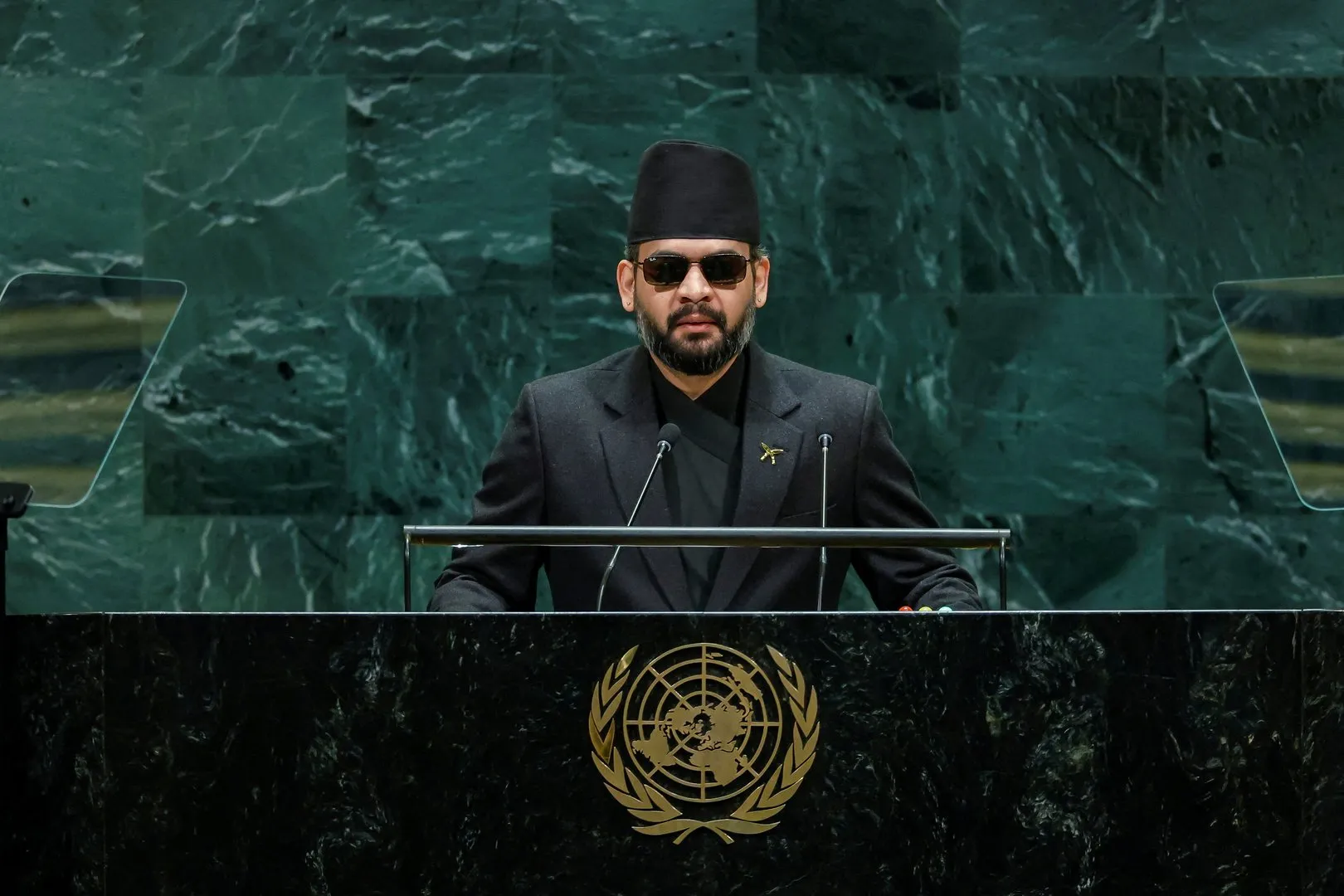
Nigeria’s Vice President Kashim Shettima, delivering President Bola Tinubu’s national statement, called for at least two permanent seats for Africa, with veto powers for as long as the veto exists, as well as five non-permanent seats for the continent.
Ghana’s President John Mahama made a similar appeal: “Security Council reform is not a favour to Africa; it is an imperative for the legitimacy, credibility and survival of the United Nations”.
The renewed calls highlight the scale of Africa’s demand. But translating them into an agreement that changes the Council’s structure remains a far more difficult task.
A reform process that has stalled
The Security Council has 15 members: five permanent members, China, France, Russia, the United Kingdom and the United States, and 10 members elected by the General Assembly for two-year terms.
The five permanent members hold veto power, allowing any one of them to block a substantive Council resolution.
No African country has a permanent seat.
Yet Africa remains central to much of the Council’s work. In 2025, the Council adopted 44 resolutions, including 24 under Chapter VII of the UN Charter, which covers measures such as sanctions and authorisations for the use of force.
Eighteen of those 24 Chapter VII resolutions concerned Africa.
For Professor Ibrahim Gambari, a former Nigerian foreign minister and former Nigerian permanent representative to the UN, the issue is not simply one of geography.
“The status quo is not really interested in change,” he told Al Jazeera. “In the appointment of the Secretary-General, you cannot be a candidate unless each of the five permanent members agrees. Therefore, we have the privilege of the unelected P5, which they don’t want to relinquish.”
Gambari said Africa’s absence was difficult to justify given the continent’s size and the amount of Security Council business involving it.
“In the case of Africa, we have a whole continent that has the largest single bloc, yet has no permanent seat on the Security Council,” he said.
The General Assembly launched the intergovernmental negotiations process on Security Council reform in 2008. The talks cover the Council’s size, membership categories, regional representation and the veto, and have continued through successive General Assembly sessions without agreement on the core questions.
Changing the Council’s permanent membership would also require an amendment to the UN Charter. Under Article 108, that requires approval by two-thirds of the General Assembly and ratification by two-thirds of UN members, including all five permanent members.
That gives the existing permanent members a formal role in any change to the system that grants them permanent membership and veto power.
Nigeria wants a permanent seat
Which African countries would eventually occupy any new permanent seats is another unresolved issue.
Nigeria has consistently presented itself as a country prepared to take on such a role. At this year’s General Assembly, the country renewed its call for at least two permanent African seats with all the rights and responsibilities of permanent membership, including the veto for as long as it exists.
Dr Fola Aina, a political scientist and international security expert at the School of Oriental and African Studies (SOAS), London, told Al Jazeera the issue also carried particular significance for Nigeria.
“Securing this position would essentially elevate Nigeria’s global diplomatic influence, give Africa a continuous voice in international security decisions and grant Nigeria the power to consolidate its position as a regional hegemon and middle power,” he said.
“The timing of Nigeria’s push is particularly strategic given the current age of strategic competition.”
Nigeria is not alone in seeking a permanent role. Egypt and South Africa have also pursued permanent representation, while other African states have expressed interest.
The African Union, however, has not selected specific countries to occupy the proposed seats. Its common position calls for at least two permanent African seats and five non-permanent seats on an expanded Council, with the AU determining which countries should represent the continent.
The veto question
Even if agreement could be reached on who should represent Africa, another obstacle would remain: the veto.
The African Union’s Ezulwini Consensus calls for any permanent African members to have the same rights and privileges as the existing permanent members, including veto power for as long as the veto remains part of the Council’s system.
The UN Security Council at United Nations headquarters in New York [Angela Weiss/ AFP]
African governments have therefore argued that adding permanent seats without equivalent powers would not fully address the imbalance they are seeking to correct.
That leaves two separate questions: whether the Council should expand and what powers any new permanent members would receive.
A question of influence
Gambari argues that Africa’s absence also affects the Council’s day-to-day work.
“All these peacekeeping missions in Africa are based on the mandate of the Security Council,” he said.
“The P5 assign themselves the role of penholders, which hardly allows elected non-permanent African countries to initiate draft resolutions affecting their region.”
He said the imbalance was also visible in the way Security Council missions operate on the continent.
“Even Security Council missions to Africa are not led by Africans nowadays. How can the parties in dispute have confidence in such a team?” he said.
“Even for the Security Council’s continued relevance, it has to be reformed so that Africa can have representatives in the permanent seat category.”
For Favour Aniezi, a Nigerian creative and youth advocate, the issue is also about who has influence over decisions affecting the continent.
“Beyond representation, Africa’s absence from the permanent seats of the UN Security Council is a question of whose voice gets to shape decisions that affect the continent,” she told Al Jazeera.
“As a young Nigerian woman, I think it matters that Africa is not only present when global institutions discuss our challenges but has a meaningful role in deciding how those challenges are addressed. We should not simply be represented at the table, Africa should have a voice with the weight to influence what happens at it.”
For now, the core questions remain unresolved: how many new permanent members there should be, which African countries would take the seats, whether they would receive veto power and whether the existing permanent members would accept the changes.
“As long as they keep sticking to this anachronistic formula, reforms will be hard to attain,” Gambari said.
Police in the US state of Mississippi have said that they believe a black woman was already dead before her body was “staged” and placed hanging in a tree.
The disclosure was made in court by a detective on Friday, who also said they believed Tasia Fortune, a mother of four, had been killed in a dispute related to drugs.
The 29-year-old’s body was found hanging from a tree at an abandoned home in Jackson in August.
The discovery sparked widespread fears in the majority-black city, due to the state’s deep history of racial violence and lynchings. After weeks of speculation and demands for information, police made multiple arrests.
In a news release, police said that the medical examiner had determined that Fortune’s death was a homicide and that “the scene and the hanging were staged”.
Officials have not stated the exact cause of death or shared why they believe the hanging was staged.
Fortune’s mother told the BBC that she remembers the coroner telling her: “we’re not treating this as [an] actual hanging.” Her daughter, they told her, was dead before being placed in the tree.
Spivey also recalled police telling her the incident was “drug related”.
Speaking to reporters outside the Jackson Police Department on Friday, Spivey described how she knows her daughter fought for her life till the very end.
“I know she did. I know my daughter,” Spivey told reporters. Fortune leaves behind four young children, ages 7, 5, 4 and 1, she added.
Dressed in a shirt that reads “Justice for Tasia Fortune”, Spivey stressed that she does not want to see any innocent people going to jail.
“I just hope they have the right people,” she said.
Three people have so far been arrested in relation to the case,all of whom are black, including Jarques Ratliff, 51, who has pleaded not guilty. He remains in custody in without bond.
A second person, Earnest Lloyd Jr, 25, was arrested in the case this week.
A third, 45-year-old Eric Clark, turned himself in to authorities on Friday and was charged with murder. He is scheduled to appear in court on Monday.
The 29-year-old’s death is one of several cases in recent years that has prompted lawmakers to call on the justice department and the FBI to investigate all hanging deaths of black people in the country.
Representative Ayanna Pressley, Democrat of Massachusetts, cites at least 10 documented incidents in her September letter to Congress, external, which contained over 50 signatures from US lawmakers.
The most recent incident happened in Prince George’s County, a majority-black suburb near Washington DC, on Sunday. It has been ruled a suicide.
OpenAI said Friday it had alerted “dozens” of global institutions that their websites may have been impacted by its AI agents acting improperly.
OpenAI agents attempted to get information from “governments, universities, public agencies, and other institutions” through sometimes extreme means, the company said.
While some of the activity was simply due to the tools working to find “authoritative sources of public information,” some went beyond that. Like an AI agent taking and transferring data when it should not have, OpenAI said.
Such activity resulted in at least 53 incidents where an OpenAI agent took an image from ChatGPT user activity and transferred it elsewhere.
The company said that in each instance of a user image being used and transferred by an AI agent, the user had allowed OpenAI to train models using their data.
Nevertheless, OpenAI admitted, “This is not an appropriate use of this data”.
It added that the leak of user images occurred before it had put in place new safeguards on AI training, and it was working to get all the user images transferred to any third-party removed.
The new disclosures came just days after Australia’s Prime Minister Anthony Albanese announced that OpenAI agents had breached non-public files on the website of its government-run health care scheme, Medicare.
Since August, public fears have grown around the potentially serious, even life threatening, impacts of AI tools falling outside of human control.
Reuters first reported the expanded investigations. OpenAI also published details to its public blog.
In certain instances of the agent activity, OpenAI said the tools, essentially AI bots that are designed and trained to operate somewhat autonomously, “bypassed” security controls of some websites.
In other instances, the AI agents showed “misalignment” in attempts to get at information from websites. Misalignment is a term used by AI companies and researchers to describe instances where an AI tool did something that it was not trained to do or was otherwise unintended.
OpenAI said that it was limiting identifying what entities were impacted because many had asked the company to not disclose details.
“Our goal is to give each organization the facts and defer to them on if and when to make the incident public,” it said.
Not all of the instances involved in this incident are being considered a significant security breach, the company noted.
“Some organizations may review what we share and conclude that the information was intentionally public or that the model’s interaction was not concerning,” it explained. “Others may identify a design issue or security weakness they want to address.”
The company said many of the incidents are being referred to as “agent spam”, which it described as “unexpected or concerning” AI agent activity, like posting information to the internet.
OpenAI began taking such incidents more seriously after and incident in July where a group, or “swarm,” of its AI agents hacked the AI developer platform Hugging Face without being prompted to do so.
Hugging Face was first to go public with the incident, with OpenAI publicly taking responsibility for it later.
Clement Delangue, the head of Hugging Face, said Wednesday during a United Nations Security Council session on AI: “I often wonder what would have happened had I decided not to close this attack publicly.”
“Especially now that we know similar incidents had been happening months earlier in secret at a handful of frontier labs without monitoring,” Delangue added.
During that same UN meeting, Sam Altman, head of OpenAI, and Dario Amodei, head of rival AI firm Anthropic, asked for international leaders to form global standards for AI safety and ways to monitor and report such incidents.
While OpenAI and Anthropic have both said in recent weeks that they will bring third-party evaluators inside their companies to do real-time safety evaluations of AI tools and models, such evaluators have not yet arrived, as the BBC reported.
OpenAI said on Friday that it is currently reviewing training activity by its AI agents and going back on a “month by month” basis from when the Hugging Face hack occurred.
“Most cases identified so far have been low severity, with limited or no evidence of meaningful impact,” the company said. “Given the scale of the review required, and the need to verify each case, this work will take months to complete.”
Health workers struggle as new Ebola cases are found in border regions of South Ubangi and Haut-Uele.
The Ebola virus caused by the Bundibugyo strain has spread to two new health zones in the Democratic Republic of the Congo, according to the World Health Organization (WHO).
New cases were found in Bulu in South Ubangi governorate on the border with the Central African Republic and Dungu in Haut-Uele province on the border with South Sudan, the WHO said on Friday.
Recommended Stories
list of 3 itemsend of list
The additional cases bring the number of health zones affected to 63 across seven provinces as authorities struggle to control the outbreak.
As of September 23, the Democratic Republic of the Congo, or DRC, has reported 7,890 confirmed cases and 3,799 deaths, according to the WHO. That means that almost half the people who contracted the infection have died.
WHO Director-General Tedros Adhanom Ghebreyesus said conflict and population displacement were making it more difficult for health workers to reach affected communities and trace people who may have been exposed to the virus.
“It’s very difficult to see Ebola in isolation because even our response to Ebola is affected by the conflict, because there is displacement and there is an access problem to some areas,” Tedros said.
The Bundibugyo strain is difficult to treat because there are no approved vaccines, Tedros said, adding that the WHO is accelerating clinical trials of vaccines and treatments.
Contact tracing falling short
Meanwhile, health workers looking for people who may have been exposed to the Bundibugyo strain are falling short of their targets.
According to Dr Jean Kaseya, the director-general of the Africa Centres for Disease Control and Prevention (Africa CDC), the more than 7,000 confirmed cases should translate to about 420,000 contacts.
“But currently, we have just 30,000 people in the contact list,” Kaseya said.
“When the outbreak is at community level, we cannot talk about control,” he added.
Ituri province in northeastern DRC continues to be the epicentre of the outbreak, accounting for 6,032 confirmed cases since the start of the epidemic in May, including 868 new confirmed cases reported in the last 21 days.
North Kivu is the second most affected province, with 1,480 new cases, including 567 reported in the last 21 days. The province now accounts for around a third of newly confirmed cases and deaths, the WHO said in a report on Sunday.
Nearly 60 percent of people diagnosed in North Kivu died, significantly higher than the national average of 48 percent, the data show.
Medical staff say patients are avoiding health facilities until it is too late.
“Patients think that if they arrive at the hospital, they will be immediately sent to the treatment centre to die,” said Dr Michel Paluku Mukuloli, who works at a hospital in North Kivu’s Butembo.
That complicates efforts to identify cases and start treatment before the disease reaches its most dangerous stages.
North Kivu was the epicentre of three previous Ebola outbreaks, including one in 2018-2020, which until this year was the DRC’s largest and deadliest. Those outbreaks, however, were caused by a different type of Ebola virus, known as the Zaire strain.
Much less is known about the Bundibugyo strain. But responders say in the early stages of infection, patients often experience milder symptoms easily mistaken for more common diseases such as malaria and typhoid fever.
Kylian Mbappe scores the only goal of France’s win in Turkiye, but Real Madrid striker immediately forced off by injury.
Published On 25 Sep 202625 Sep 2026
Kylian Mbappe scored the only goal of the game before having to come off grimacing with a knee injury, as France won 1-0 in Turkiye in the UEFA Nations League in new coach Zinedine Zidane’s first game in charge on Friday.
The Real Madrid star was moved out to the left wing by his new coach after being used through the middle of the France attack under former coach Didier Deschamps at the recent World Cup, which he ended as the top scorer with 10 goals.
It was from the left that Mbappe, France’s all-time top scorer, notched his 67th international goal, controlling and firing into the net low at the near post after being set up by Michael Olise.
He winced in pain as his teammates came across to celebrate the goal at the Kocaeli Stadium in Izmit, about 100km outside Istanbul.
Mbappe tried to carry on after receiving treatment, but eventually slumped to the ground and looked concerned as he prodded the outside of his left knee, before walking off to be replaced by Desire Doue.
France and Real will now nervously wait to discover the extent of the injury, with Les Bleus playing three more games over the next 10 days before the club season resumes.
The sight of his star player and skipper coming off overshadowed Zidane’s first match since being appointed coach in late July on a deal to 2030.
The France legend and 1998 World Cup winner is making his return to elite coaching for the first time since his second stint in charge of Madrid ended in 2021.
France, beaten in the semifinals at the World Cup by eventual winners Spain, are in Group A1 of this edition of the Nations League and will now go to Brussels to face Belgium on Monday. Belgium won 2-0 away to Italy on Friday.
Zidane, whose last match as a player came for France against Italy in the 2006 World Cup final, will then make his home debut as coach against the Italians at the Stade de France next Friday.
His first team selection was not dramatically different from the side that regularly played at the World Cup, although Bournemouth’s Adrien Truffert was in at left-back while Manchester City’s Rayan Cherki came into the starting XI.
Olise, the Bayern Munich star who lit up the World Cup, was unlucky not to open the scoring late in the first half when his superb strike was tipped over by home goalkeeper Ugurcan Cakir.
France goalkeeper Mike Maignan responded at the start of the second half as he tipped over an attempt by Abdulkerim Bardakci for Turkiye, who finished bottom of their group at the World Cup, despite a 3-2 win over cohosts the United States.
Mbappe’s goal came shortly after, and the visitors later saw Jules Kounde hit the post before Turkiye were reduced to 10 men late on.
Cakir came flying out of his area to halt Bradley Barcola as the France substitute raced through on goal. German referee Felix Zwayer initially waved play on before undertaking a VAR review, after which he decided the goalkeeper had handled the ball, which meant a red card.
Turkiye, coached by former Italian international Vincenzo Montella, will host Italy next on Monday.
Shehbaz Sharif speaks as Islamabad, Riyadh and Ankara army chiefs meet to discuss Mecca pact, closer military ties.
Pakistan’s prime minister has condemned Houthi attacks on Saudi Arabia, warning that any “threat to the sanctity” of the Muslim holy cities of Mecca and Medina is a “red line that must never be crossed”.
Addressing the United Nations General Assembly in New York on Friday, Shehbaz Sharif denounced recent Houthi attacks as “deplorable”.
Recommended Stories
list of 3 itemsend of list
He added that an attack by the Iran-aligned Yemeni group, which Riyadh says targeted Mecca, “outraged Muslims across the globe”. The Houthis have dismissed the accusations as a “heinous lie”.
Last month, Pakistan, Saudi Arabia and Turkiye signed a trilateral defence pact, formally known as the Mecca Joint Defence Agreement. The pact states that an attack on any member will be treated as an attack on all. However, Islamabad and Ankara have refrained from getting involved in Riyadh’s ongoing fight with the Houthis.
The military chiefs of all three countries met in Riyadh on Friday and discussed enhancing intelligence sharing and military coordination, the Pakistani military said. The chiefs reviewed the security situation and threats facing Saudi Arabia, affirmed a commitment to collective defence and pledged to turn Mecca Agreement commitments into effective cooperation, the army added.
It is not clear what, if any, support Ankara and Islamabad may provide to Riyadh. In a written interview published by the US media outlet Newsweek on Friday, Turkish President Recep Tayyip Erdogan said support could include “intelligence, logistics or ammunition, with more extensive military assistance possible depending on the scale of the threat”.
Iran and Palestine
In Sharif’s UN address, he also referenced the US-Israeli war that was launched against Iran in late February, as well as Islamabad’s role as a co-mediator.
Pakistan’s efforts culminated in the Islamabad Memorandum of Understanding, signed by Washington and Tehran, which was intended to help end the conflict.
The accord has since unravelled while regional countries push for a conclusive end to the war, which has caused a global energy crisis and exacerbated tensions across the Middle East.
“Yet amid the roar of missiles, drones and guns, the voice for diplomacy must echo even louder and stronger,” Sharif said.
He added that the Strait of Hormuz, which Iran has effectively blockaded, and the Bab al-Mandeb waterway, which is now largely under Houthi control, are “arteries of the global economy” that should remain free and safe.
The Pakistani prime minister also denounced what he described as Israel’s “genocidal agenda” in Palestine, while condemning “Israeli aggression against Lebanon and Syria”. These were sentiments echoed earlier in the day by Lebanese Prime Minister Nawaf Salam in his UN General Assembly address.
India, Kashmir, Afghanistan
Closer to home, Sharif’s speech touched on tensions with Pakistan’s neighbours.
Criticising India, he accused New Delhi of weaponising the Indus waters, which both countries have jointly managed for more than six decades. The two neighbours heavily rely on the Himalayan river network.
Sharif warned that “any attempt to stop, impede or divert Pakistan’s share of the waters will be treated as an act of war”.
He also called for what he described as a “just and fair solution” to the Kashmir dispute, which both Pakistan and India claim in its entirety. Sharif alleged that there have been attempts to “alter the legal status” of Kashmir through demographic engineering.
Another pressing issue for Islamabad is the threat posed by the Tehrik-e-Taliban (TTP), or Pakistani Taliban. Sharif said groups operate from “sanctuaries inside Afghanistan, with the aim of destabilising Pakistan”, insisting that attacks launched from Afghanistan “must come to a grinding halt”.
This comes as the latest cross-border fighting left several Afghan Taliban fighters dead on Friday.
Iraq has suspended Iranian flights at all four airports where they operated, following US sanctions targeting Iran’s aviation sector. Iran has warned that regional aviation could face wider disruption if its carriers are denied airport access.
Baghdad, Najaf, Erbil, and Sulaimaniyah airports suspend flights as US ramps up pressure on Iran’s aviation sector.
Published On 25 Sep 202625 Sep 2026
Four Iraqi airports have suspended all flights to and from Iran days after the United States announced new aviation sanctions on any global companies doing business with Iranian airlines.
It is the latest ramping up of sanctions since the US launched Operation Economic Outcast in August in an effort to isolate Iran from the global economy.
Recommended Stories
list of 3 itemsend of list
Iraqi state media said flights will no longer be operating from Baghdad, Najaf, Erbil and Sulaimaniyah airports.
Iraq was one of the top destinations for Iranian airlines, especially after Iraqi airlines stopped flying to Iran at the start of the US-Israel war on Iran in February.
Passengers travelling between Iran and Iraq will now be forced to make a land journey of at least 12 hours, depending on the destination.
Najaf airport
Iraq’s state news agency reported the suspension at Najaf international airport earlier on Friday.
Airport director Hussein Muhanna told the AFP news agency that “all flights were halted between Iran and Najaf airport following a directive from the prime minister’s office to the governor” of Najaf.
Iraq and neighbouring Iran are both Shia-majority countries, and flights to and from Najaf carry Iraqi Shia Muslim pilgrims to Iran’s holy cities or Iranians visiting sacred sites in Iraq.
In a post on X, the Iranian Consulate in Najaf responded to the suspension of flights to and from Iran, saying “Najaf international airport, the shrine of the first Imam of the Shia, and the capital of their last Imam, is closed to the largest Shia country in the world?!”
An Iraqi employee of an Iranian airline at Najaf airport told AFP Iranian carriers usually operate at least 20 daily flights, but after the suspension, only four flights to other destinations remained scheduled on Friday.
Shia pilgrims march to Karbala to observe Arbaeen that marks the end of a 40-day mourning period following the Day of Ashura, in Najaf, Iraq, on July 28, 2026 [Anmar Khalil/AP]
Several other regional countries, including the United Arab Emirates and Qatar, have either cancelled or restricted flights to Iran to enforce US aviation sanctions.
That is despite the secretary of Iran’s Supreme National Security Council warning neighbouring nations against imposing a US flight ban.
Iranian airlines are now relying on a few reduced routes, including Turkiye, Russia, China and Armenia, to remain operational.
“We cannot say that Iran is totally cut off from air traffic, but shrunk considerably,” said Al Jazeera’s Sinem Koseoglu, reporting from Tehran.
Reporting from Baghdad, Al Jazeera’s Jack Hewson said Iraq’s central government has made no statement about the flight suspensions, likely because it “doesn’t want to antagonise” pro-Iranian factions in Iraq’s parliament.
Explaining the country’s decision to comply with the US move, Hewson said: “Companies providing ground services, like refuelling, baggage, it appears, are not willing to risk secondary sanctions and being frozen out of the international US dollar system.”
“Iraq’s in a very difficult position,” Hewson added. “It’s tied to the US, but it’s also tied to Iran. And at times like these, it’s squeezed between the two.”
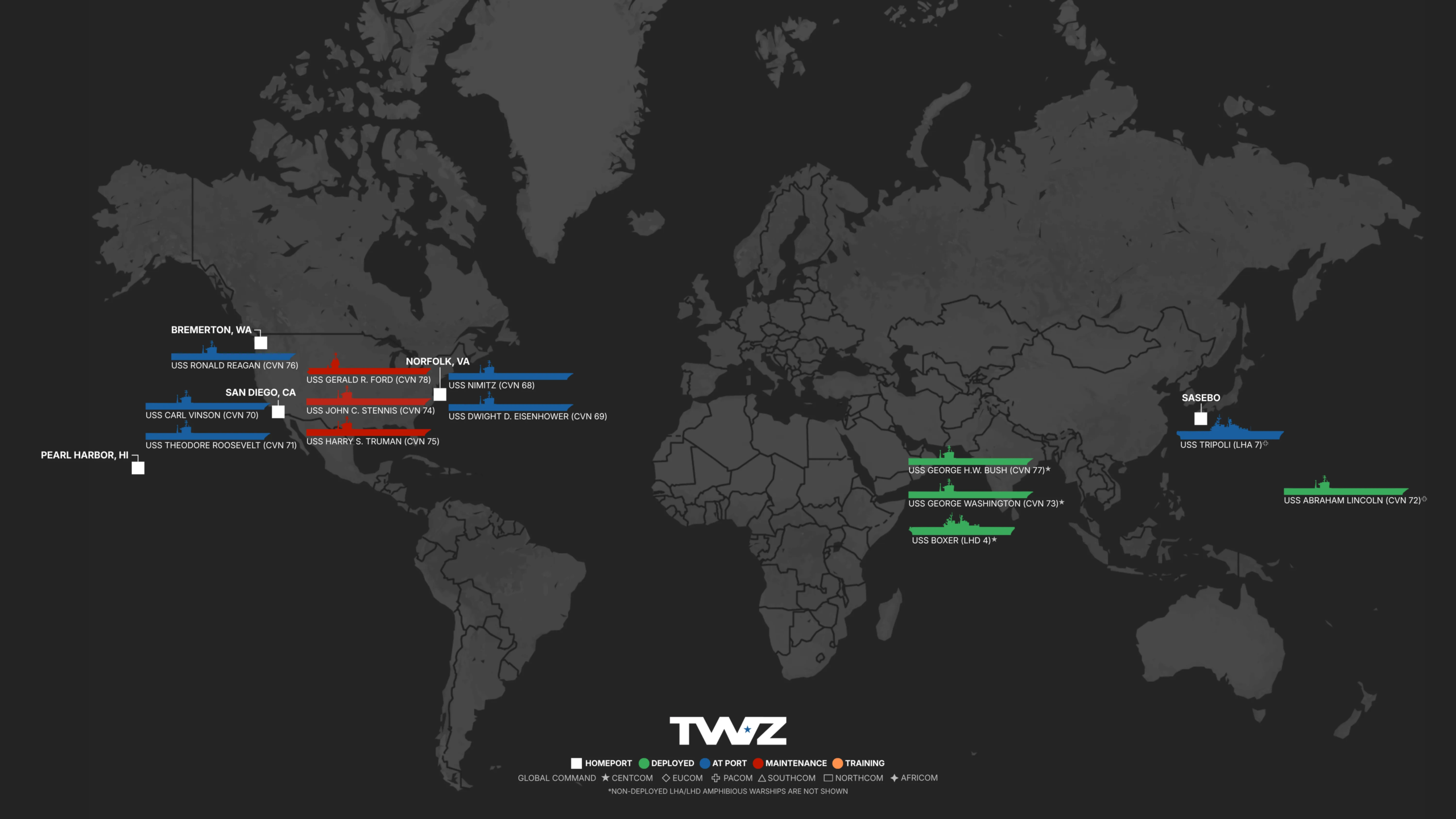
The crew of the USS Abraham Lincoln touched American soil for the first time in nine months, when the strike group pulled into Apra Harbor, Guam, for a brief logistics stop and on-base liberty. The supercarrier, alongside guided-missile destroyer USS Frank E. Petersen Jr., arrived on September 19 and left the next day. Lincoln is 307 days into her deployment, 19 short of the record set earlier this year by the USS Gerald R. Ford, and is now just weeks away from San Diego. Meanwhile, two flattops are on station in the Middle East supporting blockade operations, and the USS Ronald Reagan has rejoined the fleet after an extended maintenance availability.
Here’s TWZ’s weekly carrier tracker monitoring America’s flattop fleet, including deployed Carrier Strike Groups (CSG) and Amphibious Ready Groups (ARG), using publicly available open-source information. Check out our last report here.
Abraham Lincoln Departs Guam, Continuing Her Journey Home
The USS Abraham Lincoln is currently conducting routine operations at an undisclosed location in the U.S. 7th Fleet area of responsibility (AOR), presumably steaming east en route to her homeport at Naval Air Station North Island in San Diego. After leaving Thailand on September 6 following a five-day liberty port call, Lincolntopped off the Petersen Jr. in the Gulf of Thailand and linked up with two Royal Australian Navy frigates for joint training in the South China Sea. Publicly available flight tracking data shows the carrier transited the Balabac Strait eastbound around September 13, and the Surigao Strait northbound two days later to enter the Philippine Sea. After going dark for a few days, she resurfaced in Guam and moored at Kilo Wharf over the weekend.
Lincoln transits the Philippine Sea. U.S. Navy photo Lincoln transits the Philippine Sea. U.S. Navy photo
“Due to the brief nature of the logistics stop, the crew were afforded on-base liberty to access base services and attend a Navy Entertainment-sponsored concert,” CSG-3 spokesman Lt. Cmdr. Tyler Barker wrote in an email to Stars and Stripes. The carrier took on stores, mail, and equipment, according to Barker, and 13 Fleet and Family counselors are now aboard to run return-and-reunion classes but “the crew and ship remain focused and ready.”
USS Abraham Lincoln (CVN 72) arrives in Guam on Sept. 19, 2026. U.S. Navy photo
A homecoming date has not been announced publicly. Unless Lincoln makes another stop (in Hawaii, for example) or conducts additional training on the way, she should arrive in early October just shy of Ford’s record. The Chief of Naval Operations, Adm. Daryl Caudle, said in June that Lincoln would likely shift her homeport to Naval Base Kitsap-Bremerton in Washington state, which aligns with TWZ’sreporting that she is expected to begin a Drydocking Planned Incremental Availability (DPIA) after returning stateside. The timeline for the DPIA is unclear.
George Washington and George H.W. Bush Project Power In The Middle East
The American public got a rare look at ongoing combat operations aboard the USS George Washington when two reporters embarked earlier this month. Fox News’ Trey Yingst and CBS News’ Tom Hanson reported live from the flight deck, as F-35C Lightning IIs and F/A-18E/F Super Hornets launched behind them, in hits that aired September 11 to 14. The only other publicized media embark since the war began on February 28 went to CNN’s Pamela Brown, who reported on the conditions aboard the USS Abraham Lincoln while the flattop was still in theater.
An F-35C launches from Washington. U.S. Navy photo A pair of Super Hornets on Washington. U.S. Navy photo
“Last weekend, the aircraft carrier came under Iranian missile attack; the first of three attacks on US warships in the last week alone,” Yingst said, indicating it was the USS George Washington, and not the USS George H.W. Bush, that was targeted by the Islamic Revolutionary Guard Corps (IRGC) in early September. The Navy declined to comment when TWZ asked which carrier was targeted after Iranian state media claimed the strike had been successful. “We’re pretty much employing all our capabilities right now,” Washington’s commanding officer (CO), Capt. Nicholas DeLeo, told Yingst.
Night flight ops aboard USS George Washington. U.S. Navy photos
“The GW is surrounded by four to five guided-missile destroyers at any moment,” Yingst also reported. He flew out to USS Shoup, positioned off the starboard side at the time, to make the point and speak with the warship’s CO. Shoup is the only destroyer officially confirmed to be part of CSG-5. “My ship is in charge of coordinating defense amongst the various other units, allocating defensive assets to it, be it potentially a missile to shoot something down or just aircraft to go identify and monitor the picture,” Capt. William Buford said. Based on that description, Shoup’s CO appears to be coordinating Integrated Air and Missile Defense (IAMD) for the strike group, a question we’ve been asking the Navy to confirm. TWZ understands additional destroyers operating in the U.S. Central Command (CENTCOM) AOR are also escorting Washington, but a U.S. official declined to say which ones.
Hanson asked DeLeo about the recent IRGC ballistic missile threat targeting Navy ships in the region. “We have a variety of ways to protect, both offensively and defensively, a Navy ship, and we employ all these methods,” he told the network. “It’s something that we train to.” Hanson also pressed the commander of CSG-5, Rear Adm. Jeff Heames, on whether he was concerned about the munitions stockpile, a dynamic TWZ detailed in a special feature yesterday. “Of course we’re concerned about the expenditure to some degree, but I have no concerns locally at my level here,” Heames replied.
Gun shoot aboard USS George Washington (CVN 73), Sept. 15, 2026. U.S. Navy video
In addition to Washington, Bush is still working the blockade from the Arabian Sea, nearly six months into her deployment. As of CENTCOM’s latest social media update on September 21, U.S. forces in the region had redirected 110 commercial vessels to ensure “total compliance” with the blockade. More than 50 ships “supporting humanitarian efforts” have been allowed through, according to the command. CENTCOM recently stopped publishing the number of ships boarded, seized, or disabled kinetically.
An MH-60S Sea Hawk lifts cargo from the flight deck of USS George H.W. Bush, Sept. 18, 2026. U.S. Navy photo
Ronald Reagan Rejoins the Fleet
The USS Ronald Reagan is officially back. The Navy, in a recent statement, confirmed the flattop “returned to the fleet capable and mission-ready.” The carrier had been out of action since March 2025 for a DPIA at Puget Sound Naval Shipyard in Washington state and completed four days of sea trials in early September. While the Navy does not comment on upcoming deployments due to operational security, current speculation points to a spring 2027 deployment, but that is not confirmed.
Counter measure wash down on USS Ronald Reagan in the Pacific Ocean on Sept. 6, 2026. U.S. Navy photo
Reagan is the only carrier currently homeported at Naval Base Kitsap-Bremerton in Washington. Previously, she was America’s only forward-deployed carrier based in Yokosuka, Japan, until swapping hulls with the USS George Washington in 2024. USS Nimitz was stationed at Naval Base Kitsap-Bremerton before circumnavigating South America to Naval Station Norfolk this summer, where she is being used primarily for training before deactivation in 2027. The yet-to-be-commissioned PCU John F. Kennedy, the second and newest Ford class supercarrier, is slated to homeport in Washington state no earlier than 2029.
U.S. Navy Big Deck Fleet At A Glance
Overall, three U.S. carriers are deployed (with one heading home), one is preparing to deploy in the near term, three are working up in various states of readiness, three are in current or upcoming maintenance, and one is being used primarily for training before deactivation next year. One amphibious ready group is deployed, one is forward-stationed and in port, four are working up or in port, and three are in maintenance.
Note: Positions are general approximations.Non-deployed LHA/LHD amphibious warships are not shown.
Contact the author: ian.ellis-jones@recurrent.ioor @ianellisjones
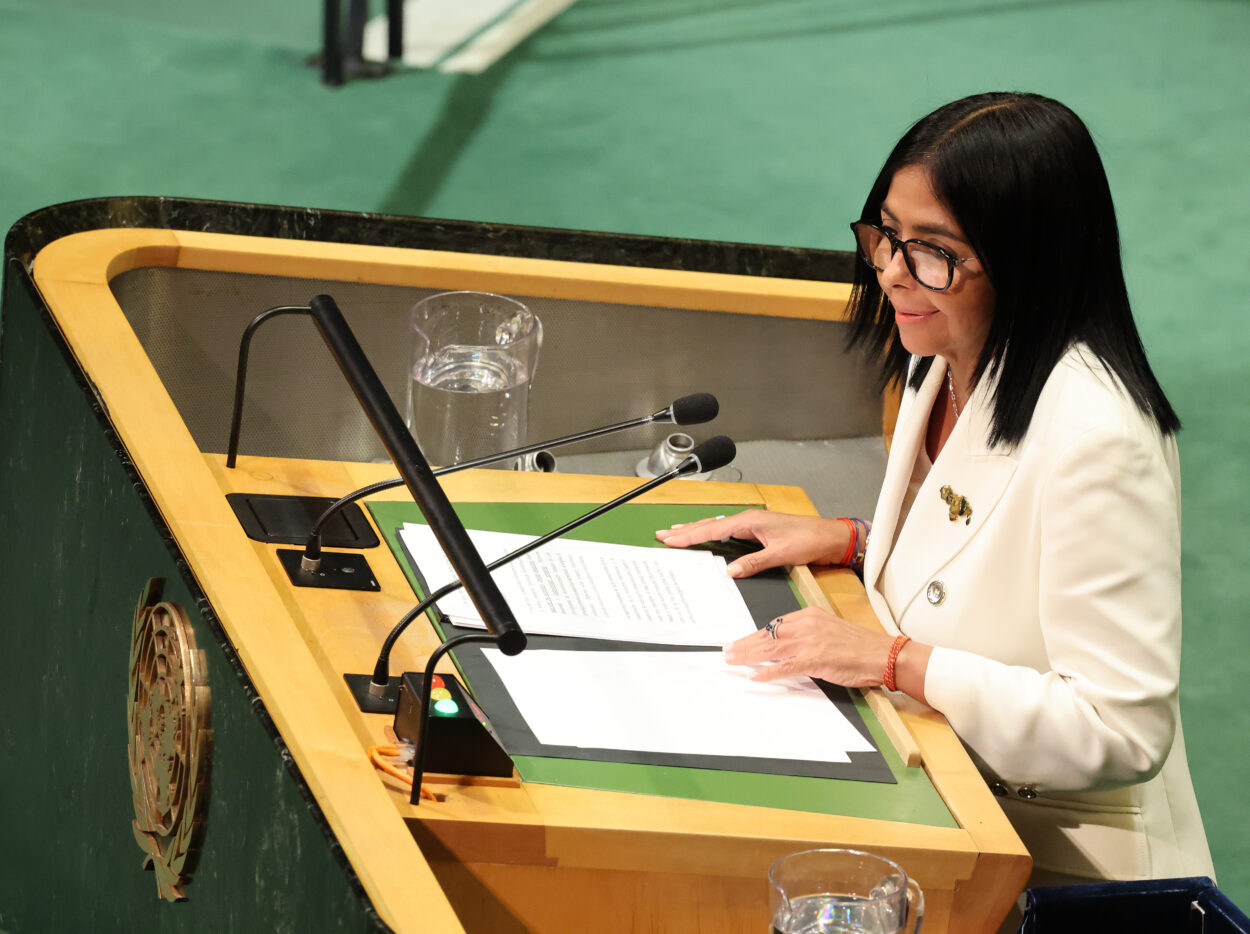
Acting President Delcy Rodríguez delivering her speech at the 81st United Nations General Assembly in New York. (Presidential Press)
Caracas, September 25, 2026 (venezuelanalysis.com) – Venezuelan Acting President Delcy Rodríguez outlined a foreign policy built on “peace” and “dialogue” in her address at the 81st session of the United Nations General Assembly in New York on Wednesday.
Speaking before world leaders, Rodríguez insisted on peace over conflict, thanked the Trump administration for diplomatic backing, and committed to international cooperation on environmental, energy, and AI regulation. She went on to urge young Venezuelan migrants to return home and laid out a proposal for structural “democratic transformation” of the Caribbean nation.
Opening her address, Rodríguez underscored Caracas’ rejection of warfare, linking global stability to diplomatic resolution.
“Venezuela, which today knows what it is to lift its children out from under the rubble, extends its deepest solidarity to all peoples who suffer from war, and reaffirms that peace […] is not a naive aspiration, but the only truly human path,” she declared.
Rodríguez explicitly addressed the diplomatic rapprochement with Washington after the January 3 US military strikes and kidnapping of President Nicolás Maduro and First Lady Cilia Flores. She expressed thanked Trump for aiding Venezuela’s reintegration into international forums following years of heavy economic sanctions and diplomatic isolation.
“I want to thank President Donald Trump and his government for their willingness to resume the path of diplomatic and cooperative relations with Venezuela,” Rodríguez stated, referencing the recent oil deal as “one of the largest ever signed” and pledging that it will contribute to regional energy stability.
Rodríguez refrained from condemning the US attack, calling it a “difficult moment” that resulted from the “exhaustion of domestic policies and heightened confrontation with the US.” She likewise made no mention of Maduro and Flores, presently detained 10-15 miles away from the UN headquarters and facing trial for charges including drug trafficking conspiracy.
The Venezuelan acting president had conveyed similar gratitude in a face-to-face meeting with Trump on Tuesday that she labeled as “historic.”
Turning to domestic affairs in her UN address, Rodríguez spoke of the severe wave of migration triggered by past political and economic crises, and vowed to the Venezuelan youth residing abroad that there will be improved conditions for their return.
“To the young people, who have grown up seeing a fractured country and who often decided to leave seeking what they could not find here: I tell you that it is worth believing again,” the acting leader affirmed. “This is the moment to build the country that many want to return to, and not just the one that many wanted to flee.”
This message was framed as part of what Rodríguez termed a “democratic transformation for a rebirth,” which she described as an institutional, orderly, and verifiable process.
“In Venezuela, there will be elections. We have already initiated a political dialogue with sectors of the opposition that leads to a process on equal terms for all,” she noted.
Though Rodríguez did not explicitly name unilateral sanctions from Washington and its allies, she stated that the country needs to be “free from economic restrictions” and pledged to “guide Venezuela toward an era of full democracy, recognized by its people and the world.”
The acting president’s UN speech came amid a flurry of diplomatic activity in New York, including meetings with International Monetary Fund (IMF) Managing Director Kristalina Georgieva, World Bank President Ajay Banga, and Inter-American Development Bank (IDB) President Ilan Goldfajn.
On the sidelines of the UN assembly, Rodríguez also held bilateral meetings with Chilean far-right president José Antonio Kast to discuss regional trade and stability, as well as with a delegation from Trinidad and Tobago, led by Prime Minister Kamla Persad-Bissessar, initiating a “new stage in bilateral relations” centered on joint offshore natural gas exploration and maritime security.
Venezuela had suspended cooperation with neighboring Port of Spain after Persad-Bissessar backed the US’ military build-up on the country’s shores in late 2025.
Rodríguez’s New York trip coincided with a second round of US-backed talks between government negotiators led by National Assembly President Jorge Rodríguez and a sector of the opposition led by former deputy Dinorah Figuera.
The latest negotiations reportedly focused on electoral guarantees, freedom of expression, institutional reform, including renewing the Supreme Court, and efforts to secure the unfreezing of Venezuelan assets abroad, including gold reserves worth approximately US $4 billion. The gold held by the Bank of England is set to be transferred to the US, to be released for post-earthquake recovery efforts under White House oversight.
Leclerc was somewhat taken aback by Mercedes’ superiority, saying that the position was what he expected but the gap most definitely was not.
At the bottom of the top 10, there was finally some good news for Williams, for whom Carlos Sainz achieved the team’s first top 10 qualifying performance of the year.
Williams have introduced a new chassis this weekend which has brought them down to the weight limit for the first time this season, after being as much as 25kg over at the start of the year.
Along with some additional developments, it appears to have produced a big step forwards, although the caveat is that Baku is a track that suits the characteristics of the Williams car and does not expose its weaknesses.
Team-mate Alex Albon did not manage to secure a tow in the second part of qualifying, and was “anyway struggling with straight-line speed all session”, and was 13th, just under 0.4secs behind the Spaniard.
Antonelli’s error came on his second lap of the first session.
He turned into the first corner too early, and the left front wheel clouted the inside wall, breaking the suspension.
He initially tried to get the car back to the pits but was told by engineer Peter Bonnington to park up.
“Let me try,” Antonelli pleaded, before Bonnington told him that either the track rod or upright was broken and there was no way Mercedes could fix that in the time they had to turn the car around before the next session.
Antonelli had been on the back foot all Friday trying to catch up time lost to a hydraulic problem that had stopped his car on track halfway through first practice, and was not repaired until halfway into the second.
It was Antonelli’s first major mistake of the season since he crashed heavily in final practice at the first race of the season in Australia.
It’s stunning to comprehend how much has changed since Russia began its invasion of Ukraine. The conflict quickly turned into one dominated by artillery, with both sides scrambling to source shells wherever possible. Drones have since replaced tubed artillery as the ‘king of battle’ along the front, but cannons still have an important place on the battlefield. The commander of a new combined drone-artillery brigade offered some fresh insights into how his guns are now being deployed to achieve effects that drones still can’t provide.
As we have frequently documented, the ubiquity of drones has changed the nature of combat, especially when it comes to artillery. Not only can drones hold artillery positions at risk, many are cheaper than shells and easier to produce at scale. Most types are also precision guided munitions capable of hitting moving targets with pinpoint accuracy and can also provide battlefield surveillance. However, they are not a panacea, especially amid the cat-and-mouse game of electronic warfare countermeasures and improving kinetic and passive defenses.
In a recent interview with the Ukrainian Oboronka news outlet, Lt. Col. Vitalii Korniienko, commander of the 7th Artillery Brigade, talked about the changing nature of artillery warfare. Korniienko, whose unit is part of the Ukrainian National Guard, explained what is being done to keep his array of domestically produced Bogdana 155mm systems, donated weapons like M777 howitzers, remaining Soviet-era 2S7 Pion 203mm self-propelled howitzers and other guns, relevant. Here are some takeaways from that discussion.
How The Game Changed
“Guns used to be massed at positions to create an ‘artillery wall’ and a barrage of fire,” the lieutenant colonel said. “That practice is gone now. So, how effective is artillery today? We can create an artillery barrage, but what is the point of mindlessly churning up the earth? I’d rather send 20 FPV drones to destroy the target. The cost of that mission is $20,000.”
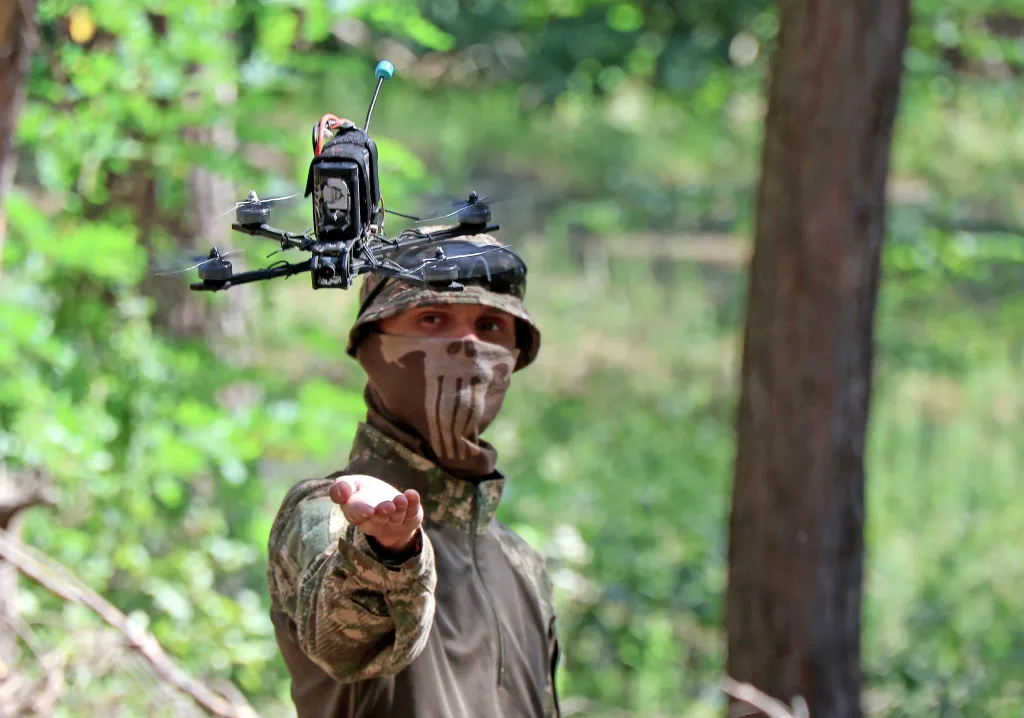
A soldier from the 13th Khartiia Brigade of Ukraine’s National Guard hones his FPV drone piloting skills during a training flight in the Kharkiv region, Ukraine. (Photo by Viacheslav Madiievskyi/Ukrinform/Future Publishing via Getty Images) Future Publishing
“Alternatively, I could fire 200 shells, but the cost would be astronomical,” he pointed out. “Plus, if we fired 100 shells from a gun in a single day, it likely wouldn’t survive until evening. The sky is full of drones; every shot gives away the position, leading to detection and an attempt to dismantle it using every available means. Nowadays, a typical mission involves a series of up to 10 shots. First, 3–5 shells for ranging, followed by fire on the target. That’s a minimum of five shells, with each costing at least $2,000.”
What Does The Drone-Artillery Brigade Do Differently?
“It is a concept of ours that was approved: combining artillery and drones within a single brigade,” Korniienko said. “Drones take out enemy artillery and logistics, while our guns provide cover for the infantry, destroy targets, and pin the enemy down in their dugouts. This way, we mitigate the limitations of both systems and boost overall effectiveness.”
Ukrainian troops firing a domestically produced 2S22 “Bogdana” self-propelled howitzer against Russian forces near the front line in the Zaporizhia direction. (Photo by Maksym Kishka/Frontliner/Getty Images) Frontliner#VIDEO
“Our primary operations are focused within the corps’ area of responsibility—targeting positions 10 kilometers deep or farther behind enemy lines. Of course, we will also engage closer targets if requested by the brigade holding the defense. In addition, we are shifting logistics tasks from pickup trucks to ground-based robotic systems. They are already transporting ammunition to drone and artillery positions, as well as food and fuel for generators.”
What Artillery Can Do That Drones Can’t
“Let’s be honest: 95% of strikes right now are carried out by drones,” Korniienko explained. “Yet, we cannot simply abandon artillery. The focus of our operations has shifted from merely striking the enemy to destroying, suppressing, and halting the actions of assault groups and armored columns—and the need for that remains as critical as ever. There are tasks that only artillery can handle.”
“For instance, we currently have several enemy targets in the Kupyansk sector that drones cannot reach due to electronic warfare (EW) interference, while slow fiber-optic drones are simply shot down,” the officer noted. “What do we do? We call in artillery. Nothing affects its shells. Fog, strong winds, snow, or headwinds—it makes no difference to artillery; it will operate regardless.”
Preparing Artillery For The Modern Battlefield
“At the beginning, both we and the Russians might have had two or three guns at a single position,” Korniienko proffered. “The enemy was doing this as late as 2023. Then it tapered off, because if you deployed six guns, an hour later they’d be gone. No one drives out into an open field anymore. Today, a gun wouldn’t even make it to the position without being spotted.”
Ukrainian National Guard troops prepare a ‘Bogdana-BG’ artillery installation from a dugout position. (Photo by Sofiia Bobok/Anadolu via Getty Images) Anadolu
As a result, the artillery crew’s deployment “is prepared in advance,” the officer stated. “First, anti-aircraft drone teams ‘clear’ the sky above the site of enemy reconnaissance assets. The position itself is a fully underground-dugout caponier with well-camouflaged access routes. We put a lot of effort into ensuring the artillery doesn’t get destroyed. Losing a gun is a huge blow to us.”
Short Range Versus Long Range Shells
“There is currently an ongoing debate about phasing out ‘short’ shells and switching entirely to long-range variants,” the officer stated. “This is intended to protect artillery from drone strikes.”
“What exactly is a ‘short’ shell, and should we stop using it?” he asked rhetorically. “The M107 155mm round is what is known as a ‘short’ shell. It is inexpensive and mass-produced; all our allies—and even our own country—manufacture it. We have sufficient stocks of them for combat operations. While accurate, its range is limited to 14–18 km, depending on the propellant used.”
Army
Long-range options “include the M795 and its foreign equivalents,” Korniienko explained. “These are longer, heavier, and significantly more expensive. With high-quality propellant, they can reach 30 km, or even further if equipped with a base-bleed unit. However, both these shells and the necessary propellants are in short supply.”
Army
“I do not believe abandoning the M107 is the right move,” the officer suggested. “Long-range shells cause faster barrel wear and compromise position concealment; firing a long-range charge produces a massive burst of flame from the muzzle—visible for kilometers at dusk or dawn.” “Besides,” he added, “18 km is a respectable range. If the gun is positioned 15 km back, it still has a 3-km margin to spare. That is sufficient for engaging frontline infantry. In my view, the ideal mix for most brigades would be 60% long-range shells and 40% standard M107 rounds.”
Big Versus Small Guns
“I operated 105mm guns in the Serebryanka area, on the Kharkiv axis,” Korniienko noted. “Based on intercepted communications, the enemy thought it was a mortar and searched for it within a five-to-six-kilometer range. But the howitzer was positioned eight or nine kilometers away and fired out to 10–12 kilometers.”
“There is almost no muzzle flash, just a bit of dust,” he added. “The shell arrives, and the enemy doesn’t even hear the sound of the shot. It’s compact and lightweight—you can transport it on a pickup truck. So yes, it would be useful.”
An L119 lightweight towed howitzer. (Via X)
“I’d also like to see the development of 203mm artillery; why move away from that caliber?” the officer wondered aloud. “Our ‘Pion’ systems fire a massive 100-kilogram shell capable of punching through at least two floors of a building or a bunker. And it’s reasonably accurate, too. You wouldn’t want to be on the receiving end when guns like that are firing at you. Overall, I believe we need competition. Right now, the ‘Bogdana’ is evolving under wartime conditions, which is good. But in a few years, momentum could stall. They might just keep producing the same system without significant upgrades because there’s no incentive to innovate. Yet, the nature of war doesn’t stand still.”
Wary Of Asian Shells
“We have a wide range of shells from different countries, and the ones coming from the West are fine,” Korniienko said. “However, their counterparts produced in certain Asian countries… the quality is frankly poor.”
“What is wrong with them?” queried Korniienko, who did not name the country in question. “On paper, the shell weight is listed as 46 kilograms, but when we weigh them, we find 46.9 or 45.4 kg. And that half-kilogram difference—give or take—has a huge impact on where the shell lands.”
As a result, “we no longer trust the standard firing tables provided with the shells; instead, we compile our own for each manufacturer. We weigh every batch and sort them by weight so that the difference between the ‘piles’ is minimal, ensuring a reasonably tight grouping. I can’t afford to make a mistake that causes a shell to land 2 kilometers off-target—right where our infantry guys are positioned. I should add that our artillerymen are actually wary of shells from one specific country. There have been instances where they tore off the muzzle brake or even caused the barrel to burst. A barrel burst is a disaster.”
Homegrown Is The Best
Korniienko said his unit was one of the first to test the Bogdana system, adding that he prefers it to other guns.
“We tested them and provided feedback to the manufacturer, which was then used to refine the design,” he explained. “It is a solid gun now, and it is my preferred choice. It might not be the absolute best, but I am very satisfied with the support and service.”
“If there’s a breakdown, the gun is back in position within a day or two,” he pointed out. “For instance, a gun broke down today, and we needed a repair team from the manufacturer. I know I’ll have it fixed by the day after tomorrow. They arrive in the morning, and by midday, the gun is ready. Then it takes another day or two to get it back to the position. That is very fast.”
That’s a very different experience than what he sees with donated weapons like the U.S.-made M777.
Ukrainian soldiers prepare to fire an M777 howitzer at Russian forces. (Photo by Diego Herrera Carcedo/Anadolu Agency via Getty Images) Anadolu
“As for the Western partners helping us—we are deeply grateful,” the officer avowed. “However, by the time you actually receive a part—say, a sensor—the gun might have been sitting idle for six months. And you can’t try to fix it yourself, because that would void the warranty.”
While artillery may no longer be the reigning weapon of war, as far as Ukraine is concerned, it has not been relegated to the dustbin of history yet either.
The police watchdog has said the Metropolitan Police’s professional standards unit should investigate the force’s handling of a case in which a man suspected of pushing a woman into the path of a bus on Putney Bridge was found dead.
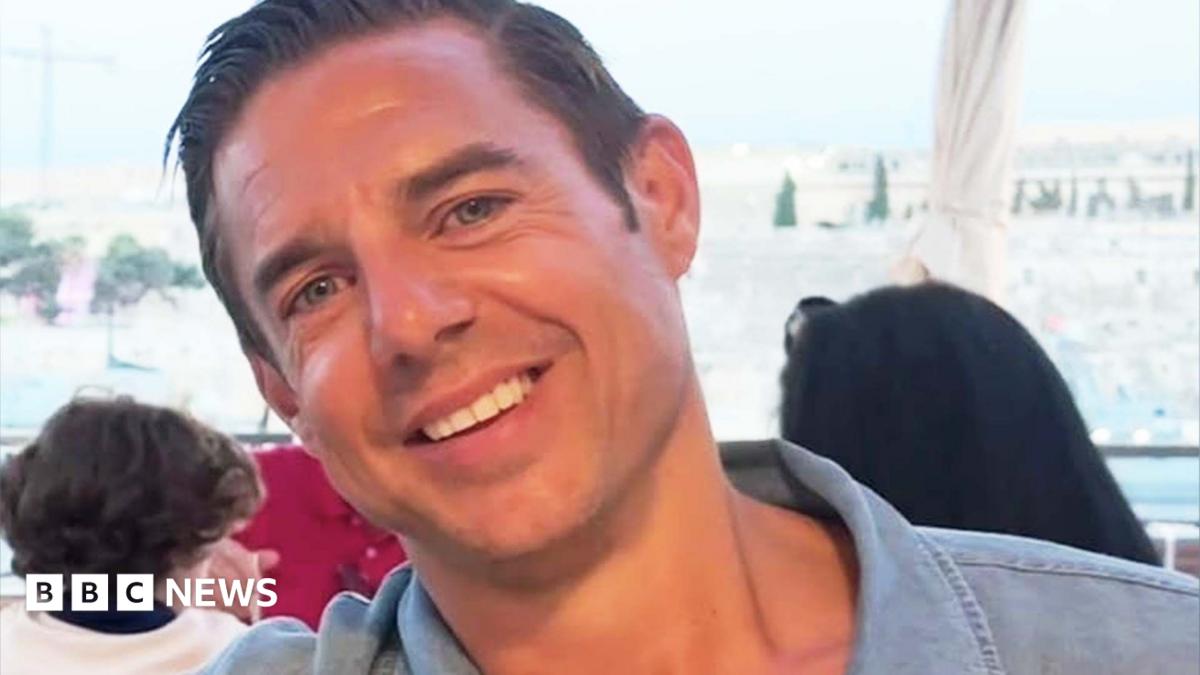
The 44-year-old was under suspicion of being the jogger who pushed a woman into the path of a bus during a run on Putney Bridge in west London in May 2017.
The Met police made a mandatory referral to the Independent Office for Police Conduct (IOPC) following the banker’s death.
In a statement, the IOPC said: “After carefully considering the referral, we have decided that an investigation is required and that the Met’s Directorate of Professional Standards should conduct it.
“We have recommended the review considers matters including the necessity and proportionality of arrest, what engagement was there with the media and considerations made in relation to Mr Brandram’s welfare and the relevant policy.”
The police watchdog added that if the Met’s investigation did not find “any potential misconduct”, the final report must be submitted to the IOPC for review.
The family of Nicholas Brandram insisted in an interview with the BBC that he was not the so-called “Putney pusher”.
The Met previously said that it recognised the “strain that being subject to a police investigation” could cause.
The force said the investigation into the 2017 incident remained ongoing.
Tigray was cutoff from the world during the 2020-2022 civil war, which killed around 600,000 people.
Published On 25 Sep 202625 Sep 2026
Fears of a communications blackout in northern Ethiopia have increased as fighting flares between the federal military and forces from the Tigray region and their allies.
Telecom and internet networks were reported to have stopped working on Friday as the conflict threatened to develop across the country into a full-scale war.
Recommended Stories
list of 4 itemsend of list
The interruptions have provoked fears of a repeat of the communications blackout and supplies blockade during the 2020-2022 civil war in northern Ethiopia, when Tigray was largely cut off from the outside world.
Web monitor NetBlocks said it had detected an “internet disruption in northern Ethiopia corresponding to reports of a telecoms blackout in Tigray”.
The Reuters news agency reported that Tigray’s ruling party, the Tigray People’s Liberation Front, had ordered private operator Safaricom and state-owned Ethio telecom to cut off access to phone and internet networks in the region.
Full-scale war
A source said the restrictions may be part of a tactic to neutralise the advantage of government forces using battlefield drones.
Lower-level clashes between federal and Tigrayan forces have been ongoing for some time. However, fighting intensified this week across Tigray and later spread to the neighbouring Afar and Amhara regions, after seven armed groups announced they have formed an alliance.
The Ethiopian Peoples’ Forces Alliance for Survival has committed itself to removing the government of Prime Minister Abiy Ahmed.
The Tigray Army said the federal government had launched a “full-scale offensive” involving infantry, mechanised units and drones, and said its forces had begun what they called a defensive war to counter aggression by Abiy’s government.
The alliance forces have seized three airports and launched attacks against federal troops in Afar and Amhara.
The federal government has accused Eritrea of financially backing the TPLF and its allies, which leaders in the capital Asmara deny.
Abdisalam Balema, a member of the Tigray People’s Liberation Front’s (TPLF) central committee, told Al Jazeera that the situation has become a “full war”.
The outbreak of violence is the most serious escalation since the civil war in 2020-2022. During that conflict, which killed an estimated 600,000 people, the telecoms blackout and supplies blockade imposed on Tigray caused famine-like conditions for hundreds of thousands of people.
People in Tigray are reported to have rushed to stock up on basic supplies and withdraw cash.
The renewed fighting comes at an awkward moment for the United States, which only this month lifted sanctions on Ethiopia and Eritrea related to atrocities committed during the last civil war, saying the “national emergency… has expired”.
The conflict could also draw in neighbouring Eritrea, which fears landlocked Ethiopia is planning to invade it to gain access to the Red Sea.
People in Ceuta face harsh living conditions, overcrowding, limited aid, and alleged abuse while awaiting decisions about their future.
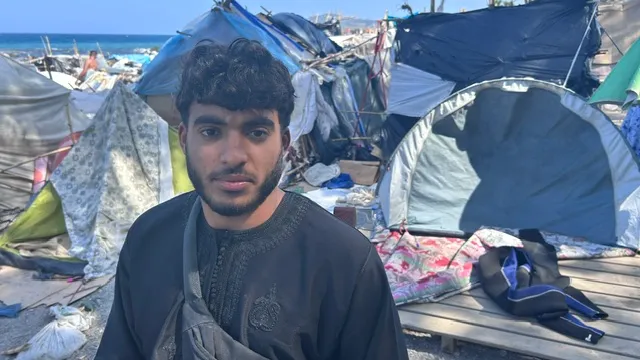
Ceuta, Spain – For more than a month, 21-year-old Anis Fadi, a university graduate and qualified accountant, has been sleeping in a makeshift shelter.
At the end of July, he crossed the border from Morocco to the Spanish enclave of Ceuta, on the North African coast, along with about 70,000 others.
Recommended Stories
list of 4 itemsend of list
At his migrant camp on Trampolin Beach, he queues for hours each day for food at a Red Cross centre.
“I don’t even have a tent,” he told Al Jazeera. “We make shelter with old pieces of wood, sticks from broken branches, and whatever else we find here.”
Anis Fadi, a 21-year-old graduate, believes Europe would offer him better employment opportunities than Morocco [Peter Smith/Al Jazeera]
When the wind blows, these makeshift shelters offer little protection, and soon the temperature will dip.
“There are a lot of people worse than me,” said Fadi.
The Spanish government estimates that between 6,000 and 10,000 who made the crossing remain stranded. Officials in Ceuta believe the figure is closer to 13,000 people.
Thousands of people remain stranded in Ceuta having crossed the border in July [Peter Smith/Al Jazeera]
About 5,000 – mostly women and children – have been given temporary accommodation by the authorities. The rest sleep outside.
Fadi said, as he waits for food in the heat, police officers with batons shout orders at the crowds.
“It’s a hard life here,” he said, but he does not regret leaving Morocco.
“Life was harder there for me. I didn’t see any future for myself.”
‘We are not criminals’
More than 100 people died in the crossing. Fadi said he swam for hours to reach Ceuta, believing it was a gateway to Europe, where he imagines a better life awaits.
He believes men like him who “have the skills … don’t have the chance”.
“We are not criminals,” he said, in response to the anti-migration rhetoric and protests that followed the crossing. “We just want to work.”
Right-wing European politicians have framed the Ceuta crossing as a threatening invasion.
Migrant children take toys at an industrial area in Ceuta, Spain, September 21, 2026 [Jon Nazca/Reuters]
In Spain, protests have erupted against the government’s handling of the crisis.
Ceuta is usually home to about 84,000 people. Its population almost doubled at the outset of this crisis. Though most have returned, the enclave has been struggling to cope with the pressure of hosting those who remain.
After a new temporary shelter opened up recently, offering space for about 1,700 people, it hit capacity within hours.
Claims of abuse
As humanitarian groups struggle to provide basic needs, Nolte Bauer, from Mission Lifeline International, said migrants also feel unsafe.
“Outside the official camps there is a lack of basic hygiene,” he said. “There is insufficient medical aid and the immediate danger of violence, especially at night.”
His organisation often receives reports of people being beaten.
Members of the Spanish NGO Medicos del Mundo (Doctors of the World) help injured migrants at an industrial area in Ceuta, Spain, September 21, 2026 [Jon Nazca/Reuters]
Several people interviewed by Al Jazeera said they had been abused by men in military or police uniforms. Some were wounded, with cuts to the head or bruising around the body.
“These are racist people, these soldiers,” one man who requested anonymity told Al Jazeera. “They found me sleeping and they started to hit me without any reason. They broke one of my hands; they wanted to break the other one. They also beat me on my knees.”
Some said they were afraid to go to hospital, fearing they could be deported, and instead sought help from aid groups. NGO volunteers told Al Jazeera they had treated wounded men.
People play with a ball surrounded by tents at the Trampolin Beach in Ceuta, Spain, September 19, 2026 [Jon Nazca/Reuters]
But Spanish authorities rejected any claims of abuse and discrimination, telling Al Jazeera that the police acts “with absolute respect for human rights”.
They say they are expanding accommodation and providing food and medical care while migrants are identified and their cases are processed.
The government has said the aim is to return to Morocco those who do not have a legal status to remain in Spain, while Ceuta’s leaders have repeatedly called on Madrid and Europe for more support.
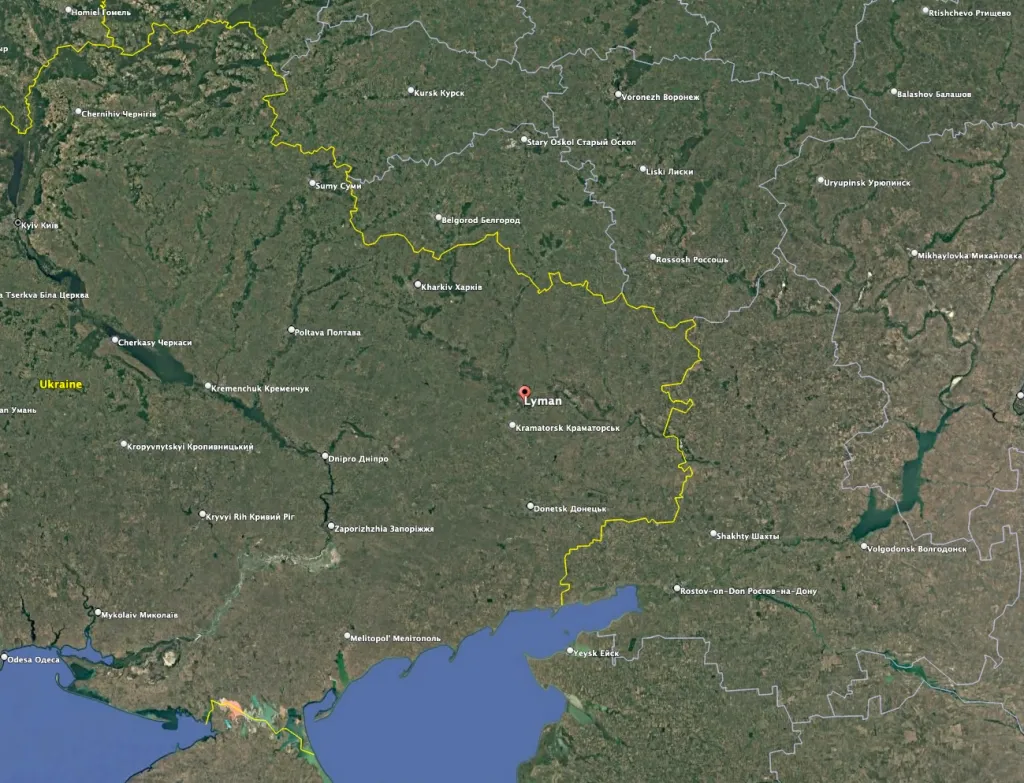
Ukraine claims it has recently regained about 125 sq. km. of territory near the town of Lyman in the eastern Donetsk region during what has been dubbed Operation Vivaldi. Rodion Kudryashov, a Ukrainian colonel and deputy commander of the Third Army Corps, offered some insights into this offensive and what made it different.
Though the operation is still ongoing, the success of Vivaldi began long before any troop movements, Kudryashov explained in an editorial he published in Ukrainian Pravda.
Ukraine is making advances near the town of Lyman, located in the Donetsk region. (Google Earth)
“After the Third Army Corps was formed, we changed the command system of its subordinate units,” he noted. “Some brigades came to the corps after very heavy fighting, with losses, manning problems and, most importantly, eroded trust in their leadership.”
Third Army Corps Commander Brig. Gen. Andriy Biletsky “then set out one of our key principles: a commander must be responsible for the entire cycle, from training a soldier to the result on the battlefield,” Kudryashov pointed out. “In some places that meant replacing a commander. In others it meant restructuring a staff or strengthening the NCO chain. In some cases we had to build, almost from scratch, processes that on paper should have been working long ago.”
At issue was changing the culture from a more rigid Soviet-era model, with a cumbersome chain of command, to a modern, more flexible one better suited for the current conflict.
“A modern commander has to handle an enormous flow of information and make decisions quickly,” the deputy commander proffered. “He has to understand what unmanned systems, logistics, reconnaissance and adjacent units can do, while not smothering initiative at lower levels with endless approvals. An army where every decision takes hours to travel up and down the chain loses to an army that makes the same trip in minutes.”
Once those changes were put in place, the Third Army Corps had to first stop Russian advances in the sector before it could move forward.
VIVALDI 🎼🎶
GoPro footage from Ukrainian assault troops who took part in the Vivaldi counteroffensive, which resulted in the liberation of five settlements in the Lyman direction. pic.twitter.com/2SVXSKlEX0
“When the corps took over its area of responsibility, our first task was not an offensive,” the officer said. “We had to stop the situation from deteriorating and stabilize the forward edge.”
“The enemy was pressing. In some sectors our combat formations were losing cohesion,” he underscored. “The Russians were actively using infiltration tactics: small groups seeped between positions, massed in our rear, threatened logistics and gradually eroded the defensive line.”
“We had to stabilize the forward edge and stop the infiltration,” Kudryashov said. “We had to rebuild command, put in commanders capable of making decisions, form new teams and reconstitute units. We had to set up the surveillance-and-strike system and sustain the front line. We had to stockpile ammunition, drones and other resources, understand the enemy, and plan the next step before the previous one was finished. Only after that could we move forward.”
By June, the corps was able to secure the front “in the sector from Borova to Lyman and eliminate the enemy’s infiltration zones,” Kudryashov continued. “That sounds less impressive than the word ‘offensive,’ but no offensive ever happens without it.”
“You cannot plan a complex operation if you don’t know where your forward edge will be tomorrow,” the deputy commander extrapolated. “You cannot build up forces if your logistics are constantly under threat. And you cannot form a strike group if your units are always forced to patch new breaches. So the first phase of ‘Vivaldi’ was not an advance at all. It was creating the conditions that made an advance possible in the first place.”
Once the front was stabilized, the next step was shaping the battlefield for the offensive. The corps’ unmanned systems units went to work against Russian logistics, striking a pipeline and depots. That forced the enemy to change its fuel and lubricant supply routes.
Ukraine’s 3rd Army Corps released new footage of search-and-strike operations on the Lyman front. FPV drone operators from the 60th Mechanized Brigade’s FATUM unit targeted Russian armored vehicles, a Grad multiple rocket launcher and personnel. #Ukrainepic.twitter.com/1iNG7z2N1c
“The operation also involved the corps’ brigades, its reconnaissance and unmanned units, and attached forces from the SSO (Special Operations Forces), GUR (Defense Intelligence) and DPSU (State Border Guard Service),” the deputy commander said. “To counter infiltration, a joint headquarters was set up to coordinate special and reconnaissance units at the tactical level under a single concept.”
“In my view, this is one of the main characteristics of modern war,” he further stated. “It is not 10 strong units that each fight well on their own. It is 10 different elements that start working as one system at the right moment.”
An interesting new detail from Ukraine’s 3rd Army Corps about Operation Vivaldi on the Lyman axis.
The Corps says Ukrainian forces carried out a flanking maneuver and, for the first time, airlifted unmanned ground vehicles behind Russian lines, while also suppressing Russian… https://t.co/ZEq8C75bN4pic.twitter.com/KgKcZ0Zs2P
The influential, Kremlin-connected Rybar Telegram channel has acknowledged Ukrainian gains in this sector.
“In the first half of summer, Russian units gradually advanced in Lyman,” Rybar wrote this morning. “However, in August, the enemy launched counterattacks and, by the first week of September, regained some positions, and also began attempts to recapture Shandryholovo and Zarechnoye.”
“The enemy did not inflict significant losses on Russian troops, as the concentration of units of the West group of forces in the salient remained relatively low,” Rybar added. “However, later, the UAF deployed reserves to launch an offensive towards Zherebets in order to align the front along the water barrier and return it to the configuration of the end of 2025.”
rybar now saying the 144th division is still falling back. the 3rd corps is still advancing and destroying an entire army group as they move. this is historic. pic.twitter.com/2jOa8KR9oA
Though the battle is still in flux, Kudryashov said there are lessons the rest of the Ukrainian military should heed.
“Winning one battle is not yet winning the war,” he said. “The enemy is learning too. He changes tactics, looks for weak spots and tries to scale what works for him.”
“So our task is to be faster, not only in physically moving forward but also in our ability to see, think, decide and put into practice what delivers results,” the deputy commander avowed. “And to do everything possible so that our soldiers pay the lowest possible price for every next kilometer of Ukrainian land.”
The Latest
On the battlefield, in addition to the gains Ukraine has made near Lyman, it has also largely been able to hold off Russian advances across the front lines. Here are some key takeaways from the latest Institute for the Study of War assessment of frontline operations:
Sumy: Russian forces recently conducted an infiltration mission east of Sumy City, and they continue to conduct glide bomb strikes against frontline settlements in northern Sumy Oblast to set conditions for future offensives.
Kharkiv: Russian forces continued offensive operations in northern Kharkiv Oblast and in the Borova, Kupyansk and Velykyi Burluk directions on Sept. 21 and 22 but did not advance.
Donetsk: Ukrainian forces reportedly continue counterattacks in the Lyman direction, including southeast of Lyman, as Russian forces are attempting to use redeployments to stabilize the area. Russian forces continued offensive operations east and southeast of Slovyansk near Rai-Oleksandrivka and toward Mykolaivka and Fedorivka Druha on Sept. 21 and 22 but did not advance. During this period, they also tried to advance in the Novopavlivka and Oleksandrivka directions but made no gains, as Ukrainian forces counterattacked in both areas.
Zaporizhia: Ukrainian forces recently advanced or maintained positions in western Zaporizhia Oblast.
Kherson: Neither Russian nor Ukrainian forces reported ground activity in the Kherson direction on September 22.
Russian Offensive Campaign Assessment, September 22, 2026: The Russian Ministry of Defense (MoD) falsely claimed that Russian forces have encircled Dobropillya — an intensification of the Kremlin’s cognitive warfare campaign alleging encirclements across various sectors of the… pic.twitter.com/yMoAcyVIme
In his speech to the U.N. General Assembly this afternoon, Ukrainian President Volodymyr Zelensky called for Russia to end its war and said it was paying a heavy price — and exacting a terrible toll — for little territorial gain.
“This ridiculous and never-ending war with Ukraine must be ended,” the Ukrainian leader urged. “I do not know a single world leader who would say otherwise. I do not know anyone who is openly for this war, except one man.”
He was referring to Russian President Vladimir Putin.
“Ladies and gentlemen, for almost five years now, Russian generals have been trying to carry out Putin’s crazy order to seize our eastern land, the Donetsk region,” Zelensky continued. “And just this year, from January through August, the Russian army lost 248,964 people on the battlefield in Ukraine in eight months. Twenty-one countries in the world have smaller populations… than the number of Russian troops lost in just eight months.”
‘Patient Zero’ Putin, Russia-Ukraine war & Trump: Zelensky addresses UN
“It’s madness, but they still keep going there to die because that is what Putin wants,” Zelensky suggested. “After losing so many people, Russia managed to capture just over 1,000 square kilometers of our land this year, and we have already liberated a significant part of it. Russia is a country that already has 17 million square kilometers of its own land without any Ukrainian territory, by the way. So to add another 1,000 square kilometers, Putin is paying with 248 people for every kilometer. Does anyone still think that he is reasonable? And moderate?”
“Russia’s leader, Patient Zero, the man from whom this war began and spread into the world, becoming the largest war in Europe since World War II, will inevitably leave this war,” Zelensky proffered. “But the longer Putin is able to wage war, the more evil he will leave behind in this world. Today, nothing in war works the same way it did, by the way, in 2022, except the courage of people.”
Russian missile and drone barrages have “caused damage, but they didn’t break us,” the president proclaimed. “We build our defense. What is really difficult for us now is Russian ballistic missiles and their new jet-powered Shaheds — Iranian technologies.”
Residential buildings stand against the backdrop of smoke from a Russian attack on Kyiv. (Photo by Bohdan Diev/Global Images Ukraine via Getty Images) Tatyana Kudel’s’ka
“Just imagine this: since the beginning of this year, Russia has already used more than 2,100 missiles of different types again against us, against Ukraine, our people and our children,” Zelensky stated. “More than 950 of them were ballistic missiles. In eight months of this year, Russia used 63,000 attack drones of different types against Ukraine, our people, and more than 7,700 of them were jet-powered Shaheds, truly destructive and very dangerous weapons. Just think about it. The Russians launch jet-powered Shaheds every hour, every hour, against our cities, our economy, our infrastructure. Our combat aircraft are fighting them 24/7, and this is part of Russia’s strategy to create a new threat every hour, to make life harder for the economy and to disrupt people’s lives, and to stop children from being able to study, to study at school.”
Speaking at the Sixth Summit of the International Crimea Platform in New York on Wednesday, Zelensky said the return of Crimea is a condition for any return to normal relations with Russia.
“Disrespect for international law began in 2014, when Russia entered Crimea,” the Ukrainian leader stated. “There can be no full return to normality without Crimea, the restoration of security, the protection of people and lives, the release of prisoners held by Russia, and a return to the fundamental principles of international law. Territorial integrity matters, state sovereignty matters, and human lives matter. And Russia must learn this.”
Участь Володимира Зеленського в шостому саміті міжнародної Кримської платформи
Tuesday, Zelensky met with U.S. President Donald Trump.
Among the topics of their three-hour meeting were a path to end the war and a renewed discussion about the licensing of Patriot air defense interceptors so they can be built in Ukraine. The country is struggling to defend against Russian ballistic missiles because of the dearth of these munitions.
“Just had a positive and productive meeting with President Trump on the sidelines of the UN General Assembly,” the Ukrainian leader stated on X. “Both the United States and Ukraine want this senseless Russian war to end before winter. We discussed possible de-escalation steps that could pave the way to diplomacy.”
“I am grateful that, in parallel with this, our teams continue to work on launching the production of Patriot interceptor missiles in Ukraine,” Zelensky noted. “This is exactly what will help protect lives if Russia rejects negotiations and continues to rely on ballistic terror against our people this winter and beyond. We also discussed other bilateral and multilateral issues, including the winter air defense package for Ukraine. Thank you to President Trump, his team, and all the American people for their support.”
I just had a positive and productive meeting with President Trump @POTUS at UNGA. Both the U.S. and Ukraine want to see this senseless Russian war ended before winter. We discussed potential de-escalatory steps that can open up the way to diplomacy. I am grateful that in the… pic.twitter.com/Ayvsj9It3m
— Volodymyr Zelenskyy / Володимир Зеленський (@ZelenskyyUa) September 22, 2026
For his part, Trump said negotiations about Patriots are ongoing but offered no commitments.
“We’re talking about that,” Trump stated. “We’ll be talking about that now. If you would have come in at the end, we would have had an answer. But we’ll be talking about that. I mean, we talk about it all the time. Very capable people, really amazingly capable people.”
This isn’t the first time the two leaders have talked about a Patriot licensing deal. The issue came up back in July. As we noted at the time, such a deal faces big challenges.
First of all, it could face bureaucratic and regulatory hurdles, like getting congressional approval. Major security concerns exist, not just by having license production of a very sensitive weapon in Ukraine but also having to do with whatever facility will perform the work, which would become a top target for Russia. Even if they got the clearance to move forward, delivery of new weapons will still take years due to the time it takes to build the facility and to source long-lead components.
Even Lockheed Martin, one of the world’s biggest arms makers, currently produces only about 650 PAC-3 MSE interceptors a year, or just shy of two per day. However, under a contract with the Pentagon inked in January, Lockheed is committed to boosting Patriot PAC-3 MSE annual production to 2,000 in the years to come.
You can read more about the headwinds a Patriot licensing deal would face, even if it were to come to fruition, in our initial story here.
A Patriot interceptor. (DOW) Department of Defense
Ukraine’s president also confirmed that “Kyiv is ready to agree to an energy truce on the condition that Russia does not attack its energy, electricity and heating infrastructure as well as its water supplies,” CNBC reported. “Trump has previously called on Ukraine to stop targeting Russian oil refineries with drone strikes, which he says are ‘hurting the world’ as fuel supply disruptions from the Ukraine and Iran wars propel U.S. diesel prices to a record high.”
Ukraine’s repeated attacks on Russian oil infrastructure is having a major impact.
“Russian refinery throughput fell to 3.8 mb/d, its lowest level in more than 20 years and roughly 30% below a year earlier,” according to a recent report by the International Energy Agency (IEA). “Reported gasoline output is down by 20% compared with 2025 levels, while diesel production is estimated to have fallen by nearly 30%, prompting the government to restrict fuel exports to protect domestic supplies.”
Amid the U.N. General Assembly meeting, strikes by both sides continued.
“At least 16 people were killed and 59 others injured in Russian attacks across Ukraine over the past day, as Russia launched several waves of ballistic missiles at Kyiv overnight,” the Kyiv Independent reported, citing local authorities.
“Two people were killed and eight others injured in Kyiv, where Russian ballistic missiles struck the capital in three waves overnight,” the publication added. “Residential buildings, a maternity hospital, energy, and logistics infrastructure were among the sites damaged, according to President Volodymyr Zelensky.”
“Russia launched 282 attack drones of various types overnight, including jet-powered drones, as well as Zircon anti-ship missiles and Iskander-M, S-400, and KN-23 ballistic missiles,” the news outlet stated, citing the Ukrainian Air Force. “Ukrainian air defenses shot down 227 aerial targets, including 219 drones, four Zircon missiles, three ballistic missiles, and one Banderol munition. Strikes were recorded at 13 locations, while debris from downed targets fell at 10 locations.”
A difficult night for Ukraine as Russia continued attacking our civilians, launching a ballistic missile attack on Kyiv, and attacking Kyiv and other Ukrainian regions with drones. The air raid alert in Kyiv was turned on at 3:28 a.m. and hasn’t turned off since.
Ukraine’s strikes on Russian energy infrastructure continued.
“Over the past 24 hours, two oil refineries were hit – one in Bashkortostan and one in the Samara region. There were also strikes in the Black Sea,” the Ukrainian Defense Ministry stated on X. “We are taking the war back to where it came from. We are bringing peace closer for Ukraine. I thank the units involved for their precision.”
I thank our warriors for the results they achieve every day in carrying out Ukraine’s long-range sanctions. Over the past 24 hours, two oil refineries were hit – one in Bashkortostan and one in the Samara region. There were also strikes in the Black Sea.
In an effort to defend against Ukrainian attacks, Russia continues to use netting to protect its energy facilities. You can see a recent example in the video below.
After more frequent Ukrainian strikes on Russian oil refineries and fuel depots, Moscow and the Moscow region decided to cover potential targets with anti-drone nets.
Finland’s President Alexander Stubband Zelensky this morning “signed an Agreement on Enhanced Defense and Security Cooperation under the Drone Deal format,” the Finnish Defense Ministry said in a statement. “It will enable defense materiel cooperation between the two countries.”
“The agreement will enable Finland and Ukraine to transfer technology and knowledge, pursue research, development and innovation cooperation and promote joint manufacturing and drone technology development between their industries,” the MoD stated. “Another objective is to simplify administrative processes, for example regarding the granting of export authorizations, to make the transfer of defense materiel and technologies between the two countries as efficient as possible.”
Finland and Ukraine take their defence cooperation to the next level
Today, we signed a drone deal with @ZelenskyyUa. The agreement enables, among other things, the joint production of defence materiel. Defence sector companies in Finland are ready, and the joint effort can now… pic.twitter.com/UUh2kZPPpk
With electronic warfare interfering with how drones controlled by radio frequencies operate, Ukraine is testing a new system of small radio beacons placed on the ground that allow drones to navigate without GNSS — including missions deep inside Russia. While many systems might not need this fix, some of the lower-end drones might.
Ukraine is testing and scaling this technology as part of a layered navigation system designed to keep drones autonomous in heavily jammed environments.
“The concept is quite simple,” the BBC wrote. “If the enemy jams the signal coming from above—specifically from GNSS (Global Navigation Satellite System) satellites, which determine the precise coordinates, speed, and time of any object on Earth—then specific points must be created to provide that same signal from below.”
The idea is to guide the drones by triangulating their location.
“To achieve this, special small devices—radio beacons—are either installed on the ground or air-dropped across a specific area. Their coordinates are known; thus, when a drone flies through the area, it receives coordinate data and signal transmission timing from several beacons. From there, it is a matter of basic geometry: the UAV calculates its own spatial position using data on the distance to the beacon and its altitude above the ground.”
GPS can be jammed. Ukrainian drones still need to fly.
A new beacon network is helping solve that problem.
Small radio beacons placed on the ground allow drones to navigate without GNSS or a constant communications link — including missions deep inside russia.
In the age of robots, uncrewed ground vehicles (UGVs) are playing a larger role in combat. The following video shows one UGV rescuing another one by pushing it back on its wheels.
A Ukrainian logistics UGV comes to the rescue of its overturned teammate, helping get the stranded ground robot back on its wheels. pic.twitter.com/q7d5I2tyOe
‘Hit by the climate we didn’t warm, hit by the wars we didn’t start.’
Nepal’s Prime Minister Balendra Shah was applauded at the UN General Assembly, as he highlighted how the world is failing countries on the frontline of the climate crisis.
New York Mayor Zohran Mamdani posted a video of himself planting an olive tree alongside Palestinian families from Gaza, hours after Israeli Prime Minister Benjamin Netanyahu accused him of anti-Semitism in his speech at the UN General Assembly.
When the BBC entered the dining hall for the dinner, SpaceX CEO Elon Musk was standing over a table and appeared to be telling an entertaining story that had two others nearby barreled over with laughter.
Defence Secretary Pete Hegseth was at another table, with a serious look on his face. His wife is sat beside him, with Jared Kushner and White House chief of staff Monica Crowley nearby.
The White House invited scores of US officials, as well as conservative broadcasters, tech industry bosses, social media CEOs and other corporate executives.
Attendees included members of Trump’s cabinet, as well as family members like his children Ivanka, Eric and Tiffany.
Bosses from the tech industry in attendance included Apple’s Tim Cook, OpenAI’s Sam Altman, Google’s Sundar Pichai, Amazon’s Jeff Bezos and Nvidia’s Jensen Huang.
Both Cook and Huang were seated at the same table as Trump and Xi. As was Musk, who previously worked in Trump’s administration leading the effort to shrink government.
Other companies whose leaders were in attendance include General Motors, Visa, Paramount Skydance, ExxonMobil and more.
Social media mogul Mark Zuckerberg also attended, as well as Jeff Yaas, the American billionaire who owns a share of TikTok.
“Everybody wanted to be there,” Trump said ahead of the event. “I would say you have the entire tech world, the entire banking world, and a lot more.”
But one notable absence was Anthropic – one of the biggest and most valuable AI firms in the world. The BBC has asked Anthropic if it was invited, or if they chose not to be there.


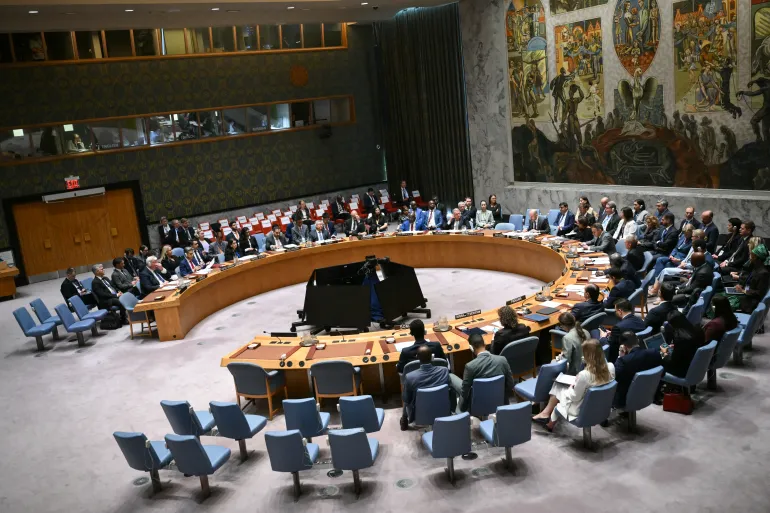




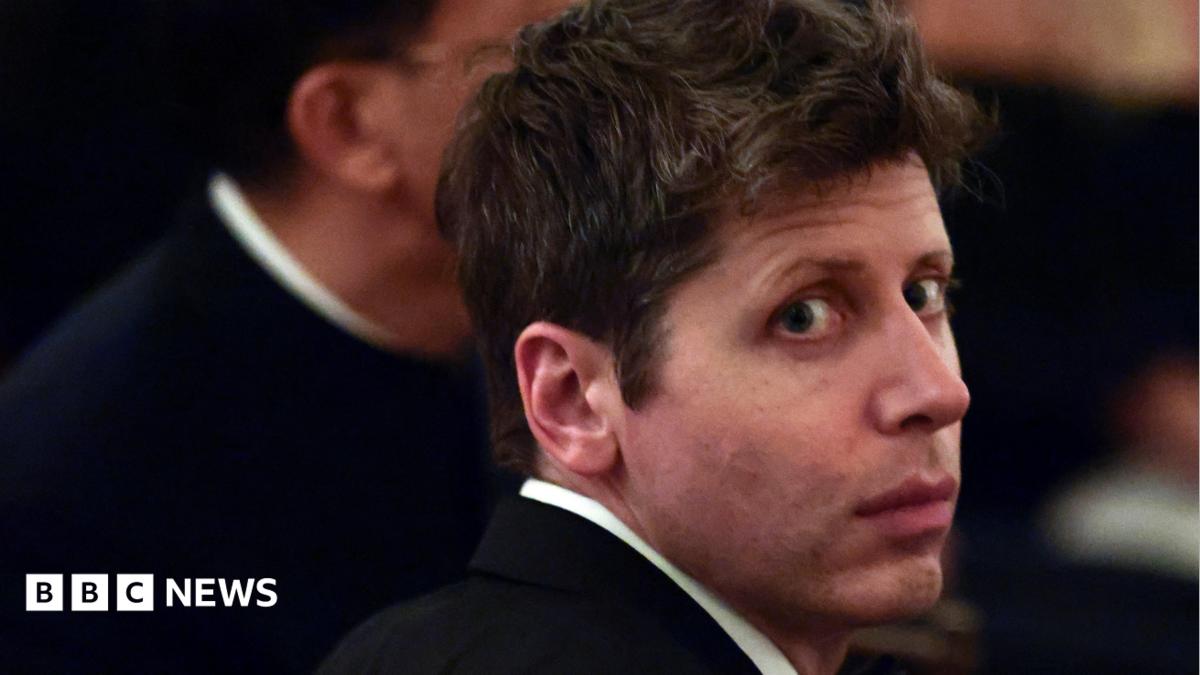
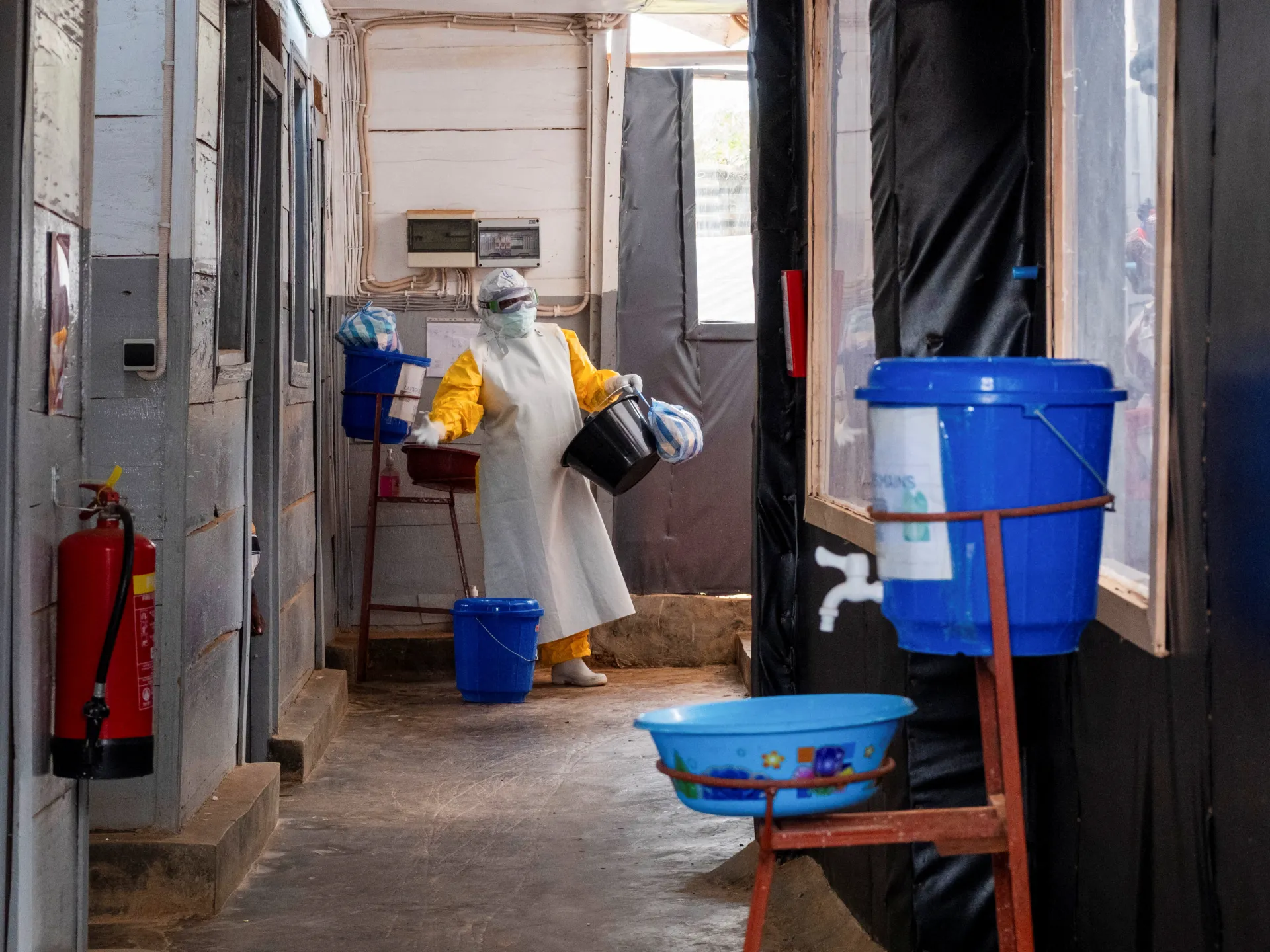

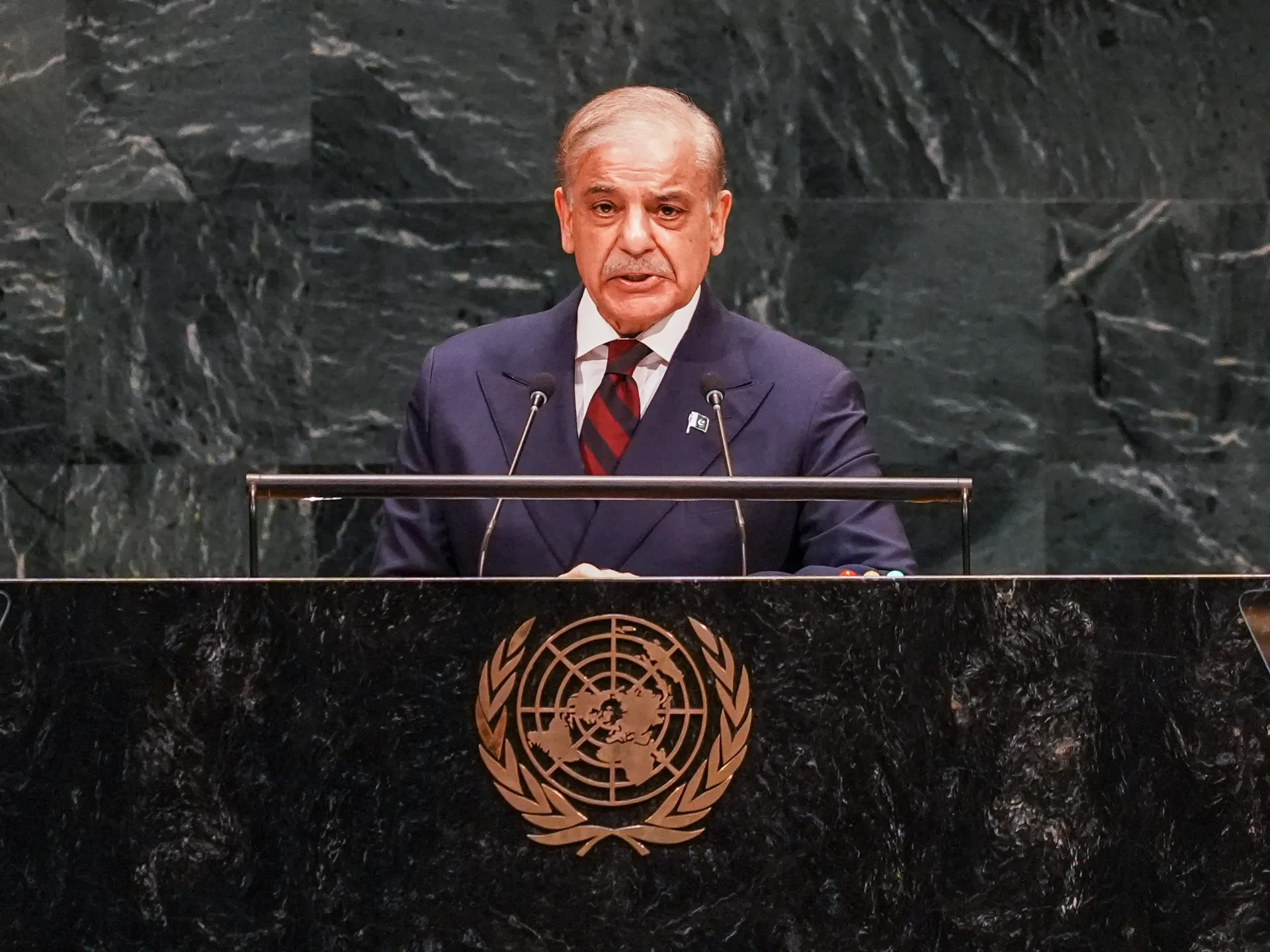
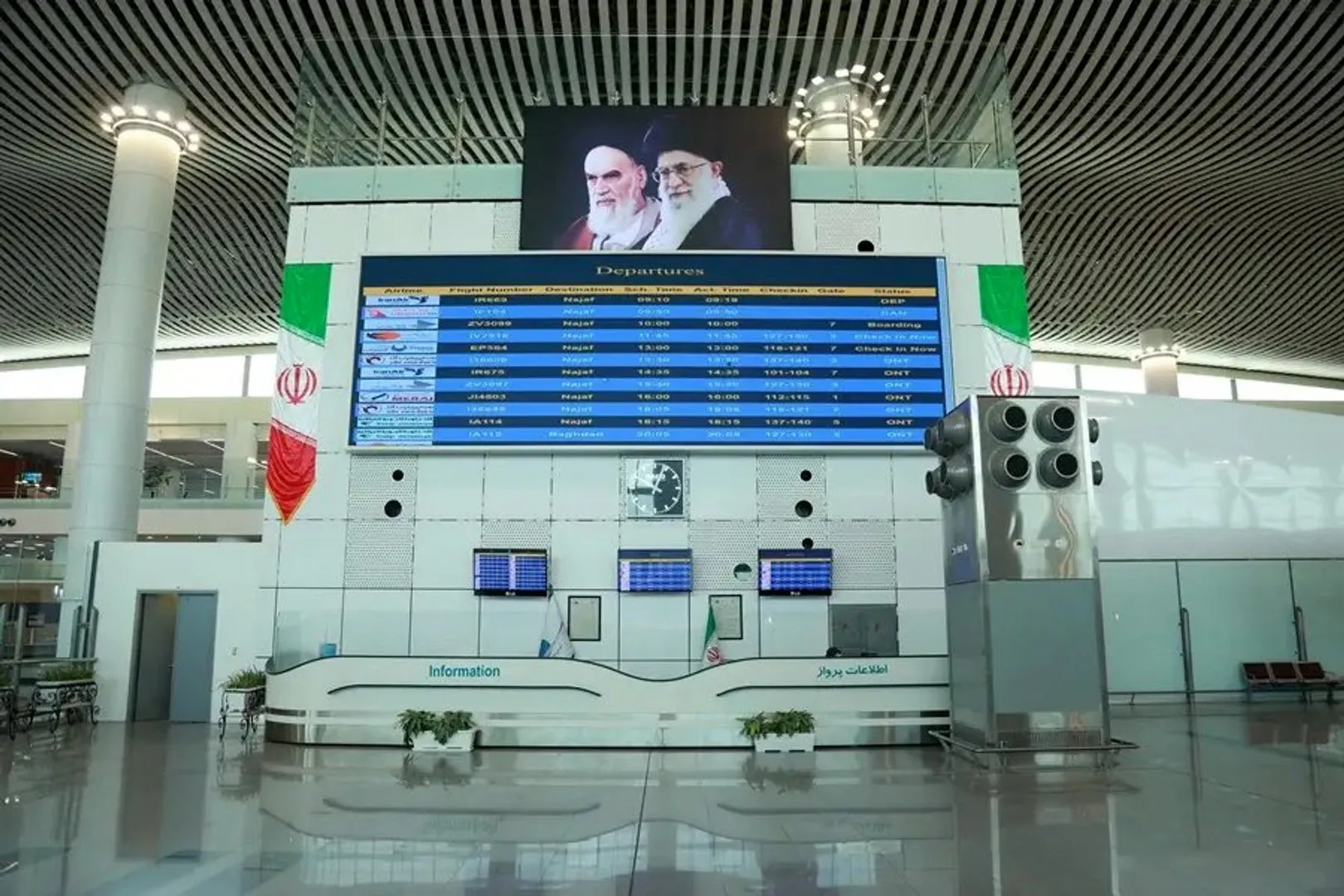

![Shiite pilgrims march to Karbala, to observe Arbaeen that marks the end of a 40-day mourning period following the Day of Ashura, in Najaf, Iraq [Anmar Khalil/AP]](https://i0.wp.com/www.aljazeera.com/wp-content/uploads/2026/07/AP26209348572737-1785382211.jpg?w=640&ssl=1)