JEDDAH: While the COVID-19 pandemic forced millions of people around the world to move their lives online, one young Saudi technology entrepreneur was watching more closely.
He was not just looking at how people were adapting to a new digital reality, he was watching what was happening elsewhere — particularly in China, where livestream shopping was rapidly becoming a mainstream way to buy.
For Taher Alblowe, the idea was simple but powerful — and he decided to build a live Saudi social shopping and auction marketplace.
“It is called Rwaj; we built it so a seller can go live, sell at a fixed price or by auction, get paid and ship without leaving the app, and a buyer can purchase or bid knowing their money is protected until the item is in their hands,” he explained to Arab News. “This lets us reach many more sellers and buyers in the region and beyond.”
Before founding Rwaj, Alblowe founded and served as CEO of Geeks Valley, an education and digital fabrication company that grew to more than SAR23 million in cumulative revenue and worked with government entities, leading universities, and international companies.
“Live selling in our region did not need to be invented. It needed to be made safe, and made native,” he said.
He sees Rwaj as being more than another shopping application; it is an attempt to anticipate how commerce could evolve and to build that future.
“When I saw the same model start to take hold in the US and then in Europe, I was convinced the timing was right to build it for the Middle East, from the ground up and in Arabic,” he said.
Today, through Rwaj, Alblowe is focused on building a new generation of commerce for Saudi Arabia and the wider Gulf Cooperation Council, combining livestream shopping, real-time auctions, entertainment, and direct interaction between buyers and sellers into a more engaging and trusted shopping experience.
A technologist at heart, he and his team had to build not only the technology that allows sellers to broadcast live, but also the systems behind every transaction — from seller verification and payments to escrow and logistics.
On Rwaj, sellers must go through a verification process before they can sell, while payments are held in escrow and released only after the buyer receives an item and confirms it is as described. For Alblowe, building that layer of trust from the beginning was part of the promise he wanted to make to users.
Asked what makes Rwaj different from existing e-commerce and social-commerce platforms, he replied: “Three things. First, trust and safety are built into the product, not bolted on — every seller is verified and every purchase, fixed price or auction, runs through escrow. Second, the format itself — a seller can sell instantly at a fixed price and run timed live auctions in the same stream, so buyers get both convenience and the excitement of bidding. Third, it is built for this region — Arabic-first and fully bilingual.”
The journey has gone through many challenges, but he kept going. “Every startup faces challenges, especially in the early days,” he said, pointing to logistics and the complexity of building a reliable trust system before reaching significant scale.
Yet none of those issues changed his conviction that live commerce has a future in Saudi Arabia and the wider region.
Alblowe, who has been recognized by Forbes Middle East, believes Saudi Arabia has many of the ingredients needed for that future — a young and digitally connected population, widespread use of smartphones and social media, fast mobile networks and increasingly sophisticated digital payments.
But perhaps his biggest ambition is to make live selling accessible beyond major brands and influencers.
Rwaj, founded in 2025, recently closed a $1.2 million (SR4.5 million) pre-seed funding round, which the company plans to use to accelerate growth and product development across the region.
For the founder, however, the funding appears to be less an end point and more another step in a much longer journey. He already sees Rwaj beyond Saudi Arabia and the Gulf: “I want Rwaj to be serving the world,” he said.
The ambition may sound big for a company still in its early stages, but it reflects the same mindset that led him to start the business in the first place: looking at where people’s behavior is heading and trying to build for tomorrow rather than today.
His vision is of a future in which livestream selling becomes as normal as walking into a store, where every shopping district could have people whose job is to sell live to customers who may never physically enter.
“Rwaj is building the infrastructure for that: the streaming, the payments, the trust layer, and the logistics,” he said.
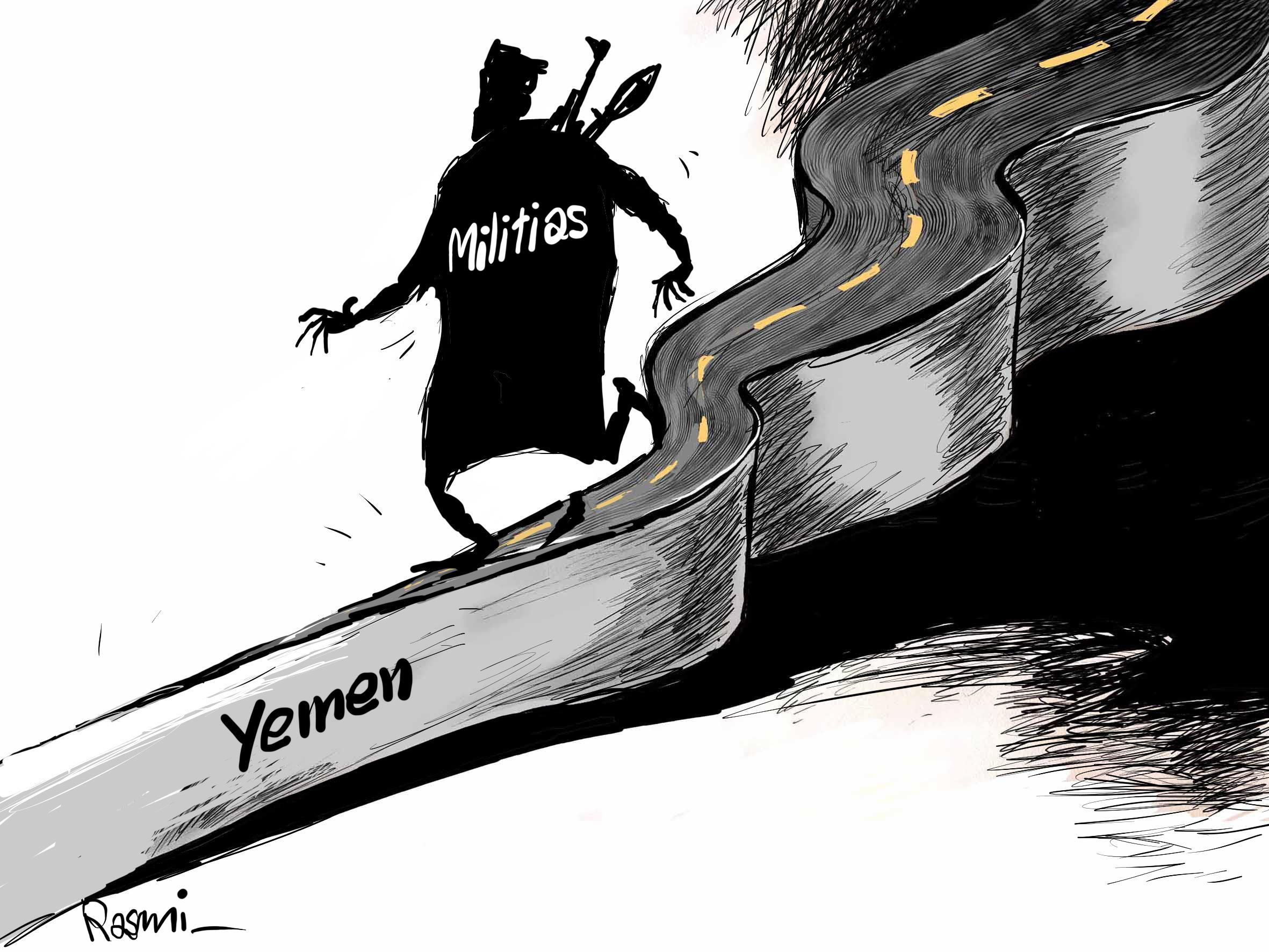
AL-MUKALLA: The Houthi militia’s arrival at Bab Al-Mandab constitutes a global threat to freedom of maritime navigation, international trade and the flow of energy supplies, the official spokesperson for the Yemeni Armed Forces said on Thursday.
The warning came after Houthi forces seized the west coast, threatening Bab Al-Mandab, giving the Iran-backed group a new foothold on the Red Sea close to one of the world’s most important maritime chokepoints.
The spokesperson said regional and international powers would not allow the Houthis to take control of Bab Al-Mandab and repeat what has happened in the Strait of Hormuz.
The statement has placed renewed focus on the strategic significance of the region and on what the Houthi advance could mean for commercial shipping, maritime security and efforts to intercept weapons and other illicit shipments along Yemen’s western coast.
The battle is therefore about far more than control over another piece of territory in Yemen’s long-running war.
For years, the waters off western Yemen have been a front line not only in the country’s conflict but also in international efforts to protect commercial vessels, intercept alleged Iranian weapons shipments and combat smuggling.
The area had served as the main base of the National Resistance Forces commanded by Presidential Leadership Council member Tareq Saleh, whose forces developed military bases, naval units and other infrastructure there after splitting from the Houthis following the killing of former President Ali Abdullah Saleh in 2017. Those naval forces operated across the Red Sea and around Yemeni islands controlled by the internationally recognized government.
Following the Houthi advance, Saleh ordered his forces along the western coast to regroup in new positions.
The withdrawal leaves the Houthis with a stronger presence on a coastline directly connected to Bab Al-Mandab — and potentially a new means of exerting pressure on vessels passing through the Red Sea.
The Yemeni military spokesperson said empowering and supporting Yemen’s legitimate government to bring the Houthi project to an end was the only way to eliminate the threat posed by the group and ensure the success of international efforts to combat terrorism and piracy.
It warned that failure to deter the Houthis would constitute a victory for what it described as the Iranian project in the region, while encouraging other terrorist organizations to adopt a similar approach.
The spokesperson also said that eliminating the Houthis would prevent them from rebuilding advanced military capabilities that could threaten regional and global security.
Bab Al-Mandab is not simply a Yemeni security issue. The strait connects the Red Sea with the Gulf of Aden, making stability around it essential to ships moving between the wider Indian Ocean and the Suez Canal.
That means disruption along Yemen’s western coast can have consequences far beyond the country itself.
The strategic importance of the region comes partly from its geography. The area is located on a promontory extending into the Red Sea, allowing vessels using the international shipping route to be seen directly from shore.
Col. Abdul Basit Al-Baher, a Yemeni military official in Taiz, told Arab News that Houthi control of such a position could change the nature of the threat facing shipping.
“They can now target the international shipping route with light or medium weapons, rather than missiles,” he said.
“The port is situated on a peninsula extending toward the international shipping lane, allowing ships to be clearly seen with the naked eye.”
That proximity makes security along this stretch of coast particularly important.
A threat to shipping does not necessarily require control of the entire Bab Al-Mandab Strait. A hostile armed presence close enough to monitor or threaten vessels can itself increase uncertainty around one of the world’s vital maritime arteries.
The Houthi advance followed an offensive launched west of Taiz earlier this month. The group initially attacked government forces using missiles, drones and mortar fire before advancing on the ground.
From the outset, Yemeni military commanders and analysts warned that the objective appeared to be the road linking Taiz with Mokha. Capturing it would isolate Taiz from the Red Sea.
Yemeni forces take part in a military exercise on the coast of Al-Khokha area in Yemen’s Hodeidah governorate on May 5, 2026. (AFP file)
Houthi forces seized positions along the Al-Kadaha road, intensified attacks elsewhere in western Taiz.
The advance transformed what had initially appeared to be another battle between the Houthis and the Yemeni government into a development with potentially wider implications for regional maritime security.
For the Houthis, the area would provide both a military gain and greater access to the Red Sea. For the internationally recognized government, its loss removes an important position from which it had sought to limit Houthi activity along the coast.
The consequences extend beyond the possibility of attacks on commercial vessels.
Government coast guard units and naval forces affiliated with the National Resistance had used the area as a base for intercepting shipments carrying weapons to the Houthis. They had also sought to combat human trafficking, drug smuggling and other illicit activity in the Red Sea.
Al-Baher said those forces had now withdrawn south to Dhubab, near Bab Al-Mandab. He warned that their departure could create new opportunities for smuggling networks.
“All forms of smuggling — involving illicit goods, narcotics, weapons and contraband — will return, as will the targeting of ships and international shipping,” he said.
Control of nearby islands is another concern. National Resistance naval forces had maintained a presence around parts of the Red Sea, including the Hanish Archipelago and Zuqar Island.
Their withdrawal from strategic positions could give the Houthis an opportunity to expand their influence offshore as well as along the mainland coastline. Such an expansion would further strengthen their position around maritime traffic passing through the region.
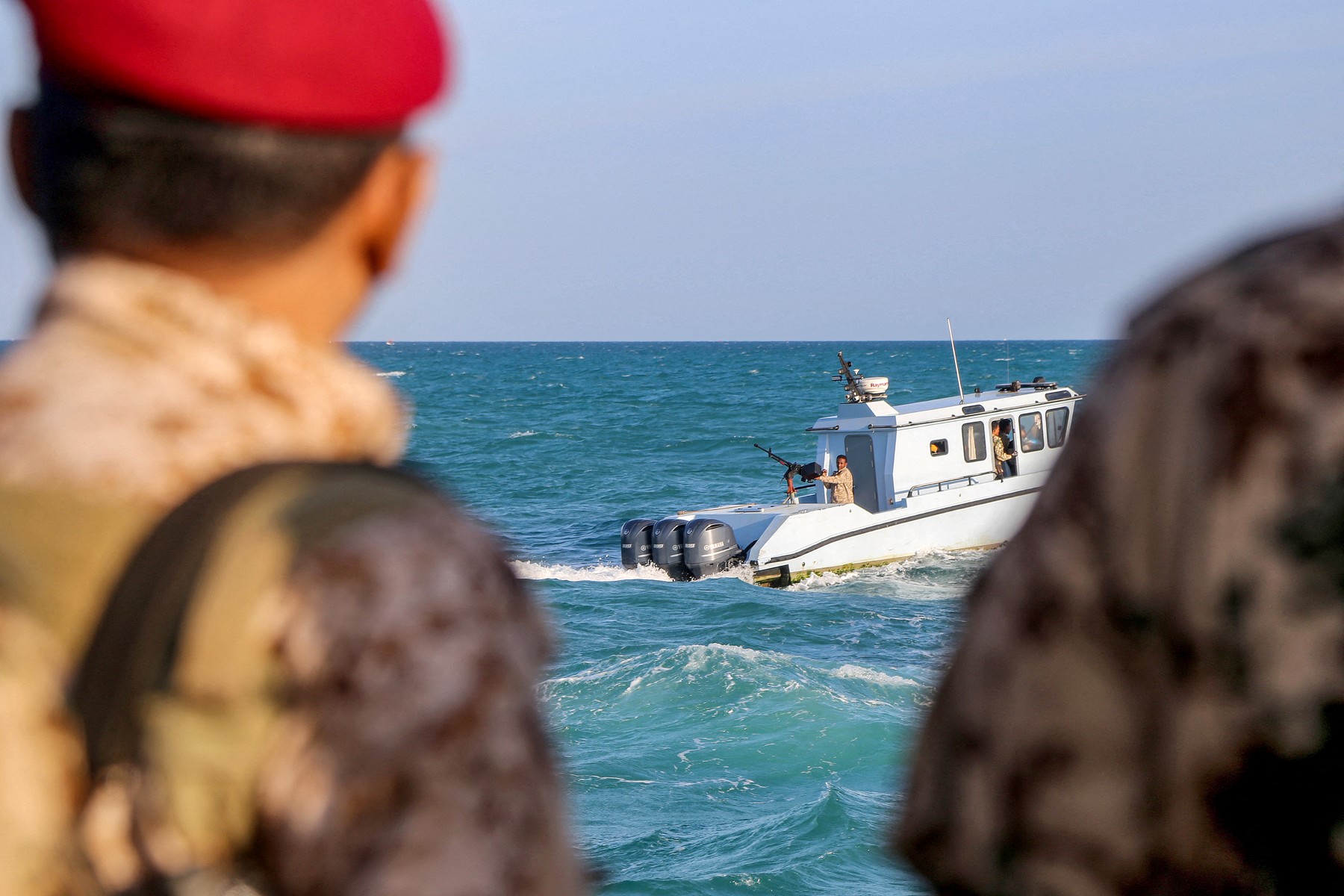
Yemeni coastguard members observe as others ride in a patrol boat in the Red Sea off Mokha in the western Taiz province. (AFP)
The battle therefore raises a larger question: Who is capable of guaranteeing security along Yemen’s Red Sea coast?
Until now, government-aligned naval and coast guard forces had used the area and nearby islands as part of efforts to monitor the coastline and intercept illicit shipments.
Their retreat has weakened that presence just as the Houthis have expanded toward one of the region’s most sensitive waterways.
The immediate consequences will depend on what the Houthis do next. They could consolidate their hold, expand south toward Bab Al-Mandab or attempt to extend their influence over strategically located Red Sea islands.
The Yemeni military spokesperson said the redeployment of troops along the western coast was part of the wider battle against the Houthis and argued that their movement into open areas could create opportunities for Yemeni forces to target them.
“Drawing the Houthi militia into open areas would make it easier for the Yemeni Armed Forces to target and eliminate its members,” the spokesperson said.
Each possibility would increase the importance of what happens along a coastline that connects a Yemeni battlefield to an international shipping corridor.
For the wider region, the stakes are high The security of Bab Al-Mandab affects not only Yemen but also the Red Sea, the Suez Canal and international maritime traffic.
That is why the battle for western Yemen cannot be viewed solely as another front in the country’s war. A safe and secure Bab Al-Mandab ultimately depends on stability around it — and the Houthi advance has made that stability considerably more uncertain.
COMO, Italy: Como marked their Champions League debut with a gesture of respect by inviting their older fans to the game against Leipzig on Thursday.
President Mirwan Suwarso and some directors made the magnanimous decision of giving away their own seats, allowing supporters born in 1950 or earlier to attend the sold-out game.
“We will be honored to give up our seat for them,” Suwarso had posted on Instagram.
Capacity was reduced to around 10,000 because the delightful Stadio Giuseppe Sinigaglia stadium on the shores of Lake Como underwent modifications for the Champions League.
The 119-year-old club reached the competition under coach Cesc Fabregas, a standout goal-scoring midfielder during a stellar club career with Arsenal, Chelsea and Barcelona. He played for the Spain team that won the 2010 World Cup.
Fabregas guided Como to fourth place last season ahead of Juventus and AC Milan to claim Serie A’s final Champions League spot with a high-pressing brand of soccer.
Goals have been coming from 22-year-old playmaker Nico Paz, who has stayed on loan from Real Madrid and burly Greece center forward Anastasios Douvikas.
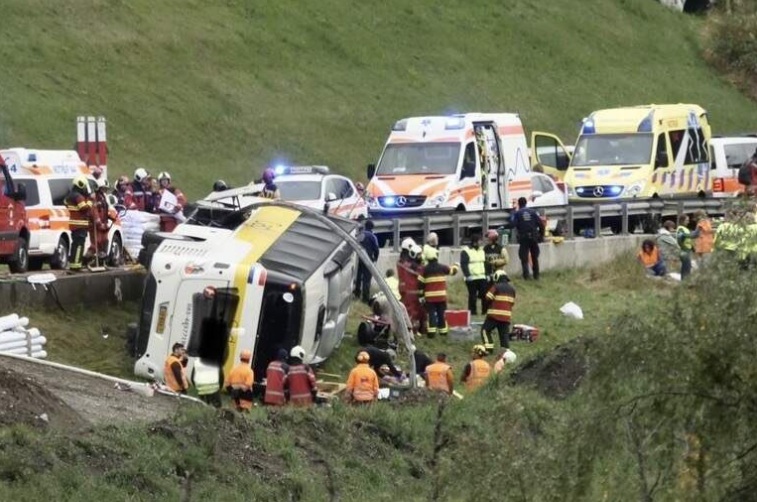
GENEVA: A road accident involving a tourist coach in eastern Switzerland has left several people dead and others injured, police said on Thursday.
The accident happened between the communes of Susch and Zernez in the far-eastern canton of Graubunden.
“Several people died in the coach crash in Susch. Several others were also injured,” the cantonal police said on X, without giving details on the circumstances of the accident or the victims’ identities.
Footage broadcast by Swiss media showed many rescue workers rushing about around the coach, which has overturned onto its side below the road, and helicopters stationed nearby.
According to the Swiss press, the bus belonged to the Dutch Oad tour operator, which offers trips across Europe.
Zernez is the entry point for visitors to the Swiss national park, a vast Alpine reserve stretching more than 100 square kilometers (40 square miles) across the mountainous Engadine valley.
NEW YORK CITY: A UN Security Council committee tasked with overseeing sanctions on Iran remained blocked for a fourth consecutive quarter on Thursday.
Council members traded accusations over the panel’s inertia, against a backdrop of intensifying US-Iran hostilities and a landmark decision by the UN’s nuclear watchdog to refer Tehran back to the council for the first time in 20 years.
The 1737 Sanctions Committee has not met in the year since it was reestablished with the backing of most council members, and no report on its activities was presented during Thursday’s session after China and Russia once again blocked it.
The impasse has also stalled the appointment of experts to a panel, the mandate for which is due to expire on Sept. 27, that is intended to support the sanctions-monitoring work of the committee.
The dispute dates back to August 2025 when France, Germany and the UK triggered a so-called “snapback” mechanism under the 2015 Joint Comprehensive Plan of Action, commonly known as the Iran nuclear deal, to reimpose pre-2015 UN sanctions on Tehran.
China and Russia dispute the legality of that move, arguing that all sanctions lapsed on Oct. 19, 2025, with the scheduled expiration of the deal, and so the council’s consideration of the Iranian nuclear file was effectively ended.
Against this backdrop of an unresolved procedural fight, the Security Council session on Thursday was dominated by more recent developments: the International Atomic Energy Agency’s formal referral of Iran to the Security Council and the General Assembly this week; and the continuing military exchanges between Iran and the US.
The agency’s board of governors voted 23-3 on Wednesday to refer Iran over its noncompliance with international nuclear safeguards, the first such referral in two decades. China, Niger and Russia voted no and eight countries abstained.
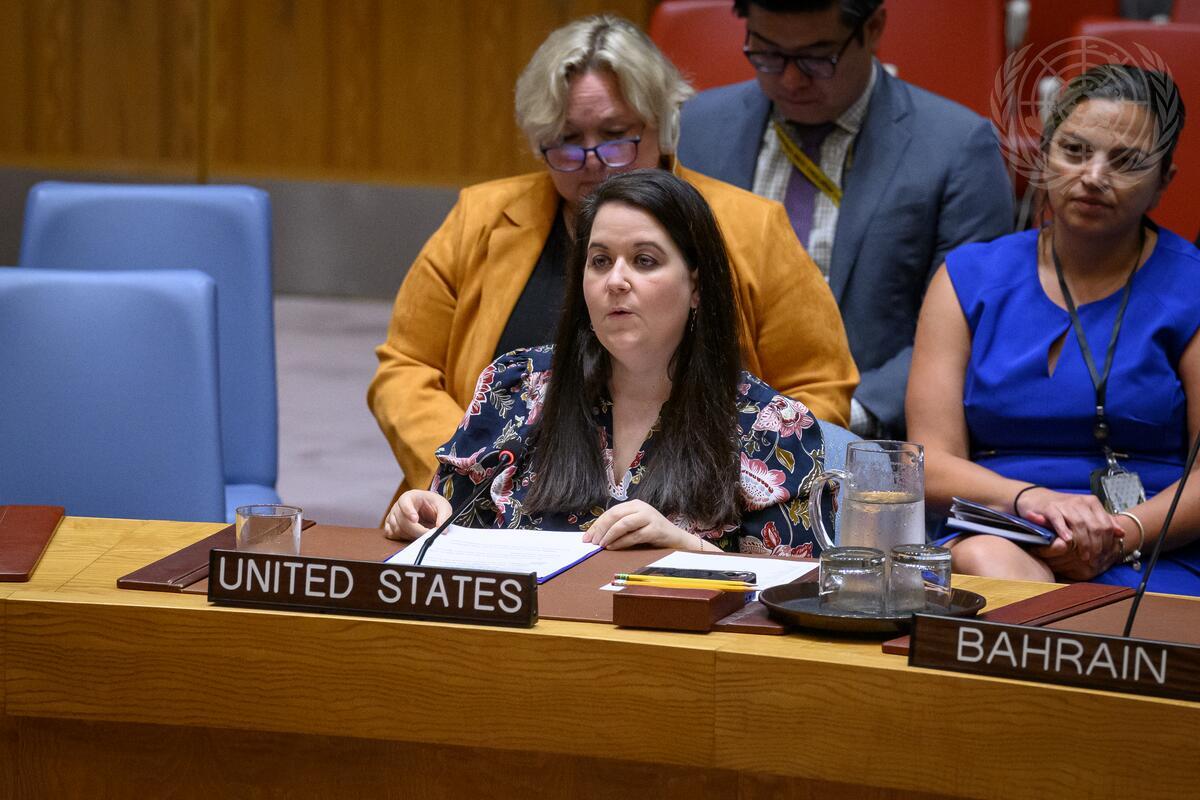
Ambassador Jennifer Locetta, the US alternate representative for special political affairs, told the council that the IAEA “has not received information from Iran regarding the status of its declared nuclear materials or facilities” and has been denied access to carry out verification procedures.
The agency’s director general, Rafael Mariano Grossi, has again urged Tehran to engage constructively with the process, she added. Locetta dismissed Iranian claims that inspections were being blocked as a result of security concerns, noting that “Ukraine has been a worse and more constant war zone” and yet IAEA inspectors had still been able to work there throughout the conflict.
Washington, she said, would “look to partners in the coming days to weigh options” for strengthening the sanctions regime.
China’s deputy permanent representative, Sun Lei, voted against the meeting’s agenda and placed the blame for the deteriorating situation squarely on Washington. He said the US strikes and campaign of “maximum pressure” on Iran were the “primary causes” of the crisis.
A memorandum of understanding between the US and Iran in June was “undermined shortly after it took effect” by renewed military clashes, he added, and Washington had since “intensified unilateral sanctions” and “launched a new round of military strikes” against Tehran.
Beijing, he said, opposed further use of force and called for a return to efforts to reach a political and diplomatic settlement based on “equality and mutual respect.”
France’s ambassador to the UN, Jerome Bonnafont, said Iran’s stockpile of more than 440 kilograms of uranium enriched to 60 percent had “no credible civilian justification” and was sufficient for about 10 nuclear devices.
He cited the latest report by Grossi as saying the situation “raises an issue of proliferation and should be addressed with the greatest urgency.”
France backed a US-drafted resolution for the renewal of the expert panel’s mandate, Bonnafont added. He called for the full reopening to international shipping of the Strait of Hormuz, and offered a French naval presence there, alongside the UK, to help secure freedom of navigation.
Pakistan’s permanent representative, Asim Iftikhar Ahmad, told the council that the “upsurge of violence in the Middle East in the last few days” was “unsettling for the prospects of peace,” and said Islamabad was engaged in back-channel diplomacy to encourage de-escalation.
He urged “all sides to exercise restraint” and voiced concern over the continuing divisions within the council.
A memorandum of understanding between Washington and Tehran in June, which paused hostilities and set a 60-day window for a final nuclear agreement, expired on Aug. 17 without any deal.
The Strait of Hormuz remains effectively closed to international shipping, attacks on vessels have continued, and the US has revoked sanctions waivers on Iranian oil exports. A Security Council vote on renewal of the Iran sanctions expert panel’s mandate is scheduled for Sept. 17.
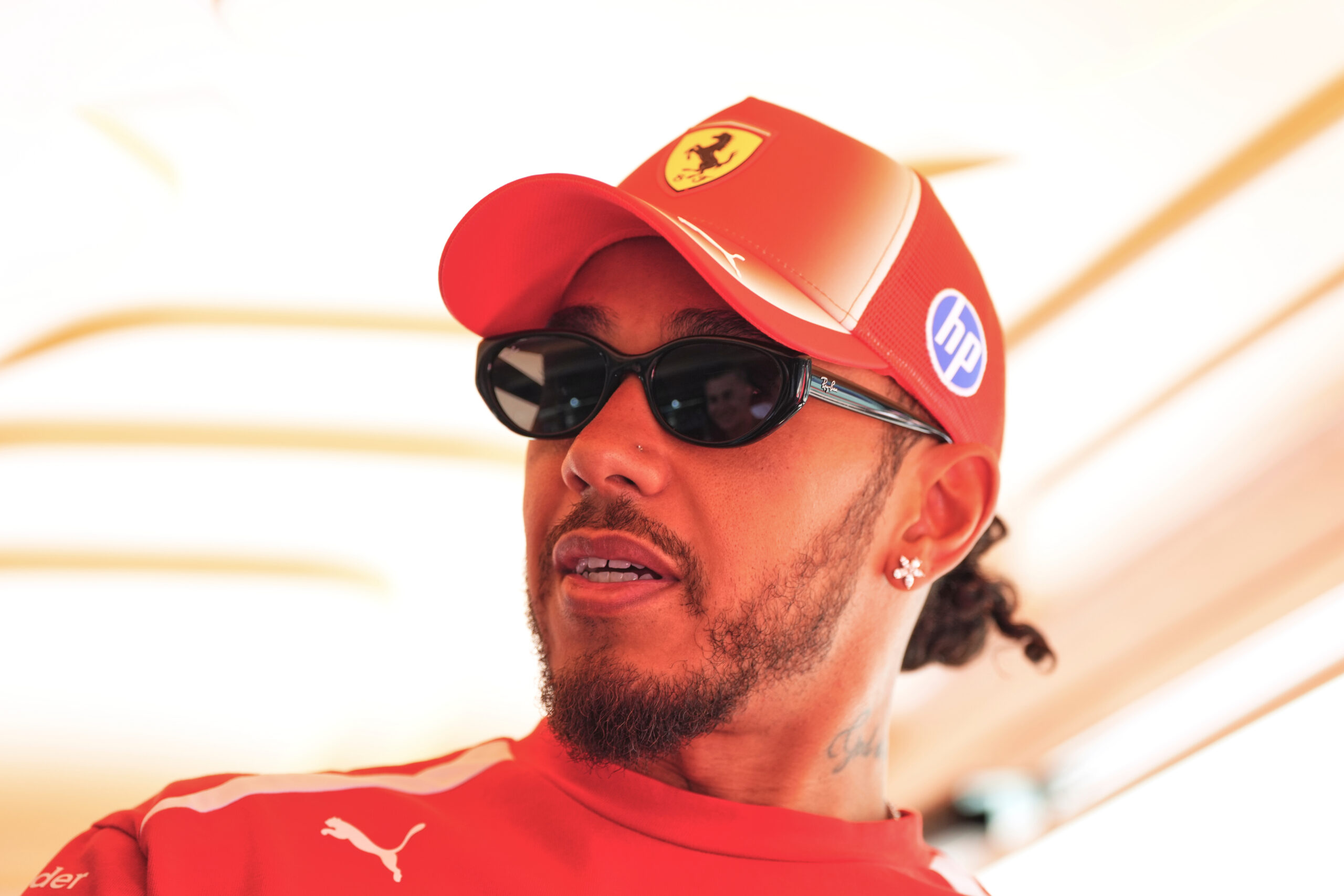
MADRID: Charles Leclerc and Ferrari teammate Lewis Hamilton said they had cleared the air face-to-face after a clash at last weekend’s Italian Grand Prix but there were still no written rules of engagement between the pair.
Seven-times Formula One world champion Hamilton had called for written rules after being forced off onto the gravel by Leclerc on the opening lap and dropping from fourth to 10th.
The Briton eventually finished sixth while Leclerc crashed out. Asked at the Spanish Grand Prix on Thursday whether anything had been put in writing, Hamilton replied, “There was not.
“I’m sure at some stage we’ll discuss how we can be better but we’ve not had a lot of time to turn around. You can’t change things in two days.”
Hamilton said there had been no shying away between the two drivers when they came to discuss what had happened.
“We sat face to face, just him and I, and talked about it,” he said. “We were just both open and honest and we squashed it. And we can move on… I think it’s healthy. It’s a relationship we have built over time.”
“Of course there’s going to be frustrations… I’m sure there will be more times (where) we are close (on track) because we are very close on pace. We both want to win just as much as each other and we both want to do well for the team as well.”
Ferrari are second in the championship after 13 rounds, 122 points behind Mercedes. Hamilton is third overall, 76 points behind Mercedes’ leader Kimi Antonelli.
Leclerc told reporters he had reviewed footage after the race and recognised he had gone too far.
“I said it to Lewis and I think it’s very clear what we should do or should avoid going forward but I won’t go into much more details of what we’ve said,” added the Monegasque.
“The only thing I can say is it definitely did not affect the good relationship that we have and it will not affect anything going forward and that is the most important for me really.”
Leclerc said his crash at Monza at the end of the second lap had felt like a big one and he had suffered a tight neck for a couple of days after but was now fine.
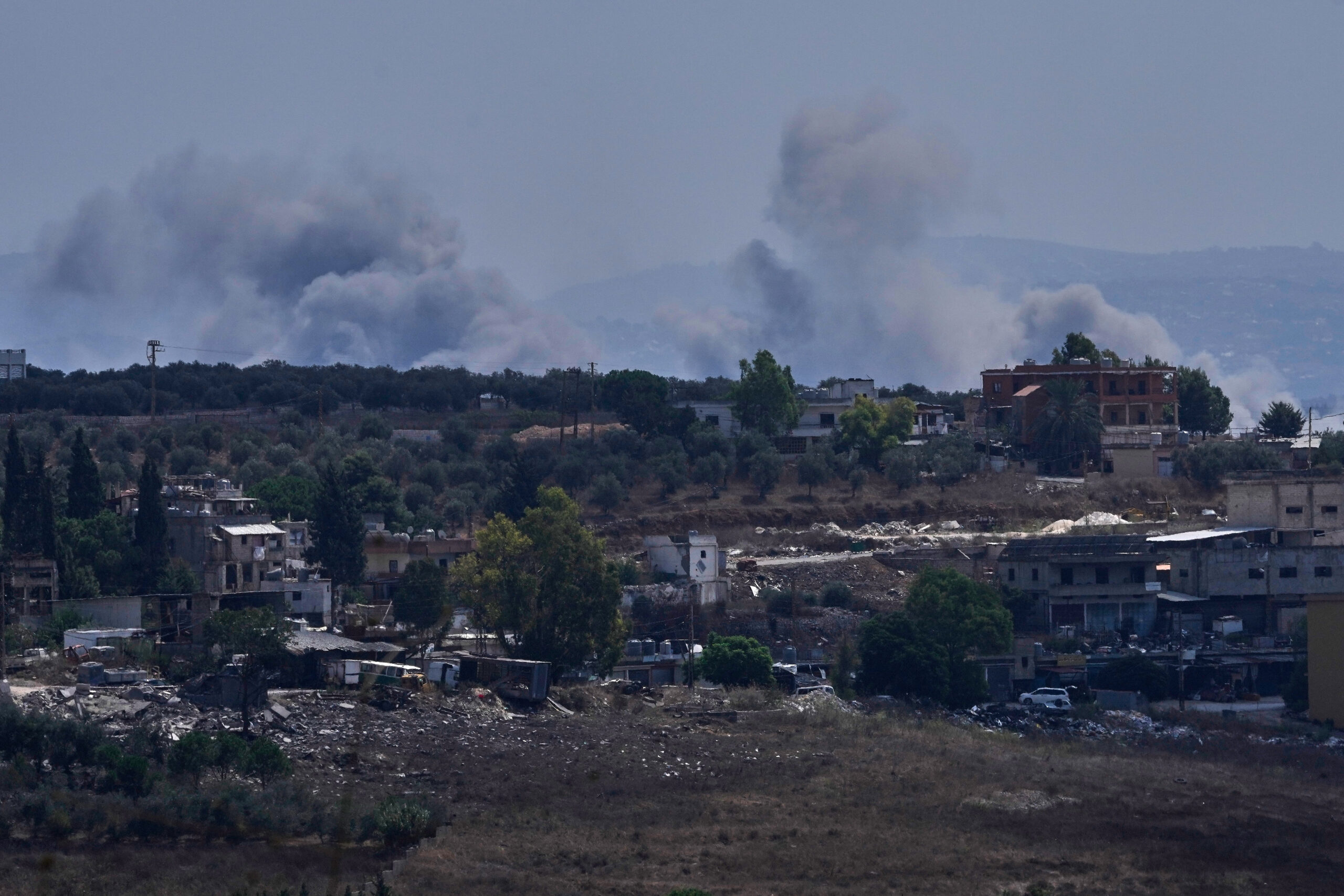
BEIRUT: The Lebanese army and other security agencies reinforced their presence in the southern city of Nabatiyeh Thursday amid continued Israeli military escalation. An official Lebanese source told Arab News that Beirut had received no guarantees that the city would be spared an Israeli incursion following Israel’s takeover of the Ali Al-Taher ridge.
The Lebanese source said the enhanced army deployment was intended to “remove Israeli pretexts” for advancing into and occupying the city. “No foreign party, including the Americans, has provided Lebanon with guarantees that Israel will be restrained from pursuing its ambitions,” the source said.
Concerns are mounting over the city’s fate since Israel announced taking control of Ali Al-Taher, amid silence from Hezbollah, raising fears that Nabatiyeh could become vulnerable militarily. Nabatiyeh is approximately 12-15 km from the Israeli border.
Any slide toward widespread destruction would mark a major escalation in the conflict. Recent Israeli attacks have struck government and public facilities in Nabatiyeh, prompting President Joseph Aoun to condemn the targeting of a Finance Ministry building and the destruction of Ghandour Hospital.
In a statement, Lebanese Army Command stressed that the reinforcements did not constitute a new deployment, as army units were already present in Nabatiyeh and other areas not occupied by Israeli forces. It said the military had instead intensified its duties to reassure residents.
Interior Minister Ahmad Al-Hajjar said reinforcing the military and security presence was “an essential step to reassure residents,” adding that the state would continue strengthening its presence in the south to create conditions for people to return safely.
Prime Minister Nawaf Salam told Nabatiyeh Mayor Abbas Fakhruddin that supporting the resilience of residents was a priority. He said he was following up with security chiefs on increasing the presence of official state agencies alongside the army in Nabatiyeh. Lebanon is seeking to consolidate its authority inside the city and turn it into a broader model of state administration in areas exposed to Israeli military pressure.
The developments at Ali Al-Taher have made those efforts more urgent, with concerns that any area not quickly brought under effective state authority could, under the current balance of power, become the target of further Israeli military pressure.
The push coincided with a statement from the US Embassy on Thursday, as public calls grew in southern Lebanon against Hezbollah’s weapons. Residents of Tyre and Nabatiyeh have urged the Lebanese army to deploy and for weapons to be restricted exclusively to state institutions, while backing the government’s efforts to secure an Israeli withdrawal.
The US Embassy in Lebanon said Thursday that “the Lebanese people are making clearer every day their preference for Lebanese state institutions over Hezbollah’s weapons.” It added that “southern Lebanon does not belong to regional actors or militias.”
The embassy reaffirmed US support for the government’s declared objective of asserting sovereignty, with the Lebanese army responsible for enforcing it and decisions of war and peace remaining exclusively in the hands of the Lebanese state. The Lebanese army, meanwhile, issued a detailed statement outlining its activities since the signing of the US-sponsored framework agreement between Lebanon and Israel.
The statement came in response to what the army described as continued Israeli efforts to undermine existing arrangements, obstruct the army’s field operations and continue attacks on civilians that killed and wounded dozens of people a week ago. Lebanese Army Command said the escalation in Israeli strikes, alongside demolition and explosive operations in the south, “leaves no room for doubt regarding the aggressive intentions of the Israeli occupation.”
It said the Israeli escalation threatened implementation of the framework agreement between Lebanon and Israel, while continued attacks endangered existing understandings and arrangements and obstructed the army’s efforts to establish stability in the south. The army also warned that Israeli attacks and violations demonstrated an effort to undermine its credibility both inside Lebanon and before the international community.
The continuation and escalation of these attacks, alongside brutal demolition and explosive operations in the south, left no doubt about Israel’s aggressive intentions and contradicts international law, the statement added. Lebanese Army Command said specialist units had seized about 1,818 weapons and ammunition items during their operations.
The seized material included 10 rocket-launching platforms, seven rockets, seven drones, 51 projectiles, 10 aerial bombs and 1,560 pieces of light ammunition, in addition to large numbers of mines and explosive devices.
The army said units had also searched some homes in accordance with Lebanese law and with owner consent. It said residents had cooperated with the measures, particularly those related to removing unexploded ordnance and other dangers left behind by the war. Military units also opened roads totaling about 12 km in length as part of efforts to rehabilitate damaged areas, facilitate the movement of residents and troops and consolidate the army’s presence.
The measures included controlling movement in and out of operational areas, giving deployed units greater ability to monitor the area and prevent unauthorized armed activity. Lebanese Army Command said there had been no corresponding Israeli compliance.
According to army monitoring, Israel has committed about 7,700 violations since the framework agreement was signed on June 26. These include multiple attacks, as well as incidents in which Israeli forces opened fire near Lebanese army personnel and patrols.
RIYADH: After more than 20 years in the legal and investment sectors, Khadija Grabinski transitioned into executive coaching, where she helps leaders navigate change through meaningful conversations.
Having lived in Saudi Arabia for the past year, she also shares her experience of the Kingdom on social media, offering an authentic perspective on its culture, people, and transformation.
Grabinski and her husband moved to the Kingdom from the US and she felt this new period of her life was an opportunity to make some changes.
The daily routine she and her husband experienced during their time in the US during the COVID-19 pandemic inspired them to explore opportunities and make changes.
“I spent 20 years in my field (as a litigator), so I guess it was enough … it was the right moment for me to change and to be more connected to people. This is why I chose to transition,” she said.
Grabinski added that her new work life allows her to have meaningful conversations with people, providing them the space to talk about how they want to grow in professionally.
“I mean, for me, meaningful conversation gives more clarity. You think better. I mean, when you talk to people, even friends, and when you are in the deep conversation, it becomes like something more clear. You know where you are going. So this is why.”
When Saudi Arabia launched Vision 2030 in 2016, much of the world’s attention focused on its bold plans for economic diversification and landmark development projects.
Yet, nearly a decade later, the social transformation unfolding across Saudi Arabia has proven every bit as significant. Anchored in Vision 2030’s vibrant society pillar, this transformation is reshaping daily life in the Kingdom.
“As a coach, what I see is the other side of the transformation. It’s like people are excited for the future, but at the same time, they feel the pressure. So, they are wondering if their job will be the same in five or 10 years.”
Grabinski added that leaders in today’s environment leaders have to acquire more skills, reinvent themselves, or simply adapt because there is both excitement and uncertainty.
“For a country that grew that fast, which is totally normal to be honest, there is what I call growing pains. You know, like (when a) teenager (grows) too fast, it’s the same for a company. For people and for countries. So, there were some growing pains,” she said.
She added that today’s successful leaders need to possess interpersonal communication skills, which machines and artificial intelligence cannot easily replicate.
“Leaders will need to communicate better. Listen more. And help their teams to navigate uncertainty and lead by example. Always and where do you see emotional intelligence being basically a huge factor of that, like, how is that going to turn into a valuable skill set for a leader?
“I mean, by learning, the need to learn, it’s like a muscle, leadership,” she said.
Grabinski shares her experiences and opinions about living in Saudi Arabia through her accounts titled Simone Executive Coach|Common Ground on TikTok and Instagram.
The European Central Bank’s governing council lifted the deposit facility rate from 2.25% to 2.5% on Thursday. It is the second hike since 11 June, when the ECB moved for the first time in three years.
The ECB sets monetary policy for the eurozone through three key interest rates, with the deposit facility rate serving as its main policy benchmark.
The main refinancing rate was lifted to 2.65% and the marginal lending facility to 2.9%.
In its statement, the central bank noted that “the conflict in the Middle East continues to generate inflation pressures, and inflation is set to remain well above target for an extended period,” while ensuring that “with today’s decision, the Governing Council remains well positioned to navigate the uncertainty caused by the conflict.”
The ECB staff projections continue to estimate that headline inflation will average 3% this year. However, it has revised up the expectations for 2027 and 2028 to 2.5% and 2.1% respectively, compared with June.
An energy problem, not a demand problem
The decision follows an August inflation reading of 3.3%, up from 2.9% in July and the highest since September 2023.
Energy costs did nearly all the work, with energy inflation jumping to 14.3% from 10.3%, as fighting around the Strait of Hormuz kept crude supply constrained. The problem persists as Brent crude crossed $100 a barrel again on Wednesday due to renewed exchanges of fire between the US and Iran.
Underneath, the picture is calmer.
Core inflation, which strips out energy, food, alcohol and tobacco, actually fell to 2.4% from 2.5% in August, while services inflation, the component most sensitive to wages, dropped to 3% from 3.3%. There is still little sign that expensive energy is spreading into the rest of the economy.
That distinction has been central to the ECB’s own thinking.
In a paper published earlier this month, its economists found that adverse energy supply factors accounted for around 90% of the rise in energy inflation between January and May of this year.
“This time the energy supply shock dominates, while demand and public policy stimulus have minor roles,” the economists wrote, contrasting it with the 2021-22 surge that prompted a far more aggressive response.
A single rate for very different economies
The eurozone inflation average conceals a wide spread.
August inflation ran at 4.5% in Spain, 2.9% in Germany and 2.7% in France, three economies facing the same energy shock with markedly different outcomes.
Growth complicates matters further.
The bloc has held up better than expected, but resilience is not overheating, and even at 2.5% the deposit rate remains within the range the ECB considers neutral. Going further would mean deciding that policy must actively restrain the economy.
Christine Lagarde had signalled this move in July, when the council held rates but instructed staff to model oil and gas scenarios ahead of September.
“The burden of proof is on data,” Lagarde said then, adding that “the full inflationary impact of the energy shock has yet to play out.”
Thursday’s decision comes alongside fresh staff projections, though their cut-off date falls roughly two weeks before the meeting, meaning neither the latest leg higher in oil nor the surge in European government bond yields to 15-year highs will be reflected.
Attention now turns to Frankfurt’s peers.
The Federal Reserve will announce on 16 September and the Bank of Japan on the 18, with both expected to consider hikes of their own.
Meanwhile, the Bank of England will decide on 17 September and is expected to hold rates as it currently maintains a much higher benchmark than the rest at 3.75%.
DUBAI: Renewed fighting along Yemen’s Red Sea coast has put the strategic Bab Al-Mandab Strait back in focus, raising concerns over a key maritime route linking Europe and Asia.
The strait is a narrow passage between Yemen and the Horn of Africa that connects the Red Sea with the Gulf of Aden and the wider Indian Ocean.
For ships travelling between Asia and Europe, it forms part of the route linking the Indian Ocean to the Red Sea and the Suez Canal, making it one of the world’s most important maritime chokepoints.
Why is it so important?
Bab Al-Mandab is the southern gateway to the Red Sea. Ships travelling through the Suez Canal between Europe and Asia generally pass through the Red Sea and then Bab Al-Mandab before entering the Gulf of Aden.
The route has ships carrying oil, fuel and other commercial goods.
Oil flows through the strait fell sharply after Houthi attacks on shipping began disrupting Red Sea traffic.
The US Energy Information Administration said oil trade through Bab Al-Mandab averaged about 4 million barrels per day in the first eight months of 2024, compared with 8.7 million barrels per day in 2023.
Why does the latest fighting matter?
Yemen’s western coastline runs alongside the strait, making control of nearby territory strategically important.
The port city of Mokha lies north of Bab Al-Mandab, while Dhubab is close to its entrance. Any expansion of Houthi control along this stretch of coast could increase the group’s ability to threaten or monitor shipping through the waterway.
Reuters reported on Thursday that Houthi forces were moving toward Mokha and Dhubab as they sought greater control of Yemen’s Red Sea coast. Yemeni government military sources said this could give the Houthis significant leverage over Bab Al-Mandab.
The reports have not been independently verified, and they do not mean the Houthis control the strait. But any further Houthi advance toward the coast could increase the risk to commercial shipping.
The Houthis have previously targeted commercial vessels in and around the Red Sea, forcing many ships to avoid the route.
What happens if shipping is disrupted?
Ships can avoid Bab Al-Mandab and the Red Sea by sailing around the Cape of Good Hope in South Africa.
But that can add thousands of kilometers to some journeys, increasing sailing times, fuel consumption, insurance costs and freight rates.
The consequences can therefore extend well beyond Yemen, affecting the movement and cost of energy, manufactured goods and other products travelling between Asia, the Middle East and Europe.
LONDON: Prominent Israeli figures have welcomed British sanctions against illegal settlements in the occupied West Bank, The Guardian reported.
In a joint statement, they described the move as an “inevitable consequence” of their government’s actions.
Sanctions are being imposed “against Jewish terrorists, and not against the legitimacy of the state of Israel,” they said.
“There is no basis to the government’s response that the decision to impose sanctions against Jewish terrorists is an expression of antisemitism.”
Prof. David Harel, British-born president of the Israel Academy of Sciences and Humanities and a signatory to the statement, said the measures delivered urgently needed support for liberal Israelis who are trying to stop attacks on Palestinians and end the occupation.
“I personally would fight until my last breath against antisemitism and against anti-Israelism,” he told The Guardian. “But what is justified, and I do support, is being anti things that Israel is doing, and these days in particular what it is doing in the West Bank.
“Getting out of there (occupied Palestine), or, at least for the present, stopping these things from happening and starting to really talk about a two-state solution is not only good for the Palestinians. It’s not that we’re doing these poor people a favour. We’re doing a favour to ourselves, no less, maybe even more.”
Signatories to the statement include former Prime Minister Ehud Olmert; former commander of the Israeli military Dan Halutz; former ministers Yuli Tamir and Roni Bar-On; and former Ambassador to Germany Yoram Ben Zeev.
They wrote: “This decision is precisely what the state of Israel should have received in order to remove the disgrace of Jewish terrorism from the face of the country.”
Former diplomat Nadav Tamir also said the sanctions are good for Israel. “Any move to prevent annexation and ethnic cleansing of the Palestinians in the West Bank (and Gaza) is serving the long-term interests of the Zionist vision of Israel as the democratic homeland of the Jewish people,” he added. “It will help us to be more secure and moral.”
Avraham Burg, a former parliament speaker, said “like many Israelis and Palestinians, I am grateful for the courageous moral leadership” of UK Foreign Secretary Ed Miliband. “It’s a good beginning. Do not stop.”
Fourteen Israeli human rights organizations — including B’Tselem, Physicians for Human Rights Israel and Breaking the Silence — welcomed the sanctions.
“This is an important and necessary first step to meet states’ legal obligation,” they said in a statement. “We urge the international community to take further concrete measures to ensure that its relations with Israel no longer enable Israel’s settlement enterprise, forced displacement and ethnic cleansing in the occupied West Bank, or its broader assault on Palestinian human rights across all territories under its control.”
The European Commission unveiled on Wednesday a legislative proposal allowing EU public authorities to favour European companies in public procurement for key public services such as energy, water, railways, ports, airports and postal services.
ADVERTISEMENT
ADVERTISEMENT
The move comes as European policymakers seek to shield the bloc’s market from China amid heated trade negotiations, as the EU grapples with a trade deficit with Beijing of roughly €1 billion a day.
Public procurement markets in Europe represent €2 trillion every year — 15% of Europe’s GDP.
“Public money must serve our collective interests,” Commission Vice-President Stéphane Séjourné said on Wednesday. “A public buyer will be able to organise his European preference and to exclude operators coming from countries with which we do not agree on public markets, both on the basis of the nationality of the company or on the base of the origin of the products.”
Under the Commission’s proposal, EU public authorities will be able to exclude non-European companies from public contracts when they come from countries that do not allow Europeans access to their own public procurement markets.
“A municipality will be very clearly able to exclude a Chinese company or a European company that offers Chinese products,” Séjourné added. “It will also be able to give more points and more visibility in his offer to European offers compared to competition offers.”
Swift reaction from China
The Commission proposes that at least 30% of the evaluation of supplies for public procurement rely on quality criteria and not only on price, which will also hit low-cost Chinese products.
“The new standard is the best quality-price ratio, and not just the price,” Séjourné said. “Our choices must also be able to meet social and environmental demands, but also sovereignty.”
The legislation, which still has to be adopted by the EU co-legislators — the European Parliament and the EU Council — prompted a swift reaction from China. In a statement released after the commission’s announcement, China’s Chamber of Commerce to the EU said that such a European preference could “distort a level playing field” for Chinese companies participating in the European public procurement market.
“Public procurement should not discriminate against suppliers or goods on the basis of the supplier’s nationality or the country of origin of the goods.”
In March, another proposal creating a European preference in EU strategic sectors such as green tech, cars and energy-intensive industries also prompted Chinese ire, with Beijing threatening to retaliate.
EU Trade Commissioner Maroš Šefčovič will travel to China in early October, hoping to reach a political deal with Beijing to rebalance the trade relationship with the EU.
As their customer base grows fast, fintechs across the region are looking to become banks in the full regulatory and economic sense.
This article appears in the September 2026 issue of Global Finance Magazine.
After nearly a decade of explosive growth, Brazil’s fintech industry has crossed a threshold that once looked unthinkable; a digital bank now counts more customers than any of the country’s storied private lenders.
According to recent data from the Central Bank of Brazil, nearly 60% of the nation’s adults now hold an account with Nubank, making it Brazil’s largest private financial institution by customer count, albeit still far from the largest by assets. Similarly, 55% of banked Brazilians primarily identify as customers of a digital bank or fintech, according to research organization Instituto Locomotiva.
“The fintech market has decidedly moved beyond access and into becoming the central piece of the Brazilian banking economy, also from the population’s perspective,” said Álvaro Machado Dias, associate director of Instituto Locomotiva.
The Brazilian experience reflects a broader shift across Latin America. Having secured a competitive customer base, the region’s fintechs are now seeking the licenses, deposits, and balance sheets that could allow them to become the banks they once set out to disrupt.
In Argentina, digital wallets have overtaken every other payment instrument, with 70% of consumers using them over the past six months compared with 52% for cash, according to Mastercard. Nu Mexico reaches roughly 15% of the adult population just seven years after entering the market, while Mercado Pago, the fintech arm of now-Montevideo-headquartered MercadoLibre Inc., now has 83 million monthly active users across eight countries, up 29% over the past year.
The shift is also changing how consumers transact. Sixty-one percent of Brazilian and 47% of Mexican consumers used a mobile device for their latest retail purchase, according to PYMNTS Intelligence’s Global Digital Shopping Index.
Having crossed that threshold with customers, the fintechs are now moving to the next stage: becoming banks in the full regulatory and economic sense. Nubank agreed in July to acquire Banco Porto Real de Investimentos S/A, enabling it to obtain a Brazilian banking license, while its Mexican unit began operating as a bank last month, becoming the first Mexican popular financial society (SOFIPO) authorized to convert.
Mercado Pago is close behind, with its own application reportedly first in line at Mexico’s banking regulator and an ambition to build the country’s largest digital bank. Mexican fintech Plata secured its license in February, while Argentina’s Ualá Bank SAU already holds a full banking license at home and in Mexico and a financing company license in Colombia.
Why A Banking License?
The economics of the transition are straightforward. As fintechs scale, the limitations of lighter regulatory charters become increasingly binding. Nu Mexico’s SOFIPO status, for example, allows deposit insurance of just 25,000 UDIs (Mexico’s inflation-indexed units of accounts) per client; a full banking license raises that ceiling sixteenfold. Banks can also compete for payroll accounts, held by only about a third of Mexican adults and concentrated largely among four incumbent institutions.
Most important, a banking license gives fintechs access to the deposits that provide the cheapest funding for a growing loan book.
Nu Mexico already holds $5.9 billion in deposits, which makes the ability to gather and deploy them at scale an increasingly important side of its business.
“Once a digital bank holds the same license, follows the same rules, and funds itself the same way, it stops being essentially different from a traditional bank,” said Reginaldo Nogueira, national director of Brazil’s Ibmec business and economics school. “The difference shifts to technology, efficiency, and customer experience.”
Accompanying that strategic shift is a much larger investment commitment. Founder David Vélez paired Nubank’s Mexican license with a projected $4.2 billion investment in the country through 2030.
The fintechs’ current profile marks a striking reversal from where the industry began. A decade ago, they were outsiders challenging Latin America’s established banks to control the region’s customers, branches and balance sheets. Today, they have crossed the most important threshold on the customer side. The next step is to acquire the regulatory privileges and funding advantages that underpin the banking business itself.
Thomas Monteiro is a contributing writer based in Spain.
JPMorgan upgraded Meta Platforms (META) to overweight from neutral, citing upside potential following the social media giant’s launch of its AI assistant. Meta Platforms shares rose 1% in premarket trading on Thursday.
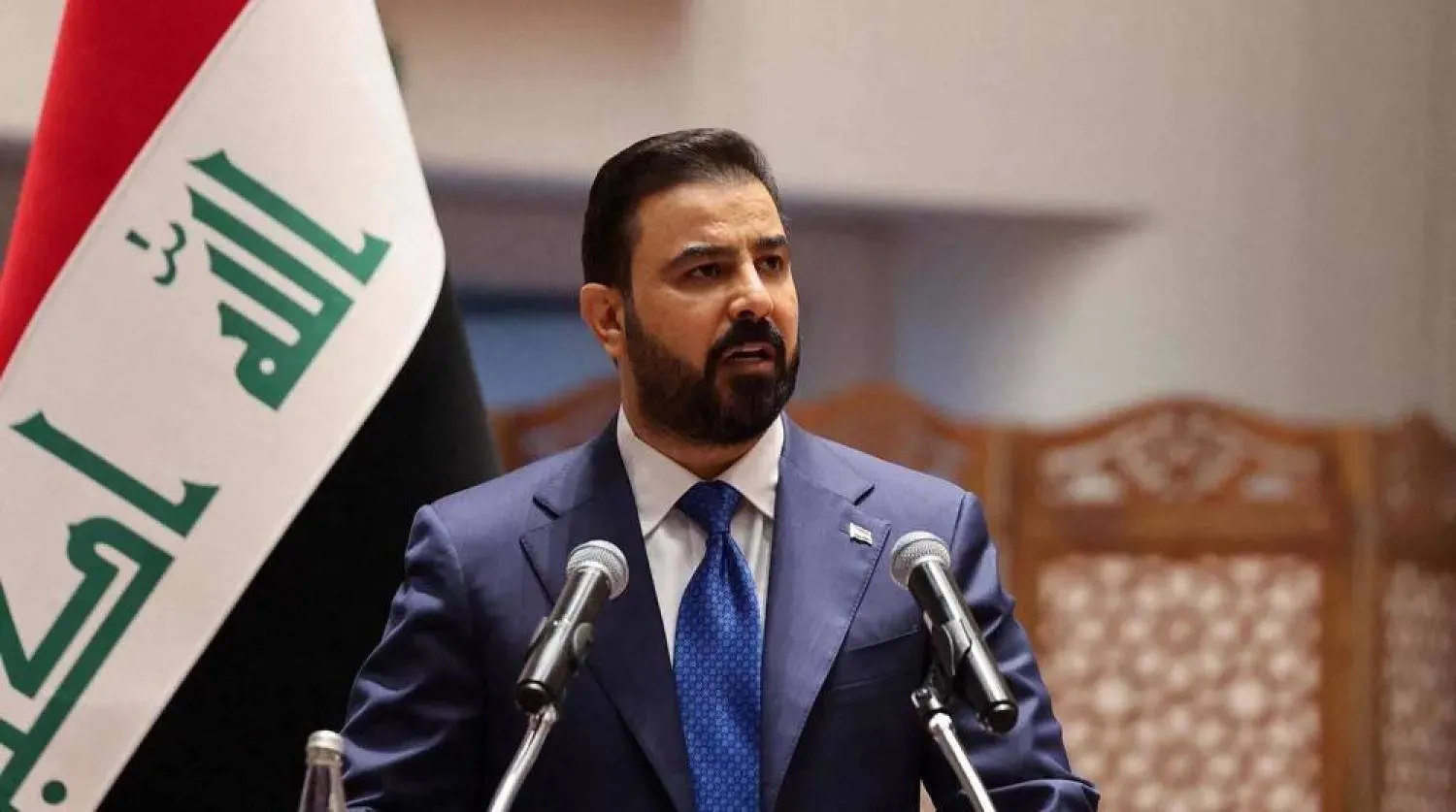
Iraq’s ruling coalition has been forced to abandon plans to create deputy prime minister posts amid disputes over bringing weapons under state control, while sources say political factions are moving to recalculate their shares of the remaining vacant ministries.
Since parliament has approved Prime Minister Ali al-Zaidi’s government on May 15, 2026, giving the green light to 14 out of 23 ministers, political disputes have prevented appointments to nine portfolios, most notably the interior and defense ministries.
A more complicated dispute involved attempts by forces within the Coordination Framework to create four deputy prime minister posts. Asa’ib Ahl al-Haq was among the leading proponents, with its leader, Qais al-Khazali, putting forward his brother Laith al-Khazali for one of the positions.
Reliable sources told Asharq Al-Awsat that Asa’ib Ahl al-Haq had sought the post after formally agreeing to the plan to bring weapons under state control, but US objections blocked the appointment.
The sources described a “test of strength” between al-Zaidi and Coordination Framework forces because of the overlap between completing the Cabinet and the weapons issue. Scrapping the deputy prime minister posts, they said, opens the door to bargaining and forces all sides to recalculate the points assigned to ministries.
Observers believe efforts to complete the Cabinet began to falter as some political forces backed away from the weapons plan.
Al-Zaidi had made bringing arms under state control a key pillar of his government program. Asa’ib Ahl al-Haq and other factions later joined the proposed settlement in hopes of easing international pressure.
Sources said the Coordination Framework’s latest meeting exposed sharp divisions between leaders opposed to creating deputy PM posts and others insisting on them, preventing the coalition from issuing a statement afterward.
Al-Zaidi has held a series of meetings with Coordination Framework leaders in recent days in an effort to reach agreement on completing his Cabinet, particularly after his government marked its first 100 days.
Figures close to the prime minister’s office said he urged ruling coalition leaders to continue supporting the government in resolving outstanding issues, including bringing weapons under state control, combating corruption and filling Cabinet vacancies, regardless of disputes over deputy prime minister posts.
Under Iraq’s informal power-sharing system, ministries are distributed among election-winning political forces according to points based on each party’s number of parliamentary seats.
Legal and legislative affairs researcher Saif al-Saadi told Asharq Al-Awsat that scrapping the deputy PM posts would increase the value of the remaining portfolios, with sovereign ministries potentially worth 15 to 20 points and service ministries 10 to 12.
Al-Saadi expected two or three ministries to be filled, while the rest could remain under acting ministers because of domestic and external factors. He said the United States opposes militia-linked figures taking senior government posts, while competition among Shiite political forces is delaying agreement on candidates for the vacant portfolios.
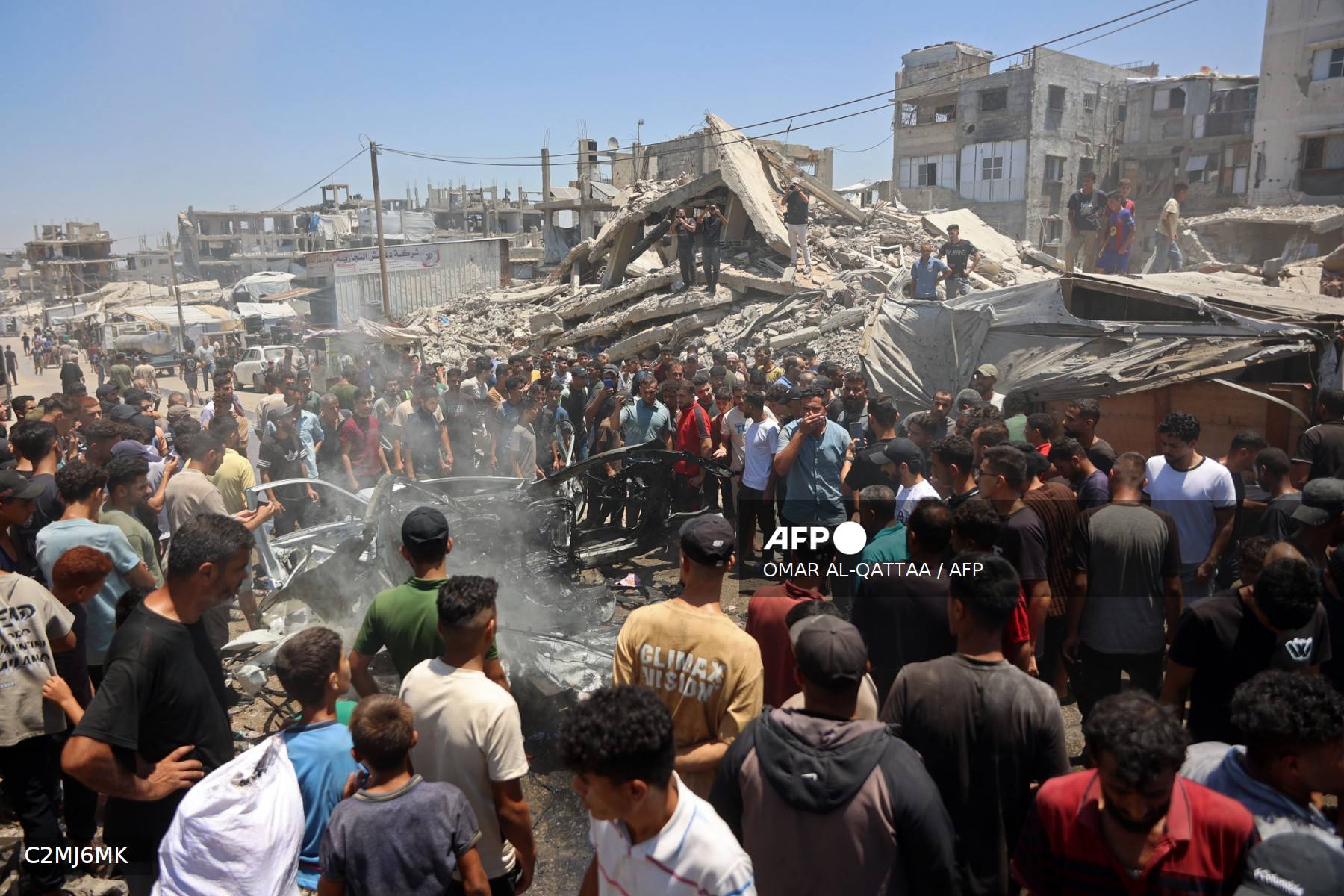
GAZA: An Israeli strike in Gaza on Thursday killed a family including two children, Palestinian hospital and security sources said.
“The bodies of four members of the Ahmad family were recovered in pieces after an Israeli strike hit a house in the Beit Lahia Project area in the northern Gaza Strip,” an official at Al-Shifa hospital in Gaza City said, identifying the children as aged 12 and eight.
The Israeli military, contacted by AFP, said it was checking.
Tokyo: The Asian Games began in Japan on Thursday when Qatar beat Iran in the men’s basketball opening group game, the first action in the continental multi-sport showpiece that has more participants than the Olympics.
Over 17,000 athletes and officials are expected to take part in 43 sports at the Nagoya-Aichi Games — which do not officially start until the opening ceremony on September 19 and will run until October 4.
Several events such as basketball, football, cricket, hockey and modern pentathlon will get under way before the opening ceremony.
Qatar held off a comeback from Iran to win their Group B encounter 59-35 at the Aichi International Arena in Nagoya in the first match of a men’s basketball competition that will hold medal finals on September 20, the day after the opening ceremony.
Los Angeles 2028 Olympics qualifying spots are up for grabs in several sports at the Asian Games, which are returning to Japan for the first time since 1994.
Organisers hope the athletes will have a “unique experience” staying in eye-catching accommodation ranging from a cruise liner and wooden containers to standard hotel rooms.
Officials are confident that the plan will not be affected by Japan’s typhoon season, which is usually in full swing in September-October.
Weather has already caused disruptions, with record rainfall on Tuesday forcing hundreds of athletes briefly to evacuate their accommodation.
Rainwater also leaked into some competition venues, with more wet weather forecast for the coming days.
Among those in action at the Games will be Philippine tennis sensation Alexandra Eala and a pair of world-class teenage talents in 15-year-old Indian cricketer Vaibhav Sooryavanshi and 13-year-old Chinese swimmer Yu Zidi.
DALLAS: President Donald Trump said on Wednesday the United States may hit Iran’s Pickaxe Mountain, urging Tehran to be cautious.
“We notice there’s a little activity at Pickaxe. I would advise Iran not to get cute because we will have to hit them very hard,” Trump said in a speech at the midterm Republican convention.
Pickaxe Mountain, located near Iran’s heavily damaged Natanz uranium enrichment facility, is a fortified site that hosts two deeply buried tunnel complexes.
Trump has been threatening strikes on Pickaxe Mountain since at least mid-July.
The rise in oil and gas prices due to the U.S.-Israeli war on Iran, which began in February, has become a major issue for Trump and his Republican Party in the lead-up to the midterm U.S. elections in November.
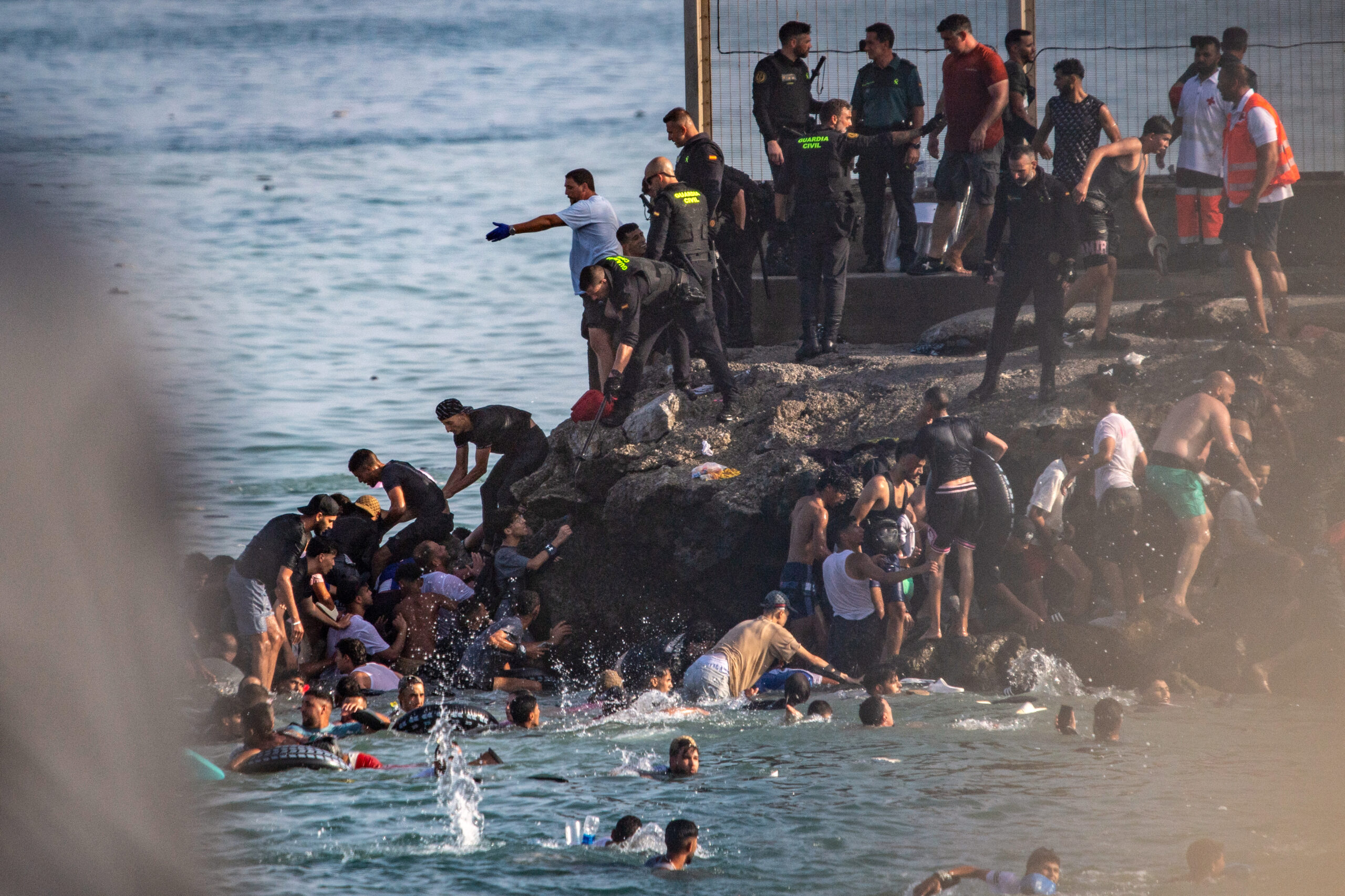
MADRID: Spanish Intelligence and security reports declassified on Wednesday had warned of possible “mass entries” by migrants into Ceuta just before thousands crossed into Spain’s North African enclave from Morocco.
Prime Minister Pedro Sanchez had told parliament when he announced he would declassify these 40 documents that there was “no information that conveyed the magnitude” of “the crisis we were going to suffer” on July 30 and 31.
“Internal communications have been detected in migrant groups in which they are trying to organise mass entries on the night of 29/07/2026,” reads a document from CENIF, a border division of the National Police, issued on the eve of the arrival of more than 70,000 migrants in the small Spanish territory.
CENIF said almost 1,000 people swam in from Morocco between July 1 and 28 — “a drastic upward trend compared to last year,” and “a consolidated and priority threat”.
An urgent memo from the National Intelligence Centre on the afternoon of July 29 warns of “several calls to carry out entries into Ceuta” in Facebook groups, one of them with over 160,000 members.
In a message on X Wednesday, Sanchez said that “with the information available at the time, no one could have foreseen the migration crisis that unfolded on the 30th and 31st. No competent body did so. Neither in Spain nor in the EU.”
He also said he had not received any document with “solid evidence that Morocco planned or carried out the incident”.
The government declassified the documents amid questions over Rabat’s role in the events and whether the Spanish government had been warned of the likelihood of mass entries.
Sanchez has insisted his government did not receive any report that would have allowed it to anticipate the scale of what was going to happen, nor anything containing “solid evidence that Morocco planned or carried out the episode.”
Doubts about Morocco’s role increased after the leak last week of a police report that pointed to the “permissiveness” of its security forces during the crisis.
A declassified document issued by military intelligence at midday on July 30 states that it is “highly likely that the Moroccan authorities are not actively encouraging the migratory wave, but have so far acted in a negligent and passive manner.”
The opposition accuses the government of failing to act despite being warned about what was going on and criticises it for exonerating Morocco, which it sees as being behind the mass entry.
“The government knew everything that was happening… They had the information. They are directly responsible for the invasion of Ceuta,” Ester Munoz, spokeswoman for the right-wing Popular Party in parliament, told reporters.
KANO, Nigeria: A popular Nigerian social media influencer known for outspoken political views was killed at his home in the northern city of Kano, his family and a rights group said Wednesday.
Ibrahim Khalil Dan Shagamu was found dead with his throat slit in his home late on Tuesday by friends and neighbors who scaled the fence after he failed to answer the door since Monday.
His death came as the election campaign season in Africa’s most populous nation swings into gear ahead of the January 16 presidential vote.
Amnesty International strongly condemns the killing of a social media political commentator Ibrahim Khalil Dan Shagamu whose body was found today in a pool of blood at his home in Kano. He was brutally slaughtered after being overpowered by his killers.
The 57-year-old father of six, popularly known as Dan Shagamu, was found “slaughtered with severe deep cuts to his head”, Aisha Sharu Lawan, his elder sister, told reporters in her home.
“It was a grisly sight. His two mobile phones were missing,” Lawan, 67, said.
Dan Shagamu, with a combined following of hundreds of thousands on Facebook and TikTok, was known for his aggressive videos in the Hausa language critical of government on local political and social issues.
It was not clear whether his death was linked to his political views, but Lawan said they suspected foul play.
“His friend said he had a disagreement with some people who threatened to kill him,” Lawan said, calling for investigation and prosecution of the killers.
Dan Shagamu was reporter for a state-funded local radio station before he resigned and became active on social media, building a huge fan base.
Amnesty International condemned his killing saying in a statement that he was “brutally slaughtered after being overpowered by his killers.”
Dan Shagamu’s killing came after election campaigning commenced last month.
Nigerian elections are usually tainted with violence, with politicians recruiting thugs to intimidate opponents and silence dissenting political views.
The paid thugs cause chaos during rallies and at election booths to help their candidates have an edge over opponents.
“As the elections approach, we continue to receive disturbing reports of politically related threats to life and intimidation,” Amnesty said.
KYIV: A Russian drone strike on a shopping centre in the northern Ukrainian city of Sumy killed three people and injured two, Regional Governor Oleh Hryhorov said.
Hryhorov, writing on Telegram, said a fire had broken out, and a photo posted online by the governor showed a badly damaged building and rubble strewn on the ground.
He said rescue teams were tackling the aftermath of the strike.
Sumy and the surrounding region along the Russian border have long been subject to heavy attacks and Moscow has said it wants to establish a buffer zone in the area.