MONEY

Get the latest updates on stock markets, economic trends, business insights, personal finance tips, and more

European Commission proposes EU preference in public procurement, excluding Chinese firms

Published on Updated

The European Commission unveiled on Wednesday a legislative proposal allowing EU public authorities to favour European companies in public procurement for key public services such as energy, water, railways, ports, airports and postal services.


ADVERTISEMENT


ADVERTISEMENT

The move comes as European policymakers seek to shield the bloc’s market from China amid heated trade negotiations, as the EU grapples with a trade deficit with Beijing of roughly €1 billion a day.

Public procurement markets in Europe represent €2 trillion every year — 15% of Europe’s GDP.

“Public money must serve our collective interests,” Commission Vice-President Stéphane Séjourné said on Wednesday. “A public buyer will be able to organise his European preference and to exclude operators coming from countries with which we do not agree on public markets, both on the basis of the nationality of the company or on the base of the origin of the products.”

Under the Commission’s proposal, EU public authorities will be able to exclude non-European companies from public contracts when they come from countries that do not allow Europeans access to their own public procurement markets.

“A municipality will be very clearly able to exclude a Chinese company or a European company that offers Chinese products,” Séjourné added. “It will also be able to give more points and more visibility in his offer to European offers compared to competition offers.”

Swift reaction from China

The Commission proposes that at least 30% of the evaluation of supplies for public procurement rely on quality criteria and not only on price, which will also hit low-cost Chinese products.

“The new standard is the best quality-price ratio, and not just the price,” Séjourné said. “Our choices must also be able to meet social and environmental demands, but also sovereignty.”

The legislation, which still has to be adopted by the EU co-legislators — the European Parliament and the EU Council — prompted a swift reaction from China. In a statement released after the commission’s announcement, China’s Chamber of Commerce to the EU said that such a European preference could “distort a level playing field” for Chinese companies participating in the European public procurement market.

“Public procurement should not discriminate against suppliers or goods on the basis of the supplier’s nationality or the country of origin of the goods.”

In March, another proposal creating a European preference in EU strategic sectors such as green tech, cars and energy-intensive industries also prompted Chinese ire, with Beijing threatening to retaliate.

EU Trade Commissioner Maroš Šefčovič will travel to China in early October, hoping to reach a political deal with Beijing to rebalance the trade relationship with the EU.

Source link

Arab News | British police open criminal investigation into whether Reform UK broke foreign donation rules

LONDON: British police said Wednesday that they have opened a criminal investigation into allegations that anti-immigration party Reform UK broke rules barring foreign donations.

Last week, Channel 4 broadcast an undercover investigation in which two senior Reform UK officials appeared to discuss ways money from an American financier could be channeled through his U.K.-based son to get around the rules.

U.K. electoral law says parties can only accept donations from British voters or U.K.-registered businesses.

The Metropolitan Police said that after the broadcast, the force “received a number of reports relating to donations and polling involving a political party.

“Detectives have assessed the information provided and determined that there are potential offenses requiring investigation,” it said.

Reform UK said it “denies any wrongdoing and will fully cooperate with the investigation.”

The party suspended Dan Jukes, a longtime adviser to Reform UK leader Nigel Farage, and party policy chief James Orr, after the documentary was aired. But Farage denied that there was any breach of electoral law.

The program showed two men purporting to be a U.S. financier and his U.K.-based son discussing with Jukes, in the presence of Farage, how 500,000 pounds ($675,000) could be donated to the party through the son. The “son” was actually a reporter from investigative group Verbatim, and the “father” an actor.

In separate footage, Orr, a Cambridge University theologian, appeared to discuss getting the U.S. donor to pay for opinion polls commissioned by Reform UK.

In a speech to the party’s conference on Friday, Farage insisted Reform UK hadn’t broken any rules or accepted “dodgy money.” He accused “foreign-funded hard-left activists” of being behind what he called “entrapment.” Verbatim is an offshoot of the Center for Climate Reporting, a nonprofit investigative group that says it’s funded by grants and donations.

Reform UK was facing questions about its funding even before the broadcast. Farage is being investigated by Parliament’s standards watchdog over an undeclared 5 million-pound ($6.7 million) gift he received from a Thailand-based cryptocurrency billionaire in 2024.

Police said Wednesday that the potential offenses raised by the TV program “are similar in nature to matters already under investigation by the Met’s Special Enquiry Team relating to donations made to the same political party. As a result, these matters will form part of that ongoing investigation.”

Founded in 2018 as the Brexit Party to push for a hard break from the European Union, Reform UK has grown rapidly in membership and support since changing its name in 2021 and honing its anti-establishment, anti-immigration message.

Though it holds just eight of the 650 seats in the House of Commons, it has often led opinion polls and was the big winner in local elections in May, a result that helped spur a panicky Labour Party to replace then-leader Keir Starmer with new Prime Minister Andy Burnham.

In July, Farage quit his House of Commons seat in protest of the parliamentary standards investigation, saying he would run for reelection and let voters be his judge. He easily won the August election, which was dismissed as a stunt by his critics and boycotted by all the other main parties.


Source link

Arab News | Houthis bring ‘nothing but suffering’ to Yemen, US says

  • Iran-backed group underestimates Yemeni resolve to end brutality, embassy says

DUBAI: The US has accused Yemen’s Houthis of triggering the latest escalation in violence in the country, as renewed fighting threatened to unravel years of relative calm and draw it deeper into the wider regional conflict.
The US Embassy in Yemen said on Wednesday that the Iran-backed group had brought “nothing but suffering” and accused it of turning Yemen into a base for Iran to “undermine Arab unity and security.”
“The terrorist Houthis and their Iranian backers miscalculated by underestimating the resolve of the Republic of Yemen’s legitimate government, the Yemeni Armed Forces, and the Yemeni people to end Houthi aggression and brutality,” it said on X.
It cited an Aug. 7 statement by the UN Security Council, which condemned Houthi missile attacks against Saudi Arabia and commercial vessels and warned that the group’s actions threatened regional security, navigational rights and efforts to secure peace in Yemen.
The statement came a day after a major Houthi attack on southern Saudi Arabia wounded 73 people, including women and children, and struck energy facilities in Abha, Khamis Mushait, Jazan and Najran.
Fires broke out at several sites and operations at some facilities were temporarily halted, according to Saudi authorities, who described the attacks as a “dangerous escalation” and vowed to take measures to deter further strikes.


Source link

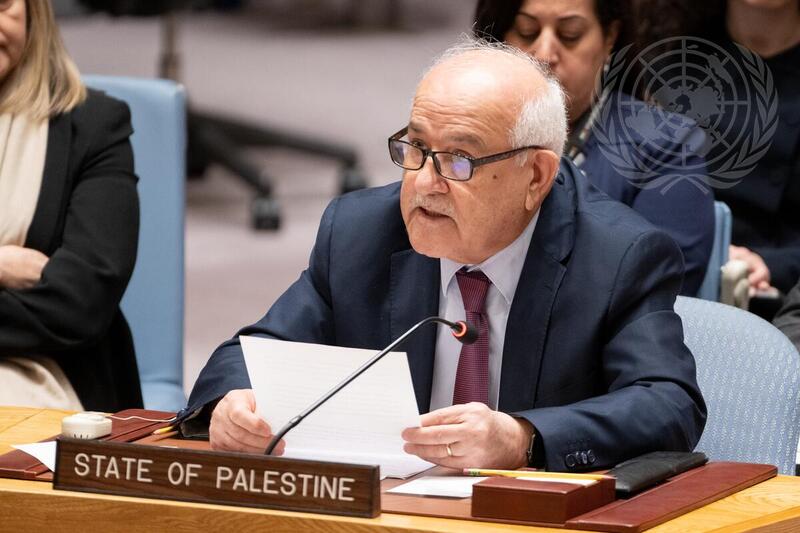
Arab News | Palestine’s UN envoy slams ‘most organized, methodic, broadcasted ethnic cleansing campaign in modern history’

NEW YORK: Israel’s “decades-long ethnic cleansing” of the Palestinian people “has reached its height through the commission of genocide,” Palestine’s permanent observer to the UN told the Security Council on Tuesday.

Riyad Mansour cited a string of statements by senior Israeli officials that amount to open declarations of a plan to forcibly remove Palestinians from Gaza and the West Bank.

In a five-page letter to Security Council President Jerome Bonnafont, Mansour said Israeli officials “are proudly declaring their ethnic cleansing plan, enunciating their decades-long policy to remove the Palestinian people from their land, and rapidly and actively implementing their crimes on the ground.”

The letter, seen by Arab News, quotes Defense Minister Israel Katz telling an interviewer on Sept. 2 that “there’s no real solution for Gaza in the end without migration,” and that Israel is “organized and prepared to get them out — by sea, by air, by every way possible.”

Katz said “the plan hasn’t been cancelled; it’s being discussed all the time, even now, and I think there’s no other solution for everyone’s good.”

He added that “today, 70 percent of Gaza’s territory is a desert thanks to what the Israeli army has done; there are no longer any inhabitants or houses there,” and that Israeli forces have “reoccupied the refugee camps in the West Bank and expelled 40,000 Palestinians.”

Katz denied the existence of Jewish settler violence, saying: “There is no Jewish terror. I have cancelled that term. Terrorism is committed by those who act against the State of Israel.”

On Sept. 7, he said he and Prime Minister Benjamin Netanyahu had instructed the military “to prepare for the opening of a full-scale war” in the West Bank, including “the evacuation of residents from cities and villages … exactly as we did in the security zones in Gaza,” and announced plans for “targeted eliminations” of senior Palestinian Authority officials.

The letter cites Netanyahu filming himself at a military post in Gaza on Sept. 2 saying: “We are not withdrawing. We are staying on this line. We control 60 percent of the strip. And there is still more to come.”

The same day, it says, he visited a religious school in the city of Sderot and looked on as young settlers chanted: “And we will take vengeance, one eye for the two eyes of Palestine, may its name be erased.”

National Security Minister Itamar Ben-Gvir unveiled a plan on Sept. 3 called “Disengagement 710,” which he said would “encourage the voluntary migration of 1.86 million Gazans within seven years.”

He said 250,000 Palestinians would be removed from Gaza in the first year and a million within three years, adding: “It is possible. It is realistic. It is in our hands. It is within our ability.”

Ben-Gvir said a survey found that “76 percent of Israeli society support encouraging immigration from Gaza.”

The letter references a video generated by artificial intelligence that Ben-Gvir posted showing Palestinian detainees entering what it described as a slaughterhouse-style conveyor system, and a separate video of him telling women detainees: “The good conditions in the prisons are over … I’m glad we lowered these conditions to the bare minimum.”

The letter links this rhetoric to reports of Israeli soldiers marking Palestinian detainees with numbers on their bodies, including a case in which a man identified as Ahmad Al-Hathnawi was released with the number 44 written on his forehead. The Israeli military acknowledged the practise, saying “lessons have been learned.”

Finance Minister Bezalel Smotrich, who also holds a ministerial post within the Defense Ministry overseeing settlement policy, announced a new settlement near Bethlehem on Sept. 3 and said: “We want to bring a million settlers.”

He repeated the assertion that “there is no such thing as a Palestinian people,” and on Sept. 7 said the PA “should be brought down,” declaring that the Oslo Accords are “null and void anyways.”

Israel’s Chief Rabbi David Yosef told a crowd on Aug. 22 that Palestinians “are not a people” and “have no rights here.” The crowd responded: “Amen. May the Holy One, blessed be He, destroy all of Gaza.”

The letter documents the “infrastructure of ethnic cleansing” on the ground, saying Israeli forces demolished the village of Khirbet Al-Tabban in the past week, displacing more than 70 people and bringing to 47 the number of Palestinian communities erased since October 2023.

It says Israeli settlers and soldiers killed teenagers Omar Al-Nassan, 17, and Khalil Abu Alia, 16, in the village of Al-Mughayyir the same day Israel’s president told CNN that his country was making a “major effort” to curb settler violence.

Citing a UN report issued on Sept. 4, Mansour said Israeli forces “killed civilians, destroyed hundreds of homes … and went door to door forcing residents to leave” in the Jenin, Nur Shams and Tulkarm refugee camps, and displaced families “were told by Israeli officers there would be no more refugee camps and that they should all go to Jordan.” More than 40,000 Palestinians remain displaced from the camps, the letter says.

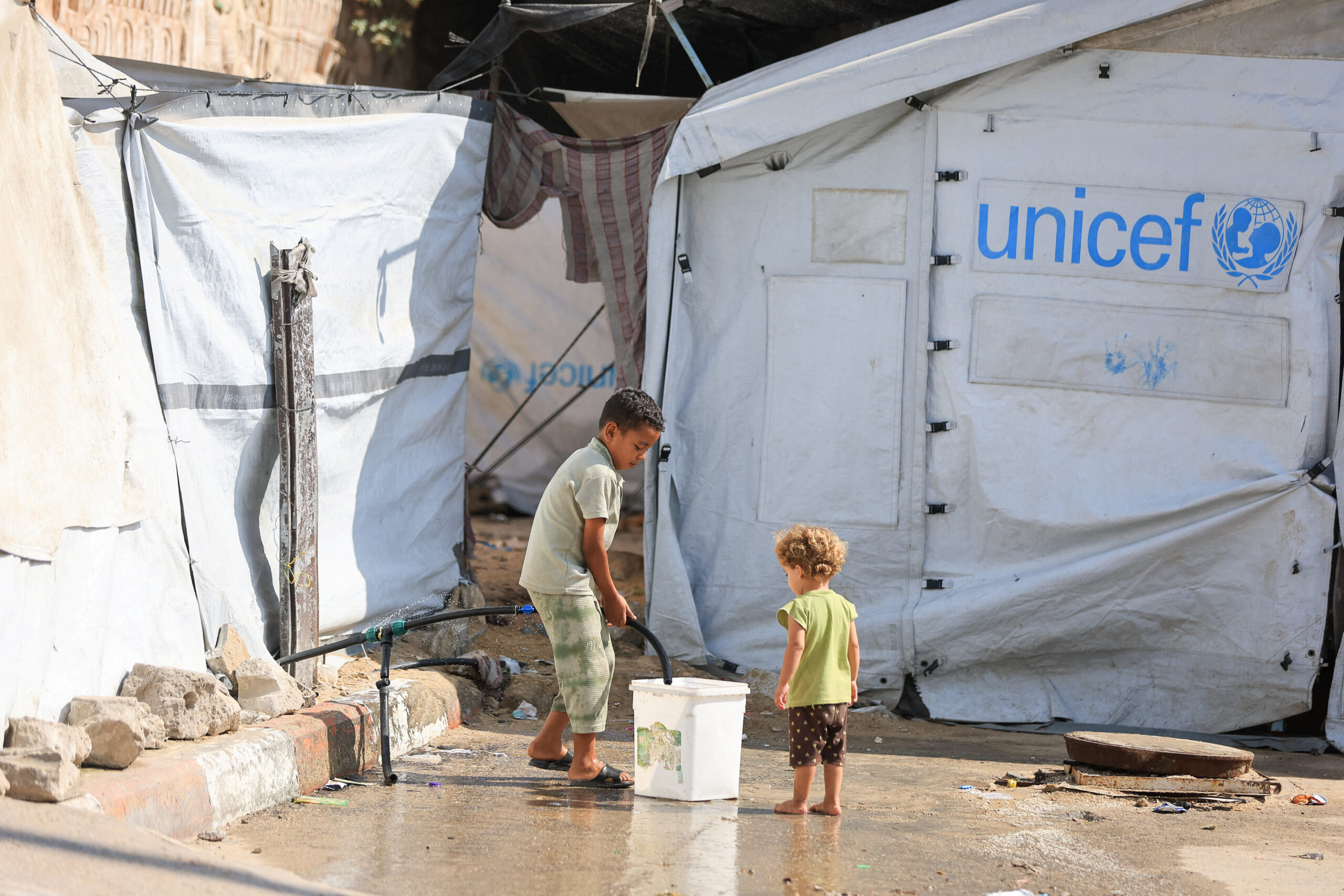
In Gaza, 2.3 million people, including a million children, remain confined to less than a third of the territory’s area, with 1.9 million displaced and two-thirds of households living in tents.

More than 30,000 tents are being held at border crossings against a need for 130,000 before winter, and roughly two-thirds of Gaza’s population face crisis-level food insecurity or worse.

More than 30 Palestinians were killed in Gaza between Aug. 28 and Sept. 7, including 8-year-old Wafaa Akila and her father.

They were killed as he drove her to school, bringing to more than 270 the number of children killed since the ceasefire was announced.

Mansour welcomed recent moves by Britain, France, Canada, Spain, the Netherlands, Ireland, Norway and Belgium to restrict settlement products and sanction those financing the settlement enterprise, as well as similar steps under consideration in Denmark, Finland, Iceland, Poland, Portugal and Sweden.

He called on the Security Council to go further, urging states to halt arms transfers, close diplomatic missions in Jerusalem, and impose travel bans and asset freezes.

“Action, not statements, will help the Palestinian people to survive Israel’s ethnic cleansing campaign,” Mansour wrote, calling it “the most organized, methodic, and broadcasted ethnic cleansing campaign in modern history.”

The letter is the 892nd that Palestine has sent to the Security Council on the situation since September 2000, according to the Palestinian mission to the UN.


Source link

Arab News | How an algae bloom exposes the fragile water link between Israel and Gaza

LONDON: The algae bloom that clogged intake pipes at Israel’s Mediterranean desalination plants in late August exposed the fragility of a water system that supplies not only Israel, but also Gaza.

Five of Israel’s six coastal desalination plants, which convert seawater into drinking water, shut down after microscopic algae clogged their intake systems, CNN reported on Sept. 4, citing Mekorot, Israel’s national water company.

The plants produce more than 80 percent of Israel’s drinking water, according to Israeli media.

Some privately owned plants have since resumed partial operations. But as of Sept. 3, only one was operating at full capacity. By Sept. 7, two plants remained closed and three others were operating at limited capacity for a ninth consecutive day, The Times of Israel reported.


Authorities responded by restricting water use, increasing withdrawals from reservoirs and the Sea of Galilee, and limiting supplies to agriculture, Haaretz reported.


Mekorot spokesperson Lior Gutman called the disruption unprecedented, according to CNN.

Scientists believe the bloom formed near Egypt’s Nile Delta before Mediterranean currents carried it north along Israel’s coast. The algae extended at least a dozen kilometers, said Edo Bar-Zeev, an associate professor of water research at Ben-Gurion University of the Negev. 

“This is the first time I saw something of this extent,” Bar-Zeev, who has tested coastal water for two decades, told CNN.

Environmental experts say untreated sewage from Gaza may be worsening the nutrient-rich conditions in which algae thrive. Gaza’s six wastewater treatment plants have been damaged or destroyed during the war, allowing untreated sewage to flow into the Mediterranean for months. 

Zalul Environmental Association, an Israeli nonprofit, said in a statement that satellite imagery suggested that pollution feeding the bloom came from both Gaza and the Nile Delta. 

But for Palestinians in Gaza, the crisis did not begin with an algae bloom, but with the destruction of water and sewage infrastructure during the war, compounded by Israeli restrictions on supplies and movement. 

Maysa Yousef, an artist and mother in central Gaza, said she first noticed green algae forming in bottles filled with Mekorot water, which is piped from Israel into Gaza through a network of transmission lines.

“Before Israel announced that the water had become contaminated, we already knew,” Yousef told Arab News. “Every morning, I filled the water bottles, then when I went to wash them in the evening, I found them all covered in algae.”

She said her husband initially dismissed her concern because the water came from Mekorot.

“I told my husband, ‘The water coming to us from Israel is contaminated. It is not clean,’” she said. “He said, ‘No, it is Mekorot water — it is desalinated and treated.’ I told him, ‘No, there is algae in it. Look inside the bottles.’”

Other Gaza residents have shared similar accounts on social media, reporting algae and small worms.

When Israel announced the desalination shutdowns in late August, Mekorot supplies to Gaza were cut off, Yousef said. For many families, the water had been one of the few comparatively safe sources available.

“Gaza relied on Mekorot water because it is close to drinking-water quality,” she said. “Some people drink it although it tastes awful.”

Her family used it for cooking and tea because safe drinking water was already scarce.

The World Health Organization said on Sept. 1 that microbiological contamination in Gaza water samples had risen from less than 6 percent in January to nearly 20 percent in August.

Since 2024, Gaza residents have faced severe water shortages. In many areas, people have reportedly resorted to makeshift latrines as sanitation systems failed.

Nearly 90 percent of Gaza’s water infrastructure, including desalination and wastewater treatment facilities, has been destroyed, according to UN agencies and media reports. Damaged sewage lines have also contaminated the aquifer on which many residents depend.

In February, the UN Office for the Coordination of Humanitarian Affairs said its partners reported that the Mekorot supply line was fully shut. The line had already been operating at reduced capacity because of two identified leaks, and repairs near a reservoir had not been completed.

Humanitarian groups have increased water trucking to affected neighborhoods, but access remains uneven. In Al-Mawasi, residents have complained that available water is visibly contaminated.

“If you put it in front of a donkey, it would refuse to drink it because it is so filthy and full of worms,” one local woman, whose name is being withheld at her request, said. “But we had no alternative. Otherwise, you die of thirst.” 

The WHO warned in early September that Gaza’s deteriorating water quality was raising the risk of disease outbreaks. Winter rains could further spread sewage and contaminated water through overcrowded displacement sites, the agency said.

Reinhilde Van de Weerdt, the WHO representative for the Occupied Territories, said microbiological contamination found in water samples had nearly tripled since the beginning of 2026.

Cases of acute watery diarrhea nearly doubled, from about 30,000 in March to more than 58,000 in August, she told a weekly briefing in Geneva. 

Yousef said her husband was among those who became ill after drinking contaminated water.

“About two weeks ago, my husband started having stomach pains,” she said. His condition worsened and he needed to go to the hospital. With no transportation available, the family walked to Al-Aqsa Martyrs Hospital in Deir Al-Balah. 

At the hospital, she said, care was being delivered in tents and essential services were scarce. After running tests, they discovered that he suffered from an inflammation of the stomach lining caused by consuming contaminated water. 

“Now he is forbidden from drinking water except imported bottled drinking water,” Yousef said. “No coffee, no soft drinks, and only limited vegetables and fruit, and so on.” 

Gaza’s health system has been devastated by the war, with hospitals and other medical facilities damaged or destroyed and restrictions limiting the entry of medicines, medical supplies and fuel.

For Gaza’s residents, the algae bloom was not an isolated environmental disruption but another sign of a broader collapse: a water system already battered by war, damaged infrastructure and the loss of basic public health protections.


Source link

Google to invest €13bn in Finnish AI data centres, its biggest European push yet

Published on

Helsinki has landed the biggest cheque Google has written anywhere in Europe


ADVERTISEMENT


ADVERTISEMENT

The company announced on Wednesday that a €13 billion investment will fund data centres and supporting infrastructure across four municipalities, along with clean energy projects and funds dedicated to local biodiversity, education, research and workforce development.

The facilities in Hamina, Kajaani, Muhos and Vaala will power a range of Google services, among them its Gemini chatbot. The company described the decision as “a testament to Finland’s leadership in responsibly building AI infrastructure.”

Construction is expected across 2027 and 2028, and the firm estimates the investment will add €3.6 billion a year to Finland’s GDP while supporting more than 37,000 jobs, roughly 16,000 of them in construction.

Once the building stops, Google projects the sites will sustain around 7,000 jobs annually, spanning technical and facility roles, equipment suppliers, as well as the shops, restaurants and services used by those workers and their families.

Finnish Prime Minister Petteri Orpo welcomed the announcement in Google’s statement.

“Google’s decision is a clear testament to our strengths. The value of the data economy extends far beyond direct investment into spurring innovation, research and development,” Orpo said, adding that closer collaboration would “deliver lasting benefits for both parties.”

Why Finland

The appeal to invest in Finland is rooted in its cold climate.

Data centres generate enormous heat and consume vast quantities of electricity, and Finland offers a cold climate that reduces cooling costs alongside relatively cheap and stable power from nuclear plants, wind and hydro.

That combination has produced a boom, with dozens of data centres already under construction across the country.

Google’s own presence dates back to 2009, when it bought a disused paper mill in the coastal city of Hamina and converted it, expanding steadily since.

For Orpo’s right-wing government, attracting this kind of investment has also been a priority, especially since Finnish elections will take place in April of next year.

Finland is contending with record unemployment and weak growth, and the data economy has become one of the few sectors offering the prospect of substantial investment and job creation.

Additional sources • AFP

Source link

Arab News | Military operations intensify in Yemen

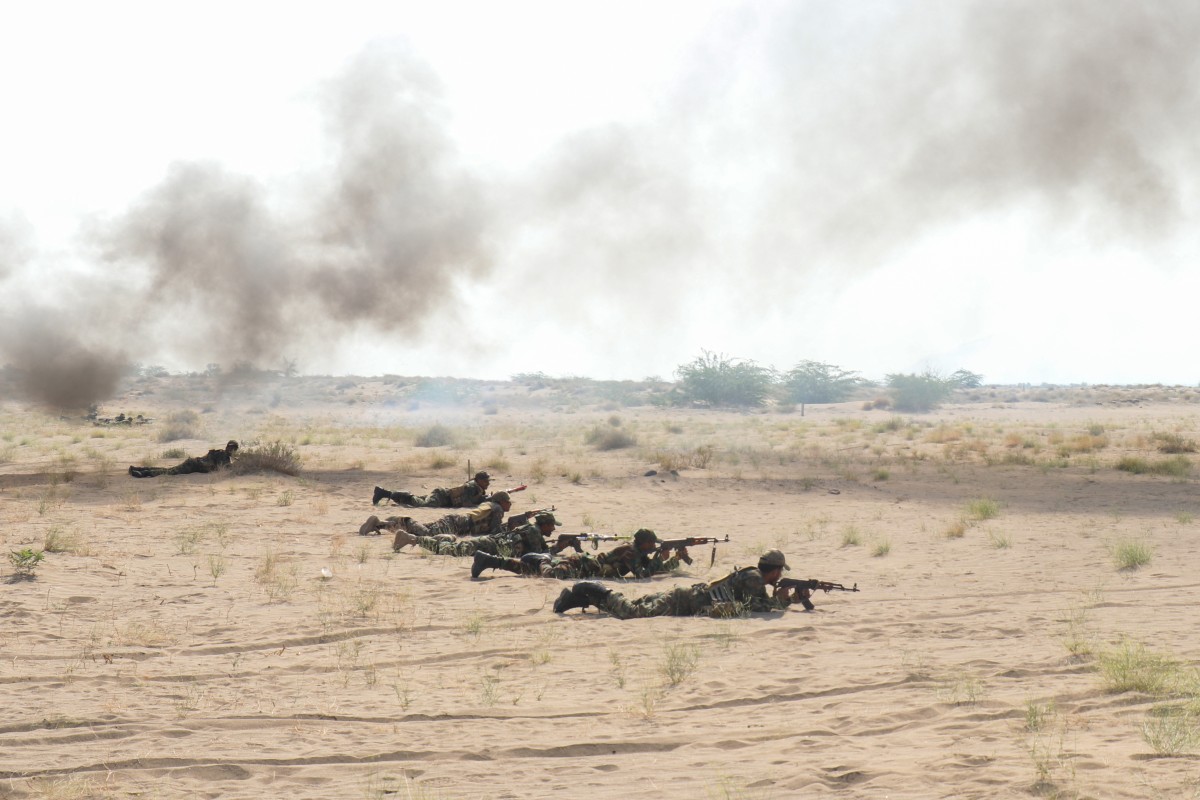
Military operations in Yemen intensified on Wednesday with clashes expanding across several fronts, according to reports by Saudi-owned news channels Al Arabiya and Al Hadath.

The Yemeni armed forces reported that fighting with the Iran-backed Houthi militia has been continuing on the Taiz fronts of Toil and Al-Barah, and claim to have inflicted heavy losses on the group.

Al Arabiya and Al Hadath have reported that Yemeni government forces have captured areas in southern Mahreb, as well as several positions in the northern and southern sectors.

The forces have also reportedly captured new positions and villages on the Al-Kaddah front west of Taiz during an operation against the Houthis.

The offensive was accompanied by heavy clashes, artillery fire and airstrikes targeting Houthi positions, gatherings and reinforcements in the area.

Al Arabiya and Al Hadath sources also said the Yemeni armed forces had launched a counterattack against Houthi positions on the Meris front north of Al-Dhale Governorate.

The sources also reported that Yemeni military aircraft had carried out several airstrikes on the Houthi-held Helan Mountains west of Marib.


Source link

Oil surges past $100 a barrel again as US-Iran clashes intensify

Published on Updated

The front month contract on Brent crude, the international standard for oil prices, crossed $100 per barrel again on Wednesday morning while the US standard, WTI, hovered around $95.


ADVERTISEMENT


ADVERTISEMENT

Prices have risen almost 20% since the middle of last week as fighting around the world’s most important oil chokepoint has once again intensified.

It is also the first time since 23 July that oil has hit the $100 mark.

US Central Command said its forces destroyed five Iranian tankers carrying crude oil on 8 September after Iran’s Revolutionary Guard fired ballistic missiles at a US Navy warship twice within two days. The command did not identify the ship, but said it was not hit and continued patrolling regional waters.

It followed a similar strike on 5 September, when Iranian forces fired ballistic missiles at a US aircraft carrier and a destroyer, both of which evaded the attack. The command responded by disabling or destroying three Iranian tankers.

Tehran retaliated by firing missiles at a US military base in Jordan, where air defences intercepted most of them, and renewed threats to target tankers in Kuwaiti and Bahraini waters.

Iran has also repeatedly warned vessels against using unauthorised routes through the Strait of Hormuz.

Mohsen Rezaei, secretary of Iran’s Supreme National Security Council, said Tehran would soon declare an exclusion zone outside the strait, warning that any vessel entering without Iranian coordination would be added to a sanctions list.

Saudi Arabia has been drawn in too, with Aramco facilities at Jazan attacked again on Monday, though damage was reported as limited.

Roughly 7 million barrels a day are still moving through the Strait of Hormuz, against about 20 million before the war began on 28 February.

No end in sight

The military escalation is running alongside a financial one.

Washington launched Operation Economic Outcast in late August, an effort to sever Iran from the global financial system by targeting its access to digital assets, technology, gold, aviation and shipping.

The US Treasury designated close to 60 companies, individuals and vessels at the outset and has signalled fresh measures weekly, with the European Union endorsing the campaign this month.

Rhetoric on both sides has hardened.

US Secretary of War Pete Hegseth said the country “will destroy [and sink]” Iranian oil tankers if Iran fires on American vessels while the Iranian parliament speaker Mohammad Bagher Ghalibaf replied by stating “strike our assets and you get struck”.

US President Donald Trump has continued to insist the waterway is functioning, posting on Truth Social last week that “Hormuz volumes are BACK” and claiming 18 million barrels a day were flowing.

However, the US Energy Secretary Chris Wright put Monday’s figure at 17 million barrels of crude and products combined, while acknowledging the multi-day rolling average is considerably lower.

During last week’s White House press conference, US Vice President JD Vance also declined to categorise the ongoing conflict as a war and stated that “the only reason we do not have a worldwide energy crisis is because of the leadership of the President.”

Faced with the latest developments, analysts are adjusting upward.

Goldman Sachs raised its Brent and WTI forecasts by $5 on Monday to $85 and $80, respectively, for December and warned prices could exceed $120 next year should Gulf output remain 4 million barrels a day below pre-war levels, though the bank does not treat that as its base case.

Source link

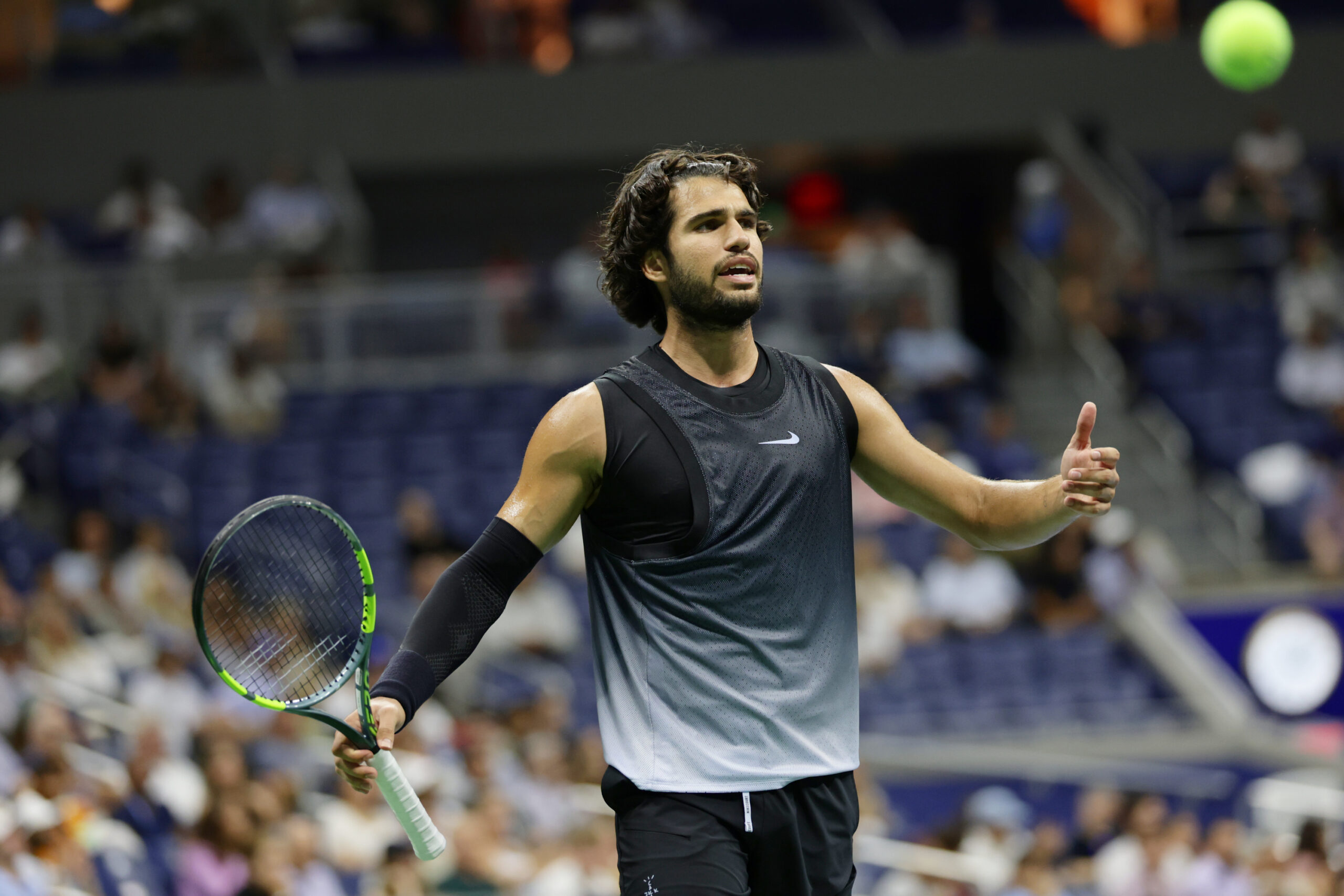
Arab News | Alcaraz falls to Shelton in epic latest-ever US Open finish

NEW YORK: Carlos Alcaraz tumbled out of the US Open quarter-finals at 3:34 am Wednesday, falling to Ben Shelton in an epic five-set thriller that broke the record for latest finish ever at Flushing Meadows.

The big-hitting Shelton claimed his first career win over Alcaraz, 6-7 (5/7), 6-1, 6-3, 1-6, 7-6 (10/7), ending the Spaniard’s hopes of retaining his title in his first tournament back after a four-month injury absence.


Source link

Dutch Pension Shift Hits Long-Term Debt Market

European CFOs must adjust as the region’s biggest pension buyer of long-dated debt cuts back.

This article appears in the September 2026 issue of Global Finance Magazine.

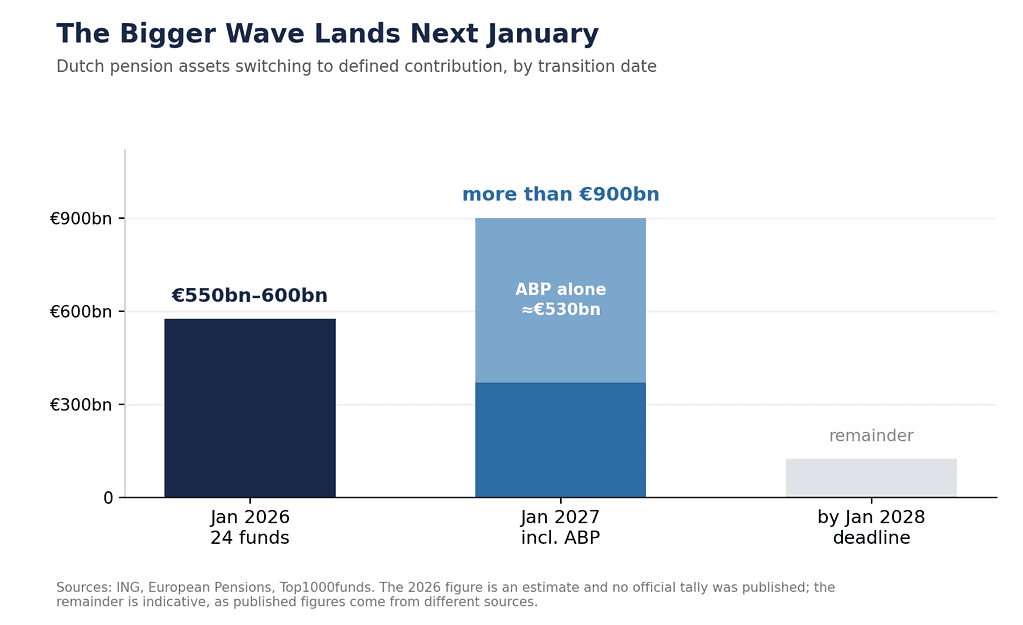
The Netherlands pension system is beginning to reduce one of Europe’s most reliable sources of demand for long-dated debt as a broad regulatory shift changes how Dutch pension funds manage their assets and liabilities. ING Groep NV estimates that nearly €600 billion ($699 billion) of assets have already been affected by the change, with more than €900 billion expected to follow early next year.

Under the old defined-benefit pension system, Dutch funds were required to hedge the interest-rate sensitivity of long-term pension liabilities by using long-dated bonds and swaps to match assets with payments extending decades into the future. Under the new defined-contribution model, which became law in 2023, that liability matching requirement has been significantly reduced, allowing funds to carry less duration and scale back their long-term hedges, resulting in less structural demand for the longest-dated debt and swaps.

For European CFOs, this could mean a higher premium for 20-, 30- and 50-year borrowing as companies and governments compete for a smaller pool of long-duration investors.

The change “should reduce structural demand for long-end duration assets and support curve steepeners over the long-term horizon,” wrote Sara Adjir, senior vice president and portfolio manager, and Jeroen van Bezooijen, account manager, at Pacific Investment Management Co., in a research note. They expect the impact will be mostly concentrated in 50-year swaps, but will also be felt in the demand for 20- and 30-year euro swaps and government bonds, including German and Dutch debt.

Deadlines

The Netherlands runs Europe’s largest pension system, with roughly €1.6 trillion in assets, and every fund must complete the switch by January 2028. Dutch pensions have long dominated the market for European long-dated debt, holding around €88 billion of interest-rate swaps maturing beyond 25 years at the end of last year, roughly a quarter of the total.

The first major wave of the transition came on Jan. 1, when 24 funds converted, among them the healthcare scheme PFZW and the metals scheme PMT, with an estimated €550 billion to €600 billion of pension assets between them. Analysis by the Netherlands central bank shows that Dutch pensions bought almost €34 billion net of swaps maturing inside 25 years while selling more than €12 billion of longer-dated ones. 

The bigger test, however, comes when more than €900 billion of pension assets is scheduled to convert on Jan. 1, with the Dutch civil service scheme ABP accounting for about €530 billion of that. 

The shift does not mean long-dated Dutch debt is suddenly becoming illiquid or even hard to sell: “Overall, we still see strong demand for our 30-year bond. Remember, we are AAA,” said Saskia van Dun, director of the Dutch State Treasury Agency.

Sovereign Issuers Adjust

Data indicates that sovereign borrowers are already adjusting to the change.

The share of Netherlands government bonds sold at maturities beyond 10 years fell from 42% at the start of 2025 to 31% by the third quarter, according to the Organization for Economic Co-operation and Development (OECD), which calls the constraint on long tenors structural. The OECD expects eurozone debt agencies to sell a record €1.35 trillion of medium- and long-term bonds this year into that thinner pool of demand.

For European finance chiefs, however, times are changing. For two decades, long-dated bond demand was unusually deep and predictable. As it recedes, the shifting cost of locking in 20 or 30 years of funding could become a live question.

Thomas Monteiro is a contributing writer based in Spain.

Source link

A European Central Bank rate hike is all but certain, the reasoning less so

Frankfurt will almost certainly move on Thursday.


ADVERTISEMENT


ADVERTISEMENT

Market odds put a quarter-point hike at close to certainty, which would lift the European Central Bank’s deposit rate from 2.25% to 2.5%.

What makes this a difficult call is not whether the ECB acts, but why, and whether the reasoning survives contact with the data.

The path here has been compressed as the ECB raised rates on 11 June for the first time in three years, lifting the deposit rate from 2% to 2.25% in response to the energy shock from the Iran war, and then held rates in July while Christine Lagarde pointed hawkishly towards September.

August’s inflation figures removed any remaining doubt with eurozone inflation hitting 3.3%, up from 2.9% in July and the highest since September 2023, as energy inflation surged to 14.3% from 10.3%.

The inflation is not spreading

Look beneath the headline inflation and the picture inverts.

Core inflation, which strips out energy, food, alcohol and tobacco, actually fell to 2.4% from 2.5%. Services inflation, the component most closely tied to wages and domestic demand, dropped to 3% from 3.3%.

In other words, there is still little evidence that expensive energy is feeding through into everything else. That is what economists mean by “second-round effects”, and their absence is the strongest argument against tightening.

The ECB’s own research also supports the distinction.

In a paper published on Tuesday, ECB economists found that adverse energy supply factors, driven by geopolitical tensions, accounted for around 90% of the rise in energy inflation between January and May.

“This time the energy supply shock dominates, while demand and public policy stimulus have minor roles,” the economists wrote, adding that “these differences are key to explaining why monetary policy responses differ.”

The 2021-22 surge, by contrast, came from “a combination of large and unprecedented supply and demand-side factors,” which is why the ECB then “raised interest rates forcefully and persistently” rather than gradually.

The national spread across the EU further underlines how uneven this is.

August inflation ran at 4.5% in Spain, 2.9% in Germany and 2.7% in France, three economies facing the same energy shock with very different results, all governed by one interest rate.

Economic growth is the other complication.

The eurozone has proved more resilient than expected, which ING attributes partly to luck, partly to Asian competitors suffering more from the closure of the Strait of Hormuz and partly to fiscal stimulus. However, resilience does not mean the growth could not, or should not, accelerate.

ING characterises Thursday’s expected move as “another insurance rate hike”, or “a dovish rate hike,” noting that even at 2.5% the deposit rate sits within the range the ECB itself considers neutral.

Going further would mean deciding restrictive policy is required, which would be a different judgement entirely.

Everyone is looking to hike at the same time

The ECB is not acting alone, and that matters for the euro.

The Federal Reserve meets on 15 and 16 September, with Chair Kevin Warsh having used his first Jackson Hole address to argue that financial conditions are not restrictive and underlying inflation has not improved.

Investors had put the odds of a US hike at roughly one in three before those remarks, but now price a 60% chance the Fed hikes the target range from 3.5%-3.75% to 3.75%-4%.

The Bank of Japan follows on 17 and 18 September, with markets pricing an 80% to 90% chance of a move to 1.25%.

On the other hand, the Bank of England is expected to hold rates at 3.75% on 17 September as it currently maintains a much higher interest rate than the rest.

If the Fed were to hike while the ECB held, the dollar would strengthen against the euro and that would cut both ways for Frankfurt.

A weaker euro makes European exports more competitive, but it also makes imports dearer, and since oil and gas are priced in dollars, it would push up precisely the energy costs driving the inflation problem in the first place.

Overall, we can assume a September rate hike is a done deal for the ECB but we can also project that it won’t solve the central bank’s current dilemma of raising borrowing costs against an inflation it cannot reach, while withdrawing support an economy could still use.

Source link

Arab News | Iran’s Guards say attacked two US vessels and eight oil tankers: state media

Iran’s Revolutionary Guards said Wednesday they attacked two US vessels, eight oil tankers and 10 “non-compliant vessels” trying to pass through the Strait of Hormuz, state media reported.

“Two US vessels, eight oil tankers, and 10 non-compliant vessels attempting to pass through the prohibited and unsafe zone of the Strait of Hormuz were targeted,” the Guards said in a statement published by the official IRNA.

Meanwhile, six cargo ships transited the Strait of Hormuz yesterday, Tuesday, compared to nine ships the previous day and an average of about 12 ships over ten days, according to shipping data released today, Wednesday.

These numbers may change, as some ships typically choose not to operate their transponders during the voyage.

Preliminary data from Kpler at 0200 GMT showed that five of the six ships entered the strait while one exited, and the group included a Panamax-sized tanker and a medium-sized tanker.

The US-Israeli war on Iran escalated yesterday, Tuesday, as Houthi militia in Yemen, allied with Tehran, launched attacks on Saudi cities, further involving the kingdom in the conflict.

Simultaneously, US forces targeted several Iranian oil tankers, while Iran struck a US base in Jordan.

Meanwhile, 25 cargo ships transited the Bab El-Mandeb Strait yesterday, Tuesday, with 11 ships entering and 14 exiting the other vital Middle Eastern waterway.

This compares to an average of about 27 ships transiting the Bab El-Mandeb Strait over the past ten days.

Among the ships that transited the Bab El-Mandeb Strait were two Suezmax tankers, eight Aframax tankers, and a Very Large Crude Carrier.


Source link

Arab News | Tiafoe escapes Michelsen to reach US Open semi-finals

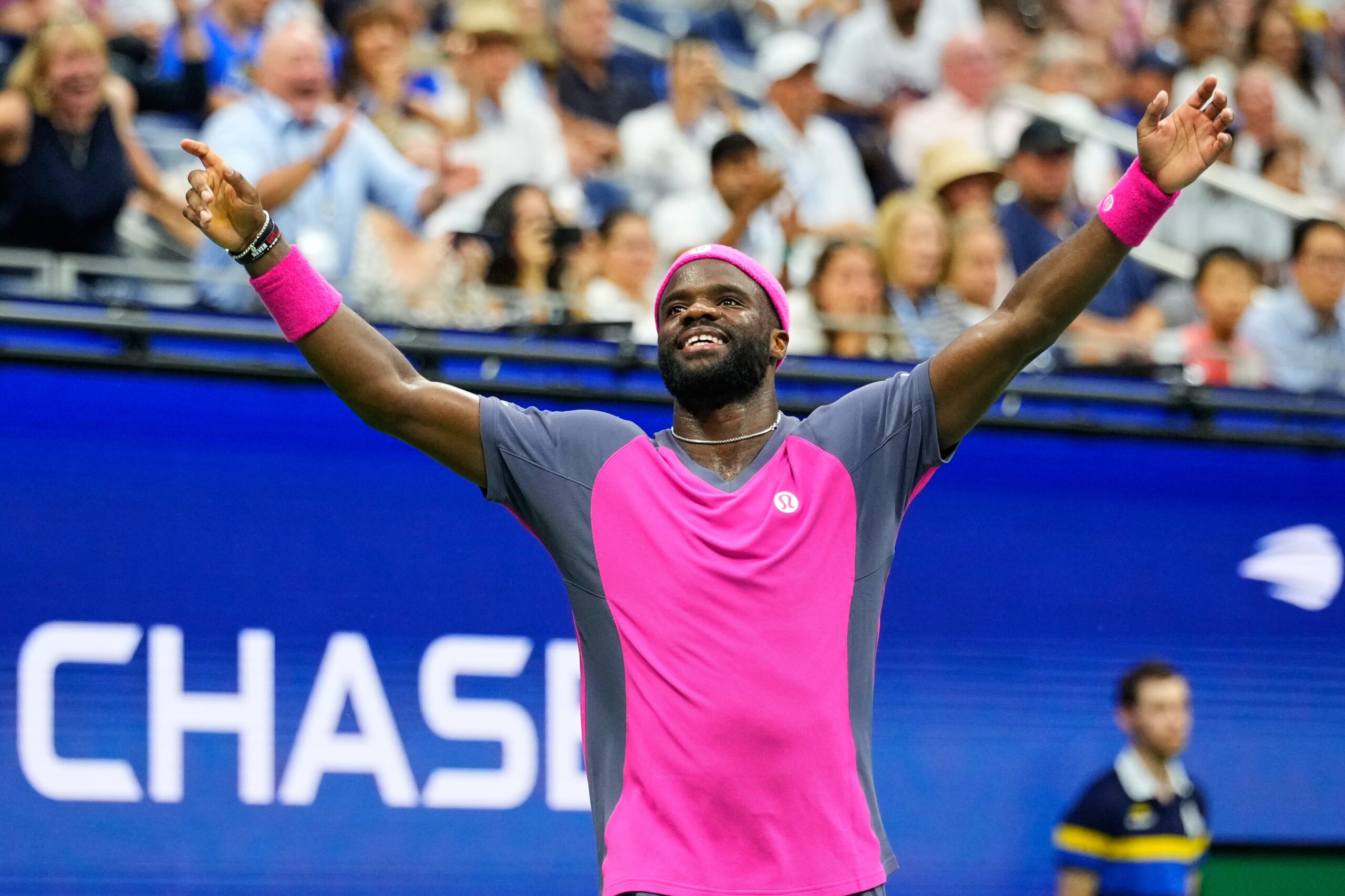
New York: Frances Tiafoe rallied from two sets down — and 3-0 down in the fifth set — to edge 22-year-old Alex Michelsen 5-7, 3-6, 7-5, 6-3, 7-6 (10/6) and reach the US Open semi-finals on Tuesday.

American 11th seed Tiafoe had all he could handle from his 22-year-old compatriot, who hadn’t dropped a set in reaching the first Grand Slam quarter-final of his career.

But in a match of swinging momentum shifts, Tiafoe battled back from 5-3 down in the third set and recovered an early break in the fifth to reach his third US Open semi-final in five years.

Tiafoe clinched it in the 10-point match tiebreaker after four hours and 38 minutes, Michelsen weeping in the victor’s arms as they met at the net.

Tiafoe will face either defending champion Carlos Alcaraz or eighth-seeded American Ben Shelton for a place in Sunday’s championship match.

Michelsen came out swinging on Arthur Ashe Stadium against an uncharacteristically passive Tiafoe, who usually feeds on the energy of the crowd.

But when Michelsen found himself serving for the match at 5-4 in the third, his nerves betrayed him. Two double faults helped Tiafoe break back, and Tiafoe strung together seven straight games to close out the third set and seize control of the fourth.

Michelsen, who has yet to win a title on the ATP Tour, responded with an early break in the fifth set, but Tiafoe refused to fold.

“He gave me some gifts, a couple of double faults there,” Tiafoe said of his narrow escape in the third set.

“But then I slowly started to get my rhythm there, snuck out third set and slowly started playing better and better.

“But he is a hell of a player,” Tiafoe added. “He should have easily won today.”

When he had completed the comeback Tiafoe flung his arms into the air, then consoled a weeping Michelsen at the net.

“I was like, man, I know, I’ve been there,” Tiafoe told ESPN. “I know how much that hurts.”


Source link

Arab News | UN envoy joins ‘Quintet’ representatives for talks in Khartoum to push Sudan peace process

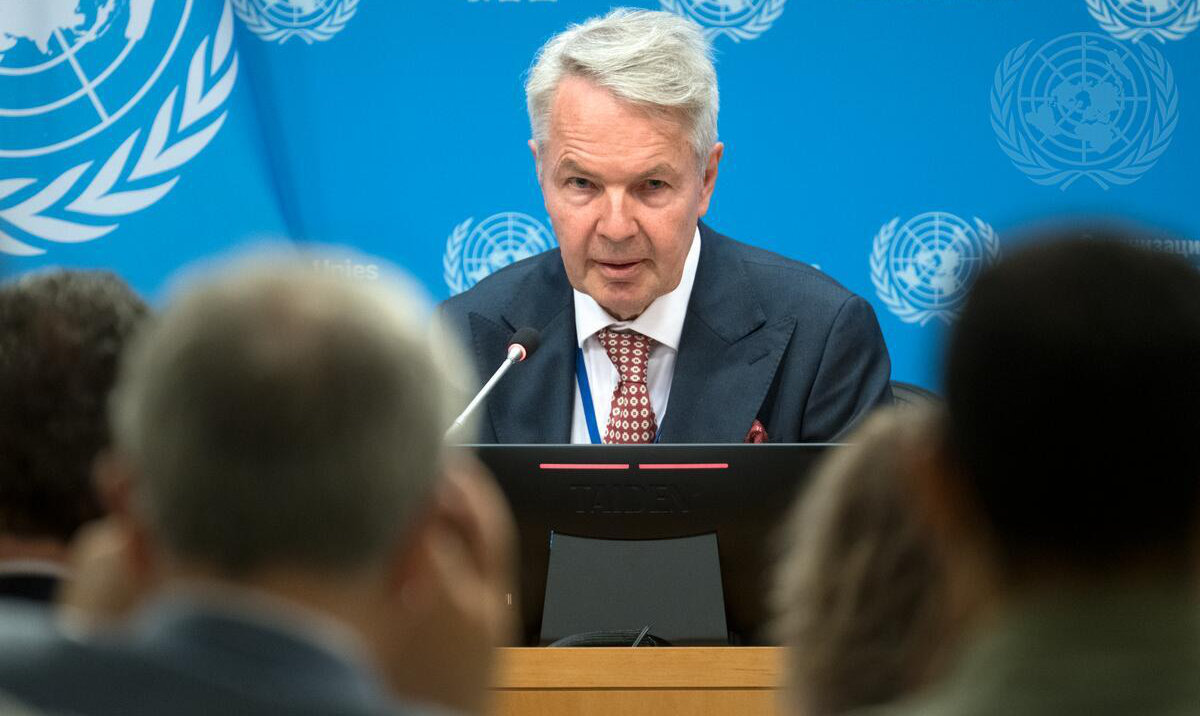
NEW YORK CITY: The UN secretary-general’s personal envoy for Sudan, Pekka Haavisto, joined fellow “Quintet” mediators in Khartoum on Tuesday for a round of talks aimed at reviving an inclusive political process that can end the conflict in Sudan, the UN said.

The Quintet group — comprising the African Union, the Intergovernmental Authority on Development, the League of Arab States, the EU and the UN — held what Stephane Dujarric, spokesperson for UN Secretary-General Antonio Guterres, described as a “good offices mission” to hear an assessment by Sudanese stakeholders of the political and security situation in the country, and to share reflections on efforts to advance peace.

The envoys met at the Sudanese Foreign Ministry before engaging with representatives of UN agencies, Dujarric told reporters in New York. Next, they will meet Sudanese political and civilian representatives, followed by further engagements, he said.

Sudan has been locked in a civil war between the Sudanese Armed Forces and rival paramilitary faction the Rapid Support Forces since April 2023.

Haavisto arrived in Khartoum on Friday and held a series of meetings with the chairman of Sudan’s Transitional Sovereignty Council, the prime minister, the foreign minister and senior government officials, as well as other political leaders and representatives of civil society, Dujarric said.

Haavisto’s talks over the weekend focused on “practical measures to advance deescalation and the protection of civilians,” Dujarric added. He also raised the issue of the release and exchange of detainees, and stressed the importance of a single national examination process for all Sudanese schoolchildren.

Haavisto called for an inclusive political process alongside concrete steps to reduce violence in the country, insisting that a negotiated settlement remained “the only viable path” toward a comprehensive ceasefire agreement and a sustainable end to the conflict.

The envoy is expected to remain in Sudan until the end of this week.


Source link

Arab News | Ex-Israeli PM backs British ban on settlement trade

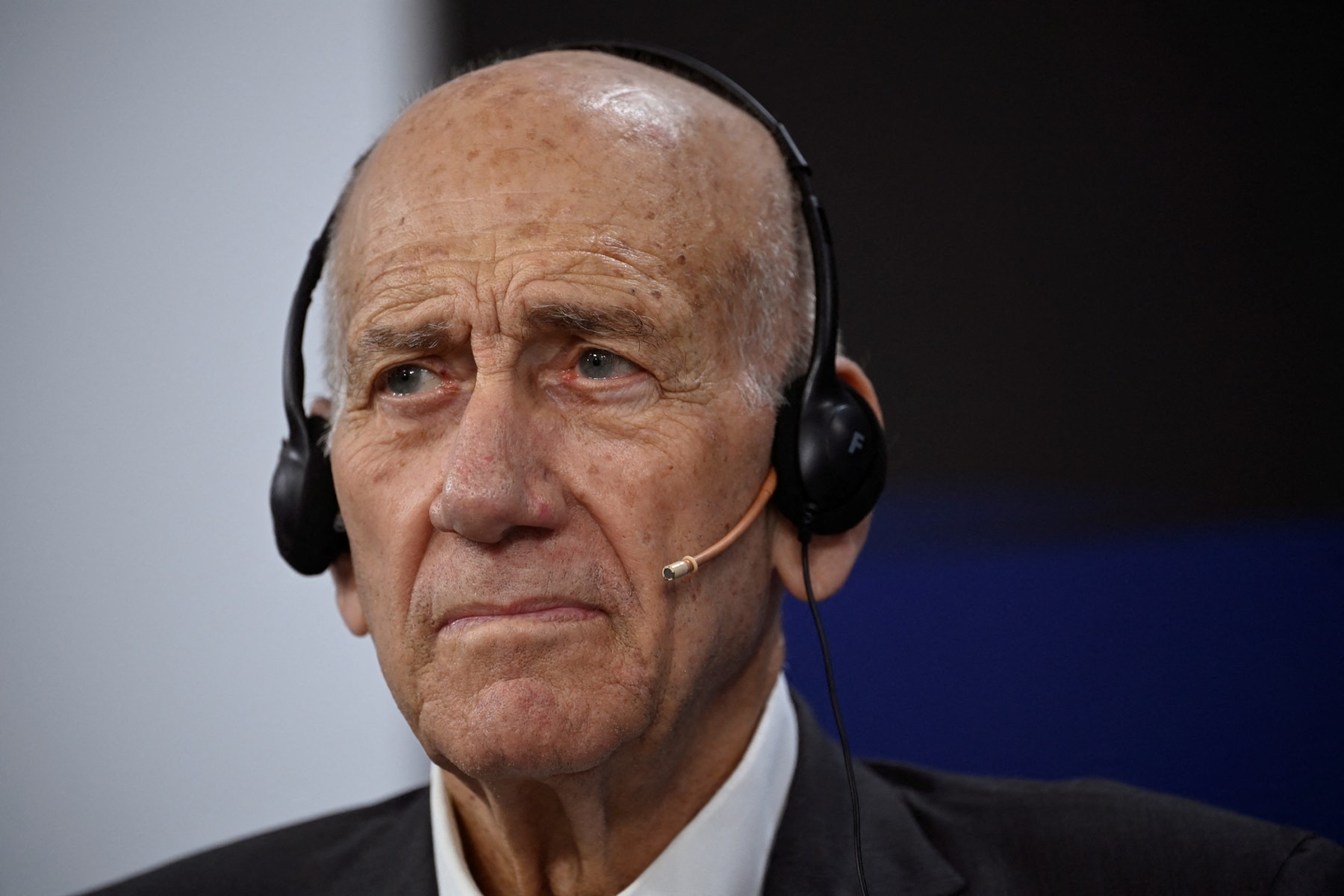
LONDON: Former Israeli Prime Minister Ehud Olmert has voiced support for the UK’s new ban on trade with illegal Israeli settlements.

He told The Guardian that the decision, announced by Foreign Secretary Ed Miliband, “became unavoidable as a result of a continuous effort of ethnic cleansing perpetrated by a large group of Jewish terrorists in the West Bank.”

Olmert added: “The crimes of these terrorists are actively assisted by police and military units over a long period of time.

“The highest levels of government led by Minister of Defence (Israel) Katz and Prime Minister (Benjamin) Netanyahu are actively supporting these terrorists and avoid taking the necessary measures to stop it.”

Olmert’s comments come as Israelis prepare to go to the polls late next month. “Millions of Israelis are appalled by this terror and are actively resisting the terrorists,” he said.

“Sanctions are directed against the terrorists not against Israel, and as such they are unavoidable.”

In announcing the new UK policy, Miliband referenced earlier comments by Olmert, saying: “Ehud Olmert, the former Israeli prime minister, has described what is happening as, I quote, ‘a violent and criminal effort to ethnically cleanse territories in the West Bank.’”


Source link

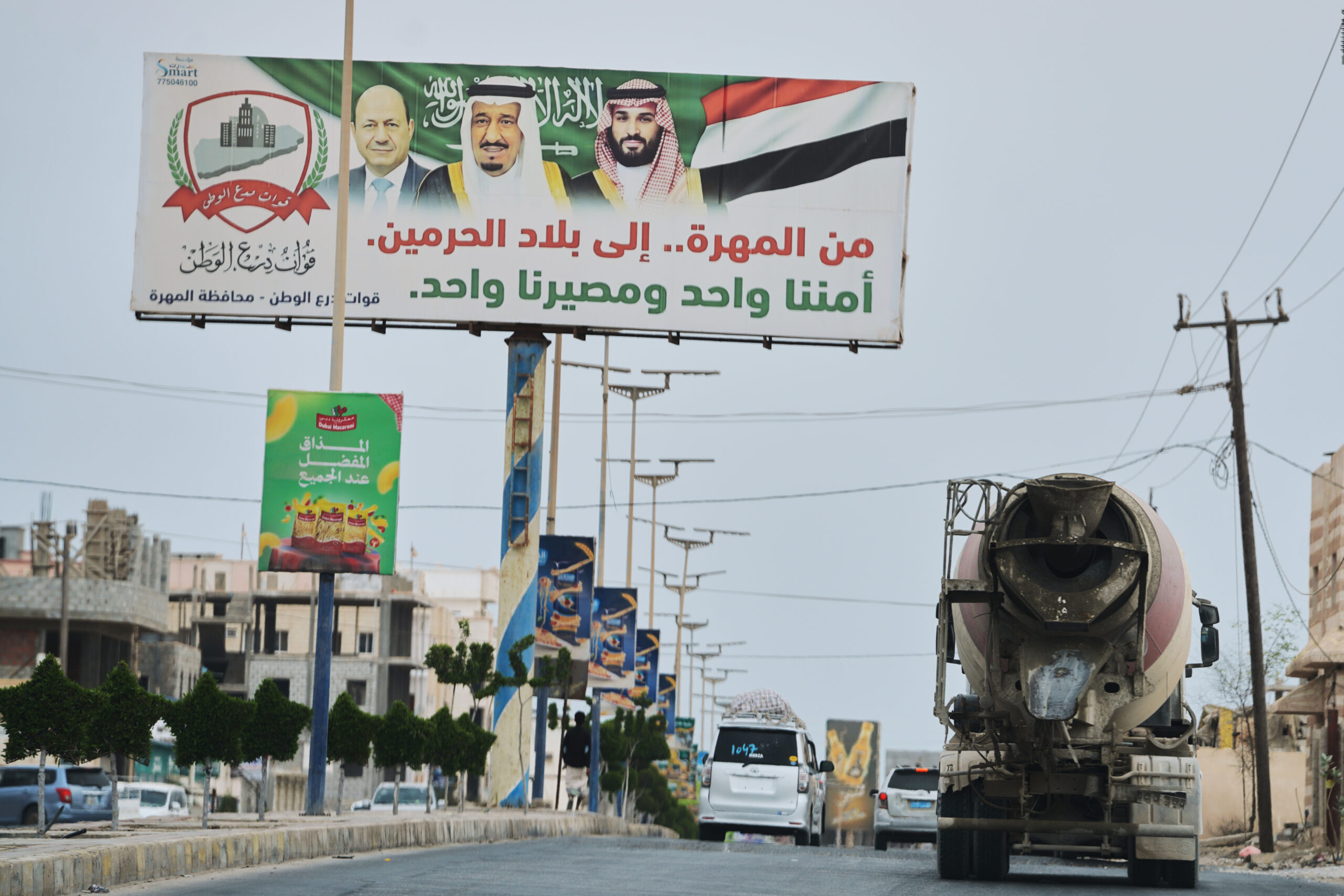
Arab News | Saudi coordination, empowerment of Yemeni government to reshape balance of power

Political analysts believe that the latest Houthi attacks open a new phase in Saudi Arabia’s approach to the Iran-backed group, marked by a shift from managing and containing escalation to firmly deterring it. They said that Riyadh will not accept the targeting of its citizens and residents on its territory, or attacks on its vital facilities.

The analysts told Asharq Al-Awsat that this phase is witnessing an advanced level of political, military, and security coordination between Saudi Arabia and Yemen’s legitimate government, strengthening the latter’s ability to confront sources of threat and reshape the balance of power on the ground.

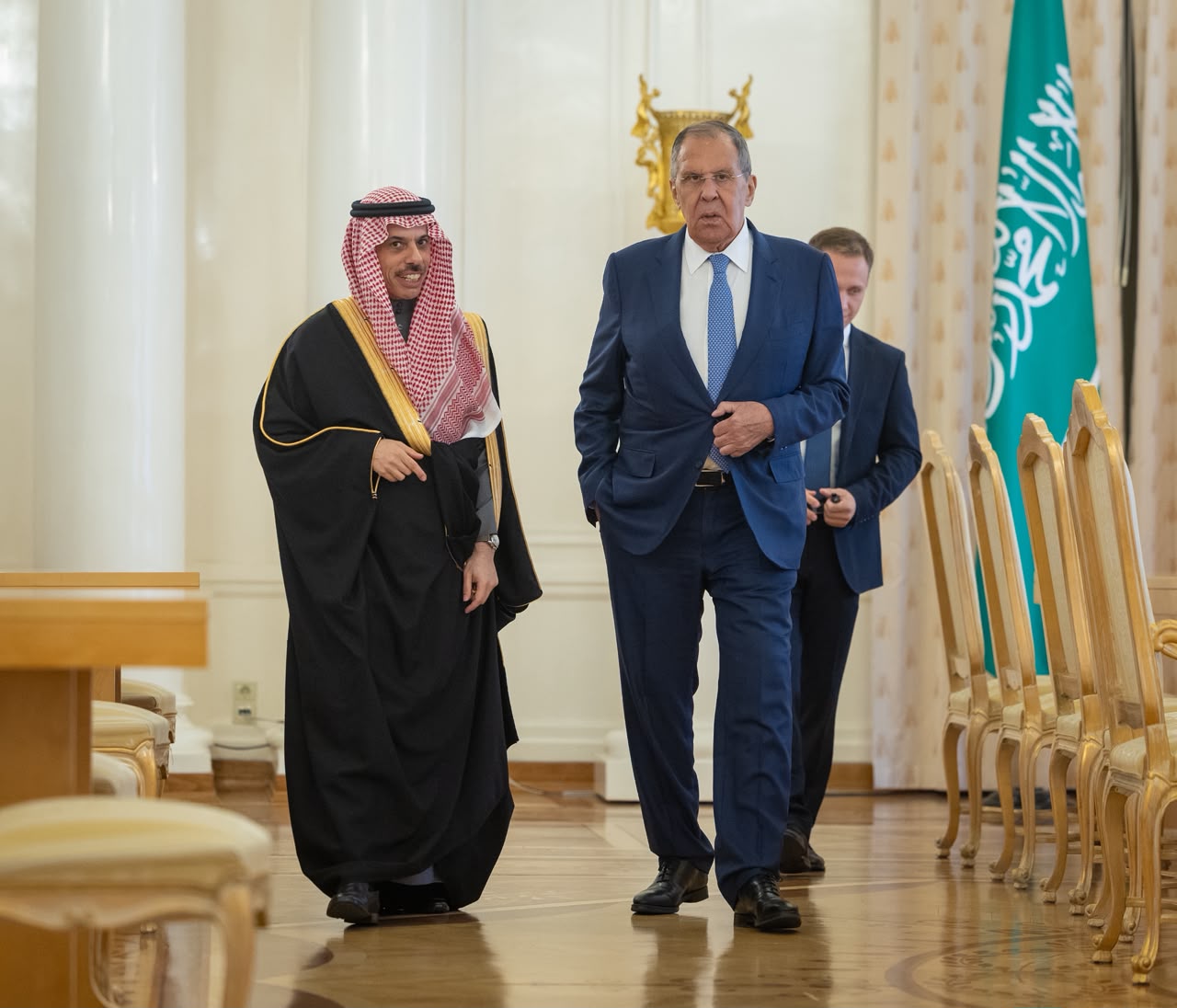
Saudi Foreign Minister Prince Faisal bin Farhan said on Tuesday that his country would not hesitate to defend itself against attacks by the terrorist Houthi militia and would use all available means to protect its interests.

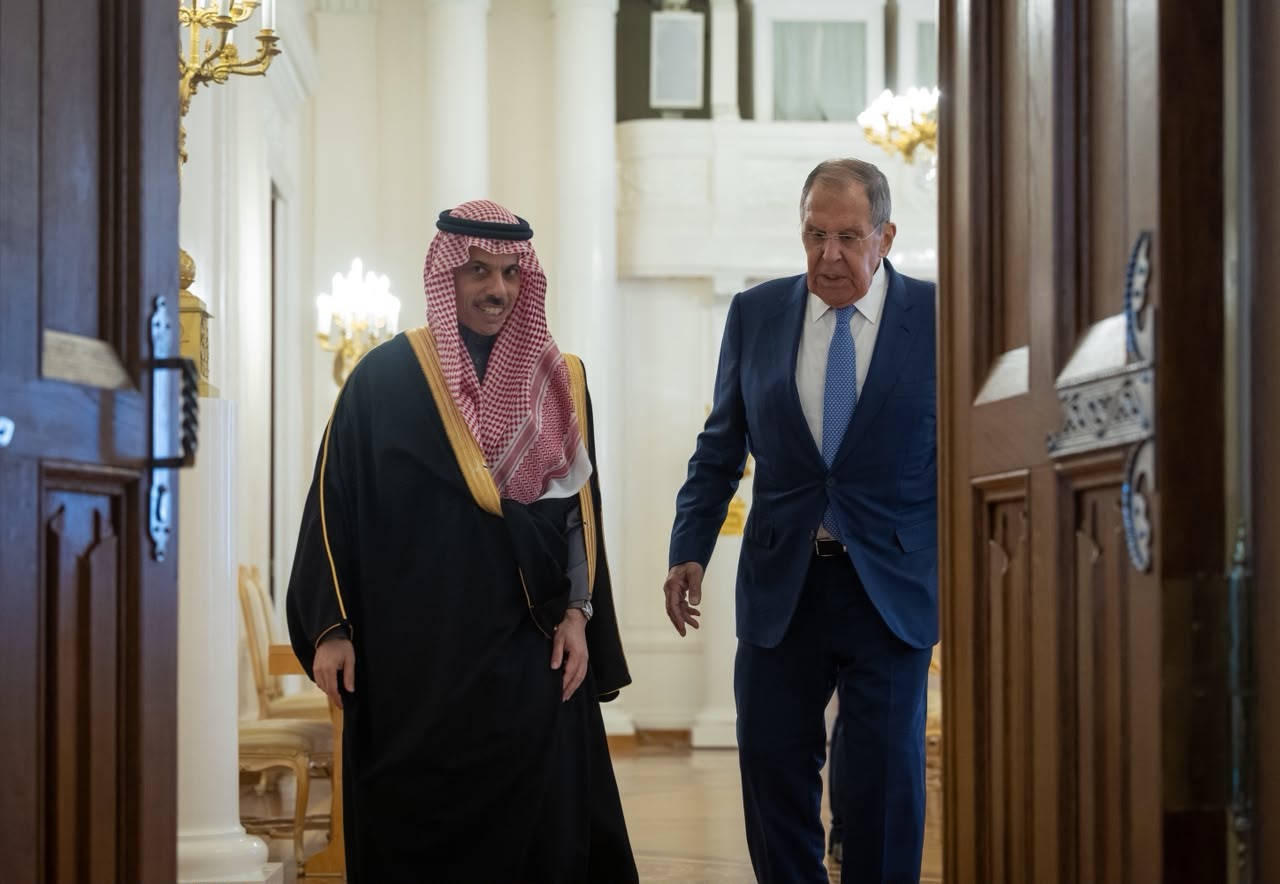
Speaking at a press conference with his Russian counterpart, Sergey Lavrov, in Moscow, the Saudi foreign minister said the Kingdom is putting forward diplomatic solutions to avoid further suffering for Yemen and its people, and will not hesitate to support what serves the interests of Yemen and the region. He highlighted that the path of diplomacy for dealing with the Houthis remains open.

Prince Faisal added that the Houthis prefer to put their narrow personal interests ahead of Yemen’s interests, while the country’s legitimate government has provided an opportunity to negotiate with them responsibly. He described their latest escalation as part of their pattern of provocation.

The limits of Saudi Arabia’s patience

Dr. Abdulaziz Sager, chairman of the Jeddah-based Gulf Research Center, said Yemen’s legitimate government is fulfilling its responsibilities in confronting Houthi attacks targeting civilians and vital infrastructure across the country. He added that the government has worked to mobilize its capabilities and resources, and consolidate its ranks, particularly at the military level.

“The Kingdom will not tolerate any attacks against citizens, residents or vital facilities on its territory, and that its patience has limits,” Sager said. He expects Riyadh to respond “firmly and decisively against the sources of fire, in a manner proportionate to the scale and intensity of the attacks,” citing recent developments in Iraq.

He added that the Houthis had misread Saudi patience, saying that “they do not adhere to reason or logic and continue to receive instructions.” He said that the group had been given several opportunities over the past years but failed to make use of them.

A more decisive phase

Yemeni writer Saleh Al-Baidani said the latest developments point to “a shift from managing and containing escalation toward a more decisive approach focused on deterrence.”

He told Asharq Al-Awsat: “The Kingdom has provided ample opportunities for de-escalation and a political settlement, but the Houthis misread this restraint, treating it as a permanent limitation on Saudi action rather than a calculated political choice that could be reassessed as circumstances evolve.”

He added that the recent attacks on Saudi territory and vital facilities have elevated the threat to a level that makes the previous approach increasingly difficult to sustain. Al-Baidani said: “When the Houthis evolve from a party to the Yemeni crisis into a regional pressure tool more directly linked to Iran’s calculations and its wider confrontation in the region, the approach to dealing with them inevitably changes.”

According to Al-Baidani, the escalation is no longer linked solely to the Yemeni file, but has come to affect Saudi national security, the security of the Red Sea, energy supplies and the safety of international maritime corridors.

Saudi-Yemeni coordination

The Yemeni writer highlighted that coordination between Saudi Arabia and the legitimate government has entered a different phase compared to previous years, whether at the political, military or security levels.

He added: “The Kingdom appears more aware of the importance of having a Yemeni partner capable of managing the confrontation on the ground, while the Yemeni government realizes that any serious move against the Houthis requires a regional umbrella and political, military and economic support.”

Al-Baidani concluded that the success of the next phase remains contingent on the ability of the Yemeni side to unify military and political decision-making, and to transform multiple forces and fronts from a point of weakness into a source of pressure on the Houthis.

He added: “If that is achieved, we may not be facing a fleeting military round, but rather an attempt to reshape the balance of power that has settled over the past years.”

On Tuesday, Yemeni government forces expanded the scope of their field advance on a number of fronts, managing to liberate the Al-Yatama area in the Khabb wa ash-Sha’af district of Al-Jawf Governorate, northeast of Sanaa, a day after recapturing the Al-Labanat area in the same governorate. This came in parallel with the launch of a large-scale military operation in Al-Bayda Governorate, southeast of Sanaa, and the continuation of clashes on the western coast and west of Taiz, on the sixth day since the start of the Houthi escalation.

The advance comes at a time when government forces have begun, over the past few days, to shift from containing Houthi ground attacks to regaining the initiative on several axes, capitalizing on the group’s retreat from some positions, while army units, resistance forces and the Giants Brigades continue their operations on more than one front.


Source link

Arab News | Aryna Sabalenka edges Linda Noskova to keep alive hopes of a 3rd straight US Open title

EW YORK: Aryna Sabalenka kept alive her hopes for a third straight US Open championship by fighting off Linda Noskova 7-6 (1), 3-6, 7-6 (10-7) on Tuesday in a thrilling quarterfinal matchup of major champions.

Sabalenka finished off the match with a second-serve ace to turn back the Wimbledon champion and reach the semifinals in Flushing Meadows for the sixth straight year.

Sabalenka — who needed to win to maintain the No. 1 ranking — will face either No. 3 Jessica Pegula or No. 26 Emma Navarro on Thursday in the semifinals.

Noskova, the No. 6 seed, won her first major title at the All England Club and narrowly missed becoming the first woman since Serena Williams in 2016 to follow a title on the grass by reaching the final four on the hardcourts of New York.


Source link

Arab News | Israeli forces demolish Palestinian home in Masafer Yatta

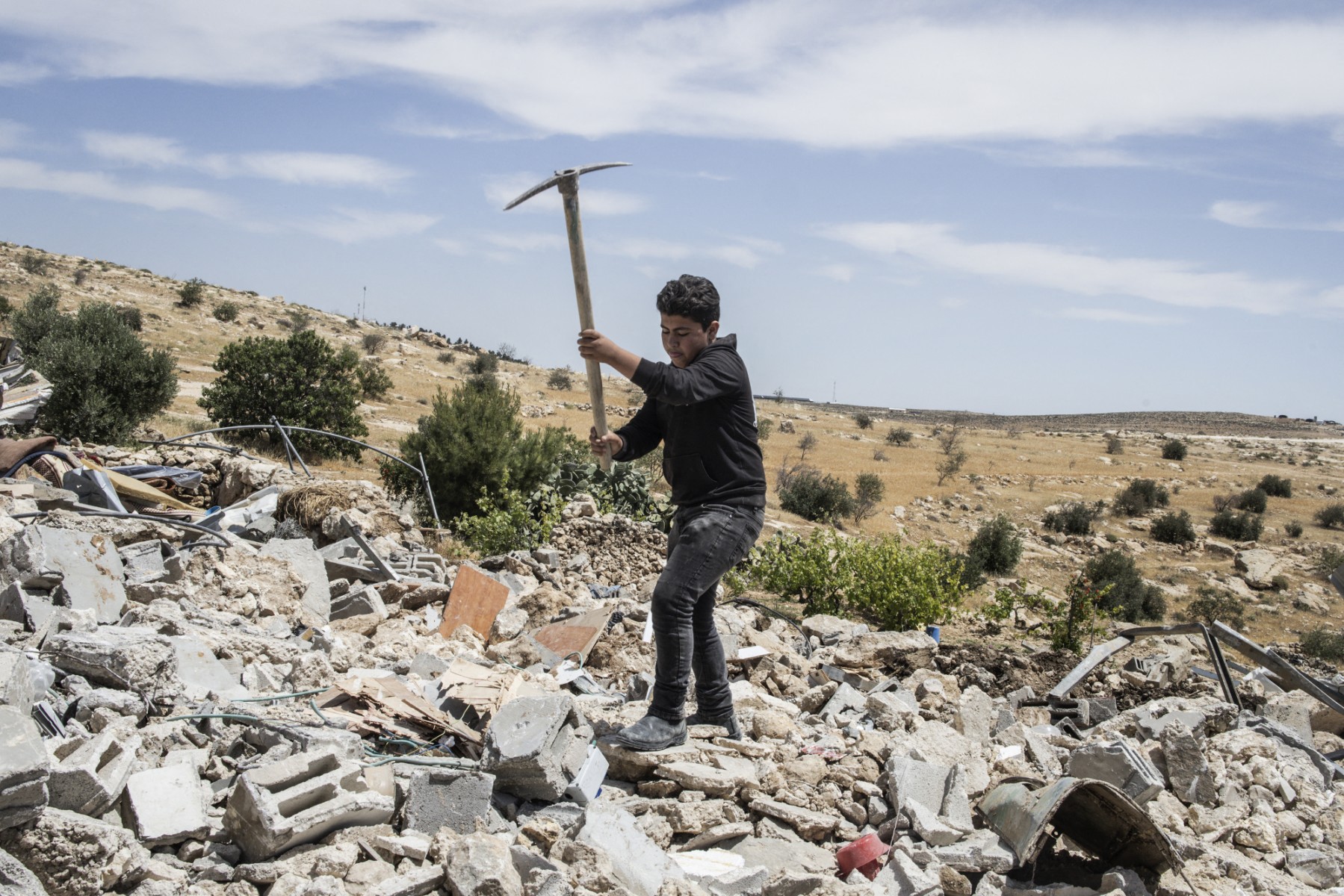
LONDON: Israeli forces demolished a home on Tuesday that belonged to a Palestinian family in the nomadic hamlet of Khirbet Khalla Al-Dabaa, located in Masafer Yatta, south of the occupied West Bank.

Fourteen members of the Mohammad Ali Dabbaba family lost their home when Israeli authorities demolished their 200-sq.-meter residence, constructed from tin and stone, according to the Palestine News Agency.

Forces also filled a crucial water well for the Bedouin community, destroyed electricity networks, damaged several water tanks, and uprooted 15 trees. Additionally, Israeli forces demolished a residential cave belonging to Abdullah Dabbaba, which housed six people.

Israeli authorities have issued demolition notices for 14 inhabited caves and several homes in Khirbet Khalla Al-Dabaa, the report added.

Masafer Yatta consists of nearly 15 Palestinian hamlets located in the southern West Bank; Khirbet Khalla Al-Dabaa is one of them. Israeli forces and settlers regularly invade the area in an effort to evict its total population of 1,150 residents, half of whom are children. Since the 1980s, the area has been designated a military zone by Israel.

In late August, armed Israeli settlers detained a 22-year-old British activist in the village of Umm Al-Kheir in Masafer Yatta, who was part of a “protective presence” initiative intended to support Palestinian residents. He was deported from Israel last week.


Source link

European Parliament’s report tightens EU investment conditions as China negotiations heat up

Published on Updated

Three MEPs have agreed in a report to be published Wednesday to tighten the requirements for foreign direct investment in the EU, restricting access to the European market for Chinese investors, Euronews has learned.


ADVERTISEMENT


ADVERTISEMENT

The report comes from the European Parliament’s rapporteurs on the proposed Industrial Accelerator Act, MEPs Christophe Grudler (Renew), Pierre Jouvet (S&D) and MEP Anna Cavazzini (The Greens). The act was presented by the European Commission last March and creates a European preference on the EU market to favour products made in Europe, in a move to protect strategic sectors of EU industry from foreign competition.

However, China has threatened several times to retaliate against the legislation, which is still under discussion, putting access to the EU market at the top of the agenda in some ongoing trade negotiations with Brussels.

The exclusive details of the report obtained by Euronews show that in sectors where China is dominant, among them electric vehicles, solar panels, critical raw materials and batteries, the three rapporteurs want to impose strict requirements on investments exceeding €50 million, a threshold lower than the €100 million initially proposed by the Commission.

For such investments, any investor from a country holding 40% of the sector’s global market share will have to meet six conditions: own no more than 49% of the share capital of the EU target; make the investment through a joint venture with an EU entity; transfer technologies to Europeans; ensure that at least 60% of the workforce consists of EU workers; reinvest at least 1% of annual revenue into research and development within the EU; and source at least 30% of manufacturing inputs from within the bloc.

A signal to Beijing

The rapporteurs have added to the Commission’s proposal investments in other sectors such as wind power, electrolysers and heat pumps, making it necessary for the investor to meet at least three of the conditions above.

The report also restricts access to public procurement and public support schemes to products made in the 27 EU member states across areas such as clean technologies, cars and energy-intensive industries.

The Commission will only be allowed to extend the scope to products coming from non-EU countries under strict conditions, such as the application of reciprocal access for Europeans to foreign countries’ public procurement.

This follows intense lobbying from EU foreign partners, which want their products to be recognised as “made in Europe” to access the EU market. Many, such as the United Kingdom, argued that EU value chains were too intertwined with their own market to exclude them.

The report by the three MEPs will now have to be adopted by EU lawmakers before discussions start with EU member states on this future legislation.

However, it sends a signal to China that Europeans will not give up in their attempt to protect the EU market from China’s aggressive industrial policy.

Source link

Arab News | Saudi-Russian cooperation has proven vital in supporting stability of global energy markets, FM says

RIYADH: Saudi-Russian cooperation has proven vital in supporting the stability of global energy markets and achieving a balance that serves the interests of both producers and consumers, the Kingdom’s foreign minister said on Tuesday.

During a visit to Moscow, Prince Faisal bin Farhan said the partnership between Riyadh and Moscow contributes to sustainable global economic growth and fosters cooperation across the economic, trade, and investment sectors.

Prince Faisal met with his Russian counterpart Sergey Lavrov who said that the minister’s visit offers a valuable opportunity to discuss Russian-Saudi relations which are witnessing year-on-year development across the trade, economic, investment, cultural, and humanitarian spheres.

Lavrov also affirmed his country’s sincere desire to contribute to efforts aimed at de-escalating the situation in the region and addressing regional issues.

The two ministers emphasized the importance of supporting the diplomatic path to resolve current regional and international challenges — including the Palestinian cause and the situation in Yemen.

They underscored the necessity of ensuring the security and freedom of navigation in international waterways, particularly the Strait of Hormuz and the Bab El-Mandab Strait.

Both sides affirmed their aspiration to advance Saudi-Russian relations which were established a hundred years ago.


Source link

EU Enlargement Is Back as Brussels Fast-Tracks Accession

Accession talks accelerate in Brussels as Ukraine, Moldova, Albania, and Montenegro push for faster integration into the EU.

This article appears in the September 2026 issue of Global Finance Magazine.

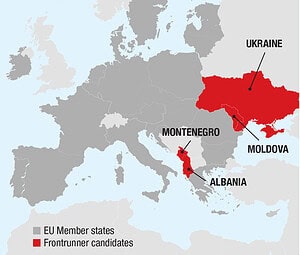
On July 14, the European Union took its most consequential step toward enlargement in two decades by holding four separate accession conferences in a single day and advancing membership talks with Ukraine, Moldova, Albania, and Montenegro. 

European Commissioner for Enlargement Marta Kos (pictured) called it “Super Tuesday.” The EU’s last great expansion, when 10 mostly Central European states joined in 2004, redrew the continent. Bulgaria and Romania joined in 2007, and Croatia in 2013. After that, the bloc shrank when the U.K. left the EU.

A New Geopolitical Calculus

Traditionally, the EU treated enlargement as a distant reward for would-be members rather than as an active geopolitical strategy. But Russia’s invasion of Ukraine, China’s expanding influence, and uncertainty about the U.S. commitment to Europe and NATO have shifted Brussels’ calculus. Rather than an economic transaction in which new participants open their markets in exchange for development funds, membership is now framed as a mutually beneficial bargain over border defense, energy security, and global leverage.

Still, candidates must meet strict reform benchmarks, and none of the new crop are likely to join before 2028. Negotiations cover 35 policy areas, or chapters, grouped into six clusters ranging from fundamentals and rule of law to the green agenda, and all 27 existing members must approve the opening and closing of each chapter: a veto power that has long paralyzed the process.

European Council President António Costa has urged lifting unanimity requirements for early accession stages, but this would require unanimous agreement, the very hurdle it is meant to remove. A proposal floated by French President Emmanuel Macron and German Chancellor Friedrich Merz would partially sidestep this barrier by giving candidates gradual, milestone-based access to the EU single market — covering goods, services, energy and regulatory standards — years before full membership.

Convergence Before Integration

Regardless, economic convergence is already outpacing political integration. Over the past two decades, the Central and Eastern European economies have grown at more than twice the rate of the EU-15, the wealthier Western and Northern European nations that were members before the big Eastern enlargement in 2004. 

Some of those newcomers, according to Eurostat data, have since become the bloc’s growth engine. In 2025, the Czech Republic expanded by 2.6%, Latvia by 2.1%, and Lithuania by 2.9%. Poland, the frontrunner, grew by 3.6% and now ranks sixth in the EU by nominal gross domestic product, accounting for 4.9% of its total output, ahead of countries like Sweden, Ireland, and Austria. 

It is not just EU officials betting that a second eastward enlargement will strengthen the bloc. Investors have taken notice, too. According to a report by accounting firm Forvis Mazars, mergers and acquisitions in the region hit a record €42.5 billion in 2025, up 36% year-on-year. 

Risks loom, however. 

Demographic decline, labor shortages, and exposure to geopolitical shocks could undercut the push toward enlargement. Enlargement also carries political costs, including further impeding an already sluggish decision-making process and straining a common budget under pressure from rising defense spending. Ultimately, expansion has come to seem a matter not of if but when. The eastern frontier region is no longer just the EU’s lower-cost manufacturing base, but where the bloc’s defense, industrial policy, and future growth will be decided.

Luca Ventura is a contributing writer based in Italy.

Source link