Passengers on United Airlines’ (UAL) domestic flights will be able to watch live professional and college football games on their Starlink-enabled seatback screen thanks to an agreement with Dish Network (ECHO).
The carrier will offer live broadcasts from ABC, CBS, NBC, FOX, FS1, ESPN, ESPN2, NFL Network, and
The European Commission stepped up pressure on China on Thursday, calling for tangible results with Beijing following a one-hour video call between Trade Commissioner Maroš Šefčovič and his Chinese counterpart, Wang Wentao.
ADVERTISEMENT
ADVERTISEMENT
The EU executive hopes to secure commitments from Beijing to rebalance the trade relationship, as the bloc’s trade deficit with China has been widening by €1 billion a day.
However, Beijing wants to secure access to the EU’s market of 450 million consumers, resisting calls from the Europeans to reduce its exports.
“While genuine engagement remains a priority, it is equally important that first concrete outcomes are delivered at the second session of the Trade and Investment Council in Beijing in October, which the Commissioner will co-chair – a signal that we are moving from rhetoric to results,” the Commission said in a statement after the call.
“That outcome needs to be credible,” the statement added.
The EU-China Trade and Investment Council was launched in June as a dialogue between the two sides, with the Commission setting October as a deadline to reach tangible results.
During the call on Thursday, Šefčovič and Wentao discussed market access on both sides and Chinese export controls on rare earths.
China has a near-monopoly over the production and processing of these strategic materials, which are essential to the EU’s green technology, defence and automotive industries, giving Beijing significant leverage in the negotiations.
The EU is seeking assurances that China will not halt its exports of rare earths again, a year after blocking them amid a trade war with the US. Securing the necessary export licences is essential for EU businesses.
EU leaders expect results
The coming weeks will be crucial for the negotiations, with EU officials expected to make another trip to China for technical discussions before Šefčovič himself travels to Beijing on 8–9 October.
In her State of the Union address to MEPs on Wednesday, European Commission President Ursula von der Leyen also pushed for concrete results in the EU-China talks.
“Words are good. But deeds are better,” she said, making clear that the EU was ready to use all its trade defence instruments to rebalance the trade relationship.
China is also expected to feature prominently on the agenda when EU leaders meet in October. They have tasked the Commission with securing tangible results from its dialogue with Beijing.
In an interview with Euronews, Šefčovič also made clear that, without a “deliverable” to present to EU leaders,“the political interest would be to look for the solution through other instruments.”
The EU has several trade defence instruments such as anti-dumping duties or tariffs against unfair subsidies.
A diversification tool is also in the pipeline, aimed at reducing EU firms’ reliance on Chinese critical minerals for strategic technologies by helping them diversify their sources of supply.
Such a move would come as relations between Beijing and Brussels remain strained, following the Commission’s introduction of several legislative proposals aimed at protecting the EU market. One of them would introduce a European preference for products made in Europe, prompting China to threaten retaliatory measures.
Last summer, China also urged its companies to stop cooperating with the Commission in antitrust investigations, after the EU executive opened a probe in May into e-commerce giant JD.com over concerns about subsidies.
The ‘Old Lady of Threadneedle Street’ has chosen to wait, though not unanimously.
ADVERTISEMENT
ADVERTISEMENT
The Monetary Policy Committee voted by a majority of six to three on Thursday to leave borrowing costs unchanged, with the dissenting trio pushing for a quarter-point increase to 4%.
The decision puts the Bank of England at odds with the Federal Reserve and the European Central Bank, both of which have tightened within the past week.
Despite holding, the central bank expects the situation to worsen before it improves.
Inflation “is likely to rise further over coming quarters,” the committee said, pointing to crude and refined energy prices that have climbed again since its last meeting and remain “more volatile and higher than pre-conflict.”
Watching for second-round effects
The case for holding rests on what has not yet happened.
“There has been little evidence so far of material second-round effects in price and wage-setting,” the statement read, meaning expensive energy is not yet feeding into broader wages and prices.
However, that reprieve may be temporary.
The risk of such effects “is greater the longer higher energy prices persist or are more volatile,” the committee warned, adding that risks to the inflation outlook are “tilted to the upside, and more so than at the time of the July Monetary Policy Report.”
Brent crude and UK wholesale gas prices have risen 36% and 78% respectively since July, with Brent at $106 a barrel and gas at 207 pence per therm on 14 September.
Refinery pressures have kept crack spreads, the gap between refined fuel prices and crude, well above pre-conflict levels.
Economic activity has held up slightly better than expected, while a soft labour market and the higher borrowing costs households and businesses have faced since the conflict began should bring inflation down over time.
A crowded week for central banks
The Fed raised its benchmark on Wednesday to a range of 3.75% to 4%, its first increase since 2023 and a unanimous decision, while signalling more to come.
The ECB lifted its deposit rate to 2.5% last week.
The sequence concludes on Friday with the Bank of Japan, where markets expect a hike.
That would leave the Bank of England as the only major central bank to have stood still this week, though on Thursday’s evidence not by much.
A new burger joint in La Castellana, an affluent neighborhood in eastern Caracas. Photo: Santiago Bernal.
Any Venezuelan can tell you how unpredictable our country is. This uncertainty, almost idiosyncratic to Venezuela’s national identity, can be felt before you even arrive. You never really know what awaits you when visiting from abroad, no matter how many times you have made the trip before.
This trip, my first since Maduro was captured by US forces in January and less than two months after the deadly earthquakes that devastated parts of the country in June, was certainly unusual from the beginning.
I arrived in Valencia, a city with a small airport poorly equipped to handle the hundreds of passengers diverted from Maiquetía International Airport, the country’s largest. To reach my hometown of Mérida, I had to take a flight departing from another city, Maracay, because Valencia’s airport was too crowded with international flights to accommodate additional domestic routes. The flight departed not from a conventional commercial terminal, but from a small facility inside Venezuela’s largest Air Force base, surrounded by some of the Russian anti-aircraft equipment and fighter jets that had spectacularly failed to prevent Maduro’s extraction. The check-in process had to be done in a mall in the city, a few kilometers away from the base, to which we were transported in a small shuttle bus. The process was surprisingly efficient.
The road between El Vigía’s airport, which serves Mérida, and the city was in better condition than I expected, although the scars of decades of underinvestment remained clearly visible. In some places, sections of road that had collapsed in landslides more than two years ago were still buried under rubble.
I arrived in Caracas after a drive in a taxi equipped with a Starlink antenna, a gadget that until not too long ago could land you in prison.
As we approached Mérida, I spotted a car-carrying truck filled with brand-new Toyota models.
I could not remember the last time I had seen one of those while living in Venezuela. Maybe 15 years ago? In any case, what would be an unremarkable sight in most countries had become extremely rare in Mérida, a state whose economy depends heavily on its university and small-scale tourism, two sectors devastated by Venezuela’s decade-long economic crisis.
After arriving in Mérida, I realized that the car carrier was serving one of several car dealerships that seemed to have resurfaced across the city, all filled with new vehicles. They were also visible on the streets: hundreds of new Chinese models, alongside smaller numbers of Japanese, Korean, and American cars, were driving around Mérida for the first time I could recall in years.
This may sound banal or superficial, but Venezuela’s aging car fleet had long served as a stark reminder of the country’s economic demise. Between 2014 and 2018, car sales collapsed, reaching a historic low of just 2,000 vehicles sold nationwide in 2018. Seeing a model manufactured after the early 2010s outside Caracas had become highly unusual.
The situation has changed since 2025, when more than 38,000 cars were reportedly sold across the country. That remains a fraction of the more than 300,000 vehicles sold in pre-crisis 2007, at the height of Hugo Chávez’s oil boom, but it is enough to make a noticeable difference.
The return of (limited) consumerism
Mérida’s urban landscape has also been transformed by the hundreds of new stores that have opened across a city where economic stagnation and widespread power outages forced countless businesses to close over the past decade. The same phenomenon was evident in Caracas, where I arrived after yet another tour through Maracay’s Air Force base, and after a drive in a taxi equipped with a Starlink antenna, a gadget that until not too long ago could land you in prison and can now be purchased online through different national authorized distributors.
Beyond new cars, large sections of the city, including old Chacao in Caracas’s affluent east, appear to be undergoing an incipient but rapid process of gentrification, reminiscent in some ways of iconic European neighborhoods such as Gràcia in Barcelona, Ruzafa in Valencia (the Spanish one), or Shoreditch in London.
Chacao’s Bolívar Square is marked by a striking contrast. Its 18th-century church still bears large cracks caused by the earthquakes, while the surrounding streets are now filled with lively atmospheric restaurants and cafés that would not look out of place in Lisbon or Barcelona, and fitted with contactless payment systems charging prices that match those of many large European cities.
These businesses serve a small but very real segment of the Venezuelan population that can afford them. That group is not necessarily limited to enchufados.
This raises an obvious question: how can these businesses be profitable in a country where typical salaries remain around $220–280 a month, less than a tenth of the already meager average European salary, and where living what might be considered a relatively normal life has been estimated to cost around at least $800–1,000 a month per person?
The answer is that these businesses serve a small but very real segment of the Venezuelan population that can afford them. That group is not necessarily limited to enchufados, people who have enriched themselves through their connections to government corruption. Exact figures are difficult to establish, but managers in private companies can reportedly earn around $1,200 a month, while senior professionals in some sectors, including medicine, can make several thousand dollars a month in private practice, depending on their specialization.
The widespread adoption of Cashea, a fintech company offering consumers interest-free microcredit for everyday purchases, has also increased the purchasing power of a broader segment of the population. Cashea’s success is visible not only in Wall Street, but also in its extraordinary penetration of everyday commerce. Its recognizable yellow logo now signals that the service is accepted in businesses ranging from large clothing stores in shopping malls to small kiosks, and funerary homes.
The thriving Venezuelan fintech is virtually everywhere. Photo: Santiago Bernal.
You can even use Cashea to pay for a ride with Yummy, Venezuela’s equivalent of Uber.
These businesses still operate within a heavily dysfunctional financial system, distorted by an artificially low exchange rate and an economy constrained by high inflation and low productivity. Yet they serve a segment of the population that is slowly turning into a small, resurgent middle class. That group is helping drive growth in specific sectors, most notably real estate, which has reportedly expanded by around 30 percent in 2026.
This modest revitalization has coincided with an important reduction in street violence. Today, around 60 percent of Venezuelans report feeling safe walking at night, according to Gallup, something difficult to imagine only a few years ago. This is one factor helping explain the revival of nightlife in places such as Chacao, Caracas’ historical center and, to a lesser extent, parts of Mérida.
A similar transformation was evident in Margarita Island, a place I had not visited in almost two decades.
Most of these changes began before the US intervention in Venezuela. But they appear to have accelerated and spread in the months following Maduro’s capture.
Known as the “Pearl of the Caribbean,” Margarita’s tropical beaches, tax-free stores and fascinating history attracted large numbers of European and Latin American as well as Venezuelan tourists during the 1990s and early 2000s. Some of my own fondest childhood memories are, in fact, on the island.
That changed dramatically after 2014, as Venezuela’s political, economic, and public-service crises deepened, leaving the island in a state of abandonment.
Today, Margarita is experiencing a modest but noticeable revival in domestic and international tourism compared with the previous decade. This has been partly fueled by significant investment from domestic and international hotel chains, which now offer a wide range of accommodation, from relatively affordable all-inclusive packages to high-end luxury experiences.
After several years in which the island received mostly Russian and Polish tourists, Margarita is once again welcoming growing numbers of international visitors, particularly from Colombia, and Brazil. Many tourism operators are already looking forward to the possible return of American visitors in the short to medium term.
Less than 15 minutes from the mall in Pampatar, I also visited a community that has gone more than six months without running water.
People I spoke to said Margarita feels more alive and prosperous than it did between 2016 and 2019, the worst years of Venezuela’s crisis, even if the situation remains vastly different from the island’s golden age thirty years ago.
Cities such as Pampatar and Porlamar are experiencing a revival similar to what I saw in Mérida and Caracas, with new restaurants and stores filled with customers. In Pampatar, I visited what was probably one of the largest and most modern shopping malls I have ever seen, comparable to those in Miami or Madrid, filled with stores selling American and European brands whose prices I often found prohibitive even by European standards.
Most of these changes began before the US intervention in Venezuela. But they appear to have accelerated and spread in the months following Maduro’s capture, as the idea that something resembling a normal life might again be possible seems to be taking hold in some.
There is, however, a large elephant in the room. Improvements remain largely cosmetic and circumscribed to a small part of the population.
Far from fixed
On the other side of the Avila, the mountain that separates Caracas’ gentrified neighborhoods from the Caribbean sea, over 12,000 people who lost their homes in the earthquakes wait for solutions in dozens of temporary camps erected among the ruins of their apartments.
But the limitations of this apparent resurgence are perhaps most obvious in the dismal state of public services. Hours-long power outages were common in Mérida and Caracas throughout my stay. Less than 15 minutes from the mall in Pampatar, I also visited a community that has gone more than six months without running water. Its residents make a living largely by collecting and selling salt from the island’s salt flats, with virtually no gear, or protection from the region’s unrelenting weather.
Businesses, hotels, and even many households have adapted to what are, in practice, nonexistent public services. Solar panels, batteries, and water tanks allow those who can afford them to maintain a large degree of independence from the State-provided services.
For most Venezuelans, however, these solutions remain unaffordable.
Ramshackle sheds on a beach in Margarita. Photo: Juan Carlos Gabaldón.
The same is true for healthcare and education. Both systems remain crippled by chronic underinvestment and neglect. The Venezuelan public health system remains severely understaffed and unable to provide adequate services to most of the population, while out-of-pocket health costs represent a large proportion of total health expenditure and less than 10% of the population can afford private insurance. In terms of education, despite a recent increase in school enrollment, the number of students has fallen by almost 2.8 million compared with figures reported in January 2024, as large numbers of high-school students continue to leave their studies to work.
Venezuela is far from fixed, and it will never truly be as long as chavismo remains in power. But it is certainly not the same country I left in 2019, nor the same country it was before January 3.
Many of the people I spoke to still want to leave, especially now that expectations of a quick transition to democracy have been tampered by the warm relationship of the Trump administration with Delcy Rodriguez. Others have decided that a somewhat normal life in Venezuela is once again possible and that, despite its uncertainties, it may be preferable to the immense challenge of migration in an increasingly hostile world.
Yes, these improvements are fragile, uncertain, and profoundly unequal. They exclude most of the country. But they are also an opportunity: Not only for some to live a relatively normal, easier life. But also a chance to build on whatever progress has been made and keep pushing towards the deep institutional and political reforms that only a democratically elected government can implement.
Investors in Europe took the Federal Reserve rate hike in their stride.
ADVERTISEMENT
ADVERTISEMENT
Both the Euro Stoxx 50 and the broader pan-European Stoxx 600 traded over 0.6% higher at the start of Thursday’s session.
France’s CAC 40, Germany’s DAX 30, Italy’s FTSE MIB, Spain’s IBEX 35, the Netherlands’ AEX and Switzerland’s CH20, all traded between 0.2% and 0.7% higher than their Wednesday close.
The UK’s FTSE 100 led the pack and rose more than 1%.
Carmakers and industrials led the Paris index, with Renault gaining more than 2%, Stellantis 1.6% and Schneider Electric 1.3%. Technology went the other way, with Dassault Systèmes falling 2.4%.
The calm followed a rougher session in New York, where the Dow Jones Industrial Average closed 1.2% lower on Wednesday and the S&P 500 fell 0.4%, while the Nasdaq was broadly flat.
Asian markets were mixed overnight with Tokyo’s Nikkei 225 rising 0.2%, Seoul’s Kospi gaining 0.9%, while Hong Kong’s Hang Seng lost 0.7% and the Shanghai Composite 0.4%.
Reactions were “pretty much expected since the rate hike was also in line with market expectations”, said Lorraine Tan, director of equity research for Asia at Morningstar, adding that the Iran war is likely to keep pressure on inflation.
A stronger US dollar and higher yields
The more consequential moves were in currencies and bonds.
The US dollar climbed to its highest in seven weeks against a basket of major currencies, lifted by the jump in short-dated Treasury yields that followed the decision.
The euro was trading around $1.146, down 0.5% from Wednesday’s open.
A stronger US dollar makes European exports more competitive in American markets, but it also raises the cost of anything priced in dollars, which includes oil and gas, which compounds Europe’s energy bill at a difficult moment.
In bond markets, the two-year Treasury yield, the maturity most sensitive to rate expectations, jumped to around 4.72% from 4.67% before the decision, holding near that level on Thursday.
The 10-year sat close to 5%, reflecting both the war-driven energy shock and mounting investor concern about American government debt.
Traders now fully expect another rate hike by December and put the odds of a move as soon as October at around 50%. Goldman Sachs became one of the first major Wall Street banks to forecast consecutive hikes, reversing its previous view that this month’s move would be the only one.
Attention turns next to the Bank of England, which announces its decision later on Thursday and is expected to hold rates steady, and to the Bank of Japan on Friday, where a hike is anticipated.
With SWIFT’s ISO 20022 compliance deadline looming in November, several banks are behind schedule.
This article appears in the September 2026 issue of Global Finance Magazine.
Cross-border payments are approaching a hard deadline in November, when SWIFT stops accepting unstructured address data under ISO 20022. The global messaging standard that replaced the old SWIFT MT format, ISO 20022 was designed to give every country’s banks a common baseline, and November’s structured-address requirement is the next phase of that migration.
SWIFT data from April showed that 61.2% of payments still carried unstructured debtor addresses, and 62.9% unstructured creditor data. This matters; once fully unstructured addresses are removed, noncompliant payments risk rejection or delay, with no fallback transition layer for missing address data.
A March survey of senior payments professionals across Europe and North America by RedCompass Labs found that 44% of banks were behind schedule on readiness for SWIFT’s removal of unstructured addresses. Pratiksha Pathak, RedCompass senior vice president and head of payments, attributed that figure to years of treating the wider ISO 20022 migration as a message-format exercise rather than the data quality overhaul it was always meant to be.
Scale and Legacy Hurdles
Anxiety about readiness was clear but uneven, with 20% of the very largest banks deeming the deadline “unrealistic,” compared with 5% of smaller banks, indicating that scale and legacy systems are part of the problem. This was not for lack of trying; most banks are spending around $20 million on the requirements, with larger institutions spending over $30 million.
Bank readiness has shifted since March, Pathak noted. Some trailblazers have rolled out “brilliant” programs, she said, while laggards still hope SWIFT will push back the clock. That won’t happen, Pathak said: “They’re not moving the deadline.”
Lloyds is among the banks that recognized the central issue early, building its solutions around structured data from the outset. API-based channels natively support the required fields, backed by validation controls and proactive client outreach, including a ramp-up in dedicated resources as November approaches.
“The biggest challenge isn’t usually the payment message itself,” said Surath Sengupta, head of transaction banking products at Lloyds. “It’s the readiness of the underlying data. Many organizations already hold most of the required information, but it’s often stored inconsistently across ERP and treasury systems.”
Early movers aren’t aiming just to meet the deadline, he said. They are positioning themselves to capture the broader gains from automation that follow, “from increasing automation and reducing friction to laying the foundations for the next generation of cross-border payments.”
Industry estimates suggest that 5% to 10% of payments currently generate sanctions screening alerts requiring manual review, a friction that richer structured data should directly ease.
‘Beyond’ ISO 20022 Compliance
Not every treasurer is equally confident in the guidance they receive, however. Some have faced practical challenges with the availability of detailed technical specifications and implementation guidance from banking partners, said Marianna Polykrati, group treasurer at aquaculture producer Avramar: “Many corporates are still waiting for this information.”
Ownership of payment process and master data varies across organizations. At Avramar, treasury and accounts payable share the responsibility, making close collaboration essential.
“Our preparation goes well beyond generating ISO 20022 XML files,” said Polykrati. “We see this as a data quality and process transformation project. As we prepare for an ERP migration by the end of the year, we are using this opportunity to clean up master data, standardize payment workflows, and strengthen governance. Rather than treating ISO 20022 and the ERP implementation as separate initiatives, we see them as complementary projects.”
While compliance may be the starting point, “operational improvement is where the real value is created,” she said, echoing Pathak and Sengupta’s views. With just two months to go, the real test may not be whether the deadline holds, but how many organizations have treated it as an opportunity for long-term gains rather than a burdensome medium-term obligation.
Deborah Ritchie is a contributing writer based in the U.K.
Crypto traders are assigning Anthropic an implied valuation more than $1 trillion (€866bn) above its last funding-round price, before public investors have even seen its accounts.
ADVERTISEMENT
ADVERTISEMENT
The company behind Claude has filed its IPO paperwork confidentially and chosen Nasdaq for its initial public offering.
What remains is the public release of its S-1 filing, the official registration package that a US company submits to the Securities and Exchange Commission.
Until it arrives, the only live price on Anthropic comes from a corner of the crypto market where pre-IPO speculation runs rampant, and it currently sits far above anything the company has ever agreed with an investor.
The last agreed valuation was $965 billion (€836bn), set when a $65 billion (€56bn) Series H round closed at the end of May, led by Altimeter Capital, Dragoneer, Greenoaks and Sequoia.
That was already an extraordinary figure for a company founded in 2021 by Dario and Daniela Amodei, and it followed a valuation of $61.5 billion (€53.3bn) barely a year earlier, representing a nearly sixteenfold increase in roughly 12 months.
Revenue has moved almost as fast.
Anthropic’s annualised revenue run rate passed $65 billion (€56bn) by the end of July, driven by enterprise adoption of Claude.
The losses are also enormous, reportedly reaching close to $42 billion (€36.4bn) in 2025, reflecting the cost of training frontier models. Amazon has committed to investing as much as $33 billion (€28.6bn) in the company, while Anthropic has committed to spending more than $100 billion (€86.6bn) on AWS technologies over the coming decade.
Given these figures, investors are already aiming considerably higher than the valuation in the last round.
Reports have put the target IPO valuation at $2 trillion (€1.73tn), with Goldman Sachs, JPMorgan and Morgan Stanley leading an offering expected to raise more than $60 billion (€52bn).
The market that is already trading
Perpetual futures contracts tracking Anthropic’s pre-IPO valuation are currently trading on Hyperliquid, the largest decentralised derivatives venue, where the implied market capitalisation reached an all-time high of roughly $2.36 trillion (€2.05tn) and sits near $2.15 trillion (€1.86tn) at the time of writing.
That is about 2.2 times the Series H valuation.
Heng Yu Lee, partner at market maker DWF Labs, which is active in these instruments, rejects the suggestion that leverage rather than conviction is driving the premium.
“Whether it’s leveraged or not, everyone trading the pre-IPO market is genuine demand at the price that’s reflected,” he told Euronews, adding that “the premium is pricing in public information that’s available, such as expected revenue numbers and expected market demand for the stock.”
These contracts will also be the first instruments to react when the filing lands, trading around the clock while equity markets are shut.
“At a moment like the S-1 dropping, you typically see volume spike and prices fluctuate heavily as the market digests the information,” Lee explained.
However, the market remains small relative to what it is valuing.
“Currently, the market isn’t super deep, with just $6M in 24-hour volume and $31M in open interest on Hyperliquid,” Lee said, adding that liquidity should improve as the listing approaches, given that more investors are likely to pile in.
Lee is also candid about how much weight the number deserves.
“As of now, I wouldn’t rely too heavily on the absolute pricing as we have yet to have a public S-1,” he stated while clarifying that “the direction of how the prices move typically still accurately reflects the shifting sentiment towards the company as things develop.”
A crowded year for AI listings
Once Anthropic files publicly, it will cement 2026 as the year of AI IPOs.
It started with chipmaker Cerebras Systems, which designs wafer-scale processors pitched as an alternative to Nvidia’s. The firm listed on Nasdaq in May after two false starts, raising $5.55 billion (€4.76bn) at $185 a share, above its revised price range.
The stock opened 89% higher and closed its first day near $311, valuing the company at roughly $67 billion (€58bn) compared with the $23 billion (€20bn) it had been worth three months earlier.
Investor appetite for a credible Nvidia challenger proved fierce, though the enthusiasm cooled quickly after a disappointing first earnings report. Cerebras is currently trading at a valuation of around $43.7 billion (€37.8bn).
Then came SpaceX, which listed in June, raising more than $85 billion (€73.6bn) at a valuation that briefly touched $2.8 trillion (€2.4tn) before falling back to around $1.95 trillion (€1.69tn).
OpenAI was also slated to hold an IPO this year and had already filed confidentially, but has now stepped back entirely. The company has a private valuation of $852 billion (€738bn), set during a $122 billion (€105bn) round in March.
CEO Sam Altman told Fortune on Saturday that listing this year would be “ill-advised”, ruling out 2026 and declining to commit to 2027. He said the company had “a lot of stuff to do” on safety and alignment and that being private made that easier.
Altman’s comments arrived the same day that Anthropic CEO Dario Amodei published an essay titled “We Must Pace the Frontier”, arguing that AI companies should deliberately slow the rate at which they improve their most capable models.
Amodei proposed three steps: independent evaluators with employee-level access to frontier systems, coordination on safety standards among labs in democratic countries, and international agreements on the most dangerous categories of use.
Anthropic has already committed unilaterally to the first, and the endorsements came quickly, with Sam Altman saying he agreed on the need to pace the frontier and Elon Musk replying simply: “Dario is right”.
However, US President Donald Trump did not.
In his first public response to the three CEOs, Trump, speaking in Ireland on Sunday, dismissed the argument.
“We’re leading China in AI. We’re the most sophisticated country in the world, and frankly, I want to keep it that way, because whoever wins AI wins,” Trump said, describing some warnings as things “that won’t happen”.
Trump has since reiterated that argument in several social media posts.
Likewise, China’s foreign ministry called the warnings “fearmongering”.
Markets registered the exchange, with shares in SoftBank, Kioxia and SK Hynix falling sharply on Monday. Shares in the Japanese and South Korean companies fell more than 6% and 4.3%, respectively.
This leaves Anthropic in an awkward position as it approaches what could be the largest listing ever attempted in public markets.
The company is asking public investors to fund frontier AI development while its founder argues publicly that such development should proceed more slowly.
That is not necessarily a contradiction, since pacing is not stopping, and Anthropic has always argued that safety-focused labs should be at the frontier rather than ceding it.
However, it is a story the S-1 filing will have to tell convincingly, and the risk factors section will be read unusually closely.
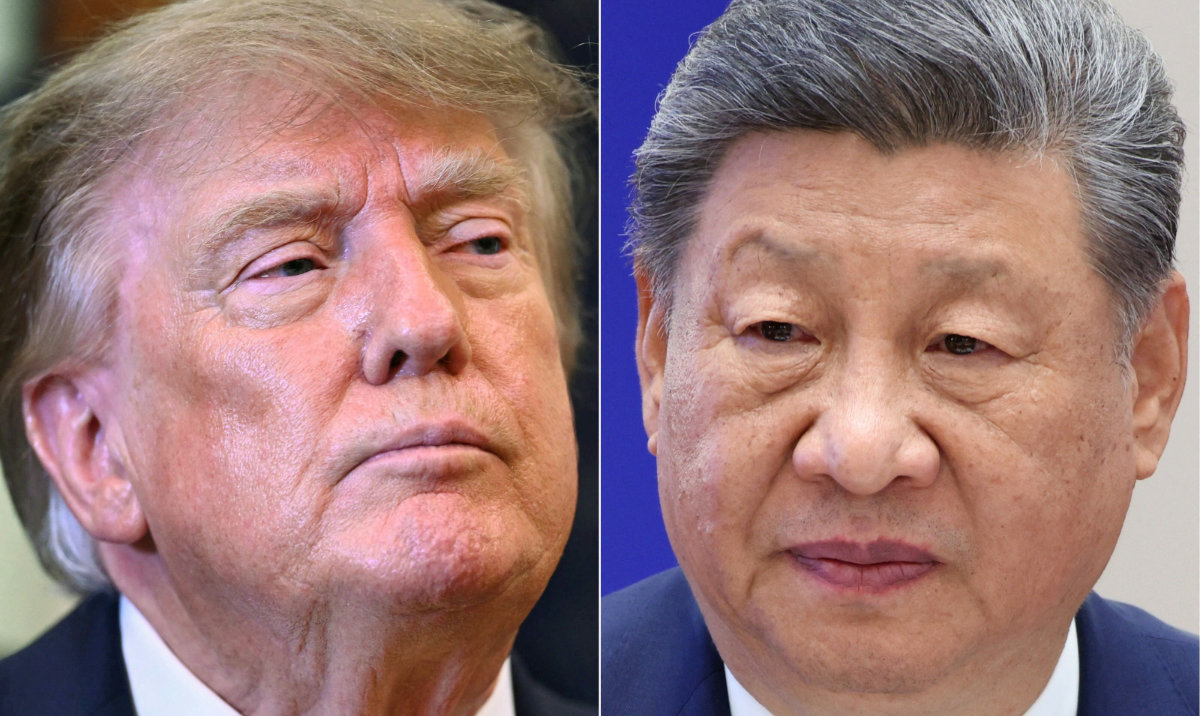
WASHINGTON, United States: The US military honor guard has been rehearsing and the new White House helipad is ready. But will Xi Jinping and Donald Trump achieve lift-off at their summit next week?
Warnings of an AI apocalypse hang heavy over the Chinese president’s first talks at the White House with his US counterpart, with both countries racing for supremacy in this technology.
Trump’s Iran war casts a long shadow too, as China seeks to avoid US sanctions against countries dealing with Tehran, despite reports that Beijing supplied Tehran with intelligence for a strike on US troops.
A trade war is of even greater concern and the world’s two largest economies are still seeking to mitigate the fallout from Trump’s global tariffs. The threat of war over Taiwan looms large as well.
Behind it all is desire to manage tensions between a superpower keen to keep its place at the top and a rapidly rising rival determined to make the 21st century a Chinese one.
“I’ll be discussing almost everything with him,” Trump told reporters aboard Air Force One on Sunday, ahead of their meeting on September 24.
‘Don’t expect much’
But the two leaders are more likely to simply extend a relative truce rather than produce any concrete results, like when Xi hosted Trump in Beijing four months ago, experts said.
“I don’t expect much to come out of this,” Jonathan Czin of the Brookings Institution told AFP.
“In many ways, this is going to be a recapitulation of Trump’s visit to Beijing back in May, where the focus was really on the ostensible rapport between the two leaders.”
With fears about AI making global headlines, agreement to cooperate on regulation or a slowdown is expected to be a major topic of discussion between Trump and Xi.
But any major deals are “politically out of reach for now,” said Wang Dong, a professor at Peking University, as Beijing and Washington both fear losing out in the race for AI dominance.
Tensions over Iran will also come up. US Treasury Secretary Scott Bessent is due to meet his Chinese counterpart He Lifeng this weekend for pre-summit talks including on Iran sanctions.
Trump has, however, played down reports that Chinese entities supplied Iran with satellite imagery for an attack on a US military base in Jordan, saying Xi had “behaved reasonably well” and that “we spy on them, too.”
On trade, there is “room for progress on tariffs, agricultural purchases and selected export controls,” Yue Su of The Economist Intelligence Unit told AFP.
‘Spectacle’
Yet Trump has, as so often before, appeared more interested in the optics of his meeting with a powerful foreign leader than with the substance.
“This is less a summit and more a spectacle. This is designed for deep public consumption,” said Kurt Campbell, former US Deputy Secretary of State and now Chairman of The Asia Group.
Trump pushed for a new granite helicopter landing pad on the White House South Lawn to be open in time for Xi’s visit, which will include a grand state dinner.
Troops in flashy uniforms have been rehearsing on the White House driveway this week ahead of the welcome ceremony.
Trump’s only disappointment is that his under-construction $400 million ballroom won’t be ready — though he has said that when finished it will “top” Beijing’s Great Hall of the People, where Xi hosted him in May.
During the Beijing trip Trump showered praise on Xi, only for the Chinese leader to warn about possible “conflict” over Taiwan.
Fears of a possible Chinese invasion of the self-governing island and global semiconductor hub — which Beijing claims as its territory — remain the most sensitive topic between Washington and Beijing, said Peking University’s Wang.
One possible concrete deliverable is an announcement of further summits.
Trump and Xi are expected to meet in November at the Asia-Pacific Economic Cooperation (APEC) forum in Shenzen, China. The Kremlin has suggested a three-way meeting with Russian President Vladimir Putin.
Trump is meanwhile expected to invite Xi to the G20 summit in December at his Doral resort in Miami.
MADRID: Raphinha scored a hat trick as Barcelona earned yet another big win on Wednesday, routing Racing Santander 7-2 for its best-ever start to a season.
The Catalan club had never won seven games in a row. It has won six straight in the league and another in the Champions League.
Gabriel Jesus and Lamine Yamal also found the net for Barcelona, which has scored at least five goals in five of its seven matches across all competitions this season.
In the English League Cup, Manchester United was stunned 3-2 by Brighton after squandering a two-goal lead to crash out in round three.
In the Europa League, Benfica beat AC Milan 2-0 on the road in the first round of the league stage.
Barcelona and Raphinha stay red-hot in Spain
With his hat trick, Raphinha took his league-leading tally to nine goals in six matches. The Brazil forward has scored a goal in all but one game this season.
“Happy for the goals and for the victory, which is the most important thing,” Raphinha said. “The players have the hunger to always want more. It’s a mentality to always try to score more goals and to create more scoring opportunities.”
João Cancelo also scored for Barcelona, which was helped by an own-goal from Racing’s Asier Villalibre. Maguette Gueye and Yassir Zabiri scored for the visitors.
Barcelona has only failed to score fewer than four goals this season in a 2-0 win against Athletic Bilbao.
Barcelona had previously won six games in a row to start the season — in 1929-30, 1960-61 and 2018-19, the club said.
Yamal had a goal disallowed for offside, missed a penalty and hit the post before finally scoring late for Barcelona.
The La Liga champion has also crushed Elche, Rayo Vallecano and Valencia in the league, and Feyenoord in the Champions League.
Hansi Flick’s team has outscored opponents 33-7 in seven games across all competitions. Barcelona has a three-point league lead over Real Madrid, which won at Elche on Tuesday.
Barcelona goalkeeper Joan García was replaced by Wojciech Szczesny at halftime because of an apparent injury. Szczesny’s blunder led to a Racing goal after the goalkeeper tried to control the ball inside the area and was robbed in front of the net.
Atletico Madrid routed visiting Osasuna 4-0 with goals by Jonathan David, Lee Kang-In, Robin Le Normand and Álex Baena.
It was the second win in a row for Diego Simeone’s team, which moved to third. Osasuna has lost three in a row.
Sevilla jumped to fourth by winning 1-0 at Deportivo La Coruña with a second-half goal by Miguel Sierra. Sevilla has won two in a row. Deportivo stayed seventh.
The game between Levante and Athletic Bilbao was postponed because of heavy rain in the city of Valencia.
United upset by Brighton rally in League Cup
Manchester United was booed at Old Trafford after it fell to a third defeat of the season, and second in as many games following Sunday’s loss to Manchester City.
“We had the game exactly where we wanted it and let it get away from us in a big way,” United coach Michael Carrick told Sky Sports. “We can’t accept that as a group. I take responsibility for it.”
United led 2-0 after 10 minutes through goals from Shea Lacey and Mason Mount. But Brighton rallied with Charalampos Kostoulas pulling one back before halftime, and Pascal Gross and Maxim De Cuyper secured victory after the break.
Defeat means United has suffered elimination from the League Cup at the earliest stage for the second season in a row after being knocked out by fourth-tier Grimsby last year.
Benfica tops Milan as Europa League kicks off
Benfica beat AC Milan in the highlight match in the Europa League.
Dodi Lukébakio and Jakub Kaminski scored a goal in each half for the Portuguese club.
Sparta Prague won 4-1 at Ararat-Armenia for the round’s biggest victory.
Sunderland beat visiting AZ Alkmaar 1-0 in its first European match in more than seven decades. Lyon won 2-1 at Anderlecht, while Bayer Leverkusen defeated visiting Celje 2-0.
Celta Vigo’s winless start to the season reached seven matches after a 1-0 loss at Omonia.
JERUSALEM: Prime Minister Benjamin Netanyahu vowed on Wednesday to pass a law to revoke the citizenship of anyone who defames Israel’s soldiers, his latest threat against the Israeli directors of “NAZA,” a documentary about soldiers’ killing of Gaza civilians.
Directed by Israeli journalists Yuval Abraham and Rachel Szor, NAZA alleges that mass civilian deaths were routinely built into Israeli targeting decisions in Gaza, something Netanyahu and the military reject.
The film, which won a major prize at the Venice Film Festival on Saturday, takes its title from an Israeli military term for expected “collateral casualties” and is built around anonymous interviews with intelligence officers and soldiers.
It has drawn a backlash in Israel, with the military examining potential legal action against those involved in it. But it has also played into the charged political atmosphere ahead of Israel’s October 27 election, which public opinion polls show Netanyahu’s right-wing coalition could lose.
On Tuesday, Netanyahu accused some of his election rivals of failing to take a tough stand against the documentary, saying this made them unfit for office. And on Wednesday, he pledged to advance two bills that he said aimed at addressing the “immense damage” done to Israeli soldiers.
“The first, to revoke the citizenship of anyone who defames (Israeli) soldiers, and the second to hit them in their pockets and increase the statutory damages for defamation they can be sued for by 20 times,” Netanyahu said in a social media video.
“We will hit them both in their pockets and in their citizenship, as their place is not with us.”
Netanyahu cited three incidents in proposing the bills: “the recent film NAZA which portrayed (Israeli) officers and soldiers as war criminals“; 2025 remarks by left-wing ex-general turned politician Yair Golan that “a sane country does not kill children as a hobby“; and a military legal officer’s 2024 leak of a video showing soldiers abusing a Gaza detainee.
Reuters could not immediately reach the NAZA filmmakers for comment.
In 2022, Israel’s Supreme Court upheld a law that permits stripping citizenship from Israelis who carry out actions that constitute a breach of trust against the state. Any new legislation would likely face similar court challenges.
The NAZA filmmakers say they believe it is important that Israelis watch the documentary and grapple with the narrative it presents.
Gaza health authorities say more than 73,000 Palestinians, most of them civilians, have been killed in Israel’s military campaign that has left much of Gaza in ruins.
The war was triggered by Hamas’ October 7, 2023, attack on Israel which killed 1,200 people, most of them civilians, according to Israeli tallies.
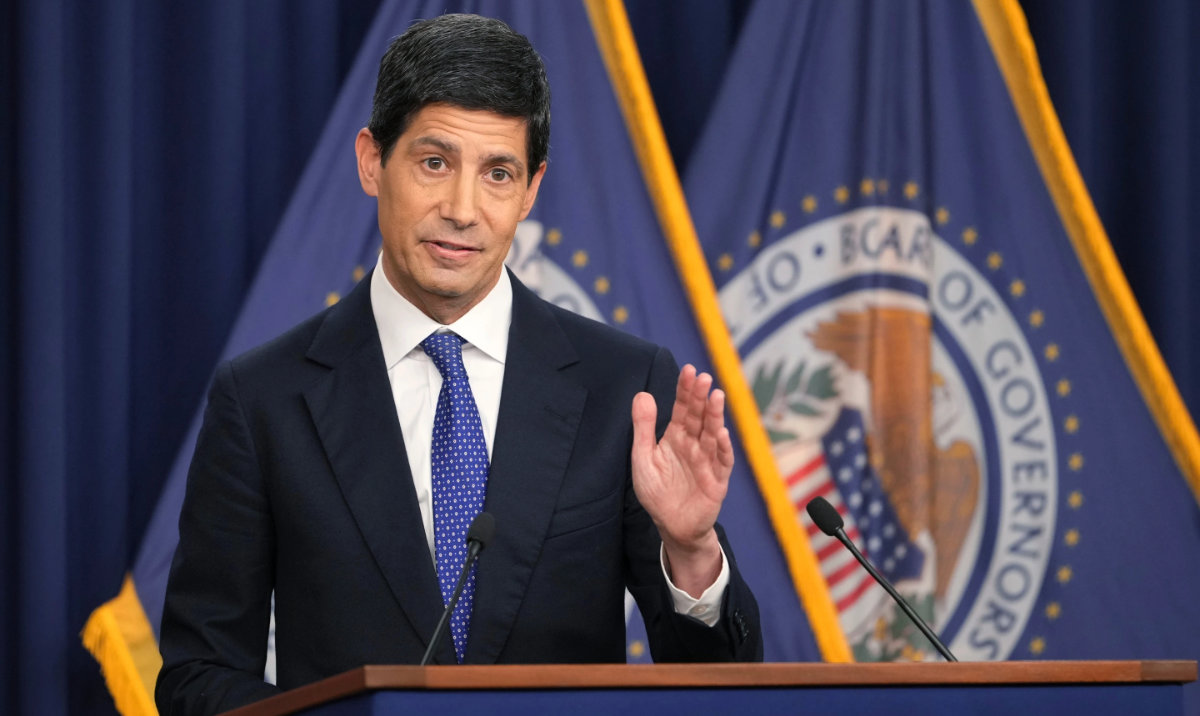
WASHINGTON, United States: The US Federal Reserve on Wednesday raised interest rates for the first time since 2023, defying President Donald Trump’s demand for cuts, as central bank chief Kevin Warsh stressed the need to combat inflation that has been “too high” for “too long.”
The Fed’s Federal Open Market Committee voted unanimously to raise rates by 25 basis points to between 3.75 and 4.00 percent, saying the rate hike would support a “timelier return” to its two-percent target for inflation.
Warsh, appointed by Trump, said the decision was a “serious” one, but needed to be taken.
“The plain fact is that inflation is too high, and has been for too long,” he told a press conference.
And Wednesday’s rate hike may not be the last — the vast majority of Fed policymakers indicated that at least one more rate hike was likely necessary before the end of the year, according to their Summary of Economic Projections.
US households and businesses have been battered by years of higher-than-target inflation, and prices have surged in the wake of Trump’s war on Iran, his signature tariff policies and the ongoing AI boom.
Trump has launched an unprecedented assault on the Fed’s independence since taking office, attempting to fire a Fed Governor and launching a criminal probe against Warsh’s predecessor in his quest for lower rates to spur economic activity.
The president’s Republican Party faces a stern test in upcoming midterm elections, with rival Democrats seeking to wrest control of both houses of Congress and economic issues front-and-center for voters.
Growing calls for hike
The Fed has held rates steady since January, choosing to wait to gauge the effects of the Iran war’s energy price shocks and to let the impact of tariffs on prices ripple through the economy.
Since July, however, a growing faction of policymakers had indicated a rate hike may be required to tame inflation, as the war grinds on and prices remained elevated.
On Friday, August’s consumer price index came in at 3.4 percent — unchanged from the month before, but still well above the Fed’s long-term two-percent target.
In its SEP, the Fed raised its forecast for its preferred gauge of inflation — the Personal Consumption Expenditures (PCE) price index — by 0.1 percentage points to 3.7 percent by year-end.
The Fed also raised its projection for GDP growth by year-end to 2.3 percent, up 0.1 percentage points.
‘Rather unfortunate’
US stock markets largely priced in Wednesday’s rate hike, but they were still down on the news — expected with any rate hike as equities become less attractive.
Yields on 10-year US Treasury bonds — which have surged in recent days as uncertainty on long-term inflation has spiked — were also up past the five-percent threshold.
Following the Fed’s announcement, White House spokesperson Kush Desai said the decision was “rather unfortunate” and that Trump had been clear that he wanted lower interest rates.
Warsh was named to his position after a contentious Senate confirmation process, where Democratic lawmakers accused him of being a “sock puppet” for Trump, which he denied.
So far, Trump has supported Warsh, claiming that the Fed chair wants lower rates and accusing the board of being “political.”
The Fed has a dual mandate to deliver maximum employment while keeping inflation to its long-term two-percent target.
It mainly achieves these goals by setting the key US interest rate — lower rates tend to spur economic activity but fuel inflation, and hiking them cools both activity and prices.
The Fed’s SEP showed that at least 12 of 18 policymakers who participated in the projection expected one more rate hike would be required before the end of the year.
Four policymakers expect two more rate hikes to be required.
Warsh has criticized the Fed’s policy of offering such projections in the past and did not participate in the previous iteration in June.
This projection also included only 18 policymakers, suggesting he had once again withheld his contribution.
Fed rate hikes threaten to further strain direct lenders as private credit default rates hit record highs.
The private credit industry keeps insisting it’s fine. The data keeps suggesting otherwise, and Wednesday’s interest rate hike from the Federal Reserve isn’t going to help the argument.
The Federal Open Market Committee officially raised the federal funds target range by 25 basis points to 3.75%-4.00%. The decision, which was unanimous among the 12 board members, marks the first rate hike since 2023.
“Whenever the Fed increases rates, the pressure on the liability side becomes very high,” David Yahalomi, chief operating officer and co-founder of Tel Aviv-based loan-management platform Hypercore, said in an email.
Companies that borrow through direct lending typically carry floating-rate debt, meaning their interest costs rise automatically whenever the U.S. central bank moves rates. The hike officially pushes up borrowing expenses at a moment when defaults are already climbing to levels not seen before.
“In the event of a prime rate increase, this structure shrinks [private credit portfolio company] margins,” Yahalomi added. And the squeeze is already showing up in the numbers.
Borrowers Buying Time
A Fitch Ratings report from Monday shows that the U.S. Private Credit Default Rate, or PCDR, hit 6.3% for the 12 months ended in August. That’s up from 6.1% in July. The rate has now held at or above 6.0% since April. Here’s the credit rating agency’s breakdown of the findings:
Volume Surge: August logged 109 default events across 89 unique defaulters (up from 105 and 83 in July). The month alone saw 14 default events — a trailing-year high — driven by 11 new defaulters and three repeat offenders.
Punting the Debt: Distressed maturity extensions made up 45% of August events (41% over the past year), while payment-in-kind (PIK) structures and interest deferrals represented 47% TTM. Hard payment defaults comprised just 8%.
EBITDA Impact: Companies with less than $25 million in EBITDA posted a 12% default rate in August, though that’s actually down slightly from 12.3% in July. The bigger warning sign came from the $26 million-to-$50 million EBITDA bracket — Fitch’s largest cohort — where the default rate jumped to 5.2% from 3.9% in a single month.
Sector Hotspots: Healthcare and industrials tied for the highest default rates at 9.9%, while consumer products ticked down to 8.7%. Software posted a default rate of just 0.6% in August. That’s down from 1.2% in July and 2.0% a year ago — the lowest of any major sector.
While the overall PCDR blends middle-market CLO ratings (MCO) and insurer-monitored private ratings (PMR), August’s rise was driven by record stress in MCOs (5.6%), even as PMR rates eased slightly to an elevated 8.5%.
PIK Portfolios Are Insulated — For Now
Harvey Tian, Suntera Fund Services
Harvey Tian, head of loan operations at Suntera Fund Services, said a size-weighted view changes how PIK interest should be read as well.
“Once the prime rate goes up, the terms on all the rates will increase, and it will definitely put pressure on the borrower side — the ones paying cash interest,” Tian told Global Finance on a call.
Loans structured with PIK options, however, aren’t paying cash interest at all, he noted. That insulates that particular pool of borrowers from a higher interest rate.
“I don’t see a huge effect on the underlying portfolio of PIK borrowers if it’s a one-time hike,” Tian said of Wednesday’s Fed announcement. A quarter-point increase would phase into the PIK rate structure over time rather than land all at once.
Multiple hikes are a different story, given the inflationary pressures caused by a worsening U.S.-Iran conflict.
Anthony Noto covers corporate finance and private credit. Contact him at anoto@gfmag.com.
Kevin Warsh has broken away from US President Donald Trump in his first Fed move, and he has done it with the entire committee behind him.
ADVERTISEMENT
ADVERTISEMENT
The Federal Open Market Committee lifted rates on Wednesday after holding them at 3.5% to 3.75% since December, ending a pause that had grown harder to justify as energy costs pushed prices higher.
Not a single member dissented in a unanimous 12-0 vote.
That matters because the pressure ran in both directions as three regional presidents had voted for a hike in July, while the White House spent months demanding cuts.
Nobody voted for either extreme.
At the time of writing, the market reaction to the decision has been fairly muted likely due to the fact that the hike was widely expected.
A statement stripped to the bone
The Fed’s communication was as striking as its decision.
The statement ran to three short paragraphs, a fraction of the length markets are used to, with no forward guidance and no hedging.
“Inflation remains elevated,” it read, adding that “today’s policy action will support a timelier return to the Committee’s 2 percent goal.”
The word “timelier” carries an implicit admission that the return had been too slow.
Then a sentence the Fed almost never writes: “The Committee will deliver price stability.” Not seeks to, not is committed to. Will.
The economic assessment was also confident throughout.
Activity is “expanding at a solid pace”, domestic spending “has been resilient”, productivity growth is “strong” and capital investment “robust”, while job gains “have kept pace with the workforce”.
Uncertainty remains elevated, the Fed said, owing partly to “geopolitical developments”, its formulation for the Iran war.
By describing an economy in good health, the committee removed the argument that higher rates would damage growth, which is precisely the case US President Donald Trump has been making.
Boxed in by the data
The decision had been building for months.
Three regional Fed presidents dissented in July in favour of an increase, the most in one direction since 2016, and several others said afterwards they were ready to move unless inflation eased which it did not.
The Fed’s preferred gauge, the personal consumption expenditures index, ran at 3.7% in both June and July, with core inflation at 3.3%. Before the Iran war sent fuel prices climbing, core stood at 3%.
Consumer prices held at 3.4% in August, but the monthly increase of 0.4% was the sharpest since May, evidence the energy shock is feeding through. Inflation has now been above the 2% target for more than five years.
Warsh had effectively committed himself at Jackson Hole in August, telling the symposium he “would be hard pressed to describe broad financial conditions as restrictive” and warning that unless underlying inflation moved to target “clearly and at sufficient speed”, the Fed had “work to do”.
Markets took him at his word as the CME’s FedWatch tool put the probability of a rate hike above 90% before today’s decision.
Defying the president who chose him
US President Donald Trump had spent months demanding the opposite, insisting the country should have the lowest interest rates in the world and choosing Warsh partly on the expectation he would deliver them.
Warsh himself said while campaigning for the job that rates could come down.
The treatment of his predecessor sharpened the stakes as Jerome Powell was publicly attacked for moving too slowly, and the US Justice Department opened a criminal investigation into testimony he gave to Congress.
Today’s decision could also have a restoring effect on the perceived independence of the Federal Reserve as an institution.
The technical details point to a Fed settling in at the new level.
The interest rate on reserve balances rises to 3.90% from Thursday, the primary credit rate to 4%, and standing repurchase operations will run at 4%. Seven regional reserve banks requested the discount rate increase.
The Fed’s new dot plot shows 12 of 18 officials expect another 0.25% hike by year-end, taking rates to 4.125%, while four see rates reaching 4.375%.
The hawkish signal extends well beyond 2026 as 14 officials see rates ending 2027 above today’s level, while the 2028 median stands at 3.9% versus 3.4% expected.
The longer-run rate also rose to 3.2%, suggesting officials increasingly believe neutral rates have moved higher while economists also expect more to follow.
SILVERSTONE, England: Max Verstappen needed about 35 minutes to overcome 100 karting drivers in a Red Bull event at Silverstone on Wednesday.
Verstappen started 101st at the Silverstone karting circuit, and overtook 64 drivers on the first lap alone, with many of his opponents crashing among themselves.
Many got blocked on the track after a pile-up that prompted a full-course yellow flag. Verstappen went off track but was able to return.
“That was simply lovely,” Verstappen said. “It was a lot of fun.”
Verstappen, who finished second in Formula 1’s Spanish Grand Prix on Sunday, was up to 37th after the first lap, and up to sixth place by the sixth lap.
He went off track again but stayed comfortably faster than most drivers, none of them with any significant professional driving experience.
He said jokingly that the victory ranked as “the best one yet” in his career.
JEDDAH: Around 150 senior business leaders, investors and policymakers will gather in Riyadh on Sept. 29 to examine the forces expected to shape Saudi Arabia and wider MENAT economies over the next five years.
Forum to examine five-year economic outlook
The inaugural Economic Forum by Servcorp, powered by Emerging Markets Intelligence & Research, or EMIR, will examine the broader forces shaping the Kingdom and the wider Middle East, North Africa, and Turkiye, or MENAT, according to a press release.
As Saudi Arabia continues to advance its Vision 2030 agenda, the forum will use the Kingdom as its base while adopting a broader MENAT perspective.
Its five-year outlook will focus on the longer-term forces shaping business and policy decisions, drawing on Servcorp’s regional experience and EMIR’s economic intelligence to connect global developments with the practical realities of operating across MENAT.
Leaders to discuss regional growth and business priorities
“After more than 25 years supporting businesses in the region, we know that ambition creates value only when it is translated into execution,” CEO, Middle East, Europe, and America at Servcorp, David Godchaux, said.
Godchaux added that leaders must decide where to commit, which capabilities to build and which priorities to defer, yet the context for making those decisions is becoming more complex.
He added that the Economic Forum by Servcorp would provide a setting for candid, peer-level discussions on the decisions that will shape the region’s next phase of growth.
“The Economic Forum by Servcorp will provide a setting for candid, peer-level discussions on the decisions that will shape the region’s next phase of growth,” he said.
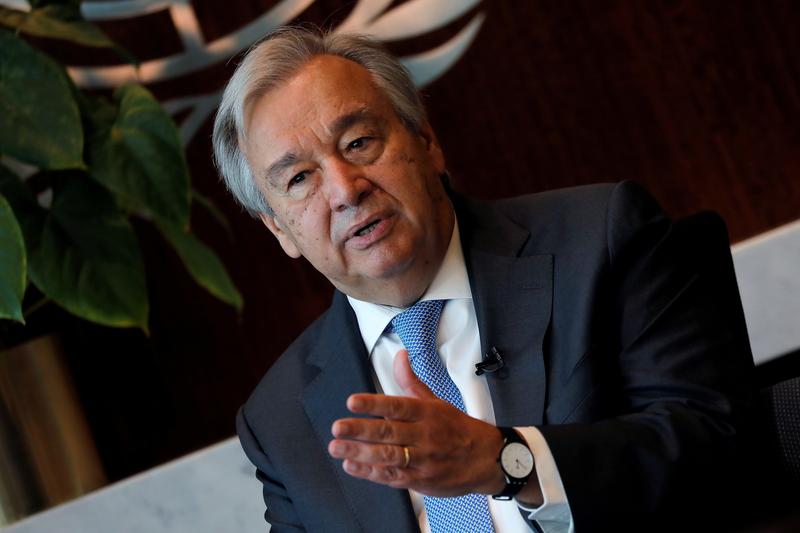
UNITED NATIONS, United States: UN Secretary-General Antonio Guterres on Wednesday called for coordinated international action to address AI risks as fears rise about the dangers of the fast-evolving technology.
“National action is essential. But global coordination is also indispensable,” he told reporters. “AI does not stop at borders and neither do its risks.”
“AI has enormous potential — to accelerate sustainable development, enhance learning, strengthen health systems, boost climate resilience, and so much more,” Guterres said.
“But a growing number of those building it are sounding the alarm — warning that development is racing ahead of our understanding of the risks.”
“The world cannot afford a race to the bottom on AI safety,” he warned.
Concerns about AI safety have escalated in recent weeks, with workers at major AI developers resigning over concerns about the dangers posed by the technology.
President Donald Trump has dismissed warnings against AI risks as a “hoax” and pushed back against calls for tighter oversight.
KYIV: A Russian drone struck a passenger bus in southern Ukraine early Wednesday, killing five people and wounding at least seven in the latest in a series of Russian strikes on civilian transportation.
Ukrainian President Volodymyr Zelensky called the attack an atrocity with no military purpose.
The strike occurred in the Nikopol district of Ukraine’s Dnipropetrovsk region, near the war’s southern front line. Oleksandr Hanzha, head of the regional military administration, said that all five were killed at the scene while the seven wounded were receiving medical care.
Zelensky described the vehicle as a minibus and said in an X post that the strike had “no military rationale” and that it was “just another atrocity.” He said the strike was connected to Russia’s targeting of logistics and critical infrastructure that has continued “unabated.”
Zelensky said that a passenger train was also struck in the Mykolaiv region on Wednesday, damaging a railway station and a diesel locomotive. Nearly 170 passengers on board the train were evacuated before the strike. An electric locomotive in the northwestern city of Kovel was also struck, Zelensky said.
Ukraine requests locomotives from partners
Russian strikes on Ukraine’s rail network have resulted in more than 500 locomotives being damaged or completely destroyed since the beginning of the all-out war on Feb. 24, 2022, with more than half those strikes occurring this year, Ukrainian Foreign Minister Andrii Sybiha wrote on X on Tuesday.
Sybiha described such attacks as “systematic” and aimed at disrupting logistics across Ukraine. He said that Ukraine urgently needs replacements for damaged locomotives, and called on the country’s partners to assist in finding locomotives compatible with its 1,520-millimeter rail gauge and to assist in financing.
In another post on X on Wednesday, Sybiha said that Russian forces were striking passenger trains, locomotives, stations and railway routes “knowing exactly how essential they are for civilians, evacuations and Ukraine’s economy.”
“This is not collateral damage. It is a systematic hunt for people and an attempt to (paralyze) civilian life,” he wrote.
Zelensky says there is no truce on halting energy strikes
In an interview with CBS News on Tuesday, Zelensky pushed back against an earlier claim by US President Donald Trump that Ukraine and Russia had agreed to mutually cease attacks on each other’s energy infrastructure. Zelensky said that Ukraine was ready to enter such an agreement, if Russia stops striking Ukrainian energy facilities.
Trump said in a social media post Monday that such a truce had been reached, but didn’t offer details on the purported agreement. Previous efforts to broker even a partial ceasefire have repeatedly fallen apart within hours, with both sides accusing the other of violations.
In the CBS interview, Zelensky said that the possibility of an energy truce was discussed during a recent meeting in Kyiv with Trump’s representatives, Steve Witkoff and Jared Kushner, but that he had told them: “If the Russians are ready for an energy truce, that means there will be no attacks on energy facilities at all.”
This morning, the Russians struck a regular intercity minibus near Nikopol with an FPV drone. As of now, five people have been reported killed, and seven others are receiving medical care. No military rationale, just another atrocity. My condolences to the families and loved… pic.twitter.com/QFetF4Ww0s
— Volodymyr Zelenskyy / Володимир Зеленський (@ZelenskyyUa) September 16, 2026
Russia decorates ship captain who fired flares at Danish helicopter
Russia’s Defense Ministry said Wednesday that the captain of a Russian warship that fired two signal flares toward a Danish military helicopter on Monday, drawing ire from Denmark, has been awarded a medal for his “competent and resolute action.”
The ministry said in a statement that the Soobrazitelny corvette was on a mission in neutral waters in the Baltic Sea when its crew spotted the approaching helicopter, which failed to respond to calls made via the international communication channel.
“To prevent a provocation by the Danish helicopter, the corvette commander decided to fire two red signal flares, after which the helicopter left the area where the Russian warship was located,” the ministry said.
Russian Foreign Minister Sergey Lavrov said Wednesday that Moscow has no aggressive intentions toward Europe, but that if countries on the continent were to launch an attack on Russia, “it would be a completely different kind of war, and a very short one.”
Russian general killed in Ukrainian drone strike
The deputy head of the Russian armed forces’ military-political department, Lt. Gen. Apti Alaudinov, confirmed Wednesday that a decorated Russian general had been killed in the occupied Donetsk region.
Alaudinov, who didn’t provide details on the circumstances of Maj. Gen. Anton Grunis’ death, hailed the officer as “a hero” and “one of the most respected generals … a real man and officer and a great patriot.”
The confirmation of Grunis’ death came after Robert “Magyar” Brovdi, commander of Ukraine’s Unmanned Systems Forces, alleged on Wednesday that Grunis had been killed in occupied Donetsk by a Ukrainian drone while at a command post in the village of Kindrativka.
In July, Grunis reported to Russian President Vladimir Putin that his troops had captured the town of Kostiantynivka and he was later awarded the Hero of Russia medal. Ukraine has disputed that Kostiantynivka was fully taken by Russian forces.
Grunis had previously fought in Chechnya, a mainly Muslim republic whose bid for independence after the Soviet Union’s collapse led to years of war with Russian government forces. He also took part in Russia’s campaign in Syria.
In Ukraine, he commanded the 4th Guards Motorized Infantry Brigade.
Meanwhile, 17 other sites were damaged in Ukraine’s Kyiv region between Tuesday and Wednesday morning, according to the head of the Kyiv regional military administration, Tymur Tkachenko. Eight private homes, five vehicles, a municipal building, a hangar and a production facility were among the sites damaged, Tkachenko said on Telegram.
Zelensky said on X that the Kherson, Donetsk and Poltava regions had also come under attack.
In the northern city of Sumy, six people were injured in a Russian guided aerial bomb attack, including a 14-year-old girl, according to the head of the Sumy regional military administration Oleh Hryhorov. Two homes were destroyed and 10 others damaged in the strikes, along with damage to an educational facility, Hryhorov said, adding that two other men were hospitalized after a separate strike hit an industrial zone.
In the port city of Odesa, one person was killed in a Russian attack that sparked a fire at garages and damaged vehicles and private homes, Serhii Lysak, head of the city’s military administration, wrote on Telegram Wednesday.
Russia’s Defense Ministry said that its air defenses downed 71 Ukrainian drones overnight. In the Belgorod region, one person was killed and four others were wounded by Ukrainian strikes over the last 24 hours, according to acting governor Alexander Shuvayev.
The Kingdom’s parallel market Nomu lost 2.77 points, or 0.01 percent, to close at 21,376.05, with 30 companies gaining and 33 declining. The MSCI Tadawul 30 Index also fell 0.08 points, or 0.01 percent, to close at 1,450.01.
Market movers
The main market’s top performer was Raydan Food Co., whose share price increased 10 percent to end the session at SR16.28, while Nofoth Food Products Co. recorded a 9.87 percent increase to close at SR6.57.
Ataa Educational Co. also increased 4.75 percent to end the day at SR42.76.
On the losing side, Armah Sports Co. decreased 4.92 percent to close at SR67.60, while Flynas Co. declined 4.46 percent to end the session at SR42.02.
Sumou Real Estate Co. also declined 4.13 percent to close at SR25.08.
Corporate disclosures
Saudi Vitrified Clay Pipes Co. said Laffan Pipes Co., or Laffan Saudi, has been converted from a one-person limited liability company into an unlisted Saudi joint stock company with issued capital of SR45.5 million, according to a Tadawul filing.
Laffan Pipes Factory Co. of Qatar has completed its admission as a shareholder through a capital increase against an in-kind contribution, giving it a 45 percent stake in Laffan Saudi, while SVCP retains the remaining 55 percent.
Laffan Saudi’s issued capital comprises 45.5 million ordinary shares, each with a nominal value of SR1, and has been fully paid through in-kind contributions.
The development follows an MoU signed between the two companies in February 2024 and a partnership agreement signed about six months later.
SVCP’s shares declined 3.12 percent to close at SR17.99.
In another disclosure, Umm Al-Qura for Development and Construction Co. said it signed an agreement to sell a 2,500-sq.-meter plot within Masar Destination in Makkah to Rawajeh Real Estate Co. for SR168.91 million.
The boulevard-facing plot, located in Zone 2 of Masar Destination, has a book value of SR76.01 million.
Umm Al-Qura, whose shares rose 2.50 percent to SR17.20, said the sale is part of its development strategy for Masar Destination, with the plot to be developed as a residential tower.
The transaction is expected to have a positive impact on liquidity and financial results, with proceeds to be used to finance working capital and ongoing projects.
In a separate Tadawul filing, CATRION Catering Holding Co. said it signed an agreement with Air Arabia DMM Co. to provide inflight catering services under a five-year contract valued at an estimated SR200 million.
Under the agreement, CATRION will provide inflight catering services, sell onboard food, beverages and other supplies, and provide logistics services to Air Arabia.
The agreement was signed on Sept. 15 and is expected to have a financial impact beginning in the fourth quarter of 2026.
CATRION, whose share price fell 0.74 percent to SR67.25, said the agreement is part of its strategy to sustain business, strengthen long-term partnerships with airline-sector clients, support growth, diversify revenue streams and enhance operational efficiency.
Indonesia is expanding cultural cooperation with Gulf states to preserve the diverse heritage of Muslim societies, the culture minister tells Arab News, as he seeks partnerships in new technologies and creative entrepreneurship to keep it relevant for younger generations.
Minister of Culture Fadli Zon has held talks with Gulf officials in recent months, as part of Indonesia’s effort to strengthen cultural diplomacy.
This includes meetings with Saudi Minister of Culture Bader bin Abdullah bin Farhan, the Kuwaiti Ambassador to Indonesia Khalid Jassim Al-Yassin, and the Qatari Ambassador to Indonesia Sultan bin Mubarak Saad Al-Dosari.
“Indonesia and the Gulf countries share an interest in safeguarding heritage while ensuring its relevance to younger generations,” Fadli said.
“Collaboration in digitization, museum development, heritage management, cultural education, and the use of new technologies can strengthen preservation while supporting tourism, research, and creative entrepreneurship.”
He envisions deeper cooperation with Gulf partners through more extensive cultural exchange, experience and knowledge sharing, as well as collaborations in the creative economy, ranging from modest fashion, culinary traditions to digital content creation.
While Indonesia and Gulf countries have “distinct cultural traditions and national experiences,” they are still connected by centuries-long ties, through which further cultural cooperation can serve as “an important platform for sharing the diverse expressions of Muslim societies,” Fadli added.
He highlighted “strategic, multi-layered initiatives” Jakarta currently has with Gulf nations, including how the visit of Saudi culture minister to Jakarta in April “opened new avenues in joint film co-production, artist residencies, museum innovation and digital cultural” programs and boosted the renewal of their cultural cooperation, following Jakarta and Riyadh’s first such agreement in 2017.
The two countries are also collaborating under the framework of intangible cultural heritage, including on preserving Arabic calligraphy and the extension of its recognition by UNESCO.
This year, the world’s largest Muslim-majority country will organize cultural programs with Qatar to celebrate their 50th anniversary of diplomatic relations, with plans to showcase their national stamps.
In 2025, the culture ministry’s Directorate General of Cultural Diplomacy, Promotion and Cooperation signed an agreement with the Abu Dhabi Arabic Language Center, as Jakarta aims to promote Indonesian literature and arts through major international events held in the UAE.
In his meetings with the Qatari and Kuwaiti envoys last month, Fadli also proposed talks on bilateral cultural agreements to broaden cooperation in the sector.
“Indonesia is committed to transforming its longstanding historical and spiritual ties with the Gulf into modern, dynamic, and sustainable partnerships … We believe that the relationship between Indonesia and the Gulf can become an important model of cooperation between diverse Muslim societies,” Fadli said.
“By working together, Indonesia and the Gulf can ensure that culture does more than preserve the memory of our past. It can guide our societies through the challenges of the present and help us shape a more peaceful, inclusive, and humane future.”
BlackRock (BLK) has launched LifePath Solutions, a framework that brings large retirement plan capabilities to a broader set of plan sponsors.
The customizable target date design framework combines sophisticated plan and participant analysis with the option to leverage BlackRock’s whole-portfolio
European Commission President Ursula von der Leyen announced on Wednesday that Canada has been invited to become the first “associate member” of the EU.
ADVERTISEMENT
ADVERTISEMENT
She announced the move during her 2026 State of the Union address in Strasbourg, to an audience including not only MEPs but also Canadian Prime Minister Mark Carney, who attended her speech in the midst of a trade war with the US.
Since late August, the Canadians have been pushing hard for the Europeans to build a closer relationship with them, though full EU membership is not an option as Canada is not a European state.
During her speech before the MEPs on Wednesday, von der Leyen invited the country to become “the first associate member of the European Union”.
“We share one ocean, one set of values, one way of seeing the world. And we will now build our shared future as well,” she added.
A new status
Expectations had been high over the last week after Carney spoke about building a “unique alliance” with the EU.
Canada is not a European state geographically, but it shares the same values as the EU – human rights, democracy, rule of law – which are necessary criteria for becoming a member state.
Several options already exist for countries that don’t have full membership. Norway, for instance, is part of the single market, the EU’s borderless area of free movement of goods, persons, services and capital. Oslo and Brussels also collaborate on joint defence initiatives.
Switzerland also has access to the single market through several agreements – and in the years since Brexit, the United Kingdom and the EU have secured the largest and broadest trade and cooperation deal in the bloc’s history, coverering a wide range of sectors. The UK is now taking part in several EU programmes such as Horizon Europe, the EU’s research and innovation programme.
Euronews has learned that Ottawa is already in talks with Brussels to join the Erasmus+ exchange program, Horizon Europe research grants, and mutual recognition of workers’ qualifications.
However, “associate member” is a completely new status, and key questions have not yet been answered – chief among them, whether Canada will have voting rights in EU institutions. Despite their regulatory harmonisation with the bloc, Norway and Switzerland have no say on EU legislation.
A new alliance with Ottawa
German Chancellor Friedrich Merz floated the idea last May of an “associate membership” for Ukraine, which is urgently seeking to enter the EU. In a letter sent to EU leaders, he argued that this status would grant Ukraine access to the decision-making bodies – the European Council, the European Commission and the European Parliament – without voting rights or a dedicated portfolio.
It would also allow the country to tap into certain EU-funded programmes on a “step-by-step” basis.
It’s hard to see Canada in the same category as Ukraine, a country which is at war, but von der Leyen’s announcement on Wednesday nonetheless sent a strong political signal in a volatile world where historical alliances are shifting.
“Europe and Canada believe in democracy. That power does not belong to the strongest, the richest, or the loudest – but to all of us,” she said. “Democracies have the freedom to choose with whom to work.”
She also called for a new alliance with Ottawa, which could include tech, defence, Arctic joint projects, but also energy, critical minerals and artificial intelligence.
“We will move from CETA to an Alliance for the Future to create a common prosperity and economic security space,” she said, referring to the 2016 EU-Canada trade agreement that removed tariff barriers between both sides and has been provisionally applied.
The economic and security cooperation between both partners is set to be pushed further during a summit in Montreal in October.
Crypto markets dropped late on Tuesday and early Wednesday, as investors digested a defeat that few in the industry had expected.
ADVERTISEMENT
ADVERTISEMENT
The procedural motion on the CLARITY Act drew 49 votes in favour and 50 against, 11 short of the 60 required to advance, dealing a major setback to efforts to pass market structure legislation this year.
The CLARITY Act, formally the Digital Asset Market Clarity Act, was meant to divide supervision of digital assets between the US Commodity Futures Trading Commission and the Securities and Exchange Commission, replacing a fragmented system in which classification has largely been settled through enforcement actions and litigation.
Bitcoin fell almost 34 over the past 24 hours to below $76,000, while HYPE, the token behind the decentralised exchange Hyperliquid, which stood to benefit from the legislation, also dropped about 4% to below $78.
Most major tokens fell alongside them.
A deal that still was not enough
The bill’s defeat is striking because so much had been conceded.
US President Donald Trump agreed over the weekend to ethics restrictions he had long resisted, including a requirement that federal officials and their spouses divest significant financial interests in crypto issuers or place them in a blind trust, and a role for state attorneys general in enforcing those rules.
Republican negotiators said that over 120 Democratic requests were written into the final text of the more than 600-page bill, representing a major bipartisan effort.
Still, it was not enough.
Four Republicans, Jerry Moran, Susan Collins, Josh Hawley and Thom Tillis, joined the 45 Democrats who voted against it. The Democratic Senator Chris Coons did not vote.
Democratic Senator Elizabeth Warren, the bill’s most prominent opponent, said it “fails to adequately protect investors, our financial system and our national security,” and attacked Trump’s crypto ventures on the US Senate floor hours before the vote.
Republican Senator Thom Tillis’s vote was a procedural exception. After having publicly backing the ethics package that morning, Tillis voted no to preserve a motion to reconsider, leaving open the possibility of another cloture vote.
Senator Cynthia Lummis, the Wyoming Republican who has led crypto legislation in the US Senate since co-authoring the Responsible Financial Innovation Act in 2022, was blunt afterwards.
“I think we’re done. It’s over,” she told reporters before going considerably further online.
“The once-proud Democratic Party is anti-consumer and pro-illicit finance, anti-ethics, anti-free enterprise, anti-worker, anti-livable wage jobs and pro-socialism,” she wrote in a social media post.
The failed vote likely means the crypto industry will have to wait until next year for clearer rules to be discussed.
The US midterm elections are in just seven weeks which complicates bringing the bill back up for consideration in the short term.
Senators are scheduled to leave Washington in early October and not return until after the election and the House recesses even earlier, heading out of town already at the end of this week.
Members, especially those in tight races, are eager to return to their home states and hit the campaign trail.
Regulators inherit the problem
The legislation’s failure does not mean nothing happens. It means the rules are more likely to be written by agencies instead.
The US Securities and Exchange Commission under Paul Atkins and the US Commodity Futures Trading Commission under Michael Selig have already been building a framework without Congress.
The two signed a cooperation agreement in March and issued a joint interpretation sorting tokens into five categories, with Atkins stating that most crypto assets are not, in themselves, securities.
The SEC’s own agenda includes registration exemptions for token launches, a safe harbour for projects decentralising away from central control, and rules on custody and trading venues.
Analysts expect that work to accelerate now.
However, the catch is durability, because agency rules can be rewritten by a future US administration, which is precisely the instability the CLARITY Act was meant to end.