THE start of summer will officially begin tomorrow with the longest day of the year – where one UK town won’t see nightfall.
Summer solstice celebrations are set to take place across the Northern Hemisphere.
Sign up for the Travel newsletter
Thank you!
The island will see around 18 hours and 55 minutes of sunlight tomorrowCredit: AlamyThe busy fishing town has around 7,000 permanent residentsCredit: Alamy
Lerwick, the main town of the Shetland islands, will see almost 19 hours of daylight tomorrow (June 21) as the Northern Hemisphere celebrates the summer solstice.
Located closer to the Arctic Circle than London, night will fall for just five hours on the UK’s most northerly town.
Residents will not experience complete dark either, as the sun will remain just below the horizon, creating an effect which residents have named “da simmer dim”.
This summer twilight means that light lingers well beyond midnight, with a light blue hue visible across the sky throughout the night.
Visitors can reach the remote location via flights or ferriesCredit: Getty Images/iStockphotoAverage summer temperatures tend to stay around 14° CCredit: Alamy Stock Photo
Lerwick, translating to “Bay of Clay”, is a busy fishing town with just 7,000 residents year-round.
Despite the summer twilight, the island only sees around 1,158 hours of sunshine – around 13 per cent – a year and August remains its warmest month with an average temperature of 14° C.
On the day of the winter solstice (December 21), the town will receive just five hours and 49 minutes of daylight.
Packed with narrow winding streets, stone cottages and prehistoric settlements, the remote location can be typically reached via ferries from Aberdeen.
The summer solstice marks the Northern Hemisphere’s longest day of the year as well as the official start of astronomical summer.
It occurs when the earth’s axis is tilted at its closest point from the sun, with many countries marking the occasion with midsummer celebrations.
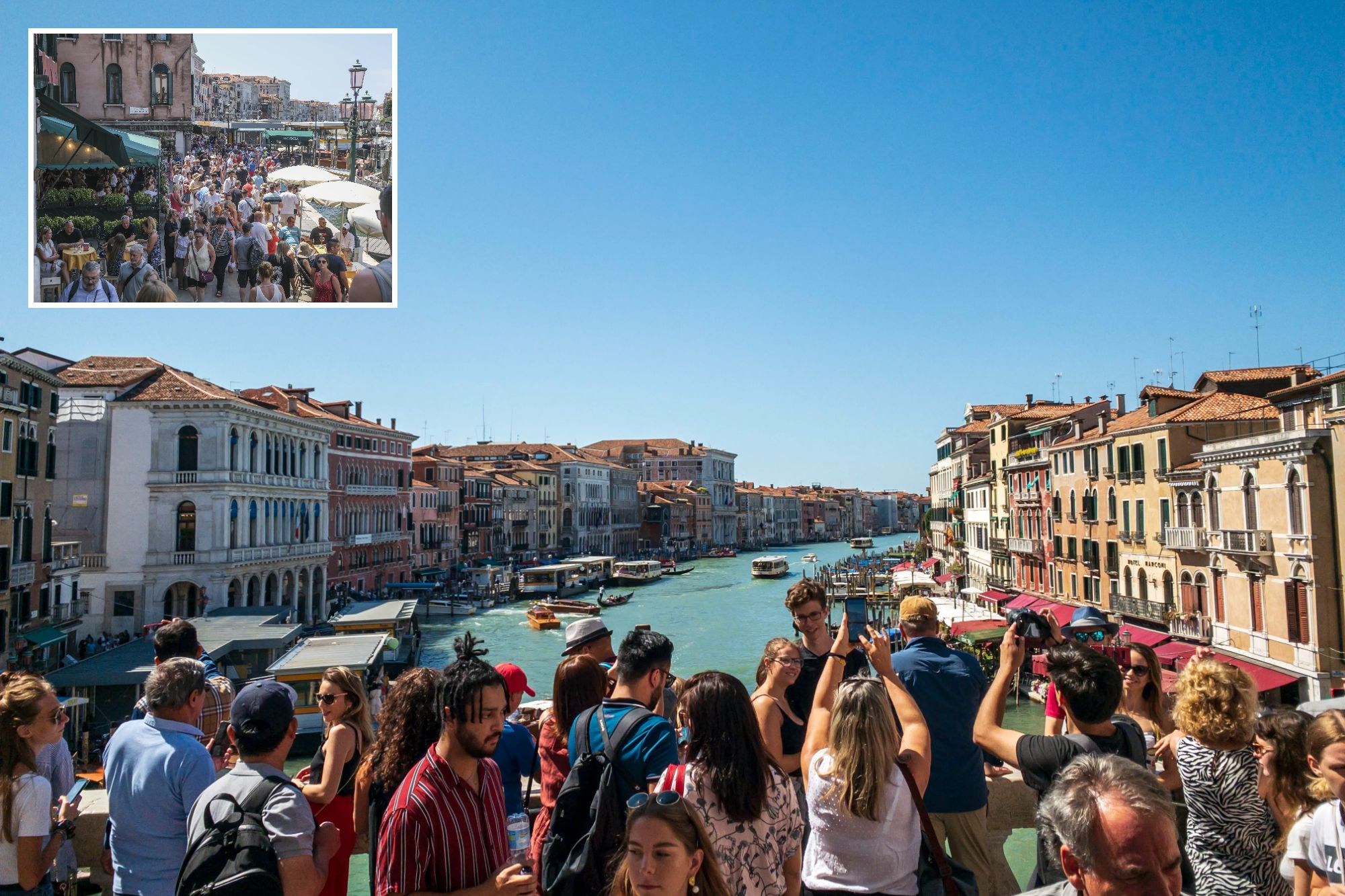
The mayor of Venice is proposing an increase to the city’s controversial tourist entry fee, which could see the charge rise to as much as €50 (around £43) in a bid to tackle overtourism.
12:04, 20 Jun 2026Updated 12:04, 20 Jun 2026
A European city wants to hike its entry fee(Image: Getty)
In 2024, Venice made history as the first tourist destination to impose an entry fee, initially set at €5, approximately $4.30, on busy days spanning April to July. Additional days were subsequently added to the scheme, with the charge for last-minute visitors later rising to €10, roughly £8.60.
Mr Venturini is now pushing to raise the entry fee to as much as €50. This, he argues, will “discourage people further from coming to Venice at certain times of the year”.
Speaking to Corriere della Sera, he said: “If today it ranges from €5 to €10, my proposal is to increase it to €30 to €50.”
Critics of the initiative however claim it has made minimal impact on tourist numbers. Most visitors reportedly view it as “relatively insignificant” when weighed against the cost of a single glass of wine or a pint, reports The Telegraph.
Venice has continuously grappled with the challenge of overtourism. This comes as the city’s population has plummeted from approximately 170,000 in 1950 to roughly 48,000 today.
Visitors to Venice consistently exceed the number of locals. However, there were concerns that a hefty entrance charge might put off tourists who were deemed less affluent.
Former city mayor Massimo Cacciari went so far as to describe the fee as “barbarous”. He said: “There is no other city in Italy or Europe where you have to enter with a ticket, as though it was a museum.
“It is barbarous, uncivilised and, in my opinion, against the constitution. It is simply obscene. I thought that Venturini would be more intelligent than his predecessor and would scrap the fee.”
One business owner, however, has urged for the charge to be increased even more substantially. Jewellery shop proprietor Setrak Tokatzian suggests the city ought to be introducing a €100 levy on visitors.
Tourism expert Doug Lansky, recognised as ReThinkingTourism online, reckons the €5 charge would be unlikely to put anyone off. In a YouTube video he said: “I predicted that €5 wouldn’t have any effect.
“I mean, €5 isn’t enough to get me to choose one dinner entre over another at a restaurant, I’ve paid that much for a cappucino or a bottle of water at a concert.”
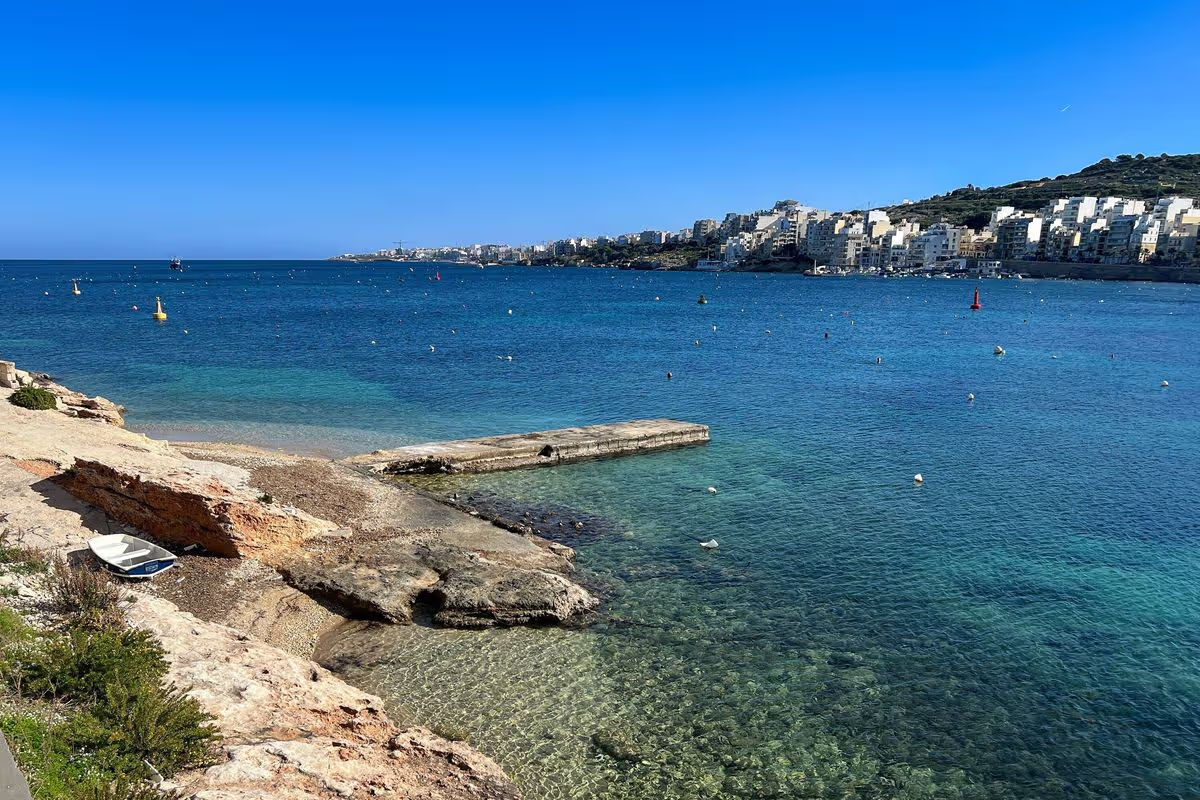
The island is now reachable from 19 airports across the United Kingdom, with flights available for as little as £45. Travellers swapping grey British skies for the 17-mile long destination can look forward to temperatures of around 32C throughout the summer months.
On arrival, Angela couldn’t help but observe that the “blue wink of the Mediterranean is a constant presence” around Malta. Boasting bustling shops, baroque facades, and 17th century watchtowers, Angela says the town “scores highly” for the “views alone”.
She does, however, note that Sliema may not be the ideal destination for a traditional beach holiday, with “rocky bays and outcrops” rather than the sweeping sandy shores some tourists might prefer, reports the Express.
The island does have some sandy beaches to offer. Ramla Beach, which translates as red sand, is regarded as one of the island’s most stunning stretches of coastline, with its rolling sands and crystal-blue waters.
Nestled at the foot of a lush valley and surrounded by rugged hills, Ramla Beach holds blue flag status and provides a wonderful opportunity for snorkelling, diving, or simply unwinding in the sun. The Bugibba Perched Beach, situated in the northern part of the island, is an artificial beach that has become a firm favourite amongst visitors.
Once a jagged rocky outcrop, the beach has been transformed and now boasts an array of cafes, along with all the usual amenities including sunbeds and parasols, perfect for a spot of sunbathing.
Those seeking a more culturally enriching experience can venture to Malta’s capital, Valletta, which was granted UNESCO World Heritage status in 1980. UNESCO describes the city as “inextricably linked to the history of the military and charitable Order of St John of Jerusalem”.
The city is home to an impressive 320 ancient monuments within just 55ha, cementing its status as one of the most historically dense destinations on the planet. The island also boasts a collection of ancient temples, with the gantija Temples tracing their origins back to 3,600 BC.
Nestled within the Gozitan countryside, the temples are so vast that local legend once held that they were built by giants.
Eager to uncover more history, Angela made her way to Mdina, a fortified city with a heritage stretching back approximately 4,000 years. This hilltop settlement served as the island’s capital until 1530.
Dubbed the “Silent City,” its cobbled streets feel like being “transported back in time,” according to Visit Malta. The tourism website adds: “Oozing of luxury and nobility, Mdina offers visitors a most discreet insight that only a few people can experience and witness during their lifetime.”
Malta’s cobbled streets and stunning vistas have also caught the eye of Hollywood.
Blockbusters including Game of Thrones, Troy, Gladiator, and Assassin’s Creed are amongst the major productions to have used the island as a filming location.
Having explored the island herself, Angela found it “grew on her,” despite the volume of tourists. She concluded: “Given the weather, the scenery, the heritage, and the sheer breadth of things to do, Malta looks set to continue having its ‘moment’ for some time yet.”
People heading to Europe for the summer are being warned to account for additional waits
Heathrow airport issued an alert to people travelling to Europe this summer(Image: GETTY)
As the summer holidays near, many people will be excitedly looking forward to their big summer getaway in Europe. However, anyone heading for Spain, France, Greece and other Schengen areas have been issued a major warning from Heathrow Airport.
Taking to X, the airport’s official account warned travellers to “be aware” of the additional wait times they might face at European airports this summer due to the rollout of the Entry/Exit System, or EES. The system’s implementation has already caused a bit of travel chaos this year with some passengers missing their flights because they were stuck in line.
The EES is meant to replace the old manual system of stamping passports when non-EU citizens enter or leave Schengen countries. The new systems logs this travel digitally using biometric details like your fingerprints.
Content cannot be displayed without consent
In the long run, EES is meant to make passport control at airports smoother but currently, it is causing massive queues and wait times to travellers’ journeys. This is because it needs to register travellers with their biometric details.
The process is free and travellers don’t need to do anything different before getting to the airport. However, travellers may need to account for the delay in getting to their boarding gate or they could risk missing their flight if the queue is too long.
Official guidance on the Gov.uk website explains: “On your first visit to the Schengen area, you may be asked to create a digital record at the port or airport on arrival. You may be asked to submit your fingerprints and have your photo taken at dedicated booths.
“You don’t need to provide any information before travelling to a Schengen area country. The checks may take slightly longer than previously, so be prepared to wait during busy times.”
Countries in the Schengen area include:
Austria
Belgium
Bulgaria
Croatia
Czechia
Denmark
Estonia
Finland
France
Germany
Greece
Hungary
Iceland
Italy
Latvia
Liechtenstein
Lithuania
Luxembourg
Malta
Netherlands
Norway
Poland
Portugal
Romania
Slovakia
Slovenia
Spain
Sweden
Switzerland
You might also be asked to provide either your fingerprint or photo when you exit a Schengen area. Your digital EES record is valid for 3 years.
Some people are exempt from EES and won’t need to register. Instead they need to present their exempting documents to a border guard when they arrive at the border.
People exempt from EES include:
Nationals of the European countries using the EES, as well as Cyprus and Ireland
Non-EU nationals who hold a residence card and are immediately related to an EU national
Non-EU nationals who hold a residence card or a residence permit and are immediately related to a non-EU national who can travel throughout Europe like an EU citizen
Non-EU nationals travelling to Europe as part of an intra-corporate transfer or for the purposes of research, studies, training, voluntary service, pupil exchange schemes or educational projects and au-pairing
Holders of residence permits and long-stay visas
Nationals of Andorra, Monaco and San Marino and holders of a passport issued by the Vatican City State or the Holy See
People holding a valid local border traffic permit
Crew members of passenger and goods trains on international connecting journeys.
People holding a valid Facilitated Rail Transit Document or valid Facilitated Transit Document, provided they travel by train and do not disembark anywhere within the territory of an EU Member State
THE magician counts down before throwing a deck of cards into the air and hurling a knife at me.
Bullseye. The blade is stuck into one card on a target hanging from my neck. Ten of clubs. The card I’d picked.
Sign up for the Travel newsletter
Thank you!
A high and low ropes course was just one of the many activities on offer for the kidsCredit: Matt KealAs well as a knife-throwing magician, above, the feelgood fun on site includes X Factor stars Reggie ’n’ Bollie, a Taylor Swift tribute act, and stand-up comedyCredit: Supplied
I look down from the stage at my three slack-jawed kids who’ve just had a memory that’ll last a lifetime.
This entertainment at Parkdean’s Vauxhall Holiday Park in Great Yarmouth is a cheerful blast from the past for me, but it’s spellbinding for my daughter Frankie-Beau, 13, and her nine-year-old twin brothers Reggie and Teddie.
And thanks to a £5million refurbishment, the choice of awesome activities reads like a list of kids’ birthday party options: a high and low ropes course, Bear Grylls escape rooms, an inflatable bounce park, a swimming-pool obstacle course, pottery painting, off-road rangers and an adventure playground.
With an array of places to eat, we don’t even switch on the hob in our comfortable, contemporary caravan.
And the Hat-Tricks sports bar really hits the target, offering interactive darts, shuffleboard and a fantastic fairground crazy golf course.
Not to mention a next level arcade that reminds my wife, Kayleigh, and I of the excitement we used to have as kids winning tickets for prizes.
Frankie-Beu sets sail on the boating lakeCredit: SuppliedThe boys kitted out for some climbing actionCredit: Supplied
We’ve taken our children to Dubai, Turkey, the Netherlands and Disneyland, to name a few — but they feel they’ve hit the jackpot on this quintessential Great British caravan-park holiday here in Norfolk.
No frills but so many thrills.
Just five minutes down the road is the Golden Mile — a kids’ equivalent of the Las Vegas strip and the beating, buzzing, beachside heart of Great Yarmouth.
The must-visit attractions — a 50m Ferris wheel, the Sea Life centre and a circus — complement the retro coastal charm. Then, of course, there’s the Pleasure Beach amusement park, which has all the fun of the fair and then some.
Nearby must-visit attractions include a 50m Ferris wheel, the Sea Life centre and a circusCredit: SuppliedThe kids try out the fantastic fairground crazy golf courseCredit: Supplied
There are hordes of cafes, bars and restaurants to pick from for food. We end up finding a little gem called The Box Tree, a small bistro in the Ocean Hotel overlooking the promenade, which serves fresh food of the highest quality and is great value for money.
They even serve our lunch on paper featuring old newspaper print, in a fun nod to the traditional way of eating fish and chips.
From there, we hop on the gloriously old-school Choo Choo Loco road train for a short £2 ride down the coast to The Little Venetian Waterways.
With moreish modern treats such as croffles, Venetian sodas and Biscoff ice-cream shakes, the island cafe is firmly in the 21st century. But the enchanting boating lake is a vintage voyage into the good old days. Frankie-Beau and I hire a rowing boat, while Kayleigh, Reggie and Teddie hop into a pedalo. This is fabulous family time like it used to be — no screens, no scrolling, no squabbling.
Because we’re reminding them — and us — of the joy you can find in the little pleasures; the things we’ve seen and done but are all new and exciting to them.
When we stroll down the dated high street of knick-knacks, our children see a lively hub of treats and toys.
While we wonder how the old ‘upside-down house’ is still pulling in the holidaymakers, our children are gobsmacked to see AN UPSIDE-DOWN HOUSE!
And the Golden Mile of amusements, bouncy castles and funfairs might just be the only time they’ve walked a mile without whingeing.
Because every few steps we’re re-energised by another coastal classic: that unforgettable whiff of hot doughnuts; devouring candy floss on the pier; enjoying a horse-and-cart ride along the promenade.
In the next decade of their lives, my kids — hopefully — will see more of the world. But I know they’ll never forget that little weekend break when their dad had a knife thrown at him in Great Yarmouth.
A FREE UK beach festival dubbed a “giant family playground” returns this weekend to an iconic seaside town.
Tens of thousands of visitors are expected to descend on the beachfront to enjoy a programme of live music and workshops.
Sign up for the Travel newsletter
Thank you!
A free UK beach festival returns this weekend, with tens of thousands of visitors expected to attendCredit: InstagramThe festival includes a host of workshops, music performances, and live events to celebrate the summer solsticeCredit: Instagram
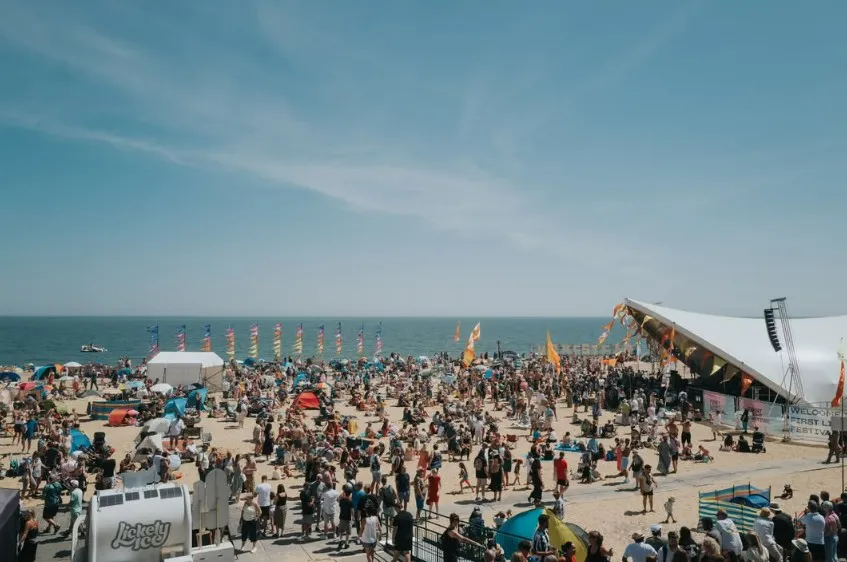
A huge, free beach festival is set to return this weekend (June 20 to June 21) with tens of thousands of visitors expected to attend.
The First Light Festival takes place annually in Lowestoft, Suffolk, and features more than 200 performances across 24 stages.
The creative festival also offers visitors a wide-ranging programme of workshops, wellbeing sessions, crafting, dance, science, storytelling and family adventures for a fun-filled weekend.
Taking place over the summer solstice, the festival is a celebration of the first sunrise of midsummer.
This year, visitors will be able to attend a “special Indian Sunrise raga” at dawn on Sunday, June 21.
The festival covers an expansive area of the South Beach, spreading along the seafront, promenade and nearby Kensington Gardens and East Point Pavilion.
Converting the seafront into a “giant family playground”, festival-goers will enjoy events such as dance parties, science discoveries and circus skills workshops.
There are also camping options for those looking to stay overnight, including a glamping experience in well-equipped campervans.
Visitors are able to enter the First Light Festival for free and without a ticket.
However, after 9.30 pm, any festival-goers looking to attend one of the Sundown Events happening on Saturday night after the free programme of beach events ends will need to purchase a ticket.
The festivities began on Friday, June 19, with a selection of live theatre and music events to kick off the celebrations, and there are many more activities to get involved in as the weekend progresses.
A huge Big Bang Boogie parade takes place on Saturday, June 20, starting at the East Point Pavilion at 11 am and travelling along the seafront towards the main Sunlight Stage.
Other activities include a grounded movement ring, rocketry experience, and a traditional Punch and Judy show.
Visitors can also explore a selection of dance workshops, aerial displays and even get to see objects from the Natural History Museum.
Returning for its sixth year, the festival also has a huge impact on the town itself.
Chairman of Lowestoft Vision business improvement district, Danny Steel, told the BBC that the midsummer festival was “massive” for Lowestoft.
He explained: “We get about 30,000 people come to the First Light Festival over the weekend, and if all of those people spend £35 in Lowestoft, that’s £1m extra into the Lowestoft economy.”
Chief executive officer of the First Light Festival, Genevieve Christie, said the festival is about “coming together” as a community and gives people the chance to “experience things in real life”.
The festival also aims to put Lowestoft on the map as a holiday destination.
She explained: “All of our work is about raising the profile of Lowestoft, actually as a place to come on holiday, to be a tourist.
“We’ll be looking forward to 2028, when we’ll be operating the new cultural centre in Lowestoft, and our whole idea there is to bring the spirit of the festival into the town.”
A customer claimed they had been told different things by Jet2 staff
Jet2 has clarified its baggage rules(Image: Getty)
Jet2 has stepped in to clear up confusion over its baggage policy. The update came after a query from a passenger with a group booking.
The traveller sought clarification as their reservation included two adults and a six-month-old infant. They explained: “Told we get two extra carry ons such as a buggy and travel cot that will be checked into the hold at the gate.” They mentioned they had two 22kg suitcases and recalled being informed on a previous Jet2 holiday that they were entitled to “an extra 10kg for the baby”.
According to guidance on the Jet2 website for bookings with children, passengers receive “an extra 10kg allowance for infants” and can also take “up to two items per child or infant free of charge”.
State Pensioners to face major tax change
Differing messages
The customer’s query was whether the additional 10kg could be combined with one of the 22kg cases, creating a 32kg allowance. They said they had received contradictory information on this issue on their last trip with Jet2.
The passenger said: “On the way out with you we were told it’s fine to have a 32kg case (22kg + the 10kg). On the way back we were told the 10kg should be a separate small checked case.
“Please can you clarify which it is and what the rules are because on our last holiday with you we were told different things.” Jet2 responded to settle the matter: “The additional 10kg is applied to one adult’s baggage, allowing for a total of one bag at 32kg and one bag at 22kg.”
Extra items free of charge
When it comes to the two additional items you’re permitted to bring without charge, these may include:
A collapsible pushchair, pram or buggy
A car seat or booster seat
A baby carrier
A travel cot.
Each item must not exceed 32kg in weight. Should you bring any further items or anything beyond this weight limit, the standard excess baggage charges will apply.
Anna accuses him of stealing the sandwich which she travelled more than 4,000 miles to eat – and it was filmed outside a shop in Pienza dressed to look like a deli.
It’s apt that a romantic comedy was filmed in Pienza as the town is known for having love-themed street names.
A few are Via dell’Amore which translates into ‘love street’ and Via del Bacio which is ‘kiss street’.
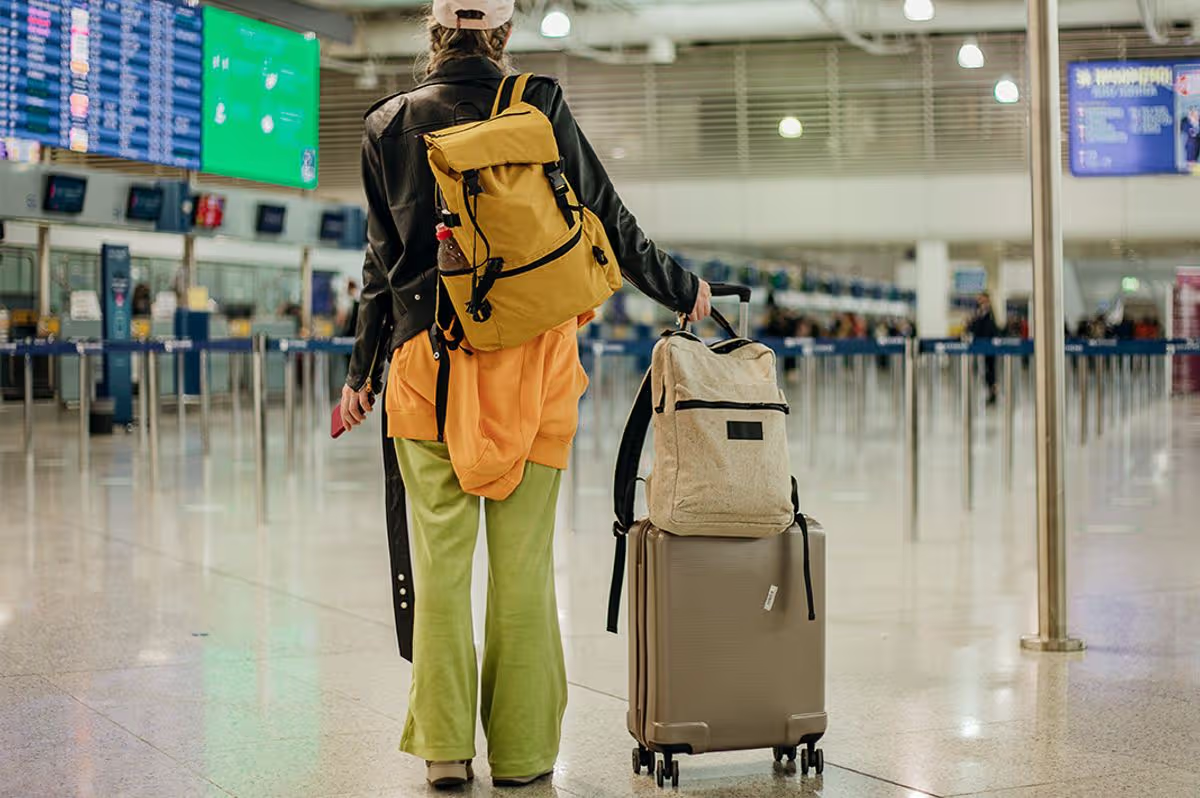
AIRPORT terminals – love them or hate them, you’ll find yourself killing time in one before your next holiday.
According to a study by YouGov in 2023, the average Brit spends as much as £20 before a flight, with common items being perfumes, alcohol and food gifts.
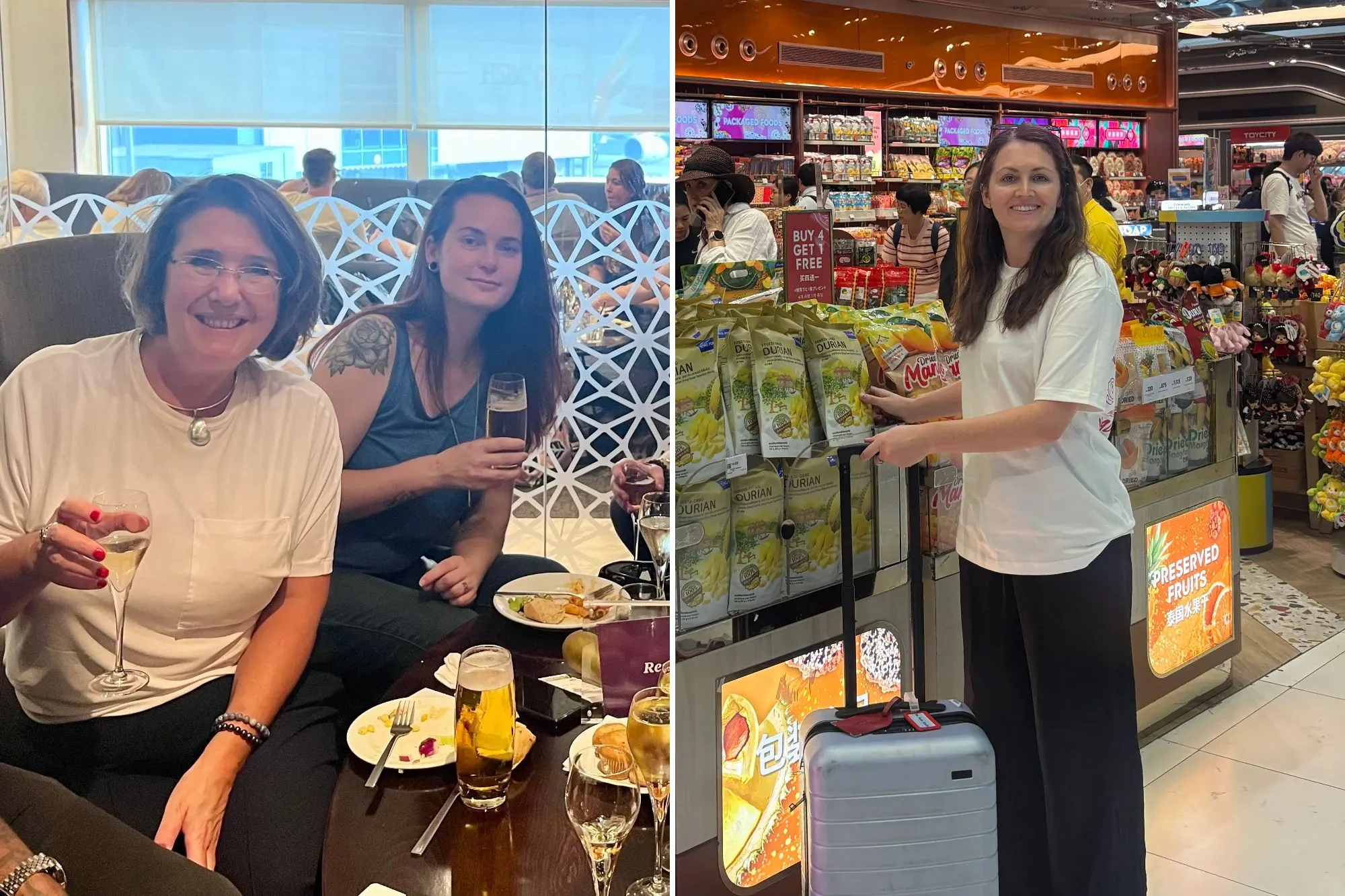
Our favourite (and worst) ways to waste time at the airport revealedCredit: AlamyThe Sun’s Head of Travel, Lisa Minot (left), with her family, at the only part of the airport she enjoys – the bar
Yet while some people enjoy a perusal of the aisles, others are more reluctant to.
While bargains can be found at Duty Free, you’ll find your cup of coffee or morning breakfast a lot more expensive than outside the airport – making your holiday more expensive before you even get on the plane.
The discussion of enjoying the airport terminal has divided even the Sun Travel team.
Here we share our biggest bugbears, best ways to spend a few hours at the airport, the freebies you can bag while there and the handful of duty-free items that are actually worth buying.
Lisa Minot, Head of Travel
As per usual, I am late. Airport security is a nightmare. Endless lines of stressed passengers are corralled into a hot, suffocating pen, awaiting the conveyor belts of doom.
I roll my eyes as my perfectly acceptable hand luggage is sent down the reject lane – and I stand fuming, knowing there’s nothing wrong with it. After another ten minutes and a ‘random check’, I am finally free to enter departures.
I am hot, bothered and hating life. So what could possibly be worse?
The winding ‘hell-no brick road’ through the World of Duty Free with its cloying perfume sprays, overpriced make-up and endless rows of ‘designer’ sunglasses.
Travellers slow to a snail’s pace as the brightly-coloured displays tempt them. And as I try to accelerate through the dawdlers, I get a full-on spray of aftershave in the face as the sales staff accost yet another unlucky victim.
Round and round we go. Past overpriced beauty brands I’ve never heard of – and will never be able to justify the price. Past rows of Union Jack tat and extortionate Fortnum and Mason biscuits.
Rounding another corner, there’s yet more retail hell – overpriced sweets and costume jewellery you know will probably disintegrate before you’ve settled into your airplane seat.
Finally, after what feels like an eternity, I’m spat out into the departure lounge. Except more retail hell awaits.
No, I don’t want a pair of overpriced shoes. I don’t need a ‘just in case’ shawl or a tech gadget promising to ‘transform’ my flight. I just want to sit down.
It’s bad enough I’m stuck in this soulless cavern, but the endless assault on my wallet is exhausting.
If I have forgotten something, God forbid, I’d much rather buy it at my destination. At least there it might have some meaning.
The lone sanctuary in the chaos. The one place where I can enjoy a cheeky albeit overpriced drink.
And as I finally sink into a chair to do a spot of people watching, the rage fades.
It might be twice the price of my local, but I’m jetting off… and this is my little slice of airport heaven.
BEST FREE ITEMS AT AIRPORTS
We’ve rounded up some of the best free items at airports, in you’re the type of person who likes to get there early…
Grab a ‘free suncream’ at the airport
Before you travel, get the Recycle at Boots app and find five empty health or beauty items that can’t go in your kerbside recycling collection, like electric toothbrush heads or toothpaste tubes.
Take a quick snap of them and upload them to the app. Once they’ve been added, you can bag them up and drop them in the collection point at your nearest participating Boots, before scanning the QR code on the side of the box for a voucher to claim £5 worth of Advantage Card points when you spend £10.
If you store up your points until you get through airport security, you can spend them on suncream at Boots airside.
I got a bottle of Soltan at Stansted for £6.05, so you’ll need more points than you get in one recycling transaction, but there’s nothing to stop you doing it several times and getting lots of points on your card, ready to spend at the airport.
Local drop-off prices or free
Residents who live near Stansted Airport can pay a reduced charge at the express set down at the terminal of either 50p or £1 for up to 15 minutes, depending on whether they live within five miles or 10 miles.
There are similar schemes at other regional airports like Edinburgh and Manchester, which means that if you live near an airport or have family and friends who do, you might be able to avoid paying for airport parking.
If you want to eat something a bit more substantial before your flight, it’s often the case that chains likePizza Expressexclude their airport branches from popular deals and discounts.
Free glossy magazines
Did you know that many airports have free magazine stands?
They can often be found in the corridors when you are travelling to your gate, or even after you have gone through the gate agent and are waiting to board.
They vary depending on which ones they have so you can’t always be fussy.
On a recent flight, we’ve managed to pick up Wallpaper* magazine, as well as Escapism, Condé Nast Traveller and Stylist.
Kids eat free
Certain large airports like Heathrow operate a kids-eat-free policy at some of their restaurants during the school holidays.
So if an adult chooses an item from the main menu, your kids can eat for free.
Restaurants that have previously taken part at Heathrow include Giraffe, Wild Olive and The Grove.
Let the kids run wild in soft play
Plenty of UK airports have soft play areas and games zones in their terminals so kids can burn off some energy before boarding.
While some of them are pretty basic, some at airports like Heathrow are good enough that you’d pay a few quid for entry into the outside world.
There are only a handful of real bargains to be found at Airport Duty FreeCredit: GettyThe Sun’s Deputy Travel Editor Kara Godfrey enjoying a spot of duty-free airport shopping
Deputy Travel Editor, Kara Godfrey
‘We don’t need to be so early to the airport, Kara,’ my friends often moan at me when I turn up three hours early for a flight to Spain.
They, however, are wrong – the beauty of a holiday starts at the airport.
In fact, it’s one of the most exciting bits of my trip, especially when travelling through some of our London airports, which, dare I say it, are some of the finest in Europe.
There is something to be said for being stuck within the walls of a terminal where there is nothing else to do but explore the shops – you can’t go back through security, and you can’t go to your gate.
If it’s an early morning flight, I embrace my overpriced Pret coffee, often chased by a just as expensive cheese turnover to keep me going.
I’ll check the time for my gate to be revealed (often at least 1hr30, with how early I arrive), and that’s when the fun starts.
I peruse Waterstones, picking up a new book that I forgot to pack myself but will inevitably never read, opting to pass out as soon as I get on the plane.
There’s the swimsuit I also forgot to pack that I must pick up from Accesorize, before being tempted into some new earrings, where I shall return from the trip with just one of them.
And I’ve been burnt before by inedible economy meals, so my trip to Boots is a must, picking up the same Meal Deal as always – Elderflower and Mint CBD drink, Korean Fried Chicken Rice Bowl and a Big Bag of Hula Hoops.
All of that, and I still have time to perhaps try some of the designer beauty products I can only dream of affording, but will happily smear samples on my wrists and neck.
How people hate the airport experience is beyond me – I simply say you aren’t doing it right.
I will never be that person you see frantically running through the airport, face frazzled as they barely make their flight.
For I, with my coffee, book and earrings to join me, settle in with another hour to kill while calmly waiting to board.
Who needs spa treatments when you have an airport terminal to peruse?
Our anonymous flight attendant blogger reveals which items you should never buy at airports and how you can find the best bargains before your flights.
The worst offender for thisis chocolate– no matter which airport you’re in, you’ll be ripped off for it.
And the worst thing is, it’s not even good chocolate – it’s run-of-the-mill, ordinary stuff that you can find in shops everywhere.
It’s also often in novelty-sized bars or massive tubs that are both far too big and cost an absolute fortune.
It’s such a false economy, and I don’t understand why no one’s figured that out yet.
Perfume is generally the same – you can find the bottles for the same price online.
That’s not to say therearen’t bargainsto be found if you know where to look.
Avoid the stuff that’s in the centre ofthe duty-free shop, and instead look at the shelves until you find the discounts or clearance sections.
They don’t always exist, but a lot of airports have them, often hidden on a small shelf that’s not immediately noticeable.
That’s where your bargains can be found.
The only other item I would say is worth buying at the airport is local booze, if you want to bring something back as a gift or souvenir.
The best places for that, in my opinion, are South Africa and South America, where you can get their local drinks for great prices at the airport – meaning you don’t have to buy it then carry it for the rest of your holiday.
A NEW multi-million-pound waterfront park is set to open today – and it’s three times larger than London’s Trafalgar Square.
Visitors will be able to walk across a 55-metre bridge from the High Street to the revamped riverside.
Sign up for the Travel newsletter
Thank you!
The massive space is three times larger than London’s Trafalgar SquareCredit: GRAHAM BROWN @ CHAPMAN BROWN PHOTOGRAPHYThe amphitheatre features sweeping views of the River TeesCredit: GRAHAM BROWN @ CHAPMAN BROWN PHOTOGRAPHY
Stockton-on-Tees‘ Waterfront Urban Park is set to be unveiled today (June 20), as part of the council’s vision to regenerate the struggling town centre.
The £23million project will bring a “dynamic space for events, leisure and community life” to the area, where residents will be able to enjoy three separate play areas, event spaces and even a skate spot.
The focal feature of the park is a 21,000sq ft amphitheatre designed for live events, which connects the upper and lower sections of the park via 402 granite steps.
Ten-metre play towers, an oval lawn and facilities that can accommodate pop-up food and drink vendors are also key landmarks in the area.
The site features more than 17,000 plants which border the park and play spacesCredit: Stuart BoultonChildren are able to play in three separate play areas which also features climbing nets and trampolinesCredit: Unknown
The history of the town centre has also been integrated into the space, with text, poetry and illustrations featuring Stockton’s heritage carved onto floor and wall surfaces.
Activities forchildren include a toddler trail, swings, climbing nets, trampolines and “exhilarating” slides connecting the amphitheatre to the riverside.
The waterfront space features sweeping views of the River Tees, and more than 17,000 plants have been installed from over 224 species.
The entire project, completed by contractors Esh Construction, cost more than £41million, which included the demolition Castlegate Shopping Centre and the Swallow Hotel.
Building began in December 2024, and now the opening will take place as part of Armed Forces Celebration Day.
Councillor Paul Rowling, the deputy leader and cabinet member for resources and regeneration, said: “Stockton Waterfront urban park is going to have a transformational effect on the borough, the wider Tees Valley and beyond.
“The Waterfront Park is set to be a catalyst for further investment and drive our ambitions for the future. This is only the beginning of that journey.”
The project has been named “one of the most ambitious regeneration projects in Europe” in a bid to help revitalise the deprived market town.
Spain is redoubling its efforts to push its tourist appeal beyond the familiar “sun and sand and coast” model as it prepares for another record-breaking year in which the number of foreign visitors could reach 100 million for the first time, the country’s tourism minister has said.
Speaking to the Guardian, Jordi Hereu rejected suggestions that Spain was now saturated with tourists but said it had become clear that the “old formulas no longer work”, especially amid growing concerns about overtourism and the effects of the climate emergency.
Hereu, the minister of industry and tourism, said the steady growth in tourist numbers – which could be further boosted this summer by uncertainty over Middle Eastern destinations after the US and Israel’s war on Iran – could be managed sustainably and responsibly.
Last year, the number of foreign tourists rose by 3.2% to 96.8 million, while the value of their spending grew by 6.8% to hit €134bn (£116bn). Figures from the first quarter of this year show tourist numbers up by 3.4% and revenue up by 6.7%.
People visit the windmills in Mota del Cuervo, Cuenca province, Castilla-La Mancha, made famous by Miguel de Cervantes in Don Quixote. Photograph: Maria Galan/Alamy
“With that growth, we could reach 100 million,” Hereu said. “But I’d like to point out that that doesn’t worry us or obsess us … [We favour] what I call calm growth – in other words, growth that can be easily managed. And this year, despite what’s happening and the demand diversion effect, I think that in general, for the moment, our forecast is for moderate growth.”
While tourism has long been a pillar of the Spanish economy, making up more than 12% of its GDP, its rapid and unchecked growth in many parts of the country over recent years has triggered protests and a furious backlash. Overtourism, not least the proliferation of tourist flats, has changed the face of entire neighbourhoods and cities, priced locals out of the housing market and increased pressure on public services and natural resources.
Asked if the current rates of tourism were sustainable, Hereu said: “Yes, if we do our homework, and no if we don’t do anything.” The minister, a former mayor of Barcelona, praised his successor in that role, Jaume Collboni, a fellow socialist, for pushing ahead with a decision to ban tourist flats in the Catalan capital by 2028, but he said Spain’s highly decentralised nature made it hard for the central government to drive local change. He also contrasted the different approaches of leftwing and rightwing administrations.
People demonstrate against high rental rates in Barcelona in November 2024. Photograph: Bloomberg/Getty
“I think there are places in Spain that are now seeing the effects of not regulating anything,” he said. “But I also want to be very clear, because this is also influenced by political stripes. The left is more in favour of regulating tourism than the right, because the right holds the view that we should allow freedom because the market will self-regulate, which isn’t true, and in many places it’s clear that it isn’t self-regulating.”
Hereu said that while he believed anti-tourism feeling was “very much a minority thing” in Spain, it was becoming increasingly clear that a new approach was needed and that local and regional authorities needed to properly limit, regulate and tax their tourist offerings.
“What I do believe is that in some places there’s a demand for better tourism in the sense of a better model,” he said. “But the culture I see throughout Spain is a culture of a country that knows how to welcome people. Our key principle is that we’re in favour of transforming the model to keep ahead and that we’re working humbly to transform that model because the old formulas no longer work.”
Although he defended traditional beach tourism, which still makes up 37% of all visits, and said Spain had to be open to “all sectors” of the market, he noted that people were now seeking experiences beyond their sun loungers.
“It’s very interesting to see in the qualitative surveys that people who come basically because ‘hey, I’m here to relax, sun and beach, etc,’ also start asking for add-ons – like ‘beach plus’,” Hereu said. “I think this is also a good trend, because what we need is to add value.”
The minister said Spain’s socialist-led coalition government was committed to the socially, economically and environmentally sustainable principles set out in its 2030 tourism strategy.
“One is decentralising destinations over time and we’re also working towards deseasonalisation,” he said. “The third, very clear principle is the diversification of our offering away from all those decades of sun and sand and coast, which is where the [Spanish tourist industry] was born, and which is still the dominant offering.”
People eat outside in Plaza Mayor in Villanueva de los Infantes, Castilla-La Mancha. Photograph: Maria Galan/Alamy
Although Spain has been pushing the summery charms of its eastern and southern coasts for decades, Hereu argues that the key to sustainable tourism lies in making it less seasonal, less beach-fixated and more geographically and culturally diverse.
The country’s current advertising campaign, called Think You Know Spain? Think Again, swerves sun-kissed costas to focus instead on images of churches, paradores, orange groves, folk festivals, food, wine, lakes, green spaces, handicrafts and brown bears. It even features rain.
“You don’t see any coastal beaches; instead, it’s inland Spain and the green Spain of the north,” he said. “So, it’s about decentralising and discovering other realities. And what’s happening? Low and mid season are growing much more than high season, and the inland, green Spain is growing much more than the majority segment.”
Spain’s reliance on tourism was laid bare during the Covid pandemic. In 2020, international visitor numbers dropped by 77% to just 18.9 million. That led the government to invest €3.4bn of EU next generation funds in a plan to modernise and transform the sector.
A brown bear in Somiedo natural park in the Cantabrian mountains in Asturias. Photograph: Lucas Vallecillos/Alamy
According to Hereu, that investment has allowed less visited areas of Spain – such as Castilla-La Mancha, Castilla y León, Extremadura, Galicia, Asturias, Cantabria, the Basque Country and Navarre – to develop their tourist markets.
“There’s a lot of potential there, and that’s where we need growth to happen,” he said. “Because, for example, on the Mediterranean coast, especially now, in the high season, there are limits.”
Jordi Hereu, Spain’s industry and tourism minister. Photograph: David Lopez Villalta
The minister believes that diversifying and decentralising the tourist industry can help Spain tackle depopulation by ensuring that young people don’t have to leave their home towns in search of work elsewhere. Lengthening the season would also help to provide more stable employment, he added.
“Before it was June, July, August and, at most, September,” he said. “But now people open in April, May or June, and we have more stability. October is also very important now, and the truth is, in some cases chains tell me they’re open almost all year round. This also gives us more job stability, and it’s obvious that salaries also have to increase, right? You have to attract people to the sector and retain them. And that’s good news because it also brings social stability and a redistribution of profits.”
The spring festival of the Bando de la Huerta in Murcia, which is held annually on the first Tuesday after Easter. Photograph: Europa Press/Getty
Hereu said the government was also seeking to help the industry adapt to the effects of the climate emergency, which are becoming ever more evident in Spain in the form of droughts, heatwaves, forest fires, floods and rising sea levels. He said renewable energy, efficient water use and good waste management could all help mitigate the consequences of the crisis.
It was now abundantly clear, he added, that sticking to the old model would be a mistake. “We’d have the opposite of what we have now – we’d be growing the number of tourists rather than the spending value,” he said. “And 1781961576 we are growing more in value than in number.”
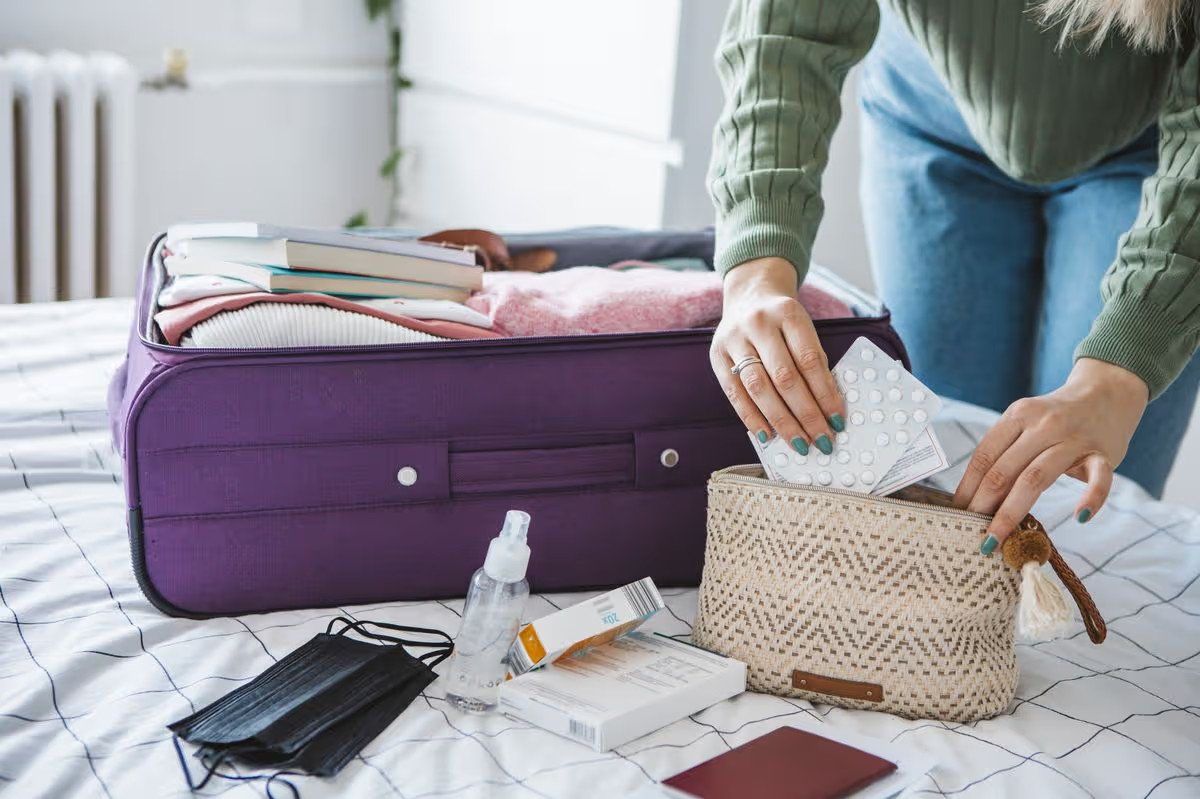
Simple mistakes could not only invalidate travel insurance but also leave the medication ineffective or even ‘unsafe’
It is important to notify travel insurers(Image: GettyImages)
A warning has been issued to thousands of people who will be travelling abroad on weight loss treatments this summer as mistakes could mean they are not only ineffective but could be “unsafe” to use. Millions of people currently use the jabs to help weight loss but there are strict rules around their use.
A survey by ZAVAfound an estimated 337,000 people will holiday on Mounjaro or Wegovy this summer however if it is not carried and stored correctly it can be left “ineffective”. Experts at the firm have now provided three tips for travelling with Mounjaro and Wegovy, alongside the most important things to know before heading off.
You could be invalidating your travel insurance
When taking out travel insurance, you often need to declare any pre-existing conditions during an online application or by calling your insurer directly. Failing to declare the use of weight loss treatment could render your policy invalid, leaving you unable to make a claim should something go wrong, which could result in a bill worth thousands of pounds.
You should also check import restrictions to any country you are travelling to and verify if the medication can be brought into the country and how much you’re allowed to carry for personal use. Make sure to also take evidence of your prescription with you, whether it be in paper or digital form, and that your treatment is in its original packaging.
Insurers like Admiral don’t typically cover GLP-1 injections bought from an unofficial programme, if a medical professional isn’t monitoring them or hasn’t been declared. It is strongly advisable to follow up with a direct call to your insurer to confirm everything is properly documented. When in doubt, contact your insurer and your GP before travelling.
Storing jabs in hold luggage could freeze your medication
Putting injection weight loss treatments in with checked luggage can be a huge risk. The compartments where checked baggage is stored undergo huge changes in temperature and pressure that may alter the effectiveness of, or even damage, your medication. It can get very cold and may freeze and unfreeze the liquid in the pen, making the injections unsafe to take. Make sure to take a carry-on bag with you to store your medication in.
Essential liquid medicines are allowed through security, even if they are over 100ml; security often advises keeping medicines separate in your bag where possible, informing the Security Officer and bringing supporting documentation if possible. After this step, make sure that your medication stays in its original packaging. If you have any specific queries about carry-on luggage and medication, contact your airline provider.
Not having access to a fridge could damage your medication
Both Mounjaro and Wegovy must be stored by following the guidelines outlined in the patient information leaflets. The medication may be kept in a refrigerator at 2°C to 8°C or stored at room temperature, provided it does not exceed 30°C, for a maximum of 28-30 days.
Any pens exposed to temperatures above 30°C, or left unrefrigerated for more than 28 days for Wegovy and 30 days for Mounjaro, should be discarded immediately, as it could be unsafe to take. Patients travelling with weight loss injections are advised to contact their accommodation in advance to confirm refrigerator access and to verify that the appliance maintains an appropriate temperature, as this can vary between units. As the jabs are administered once weekly, most patients will use each pen within the 30-day unrefrigerated window, unless travel is extended or a dose is missed.
All-inclusive holidays are common across the Mediterranean, Mexico and the Caribbean, but the concept has evolved over the decades — and, as I found, is still changing…
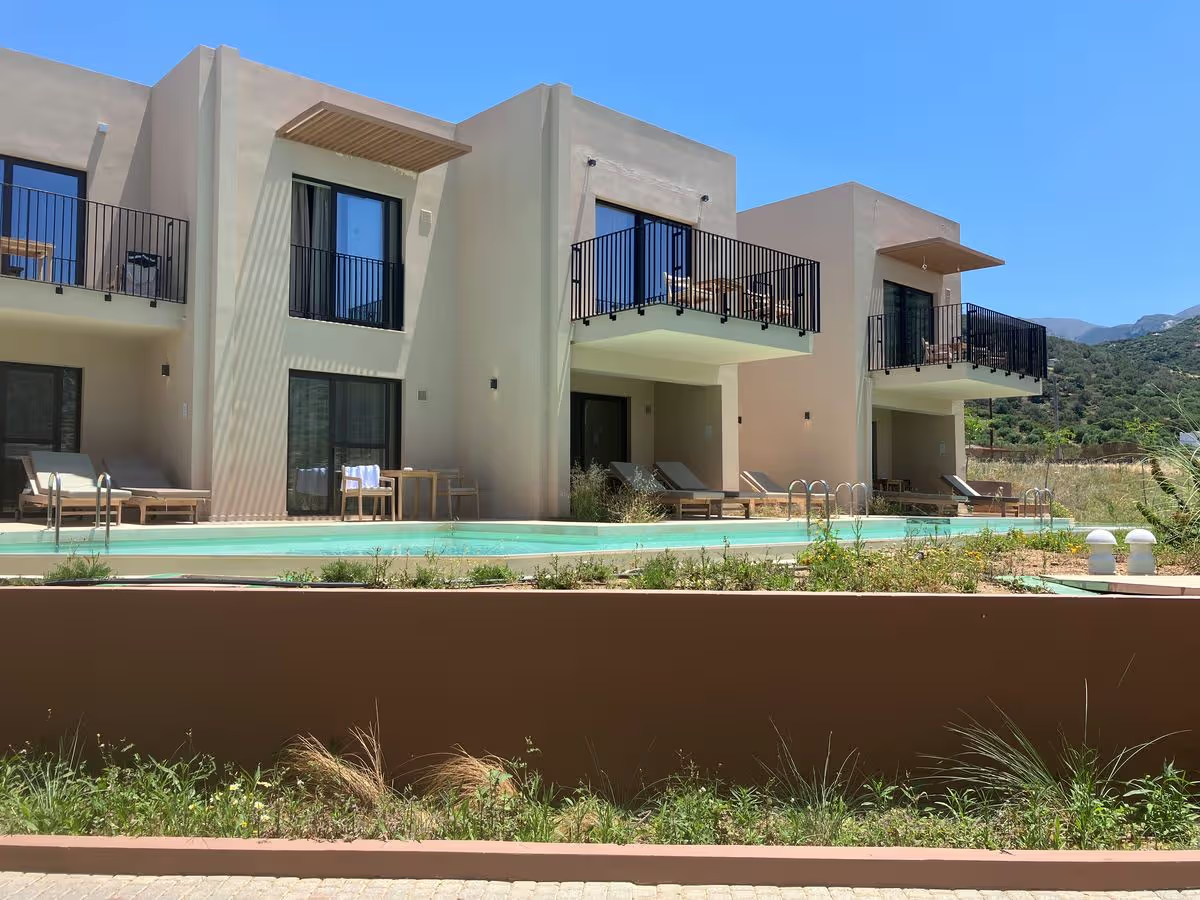
Views from the Ella Rocrita Resort Crete
For the past 15 years, if anyone ever even hinted at holidaying at an all-inclusive resort across the Mediterranean, I would shudder. Just the thought would evoke visions of a package holiday, full of Brits seeking the same cheap thrills for which they crave over here.
Don’t get me wrong – I’m not a snob. I’m the son of a travel agent, whose most popular getaways were these trips to the likes of Spain, Portugal and Greece. Brits love them.
But I’ve just come back from Greece. And from an all-inclusive resort. And, yes, I’ll eat humble pie – my view was misjudged. My trip to Ella Rocrita Resort Crete was glorious. It was a slice of luxury in a little-known corner of Crete, where tourists can enjoy the fascinating traditions, culture and nature the island has quietly boasted for decades.
Many Brits were there too. But this holiday, an all-inclusive, offered that bit of sun we here fondly miss, as well as a glimpse of Cretan life. Our boat trip to the ancient island of Spinalonga and excursion to Toplou Monastery will remain happy memories for many years.
Ella Rocrita Resort Crete is the fourth Ella Resort, having opened in April in the wake of successes on the likes of Corfu. These luxury all-inclusive complexes are essentially sprawling villages, and the newest is complete with five restaurants, several other bars with live entertainment and two large outdoor pools. Many of the 350-odd rooms and suites have quaint plunge pools, shared by only around half a dozen.
The brand, founded in 2021 but properly bursting onto the scene in 2023, has created these eco‑chic resorts in a bid to transform the identity of the all-inclusive, presumably from the image I had in my mind.
Rocrita, near the little fishing village of Mochlos, caters to families just as much as it does to couples. There’s an on-site crèche, kids club, babysitting service and a ninja pool — the latter just as appealing for youngsters as it is for big kids at heart, like myself.
I like to immerse myself in the culture of a new place, so I was a little reticent about staying at an all-inclusive. Excursions are available, though, and I was pleasantly surprised by how much culture I could absorb in the area. The stunning, lesser-known coastal spot in the northeast of the Greek island is tempting for travellers who want a true holiday experience without the hustle and bustle of tourist towns.
Every morning at Mochlos, I found myself instinctively looking up at the majestic peaks that surrounded us. Whether I was walking to breakfast, relaxing by the pool, or gazing back at the resort from the boat, the mountains were always there, providing an awe-inspiring backdrop to every moment of my stay at Ella Rocrita Resort. Even now, when I close my eyes, I can still picture them rising above me, as striking and unforgettable as ever.
Culture
On one particularly memorable day I visited Toplou Monastery. Founded in the 14th century, it is still functioning. The monks there make wine and were happy to treat us to a splendid wine-tasting session.
Travel west along the coast, hop on a little boat and spend a short while on Spinalonga. This island, maintained as a fortress for centuries under Venetian rule, became a leper colony in the early 20th century. It has been uninhabited since 1962 and is now the second-most-visited tourist site in Crete.
But those who enjoy activities closer to home can hit the private beach and make a splash with the wide variety of watersports. Yoga and pilates sessions are held most mornings on the lawn, play padel – the new racquet sport taking Europe by storm – and even enjoy a massage or facial in the wellness centre.
Food
This resort was ridiculous in the very best way possible. The days seemed to blur into one. I rarely knew what day it was, my screen time plummeted, and the food was so good it left me in a constant state of bliss. If you’re looking to immerse yourself in Greek culture, Ella Rocrita Resort’s culinary offering is a fantastic place to start, with five exceptional restaurants showcasing a variety of flavours and experiences.
I like to try the local cuisine and one of the eateries, Smigo, offers just that. Diners are encouraged to have meze, a selection of small dishes served as appetisers. These include grilled octopus, stuffed zucchini flowers, delicious fresh salads, oysters and wholesome bread boards.
At the Viola restaurant, dedicated chefs prepare Italian dishes, including a gorgeous prawn pasta creation. Carūma Fusion Restaurant offers South American and Cretan fusion cuisine, exotic cocktails, and an intimate setting for a dinner of tropical tastes. My crispy salmon with a fried rice dish was a gorgeous meal, but other diners enjoyed vegetarian delights at all the restaurants. The salads are light but wholesome and feature beautiful tomatoes and cucumbers.
Entertainment
The brand’s approach to entertainment has a way of drawing everyone in. It is understated, and not the happy-clappy fanfare I had feared as I prepared for the all-inclusive venture. Smooth jazz-inspired singers set the tone in the late bars, but the poolside watering hole boasts a DJ desperate to lure guests up to dance.
But it wasn’t an in-your-face theatre of performers, begging families up to stages to dance to unpalatable cheesy tunes. Instead, there are quiet spots across the whole of the resort where couples can relax and simply enjoy cocktails. The choice of which, by the way, is impressive; from a strong and oaky Manhattan to the resort specials, like the smooth Amber Spark (rum-based but with ginger tones).
There’s plenty for the children too, including sweet performances at the little amphitheatre and entertainment provided at the kids’ club. The arcade, complete with pool tables, is popular with youngsters and competitive adults alike.
Newly opened resort
At the end of the day — whether that means an early night or finally calling it quits after dancing until the bar closes at 1am — you retreat to one of the resort’s newly renovated rooms. Fresh, contemporary and infused with a relaxed Mediterranean aesthetic, the accommodation provides a comfortable sanctuary, with many rooms offering beautiful views across the pool or out towards the sea.
That sense of ease extends throughout the resort. From the soft, sun-washed colour palette and calming interiors to the intuitive layout that seamlessly connects rooms, restaurants and communal spaces, everything has been designed with relaxation in mind. It’s the kind of place where you quickly settle in, never feel lost, and can focus entirely on enjoying your holiday.
Book it
Rooms at Ella Rocrita start from approx. £184 per night, depending on season.
The ferry from Salerno to Amalfi town was set to take about 35 minutes, and we were debating whether to risk the windswept top deck, fearful our packed lunches might fly into the Tyrrhenian Sea. (My father and I were taking a pragmatic approach on our Italian holiday, opting for light midday meals to save space for the primo and secondo courses at dinner, and ample lemony desserts.)
As our ferry sped across glittering water, we admired the views as the Amalfi coast unfolded, incandescent with charm. But we could also see the crawling traffic on the narrow roads that cling to the cliffs. That could have been us, up there in one of those toy-sized rental cars, squeezed between a tourist coach and a fed-up local leaning on their horn. Thankfully, we were on a boat instead, sea breeze in hair and coffee in hand.
Illustration: Guardian Graphics
The Amalfi coast has a reputation that draws tourists from all over the world. It seems everybody wants to see this string of sorbet-coloured towns, to wander the narrow streets where houses climb the hills like stacked blocks, and to sip limoncello while gazing out across the impossibly bright, blue waters. But as eager as I had been to experience these famous graces, the idea of white-knuckling it on hairpin turns in a Fiat 500, inches from certain ruin, didn’t seem like my idea of fun. That’s when an Italian friend gave me some priceless advice: stay in Salerno – it’s a nice town with good restaurants, and you can do all your excursions via public transport from there.
Salerno is tucked just under the Sorrentine peninsula and about half an hour south of Naples on the fast train. It’s an ideal base for jumping on trains to inland attractions such as Pompeii and Paestum, but also for catching ferries to every destination along the Amalfi coast, as well as Capri and Sicily. What’s more, Salerno is a more affordable base than the honeypot towns of Positano or Ravello, where accommodation and restaurant prices are around double what you’d pay here.
Ornately decorated streets in Vietri Sul Mare. Photograph: Sean Pavone/Getty Images
Originally a Roman colony, Salerno was reshaped by the Normans in the 11th century. It’s a pleasant and relaxed town to wander, its wide and luxurious promenade dotted with palm trees, benches and street performers. What it lacks in Amalfi glamour, it makes up for with a more authentic tableau of local Italian life. (After a day of eating overpriced ice-cream from hollowed-out Amalfi lemons, we found Salerno’s lack of performance refreshing.)
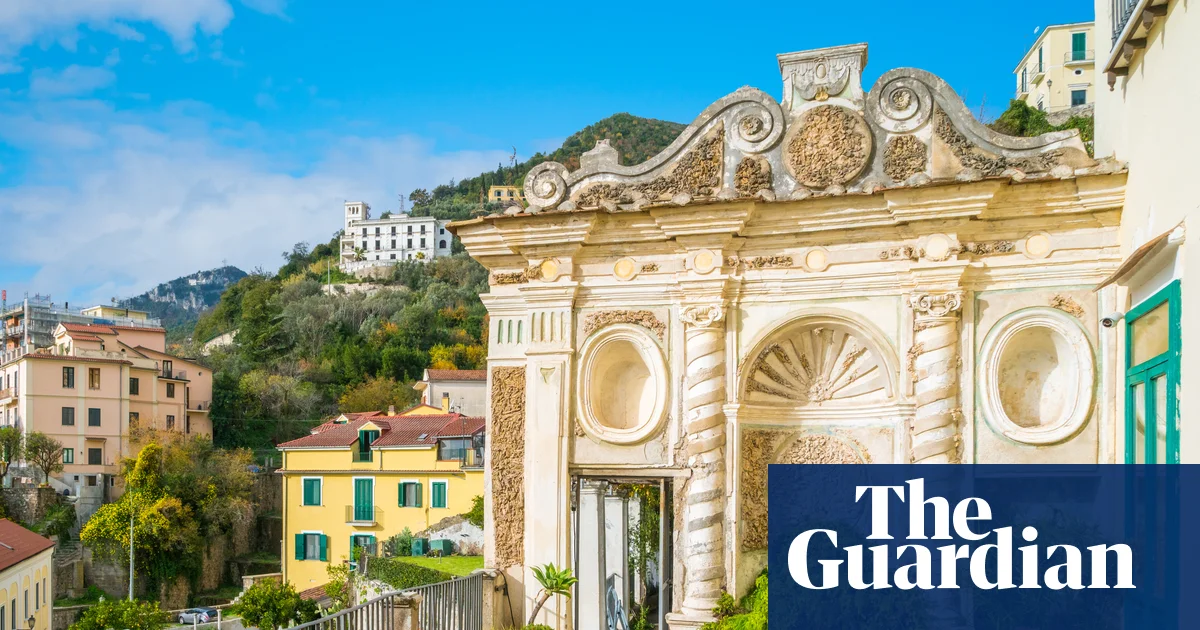
Dad and I got a holiday rental on the edge of the historic centre, near Salerno Cathedral, which houses the relics of Saint Matthew. We wandered in one morning and were surprised to find that although the duomo is on the modest side, the crypt is a real showstopper, with intricate marble details from top to bottom. The town is also home to the Schola Medica Salernitana, which dates back to the 9th century and was the pre-eminent source of medical knowledge in its heyday, before closing in 1811. Today, the adjacent Garden of Minerva botanical terrace is the city’s most picturesque attraction. Its organising principle is the four humours of man (the Ancient Greeks theorised that our temperament and health are dictated by a balance of blood, phlegm, black bile and yellow bile). That’s certainly something to think about while wandering the gardens, where the plants are labelled according to which “mood” they affect.
But Salerno is all about the food for me, most notably the glistening, black squid ink pasta dish I ate at La Botte Pazza and still salivate over months later. The menu, scribbled on a tiled wall, described the dish simply as spaghetti mare. The wine came out of taps in the wall, and the buzzy atmosphere only got louder as the evening progressed. The bonhomie was all the more welcome after spending the day wandering among the ghosts of Pompeii (40 minutes up the coast by train), which was buried in ash when Mount Vesuvius erupted nearly 2,000 years ago.
Ihe intricate marble detail of the crypt at Salerno Cathedral. Photograph: Francis Canker/Getty Images
Another worthwhile rail excursion is to Vietri sul Mare – the first town in the string of pearls that make up the Amalfi coast, and the only one that can be reached by train. We hopped on an eight-minute service out of Salerno for a wander through the town famous for its colourful ceramics, but also because I wanted to swim – Salerno’s seafront has a nice promenade, but beach lovers are left wanting.
You can swim in Amalfi town too, but the beach in this more famous spot was already getting busy when we visited in late March. As much as I enjoyed Amalfi, I felt relieved to be there early in the season – its narrow streets weren’t built for crowds.
Vietri sul Mare is sleepy in comparison, and I was thrilled to find a peaceful stretch of sand, where I changed quickly under the arches before running in for a bracing dip in the turquoise water.
For Dad, who takes a dim view of anyone who goes in the sea in March, Paestum was more of a highlight. After speeding south for about half an hour, the train dropped us off in the middle of nowhere, by a gravel road that promised a 10-minute walk to the ruins of the once-great Greek city. We were in our element now – at Paestum, visitors can wander about freely as the approximately 27-hectare (66 acre) site unfolds, with the occasional noticeboard sharing a story of what used to be here, but mostly leaving it to your imagination.
Paestum’s crown jewels are the three temples looming large and golden in the landscape; they are about 2,500 years old yet very well preserved. Dad was pleased to find a working model of Archimedes’ screw, an ancient hydraulic tool for elevating water, while I was tickled by the Tomb of the Diver, with its fresco of a gentleman diving into a pool, starkers.
The 2,500-year-old Temple of Athena at Paestum. Photograph: Nick Brundle/Getty Images
Osteria Canali gave us our last meal in Salerno, and again we had the pleasure of being surrounded by local people in an inviting neighbourhood taverna. The regional menu was rich with aubergine and mozzarella, and then came the main course of baccalà – a piece of white fish with figs, wrapped in paper and simmering in its own juices. More creamy Amalfi lemon desserts to finish, of course, and we figured we should try the limoncello as well – when south of Rome, right? But as much as I like a citrus tang, this was finally too much lemon for me.
Choosing Salerno as our base opened up a different side of the Amalfi coast, allowing us to come and go by boat and train without the stress of traffic jams and impossible parking situations. We only missed a train once, but another came along half an hour later, and while we waited there was nothing to worry about except where to go for ice-cream.
Intercity trains run from Naples Central to Salerno and take about 35 minutes (€9.50). Regional trains from Salerno central take about 40 minutes to Pompeii (€2.80); 30 minutes to Paestum (€3.40); and eight minutes to Vietri sul Mare (€1.40). Timetables at trenitalia.com. Several ferry companies run year-round services from Salerno to the towns along the Amalfi coast. The Travelmar passenger ferry sails direct to Amalfi town from Salerno’s Concordia terminal (35 minutes, €26 return). Plan your journey with FerryHopper
This article from Occasional Digest examines the historical origins and significance of Juneteenth, a holiday commemorating the end of slavery in the United States. While Abraham Lincoln issued the Emancipation Proclamation in 1863, the author explains that news of this decree did not reach Galveston, Texas, until more than two years later. Upon their arrival on June 19, 1865, Union forces led by General Gordon Granger officially enforced the freedom of enslaved individuals. The text explores various theories regarding this communication delay, suggesting that local slaveholders may have intentionally suppressed the information. By highlighting the legal transition toward the Thirteenth Amendment, the source illu …
The scheme was introduced in 2024 to try and combat overtourism in peak monthsCredit: GettyThose who do not buy a ticket can be hit with a €300 fineCredit: Getty
Under the current system, day-trippers who book less than four days before their visit pay €10, while those who reserve more than four days in advance pay €5.
Visitors entering before 8.30am or after 4pm are exempt, as are residents, people born in Venice, students and workers.
Tourists staying overnight in hotels or rental accommodation also do not have to pay.
Tickets are purchased online and checked at key entry points, including the railway station.
Those caught without one can face fines of up to €300.
The city is also expanding the scheme, increasing the number of chargeable days from 54 to 60 this year.
Opponents argue the scheme has done little to reduce visitor numbers.
Official figures show average daily visitor numbers fell only slightly during the summer, from 16,676 in 2024 to 13,046 in 2025.
Venturini insists the goal is not to put a cap on tourism altogether.
He said: “We need to keep an eye on the total number of visitors to Venice, but we do not want to put a maximum limit on tourists, so instead we can aim to get them to spread out and avoid coming on those days when we face the prospect of 80,000 visitors.
“That means getting the Italian parliament to approve higher prices, let’s say €30 or €50.
“That will cover the cost of services for tourists, including removing the growing amount of rubbish, but we could also offer ticket holders discounts for museums.”
The idea of charging visitors even more has provoked strong opposition.
Critics argue that if Venice is serious about reducing overcrowding, it should instead focus on limiting the number of properties being rented out through Airbnb.
Former mayor Massimo Cacciari said: “There is no other Italian or European city that you have to buy a ticket to enter, as if it were a museum.
“This is barbarous, uncivil and in my opinion anti-constitutional.”
Constitutional expert Ludovico Mazzarolli also told Corriere della Sera that a €50 entry fee could conflict with the Italian Constitution’s principle of free movement within the country.
Venice is not the only city trying to manage surging visitor numbers.
A MEGA new museum all about one major city is opening in the UK later this year.
Having been developed over the past decade, the London Museum will open in Smithfield, London, on November 28.
Sign up for the Travel newsletter
Thank you!
London Museum will open on November 28Credit: PAInside the museum will have three main galleries documenting the past 10,000 years of LondonCredit: PA
The £437million museum – which will be housed in Smithfield’s General Market – will become the world’s largest city museum.
There will be a total of three different spaces documenting the past 10,000 years of the capital with over seven million objects on display.
The first space, called ‘Real Time’, will be a covered street where visitors enter with real time data displayed around them about different parts of London.
Underneath the former market’s domed roof, visitors will then enter the ‘Our Time’ space, which will be the central area of the museum with events and activities including immersive theatre.
Exhibits will include a recent artwork by BanksyCredit: PA
The area will have 13 installations about London, a restaurant and a bookshop, with festivals and markets planned for the future too.
Other activities at the museum will include dinner clubs and after-hours DJ sessions on Fridays and Saturdays.
And finally, the main permanent gallery, which will be known as ‘Past Time’, will be underground and take visitors through London’s history.
Most of the objects will be found on this floor and will range massively, including the recent ‘Piranhas’ artwork by Banksy on show as well as older pieces such as Charles I’s execution vest.
And there will be a unique feature on the lower floor where you can watch trains fly pastCredit: London Museum
Other objects that will go on display include swimming trunks worn by Tom Daley for the 2012 London Olympics, loads of Elizabethan jewellery and Paul Simonon from The Clash’s bass guitar, which he smashed on stage.
A coffee stand – Syd’s Coffee Stall – that stood in Shoreditch for over a century will be in the museum as well, serving hot drinks as part of a Tuesday Tea Club at the museum.
There will be a unique feature on the lower level of the museum too, where visitors can look through a giant six-metre tall window to see Thameslink trains pass by the museum.
General Market opened back in 1883 as a meat market but has stood abandoned for the past three decades.
In 2028, the Poultry Market – which is next door – will also become part of the museum and will be home to exhibition spaces, a learning centre and collections store.
The museum will also host events such as after-dark DJ sessionsCredit: londonmuseum/Secchi Smith
The spaces in the Poultry Market will be called ‘Temporary Time’, ‘Imagined Time’ and ‘Deep Time’.
The Mayor of London, Sadiq Khan, said: “The opening of the new London Museum will be a hugely significant moment both for London and internationally.
“Backed by one of the largest ever cultural investments in our capital, London Museum will attract millions of visitors and Londoners and reinforce our status as the cultural capital of the world.
“London Museum celebrates the past, creates opportunities in the present and will inspire future generations, as we continue to build a better London for everyone.”
Research has named the best place in the UK to raise a child, thanks to a number of factors from the variety of countryside spaces to lower than average house prices
16:39, 19 Jun 2026Updated 16:41, 19 Jun 2026
The city was praised for its large outdoor green spaces(Image: Katy Blackwood/NurPhoto/Shutterstock)
Raising a child in the modern world is a demanding task, and there are lots of big decisions parents-to-be need to make to give their offspring the best chance in life.
One of the most important factors is where to live, and parents will be seeking somewhere with a balance between safety, education quality, childcare costs, plus outdoor spaces to raise free-range kids.
To give parents a hand when making this life-changing choice, Outdoor Toys has created an index of the best places to raise a child in the UK for 2026, and its research looked at a huge number of factors. These included the number of child-friendly attractions, crime rates, and the percentage of schools with a good or outstanding OFSTED rating. This gave each town and city a child raise-ability score out of ten, and the overall winner scored an impressive 7.32.
Sheffield in South Yorkshire took the top spot thanks to offering double the average amount of green space per person . It also has relatively affordable childcare costs of £918.33 per month, which is below the UK average of £1,128 per child without government support.
Housing is also a major factor for growing families, and according to the Office of National Statistics (ONS), the average house price in Sheffield stands at £222,000. This is below the UK wide average of £270,080, and far below areas such as the south east at £379,000.
Green spaces that can be enjoyed around the city include the Sheffield Botanical Gardens, which includes colourful flowers and plants from around the world, some of them kept in huge Victorian greenhouses. Outside, kids can wander the endless trails, spotting statues, fountains, and other pretty features.
Graves Park is another spot that’s much-loved by families. It has two playgrounds, woodlands, lakes, and much more to explore, while Kelham Island Museum is a fun day out where kids can learn all about the area’s industrial heritage in an interactive environment.
Second place in the rankings was Milton Keynes, its score boosted by the fact it offered the widest range of child-friendly attractions. MK residents enjoy 31 kid-friendly attractions per 100,000 people, 11 more than the study’s average, meaning families who live in the city certainly won’t get bored.
While Milton Keynes lost some ground due to its costly childcare – an average of £1,416 per month – it offered large amounts of green space per person as well as a high percentage of schools OFSTED graded as good or outstanding.
Swindon came in third place, in part due to having the lowest crime rate in the study at 68 per 1,000 people. It also offered average childcare costs of £900, below the UK average, while two-thirds of its schools had good or higher OFSTED ratings.
Have a story you want to share? Email us at webtravel@reachplc.com
The first at the clubhouse is on June 25 and features an Open Water Masterclass with Olympian Katy Sexton.
There’s a spot to grab a bite to eat by the pool as well with breakfast dishes including mushroom and avocado flatbread (£11) and build-your-own-lunch bowls from £11.
Sea Lanes Canary Wharf is a ‘floating’ lido that is 50 metres longCredit: PA
The pool will be open from 6am to 9pm Monday to Friday and from 7am to 7pm at the weekends.
Make sure to check the website before you visit as well, for the latest details about the weather and water temp.
With this weekend’s weather expected to hit highs of 30C, the current 16.4C water makes for a refreshing dip.
There are a number of different memberships available including the Swim and Sauna membership, which gives unlimited access to the pool and saunas all year round.
It costs £90 per month.
Alternatively, visitors can pay-per-swim, which will cost £10 for a swim session, £10 for a sauna session or £18 for both.
There’s also two saunas onsite and a place to grab a bite to eat and something to drinkCredit: PA
If visitors want to rent a wetsuit, they can do so at a small store too.
The first visitor at the pool today said: “First one in the water on opening day.
“What a fantastic facility in the middle of Canary Wharf!
“The pool was the perfect temperature for swimming without wetsuit.
“The changing facilities were bright and clean with lovely hot showers, hairdryers and lockers.
“Love the two saunas with whole wall picture windows facing the pool.
“From the chats with other swimmers, I can picture a wonderful community developing here.”
WHILE theme parks across the UK are opening back up for the summer, a popular attraction in Japan remains shut after two decades.
The once popular Wild West land closed its gates for the last time in 2007, remaining frozen in time ever since.
Sign up for the Travel newsletter
Thank you!
Western Village in Nikko, Japan has been abandoned for almost 20 yearsCredit: SWNSThe Wild West-themed attraction featured an arcade and entertainment parkCredit: SWNS
Located in Nikko, around two hours drive from Tokyo, Western Village was once home to a bustling arcade and entertainment park, designed to resemble the American Frontier.
However, the once-buzzing family establishment is now only visited by urban explorers.
The park first opened its doors in 1973 as a small attraction called Kinugawa Family Ranch, offering guests a range of outdoor activities including fishing and horse riding.
Just two years later, the site was rebranded as Western Village, attracting tourists from all over the world with its impressive recreating of a 19th Century frontier town.
The theme park features a one third scale of Mount RushmoreCredit: SWNSMost of the rides at the park have remained untouched since 2007Credit: SWNS
The attraction included an old-timey bank, barber shop, sheriff’s office and general store, as well as arcades and animatronic displays.
Live stunt shows also took place at the park, with actors reenacting gunfights between cowboys and outlaws.
There was also a train that took visitors around the park which was often subject to a staged robbery by the park’s resident outlaws.
In 1995, the park added a £20million replica of Mount Rushmore, which measured one-third of the real thing and was even carved into the landscape.
Despite the park’s initial success, it eventually began to lose out to larger, better located competitors such as Universal Studios Japan and Tokyo Disneyland.
In 2007, Western Village shut its doors for the last time, with many sections remaining untouched in the years since.
From arcade machines and eerie animatronics covered in dust to bottles still sitting on tables, the entire park has a creepy abandoned feel to it.
The park has remained a source of fascination for those visiting the area, particularly urban explorers.
According to the website Offbeat Japan, the replica Rushmore is still attracting visitors in 2026.
The outlet reported that tourists “have to come back to check it isn’t a hallucination”, adding that what remains of the park is “now being demolished little by little”.
The overcrowding one of the most popular tourist islands in Europe has sparked comparisons to a ‘long toilet line’ – with large crowds gathering as early as 7am
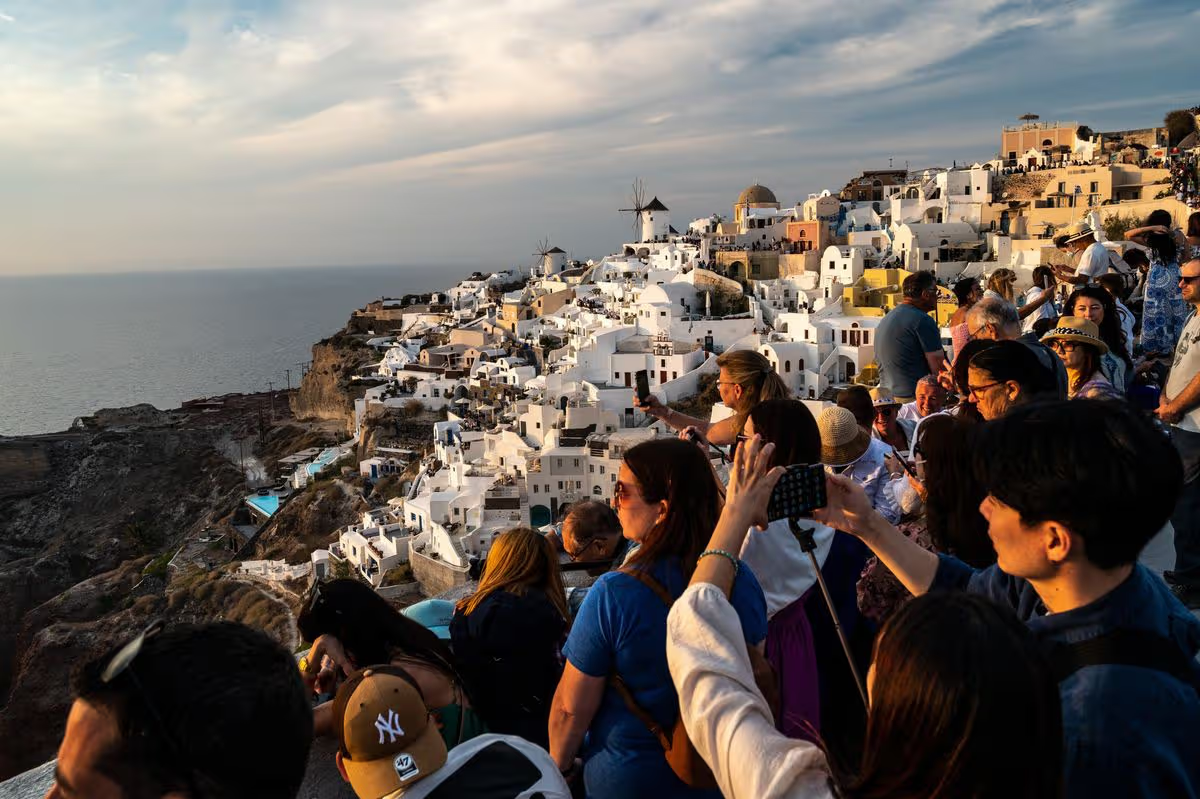
Tourists taking pictures and selfies during sunset in the town of Oia with its limewashed houses and windmills(Image: Marcos del Mazo/LightRocket via Getty Images)
Holidaymakers have been warned a beautiful Greek island and one of the most popular sunshine resorts in Europe has descended into “one long toilet line”.
Travel content creator Mambo Italiano took to X to share footage of the scene recorded at 7am – with dozens of men, women and children tourists queuing into the streets at a photo spot. “Social media trends have turned the world’s most beautiful places into endless bathroom lines at a concert, where everyone waits for hours just to take the same photo to show to people who couldn’t care less,” she ranted in a caption.
“Nothing captures the shallow decay of our time better than this.”
Content cannot be displayed without consent
The clip in question was recorded in Oia on the island of Santorini, which is located in the southern Aegean Sea – around 120 miles from the Greek mainland.
Mambo Italiano’s video followed the queue around several corners to reach its end – a lookout point over the crystal-blue sea overlooking Santorini’s famous blue-domed Greek Orthodox churches from an excellent vantage point.
“Oia is an over touristed,” one X user exclaimed in response. “One of the worst places I’ve been. Other parts of Santorini are lovely.”
A second person concurred: “I have to agree – there are much better areas on the island. Oia is good for photos and that’s about it.”
While a third explained: “People are no longer visiting places to see and enjoy. They want to visit and photograph themselves on those places, so then they can post them social media for likes and attention, with the only intent of saying, ‘oh look at me, I was here and you not’ and ‘look how special I am’ etc etc etc.
“That’s the only reason for those long queues, it is not to see and enjoy, it’s only to show off.”
And a fourth X user agreed: “Everything has turned into an influencers Instagram photo shoot. Beautiful places are ruined by main character syndrome narcissists.
“Every new eatery has a grass wall outside the entrance, loud music and serves high priced s*** on a plate.”
According to Greek Trip Planner figures from INSETE and municipal data show approximately 3.4 million visitors reach Santorini through a combination of air arrivals, cruise ship tenders, and inter-island ferries each year.
“The 3.4 million annual visitors produce a ratio of approximately 220 tourists for every resident per year – or, expressed differently, 107.8 tourists per 100 inhabitants at any given time during peak season,” they added.
“This density figure, documented in a 2018 European Commission study, placed Santorini beyond the measurable limits of standard overtourism indicators.”
FANCY a seaside holiday that’s cheaper than St Tropez and looks like Greece? Look no further.
Jet2 has announced that they are launching new flights to a coastal African destination from a number of UK airports.
Sign up for the Travel newsletter
Thank you!
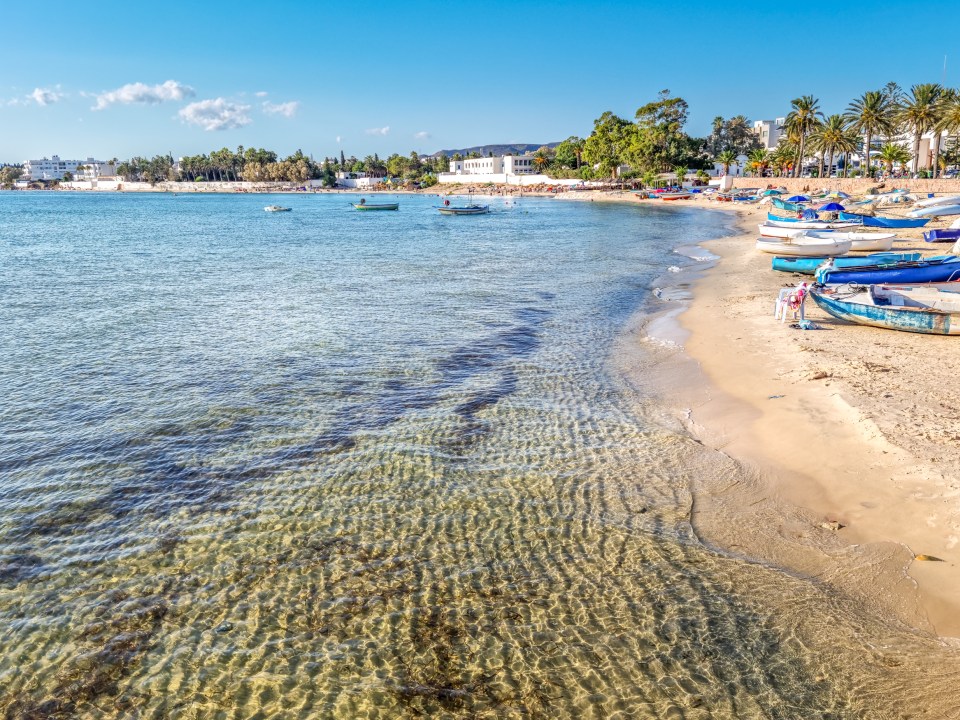
From Enfidha, travellers can head to Hammamet around 30 minutes awayCredit: Getty
The flights will head to Enfidha in Tunisia, with two flights a week from Birmingham, Manchester and London Stansted from May 1, 2027 to October 31, 2027.
And then there will also be weekly flights to the destination from Leeds Bradford and East Midlands airports as well.
From Enfidha, visitors will easily be able to visit Hammamet which is just 30 minutes away .
Also known as the ‘Tunisian Riviera’, it costs just 35 per cent the price of a holiday to the French Riviera where you’ll find St Tropez.
The Sun’s Digital Sports Reporter, Etienne Fermie, recently visited.
She said: “In May sunshine, the glorious blue sky pops off the glistening white walls of the stunning coastal town of Sidi Bou Said in northern Tunisia.
“All the buildings are decked out in white and blue, providing a gorgeous visual as the perfect sky kisses the crystal clear, calm Mediterranean sea.
“Sidi Bou Said is reminiscent of Santorini and symbolic of the blend of cultures that modern-day Tunisia infuses.”
And an hour from Hammamet is Sibi Bou Said, which is like SantoriniCredit: Getty
Other destinations travellers can reach from Enfidha Airport include Port el Kantaoui, Skanes, Mahdia and Sousse.
Jet2 used to fly to Tunisia in 2015 from East Midlands, Glasgow, Leeds Bradford, Manchester and Newcastle airports but the route was suspended not long after it launched.
Steve Heapy, Jet2 Chief Executive, said: “With year-round sunshine, rich culture and fantastic scenery, Tunisia has something for everyone and we know how immensely popular it will be.
Fakhri Khalsi, Acting UK Director at the Tunisian National Tourist Office, said: “This announcement represents a significant milestone in our efforts to strengthen Tunisia’s position as a leading Mediterranean destination and reflects the growing confidence of major travel operators in our tourism offering.
“As one of the UK’s most respected and influential travel companies, Jet2’s entry into the Tunisian market will provide British travellers with even greater access to our country’s rich cultural heritage, beautiful coastline, authentic experiences, and renowned hospitality.”