IS there anything better than a traditional British seaside summer holiday when the sun shines?
Buckets and spades, Cadbury Flakes jammed into Mr. Whippy ice creams, rounds of seafront mini golf and travelling home with a stick of rock as a souvenir.
The harbour town of Whitby remains largely unchanged, overlooked by the 13th century abbeyCredit: GettyAldeburgh in Suffolk sees streets lined with pretty pastel-coloured housesCredit: Alamy
But let’s face it – some of our favourite resorts have become built up over the years with flashy neon arcades and attractions.
Over the years, our Travel team have visited seaside towns all over the UK, and a few stick out as traditional favourites that have remained nearly unchanged.
Not only this, but there’s heaps of history to be explored in these historic seaside towns, too.
From one of Britain’s best-preserved Medieval walls lined with gunports and stone towers, to 1950’s-style gelato bars serving up a retro knickerbocker glory, here’s Sun Travel’s favourite seaside towns that feel like stepping back in time.
Broadstairs, Kent
Deputy Travel Editor, Kara Godfrey
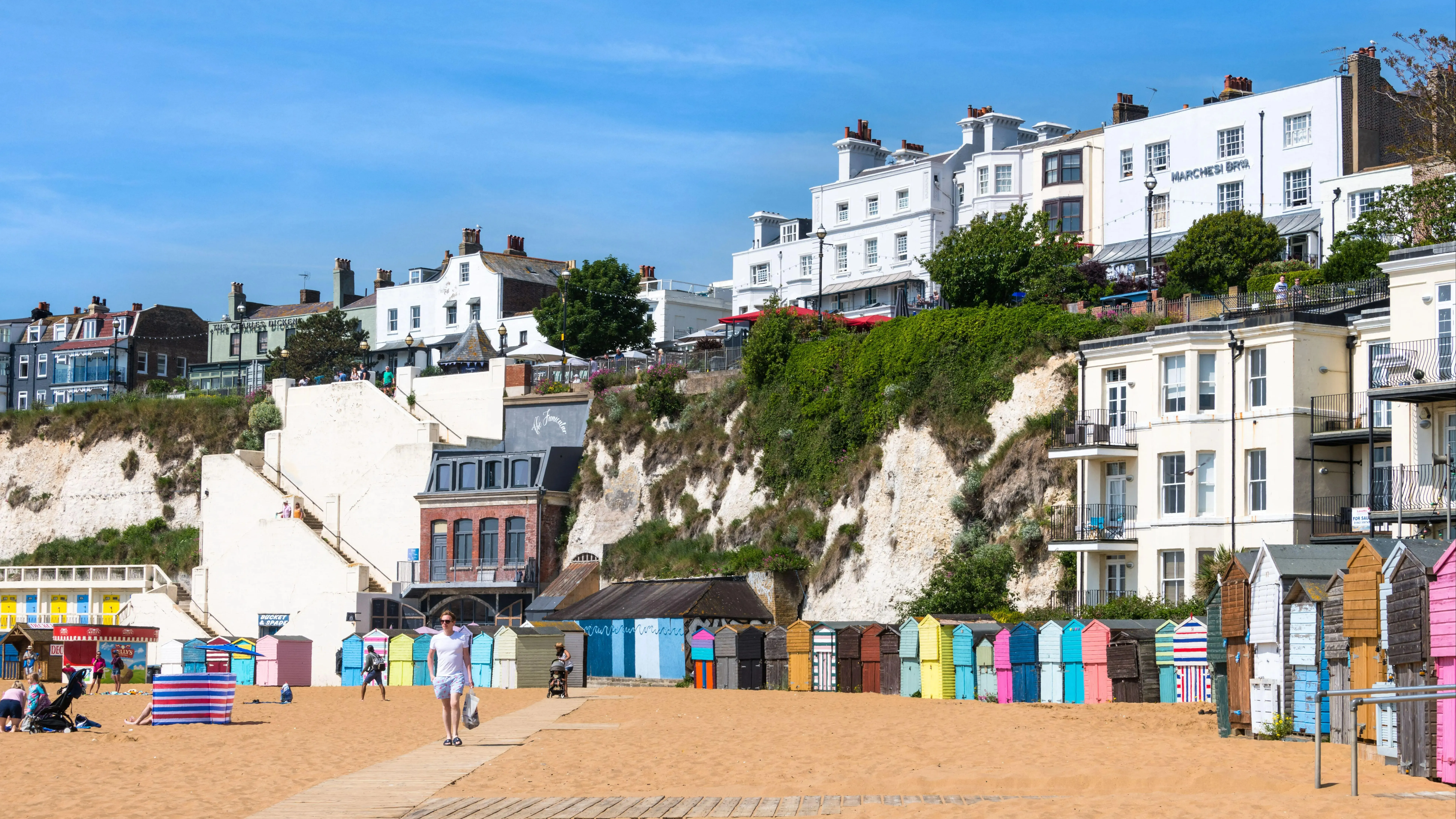
Broadstairs is lined with colourful beach huts and sees a merry-go-round visit in summer monthsCredit: Alamy
The coastline of Broadstairs really does feel like you’re stepping back in time, from the retro huts lining the beach to the vintage merry go round that pops up in summer.
Forget the chaotic arcades and bustle – there’s just a small arcade on the top of the cliff, and most of the busy cafes and bars are further up from the sand.
Of course, expect it to be busy in the peak summer months, but visit in shoulder season and you’ll have most of the beach to yourself.
Morelli’s is an institution and a must – the retro 1950s gelato bar will satisfy that itch for a towering knickerblocker glory.
For the best chippy, The Mermaid is the go-to of locals, while the Charles Dickens’ pub (named after the famous author who once raved about Broadstairs) is the popular spot for a pint.
Personally, my favourite spot is the slightly trendier Bar Ingo, with basque tapas inspired small plates that have led to its multiple awards.
Want to make a weekend of it? Stay at Smith’s Townhouse, a recently opened boutique hotel that has some of the best coffee in town. Rooms from £160 a night. See smithstownhouse.co.uk.
Head of Travel Lisa Minot visited the quaint Cornish village of Portreath with her familyCredit: Lisa Minot
The pretty Cornish fishing village of Portreath has escaped the modern makeover of many of its neighbouring coastal resorts.
Its layout is still dictated by its 18th century industrial past with its historic harbour built to ship copper ore to Wales.
You can still walk or cycle the old Great Flat Lode tramways that once carried the minerals.
Set at the bottom of a steep-sided valley, the village is flanked by towering, rugged cliffs that look exactly the same as they did centuries ago.
You won’t find chain stores, amusement arcades or sprawling hotels here, the seafront and village streets are lined with traditional granite cottages alongside independent local cafes like the Pod Cafe overlooking the beach.
There are also a couple of very traditional Cornish pubs including the Portreath Arms and Basset Arms.
The beach is perfect for long walks with the dogs with the Atlantic swells crashing against its shores.
Stay at the Gwel An Mor Resort above the village with a woodland path to the beach.
This lovely resort of eco-chic pine lodges also features a restaurant, indoor pool and spa as well as tennis courts and indoor soft play and adventure course.
The beachfront holiday park offers four night stays for four people in a Bronze caravan from £119, or £7.44pp per night.
Great Yarmouth, Norfolk
Travel Reporter, Jenna Stevens
Great Yarmouth in Norfolk has a popular seafront promenade plus historical backstreets to exploreCredit: Alamy
Families have been flocking to the fairgrounds of Great Yarmouth for hundreds of years – and it still very much remains a popular seaside resort today.
Great Yarmouth saw a particularly big boom in holidaymakers in 1844 when the seaside railway opened, which transported visitors from the Midlands straight to the beach.
Today, Brits visit from all across the UK to try out top attractions like the rollercoasters of Pleasure Beach and watch the eye-catching shows of the Hippodrome Circus.
While these modern attractions are absolutely worth visiting, there’s plenty of historical sites here that go under the radar.
You might not expect it, but Great Yarmouth has the second-best preserved medieval town wall in England (following York).
You can still walk alongside the mile-long wall and see its massive flint towers and gunports, a scenic and historic walk away from the busier streets.
Here you can discover the town’s fishing heritage through hands-on family activities and transport back in time to the 1950’s quayside. Adult tickets cost £7.74 and child tickets (aged 4 – 17) cost £6.57.
For somewhere to stay, the Knights Court Hotel has rooms from £90 per night and sits directly on the seafront.
Or go for a stay at the award-winning Seashore Holiday Park, with Haven Hideaway offers from £49 for four people for four nights – which works out to £3.06pp per night.
Aldeburgh, Suffolk
Travel Reporter, Alice Penwill
Travel Reporter Alice Penwill recommends a visit to Aldeburgh in SuffolkCredit: Alice Penwill
Counties like Norfolk and Essex are filled with noisy, arcade-filled seaside resorts.
But I recently discovered that those dotted along the Suffolk coastline are very different, especially when I found myself in Aldeburgh on a quiet spring weekend.
The promenade is protected so it means there can be no sellers or souvenir shops on the front, so it still maintains its feel of being a Victorian seaside town.
There’s nothing but towering pastel coloured merchant houses, fisherman’s cottages and of course, its long shingle beach.
The town is consistently referred to as being one of the prettiest (and might I add, poshest) in the country.
Behind Crag Path promenade is where you’ll find classic English bakeries, ice cream parlours, fish and chip shops, and pubs.
I popped into the White Hart, perched on the corner. It’s a small 18th century building filled with wooden furniture and nautical memorabilia – and serves up Adnams on draught – brewed up the road in Southwold.
Make sure to pop into Aldeburgh Fish & Chip Shop across the street too, it’s the oldest in the town and first opened in 1967.
Or opt for a stay at Parkdean Resorts Kessingland Beach, where you can book four nights in a chalet for 2 for £99. That’s £12.38pp per night.
Babbacome, Devon
Travel Reporter, Cyann Fielding
Beautiful Babbacombe Beach in Devon sits between Oddicombe and MaidencombeCredit: Getty
Nestled within the coastline between Dawlish and Torquay, you’ll find Babbacombe – an unspoilt town with heaps of history.
The town dates back to the 16th century when it was a fishing village and much of the original charm can still be seen today.
You can head to Babbacombe Beach, which is made up of shingle and sits below the towering red cliffs that form Babbacombe Downs.
Or you can visit Oddicombe Beach, by the historic funicular which has been operating for a century and travels the 200 metres down to the beach.
If you’re wanting somewhere special to eat, head to Babbacombe Bay Cafe, which serves freshly made toasties with salad.
About a three-minute walk away from the Downs, you’ll reach the high street where you can explore Bygones – a museum with a full-scale replica Victorian street (£13.95 per adult/£9.75 per child).
Another great attraction is Babbacombe Model Village, where you can feel like a giant as you explore hundreds of model scenes depicting British life (£21.95 per adult/£17.95 per child).
As for somewhere to stay, head to the Cary Arms Hotel and Spa where stays start from £195 per night.
Walk the 199 steps in Whitby that feature in Bram Stoker’s famous novel, DraculaCredit: Alamy
Whitby offers everything you’d want in a trip to the seaside: award-winning fish and chips, amusements, tasty ice creams at every corner – but it stands out thanks to its connection to some famous historical figures.
Famous explorer Captain Cook trained for his global voyages in Whitby. Here you can visit the Captain Cook Memorial Museum, known as the House on the Harbour.
Inside, have a nosy around the 17th-century rooms where a 17-year-old James Cook lived as an apprentice in 1746.
Outdoors, you can hop on a Captain Cook boat tour which dives right into the life of the famous voyager, packed with plenty of sea shanties to sing along to.
Horror and literature fans alike will love the town’s connection to Dracula. You can see the grand Gothic ruins of Whitby Abbey from across the harbour, which keeps watch over the town from its creepy clifftop perch.
Author Bram Stoker visited Whitby in 1890 and was struck by the landmark looming over the pretty resort. After reading up on folklore in the local library, the writer penned his famous text.
This town takes its vampire fame seriously. To celebrate 125 years since the novel’s publication, English Heritage broke a Guinness World Record by hosting the world’s largest gathering of vampires, with 1,369 caped fans showing up.
To follow in the count’s footsteps, you can climb the famous 199 stone steps. In the book, a sinister black dog dashes up this staircase to announce Dracula’s arrival.
Luckily, daytime climbs offer gorgeous views of tiered red-roofed cottages rather than scares.
Or bag yourself a four night stay at Parkdean Resorts Cayton Bay in a Bronze Caravan, which sleeps eight, from £136 – which works out to £4.25pp per night in a full caravan.
Cockington, Torquay
Head of Travel, Lisa Minot
The Sun’s Head of Travel Lisa Minot recommends a visit to Cockington, one mile from TorquayCredit: Lisa Minot
Tucked away in a hidden valley just a mile from the bustling seafront of Torquay, the quintessential Devon village of Cockington is unchanged.
While the English Riviera expanded over the centuries to accommodate the boom in tourism, Cockington has stood frozen in time.
The village is made up of striking 16th and 17th century cottages complete with whitewashed cob walls, timber beams and thick, thatched roofs.
And the reason the village has been unchanged for centuries is Cockington Court, A manor house dating back to the Domesday Book, the estate and country are protected against any development by a registered charity.
Legendary crime writer, Agatha Christie, was a frequent visitor to Cockington Court in her youth and even took part in amateur theatre on the manor house’s lawns.
The village’s narrow lanes wind past three tranquil mill ponds, ancient orchards and wooded walks and to this day, one of the most popular ways to arrive here to get around is via traditional horse drawn carriages.
Quench your thirst at the local pub, The Drum Inn, designed in 1936 by the architect Sir Edwin Lutyens to seamlessly blend in with the ancient surroundings or visit the original Forge, which has been operating on the same site since the 14th century.
Stay at the Hotel Indigo Torquay which sits on the seafront close to Cockington Country Park. Double rooms start at £61 per night in June. See ihg.com.
Book a four night stay at Park Holidays’ Dawlish Sands from £249 total, or £15.56pp per night.
Package holiday provider TUI is launching a new direct flight from London Gatwick to a sunshine island in the Indian Ocean that has been likened to a cheaper Maldives or Mauritius
The new route will depart from London Gatwick twice weekly, operating on Wednesdays and Sundays from 3 November 2027(Image: Getty Images/iStockphoto)
TUI is launching a new non-stop flight to a sun-drenched archipelago likened to the Maldives.
From July 2, sunseekers will be able to get their hands on the package holiday provider’s latest offering – direct flights to Zanzibar in Tanzania.
The new route will depart from London Gatwick twice weekly, operating on Wednesdays and Sundays from 3 November 2027, with the last outbound flight of the season on 22 March 2028, giving customers four months to check out the Indian Ocean winter-sun destination.
Known as the ‘Spice Island’ thanks to its farming industry history, Zanzibar offers a mix of white-sand beaches, thick green forests, mangroves and flat grasslands – all within an hour’s drive of each other. The UNESCO World Heritage Site of Stone Town in Zanzibar City adds a rich culture, helping the island blend relaxation with discovery.
Year-round temperatures of 23°C to 32°C make the destination a brilliant winter sun option for both families and couples alike. It also offers a more affordable alternative to Indian Ocean favourites like the Maldives and Mauritius.
The cost is one of the major draw factors of Zanzibar.
Visitors typically spend between £21 and £109 per day per person, with an average of around £50, covering accommodation, sightseeing, food, and local transport, according to Budget Your Trip.
This compares well to the Maldives, where a typical traveller spends around £265 per day and a one-week trip for two averages about £3,800, Budget Your Trip notes. Typically, meals cost about twice as much in the Maldives as in Zanzibar.
The Maldives earns its premium through private-island resorts, overwater bungalows, and a more exclusive feel, but if you want stunning beaches and turquoise water on a more modest budget, Zanzibar is a great bet.
TUI has paired up its new breaks on Zanzibar with a safari. The experience begins with a short flight from the island to neighbouring national parks Nyerere and Serengeti. From there, holidaymakers can head out in search of elephants, lions, and giraffes.
TUI Musement also offers its own National Park and Spice Farm Tour, where customers can spot rare red colobus monkeys, visit a local upcycling centre and discover more about Zanzibar’s history as ‘The Spice Island’ through guided visits and a traditional lunch at a community-run spice farm.
The holiday company owns a number of properties across the island, including TUI BLUE Bahari Zanzibar, , known for its beachside setting on the north-east coast, and The Mora Zanzibar, which is a five-star resort. It boasts private pools and family rooms that sleep up to five guests.
How much does it cost?
All-inclusive package holidays to Zanzibar departing on 17 November 2027, including direct TUI flights, transfers and a seven-night stay at TUI BLUE Bahari Zanzibar start from £2,085 per person, based on two adults sharing.
All-inclusive package holidays staying at the Zanzibar Bay Resort departing on 1 December 2027, including direct TUI flights, transfers and a seven-night stay start from £1,615 per person, based on two adults sharing.
TUI is not the only operator on the island.
The Lost and Found Hostel sits on the east coast and offers very cheap accommodation for those who don’t mind forgoing a little luxury. It has beds for just £16 a night.
Makofi Zanzibar costs roughly double that, but is a little fancier. It is a standout budget pick for the beach. One minute walk to the sea, dorms and private rooms, reliable electricity, and a good restaurant on site.
Several major carriers fly from the UK to Zanzibar, including Ethiopian Airlines, Turkish Airlines, Emirates, and Qatar Airways. All current routes require one or two layovers, with the average journey taking about 12 to 17 hours.
Not only is the suitcase a great price, but its wheels can be removed to help it meet the requirements. Ryanair is one of the most popular airlines in the UK, offering cheap flights to a number of destinations. Its bag rules state: “All fares include one small personal bag (40 x 30 x 20 cm) that must fit under the seat.”
Talking about the free bag, it adds that the small personal bag “such as a handbag or laptop bag” must adhere to its measurements and “fit under the seat in front of you. If you need additional baggage allowance, there are various options available to you.”
Content cannot be displayed without consent
It adds: “Additional options include Priority boarding with a second 10kg cabin bag, checked bags of 10kg, 20kg (up to 3), or 23kg (1 allowed). Infants have no cabin allowance but may bring a 5kg baby bag and two baby equipment items free.”
Focusing on the small personal bag size, and creating five TikTok videos on the bag alone, Chelsea Dickenson, who has appeared on shows like This Morning to share her tips, said she loves the suitcase and is “genuinely impressed with the quality for something that’s fairly affordable.”
Trying to fit the case into the bag size checker, she showed that it didn’t fit. That was until she took off the wheels.
It also remained below the red line, suggesting it met the airline’s standards, and thankfully, she got through security with no issues. Not only does it meet pre-boarding size requirements, but she also demonstrates that it fits neatly under the seat, describing it as “super slim.”
And if you’re wondering where you pop the wheels, she reveals: “It comes with a cloth bag that you can pop the wheels into. These are best put in your pocket – so remember to wear something with pockets big enough! Otherwise, you could pop it back in the suitcase.”
But be careful. In one of her videos on the £25 bag, she says she ended up losing a wheel and advises others to ensure the wheels click securely back into place when reattaching them.
What happens at the boarding gate if my cabin bags are bigger than my allowance?
Ryanair state: “You must adhere strictly to the baggage allowance on your booking. If your small bag or 10kg cabin bag does not fit in the baggage sizers, it will be refused at the boarding gate, or where available, placed in the hold of the aircraft for a fee at the level set out in our Regulations.
“You will be required to leave your bags at the aircraft steps, in the gate bag trolley, or as directed by Ryanair agents, for stowage in the hold.”
According to the Skyscanner comparison site holidaymakers can jet off on a summer break for less than £80 – and they shared the cheapest day to travel
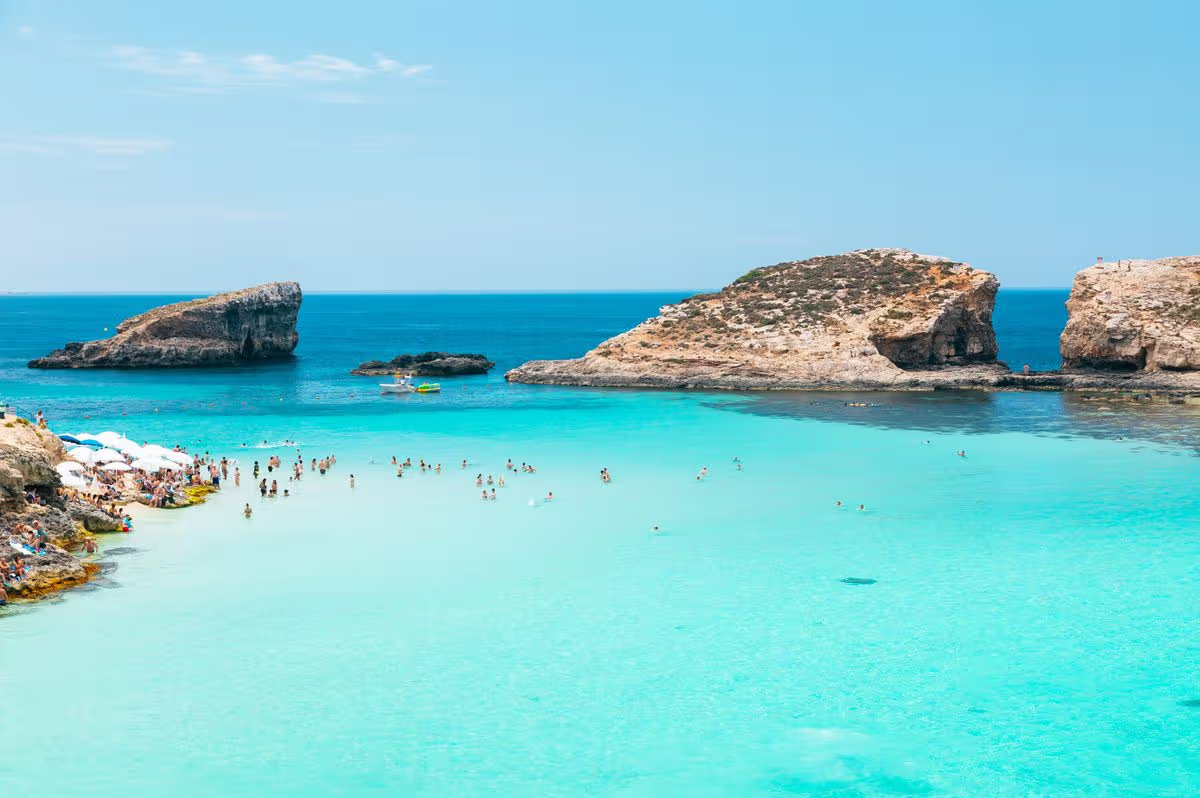
A beautiful beach on Comino island, Malta(Image: Getty)
Millions of people across the UK have already booked their summer holidays, but there are still plenty of options for those yet to make plans. While travel can be costly, a trip abroad can cost less than £80 for the flights.
According to Skyscanner, UK travellers could find return flights for under £80 next month. Skyscanner is a travel comparison website that lets users search and compare flights from hundreds of airlines and travel providers. It also offers tools such as price alerts, flexible date searches, and its “Everywhere” feature, which helps travellers find the cheapest destinations.
The company says Dublin, Milan and Prague are among the cheapest places to visit in June. And for those holding out for a summer getaway in July and wanting a little extra time to save, these are the 10 destinations worth considering for a last-minute holiday.
Top 10 cheapest destinations in July 2026
Dublin, Ireland: Average return is £76 and the cheapest day to fly out is Tuesday
Milan, Italy: Average return is £103 and the cheapest day to fly out is Tuesday
Palma, Spain: Average return is £111 and the cheapest day to fly out is Tuesday
Ibiza, Spain: Average return is £137 and the cheapest day to fly out is Tuesday
Rome, Italy: Average return is £137 and the cheapest day to fly out is Tuesday
Alicante, Spain: Average return is £150 and the cheapest day to fly out is Tuesday
Budapest, Hungary: Average return is £162 and the cheapest day to fly out is Sunday
Faro, Portugal: Average return is £171 and the cheapest day to fly out is Monday
Marrakech, Morocco: Average return is £177 and the cheapest day to fly out is Tuesday
Valletta, Malta: Average return is £183 and the cheapest day to fly out is Tuesday
The comparison experts say the prices are based on the median cost of economy return flights booked through Skyscanner for travel in 2025 on the selected route and month, including taxes and fees.
Experts say many people assume their travel insurance automatically covers phones, tablets and other gadgets. But policies vary, so it’s worth checking the small print before you travel to avoid unexpected costs.
It notes: “Not all travel insurance policies include gadget cover. And travel insurance payouts for valuables are often low – as little as £200 for one item or £500 in total.”
WHILE Cornwall is one of the most popular destinations to visit in the UK – especially in the summer – there are still some spots that tourists are yet to discover.
As a Cornish local, I’ve seen it all, meaning I know just the places to avoid the crowds this summer.
Sign up for the Travel newsletter
Thank you!
Cornwall still has some quiet spots to be found, such as Nanjizal Beach (pictured)Credit: Alamy
Here are my top five spots to visit where you’ll spot more locals than holidaymakers.
Its rock pools and archways surround clear blue waters.
This beach truly does feel picture perfect. It’s remoteness, with no toilets, cafes or parking for miles, is what leaves room for its untouched natural beauty to shine.
Make sure you check the tide times before you arrive, so you are not left with no beach in sight.
If you’ve walked this far, an extra 20 minute stroll to Sennen Cove feels worth it.
This is home to The Old Success Inn, selling great food with an even better view.
Nanjizal Beach feels so remote compared to other beaches in CornwallCredit: Alamy
2. St Nectans Glen
Cornwall is not just expansive beaches, although social media does make it out to be. St Nectans Glen is the perfect spot for nature lover’s looking for something tranquil, serene and relaxing.
Located in a remote valley hidden behind the main road, this woodland walk is most known for its 60-feet tall waterfall.
When you reach it, it feels more like a fairytale than a typical English countryside. It is half an hour walk to get down their, so get your walking boots on.
Less than a 10 minute drive away is the village of Tintagel, home to the legendary King Arthur where you can learn a thing or two at the local shops, or even walk to Tintagel Castle and see the history for yourself.
Known for its rock pools and interesting coastal walks, the beach offers the best of both worlds: pebbled at the top with gorgeous white sands at the bottom.
If you’re a surfer, visiting Crackington is definitely one for you, considered the best surf around for locals, especially on big wave days.
Stop by The Coombe Barton Inn and enjoy some traditional pub grub or a perfect pint sat along the wall.
Crackington Haven is small but popular with local surfersCredit: Alamy
4. Fox Cove
Tucked behind the Roseland heritage coasts, Fox Cove is a secluded beach with access definitely on the more challenging side.
The path down to the cliff is long, but the spectacular views make it all worth your while.
It is a peak spot for swimmers and bodyboarders, but make sure you pay attention to the Cornwall Tide Times before you start your journey.
Just a short drive away, or a slightly longer coastal path hike, is the town of Padstow, amous for its Rick Stein and Paul Ainsworth restaurants.
Near Padstow harbour are some more quiet beaches, if you know where to lookCredit: Alamy
5. The Lost Gardens of Heligan
For me, this wins bonus points for the nostalgia.
I have been going to The Lost Gardens of Heligan for years with my family, and some of my most fond memories of growing up in Cornwall took place here.
I’m not entirely sure how I would describe it simply, but it is a combination of history, beautiful gardens, livestock and activities to keep the children entertained.
Entry is somewhat expensive, but if you are looking for a day out in Cornwall, this is a no brainer.
The Lost Gardens of Heligan are one of Cornwall’s more unusual attractionsCredit: Alamy
The Foreign Office has lifted its no-go travel warning after Iran and the US signed a deal
Simon Calder says airlines will be desperate for people to ‘take summer holidays’ after the easing of travel advice
A travel expert has provided an update on journeys to and from the Gulf region following the US and Iran reaching an agreement to cease hostilities between the two nations. Speaking outside the Foreign, Commonwealth & Development Office (FCDO), Simon Calder confirmed that travel insurance was ‘once again valid’ after both the Iranian and American presidents put pen to paper on a deal to end the conflict.
Mr Calder stated that those wishing to visit the region could now do so ‘with some confidence’. He said: “I’m at the Foreign Office which has just changed its advice for travellers going to the Gulf region, in particular Dubai, which last year was visited by 1.4 million British travellers.
“As from now, the no-go warning which prevailed for the whole of the UAE, including Dubai and Abu Dhabi, as well as to the countries of Qatar, Bahrain and Kuwait, has been lifted. The Foreign Office still warns that you need to be ready for trouble to resume at any time, but it means that travel insurance is once again valid and anybody planning a trip to the UAE or Qatar or elsewhere in the region can do so with some confidence.
“The immediate effect, I think, is going to be a big marketing campaign by the giant airlines: Emirates of Dubai, Etihad of Abu Dhabi, and Qatar Airways based in Doha. They will be wanting to get people to both connect through their hubs, but also to take summer holidays. Be warned, it is extremely hot with average daily highs around 40°C.”
Content cannot be displayed without consent
Not only do millions of holidaymakers head to the Gulf states, but countless others use them as a stopover for journeys to Asia and Australia. That meant the tourism industry took a particularly severe blow when the US and Israel launched strikes on Iran in late February.
The FCDO decision means tourists can now return without putting their travel insurance at risk. But that doesn’t mean flights will restart straight away.
Virgin Atlantic halted flights until winter 2027 after the conflict began, and a spokesperson confirmed on Thursday that this ‘remains the case’.
British Airways announced earlier in June that it wouldn’t restart flights to the UAE until October 2026. Emirates has maintained flights to and from the region throughout the hostilities.
Mr Calder continued: “The immediate effect, I think, is going to be a big marketing campaign by the giant airlines: Emirates of Dubai, Etihad of Abu Dhabi, and Qatar Airways based in Doha. They will be wanting to get people to both connect through their hubs, but also to take summer holidays. Be warned, it is extremely hot with average daily highs around 40°C.”
“But it means that anybody who’s planning to travel perhaps to Asia or to Australia now will be able to travel with confidence through one of the Gulf hubs. In addition, I imagine that airfares will fall because the Asian carriers will not be able to command such a premium.
“Stand by for some really good holiday offers, but I personally won’t be seeing you on the beach in Dubai until about November.”
I’ve been intrigued by the Northern California area of Humboldt County ever since the fourth grade. That’s when my teacher told us the story of the Gold Rush town of Eureka: In the 1850s, when prospectors struck gold, they would yell “Eureka!” which is Greek for “I have found it!” What a funny word, I thought.
My curiosity about the area later grew when I learned about its logging renaissance — vast swaths of old-growth redwood forests were felled to make ships and build railroads, both of which were needed to transport this valuable commodity to the rest of the country and beyond. It wasn’t until 1918 with the formation of the Save the Redwoods League that preservation efforts began to try to halt the rapid depletion of the old-growth forests, which, by that point, had dwindled down to between 5% to 10%. From those efforts, Humboldt Redwoods State Park was established in 1921, followed by the formation of Redwoods National Park in 1968. Today the four parks that make up Redwood National and State Parks cover about 139,000 acres of land and protect nearly half of the world’s remaining old-growth redwood forests.
And it was the lure of walking beneath these giants that I, decades past that fourth-grade history lesson, finally decided to make my pilgrimage.
It took this long because, dear reader, Redwood National and State Parks are not easy to get to from L.A.
By car, without accounting for traffic and breaks, it would be at least a 12-hour journey along the 101, through San Francisco, past wine country and bypassing Mendocino before you reach Humboldt County, where the southern end of the parks begin. Realistically, it would take a few days and a couple of overnight stays along the way to get there, which is fine if you’re in it for the road trip; but if you’re like me and only have the weekend, this leaves one option: flying into California Redwood Coast-Humboldt County Airport, a.k.a. Arcata-Eureka Airport (ACV), the only airport that services the area. United has direct flights there from LAX. But Burbank Airport has Breeze Airways offering direct flights three times a week with prices as low as $80 roundtrip.
When I landed at Arcata-Eureka Airport, it felt smaller than some municipal airfields — and just as quiet. That calm set the tone for the rest of the weekend. I walked in peaceful serenity between trees so tall and ancient they recalibrated my sense of time. I discovered that life in Humboldt County, and neighboring Del Norte County near the Oregon border, moves at that same unhurried pace. The fog retreats slowly in the morning. Night arrives gently, carried in on the mist.
And I learned that Humboldt County — including the cities of Eureka, Arcata and Ferdale — is full of treasures beyond its abundance of the Earth’s tallest trees. Whether I was eating a greasy cheeseburger at a family-run diner that becomes the social center of town after 9 p.m. or slurping oysters at a bar that harvested them from its own farm just offshore, it became clear that this place is shaped by discovery, exploitation and preservation. What follows are hikes, sights and bites that should get you started for a weekend full of your own “Eureka!” moments.
About This Guide
Our journalists independently visited every spot recommended in this guide. We do not accept free meals or experiences. What should we check out next? Send ideas to guides@latimes.com.
THE sun is officially back out and nothing beats a cold beer on a hot day – especially a cheap one and that’s where Wetherspoons come in.
Dotted around the country are plenty of beautiful pubs with huge gardens, courtyard patios, even rooftop terraces, and these ones are the best with pints from £1.49.
Sign up for the Travel newsletter
Thank you!
There are Wetherspoons around the country with rooftops and huge gardensCredit: JD WhetherspoonThe Velvet Coaster is opposite Blackpool Pleasure Beach
Wetherspoons have shared exclusively with Sun Travel their ten best pubs in Britain where you can enjoy some glorious rays with your drink.
We’ve got boozers right on the beach, pubs with lawns as big as a field right in the middle of cities and stunning rooftop bars with fantastic views.
All of them are family-friendly too, with kids menus from just £4.99 that include a meal, a drink, a piece of fruit, that are designed to include at least two of their 5-a-day.
So if you’re looking for a place to spend a sunny day without spending too much of your hard-earned cash then read on…
The Imperial in Exeter has a huge orangery and a large beer garden tooCredit: Alamy Stock Photo
Often dubbed the ‘fanciest’ Wetherspoons in the country, Exeter’s Wetherspoons called The Imperial boasts a vaulted orangery and a huge pub garden.
The grounds on the former hotel turned pub are scattered with picnic tables with a wrap-around patio area shaded by draping wisteria in the springtime.
The Jolie Brise, Teignmouth
The Jolie Brise has a lovely sun trap rooftop gardenCredit: J D Wetherspoon
In the Devonshire seaside town, and just two-minutes from the beach is The Jolie Brise.
On the pretty rooftop garden you still get a beachy-feel thanks to its wooden slatted exterior, palm trees and seagulls gliding overhead.
The Dockle Farmhouse, Swindon
The Dockle Farmhouse in Swindon has two outdoor areasCredit: GILL EVANS
This pub in Swindon actually has two outdoor areas, one with a children’s play area and the other, an adult beer garden with picnic tables and parasols.
You can pick up a glass of Cold Creek rosé for as little as £2.10 and pints from £1.49.
The Old Manor, Bracknell
There’s plenty of greenery at The Old Manor in BracknellCredit: GILL EVANS
Bracknell’s Wetherspoons is inside is one of the oldest-surviving buildings in the town.
It has Tudor-style windows and dark brick which can all be admired from its beer garden and grassy area to the side.
With plenty of greenery, some visitors even say it’s the ‘prettiest’ Wetherspoons gardens they’ve been to.
The Royal Victoria Pavilion, Ramsgate
When the sun shines you want to be on the rooftop Wetherspoons in RamsgateCredit: Alamy
It’s hard to beat the views across Ramsgate Beach from the rooftop of the UK’s largest Wetherspoons .
The outdoor rooftop terrace wraps around the entire building, with enough tables and chairs to fit hundreds.
The best views are found at the very back, with the pub backing onto Ramsgate’s artificial sandy beach.
The Sun’s Deputy Travel Editor, Kara Godfrey said: “It’s definitely huge so you don’t have to worry about being crammed in even on a busy Saturday.
“The pub boasts 11,000 square feet of drinking space – including a huge terrace over the beach – and holds 1,500 punters.
“There are more than 400 seats inside, with another 200 out the back too.
“The downstairs has tables, bar seats and Victorian-style wooden booths, as well a very long bar, so getting around is easy.
“But the best spot is the massive terrace, with incredible views over the sandy beach.”
The Mossy Well, Muswell Hill, London
There’s a ‘cow’ in the garden of The Molly Well as it used to be an Original Express DairyCredit: GILL EVANS
The Mossy Well is one of those Wetherspoons that pays great homage to its roots, especially in its garden.
Formerly an Original Express Diary, visitors will find a wooden cow tucked under one of the tables – and it’s even turned an old milk float into a bar.
The patio area is covered, so you can sit ‘outside’ even in the rain – not that you’ll need to worry about that this weekend.
The Fox on the Hill, Camberwell, London
The Fox on the Hill is inside a huge former hotelCredit: Alamy
Thanks to the pub being inside an old hotel, The Fox on the Hill pub garden has oodles of room to enjoy a pint in the sunshine.
Each table is spread out so you won’t feel too close to other pubgoers either.
This garden is in Zone 2 London, which is incredible because the front lawn is as big as a country field.
The Sun’s Head Of Travel – Digital, Caroline McGuire said: “The Fox On The Hill is the perfect way to spend a sunny afternoon with friends and family.
“The picture above doesn’t even do this pub garden justice, it is absolutely massive so the kids can run around and play far from any punters enjoying their drinks.
“There’s also a covered garden out back, in case it starts to rain.”
Cooper Rose, Sunderland
200 punters can take a seat at the Cooper Rose in Sunderland
The rooftop beer garden at the Cooper Rose opened four years ago and is a whopping 3,000 square feet fitting around 200 punters.
The pretty patio is filled with greenery, flowers, fairy lights – there is a bar upstairs too so you don’t have to leave the sunshine for another drink.
The Kingfisher, Poynton
The Kingfisher is in Cheshire with pints from £1.99Credit: Alamy
Tucked away in Cheshire is the Kingfisher Wetherspoons where customers say you’ll find ‘sun trap tables’ and ‘cheap ale’.
You can pick up a Shipyard Pale Ale for £1.99.
Livery Rooms, Keighley
The Livery Rooms has a huge outdoor courtyard split over two levelsCredit: David Webb
While it’s not strictly quite the classic beer ‘garden’, the Livery Rooms has a pretty outdoor courtyard split over two levels.
It’s filled with plenty of tables, and when the sun goes down during the evening, it’s just as lovely as the area is lit up with string lights.
Mile Castle, Newcastle
The Mile castle has cheap pints and a pretty beer garden tucked away in the city
Dubbed a ‘super Spoons’, the Mile Castle became home to the first Wetherspoons hotel back in 2024 and had a major facelift.
Outside is a 200-cover beer garden set across two floors – and you can enjoy a pint of Ruddles Best from £1.79.
A small all-day brunch, which includes sausage bacon, fried egg, beans and chips is just £7.49
The Navigation Inn, Birmingham
The Navigation Wetherspoons near the village green has a huge patioCredit: Martin Humby 0044+07974764420
The Navigation Wetherspoons is found inside a historic inn near the old village green in Kings Norton.
It not only has a conservatory with a peaked roof, but a large patio garden with lines of tables and gazebos offer shade for when it gets a little too hot.
Scarsdale Hundred, Beighton, Sheffield
The Scarsdale Hundred has a huge curved outdoor seating area around the pubCredit: Dean Atkins
The Scarsdale Hundred Wetherspoons is found inside a distinctive round building in Beighton and can seat 600 punters outside.
The garden is curved around the pub and has a central canopy and can be enjoyed well into the summerevenings permission has just been approved to enjoy pints until 1.30am in 2026.
The Velvet Coaster, Blackpool
The Velvet Coaster in Blackpool has incredible views of the beachCredit: Alamy
Consistently called one of the most beautiful Wetherspoons, The Velvet Coaster sits next to Blackpool’s South Pier within walking distance from its Pleasure Beach.
Named after one of the most-loved rollercoasters in the early 1900s, the pub has impressive views across the promenade, especially from its rooftop garden.
It has plenty of seating in comfy bucket chairs and a glass balcony so you won’t miss any action at the beachfront.
The Wouldhave, South Shields
You can enjoy the sunshine over the weekend at The Wouldhave
It might not be one of the prettiest Wetherspoons in the country, but The Wouldhave in South Shields has a pub garden to shout about.
Sitting in one of Wetherspoons’ signature orange chairs, you can order a refreshing lager from £1.99.
A 150-YEAR-OLD fort island left abandoned is set to become a new attraction in the UK.
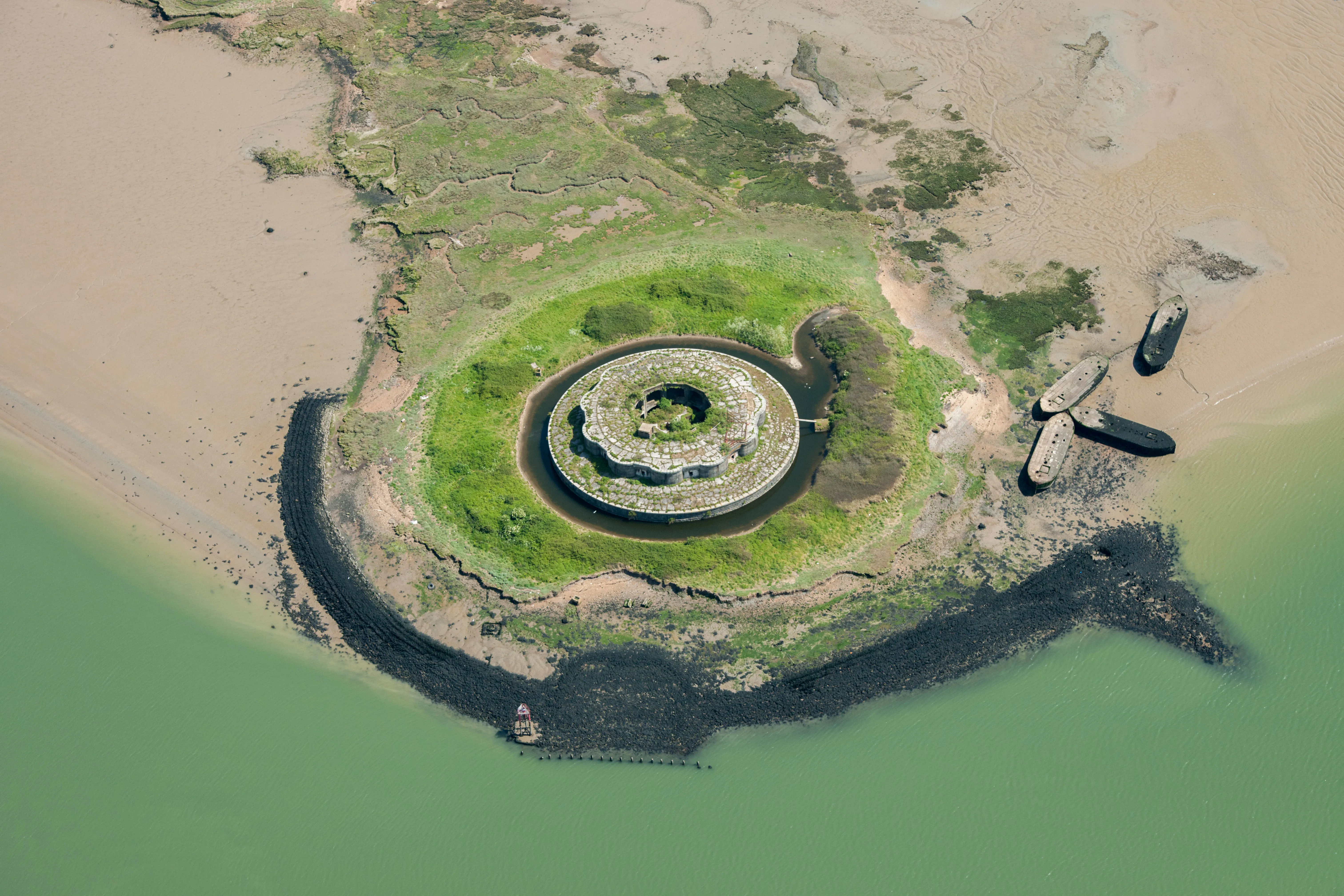
Fort Darnet, which can be found on the River Medway in Kent, could soon be transformed into an events venue.
Sign up for the Travel newsletter
Thank you!
Fort Darnet on Kent’s River Medway could be being transformed into a new attractionCredit: Google
Plans for the Victorian fort include music events, as well as wellbeing events and even ghost hunts.
Speaking to the BBC, owner Mick Jennings said: “I said to my wife ‘we’ve got to have a fort – it’s something we have to bid on’ and we did and were successful.”
According to Jennings, music artists have approached him about filming at the fort – which he added has great acoustics.
Fort Darnet was built between 1870 and 1872 and could hold up to 100 men who would use it for gunnery practice.
It was then later used in World War II as an observation post.
Right by the fort, there are also a number of abandoned ships with some dating back to World War II, which were intentionally sunk to create a coastal defense.
Events that could be at the fort include concerts and ghost huntsCredit: Alamy
The fort is currently unsafe to visitors due to “unstable structures, concealed drops and water-filled areas”, according to the website.
Jennings revealed that they will now drain the water out of the fort, as well as put some new safety measures in place.
With the fort currently having hidden holes, Jennings confessed that “it is a dangerous place at the moment”.
It remains unclear what events would be held at Fort Darnet though Medway Council is backing plans to reopen the site.
“The magical thing is when you come here – you can’t get that feeling until you are on an island.
“The views, eerie, magical, it’s got all those things,” added Jennings.
The UK has an incredible range of places to camp, from national parks to unspoilt coastline, so where should you pitch your tent or drive your motorhome this summer? Research has shown the ultimate spot to enjoy the great outdoors
10:04, 19 Jun 2026Updated 10:04, 19 Jun 2026
This article contains affiliate links, we will receive a commission on any sales we generate from it. Learn more
The county has several stunning camping locations(Image: Getty Images/iStockphoto)
A ‘Summer on a Shoestring Index’ has been created to show the best-value money places to camp in the upcoming months, and the winning destination has some of the country’s best beaches as well as inexpensive spots to pitch up.
Devon beat competition from Cornwall, the Scottish Highlands, and many other beautiful UK regions to be named the UK’s best-value destination for a campervan staycation this summer.
The index, put together by Camplify UK, took into account factors including the price per day for a caravan pitch, tourist board ratings, nearby activities, and the proximity of inexpensive places to eat. Devon also topped the list thanks to its number of National Trust Properties, Areas of Outstanding Natural Beauty, and National Parks, all of which offer inexpensive days out for families.
Camping pitches in Devon can be found for as little as £14 a night, and according to Camplify 85% of campsites in the county offer stays for under £20 a night while still maintaining a rating of at least 8.5. For rural escapes, Dartmoor National Park is an incredible choice, offering untamed open moorland and deep river valleys where wild ponies roam.
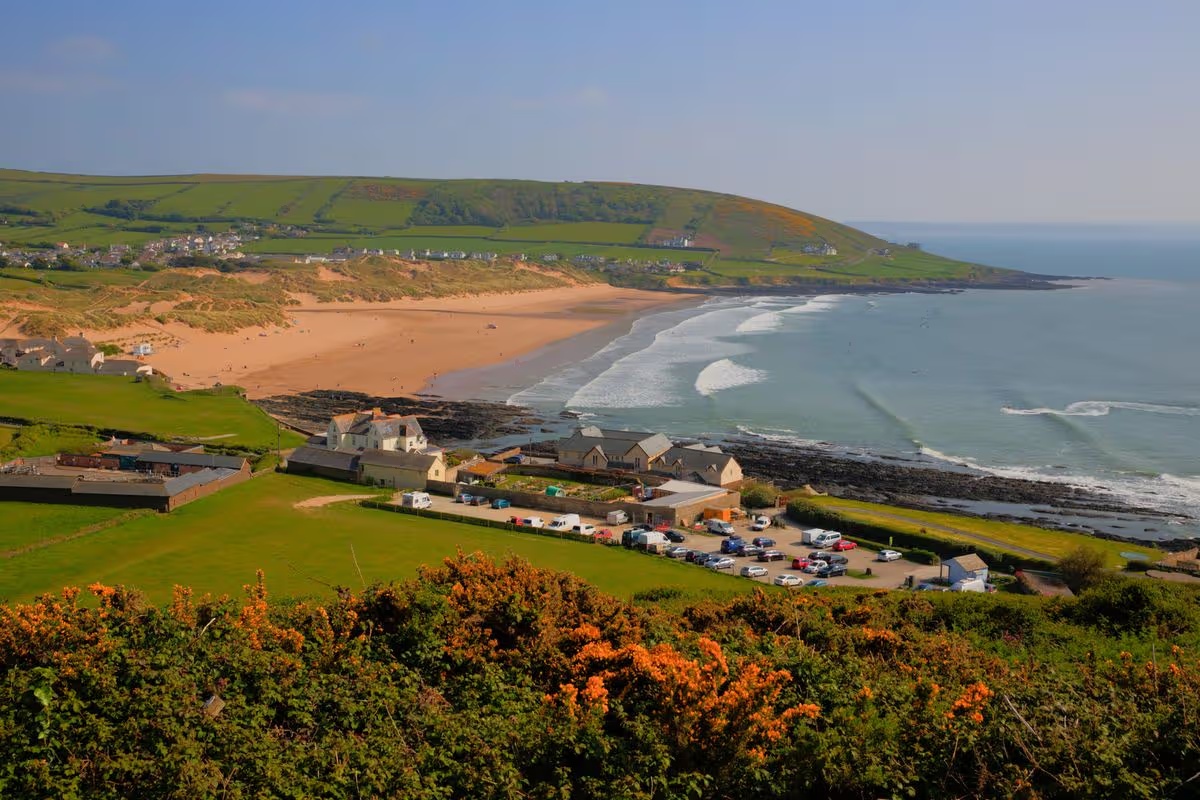
Devon destinations include the beach towns of Woolacombe and Croyde, and National Trust sites such as Baggy Point and Lydford Gorge make for inexpensive days out. There’s also the North Devon National Landscape to explore, an area of outstanding natural beauty that includes rocky coves, waterfalls, and soft sand dunes.
A recent ranking of the Best Beaches in Europe for 2026 included three in Devon. These included Woolacombe Beach at number 8, which beat beaches in the Canaries and Portugal to get a top ten ranking. Trebarwith Beach came in at number 17, while Bigbury Beach in South Devon ranked at 23.
Coming second on Camplify’s list was neighbouring county Cornwall, which also has lots of free and inexpensive days out for families. Like Devon, its also known for its spectacular beaches, with some compared to the Caribbean. Kynance Cove on the Lizard Peninsula, as its turquoise waters and white sands could easily be found on a far-flung island.
For outdoorsy breaks, Cornwall is famous for surfing, especially towns such as Newquay whose beaches are considered some of the best in the UK in which to catch a wave.
Rounding off the top three was the Scottish Highlands, the perfect spot for camping among wild scenery, and waking up to views of mountains and glacial valleys. You’ll find plenty of well-equipped campsites in the region, although unlike England, wild camping is legal in Scotland if you’re in a small tent and ensure you leave no trace when you pack up the next day.
Those camping in motorhomes or bringing caravans still need to ensure they book a pitch at a campsite or other designated area. Forestry and Land Scotland (FLS) offer a stay the night scheme, where self-contained campers can park cheaply overnight in their car parks, with spaces on a first come, first served basis..
Have a story you want to share? Email us at webtravel@reachplc.com
With another heatwave on the way, which could see temperatures hit 30C, Brits can find their nearest outdoor pool or lido using our interactive map
10:01, 19 Jun 2026Updated 10:01, 19 Jun 2026
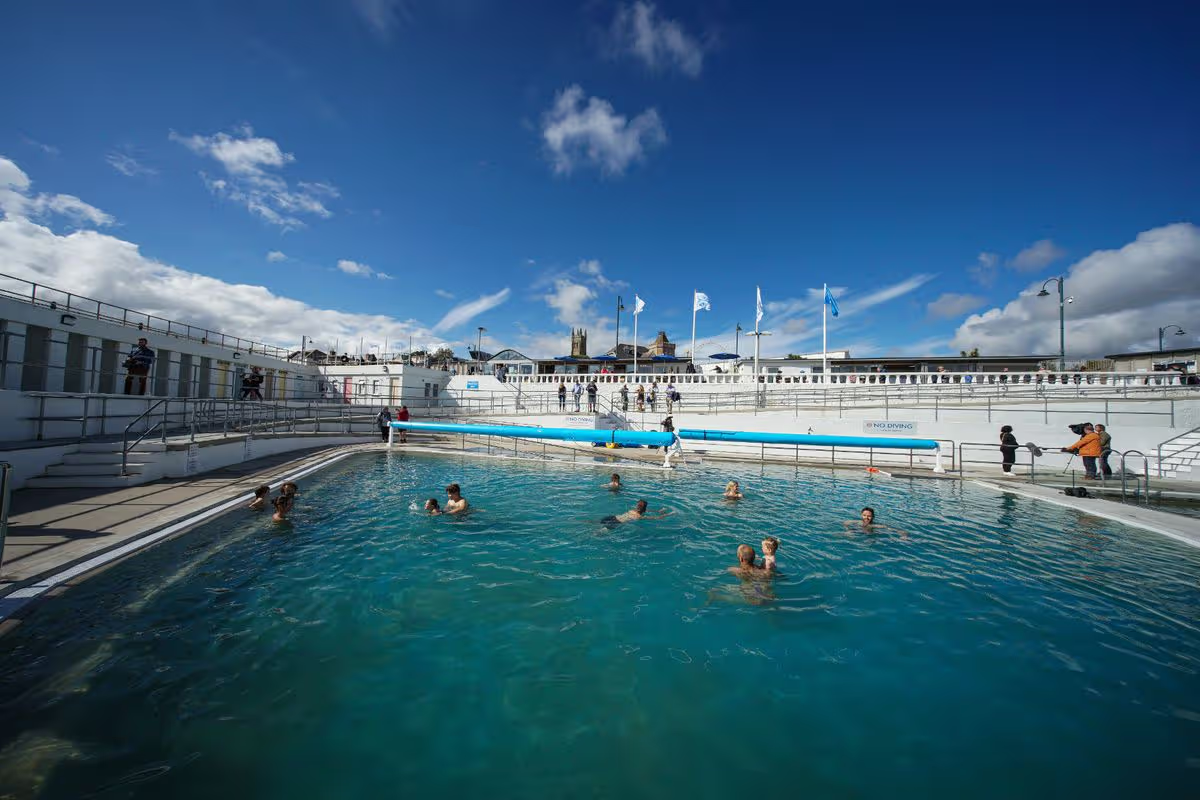
Outdoor swimming venues include the stunning Jubilee Pool in Penzance(Image: Hugh R Hastings/Getty Images)
While the weather is looking pretty damp and miserable across the UK right now, the Met Office has predicted a return to summer very soon.
By the end of this week, it’s forecast that parts of the country will be seeing 30C temperatures again, and the UK is set to be hotter than Ibiza on Father’s Day. So, you might be wondering where you can go to enjoy a cooling dip in a safe environment, and luckily, there are lots of incredible outdoor pools and lidos that’ll give you holiday vibes right on your doorstep.
Our interactive map, based on data from the swimming enthusiasts from allthelidos.co.uk, shows a huge variety of places where you can get some lane swimming in, or just go for a splash around with the kids.
Before you set off, make sure you check the official website of the pool facility you’re visiting. While most outdoor pools are now open for the summer, some have reduced opening hours until the peak times of July and August.
Included on the map are lidos such as the Sea Lanes in Brighton, an outdoor pool opened in 2023 which offers views of the seaside town’s shingle beaches while you swim. The complex also includes a wellness hub and a selection of food and drink outlets.
If you’re in the south east, an option that’ll make you feel like you’re on holiday is the Strand Lido in Gillingham, Kent. It has drawn comparisons with pools in the Mediterranean thanks to its bright white colour scheme and fun waterslides.
Over in Cornwall, the Jubilee Pool in Penzance makes for an unforgettable swim. This classic Art Deco-style lido first opened in 1935, and it’s the UK’s largest seawater pool. Naturally heated by the ocean, it’s usually a couple of degrees warmer than taking a dip on the beach, and there’s also a Geothermal Pool that can reach 28 to 30C.
Inverclyde Leisure Gourock Outdoor Pool has the distinction of being Scotland’s oldest outdoor heated pool, and indie music fans may recognise it from the cover of Blur’s 2023 album The Ballad of Darren. The pool uses heated water from the Firth of Clyde, which is filtered and kept at a temperature of around 29C. The facility also has a kids’ pool and gym.
Many UK lidos have fallen into disrepair in the past few years, only to be brought back to life with investments from local councils that have turned them into major community hubs.
One such success story is Hilsea Lido near Portsmouth, which closed its doors to swimmers in 2022 before getting a £7.75 million renovation. In addition to its pool., the centre built a new sauna for post-swim sessions, new changing rooms and toilets, plus an ice cream parlour and food van. The pool’s operator told the BBC: “We want it to feel like a holiday at home for the local community.”
Have a story you want to share? Email us at webtravel@reachplc.com
If you’re planning to go on holiday this summer, you may need a new passport
Here’s how long your new passport should take to arrive(Image: Alvarog1970 via Getty Images)
With the summer holidays now in full swing, many travellers need a new passport. Anyone intending to go abroad will need the document, and there are specific criteria it must meet.
For instance, following Brexit, anyone travelling to the EU using a UK passport must ensure their passport’s “date of issue” falls within 10 years from their arrival date. The “expiry date” must also extend at least three months beyond the intended departure from the Schengen area, which encompasses 29 countries, including Spain, Greece, France, and Italy.
According to His Majesty’s (HM) Passport Office, when you submit an application for a new or replacement document, “you’ll usually get your passport within three weeks”. In an effort to inform travellers precisely when they can anticipate receiving theirs, independent website “UK Passport Waiting Time” is monitoring how long people are presently waiting for a new or replacement passport to be delivered.
The team, which operates independently from HM Passport Office, collects data from members of the public, including the dates they submitted applications for and received their new documents recently. Based on the most recent figures, people are waiting 19 days on average for a first adult passport, and 14 days for a replacement or renewed passport.
According to the website, the average processing time for a first child passport stands at 16 days, while a replacement takes 15 days. One traveller, using the Corby passport office to apply for a replacement passport, shared on the site that they submitted their application on May 19.
They said: “My passport was initially water damaged (to the point where the signature and previous immigration information had smudged) so required a replacement. No issues with digital photo submission from myself, just making sure to have a lot of light and a white background, and setting a timer to take the headshot (as I had no one else available) seemed to be sufficient.”
They subsequently received their new passport 23 days later, on June 11. A second applicant revealed they had applied for a first adult passport through the Hemel Hempstead passport office.
They submitted their application on May 1 and received their travel document on June 6, 36 days later. Naturally, timescales can differ between applicants, and HM Passport Office notes that: “It may take longer than three weeks if we need more information, or we need to interview you.
“We’ll tell you this within three weeks. There are different turnaround times if you’re applying from another country.”
Should you require a replacement passport as a matter of urgency, the one-day Premium Service is available to you. Bear in mind, however, that this comes at an additional cost, with an adult passport setting you back £239.50.
There’s also a one week Fast Track service available for renewing or replacing an adult or child passport – or for applying for a first child passport. The price is £192 for an adult passport, or £156.50 for a child’s.
The national park’s a hotspot for tourism, but this particular walk felt like, at points, I could have been hiking in a tropical destination, with its bright green rugged cliffs
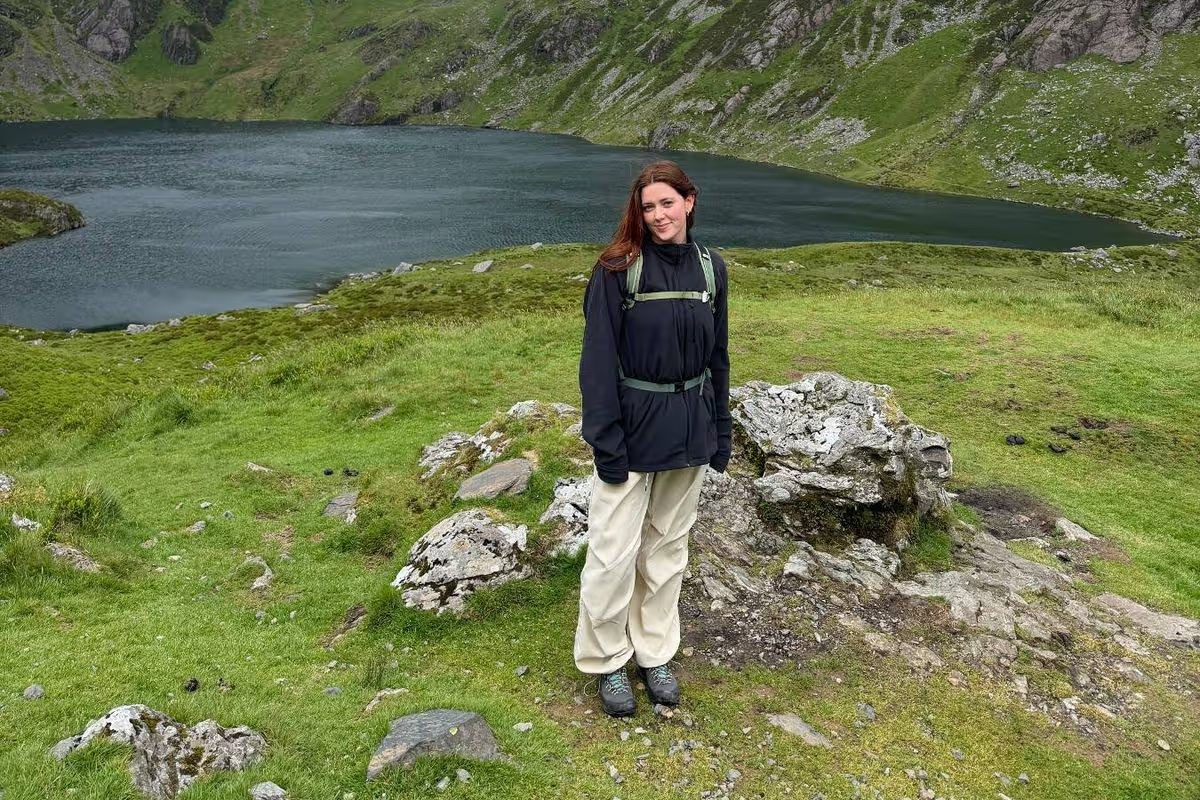
You don’t need to leave the UK to experience unreal views(Image: Emily Malia)
The more I travel around the UK, the more I am in awe of its natural beauty which seems to be overlooked by a lot of keen travellers, and this particular spot feels like a real slice of paradise.
You don’t need to hop on a plane to experience a sense of the tropics; it turns out you can immerse yourself in the brightest hues of green and walk along waterfalls in the north of Wales. While, of course, Snowdonia National Park is no secret, especially to avid hikers, cyclists and explorers, it was my first time visiting, and this specific route is one that blew me away.
It’s often cited as one of the best hikes in Snowdonia (Eryri). Cadair Idris is an 893-metre mountain in the southern part of the park and is renowned for its wild and rugged scenery. To me, it looked like its surroundings could belong in the likes of Peru or Southeast Asia, with its tropical plants, waterfalls and vibrancy of its green grass.
But of course, like any beautiful place in Wales, it reminded me exactly where I was when I spotted sheep dotted around its cliffs, even on the steepest parts. It looked as though the sheep could fall off the edge of the world, taking me with them, as I fought for hours against the growing pain in my shins, with each step up and up to the peak.
The route
I was taken up the Minffordd Path route, which is described as the shortest yet steepest route to the mountain’s summit, tackling a demanding 10 km walk. Overall it’s set to take up to four to five hours to complete, and in turn you are rewarded with dramatic and captivating views of the national park’s landscape.
The route begins at Dôl Idris car park and takes you past the Cadair Idris visitor centre, which quickly fills up. We were recommended to get there early in the morning to beat the pile-up and were thankful that we did; setting off on our walk at around 8am meant we got to experience the quietness of the route in all of its natural wonder. Albeit, the lie-in would have also been appreciated.
Running parallel along the stream which runs parallel to the stream which leads to Llyn Cau, the lake at the heart of the base of the mountain. It was immediately, when taking on these steep steps along the river, that I felt like I could be abroad.
Not only was the sun shining down on us, but the water was trickling down, with tropical plants growing around us, and it felt as wild and wonderful as the experiences I had in Thailand or the pictures I’ve seen of hikes in Vietnam or Peru.
This continued as we made our way out of the forest area and into the open air, with nothing but pure greenery around us, and the mountain stood proudly ahead. The second phase levels lightly as you enter a rocky amphitheatre, with up-close and personal views of the lake.
Pushing past slate and rocks, many of which are loose and therefore can be difficult to navigate, this section and throughout the walk, requires concentration and care with each step. A quick trip or fall could have you stumbling, and that’s why lots of hikers opt to go armed with sticks to help gain their balance and push them through.
By the time I made it to the top of the mountain, the weather dramatically changed, from sunny to high winds which were extremely cold. It’s this that can catch a lot of amateur hikers out, and I think it’s always best to go armed with windproof and waterproof layers, as they say ‘don’t dress for the car park’.
The real treat after that consistently steep hike upwards is this – the flat walk along the edge of the entire mountain before reaching its penultimate peak. Seeing it all from a circular angle gave you a real treat at each point whenever I decided to stop and take a breath.
Wales is the gift that keeps on giving when it comes to my explorations, and Cadair Idris was no exception to that. If you’re willing to take on the circular route and the real challenge of its steep and unsteady ground, then you will be rewarded with a touch of paradise and views you’ll continue to daydream about.
IT’S NO lie that Brits love a European break but behaving badly could turn your trip into a holiday nightmare.
Across Europe, countries have their own rules relating to tourists – from banned beach items to strict curfews.
Sign up for the Travel newsletter
Thank you!
And if you want to avoid a hefty fine this summer, you’ll want to know what the rules are for each country.
France
A number of major cities in France and holiday hotspots ban drinking alcohol between 4pm and 8pm, including along the Paris riverbanks and the French Riviera.
When it comes to heading to the beach, make sure to not take any of it home with you as a souvenir.
Taking shells for example, is considered environmental theft and you could be fined €250 (£216.60) for doing this.
Swimming is always a fun activity, but men heading to the pool need to make sure you leave the swimming shorts at home.
Due to health and hygiene laws in the country, men in France must wear Speedos.
Some places ban drinking alcohol on the streetsCredit: Getty
Spain
Most cities in Spain have banned drinking alcohol on the streets, such as Madrid, Barcelona and Valencia.
Also don’t jump from your hotel balcony into a pool – you can get kicked out of the hotel and fined.
Across Spain, make sure to not smoke or vape on the terraces of bars or restaurants or at pools.
Make sure to not jump from a hotel room into a pool as you could get kicked outCredit: Alamy
But in Barcelona and popular Balearic and Canary Islands spots, smoking and vaping are banned across all beaches.
Fines for this range from €30 (£25.99) to €2,000 (£1,732.79).
In Barcelona, Malaga and Majorca, make sure not to walk through the streets in a bikini or swimming trunks. If you do, you could face a fine of up to €300 (£259.92).
Also when you are at the beach in Cullera, Calpe or Tenerife, don’t reserve a spot with a towel as you could have your belongings confiscated and be fined up to €3,000 (£2,599.18)
Portugal
In Albufeira, Portugal, there is a Code of Conduct in place for touristsCredit: Getty
In Portugal, there are some rules to be aware of when visiting.
Portable speakers are not allowed to be loud on beaches or you could be fined or it could be confiscated from you.
Fines vary between €200 (£173.28) and €4,000 (£3,465.58) for this.
Also in Albufeira, a Code of Conduct introduced last year is still in place for tourists this year.
The rules basically reinforce that visitors must act respectfully, with public nudity and drinking alcohol on the street banned.
Italy
There are a number of different rules across Italy you’ll need to follow.
In Florence, there are a number of streets where you can’t sit and eat outdoors.
The rule has been introduced to ease congestion.
In Italy, you cannot wear flip flops on the Cinque Terre hiking trailCredit: Getty
Also in Florence, e-scooters are banned in the city centre.
In Liguria, Portofino, over the summer, travellers who walk the cobbled streets either barefoot, in swimwear or topless can be fined.
You could also get fined between €50 (£43.32) to €2,500 (£2,165.99) if you are caught hiking Cinque Terre in flip flops.
Drinking alcohol in the streets is also banned with fines up to £2,568.
And make sure not to sit or lie down on a path, wall or park as this can also get you fined. Fines range from £22 to £433.
Over in Milan, you cannot smoke outdoors unless you are 10 metres away from other people. If caught breaking the rule, you could be fined between €40 (£34.66) to €240 (£207.93).
In Rome, you cannot drink out of a glass bottle on the streets after 10pm and all outdoor drinking is banned after midnight.
While in the city it is also worth being aware that when you visit the famous Spanish Steps, not to sit, eat or drink on them.
And in Venice, it is illegal to feed the pigeonsCredit: Getty
This is to protect the 18th century marble from damage and stains and if you are caught doing this, you could get a fine between €250 (£216.60) and €400 (£346.56).
And if you are visiting the Italian island of Sardinia, make sure you don’t dig a hole, build a sandcastle or take sand or shells from the beach as you could be fined up to €3,000 (£2,599.18).
Heading to Venice? Make sure you don’t feed the pigeons – it is illegal and you can be fined between €25 and €500.
Greece
In Greece, there are some different rules compared to other countries.
For example, at archaeological sites like the Acropolis and the Parthenon you cannot wear high heels.
If you are caught with high heels, you could be fined up to £760.
Drinking on the streets is also not allowed.
And if you are caught topless in public you could face a fine of up to £250.
Even though it may be tempting, make sure you don’t take pebbles from Greek beaches either as you could be slapped with a £771 fine.
It is also worth knowing that across Greece, sunbeds and umbrellas have been banned on 251 beaches and the beaches that do have sunbeds allowed, at least 70 per cent of the sand must be without sunbeds.
The 28-year-old was on a six-week trip when she was involved in an accident in the motorhome she had hired
Emma Blood was badly hurt in the crash(Image: SWNS)
A Brit’s dream holiday turned into a nightmare after a horror motorhome crash left her unable to walk. Emma Blood, 28, was travelling in Western Australia when the collision left her trapped, seriously injured and facing a year-long recovery.
The hospitality worker from Milton Keynes had travelled to Australia on March 19, 2026, with plans to spend six weeks exploring. Inspired by stories from other travellers, she teamed up with three women she had met through a travel group and hired a motorhome to travel around and live in while exploring the region.
Just nine days into the trip, on March 29, Emma and the three women were travelling towards Margaret River when she lost control of the motorhome, due to slipping on the Western Australia mud roads, and crashed into a tree. Two passengers suffered minor injuries, but Emma was trapped from the waist down in the wreckage and had to be cut free by firefighters.
She was then airlifted to Perth Trauma Hospital, where she spent 10 days before flying back to the UK to continue her recovery. She said: “There are still a lot of blank spaces in my memory, I’m not sure whether I lost consciousness or whether it’s just a trauma response.
“I recall the moment of impact, when the vehicle struck a tree on the driver’s side where I was sitting. The force of the crash pushed everything forward, and I ended up trapped from the waist down.”
While the other passengers escaped with relatively minor injuries, Emma suffered devastating damage to her leg. One passenger required stitches to her face, and another was left with a bruised finger, but Emma faced a far more serious outcome.
Emergency services were alerted after her phone automatically contacted them following the collision. Upon arrival, a fire crew had to cut Emma free before she was airlifted to Perth Trauma Hospital.
Doctors discovered she had broken her femur in three places. She underwent emergency surgery lasting around six hours, during which surgeons inserted an intramedullary nail – a metal rod fixed inside the bone with six screws to stabilise the fractures.
Emma said: “I remember being in and out of consciousness, having scans and being moved around the hospital. It felt like something out of 24 Hours in A&E or Casualty, being rushed about.
“One of the most difficult moments was definitely standing for the first time after surgery. It was terrifying because I had no control over my leg, at first they thought there could be spinal injuries but it turned out to be okay.”
Complications continued when doctors discovered her haemoglobin levels had dropped dangerously low, resulting in a blood transfusion several days later. Emma spent 10 days in the hospital in Australia before her father flew out to help bring her home.
She said: “I couldn’t have travelled back on my own, I needed someone with me the whole way. If my dad hadn’t come to pick me up, I would have had someone to take me who I didn’t know.”
After arriving back in the UK on April 8, she was admitted to Milton Keynes Hospital for around another week before continuing her recovery at home.
In the early stages of recovery, Emma could not move her injured leg without using a strap around her foot and required assistance with everyday tasks, including showering.
She said: “It felt like I had lost all independence. I have been told a full recovery could take up to a year, but I am making great progress.
“My older brother is helping me, he’s a sports physiotherapist and thanks to him I progressed from a walking frame to two crutches, and now I only rely on one.”
She spends time in the gym every day, rebuilding strength and mobility and recently celebrated a major milestone by getting back behind the wheel of a car.
She said: “Driving again was huge for me, both physically and mentally. Although the accident cut short my dream trip, I will go back to finish it.
“There is still a lot of trauma attached to what happened, but for now, I am going to focus on getting back to my full health and independence.”
The “overlooked” town has been named one of the top places to visit in the UK for 2026, crowning the historic Cotswolds town ahead of overrun tourist hotspots like Bibury and Bourton-on-the-Water
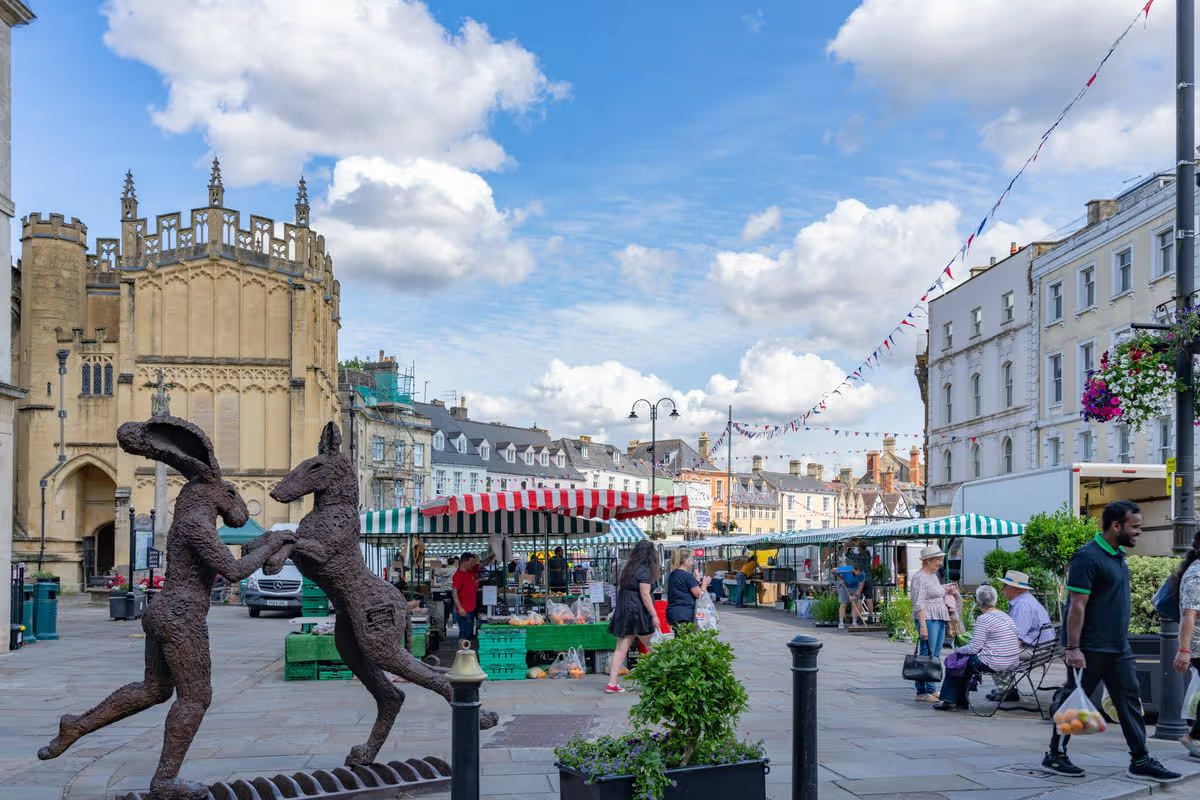
The market town has been named one of the best places to visit in the UK in 2026 (stock image)(Image: Brian Scantlebury via Getty Images)
The best place to visit in the Cotswolds has been revealed – and it’s not the usual suspects like Chipping Campden, Bibury or Bourton-on-the-Water.
There’s an abundance of stunning beauty spots scattered across the UK, with rugged landscapes, peaceful golden beaches, vibrant and quirky towns, craggy rocks and cliffs, vast woodlands, rolling green hills, and plenty more besides.
For a relatively small country, there’s a rich variety of diverse destinations to pick from – whether you fancy exploring the peaceful glacial lakes and fells of the Lake District, or the seemingly endless dramatic coastlines of Scotland, the history and intrigue of sites like the Mourne Wall in Northern Ireland, or the impressive peaks of Eryri/Snowdonia in Wales; there’s no shortage of choices.
This is equally true when it comes to the varied towns scattered throughout the UK, from sleepy fishing villages and bustling market towns, to picturesque places that offer a glimpse into the past, and much more.
If you’re keen to embark on a “staycation” in the UK and feel overwhelmed at the prospect of deciding where to go, you’re in luck.
Time Out has issued a round-up of “the best places to go in the UK in 2026” – and a Gloucestershire town has made the cut. Widely celebrated as the “Capital of the Cotswolds”, the historic market town of Cirencester has claimed fifth place on a national list.
Time Out said: “When it comes to ‘where to travel in the UK’, you might think the Cotswolds has been done to death. Actually, it hasn’t. In fact, only teeny tiny portions of the region tend to get all the love.”
The publication described Cirencester as “often-overlooked” and championed the town – the largest in the region – for being “much better equipped for tourism” than overcrowded destinations such as Bibury.
Cirencester boasts a seamless fusion of Roman heritage with a vibrant independent shopping scene – particularly within the historic Corn Hall and Arcade – alongside stunning green spaces, including Cirencester Park. Home to the 9th Earl and Countess Bathurst, the park is a haven for deer and horses alike.
History enthusiasts will be in their element at the award-winning Corinium Museum, which houses an impressive Roman collection; “one of the largest collections of Romano-British antiquities extensively from Corinium”.
Featuring mosaics, sculptures, coins and much more, the fully accessible venue also includes a gift shop, café, and the Cirencester Visitor Information Centre.
The town is equally well-stocked with stunning historic buildings and characterful pubs that are well worth exploring.
Of summer visits, Time Out noted: “Heading here in summer? Go for a dip in the Cirencester Open Air Swimming Pool, a beautiful old spot for a swim surrounded by old buildings.
“It’s a slice of history all by itself – around since 1869, making it one of the oldest in the country.”
The 2026 National Pub and Bar Awards has celebrated some of Britain’s best boozers, and winners range from city gastropubs, pubs that embrace their arty heritage, and cosy country pubs found on islands
Pubs are still an important part of many communities(Image: Getty Images)
The UK’s best drinking establishments have been named at the 2026 National Pub & Bar Awards and a wide variety of pubs across the country took home accolades.
Our interactive map shows the winners that took home Pub & Bar of the Year for their region, as well as the overall winner of the prestigious National Pub and Bar of the Year, which went to the Gunton Arms near Cromer in Norfolk.
The Gunton Arms describes itself as “a traditional pub with bedrooms, set within an extensive historic 18th-century estate”, and it offers 16-bedrooms, a luxury four-bedroom thatched cottage, plus a restaurant with a focus on local ingredients. So local, in fact, that the venison cooked over the fire grill is sourced from the deer park that surrounds the pub.
The pub also has an impressive selection of art on the walls from contemporary artists such as Damien Hirst and Tracey Emin, which complements the rustic, cosy décor.
Regional winners included The George in Fitzrovia, which took home the regional award for London. This 18th-century, grade II listed pub has a warm, welcoming feel thanks to the jewel-coloured interiors and gold accents, and in addition to serving “great Guinness”, it has a menu centred around Irish cuisine with international touches.
The Ferry Inn, found on the fishing village of Uig on the Isle of Skye, won the North Scotland Pub & Bar of the Year. This 19th-century island inn has three boutique rooms you can stay in, an impressive selection of gins from Scotland and around the world, plus a curated whisky shelf for a wee dram.
Other winners included Caledonian Heritable, who took the award for Pub Group of the Year, while Bar Group of the Year went to Albert’s Schloss, a chain of German-themed pubs offering live entertainment, Bavarian dining and a wide selection of European beers.
The Tyrrells Tyrrellbly Good Taste Award went to The Welldiggers Arms in Petworth, West Sussex, which describes itself as a “traditional country pub” and has views across the South Down National Park.
The pub has a focus on fresh, locally sourced British cuisine, and it offers a daily menu of pub classics, as well as brunches and traditional Sunday roasts.
The 2026 National Pub & Bar Awards winners by region
East Midlands Pub & Bar of the Year: The Tollemache Arms
East of England Pub & Bar of the Year: The Gunton Arms
London Pub & Bar of the Year: The George, Fitzrovia
North East Pub & Bar of the Year: The Kirkstyle Inn and Sportsman’s Rest
North West Pub & Bar of the Year: Church Inn, Mobberley
Northern Ireland Pub & Bar of the Year: Guildhall Taphouse
North Scotland Pub & Bar of the Year: The Ferry Inn, Isle of Skye
South Scotland Pub & Bar of the Year: The Noble, Glasgow
South East Pub & Bar of the Year: The Mason’s Arms, Clanfield
South West Pub & Bar of the Year: The Bath Arms, Warminster
Wales Pub & Bar of the Year: George III, Dolgellau
West Midlands Pub & Bar of the Year: The Bull’s Head, Craswall
Yorkshire and the Humber Pub & Bar of the Year: The Woolly Sheep Inn, Skipton
National Pub & Bar of the Year: The Gunton Arms
Have a story you want to share? Email us at webtravel@reachplc.com
Brits who find themselves stranded in Europe due to a cancelled flights could soon have new rights to claim back travel replacement costs, amid a shake-up of the EU’s air travel rules
08:22, 19 Jun 2026Updated 08:22, 19 Jun 2026
Passengers whose flights are cancelled could have the option to arrange their own transport(Image: Getty Images)
Cancelled flights could soon come with a more costly penalty for airlines, as a landmark air passenger rights agreement was reached between the EU Council and the European Parliament in good news for holidaymakers.
The ruling means that Brits who find themselves stranded in Europe due to their flight being cancelled could soon claim back replacement travel costs worth up to four times the price of their original ticket. It comes amid a raft of changes around airline charges for cabin bags and family seating, which could see Brits getting a fairer deal when they visit destinations such as Spain, Greece, Italy, Portugal, or France.
The law states that, after a flight cancellation, “if an airline fails to offer rerouting within three hours, passengers may organise their own rerouting and claim reimbursement of up to 400% of the original ticket price.” According to AirAdvisor, which specialise in claims for disrupted flights and mishandled baggage, this means passengers will no longer need to wait around for the airline to sort out a journey home for them.
AirAdvisor also said in a statement that this rerouting reimbursement will be separate from the standard compensation that some passengers are entitled to for cancelled flights. It explained: “The Council statement confirms that even when a passenger is rerouted, “airlines remain responsible for compensation for delays at arrival.”
This means passengers could potentially reclaim the cost of replacement flights, as well as claiming for standard cancellation compensation, which can be up to £350 per passenger for a UK to Spain flight, and higher for long-haul journeys.
“However, the standard compensation would still depend on the usual qualifying conditions, including whether the disruption was within the airline’s control. If extraordinary circumstances apply, airlines may not be required to pay financial compensation,” the statement continued.
EU rights aren’t based on nationality, but rather the route and the airline operating the flight. So even post-Brexit, Brits are protected on journeys departing from an EU airport to the UK, or any flights from the UK to the EU that are operated by an EU airline. For example, Brits taking a Ryanair flight from Malaga to the EU would be covered by the legislation.
However, flights from the UK to the EU on non-EU airlines wouldn’t be covered. So, the outbound leg of a London to Madrid flight on a carrier such as British Airways would not follow these rules because it is arriving in the EU from a non-EU country on a non-EU airline.
The UK has its own UK261 framework, which includes the Right to Care for journeys delayed over two hours, but it’s not known whether this legislation will be updated in light of the changes in the EU.
Anton Radchenko, aviation lawyer and CEO of AirAdvisor, said: “For the passengers who are genuinely in trouble, the ones standing at a desk in a European airport being told the next available flight is days away, this is the change that actually matters. A reimbursement cap of up to four times the original ticket price could make a real difference to families who suddenly have to buy last-minute flights home, and it is a part of the reform I would want every British holidaymaker to know about.”
He added: “The importance of this rule is that it gives people a clearer point at which they can act. The harder part, as with every passenger right, will be making sure travellers know it exists before they are stuck at the airport, rather than finding out months later.
“My practical advice to any traveller is straightforward. If your covered flight is cancelled, give the airline its three-hour window to offer a suitable reroute, and then keep everything: your original booking, the cancellation notice, proof of what the airline offered or failed to offer, and every receipt for the travel you arrange yourself.
“In my experience, the passengers who successfully recover what they are owed are almost always the ones who documented the situation as it happened, not the ones who tried to piece it back together weeks later. A right is only ever as useful as the evidence you keep to support it.”
Have a story you want to share? Email us at webtravel@reachplc.com
The historic abandoned village is steeped in history and is said to have inspired an iconic novel Jane Eyre
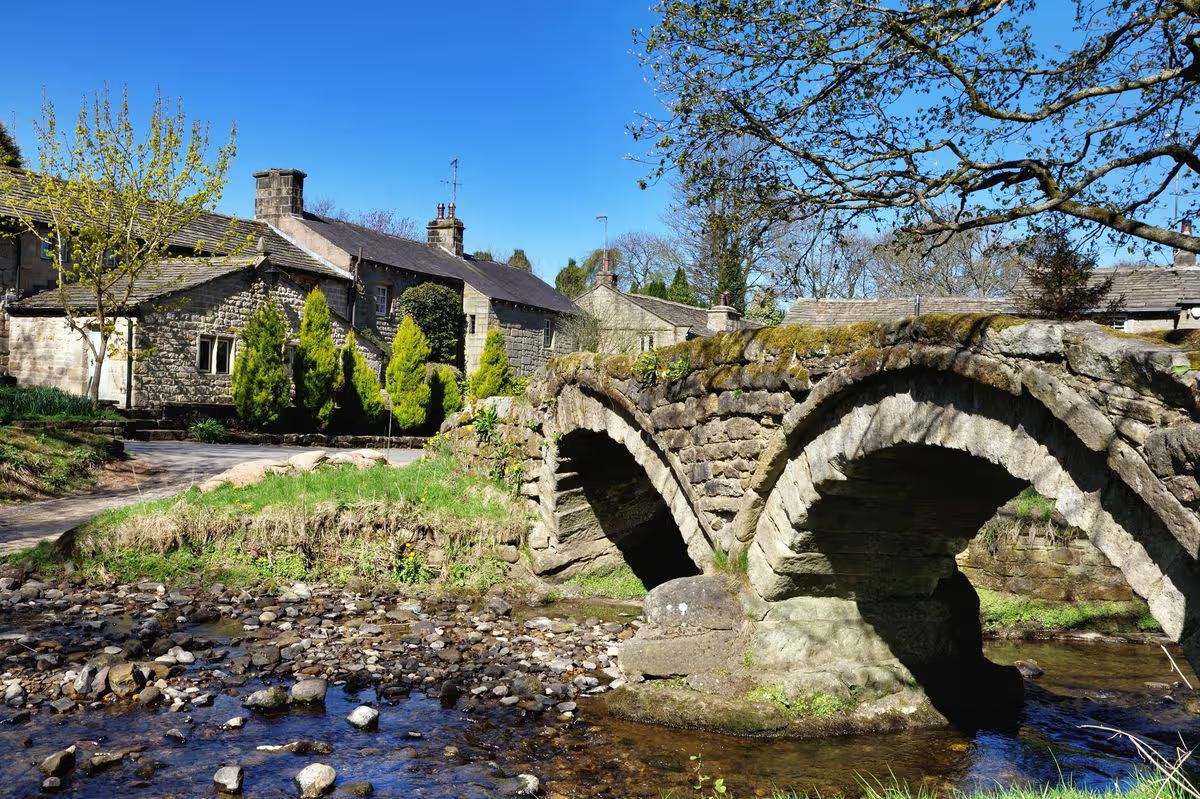
There is a 13th century packhorse bridge(Image: Khrizmo via Getty Images)
Just four miles from Colne sits the historic village of Wycoller, providing a remarkable glimpse into a long-forgotten era, boasting ancient ruins and a compelling literary heritage.
This abandoned village is particularly celebrated for its ties to the legendary Brontë sisters, who made their home in nearby Haworth.
In her seminal novel Jane Eyre, English author Charlotte Brontë created a fictional setting, Ferndean Manor, widely believed to have been inspired by the present-day ruins of Wycoller Hall.
From the 16th through to the 18th century, the hall stood as the village’s centrepiece, dominating the surrounding landscape and almost certainly catching the eye of the author during her travels through the region.
The novelist was known to visit Gawthorpe Hall as a guest of the Kay-Shuttleworth family, and it is widely thought that on these journeys, this striking structure fired her imagination.
The telling clue lies in her depiction within the novel of the approach to the Manor along the old coach road, which bears a striking resemblance to Wycoller Hall. Sadly, today only rubble and remnants remain of what was once a vibrant and picturesque community, reports Lancs Live.
After years of abandonment, local volunteers stepped in to save the village during the 1940s, with Lancashire County Council later taking ownership of the site. Now forming part of Wycoller Country Park, the site is open to all those who wish to explore and wander amongst its historic remains.
Among the heritage highlights, visitors can discover several bridges spanning the peaceful beck that winds through its heart.
Clam Bridge stands proudly amongst these ancient structures, regularly crossed by park visitors, with origins stretching far beyond the 19th century and the era of the Brontës. This bridge is believed to be an ancient monument, over 1,000 years old – and it’s not the only testament to the area’s deeply-rooted history.
Another equally impressive bridge in Wycoller is Sally’s Bridge, which earned its fame by featuring in the film The Railway Children. It has stood the test of time, with origins traced back to the 13th-15th century.
Clapper Bridge likewise comprises substantial gritstone slabs resting on piers, thought to date from as early as the 16th century.
Artefacts unearthed amongst the remnants of this deserted village reveal evidence of human settlement stretching back to the Stone Age.
The site continues to draw visitors today, who come to explore the ruins and uncover the stories of those who once called it home.
Preservation measures are firmly in place to protect its unspoilt charm, keeping modern intrusions well away. This includes a car-free zone, meaning no accessible roads reach the village, which can only be approached on foot, unless you are a resident holding a permit.
One visitor documented their trip on TripAdvisor, writing: “Wycoller is such a cute, picturesque little place. It has a lovely stream for sitting by or paddling in. There’s plenty of shade in summer, from the huge trees.
“There was also a small exhibition, some ruins and well preserved stone bridges. It’s not a long walk but it’s perfect for a picnic and/or for the kids to paddle in the stream.”
Another added: “Beautiful place to go with amazing sights and a lovely shop for snacks and a warm drink. There are also different little trails and bridges to go over and plenty of ducks to feed. I recommend this to anyone who fancies going out for the day to be in touch with nature.”
The Hotel Villa Garden, Sant’Agnello is a ravishing but small, friendly, family-run hotel about 25 minutes walk from the centre of Sorrento. The view from the cliff-edge dining terrace over to Vesuvius is breathtaking and the stylish pool is a delight. The decor is crisp and sunny. It’s the kind of place where they bring you a free glass of rosé while you wait for your taxi to the airport. Very Billy Wilder. Very Avanti. Jan Colley
Profile
Readers’ tips: send a tip for a chance to win a £200 voucher for a Coolstays break
Show
Guardian Travel readers’ tips
Every week we ask our readers for recommendations from their travels. A selection of tips will be featured online and may appear in print. To enter the latest competition visit the readers’ tips homepage
–
An idyllic island stay on the French Atlantic
The port of Saint-Martin-de-Ré. Photograph: zzzz17/Alamy
We loved our stay at L’Hôtel La Jetée on Île de Ré (doubles from €85 B&B), which is perched on the corner of the Vauban fortified port of Saint Martin de Ré. An attractive courtyard garden filled with designer furniture is surrounded by floral balconies leading to light, airy and tasteful coastal-themed rooms. Breakfast was a real pleasure, taken in the courtyard or in the salon. The hotel’s front aspect overlooks the charming harbour with seafood restaurants and renowned ice-cream vendor La Martinière. Bike hire is available a couple of doors down for exploring the island (try a tandem) and the catamaran trip that leaves from the harbour is an elegant way to dabble in yacht life without the price tag. Anna Kennett
Beachfront bolthole in Galicia, Spain
Forty miles south of Santiago de Compostela, Hotel Nanin (doubles from about €100 B&B) has a great location right on the beach. We had a stunning view from our room, overlooking the pool and the bay. We came across this spa hotel on a road trip around the Portuguese and Spanish coast, and we’ve returned to it since. It is about a 30-minute walk into the town of Sanxenxo, where there are more beaches, loads of restaurants and a lively promenade. Louise
Five-star Italian luxury on the Adriatic
The opulent Grand Hotel in Rimini.
The abundance of hotels in the Italian resort of Rimini keeps prices competitive – I even found a good deal at the five-star Grand Hotel. If you ask for a room in the annex (doubles from €120 B&B), you can still enjoy the hotel’s facilities and services, including the open-air pool and palm-filled gardens. The wood-panelled library has fascinating photos of old movie stars and huge chandeliers. Fresh fruit in the generous breakfasts is brought in from Rimini’s daily market, and sunloungers on the nearby beach are reserved for guests. The whole hotel has an atmosphere of faded 1960s charm – I could have imagined Sophia Loren and Marcello Mastroianni strolling in, champagne glasses in hand. Penelope
A Biarritz time machine, France
The hotel Eduardo VII (doubles from about €104 B&B) in Biarritz is in a three-storey wooden building that feels more like a private guesthouse than a hotel. It’s like a time machine that takes guests back to when Biarritz was the height of fashion and elegance. The charming building has kept many of its original features, including wood panelling, creaky wooden floors and ornate mirrors. Bedrooms are small but cosy. Having breakfast on the sea-facing terrace was a great start to our days there – making my husband and I feel like movie stars, ready to go out and shoot a scene in a Jean Luc Goddard film by strolling along the long sandy beach. April
Art deco vibes in Corsica
Hotel les Roches Rouges in Corsica.
Just outside the little town of Piana, an hour’s drive up the Corsican coast from Ajaccio, is the wonderful Hotel les Roches Rouges (doubles from about €170 B&B). Built in 1912, it has a glamorous art deco vibe (and plenty of old photos on the walls). But it’s all about the view over the sea from the terrace, where the sun sets over the pink granite coastline, and you could sit all day and evening watching the colours flame and change. And the restaurant is wonderful, so you needn’t leave at all. Laura
An oasis in southern Tenerife
Southern Tenerife is associated with boilerplate package holiday hotels. But the 1920s time capsule Hotel Reverón Plaza (doubles from £181 B&B in September) is an art deco oasis, only steps away from the beach. Step inside from the street to sip champagne amid vintage wrought-iron furniture and antique switchboards. Skip the lift and take the stairs to see them glowing under century-old stained-glass windows. On the rooftop, an unpretentious pool serves up stunning 360-degree views of the sea and surrounding hills. At around £130 a night – complete with a fantastic Spanish breakfast – it’s an absolute steal. Erin
Faded grandeur on a car-free Greek island
The waterfront at the Megisti hotel, Greece.
On Kastellorizo, a tiny car-free island in the Dodecanese, the Megisti hotel (doubles in September from about £250 B&B a night) feels like a step back in time to the 1960s. You are immersed in aged, elegant glamour and half expect James Bond to appear in a white tuxedo and order a martini. Megisti’s spectacular setting and crystal-clear waters offers great views of loggerhead sea turtles that are often seen here as you walk around the gorgeous natural harbour. Karen Stewart
Beachside glamour in Norway
Dining at the Stokkøya Strandhotell, Norway. Photograph: PR
On the island of Stokkøya in central Norway, Stokkøya Strandhotell sits beside a sweeping white-sand beach that looks more Caribbean than Nordic. The stylish timber cabins (from around £160 a night), some built partly into the dunes, offer a design-hotel feel without luxury-resort prices. Days are spent swimming, hiking coastal trails or warming up in the beach sauna after a dip in the sea. Evenings mean local seafood and a drink at the laid-back Strandbar (beach bar). It feels wonderfully remote and glamorous in a distinctly Scandinavian way, yet remains surprisingly affordable for Norway. Sabine
Winning tip: spa bargain on a volcanic Italian island
The Sant’Angelo headland on Ischia island in the Gulf of Naples. Photograph: Marco Bottigelli/Getty Images
As a lifelong backpacker, it takes a real bargain for me to entertain a spa hotel. Lo and behold I found myself on the island of Ischia, off Naples, where thermal waters are abundant and spa hotels are wildly affordable. The art deco Hotel Hermitage was a short walk from the ferry port, with views of the Aragonese castle, and comes complete with four thermal pools. For £50 a night [at the time, website rate now from around £90] I had my own large single room, balcony, delicious buffet breakfast and full access to the spa. The closest my backpack and I will ever come to true Italian glamour. Clare
This Devon market town’s unique blend of independent shops, bohemian culture and charming eateries
02:23, 19 Jun 2026Updated 07:18, 19 Jun 2026
This beautiful town has so much to offer(Image: CHUNYIP WONG via Getty Images)
Living in London, life can feel rather frenetic at times. I adore city living, but I do make an effort to escape at least a few times each year to properly switch off.
One of my favourite spots I’ve discovered is renowned for its relaxed atmosphere and delightful high street.
Totnes is a market town in Devon, celebrated for its artistic community and flourishing bohemian spirit. It also boasts, in my view, one of the finest high streets in Britain.
If you begin at the lower end of the street, you can cross the bridge spanning the River Dart and really absorb the character of the town from there.
During the summer months, the town is adorned with vibrant bunting, and small vessels glide across the water, reports the Express.
There’s verdant riverside greenery, and the town buzzes with energy. Once you’ve crossed the bridge, pop in for a coffee at The Curator – the first of countless independent shops scattered along the high street.
The coffee is excellent, and they offer a wonderful range of pastries if you fancy settling in for a spot to eat – though don’t overdo it, there’s plenty more to discover.
The high street meanders gently uphill and is flanked by hundreds of independent boutiques, charity shops and tea rooms.
Further up the high street, there’s the Cornish Bakery, which fills the air with the mouthwatering savoury aroma of pasties.
They cater for everyone – even my vegan brother discovered something he adored. As the high street sweeps round to the left, you’ll come across Butterworth’s Vintage Co — a compact yet impressive second-hand shop stocking everything from knitwear to workwear and even vintage magazines.
Once you’ve had a good rummage through the shelves, you might fancy a swift pint or another bite to eat — and you’re in luck.
Just a short stroll from Butterworth’s sits The Bull Inn — a stunning pub boasting an extensive organic food menu, along with nine rooms available should you need somewhere to rest your head.
The highlight for me at The Bull Inn is its delightful garden, where you can unwind in the sunshine and watch the world go past. Tucked just across the carpark, and much like the rest of the town, it’s frequently adorned with gorgeous bunting.
On a sunny day, it really is hard to beat — and if you’re anything like me, you’ll be more than ready to take the weight off your feet after all that retail therapy along the high street.
The provided text outlines the historical and spiritual significance of the Hijri New Year in Omanand the wider Islamic world. This public holiday commemorates the Hijrah, which was the Prophet Mohammed’s migration from Mecca to Medina in 622 CE to escape persecution. The article explains that Caliph Umar ibn Al-Khattab later established this journey as the foundational starting point for the Islamic calendar. Unlike many global celebrations, this occasion is typically observed with quiet reflection, religious gatherings, and spiritual songs rather than loud festivities. It serves as a somber period for believers to contemplate faith, the passage of time, and their shared religious identi …