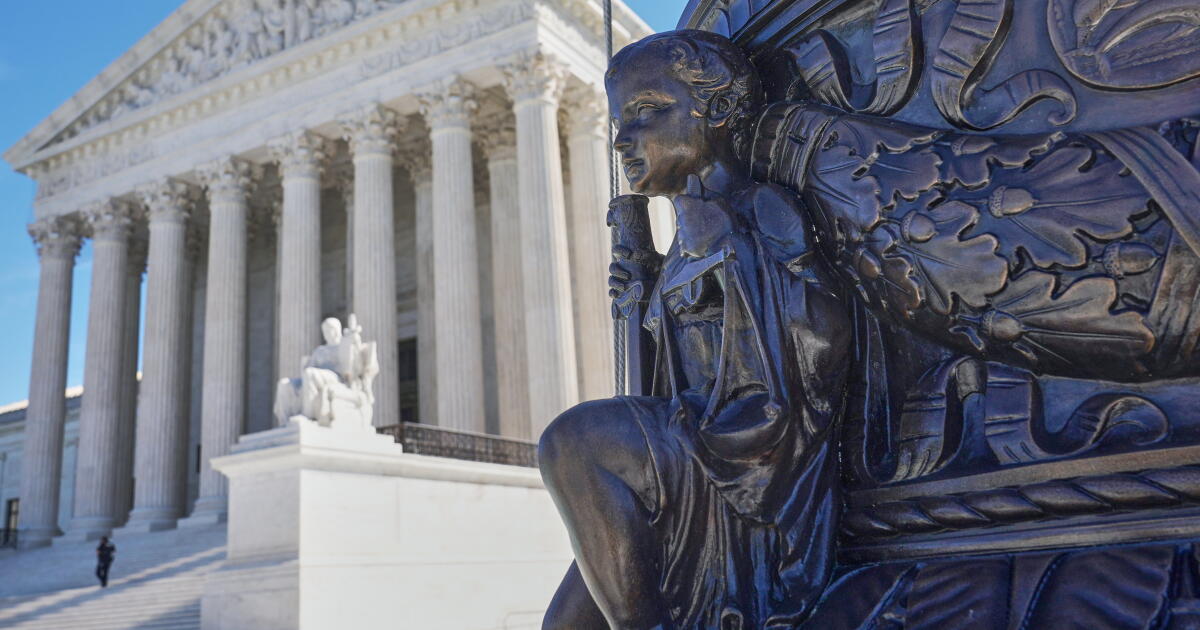
PHOENIX — The U.S. Supreme Court has rejected Arizona’s eleventh-hour bid to block the upcoming start of a court-ordered takeover of healthcare operations in its prisons after the state was found to have provided constitutionally inadequate care to incarcerated people and dragged its feet for over a decade in making required improvements. Justice Elena Kagan denied the state’s request Thursday, leaving an outside corrections professional set to take over healthcare management for 25,000 incarcerated people on Oct. 19.
Arizona had asked the courts to delay the takeover while it appealed that decision and the appointment of former Ohio corrections director Annette Chambers-Smith to lead the effort. The state sought the delay from the Supreme Court after lower courts rejected by the request.
Over the past 14 years, Arizona has been dogged by complaints that its prison healthcare system was run shoddily and callously and that it repeatedly failed to improve a system found to have exposed prisoners to harm and preventable deaths.
Under a 2014 settlement, the state pledged to overhaul medical and healthcare services for prisoners but was soon accused of failing to make promised improvements. That led to more than $2 million in contempt-of-court fines and the eventual revocation of the agreement by U.S. District Judge Roslyn Silver, who said corrections officials had shown little interest in making required changes.
After a 2021 trial, Silver ruled against the state, issuing an injunction that required corrections authorities to address the constitutional violations. Earlier this year, she ordered the takeover after concluding the state hadn’t gotten a semblance of compliance with court-ordered changes and the U.S. Constitution after more than a decade of litigation. Silver found that prisoners remained exposed to grave threats of harm and suffering because of systematic deficiencies in their health care.
The Arizona Department of Corrections, Rehabilitation and Re-entry did not immediately respond to a request for comment on Thursday’s decision.
In a statement, Corene Kendrick, an American Civil Liberties Union attorney who represents prisoners in the lawsuit, applauded the court’s refusal to delay the takeover, also known as a receivership. She said Arizona fought accountability at every turn while prisoners suffered. “Today’s decision clears the way for a receiver to do what the state has failed to do for more than a decade,” Kendrick said.
In seeking a delay, Arizona’s attorneys said Silver adopted a drastic takeover remedy without first trying intermediate fixes to speed compliance. They also said the judge hadn’t given the corrections department enough time to continue making progress and argued that the official appointed to run healthcare operations wouldn’t be politically accountable. They said the agency is committed to improving health care in prisons, has made significant progress since 2023 and that the prisoners won’t suffer harm if the start of the takeover were delayed by a few months.
Lawyers for prisoners said the state was minimizing its noncompliance, disputed its claim it had not been given enough time to comply after 14 years of litigation and said Silver had already tried less-intrusive remedies. They also said the state’s proposal of a months-long delay in the takeover “grievously minimizes” the harm prisoners face from the state’s inability to provide adequate care.
Complaints about health care in Arizona’s prisons have spanned both Republican and Democratic administrations.
The lawsuit was filed in 2012 during Republican Gov. Jan Brewer’s administration and continued under Republican Gov. Doug Ducey, when both contempt fines against the state were issued. Under Ryan Thornell, the corrections director in Democratic Gov. Katie Hobbs administration, the department has complained that its progress in overhauling health care operations in recent years hasn’t been acknowledged.
The lawsuit over healthcare for incarcerated people covers Arizona’s nine state-run prisons but not the nearly 10,000 Arizona inmates held in private prisons.
David Ellison said the merged Paramount and Warner Bros. Discovery will be called Skydance — the moniker he picked nearly two decades ago when the tech scion began building his Hollywood empire.
Ellison, currently the chairman and chief executive of Paramount, is aiming to finalize the acquisition of Warner Bros. Discovery by Tuesday. Then the combined company will assume the name and logo of his once small studio.
“We chose this name for a few important reasons,” Ellison wrote Friday in an X post. “As we bring Paramount and Warner Bros. together, we wanted to preserve what has made each of these studios iconic. Both have distinct identities, extraordinary legacies and brands that have resonated with audiences … We never wanted a new corporate identity to diminish, alter or overshadow either one.”
By calling the company “Skydance,” Ellison said the merged entity would have “an identity of its own while allowing Paramount and Warner Bros. — and all our extraordinary brands — to remain in the spotlight.”
In Hollywood, there had been much speculation over what jumbled mash-up of the corporate titles would be used, with WarnerMount and Paramount-Warner Bros. often mentioned as possibilities.
Both companies boast century-old studios, beloved media brands and a recent past that has included several fraught mergers. When AT&T sold WarnerMedia to David Zaslav’s Discovery in 2022, he selected Warner Bros. Discovery as the corporate name.
The merger is quickly reaching the finish line after U.S. District Judge Araceli Martínez-Olguín on Wednesday signed a settlement agreement, effectively ending an antitrust lawsuit brought in July by California Atty. Gen. Rob Bonta and 11 other state attorneys general who initially fought the formation of a new Hollywood colossus. Paramount now has won approvals by nearly 70 regulators for the industry-reshaping deal.
For more than a decade, Paramount has been the smallest of the major media companies, owning CBS, Comedy Central, BET, Nickelodeon and the Melrose Avenue studio. With the $111-billion merger with Warner, Skydance will gain more valuable assets including HBO, CNN, TBS, Food Network and Warner Bros. film and television studios, along with their massive libraries that include the Harry Potter, “Lord of the Rings,” and DC Comics franchises.
Earlier this week, Ellison announced he was bringing Ynon Kreiz, who has served as the CEO of toymaker Mattel for eight years, to run the new entity’s day-to-day operations. Kreiz, 61, brings years of operational experience that Paramount’s top executives had lacked.
Paramount released details of Kreiz’s contract on Thursday in a regulatory filing, saying he would receive an $5 million annual salary and an annual target bonus of $4.9 million. He will also qualify for a signing bonus of $31.5 million to come over to the new company, paid through restricted stock units.
In addition, HBO Chairman Casey Bloys is widely expected to become head of the merged company’s streaming programming. Paramount’s streaming chief Cindy Holland exited the company earlier this week to make way for Bloys.
During a Thursday appearance at the Bloomberg News Screentime media conference in Hollywood, Bloys declined to discuss his presumed new role. But he suggested that that Ellison’s company might bundle HBO Max and Paramount+ services, allowing the two services to remain for now, rather than try to fold them into one gigantic offering.
Skydance will carry than $80-billion in debt, much of it acquired to retire the holdings of Warner Bros. Discovery investors at $31.17 a share. The company also has promised investors that it would find $6 billion in cost-cuts within three years.
During a separate appearance at the Bloomberg conference, RedBird Capital Partners founder Gerry Cardinale, a Paramount investor and board member, said finding $6 billion in cuts would be relatively easy, and would not be focused solely on layoffs. It would include combining the technology stacks for the various streaming platforms.
But Cardinale acknowledged layoffs would be part of the cost-cuts, a prospect that frightened many in Hollywood after endless waves of job cuts at the two companies.
Warner’s outgoing chief executive Zaslav will leave with a golden parachute valued at about $887 million, which includes cash, stock and options valued at more than $550 million, according to regulatory filings.
In addition, Warner board members separately agreed to pay Zaslav’s tax bills, which could approach $330 million.
WASHINGTON — Defense Secretary Pete Hegseth is launching an office of religious affairs, the latest of his faith-related reforms at the Pentagon.
He announced in a speech Wednesday that the office will help offer “first-class religious support” and will report directly to him.
“Our department is, you might say, putting on the full armor of God, because while we wage physical war, we all know the real battle is spiritual,” he said.
Hegseth has infused his evangelical Christianity into his leadership of the Pentagon, hosting Christian worship services for employees and often speaking of the United States as a Christian nation.
The Office of Religious Affairs, or ORA, will advocate for military chaplains and religious support “at the highest level of the Department,” according to a Pentagon statement. It will not “compel religious participation, favor one faith, or diminish the rights of personnel of any faith or lack thereof.”
Some criticism of the initiative surfaced quickly.
The Pentagon “owes it to the nation’s service members to defend religious freedom,” said Rachel Laser, head of Americans United for Separation of Church, which has sued the Pentagon over its worship services. “Hegseth’s latest announcement violates that promise by elevating Christianity to an even higher role in shaping U.S. military policy.”
Other federal agencies have had religious or faith-based offices, which were established under President George W. Bush and were continued in different forms under the Obama and Biden administrations. President Donald Trump established a White House Faith Office and had a similar effort during his first term.
Shaun Casey, a religion scholar, led the State Department’s Office of Religion and Global Affairs during the Obama administration. The office did not promote religion or spiritual well-being, he said. “It was there to understand what were the political implications of lived religion in the various hot spots around the world.”
The leader of the new office has not been named. A Pentagon memo said the religious affairs director will coordinate spiritual resources, including “faith-based homeschool support for military families.” Hegseth has also pushed the military school system to introduce more coursework that draws from conservative and Christian influences.
The memo mentions “faith-based initiatives supporting Department-wide suicide reduction.” In recent years, the military has become increasingly dependent on chaplains to help address the growing numbers of troops in mental health distress. Hegseth has said he wants chaplains to focus more on God and less on therapeutic “self-help and self-care.”
The secretary has pushed other changes within the military’s chaplain corps, which provides spiritual care to troops. He ordered chaplains, who are commissioned officers, to no longer wear their rank on their uniform but instead be identified by religious insignia.
The Defense Department also slashed the number of religious affiliations it officially recognizes, down to 31 from more than 200 previously recognized traditions. The list no longer includes atheists, Unitarian Universalists, pagans and Wiccans.
Hegseth spoke directly to chaplains in his address Wednesday at Marine Corps Base Quantico in Virginia. Using Christian-inflected language, he said: “Live your calling. Stand firm. Preach truth. Minister to the flock.”
He then quoted from the Bible: “The Lord is on my side; I will not fear. What can man do unto me?”
Two social media influencers who filed an ethics complaint against Tom Steyer’s California gubernatorial campaign have submitted new complaints to the state’s Fair Political Practices Commission and the Los Angeles Ethics Commission, accusing Nithya Raman’s mayoral campaign of paying influencers without proper disclosure.
Their complaints, it turns out, received a legal assist from the campaign of L.A. Mayor Karen Bass.
The metadata for a draft of their filings last week revealed that they had been created with the help of the law firm used by Bass’ election campaign.
Kaitlyn Hennessy, who filed the complaint with Beatrice Gomberg, acknowledged to The Times that the Bass campaign steered them to the Kaufman Legal Group, which helped prepare the complaint.
Bass’ campaign said it is picking up the tab for the legal work but wasn’t paying Hennessy and Gomberg for their efforts.
The complaint focused on posts by comedian and TV personality Adam Conover and influencer-turned-Raman staffer Eric Cheng, along with a host of so-called “meme” accounts, which repost content created by others, sometimes at the behest of political campaigns.
The Raman campaign said it has done nothing wrong and denied any wrongdoing on behalf of Cheng. Conover also denied any wrongdoing.
The Bass campaign’s decision to cover legal costs for the complaints is unlikely to pose ethics issues, according to legal experts consulted by The Times, provided the payments are reported by the campaign in its disclosure reports, which the campaign said it intends to do.
“As long as a campaign is transparent in reporting its expenditures, there’s nothing inherently wrong for a campaign to have its lawyers file an ethics complaint for the campaign or somebody else with their informed consent,” said Jeffrey Daar, a former president of the L.A. Ethics Commission.
Conover’s posts promoting Raman already attracted scrutiny in ethics complaints filed in May by former L.A. City Council candidate Dylan Kendall. The investigations into those complaints, to the FPPC and L.A. Ethics Commission, are ongoing.
Conover told The Times that payments made by the campaign to a company connected to him were not for his posts but for video work one of his staffers did for Raman’s campaign. They initially were described in Raman’s campaign filings as payments for online ads but later were amended to say they were for video production services.
A spokesperson for Raman’s campaign said Cheng is paid for work he does for the campaign, not for posts on his personal social media account, and that it had gotten guidance from L.A. Ethics Commission staff on Cheng’s disclosure requirements to ensure it was in compliance.
The spokesperson added that Cheng voluntarily posted on his social media account that he would be joining the campaign before his employment began.
The L.A. Ethics Commission and FPPC declined to comment on the status of the complaint or the prior one brought by Kendall.
Jessica Levinson, a professor at Loyola Marymount University’s law school who also previously served as the president of the ethics commission, said that because news of an ethics complaint can have a political impact before its merits have been evaluated, it is important to view filings late in an election cycle with greater scrutiny.
“Whenever I see that there’s an ethics complaint filed this close to the election, I always pause for a minute,” she said.
California is one of the few states in the country that require social media influencers to disclose if they have been paid by a political campaign to create content. L.A. rules are even more strict.
Political groups are required to notify paid creators of the requirement.
New state legislation signed into law last month gives the FPPC the power to refer alleged violators to law enforcement for possible misdemeanor charges, and violations can be penalized with a fine of up to $5,000 per instance. The L.A. Ethics Commission can levy fines of up to $15,000 or three times the amount of money at issue.
There are no such rules for paid social media content sponsored by a federal candidate or political committee.
The FPPC last month concluded its investigation into Steyer’s campaign and found that it had properly followed the rules, but it did say that several social media influencers, including Cheng, the Raman staffer, had not properly disclosed payments from the Steyer campaign.
Hennessy and Gomberg are continuing to investigate improperly disclosed social media posts in races across the country, including the L.A. mayoral race, because of their concerns about the corrosive impact this content can have on the electoral process, Hennessy said.
“It’s really disappointing to me, because you see how this impacts races,” Hennessy said. “When you have this undisclosed content, people don’t understand that what they’re watching is an ad.”
The amendment aims to clarify campaign finance rules for candidates running for a seat on the board of education, which overseas LAUSD and its approximately 350,000 students.
Repetitive language in the Los Angeles City Charter would be deleted and would make clear the same campaign finance rules apply to both mayoral candidates and board of education candidates, except in certain instances, the measure says.
Among those requirements are rules governing campaign contribution limits, filing deadlines, public disclosures and fundraising windows.
Justin Allen Clayton, L.A. County deputy public defender
Bar rating: Qualified
Clayton is a Los Angeles native who attended public schools, earned a bachelor’s degree in criminology and passed the bar in 2012. He joined the public defender’s office two years later and since 2023 has served as deputy in charge of the Inglewood branch.
Clayton describes himself as a “working supervisor” who conducts arraignments and represents clients at preliminary and other hearings. He has completed dozens of trials, including three with life sentences, according to his website.
The position involves overseeing and training attorneys, as well as law clerks and summer interns, on misdemeanor and felony case preparation and trial strategy.
Clayton said a priority is improving court efficiency through pretrial preparation and “firm but fair enforcement of deadlines.”
Time as a candidate, he said, has shown him the importance of effective communication within the court system in bridging language and cultural differences. He called that a guiding principle, particularly for clients who lack counsel.
“Sometimes, one additional question, or one additional statement, can make all the difference in resolving an issue,” he said.
Clayton said running a public defender branch office, which brings him in contact with judges, sheriffs, court clerks, interpreters and others, combined with 14 years as a trial attorney, gives him a “comprehensive understanding” of the courtroom.
“That combination of courtroom experience, leadership and daily interaction with the many people who make our justice system work has uniquely prepared me to serve as a Superior Court judge,” he said.
Anna Slotky Reitano, L.A. County deputy county counsel
Bar rating: Qualified
Reitano spent the early part of her career in criminal defense, contract law and other sectors. In 2014, she joined the L.A. County public defender’s office. A decade there included three years in juvenile court, where she primarily handled felony cases, and five years at the San Fernando Courthouse, where she represented indigent clients facing felony charges.
Reitano focused on mental health diversion and treatment, aiming to support rehabilitation when possible. Having a brother with schizophrenia and witnessing how families navigate the legal system when dealing with mental illness has informed her approach.
“This has given me a deeper understanding of both the challenges individuals and families face and the ways in which the system can fall short in addressing those needs,” she said.
This is not her first bid for office. She lost a campaign for a judgeship in 2022 and two years later assumed her position in the county counsel’s justice and safety division, where she supervises litigation and advises county departments.
Reitano, a former child actor, volunteers with local schools and, according to her website, mentors “future lawyers” through moot court competitions.
Campaigning, Reitano said, has shown her that constituents, no matter how different, uniformly want “a judge who is experienced, prepared, fair and willing to listen.”
“My experience across criminal, juvenile, civil, administrative and government law has uniquely prepared me to serve wherever the court needs me,” she said.
SACRAMENTO — In recent weeks, the Trump administration has been using taxpayer dollars — your money and mine — to pay for a series of cringy, self-glorifying advertisements that feature, you guessed it, President Trump himself.
In one particularly needy spot, the lyrics “love me, love me” are repeated continuously over fast-cut clips of Trump. The White House claims it’s a call to love America, but if someone I knew posted this, I’d be asking if they were OK. Like, teenage-style, “Are you OK?”
But I’d be missing the point if I went down that path of laughing off these regrettable commercials as just more Trump self-adulation.
Taken with two other recent developments — the banning of certain press from the White House and a further purge of military leadership — some experts on authoritarianism told me what we’re really watching is a further collapse of democracy into an authoritarian cult of personality in which Trump is the state and the state is Trump.
“In authoritarian countries, all leaders, they try to completely blur the line between themselves and the state function,” said Konstantin Sonin, an expert in authoritarianism and a professor at the University of Chicago. “So basically, being ‘anti-me’ is being anti-state. In this Trump advertisement, there is this authoritarian scent.”
State propaganda
Jason Stanley, a former Yale professor who moved to the University of Toronto in part over concerns about the far-right political shift in the U.S., put it even more succinctly.
“Trump is trying to tell you, you live in an authoritarian society now, and that he is the state,” Stanley said. “This is pure, pure state propaganda.”
State propaganda matters because it serves not just as a message, but also a warning, said Federico Finchelstein, a history professor at the New School for Social Research and author of “The Wannabe Fascists,” about dudes who try to destroy democracy from the inside. It tells citizens that being against Trump is being against America, he said — a chilling prospect for those who would oppose him.
Finchelstein points out that painting opponents as communists or socialists — an incessant refrain from Trump and the core of the commercials — is a common practice in non-democracies, turning enemies of the dictator into enemies of the state, and perhaps even criminalizing them.
“This should not be seen as just another outburst or just another ridiculed dimension of a kind of ‘original personality,’” he said of the ads. “This is more of a structural pattern of authoritarianism.”
The press ban
Finchelstein points to the recent White House press ban as another part of that pattern, and another way Trump is removing that line between himself and the state.
Recently, CNN, MS NOW and Politico were denied access to the White House on Trump’s orders. The outlets sued, a judge issued a restraining order, and as of now, it mostly has blown over — though it shouldn’t.
For days, Trump made it clear that the ban was because he didn’t like coverage that made him look bad — and if it made him look bad, it was bad for America.
“Virtually every story about me, or anything having to do with me, is negative, wrong and, in many cases, DANGEROUS for our Country! No matter how GREAT my Achievements, they trivialize and demean,” Trump ranted on social media.
Then Atty. Gen. Todd Blanche, who has made loyalty to Trump his brand, took that a step further, arguing that “after years and years and years of one-sided media coverage of the president from certain outlets, the president finally said it’s not fair to the American people,” and constituted a national security risk.
Trump “tries to blur this line about negative stories about [himself] and negative stories about America,” a classic authoritarian tactic, said Sonin, the University of Chicago professor.
Finchelstein said that that kind of crackdown on dissent comes most often in moments of crisis for the person in power — such as when, say, his approval ratings are at an all-time low, gas prices are soaring because of an unpopular war and an election is looming.
The military concern
But what happens if propaganda and intimidation aren’t enough?
Stanley said that faced with plummeting popularity, Trump seems to have stopped trying to win our approval — instead focusing on consolidating power while he still has time.
“Trump is in a race to be a dictator,” Stanley said. “That’s why he doesn’t try to persuade you anymore. He’s not in the business of persuading. He’s in the business of hard propaganda, of just expressing his power. He’s saying public opinion doesn’t matter anymore.”
Finchelstein, Stanley and others warn that the most dangerous moment for democracies can be when a wanna-be dictator loses momentum.
“We’re in a situation where it matters whether the military will violate the Constitution,” Stanley said.
Make of this what you will, but this week, U.S. Defense Secretary Pete Hegseth continued his purge of seasoned military leaders by confirming the department is firing 20% of top officers.
“The ideological clowns are out. The patriotic cowboys are in,” Hegseth said of the unprecedented hollowing of experienced leadership.
Hegseth also announced that billionaire right-wingers Elon Musk and Palmer Luckey are going to help guide the future of the military, which doesn’t sound terrifying at all. I mean, DOGE went so well.
Sonin, the University of Chicago professor, said despite all this, he has hope — because Trump is “old and unpopular” and support of him may have found a “floor.”
Or as Stanley puts it, Trump can conflate himself with the state all he wants, but it works only if we believe him — and even his supporters seem tired of the lies.
The state Legislature was tasked with developing a better recall system after Gov. Gavin Newsom faced a gubernatorial challenge in 2021, costing state and local governments more than $200 million.
Newsom defeated the recall attempt after nearly 62% voted to keep him in office. Had he been ousted, conservative talk radio host Larry Elder was the leading candidate to replace him with less than 49% of the vote.
Former state Sen. Josh Newman, who was recalled in 2018 and later reelected to office, co-authored the measure that made it to the ballot. He believes that the elimination of a second simultaneous vote for a replacement removes “the political incentive for gamesmanship around recalls.”
“My solution is really simple: It’s to eliminate that second question and maintain the recall as a valid, powerful tool of accountability,” he said.
It’s not uncommon for someone to get appointed to fill an official’s term if they leave office before their time is up. Newman said that slotting the lieutenant governor into the role of governor in the event of a recall would follow a precedent.
The lieutenant governor currently serves as acting governor when the governor leaves the state.
The measure is backed by four of the five supervisors. During the February meeting, Horvath, who authored the initial motion, said that binding arbitration would promote transparency and push the sides to reach a deal. She said that 21 California jurisdictions, including Sacramento and San Francisco counties, have implemented binding arbitration.
Supervisor Hilda Solis called this “another tool in the toolbox.”
A battery of labor unions representing county workers are on board, including the International Assn. of Firefighters Local 1014, the Assn. for Los Angeles Deputy Sheriffs and the Los Angeles County Lifeguard Assn.
Dave Gillotte, president of IAFF Local 1014, which represents more than 3,000 L.A. County Fire Department employees, said contract negotiations with the county generally are intense and lengthy. He said the goal is never having to resort to binding arbitration, but that if required, this would allow a “neutral third party” to make the final decision.
“Binding arbitration really brings about leverage to move both parties to work hard to get a contract done, where we don’t have that now,” Gillotte told the Times.
Sign up for the L.A. Times California Politics newsletter
Deeply reported insights into legislation, politics and policy from Sacramento, Washington and beyond. In your inbox twice per week.
By continuing, you agree to our Terms of Service, which include arbitration and a class action waiver. You agree that we and our third-party vendors may collect and use your information, including through cookies, pixels and similar technologies, for the purposes set forth in our Privacy Policy such as personalizing your experience and ads.
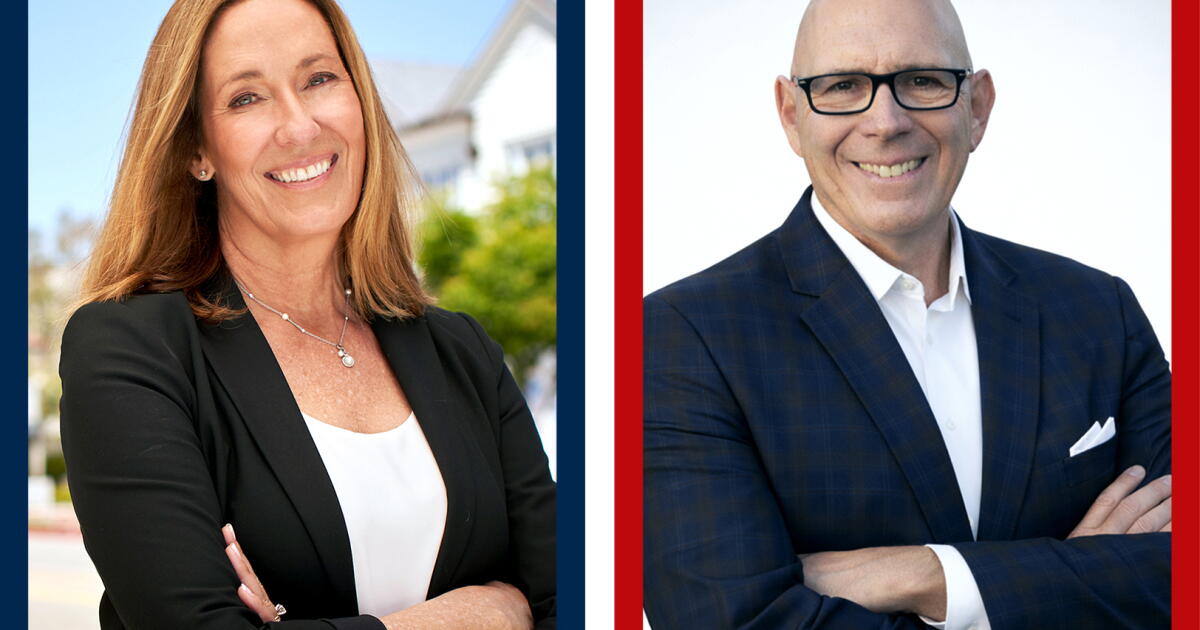
Democratic State Assemblymember Jacqui Irwin is facing off against Republican candidate and nonprofit leader Samuel Gallucci in the race for California’s 26th Congressional District.
They are seeking to claim the open seat created by the retirement of Rep. Julia Brownley, who has represented the region for the last 12 years. The district stretches from the the Pacific Ocean through the foothills of the Santa Monica mountains, encompassing most of Ventura County and the L.A. County communities of Calabasas and Agoura Hills. It includes the communities of Oxnard, Thousand Oaks, Simi Valley, Ventura and Camarillo as well as wide swaths of vineyards and agricultural land.
As with most Californians, the rising cost of living and especially the price of housing are major concerns for constituents. Many communities sit at the wildland-urban interface, making wildfire prevention and response another essential issue. The district is home to a significant immigrant community in agricultural areas such as Oxnard and Camarillo, which have been the site of Immigration and Customs Enforcement raids and protests.
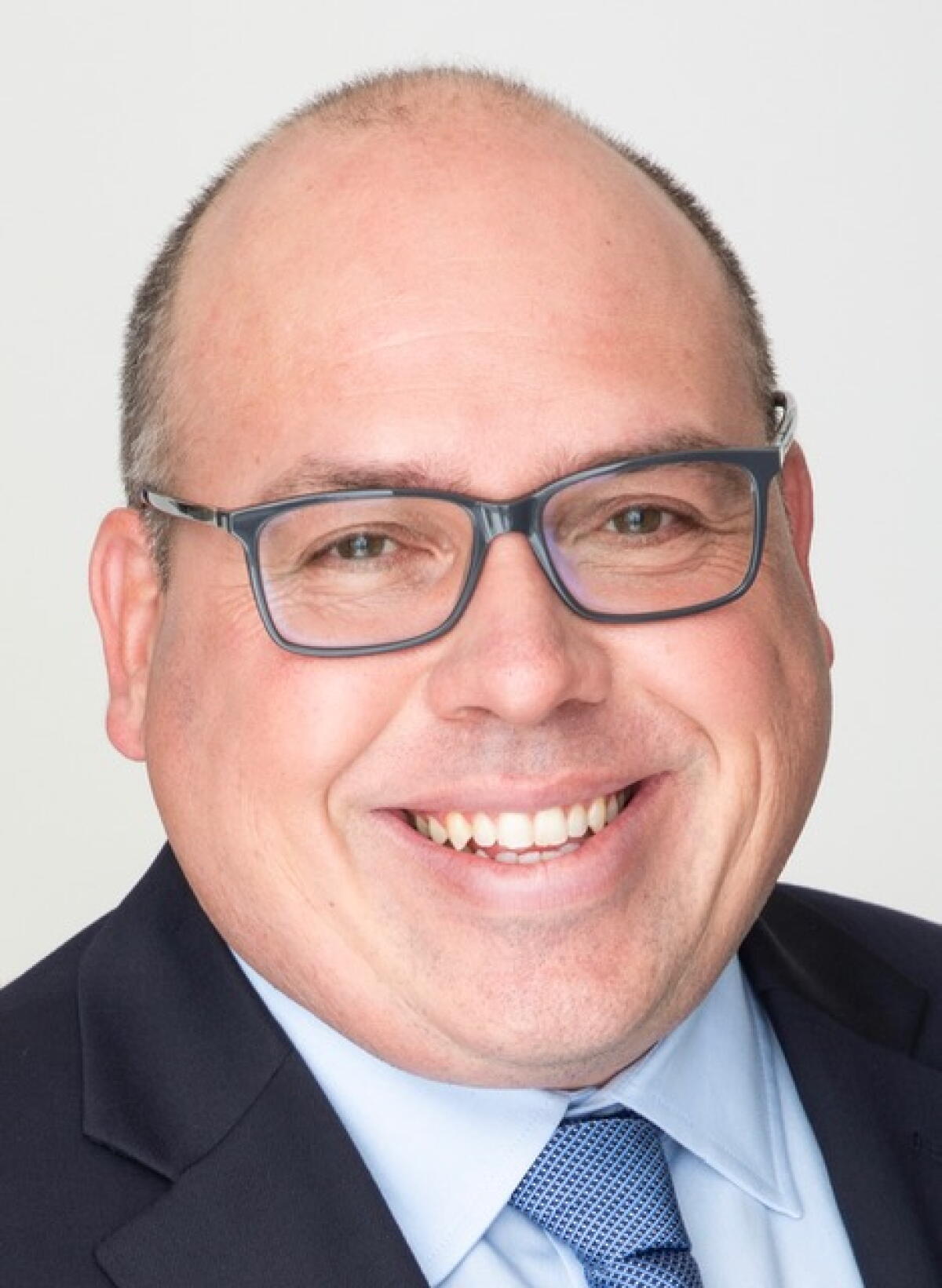
Steven Veres, 46, is vying to maintain his seat on the Los Angeles Community College District Board of Trustees.
(Courtesy of Steven Veres)
Name: Steven F. Veres
Age: 50
Website: www.steveveres.com
Occupation that appears on the ballot: Los Angeles Community College District, member of the board of trustees
Experience: Veres cited his role as trustee and previous work as a teacher as key experience for another four-year term. Veres also has worked as a state politics adviser, including for Sen. María Elena Durazo. As trustee, he said his work has included strengthening job training programs, improving graduation rates and addressing basic student needs.
“Successful colleges depend on students, faculty, and staff having a meaningful voice in decisions” while the board should “listen, set clear priorities, protect public resources, and give our colleges the support necessary to help students succeed,” he said.
District challenges: The district’s greatest challenge is helping students finish their education, given how many are forced to juggle school with “jobs, housing costs, food insecurity, transportation, and family responsibilities … We need to remove those barriers while making the academic experience easier to navigate,” he said.
Priorities: “First, make college truly affordable. Tuition is only part of the cost. Housing, food, transportation, textbooks and childcare can determine whether a student stays enrolled.
“Second, improve completion and transfer rates. Students deserve clear academic pathways, accessible counseling and course schedules that allow them to earn a degree, certificate or transfer without unnecessary delays. Third, connect education to careers. I want to dramatically expand paid internships, apprenticeships and partnerships with employers and organized labor.
“These priorities reinforce each other: Students are more likely to finish when college is affordable, the path to completion is clear, and they can see the economic value of their education.”
Budget: “Our first responsibility is to use taxpayer dollars efficiently while protecting instruction and student services,” he said. In addition, Veres said that because state funding is based on enrollment, boosting it can be a path to financial stability, along with eliminating unnecessary, duplicative spending across the nine colleges and investing in energy efficiency to cut costs.
“Fiscal responsibility is not simply cutting spending,” he said. “It means directing limited resources toward what produces the greatest value for students and taxpayers.”
Student success: Veres would address barriers to student success and enrollment by pushing to make the application process easier and providing more flexible class schedules — including more evening, weekend, online and hybrid options — for working adults, parents and others. “Our job should not end when a student enrolls. It ends when that student reaches their educational goal,” he said.
Robert Payne is running for Los Angeles Community College Board of Trustees Seat 2.
Occupation that appears on the ballot: researcher/writer/environmentalist
Experience: Payne said he has taught at L.A. Mission College. His education at L.A. Valley College and Cal State Northridge helped prepare him for a career as a writer. He said he has worked on movie crews and ran an import business, among other jobs. Growing up in Pacoima helped him understand the needs of immigrants and “those of diverse backgrounds with limited resources.”
“I went through the [community college] system,” he said. “I know the difficulties. All my ideas come from my direct experience.”
District challenges: Payne cited low enrollment growth as the main challenge. Students also need to see a quicker return on their investment. “Life costs money,” he said. “If students could see immediate advantages to college, the colleges would attract more enrollments.”
He reflected on his own experience when discussing the importance of a quick payback. “I graduated from Cal State Northridge. Nothing I learned at L.A. Valley or Cal State paid off immediately,” he said. “I worked as a janitor, security guard, construction site cleaner. I lucked into a union tech job and I earned my way through graduate school. Years later, the master’s degree finally helped me get work as a ‘professor.’ ”
Priorities: Payne wants to make community colleges “cheaper, faster, better” in part by offering students more training for specific jobs and less expensive online textbooks. He also would support ending student debt.
Budget: He does not support cutting “student opportunities” and said if “the colleges can demonstrate success for the students, enrollment will justify the expense of maintaining the expense of the faculty, the staff, the facilities.”
Student success: Payne wants college to do more to offer “immediate perceived value,” including teaching résumé building, interview skills and how to apply to jobs. He said hiring adjuncts with industry experience could enhance student success.
Kristina Irwin is running for Los Angeles Community College Board of Trustees Seat 6.
Occupation that appears on the ballot: parent/business owner.
Experience: As a former community college student, Irwin has firsthand knowledge of the L.A. community college student experience.
She serves on the general advisory board at Santa Monica College and said she also served on the board of trustees at her children’s school, Palisades Charter High School, during the Palisades fire. She said she holds a Public Engagement & Civic Leadership Certificate from the Davenport Institute at Pepperdine School of Public Policy.
District challenges: Irwin said the main challenge is preparing young people to advance in college when their earlier schooling failed to give them the tools to succeed.
Priorities: Irwin wants to establish “preentry” programs in every local high school that would prepare students for community college and do more to give educators the resources they need to craft classes that “fit the needs and life limitations of the students.”
Budget: Irwin said alternative streams could be identified to fund “classroom student resources.” She said that as “responsible stewards” of district resources, trustee actions “are often under scrutiny either formally or informally.”
Student success: Irwin wants to address barriers to student success and enrollment by doing more to demonstrate how a community college education can give them the tools necessary to succeed in their chosen career.
Name: Roy Payan
Payan told the Times he suspended his campaign.
Adriana Cabrera is running for Los Angeles Community College Board of Trustees Seat 2.
Experience: Cabrera said she attended community college and went on to earn bachelor’s degrees in Chicana/o studies and political science and a master’s in education from Cal State Northridge. She said she also served as president of the Central Alameda Neighborhood Council and co-founded Empowering Youth in South Central, a “grassroots collective of students and educators” that “has supported thousands of first-generation students with college, career, financial-aid, and leadership support.”
“I am not coming into this role to learn higher education after I am elected,” she said. “I have studied it, worked in it, navigated it as a student, built programs within it, worked inside public institutions, and organized communities around it.”
District challenges: Cabrera said student services are too difficult to navigate, too many students struggle to afford basic needs such as housing, and clearer pathways are needed to economic mobility, She said budget decisions also can feel “disconnected” from the staff and students those decisions effect.
Priorities: “My first priority is invest in students first,” she said. Cabrera would do that by making student services easier to navigate and strengthening financial aid and other support, including for food, housing, child care and mental health.
Secondly, Cabrera wants to better connect education to economic mobility through good paying jobs. Lastly, Cabrera would give students, faculty, staff, labor organizations and community members “a meaningful voice before major budget priorities are finalized.”
Budget: Cabrera would review the district’s spending “to make sure existing dollars are being used efficiently” and “identify responsible ways to generate additional revenue without shifting costs onto students.” For instance, renting out underutilized facilities.
Student success: Cabrera would take steps to ensure student services are more readily available and the public has better visibility and say in trustee decisions. “The overall standard I would bring to the board is simple,” she said. “Can students enter LACCD, understand their options, find the support they need, complete their goal, and leave with more opportunity than when they arrived?”
California’s general election takes place on November 3. Here is information Times reporters gathered about the races:
L.A. mayor election
L.A. City Council elections
Other L.A. city elections
Community college elections
L.A. County elections
Judge elections
Governor’s race
California statewide propositions
Other statewide races
U.S. House elections
How to vote
Sign up for the L.A. Times California Politics newsletter
Deeply reported insights into legislation, politics and policy from Sacramento, Washington and beyond. In your inbox twice per week.
By continuing, you agree to our Terms of Service, which include arbitration and a class action waiver. You agree that we and our third-party vendors may collect and use your information, including through cookies, pixels and similar technologies, for the purposes set forth in our Privacy Policy such as personalizing your experience and ads.
Get the lowdown on L.A. politics
Sign up for our L.A. City Hall newsletter to get weekly insights, scoops and analysis.
By continuing, you agree to our Terms of Service, which include arbitration and a class action waiver. You agree that we and our third-party vendors may collect and use your information, including through cookies, pixels and similar technologies, for the purposes set forth in our Privacy Policy such as personalizing your experience and ads.
Last year, Kim was one of the sponsors of the Community Investment and Prosperity Act, a proposed law that later was encompassed in another piece of legislation that expanded banks’ ability to invest in communities in a way that promotes economic development and the public good. The law allows national and state member banks to invest up to 20% of their capital and surplus in affordable housing, small business lending and community revitalization.
“Families across California have felt the effects of rising costs for years. From delivering meaningful tax relief to supporting commonsense housing and energy reforms, I remain committed to fighting for opportunity and economic security that put Californians first,” Kim said in a press release issued by Americans for Prosperity in May.
Calvert sees affordability as the biggest challenge facing families and blames Sacramento for the rising costs and “driving businesses out of the state.” He points to his vote in support of the One Big Beautiful Bill Act, which maintained many of the tax cuts in the Tax Cuts and Jobs Act of 2017 and raised the State And Local Tax (SALT) deduction cap.
“My priority is fighting to lower everyday costs, help families keep more of what they earn and supporting policies that fuel economic growth, which in turn provides higher wages and more opportunities for California families and workers,” he said.
The largest chunk of this money — $7.2 billion — would be doled out as loans to builders who agree to rent some of the homes to low-income families; in Los Angeles County, a family of four earning about $133,000 a year qualifies as low-income.
Researchers recently found that the construction of nearly 40,000 low-income homes was in limbo because of a lack of funding.
The second-largest portion of these funds — $1.25 billion — would be set aside for housing for veterans, in the form of homeownership loans. Voters last approved this type of statewide bond for veteran home loans in 2018.
According to the Legislative Analyst’s Office, the remaining dollars would be spread across several other initiatives and could subsidize up to 40,000 rental apartments, 2,500 homes for farmworkers and 1,200 beds for university students:
$1.1 billion to help low- and middle-income families buy homes through direct loans and funds to nonprofits
$500 million for infrastructure related to new housing, such as road and water repairs
$450 million in loans or grants to build or upkeep affordable housing for farmworkers
$350 million to build affordable housing for students, split evenly among the University of California and California State University
$200 million available for tribal members to use to build or repair housing
$200 million available to city and county governments and other entities hoping to pilot programs to build low-cost housing
SACRAMENTO — Supporters of a high-profile Nov. 3 ballot measure that would require Californians to show identification when they vote accused state Democratic leaders of falsely stating that President Trump has endorsed the initiative.
Republican Assemblymember Carl DeMaio of San Diego, one of the measure’s authors, on Thursday called Democratic gubernatorial candidate Xavier Becerra a “bald-face liar” over comments he made during Wednesday’s gubernatorial debate hosted by CNN.
Becerra said during the debate with Republican Steve Hilton that Trump was instrumental in the voter ID measure, Proposition 39, qualifying for California’s November ballot. Trump for years has tried to cast doubt about American elections, and unsuccessfully pushed Congress to pass a strict voter ID and proof of citizenship measure known as the SAVE America Act.
“Prop. 39 is an initiative that is backed by Donald Trump,” Becerra said during the hourlong debate. “He couldn’t get his SAVE Act out of Congress, which tries to interfere in elections. So he’s gone around the country and put initiatives on the ballot. In California, it’s Prop. 39.”
Though Proposition 39’s provisions are less restrictive than those in the SAVE America Act, its proponents echo Trump’s unsubstantiated claims that voter fraud and noncitizen voting are widespread in California and therefore stricter ID measures are needed.
DeMaio said the ballot measure qualified for the ballot because of strong support from California voters, including many Democrats and independents. Supporters collected more than 1 million petition signatures in support of the measure, surpassing the 874,641 needed to qualify.
“It was not put on the ballot by Donald Trump,” said DeMaio, who also founded the conservative advocacy group Reform California.
Becerra is “showing that he’s not willing to be truthful with California voters,” DeMaio said.
Meredith Shields, press secretary for the Yes on Prop. 39 committee, reiterated that Trump hasn’t taken a position on the initiative.
“The opposition will do anything to advance their cause and protect their power,” Shields said. “It will come as a surprise to no one that career politicians don’t always tell the truth, and they certainly aren’t telling the truth here.”
The White House didn’t immediately respond to a request for comment about Trump’s position on Proposition 39.
The measure would require anyone voting in person in California to present a government-issued ID, and those voting by mail ballot to include the last four digits of the ID number provided when they registered to vote. State and county election officials would be required to verify the U.S. citizenship of registered voters using government data and publicly report the findings.
The ballot measure is backed by DeMaio and several deep-pocketed Trump supporters. Julie Luckey, director of the group Californians for Voter ID, is the mother of billionaire tech entrepreneur Palmer Luckey, a major Trump fundraiser and Republican donor. Richard Uihlein, chief executive of the shipping and packing supplies company Uline, has given the campaign $17 million.
Representatives for Becerra and the No on Prop. 39 campaign on Thursday argued that Trump pushed for voter ID in California before Proposition 39 officially qualified for the ballot, pointing to a March 11, 2025 news release on Reform California’s website acknowledging Trump’s support.
In January 2025, Trump endorsed “CA Voter ID” as a “condition” for continued federal funding to the state, according to the release, which was updated this year with an editor’s note to clarify that Proposition 39 hasn’t been endorsed by Trump.
“Carl DeMaio knows Prop. 39 is central to Trump’s voter suppression playbook, and he’s doing everything he can to hide that from voters,” said Jonathan Underland, spokesperson for Becerra’s campaign.
The No on Prop. 39 campaign repeatedly has sought to link Trump to the measure, which has not been a surprise given that the Republican president remains extremely unpopular among a majority of Californians.
“The fact that Donald Trump has endorsed it tells you everything you need to know,” Assembly Speaker Robert Rivas (D-Hollister) and Senate pro Tempore Monique Limón (D-Santa Barbara) said in a statement released by the “No” campaign this year.
U.S. Sen. Alex Padilla (D-California) suggested to reporters at a rally organized by the “No” campaign last month that Trump is behind Proposition 39.
“Carl DeMaio has been the face of this in California, but don’t be fooled into thinking this has nothing to do with Donald Trump and the MAGA agenda nationally,” Padilla said.
Separately, DeMaio on Thursday accused Secretary of State Shirley Weber, another Democrat, of falsely stating that Proposition 39 would end California’s vote-by-mail system. The vast majority of Californians use mail-in ballots.
Weber, in a television interview that aired this week on KCRA in Sacramento, said the state already requires ID for those who register to vote.
“But if you tell me everybody has to take their ID to the poll, Californians should be concerned because 90% of them don’t want to do that,” she said. “They want to vote by mail, and you would effectively eliminate vote by mail.”
DeMaio questioned whether Weber understood what Proposition 39 proposes.
“If she truly is concerned about trust and confidence in our elections, she should start with her own behavior by refraining from spreading misinformation about Prop. 39 and our election,” he said.
Weber, when asked about her statement this week, said in an email to The Times that Proposition 39 would “cause disruption” in the state’s mail-in voting system because it would require voters “to write private personal information on the ballots.”
A Weber campaign spokesperson followed up with another response Thursday.
“What Dr. Weber actually said was that, if passed, this very poorly drafted proposition could cause people to decide not to vote by mail because it creates unnecessary and burdensome steps,” the spokesperson said.
SACRAMENTO — Gov. Gavin Newsom signed a pair of bills this week designed to help a San Diego stadium and development project led by Los Angeles Rams owner Stan Kroenke sidestep environmental review hurdles.
Newsom signed Senate Bill 344 and Senate Bill 958, which were put forward by state Sen. Akilah Weber Pierson (D-La Mesa) to help the stadium project, known as Midway Rising. The project would replace the decades-old Pechanga Arena and include a new 16,000-seat facility, 4,254 homes, including up to 2,000 affordable units, and commercial and outdoor space. The site is south of Mission Bay.
Newsom cast the bills as part of a package to help speed up the construction of much-needed housing.
“Every Californian deserves a fair shot at a stable home — families shouldn’t have to wait years for housing to be approved and built in their communities,” he said in a written statement.
Senate Bill 344 deems Midway Rising in full compliance with the state’s landmark California Environmental Quality Act, known was CEQA.
The act, adopted in 1970, has been credited for protecting California’s natural resources and minimizing pollution. It also has been criticized for sometimes being weaponized by opponents of a project, including housing developments.
After the state Legislature’s vote last month, Weber Pierson said the project would provide “much-needed affordable housing, permanent jobs, community spaces, and health resources in a part of our city that is ready for investment.”
Former San Diego Assemblymember Lori Saldaña, a longtime critic of the proposal, called Senate Bill 344 “reckless and rushed” because it was introduced late in the session without public input. Saldaña said the site isn’t suitable for development because of sea-level rise that she said is causing street flooding in the area.
Senate Bill 958 states that a project’s increased building height, and any related noise, shadows, or impact on wildlife shall not be considered significant environmental impacts, if the project meets a host of conditions.
It would apply to any development in the state but was introduced to benefit Midway Rising, according to Weber Pierson.
Assemblymember Carl DeMaio (R-San Diego) was among those who voted against both bills.
The developers “don’t want to play by the rules, so they came here to Sacramento asking for a special exemption,” DeMaio said during a discussion on Senate Bill 958 last month.
“We’re talking about the coast. I think a big condo tower on the coast impeding the view is a significant environmental impact, and I think deep down in your heart of hearts, you know that,” DeMaio said.
Former Senate leader Darrell Steinberg (D-Sacramento) led his colleagues in passing a bill in 2013 that helped the Sacramento Kings arena by limiting environmental lawsuits. The new arena for the Golden State Warriors basketball team in San Francisco also benefited from CEQA reforms passed by state lawmakers in 2011.
The San Diego City Council still needs to approve the project.
U.S. Immigration and Customs Enforcement officers have been ordered not to engage in high-speed car chases and to make vehicle stops only if they have completed specific training, under new internal guidance issued after several drivers were shot in encounters with ICE.
A memo sent to officers in ICE’s Enforcement and Removal Operations division and obtained by the Associated Press warned they are not any under circumstances authorized to chase vehicles that fail to pull over. Instead, officers should take down the vehicles’ information for further investigation, according to the memo signed by ICE’s executive associate director, Marcos D. Charles, and dated Wednesday.
The new guidance comes after ICE-initiated vehicle stops have repeatedly escalated when drivers have refused to cooperate or tried to flee. ICE agents have opened fire during more than a dozen such encounters since last year, killing at least four people and wounding several others.
President Trump’s administration has faced internal tension over how to handle traffic stops, which are seen as particularly high-risk encounters.
After fatal shootings of drivers in Maine and Texas in July, ICE officers were directed to temporarily pause most vehicle stops. But the next day, Trump went on social media to direct the agency to continue traffic stops, calling them “one of ICE’s most important and effective Crime Fighting tools.”
ICE has faced intense pressure from the White House to deport more people who are in the country illegally, and its arrests have reached record numbers. At the same time, the agency’s rapid hiring spree last year resulted in some poorly vetted and trained officers hitting the streets.
In a statement, ICE downplayed the significance of the memo, which said the new guidance was intended to replace and amend previous directives issued earlier this year, last year and in 2018.
“Occasionally, ICE leadership issues guidance reminders to law enforcement officers,” the statement said. “Vehicle stops and arrests of illegal aliens continue.”
The new memo outlines steps intended to improve the safety of vehicle stops for ICE officers, drivers they are targeting, their passengers and the public.
The memo told ICE’s field office directors that they must ensure vehicles used for traffic stops have lights and sirens that let the public know they are law enforcement vehicles when activated. Underthe guidance, all officers on the scenes of vehicle stops must wear and activate their body cameras.
In addition, only officers who have completed one of five specific agency training courses can conduct vehicle stops. Officers who have not completed the courses can participate in vehicle stops only “in a support capacity” as passengers and cannot be the drivers of any of the vehicles involved.
The guidance says ICE officers can continue to use a controversial technique known as pinning, which is defined as “using a vehicle or physical barrier to trap or stop a car,” but only if they have received special training. Similarly, only trained officers can use spike strips that deflate tires to prevent drivers from fleeing.
The memo came the day that courtroom testimony highlighted ways in which two ICE officers involved in a vehicle stop, pursuit and shooting that wounded a delivery driver in Austin last month would not have complied with the new guidance.
During a bond hearing for Wilber Rafael Garces Perez, testimony showed that the officer who shot him wasn’t wearing a body-worn camera. The ICE officer who did have a camera was driving in a separate car and turned it off during the pursuit.
Prosecutors presented surveillance video that showed an ICE agent chasing Garces Perez at high speeds through residential streets after he fled an initial traffic stop.
Garces Perez faces federal assault charges after investigators say he struck an ICE officer with his driver’s side mirror. That officer then shot into Perez’s vehicle, lodging a bullet in his back, officials say.
Attorneys for Garces Perez have called the charges against him “retaliation” and have argued that the camera footage was inconclusive because it didn’t fully capture the moment when he allegedly tried to flee.
Foley writes for the Associated Press. AP reporter Anna Wilder contributed to this report from Austin, Texas.
SACRAMENTO — Days after signing a package of bills to rebuff aspects of federal immigration enforcement in California, Gov. Gavin Newsom vetoed two bills from Los Angeles lawmakers that targeted public employment for federal agents.
One of the bills, backed by Speaker Robert Rivas (D-Hollister), would have blocked agents and contractors who worked to enforce federal immigration laws from state and local jobs in California, including for law enforcement agencies. It was called the “Get the Feds Out” or “GTFO” Act.
Newsom said the bill goes “a step too far.”
“It is a mistake to discourage empathetic and qualified Americans from working in the federal government, or choosing to leave long-standing employment with the federal government because they find the current administration’s policies and tactics reprehensible,” the governor wrote in a veto letter to the Legislature made public on Wednesday.
The governor added that hiring for public employment already includes personal conduct evaluations. He emphasized the “horrific tactics” used by immigration agents during President Trump’s second term but said it is the responsibility of Congress to hold the administration and individual agents accountable.
Newsom signed a similar bill that prevents federal agents from becoming police in California if their federal badge was revoked for misconduct.
While he expressed disappointment in the veto, Assemblymember Mark Gonzalez (D-Los Angeles), the author of Assembly Bill 1896, applauded Newsom for signing “a strong package of legislation that will protect Californians and stand up for our immigrant communities.”
“From the beginning, the GTFO Act was about a simple principle: We should never use public dollars to reward conduct that has caused fear, terror, and pain in our communities. I am proud to have stood alongside my brother, Speaker Rivas, in this fight and this fight is not over,” Gonzalez said in a statement to The Times.
A spokesperson for Rivas said while the proposal did not become law, “Californians know Trump’s immigration agenda is failing and doesn’t keep anyone safe. That’s why Assembly Democrats are leading the nation in holding ICE accountable. The Speaker thanks his colleagues for delivering real results this year.”
The outgoing governor also vetoed a proposal from Assemblymember Isaac Bryan (D-Culver City), Assembly Bill 1537, that would have prevented sworn law enforcement officers from taking secondary employment or contract jobs for immigration enforcement.
Newsom took issue with the prospect of prohibiting “secondary employment law enforcement officers choose to do in their free time.”
“State and local peace officers already must abide by specific standards and rules, including ones that apply to their personal conduct,” Newsom wrote in the veto letter. “Any officers who violate those standards are held accountable through investigations that may culminate in their peace officer status being suspended or revoked entirely.”
Bryan, through a spokesperson, declined to comment on the veto.
Earlier this week, Newsom signed 21 bills aimed at federal immigration enforcement, including bans on electric shock gloves and face coverings for law enforcement. Other laws impose a 25% tax on companies that operate private detention centers, along with additional oversight of the facilities.
“No tax will stop ICE from deporting criminal illegal aliens to make California safe again,” a spokesperson for the Department of Homeland Security said in an email. “While California sanctuary politicians continue to release pedophiles, rapists, gang members, and murderers onto their streets, our brave law enforcement will continue to risk their lives to arrest these heinous criminals and make California safe again.”
Arguably the biggest change is to Area Planning Commissions, a group of seven volunteer-led boards that hear cases from homeowners, developers and businesses and make rulings on liquor licenses, hillside developments and more.
The amendment would consolidate those seven commissions into a single unified Neighborhood Appeals Commission.
The goal is efficiency. State laws passed in recent years have changed the appeals process, leading to lower caseloads for the seven boards. It’s also a financial drain on the city to train and take on so many volunteer commissioners while also paying overtime for staffers to host evening meetings for seven bodies — think audio-visual specialists, tech support, etc.
Under the amendment, the total number of commissioners would shrink from 35 to as few as seven, and the staff required to host meetings also would shrink significantly.
A unified board would eliminate the risk of commissions issuing different rulings. Picture a developer trying to build a hillside home; a commission that’s wary of such projects could reject it, while another commission that leans more pro-housing could approve it. Having a single board means that all appeals and applications would be governed by the same logic.
Pave the way for super-skyscrapers
Could an L.A. skyscraper rise higher than those in New York City or Chicago? Could downtown L.A. claim not just the tallest building west of the Mississippi River but also in the entire country?
If so, it would start here.
This amendment allows the City Council to change the existing floor area ratio (FAR) restrictions, which cap the height of certain buildings. FAR ratios vary by neighborhood and height districts, but the highest ratio is currently 13x, meaning a building’s total square footage never can be more than 13 times the size of the parcel of land that it sits on. For reference, L.A.’s tallest building, the Wilshire Grand Center, has a ratio of roughly 10.5, depending on how you calculate the square footage and acreage.
These limits were set in the 1950s, when L.A.’s population was roughly half of what it is now. This amendment would give City Council the flexibility to set higher limits to add density in order to adapt to a growing population.
Individual projects still would require zoning reviews, so no need to worry about skyscrapers coming to Silver Lake.
Set deadlines
You just opened a taco shop and you want to serve margaritas. The City Council said it’s fine, but you’re waiting to hear back from the City Planning Commission. They’re taking too long, and your patrons are drinking water while you wait for a liquor license.
Under current rules, decisions from either the City Council or Planning Department can get kicked back and forth indefinitely. This amendment sets deadlines for both sides to speed up rulings: Planning boards have 30 days to concur or dissent with City Council decisions, and City Council gets 21 days to hold a final vote on Planning decisions — or else the Planning decision becomes final.
Ensure passed amendments actually pass
Here’s how it would work. Say there’s an amendment to the city’s General Plan, which guides land use decisions, or a tweak to one of the neighborhood community plans that oversee development in areas like Hollywood or Boyle Heights. The mayor has signed off on it. The City Planning Commission approves too. But the City Council just hasn’t quite gotten to it yet.
Under current rules, if the City Council doesn’t vote on an amendment within 75 days of the mayor and Planning Commission approvals, it’s automatically denied. This amendment reverses that; if the City Council doesn’t get to an amendment within 75 days, it’s automatically approved.
WASHINGTON — The U.S. military is dispatching roughly 9,000 troops aboard a group of ships to the Middle East, a U.S. official said Thursday. The bolstering of the American military presence comes as President Trump warned anew that new strikes against Iran could be on the horizon.
He also said early indications suggest that Iran is linked to the co-pilot who stabbed his captain and tried to crash an Israel-bound flight on Wednesday.
In an exchange with reporters at the White House, Trump raised the connection when asked by a reporter if there were any links between the pilot behind the attack and Tehran.
“I would say the answer, based on what I’m hearing, is ‘yes,’ but we’re working on it right now,” Trump said, without offering details.
Trump also warned that if the link is established to Iran, the United States would retaliate.
“Oh they’ll be hit, very hard, don’t worry,” Trump said. “You just ask them. They know what happened. They’ll be hit very hard.”
Meanwhile, the group of ships now en route to the Middle East together carry over 7,000 sailors and 2,000 Marines.
It includes the USS Theodore Roosevelt carrier strike group, which recently deployed with the cruiser USS Chosin, and the USS Makin Island amphibious readiness group, which includes the USS John P. Murtha and USS Anchorage amphibious landing ships.
It could mean that three carriers are in the region as early as the end of October, according to the U.S. official who spoke to the Associated Press on condition of anonymity to discuss sensitive military operations.
Given the personnel already in place in the Middle East, the move would bring the U.S. naval presence to an unusually high number of more than 20,000 sailors and Marines and hundreds of aircraft. The Navy previously had three carrier strike groups in the Middle East in April for the first time since 2003.
The carriers USS George H.W. Bush and the USS George Washington are in the region now, along with the USS Boxer amphibious readiness group. The Washington is typically deployed to Pacific Ocean but it was moved to the Middle East to relieve the USS Abraham Lincoln, whose arduous deployment resulted in the crew being at sea for more than 260 days straight.
Trump, in a Time magazine interview published Thursday, also raised the prospects of new strikes, saying it is “possible” that he will ramp up bombing in Iran after the Nov. 3 elections in the United States.
When pressed, Trump said he could not go further in detailing his strategy.
“I can’t tell you that because look, you know, you’re asking, where are you going to bomb?” Trump said.
He said in the interview, conducted Monday, that he rejected the latest ceasefire proposal from Iran because “things that I wouldn’t have approved a year ago I wouldn’t have today.”
Trump cited as an example an offer from Iran to “open up” the Strait of Hormuz, the key energy shipping corridor, but said the overall proposal was “not good enough.”
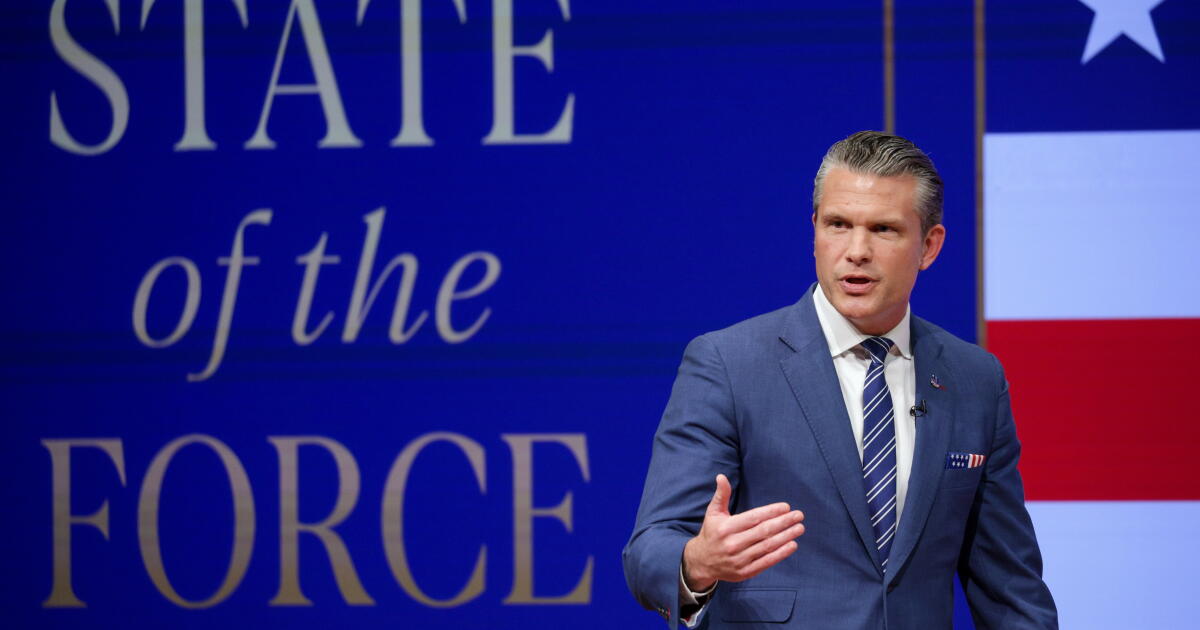
Members of the military listen as Defense Secretary Pete Hegseth gives a State of the Force address at Marine Corps Base Quantico.
(Alex Wong / Getty Images)
Asked if the increasingly unpopular war would threaten Republican Party chances in November, Trump at first responded, “It’s possible.” But then he added, “It should help, because Iran will not have a nuclear weapon.”
The president said “100% of the people” oppose Iran having nuclear attack capabilities “including worldwide.”
“So, when you say it that way, It would help,” Trump added. “If you don’t say that, it could hurt.”
Toropin and Price write for the Associated Press. AP writers Seung Min Kim, Will Weissert and Aamer Madhani contributed to this report.
WASHINGTON — The Supreme Court on Thursday agreed to review a Trump administration policy denying bond hearings for immigrants as the government carries out a sweeping crackdown.
The justices will consider whether immigrants who have been living in the U.S. have a right to a hearing to determine if they should remain detained while challenging their possible deportation.
The case will test a key pillar of the Trump administration’s hard-line immigration agenda.
Most appeals courts to have considered the issue have found that it violates federal law to detain immigrants, including those living in the U.S. illegally, without a bond hearing. Those decisions conflict with rulings by the 5th and 8th circuits, which held that immigrants accused of illegally entering and remaining in the U.S. must be detained while their deportation cases are pending.
The high court agreed to hear the case of Ricardo Aparecido Barbosa da Cunha, a citizen of Brazil. Authorities say he entered the United States illegally two decades ago and applied for asylum in 2016. He sought a bond hearing after an immigration judge determined that his detention was mandatory following his September 2025 arrest.
He has never been charged or convicted of a crime, his attorneys said. The court is expected to hear the case in the coming months.
President Trump’s administration had urged the high court to take up a different but related case that involves the broader constitutional implications of the new policy.
Attorneys from the Republican administration argue the circuits’ split is “disrupting the orderly administration of immigration law.” They say the nation’s courts have been inundated with thousands of petitions filed by immigrants challenging the government’s legal interpretation.
“The result is an unworkable patchwork of inconsistent immigration enforcement, where aliens present without admission are subject to mandatory detention in some circuits but are entitled to bond hearings and often released in others,” lawyers for the administration wrote.
The plaintiffs are immigrants represented by the American Civil Liberties Union, which says hundreds of district court judges have joined most circuits in rejecting the Trump administration’s new reading of the statutes. Plaintiffs’ lawyers say the administration is trying to deny bond hearings for immigrants apprehended anywhere in the U.S. — no matter how long they’ve lived in the country — rather than limiting the restriction to noncitizens stopped at the border.
“Millions of noncitizens could be affected by the government’s new interpretation,” ACLU attorneys wrote.
The Trump administration says its new mandatory detention policy is legal under a 1996 immigration law. The policy change departs from the practices of prior administrations, which typically allowed most noncitizens without criminal records to request a bond hearing if they were arrested away from the border.
CNN Chairman and Chief Executive Mark Thompson could remain in his role at the news network after Paramount completes its deal to acquire the news network’s parent company, Warner Bros. Discovery.
Thompson, 69, is said to be in early stages of a discussions with Paramount Skydance Chief Executive David Ellison about continuing in the job he has held since April 2023, according to two people familiar with the matter who were not authorized to discuss it publicly.
The Wall Street Journal was first to report Thursday that Thompson has been approached by Ellison about staying with the network. A representative for Paramount declined to comment.
Retaining Thompson in his role would provide short-term relief to CNN staffers who are concerned about the change in ownership. As Paramount pursued its $111-million deal to acquire Warner Bros. Discovery — which is moving forward following a judge’s decision to settle an antitrust suit filed by state attorneys general who wanted to block the deal — the Ellison family have reportedly had discussions with President Trump about altering the network’s coverage, which he has often deemed as unfair.
As part of the settlement, Paramount agreed to the formation of an editorial oversight board that will monitor adherence to editorial independence from its owners and shareholders. The editorial board is part of an agreement to end the states’ antitrust fight that threatened to delay the completion of the deal for months.
Keeping Thompson at CNN raises questions of how CBS News Editor-in-chief Bari Weiss will be integrated into the new company.
Weiss, who joined the storied news division after Paramount acquired her contrarian digital news site the Free Press last year, has made major changes at “CBS Evening News” and the top rated newsmagazine “60 Minutes,” with no audience gains to show for it.
CNN insiders have been skeptical over how Weiss could take over the vastly larger and more profitable news organization based on her CBS track record so far.
CNN and CBS News are expected to consolidate some of their operations, such as its overseas bureaus. But there are obstacles to a rapid consolidation, as many CBS News employees work under union contracts. Most of CNN is not unionized.
But if Thompson remains, its likely he we will have the task of reducing costs, as the traditional TV audience that provides the bulk of revenues for both CNN and CBS News continues to shrink.
Thompson has been behind a major effort to generate more revenue from CNN’s digital operations, which now include a subscription streaming service that makes the channel available without a cable or satellite TV package. He oversaw the New York Times’ successful transformation into a dominant digital news product during his run as president and chief executive from 2012 to 2020.
The Paramount-Warner deal will close soon after a judge signed a settlement that ended the antitrust lawsuit brought by Calif. Atty. General Rob Bonta and 11 other attorneys general. The detente , however, has not cooled tensions between CNN and the White House.
CNN was scheduled to provide press pool coverage of Trump’s trip to Texas and Oklahoma on Thursday. But the White House removed the network from the pool, despite a judge’s order last week to block the administration’s attempt to ban access for some media outlets.
Last week, CNN, MS NOW and Politico were banned from White House grounds. Trump cited the outlets’ ongoing negative coverage of him as the reason for the ban. The administration later tried to argue in court that their coverage was a threat to national security.