Michelle Keegan has shared a rare snap of her daughter, PalmaCredit: Instagram/michkeeganMichelle recently dropped out of a new ITV drama that’s set to begin filming in NovemberCredit: Getty
The 39-year-old leftITVbosses baffled by her decision to turn her back on the lead role in a big budget production, focusing on a working-class barrister.
DJ Mark Wright and actress Michelle Keegan married in 2015Credit: GettyThe 39-year-old withdrew from the new drama as she wanted to ‘focus on her family’Credit: Getty
Sources said it was “a huge blow” as she had committed to the drama a few months ago and a filming start date had been decided.
Michelle, who decided not to go ahead with the series written bySherlockwriter Steve Thompson, has said she wanted to focus on family life.
A source said: “Michelle was really keen to take on the meaty role, but the heavy filming schedule would take her away from daughter Palma for too long.
“The hours were quite intense and the project was starting straight after her Netflix drama The Woods and she just couldn’t commit.
“She is dedicated to her acting career, but like all working mums has to prioritise being there for her family, juggling work, parenting and being present for Palma.”
Mark and Michelle, who married in 2015, live in a £3.5million mansion near his family in Essex.
Brazil has marked Independence Day with the two main candidates for October’s presidential election holding events. The latest poll shows current President Luiz Inacio Lula da Silva’s lead narrowing against his main rival Flavio Bolsonaro.
Massive forest fires have broken out in Turkiye’s popular tourist province of Antalya. Hundreds of firefighters are battling the blazes which can be seen from as far away as 70 kilometres.
TELLURIDE, Colo. — Standing ovations at film festivals are a rite: part appreciation, part obligation, part a need to stretch your legs after sitting for a couple of hours.
But for an audience to explode and roar their approval in the middle of a movie? That rarely, if ever, happens.
Except it did, midway through the Telluride Film Festival world premiere of Jesse Eisenberg‘s delightful comedy “The Debut.” The applause followed a scene between Julianne Moore and Paul Giamatti that took its audience on such an exhilarating journey that there was almost no choice but to cheer in admiration, as if to say: What did we just see?
Sitting in the theater, Eisenberg, producer Emma Stone and Paul Giamatti looked at each other and asked themselves the same question but for a different reason.
“It was hard to process and, at the same time, just so affirming,” Eisenberg told me a couple of hours after the premiere.
The next day, sitting down to grab a quick bite with Moore and Giamatti, that giddy feeling had not dissipated, though, truth be told, they knew this scene was an all-timer from the moment they read it.
Let’s set the stage for you in a way that won’t spoil this constantly surprising film when it arrives in theaters in December and starts piling up acclaim and awards for all concerned.
Moore plays Mona, a meek, thoroughly unseen wife and mother who impulsively decides to audition for a community theater production of a musical titled “Nosy Neighbors,” despite having no experience apart from singing in the church choir when she was 13. The director Jerry (Giamatti) cuts her tryout short, sending her home, only to relent when the woman he’d already cast (Bernadette Peters!) drops out and he has nowhere else to turn.
Mona is, as Moore puts it, a “nice lady.” But she’s not a natural performer. She can’t get into character playing Miss Danielle, the show’s tough, toolbelt-wearing building super. So Jerry takes Mona aside because that’s what he does. As her cast mates note, “He’s going to drag you through the s— and the mud and you have to be ready for the s— and the mud.”
It turns out, though, that Jerry is the one who isn’t ready for what’s about to happen. Sitting in a chair on the theater stage, Jerry holds an envelope containing cash, telling Mona that it’s her job to make him hand over the rent. It’s an acting-class exercise designed to make you listen, react and dig into your character’s truth. Moore begins with a whisper and builds to a roar as Mona improvises a manic rant that involves rats and the plague.
Suffice to say, Jerry hands over the rent.
“When I read that scene, I stood up, put my iPad down and started doing laps around my dining room table,” Moore remembers. “I couldn’t believe how beautiful it was. I was just like, ‘Oh my God!Aaaaaaagh!‘”
“It was five pages long,” Giamatti marvels. “Jerry just needs Mona to be better. And then he sees that maybe she could actually be kind of great. He cracks her open and he’s like, ‘Oh wow, who is this lady? Who the hell is this?’ The funny thing about that scene is s— like that happens in classes.” He turns to Moore. “Did that ever happen to you?”
“I had an audition for a university, actually, where they threw chairs in front of me while I did the monologue and made me climb over the chairs,” Moore says, laughing. “I look back on that now. I was 18 years old and I was like, “What?’ Yeah. It was really strange. They’re trying to get you to react authentically and be alive.”
She smiles at Giamatti. “Hopefully when you get to be our age, you don’t need that.”
Though the scene has Mona improvising, it was performed as written, down to every last pause.
“Everyone keeps asking if we improvised and I’m like, ‘Hell, no,’” Moore says. “Jesse’s like the Coens. Everything’s there on the page.”
Adds Giamatti, “It’s incredibly specific. You follow his punctuation. The commas matter in his writing.”
“What’s so f—ing delightful about about working with Paul is that his sense of timing and rhythm is so tight,” Moore continues. “That scene is a set piece that requires you to work in tandem and you need somebody to hit it back with the same intensity and the same speed.”
When Eisenberg first met Moore, he told her flat-out, “I don’t want you to worry about this scene.” He knew it was a bear, with pages and pages of lines, so he told her he’d have a teleprompter on set.
“That section, all that crazy s— she goes off on, that would be really hard,” Giamatti says.
“And I was like, ‘Phew, that’s fantastic,’ because I knew all I would do would be to worry about all those lines and be so scared,” Moore says. “But because he said that to me, I never worried. And I didn’t need the teleprompter.”
They shot the scene in one morning, just Moore and Giamatti alone on the stage with the rest of the crew downstairs in the video village. There was an energy on set, spiked by an unusual number of visitors (“People knew,” Giamatti says) and then they went to work.
“I remember the first time you really hit that speech and they called cut, I just couldn’t stop grinning,” Giamatti tells Moore. “And I reached out and just kind of held you for a second because I was like, ‘That was amazing.’ I wanted to convey just how great it was, what you were doing.”
Moore beams. “I just love him. Just love him, love him, love him. I have so much gratitude for Paul.”
“To watch you be a bad actor was so hilarious and then you would you would modulate it and change it,” Giamatti continues. “Watching her was the experience that Jerry was having. It was such a joy.”
The scene is the beginning of a simpatico relationship between Jerry and Mona, mentor and protege, predicated on the power of imagination and how it can make outcasts feel seen and heard.
“Everyone wants to be known as who we are, even though it’s so scary for us to really reveal it,” Moore says. “There’s a real mind-altering power in just being yourself.”
Who: Real Madrid vs Inter Milan What: Champions League league phase Where: Santiago Bernabeu, Madrid, Spain When: Tuesday, September 8, at 9pm (19:00 GMT) How to follow:Al Jazeera Sport will bring you all the build-up from 16:00 GMT ahead of our live text commentary stream
When Jose Mourinho left Inter Milan for Real Madrid in the summer of 2010, after leading the Italian outfit to Champions League glory, he was at the peak of his powers.
The Portuguese coach claimed an historic treble with Inter, clinching Serie A in the last week of the season and lifting the Coppa Italia.
Inter beat Bayern 2-0 in the Champions League final at Madrid’s Santiago Bernabeu stadium, winning the trophy for the first time since 1965 and becoming the first Italian team to win the treble.
The day after the final Mourinho said it was likely his last match in charge and about a week later his appointment at Real Madrid was finalised.
Now 16 years on, and beginning his second stint at Madrid, Mourinho kicks off the record 15-time Champions League winners’ European campaign against Serie A champions Inter on Tuesday at the Bernabeu.
Mourinho denies feeling pressure to lift Champions League
The Champions League is the only trophy that evaded Mourinho during his first stint at Real Madrid.
“No, it is two different spells,” he said when asked at a pre-match news conference if he was in debt to the club. “When I left in 2013, we won what we won and lost what we lost and we gave it our all. And that was that. What I need to do now has nothing to do with the past.”
“Back in 2010, we weren’t even reaching the quarterfinals of the Champions League and it had been ages since we’d played in a semifinal. Now we’ve won six Champions Leagues in a little over a decade.”
All eyes will be on how Real respond to their first setback of Mourinho’s second spell – a 1-0 defeat by Real Betis in La Liga on Friday.
“We want to win every match, every competition,” he said. But you have to work to accomplish stability. Stability. Stability … Structure …
“So Real Madrid need to reach that stability that is so important to achieve something great. But Real Madrid are Real Madrid, you need to win here no matter what.”
‘We all need to improve’
Sitting alongside Mourinho, star striker Kylian Mbappe was asked several times about his relationship with Vinicius Jr and the atmosphere in the Real dressing room.
“What does an improvement in the dressing room mean?” Mbappe said when asked if there had been a change from last year.
“Do you have the feeling that something wasn’t right last year? No, it’s the same as last year. It’s true we have a different coach, but it’s the same.”
Mbappe acknowledged his side have to improve in front of goal.
“I could say that I score more goals than some PSG players so they need to score more, but I have to be smart and acknowledge that I need to improve too, even if I do certain things that others don’t,” he said.
“It’s an endless debate. We all need to improve [in front of goal], and also with the ball.”
Mbappe after his penalty is saved by Betis keeper Alvaro Valles on Friday [Marcelo Del Pozo/Reuters]
What happened in Madrid’s last match?
Mbappe missed a late penalty as Troy Parrott scored his first goal for Real Betis in their 1-0 win on Friday, ending Mourinho’s perfect start to the La Liga season.
Madrid had won each of their first three matches under Mourinho in his second spell in charge, but Betis goalkeeper Alvaro Valles denied Mbappe from the spot deep into stoppage time to seal a memorable victory at La Cartuja.
Vinicius Junior hit the post in the first half from Arda Guler’s pass across the face of goal, with Mbappe foiled twice by heroic blocks from Natan Bernardo de Souza and Marc Bartra.
As Madrid struggled to break Betis down, the hosts took a surprise lead nine minutes from time when Parrott fired home the rebound after Thibaut Courtois had produced a fine save to deny Nelson Deossa’s header.
What happened in Inter’s last match?
A last-gasp winner from Lautaro Martinez sealed a breathless win for Inter as the Serie A champions fought back from two goals down to edge visiting Napoli 3-2 on Saturday.
The game exploded in the second half when Matteo Politano guided home a shot in the 50th minute before Rasmus Hojlund’s curler doubled the Napoli lead three minutes later.
Inter responded almost immediately when Martinez hammered in his first goal of the season from a Dimarco cross. Substitute Marcus Thuram came agonisingly close to a leveller when he headed off the post.
The France international would not be denied twice, though, and smashed a towering header past Alex Meret in the 82nd minute to level the scores.
Chances fell at both ends before Martinez’s penalty box instincts proved decisive in the 91st minute as Napoli failed to clear in a goalmouth scramble and the Argentina striker pounced to settle an extraordinary match.
Inter Milan’s Lautaro Martinez scoring his team’s winner against Napoli on Saturday [Isabella Bonotto/AFP]
Prediction
The Opta supercomputer makes Real Madrid the favourites, with a win probability of 56 percent. Inter given a 22.3 percent chance of winning.
Head-to-head
They have faced each other on 19 occasions; Madrid won 10 games, Inter won seven, and two ended as draws.
Somewhat surprisingly, Inter have not beaten Real Madrid since 1998, a game in which the great Roberto Baggio scored a brace for the Italians.
Last five encounters:
December 07, 2021: Real Madrid 2-0 Inter Milan (Champions League)
September 15, 2021: Inter Milan 0-1 Real Madrid (Champions League)
November 25, 2020: Inter Milan 0-2 Real Madrid (Champions League)
November 03, 2020: Real Madrid 3-2 Inter Milan (Champions League)
November 25, 1998: Inter Milan 3-1 Real Madrid (Champions League)
Real Madrid’s team news
Eduardo Camavinga, Arda Guler and Bernardo Silva will all miss the game due to suspensions carried over from last season.
Madrid also have a host of injuries to contend with as Eder Militao, Rodrygo, Ferland Mendy and Raul Asencio are all ruled out.
Aurelien Tchouameni, Thiago Pitarch, Endrick and Marc Cucurella face late fitness tests as they struggle to recover from injuries, but all are reportedly back in training.
Left-back Federico Dimarco is unavailable due to a knee injury, while new signing Djed Spence is still working his way back to full fitness after an undisclosed injury and is unlikely to feature.
999: What Happened Next has finally returned to Channel 4 with new chilling investigations
999: What Happened Next has returned to Channel 4 and a new episode airs tonight(Image: Channel 4)
A brand new season of Channel 4’s “unflinching” true crime documentary has today returned to television screens with yet another chilling case.
Titled 999: What Happened Next, the documentary series goes beyond an initial 999 call as viewers hear from police officers who open up about the difficult policing work they do to bring those guilty to justice. Focusing on crimes across the UK, the series explores everything from fatal confrontations to random acts of street violence.
Now, brand new episodes have finally arrived on Channel 4, with the first instalment airing tonight at 9pm on Channel 4 (September 7). Subsequent episodes will air every Monday at 9pm, with four expected so far.
It comes after the series made its premier earlier this year, with viewers branding it the perfect watch for fans of landmark series 24 Hours in Police Custody.
An official synopsis reads: “The Channel 4 true-crime documentary series is back this September and follows frontline detectives as they investigate some of the most shocking and complex crimes across the UK. From fatal confrontations on quiet driveways to random acts of street violence, from stalking campaigns driven by obsession to devastating cases of impaired driving, each episode presents two gripping investigations where the truth is buried beneath fear, lies, and chaos.”
With CCTV footage and forensic breakthroughs, the logline adds: “Unflinching, emotionally charged and grounded in real lives forever changed, this series is a compelling exploration of modern policing and the human cost of violent crime.”
Tonight’s episode plunged viewers into a “deeply disturbing case” when one train passenger was forced to contact the British Transport Police after seeing what was on another traveller’s phone.
What happened to David Johnson?
Johnson was arrested after watching indecent videos of children on his mobile phone when the act was caught by another train passenger – who contacted the British Transport Police text messaging service.
He was apprehended at London Euston station with detectives uncovering a dark reality in their investigation. He was later charged for multiple offences and was subsequently jailed in April of this year.
In the episode, it confirmed: “David Johnson was charged with: Arranging a child sex offence, 6 counts relating to indecent images of children in categories A, B and C, 2 counts of attempting to engage a child in sexual communication.”
It then added: “David Johnson pleads guilty to all the charges against him. He is sentenced to two years and three months in prison. He will be on the sex offenders register for 10 years.”
Earlier this year, the Home Office took to social media to share a clip of David’s arrest as they wrote on Facebook: “This predator was spotted on a train viewing indecent images of children.
“David Johnson has been jailed after a member of the public reported him to @britishtransportpolice. Officers immediately rushed to meet the train at London Euston to make the arrest.
“His phone was found to contain nearly 200 indecent images of children. That swift action by both the public and BTP officers put a dangerous predator behind bars. If you witness something concerning on the railway, text 61016.”
The episode also hears from the witness who reported David Johnson to the BTP who said: “I’m definitely glad I decided to take action, definitely, 100%.”
999: What Happened Next airs Mondays at 9pm on Channel 4
The Eiffel Tower was shut on Monday after staff went on strike claiming women were asked to step out of sight during a visit by a Hindu group. Around 100 people from the BAPS Hindu movement were among the delegation as France inaugurated its first major Hindu temple.
Strikes resume in Russia and Ukraine after a three-day pause during US envoys’ visits to the countries’ capitals.
Published On 8 Sep 20268 Sep 2026
Russia has struck Kyiv after a three-day pause in attacks on the Ukrainian and Russian capitals expired, following a visit by two US envoys that yielded no tangible progress towards peace.
Two residential buildings were damaged by Russian air raids early on Tuesday, city officials in Kyiv said. Drones hit buildings in the capital city as well as in the Boryspil and Fastiv districts on the outskirts of Kyiv, according to the State Emergency Service of Ukraine.
An air raid alert, published by the Kyiv city military administration, urged residents to take shelter due to the threat of an “enemy” drone attack.
Following the reported attacks in Ukraine, Russian regional Governor Roman Busargin said a Ukrainian drone attack injured several people after hitting civilian infrastructure in Saratov, nearly 1000km from Moscow. The number of casualties from both incidents remains unconfirmed (621 miles).
Russia and Ukraine pledged to halt strikes on each other’s capitals for three days as Washington dispatched envoys to Moscow and Kyiv. However, fighting continued elsewhere.
Attacks paused after leaders Vladimir Putin of Russia and Volodymyr Zelenskyy of Ukraine announced the ceasefire during the visits by US President Donald Trump’s envoys, Steve Witkoff and Jared Kushner, to Moscow and Kyiv over the weekend.
Russia’s state news agency TASS confirmed that the three-day suspension Putin had ordered for his forces expired on Monday evening local time.
Witkoff and Kushner held talks with officials in Moscow and Kyiv regarding ending the conflict. Kremlin aide Yury Ushakov called the more than three-hour meeting in Moscow on Saturday “highly useful”.
Russian President Vladimir Putin welcomes Trump’s son-in-law Jared Kushner (left) and special envoy Steve Witkoff (second left) during their meeting at the Kremlin in Moscow, Russia, on September 5, 2026 [Gavriil Grigorov Sputnik/Kremlin/EPA]
After talks with Ukraine’s Zelenskyy, Witkoff said: “We’ve had a very meaningful discussion, substantive, important, and we are very encouraged, and we look forward to continuing this as long as it takes.”
Witkoff also raised the prospects of reviving three-way negotiations to end the war.
A White House official told the Reuters news agency that the next steps regarding the war, which Russia began with a full-scale invasion of its neighbour in February 2022, would be announced in the coming weeks.
Known for being ‘The GC’ on screen and larger than life, viewers will see a different side to Gemma Collins in her new Sky documentary series.
Gemma Collins has not had a lot to celebrate whilst making her Sky series.
Gemma Collins admits she has had “the worst year of her life” which corresponded with a time she had cameras following her every move.
The former TOWIE star, also known by her celebrity persona ‘GC’, and was due to get married to partner Rami and start a family during filming for Sky documentary series called ‘Gemma Collins: Everything. All At Once’. The series was originally called Four Weddings and a Baby, but as Gemma admits “things didn’t go to plan”.
Her relationship with Rami has had issues, the pair have also been sadly unable to conceive, and worst of all Gemma’s beloved mum Joan died at the end of July after several years of health issues. Admitting her life and TV series hasn’t been going to plan, 45-year-old Gemma said: “Mum’s been unwell for sixteen years and I’ve been dealing with that on the side, but her health started going downhill during filming and she passed away last month[actually July 2026].
“My fiancé Rami has also been struggling with his mental health and using alcohol to cope, and on top of that we had fertility issues. It was like drowning. It was the worst year of my life. I couldn’t keep hiding it.
“Being The GC was escapism. I could put the make-up on, get the hair big, and forget what was going on in the real world. But there’s been a real turn in media where people want to see the real me again. They’re sick of the bluff. I’m not afraid and I know I don’t need to deal with all this on my own.”
In the eight part series viewers will see Gemma embark on her fertility journey, and she questions whether she has left things too late, putting her career before having a family. On trying for a baby Gemma says: “Rami and I went to the Portland, and I started thinking maybe there could be a miracle. We could get an egg donor and make it work. But, as you’ll see on the show, it got increasingly difficult.
“I still have Tristan, and my nephews. I’ve known Tristan since he was three: I did his nappies, I gave him his bottles. I love that boy. With my mum gone, I’m going to be the mum of the family now, the matriarch, and I’m really happy and excited for that. If it’s meant to happen, my mum will send it to me, and a miracle will happen. If it doesn’t, I’m at peace with that.”
Gemma admitted she found filming on some days very hard but insisted she had to continue. The other deeply personal issue in the series is the loss of her mum Joan, and Gemma allows the cameras into moments like when she deals like this and when the bravado she usually uses on screen drops.
She said: “The camera crews are at your house and you’re thinking, ‘This is my life, it’s so s**t. How can I let people see it?’. But unless you go through hard times, I don’t think you grow as a person. This was the hardest thing I’ve ever done, but it’s also the thing I’m most proud of.”
On her mum Gemma added: “My mum passed away peacefully, and we were all in the room. She’s come back to me in so many ways already, which gives me great comfort. She comes back to me in spiritual ways and sends me signs. There was this butterfly in the house towards the last few days of my mum living, and it wouldn’t go away. When she passed, Tristan went to me, ‘There’s Nanny’. He went, ‘Nanny, if that’s you, flap your wings ten times,’ and it did.”
* Gemma Collins: Everything. All At Once launches 15 September on Sky and streaming service NOW.
GENEVA: Nearly 130 countries on Saturday agreed on a text defining lethal autonomous weapons systems (LAWS) — “killer robots” to their critics — a first step toward talks on a possible international treaty to regulate them.
The text agreed upon has not yet been made public — but campaign groups following the talks have already criticized leading countries for dragging their feet on the issue.
Dutch Foreign Minister Tom Berendsen announced the agreement, by 128 countries, on Saturday. The Netherlands has been overseeing the talks.
Countries are already developing and using weapons capable of selecting targets and using force against them without human intervention.
But the International Committee of the Red Cross warned in a statement that “the unconstrained development and use of autonomous weapon systems pose serious legal, ethical and humanitarian challenges.”
The ICRC and several campaigning groups have called for international legally binding rules to restrict and regulate their use.
Nicole van Rooijen, executive director of Stop Killer Robots, an international alliance of campaign groups, accused the United States, Russia and their allies of trying to weaken the agreed text.
Lex International, a Geneva-based philanthropic group funding work on key policy issues, also criticized some nations’ position.
“The United States, Russia, India and Israel are among the key opponents of negotiations,” it said.
“The governments of Brazil, Ireland, and Norway are leading efforts to get such negotiations started in November,” it added.
UN member states will decide at November talks of the Convention on Certain Conventional Weapons whether to move toward an international treaty regulating such weapons.
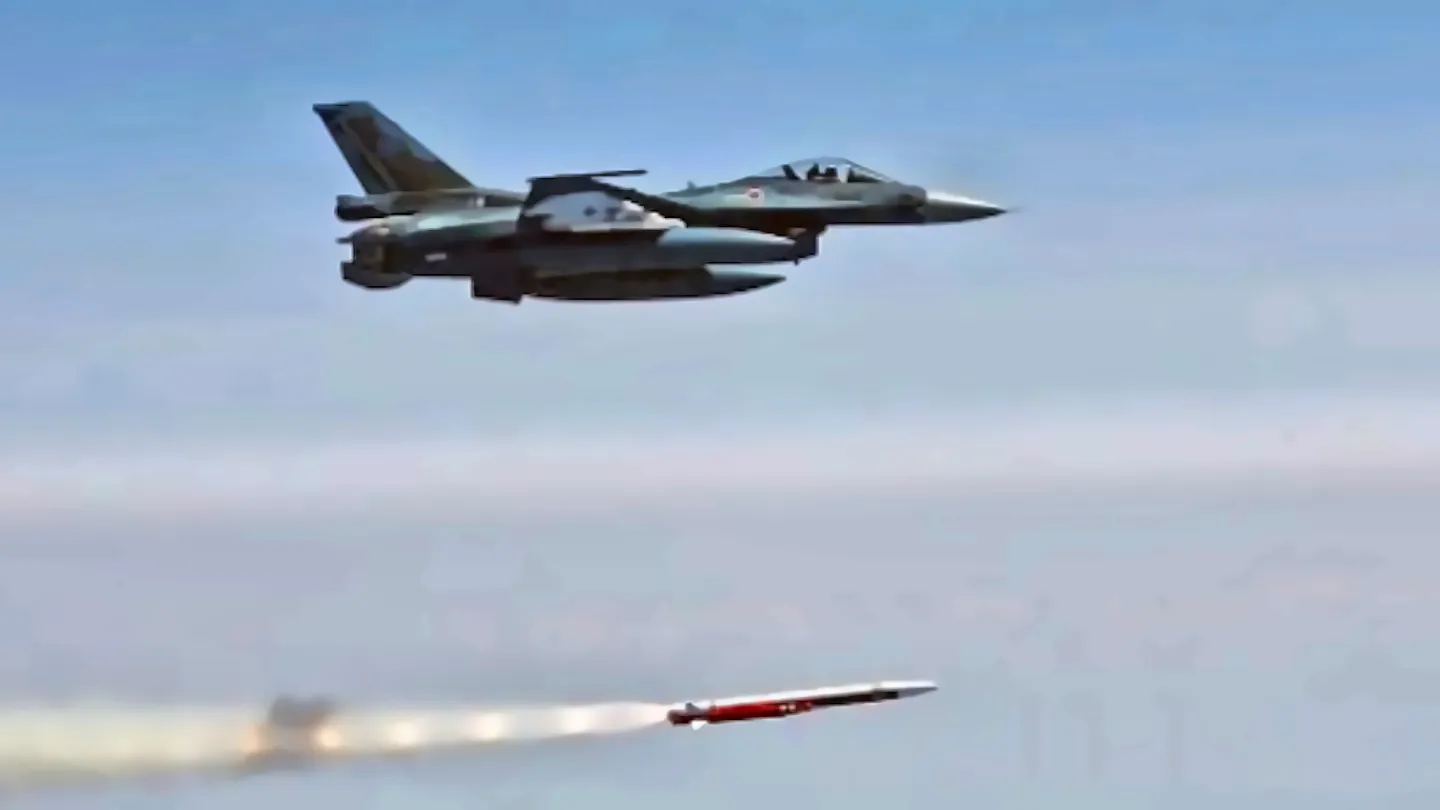
Japan’s Ministry of Defense has included an intriguing description of the ASM-3 Kai missile in its record fiscal year 2027 defense budget request, referring to the weapon as an “air-to-surface/anti-air missile.” Until now, the ASM-3 family has been publicly associated with the air-launched anti-ship (anti-surface) mission, and the wording potentially hints at an additional capability or intended role for the upgraded weapon.
The reference appears under a sub-section entitled Durability and Resilience, which calls for funds to “secure ammunition and fuel, increase the number of operational units (by addressing parts shortages, etc.), enhance the resilience of facilities (through facility upgrades associated with the formation of new units and the introduction of new equipment, etc.), and strengthen the operational infrastructure (by enhancing manufacturing capabilities, etc.).”
— 因幡のよっちゃん(稲葉義泰 Yoshihiro Inaba) (@japanesepatrio6) August 31, 2026
In terms of securing ammunition, the document highlights the breadth of weapons systems involved, ranging from 5.56mm small arms ammunition and 30mm cannon rounds, via 155mm precision artillery rounds, up to advanced missiles including the Type 23 ship-launched air defense missile and the ASM-3 Kai.
The Mitsubishi Heavy Industries (MHI) ASM-3 is Japan’s domestically developed supersonic air-launched anti-ship missile, originally intended to arm the Mitsubishi F-2 fighter. The improved ASM-3 Kai (“Kai” meaning modified or revised) represents a significant evolution of the weapon, although the full nature of its capabilities and performance have not been officially revealed. The missile has already been observed undergoing testing on F-2s.
The ASM-3 program has also gone through a number of different configurations over its development history, with at least five distinct external configurations identified in previous reporting. The existence of multiple iterations leaves open the possibility that the newly identified “anti-air” designation could ultimately correspond to a dedicated air-to-air variant or derivative of the ASM-3 family, rather than simply a secondary capability of the baseline ASM-3 Kai.
Reportedly, the ASM-3 Kai is capable of flying more than 400 kilometers (about 250 miles), although the exact range of the operational weapon remains classified. It is powered by a ramjet engine, giving it sustained high-speed performance — reportedly around Mach 3. If it indeed has an air-to-air capability, this would be an advantage in some scenarios, compared to relying solely on a brief but very powerful rocket boost as many air-to-air missiles do.
A Mitsubishi F-2 launches an ASM-3 anti-ship missile. (JASDF)
The weapon is also understood to employ an active/passive radar seeker, providing it with both an active radar mode for detecting and engaging targets and a passive mode that can home in on their electromagnetic emissions. While an active radar seeker is common on long-range air-to-air missiles, the latter passive capability could also be of extreme value in an air-to-air application.
The ASM-3 is also a substantially larger missile than typical fighter-launched air-to-air weapons. While that imposes obvious carriage and aerodynamic penalties, it also allows for a larger propulsion system, seeker, and warhead than would be practical in a smaller missile.
A weapon capable of traveling hundreds of miles at high speed, while carrying an active/passive radar seeker, could potentially be especially useful against high-value airborne assets such as airborne early warning and control (AEW&C) aircraft. These platforms provide vital wide-area surveillance, battle management, and targeting capabilities. At the same time, their powerful radars are necessarily emitting, potentially making them detectable and trackable by a missile employing a passive seeker.
China’s rapidly expanding AEW&C fleet is an increasingly important part of its ability to generate situational awareness, coordinate fighters, and extend its sensor coverage well beyond its immediate borders. The force, which already numbers dozens of increasingly capable fixed-wing aircraft, is a growing operational challenge for Japan and other regional air forces.
The second example of the Chinese KJ-3000 AEW&C aircraft, still painted in primer. via X
The ability to threaten such aircraft from well beyond the range of conventional air-to-air engagements could force an opponent to operate its AEW&C fleet even further from contested airspace, reducing the effectiveness of its sensors and command-and-control architecture. Although a passive seeker could also offer an avenue for homing in on relevant radar emissions, exactly how the ASM-3 Kai’s seeker would operate against airborne targets is not publicly known. Equally, a different variant of the missile, optimized for anti-air missions, could incorporate both passive and active seekers specially adapted for that mission set, although it is very possible a single configuration can accomplish both missions. As well as AEW&C aircraft, such a missile would be just as relevant for other high-value, non-maneuvering targets at long ranges, including intelligence-gathering platforms, tankers, and other support aircraft.
The budget language by itself falls short of establishing whether the ASM-3 Kai has been tested or validated against aircraft. The designation could reflect a broader classification within the budget documents, or it could point toward a genuine expansion of the weapon’s intended target set.
XASM-3 Supersonic anti-ship missile test launch
Such a weapon would not necessarily be a replacement for Japan’s existing air-to-air missile arsenal. Instead, an “anti-air” ASM-3 Kai could occupy a specialized niche focused on high-value or otherwise particularly important airborne targets at extended ranges.
The possibility is consistent with Japan’s broader effort to expand the flexibility and reach of its air-launched weapons. Tokyo is pursuing a growing family of standoff weapons as part of a major expansion of its counterstrike and deterrence capabilities, including longer-range missiles capable of striking targets well beyond the immediate vicinity of Japan.
Other air-to-air missiles mentioned in the same section of the document comprise the U.S.-made AIM-120 Advanced Medium-Range Air-to-Air Missile (AMRAAM) and the domestically developed AAM-4B, another medium-range weapon, thought to be the first of its kind to be fitted with an active electronically scanned array (AESA) antenna.
Between the exclusive AESA radar and Japan’s labour cost, Mitsubishi’s AAM-4B might be the most expensive air-to-air missile on the planet pic.twitter.com/rfBnXB8RzS
The FY2027 defense budget request also mentions another apparently new air-launched weapon for Japan, the AGM-88G Advanced Anti-Radiation Guided Missile-Extended Range (AARGM-ER). Japan has not previously been publicly documented as an international AARGM-ER customer, but the weapon would be an obvious candidate for integration with its F-35 fighters if it wishes to bolster their suppression/destruction of enemy air defenses (SEAD/DEAD) capabilities.
An AARGM-ER seen under the wing of an F/A-18F Super Hornet during a test. U.S. Navy
In terms of F-2-related developments, the document calls for the upgrade of an initial 10 of these aircraft to make them compatible with the air-launched version of the Upgraded Type 12 anti-ship guided missile, a significant new weapon that you can read more about here.
A pair of new missiles slung beneath the wings of an F-2, understood to be the air-launched version of Japan’s Upgraded Type 12/Type 25 anti-ship missile. @bibabibabibary @bibabibabibary
TWZ has contacted Japan’s Ministry of Defense seeking clarification on the “air-to-surface/anti-air” designation and what it means for the ASM-3 Kai’s intended capabilities and target set. It could also be the case that the description is an error in the budget document.
However, the emergence of such a capability would also come at a time when very-long-range air-to-air weapons are becoming increasingly important as anti-access/area-denial challenges make it harder for fighters to get close to enemy aircraft and the high-value assets supporting them. China has fielded weapons such as the PL-15 and the much larger PL-17, while the United States is developing the AIM-260 and has just revealed the AIM-424 Malice, a U.S. Navy missile reportedly capable of reaching more than 250 nautical miles. The U.S. Navy is also fielding the AIM-174B, a very-long-range weapon developed very much with the Chinese threat in mind, and which we discuss in the video below.
How The Navy’s New Very Long-Range AIM-174 Will Pierce China’s Anti-Access Bubble
For now, exactly what prompted the “air-to-surface/anti-air” designation for the missile is unclear, but if it reflects a genuine expansion of the ASM-3 Kai’s mission set, it would represent a particularly interesting development in Japan’s rapidly evolving air-launched weapons portfolio.
Hat-tip to Yoshihiro Inaba for bringing this development to our attention.
Rightward shift in Latin America comes as Washington pledges to grow influence, take militaristic approach to cartels.
United States Secretary of State Marco Rubio is travelling to three South American countries whose recently elected leaders have closely aligned with President Donald Trump’s administration.
Rubio will travel to Colombia on Tuesday to meet with newly elected President Abelardo de la Espriella. He will then visit Ecuador to meet with President Daniel Noboa before going to Peru, where he will meet with another newly elected leader, Keiko Fujimori.
Recommended Stories
list of 3 itemsend of list
The State Department has not yet released a more in-depth agenda for the trip, saying only that Rubio will discuss “US support for Colombia’s earthquake response; enhanced cooperation in the shared fight against narcoterrorism, which threatens our hemisphere; and the benefits of deeper commercial relationships between our countries”.
The trip comes amid a rightward shift in Latin America that has seen several Trump-aligned leaders take office. Beyond the three countries, Trump also backed Honduran President Nasry Asfura, who won the presidency in November, and Bolivia’s Rodrigo Paz, who won in October.
Beyond the new leaders, Trump has also closely aligned with Argentina’s Javier Milei, who took office in 2023, and El Salvador’s Nayib Bukele, who became the leader in 2019.
US influence over Western Hemisphere
Rubio’s visit comes as the Trump administration has pledged to assert more influence over the Western Hemisphere in what Trump has referred to as the “Donroe Doctrine”, a reference to the 19th-century Monroe Doctrine that opposed European interference in the Americas.
It has shifted to a militaristic approach to security in Latin American countries, while broadly reframing efforts to combat drug trafficking as a war against “narco-terrorists”.
In August, Colombia’s de la Espriella upped cooperation with the US by joining the Trump administration’s so-called “Shield of the Americas”.
The 19 members of the group have jointly pledged a “commitment to using lethal military force to destroy the sinister cartels and terrorist networks”.
Unlike his predecessor, leftist Gustavo Petro, de la Espriella has also praised US military strikes on alleged drug smugglers in the Caribbean and eastern Pacific. At least 227 people have been killed in those strikes, in what rights groups have condemned as extrajudicial killings.
Family members of those killed have charged that the targets were fishermen, not drug smugglers.
The US has proven a major supporter for de la Espriella in the wake of a devastating earthquake in Colombia last month in which at least 330 people were killed and thousands left homeless.
In March, the US military announced it was collaborating with Ecuador, under Noboa’s leadership, to target drug trafficking groups in the country.
Ecuador’s Interior Minister John Reimberg defended the US strikes on vessels allegedly carrying drugs in an interview with broadcaster Teleamazonas last week.
Peru’s Fujimori, the daughter of former leader Alberto Fujimori, who notoriously dissolved the country’s Congress and Supreme Court to consolidate power during his government from 1990 to 2000, has also pledged closer ties with the US and a military crackdown on criminal groups.
Conservative shift
Rubio’s visit comes after the US announced a controversial agreement with Venezuela’s interim leader, Delcy Rodriguez. The deal, struck in the wake of the January 3 US abduction of Venezuela’s ex-President Nicolas Maduro, grants US companies access to 65 billion barrels of crude oil reserves over the next 100 years.
It also comes as Washington has continued to up its pressure campaign against Cuba, with Foreign Minister Bruno Rodriguez on Monday rejecting any talks with the US despite its ongoing fuel blockade of the island.
Brazil and Mexico remain the only regional powers with leftist leaders. Rubio has called the region’s conservative lurch an “extraordinary achievement”.
The shift has accompanied the strengthening of ties between Israel and several Latin American countries since Trump took office.
Brazilians will go to the polls in October, when Flavio Bolsonaro, a son of former right-wing leader Jair Bolsonaro, seeks to unseat Luiz Inacio Lula da Silva.
Trump has remained a staunch ally of the elder Bolsonaro, who has been sentenced to 27 years in prison for leading a conspiracy to hold onto power.
The US president has also shown strong support for the younger Bolsonaro, including inviting him to the White House in May.
GEMMA Owen has revealed she’s split from her multi-millionaire boyfriend Red Morgan.
The Love Island star and equestrian, 23, called time on her romance with the property tycoon heir, 22, in June shortly after the death of a close family friend.
Gemma Owen and Red Morgan have split upCredit: Instagram/gemowen_1Gemma said the split followed the sudden death of a family friendCredit: Instagram
Speaking on her latest vlog, she said: “We had some really sad news of a really close family friend. He passed away really suddenly and unexpectedly.
“And within a day or two, Red and I split up, which I’m obviously not going to go into too much detail about either of the things because they’re both personal.”
Sign up for the Showbiz newsletter
Thank you!
Gemma, who is the daughter of football legend Michael Owen, insisted she and Red remain good friends but ultimately weren’t on the same page as far as romance was concerned.
“Red and I are on good terms,” said Gemma. “We’re friends. It was a mutual decision and ultimately we just came to a bit of a crossroads and we wanted different things out of the relationship.
“We didn’t want to waste anyone’s time if we weren’t both sort of aligned with what we want. So yeah, that’s what’s been going on. It’s been, as you can imagine, a pretty hard few weeks, months.”
Following the split, Gemma spent time with family and friends and said she focused on herself.
RABAT: Moroccan media have criticized a Spanish police report that accused Morocco’s security forces of failures as tens of thousands of migrants crossed into the Spanish territory of Ceuta.
More than 70,000 migrants entered Ceuta from Morocco on July 30 and 31 in an unprecedented, chaotic surge that left scores dead and sparked European Union infighting over the touchy issue of migration.
The Spanish police report seen by AFP flagged a Moroccan police response of “total permissiveness” that it said facilitated the rush, with some officers directing migrants toward the water.
Moroccan police numbers around the border post were “clearly smaller than usual” and officers “made no serious attempt” to stem the surge, said the report.
But Spain’s Prime Minister Pedro Sanchez has consistently avoided blaming Morocco, noting that there was no “solid proof” that the North African country orchestrated the migrant rush.
Sanchez’s leftist government has tried for years to improve the countries’ historically delicate relations — notably over the status of Ceuta and Spain’s other north African territory, Melilla.
Moroccan authorities have yet to comment on the leaked police report, but several Moroccan media outlets have weighed in on its allegations.
Moroccan news site Hespress on Friday called it “particularly weak,” saying it lacked material evidence and contained “glaring contradictions.”
Hespress said the police report sought to make Morocco “the scapegoat” in Spanish political and judicial disputes.
Moroccan news site Le Desk on Thursday described the report as “botched,” pointing to factual errors including a reference to June 30 instead of July 30.
And TelQuel said that claims by some media that the report directly accused Morocco of “planning and executing” the influx were false, adding that the allegations did not name any Moroccan official as responsible.
News site Medias24 challenged the “permissiveness” claim by arguing that it was based solely on one satellite image that was “obviously just a snapshot.”
Last month, a senior Moroccan official told AFP on condition of anonymity there had been no Moroccan security failures during the influx.
Oil prices are rising to nearly a six-week high amid a wave of strikes between the United States and Iran in the Strait of Hormuz, through which roughly a fifth of the world’s oil supply travels during peacetime.
On Monday, Brent oil futures, the global benchmark, rose to hover around $97 a barrel — up 9 percent over the last five days and 19 percent over the last month. Monday’s market moves are approaching the highest point since July 24th, when prices topped $97.93.
Recommended Stories
list of 4 itemsend of list
US West Texas Intermediate crude similarly rose to $92.27 a barrel, up 79 cents, also a near six-week high.
In recent days, strikes escalated in the Strait of Hormuz. The US hit three Iranian oil tankers on Saturday, while Iran’s Islamic Revolutionary Guard Corps (IRGC) said it had struck three tankers and three US-linked vessels in other areas.
“This is a reflection of continued conflict and exchange of fire. The supply deficits globally are persisting, and there is little end to these shortages,” Rachel Ziemba, an adjunct senior fellow at the Center for a New American Security (CNAS), told Al Jazeera.
On Monday, Saudi Aramco’s Jizan facilities were struck for the second time in the last month, according to reporting from the Financial Times that cited two people familiar with the matter.
“The fact that a Saudi refinery in Jizan was hit, possibly delaying its return to production, didn’t help,” Ziemba added.
Amid increased strikes, there’s less traffic in the Strait of Hormuz, with an average of 10 commodity ships crossing the vital chokepoint each day over the last 10 days, according to Kpler, a data analytics platform.
“Crude went back down to what the pre-war level was in early July. Then it increased again, and then it reduced again, and now it’s increasing again on this weekend’s exchange plus the Aramco attack,” Arif Gasilov, a partner at the Gasilov Group, an energy advisory firm, told Al Jazeera.
“I would say that you might eventually see an inflection point, depending on how long this keeps going on, where a ceasefire doesn’t move the market at all, maybe by just a dollar or two.”
US consumers pinched
US consumers are feeling the impact of heightened oil prices at the petrol pump. The average price for a gallon (3.78 litres) of petrol has jumped 7 cents over the course of a week, reaching $4.15 nationally on Monday, up from $4.08 this time a week ago, according to the American Automobile Association (AAA), which tracks daily petrol prices.
That’s up from $4.04 this time a month ago and $2.98 from February 28th, when the US and Israel first struck Iran, marking a 39 percent increase since the war began.
“US diesel prices have never been this high, and now the countdown starts for the trickle-down to everything consumers buy… record diesel will start funnelling down into the economy,” Patrick De Haan, head of petroleum analysis at GasBuddy, said in a post on the social media platform X.
Prices have continued to climb since, with average prices on Monday topping $5.90 per gallon.
“Markets are pricing in longer disruptions. It continues to be in product markets where the biggest disruptions lie, though, including diesel,” Ziemba added.
Those price gains are weighing on Americans, who have spent an average of $764.59 per household on fuel since the war began. That’s $418.82 more than usual, according to Brown University’s Watson School of International and Public Affairs.
Ahead of the US’s September 5-7 Labor Day weekend, the unofficial end of summer and a popular time for US travel, AAA forecasts showed a 20 percent increase in flight costs compared to the same weekend last year.
Ahead of the midterm elections, the economy is emerging as a key issue for US voters — and a potential warning sign for Republicans. Polls show voters souring on President Donald Trump’s handling of the economy, with his economic approval rating falling to a new low in a recent Financial Times poll. Just 17 percent of Americans approve of his handling of the economy.
An Economist/YouGov poll similarly found that 39 percent of Americans believe Democrats are doing a better job handling the economy, compared with 32 percent who said Republicans are.
China pressures
Southeast and East Asian markets rely more heavily on imports travelling through the Strait of Hormuz directly than the US, but Beijing has moved to insulate itself from the disruption by turning to domestic sources, including its strategic petroleum reserve (SPR).
“China has been managing this situation successfully since the beginning of the war. We know that China has many domestic resources, despite rising oil prices,” John Gong, an economics professor at the University of International Business and Economics, told Al Jazeera.
“China has been conserving its oil and gas consumption for quite some time now. China was prepared for these challenges,” Gong said.
He also stressed that China’s close relations with Russia give Beijing another source of supply, with Moscow able to provide nearly half of China’s daily oil needs.
China has also begun tapping into its SPR while reducing its reliance on imports, as Beijing accelerates a broader shift towards alternative energy sources and vehicles that require little or no oil to operate.
“We have national strategies focused on transitioning to clean energies like solar and green power,” Gong said. “When we look at the vehicles purchased in China, more than 50 percent of cars sold on the Chinese market are electric.”
Making up Culture Club were Charlie Brookfield, a consultant microbiologist, Viki Owen, a clinical scientist, and their captain, Hugh Adler, a consultant microbiologist.
Meanwhile, making up Ad Astra were David Howes, a retired RAF officer, Paul McMillan, an astrophysics lecturer, and their captain, Louise McMillan, a research development officer.
During the Connecting Wall challenge, Ad Astra were left stumped by one of the connections. The trio had difficulty with finding the final word in a group of anagrams for different types of starches and carbohydrates.
They were able to successfully find – top oat – potato, tapas – pasta, and eric – rice. Yet they struggled to find the final word to complete the connection, asking in frustration: “What are we missing?”
However, viewers at home were left ‘screaming’ at their televisions over the correct final word, which was beard – bread.
Taking to Twitter, now X, one person said: “I AM SCREAMING BREAD #onlyconnect” while a different account put: “#OnlyConnect Shouting BEARD IS BREAD!! over and over at my TV.”
Another viewer wrote: “Shouting BREAD repeatedly at the TV. #onlyconnect” while a different show watcher commented: “Only #onlyconnect has me shouting “Bread” at the TV.”
Elsewhere, a different fan put: “BREAD #ONLYCONNECT”, another viewer joked: “Shouting Bread at the screen like a lunatic ffs #onlyconnect” while a different viewer added: “Bread! F**king Bread #OnlyConnect.”
Meanwhile, another show watcher joked: “I don’t think I’ve ever said bread and beard so many times in succession in my life #onlyconnect” while a different viewer added: “How many people were shouting BREAD?? #onlyconnect.”
After the correct answers appeared on screen, contestant Paul declared: “Bread, it’s bread!” as he put his head in his hands. Meanwhile, team captain Louise quipped: “Can’t believe we didn’t spot bread!”
Yet despite struggling on the Connecting Wall challenge, the team were later victorious as they won a place in the next round with 26 points. Meanwhile, Culture Club had 20 points.
A temple collapsed into the Ganges River in India’s West Bengal after severe erosion breached protective barriers around the building, which dated back to 1954. The dramatic collapse shocked locals and raised fresh concerns over the vulnerability of heritage sites.
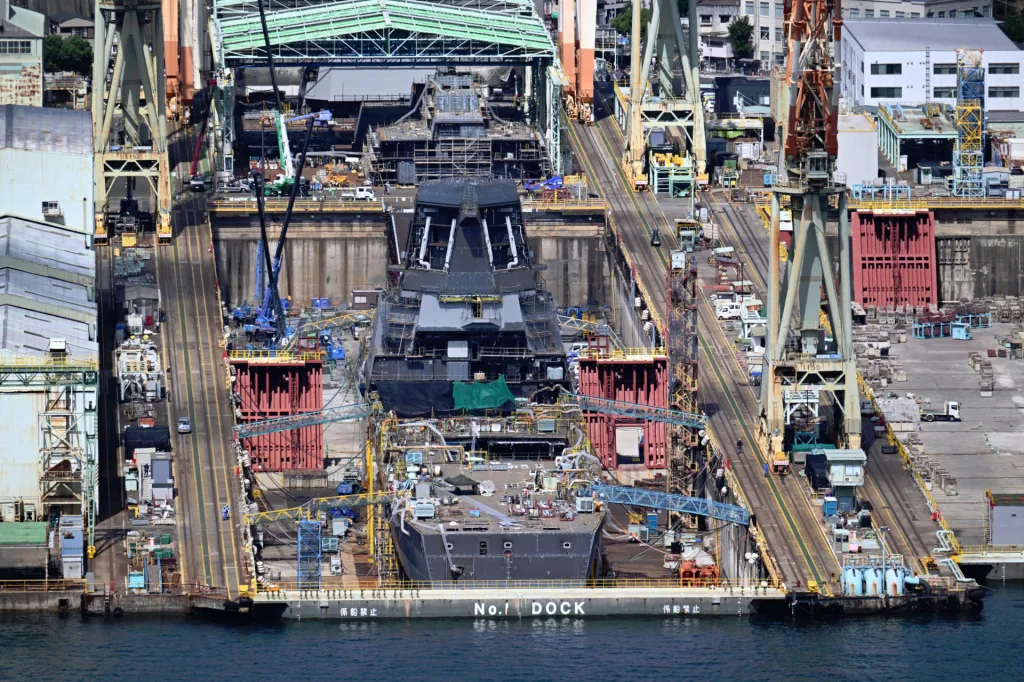
The first of Japan’s two new cruiser-sized Aegis System Equipped Vessels (ASEV) is continuing to take shape, recently receiving its huge main integrated mast, giving the vessel a new and remarkably imposing silhouette. The four very large fixed arrays for the ship’s powerful AN/SPY-7(V)1 radar will eventually be integrated onto this structure. The ASEV’s stated primary mission is missile defense, but Japanese authorities plan to give the vessels additional counter-drone, anti-ship, and land attack capabilities in the future. Tomahawk cruise missiles are notably set to be added to the ship’s arsenal down the line.
The ASEVs are large surface combatants, set to be some 620 feet long, have a beam (the widest point of the hull) of some 82 feet, and a standard displacement of 12,000 tons. For comparison, Japan’s largest surface combatants today, its Maya class destroyers, are just over 557 feet long, have a beam of some 73 feet, and a standard displacement of around 8,200 tons. It is worth noting here that the size of new and advanced destroyers, often optimized for anti-air warfare missions, has been trending upward globally in recent years. This, in turn, has caused the line between destroyers and what have more historically been categorized as cruisers in certain cases.
The first ASEV under construction in Nagasaki, as seen from the stern. This picture was taken earlier this month. Sakai/@kensakai9310
The first ASEV was laid down at Mitsubishi Heavy Industries’ (MHI) shipyard in Nagasaki in July 2025. The second was laid down in February of this year at Japan Marine United Isogo shipyard, which is situated in Yokohama City near Tokyo, according to a past report from Naval News. The Japanese Ministry of Defense is currently aiming to have the first of these vessels in service before the end of the country’s 2027 Fiscal Year, which runs from April 2027 to March 2028. The second is expected to follow in the 2028 fiscal cycle, which extends into 2029.
Another view of the first ASEV under construction in Nagasaki. Sakai/@kensakai9310A rendering of what the finished ASEV is currently expected to look like. Japanese Ministry of Defense
Significant progress in the overall construction of the first ship has been made just this year. The addition of the main mast structure, installed on top of the main superstructure, as seen in pictures at the top of this story and below, has drawn particular attention in recent weeks.
Japanese are very fast with ship building.
March 26 and today. ASEV-class destroyer.
190 m hull, SPY-7 Aegis, 128cell Mk 41 VLS. SM-3 for ballistic missiles, SM-6, plus Japan’s long range Type 12 SSM. pic.twitter.com/RQZixtqWwe
The especially large size of the ASEV’s integrated mast is driven by that of the AN/SPY-7(V)1 active electronically-scanned array (AESA) radar from Lockheed Martin. Each one of the radar’s four rectangular arrays is reportedly around 14 feet (nearly 4.3 meters) tall. This would put them in the same general size category as the arrays for Raytheon’s AN/SPY-6(V)1 Air and Missile Defense Radar (AMDR) found on U.S. Navy Flight III Arleigh Burke class destroyers. That being said, the pictures we have now raise the question of whether the AN/SPY-7(V)1 arrays are bigger than previously assessed. The AMDR is another notably large design heavily optimized for missile defense.
A close-up look at the main superstructure and integrated mast on the first ASEV under construction in Nagasaki, at left, and a stock picture of an AN/SPY-7(V)1 array at right. Sakai/@kensakai9310
The size and location of the mast provide a centralized, elevated position for the AN/SPY-7(V)1’s large arrays, which will also require significant power generation capacity and thermal management to keep everything cool. This is a notable departure from the placement of the arrays on the main superstructure on existing Japanese destroyers, as well as the U.S. Arleigh Burke class, and offers an unobstructed, elevated line-of-sight to the horizon. Beyond the ballistic missile defense mission, this view farther out over the horizon would be important for tracking and engaging low-flying drones and cruise missiles, which might be targeting the ship itself. This is something we will come back to later on.
“With five times the tracking capability of the SPY-1, it [the AN/SPY-7(V)1] counters lofted trajectories and simultaneous multiple ballistic missile threats,” according to a machine translation of a section of the Japanese Ministry of Defense’s 2026 defense policy white paper, which was released earlier this month.
The passive electronically-scanned array (PESA) AN/SPY-1 was the first radar to be paired with the Aegis Combat System, and both were first introduced in the 1970s. Variants of the SPY-1 are still found on a variety of U.S. and foreign Aegis-equipped warships, including Japan’s Kongo, Atago, and Maya class destroyers.
The first-in-class destroyer JS Maya. Japanese Ministry of Defense
Additional versions of the AN/SPY-7 with much smaller arrays are also being integrated onto new F110 Bonifaz class frigates for the Spanish Navy and the Royal Canadian Navy’s forthcoming River class destroyers (also known as the Canadian Surface Combatant). The use of the AN/SPY-7(V)1 on the ASEV could impact decisions regarding new radars for other future and existing Japanese warships. Raytheon is also pitching versions of its increasingly popular AN/SPY-6 family for use on a successor to the Kongo class and for refit on the Maya class, according to a recent report from Naval News.
When it comes to the ASEV, as already noted, the AN/SPY-7(V)1 is central to the ship’s main stated missile defense mission. As the name makes clear, the ship will also feature the Aegis Combat System. The vessel will be capable of “remote engagement and guidance against anti-air targets tracked by other vessels” via a “Cooperative Engagement Capability (CEC),” per the Japanese Ministry of Defense’s most recent annual defense white paper.
The video below provides details about the U.S. Navy’s Cooperative Engagement Capability (CEC) developments, which are likely very similar to what Japan has planned for the ASEV.
Cooperative Engagement Capability
In terms of armament, when the ASEVs first enter service, their main weaponry is expected to be a mix of variants of the Standard Missile-3 and -6 (SM-3 and SM-6). The SM-3 family is designed to engage ballistic missile threats during the mid-course portion of their flights while they are traveling outside of the Earth’s atmosphere. The SM-3 also has a demonstrated anti-satellite capability. The SM-6 is a multi-purpose missile that was originally designed with an anti-air focus. It can be used to target incoming ballistic missiles in the terminal phase of flight and also has at least a degree of capability for engaging hypersonic weapons. SM-6 can be used in a surface-to-surface mode, including against ships, as well. Japan is also a partner in the U.S.-led development of a new Glide Phase Interceptor (GPI), which is being designed specifically to intercept unpowered, but highly maneuverable hypersonic boost-glide vehicles.
A briefing slide breaking down details about the various existing SM-3 variants. Work on the further evolved Block IIB variant seen here was cancelled in 2013. MDA A briefing slide breaking down details about the various SM-3 variants, including the SM-3 Block IIA. Work on the further evolved Block IIB variant seen here was canceled in 2013. MDAAn SM-6 missile seen being launched from a U.S. warship. USN
SM-3, SM-6, and future GPIs will be loaded into either of the ASEV’s two Vertical Launch System (VLS) arrays, one at the bow end and another toward the stern. Each one of the ships will have a total of 128 VLS cells. For comparison, Japan’s Maya class destroyers, as well as the U.S. Navy’s Flight IIA and III Arleigh Burke class destroyers, have 96 VLS cells apiece. The U.S. Navy’s Ticonderoga class cruisers each have 122 VLS cells, and 128 is also the number of VLSs currently expected to be found on the future Trump class battleships.
At the time of writing, Japanese authorities do not appear to have explicitly mentioned plans to arm the ASEVs with other missiles when they first enter service. That being said, any VLS array capable of accommodating SM-3s and SM-6s should be able to fire a variety of other weapons, including shorter-ranged SM-2s and Evolved Sea Sparrow Missiles (ESSM), which the ship could use for more localized air and missile defense, as well as protecting the ship itself.
Renderings and models of the ASEV do show the design also armed with a five-inch naval gun in a turret on the bow, along with two Phalanx Close-in Weapon Systems (CIWS) and other automatic cannons for point defense.
A Japanese language graphic from the country’s 2026 defense white paper discussing the planned features of the ASEVs. Japanese Ministry of Defense
As mentioned, while missile defense is the immediate focus for the ASEVs, there are already plans to significantly expand their capability to engage other ships and targets on land. Tomahawk cruise missiles and a new, extended-range version of the Type 12 anti-ship cruise missile are set to be added to the arsenal of these vessels in the 2032 timeframe, according to the latest official Japanese defense white paper.
Japanese authorities want the ASEVs to eventually be able to help fend off waves of enemy drones, too. High-energy laser-directed energy weapons are set to be integrated onto the ships down the line to help address those threats. The overall size and other general characteristics of the ships would leave the door open to the possible addition of high-power microwaves and other capabilities in the future.
With the addition of Tomahawks, the ASEVs, along with other Japanese warships, will gain the additional ability to threaten counterstrikes against targets on land (and potentially at sea) at least around 1,000 miles in any direction. As part of the broader stand-off defense strategy, the Japan Self Defense Forces is developing new land-based long-range strike capabilities, including hypersonic missiles, as well.
The Kongo class destroyer Chokai fires a Tomahawk cruise missile during a test earlier this year. This was the first-ever launch of a Tomahawk from a Japanese warship. Japanese Ministry of Defense
It is worth noting that with current plans to acquire only two ASEVs, these will be high-value but also low-density assets, which will have to be very deliberately deployed for maximum effect. They will also stand out as top-priority targets in any future conflict, and will need to be protected as such.
It is possible that the roles and missions of the ASEVs, just like their designs, could evolve further as time goes on. The threat ecosystem facing Japan will continue to evolve, likely more rapidly, in the coming years. The country is also expanding its naval capabilities in other ways, and with an eye toward more blue water operations. This includes expanded light carrier capabilities through refits of existing Izumo class ships. Anti-ship ballistic missiles and hypersonic cruise missiles, among large volumes of more traditional threats, could see the ASEVs used as escorts, even if experimentally. While just two hulls are barely enough to keep one on patrol to protect Japan, more could be built for expeditionary applications.
Regardless, the ASEVs are set to be a major addition to the Japan Maritime Self Defense Force’s fleets that will have big ramifications. From the progress that is visible at the shipyard in Nagasaki, MHI looks to be well on track to deliver the first of these ships next year or two.
Special thanks to @kensakai9310 on X, who also goes by “Sakai,” for sharing recently taken pictures of the first ASEV under construction at MHI’s yard in Nagasaki with us.
The contestants included Victor, 50, a photographer from Great Yarmouth, Sadie, 26, a pharmacy assistant from Stockport, James, 41, a copywriter from Coventry, and Amy, 38, a barrister originally from Hereford.
As part of the show, the Cash Builder round saw Victor earn £7,000 and he managed to beat Chaser, Anne Hegerty, bringing the money back to his team.
Next up it was Sadie, who revealed she had previously got to the semi-final of Mastermind last year. Sadie had an incredible Cash Builder round, where she secured £9,000.
However, Sadie unfortunately didn’t manage to beat Anne, 68, and was subsequently eliminated. Host Bradley, 66, said: “Wow, gutted! You are seriously a good player and that is a big loss for the team, seat number two.
“Sadie, so sorry to see you go, good luck with the Lego, however, you have been caught and The Chase is over!”, adding she was a “massive loss” to the team.
Anne also said that Sadie was “very, very good” and admitted she had done herself a “huge favour” by eliminating her on the show.
Taking to Twitter, now X, viewers were gutted to see Sadie go after an incredible Cash Builder round and complained that her questions seemed particularly hard.
One person said: “Sadie was robbed. #thechase”, a different account put: “Ahhhhh Sadie what a shaaame #TheChase” while another viewer added: “Tough questions Sadie #thechase”.
Elsewhere, a different viewer wrote: “Aww those questions were mean #thechase”, another wrote: “Tough questions to be fair #TheChase” while a different show watcher added: “Unlucky with those questions #thechase.”
Meanwhile, another fan wrote: “Wow. £9K is actually very good, Sadie. #TheChase” to which a different viewer added: “Sadie, good player. #thechase.”
However, it was bad news for the rest of the players too as later on the show, they were caught by Anne with just six seconds remaining.
The Chase continues on weeknights at 5pm on ITV and ITV X.
Cairo, Egypt – Four days after he disappeared from the Egyptian team camp at the 2026 Under-20 World Wrestling Championships in Slovakia last month, 19-year-old wrestler Ziad Hajjaj Abu Gabal posted a message on Facebook.
“I don’t want my mother and father to be upset with me,” he wrote on August 29. “I did this so I could see myself as a man. I won’t go back to Egypt, my beloved country, until I bring it honour.
Recommended Stories
list of 4 itemsend of list
“Everything I earn in a month is 700 Egyptian pounds [$13.7], and I’m an international [athlete] … After all this pressure, there was no way I could go back.”
On August 27, another Egyptian wrestler, Mohamed al-Shami, 23, had escaped while his team transited through Rome on their way home from the Mediterranean Games in Taranto, Italy.
In his Facebook post on August 29, Al-Shami said he had come to feel like a financial burden on his family and that he wanted to start earning money for them.
“At a certain point I felt my father was exhausted, that life had become too hard for him,” he wrote. “I’m the eldest of my siblings, so someone had to make a sacrifice and take responsibility.”
While the authorities in Egypt may now try to take legal action against the two athletes, their posts drew a wave of sympathy from Egyptians on Facebook, with many saying they understood the pressures that pushed the athletes to escape from a country mired in poverty.
Indeed, Hajjaj and al-Shami are far from the first Egyptian wrestlers to flee while abroad, and the hardships they describe are widely shared across the sport in Egypt.
Debt and despair
A 27-year-old wrestler, who won several gold medals for Egypt and asked not to be named, told Al Jazeera that fellow athletes under 20 years old earn 700 Egyptian pounds ($13.7) to 800 ($15.7) Egyptian pounds a month.
Older international players reportedly receive between 5,000 pounds ($98.2) and 12,000 pounds ($235.7) a month, depending on their achievements.
“Wrestlers often go into debt to cover supplements and living costs while waiting for prize money that may or may not arrive,” he said.
Ahmed Baghdouda left for France in 2023 immediately after winning silver at the African Wrestling Championships, reportedly over low pay. Tarek Abdel Salam defected to Bulgaria in 2017 amid alleged medical neglect and later won European gold under Bulgaria’s flag. That year, Ibrahim Ghanem also chose to stay in France, subsequently winning a World Championship title for the country.
In October 2025, Mohamed Ibrahim el-Sayed – popular as Kishu and a six-time African wrestling champion, two-time U23 world champion, and bronze medallist in the 67kg category at the Tokyo 2020 Olympics – announced he had taken “the first step” towards switching his sporting allegiance to represent the United States, posting training photos from a facility with the US flag behind him.
Asked by Al Jazeera through a messaging app why wrestlers keep fleeing Egypt, Kishu blamed the wrestling federation.
“It’s the only body that can provide a suitable environment, but the opposite keeps happening,” he said from the US. “The problem isn’t just about money – it goes much deeper than that. When I retire, what am I supposed to do? God forbid I get injured – what happens to me then?”
“I would take the same decision again and again and I advise Egypt’s international players to focus on their training and acquire their rights because it’s their lives that are being wasted.”
Al Jazeera reached out to the president and the vice president of the Egyptian Wrestling Federation (EWF), as well as the president of the Egyptian National Olympic Committee (ENOC), for their comments, but none of them responded.
However, the EWF’s team psychologist Hossam Mohamed said the disappearance of players abroad is not simply down to poor financial compensation or neglect, insisting the state provides good support to wrestlers – whether through financial bonuses, training camps abroad, or accommodation and meals. He said medal bonuses can reach 5 million Egyptian pounds ($98,135) for an Olympic gold.
“The wrestling federation, compared to major sports federations, has limited resources in light of the absence of broadcasting rights and the commercial and audience revenues enjoyed by football,” he noted.
“[But the] core problem for [athletes] isn’t only what they receive during their playing years, but what awaits them after retirement or injury.”
On Hajjaj and al-Shami, he said they competed in international championships, but “receiving bonuses is tied to achieving results – a player who doesn’t finish in a top position doesn’t receive a tournament bonus”, and neither was able to achieve podium finishes in recent competitions.
Gamal el-Badrawy, a former head of Egypt’s kickboxing federation, called on the Ministry of Youth and Sports to impose tighter oversight of national sporting federations and to review bonuses, allowances and health insurance.
“[Athletes] cannot be entirely absolved of responsibility, but the weak financial and administrative system is the main driver,” he told Al Jazeera.
Prosecutors investigate
Meanwhile, Egypt’s Ministry of Youth and Sports has referred Hajjaj and al-Shami to the public prosecutor, accusing them of breaking the rules governing national delegations.
The ENOC separately referred Brigadier General Ibrahim Adel – EWF secretary-general and head of the wrestling delegation at the tournament in Taranto – to its ethics committee for investigation and suspended him from his duties for allowing al-Shami to escape.
Adel refused to comment on the criticisms against the EWF, but told Al Jazeera he believed the moves against him were unfair, pointing to precautionary measures already in place before the trip: notarised undertakings signed by both the players’ guardians and the players themselves committing them to return to Egypt.
Meanwhile, fleeing athletes often leave behind distressed families.
Hajjaj’s father, Hajjaj Abu Gabal, told Al Jazeera over the phone that he was deeply worried for his son after he left the national team in Slovakia, noting that he had switched off his phone for a long time and did not respond to calls.
“I signed the notarised parental consent required for my underage son to travel,” he said, as 21 is the age of full legal adulthood in Egypt. “But no one from the wrestling federation had contacted me since the escape.”
Hajjaj, according to his father, said wrestling required expenses for food, drink, clothing and other needs, including costs related to the training period and participation in championships, and these expenses were a burden on him and the family.
“Whatever happens, he’s still my son,” the father said.
“I keep praying for him to be safe and secure, and may God compensate him for the difficult times he went through.”
This article was published in collaboration with Egab, a platform that empowers journalists from across the Global South to publish stories in international media outlets.
A new Ukrainian intelligence report details the complex production chain behind Russia’s shadowy 3M22 Zircon missile and identifies U.S.-origin electronics inside one of Russia’s most advanced weapons. New details also add weight to the theory that the weapon is a maneuverable quasi-ballistic missile rather than a true hypersonic cruise missile.
The unusually detailed new breakdown of the Zircon missile identifies 70 enterprises and 84 individuals involved in its development and production while providing a component-by-component look at one of Moscow’s most closely watched — and least-understood — weapons.
‼️DIU exposes details of russia’s 3M22 Zircon ballistic missile — including its components, production chain, 70 companies involved, key personnel, and foreign equipment used to manufacture the weapon: https://t.co/oOBqjUb8dSpic.twitter.com/VqRSSA41iV
— Defence Intelligence of Ukraine (@DI_Ukraine) August 31, 2026
The first evidence of Zircon’s combat use emerged in February 2024, when Ukrainian officials displayed recovered debris after a Russian strike. The wreckage included distinctive engine and steering-system components that Ukrainian specialists used to identify the weapon.
Russia has since employed the missile on other occasions. Ukrainian authorities reported that a Zircon was launched from occupied Crimea during a major missile and drone strike in January 2026, as we reported at the time.
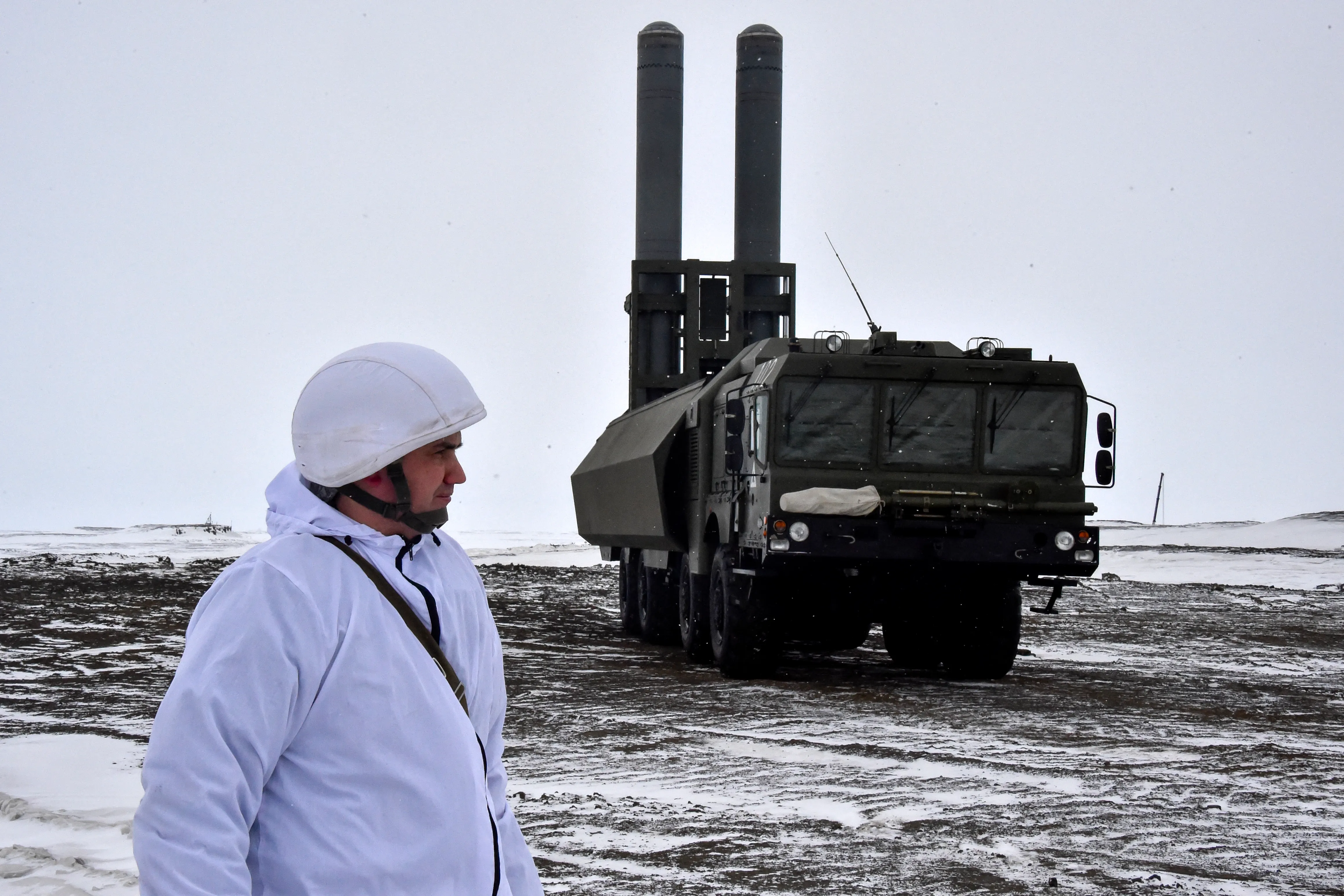
While initially developed for use from warships and submarines, Zircon is understood to have been employed from ground-based launchers against Ukraine, with modified launchers from the K-300P Bastion coastal defense system considered the most likely candidate.
A standard Bastion-P mobile coastal defense missile system. Photo by Maxime POPOV / AFP MAXIME POPOV
The new entry on Ukraine’s Main Directorate of Intelligence (GUR) War & Sanctions portal includes an interactive 3D model and identifies systems ranging from the missile’s radar seeker and onboard computer to its propulsion system and warhead. It also identifies foreign-origin electronics, including components associated with U.S. manufacturers.
Among them, according to the GUR report, is a TGA2704 amplifier associated with TriQuint Semiconductor, now part of U.S. company Qorvo. The GUR also identifies an Altera Cyclone II EP2C5T144I8N field-programmable gate array (FPGA) associated with Altera Corporation, now part of Intel, and lists it as originating in the United States.
An Altera Cyclone II Field-Programmable Gate Array (FPGA), a type of microchip, which the GUR says was found in Zircon wreckage. GUR
The alleged findings do not establish that either company knowingly supplied Russia’s defense industry, nor do they explain precisely how the components reached Russian production lines. The GUR says it’s seeking additional information on their origins and supply chains. Bearing in mind previous precedents, China could potentially be one source, being a known vector globally for recycled chips.
Nevertheless, the disclosure highlights the continued presence of Western-origin electronics in Russia’s advanced weapons programs despite sanctions and export controls.
The GUR lists the Zircon as approximately 26 feet long, with a body diameter of 2.2 feet, and a warhead weighing about 265 pounds.
The agency gives a maximum speed of Mach 8-9, a flight altitude of approximately 19-25 miles, and a separate “maximum fixed speed” (presumably, sustained cruising speed) of Mach 6.8. These are Ukrainian intelligence assessments and cannot be independently verified.
The database identifies the 3B222 active radar-homing head, manufactured by NPP Radar MMS, and a Baget-83 onboard digital computer produced by KB Korund-M.
Reported 3B222 active radar homing antenna recovered from Zircon wreckage. GUR
It also identifies the 3B915 guidance units, the 3G22 warhead, and the 3L2211 solid-fuel rocket motor manufactured by NPO Iskra. Other Russian companies provide altimeters, control systems, power supplies, and other components.
Reported remains of a 3L2211 solid-fuel rocket motor manufactured by NPO Iskra. GUR
The reported propulsion information is particularly significant.
Russian and other sources have consistently described Zircon as a hypersonic cruise missile, implying an air-breathing propulsion system burning liquid propellant, capable of sustaining hypersonic flight.
However, the physical evidence for such a propulsion system has always been less clear.
Open-source analysis by Fabian Hinz has highlighted the apparent absence of a conventional air intake on Zircon. A scramjet- or ramjet-powered missile requires an intake to bring atmospheric oxygen into the engine, yet available imagery does not clearly show one. A Russian patent associated with the missile’s jettisonable launch cap likewise does not reveal an obvious intake arrangement.
Just published my new OSINT investigation into Russia’s secretive Zircon missile whose combat use has risen sharply in 2026.
Available evidence suggests that Zircon is not a hypersonic cruise missile but rather a quasi-ballistic system.
More significant is evidence from recovered missile debris.
Material examined by Ukraine’s Scientific Research Institute of Forensic Expertise included a circular metal structure interpreted as part of a solid-propellant rocket motor. The hardware appeared to be associated with Zircon’s second stage rather than simply its launch booster (which would be used on a true hypersonic cruise missile to bring it up to operating speed). This suggests a two-stage weapon, with a solid-propellant rocket in each. This would match with what we have seen during shipboard launches.
That finding is consistent with Russian patent activity involving NPO Mashinostroyeniya and NPO Iskra. Patents associated with the companies describe solid-propellant rocket motors incorporating arrangements for aerodynamic-control equipment around the motor’s exhaust system.
There is also evidence that Russian engineers developed advanced composite solid propellants specifically for Zircon.
None of this conclusively proves the missile lacks an air-breathing engine, but it certainly raises more questions about its classification. It should be noted that there are also some solid-fuel ramjet concepts, but these are much rarer applications.
In February 2024, evidence emerged that Russia had, for the first time, used the Zircon in attacks on at least one target in Ukraine. Ukrainian scientists showed a video of the Zircon wreckage — “fragments of the engine and steering mechanisms [with] specific markings,” seen here. via X
If Zircon is primarily rocket-powered, it may be better understood as a maneuverable quasi-ballistic missile that nonetheless reaches hypersonic speeds.
Such a weapon would use rocket propulsion to accelerate rapidly and climb to high altitude before descending toward its target along a trajectory that is partly ballistic but incorporates aerodynamic maneuvering — a so-called ‘porpoising’ or ‘skip-glide’ trajectory. It could therefore reach hypersonic speeds without requiring sustained cruise under the power of an air-breathing system. The combination of high speed and unpredictable trajectory also makes it notably difficult for air defenses to deal with, characteristics shared with the air-launched Kinzhal, another Russian quasi-ballistic missile.
That interpretation could also help explain reports of a highly variable Zircon speed profile.
Russian officials have claimed that the missile can reach approximately Mach 9. During a 2020 test, Russian military leadership said Zircon reached more than Mach 8 while flying to an altitude of roughly 17 miles.
A Russian Ministry of Defense video that claims to show the Zircon test in the White Sea on Oct. 6, 2020:
Первый пуск гиперзвуковой ракеты «Циркон» с борта фрегата «Адмирал Горшков»
Ukrainian assessments have described a more complicated profile, with the missile reportedly flying at around Mach 5.5, accelerating to approximately Mach 7.5 near the target, and then slowing before impact. Those figures cannot be independently confirmed, but a boost-and-glide or quasi-ballistic trajectory could produce such a profile more naturally than sustained powered cruise.
At the same time, it should be recalled that ‘hypersonic’ does not necessarily imply a ‘hypersonic cruise missile.’ A ballistic or quasi-ballistic weapon can travel well above Mach 5, which appears to be the case here. The characteristics of the Zircon, as presented by the GUR, would also help explain official Ukrainian claims that the missiles have been intercepted successfully by Patriot PAC-3 air defense systems.
There is also a relevant technological precedent. NPO Mashinostroyeniya has previously patented solid-propellant missiles using quasi-ballistic trajectories, including designs intended to maneuver at high-supersonic and hypersonic speeds. That does not establish a direct lineage to Zircon, but it does show that the concept is consistent with the company’s history.
The other major takeaway from the release is the scale of Zircon’s production network.
One of Russia’s leading missile houses, NPO Mashinostroyeniya is identified as the missile’s main designer and manufacturer and prime contractor for Russian Ministry of Defense contracts covering its development and production.
But the weapon depends on dozens of other organizations. NPO Iskra supplies the solid-fuel motor; NPP Radar MMS provides the radar seeker; KB Korund-M produces the onboard computer; and other enterprises supply guidance systems, altimeters, control electronics, warheads, power systems, and other specialized equipment.
Another video, released by the Russian Ministry of Defense in May 2022, is said to show the Gorshkov launching a Zircon, although the missile is seen only at a distance with no details visible:
Russia shows off Zircon hypersonic cruise missile
The U.S.-origin electronics claimed to have been identified by GUR are particularly notable because they demonstrate how Russia’s sophisticated weapons production remains connected to international semiconductor supply chains.
By linking specific enterprises and individuals to individual missile components, Ukraine has provided governments and investigators with new information that could be used to pursue sanctions, export-control enforcement, and efforts to disrupt Russia’s supply chain.
The report also adds weight to continued open-source assessments of what kind of missile Zircon actually is.
Regardless of its classification, Zircon remains a formidable weapon. A rocket-powered missile capable of reaching hypersonic speeds, flying at high altitude, maneuvering, and potentially accelerating during its terminal approach presents a serious challenge to missile defenses. With Ukraine’s ability to intercept even more conventional ballistic missiles already severely eroded, the weapon further complicates the country’s troubling air defense picture.




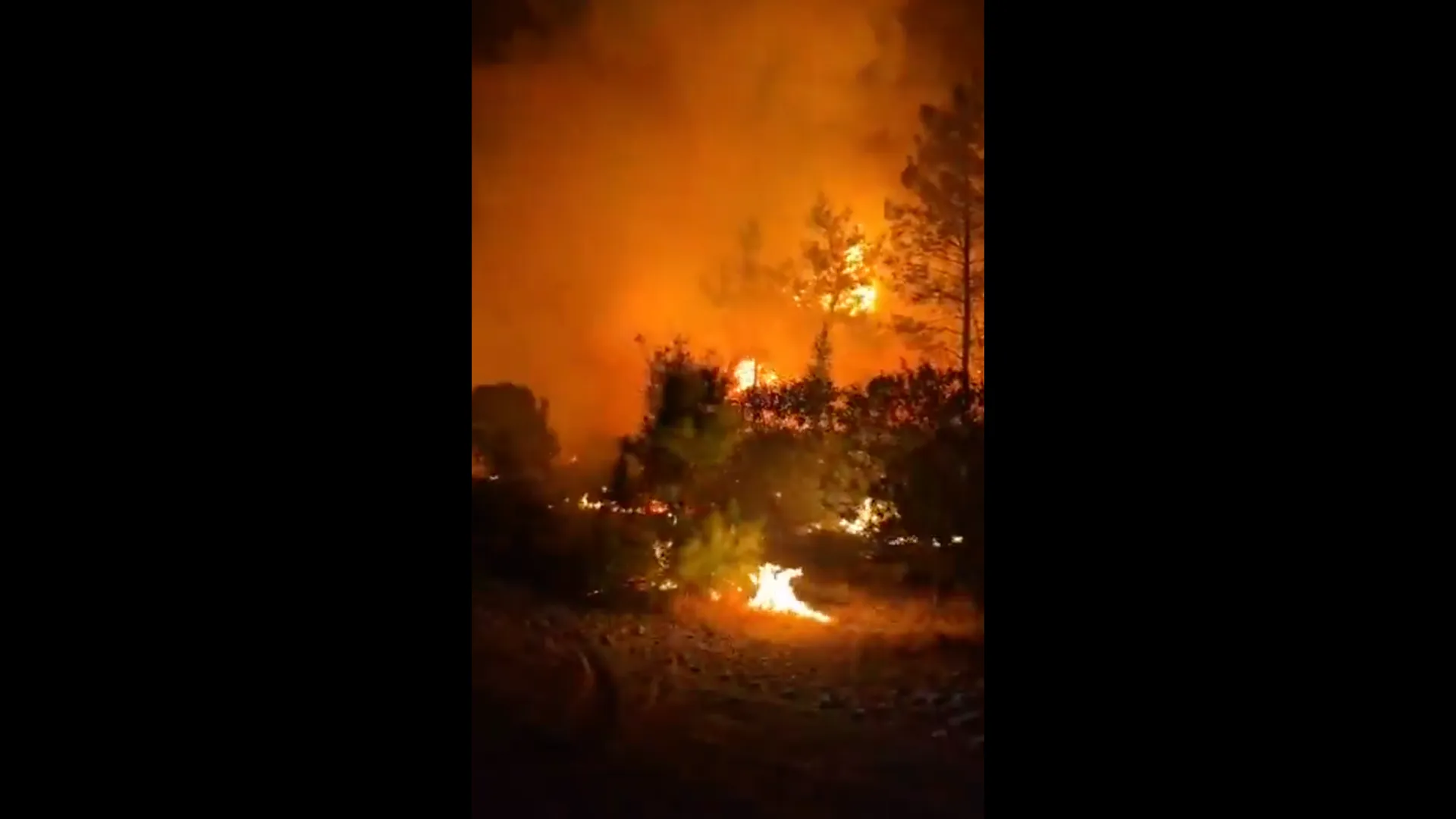









![Russian President Vladimir Putin (R) welcomes Trump's son-in-law Jared Kushner (L) and US Presidential Envoy Steve Witkoff (2-L) during their meeting at the Kremlin in Moscow, Russia, 05 September 2026. [Gavriil Grigorov Sputnik/Kremlin/EPA]](https://i0.wp.com/www.aljazeera.com/wp-content/uploads/2026/09/epa_6a9f6f8e2a59-1788833678.jpg?w=640&ssl=1)