



News Desk

Oasis tease new tour location with cryptic video as fans recognise backdrop

ROCKERS Liam and Noel Gallagher have teased yet another tour location in a cryptic new video – and fans are convinced they’ve guessed it.

But, can you guess where too?

NINTCHDBPICT001106881382
Oasis have teased yet another tour location on X in a cryptic 14-second clip Credit: X
UK Premiere of ‘Oasis: Don't Look Back In Anger' at Cineworld Leicester Square, London
Rockers Noel and Liam Gallagher put their bitter feud behind them in 2024 and reformed Oasis Credit: Getty

The legendary band, Oasis, reformed in 2024 after the long-feuding brothers split up in 2009.

Over the past few weeks, Liam and Noel, 59, have dropped a string of cryptic videos, leaving fans scratching their heads.

The clips have confirmed another tour is coming in 2027 and left viewers scrambling to decode the gig locations after their reunion success last year.

Taking to X, the brothers shared a short clip of a European-looking side street.

I DREAM OF VIEW

Where to watch the Oasis documentary: Cinema and Disney+ release dates


call back

Oasis teaser video ‘confirms’ tour location with cheeky nod group’s history

Two girls on a red Vespa then come zooming down the alley and it’s once again left silent.

Of course, fans immediately began dissecting the video in the comments and most came to the same conclusion – Rome.

One fan wrote: ” Rome. The area looks like Trastevere. Other clues: Red scooter and yellow headlight = AS Roma colours.

“Rider 1 in light blue & blue helmet = Lazio colours. Rider 2 in the Italian flag helmet.”

Sharing a snap that looked very similar to the video location, another fan said: “Stayed in Trastevere in Rome last week and it looks like the same area.”

A third fan added: “Pretty sure I’ve walked down that exact street in Rome.”

Just yesterday, Liam, 53 and Noel, teased another upcoming tour location with a subtle nod to a moment that happened around the group’s original split.

In the clip, a man wearing a leather jacket took out a plum from a paper bag and began eating it.

Soon after this, he lobbed the plum away somewhere off camera, into the distance.

It cheekily references Noel previously telling how – during a heated 2009 argument at the Rock en Seine Festival in Paris the time of his Oasis departure – Liam threw a plum at him.

Fans were convinced the clip hinted at a France tour date – with references to “Rock en Seine” and “Au Marché” visible.

Back in June, The Sun exclusively revealed that Oasis will returning to the stage next year with a record-breaking run of six concerts at Knebworth and a 12-date residency at the Etihad Stadium in Manchester.

Source link

Arab News | Ferry fire off northern Palawan leaves 5 dead: Philippine coast guard

MANILA: A fire broke out Wednesday evening aboard a vessel carrying over 100 passengers near a tourist hotspot in the Philippine province of Palawan, leaving at least five people dead, local media and the coast guard said.

“The Philippine Coast Guard (PCG) immediately responded to a fire incident involving M/V June Aster at the vicinity waters approximately 1.2 nautical miles northeast of Barangay Marcilla,” in the Coron municipality, the service said late Wednesday on Facebook.

Video shared by the coast guard showed the vessel completely engulfed in flames.

Another post over two hours later said “five casualties were initially reported” and brought ashore, with accompanying photos showing several body bags.

The post said 42 people had been rescued, while GMA News reported the ship had been carrying 117 passengers and 17 crew, citing a coast guard official.

Tracking data from MarineTraffic showed the June Aster had departed from Manila.

Source link

Man charged with assisting Russian intelligence services

A 31-year-old British man has been charged under the National Security Act over alleged contact with Russia’s military intelligence agency.

Joshua Cammidge, from Swindon, allegedly received instructions from an individual believed to be linked to the GRU Volunteer Corps, a group controlled by Russia’s military intelligence agency, the Crown Prosecution service said.

He has been charged with assisting a foreign intelligence service and preparatory conduct.

He is due to appear at Westminster Magistrates’ Court on Thursday.

Cammidge was arrested at an address in Swindon on Friday by Counter Terrorism Policing (CTP) London officers, supported by officers from Wiltshire Police.

He was taken to a London police station and searches were carried out at a different address in Swindon, the Metropolitan Police said.

He was further arrested and detained under the National Security Act on Saturday.

Source link

Longtime film academy chief executive Bruce Davis dies at 83

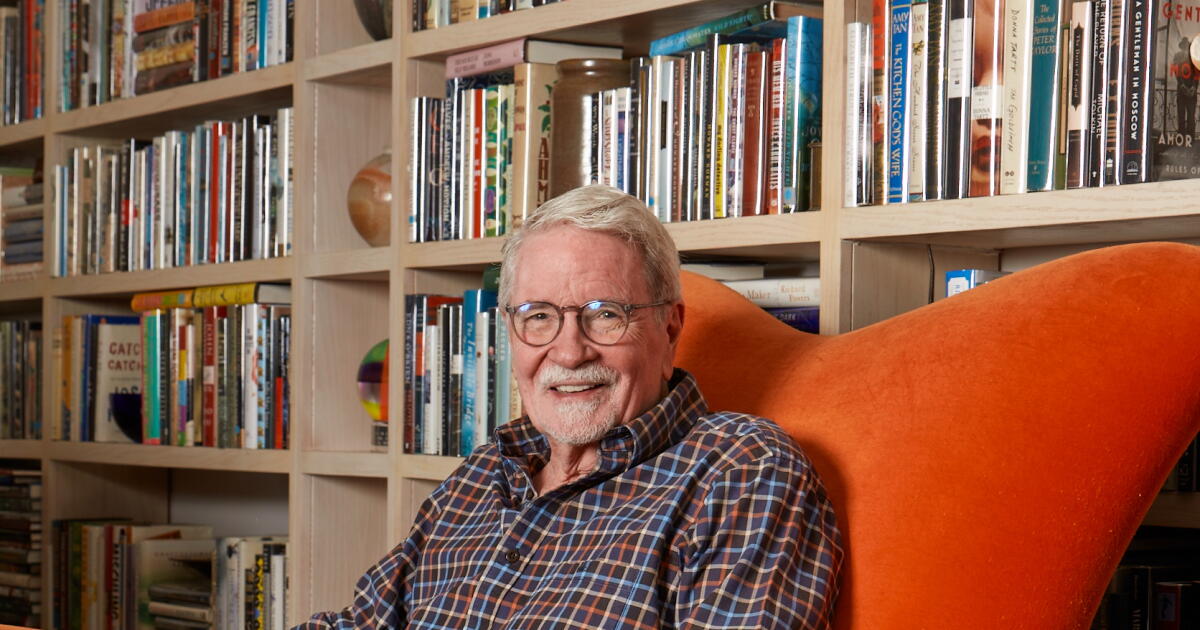
Bruce Davis spent more than two decades as the motion picture academy’s chief executive. Even when he retired in 2011, it was not because he didn’t still love the work. In fact, he kept at it in retirement, retaining an office at the Pickford Center for Motion Picture Study where he focused on writing a definitive history of the early days of the Oscars.

“I don’t think I’ve been bored for a minute in 30 years here,” Davis told the Associated Press upon leaving the academy. “I feel like such a rube sometimes. To this day, when I get out of the car on Oscar night and step up there onto that carpet, you get that rush of energy. The lights are popping — not that anybody’s aiming at me — but still I think it’s one of the great rushes, emotionally speaking, that a person can have.”

Following a battle with leukemia, Davis died Saturday. He was 83.

Davis’ career at the academy was, according to wife Joann, partly a matter of being in the right place at the right time.

“Not that he wasn’t really good at what he did,” she says by phone. “But he was also a lucky man.”

Davis was working as chair of the theater department at Juniata College in Pennsylvania when he and Joann loaded all of their belongings atop their Mazda GLC and headed to Los Angles in pursuit of Hollywood dreams. Davis had been working on a few screenplays while teaching, and his agent told him needed to move closer to the action to network and take meetings.

“Neither of us had jobs when we left Pennsylvania,” Joann says. “We just bit the bullet and drove out. It was a leap of faith.”

Shortly after arriving, Davis met someone at a party whose wife worked at the motion picture academy. That soon led to Davis taking a job arranging lectures and seminars and, later, overseeing the organization’s public programming.

Davis became the academy’s seventh executive director in 1989, leading it through a sizable expansion of staff, relocating the academy’s Margaret Herrick Library to the Beverly Hills Waterworks building in 1991 and setting up its film archive at the Pickford Center for Motion Picture Study in 2002.

“Bruce would drive back and forth to work and see that Waterworks building at the time that they were looking for places for the library to expand,” Joann says. “And one day, it just occurred to him that maybe that would be a building, and so initiated conversation with Beverly Hills. It was kismet.”

Davis had hoped to build an academy museum next to the Pickford, convincing the group’s board of governors to purchase a nearby 3.5-acre site in 2006 for a reported $50 million, but the 2008 recession derailed those plans. His successor, Dawn Hudson, led the push to partner with the Los Angeles County Museum of Art, eventually building the museum at the former May Co. building at Wilshire and Fairfax. It opened in 2021.

Davis was also instrumental in doubling the Oscars’ best picture category from five nominees to 10 in 2009, establishing the preferential ballot system that determines the academy’s top prize.

“That way, best picture reflects the choice of the greatest number of people,” Davis told The Times.

Davis’ Oscar book, “The Academy and the Award,” was first published in 2022, long after he originally anticipated it would hit stores.

“He thought a couple months of research, a couple more months to write it, and voila, in two years, he’d have it done,” Joann says. “But he kept finding new things he wanted to explore.”

Shortly before it published, Davis told The Times that he hoped the book would dispel myths surrounding the Oscars, including Susan Orlean’s assertion in her Rin Tin Tin biography that the dog received more votes than any male actor at the first Academy Awards and that Bette Davis gave the golden statue its nickname because its backside mirrored that of her then-husband Harmon Oscar Nelson.

“There’s a lot of nonsense out there,” Davis said, “and the real story is almost always more interesting.”

“He was deeply committed to preserving the academy’s history, establishing dedicated homes for our library and film archive, and relaunching the concept of creating a museum,” current academy CEO Bill Kramer and President Lynette Howell Taylor said in a statement. “He had a profound love for the academy.”

Davis loved to read and collect books, devouring anything from John Updike and Margaret Atwood, among other authors, a passion that necessitated having bookshelves in every room of his home. Language itself was an obsession, with many family dinners ending with Davis pulling out his unabridged Oxford English Dictionary to share the derivation of a word.

“He was a really fascinating guy,” Joann says.

Perhaps the only thing Davis didn’t like about the Oscars was the ceremony’s annual in memoriam segment, which pays tribute to those who died in the previous year.

“It is the single most troubling element of the Oscar show every year,” Davis told the Associated Press, “because more people die each year than can possibly be included in that segment.”

Next year’s ceremony now has one certain addition.

In addition to Joann, Davis is survived by four daughters: Brangien Davis, Alexandra Davis, Archer Davis and Roxanne Davis.

Source link

Arab News | TikTok takes down more than 15.5m videos violating platform policies in MENA

RIYADH: TikTok has taken down 15,519,240 videos across Egypt, Saudi Arabia, the UAE, Oman, Iraq, Morocco, Lebanon and Sudan during the first quarter for Community Guidelines violations.

The move reflects the scale of the platform’s enforcement efforts and its focus on maintaining safety and accountability across the Middle East and North Africa region, a statement said.

As part of its broader efforts to promote age-appropriate and “authentic experiences” on the platform, TikTok removed 86,288,705 fake accounts and 25,764,372 accounts suspected of belonging to users under the age of 13 globally during the first quarter of 2026.

“These actions reflect the scale of TikTok’s efforts to identify and remove accounts that may not meet its platform requirements, while strengthening safeguards for younger members of its community,” TikTok said.

“Through a combination of automated detection, account-level enforcement, and human review, TikTok continues to reinforce the systems designed to support a safer and more age-appropriate experience.”

Globally, the platform suspended more than 50 million LIVE sessions from January to March, an 18.6 percent increase from the previous quarter. A further 58 million sessions were subject to demonetization or warnings, while 21,966,667 LIVE creators were also demonetized or warned.

Across the eight MENA markets, TikTok said it proactively interrupted millions of livestreams and banned hundreds of thousands of LIVE hosts for violating its guidelines.

In Saudi Arabia, TikTok removed 2,811,302 videos in Q1 2026, with a proactive removal rate of 98.2 percent and 92.8 percent of violative content taken down within 24 hours of being reported. The platform restored 150,916 videos following successful appeals, and also banned 48,106 LIVE hosts while interrupting 371,758 livestreams.

Iraq recorded the highest removal volume in the region. TikTok removed 5,253,566 videos that violated its Community Guidelines during the quarter, with a proactive removal rate of 99.4 percent and 95 percent of violative videos taken down within 24 hours of being reported.

Source link

Venezuela’s PDVSA Chief Defends Trump Deal, US Control over Export Revenues

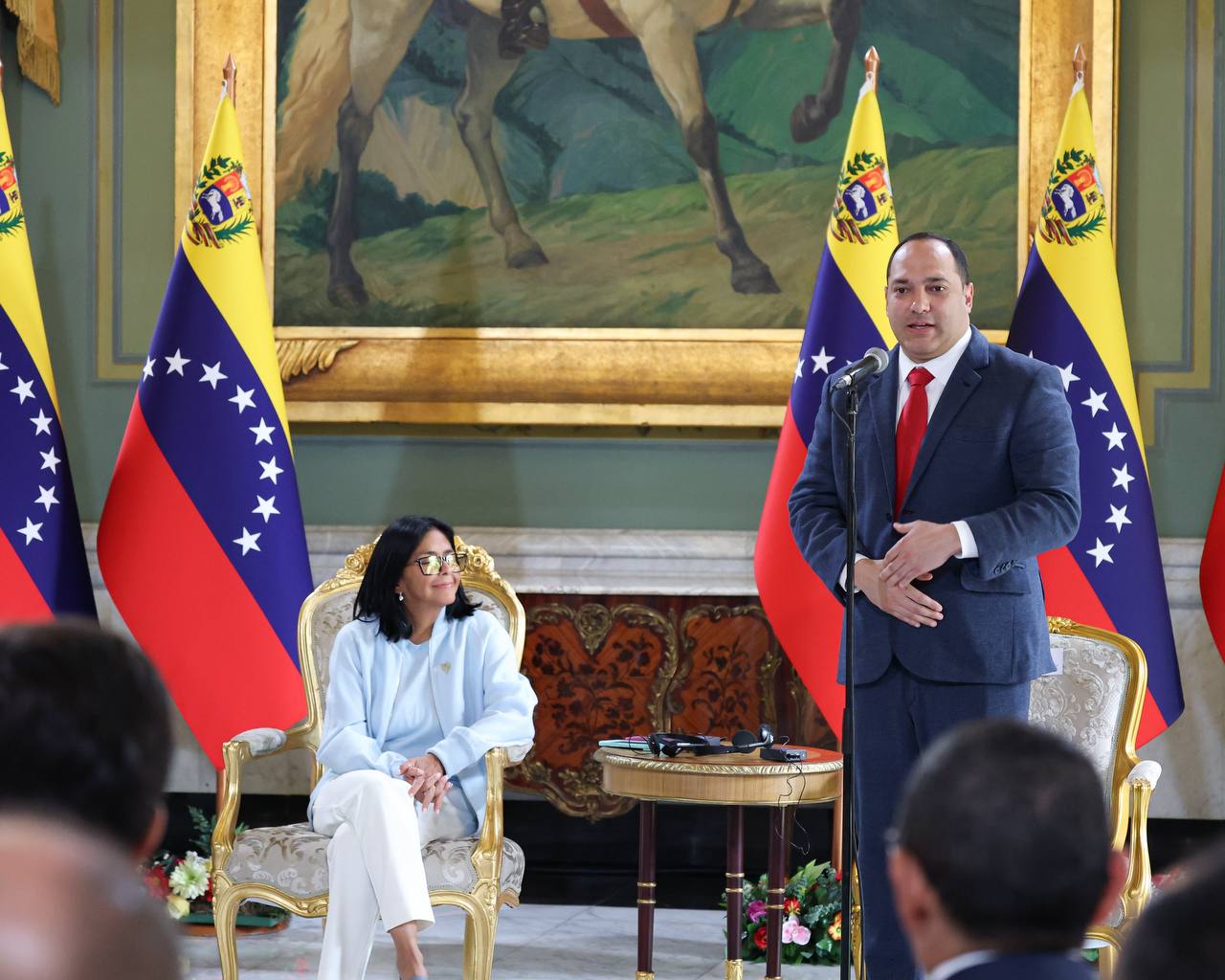
Rodríguez and Obregón have praised the oil agreement with Trump and NABEP. (PDVSA)

Caracas, September 9, 2026 (venezuelanalysis.com) – The president of Venezuelan state oil company PDVSA, Héctor Obregón, backed the recent agreement with the Trump administration as a “win-win relationship” on Monday.

“We signed Productive Participation Contracts where we put forward crude reserves and qualified personnel. What were we missing? Foreign capital,” he said in an interview with Unión Radio.

Productive Participation Contracts (CPP) are concession-type agreements whereby energy projects are turned over to private corporations which run operations and commercialization while paying a negotiated portion of proceeds to the Venezuelan state.

The recent oil deal, hailed by Trump as “the biggest in history,” will see Venezuela transfer 17 prime oilfields, containing 65 billion in proven crude reserves, to private operator NABEP. The projects are split between extra-heavy crude fields in the Orinoco Oil Belt and mature light- and medium-crude ones in the Lake Maracaibo basin.

Obregón insisted on the mutual benefits, explaining that Venezuela will collect taxes and royalties while the US will be able to supply its domestic demand. Regarding the agreement’s timeline, which the White House has claimed to span 100 years, Obregón stated that the concession is for 25 years but may be renewed for similar periods “as many times as necessary.”

After initially vowing that NABEP would invest US $100 billion in the oilfields, a figure repeated by Venezuelan officials, the Trump administration changed the pledge to “more than $10 billion.” 

According to a White House “fact sheet” on the deal, the US State Department will be able to secure 20 percent of the NABEP’s output at cost and have a right of first refusal over the remaining 80 percent.

Obregón suggested that Washington could secure additional benefits, indicating that a reference $65 barrel would have a $15 “sales discount.” The oil official likewise estimated capital and operational expenditures at $12-15 and stated that NABEP would never secure a smaller portion of proceeds than the Venezuelan state, with the percentage increasing for greenfield projects.

The $19 revenue estimate offered by Venezuelan officials as the government’s take for a reference $65 barrel is significantly lower than the benchmarks established under the 2001 Hydrocarbon Law approved by former President Hugo Chávez and subsequent reforms. Under the previous framework, only PDVSA or PDVSA-majority joint ventures were allowed to operate oilfields, with the Venezuelan state securing as much as $0.80 for every $1 of oil proceeds in the latter case.

NABEP, owned by Venezuelan oil mogul Alejandro Betancourt, will grant a 35 percent stake at no cost to the Pentagon’s Office of Strategic Capital (OSC). Washington will likewise have veto power over NABEP’s board of directors. Betancourt has faced corruption accusations in Venezuela, with authorities issuing an arrest warrant in 2022 that was later dropped. For its part, the Trump administration has sought to halt money laundering investigations against the Venezuelan businessman both in the US and in Switzerland.

Obregón went on to acknowledge that Venezuelan export revenues are currently deposited in a US Treasury account before US officials decide on the disbursement amounts and timings back to Caracas.

“There is a state-to-state agreement to receive Venezuelan funds in Treasury accounts,” he disclosed, echoing Washington’s assertion that its seizure of Venezuelan export proceeds aims to protect them from potential creditor claims. 

“The channeling of revenues through the US Treasury could be considered a protection measure, since there are debt claims against PDVSA and creditors could target our accounts,” he argued.

Neither US nor Venezuelan authorities have disclosed the amount of revenue collected and disbursed back to Caracas. Luigi Pisella, an advisor to Acting President Delcy Rodríguez, claimed that the Trump administration is deducting the costs of its January 3 military operation against Venezuela from the country’s funds.

The costs of goods and services supplied by US-based exporters to Venezuela are also being directly deducted from the funds held in the Treasury accounts.

Apart from controlling export earnings, US officials have publicly participated in a pro-business overhaul of the Caribbean nation’s hydrocarbon law and regulations, including reviewing drafts of the legislation.

The Trump administration has maintained sanctions on the Venezuelan oil industry while issuing licenses for select Western corporations. US Energy Secretary Chris Wright oversaw the signing of agreements with Chevron, Eni, and smaller US-backed energy firms during a visit to Caracas earlier this month.

Edited by Lucas Koerner in Philadelphia, USA.

Source link

Inside Strictly’s Karen Hauer’s quiet rural life with famous boyfriend and dogs after quitting show

When Strictly foxtrots back on to our screens later this month, it will be the first time in 14 years without longest serving female pro dancer Karen Hauer, who shimmied her way through more than 100 numbers on the show. But she’s not ready to kick off her dancing shoes just yet – revealing her ambition to cha-cha her way into the role of fiery Puerto Rican, Anita, in West Side Story. She says: “My dream role would be Anita in West Side Story. The world is my oyster.”

When Strictly’s new season launches on Saturday 19 September, it will also be the first time Karen has watched it live. She says: “I’ve never watched it live – I was always in it.”

And Karen – who announced her departure in a statement on social media in March – is not the only high profile departure. Longtime hosts Claudia Winkleman and Tess Daly have also left, as have pro dancers Gorka Márquez, Nadiya Bychkova, Luba Mushtuk and Michelle Tsiakkas. Karen says: “Things have to evolve. Whether people like it or not.”

But Karen will be rooting for the new hosts, Emma Willis, Josh Widdicombe and Johannes Rabede. She says: “The new series is so exciting. I’ll definitely be watching my friends and I’m really looking forward to seeing Johannes, Emma and especially Josh. I danced with him on the Christmas Special dressed as penguins.”

Karen, who was in the show from 2012 to 2025, has already started her new chapter – playing teacher Mavis in Devonshire Park Theatre’s production of the Richard Harris comedy, Stepping Out in Eastbourne until the end of April, before taking it on tour until the end of September. She will then be playing the Wicked Queen in Snow White at The Princess Theatre, Torquay, in December and January.

She says: “I’d been preparing myself mentally for a long time to leave [Strictly]. I’m doing great, I’m really happy. I’m going to miss Strictly, but I’m definitely enjoying my new chapter.”

But the dancer was shocked by the outpouring of love she felt from fans when she announced her departure. She says: “I’ve never felt so much love. I made such an impact without even actually knowing. I was shocked. I was like, ‘how come you guys didn’t vote for me to win?’ Goddamn it.”

Giving no dramatic reason for going, she simply says it was “the right time” to go, adding: “There’s a time when you just have to go, ‘okay, well, that’s a wrap.’ Now I have free time. I don’t know what’s going to happen in five years. So, I’m literally living the best life that I can right now, and not overthinking about the future.”

The first to admit to being a romantic, Karen has had three husbands. She was married to dancer Matthew Hauer from 2000 to 2009, to fellow Strictly pro dancer Kevin Clifton from 2015 to 2018 and then to fitness professional Jordan Wyn-Jones from 2022 to 2023.

But she now shares her rural home near Preston, Greater Manchester, with her boyfriend of three years, rugby player Simon Davidson and four rescue dogs, Betty, Phoebe, Marley and Joe. After her hectic Strictly schedule, she says of Simon: “It’s probably really weird for him to have me home.”

Positive she has now found ‘The One,’ she continues: “I love love. I think love is incredible, and I found it in Simon. I love being in a partnership, and in a partnership that’s healthy. “Knowing what a healthy relationship looks like and being in it … I think that’s what I love is, and that’s what I’ve been searching for. Joy for me is being at home with Simon and the dogs.”

Honouring her love of dogs, in November, Karen is hosting the The Burns Bravery Awards, in which the pet nutrition brand is calling on people to nominate Britain’s Bravest Dogs. Research from Burns Pet Nutrition reveals that three-quarters of owners say they turn to their dog when they’ve had a bad day.

And Karen can see why, saying: “My rescue dogs are the best thing to ever happen to me. Mentally, physically, my dogs get me out of bed, they get me out for a walk. My dogs have been through all my ups and downs. I think my dogs need therapy now.”

The dancer also turns to her mum Mirian when she needs comfort or inspiration. She says: “She inspires me every day. ‘It’s not going to be easy, kid, but you got this’ – that’s what I’ve always known since I was a kid. I’ve always fought and I’ve seen my mum struggle. I’ve seen what it takes to make it – not just as a person on television, but to make it in life.

“My mum raised three kids in New York City, in the Bronx, on her own. She always says, ‘don’t let your head get to the clouds.’ And that’s why I’ve always been very grounded, no matter what kind of job or who I’ve met. We’re all the same. On Strictly, I was never the flashy one, I was always grateful that first of all I had a job – and one that I loved and which entertained the entire nation.”

Karen made it to the Strictly final twice, with partners Jamie Laing and Mark Wright, but never lifted the glitterball. She says: “I was winning every year just being there. It’s great getting a 10, it’s fantastic, but it’s the moments that bring a smile to people’s faces and make them go, ‘That was really funny’, that I’ll remember the most.”

One such moment was when Anton Du Beke and Ann Widdecombe danced together at the Blackpool Tower Ballroom in 2010. This hilarious moment was how she likes to remember the long serving former Conservative MP, who died on July 9, aged 78, and whose death is now the subject of a murder inquiry.

Speaking fondly of Ann and Anton, Karen says: “He took her by the hand and the foot and was just swinging her around in a yellow dress. I was on the floor, peeing myself. It’s those moments, that’s what Strictly’s about.” Meanwhile, Karen gave her many famous Strictly partners – who included Westlife’s Nicky Byrne, actor Greg Wise and comedian Jayde Adams – the same advice.

She says: “I told all of my celebrities, ‘you have to enjoy it. We’re going to work hard, but I want to have a laugh. If you’re not having a laugh, then this is not going to work.’ A lot of people find it really hard to enjoy it, because there’s so much panic.”

Another of Karen’s favourite moments came in 2019, during Halloween week, when her wig came clean off her head on live TV.

“It was hilarious,” says Karen. “But so what if your wig comes off? People are going to remember that you made them smile. That’s what I’ll remember when I’m 85 … or dancing with Jeremy Vine coming out of a bath, or with the late Dave Myers, who I absolutely adored. Wow, I was living the dream, wasn’t I?”

*Following a public voting period, winners will be announced at the Burns Bravery Awards in November. For more information, and to nominate your dog, enter at burnspet.co.uk/pages/burns-bravery-awards

Source link

As the UK sanctions Israeli settlements, is the two-state solution dead? | Israel-Palestine conflict News

British Foreign Secretary Ed Miliband has said the United Kingdom will sanction illegal Israeli settlements in the occupied West Bank, describing the move as “overdue” and necessary to “salvage” a two-state solution to the Israeli-Palestinian conflict.

He made the comments on Tuesday as 11 nations joined the UK in supporting or ⁠considering curbs on trade in goods with settlements that are a barrier to a future Palestinian state.

Recommended Stories

list of 3 itemsend of list

But analysts say the step is far from enough to drive momentum for Palestinian statehood, threatened by ever-expanding settlements in the West Bank and an increasingly hostile Israeli political environment.

Tahani Mustafa, a lecturer in international relations at King’s College London, told Al Jazeera the latest anti-settlement measures are “modest” and unlikely to have a significant impact on ambitions for Palestinian statehood.

“After three decades of breakneck settlement expansion, Palestinian territory is only being held together by its sinews,” said Mustafa. “If what remains is still territorially viable as a state, it is only barely so. Much more decisive action is needed to salvage the two-state solution and a durable lasting solution to the conflict.”

Settlements dividing Palestinian territory

More than 30 years after the Oslo Accords set out a negotiating process aimed at resolving the Israeli-Palestinian conflict, the creation of a Palestinian state alongside Israel has remained the foundation of international efforts to forge peace.

But since the Oslo process began in 1993, the number of Israeli settlers in the West Bank, including occupied East Jerusalem, has ballooned from about 260,000 to more than 700,000, according to the Palestinian Bureau of Statistics, posing a glaring roadblock to the plan.

The challenge is not just the raw number of settlers, but their geographic spread. Today, many Israeli settlements are embedded deep inside West Bank areas that would be needed for a contiguous Palestinian state, including near major Palestinian urban centres such as Nablus, Salfit and Hebron.

Israel’s recent E1 settlement plan, which would build thousands of illegal housing units between the Israeli settlement of Maale Adumim and East Jerusalem, is a case in point. The plan would effectively split the West Bank in two and fully sever it from East Jerusalem, which Palestinians seek as their future capital.

INTERACTIVE - Occupied West Bank - Settlement expansion JULY 27, 2026
(Al Jazeera)

Experts have long said Israel will need to dismantle some of its West Bank settlements, as it did in the Gaza Strip in 2005, to make room for a cohesive Palestinian state. But many Israeli settlements, especially those closer to Israel’s pre-war 1967 borders, would likely need to be addressed through land swaps.

“A complete withdrawal from some of the deeply embedded settlements is highly unlikely,” so land swaps would be the only way to create some form of Palestinian “territorial integrity”, Andreas Krieg, associate professor at King’s College London, told Al Jazeera.

However, such an arrangement – under which Israeli settlements close to the pre-1967 borders would become part of Israel and some “northern Arab-Israeli communities would be integrated into a Palestinian state” – would be “highly controversial” and face blowback from multiple communities, said Krieg.

He argued that Israelis would be certain to oppose any forced withdrawal from West Bank settlements, while some “Arab-Israelis may not want to live within a Palestinian state”.

Palestinian citizens of Israel make up approximately 21 percent of Israel’s overall population but are treated as second- or third-class citizens at the institutional level. According to rights groups, several dozen Israeli laws actively discriminate against Palestinian citizens across a number of issues, including education and housing.

Israeli ‘consensus’ against Palestinian state

Beyond the physical obstacle created by settlements is the Israeli political landscape, in which the idea of a Palestinian state has become toxic.

The government of Prime Minister Benjamin Netanyahu appears to be among the most hardline in Israel’s history on the issue. Netanyahu has emphatically ruled out the prospect of a Palestinian state, while his far-right Finance Minister Bezalel Smotrich, who also oversees Israeli settlements in the West Bank, has celebrated blocking Palestinian statehood as a badge of honour.

epa13202737 Israeli Finance Minister Bezalel Smotrich meet with families during the inauguration of the new Israeli outpost settlement of Mitzpe Makada near the West Bank Palestinian village of Dura, in the Mount Hebron area near Hebron, West Bank, 31 August 2026. The inauguration of the settlement follows the announcement of four new settlements in the Hebron Hills by the Hebron Hills Regional Council and Israeli authorities. EPA/ABIR SULTAN
Israeli Finance Minister Bezalel Smotrich meets with families during the inauguration of the new Israeli outpost settlement of Mitzpe Makada near the Palestinian village of Dura in the West Bank, August 31 [Abir Sultan/EPA]

The views of Netanyahu’s most influential domestic critics do not deviate much. His top rival in elections slated for October, former military chief Gadi Eisenkot, has promised not to allow the establishment of a Palestinian state. And Naftali Bennett, a Netanyahu rival from the far right, fervently opposes Palestinian statehood.

As for the Israeli public, a June poll by the Council for a Secure America found that only 22 percent of Jewish Israelis favour a two-state solution, while 63 percent oppose it.

“The consensus within Israel, socially and politically, does not allow for any party to make any steps towards a Palestinian state,” said Krieg.

Meanwhile, Israel’s closest ally, the United States, is unlikely to apply significant pressure over Israel’s settlement policy so long as President Donald Trump remains in office for the next two and a half years, he added.

Krieg said a “best-case scenario” is for Israel’s next elected government to reverse some of the country’s recent settlement advances.

John Strawson, professor at the University of East London, said that any new Israeli government is “unlikely to support a Palestinian state”, but that a more moderate Israeli government may at least “stop the ethnic cleansing and other moves which are aimed at making that impossible”.

“Removing Netanyahu is the first step towards a two-state solution,” said Strawson.

Two states are the ‘only alternative to violence’

If the two-state model is still alive at all, it is largely due to pressure from the international community.

More than 150 countries, including the majority of European Union nations, have recognised Palestinian statehood. And several Arab states with whom Israel seeks better ties have indicated Palestinian statehood is a precondition for normalisation with Israel.

Krieg said Tuesday’s move by the UK and the 11 other mostly European nations is an “overdue step in the right direction”, but also “shows the laziness and lack of creativity on the part of the international community to actually think outside the box in terms of a two-state solution”.

Anders Persson, a political scientist specialising in the Israeli-Palestinian conflict, said that while the settlement sanctions are concerning to Israel, other previous anti-settlement measures, such as 2013 EU restrictions on funds for Israeli entities operating in occupied Palestinian territory, “changed little on the ground”.

He said the latest sanctions may be “too late” and “too limited … to save the two-state solution”.

Strawson said that while a two-state solution may “seem optimistic”, it is the only alternative to “permanent war and violence”.

Source link

Arab News | Overmars resigns as Royal Antwerp sports director due to health issues

ANTWERP, Belgium: Soccer great Marc Overmars is stepping down as Royal Antwerp’s sports director due to health issues.

Overmars, who joined the Belgian club in 2022, explained his decision in a letter to supporters published on Wednesday as he mentioned “all the fatigue that has built up over the years and the enormous amount of stress.”

The former Netherlands, Arsenal, Barcelona and Ajax winger recovered from a mild stroke in December 2022.

“You all know that my health has not been optimal,” he wrote. “But now I feel very clearly that I can no longer cope with this hectic, stressful professional life.”

Overmars previously spent nearly a decade as director of football at Ajax, the Dutch club where he began his playing career but resigned after he was found to have sent inappropriate messages to several female colleagues. He apologized for his behavior.

“My energy is now completely depleted. If I do not listen to my body now, my doctors say there is a very high risk of things ending badly,” Overmars said. “So I have to make a drastic decision and completely stop my professional activities for the time being.”

Source link

Siân Heder on following ‘CODA’ and opening Toronto’s festival

It’s pronounced “human.” Yet writer-director Siân Heder acknowledges that the unusual spelling of the title of her new movie, “Being Heumann,” is something people might give a puzzled second look, unsure of how to say it and possibly dismissing it altogether.

Which, the more she sat with it, made it perfect as the title for a portrait of real-life disability rights activist Judy Heumann, who, while being in a wheelchair, made herself undismissable.

More specifically, the film looks at the pivotal 1977 protest in which Heumann led a group in a 26-day sit-in at a federal office building in San Francisco until the government began enforcing Section 504 of the Rehabilitation Act of 1973 — the first federal law that recognized disability as a civil rights category.

“The fact that her last name was ‘human’ has so many beautiful layers of meaning,” says Heder, 49, during a recent interview in Los Angeles. “I think Judy was asking for the world to see disabled people as human beings who were worthy of rights and being looked at and being included.”

A world premiere and the opening-night selection of this year’s Toronto International Film Festival, which begins on Thursday, “Being Heumann” will hit theaters Nov. 6 and begin streaming on Apple TV Nov. 13. It is also, crucially, Heder’s first film since 2021’s “CODA,” the bittersweet drama about a young woman in a Deaf family (the title is an acronym for “child of Deaf adults”) that won three Academy Awards including adapted screenplay for Heder and best picture.

A woman using a wheelchair gets a note from a crouching director.

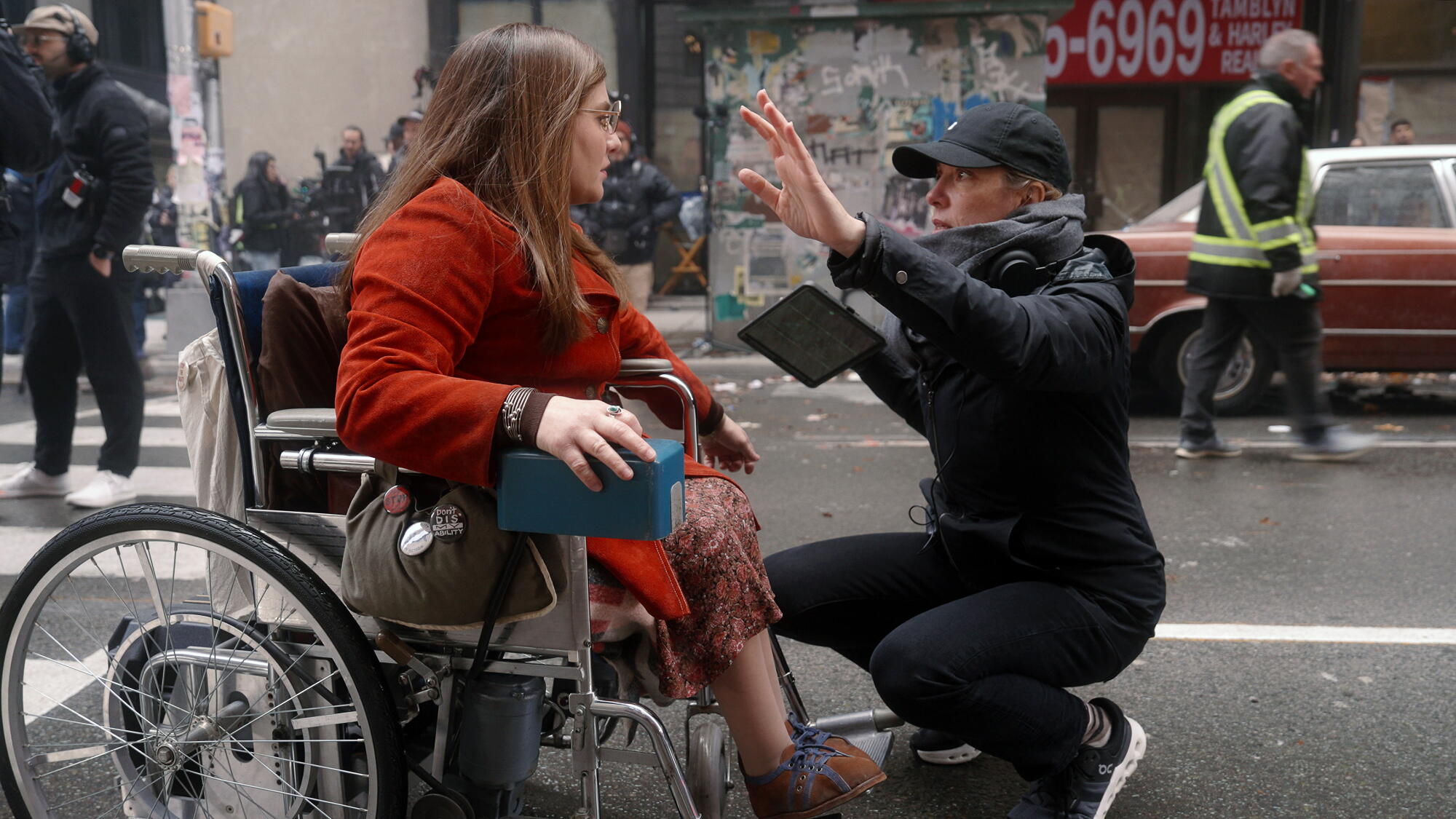
Actor Ruth Madeley and filmmaker Siân Heder during production on “Being Heumann.”

(Apple TV)

In Heumann, a wheelchair user after contracting polio as a child, Heder found a subject who was in the process of discovering herself as a leader: learning when to hold firm and when to cede ground and empower other people. And for someone who was grappling with the aftermath of unexpected success, that felt familiar.

“I think I was making a movie about myself, honestly,” Heder says. “When you’re moving forward on a massive project or a movement or anything, there’s a necessary drive and ambition and focus that is needed. And if you look at any major change that’s happened in human history, it takes a certain kind of person to push that through. I’m not identifying myself with great leaders of the civil rights movement, but directing a movie is a similar thing.”

Heder is tucked into a quiet corner of a busy coffee shop in L.A.’s Eagle Rock neighborhood, where she has long lived. She is in the process of moving from one historic house to an even older one a few blocks away. Heder didn’t want to disrupt the schooling of her two young children, ages 10 and 12, and has become too enmeshed in the area to want to leave it.

A woman sits behind a leafy tree.

“There’s definitely an element of: ‘She manipulated everyone with that movie. She made us all cry and that’s why she won,’” Heder says of “CODA,” her Oscar-winning best picture. “I was an indie filmmaker that was compelled to tell that story.”

(Jason Armond / Los Angeles Times)

Community is a word that comes up often over the course of a conversation with Heder, who has a warm manner and a quiet self-possession. Though “CODA” may have brought her wider attention, she was far from a novice by the time she made that film. She won a Peabody Award as a writer on the series “Men of a Certain Age” and was a writer, director and producer on the acclaimed “Orange Is the New Black.” She expanded her 2006 short film “Mother” into her first feature “Tallulah,” about a young woman who takes a baby from a reckless mother and tries to pass it off as her own. It premiered at Sundance in 2016.

Winning the Oscar created changes in her life both big and small. Heder at first kept it on her desk at home, but had to move it because she began to feel the statuette’s crossed arms quietly judging her as she worked. When she drove herself to the Spirit Awards the year after “CODA’s” triumph and spontaneously gave a ride to an afterparty to Maggie Gyllenhaal and Ebon Moss-Bachrach, Heder suddenly realized her 10-year-old Subaru wasn’t going to cut it anymore.

“I have a nicer car now,” she says, laughing at the memory. “It’s baby steps.”

The day after the Oscars, Heder recalls that she couldn’t stop crying, all the pressure built up from months of campaigning events and Q&As finally letting itself out.

She says two things changed almost immediately after winning the Oscar. One was a sense of expectation, wanting to make the most of whatever the moment might allow.

“This was not a part of my plans,” she says. “I didn’t ever intend to have so many eyeballs turn to me and go, ’What are you doing now?’”

The second was simply the volume of material and opportunities incoming. Heder says she met with Marvel “so many times” about different projects but none of them felt right. As an independent filmmaker “you’re always pushing against the no,” she puts it, moving projects forward against all odds. But now she felt she had to be the resistance, the one to ask whether something was worthwhile.

“Suddenly there are a lot of voices chiming in too because your reps have an idea of what you should do next and the industry has an idea of what you should do next,” Heder says. “And it was really important for me to center myself back in a feeling of: I’ve always been drawn to stories because they move me. And that hasn’t changed.”

Her Oscars triumph was also the night of the notorious Will Smith-Chris Rock on-stage slap, which overshadowed coverage. Heder is online enough that she knows that some film fans would want an asterisk next to the Oscar wins for “CODA,” as if to note some sort of COVID-era exception for the first film from a streaming service to win Hollywood’s top award.

“There’s definitely an element of: ‘She manipulated everyone with that movie. She made us all cry and that’s why she won,’” Heder says with a edge of defiance. “I was an indie filmmaker that was compelled to tell that story. And then audiences embraced that story and that story took off in a way that was unexpected and surprising even for me.”

A woman in a gold dress holds an Oscar and a red envelope.

Siân Heder holds her Oscar for best adapted screenplay for “CODA” backstage during the Oscars in 2022.

(Robert Gauthier / Los Angeles Times)

Heder had been developing “Being Heumann” before “CODA” was released. A friend encouraged Heder to see the 2020 documentary “Crip Camp,” which includes Heumann as a subject, and the filmmaker was so struck by that story, she followed up by reading Heumann’s 2020 memoir.

She sent Heumann a cold email expressing interest in the book. As it turned out, Heumann was deciding that very day who should direct a movie of her life. Heumann gave the filmmaker a last-minute chance to pitch herself. After saying she’d cast authentically disabled performers as she did on “CODA,” Heder got the job.

Heder would work for two years on researching and developing the project with Heumann, interviewing dozens of people involved in the actual Carter-era protest. When Heumann died unexpectedly in 2023, Heder did not think she could continue, but it was “Crip Camp” co-director James Lebrecht who convinced her otherwise.

“I think Judy’s death, which was sudden — it made me feel like she had left her legacy in my hands,” remembers Heder.

After developing other scripts post-Oscars that never quite became her next film, Heder eventually found herself in the enviable position of having two projects greenlit at once: “Being Heumann” at Apple and an adaptation of Gabrielle Zevin’s popular novel “Tomorrow and Tomorrow and Tomorrow” at Paramount.

As she was trying to make a decision, she went to a meeting with several other directors about the relaunching of the Village Theater in Westwood. She found herself having coffee with Guillermo del Toro and asked him how he decided between potential projects.

“And he said, ‘Make the movie that can’t get made without you,’” she recalls. “And that was very clarifying for me. When you are the element that gets that story told, it takes on an importance and urgency.”

As can often be the case, Del Toro’s advice confirmed what she already felt and she began to move forward with “Being Heumann.” (She is currently prepping “Tomorrow and Tomorrow and Tomorrow” so there will not be another five-year gap between releasing films.)

“I was having a rare moment of power in the industry to push something forward,” Heder says, “and it felt like there was a path to go make a big paycheck and have that kind of jump up, or I could use that moment of power and success to try to push through the hardest project I could think of. It was in that moment, after ‘CODA,’ where I really realized: I could make this incredibly difficult movie that no one might make.”

Several people using wheelchairs stage a protest at a municipal building.

Andrew Pilkington, from left, Siena Rafter, Charlie Rush-Reese, Dylan O’Brien, Roberta Colindrez, Ruth Madeley and Madeline Delp in the movie “Being Heumann.”

(Apple TV)

Following what Heder describes as “the casting Olympics,’ she arrived at BAFTA-nominated actor Ruth Madeley, a wheelchair user, to play the lead role. “Being Heumann” was shot in Toronto, largely on a soundstage built to stand in for the San Francisco federal office building where the sit-in took place.

“Hollywood might be the least accessible industry out there,” Heder notes while beginning to explain the accommodations that needed to be made for a cast that included performers with a wide range of disabilities. Custom-built trailers were created and the set had to be made accessible in ways that a filming location typically is not. An accessibility team oversaw everything, from large-scale logistics to the personal needs of individual background actors.

Rather than a more conventional biopic, Heder wanted to tell the more specific story of the 504 sit-in, building out an ensemble of characters around Heumann.

“I said, “It’s almost like ‘Bad News Bears’ and ‘Dog Day Afternoon’ together,” says Heder. “There’s an underdog-sports-team feeling and bank-heist-gone-wrong.”

But a filmmaker friend asked her: Is making movies about disability now her “thing”? It is a question Heder had already considered.

“Of course it was on my mind if it starts to feel like: Oh, is Siân Heder a social justice warrior who’s just out to try to make these movies that have some kind of message behind them,” she says preemptively. “But I think this is just a great story. Outside of disability, outside of anything else, it is a great story.”

Heder remains interested in stories about outsiders, about class and people generally ignored by or on the fringes of society. And it remains important that she herself feel a part of a larger community in her life and her work.

“My daughter said to me the other day, ‘Mom, I think you’re the right kind of famous because you are important to people who know who you are, but you can still just be in the world and be anonymous.” And I think there’s something true about that.”

Her daughter has obviously inherited Heder’s deep well of empathy, one that is more concerned with bringing new, unseen stories to the screen than with the pursuit of cool points or pure fame.

“‘Earnest’ has become a dirty word,” says Heder. “And what earnest actually means is direct and truthful.”

Source link

Arab News | Riyadh Air ramps up global operations with inaugural flight to Manila

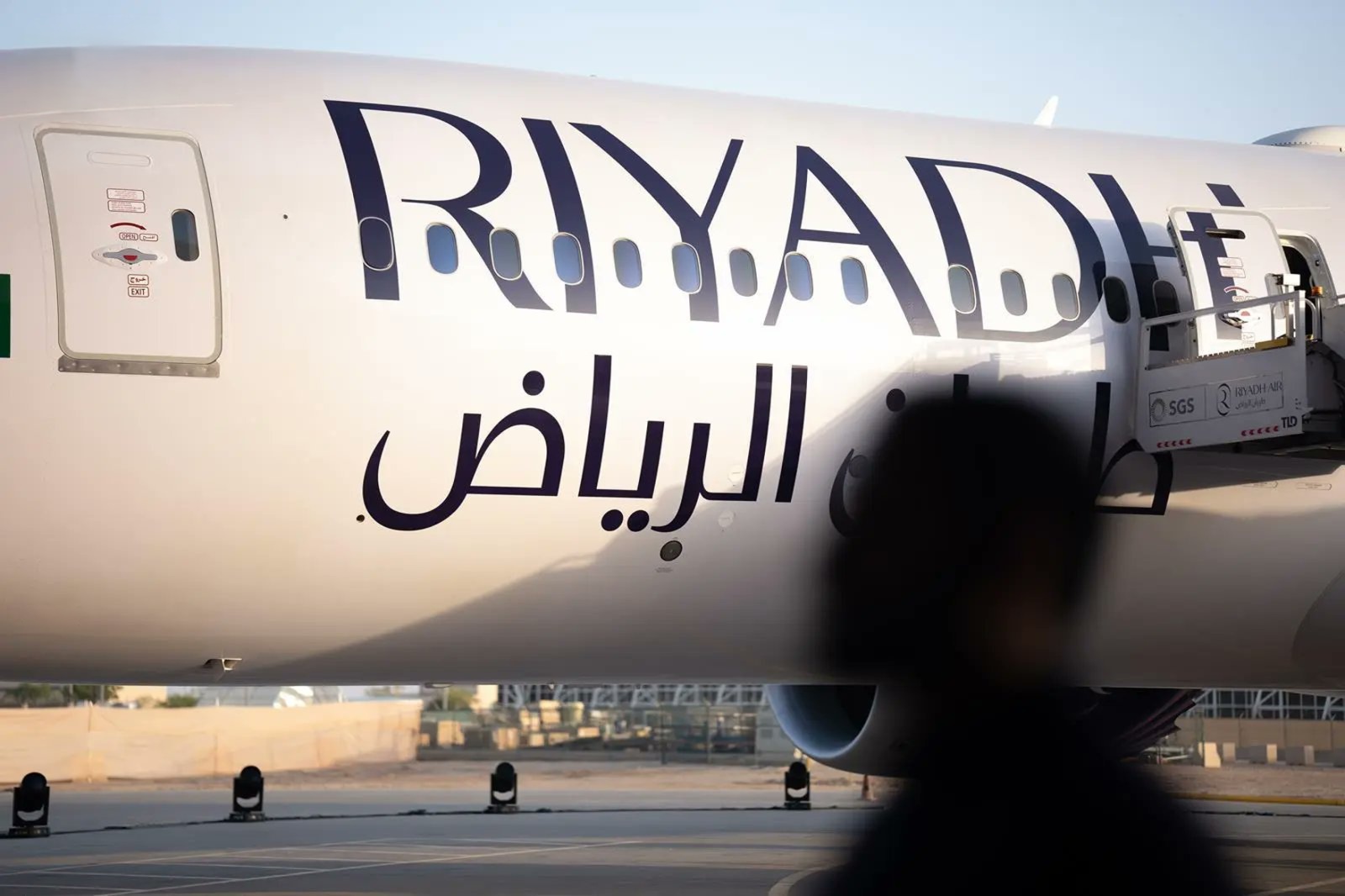
MANILA: Saudi Arabia’s new national carrier Riyadh Air launched its first flight to Manila on Wednesday, marking the latest addition to its growing network of global destinations.

Riyadh Air operated a 290-seat Boeing 787-9 Dreamliner aircraft for the route between the Saudi and Philippine capital, with its arrival at the Ninoy Aquino International Airport around 3:55 p.m. marking the first operation of the service.

“The new … service adds another option for passengers traveling between the Philippines and Saudi Arabia, and another international carrier to NAIA’s growing network. Welcome to Manila, Riyadh Air!” NAIA said in a statement announcing the Riyadh Air service.

There are more than 910,000 Filipinos living and working in Saudi Arabia, as the Kingdom hosts the biggest number of overseas Filipino workers and was their top destination in 2024, according to Philippine government data.

In that year alone, almost 22 percent of Filipinos, or more than 480,000, who sought work abroad chose the Kingdom, driven in part by the Saudi Vision 2030 economic diversification program.

Saudi tourists are also one of the Philippines’ fastest-growing and highest-value markets, according to the Philippine Department of Tourism, with tourism receipts reaching over $37 million in 2024, a 46-percent rise from the previous year.

The Saudi carrier has swiftly expanded its air links with Asia with the launch of multiple flights across the region in recent months, including to Malaysia, Pakistan, India and Thailand.

Riyadh Air’s Manila route followed the airline’s launch of its Bangkok service last week, with Thailand eyeing more high-value tourism from the Middle East.

The Tourism Authority of Thailand is expecting about 600,000 travelers from the Middle East this year, after recording about 210,000 arrivals in the first half of 2026.

It shows similar trends across Asia, where popular holiday destinations are increasingly targeting tourists from the Middle East as part of their tourism growth strategy.

Source link

Torrential rains, winds from Hurricane Lowell leaves 30,000 without power | Weather News

The Category 1 hurricane misses Kauai but causes widespread destruction, power outages and evacuations.

Catastrophic winds and torrential rains from Hurricane Lowell have pelted Hawaii’s western island of Kauai, knocking out power to at least 30,000 residents and ripping up tracts of beachside roads.

Vicious winds knocked down trees and left nearly 92 percent of Kauai Island Utility Cooperative (KIUC) residents without power by early Tuesday as the storm moved north into the open sea.

While the now-weakened Category 1 hurricane did not make landfall on Kauai, it blew down trees, power poles and lines, causing massive destruction from about 128 kilometres (80 miles) west of the island, according to the Hawaii County Civil Defense Agency.

With approximately 85mph (137km/h) wind gusts, the storm brought a deluge that flooded coastal roads and forced roughly 300 residents to evacuate.

The centre of the storm passed west of the islands in the overnight hours on Tuesday and receded further throughout the day, but dangerous surf from the remnants of the hurricane will impact the Southern California coast for several days given the intensity of the winds, the Miami-based National Hurricane Center said.

Emergency officials are asking residents to conserve water and stay off the roads.

Hawaiian mayor Derek Kawakami said that there was “extensive damage” being reported on Tuesday.

“Everyone’s participation has gone from preparation to sheltering to staying off roads …. to now gathering data and information,” the mayor stated.

The Kauai County government urged locals to shelter in place to allow crews to assess damage, clear debris, and restore power and services safely.

This satellite image released by NOAA shows Hurricane Lowell approaching Hawaii, Sunday, Sept. 6, 2026. (NOAA via AP)
This satellite image released by NOAA shows Hurricane Lowell approaching Hawaii, on September 6, 2026 [NOAA via AP]

Flooding and mudslides will continue to be a risk through the day, said Eric Blake of the National Hurricane Center.

The force of the sustained winds had decreased overall by early Tuesday, and the centre forecasts gradual weakening over the next few days.

In its latest advisory late Tuesday morning local time, the hurricane centre said Lowell had maximum sustained winds near 65mph with higher gusts and was moving north at 14mph.

Hurricane warnings for Kauai and the tiny island of Niihau, which has fewer than 100 permanent residents, were no longer in place by Tuesday morning local time. But high surf and deadly rip currents from the waning storm will continue to affect Hawaii’s exposed coasts for the next day or two.

A tropical storm warning was also lifted for Oahu, the state’s most populated island.

Source link

Nigeria, Boko Haram reportedly reach secret three-month ceasefire | News

The reported truce follows the release of 360 villagers abducted during a Boko Haram attack in northeastern Nigeria.

The Nigerian government has been involved in a secret ceasefire with Boko Haram for the past three months, according to an investigation by The New Humanitarian, in a development that could mark a rare pause in years of fighting in northeastern Nigeria.

The reported truce began in June after negotiations that secured the release of 360 civilians abducted from Ngoshe village, in the foothills of the Mandara Mountains near Nigeria’s border with Cameroon, The New Humanitarian reported.

Three people with contacts among Boko Haram members, including some senior figures, independently told the organisation that the ceasefire had been in effect since June and was likely to be extended for another 40 days.

Two of the sources said attacks had stopped in communities around Ngoshe, which have repeatedly been targeted by the armed group.

Truce followed mass abduction

The 360 villagers were abducted in March during a Boko Haram attack on a nearby army base, according to The New Humanitarian.

The negotiations that led to their release reportedly included a payment of five billion naira ($3.7m) by the Nigerian government.

The alleged payment has become controversial in Nigeria, with the government denying that it paid a ransom.

The New Humanitarian said it contacted government, defence and army spokespeople to verify the reported ceasefire but received no response before publication.

Al Jazeera has not been able to independently verify the reported ceasefire or the alleged payment.

The reported agreement does not include Islamic State West Africa Province (ISWAP), a rival armed group that operates in northeastern Nigeria and the wider Lake Chad region.

Fighting between Boko Haram and ISWAP has continued, according to The New Humanitarian.

Government publicly rejects talks

The reported ceasefire comes despite the Nigerian government’s public rejection of negotiations with Boko Haram, which is designated as a “terrorist organisation” by the Nigerian authorities.

President Bola Tinubu has instead focused on expanding the military’s capacity to fight armed groups. In July, he announced plans to recruit 30,000 additional personnel and create four new army divisions.

Behind the scenes, however, there have been repeated attempts to establish dialogue with Boko Haram, according to The New Humanitarian, citing security officials, diplomats and mediators familiar with previous efforts.

Those efforts have included ceasefire arrangements that eventually collapsed.

Conflict researcher Malik Samuel told The New Humanitarian that the latest reported agreement should not necessarily be interpreted as the beginning of a lasting peace process.

“It could be just a temporary, tactical ceasefire that benefits both sides, but doesn’t really affect the trajectory of the war,” Samuel said.

The current arrangement could also allow Boko Haram to strengthen its position, with two sources warning that the group could use the pause to move equipment into the Mandara Mountains, The New Humanitarian reported.

Boko Haram has carried out attacks and kidnappings in northeastern Nigeria and neighbouring countries around the Lake Chad region since 2009. The group has since fractured into several factions, while ISWAP operates as a separate and rival armed group.

Source link

Dortmund’s Karetsas hospitalised after collapsing in Champions League match | Football

Greek teenage star Konstantinos Karetsas faced ‘circulatory problems’ and was stretchered off against Villarreal.

Borussia Dortmund teenage star Konstantinos Karetsas was being treated at the hospital after slumping to the turf 25 minutes into his Champions League debut, the German club said.

“Konstantinos Karetsas had to leave the field due to circulatory problems,” Dortmund said in a statement late on Tuesday. “Kosta is doing well under the circumstances and is on his way to the hospital for further tests.”

Facing Villarreal, the 18-year-old Greek prospect passed the ball to a teammate, then signalled his distress to the referee before sitting on the grass.

Karetsas was treated lying down and then taken away on a stretcher. The score was 0-0 at the time in what became a 3-2 win for Dortmund.

“I hope and I think that everything is OK, and I hope that he’s back and fit with us soon,” Dortmund goalkeeper Gregor Kobel told a broadcaster.

Soccer Football - UEFA Champions League - Borussia Dortmund v Villarreal - Signal Iduna Park, Dortmund, Germany - September 8, 2026 Borussia Dortmund's Konstantinos Karetsas receives medical attention before being put on a stretcher after sustaining an injury REUTERS/Leon Kuegeler
Konstantinos Karetsas receives medical attention before being put on a stretcher [Leon Kuegeler/Reuters]

Karetsas and his Greek teammate Giannis Konstantelias were marquee signings for Dortmund in the off-season. Former Belgium youth international Karetsas joined for $34.9m from Genk and Konstantelias for $30.2m from PAOK.

Karetsas was reportedly a target for many clubs after impressing at Genk last season. He set up 11 goals in 28 Jupiler Pro League appearances. He signed a five-year contract through June 2031.

“With his creativity and game intelligence, Kos will enrich our team,” Dortmund sporting director Ole Book said. “He is technically very skilled and has the ability to find quick solutions in tight spaces, especially in the final third.”

Karetsas played for Belgium’s youth teams before opting to represent his parents’ country and making his debut for Greece in March 2025. He has scored three goals in 10 international appearances.

Meanwhile, 23-year-old Konstantelias’ season was likely ended last month by an ACL injury on his Bundesliga debut.

Source link

Inbetweeners’ Donovan star looks almost unrecognisable 18 years after iconic show

The Channel 4 star has continued to bag huge television and film roles

The Inbetweeners star Henry Lloyd-Hughes looks almost unrecognisable almost 20 years after he found fame on the hit comedy.

Fans will remember the British actor, 41, for playing school bully Mark Donovan in the now-iconic series. For those who missed it, the E4 drama aired for three seasons between 2008 and 2010.

It followed the wild adventures of pupil Will (played by Simon Bird) and his group of friends: Simon (Joe Thomas), Jay (James Buckley) and Neil (Blake Harrison). Donovan was known for picking on the main characters, and infamously snapped a picture of Will in the toilet on his first day of school.

We watched the schoolmates’ last adventure together over a decade ago, and Netflix is bringing them back for a third feature-length film. But whatever happened to villain Donovan?

Lloyd-Hughes, the actor behind the teenager, is almost unrecognisable these days. He has remained in the industry, just like most of his co-stars.

The London-born performer recently appeared in Netflix’s The Thursday Murder Club, opposite the likes of Helen Mirren and Pierce Brosnan. He has also enjoyed roles in Killing Eve and Steven Spielberg’s new thriller, Disclosure Day.

Although casual viewers may not instantly recognise the actor as a “grown up,” devoted fans can pick him out of a crowd even after all these years.

Get Netflix free with Sky

This article contains affiliate links, we will receive a commission on any sales we generate from it. Learn more
Content Image

£7.99

FREE

Sky

Get the deal here

Sky is giving away a free Netflix subscription with its new Sky Stream TV bundles, including the £15 Essential TV bundle. This lets members watch live and on-demand TV content without a satellite dish or aerial and includes hit shows like Stranger Things and The Last of Us.

Lloyd-Hughes shared the story of a sweet run-in with a fan back in 2021. “This is not a humblebrag but I was giving blood this morning. Obviously you’ve got to wear a mask,” he told Square Mile.

He went on to reveal that a nurse came over to him and said: “Excuse me, I’d like to ask a question. Have you ever done any acting?” To which he replied: “Yeah, sometimes.”

The healthcare worker then asked: “Are you The Inbetweeners?” Lloyd-Hughes went on to explain: “It was a middle-aged to elderly Indian man who recognised me.

“I was not expecting, when I was wearing a school uniform, filming for like £5 a week, that ten years later or whatever I’d be getting recognised. Even behind a mask!”

The Inbetweeners series is available to stream on Channel 4’s on-demand service. The Inbetweeners 3 will stream on Netflix.

Source link

Republican midterm convention 2026: What to know about Trump’s Dallas event | US Midterm Elections 2026 News

The United States Republican Party – and its talisman President Donald Trump – is descending on Dallas, Texas, to host a rare convention before the midterm elections in November.

Usually reserved for presidential election cycles, Trump’s call to hold the high-cost event before the November 3 midterm vote has underscored both the president’s unorthodox campaign style and the urgency of the political moment for his Republican Party.

Recommended Stories

list of 3 itemsend of list

Trump’s approval rating has tanked in the lead-up to the midterm vote, with polls pointing to a panoply of factors, most notably the US-Israel war on Iran and its knock-on economic effects for US consumers.

The lack of enthusiasm threatens what are already considered long-shot odds in the Republicans’ effort to hold on to control of the House of Representatives. Shifting public opinion has also put control of the Senate increasingly in play, although Democrats still face an uphill battle to pull off an upset.

A loss of control in either chamber would serve as a major check on Trump’s authority in the final two years of his second term.

But not all Republicans have bought into Trump and the party’s claims that the convention will spur voter turnout.

Several, particularly those in the tightest races, have kept the event at arm’s length amid concerns that associating with the president could only further mobilise his detractors.

Here’s what to know:

When and where is the Republican midterm convention?

The convention will be hosted at the American Airlines Center in Dallas, Texas, on Wednesday, September 9 and Thursday, September 10.

The event is expected to run from 3pm to 9pm Central Time (20:00 to 02:00 GMT) on both days.

Trump is scheduled to speak on both nights, including a Wednesday address and the convention’s closing keynote on Thursday from 8pm to 9pm Central Time (01:00 to 02:00 GMT on Friday).

US Vice President JD Vance will close out night one with a speech.

DALLAS, TEXAS - SEPTEMBER 07: A person takes pictures of signage during preparation for the Republican National Committee (RNC) Midterm Convention at the American Airlines Center on September 07, 2026 in Dallas, Texas. The 2026 RNC will be the first national Republican convention held during a midterm election year. President Donald Trump is expected to attend alongside Vice President JD Vance and a host of Republican leaders. Brandon Bell/Getty Images/AFP (Photo by Brandon Bell / GETTY IMAGES NORTH AMERICA / Getty Images via AFP)
A person takes pictures of signage during preparation for the Republican National Committee (RNC) Midterm Convention at the American Airlines Center on September 7, 2026 in Dallas, Texas [Brandon Bell/Getty Images via AFP]

Is this a typical political convention?

Not at all.

The Republican National Committee (RNC), the party’s official organising body, has billed the Dallas midterm convention as a “first in American political history”.

Both Democratic and Republican national conventions have historically capped the primary season before a presidential election. The emphasis has historically been on the presidential nomination process during the largely ceremonial events.

During those conventions, so-called “delegates” from every state pledge their votes for a candidate based on the primary election outcome from their home state.

A candidate who secures the required majority of delegates formally becomes the party’s presidential nominee at the convention.

Parties also typically hold several smaller meetings surrounding the event to establish and release the party’s official platform.

Why are Republicans holding a midterm convention in 2026?

To start with, there will be no nominating process – presidential or otherwise – during the event, as there is no presidential election in 2026.

Instead, the convention has taken the shape of a supercharged campaign rally and fundraiser.

It has been pitched as an opportunity to introduce candidates in punishing races to potential donors and to give a clear, if Trump-dominated, party message as the races enter their final stretch.

The RNC has promised “a primetime showcase for President Trump’s success, candidates, and causes that have propelled the 2026 midterms to unprecedented focus”.

What’s on the schedule?

There will be quite a lot. The official programme lists “53 items and speakers” on night one, followed by 56 more on night two.

The first night will focus on issues including tax cuts, healthcare affordability, immigration, border policy, trade and domestic manufacturing.

The second night will focus more on affordability and families, including policies related to taxes on tips, overtime and Social Security.

The subject areas hew closely to Trump’s wider political messaging.

The official programme gives relatively little attention to several other subjects. The US-Israel war with Iran and Trump’s aggressive tariff policy receive scant mention.

Who else is speaking?

Trump and Vance are the convention’s marquee speakers, but an array of prominent Republicans and candidates are expected to feature across the two-day programme.

Texas Attorney General Ken Paxton is likely to get a healthy amount of stage time. Paxton is running for Senate against Democrat James Talarico, whose early lead in polling has raised alarm bells for Republicans. A Democrat has not won statewide office in Texas since 1994.

“We’re going to have a lot of speakers, and the ones we want to focus on will be obviously Ken Paxton,” Trump told reporters last week. “We gotta get him elected.”

The race is particularly personal for Trump, who endorsed MAGA-aligned Paxton over Republican Senator John Cornyn, a four-term incumbent seen by many as the surest challenger for Talarico.

Will Trump’s convention help Republicans in the midterms?

It remains to be seen whether the convention will help to turn out voters in a meaningful way.

Trump has proven a canny campaigner in the past, leveraging his eye for television spectacle to build support and turn out low-propensity voters. But several factors could limit the impact.

Trump’s Thursday night speech conflicts with the opening games of the National Football League (NFL) season. The event also runs up against several memorial events for the September 11, 2001 attacks throughout the week.

Some Republican officials have also reportedly criticised the hasty announcement of the event, which Trump called for in late June, raising questions over whether organisers will indeed be able to achieve the spectacle envisioned.

For his part, Trump enters the convention with his approval rating continuing to tank, hovering at a 38 percent average in major polls. Several of the most recent polls, including a Reuters-Ipsos poll and a Financial Times-Focaldata poll conducted in late August, reflected only a 33 percent approval.

Trump entered office in January 2025 sitting at about 52 percent approval.

Why are some Republicans skipping?

To be sure, several Republicans in key races have said they will attend the convention.

They include former Congressman Mike Rogers, who is running against Democrat Abdul El-Sayed for an open Senate seat in Michigan; Ohio Senator Jon Husted, who is facing an unnerving challenge from former Democratic Senator Sherrod Brown; and Georgia Congressman Mike Collins, who is seeking to unseat Democratic Senator Jon Ossoff.

Others have been wary.

Trump’s policies in his second term have cast a long shadow, leaving many candidates calculating whether attendance could backfire and instead energise voters opposed to Trump.

Democratic primary turnout in several key states – including Michigan, Wisconsin, Texas and Georgia – has soared this year, while Republican turnout has remained steady but unextraordinary, as reported by The Associated Press news agency. That has been a worrying sign for Republicans.

Maine Senator Susan Collins, a Republican incumbent seen as vulnerable in her race against Democrat Troy Jackson, has been among those who have said they will not attend.

Several candidates in key House races have pointed to prior commitments.

Representative Mariannette Miller-Meeks told The Bulwark she preferred to spend her time in her home district in Iowa, where she faces a challenge from Democrat Christina Bohannan.

“Because I have a district that I have to be in and take care of, so I’ll be in my district,” she explained about her decision.

Miller-Meeks eked out a victory over Bohannan in 2024, winning by a margin of just 0.1 percent.

Are Democrats countering?

Several left-leaning groups are organising protests.

House Democratic leader Hakeem Jeffries has announced that four Democratic lawmakers will travel to Dallas for counterprogramming during the Republican convention.

However, the cash-strapped Democratic National Committee (DNC) has avoided holding its own midterm convention.

The committee went into debt in the wake of the 2024 presidential election, even putting up its Washington, DC-based headquarters as collateral for a $15m loan, the NOTUS news site reported in July.

The RNC has not yet released a final price tag for its convention.

Source link

Beyond Expansion: Can BRICS Convert Economic Weight into Collective Power?

Authors: Janvi Singhi and Kanav Sharma*

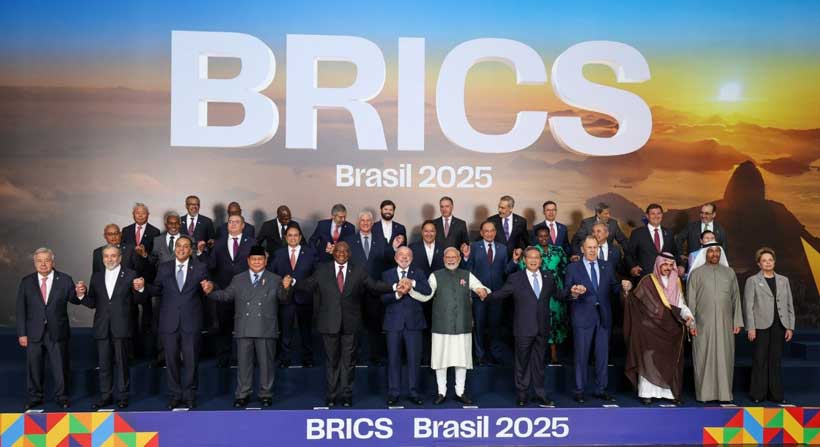
BRICS is moving into a more meaningful phase in its evolution. Its larger membership, considerable resources, population, and markets position it as a voice for the global south. Nevertheless, the fact that the BRICS is economically big does not guarantee that it will turn into a powerful organization. The difficult question is whether BRICS will be able to use the potential of its diversified members to create the institutions and means of collaboration that will meet the needs and interests of different countries, businesses, and banks.

This is where the next chapter of BRICS collaboration will be decided. It is definitely not in need of aspiration. The main question is not whether BRICS will develop a common geopolitical approach but whether BRICS will be able to simplify the issues of cooperation for countries with divergent economic interests and institutional capabilities.

The enlargement of BRICS has brought about both a chance and an enigma. An increased number of members boosts the economic and diplomatic power of the group, but it also entails the presence of more currencies, regulations, economic systems, and foreign policy priorities. States such as India and China may share a desire to amplify the role of developing economies while being in competition with regard to trade, technology, and geopolitics. Resource-rich countries may have their priorities with respect to the manufacturing countries. Financial centers may deal with payment integration differently from countries interested in getting more monetary independence.

Stay ahead of the geopolitical week.

MD Briefing delivers expert analysis across five global fronts — the Indo-Pacific, energy, geoeconomics, European security, and the Middle East — every Monday morning. Free.

The key challenge before BRICS is not about making all the members agree about everything; rather, it is about creating means for cooperation between different countries in the areas where their interests coincide.

This differentiation is essential because BRICS is frequently assessed based on scale indicators, including population, economic output, energy resource reserves, and trade. While these parameters demonstrate the affiliation, the affiliation is not the key to institutional power. BRICS is still functioning as an informal coordinating mechanism and not as a supranational institution due to the absence of an establishing treaty, budget, and secretariat. The conversion of its total economic capabilities into total actions should rely substantially on its members’ coordination. BRICS needs to change its approach, so instead of pursuing expansion, it should focus on implementation.

The issue of cross-border payments can serve as an example. The necessity to improve payment processes within BRICS may be easily explained. International transactions require correspondent banks, multiple currencies, currency exchange, and several commissions. Using local currencies and interoperable payment systems may help reduce some of these expenses and create additional ways of settlements for countries.

However, establishing a new financial structure is much more difficult than just talking about it. The real barriers are technical and institutional: interoperability between national payment systems, regulatory compatibility, foreign exchange liquidity, cybersecurity, anti-money laundering and know-your-customer norms, settlement systems, and trust among the entities participating in the payment system. A domestic payment system cannot simply be hooked up to a foreign payment system without addressing these problems. This leads us to a more practical goal for BRICS countries. Instead of concentrating on the joint BRICS currency, they should work on interoperability among national payment systems.

The example of India’s UPI-PayNow linkage to Singapore shows how this principle works. Two entirely different payment systems can be interlinked without destroying their own systems. The same gap can be figured out at the level of BRICS if all necessary regulations, settlements, and risk management conditions are fulfilled. In order to understand how this can be achieved, BRICS can refer to the examples of other countries that have already applied the same logic.

The same issue of coordination can be observed in trade and supply chains as well. BRICS countries have complementary assets such as resources in energy, agriculture, manufacturing, minerals, technology, and large markets for consumer goods. However, having complementary resources does not automatically result in integrated supply chains.

Businesses need predictable customs, standards that will fit one another, reliable logistics, availability of finance, and clarity of regulation. If countries have different certification systems, digital documents, and technical standards, the theoretical advantages of a large BRICS market will not be fully realized. Therefore, standards will probably prevail over declarations in the end.

So far BRICS has spoken about cooperation of national standard organizations and overcoming technical barriers between trade. Further work is getting cooperation of national standard organizations transferred into standards that will be in demand in real business. Common standards for digital trade documents, selected product certification, customs data, payment systems, and technical standards can connect BRICS economies without full harmonization of their economies.

This method would make it easier to justify politically. There would not be a need for members to give up their power when it comes to buying a wider range of economic policies. The only thing left is for countries with technology to agree on their particular rules where technology will help provide measurable benefits.

The same goes for agricultural projects, as the BRICS countries share similar problems in the fields of food supply, climate, water conservation, and productivity. The BRICS has started pushing for agricultural research and cooperation. So, the question is not whether the BRICS countries have recognized these areas; they already have. The larger question is whether anything can be implemented across borders.

In a situation where one country has effective technology to grow crops and another one has a good way of bringing the crops to a field, BRICS has to find a way to transfer that knowledge or have an organization that can help in that transfer. There should be a value on the moves made regardless of whether formal treaties have been produced or not. This points towards a different institutional model for BRICS: modular cooperation.

BRICS needs to develop a model that allows all members to be part of the major framework and subgroups of interested members cooperating with each other in specific areas that require deep integration. Countries interested in making payments and settlements between them could organize a coalition in charge of finding and implementing technical solutions for that. Those ready to work jointly in the field of agriculture can proceed with agricultural cooperation, while others can focus on critical minerals, logistics, AI technologies, energy, and development finance.

This model recognizes one uncomfortable truth: diversity is BRICS’ asset, but it also acts as an obstacle in its functioning. In a highly heterogeneous grouping, it is impossible to expect rapid integration in view of the differences among its members. Compliance with the needs of all BRICS states only produces long negotiations and ambitious statements that do not work. Modular cooperation, in its turn, enables countries to pursue their own policy while being part of the larger framework.

Moreover, it could also establish a more trustworthy framework for testing. A limited number of members would be given the opportunity to run an initial test of payment or trading procedures, determine any legal or technological obstacles, and welcome other participants once the system is successful. The outcome would be a lowering of the chances of running into challenges that would be involved in the launch of a full project for all members simultaneously. BRICS should also reconsider its parameters of success.

Rather than concentrating on the number of members or the quantity of agreements accepted, BRICS should focus on the outcomes of its activities. There are political benefits to this strategy as well. BRICS will find it difficult to forge sustainable alternatives simply by selling them as counters in the geopolitical confrontation with the West. Governments and businesses respond not just to geopolitical signals but also to incentives. If the BRICS mechanism is cheaper, quicker, safer, and more efficient, then the chances of adoption increase.

This point is especially important for the discussion of de-dollarization. The reduction of dependence on dollar-based systems may in itself be a rational objective for some members; however, viewing de-dollarization as a success in and of itself can overshadow the distinction between geopolitics and economic efficiency. A payment mechanism can only gain credibility if banks and companies use it to solve a problem at hand.

India’s BRICS presidency in 2026 is an excellent opportunity to work on the practical implementation of the above approach. New Delhi can focus on enhancing cooperation based on interoperability and standards, collaboration of sectors, and measurable results. Instead of trying to create a homogenous group, India can create a framework where willing participants will devise their solutions for implementation by others.

Instead of striving to make BRICS like other supranational bodies, we should acknowledge the fact that, given its diversity of membership composition and structure, it is not realistic nor necessary. BRICS differentials provide a comparative advantage of allowing a mix of countries with both different political and economic systems that nevertheless share aspirations for greater policy autonomy and a voice in international affairs.

BRICS does not need to reach consensus on every issue to become successful. What it requires is to be able to determine areas where cooperation can be beneficial economically and create institutions able to do that.

Thus, the biggest problem is not the absence of power. The problem is how to convert power into capacity and capacity into institutions. If BRICS succeeds in this task, its economic capacity will transform from empty statistics into collective power. If it does not, then enlargement might improve visibility of the group, but its effectiveness would stay at the same level.

*Kanav Sharma is a Public Policy Researcher from Jammu & Kashmir with a postgraduate degree in English Literature from the University of Jammu. His interests include public policy, governance, parliamentary and strategic affairs.

Source link

James Bond writer confirms new 007 HAS been cast

A TOP screenwriter working on the new James Bond film has let slip that the role may already have been cast and the audition process completed.

The identity of the next 007 remains shrouded in mystery, but Steven Knight appeared to suggest a decision had been made.

The identity of the next 007 remains a closely guarded secret Credit: Alamy
Steven Knight appeared to let slip that the next James Bond has already been chosen Credit: Getty

Speaking on BBC Radio 4’s Today show, the Peaky Blinders creator was asked whether he had written the film with the chosen actor in mind or based on what he already knew about the character.

He replied that it was “a bit of both”, seemingly confirming that an actor had been picked.

Steven added: “It does make life a little bit easier if you know who that person is, but also you have to write the character, not the actor.”

He went on to discuss the honour of writing for such an iconic franchise.

DOUBLE AGENTS

James Bond could see its first ever husband and wife casting for next movie


unlikely star

New Brit actor ‘makes James Bond shortlist’ as screentests ‘begin in days’

Daniel Craig bowed out as 007 in 2021’s No Time to Die Credit: Alamy
Slow Horses star Jack Lowden is among the frontrunners to replace Daniel Credit: Getty

Steven said: “The thing with Bond is that it’s its own universe and its own franchise, so there are certain rules.

“Obviously, you have to move it along, but I love where it sits.

“I love that it’s British and it’s not DC or Marvel. The only thing I can say is I feel like I’m doing my duty for King and country.

“It’s something that, if you’re a British writer, you have to do.”

The next Bond will fill the shoes of Daniel Craig, who last played the secret agent in 2021’s No Time to Die.

Slow Horses actor Jack Lowden remains one of the frontrunners for the coveted role, while a host of other stars have been linked to the part since Craig’s departure.

Jack’s co-star Gary Oldman also appeared to fuel speculation during a recent TV appearance on Canada’s The Morning Show.

Discussing rumours that Lowden was on the shortlist, he told the host: “We’re going to find out pretty soon, aren’t we? Because they have picked him.”

The Oscar winner then doubled down, saying: “They have made their choice, but they have not announced it yet.”

Source link

Yemen war escalates: Who are the key actors involved? | Explainer News

Yemen’s more than a decade-long civil war has flared up once again after the Houthi rebel group launched an offensive in several locations against Saudi Arabian-backed government forces. The conflict has already spilled over beyond the country’s borders with the Houthis launching an attack on southern Saudi Arabia, targeting oil facilities and wounding dozens of people this week.

The renewed hostilities are the most serious since a United Nations-brokered truce halted large-scale fighting in 2022, after eight years of a full-blown conflict that killed tens of thousands of people in one of the world’s poorest countries.

Recommended Stories

list of 3 itemsend of list

So who is involved in this conflict? Here’s a look at the main actors:

The Houthis

The Houthis, also known as Ansar Allah (supporters of God), are an armed group controlling most parts of Yemen, including the capital, Sanaa, and some of the western and northern areas close to Saudi Arabia.

The Houthis emerged in the 1990s but rose to international prominence in 2014, when the group rebelled against Yemen’s government, forcing it to step down and causing a crippling humanitarian crisis.

The group then spent years, with Iran’s backing, fighting a military coalition led by Saudi Arabia. The two warring sides have also repeatedly tried to hold peace talks.

Seen as part of a regional alliance known as the “axis of resistance” backed by Iran, the Shia Zaidi group nevertheless has its own base, its own interests – and its own ambitions.

The Houthis have demonstrated their missile and drone capabilities during the Yemen war in attacks on Saudi Arabia and the United Arab Emirates, targeting oil installations and vital infrastructure. They have also proven resilient, defying more than 10 years of bombing by the Saudi-led coalition, as well as US and British strikes in recent years.

The group has gained international prominence for its attacks on Israel and shipping in the Red Sea since the start of Israel’s genocide in Gaza in October 2023.

Saudi Arabia

Riyadh entered the Yemen war when it led a military coalition against the Houthis in March 2015, seeking to restore the government of then-President Abd-Rabbu Mansour Hadi. Back then, Saudi Arabia and Iran were at the peak of a regional competition, both deeply distrusting each other. An Iran-supported group expanding control at the kingdom’s southern border was unacceptable, hence the military action.

This was before a China-brokered rapprochement between Saudi Arabia and Iran in 2023 marked the beginning of a more practical and less confrontational relationship.

Interactive_Control_Map_Yemen_September8_2026

Presidential Leadership Council

The PLC was established in 2022 when the former president, Abd-Rabbu Mansour Hadi, formally transferred his powers to the new eight-member body.

It represents the internationally recognised government of Yemen, with a mandate to manage the country’s political, security and military affairs, and to steer negotiations towards a permanent ceasefire. It is chaired by Rashad al-Alimi, an adviser to Hadi and former interior minister with the government of the late president, Ali Abdullah Saleh.

Its membership is drawn from a mix of northern and southern politicians and military-linked leaders in a bid to unite major anti-Houthi forces under one roof.

The PLC is backed by Saudi Arabia and the alliance that Riyadh leads.

Islah party

The Yemeni Congregation for Reform, better known as Islah, is a Sunni Islamist movement with historic ties to the Muslim Brotherhood. It is a faction within the recognised PLC-led government but has long had an independent identity. Its major stronghold has long been Marib, the country’s sole gas-producing region with one of its largest oilfields.

Interactive_Keyplayers_Yemen_September8_2026


National Resistance Forces

The National Resistance Forces is a government-aligned military faction led by Tareq Saleh, nephew of the late former President Ali Abdullah Saleh.

The force has maintained ties to Saudi Arabia and, like the Islah party, is part of the PLC. It aims for a unified Yemen, positioning itself as a counterweight to both the Houthis and southern secessionists.

Source link

Could Strait of Hormuz Uncertainty Push Oil Prices Above $100 a Barrel?

The Strait of Hormuz has become the central pressure point in the escalating confrontation between the United States and Iran. Before the conflict, roughly 20 million barrels of oil moved through the narrow waterway each day, equivalent to about one fifth of global oil consumption. For years, traders could therefore rely on relatively consistent estimates of the volumes passing through one of the world’s most important energy corridors.

That certainty has now disappeared.

The use of “dark crossings,” in which tankers switch off their identification and navigation systems, has made vessel movements increasingly difficult to monitor. Satellite imagery, port records, tanker drafts, loading schedules and shipping data are being used to reconstruct movements, but the information remains incomplete. Recent estimates of Hormuz flows have differed dramatically, leaving traders and governments uncertain about the true scale of oil moving through the waterway.

The uncertainty comes as Brent crude has moved above the $100 a barrel threshold for the first time since July, driven by renewed military escalation and concerns over Middle Eastern oil supplies.

Stay ahead of the geopolitical week.

MD Briefing delivers expert analysis across five global fronts — the Indo-Pacific, energy, geoeconomics, European security, and the Middle East — every Monday morning. Free.

The Hormuz Information Gap

The most unusual feature of the current oil crisis is not simply that supplies may have fallen. It is that markets cannot confidently determine how much oil is actually moving.

U.S. Energy Secretary Chris Wright said more than 17 million barrels crossed the strait on August 31 under U.S. Navy supervision. Shipping intelligence firm Kpler, however, estimated that only around 6 million barrels crossed that day. Kpler put average August flows at approximately 4.3 million barrels per day, with flows rising to nearly 5 million barrels per day during the first days of September.

The difference could partly reflect different methodologies, including whether shipments using alternative routes outside Hormuz are included. Tankers that remain invisible to tracking systems for days or even weeks make the picture even harder to reconstruct.

This means that traders are attempting to price global oil supplies without reliable visibility over one of the world’s most important supply arteries.

Why the Strait of Hormuz Matters

Hormuz is strategically important because of the enormous concentration of energy exports that normally pass through it. Any sustained disruption can affect crude supplies, tanker availability, insurance costs and shipping times, eventually feeding into fuel prices and broader inflation.

The current situation is different from a straightforward blockade. The strait has not necessarily become completely impassable. Instead, its reliability has been severely compromised.

That distinction matters because a tanker does not have to be physically prevented from crossing for markets to react. The possibility that vessels may be delayed, attacked or unable to cross safely is enough to increase the cost of transporting oil.

As a result, the market is responding not only to actual supply losses but also to the risk of future disruption.

Iran’s Strategic Leverage

Iran’s ability to disrupt maritime traffic remains an important source of leverage despite indications that its military capabilities around Hormuz have been weakened.

U.S. demining operations and a growing U.S.-protected shipping corridor along Oman’s coast have allowed more vessels to enter and leave the Gulf. At the same time, Iran-linked forces continue to threaten commercial shipping, meaning Tehran retains the ability to create uncertainty even if it cannot completely shut down the waterway.

This gives Iran a form of asymmetric leverage. Tehran does not necessarily need to close Hormuz completely to impose economic costs. Sporadic attacks, warnings or restrictions can increase insurance premiums, delay shipments and encourage traders to price in a greater possibility of supply disruption.

The renewed attacks on Saudi energy infrastructure have added another layer of risk by threatening alternative routes that have become increasingly important as traffic through Hormuz has declined.

Impact on Global Oil Markets

The immediate consequence is a higher geopolitical risk premium on crude.

Oil prices normally respond to measurable fundamentals such as production, consumption, inventories and transportation. But when the market cannot establish how much oil is moving through Hormuz, uncertainty itself becomes part of the fundamental picture.

This can keep prices elevated even if actual physical supply losses are smaller than feared.

Brent has already moved above $100 a barrel, while analysts and major financial institutions have raised their oil price forecasts as concerns about prolonged disruption increase.

For oil-importing countries, sustained high crude prices could translate into higher fuel and transportation costs, increased inflationary pressure and greater economic uncertainty. Airlines, manufacturers and businesses dependent on energy-intensive supply chains would also face higher operating costs.

Economic and Geopolitical Implications

The crisis demonstrates how vulnerable the global energy system remains to a single strategic chokepoint.

For the United States, maintaining freedom of navigation through Hormuz is not simply a military objective. It is also essential to preventing a regional conflict from becoming a wider global energy crisis.

For Gulf producers, the challenge is equally significant. Even countries with substantial production capacity cannot fully compensate for disrupted shipping if export routes remain vulnerable.

For major Asian importers, the risks are particularly serious because much of the energy normally passing through Hormuz is destined for Asian markets. A prolonged disruption could therefore create significant pressure on import bills, currencies and inflation across energy-dependent economies.

The crisis also highlights the limits of alternative routes. Pipelines and routes outside Hormuz can reduce some of the pressure, but they cannot immediately replace the enormous volumes that normally pass through the waterway.

What’s Next?

The key variable is whether the confrontation between Washington and Tehran moves toward negotiations or further escalation.

A diplomatic breakthrough could rapidly reduce the geopolitical risk premium by restoring confidence in shipping and improving visibility over oil flows. A further escalation, however, could produce additional attacks on tankers, restrictions around the Gulf or renewed pressure on alternative shipping routes.

The oil market will therefore be watching tanker movements as closely as military developments.

If shipping activity becomes more visible and flows recover, some of the current premium could disappear. If the information blackout continues, traders may continue pricing the possibility of a much larger supply disruption.

Analysis

The deeper significance of the Hormuz crisis is that information itself has become a strategic commodity.

Modern energy markets have traditionally depended on the ability to monitor ships, cargoes and supply chains with increasing precision. Satellite imagery, tracking systems and port data created an assumption that physical oil flows could be observed and measured with reasonable accuracy.

That assumption is now being challenged.

The result is a market where perception can influence prices almost as powerfully as physical shortages. If traders believe Hormuz is becoming less reliable, they will pay more for crude today even without definitive evidence of a catastrophic supply loss.

This gives Iran an important form of strategic leverage. The threat of disruption can generate economic consequences even when actual disruption remains limited.

At the same time, Washington faces a difficult calculation. Greater military protection may help keep shipping moving, but prolonged confrontation can also increase the geopolitical risk premium that the United States is trying to contain.

The central question, therefore, is no longer simply how much oil is passing through the Strait of Hormuz. It is how long the global market can function without knowing the answer.

If that uncertainty persists, the oil market could continue carrying a substantial security premium even if physical supplies prove higher than current estimates suggest. The longer the uncertainty lasts, the more deeply it can become embedded in prices, inflation expectations and global economic planning.

With information from Reuters.

Source link

Great British Sewing Bee host’s future ‘sealed’ as judge issues huge update

BBC fans saw a new face join The Great British Sewing Bee as Sophie Willan became the host of the competition alongside judges Patrick Grant and Esme Young.

Great British Sewing Bee fans have been thrilled with the latest addition to the BBC show.

The competition is nearing its end, as BBC viewers will see one contestant crowned Britain’s Best Amateur Sewer, along with a golden mannequin trophy. After weeks of challenges, tasks, and plenty of tears, Anna, Emma, or Beth will win this year’s Great British Sewing Bee.

Ahead of the highly anticipated final, judge Patrick Young appeared on Morning Live to speak about what viewers can expect to see. However, the conversation soon turned to the latest host to front the show, comedian and actress Sophie Willan.

Highlighting that the show is kept ‘fresh’ by bringing in new presenters, the Morning Live star asked what it’s been like with Sophie as part of the cast. Patrick replied: “We’ve had some alright presenters over the years.

“Sophie is amazing. I was a massive Alma’s Not Normal fan. Quite often, we get told who is going to be coming on, and I had to pinch myself. I was like, ‘Oh my god, I loved Alma’s Not Normal’. She’s brilliant, she’s so fun.

“Esme loves her. She just helps create the most amazing atmosphere on set. We’ve been making the show for a long time. A lot of the crew and everybody behind the scenes are the same, but it’s lovely having somebody come in and give it a little zhuzh.”

Despite the show often shaking up who fronts the programme, Patrick confirmed Sophie’s future, and it’s good news for fans. He continued: “She’s amazing, we’re filming next year already, and I love going into work with her every day.”

Elsewhere in their conversation, he spoke about the upcoming final and the pressure he feels comes with it as a judge. He told the BBC presenters it’s mainly because he wants the contestants to excel.

Patrick commented: “We’ve seen it so many times when brilliant people have got to the final, and things just haven’t quite clicked for them. You do feel a certain amount of disappointment, but luckily, this year we didn’t have that.

“We got three brilliant people, and they all brought something really special to it. So actually there is a relief when it’s done, and you’re like, ‘They really have nailed this’.”

Sadly, BBC viewers bid farewell to Heather this week as the contestant narrowly missed out on a place in the final. Although she was teary-eyed over the exit, she was proud of all she achieved.

She commented, “All the stress and sleepless nights have been beyond worth it.” Meanwhile, Beth was awarded garment of the week for her little black dress.

During the show, Patrick told her, “We absolutely loved it. It was so elevated, such beautiful use of the fabrics, and such a lovely story of you know, personalising the LBD. Well done.”

Morning Live is available to watch weekdays on BBC One from 9:30am. The Great British Sewing Bee final airs Tuesday, September 15, on BBC One at 8pm .

Source link