DUBAI: A late-night craving for dessert led Hasan Sarwar to leave investment banking and build Peekabox, a Dubai-founded app that sells fresh unsold food from cafes, bakeries and grocery stores at discounts of 50 to 70 percent.
Sarwar was in a Dubai cafe at about 11 p.m. when he noticed the pastry shelves were still full.
The first brand to sign was Tim Hortons. (Supplied)
“I simply asked them, I said: ‘What do you guys actually do with these items?’ And they said, ‘We make it in the morning, and then throw it the same day,’” he told Arab News. “All of these sort of very high-end pastries are getting thrown every single day.”
He went on to develop the idea, comparing it to Too Good To Go, a model he had used while at university in the UK. “We’ve grown up in Dubai. We know the UAE. We know the F&B space,” he recalled telling his parents.
He started alone. Three months in, he asked his brother Omair to join him as co-founder. “It was way too much work for one person,” Sarwar said.
The first brand to sign was Tim Hortons, part of Dubai’s Apparel Group, after a pitch that ran three months with no app and no demo. “I didn’t leave them alone for three months,” he said. Once the contract was signed, he used the name to bring other brands on, and boxes now come from coffee chains, bakeries, restaurants, grocery stores and hotel buffets.
Customers do not choose what they get. “If you say I have this exact item that you want, people are never going to buy full price,” Sarwar said, describing the surprise box as a way to gamify the purchase without cannibalizing full-price sales. His own highlight came from The Grey, an independent Dubai cafe — a strawberry tart, his favorite dessert, with croissants and pain au chocolat.
Getting there meant fighting the same objection on two fronts. Premium brands worried that discounting would dilute their brand equity, so he pointed them to luxury department store Harrods in London, which runs similar schemes, while customers had to be persuaded the food was fresh rather than left over. Both concerns were successfully countered, he said, pointing to the app’s 45 percent repeat order rate.
Peekabox is now in talks with Ne’ma, the UAE’s national food loss and waste initiative, under the Ministry of Climate Change and Environment.
It plans to open in Riyadh and Jeddah next year with franchise partners that have already committed to the launch. “In terms of Saudi (Arabia) as a market, people are more price sensitive for sure, and also the density of stores is greater,” he said.
London, United Kingdom – In a wheat field near High Wycombe in the rolling English countryside, Alex Nelms watched the harvest on his farm die in a matter of days.
His crop had looked strong until the first heatwave came in May, when temperatures surpassed 35 degrees Celsius (95 degrees Fahrenheit) just as his milling wheat entered its grain-fill phase, the critical weeks when the plant fattens its kernels.
Recommended Stories
list of 4 itemsend of list
“It just killed everything stone dead,” he told Al Jazeera. “Everything was finished really early, and when we were sort of full of optimism and hope, it was scuppered almost overnight.”
Nelms farms just over 2,000 acres (809 hectares) of arable land in south Buckinghamshire, on a business his grandparents founded in 1955. His uncle, who has worked the farm for more than 40 years, has just suffered the worst harvest of his career.
Last month, the Department for Environment, Food and Rural Affairs (Defra) said almost three-quarters of England, 71.3 percent, remained in drought. Rainfall in August reached just 34 percent of what would normally be expected by that point in the month, Defra said, and reservoir levels were 18.2 percentage points below where they should be for the time of year.
“We’re totally reliant on Mother Nature,” Nelms said, and nature did not deliver this year.
After a historically dry spring and a run of summer heatwaves, the farm is down roughly 1,000 tonnes on its average harvest, a shortfall of some $270,000 in revenue.
The farm, tucked in the Chiltern Hills, a steep, long ridge of white limestone rock, has no irrigation and never will.
“That has serious knock-on effects on our cash flow,” he said. A third consecutive difficult year would mean hard conversations with his bank and landlord, and farming to minimise risk rather than maximise output, “consequently, probably producing less food”.
‘Financial crisis point’
The National Farmers’ Union (NFU) says farmers are at a “financial crisis point” after the worst drought in 50 years, with historically low harvests, stunted grass growth, rising fuel and fertiliser costs, and a severe outbreak of bluetongue disease in livestock.
The union puts the gross production value loss of wheat at approximately $499m and the cost of replacing a shortfall in forage at roughly $45m.
NFU president Tom Bradshaw has said farmers now lack “breathing space” and are “increasingly exposed to geopolitical shocks, as well as repeated weather extremes, animal disease and global wars”.
He believes action is needed now to ensure the future of British farming “and enable the next generation to keep producing the nation’s food”.
To manage the risk, Nelms is diversifying, planting oilseed rape again on about 350 acres (142 hectares) for the first time in 20 years. He says that the crop’s usual insecticide protection, neonicotinoid seed treatments, is now banned, leaving it exposed to cabbage stem flea beetle and to game birds that can “absolutely nibble, eat, and destroy a crop”.
Growing it also means breaking a continuous wheat rotation that has kept a soil-borne disease called “Take-all”.
Tax allowances would make investing in grain storage and diversified income worthwhile, he said, as well as government-backed bridging loans, modelled on COVID-era support, to survive a bad year without permanent damage.
It is the kind of relief the NFU is pressing the government to provide nationally.
The union wants an interest-free “Keep Britain Growing” loan tied to drought losses, help covering the cost of disposing of livestock lost to bluetongue, faster planning permission for on-farm reservoirs, and clearer rules letting farmers access water as soon as levels allow, echoing Nelms’s case for storage on his farm.
“Drought conditions will continue to worsen until we receive sustained rainfall across the country and we still all have a role to play in conserving precious water supplies,” according to Philip Duffy, the Environment Agency’s chief executive, in a statement shared by Defra.
The Environment Agency has applied for a drought order to restrict abstraction from the River Severn, and 10 water companies, serving 30 million customers, now have restrictions in place.
“A few days or even weeks of wetter weather cannot reverse the impacts of several months of exceptionally dry conditions,” added Duffy.
Defra noted that the first meaningful rains since June have fallen but they have been patchy, so reservoirs and groundwater are still declining even as a handful of rivers see brief upticks in flow.
Despite the losses, Nelms is hopeful about farmers pulling together – sharing labour, machinery and market routes. He points to the Central Chiltern Farmer Cluster, where growers meet to talk through their problems and find solutions together.
“We’re working together, not competing with each other,” he said.
For a farm like Nelms’s, with no irrigation and no water in reserve, that patchiness is the problem. Soil parched from months without rain needs to absorb sustained rainfall before groundwater can even begin to recharge, let alone refill the reservoirs a future harvest might depend on.
“Our climate has changed,” Water Minister Emma Hardy, who chairs the National Drought Group, said late last month, “and we will continue to take all action necessary.”
Folk singer Ray LaMontange was treated for heat-related dehydration after collapsing onstage during a weekend performance amid triple-digit heat in Nashville.
On Saturday, the 53-year-old toppled to the side while performing his popular track “Jolene” in front of a sold-out,crowd at Ryman Auditorium, according to recorded fan footage.
There were reports that LaMontagne had lost his place earlier in his set when performing “Hannah,” per Consequence. According to the National Weather Service, temperatures in the Nashville area reached a high of 101 degrees.
Later that night, LaMontagne’s management released a statement through his Instagram stories, sharing that the Grammy winner was in “good hands with local EMS” and that he was being treated for “heat-related dehydration.”
LaMontagne returned to the stage the following night, performing at the Louisville Palace in Kentucky, where he made no mention of the incident.
Last month, the Americana singer — best known for tracks “You Are the Best Thing” and “Hold You in My Arms” — had kicked off his 20th anniversary tour.
The tour is named after his 2004 debut album, “Trouble,” which is platinum certified in both the United States and United Kingdom; though the album reached only No. 164 on the Billboard 200 chart, it hit No. 5 on the U.K. Albums chart.
Known for his gruff vocals, LaMontagne first came to the scene in the early aughts as a timid troubadour. The New Hampshire-born, Utah-raised artist was once a former shoe factory worker from Maine whose singer-songwriter journey began when he woke up one morning to Stephen Stills’ “Treetop Flyer” on his clock radio.
All nine of LaMontagne’s albums — with the exception of his independently released 2024 LP, “Long Way Home” — have charted in the Billboard 200.
LaMontagne will continue on with his Trouble tour — which features special guest the Weather Station — through Oct. 3, closing out at New York City’s Beacon Theatre.
MINAB: The sun set over this southern Iranian city, and Heydar Sadeghi was where he can be found almost every evening: on a bench next to the shattered remains of his grandson’s school. His face was soaked with tears.
A banner strung around the rubble showed the faces of children and teachers killed here by an American airstrike on Feb. 28, the first day of the war on Iran. Among them are Sadeghi’s 11-year-old grandson Hami and the boy’s mother, Neda Salehizadeh.
“I searched the bodies for my kids, thinking maybe one would be among them,” Sadeghi said Monday evening as he recounted how he rushed to the school in the moments after the explosions. He called out their names, saying, “‘Come with me! I’ve come to get you.’ They weren’t there,” he said, weeping.
The Shajareh Tayyebeh school has become a place to wrestle with grief and preserve the memories of the dead. Here, relatives try to comprehend the incomprehensible — how around 120 of their children could be snuffed out, just after they’d been dropped off for a day of classes.
At least one US missile hit the school that morning in Minab, according to an Associated Press investigation, but there has been no final accounting of what happened. Iranian state media have said 168 people were killed in the strike, most of them children.
The Trump administration has yet to directly accept the blame or release findings of a Pentagon investigation into the bombing.
A grandfather grieves every day
For Sadeghi, the day of the strike began as every school day did.
He drove Hami and the boy’s 9-year-old sister Nila to school along with their mother, his daughter-in-law Salehizadeh, who was a teacher. As usual, he planned to pick them up at 1 p.m.
“But the bell was rung early — by Trump,” he said.
Hami was a fifth grader who loved soccer and riding his bicycle, Sadeghi said. His body was so mangled in the blast, they could only identify him from the clothes he was wearing, he said.
Nila was pulled alive from the rubble.
“Thank God, she is physically fine,” Sadeghi said. “But mentally, no.”
The girl and her father have moved in with Sadeghi and his wife. The slightest, unexpected noise frightens her. She often goes to bed in her grandmother’s arms but lies awake for much of the night.
Sadeghi said he often invites Nila’s friends to come spend the night, hoping their presence will distract her.
He wants to see Nila smile. So he grieves here at the school away from her.
“I come here and cry,” he said. “Then I go home and dance in front of the girl.”
The site is becoming a memorial to the dead
The school had a girls’ school upstairs and a boys’ school and preschool on the ground floor. Some of the students were children of officers at a Revolutionary Guard base located next to the school; many were local children from Minab, which is populated predominantly by members of Iran’s Baluch ethnic minority.
The banner at the site listed 120 students killed – 47 girls and 73 boys – and 26 teachers and staff. Three more children are presumed dead but their bodies were never found.
The governor of Hormozgan province, where Minab is located, has said the damaged building would be preserved to be turned into a memorial and war museum.
Several dozen visitors there Monday evening included relatives of the dead but also out-of-towners who had come to see.
In a government-sponsored mourning ceremony held every evening, men and women – including one in the Guards uniform — took turns at a microphone, telling wrenching stories about those who died and describing in graphic detail the day of the attack. Some visitors broke down weeping from their accounts.
A separate section of Minab’s cemetery has also been set aside for those killed at the school. Every grave has a photo of the dead, with a shade overhead and artificial grass around so families can sit with their loved ones. Some lay flowers and prayer beads on the graves. Others bring dishes of “shuleh-zard,” a saffron rice pudding eaten at funerals.
One teacher tried to protect her students
At the cemetery, Fatemeh Barani sat by the grave of her daughter, Nasim Neyestani, a second grade teacher at the school. Barani comes several times a week to be with her daughter.
She thinks about her daughter’s last hours, which school staffers later described to her, and how everything could have turned out differently.
At around 9 a.m. news came of the airstrikes in the capital Tehran that had hit the compound of Iran’s supreme leader. They didn’t know it at the time, but those initial Israeli strikes killed Ayatollah Ali Khamenei and much of the top military leadership.
Neyestani was alarmed, fearing wider strikes, and urged the principal to cancel classes and call parents to come collect their children, Barani said, according to what she was told by other staffers. The principal didn’t think that was necessary. But Neyestani began calling the parents of her 22 students herself, urging them to come get their children, Barani said.
Fourteen of Neyestani’s children were picked up before the strike, Barani said. The parents of eight others did not get there in time.
Neyestani took the eight children into the schoolyard, her mother said. But the principal told her to take them into the school’s prayer room, thinking it would be safe.
The prayer room was hit. Barani said her daughter and all eight children with her were killed.
“My daughter’s classroom was mostly left intact,” she said. “Probably if she had been in that classroom, she would not have been killed.”
Details of Barani’s account could not be independently verified, but it meshes with other accounts. The AP’s investigation of the strike found that several teachers called parents to pick up their children before Iran’s government ordered schools closed nationwide at 10:15 a.m. The first missile hit the school about an hour later. Accounts of the strikes posted on banners at the school say three missiles struck. The principals of both the boys and girls schools were among those killed.
A teacher’s mother is overwhelmed with grief
After the strikes, Barani’s husband and sons went to the school; later, they told her her daughter had been killed.
They found Neyestani’s bag. But Barani said her sons have hidden it from her because they fear seeing it would only hurt her more.
Parents of students who escaped the school because Neyestani had called them visited the family to pay their condolences, but Barani said she was so overwhelmed with grief that she doesn’t remember any of their visits.
She said she still hasn’t been able to enter her daughter’s bedroom.
She talked about how her daughter, who had not married, was rarely idle. She taught in the mornings and worked as a salesperson at a cosmetics store in the evenings. At home, she stayed busy with her hobby making handicrafts, particularly “minakari,” a traditional art of decorating objects with enamel. The enamel work relaxed her, Barani said.
The enamels are still there around the house, a reminder of her daughter.
“Every day, this grief feels fresh again,” Barani said.
Just hours ago, the Saudi Aramco refinery at Jazan on the Red Sea was engulfed in flames after a Houthi missile and drone attack. Strikes at the heart of the Saudi’s energy infrastructure on the Red Sea, which acts as the remaining primary lifeline of energy exports out of the region, threaten to drastically impact global oil prices further, a concern we have been raising for some time. In the wake of the attack and additional fighting in the Persian Gulf, oil prices surged toward the $100 per-barrel mark.
“The Yemeni Armed Forces carried out a qualitative, large-scale military operation, targeting the Aramco company in Abha, Najran and the Economic City, Aramco in Jizan, and Khamis Mushait Air Base with dozens of ballistic missiles and drones,” Houthi spokesman Brig. Gen. Yahya Saree stated on Telegram. “The strikes were precise, by God’s grace, and direct, causing major damage to those facilities.”
Saree claimed that the strikes were “in response to the Saudi aggression that targeted our people and our country with 121 air strikes over the past three days.”
Saudi officials confirmed Houthi attacks and said they would retaliate.
“The terrorist Houthi Militia’s senseless attacks, the latest of which targeted civilian and economic sites in the cities of (Abha, Khamis Mashait, Jazan and Najran) resulting in injuries to (73) civilians, including women and children, constitute a blatant violation of the Kingdom’s sovereignty and a direct threat to the security and safety of its citizens and residents,” anti-Houthi coalition spokesman Maj. Gen. Turki Al-Maliki stated on X.
“The Joint Forces Command of the Coalition will take all necessary operational measures to deter this Terrorist Militia and resolutely confront its hostile approach, in defense of the Kingdom’s sovereignty, the preservation of its national assets and the safety of its citizens and residents,” Al-Maliki added. “The Command will also take all necessary measures and actions to respond to the sources of the threat and neutralize its danger.”
“…several energy sector facilities and installations in the southern region of the Kingdom were targeted this morning,” the Saudi Ministry of Energy stated on X. The attacks “caused fires at several locations, leading to a temporary halt in some operations,” the ministry added. “Specialized field teams have begun containing the fires, securing the sites and assessing the damage.”
Videos on social media this morning showed the Saudi Aramco facility still burning after the attacks.
Data from NASA’s Fire Information for Resource Management System (FIRMS) indicates a large amount of ongoing thermal anomalies in and near the massive Jazan refinery.
🇸🇦🇾🇪 Houthis appear to have launched a major drone attack on Jazan, SW Saudi Arabia, in recent hours.
The Houthi attacks inside Saudi Arabia came amid increased fighting in Yemen between the rebels and anti-Houthi forces backed by Riyadh.
The conflict between Saudi Arabia and the Houthis grew out of a civil war in Yemen that erupted in 2014. It expanded a year later when a Saudi-led coalition joined forces with the government ousted by the Houthis and raged on until the parties reached a tenuous ceasefire in 2022. The Saudis held off on getting involved in the recent Red Sea conflict which saw the U.S. and coalition warships duking it out with the Houthis, and eventually led to a U.S.-led air campaign over Yemen. Tensions, however, reignited after that conflict ended when the Houthis joined the U.S.-Iran conflict on the side of their major supporter. The Houthis recently imposed a blockade on the Bab al-Mandeb Strait, and began striking Saudi ships in the Red Sea as well as refineries.
As we have frequently detailed, Houthi attacks on Saudi Arabia’s energy infrastructure put further pressure on oil exports from the Middle East, already drastically affected by the Iranian closure of the Strait of Hormuz and the resumption of the U.S. blockade on Iranian ports. Saudi Arabia has diverted millions of barrels of oil per day through pipelines to its Yanbu port on the Red Sea in an effort to minimize the energy shortages due to the hostilities near the Persian Gulf. This also raised the specter of the U.S. having to get as involved as it did during the previous Houthi campaign against shipping that ended last September, which could pull resources away from Iranian-focused operations, if supporting such an operation is even possible at all at this point. The bottom line here is that if the Houthis stop Saudi oil from transiting through the Bab el Mandeb Strait and the Suez Canal, this last lifeline of energy to Europe and Asia and beyond would be severed. This would drastically exacerbate an already ballooning oil crisis.
The Houthi strikes on Tuesday followed a spike in attacks on shipping in the Strait of Hormuz. Last week, U.S. Central Command (CENTCOM) said it destroyed three Islamic Revolutionary Guard Corps (IRGC) oil tankers after the Iranians fired ballistic missiles at U.S. warships.
On Tuesday, “American forces have struck multiple Iranian tankers tied to the IRGC in response to more attempted missile attacks on a U.S. Navy warship,” a U.S. official told TWZ.
The CENTCOM strikes are part of the Trump administration’s new tanker-for-a-tanker policy of hitting Iranian vessels in response to Tehran’s attacks on shipping in the Strait of Hormuz. This marks a change from previous incidents where ships were only attacked for running the ongoing U.S. naval blockade on Iranian ports. The sinking of one of the Iranian tankers in the most recent strikes is another escalation. Previous incidents following major combat operations during Epic Fury involved U.S. forces disabling Iranian transport vessels, not sinking them.
“Following Iran’s failed attacks, CENTCOM permanently disabled the IRGC crude oil carriers M/T Downy off the coast of Kharg Island and M/T Stark 1 near Jask,” the command stated on X on Saturday. “American forces also completely destroyed the unladen crude oil carrier M/T Kylo (also known as the “Noxen”) in the Gulf of Oman, striking the vessel in multiple critical locations to render it inoperable after the crew was directed to abandon ship.”
The three Iranian crude oil tankers “are part of a multibillion-dollar shadow network that funds the IRGC and its regional proxies,” the command added. “Iran has no means by which to defend them.”
“Let the message to the IRGC be clear: If you shoot at two of our ships, we will impose an even higher economic cost —taking out three of yours,” said Adm. Brad Cooper, CENTCOM commander. “We will not hesitate to defend American forces, and if necessary, destroy Iran’s limited and exposed oil fleet.”
“Let the message to the IRGC be clear: If you shoot at two of our ships, we will impose an even higher economic cost —taking out three of yours. We will not hesitate to defend American forces, and if necessary, destroy Iran’s limited and exposed oil fleet.” — Adm. Brad Cooper,… pic.twitter.com/UGGcSGsUtd
In addition to the tanker attacks, CENTCOM is maintaining its naval blockade of Iranian ports. “As of Sept. 6, U.S. forces have redirected 92 commercial vessels, disabled 3 and boarded 2 to ensure strict compliance,” the command stated on X.
A U.S. Air Force F-35A stealth fighter jet patrols over regional waters as CENTCOM forces continue to enforce the maritime blockade against Iran. As of Sept. 6, U.S. forces have redirected 92 commercial vessels, disabled 3 and boarded 2 to ensure strict compliance. pic.twitter.com/oXNN5zKx1t
As these events unfold, the price of oil is rising further, as we noted earlier in this piece. As of noon on Tuesday, the per barrel price of Brent crude was trading at nearly $98, a $10 per barrel gain from Aug. 26, according to OilPrice.com.
Analysts said the price reflected “the market’s recognition that there is no end in sight for the conflict in the Middle East, which has disrupted oil flows through two vital arteries: the Strait of Hormuz and the Red Sea,” The New York Times reported on Tuesday.
“Oil market participants are now pricing in a more prolonged disruption to shipping flows,” Hamad Hussain, a senior economist with Capital Economics, a research firm, told the publication. “They and other analysts have raised oil price estimates, based on an expectation of increased disruptions.”
Amid the strikes on oil-related targets, Iran claimed it captured an Anduril Dive-LD UUV and is in the process of reverse-engineering it. The IRGC released video and images of the device.
The IRGC Navy has released footage showing the captured U.S. Navy Dive-LD autonomous underwater vehicle (AUV) seized in the Strait of Hormuz. pic.twitter.com/XN379Kcpkh
Additional images showing the U.S. Dive-LD AUV that was captured by the Iranians, following what a U.S. official described as a malfunction a number of days ago. pic.twitter.com/fyuDFJxsuv
The IRGC “captured one of the most modern intelligent and unmanned submarines of the terrorist U.S. military at the entrance to the Strait of Hormuz at dawn today, in a complex operation involving intelligence and operational surveillance,” the organization claimed.
The vessel “possesses the latest technology in the field of underwater systems in the world and was delivered to the fleet of the terrorist U.S. military in 2025,” the IRGC added.
Asked if Iran captured a UUV, a U.S. official denied that the Iranians obtained anything sensitive.
“An underwater drone operated by U.S. forces malfunctioned more than a day ago,” a U.S. official told us. “It was surveying regional waters in support of ongoing operations. The defective drone was an older model that neither collected sensitive data nor carried any classified sonar or radar equipment. U.S. operations in area waters continue.”
The Dive-LD can be configured for demining operations. Cooper, the CENTCOM commander, recently stated that: “We have successfully cleared sea mines in the strait’s international shipping lanes that were laid months ago by Iran’s Islamic Revolutionary Guard Corps. Internationally recognized transit routes in the strait are free of Iranian sea mines, thanks to the incredible work of the U.S. military.”
It is unclear whether the Dive-LD system was used in those operations; however Financial Times last week reported that the U.S. sent “Navy Seal divers, robot boats and specialized underwater craft into the perilous strait for a four-month mine-clearance mission.”
“The fraught process of explosive device disposal was carried out underwater and in darkness in an attempt to eliminate a crucial factor deterring ships from carrying vital cargoes through the strait since the US and Israel attacked Iran in February,” the publication added.
US Navy SEAL divers spent four months clearing Iranian mines from the Strait of Hormuz, according to the Financial Times.
SEAL divers worked at night from inflatable-hulled boats with help from underwater crafts to remove the mines.
As the Houthi-Saudi exchanges continue and the Strait of Hormuz is still heavily contested, there appears to be no real movement toward a diplomatic solution.
U.S. President Donald Trump proclaimed that the U.S. will defeat Iran.
“Oil prices will drop precipitously, like everything else is dropping (but more!), when we WIN the war with Iran,” the president stated on his Truth Social site. “Three Dollars a gallon, but ultimately, below Two Dollars a gallon. It will all happen quickly, and Iran will never have a Nuclear Weapon. MAGA!”
Iran, for its part, said it will continue fighting.
“The Islamic Republic of Iran has always opposed war and has considered the preservation of the people’s interests and regional security to lie in refraining from igniting conflict,” Iranian President Masoud Pezeshkian said on X. “However, just as it has boldly risen to defend against aggression up to this day, it will continue this resistance with full strength until the aggressors are brought to complete regret and will remain the guardian of the rights of the great Iranian nation.”
جمهوری اسلامی ایران همواره با جنگ مخالف بوده و حفظ منافع مردم و امنیت منطقه را در پرهیز از آتش افروزی دانسته است. اما چنانکه تا امروز در برابر تجاوز، دلیرانه به دفاع برخاسته است این مقاومت را تا پشیمانی کامل متجاوزان با قوت ادامه خواهد داد و پاسدار حقوق ملت بزرگ ایران خواهد بود.
Should there be a resolution to this conflict, U.S. military and intelligence officials have had “recent quiet discussions about cutting the number of people and facilities typically stationed in Middle East,” CNN reported.
In offices across the US military & intel community, there have been recent quiet discussions about cutting the number of people & facilities typically stationed in Middle East if Trump admin succeeds in ending the Iran conflict, 6 sources tell @KatieBoLillis & me.…
That’s it for now. We’ll update this story when new details emerge.
UPDATE: 6:25 PM Eastern:
CENTCOM said it “destroyed five Iranian crude oil carriers, Sept. 8, after the Islamic Revolutionary Guard Corps (IRGC) targeted a U.S. Navy warship with ballistic missiles twice over the past two days.”
“The U.S. warship successfully evaded the attempted Iranian attacks and continued to patrol regional waters. No American personnel were harmed,” the command added on X. “In response to Iran’s most recent failed attacks, CENTCOM destroyed the IRGC crude oil carriers M/T Kaviz, M/T Charminar, M/T Horizon 1, and M/T Riesco in the Gulf of Oman as well as M/T Derya near Kharg Island. American forces directed the crews to abandon ship before the vessels were struck and rendered inoperable. Iran has used the tankers as part of a multibillion-dollar shadow network that funds the IRGC and its regional proxies. Iran has no means by which to defend these vessels.”
CENTCOM forces destroyed five Iranian crude oil carriers, Sept. 8, after the Islamic Revolutionary Guard Corps (IRGC) targeted a U.S. Navy warship with ballistic missiles twice over the past two days. The U.S. warship successfully evaded the attempted Iranian attacks and… pic.twitter.com/Gi8a2tloN1
In the wake of the CENTCOM strikes, Iran launched a new wave of ballistic missile attacks, a Jordanian source confirmed to us. The official Iranian Fars media outlet said Muwaffaq Salti Air and Prince Hassan air bases were targeted.
حمله به پایگاههای موفقالسلطی و شاهزاده حسن در اردن
گفته میشود پایگاههای هوایی موفق السلطی و شاهزاده حسن اهداف حملات موشکی ایران است.
براساس گزارشها اردن به دلیل ناتوانی سامانههای پدافندی آمریکایی، جنگندههای نیروی هوایی را برای رهگیری موشکهای ایرانی به پرواز درآورده.
Video has emerged on social media of interceptors in Jordan defending against the attack.
An insane amount of Jordanian interceptors being seen used here. Dozens being used, as Iranian fires inundate the local area. So far no visible impacts have been viewed. pic.twitter.com/cyZtoojZ9G
If you’re on your annual Gilmore Girls re-watch and dreaming of an escape to Stars Hollow, without the long-haul flight, then this UK village gives seriously cosy vibes for a day out
The village has been compared to Stars Hollow by British fans of the show(Image: SWNS)
Gilmore Girls may just be the perfect autumn show, and when the weather starts cooling off, many fans find themselves binge-watching the comedy-drama about a quirky mother and daughter duo.
And anyone who has watched the show will no doubt have dreamed about visiting Stars Hollow, the cosy Connecticut town where the Gilmores live, full of unique characters, friendly local shops, and of course, great coffee. Sadly, Stars Hollow isn’t a real location – the pilot was filmed in Canada before a set was built on a studio backlot in Burbank, California – but many fans have been looking out for locations that give the same vibes.
If you don’t fancy the flight to New England, British Gilmore Girls fans have been debating where the UK’s answer to Stars Hollow can be found, and one village with long literary associations is often named as the best local dupe.
Content cannot be displayed without consent
Taking to TikTok, travel creator @lilyjbet posted a video captioned: “pov: you just found the real-life Stars Hollow in England” showing footage of the quaint village of Haworth in Yorkshire. Her video shows a variety of eclectic shops, cafés, and bookstores that would thrill any Gilmore Girls fan.
Haworth has literary associations that Rory Gilmore would find fascinating. The Brontë sisters lived and wrote most of their novels here, and their former home is now the Brontë Parsonage Museum. Sitting atop a hill, it overlooks miles of countryside, and the view no doubt inspired the rugged backdrops of many of their famous works. Fans of gothic literature can walk to Top Withins, a remote farmhouse surrounded by moorland, which many believe helped inspire the gloomy setting of Wuthering Heights.
The museum is an incredible memorial to the literary sisters, many rooms still holding the original furniture and personal items, as if waiting for the family to return.
Many of the colourful independent shops in Haworth look like they belong in Stars Hollow. Wave Of Nostalgia, a vintage bookshop that also sells unique gifts, would certainly be a place the Gilmores would visit. Cabinet of Curiosities is a kind of old-school apothecary which could easily be from the Victorian era, while Spooks of Haworth, a ‘spiritual emporium,’ is the perfect stop for lovers of autumn and Halloween.
And of course, there are plenty of cafés where you can enjoy cosy mother-daughter chats or simply sit and read your book. Café Verde has a great location with outdoor tables on the cobbled streets, while Villette Coffee House and Bakery offers a range of freshly-baked pastries and Yorkshire specialities.
The perfect way to arrive in Haworth is by train. Not only because riding the vintage steam trains to your location feels like stepping back in time, but also because you can avoid needing to navigate the extremely narrow, steep roads that were built for a horse and carriage. The village is on the Keighley & Worth Valley Railway, a five-mile heritage railway that runs through the Yorkshire countryside, giving you stunning views on the way to your destination.
Fans of classic movies may also recognise the train line as being the setting of the 1970s adaptation of The Railway Children. In addition to standing in for the Edwardian railway hub, filming was completed around the village in locations including St Mary’s Churchyard.
Have a story you want to share? Email us at webtravel@reachplc.com
Nepal is demanding “climate justice” and $20m in compensation after the recent devastating floods in the country and China’s Tibet region, which led to the deaths and disappearances of thousands of people.
The catastrophe, which scientists say was caused by the effects of climate change, was triggered when part of a mountain glacier collapsed and a torrent of water and mud flooded down into Nepal’s Rasuwa and Nuwakot regions, as well as into China’s Tibet region on August 26. More than 1,300 people have been confirmed dead and more than 5,000 remain missing.
Recommended Stories
list of 3 itemsend of list
“We are paying the ultimate price for a global crisis we did not create,” Nepal’s Foreign Minister Shisir Khanal said last week.
“Support for Nepal should not be seen from an angle of aid or charity, but should be seen from the perspective of climate justice,” he told the AFP news agency.
On Monday, the country’s President Ramchandra Paudel made a similar demand during an address to the nation.
“I make a heartfelt appeal to the international community not only to listen to the voices of ecologically vulnerable countries, including Nepal, but also to take concrete and effective steps to ensure climate justice for them,” he said.
Nepal’s Ministry of Finance and Ministry of Environment have written a joint letter to the United Nations, which set up a fund to respond to loss and damage caused by climate change in 2022 in line with the 2015 Paris Agreement on climate, with a request for $20m in damages.
The UN’s Loss and Damage Fund is, however, facing a $2.8bn funding gap as it prepares to approve its first climate recovery projects.
‘Collective frustration’
Nepal’s leaders may have a point.
Nepal contributes less than 0.1 percent of global greenhouse gas emissions and generates most of its electricity from renewable sources of energy. Yet its geographical location in the Himalayas makes it particularly vulnerable to severe climate and weather events.
Last month’s catastrophic flooding in the country comes against a backdrop of rapid global warming and glacial loss across the Himalayas.
Glaciers across the Hindu Kush Himalaya mountain range – which spans Afghanistan, Bangladesh, Bhutan, China, India, Myanmar, Nepal and Pakistan – lost ice 65 percent faster between 2011 and 2020 than during the previous decade.
Nepal’s glaciers, which are sandwiched between two major carbon emitters – India and China – have lost close to one-third of their ice volume in roughly three decades due to global warming, the United Nations said in 2023.
Tanuja Pandey, a Nepal-based climate activist and lawyer, said there is collective frustration behind Nepal’s demand for climate justice.
“People here feel the world often pays attention to Nepal only when a climate disaster becomes impossible to ignore. It is deeply painful to people here that global attention intensifies when headlines report thousands of people dead or missing and in the end, their suffering does not generate any urgency to fight climate change,” she told Al Jazeera.
Shreya KC, a 28-year-old Nepali climate activist, said there is profound anger and sadness among people in Nepal who say that they must no longer continue to suffer the impact of climate change, which, as they see it, other countries are responsible for.
“My hometown is in Solukhumbu in eastern Nepal,” the activist told Al Jazeera. “It is a district of mountains and is also home to the world’s highest mountain, Mount Everest, and my home is also downstream. After the glacial collapse happened two weeks ago, people in my region have realised that this can now happen anywhere in Nepal since the Himalayas are warming and glaciers are melting faster.”
While Nepal has been actively fighting climate change, Shreya KC said she herself has been involved in projects in the country that focus on clean hydropower generation, forestry and other such climate advocacy programmes.
“Because of other countries,” she said, “today Nepalis are the ones most impacted by climate change. So people want justice.”
[Planet Labs PBC]
Is there such a thing as ‘climate justice’?
According to preliminary estimates from Nepal’s National Disaster Risk Reduction and Management Authority, the country’s property, housing and infrastructure losses in the floods amount to some $2.56bn.
But claiming compensation under a notion of “climate justice” won’t be straightforward, according to Joyeeta Gupta, a professor of Environment and Development in the Global South at the University of Amsterdam.
According to the United Nations, “‘climate justice’ is the moral and ethical principle that seeks to address the disproportionate impact of climate change on vulnerable communities and future generations”.
“I define it as a system of justice where others’ perspectives are taken into account, and no harm is caused to others,” Gupta told Al Jazeera.
Nepal is a country that has very low emissions, she said, but is facing the brunt of climate issues which it never created. “That is reason enough for Nepal to claim climate justice,” she noted.
But, practically speaking, can it? In the pre-1990 period, there was a lot of discussion among nations about the need for large emitters to compensate those that would be harmed, Gupta noted. But soon after that, the term “compensation” disappeared from the agenda of international climate treaties, which turned more to discussions about providing assistance to developing countries that need to tackle climate change instead.
In a July 2025 advisory opinion on climate change, the International Court of Justice (ICJ) declared that “all nations have binding legal duties under international law to prevent significant climate harm”.
The ICJ’s advisory opinion on climate change also says that states breaching their international climate obligations can be required to make full reparations, including financial compensation to “injured states” or countries impacted by climate change caused by the actions of other countries.
While the ICJ’s opinion is not legally binding, Gupta said, it is a statement in international law that could support Nepal’s government’s international appeal for climate justice and compensation.
‘No climate justice without internal justice’
Nepal’s rapper-turned-prime minister, Balendra Shah, is scheduled to travel to New York on September 22 to address the 81st session of the United Nations General Assembly (UNGA) on September 24. His country’s appeal for climate justice is expected to be a key part of his address.
For climate activist Shreya KC, while UN meetings and international conferences on climate change may hold some weight when it comes to discussing climate disasters, right now, what Nepal needs is money.
“So much of our money allotted for healthcare, education and to transition into a more developed nation is now being spent on fighting climate change. So countries who are causing emissions, especially from the global north, need to commit more money to the UN’s Loss and Damage Fund,” she said, adding that money from that fund should be disbursed to vulnerable communities in need, not as a loan but as compensation for bearing the brunt of climate change.
Pandey noted that this is not the first time a climate disaster has occurred in Nepal and said that the new government, which came into power in March this year on the back of Nepal’s Gen Z protests last year, has also failed to make climate a priority in its budget.
While it is a good sign that Nepali politicians are appealing for international climate justice, she said, they also need to address the country’s internal development model to fight climate change in the first place.
“There is no climate justice without internal justice within the country itself,” she said.
“I hope that even in our development, partners and investors stop treating climate resilience as an optional addition to development in Nepal just because we are economically vulnerable.
“Investing in Nepal without investing in sustainability is simply a bad investment.”
On Monday, Nepal declared a national day of mourning to remember the more than 1,300 people who are known to have died in last month’s catastrophic floods. Thousands more are still missing.
The country’s President Paudel used the opportunity to call on people to unite.
“This is not a time for division. Nor is it a time to blame one another or become entangled in political disputes and confrontation,” he said.
“This is a time to demonstrate national unity and solidarity. It is also a time for reconstruction, rehabilitation and economic recovery.”
But Gupta says Nepal’s biggest challenge right now is establishing a precedent for compensation for climate change-related disasters.
“It was recently a glacial collapse in the country, but soon, it will become a bigger issue as time goes on because the monsoon patterns will change, the sea level will rise,” she said.
As many other developing countries – notably island states that face being submerged altogether – are also likely facing similar climate change challenges, the damage could become huge.
“That is going to be a very big reason why many rich countries will probably be unwilling to pay compensation, because that would set a precedent for future issues,” Gupta said.
“But the issues countries like Nepal are facing are a very strong argument to try and convince the whole world to accelerate action to phase out fossil fuels and fight climate change.”
The U.S. Navy has lost an advanced uncrewed underwater vehicle (UUV), and it is now in Iranian hands. Here’s what we know about the Dive-LD drone and its apparent seizure, and its implications.
Authorities in Iran said earlier today that they had retrieved a U.S. Dive-LD uncrewed underwater vehicle (UUV) largely intact near the Strait of Hormuz. The regime in Tehran subsequently released pictures and video clips of the UUV being lifted out of the water, seen at various points below. This looks to be the first known instance of an operational deployment of the Dive-LD. This is still a relatively new capability for the U.S. Navy that only began entering service a little more than a year and a half ago. American officials have previously confirmed the use of UUVs, in general, to help keep the Strait of Hormuz free of Iranian naval mines, one of many threats that have dramatically slowed maritime traffic through this critical waterway.
İran, ele geçirdiği ABD’ye ait insansız denizaltının görüntülerini yayınladı
Iran’s Islamic Revolutionary Guard Corps (IRGC) “captured one of the most modern, unmanned, and smart submarines … at the entrance to the Strait of Hormuz in a complex intelligence and operational action at dawn today,” according to a statement shared earlier today via Iranian state media. The exact circumstances surrounding the seizure remain unconfirmed.
“An underwater drone operated by U.S. forces malfunctioned more than a day ago,” a U.S. official said in response to our queries about the Iranian claims. “It was surveying regional waters in support of ongoing operations. The defective drone was an older model that neither collected sensitive data nor carried any classified sonar or radar equipment. U.S. operations in area waters continue.”
An image showing the Dive-LD UUV Iran said it recovered being hoisted out of the water. Iranian quasi-state media via XThe Dive-LD markings, with the “V” worn away, seen on the side of the UUV. Iranian quasi-state media via X
The official did not confirm or deny the type of UUV in question, or that Iran had retrieved it. They also did not elaborate on the nature of the malfunction. TWZ also reached out to Anduril, which initially deferred any questions to U.S. Central Command (CENTCOM). However, they subsequently confirmed the loss of a Dive-LD operating in the region.
“Dive-LD is an attritable autonomous system, meaning it is designed from the outset to operate in dangerous environments where loss of the vehicle is an expected possibility. Its purpose is to keep warfighters out of the most dangerous parts of the undersea mission,” an Anduril spokesperson told us in a statement. “This vehicle had already delivered significant value operating thousands of hours in months-long operations in CENTCOM.”
Categorized as a large UUV, the Dive-LD is 19 feet (approximately 5.8 meters) long, four feet (around 1.2 meters) in diameter, and has a gross weight of close to three tons. The design features a 3D-printed exterior, but is said to be capable of diving down to depths of some 19,685 feet (3.7 miles or 6,000 meters). The UUVs can also remain at sea for around 10 days at a time, depending on their exact configuration, and do so with a high degree of autonomy. Dive-LD was originally developed by U.S.-based Dive Technologies, which was founded in 2018 and then acquired by Anduril in 2022.
Anduril Welcomes Dive Technologies
Anduril announced the delivery of the first Dive-LD to the U.S. Navy’s Unmanned Undersea Vehicle Group One (UUVGRU-1) in April 2025. The Navy had already released a picture of personnel training with one of these UUVs five months earlier. How many Dive-LDs are now in U.S. service is unclear.
Members of Unmanned Undersea Vehicle Group One (UUVGRU-1) and Undersea Vehicle Squadron Three (UUVRON-3) train with a Dive-LD UUV in December 2024. USN
The Dive-LD has a highly modular design. Anduril’s website says that the UUV can be configured for various military missions, including so-called intelligence preparation of the operational environment (IPOE); general intelligence, surveillance, and reconnaissance (ISR); mine warfare; and precision placement of objects underwater. IPOE refers to the collection of various types of intelligence on a specific area as part of planning for upcoming operations.
As mentioned, U.S. officials have previously stated that UUVs have been supporting mine-clearance operations in and around the Strait of Hormuz. Broadly speaking, uncrewed underwater platforms offer a way to find and record the location of naval mines using sonars, cameras, and other sensors, while helping keep friendly forces further away from potential threats. Afterward, depending on the type of mines that are found, various methods can be employed to neutralize them. Mine sweeping is time-consuming and dangerous, even in permissive environments, let alone when conducted under the threat of enemy attack.
This past weekend, the Financial Times newspaper in the United Kingdom published a story saying U.S. forces have been using UUVs in exactly this way to help clear Iranian mines, citing “people familiar with the operation.”
“Mostly at night, it [the U.S. military] sent Navy Seal [sic SEAL] divers, robot boats and specialised underwater craft into the perilous strait for a four-month mine-clearance mission,” according to FT‘s report. “U.S. Navy divers worked in small teams using inflatable-hulled craft. They located Iranian mines with the help of robot boats and submersibles – such as the U.S. Navy’s Common Uncrewed Surface Vessel – operating towed sonar arrays.”
The Common Uncrewed Surface Vessel (CUSV) is a speedboat-sized drone boat that has been in Navy inventory since the early 2020s, explicitly for counter-mine operations. FT‘s story does not say where any USVs, UUVs, and/or boats full of divers were launched from as part of these operations in and around the Strait of Hormuz, but it posited that the Navy’s Expeditionary Sea Base ship USS Miguel Keith could have been involved.
CUSV®
A stock picture of the US Navy’s Expeditionary Sea Base ship USS Miguel Keith. USMC/Sgt. Luis Agostini
A trio of Independence class Littoral Combat Ships specifically configured for mine-sweeping duties, including using CUSVs, had been forward deployed in Bahrain before the start of the conflict with Iran in February. At least two of those ships, USS Santa Fe and USS Tulsa, emerged thousands of miles away in Southeast Asia in March, something TWZ was the first to report on. At the time of writing, those ships currently appear to be in Singapore. The exact disposition of the third of these LCSs, the USS Canberra, is unclear, but USNI News reported today that it is sailing in the South China Sea.
The Navy has a host of other warships in the Middle East that could support counter-mine missions. With a 10-day endurance, Dive-LDs, specifically, could potentially have been launched from locations away from the Strait of Hormuz, including friendly ports.
Dive-LDs could also be used for other missions beyond mine clearance in the region. As mentioned, the U.S. official told TWZ the UUV had malfunctioned while “surveying regional waters.” While this would be a relevant task in the context of a larger mine-sweeping operation, underwater surveys would be valuable for other purposes, too. For months now, U.S. forces have been facilitating the movement of ships in and out of the Persian Gulf via a route that hugs the Omani coastline, keeping them as far from Iranian threats as possible. Having up-to-date and highly accurate maps of the seafloor in these areas would be critical to ensuring they are deep enough for large commercial vessels to pass through safely.
Chief of Naval Operations Adm. Daryl Caudle, at right, is shown a Dive-LD UUV during a visit to Naval Base Kitsap-Keyport, Washington, in June 2026. USN
IPOE and general ISR support, above and below the waves, would be part of any current or future U.S. activities in the region. This includes a new campaign of strikes targeting Iranian tanker ships that began last month and monitoring general port activity in Iran as part of the ongoing blockade.
Employing Dive-LDs in operations against Iran also provides a valuable real-world opportunity to prove out new UUV capabilities and associated tactics, techniques, and procedures, which could prove critical in a future high-end fight against a peer opponent like China. Dive-LD has been feeding into Anduril’s development of an even more capable large UUV called Ghost Shark, the first customer for which is the Royal Australian Navy. Ghost Shark is a militarized version of a design called the Dive-XL that followed the Dive-LD. In March, Anduril announced it was among those selected for the Combat Autonomous Maritime Platform Project (CAMP), an extra-large uncrewed underwater vehicle rapid prototyping effort being run by the Pentagon’s Defense Innovation Unit (DIU) and the Navy. Anduril did not say what platform it would be supplying for that project, but used a picture of Ghost Shark to illustrate the announcement.
Introducing: Dive-XL
The U.S. military is already known to have taken advantage of the ongoing conflict with Iran to demonstrate new weapon systems and other capabilities, including uncrewed maritime systems. In June, a Saronic Corsair drone boat conducted a first-of-its-kind at-sea rescue of the crew of a U.S. Army AH-64 Apache attack helicopter that had gone down in the Gulf of Oman. The following month, U.S. forces launched their first known kamikaze USV attack on Iran’s Bandar Abbas Naval Base using explosive-laden Corsairs.
With all this in mind, it is worth noting that the apparent loss of a Dive-LD intact to Iran is still significant, even if the core design is not brand new and if it does not have any especially sensitive mission systems onboard. It is not necessarily ‘exquisite,’ bleeding-edge technology as it is designed to be optionally attritable, but is still an advanced modern system in operational U.S. service now. Insights into its capabilities and limitations would certainly be of interest to Iran and others. What attempts the U.S. military made to recover the Dive-LD are also unknown. However, the fact that it was not destroyed before or while the Iranians were retrieving it points to American forces having completely lost any sense of its location beforehand.
For its part, Iran has long been a collector of foreign military hardware, primarily U.S. and Israeli, including drones of all types. The capture of a largely intact RQ-170 Sentinel in 2011 is the most famous (or infamous) example. The regime in Tehran also regularly works to reverse engineer what it recovers to varying degrees, and has promised to do the same with the Dive-LD. It could also share its latest prize with its own international partners, including Russia and China, for further analysis and exploitation. The Chinese People’s Liberation Army Navy (PLAN) notably has its own very active UUV programs.
On top of all this, the seizure offers propaganda benefits for the Iranian government, which is already making heavy use of the information space to push back against U.S. military and economic pressure.
The current conflict with Iran has only further underscored the important roles that uncrewed maritime platforms are playing in U.S. operations now, which are only set to keep growing as time goes on. As those same operations expand, so will the risks of capture and other losses.
A SLEW of Howard Stern Show staffers have been marked safe from the rounds of layoffs that concluded over the summer.
In a new video posted to the show’s official Instagram page, at least nine employees were revealed to still be working for Stern.
Howard Stern will return to his SiriusXM show for a new episode on September 14Credit: The Howard Stern ShowAssociate director Sam Greenwood will return to the show after the layoffsCredit: Instagram/sternshow
Executive producer Gary Dell’Abate, also known by his nickname Baba Booey, greeted fans from his office in Stern’s SiriusXM studios before colleagues began to imitate his signature voice.
Producer Jason Kaplan then chimed in with his impression, along with associate director Sam Greenwood.
Sign up for the Showbiz newsletter
Thank you!
Richard Christy, JD Harmeyer, Steve Nowicki, Will Murray, Mike Pearlman and Sal Governale also gave their takes on Dell’Abate.
Will Murray imitated Baba Booey in a video ahead of the new Stern Show seasonCredit: Instagram/sternshowSal Governale chimed in with his own imitationCredit: Instagram/sternshow
JD Harmeyer is also still employed by SternCredit: Instagram/sternshowJason Kaplan will also be back on September 14Credit: Instagram/sternshow
“The Stern Show Fantasy Football League is defunct…it’s done,” the league’s commissioner Michael Rapaport announced last week.
The league had been held for the past 18 years, and the source of major friction between staffers each fall.
The reclusive Stern has remained silent about the layoffs and changes, though he will return to air on September 14.
Stern is thought to have remained hunkered down on his Hamptons compound, making just a rare appearance at John Mayer’s concert in Amagansett in August.
The King of all Media re-signed a three-year deal with SiriusXM in December, after heated negotiations and rampant rumors the show would be canceled once and for all after 20 years at the streamer.
LJUBLIJANA: A chill has set in between much of Europe and Israel recently over its treatment of Palestinians, but the Alpine nation of Slovenia is bucking the trend.
Under nationalist Prime Minister Janez Jansa Slovenia is launching a diplomatic reset of its relationship with Israel, which will send its foreign minister to open its first embassy in Ljubljana on Wednesday.
It is an about-face from the policies of the previous centre-left government, which had been one of the EU’s most critical voices on Israel’s military offensive in Gaza, which it described as “genocide”.
And it comes a day after the United Kingdom and other European countries provoked Israeli fury by banning imports from settlements in the occupied West Bank — the latest move by European governments grappling with growing international condemnation of Israeli policies towards Palestinians.
But in Slovenia, Jansa – who took office for the fourth time earlier this year, and who is often at loggerheads with the European Union – has instead received Israeli accolades for defying the EU over the West Bank settlements.
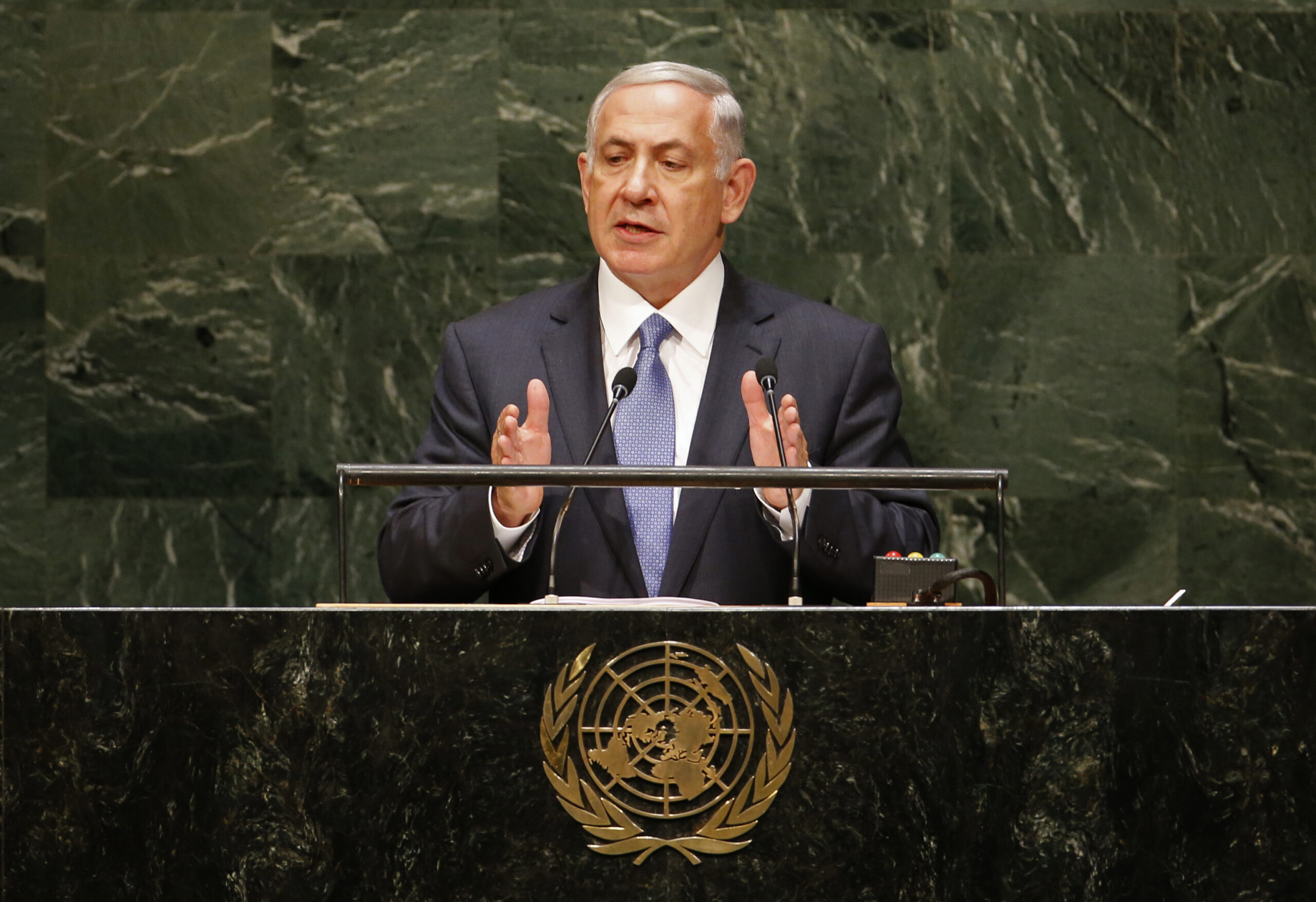
“Thank you PM Jansa for your courage and clarity amidst EU hypocrisy,” Prime Minister Benjamin Netanyahu posted on X late last month, after Slovenia vetoed an EU statement condemning the settlements.
Under Jansa, Slovenia has also reversed its own ban on imports from the settlements, lifted its arms embargo on Israel and scrapped entry bans on Netanyahu and two of his ministers.
In his first official visit to the country, Israel’s top diplomat Gideon Saar will inaugurate the embassy Wednesday, with his ministry describing Jansa as a “friend of Israel”.
Jansa has said his government was “only normalising Slovenia’s foreign policy and fixing the damage” caused by liberal ex-prime minister Robert Golob.
“To fulfil its priority of improving the well-being of Slovenians, the government will carry out pragmatic policies,” Jansa said in another post earlier.
‘Instrument’
Not all Slovenians are on board, however.
A poll conducted by the daily newspaper Delo in June found that 56 percent of Slovenians opposed closer ties with Israel, while 14 percent supported them.
Several rights groups have announced protests against the embassy’s inauguration, which has also drawn sharp criticism from the opposition.
Golob’s party has described the new embassy as “a return of the favour” for Israel’s alleged support of Jansa during the March election.
The last days of campaigning ahead of the March 22 vote were overshadowed by claims of foreign interference, with authorities probing whether Israeli company Black Cube was behind secretly recorded videos alleging graft in Golob’s government.
Jansa – who faced accusations his party was linked to the videos – has admitted to having met a Black Cube official, but denied being behind the videos.
Daily Dnevnik’s columnist Darijan Kosir in a weekend commentary said Jansa was serving “as the US-Israel’s Trojan horse” in the EU, taking the place of Viktor Orban, Hungary’s long-time premier who lost April elections.
Former president Danilo Turk told AFP that Slovenia has “become an instrument of Israeli policy”.
“This is a very uncomfortable situation,” said Turk, an International Law professor at Ljubljana University.
BRUSSELS: European cities will gain more leeway to curb short-term rentals such as Airbnb under plans to bring down housing costs in tourism hotspots that the European Union is to unveil Wednesday.
The European Commission is to lay out conditions under which local authorities can limit short lets, as part of an “affordable housing” package that seeks to address what EU chief Ursula von der Leyen has called a “social crisis”.
“Nurses, teachers, and firemen cannot afford to live where they serve. Students drop out because they cannot pay the rent. Young people delay starting families,” she said in a speech last year highlighting the issue as a priority for Brussels.
Though hugely popular with visitors, short-term lodgings are blamed by residents in many popular travel destinations for depriving locals of apartments for long-term rent and pushing up prices.
From New York to Tokyo and Barcelona, a growing number of cities worldwide have imposed or considered restrictions on tourist flats in recent years.
But curbs have often been followed by court challenges from rental providers and tourism operators, resulting in legal uncertainty.
The commission’s Affordable Housing Act aims to provide cities with legal cover, clarifying when authorities can take action without falling foul of EU single market rules.
Cities and other relevant authorities will be allowed to limit holiday rentals as well as the purchase of property for short-term letting purposes in areas deemed “under housing stress”, according to a draft seen by AFP.
The document laid out a series of parameters that needed to be met for an area to be defined as under stress, such as the ratio between house prices and incomes there.
“Population dynamics” and future housing supply and demand will also need to be taken into account, the draft said, adding any measure should be non-discriminatory, necessary and proportionate.
‘Structural solutions’
The legislation will not affect landlords that rent out their own primary residence for short periods of time.
Housing affordability has become a growing issue across the 27-nation bloc in recent years.
Property prices have surged by 60 percent, while rents have climbed by 20 percent over the past decade, leaving millions struggling to find a home they can afford, according to Brussels.
The EU says this is mainly driven by insufficient housing supply but short-term lets add extra pressure in certain areas.
Short rentals account for only about 1.2 percent of the European Union’s housing stock but the share can reach as much as 20 percent in popular districts of some tourist destinations, according to EU data.
Holiday lets “can generate important economic and social benefits, especially for households struggling to make ends meet” but “they may also aggravate housing demand pressures in some constrained local housing markets,” the EU draft read.
Yet, that’s something rental providers dispute.
“For the great majority of cities, the claim that short-term rentals are driving housing stress does not survive contact with this evidence,” tech lobby group CCIA wrote in a letter to the commission this month.
In some cities with restrictions, rents and hotel prices have gone up, the letter added, noting Lisbon recently overturned some of the curbs it had previously imposed.
“Europe’s housing crisis needs structural solutions, and the implementation of this Act should focus on increasing the supply of homes,” said an Airbnb spokesperson.
A NEW teaser video from Oasis ‘confirms’ an upcoming tour location – with a subtle nod to a moment that happened around the group’s original split.
The legendary rock band – led by brothers Liam Gallagher and Noel Gallagher – reformed in 2024 after breaking up in 2009.
Oasis fans think they’ve sussed out an upcoming tour location after the band posted a new teaser clip onlineCredit: X/@oasisThe clip in question features a reference to a famous moment between brothers Liam and Noel GallagherCredit: Getty
Oasis originally split in 2009, before reuniting in 2024Credit: GettyThe band have since been going from strength to strengthCredit: Alamy
Another added: “Hey Oasis, you owe me a gig in Paris!!! I was there that night in 2009. F*****g night. So VIVE LA FRANCE!!”
In addition to this, the video also includes a reference to an infamous moment in Oasishistory.
A viewer remarked: “Please tell me that was a plum he threw. Genius.”
While a second person said: “OMG ITS LIAM THROWING A PLUM AT NOEL !!!!!”
In the clip, a man wearing a leather jacket took out a plum from a paper bag and began eating it.
Soon after this, he lobbed the plum away somewhere off camera, into the distance.
It references Noel previously telling how – during a heated 2009 argument at the Rock en Seine Festival in Paris the time of his Oasis departure – Liam threw a plum at him.
In 2011, he said at a press conference for solo album Noel Gallagher’s High Flying Birds: “He storms out of the dressing room and on the way out, he picked up a plum and threw it across the dressing room and it smashes against the wall.”
Noel added: “Part of me wishes it did end like that – “plum throws plum.”
At this session participants use scraps of paper and other materials to create a fun collage of their friends. It is being held on Sept. 10. Book through experiences.suplift.com .
The US has evolved its method of criminal executions, but drug shortages and protests over medical ethics have made lethal injections increasingly difficult to carry out. John Malcolm of the Meese Institute tells Al Jazeera that the US should ‘go back to a firing squad’.
Zendaya has become the big screen’s hottest heroine after her films raked in some £3billion this year alone at the global box officeCredit: PANewlyweds Zendaya and Tom, who also star in the Spider-Man moviesCredit: Getty
It puts her ahead of every other leading lady in cinema in 2026 — with her annual income from movies alone estimated at tens of millions of pounds.
The swords and sandals epic has itself become a massive summer hit and a box office phenomenon.
It easily grabbed the cinema top spot after its July 17 release, until the latest Spider-Man movie took the crown when it came out two weeks later.
Zendaya with Matt Damon in Christopher Nolan’s The OdysseyCredit: PAZendaya plays MJ in the Spider-Man movies, opposite husband Tom in the title roleCredit: Alamy
Spidey stayed at No1 on the global box office throughout August — until The Odyssey knocked it off again last weekend, proving the pulling power of newlyweds Zendaya and Tom.
She began the year with her other release, romantic dark comedy The Drama, in which she starred alongside Robert Pattinson.
It made £97million worldwide.
And Zendaya is showing no signs of slowing down, with Dune: Part Three set to debut on December 18 and looking to be another massive hit, possibly grossing another billion dollars (£740million).
Zendaya began the year with her other release, romantic dark comedy The Drama, in which she starred alongside Robert PattinsonCredit: AlamyZendaya is showing no signs of slowing down, with Dune: Part Three set to debut on December 18Credit: Alamy
Dune: Part Two made a global gross of over £526million in 2024, growing from part one’s £303million in 2021. It is now likely the third instalment will skyrocket way past its prequel.
It all comes as Hollywood’s leading lady just recently celebrated her 30th birthday after becoming one of the most influential young actresses of her time.
Barrow pledges new power infrastructure, including a 24-megawatt plant, to tackle The Gambia’s worsening electricity crisis.
Published On 9 Sep 20269 Sep 2026
Gambian President Adama Barrow has said the country will boost energy supplies by next month, hoping to quell violent protests over prolonged power outages as the premier stands for re-election.
Protesters burned tyres and built barricades blocking traffic, demanding that Barrow resign, in The Gambia’s capital, Banjul, and nearby cities on Monday and Tuesday.
Police used tear gas to disperse crowds who gathered in multiple locations, including near Barrow’s residence and the National Water and Electricity Corporation (NAWEC) headquarters, which supplies the country’s electricity.
Demonstrators burn tyres and block a road during a protest over the country’s ongoing electricity crisis and persistent power outages in Brusubi on September 8, 2026. [AFP]
Barrow declared the outages an emergency and a “national security issue” during a visit to a NAWEC power station. In a national address, he announced that the government would install a 24-megawatt generation machine by the end of October.
“I know that the fans have stopped turning, children work in the dark, mothers throw away stale food, and the heat is unbearable by day and by night,” Barrow said.
The rolling blackouts are taking place during the West African country’s hot season and have lasted up to 48 hours in some places.
The Gambian president also announced an additional 50-megawatt solar power plant that would begin construction soon.
NAWEC Managing Director Gallo said the prolonged electricity cuts were in part due to climate change and the US-Israel war on Iran. The electricity provider, in a statement released in August, also claimed that it was experiencing an “unforeseen surge” in demand due to high temperatures.
The blackouts come just months ahead of the December presidential election, in which Barrow is running for a third term.
A suspected-Houthi roadside ambush of Yemeni government forces has been captured on camera. The convoy was driving through the Hodeidah governorate when gunmen opened fire, killing one person and wounding several others.
Billionaire comedy duo Trey Parker and Matt Stone are unveiling a new name for “South Park” ahead of the show’s 29th season: “South America.”
The satirical series’ name change follows President Trump’s renaming of Lake Ontario to Lake America amid the escalating U.S.-Canada trade war. Last week, tech behemoths Apple and Google honored Trump’s executive order and renamed the Great Lake on their maps for U.S. users.
Parker and Stone made the announcement on social media on Tuesday, writing, “Inspired by the bravery and patriotism of Apple and Google, we are changing the name of South Park to SOUTH AMERICA. We especially want to thank our parent company Paramount — a Skydance Capitulation.”
The duo also jabbed at their parent company and its new owner, Skydance Media, for what media critics have characterized as caving to the Trump administration’s Federal Communications Commission. The “capitulation” involved controversial corporate and programming adjustments as well as agreeing to a $16-million settlement over a lawsuit brought by Trump involving a “60 Minutes” segment to get Paramount’s $8-billion merger with Skydance approved.
Last year, following a particularly incendiary episode of the show — in which a parody of Trump has an X-rated fling with Satan, and the president is portrayed as having an animated micropenis — the White House issued a statement to Variety slamming the series.
“The Left’s hypocrisy truly has no end — for years they have come after ‘South Park’ for what they labeled as ‘offense’ [sic] content, but suddenly they are praising the show,” White House spokesperson Taylor Rogers said in a statement to the outlet. “Just like the creators of ‘South Park,’ the Left has no authentic or original content, which is why their popularity continues to hit record lows.”
Last week, “South Park,” won an Emmy Award for outstanding animated program. And last summer, Parker and Stone reached a five-year, $1.5-billion deal with Paramount to secure exclusive global streaming rights on Paramount+, making the series one of television’s most valuable shows and its creators two of the highest-paid comedy writers in the biz.
The 29th season of “South America” premieres Sept. 16 at 10 p.m. on Comedy Central.
Gipsy Kings by Andre Reyes are bringing their legendary sound to Jeddah for the first time on Thursday, Sept. 10, at Abadi Al-Johar Arena. For details, check jeddah.platinumlidt.net .
Reading scores among 15-year-olds in the United States have fallen to the lowest level in about 25 years, according to an international education assessment.
On Tuesday, the Organisation for Economic Co-operation and Development (OECD) released findings from the 2025 Programme for International Student Assessment (PISA), a global metric for educational achievement.
Recommended Stories
list of 3 itemsend of list
The results showed that US reading scores fell 14 points from 2022, the last time PISA results were released.
The decline was part of a broader international trend, with an OECD average from 23 countries also dropping 16 points.
But the US stood out for the size of its performance gap. Some 25.7 percent of US students were ranked as low performers in reading, while 13.3 percent were flagged as top performers.
“Looking across all 90 participating countries, there was not a single country with significantly wider inequality in reading scores than the US,” Michael Kieffer, a professor of literacy education at New York University, told Al Jazeera. “What is clear is that we are under-serving many students.”
The PISA results come as the administration of US President Donald Trump seeks to reshape the federal government’s role in education.
In March 2025, Trump issued an executive order calling on Education Secretary Linda McMahon to begin the process of dismantling the Department of Education, a federal agency that tracks student achievement, distributes federal education funds and enforces civil rights in schools.
The Education Department, however, does not establish school curriculums or academic standards. That responsibility has traditionally fallen to state and local authorities.
Still, Trump pointed to slipping test scores as a reason to shutter the department. He has also denounced the department for its “entrenched bureaucracy” and called for its responsibilities to be redistributed to the states.
In response to a request for comment on Tuesday, McMahon sent a statement to Al Jazeera echoing Trump’s push.
“The United States of America is a nation built to lead the world, yet our one-size-fits-all federal education bureaucracy has shortchanged our children and stifled our future,” McMahon wrote.
The White House has argued that federal education spending is excessive and has failed to translate into higher standardised test scores.
Since the Education Department was founded in 1979, it has spent more than $3 trillion, according to the White House.
“This moment is a stress test for our nation’s future,” McMahon said in her statement to Al Jazeera. “To pass it, we must enact a hard reset that stops protecting a failed status quo and instead builds a system that empowers state leaders and embraces innovative learning options through school choice.”
“School choice” has been a rallying cry for many US conservatives. The term refers to the practice of diverting taxpayer money away from public education to help parents finance alternative choices for their child’s schooling, like charter schools, homeschooling or private institutions.
The practice is controversial. Critics have accused the “school choice” system of weakening public education in favour of less regulated school systems that receive money with little oversight.
But since returning to office in 2025, Trump has embraced “school choice” as a form of “educational freedom”.
Last year, the Education Department announced $500m for its Charter School Program, touting the funds as the “largest investment” the initiative has ever received.
The money was earmarked to allow states to expand their charter school systems and fund new charter-school developers.
In July 2025, the One Big Beautiful Bill Act – Trump’s signature piece of legislation – also created the first federal tax credit for donations to organisations that provide scholarships for primary and secondary school students, including for private-school tuition and tutoring.
Last month, Trump hosted a “school choice”-themed event at the White House to kick off the start of the new school year.
But critics warn that greater investment in education is needed across the board to reverse diminishing test scores.
“PISA 2025 shows that reversing declines in student performance is urgent,” OECD Secretary-General Mathias Cormann said in a statement.
“The most successful education systems focus on fewer areas in greater depth, invest in teachers, engage parents and provide targeted support for the students and schools that need it the most.”
The 100 year old scooped the TV presenter prize, having been nominated alongside Alison Hammond, Ant and Dec, Claudia Winkleman and Stacey Solomon.
Although Sir David was absent from the ceremony, a speech was delivered on his behalf.
He said: “I hope this award is a response to the part television has played in growing recognition, not only for the terrible plight our wonderful planet is in as a result of human activity but also of the fact we now have a pressing responsibility to do what we can to protect and conserve it.
“I am honoured indeed. We are increasingly aware that if we are to repair the planet we need major national and international initiatives which certainly require our support, but it is also possible to make small differences in our own spaces and neighbourhoods.
“If enough small differences are made they do add up to doing something significant, while also providing spaces that we do enjoy being in and nurturing.”
Attenborough added: “Humanity has always needed the natural world for all the practicalities of life and for our mental wellbeing. Now the natural world needs us too. Surely we must not ignore that simple fact.”
The internationally adored naturalist received two NTA nominations this year, with his nature documentary Secret Garden also recognised in the factual entertainment category.
However, it was Gogglebox that walked away with that particular accolade. Sir David launched his presenting journey fronting Zoo Quest in 1954, subsequently helming documentary programmes The Life Collection, Natural World, Wildlife on One, the Planet Earth franchise, The Blue Planet and Frozen Planet.
UNITED NATIONS: Israeli Prime Minister Benjamin Netanyahu is making a whirlwind 24-hour trip to speak at the annual U.N. gathering of world leaders this month because “there is no option” after New York’s mayor urged his arrest over the war in Gaza, Israel’s U.N. envoy said Tuesday.
Ambassador Danny Danon accused Mayor Zohran Mamdani of “doing politics” when he called the prime minister a “war criminal” and called for his arrest, which he had to withdraw because New York City does not have authority to take Netanyahu into custody.
“You know, it became very trendy to do politics by blaming Israel,” Danon added. He stressed, “For us, it’s important the prime minister will come.”
Netanyahu has become an increasingly polarizing figure over Israel’s war against Hamas in Gaza. Mamdani, whose office did not immediately respond to messages seeking comment Tuesday, has pointed to the arrest warrant issued by the world’s top war crimes tribunal against Netanyahu in November 2024, accusing him and another Israeli official of crimes against humanity.
The International Criminal Court warrant said there was reason to believe Netanyahu used “starvation as a weapon of warfare” by restricting humanitarian aid and intentionally targeting civilians in the campaign against Hamas — charges Israel denies.
While New York City does not have legal authority to execute an ICC arrest warrant, Mamdani has encouraged the federal government to do so. The U.S. and Israel are not members of the court, and the Trump administration has imposed a series of sanctions on ICC staffers in a campaign to dismantle the tribunal.
Netanyahu is scheduled to arrive in New York late on Sept. 23, address the U.N. General Assembly the afternoon of Sept. 24 and fly back to Israel that night, Danon said.
Danon noted that the meeting of leaders from the 193 U.N. member nations is taking place during the Jewish holidays and an election campaign as Netanyahu tries to keep his job as prime minister.
Danon said protests against Netanyahu would “create more chaos” on New York streets during the high-level meetings the week of Sept. 22-28.
Last year, there was a mass walkout from the U.N. General Assembly hall when Netanyahu started to speak from the podium. This year, Danon said, “I expect that there will be something like another show.”
But the ambassador said Netanyahu is experienced, “and I’m sure he will deliver his speech despite those attempts.”





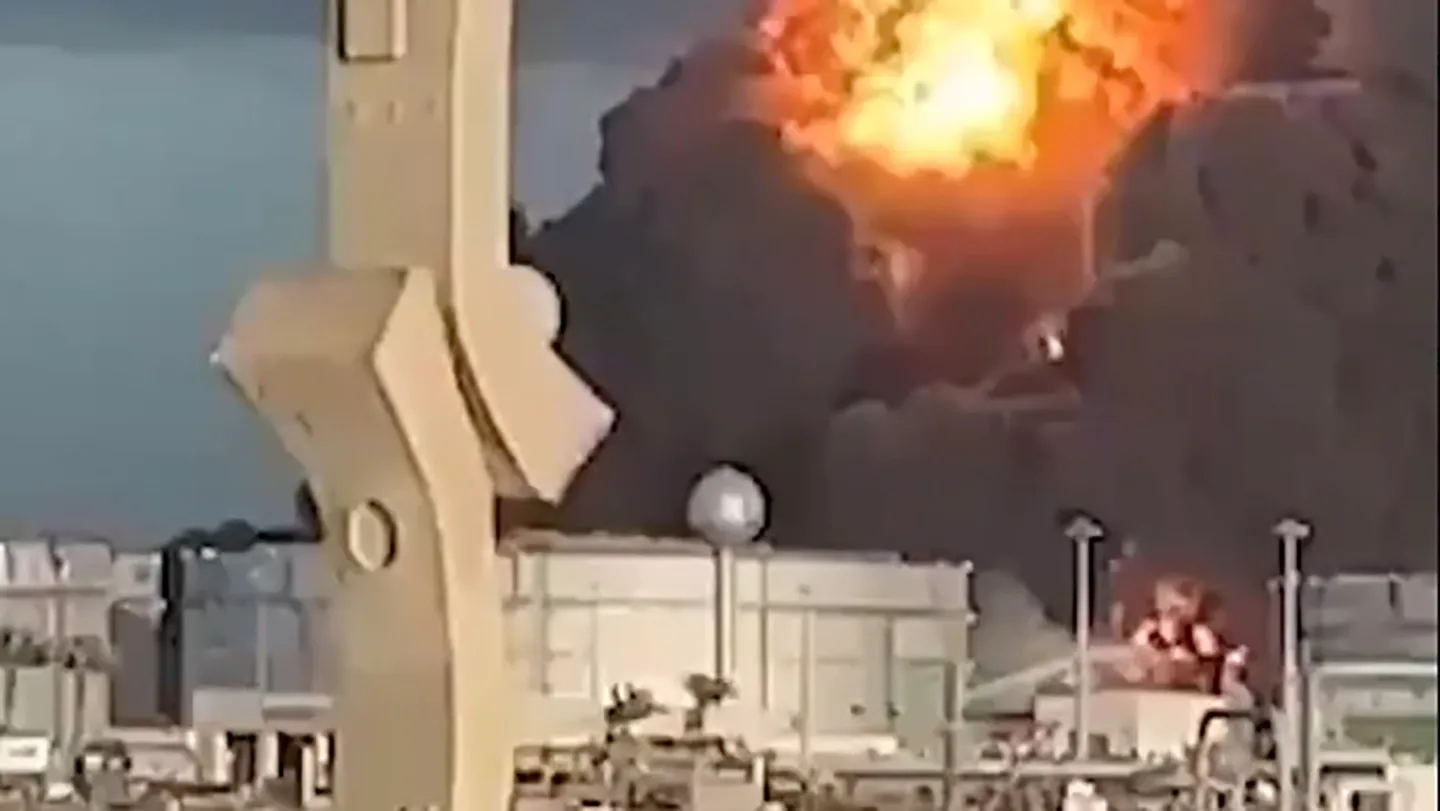



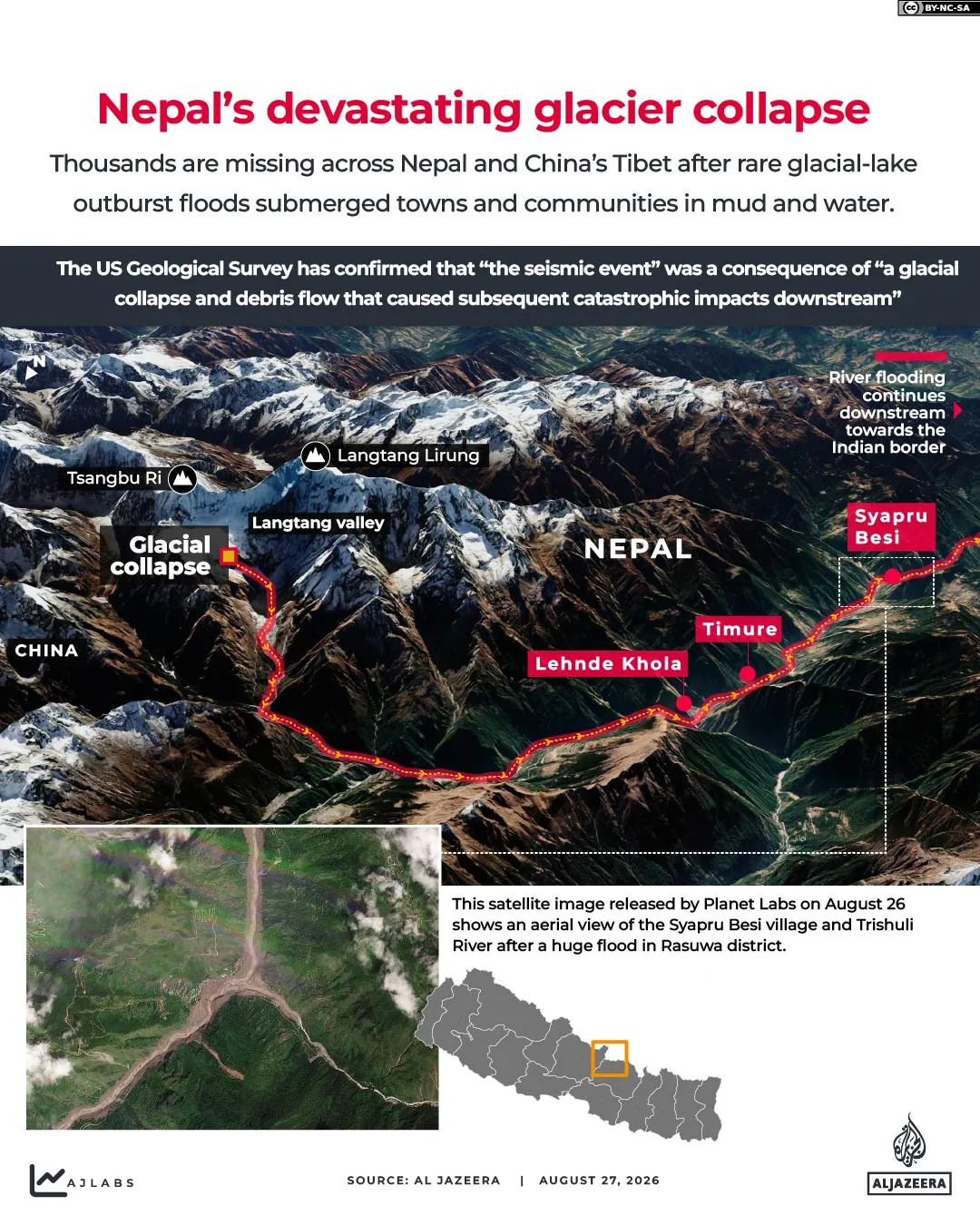











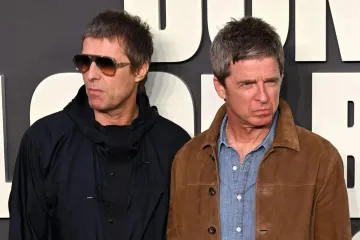


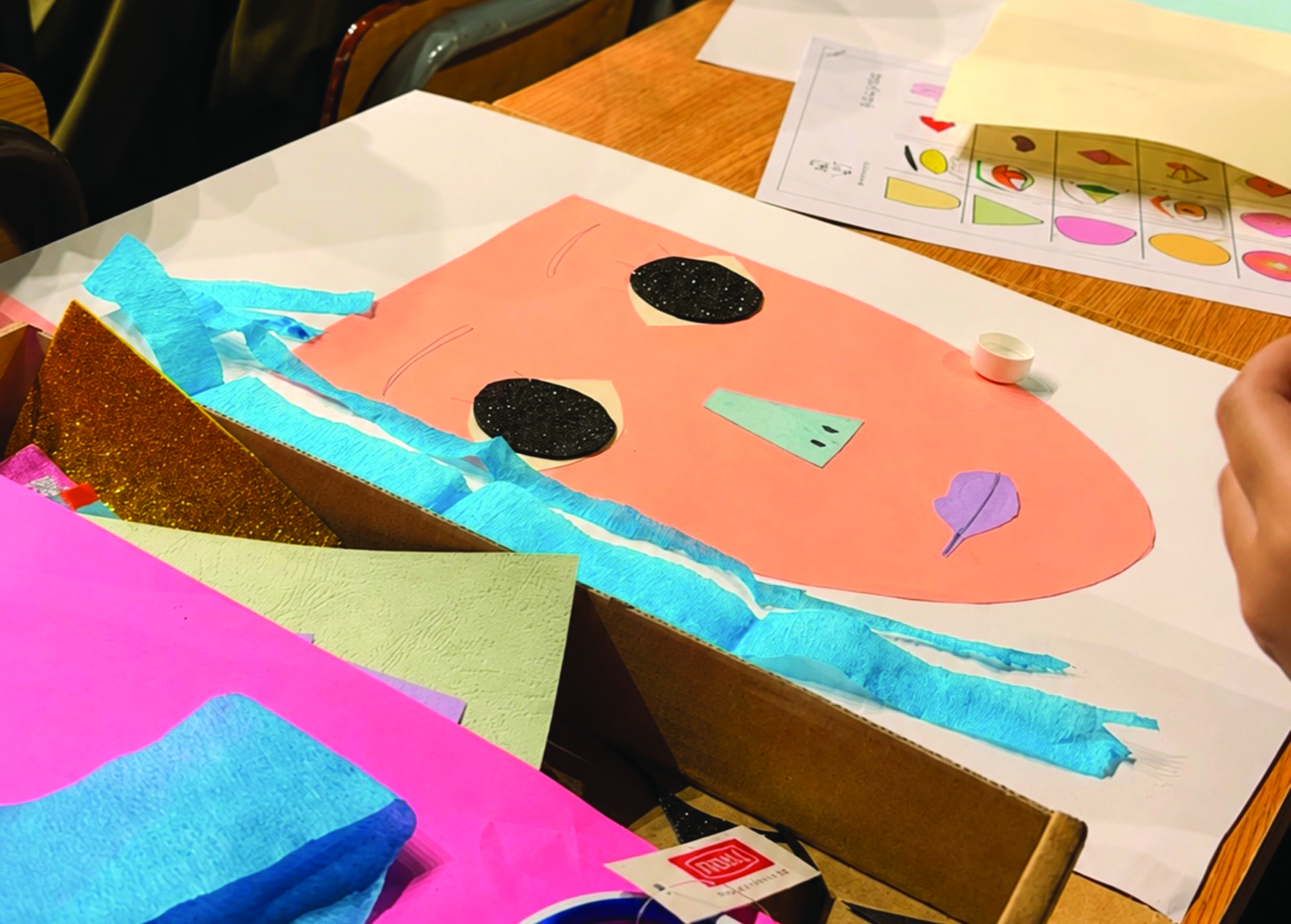




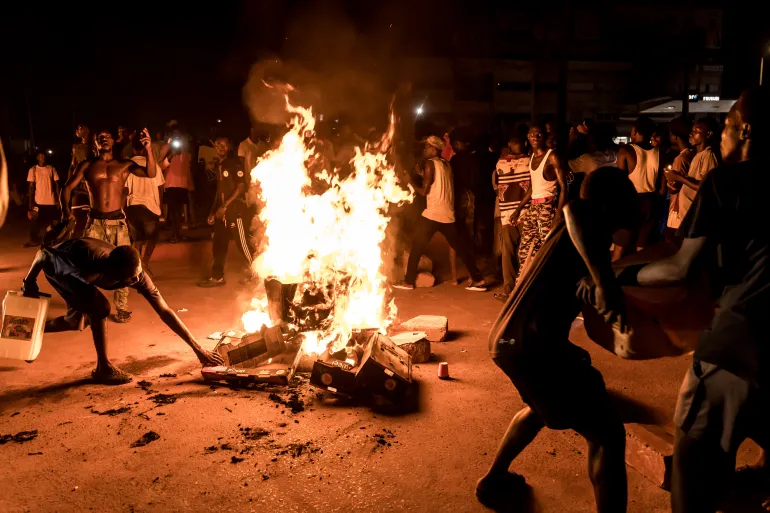
![Demonstrators burn tyres and block a road during a protest over the country's ongoing electricity crisis and persistent power outages in Brusubi on September 8, 2026. [AFP]](https://i0.wp.com/occasionaldigest.com/wp-content/uploads/2026/09/afp_6aa0b264c94c-1788916324.jpg?w=640&ssl=1)