Israeli prime minister denies claim that UAE president warned him of Hamas plans before the 2023 attacks.
Published On 10 Sep 202610 Sep 2026
Israel’s Prime Minister Benjamin Netanyahu has said he will sue the Haaretz newspaper over a report that claimed he was warned of Hamas’s plans for an offensive days before the attacks of October 7, 2023.
In a statement on X on Wednesday, Netanyahu called the report “fabricated” and “false” and said he had instructed his lawyers to also sue Haaretz and the authors of the report, Shlomi Eldar and Ruth Yaval.
Recommended Stories
list of 4 itemsend of list
The report, published on Tuesday, claimed that the president of the United Arab Emirates, Mohammed bin Zayed had warned Netanyahu about a possible attack by Hamas 10 days before the events of October 7, 2023.
Palestinian fighters killed at least 1,195 people in southern Israel on that day, and took some 251 others captive. The attacks prompted Israel’s genocidal war on Gaza, in which at least 73,669 Palestinians have been killed.
The Haaretz report claimed that the UAE president, who is also known as MBZ, spoke to Netanyahu by phone and warned him of a threat from then-Hamas leader Yahya Sinwar.
According to Haaretz, Sinwar – who was angered by stalled prisoner exchange talks and Israel’s continued blockade of Gaza – had relayed the warnings to the UAE through an intermediary. He said he was preparing a “huge surprise” and told contacts to tell Israel “to expect an earthquake”, according to the report.
It said MBZ and his aides read this as a sign of an impending full-scale attack and passed the intelligence to Israel’s Shin Bet agency. But the internal security agency dismissed the threat.
MBZ then raised the warning directly with Netanyahu, who also brushed it aside, the report said.
The UAE has declined to comment on the allegations.
Its Ministry of Foreign Affairs issued a statement on Tuesday saying that “the UAE government does not comment on media stories or speculation regarding conversations between government leaders”.
The Haaretz report comes at a time when Netanyahu is trying to secure his position as prime minister in the upcoming Knesset elections in October. Netanyahu has been trailing in the polls, facing a fierce challenge from former military chief Gadi Eisenkot.
Netanyahu on Wednesday called the Haaretz report “politically motivated” and part of the “left’s election campaign”.
He also denied its claims of a phone call with MBZ.
“The National Security Council and the Military Secretary meticulously reviewed the Prime Minister’s call log for those days—and found no trace of it whatsoever,” he said.
In a separate statement, Netanyahu also claimed that the person responsible for Haaretz’s “false report” was the Palestinian political figure, Muhammad Dahlan.
Dahlan was expelled from the Fatah party in 2011 after a power struggle with the current president of the Palestinian Authority, Mahmoud Abbas, and lives in the UAE.
Dahlan’s representatives have rejected the claim, according to Israeli media.
The Navy says it is making a concerted effort to apply the hard lessons learned from the marathon deployments of the USS Gerald R. Ford and USS Abraham Lincoln, both in combat and in quality of life for the crew, according to a new video posted by the Chief of Naval Operations, Adm. Daryl Caudle. The changes will be rolled out when USS Theodore Roosevelt deploys following a brief, last-minute, and previously unreported maintenance availability, TWZ has learned. Meanwhile, the United States and Iran are quickly climbing the escalation ladder again, as the latest series of tit-for-tat strikes has resulted in a massive overnight ballistic missile attack on a Jordanian base hosting U.S. forces and the destruction of 10 Iranian commercial oil tankers over the past week.
Here’s TWZ’s weekly carrier tracker monitoring America’s flattop fleet, including deployed Carrier Strike Groups (CSG) and Amphibious Ready Groups (ARG), using publicly available open-source information. Check out last week’s report here.
TWZ/IAN ELLIS-JONES (High Resolution)
George Washington Strike Group Evades Iranian Ballistic Missiles
Less than a month after taking up station in the Middle East, elements of the George Washington CSG reportedly came under ballistic missile fire from the Islamic Revolutionary Guard Corps (IRGC) on September 5, according to Iranian media. “A U.S. aircraft carrier and guided-missile destroyer successfully evaded multiple unprovoked Iranian attacks,” U.S. Central Command (CENTCOM) confirmed in a statement, without identifying which warships were targeted. TWZ cannot independently verify the Iranian reports, and the Islamic Republic has frequently leveraged disinformation throughout the war.
U.S. forces responded swiftly the same day, striking three Iranian commercial oil tankers, part of the “shadow fleet” that funds IRGC operations, in a notable step beyond U.S. President Donald Trump’s recently announced tanker-for-tanker policy. “Let the message to the IRGC be clear: If you shoot at two of our ships, we will impose an even higher economic cost – taking out three of yours,” Adm. Brad Cooper, the CENTCOM commander, warned. “We will not hesitate to defend American forces, and if necessary, destroy Iran’s limited and exposed oil fleet,” he added. No U.S. casualties or damage to the American ships was reported.
Video of U.S. Central Command forces striking three Iranian crude oil carriers on September 5, 2026. (USCENTCOM video)
Details surrounding the attack on September 5 are limited, but Iranian-affiliated channels claimed the IRGC fired the Qassem Basir medium-range anti-ship ballistic missile (ASBM) for the first time. If true, it would represent the first known combat employment of the ASBM since it was unveiled in May 2025 and poses a new threat to Navy warships operating within the 1,200-kilometer, or roughly 750-mile, stated range (although that figure is more than likely overstated). Generally speaking, American cruisers and destroyers can engage ASBMs in two layers, in some cases using Standard Missile-3 (SM-3) in the midcourse phase and SM-6 during the terminal phase. Both are finite resources, and only so many can be loaded in their Vertical Launch System (VLS) cells.
Since the initial exchange on September 5, the tit-for-tat strikes have continued to escalate. CENTCOM destroyed another five crude oil tankers on September 8, bringing the total to 10 in a week, after the IRGC targeted an unidentified Navy warship again with ballistic missiles. Iran answered overnight, launching a huge salvo of ballistic missiles toward Muwaffaq Salti Air Base in Jordan, where a significant contingent of U.S. forces is forward-deployed. Dramatic videos on social media show Patriot batteries firing against the incoming projectiles, with open-source analysts counting at least 60 interceptors employed.
U.S. destroys another five Iranian tankers after the IRGC targets another American warship. (CENTCOM video)
The USS George Washington arrived in the CENTCOM area of responsibility (AOR) on or around August 19, escorted by a single guided-missile destroyer, USS Shoup. The pairing matches the composition described in CENTCOM’s statement about the IRGC attack on September 5. Washington’s public affairs team reposted the statement on their social media accounts.
The possibility that the second Nimitz class flattop operating alongside Washington in the Middle East, the USS George H.W. Bush, was the target of the attack cannot be ruled out. Both carriers are the same class and look alike from a distance (or through a seeker). The George H.W. Bush CSG is currently composed of a guided-missile cruiser, USS Princeton, and two guided-missile destroyers, USS Ross and USS Donald Cook.
An EA-18G Growler launches from the flight deck of USS George H.W. Bush during night flight operations. (CENTCOM photo) An F/A-18F Super Hornet on the flight deck of aircraft carrier USS George H.W. Bush (CVN 77). (U.S. Navy photo) U.S. Central Command Public Affa
Bush was pictured conducting nighttime flight ops in CENTCOM’s most recent update detailing the status of the ongoing blockade: U.S. forces redirected 94 commercial vessels, kinetically disabled three, and boarded two to ensure compliance, as of September 7.
USS Theodore Roosevelt Undergoes Last-Minute Maintenance Ahead of Deployment
The next carrier scheduled to deploy from the U.S., the USS Theodore Roosevelt, recently got underway after a brief maintenance period. While there was no mention of an upcoming availability in budget documents, we noticed what appeared to be pierside work in commercial satellite imagery, similar to the brief stints Washington and Vinsoncompleted recently while in homeport. In response to our inquiry, a Navy official told TWZ, “Nimitz-class aircraft carrier USS Theodore Roosevelt (CVN 71) is currently in port at Naval Air Station North Island in San Diego conducting routine, planned maintenance. While we do not comment on future operations or movements due to operations security, aircraft carriers follow an optimized fleet response plan that provides full realignment of maintenance, training, and deployment cycles to fit in a standard 36-month rotation.”
Roosevelt’s upcoming deployment has been the subject of heavy speculation, as there will soon be no carriers available in Asia should a contingency arise. While Lincoln is currently in the South China Sea, she’s at the tail end of her deployment and in the process of heading home. The same official addressed the coverage gap, telling us, “U.S. Pacific Fleet’s posture across the region remains strong, adaptive, and ready. The U.S. Navy is purpose-built to flex, surge, and sustain across multiple theaters simultaneously – and that flexibility is a strategic advantage, not a vulnerability. U.S. Pacific Fleet’s commitment to the region is enduring – backed by the Joint Force and a strong network of allies and partners – and we will continue to fly, sail, and operate wherever international law allows to support a free and open Indo-Pacific.”
Flight operations on USS Theodore Roosevelt (CVN 71), Sept. 7, 2026. (U.S. Navy photo) Petty Officer 3rd Class Alexander BussmanSailors direct the launch of an F/A-18E Super Hornet on USS Theodore Roosevelt (CVN 71). (U.S. Navy photo) Petty Officer 3rd Class Alexander Bussman
Roosevelt departed San Diego on September 5 and is still at sea as of publication. Imagery posted two days later on DVIDS, the military’s content-sharing platform, shows the flattop carrying out flight operations in the U.S. 3rd Fleet AOR and conducting “advanced training to bolster strike group readiness and capability.” The carrier was last tracked broadcasting a position publicly with her Automatic Identification System (AIS) transponder on, operating to the west of Baja California, Mexico, according to MarineTraffic. It’s unclear if the maintenance has been completed or if additional modifications and training will be required before the CSG deploys.
Transit of USS Theodore Roosevelt off the west coast while working up. Source: MarineTraffic/KPLER (Reprinted with permission)
As noted above, the Chief of Naval Operations, Adm. Daryl Caudle, alongside Master Chief Petty Officer of the Navy (MCPON) John Perryman, posted a video yesterday with new information on Roosevelt’s upcoming deployment. “The lessons you’re bringing home are helping us better prepare the next team to deploy,” Perryman explained, addressing Lincoln’s crew. “Right now USS Theodore Roosevelt is putting those lessons into action using what we learned from Abraham Lincoln and Gerald R. Ford,” Caudle added. On logistics, that means maximizing the loadout of food, retail products, and hygiene items by converting available spaces into additional storage facilities. Regarding quality of life, improvements include new entertainment, more fitness equipment, and holiday materials purchased in advance.
“Small things matter during a long deployment because taking care of our Sailors is part of maintaining combat readiness,” Perryman noted. Watch the full video below.
CNO Adm. Daryl Caudle and MCPON John Perryman provide an update on USS Theodore Roosevelt’s upcoming deployment. (U.S. Navy video)
Three other U.S.-based carriers, USS Carl Vinson, USS Dwight D. Eisenhower, and USS Ronald Reagan, were recently underway for training but have returned to their respective homeports since our last report on September 1.
Eisenhower returned to Pier 14S at Naval Station Norfolk on September 2 after a 12-day underway for Fleet Replacement Squadron (FRS) and Training Command (TRACOM) Carrier Qualifications (CQ) in the Virginia Capes and Jacksonville operating areas. Vinson completed 25 days of Tailored Ship’s Training Availability (TSTA) and Final Evaluation Period (FEP) before mooring at Juliet Pier on Naval Air Station North Island, San Diego, on September 4. And Reagan, which just finished a nearly 18-month Drydocking Planned Incremental Availability (DPIA), returned to Naval Base Kitsap-Bremerton in Washington state on September 7 after a four-day post-availability shakedown and sea trials. It’s unknown how many rounds of sea trials will be required before Reagan returns to the fleet.
For the time being, America has one carrier coming back online, but the net gain will be short-lived, as Lincoln is expected to begin a DPIA after returning home.
USS Abraham Lincoln Leaves Thailand Looking Like A Different Ship
Elements of the Abraham Lincoln CSG, as well as escort cruiser USS Robert Smalls, arrived in Thailand on September 2 for what the Navy characterized as the “first full port call” of their nine-plus-month deployment. The crew of roughly 5,000 Sailors and Marines was finally able to leave the ship for liberty, with the majority standing on solid ground for the first time since November 2025.
“This port visit to Pattaya was a tremendous opportunity for this crew to recharge and a highlight for the strike group,” Abraham Lincoln’s commanding officer, Capt. Dan Keeler, said in a press release. “Thailand has such a rich culture and history, coupled with incredible hospitality, and that all shone through in this port visit. We are grateful to our Thai allies for hosting us, and we look forward to continuing our mission here in 7th Fleet, alongside Thailand and our other regional allies and partners.”
The USS Abraham Lincoln (CVN-72) arrives at Laem Chabang Port in Thailand on September 2, 2026. (Photo by Thananuwat Srirasant/Getty Images; Reprinted with permission)
According to the press release, the crew “experienced all the sights and sounds Thailand has to offer, deepening their understanding of the Thai people and strengthening interpersonal bonds.” Lincoln pulled into port looking worse for wear after 286 days at sea, with noticeable algae and rust spots, conditions that are expected given the high operational tempo endured during nearly seven months of combat. Videos surfaced of the hull being scrubbed by Thai contract crews at a fraction of what the same job would cost stateside. The carrier departed five days later on September 6 in much better shape.
Timelapse video of USS Abraham Lincoln leaving Thailand on September 6, 2026. (Abraham Lincoln video by MC3 Castro)
Lincoln is now continuing the journey home to San Diego, though whether any additional stops will be made along the way is unknown. A single-sourced report from Newsweek, which TWZ has not verified, claimed that another port call might be added, according to the wife of an officer aboard. As of publication, Lincoln is 293 days into the deployment, just 33 days short of the 326-day record set by USS Gerald R. Ford earlier this year.
U.S. Navy Big-Deck Fleet At A Glance
Overall, three U.S. carriers are deployed (with one heading home), one is preparing to deploy in the near term, three are working up in various states of readiness, three are in current or upcoming maintenance, and one is being used primarily for training before deactivation next year. One amphibious ready group is deployed, one is forward-deployed and at homeport, four are working up or in port, and three are in maintenance.
Note: Positions are general approximations.Non-deployed LHA/LHD amphibious warships are not shown.
A BREAKFAST TV legend has been spotted going wild at a Kasabian gig, punching the air and “loving every second.”
Would you have recognised him?
The star in question was spotted jumping up and downCredit: TikTokHe hung over the rail as he sang along to the rock band’s tunesThe broadcaster was partying at a Kasabian gigCredit: TikTokHe looked like their number one fan going wild in the audienceCredit: TikTok
The 60-year-old was seen hanging over a railing, desperate to get closer to the front as he sang along.
He then bopped his head up and down to the tune while he punching the air.
Sign up for the Showbiz newsletter
Thank you!
The former Big Breakfast presenter looked like Kasabian’s biggest fan as he jumped up and down to their hit Come on Back To Me Good.
In the video uploaded to TikTok, the radio star can then be seen taking a break from groovin’ as he filming the British rock band.
He donned a smart blue shirt and beige trousers for the occasion.
The breakfast TV icon in question is of course, Jonny Vaughan.
The man in question is of course Jonny Vaughan, famed for presenting The Big Breakfast alongside Denise Van OutenCredit: RexJonny now presents a drivetime show on Radio XCredit: BlakeStanley
Jonny got his telly breakthrough in 1993, hosting Channel 4’s film review show Moviewatch.
He took over from Chris Tarrant as the main host of the Capital Breakfast show in 2004 before later hosting a horde of other Channel 4 show’s including Space Cadets.
Jonny now hosts the drivetime show weekdays from 4:00pm till 7:00pm on Radio X.
Pennsylvania senator who has clashed with party over Israel support says he will reject ‘the extremes and socialism’.
Pennsylvania Senator John Fetterman, a Democrat who has distanced himself from his party, has appeared in a video recording on the first day of the Republican Party’s two-day midterm convention in the United States.
The video on Wednesday was a surprise for those who attended the conservative gathering in Dallas, Texas, where President Donald Trump is seeking to galvanise support ahead of the November elections.
Recommended Stories
list of 3 itemsend of list
“Yes, I’m Senator John Fetterman, Pennsylvania. Yes, I’m a Democrat. Why am I here talking to you today? Because, well, I’m a common-sense Democrat,” Fetterman said as he introduced his Republican colleague, Senator Dave McCormick of Pennsylvania.
Fetterman, a 57-year-old first-term senator, has cast himself as an outsider within the Democratic Party.
He has offered outspoken support for Israel and the war on Iran, even as voters and progressive voices in his party criticise those elements of US foreign policy.
“I’m always going to stand with America. I’m always going to reject the extremes and socialism and that anti-American way of life,” Fetterman said in the video clip.
But his appearance at the Republican Party’s first-ever midterm convention is likely to exacerbate criticism from his Democratic colleagues.
US Representative Brendan Boyle, another Pennsylvania Democrat, has repeatedly questioned Fetterman’s party allegiance, as well as his commitment to public service. He renewed that sentiment after Wednesday’s video aired.
“A year ago I labeled John Fetterman ‘Trump’s favorite Democrat.’ Tonight, he yet again proves why,” Boyle wrote on social media.
Fetterman has also faced questions about his fitness for office following a series of reports that detail his apparent lack of enthusiasm for his Senate responsibilities.
A recent Wall Street Journal article found that the senator had cancelled meetings with constituents.
In one case, The Wall Street Journal said he skipped a June meeting with injured military veterans, citing illness, only to show up later for a Fox News interview about Israel and its joint war with the US on Iran.
His approval rating is now higher among Republicans in Pennsylvania than among members of his own party.
Last month, a poll from The New York Times, Siena College and The Philadelphia Inquirer suggested that 73 percent of Pennsylvania Republicans approved of Fetterman’s performance, up from 25 percent in 2024.
Meanwhile, Democratic support in the state had slid dramatically over the last two years, slipping from 74 percent to 22 percent. Some 63 percent of Democratic respondents held an unfavourable view of him.
While Fetterman has depicted himself as a maverick within the Democratic Party, he has denied that he would switch parties to become a Republican.
“I’m not going to be a Republican, but I’m going to be a Democrat that’s going to have a conversation with whoever is playing it straight,” he said in a recent interview with Fox News.
Still, speculation about Fetterman’s party credentials has continued as the midterms near.
The election on November 3 will decide which party controls Congress for the final two years of Trump’s term.
Republicans currently hold a small majority in the House of Representatives and Senate, but they could face a setback at the polls as voters express frustration over cost of living issues and Trump’s deepening unpopularity.
Still, reclaiming the Senate especially could be an uphill climb for Democrats. Only a third of Senate seats are up for re-election this year, compared with all 435 House seats.
DALLAS : Republicans used the opening night of their unusual midterm convention on Wednesday to hammer Democrats as extremists and pledge unwavering devotion to President Donald Trump, proudly placing their party’s undisputed leader at the center of upcoming midterm elections — even if his low approval ratings might ultimately drag them down in November.
Many Republicans, including those facing tight races, are skipping the two-day affair in Dallas, while others hope their appearance will put them in the national spotlight as they work to turn out Trump’s supporters in a year without him on the ballot.
The convention — part rally, part fundraiser — comes as Republicans try to boost enthusiasm heading into the final stretch before Election Day, despite voters’ economic concerns and dissatisfaction with the war in Iran. Much of the agenda sought to cast Democrats as too left wing, describing them as communists, anti-American or even evil. Republicans called themselves a “common sense” alternative in the fight to maintain control of Congress.
The show even got a boost from an unlikely source, Democratic Pennsylvania Sen. John Fetterman, who told the crowd in a video message that “I’m always going to reject the extremes and socialism.” Fetterman, who has clashed with his party’s leaders, referenced his state’s steel industry in pledging to “work with President Trump to fight and defend the steel way of life.”
Coinciding with the convention’s opening night, Trump’s political operation, which has been sitting on hundreds of millions of dollars, began spending heavily through a new group, the No Going Back PAC Inc., The New York Times first reported Wednesday. The group has reserved $49 million in six competitive Senate races and one competitive House race.
That’s in addition to the $10 million that MAGA Inc., Trump’s super PAC, has spent on the Texas Senate race.
The lineup features Trump and more Trump
Normal political conventions are held every four years and serve a purpose beyond pomp and circumstance, with parties formally nominating their presidential picks. This week’s convention, by contrast, is The Trump Show, through and through.
“Do we love President Trump?” Republican National Committee Chair Joe Gruters, one of the first speakers, asked the crowd. He had promoted the event before it began as “a Trump-a-Palooza.”
The walls of the basketball arena, where the Dallas Mavericks play, were covered with photographs of Trump, even in the elevators. Plenty of attendees wore cowboy hats and boots, as well as “Make America Great Again” and American flag caps and other gear.
“Looks very big. Looks very exciting,” Trump said of the gathering crowd before boarding Air Force One to fly to Dallas.
That wasn’t actually the case during the first hour of afternoon programming, when speeches were delivered to scores of empty seats, even in areas close to the stage. Crowds began filling them up well before Trump’s speech, however.
The president also said that oil prices — which have surged because of the Iran war — likely won’t come down until after the midterms, a bit of economic forecasting that could darken his party’s fortunes.
“Right after the election, oil prices are going to be tumbling downward,” he promised. That came as oil prices jumped more than 3 percent Wednesday.
Trump speaks both nights, delivering a keynote address on Wednesday night and speaking again on Thursday, after Vance gives his own address.
“Look, he’s an entertainer, right? He obviously loves big, big events and his career has been built around that,” said Ray Washburne, co-chair of the Dallas host committee, at a pre-convention event hosted by Bloomberg News. “He’s always front and center.”
Washburne said the event is expected to draw roughly 30,000 people across both nights, but getting airtime could be challenging. The NFL season kicks off Wednesday with a game between the Seattle Seahawks and the New England Patriots. And on Thursday, the San Francisco 49ers and Los Angeles Rams will be playing in Australia.
The agenda includes some key candidates
Also addressing the convention are members of the Republican congressional leadership and Cabinet members, including Attorney General Todd Blanche and Health Secretary Robert F. Kennedy Jr. The president’s oldest son, Donald Trump Jr., is on the roster, too.
Candidates who will speak include Michigan Senate nominee Mike Rogers, who is running a high-profile race against Democratic nominee Abdul El-Sayed, and North Carolina Senate nominee Michael Whatley, who is up against former Gov. Roy Cooper.
Organizers have outlined 12 hours of programming over the two nights, featuring more than 100 speakers and segments focused on subjects such as tax cuts, fraud allegations, border security and a proposed ban on members of Congress trading stocks.
Missing from the public agenda: any mention of the unpopular Iran war.
Republican House Speaker Mike Johnson said some members of his caucus plan to skip Dallas, preferring to stay home and campaign for reelection, but many of them will make an appearance.
“We’ll parade our stars across the stage,” he said.
Organizers say they’re fine with some Republicans skipping the convention
Washburne said there were strong reasons for some lawmakers and candidates to pass on attending.
“One thing, we just have so many speaking slots. We can’t get them all in. The other is: If you’re not in a contested race, it really doesn’t make much sense to come. And the ones in contested races, they need to be in their home states to campaign,” he said.
Some balked at high attendance fees. Republican House members were being asked to pay $25,000 for convention tickets and lodging, according to people familiar with the situation and granted anonymity to speak frankly about the private arrangement.
An additional 2,000 tickets were distributed by the National Republican Congressional Committee, largely to donors and others to attend the convention. Other tickets were allocated to state parties to distribute as they saw fit.
“Per the RNC, this is a ticketed fundraiser and rally, not a traditional national convention,” the Denton County Republican Party in Texas wrote in a Facebook post, which advertised packages from $5,000 to $20,000.
Still, more than 100 Republican House members and candidates are expected to attend, including almost all of the MAGA Majority class of candidates in the most targeted congressional districts, according to a person familiar with the event who requested anonymity before it begins.
Democrats say Republicans are out of touch
“The fact that these Republicans are planning a celebration in the middle of an economic crisis — where everyday Americans are drowning because of this high cost of living — is extraordinary,” Rep. Hakeem Jeffries, the House Democratic leader, said at the US Capitol last week.
Democrats have held such midterm conventions in the past but are not doing so this year. Rep. Suzan DelBene of Washington, chair of the Democratic Congressional Campaign Committee, said she wasn’t worried that her party was missing an opportunity to make its case on a national stage like Republicans.
“They are not focused on the issues that people are struggling with right now, that they’ve created,” DelBene said. “Cost, housing, food, health care, childcare, energy costs, gas prices all going up. That’s what we’re talking about on the ground all across the country.”
HOLLY Willoughby has given fans a rare glimpse inside her marriage to Dan Baldwin as they packed on the PDA in the trailer for her next YouTube show episode.
Holly Willoughby was seen sharing a sweet kiss with her husband DanCredit: Instagram/hollywilloughbytogetherThe former This Morning host beamed with joy after her husband finally made a cameo on her YouTube showCredit: Instagram/hollywilloughbytogether
In the video, Holly could be seen fresh out of the shower in her robe, ready for her hair and makeup team.
“I could fall asleep sitting here, literally that’s what I was thinking” admitted Holly as her crew set to work.
Sign up for the Showbiz newsletter
Thank you!
Later, Dan walked onto the set suited and booted and Holly gushed: “Hi, you look very handsome.”
Dapper Dan then leaned in and gave Holly a sweet kiss on the lips.
“Awwww,” said her crew before Holly’s makeup artist made it clear Dan wasn’t allowed to kiss her cheeks as it could ruin her glam.
Taking the stern warning in his stride, Dan replied: “Alright Patsy.”
He told a beaming Holly: “I’ll see you later.”
She said: “I’ll see you later, when I’m on stage.”
Glamourous Holly appeared on stage at the NTAs to present an awardCredit: GettyHolly and Dan were pictured together at the NTAs in 2024Credit: Getty
“Bye everyone,” waved TV producer Dan as he disappeared out the door following his very short cameo.
In another scene, Holly was seen telling her crew that she had to be strict with pre-drinking before appearing on telly.
She said: “I can’t have a Buzz Ball and go on stage at the NTAs… I’ll stick two down my top for emergencies.”
The next episode of Holly’s show is a ‘Get Ready With Me,’ which sees the legendary presenter chat everything getting glam.
Holly said: “So last night when I got the dress sorted from Danielle, I messaged the girls the picture.
Showing the camera a picture of her makeup inspiration, Holly continued: “And so I was looking and I thought with that dress being black, I wanted to do a tiny flick but a smudgy one [for her makeup].
“It’s almost like it’s been wiped… wide winged.”
One of Holly’s team questioned: “Aren’t they sanitary products, wide wings?”
At the end of the trailer, Holly revealed her bedazzled black dress, Hollywood-style bouncy curls and flawless makeup look.
Holly launched her YouTube series Together on July 28 2026, following her previous role presenting Netflix’s Celebrity Bear Hunt in 2025.
Her new show is produced by Hungry Bear Media, which was co-founded by her husband, Dan.
BEIJING: A week after his robot outran humanity’s fastest man, Jack Guo is already chasing a harder goal.
TianGong Ultra stunned spectators at the World Humanoid Robot Games when it covered 100 meters in 8.64 seconds, almost a full second faster than Usain Bolt’s world record. Behind the feat were days of round-the-clock testing and repairing battered robots between races.
“When it started smoothly and got past 50 meters, that was when I finally relaxed,” said Guo, who leads development of Ultra and Omni, a smaller model used in 400m races, at the Beijing Humanoid Robot Innovation Center, known as X-Humanoid.
Just a week later, the bespectacled 34-year-old engineer is already focused on a bigger challenge.
“We want to turn high performance into high reliability and high usability,” he told Reuters in his first interview with foreign media.
The record-breaking run offers a rare window into China’s growing lead in humanoid robotics, where state-backed research, deep supply chains and intense competition are accelerating advances in machine mobility. Yet Guo’s next goal underscores a harder task facing the industry as it struggles to turn dazzling demonstrations into useful workers.
Inside the workshop
X-Humanoid sits in Yizhuang, a high-tech development zone in Beijing’s southeast and one of China’s main robotics clusters. Long home to automakers, the district now boasts a robot sales center and even a robot-themed restaurant, part of the capital’s push to showcase the industry.
An engineer works near Tiangong Omni humanoid robots in the research and testing area of the Beijing Humanoid Robot Innovation Center, also known as X-Humanoid, in Beijing, China, September 4, 2026. (Reuters)
The first-floor showroom traces generations of TianGong robots, including one that still wears the vest from a winning half-marathon run last year.
On the ninth floor, white Ultra and Omni humanoids stand suspended in metal frames. One wears a red “Champion TianGong” headband.
During a Reuters visit, engineers repaired and tested robots, with one removing a head cover, another tightening a leg, and others running walking trials.
In the adjoining office, Guo’s team develops software before testing it on physical machines.
Established in November 2023, X-Humanoid is backed by state-owned and private investors including robotics firm UBTech, along with domestic tech giants Xiaomi and Baidu. It develops hardware, motion-control software and AI for the wider industry while commercialising its own robots.
X-Humanoid has not disclosed how many of its own robots it has sold or deployed commercially.
Its customers include universities, research institutes and companies exploring industrial applications. At Foton Cummins’ engine factory in Beijing, the company’s robots have been trialled moving boxes, with its Tianyi 2.0 robot lifting 8-12 kg boxes onto shelves in what the factory described as an early-stage exploration.
Useful work begins
Ultra was not originally designed to win a race. It started as an experiment to push the boundaries of humanoid movement.
Guo likens today’s humanoids to the earliest cars: first make them controllable, then pair reliable bodies with smarter AI “brains” capable of handling complex tasks on their own.
He said the immediate challenge was making the robot body and movement-control system stable and reliable for everyday use. Developing the AI needed for more complex autonomous tasks would take longer.
Making a robot run develops generalized mobility, improving its ability to cope with different terrain.
An engineer works near Tiangong Omni humanoid robots in the research and testing area of the Beijing Humanoid Robot Innovation Center, also known as X-Humanoid, in Beijing, China, September 4, 2026. (Reuters)
The smaller Omni has already shown what that can mean in practice. In an internal test this year, it climbed from the first floor to the 17th floor of X-Humanoid’s headquarters.
Guo expects smaller humanoids to find early roles in commercial services and light industry, while Ultra could eventually perform outdoor inspection or emergency rescue.
One major challenge is braking. Ultra weighs 75kg and at top speed can exceed 17 meters per second. At the Games, a crash mat sat beyond a short run-off area, leaving sprinting robots in the 100m races to slam into the barrier.
Future versions could be lighter, brake harder and adopt a safer posture, Guo said.
Conquering speed
Ultra arrived at the Games armed with three running strategies trained in simulation. One was battle-tested, two faster on paper but less proven.
Each strategy is a trained motion-control system that continuously adjusts joints and balance, allowing the robot to sprint upright without an operator directing every step.
Ultra used a different program in each race, running 9.39 seconds in the preliminary, 8.86 in the semifinal, and 8.64 in the final.
Between races, engineers returned to their test site to push faster programs harder and adjust navigation and running controls. Engineers pulled several all-nighters, sometimes testing into the following day before returning to the venue.
Pushed to their limits, robots stumbled, lost balance and crashed, forcing teams to roll out backup machines while repair crews scrambled to fix the damaged ones.
Earlier in development, the breakdowns were even more dramatic. “Legs broke, waists broke,” Guo said.
A late surge
Even on the morning of the final, the team was testing a newly trained running program. It worked repeatedly during trials, but not on the competition track. Differences between individual robots also created headaches, leaving Guo uneasy before the race.
Ultra’s heavier legs limited early acceleration, but once it passed about 10 meters per second, it could keep building speed and reel in rivals.
The team had shaved roughly half a second from its starting response by the semifinal, Guo estimated. From there, attention shifted to outright speed.
In the final, a faster reaction time and late acceleration allowed Ultra to pull off a more decisive overtake.
Backstage, the team celebrated. At the closing ceremony, a row of TianGong humanoids donned red capes emblazoned with “Champion,” some waving pom-poms.
“Finally, I could get a good night’s sleep,” Guo said.
The UK needs new regulations for AI products used in the NHS and other healthcare settings, says Britain’s industry watchdog.
The Medicines and Healthcare Products Regulatory Agency (MHRA), which regulates all medical devices and licenses treatment drugs in the UK, has published 44 recommendations to update its policies as the use of AI in the sector rises.
The technology will soon be routinely used within the NHS, MHRA chief Lawrence Tallon told the BBC.
“What I would expect is that patients will… increasingly see AI as part of the way that normal NHS healthcare is delivered,” he said.
“That should happen in a way that they can maintain their trust and their confidence in what’s happening.”
The report was compiled by an independent commission and involved input from more than 12,000 people including patients and clinicians.
The recommendations include:
Continuously monitoring AI products and removing them from regulatory approval if they malfunction or become less effective over time
Giving patients the right to know whether AI is involved in their care, and easy access to information about the products involved
The power to penalise the developers of an AI product if it fails to meet required standards
An AI “L plate” system which would make it easier for new AI models to be trialled by healthcare professionals under close supervision
“The medical devices regulatory framework predominantly dates from a period where we were thinking about things like hip replacements and knee replacements, or smaller things like stethoscopes and plasters,” Tallon said.
He added while current guidelines may work for simple AI products trained to spot known symptoms on scans, for example, the rules do not apply to more complex models.
“Unlike most of the medical products we’re used to regulating, these products continue to change after the point of authorization,” he said.
“As new data gets fed in, they learn, they adapt, they drift.”
And he acknowledged trying to regulate AI is a global challenge.
“I don’t think at this moment in time we can point to a single country, a single regulatory framework, and say that they have absolutely cracked it,” he said.
Strictly Come Dancing’s new hosts were summoned to a shock zoom call at short notice which meant Emma Willis was sat on the loo when she was told she was told she had a new job.
Johannes Radebe, Emma Willis and Josh Widdicombe in the promo for the new Strictly series.(Image: Guy Levy/BBC/PA Wire)
Comedian Josh Widdecombe was in grave danger of giving away the news he was a new Strictly Come Dancing host whilst it was top secret – after finding out the news whilst walking around a cemetery.
Stand up star Josh, 43, revealed the bizarre moment as he and co-hosts Emma Willis and Johannes Radebe were quizzed in a new podcast. And he wasn’t the only one being given the life changing news in a weird place, with Emma flushed with the success of a new job whilst in the toilet at her hairdressers.
The trio said after their final audition they had to wait around two weeks before they were summoned to a zoom call at short notice by BBC execs.
Emma said: “We were all in very random places. But we also didn’t know the call was happening did we? It was a very weird situation.
“The reason it kept getting put back was because I was at the hairdressers.
“I was like this could be an either way Zoom so I’m not going to get excited. And I said ‘I can’ [go on a call] but literally I’m just I’m having my hair washed. And she said okay okay.
“And then they took ages washing my hair. And they’re like ‘do you want a massage?’ I’m like ‘no no just crack on’.
“She[show boss] said can you go somewhere private? And I said the only place I can go is outside in the street or in the loo.
“So I was sat on a toilet at the hairdressers.”
Johannes was at his home when he was on the same call waiting to head out to do a stage show, and then there was also Josh who was desperately trying to find a quiet spot.
Josh explained: “I was in Birmingham because I was on tour. So I was sat in a graveyard in Birmingham because I wanted somewhere quiet.”
Looking back on the moment he knew he had the job, he added: “I didn’t like stand up and go ‘yes’ because obviously it wasn’t public then either.
“Not that anyone would have gone ‘wait a minute, he got the Strictly gig – that guy punching the air by the grave’.”
Speaking on The Rest Is Entertainment podcast, the trio also explained the role of Johannes on the show, and denied previous reports he would act as a ‘roving reporter’ with the other two as main hosts.
The trio, who start fronting the show later this month, are replacing Tess Daly and Claudia Winkleman who previously hosted the BBC hit series together for 11 years.
Emma said: “There’s no like for like, so no one’s kind of replacing anybody and at the minute it’s all very kind of open. We’re having lots of production days where we go in and we play around and we’re kind of feeling each other out – well, they’re feeling us out really.”
Josh Widdicombe: “It’s going to be like total football. We’re going to be moving everywhere.”
And Emma added: “There’s definitely no backstage roving reporter, which is what has been reported quite a bit. That’s not a thing.”
* The full interview is on The Rest Is Entertainment Podcast out today.
PARIS, France: Holders Paris Saint-Germain made a smooth start to their bid for a third consecutive Champions League title as Ferran Torres scored a hat-trick in a 6-1 rout of Slovan Bratislava on Wednesday, while Liverpool came from behind to beat Atletico Madrid.
Barcelona kicked off their campaign by scoring five goals against Feyenoord, while Arsenal impressed with a 1-0 win at Napoli.
PSG, who are hoping to become only the fourth club to win three European Cups in a row, visit Manchester City and host Barca in their next two European games.
“It is the Champions League, we always play against tough teams, but we have to be focused first in Ligue 1 because we didn’t start in the right way,” said Torres, with PSG yet to win a domestic game this season.
But they wasted little time in picking apart Yaya Toure’s Slovan at the Parc des Princes.
Ousmane Dembele hammered in a rebound and then nodded in a deflected cross to put Luis Enrique’s men two goals ahead inside 22 minutes.
Torres tapped home Dembele’s cross just after the half-hour mark and drilled in his second less than two minutes after the restart.
Spain’s World Cup final hero completed his hat-trick in the 57th minute, shanking a shot with his knee that spun into the bottom corner.
Suleiman Camara crashed in a consolation for Slovan, but Fabian Ruiz had the final say for PSG when he pounced on a mishit clearance.
Liverpool made it successive victories after winning at Ipswich in the Premier League last week by beating Atletico 2-1 at Anfield.
Atletico grabbed a 17th-minute lead as Julian Alvarez, starting for the first time this season after failing to force a move away from the club, played in Marcos Llorente to dink the ball over Alisson in the Liverpool goal.
Llorente has now scored five times in three visits to Anfield, after netting a double at Liverpool last season and in Atletico’s dramatic last-16 victory in 2020.
Liverpool hit back five minutes before the break through Dominik Szoboszlai, courtesy of a clever backheeled pass from Ronald Araujo.
Alexis Mac Allister then hammered the hosts in front five minutes into the second half with a left-footed strike from outside the box, and Atletico could not find a response.
“I’ve loved it. The atmosphere has been incredible and I feel lucky, lucky to experience it,” said Liverpool’s new manager Andoni Iraola after his Champions League coaching debut.
Odegaard sinks Napoli
Arsenal missed several first-half chances at the Stadio Armando Diego Maradona, with Napoli goalkeeper Alex Meret making an excellent save to keep out Mikel Merino’s header.
Piero Hincapie fired over a golden chance from just three yards out as the English champions continued to push after half-time, but last season’s runners-up finally forged ahead with 15 minutes left.
Martin Odegaard, who scored the winner against Chelsea at the weekend, played a clever one-two with Christos Tzolis on the edge of the area and crashed a shot in off the far post.
Barcelona made an excellent start to their latest bid to end a 12-year wait to lift the trophy, as Raphinha continued his superb form by scoring twice in a 5-1 thumping of Feyenoord.
Hansi Flick’s men, who lost to Atletico in the quarter-finals last season, have won all five of their matches in all competitions so far this season, scoring five goals in four of them.
“We controlled the game, we are dominant and this is fantastic to see. This is our style and how we want to play,” said Flick.
Raphinha put Barca into a third-minute lead before a brilliant long-range strike from summer signing Karim Adeyemi.
Brazilian Raphinha, playing up front this season after the departures of Robert Lewandowski and Torres, made it eight goals already for the campaign in the second half.
Lamine Yamal netted a free-kick which crept through the wall, and although Sem Steijn pulled one back for Feyenoord, Gabriel Jesus came off the bench and then headed in his first Barca goal.
Ermedin Demirovic scored a first-half hat-trick as Stuttgart eased to a 3-1 home win over Norwegian champions Viking, playing in the competition for the first time in 34 years.
Sporting, quarter-finalists last season for the first time since 1983, fought back to see off Galatasaray 3-1 in Lisbon.
Dallas, Texas – The Republican midterm convention has represented a gambit for the party: centring US President Donald Trump in the final stretch of the midterm elections, even as the first two years of his second term have cast a polarising political shadow.
That has been particularly true when it comes to the war on Iran, which Trump launched alongside Israel on February 28, and the knock-on effects on affordability in the United States, a key issue for many voters.
Recommended Stories
list of 3 itemsend of list
As Trump prepared to deliver a keynote address on Wednesday in Dallas, prices for Brent Crude, the global benchmark, rose above $100 a barrel for the first time since July, a reminder of the conflict’s continued fallout for global markets.
Nevertheless, supporters who spoke to Al Jazeera still saw the president as the man to rally Americans to vote Republican in November, as the party fights to hold onto control of the House of Representatives and Senate.
But some voiced concern – or confusion – over the impact of the war.
“This really is a Trump-a-palooza, as people have been saying,” said Carter Eisinger, a 27-year-old electrician who travelled from Fargo, North Dakota.
“I think some people say that in a derogatory way, but I think it’s very much a complimentary phrase,” he added. “The reality of it is we are in a Trump Republican Party.”
Convention attendee Carter Eisinger has mixed opinions about the US-Israel war on Iran [Joseph Stepansky/Al Jazeera]
Still, Eisinger struggled to see how the war fit into Trump’s “America First” vision.
“In my opinion, I don’t really see the connection of how a war in Iran helps us here in the country,” he said. “If the Iran war is justified, I’m willing to pay the gas prices, but I haven’t seen that justification.”
He felt a similar confusion about the close relationship between the US and Israel.
“At the end of the day, I’m going to come right back to whatever is best for families, young people, anyone in America,” he said. “If it’s helping Israel in a way that helps us, then great… but it needs to help us first.”
Others were more charitable towards Trump’s approach to the Middle East, even if they saw the war on Iran as a misstep.
Bijay Dixit, a 59-year-old photographer from Houston, Texas, gave Trump high marks on his approach to immigration. He also believed Republicans were the party to steward the economy in the years ahead.
But on Iran, he said there had been a “miscalculation”, even if he agreed with the Trump administration’s position that the war was ultimately a necessary response to the totality of Iran’s actions in the 47 years since the Islamic revolution in 1979.
“Iran needed to be stopped at some point,” he said. “When I say miscalculation, what I mean is underestimation of the capacity of the IRGC [Islamic Revolutionary Guard Corps].”
Helen Vennett, a 65-year-old small business owner from Maryland and the chairman of her county’s Republican Party, likened the convention to a high-school pep rally.
“All of us need to have cheerleaders in our life… It just gets you fired up again. You kind of need to know that you’re not alone, that there are believers,” she added.
But while she said she broadly supported the Trump administration’s justification for the war, she acknowledged the potential political fallout.
“It’s a tough one,” she said.
Vijay Dixit, a Texas photographer, believes the war against Iran was a ‘miscalculation’ [Joseph Stepansky/Al Jazeera]
Polls have regularly suggested widespread disapproval among US citizens of the war on Iran, with independents in particular expressing disapproval. Many, in turn, rank affordability as their top issue heading into the midterm vote.
A recent Reuters/Ipsos poll suggested that only a quarter of Americans think the war is worthwhile.
For its part, the Trump administration has downplayed the prospect of ending the war, focusing instead on efforts to open shipping routes in the Strait of Hormuz, over which Iran continues to assert its influence.
Speaking to reporters on Wednesday as he departed for the convention, Trump sought to temper expectations that the war would end before November’s pivotal vote.
“I think it’s going to take a little bit longer than the midterm,” he said, accusing Iran of intentionally holding out until November.
“They’re desperate to try and affect the election so that we can get a nice weak group of people in there and leave them alone and let them have their nuclear weapons,” he said.
He predicted the war would end swiftly after the final votes have been cast.
“They can’t hold out any longer,” he said.
John Russell, 55, from Rockford, Illinois, who regularly travels to Trump rallies as part of the “Front Row Joe’s” group, said he believed voters would still view the first two years of Trump’s second term as a net positive.
“It’s been a small bump with the gas going up,” he told Al Jazeera from the convention.
“But it had to be done. We can’t allow [Iran] to have a nuclear bomb,” he said, referring to one of the administration’s main justifications for the war.
John Russell is optimistic about the Republican Party’s prospects ahead of the midterm elections [Joseph Stepansky/Al Jazeera]
Tehran has long denied seeking a nuclear weapon, with military analysts generally agreeing that destroying its nuclear programme would require a major military escalation, involving boots on the ground.
Russell predicted that the Republican Party’s bet would pay off at the polls.
“It’s going to fire up the base,” he said of the convention. “It’s going to switch some independents to vote for the Trump-backed candidates, and they will win.”
Fox Corp.’s $22-billion acquisition of San José-based Roku, operator of streaming services and seller of hardware devices, seemed like a straightforward deal when it was announced in June: A growing media company was looking to bolster its presence in the fast-growing streaming industry.
But, on Wednesday, the Trump administration weighed in.
Fox Corp. and Roku said that the companies received requests from the Justice Department on Tuesday for additional information in connection with its review of the merger.
While Fox and Roku downplayed the requests, saying that they had expected the outreach, the timing of the move raised eyebrows among some analysts, who said it could signal further scrutiny of the transaction by the Justice Department.
“The president has been outspoken on the fact that he will take retaliatory action against networks that say things that he doesn’t agree with, or they do things that he doesn’t agree with,” said Rob Enderle, principal analyst at advisory services firm Enderle Group.
The action follows President Trump’s surprise over Fox’s ouster of anchor Maria Bartiromo. She was pushed out after she had shared internal company texts with the White House, which sources told The Times may have been the breaking point.
Trump said on social media that he couldn’t believe that Bartiromo will no longer have her shows on Fox. “Her fans, of which there are many, will not be happy,” he wrote on Truth Social on Sept. 3.
Associate Atty. Gen. Stanley Woodward said the Justice Department could not comment on pending matters but said in a statement: “We can affirm that this DOJ under President Trump’s leadership will continue to prioritize affordability for all Americans across our economy.”
Fox announced in June its plans to acquire Roku for $22 billion, which would give the company access to Roku’s 100 million households that use its platform to connect to different streaming services. The deal would benefit Fox’s advertising business, as well as make it less reliant on traditional pay TV platforms.
Fox and Roku said they expect the merger to be done by the first half of 2027, subject to regulatory and shareholder approval, according to a Sept 9 filings with the U.S. Securities and Exchange Commission.
“FOX and Roku will continue to work cooperatively with the DOJ in its review of the Mergers,” Fox said in its filing.
Some legal experts said it is fairly standard for the Justice Department to make an additional request for information.
“It doesn’t mean that their review is going to be more extensive than usual,” said Ray Seilie, an entertainment attorney at law firm Kinsella Holley Iser Kump Steinsapir.
For example, the Justice Department made a second request for information when it reviewed Paramount Skydance’s deal to buy Warner Bros. Discovery, he said. The merging companies typically send information that helps the government figure out what the market impact will be of a merger, he added.
The Justice Department ultimately approved Paramount’s planned acquisition, despite opposition from some industry stakeholders. State attorneys general and the Writers Guild of America have sued Paramount over the deal, raising antitrust concerns. Others have pointed out close ties between Trump and Larry Ellison, a financial backer of the deal, who has also donated money to a group that supports Trump. Ellison’s son, David, is chief executive of Paramount Skydance.
Legal experts and analysts said they don’t think the combination of Fox and Roku raises antitrust issues because they are not dominant players in streaming and have businesses that complement each other.
But one wild card is Trump.
“You never know what Trump is going to seize on and decide he wants to do,” said Bryan Sullivan, a partner with law firm Early Sullivan Wright Gizer & McRae on whether Trump will take retaliatory action through the Justice Department in the Fox-Roku deal. “It’s chaos in the federal government and it could very well happen because of that reason, but it could also just be a blip and not a big deal.”
Times staff writer Stephen Battaglio contributed to this report.
WASHINGTON: Iran’s capture of a US military underwater drone gives Tehran an opportunity to study and potentially reverse engineer the vessel, delivering a setback for the Pentagon and drone maker Anduril.
The US military and Anduril have downplayed the significance of the drone falling into Iranian hands. The vessel, a Dive-LD autonomous underwater vehicle designed for long-range surveillance and other undersea missions, is among a new generation of military drones intended to operate for days with little human intervention. Washington has previously treated the loss of advanced drones to Iran as a serious matter.
After Iran captured an RQ-170 Sentinel stealth reconnaissance drone in 2011, then-President Barack Obama publicly asked Tehran to return the aircraft. Iran later claimed it had reverse-engineered the drone and subsequently unveiled domestically produced models that appeared to draw heavily on its design.
More recently, the US military moved swiftly to prevent Iranian forces from taking possession of uncrewed maritime technology. In 2022, a US Navy patrol ship and MH-60S Seahawk helicopter were deployed after an Iranian naval vessel attempted to tow away a Saildrone surface vessel in the Gulf, according to the Navy.
Analysts say Iran is unlikely to gain a decisive military advantage from the captured drone, but the episode nonetheless represents a propaganda victory for Tehran and an awkward setback for Washington’s efforts to project technological superiority.
IRANIAN EMBASSIES MOCK US
Iranian embassies around the world have mocked the US for losing its drone. Iran’s embassy in Ghana, in a post on X, boasted about picking the submersible up in “a strait controlled by people who can hear a shrimp sneeze,” adding that, “Our guys picked it up like a plastic bottle in a fishing net. Fully intact. Still blinking like an idiot. Condolences to whoever was holding the joystick.”
Anduril and the Pentagon did not immediately respond to requests for comment.
“Of course Iran will take every opportunity as a propaganda win,” said Farzin Nadimi, a senior fellow at the Washington Institute for Near East Policy. “It can help the (Islamic Revolutionary Guard Corps) make better versions of their own designs.”
Iran will almost certainly try to pry open the drone’s hardware, but the drone’s software carries built-in defenses, said Bryan Clark, a senior fellow and director of the Center for Defense Concepts and Technology at the Hudson Institute. Iranian engineers “could definitely reverse-engineer the mechanical systems,” he said, pointing to Tehran’s track record with captured American aircraft.
“Unboxing ceremony by our reverse engineers, tomorrow morning!” Iran’s embassy in Hyderabad wrote on X.
The incident has also highlighted a disconnect between the messaging of Anduril and its customer, the US Navy.
Navy officials said the Dive-LD was an older-model vehicle that suffered a malfunction and was recovered by Iranian forces after being left “dead in the water.”
Anduril has promoted the Dive-LD as “the most reliable and flexible” large autonomous underwater vehicle available, saying it is capable of operating for up to 10 days in demanding conditions.
“This is something that Iran has proven very adept at exploiting for its own benefit in terms of seeking to frame the narrative as one of US, in this case, ineptitude and their ability to sort of retain control over the Strait of Hormuz,” said Mona Yacoubian, director of the Middle East program at the Center for Strategic and International Studies.
This time around, Odegaard looks smooth as silk – and it is no co-incidence Arsenal look exactly the same.
“This what we need,” said Arteta. “Players with that mindset to decide the game, to play with that personality and keep taking risks. He is getting into those positions much more in recent games. It was an incredible goal.”
In Naples, Odegaard not only settled the game but set the tone, working tirelessly as the perfect of example of leadership as well as being the match winner.
“Arsenal have obviously looked good at the start of the season and he has been a big reason for that,” added Onuoha. “Some of his creativity, especially on the right-hand side, has been excellent.
“He looks after the ball so well. He is always looking for that pass to be able to create opportunities and he even does the defensive work as well.”
Odegaard succeeded where other team-mates failed, Arsenal missing several clear-cut opportunities before he struck.
Arsenal‘s superiority was illustrated by having 26 shots, their most in a single Champions League match since records started being kept in 2003-04. It was also the most Napoli have faced in that time.
“Martin is contributing with goals that are impacting results which is what we want from our attacking players, being decisive,” said Arteta. “We should have done it in a different way because of the amount of chances we created.”
The Champions League has proved elusive for Arsenal, with finals lost to Barcelona in 2006 and to PSG last season.
It remains their Holy Grail – but if Odegaard maintains his brilliant form then their chances of crossing a so far insurmountable barrier will increase hugely.
Workers at “World of Warcraft” video game developer Blizzard Entertainment have ratified union contracts after two years of bargaining.
The ratification vote means all union-represented Blizzard employees — nearly 1,900 people across all units in the company’s games teams and shared services — will have the same contract language in their respective departments, the union said Wednesday.
Blizzard quality assurance workers in Albany and Austin were the first to unionize in 2022, followed by “World of Warcraft” employees in 2024. Last year, workers on the “Overwatch,” “Diablo,” “Hearthstone” and Warcraft Rumble” games teams, as well as the story and franchise development and platform technology units unionized.
“This contract marks the beginning of a new era at Blizzard Entertainment, but it doesn’t stop with us,” “Overwatch” bargaining committee member and quality analyst Simon Hedrick said in a statement. “I believe that the positive change we have won will ripple out and help make the games industry as a whole a better place for workers and players alike.”
The Blizzard contracts include wage increases and a hybrid work week of three days in the office, among other provisions, the union said. The contracts also require Blizzard to discuss and bargain over the use of artificial intelligence in the workplace.
“We appreciate the dedication and engagement of our represented employees and the bargaining committees throughout this process, as well as every Blizzard employee whose work continued alongside it,” Johanna Faries, Blizzard’s president, said in a statement. “The ratification of these agreements marks a significant milestone and reflects our shared commitment to continuing to work together in support of our teams and our players.”
Blizzard is a subsidiary of Santa Monica-based Activision Blizzard. The company was acquired by tech giant Microsoft Corp. in 2023.
In July, Microsoft said it would cut 3,200 jobs in its video game division, or about 20% of that staff, over the next year as the gaming industry continues to face a flagging landscape. The layoffs were part of a larger cost-cutting effort at Microsoft, which is laying off about 2% of its workforce in total.
Blizzard’s union said the planned layoffs, as well as job cuts throughout the video game industry, were a major issue during contract negotiations.
One of the provisions in the Blizzard contracts gives laid-off workers the right to be “recalled” into open jobs across Blizzard’s bargaining units for 14 months after the announcement of their layoff.
“This contract secures a lot of what people already love about working here while adding strong protections around layoffs, job security and remote work,” Daniel Weltz, platform and technology bargaining committee member and principal software engineer, said in a statement. “Blizzard helped shape the gaming industry, and I’m proud that this contract allows us to continue setting new standards for this work.”
RIYADH: Qatar on Wednesday condemned Houthi attacks on civilian and economic sites in southern Saudi Arabia during a phone call between the two countries’ foreign ministers.
Qatari Prime Minister and Foreign Minister Sheikh Mohammed bin Abdulrahman Al-Thani expressed his country’s condemnation of the attacks during a call with Saudi Foreign Minister Prince Faisal bin Farhan, the Saudi Press Agency reported.
The two officials also discussed the latest regional developments and diplomatic efforts by Saudi Arabia and Qatar to de-escalate tensions and preserve regional security and stability, SPA said.
The call came as the Iran-backed Houthis targeted civilian and economic sites in the southern cities of Abha, Khamis Mushait, Jazan and Najran, injuring 73 civilians, including women and children.
Operations at some energy facilities were temporarily halted.
The Saudi-led coalition described the attacks as a “dangerous escalation” and said it would take measures to protect the Kingdom’s sovereignty, civilians and national assets.
Qatar’s Foreign Ministry separately condemned the attacks on Tuesday as a “dangerous escalation” and a violation of Saudi sovereignty and international law.
Doha reaffirmed its “full solidarity” with the Kingdom and its support for measures taken to protect its sovereignty, security and territorial integrity, adding that Saudi security was an integral part of the collective security of Gulf Cooperation Council states.
It also called on the international community to take a firm position against the attacks and ensure the implementation of relevant UN Security Council resolutions concerning Yemen and the security of navigation in the Red Sea.
Fighting between the Houthis and forces aligned with Yemen’s internationally recognized government has intensified in recent weeks, raising fears of a return to wider conflict after a UN-brokered truce in 2022 largely halted years of fighting between the Houthis and the Saudi-led coalition.
The Houthis, who control Sanaa and much of northern Yemen, declared a naval blockade against Saudi Arabia in July and have since stepped up attacks on the Kingdom and vessels in the Red Sea. Saudi-backed Yemeni government forces have meanwhile launched an offensive on several fronts against Houthi-held areas.
“Today, an attack by a drone was repelled against one of the industrial facilities in Noyabrsk,” Dmitry Artyukhov, governor of the Yamalo-Nenets Autonomous Okrug, stated on Telegram. “As a result of the drone’s debris falling, a fire broke out. Emergency services specialists are working at the scene. Most importantly: there are no casualties or injuries. The extent and nature of the damage are being determined.”
“I urge residents of Yamal to remain calm and to rely only on information from official sources,” Artyukhov added. “The situation is under control.”
(Dmitry Artyukhov Telegram)
“The criminal Kyiv regime has, for the first time, attacked the Arctic region of the Ural Federal District,” Artem Zhoga, the Presidential Envoy of the Russian Federation to the Ural Federal District, confirmed on Telegram. “As a result of debris from a drone falling on the territory, a fire broke out at a fuel and energy complex facility in the Yamalo-Nenets Autonomous District… The enemy is trying to damage economic facilities in order to sow panic.”
New range record: Ukrainian drones attack Novy Urengoy – nearly 3,000 km from Ukraine.
The facility in Novy Urengoy that processes gas condensate for transport was hit—one of the most important installations in Russia’s gas condensate infrastructure.
The target of the attack was the Novourengoysky Condensate Stabilization Plant (CSP), according to Ukraine’s Armed Forces General Staff, which took credit for the attack.
“On 9th September 2026, units of the Defense Forces of Ukraine struck the Novy Urengoy Gas Condensate Processing Plant in Novy Urengoy, Yamalo-Nenets Autonomous Okrug,” the general staff claimed on X. “The extent of the damage is being assessed.”
The plant has an annual processing capacity of approximately 19.5 million tons, the general staff added.
“It produces stabilized gas condensate, petroleum fractions, diesel fuel and other petroleum products,” the Ukrainian military pointed out. “Its products are used, among other purposes, to meet the needs of the Russian armed forces. Operations against key enemy military targets are ongoing.”
Ukrainian officials did not provide any details about how the strike was carried out.
⚡️⚡️ More than 3,000 km away. Novy Urengoy gas condensate processing plant hit
On 9th September 2026, units of the Defence Forces of Ukraine struck the Novy Urengoy Gas Condensate Processing Plant in Novy Urengoy, Yamalo-Nenets Autonomous Okrug, russian federation.
One video that emerged from the scene showed a column of flames rising in the distance but does not offer much in the way of detail about where the attack took place or the extent of the damage.
Ukrainian drones have for the first time attacked Russia’s largest gas-production hub, almost 3,000 km from the Ukrainian border.
Ukraine struck the Arctic part of the Urals Federal District. A fire started at a fuel-and-energy site.
Another video showed smoke rising in the distance, but again offered little in the way of detail about what happened.
❗️Ukrainian drones attacked Novy Urengoy in Russia for the first time. That’s about 3,200 km from Ukraine!
The Novy Urengoy plant for preparing condensate for transport, located in the Yamalo-Nenets Autonomous Okrug, was the target. It is one of the region’s key gas condensate… pic.twitter.com/KDwOFWicd6
“Novy Urengoy is Russia’s unofficial gas capital, located in the Yamal-Nenets autonomous district in northwestern Siberia,” according to the Moscow Times. Gazprom “estimated the region’s gas resources at 26.5 trillion cubic meters as of 2020, enough to cover global demand for more than six years.”
In Novy Urengoy, Khanty Mansi AD, west Siberia, Russia, long-range Ukrainian drones hit an industrial facility in the city located some 3,000 kilometers (1,800 miles) from the Ukrainian border.https://t.co/bruXXjLYR4
In addition to being the first attack in this region of Russia, this was “the furthest strike since the start of the war,” the Russian Mediazona Telegram channel stated. “Previously, the record for distance was the attack on the Omsk Oil Refinery in July 2026. It is located approximately 2,500 km (about 1,550 miles) from the border in a straight line.”
While the Ukrainian Armed Forces General Staff offered scant details about the strike, officials from the Fire Point weapons company hinted online that one of their drones carried out the attack.
“Guess who traveled over 3300 km (about 2,050 miles) and successfully achieved their goal,” the company stated on a Telegram post that included video of the gas plant attack.
“3200)),” Fire Point’s founder, Denys Shtilierman, teased in an X post with an image of the burning gas plant.
Neither Shtilierman nor the company provided any other details; however Fire Point claims its FP-1 drones can now travel about 2,100 miles (3,400 km) with a 60 kg payload.
Despite Fire Point’s hints, there is no confirmation that the company’s weapons had anything to do with this attack. There is also the chance that it could have been carried out by another system or even from inside Russia. Ukraine has, in the past, relied on proxies to stage attacks deep in Russia. In addition, Ukraine last summer carried out a series of remotely launched drone attacks on Russian strategic aviation. Dubbed Operation Spider Web, it included strikes on the Belaya Air Base, about 3,000 miles from the border.
However, a strike from inside Russia is much less likely than one launched from Ukraine given Fire Point chiming in and the increasing reach of Ukraine’s weapons. We have reached out to Fire Point and Ukrainian officials for comment.
You can see video of the Operation Spider Web attack on Belaya below:
The Novy Urengoy Gas Condensate Processing Plant wasn’t the only site in Russia affected by drone incursions far from the Ukrainian border today.
“A state of emergency has been declared in the Khanty-Mansi Autonomous Okrug due to unmanned aerial vehicle (UAV) activity,” the Russian RIA Novosti news outlet reported on Wednesday. This is located about 1,500 miles from Ukraine.
“Temporary restrictions have been implemented at the airports of Igra, Nyagan, Uray, ‘Sovetsky,’ Surgut, and Khanty-Mansiysk,” the outlet added.
The publication did not report any attacks and Ukraine did not claim any, but video emerged of what appears to be a Fire Point FP-1 drone flying over the area.
While the extent of the damage to the Novourengoysky Condensate Stabilization Plant is unclear at the moment, the attack extends the range of Ukraine’s campaign against Russia’s oil infrastructure.
This summer, Ukraine struck nearly all Russian refineries within range, the Kyiv Post noted.
Russian President Vladimir Putin signed a decree allowing the government to temporarily take control of critical infrastructure if private owners fail to protect it from Ukrainian drone attacks or rebuild it after strikes.
Though Russia is continuing its grinding offensive, the energy infrastructure attacksare clearly taking a major toll. The ability to do so seems to have taken on additional significance in the wake of another round of attempts to end the fighting.
U.S. President Donald Trump’s top envoys, Steve Witkoff and Jared Kushner, recently traveled to both Russia and Ukraine seeking to rekindle peace talks. However, there does not appear to be any immediate resolution in sight.
The expanding range and quantity of Kyiv’s long-range strike arsenal gives Zelensky perhaps his most powerful card to play against Russia’s interest in continuing the war. Ukraine has been improving these weapons by the month and the pace of development of its drones and cruise missiles is rapidly accelerating. The country also has several ballistic missile projects in the works, which will only add to the pressure put on Moscow once operational.
Regardless, earlier this week, Ukrainian President Volodymyr Zelensky said he expects the war with Russia to continue into the winter at the very least. Given that, Kyiv’s campaign against Russia’s energy infrastructure does not seem like it will end anytime soon, either.
Case in point, Ukraine’s long-range drone strikes continued on Wednesday with another attack on Sochi, a Black Sea resort town often frequented by Russian President Vladimir Putin. And, for the second day, drones were visible over Russia’s remote central high-north energy production hub.
SYDNEY Sweeney bounced in a little white bralette and underwear – while launching the latest Syrn campaign.
The Euphoria and White Lotus actress, 28, launched lingerie brand Syrn in January 2026.
Sydney Sweeney bounced in a little white bralette and underwear for a Syrn campaignCredit: Instagram/syrnThe actress, 28, showed off her incredible physique while modelling the clothingCredit: Instagram/syrn
On Instagram, Syrn’s account posted a clip of Sydney showing off her incredible physique as she modelled some of its clothing range.
The caption read: “Comfy, cozy and layered for extra support.
Sign up for the Showbiz newsletter
Thank you!
“Syd’s look: Top: Tit for Tat Triangle Bralette layered with the Lowdown Cami.
“Bottoms: No Show High Rise Short layered in Pillow Fight and After Dark.”
Sydney launched Syrn in January 2026 – and has set fans’ pulses racing previously with other campaignsCredit: Instagram/syrnSydney is well known for her roles in projects such as Euphoria and The White LotusCredit: Getty
One person commented: “I want this outfit.”
Another penned: “So adorable but I know I won’t look like this.”
Nature itself seems to resist it. No two leaves are exactly alike, no two fingerprints are identical, and even no two sunsets unfold in precisely the same way, nor does the sky ever paint itself twice in quite the same colors.
The same is true of siblings who grow up beneath the same roof, gather around the same table and receive the same upbringing. They still differ in temperament, in the way they think, in how they respond to the world and even in the dreams they choose to follow. It is as though difference is not an exception to the order of life, but one of its most enduring laws.
And yet, we spend so much of our lives searching for a single formula that will work for everyone: one approach to raising every child, one method for teaching every student, one key to every relationship and one way of leading every team.
We often forget that human beings do not come with instruction manuals. There is no guide explaining how to understand a person, what moves them, what holds them back, or how best to reach them.
A human being has never been an equation whose results can simply be repeated. This may be why dealing with people tests our humility more than almost anything else. It asks us to accept that we will never understand everything; that what pleases one person may unsettle another; that the same words may comfort one heart and wound another; and that silence may feel like respect to one person, yet like neglect for someone else.
Perhaps this is what makes leadership one of the most complex of human experiences. Plans can be revised; processes can be improved; goals can be measured. People, however, cannot be understood through ready-made templates or managed by a single manual.
For all the leadership theories, studies and practices we have accumulated, one truth remains both simple and profound: a human being is always too complex to be reduced to a formula or an equation.
One of the greatest mistakes a leader can make is to use the self as the measure of everyone else: to assume that what motivates us will motivate them, that what convinces us will convince them and that what seems clear to us must surely be clear to everyone around us.
But people rarely work that way.
The leaders who leave the deepest mark are often those who learn to adapt to the differences between people without compromising their principles or lowering their standards. And once we understand this, we begin to understand something else: influence does not begin with changing people. It begins with understanding them.
Perhaps, then,the deeper lesson of leadership is not how to manage others, but how to master ourselves and learn to understand them.
It teaches us patience before judgment, listening before offering solutions, and the humility to set aside our assumptions long enough for another person to reveal who they truly are. Each new personality challenges an old belief. Each encounter reminds us, in a different way, that life was never meant to be navigated by a single formula.
For all the leadership theories, studies and practices we have accumulated, one truth remains both simple and profound: a human being is always too complex to be reduced to a formula or an equation.
That is why leadership, at its core, is an inner journey, one shaped by self-mastery, understanding, and the willingness to accept people as they are.
• Asma Al-Janahi is a UAE national with more than 10 years’ management experience in government excellence and the sports sector. She writes about management and social life.
The war in Yemen is threatening to open a new front as the Iran-allied Houthi rebels are trying to advance along the Red Sea coast, through the mountain chains of Taiz province, edging closer to strategic ground that overlooks one of the world’s most vital maritime arteries.
For the internationally recognised Yemeni government, this is an offensive with global consequences.
Recommended Stories
list of 3 itemsend of list
In Wednesday’s interview with Al Jazeera, Yemen’s Ambassador to Qatar, Rajeh Badi, a former government spokesman, said that his government and its armed forces had not violated any truce since 2021.
The Houthis, he argued, are “the aggressors”. “What we are seeing now is a surprise Houthi offensive to seize strategic ground along the Red Sea, in order to allow Iran, through its Houthi proxy, to tighten its grip on maritime routes,” Badi said.
He added that the Houthis, who have advanced on al-Makha (Mocha) and al-Waziyah, and over large stretches of the mountain chain overlooking the Red Sea in Taiz province, “want commanding positions to launch more effective strikes on ships and disrupt navigation in the Red Sea”.
Badi said the Yemeni government responded by opening fronts in al-Jawf, Marib and al-Bayda, and that the consequences could extend far beyond Yemen.
[Al Jazeera]
“We are now facing a real threat that does not stop at Yemen’s borders,” he said. “It threatens the entire region and the world. If the Houthis manage to choke maritime traffic in the Red Sea, we will be looking at another Hormuz in these waters – with potentially even greater impact.”
The Red Sea and Bab al-Mandeb “represent a vital artery for global shipping, for both energy and food supplies”, he added.
A chokepoint that belongs to the world
Bab al-Mandeb connects the Red Sea to the Gulf of Aden. To the north, the Red Sea leads to the Suez Canal, while farther east, beyond the Arabian Sea, lies another critical chokepoint, the Strait of Hormuz. This geography is what gives Yemen’s conflict consequences far beyond its borders, as Saudi Arabia is already being drawn into the confrontation.
The Houthis have targeted Saudi territory, civilian infrastructure in the kingdom’s south and Saudi-linked vessels in the Red Sea.
Major-General Turki al-Maliki, spokesman of the Saudi-led coalition in Yemen, said the Houthis on Wednesday attacked Saudi cities of Khamis Mushait, Abha, and Jizan with ballistic missiles and drones. He did not elaborate on any casualties as a result of the attacks.
Badi, who has spoken to the media for the first time since taking up his post, said those attacks are designed to change the nature of the war.
“By targeting Saudi territory, civilian infrastructure in the kingdom’s south, and Saudi-linked vessels in the Red Sea, the Houthis are trying to drag Saudi Arabia into their war. Their calculation is simple: they want to rebrand this conflict as a Saudi-Yemeni war,” he said.
The ambassador assessed that “every time their militias suffer heavy losses inside Yemen at the hands of the Yemeni armed forces, they respond by firing missiles and drones at civilian sites in Saudi Arabia, in an attempt to inflame Yemeni public opinion and convince the outside world that Yemen is at war with Saudi Arabia”.
The conflict, he said, is fundamentally about Yemen’s state and its future. The Yemeni people are fighting to “reclaim their state, their republic, their dignity and their stability”.
Footage released by Houthi media claims to show attacks on Saudi-coalition forces on the front lines in al-Jawf province on September 9, 2026 [AFP]
Iran’s hidden hand
Behind Yemen’s fragmented front lines, a larger regional confrontation looms, and its architect, according to Badi, is Iran.
The official said that Tehran’s relationship with the Houthis is now impossible to hide. “Iranian officials openly boast about it, and Houthi leaders proudly talk about their ‘strategic’ ties with Tehran,” he said.
The Houthis are “one of Iran’s key regional arms – just like Hezbollah in Lebanon or the Popular Mobilisation Forces (PMF) in Iraq. Many of Tehran’s other proxies have come under pressure,” he added.
“Former Yemeni President Abd-Rabbu Mansour Hadi used to say that if Iran gains control over Bab al-Mandeb and the Strait of Hormuz, it will not need a nuclear weapon – its grip over these two chokepoints would be more powerful than any nuclear arsenal. Events have proved him right,” Badi recalled.
‘We have exhausted all peaceful avenues’
For Yemen’s government, the alternative to another war was supposed to be diplomacy.
Badi urged the world “to stand with us so we can rid ourselves of this scourge – a threat that no longer targets Yemenis alone”.
“We have exhausted all peaceful avenues. For more than 13 years, we have been engaging in dialogue rounds and signing agreements, whether inside Yemen or after the Houthis seized the capital, Sanaa,” he said.
Badi added that the Houthi rebels have effectively “buried peaceful options. Peace is simply not part of this movement’s culture or mindset. That is what ultimately forced us to take up arms”.
“The world must understand this difficult equation,” the ambassador concluded, that the Houthis are “an armed proxy, an extension of the Iranian Revolutionary Guard Corps. The Houthis do not represent us”.
Coronation Street’s Jodie Ramsey discovered that Bethany and Kit had slept together on Wednesday night’s episode and now fans are wondering what the mysterious character will do next
20:39, 09 Sep 2026Updated 20:39, 09 Sep 2026
Jodie Ramsey discovered a major family secret on Wednesday’s episode of Coronation Street
Coronation Street’s Jodie Ramsey discovered that Bethany and Kit had slept together on Wednesday night’s episode. The cafe waitress, played by Olivia Frances-Brown, turned up as the long-lost sister of Shona Platt during the programme’s crossover with Emmerdale.
As ever, a lot is going on in the Platt family, and with Sarah Platt (Tina O’Brien) in prison having been charged with murder, her daughter Bethany recently had a one-night stand with DC Kit Green.
The police officer almost became Bethany’s stepdad until Sarah broke things off with him while she was behind bars. However, Kit is still very much part of the family unit having agreed to take care of Sarah’s son Harry whilst she is imprisoned.
Bethany was trying to brush their one night stand off as a ” a moment of madness”, as Kit lamented: “It should never have happened at all! You know, of all the women I could have slept with. Leave it, eh?”
Unbeknownst to them both, Jodie, whose sister is Bethany’s aunt, was listening to their conversation and looked delighted to make such a discovery.
It wasn’t until the very end of the episode, however, that Jodie poured a glass of wine, pulled her phone from her pocket and played the conversation back on her phone, having recorded every word.
Reacting to the twist, one fan wrote on X: “Wow so Jodie recorded the convo! she’s so wicked,” and another said: “Hate and love Jodie, she makes me mad at times! just shows the actress is doing a good job when they make you mad.”
A third wrote: “Jodie is seriously twisted,” and fourth said: “So someone overhears Kit and Bethany talking about sleeping together AND OF COURSE IT’S F****** JODIE!!! OF COURSE IT IS.”
Actress Lucy Fallon, who plays Bethany Platt, recently spoke of the ramifications that will come with her decision to sleep with the man who was almost her stepdad.
“”There has been a lot going on recently. Bethany has been holding everything together for everyone and trying to look after Harry, while Kit has his own separate issues.
“They were in the flat together and one thing led to another. It clearly causes many problems between them moving forward. For both of them, it was a massive mistake.”
Coronation Streetairs Monday to Friday at 8:30pm on ITV1 and is available to stream from 7am onITVX.
























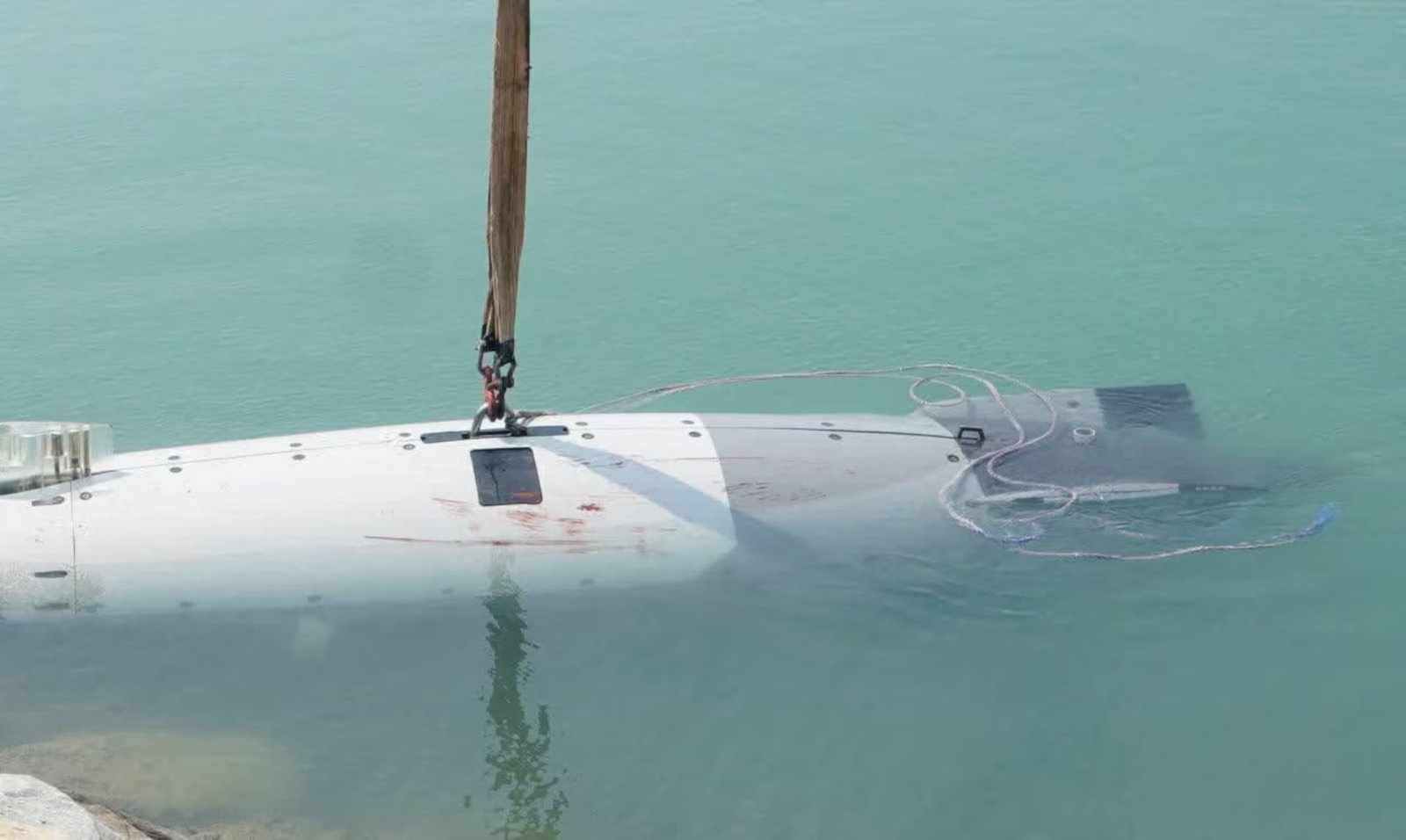


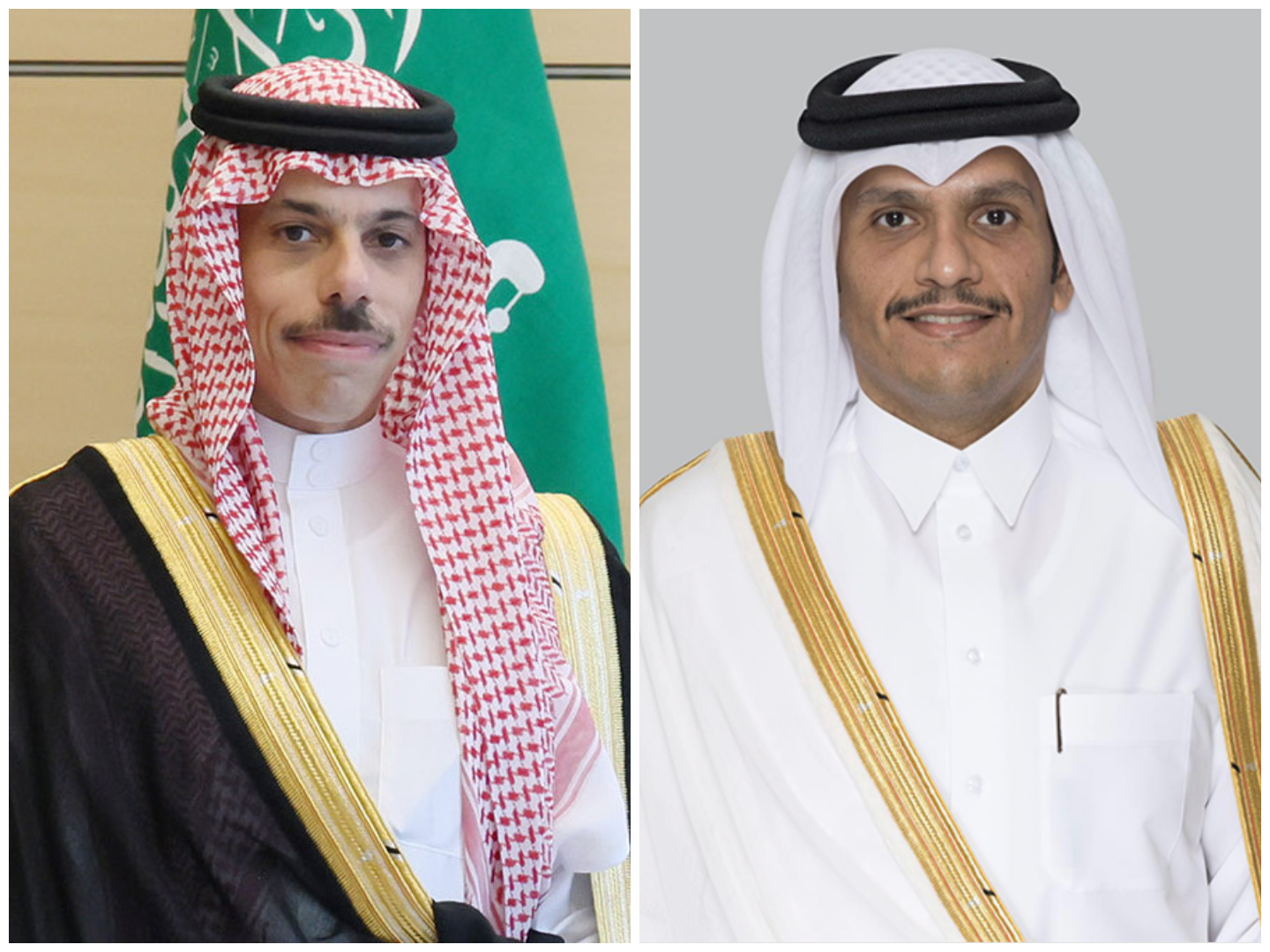

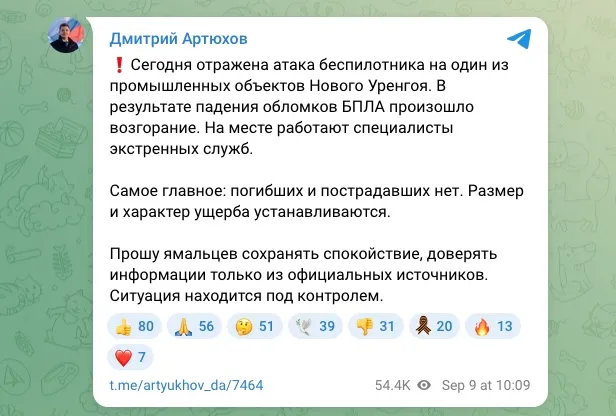







![[Al Jazeera]](https://i0.wp.com/www.aljazeera.com/wp-content/uploads/2026/07/interactive-Straight-Of-Hormuz-ships-July-15-2026_COPYEDITED_INTERACTIVE-Bab-al-Mandeb-strait-red-sea-map-route-shipping-map-1784126907-1785434335.webp?w=640&ssl=1)