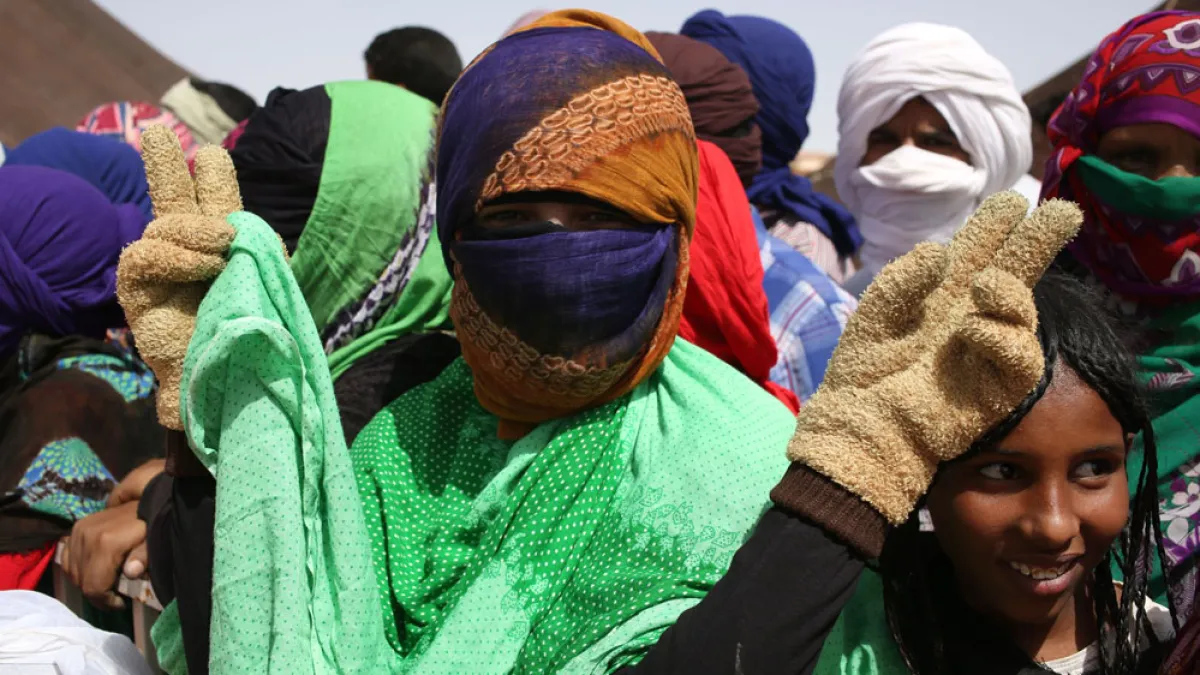
The far-right Sweden Democrats party could enter government for the first time if right-wing bloc wins.
By AFP and The Associated Press
Published On 13 Sep 202613 Sep 2026
Voters in Sweden are heading to the polls in an extremely close general election that will see either the far right enter government for the first time or the centre-left opposition reclaim power.
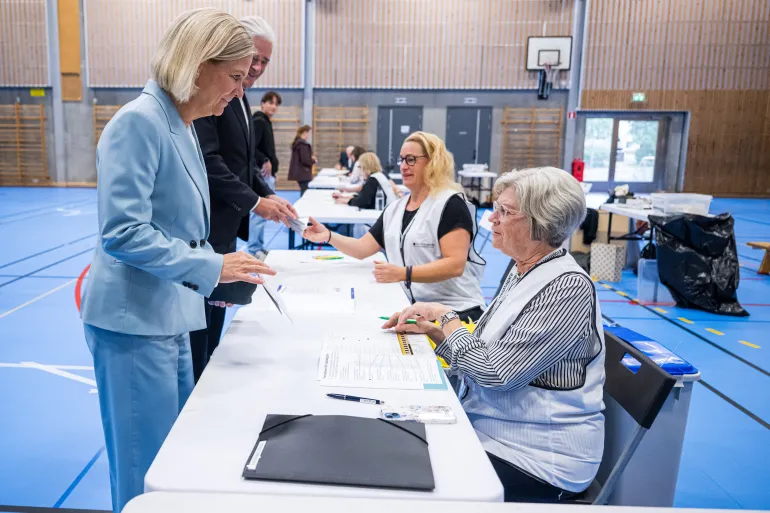
Opposition leader Magdalena Andersson of the Social Democrats was among the first to cast her ballot after polling stations opened at 8:00am (06:00 GMT) on Sunday.
Recommended Stories
list of 3 itemsend of list
The 59-year-old, who in 2021 became the first woman to serve as Sweden’s prime minister, voted with her husband at a school in her home municipality of Nacka, south of Stockholm.
Pre-election opinion polls have long credited the four parties in her left-wing bloc with a comfortable lead over conservative Prime Minister Ulf Kristersson’s four-party alliance, which includes the far-right Sweden Democrats.
But the gap narrowed significantly in the final days of the campaign.
Social Democratic Party leader Magdalena Andersson (L) and her husband Richard Friberg (R) cast their votes at a polling station in a school during Sweden’s general election, in Nacka on September 13, 2026 [AFP]
“It is now up to the Swedish people to decide which direction our country should take. Should we have a government entirely dominated by the Sweden Democrats? Something that has never happened in Sweden before? Or should we have a government led by me, which will steer Sweden in a new spirit of cooperation?” Andersson told reporters after voting.
Her party has pledged to boost the welfare state and help struggling households cope with the rising cost of living.
Outgoing Prime Minister Ulf Kristersson is seeking a second four-year term at the helm of the European Union nation.
He has led Sweden since 2022 with a three-party centre-right coalition. It relies on outside support from the Sweden Democrats, an anti-immigration, far-right party that has moved towards the political mainstream, for a parliamentary majority.
If the right-wing bloc is re-elected, the Sweden Democrats can expect Cabinet posts in the next government.
Kristersson has promised to focus on improving Swedes’ everyday lives, following his government’s clampdown on organised crime and immigration.
“We want to use our new and far better preconditions to improve the lives of ordinary people … to make Sweden great again,” Kristersson told news agency AFP before the vote.
Sweden Democrats party leader Jimmie Akesson (L) votes in Rinkeby, a suburb of Stockholm, Sweden, September 12, 2026, the day before the general election [Claudio Bresciani/EPA]
The Sweden Democrats, a party with neo-Nazi roots, took 20.5 percent of the vote in the 2022 election to become the biggest party on the right.
Kristersson announced in April that his conservative Moderates would allow the party into government if the right has a majority – though he would remain prime minister even if the Sweden Democrats are the stronger party.
Voting stations close at 8:00pm (18:00 GMT) when exit polls are expected to be published, with the first reliable results expected several hours later.
Some eight million people are eligible to vote in the election, in a country of 10.6 million where voter turnout regularly tops 80 percent.
About half of voters have cast their ballots in advance.
Andy Hernández is a Venezuelan economist and grassroots activist. He currently serves in the parliament of the 5 de Marzo Comandante Eterno Commune in El Valle, Caracas, and has played an active role in theCommunard Union, a national alliance of communes. In this exclusive interview, Hernández offers his perspective on local, state-backed projects within the current context of undermined sovereignty.
The 5 de Marzo Comandante Eterno Commune immediately mobilized in response to the double earthquake on June 24. Tell us a little about this and other recent initiatives by the commune.
After the twin earthquakes on June 24, community organizations sprang into action immediately. Collection centers were set up even before the government announced them. In our case, we set up a collection center on the premises of our communal social enterprise (EPSDC) Somos Karive.
At the same time, we noticed that around Somos Karive, many elderly people began leaving their homes, frightened, and taking to the streets. We brought them coffee, talked with them, and before we knew it, we had 300 people inside Somos Karive. There, with the support of the Ministry of Communes and the Caracas Mayor’s Office, we set up a shelter for a few days, until the panic subsided and people felt calm enough to return to their homes.
Somos Karive is one of the community’s main projects. How is it currently operating?
This initiative originally arose from a need to have a space to store food and expand our collaboration with the Pueblo a Pueblo Plan, a rural collective that organizes with urban counterparts to deliver produce at fair prices. The project then grew and now has several branches. The main operation, which generates the most cash flow, partly because it’s coordinated with the Ministry of Commerce, is the meat-processing plant. There, various cuts of meat are cleaned and portioned, vacuum-sealed, and then sold retail and wholesale to about 30 grocery stores in El Valle.
The second most important activity is our supermarket, which sells groceries and other products. There’s also the café, a space at the entrance that serves coffee, breakfast, and lunch. In fact, we also prepare large-scale lunches on demand. Another project here is a water treatment plant. And finally, a Family Production Unit (UPF) operates here, selling screws and other tools. This UPF contributes to the community through the social reinvestment fund. For now, that fund is used to support community activities. But according to the Law of Communes, the fund must be managed by the communal bank, which we are currently reactivating.
In short, Somos Karive has had its successes and failures, but it is a key initiative. I believe the most complex issue is establishing a management model. While all economic activity must generate a surplus, social property companies propose a different framework for labor relations. There is no boss; rather, there is administrative coordination that answers to the commune. No taxes are paid; instead, contributions are made to the social reinvestment fund. There are no social security contributions, but there must be a fund to support producers and a fund for necessary reinvestments. So we’ve been facing these challenges, in addition to the difficulty of operating EPS in the city, where retail activity makes sense but there is a lot of competition.
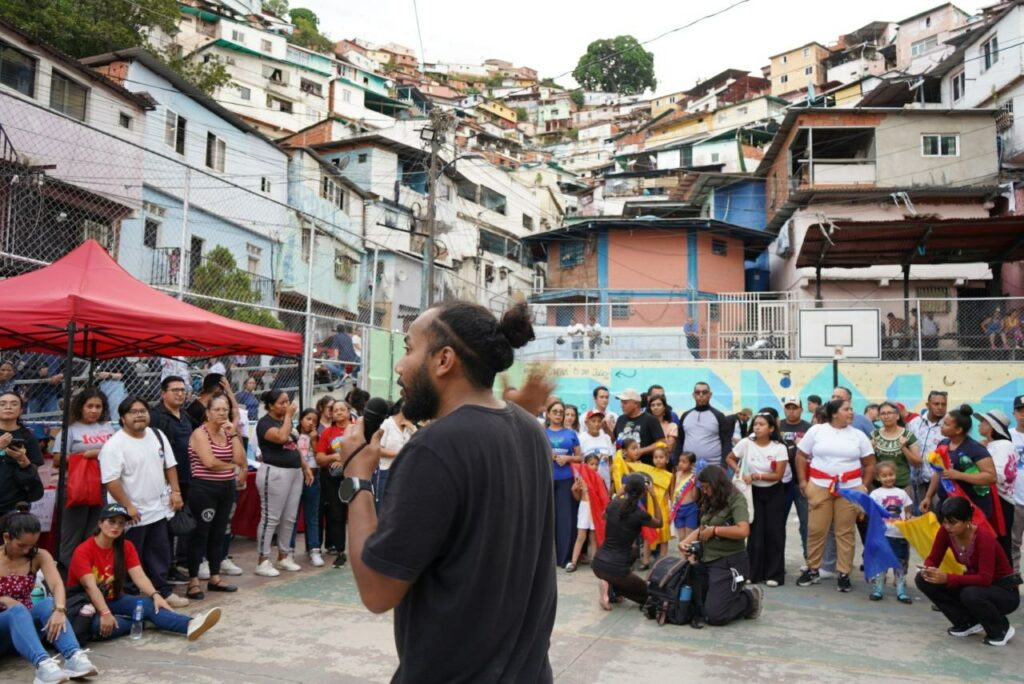
Hernández in a communal activity in Caracas. (MinComunas)
The Venezuelan government announced a new popularconsultation[for communities to select state-funded projects] for October. What has been the outcome of previous consultations in the commune?
The consultations have led to progress and also provided valuable lessons in our territory. Before the first consultation in 2024, we drew up a wish list without asking ourselves whether those items were feasible or not. Now, after several votes, and with some tools provided by the Venezuelan government for systematic planning, such as the Concrete Action Agenda or the Map of Solutions, we’ve been able to ground the projects in reality. Today we can say that we manage the proposed initiatives and the resources obtained much more effectively. Sometimes we even prepare two reports: one institutional and one community-based.
The most recent one was an extremely complex water project. Our community has gone 30 years without a regular water supply. There are no formal water supply connections, just hoses everywhere. First, the project was formulated: to fix the problem for 291 families without service, and it really did have a significant impact.
Other initiatives proved more difficult. For example, with a project to purchase water tanks, the funds raised were enough for only 10 tanks, yet hundreds of families needed them. The same thing happened with the project from the last consultation, which was to replace gas cylinders. We’ve managed to replace about 500, but there are 2,700 in total that need replacing. And the biggest challenge was with the rooftops. We needed 16,000 zinc sheets, but the project funds only allowed us to purchase about 850. So in situations like these it is difficult to manage everyone’s needs. In the end, we identified the most vulnerable homes, but we were only able to assist 65. No matter how well we manage the resources, they simply aren’t enough.
So we’ve had our share of setbacks, along with a lot of lessons. People now understand that we have to identify the scope of the problems that can actually be solved through these consultations. Rather than having a wish list, we’re learning to formulate real, concrete, and feasible projects.
What do you think of Acting President Delcy Rodríguez’s proposal to extend consultations to condominium boards and neighborhood associations?
To be honest, I find it interesting. The initial reaction, which I’ve seen in discussions with comrades, is to view it with suspicion, thinking of middle-class condominiums that have never believed in popular power.
The central issue is that a condominium board merely manages infrastructure, whereas the commune must implement policies on health, education, recreation, etc. It must act as the government in the territory, even if we aren’t fully exercising that role. So it might seem that by extending the consultation to condominiums, our presence is being undermined. However, our legislation doesn’t prevent condominium boards from participating in these processes.
Ultimately, the commune is the structure that defines the methodology for these consultations. Perhaps if, at some point, the consultations begin to prioritize the perspective of condominium boards, this concern would be justified. To me, that would indeed be a colossal mistake because it would violate the principle that the citizens’ assembly is the body that decides and has the final say on local projects.
The Somos Karive social property company is one of the 5 de Marzo Commune’s main economic initiatives. (MinComunas)
Turning to the national scene, some analysts describe the situation in Venezuela as “tutelage,” while others call it a “protectorate,” where the country’s fate is essentially decided in Washington. In this context, what role should grassroots organizations play? Is it justified to maintain unconditional support for the government?
Here I will speak in a personal capacity, not on behalf of my commune or the Communard Union, because this is a complex and highly contentious debate taking place within social movements, with many different perspectives.
There are several positions: some speak of tutelage, others of a protectorate, and others of a new form of neocolonialism. I believe we must ask ourselves what defines sovereignty. For me, there are two models of sovereignty currently clashing worldwide: one defined by corporations and the other by organized peoples. Now, in more concrete terms, I defend the Venezuelan revolutionary process, our history, and our struggle. I do not agree with some of the government’s decisions, but it remains my government nonetheless.
However, this is a very complex context in the wake of a foreign military intervention. How can a government be evaluated while under military coercion? That is a difficult question to answer. Regardless of whether or not one supports the government, January 3 [US military strikes and kidnapping of Maduro] is a turning point in our process. For me, the central issue is not whether to defend the government or not, but rather to defend our institutions. For example, I do not agree with reestablishing relations with Israel, nor do I agree with the terms of our relationship with the United States. But this is still my government.
I know this may sound illogical or contradictory, but as a popular movement we must understand that sovereignty is being contested on a global scale. Our goal is to build a new form of state, one that has the commune as its foundation. We must strive to ensure that these 5,400 communal circuits form a network for the defense of the territory, fighting for a new hegemony, and with a leadership that allows us to advance and influence national politics. However, this begins with exercising power from the territories in a coordinated manner, managing resources, and sustaining new social relations.
The communes are not even at 10% of our potential. Public consultations, for example, are a glimpse of what we can do, but they account for less than 1% of the national budget. This means that social organizations are not managing oil revenues, which are our primary source of wealth. We must develop political awareness not only to identify imperialist interests in our resources but also to create economic models that can scale up so we can challenge the status quo on different terms. For example, we could envision a communal corridor to exploit minerals in an alternative way. This would turn us into a real threat to those who seek to impose corporate sovereignty.
But returning to the more practical question: should we support the government or not? I believe we must support it because it is the government that establishes our institutional framework, even if it takes the form of a bourgeois state that we want to transcend. Now, should we support every decision? Of course not. But defending sovereignty means defending our institutions against foreign powers that seek to impose themselves upon them. For example, the assassination of Niño Guerrero struck me as a very dangerous precedent.
Finally, I believe it is important to have these discussions, both individually and within our organizations. In the case of the Communard Union, we are preparing a congress where we will need to collectively establish positions regarding this reality and, from there, define the actions we will take to try and revert the situation we are currently facing.
In recent months, we have seen a series of measures and reforms clearly geared toward the interests of transnational capital, such as the reform of the Hydrocarbons Law. What stance should communards take on these issues of national interest?
The reform of the Hydrocarbons Law is an example of this advance of the corporate sovereignty model. And in our context, the coercion and plundering began immediately after January 3. The attacks against Venezuela to seize its resources did not begin a few months ago, but before there was some care about appearances. Now the United States has moved on to directly stealing the country’s export revenues. This is like going back to the 19th century.
It is a complex time for the world. We are sometimes a bit chauvinistic; we believe that Venezuela determines what happens everywhere else. Although we certainly have an impact. We have the world’s largest energy reserves, minerals, fresh water, and other resources. Naturally, without independence there is no commune, and defending the process means defending national independence in order to envision a different world.
Now, what steps should we take to defend ourselves against this plundering? We have our Constitution, but this scheme falls outside even the international legal framework. Some might say the solution is to sabotage our own oil industry, but others would ask whether that would help shift the correlation of forces. Because we’re not just interested in being right. We want to change reality. We could issue a statement from the Communard Union right now, outlining everything we disagree with, and perhaps we should do so, but we must collectively decide what our coherent course of action will be, in terms of politics, communication, and so on, to defend our national project.
“Always loyal / Never gringos / Venezuela is not a colony” mural in Caracas. (Archive)
Venezuelan communes have also been characterized by their internationalism. How do you assess recent events, ranging from “joint” military operations with the US to the reestablishment of ties with Israel?
We believe that the commune is a civilizational project that we are implementing in a specific territory: Venezuela. Elsewhere, people may call it something else or pursue it with a different strategy, but we believe it is a civilizational project that is being debated around the world. So, based on that, the commune is obviously anti-Zionist and anti-imperialist. However, we are being subjugated and subdued. Not just the communes, but the country as a whole.
I believe that in the aftermath of January 3, elements such as the rapprochement with Israel were imposed on us. January 3 and the subsequent coercion were decisive in shifting the balance of institutional power, both within the Venezuelan state and in its foreign relations. The United States violated the Constitution, subdued our armed forces, and killed more than 200 people, including those extrajudicially murdered at sea, not to mention the piracy of hijacking our oil tankers. Thus, these disastrous changes are an imposition based on the logic of the military victor getting the spoils. In fact, US officials have openly stated this.
But the concept of the commune is and always will be anti-imperialist, anti-Zionist, and in support of the self-determination of peoples, with a vision of how resources and community life should be organized, the full exercise of our sovereignty, and so on. In this context, the communes must resist by demonstrating their existence, their socially owned enterprises, their assemblies, and their impact on the territory. Demonstrating that another way of life is possible is a way to fight back both locally and internationally.
Laura Whitmore and Katherine Ryan wasted no time in letting loose on the dancefloor in Spain over the weekendCredit: Instagram/@thewhitmoreAnd there was plenty to celebrate, as they attended Emily Atack’s star-studded weddingCredit: Instagram/@thewhitmore
Mum-of-two Laura, 41, looked stunning in a low-cut blue and white floral dress with a leg split, as she wore shades on the dancefloor and sipped from a bottle.
Katherine, who is proud mum to four kids, joined her friend for a dance, mimicking her with her own pair of shades, despite the late hour.
Sign up for the Showbiz newsletter
Thank you!
The comedian, 43, looked sensational in an off-shoulder gown in various splashes of pink.
Laura shared a video of them enjoying their night off from motherhood, captioning it: “Moms out!”
Laura looked stunning in a low-cut blue and white floral dress with a leg split, as she donned shadesCredit: Instagram/@thewhitmoreMum-of-two Laura, 41, hit the dancefloor and sipped from a bottleCredit: Instagram/@thewhitmoreRivals star Emily, 36, said “I do” again, just three weeks after she tied the knot at a local church in BedfordshireCredit: SplashEmily and scientist husband Alistair Garner exchanged vows in a private ceremony in MojacarCredit: Splash
Laura’s Love Island narrator husband Iain Stirling was also in attendance, as was Katherine’s partner Bobby Kootstra.
Rivals star Emily, 36, said “I do” again, just three weeks after she tied the knot at a local church in Bedfordshire.
The latest sun-drenched fiesta featured a 200-strong guestlist, including David Tennant, Alex Hassell, Rufus Jones, Bella Maclean and Victoria Smurfit from Rivals, as well as the show’s writer Dominic Treadwell-Collins.
Other stars included American actor Stanley Tucci and actress wife Felicity Blunt, as well as Emily’s old pal Leigh Francis AKAKeith Lemon.
The wedding party also included her pop star father, Keith Atack and her actress-comedian mother, Kate Robbins, as well as siblings Martha and George and other family members.
Guests arrived just after 4pm and were handed white parasols to protect them from the afternoon sun.
Emily kept the anxious groom waiting not arriving until 5.35pm, pulling up with her chief bridesmaid in a red Cadillac convertible and walked down the aisle by dad Keith.
The couple – who welcomed baby Barney in June 2024 and got engaged in July 2025 – originally wed at a romantic church service before a party in the garden of their Bedfordshire home where guests were treated to a McDonald’s from a personalised van parked outside.
Writing on Instagram after downing champagne, a thrilled Emily joked: “Christ, we have fun don’t we. I can’t believe we get to do all that again in a few weeks time.”
The party moved to Mojácar in the Costa Almería, a sentimental spot where the TV fave spent childhood holidays at her musician dad Keith’s old summer pad.
The town’s iconic Mirador viewpoint and two top eateries are being completely shut down for the exclusive star-studded bash.
The Inbetweenersstar said earlier this year that her second wedding would be a “fat, f***-off party”.
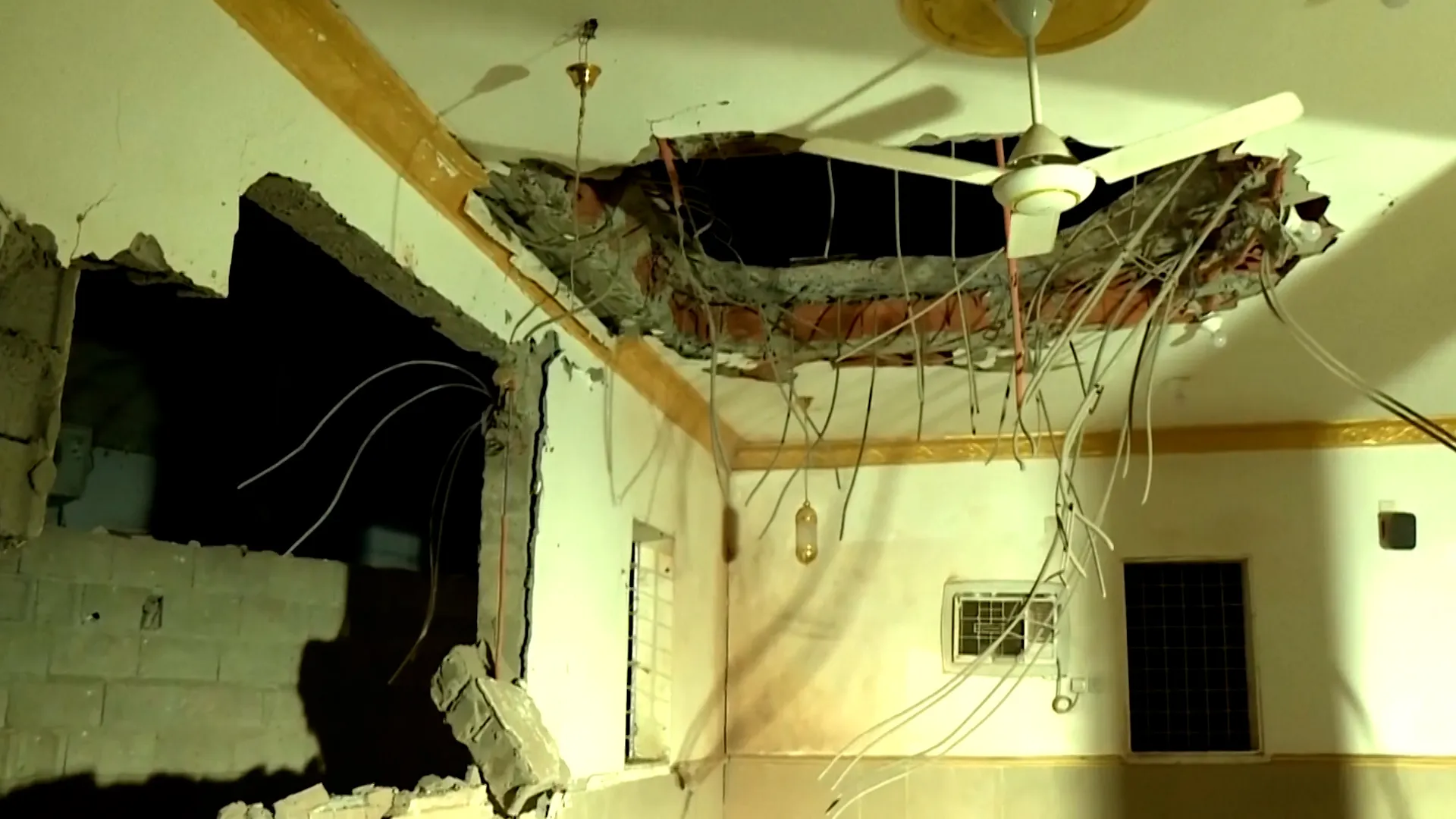
Saudi Arabia has released video showing the damage caused by a projectile it says was fired by Yemen’s Iran-backed Houthis. A mosque and several buildings sustained damage, although the Houthis say they were targeting a Saudi military base.
CAIRO: A vessel has been struck by an unknown projectile while transiting the Strait of Hormuz, the United Kingdom Maritime Trade Operations said early on Sunday.
It said the crew’s status, damage assessment and environmental impact were unknown.
JEREMY Clarkson’s partner, Lisa Hogan, is “proud” of his decision to go public with his cancer diagnosis, saying it has helped thousands of people.
The former Top Gear presenter is in remission after revealing on the latest series of Clarkson’s Farm that he had been diagnosed with “aggressive” prostate cancer.
Lisa Hogan revealed she was ‘proud’ of her partner-of-nine-years for going public with his battleCredit: PAJeremy revealed his diagnosis in a heartbreaking episode of Clarkson’s FarmCredit: Amazon Prime
Lisa says The Sun columnist was initially reluctant to share his diagnosis with the public.
Speaking to the Daily Star, she said: “I’m really happy he caught his prostate cancer early and I’m really proud of him for putting it on the show, because that was a really big decision.
Sign up for the Showbiz newsletter
Thank you!
“When I was filming him in hospital, at first he said please don’t.
“It was (producer) Andy Wilman who convinced him to do it, to help everybody else.
“When the show came out, Prostate Cancer UK had 30,000 people going on to their website in one day.”
Thecharityconfirmed that in the 24 hours after Jezza, 66,dropped the bombshell news, some 16,749 men took their online risk checker.
That was the highest figure since former Prime Minister David Cameron, 59, revealed last year that he’d also had prostate cancer.
The organisation also had 43,543 visitors to its website – the highest of the year so far and double the number they’d normally receive.
Hogan says Clarkson has also benefited from opening up to those around him.
“Yes, of course it was a terrible worry,” she added. “But what I did encourage him to do was to talk to his friends.
“He didn’t want to initially, but he’s got lots of friends who’ve been through the same thing and he’s been talking to them about it. I think that’s really helped.”
Clarkson revealed in June that he is in remission.
Recently speaking withThe Times, Jeremy said of his health: “I am well. I am not unwell.
“I mean, I was unwell, but only for a very short period of time.”
He also revealed in June lifestyle changes after his cancer battle as he admitted “I want to see my grandchildren grow up”.
Jeremy said to The Sunday Times: “I really like seeing my grandchildren. I want to watch them grow up.
“I drive much more slowly. I’m a bit of a dawdler. I go for walks a lot. I have vegetarian food.”
He shares three children – Emily, Finlo and Katya – with his ex-wife Frances Cain.
His eldest, Emily Clarkson, has two children with her husband Alex Andrew.
The Stockholm 3 blood check is said to be more accurate at spotting aggressive tumours than the prostate-specific antigen test currently used by theNHS.
The test will be offered to up to 10,000 men aged 45 to 74 at a discounted £99 and given free on the NHS to 2,000 more on lower incomes.
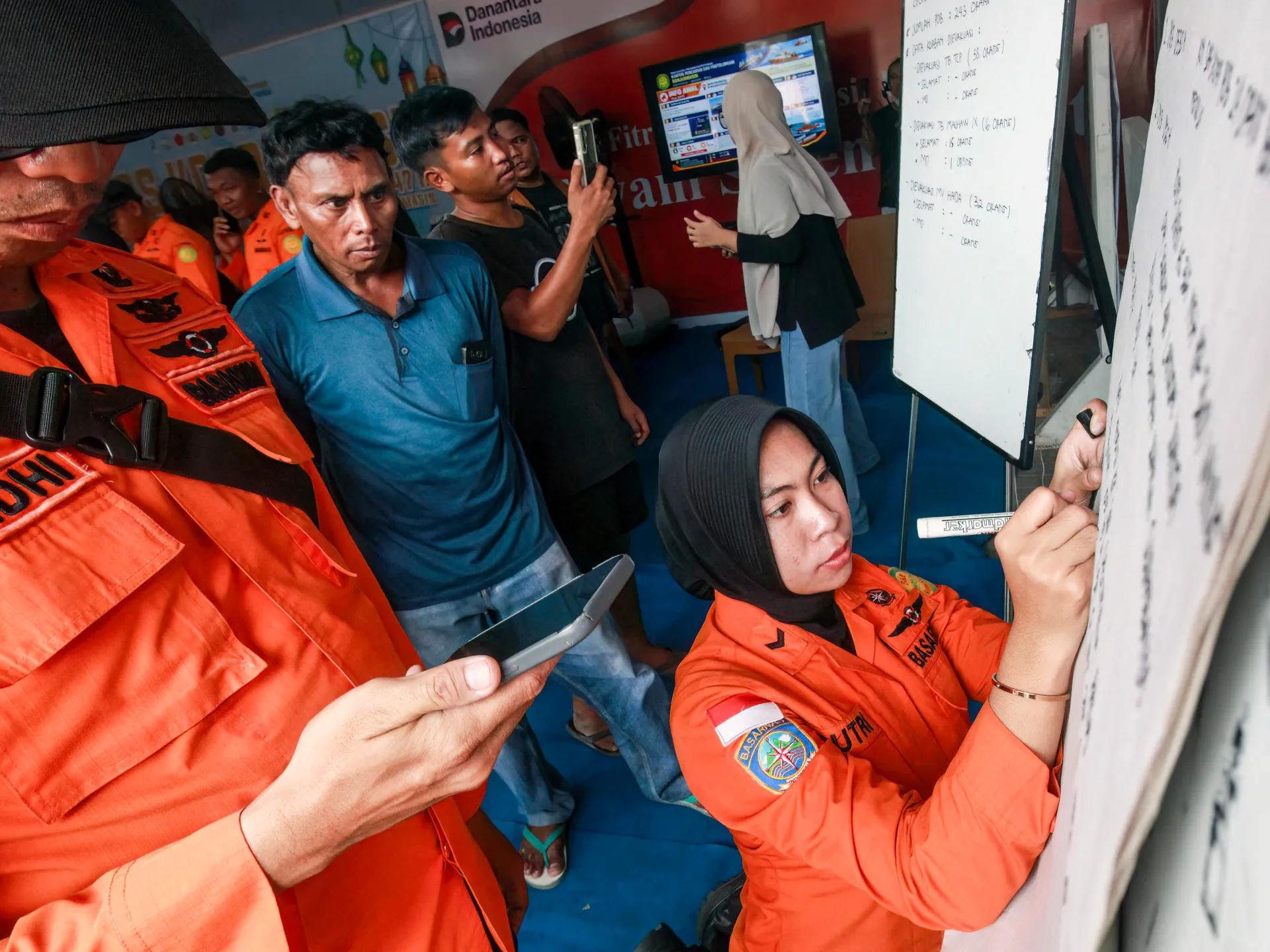
Search and rescue are ongoing after Virgo Transport 8, with 243 people on board, lost contact with its operator.
Published On 13 Sep 202613 Sep 2026
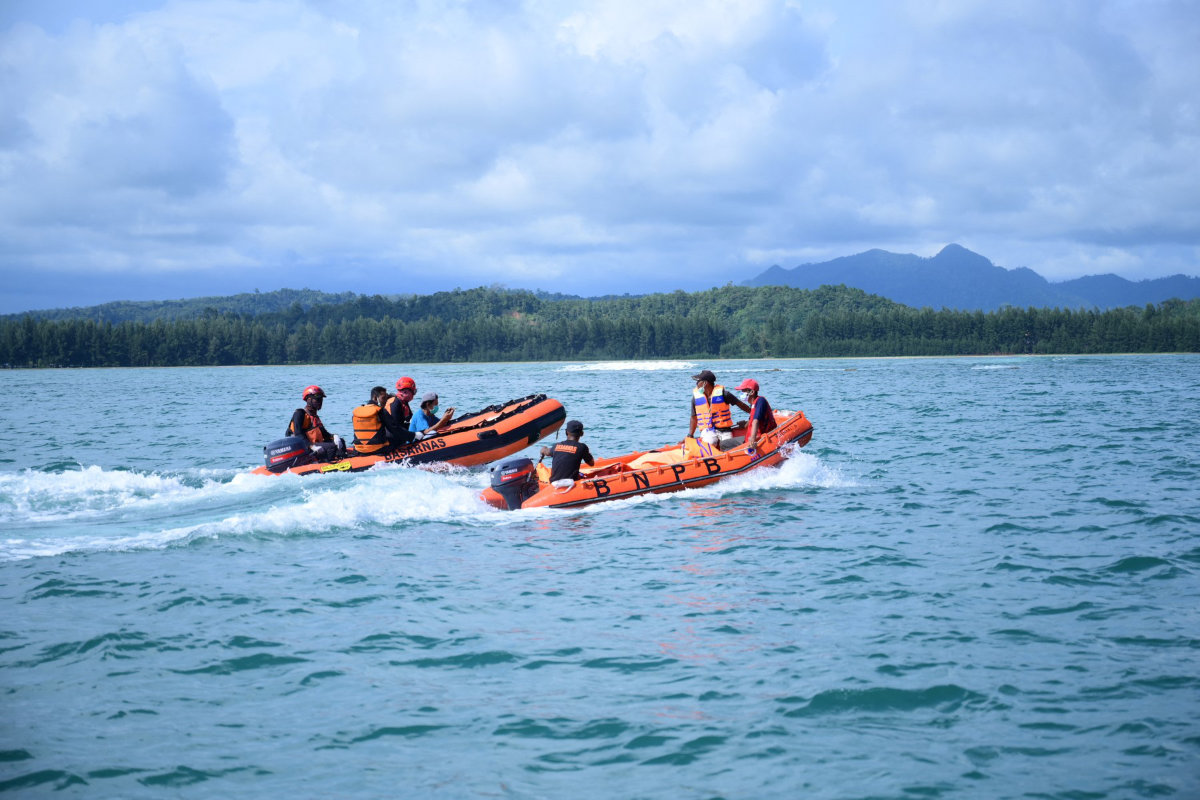
Rescuers are searching for 140 people from an Indonesian passenger ship that sank in the Java Sea after 103 others were evacuated, one of whom has died, a search and rescue agency official said.
The Virgo Transport 8, with 243 people on board, lost contact with its operator in the early hours of Sunday, according to Indonesia’s search and rescue agency.
Recommended Stories
list of 2 itemsend of list
It had sailed from Surabaya on the Indonesian island of Java on Saturday and was heading for Banjarmasin, a port city on Borneo.
Rescuers are searching for the remaining passengers and crew.
The ship encountered rough weather, said I Putu Sudayana, head of the local search and rescue office in Banjarmasin.
The ferry’s last known position was in the Java Sea, about 81 nautical miles (150km) from Banjarmasin, the AFP news agency reported.
Rescue ships and a helicopter have been searching the area, where Sudayana said waves as high as 2.5 metres (8.2 feet) have hampered the operation.
“It is extremely risky for vessels. Even our Basarnas vessel, which is 40 metres [131 feet] long, is at great risk,” Sudayana told reporters, referring to the country’s search and rescue agency.
Last month, a fire on a ferry sailing between Bali and Lombok killed one person and left five missing. In July, a ferry carrying more than 70 people sank near Selayar Island, south of Sulawesi.
Fort Portal, Uganda – When King Oyo Nyimba Kabamba Iguru Rukidi IV of Tooro was buried on September 12, the ceremony unfolded under the shadow of a bitter dispute over who should succeed him.
Prince Edward Rukidi Kijanangoma, a 56-year-old news anchor and editor at Uganda Broadcasting Corporation, had been selected by the royal clan to succeed Oyo. During the burial at the Karambi Royal Tombs in Fort Portal, he formally assumed power by casting nine coffee berries into the king’s grave, part of the traditional handover ritual.
But the succession remains contested.
Oyo’s mother, Queen Mother Best Kemigisa, and his sister, Princess Ruth Komuntale, have opposed Kijanangoma’s selection, saying the late king’s will named a son as his heir.
Oyo never married and was not publicly known to have children. After his death, Tooro’s Prime Minister Calvin Armstrong Rwomiire Akiiki announced that the king had left a son whose identity would be revealed at an appropriate time. The child has not been publicly identified.
Oyo’s family says a 2022 will named a son whom he described as his lawfully recognised biological son as heir to the throne. But Babiito clan elders, who are responsible for guarding the Tooro royal lineage, determining succession and safeguarding the kingdom’s traditions, say Oyo had not introduced the child through the customary process and instead backed Kijanangoma as his successor.
“The will is not a determinant of who is supposed to be a king; it is a document that expresses one’s wish,” said Reverend Father Charles Oyo, a Babiito clan elder. “The Musuuga [Babiito clan leader] is above the will.”
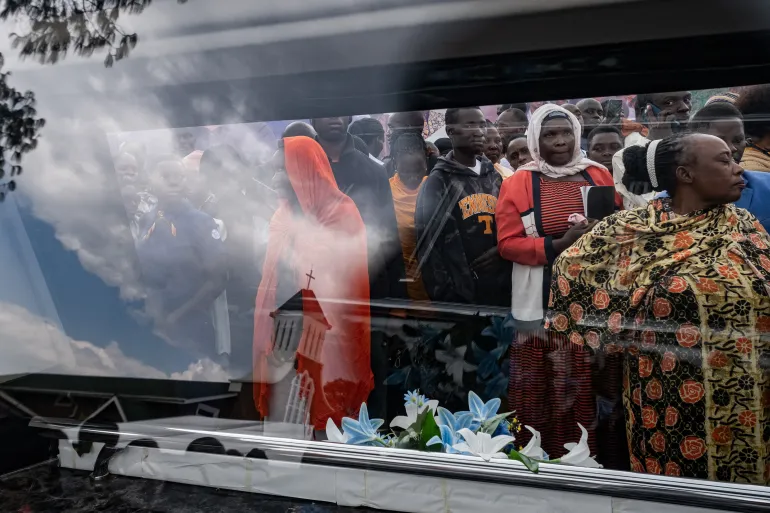
Members of the public react as the body of the late King Oyo Nyimba Kabamba Iguru Rukidi IV makes its way to Karambi Royal Tombs for burial in Fort Portal, Uganda, on September 12, 2026 [AFP]
Princess Komuntale has accused the elders of trying to take over the throne.
“King Oyo was a very peaceful man, a very humble man,” she said. “I just don’t want these evil vultures to come and steal what he worked so hard for. I continue to stand with my brother.”
The dispute has divided opinion over who should be regarded as Oyo’s legitimate successor. The Ugandan government also became involved in talks aimed at resolving the dispute before the burial.
The child king
Oyo’s own path to the throne began when he was just three years old.
He became king in 1995 after the death of his father, Patrick David Matthew Kaboyo Olimi III, and was recognised as the world’s youngest reigning monarch.
A coffin containing the body of the Late Oyo Nyimba Kabamba Iguru Rukidi IV is loaded onto a cortege after leaving the Karuziika Royal Palace before the burial at the Karambi Royal Tombs on September 12, 2026, in Fort Portal, Uganda [Hajarah Nalwadda/Getty Images]
As a child, Oyo was homeschooled, with the palace serving as his classroom. When he later joined primary school, childhood friends remember him as a kind and warm person.
During school holidays, he sometimes sneaked out of the family’s private residence in Buziga, Kampala, to play football in the neighbourhood.
Martin Odong, a radio journalist and childhood friend, remembers him as “friendly, social and compassionate”.
Oyo would stop football games to check on an injured player, regardless of which side they were playing for, Odong said.
His love of football continued into adulthood. He promoted local tournaments, including the Tooro Kingdom MTN Masaza Cup, which was suspended as his health deteriorated.
Oyo died on August 27, aged 34, in the United States while receiving cancer treatment. His body was returned to Uganda for nine days of mourning before his burial at the Karambi Royal Tombs, which coincided with Empango, the anniversary of his coronation.
At St John’s Cathedral, Queen Mother Best Kemigisa remembered her son as someone who had always protected her.
“He was my shield who always stood for me,” she said.
Mourners escort the cortege with the body of the late Omukama of Tooro, King Oyo Nyimba Kabamba Iguru Rukidi IV, for his burial at the Karambi Royal Tombs, in Fort Portal, Kabarole district, Uganda, September 12, 2026 [Abubaker Lubowa/Reuters]
She recalled praying for his life when she was in hospital.
“When I was in the hospital, I said, ‘God, please leave my son alone; take me first,’” she said. “He [God] decided to take him [King Oyo] first. I said, ‘Why? Because he was closer to You than me.’”
Princess Komuntale described her brother as a “funny person” who “always brightened my day”.
Although he was younger than her, she said, he often behaved like the older sibling and protected her and their mother after their father “left to be with the Lord”.
Father Charles Oyo remembered him as a “handsome king who loved his kingdom so much”.
He said Oyo died just as he was “beginning to demonstrate his abilities and capacity as a king”.
A king without political power
Uganda is a constitutional republic, and its traditional kings have no formal political authority. But the kingdoms retain cultural influence and command loyalty among many of their communities.
Queen Mother, Best Kemigisa (R), and her daughter (L), Princess Ruth Komuntale, attend a requiem mass for the late King Oyo Nyimba Kabamba Iguru Rukidi IV of Tooro, at the St John’s Cathedral before the king’s burial at the Karambi Royal Tombs, on September 12, 2026, in Fort Portal, Uganda [Hajarah Nalwadda/Getty Images]
Uganda abolished its traditional kingdoms in 1967. They were restored in 1993 under President Yoweri Museveni.
Oyo was guided by regents while he was a child and took on the full responsibilities of the monarchy as an adult.
His unusual position meant he met presidents, royalty and other world leaders from a young age. Among them was former South African President Nelson Mandela, who reportedly wanted to meet the young king during a visit to Uganda. Oyo, however, was more interested in playing with his toys behind the VIP tent.
As an adult, he used the platform of the throne to promote issues beyond the kingdom.
In 2020, he climbed the Rwenzori Mountains to draw attention to climate change and the retreat of the glaciers there.
He also supported a campaign to plant 10 million trees across Tooro over five years.
He promoted healthy living and took part in cancer awareness runs. Komuntale called him her “best workout partner”.
Before his death, Oyo had allocated land and begun fundraising for a paediatric hospital in Kyenjojo district. Clan elders have since appealed to the government to complete the project and establish a specialised cancer facility and an international stadium in his memory.
His final months
Oyo’s illness was kept largely private.
According to his sister, he began experiencing pain in his back and rib cage last year. The family initially thought it might be linked to strenuous exercise or ulcers.
He later travelled to Kenya, where he was diagnosed with angiosarcoma, an aggressive form of cancer, before travelling to Germany for treatment and eventually to the US.
Members of the public react as the body of the late King Oyo Nyimba Kabamba Iguru Rukidi IV makes its way to Karambi Royal Tombs for burial in Fort Portal, Uganda, on September 12, 2026 [AFP]
“He told us to keep it private, and we respected that,” Komuntale said.
She said that shortly before his death, Oyo spoke to key workers in Uganda about returning home. He wanted to celebrate Empango, the anniversary of his coronation, with his people.
He never made it home.
For Komuntale, the king remained her younger brother even after he became one of Africa’s most recognisable traditional rulers.
She remembered playing dodgeball with him and his love for his three dogs.
“Even though you were crowned a king, you were still a kid who loved to play,” she said.
“I will keep your legacy, what you loved, and we will talk about you every day.”
Federal authorities probing the death of actor Hayden Panettiere are focusing on where the drugs and medications that played a role in her death came from, echoing similar probes that resulted in charges for suppliers in the deaths of Matthew Perry and Mac Miller.
Drug Enforcement Administration agents and local investigators have questioned several people about the circumstances of her Aug. 16 death, focusing on potential controlled substances and medications tied to her demise inside a Greenville, S.C., apartment, according to sources familiar with the probe.
Paramedics and police found Panettiere in cardiac arrest, according to the Greenville County Coroner’s Office. Dispatch audio recordings from Broadcastify.com reference a possible overdose and CPR in progress. Narcan was reportedly administered by paramedics who arrived, and after efforts to resuscitate her, she was declared dead at 2:31 p.m.
Her death echoes that of actor Matthew Perry and rapper Mac Miller, both of whom succumbed to overdoses. In their respective cases, prosecutors secured convictions for the people who supplied Perry with ketamine and Miller with cocaine and oxycodone pills laced with fentanyl. Perry’s demise in his hot tub led to his assistant, two doctors, a producer and a woman dubbed the “Ketamine Queen” pleading guilty.
The Greenville County coroner, in the wake of Panettiere’s death, conducted an autopsy but has not made a formal finding on the cause of death and toxicology results are pending.
Panettiere lived in Los Angeles, but her boyfriend, Brian Hickerson, is a Greenville native, according to authorities. A police report outlined the initial response from police who arrived at the scene. The report states that Hickerson and his brother Zach Hickerson were with Panettiere inside an apartment when the 36-year-old actor died.
According to the police report, Brian Hickerson showed an officer “a bag of medications HAYDEN is currently on.”
Several areas of the report were redacted, including statements from the brothers about what transpired as they called 911.
The officer who authored the report, Matthew Bryan, wrote that he recorded an interview with Brian Hickerson on his body-worn camera, and observed Zach Hickerson being “very emotional” while first responders tried to revive the actor. Brian Hickerson became emotional after she was declared dead, Officer Matthew Bryan wrote.
Later, he said that authorities obtained video of three individuals coming and going from the apartment from the complex’s security, which helped detectives with a search warrant.
Sloan Ellis, a South Carolina attorney for Hickerson hired in the wake of Panettiere’s death, said in a statement, “Hayden’s death remains under investigation, and it is important to allow that investigation to proceed. As has been publicly reported, police confirmed there were no signs of foul play. Out of respect for Hayden’s loved ones and the ongoing investigation, there will be no further comment at this time.”
Sources familiar with the probe have met with DEA agents about the actor‘s death, according to People magazine and TMZ.
Hickerson was arrested multiple times on suspicion of domestic violence against Panettiere, beginning in May 2019 in Los Angeles, though the charges were later dismissed when prosecutors couldn’t secure a material witness.
Following an eight-count criminal indictment in 2020 that covered multiple violent incidents over the previous year, Hickerson pleaded no contest in April 2021 to two felony counts of injuring a spouse or girlfriend.
He was sentenced to 45 days in county jail along with four years of formal probation, ordered to attend mandatory domestic violence classes, and received a five-year protective order.
Yemen’s Houthis have seized the strategic Mayun Island (also known as Perim Island) as they cement control over the Bab al-Mandeb Strait. The rebels also now control millions of dollars worth of seized US-made military hardware.
JAKARTA: Indonesian rescuers launched a search operation Sunday after a passenger ship carrying at least 240 people lost contact in the Java Sea while traveling from East Java to South Kalimantan on Borneo island, officials said.
The Search and Rescue Office in Banjarmasin, the capital of South Kalimantan province, said they received a report the Virgo Transport 8 had experienced a communication failure while en route to the city from Surabaya, Indonesia’s second largest city in East Java province.
Initial information indicated the vessel’s last known position was in the Java Sea, about 148 kilometers (92 miles) from a pier in Banjarmasin. The ship’s manifest said it was carrying 241 passengers.
There were no immediate reports of casualties.
Arianto Ardi, operations chief at Banjarmasin’s rescue agency, confirmed the loss of contact with the vessel and said rescue personnel had been dispatched to the area.
“We have established an operations post at Trisakti,” Arianto said.
Authorities said the ship’s operator reported the incident after receiving information that the vessel had encountered bad weather.
ANGIE Best has revealed that she’s back in hospital after a suffering ‘setback’ following her battle with colon cancer.
The former model, 74 – who announced that she was diagnosed with the disease in January – shared that she wascancer-freeback in July.
Angie Best has revealed that she’s back in hospital after a suffering ‘setback’ following her battle with colon cancerCredit: Instagram/@angiebestofficialThe star revealed that she is cancer-free back in JulyCredit: angiebestofficial/ Instagram
“Colon cancer is a growth of cells that begins in a part of the large intestine called the colon,” Mayo Clinic states.
Angie, who is the ex-wife offootballlegendGeorge Best, has been keeping fans up to date on social media after having traditional medicine, chemotherapy and immunotherapy, as well as an alternative mistletoe therapy in Switzerland.
Sign up for the Showbiz newsletter
Thank you!
Taking to her page earlier today, Angie said: “Update my homies. I find myself back in the hospital.
“I have an infection. They think it’s bacterial. Bt I have to stay here a few days for results and to make it better.
She has been sharing health updates on social mediaCredit: instagram
The signs of bowel cancer you need to know – remember BOWEL
B:Bleeding
There are several possible causes of bleeding from your bottom, or blood in your poo.
Bright red blood could come from swollen blood vessels, haemorrhoids or piles, in your back passage.
Dark red or black blood could come from your bowel or stomach.
Blood in your stools is one of the key signs of bowel cancer, so it’s important to mention it to your doctor so they can investigate.
2. O: Obvious change in loo habits
It’s important to tell your GP if you have noticed any changes in your bowel habits that last three weeks or longer.
It’s especially important if you have also noticed signs of blood in your poo.
You might notice you need to go to the loo more often, you might have looser stools or feel like you’re not going enough or fully emptying your bowels.
Don’t be embarrassed, your GP will have heard a lot worse! Speak up and get it checked.
3. W: Weight loss
This is less common than the other symptoms, but an important one to be aware of. If you’ve lost weight and don’t really know why, it’s worth mentioning to your GP.
You may not feel like eating, feel sick, bloated and not hungry.
4. E: Extreme tiredness
Bowel cancer that causes bleeding can cause a lack of iron in the body – anaemia. If you develop anaemia you’re likely to feel tired and your skin might look pale.
5. L: Lump or pain
As with lots of other forms of cancer, a lump or pain can be a sign of bowel cancer.
It’s most likely you’ll notice a pain or lump in your stomach or back passage.
See your GP if it doesn’t go away, or if it affects how you eat or sleep
“See you on the other side.”
She captioned the post: “Slight setback but nothing that can’t be fixed.”
Many rushed to the comments section to share that she is in their thoughts, including her reality star son Calum, who wrote: “I love u and we have got this.”
Another said: “You are in my prayers.”
“Sending love and hugs and strength xx,” a third chimed in.
A fourth added: “Wishing you a speedy recovery sending love and prayers.”
After major surgery to remove atumour from her colon in July, Angie told fans the incredible news that she is free of the disease.
Sharing her good news on Instagram, she wrote: “Bit different from all the miserable videos of the last 7 months. I’m a truly happy grateful girl, it’s over.”
In a video update, a relaxed Angie explained: “The chemo and the immunotherapy prior had shrunk my 30cm lump down to a little tiny bit that was attached to the colon.
“They shrunk it, now we go in and cut it out… A bit like an interior designer coming in and moving the furniture around, but it still works.
“So then it’s done, they sew you up, then they wait three days, and in those three days, they give you fluids only.
“So of course I lost so much weight, this is why I look so drawn, but I’m not worried about that because I’ve just been eating some shrimp tempura and I’m gonna gain that weight back again without no worries about that.
“On the fourth day, they give you your first meal, very sensible meal, all white.
“And then they wait for the next morning to see if you go to the bathroom.
“I did. And again the next day and again the next day, so everything was working as it should perfectly in my little colon.
“I’m so happy because now I can officially say with gratitude and love that I am cancer free and healing. All I’ve got to do now is get better.
“I’ve got to heal and I can do that. That’s what I’m good at. God knows it’s the only thing I’m good at.
“But I can’t come home yet because this was such a major operation. I have to wait eight days and sit and wait, but I’m gonna use that time to heal and get better.
“I’ve got so much I want to do. I’m going to reinvent myself at the ripe old age of 74. Wish me luck!”
Croatian authorities have issued an emergency alert as a wildfire rages on Brac Island, off the Dalmatian coast. Strong winds have hampered efforts to stop the blaze near the island village of Milna.
Yemeni refugees arrive in Obock, Djibouti, within 24 hours as Houthis tighten their grip on the Bab al-Mandeb strait.
Published On 13 Sep 202613 Sep 2026
About 1,400 people have fled Yemen for Djibouti in a 24-hour period, Djibouti’s economy and finance minister says, as Houthi fighters tighten their grip on the Bab al-Mandeb strait.
Ilyas Moussa Dawaleh wrote on X on Saturday: “1,400 refugees arrived in Djibouti from Yemen in just 24 hours.”
Recommended Stories
list of 3 itemsend of list
In a separate post on Friday, the minister said that 500 refugees had arrived in the coastal city of Obock, including women and children, after they were rescued at sea when their boats ran out of fuel while crossing the Bab-el-Mandeb strait.
Obock, a city only about 20 kilometres (12 miles) across the water from the Yemeni coast, has for several years been a preferred arrival point for those seeking refuge from war-torn Yemen. The Bab-el-Mandeb strait is also used in the opposite direction by migrants from the Horn of Africa, who transit through Yemen on their way to Gulf countries.
Safiya Ibrahim, humanitarian response coordinator for the International Organization for Migration (IOM), told AFP that “vulnerable groups such as women and children have reached the shores of Obock, with more expected in the coming days”.
The IOM warned on Friday that at least 46,000 people had been displaced in Yemen since fighting escalated last week.
“Families are being forced to flee for the second or third time in this conflict, with almost nothing left,” Amy Pope, the IOM director general, said in a statement. “As fighting spreads, reaching people with lifesaving assistance is becoming harder. We urgently need safe, unimpeded access.”
Djibouti hosts tens of thousands of refugees and asylum seekers. United Nations Refugee Agency figures from March 2026 show a registered population of more than 36,000, with the majority from Somalia, Ethiopia and Yemen.
The Houthis seized the Red Sea port city of Mocha on Thursday and have since overrun the coastline and islands surrounding the Bab al-Mandeb strait. The rapid offensive has forced thousands of families to flee, with entire villages reportedly emptied in districts such as Maqbanah, Jabal Habashi and al-Maafer.
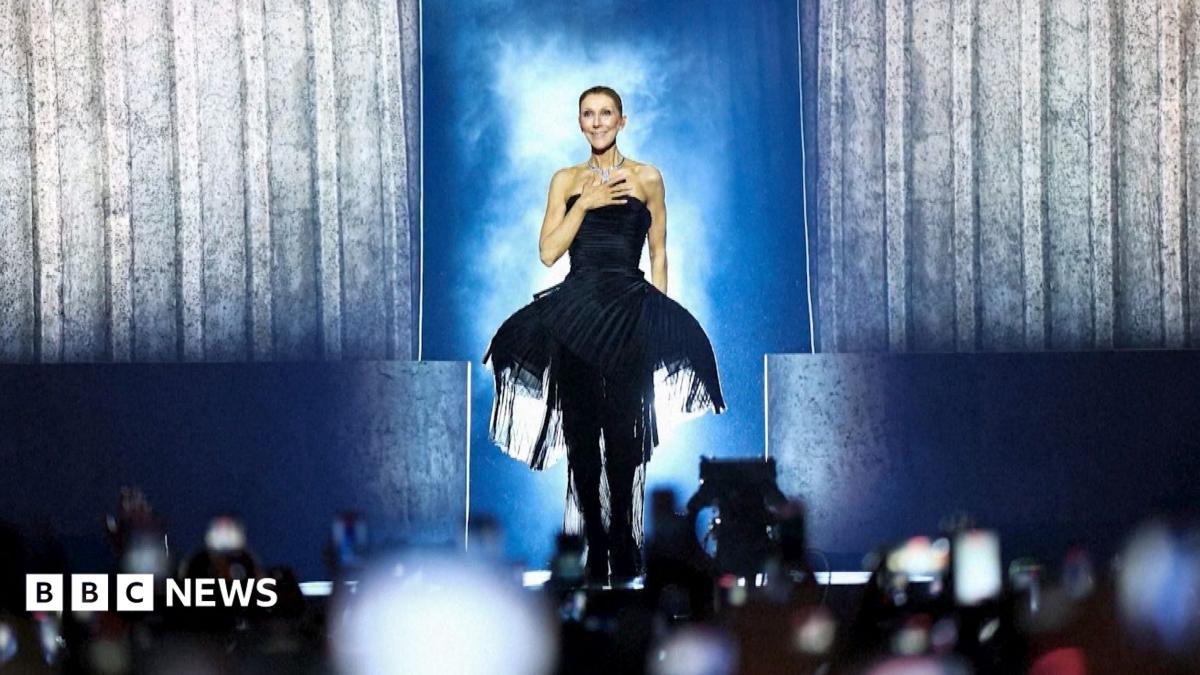
AN emotional Celine Dion has been hailed a ‘true fighter’ as she sobbed through her return to stage after her battle with stiff-person syndrome.
The singer, 58, who was diagnosed with the rare autoimmune neurological disorder in 2022, is performing at the Plenitude Arena in Nanterre, west of Paris, tonight.
Emotional Celine Dion hailed ‘true fighter’ as she sobs through return to stage after battle with stiff-person syndromeCredit: APThe singer couldn’t control her emotions as she stood out on stageCredit: AP
According to Patient Info, SPS “is a very rare, long-term condition that causes painful muscle spasms and debilitating muscle stiffness”.
The singer, who was diagnosed with the rare autoimmune neurological disorder in 2022, is performing at the Plenitude Arena in Nanterre, west of Paris, tonightCredit: AFPThe star looked stunning in an all black maxi dress, silver necklace and her hair slicked backCredit: GettyCeline looked very emotional as she performed to her fansCredit: AFP
What is stiff person syndrome?
Stiff person syndrome or SPS is a condition caused by persistent spasms.
This usually involves multiple muscles, primarily the lower limbs, experts at University College London say.
Most people who develop the illness will receive a diagnosis from the ages of 40-60-years-old.
It’s a neurological disease with features of autoimmune conditions. The first signs would be intermittent spasms which then become continuous.
Other symptoms include:
Minor sensory stimuli (being more sensitive to noise, light and touch) Severe spasms
Impaired breathing (in advanced cases).
The experts said that spasms don’t usually occur during your sleep.
How is it treated?
In most cases people with SPS respond to high doses of diazepam, which is often used as anti anxiety medication.
Pain relievers will also improve the symptoms but these will not cure the disorder.
Many people with SPS will experience falls because they lack defensive reflexes, experts at the National Institute of Neurological Disorders and Stroke added.
“I missed you. I’m going to sing like you without crying.”
Many rushed to X, formerly known as Twitter, to share their love and support towards the star.
One said: “You really did it Celine Dion! Thank you for coming back, you did better than ever legend.”
“What a come back! Celine Dion in Paris – powerful, emotional and simply unforgettable. A true legend,” another wrote.
A third added: “The best to ever do it has returned! Great to see Celine back after so many health challenges and she still sounds amazing.”
A fourth chimed in: “I admire her strength, her courage and her incredible talent.”
A fifth said: “So happy for Celine Dion. All she wanted is go back on stage. She did it. What a fighter!”
Celine will be performing another 25 shows at the arena.
Her last date this year is October 17, and then she will return next year in May for her remaining gigs.
It comes after she made her made her first public performance after revealing she is living with SPS when she closed the Olympics opening ceremony in Paris for the 2024 Olympics.
Some of Celine’s songs include My Heart Will Go On, The Power of Love and All By Myself.
Rescuers continue searching for survivors as the government scales back operations in open waters.
Published On 13 Sep 202613 Sep 2026
At least one person has died and more than 30 remain missing after a ferry sank off the coast of Vanuatu, Prime Minister Jotham Napat’s office has said in a statement.
The MV Matui, an inter-island ferry, sank in bad weather on Friday while sailing between the islands of Ambae and Santo, in Vanuatu’s north, according to New Zealand’s public broadcaster RNZ.
Recommended Stories
list of 3 itemsend of list
Of the dozens of crew members and passengers on board, 15 have been accounted for alive, Napat’s office said in a statement posted on Facebook, with search and rescue operations continuing.
The Pacific nation’s government said search efforts “in open waters” were being scaled back “whilst efforts move toward a search along the south-east coast, where currents may have carried survivors”.
It said the sinking “appears to be the result of strong winds and marine warnings not being heeded, and possibly of negligence including overloading of the vessel”, adding that a full investigation would follow to establish the facts and prevent a repeat.
Vanuatu police, the country’s Maritime Safety Authority and the ferry’s operator, Tui Shipping Agency, did not immediately respond to requests for comment, the Reuters news agency reported.
Céline Dion’s first concert in years delighted fans, with the Canadian singer crying as she made an emotional comeback to the stage.
It was Dion’s first full concert in six years after she was diagnosed with a rare neurological disorder called stiff person syndrome, which forced her to cancel tours.
Joyful fans spilled out of the Paris La Défense Arena on Saturday night singing and dancing to her classic hits, while some were still wiping away tears.
Paris correspondent Hugh Schofield went along and reflects on getting swept up in the Dion dalliance that French fans are calling “the biggest comeback since Charles de Gaulle”.
The competition series fronted by Gary Lineker took an uncomfortable turn as lies told by one of the cast finally came to light
The Box stars were left unimpressed after one of their fellow contestants came clean about some ‘white lies’(Image: ITV)
ITV’s The Box cast were stunned after learning their co-star had lied to them.
The star-studded competition series sees celebrities taken to a series of locations where they are then given a challenging task to complete. As per ITV’s synopsis: “Plunged into the unknown while enclosed in a box, 10 celebrities emerge in mystery locations to face their fears in tricky challenges.”
While the line-up initially featured 10 famous faces, that has now been whittled down to just eight at the start of the third episode, which aired this evening (September 12). Remaining in the contest was YouTuber Danny Aarons; comedian Ellie Taylor; reality star Joey Essex; JLS star JB Gill; The Chase’s Jenny Ryan; former politician John Bercow; presenter Ranvir Singh and Love Island star Shakira Khan.
The opening challenge saw the cast thrust into a debate at the prestigious Oxford Union in front of a packed audience. Their debating partner was a fellow celebrity, with reality stars Joey and Shakira going head-to-head in an argument over whether cats or dogs made the better pet.
Just before the start of their debate, Shakira revealed that not only had she been Head Girl at her school, but that she had also been “head of the debate club”, leaving the audience erupting into gasps and Joey immediately doubting his chances at a win.
“I’ve no chance, have I?” he said, before show host Gary Lineker revealed that Joey had to argue for cats being better pets, while Shakira was assigned the counter-argument during which she claimed a scar on her face had been at the hands of a cat.
Despite his passion for the subject matter, Shakira was ultimately crowned the winner of their debate by the watching audience. However, when Gary brought the cast together later on, it emerged Shakira had not been entirely honest.
“Shakira, as head of the school debating society how relieved were you not to lose to Joey Essex?” Gary asked, prompting a sheepish admission from the Love Island star.
“That was actually a fib Gary,” she started, as a stunned Gary replied: “It was a fib was it? I didn’t think you had that in you.”
“The scar from my chin is also not from a cat,” Shakira added, leaving her co-stars open-mouthed. “So a few white lies don’t hurt in politics.”
Following the admission, her co-star Aaron fumed: “Shakira has shown her true colours today. She lied to the audience and I think that shows a snake.”
The Box continues tomorrow night at 8pm on ITV1 and ITVX. Episodes 3 and 4 are also available to stream now on ITVX.
DAMASCUS: Syria’s Culture Ministry is stepping up efforts to combat illiteracy and expand access to adult education as the country grapples with the legacy of years of war and displacement that has left about one in five Syrians unable to read or write.
The ministry highlighted the scale of the challenge at an event marking International Literacy Day, where officials outlined plans to expand literacy programs, introduce new teaching methods and use digital technology to reach people who have been excluded from education.
Ministry data presented at the event showed that around 4 million people in Syria are illiterate, equivalent to about 20% of the population, while an estimated 2.5 million children have dropped out of education.
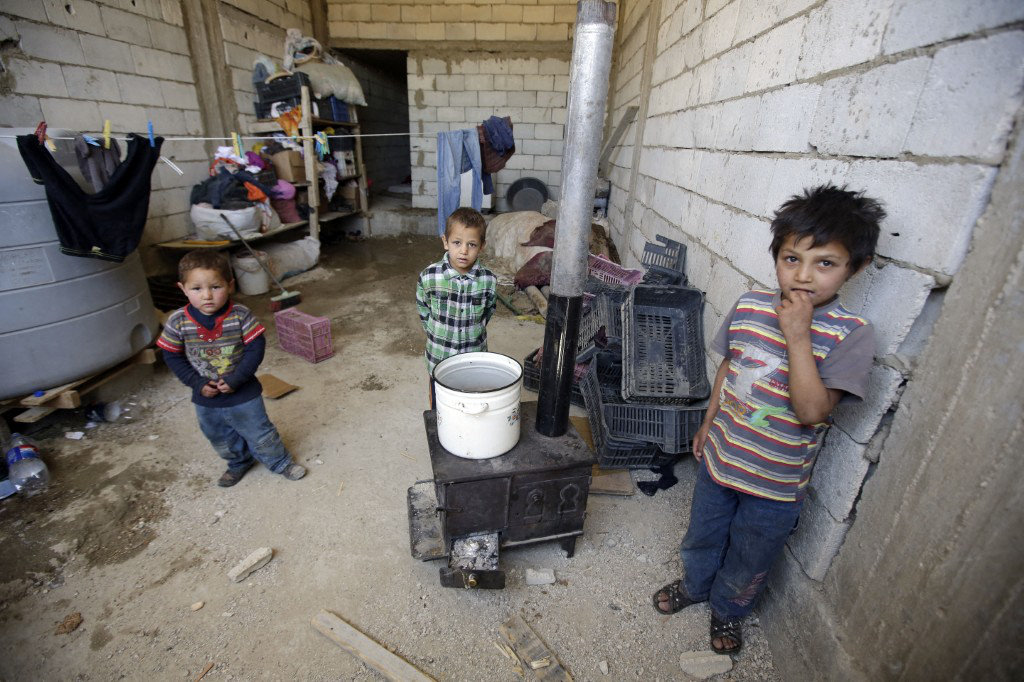
Syrian refugee children whose mother was killed while fleeing recent violence in Qussayr pose in the place they live with their father on June 14, 2013 in Arsal in the Lebanese Bekaa valley.
Officials said years of war, displacement and deteriorating economic and social conditions had contributed to the high numbers, making literacy not only an educational issue but also a challenge for the country’s broader recovery and development.
Targeting single-digit illiteracy rate
Mohammad al-Asha, director of the Cultural Development and Adult Education Department at the ministry, said authorities were pursuing two parallel approaches to address the problem.
More than 400 literacy courses have been launched since the beginning of the year as part of an immediate response, while the ministry is also developing a national plan aimed at reducing the illiteracy rate to single digits within three years.
Syrian-Kurdish children refugee play outside tents at the Domiz refugee camp, 20 km southeast of the northern Iraqi city of Dohuk, on June 19, 2013.
New curricula are expected to go beyond basic reading and writing skills to include digital and legal literacy, critical thinking and Syrian cultural identity, as well as awareness aimed at preventing extremism, addiction and behavioral problems.
Deputy Culture Minister Ahmad al-Sawwaf said literacy was closely linked to human dignity, development and citizenship, describing reading and writing as essential tools for people to understand their rights and responsibilities and participate in rebuilding their communities.
Children walk back from school past building rubble in the devastated Hajar al-Aswad area near the Yarmuk camp for Palestinian refugees on the southern outskirts of Damascus on December 23, 2024.
Digital tools to broaden access
The event also focused on using digital technology and artificial intelligence to expand adult education at a time when limited resources and staffing pose additional challenges.
Engineer Ramez al-Sammak said digital tools could be used to assess learners’ abilities and tailor educational content to individual needs, helping move literacy programs beyond traditional classroom-based teaching.
Such technology could also help programs reach more people and address difficulties including low motivation and the challenge of attending lengthy courses, participants at a specialized seminar on digital literacy education said.
The event honored 18 people who had benefited from adult education programs, including some who went on to complete secondary education and others who used their newly acquired skills to start income-generating projects in food production, handicrafts, woodworking and crochet.
The event honored 18 people who had benefited from adult education programs.
People with disabilities who continued their education despite difficult circumstances were also honored.
The Culture Ministry said tackling illiteracy required a broad national effort to help vulnerable groups regain access to education and overcome economic, social and psychological barriers.
Through its Adult Education Directorate, the ministry implements Syria’s national literacy policy and develops programs aimed at providing sustainable learning opportunities and helping people excluded from formal education participate more fully in social and cultural life.
The People’s Republic of China achieved a historic and unprecedented participation in the second edition of the El Alamein International Aerospace Exhibition (EIAS 2026), which was held at El Alamein International Airport from September 8 to 10, 2026. The Chinese participation came just days after the conclusion of the joint Egyptian-Chinese air force exercises Eagles of Civilization 2026. The significance of this Chinese military presence lay in the display of a fully integrated and realistic combat air system, not merely models. In this context, the Egyptian researcher will attempt to divide the significance of China’s participation in the El Alamein Air Show into several key areas, including:
– First: China’s prominent participation in the El Alamein International Air and Space Show in Egypt as a strategic shift in the regional arms market
Here, China’s extensive participation in the El Alamein International Air and Space Show constitutes a significant strategic shift in the regional arms market. Beijing has moved beyond the traditional approach of selling individual military components to present itself as a supplier of comprehensive and integrated air combat systems, competing with Western and American powers in the Middle East and Africa. China’s participation in the El Alamein International Air and Space Exhibition focused on several strategic axes to promote and analyze the concept of a full-suite solution. This was achieved by emphasizing that China does not simply sell aircraft but rather offers a comprehensive defense solution, encompassing attack fighters, logistics support aircraft, aerial refueling, and command and control systems, known as C4ISR.
The People’s Liberation Army of China sought to highlight China’s military and defense role and promote the Chinese model as a ready-made competitive alternative. This was done by showcasing the competitive advantages of Chinese defense industries, such as the absence of complex political conditions, rapid delivery, and comprehensive technology transfer to Middle Eastern and African markets. Furthermore, the focus was on the geopolitical depth, linking the Chinese presence in El Alamein to Beijing’s broader vision of strengthening security and economic partnerships with countries in the region.
Stay ahead of the geopolitical week.
MD Briefing delivers expert analysis across five global fronts — the Indo-Pacific, energy, geoeconomics, European security, and the Middle East — every Monday morning. Free.
– Second: Showcasing the most prominent Chinese aircraft platforms participating for the first time outside of China at the El Alamein exhibition
As for the most prominent Chinese aircraft platforms participating for the first time outside of China, for the first time in its history, the People’s Liberation Army Air Force (PLAAF) showcased four of its latest operational aircraft models at an air show outside of China. The most prominent of these were
– The Chinese J-16 multirole fighter (J-16)
This air superiority and heavy ground attack fighter garnered widespread international attention.
– The Chinese YY-20A aerial refueling tanker (YY-20A)
This Chinese heavy transport aircraft provides refueling to extend the operational range of fighter jets.
– The Chinese KJ-500 airborne early warning and control aircraft (KJ-500)
This represents an airborne command and control system.
– The Chinese Z-20K military helicopter (Z-20K)
This is a multi-role helicopter designed for search and rescue and tactical operations.
Regarding the Chinese weapons and drones on display at the El Alamein International Air and Space Exhibition, the AVIC (Aerospace Industries of China) showcased its advanced defense capabilities in the outdoor exhibition area through:
– A demonstration of the Chinese Wing Loong-10B stealth drone (Wing Loong-10B):
This is a high-altitude, long-range unmanned aerial vehicle (UAV) designed for reconnaissance and precision strikes.
– A demonstration of Chinese smart munitions and missiles:
The Chinese drone was displayed surrounded by advanced air-to-air missiles, such as the PL-108 & PL-12AE. In addition to a demonstration of the Chinese anti-radar and anti-radiation missile (YJ-9ER1).
– Third: The Chinese People’s Liberation Army (PLA) showcased its capabilities through a technical display (capability integration), dividing its export-available air systems into functional groups for attack, others for support and refueling, and a third group for command and control, during China’s extensive participation in the El Alamein Air Show in Egypt.
In this context, the PLA sought to leverage China’s extensive participation in the El Alamein Air Show in Egypt as a new and strategic launchpad for China in North Africa. This included showcasing the size of the Chinese pavilion and the equipment on display, such as aerobatic aircraft and unmanned combat aerobatics. The Chinese Ministry of Defense emphasized the technical aspects of this capability integration display, highlighting the division of its export-available air systems into functional groups for attack, others for support and refueling, and a third group for command and control. As follows:
■ The offensive functional groups were represented by a display of China’s modern fighter jets and attack drones, such as the Wing Loong family.
■ As for the support and refueling functional groups, China’s strategic transport and aerial refueling aircraft, such as the Y-20, were showcased.
■ The third functional group focused on (command and control), with China displaying its early warning aircraft and airborne command centers.
– Fourth: Analyzing and understanding the strategic dimensions of China’s participation in the El Alamein International Air and Space Exhibition, aimed at attracting more interest in the Chinese aerospace sector and promoting widespread military sales of Chinese military, defense, and armament equipment
Thus, we can analyze and understand the strategic dimensions of China’s participation in the El Alamein International Air and Space Exhibition, which aimed to attract more interest in the Chinese aerospace sector and promote widespread military sales of Chinese military, defense, and armament equipment. Therefore, we find that the extensive Chinese presence at the El Alamein International Air and Space Exhibition constitutes a genuine breakthrough. Beijing did not aim to promote individual pieces but rather to demonstrate its ability to provide a comprehensive and integrated air combat system, encompassing attack, support, refueling, and command, as a competitive alternative in the Middle Eastern and African markets.
Analyzing the economic and strategic dimensions of China’s extensive participation in the El Alamein exhibition, we observe the extent to which the Chinese People’s Liberation Army focused on achieving broad military exposure for its participation during the exhibition. This included showcasing how these Chinese defense, military, and air systems can reduce operating costs for purchasing countries while ensuring their independence in defense decision-making, without imposing political conditions or prior operational restrictions, unlike many Western and American systems.
The beach has claimed another first-time music festival this year.
Ocean Way, the beachfront Santa Monica music fest, has been canceled just two weeks before debuting. The two-day event was set for Sept. 26-27.
Goldenvoice, the promoter behind Ocean Way as well as the Coachella Valley Music and Arts Festival, announced the news Friday in an email from its ticketing platform AXS.
“Due to the impacts of Hurricane Marie, the City of Santa Monica has canceled the inaugural Ocean Way festival,” organizers said in a statement. “Storm surf and runoff [have] caused significant beach erosion and the festival can no longer be safely held as planned. Plans are already underway to bring the festival back to Santa Monica in 2027.”
Tickets, which ran from $249 to $2,250, will be refunded within five to seven business days, the promoter said.
Hurricane Marie, spurred by the “Super El Niño” weather pattern resulting from warming waters in the eastern Pacific Ocean, severely damaged coastal areas from Malibu to Long Beach and Dana Point
“I am deeply saddened that severe weather and beach conditions have forced the City and Goldenvoice to make this difficult decision. However, the safety of festival-goers, our residents and the Pier must remain our priority,” Santa Monica City Council member Dan Hall said in a statement to The Times. “With Hurricane Marie also causing sinkholes in Malibu and triggering home evacuations in Long Beach due to rising surf, the rapid erosion of the beach near the Sandbox event space over the past few days is deeply concerning. The City is working rapidly to keep the Pico storm drain and shoreline repaired and ready for upcoming weather.”
“While we are all disappointed,” Hall said, “I remain optimistic about bringing Ocean Way back next summer.”
The fest was slated to have headline sets by the Killers and Olivia Dean, along with Khruangbin, Sublime, Jack White and many others.
Goldenvoice announced the festival in July, with high hopes that it would open up the waterfront to more public events and concerts in Santa Monica and establish a new marquee festival on the west side of Los Angeles. Santa Monica’s retail and nightlife scenes have struggled in the wake of the COVID-19 pandemic, and the festival, which promoters touted as car-free, would have set a precedent for transit-oriented concertgoing.
“We’ve got to take a chance on new things,” Goldenvoice concert producer Nic Adler told The Times in August. ”There is pressure. I think the city wants it, but that takes a little bit of risk and trying something new.”
“We really cannot keep doing the same things that we’ve always done and expect for Santa Monica to shine,” Santa Monica Mayor Caroline Torosis said in an earlier interview. “We have to invite people back to our city. We have been yearning to get back a big music festival on our beach to showcase the city, because the beach is our best asset.”
The festival is the second major beachside concert to go down this year. The inaugural LA Jazz Festival on Dockweiler Beach was canceled on what would have been its opening day, after its finances and permitting fell through.
Climate change and weather damage have become a major concern for festivals. Bonnaroo, in Tennessee, announced last month that the festival would take 2027 off to repair the grounds, after heavy storms canceled sets and prompted evacuations this year. Stagecoach, the country music festival on the same site as Coachella, also temporarily shut down this year due to strong winds.
Spain’s Congress has approved a bill that would open a special route to Spanish citizenship for Sahrawis born in Western Sahara while the disputed territory was under Spanish occupation.
The bill passed by 168 votes to 31, with 145 abstentions. It must still go through the Senate before it can become law.
So what exactly would the measure do, and why is Morocco watching it closely?
What does the bill do?
The proposed law would allow people born in Western Sahara before September 29, 1977, to apply for Spanish nationality through a special procedure without having to meet the normal residency requirements. First-degree descendants would also be covered.
It would also shorten the duration of the residence requirement for eligible Sahrawis legally living in Spain. Instead of the usual 10 years, they would be able to apply after two years.
Supporters describe the measure as a way of addressing what they see as a historical injustice.
Spain was the colonial power in Western Sahara until it ended its administration of the territory in 1976. The territory has remained disputed ever since, with Morocco considering it part of its sovereignty, while the separatist Polisario Front seeks independence.
Why does Morocco care?
The law would not change the territorial status of Western Sahara. It would not recognise an independent Sahrawi state, nor would Spanish citizenship give its holders sovereignty over the territory.
The concern in Rabat is instead about the relationship the law could create between Spain and people with direct links to Western Sahara.
Reuters has reported that between 70,000 and 110,000 people could eventually qualify, although estimates vary. Anyone who obtains Spanish nationality would also become a European Union citizen and acquire the rights that come with that status.
Potential beneficiaries could include eligible Sahrawis living in Western Sahara as well as members of the Sahrawi refugee population around Tindouf in Algeria, where the Polisario Front is based.
For Morocco, that could mean a larger community of Spanish and EU citizens with personal or family ties to an issue at the centre of its relationship with Madrid.
Why is the timing important?
The bill comes after a significant change in Spain’s policy towards Western Sahara.
In 2022, Prime Minister Pedro Sanchez’s government backed Morocco’s autonomy proposal for the territory, describing it as the most serious, realistic and credible basis for resolving the dispute.
That decision helped repair relations between Madrid and Rabat after a major diplomatic crisis. Since then, the two countries have strengthened cooperation on migration, security, trade and other areas.
The new citizenship measure does not formally change Spain’s support for the autonomy proposal. Madrid can argue that supporting autonomy as a political solution is one matter, while dealing with the consequences of its former colonial rule is another.
But the two issues are difficult to separate completely from Morocco’s perspective because both concern Western Sahara.
What is the debate inside Spain?
The bill has also divided Spain’s political parties.
The governing Socialist Party and its allies in Sumar supported it. The conservative People’s Party abstained, while Vox voted against it.
The disagreement has centred partly on how Spain should address the legacy of its former rule in Western Sahara and on the legal route proposed for granting nationality.
The debate is important to the Moroccan side because it shows that the measure is not simply a technical change to Spanish nationality law. It has also become part of a discussion inside Spain about its colonial past and its relationship with Western Sahara.
Moroccan and international media have also focused on the measure. While Moroccan media have highlighted its potential implications for Spain’s policy towards Western Sahara and its relations with Rabat, Reuters has reported that the move could further strain relations between Spain and Morocco.
Does the bill recognise the Polisario?
No. The proposed nationality route does not recognise the Polisario Front or an independent Sahrawi state.
Nor does acquiring Spanish citizenship indicate support for the Polisario. Nationality is a legal status, and Sahrawis hold different political positions.
The connection to the Polisario is nevertheless relevant because many Sahrawi refugees live around Tindouf, where the Polisario has its headquarters and administers the refugee camps.
If eligible people from those communities acquire Spanish nationality, they would become Spanish and EU citizens while retaining their existing personal and political identities.
Why is Spain referring to its colonial past?
Spain was the colonial power in Western Sahara until it ended its administration of the territory in 1976.
Supporters of the bill argue that people born in the territory during Spanish rule were left in a difficult legal position after Spain withdrew. They therefore present the measure as a way of addressing what they consider a historical wrong.
Spain has used historical ties in nationality policy before.
In 2015, it introduced a procedure allowing Sephardic Jews who could establish their Sephardic origin and a special connection with Spain to apply for Spanish nationality. The measure was linked to the expulsion of Jews from Spain beginning in 1492.
That precedent is relevant to the Moroccan debate because Spain has previously used historical ties to establish a special route to nationality.
And what about Ceuta and Melilla?
This is where the issue becomes particularly sensitive for Morocco.
Morocco considers Ceuta and Melilla an integral part of its territory and sovereignty. The two cities are located on Morocco’s northern coast in North Africa and are under Spanish administration.
Spain rejects Morocco’s claim and considers the cities Spanish territory. Successive Spanish governments have maintained that their sovereignty over Ceuta and Melilla is not negotiable.
The Moroccan argument here could be about how historical ties are treated.
If Spain can draw on its historical and colonial relationship with Western Sahara to create a special nationality route for Sahrawis, and has previously used historical ties with Sephardic Jews, whose connection to Spain dates back more than five centuries, Morocco could ask why its own historical and geographical relationship with Ceuta and Melilla should be considered irrelevant when it makes its claim to sovereignty over the two cities.
For eight centuries, Muslim dynasties, including the Almoravids and Almohads, ruled parts of the Iberian Peninsula.
Morocco’s potential argument is therefore narrower: if historical ties can help establish present-day legal rights, then history and geography can also form part of the case it makes about two cities located on the North African coast.
What would the law change for Morocco?
In territorial terms, very little.
The citizenship measure would not change who controls Western Sahara, determine the territory’s final status or alter the United Nations-led political process. Nor does it, in itself, change Spain’s official position in support of Morocco’s autonomy proposal.
Its significance lies mainly in the relationship between Spain and Morocco. The measure brings Spain’s colonial history in Western Sahara into a broader domestic political debate, raising questions about how that history should be addressed and what its growing political significance could mean for the delicate relationship between Madrid and Rabat.
![Social Democratic Party leader Magdalena Andersson (L) and her husband Richard Friberg (R) cast their votes at a polling station in a school during Sweden’s general election, in Nacka on September 13, 2026 [AFP]](https://i0.wp.com/occasionaldigest.com/wp-content/uploads/2026/09/afp_6aa65a7dcf22-1789287037.jpg?w=640&ssl=1)











![TOPSHOT - Members of the public react as the body of the late King Oyo Nyimba Kabamba Iguru Rukidi IV makes its way to Karambi Royal Tombs for burial in Fort Portal, Uganda, on September 12, 2026 [AFP]](https://i0.wp.com/www.aljazeera.com/wp-content/uploads/2026/09/afp_6aa5b63bb446-1789244987.jpg?w=640&ssl=1)