Sudan’s Rapid Support Forces have had a long history of violations, going back to when they were known as the ‘Janjaweed’. Over the past few years, they have been trying to change their image and become influential political actors in Sudan, but will that work? Al Jazeera’s Hala Saadani looks back at the RSF’s history and where they may go from here.
Israel’s Supreme Court rejects government ban on prisoner visits, affirming Red Cross access under international law.
Published On 4 Jun 20264 Jun 2026
Israel’s Supreme Court has unanimously rejected a government policy banning representatives of the International Committee of the Red Cross (ICRC) from visiting Palestinian detainees in Israeli prisons.
The court ruled on Wednesday that by preventing the Red Cross from visiting prisoners, the government had contravened Israeli and international law, and therefore the policy must be repealed.
Recommended Stories
list of 3 itemsend of list
It also ruled that the government failed to present a legal foundation for its policy on annulling all visits after the Hamas-led attack on October 2023, in which more than 1,100 people were killed and more than 240 were taken captive.
The assault triggered a brutal war in Gaza, which has been defined as a genocide by several prominent scholars and an independent United Nations inquiry. The Israeli army killed more than 72,950 people in the enclave, according to Gaza’s Health Ministry, and reduced most of the besieged territory to rubble, and forced the displacement of nearly 1.9 million Palestinians.
Violence across the occupied West Bank perpetrated by Israeli forces also intensified to unprecedented levels. All visits to prisoners were halted, and information about them was not shared – something that used to be standard practice before the war. Back then, Israeli authorities accused Hamas of failing to secure access to the captives in Gaza.
It was the first time in 50 years that Israel prevented Red Cross visits, according to the Association for Civil Rights in Israel (ACRI), which filed the petition.
“For the first time in nearly three years, the over 9,000 Palestinian security prisoners being held in Israeli prisons and military detention centers will receive Red Cross visits,” ACRI said. The ban remained in place even after a “ceasefire” was agreed last October.
Initial petition
The petition by ACRI, Physicians for Human Rights, Israeli rights group HaMoked and Israeli NGO Gisha against the government policy was first filed in Israel’s High Court in February 2024. But the state of Israel asked for 27 extensions before a hearing was held at the end of October last year.
The ICRC welcomed the decision, saying it was ready to resume its visits. “We are continuing our dialogue with the Israeli authorities to resume our work in detention as soon as possible,” it said in a statement. It added that access to detainees and the ability to meet with them privately are obligations under international law.
Wednesday’s decision comes amid growing concerns over the ill-treatment of Palestinian detainees in Israeli prisons.
Last week, the United Nations released its annual report on conflict-related sexual violence verified in 2025. It cited torture, rape, gang rape, forced nudity and “cavity searches conducted without apparent security justification perpetrated” by Israeli armed forces and security forces primarily during detention and interrogation and across several sites, including the infamous Sde Teiman military camp, among others.
A Love Island star has made a surprise exit from the competition just days into the latest series and after a shock double eviction
Love Island is back(Image: ITV)
Love Island fans are set to be stunned as one islander has left the show just days into their time on the villa. After a double bombshell eviction, a third member of the villa has now cut their time short.
George Knight has sensationally quit the villa shortly after sending Samraj and Ellie home. The footballer had only arrived as a bombshell, but is now said to have left due to “private reasons”.
He is still set to feature on Thursday evening’s show, but is thought to already have said his goodbyes. His exit is reportedly not going to be aired.
A Love Island spokesperson said: “For private reasons, George has left the Love Island villa. Duty of care for the Islanders is paramount so at this stage any further comment will come from George. Bosses and viewers alike had been loving his contribution.”
The contestant had made a big entrance and was getting to know Robyn and Mica. Robyn, who quickly friend zoned Sam appeared keen to forge a pairing with George, so it remains to be seen how she will take the news. The pair had already shared a kiss on the terrace.
On Wednesday’s show, Yasmin was in tears as the time for the bombshells to make their decision approached. And their decision wasn’t well received by viewers at home. One labelled it a “sinister” move, while others were shocked.
But while tears ran down the villa and gutted Samraj and Ellie heading for the exit, they were told that all may not be as it seemed. It left fans confused as to what might come next in a series that has already thrown up a number of twists in the first week.
Straight off the bat, islanders had to choose their own couples. This moved away from the public who normally picked who they thought was best matched.
Love Island All Stars winner Gabby Allen told us of the bold move at the time: “The producers are doing a great job at changing things up. This has never been done before.
“A recoupling done by themselves is crazy! I would panic in this situation and hope somebody whisked me off my feet so I didn’t have the decision.”
After the first episode, Gabby also predicted high energy between some of the cast – and Gabby knows vibes when she sees them! “OMG!!! The vibes between Lola & Ope already,” she said.
“These two coming in I feel like is already spicing things up. BOTH of them have very good energy. You heard it here first, Ope is going to do well. Player of not. People are going to like him.”
No handshake and no photo as Mirra Andreeva of Russia beats Marta Kostyuk of Ukraine to reach French Open tennis final.
By Kevin Hand, News Agencies and The Associated Press
Published On 4 Jun 20264 Jun 2026
Russian teenager Mirra Andreeva reached her first Grand Slam final by beating Marta Kostyuk of Ukraine 6-1, 6-3 in a tense encounter at the French Open.
Andreeva converted her first match point when she served for the tennis match on Thursday.
Recommended Stories
list of 4 itemsend of list
There was no post-match handshake between the pair, however, and Kostyuk walked off quickly, turning only to wave and blow kisses to the crowd at Court Philippe-Chatrier, where some fans were draped in Ukrainian flags.
The atmosphere beforehand was somewhat tense as the players had separate photos taken as they each stood next to two children on their respective sides of the net. Usually, the players pose for the same photo, standing right next to each other by the net.
Kostyuk and countrywoman Oleksandra Oliynykova have spoken out during the tournament about the impact Russia’s four-year invasion of Ukraine is having on their country.
The eighth seed seized control from the outset and never loosened her grip on the contest, overwhelming Kostyuk with her depth and aggression on Court Philippe-Chatrier to set up a title clash against compatriot Diana Shnaider or Polish qualifier Maja Chwalinska.
Andreeva, 19, raced into a 4-0 lead in the opening set and barely looked back in the third meeting between the two players, the Ukrainian having won the first two.
Kostyuk briefly threatened to make a contest of it in the second set, but the Russian swiftly snuffed out any hopes of a comeback before serving out the match to complete a dominant display.
“I’m still very nervous, very nervous coming to this match as she’s had an amazing season, she hadn’t lost on clay, so that put pressure,” said Andreeva.
“She’s an amazing player, a tough opponent, so I’m super happy with the way I played. I’m happy I got revenge for the Madrid final, and to reach my first Grand Slam final.
“All of these feelings combined, I’ve never felt anything like this. I’m very excited about the last match here in Paris.”
Top-seeded Sara Errani and Andrea Vavassori of Italy won the mixed doubles final earlier Thursday, beating Gabriela Dabrowski of Canada and Evan King of the US 4-6, 6-3, 10-4.
An Italian is guaranteed to be in Sunday’s men’s French Open singles final, with Flavio Cobolli facing fellow Italian Matteo Arnaldi on Friday in the first Grand Slam semifinal for both players.
The FIFA World Cup 2026 could be the final act for some of football’s finest talents.
Although some of this tournament’s players will set a men’s football record by appearing in their sixth World Cup, age is catching up, and other players have struggled with injuries.
Recommended Stories
list of 4 itemsend of list
Al Jazeera takes a look at who might be making their final bow on the global stage at the tournament in North America:
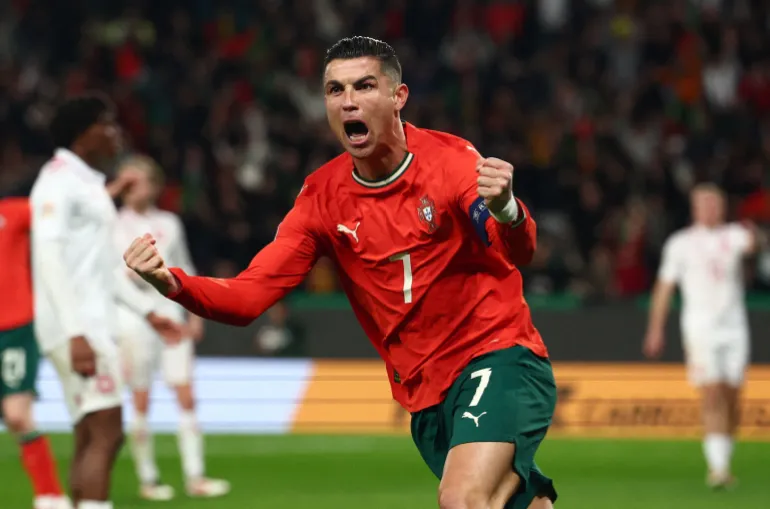
Cristiano Ronaldo – Portugal
Although fitness has been one of Ronaldo’s biggest strengths during his illustrious career, at 41, the Portugal forward knows his playing days are numbered.
Numbers have always been on the former Manchester United and Real Madrid forward’s side, though, and he fired in 30 in 37 matches for Al-Nassr this season, while his tally for Portugal currently sits at 143 goals.
The second-oldest player at this year’s tournament, only behind Scotland’s 43-year-old Craig Gordon, Ronaldo heads to his record sixth World Cup, well aware it could be his final chance to lift the coveted golden trophy: the only one missing from his glittering cabinet.
Cristiano Ronaldo will play in his sixth, and possibly his last, World Cup this year [Pedro Nunes/Reuters]
Lionel Messi – Argentina
Like Ronaldo, Messi is also off to his record sixth finals appearance, one where he will lead Argentina’s defence of the title they won in Qatar four years ago.
Argentina’s all-time leading scorer and appearance holder, Messi, has struggled with injury in the build-up to the tournament, raising doubts about whether he will feature in each game and if his body can keep up with the gruelling demands of an expanded World Cup.
The eight-time Ballon d’Or winner’s impact and talent, however, are such that, even at 38, he remains the heartbeat of the football-crazy South American nation.
Injuries have cast doubt over Lionel Messi’s involvement in the upcoming World Cup [File: Matias Baglietto/Reuters]
Luka Modric – Croatia
After playing a key role in Croatia’s run to the 2018 final and a third-place finish in 2022, Modric is ready for his fifth and final appearance at the World Cup. As the 40-year-old heads to the tournament after undergoing cheekbone surgery, the veteran knows the team still relies heavily on him for his playmaking prowess.
The ageing midfielder, also the Balkan nation’s captain, still enjoys a hero’s status within a side that has often defied expectations on the global stage. Enjoy his magic in midfield before he bows out.
Luka Modric, Croatia’s midfield magician, is set for his swansong [File: Antonio Bronic/Reuters]
Neymar Jr – Brazil
At 34, Brazil‘s all-time leading scorer Neymar is much younger than Messi or Ronaldo, but unlike the two greats of the game, his place in the national team is not guaranteed. Neymar’s comeback in the Brazil squad after a two-and-a-half-year hiatus electrified football fandom, and only time will tell whether it was a gamble or a tactical masterclass by coach Carlo Ancelotti.
With a history of fitness issues, a series of injuries and mounting age (he would be 38 by the 2030 World Cup), what looks more certain is that this could be Neymar’s fourth and final act at the tournament.
Brazil’s beloved Neymar Jr is off to the World Cup after a two-and-a-half-year hiatus from the national set-up [File: Dylan Martinez/Reuters]
Manuel Neuer – Germany
Such is the “aura” of Neuer, as coach Julian Nagelsmann said last month, that the 40-year-old came out of retirement to be named Germany‘s first-choice goalkeeper for the 2026 World Cup. Back in the squad after nearly two years, fans will have a final chance to see him at the World Cup.
Widely regarded as one of the greatest goalkeepers, Neuer has played at four World Cups, most notably having a key role in Germany’s 2014 World Cup triumph on Brazilian soil.
Manuel Neuer reversed his retirement decision to play for Germany at the World Cup for the final time [File: Kai Pfaffenbach/Reuters]
Mohamed Salah – Egypt
Arguably Africa’s greatest player of all time, Salah became a global superstar on the back of his success at Liverpool, where he won nine trophies. At 33, and no longer at the peak of his powers, this could be the forward’s second, and possibly final, World Cup.
An underwhelming season and his subsequent departure from Liverpool may have tempered expectations. Yet Egyptians continue to place their faith in their beloved number 10, hoping he can inspire the nation and help deliver something it has never experienced before: the joy of celebrating a World Cup victory.
Egypt are back at the World Cup for only the third time, and Mohamed Salah’s second [File: Siphiwe Sibeko/Reuters]
Kevin de Bruyne – Belgium
A big part of Belgium’s “golden generation” between 2014 and 2022, playmaker De Bruyne continues to flourish in his duties for club and country. Age, however, is starting to catch up with the playmaker, who turns 35 later this month.
The Napoli midfielder’s performance is central to Belgium’s odds of a deep run at the 2026 World Cup, and he will be eager to drive them to a memorable finish in what will be his fourth and presumably final appearance at the tournament.
Kevin De Bruyne will appear at this fourth World Cup [File: Wolfgang Rattay/Reuters]
Virgil van Dijk – Netherlands
Experienced centre-back van Dijk is not quite the force he was a few years ago, when he won the Champions League and Premier League in back-to-back seasons with Liverpool.
The Netherlands captain turns 35 next month, and the Dutch could move on with a younger defensive core by the time the 2030 edition comes around.
After reaching the 2022 World Cup quarterfinals and Euro 2024 semifinals, van Dijk will hope to take the team one step further in what will be his third finals.
Netherlands captain Virgil van Dijk turns 35 on July 8 [Piroschka Van De Wouw/Reuters]
Sadio Mane – Senegal
Widely regarded as one of the world’s best wingers, Mane heads to the World Cup seeking to make up for the disappointing leg injury that denied him a shot at Qatar 2022.
At 34, the Senegal international is far from the peak of his career, which saw him enjoy trophy-laden spells at Liverpool and Bayern Munich.
Despite his mounting age, Mane remains the team’s source of inspiration and creativity, and he was an integral part of the side that beat Morocco in the Africa Cup of Nations final – only for the result to be overturned due to Senegal’s mid-game protest.
Mane will feature in his third, and likely final, World Cup, given that the Teranga Lion has said the last AFCON was his last, although the coaching team have said they have not given up on changing his mind.
Sadio Mane is Senegal’s top scorer with 53 goals [Siphiwe Sibeko/Reuters]
Guillermo Ochoa – Mexico
Part of an esteemed group which includes Messi and Ronaldo, Ochoa is also set to play at a record sixth World Cup. The goalkeeper, who will turn 41 next month, had not been part of the national squad in recent years, but was picked for the tournament, which is being co-hosted by his country, Mexico.
Known for being a formidable figure in Mexico’s previous World Cup campaigns, Ochoa will retire at the end of the team’s run at the tournament.
Guillermo Ochoa is the first Mexican to play at six World Cups [Kai Pfaffenbach/Reuters]
The FIFA World Cup begins on June 11. You can follow the action on Al Jazeera’s dedicated World Cup 2026 page with all the latest news, match build-up and live text commentary, and keep up to date with group standings, real-time match results and schedules.
Clarkson’s Farm star Lisa Hogan returns to screens for season five, but what do we know about her previous relationships?
All we know about Lisa Hogan’s ex-husband
The fifth season of Clarkson’s Farm has finally arrived, with four brand-new episodes landing on Wednesday, 3rd June.
After Jeremy Clarkson’s emergency hospital dash back in October 2024, the former Top Gear and The Grand Tour co-presenter lost no time in returning to work at Diddly Squat.
The latest series chronicles Jeremy as he teams up once more with Kaleb Cooper and his other half, Lisa Hogan, on fresh farming ventures, including so-called ‘Easycare’ sheep which prove to be amongst the most challenging animals on the farm, a touching Christmas celebration and even AI-powered tractors.
Now the show has been running for half a decade, with a sixth series scheduled for next year, audiences have become more familiar than ever with television couple Jeremy and Lisa.
However, did you know Lisa was previously wed before encountering Jeremy at a gathering in 2017? Let’s explore what we know about her former spouse, reports Wales Online.
Who is Lisa Hogan’s ex-husband?
Lisa was formerly married to Baron Steven Bentinck, an art collector and Dutch aristocrat residing in Madrid.
He belongs to the House of Bentinck family of Dutch, German and British nobility and is the nephew of steel magnate and art collector Baron Heinrich von Thyssen.
Baron Steven and Lisa first crossed paths in 1996 and tied the knot in 1998. They stayed together for 30 years, until 2011, and share three children, Wolfe, Alice, and Lizzy.
Lisa’s former husband was also previously wed to Nora de Picciotto. He is 69, 17 years Lisa’s senior, with her being 52. His precise net worth remains undisclosed but is thought to run into the multi-millions owing to his links with billionaire industrialist von Thyssen and his remarkable collection of luxury assets, which previously included the 147-foot yacht, alongside several high-value properties such as the Duntreath Castle estate in Scotland.
The Bentinck family wealth is understood to reach into the hundreds of millions, with their Welbeck Estates Company holdings alone estimated at over £230 million.
Get 30 days of Prime Video totally free
This article contains affiliate links, we will receive a commission on any sales we generate from it. Learn more
TV lovers can get 30 days’ free access to binge great shows like Clarkson’s Farm by signing up to Amazon Prime. Just remember to cancel at the end and you won’t be charged.
Prior to her relationship with Jeremy, Lisa was also involved with Canadian businessman Craig Cohan for a period after meeting at a birthday celebration in Moscow. The pair were seen together at a Battersea Power Station event in April 2014, although the exact timeline of their romance and separation remains unclear.
Jeremy, for his part, has been married twice before. His first wife is Alex Hall, whom he wed in 1989 for six months, while his second is manager Frances Cain, marrying in 1993. They share three children together and separated in 2014.
Clarkson’s Farm season 5 continues Wednesdays on Prime Video.
Israel and the Lebanese government have agreed to implement a new US-mediated ceasefire, the Trump administration has said, despite Israel’s defence minister insisting the military will continue operations in Lebanon.
Furthermore, while Lebanese President Joseph Aoun said on Thursday that the ceasefire would come into force within 24 hours of approval by all concerned parties, Hezbollah leader Naim Qassem has dismissed the deal, labelling it a “surrender and defeat”.
Recommended Stories
list of 4 itemsend of list
The Trump administration announcement comes just weeks after a previous agreement to cease hostilities was supposedly reached on April 16. Since then, however, more than 600 people have been killed in Israeli strikes across Lebanon while Israel has expanded its military presence in the south of the country, now occupying about one-fifth of the country.
The renewed diplomatic push also comes as Washington pursues parallel shuttle negotiations with Iran. Tehran, a close ally of Hezbollah, has made a ceasefire in Lebanon a condition for any broader agreement to end the war with the US and has repeatedly called for Israel to withdraw from southern Lebanon.
Iran’s position was underlined when Quds Force commander Esmail Qaani said the baseline demand in Lebanon is for Israeli forces to withdraw to the positions they held before the start of the US-Israel war on Iran at the end of February – a demand that is not explicitly reflected in the agreement.
Iran and Hezbollah’s responses to the US announcement, coupled with Israel’s insistence that military operations will continue, have cast serious doubt on its viability. Critics of Israel’s war on Lebanon also point to the April truce, which they say has completely failed to halt Israeli attacks or Israel’s occupation of the south of the country.
What has been announced?
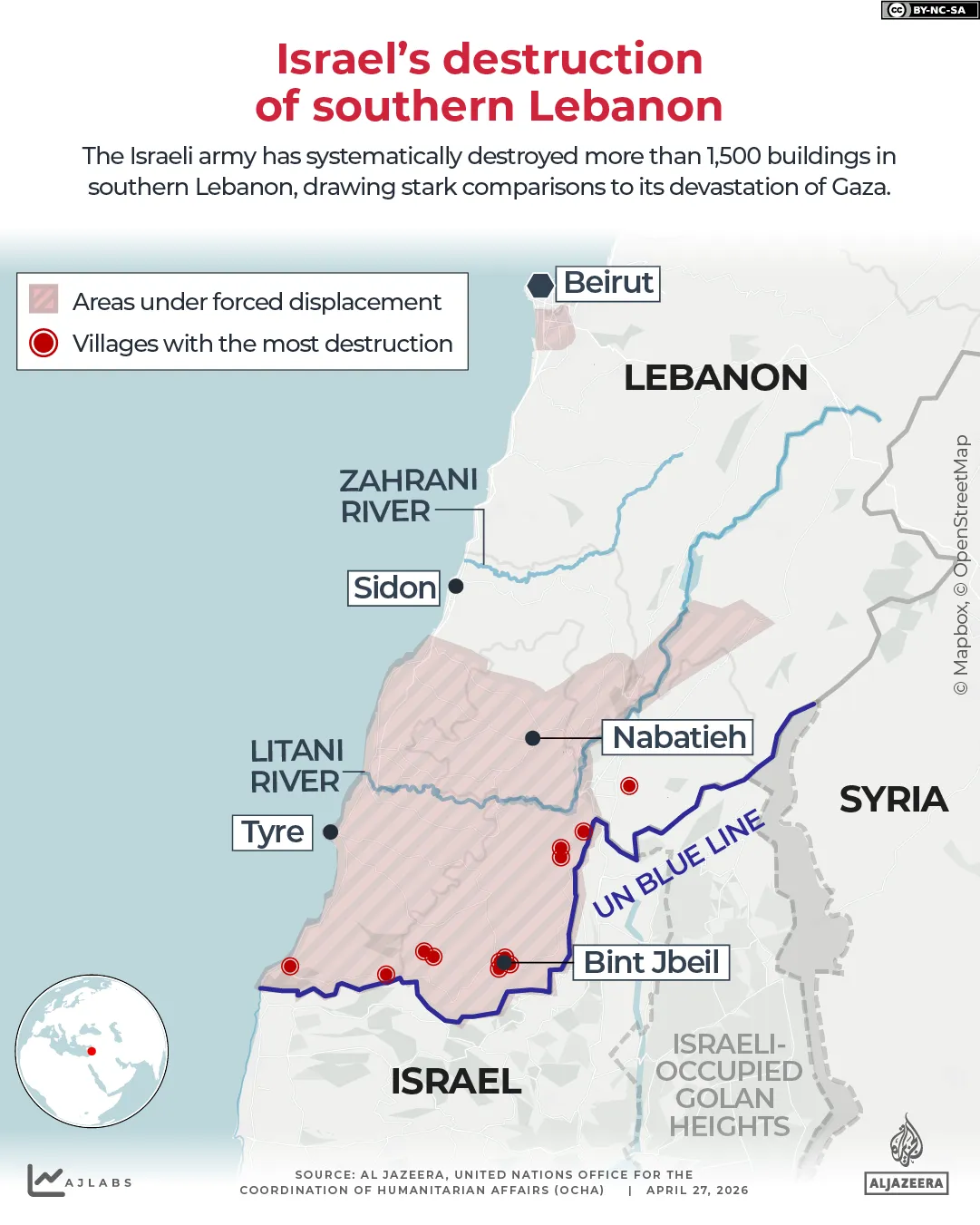
According to the Trump administration, Israel and Lebanon have agreed to implement a ceasefire contingent on a “complete cessation” of Hezbollah fire and the evacuation of its fighters from the area south of the Litani River.
The agreement also calls for the creation of “pilot zones” where Lebanese Armed Forces would take exclusive control “to the exclusion of all non-state actors”. The stated aim is to move towards a wider political and security agreement, including the dismantling of non-state armed groups and preventing their re-emergence.
But Hezbollah was not party to the talks and has already rejected the agreement. Lebanon was represented by government diplomats, even though the Lebanese army is not a party to this conflict.
According to the wording of the agreement, the parties are due to reconvene during the week of June 22 to continue diplomatic and security talks, with the US facilitating communications in the meantime. It remains unclear if that stage of the agreement will ever be reached.
[Al Jazeera]
What was agreed in April?
The April agreement used different language, saying Israel and Lebanon would implement a “cessation of hostilities” from April 16, and never actually used the word ceasefire.
It also included a clause allowing Israel to “take all necessary measures in self-defence, at any time, against planned, imminent or ongoing attacks”.
That clause does not appear in the new text, which could be interpreted as a small concession. That was until Israel Katz said Israel would continue its military operations in Lebanon regardless.
The latest agreement also repeats Israel’s longstanding demand that Hezbollah withdraw from south of the Litani River.
Meanwhile, there is one major glaring omission. While the text focuses heavily on Hezbollah’s withdrawal from parts of southern Lebanon, it does not mention Israel’s withdrawal from southern Lebanon.
Lebanese journalist and analyst Souhayb Jawhar told Al Jazeera the agreement is defined as much by what it leaves out as by what it includes.
The text, he said, focuses on Hezbollah’s obligations and those of the Lebanese state: removing armed elements from south of the Litani and creating zones where the Lebanese army holds exclusive control.
“This point alone explains much of the scepticism within Hezbollah and its political environment,” Jawhar told Al Jazeera. “From the party’s perspective, any agreement should include a clear ceasefire, an Israeli withdrawal, and a framework for addressing outstanding issues, rather than becoming a document focused primarily on restructuring Lebanon’s internal security landscape.”
What else is different this time?
Other points of contention regarding the new agreement are the “pilot zones”, which appear to go beyond stopping the fighting and instead test a new security model in southern Lebanon – one that could eventually be expanded elsewhere, analysts say.
“This is why many observers see these zones as the beginning of a gradual transition from a security environment in which Hezbollah played the dominant role to one in which the Lebanese state and its armed forces become the sole security authority,” Jawhar said.
He added that the fate of the agreement may depend less on Lebanon-Israel talks than on the US-Iran track. If Washington and Tehran reach a wider understanding, the ceasefire in Lebanon will have a stronger chance of holding because both sides will have an interest in stabilising the Lebanese front.
“If those negotiations stall or collapse, Lebanon could quickly return to being one of the main arenas of pressure and confrontation between the two sides,” Jawhar added.
What is the situation in Lebanon now?
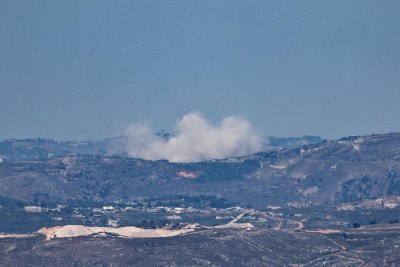
Southern Lebanon remained under heavy military pressure on Thursday, with Israeli strikes on Kafra and al-Mansouri in the southwest of the country. In the Bekaa Valley, one person was killed and four others wounded in an Israeli strike on Sohmor, according to Lebanon’s state-run National News Agency (NNA).
A separate strike hit Tell al-Aqareb, while further raids targeted Haddatha, Tibnin, Haris, and Harin. The NNA also reported more Israeli strikes across southern Lebanon as drones flew at low altitude over Beirut. In Maaroub, one person was killed and another wounded when Israeli forces targeted a motorcycle.
Israeli warplanes also struck towns and villages across the south, including Zawtar al-Sharqiya, Zawtar al-Gharbiya, Shoukin, Barachit, Srifa, Zibdin, Haris and Deir Zahrani. Jets and drones have also been flying over the south for much of the morning, including a drone seen at extremely low altitude over Tyre.
Lebanon’s Civil Defence authorities have warned people not to return south, citing the continued danger to civilian life in towns and villages across southern Lebanon.
More than 3,000 people have been killed, and more than one million have been forced from their homes since Israel renewed its assault on Lebanon in early March.
Weekly insights and analysis on the latest developments in military technology, strategy, and foreign policy.
The prestigious Russian Navy base at Kronstadt, near St. Petersburg, came under Ukrainian drone attack overnight, in what may well be the first strike of its kind against the Baltic Fleet. Ukrainian drones targeted the naval base, including the Project 20380 Steregushchiy class corvette Boikiy, highlighting the fact that Russian warships are vulnerable even when hundreds of miles from Ukraine’s borders.
According to the official account of the Ukrainian 414th Separate Unmanned Strike Aviation System Brigade on X, the corvette was set ablaze while in the Veleshchynskyi dry dock in Kronstadt, where it is said to have entered scheduled maintenance in February of this year. The same account posted a video showing the attack. While we are used to kamikaze drone video feeds cutting out just before detonation, the fact that multiple drones were involved means we can see the burning vessel from several angles.
KRONSTADT (St. Petersburg), June 3. Birds of the @1usc_army, @usf_army hunted down and set ablaze the corvette Boikiy, a guided missile weapons carrier.
06:35, 03.06.26. Veleshchynskyi Dry Dock, Kronstadt (St. Petersburg) – the cradle of the russian Navy.
— 414 Magyar’s Birds (@414magyarbirds) June 3, 2026
Reportedly, the drones that hit the corvette were from the 1st Separate Center of Ukraine’s Unmanned Systems Forces. Considering the long distance to the target, it is interesting to note that video from the seekers was available. This indicates that either a local operator on the ground was involved in targeting and recording the feed, or otherwise a satcom link was used to do the same. While it is conceivable that the drones used autonomous guidance, they would still have needed someone nearby or connected via satcom to record the seeker’s view. Another possibility is that shorter-range drones were used for the attack, something that Ukraine has done before for attacks deep in Russia, although this seems less likely here.
A drone’s eye view of the Russian corvette Boikiy ablaze in the Veleshchynskyi dry dock in Kronstadt. Ukrainian Ministry of Defense screencap
Ukraine’s Unmanned Systems Forces stated that the Boikiy was involved in escorting ships associated with Russia’s so-called shadow fleet, the collection of older tankers operating under foreign flags that Moscow relies on to export oil despite Western sanctions. According to Ukrainian officials, Russia has increasingly tasked Baltic Fleet vessels with escort, monitoring, and security missions for these tankers as they transit the Baltic Sea carrying sanctioned Russian oil to markets prepared to bypass Western restrictions.
The Steregushchiy class ships are among Russia’s more modern corvettes. With a standard displacement of 1,800 tons, a length of 343 feet, and a flight deck for a helicopter, the corvettes are closer to frigates, according to some classification systems. Their primary armament consists of two quadruple launchers for Uran anti-ship missiles, a 12-cell Redut vertical launch system for various air defense missiles, and two quadruple tubes for Paket-NK anti-torpedo/anti-submarine torpedoes.
The British offshore patrol vessels HMS Mersey and HMS Severn shadow the Russian corvette Boikiy in the English Channel in 2017.
The attack on the naval base was part of a wider Ukrainian drone barrage directed against other military and energy sites in and around St. Petersburg early on Wednesday. Footage of the attacks showed drones, reportedly FP-1/2 types, low over the Gulf of Finland and in the skies above the city.
A video published online shows a Ukrainian FP-1 drone flying just a few meters above the water in the Gulf of Finland during the morning attack on Saint Petersburg. pic.twitter.com/ZTtGb71zdT
The attacks occurred just hours before international guests gathered for the city’s flagship economic forum. “The Petersburg forum is opening with a nice plume of black smoke in the background after Ukrainian strikes,” posted Serhiy Sternenko, an adviser to the Ukrainian defence minister.
Several long-range drones also crashed into oil storage facilities in St. Petersburg after Russian air defenses reportedly tried unsuccessfully to shoot them down. Loud explosions were heard, and black smoke could be seen rising from the blazing oil terminal, one of the largest on Russia’s Baltic Sea coast.
In this footage you can even see two Ukrainian drones flying in formation over the oil terminal in Saint Petersburg, Russia, with one dive-bombing into the oil terminal. pic.twitter.com/eMUdpwsDiz
The entire city of Saint Petersburg, Russia, received a front row seat for the destruction of the local oil terminal. This includes also the attendees of St. Petersburg International Economic Forum (SPIEF), which will start today. pic.twitter.com/HxDsF6kQ6p
Russian authorities confirmed that the attacks had taken place, with St. Petersburg’s governor, Alexander Beglov, saying that the Kirovsky and Krasnoselsky districts had been targeted.
Ukrainian President Volodymyr Zelensky, writing on social media, said that drones had hit “important facilities on Russian territory,” including the St. Petersburg oil terminal, the Kronstadt base, and a weapons factory in the Tambov region.
“I thank our warriors for their precision. Ukraine’s plan for long-range sanctions is being implemented exactly as needed to bring peace closer,” Zelensky said.
Our long-range sanctions carried out by the warriors of the Security Service of Ukraine, the Unmanned Systems Forces, the Special Operations Forces, the Defense Intelligence of Ukraine, and the State Border Guard Service of Ukraine have yielded good results. Important facilities… pic.twitter.com/esxYMexU8d
— Volodymyr Zelenskyy / Володимир Зеленський (@ZelenskyyUa) June 3, 2026
The significance of the strikes is manifold.
First off, the drone strikes have a highly symbolic value, and will be especially embarrassing for the Kremlin, since they come immediately in advance of the three-day annual summit being held in St. Petersburg, and billed as Russia’s answer to Davos.
The Saint Petersburg International Economic Forum of 2026 (SPIEF 2026) in Russia has started with a very fiery keynote speech by the Ukrainian surprise guests. pic.twitter.com/VVIuGcQCO7
Guests arrived for today’s opening ceremony under a pall of thick smoke, and Russian President Vladimir Putin is due to make a keynote speech at the event on Friday. There was further disruption for arriving guests as St. Petersburg’s airport was temporarily closed.
Secondly, the drone strikes underscore Ukraine’s ability to strike targets deep within Russia, using a growing array of long-range one-way attack drones and cruise missiles. The targets are around 680 miles from the nearest Ukrainian border.
The approximate location of Kronstadt and St. Petersburg in relation to Ukraine. Google Earth
Finally, by targeting Kronstadt, the attacks also signify the opening up of a new front in the drone war, namely against the Baltic Fleet while it is in port.
A fire has reportedly broken out aboard the Russian warship Boykiy in Kronstadt near St. Petersburg following Ukraine’s latest drone attack.
The corvette repeatedly escorted vessels from Russia’s shadow oil fleet through the English Channel in recent years. pic.twitter.com/Zhsn3nVsVp
Located on Kotlin Island in the Gulf of Finland, about 18 miles west of St. Petersburg, Kronstadt is one of the principal bases associated with the Baltic Fleet. Today, it primarily hosts corvettes and patrol vessels, naval support ships, training units, as well as repair and maintenance facilities. Since any naval threat approaching St. Petersburg from the Gulf of Finland must pass near Kronstadt, the base effectively acts as the maritime gateway to Russia’s second-largest city.
The approximate location of Kronstadt, at the gateway to St. Petersburg, and at the far east end of the Baltic. Google Earth
There have been very few confirmed Ukrainian attacks of any kind on the Baltic Fleet compared with the extensive campaign waged against Russia’s Black Sea Fleet.
In April 2024, there was a fire on a Russian warship at Baltiysk in Kaliningrad. The fire damaged communications and electronic systems aboard the Buyan class corvette Serpukhov. A Ukrainian military intelligence official subsequently claimed that this was the result of a covert joint operation conducted by his GUR agency and a pro-Kyiv Russian military group.
📹 For the first time in the war, an attack took place in the Baltic Sea, the Russian Serpukhov missile ship was burned in Kaliningrad. The Buyan-M class Serpukhov corvette belonging to the Russian navy was burned by Ukrainian sabotage teams. The ship was severely damaged. pic.twitter.com/Isl9sVWF1R
So far, of course, Ukraine’s naval campaign has focused overwhelmingly on the Russian Black Sea Fleet. Many successful attacks have been recorded against Black Sea Fleet vessels and facilities, forcing the general evacuation of Russian naval assets from occupied Crimea and to bases in Russia proper.
In recent months, Ukraine has waged an aerial campaign to disrupt Russia’s economy. Long-range drones have hit ports and oil storage facilities, military factories, and airbases. There has also been an uptick in attacks against tankers and trucks moving between occupied southern Ukraine and Crimea, leading to fuel shortages across the peninsula.
Meanwhile, the scale of Russian missile and drone attacks on Ukraine remains undiminished. On Monday, a barrage of Russian strikes killed 23 people across Ukraine and injured many more. This led Zelenskyy to renew his plea for the U.S. government to provide Kyiv with more Patriot missiles. Today, he said that “an agreement at the highest political level on the purchase of Patriot systems […] is awaiting implementation at the financial, legal, and technical levels.”
I held a meeting on additional ways to supply air defense to Ukraine – both systems and interceptors. We have an agreement at the highest political level on the purchase of Patriot systems, and this agreement is awaiting implementation at the financial, legal, and technical…
— Volodymyr Zelenskyy / Володимир Зеленський (@ZelenskyyUa) June 3, 2026
Whether or not the overnight strike caused significant damage, its strategic message was unmistakable. By reaching Kronstadt, one of Russia’s most historic naval bases, Ukraine demonstrated that even the Baltic Fleet is no longer beyond its reach. The attack highlights Kyiv’s growing long-range capabilities and signals that Russia’s efforts to protect both its regular fleet and its shadow oil-export network may face increasing pressure, even far from the front lines.
Katie Price has revealed details of her last phone call with husband Lee AndrewsCredit: Katie Price / BackgridLee is said to be in Al Awir prison over a civil matterCredit: Instagram
But after she spoke to him, it emerged he “needs a six-figure sum” instead.
And now Katie has shared her fears for Lee, saying she was worried he would not be released anytime soon.
Revealing details of her last phone conversation with Lee, Katie said: “I’m absolutely knackered, it’s the second morning because I spoke to Lee yesterday and he wants me to go to the Al Awir prison because he’s given me permission to get all his phones, his belongings.
Katie said Lee’s given her permission to ‘get all of his phones and belongings’Credit: wesleeandrews/InstagramKatie said she was exhausted as she continues to fight to get Lee out of jailCredit: Instagram/@wesleeeandrews
“So I’m going there now.
“I still need to hear back from his lawyer if I can get a visit to see him.
“It’s Wednesday and I go on Friday… time is running out.”
Katie admitted she was now able to reach her husband because she had a Dubai number for him in prison.
“I’m feeling knackered today, I’m excited, but excited for what? Because I don’t know if I’m seeing Lee but at least I now know he can ring me, I’ve got the Dubai number so at least I know he can ring me,” she added.
“So let’s go to the prison again.”
The previous day, Katie posted a clip while at a hair salon in Dubai as she told fans she was “all glam, just to go to bed and chill”.
She said: “The time is half five, I’m going to go back to the hotel, get in bed and watch telly all night until tomorrow morning.
“That’s so bad, coming to Dubai and I’m going to bed at half six in the evening, that’s shocking.
“I could go and party, have a drink, but I’m happy to go back to the hotel for a cup of tea in bed.”
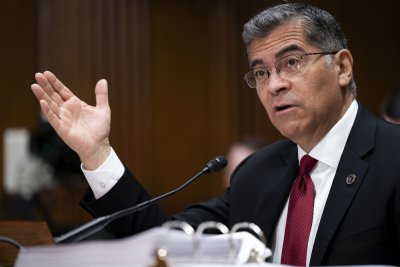
1 of 2 | Former Secretary of the Department of Health and Human Services Xavier Becerra speaks during a Senate Finance Committee hearing on former President Joe Biden’s proposed budget request for the Department of Health and Human Services for fiscal year 2025 at the U.S. Capitol in Washington, D.C., on March 14, 2024. File Photo by Bonnie Cash/UPI | License Photo
June 4 (UPI) — Republican Steve Hilton and Democrat Xavier Becerra are leading a crowded field in California’s primary for governor on Thursday with millions of ballots left to count.
The two candidates that receive the most votes will advance to the November election, regardless of party. Democrat Tom Steyer has the third most votes so far.
Sixty-one candidates qualified to appear on the primary ballot to replace Gov. Gavin Newsom.
Polls closed on Tuesday night at 8 p.m. PDT. It is common for California to take days if not weeks to tally enough votes to declare a winner.
Despite millions of votes still being counted, President Donald Trump has alleged that Democrats have cheated in California’s primaries.
“There’s BIG cheating by the Dumocrats in California,” Trump posted on social media. “Votes are all tied up. May not be in for weeks. Under investigation by the U.S. Attorney’s Office in Los Angeles. Why the vote counting DELAY?”
Trump also declared Hilton the winner of the primary, even though not enough votes have been counted to make that determination.
“Congratulations to Steve Hilton on coming in first, last night, in the California Vote for Governor,” Trump wrote.
Hilton, a former Fox News host, is the top overall vote-getter as of Thursday morning.
Becerra is the former Biden administration U.S. human services and health secretary. Steyer, a billionaire, is a philanthropist and climate activist.
Iran is heading to the World Cup while the country is at war with a host nation, a situation that is unique in the tournament’s history.
The United States-Israel war on Iran began on February 28, and there has been an uneasy ceasefire in place since April 8, but the uncertainty – and occasional flare-up in hostilities – means an end to the conflict is far from certain.
Recommended Stories
list of 4 itemsend of list
For the Iranian players and staff, the situation has thrown their World Cup preparations into chaos – all of their matches are scheduled to be played in the US.
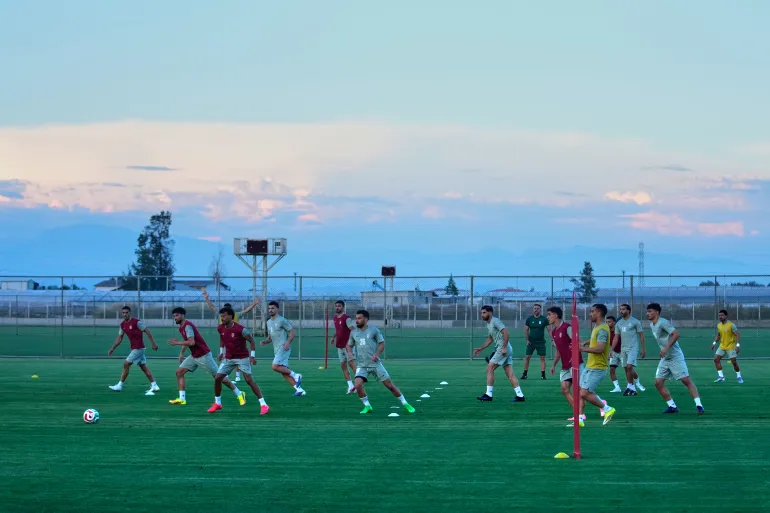
The Iran team has spent more than two weeks in Turkiye, mostly practising at the coastal resort Antalya, and some travelled to the capital, Ankara, to submit visa applications at the US embassy.
The team’s participation in the event in the US, Canada and Mexico has long been in doubt and, with the visa situation still up in the air, nothing can yet be fully guaranteed.
“Well, to be honest, it’s not easy,” said Saeid Ezatolahi, a 29-year-old midfielder who also played for Iran in the 2018 and 2022 World Cups.
“This is going to be my third World Cup. So for me and some of the other players, it might be easier to manage these kinds of things,” he told The Associated Press news agency in English on the sidelines of a training session on Wednesday.
“But at the end … it is going to be difficult for us because, at the same time, we are following the news in our country and the political things, of course, can affect the mind of the players and the people.”
The team is set to travel to Mexico this weekend after receiving visas from the Mexican embassy in Ankara. The team said Thursday that the process of obtaining entry permits had been finalised for all members of the squad.
Problems with visa processing meant Iran’s World Cup training base was moved from Tucson, Arizona, to Tijuana, on Mexico’s border with California.
Iran will play its first two games near Los Angeles, which has a large Iranian community, many of whom oppose the current government.
“So for sure, we are expecting to have a lot of fans during our games at the stadium,” Ezatolahi said. “And this is going to be a lot of pressure for us because the expectation is going to be high. I just wish we can make them proud and show them that Iranians, they are prepared for every hard job in the world,” he said.
Iran’s players work out during a training session in Antalya, southern Turkiye [Khalil Hamra/AP]
Mohammad Ghorbani, 24, is going to his first World Cup for Iran.
“It’s true that we are facing special circumstances right now, but we are football players, and we have to play, practise, and prepare ourselves for the competitions we have ahead,” the Abu Dhabi-based player said in Farsi.
“On the other hand, we know that our people have been going through a lot of difficulties throughout the war, and we are going there for them, to get the best results for their joy and the joy of the people of our country.”
The US and Israel killed Iran’s supreme leader and other top officials in their initial attacks. Iran responded with strikes targeting Israel, US forces and the Gulf Arab states. It also has maintained a chokehold on the Strait of Hormuz, the narrow mouth of the Gulf, imperilling global energy supplies.
Despite the nominal ceasefire, Iran and the US have yet to negotiate a permanent end to the war, and attacks continue in the region.
Iran is in Group G with New Zealand, Belgium and Egypt and Iran’s team is not required to enter the US until June 14, one day before its first match against New Zealand at the Los Angeles Rams’ stadium in Inglewood.
Iran returns to Inglewood to face Belgium on June 21 and completes Group G in Seattle, against Egypt on June 26.
“I’m really proud to be part of my national team,” said Ezatolahi, whose career has taken him to play for clubs in Spain, Russia, England, Belgium, Denmark, Qatar and now Dubai in the United Arab Emirates.
“We need to clear up our minds and be fresh because our target and our duty is to fight for our people, to represent our country and to show how good we are,” he said.
Ghorbani agreed, saying the team wants to bring joy to Iranians.
“The best message I can give right now is that the Iranian team is showing what it means to be a team,” he said. “We are showing that we are one team under one flag that can bring joy to our whole country, and to show the power of Iranian players and Iranian people to the world.”
The FIFA World Cup begins on June 11. You can follow the action on Al Jazeera’s dedicated World Cup 2026 page with all the latest news, match build-up and live text commentary and keep up to date with group standings, real-time match results and schedules.
PARIS — Acclaimed Iranian-French cartoonist and filmmaker Marjane Satrapi, a prominent advocate for women’s rights, has died at 56, the French presidency said Thursday.
“Her passing marks the loss of a leading figure of French culture and an artist devoted to freedom, whose work carried a universal message and earned her immense international acclaim,” the French presidency said in a statement.
President Emmanuel Macron and his wife “pay tribute to a remarkable artist who transformed an Iranian childhood into a universal fable,” the statement said.
News broadcaster BFM TV and other French media reported Satrapi has “died of sadness” a little over a year after the death of her husband, Swedish film producer and actor Mattias Ripa, according to a statement from people close to the artist.
The French Academy of Fine Arts, of which she was a member, expressed its deep sadness in a social media statement, paying tribute to “a passionate advocate for cinema and film education” who earlier this year created a foundation to help international students come to Paris to study film.
Satrapi is best-known for her monochrome autobiographical comic book and film “Persepolis,” a coming-of-age tale set against the Islamic Revolution in her native Iran.
“Persepolis” won the Film Critics Grand Prix at the Cannes Festival in 2007 and the César Award for adapted screenplay in 2008, in addition to being nominated for animated feature at the 2008 Oscars.
The film, which details her life in Tehran as the willful daughter of intellectual Marxists, is a reminder that Iranians are just like everyone else, Satrapi told The Associated Press in a 2007 interview in Cannes.
“What we wanted to say is, if these people scare you, look closer: They have parents, they have lovers, they have hope, they have stories,” she said.
Iranian authorities at the time protested the movie’s inclusion at Cannes, sending a letter to the French Embassy in Tehran.
Satrapi was born on Nov. 22, 1969, in Rasht, Iran, but her parents sent her to Vienna, Austria, in 1983 to finish her studies because of the extremism in their country following the 1979 Revolution that brought Ayatollah Khomeini to power.
But Satrapi, who found Austria hostile and who desperately missed her parents, returned to Iran in 1989 to attend Tehran University, where she earned a degree in visual communications.
By the time she graduated, Satrapi decided she finally was ready to leave Iran and accept the opportunities her parents had been so desperate to give her a decade before. In 1994 she moved to France. She studied in Strasbourg and later moved to Paris.
Her graphic novels also include “Broderies” (“Embroideries”) and “Poulet aux prunes” (“Chicken with plums”), which also was adapted into a film. As a filmmaker, she has directed several works including “La Bande des Jotas” (“The Gang of Jotas”) and “Radioactive” (“Madame Curie”), a biography about the Polish physicist Marie Curie.
Satrapi in 2023 coordinated the book “Femme, vie, liberté” (“Woman, Life, Freedom”) together with a group of artists and academics to illustrate the revolts that occurred in Iran after the death of Mahsa Amini in 2022 at the hands of the so-called “morality police.” The work denounces the repression and lack of human rights that Iranian society, especially women, suffers at the hands of the Iranian regime, the foundation said.
Satrapi was elected member of the French Academy of Fine Arts in 2024. She also was offered France’s highest award, the Legion of Honor, that same year but declined it, arguing France was not doing enough to support Iranian people fighting for democracy.
“Supporting the women’s revolution in Iran cannot be reduced to photos or speeches,” she wrote in a January 2025 letter to French authorities. “When people are fighting for democracy, we should support them.”
In 2024, Satrapi won the Princess of Asturias Foundation award in Spain for communication and humanities. The organization said she was “an essential voice in the defense of human rights and freedom.” The judges described her as “a symbol of civic engagement led by women.”
Satrapi’s husband, Ripa, died in April 2025 at 53. On her Instagram page, only one message was left in a series of posts: “Because I have lost the love of my life.”
Demonstrators march during a rally in Tirana on Wednesday calling for a proposed $1.6 billion luxury resort in an enironmentally sensitve island location off Albania’s Adriatic Sea coast by an international consortium led by Donald Tump’s son-in-law, Jared Kushner. Kushner and wife Ivanka Trump stumbled upon the uninhabited island during a vacation. Photo by Malton Dibra/EPA
June 4 (UPI) — Thousands of Albanians marched in the capital Tirana for a third day straight to protest against a $1.6 billion luxury resort backed by Donald Trump‘s son-in-law, Jared Kushner, in a national marine park off the country’s Adriatic Sea coast.
Some demonstrators in Wednesday’s protest held inflatable flamingos aloft to highlight the impact they fear the project will have in and around Sazan Island, where work recently got underway in the midst of one of the Mediterranean’s most environmentally-vulnerable areas.
Scuffles broke out with police who fired water canon at protesters.
An offer to meet with opponents from Prime Minister Edi Rama, who has staked his premiership on what he has billed as a developmental coup for the former communist state, was rejected as calls for the project to be halted grew, with protests also set to spread to the south of the country.
“From start to finish there has been a total lack of transparency. We have seen no public consultation or public documentation regarding permits, and so now what we are saying is, if they remove the bulldozers, remove the fence and restore the habitats to what they were, then we can start talking,” said Aleksandr Trajce, executive director of Protection and Preservation of the Natural Environment in Albania.
“We were on a friend’s boat, and we stopped for a swim. Effectively, that’s how we found it. We swam to the island. We went on a hike, barefoot all the way up to the top, and we were just captivated,” Ivanka Trump said.
Environmentalists are worried about the effect the resort will have on an area that includes the currently uninhabited Sazan Island and the nearby wetlands and coastal habitats of the Karaburun-Sazan Marine Park.
BirdLife International said the park’s waters around Sazan and the Karaburun peninsulta were among the last places where Mediterranean monk seals survive and support populations of flamingos and Dalmatian pelicans as well as 200 other species of birds, many of which are endangered.
Sazan Real Estate Development, which is developing the plans in partnership with Kushner’s Miami-based investment firm, Affinity Partners, insisted it was committed to sustainable development.
“Our focus remains on responsible stewardship, environmental enhancement, job creation, and creating long-term value for local communities. We respect the ongoing public and institutional processes,” said Sazan Real Estate Development chair Asher Abehsera.
The promotion of Conservative MP Alistair Burt to Minister for the Middle East within Britain’s Foreign and Commonwealth Office (FCO) demonstrates that the UK’s friendship with the Saudi-aligned Gulf Cooperation Council (GCC) states will remain toxic.
Between May 2010 and October 2013, Burt was only an Under-Secretary of State at the FCO, with responsibility for “Counter Terrorism, Counter Proliferation, Counter Piracy, North America, Middle East and North Africa, the Maldives and Sri Lanka.” As of earlier this month, he is now a full minister of state, responsible solely for the Middle East; he also holds a second ministerial position at the Department for International Development.
As Under-Secretary, Burt had a long record of protecting the Bahrain-Britain intimate relationship. It was not just, as one activist put it, the usual “meaningless FCO shtick” in which he repeatedly claimed that progress was being made on reforms even when it patently wasn’t. It was a serious of smears, lies and fabrications which went above and beyond the call of duty. There is no reason to believe that his time as a full minister will be any different; in his time out of government office he engaged deeply with GCC lobbyists.
That the lobbyists were interested in him is unsurprising. From 2011 (“the Arab Spring”) until he left the FCO in 2013, despite repeated requests, Burt never admitted that British equipment had been used against pro-democracy demonstrators in Bahrain. He claimed there was no evidence that British-supplied shotguns, teargas and stun grenades had been used in the suppression of protests, despite ample photographic proof. When asked whether AssetCo, a private fire equipment company based in Britain, was involved in the crackdown, he twisted away from the truth; it was.
It was BAE Systems armoured cars, manufactured in Newcastle, which were used by the Saudis when they intervened to save the Al-Khalifa ruling family from wipe-out by deploying troops during the Bahrain protests. Burt claimed meekly that they were only there to “safeguard installations.” The Campaign Against The Arms Trade (CAAT) pointed out that even if this was the case, “the Saudi presence in that country increases the capacity of the Bahraini authorities to suppress protests.”
Burt then smeared a Bahraini human rights organisation for offering criticism of the regime; a group which had, coincidentally, helped to organise the 2011 protests.
In the summer of 2013, a Labour MP asked about rights allegations raised by “the Bahrain Youth Society for Human Rights”. “I have not seen the report,” Burt replied bluntly. The report in question dealt with specific cases of the abuse of prisoners, but he still seemed to know a lot about the specific society. It was almost as if he had been briefed on what to say. He told parliament that the BYSHR was merely “an unregistered non-governmental organisation… and its credibility is untested.” It was a naked attempt to discredit the group.
Mohammed Al-Maskati founded the BYSHR some six years previously. He had applied for it to be registered under Bahrain’s onerous charity regulations, but had been turned down for being too critical of the state. His father-in-law is a prominent political prisoner.
Al-Maskati is now a senior consultant for the highly credible Frontline Defenders organisation. In 2011, Amnesty International adopted his case after the regime sent out a mass text message calling for his death because his society had been a leading organisation in the Pearl Roundabout protests.
Since the mid-2000s, Al-Maskati has been subject to constant judicial and other forms of harassment, including public discrediting. Minister Alistair Burt has looked comfortable about joining in with these attacks.
Burt also displayed studied indifference to anyone facilitating the crackdown and refused to engage with the organisers of the Formula One Grand Prix who were heavily criticised for repeatedly hosting their events in Manama in subsequent years. He also refused to raise with European allies the allegations that they were shipping surveillance technologies to the regime in Bahrain, and completely ignored reports that a British social media monitoring firm, Olton, was also involved, working for the Bahrain ministry of the interior.
What Burt has done since October 2013 until his re-appointment as a senior minister is even more of a concern. He is clearly a man beholden to Saudi-aligned GCC interests. Two months after he stepped down, the Bahrain parliament paid for him to attend the Manama Dialogue, arranged by the PR firm Meade Hall & Associates.
Although he was despatched temporarily to the Department of Health for another ministerial role, when the Saudi Arabian Shura (Consultative) Council arrived on a flying visit to London in 2015, Burt sat down with its members for a cosy meeting.
The new minister’s relationship with the UAE has also remained close. This April, before he was re-appointed to the FCO, Burt took it upon himself to lead a delegation of British MPs to the country, and appeared in the de facto state-controlled media encouraging further economic co-operation. He also became chairman of the All Party Parliamentary Group (APPG) for the UAE.
Burt has also maintained a relationship with Bell Pottinger, the PR firm enlisted to defend the State of Bahrain during the 2011 crackdown. In 2015, he was appointed as a non-executive director of the oil and gas exploration company President Energy, whose own lobbying and public relations are also handled by Bell Pottinger. The PR agency also handles secretariat functions for the APPG on Bahrain, a pressure group for Bahraini state interests; Burt is a member. There is an alternative grouping for those British politicians in favour of democratisation, known as the APPG for Democracy in Bahrain; Burt is not a member.
Even after Alistair Burt left the Foreign and Commonwealth Office, the APPG Bahrain continued to court him, perhaps in the hope that, one day, he might be returned to greater office; so did the UAE and Saudi Arabia, and he has. The minister is clearly the GCC’s man at the FCO; we should be wary about who he really works for.
The views expressed in this article belong to the author and do not necessarily reflect the editorial policy of Middle East Monitor.
Kaye Adams confirmed that the ITV hit show will be missing from the regular 12.30pm timeslot on Friday, June 5.
During Thursday’s (June 4) episode the TV presenter returned to our TV screens alongside fellow panellists Jane Moore, Oti Mabuse and EastEnders star Natalie Cassidy as they shared their opinions on the day’s trending topics.
Speaking at the end of the episode, Kaye revealed that the show won’t air tomorrow, however, she was quick to assure fans that they’ll be back in business on Monday (June 8) as normal.
She explained: “That’s it for today. No Loose Women tomorrow as ITV heads to the races but we will be back on Monday at 12:30. We will see you then.”
Loose Women will instead be replaced with the races. Viewers will see Francesca Cumani and Ed Chamberlin present live coverage of The Oaks from Epsom, plus the support races.
There will also be analysis from Jason Weaver and Adele Mulrennan, reports by Matt Chapman, Rishi Persad, Oli Bell and Mick Fitzgerald, and commentary from Richard Hoiles.
It comes after ITV’s shake-up that came into force at the start of 2026 when Loose Women was cut to a 30-week seasonal schedule.
Speaking about the cuts, Coleen Nolan previously told the Mirror: “The crew have become family. I’ve watched them grow. Some of our runners from back in the day are producers, married with kids. I’ve shared my life with them. They’re in limbo, not knowing what they’re going to do.”
She continued: “Loose Women isn’t ending, which I’m so thankful for, but it’s changing. It’s going to be very different in the respect of the size of the crew, but it’s still running. Which it should be – there isn’t another show that celebrates and supports all women of every size, age, whatever.
“But it’s heartbreaking to see some of my colleagues not knowing what they’re going to do. Many of them have young families and mortgages.”
Nadia Sawalha previously spoke out on the YouTube channel she shares with her husband Mark Adderley, saying: “Do you know what, at the moment, all of us on screen are in work and are proud of what we do.”
“But behind the scenes there are people that are really suffering, and what you don’t realise is when you attack the show you attack them, because you never see all the army of people behind the scenes and how hard they work.
“So to all my friends and colleagues behind the scenes who have just got a huge shock out of the blue, I’m so sorry. Mark knows how upset I’ve been at home about it. I just can’t bear it. So just be f****** kind to people. What people don’t realise at Loose Women is that we’re self-employed. Every contract is a new contract. I could be let go tomorrow.”
Loose Women airs weekdays from 12:30pm on ITV1 and ITVX.
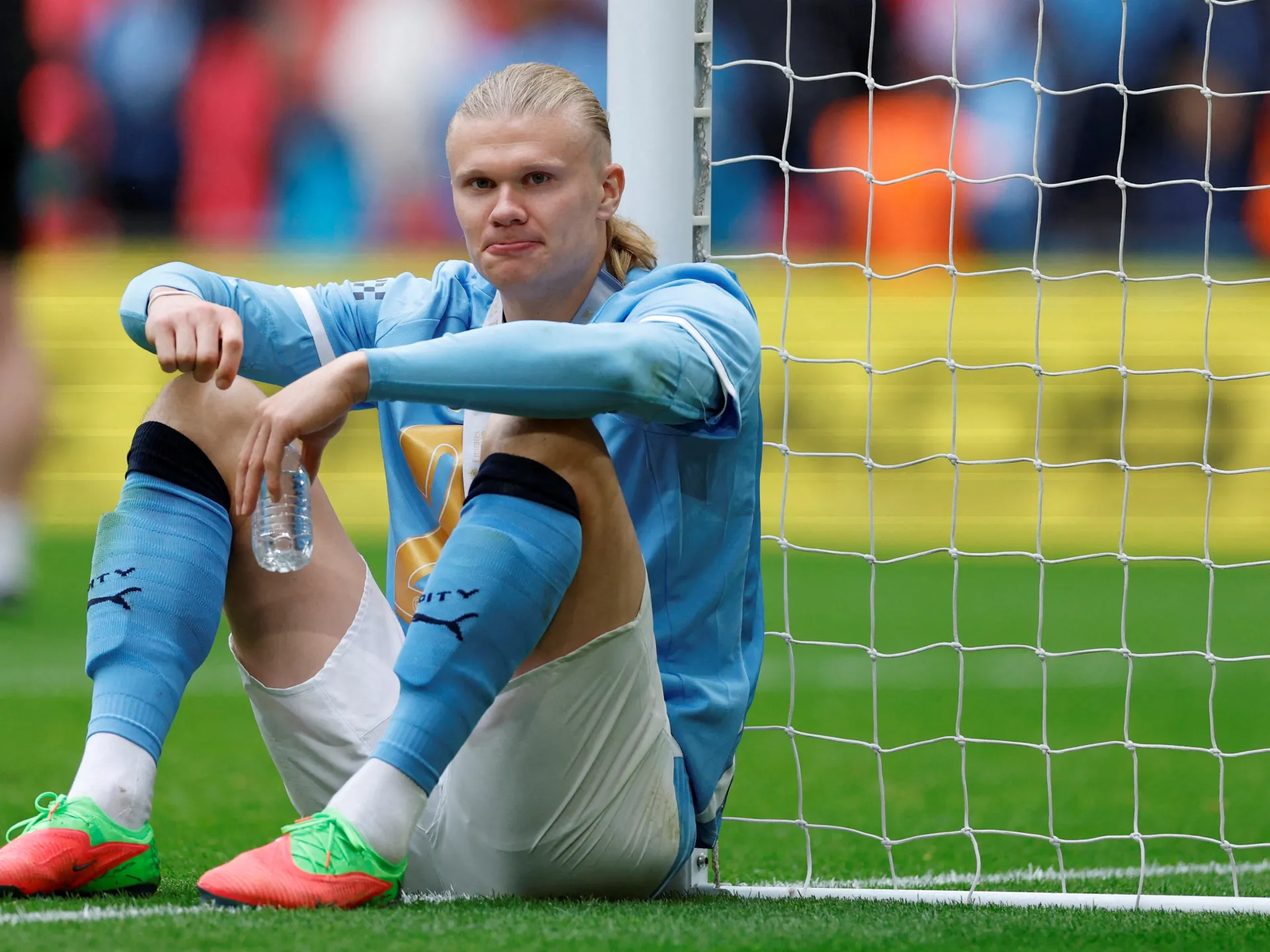
Enrique Riquelme held up a Real Madrid shirt bearing Erling Haaland’s name, while campaigning for club presidency.
Published On 4 Jun 20264 Jun 2026
Manchester City is considering legal action after Real Madrid presidential candidate Enrique Riquelme said he would sign the Premier League club’s Norwegian striker Erling Haaland if elected.
Riquelme, a renewable energy entrepreneur challenging incumbent Florentino Perez, made the pledge during an appearance on Spanish television on Wednesday, where he held up a Real Madrid shirt bearing Haaland’s name.
Recommended Stories
list of 4 itemsend of list
“The stories which have emerged from Spain regarding the future of Erling Haaland are untrue,” a City spokesperson said on Thursday.
“There is no chance of this happening, and there is no contractual clause to enable it. We are considering legal action for the use of our player’s image in this context.”
Riquelme said Haaland, who scored 38 goals in all competitions last season, had a release clause and wanted to move to the Spanish club, adding that he would make the transfer a priority if he wins Sunday’s election.
A joint statement from the 25-year-old footballer’s father, Alfie Haaland, and his agent, Rafaela Pimenta, swiftly rejected the suggestion, describing it as “not true”.
Riquelme added he would try to sign City’s Spain midfielder Rodri, saying he had spoken to the player’s agent and would “do everything possible” to bring the Ballon d’Or winner to Madrid.
The remarks come against the backdrop of Real’s presidential election, the first in two decades in which Perez is not running unopposed, after the club’s two seasons without a major trophy.
Voting is scheduled for Sunday, with some 100,000 club members eligible to take part.
Haaland had the option to join Real in 2022, when he left Borussia Dortmund. But he chose City, where his father played.
While the striker, who won the Premier League Golden Boot for the third time in four seasons, said he would like to play for Real one day, there has been no suggestion he is unhappy at City. He signed a new nine-and-a-half-year contract in January 2025.
Perez announced on Wednesday that, should he be elected, he would bring Benfica manager Jose Mourinho back to Real Madrid for a second term at the helm of Los Blancos.
The Portuguese former manager of Manchester United, Chelsea and Inter Milan previously won the La Liga title during a three-year spell in Madrid.
Oil shipments passing through the Strait of Hormuz have quietly increased in recent weeks, but traders say the movement reflects a fragmented and opaque energy market rather than a full recovery in global supply flows.
More than four months into the ongoing conflict involving Iran, tanker traffic remains heavily disrupted, with shipping patterns increasingly shaped by risk, secrecy and shifting political arrangements.
Tanker Traffic Shows Limited but Rising Movement
Shipping data suggests that only a small number of tankers are currently crossing the Strait of Hormuz compared with pre conflict levels.
Monitoring firms including LSEG and Kpler estimate that an average of just a few vessels per day are now passing through the strait, far below normal volumes.
Despite this, analysis of oil stored on tankers in the Gulf indicates that outflows have gradually increased, suggesting more crude is leaving the region than official shipping visibility shows.
Hidden Shipping Patterns and “Dark” Tankers
A growing share of tankers are reportedly turning off tracking systems during transit through the strait, a practice known as going dark.
This involves disabling Automatic Identification System signals, making it harder to track vessel movements in real time.
According to shipping analytics firms such as Vortexa, a large majority of outbound tankers recently used this method, reflecting rising caution among operators.
This has made it significantly harder for markets to accurately assess global supply flows and has increased uncertainty in oil pricing.
Oil Stored on Tankers Shows Gradual Decline
One key indicator of market movement is the volume of oil stored on ships inside the Gulf, often referred to as oil on water.
Estimates from Kpler suggest that volumes have fallen from a peak of around 184 million barrels in March to roughly 148 million barrels more recently.
This decline indicates that more oil is gradually leaving the region, even if it is not fully visible through standard tracking systems.
Analysts estimate that outflows have increased over recent weeks, suggesting a slow and uneven recovery in shipping activity.
Security Risks Continue to Disrupt Shipping
The ongoing conflict involving Iran has significantly disrupted maritime trade through the Strait of Hormuz, one of the world’s most important oil transit routes.
Limited access to the strait has forced producers to reduce output in some cases, while storage constraints have added pressure to supply chains across the Gulf.
Some shipping routes are reportedly being managed through informal arrangements or alternative corridors, while others rely on higher risk transit strategies to avoid detection or confrontation.
Recovery Remains Uncertain
Despite signs of increased movement, analysts warn that the situation is far from a return to normal.
A sustained recovery in oil flows would require consistent shipping access, stable security conditions and sufficient tanker availability to support exports.
Many shipowners remain reluctant to operate in the region due to elevated insurance costs and the risk of vessels being stranded or targeted.
Long Term Structural Change Possible
Industry observers warn that even if diplomatic progress leads to a formal reopening of the strait, the global oil market may not return to previous conditions.
There is growing discussion that Iran could attempt to impose tolls or control systems on shipping through the waterway, which would fundamentally alter global energy logistics.
Such a scenario could force Gulf producers to seek alternative export routes or invest in new infrastructure to reduce dependence on the strait.
Analysis: Market Stability Replaced by Managed Uncertainty
The situation in the Strait of Hormuz highlights a shift from predictable global energy flows to a more fragmented and opaque system.
While oil continues to move out of the Gulf, the lack of transparency in shipping routes is creating uncertainty for traders and pricing benchmarks.
The increased use of stealth navigation and alternative transit arrangements reflects a market adapting to geopolitical risk rather than resolving it.
As long as tensions persist, energy markets are likely to remain volatile, with supply visibility as important as supply itself in determining global prices.
Conclusion
Oil shipments through the Strait of Hormuz are slowly increasing, but hidden tanker movements and ongoing conflict mean the global energy market remains deeply uncertain. Without stable political conditions and transparent shipping routes, a full recovery in oil flows is unlikely in the near term, keeping traders cautious and markets volatile.
BUSTED star James Bourne has become centre to quite the mystery as it’s been revealed his Instagram account has disappeared.
This comes just six months after he pulled out of the band’s huge tour with a serious illness.
Sign up for the Showbiz newsletter
Thank you!
James Bourne pulled out of the Busted and McFly tour 6 months ago as a result of a serious illnessCredit: GettyThe singer-songwriter’s Instagram profile appears to have disappearedCredit: InstagramBusted stars (L-R) Charlie Simpson, James Bourne and Matt Willis shot to fame in 2002Credit: GettyJames Bourne revealed back in April that he would be getting major surgery to extend his life expectancyCredit: Getty
When fans click through to scroll his profile, it’s completely gone.
It shows a blank white page with the words, “Sorry this page isn’t available.
“The link you followed may be broken, or the page may have been removed.”
This message usually pops up when Instagram has removed the account or the account holder has deleted their page.
James said in his statement: “The VS tour kicks off tomorrow night inBirminghamand as excited as I’ve been all year for this tour to begin, I’m really sorry to say that over the last 8 days it has become clear that I am not in good enough health to play these shows.
“There’s a lot of information I still don’t have about my condition but my bandmates, management and I are unanimous in deciding that I should focus on medical stuff for now.”
Bassist Matt told the Birmingham crowd: “You may have noticed our best friend is not here tonight. James Bourne is really f***ing sick and we love him and we miss him.
“This is the first show we’ve ever played without him and it’s really weird but we’re going to do the best we can.
“This happened really fast, y’know, health is wealth.”
The remaining Busted stars explained to their fans that they’d asked James if they should continue and he agreed saying, “you totally should.”
“Hopefully [the surgery will] make me well enough to come back to what I love the most which is touring and making music. It really sucks to be out of the game,” admitted James on his Instagram story.
The singer, who shot to fame when Busted arrived on the pop scene in 2002 with What I Go To School For, is yet to reveal what illness he is battling.
Clashes between Israel and Iran-backed Hezbollah militias in southern Lebanon continued unabated on Thursday, a day after the United States announced a new cease-fire. File photo by Atef Safadi/EPA
June 4 (UPI) — Israel and Lebanon signed up to a fresh U.S.-brokered cease-fire to clear the path for negotiations toward “a comprehensive peace and security agreement” between the two countries.
The truce, predicated on Iran-backed Hezbollah halting all attacks and withdrawing from south of the Litani River in southern Lebanon, involves the setting up of Lebanese Army exclusion zones out-of-bounds to all non-state actors, the parties said Wednesday in a statement released by the U.S. State Department.
“These steps will enable progress towards a comprehensive peace and security agreement. All countries reaffirmed that the future of the relationship between Israel and Lebanon must be decided by the two sovereign governments. They rejected any attempt, by any state or non-state actor, to hold Lebanon’s future hostage,” said the State Department.
The area Hezbollah must vacate is an approximately 20-mile wide strip of land between the Lebanon-Israel border and the Litani River in Lebanon’s south.
The announcement came after a fourth round of ambassador-level negotiations in Washington on Tuesday and Wednesday. Hezbollah was not represented at the talks, which the State Department said were scheduled to reconvene June 22 to try to reach “a comprehensive agreement.”
Israeli Defense Minister Israel Katz said Israel’s military would not halt hostilities in the south and retained the right, with American backing, to carry out retaliatory strikes on Beirut “in response to fire on Israeli communities or territory.”
“The IDF will, at this stage, continue its fire and ground operations, remain in the security zone in Lebanon up to the yellow line — including in the Beaufort area — and without the return of the population, while continuing to dismantle terrorist infrastructure on the ground,” he said.
Hostilities on the ground continued Thursday with at least one person killed and several injured in Israeli strikes in southern Lebanon with Israeli warplanes in the skies over a dozen towns while Hezbollah fired rockets and drones at Israeli forces in southern Lebanon.
The incidents came after Israeli strikes killed nine people across southern Lebanon on Wednesday and Hezbollah fired rockets into northern Israel.
The latest initiative followed a truce agreement announced by U.S. President Donald Trump on Monday to head off pending Israeli strikes on a Hezbollah stronghold in the Beirut suburbs in exchange for Hezbollah halting attacks on Israel.
The fighting in Lebanon has complicated U.S.-Iran peace negotiations with Iran insisting Lebanon is included in a fragile cease-fire that came into force on April 8. Trump’s intervention came after Tehran threatened to pull out of the talks, saying Israel’s ongoing military operations in Lebanon violated the terms of the cease-fire, warning it would shut the Strait of Hormuz and was looking to “activate” its “resistance front” in other parts of the region.
Across northeastern Nigeria, former Boko Haram insurgents now move with Nigerian troops into forests they once controlled. They identify footpaths that insurgents use after attacks, point out where improvised explosive devices are most likely buried beneath soft sand roads, and decode habits, voices, and movement patterns invisible to the average soldier. They explain how camps are structured during the rainy season and identify commanders at a distance. Some of these ex-insurgents die in combat fighting the same insurgency they once served.
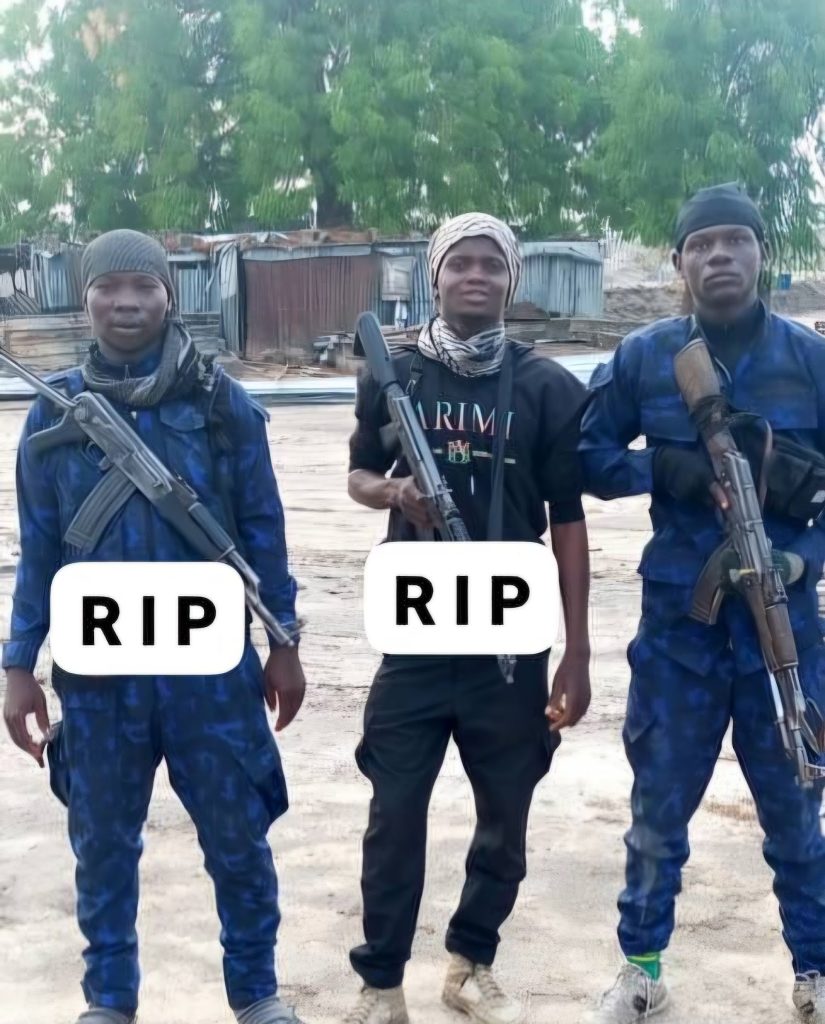
One of the first such defectors was Abubakar Umar from Bama in Borno State. Soldiers called him Small and say he was presumably in his mid-20s when he died in 2023. Before then, he had fought on the frontlines of multiple operations across Sambisa, Timbuktu, and the Lake Chad basin.
Before surrendering, Small spent years in the insurgency as a Naqeeb, a low-ranking fighter, enabling him to know the terrain intimately. By the time he defected to the Nigerian Army, he already knew which routes disappeared under floodwater during the rains, where insurgents buried weapons before abandoning camps, and how insurgents escaped after raids. He understood the logic behind ambushes because he had once planned and carried out attacks against the same army he would later fight beside.
Others followed a similar path. Among them was Zakariyya from Pulka in Gwoza, another ex-insurgent who later supported military operations across Borno and Yobe. He died in late 2025.
At first, many soldiers distrusted them, especially as some of them had lost close friends and colleagues to Boko Haram attacks. For them, accepting a former insurgent carrying a rifle beside them was never easy. Operation after operation changed the relationship, however. According to military sources familiar with the missions, Small and Zakariyya repeatedly identified patterns that helped troops avoid deadly traps and ambushes. With time, commanders began listening whenever they spoke.
Then came a particular operation deep inside Sambisa in 2023. Small moved ahead of the troops in a way one soldier later described to HumAngle as “fearless, almost reckless,” as though death no longer frightened him, having already crossed too many moral boundaries to fear its arrival. He never returned.
Ex-surgents who defected and were actively engaged in combat against Boko Haram. Late Abubakar Umar “Small” is seen in the middle in this file photo.
The soldiers who survived that operation spoke about him afterwards with the kind of tone usually reserved for men buried in decorated military uniforms.
There are many stories like this now scattered across the northeastern region–former insurgents fighting alongside the state.
From the islands and marshes of Lake Chad to the forests of Zamfara, Sokoto, Kaduna, Niger, Kebbi, and the roads stretching toward Kwara, Nigeria is confronting a conflict system that has changed shape. In response, security forces are increasingly turning toward defectors.
The unseen war
For years, the Nigerian state has made progress against the Boko Haram war. When villages like Bama and Gwoza fell to the terror group, the military reclaimed them very quickly. They have also killed commanders over time, while still exploring non-kinetic approaches that made it possible for insurgents to surrender. Through this approach, defections occurred at an unprecedented rate.
Boko Haram fractured internally as ISWAP consolidated its presence in parts of the Lake Chad Basin. Many did not want to remain in the Lake Chad theatre, but they also did not trust a formal surrender to Nigerian authorities, so some of them moved to other parts of Nigeria.
HumAngle has tracked the movement of former Boko Haram elements to the North West region and parts of central Nigeria as far back as 2020. Some joined criminal armed groups, others became trainers, bomb makers, couriers, informants, guards, or logistics brokers. Others disappeared into cities following the death of Abubakar Shekau and clashes between factions within the group.
In Kano and several urban areas, defectors and affiliates blended into urban life. Some became labourers, mechanics, phone repairers, commercial drivers, or petty traders. Some drifted into robbery and informal criminal economies, while others married and completely concealed their past.
This creates a difficult security dilemma for many reasons. How does a state track men who have left the insurgency but not entered any formal process? How does it distinguish between a deserter seeking anonymity and one rebuilding operational networks elsewhere? How does it protect communities without criminalising everyone who once lived under insurgent rule?
Nigeria has not answered those questions through a coherent national framework. Instead, it improvises.
The intelligence war nobody sees
When HumAngle spoke with soldiers and intelligence officers who served in the North East, their language was different. They do not romanticise former Boko Haram insurgents nor do they describe them as heroes, but they call them assets.
Before defectors became operationally useful, troops often entered unfamiliar terrain with insufficient intelligence from local hunters, the civilian joint task force, and satellite imagery. Equipment like drones and maps was useful but had limitations, as it could not predict movement patterns or likely landmines. Former insurgents helped dismantle part of that advantage. According to several defectors interviewed for this report, many military successes now depend partly on information provided by them.
“Whenever soldiers go for operations,” one explained, “some of us move ahead because we know the roads, the bushes, and where bombs are planted. We tell them which road not to use.”
Another former insurgent described how they identified hidden weapon caches and camp positions.
“Some of us know where weapons were kept. So when operations happen, we guide soldiers directly to those places.”
Get our in-depth, creative coverage of conflict and development delivered to you every weekend.
Subscribe now to our newsletter!
They also described helping troops understand insurgent movement patterns after attacks.
“When fighters escape,” one said, “we know the routes they use because we ourselves used those routes before.” The source added, “We advised soldiers to evacuate the women and children left behind by fighters to Maiduguri, which encouraged a lot of the fighters to defect from the group easily at a later date.”
The moral fracture
For victims, however, these battlefield contributions rarely erase memory. A widow whose husband was executed does not easily accept that the man who once terrorised her community now works alongside soldiers. A farmer whose village was burned does not find emotional comfort in hearing that a former insurgent helped identify buried bombs. A displaced family living with hunger in an abandoned resettled community does not easily understand why former insurgents appear to receive rehabilitation support while survivors struggle alone.
That anger has become one of the deepest unresolved tensions inside Nigeria’s reintegration strategy. Many affected communities perceive former insurgents as receiving privileges unavailable to victims. Some surrendered members received food support, accommodation, vocational training, phones, stipends, or reintegration assistance. Meanwhile, many survivors still live with displacement, trauma, hunger, unemployment, grief, and insecurity.
Infographics: Akila Jibrin/HumAngle.
One former insurgent described how resentment intensified after communities observed rehabilitated insurgents riding motorcycles, carrying weapons alongside soldiers, wearing jeans and clean clothes, and moving relatively freely.
“What happened was mostly hatred and resentment,” he said. “People saw the boys looking comfortable and became angry.”
Kabiru Adamu, the Managing Director of Beacon Consulting, comments on this imbalance. “When we look at this from a transitional justice perspective,” he said, “the current imbalance is a significant vulnerability.”
According to him, communities may interpret reintegration programmes as rewarding violence while neglecting victims.
“If the state appears to reward insurgency while neglecting victims, it breeds a deep sense of injustice. Unaddressed grievances are the primary fuel for cyclical violence.”
Former insurgents speak
The former insurgents interviewed by HumAngle described themselves not as forgiven men, but as useful men. “There are those who go to war,” one former fighter said, “And there are informants.” He explained that some maintain communication with active insurgents and relay intelligence to security agencies.
“If attacks are being planned, information is passed quickly to intelligence officers so security can be strengthened.”
Others described identifying civilians secretly supplying insurgents with food, fuel, or information. “There are people in town transporting petrol, food, and information,” one explained. “Those who surrendered know many of them because they worked together before.”
According to the former insurgents, these intelligence networks disrupted insurgent logistics and prevented attacks. Some defectors also described participating directly in combat operations.
“They gave some of us motorcycles and guns,” one said. “Sometimes, operations happen without soldiers even accompanying us.”
Another described units led by surrendered insurgents moving independently through forests to intercept attacks or recover weapons.
“Some commanders are given twenty or thirty motorcycles and sent to carry out patrols,” he said. “They stop attacks and return with captured weapons… Nearly 40 per cent of ground troops’ successes achieved in the past three years in this war come from the contribution of surrendered fighters.”
HumAngle cannot independently verify this claim. Still, several military and intelligence sources who spoke to HumAngle on the condition of anonymity admit that defectors remain useful in operations. What is less clear is whether relying on them will be safe or sustainable in the long run.
Security expert Kabiru Adamu described former insurgents as “force multipliers” rather than the decisive force behind military gains. According to him, conventional military operations, air power, and the Civilian Joint Task Force remain central to weakening insurgent networks.
“Ex-fighters provide precision,” he explained. However, he warned that the strategic dangers remain severe. “The risks include infiltration, double agents, human rights concerns, institutional degradation, and loss of civilian trust.”
The risk of dependence also concerns some analysts and security officials. If military units become too reliant on defectors for intelligence, what happens when defectors lie, or when personal grudges shape accusations, or when former insurgents return to active criminal networks or, as in some cases, return to Boko Haram carrying sensitive operational knowledge? What happens when military institutions fail to build independent intelligence systems because surrendered insurgents appear easier to use?
The northwestern region is quite different from the North East. Boko Haram and ISWAP emerged through ideological insurgency structures combining theology, coercion, governance, taxation, and violence. In contrast, the armed groups in the northwestern region emerged differently, engaging in criminal activities such as cattle rustling, communal conflict, illegal mining, vigilante reprisals, extortion, kidnapping, and governance collapse.
Yet over time, the distinction blurred. Armed groups across Zamfara, Sokoto, Katsina, Kaduna, Niger, and Kebbi increasingly adopted tactics associated with insurgent warfare: IEDs, ambushes, and rural territories being subject to armed taxation systems.
Abubakar Abdullahi, a journalist who has reported extensively from Zamfara, said Boko Haram-linked elements have become increasingly visible inside parts of the northwestern region.
“In areas such as Dutsin Maiqardaji mountain,” he said, “Boko Haram members have a heavy presence. Both Lakurawa and Boko Haram terrorists preach to residents they keep under siege in ungoverned spaces. Ongoing armed operations in the North East pave the way for fighters to find Zamfara as a haven,” he explained.
Therefore, the state’s decision to use surrendered insurgents in counterinsurgency operations across parts of the northwest follows a grim internal logic.
Trauma beneath the surface
The psychological burden of the insurgency now stretches across an entire generation. In Maiduguri, Monguno, Bama, Dikwa, Gwoza, Damboa, Pulka, Banki, and dozens of smaller communities scattered across Borno and the wider Lake Chad region, trauma shows up in ordinary routines. Some people report waking suddenly at night whenever motorcycles pass too quickly outside their compounds. Parents instinctively gather children indoors whenever rumours of attacks on nearby roads spread. Men who once farmed freely now calculate distance from military formations before deciding whether land is safe enough to cultivate.
For many survivors, peace itself feels temporary.
Kauna Malgwi, a clinical psychologist directly affected by the insurgency during its early years, described northeastern Nigeria as a society living in a prolonged psychological survival mode.
“Prolonged violence keeps societies in chronic hypervigilance,” she explained. “People shift from acute stress into collective survival mode. Nervous systems remain activated for years. Unresolved trauma normalises fear, weakens communities, and erodes cohesion. Ongoing violence keeps trauma active and prevents healing.”
The effects appear everywhere: overcrowded displacement settlements, classrooms where children struggle to concentrate because conflict has interrupted the normal architecture of childhood, families where fathers withdraw emotionally after years of violence, and young men who have grown up around guns, funerals, military convoys, and uncertainty.
“Children in chronic conflict develop emotional, learning, and behavioural problems that, if unaddressed, persist into adulthood and become the generational norm,” Malgwi warned
She listed the consequences as cycles of violence, emotional detachment, chronic anxiety, educational disruption, social mistrust, difficulty forming secure relationships, and increased vulnerability to recruitment by armed groups.
“If trauma among children is ignored,” she warned, “national stability itself is at risk. Peacebuilding that ignores collective healing produces fragile and temporary peace. When victims feel forgotten as ex-fighters are supported, trauma deepens and trust in institutions erodes. Forgiveness must not be forced. Communities require safety and acknowledgement before reconciliation.”
According to her, communities need public acknowledgement of suffering before reintegration can become emotionally sustainable.
“Victim-centred support systems are essential. Communities need visible justice, visible care, and transparent communication before trust can begin to recover.”
She also warned about the development of emotional desensitisation among conflict-affected populations.
“Without support, grief becomes anger or despair,” she explained. “Violence itself can become normalised.”
Many young people in northeastern Nigeria have never experienced sustained normalcy. They grew up hearing stories about massacres the way previous generations heard folktales. They learned directions through checkpoints and geography through displacement.
Kauna Malgwi believes recovery in such environments cannot depend solely on psychiatrists or formal hospitals because the scale of trauma is too large.
“Community healing includes training community health workers in psychosocial support, group therapy, trauma-informed schools, faith-based healing spaces, and safe storytelling forums,” she explained, stressing the importance of collectively restoring dignity. “The goal is not only treatment. The goal is restoring function, trust, and resilience across society.”
For many survivors, however, the war never became a discussion about tactical adaptation. It remained personal. A missing daughter. A burned house. A father was executed beside a road. A child was buried after an explosion and nights of screaming.
A life divided permanently into before and after.
The state’s impossible calculation
For Kabiru Adamu, the question is not whether the state should use former insurgents operationally. The deeper issue is whether Nigeria can do so without weakening its own legitimacy. He described the current approach as a fragile balancing act between military necessity, transitional justice, and social stability.
“The Nigerian military faces a highly asymmetric threat,” he said. “Using former fighters offers distinct immediate operational advantages because these individuals possess granular, real-time intelligence. They know Sambisa Forest, the Mandara Mountains, the Lake Chad islands, and the internal communication structures of factions like JAS and ISWAP.”
Still, he repeatedly returned to the dangers. “The strategic risks are severe and multifaceted.” The operational usefulness of former insurgents can serve as an excuse to abandon accountability. “There must be transparent triage,” he argued. “Low-level associates and coerced participants cannot be treated the same way as high-level perpetrators. Most residents of Borno, Adamawa, and Yobe reject blanket amnesty for commanders associated with mass atrocities.”
For Adamu, reintegration without visible justice creates long-term instability.
“If communities feel abandoned by the state in favour of their attackers, it erodes the social contract. It opens the possibility of vigilantism or future militant mobilisation driven by resentment. Demobilisation is not simply a military process,” he said. “Reintegration is generational and should remain civilian-led.”
He pointed to global examples from Iraq, Afghanistan, and Colombia as warnings.
“When stipends dry up without sustainable livelihoods, ex-combatants often return to criminal economies.”
According to him, Nigeria risks repeating similar mistakes unless rehabilitation becomes economically viable. “Cash support alone is not enough. Long-term reintegration requires market-driven livelihoods and ongoing monitoring.”
He also warned against grouping defectors into separate armed formations.
“Never create isolated paramilitary monopolies from ex-combatants,” he said. “If they are used operationally, strict oversight and accountability systems are essential.”
Perhaps most importantly, he insisted that reintegration cannot survive politically unless victims see equal investment in their own recovery.
A group of former Boko Haram insurgents who were rehabilitated by Nigeria’s Operation Safe Corridor programme in northeastern Nigeria.
“For every dollar spent on DDR,” he argued, “an equal or greater amount should be visibly invested in victims and receiving communities.”
Without that balance, he believes the state risks winning short-term tactical gains while deepening long-term social fractures.
The soldiers and the boys
One of the strangest transformations inside this war is the relationship between soldiers and former insurgents. Many soldiers lost friends to insurgent attacks, some carry visible scars, and others carry memories they rarely discuss. Meanwhile, former insurgents themselves live in a state of permanent ambiguity. They are neither fully accepted civilians nor recognised soldiers. They exist inside a grey zone.
According to the former insurgents HumAngle spoke to, several surrendered members deployed to Zamfara and other northwestern states were killed during operations against armed groups.
“In this war,” one said, “many of those helping the government have lost their lives. Some died fighting people they once called brothers.”
A Nigerian soldier told HumAngle he never imagined he would one day fight alongside former Boko Haram members.
“I thought the only relationship I would ever have with these bastards was to kill them or be killed,” he said, speaking on condition of anonymity because he’s not permitted to speak to journalists on this matter
Now deployed with some of the defectors against their former comrades, the soldier said the experience has reshaped parts of his perception over time. Some of the former insurgents have proven useful in combat operations, particularly because of their familiarity with insurgent tactics and terrain.
“They have been very helpful since we started working with them. They are constantly watched and supervised, but the contributions of some of them have been priceless,” said the staff sergeant.
What a serious framework would require
Nigeria does not need to pretend former insurgents are useless. Evidence from the field suggests they have helped disrupt attacks, expose explosives, identify camps, trace logistics, and support military operations. At the same time, experts say the state cannot continue to manage reintegration through improvisation and silence. A credible framework would require clear categories that separate coerced associates from high-level perpetrators. It would require transparent accountability systems. Victims would receive compensation, trauma support, livelihood recovery, education, and public acknowledgement.
The northwest would be treated as its own conflict system requiring tailored responses rather than simple transplantation of northeastern models.
Repentant volunteers
The former insurgents interviewed for this report did not seem to want public sympathy. Most acknowledged that many Nigerians would always see them as part of the violence they once took part in. Yet, beneath their answers was a recurring theme. They insisted they no longer recognised the movement they had joined years earlier.
Abu Muhsin, now 38, said he entered Boko Haram as a teenager after preachers repeatedly visited his village.
“I joined them when I was around 16 years old,” he said. “They used to come and preach in our village, near Damasak. I got convinced, and I joined them.”
Over time, he rose within the movement and eventually became a Naqeeb, a field commander operating around the Lake Chad region. But years inside the insurgency changed his view of the organisation.
“We saw that the group was not following the rules of Islam,” he said. “They kill people and loot their properties. We started communicating with those who surrendered before us. They directed us and later escaped from the bush with some of our families.”
After surrendering, Abu Muhsin said he volunteered to support military operations because former insurgents understood terrain and insurgent movement patterns better than most troops.
“No one forced us to volunteer,” he said. “We just felt we should assist the military since we know the bush better than they do.”
For that assistance, he said, volunteers receive irregular payments. “They give us some allowance. They pay us ₦100,000, sometimes ₦50,000 or ₦30,000.”
Another former insurgent, Ibn Mus’ab, traced his recruitment to family influence. “My cousins were already members and used to visit us,” said the 35-year-old former fighter from Wulgo in Gamboru Ngala. “They used to preach their doctrines to us. Later, they convinced me, and I followed them to the bush.” That was in 2014.
Inside the insurgency, Ibn Mus’ab became Amirul’Uddah, responsible for weapons management. Like several defectors interviewed for this report, he framed his disillusionment in religious terms.
“I left them because some of their activities are becoming un-Islamic,” he said. “They kill people unnecessarily. They kill someone for taking drugs, which is not so in Sharia.”
His departure from Boko Haram was shaped partly by internal persecution. He said he was accused of an offence and that members of the group declared him wanted. “I escaped to Giedam, not even knowing that the military was accepting people who surrendered,” he recalled. “I was later told I could submit myself, and I surrendered to them.”
He escaped alone, and his family joined him later. Asked why he now assists the military against former comrades, he answered without hesitation.
“I decided to assist because those people are no longer following the Sharia accordingly. There are many of us who are ready to assist, and a lot are doing well.”
Like others, he described financial incentives as modest and inconsistent.
“The usual pay is ₦100,000, sometimes ₦50,000,” he said. “If they can pay more than this, many more would be willing to volunteer.”
Abu Faruq’s story begins differently. Unlike some defectors who joined as adults through ideological persuasion, he said he was absorbed into the movement as a child during Boko Haram’s expansion across Gwoza.
“They took me when I was a kid,” the 35-year-old said. “It was in Gwoza when they were preaching. I grew up in their place and got married.”
He said he became part of the Rijaal, the fighting cadre within the insurgency structure.
Years later, he concluded that the movement no longer reflected the religious principles it claimed to defend. “I left them because they were not practising what the Qur’an and Hadith say about Sharia,” he explained. “They kill innocent people, they loot and destroy people’s properties.”
According to him, communication with earlier defectors again played a critical role in encouraging surrender. “Some of our friends have earlier surrendered, and they told us how they were received warmly,” he said. “They directed us on the phone on how we could come out and meet the military.”
After leaving the bush, Abu Faruq eventually joined operations supporting Nigerian troops, including deployments far beyond the northeast. “Yes, I did,” he said when asked whether he travelled with soldiers to the northwest. “They selected some of us to assist them in Zamfara and Sokoto.”
According to him, defectors participated in operations across multiple villages affected by armed groups. “They first took us to Sokoto, and from there we went to many villages in both Sokoto and Zamfara for operations.”
He said he remained there for about two months. For that deployment, he received what he described as ranger allowances. ‘They pay us ₦100,000 per month as rangers.”
These stories show men trying to find a new place for themselves in a war that has already taken over much of their lives. But none of their reasons answers the deeper moral question about Nigeria’s use of former insurgents.
A waterfront amphitheater roughly twice the size of the Greek Theatre and two-thirds the size of the Hollywood Bowl is set to open this week in Long Beach — and there’s a lot riding on its success.
City leaders hope F&M Bank Amphitheater of Long Beach, located next to the famed Queen Mary, will supplant declining revenues from oil extraction and lead to an uptick in tourism. Concert promoters, meanwhile, see it as filling an important gap in Southern California’s music venue market.
The temporary amphitheater, which has a maximum capacity of 11,000, is meant to be a precursor to a permanent “Long Beach Bowl,” which is being pitched as the largest waterfront venue on the West Coast. The site opens June 6 with a performance by native son Snoop Dogg, and is expected to last for up to 10 years.
The new amphitheater represents a years-long dream of Mayor Rex Richardson, who began championing an outdoor performance venue on the waterfront in 2023. Soon after the closure of Irvine’s FivePoint Amphitheatre in October of that year, he accelerated those plans by proposing this facility. The general feeling was that Irvine’s loss could be Long Beach’s gain.
“This will be a place where memories are made, where music brings people together and where our city shows up on the big stage,” he said during a January groundbreaking. “The amphitheater represents direction to invest in our city’s future, to embrace our creative economy [and] to shape how people experience Long Beach for generations to come.”
Good vibes by the water is the driving energy behind the temporary venue.
(Eric Thayer / Los Angeles Times)
While Los Angeles and Orange County have no shortage of cavernous indoor arenas, the region has recently lacked a proper “summer shed” capable of hosting many national amphitheater tours, said Nick Storch, head of global artist development for booking agency Independent Artist Group. Those tours typically play venues larger than the Greek, Irvine’s Great Park Live or Costa Mesa’s fairgrounds-adjacent Pacific Amphitheatre, but smaller than the Hollywood Bowl.
Such tours, Storch said, are of “massive” importance to the concert industry. “With amphitheaters, it’s not just the music — it’s the experience of being outside and watching a concert, getting a bite to eat with your friends and all those kinds of things,” said Storch, whose agency’s clients Motley Crue and Five Finger Death Punch will perform at the F&M Bank Amphitheater in September.
“FivePoint was a great venue to help artists that are in that in-between stage, and not fully ready for arenas,” he said. “Long Beach having an amphitheater is going to grow the market again.”
Amphitheaters are also crucial to veteran artists with established fan bases. The long-running hard rock band Tesla — who also will perform at the F&M Bank Amphitheater in September — has not played a show in Los Angeles or Orange counties since the closure of FivePoint, which hosted the group twice.
Brian Wheat, the band’s bassist and manager, said he’s excited the new venue will help change that. “Sheds are great in the summertime, and outdoor summer gigs always create a great atmosphere for both bands and fans,” he said.
Much like the F&M Bank Amphitheater, FivePoint Amphitheatre was designed to serve as a temporary venue following the closure of Irvine Meadows Amphitheatre, which operated from 1981 to 2016. (From 2000 to 2014, it was known as Verizon Wireless Amphitheater.)
At 11,000 seats, the amphitheater is roughly two-thirds the size of the Hollywood Bowl. Its permanent replacement will be “architecturally iconic,” said Mayor Rex Richardson, while this temporary version is likened to a “summer shed.”
(Eric Thayer / Los Angeles Times)
From its opening in October 2017 until its closure, FivePoint hosted nearly 500 concerts, including artists such as KISS, Dave Matthews Band, Charlie Puth, Morgan Wallen and Luke Combs.
Venue operator Live Nation — which manages more than 300 facilities across the country — initially hoped to build a permanent amphitheater nearby, but scrapped those plans in 2023 after the Irvine City Council ended negotiations. Soon after, Live Nation announced the venue would shutter.
After learning of Live Nation’s fallout with Irvine, Richardson and members of his economic development team attended the final FivePoint concert, a performance by the Zac Brown Band, to “explore the feasibility if we were to do the same thing.”
Three months later, Richardson announced plans to build a temporary amphitheater in Long Beach to bridge the gap until a permanent facility — which he envisions as an “architecturally iconic and significant” waterfront venue akin to San Diego’s Rady Shell at Jacobs Park — can be permitted, financed and constructed.
The site’s location is central to its appeal, said Dan Hoffend, executive vice president of North American venues for Legends Global, the operator for F&M Bank Amphitheater. “If you sit in the very top row — what you would consider the worst seat in the house — it’s a spectacular view,” he said. “The Queen Mary is sitting there in all its glory. You’re looking across the harbor. What would be perceived as the worst seat is actually the best seat because you see it all.”
Long Beach Mayor Rex Richardson, left, and amphitheater general manager Tra Jones sit in the stands. Even from the nosebleeds, you still have a view of the waterfront at the F&M Bank Amphitheater.
(Eric Thayer / Los Angeles Times)
Tra Jones, general manager of the new amphitheater and a Long Beach native, said he’s striving to make it feel less stopgap and utilitarian than FivePoint.
“It doesn’t have a temporary feel at all,” he said. “We looked at all our surroundings and said, ‘What does this look like from a stylistic point of view?’ We leaned into the port/SteelCraft vibe — a very cool industrial look. When you walk in, you’re experiencing a vibe. That’s what we want to resonate with concertgoers coming here.”
The word “vibe” also pops up frequently in conversation with Richardson. Under his watch, Long Beach recently started branding itself as “Vibe City,” which he said is an attempt to encapsulate the charm of L.A. County’s second-largest city, and the state’s seventh-largest.
“Long Beach is special, but it’s hard to explain why if you haven’t been here,” he said. “Because you have to experience it for yourself, the best way to describe it is that it’s a vibe.”
Still, Richardson is aware that vibes can only go so far. During an April meeting with residents of downtown Long Beach, attendees were more interested in discussing homelessness and a recent uptick in traffic fatalities than how a new concert venue might add to the city’s cultural cachet. Some downtown residents have circulated a petition regarding noise-related concerns.
“The job of the mayor is to meet the needs of your residents today — keeping a roof over your head, making sure it’s safe to walk down the street, making sure you have access to amenities and services in your community — but also to think about the future,” he said.
That means finding a way to offset revenues from oil extraction, which currently finance many municipal services, and are projected to drop from more than $50 million annually to around $21 million by 2035. According to Richardson, the new amphitheater — managed by Legends Global, but owned by the city — will help cover that shortfall. The venue is projected to be profitable within five years and generate nearly $29 million in revenue by 2036.
Oil revenues, which pay for city services, are projected to drop by more than half. The amphitheater is being pitched as a budget gap solution.
(Eric Thayer / Los Angeles Times)
“We were fortunate that revenue from oil provided a lot of our services and built our beautiful waterfront, but as California moves away from oil production, we have to plan a more sustainable future by investing in what we know will be here in the long haul,” Richardson said. “In order to do that, we have to invest in arts and culture and tourism.”
Richardson is betting on music at a time when other cities — including Los Angeles — are doubling down on sports, warehousing or data centers. The amphitheater is also meant to remind the world of the city’s impact on pop culture.
From War to Warren G and Sublime to Snoop, Long Beach has a rich musical history. The city hosted the first concerts by the Beach Boys and No Doubt, while Rock & Roll Hall of Famers Elvis Presley, the Eagles and Iron Maiden all graced the stage of the Long Beach Arena.
While that venue currently holds more conventions than concerts, Long Beach has hosted notable outdoor music festivals in recent years, including Warped Tour, Day Trip and Dreamstate. Richardson believes the success of those events helped prove the city’s viability as a concert destination.
“This is the first step toward a legacy of leaving our city in a more economically resilient position,” Richardson said. “At every big turn in our city’s economy, we’ve leaned on arts as a way forward, and this is no different.”
Even the bleacher seats represent Long Beach pride at F&M Amphitheater.
Jensen Huang, CEO of U.S. chip giant Nvidia Corp., will visit South Korea later this week, industry sources said Thursday. Huang is seen here speaking at conference in Taipei on June 1. Photo by Yonhap
Jensen Huang, chief executive officer (CEO) of U.S. chip giant Nvidia Corp., will visit South Korea later this week for a series of meetings with the heads of major conglomerates and researchers that could pave the way for broader cooperation in artificial intelligence (AI) and robotics, industry sources said Thursday.
Huang is scheduled to arrive at Gimpo International Airport in western Seoul aboard his private jet on Friday afternoon for a four-day visit, following his appearance at the Computex trade show in Taipei, the sources said.
During his stay, Huang is expected to meet with leading business figures, as well as executives from the gaming industry, AI and robotics startups, university researchers and students.
On Friday evening, he is expected to visit a Korean barbecue restaurant in Seoul’s Seongsu neighborhood for a gathering with SK Group Chairman Chey Tae-won, Hyundai Motor Group Executive Chair Euisun Chung, LG Group Chairman Koo Kwang-mo and Naver Chairman Lee Hae-jin.
Industry observers expect the participants to discuss a wide range of potential cooperation areas between Nvidia and South Korean companies, including high-bandwidth memory (HBM), AI data centers, autonomous driving, robotics and physical AI.
During his previous visit to South Korea in October, which coincided with the Asia-Pacific Economic Cooperation (APEC) CEO Summit in the southeastern city of Gyeongju, Huang drew widespread attention when he joined Samsung Electronics Chairman Lee Jae-yong and Chung for a late-night meal of Korean fried chicken and beer, commonly known as “chimaek.”
On Sunday, Huang is expected to meet with Kim Taek-jin, CEO of NC Corp., a South Korean gaming company, they said.
While the agenda has not been disclosed, discussions are expected to focus on cooperation in gaming and AI.
On Monday, Huang is also expected to hold a closed-door meeting with executives from South Korean AI and robotics startups in Seoul.
The meeting would mark the first known occasion on which Huang has met with robotics startup founders in South Korea.
The Nvidia chief is also coordinating plans to visit the country’s top-notch Seoul National University’s AI institute and robotics research center.
Separate from the visits, Huang has reportedly expressed interest in meeting directly with university students.
Huang is reportedly meeting Krafton’s Executive Director Chang Byung-gyu, and other senior managers from the company, though the exact dates have yet to be confirmed, the sources said.
The two companies are likely to discuss gaming partnerships related to Nvidia’s RTX Spark, a type of semiconductor designed for premium Windows laptops, as well as physical AI.
Krafton has founded a robotics company called Ludo Robotics early this year.
Copyright (c) Yonhap News Agency prohibits its content from being redistributed or reprinted without consent, and forbids the content from being learned and used by artificial intelligence systems.