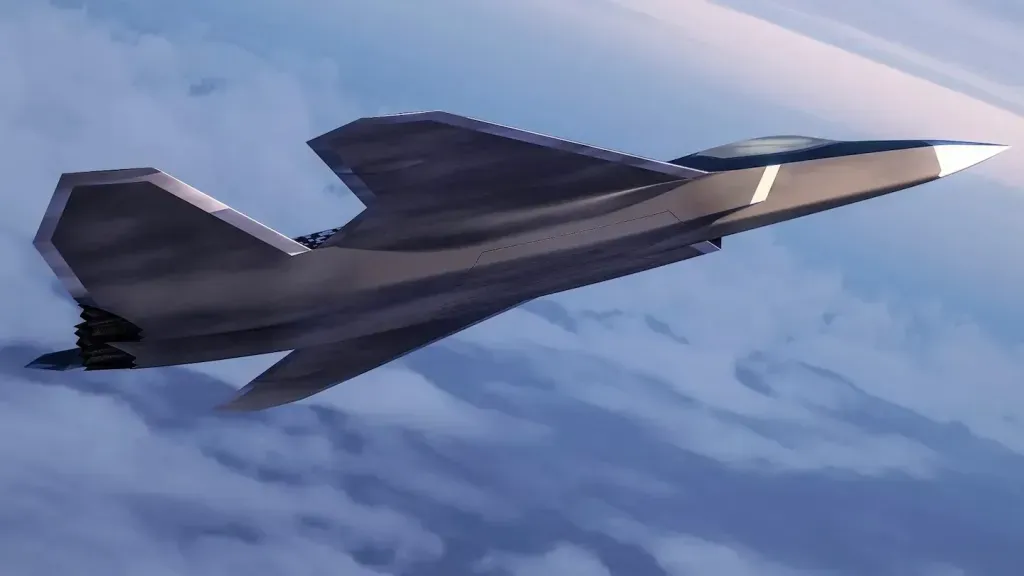
The People’s Republic of China achieved a historic and unprecedented participation in the second edition of the El Alamein International Aerospace Exhibition (EIAS 2026), which was held at El Alamein International Airport from September 8 to 10, 2026. The Chinese participation came just days after the conclusion of the joint Egyptian-Chinese air force exercises Eagles of Civilization 2026. The significance of this Chinese military presence lay in the display of a fully integrated and realistic combat air system, not merely models. In this context, the Egyptian researcher will attempt to divide the significance of China’s participation in the El Alamein Air Show into several key areas, including:
– First: China’s prominent participation in the El Alamein International Air and Space Show in Egypt as a strategic shift in the regional arms market
Here, China’s extensive participation in the El Alamein International Air and Space Show constitutes a significant strategic shift in the regional arms market. Beijing has moved beyond the traditional approach of selling individual military components to present itself as a supplier of comprehensive and integrated air combat systems, competing with Western and American powers in the Middle East and Africa. China’s participation in the El Alamein International Air and Space Exhibition focused on several strategic axes to promote and analyze the concept of a full-suite solution. This was achieved by emphasizing that China does not simply sell aircraft but rather offers a comprehensive defense solution, encompassing attack fighters, logistics support aircraft, aerial refueling, and command and control systems, known as C4ISR.
The People’s Liberation Army of China sought to highlight China’s military and defense role and promote the Chinese model as a ready-made competitive alternative. This was done by showcasing the competitive advantages of Chinese defense industries, such as the absence of complex political conditions, rapid delivery, and comprehensive technology transfer to Middle Eastern and African markets. Furthermore, the focus was on the geopolitical depth, linking the Chinese presence in El Alamein to Beijing’s broader vision of strengthening security and economic partnerships with countries in the region.
Stay ahead of the geopolitical week.
MD Briefing delivers expert analysis across five global fronts — the Indo-Pacific, energy, geoeconomics, European security, and the Middle East — every Monday morning. Free.
– Second: Showcasing the most prominent Chinese aircraft platforms participating for the first time outside of China at the El Alamein exhibition
As for the most prominent Chinese aircraft platforms participating for the first time outside of China, for the first time in its history, the People’s Liberation Army Air Force (PLAAF) showcased four of its latest operational aircraft models at an air show outside of China. The most prominent of these were
– The Chinese J-16 multirole fighter (J-16)
This air superiority and heavy ground attack fighter garnered widespread international attention.
– The Chinese YY-20A aerial refueling tanker (YY-20A)
This Chinese heavy transport aircraft provides refueling to extend the operational range of fighter jets.
– The Chinese KJ-500 airborne early warning and control aircraft (KJ-500)
This represents an airborne command and control system.
– The Chinese Z-20K military helicopter (Z-20K)
This is a multi-role helicopter designed for search and rescue and tactical operations.
Regarding the Chinese weapons and drones on display at the El Alamein International Air and Space Exhibition, the AVIC (Aerospace Industries of China) showcased its advanced defense capabilities in the outdoor exhibition area through:
– A demonstration of the Chinese Wing Loong-10B stealth drone (Wing Loong-10B):
This is a high-altitude, long-range unmanned aerial vehicle (UAV) designed for reconnaissance and precision strikes.
– A demonstration of Chinese smart munitions and missiles:
The Chinese drone was displayed surrounded by advanced air-to-air missiles, such as the PL-108 & PL-12AE. In addition to a demonstration of the Chinese anti-radar and anti-radiation missile (YJ-9ER1).
– Third: The Chinese People’s Liberation Army (PLA) showcased its capabilities through a technical display (capability integration), dividing its export-available air systems into functional groups for attack, others for support and refueling, and a third group for command and control, during China’s extensive participation in the El Alamein Air Show in Egypt.
In this context, the PLA sought to leverage China’s extensive participation in the El Alamein Air Show in Egypt as a new and strategic launchpad for China in North Africa. This included showcasing the size of the Chinese pavilion and the equipment on display, such as aerobatic aircraft and unmanned combat aerobatics. The Chinese Ministry of Defense emphasized the technical aspects of this capability integration display, highlighting the division of its export-available air systems into functional groups for attack, others for support and refueling, and a third group for command and control. As follows:
■ The offensive functional groups were represented by a display of China’s modern fighter jets and attack drones, such as the Wing Loong family.
■ As for the support and refueling functional groups, China’s strategic transport and aerial refueling aircraft, such as the Y-20, were showcased.
■ The third functional group focused on (command and control), with China displaying its early warning aircraft and airborne command centers.
– Fourth: Analyzing and understanding the strategic dimensions of China’s participation in the El Alamein International Air and Space Exhibition, aimed at attracting more interest in the Chinese aerospace sector and promoting widespread military sales of Chinese military, defense, and armament equipment
Thus, we can analyze and understand the strategic dimensions of China’s participation in the El Alamein International Air and Space Exhibition, which aimed to attract more interest in the Chinese aerospace sector and promote widespread military sales of Chinese military, defense, and armament equipment. Therefore, we find that the extensive Chinese presence at the El Alamein International Air and Space Exhibition constitutes a genuine breakthrough. Beijing did not aim to promote individual pieces but rather to demonstrate its ability to provide a comprehensive and integrated air combat system, encompassing attack, support, refueling, and command, as a competitive alternative in the Middle Eastern and African markets.
Analyzing the economic and strategic dimensions of China’s extensive participation in the El Alamein exhibition, we observe the extent to which the Chinese People’s Liberation Army focused on achieving broad military exposure for its participation during the exhibition. This included showcasing how these Chinese defense, military, and air systems can reduce operating costs for purchasing countries while ensuring their independence in defense decision-making, without imposing political conditions or prior operational restrictions, unlike many Western and American systems.
The beach has claimed another first-time music festival this year.
Ocean Way, the beachfront Santa Monica music fest, has been canceled just two weeks before debuting. The two-day event was set for Sept. 26-27.
Goldenvoice, the promoter behind Ocean Way as well as the Coachella Valley Music and Arts Festival, announced the news Friday in an email from its ticketing platform AXS.
“Due to the impacts of Hurricane Marie, the City of Santa Monica has canceled the inaugural Ocean Way festival,” organizers said in a statement. “Storm surf and runoff [have] caused significant beach erosion and the festival can no longer be safely held as planned. Plans are already underway to bring the festival back to Santa Monica in 2027.”
Tickets, which ran from $249 to $2,250, will be refunded within five to seven business days, the promoter said.
Hurricane Marie, spurred by the “Super El Niño” weather pattern resulting from warming waters in the eastern Pacific Ocean, severely damaged coastal areas from Malibu to Long Beach and Dana Point
“I am deeply saddened that severe weather and beach conditions have forced the City and Goldenvoice to make this difficult decision. However, the safety of festival-goers, our residents and the Pier must remain our priority,” Santa Monica City Council member Dan Hall said in a statement to The Times. “With Hurricane Marie also causing sinkholes in Malibu and triggering home evacuations in Long Beach due to rising surf, the rapid erosion of the beach near the Sandbox event space over the past few days is deeply concerning. The City is working rapidly to keep the Pico storm drain and shoreline repaired and ready for upcoming weather.”
“While we are all disappointed,” Hall said, “I remain optimistic about bringing Ocean Way back next summer.”
The fest was slated to have headline sets by the Killers and Olivia Dean, along with Khruangbin, Sublime, Jack White and many others.
Goldenvoice announced the festival in July, with high hopes that it would open up the waterfront to more public events and concerts in Santa Monica and establish a new marquee festival on the west side of Los Angeles. Santa Monica’s retail and nightlife scenes have struggled in the wake of the COVID-19 pandemic, and the festival, which promoters touted as car-free, would have set a precedent for transit-oriented concertgoing.
“We’ve got to take a chance on new things,” Goldenvoice concert producer Nic Adler told The Times in August. ”There is pressure. I think the city wants it, but that takes a little bit of risk and trying something new.”
“We really cannot keep doing the same things that we’ve always done and expect for Santa Monica to shine,” Santa Monica Mayor Caroline Torosis said in an earlier interview. “We have to invite people back to our city. We have been yearning to get back a big music festival on our beach to showcase the city, because the beach is our best asset.”
The festival is the second major beachside concert to go down this year. The inaugural LA Jazz Festival on Dockweiler Beach was canceled on what would have been its opening day, after its finances and permitting fell through.
Climate change and weather damage have become a major concern for festivals. Bonnaroo, in Tennessee, announced last month that the festival would take 2027 off to repair the grounds, after heavy storms canceled sets and prompted evacuations this year. Stagecoach, the country music festival on the same site as Coachella, also temporarily shut down this year due to strong winds.
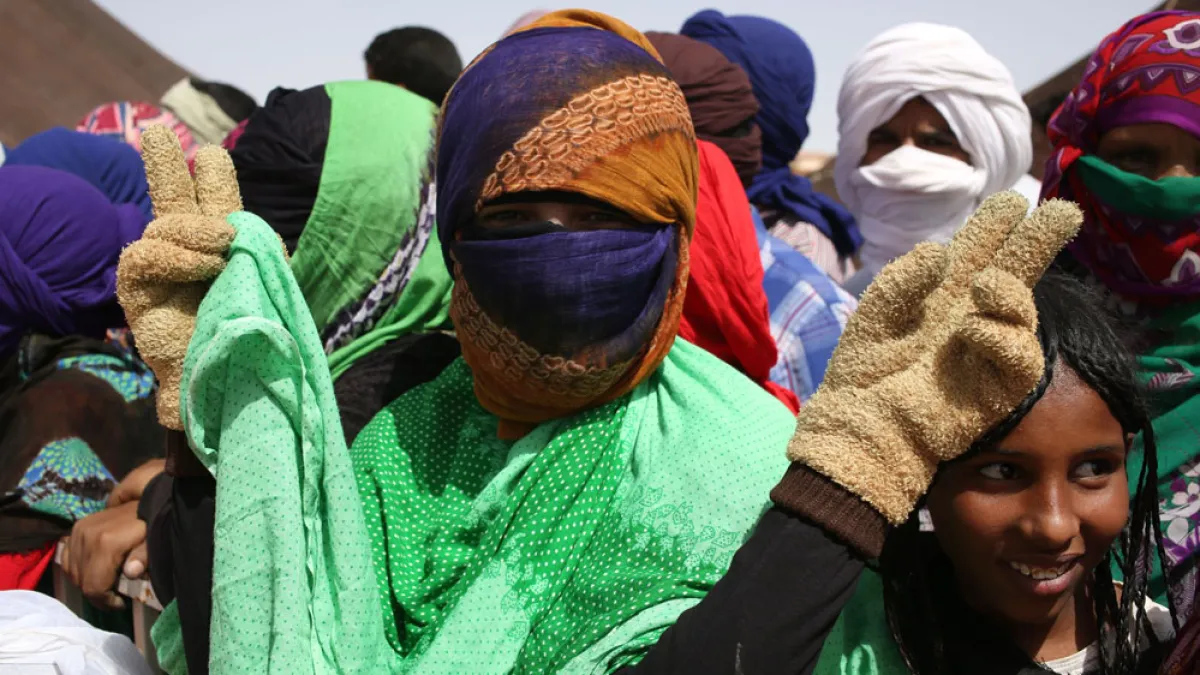
Spain’s Congress has approved a bill that would open a special route to Spanish citizenship for Sahrawis born in Western Sahara while the disputed territory was under Spanish occupation.
The bill passed by 168 votes to 31, with 145 abstentions. It must still go through the Senate before it can become law.
So what exactly would the measure do, and why is Morocco watching it closely?
What does the bill do?
The proposed law would allow people born in Western Sahara before September 29, 1977, to apply for Spanish nationality through a special procedure without having to meet the normal residency requirements. First-degree descendants would also be covered.
It would also shorten the duration of the residence requirement for eligible Sahrawis legally living in Spain. Instead of the usual 10 years, they would be able to apply after two years.
Supporters describe the measure as a way of addressing what they see as a historical injustice.
Spain was the colonial power in Western Sahara until it ended its administration of the territory in 1976. The territory has remained disputed ever since, with Morocco considering it part of its sovereignty, while the separatist Polisario Front seeks independence.
Why does Morocco care?
The law would not change the territorial status of Western Sahara. It would not recognise an independent Sahrawi state, nor would Spanish citizenship give its holders sovereignty over the territory.
The concern in Rabat is instead about the relationship the law could create between Spain and people with direct links to Western Sahara.
Reuters has reported that between 70,000 and 110,000 people could eventually qualify, although estimates vary. Anyone who obtains Spanish nationality would also become a European Union citizen and acquire the rights that come with that status.
Potential beneficiaries could include eligible Sahrawis living in Western Sahara as well as members of the Sahrawi refugee population around Tindouf in Algeria, where the Polisario Front is based.
For Morocco, that could mean a larger community of Spanish and EU citizens with personal or family ties to an issue at the centre of its relationship with Madrid.
Why is the timing important?
The bill comes after a significant change in Spain’s policy towards Western Sahara.
In 2022, Prime Minister Pedro Sanchez’s government backed Morocco’s autonomy proposal for the territory, describing it as the most serious, realistic and credible basis for resolving the dispute.
That decision helped repair relations between Madrid and Rabat after a major diplomatic crisis. Since then, the two countries have strengthened cooperation on migration, security, trade and other areas.
The new citizenship measure does not formally change Spain’s support for the autonomy proposal. Madrid can argue that supporting autonomy as a political solution is one matter, while dealing with the consequences of its former colonial rule is another.
But the two issues are difficult to separate completely from Morocco’s perspective because both concern Western Sahara.
What is the debate inside Spain?
The bill has also divided Spain’s political parties.
The governing Socialist Party and its allies in Sumar supported it. The conservative People’s Party abstained, while Vox voted against it.
The disagreement has centred partly on how Spain should address the legacy of its former rule in Western Sahara and on the legal route proposed for granting nationality.
The debate is important to the Moroccan side because it shows that the measure is not simply a technical change to Spanish nationality law. It has also become part of a discussion inside Spain about its colonial past and its relationship with Western Sahara.
Moroccan and international media have also focused on the measure. While Moroccan media have highlighted its potential implications for Spain’s policy towards Western Sahara and its relations with Rabat, Reuters has reported that the move could further strain relations between Spain and Morocco.
Does the bill recognise the Polisario?
No. The proposed nationality route does not recognise the Polisario Front or an independent Sahrawi state.
Nor does acquiring Spanish citizenship indicate support for the Polisario. Nationality is a legal status, and Sahrawis hold different political positions.
The connection to the Polisario is nevertheless relevant because many Sahrawi refugees live around Tindouf, where the Polisario has its headquarters and administers the refugee camps.
If eligible people from those communities acquire Spanish nationality, they would become Spanish and EU citizens while retaining their existing personal and political identities.
Why is Spain referring to its colonial past?
Spain was the colonial power in Western Sahara until it ended its administration of the territory in 1976.
Supporters of the bill argue that people born in the territory during Spanish rule were left in a difficult legal position after Spain withdrew. They therefore present the measure as a way of addressing what they consider a historical wrong.
Spain has used historical ties in nationality policy before.
In 2015, it introduced a procedure allowing Sephardic Jews who could establish their Sephardic origin and a special connection with Spain to apply for Spanish nationality. The measure was linked to the expulsion of Jews from Spain beginning in 1492.
That precedent is relevant to the Moroccan debate because Spain has previously used historical ties to establish a special route to nationality.
And what about Ceuta and Melilla?
This is where the issue becomes particularly sensitive for Morocco.
Morocco considers Ceuta and Melilla an integral part of its territory and sovereignty. The two cities are located on Morocco’s northern coast in North Africa and are under Spanish administration.
Spain rejects Morocco’s claim and considers the cities Spanish territory. Successive Spanish governments have maintained that their sovereignty over Ceuta and Melilla is not negotiable.
The Moroccan argument here could be about how historical ties are treated.
If Spain can draw on its historical and colonial relationship with Western Sahara to create a special nationality route for Sahrawis, and has previously used historical ties with Sephardic Jews, whose connection to Spain dates back more than five centuries, Morocco could ask why its own historical and geographical relationship with Ceuta and Melilla should be considered irrelevant when it makes its claim to sovereignty over the two cities.
For eight centuries, Muslim dynasties, including the Almoravids and Almohads, ruled parts of the Iberian Peninsula.
Morocco’s potential argument is therefore narrower: if historical ties can help establish present-day legal rights, then history and geography can also form part of the case it makes about two cities located on the North African coast.
What would the law change for Morocco?
In territorial terms, very little.
The citizenship measure would not change who controls Western Sahara, determine the territory’s final status or alter the United Nations-led political process. Nor does it, in itself, change Spain’s official position in support of Morocco’s autonomy proposal.
Its significance lies mainly in the relationship between Spain and Morocco. The measure brings Spain’s colonial history in Western Sahara into a broader domestic political debate, raising questions about how that history should be addressed and what its growing political significance could mean for the delicate relationship between Madrid and Rabat.
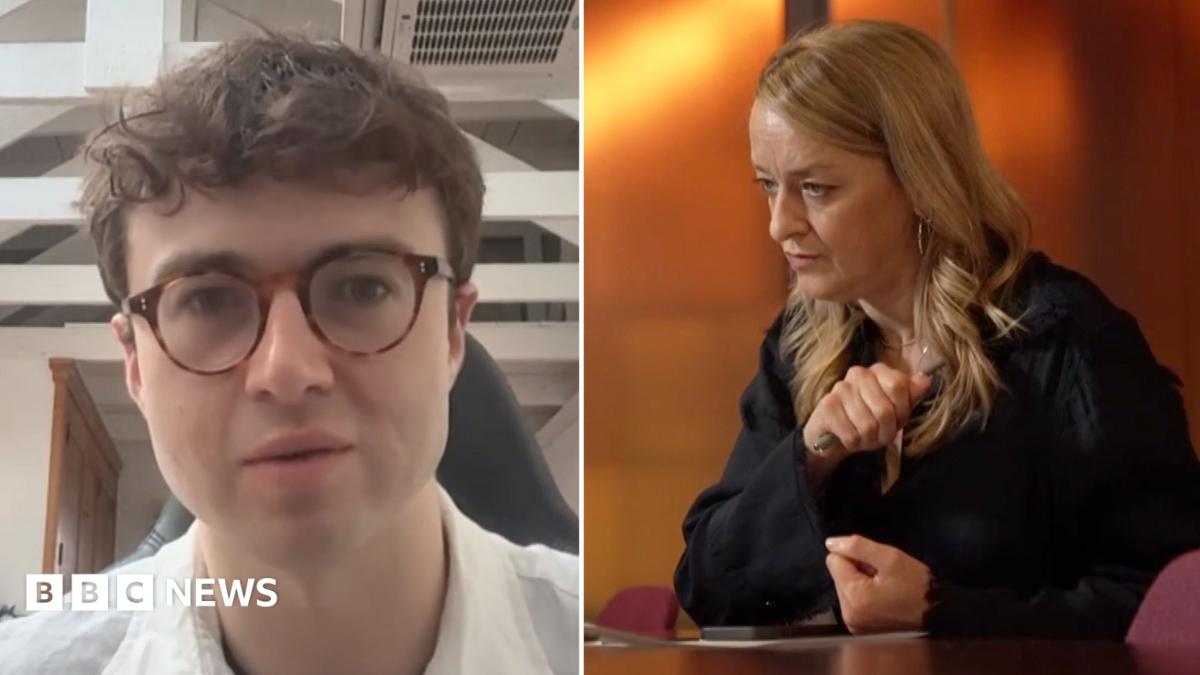
An AI researcher who quit Anthropic told the BBC that people working on the technology are “genuinely frightened” about the speed of its advancements and what it could mean for humanity.
Jacob Coxon spoke with BBC’s Laura Kuenssberg on Saturday about his viral resignation post where he raised concerns about out-of-control artificial intelligence.
“I believe that if we don’t slow down at the current rate of progress, there is a strong chance that we could all die in the immediate future,” he said.
His resignation comes amid growing safety concerns in the industry, including from his former boss, head of Anthropic Dario Amodei, who in an essay on Saturday argued for development to slow down.
However some industry figures say the dangers are being overblown, possibly to build hype around the two biggest AI companies ahead of their potential stock market debut or to prompt regulation which would slow their competitors.
Coxon, a 27-year-old from Britain whose research focuses on training AI models, said AI leaders including Elon Musk and OpenAI’s Sam Altman have shared similar concerns to Amodei.
“They’ve all made statements about the necessity of being careful of the potential for AI takeover. They’ve all talked about this. AI takeover implies human extinction,” Coxon said.
The hardest question to answer, according to Coxon, is what that would look like.
“Any kind of concrete scenario you can lay out ends up sounding like science fiction,” Coxon said, but notes that advancements which have already happened would have sounded like fiction in the past.
A potential scenario could involve AI agents hacking into medical laboratories to “autonomously produce deadly viruses”, Coxon said. Another example he listed could be AI hacking into “critical infrastructure that the world runs on”.
“They did it autonomously, without any human encouragement. They chose to go on this hacking spree. It was the combination of things getting faster and things also getting scarier,” Coxon said.
Coxon said this scenario could be realistic in six months to a year.
Anthropic and OpenAI are reportedly preparing for potentially record-setting initial public offerings. Industry figures have suggested comments about the perils and power of AI may be designed to generate hype. Other critics say Anthropic has been trying to trigger a regulatory push to block competition, leaving it and OpenAI with a duopoly.
Coxon’s views have also been questioned by the CEO of the AI platform Hugging Face, Clement Delangue.
“Sorry, but asking Jacob about AI extinction risk is like asking your AC guy about climate change,” he wrote on X. “Not saying it’s necessarily uninteresting or wrong per se but let’s keep things in perspective.”
After Amodei’s essay on Saturday, however, Delangue offered to help be a part of the potential solutions proposed by the Anthropic boss.
Nvidia boss Jensen Huang also discussed Coxon’s comments before a crowd at a conference hosted by the investment bank Goldman Sachs last week, multiple people in the group told the BBC. They said he dismissed them as untrue.
Huang has previously said the notion that AI “is going to be the end of humanity” is “complete nonsense”.
And while he may have a business interest in an AI boom – Nvidia builds chips that power AI systems – his comments reflect a growing backlash in Silicon Valley to the existential warnings from current and former staffers.
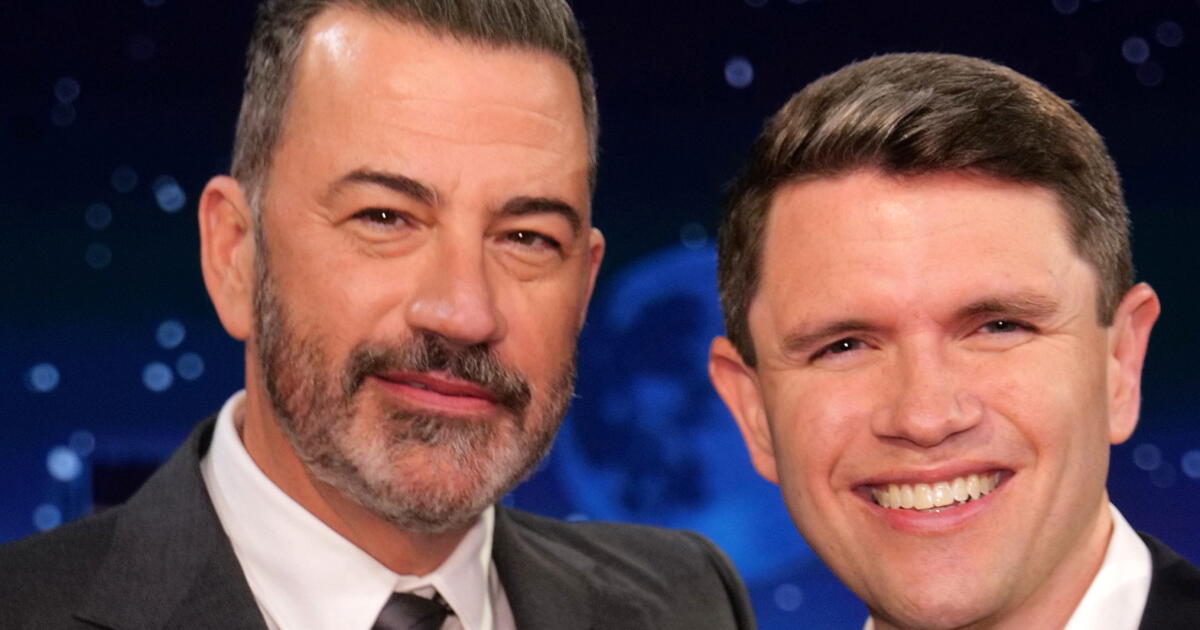
The video is titled “Jimmy Kimmel’s Interview With James Talarico That the FCC Doesn’t Want You to See.”
It was posted Thursday night on the “Jimmy Kimmel Live!’s” YouTube page. By 10 a.m. Friday, the video had gained more than 2.7 million views — and the interview hadn’t aired on the show’s network, ABC.
“… We are being targeted by the FCC for the crime of interviewing political candidates,” Kimmel says in the YouTube clip. “Even though for years we, and every other late-night talk show, have welcomed numerous candidates, including Donald Trump when he was running. He was on this show two times. [Trump’s] FCC has threatened me, threatened our show, threatened our network, ABC, our affiliates, our local stations, because they want to make our editorial decisions for us, which of course, we cannot accept.”
The host continued: “Tonight we are bypassing the public airwaves and hosting this interview on YouTube, even though our government would clearly prefer we not do it at all.”
The late-night host moved his interview with the Democratic candidate for U.S. Senate in Texas online to sidestep new Federal Communications Commission policy regulations.
Kimmel said earlier in the week that the FCC had “threatened” his show.
“For the whole 20-plus years of our show, in fact, I’ve been interviewing Americans who are running for office with no problem,” Kimmel said during Wednesday’s ABC broadcast. “Something has changed,” he said.
The change Kimmel was referring to involves the Communications Act’s “equal opportunities” requirement. It states that if a broadcast station features a qualified political candidate, it must provide equal airtime to an opposing candidate. Daytime and late-night talk shows have long operated under a “bona fide news program” exemption that shielded them from the equal time rule.
But under new guidance from the FCC Media Bureau, which is overseen by Donald Trump appointee Brendan Carr, talk shows may no longer qualify for the news exemption if their candidate interviews are determined to be motivated by partisan purposes.
In short, political bias is in the eye of the FCC beholder, and it has been focused on shows like “Kimmel Live!” and “The View,” which voice criticism of the president. The FCC has ordered early license reviews for several Disney-owned ABC stations. ABC has accused the Trump administration of trying to chill free speech.
FCC Commissioner Anna Gomez, who is the commission’s only Democrat, said Thursday in a statement that Kimmel’s choice to move Talarico’s interview to YouTube “shows just how far this Administration’s campaign of censorship and control has gone.”
The YouTube summary of the Kimmel/Talarico interview reads as follows: “Jimmy’s interview with Democratic Senate candidate from Texas James Talarico was not televised because of threats from the FCC so we’re hosting their discussion here on YouTube. James talks about Republicans being scared of him winning, Jesus being co-opted by MAGA, the RNC Convention being held in Texas, not taking money from corporate PACs, Trump calling him a ‘freaky guy’ and having second thoughts about endorsing his opponent Ken Paxton, and the GOP making it harder for people to vote.”
Assistant White House Press Secretary Davis Ingle accused Kimmel of “play acting” and “creating a false narrative about this administration’s policies,” in a statement Thursday. “Chairman Carr has not threatened him regarding interviewing James Talarico, or any other candidate,” Ingle said. “Any media outlet blindly amplifying Kimmel’s egocentric delusion should insist on proof. Of which they will find none.”
Unless they spend 10 seconds on Google, where there’s ample proof.
During a February taping of “The Late Show With Stephen Colbert,” Colbert told his studio audience that CBS lawyers had prohibited him from broadcasting an interview with Talarico, or even mentioning the cancellation on television, following threats from the FCC.
“[Talarico] was supposed to be here, but we were told in no uncertain terms by our network’s lawyers, who called us directly, that we could not have him on the broadcast,” Colbert said.
CBS denied they stopped “The Late Show” from airing the interview, which was instead posted on the show’s YouTube page.
Within months, “The Late Show” was canceled after 33 years on the air. Its final broadcast was May 21.
During Kimmel’s interview with Talarico, the host pointed out that it wasn’t the first time an interview with Talarico had been “demoted” from network television to YouTube. He asked his guest, “Why are they so scared of you?”
“They’re worried that we’re going to win this race in Texas,” Talarico said about running against Republican Ken Paxton.
The race will be decided in November.
“We’re not just going up against the most corrupt politician in Texas,” Talarico said. “We’re going up against this entire corrupt system.”
NEW YORK: Elena Rybakina won her first US Open title and punctuated her climb to the top of women’s tennis by beating Aryna Sabalenka 6-4, 5-7, 6-2 on Saturday.
Rybakina had already been guaranteed to replace Sabalenka at No. 1 in the rankings next week and for good measure took the US Open title that Sabalenka had won the previous two years.
“It’s tough to find words right now, honestly,” Rybakina said. “I don’t expect nothing like this coming to this tournament. I’ve been dealing with a little bit with an injury, but somehow everything aligned together on my side.”
It was the third Grand Slam title for Rybakina and the second this year — both against Sabalenka on hard courts. She opened the season by beating Sabalenka for the Australian Open title.
This time, she stopped Sabalenka’s 19-match winning streak at the US Open, where she hadn’t lost since falling to Coco Gauff in the 2023 final.
“I really felt like home here and cannot wait to come back next year,” Sabalenka said. “I wish I could perform a little bit better but I guess next year.”
Rybakina earned $5.5 million, the largest prize in Grand Slam history, and tied Sabalenka and French Open winner Mirra Andreeva with a tour-high three titles this season.
Aryna Sabalenka, of Belarus, left, and Elena Rybakina, of Kazakhstan, right, hold up their trophies after Rybakina won the women’s singles final of the US Open tennis championships Saturday, Sept. 12, 2026, in New York. (AP)
Sabalenka took home $2.8 million but it was clear how little that meant to her, as she smashed her racket after a brief hug with Rybakina at the net.
Sabalenka was trying to become the first person since Serena Williams from 2012-14 to win three in a row at Flushing Meadows.
Rybakina dethroned the champ without even having her best stuff. The WTA Tour leader in aces got less than half of her first serves in but instead put Sabalenka under constant pressure with a strong return game, racking up 12 break chances and converting three, which was all she needed.
The third meeting of No. 1 vs. No. 2 in a US Open women’s final since 2000 was the first to go the way of the challenger. Williams was the top seed for the other two, beating her sister Venus in 2002 and Victoria Azarenka in 2013.
The numbers didn’t signify much this time, because they are going to flip Monday. Sabalenka has held the top spot for 99 consecutive weeks, but Rybakina gained enough points to unseat her simply by reaching the semifinals.
She didn’t stop there.
The 27-year-old who was born in Russia but represents Kazakhstan won her first major title at Wimbledon in 2022 and now needs just the French Open to complete the career Grand Slam.
And it’s clear her power — and her ability to absorb her opponent’s — was something that unnerved Sabalenka.
A native of Belarus, Sabalenka sometimes swings from her heels, like a golfer trying to unleash a 300-yard drive, grunting “Aaaaahhhh!” as she takes her mighty cuts.
Rybakina’s power comes more easily. There is little sound coming from her side of the net besides the squeaking of her sneakers, and she rarely shows any hint of stress.
“I think Elena is probably — not nonchalant, I don’t want to say that, because she’s not nonchalant — but just no reaction ever,” Gauff said after losing to Rybakina in the semifinals.
Belarus’ Aryna Sabalenka reacts during her women’s singles final match against Kazakhstan’s Elena Rybakina. (Reuters)
Rybakina did show some frustration after pulling a backhand wide with a break point in the opening game of the third set, but soon she had taken charge of the match for good.
Sabalenka had won the two other meetings this season, on the hard courts at Indian Wells and Miami, and leads their rivalry 10-8.
But her season then took a strange dip after those victories. Sabalenka fell to Naomi Osaka in the fourth round at Wimbledon, then returned to action with consecutive fourth-round exits in Toronto and Cincinnati.
Rybakina had to take a brief break after she was forced to stop playing in her quarterfinal match against Iga Swiatek in Cincinnati because of a foot injury, but she was healthy in time for a tournament where she had never done particularly well, failing to advance past the fourth round until this year.
“I honestly was coming here for the last 10 years, and it was never successful — nothing close to that,” Rybakina said. “It’s just incredible. I’m falling in love with New York more and more.”
Arthur Ashe Stadium, meanwhile, had been Sabalenka’s house, with four straight trips to the final and six to at least the semis. Whatever troubled her during the summer seemed forgotten once she was back in New York — until Saturday.
Sabalenka repeatedly looked toward her coaches’ box with her palms up, wondering why everything was going so poorly, and showed much more frustration than that when she double-faulted to hand Rybakina a 3-2 lead in the first set. Rybakina hit the serve back and the ball bounced directly to Sabalenka, who whacked it into the crowd, earning a warning from the chair umpire.
Sabalenka eventually began putting consistent pressure on Rybakina in the second set. She picked up two break points with a chance to end the set with a 5-4 lead, and though Rybakina won four straight points to get out of that jam, Sabalenka got another chance in the next service game and this time capitalized, stepping into a return to set up a miss by Rybakina.
She “looked suitably humbled and tearful” as she emerged, he said, going on to praise the stage direction.
“Truly, she was throwing the love at the crowd, who threw it right back at her. There was no holding back. It was quite overwhelming, actually,” he writes.
The performance was “complete with both costume, key change and air of tragic, important romance”.
“Céline Dion’s strength lies in being a diva with the common touch while being as French as they get, even if she is Canadian. She fulfilled that role with all the verve you could hope for,” writes Hodgkinson.
In video clips, Dion is seen wandering in a desert. “The set design was highly cinematic, with a monumental staircase sweeping up one side and a moon dominating the stage, while the backdrop appeared to have a stark, almost brutalist gray texture.”
The star, known for power ballads like My Heart Will Go On and Because You Loved Me, has said she will not let her diagnosis control her life.
“The way I see it, I have two choices. Either I train like an athlete and work super hard, or I switch off and it’s over,” she told French Vogue magazine, external in 2024.
“I’ve chosen to work with all my body and soul, from head to toe, with a medical team.”
Lady Gaga has been seen with her new baby for the first timeCredit: BackGridThe singer reportedly gave birth to her first child this weekCredit: BackGrid
The star welcomed her first child this week according tothe publication.
But she decided not to share her pregnancy news with fans, and has quite a low profile in recent months as she was last pictured in public back in May.
Sign up for the Showbiz newsletter
Thank you!
But now Lady Gaga –real name Stefani Joanne Angelina Germanotta – has been pictured in public as a new mum with her adorable tot wrapped around her chest.
She recently stepped out in San Francisco for a walk with her newborn alongside her fiance Michael and agent Alexandra Trustman.
The singer cradled her new born while on a walkCredit: BackGridThe star kept it casual in white trousers and an oversized cardiganCredit: BackGridShe was joined by her fiance MichaelCredit: BackGridThe pair locked lips as they were seen getting a car seat installed into their vehicleCredit: BackGrid
The name, gender, or when her child was born has not been revealed yet.
Lady Gaga and Michael first got together in 2019, but went public with their relationship in 2020.
The pair got engaged in 2024.
They were also seen locking lips as they got a car sear installed into their vehicle in Los Angeles.
The singer has been quite open about wanting to start a family in the past.
She told Rolling Stone last year: “Being a mom is the thing I want the most.”
And talking about her own relationship with her mum with Allure in 2019, she said: “I really hope that when I have maybe a little girl one day, or a little boy, and they see Mommy put her makeup on, that they have the same experience that I did.
“That’s the greatest gift of all, when you can connect with your parents.”
DAKAR, Senegal: The Olympic flame was welcomed by music and dancing in Senegal ‘s capital on Saturday, as a march by 100 women marked the countdown to the first Olympic sporting event held in Africa.
Hundreds of people gathered at Dakar’s Place du Souvenir Africain, a waterfront plaza overlooking the Atlantic Ocean, surrounded by portraits of prominent figures from Africa and its diaspora, to greet the flame ahead of the Youth Olympic Games next month.
The women carrying the flame are known as “lingeer” — a title for queens or royal women in Wolof, one of the main languages of Senegal.
Dressed in flowing orange and golden traditional dresses with yellow headwraps, they carried the flame to the plaza in a procession celebrating Senegalese women and the passing of values between generations.
Senegalese basketball legend Mame Maty Mbengue lit the Olympic cauldron at the ceremony.
Kirsty Coventry, who is from Zimbabwe and the head of the International Olympic Committee, said the event will be a “proud moment” for Senegal and the continent.
“Everyone that comes to Senegal in a few weeks is going to leave it knowing that Africa and Senegal are capable and unstoppable, and our young generation are going to change the world,” Coventry told the gathered crowds.
The flame left the Greek capital, Athens, on Thursday, where it was lit using the sun’s rays and a parabolic mirror, following Olympic tradition, before being handed to Senegal at the Panathenaic Stadium.
The flame will begin a 3,600-kilometer (2,237-mile) tour of Senegal on Monday, traveling through all 14 regions with over 400 Senegalese torchbearers before returning to the capital for the official opening ceremony.
The Youth Olympic Games, which will run from Oct. 31 to Nov. 13, bring together about 2,700 young athletes to compete in 35 sports across Dakar and the nearby cities Diamniadio and Saly.
The Youth Olympics, first held in Singapore in 2010, are a smaller version of the Olympic Games for athletes aged 15 to 18.
Another meteor shower arrives later in November, with the Leonids expected to peak around 17 November.
The Leonids can travel at about 70km per second as they enter the Earth’s atmosphere, making them some of the fastest meteors visible from Earth.
Under ideal, dark sky conditions, around 10 to 15 Leonids an hour can be visible at the shower’s peak, although the actual number seen will depend on weather, light pollution and the brightness of the Moon.
They get their name from the constellation Leo, from which the meteors appear to radiate.
The best time to look is generally after midnight and before dawn, when Leo is higher in the sky.
IT’S totally transparent how Baywatch actress Brooks Nader turns heads as she has a night out in a see-through dress.
The 29-year-old finished off the look with black high heels.
Baywatch actress Brooks Nader turned heads in this see-through dressCredit: Instar ImagesBrooks has made her name as a swimsuit model, pictured last monthCredit: Getty
The US star, who made her name as a swimsuit model, was in New York at an event as part of Fashion Week in the city.
Brooks, who also features with her sisters in reality show Love Thy Nader, is a lifeguard in the reboot of TV series Baywatch, which will air next year.
Her matching underwear cheekily peeked through under the fabric.
Brooks also ditched her bra for the occasion, baring her figure for all to see.
She finished the look off with a pair of black high heels and left her hair loosely flowing in a subtle wave down her back.
This isn’t the first time Brooks has been bold with her fashion choices.
The actress also features with her sisters in reality show Love Thy NaderCredit: GettyStunner Brooks is a lifeguard in the reboot of TV series BaywatchCredit: Splash
Protesters in about 20 cities, including Berlin, Hamburg and Munich, demand the banning of the Alternative for Germany.
Published On 12 Sep 202612 Sep 2026
Tens of thousands of people took to the streets across Germany to protest against the Alternative for Germany (AfD) after the far-right party won a state election by a landslide.
About 150,000 demonstrators turned out in roughly 20 cities on Saturday, including Berlin, Hamburg and Munich, in rallies organised by Pruef, a campaign group pushing for a ban on the AfD.
Recommended Stories
list of 3 itemsend of list
Protesters carried signs reading “Ban the AfD now” and “Democracy needs no alternatives.”
“A broad cross-section of civil society is taking to the streets to prevent the enemies of the constitution … from gaining government power,” said Christoph Bautz, head of Campact, another campaign group involved in the protests, which put turnouts at about 25,000 in Hamburg and 12,000 in Munich.
According to police, several thousand more joined separate demonstrations in Berlin.
The AfD held its own counter-rally in the German capital, attended by Kristin Brinker, the party’s lead candidate for Berlin’s upcoming regional election.
The protests follow a stunning result for the AfD in Saxony-Anhalt, a state in eastern Germany, where the party took nearly 44 percent of the vote on September 6 — far ahead of the roughly 17 percent won by Chancellor Friedrich Merz’s Christian Democratic Union (CDU), which has long dominated German politics.
The AfD, known for its anti-immigration stance and friendly posture towards Russia, fell just short of an outright majority and is now in talks with other parties to try to form a government, which would make it the first far-right party to lead a German state since the Nazi era ended in 1945.
AfD state leader Ulrich Siegmund called the result historic, telling supporters: “The people have made it absolutely clear that they finally want political change and, above all, they have shown that they want it with us.” He has since signalled openness to working with other parties, after previously saying he wanted to govern alone.
The AfD’s growing strength has deeply unsettled many Germans, given the country’s history and its commitment to never repeating it.
The party is projected to win 39 of 83 seats in the state parliament, three short of a majority. It now needs a coalition partner, though all mainstream parties have so far refused to govern with the AfD under a longstanding policy known as the “firewall.” The far-right party has never joined a governing coalition anywhere in Germany, at either state or national level.
The unease has fuelled growing calls to ban the AfD altogether, though that would be legally difficult in Germany, and Chancellor Merz has been reluctant to pursue it.
Arsenal maintain perfect start to the season with their fourth win, thanks to goals from Guimaraes and Saka.
Published On 12 Sep 202612 Sep 2026
Arsenal manager Mikel Arteta has labelled the decision to award Sunderland a penalty ‘unacceptable’ after watching his side grind out a 2-0 win to maintain their 100 percent start to the season and move clear at the top of the Premier League.
The defending champions made it 12 points out of 12 on Saturday as David Raya’s penalty save in the 55th minute proved crucial for the visitors, who went ahead two minutes later with Bruno Guimaraes’s first goal for the club.
Bukayo Saka wrapped it up deep in stoppage time from the penalty spot to make it four league wins out of four for the reigning champions.
It could have been different had Enzo Le Fee found the net, but Arteta blasted the decision by referee John Brooks to award a penalty when Ezri Konsa was penalised for pulling down Dan Ballard as a corner was played in.
“It was a huge win , but it could have been something very different,” an angry Arteta said when referring to the penalty award after the match.
“It’s unacceptable at this level; this can change the course of a season and the championship. It’s not acceptable. I’ve seen it 10 times to make sure, and it’s not possible at this level that it can be a penalty. It cannot happen.
“It’s not a penalty in any context, in any league.”
Bruno Guimaraes celebrates scoring Arsenal’s opening goal [Oli Scarff/AFP]
It was far from a vintage Arsenal display against a tenacious Sunderland, who deserved something for their endeavour, but they dug deep and showed the resilience that helped them win a first title for 22 years last season.
They have now kept four clean sheets in their five games since the start of the season, including in the Champions League win at Napoli in midweek.
Summer signing Guimaraes replaced Myles Lewis-Skelly at half-time and made a stunning impact.
After receiving a pass from Declan Rice, he sent a right-footed curler into the top corner.
Arsenal were forced to defend desperately at times as Sunderland’s physicality rattled them, but Saka netted his third goal of the season when he beat Robin Roefs with his spot-kick after being fouled by Reinildo Mandava, who was sent off.
“It’s unbelievable the spirit and the courage we have to go again and again and again,” Arteta said. “So pleased in one sense and so worried in another.
“David Raya was unbelievable. He is a player that decides football matches when we need it.
“Sunderland deserve a lot of credit for the way they make it so hard for you.”
Manchester City, the only other side not to have dropped Premier League points this season, can join Arsenal on 12 points if they beat Manchester United on Sunday.
Bukayo Saka celebrates after scoring [Oli Scarff/AFP]
Fans watching the new series of SNL UK were floored by the very first sketch
The show began with a sketch about Harry and Meghan(Image: Sky)
Comedy fans had the same response to a new season of SNL UK.
Viewers tuning into the new series hailed the show’s ‘genius move’ for the show’s return. It comes as the sketch show UK version of the hit American series, returned following an impressive stint earlier in the year.
There was initial cynicism over whether or not it would actually work, let alone be a success. However, it was renewed for a follow up ahead of its season finale.
This week saw Academy Award‑nominated actor and global icon Jeff Goldblum take on duties of the guest host. Goldblum is instantly recognisable for performances in Jurassic Park and Wicked. He was joined by acclaimed Irish singer‑songwriter and Brit Award nominee CMAT as the musical guest.
The show takes on a number of well known features from its American counterparts. This includes an opening monologue, topical sketches and the Weekend Update feature.
Season two’s premiere began with a cold open about the Royals. In particular, the show poked fun about Harry and Meghan, following the news of their move back to the UK.
Star Jack Shep, who wowed fans by taking on the role of Princess Diana in the previous season, appeared this time playing Harry. They also poked fun at Meghan’s Netflix series, as she told the King that she had brought some ice that she ‘made herself’.
Shep as Harry replied: “She hires the best cooks.” And later he tells his ‘father’ that his money has run out saying “it was only $60 million.”
But what really impressed viewers watching along at home was when cast member George Fouracres entered as Prime Minister Andy Burnham. Last time out, the actor also appeared as the PM, which back then was Sir Keir Starmer.
Fouracres joked that he was “better than the last one” and would not stop until there was a “Number 10 in every street in the UK”. Fans absolutely loved Fouracres performance with many sharing their reactions on social media.
One person admitted: “I’m weeping for joy at how good Fouracres as Burnham is: channelling John Simm.” Someone else replied: “So happy #SNLUK ‘s Andy Burnham is George Fouracres, he was a perfect Starmer and he’s a perfect Mr Normal too!”
Another added: “George Fouracres as Burnham is incredible.” While one fan claimed: “George Fouracres playing Starmer and now Burnham is a genius move.”
Sharing a similar view, someone else replied: “I’ve been waiting patiently for this George Fouracres Andy Burnham impression and I’m not disappointed.”
SNL UK airs Saturdays at 10pm on Sky One and streaming on NOW.
The first naval battle between two Unmanned Surface Vessels (USVs) has taken place in the Black Sea. The Ukrainian Navy said on Saturday that one of its naval drones sank a Russian vessel.
Giving an answer to a question that is asked at a free-flowing press conference is one thing, but Donald Trump repeated his sentiments a short time later when he was delivering a speech to an invited audience at the US Ambassador’s residence.
In fact it was almost the first thing he mentioned, hinting that maybe he realised he had kicked over a can of worms at his earlier appearance.
The rest of that speech was curious. It was billed as a 20-minute address to Irish and Irish American business leaders, but was about twice that and strayed largely into domestic US matters.
President Trump has a speaking style that he describes himself as “the weave”.
He can bounce from topic to topic during any speaking engagement, veering off the script and then returning to the matter at hand.
Today he lauded his own achievements, as he sees them, such as clamping down on illegal immigration, doing deals and boosting defence production.
He repeated his criticisms once again of what he views as the UK’s lack of support for his military operation in Iran.
Boxer Fernando Vargas Jr. was arrested on suspicion of DUI following a multi-vehicle collision at a Universal Studios Hollywood parking lot, according to law enforcement and multiple media outlets.
California Highway Patrol responded to the incident on Thursday after receiving a call at 7:51 p.m.
CHP confirmed to The Times that one arrest was made at the scene for “suspicion of DUI.” No other injuries were reported at the scene.
Reports by KTLA confirmed that the 29-year-old was the individual arrested after officers observed “signs of alcohol impairment from Vargas” and conducted a DUI investigation.
Officers took him to the CHP Central Los Angeles Area office. The case will be submitted to the Los Angeles city attorney’s office for possible charges.
Hours before the arrest, Vargas posted a video to Instagram of himself and a woman inside a vehicle, who appeared to be in the passenger seat, TMZ reported.
The super welterweight boxer is the oldest son of two-time middleweight world champion Fernando Vargas. The famed Mexican American fighter from Oxnard — who at one point was the youngest U.S. national amateur champion — also faced legal troubles of his own for his role in a 1999 assault case.
Since fighting his first professional match in 2020, Vargas Jr. himself has built a steady record in the ring with 15 knockouts in 17 wins. His last bout was during the Canelo Alvarez-Terence Crawford card in September 2025, where he lost to Irish boxer Callum Walsh.
MOGADISHU: Somali pirates briefly hijacked a vessel off the coast of Yemen this week, the European Naval Force and security sources in Puntland said on Saturday.
Six armed men stormed the MT Glamour on Thursday when the ship, sailing under the flag of Saint Vincent and the Grenadines, was about 38 nautical miles (70 kilometers) off the coast.
The Gulf of Aden and the Somali coast have seen a resurgence in piracy since April, with at least 15 attacks recorded this year — the highest since 2013, according to the International Maritime Organization.
Several security sources in the northeastern Puntland region — a major hub of Somali piracy — told AFP that six armed men boarded the Glamour after setting off from a small fishing village.
According to the European Naval Force, the crew stopped the vessel, shut down its systems and took refuge in the citadel as a precaution before the vessel was boarded.
After the hijacking, a Japanese warship approached the vessel and helicopters circled the ship, prompting the pirates to abandon it, the Puntland authorities said.
On Friday, Somali pirates released the cargo ship MV Sward, which was hijacked in April with 17 crew members on board.
Security sources and the authorities in Puntland said a ransom was paid.
Four tankers seized this year remain in the hands of pirates off the Somali coast — the Honour 25, the Eureka, the Asana and the Seamull, which is also known as Sibu 1.
The Seamull, which is part of Iran’s “ghost fleet” accused of exporting Iranian oil, is subject to US sanctions.
Ebola has reached a seventh province in the Democratic Republic of Congo after an infected man travelled across the country and through Rwanda and Uganda. Virologist Placide Mbala said the government is seeing signs of declining transmission but remains cautious about the outbreak.
The finale of the world’s biggest classical music festival aired this evening complete with a special tribute to the late Dolly Parton
Sheridan Smith kicked off the Dolly Parton tribute(Image: BBC)
A tribute to the late Dolly Parton has left BBC viewers saying the same thing.
Last Night of the Proms: The Finale aired on the channel this evening (September 12), showing the culmination of the world’s biggest classical music festival, all beamed live from London’s Royal Albert Hall.
The second half opened with actress Sheridan Smith performing the star’s hit song 9 to 5 dressed in a suitably glittery jumpsuit with bouffant blonde hair in the style of the singer. The medley then moved to the Ward Thomas Duo singing Jolene, before Beverley Knight took to the stage with a powerful rendition of I Will Always Love You.
“Are you expecting me to speak after that?” choir master and TV personality Gareth Malone later said during a chat with the BBC Proms co-hosts, Nick Mohammed and Katie Derham.
He continued: “It was so emotional, it was beautiful, I love Dolly that was a wonderful rendition. The way the choir came up it really got me.”
Many fans at home were equally moved by the tribute, with many completely blown away by Beverly Knight’s performance in particular. “Loving the #DollyParton tribute on #LastNightOfTheProms,” said one fan. Meanwhile another remarked: “Thank goodness for Beverly Knight #lastnightoftheproms.”
“Beverley Knight. Take a bow. Brilliant performance. Fitting tribute to Dolly Parton,” one gushed. “Wow. Tribute to Dolly Parton at #LastNightoftheProms Beverley Knight knocked it out of the park.”
“Wasn’t expecting a tribute to #Dolly at #LastNightoftheProms -wonderful!” said another viewer. “Sheridan Smith can SING, good lord #lastnightoftheproms this is amazing. @DollyParton would love it! Jolene really lends itself to orchestra, doesn’t it?” added one fan.
However, one BBC viewer was less than impressed with Sheridan Smith’s vocals, venting: “Surely they could have found an actual professional singer to kick off the second half, rather than some celeb who gets drafted into west end shows to fill seats.”
Last Night of the Proms: The Finale is available to watch on BBC One and iPlayer.
SAO PAULO: Former Liverpool playmaker Philippe Coutinho has joined Santos, team-mate Neymar announced on Saturday, although his new club has yet to officially confirm the move.
Coutinho, 34, has been without a club since leaving Vasco da Gama in February, citing mental burnout.
“We’re very happy that you’re here,” Neymar said on social media, with a video showing Coutinho alongside Santos players and coaches.
“Our squad and our fans will welcome you with arms wide open.”
According to local media, former Brazil international Coutinho needs to pass his medical before Santos can confirm his arrival on a contract that runs until the end of the season.
France is accelerating work on the Rafale F5 standard, bringing forward development of a major new configuration of its combat aircraft at a time when the country’s planned next-generation fighter with Germany has effectively collapsed in its original form. The contracts cover the equipment judged to have the highest technical risk, ahead of the overall development contract for the F5 standard, expected for the end of this year.
The French defense procurement agency, the Direction générale de l’armement (DGA), ordered the first upstream development work for F5 from Dassault Aviation, Thales, MBDA, and Safran. The contracts cover key areas including navigation, datalinks, radar, electronic warfare, and propulsion, laying the groundwork for the next configuration of the Rafale, which is planned to enter service with the French Air and Space Force and the French Navy starting around 2033.
The most extensive modernization of the Rafale yet, the F5 standard was originally part of a longer transition toward France’s next-generation combat-air capability. But with the Franco-German New Generation Fighter (NGF) effort now effectively dead in its original configuration, the accelerated F5 program is taking on a much larger strategic role.
Concept artwork of the NGF future fighter. Dassault Aviation
Rather than simply keeping the Rafale relevant until NGF arrives, France is now developing a version of the aircraft that is set to carry much of the country’s high-end combat-air capability well into the 2030s and potentially beyond.
The increasingly capable F5 could, in turn, reduce the urgency of finding a replacement for the Rafale — while potentially adding to the fighter’s export appeal. After a slow start, Dassault has recorded export sales of 299 new-build Rafales to eight nations.
The DGA’s contracts engage four of France’s principal combat-aircraft industrial players. Dassault Aviation remains responsible for the aircraft and its overall integration; Thales is involved in major sensor, electronic warfare, and communications capabilities; MBDA is responsible for much of the weapons system; and Safran is responsible for propulsion.
The Rafale assembly line at the Dassault Aviation facility in Mérignac, France. Dassault Aviation – V. Almansa ALMANSA
Previous Rafale standards have largely consisted of incremental upgrades, focusing on software and other improvements to the existing aircraft configuration. F5 is notably more extensive, addressing many of the critical systems that determine how the aircraft senses the battlespace, communicates with other platforms, conducts electronic warfare, and generates the power needed to operate increasingly demanding equipment.
The DGA has specifically identified the Thales RBE2-XG radar as one of the major technological advances associated with F5.
The RBE2-XG is expected to feature gallium nitride (GaN) semiconductors. Compared with previous technology, GaN generates less heat and has the capacity to operate at higher voltages, meaning that output power can be increased, while component size can be reduced. Overall, using GaN should help to get more power out of the radar without increasing its size.
According to the DGA, “This new radar will benefit from a substantial increase in power, and consequently in detection range, as well as improvements in the identification of targets with an extremely low radar cross-section (RCS). Its computing capabilities will also be enhanced to facilitate the integration of artificial intelligence.”
The RBE2-XG will also be “designed with collaborative combat in mind, featuring sensors capable of working together without the need for pilot intervention.” It is also planned to have enhanced resilience, including against cyber threats.
France is already working on the concept of a combat drone to accompany the Rafale, with the future F5 standard providing the crewed aircraft around which those systems can operate.
A Rafale during a test mission with a Dassault nEUROn combat drone demonstrator. Dassault Aviation – A. Pecchi
The new radar will be combined with more capable electronic warfare equipment, improved communications and datalinks, expanded processing capacity, and a more capable propulsion system.
To be developed by MBDA and Thales, the forthcoming F5 version of the SPECTRA self-protection suite is intended to significantly improve detection and jamming capabilities, the DGA says, “through a fully digital approach, enabling a complete overhaul of the core electronic warfare system to counter the increasing density and broadening of the threat spectrum, as well as the growing complexity of threat waveforms, expected by 2035.”
Thales à bord du Rafale de Dassault Aviation
Thales will also be responsible for the new Inter-Vehicle Data Link (IVDL) system, described as a “stealthy and resilient datalink.” The DGA says the new datalink will expand connectivity “thanks to a new high-speed, discreet, and jamming-resistant waveform. IVDL will allow the Rafale to penetrate hostile areas where jammers are widespread, while maintaining optimal quality of communication and dialogue between aircraft.”
Safran will begin preliminary design work on the M88 T-Rex engine, which is planned to increase the turbofan’s thrust from around 16,500 pounds to nearly 19,850 pounds, an increase of roughly 20 percent.
M88 T-REX: A 9-ton thrust predator serving the Rafale
In terms of armament, the contract announcement mentions the ASN4G missile, set to be introduced to service by 2035, which will allow the Rafale F5 to continue to serve as the airborne nuclear component. The munition remains in the early stages of development, but it will be capable of hypersonic speeds — defined as speeds greater than Mach 5 — with a range in excess of 1,000 kilometers (621 miles).
Other likely new missiles include a beyond-visual-range air-to-air missile to succeed the current Meteor. As you can read about here, France’s Comet program, apparently led by the French side of MBDA, is already looking into this requirement, with an apparent plan to introduce the weapon around 2030.
An older video from MBDA showing some of the company’s weapons integrated on earlier versions of the Rafale:
PARIS AIR SHOW 2021: MISSILES ON THE RAFALE
For France, the original logic behind the pan-European FCAS program was that Rafale would eventually give way to the NGF as its principal crewed combat aircraft, operating from land bases and aircraft carriers.
With the collapse of the Franco-German effort, France cannot simply wait for a next-generation fighter program whose industrial and political future is uncertain. Instead, the Rafale has to remain capable against rapidly evolving threats throughout the 2030s and beyond.
With the F5 standard, however, France is looking to incorporate some of the concepts envisaged for NGF. These include distributed architectures in which crewed fighters, uncrewed aircraft, remote carriers, missiles, and offboard sensors cooperate across a battlespace.
The nEUROn drone and a Rafale M in flight over the aircraft carrier Charles de Gaulle, during tests to investigate the use of a UCAV in a naval context. Dassault Aviation – A. Pecchi
For now, F5 also sidesteps the central problem in the now-defunct Franco-German effort: whether the two countries could agree on the requirements, industrial structure, and workshare behind a new-generation combat aircraft.
Despite its advances, the F5 airframe remains derived from a design dating back to the 1980s, which first entered French service in the early 2000s. In particular, it falls well short of fifth-generation designs — let alone sixth-generation ones — in terms of low observability. This is one area where collaborative drones could potentially help compensate for the Rafale’s inherent limitations.
France has therefore bought itself some time with the F5 program. But it may eventually decide that it needs a future high-end crewed fighter to provide capabilities that an upgraded fourth-generation airframe cannot fully replicate, particularly in terms of survivability against advanced integrated air-defense systems, signature reduction, internal weapons carriage, and operations deep inside heavily contested airspace.
On an industrial level, F5 is also significant because it brings together the same French industrial heavyweights that would have formed the backbone of its FCAS effort. Dassault Aviation, Thales, Safran, and MBDA are now well-positioned to work together on whatever comes after F5, whether that is a crewed combat aircraft, uncrewed CCA-type platforms, or a combination of both. Based on its experience with the nEUROn program, France would be well placed to develop a UCAV that can work cooperatively as well as independently, taking over the deeper-penetrating fighter mission set, and potentially skipping a sixth-generation fighter altogether.
https://www.youtube.com/watch?v=frNsu7g7r94
Meanwhile, success with F5 — and, in particular, with the wider combat ecosystem planned around it — could put France in an even stronger position when it comes to any future European fighter project.
For the time being, Britain, Italy, and Japan are pursuing the GCAP/Tempest pathway toward a new combat aircraft. Germany and Spain remain tied to the wider FCAS architecture, even as the original Franco-German NGF arrangement has fractured. Sweden’s position is less clear, with indications that it could collaborate with either France or Germany.
France, for its part, is now investing heavily in an increasingly sophisticated Rafale architecture while maintaining its own sovereign industrial base.
In terms of acqusition, France is expected to pursue a mixed approach, buying new-build Rafales while upgrading suitable aircraft already in service to the F5 standard. The oldest jets are unlikely to receive the full F5 treatment, however.
The irony is that the failure of the NGF effort may ultimately make Rafale F5 more important — and potentially more capable — than it was ever expected to be.