The finale of the world’s biggest classical music festival aired this evening complete with a special tribute to the late Dolly Parton
Sheridan Smith kicked off the Dolly Parton tribute(Image: BBC)
A tribute to the late Dolly Parton has left BBC viewers saying the same thing.
Last Night of the Proms: The Finale aired on the channel this evening (September 12), showing the culmination of the world’s biggest classical music festival, all beamed live from London’s Royal Albert Hall.
The second half opened with actress Sheridan Smith performing the star’s hit song 9 to 5 dressed in a suitably glittery jumpsuit with bouffant blonde hair in the style of the singer. The medley then moved to the Ward Thomas Duo singing Jolene, before Beverley Knight took to the stage with a powerful rendition of I Will Always Love You.
“Are you expecting me to speak after that?” choir master and TV personality Gareth Malone later said during a chat with the BBC Proms co-hosts, Nick Mohammed and Katie Derham.
He continued: “It was so emotional, it was beautiful, I love Dolly that was a wonderful rendition. The way the choir came up it really got me.”
Many fans at home were equally moved by the tribute, with many completely blown away by Beverly Knight’s performance in particular. “Loving the #DollyParton tribute on #LastNightOfTheProms,” said one fan. Meanwhile another remarked: “Thank goodness for Beverly Knight #lastnightoftheproms.”
“Beverley Knight. Take a bow. Brilliant performance. Fitting tribute to Dolly Parton,” one gushed. “Wow. Tribute to Dolly Parton at #LastNightoftheProms Beverley Knight knocked it out of the park.”
“Wasn’t expecting a tribute to #Dolly at #LastNightoftheProms -wonderful!” said another viewer. “Sheridan Smith can SING, good lord #lastnightoftheproms this is amazing. @DollyParton would love it! Jolene really lends itself to orchestra, doesn’t it?” added one fan.
However, one BBC viewer was less than impressed with Sheridan Smith’s vocals, venting: “Surely they could have found an actual professional singer to kick off the second half, rather than some celeb who gets drafted into west end shows to fill seats.”
Last Night of the Proms: The Finale is available to watch on BBC One and iPlayer.
SAO PAULO: Former Liverpool playmaker Philippe Coutinho has joined Santos, team-mate Neymar announced on Saturday, although his new club has yet to officially confirm the move.
Coutinho, 34, has been without a club since leaving Vasco da Gama in February, citing mental burnout.
“We’re very happy that you’re here,” Neymar said on social media, with a video showing Coutinho alongside Santos players and coaches.
“Our squad and our fans will welcome you with arms wide open.”
According to local media, former Brazil international Coutinho needs to pass his medical before Santos can confirm his arrival on a contract that runs until the end of the season.
France is accelerating work on the Rafale F5 standard, bringing forward development of a major new configuration of its combat aircraft at a time when the country’s planned next-generation fighter with Germany has effectively collapsed in its original form. The contracts cover the equipment judged to have the highest technical risk, ahead of the overall development contract for the F5 standard, expected for the end of this year.
The French defense procurement agency, the Direction générale de l’armement (DGA), ordered the first upstream development work for F5 from Dassault Aviation, Thales, MBDA, and Safran. The contracts cover key areas including navigation, datalinks, radar, electronic warfare, and propulsion, laying the groundwork for the next configuration of the Rafale, which is planned to enter service with the French Air and Space Force and the French Navy starting around 2033.
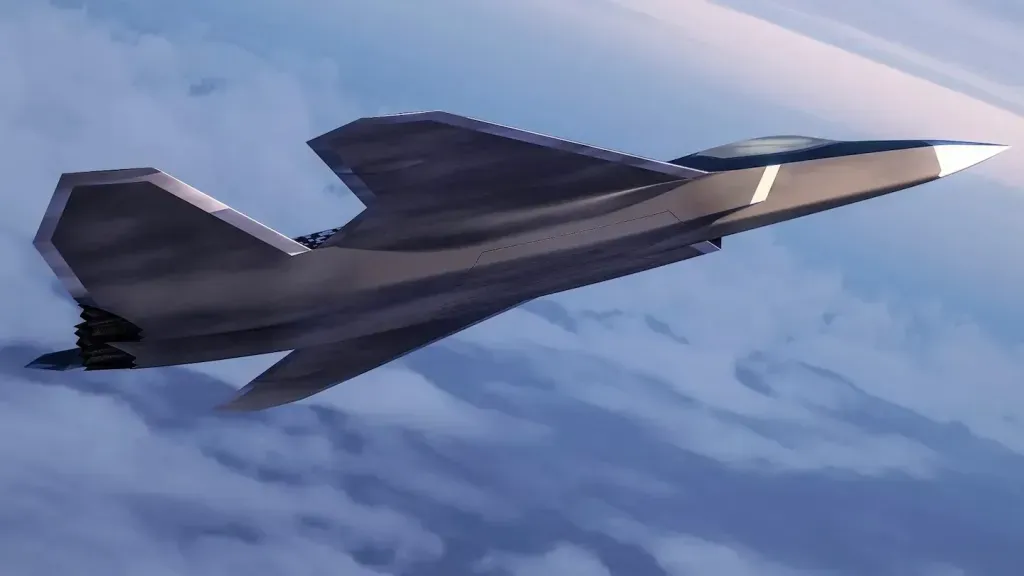
The most extensive modernization of the Rafale yet, the F5 standard was originally part of a longer transition toward France’s next-generation combat-air capability. But with the Franco-German New Generation Fighter (NGF) effort now effectively dead in its original configuration, the accelerated F5 program is taking on a much larger strategic role.
Concept artwork of the NGF future fighter. Dassault Aviation
Rather than simply keeping the Rafale relevant until NGF arrives, France is now developing a version of the aircraft that is set to carry much of the country’s high-end combat-air capability well into the 2030s and potentially beyond.
The increasingly capable F5 could, in turn, reduce the urgency of finding a replacement for the Rafale — while potentially adding to the fighter’s export appeal. After a slow start, Dassault has recorded export sales of 299 new-build Rafales to eight nations.
The DGA’s contracts engage four of France’s principal combat-aircraft industrial players. Dassault Aviation remains responsible for the aircraft and its overall integration; Thales is involved in major sensor, electronic warfare, and communications capabilities; MBDA is responsible for much of the weapons system; and Safran is responsible for propulsion.
The Rafale assembly line at the Dassault Aviation facility in Mérignac, France. Dassault Aviation – V. Almansa ALMANSA
Previous Rafale standards have largely consisted of incremental upgrades, focusing on software and other improvements to the existing aircraft configuration. F5 is notably more extensive, addressing many of the critical systems that determine how the aircraft senses the battlespace, communicates with other platforms, conducts electronic warfare, and generates the power needed to operate increasingly demanding equipment.
The DGA has specifically identified the Thales RBE2-XG radar as one of the major technological advances associated with F5.
The RBE2-XG is expected to feature gallium nitride (GaN) semiconductors. Compared with previous technology, GaN generates less heat and has the capacity to operate at higher voltages, meaning that output power can be increased, while component size can be reduced. Overall, using GaN should help to get more power out of the radar without increasing its size.
According to the DGA, “This new radar will benefit from a substantial increase in power, and consequently in detection range, as well as improvements in the identification of targets with an extremely low radar cross-section (RCS). Its computing capabilities will also be enhanced to facilitate the integration of artificial intelligence.”
The RBE2-XG will also be “designed with collaborative combat in mind, featuring sensors capable of working together without the need for pilot intervention.” It is also planned to have enhanced resilience, including against cyber threats.
France is already working on the concept of a combat drone to accompany the Rafale, with the future F5 standard providing the crewed aircraft around which those systems can operate.
A Rafale during a test mission with a Dassault nEUROn combat drone demonstrator. Dassault Aviation – A. Pecchi
The new radar will be combined with more capable electronic warfare equipment, improved communications and datalinks, expanded processing capacity, and a more capable propulsion system.
To be developed by MBDA and Thales, the forthcoming F5 version of the SPECTRA self-protection suite is intended to significantly improve detection and jamming capabilities, the DGA says, “through a fully digital approach, enabling a complete overhaul of the core electronic warfare system to counter the increasing density and broadening of the threat spectrum, as well as the growing complexity of threat waveforms, expected by 2035.”
Thales à bord du Rafale de Dassault Aviation
Thales will also be responsible for the new Inter-Vehicle Data Link (IVDL) system, described as a “stealthy and resilient datalink.” The DGA says the new datalink will expand connectivity “thanks to a new high-speed, discreet, and jamming-resistant waveform. IVDL will allow the Rafale to penetrate hostile areas where jammers are widespread, while maintaining optimal quality of communication and dialogue between aircraft.”
Safran will begin preliminary design work on the M88 T-Rex engine, which is planned to increase the turbofan’s thrust from around 16,500 pounds to nearly 19,850 pounds, an increase of roughly 20 percent.
M88 T-REX: A 9-ton thrust predator serving the Rafale
In terms of armament, the contract announcement mentions the ASN4G missile, set to be introduced to service by 2035, which will allow the Rafale F5 to continue to serve as the airborne nuclear component. The munition remains in the early stages of development, but it will be capable of hypersonic speeds — defined as speeds greater than Mach 5 — with a range in excess of 1,000 kilometers (621 miles).
Other likely new missiles include a beyond-visual-range air-to-air missile to succeed the current Meteor. As you can read about here, France’s Comet program, apparently led by the French side of MBDA, is already looking into this requirement, with an apparent plan to introduce the weapon around 2030.
An older video from MBDA showing some of the company’s weapons integrated on earlier versions of the Rafale:
PARIS AIR SHOW 2021: MISSILES ON THE RAFALE
For France, the original logic behind the pan-European FCAS program was that Rafale would eventually give way to the NGF as its principal crewed combat aircraft, operating from land bases and aircraft carriers.
With the collapse of the Franco-German effort, France cannot simply wait for a next-generation fighter program whose industrial and political future is uncertain. Instead, the Rafale has to remain capable against rapidly evolving threats throughout the 2030s and beyond.
With the F5 standard, however, France is looking to incorporate some of the concepts envisaged for NGF. These include distributed architectures in which crewed fighters, uncrewed aircraft, remote carriers, missiles, and offboard sensors cooperate across a battlespace.
The nEUROn drone and a Rafale M in flight over the aircraft carrier Charles de Gaulle, during tests to investigate the use of a UCAV in a naval context. Dassault Aviation – A. Pecchi
For now, F5 also sidesteps the central problem in the now-defunct Franco-German effort: whether the two countries could agree on the requirements, industrial structure, and workshare behind a new-generation combat aircraft.
Despite its advances, the F5 airframe remains derived from a design dating back to the 1980s, which first entered French service in the early 2000s. In particular, it falls well short of fifth-generation designs — let alone sixth-generation ones — in terms of low observability. This is one area where collaborative drones could potentially help compensate for the Rafale’s inherent limitations.
France has therefore bought itself some time with the F5 program. But it may eventually decide that it needs a future high-end crewed fighter to provide capabilities that an upgraded fourth-generation airframe cannot fully replicate, particularly in terms of survivability against advanced integrated air-defense systems, signature reduction, internal weapons carriage, and operations deep inside heavily contested airspace.
On an industrial level, F5 is also significant because it brings together the same French industrial heavyweights that would have formed the backbone of its FCAS effort. Dassault Aviation, Thales, Safran, and MBDA are now well-positioned to work together on whatever comes after F5, whether that is a crewed combat aircraft, uncrewed CCA-type platforms, or a combination of both. Based on its experience with the nEUROn program, France would be well placed to develop a UCAV that can work cooperatively as well as independently, taking over the deeper-penetrating fighter mission set, and potentially skipping a sixth-generation fighter altogether.
https://www.youtube.com/watch?v=frNsu7g7r94
Meanwhile, success with F5 — and, in particular, with the wider combat ecosystem planned around it — could put France in an even stronger position when it comes to any future European fighter project.
For the time being, Britain, Italy, and Japan are pursuing the GCAP/Tempest pathway toward a new combat aircraft. Germany and Spain remain tied to the wider FCAS architecture, even as the original Franco-German NGF arrangement has fractured. Sweden’s position is less clear, with indications that it could collaborate with either France or Germany.
France, for its part, is now investing heavily in an increasingly sophisticated Rafale architecture while maintaining its own sovereign industrial base.
In terms of acqusition, France is expected to pursue a mixed approach, buying new-build Rafales while upgrading suitable aircraft already in service to the F5 standard. The oldest jets are unlikely to receive the full F5 treatment, however.
The irony is that the failure of the NGF effort may ultimately make Rafale F5 more important — and potentially more capable — than it was ever expected to be.
One of the big changes will be that the three presenters will dance themselves in a big group number for the launch programme
20:51, 12 Sep 2026Updated 20:53, 12 Sep 2026
This time around the hosts have so much freedom, they’re even dancing(Image: CREDIT LINE:BBC/Guy Levy)
When Emma Willis, Johannes Radebe and Josh Widdicombe step onto the Strictly dance floor as presenters for the first time, they will be doing it quite differently to their predecessors.
For a start, they are going to be dancing themselves, not something that Tess Daly and Claudia Winkleman ever got involved in. “We have to dance in the opening show, the three of us together have some choreography,” Emma reveals, looking both excited and nervous.
Of course this will be nothing new for Jojo, who has been on the show as a professional dancer since 2018 and says he will never stop. “Can you imagine?” he laughs. “For my own mental health and well-being, I need to be shaking my tush. You’ll see me, and not only me, in the launch show — there’s going to be more dancing than you’ve ever seen.”
Sitting next to him, comedian Josh quips: “Before you ask, I need to keep shaking my tush for my mental health as well, so don’t worry about that.”
All three of then have been sent good luck messages from former hosts Claudia and Tess. “They have been in touch with all of us, sending love and congratulations and just saying enjoy it – it’s so fun,” Emma says. She is looking forward to having a go herself on the dance floor because, while Josh took part in the 2024 Christmas special (dressed as a penguin), Emma also came very close to being a contestant two years before that..
“I got really close and I went in and did a dance test. And it was JoJo who I tested with!” she explains. “It just never panned out that year – now I feel like I get to host the show, which is quite unbelievable, but also I get to have a little boogie as well.”
Her near-miss with the show, in 2022, came several years after she’d publicly declared that her Busted bassist husband Matt Willis was banned from taking part (she didn’t want him “grinding against hot women”). “We considered doing it together,” she says now. “After I was like ‘No! No!’ to him, I was like, actually, I really want to do it. So how about if we did it together?” In the end, the plan was scuppered when Matt, with whom she has three kids, landed a role in the West End show 2.22. “We said if we couldn’t do it tougher, let’s not do it.”
The trio are going to share the presenting duties quite randomly between them, rather than each having a fixed role, giving them a newfound freedom. “In the chemistry tests, we did all the different roles” dad-of-two Josh, 43, explains. “It’s not a straight swap, one for one. It’s not like you’re Tess, you’re Claud. It’s going to give it more movement – it’s a gang show.”
All three says they are going to embrace the costumes on offer – but Emma has some shock news to deliver. “I’m not a massive sequin fan, if I’m honest,” she admits. “I love it on other people but it’s just not very me.” That said, she’s not going to hold back, believing the show gives you “license to really go for it”.
Josh claims he’s going to embrace it all – including the glitter. “You don’t do Strictly unless you do Strictly, that’s my view,” he declares. “I’ve done it once and they put me in a penguin hat. I’m more than amenable. Go hard or go home.” And he adds with a laugh: “I’ll be spray tanning completely.”
He says one of the best bits about being considered the show’s wild card in the presenter stakes, was the reaction from some of his comedian pals, including James Acaster. “I would say one of the great joys of getting this job was other comedians reacting to it. It’s just been so fun. It’s great to say to them, ‘Look, Acaster, you’re always welcome to come on the show?”
His tactic on dealing with the nerves of landing one of television’s top jobs is to pop himself into a bubble – and stay there. “I’ve been worrying since my first gig in 2008 and I’m still worrying now!” he reasons. “If you weren’t feeling the pressure, you’d have to wonder what is wrong with you. I’ll just focus on doing the job. And never, ever read anything that’s written anywhere about yourself – that’s papers, the internet, toilet walls – just don’t do it.”
As a stand-up, he is brave when it comes to the rigours of performing live. “I love chaos – controlled chaos,” he says. “It’s about reacting in the moment and enjoying it. It’s much more fun for a comedian, I think. You want to feel like anything can happen.”
On his new sidekicks, Josh – who is teetotal – laughs: “I think both of them have got a twinkle in their eye for wanting things to go a little bit wrong—that’s always the most fun bit, isn’t it?”
Of course Emma, 50, has got many years of presenting experience under her belt, thanks to her roles on Big Brother, The Voice UK and The Circle. She is fully aware of the enormity of this gig, with Strictly still attracting audiences bigger than 10million on occasion. “We’re very aware that this show is hugely loved,” she says. But she’s trying not to overthink it. “At the end of the day it’s fun isn’t it? It’s dancing and it’s entertainment. We want to be a small part of something that is really loved, and hopefully keep everyone at home happy, with spirits lifted.”
She finds herself in the unusual position of going up against herself on Saturday nights this autumn, as ITV screens The Voice – which was pre-recorded nearly two years ago but rested last year – and BBC1 launches Strictly.
“I don’t really see it as going head-to-head,” she insists. “It’s not something I really thought about because I didn’t know I was going to be doing this!” Pointing out that viewers can easily watch both if they want, she says: “It’s just the way it is. We consume TV differently now don’t we? You can watch what you want when you want, so it’s great.”
Johannes, 39, comes to the job with an army of Strictly fans already. He admits that becoming a presenter was not what he was expecting, but he’s loving the new opportunity and being helped by Emma and Josh. “This was never on the cards,” he laughs. “I am leaning on them with everything I have! I’ve always thought if there was a way to stick around with the show, it would be as a judge. That’s what I saw for myself. When this came along, I was just like, they’re asking me to speak to the magic of this show. What could be so difficult about it?
“Now that I’m in it, I realise it’s a different ballgame. But I’ve found my way of sticking around. Do I have FOMO? Yes I do. But I’m happy to still be a part of it.” He says the three of them have already formed a tight bond. “It’s so lovely to be in a room with two wonderful human beings,” he says. “You just don’t want to be stuck with somebody you don’t get along with, and that has been, honestly, the cherry on the cake for me.”
The South African-born star says he’s keeping his feet on the ground. “We’re not saving lives, it’s not open-heart surgery we’re performing, it’s just a bit of dancing and it’s a bit of joy.” “It’s not open heart surgery,” Josh pipes up, as we all fall about laughing. “Apart from week 10, open heart surgery week.”
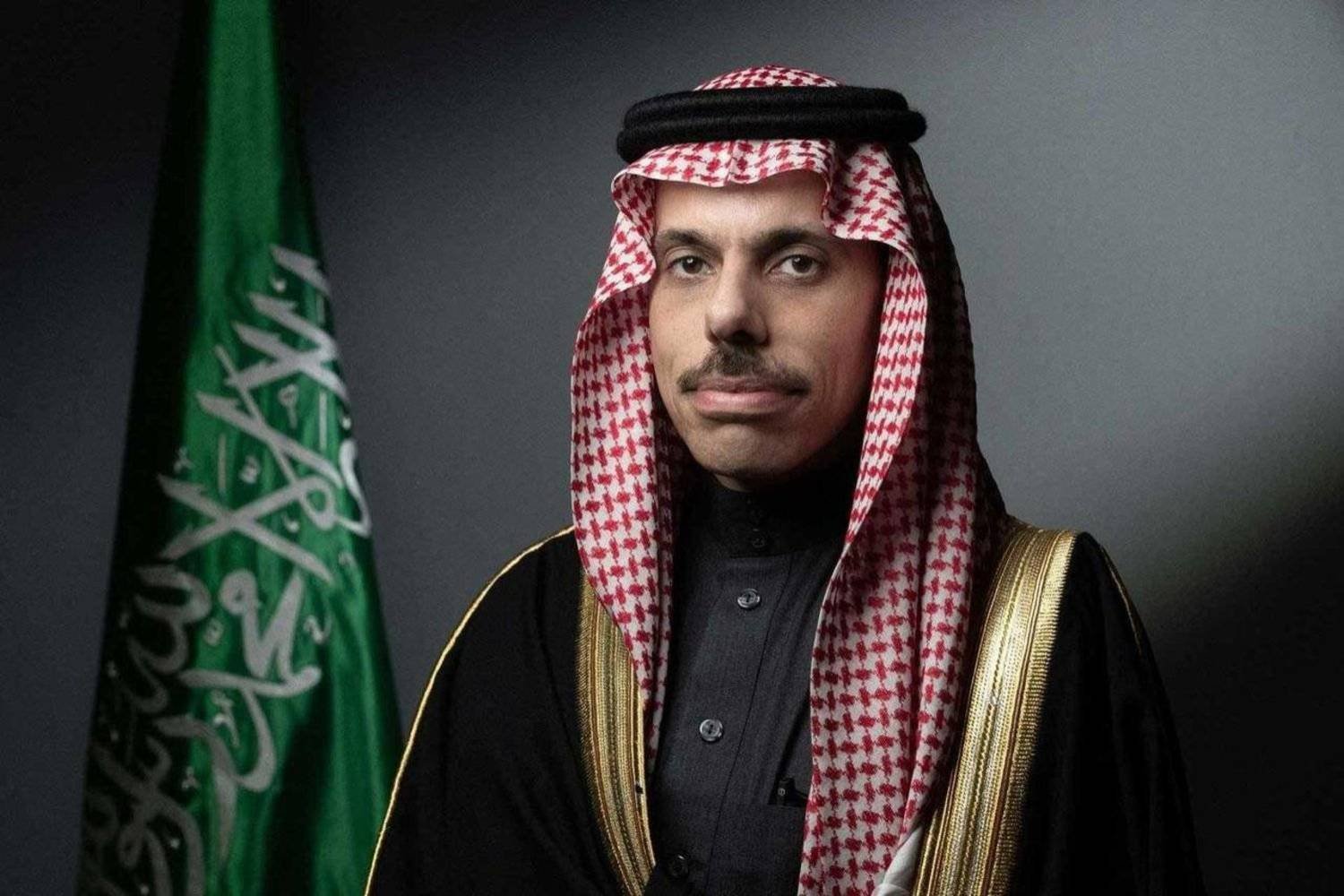
NEW DELHI: Saudi Foreign Minister Prince Faisal bin Farhan arrived in New Delhi on Saturday to represent Crown Prince and Prime Minister Mohammed bin Salman at the 2026 BRICS Summit.
Saudi Arabia is participating in the summit as an invited country, which is being held under the theme “Building Resilience, Innovation, Cooperation, and Sustainability.”
Prince Faisal is scheduled to take part in discussions on key international issues and ways to strengthen multilateral cooperation among BRICS members, partner countries and invited nations, the Saudi Press Agency reported.
The BRICS group comprises Brazil, China, Egypt, Ethiopia, India, Indonesia, Iran, Russia, South Africa and the United Arab Emirates.
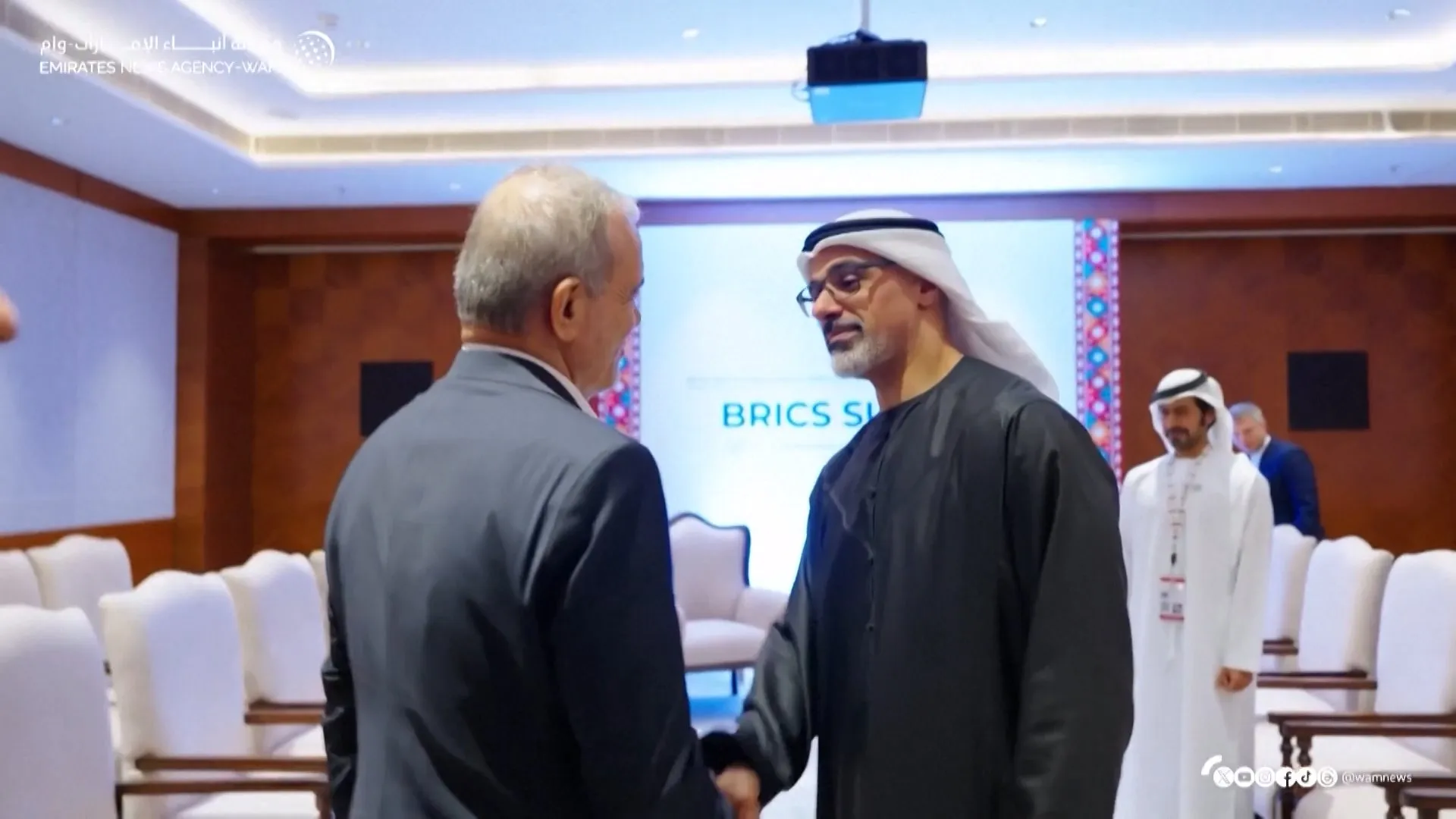
Iran’s President Masoud Pezeshkian has met Abu Dhabi’s Crown Prince Khaled bin Mohamed Al Nahyan at the BRICS summit for their highest-level talks since the conflict began. Both backed calls for restraint, despite Iranian attacks on the UAE. Bahrain refused to meet Pezeshkian.
TORONTO — It’s not everyday that we take photos of Oscar winners, unless we happen to be at the Toronto International Film Festival, when it is everyday.
On Friday, during our first session of operations alone, we had the pleasure of shooting Academy Award winners Michelle Yeoh and “Boyhood” mom Patricia Arquette, not to mention two-time Cannes Palme d’Or winner Cristian Mungiu, most recently of the upcoming “Fjord.”
You should bookmark this link and check it regularly to see Jason Armond’s beautiful portraits. Courteney Cox? Jodie Comer? Sebastian Stan doing his serious face? It’s all here.
Our first wave of video interviews is live
Want a quick hit of festival buzz? How about Courteney Cox, Arquette and David Harbour getting scrappy over their favorite pizza toppings? They’re here to promote the Cox-directed “Evil Genius,” about the notorious pizza bomber incident.
Ten years after “The Love Witch” rocked audiences, writer-director Anna Biller is back with “The Face of Horror,” a medieval ghost story and a Technicolor-styled riot of design. She dropped by and mixed it up with our Mark Olsen.
Being a scream queen is a serious honor for Jane Levy and Jessica Rothe, in town with the excellent new slasher “River” but already our favorites for, respectively, “Evil Dead” and “Happy Death Day.”
What are we watching tonight?
‘Misty Green’
Rosalind Eleazar in the movie “Misty Green,” directed by Chris Rock.
(Merrick Morton / TIFF)
Misty Green is an actor — played with searing conviction by Rosalind Eleazar in a star-making performance — who may have missed her moment.
Though the industry has not made things easy for her as she suffers racist and sexist slights both big and small, Misty has not done herself any favors either, at times self-sabotaging with a careless attitude toward her undeniable talent and the work that must go with it.
The past few films Chris Rock has written and directed himself, including 2014’s “Top Five,” have felt distinctly personal, as if he is working out his own feelings about his career and the world.
“Misty Green” points toward redemption and hope on the other side of darkness: a pitiless examination of contemporary Hollywood and the difficulty of holding it all together. — Mark Olsen
‘Closing Night’
Sarah Paulson in the movie “Closing Night.”
(TIFF)
The first half of Cody Fern’s strong debut is about the sweet schadenfreude of watching estranged sisters Sandra (Sarah Paulson) and April (Naomi Watts) scream at each other.
The second half pivots to ask if it’s as cathartic to leave things unsaid. Sandra, a stern Broadway actor, has hit the end of her career. April, an anxious Michigan hairdresser, is in Manhattan to see her dopey son Theo (Toby Wallace) and his pregnant girlfriend Lucy (Odessa A’zion) — who, after the family’s controlling matriarch Diane (Dianne Wiest) shows up, should start having second thoughts about passing down their dysfunctional DNA.
Both Fern and his co-screenwriter Devon are actors themselves, so they’ve written their leads one show-stopper scene after another.
Impressively, Paulson even manages to steal the climax away from Watts’ flighty kleptomaniac as her hard luck character takes her lumps with the courage of someone facing down a firing squad, chin held high. — Amy Nicholson
‘Elsinore’
Andrew Scott in the movie “Elsinore.”
(Anthony Dickenson / Focus Features)
Already becoming a must-see out of Telluride and now Toronto, this extraordinary actor’s showcase (arriving in theaters Nov. 20) is carried by a fascinatingly complex turn by Andrew Scott, who just might finally earn some of the hardware he deserved for 2023’s “All of Us Strangers.”
Scott plays real-life Scottish actor Ian Charleson, the bright presence of “Chariots of Fire” and “Gandhi” who never quite had the movie career he deserved. But near the end of his career, in defiance of an AIDS diagnosis, he took on the stage role of Hamlet and left a burning impression.
It’s a performance that consistently elevates “Elsinore” from its recognizable trajectory. Scott deepens Charleson’s race against his own mortality with notes of humor, desperation, guilt, self-delusional avoidance and ultimately the deftness of someone who likes playing pretend. — Joshua Rothkopf
Sign up for The Envelope
Get exclusive awards season news, in-depth interviews and columnist Glenn Whipp’s must-read analysis straight to your inbox.
By continuing, you agree to our Terms of Service, which include arbitration and a class action waiver. You agree that we and our third-party vendors may collect and use your information, including through cookies, pixels and similar technologies, for the purposes set forth in our Privacy Policy such as personalizing your experience and ads.
Who: India vs Sri Lanka What: Women’s T20 Asia Cup final Where: Dubai International Stadium, Dubai, United Arab Emirates When: Sunday, September 13, 6:30pm local time (14:30 GMT) How to follow: We’ll have all the build-up on Al Jazeera Sport from 3:30pm local time (13:30 GMT) before our live text commentary stream.
Record seven-time winners India face defending champions Sri Lanka in the Women’s T20 Asia Cup final on Sunday, as the 15-match competition in the United Arab Emirates readies itself for its closing act.
Recommended Stories
list of 4 itemsend of list
In a tournament which has largely yielded low-scoring contests, both Indian and Sri Lankan spin units have tasted success – Deepti Sharma spearheading the heavyweights’ charge and captain Chamari Athapaththu leading by example for the title holders.
Shafali Verma and Smriti Mandhana’s terrific top-order pairing has further strengthened India’s title bid at the tournament, where both teams boast a perfect record.
Having reached the final in every edition of the Women’s Asia Cup they have played, India are favourites to add another trophy to their glittering cabinet.
But Sri Lanka possess a threat of their own – they are one of only two sides who have beaten India in the title clash in past and will be eager to retain the trophy they proudly lifted two years ago.
Before Sunday’s showdown, Al Jazeera Sport takes a closer look at the game:
Who did India and Sri Lanka beat in the semifinals?
India defeated Bangladesh in the first semifinal on Thursday by 40 runs before Sri Lanka beat Pakistan by four wickets in Friday’s low-scoring thriller.
When did India and Sri Lanka last meet?
The pair last met in a T20 international in Thiruvananthapuram on December 30, 2025, as hosts India defeated Sri Lanka by 15 runs, sweeping that series 5-0.
Records swing heavily in India’s favour – they have won nine of their last 10 T20Is against Sri Lanka.
How many Women’s Asia Cup titles have India won?
India are the most successful team in the Women’s Asia Cup, having won a record seven titles.
They won the 2004, 2005, 2006 and 2008 editions, when the tournament was played in a one-day international format, as well as the 2012, 2016 and 2022 T20 editions.
How many Women’s Asia Cup titles have Sri Lanka won?
Sri Lanka have won the Women’s Asia Cup once, winning the last edition in 2024 after beating India by eight wickets in the final.
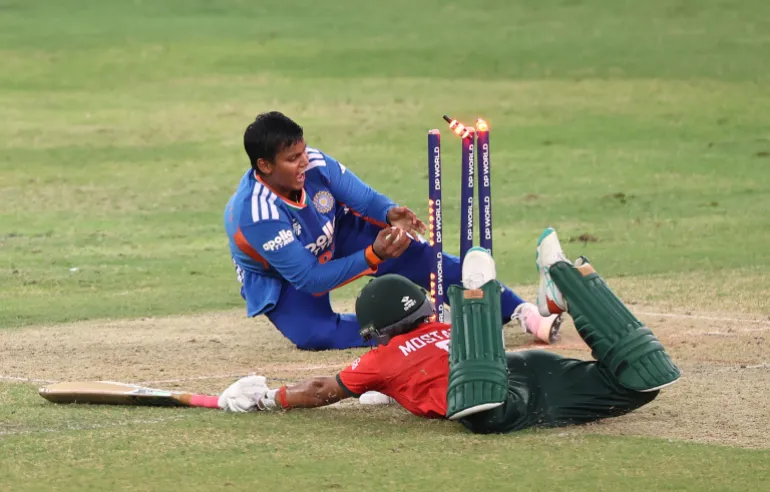
Deepti Sharma attempts to run out Sobhana Mostary during the Women’s T20 Asia Cup semifinal match between India and Bangladesh [Francois Nel/Getty Images]
Who are India’s key players?
India’s openers Shafali and Mandhana are the top two leading scorers in the ongoing edition, having scored 168 and 154 runs each in four matches.
Shafali has registered two half-centuries – scoring identical 64s against Thailand in the opener and Bangladesh in the semifinals – while Mandhana hit an incredible 124 against Hong Kong in the league phase.
With the ball, all-rounder Deepti has been most impactful with her spin bowling, bagging a joint-highest 11 wickets with an average of 3.63.
N Shree Charani has also played a key role with eight wickets and holds the record for the second-most economical bowler (3.27).
Who are Sri Lanka’s key players?
Captain Athapaththu, who bowls right arm off-break, has been Sri Lanka’s most impactful player, sharing the honours of the most wickets with Deepti at 11, with an average of 5.36. Left-arm orthodox bowler Sugandika Kumari has also contributed with six wickets.
With the bat, top-order left-hander Harsthitha Samarawickrama has chipped in 89 runs for the fourth-highest scorer in the competition.
Chamari Athapaththu has been impactful with the ball for Sri Lanka [File: Sameera Peiris/Getty Images]
Form guide
Last five matches, most recent first:
India: W-W-W-W-L
Sri Lanka: W-W-W-W-L
What have the players said?
India’s Deepti Sharma: “[This] team doesn’t take any team lightly … We always think as a team, ‘How we can do better in each and every game. As a collective team performance, how we can do better.’”
Sri Lanka’s Chamari Athapaththu: “If we can execute our plans in the final, I think we can beat any team.”
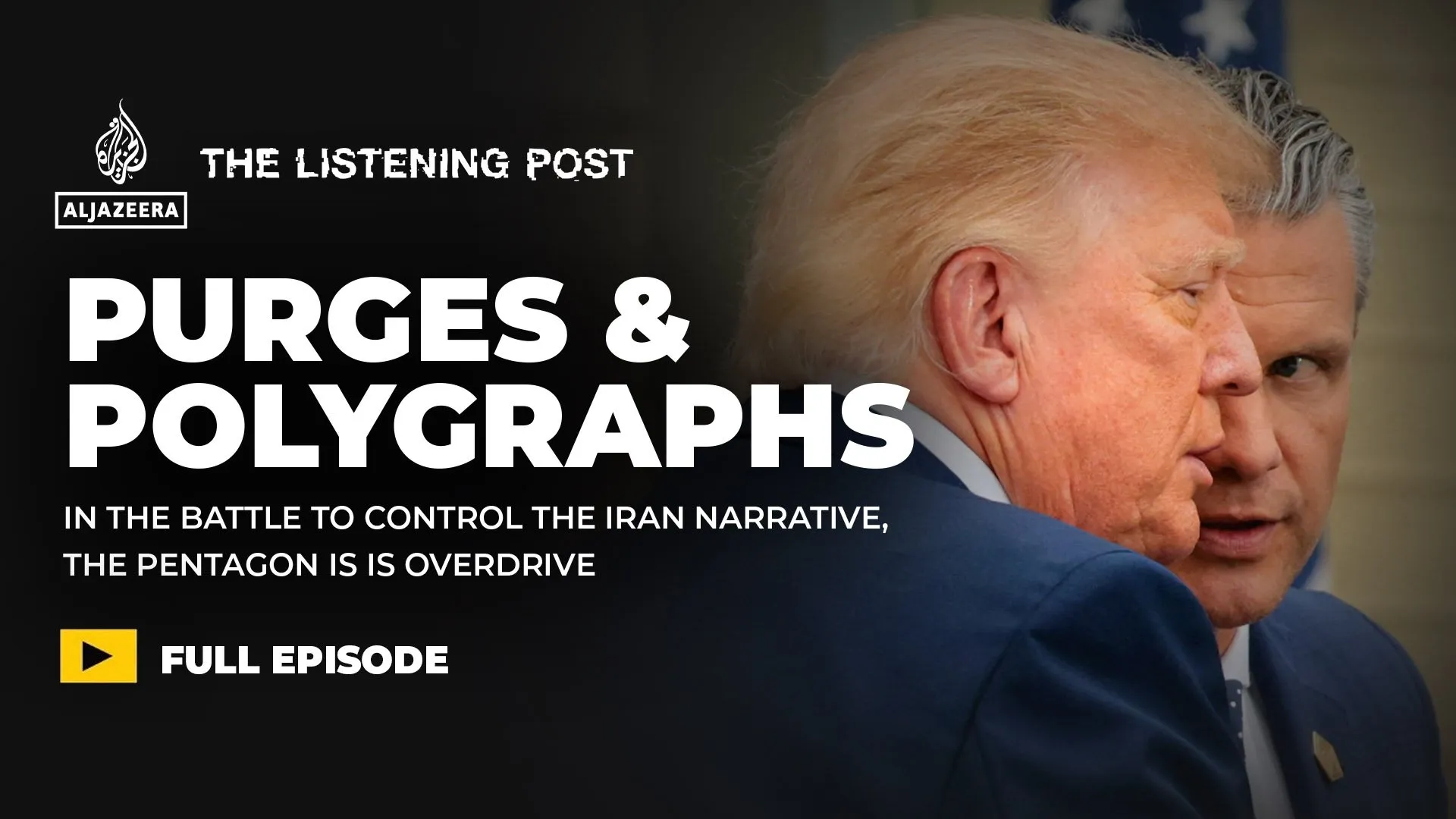
With the US midterm elections just weeks away, Donald Trump’s administration is trying to put a positive spin on a war with Iran that shows no sign of letting up.
Climbing fuel and grocery prices, the president’s provocative social media posts and the Pentagon’s combative relationship with the media are making that story harder to sell.
Contributors: Laicie Heeley – Editor-in-chief, Inkstick Mark Kimmitt – Former US Assistant Secretary of State Negar Mortazavi – Host, The Iran Podcast Samira Mohyeddin – Founder, On The Line Media
On our radar
Revelations from Israeli newspaper Haaretz about what Prime Minister Benjamin Netanyahu knew before the October 7 attacks have ignited a firestorm in the country. Netanyahu calls the reporting fabricated and is threatening to sue.
Ryan Kohls reports.
How COVID coverage broke trust in the US
Six years on from the start of the pandemic, COVID-19 is back in the headlines – and so are questions about how newsrooms covered it.
The Listening Post’s Nicholas Muirhead on how the pandemic broke trust in the US.
Featuring: Amesh Adalja – Infectious Disease Physician, Johns Hopkins Center for Health Security Frances E Lee – Co-author, In COVID’s Wake: How Our Politics Failed Us Jeanne Lenzer – Investigative Medical Journalist
LAURA Anderson has admitted she felt like the ‘biggest faliure’ after her split from Gary Lucy as she shared an emotional post about being a single mum.
Laura Anderson has admitted she felt like the ‘biggest faliure’ after her split from Gary LucyCredit: Instagram/@lauraanderson1xLaura shared an emotional post about being a single mumCredit: Instagram/lauraanderson
She wrote: “One day you’ll go through a break-up with your child’s father and you’ll think that being a single mum is the biggest failure.
Sign up for the Showbiz newsletter
Thank you!
“And then one day, not suddenly, but slowly and surely, you’ll look back and feel so proud of the mother you are and what you have been able to overcome.
“You’ll be proud of how much your child is thriving and how much you’ve achieved by yourself.
Laura revealsed that one day you can look back and be proud your child is thrivingCredit: InstagramLaura has taken savage swipes in the past at her ex GaryCredit: lauraanderson1x/InstagramLaura and Gary split not long after they revealed they were having a child togetherCredit: Not known, clear with picture deskThe couple split for good shortly before their daughter Bonnie was born in 2023Credit: INSTAGRAM/LAURA ANDERSON
“Because the one thing that determines the happiness of a child is the happiness of their mother.
“Her peace within the home and within her mind.
“And the only thing you’ll regret is not realising that sooner.”
Fans flocked to comment and one wrote: “Your an amazing mama to your baby Bonnie.”
Another added: “Absolutely agree.”
While a third stated: “Beautiful.”
Laura and Gary met while looking for love on Celebs Go Dating back in 2022.
Despite it being against the E4 show rules to date fellow celebs, the experts gave the green light after seeing their romantic spark.
During their whirlwind relationship after the cameras stopped rolling, Laura fell pregnant.
DRC detected the outbreak of the rare Bundibugyo virus in mid-May; nearly 3,400 people have since died.
Published On 12 Sep 202612 Sep 2026
More than 7,000 Ebola cases have been recorded in the Democratic Republic of the Congo’s (DRC) worst outbreak of the deadly disease, according to figures from Congolese authorities.
The DRC officially detected the latest outbreak in mid-May, but experts suspect it had been spreading under the radar for weeks before.
Recommended Stories
list of 3 itemsend of list
Of the 7,022 registered cases, 3,398 people have died, according to DRC authorities. Currently, 837 people are in isolation or receiving treatment.
The outbreak of the rare Bundibugyo virus, DRC’s 17th Ebola epidemic, began in the northeastern Ituri province.
It has since spread across conflict-plagued, remote eastern and northern regions where armed groups have roamed for decades, the presence of the state is weak and health infrastructure is largely lacking.
Earlier this week, one case of the disease was confirmed in a seventh province, South-Ubangi, which is in the northwest of the country bordering the Central African Republic and Congo-Brazzaville.
Most of the recorded cases remain in Ituri, where Ebola has been detected in schools in the days after the post-summer holiday return to classes, causing alarm among parents and health workers.
“We are very worried because we don’t know which child comes from which family or what the health status of the members of that family is,” Angele Magani, a mother of a schoolboy in Bunia, Ituri’s provincial capital, told the AFP news agency.
“We are so scared, even though the school authorities reassure us about the health measures that have been put in place,” she added.
Bunia school official Roger Mungimbo told AFP that “there is a mandatory hand-washing system with soap, and we have also done everything possible to have a maximum of 30 pupils per classroom”.
“We regularly make the children aware that they must not touch each other, must not greet each other and must wash their hands regularly,” he added.
Ebola, which has killed more than 15,000 people in Africa over the last 50 years, is transmitted through contact with bodily fluids and can cause severe internal and external bleeding and organ failure.
The world’s deadliest outbreak in West Africa in 2014-2016 was the Zaire Ebola virus. That epidemic killed more than 11,325 people, mainly in Guinea, Liberia and Sierra Leone.
The Bundibugyo strain currently seen in DRC has no approved vaccine or treatment currently, although several potential treatments and vaccines are being tested.
Yemen’s Houthi rebels have captured Mocha port and now threaten to control the main waterway of the Bab al-Mandeb strait. They have also attacked several cities in Saudi Arabia, wounding about 70 people, including women and children.
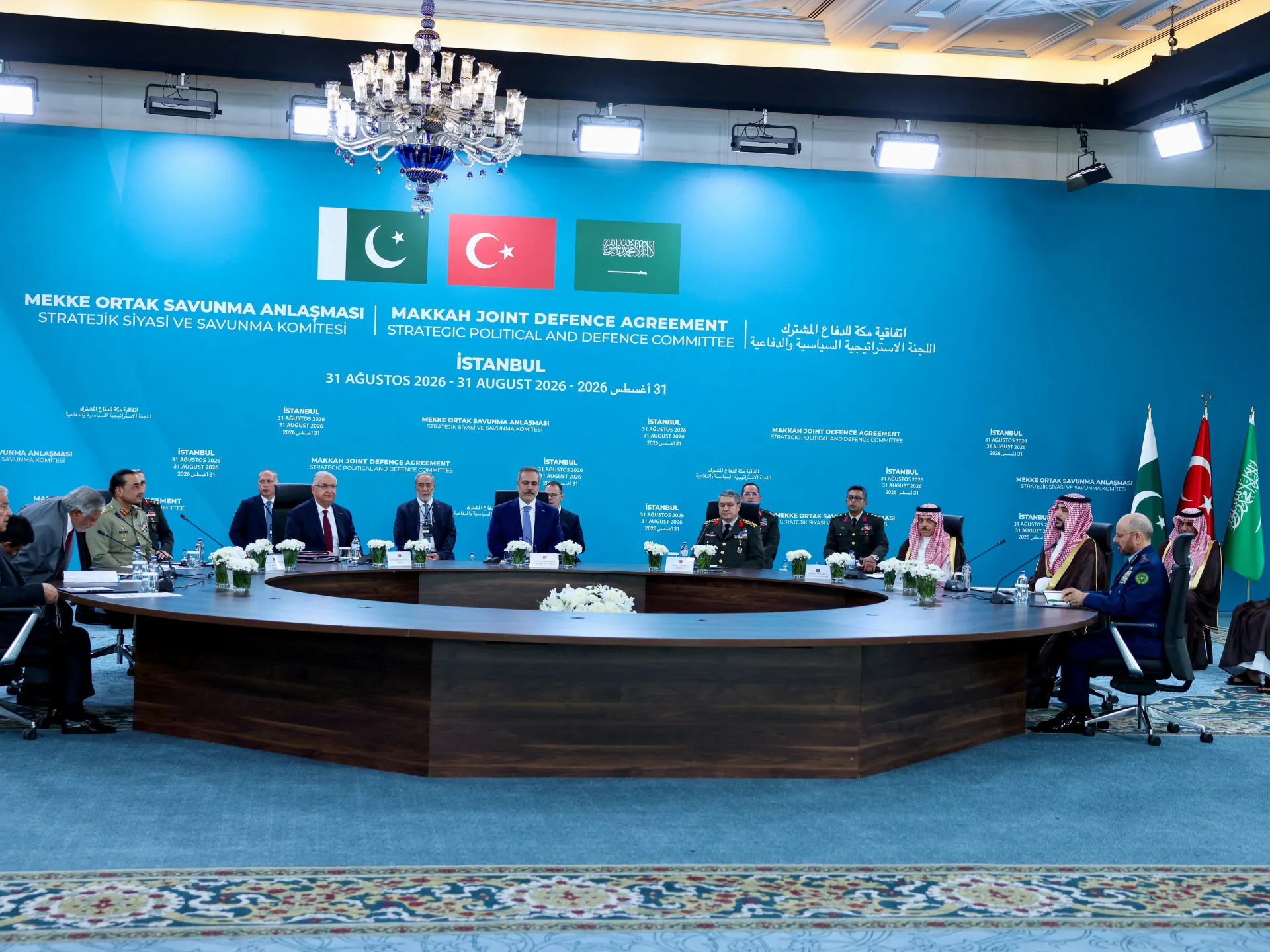
The repeated attacks against Saudi energy, civil, and defence facilities, combined with the maritime blockage by Iran and its Yemeni partner the Houthis, directly raise the question of the Mecca Pact’s operationalisation between Saudi Arabia, Turkiye, and Pakistan.
The Houthi attacks on Saudi Arabia can activate the mutual defence agreement. If that happens, what could a Pakistani and Turkish intervention look like?
The answer to this question necessitates some crucial background first.
The US – the main security partner of the Gulf states – has signalled for a while now that it expects regional countries to take primary responsibility for their own defence and deterrence, with US help remaining critical but limited.
That posture is already visible on the ground. Since the start of the US-Israel war on Iran, the US has not been able to provide comprehensive defence for its regional partners. On several occasions, it has even failed to stop attacks on its own bases in the Gulf.
With US presence receding and Washington emphasising regional burden-sharing, Gulf states have had to look into a new defence architecture. In September 2025, Saudi Arabia and Pakistan signed their first mutual defence agreement, which expanded in August this year to include Turkiye and became the Mecca Joint Defence Agreement.
The three countries have since established a joint secretariat, with its headquarters in Riyadh, with Pakistan taking the chairmanship for an initial three-year term.
The pact remains in a gestation period. It does not publicly identify the thresholds or scenarios under which a member would move to direct military intervention. Its organisational and institutional structure, including rules of engagement, mechanisms of consultation, and collective defence and deterrence, are yet to be formally developed.
Now, back to the question of how the pact will be operational if a member state is attacked.
Earlier this week, Pakistan’s Defence Minister Khawaja Asif said that an unprovoked aggression against Saudi Arabia, or a spillover of the Yemen conflict into the kingdom, would make the Mecca Joint Defence Agreement operational, adding that “there should be no doubt in this.”
Asif, however, did not share specific details on what shape that operationalisation would take. Last month, Turkiye’s Foreign Minister Hakan Fidan clarified that the Mecca Pact would work the same way as NATO: If a member state is attacked, it must actively request and define the specific type of help it needs.
NATO’s Article 4 allows for a member to call alliance consultations and exchange of information. Article 5 requires mutual assistance from allies, but it leaves each state to decide the nature of that assistance.
In 2012, after Syria shot down a Turkish warplane, Ankara invoked Article 4 for consultation and requested specific defence assistance. Instead of demanding direct military intervention, the Turkish government explicitly asked for Patriot missile defence batteries. NATO approved the request and deployed the systems to protect Turkish airspace.
In this context, if the Mecca Pact is to be operationalised, it would have to be Saudi Arabia that defines the type of military assistance and involvement that it needs. If, for example, Riyadh makes an actual request for Pakistani direct military intervention, beyond materiel and intelligence support, Islamabad would be obliged to comply. But the request, and the scale of the response, would still likely need to be defined and agreed in a consultation meeting.
For now, none of this has been tested as Riyadh has not invoked the pact with either Pakistan or Turkiye.
In the meantime, diplomatic efforts have intensified, with Pakistani Field Marshal Asim Munir and Saudi Foreign Minister Prince Faisal bin Farhan Al Saud talking to Iranian Foreign Minister Abbas Araghchi.
Islamabad has also publicly urged Iran to rein in the Houthis from attacking Saudi Arabia and threatening the Bab al-Mandeb, and has reminded Tehran of Pakistan’s commitment to Riyadh’s defence through the pact. Ankara would likely play its own part in diplomatically restraining the Houthis and Iran.
If diplomacy fails and Houthi attacks on Saudi Arabia or the Bab al-Mandeb continue, Turkiye and Pakistan would likely expand the air and technological support they already provide. Islamabad already has an air squadron of about 16 JF-17 Thunder multirole aircraft, defence systems, and thousands of troops deployed in Saudi Arabia.
But a direct military operation by Pakistani forces inside Yemen remains unlikely at the moment. Given the disastrous and lasting impacts of its participation in the Afghan war against the Soviet Union on behalf of the US, Pakistan would be far more wary of joining a war against Iran and its allies, for fear of spillover into its western border provinces’ economy, domestic security, sectarian balance, and societal harmony. Pakistani leaders would find it hard to build domestic consensus for direct attacks on the Houthis or a fight with Iran.
The likely scenario is that Pakistan would increase joint diplomatic pressure on Iran to restrain the Houthis, further augment its support for Saudi defence, and push for a multinational naval coalition to secure the Bab al-Mandeb. Adopting this restraint would still keep the essence of the Mecca Pact intact, while putting more weight behind regional de-escalation.
The new security architecture that agreements like the Mecca Pact are setting up will take years to mature. Until the mechanisms and rules of collective response develop, Pakistan’s existing bilateral defence relationships with Saudi Arabia and other Arab partners will continue to focus on defence needs.
The views expressed in this article are the author’s own and do not necessarily reflect Al Jazeera’s editorial stance.
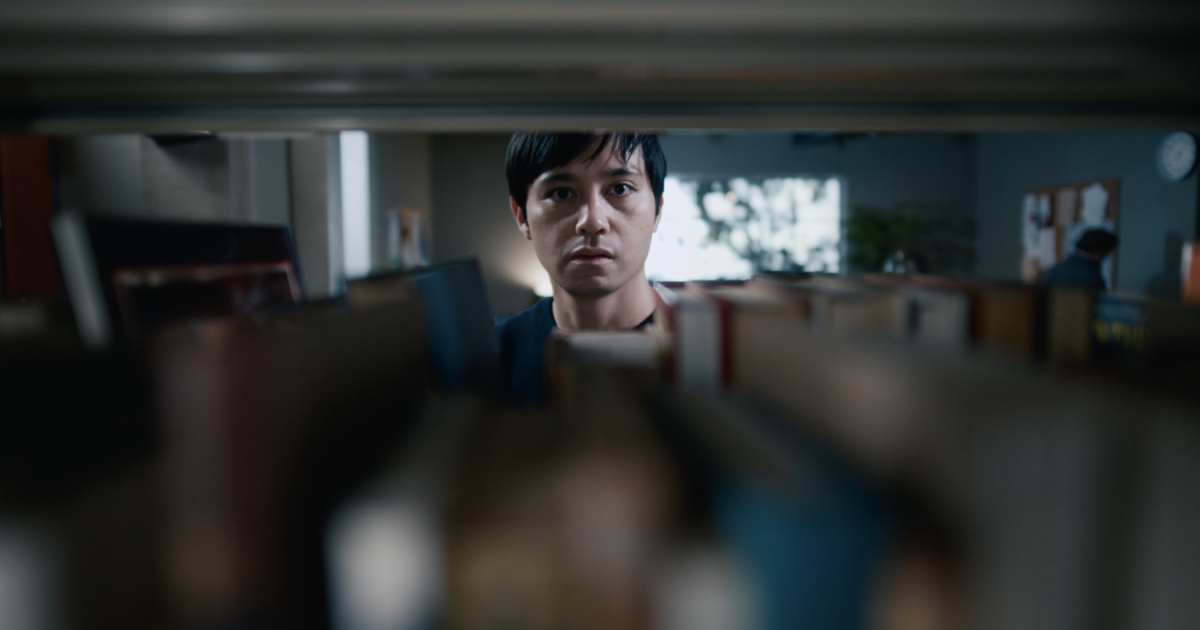
Premiering Sunday at midnight on Adult Swim, a most appropriate and maybe the only possible space, “The Terrors of Jordan Mendoza” is, as its creator describes it in a prologue, “a ‘Twilight Zone’ sketch show,” which is just what I would have said after watching eight of its 13 11-minute episodes, had he not said it first. Emphasizing its Asian bonafides — Mendoza is Filipino American — he adds, “It would be almost racist if you didn’t do it.”
Mendoza, who stars in, directs and, with David Machajewski, writes the show, has said that some of the ideas come from actual dreams — the “terrors” in the titles are nightmares — though if my own dream life is anything to go by, the jokes are more clever and the narratives at once weirder and more cohesive. At various times it recalls the eeriness of David Lynch or the non sequitur logic of Luis Bunuel, and it has something of the flavor of “The Vince Staples Show,” which also went to some strange places in its too-short life.
Sketches, of varying lengths, build a central idea out in every direction, and a little farther than you might expect. We meet a therapist obsessed with Wendy’s. Batman, convinced that he has adult ADHD because an online quiz told him so (“I know a lot of people claim they have ADHD,” he tells Alfred, “but in my case I think I really do … I’m creative but easily overwhelmed, organized but at the same time not”). A dying man (Steve Buscemi) is obsessed with getting his last words right; a prisoner is sentenced to “15 hugs and kisses” from the “nearest judge.” A bank robber holding hostages demands to be “a famous snake … and if you can’t get on board with that then everyone in here is going to die.” In a horror movie pastiche, Mendoza is dogged by middle-aged white men compelled to tell him that their wife is Asian, which does sound like something from personal experience.
Wherever the comedy goes, it’s played straight and with intensity, as is the terror. The show can be genuinely disturbing and genuinely funny. (Two things can be true at once.) There’s also a scene in which Mendoza, playing a character convinced he’s a Harry Potter wizard, runs into a brick wall he thinks he’ll pass through, and, there’s nothing more liable to make me laugh than that, unless it’s someone hitting their head on a low door frame or suddenly falling over for any number of non-fatal reasons.
Mendoza, who is in his mid-30s, has a string of writing and acting credits, including writing for “Dave,” Dave Burd’s comedy about a suburban Jew from Philadelphia who believes himself destined for rap greatness, and parts in Julio Torres’ “Problemista” and “Fantasmas,” which are located in the same hemisphere of alternative comedy. He has the Rolodex of a well-connected person; the guest list is impressively loaded for someone making his first show.
The great Martha Kelly (from “Baskets”) plays a masseuse who exteriorizes her client’s pain, and in another sketch, she’s a woman sitting in on a confirmation class in order to learn where Jesus might be “lodging” when he returns. (She has a plan.) Kate Berlant invites Mendoza to what turns out to be a one-woman poetry slam, held in secret to avoid the Slammers Union (“They’re like the Sopranos, only violent”). Chris Parnell, Randall Park, Wanda Sykes, Thomas Lennon, Clea DuVall, Lake Bell, Toby Huss, Mark Maron, Fred Armisen and Gregg Turkington (from the world of “On Cinema at the Cinema”) all muck in.
You should know from the above whether this might be your sort of thing. (It won’t be everyone’s, but it’s definitely up my dark, crooked alley.) But, really, it’s even better than these descriptions might lead you to guess, elevated by the first-class production, assured performances (Mendoza is himself very good) and everyone’s commitment to whatever bit is up at the time. The devilishness is in the details.
The ruling says the Energy Department exceeded its authority by extending the plant’s operation.
Published On 12 Sep 202612 Sep 2026
A federal appeals court has ruled that the United States Energy Department exceeded its authority when it ordered a coal-fired power plant in the US state of Michigan to remain open beyond its planned retirement, dealing a setback to the Trump administration’s effort to keep ageing coal facilities operating.
The US Court of Appeals for the District of Columbia Circuit ruled unanimously on Friday that there was no emergency under federal law that justified keeping the 64-year-old JH Campbell Generating Plant online. Energy Secretary Chris Wright invoked emergency powers last year, arguing that the plant was needed to maintain reliable electricity in the region.
Recommended Stories
list of 3 itemsend of list
President Donald Trump declared a national energy emergency in an executive order in January last year, citing demand increases from artificial intelligence and data centre growth.
Judge Cornelia Pillard, writing for the three-judge panel, said the emergency provision of the Federal Power Act was intended as a “narrow, last-resort backstop.” She said the authority could be used only when immediate action was required, and states or utilities could not address the problem themselves.
Pillard also described the reversal of the plant’s “long and carefully planned retirement” as “disruptive”.
The plant, operated by Consumers Energy, had been scheduled to close in May 2025, but the company has continued operations under energy department orders. That has cost about $259m, according to financial filings, with opponents warning that the expense could ultimately fall on families and businesses in midwestern US states.
The company told The Associated Press it was reviewing the court ruling.
Michigan Attorney General Dana Nessel, a Democrat, whose office joined counterparts in Illinois and Minnesota in challenging the orders, welcomed the ruling. She said the appeals court had “thrown out DOE’s order that had zero basis in reality”.
The Energy Department defended its use of emergency powers, saying the orders helped prevent blackouts and “likely saved hundreds of lives” during periods of peak demand, particularly during severe winter storms in late January and early February.
The department said that during the winter storm peak, coal generation in affected areas increased by 25 percent compared to the previous year.
The Michigan case is one of several legal disputes that have emerged across the country. Secretary Wright issued another emergency order, just hours after the ruling, to a coal plant in Centralia, Washington, to remain in operation. Similar orders have been issued for plants in Indiana, Colorado and Florida, as well as an oil and gas plant in Pennsylvania.
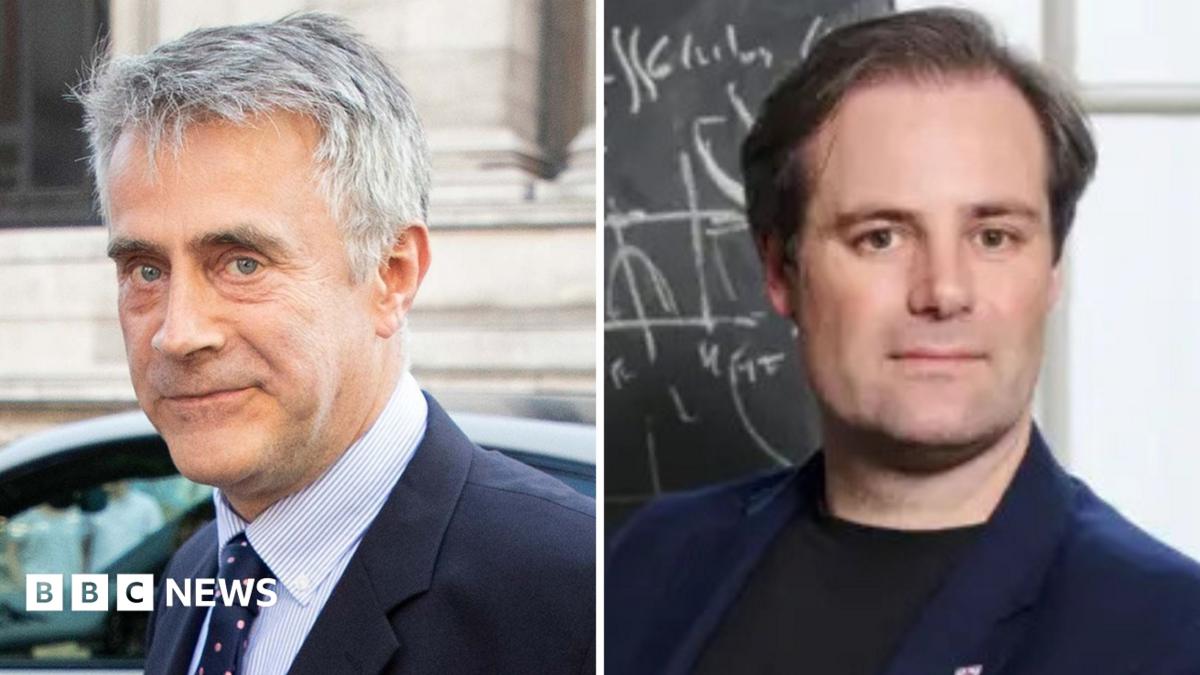
Harborne has already donated millions to Reform and Farage, who is currently under investigation by the parliamentary standards commissioner over whether he should have declared a £5m cash gift from Harborne ahead of the 2024 election.
Farage has argued that he was under no obligation to register the “purely private” gift, as it was unrelated to his parliamentary or political activities.
The party is also facing scrutiny over its finances after a broadcast by Channel 4 News last week showed two senior Reform aides apparently suggesting a way around electoral law to secure foreign party donations.
The Metropolitan Police has said it is investigating, while the party denies any wrongdoing.
The force is also looking into donations given to the party by Fiona Cottrell, mother of longstanding Farage ally George Cottrell, as well as a company controlled by its deputy leader Richard Tice.
Harborne wrote on Saturday that he had “already accumulated enough wealth for the rest of my life”, while Reform was a “start-up party” that lacked “the benefit of hundreds of years of patronage”.
“A start-up party needs more money than can be provided by membership fees alone, to build and sustain itself and be ready for government,” he said.
Harborne and Delo’s donations mark the largest sums received by a UK political party since they had to begin declaring them in 2001.
Delo, who also announced his donation in a Telegraph op-ed, said he was giving the money away because he wanted a “fair fight and a level playing field”. He said in April he was moving back to Britain from Hong Kong.
Addressing the recent scrutiny of Reform’s finances, he said: “My conclusion from Reform’s recent troubles is that they should spend less time trying to raise funds to compete on equal terms and more time preparing for government.”
Last year, he was given an unconditional pardon by US President Donald Trump over a breach of anti-money laundering laws at his crypto trading platform, BitMEX, to which he had pleaded guilty in 2022.
There are currently no restrictions on the amount of money UK-based donors can give to political parties.
However, the Labour government has introduced a £100,000 cap on donations from British citizens living overseas, and plans to introduce a similar one for those who have recently returned to the UK.
There were nine donations of £1m or more to political parties in 2025. The largest was £9m given to Reform UK by Harborne.
Labour had five donations of £1m or more – totalling nearly £10m – and the Conservatives had three of £1m each.
Labour said Reform and Farage still had “serious questions” to answer about their finances.
Party chairwoman Bridget Phillipson said Reform were “drowning” in “sleaze and scandal”,.
She added: “It’s time Farage and Reform came clean with the public, fully co-operated with the ongoing police investigations and prove they’re not just in it for themselves.”
Rachel Millward, deputy leader of the Green Party, told BBC News it wanted a cap on donations from individuals of £500,000.
She said the donations to Reform were “absolutely staggering amounts”, adding: “What I am very frustrated about is the influence of extreme wealth and the super rich. What I want to see is people in politics representing the needs of their communities and ordinary people.”
Liberal Democrat Cabinet Office spokeswoman Lisa Smart called for the government to introduce emergency legislation to cap donations.
She said: “These are eye-watering amounts of money. This is real emergency for our democracy. It presents a very clear and present threat.”
Duncan Hames, Director of Policy and Programmes at campaigning charity Transparency International UK, said: “This is a watershed moment, with two billionaires pledging £72m to one political party in less than 48 hours.
“This situation is now completely out of control, and makes an irrefutable case for government to bring forward an annual cap on political donations, and fast.”
Brooks Nader stepped out in another risky outfit in NYCCredit: Instar ImagesThe sexy star gave onlookers a thrill as she ditched the bra againCredit: Instar Images
Brooks stepped out in the Big Apple in a daring bejewelled top.
The sexy star also ditched her bra for the occasion, baring her figure for all to see.
British Prime Minister Andy Burnham maintains that a poll is ‘off the table’ as there isn’t enough popular support for Northern Ireland to leave the UK.
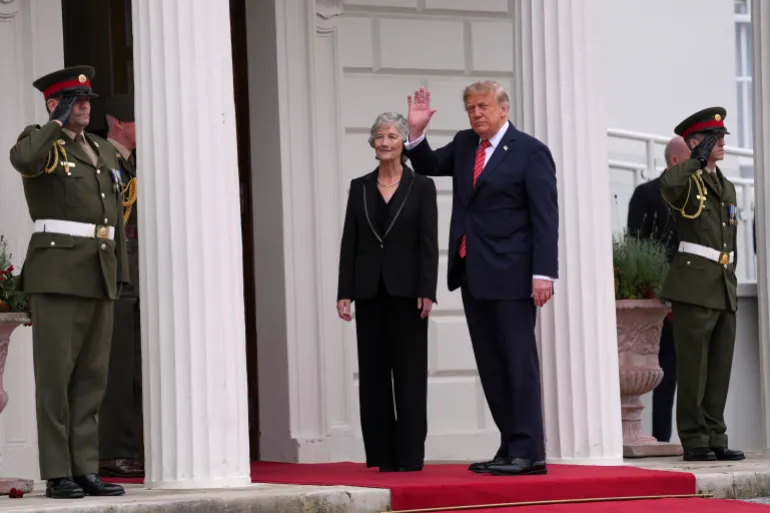
United States President Donald Trump has said that a unified Ireland would be “fantastic”, in remarks made during a visit to Dublin that were not welcomed by government ministers in London.
Trump’s comments on Saturday came weeks after British Prime Minister Andy Burnham said a referendum on Northern Ireland leaving the United Kingdom was “off the table”.
Recommended Stories
list of 3 itemsend of list
“Well, I don’t want to cause any problems, but I will tell you, I’d love to see it unified,” Trump told reporters, while sitting next to Ireland’s Prime Minister, Micheal Martin.
“It’s going to happen eventually … I think it would be a fantastic thing,” he said.
“Now the UK will have something to say about it … but I think it would be a great thing,” he added.
Martin declined to respond to reporters’ questions to comment on the US president’s remarks.
Following Trump’s comments, a spokesperson for Burnham said his position on Irish unification remained unchanged.
Responding to questions from members of parliament on Wednesday about a potential poll in Northern Ireland, Burnham said: “I am not aware that there is majority public support for another referendum, and until that changes, there will not be one”.
Donald Trump is welcomed by Ireland’s President Catherine Connolly at her official residence in Dublin, September 12, 2026 [Kin Cheung/AP]
Under the terms of the 1998 Good Friday Agreement (also known as the Belfast Agreement), a referendum on leaving the UK can be held only at the discretion of the British government.
The accord ended three decades of violence known as The Troubles. The sectarian conflict involved mostly Catholic nationalist paramilitaries seeking a united Ireland, mostly Protestant unionist paramilitaries wanting to remain part of the UK, and British troops.
Gavin Robinson, leader of the DUP, Northern Ireland’s main unionist party, said that Northern Ireland’s future was a matter for its people to decide, not Trump.
“President Trump knows better than most that elections matter. Northern Ireland’s constitutional future will be decided by the people of Northern Ireland, not by commentary in London, Dublin or Washington.”
While polls show a comfortable majority in Northern Ireland favour remaining in the UK, the gap has narrowed slightly since Britain’s departure from the European Union pushed unity higher up the political agenda.
Trump also met Irish President Catherine Connolly, who was elected head of state last year. When Trump last visited Ireland as president in 2019, Connolly, an outspoken politician with left-wing foreign policy views, protested at Shannon Airport in western Ireland.
During Trump’s current visit, some supporters had urged her to speak out against US military actions around the world and defend Ireland’s neutrality.
People take part in a protest against the visit of US President Donald Trump in the Irish capital Dublin on September 12, 2026 [Adrian Dennis/AFP]
Anti-Trump protests
Anti-war and anti-Trump protests were held in Dublin and some were planned for later in western Ireland, near Trump’s golf course in Doonbeg.
Reporting from the capital, Al Jazeera’s Milena Veselinovic said Dubliners had a “laundry list” of reasons for protesting against Trump’s visit.
“They feel that the Irish government should not be, in their words, rolling out the red carpet for someone like Trump, who they say is a cause of instability in the world and has been enabling Israel’s actions in Gaza … and destabilised the whole of the Middle East.”
Irish people are also protesting against the high cost of hosting Trump, including security, which they say could pay for other things, such as healthcare and social issues, added Veselinovic.
England overcome early tremors to win third Test against Pakistan by eight wickets, clinching a series whitewash.
Published On 12 Sep 202612 Sep 2026
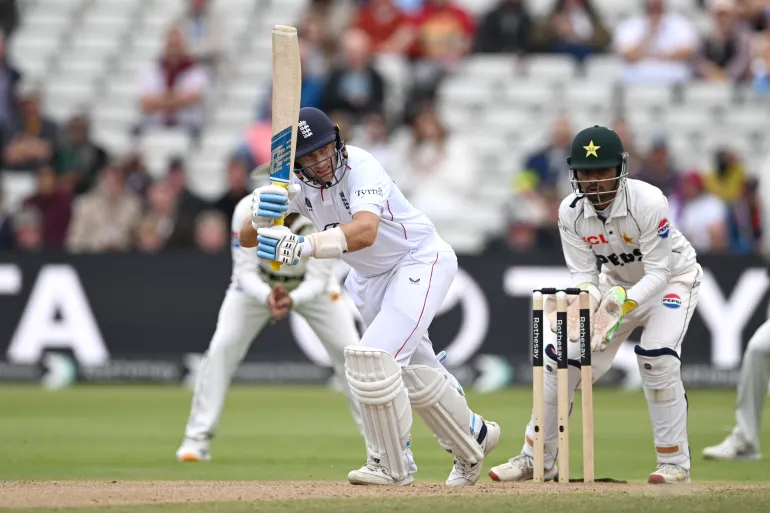
Joe Root led from the front as England survived a major wobble to beat Pakistan by eight wickets in the third Test at Edgbaston on Saturday, sealing a 3-0 series whitewash.
The home team, chasing just 130 to win, were in deep trouble when openers Ben Duckett and Emilio Gay were dismissed in the first over, bowled by Mohammad Abbas.
Recommended Stories
list of 4 itemsend of list
Root, England’s record runscorer, edged his first ball, bowled by Razaullah, through the slips for four in a nervy start but settled and scored quickly to take the sting out of the situation.
England captain Joe Root bats during day four of the third Test at Edgbaston [Gareth Copley/Getty Images]
The skipper was given a huge reprieve when he chopped onto the stumps off Mohammad Ali, only for the umpire to signal a no-ball, leaving the bowler distraught.
Root, with Jordan Cox at the other end, had another let-off when he edged an Abbas delivery between first and second slip, with neither fielder moving.
But he reached his half-century off 57 balls with a cut for four, and Cox matched him shortly afterwards.
England reached their target in the 25th over, with Root unbeaten on 62 and Cox 59 not out.
Jordan Cox (left) and Joe Root of England leave the field after winning the third Test [Gareth Copley/Getty Images
Root, in his second spell as England skipper after the departure of Ben Stokes, admitted his team were not the finished article but said he was delighted with their series win.
“The amount of uncertainty, noise and I guess chaos there was coming into the series, the way the guys have dealt with that – being so clinical with what we’ve had in front of us – and be stood here with a 3-0 win is really pleasing,” Root told Sky Sports.
“It sets us up nicely looking ahead to the start of a new era with (new head coach) Stephen Fleming coming in.”
Pakistan woes
It is England’s first Test series win since 2024, while Pakistan have now lost 16 of their last 21 games and are bottom of the World Test Championship table.
Root’s men had appeared set for a quickfire win inside three days on Friday before debutant fast bowler Razaullah launched an audacious assault with the bat, clubbing nine sixes as he raced to 81 off 63 balls.
The 21-year-old number nine, who also took four wickets in England’s first innings, put on 121 for the ninth wicket with fellow paceman Abbas (42) as England floundered.
Pakistan’s Razaullah laughs after surviving an LBW on day three [Darren Staples/AFP]
“We had a little bit of pushback yesterday which, in a strange way, was quite a good thing for the group,” said Root.
“Fair play to Razaullah; he made things difficult for us. He played some wonderful shots and made it very difficult to set fields to. He struck the ball nicely – I don’t know how he didn’t pull a muscle, swinging the bat that hard.”
The tourists sent seven players home after their crushing defeat in the second Test at Lord’s and brought in seven replacements, with Razaullah among them.
They also sacked head coach Sarfaraz Ahmed and assistant Umar Gul as their tour plunged into chaos.
The Pakistan team leave the field after bowling out England during the second day of the third Test [Philip Brown/Getty Images]
Pakistan made four changes to their side for the third Test, and they put up a fight despite being dismissed for a paltry 133 in their first innings.
Captain Babar Azam admitted his team would have to take stock after a one-sided series.
“Before we came here, we had to think about different things and to decide our team,” he said.
“We had a couple of changes after losing two matches. Playing in England is very difficult. We were trying to do our best in the third match.
“We need to sit down and look hard at our mistakes, decide our playing XI.”
The 3-0 whitewash is a huge tonic for England, who were in turmoil just weeks ago following a series loss to New Zealand and the exits of head coach Brendon McCullum and captain Stokes.
But tougher challenges lie ahead, starting with a Test series in South Africa in December and January, while a home Ashes looms next year.
NHS GP Dr Amir Khan says a common method for dealing with nosebleeds is not correct
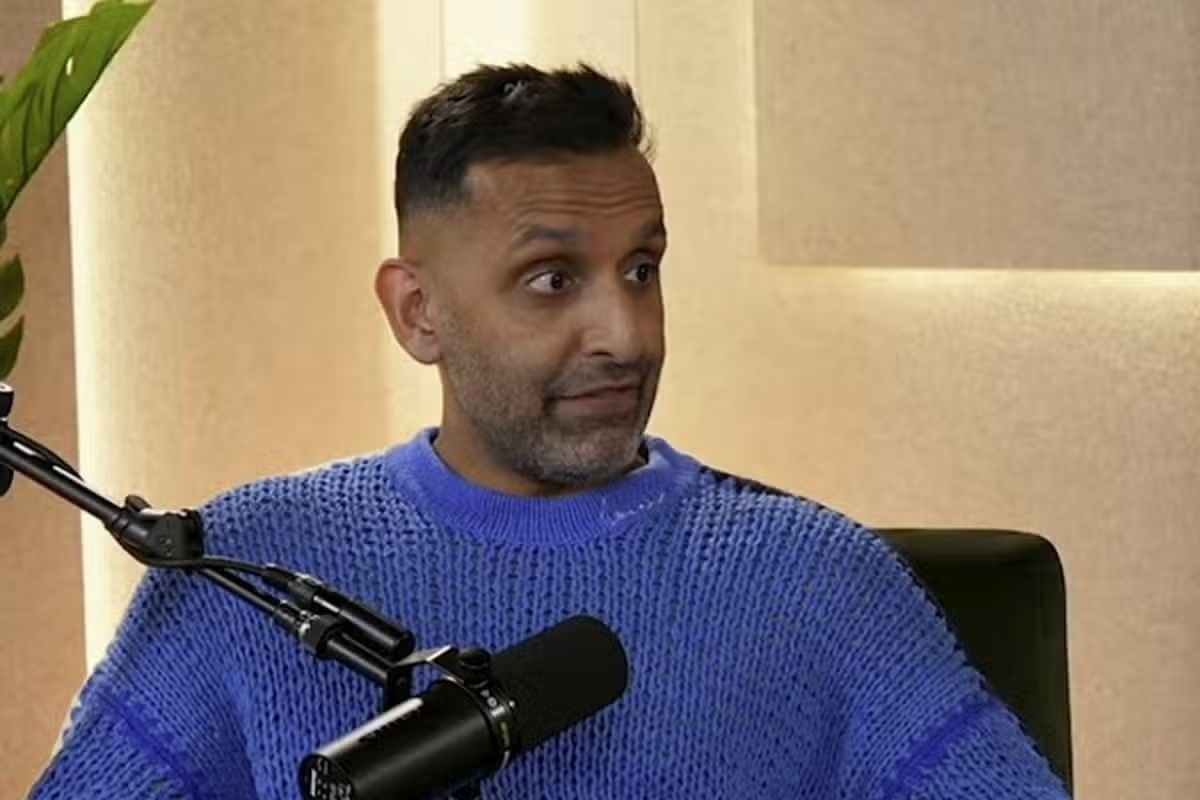
Dr Amir Khan has explained how a common method for treating nosebleeds is not right(Image: No Appointment Necessary)
Dr Amir Khan has offered guidance on how to properly treat a nosebleed, revealing that many people have been receiving incorrect advice. The well-known TV doctor and NHS GP, recognised for his regular slots on ITV’s This Morning and Lorraine, discussed the matter with his followers on the latest instalment of his podcast, No Appointment Necessary.
His explanation may come as a surprise to some who have been instructed to do something entirely different when dealing with a nosebleed. Co-host Cherry Healey appeared to be among them, as she questioned him about the advice people have given her for managing a nosebleed.
She said: “You know when someone gets a nosebleed, they always get told to put their head back. It’s so awful when you get a nosebleed and someone tells you that because it’s what you don’t want to do. Is that true?”
The doctor responded: “No. It used to be that, but it’s not head back. It’s head forward. Yeah, because if you go back, you could swallow the blood and then cause all sorts of issues.”
He then outlined what you should do instead, saying: “First of all, you want to pinch the soft bit of your nose just underneath the bone. I’m talking like this now because I’m doing it. So pinch that bit as tight, as tight as you can and then lean forward.
“So head between your knees or lean as far forward as you can for, you’ve guessed it, 15 minutes. 15 to 20 minutes is when anything is bleeding.
“That’s how long you need to put pressure on it.” Cherry then replied: “Because that’s how long it takes to clot.”
His advice is important because many people have been given incorrect advice. McGill University in Canada says the tilt-the-head-back method is a ‘common misconception’.
Its website states: “First aid standards have changed throughout the years, making it difficult to keep up with the right practice. Tilting your head backwards is common misconception. Currently, Red Cross standards and most clinicians inform us to sit neutral, tilt head slightly forward, pinch the bridge of the nose, and wait for 10-15 minutes.”
NHS advice on what to do if you have a nosebleed
The NHS website advises that if you experience a nosebleed, you should sit down and lean forward, with your head tilted forward and your mouth open; pinch your nose just above your nostrils for 10 to 15 minutes; and breathe through your mouth. It adds: “Holding an icepack (or a bag of frozen peas wrapped in a tea towel) on the top of the nose may help reduce the blood flow. But the evidence to show it works is not very strong.”
Content cannot be displayed without consent
It also provides guidance on what to do for the 24 hours following a nosebleed. To reduce the likelihood of another nosebleed, for 24 hours afterwards, it recommends you should try not to pick your nose, blow it, or pick any scabs.
It also suggests avoiding lying down flat, doing any heavy lifting or strenuous exercise, or consuming hot drinks or alcohol.
Dr Amir Khan tells patients what not to say in his practice
The doctor’s guidance comes a day after he shared with Instagram followers a list of things he does not want to hear from his patients. The reassuring post, which we reported about on Friday, stated people should not apologise for their weight, their toenails, or their hairy legs.
He said: “Please, you’re having a medical examination, I am not bothered about anything else. “He also said people should not apologise if they feel the need to cry, or if they cannot remember the name of their tablets. And he said: “Please don’t say things like I’m sorry to waste your time.
“If something is worrying you enough that you’ve come to make an appointment to come and see me, that’s what I’m here for.” He concluded by noting: “The only thing that I care about is that you feel able to tell me what’s really going on.
“Because the thing you might be embarrassed about might actually be really important, and I can’t help something you feel ashamed to tell me. So, come as you are, cry if you need to, don’t shave anything on my account, and please stop apologising for just being a patient. You’re not an inconvenience, you’re literally the reason why I’m here.”
Find episodes of the podcast on YouTube, Apple or other platforms.
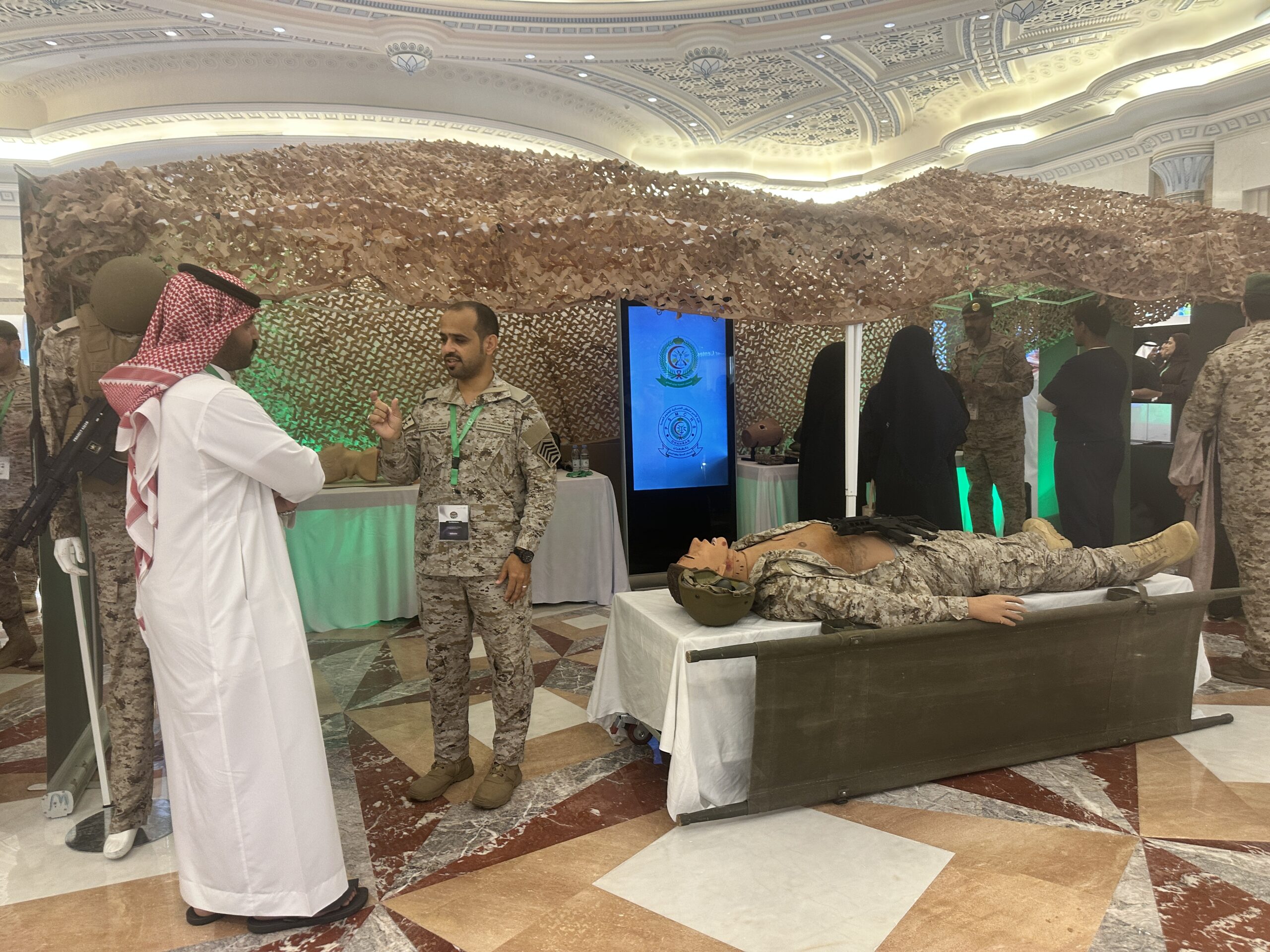
JEDDAH: The 11th Scientific Assembly of the Saudi Society of Emergency Medicine opened in Jeddah on Saturday, bringing together leading experts, specialists and practitioners from Saudi Arabia and abroad.
Held under the patronage of the Ministry of Health until Sept. 14, the event explores the latest practices and innovations, and discusses challenges facing practitioners and the future of the specialty.
This year’s theme, “NextGen EM,” reflects the conference’s focus on supporting the next generation of emergency physicians and practitioners by strengthening their scientific and professional capabilities and connecting them with experienced specialists.
The opening event featured a visual presentation highlighting the importance of emergency medicine, followed by another examining the development and future of the specialty in the Kingdom.
Assistant Minister of Health for Health Services Dr. Mohammed Al-Abdulaali highlighted the rapid development of emergency care and the growing role of technology in the field.
“Emergency departments are among the most rapidly evolving areas of healthcare. Today, one of the first questions being addressed is: What role does artificial intelligence play in emergency medicine?” he said.
“The advances in content, subject matter and technology did not happen by chance. We must advance the science we practice in Saudi Arabia.
“Our role should not be limited to learning, adopting and harnessing knowledge to care for people. We must also play a leading role in contributing to that knowledge, innovating within the field and taking it into new frontiers.”
Addressing emergency department staff, he said: “No one else can truly experience what you do. Words cannot adequately express the importance of your work. You are privileged to care for these lives, and they are fortunate to be in your hands.”
Dr. Roaa Jamjoom, chairperson of the society and a consultant in pediatric emergency medicine, told Arab News that this year’s assembly stood out for its focus on both the present and future of emergency medicine.
“What distinguishes the 11th Scientific Assembly is that we do not only discuss the current state of emergency medicine, but also look ahead to its future,” she said.
“We were keen to bring together the experience of established practitioners and the ambitions of the next generation, while creating opportunities for young professionals to learn, participate and contribute.”
Jamjoom said the gathering also provided a space for exchanging knowledge and strengthening professional connections among practitioners and specialists from different backgrounds.
“NextGen EM reflects our belief that younger professionals are not simply waiting for the future of emergency medicine. They are already helping to shape it,” she added.
Prof. Jameel Abualenain, the society’s president, said: “NextGen EM is not only about the next generation of emergency physicians; it is about the next generation of emergency medicine itself.
“Over the years, the society has grown alongside our specialty. What began as a professional society has become a community that brings together different generations, disciplines and colleagues from across Saudi Arabia and beyond.”
He said the assembly celebrated the society’s journey while looking ahead to the future of emergency medicine. “Every generation inherits something from the one before it: knowledge, experience, standards and, sometimes, challenges.
“Our responsibility is to make sure that the generation after us inherits something better: better emergency care, better education, better science and stronger leadership.”
Addressing younger practitioners, he said: “NextGen EM is not a future you are waiting to enter. You are already part of building it.”
He added that experienced professionals also had a responsibility to open doors, share their knowledge, create opportunities and give the next generation the confidence and space to lead.
“That, to me, is what NextGen EM represents,” he said.
Following the opening ceremony, Al-Abdulaali toured the accompanying exhibition and visited the participating exhibitors’ stands.
Tehran, Iran – Iranian authorities and state media have praised the Houthis’ capture of Yemen’s Red Sea coast, which some see as giving Tehran more leverage against the United States.
The Houthis, a political and armed group dominated by Zaidi Shia Muslims, have been fighting against the Western-backed Yemeni government since capturing the capital, Sanaa, in 2014.
The Houthis captured a series of Red Sea coastal cities and islands this week, essentially giving them control over the vital Bab al-Mandeb strait.
The Iran-allied group’s recent victories have been praised in Iran, and are viewed by some as part of Tehran’s wider war against the US, ongoing since February 28.
“The victories of Yemen’s Ansar Allah in the western coast is a narrative of a divine triumph and the fruit of years of steadfastness in the most difficult of battlefields,” Hossein Mohebbi, spokesman of the Islamic Revolutionary Guard Corps (IRGC), wrote on X on Saturday.
Amid the Houthis’ recent battlefield wins against the fragmented Saudi-backed forces, senior Iranian officials have cheered their Yemeni allies on.
The Houthis’ capture of the port city of Mocha on Friday delivered a huge blow for the Yemeni government, which now has no direct access to the Red Sea.
Mohammad Bagher Ghalibaf, Iranian parliament speaker and chief negotiator with Washington, reposted a comment made by slain Supreme Leader Ayatollah Ali Khamenei in 2024, saying the “resistance” of the Houthis will inevitably lead to victory.
“The brave Yemeni people will certainly triumph, by permission of God Almighty,” Ghalibaf added on Thursday, in Arabic.
Iran’s First Vice President Mohammad Reza Aref said the government is happy with the Houthi advances, and urged leaders in the region to pursue “the rationality of liberation from dependency [from the US and the West], and unity under the banner of Islam”.
The “grand victory” of the Houthis once again proved that “security is not a commodity that can be bought,” added Mohammad Mokhber, an adviser to Iran’s Supreme Leader Mojtaba Khamenei.
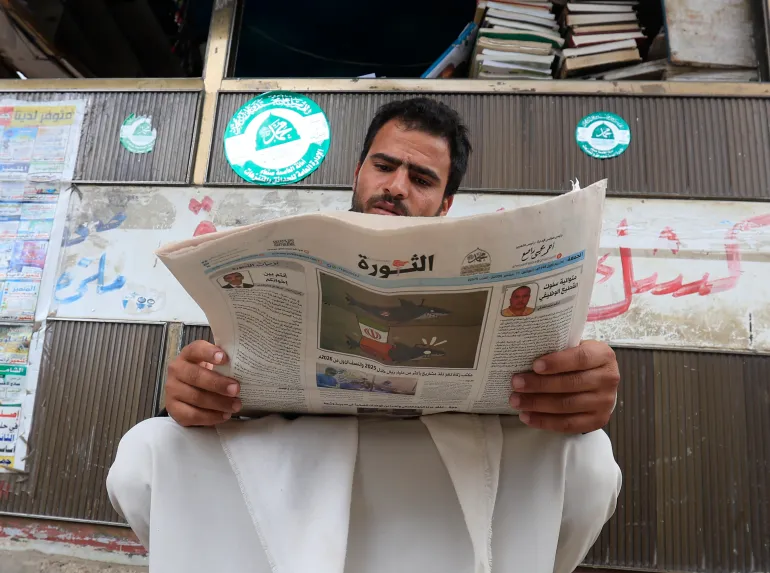
A man reads a local newspaper featuring news of the escalating fighting in the country, in Sanaa, Yemen, September 11, 2026. Yemen’s Houthi group said navigation in the Red Sea and Bab al-Mandeb strait remained safe except for Saudi vessels, which it says remain subject to a blockade, after seizing the port city of Mocha on September 10 and making further gains around the strategic strait the following day [Yahya Arhab/EPA]
How could this benefit Iran?
The Houthis began to attack several vessels in the Red Sea they claimed were linked to Israel in 2023, as part of their stated aim to pressure Israel to end the genocidal war on Gaza.
This prompted bombing campaigns by the US, United Kingdom and Israel against Houthi positions in Sanaa, Hodeidah and other areas.
Saudi Arabia, which joined the war against the Houthis in 2015, has largely stayed out of the current eruption in fighting in Yemen.
After their recent victories, the Yemeni group can now exercise more control over the Red Sea and the Bab al-Mandeb strait.
The Houthis’ control of Yemen’s Red Sea coastline and multiple islands – including the island of Mayun, also known as Perim, sitting about 3km (1.9 miles) off Yemen’s mainland – provides the group with close-range access to the Bab al-Mandeb strait.
A video published on Friday showed a Houthi commander telling soldiers they will no longer need missiles and drones to threaten shipping in the crucial waterway. They could simply position artillery along the coast and fire in all directions at ships, he said.
The Houthis have not declared the strait closed, but the group’s military spokesperson, Yahya Saree, said on Friday that “maritime navigation is safe for all companies except for Saudi vessels.”
Likewise, Iran’s partial control of the Strait of Hormuz on the other side of the Arabian Peninsula has been a key tool of leverage for Tehran in the war against the US.
The prospect of closing down the strait could potentially be used by Tehran in future negotiations over ending the war with the US.
Iranian officials are expected to meet regional Arab representatives on Monday for talks over how to facilitate shipping through the Strait of Hormuz, which Tehran maintains remains closed.
They have said they favour a collective regional approach on passage through the strategic waterway.
A person watches Houthi military spokesman Yahya Saree delivering a televised statement, in Sanaa, Yemen, September 11, 2026 [Yahya Arhab/EPA]
The US, which has continued its naval blockade of Iran’s ports and intensified sanctions on Tehran, reportedly opposes the agreement.
Authorities in Tehran have signalled there will be no talks with Washington under the current circumstances.
“As long as the American side does not accept all of Iran’s conditions, dialogue and negotiation are of no use,” Ebrahim Azizi, head of the hardline Iranian parliament’s national security commission, wrote on X on Saturday.
‘Lord of the straits’
At the start of the working week in Iran on Saturday, hardline and IRGC-linked newspapers and media outlets celebrated the recent Houthi advances.
Keyhan, whose editor-in-chief was appointed by Ali Khamenei, called the advances “the miracle of resistance” and said they had “put the US and Israel in a bind”.
The Quds newspaper, published by the influential Astan-e Quds Razavi in Mashhad, called Iran and the Houthis “the lord of the straits”.
But even though Tehran has repeatedly threatened that Bab al-Mandeb could be further disrupted if the war continues, Iran’s diplomatic apparatus did not immediately link the Houthi advances with the current fight against the US.
As has often been the case, Iran’s Ministry of Foreign Affairs insisted that the Houthis make their decisions independent of Tehran, with their own interests at heart, including ending Saudi Arabia’s blockade on Yemen.
The Iranian Foreign Ministry also called for an end to the Saudi siege on Houthi-controlled areas, an immediate return to negotiations between the group and Riyadh, and respect for Yemen’s sovereignty and territorial integrity.
The ministry also pushed back on the idea that the Houthis act merely as a proxy for Tehran.
“What is happening now in Yemen is the result of the Yemenis losing patience,” Foreign Ministry spokesman Esmaeil Baghaei told state television on Friday night.
“It is not fair to ignore the fact that they were under a cruel blockade for years, and concluded that the United Nations and regional mechanisms could not resolve the issues.”
AN AMERICAN heavy metal group has confirmed they are locked in a legal battle with the estate of their late bandmate.
The Blood and Thunder hitmakers have been forced to release a statement to their Instagram page addressing the previously-unearthed feud and how they will proceed.
An American heavy metal group has confirmed they are locked in a legal battle with the estate of their late bandmateCredit: GettyGuitarist Brent Hinds passed last August, but a lawsuit has been filed from his family’s estateCredit: Getty
Oblivion singers Mastodon, a Grammy-nominated band formed in Atlanta, told how what they deem a “meritless lawsuit” is centred on their late Brent Hinds.
The band’s guitarist Brent quit the group in March 2025 after 25 years together, prior to his death in a motorcycle crash in the August.
Sign up for the Showbiz newsletter
Thank you!
The group’s founding member passed aged 51, after his Harley-Davidson collided with a BMW SUV.
Prior to his death it appeared there were frictions between the musician and the band, and this only seems to have developed a year since the tragedy.
Brent quit the group in March 2025 after 25 years together, prior to his death in a motorcycle crash in August 2025Credit: GettyRepresentatives for his estate also suggest Brent’s image was also used to present the band’s Marrow Deep album, in the same legal challengeCredit: Getty
Mastodon have now told of the fresh legal woe and uploaded a statement which read: “Sadly, a private business dispute with the estate of our dear departed friend Brent Hinds was made public.
“We strongly deny allegations of ill intent on our part and intend to vigorously defend what we believe is a meritless lawsuit.
“We don’t intend to speak publicly on this going forward, as we feel this wouldn’t honour Brent’s memory or the legacy of his musical gifts”.
Fans were quick to respond to support the group, who now are formed of Troy Sanders, Bill Kelliher, Brann Dailor, Nick Johnston and João Nogueira.
One wrote: “Nobody’s business but yours. The fans are here for the music my guys. Congrats on the excellent new album”.
A second put: “We love Brent, we love Mastodon”.
A third posted: “This is really disheartening. Hoping things can be resolved”.
Last year, Brent told Billboard that his departure from the group was not mutual.
He then said the remaining members “kicked me out”.
This came after the band said they had “mutually decided to part ways”.
The new lawsuit has seen a civil complaint filed by the Hind estate, against the band’s members, on behalf of the late musician on September 3 according to loudwire.com.
As per The Atlanta Journal-Constitution, the lawsuit claims Mastodon failed to pay Brent for his share of the business after his exit.
It claims although the wheels were in motion for the group to buy him out of his share in “band related business” he had not in fact signed the paperwork prior to his passing.
As such, it claims his stake remains valid.
Representatives for his estate also suggest Brent’s image was also used to present the band’s Marrow Deep album, in the same legal challenge.
The lawsuit claimed: “Defendants selected and placed a recognizable image of Brent on the album cover of Marrow Deep and disseminated that cover to advertise, market, distribute and sell physical albums, digital downloads and streams, merchandise and related goods or services”.