JEDDAH: The 11th Scientific Assembly of the Saudi Society of Emergency Medicine opened in Jeddah on Saturday, bringing together leading experts, specialists and practitioners from Saudi Arabia and abroad.
Held under the patronage of the Ministry of Health until Sept. 14, the event explores the latest practices and innovations, and discusses challenges facing practitioners and the future of the specialty.
This year’s theme, “NextGen EM,” reflects the conference’s focus on supporting the next generation of emergency physicians and practitioners by strengthening their scientific and professional capabilities and connecting them with experienced specialists.
The opening event featured a visual presentation highlighting the importance of emergency medicine, followed by another examining the development and future of the specialty in the Kingdom.
Assistant Minister of Health for Health Services Dr. Mohammed Al-Abdulaali highlighted the rapid development of emergency care and the growing role of technology in the field.
“Emergency departments are among the most rapidly evolving areas of healthcare. Today, one of the first questions being addressed is: What role does artificial intelligence play in emergency medicine?” he said.
“The advances in content, subject matter and technology did not happen by chance. We must advance the science we practice in Saudi Arabia.
“Our role should not be limited to learning, adopting and harnessing knowledge to care for people. We must also play a leading role in contributing to that knowledge, innovating within the field and taking it into new frontiers.”
Addressing emergency department staff, he said: “No one else can truly experience what you do. Words cannot adequately express the importance of your work. You are privileged to care for these lives, and they are fortunate to be in your hands.”
Dr. Roaa Jamjoom, chairperson of the society and a consultant in pediatric emergency medicine, told Arab News that this year’s assembly stood out for its focus on both the present and future of emergency medicine.
“What distinguishes the 11th Scientific Assembly is that we do not only discuss the current state of emergency medicine, but also look ahead to its future,” she said.
“We were keen to bring together the experience of established practitioners and the ambitions of the next generation, while creating opportunities for young professionals to learn, participate and contribute.”
Jamjoom said the gathering also provided a space for exchanging knowledge and strengthening professional connections among practitioners and specialists from different backgrounds.
“NextGen EM reflects our belief that younger professionals are not simply waiting for the future of emergency medicine. They are already helping to shape it,” she added.
Prof. Jameel Abualenain, the society’s president, said: “NextGen EM is not only about the next generation of emergency physicians; it is about the next generation of emergency medicine itself.
“Over the years, the society has grown alongside our specialty. What began as a professional society has become a community that brings together different generations, disciplines and colleagues from across Saudi Arabia and beyond.”
He said the assembly celebrated the society’s journey while looking ahead to the future of emergency medicine. “Every generation inherits something from the one before it: knowledge, experience, standards and, sometimes, challenges.
“Our responsibility is to make sure that the generation after us inherits something better: better emergency care, better education, better science and stronger leadership.”
Addressing younger practitioners, he said: “NextGen EM is not a future you are waiting to enter. You are already part of building it.”
He added that experienced professionals also had a responsibility to open doors, share their knowledge, create opportunities and give the next generation the confidence and space to lead.
“That, to me, is what NextGen EM represents,” he said.
Following the opening ceremony, Al-Abdulaali toured the accompanying exhibition and visited the participating exhibitors’ stands.
Tehran, Iran – Iranian authorities and state media have praised the Houthis’ capture of Yemen’s Red Sea coast, which some see as giving Tehran more leverage against the United States.
The Houthis, a political and armed group dominated by Zaidi Shia Muslims, have been fighting against the Western-backed Yemeni government since capturing the capital, Sanaa, in 2014.
The Houthis captured a series of Red Sea coastal cities and islands this week, essentially giving them control over the vital Bab al-Mandeb strait.
The Iran-allied group’s recent victories have been praised in Iran, and are viewed by some as part of Tehran’s wider war against the US, ongoing since February 28.
“The victories of Yemen’s Ansar Allah in the western coast is a narrative of a divine triumph and the fruit of years of steadfastness in the most difficult of battlefields,” Hossein Mohebbi, spokesman of the Islamic Revolutionary Guard Corps (IRGC), wrote on X on Saturday.
Amid the Houthis’ recent battlefield wins against the fragmented Saudi-backed forces, senior Iranian officials have cheered their Yemeni allies on.
The Houthis’ capture of the port city of Mocha on Friday delivered a huge blow for the Yemeni government, which now has no direct access to the Red Sea.
Mohammad Bagher Ghalibaf, Iranian parliament speaker and chief negotiator with Washington, reposted a comment made by slain Supreme Leader Ayatollah Ali Khamenei in 2024, saying the “resistance” of the Houthis will inevitably lead to victory.
“The brave Yemeni people will certainly triumph, by permission of God Almighty,” Ghalibaf added on Thursday, in Arabic.
Iran’s First Vice President Mohammad Reza Aref said the government is happy with the Houthi advances, and urged leaders in the region to pursue “the rationality of liberation from dependency [from the US and the West], and unity under the banner of Islam”.
The “grand victory” of the Houthis once again proved that “security is not a commodity that can be bought,” added Mohammad Mokhber, an adviser to Iran’s Supreme Leader Mojtaba Khamenei.
A man reads a local newspaper featuring news of the escalating fighting in the country, in Sanaa, Yemen, September 11, 2026. Yemen’s Houthi group said navigation in the Red Sea and Bab al-Mandeb strait remained safe except for Saudi vessels, which it says remain subject to a blockade, after seizing the port city of Mocha on September 10 and making further gains around the strategic strait the following day [Yahya Arhab/EPA]
How could this benefit Iran?
The Houthis began to attack several vessels in the Red Sea they claimed were linked to Israel in 2023, as part of their stated aim to pressure Israel to end the genocidal war on Gaza.
This prompted bombing campaigns by the US, United Kingdom and Israel against Houthi positions in Sanaa, Hodeidah and other areas.
Saudi Arabia, which joined the war against the Houthis in 2015, has largely stayed out of the current eruption in fighting in Yemen.
After their recent victories, the Yemeni group can now exercise more control over the Red Sea and the Bab al-Mandeb strait.
The Houthis’ control of Yemen’s Red Sea coastline and multiple islands – including the island of Mayun, also known as Perim, sitting about 3km (1.9 miles) off Yemen’s mainland – provides the group with close-range access to the Bab al-Mandeb strait.
A video published on Friday showed a Houthi commander telling soldiers they will no longer need missiles and drones to threaten shipping in the crucial waterway. They could simply position artillery along the coast and fire in all directions at ships, he said.
The Houthis have not declared the strait closed, but the group’s military spokesperson, Yahya Saree, said on Friday that “maritime navigation is safe for all companies except for Saudi vessels.”
Likewise, Iran’s partial control of the Strait of Hormuz on the other side of the Arabian Peninsula has been a key tool of leverage for Tehran in the war against the US.
The prospect of closing down the strait could potentially be used by Tehran in future negotiations over ending the war with the US.
Iranian officials are expected to meet regional Arab representatives on Monday for talks over how to facilitate shipping through the Strait of Hormuz, which Tehran maintains remains closed.
They have said they favour a collective regional approach on passage through the strategic waterway.
A person watches Houthi military spokesman Yahya Saree delivering a televised statement, in Sanaa, Yemen, September 11, 2026 [Yahya Arhab/EPA]
The US, which has continued its naval blockade of Iran’s ports and intensified sanctions on Tehran, reportedly opposes the agreement.
Authorities in Tehran have signalled there will be no talks with Washington under the current circumstances.
“As long as the American side does not accept all of Iran’s conditions, dialogue and negotiation are of no use,” Ebrahim Azizi, head of the hardline Iranian parliament’s national security commission, wrote on X on Saturday.
‘Lord of the straits’
At the start of the working week in Iran on Saturday, hardline and IRGC-linked newspapers and media outlets celebrated the recent Houthi advances.
Keyhan, whose editor-in-chief was appointed by Ali Khamenei, called the advances “the miracle of resistance” and said they had “put the US and Israel in a bind”.
The Quds newspaper, published by the influential Astan-e Quds Razavi in Mashhad, called Iran and the Houthis “the lord of the straits”.
But even though Tehran has repeatedly threatened that Bab al-Mandeb could be further disrupted if the war continues, Iran’s diplomatic apparatus did not immediately link the Houthi advances with the current fight against the US.
As has often been the case, Iran’s Ministry of Foreign Affairs insisted that the Houthis make their decisions independent of Tehran, with their own interests at heart, including ending Saudi Arabia’s blockade on Yemen.
The Iranian Foreign Ministry also called for an end to the Saudi siege on Houthi-controlled areas, an immediate return to negotiations between the group and Riyadh, and respect for Yemen’s sovereignty and territorial integrity.
The ministry also pushed back on the idea that the Houthis act merely as a proxy for Tehran.
“What is happening now in Yemen is the result of the Yemenis losing patience,” Foreign Ministry spokesman Esmaeil Baghaei told state television on Friday night.
“It is not fair to ignore the fact that they were under a cruel blockade for years, and concluded that the United Nations and regional mechanisms could not resolve the issues.”
AN AMERICAN heavy metal group has confirmed they are locked in a legal battle with the estate of their late bandmate.
The Blood and Thunder hitmakers have been forced to release a statement to their Instagram page addressing the previously-unearthed feud and how they will proceed.
An American heavy metal group has confirmed they are locked in a legal battle with the estate of their late bandmateCredit: GettyGuitarist Brent Hinds passed last August, but a lawsuit has been filed from his family’s estateCredit: Getty
Oblivion singers Mastodon, a Grammy-nominated band formed in Atlanta, told how what they deem a “meritless lawsuit” is centred on their late Brent Hinds.
The band’s guitarist Brent quit the group in March 2025 after 25 years together, prior to his death in a motorcycle crash in the August.
Sign up for the Showbiz newsletter
Thank you!
The group’s founding member passed aged 51, after his Harley-Davidson collided with a BMW SUV.
Prior to his death it appeared there were frictions between the musician and the band, and this only seems to have developed a year since the tragedy.
Brent quit the group in March 2025 after 25 years together, prior to his death in a motorcycle crash in August 2025Credit: GettyRepresentatives for his estate also suggest Brent’s image was also used to present the band’s Marrow Deep album, in the same legal challengeCredit: Getty
Mastodon have now told of the fresh legal woe and uploaded a statement which read: “Sadly, a private business dispute with the estate of our dear departed friend Brent Hinds was made public.
“We strongly deny allegations of ill intent on our part and intend to vigorously defend what we believe is a meritless lawsuit.
“We don’t intend to speak publicly on this going forward, as we feel this wouldn’t honour Brent’s memory or the legacy of his musical gifts”.
Fans were quick to respond to support the group, who now are formed of Troy Sanders, Bill Kelliher, Brann Dailor, Nick Johnston and João Nogueira.
One wrote: “Nobody’s business but yours. The fans are here for the music my guys. Congrats on the excellent new album”.
A second put: “We love Brent, we love Mastodon”.
A third posted: “This is really disheartening. Hoping things can be resolved”.
Last year, Brent told Billboard that his departure from the group was not mutual.
He then said the remaining members “kicked me out”.
This came after the band said they had “mutually decided to part ways”.
The new lawsuit has seen a civil complaint filed by the Hind estate, against the band’s members, on behalf of the late musician on September 3 according to loudwire.com.
As per The Atlanta Journal-Constitution, the lawsuit claims Mastodon failed to pay Brent for his share of the business after his exit.
It claims although the wheels were in motion for the group to buy him out of his share in “band related business” he had not in fact signed the paperwork prior to his passing.
As such, it claims his stake remains valid.
Representatives for his estate also suggest Brent’s image was also used to present the band’s Marrow Deep album, in the same legal challenge.
The lawsuit claimed: “Defendants selected and placed a recognizable image of Brent on the album cover of Marrow Deep and disseminated that cover to advertise, market, distribute and sell physical albums, digital downloads and streams, merchandise and related goods or services”.
JEDDAH: More than five decades after the greatest heavyweight boxer of all time, Muhammad Ali, visited Al-Balad in Jeddah, the memory lives on through a small family business.
It was 1972 and Mohammed Ba Zaraah was sitting in his cafe, The Bird Shop, when in walked the legendary American fighter and sampled the traditional Hijazi drink, sobia.
It was during Ali’s first visit to the Kingdom to perform Hajj.
Ba Zaraah’s son, Khalid Najee, told Arab News that he was only 12 in 1972 and not in the cafe when the great man came to visit.
“But the story was passed down to me by my father and the shop has remained with the family for more than five decades,” he said.
“My father told me that Muhammad Ali suddenly entered his small shop. He described him as a big man with a nice smile.”
Khalid Najee stands in front of The Bird Shop.
Ali was accompanied by high-ranking Saudi officials and neighbors soon realized that a famous visitor had entered the shop.
Ba Zaraah responded to the unexpected encounter with a gesture of traditional hospitality.
“He immediately offered him sobia,” Najee said. Sobia is a cold drink often made using barley, brown bread or oats soaked in water, with sugar and spices such as cinnamon and cardamom.
For Ba Zaraah, serving Ali a traditional beverage was an instinctive act of hospitality. But after the boxing legend left the visit took on a life of its own in the neighborhood.
“The neighbors started calling my father ‘Clay’ after Muhammad Ali,” Najee said. Ali was born Cassius Marcellus Clay Jr., before adopting the name Muhammad Ali after converting to Islam.
His 1972 pilgrimage to Makkah is well documented, including photographs taken during Hajj.
Asked if he has a photo of the historical visit, Najee said: “Unfortunately, there is no photograph of Ali with my father.”
“There was no camera in the tiny shop that day and the encounter was never expected to become a piece of family history. Instead it survived through memory.”
The old cafe still exists and is currently undergoing restoration as part of the wider preservation and regeneration of Jeddah’s historic district.
For Najee, the restoration project represents an opportunity to carry his father’s story into the future.
“I want to name (it) Clay Sobia,” he said. “It is a tribute to my father and to a moment that connected a small Jeddah shop with one of the world’s greatest sporting legends.”
India’s Prime Minister Narendra Modi has called for an overhaul of global governance, saying Global South countries are impacted by decisions they are unable to shape. Opening the BRICS summit in New Delhi, he urged leaders to replace the ‘pyramid of privilege’ with a more equal system.
Montana Brown has baffled fans again when it comes to her parentingCredit: TikTokThe star revealed she wanted an EpiPen for her son Jude – despite him not being diagnosed with an allergyCredit: Instagram
Speaking in her latest TikTok video, Montana began: “Guys, I’m about to have a rant, so beware.
“I went to the GP last week because basically Jude had this really random skin reaction, it was an allergic reaction, but we hadn’t actually given him any food.
Sign up for the Showbiz newsletter
Thank you!
“So I was like, This is weird,’ like his eyes were like swelling out of his head. I was like, He’s definitely allergic to something, but not sure what it is because we haven’t given him any food?
“So I went to the GP to basically say, ‘Look, I’ve got a nut allergy. You can see that on my records. I have anaphylaxis, so I’m worried that he’s now developed an allergy to something that I’m not quite sure what it is yet.
“I’d like to get two kids’ EpiPens so that I can be prepared if he does have a worse reaction to whatever it is. Like in the meantime, like before we figure out, you know, get him allergy tested.”
Continuing her story, the reality star said: “Guess what they said? ‘No’.
Montana often ruffles feathers with her social media postsCredit: InstagramMontana shares two children with her partner Mark O’ConnorCredit: Instagram
“I was like, ‘Why? It’s just so painful.’ Like, I understand that there is a process to these things. But to me, I’m like, what am I going to do with an EpiPen apart from be safe with it?’
“Like, what are the dangers of me having an EpiPen? And I’m like, am I going to have to try and get an EpiPen off the deep dark web?
“Is that what this is coming to? I’m trying to safely protect my child in case he has an anaphylactic shock in my care to buy him enough time to get him to hospital. Like, is it me? Is it me?”
However, fans couldn’t believe what they were hearing, with one said: “They can’t just give you a medication without a diagnosis.”
A second shared: “Are you actually for real?”
A third added: “She’s is honestly on another planet!”
This isn’t the first time Montana has ruffled the feathers of fans.
Gaza City, Gaza Strip – For more than four hours, Hajj Rabhi al-Fairi, 79, has been standing outside his home in Gaza City with his children and neighbours waiting their turn to use a small generator.
The generator’s owner pours in the fuel, starts a timer and switches on the machine.
Recommended Stories
list of 4 itemsend of list
Each family gets a few minutes to operate a pump that pushes water up to a storage tank on the roof, before the generator moves on to the next house.
For al-Fairi and his neighbours, this is how they get water.
“We have an old water pump, but there is no electricity to run it. We have to rent a generator,” al-Fairi tells Al Jazeera.
Since the family returned to their home in October 2025, after fleeing a month earlier during Israel’s assault on their neighbourhood, the generator has become a familiar sight on the streets of Nassr.
When it arrives, residents gather around it, each carrying a jerrycan of diesel to operate the machine, which they have to pay for themselves.
“We came back and found the place a tragedy,” he says.
Their neighbourhood and home were badly damaged from years of Israeli bombing, with no municipal electricity or water supplies functioning. The family depends on an old pump – but without electricity, it cannot bring water up to the rooftop tank.
Each family needs only about seven or eight minutes to fill up their tanks, but with the number of flats in their building, the generator needs to be rented for about an hour.
The cost has also risen. Al-Rabhi says families used to pay about 80 to 90 shekels ($26-30) to rent a generator for an hour. At different times, the price has risen to about 100 or 120 shekels ($33-40) an hour, excluding the cost of diesel.
A generator passes through a northern Gaza neighbourhood [Abdelhakim Abu Riash/Al Jazeera]
A generator on wheels
Khalil Abu Ouda, 39, takes a machine mounted on a horse-driven cart from one house to another. The generator’s metal body is covered in black soot and grease, and white smoke rises from the engine when it operates.
At each house, Abu Ouda connects long electrical cables to the water pump. The cables stretch across the street as neighbours gather around the machine to wait their turn.
“Go on, switch it on,” someone calls.
For Abu Ouda, this machine is both a service for the neighbourhood and an essential source of income for his family.
He says there are very few small, mobile generators, like his, left in working condition in Gaza. Many have broken down, while spare parts are difficult to find or too expensive to source due to Israel’s siege.
Mechanics are also expensive to hire, while fuel and engine oil are increasingly scarce and costly.
“If I could, I would lower the price as much as possible,” he says.
At the same time, demand has never been higher.
“People are under pressure and they need water. If I stayed working until morning, I would keep working,” Abu Ouda says.
To cope with the demand, he often works for 10 to 12 hours a day, putting pressure on himself and the machine.
“But this is our livelihood. There is no alternative,” he said.
When the home stops providing
With most Palestinians in Gaza having no home or losing their possessions due to Israel’s genocidal war on Gaza, they have to rent or hire items or services for the most basic household chores.
This includes washing clothes, something once done at home but now impossible to do with no power.
Earlier in the war, Abeer Ghorab, 52, used to wash everything herself. Now she gathers clothes from her tent and takes them to a nearby laundry, where they can be washed and dried in far less time and with less effort.
“When these laundries started opening, they gave us some relief,” Ghorab said.
The difference is particularly important in winter, when heavy clothes, blankets and bedding can take time to dry.
“In winter, the tracksuits are heavy. They need another day to dry,” she said. “When I bring them here, they wash and dry them for me, and I get them back clean and dry. That really helps.”
Abeer Ghorab, 52, a displaced Palestinian woman, takes her clothes to a commercial laundry, paying to wash and dry them as water and electricity remain scarce [Abdelhakim Abu Riash/Al Jazeera]
But due to a limited income, Ghorab cannot afford to use this laundry service every day.
Before the war, Ghorab had a washing machine, a refrigerator and regular electricity at home.
“Things we once took for granted have become dreams. Now we have to pay for every little thing we used to do at home.”
The loss of the household
Across Gaza, the infrastructure that once allowed families to carry out everyday tasks at home has been severely disrupted.
A recent United Nations assessment found that 91 percent of surveyed households experienced moderate-to-high water shortages in early August.
A separate damage assessment by the authority found that 107,941 of the 178,632 housing units inspected – about 60 percent – were severely damaged, destroyed or otherwise considered uninhabitable.
Water systems, electricity, sanitation and household appliances, which families relied on to manage daily life, have also been disrupted.
For families living in damaged homes, tents or makeshift shelters, everyday tasks must be paid for.
A laundry adapting to shortages
Fadi Abu Shawarb, 23, has worked at his family’s al-Hurriya laundry for six years.
Residents now rely on communal washing machines for cleaning clothes [Abdelhakim Abu Riash/Al Jazeera]
Before the war, the business relied on large, 50kg (110lb) washing machines for carpets, blankets and other heavy loads. But due to the high cost of operation, these machines are far too expensive to run.
“We started replacing the 50kg machines with 25kg ones because there is not enough electricity,” Fadi says. “There are no solar panels, no reliable power, and the generators are always breaking down.”
Most of his customers are displaced families who lack electricity, water or washing machines at home.
The laundry now handles about 20 to 30 loads a day, with clothes-washing among the most in-demand services.
A load costs six shekels ($2) when the laundry can use solar power and 12 shekels ($4) when it relies on a generator.
But even that is hard for people to pay. “People’s situation is difficult,” he says.
For Ghorab, the laundry is only one of the many expenses she now has to budget for.
“I feel like I’m going through a difficult time,” she says. “I have to pay for every little thing in my day, and with how difficult things are, it’s hard to keep up with everything.”
RIYADH: Prince Fahad bin Jalawi bin Abdulaziz, vice president of the Saudi Olympic and Paralympic Committee, received an honorary 6th Dan black belt from World Taekwondo President Chungwon Choue during their meeting at Taif Camel Racing Track.
World Taekwondo gave Prince Fahad the black belt in recognition of his efforts to support taekwondo globally and promote international sports through Saudi Arabia’s hosting of major events.
The honorary belt is awarded exclusively to heads of state and sports officials who support taekwondo’s development.
The presentation took place on the sidelines of the 15th General Assembly of the Islamic Solidarity Sports Association in Taif, which brought together leaders of Olympic committees from 57 Islamic countries, along with heads of international sports federations and organizations.
Former newsreader and Strictly Come Dancing star Katie Derham is hosting the BBC Proms
Katie Derham has opened up on her grief(Image: Getty Images)
BBC host Katie Derham received a marriage proposal on a first date.
The former Strictly Come Dancing star is a former ITV news presenter but in 2010 she announced she was returning to the BBC where she started her career as a researcher.
Since then she’s worked extensively across radio and she was one of the contestants on Strictly Come Dancing in 2015 when she was partnered with Anton Du Beke and impressed both the judges and viewers, topping the leaderboard and making it through to the final. She returned for the Christmas special two years later which she won with Brendan Cole.
As she teams up with Celebrity Traitors star Nick Mohammed to present the BBC’s Last Night of the Proms on Saturday, September 12, which will feature a Dolly Parton tribute, we take a look at her life offscreen.
Katie Derham’s heartbreak
Katie, who was born in Kent, is now 56 and she admits that her last birthday was a poignant moment for her because her mother Margaret was the same age when she was diagnosed with early onset Alzheimer’s.
Margaret died aged just 61, from complications of pancreatitis. Opening up to HELLO! magazine’s Second Act podcast Katie said: “I’ve stopped being quite so angry (over her death) as I was for many years. She never met my second daughter, and she had such a bright and interesting mind.”
She added: “It seems particularly cruel. She was 61 when she died – that’s nothing is it?” Katie also spoke about how she felt she had to “step up” and be the “mother of the family” after Margaret died.
The mother-of-two continued: “I don’t know how she (Margaret) responded to the menopause, I don’t know what she was like as a young grandma – I don’t know what she was like as an older grandma.”
Marriage proposal
Katie met her husband, John Vincent, now the chief executive and co-founder of fast food chain Leon Restaurants, when he caught her gatecrashing the Cambridge University May Ball – and proposed to her.
“It sounds so bad now, in retrospect. But with a big smile and a big twinkle, he said “Well, you know, give me a snog and I won’t throw you out,” she revealed to HELLO!
“It did make me laugh. And we spent the night dancing around, but I thought (proposing) was a joke, I genuinely never thought I’d see him again. But he told his mum and dad ‘I met this girl at this ball and I’m pretty sure I’m going to marry her.’”
They met up again when John took the plunge and called the BBC switchboard during her shift as a financial news researcher in 1992. They went on to marry seven years later and they are the proud parents of two daughters.
Last Night of the Proms: The Finale is on BBC One on Saturday, September 12 from 9pm
The latest developments on the ground in Yemen are so significant that their seriousness cannot be understated. Iran now has an arm on the vital Bab Al-Mandab Strait through its proxy, the Houthi militia, which has seized the port of Mokha and the Yemeni islands in the southern Red Sea.
The Houthis’ aggressive military activities leading up to the attack pointed to one of three possibilities: either they were targeting Saudi areas bordering Yemen to the north, oil facilities in Yemen’s Marib province or the port of Mokha, from which they could go on to threaten international shipping.
The battles of the past few days ended with the seizure of the port of Mokha, Perim Island at the mouth of the Bab Al-Mandab Strait and the islands of Hanish and Zuqar. This confirmed that the operation is an extension of Iran’s activities in the waters of the Gulf. Iran can now halt oil shipping through both the Strait of Hormuz and Bab Al-Mandab. This comes in the decisive weeks leading up to the US midterm elections, meaning that if the Iranians are seeking to resume negotiations with the Trump administration, they will do so under conditions that strengthen their demands.
The issue also has implications for regional security that extend beyond Yemen’s borders. The Houthis now control a port and islands that enable them to threaten shipping and cooperate with Iran-aligned terrorist militias in Somalia.
As for the dynamics of the Yemeni war itself, the Houthis have certainly made significant gains but they have also expanded the front against themselves by seizing areas around Mokha. This vast area will require further confrontations with the Houthis, in addition to forcing them to devote resources to defending the many fronts that have opened for the first time since their defeats in 2018.
The Middle East is going through a dangerous period of turmoil and its flashpoints are interconnected.
Abdulrahman Al-Rashed
In fact, what happened this week resembles what happened nearly a decade ago. Houthi fighters reached the port of Mokha and even pushed beyond it to Dhubab, the last point in southwestern Yemen. It is considered the narrowest point separating Asia from Africa, lying only about 30 km across the sea from Djibouti.
After roughly three years of militia control, coalition forces were able to defeat the Houthis and liberate Mokha, Dhubab and the islands, including Perim and Zuqar.
Yemen’s government forces are going through a period of rebuilding and consolidating their various national forces. This is a difficult task as they work to liberate areas controlled by the Houthis, which are the country’s most densely populated and most rugged regions, amid extremely difficult political and economic conditions. Securing Yemen goes beyond the country’s borders. It also serves regional security and the security of global maritime trade. This requires international support for Yemen, not just support from Saudi Arabia and the countries of the region.
The Middle East is going through a dangerous period of turmoil and its flashpoints are interconnected. We see this in Lebanon, Iraq, Yemen, Somalia and elsewhere, and these challenges require collective cooperation to contain them. Many people underestimate the Yemeni Houthi movement, believing it to be a local problem that can easily be contained militarily or politically. In reality, the Houthis resemble Hezbollah in Lebanon, as well as the Taliban in Afghanistan.
Stopping or containing the threat posed by such armed groups requires a joint effort. The fall of the Assad regime in Syria had consequences that extended beyond its borders, weakening Hezbollah in Lebanon and dismantling part of the region’s network of weapons, drugs and terrorism. Yemen’s forces will not be able to fight the Houthis alone. Regional and international efforts must come together to accomplish the task.
• Abdulrahman Al-Rashed is a Saudi journalist and intellectual. He is the former general manager of Al Arabiya news channel and former editor-in-chief of Asharq Al-Awsat, where this article was originally published.
X: @aalrashed
Abdulrahman Al-Rashed is a veteran columnist. He is the former general manager of Al Arabiya news channel, and former editor-in-chief of Asharq Al-Awsat. Twitter: @aalrashed
Earlier this year, an Iran-linked actor used Anthropic’s Claude artificial intelligence model to scrape and analyze data with the aim of helping target U.S. naval forces in the Middle East. A group in Yemen – very likely Iranian-backed Houthi militants – also used Claude to assist with work on guidance systems for ballistic and hypersonic missiles.
These are just some of the revelations about how adversaries and other malign actors have been using one of the premier pieces of AI software being developed in the United States that were contained in a new report Anthropic released late yesterday. The 154-page document also details instances where Claude was used directly and indirectly to support intelligence gathering and surveillance, cyberattacks, influence operations, and even worrisome biological research over the past eight months. In addition to Iran and Yemen, the human actors behind these activities were based in Russia, China, and a host of other countries.
Anthropic has shared details about what it calls the “misuse” of its models in the past, but describes the new report as its “most detailed” to date. The company has clearly been cataloging these case studies, and has assigned each one a control number. Though the entire contents of the report are cause for concern, the explicit attempt to use Claude to target American forces, as well as to develop new higher-end missiles and other military technology, are particular standouts and signs of what’s to come, as we will highlight below.
GTG-30005: Military reconnaissance
GTG-30005 is the case study dealing with the targeting of U.S. naval forces, and the summary is as follows:
“In another investigation, we identified and disrupted an Iran-nexus threat actor that used Claude to collect and analyze publicly accessible data to develop targeting recommendations against US naval forces in the region. The threat actor used Claude to compile targeting handbooks, through a Python pipeline the threat actor built with Claude’s assistance, to identify and track naval positions based on open-source information. The compiled material included a roster of US personnel scraped from captions on public military photographs; publicly accessible ship and aircraft transponder identifiers; commercial satellite-imagery query scripts; and an inventory of public websites that exposed US naval movements. The threat actor also directed Claude to compile vulnerability research on shipboard systems, cataloging known CVEs in maritime VSAT terminals, Cisco communications equipment, and industrial control products.”
“We banned the actor’s account, developed detections to reduce the risk of future misuse, and shared threat intelligence with government authorities to disrupt the threat.”
The Nimitz class aircraft carrier USS George H.W. Bush and several other US Navy warships sail together in the Arabian Sea in June 2026. CENTCOM
How exactly Anthropic defines the term “nexus” here is not immediately clear, and other entries in its new report also use “state-nexus” in addition to country-based variations. However, in this specific case, an addendum is added to the entry that explicitly says that the same account was separately tied to “domestic mass surveillance” software development work “for Iranian state systems,” clearly pointing to an actor directly linked to the regime in Tehran.
The use of AI technology by nation-state armed forces to develop target sets and engage them is already known to be growing globally. The Israel Defense Forces (IDF) have been a pioneer in this regard, but the U.S. military, China’s People’s Liberation Army (PLA), and others are also known to be developing and fielding these capabilities.
GTG-87001: Disrupting a Yemen-based guided weapons engineering cell using Claude to develop guidance software
Anthropic’s new report details an instance where an individual in Yemen used Claude as part of missile guidance work, which is given the control number GTG-87001.
“We identified a cell of threat actors based in northern Yemen running three weapons development programs: a guided rocket that used a commodity phone-class flight computer with final-phase homing guidance; a multi-stage ballistic missile with a stated range goal above 2,000 km; and a multi-variant missile (referred to as the “R2000” set) that included a hypersonic glide vehicle variant.”
“The actors used Claude Code in place of human software engineers to develop the guidance, navigation, and control (GNC) software that steers and stabilizes a flying vehicle. For example, they used Claude to integrate an open-source autopilot onto a phone-class flight computer, writing the control and position estimation software, tuning the control settings, running a firmware build pipeline, and performing a flight simulation. The actors managed several Claude instances at once, assigning each one a role, much as a lead would delegate work on a small engineering team: the actors tasked one instance with writing the code, another with research, and a third with reviewing the code the first instance produced.”
A graphic included in Anthropic’s new report summarizing the ways in which Claude was used by the actors in Yemen to support missile guidance system development. Anthropic
“Our safeguards blocked many of their requests, but not all of them. The actors used a variety of tactics to evade our safeguards, including hiding their goals and the products the software was meant for, and they split their work across multiple sessions so no single session revealed their full intent.”
“These actors carried out a sustained effort to develop guided weapons, including using Claude to design guidance software. We do not have evidence the actors succeeded in fielding an operational device; but they did test-fire a guided rocket. This field test appears to have failed: within hours, the actors returned to Claude to work out why it failed.”
“We identified this activity as part of our internal investigations into suspected weapons development. We banned accounts associated with the actors and shared threat information with public- and private-sector partners to mitigate risks posed by the actors. Nevertheless, we have evidence that the actors had already built an offline simulation toolkit that does not rely on Claude or other engineering computing environments such as MATLAB.”
As mentioned earlier, the report does not name the Houthis, but that group has historically been based primarily in the northern end of Yemen. It is also the only entity in the country known to have active missile development programs, which are conducted with critical support from Iran.
Whether this particular work directly resulted in any new capabilities is unknown. Anthropic notes that there looked to be at least one failed test launch before the accounts were banned, which would have occurred sometime after the beginning of this year, based on the stated cutoff dates for the report. By the end of 2025, the Houthis had already amassed a wide array of very real ballistic missiles, including types with at least claimed ranges of 2,000 kilometers (approximately 1,242 miles). The group also has a variety of cruise missiles and one-way attack drones that it has employed operationally.
An example of just one of the many types of ballistic missiles in the Houthis’ arsenal. Houthi-controlled media
Still, being able to leverage Claude could only have helped any domestic missile development efforts in Yemen, which might help reduce dependency on Iran, at least to a degree. Furthermore, developing functional hypersonic glide vehicles capable of prolonged stable flight has historically been notoriously difficult, even for entities with extensive relevant knowledge bases on an organizational level.
GTG-17001: Disrupting a China-based operation using Claude to draft a fire control specification and acquisition documents for undersea warfare
Use of Claude in foreign military endeavours goes beyond the Middle East, as evidenced by case study GTG-17001. This involved a Chinese actor conducting work related to a naval counter-torpedo defense system.
“We identified a China-based threat actor who used Claude to advance three parallel tracks of work on an anti-torpedo weapons system:”
“First, the actor used Claude to draft a Chinese-language specification for an anti-torpedo fire control system (the core logic that aims and times an anti-torpedo weapon’s response). The document was written to win approval from a Chinese defense manufacturer, which would move the work on to technical certification and operational testing.”
“Second, the actor used Claude to produce a Chinese-language technical proposal of more than 200 pages, accompanied by an executive briefing deck.”
“Third, the actor used Claude to benchmark their own system against specific US anti-torpedo and anti-submarine programs based on publicly accessible information. They then generated a Chinese-language briefing on US Navy systems derived from open-source reporting.”
“The actor presented themselves as an original equipment manufacturer in the US defense sector. We assess the actor was associated with a Chinese defense industry manufacturer aiming to produce a weapons specification and acquisition proposal for the People’s Liberation Army Navy.”
This picture shows a test of an anti-torpedo system fitted experimentally to a Nimitz class aircraft carrier in the 2010s. USN
“The actor used Claude to write the acquisition proposal, refining it over many drafts. After each draft, the actor instructed Claude to role-play a hostile expert reviewer to critique the proposal, then used that feedback to sharpen the next version. In parallel, the actor used Claude to build pieces of the anti-torpedo weapons system’s fire control software and a test matrix to validate them.”
“The operational lift the actor achieved was a function of using Claude to automate complex technical outputs. The actor leveraged the model to compress the development timelines for the certification registry, compliance documentation, and automated fire control logic. The actor also accelerated the traditional human review cycle by having Claude critique the acquisition proposal across multiple rounds of review while role-playing a persona.”
“We uncovered this activity as part of our internal investigations into suspected weapons development. We cannot attribute the activity to a specific entity or actor. But we have banned the account for violating our Supported Regions Policy and our Usage Policy, which prohibits weapons design and development, and incorporated our investigative findings into our safeguards to mitigate the risk of future misuse.”
Anthropic’s report does not name the U.S. programs leveraged here, but does note the information in question was publicly available. Anti-torpedo systems for surface warships and submarines have been an area of significant interest for the U.S. Navy for years now. Those developments have also produced compact torpedo designs for use in other applications.
A Very Lightweight Torpedo (VLT), a compact torpedo design developed by Northrop Grumman. Northrop Grumman
The PLAN’s interest in these same kinds of capabilities is not at all surprising. Underwater threats and countermeasures to them, broadly speaking, would play a central and vital role in any future conflict between the United States and China across the broad expanses of the Pacific.
GTG-27005: Disrupting a Russia-based operation using Claude to engineer an autonomous military drone swarm
Another case study, GTG-27005, details the use of Claude by Russian actors working on drone swarming technology.
“We identified likely freelance Russia-based threat actors who set out to build a full-stack autonomous first-person-view (FPV) kamikaze drone swarm. The actors used Claude Code to write and test the code and save it directly into the actors’ own project files. In addition to Claude Code, the actors used a software-in-the-loop simulation stack and a rented graphics processing host for model training. They called the operation ‘DronDoc’ or ‘Serafim.’”
“The actors used Claude to build the core software system, including the drones’ shared swarm memory and fault-tolerant coordination logic (FTCL); an onboard small language model to govern attack, observe, and return-to-base behaviors; a terminal guidance software system to steer drones to their target (using the onboard camera) and issue the call to detonate; a control-link geolocation module to find opposing drone operators; a passive acoustic detection layer; and low-level logic for the drones’ programmable chips. The actors designed the platform for autonomous lethal engagement; the onboard model could select targets (including a ‘person’ target class) and issue detonation commands without a human in the loop. The actors’ activity—including flashing the low-level firmware to live development boards, provisioning single-board computers, and wiring up a simulation environment over a mesh network—confirmed that they were using real hardware-in-loop testing within their sessions.”
Many were surprised yesterday by the news that a Russian fiber-optic FPV drone flew into Kramatorsk and attacked a car.
But there is nothing surprising here. The war of 2025 is already very different from the war of 2024. From LBZ to Kram — 20 kilometers. Enemy FPVs can fly even… pic.twitter.com/hTfhJFPcxZ
“The actors trained a computer vision classifier on scraped Ukrainian combat footage, splitting the target classes into “enemy” and “friendly,” and allow-listing Russian systems. They also repeatedly used a fixed coordinate in Donetsk Oblast as the demonstration strike point, with front-line cities and corridors in Ukraine as the mission geography.”
“The actors created their accounts between late 2025 and early 2026 and started the operation in mid-May 2026. The actors circumvented our geographic access controls by routing traffic through commercial virtual private servers.”
“We assess the actors were a small, specialized freelance team doing a mix of civilian and military work, not a Russian state entity. We identified nine accounts associated with this group; eight were used only for ordinary freelance work, not weapons-related software development. Based on our investigation, we assess the actors had ties to a regional university with a federal research center associated with the Russian Academy of Sciences. The actors claimed to have received funding from Russia’s Advanced Research Foundation, National Technology Initiative, and Ministry of Defence, though we cannot verify those claims. We identified this activity as part of our internal investigations into suspected weapons development, we banned accounts associated with the actors, and have incorporated our investigative findings into safeguards to reduce the risk of future misuse.”
Anthropic’s report included a table, reproduced below, detailing different types of drones and other capabilities that were fed into the model as part of this work.
GTG-17002: Disrupting a China-based operation using Claude to build targeting software for electronic warfare and air defense suppression
The last case study in the Conventional Weapons section of Anthropic’s new report, GTG-17002, covers electronic warfare-related work by a Chinese actor, with a particular focus on potential air defense targets in Taiwan.
“We identified a China-based actor who used Claude’s chat, coding, and agentic work tools to design, build, and iterate on a Chinese-language suite of about 16 modules for electronic warfare, using the electromagnetic spectrum to detect, jam, or deceive an opponent’s radar and communications, and for suppressing an opponent’s air defenses.”
“The actor used Claude to build the software system, from the underlying logic to the user interface, and iterated through 12 versions. This included implementing and optimizing the system’s radar detection and jamming physics, generating a vulnerability analysis module, and drafting Chinese-language targeting instructions. The software suite the actor built analyzed an opponent’s radars, surface-to-air missile sites, command posts, and communications nodes, then computed their detection coverage, assessed the effectiveness of jamming, ranked targets by value and vulnerability, including which to suppress first, and determined how best to assign jammer sorties to targets across multi-day campaigns. The suite also ranked which of an opponent’s assets to suppress first, and modeled specific engagement envelopes, including those of Patriot and THAAD-class [Terminal High Altitude Area Defense] systems.”
“Mid-project, we observed the actor change the simulation’s default scenario to 12 targets in Taiwan. The targets included a command bunker in Taiwan, an early warning radar site, Patriot and Tien Kung [surface-to-air missile] batteries, major air bases, and a regional combatant command headquarters.”
NCSIST – Tien Kung III Air Defense Missile & Hsiung Feng III Anti-Ship Missile Live Firing [480p]
“The actor also ran a self-hosted model on an internal network alongside Claude and connected the software suite to this model through a tool-use integration.”
“Based on our investigation, we assess the actor is a China-based defense and military-industrial researcher. Account-level metadata and content flagged by our safeguards indicated the actor was linked to PRC research institutions, including the PLA Academy of Military Sciences. We detected this activity as part of our internal investigations into suspected weapons development, we banned accounts linked to the actor, and have incorporated our investigative findings into our safeguards to reduce the risk of future misuse.”
An accompanying table, seen below, mentions several specific types of U.S.-made air defense radars, as well as the Link-16 datalink network, as having come up in the course of this work. Electronic warfare variants of the Chinese Y-8 and Y-9 aircraft, as well as the J-16D electronic warfare jet, and what appears to be a reference to the Golden Eagle drone helicopter, are also mentioned.
A Chinese Y-8GX-11, one of several electronic warfare variants of the Y-8/Y-9 design. Chinese internet via X
China’s J-16D Shows Versatility Across Reconnaissance, Attack, Defense: Designers
The suppression of enemy air defenses is an essential part of any modern air campaign, whether conducted independently or as a part of a larger operation. This would be no less critical in any military intervention against Taiwan from the mainland, or any other larger-scale conflict the PLA might find itself in.
Guardrails and ethics
Beyond the details in any of the specific case studies, Anthropic’s new report underscores growing broader concerns about guardrails for the use of AI and general ethics surrounding the technology. As noted in the instances above, Anthropic has also implemented various safeguards to try to block access to Claude from certain regions and/or to prevent the model from conducting certain types of work. At the same time, what the company has now shared makes clear that those protections can still be circumvented to a significant degree, at least for now.
TWZ has noted in the past that America’s adversaries are likely to be less worried about ethics, in general, when it comes to AI. Anthropic’s new report also shows there are few bounds to what state-aligned or even non-state actors might seek to use this technology for, including the development of potential weapons of mass destruction.
At the same time, AI models like Claude are not going away, and developments continue to advance at an ever-quickening pace, opening the door to further proliferation. Developments are rapidly intermingling globally, with companies in China notably leveraging models created in the U.S. to further their own work, which is then released publicly. The technology will increasingly become more integrated and critical to most aspects of military operations and weapons development, alongside its commercial and civilian applications. It is just as much a superweapon as anything else, and the country with the more capable models, and the willingness to deploy them, will have a major edge in future conflicts.
With all this in mind, it seems very plausible, if not probable, that the case studies described in Anthropic’s new report are just the tip of an approaching iceberg that will need a concerted effort to tackle.
THEY were the cool Brit pop duo that broke onto the music scene in 2007 with a number one album and chart-topping smash hit.
And almost two decades later, the husband-and-wife pair are still releasing new music – though their look is worlds away from their noughties heydey.
The husband and wife band rose to fame in the early 2000s – but are rocking a very different look these daysCredit: InstagramThe female star – one half of the pop duo – has ditched her rock chic era and instead appears to be channeling Dolly PartonCredit: Instagram
The Ting Tings, comprised of married couple Katie White and Jules De Martino have taken to TikTok to share a clip of them singing their brand new song Home.
In the video, rock chick turned boho babe Katie can be seen showing off her impressive vocals, while hubby Jules plays guitar.
Sign up for the Showbiz newsletter
Thank you!
They look world’s away from their earlier rock and roll vibe with Katie in particular then known for her heavy eye make-up and platinum blonde Debbie Harry-esque locks.
They wrote over their new video: “Hey, we’re Katie & Jules from a band called The Ting Tings and you might remember us from our song That’s Not My Name.
The duo were all the rage in the noughtiesCredit: HandoutThey scored a number one hit with That’s Not My Name back in the dayCredit: GettyBut their style has changed a lot from their noughties heydeyCredit: thetingtingsofficial/TiktokKatie belted out vocals for new single Home while cradling the couple’s daughter in her lapCredit: thetingtingsofficial/Tiktok
“This is us, 18 years on singing Home from our latest album with our daughter. A lot has changed since 2008.”
The caption read: “18 years & 5 albums later… we are back in the studio, song writing and working on our 6th record.”
The iconic band made a shock comeback to the music industry back in January 2024.
In a cute video posted to Instagram, they added the caption: “Where have we been? Here, making the record of our lives. Get ready. J K x”
The scenes showed a blonde-haired toddler strolling around, leading one fan to quiz: “Is that a baby Ting Ting?”
During a chat with the BBC in 2022, they confirmed their happy news – with the tot dubbed “mini Ting” aged one at the time.
Katie admitted: “We never particularly spoke about it.
“We always wanted to keep it quite separate from the music, but it’s quite hard when you have literally a mini person.
“We’ve been together a long time now.”
The Salford-based duo formed in 2007, with their debut album We Started Nothing topping the UK charts just a year later.
Their iconic track That’s Not My Name became a huge success and has been streamed more than 1.1million times.
The group then fine-tuned their material in New York, yet a tour scheduled for three years later was scrapped after Katie suffered a hand injury.
Following their comeback, they went on to release their fifth album Home and are now gearing up for their sixth offering.
TOKYO: Japan strongly condemned the attacks by the Houthis on Saudi Arabia and reiterated its call on them to refrain from escalating the situation both inside and outside Yemen.
“The Houthis’ continued military attacks have resulted in numerous casualties, including among civilians. Japan renews its strong denunciation of the recent series of attacks by the Houthis. Attacks on civilians and civilian facilities, as well as any actions that impede the free and safe navigation of vessels, cannot be tolerated,” Japan’s Foreign Ministry said in a statement on Friday night.
The ministry stressed that stability in Yemen is directly linked to the stability of the entire Middle East, and Japan reiterates the importance of achieving peace in Yemen. It also noted that peace and stability in the Middle East, including ensuring free and safe navigation through the Bab Al-Mandab Strait, are of the utmost importance to the entire international community, including Japan, from the perspective of energy security.
“Japan will continue to make every diplomatic effort, in cooperation with the international community, including Yemen and Saudi Arabia, toward an early de-escalation of the situation,” the statement said.
Aryna Sabalenka was fully aware she would have to win the US Open to stand any chance of stopping Elena Rybakina overtaking her as world number one.
Even that would not necessarily be enough. And as the pair prepare to meet in Saturday’s final, Sabalenka knows her 99-week stay at the top of the world rankings is at an end.
Kazakhstan’s Rybakina is assured of replacing Sabalenka at the top of the rankings, guaranteeing that by reaching the semi-finals.
Having also beaten the Belarusian to win this year’s Australian Open title, Rybakina now has the opportunity to inflict further damage.
But that provides extra motivation for Sabalenka before their fourth meeting of the year.
“It is going to be red rag to a bull for her – she is not going to be happy,” said former British number one Annabel Croft on BBC Radio 5 Live.
“Now she has the opportunity to end this year on a high.”
Sabalenka, who has beaten Rybakina in Indian Wells and Miami since the Melbourne final, still has history in her sights as she bids to become only the third woman in the Open era to win the New York singles title three years in a row.
The four-time Grand Slam champion’s victory over American third seed Jessica Pegula in the semi-finals was her finest display in months, playing with a fire and freedom that had been missing previously.
Afterwards, Sabalenka played down the significance of losing her ranking, joking she did not care about it.
But she clearly does. Sabalenka’s coach Anton Dubrov said as much when he spoke about how the issue has been hanging over her.
“I actually like this [losing the ranking] happened. It’s ended and it’s extra fuel,” Dubrov said.
“There is no more extra draining [of mental energy] or thinking about it.
“There’s a next chapter right now. You have to chase again. It’s extra motivation for you. Just go and get it.”
Olivia Attwood has hit back after being accused of lying about her booze brandCredit: InstagramThe savvy businesswoman launched her canned cocktails this summerCredit: olivia_attwood / instagram
However, there had been some criticism of her involvement, after Olivia called the company her “baby”.
But not taking this lying down, the successful businesswoman has now hit back and set the record straight.
Sign up for the Showbiz newsletter
Thank you!
“My brand, Savano, my baby. It was acquired by my partners, it existed as Tom Savano, and then with me, we relaunched it,” Olivia told her fans in her latest Instagram video.
“We remarketed it, we renamed it, we repackaged it, and we developed signature flavours. For example, my Moscow Mule. Guys, do you even understand how many Moscow Mules I had to drink to get that right? And it’s perfect.”
Olivia revealed how she is a majority stakeholder in the booze brandCredit: Instagram/SavanoIt comes after Olivia and her boyfriend Pete were a huge success at the NTAs this weekCredit: Getty Images for The NTA’s
The new couple went down a storm when they presented an award at the glitzy bash, marking their first live TV appearance together.
United States President Donald Trump has made no secret of his hostility towards BRICS.
Last year, he threatened an additional 10 percent tariff on any country aligning itself with what he called the bloc’s “anti-American policies”. Since then, his administration has continued to wield tariffs aggressively against trading partners, including BRICS members such as Brazil, India and China.
The message appears straightforward: Countries that challenge US economic power should expect to pay a price.
But coercion has consequences. And as BRICS leaders meet in New Delhi today, Trump may be strengthening the very incentives that made the bloc attractive in the first place. The more Washington demonstrates its willingness to use access to its markets, its financial system and the dollar as instruments of political leverage, the more reason other countries have to reduce their exposure to them.
This does not mean BRICS is becoming an anti-US alliance. Far from it.
The bloc’s 11 members – Brazil, China, Egypt, Ethiopia, India, Indonesia, Iran, Russia, Saudi Arabia, South Africa and the United Arab Emirates – have enormous political and economic differences. Together, they account for nearly half the world’s population and about 40 percent of global gross domestic product, but they do not share a common ideology, security policy or even geopolitical orientation.
Recent events have made those divisions impossible to ignore. Iran, Saudi Arabia and the UAE find themselves on opposite sides of a growing regional conflict. In May, Iranian and Emirati representatives clashed during a foreign ministers’ meeting in New Delhi. India and China have had a heated border dispute that led to deadly skirmishes in 2020-2021; only in the past two years have their relations gradually stabilised.
So Trump is not producing a united geopolitical front against Washington.
He may, however, be giving countries with otherwise divergent interests a common reason to cooperate economically: Protection against vulnerability to US power.
For countries outside the Western core, dependence on US-centred economic infrastructure carries risks.
The dollar’s centrality gives the US enormous structural advantages. International transactions pass through financial institutions subject to US jurisdiction; access to US markets can be restricted; sanctions can isolate governments and companies from parts of the global financial system.
BRICS’s efforts to diminish dependence on the US financial system do not mean the dollar is about to lose its position as a global reserve currency. This claim is often made around BRICS summits, usually accompanied by breathless predictions of a new BRICS currency. The evidence does not support it.
The dollar remains overwhelmingly dominant. According to the International Monetary Fund, it accounted for 57.1 percent of global foreign-exchange reserves in the first quarter of 2026. The Chinese renminbi accounted for just 2 percent. Indeed, the dollar’s share rose slightly during the quarter.
But replacing the dollar and reducing dependence on it are two very different things.
BRICS countries are already experimenting with the latter. South Africa has connected to China’s Cross-Border Interbank Payment System, allowing transactions with China to be settled directly in renminbi. Brazil and China are increasingly using their own currencies in bilateral trade, while India and the UAE have settled transactions in rupees and dirhams. China and Russia have shifted much of their bilateral trade into their national currencies.
BRICS itself is also moving cautiously towards greater financial connectivity.
Last year, its leaders called for continued work on a cross-border payments initiative and greater interoperability among members’ payment systems. In August, Reserve Bank of India Governor Sanjay Malhotra confirmed that BRICS countries are discussing linking their fast-payment networks and potentially their central bank digital currencies. India itself is also encouraging greater use of the rupee in international trade.
The New Development Bank offers another example. Established by the original BRICS countries as an alternative source of development finance, it has made lending in members’ currencies an explicit strategic objective. Its current strategy targets 30 percent of financing in local currencies, partly to reduce borrowers’ exposure to foreign-exchange risks and costly currency swaps; the number could increase to 40-50 percent for the next cycle, 2027-2031.
None of this amounts to a rival global financial system. Much of it remains experimental, bilateral or limited in scale.
But that is precisely why the fixation on whether BRICS can “replace” the dollar misses what is happening. The more significant development is the gradual construction of options that allow governments and businesses to conduct a number of transactions without relying on the dollar and Western-dominated financial infrastructure.
Trump’s policies give this process additional urgency.
Consider Brazil. Washington imposed a new 25 percent tariff on a range of Brazilian products in July, affecting billions of dollars in exports, despite running a trade surplus with the country. The Trump administration has also scrutinised Brazil’s hugely successful Pix instant-payment system, which competes with established card-payment networks.
Sanctions demonstrate the same vulnerability more dramatically. Russia and Iran have been pushed towards alternative payment and trading arrangements precisely because their access to Western financial networks has been restricted. Washington is now considering further measures that could penalise countries heavily reliant on Russian energy, including China and India.
No BRICS member needs to sympathise with Moscow or Tehran to understand what this implies.
US financial power depends not simply on possessing the world’s largest economy or issuing its dominant currency. It also depends on other countries continuing to regard participation in a US-centred system as more advantageous than the alternatives.
The more frequently Washington turns that system into an instrument of coercion, the stronger the incentive to construct escape routes from it.
That said, most BRICS countries do not appear eager to exchange dependence on Washington for dependence on Beijing.
India maintains extensive relations with the US while buying Russian energy and pursuing closer economic cooperation within BRICS. Brazil has long sought greater autonomy without becoming a Chinese satellite. Saudi Arabia and the UAE remain deeply intertwined with Western economies while expanding their relationships with China.
Their objective is less likely to be replacing one hegemon with another than increasing their ability to manoeuvre between competing centres of power.
That distinction matters. A trade transaction settled in rupees, a loan denominated in renminbi or rand, or a payment made through a system that does not depend on the same Western intermediaries will not overthrow dollar dominance.
But multiply such arrangements across countries and over time, and they begin to reduce the costs of saying no to Washington.
This is why portraying BRICS simply as an anti-US threat risks becoming self-defeating. Punishing countries for seeking alternatives gives them another reason to develop those alternatives.
Trump wants to make challenging US power costly. Instead, he may be making dependence on US power costlier still.
The views expressed in this article are the author’s own and do not necessarily reflect Al Jazeera’s editorial stance.
President Donald Trump is making himself the centre of the Republican Party’s campaign for the 2026 midterm elections, but growing concerns within his own party are raising questions about whether a Trump focused strategy can attract the independent voters Republicans need to retain control of Congress.
At the Republican Party’s first ever midterm convention in Dallas this week, Trump urged voters to “pretend that I’m on the ballot” as he sought to recreate the enthusiasm and turnout that helped him win the presidency in 2016 and 2024.
The strategy is designed to energise Trump’s loyal supporters, but it comes with significant risks. Trump’s approval ratings have fallen sharply among independents, while inflation and the war with Iran have created vulnerabilities for Republicans seeking to defend their congressional majorities.
Trump Puts Himself at the Centre
Trump’s message at the convention was straightforward: the midterms should be treated as a referendum on his presidency.
Stay ahead of the geopolitical week.
MD Briefing delivers expert analysis across five global fronts — the Indo-Pacific, energy, geoeconomics, European security, and the Middle East — every Monday morning. Free.
Rather than allowing individual Republican candidates to campaign primarily on local issues, the party is seeking to nationalise the election around Trump’s agenda and political brand.
The approach reflects Trump’s continued dominance within the Republican Party. His most committed supporters remain highly loyal, and party activists believe his presence can motivate voters who might otherwise stay home during a midterm election.
But the strategy also exposes Republicans to Trump’s weaknesses.
A president who is popular among Republican voters but significantly less popular with independents could become an obstacle for candidates fighting in competitive districts and states.
The Independent Voter Problem
The divide between Republican voters and independents is particularly important.
A Reuters/Ipsos poll conducted in late August found Trump’s overall approval rating at 33%, the lowest level of his presidency. His approval among Republicans stood at 82%, while among independents it had fallen to 22%.
That creates a difficult electoral calculation.
Republicans need Trump’s supporters to turn out, but they also need to persuade voters who are not firmly aligned with either party.
Five of the 15 Republicans interviewed at the convention expressed doubts about whether Trump was the party’s strongest messenger for reaching independents.
Even those who supported putting Trump at the centre of the campaign acknowledged that the strategy carried risks.
The Economy Could Be Trump’s Biggest Vulnerability
The convention also highlighted a gap between Trump’s political messaging and voters’ economic concerns.
The high cost of living remains one of the most important issues facing American voters, but Trump devoted relatively little attention in his convention speeches to addressing those concerns.
He instead claimed that food prices were rapidly declining, despite government data indicating otherwise.
Trump also promised a $5,000 “Trump dividend” for every American adult if Republicans retain control of Congress, without explaining how the payments would be financed.
The economic issue presents a particular challenge because Republicans cannot rely solely on Trump’s popularity with their base if voters are dissatisfied with their personal financial circumstances.
Republicans Still See Trump as Their Best Option
Despite the concerns, most Republicans at the convention supported the strategy.
Ten of the 15 Republicans interviewed said putting Trump front and centre was the party’s best approach. They argued that his ability to energise Republican voters outweighed the risks created by his lower support among the broader electorate.
For many Republicans, the alternative may appear even less attractive.
Trump remains the party’s most powerful political figure, and his supporters are among the most engaged parts of the Republican electorate.
The question is whether that enthusiasm can be converted into the broader coalition required to win competitive races.
Democrats Welcome the Strategy
Democrats have little incentive to discourage Republicans from making the election a referendum on Trump.
The Democratic Party can use the president’s economic record, approval ratings and handling of foreign policy to argue that voters should reject Republican candidates as a way of rejecting Trump’s agenda.
Republicans are attempting to counter that strategy by portraying Democrats as increasingly radical and warning that a Democratic victory would threaten American values and way of life.
For Republican activists, the argument is that concerns about the Democratic Party could ultimately outweigh dissatisfaction with Trump.
But that calculation may be more difficult in closely contested districts where voters are less ideologically committed.
Vulnerable Republicans Keep Their Distance
The tension between Trump’s national strategy and individual candidates’ electoral needs was visible at the convention itself.
Some of the Republican Party’s most vulnerable candidates did not attend the Dallas gathering, instead remaining focused on their own districts.
For candidates representing competitive areas, distancing themselves from the national political environment could allow them to emphasise local concerns and avoid becoming entirely associated with Trump’s approval ratings.
That creates a potential contradiction within the Republican campaign.
The party leadership wants Trump at the centre of the election, while some candidates may have more to gain by keeping their own campaigns focused on local voters.
What Comes Next?
Trump is likely to remain heavily involved in the Republican campaign as the midterms approach.
His political organisation can provide candidates with fundraising, publicity and access to a highly motivated voter base.
But Republican candidates will have to decide how closely they want to associate themselves with him, particularly in competitive districts.
The party’s success may ultimately depend on whether it can combine Trump’s ability to mobilise his core supporters with messages that address the economic concerns of independent and moderate voters.
Implications and Analysis
The Republican Party’s dilemma is fundamentally about the difference between mobilising voters and persuading voters.
Trump is highly effective at the first. His political brand can generate enthusiasm among Republicans and give supporters a reason to participate in an election in which he himself is not on the ballot.
The harder question is whether he can do the second.
Midterm elections are not presidential elections, and congressional candidates often need to build broader coalitions than those required to win a party’s presidential nomination. If Republican candidates make the election entirely about Trump, they may benefit from stronger turnout among his supporters but also inherit his weaknesses among independents.
The Dallas convention therefore represents a calculated gamble.
Republicans appear to believe that Trump’s ability to energise their base is more valuable than the potential cost of alienating voters outside it. Democrats, meanwhile, are likely to welcome any strategy that allows them to make the election a referendum on a president whose approval among independents has fallen sharply.
The Republican Party’s challenge will be to ensure that Trump remains an electoral asset rather than becoming the only issue voters are asked to consider.
If his political machinery succeeds in bringing disengaged Republicans back to the polls, the strategy could strengthen the party’s position.
But if economic dissatisfaction and concerns about Trump’s broader record dominate among independents, putting him at the centre of the campaign could give Democrats exactly what they want: a national election in which every Republican candidate is forced to defend a president who is not actually on the ballot.
Nearly 30 years after Judy Sheindlin launched a career that made her TV’s most widely recognized judge — first on the syndicated small claims series “Judge Judy,” which premiered in 1996 and ran for 25 seasons; then on Amazon Prime’s streaming show “Judy Justice” starting in 2021 — she’s passing her gavel to a fitting successor: her son, Judge Adam Levy.
The 83-year-old Sheindlin told People magazine that when “Judy Justice” wraps in October, she’s moving away from on-camera work to focus on other endeavors, including afternoon naps and developing the animated series “Judyverse” based on the “Baby Judge Judy” videos circulating social media.
Created with AI, the videos feature a toddler version of Judge Judy overseeing cases with her signature New York accent and no-nonsense barbs.
“I don’t want to do hair and makeup anymore, but I still want my message to get out there,” she told the outlet.
Sheindlin will also produce her son’s syndicated court TV show, “Adam’s Law,” which debuts Monday.
“There aren’t a lot of people who can carry a half-hour on their own, unscripted,” Sheindlin continued, adding that Levy has what it takes.
The 58-year-old earned his law degree from Hofstra Law School in 1992. This isn’t his first foray into TV, as he joined a panel of judges on Prime’s “Tribunal Justice” in 2023. After three seasons, Sheindlin said he’s ready for his close-up.
On Sept. 22, CBS will air a 30th anniversary special looking back on Sheindlin’s career, “Judge Judy: Unfiltered, Unforgettable.”
“I don’t think that I’ve ever been this content before,” she told People of entering the next era of her life. “I don’t have to prove anything else. I did it.”
Protesters and police have clashed in Chile, as the country marked 53 years since Augusto Pinochet overthrew President Salvador Allende in a US-backed coup. Many Chileans say the current far-right government is trying to rehabilitate Pinochet’s image.
Acting President Delcy Rodríguez celebrated the agreement with Colombia’s Gilinski Group. (VTV)
Caracas, September 11, 2026 (venezuelanalysis.com) – Venezuela’s oil industry recovery has stagnated in recent months, notwithstanding pro-business reforms and rising global prices.
OPEC’s latest monthly report placed the Caribbean nation’s August production at 1.145 million barrels per day (bpd), up 23,000 bpd from the previous month, according to secondary sources.
Venezuelan state oil company PDVSA reported an August output of 1.201 million bpd, virtually unchanged from July. Direct and secondary measurements have differed over time due to disagreements over the inclusion of condensates and natural gas liquids.
The strong first-trimester recovery that followed Washington’s lifting of its naval blockade petered out by mid-year. Since May, output has grown by only 7 percent despite the acting Delcy Rodríguez government conducting a pro-investor overhaul of hydrocarbon legislation and signing deals with several multinational corporations.
Since the January 3 US military strikes and kidnapping of President Nicolás Maduro, the Trump White House has seized control over Venezuela’s energy sector. Venezuelan crude export revenues are currently deposited in a US Treasury account, an arrangement confirmed by PDVSA President Héctor Obregón, before US officials decide when and how much of the proceeds should be returned to Caracas.
Washington and Caracas recently announced a major oil deal that will further boost US access to Venezuelan hydrocarbons under favorable conditions. The acting Rodríguez government has granted long-term concessions of 17 prime oilfields, holding 65 billion barrels of proven reserves, to US-controlled NABEP, a company led by Venezuelan oil mogul Alejandro Betancourt.
The oilfields transferred to NABEP, several of which were previously run by joint ventures between PDVSA and Chinese partners, are split among extra-heavy-crude projects in the Orinoco Oil Belt and mature light- and medium-crude ones in the Lake Maracaibo basin. Production in the latter can be ramped up faster as Trump seeks to replenish the US strategic reserve.
After initially hailing the deal as “the biggest in history,” US officials have dampened expectations, lowering a US $100 billion investment pledge to “over $10 billion.” Caracas and Washington announced a 1.5 million bpd target, but NABEP disclosed to Bloomberg only a modest projected increase in the near future.
Venezuela’s loss of sovereignty over its flagship industry has prevented the country from reaping the benefits from surging global energy prices, with the Brent benchmark surpassing $100 per barrel for the first time in four months this week. The Trump administration has sought to leverage its long-term access to Venezuelan oil resources to minimize the fallout from the interrupted traffic through the Strait of Hormuz resulting from its war on Iran.
Since January, Trump officials have worked closely with the Rodríguez administration to grant decades-long energy concessions to Western corporate players and most recently local Latin American conglomerates such as Colombia’s Gilinski Group.
On September 4, Acting President Rodríguez signed a 25-year deal granting a concession of the heavy crude Bare block to GeoPark, a company belonging to Gilinski. Previously operated by PDVSA, Bare was one of the most productive fields in the Orinoco Oil Belt, with output surpassing 100,000 barrels per day (bpd) in 2011.
At a ceremony in Caracas, Colombian banking mogul Jaime Gilinski thanked Rodríguez for the confidence in awarding a major oilfield to his conglomerate. GeoPark set an 85,000 bpd target and vowed to invest more than $300 million.
The Gilinski Group began in manufacturing before expanding into finance, purchasing multiple Colombian banks and later acquiring positions in other Latin American countries, the US, and Italy. Investigations have implicated the Gilinski Group in parallel banking and tax evasion, including being named in the 2021 Pandora Papers leak alongside other leading members of the Colombian elite. The conglomerate has also ventured into other sectors such as food and media, with Jaime Gilinski currently the richest man in Colombia according to Forbes.
Of Lithuanian-Jewish descent, the Gilinski family is additionally known for its close ties to Israel. Jaime Gilinski’s father, Isaac, served as ambassador to Tel Aviv in 2010-2013, and his sister, Tania, was recently appointed to the same post by Colombian President Abelardo de la Espriella. Jaime’s son, Gabriel, traveled to Tel Aviv in 2025, meeting Prime Minister Netanyahu and evaluating business opportunities between Israeli and Colombian firms.
Edited and with additional reporting by Lucas Koerner in Philadelphia, USA.
Mother Monster has reportedly welcomed her first baby.
Pop singer Lady Gaga and her fiancé, tech investor Michael Polansky, were recently photographed with a newborn child during an outing in Northern California, according to Page Six.
The “Bad Romance” singer and 16-time Grammy winner was seen wearing a large ring and holding the child, supported by a baby wrap, tightly to her chest, according to photos published by the outlet.
A representative for the singer, whose real name is Stefani Germanotta, did not immediately respond to a request for comment Friday.
She confirmed her engagement to Polansky at the 2024 Summer Olympics in Paris, where she was said to have introduced him to then-French Prime Minister Gabriel Attal.
The pair was first spotted together kissing at a Las Vegas party in 2019.
NEW YORK: Big-serving Ben Shelton overpowered US compatriot Frances Tiafoe in four sets on Friday to reach the first Grand Slam final of his career, booking a US Open title showdown with Alexander Zverev.
Eighth-seeded Shelton blasted 20 aces on his way to a thrilling 4-6, 6-3, 6-3, 7-5 victory on the Arthur Ashe Stadium court.
Top seed Zverev held off 50th-ranked Russian Karen Khachanov 6-3, 7-6 (9/7), 7-6 (8/6) to reach his third straight Grand Slam final – a run that delivered his maiden major at the French Open and saw him finish runner-up at Wimbledon.
Shelton – who took down defending champion Carlos Alcaraz in the quarter-finals – will now have the chance to become the first American man to win a Grand Slam title since 2003, when Andy Roddick triumphed at the US Open.
“It’s a lot of emotion,” Shelton said in an on-court interview. “My dad, my mom have sacrificed a lot for me to be in this position today. My dad lost his mom earlier this year, and she’s the reason that he was able to play tennis.
“Without her, there’s no Ben Shelton standing here today. So this one is for her. And I’m gonna need you guys on Sunday to bring the energy. I’m going for it. I’m gonna leave it all on the court.”
Zverev is eager for the chance to play spoiler.
“Hopefully I can not make the American dream come true on Sunday,” the German said.
The pulsating all-American semi-final played out in front of a star-studded crowd, with tennis legends including Serena Williams, Stan Smith and Lindsey Davenport on hand along with actors Ben Stiller and Rami Malek and New York Knicks star Jalen Brunson.
Tiafoe claimed the first set after Shelton uncharacteristically double-faulted to trail at 5-4.
They traded breaks early in the second, but Shelton took advantage of Tiafoe’s increasingly erratic serve to break for a 5-3 lead and level the match.
The momentum was all with Shelton, who broke for a 3-2 lead then seized the set with a break in a marathon ninth game that went to deuce seven times.
The tension was mounting in the fourth set, but Shelton kept his composure as Tiafoe raised his level and gained the crucial break in the final game.
On Sunday he’ll be up against an experienced opponent in Zverev, who after laboring through two five-setters to open the tournament has steadily upped his game.
‘Anything but straightforward’
Zverev doused Khachanov’s hopes of reaching a first Grand Slam final, although the Russian – who fell to Zverev in the Olympic gold medal match in Tokyo in 2021 – put up a spirited challenge in the second and third sets.
“Straight-set win, but anything but straightforward,” Zverev said. “He played incredibly well, fought incredibly well.”
Khachanov denied Zverev on two set points in the second set tiebreaker with a thumping forehand and a brilliant backhand down the line before Zverev closed out the set.
Neither player mustered a break point in a tense third set. But when Khachanov took a 6-4 lead in the tiebreaker he surrendered both set points with forehand errors. Zverev came up with his 15th ace and sealed the win when Khachanov sent a forehand long.
“Second and third set I think it’s more than obvious that they could have gone both ways,” Zverev said. “I just played a few points better here and there.”
A somber note was struck during the national anthem ceremonies of both the day and night sessions on the 25th anniversary of the September 11 attacks that brought down the twin towers of the World Trade Center in New York.
“It’s a difficult day to be out here playing,” Shelton said in his remarks to the crowd. “My thought and payers go out to all the families affected by 9/11.”
The women’s final is on Saturday, when Kazakhstan’s Elena Rybakina will try to deny Aryna Sabalenka a third straight title just days after ending the Belarusian’s near two-year reign atop the world rankings by reaching the semi-finals.
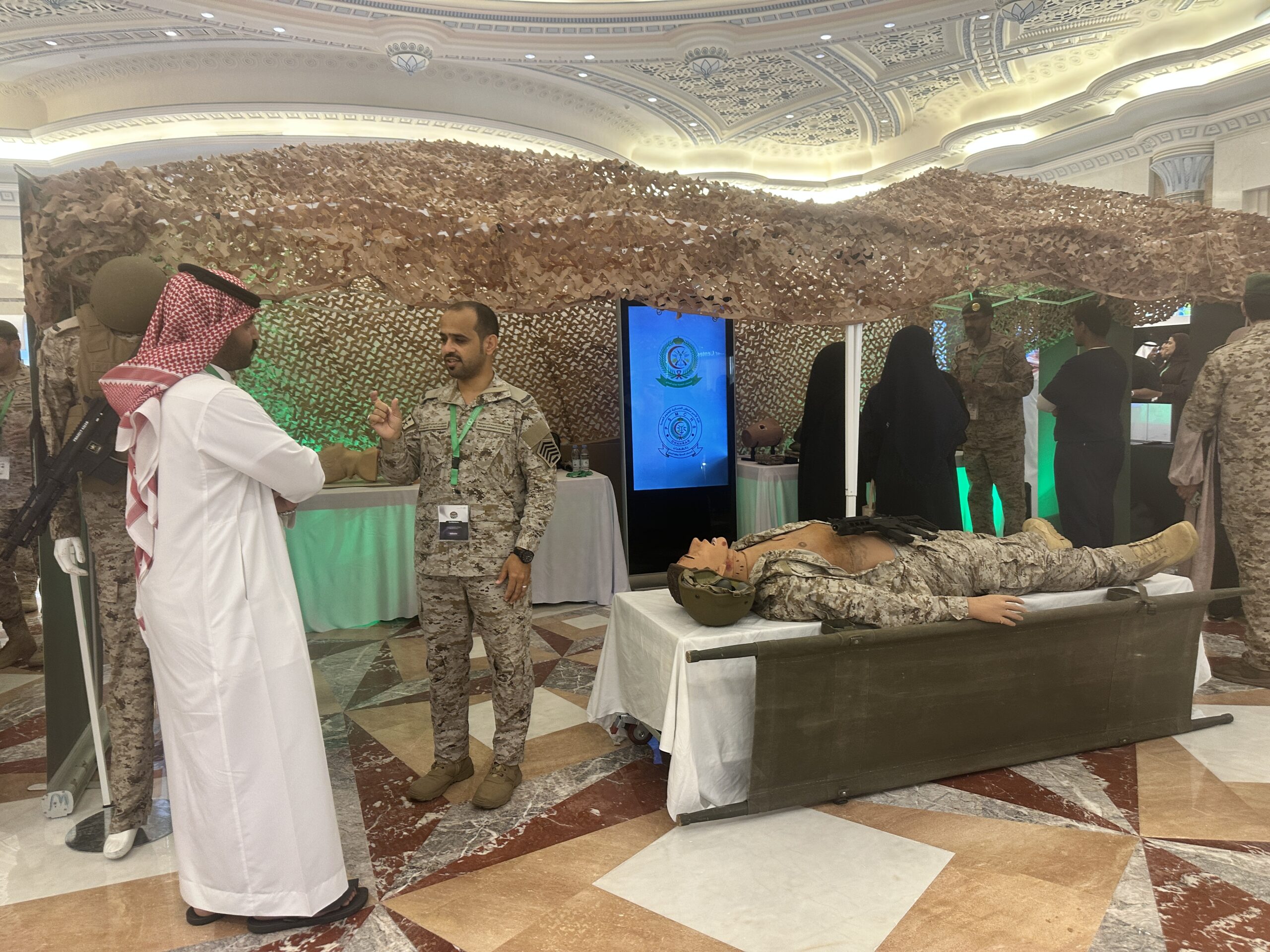

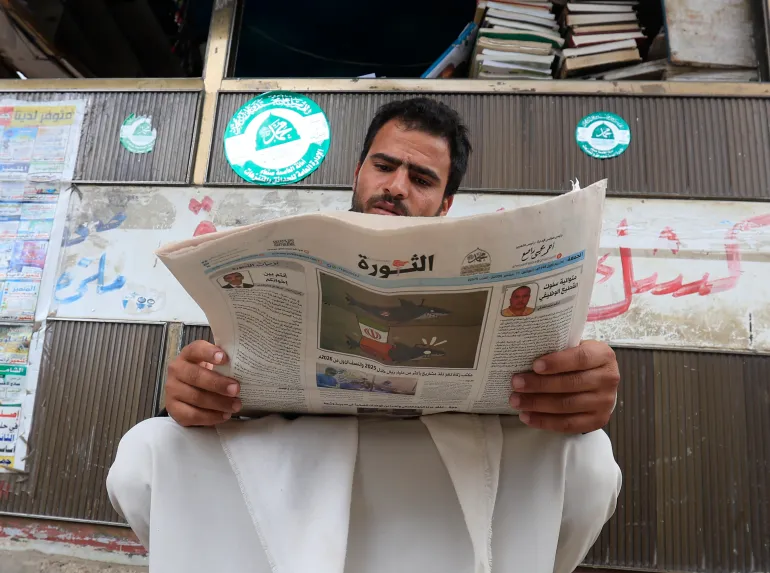





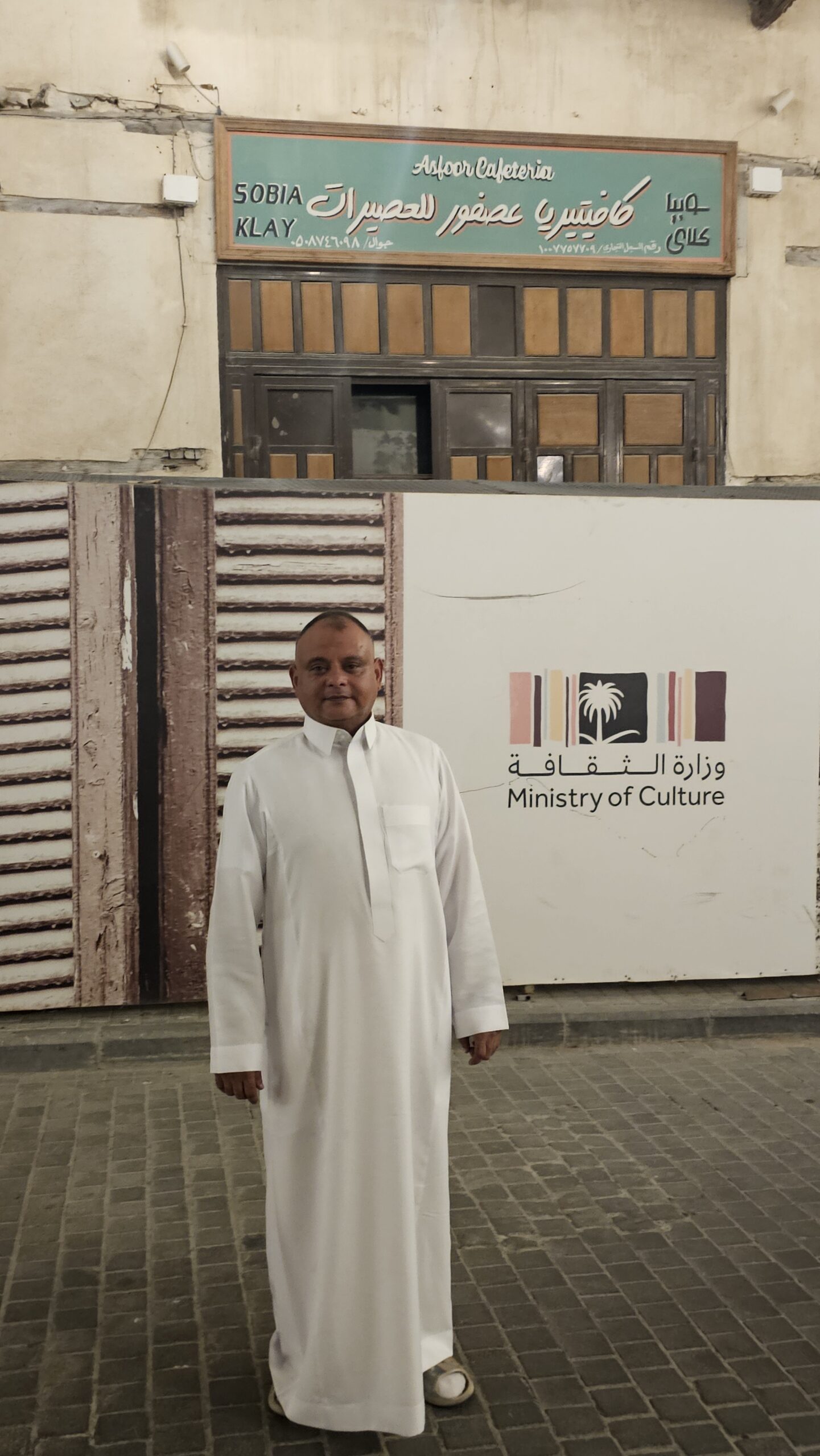




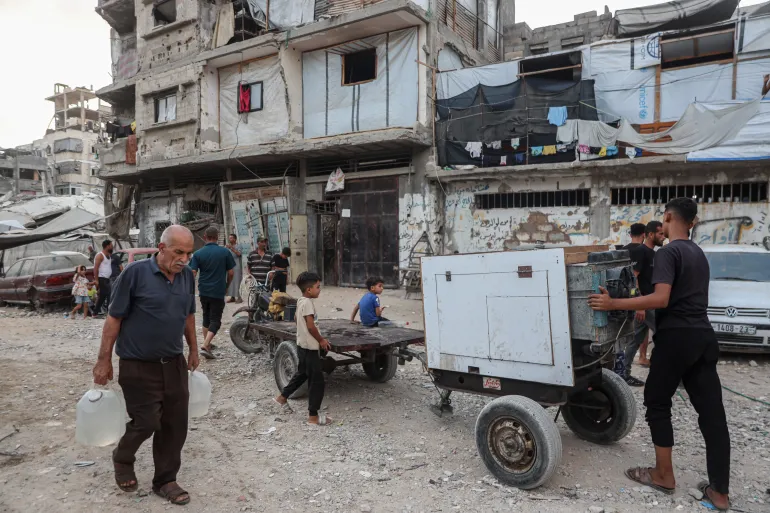
![A generator passes through a northern Gaza neighbourhood [Abdelhakim Abu Riash/ Al Jazeera]](https://i0.wp.com/occasionaldigest.com/wp-content/uploads/2026/09/873A2309-copy-1789208507.jpg?w=640&ssl=1)
![Abeer Ghorab, 52, a displaced Palestinian woman, takes her clothes to a commercial laundry, paying to wash and dry them as water and electricity remain scarce. [Abdelhakim Abu Riash/ Al Jazeera]](https://i0.wp.com/occasionaldigest.com/wp-content/uploads/2026/09/873A2195-copy-1789208594.jpg?w=640&ssl=1)
![Residents wait for a mobile generator to reach their homes so they can pump water, paying by the hour to use the machine [Abdelhakim Abu Riash/ Al Jazeera]](https://i0.wp.com/occasionaldigest.com/wp-content/uploads/2026/09/873A1950-copy-1789208427.jpg?w=640&ssl=1)
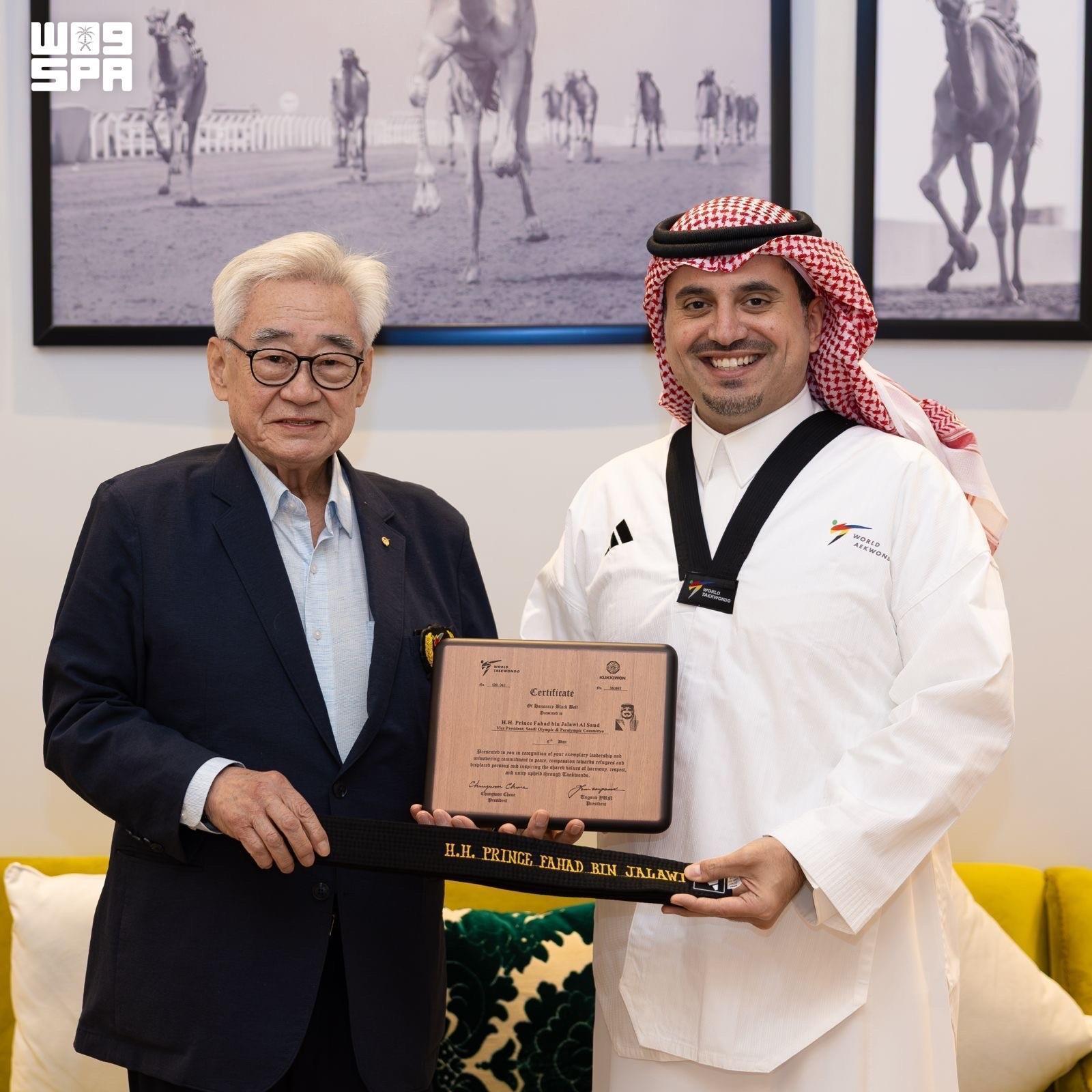




![NCSIST - Tien Kung III Air Defense Missile & Hsiung Feng III Anti-Ship Missile Live Firing [480p] thumbnail](https://i0.wp.com/i.ytimg.com/vi/uPq4iC70U0Y/hqdefault.jpg?w=640&ssl=1)


